National Moth Week

It’s National Moth Week (or International since it’s worldwide) and for once I’m on the ball enough to be blogging on time and on topic! This is mainly due to the fact that I read a lovely blog post this morning on this very subject by Nature is My Therapy: https://natureismytherapy.com/2022/07/26/moths-not-just-for-after-dark/  So thank you Kim for the timely reminder.

National Moth Week celebrates the beauty and diversity of moths, a sentiment close to my heart as I’ve been fascinated by the moths in my garden since I started trapping in 2013. This week, after 9 years of moth trapping and perfectly timed for National Moth Week, I recorded the 450th species of moth in my garden! I never dreamt when I started looking at moths that I’d find anywhere near this number in my suburban garden. Just goes to show you don’t know what’s out there until you start looking. Of course of those 450 species, some have only been recorded once – often migrant moths just passing through. But a good chunk of the species are regular attendees at my moth trap.

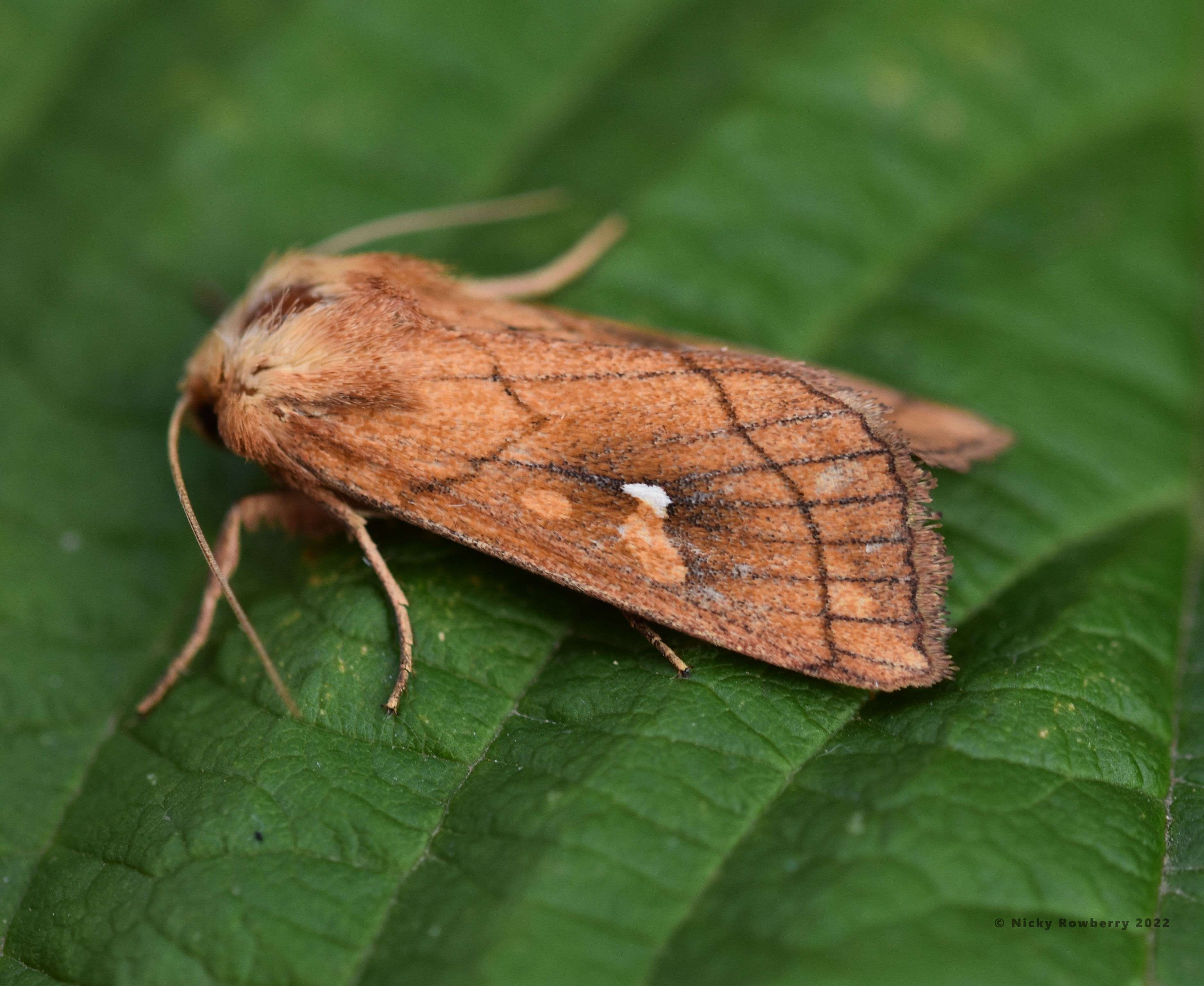
So here is no 450 – the Brown-Line Bright Eye (Mythimna conigera) – so called because (not surprisingly) it has a brown line and a bright eye spot.

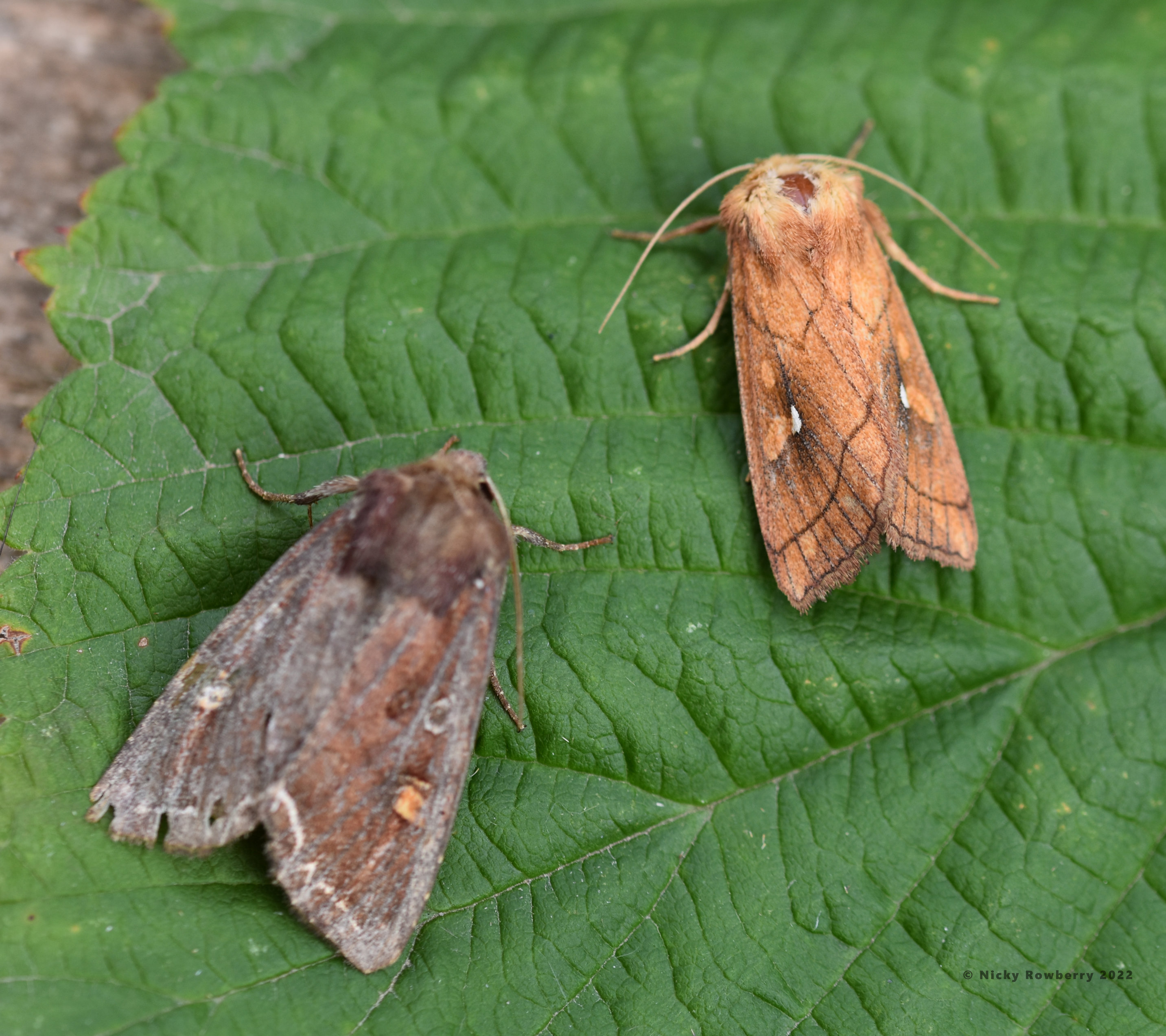
Coincidentally the same night I also trapped the very similarly named Bright-Line Brown-Eye (Lacanobia oleracea). So here they are side by side.

I trap 2 or 3 times a week through the summer and usually once a week in the winter. I started this year with a running total of 438 species, so another 12 have been added since then. Of the new ones, a couple are ones I’ve wanted to see for a while and others haven’t even been on my radar. The longed for ones include a Nut-tree Tussock a (Colocasia coryli) and a Muslin Footman (Nudaria mundana).

Of the more unexpected ones this Italian Tubic (Metalampra italica) micro moth was rather lovely and one I’d never even heard of. Apparently it’s a recent colonist that’s spreading north from the south of England.

So the trap is out again tonight and I’ll be up at the crack of dawn to check the contents, hopefully before the robin beats me to it. It’s one of the things I love about moth-trapping – you never know what you’re going to get – it’s like Christmas morning for moth nerds!

Happy National Moth Week everyone.


Holiday Snaps – Part 2

It occurred to me as I wrote this that blogging is the modern day equivalent of boring your friends and family to death with a slideshow of your holiday pics – only with blogging you get to inflict them on a much wider audience! So apologies for indulging here and sharing more photos.

So just to prove that I do occasionally look at other things besides butterflies and moths, here are some of the best of the rest. The cottage we’d rented was on the edge of a nature reserve, so we were off to a good start without even going anywhere. There was a path leading own to the nature reserve’s lake (Hawes Water) and it was obviously a bit of a thoroughfare for a lot of wildlife. The trail cameras picked up what I think is a female Roe deer both at night and during the day, plus it was nice to see a hedgehog at dusk too.


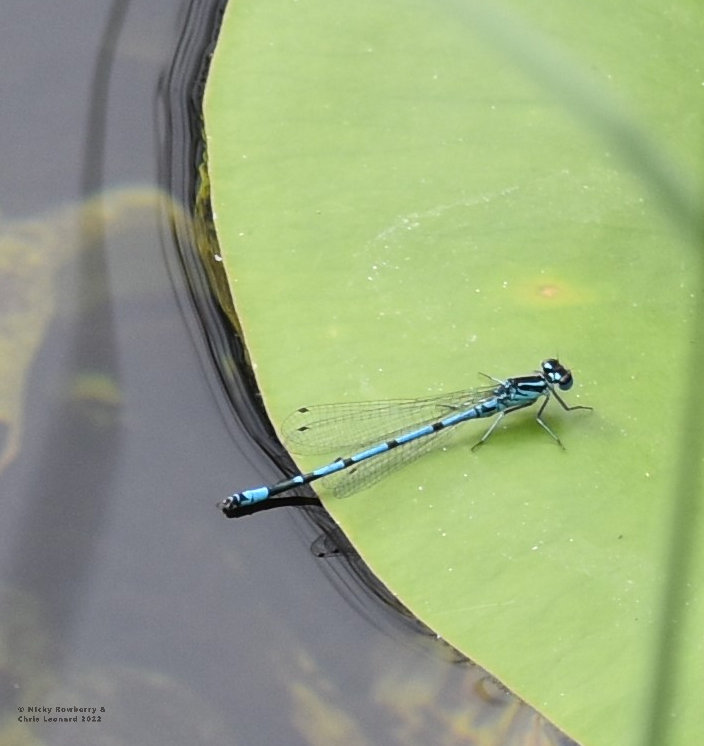
The lake itself had plenty of damselflies buzzing around our little jetty. I identified at least 2 species – Azure (below top) and a male Blue-tailed (below bottom), both beautiful insects.


Not exactly wildlife, but it was also nice to have a family of Gloucester Old Spot pigs in the field opposite the cottage.

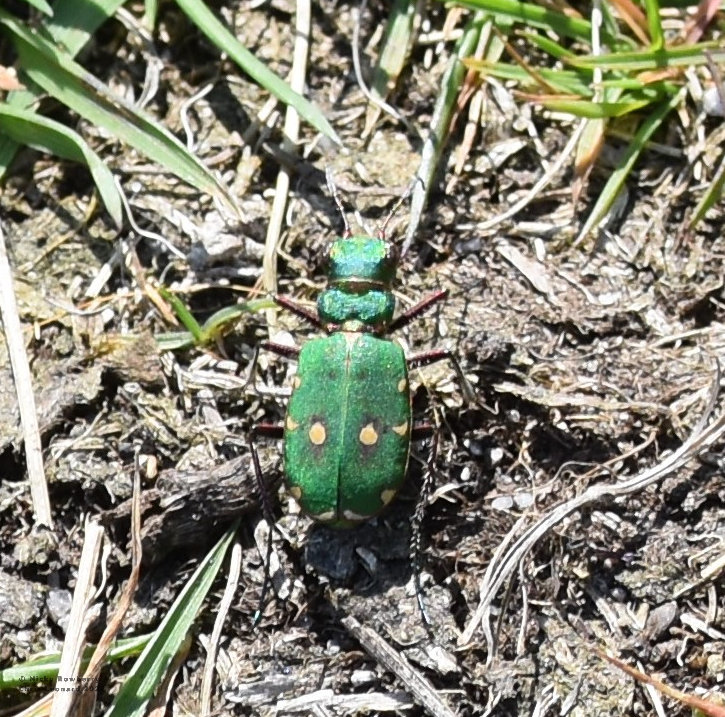
Venturing out from our cottage we visited some amazing sites. Irton Fell, which we’d gone to primarily for the Mountain Ringlet, had plenty of other wildlife too. Despite the windy conditions up there, there were plenty of insects around including this Tiger beetle.

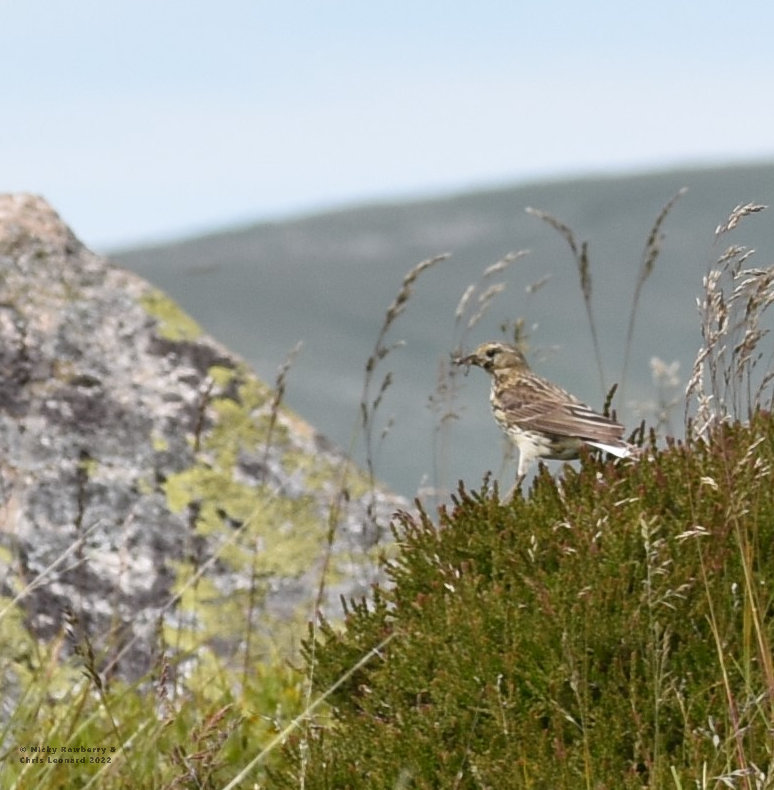
There were lots of small birds flitting between rocky outcrops and fences. Bird ID is not a strong point of mine, but I think this is a Skylark.

On the last day, freed from the need to search for butterflies, I went to Foulshaw Moss Nature Reserve. Foulshaw is known for it’s Ospreys. Technically I did see them, via a webcam set up on the reserve. They’d got chicks which I could just about make out on the monitor. The nest was a long way from public footpaths (and rightly so), so no chance of photos – but it’s still the closest I’ve ever been to an Osprey, so it felt like a win.

Foulshaw was also known for a species of dragonfly that would be new to us too – the White-faced Darter. There were a few flitting around, but none were settling. One finally landed in front of me on the boardwalk. I managed a quick record shot, planning to then zoom in for a better one. Just got it focused and a small child ran up and scared it off – I may get over this eventually! So here’s the poor record shot.

So here endeth my holiday snaps. A couple of lifers (Ospreys & Darter) ticked off the list if not photographed properly and a few other favourites seen again. My holidays tend to be primarily wildlife focussed, but just to prove I do manage a few other activities, here’s me doing the inevitable pose next to Eric Morecambe’s statue at Morecambe Bay.


Butterflies No 54 & 55!

Yes I’m creeping ever closer (albeit at snail’s pace) to my target of seeing all 58 species of butterfly in mainland Britain! Last week I had a lovely holiday just south of the Lake District near a village called Silverdale. As well as enjoying a relaxing week, the aim was to see 2 new species of butterfly – the Northern Brown Argus and the Mountain Ringlet.

The weather at the beginning the week was not on our side – grey skies, cooler temperatures and blowing a gale – not ideal butterfly spotting conditions. But after a couple of days, things had perked up enough to have a go for the first species – the Northern Brown Argus. We tried a couple of sites – Warton Crag nature reserve & Jenny Brown’s Point in Silverdale with no luck. Arnside Knott, a hill nearby, was going to be our next attempt, but we weren’t sure whereabouts on the hill to look. Then a stroke of luck on Facebook – someone had seen these butterflies at Arnside Knott the day before and very kindly posted a google map shot with the spots marked on. I headed over and it was as if the butterflies had seen the FB post too – they were spot on for the map location.

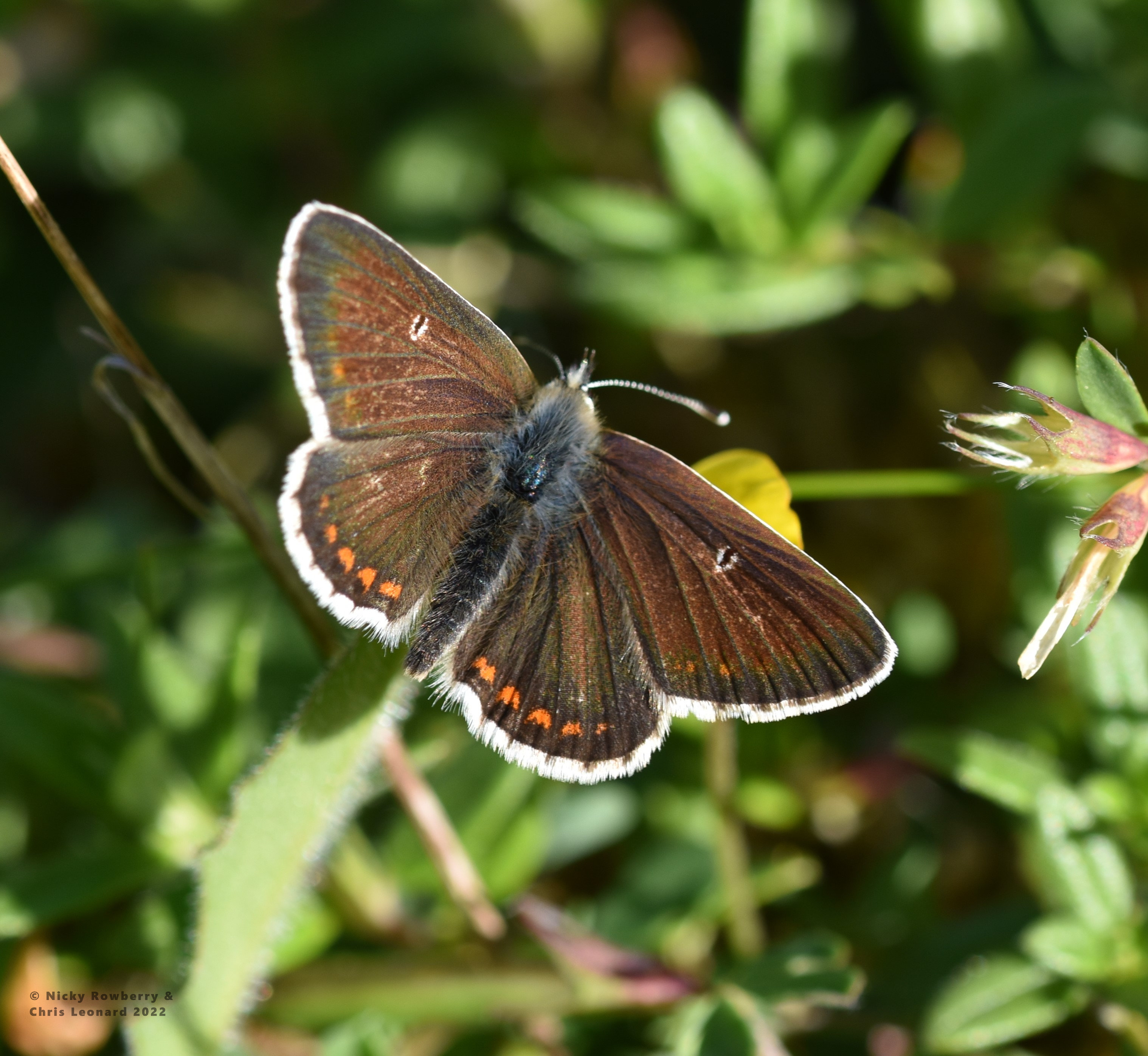
Finding them was one thing,  but photographing them was another. They were very small and very fast. The first one snapped was barely a record shot – enough to confirm it was indeed a Northern Brown Argus.

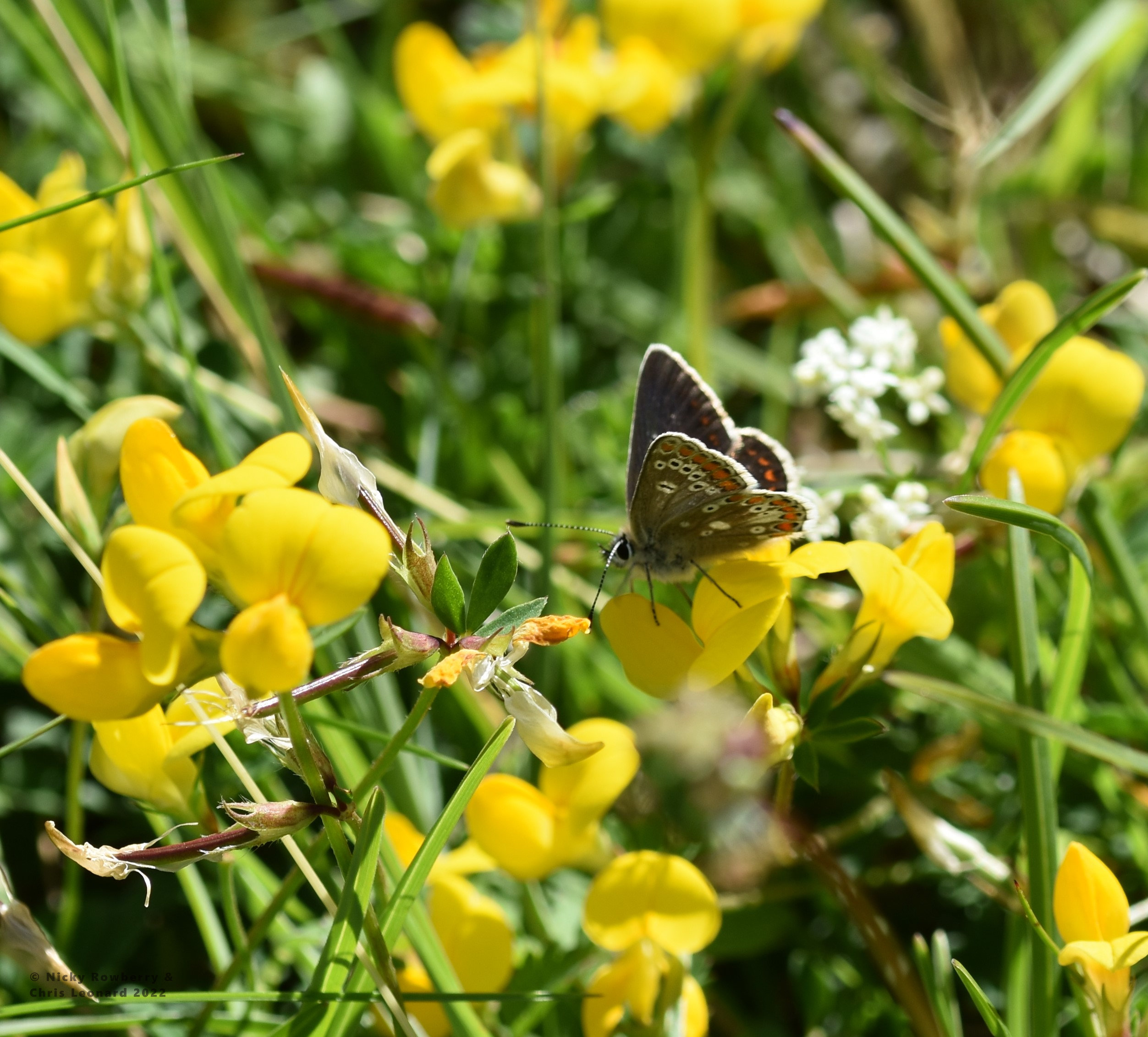
An hour or so of chasing butterflies madly around in the sunshine and I managed a few more respectable shots. On the upperside of the wings you can see the dark dot with the white outline which marks it out as a Northern Brown Argus (the dot and of course the location this far north).

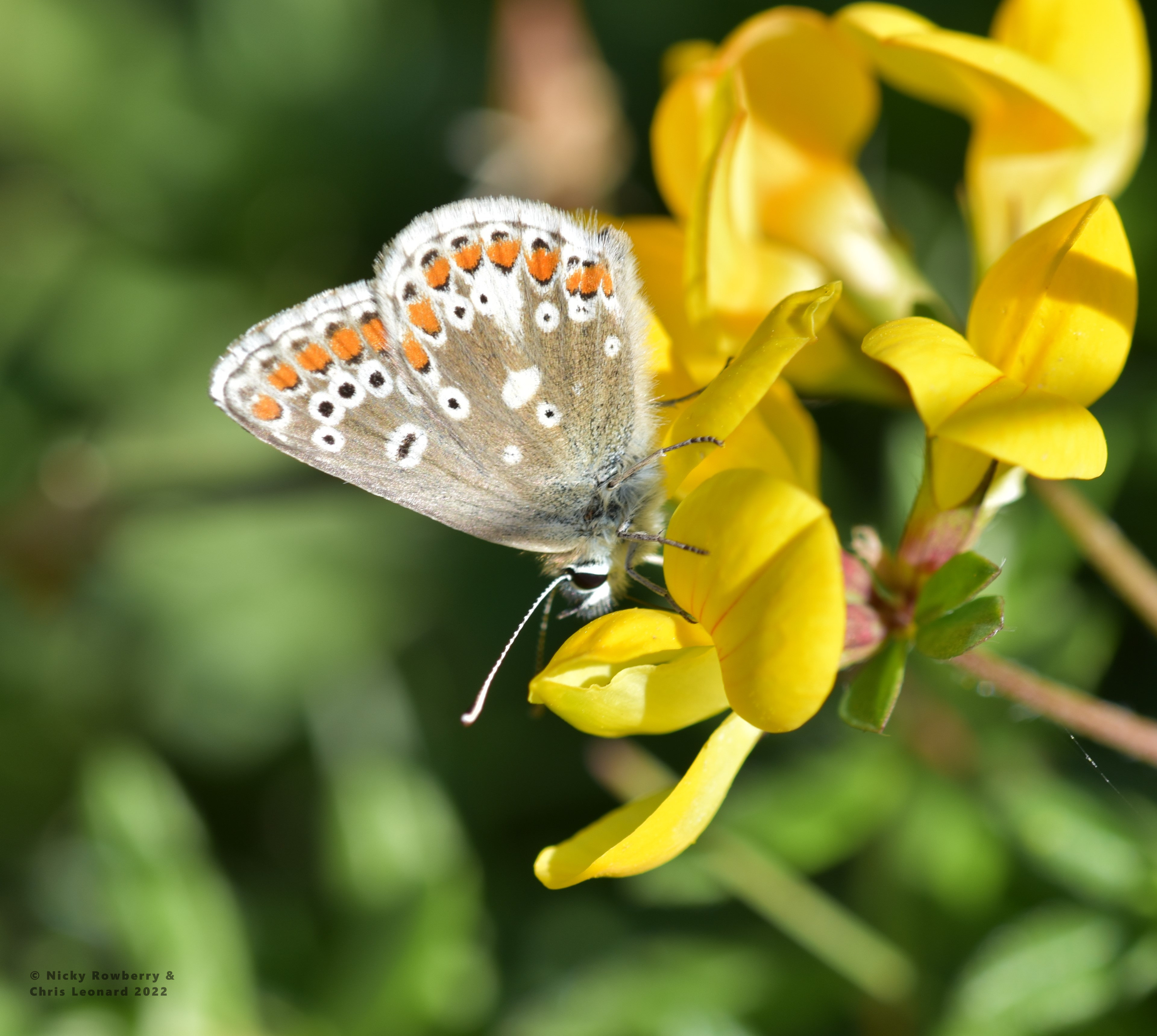
On the underside of the wings, the forewing is missing a black spot near the base that would have made it a Common Blue.

No. 54 proved relatively painless in the end, but no. 55 was going to be more of a challenge. The Mountain Ringlet, as the name suggests, likes to live up hills – big hills! It is the UK’s only montane butterfly and I am not a montane kind of woman! But there was going to be no other way than to climb, so climb I did – up Irton Fell in Cumbria. Most of the people I met that day also seemed to be looking for the same butterfly, so at least I knew I was in the right place. It nearly killed me, but it was worth it – for the butterflies and the views.

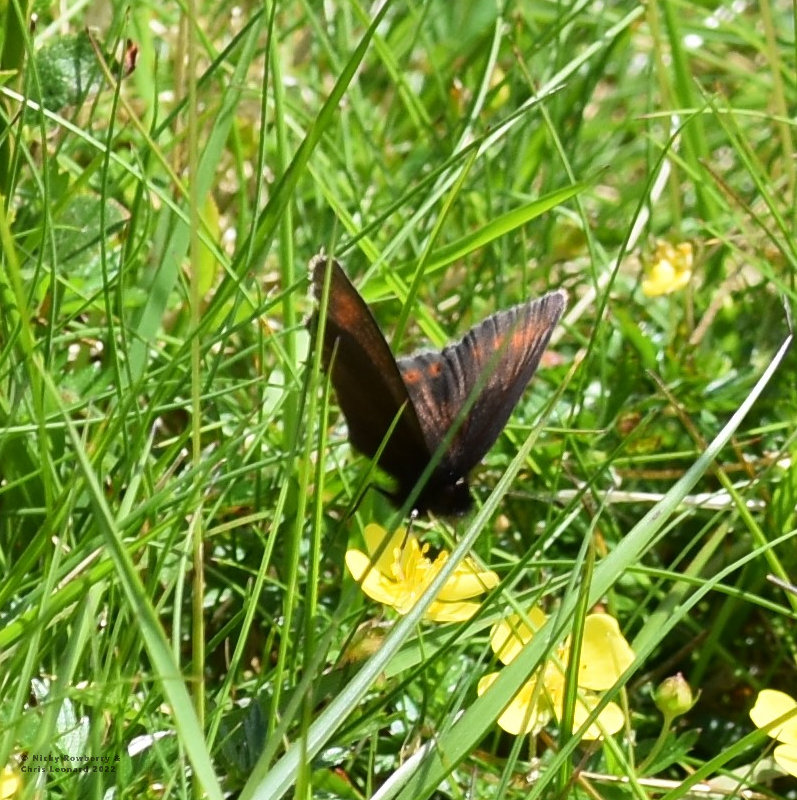
As with the Northern Brown Argus, the Mountain Ringlet is small and fast. Fortunately its chocolate brown colour stood out well against the grasses and heather when it was flying; but once it went down into the grass it was virtually impossible to find. I saw quite a few of them but most eluded the camera. So the best I managed was this – blurry, but just about recognisable as a Mountain Ringlet –  hastily taken before it shot off again.

But at least butterfly no. 55 had been ticked off the list.

I’m unlikely to manage any more new species this year, so for now will remain 3 short of the goal – the Lulworth Skipper, the Scotch Argus and the Chequered Skipper will have to wait another year.


Showbiz Slugs

Last November I joined 59 other volunteers in a project monitoring the slugs in our gardens. Our Slug Count Survey was being run by the lovely Imogen as part of her PhD with the RHS and Newcastle University. Once every 4 weeks we had to go out into our gardens and collect all the slugs we could find in half an hour. We’d then attempt to identify them, before posting them off to Imogen for “proper” identifications.

This year has flown passed for any number of reasons, but I still can’t believe my year of slug counting is already up. It took a bit of explaining to my neighbours as to why I went out each month with a head torch in the dark to wander round the garden with a bucket of carrot shavings (food for the slugs) for half an hour, not to mention explaining to the lovely lady in the post office why I was posting slugs! I actually found it really interesting to go out in the garden after dark and just look at what was around. I was used to going out to check on the moth trap, or feed the hedgehogs, but tended to be focussed on those activities. Searching for slugs, I noticed for the first time all the caterpillars that were out and active, the worms on the grass that vanished as they felt my footsteps approach and the spiders and woodlice and all manner of other species going about their business at night. The garden at night becomes a whole other world.

In total over the 13 counts, I sent off an amazing 1145 slugs! You’d think that might have reduced the population in my garden, but they are still very abundant. Going out the night after a count there seemed to be just as many slugs roaming the garden as before, with no sign of diminishing populations.

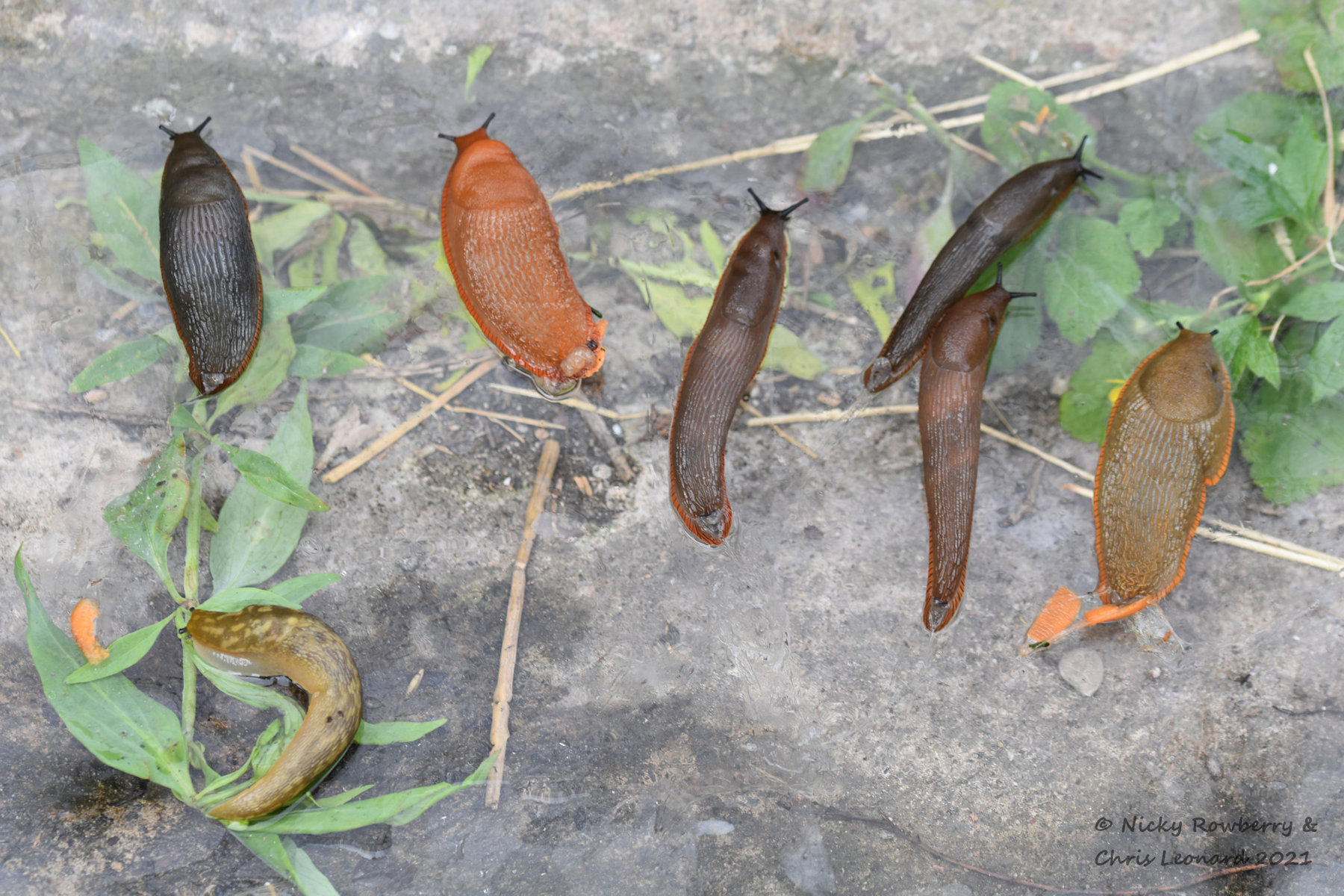
And the slugs themselves were clearly doing their bit to increase numbers.  Through September there were several nights when I saw pairs of large Arion slugs trailing each other round the grass. There is clearly a season for it, as I saw multiple pairs for a couple of weeks, but none before or since.

Whatever romancing was involved, it was clearly successful and I can presumably expect more Arion slugs next year.

As well as getting to see a bit of slug romance, I was really chuffed to film one of the Arion slugs getting its wriggle on. This squirming action in the video below is a characteristic feature of a couple of Arion species when disturbed.

The total number of species recorded has yet to be finalised (some are apparently getting sent for DNA analysis!), but is probably around 14. There were at least 4 species of short-keeled slugs, including this Ambigolimax sp.

There were at least 7 species of round-backed slugs including the familiar large Arion species. Finally there were 3 species of the long-keeled slugs. The one below is the Crimean Keeled Slug (Tandonia cristata) which has a network of dark lines criss-crossing the body.

My most unusual find was a Worm Slug (Boettgerilla pallens), another long-keeled slug, which as the name suggests looks like a worm! I only found 1 in all the surveys.

Finding the worm slug was good, but the best was yet to come. Our survey leader appeared on BBC’s Gardener’s World in July to try and convince the (possibly sceptical) viewing public of the delights of slugs. As part of the feature there was footage of several specimens. I was beyond excited when she told me that one of my actual slugs had been filmed for the show. Here’s a still from iPlayer showing my very own slug TV star (a Netted Field Slug, Deroceras reticulatum).

Not only did my slug feature, but it was described as being one of the biggest pest species, doing the most damage to plants. I don’t know why, but I felt ridiculously pleased that I’d got effectively the bad boy of the slug world!

So all in all this slug project has been fascinating. I love doing these citizen science projects. You usually learn something new, or see something new and either way you get the pleasure of enjoying some aspect of nature whilst contributing hopefully useful data to scientists. This particular project has given me a whole new appreciation for slugs, a group I’d previously given little thought to. I know they are not popular with gardeners and they can be a worry for those with hedgehogs in their gardens (slugs can carry parasites such as fluke and lungworm which can pass to the hedgehogs). But everything has its place and slugs have just as much right to be in a garden as everything else.


Norfolk Dragonflies

It seems a bit like a lifetime ago already, but in June we had a fantastic holiday in Norfolk. Although the species we were most keen to see was the Swallowtail butterfly, we made the most of the opportunity to see as much other wildlife as we could. One of the groups that we saw in abundance was the Odonata – the dragonflies and damselflies. In total we saw 9 species, 6 of which were new to us. I’ve been very lucky to have help identifying them all from a very friendly and helpful group on Facebook called UK Dragonflies & Damselflies.

We lucked out with our holiday let – a lovely house in Wroxham on the banks of the River Bure. Our holiday garden ran right down to the river with its own inlet for mooring boats (with our complete lack of boating skills we weren’t brave enough to have our own boat!). The area was positively alive with dragonflies and damselflies, so we could just sit and enjoy them without having to go anywhere. We saw 5 species in the garden alone.

One we had seen before, but which is still a delight every time we see it, is the Banded Demoiselle.

demoiselle drakes

They’ve got a lovely way of flicking their wings open and shut when they are resting.

We’d also seen Common Blue Damselflies before, although they’re not a species we get in the garden at home, so it was nice to just chill and watch them.

Red-eyed Damselflies were new for us and were probably the most abundant species at our holiday let. The males, as the name suggests, have vivid red eyes, with a blue body and blue tip to the tail.

red eyed damselfly male

The females don’t have the eye colour and are also more of a greeny body colour.

The red-eyed damselflies were mating all over the place, but their favourite romantic rendezvous were the water lilies. They were literally queuing up for a turn on the lily flowers. If you look closely you can see that some pairs are actually submerged, seemingly undeterred in their eagerness!

red eyed mating

There was also a 3rd species of damselfly in the garden – the Blue-tailed Damselfly. The males have a light blue spot near the end of the abdomen, but somehow I didn’t manage to get a photo of a male. The females are more interesting though in that they have at least 5 different colour forms. There seemed to be at least 2 of these forms flitting around the garden – the top one below is the more typical colour and below that is the rather grandly named “rufescens obsoleta” form.
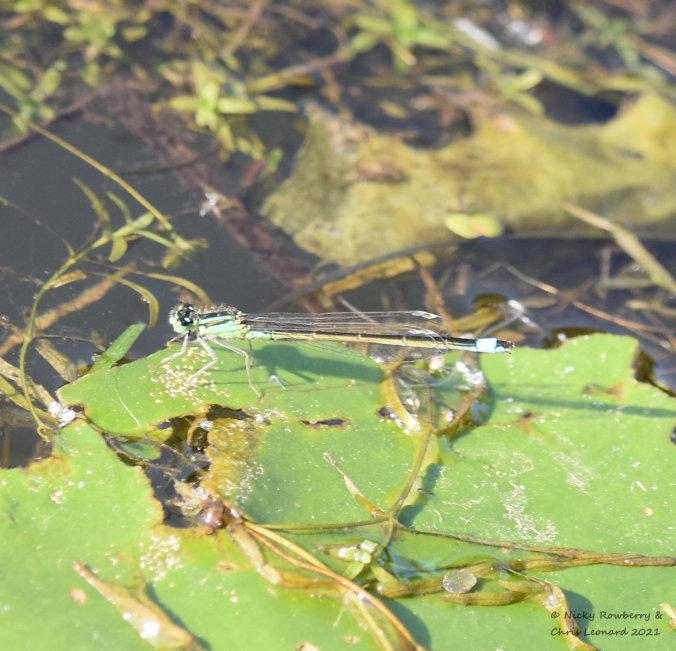
female blue tailed

female blue tailed damsel - rufescens obsoleta

There were quite a few of the larger dragonflies about the garden, but the only one we managed to photograph was the Black-tailed Skimmer. The males start of a golden colour, but when mature they turn blue, with a blackened tip to the abdomen – like this one we saw at Hickling Broad.

black tailed skimmer male 2 hickling

Having the river on our doorstep meant that when we got up in the mornings, we were lucky enough on a couple of occasions to spot dragonflies emerging from their larval stage. This first one is another Black-tailed Skimmer – a male (thanks again to the FB dragonfly people for identifying this). We missed the initial breaking out of the exuvia, but got this sequence of photos.

Black tail skimmer emerging 1

Black tail skimmer emerging 2

Black Tail Skimmer emerging 3

We also managed to catch on video the moment he opened his wings for the very first time – quite a privilege to see!

We did catch another dragonfly actually bursting free. It never ceases to amaze me how they expand into such huge insects out of such relatively small larvae.

Dragonfly 1 emerging 3

Our adventures out and about in Norfolk took us to various nature reserves with more dragonfly delights. At Hickling Broad we glimpsed this Hairy Dragonfly. Not a great photo but another new one for us.

Hairy dragonfly Hickling

Also at Hickling Broad we saw this gorgeous Four-spotted Chaser – so named for the spots on his wings.
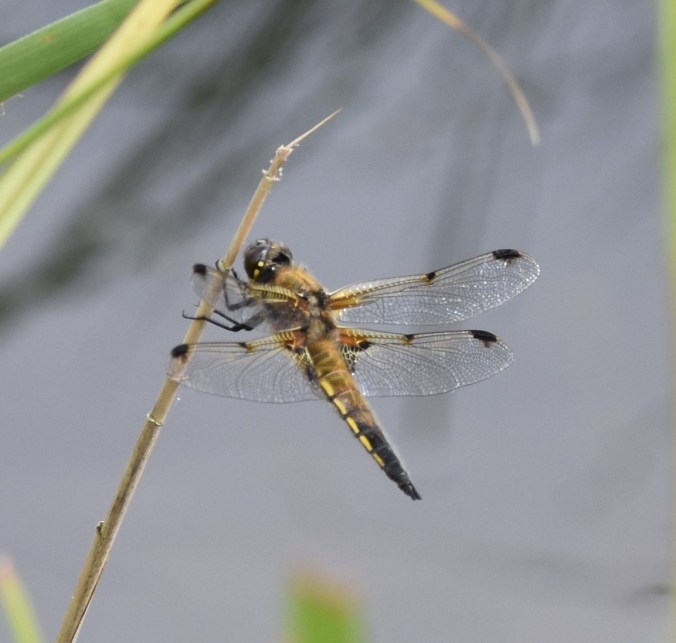
At Strumpshaw Fen we were graced by the presence of a Scarce Chaser. They are as the name suggests “scarce” and in fact are classified as “near threatened”, so it was a lucky spot. Sadly a photograph of it proved even scarcer!

Star of the show though was the Norfolk Hawker. We saw them at Hickling Broad, Horsey Mere and Strumpshaw Fen. The Scarce Chaser may have been scarce, but the Norfolk Hawker is actually considered to be endangered and one of the rarest dragonflies in the UK. They are stunning dragonflies with green eyes, brown bodies and a yellow triangular mark at the top of the abdomen.

We even caught this pair of Norfolks doing the best to ensure that they became just that little bit less rare!

Norfolk hawkers mating hickling

So that’s 9 species of dragon/damselfly seen in a week without really even trying! A few years ago we started on a quest to see all the British species of butterfly and only have 5 to go on those. I think we may just have found the next group to focus on – and Norfolk has given us a great start already.
Out & About – Blackhouse Wood & Crews Hill

Yesterday was a lovely sunny Sunday, so we thought we’d try and have a walk around the little nature reserve we’d failed to get to a few weeks ago – Blackhouse Wood and Crews Hill. Apparently yesterday was National Dawn Chorus Day, so a walk in the woods seemed like a nice idea to hear some bird song. With the Too Lazy ethos we were of course too late to really get the dawn chorus – the birds were doing more of a brunch chorus, by the time we got there, but it was lovely all the same.

Crews Hill signBlackhouse Wood and Crews Hill (which is also wooded) are both owned by Worcestershire Wildlife Trust and are joined to form one long thin area of semi-natural ancient woodland. The shape of the wood meant that for once, we were reasonably confident that we couldn’t possibly get lost!
The path ran pretty much straight through the wood, although it did undulate quite a bit thanks to old quarrying efforts years ago. We may not have quite been up in time for the dawn chorus, but for the first hour or so we didn’t see a soul. A lovely peaceful place to visit.

Crews woodland trail

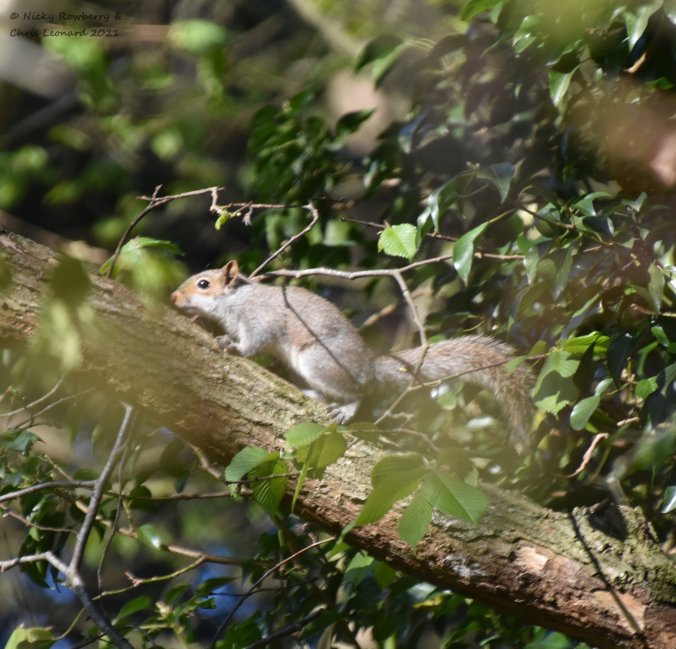
There were a lot of squirrels (all grey of course round here) scampering through the trees and lots of rustling of mice in the undergrowth.

Squirrel

The wood was full of bird song, although spotting the birds themselves wasn’t that easy. To start with there seemed to be loads of different birds singing, but they almost always turned out to be Blue Tits. I’d no idea Blue Tits had such a variety of songs!

Eventually of course we did manage to differentiate some other bird species. We had one of those apps that will identify bird songs for you and it picked up a song thrush although we didn’t actually see it. One of the few songs I can recognise is the chiffchaff but sadly it wasn’t obliging enough to pose for photos,

Blackbirds, robins, goldfinches and of course woodpigeons could also be heard singing their socks off. The surprising highlight of the vocals though was an owl calling – neither of us have ever heard one calling in broad daylight like that. Sadly we didn’t see the owl, but we were really lucky to get a good view of a buzzard.

There were quite a few butterflies flitting about in the more open sunny patches; most as usual too quick to photograph. Invertebrate highlight for me was spotting this tiny longhorn moth. As it fluttered down to land, it was its enormous antennae that caught my eye. The antennae are way longer than the moth’s body (hence the name) and it looks like it must take an extraordinary effort to keep them out of the way when flying.

Longhorn moth

We spent a very enjoyable couple of hours pottering around the wood; it’s nice to find another little gem of a reserve virtually on our doorstep.

Happy Birthday Pond

Our pond is one year old! It’s been quite a year (in more ways than one!) but the pond has been a huge success for the wildlife and for us in terms of a calming presence in an otherwise stressful year. So in a year the pond has gone from this:

to this:

It’s looking pretty well bedded in now, although there are still a few bare spots where the lining is showing that I need to sort.

The wildlife has been abundant. We’ve had frogs and newts – the newts in particular doing really well with possibly hundreds of baby newts hatched.

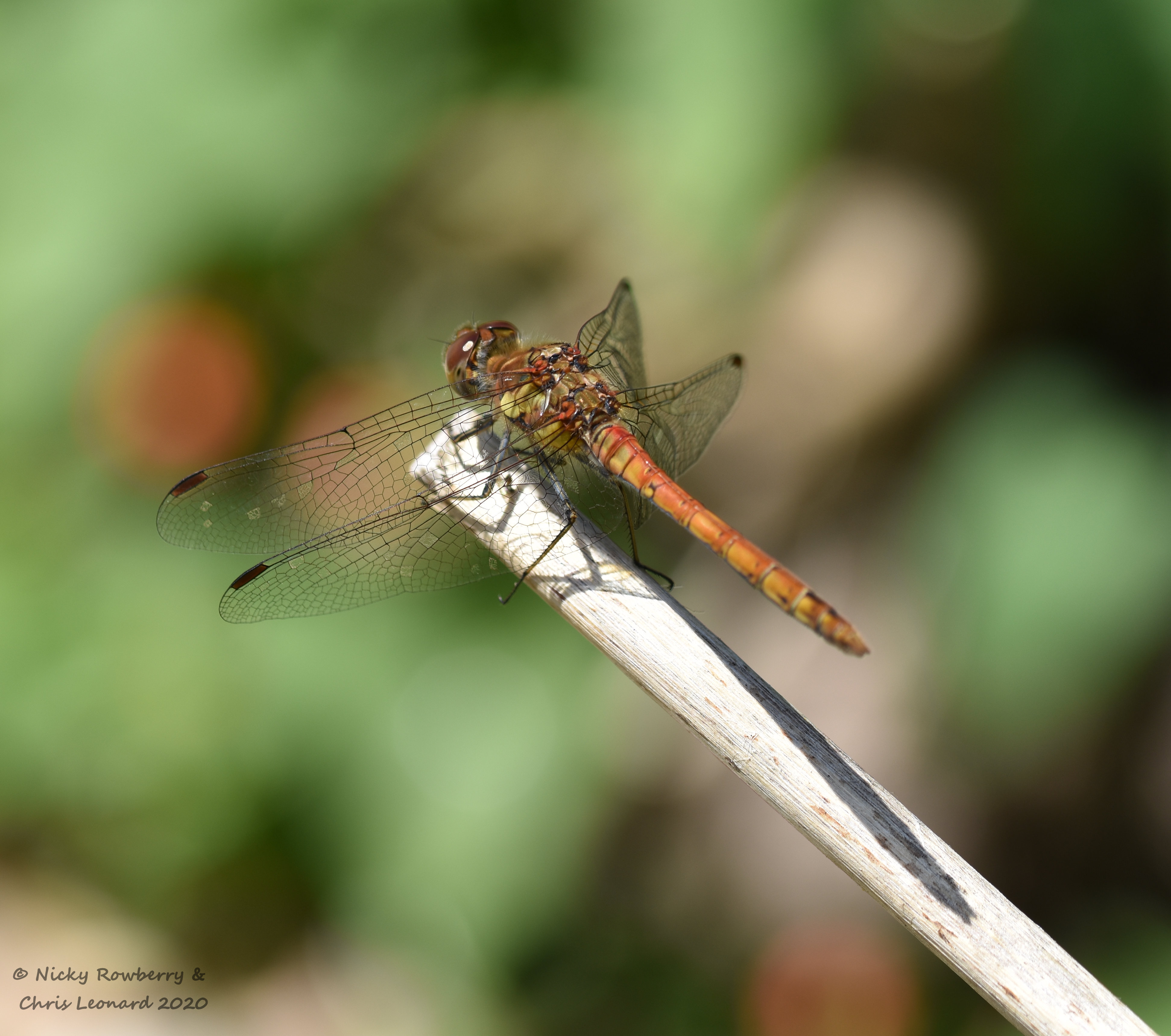
There’s been plenty of insect activity with beetles, pond skaters and dragonflies quickly moving in.  9 species of dragonfly/damselfly have found their way to the pond already, which is amazing.

As well as the insects we had perhaps anticipated or hoped for, there were others more surprising like moths – this Meadow Longhorn spotted on the marginal plants.

The birds have been making good use of the pond for bathing and hedgehogs, squirrels and the neighbours’ cats have all been seen drinking from it.

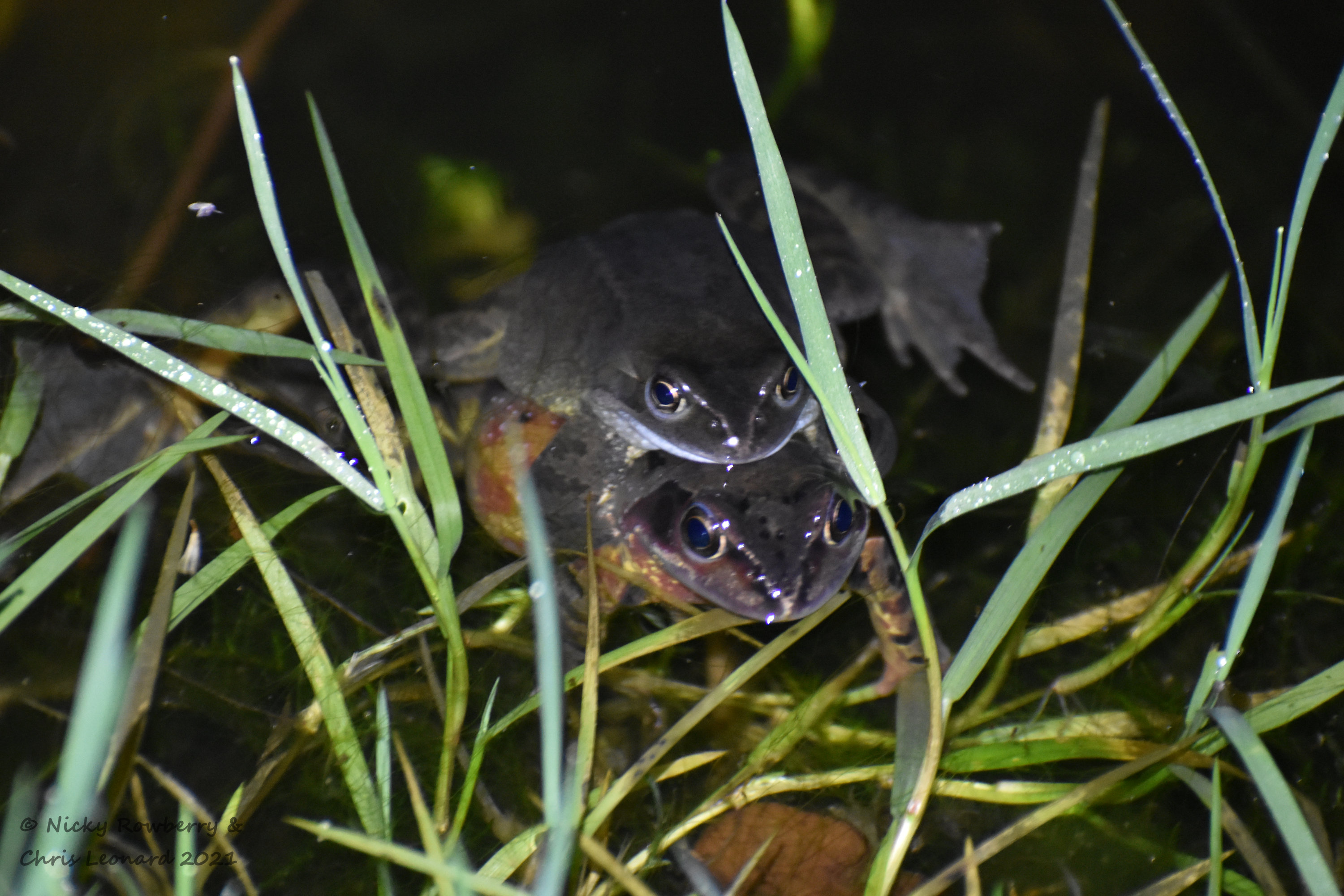
The only slight disappointment with the pond last year was that we didn’t get any frog spawn; but the pond was so new at spawning time it was perhaps not surprising. Will we get any this year? Well nothing yet, but it’s looking promising. This pair of frogs in an amplexus embrace have been seen for several nights – so fingers crossed.

So Happy Birthday to our pond. May the coming year bring you (and us) lots more wildlife encounters.

Big Garden Birdwatch 2021

Another year, another lockdown; or more cheerily – another year, another Big Garden Birdwatch! The perfect thing to do for an hour when you can’t leave home.

Saturday it pretty much poured with rain all day, so today seemed like a better birding day. It was still bloomin’ cold sitting there though for an hour and my derrière was pretty numb by the time I finished.  Still it was worth it to record a very respectable 34 individuals of 12 species.

Top of the abundance was, as usual, the house sparrow. I  counted at least 12 in one go, although I’m sure we actually have more than that. Joint second were the blackbirds and jackdaws – 4 of each. I can’t tell the difference between male and female jackdaws, but for the blackbirds there was one female and at least 3 males.

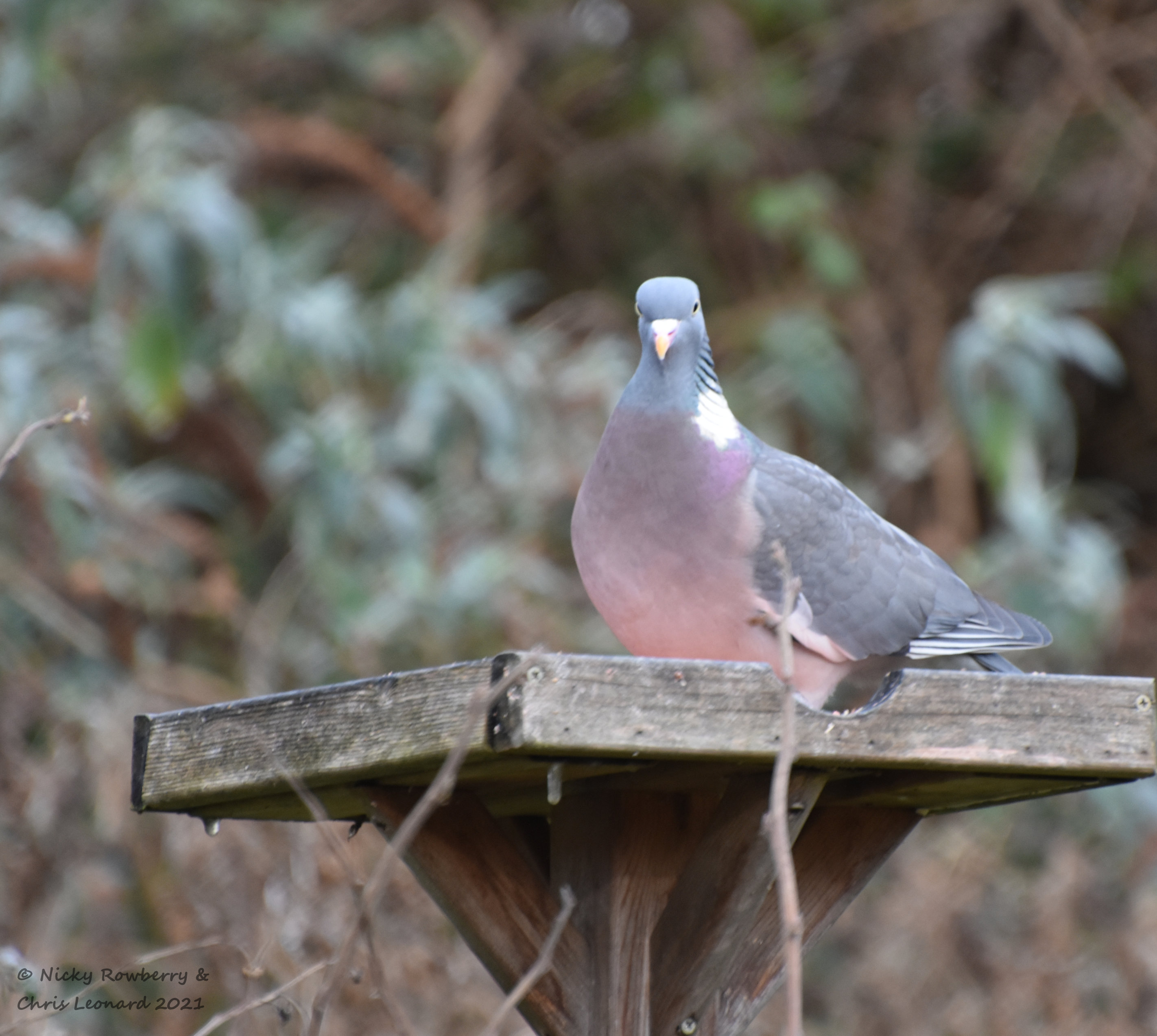
Most of the rest arrived in pairs – goldfinches, great tits, collared doves, wood pigeons, starlings and magpies, although I only seemed to manage to get photos of them one at a time.

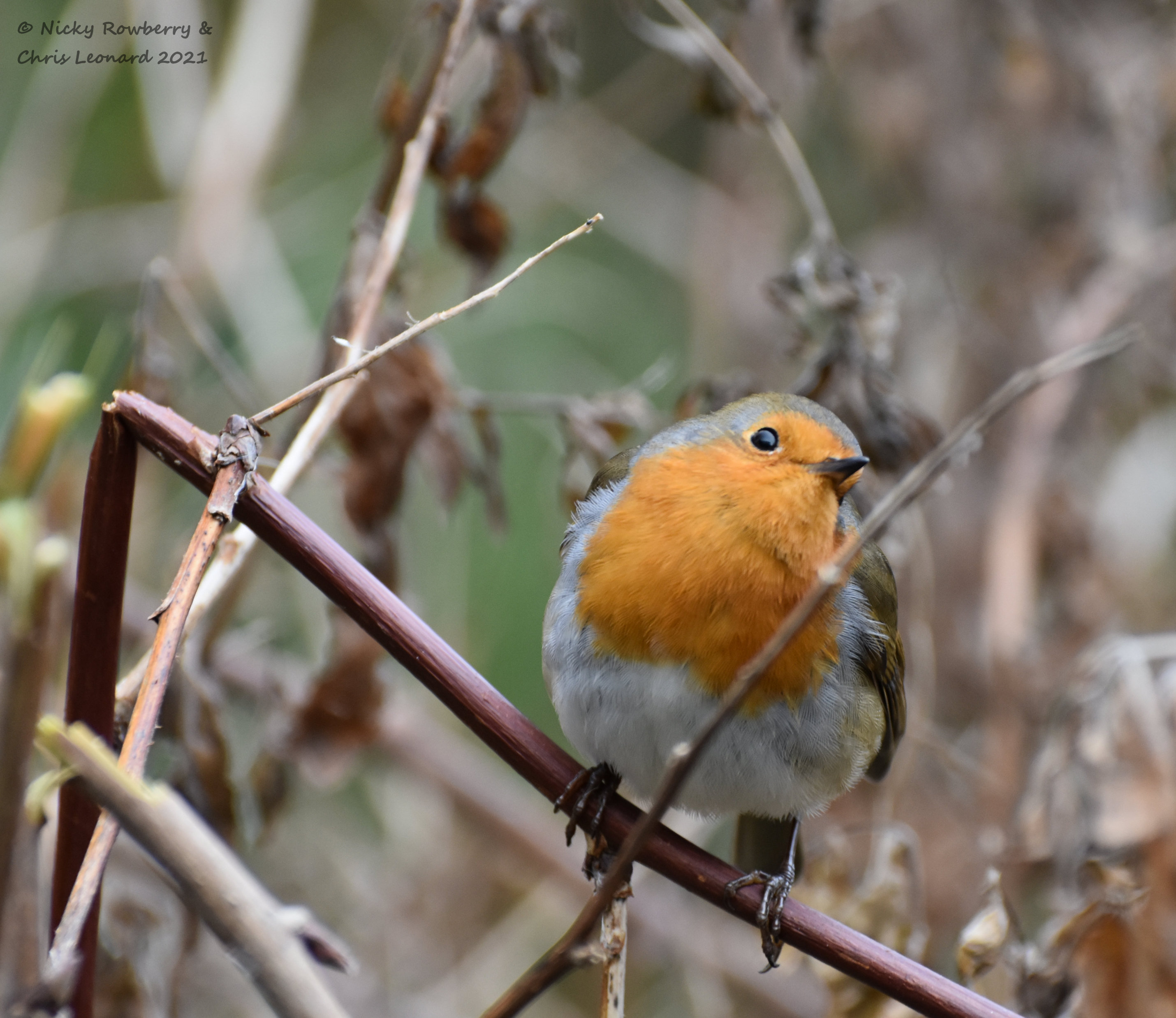
And then there was a singleton blue tit, dunnock and robin. The robin was the most sociable of the whole bunch. He even landed on the camouflage netting right by my head – too close to even get a photo. As if sensing that he might be missing his photo op, he then obligingly hopped down to some stems in front of me and posed so I could get his good side. Of course there was still a twig in the way – isn’t there always?

The (almost) highlight of the whole hour came near the end when I think a sparrowhawk zoomed across the garden after a small bird. Unfortunately it all happened so fast that I couldn’t be sure that’s what I saw and I almost got tangled in the camouflage netting in my haste to stand up and get a better look. So although I’m about 80% certain it was a sparrowhawk, I wasn’t sure enough to include it in my birdwatch results. So close!

A bit disappointed that our wren didn’t put in an appearance, nor the long-tailed tits. And really disappointed that our male blackcap was a no-show too. He’s been pretty much resident outside our patio doors for the last 3 weeks, but today of course he chose to have the morning off. Just to prove it, here he is from a few weeks ago.

Submitting my data took a few goes as the RSPB website seemed to be struggling. Hopefully that’s a good sign and means lots of people have been doing the count.

Success in the end though and nice to know I’d contributed in a small way to another bit of citizen science. Talking of which, tonight happens to be my next slug collection night for the Slug Count project. It’s all go!