Slugs Count

Way back at the beginning of the year (when the world seemed a very different place) I saw an article asking for volunteers to count slugs. The RHS in conjunction with Newcastle University were looking for 60 people to go out into their gardens once a month and count & identify the slugs in their own gardens. Perhaps I need to get out more, but it sounded great! Since I already spend a lot of time looking at the moths, bees, dragonflies etc. in the garden, it seemed a good opportunity to learn a bit about another group. So I applied and then lockdown happened and everything went on hold.

But eventually I heard back; they’d had nearly 3000 applicants for the 60 volunteers needed, so I feel really lucky to have been chosen. Our survey packs arrived, complete with sampling containers, slug guide and pre-paid postage envelopes (the local post office are going to love me). In an ideal world we would have all met up for hands-on training, but thanks of course to COVID, we had to do all this by Zoom.

First thing I learned about identifying slugs is that it’s really hard! They are extremely variable and they either keep moving or they scrunch themselves up so that you can’t see the bits you need to see. They’re also really hard to take photos of, because again they either keep moving or they’re shiny with slime so that the camera struggles to focus.

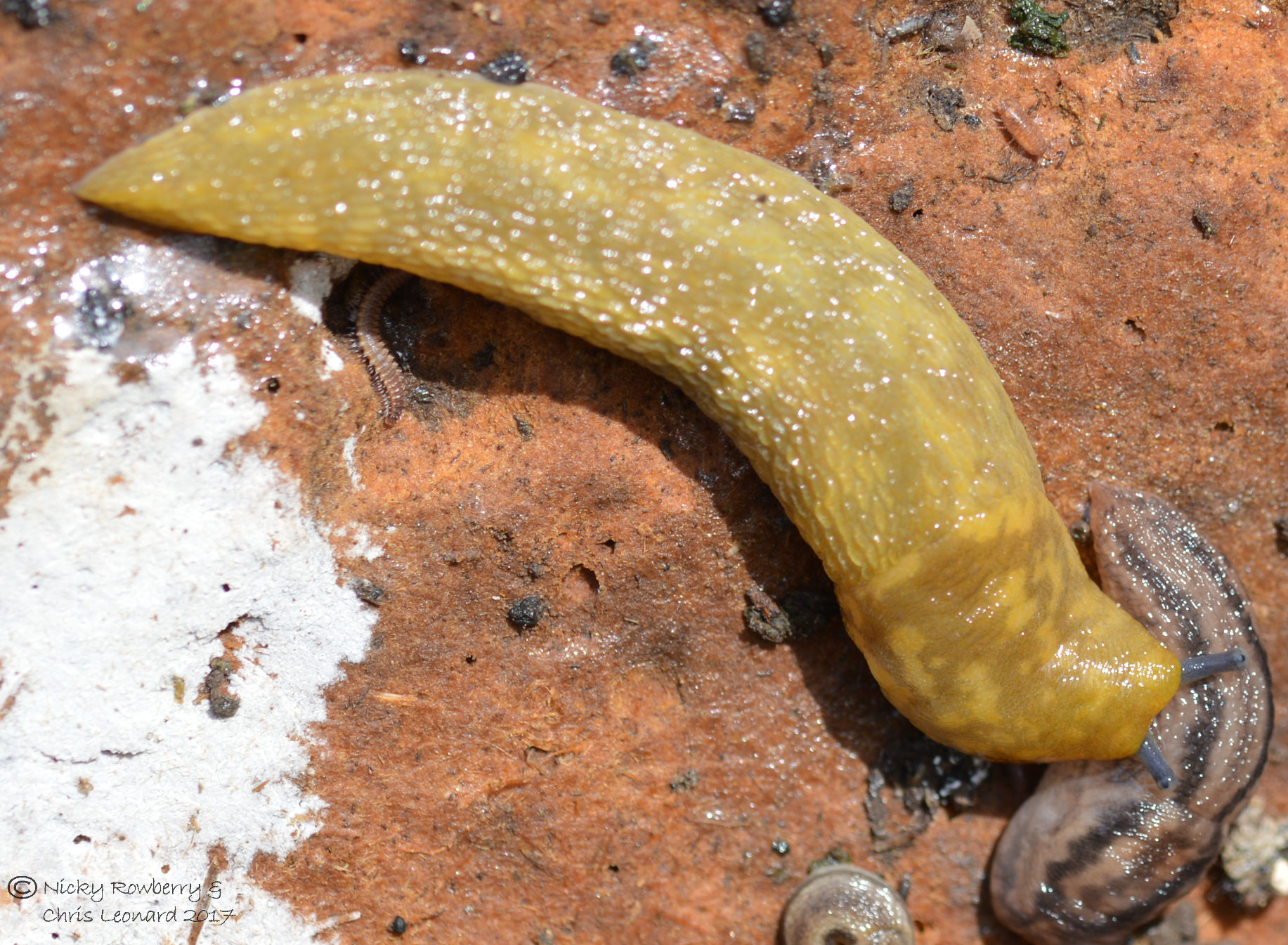
Splitting them into the major groups seems relatively straightforward until you get very small ones.  If the breathing pore is in the front half of the mantle (the fleshy sort of saddle on their backs) then it’s one of the Arion types like the one below.

If the breathing pore is in the rear half then it’s one of the keeled slugs like the one below. So far so good.

But separating the keeled slugs is also tricky. There are long keeled slugs and 2 groups of short keeled slugs and the keels really aren’t always that obvious.

Originally it was all planned to start in June but in the end it was early November before we all did our first slug counts! A half hour search around the garden after dark yielded 116 slugs! And that’s without lifting anything up, or rummaging through leaves or plants – just scanning around with my head torch (neighbours once again convinced I’d lost it). So here they are before I’d sorted them out – a bucket of slugs.
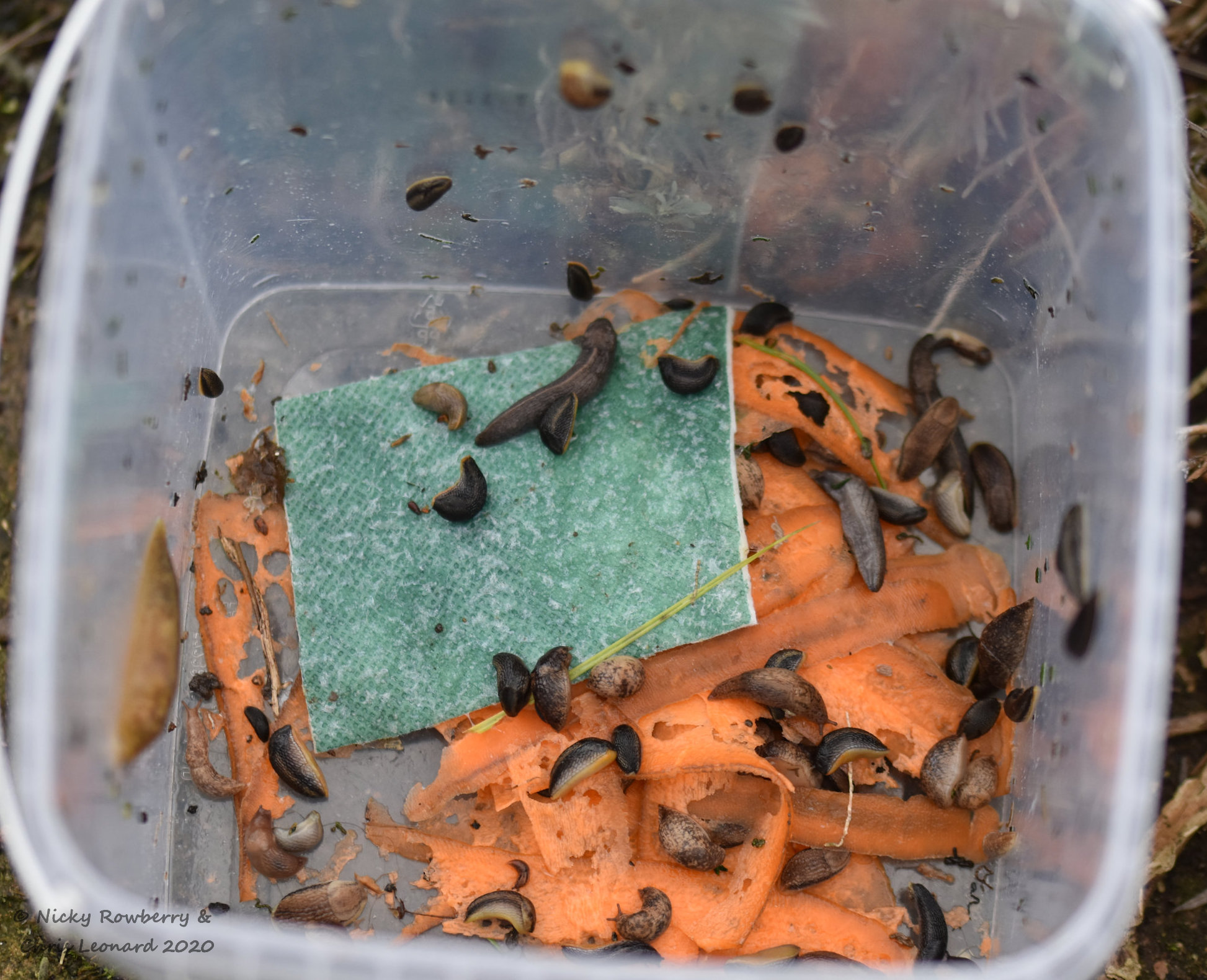
And then all potted up with their moist capillary matting to stop them drying out and shredded carrot for the journey.

The lovely post office lady did indeed thing I was a bit odd to say the least when she asked what was in the parcels. I have since done my second count in early December; a mere 88 slugs this time. Many of the other slug count participants have been reporting only a few or even no slugs at all, but that’s clearly not an issue in our garden. I suspect it may be because our garden is so unkempt with plenty of decaying matter for them to feed on – slug paradise.

By far the commonest species so far has been Arion (Kobeltia) hortensis – the Blue-black soil slug. They’re only 2 -3 cm long, but what they lack in size they make up for in numbers; the garden is full of them.

There were also apparently some other small Kobeltia species in my samples, but I’m waiting confirmation of what those are. A few juvenile Arion subfuscus had also sneaked in undetected (by me). Differentiating between some of these is way beyond my current skills set.

The next most common species was Deroceras reticulatum, the Netted Field Slug. This is one of the slugs with a short keel. I found these short keeled slugs really hard to photograph and show the keel, so you may just have to take my word for it that there is one there.

Apparently in my samples there were also some Ambigolimax sp., but since I failed to spot these as being anything different, I don’t have any photos.

I did better with 2 species of long-keeled slugs – Tandonia budapestensis – the Budapest Keeled Slug and Tandonia cristata  – the Crimean Keeled Slug. I managed some photos of the Budapest ones (below) but seem to have got so excited when I spotted the second species that I forgot to take any photos. The keel on the Budapest ones is really nice and obvious – my kind of slug!

The only other species to get picked up in my half hour searches was a single Limacus maculatus – the Green Cellar Slug, although this specimen doesn’t look especially green.

The cellar slug above was by far the biggest slug I collected during the counts so far, but I know we have much bigger slugs in the garden like this giant Arion seen last summer.

The weather is now significantly colder (first snow today) but there are still a fair few slugs out at night. Hopefully in the coming monthly surveys I will find more species new to the garden. I’m finding the whole process fascinating and it’s opened up a whole new world of wildlife to me. Hopefully the slugs in our garden and in those of the other slug count participants will help the scientists to expand their knowledge of this understudied group.
Our Garden Butterflies

The Big Butterfly Count results were announced last week, so it seemed a good time to take a look at the butterflies we’ve had in our own garden this year. Sadly the Big Butterfly Count suggested a poor year for butterflies, although the very warm spring may have meant their numbers peaked before the Count took place – let’s hope that’s the reason.

It might not have been a great year nationally, but we have actually done pretty well here in the garden. By the end of 2019 we had recorded 18 butterfly species in the garden in the 12 years or so we have lived here. In 2020 we were very pleased to add two more to that list.

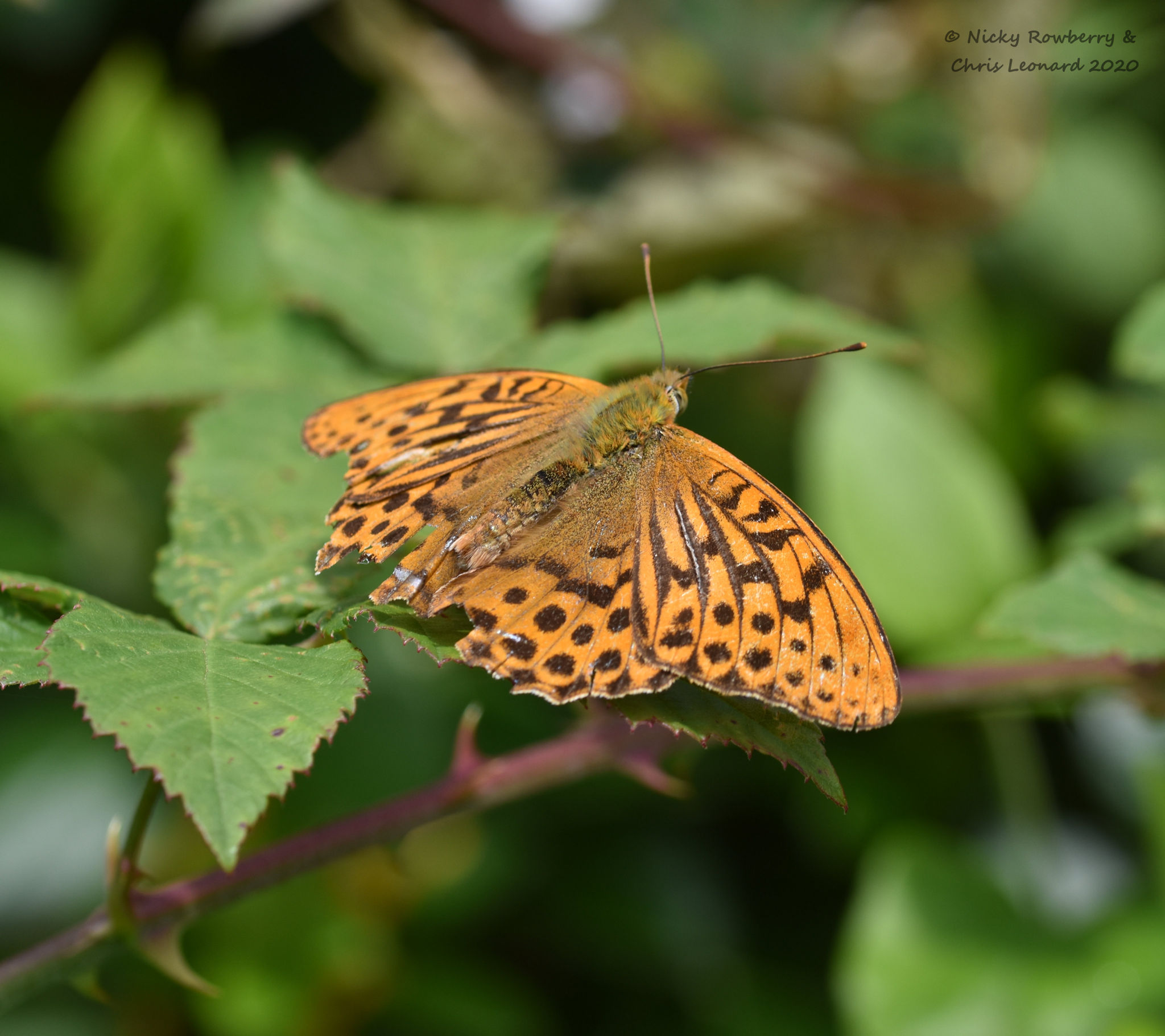
In the middle of July I was amazed to spot a Silver-washed Fritillary in the garden. It was a bit tatty and probably a bit lost, but you take what you can get with wildlife sightings! Having an overgrown, brambled covered garden had paid off. For once I even had the camera to hand, so snapped a few photos before it disappeared. It moved from the brambles to a buddleia and I managed a few more photos before it realised it probably wasn’t in the right place and flew off.

Seeing a Silver-washed Fritillary in our own garden was particularly enjoyable as, thanks to Covid, we hadn’t manage to get out to many of our usual places, so hadn’t seen them anywhere else this year.

Then a couple of weeks later we were sitting by the pond (as so much of 2020 has been spent) when a small butterfly landed on the Eryngium flowers. We thought at first it was a female Common Blue, which in itself would be a bit of a rarity in the garden, but it turned out to be a Brown Argus – our 20th butterfly species for the garden.

Besides the newcomers above, we’ve had a fairly steady stream of butterflies throughout the summer. As with the Big Butterfly Count results, the white butterflies were the most numerous ones – Small Whites in particular seemed to have a good year here in Malvern. I try and record the butterflies I see daily for the Garden Butterfly Survey and for most days through the summer I was seeing at least some Small Whites and some days up to 8 or 9 in one go.  The numbers of Painted Lady butterflies we saw were down on last year, but then last year was a particularly good year for them nationwide.

Commas, Red Admirals, Peacocks and Small Tortoiseshells all appeared, although never in more than 1s or 2s, despite us having a lot of Buddleias in the garden. The grassy areas (we can’t call them lawns any more) produced Ringlets, Gatekeepers and Meadow Browns and the Speckled Woods & Holly Blues liked the brambles and apple tree. I’d planted up a few Bird’s Foot Trefoils in the hope of attracting some Common Blues, so was really chuffed when one finally deigned to appreciate my efforts and land on the flowers.

The final treat for the year was a second brood Small Copper which took advantage of some of the late summer Asters growing wild all over our garden. It’s got blue spots in the wings which apparently makes it the caeruleopunctata form, which was an interesting snippet to learn about.

So it may not have been particularly good news nationally for butterflies, but it seems our Malvern garden has been lucky.  Whether we’ve genuinely had more species visiting or whether we’ve just been seeing more because, thanks to lockdown, we’ve spent more time in the garden I don’t know. Whatever the reason, they have certainly been very welcome little rays of sunshine in an otherwise troubled year.

Damsels & Dragons – Part 3

I knew as soon as I posted the last dragonfly update on the pond that it probably wouldn’t be the last and sure enough over the last month or so there has been plenty of dragon activity in the garden.

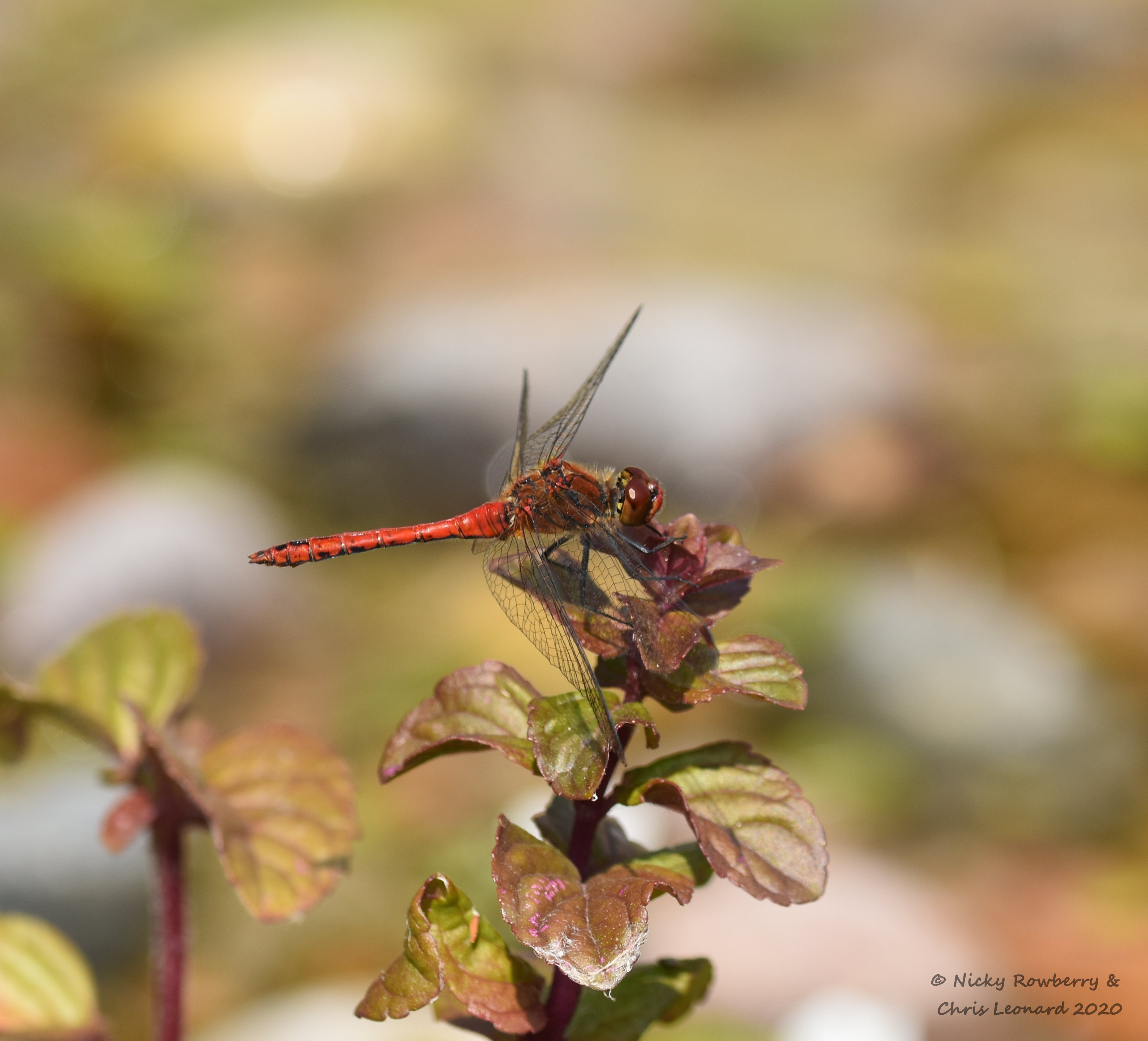
The darters have continued to be the predominant dragonflies at the pond, but with a new addition – at least one Ruddy Darter.

Very similar to the Common Darters, there may well have been more than one Ruddy visiting, but unless they sit still enough to get a decent photo, I find it hard to tell them apart.

The Ruddy ones have all-black legs (left), whereas the Common ones have a dingy yellow streak down the legs (right).


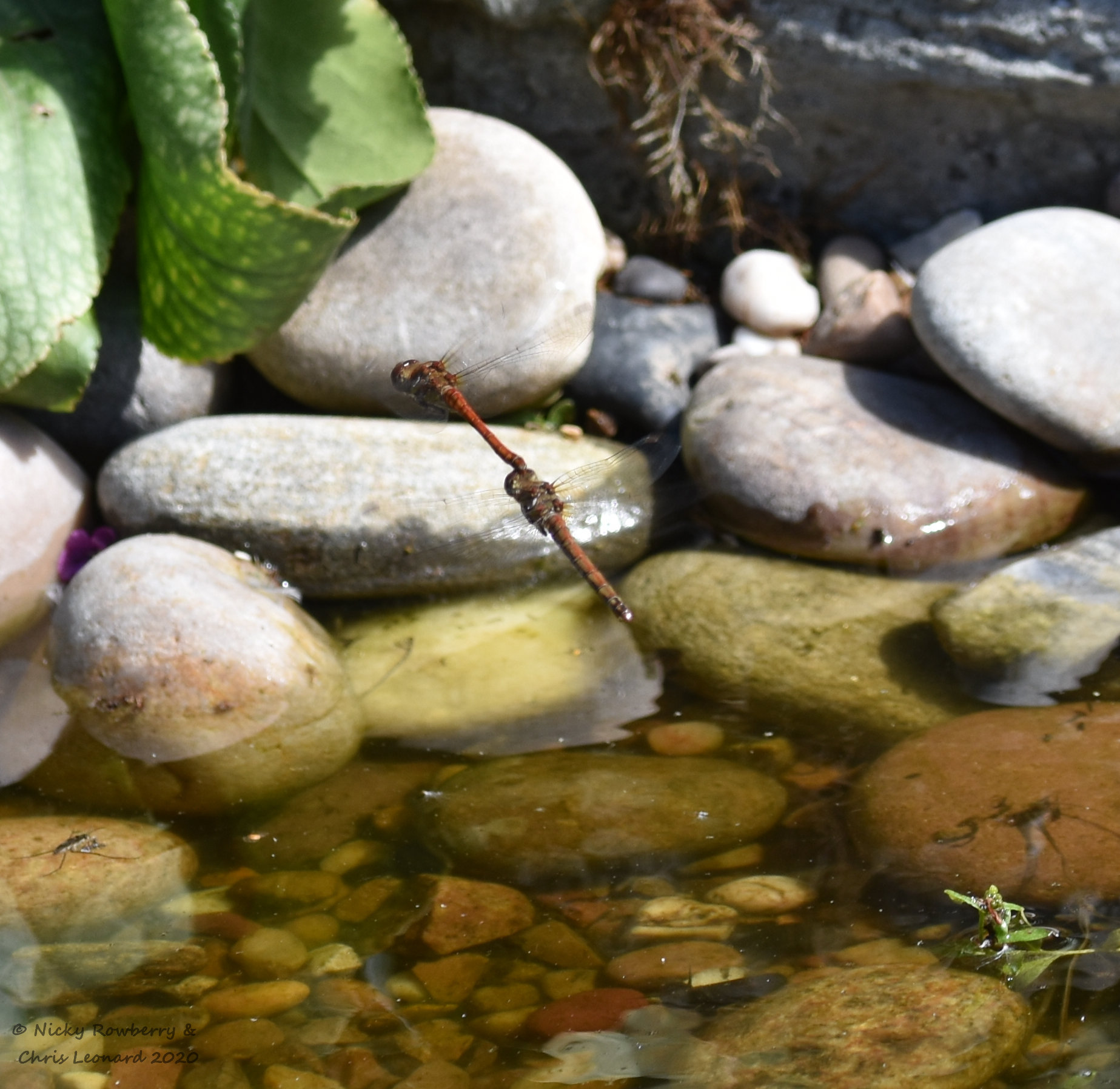
But it’s impossible to see any of that when they are flying. And they’ve been doing a lot of that, often paired up and laying eggs together. Unless they pause and rest, I’ve no idea whether it is Ruddy or Common pairs I am watching. This pair did take a bit of a break, with the male seeming to have made himself comfy on the perch, while leaving the female clinging on for dear life! (I’ll refrain from commenting on a woman’s lot!)

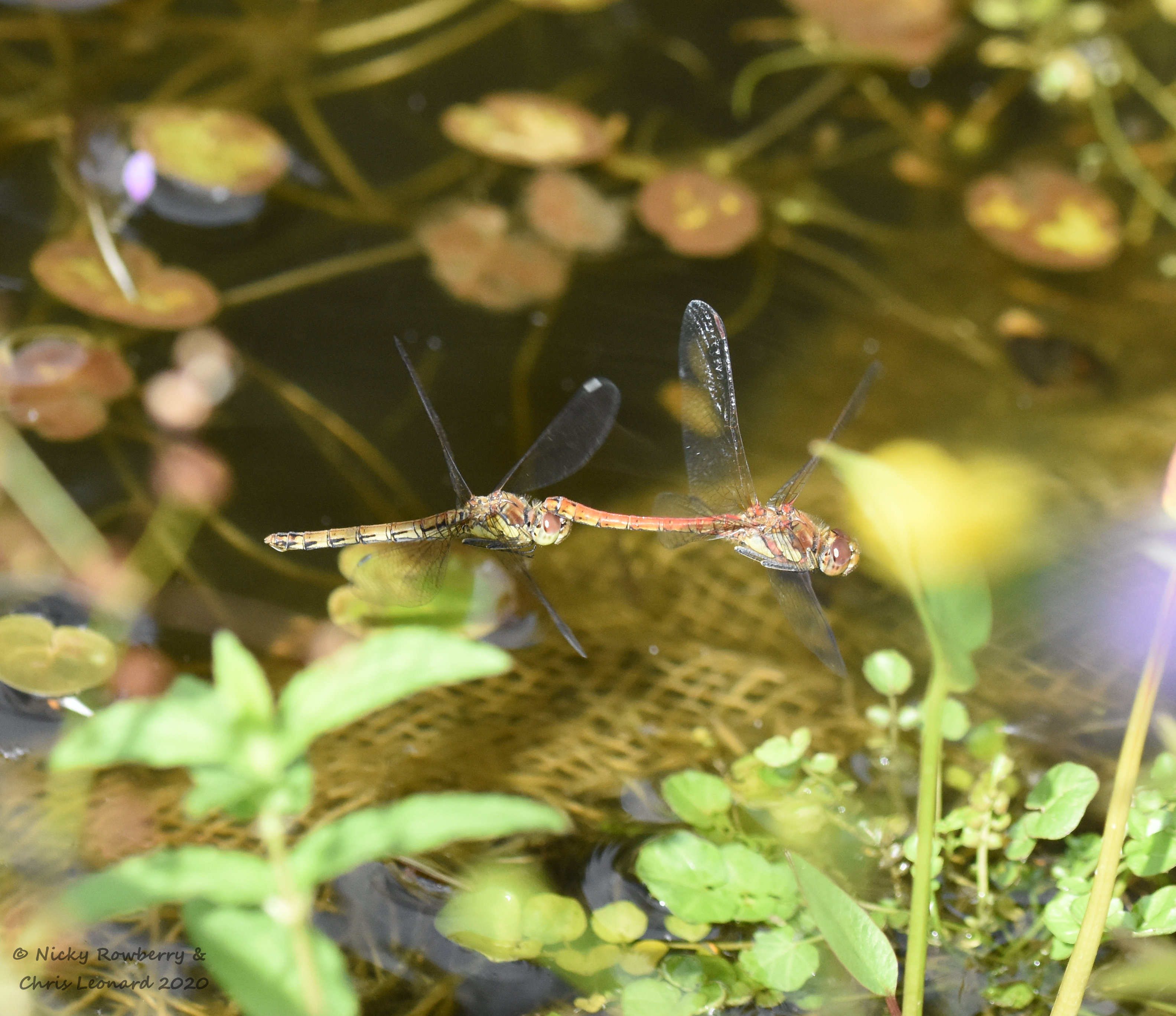
They flit around the pond, laying eggs with a dab of the female’s abdomen in the water. They are very hard to either video or photograph as no sooner have you focussed than they’re off across the pond. So apologies for the shaky video and fuzzy photos. The male holds onto the female at the back of her head using claspers at the end of his abdomen.

They then fly in tandem around the pond depositing the eggs. The eggs are just laid apparently at random in the water, rather than being carefully placed onto vegetation as some species do.  The males hold onto the females while they lay the eggs to prevent other males from mating with her. I don’t know which one of them controls the movement – whether the female decides when to dip or whether the male just dunks her in the water when he feels like it.

Occasionally we’ve been lucky enough to find a pair of darters at the earlier stage in the mating cycle, when they are curled together in the wheel position, before they take off on their tandem flight. The male clasps the female at the back of her head and the female curves her abdomen up and round to collect the sperm from the top of his abdomen.

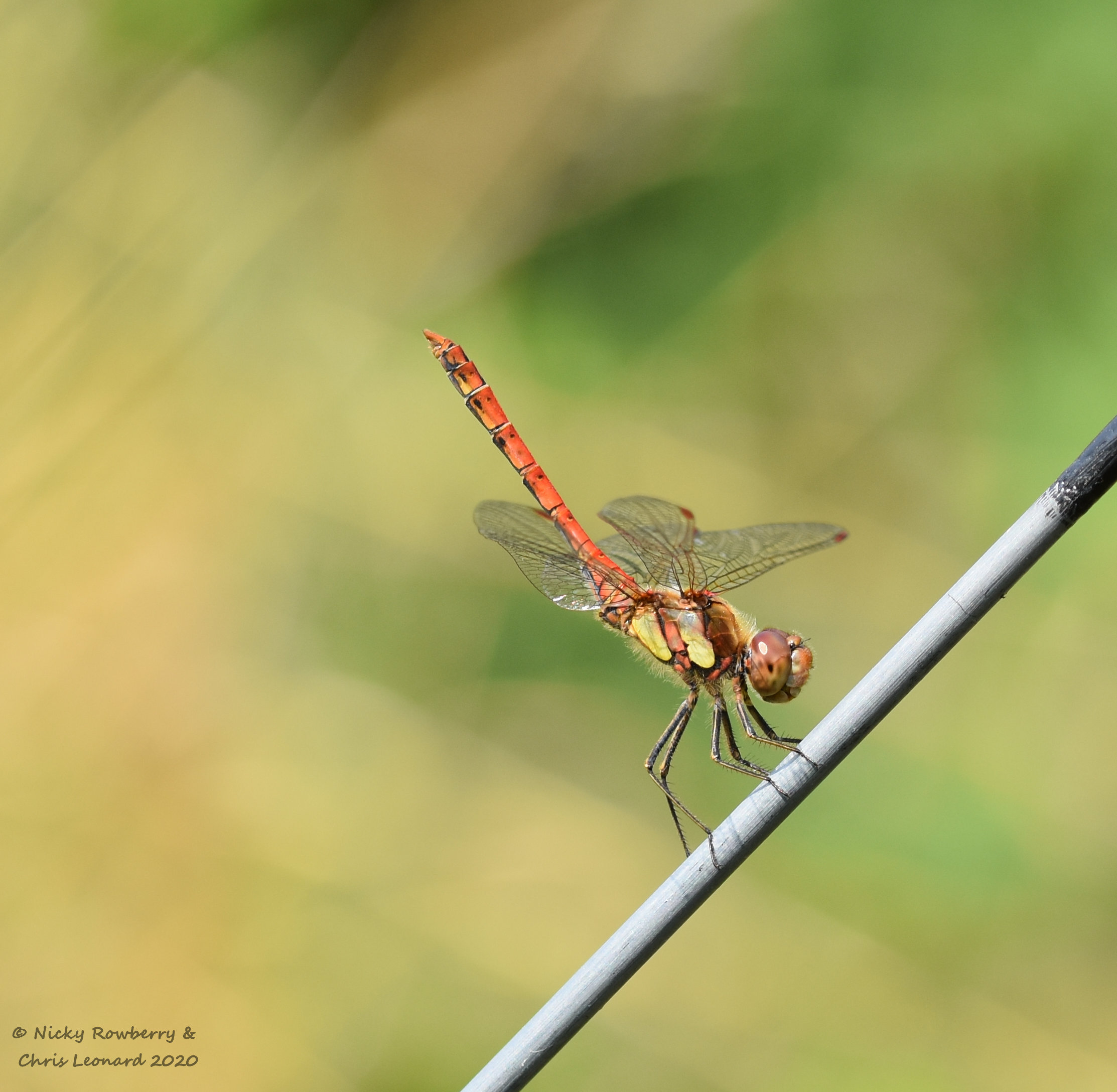
We had some very hot weather for a few days in August and one Common Darter in particular spent a lot of time in the obelisk pose (I’ve not made that up, it’s a real thing in dragonflies!). They align themselves so that the tip of the abdomen is pointed towards the sun – it’s supposed to reduce the surface area exposed to the heat and so stop them overheating.

One of them even did it right in front of me, its abdomen pointing right up and pulsating slightly. Again apologies for blurry camera work, but I hadn’t been expecting a pulsating bottom to be pointed at me this way!

The Emperor dragonflies were still visiting in August and laying lots of eggs. This one made good use of one of the barley logs we have in the pond to keep the water clear. I know I shouldn’t anthropomorphize a dragonfly, but she really does seem to have a look of concentration on her face to me.

There have been some other large dragonflies zooming around the pond this last few weeks, but it took until a few days ago for a couple to stop long enough to get a photo. For some reason both chose to rest on the Himalayan Honeysuckle that hangs over the pond from next door.  After some debate the first one was identified as a female Southern Hawker.

I thought the second one was probably the same, but turns out no, it was a female Migrant Hawker.

I think these two hawker species will be another pair that I can only reliably separate with decent photos. Both stunning dragonflies though.

So that brings our dragonfly/damselfly tally for the new pond to 9 species. Pretty impressive for a pond that is only just over 6 months old. And there are still a few species that we might yet hope to see in future years. Hopefully next summer we will have plenty of dragonflies emerging from the pond and the cycle will begin again. Now that’s something to smile about.


Butterflies Old and New

2020 has certainly been a most unusual (and hopefully never to be repeated) year for all of us, but finding solace in nature has been a great help getting through these strange times. At the height of the lockdown, we felt very lucky to have a garden full of wildlife that we could enjoy. We have spent an awful lot of time watching the wildlife emerge as the weeks went by and have particularly enjoyed seeing how the new pond developed. But after a while you do start to go a little stir crazy and we were longing to get out and see things beyond the confines of our garden. So as things began to ease a couple of weeks ago and nature reserves started to reopen, we made our first tentative ventures out, first to a local one and then to one a bit further afield.

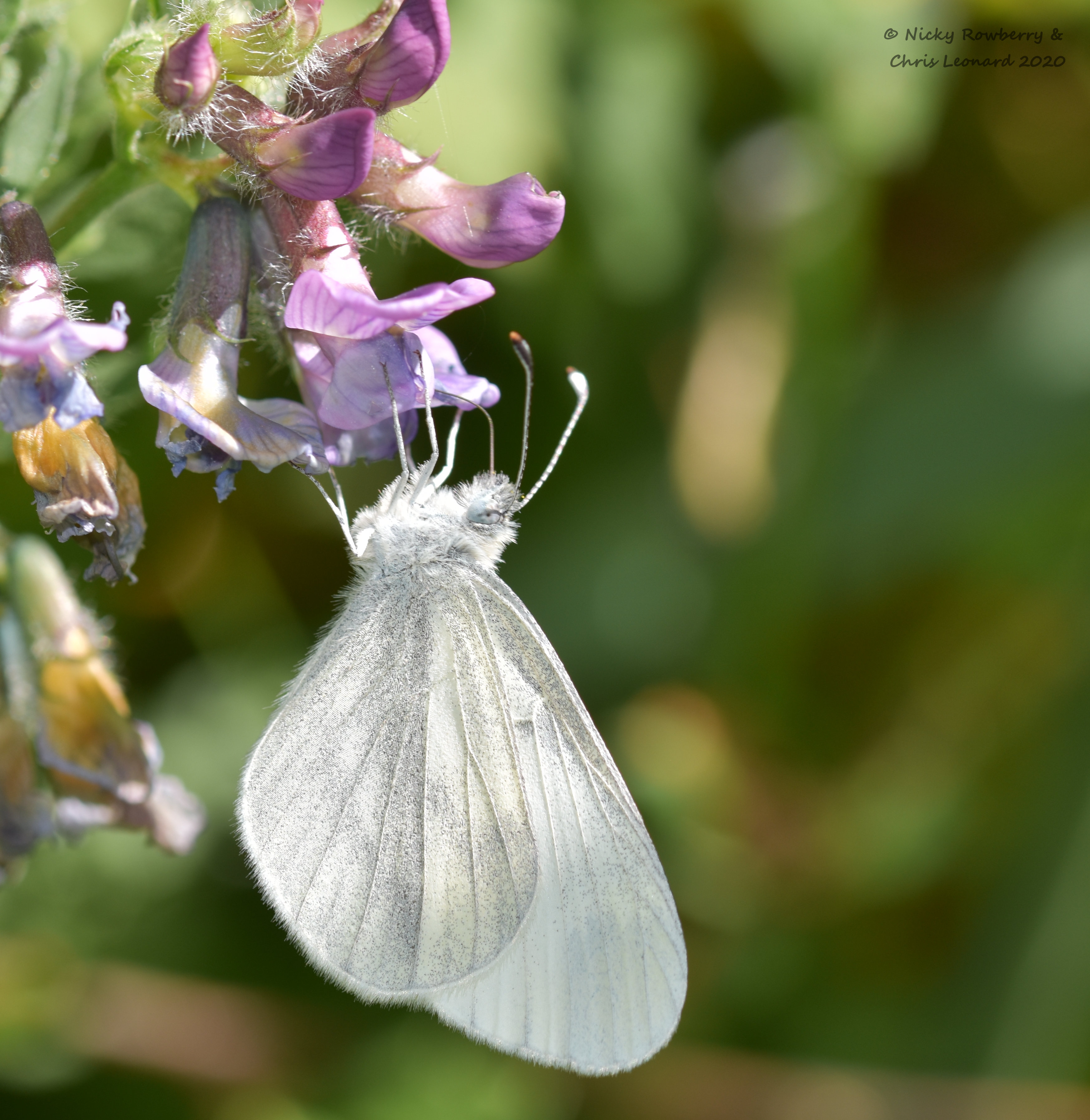
First stop was Monkwood, just a few miles away and a lovely reserve that we’ve been to quite a few times before. First delight was that we heard a cuckoo calling on and off the whole time we were there – our first cuckoo of the year.  It was the end of May and the Wood White butterflies were out in abundance. They had only been reintroduced to Monkwood a few years ago, but are clearly doing really well. They are small delicate little butterflies, not as showy as say the fritillaries, but really delightful to watch and very pretty in their own subtle way.

Several other butterfly species were out, but it was particularly nice to see some Large Skippers, our first of the year.

We also saw several small and non-descript moths flitting about. Despite me chasing them around, the best photo I could manage was this blurry specimen. Turns out that they were Drab Loopers, not perhaps the most attractive of names for the poor things. They are generally a bit of a rarity though and Monkwood is a stronghold for them.

Next up was a splendid large caterpillar of the Drinker moth. The Drinker is supposedly fairly common in the West Midlands, but we’ve never seen the adult moth; so it was nice at least to see junior here trundling across the path.

Finally for Monkwood, it was great to see my perennial favourite, the Swollen-thighed Beetle.

This week as the lockdown measures relaxed a bit more, we decided to venture further afield. This was the week that we were supposed to be going on holiday to Norfolk, where we’d hoped to see our 51st British butterfly species – the Swallowtail. Obviously all holidays were cancelled, but we came up with a plan B to at least see a 51st species. The Black Hairstreak was on our yet-to-see list and the nearest sites were about 2 hours away in Northamptonshire – just about doable in a day trip. So we set off at the crack of dawn (well a bit later than that to be honest) and headed to Glapthorn Cow Pastures.

The name might suggest it was more of a meadow and indeed it did used to be grazed by cows. But now it is managed as a mix of woodland and blackthorn scrub – ideal habitat for the rare Black Hairstreak. We got there about 09:30 just as another keen butterfly spotter arrived. Funnily enough we heard a cuckoo calling here too as we got out of the car – a good omen perhaps? We’d had tips from kind people on Facebook as to where to look, but still finding a small butterfly in a big wood did feel a bit like a needle in a haystack job. We wandered around for a bit until we met up with the other traveller again who had found a local who knew where to look and consequently found the butterfly too!

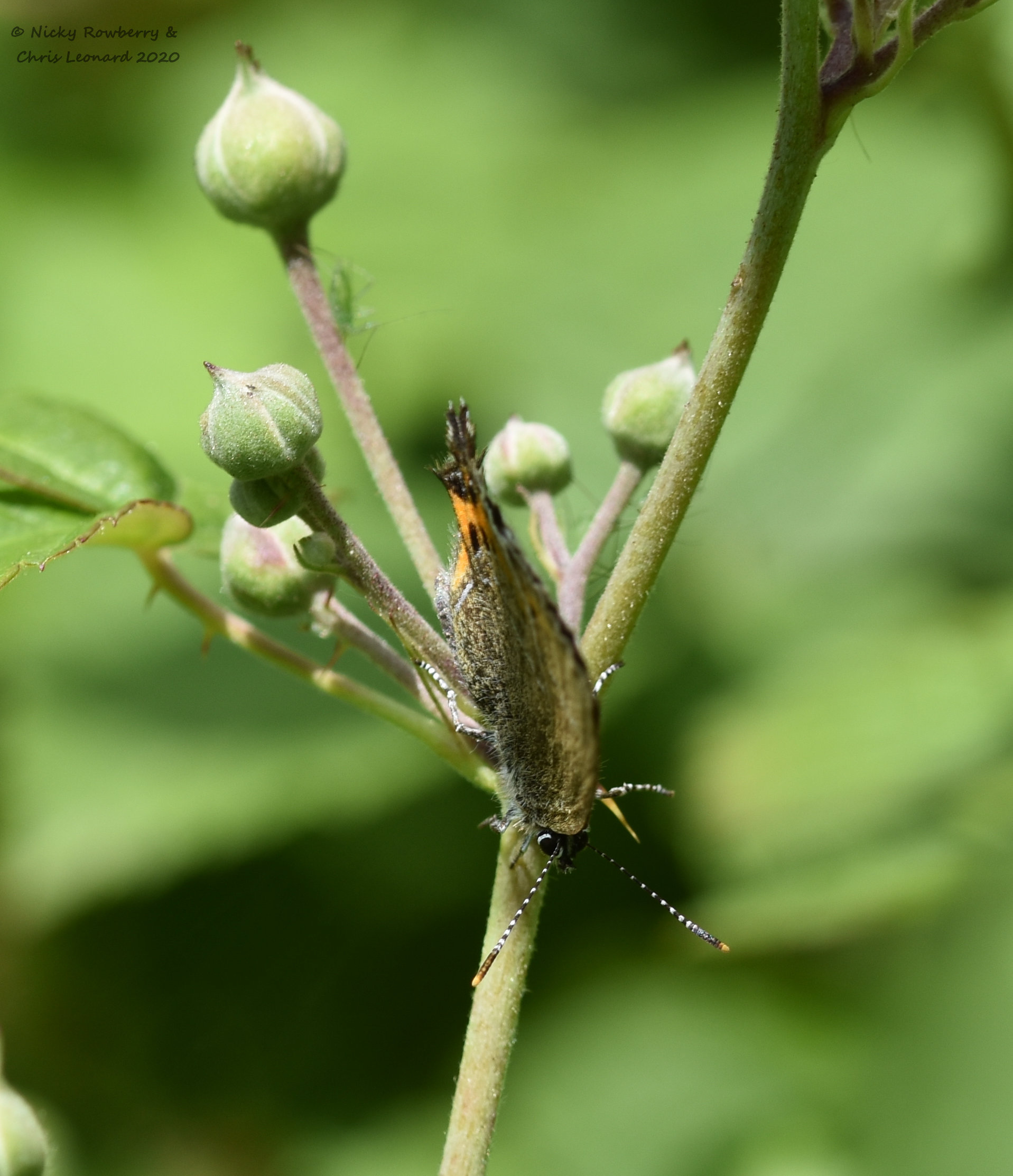
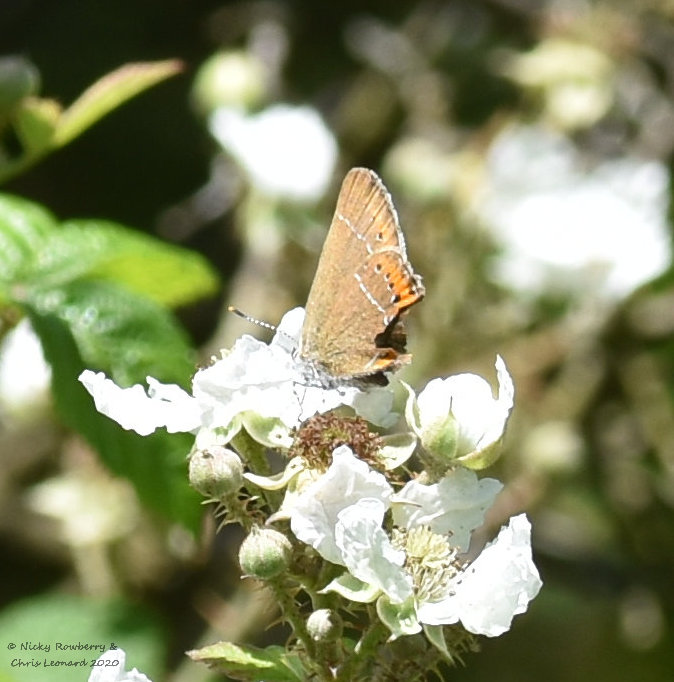
We saw at least 2 Black Hairstreaks while we were there. The first was a perfect looking specimen, but rather flighty. So apologies that all the photos are either a bit blurry or it’s got its head stuck in a bramble. But it is at least recognisably a Black Hairstreak with the black spots on an orange background around the edge of the wings and the little tail.

The second individual has unfortunately lost his tail and half his black spots (the best bits of a hairstreak) and we nick-named him Raggedy.

Raggedy was however quite obliging and hung around long after the more perfect one had disappeared. He was so keen to be seen in fact that as more people arrived we could point him out to the newcomers. Glapthorn is clearly a popular spot; by the time we left there were 9 people all trying to see the hairstreaks (Raggedy’s moment to shine) – all trying to socially distance themselves at the same time of course.

It was a lovely hot day and plenty of other butterflies around – skippers, speckled woods, red admirals, lots of meadow browns, whites (too fast to determine which) and a small tortoiseshell. There were also quite a few of these stunning black and yellow longhorn beetles (Rutpela maculata) enjoying the flowering brambles.

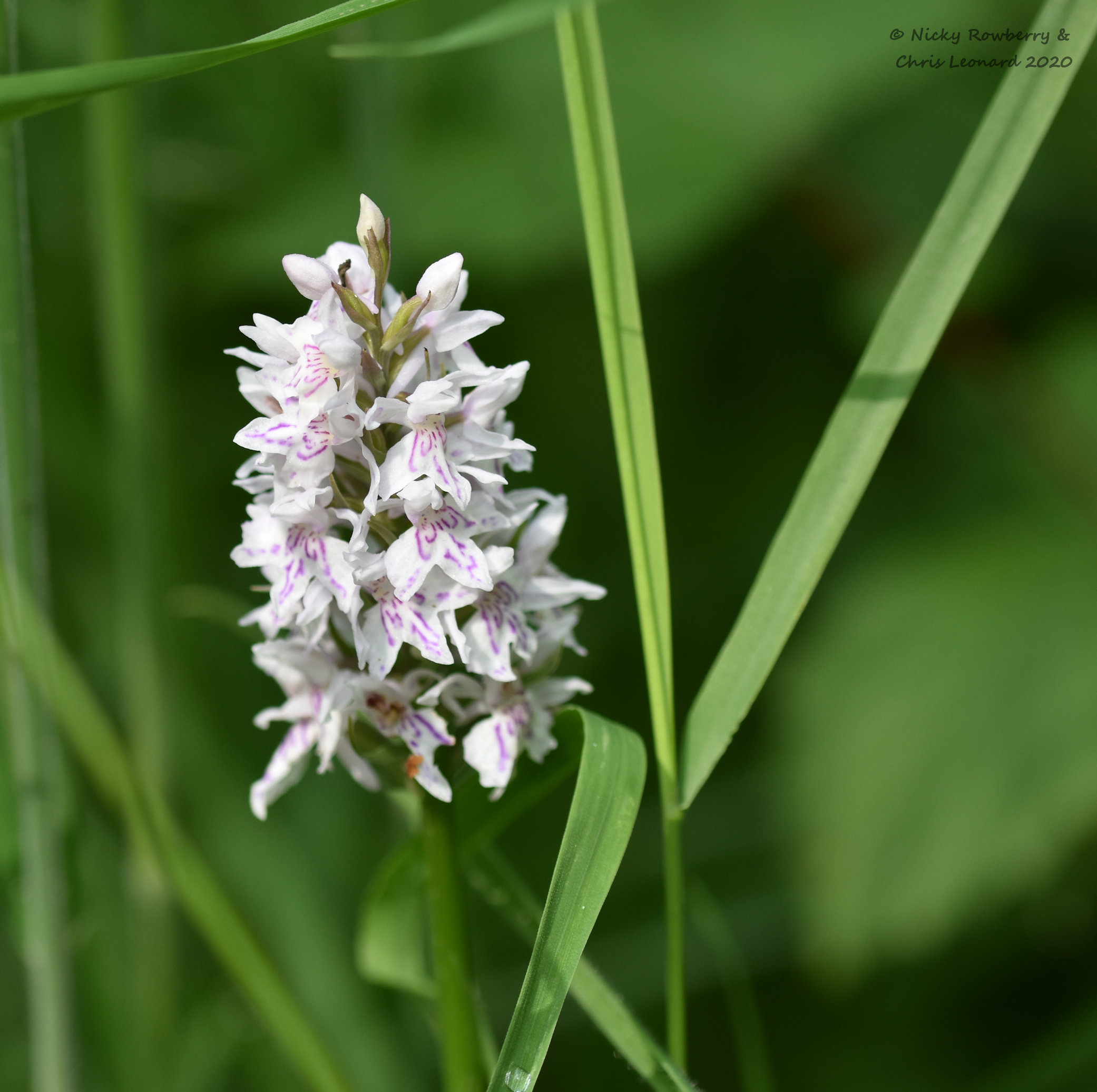
Having come so far, we had a walk around the rest of the wood to make the most of the day.  There were lots of very pretty orchids in full bloom (possibly Common Spotted Orchids although I’m not sure).

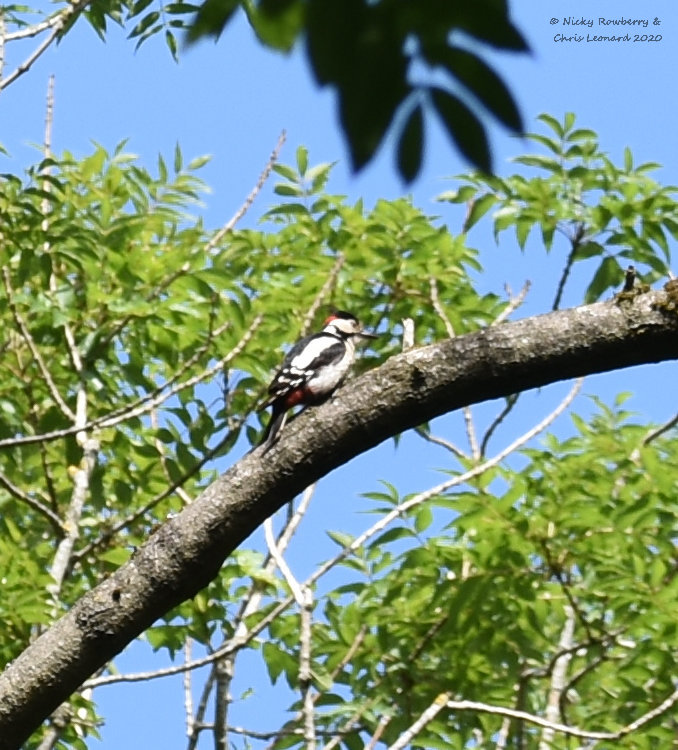
The sounds of the cuckoo had given way to the calls of a woodpecker. We saw a couple of them flying high in the trees and managed a distant shot of a Great Spotted, although there was also a Green Woodpecker.

So that’s it, our 51st butterfly seen and photographed and a couple of lovely days out to quench our thirst for wildlife. It would have been great to have been in Norfolk this week for our holiday, but hopefully we can do that next year instead. In the meantime we are very grateful not only to have such wonderful nature close by, but also that we have been very lucky to have stayed safe and well during these unprecedented times. Stay safe everyone. xx

Bee ‘n’ Bees

We have always tried to make our garden as bee friendly as possible – we garden organically, there are plenty of weeds providing nectar through most of the year and we put up bee hotels. We’ve had these regular bee hotels dotted around the garden for a few years and they’ve proved very popular with a few species, but most noticably the Red Mason Bees (Osmia bicornis). Every spring they are buzzing with bee activity and every spring I try and photograph/video them with mixed results. The Red Mason Bees have an ingenious system whereby the females lay female eggs at the back of the tubes first, followed by eggs destined to be males at the front. Because they are at the front the males emerge first and will initially feed a bit then they head back to the nest or bee hotel to wait for the virgin females to emerge.

The airways can get a bit congested as many males, desperate for their chance to mate with the females, jostle for position. Here’s a short video of a bunch of males doing just that – buzzing around, ever hopeful.


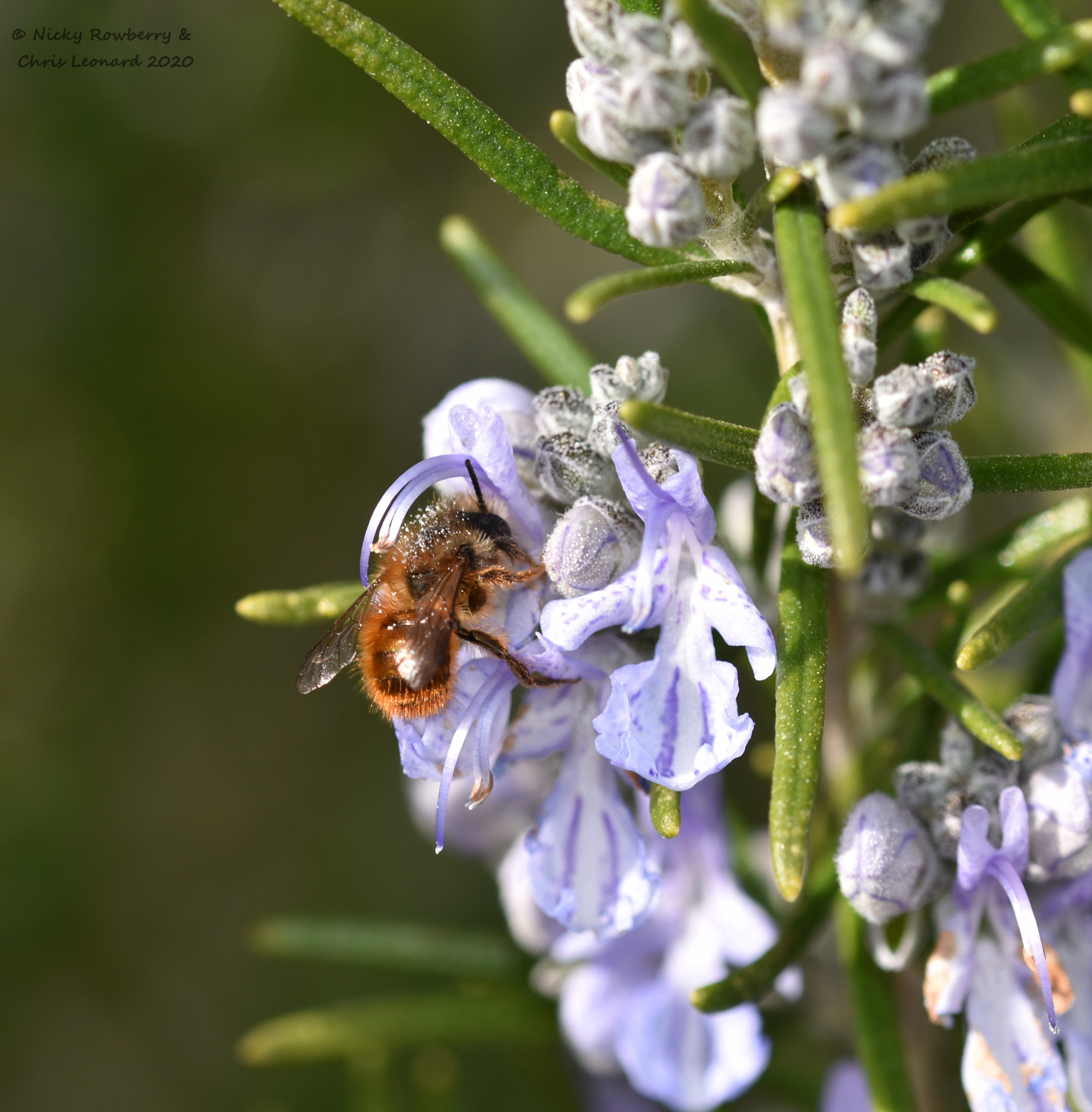
Red Mason bees are medium sized, solitary (despite the crowds around the bee hotel) bees with as the name suggest bright red hairs on their bodies. As they get older the hairs can fade or get worn away and they lose their bright red colour; the one in the photo below is probably fairly recently emerged.

The males can get so excited at the prospect of the new females, that they will pounce on virtually anything roughly bee sized that appears, including each other. I found the trio in this next video on the path beneath a bee hotel. The female is the one on the bottom with two makes stacked on top of her. One of them is going to be very disappointed!


The mason bit of their name comes from their use of mud to form individual nest chambers for the larvae to develop in. Each tube in a bee hotel may contain several muddy chambers and the end of the tube is sealed off with damp mud, which then hardens to form a solid plug. Here she’s just deposited a fresh blob of mud which she works into position with her feet.

The Red Mason bees aren’t the only spring species to use the bee hotels, we also saw some Blue Mason bees (Osmia caerulescens). These were smaller than their red cousins and so tended to use the smaller tubes. I think this is a male which has more of a metallic green body with pale brown hairs.

Beneath one set of bee hotels is our bench set on slabs, which in turn are set (somewhat unevenly it has to be said) on sand. While videoing the mason bees, we realised that there were also bees burrowing into the sand beneath us (I will blame them for any unevenness of the slabs). I’m not sure whether they are also mason bees, or something different, they didn’t stay still long enough to get a decent photo. But they were certainly busy bees.


So I’ve always been very happy with our bee hotels and then I saw this, the absolute Ritz of bee hotels.

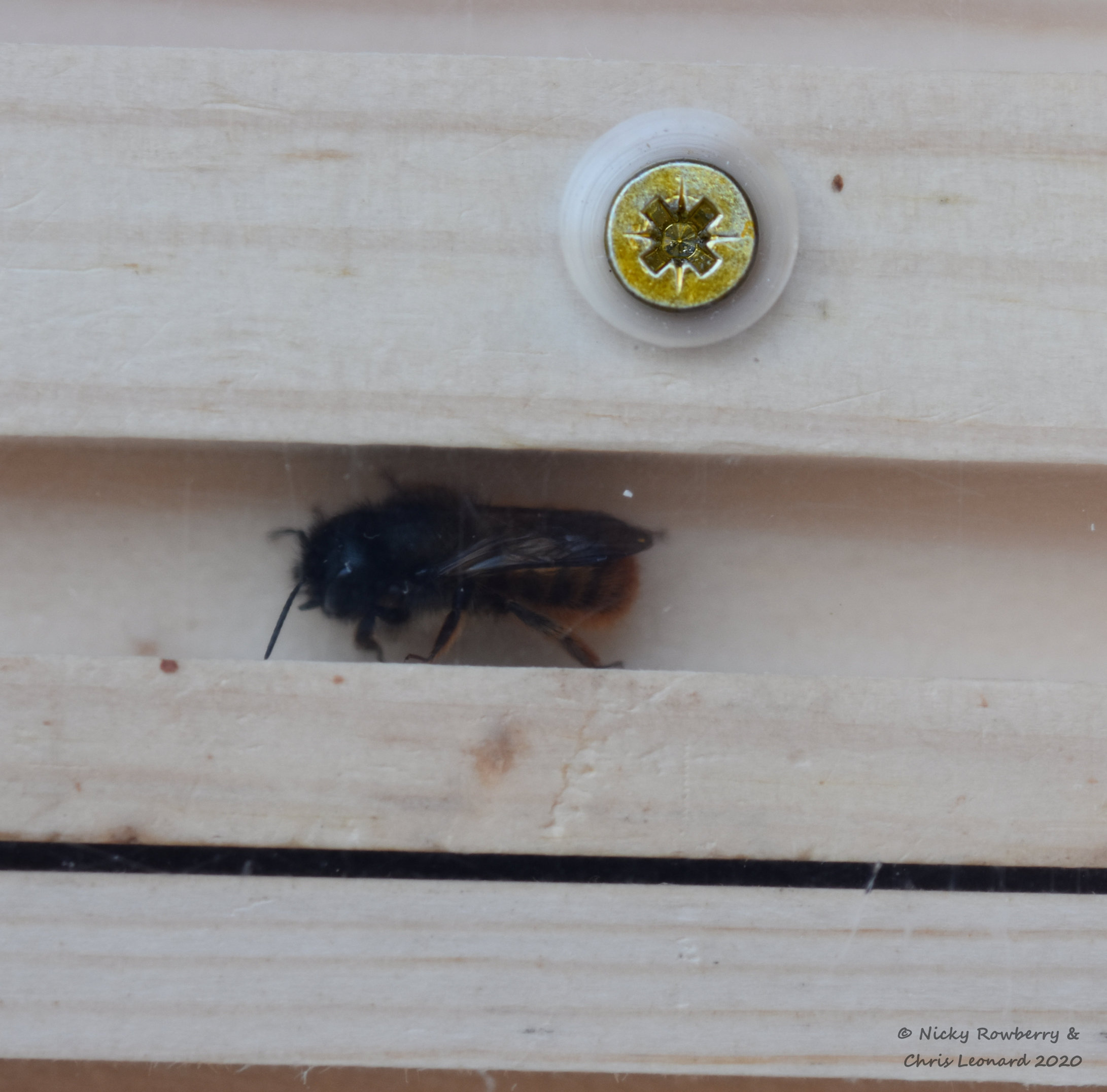
The inner section can be removed for storage and cleaning and the side panels can be removed to reveal a Perspex panel so that you can view the bees working away. So of course we had to get one! I waited patiently until the end of March then up it went on the fence wall ready for bee season. I got very excited when I spotted the first bee in one of the chambers.

Unfortunately the bees didn’t seem quite so excited by my deluxe offering and most seemed to stick with the old bee hotels. This may be because the old hotels with last year’s bee chambers in would have smelled of bees and so attracted the new generation back. In the end though I did get a few bees using the new box, although annoyingly most seemed to go for the tubes either above or below the viewing chamber. I did manage to get this video of one female stock-piling the pollen for her egg. She starts by rearranging the pollen that’s already in there and then turns around and uses her legs to brush the pollen off her body and add it to the pile.

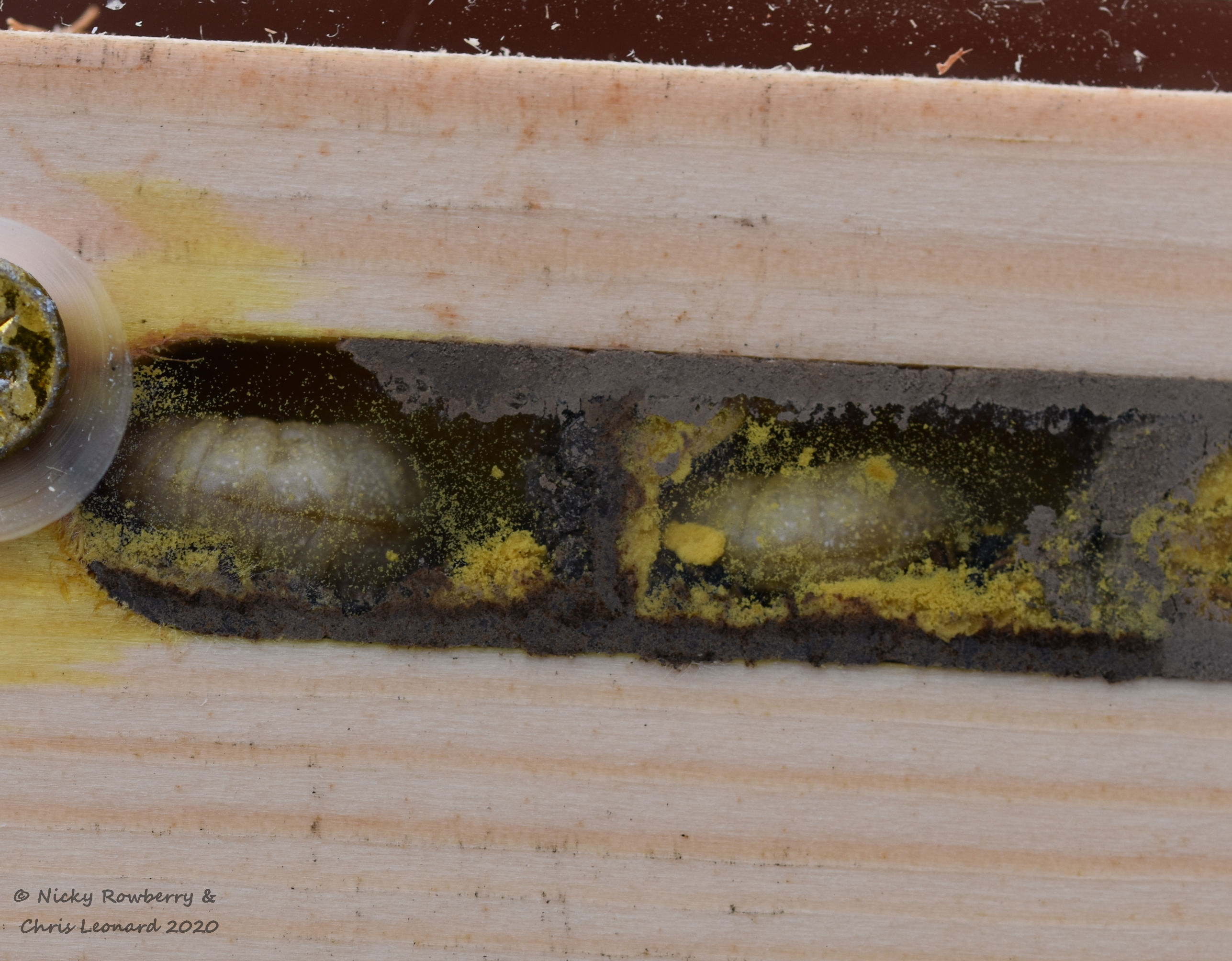
Once there’s enough pollen in there, she will lay an egg in it and then seal that chamber and start work on the next.  By the end of the red mason bee season, I had several tubes full of developing larvae.

The eggs hatch into larvae and feed on the pollen that the mother bee has provided for them.

Once the larvae have eaten all the food they will spin a silk cocoon and pupate, turning into adult bees. They then stay in the cocoons like this through the winter, until the warmer spring days tell them it is time to emerge. Hopefully I will be able to get photos of these cocoons when the time comes. For the time being, the inner section of this deluxe bee hotel has been removed (complete with developing larvae) and is being safely (I hope) stored in the garage away from parasites. A new inner section has been put out which will hopefully attract the next season’s bees – the Leaf-cutter bees. Watch this space.

Lonesome George – Born Free!

Way back at the end of last August I blogged about Lonesome George, the Eyed Hawk-moth caterpillar I had been raising. You can read the original blog post here:  https://toolazytoweed.uk/2019/08/29/lonesome-george/

Now, finally, George’s story is complete!

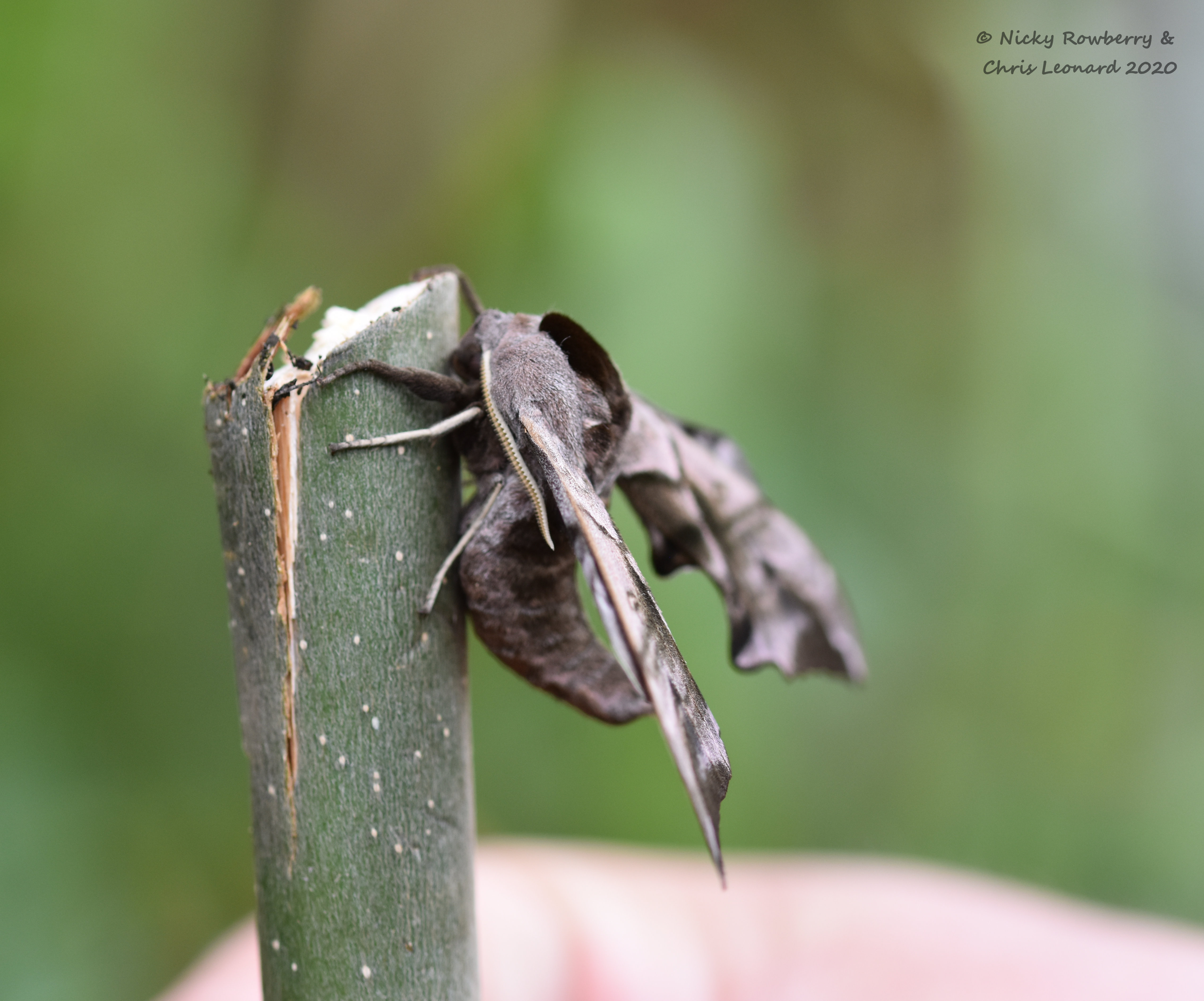
On 30th June 2019 I caught a female Eyed Hawk-moth in my moth trap. I put her briefly in a pot so I could take some photographs of her. Here she is in all her splendour.

While in captivity she laid 2 eggs. Hopefully she laid many more eggs too, once she was released, as she looked full to bursting.

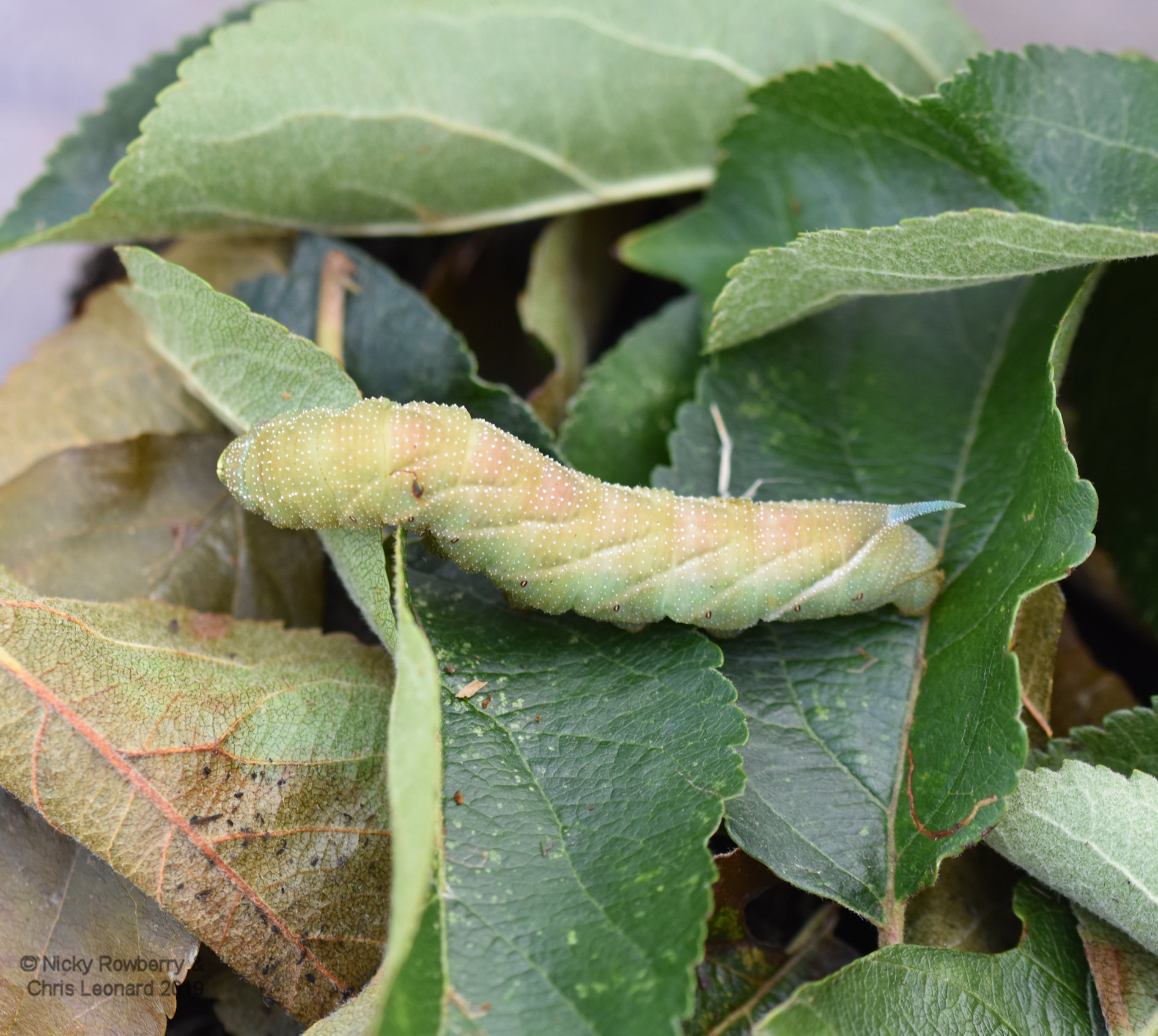
I decided to try and rear the caterpillars if I could. They both hatched into tiny caterpillars, but sadly only one lasted beyond the first day – Lonesome George was the survivor. George was lovingly tended and fed fresh apple leaves every day and soon grew into a handsome fellow about 5cm long with a voracious appetite.

Towards the end of August 2019 he pupated and he’s been safely kept in a large tub with soil and leaves ever since. I checked on him every couple of days to make sure nothing untoward had happened to him.

At the  beginning of May I started seeing reports on social media of Eyed Hawk-moths being out and about, so I stepped up my surveillance of George. For the last few days I had been checking him almost hourly for any signs of activity. What I’d hoped to see was him (or her) emerging from the chrysalis and to watch the wings expand into full blown moth! Of course George had other ideas and chose to emerge during the night.  I got up yesterday morning and checked on him about 7am to find the chrysalis cracked open – I had a split second panic that something had somehow got into the tub and got him.

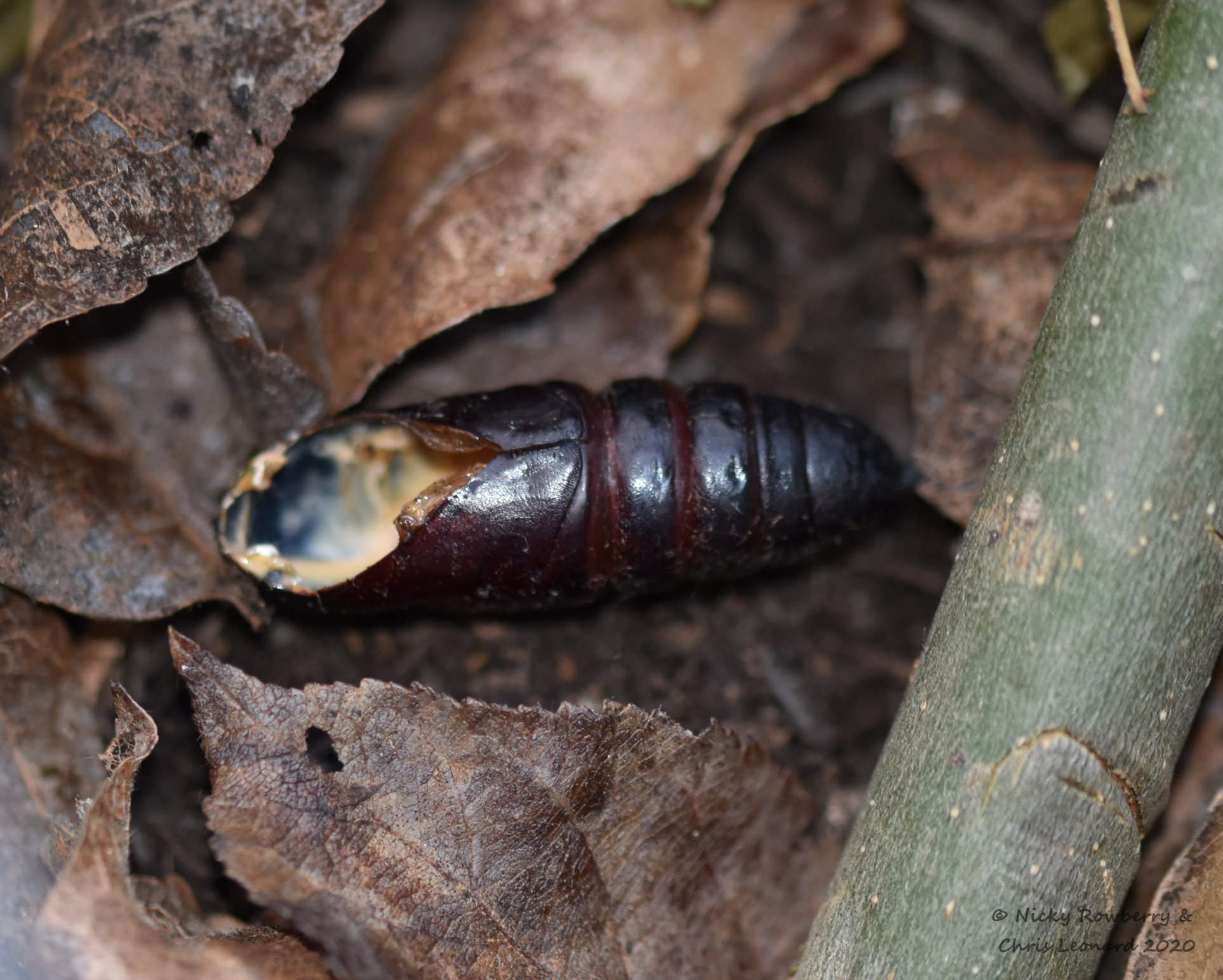
I love that in the bit of the chrysalis shell that has broken off, you can see the imprint of his antennae – it’s almost like a death mask! Anyway I checked the rest of the tub and there was George sitting proud and fully formed. Here’s the first hasty photo I took of him in case he flew off.

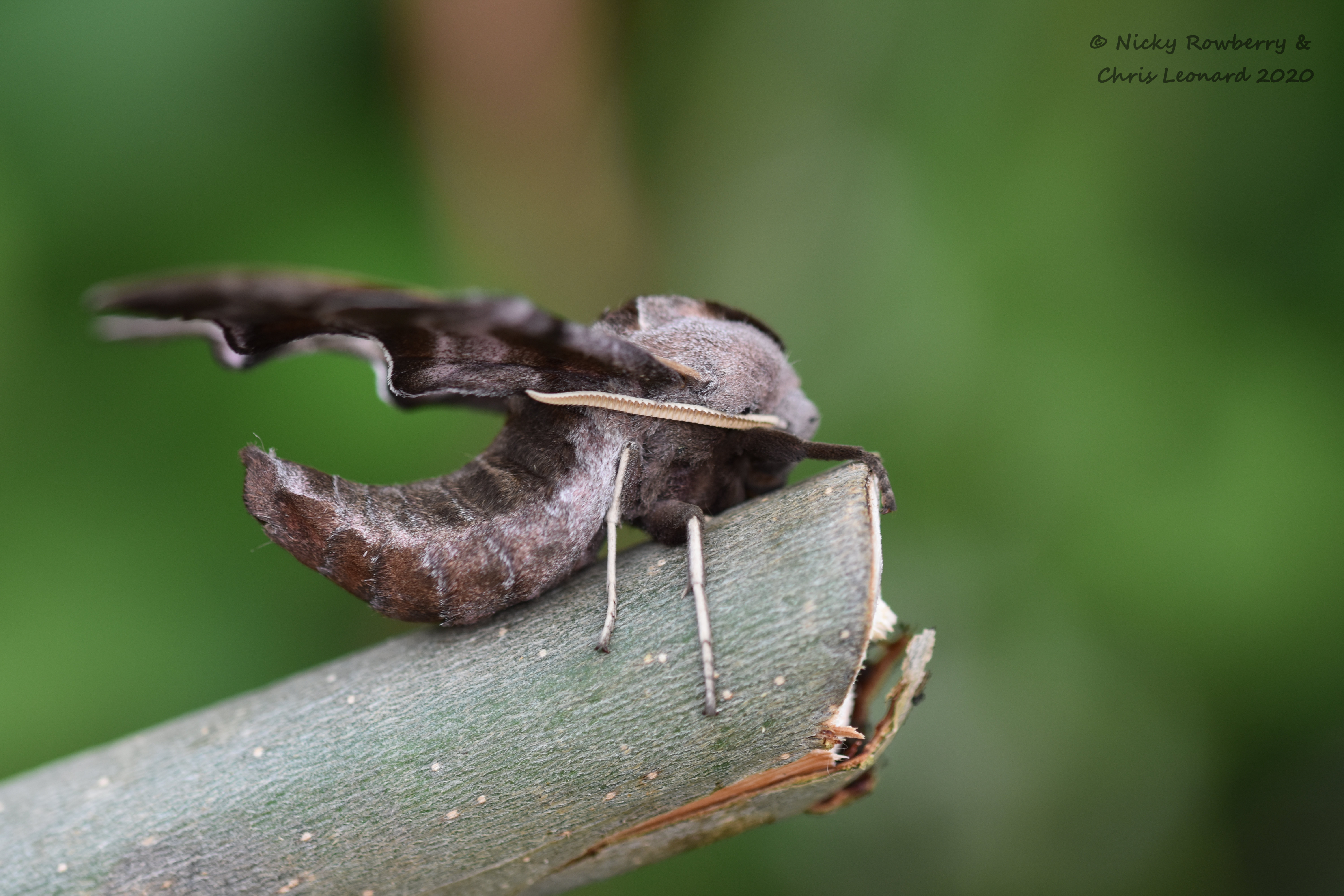
Fortunately he was fairly dopey, perhaps after the exertions of emerging and of course it was daylight. I say he, I can’t be totally sure but I think George is probably a George not a Georgina. I read that the males tend to be slightly smaller than the females and that they sit with their abdomens curled up a bit – both of which seemed to apply to George.

Having reared him for a year, I was loathe to just release him during the day and have him snaffled by a hungry sparrow. So I kept him in his tub in the shade for the day until it started to get dark and I gave him a stick to perch on to make him feel more comfortable. I did of course take the opportunity to take lots (and I mean lots) of photos of him. Here are just a few.

He had been raised on apple leaves as a caterpillar, so when the time came, the apple tree seemed the most sensible place to release him. I waited until it was almost dark and most of the birds had turned in for the night, then gently transferred him from his stick to some apple leaves.

He fidgeted a bit then settled down.

By this time it was getting pretty dark and I spent the next hour juggling camera, torches and tripod, trying to film George’s departure. About 21:45 he started fidgeting a bit more and even started having a good clean of his antennae, perhaps getting them in tip top condition to detect any nearby females.

He then started revving up his wings, presumably warming up the muscles which would never have been used before. I just had time to click record again on the camera.

Just before he took off, he squirted out a creamy white liquid, which I believe is the remains of the meconium (I’d had to google this) which was used to pump up the wings. Obviously there was some waste left over, so he expelled this before flight. But then he was off, free at last, circling the apple tree before I lost sight of him in the dark,

I had hoped to get a photo of the eye spots which give the Eyed Hawkmoth its name and which it flashes when threatened, but he refused to show them. I suppose I should feel good that George didn’t feel threatened by me! The best I managed to do in the end was take this still from the video.

Adult Eyed Hawkmoths don’t feed, they have no working mouth parts with which to do so. So sadly George will probably only live for a couple of weeks at the most. It may sound daft, but I felt quite emotional releasing him and watching him fly away. I had spent the best part of a year rearing him and checking on him almost daily and I did feel genuinely sad to see him go although very proud that he had made it. I just hope he finds a female (or finds a male if I got it wrong and he is a Georgina) and that our garden will be home to future generations of Georges. Good Luck George.

Nesting Update

Back in February, I blogged about my hopes of finally getting a blue tit nesting in the bird box with the camera. A male blue tit seemed to have taken to roosting every night in the box and I started to get my hopes up. In March things were progressing well and he had a lady friend who would pop in, albeit it briefly, to inspect his choice of nest site. Her visits were generally so fleeting at this stage that most of the time they barely registered on the video feed, so here are a couple of stills taken from the video and a very brief video clip.
 

This carried on for quite a while; the male roosting at night and occasionally his lady friend popping in during the day to inspect. Then on 17th March, bits of moss started appearing in the box. My hopes continued to rise.
For the last few years I have tried to help the birds along by putting out nesting material. I use two hanging baskets tied together to make a sphere and stuff it with moss and grass. The blue tits are always very quick to find the sphere and make good use of it. The female was soon taking the moss, sorting through my offerings to find the bits that were just right. I can see the ball of nesting material from our window and for a while everything was going swimmingly. I could watch her take a beak full of nesting material and fly off with it towards the nest box. Seconds later she would appear inside the nest box and I could view it on the camera.


So everything was going well and I was getting excited at the prospect of blue tit eggs, when sometime around the beginning of April they decided the nest box wasn’t really suitable after all. I have an old nest box on the apple tree near the moss ball and for a while they seemed to be trying that out, before abandoning that too. She was still coming for the moss, but was then flying off and out of our garden with it. One of our neighbours has probably got a very lovely blue tit nest in! Here’s a compilation of some of her nest collecting activities.


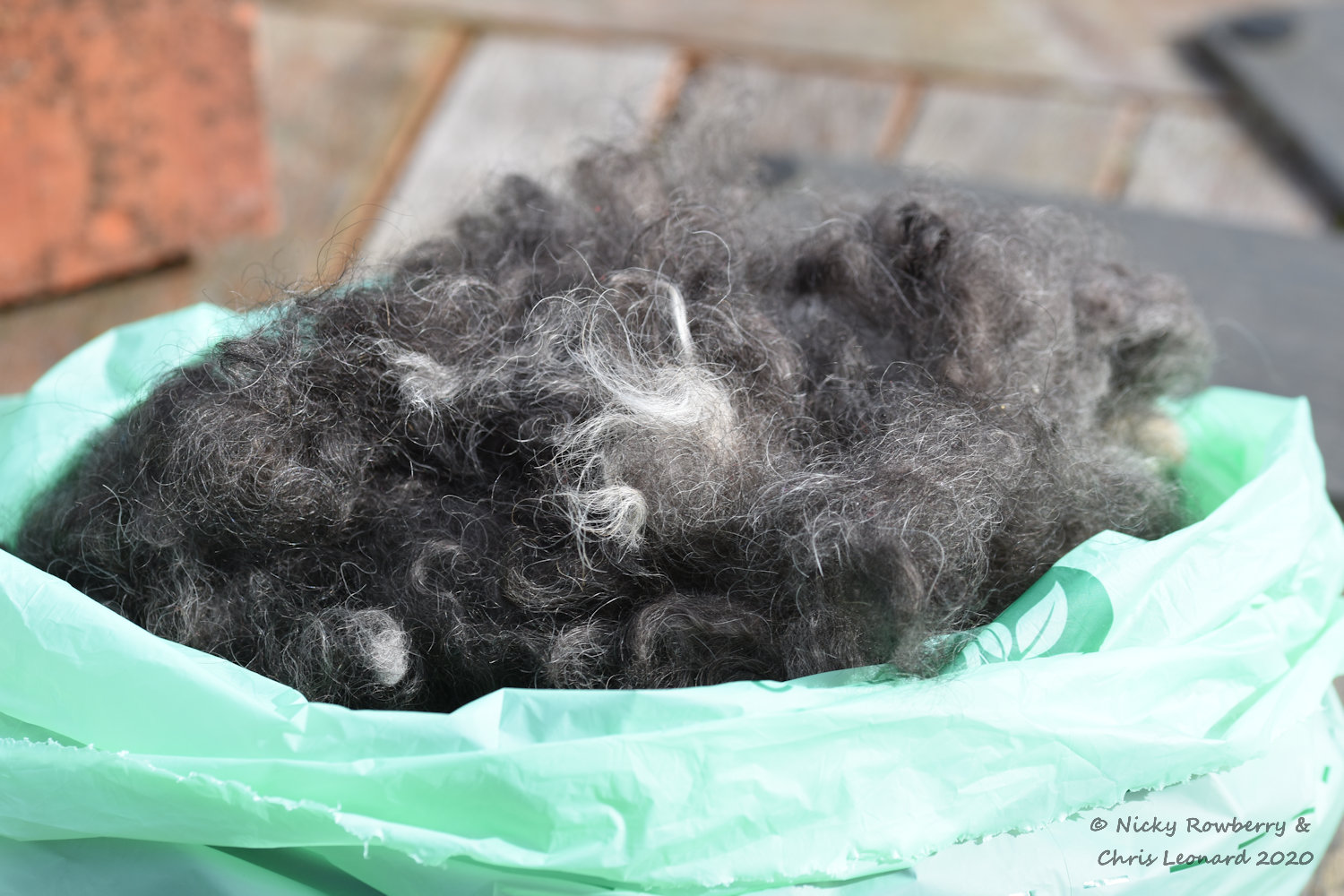
For the last 2 years I have also added some dog hair. My sister’s yorkie-poo Pip very generously donates his hair trimmings to the cause. He has lovely soft hair (that’s not been treated with any chemicals for fleas etc.), ideal for lining a nest.

Blue tits apparently make their nest with moss and straw etc. first then line it with softer stuff like hair and spiders’ webs afterwards. So initially the blue tit ignored Pip’s hair and just went for the moss. The jackdaws had no such qualms; they went straight in for the nice soft hair. Somewhere there is a very cosy jackdaw nest.

Although the blue tits weren’t nesting in our garden, she did eventually deign to take the dog hair too. Here’s a brief clip of her getting a beak full of the good stuff.


So it seems my hopes that Peter the blue tit and his mate were going to nest in our nest box have come to nought; I must console myself knowing that they are at least nesting somewhere and that is what is important. Once again they are using our garden as a supply stop – good for food and nesting material but apparently not residentially appealing. The same seems to be said for many of our other birds. We’ve seen robins pairing up and feeding each other in their courtships. Dunnocks have been flirting with each other and lots of birds have been helping themselves to the nesting material, but they all seem to do their actual nesting elsewhere. I think it must be because we don’t have the large trees they like.

So I had just about given up hope of finding a nest in the garden, when I became aware of a lot of rustling in the bay tree at the front of the house. Closer inspection revealed a pigeon’s nest. I would probably rather have had a robin or a blackbird, but beggars can’t be choosers and I am now very happy with our pigeon nest. Here is the proud mother pigeon watching my GoPro watching her.

So far the parents have sat steadfastly on the nest and I have been unable to see any eggs, but I assume there are some there. Hopefully once the chicks hatch I might get a glimpse of baby pigeons. Apparently there’s an internet thing where people query that you never see baby pigeons – well finally I might get to do so.

The birds may be refusing me nesting viewing opportunities, but I can always count on my hedgehogs for interest. They have all emerged from hibernation and are back romping round the garden again. Thankfully they are not as awkward as the birds and are quite happy to use the hedgehog house with the camera in it. I’ll do a full hedgehog update soon, but in the meantime here’s a short clip of Freda, last year’s rescue hog, having a bit of a yawn in the hedgehog house. Enjoy!


Pond Update

It’s the first day of Spring and it’s been about 6 weeks since our new pond went in. Although there is still work to be done on it, the wildlife has already started to move in. The pond still needs more plants and those that are there need to grow a bit to provide more cover. It’s a bit early in the season for many of the pond plant suppliers to have much stock. So as an emergency measure I’ve been chucking in bags of organic watercress from the supermarket! I also need to replant the area around the pond as it’s looking a bit bare at the moment. Hopefully this will all come together as spring gets going and we (finally) get a bit of sunshine. But in the meantime, here’s how the pond is looking now.

The birds were the first to really start making use of the pond. They love the shallow “beach” for drinking and bathing. The blackbirds and sparrows in particular have really taken to it, although we’ve also seen pigeons, robins, blue tits, starlings and magpies making use of it. The sparrows seem to like having a bit of a wash then jumping onto the big rock at the edge to dry off. Here’s a video of some of them enjoying their new splash pool.

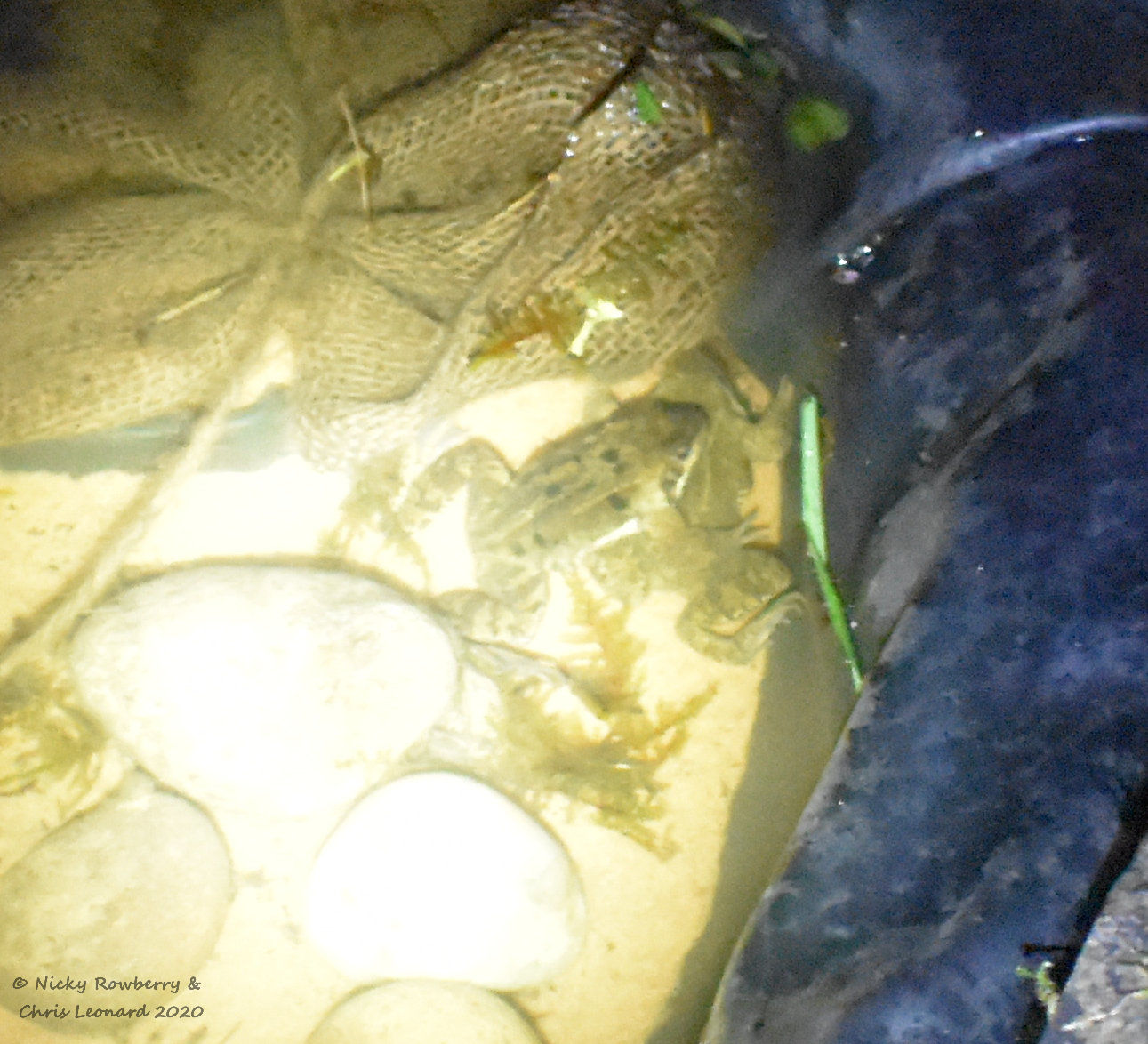
The frogs soon found the pond and I got very excited that we might get some frog spawn. But despite a lot of croaking there’s no sign of any spawn yet. Maybe there isn’t enough plant cover to tempt them yet and we’ll have to wait until next year.  I’m never very good at night-time photography so the best I’ve managed is this grainy shot of a couple of them.

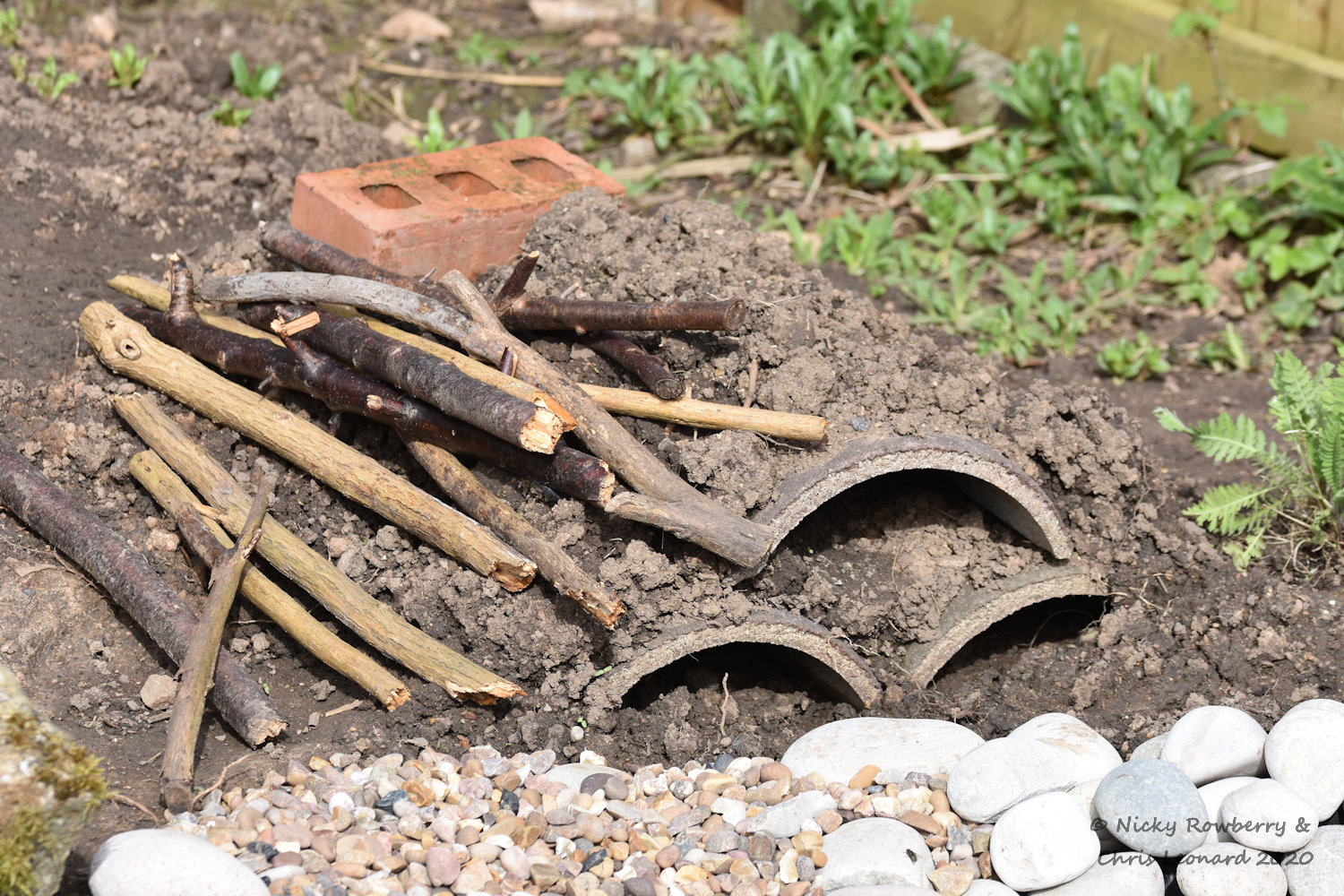
I have created “Toad Hall” using some old roof tiles buried into the soil that was excavated for the pond. Eventually it will be completely covered in branches and planted up. Hopefully it will appeal to some of our amphibian friends as a suitable home with en suite pond.

We may have drawn a blank with getting frog spawn in the new pond, but the old pond on the allotment has produced the goods. It may be a tiny pond, but it has been stuffed with frog spawn this spring. They are now starting to develop and a few tadpoles are even hatching. Here’s a short video from earlier this week:

Of course it wasn’t just amphibians we hoped to attract to the pond, any animals would be very welcome. So we were very pleased to get a fox checking the pond out within a few weeks of it being dug. So far we’ve only caught it circling round the pond, but hopefully soon it will view it as a suitable watering hole and take a drink.

The highlight for me so far has been this next video though. As spring slowly creeps in, hedgehogs are starting to emerge from hibernation. So I was really thrilled that this one has already incorporated the pond on his nightly meanderings. The gravel beach was put in specifically with hedgehogs in mind – easy access to the water and a means of getting out should they fall in. And this one seems to have got the message.

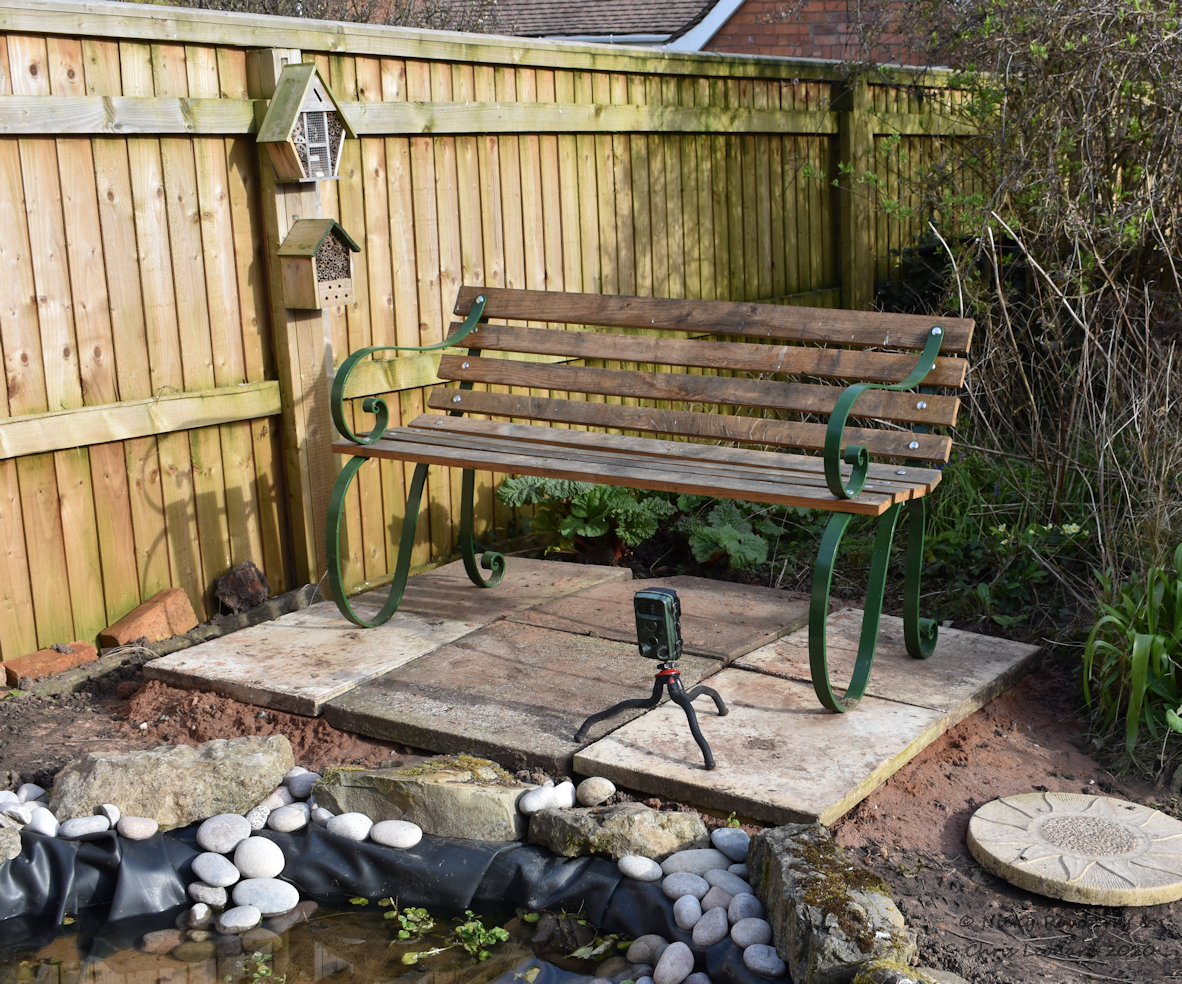
The final feature added to the pond is an indulgence for us rather than the wildlife. It’s the old bench from my grandfather’s pub, recently renovated by our ever-useful friend Gwyndaf. The perfect place to watch the wildlife in the pond while perhaps sipping a glass of something chilled. Roll on summer!