A Lot Going on at the Allotment

We’re well over half way through 30 Days Wild already, but I’ve not had chance to blog much this month. This certainly hasn’t been due to a shortage of wildlife though. The allotment is particularly busy at this time of year with everything (especially the weeds) springing into life. A neighbouring plot has regular slow worm sightings, which I view with great envy. For some reason we can’t tempt them onto our plot even though it is just a few metres away. But I sneaked a peak into said neighbour’s compost bin the other day and was delighted to spot a lovely large slow worm happily sitting on top of the compost.

Unfortunately the compost bin was too high and I was too short to be able to hold the camera high enough to get the whole reptile in focus, which was a bit annoying. So I went back the next day with my GoPro camera on a stick and did a short video to fit it all in. The slow worm didn’t move so it’s not exactly an action packed sequence, but at least you can see the whole animal.


A few sunny June days have also allowed me to try out my latest moth pheromone lure – this time trying to attract the currant clearwing. We have plenty of currant bushes down on the allotment, so it seemed a reasonable assumption that we’d get the moths, but I was still amazed how quickly they came. No sooner had I put the lure out and turned round to get the camera when there was already a hopeful moth buzzing round the trap. Within minutes I had about half a dozen. They were smaller than I expected and are most unusual looking insects. If I didn’t know they were moths I don’t think I would ever have guessed. See-through wings on a body striped a bit like a wasp with a strange pompom tail. They were of course all males having been fooled into thinking my lure was an attractive female.
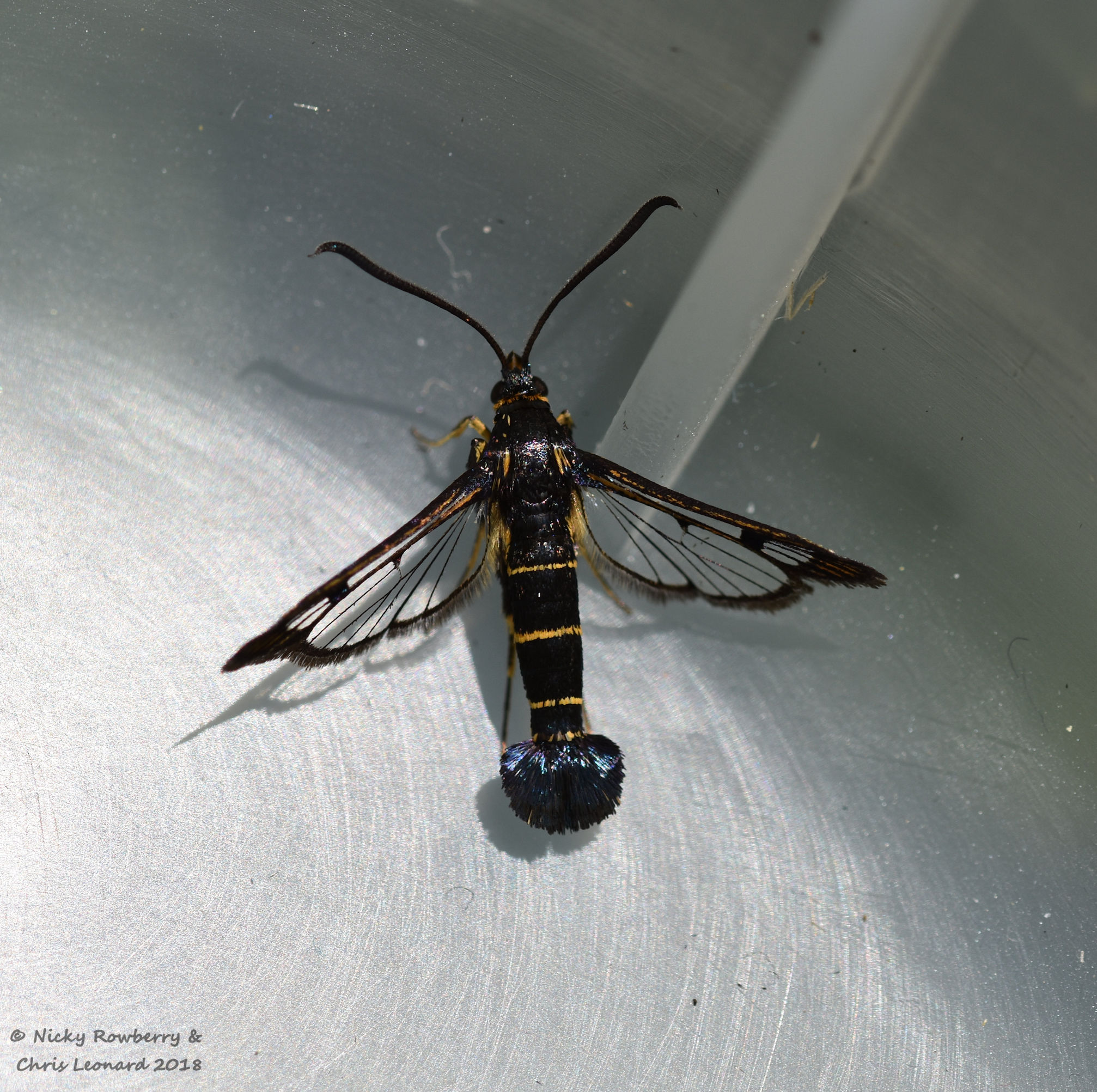
I did try the lure out at home later – we don’t have any currant bushes there, but I was just curious. Surprisingly I got even more moths in the garden than I did on the allotment. The currant clearwing moths are obviously reasonably abundant in our area and yet I’ve never even glimpsed one without the lure.

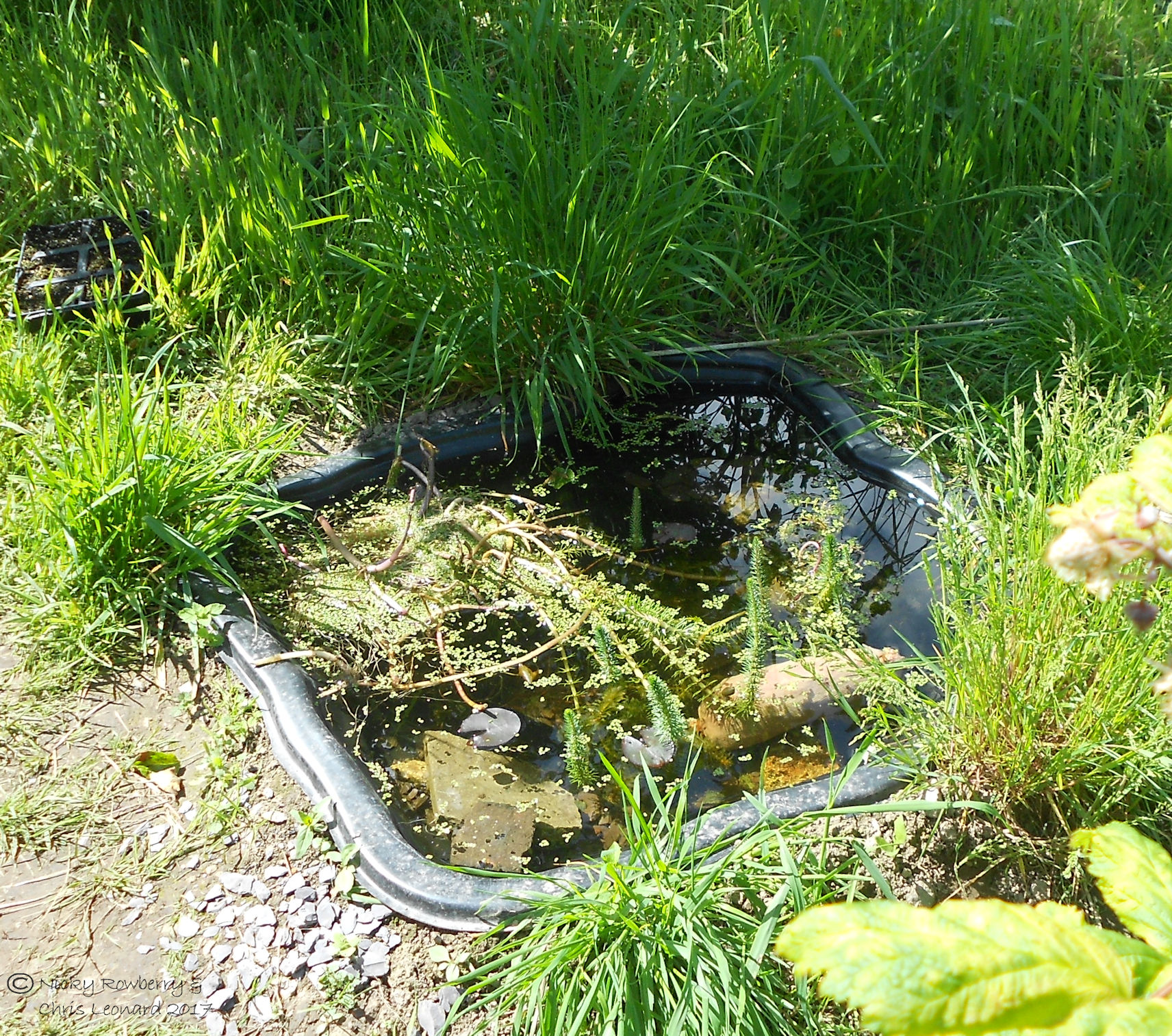
Next insect of interest was a large red damselfly laying eggs in the allotment pond.
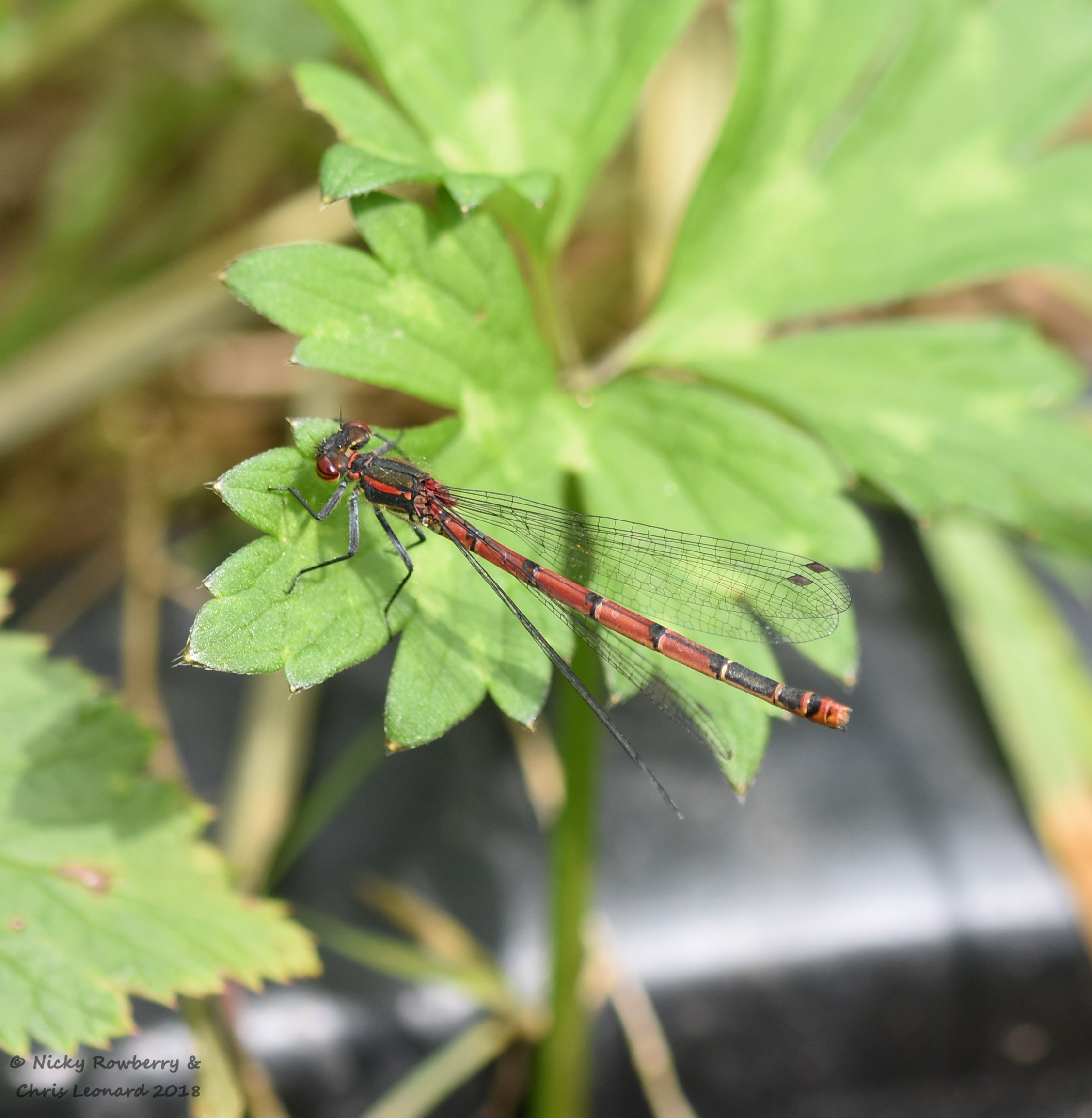
I didn’t see the male, but there obviously must have been one, because the female was very busy ovipositing in the pond. You can see her in the next photo curving her abdomen round to place each egg carefully in position.

I did try and video her laying the eggs, but she managed to position herself at an awkward angle to film, so apologies for the blurry (and shaky) camera work, but you can hopefully see how carefully she positions her abdomen, delicately probing to find the right spot.

The other really interesting insects we’ve been getting at the pond are signal or semaphore flies – small long legged flies with the grand name of Poecilobothrus nobilitatus. The males have white tips to their wings which they wave about like semaphore flags to signal to each other and to females. I’ve spent ages trying to film their displays, but they are so small and so quick it is very difficult to focus on the right bit of the pond at the right time! But in this first shaky video below a male can just about be seen energetically trying to see off another male with his assertive wing display.

In this second shaky video a male (on the right) is trying to woo a female (on left) with his hopefully impressive courtship display. Not sure how convinced she was!

But the big excitement for me is the development of our tadpoles into mini frogs. We’ve been anxiously watching over them since March and spotted our first mini frogs in early June. I’ll do a full froggy update soon hopefully, but here are a few photos for now. We seem to have them in all stages of development still – many are still just tadpoles, some now have back legs only, some are starting to show front legs and some like this one below are virtually there apart from the remains of a tail.
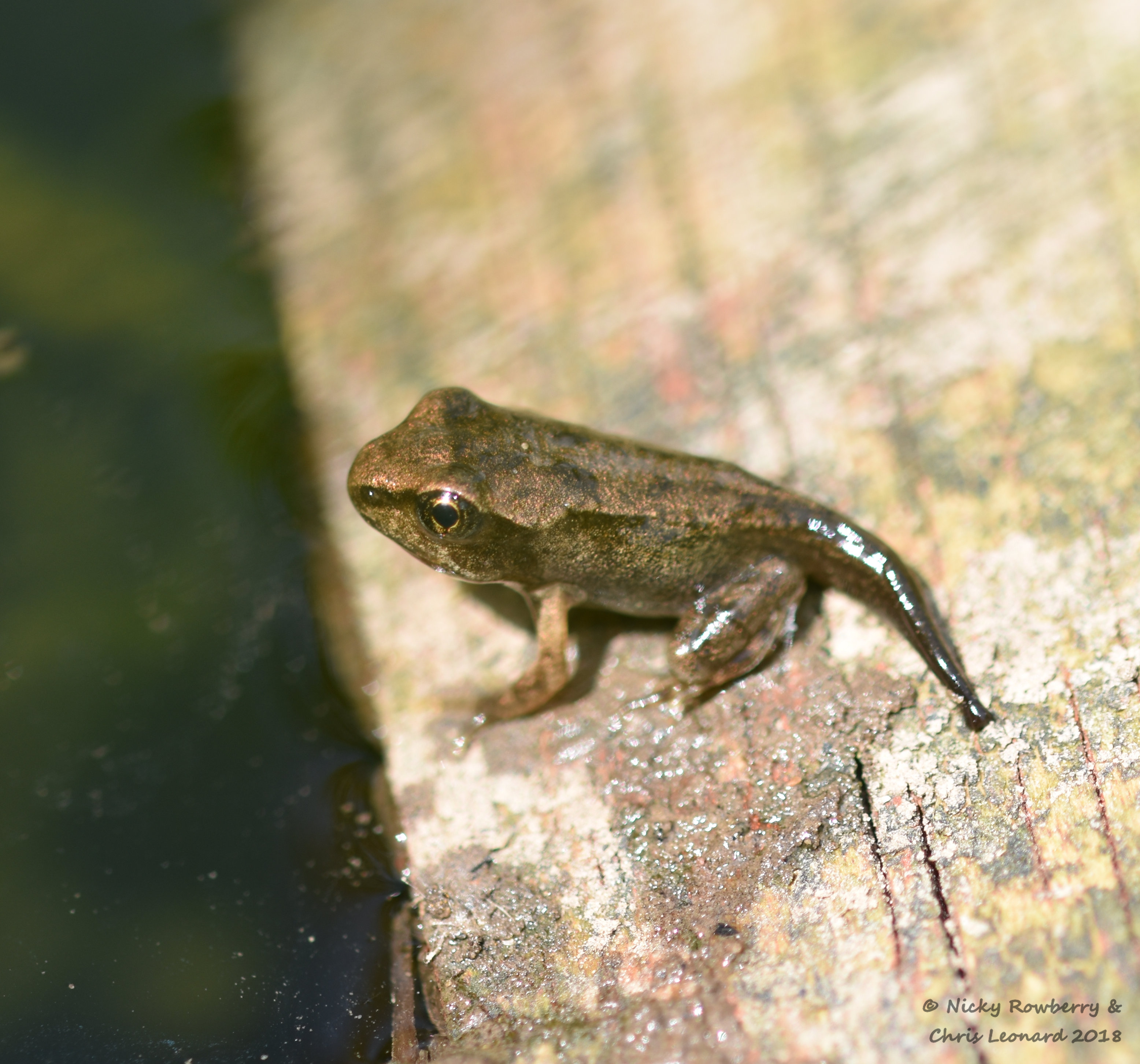
The froglets are generally only about the size of a fingernail, but they are perfectly formed – frogs in miniature.

They can of course breathe in the air now, and some are already starting to explore beyond the confines of the pond. We have to be very careful where we tread as the grass is now full of tiny froglets.

So plenty going on down the allotment and that’s without even looking at the bees, the birds, the hoverflies and butterflies that we see regularly too. Not all the plots on our allotment site are gardened organically, but ours is and I feel we reap the benefits. So what if we loose the odd vegetable or some fruit to caterpillars or slugs or pigeons – the rewards of a plot full of wildlife far outweighs the losses. I can live without the odd lettuce or raspberry, but I wouldn’t want to miss out on mini frogs and semaphore flies!
 

Isle of Wight – Part 3 Butterflies at Last!

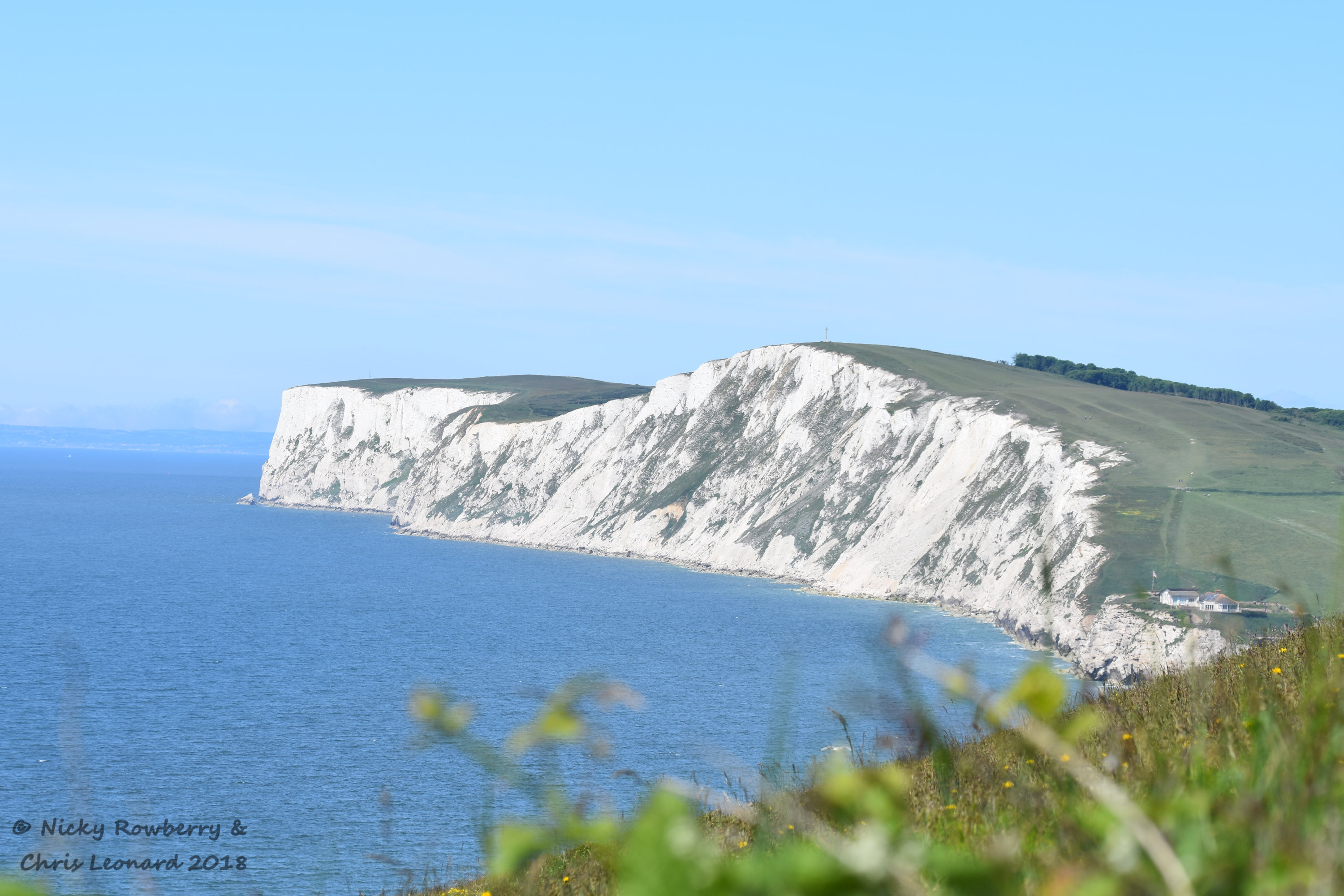
It’s taken me a full week to whittle down the 600+ photos we took on our second full day on the Isle of Wight to a manageable number to post. We went looking for butterflies and found so many to photograph I think we got a bit carried away! Our main targets were the Glanville Fritillary (pretty much only found on the Isle of Wight) and the Adonis Blue – two new ones to add to our tally of British species. After our usual struggle getting lost before finding the right carpark, we set off on the “Paradise on the Isle of Wight Butterfly Trail” over Compton Down. The walk was only supposed to take 2 to 2½ hours, but we spent so long taking photos, it took nearly 5! But it was well worth it, not only for the butterflies, but for the fabulous views of the white cliffs.

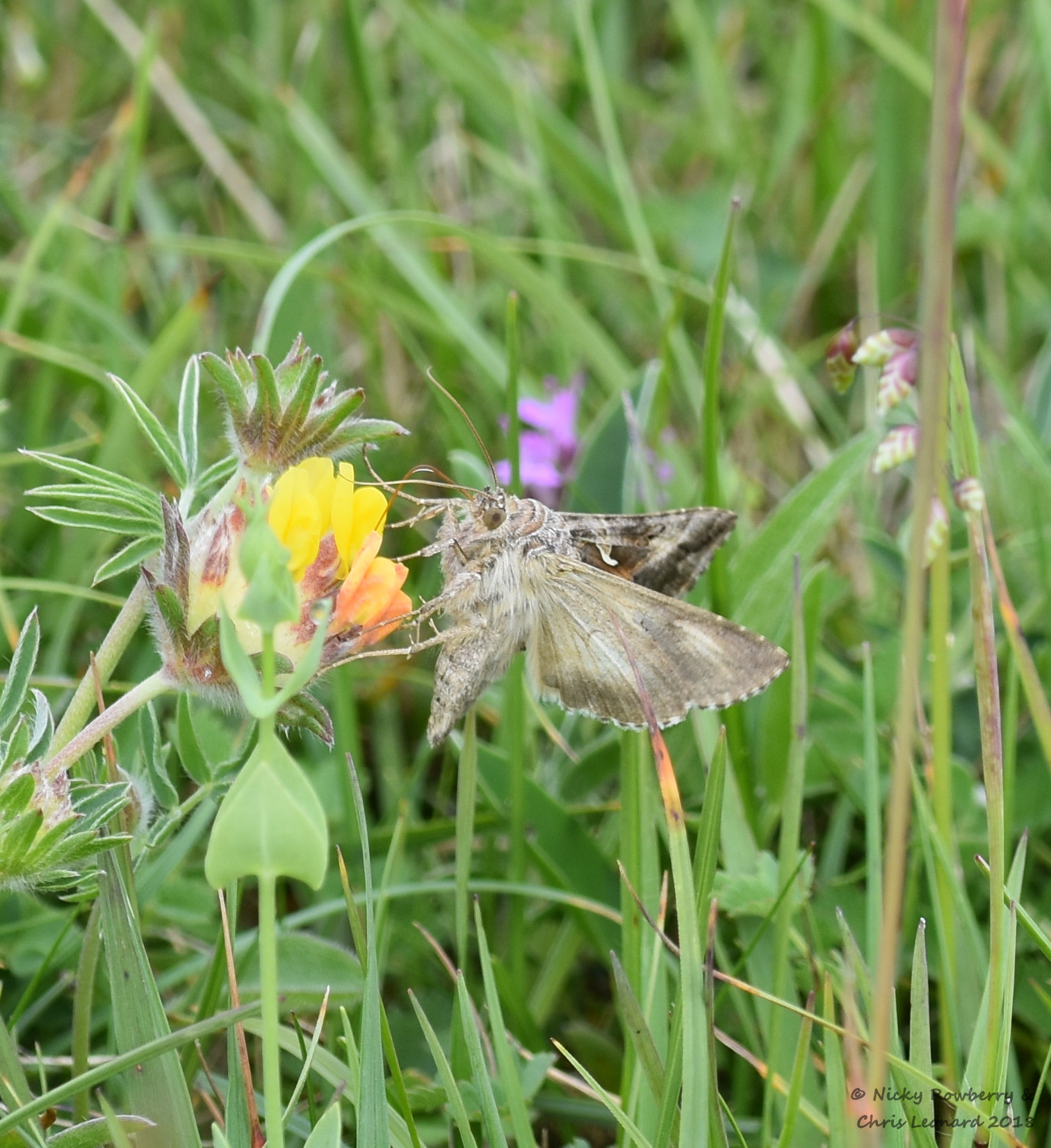
The day started sunny and bright, but then the fog rolled in incredibly quickly and the cliffs (and butterflies disappeared). It was amazing watching the fog come, it seemed to chase us along the path until we were completely enveloped. Fortunately it didn’t stay too long, the sun came out again and we resumed out wildlife watching. There were butterflies and moths everywhere. Although our main targets were the butterflies, as usual we couldn’t resist the moths either. There were Silver Y moths everywhere (when we got home to Malvern the next day there were well over a dozen of them in the garden too, there must have been a big influx of them from abroad that weekend).

One we don’t see so often is the Burnet Companion – a subtly pretty day flying moth. A more showy day moth was the Cinnabar – flashes of red underwings catching our eyes as we walked over the downs, although we never managed to catch one in flight to show this.

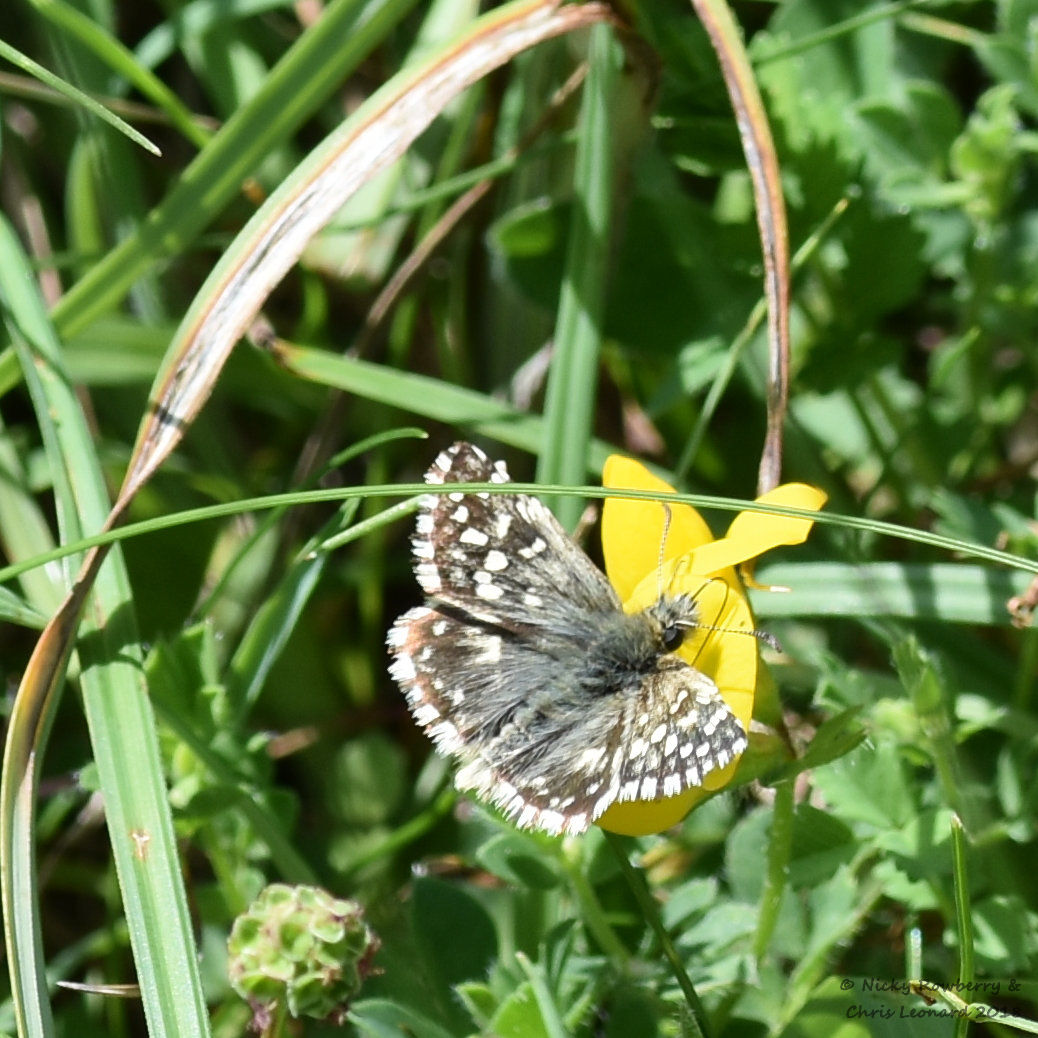
But on to the butterflies – the walk certainly lived up to its name, they were everywhere. In total we counted 14 species of butterfly, which maybe our highest count ever for one walk.  Some were fairly common ones we were familiar with, but a couple of others I’d previously only seen on one occasion, such as this Grizzled Skipper. This was another species that I’d only seen for the first time last year in South Herefordshire.

Grizzleds weren’t the only Skippers around though, one of the most common butterflies we saw here was the Dingy Skipper, a species we’ve seen in a few places before, but is always nice to see again. We were almost tripping over them as they seemed to like sitting on the path.

Another find was a Large Skipper. We saw a few of these, but not nearly as many as the Dingys.

Small Heath butterflies were also reasonably common. Not as showy as some of the others, but a lovely butterfly nonetheless.

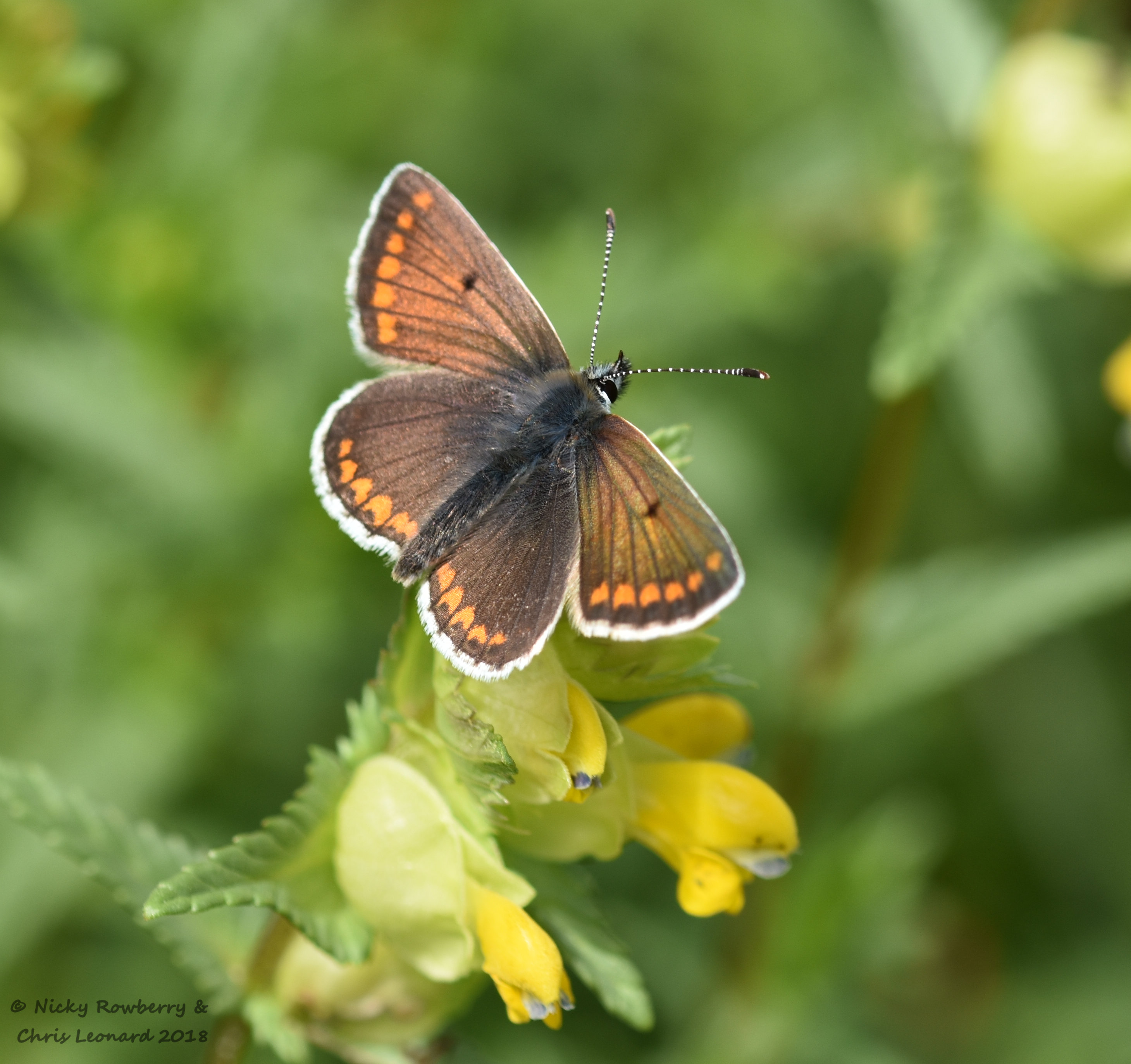
So on to the blue butterflies – there were blues flying everywhere almost as soon as we set off, but it quickly became apparent that there were several species. So in an effort to ensure we didn’t accidentally miss the Adonis, we took photos of virtually every blue thing moving! In the end we got 4 of the “blues” including a few of these Brown Argus which aren’t really blue at all but fall into the same group.

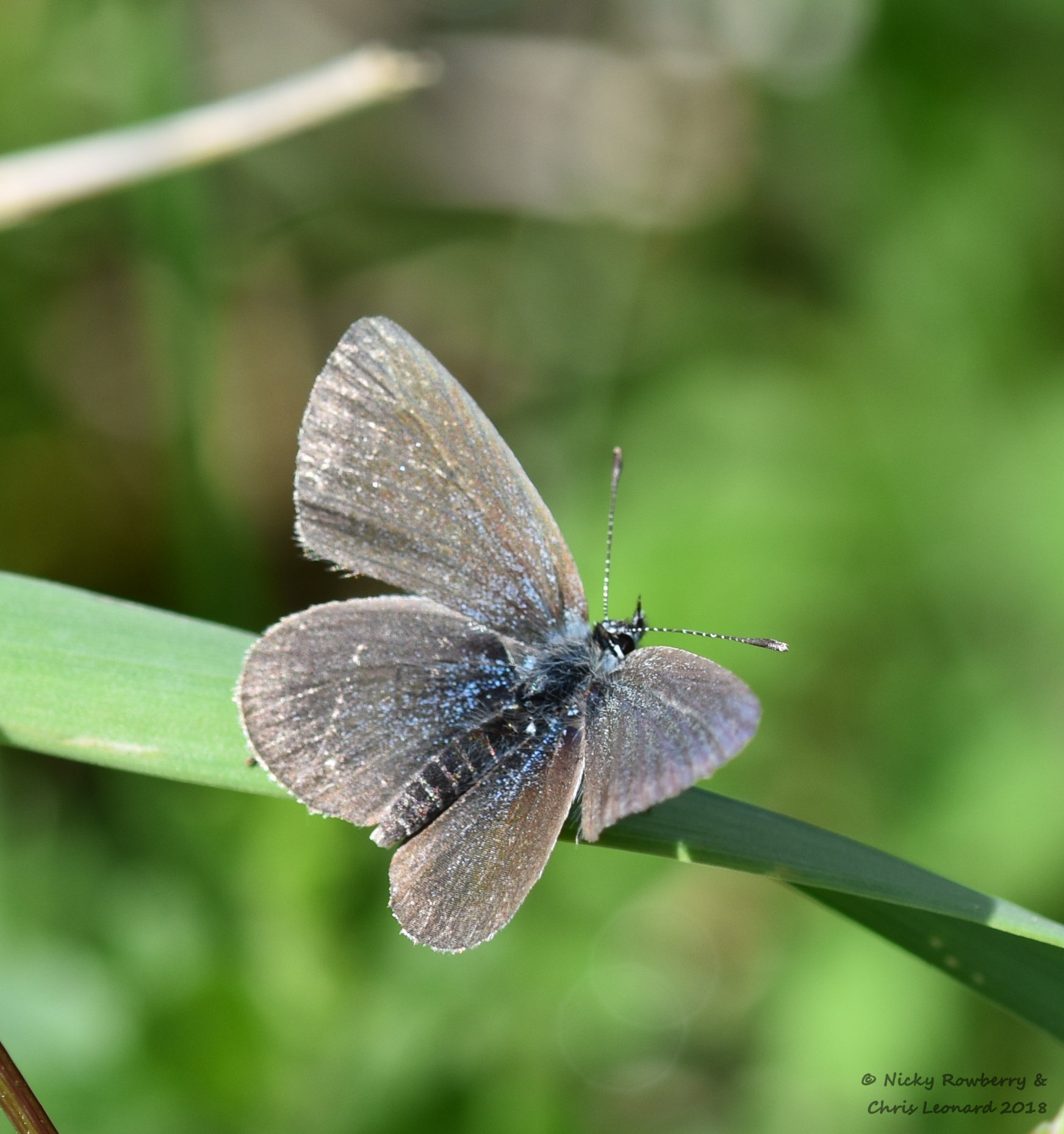
Of the true blues, we got 3 species. The small blue is as its name suggests very small – Britain’s smallest butterfly in fact. They may be small but they are very quick, so it took a while to get a half decent photo. They’re not as blue as the other species, but there is a definite dusting of blue scales near the body.

Perhaps not too surprisingly, the most common blue butterfly was the Common Blue Butterfly! We saw loads of these and photographed many of them in the hope they would turn out to be Adonis. The males are a beautiful bright blue with a plain white fringe around the edge of the wings.

The females are duller – more of a brown colour but with a row of orange spots around the wings.

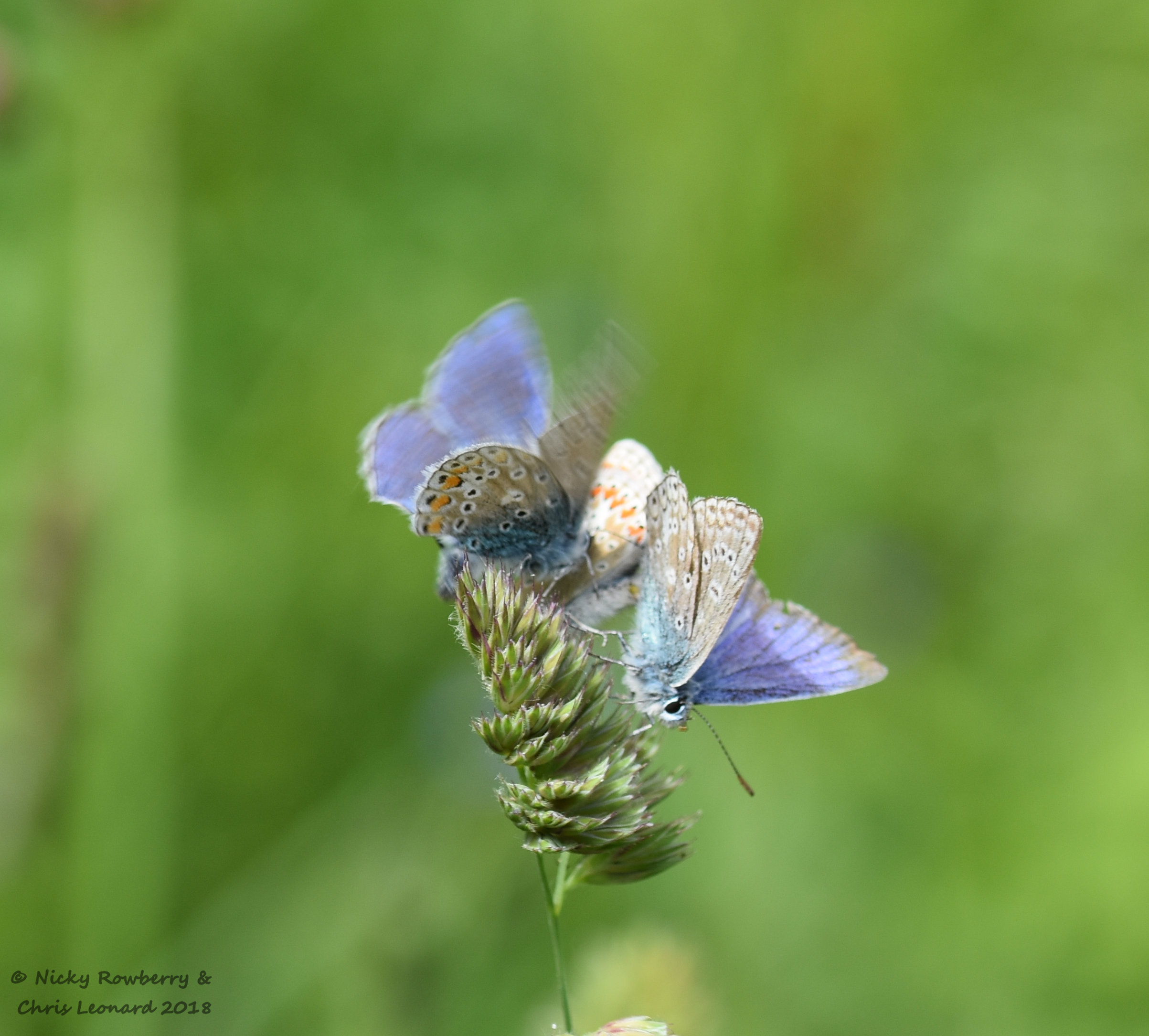
We even saw a pair of these mating, although at the time we weren’t sure which species they were as its hard to tell from the underside (a kind soul on Facebook confirmed them as Common Blues).

Although obviously only 2 can mate, a third one (a male) did try and get in on the act, perhaps hoping to drive the first male away so he could have his way with the female.

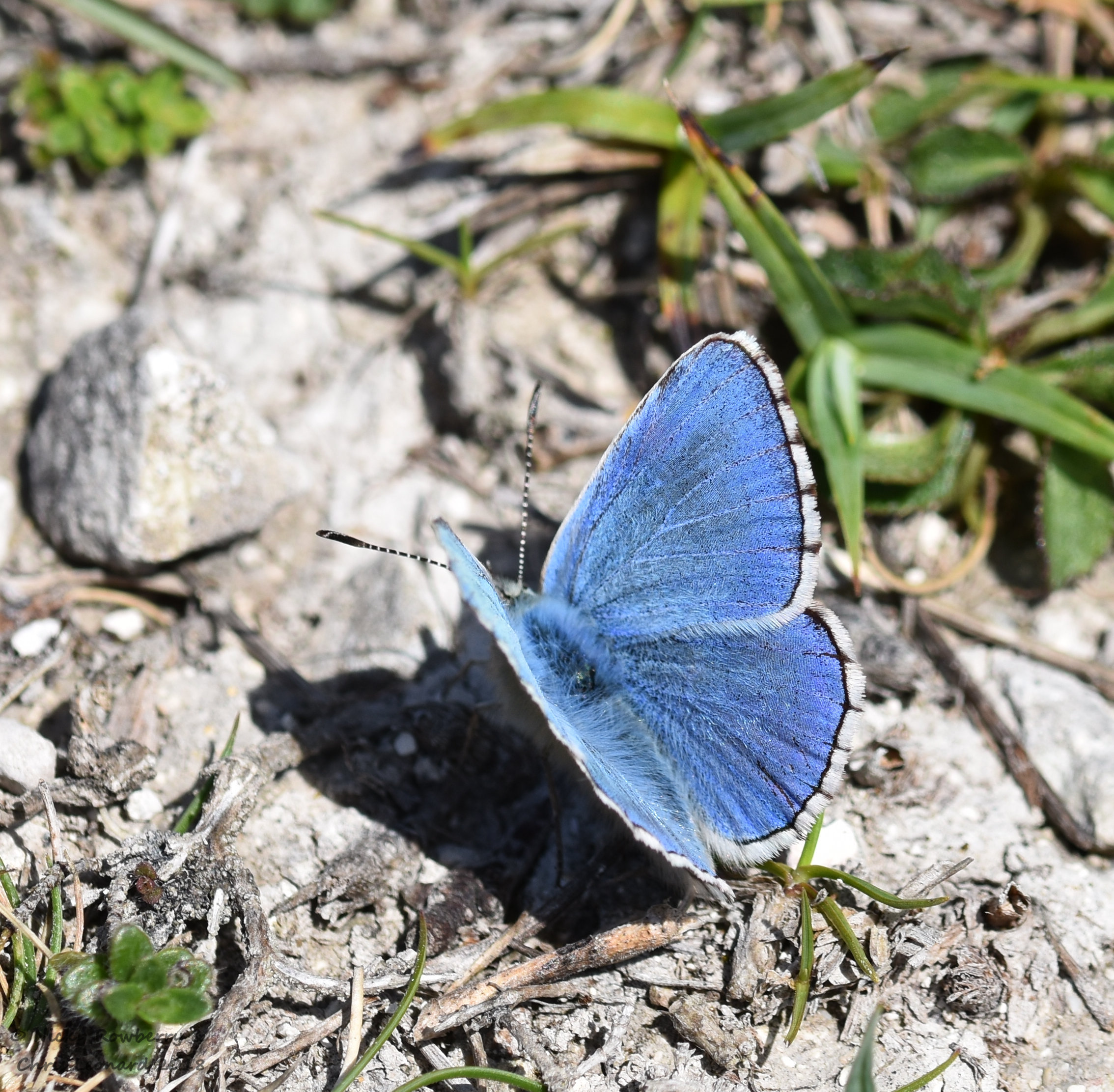
But of course the blue we really wanted to see was the Adonis. Adonis Blues are found other places than the Isle of Wight, but this was the first time we’d been to a site with the right habitat, so while we were here we were keen to see one. We took a lot of Common Blue photos before we got one we were sure was an Adonis. Thankfully there was another couple of butterfly enthusiasts on the same walk as us and they confirmed we had finally bagged our target photo. The Adonis can be distinguished from the Common Blue by the presence of black marks crossing the white fringe around the wings. They also seemed to us to be a much more vivid, azure blue than the common ones.

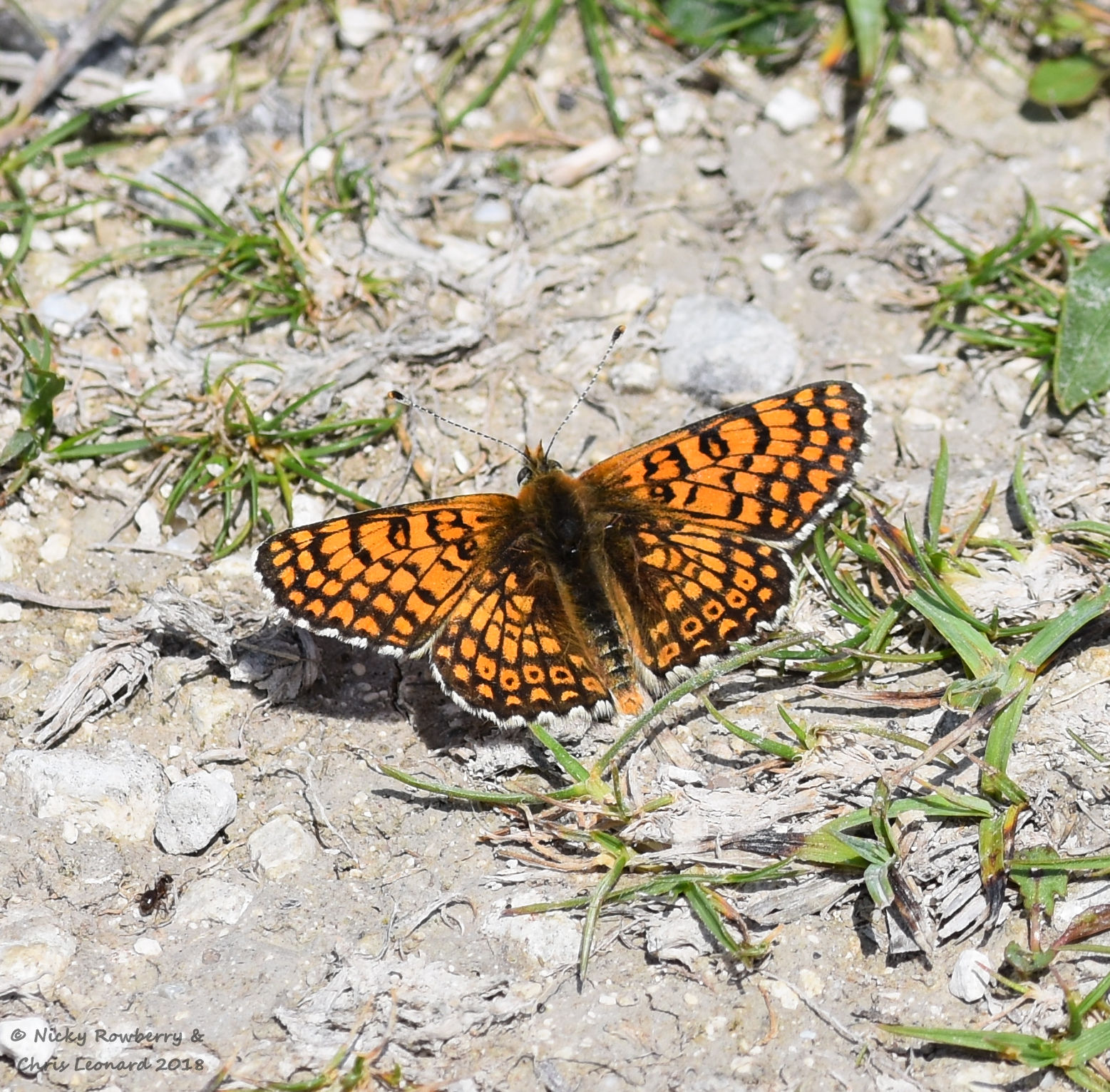
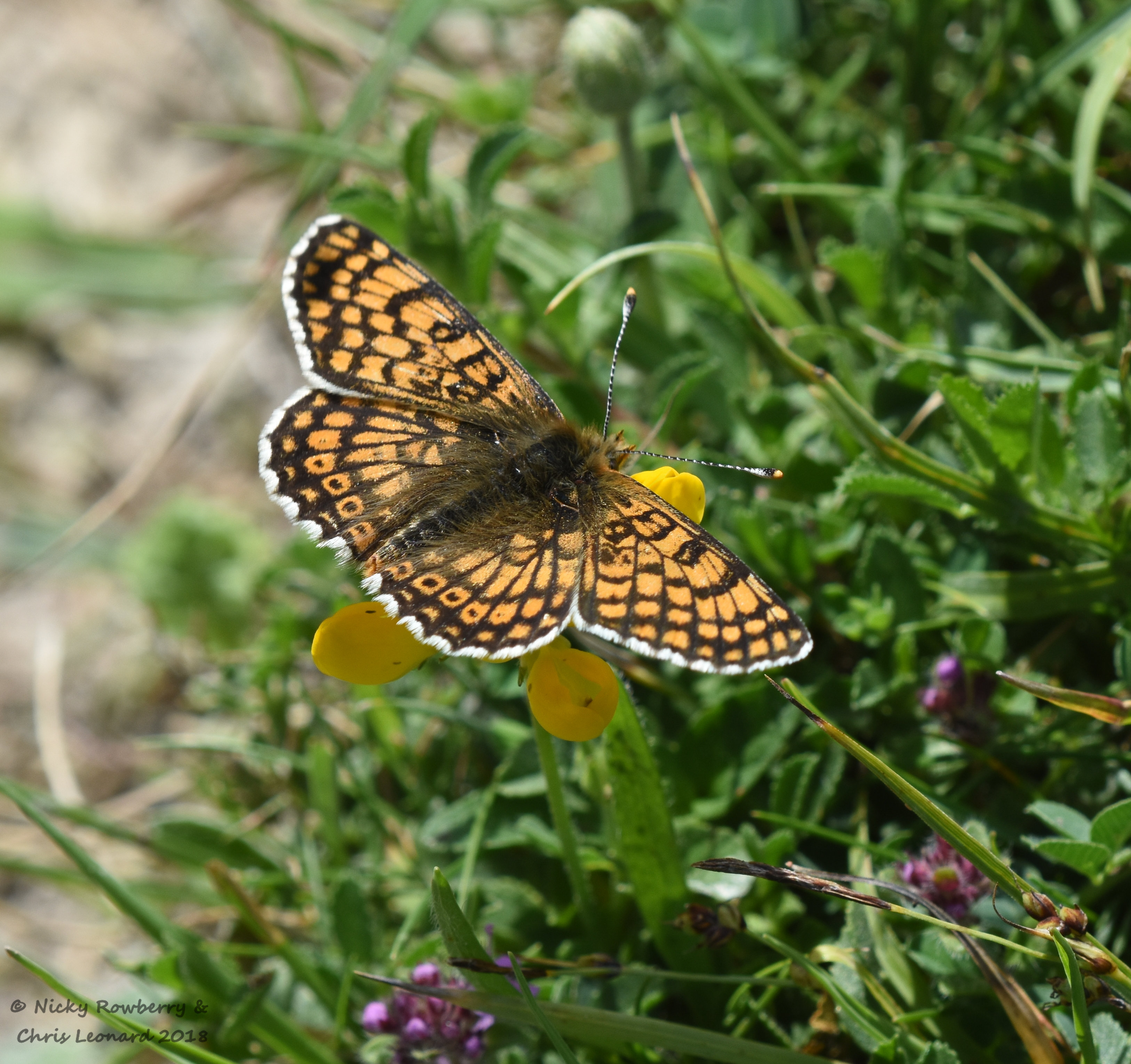
The real priority for us that day was to see a Glanville Fritillary. Restricted to south facing chalk downs, it is now only found on the Isle of Wight, although it used to be more widely spread. They only fly when it’s sunny, so were lucky the weather was good and we saw one almost immediately as we set off on the path. It was a bit of a scruffy specimen, but we didn’t care – it was a result!

Fortunately as we walked on we saw lots more, most of which were in much better condition. They are small but beautifully patterned butterflies with orange and brown chequered markings on the uppersides of the wings.

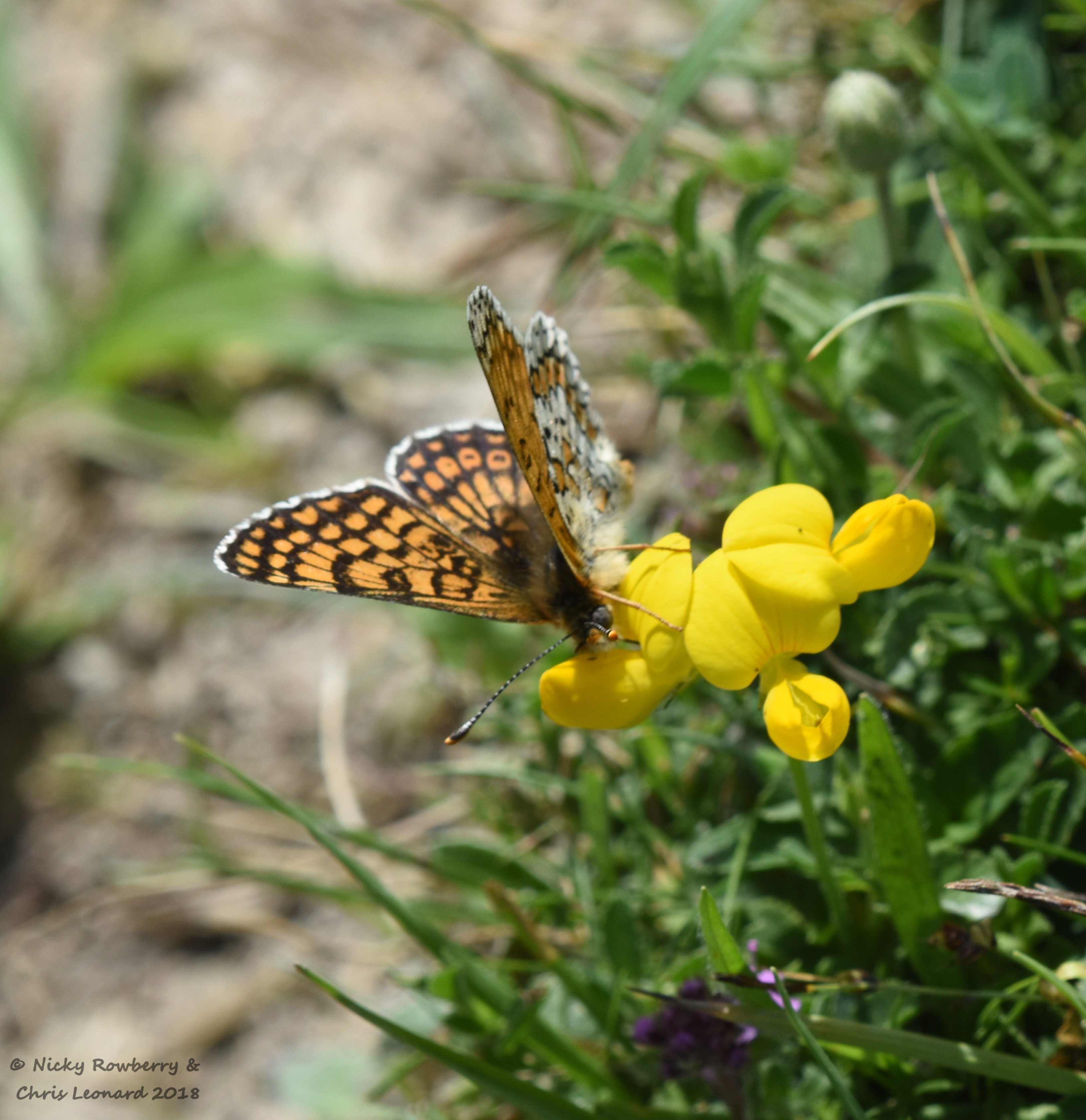
The underneath of the wings are even more striking with a stained glass window effect of cream , orange and black markings. We had hoped to get the classic shot of one posed with its wings upright to show this off, but none of them would oblige. The best we managed were these two shots partially showing the undersides.

So that was it, two more species added to our list to bring us up to 45 out of the 59 British species seen and photographed.  Only 14 more to go, although I think they may get harder and harder to find.

Other species seen that day included Large Whites, Speckled Woods, a Peacock and a Painted Lady to make up our total of 14 species in one day. The walk certainly lived up to its name, as the area was a complete paradise for butterfly enthusiasts – the perfect end to our mini break to the Isle of Wight.

Isle of Wight – Part 2 Thwarted By Fog

Our first full day on the Isle of Wight coincided with the first day of 30 Days Wild – the Wildlife Trusts’ annual event to get people to engage with nature.  Perfect day then to go looking for our next two species of butterfly – the Glanville Fritillary and the Adonis Blue. Unfortunately the weather had other ideas and a thick blanket of fog seemed to have covered most of the island. No self respecting butterfly was going to fly in that, so our chances of seeing them were virtually nil. We did make a short half-hearted attempt and had a bit of a wander around the chalky slopes on the southern coast. Fortunately we like all sorts of invertebrates besides butterflies and many of these are fog tolerant.

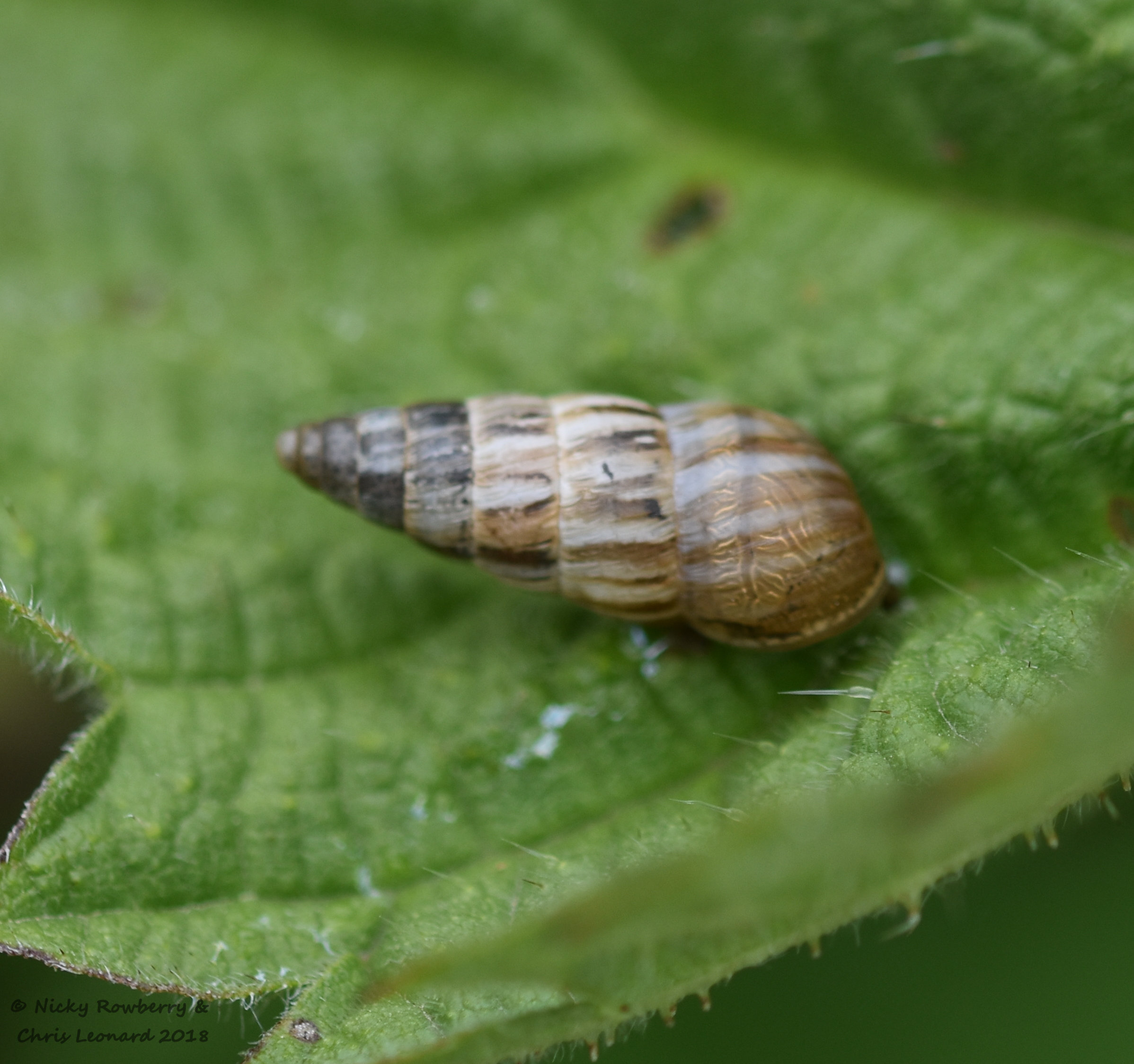
Snails of course don’t mind a bit of damp weather and we found two new (to us) species in the hedgerows. This beautifully coiled one is a Kentish Snail (Monacha cantiana).

This tiny pointy snail is in fact called a Pointed Snail (Cochlicella sp.). It was only about a centimetre long, but still managed to have at least 8 whorls on its shell.

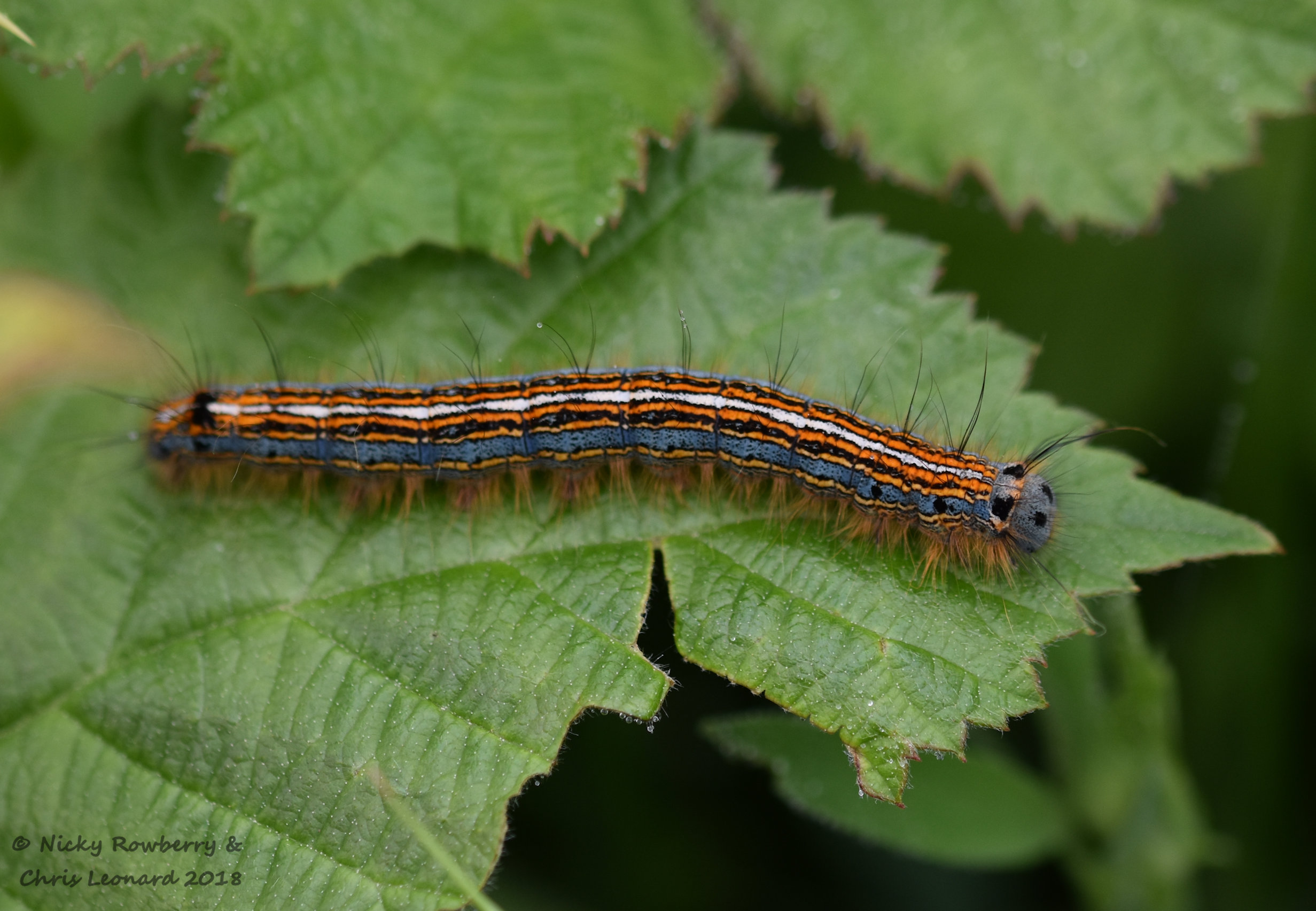
The other group of invertebrates that braved the fog in reasonable numbers were moth caterpillars. We saw several species, but these two were particularly striking. We’ve never seen them before either in caterpillar form, nor as adult moths. The top one is the caterpillar of the Lackey Moth and the bottom one of a Dingy Flat-Body Moth (thank you to the good people of iSpot for identifying the second one for me).

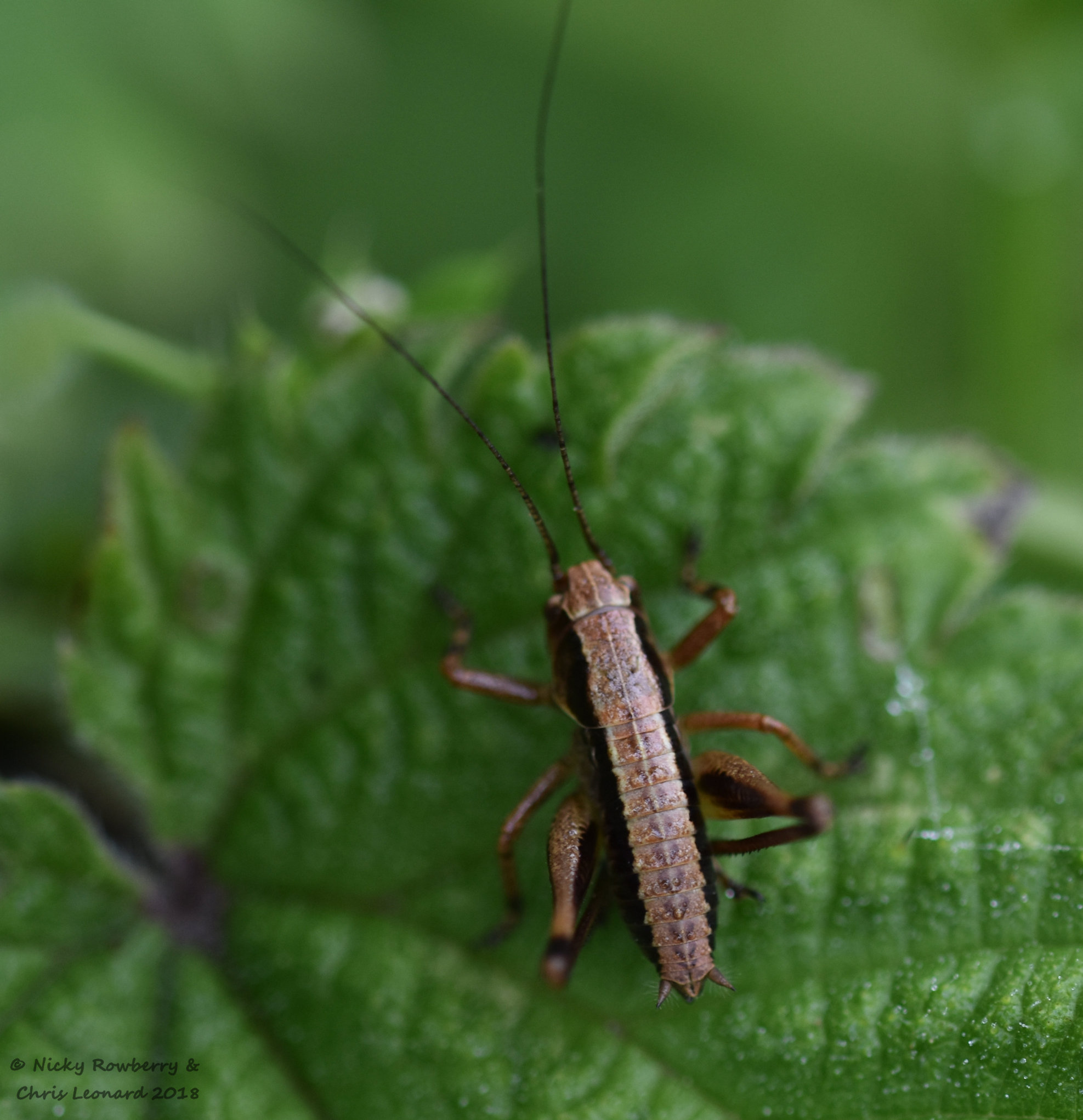
The other notable invertebrate was a cricket – there were large numbers of these Dark Bush Crickets (Pholidoptera griseoaptera) in the undergrowth. We only saw immature stages such as this nymph.

After an hour of enjoyable but butterfly-less searching, we went to Plan B. Isle of Wight is also known for its thriving population of Red Squirrels. Thankfully the grey squirrels haven’t made it across the water yet, so for the time being the reds have free rein over the island. So we headed inland to Borthwood Copse, a small woodland managed to support the red squirrels. The first interesting animal we spotted when we got to the wood, was another insect. This female Scarce Chaser dragonfly (Libellula fulva) is, as its name suggests, fairly scarce, so it was a really nice find. With its yellow veining and dark tips to the wings, it was clearly different to any dragonfly we’d seen before.

The wood was full of birds, all singing their hearts out (or all shouting warnings that we were intruding possibly). We could hear, if not see, lots of species, including a Great Spotted Woodpecker.

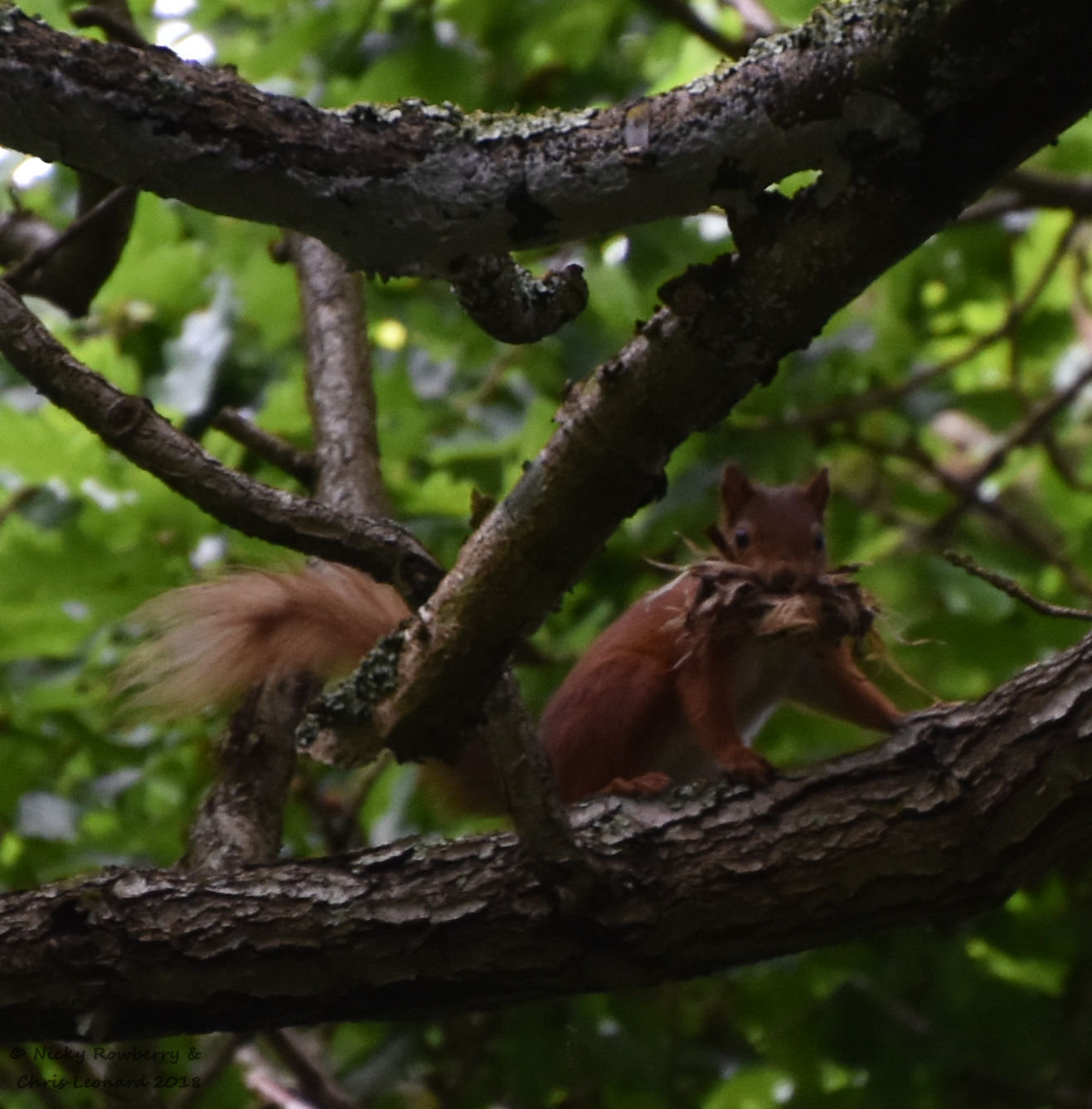
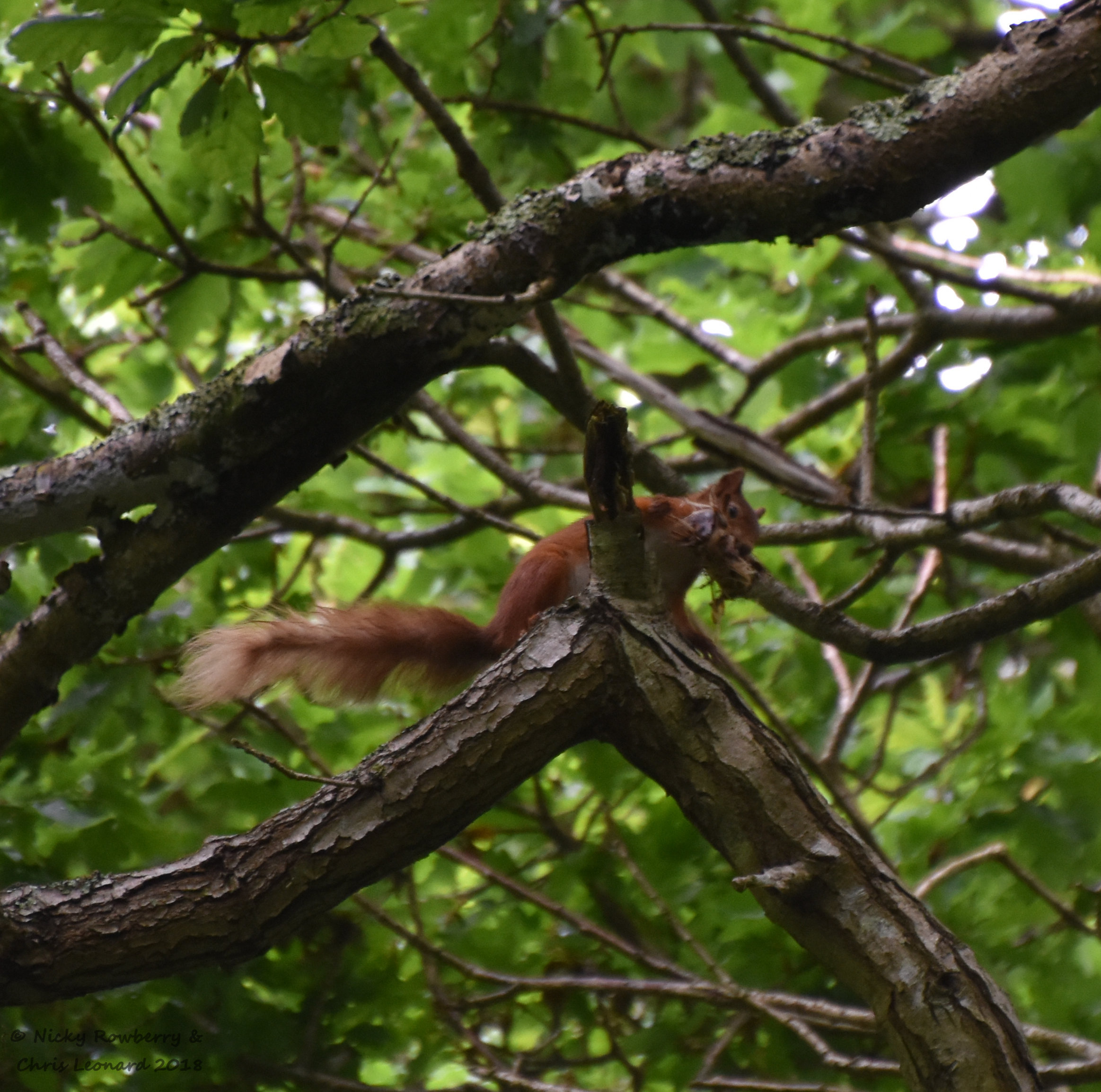
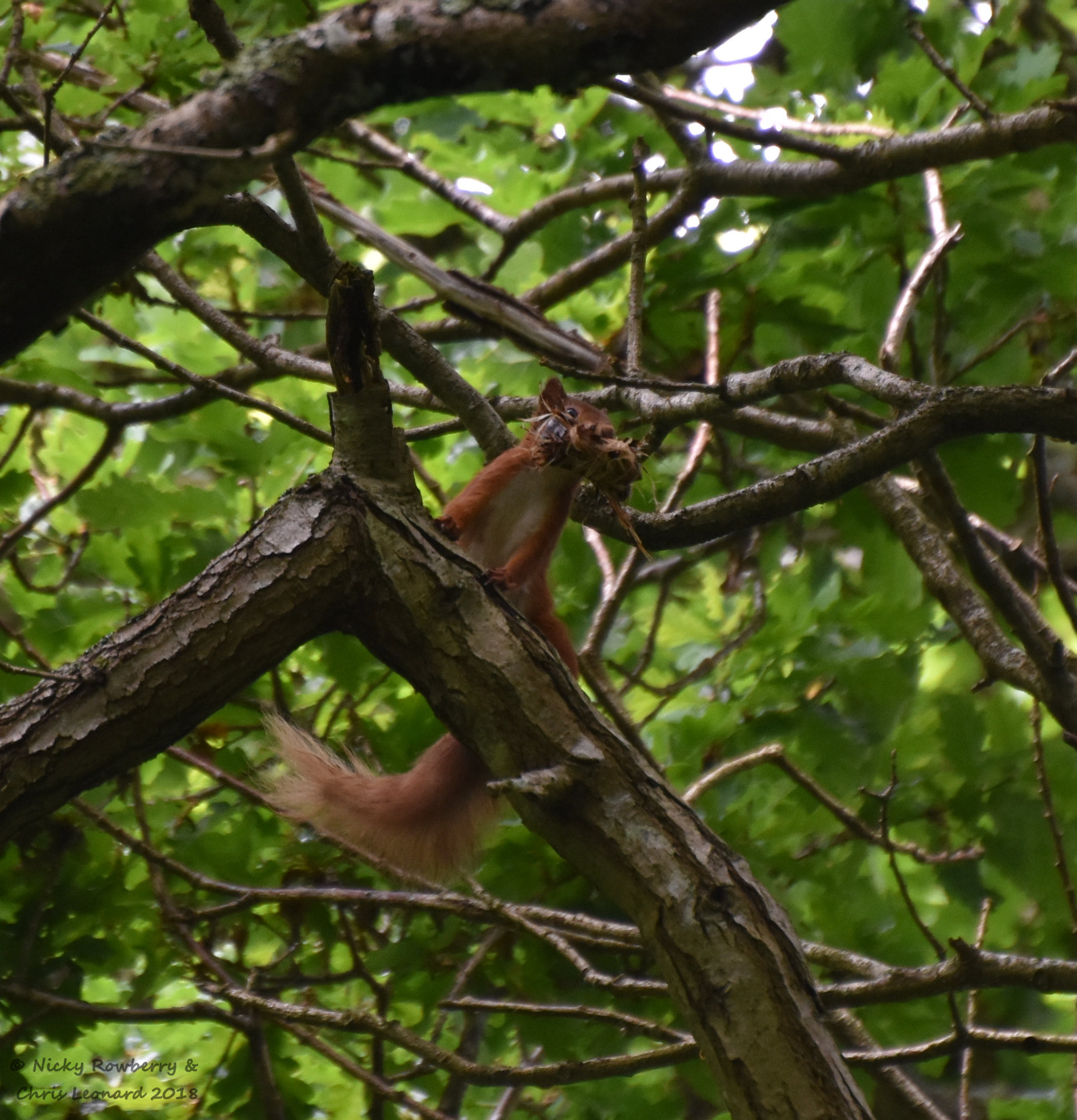
After a lot of dizzying staring up into trees, we eventually spotted our first red squirrel. I think we had both fondly imagined that the squirrels would come down and somehow just sit waiting to be photographed. Needless to say, they did no such thing and remained steadfastly high up in the branches. Over the course of the next hour we spotted a few (or possibly the same one taunting us over and over) and although they were a delight to watch, they never came close enough for any really good photos. But we did eventually get some recognisable red squirrel photos, so here are our best efforts. We watched this one for a while carrying a bundle of nesting material, jumping from branch to branch.

We followed it by eye until it disappeared with its bundle of nesting material into what looked like a denser patch of leaves. It stayed in there for ages, so we wondered whether this might have been a nest or drey? You can just about make out the denser patch in the photo below.

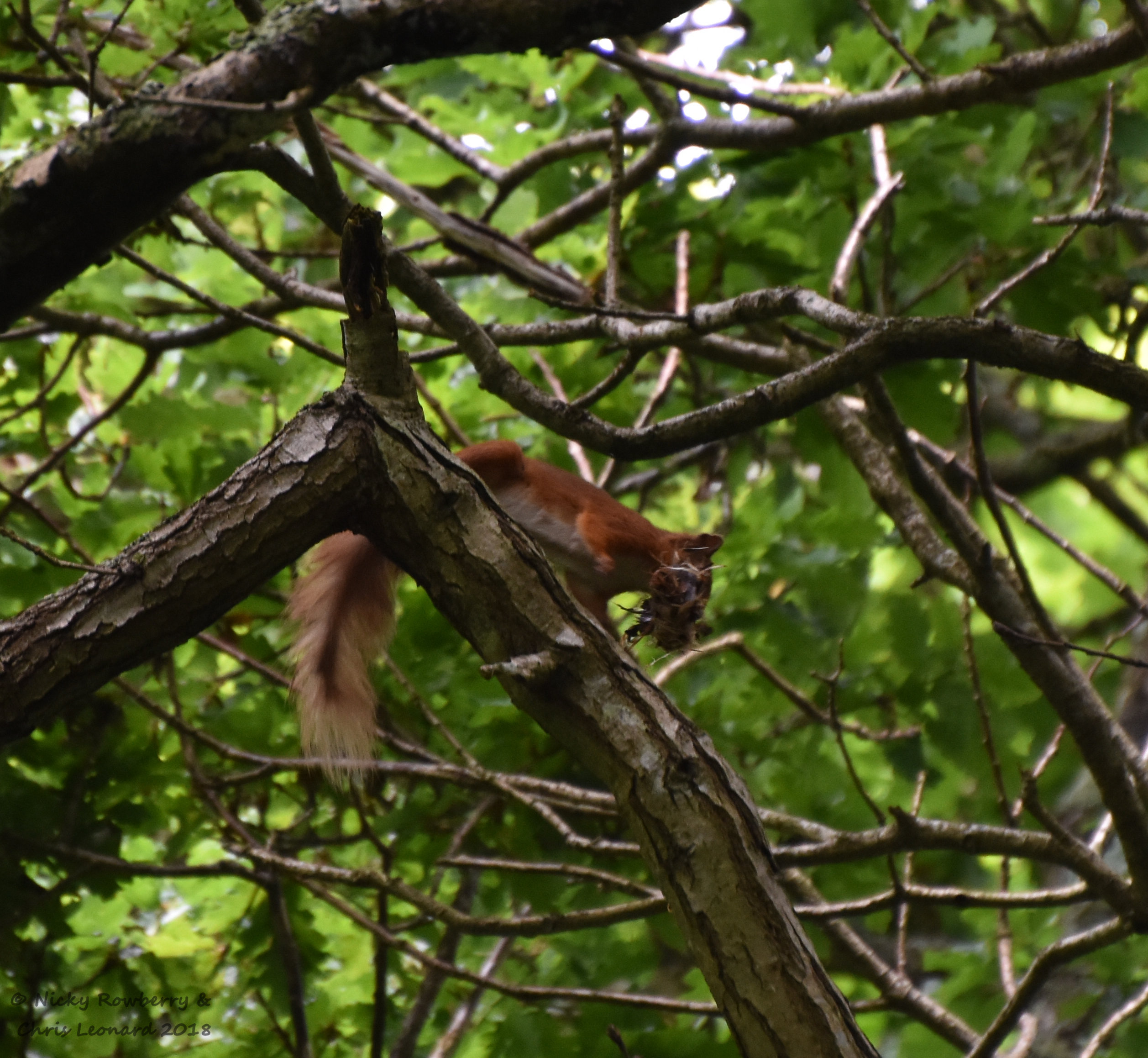
When it eventually emerged it no longer had the nesting material, but decided to sit nearby watching us below. I know the next picture is really dark, but you can see the squirrel staring directly at us.

We had a few more sightings after this. In some they were again carrying nesting material, although we lost track of them in the branches so couldn’t see if they took them back to the same place.

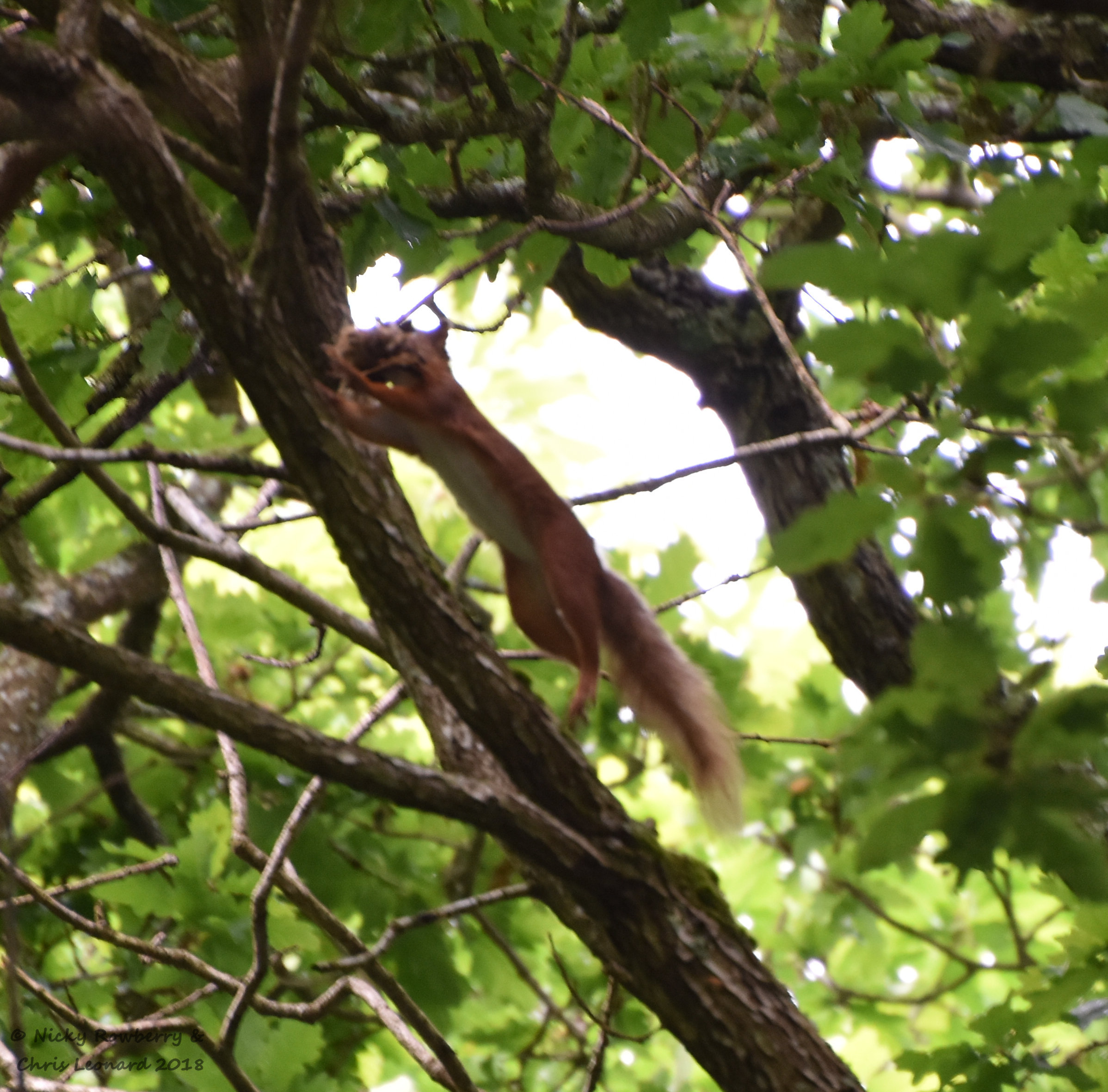
The final photo I know is really rubbish, but I just love the way it looks like he’s just dangling there, when obviously we just caught him mid-jump.

So Plan B worked out pretty well in the end. The fog may have stopped us seeing butterflies that day (don’t worry we got there in the end – see next blog post), but there was plenty of other wildlife to enjoy. That’s one of the things about wildlife watching I love, you are never really disappointed, as there is almost always something amazing to see if you look.

Luring an Emperor

Having missed most of last week’s sunny spell, (due to the considerable inconvenience of having to work for a living!) we headed out on Sunday to Hartlebury Common. Almost exactly 2 years ago we’d gone to Hartlebury in search of the Emperor Moth – with zero success that time. But this time we had a secret weapon – a pheromone lure!

Male emperor moths fly during the day looking for females. The females fly at night, but during the day they sit in the undergrowth wafting irresistible pheromones out to the males. The males pick up the scent with their feathered antennae and home in on the object of their desire. You can now buy pheromone lures that will fool the poor males into thinking you are a desirable female. This does feel a  bit like cheating and a bit mean to deceive the males this way. But since it was probably the only way we were going to see this beautiful moth, I’m afraid we went for it – although making sure we didn’t leave the pheromone lure out for too long to disrupt their normal behaviour. Please note as pointed out in the comments below that you shouldn’t use the lures for Emperor moths with a pheromone trap as the moths are too large and may get damaged when trying to get into the trap. Better to suspend the lure in a muslin cloth or similar that they can’t hurt themselves on.

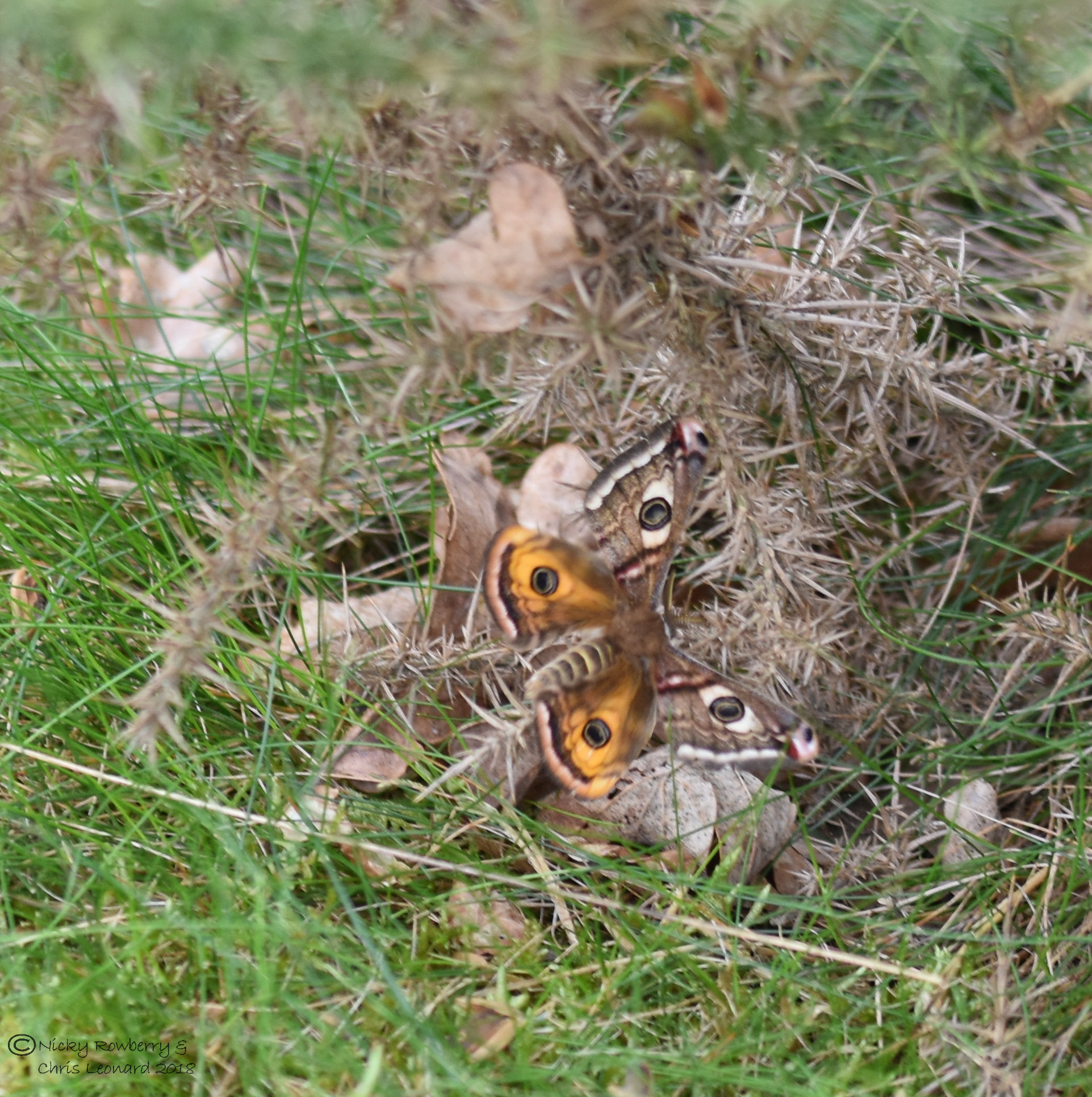
So we wandered about for a bit before selecting what seemed a suitable spot to put the lure down. We’d barely got set up when the first male came hurtling over the gorse. It shot over the lure and landed on a gorse bush nearby, where he then stayed. They are big moths, so you’d think they’d be easy to spot, but it was surprisingly difficult even when we knew roughly where he’d landed. When we did find him, he was hanging on a twig with his underside towards us – so here’s one of our first photos.

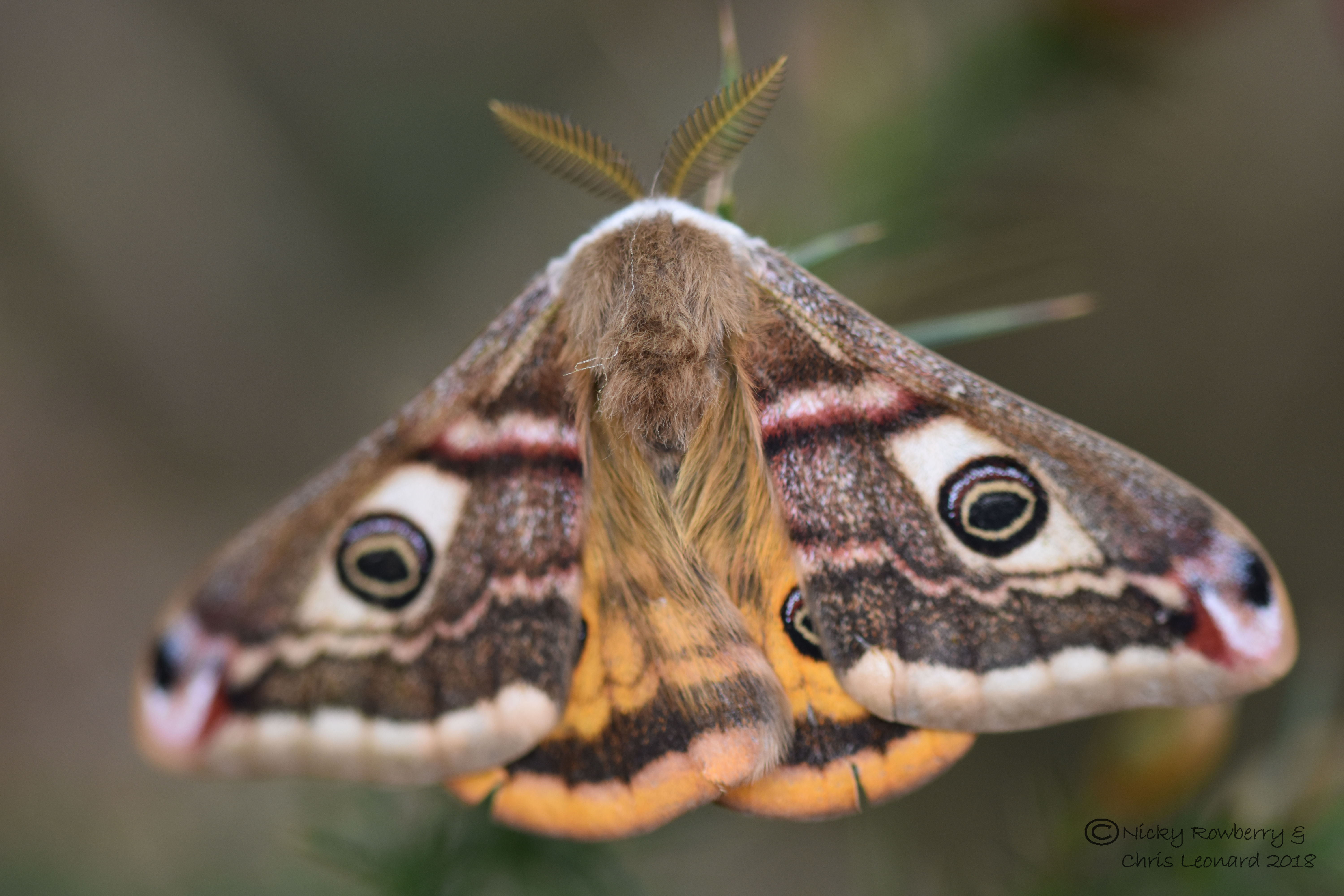
They are really quite furry/hairy moths with very impressive big eye spots on the wings. The males’ antennae are very large and feathery to pick up the female pheromones. Not easy to focus on, but here’s my best effort.

Almost immediately a second male came bombing in towards the lure. This one however refused to settle. It seemed (not surprisingly) confused by the lure and flew around excitedly looking for a female.

While he hovered around the lure looking for the female, I hovered around him trying to get a decent photo. As he didn’t settle, the best I managed of him was this flying shot. Not great, but at least you can see the lovely yellow underwings and all four peacock-like eyespots.

This second male eventually gave up and disappeared back into the gorse. The original male though eventually shifted position, so that we could now see his other side. So we finally got the classic Emperor moth shots we were looking for.

Having got the photos we wanted, we packed up to leave the males in peace to pursue genuine females. The moths weren’t the only animals with love on their minds though – these bloody-nosed beetles were clearly feeling spring in the air.

Hartlebury Common is very busy with birds. Last year we’d seen a small bird that was new to us and had identified it as either a Chiffchaff or a Willow Warbler. They are only distinguishable by their song and since we didn’t know to pay attention to this until it was too late, we couldn’t identify the bird. But this year we were definitely hearing Chiffchaffs all around us, so I’m reasonably confident that the previous one was too.

The most obvious animals on the common were cows with resplendent horns. No idea of the breed, but they were pretty impressive. They appeared to be free to roam, so were presumably used to maintain the status quo of the vegetation.

So all in all we were very happy with our latest trip to Hartlebury. The pheromone lure worked a treat and the moths were every bit as stunning as we’d hoped. I’ve also bought the pheromone for the currant clearwing moth. These moths won’t come to regular moth traps, but like the emperors, the males are attracted to pheromones. So I’m hoping in the summer to try this out around our currant bushes on the allotment. Fingers crossed.

It’s a Frog’s Life

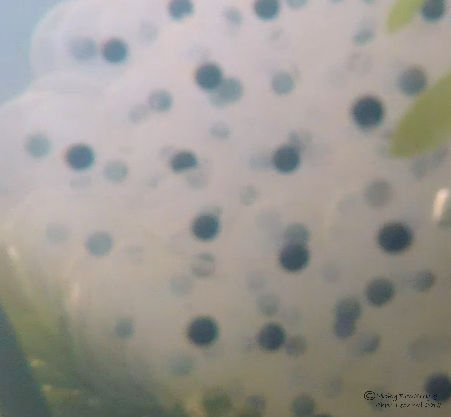
I’ve been virtually staking out our allotment pond since the middle of February, hoping for frog spawn.  As it turns out, it was probably a good job we didn’t get any spawn that early, as the heavy snow at the beginning of March would probably have wiped it all out. But in mid-March there were squeals of excitement down the lottie, when we spotted the first magical clusters. We had frog spawn! We’d put in the pond too late for spawn last year, but we did get several frogs and newts using it throughout the summer. So it was great that the frogs at least deemed it suitable for spawning in. No sign of any toad or newt spawn yet, but I live in hope. As I’d just got a waterproof GoPro camera a month or so ago, the arrival of the frog spawn seemed the perfect opportunity to test it out. So here’s my very first underwater video, taken on the first day we spotted the frog spawn – 11th March.

Since then I’ve been down the lottie regularly to check on progress. We can’t be sure exactly which day the frog spawn was laid, but I would guess it was only a day or two before we saw it. At first there was only one clump, but two days later there were three. So I’ve been trying to keep a video/photo diary of the development. I’m still getting the hang of the settings on the GoPro and also on getting things in focus, so apologies if the images are sometimes a bit blurry. So first up here are the eggs on Day 2 – pretty much perfectly round dots in their jelly bubbles.

No real changes were visible to the naked eye for the first week or so, but by day 11 they were starting to change shape. No longer perfectly round, the eggs were more like fat commas.

Two days later and the comma shaped were definitely elongating, with the suggestion of a tail.

By day 15 there were definitely mini tadpoles inside the jelly blobs. No sign of movement yet, but heads and tails were clearly visible.

Day 18 (28th March) and the tadpoles had started to hatch. Some were still in their protective jelly, but quite a few were clearly visible stuck to the outside of the eggs. These were all on the first clump of spawn we’d seen, the tadpoles in the other two clumps were not surprisingly a few days behind, having been laid later.

Day 20 and most of the first clump had hatched. They were starting to move a bit more now and had got a bit bigger so that gills were just about visible on some of them. They were still feeding off the jelly of the spawn.


Day 24 (3rd April) and some of the slightly larger tadpoles were starting to move away from the jelly clump. Some of the tadpoles on the other two clumps of spawn were now starting to hatch too.

Day 29 and they were free swimming – the pond was alive with wriggling tadpoles. They were grazing on the algae growing on the sides of the pond and on the rocks.

I felt ridiculously proud of them that they had managed to make it this far, despite the rubbish weather spring has thrown at them! But they’re not out of the woods yet – as the next video shows there are still dangers lurking in the pond!


Newts will eat tadpoles, so the chances are that not all of these will survive, but hopefully there are enough of them that some at least will make it. The newts have to survive too. With a bit of luck maybe we’ll get some newts laying eggs too – the newt in the video appeared to have a bit of a frilly ridge so is perhaps in breeding condition.

So that’s the progress so far in the first month of our tadpoles lives. Hopefully enough of them will survive that I’ll be able to do an update in a month or two’s time, as the tadpoles develop into baby frogs. Fingers crossed!


Tropical Escape

The weather prospects at the beginning of the bank holiday weekend were pretty dismal and we’d also been missing our spring butterfly fix, so came up with a cunning plan to solve both these problems – a trip to the Stratford Butterfly Farm.  I know it’s not our usual native wildlife preference (and it feels a bit like cheating), but needs must, given the grey skies we woke up to on Saturday. I’ve also always had a soft spot for these butterfly farms. The sight of hundreds of stunning butterflies floating (or in some cases zooming) around the greenhouse always lifts the spirits. We got to Stratford pretty much as the doors opened in an attempt to beat the crowds – successful for a full 5 minutes before everyone else with the same idea arrived.

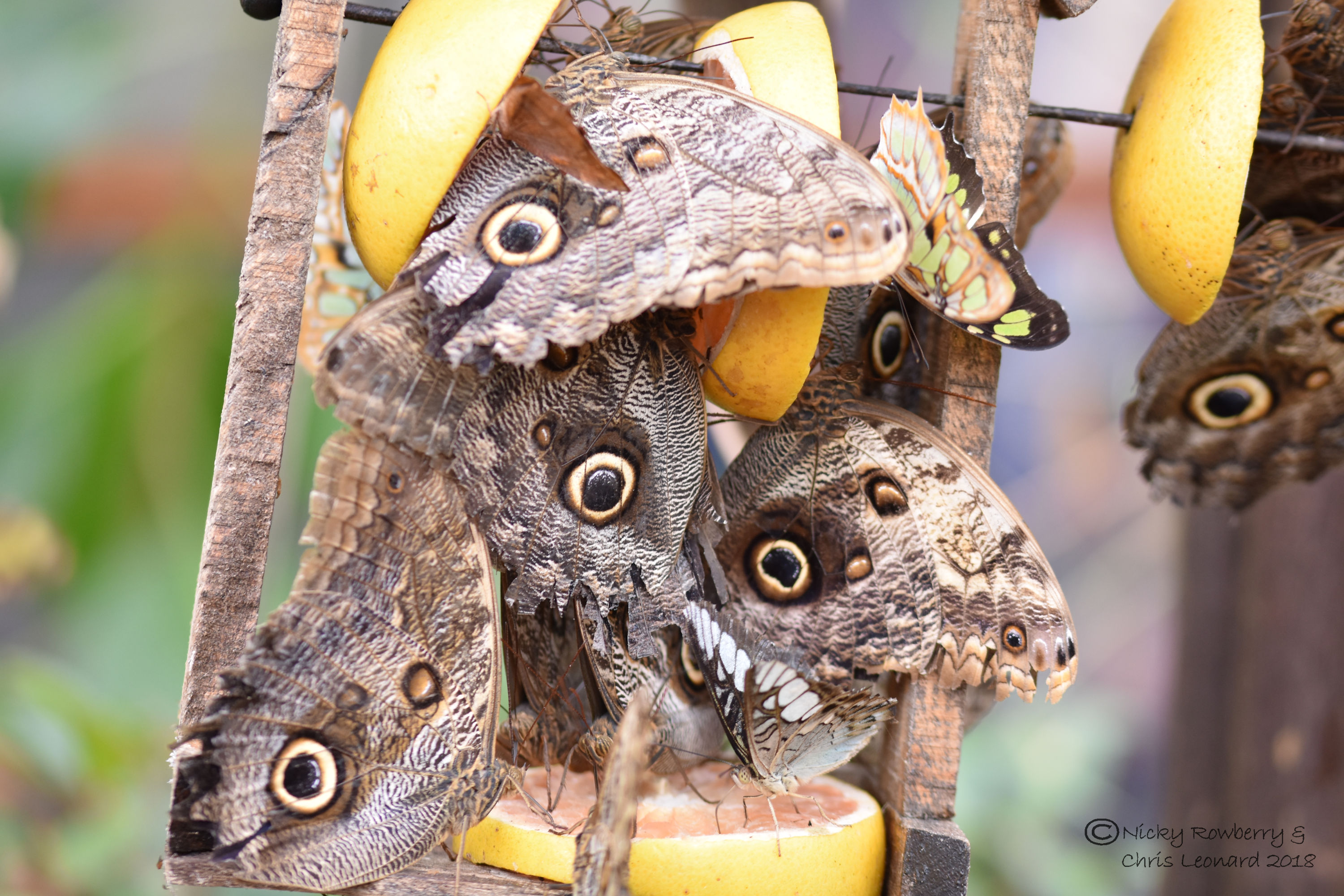
Near the entrance was a table covered with fruit which had attracted lots of these large Owl butterflies. I’d taken the GoPro with me, so managed a short video clip of them.

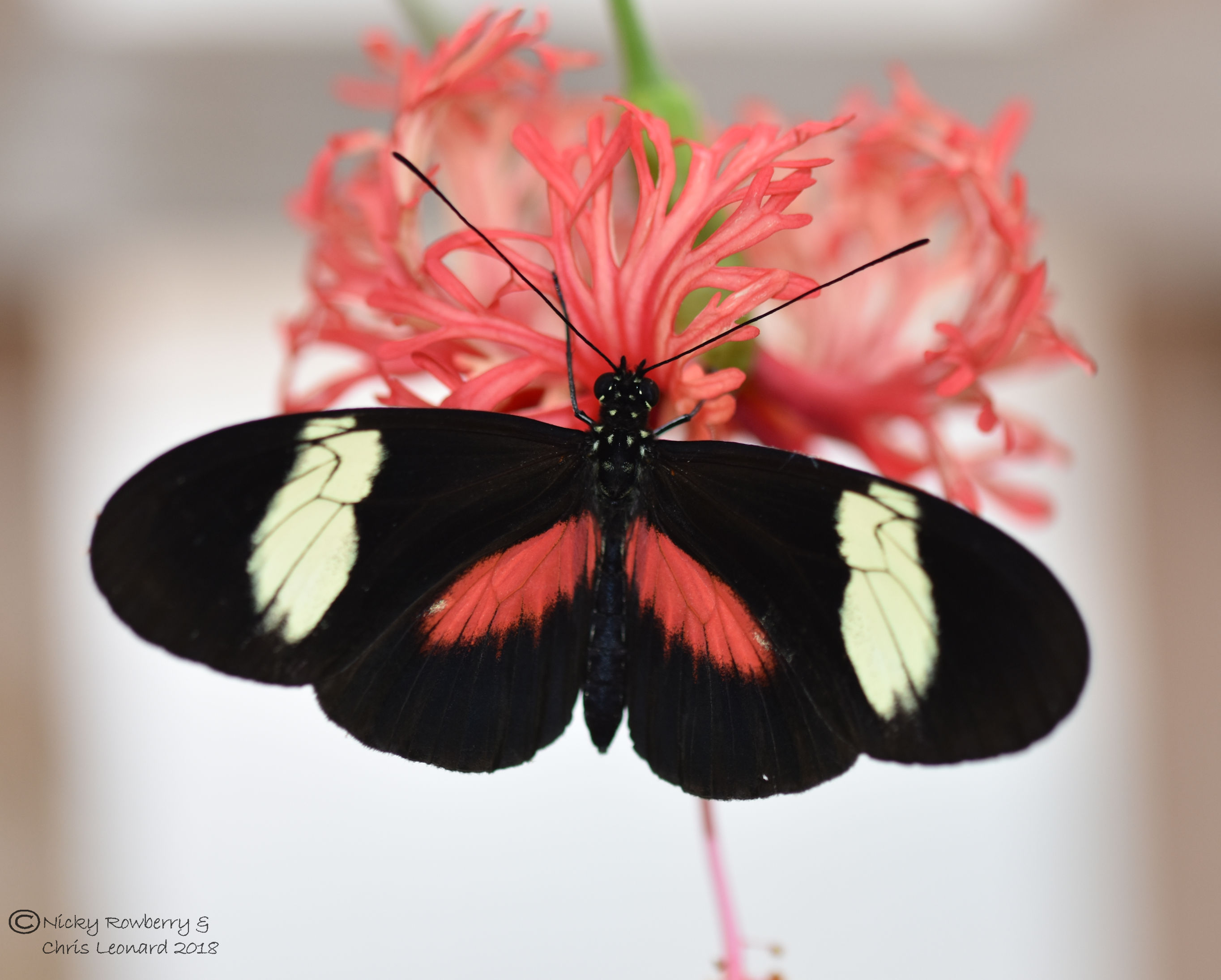
As always we took literally hundreds of photos, so it’s taken me a couple of days to whittle them down and also to try and identify them. You’d think great big beautiful butterflies would be easy to identify, but apparently not. I still have a folder full of unknowns. The butterflies came from three continents – Africa, Asia and America. Here in no particular order (other than a vague grouping by continent) are some of the stunning butterflies we saw.

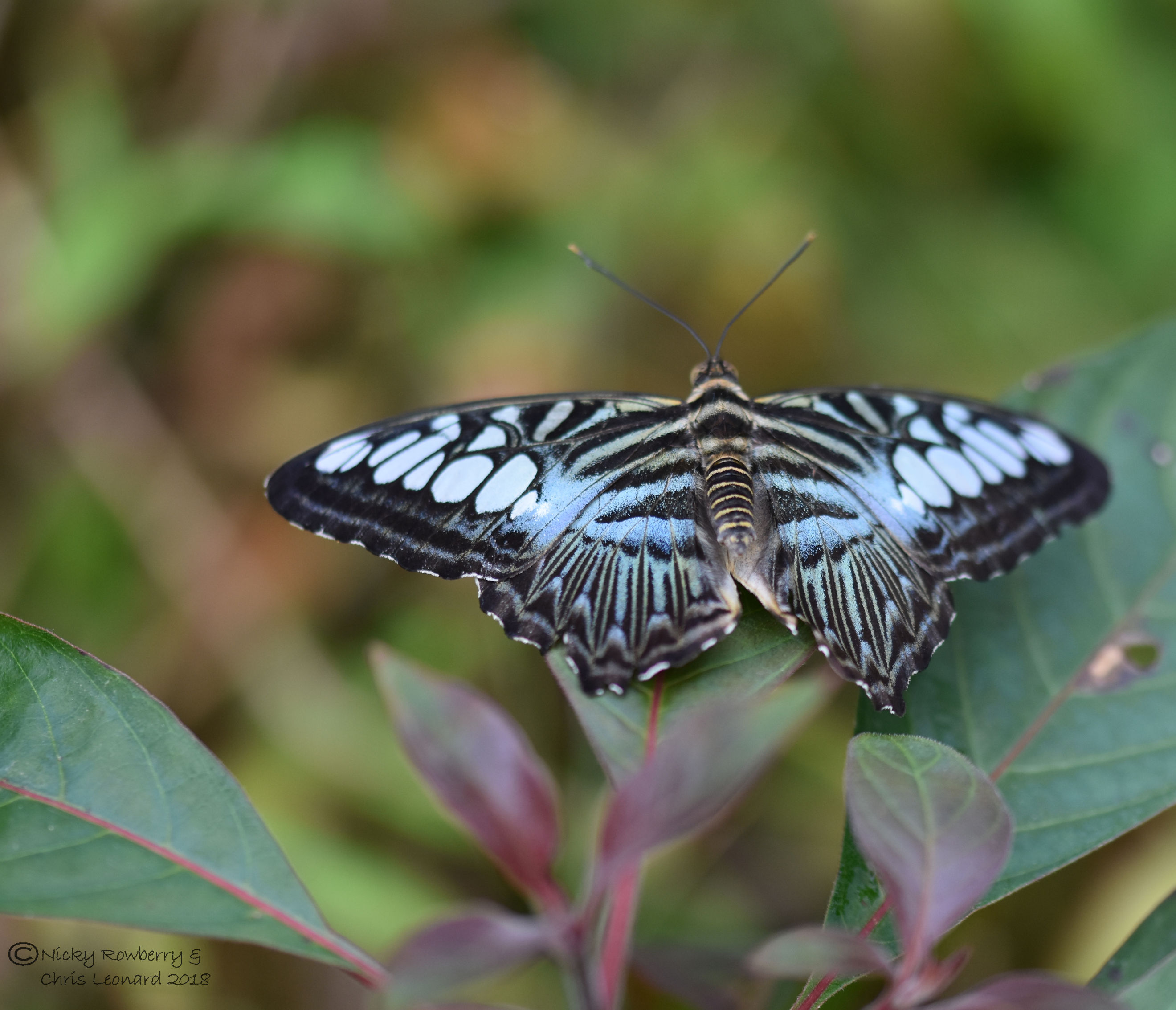
I’ve only managed to identify three of the Asian species – first the Clipper:

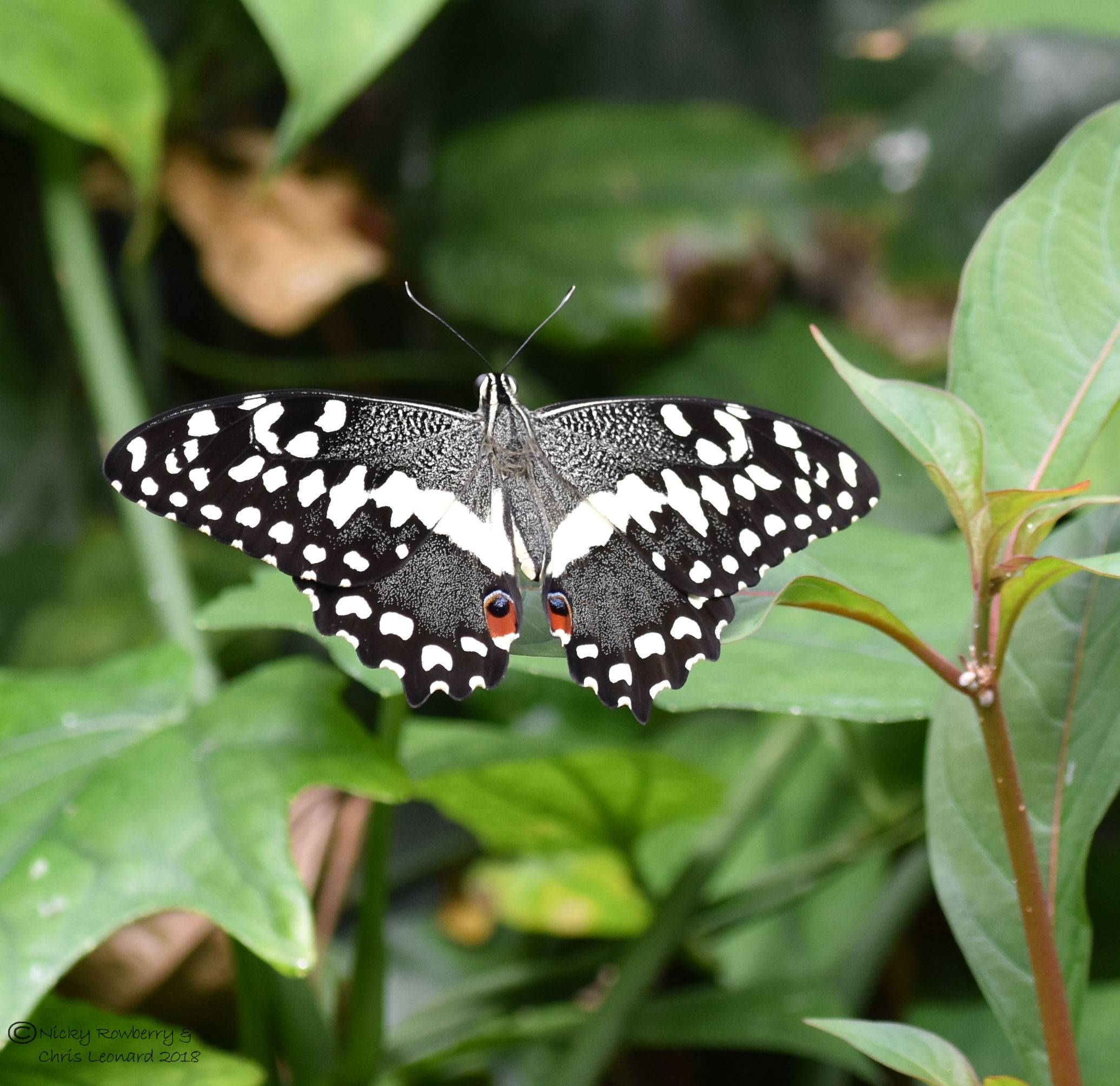
then the Lime Swallowtail:

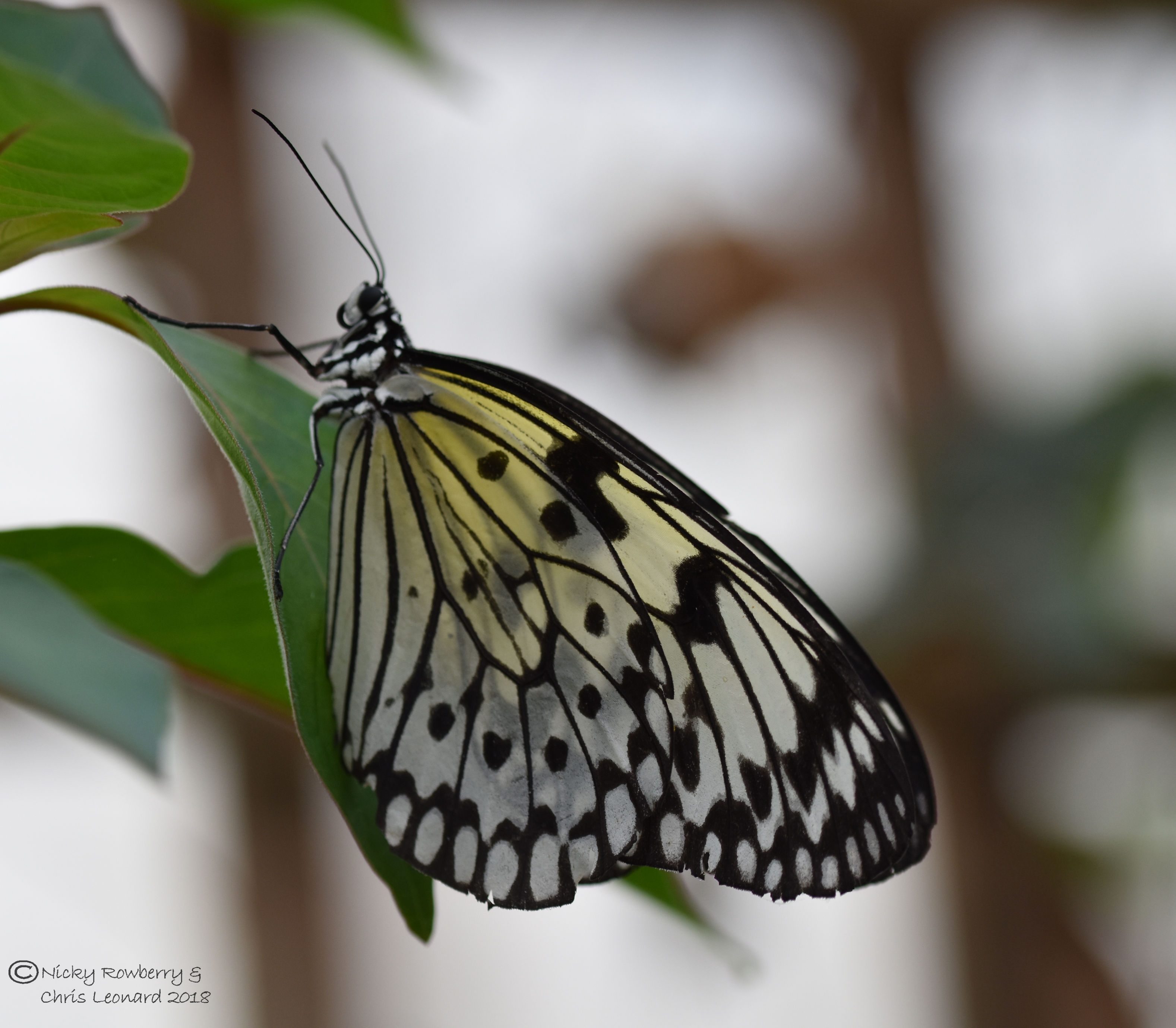
and finally the Tree Nymph.

The only African one that I’ve managed to tentatively identify is this delightfully named – Flying Handkerchief or Mocker Swallowtail.

For some reason I had more luck identifying the American ones. The Owl butterflies were reasonably easy to get to genus (Caligo) given the large “eyes” on the underwings. They were particularly keen on the fruit and gathered wherever the staff had provided it.

The Zebra Longwings pretty much did what it says on the tin – zebra stripes on longwings!

Another longwing – the Sara Longwing (I can but dream of getting a butterfly named after me – the Lazy Shortwing perhaps?)

And another one – the Mexican Longwing:

Another Mexican one – the Blue Wave:

This large butterfly – the Queen Page, is one of the Swallowtail family I presume.

These huge White Morpho butterflies were perhaps one of my favourites. Massive butterflies that flapped lackadaisically around, seeming to prefer being near the pool in the middle, although it might just be their preferred plants were there.

We only managed a sideways shot of this snazzily striped Orange Tiger, but its upperside is a gorgeous orange with dark stripes:

One of the more common but no less stunning butterflies there was the Malachite:

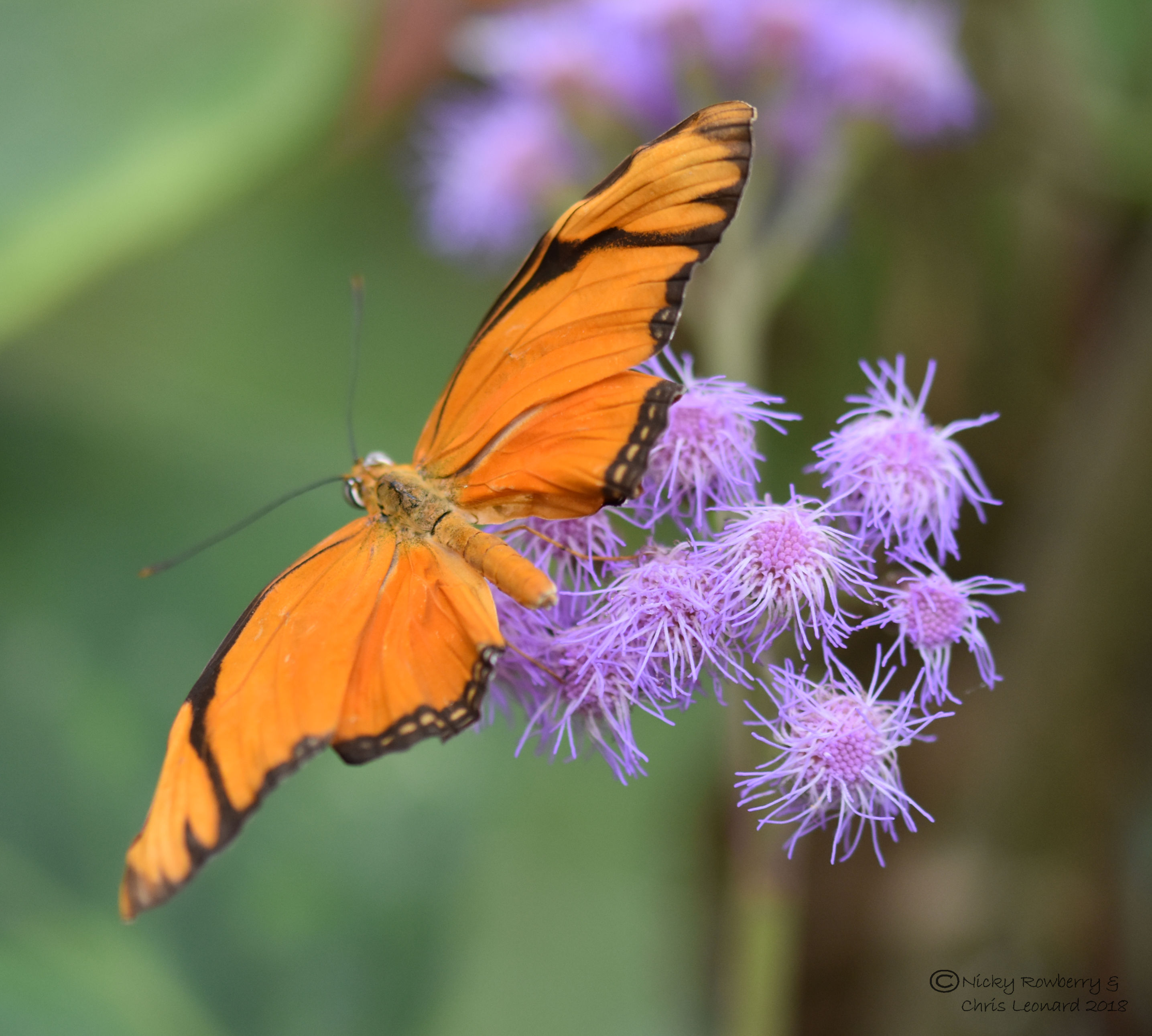
I wondered whether this Flame butterfly was newly emerged as it looked a bit crumpled still?

Arguably the most famous butterfly species is the Monarch. Renowned for its incredible migrations of thousands of miles and huge aggregations – we were happy just to snap one.

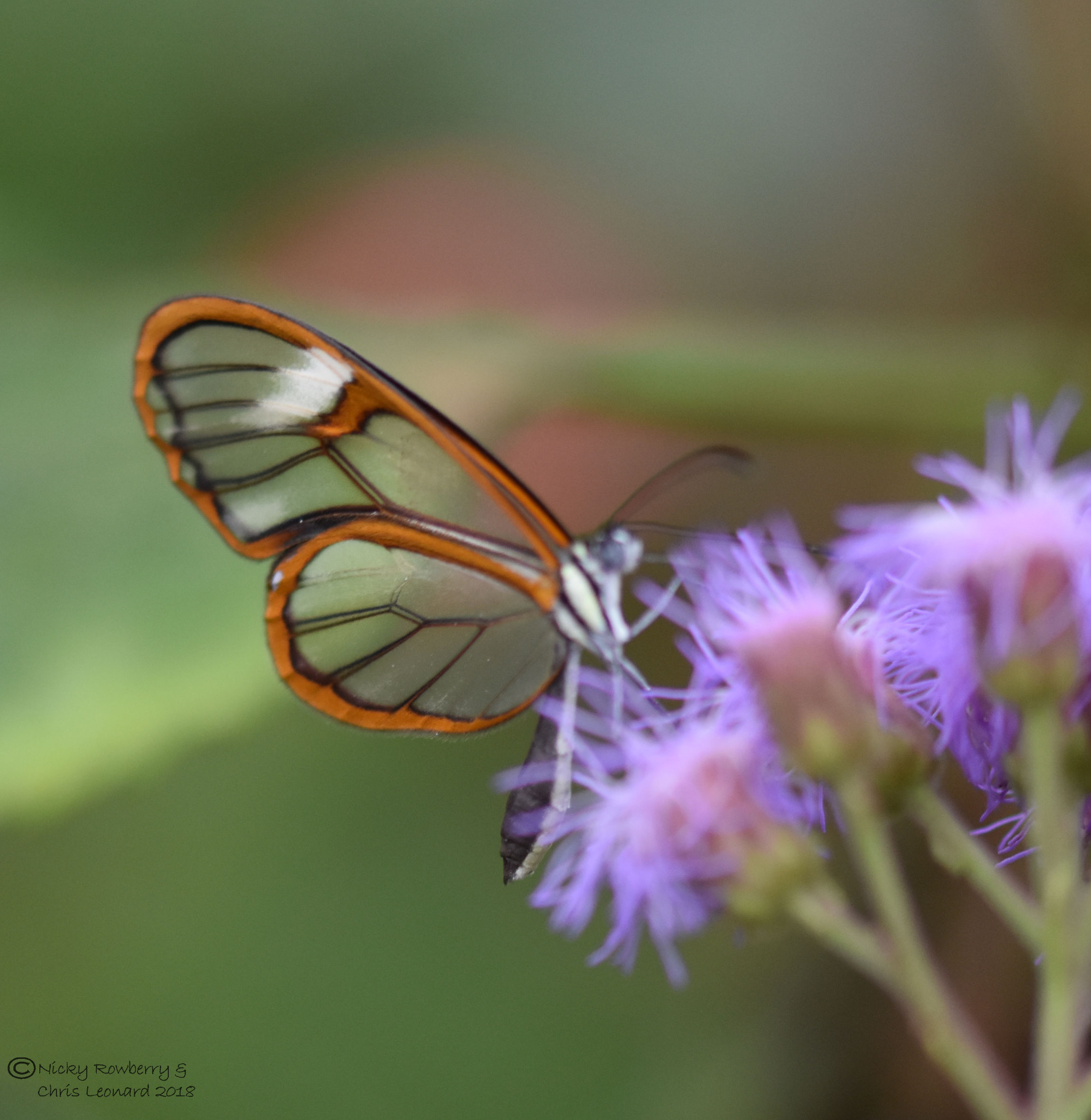
One species I was particularly keen to see was the Glass Wing, I’ve always loved these transparent butterflies. Turns out though they’re not that easy to photograph as the camera tends to try and focus through the wings. With hindsight of course I should have switched to manual focus instead of my usual auto!

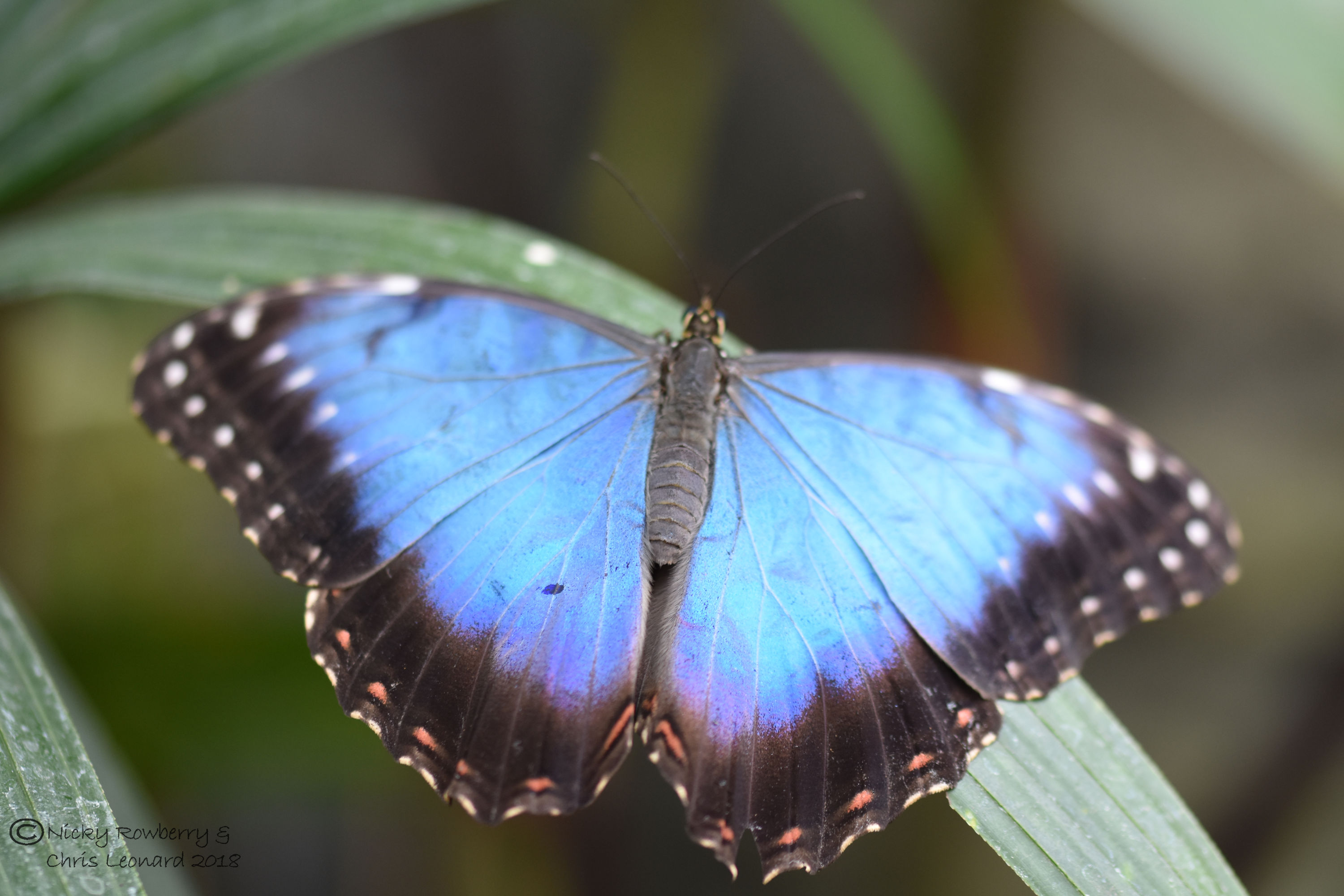
For me the most stunning butterflies are the big blue ones like this Blue Morpho – absolutely gorgeous.

I’ve included one final butterfly, although I haven’t managed to identify it. The colours on the upper wings are pretty enough, but I absolutely loved the underside of the wings (below). If anyone can identify it for me, it would be very much appreciated.

It’s always good to catch a bit of the behaviour as well as just aesthetic shots, so it was nice to spot this pair of mating butterflies.

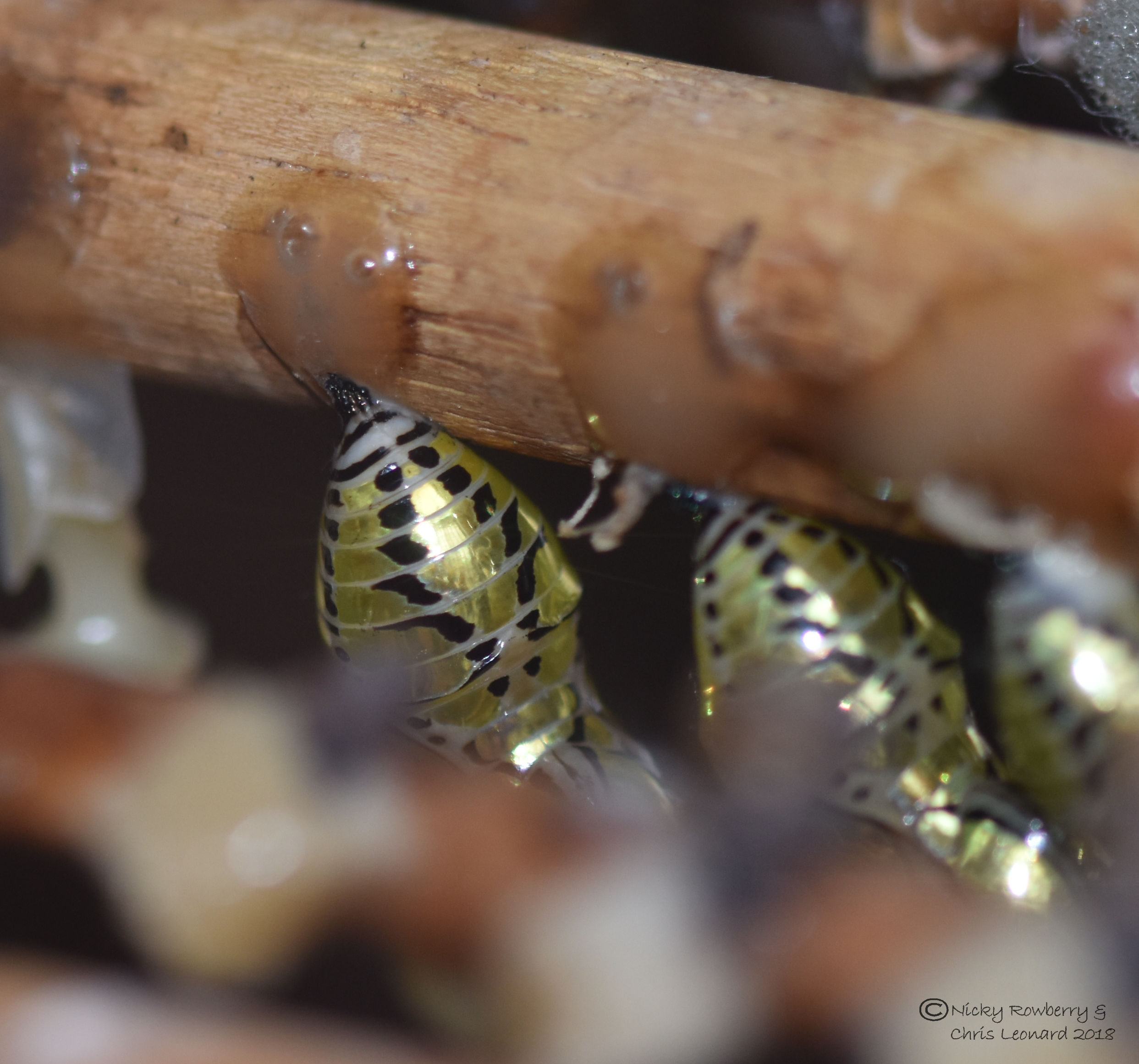
The farm has a cabinet with chrysalises, so the public can watch the butterflies emerge. These shiny gold ones were just exquisite, although not easy to photograph through the glass.

The greenhouse is also home to two species of bird – both carefully selected not to be insectivorous.  The quail had the most adorable baby chicks running around after them – smaller than many of the butterflies.

And these pretty little zebra finches were happy to share the food bowl with the butterflies.

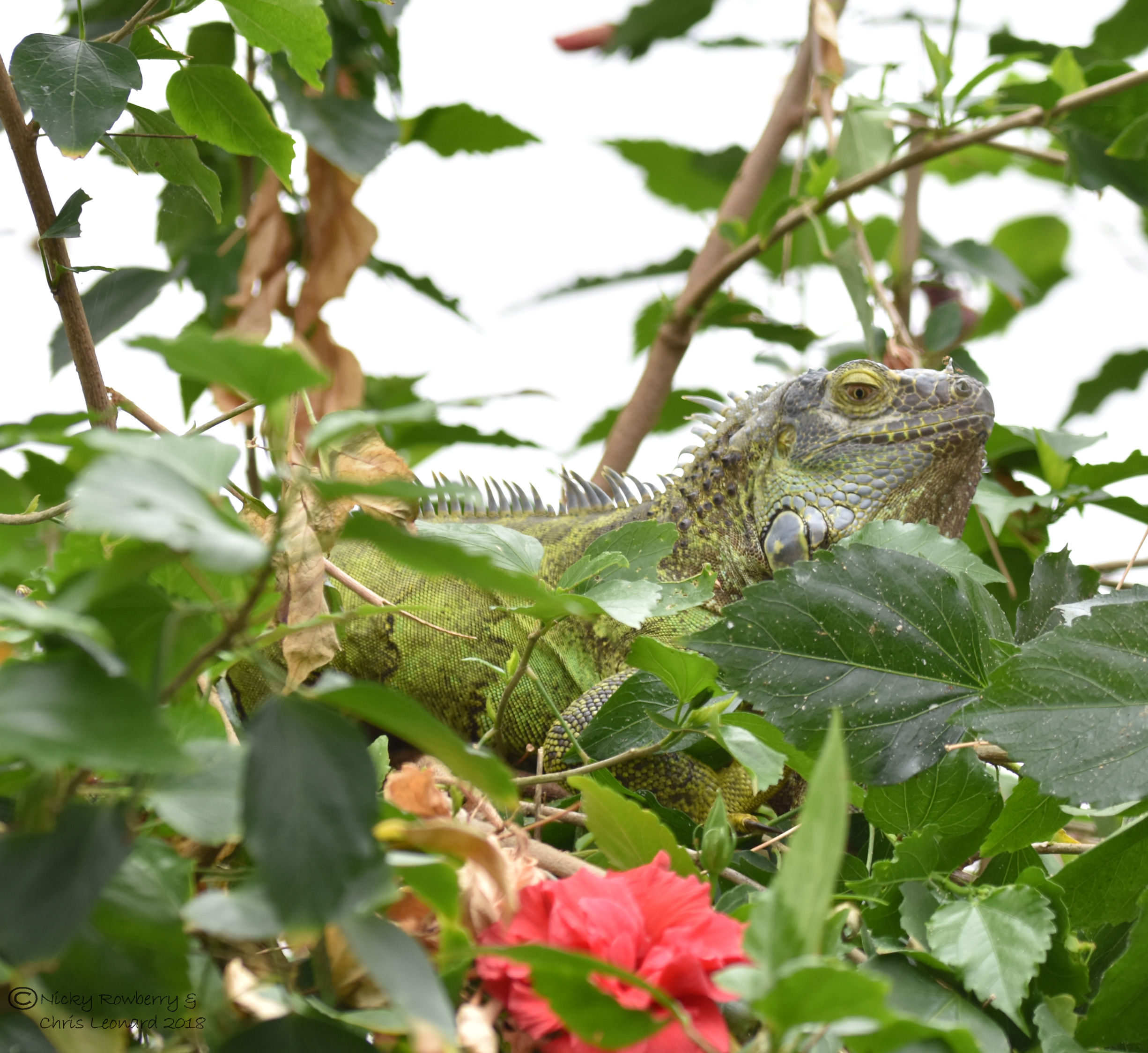
And finally one of the iguanas that live in the greenhouse. We learnt from a previously very close call not to stand directly underneath these and particularly not to gawp up at them with your mouth open!

So all in all, the perfect antidote to a wet and dreary Saturday morning. Roll on spring though so we can see some of our own native butterflies on the wing.


Easter Peregrines

We woke up this morning to a surprise – the sun was actually shining! We hadn’t been expecting to do much wildlife watching today, but headed up the Malverns as quickly as we could, before the weather could change its mind. We’ve been wanting to head up the hill for a week or so now, since a fellow Malvern resident (Jude thank you so much) mentioned Peregrine Falcons, but the hills have tended to be shrouded in mist. Not ideal for bird watching, so we grabbed the chance today.

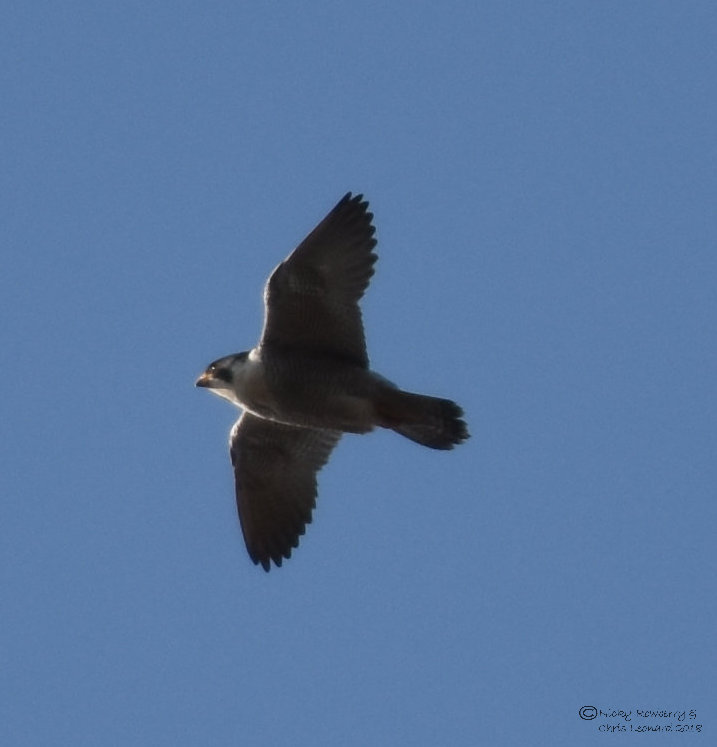
So we headed up to what we hoped was roughly the right area. A friendly dog-walker assured us that yes, he heard them almost every day, then paused and said “but not today”! Undeterred we carried on and almost immediately heard the distinctive calls and spotted this one circling above us.

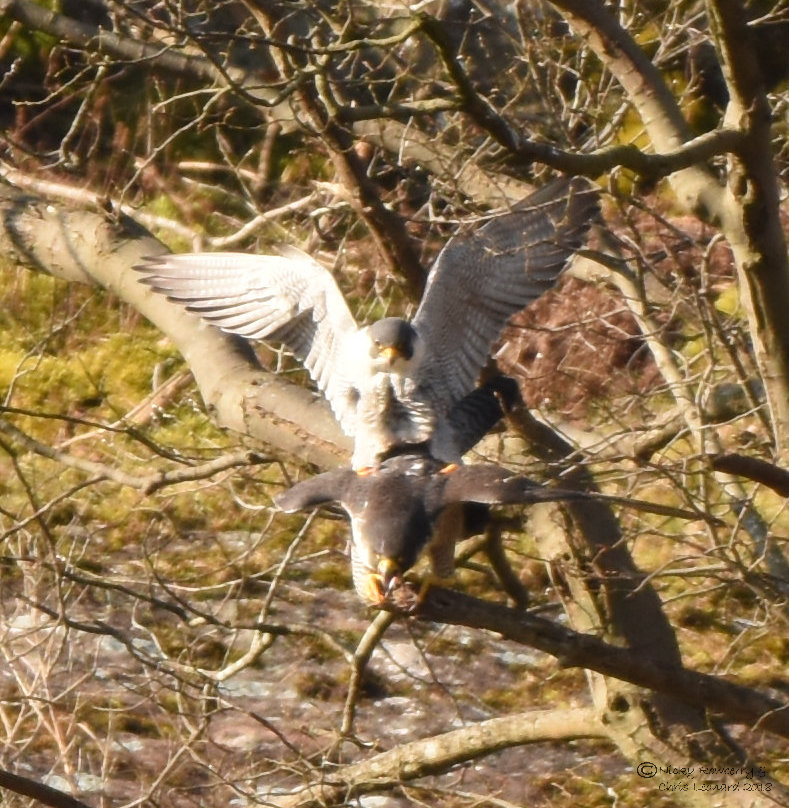
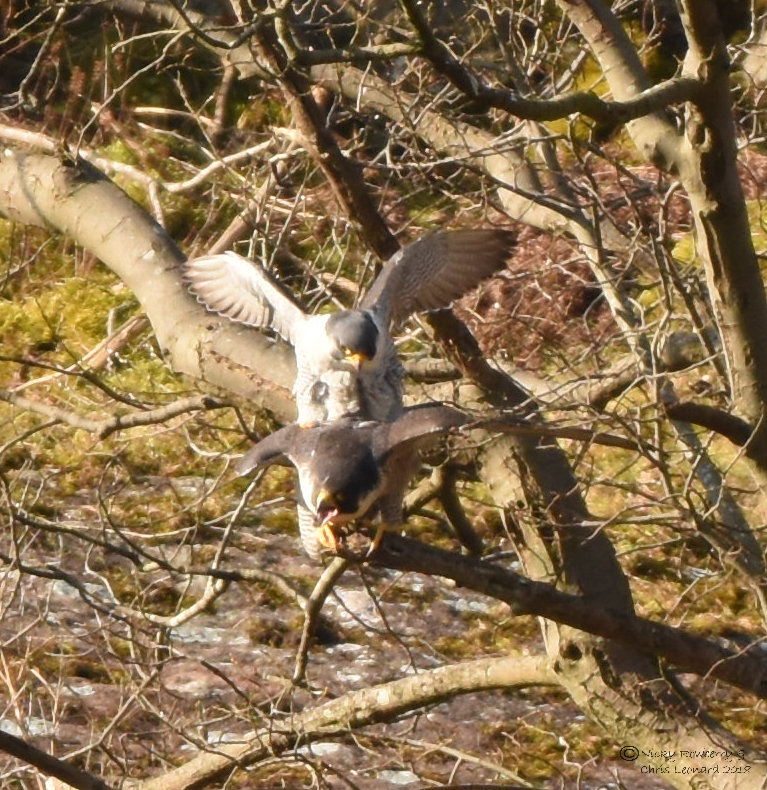
We would have been perfectly happy with this outcome – one falcon seen and heard, but then it got even better. High up in a tree we saw it land and there were two! (You wait all your life to see one peregrine then two come along!) Not only two, but judging by their next activities they were clearly a male and a female. We were a long way away and really at the limit of our lenses, but managed to catch “the action” on camera.

It didn’t last very long then the male perched on a branch above her. The female looked a bit rumpled by all the activity.

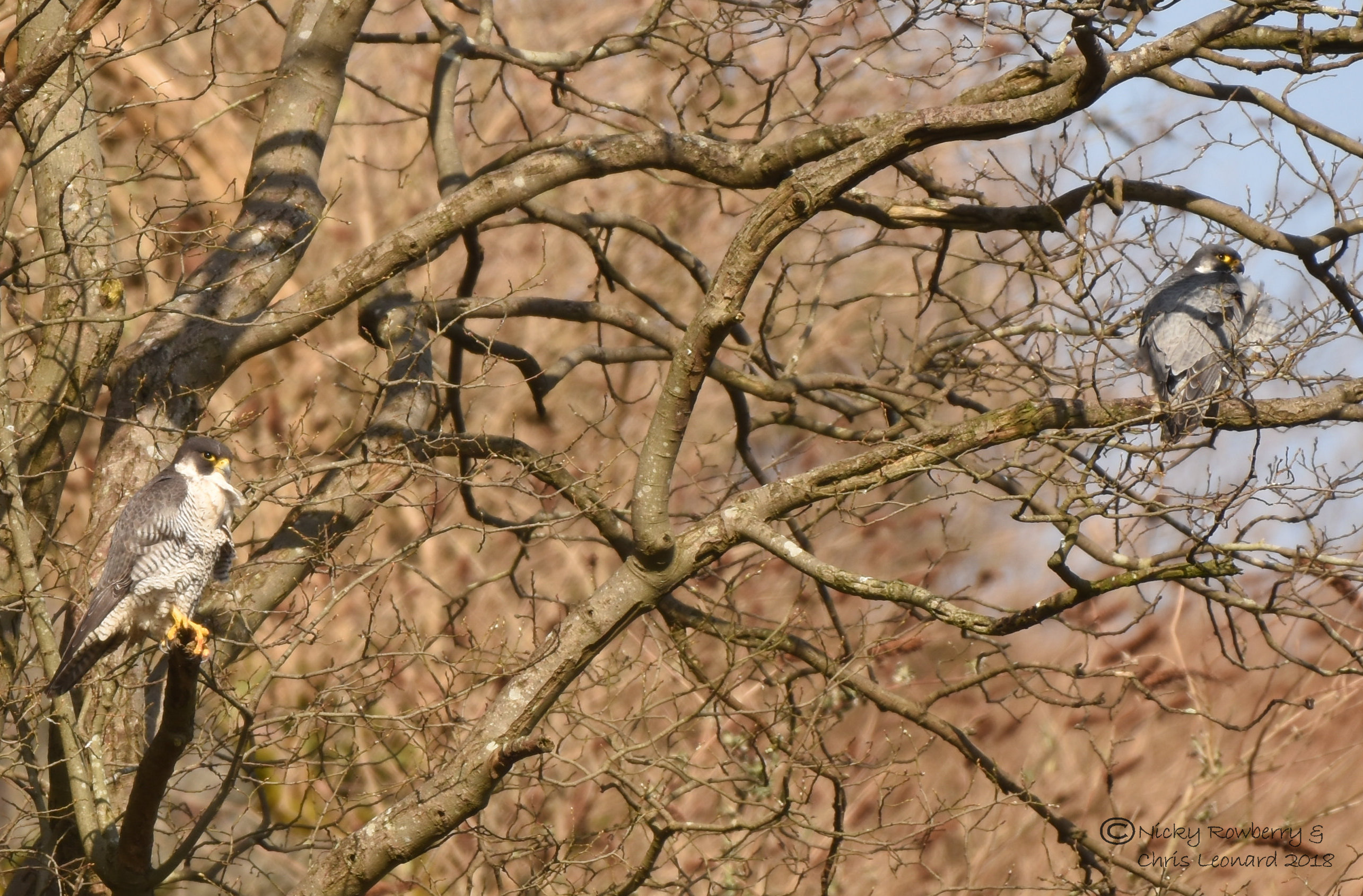
Since we were such a long way away, we found another path and headed further up the hill and found a better vantage point. The pair were still sitting in the same tree – I think the female is the one on the left and the male is on the right with his back to us – but happy to be corrected on this.

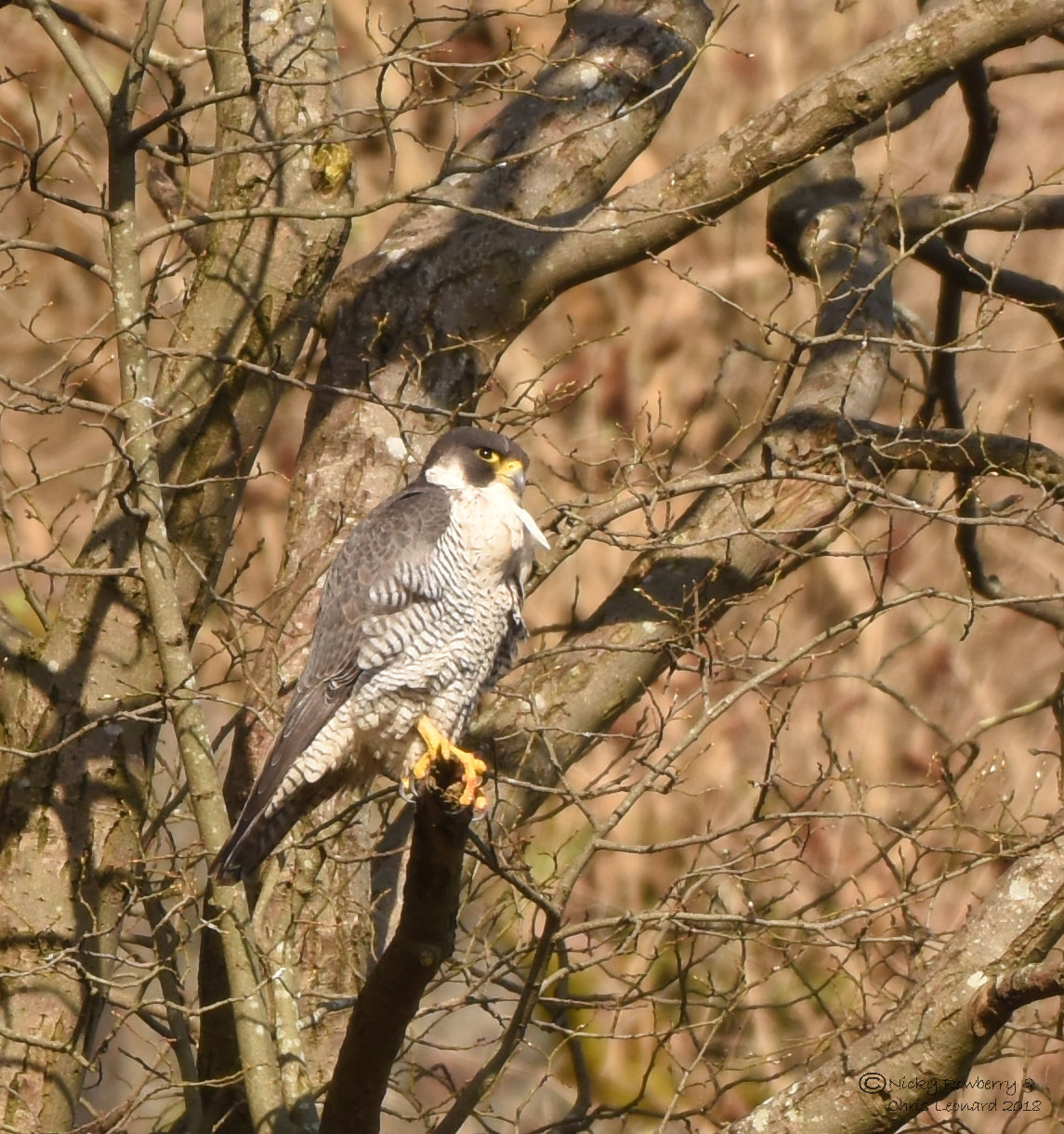
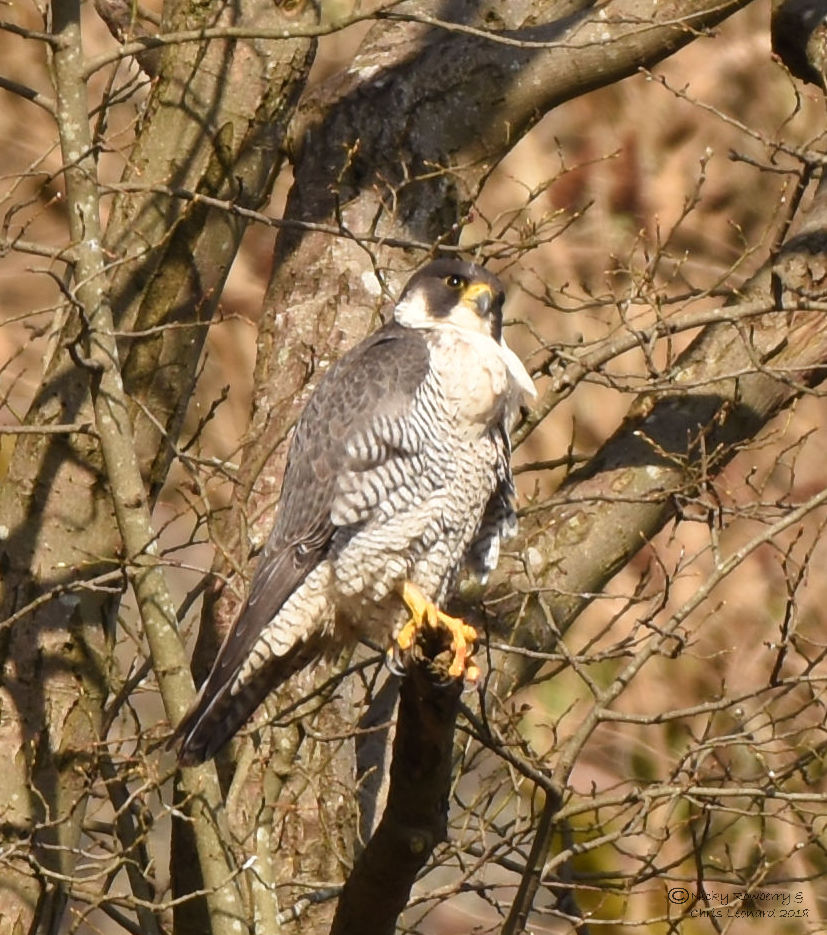
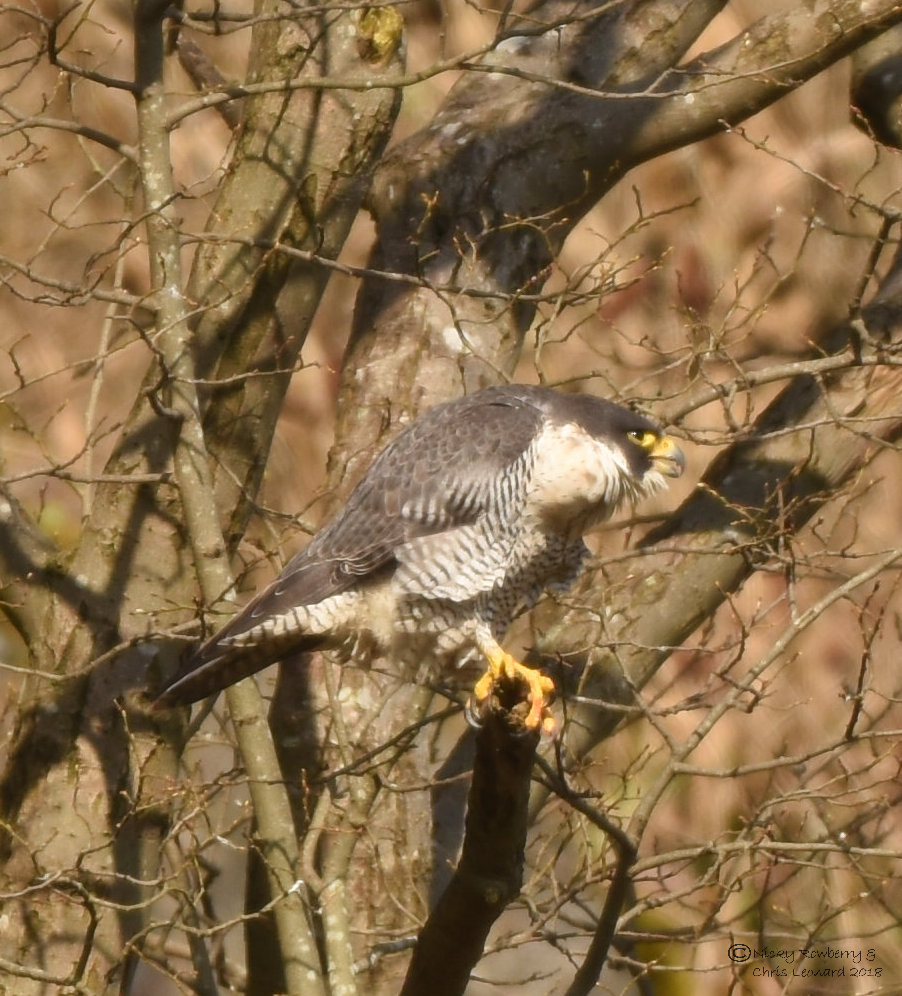
They stayed there for another 10 minutes or so, allowing  us to get some half decent shots of the one facing us. You can really see the size of those talons!

So a lovely surprise on a Sunday morning – two gorgeous falcons almost on our doorstep. Now we know to look for them, I think this will be the first of many trips to see them. Fingers crossed, given today’s activities, that they build a nest and produce eggs in the near future.

Spring Cleaning

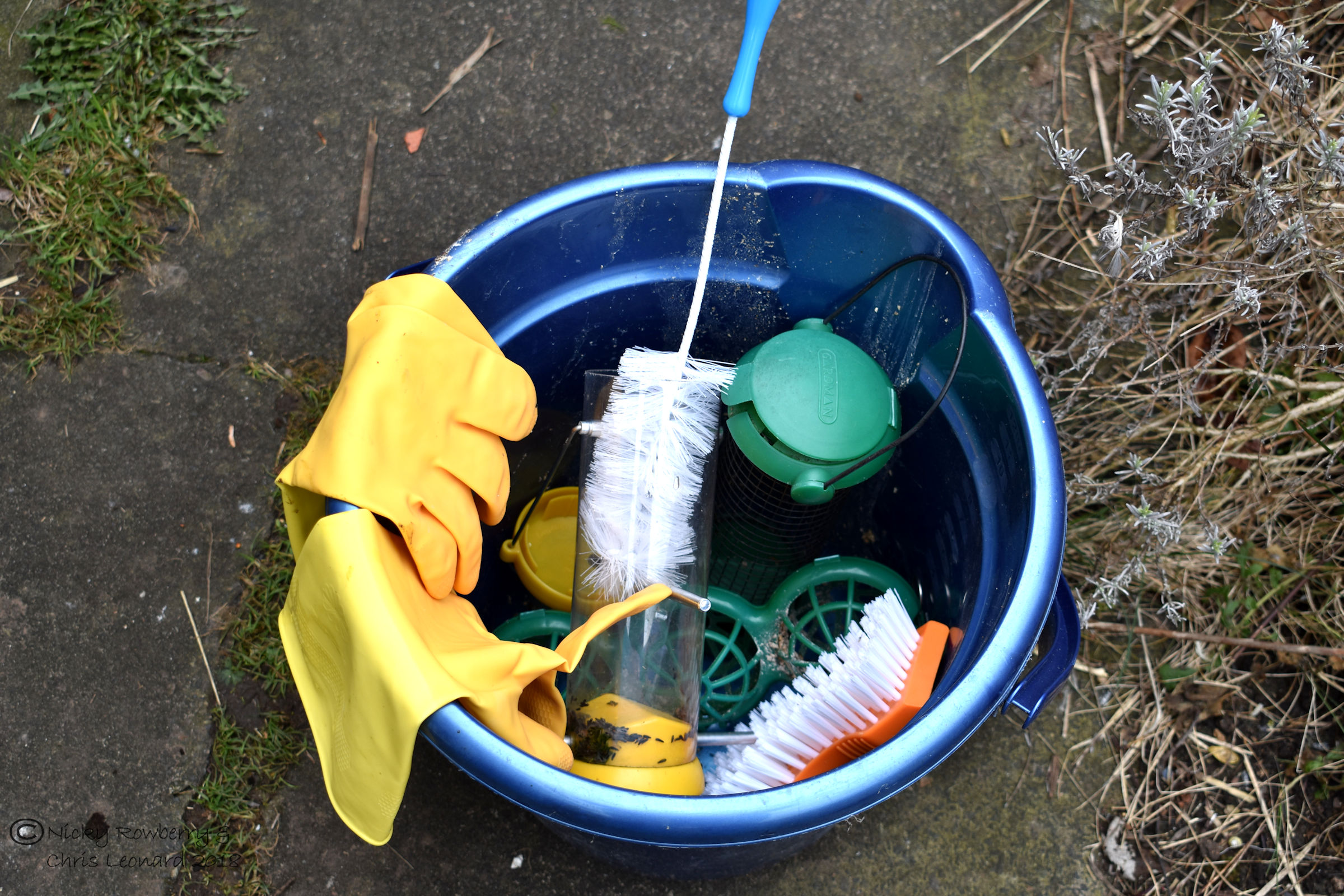
There’s been a lot in the press and on social media lately about the importance of cleaning your bird feeders. This is something we all probably know we should do, but don’t get around to as often as we should – I know we are definitely guilty of this. So with the first day of spring last week, what better time to have a spring clean for our feathered friends. Armed with a bucket, rubber gloves, scrubbing and bottle brushes I set to work.

I hadn’t really noticed how many bird feeders we’d actually got, until I came to have to clean them! It seemed best to do them in 2 lots, not only because there were quite a few, but so that the birds still had something out there left to eat while I slaved over the bucket. All washed, the two batches got hung out to dry in a rare spot of sunshine.
The bird baths got a good scrub too, since the  birds seem to use them for all manner of bodily functions, not just drinking and washing! It might just be a coincidence, but having cleaned the birdbaths, I’ve seen goldfinches using them for the first time – they must be fussier than the other birds!

I was a bit concerned that the birds might have been put off by me interfering with their feeders, but I needn’t have worried. They were back on them in no time. I must have hung the suet balls in a slightly different position, as the starlings could now reach them from below rather than balancing from above.

The blue tits were equally happy with a nice fresh supply of peanuts.

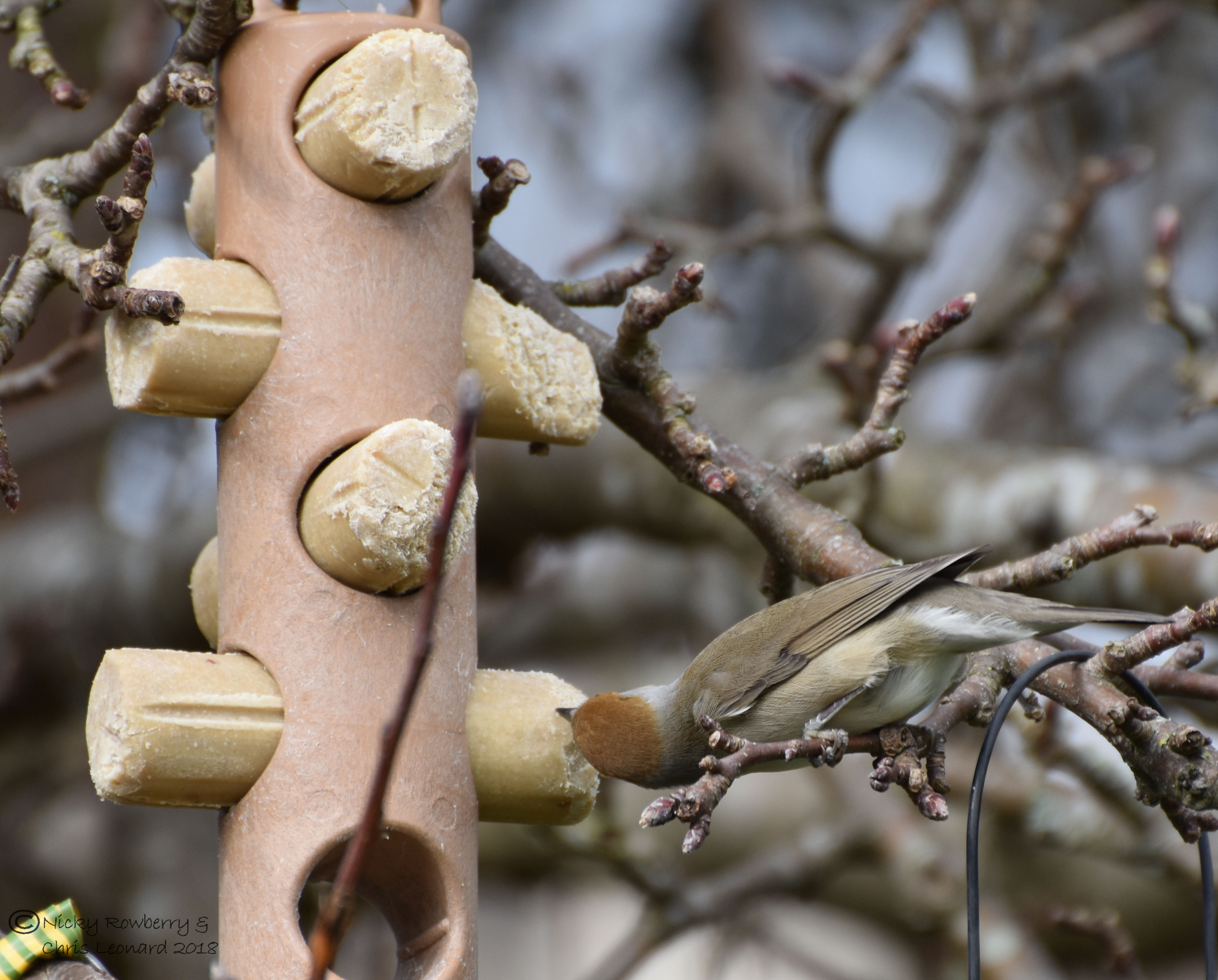
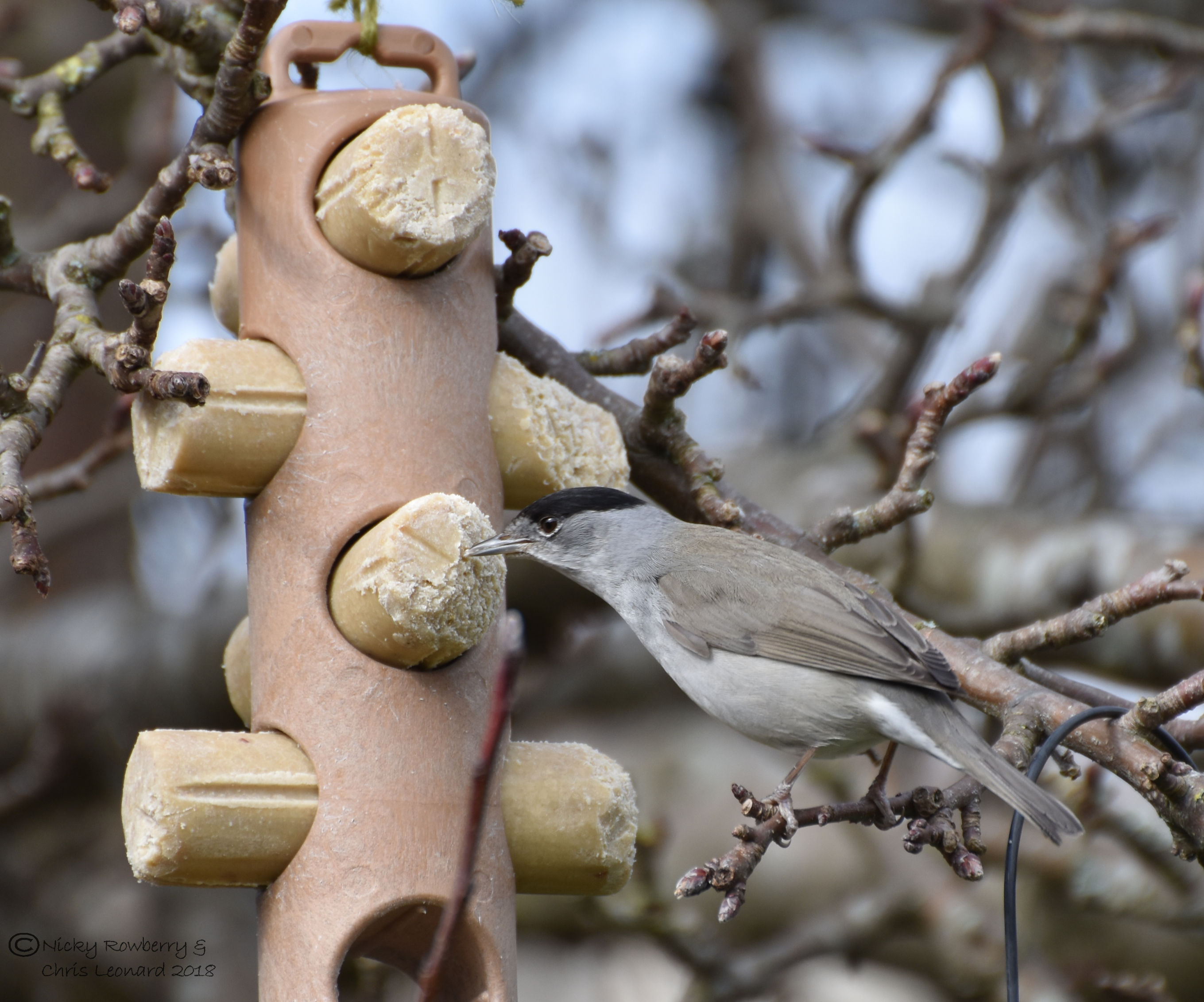
There are plenty of vantage points to reach the suet logs, but for some reason our female blackcap preferred to contort at this odd angle to reach a particular bit.

The male blackcap took a much more standard approach.

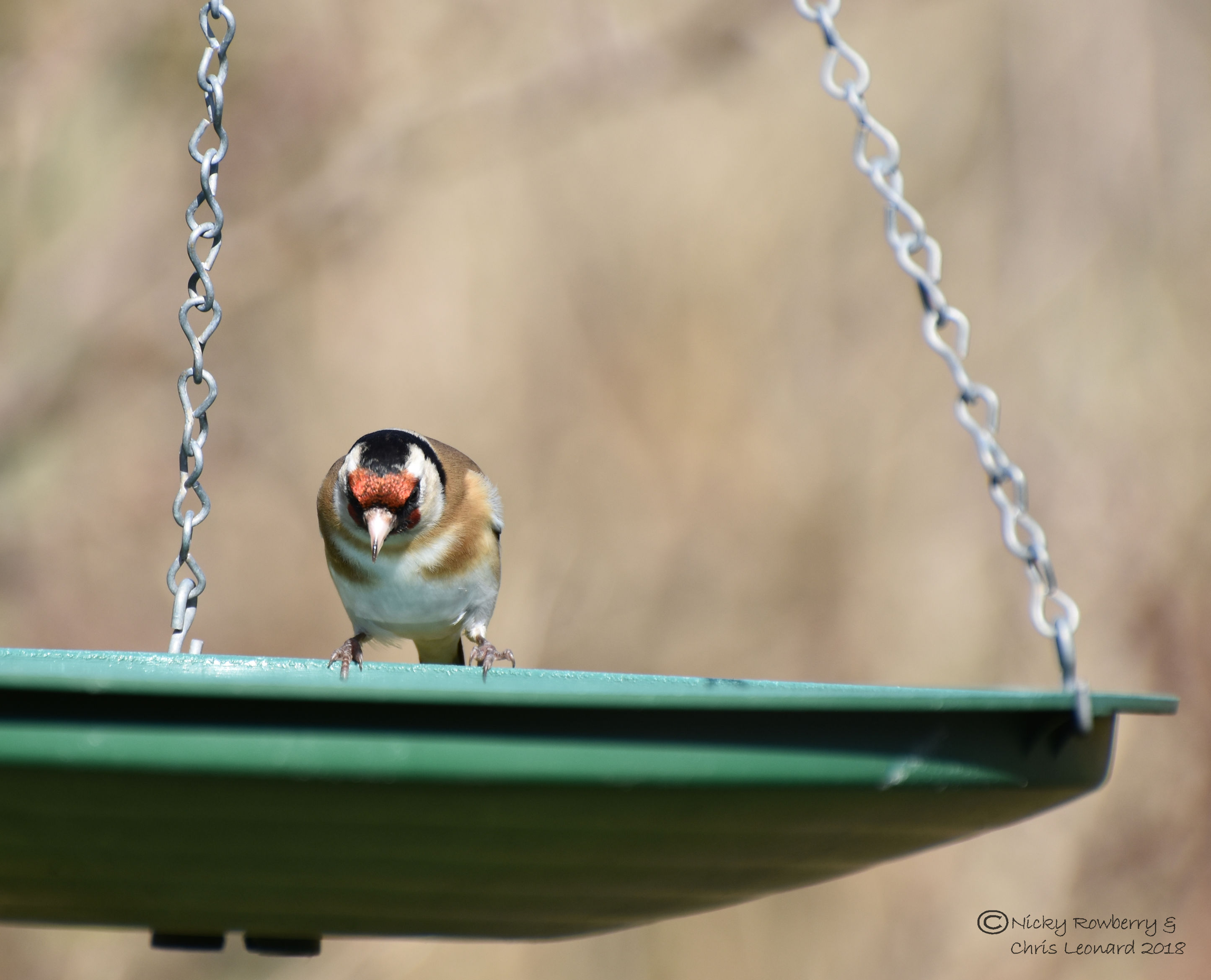
The goldfinches have been regular visitors to the niger seeds for a few weeks now, but the siskins’ visits are much more intermittent. So it was great today when this male siskin turned up and stayed long enough for me to grab the camera and sneak out the patio doors to get some photos. I had hoped it would sit facing the goldfinch so I could get profile shots of them both, but you can’t have everything!

So the feeders are all clean and the birds seem happy with my efforts. I’ve made a note on the calendar to try and clean them a bit more regularly from now on.

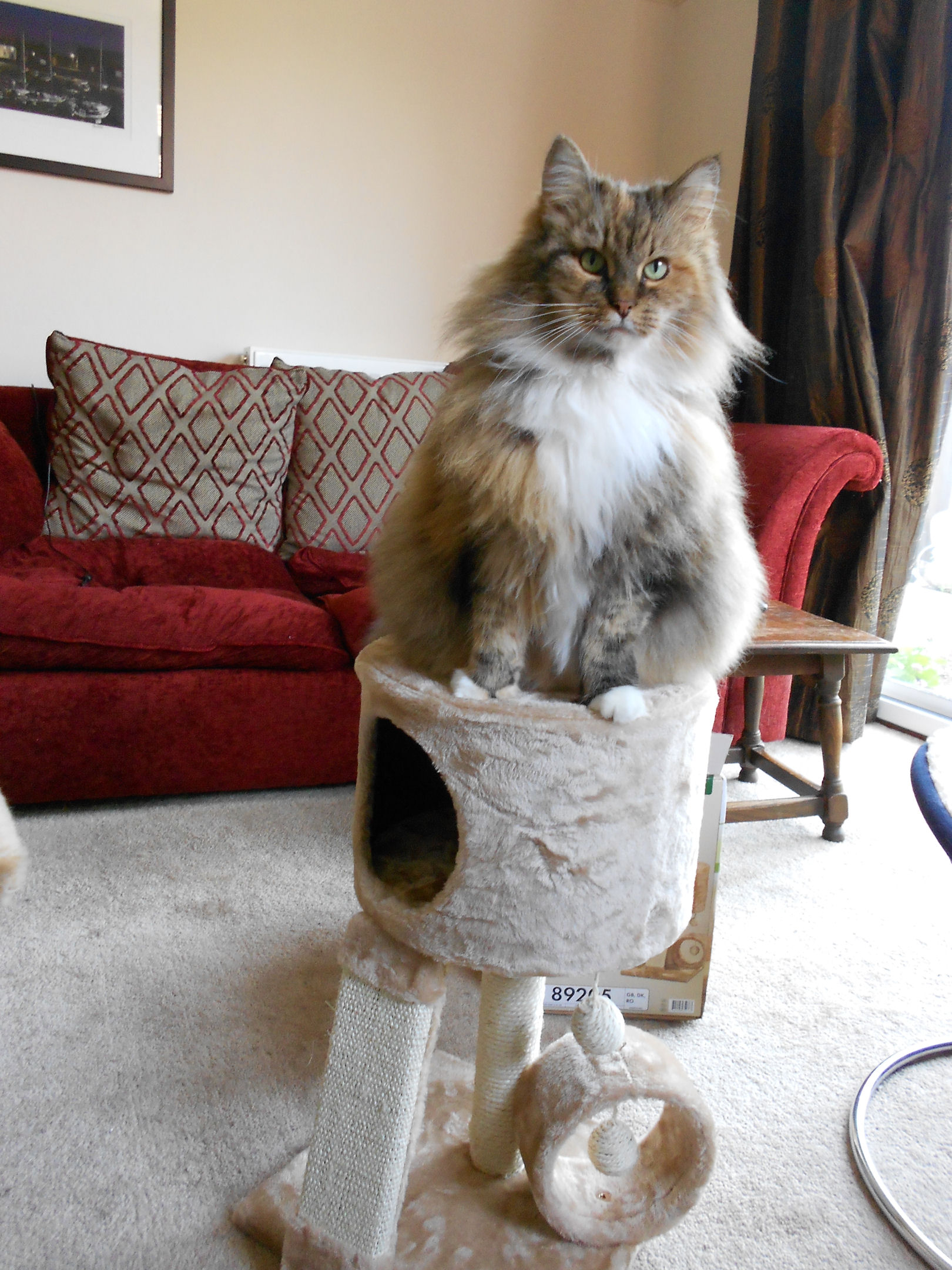
Although I was happy with the bird feeder cleaning, last week was actually a very sad one for us. We had to say goodbye to our beautiful Norwegian Forest Cat, Puddle. She’d been with us for the last 13 years, since she was a kitten and we are devastated to lose her – far too soon. Although an indoor cat, she loved sitting watching the birds with me from the comfort of the sofa. She was the sweetest natured cat I think I’ve ever known, and I will miss her for ever.