I think the shield bugs must be one of my favourite groups of insect. There’s something about them; they look so determined waddling around like minute clockwork toys. When they fly they make a loud whirring noise out of all proportion to their size and have a habit of landing on me if I wear green in the garden (must stop wearing that Robin Hood outfit!) Besides my prized Box Bug from a previous blog post, we’ve recorded 6 other species in the garden – all cute little characters in their own right. By far the most common is the Green Shield Bug. Their exoskeletons are leathery with small dark pits all over them. In the spring and summer they are green like the one below, but in the autumn and winter they turn a bronze colour.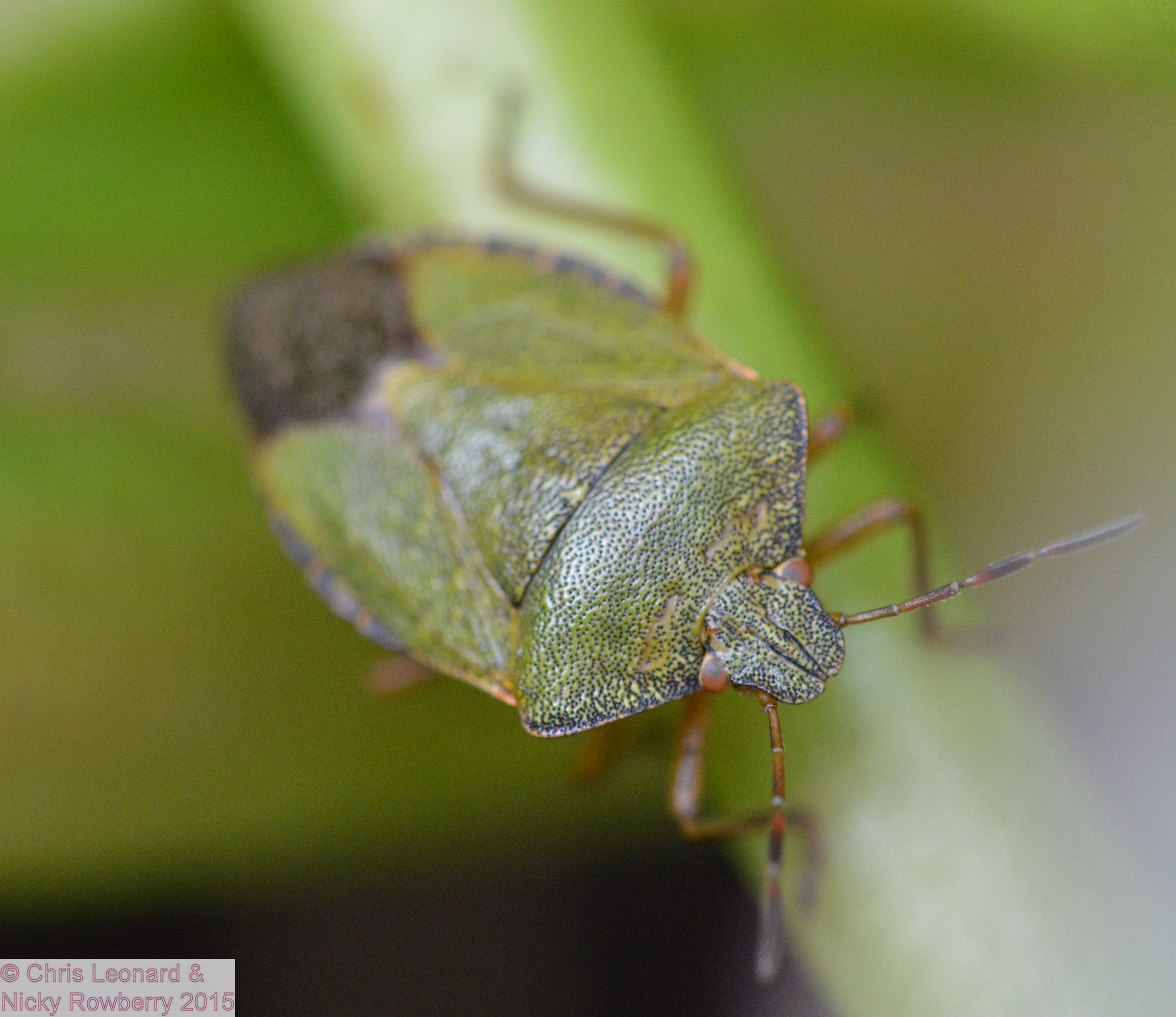 They start of as tiny nymphs and develop through various stages called instars before taking their adult form. We had loads of these in the garden, dotted around like little green smarties.
The remaining 5 species have been less common in the garden, but all have put in an appearance at least once this year. The first is the Red Legged Shieldbug – named, not surprisingly, for its red legs. It’s a predatory shieldbug – in the world of predators, it may not rank as the most fearsome, but I guess if you’re a small caterpillar, then the Red Legged Shieldbug is perhaps your worst nightmare!
The Green Birch shieldbug is apparently more of a vegetarian and has a tendency to be attracted to lights – as this one was coming to the moth trap one night. Unfortunately it didn’t hang around long enough for me to get a more arty photo, hence him sitting on a bit of kitchen towel! 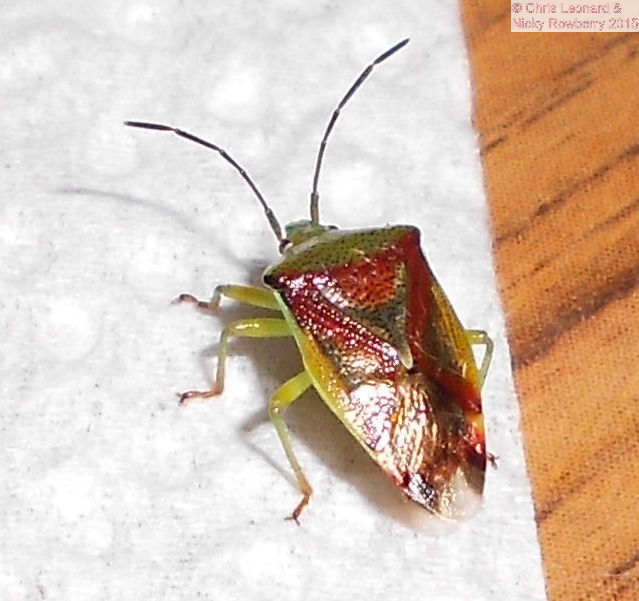 The remaining three species are the Sloe or Hairy Shieldbug, the Dock Bug and my favourite this adorable little Tortoise Shieldbug. I’m sure there must be other species in the garden waiting to be discovered – just need to fight through the weeds to find them next summer.


 Too Lazy To Weed