Bumbling Around for Butterflies

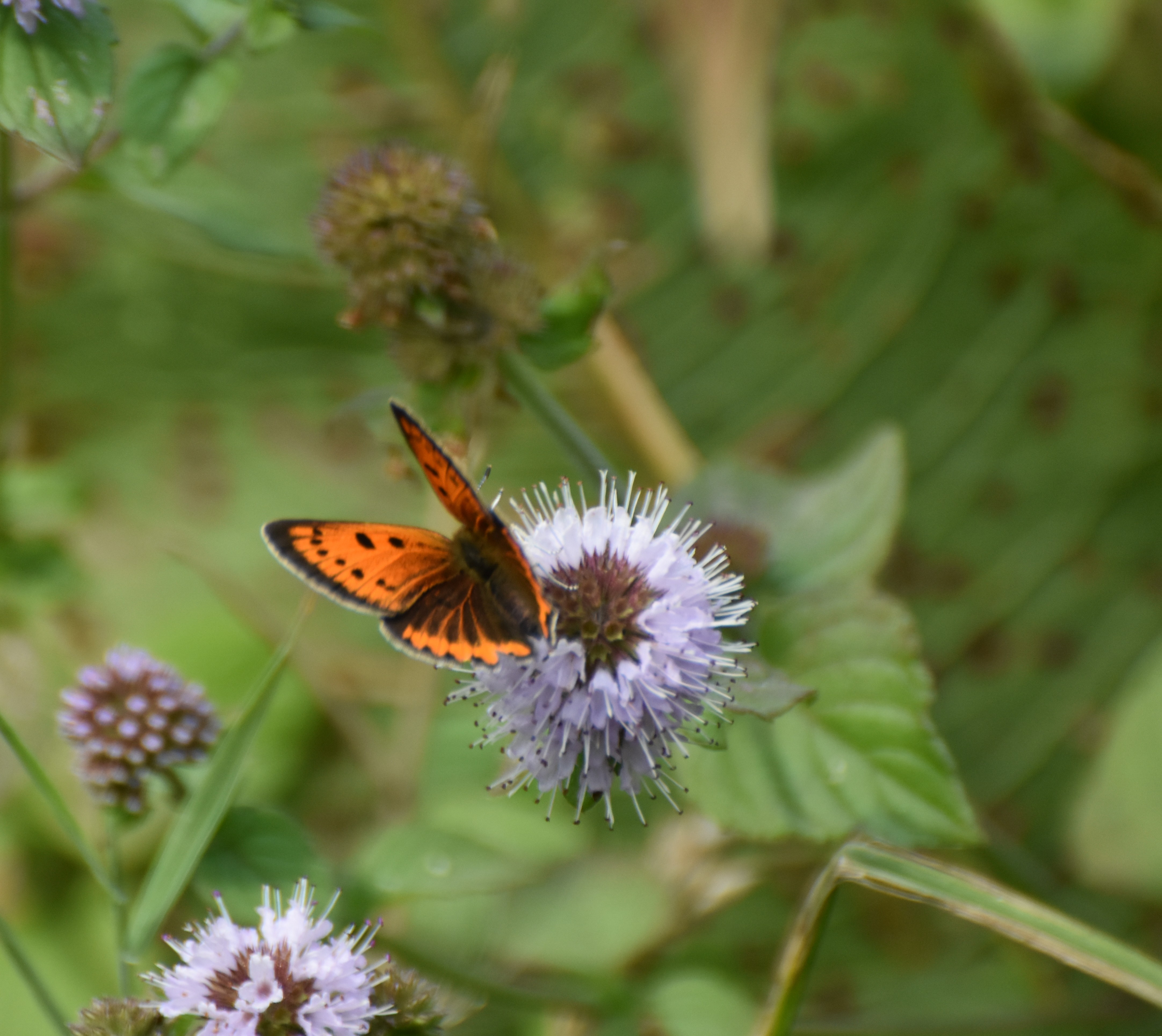
My quest to see all 58 species of butterflies in the UK seems to have stalled somewhat, but I’ve still had a really good summer for butterflies this year, both at home and out and about. Best and most surprising of all was getting to see some Large Copper butterflies less than 40 miles from home. Given that the Large Copper is actually considered extinct in the UK and has been so since the 1850s, it’s not a butterfly I ever imagined seeing. But some bright spark had chosen to release them (possibly as caterpillars) at the brilliantly named Bumble Hole Nature Reserve in Dudley.

I resisted for at least 10 days after the first photos started appearing on Facebook, but finally gave in to temptation and headed north to Dudley. With some help from a kind lady in the visitor centre, I headed to the butterfly hotspot – obvious when I was in the right area due to the dozen or so other butterfly twitchers. I was still fumbling to get my camera out, when the first Large Copper appeared.
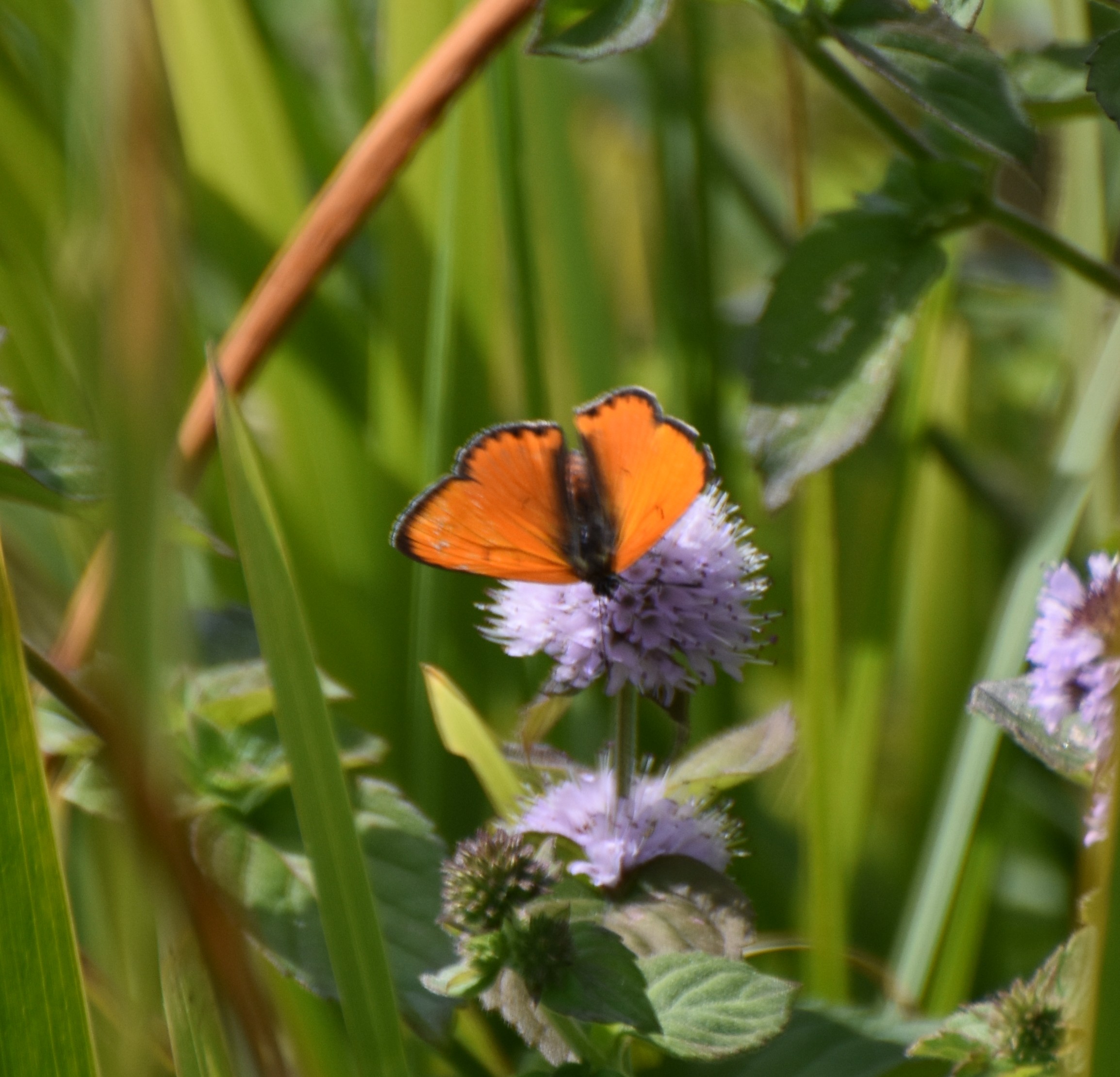
The males are pretty much all bright orange on the upper surface of the wings, with a pale blue dotted with black spots underneath.
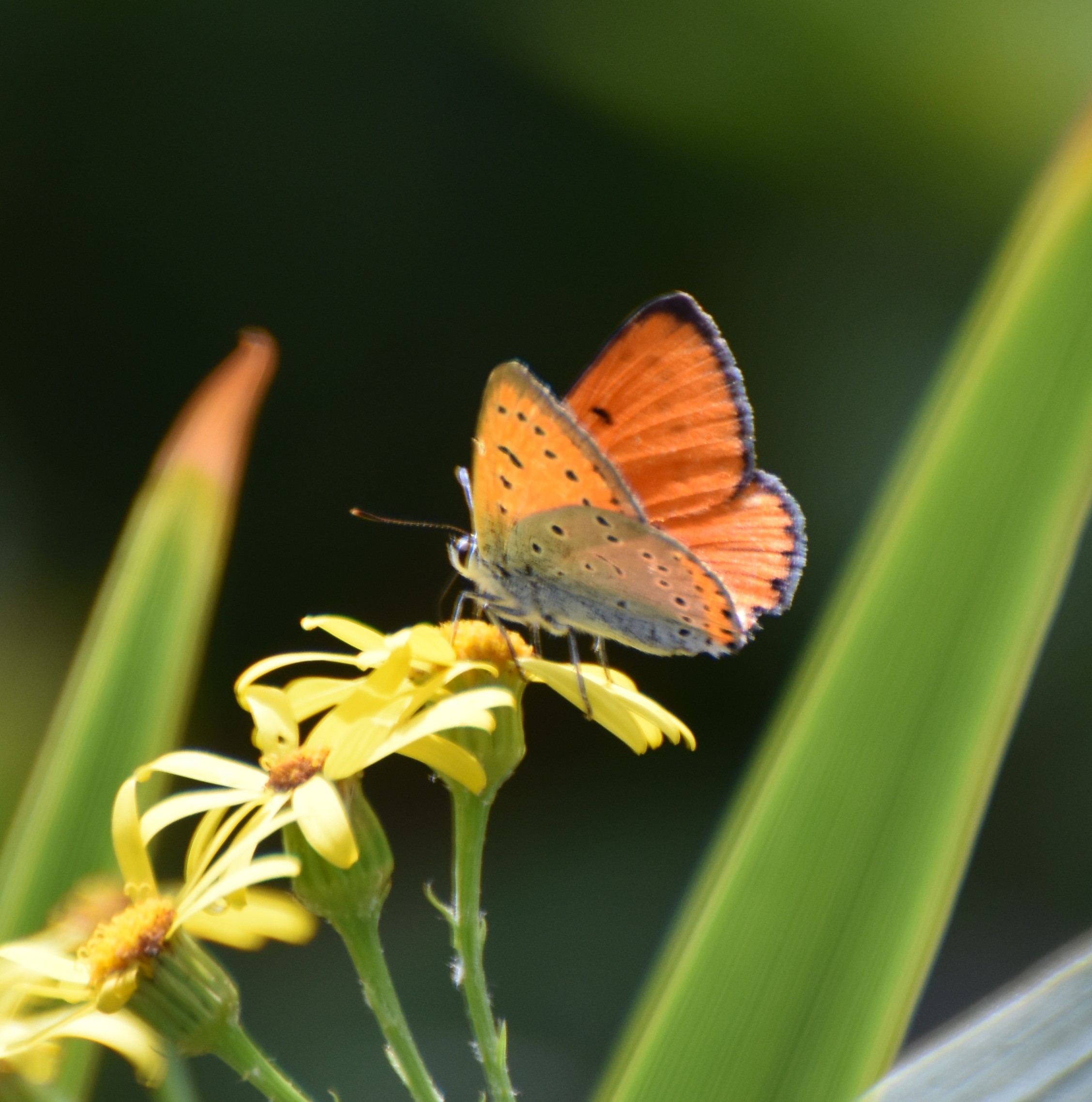
The females have more brown markings, stripes and spots on the upper side, but are similar underneath.
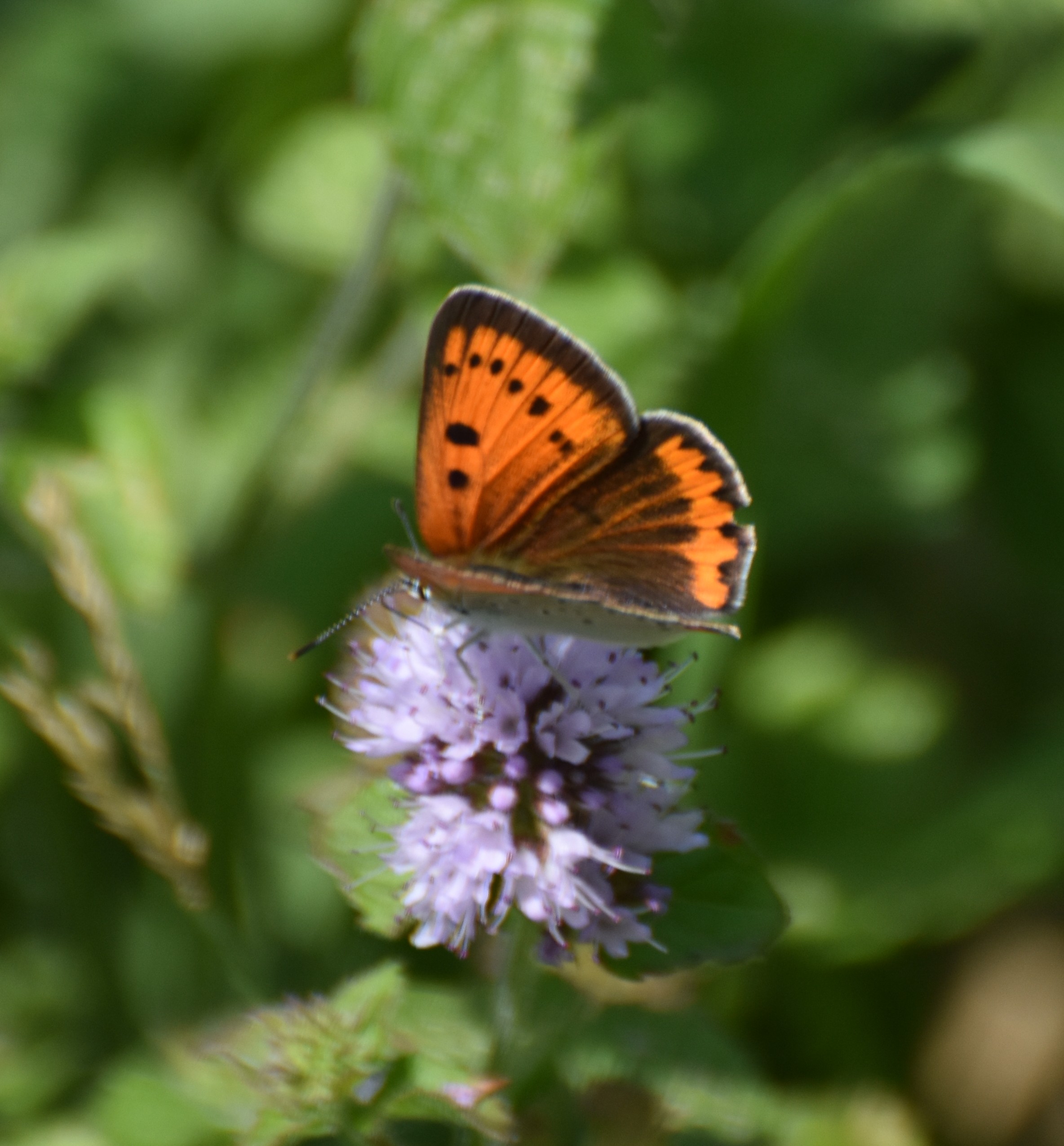
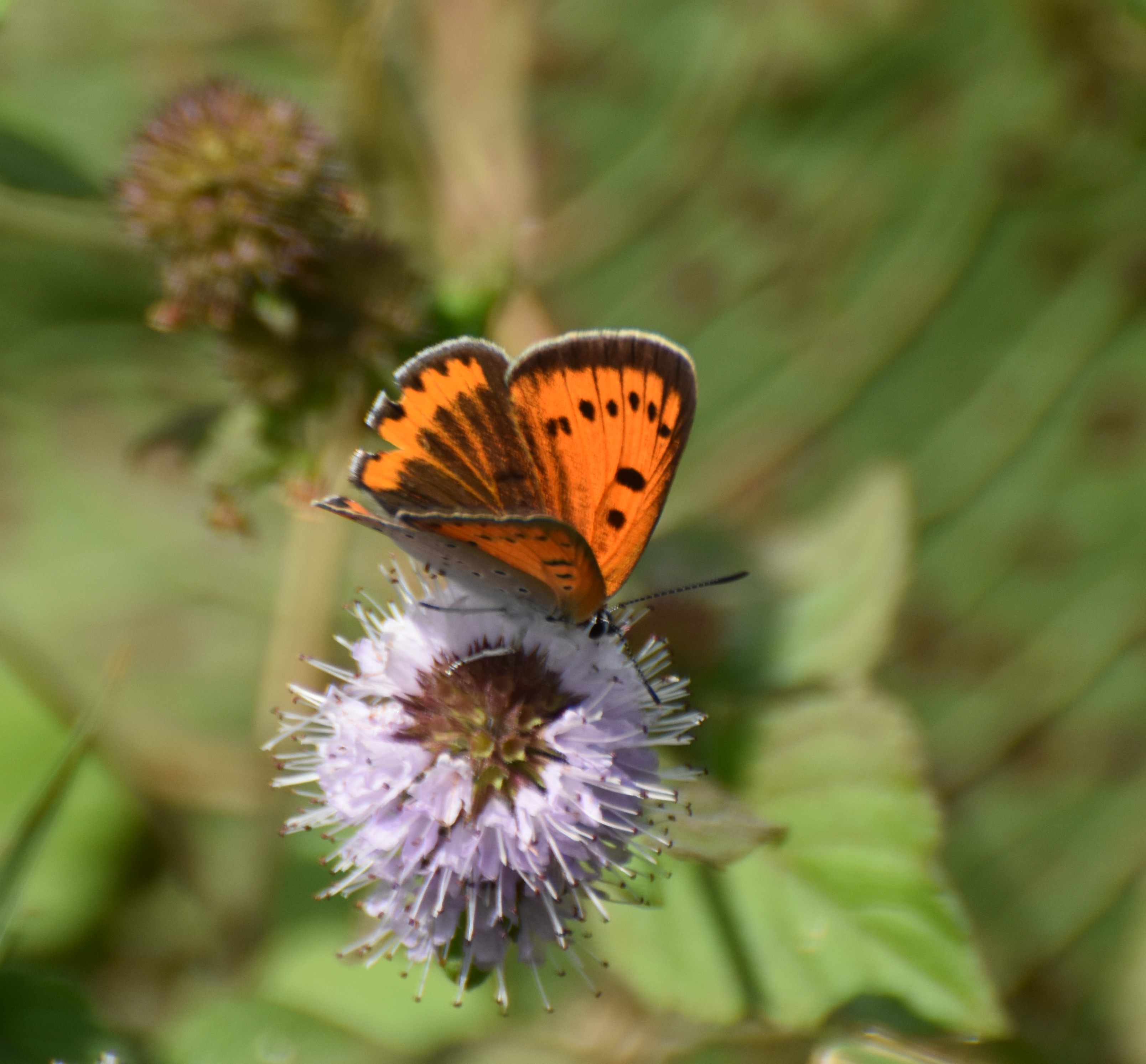
It was a baking hot day and my plan originally had been to stay out just long enough to see the butterflies and then head back to the safety of the air-con in the car! But the butterflies were so stunning and more numerous than I had expected, so I kept getting side-tracked by another one each time I started to head back. My final reward for this heroic effort (an hour in baking sun for a dumpy middle-aged woman is I’m sure the equivalent of an iron-man challenge for other people) was to spot this female laying eggs. Well worth the sunburn.

It was a magical thing to see these butterflies in the UK, but sadly it is probably not all good news. As their release seems to have been unsanctioned, the chances of the butterflies surviving at this site are apparently small. Although they were clearly mating and obviously laying eggs, will the eggs and/or caterpillars be able to make it through to next summer? It would be wonderful if they did manage to establish a colony here, but many people are doubtful that the conditions at Bumble Hole will be right for them.

For comparison here’s a Small Copper taken at Croome Park this week.

In other news the local Facebook groups were buzzing with the news that there were multiple Clouded Yellow butterflies down in the fields near Grafton Wood. As usual I could resist anything but temptation, so headed down there to see for myself. First attempt was a complete wash-out as I picked the only cold cloudy day in August, but second attempt was more productive. Together with a very nice couple I met down there, I watched in frustration as the bright yellow flashes of several Clouded Yellows dashed about the centre of the fields. Not wanting to trample across the farmer’s fields we could only watch and hope they would eventually come to the margins. Eventually a few did, but they were so flighty that all I managed was these blurry yellow blobs for photos. But at least I saw them.

Slightly more obliging were some Common Blue, Small Heath and Brown Argus.

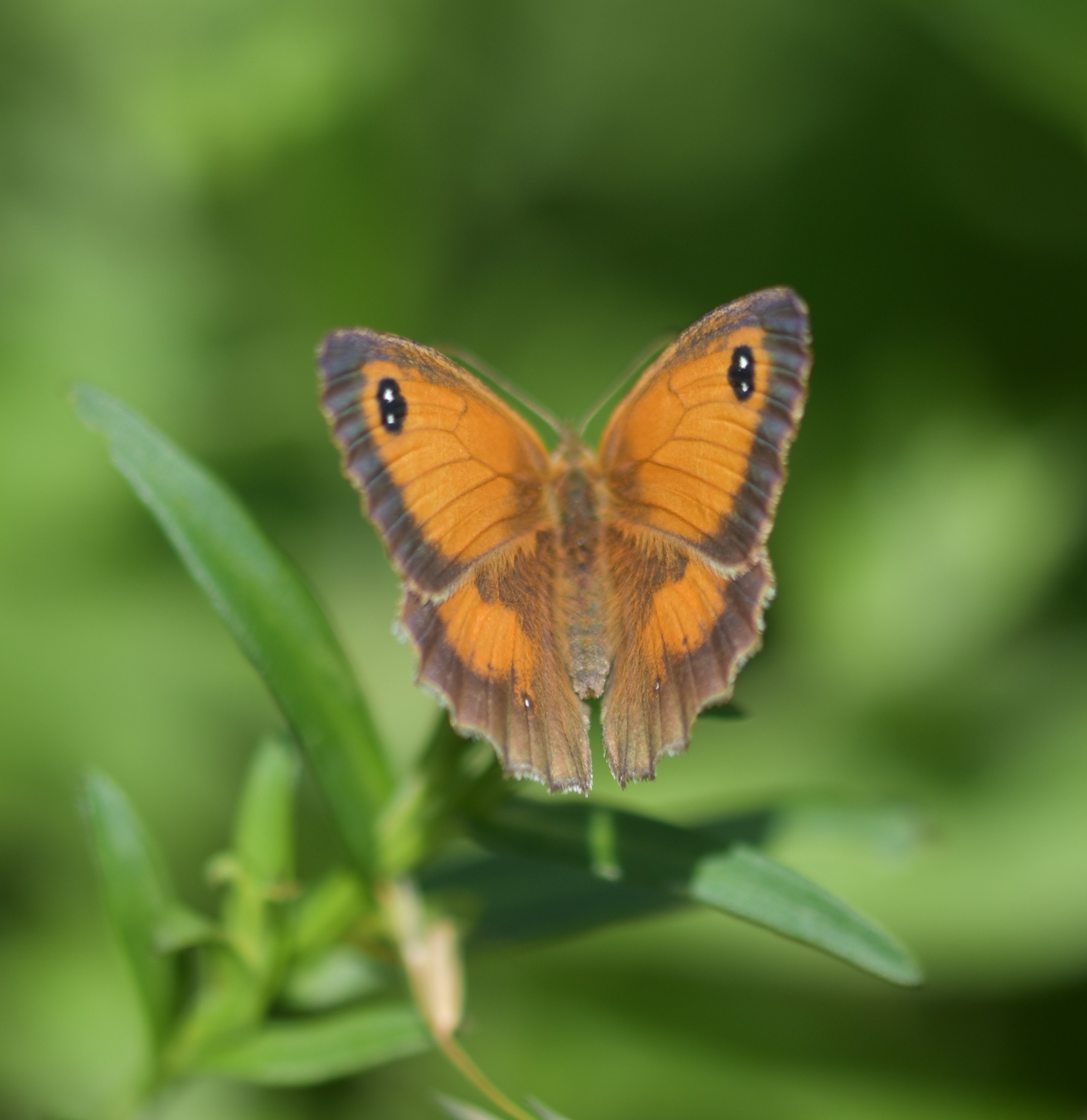
At home I did a couple of Big Butterfly Counts earlier this month. The garden generally has been busier than recent years for butterflies, but as usual most of them declined to put in an appearance during the 15 minute counts. But so far this year I’ve seen Red Admiral, Peacock, Small Tortoiseshell, Comma, Painted Lady, Large White, Small White, Holly Blue, Gatekeeper, Meadow Brown, Speckled Wood and Ringlet butterflies in the garden. But best of all was a Silver-washed Fritillary which graced my buddleia and bramble-strewn garden with its presence over several days.

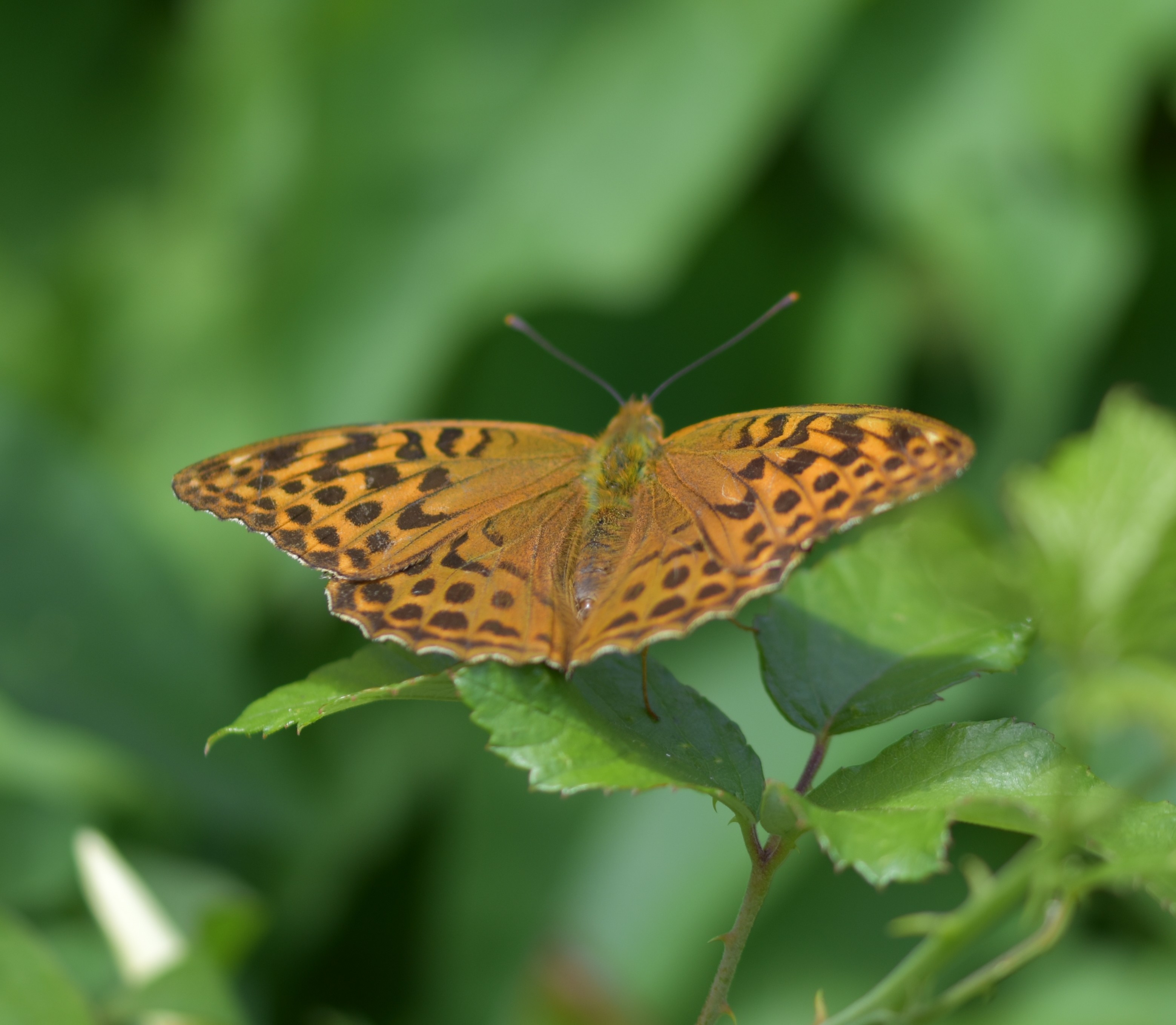
So that’s a round-up of this summer’s butterflies; some old favourites and one completely off the radar “extinct” species.


Island Life – Part 2 – Birds & Mammals

I thought it would only take me a day or two to write part 2 of this, but with 2 heatwaves this month, my productivity (always dubious at the best of times) has plummeted. But here at last are some of the gorgeous birds and mammals we saw on the Isles of Scilly in June.

I took a couple of bird-watching boat trips; one with my long-suffering family and one alone when they’d had enough of me. The Scillies are a fantastic place to spot seabirds; it made me wish I was better at identifying them. So please feel free to correct me if I’ve got any of these wrong. As so often is the case, I didn’t really have the right camera lens with me and that combined with rocking boats and user error, means none of these are exactly amazing photos, but hopefully they’re recognisable at least.

First up, what I am assuming to be a Black-headed Gull, due to its black head! I realise though there are other species that would fit this somewhat basic description, so please correct me if I’m wrong.

The next one I am at least confident is an Oystercatcher, although it does to my eye look quite like the penguin from Wallace & Gromit with a red beak stuff on it! Again a shockingly bad photo and I can’t even blame a rocking boat for this one as I think I took it from land.


We saw a few Shags, often standing looking quite aloof with a crowd of other birds nearby. Seen alone they are quite gawky looking birds and I always think there’s something a bit archaic about them.

One of the few seabirds I can readily recognise is the Gannet. It’s distinctive enough that it’s pretty much unmistakeable.  This one floated serenely by the boat, looking as if it had recently had a right good feed.

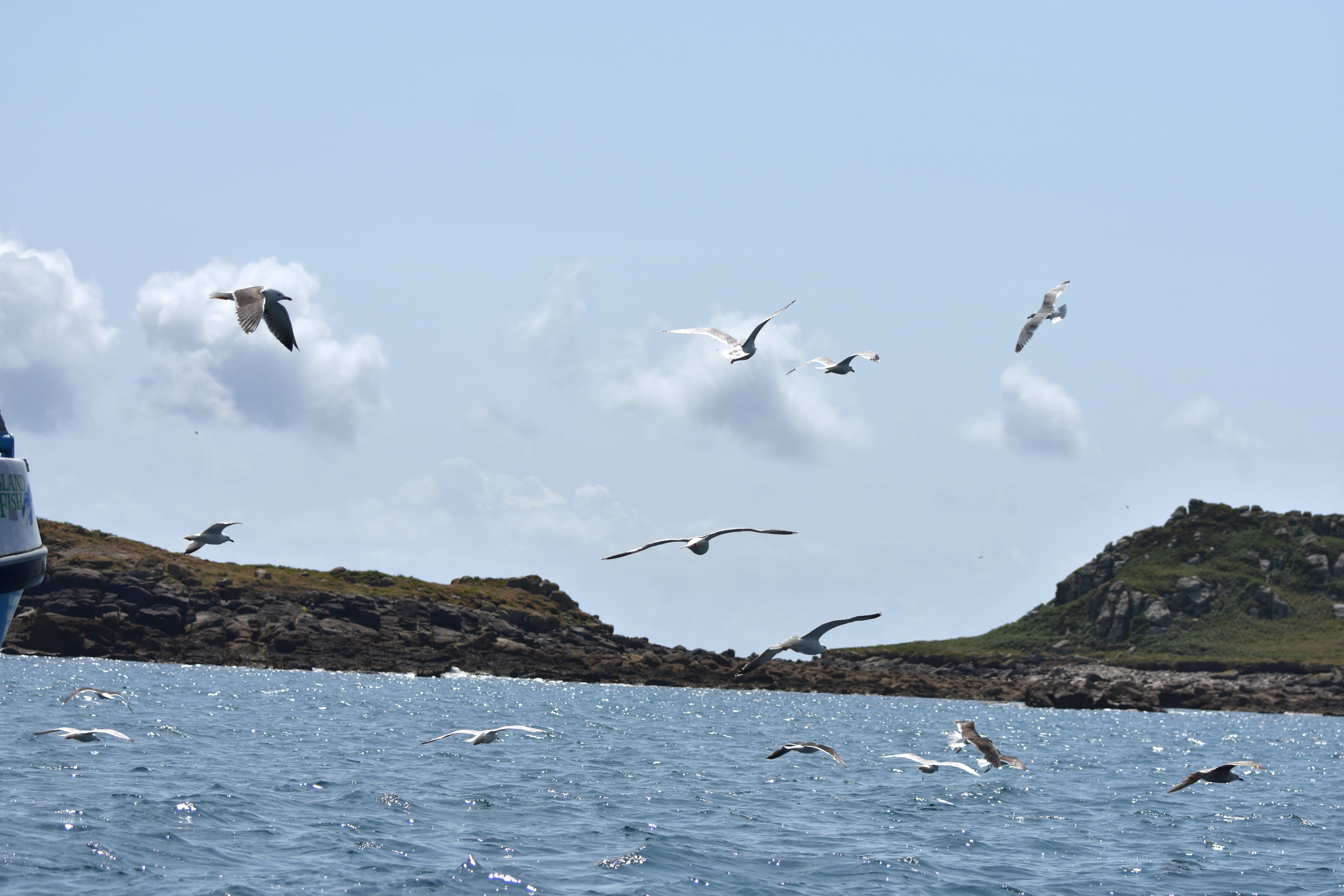
There were of course lots of large gulls present everywhere. We passed a fisherman, hauling in lobster pots at one point and the sky around his boat was just full of an assortment of gulls. Some have black backs (Black-backed gulls?), some have grey backs – to my disappointment there doesn’t seem to be one called a Grey-backed Gull, so I’m guessing these are Herring Gulls?

All the seabirds above are beautiful, but I can’t help having a soft spot for the Auk family. Apparently there are 5 species seen regularly in the UK and we were lucky enough to see 3 of these. The most plentiful that week were the Guillemots – sleek black/dark brown and white birds, gathering in groups on the rocks and in the water.

Then there were the Razorbills; I never saw these on the rocks, only in the water and often swimming with the Guillemots too. Razorbills are named for their famously sharp-edged beaks, ideal for grabbing fish.

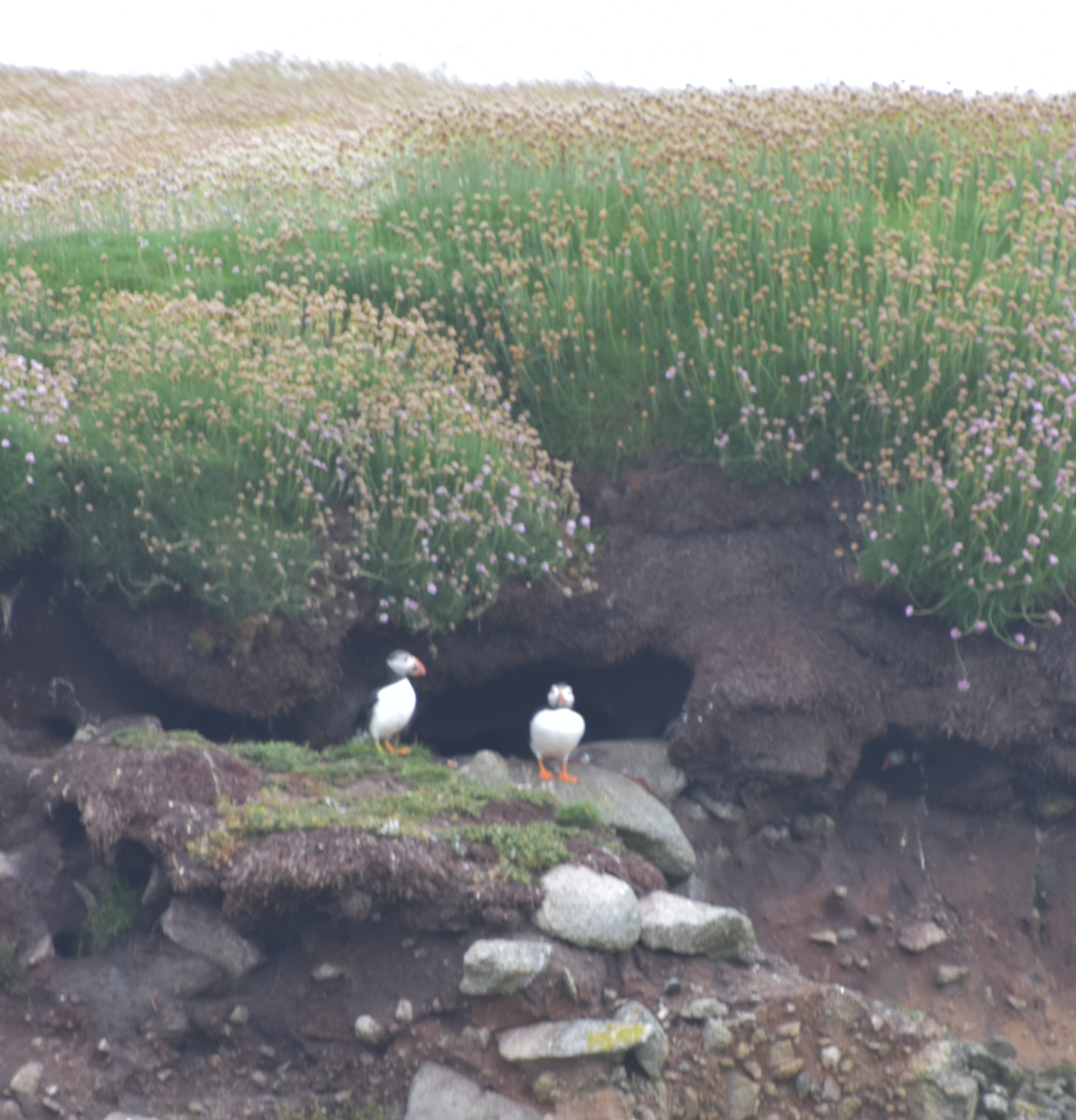
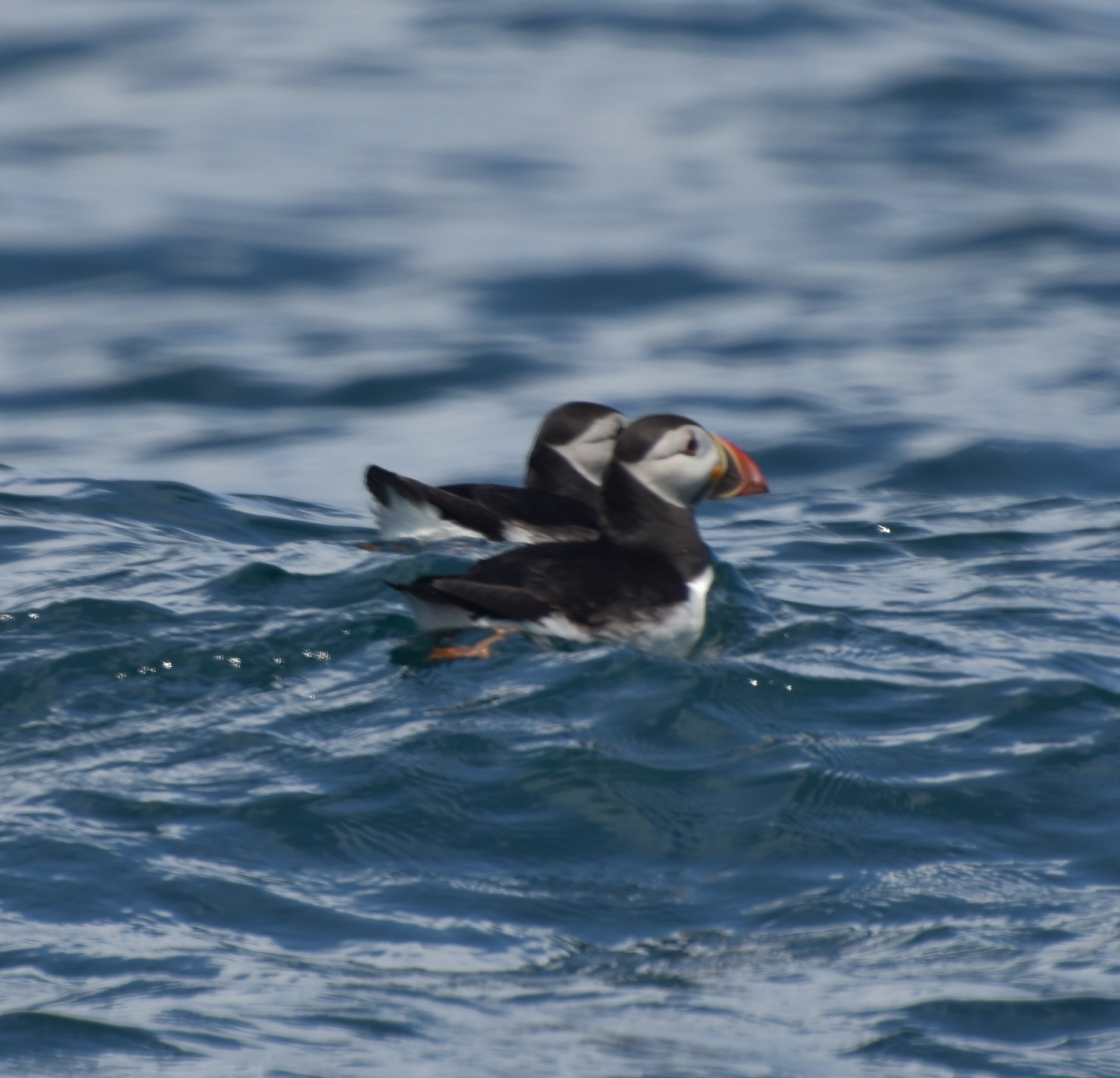
But of course top of the wish list was to see Puffins and thankfully we did. The Skipper wouldn’t take the boat too close to the cliffs where the puffins were nesting as we didn’t want to disturb them, but we were close enough to see several outside their burrows.

Then there were the ones we saw on the water. It’s no surprise that they are everyone’s favourite seabird; what’s not to love about those cheeky little faces.

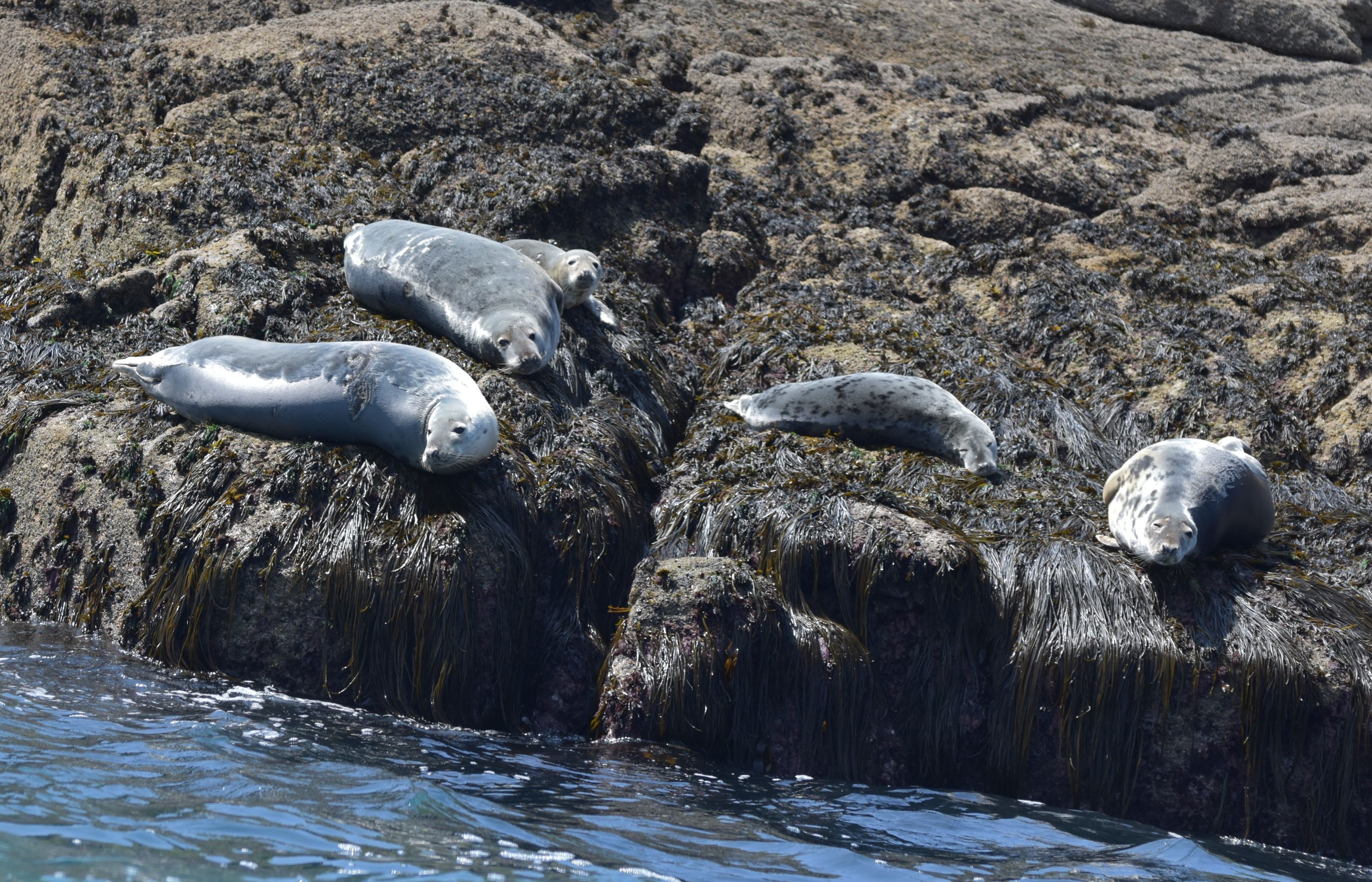
So on to the mammals. I did see a split-second glimpse of a dolphin from the Scillonian on the way back to the mainland, but that was it as far as cetaceans went. Grey seals were much more obliging. Again our skipper managed to get close enough for us to see some hauled up on the rocks, but not too close to frighten them.

At first we thought it was just adults, but in the second photo from a slightly different angle, you can see a seal pup at the back of the group. I was so thrilled; I’ve seen seals many times (even sieved seal poop for a living for a while – that’s a whole other story), but never seen a young one like this!

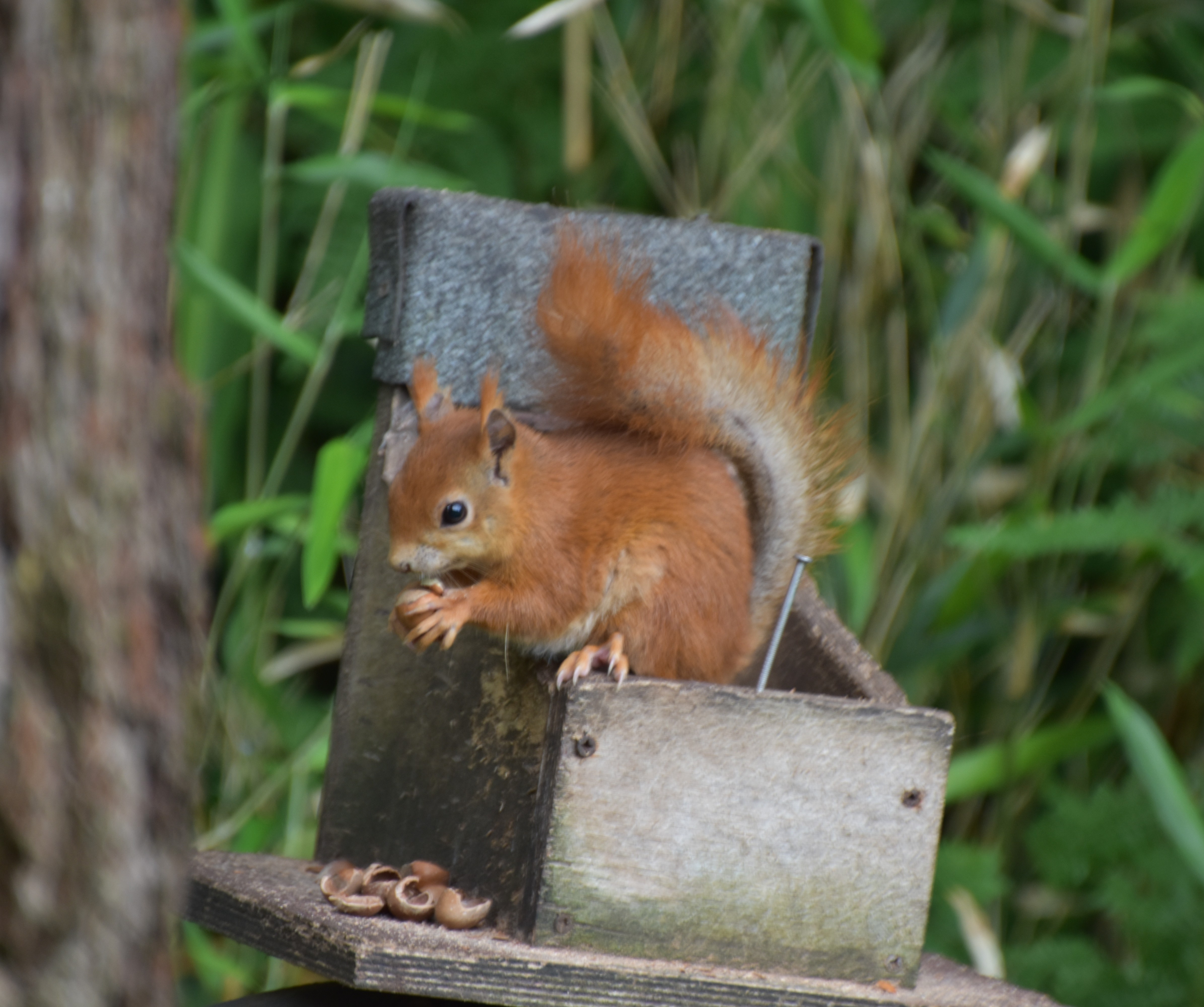
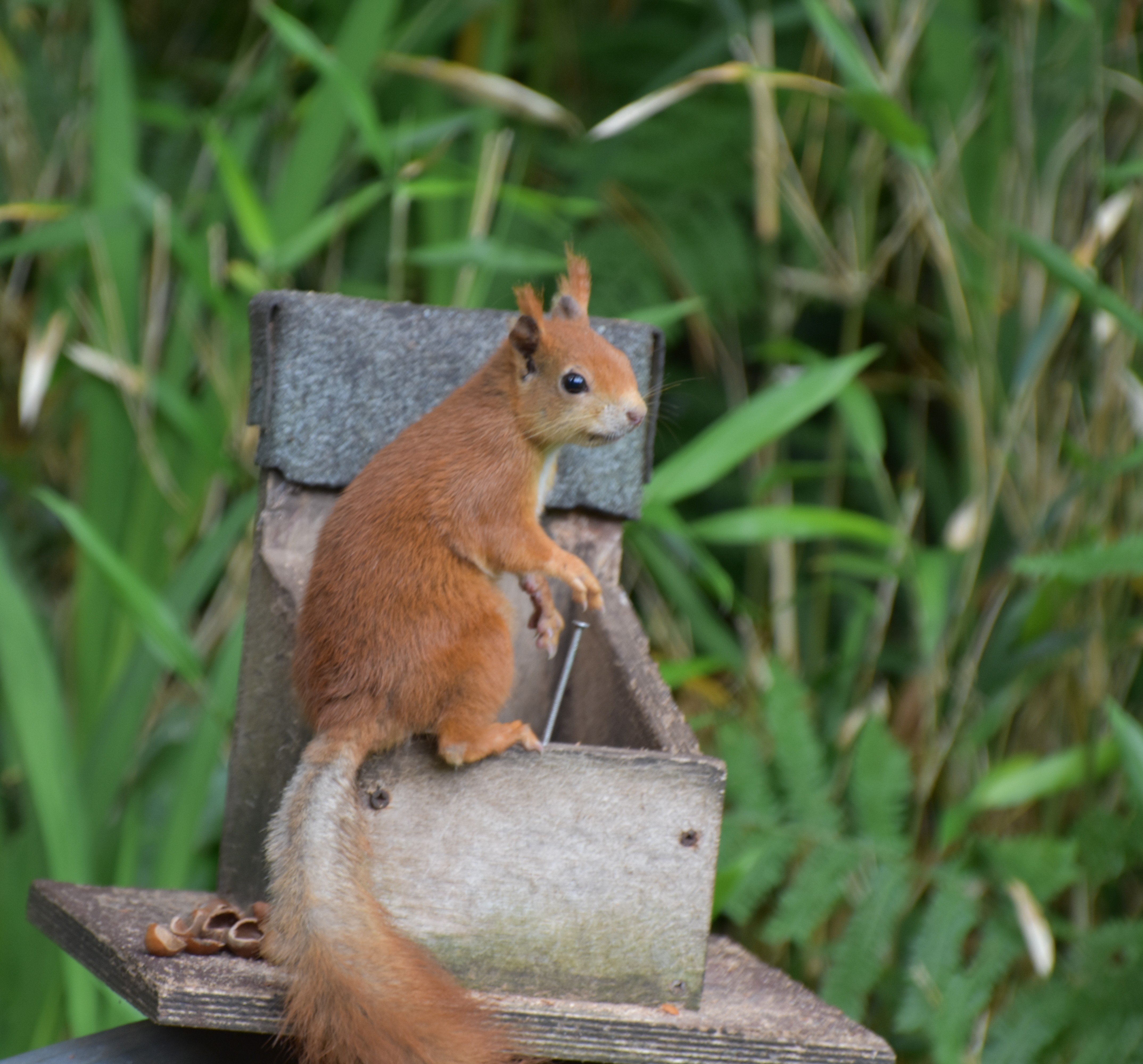
But the mammalian star of the show for me had to be a surprise we found on Tresco. I say surprise, but obviously the locals knew they were there as they’d been deliberately introduced. Red Squirrels! We saw a sign saying there were red squirrels as soon as we entered Tresco gardens, but I thought we’d be lucky just to get a glimpse. But then we turned around and there was a beautiful squirrel sitting right there, enjoying some nuts. I was fumbling with my camera , sure it would disappear, but no it was clearly unfazed by our presence and carried on snacking. The best views I’ve ever had of a red squirrel.

We saw several more as we enjoyed the gardens, although none as close as that first one. It must be an ideal habitat for them and they seemed to be doing really well.

So that’s my round-up of the wildlife we saw on the Isles of Scilly. It really is a fantastic place to visit, although I’m tempted to say “no it’s dreadful” to stop loads of people going and spoiling it! The isolation, the warm climate (warmer than most of the UK at least) and beautiful scenery make the islands the best wildlife destination I’ve been to in Britain and I can’t wait to go back.

Island Life – Part 1

I’m just back from a fabulous week in the Isles of Scilly. I went with my long-suffering sister and her partner and their two dogs. I say long-suffering as they had to spend a week with my constant exclamations of  “ooh look at that beetle” and “wow a bee” and “can we go and see puffins” again and again! All I can say is that they’re very tolerant people.

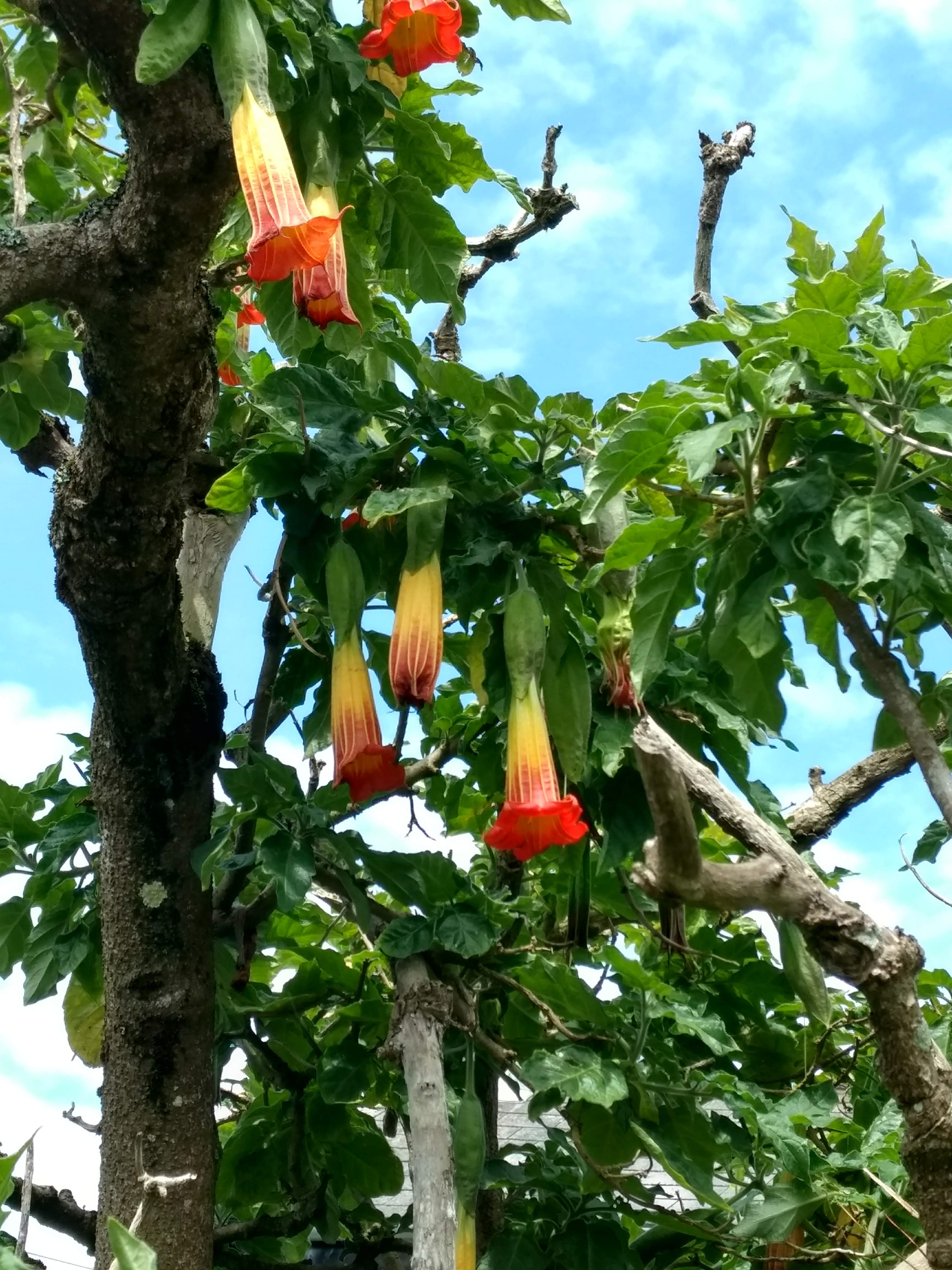
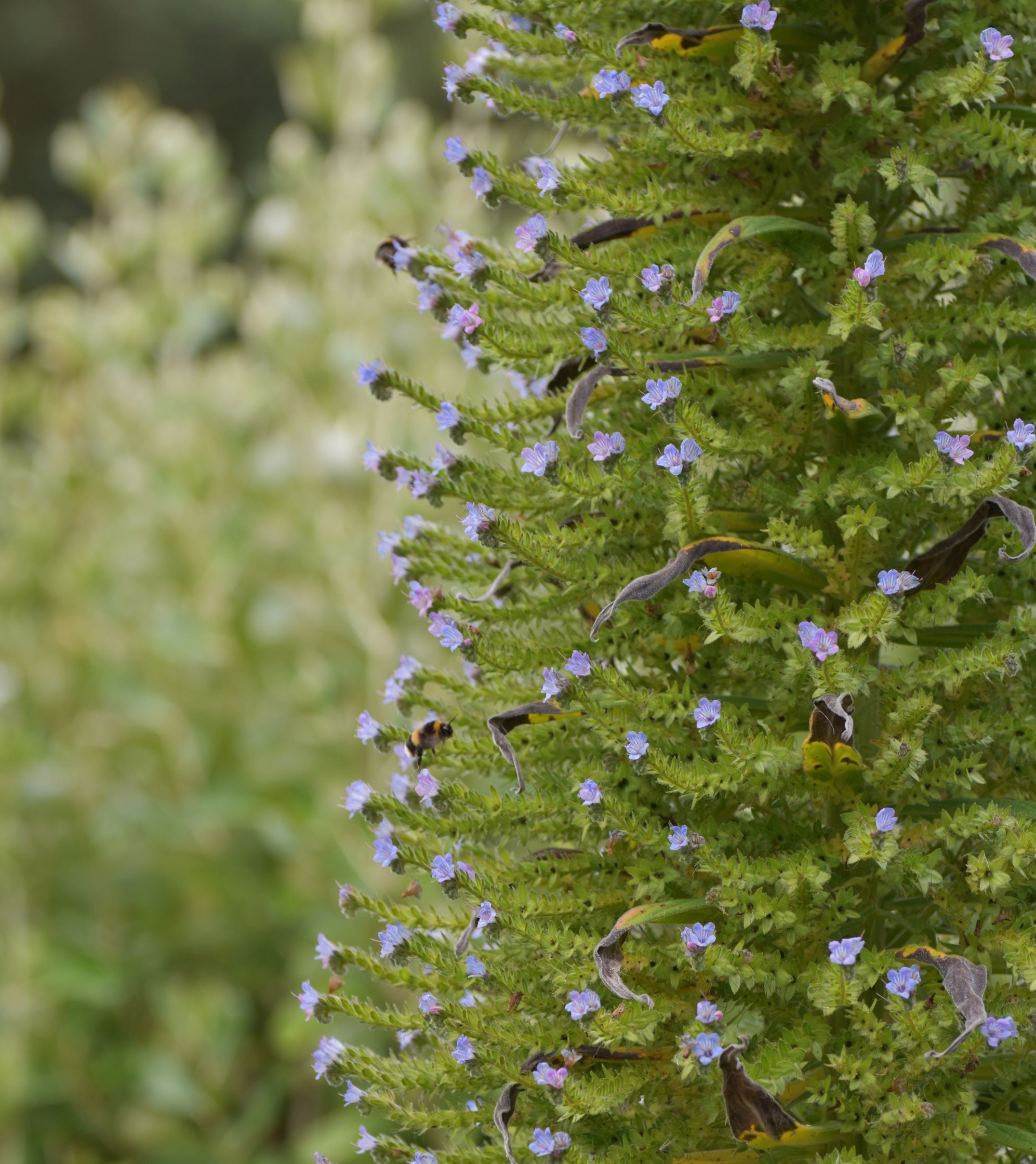
The Isles of Scilly are a small group of islands off the Cornish coast. They may only be about 28 miles from mainland England, but they feel like they’re somewhere far more exotic. With a mild maritime climate, tropical looking flowers flourish in a way I can only dream of back home in the relatively cold climes of Worcestershire. The gardens on Tresco are world famous, but the plant life proliferates everywhere. I particularly liked the Angel’s Trumpets (left) and the tall spikes of Echium that crop up all over the islands. Here’s a couple of the more alien looking species from the Tresco gardens.

With an abundance of flowers comes an abundance of insects, particularly bees. The Echiums must have been several metres tall and were alive with bees making the most of the tall floral spikes. Elsewhere even the clover covered grass in gardens was humming with bees, in far greater numbers than I get at home. My favourite spot though was this leaf-cutter bee taking a break or perhaps regretting cutting such a large piece of leaf.

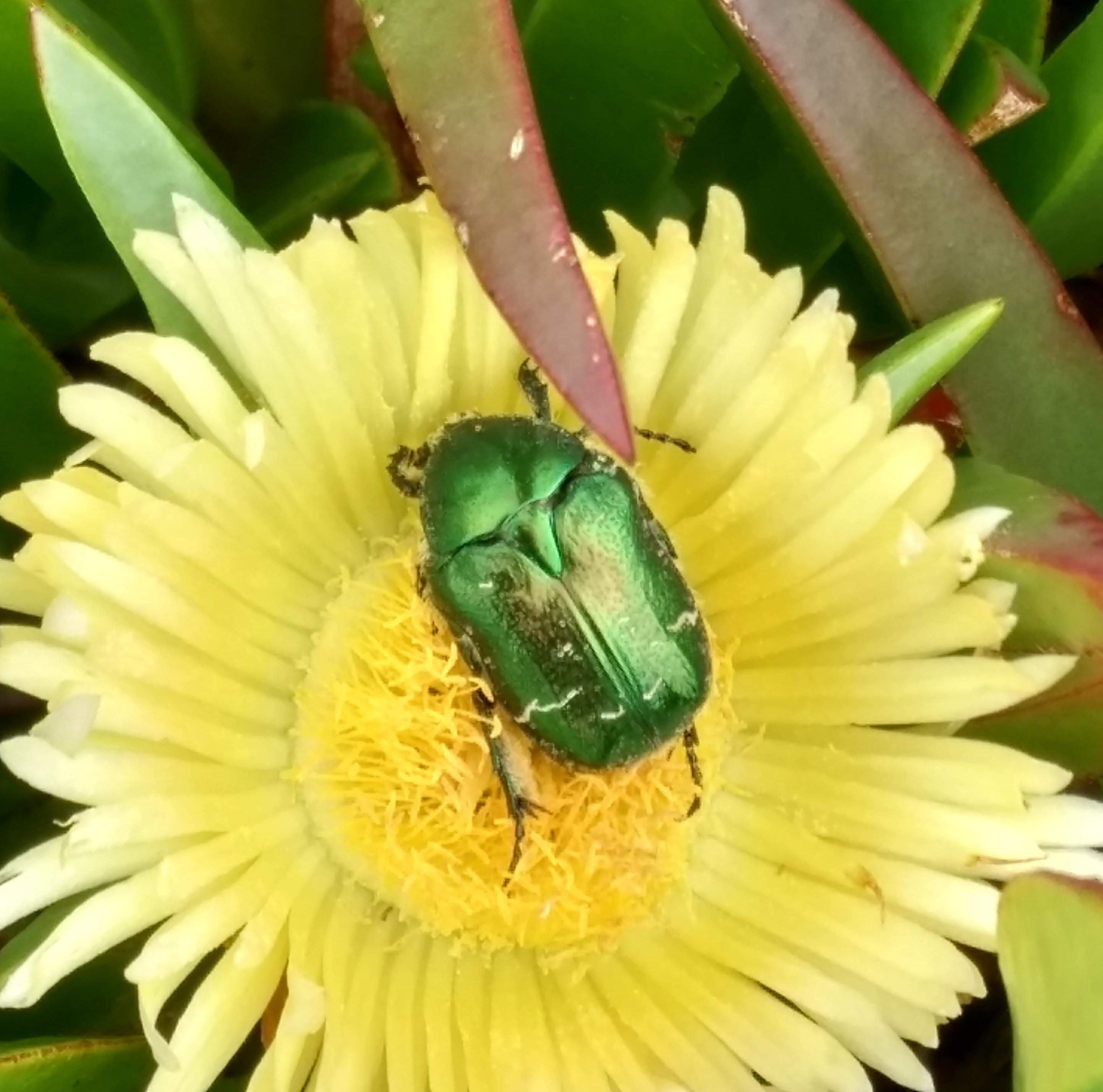
We saw some cracking beetles too as we walked the coastal paths. This Rose Chafer beetle was a stunning iridescent green and huge (I regret not sticking a finger in the photo for scale here). If you’ve ever read the book Miss Benson’s Beetle (and I highly recommend it) then you’ll understand I had a bit of a Miss Benson moment finding this.

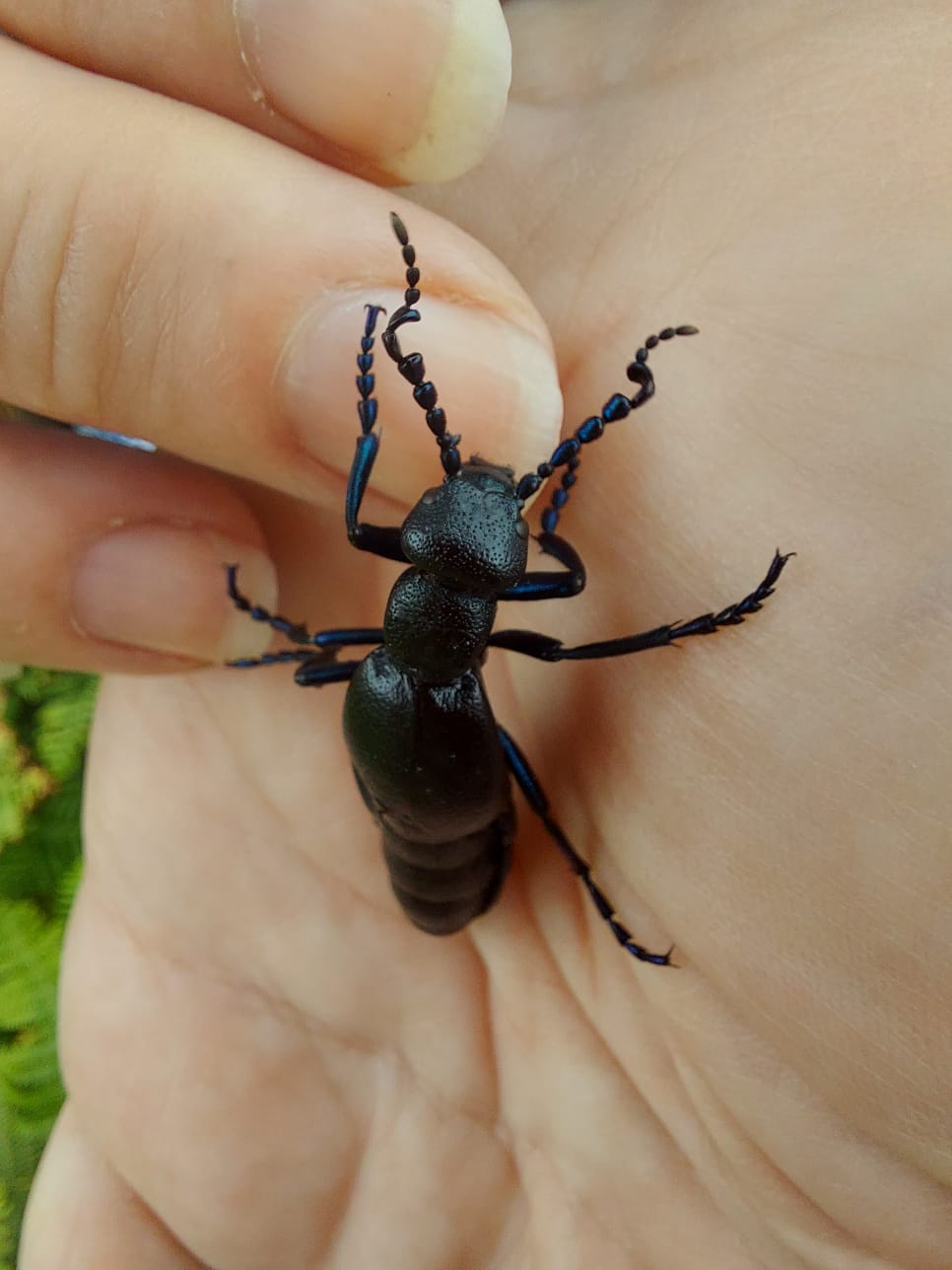
We also found a pair of these large black beetles on another path in Bryher. I think it’s an oil beetle, but more than happy to be corrected if it is not.

I did miss my moth trap while we were away. I had briefly considered packing a portable one, but where we were staying wasn’t really suitable for moth trapping without annoying the neighbours, so I resisted. I did get a bit of a moth fix in the form of hummingbird hawk-moths which popped up all over the place – even when we were on a boat out at sea. Many thanks to my sister for managing to catch this one on video with her phone.


So that’s probably enough of me sounding like an advert for Scilly for Part 1, I’ll be back soon with birds and mammals for Part 2.

Hawk Surprises

I’d been feeling the need to feed my moth mania for a while now and share some mothy photos, but hadn’t really got a theme in mind. Then this week a surprise moth in the trap provided the necessary inspiration – a blog post about hawks!

I’ve been lucky enough now to see 10 species of hawk-moth in my garden. Most are fairly common, but a couple have been rare migrants that were beyond my mothy dreams. I love all moths, but there’s something really special about spotting a new species of hawk-moth in the trap.

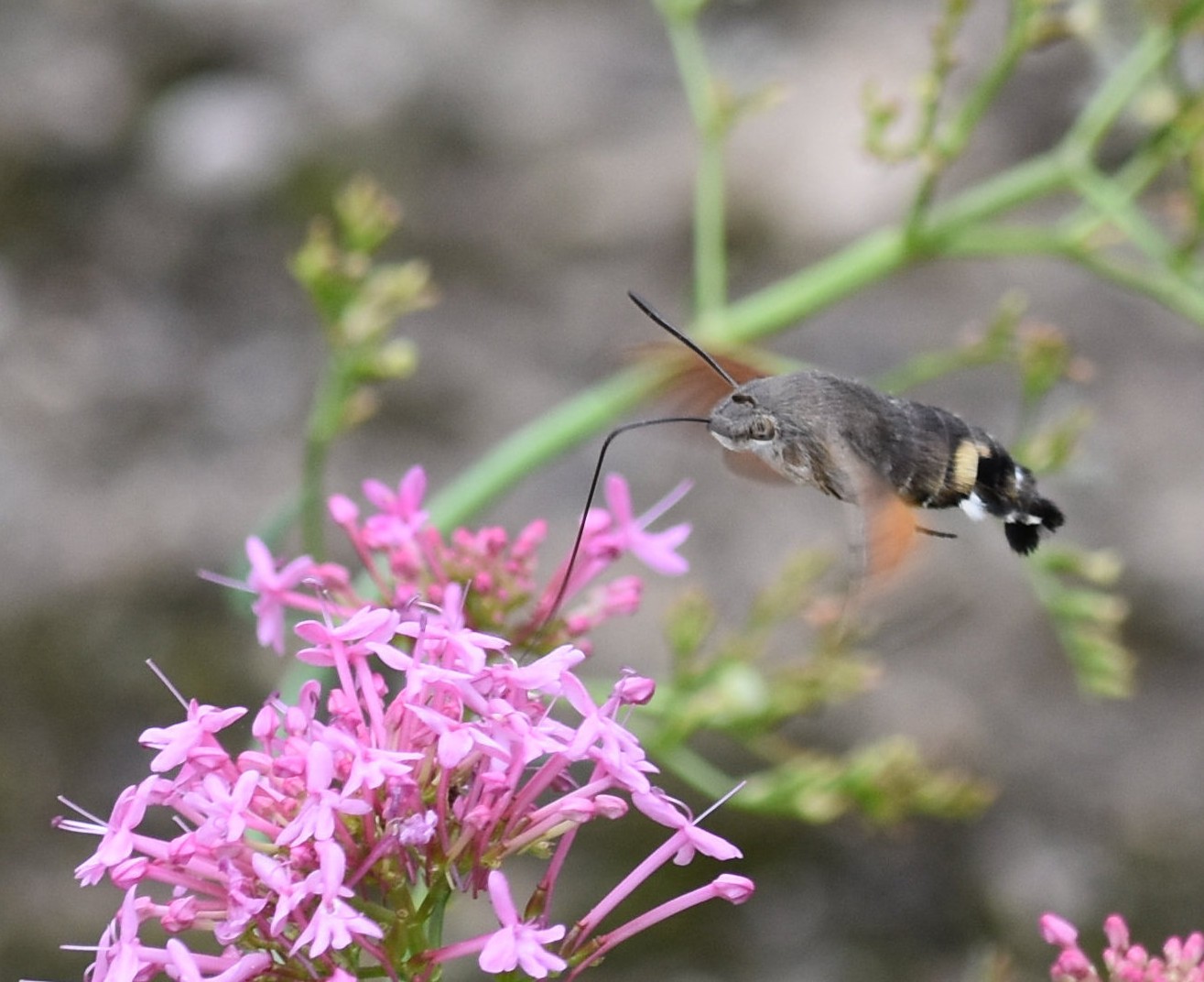
The first hawk-moth I ever saw, before I even got into moths, was the Humming-bird Hawk-moth. These amazing moths, don’t look that exciting when at rest (photo left), but when they take off and buzz from flower to flower, they really do what it says on the tin and look like miniature hummingbirds. I’ve always wondered what these moths were called before we discovered the Americas and saw hummingbirds? They are still a highlight of my summer when they appear, often seeking out the red valerian or the buddleia in the garden.

They’re so quick it’s hard to get a decent photo or video, but here’s a brief clip of one from a few years ago.

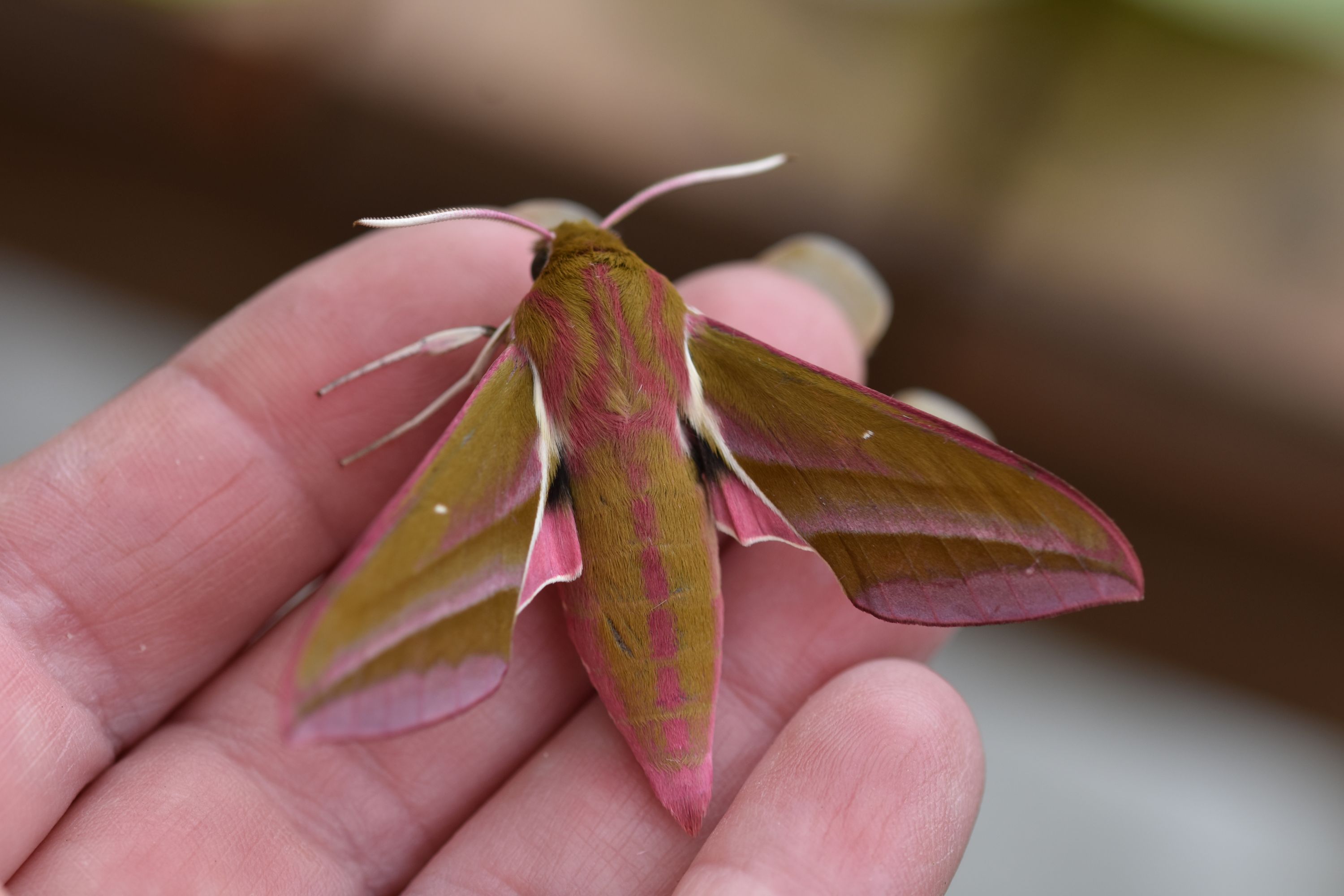
The first of the big hawks I ever caught in a moth trap was the Elephant Hawk-moth. It was my first summer of moth trapping and I can still remember the feeling of absolute incredulity that I could have found this incredible big pink moth in my own garden. They still thrill me now and are my go-to moth when people say moths are dull brown things!

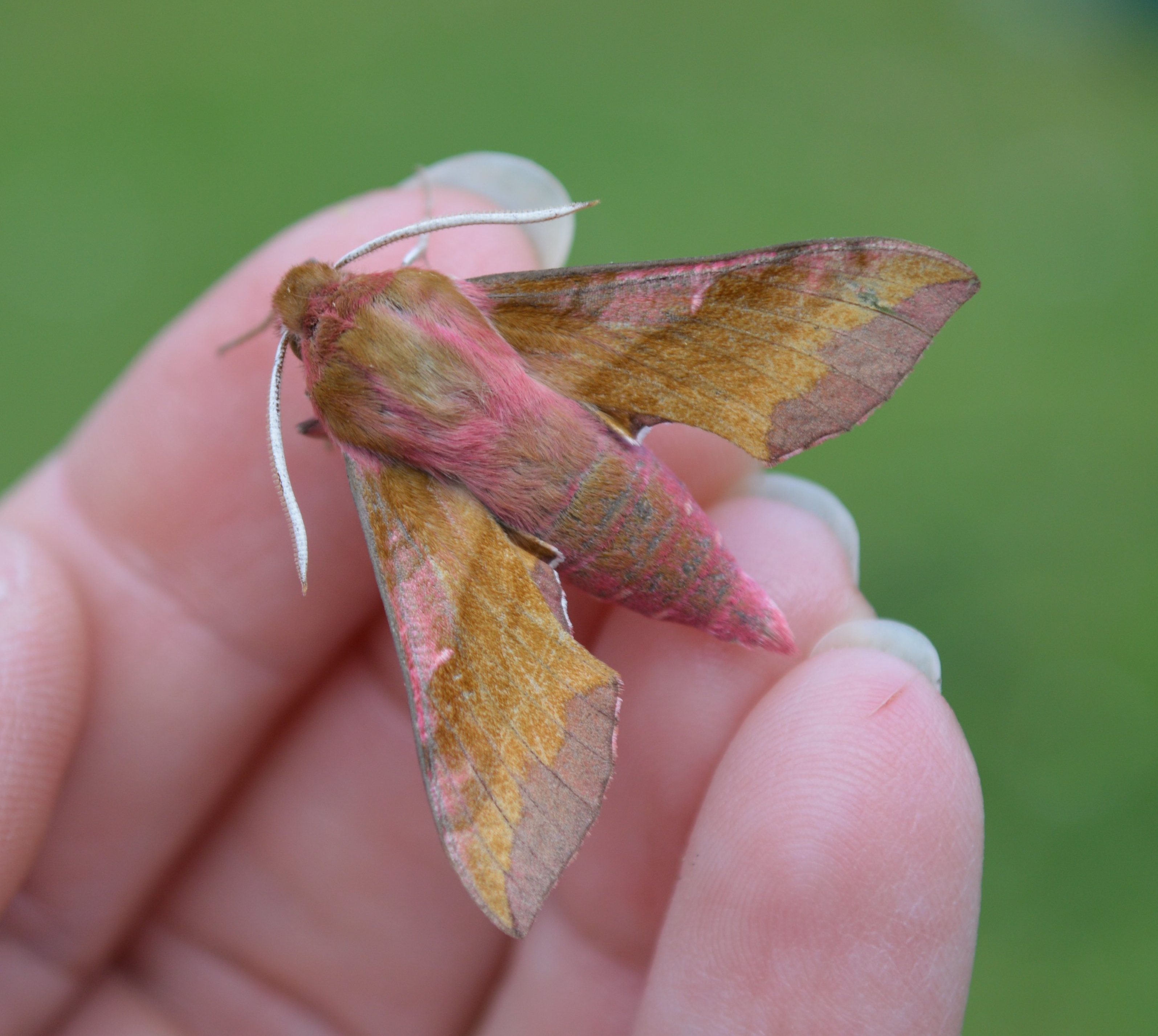
I am lucky enough to also get the Small Elephant version, not as big (obviously) and flashy as his counterpart, but a striking beast nonetheless.

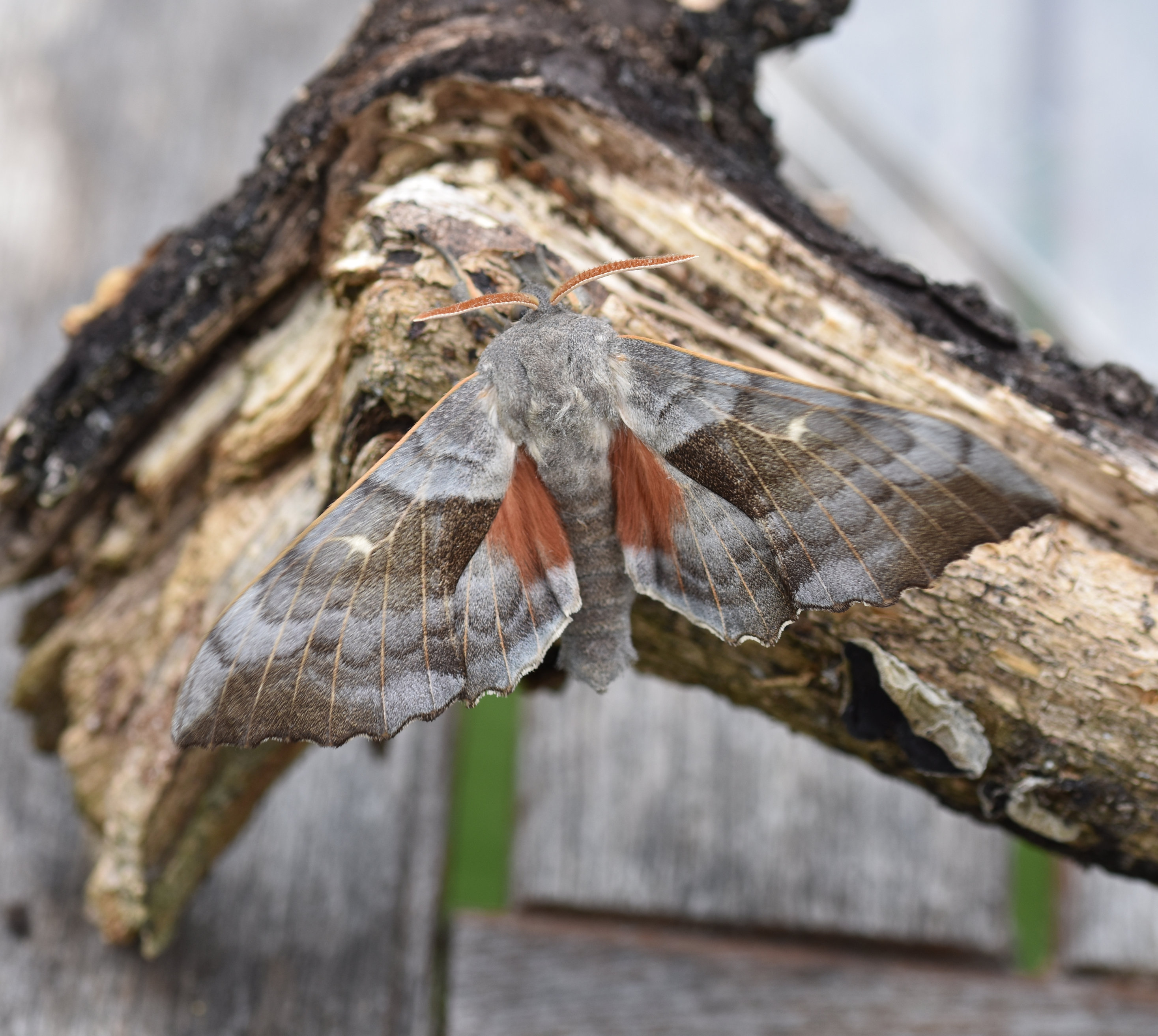
The next most common hawk I get is the Poplar Hawk-moth. These large moths appear every summer and have a striking way of holding their wings sort of out from their bodies.

A slightly less frequent visitor is the Lime Hawk-moth. These come in two colour variations. The most common one I get is the typical green and pink form, but I have occasionally had the more unusual brown variant.

The next hawk will always hold a special place in my heart as I managed to raise one from an egg – the Eyed Hawk-moth. I did a whole blog post about Lonesome George (as the egg/caterpillar became known) which you can read here https://toolazytoweed.uk/2019/08/29/lonesome-george/ and https://toolazytoweed.uk/2020/05/22/lonesome-george-born-free/. But for now here’s a photo of him in all his adult glory.

The next hawk I’ve only seen twice in the garden and neither have been exactly pristine specimens, both worn and well passed their best. But still a thrill and totally unexpected to see such a large moth in the trap.

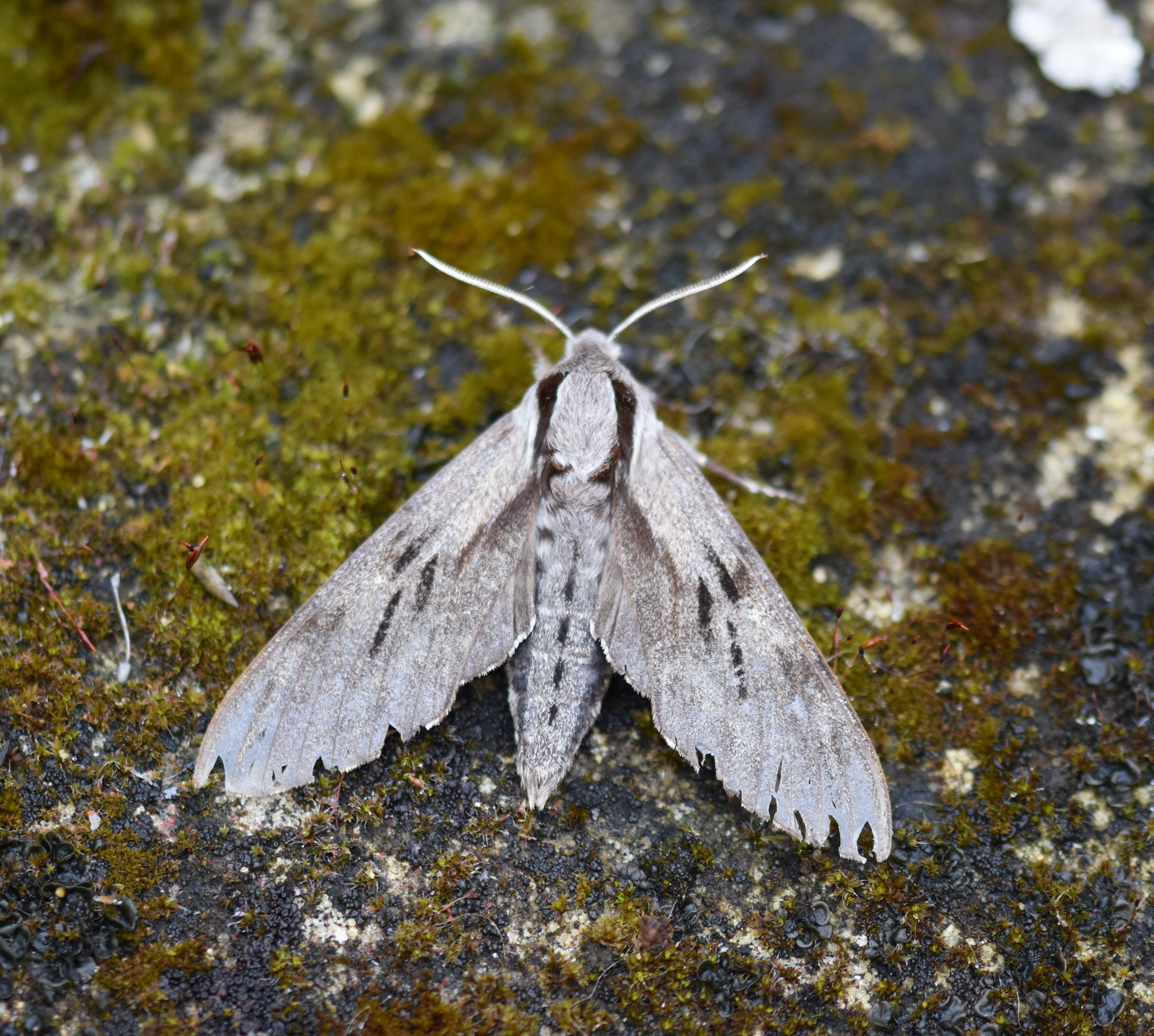
The next one has only graced the moth trap once – a Privet Hawk-moth. This is not a particularly common moth in Worcestershire, so it was a real surprise to get one in the trap. And it was big, much bigger than the other hawks I’ve seen!

The final two hawk-moths were real surprises. Neither are resident in Worcestershire, but are rare migrants, so I’d never dared hope to see them. But in 2019 I saw a few social media posts about Bedstraw Hawk-moths being seen. Each night I’d hope for one to arrive in Malvern, but never really expected it to happen. But then at the beginning of August, I saw it sitting in the trap – a dream come true. It’s surprisingly nerve-wracking getting a moth like this out of the trap – terrified it would fly off before I could get a photo as proof.  But proof I have and I must admit it was glorious to be able to post on social media that a Bedstraw Hawk had deigned to visit my garden. People literally came from miles around to see it.

So I didn’t think I’d ever beat my Bedstraw, but just this week the moth gods favoured me again. I’d been seeing posts from Cornwall with people trapping multiple Striped Hawk-moths, but as a rare migrant I didn’t imagine one would ever reach as far north as Malvern. But the winds must have been blowing in the right direction and on Monday I got up at the crack of dawn to find a Striped Hawk casually sitting in the corner of the trap – unbelievable! I only recognised it because I’d seen the Cornish photos, as otherwise it wouldn’t even have been on my radar as a possibility. Not taking any chances, I took a few photos through the Perspex of the trap, before opening the trap to get it out. Some better photos later on and I could once again bask in moth-envy from my fellow moth-ers.

The West Midlands moth website lists 16 species of hawk-moth, so to have seen 10 species in the garden is pretty amazing.  Of course there are still those moths of legend that I’d love to see – the Convolvulus and Death’s Head Hawk-moths being the ultimate dream moths – but there’s always another moth trap and you never know your luck!


Toad Patrol & Other Amphibious Delights

Just over a year ago, I went to a very nice pub and asked some people sitting outside whether they were “toad people”. They were not and were somewhat surprised to have been asked this while enjoying their Sunday pint! After some explaining to the nice couple, I then went inside and found my toad people. And so began my involvement with toad patrols as part of the Toads on Roads project run by the charity Froglife.

“Toad season” for this year has just finished. Toads travel back to their ancestral ponds every year in early spring, often having to cross roads as they go. Sadly this often ends in many toad fatalities, so the Toads on Roads project aims to help as many of them as possible get safely across the roads at their regular crossing points.

The toad patrol I joined is a few miles out of town and locals had reported that in the spring dozens of toads got killed every year. It wasn’t clear which pond the toads head to each year, but there was a definite hotspot on a lane at the edge of the village. So for the last 2 years I’ve joined a group of lovely volunteers, who go out at dusk to “help” the toads across the roads. Apologies for the poor photos, but my phone isn’t great at taking photos at night.

Last year we escorted approximately 240 amorous toads across the road. This year numbers were much lower with only 94 toads seen across the whole season.  We think this may have been because February and March this year were much colder and drier than they were in 2024. Toads apparently like it warmer and wetter before they reckon it’s worth travelling in pursuit of love! This is only the second year of toad patrols in this area, so it will be interesting to see if numbers always fluctuate like this from year to year.  Hopefully 2026 will bring a bumper toads season.

If anyone’s interested in learning more about the Toads on Roads project or wants to find their local group, take a look at https://www.froglife.org/what-we-do/toads-on-roads/

So toads are obviously the main focus of toad patrols, but Froglife encourages people to note other amphibians they spot at the same time. The occasional frog has wandered by, but I was absolutely delighted to spot an unusual looking newt crawling across the road last month. Much darker and with a rougher texture to the skin than my newts back home; it was a Great Crested Newt!

It didn’t look full grown; the only ones I’ve seen before were much bigger. Again apologies for the poor phone photo and shaky video – the shakiness was down to being just so excited to have seen one. I watched it for a few minutes to make sure it made it across the road to safety, then left it to go wherever it was going.

My garden does get the occasional toad, but my pond is too new, so they don’t use it for mating. Thankfully the frogs couldn’t care less about it being a new pond and I’ve counted at least 70 croaking away in the spring – mainly males calling for females and chasing anything remotely frog shaped that moved. This video was actually taken last year, but there were similar scenes this year too.

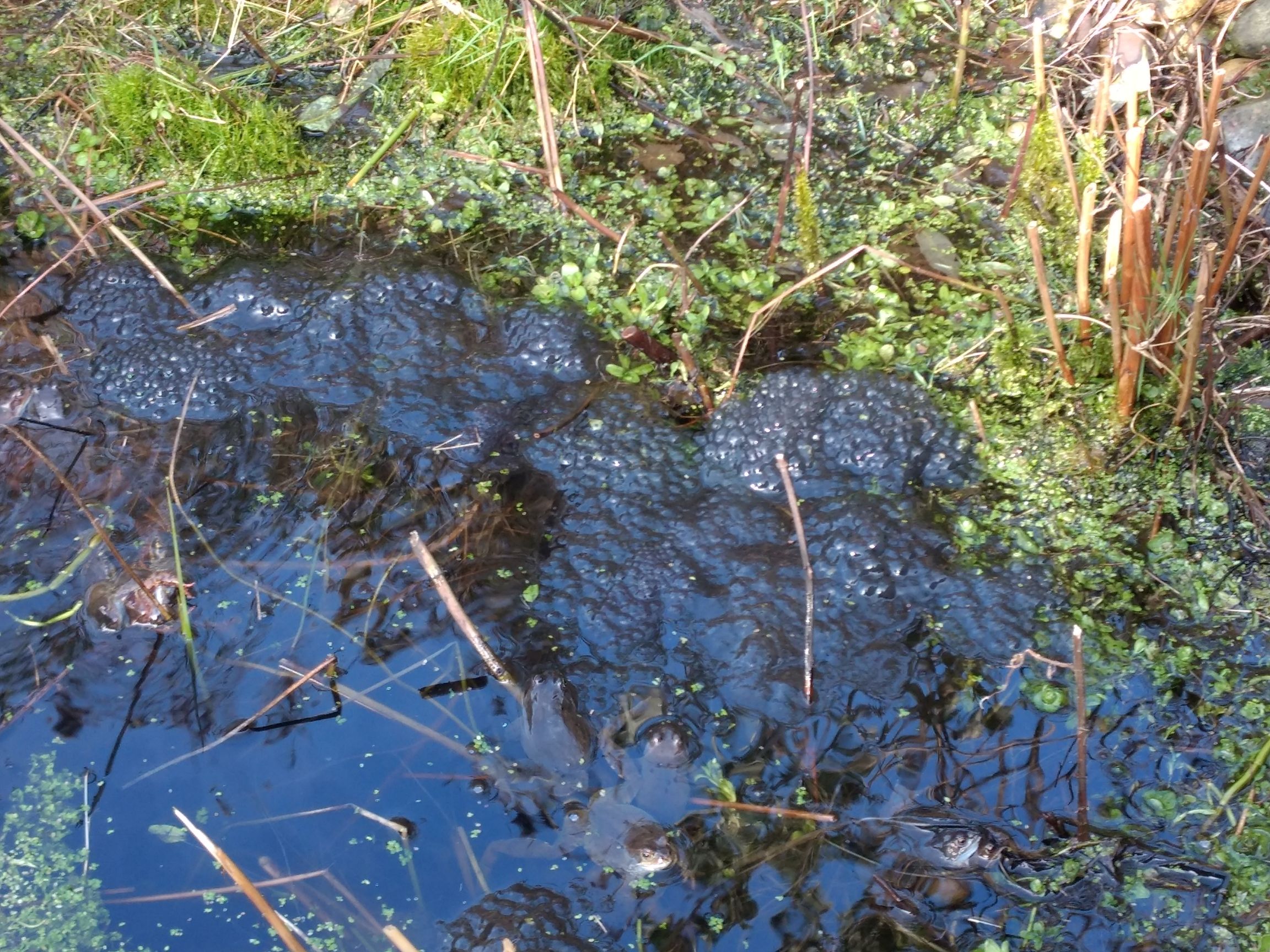
The throng of frogs produces a lot of frog spawn. This is just part of it from one side of the pond this year. They tend to lay the spawn in the shallows.

And then of course come the tadpoles. There must be thousands of them this year, all wriggling in the shallows of the pond, I guess where the water is a bit warmer. Such is the activity that the water actually froths up. Their tiny gills are clearly visible at this stage.

The photos above were taken a few weeks ago. The tadpoles are much bigger now. No sign of legs yet but don’t think it will be long before I’ve got froglets.

The smooth newts have probably been enjoying the glut of frog spawn and tadpoles. I saw several of them popping up amongst what to them must be a buffet of frog spawn. Fortunately the ratio of tadpoles to newts is big enough that I don’t think they’re doing any harm to the frog population and after all, a newt’s got to eat!

So that’s a round up of all things amphibian of late. The annual frog spawn season in the garden is always a joy, but the toad patrol is a relatively new pleasure. There’s something very calming about strolling along a country lane in the dark looking for toads, although I am lucky that this particular lane is pretty quiet traffic-wise; it’s maybe not so relaxing if it’s a busy site and you’re rushing to save toads from oncoming cars! But still well worth giving the Toads on Roads project a look if you’re interested in amphibians.

The Blog is Back!

Hello again!

It may seem like I’ve just been Too Lazy To Blog, and I can’t deny there’s an element of that, but mainly life in the form of a very difficult 3 years has just got in the way. But hopefully now things are getting back on an even keel and I can resume my wildlife ramblings. The weeds in the garden have continued to grow and there’s still plenty of wildlife to be seen, photographed and waffled on about. So the blog is back!

I may not have been blogging, but I have seen a lot of amazing stuff in the last 3 years. Maybe not attack ships on fire off the shoulder of Orion (who doesn’t love Rutger Hauer), but all sorts of other interesting things. So in no particular order, here are some of the highlights of the last few years.

In December 2023 there was a lot of excitement on Twitter/X about Waxwings being seen in and around Malvern. Like many others I grabbed my camera and headed out in search. Not only did I eventually get to see them, but I made a new friend in the process, without whom I’d never have found them, so a definite win-win situation.

Last summer I was really excited to see my first ever glow worms. Tiny little green glows at a reserve just a few miles from home.  Not easy to spot, but once you get your eye in they really do what it says on the tin and glow a bright green. I only had my phone with me, so this “magnificent” picture will probably go down in history as one of the most atrocious photos ever. Perhaps I should just give it an abstract name – “Green Glow on Black Canvas” or something. But it’s the only proof I have that I saw a glow worm, so here it is!

In October last year I finally got to see the Northern Lights and from my back garden. Not quite the awe-inspiring spectacle you see photos of, but definite streaks of pink and green nonetheless. Again I’m probably up for some kind of award for awful photography for this, but I’m just happy to have finally seen this. Twenty odd years living in Scotland and I finally see it in Malvern!

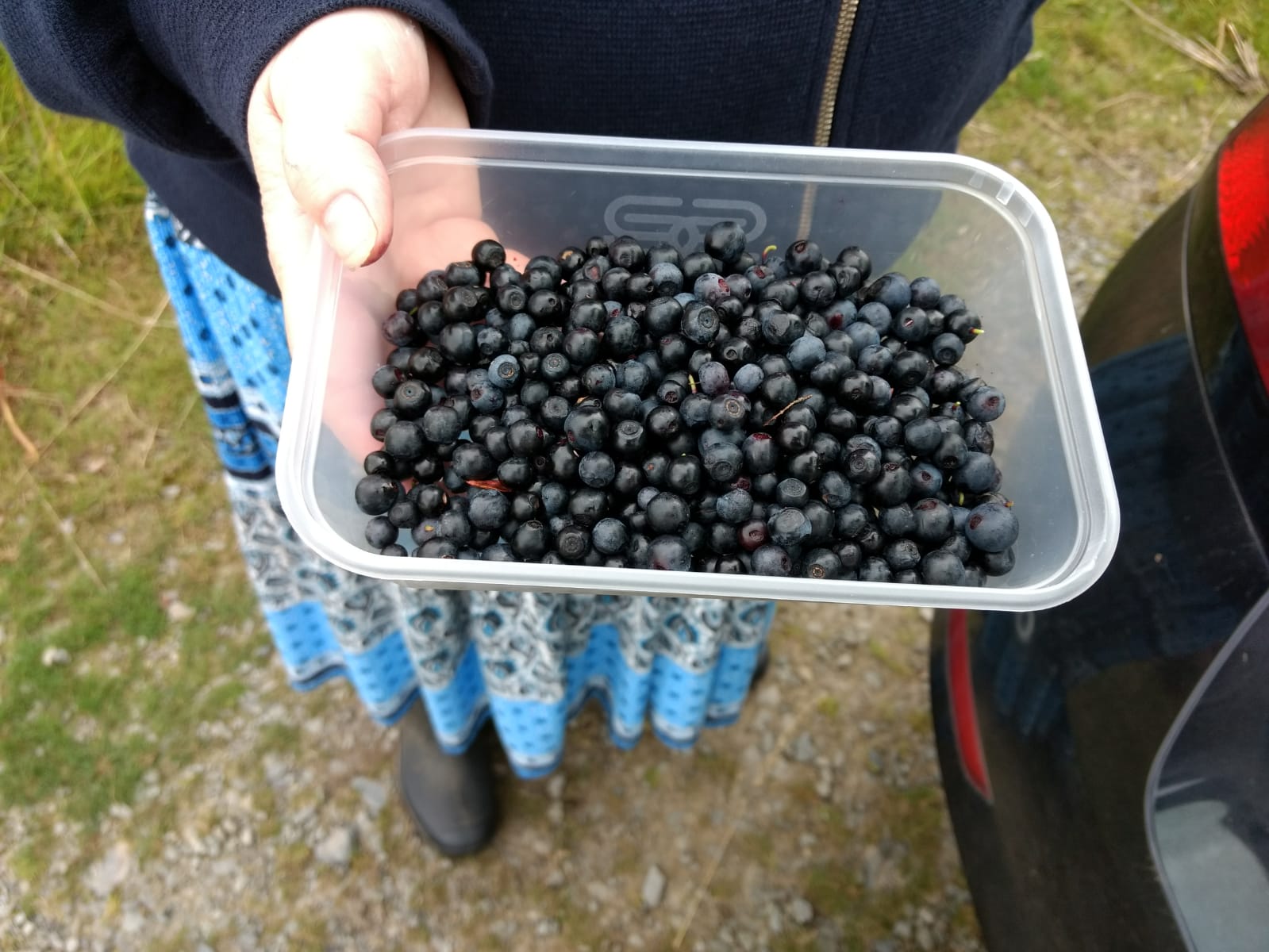
I’ve had a few days out and about doing some not-strictly wildlife things, but it was out in lovely countryside so I reckon that counts. In August last year my sister and I went whinberry picking for the first time since we were children. Whinberries (or Wimberries, Bilberries, or Blaeberries, depending on where you’re from) were our Dad’s favourite and grow wild in the Shropshire hills. We were a bit late in the season, so only managed to gather enough for a very small pie, but it was well worth it – the taste brought back many happy childhood memories and we certainly got to see a lot of the wilds of Shropshire while we hunted for them.

We also had a slightly bonkers trip to see the famous cheese rolling race in Gloucestershire. I must stress we valued our lives and vertebrae too much to actually take part chasing a 4 kilo wheel of Double Gloucester down a very steep hill. It was hard enough climbing high enough to watch it, without hurling ourselves at break-neck speed back down again. But it was a glorious spectacle when viewed from a safe distance.

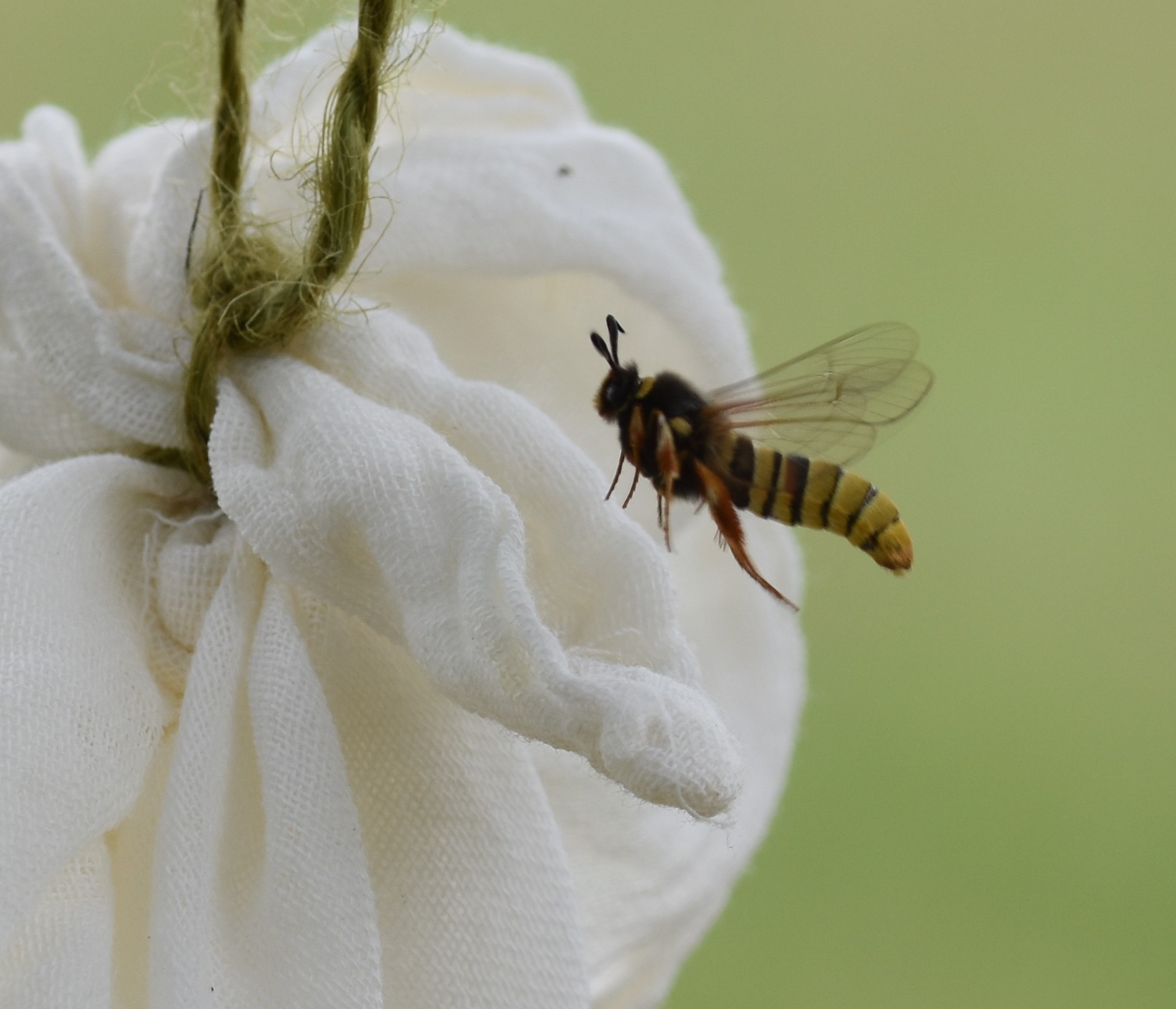
There have been lots of moths recorded in the garden in the last few years, but I’ll post about those separately. One interesting moth seen while venturing outside the garden was a Lunar Hornet Moth. These stunning moths don’t really look like moths with their clear wings and hornet like bodies. Their caterpillars live in the wood of old trees and the adults are attracted to pheromone lures.

Other highlights of the last few years include dolphin watching on a glorious sunny day in New Quay in Wales and a visit to the lovely Westonbury Mill Water Garden in Herefordshire just as the new season’s toadlets all emerged from the ponds. Never seen so many tiny toads (they were literally the size of a fingernail), it was virtually impossible to walk – we went round at a snail’s pace to avoid standing on them. Speaking of toads, I’ve also joined a local toad patrol – more of that in another blog post too.

There’s been a visit to the Diglis Fish Pass in Worcester. Our guide showed us fantastic photos of large salmon, pike and even otters swimming by the viewing window, although on the day, all we saw were a few minnows. Another day out took us to the confetti fields, also in Worcestershire. The delphiniums are grown specifically to turn into environmentally friendly confetti, but I actually preferred the wildflower borders around the main crop.

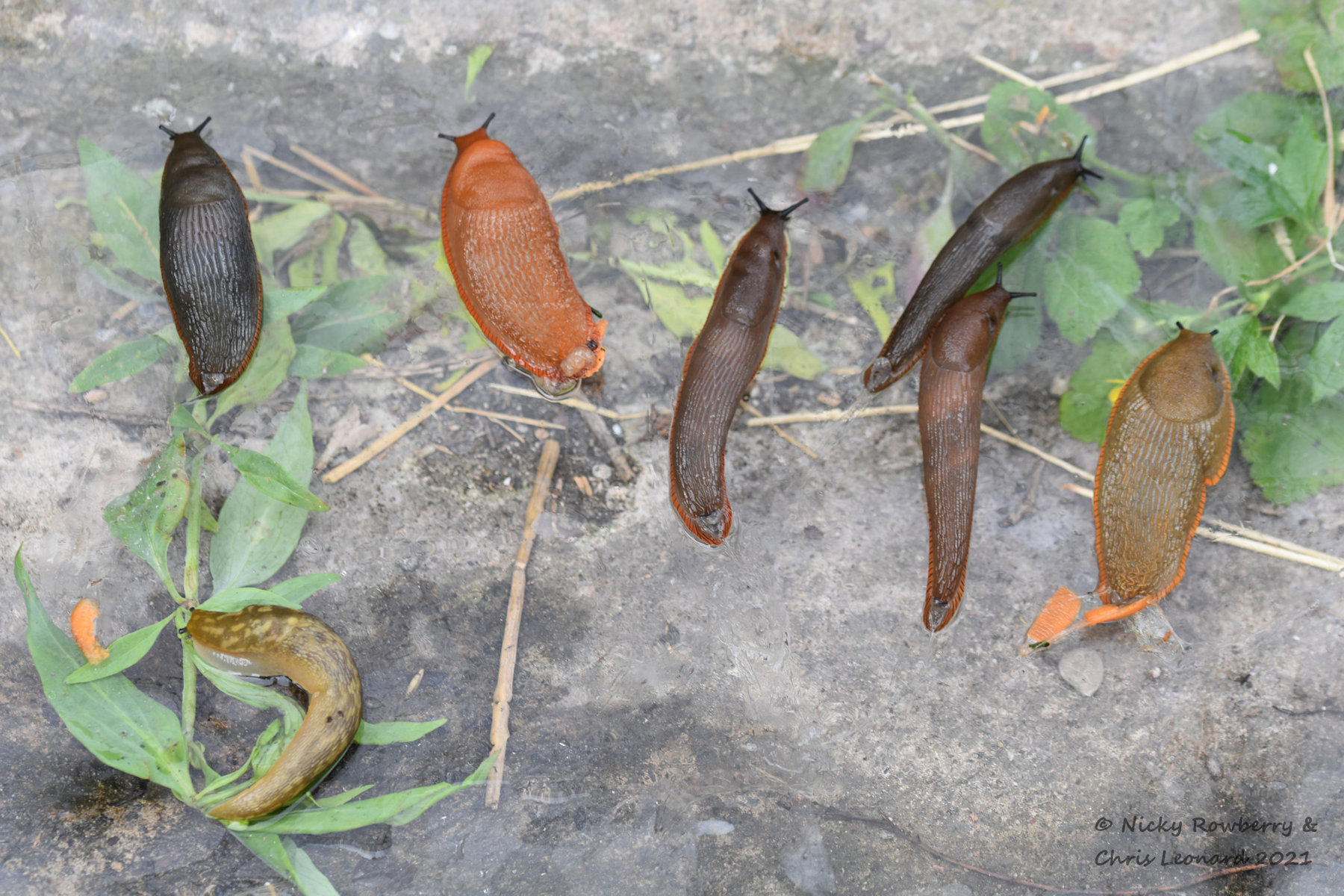
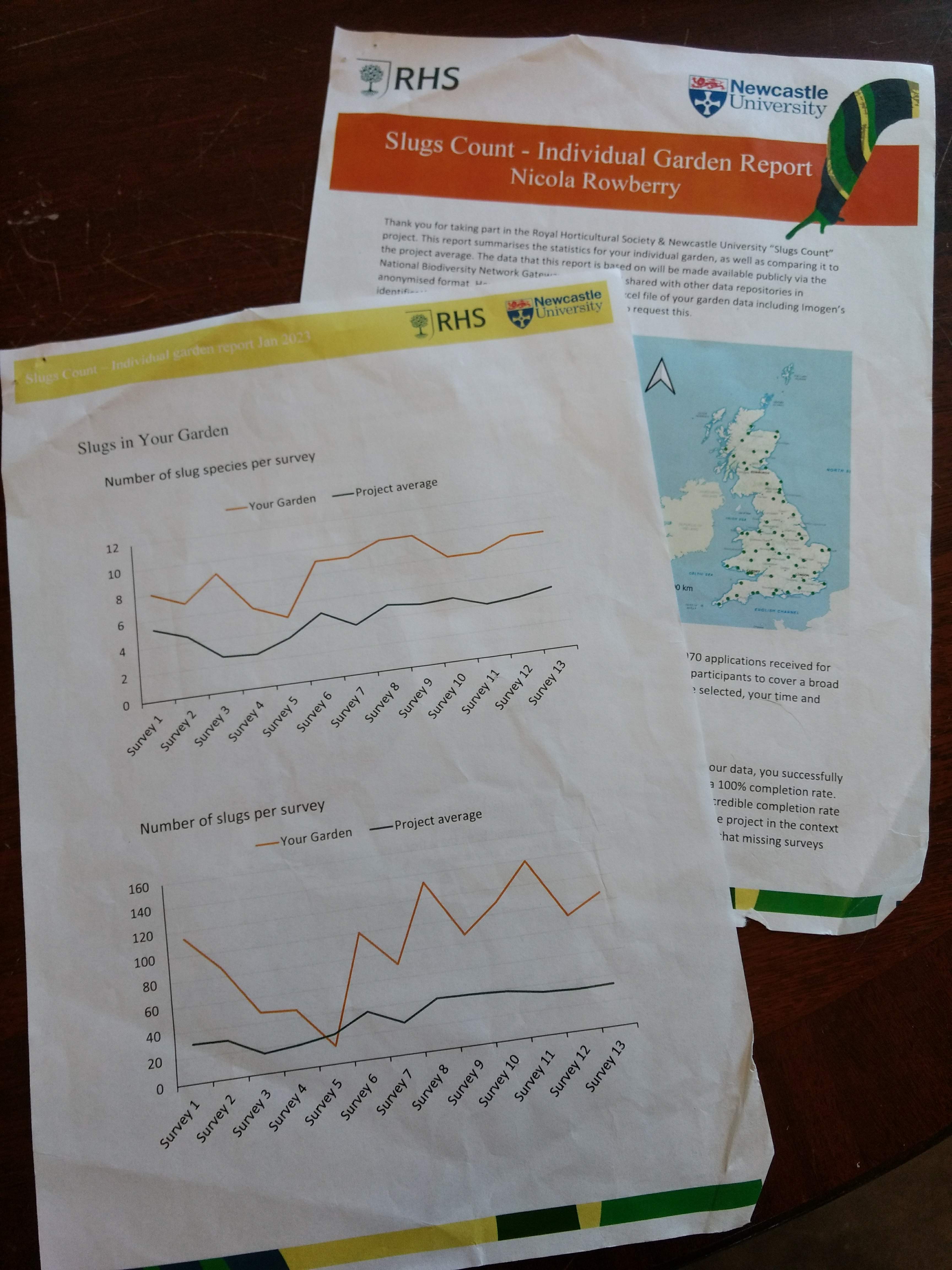
One final highlight of the last few years was a weekend in Harrogate for a slug conference! Harrogate is a really lovely town and a slug conference at Harlow Carr gardens to discuss the results of the slug survey I took part in, was a delightful, if slightly unusual treat! (as was Betty’s tearoom’s Fat Rascals!)

I felt ridiculously pleased that my garden had produced above average numbers of slugs compared to the other slug counters – something most gardeners would be horrified by, but I viewed it as a badge of honour for my scruffy garden.

So there are just a few hopefully interesting bits and pieces from the last few years. The plan is to start blogging again regularly, or at least not wait another 3 years before I can think of something to say.


National Moth Week

It’s National Moth Week (or International since it’s worldwide) and for once I’m on the ball enough to be blogging on time and on topic! This is mainly due to the fact that I read a lovely blog post this morning on this very subject by Nature is My Therapy: https://natureismytherapy.com/2022/07/26/moths-not-just-for-after-dark/  So thank you Kim for the timely reminder.

National Moth Week celebrates the beauty and diversity of moths, a sentiment close to my heart as I’ve been fascinated by the moths in my garden since I started trapping in 2013. This week, after 9 years of moth trapping and perfectly timed for National Moth Week, I recorded the 450th species of moth in my garden! I never dreamt when I started looking at moths that I’d find anywhere near this number in my suburban garden. Just goes to show you don’t know what’s out there until you start looking. Of course of those 450 species, some have only been recorded once – often migrant moths just passing through. But a good chunk of the species are regular attendees at my moth trap.

So here is no 450 – the Brown-Line Bright Eye (Mythimna conigera) – so called because (not surprisingly) it has a brown line and a bright eye spot.

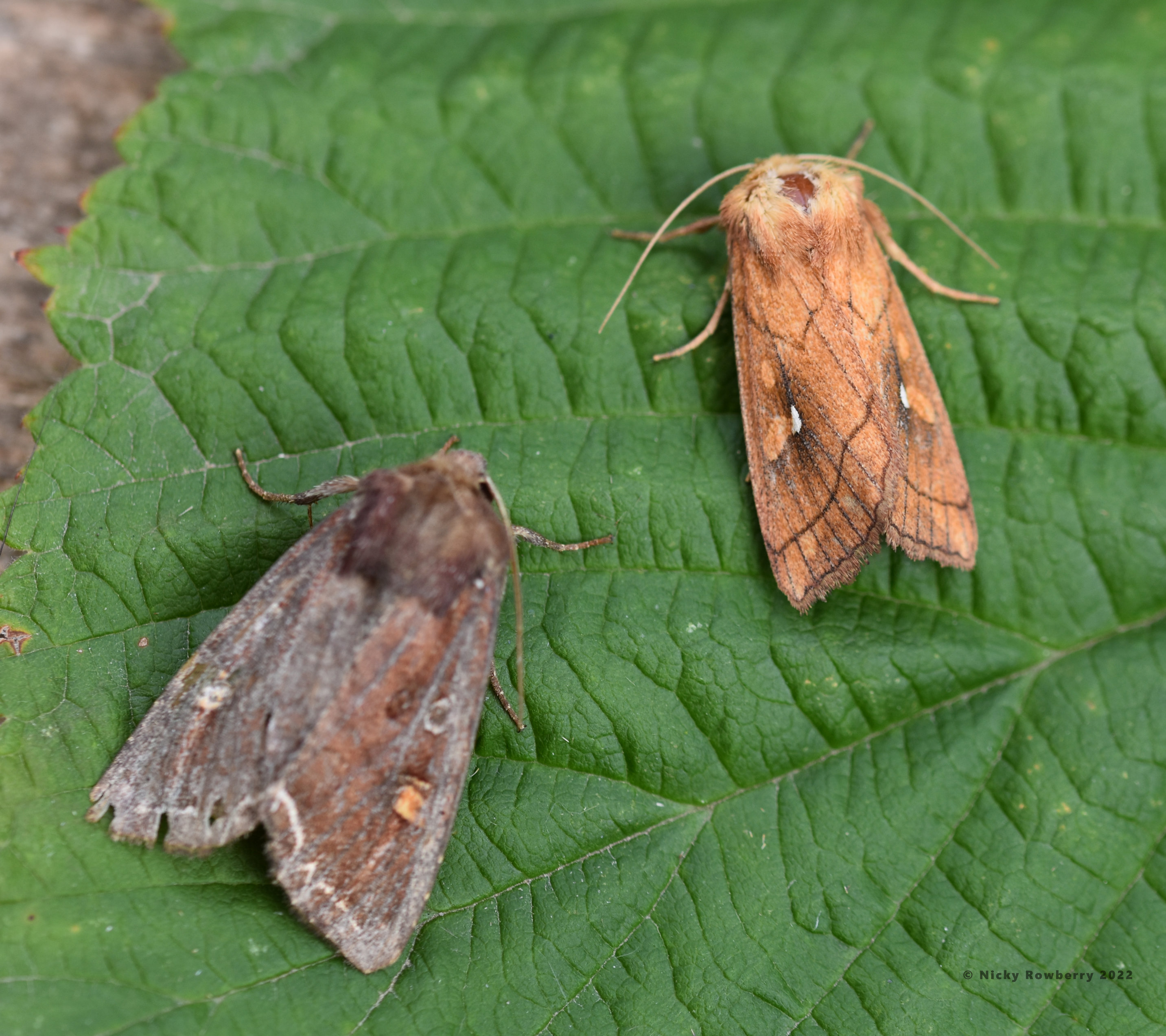
Coincidentally the same night I also trapped the very similarly named Bright-Line Brown-Eye (Lacanobia oleracea). So here they are side by side.

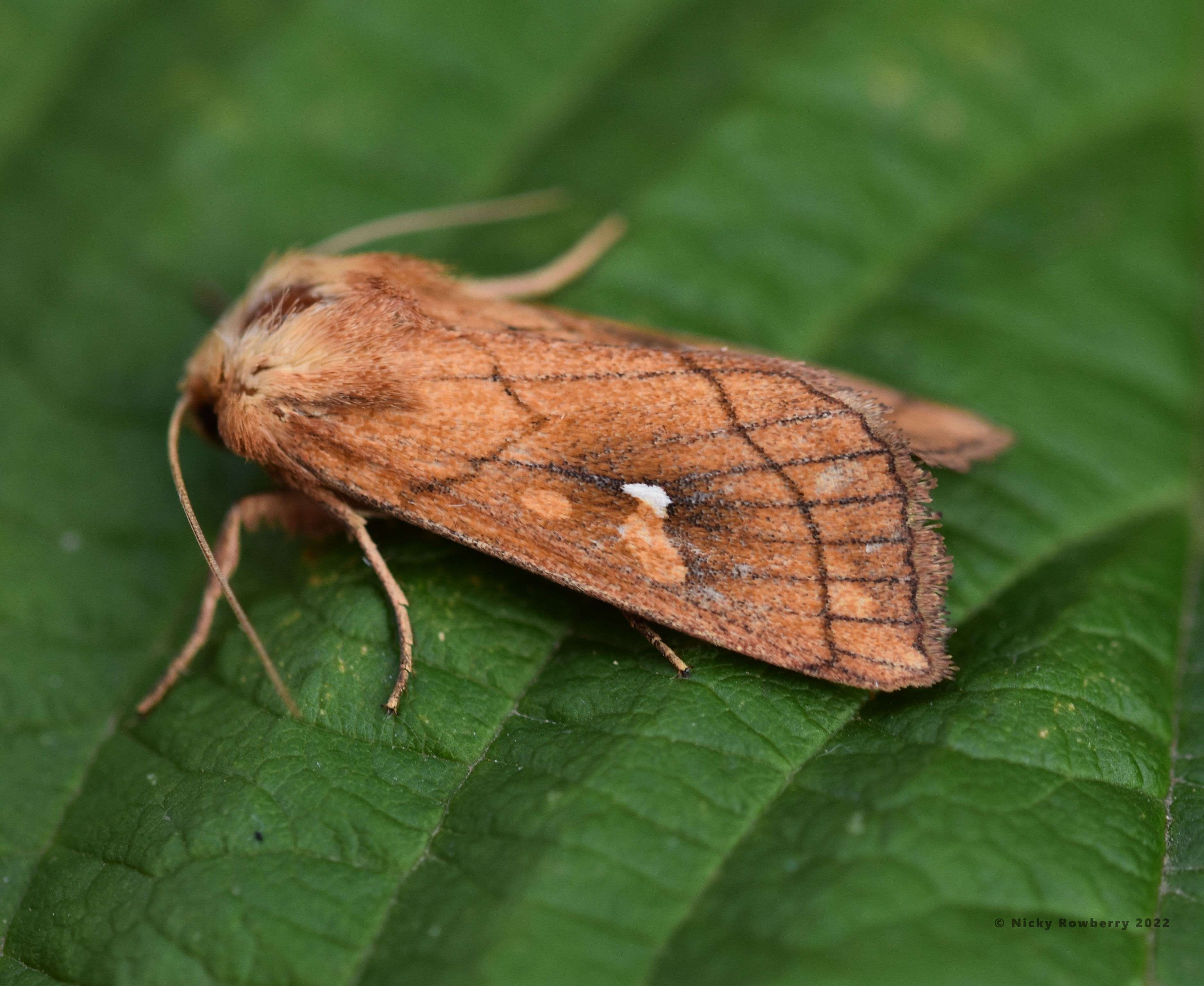
I trap 2 or 3 times a week through the summer and usually once a week in the winter. I started this year with a running total of 438 species, so another 12 have been added since then. Of the new ones, a couple are ones I’ve wanted to see for a while and others haven’t even been on my radar. The longed for ones include a Nut-tree Tussock a (Colocasia coryli) and a Muslin Footman (Nudaria mundana).

Of the more unexpected ones this Italian Tubic (Metalampra italica) micro moth was rather lovely and one I’d never even heard of. Apparently it’s a recent colonist that’s spreading north from the south of England.

So the trap is out again tonight and I’ll be up at the crack of dawn to check the contents, hopefully before the robin beats me to it. It’s one of the things I love about moth-trapping – you never know what you’re going to get – it’s like Christmas morning for moth nerds!

Happy National Moth Week everyone.


Holiday Snaps – Part 2

It occurred to me as I wrote this that blogging is the modern day equivalent of boring your friends and family to death with a slideshow of your holiday pics – only with blogging you get to inflict them on a much wider audience! So apologies for indulging here and sharing more photos.

So just to prove that I do occasionally look at other things besides butterflies and moths, here are some of the best of the rest. The cottage we’d rented was on the edge of a nature reserve, so we were off to a good start without even going anywhere. There was a path leading own to the nature reserve’s lake (Hawes Water) and it was obviously a bit of a thoroughfare for a lot of wildlife. The trail cameras picked up what I think is a female Roe deer both at night and during the day, plus it was nice to see a hedgehog at dusk too.


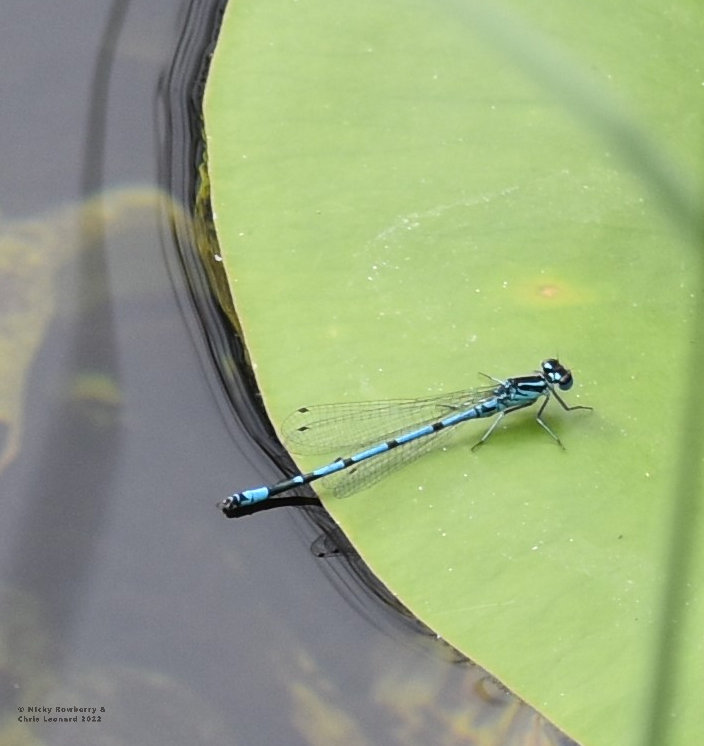
The lake itself had plenty of damselflies buzzing around our little jetty. I identified at least 2 species – Azure (below top) and a male Blue-tailed (below bottom), both beautiful insects.


Not exactly wildlife, but it was also nice to have a family of Gloucester Old Spot pigs in the field opposite the cottage.

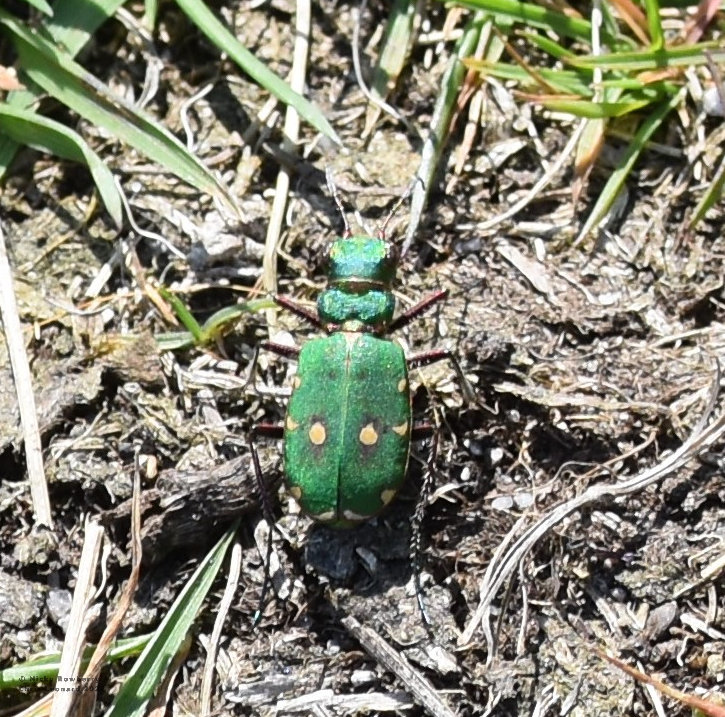
Venturing out from our cottage we visited some amazing sites. Irton Fell, which we’d gone to primarily for the Mountain Ringlet, had plenty of other wildlife too. Despite the windy conditions up there, there were plenty of insects around including this Tiger beetle.

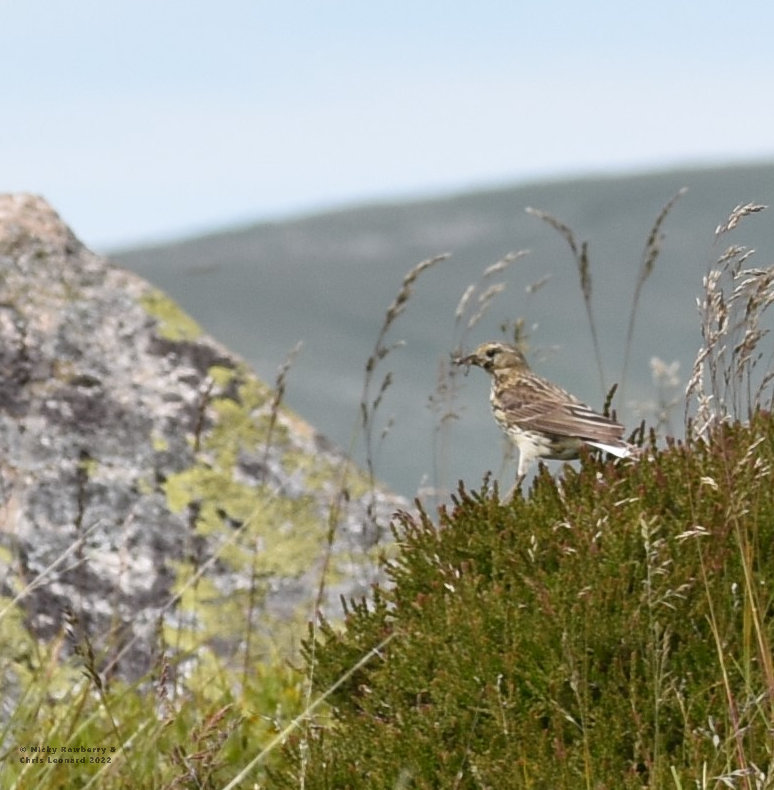
There were lots of small birds flitting between rocky outcrops and fences. Bird ID is not a strong point of mine, but I think this is a Skylark.

On the last day, freed from the need to search for butterflies, I went to Foulshaw Moss Nature Reserve. Foulshaw is known for it’s Ospreys. Technically I did see them, via a webcam set up on the reserve. They’d got chicks which I could just about make out on the monitor. The nest was a long way from public footpaths (and rightly so), so no chance of photos – but it’s still the closest I’ve ever been to an Osprey, so it felt like a win.

Foulshaw was also known for a species of dragonfly that would be new to us too – the White-faced Darter. There were a few flitting around, but none were settling. One finally landed in front of me on the boardwalk. I managed a quick record shot, planning to then zoom in for a better one. Just got it focused and a small child ran up and scared it off – I may get over this eventually! So here’s the poor record shot.

So here endeth my holiday snaps. A couple of lifers (Ospreys & Darter) ticked off the list if not photographed properly and a few other favourites seen again. My holidays tend to be primarily wildlife focussed, but just to prove I do manage a few other activities, here’s me doing the inevitable pose next to Eric Morecambe’s statue at Morecambe Bay.