30 Days Wild – Day 4

TWT 30 Days Wild_countdown_04Day 4 of 30 Days Wild and today we took part in another event – the National Garden Bioblitz, thereby ticking off two targets with one activity (in true Too Lazy fashion). The aim of the Garden Bioblitz is to find and record as many species of plants and animals as possible in the garden in 24 hours.  Since we’re always identifying things we find in the garden anyway, a bioblitz is just a natural extension of that.

Garden BioblitzLast time we did this a few years ago, we recorded about 120 species; but that was before we got into moth trapping and bee identifying, so hopefully we can beat that this time.  I’m writing this late evening – we’ve been busy in the garden all day, photographing and listing everything we could find. I’ve still got loads of things to identify from the photos and then everything has to get logged onto the i-record site.

It has pretty much been the perfect day. It started at about 4:30 am when I got up to empty the moth trap (to beat the cheeky robin to the catch). Then went back to bed for a bit more sleep (always good), before resuming the challenge at a more reasonable hour. For once the sun shone on the righteous (questionable I know) and we had the perfect conditions for trawling the garden for photo ops. Pretty much the whole day was spent crawling about the garden with the cameras. We finished off by cranking up the BBQ and cracking open a bottle of Prosecco – the perfect end to the perfect day.

During the day we tried every trick we could think of. Obviously the moth trap had been out over night and produced at least 20 species of moth – I’m still working through the photos, so this total may rise. Highlight was the always stunning Elephant Hawkmoth.
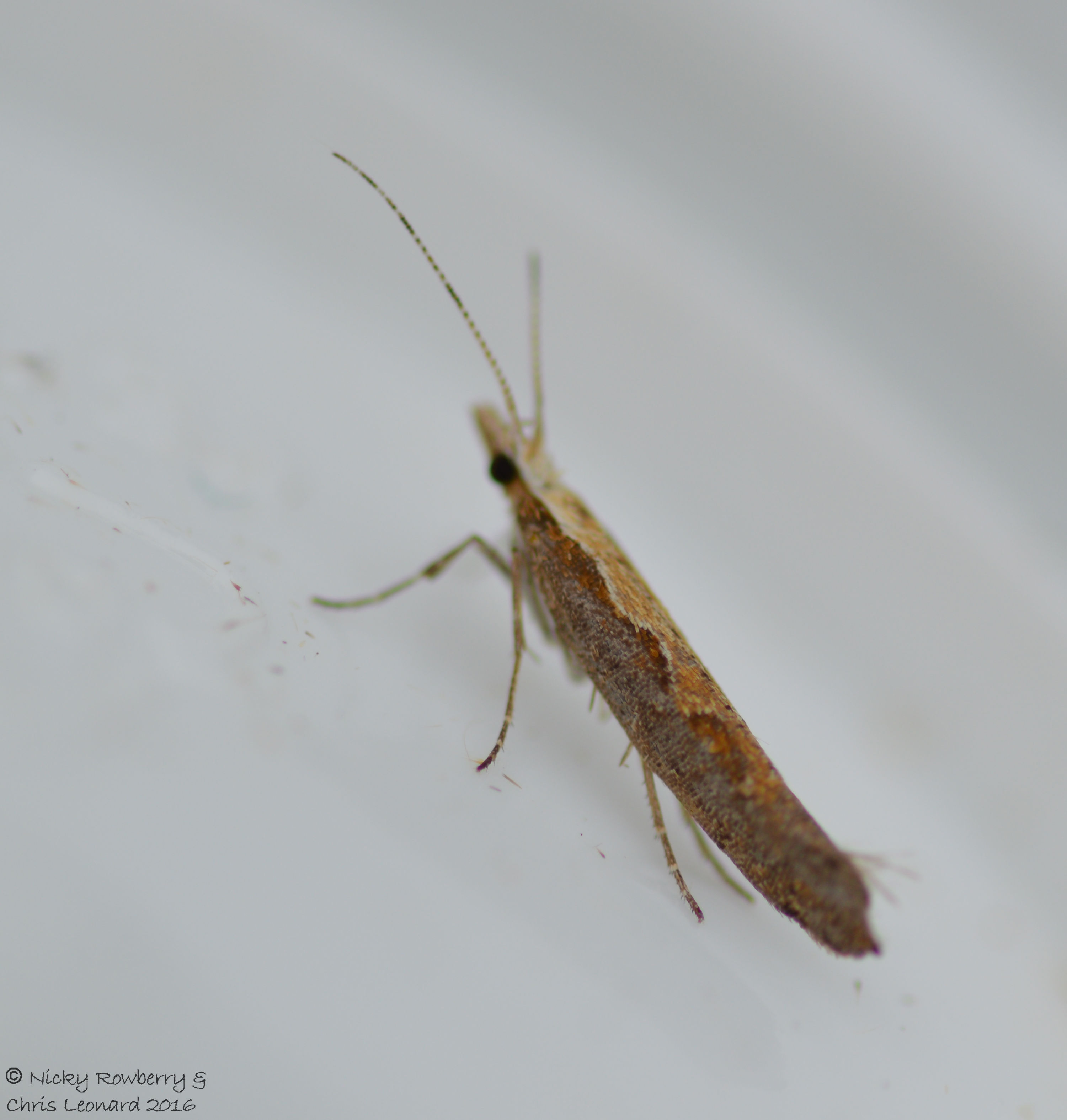
Diamond Back mothI was also really pleased to get several Diamond-back moths – tiny moths that migrate over from the Continent. They’d been mentioned on Springwatch and social media was full of people saying they’d had loads of them this week, so I felt ridiculously glad that Too Lazy’s garden hadn’t missed out. Moth envy is a terrible thing!

We also tried pitfall traps for the first time, using old plastic tubs buried in the ground. This produced this rather splendid (and still to be identified) beetle, plus a couple of woodlice and a spider (also still in need of ID). I suspect pitfall traps take a bit of practice in sussing the right location – we might try them again at other places in the garden.

We tried the “suspend an umbrella under a tree and wack the branches” technique as demonstrated by Chris Packham on Springwatch.  We only have the one mature tree (an apple) so this didn’t produce too much, but was interesting to try.

We dipped in the pond, which produced mainly duckweed, but also some leeches and water louse. It also meant we spotted one of our two amphibian species of the day – a Common Frog, watching us warily from his duckweed blanket.

NewtWe of course turned over stones and pieces of wood, which yielded our second amphibian – the Common Newt. We also found most of our molluscan species this way, both snails and slugs. We achieved a respectable 4 species of snail, but sadly the Girdled Snail, which I know we get in the garden, remained steadfastly hidden today.

The rest of the day was spent generally bird watching and chasing various bees and insects round the garden.  I haven’t tallied up the birds properly yet, but we managed at least 10 species including this Collared Dove. At least 6 bee species put in an appearance, with possibly a new one – we spotted some kind of leafcutter bee carrying (not surprisingly) a piece of leaf – hopefully we can get an ID on it soon, although the photo wasn’t brilliant. Fortunately other bees were more obliging.DSC_3856
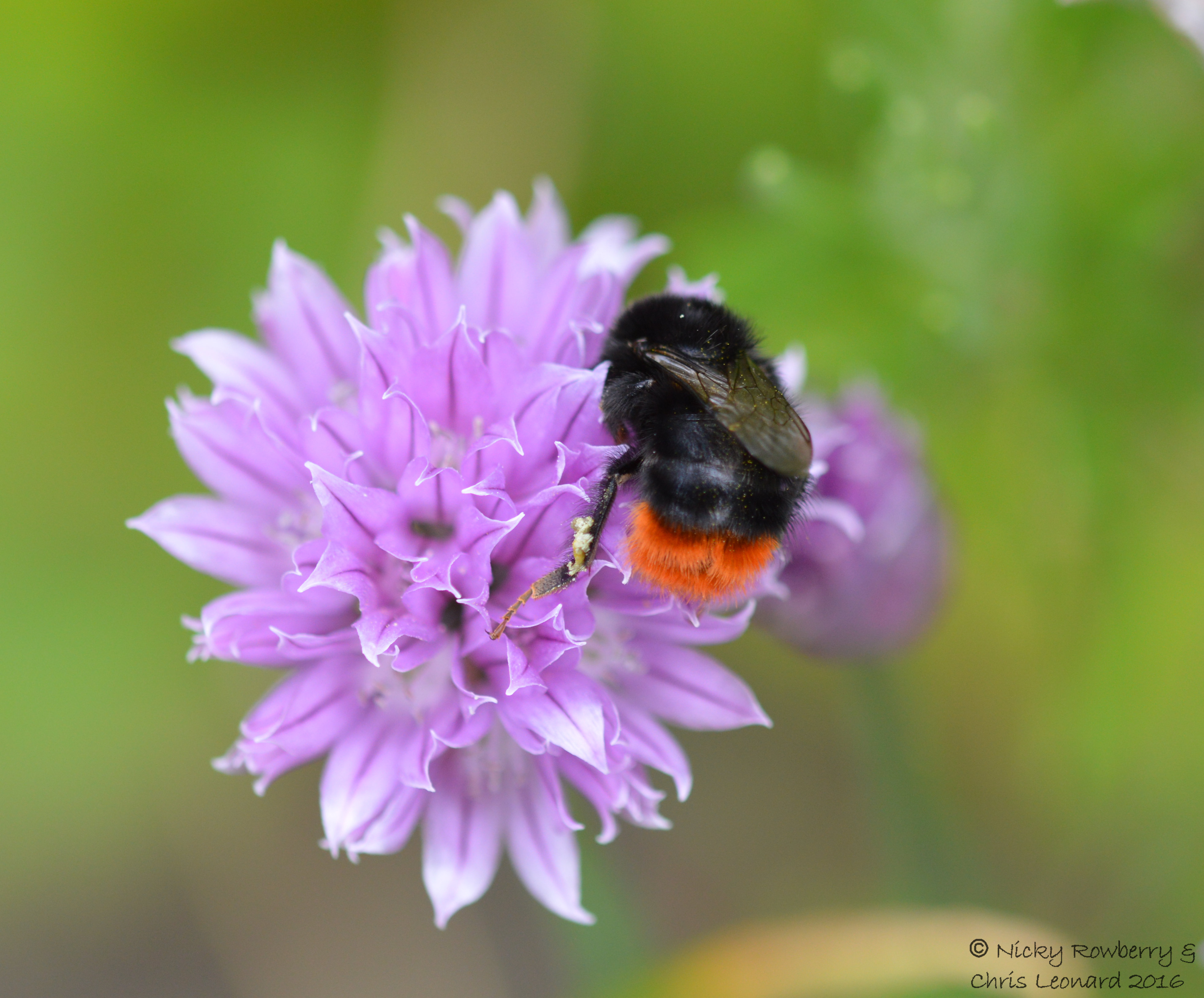
Only 2 butterflies showed their faces today – a Small White and a Holly Blue. Assorted insects made up the remainder of the animal count, while the plant count is at least 25 species, with probably a few more to ID.

We’ve spent the whole day in the garden photographing our wildlife and it will probably take several days more to go through all the photos and get them loaded so that they count for the Bioblitz. But it’s been a thoroughly enjoyable experience and has got us rooting about bits of the garden, that we may otherwise ignore. We won’t know the final tally of species for a couple of days, but I’ll post an update when we do. I’d recommend having a go at a Garden Bioblitz for anyone – you don’t need to be especially skilled – just take it to whatever level  you can manage. You’re sure to learn something new and hopefully enjoy your garden all the more for it. There’s still time to do it for this year – http://www.gardenbioblitz.org/ for more information.

Bindweed 30 WEEDSDay 4 of 30 Lazy Weeds and a truly beautiful if sometimes bothersome flower – Bindweed. The bane of many a gardener, but if you take the time to look at the flower itself, it really is stunning. Pure white and beautiful in its simplicity. Gardeners will plant similar looking flowers, but weed out these, which seems a shame. I know their stems do wind themselves round pretty much everything, but for me the flowers more than make up for this.


30 Days Wild – Day 3

TWT 30 Days Wild_countdown_03Day 3 on the challenge and it’s Friday night. Having got up early yesterday for the dawn chorus, I’d gone for an activity at the opposite end of the day and stayed up late to hopefully catch some nocturnal action in the garden. Gone are the days when staying up late meant drinking or clubbing, now staying up late means getting the bat detector out and spying on hedgehogs. But it’s not a metaphorical school night, so that’s exactly what I’ve been doing – living on the edge!

All this week we’ve seen the bats dive bombing around the garden in the evenings – we can usually see them through the patio doors from the comfort of our sofas. So I thought tonight it would be a doddle to go out and record them. We have a Magenta bat detector, which we’ve used previously and determined that our bats are Pipistrelles, emitting their ultrasound clicks at around 45kHz.

Today has been a lovely warm sunny day, so it seemed ideal batty conditions in the garden. As it started to get dark I sat out with my detector and recorder – I was getting bombarded by moths, which seemed like a good omen, but there was no sign of any bats. I lay on the grass for quite a while – very relaxing as I could hear a bit of the evening chorus going on (felt like yesterday’s dawn chorus in reverse!) I did get a few “clicks” but didn’t actually see any bats  – they must have been swooping around next door’s garden behind the hedge. I stayed out for a good hour, but no joy.

So I’ve had to admit defeat for the night. But all is not lost – the bats will no doubt be back in the nights to come and I will try again. I did also get to spend a very relaxing hour watching the garden going to sleep. The warm evening bodes well for the moth trap which is now out, as it is Garden Moth Scheme night. I saw on Springwatch and various social media, that there is an influx of Diamond Back moths getting blown over from the Continent, so with a bit of luck I’ll get some of those.

In the absence of any batty recordings from tonight, here is one we recorded back at the beginning of May. I’m pretty sure the sounds match a Pipistrelle, but confirmation from anyone who knows about bats would be much appreciated.


Creeping wood sorrel 30 WEEDS

Day 3 of 30 Lazy Weeds and it’s Creeping Wood Sorrel or to give it the even better title – Procumbent Yellow Sorrel. We get the purple leaved variety a lot in our garden. It is a low growing plant with small but pretty yellow flowers. It does spread very easily and has a knack for growing in places where there doesn’t really seem to be any soil, like the one shown left. It’s small and often overlooked and some gardeners don’t like it because of its persistent nature. But I’d rather have an area covered in this, than bare earth – so as with so many “weeds” it is welcome in the Too Lazy Garden.

30 Days Wild – Day 2

TWT 30 Days Wild_countdown_02Day 2 on the challenge and I feel a bit like a marathon runner (actually I’ve no idea what that feels like and probably never will!) just getting going and setting my pace so I don’t run out of steam. So with that in mind, Day 2’s activity was none too strenuous and involved dragging my lazy bones only as far as the garden. I did however have to get up BEFORE the crack of dawn, so still feel deserving of some kind of medal.

So the reason for getting up at such an ungodly hour – to listen to the dawn chorus. This is something that always seemed such a lovely thing to do (memories of Bill Oddie enthusing about it on past TV programmes perhaps), but somehow I’ve never quite achieved – the lure of the duvet has always been too strong. So 30 Days Wild felt like the time to finally do it.

Unusually, I was organised. A digital dictation machine was borrowed well in advance (couldn’t think how else to record it as my phone is from the dark ages) and a few practice runs attempted – not at ridiculous o’clock in the morning of course, but in more civilised early evenings. We live in a pretty quiet street, but you don’t realise how much noise there actually is until you start trying to record something relatively quiet like bird song. First attempts resulted in 30 seconds of a neighbour hammering something. Next one a dog barked incessantly. Third one sounded as if the Hell’s Angels had decided to do wheelies down our street – all duly recorded (I might have kept that recording if he’d said we were having something that sounded a bit more glamorous and foodie than beans!) At least they proved the sound recording worked.

Sunrise this morning was supposed to be about 5am here in Malvern. According to the RSPB website the chorus begins about an hour before sunrise, so by 4am I was up and out and sitting in splendid isolation in the garden. Last night I’d been stressing a bit that I wouldn’t be able to identify the birds from their songs. I listened to various bird recordings online to try and memorise them – with little success. But as I got up this morning, I thought to hell with that – it’s way too early in the day to be stressing about anything, much better to sit back and just enjoy the birds as they come. I already pretty much know what birds we get in the garden and it seemed unlikely that a nightingale would suddenly start singing without me realising it!

Initially it seemed our garden was silent. I could hear birds singing in the distance but it was too faint to hear properly, let alone record. First noise that would have been audible on tape was a plane going over about 04:05 am – I didn’t even really think we were on a flightpath – just shows what you can notice when you’re alone in your garden in the dark! Gradually the bird song seemed to move closer – like a Mexican wave of tweeting washing over Malvern.

BlackbirdAbout 5 minutes later, the blackbird started up. I can say this with confidence as I could see him on top of next door’s roof. It was still pretty much dark, but he was singing his little socks off – and really loud. I know I’ve heard blackbirds sing before but I’ve never consciously sat and just listened to one – beautiful but definitely loud. Here’s a brief recording of him.

Once the blackbird had got going, more birds seemed to join in, although I couldn’t identify anything specific from the mix. I would have expected perhaps robins and the wren – if anyone can confirm whether these are on the next couple of audio clips, that would be great. Of course the main thing  you can still hear over-riding everything is the blackbird.


About 04:30 the bottom of the garden was filled with lots of cheaping voices – the sparrows had woken up. We are fortunate to have a lot of House Sparrows in the garden and they clearly all woke up together.


As I’m not normally up in the garden in the semi-gloom of pre-dawn, it had never occurred to me that bees might be up at that time too. I had always sort of assumed that they didn’t stir until it got warmer. But while wandering the garden with my microphone, I became aware of lots of buzzing around the raspberry canes – sure enough about half a dozen Tree Bumblebees were making the most of an early breakfast. They are just about audible on this clip.


The robin appeared on the fence about 04:45 and looked at me as if to ask “what on earth are you doing up at this time and does this mean  you’re going to feed me?” (and I did).

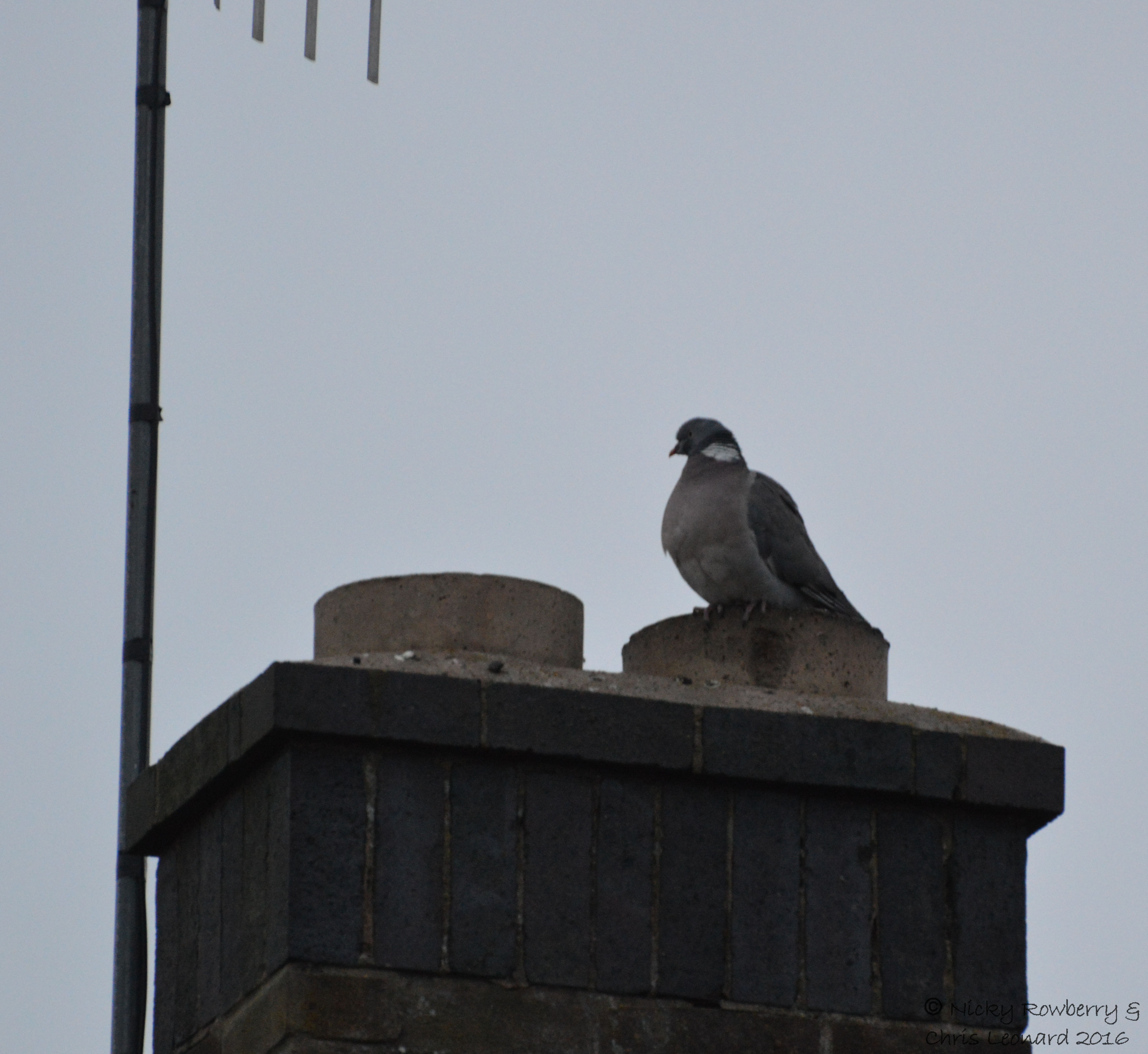
PigeonThe bigger birds were the last to get up. Just after I’d seen the Robin, I could hear the woodpigeons faintly in the distance. Just before 5am they finally came close enough to record, although their gentle cooing was rudely interrupted by a Jackdaw squawking.


As everyone in the garden now seemed to be up, I decided it was time for me to go back to bed. It was actually very relaxing sitting in the garden for an hour that early (once my body had got over the shock of being up!) With none of the usual modern day distractions, it was like some kind of sensory relaxation therapy to just sit and listen to the (mainly) natural sounds all around me. I might even be tempted to do it again!

Primroses 30 WEEDSIt’s Day 2 as well of my 30 Lazy Garden Weeds – this time the Primrose. It is a native plant and must surely be one of Britain’s most loved wildflowers and I doubt anyone weeds these out. Our garden in spring is a mass of these yellow clusters and the bees love them. They provide a much needed early season nectar source for the bees and they brighten up the garden no end. Even Shakespeare wrote about them in Midsummer Night’s Dream “And in the wood, where often you and I
Upon faint primrose-beds were wont to lie…”

30 Days Wild – Day 1

30 days forget me nots

TWT 30 Days Wild_countdown_01Today is the first day of the “30 Days Wild” challenge, the idea being to do something WILD every day during June. Fortunately they don’t have to be big “somethings” – so I don’t have to climb a mountain or swim the channel each day. Just incorporate something that connects me to nature every day for a month.

How hard can that be? Guess I’ll find out by the end of the month! 30 Days Wild is organised by the Wildlife Trusts and they’ve set up a page with links to lots of other bloggers doing the challenge. So if reading my ramblings isn’t enough, then check out the others at http://www.mywildlife.org.uk/30dayswild/30-days-wild-bloggers/

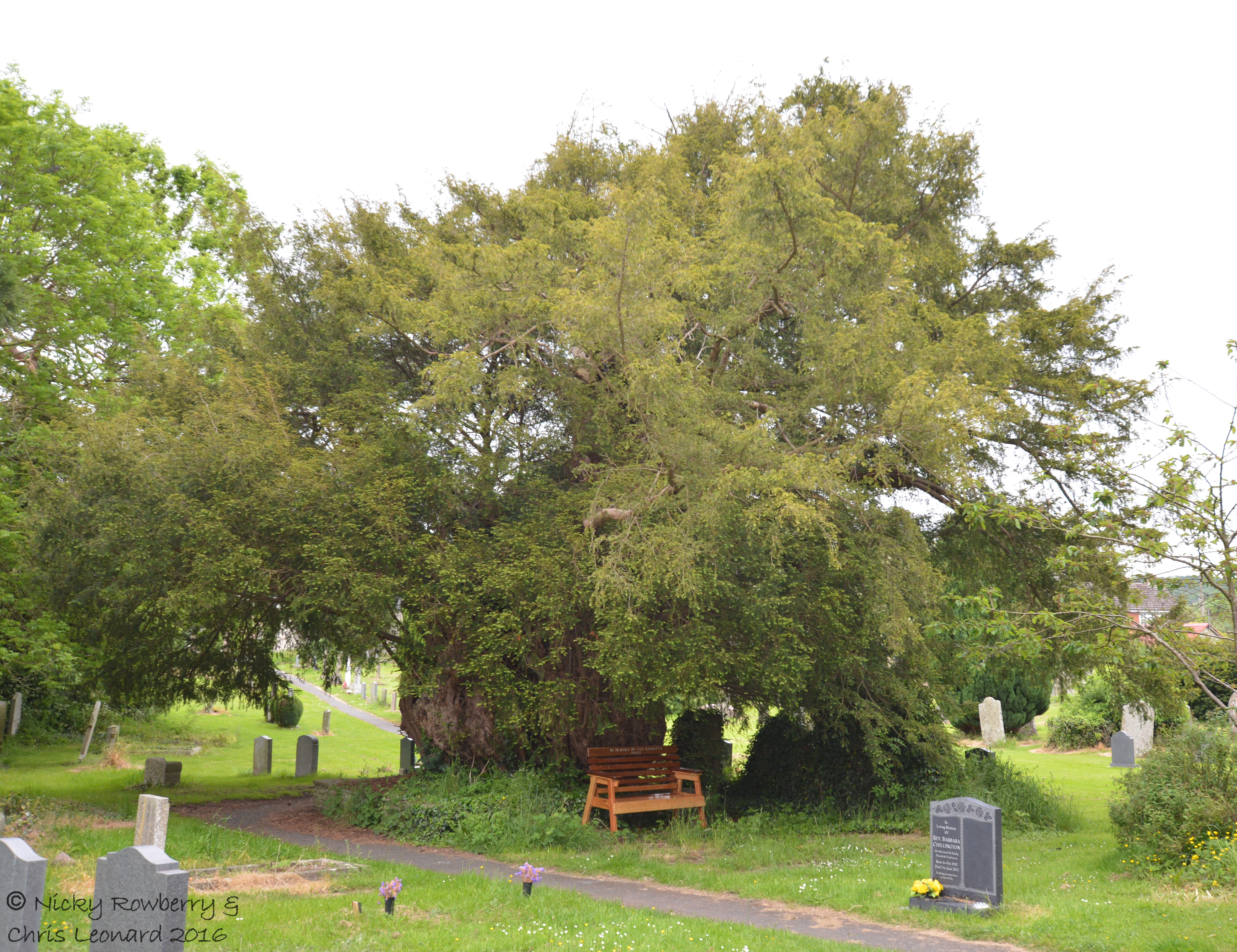
For Day 1, I thought I’d go and look at the oldest living thing I’m likely to find anywhere in Herefordshire or Worcestershire – actually it’s pretty much the oldest living thing I’m likely to see anywhere! Peterchurch in Herefordshire’s Golden Valley boasts a Yew Tree that is reputed to be about 3000 years old. I’ve never got up close and personal with a Yew Tree, let alone one that old, so the 30 Days Wild challenge seemed the ideal opportunity to do so.

General View

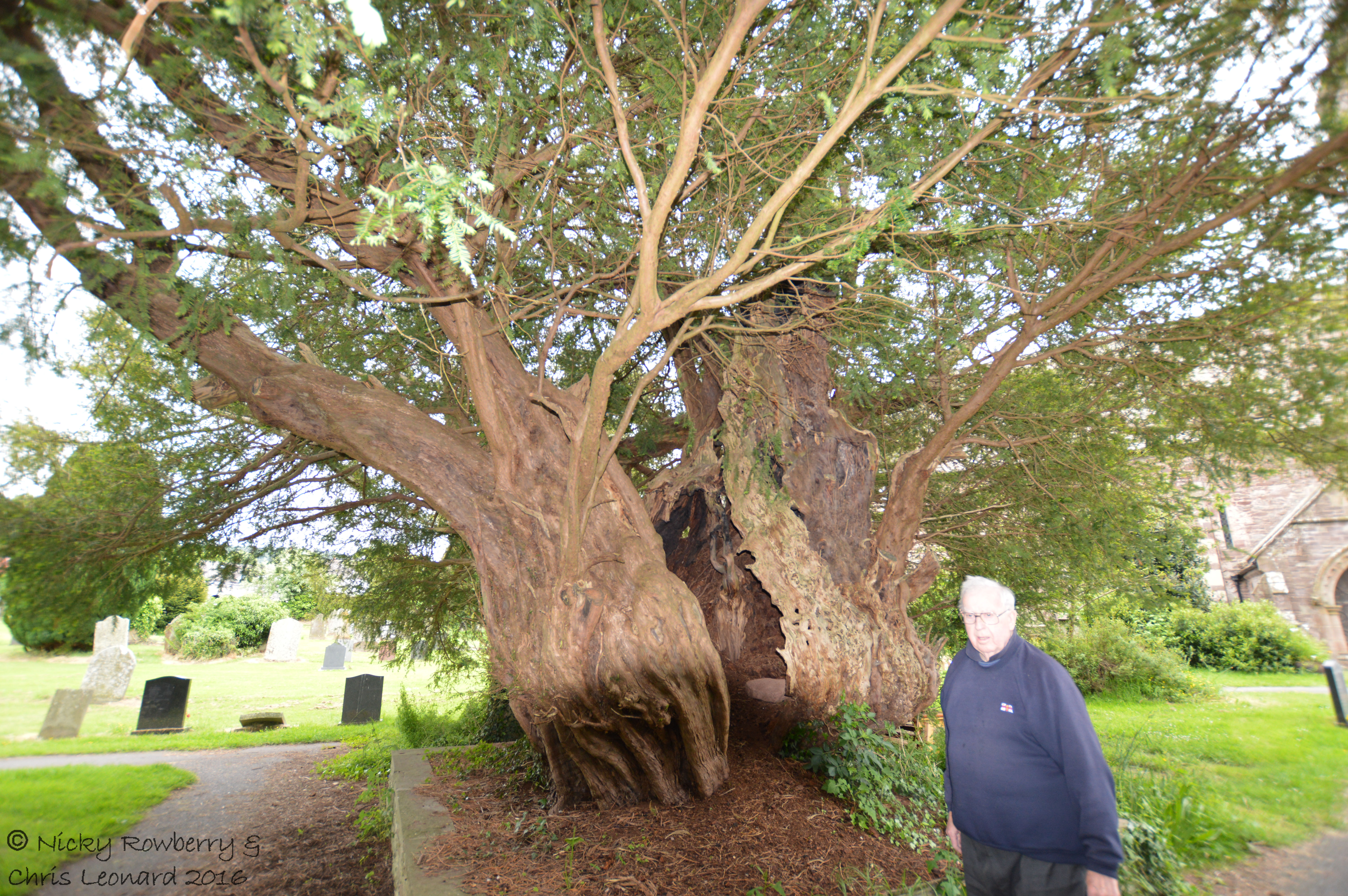
The Yew Tree was pretty easy to spot in the churchyard, which was itself conveniently located next to a pub. As Day 1 coincided with my weekly Wednesday outings for a pub lunch with my 84 year old Dad, my venerable parent got dragged round too – the aged meeting the aged! Here he is looking slightly bemused next to the tree.

Dad & Yew

The tree stands in Peterchurch’s churchyard and was previously thought to be only about 750 years old, but recent studies by tree experts have determined that it is probably at least 3000 years old. This means it dates back to Neolithic times and due to the Yew’s supposed association with religious sites might suggest that the Norman church could have been built on the site of a much earlier ceremonial place.

The tree is hollow and seems to be growing out the way from its centre, presumably expanding its girth each year (aren’t we all!) There is a lot of charring on the inside of the tree which, while terribly sad that anyone would want to set fire to such an amazing thing, in a way adds to the mystique and atmosphere.

Burnt Bark

I did something I’ve certainly never done before – stood in the centre of a tree and looked up its trunk to the sky! It didn’t feel at all like I was in a tree or a living thing, more like a beautiful vaulted cave.

View Inside

The bark alone was a work of art,  like a gnarly sculpture or a giant piece of driftwood, beautiful and very tactile.

Bark 2

Bark 1

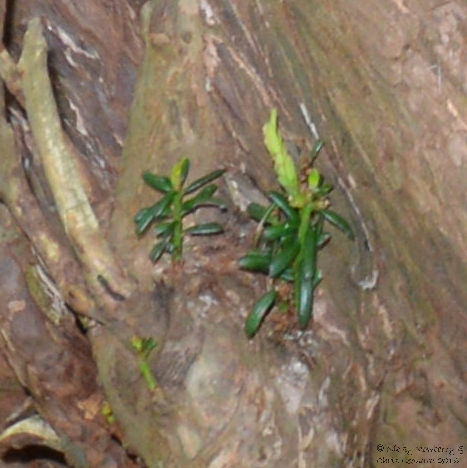
New shootAlthough the bark looked like tough, old (and to be honest) dead wood, incredibly there were new shoots growing out of it.

It was amazing to see a tree like this, knowing it has been on this spot for 3000 years. I can trace my family back over 500 years in Herefordshire, but to think that this tree had already been standing here for 2500 years before the earliest known Rowberry trod the Shire is quite incredible.

While there I had this “brilliant” idea to  video the tree as I walked around it – thought it would give more of a feel of this ancient being. Turns out this is not as easy as it sounds! Cue shaky footage while I stumble round the tree trying not to trip over gravestones, with my Dad talking in the background (my fault – I should have made it clear to him beforehand that the video would record sound too!)

ThrushesThe video makes it sound as if the churchyard was a lot noisier than it actually was. It was really very peaceful and full of birds (including this pair of thrushes that were doing their best to pretend we weren’t there). Just realised something as I write this – I forgot to hug the tree. If there was ever a tree that deserved to be hugged, Peterchurch’s Yew Tree must surely be it.

It wasn’t exactly a day basked in sunshine today (it had been chucking it down in Malvern earlier), but I think it would be lovely to go back to Peterchurch on a really nice hot day and just sit and contemplate life under the Yew Tree for a while. I’m hoping 30 Days Wild will bring more such revelations – finding things, places, activities that I enjoy this June, then mentally bookmarking them for future enjoyment too.

I’d originally got the idea of visiting the Yew Tree from Herefordshire Wildlife Trust’s suggestions for 30 days wild. What a great suggestion it was – if anyone else is looking for inspiration go to: http://www.herefordshirewt.org/30-days-wild

Forget me not 30 WEEDSAs a bit of a side-line to 30 days wild, I thought I’d showcase some of the “weeds” that flourish under the Too Lazy To Weed regime (assuming a regime can be a system of having basically no system). So a different weed every day for 30 days. First up the Forget-Me-Not – I’m not sure which species we get in the garden – possibly a hybrid. Whichever they are, I’ve always loved their bright blue cheery little flowers. They’ve been a favourite since I saw a whole meadow of them on a childhood holiday. They flourish in our garden and have seeded themselves pretty much everywhere. They are quite delicate though and after flourishing in a patch one year will easily be superseded by some of the tougher bigger weeds. Why anyone would want to weed these out of their garden is a mystery to me – they are so much prettier than any cultivated exotic plant. And of course the insects love them – pretty and functional – a Win-Win Weed!