Pond Arrivals

Never has the old adage “Build it and they will come” been more true of anything than of building a pond. Our new pond went in at the beginning of February – seems a world away now, given everything that has gone on in the world since then. The human world may be in chaos and despair, but for everything else life goes on and a new pond is a beacon attracting wildlife from all around. Every week if not every day something new finds its way to our pond. We’ve not been able to finish all the landscaping or get all the plants I would like to have got due to various restrictions, but it seems the wildlife doesn’t mind at all.

Quite a wide variety of insects have already found their way to the pond. A few tiny beetles whizzing around were the first we spotted, followed shortly by a lone water boatman. We suspect there are now more water boatmen, but since we only every see one at a time we can’t be sure. Both of the above have so far proved too fast to photograph.

Of course small flies and mosquitos were soon flitting over the surface of the water laying eggs, which soon hatched in large numbers into wriggling larvae. These will hopefully provide plenty of food for larger animals further up the food chain, so are a very welcome addition to the pond.

Within a couple of weeks our first pond skater arrived, followed by several of its friends! These insects are great to watch scooting across the surface of the pond in search of food. They regularly battle each other, that or they get very frisky, we’re not sure which. Apparently they use the middle legs for propulsion, the back legs to steer and the front ones for grabbing their prey.

Next insect to appear was a diving beetle which flew in and plopped into the pond while we were sitting watching. These diving beetles come to the surface and collect a bubble of air to breathe, so he or she pops up to the surface quite often.

Since then we have spotted numerous medium sized beetles whizzing around the pond, all adding to the food chain.

The biggest excitement though was the arrival of our first damselfly – a Large Red Damselfly to be precise. Hopefully this will be the first of many damselfly and dragonfly species to use the pond and I can do a full post on them soon.

Other insects have been using the pond in other ways; a Holly Blue caught drinking from the pond, an Orange Tip butterfly nectaring off the cuckooflower and snazzily striped hoverflies buzzing all over the place. The hoverflies have clearly been making whoopee as we’ve already started finding their larvae – the delightfully named rat-tailed maggots in the pond. Wriggling and semi-transparent these are very difficult to photograph, the best I could do was this short video.

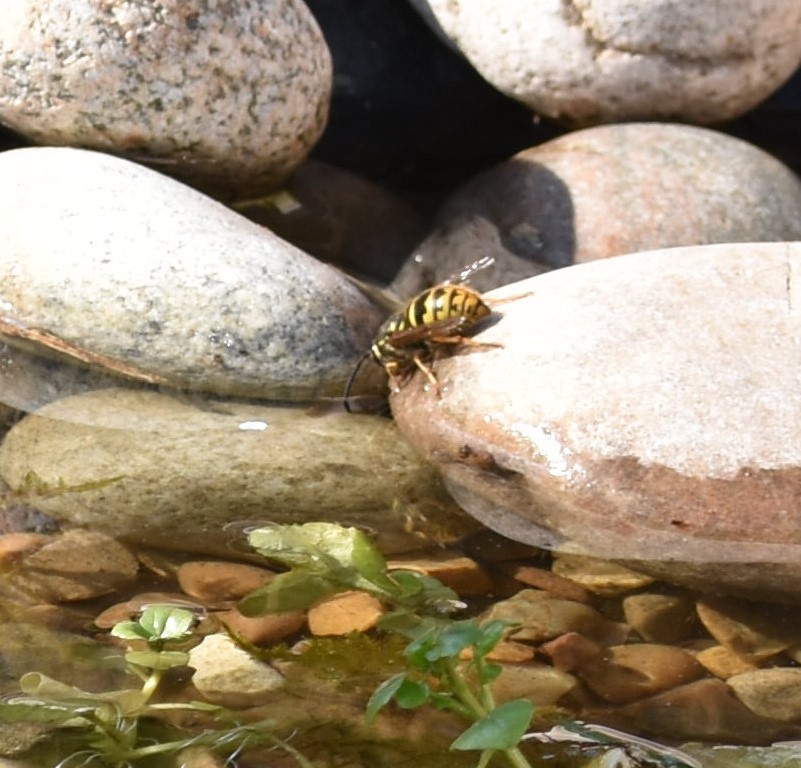
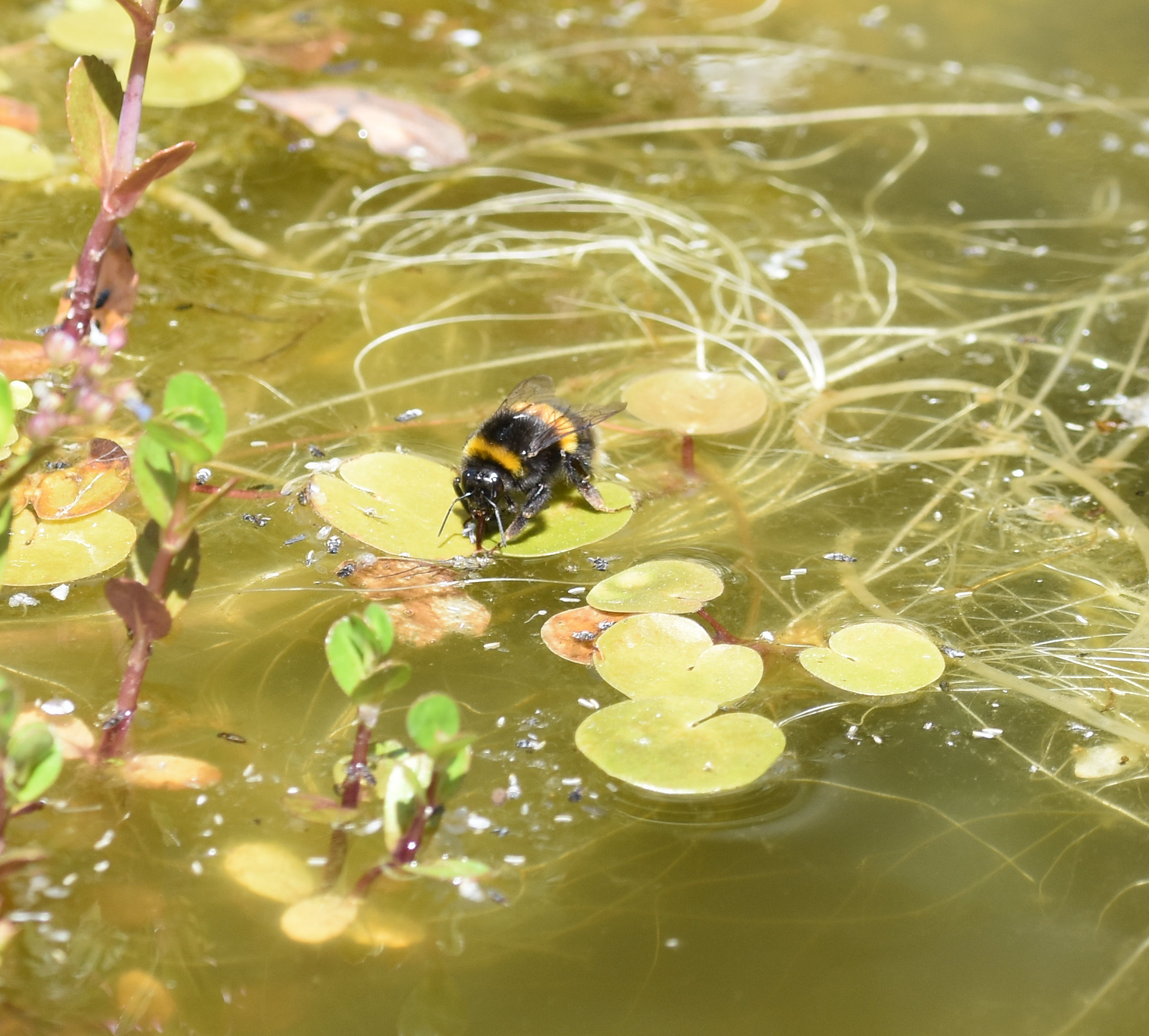
Various insects have been using either the stones or the floating frogbit from which to grab a quick drink.
The birds have of course continued to make good use of the pond (drinking, bathing, catching insects), to the point I feel they are annoyed with me for hogging it by sitting there for so long. My favourites so far are this pair of young magpies, exploring the world for the first time. They go everywhere together and particularly like the pond, squabbling one minute and then looking to each other for reassurance the next – a typical pair of siblings.

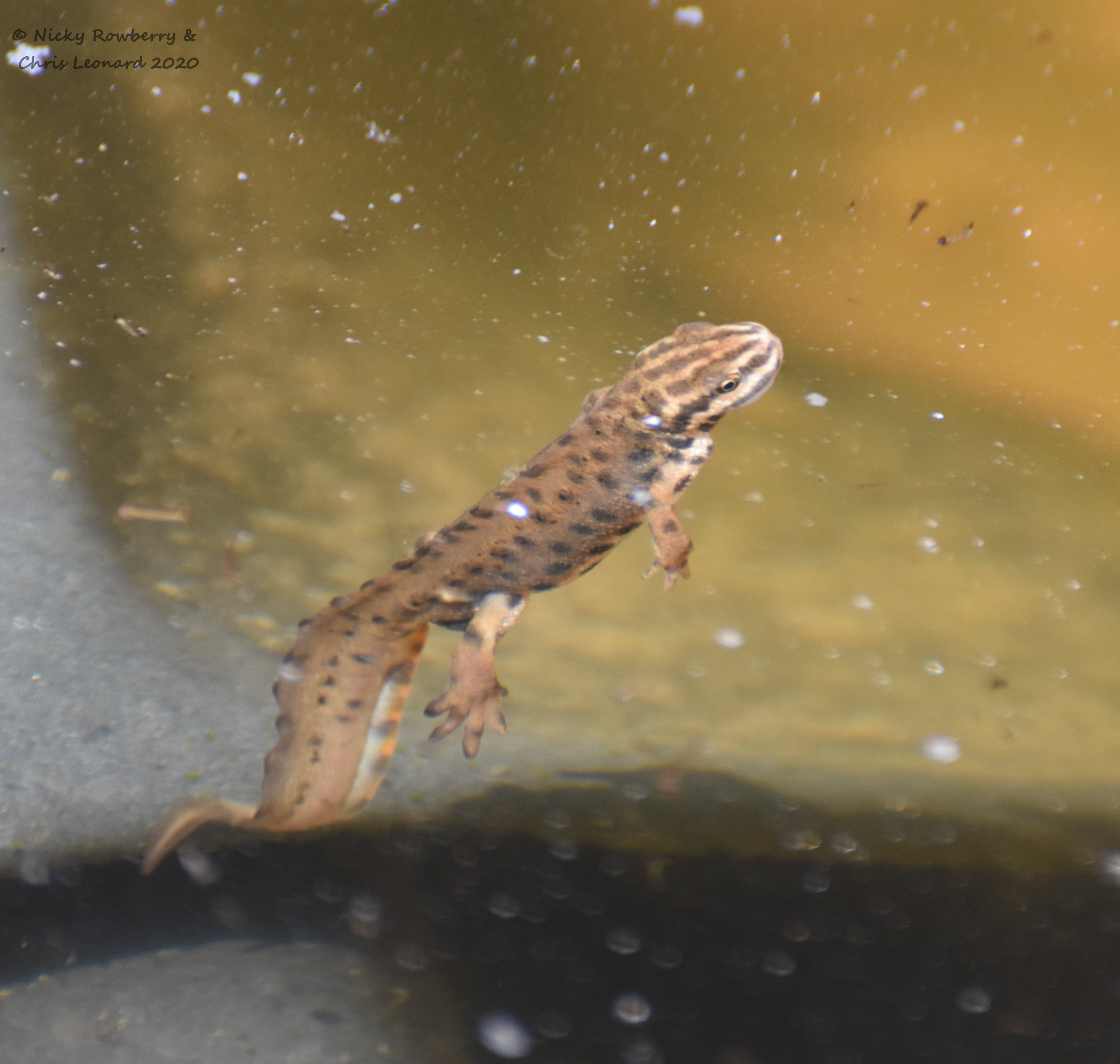
Sadly all the frog activity we saw in March came to nothing and we didn’t get any frog spawn this year. It’s not too surprising as the pond had literally only been in for a couple of weeks before their mating season. We’ve yet to see a toad around the pond either, but the newts have come up trumps. The first newt (they are Smooth Newts) arrived early April and since then there seems to have been more each day. I shall do a full newt blog soon as they’ve provided lots of photo and video opportunities, but here’s a taster.
Sometimes the things you don’t get to see in person can be the best though. Our hedgehogs have been making good use of the pond, carefully tiptoeing down the sloping beach that was put in specifically for them to access the pond. Obviously we rarely see them directly, but the night cameras pick them up regularly. This video shows 7 separate visits to the pond by at least 3 different hedgehogs over the course of one night. Shows the value of providing a drinking source for your hedgehogs, especially in hot weather.


I am so glad that we got to make the pond before the world went into lock-down. It has provided interest, relaxation, welcome distraction and so much more – we have spent an awful lot of time in the last 3 months gazing into the pond, grateful for having a garden we can sit in while staying home and staying safe.
 

Nesting Update

Back in February, I blogged about my hopes of finally getting a blue tit nesting in the bird box with the camera. A male blue tit seemed to have taken to roosting every night in the box and I started to get my hopes up. In March things were progressing well and he had a lady friend who would pop in, albeit it briefly, to inspect his choice of nest site. Her visits were generally so fleeting at this stage that most of the time they barely registered on the video feed, so here are a couple of stills taken from the video and a very brief video clip.


This carried on for quite a while; the male roosting at night and occasionally his lady friend popping in during the day to inspect. Then on 17th March, bits of moss started appearing in the box. My hopes continued to rise.

For the last few years I have tried to help the birds along by putting out nesting material. I use two hanging baskets tied together to make a sphere and stuff it with moss and grass. The blue tits are always very quick to find the sphere and make good use of it. The female was soon taking the moss, sorting through my offerings to find the bits that were just right. I can see the ball of nesting material from our window and for a while everything was going swimmingly. I could watch her take a beak full of nesting material and fly off with it towards the nest box. Seconds later she would appear inside the nest box and I could view it on the camera.


So everything was going well and I was getting excited at the prospect of blue tit eggs, when sometime around the beginning of April they decided the nest box wasn’t really suitable after all. I have an old nest box on the apple tree near the moss ball and for a while they seemed to be trying that out, before abandoning that too. She was still coming for the moss, but was then flying off and out of our garden with it. One of our neighbours has probably got a very lovely blue tit nest in! Here’s a compilation of some of her nest collecting activities.


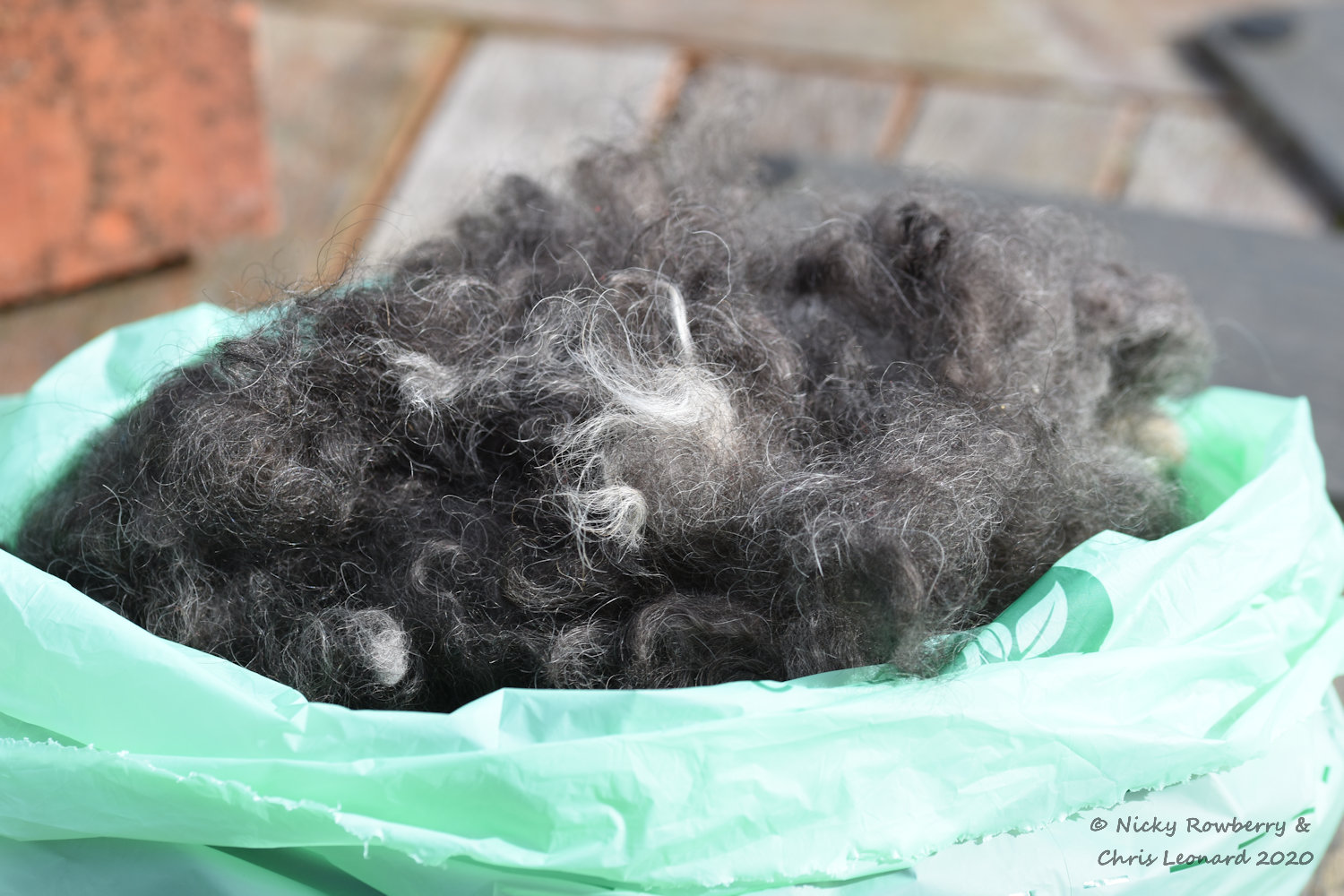
For the last 2 years I have also added some dog hair. My sister’s yorkie-poo Pip very generously donates his hair trimmings to the cause. He has lovely soft hair (that’s not been treated with any chemicals for fleas etc.), ideal for lining a nest.

Blue tits apparently make their nest with moss and straw etc. first then line it with softer stuff like hair and spiders’ webs afterwards. So initially the blue tit ignored Pip’s hair and just went for the moss. The jackdaws had no such qualms; they went straight in for the nice soft hair. Somewhere there is a very cosy jackdaw nest.

Although the blue tits weren’t nesting in our garden, she did eventually deign to take the dog hair too. Here’s a brief clip of her getting a beak full of the good stuff.


So it seems my hopes that Peter the blue tit and his mate were going to nest in our nest box have come to nought; I must console myself knowing that they are at least nesting somewhere and that is what is important. Once again they are using our garden as a supply stop – good for food and nesting material but apparently not residentially appealing. The same seems to be said for many of our other birds. We’ve seen robins pairing up and feeding each other in their courtships. Dunnocks have been flirting with each other and lots of birds have been helping themselves to the nesting material, but they all seem to do their actual nesting elsewhere. I think it must be because we don’t have the large trees they like.

So I had just about given up hope of finding a nest in the garden, when I became aware of a lot of rustling in the bay tree at the front of the house. Closer inspection revealed a pigeon’s nest. I would probably rather have had a robin or a blackbird, but beggars can’t be choosers and I am now very happy with our pigeon nest. Here is the proud mother pigeon watching my GoPro watching her.

So far the parents have sat steadfastly on the nest and I have been unable to see any eggs, but I assume there are some there. Hopefully once the chicks hatch I might get a glimpse of baby pigeons. Apparently there’s an internet thing where people query that you never see baby pigeons – well finally I might get to do so.

The birds may be refusing me nesting viewing opportunities, but I can always count on my hedgehogs for interest. They have all emerged from hibernation and are back romping round the garden again. Thankfully they are not as awkward as the birds and are quite happy to use the hedgehog house with the camera in it. I’ll do a full hedgehog update soon, but in the meantime here’s a short clip of Freda, last year’s rescue hog, having a bit of a yawn in the hedgehog house. Enjoy!


Pond Update

It’s the first day of Spring and it’s been about 6 weeks since our new pond went in. Although there is still work to be done on it, the wildlife has already started to move in. The pond still needs more plants and those that are there need to grow a bit to provide more cover. It’s a bit early in the season for many of the pond plant suppliers to have much stock. So as an emergency measure I’ve been chucking in bags of organic watercress from the supermarket! I also need to replant the area around the pond as it’s looking a bit bare at the moment. Hopefully this will all come together as spring gets going and we (finally) get a bit of sunshine. But in the meantime, here’s how the pond is looking now.

The birds were the first to really start making use of the pond. They love the shallow “beach” for drinking and bathing. The blackbirds and sparrows in particular have really taken to it, although we’ve also seen pigeons, robins, blue tits, starlings and magpies making use of it. The sparrows seem to like having a bit of a wash then jumping onto the big rock at the edge to dry off. Here’s a video of some of them enjoying their new splash pool.

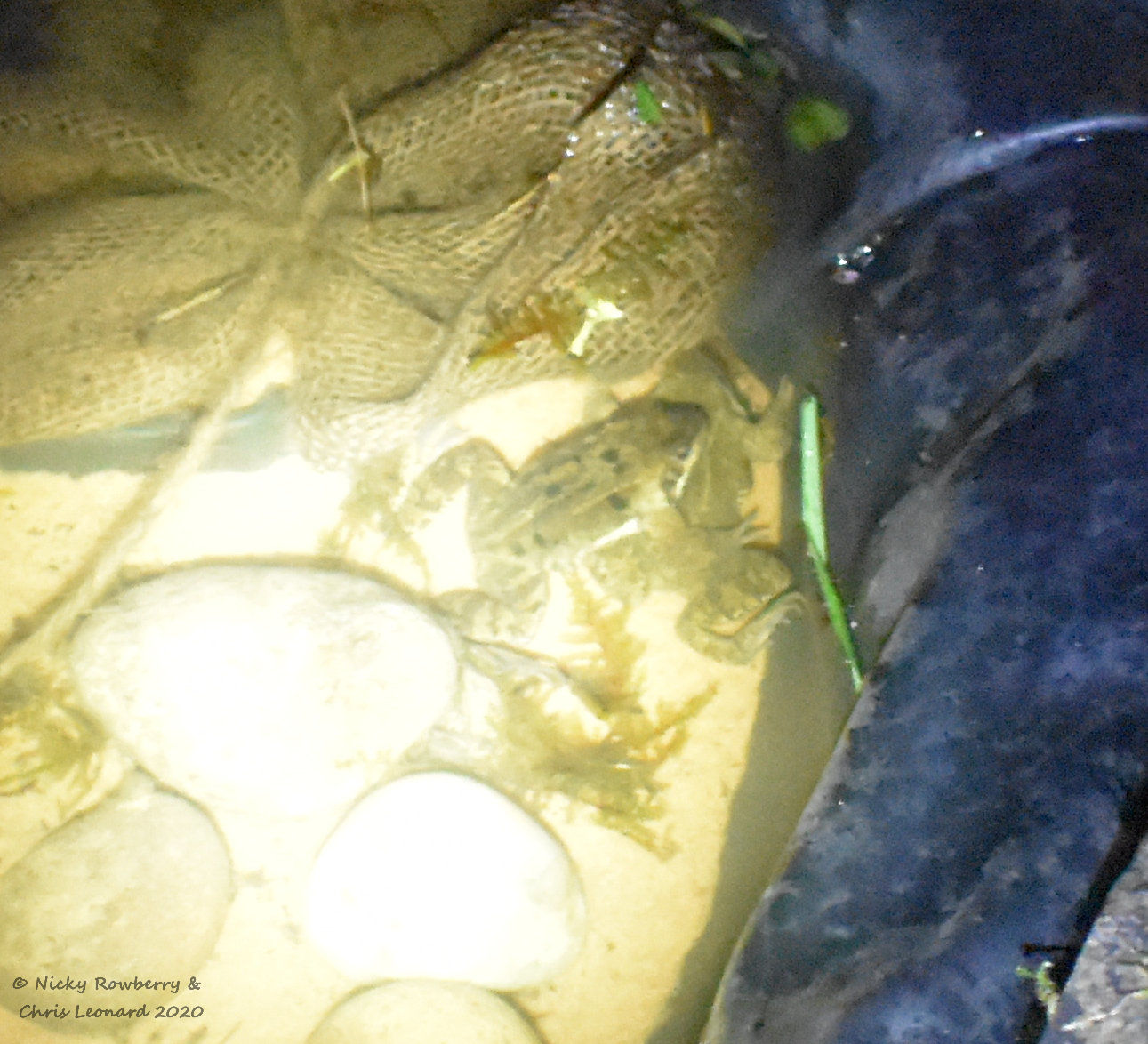
The frogs soon found the pond and I got very excited that we might get some frog spawn. But despite a lot of croaking there’s no sign of any spawn yet. Maybe there isn’t enough plant cover to tempt them yet and we’ll have to wait until next year.  I’m never very good at night-time photography so the best I’ve managed is this grainy shot of a couple of them.

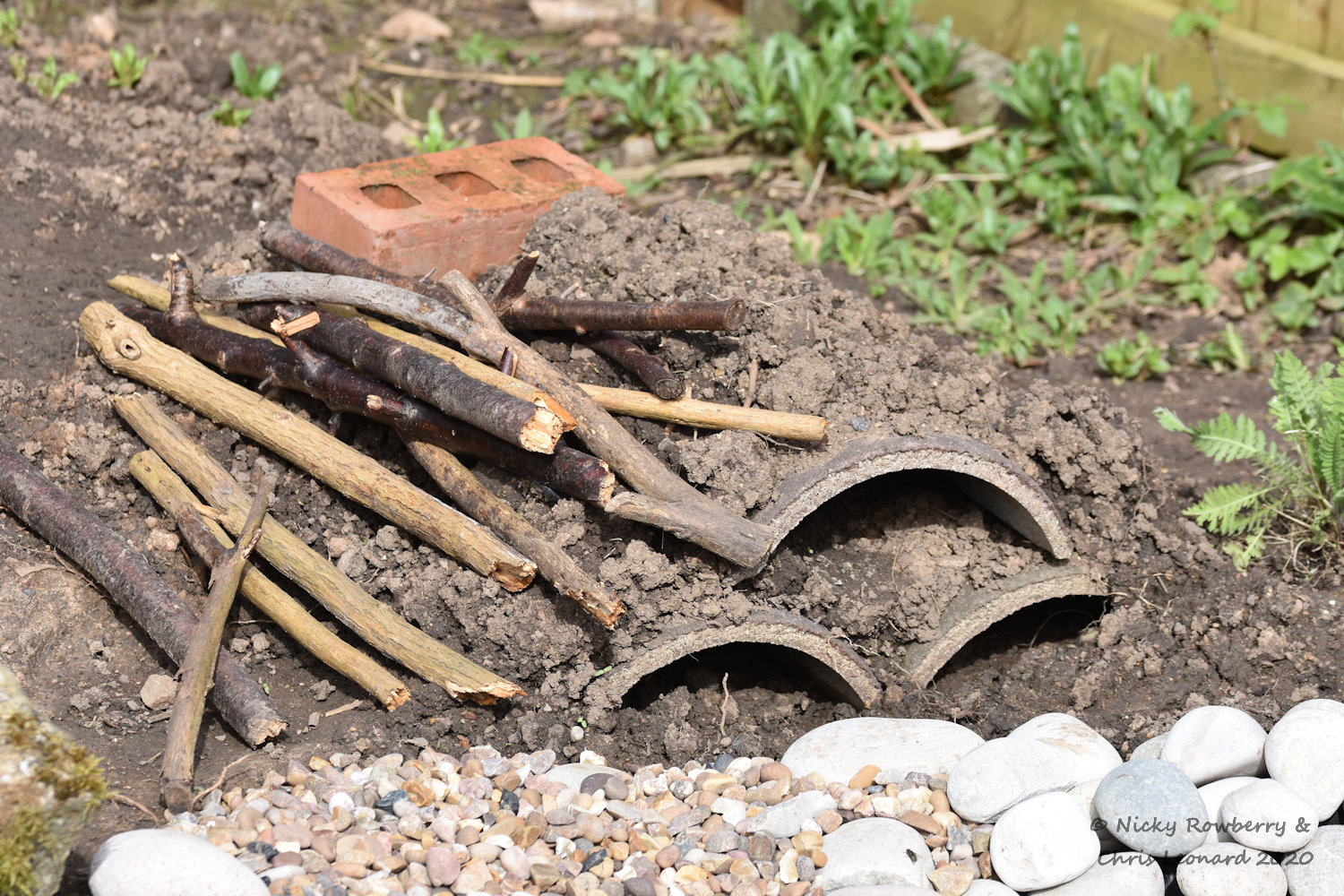
I have created “Toad Hall” using some old roof tiles buried into the soil that was excavated for the pond. Eventually it will be completely covered in branches and planted up. Hopefully it will appeal to some of our amphibian friends as a suitable home with en suite pond.

We may have drawn a blank with getting frog spawn in the new pond, but the old pond on the allotment has produced the goods. It may be a tiny pond, but it has been stuffed with frog spawn this spring. They are now starting to develop and a few tadpoles are even hatching. Here’s a short video from earlier this week:

Of course it wasn’t just amphibians we hoped to attract to the pond, any animals would be very welcome. So we were very pleased to get a fox checking the pond out within a few weeks of it being dug. So far we’ve only caught it circling round the pond, but hopefully soon it will view it as a suitable watering hole and take a drink.

The highlight for me so far has been this next video though. As spring slowly creeps in, hedgehogs are starting to emerge from hibernation. So I was really thrilled that this one has already incorporated the pond on his nightly meanderings. The gravel beach was put in specifically with hedgehogs in mind – easy access to the water and a means of getting out should they fall in. And this one seems to have got the message.

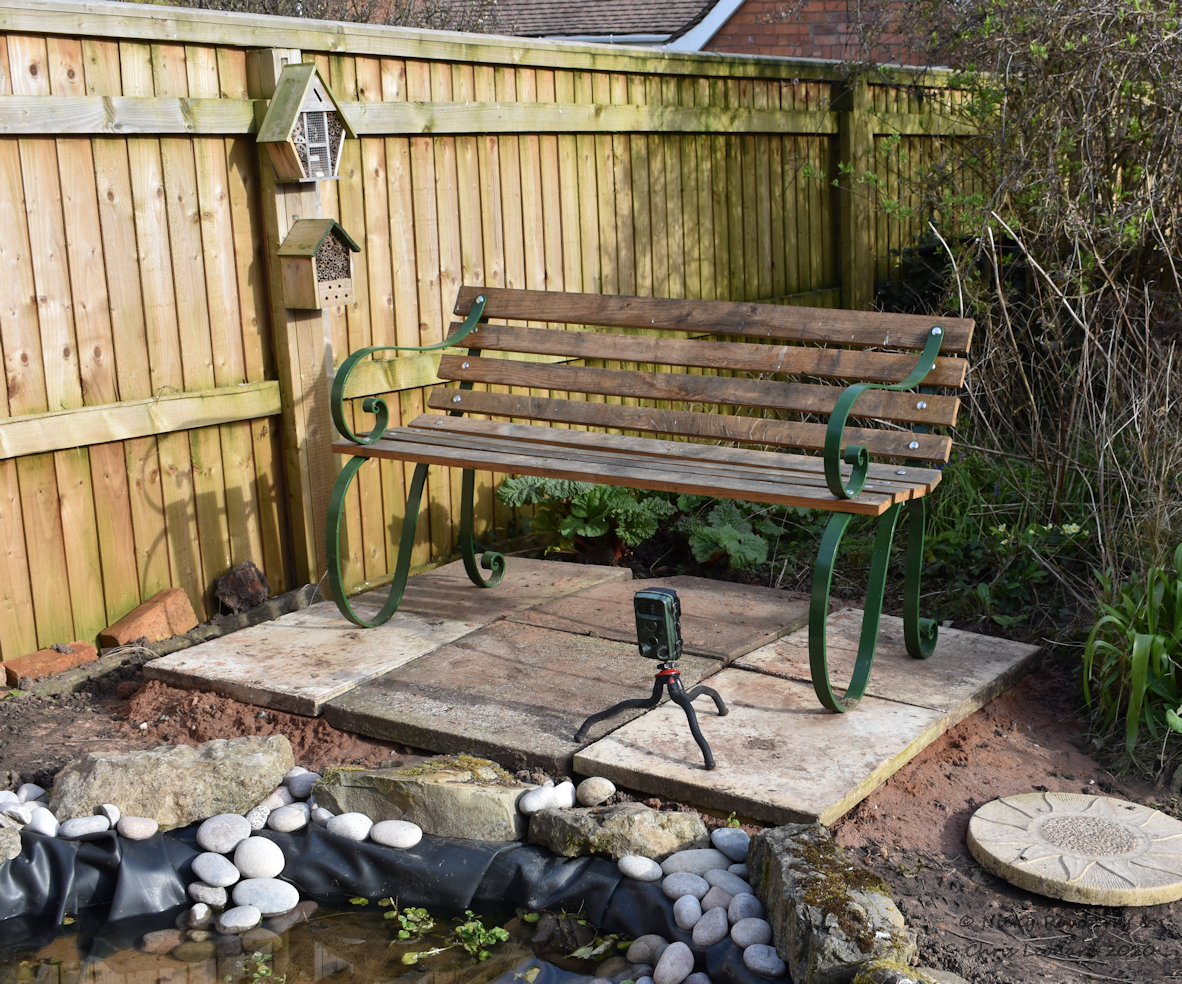
The final feature added to the pond is an indulgence for us rather than the wildlife. It’s the old bench from my grandfather’s pub, recently renovated by our ever-useful friend Gwyndaf. The perfect place to watch the wildlife in the pond while perhaps sipping a glass of something chilled. Roll on summer!

National Nest Box Week 2020

It’s National Nest Box Week again, a time to encourage everyone to put up nest boxes in their gardens if they can. You can find out more and get lots of useful tips at: https://www.nestboxweek.com/

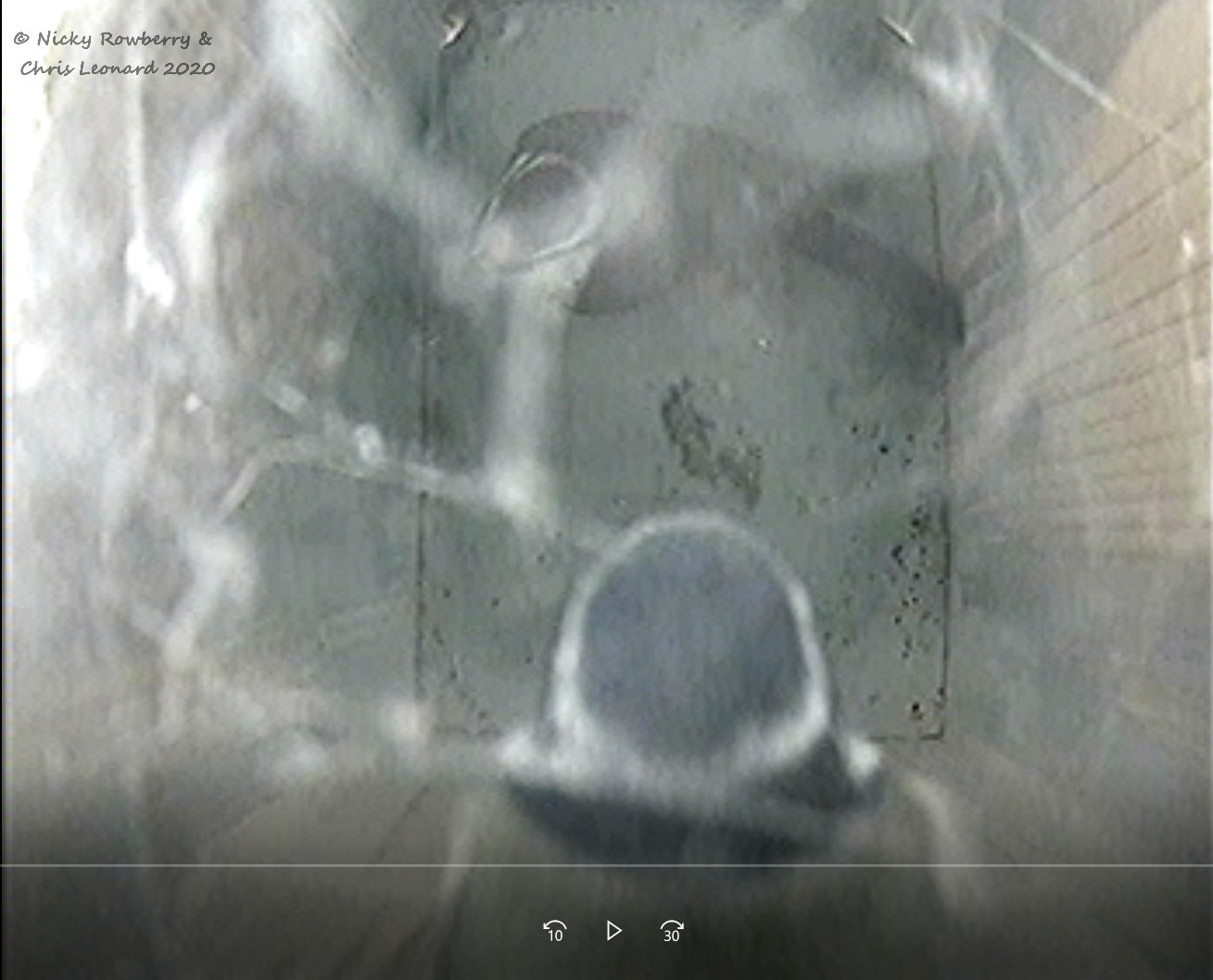
We have several nest boxes in the garden, although they don’t seem to get used much sadly. Knowing it was National Nest Box Week coming up, I decided to plug in the camera we have in one (so far unused) blue tit box. I hadn’t checked this particular box for a while as nothing ever seemed to happen in it. So I was thrilled when I connected the camera one evening last week and got this:

A blue tit was using the box as a night time roost. We thought maybe it would just turn out to be a one-off event, but he or she has been back every night since, which is fantastic. Every night it arrives around 5pm just before it gets dark. The camera trigger is too slow to capture it actually coming in through the hole, but it catches it settling in for the night. Initially there’s always a bit of bobbing up and down and checking round the box, presumably as it decides whether it is still a safe place for the night.

The nights themselves aren’t as restful as I imagined they would be. There is an awful lot of fidgeting about and preening, but I suppose it’s a safe time and place to be doing that.

In the morning there is always a bit of stretching and bobbing up and down. It looks as if it’s trying to peer out of the hole to see if it is safe or perhaps just listening for any threats, before it hops up, has a final look around then flies off for the day.

The nights are still pretty cold for a small bird in an uninsulated box. The blue tit copes by fluffing up its feathers to create insulating air pockets. When the bird arrives in the box each night it starts of looking fairly sleek with feathers smooth against its body. As it settles down it fluffs up its downy under feathers – in the next video you can pretty well see it increasing in size as it fluffs up until it is an almost round ball of feathers. Another trick to keep warm is that it then tucks its head under a wing while it sleeps.

So of course now our Blue Tit (we’re calling him Peter after Blue Peter) is visiting regularly, we’re getting our hopes up that perhaps this will finally be the year we capture nesting action on video. We live in hope, but at least if nothing else we have provided a safe roosting space by putting up the nest box.

We’ve got a couple of new nest boxes to put up this year thanks to our lovely gardener Gwyndaf. One has a small hole in a solid front for blue tits or similar and the other is more open fronted – ideal for robins. Just need to find suitable spots to put them out of reach of the neighbours’ cats.

Further afield we are once again sponsoring a nest box through Worcestershire Wildlife Trust’s Rent-a-Nest scheme. We’ve been sponsoring the same nest for a couple of years now. The first year it had a family of blue tits that successfully fledged. Last year it was empty, but at least the money went to support the reserve it’s on (Knapp & Papermill Reserve) so still worth it. Fingers crossed it gets used this year though.

Although National Nest Box Week is primarily aimed at birds, I see no reason not to include other types of nest box – hedgehogs of course! If you’ve got space in your garden why not consider putting in a hedgehog house. Provide a safe dry house for them to build their nests in.

You can buy ready-made hedgehog houses (lots of online options or larger pet shops) or you can build your own. The British Hedgehog Preservation Society has an excellent leaflet with designs for building your own:

Hedgehog Homes

Watching a hedgehog making use of a home you’ve put out for it has to be one of the most rewarding things to do in your garden.

2019 – The Year of the Moth

2019 seemed to flash by in the blink of an eye; but then it probably says something about my age that the whole twenty tens decade seems to have whizzed by too. So before my 2020 year’s wildlife adventures kick off, here’s a bit of a review of some highlights of 2019.

As usual the moth trap has been out most weeks for the Garden Moth Scheme and National Moth night and often just for the hell of it. Over 220 moth species graced our Malvern garden with their presence this year. This included over 30 new ones, bringing the total number of moth species recorded in our garden, since we started trapping, up to 368 species! Even better some of the new ones were ones I’ve been wanting to see for a while – Antler Moth, December Moth, The Playboy Bunny Moth (yes really – Ypsolopha sequella) and a Lobster Moth. But best of all, and possibly my best moth find ever – a Bedstraw Hawkmoth. And I was not alone getting excited by this moth – 4 moth watchers came over to the house just to see it. I doubt I’ll ever top this, hence 2019 being the Year of the Moth!

Continuing on the mothy theme, a couple of individuals laid eggs while I was photographing them. An Eyed Hawkmoth laid 2 eggs, one of which I managed to successfully rear to pupation. The chrysalis is now dormant and I’m hopeful that an adult moth will emerge in the spring.

The cameras have of course been out in the garden (and the allotment) throughout the year, recording mammals, birds and amphibians. As always hedgehogs stole the show (and my heart) with plenty of drama. We’ve had the highs of successful releases and hoggy courtship and  the lows of underweight and injured ones needing rescued. We’ve got a new hedgehog house with built in camera, which gave us great views until a hog packed the house so full of nesting material that it blocked the camera! We’ve also got a new illuminated feeder outside the patio doors so we can watch them come to feed from the comfort of the sofa.


A fox has also become a semi-regular visitor to the garden – thankfully there is enough food that it hasn’t bothered the hedgehogs. On the allotment, I was thrilled to get a badger drinking from the pond. The pond was also crammed full of frogspawn in the spring with plenty of newt and frog action throughout the year.


Beyond the garden, we’ve been out and about with the cameras. Back in April we finally managed to get over to the Lugg Meadows near Hereford to see the Snakes Head Fritillaries. Beautifully little flowers bobbing about on a blustery day.

We had a lovely week’s holiday down on Exmoor in the summer and between that and a trip to Wales, we’ve managed to “bag” three more butterfly species – The Marsh (shown below), Heath and High Brown Fritillaries.

A poignant event for me last year was that we had to sell my Dad’s house in Herefordshire. It was the house my sister and I grew up in and it was a sad day to see it go, but needs must. It had a large garden full of wildlife – not because Dad was a wildlife enthusiast, more because it was pretty much untouched (this is may be where the Too Lazy to Weed mentality came from). The remains of an old orchard, a stream running by and swathes of unmown grass. We left the new owners with a hedgehog house as a welcome gift and instructions to “be careful” when mowing. I shall miss this garden very much.

So every year I make some wildlife oriented New Year’s Resolutions and every year I manage to fail on most of them. 2019 was no exception. So here were last year’s targets:

  • The Red Kites at Gigrin in Wales – success with this one. We finally got round to going last January and it was spectacular.
  •  See 3 new butterfly species – success again, with Heath, High Brown and Marsh Fritillaries.
  •  Visit 5 new nature reserves – I think we succeeded although not with the local ones we’d planned. We did go to a few down in Exmoor and one in Wales and found a new walk in Malvern. But could definitely do better next year.
  •  Video some rock pools using the GoPro camera – failed on this one but not for want of trying. We visited the North Devon seaside, but picked a stretch with no decent rockpools. Did get some nice footage of fish in the River Barle though.
  • Garden pond – still not done it although we have started clearing a space for it. When I say “we” I actually mean our eco-friendly Cycling Gardener – Gwyndaf.
  • Moth tattoo – epic fail again, although the Bedstraw Hawkmoth is looking like a likely contender if I ever do get round to it.

So now to 2020s possibly unrealistic resolutions:

  • The pond – absolutely determined to put a new pond in the garden this year!
  • Create a Moon Garden. We do pretty well for moths as it is, but I’ve decided to create a Moon Garden with even more moth-attracting night scented flowers.
  • See 2 more species of British Butterfly. We’ve now seen 50 of the 58 species, but the last ones will be getting harder, so only aiming for 2 this year.
  • Visit 5 new nature reserves.
  • Rockpooling.
  • Go and see some wild Ospreys.
  • The moth tattoo!


Heath, heath, heath!

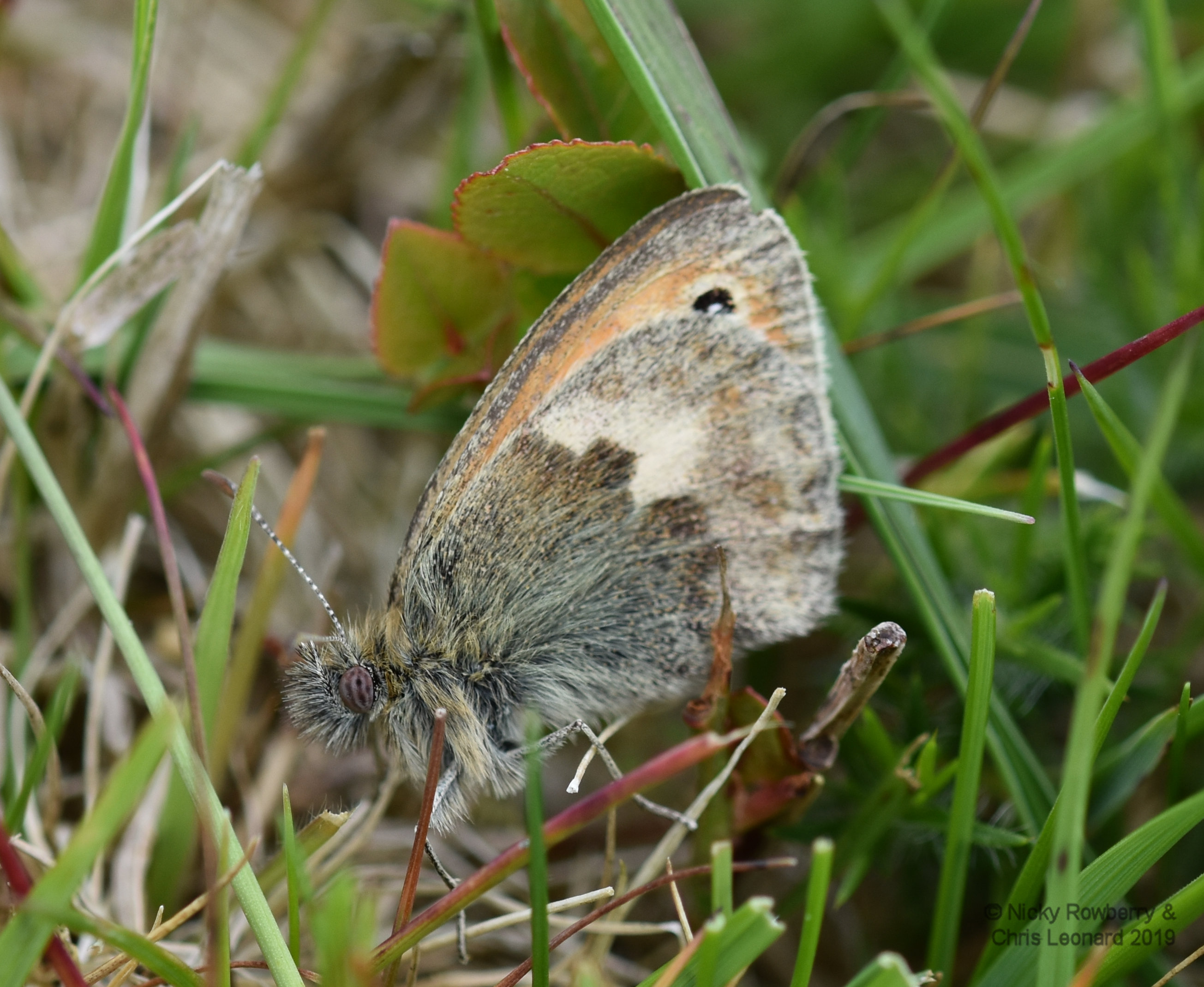
On our recent trip to Somerset, we had a bit of a mission going on – to see 2 more species of butterfly, namely the Heath Fritillary and the Marsh Fritillary. We went for the Heath Fritillary first, having discovered a site at Haddon Hill that was supposed to have a population of them. Haddon Hill is at the edge of Exmoor and overlooks the delightfully named Wimbleball Lake. Unfortunately having researched enough to find the hill had a population, we didn’t dig deep enough to find out exactly where on the hill to look. So we ended up spending about 3 hours wandering round the hill on a walk that was only supposed to take an hour! Not a glimpse of a fritillary, but we did see a Small Heath at least – not the heath we wanted, but after 3 hours we were just grateful to see a butterfly – any butterfly!

The hill did however have its fair share of bird life, including lots of Meadow Pipits, who seemed to fly up repeatedly to get a better view of us trudging in circles.

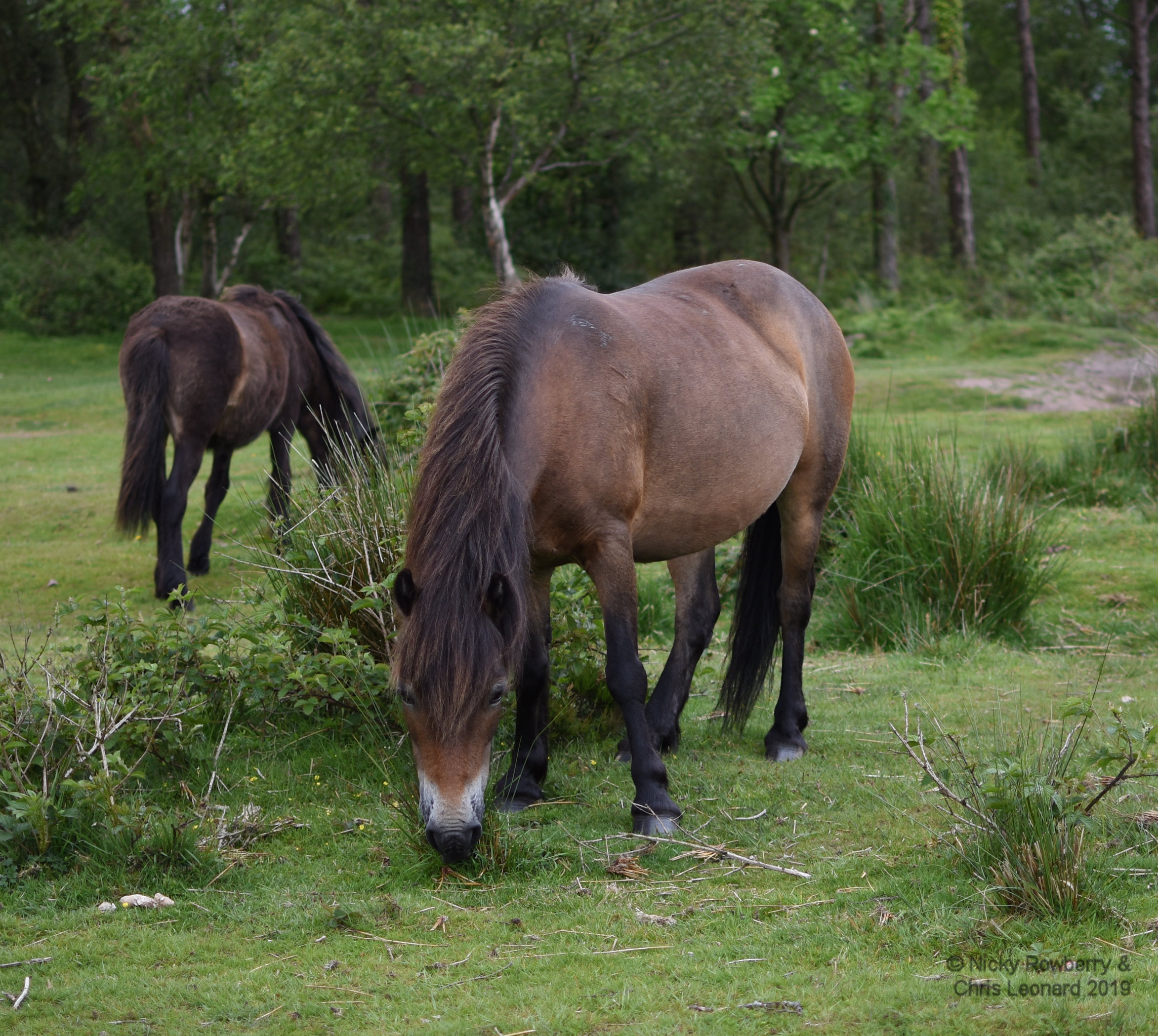
We also saw several of the famous Exmoor ponies – much easier to spot than the butterflies. They are native breed of pony and were recorded on Exmoor as far back as the Domesday book and have probably been there for thousands of years.

Fortunately having drawn a blank on Haddon Hill, we had a plan B when it came to the Heath Fritillary. We had booked ourselves onto a guided walk by Butterfly Conservation and the National Trust around Halse Combe the following day. The weather wasn’t promising with rain forecast, but at least we were with people this time who knew where they were going!

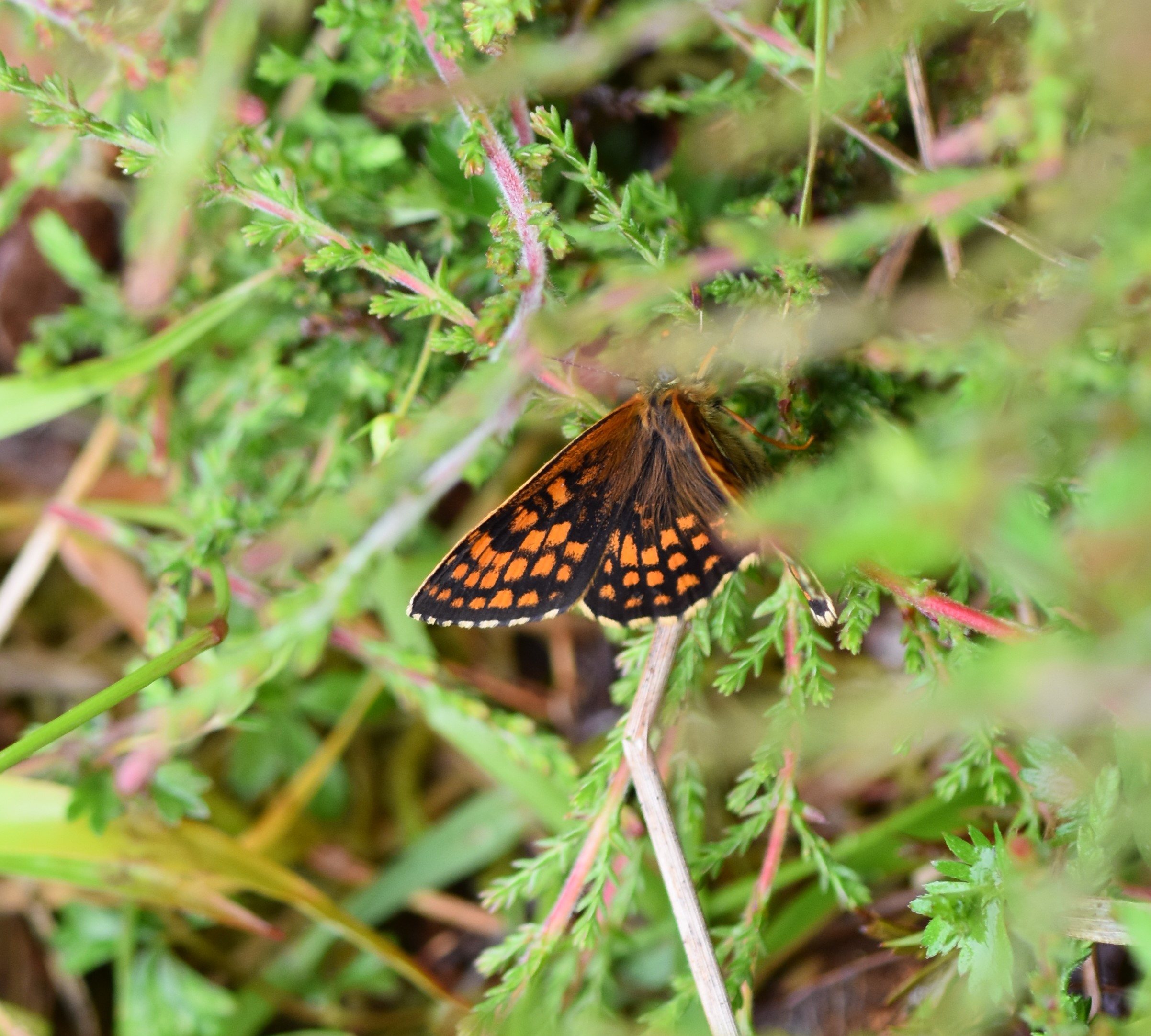
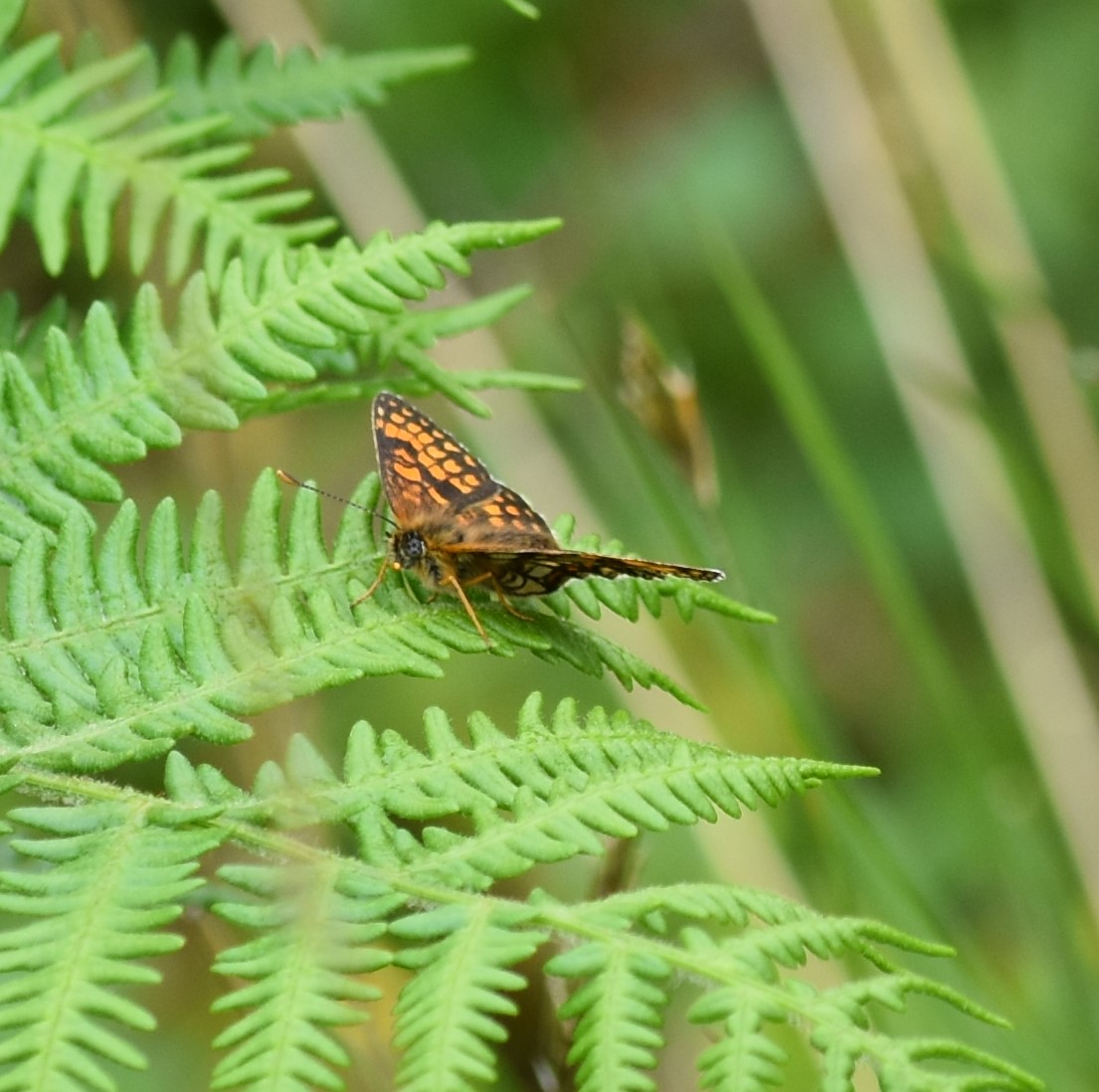
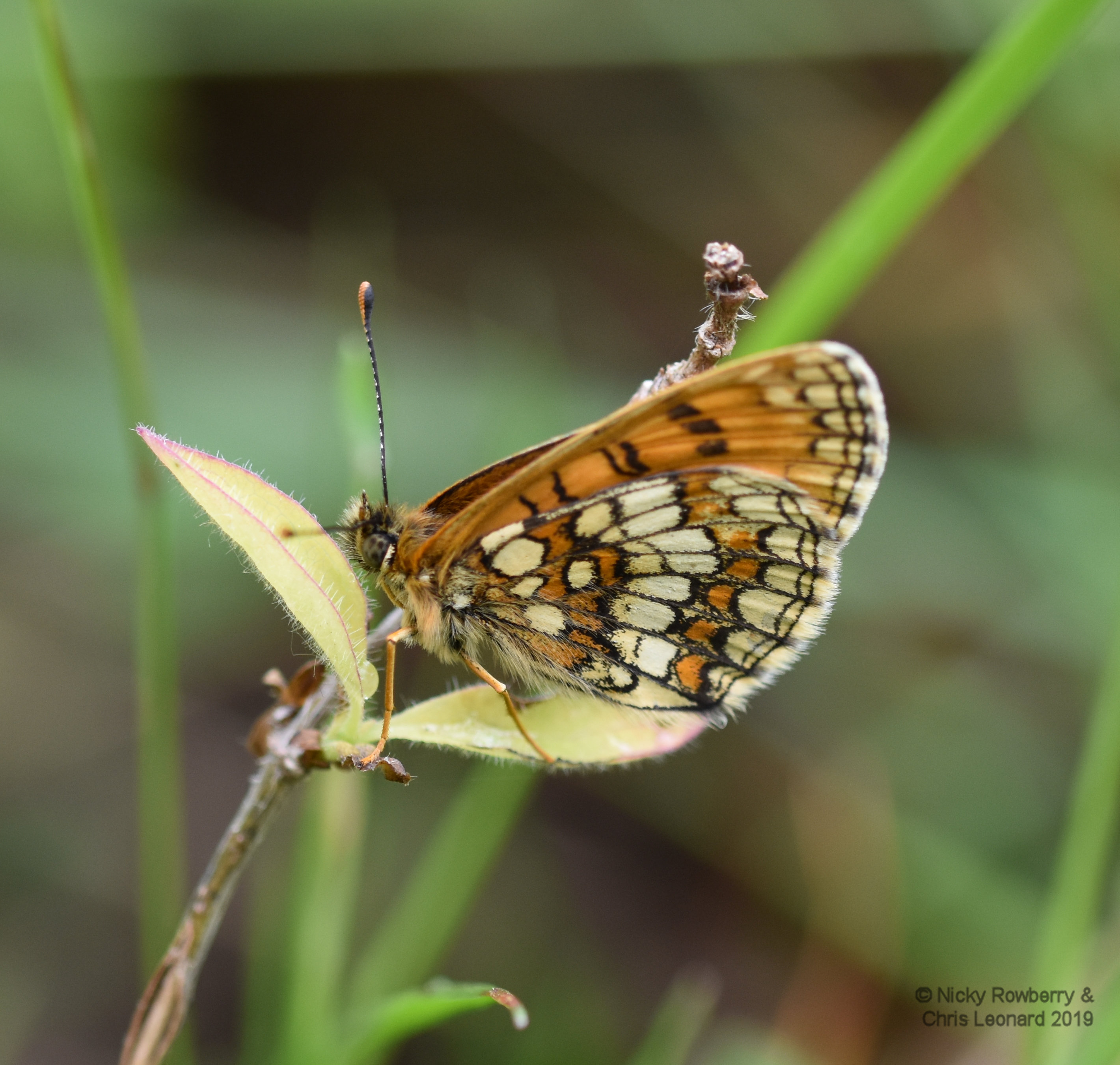
So we headed up the combe until we reached a sunny(ish) open slope. Almost immediately someone spotted a Heath Fritillary, basking in what little sunshine there was on some bracken. It was smaller than we had expected and much browner than the other fritillaries we have seen, but a real beauty. We waited our turn while everyone in the group had a go at photographing the first one – so here they are, my first heath fritillaries. I didn’t manage to get particularly good shots of them with their wings open, but they are recognisable I hope.

After that the group fanned out across the slope looking for more butterflies and being very careful not to stand on any! It being a bit of a cold damp day actually helped with the photographs as the butterflies weren’t in the mood for flying. So once you found one, it was relatively easy to get a photo. The Heath Fritillaries are beautiful on their uppersides, but their wings are even more stunning when the undersides are visible; like miniature stained glass windows. So here are a couple of my favourite shots from the day.

We spent a very happy half hour or so photographing the butterflies before the heavens opened and it really did start raining quite heavily. We took shelter under some trees, until it became obvious that the rain wasn’t going to stop and we headed back down hill. On the way, one of our guides showed us some of these pretty little Heath Spotted Orchids.

We returned to the carpark, slightly soggy, but very happy to have seen our 48th species of butterfly. Thank you to Meghan from Butterfly Conservation and Basil from the National Trust to leading us straight to these elusive butterflies and giving us an excellent and informative guided walk. So we went looking for a Heath Fritillary and ended up getting a Small Heath and a Heath Spotted Orchid too – 3 for the price of 1, can’t be bad!


Bees, Bats, Butterflies and Birds at Bridge Cottage

We’re just back from a holiday in Exmoor and as usual have returned with hundreds of wildlife photos, having spent the week in our usual glamorous manner. Most people probably take swimming costumes, flip flops and suncream on holiday; we took a moth traps, bat detector,  underwater camera and trail cameras! We stayed at a lovely cottage by the River Barle in Withypool, Somerset – an absolutely idyllic location, with plenty of wildlife potential.

Our holiday coincided with the start of 30 Days Wild, so the perfect excuse for wildlife watching, not that we ever need an excuse. The cottage had loads of bird life including sparrows nesting around the guttering. A pair of blue tits were nesting in the apex of the shed. They were really devoted parents bringing food constantly despite the rain (hence dishevelled photo below) and removing the faecal sacs to keep the nest clean.

There were plenty of mayflies hatching while we were there and the swifts made good use of them flying low over the water and snatching them out of the air. Best of all we could hear a cuckoo calling every morning around dawn. The sound of a cuckoo combined with the sound of the river is a great way to wake up in the morning.

Not surprisingly the abundant insect life attracted bats too. We got the bat detector going and were rewarded with clicks and chirp noises that sounded different to our usual Pipistrelle bats at home. The clicks were closer to the 47-48kHz frequency than the 45kHz we get at home, so perhaps these bats were either Daubenton’s or Natterers? Unfortunately we didn’t manage to record the noises to be sure and it was too dark to actually see the bats.

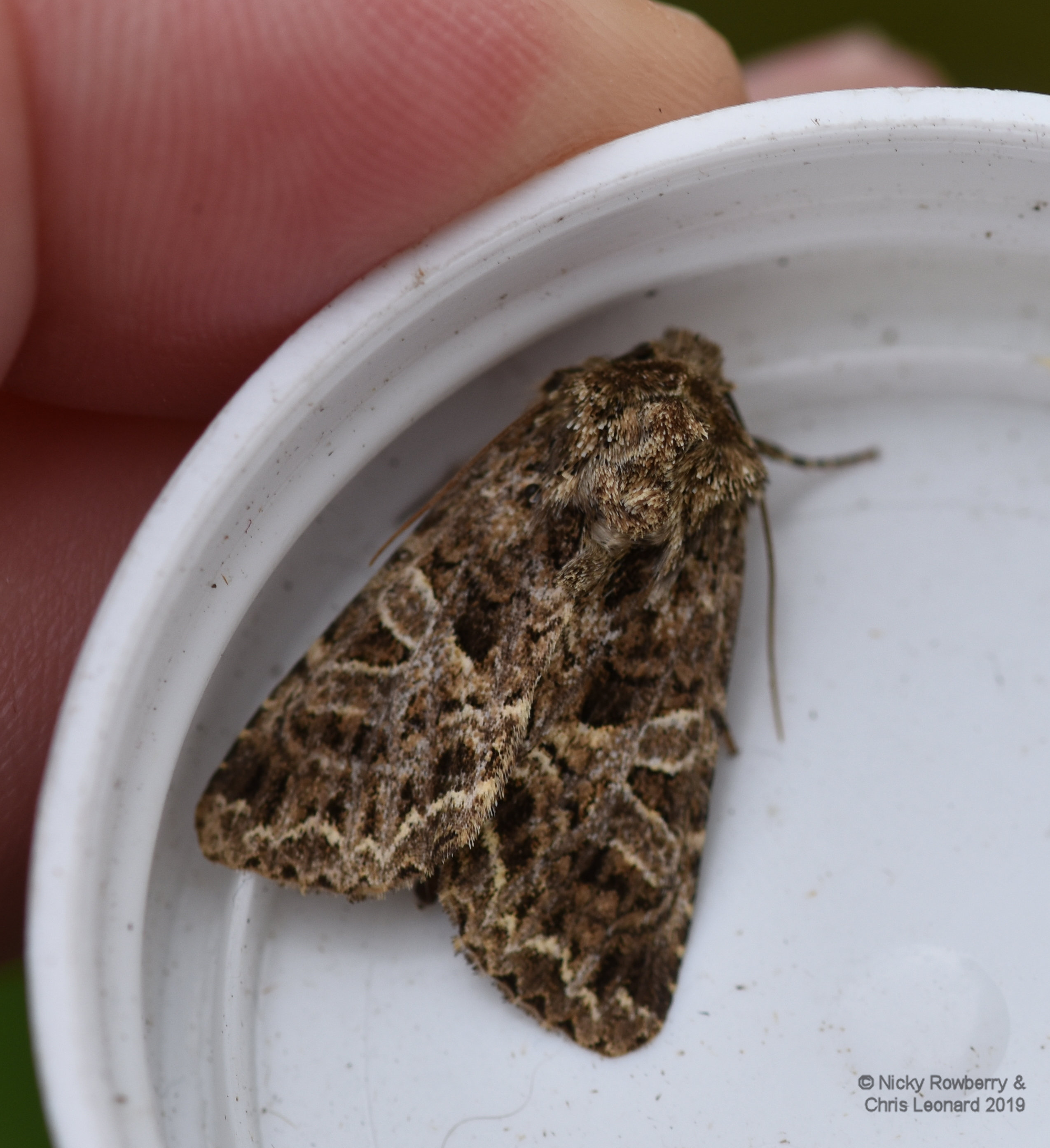
The first day we arrived at the cottage we had glorious sunshine and a warm night – perfect conditions for an evening glass of wine in the garden and to put the moth trap out! We couldn’t believe the abundance of moths we got in the morning. Many of the moths we caught were species we’d seen before but never in such numbers – buff tips, white ermines, brown silver lines – all species which we see occasionally in Malvern, but rarely more than single individuals. There were 2 species though that we’ve never seen before – Nut Tree Tussock and Campion – nice to add to our life lists of species.

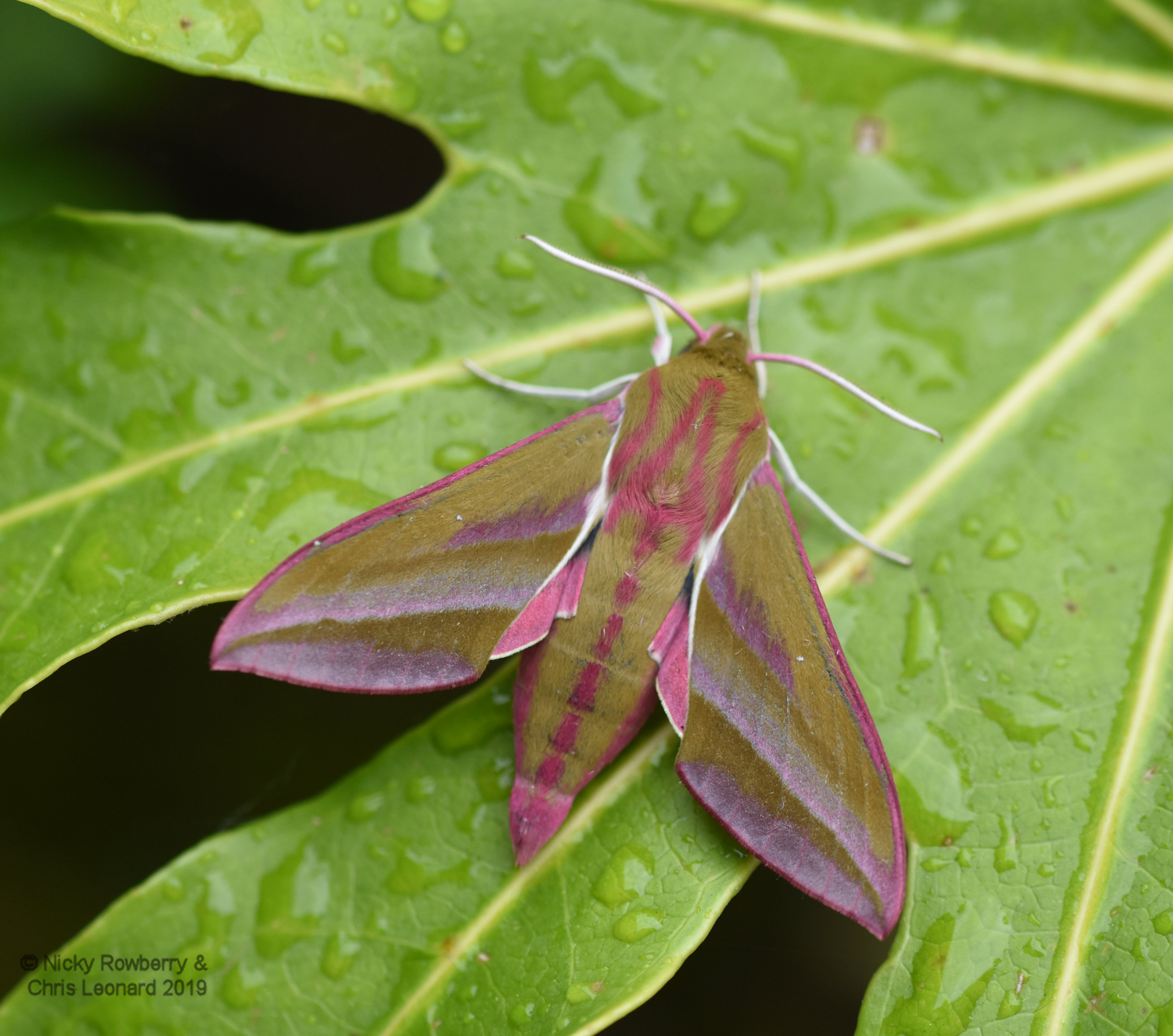
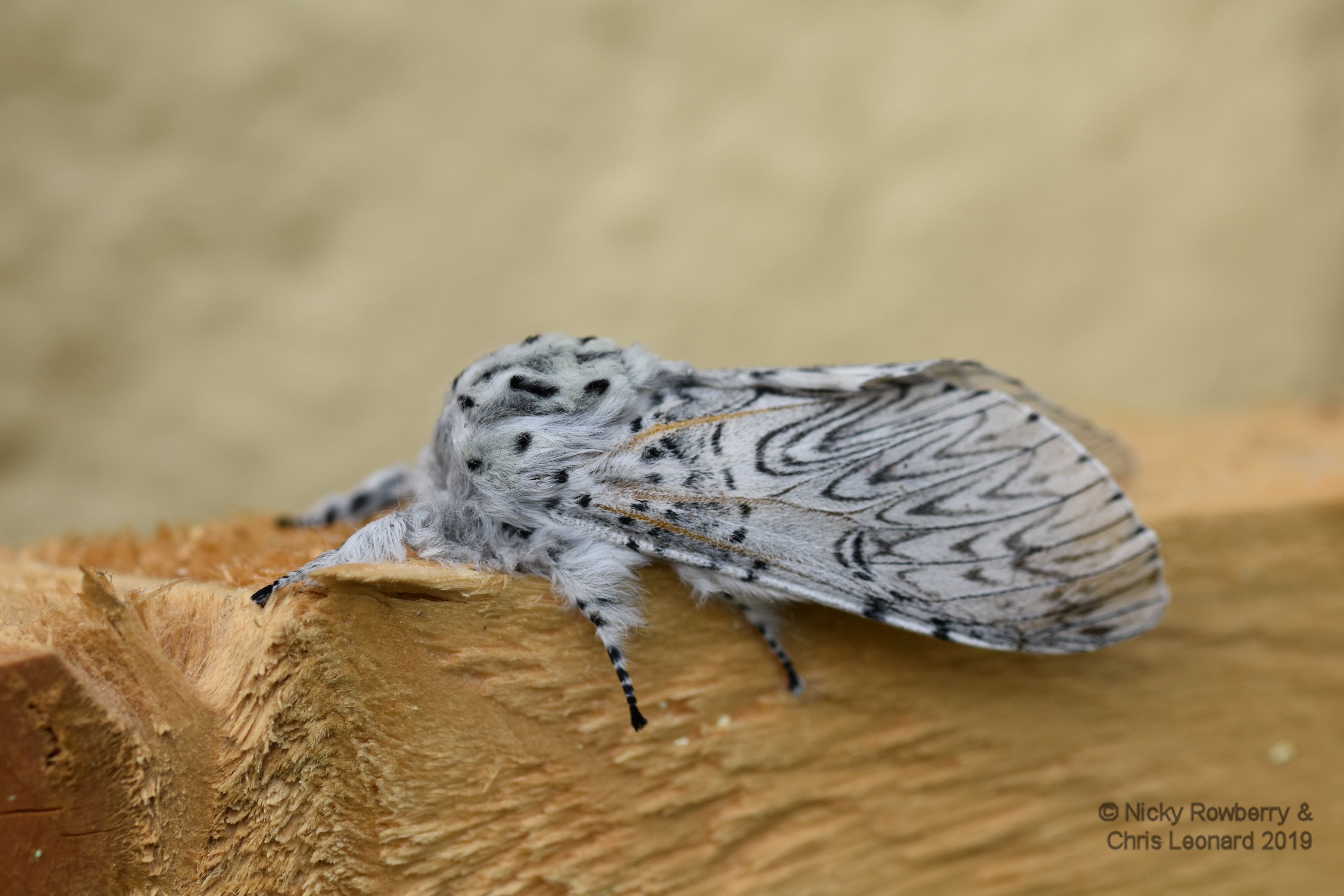
As usual an Elephant Hawkmoth stole the show, but it did have competition from this stunning Puss Moth!

The River Barle which ran past the garden had sparkling clear water (every day except the last day when heavy rain had clouded it).  One of the first things we noticed were several dead Signal Crayfish both in the water and on the river bank.

These are an introduced species and are causing serious problems by outcompeting the native crayfish and by tunnelling into river banks leading to erosion. There are projects to actively remove them from rivers like the Barle, so it could be the dead crayfish we saw were part of this.

On a cheerier note, there were lots of presumably native minnows swimming in shoals near the river bank. So armed with our waterproof GoPro camera, I heroically waded in with my wellies. A slight miscalculation between height of wellies and depth of water, led to some wet feet, but at least I managed to video the minnows!

The river also had numerous tadpoles, who remained hidden in the plants near the bank during the day, but emerged into a sheltered inlet in the evenings. They were much darker than the tadpoles we get back home in the pond, so they may be toad tadpoles rather than frogs.


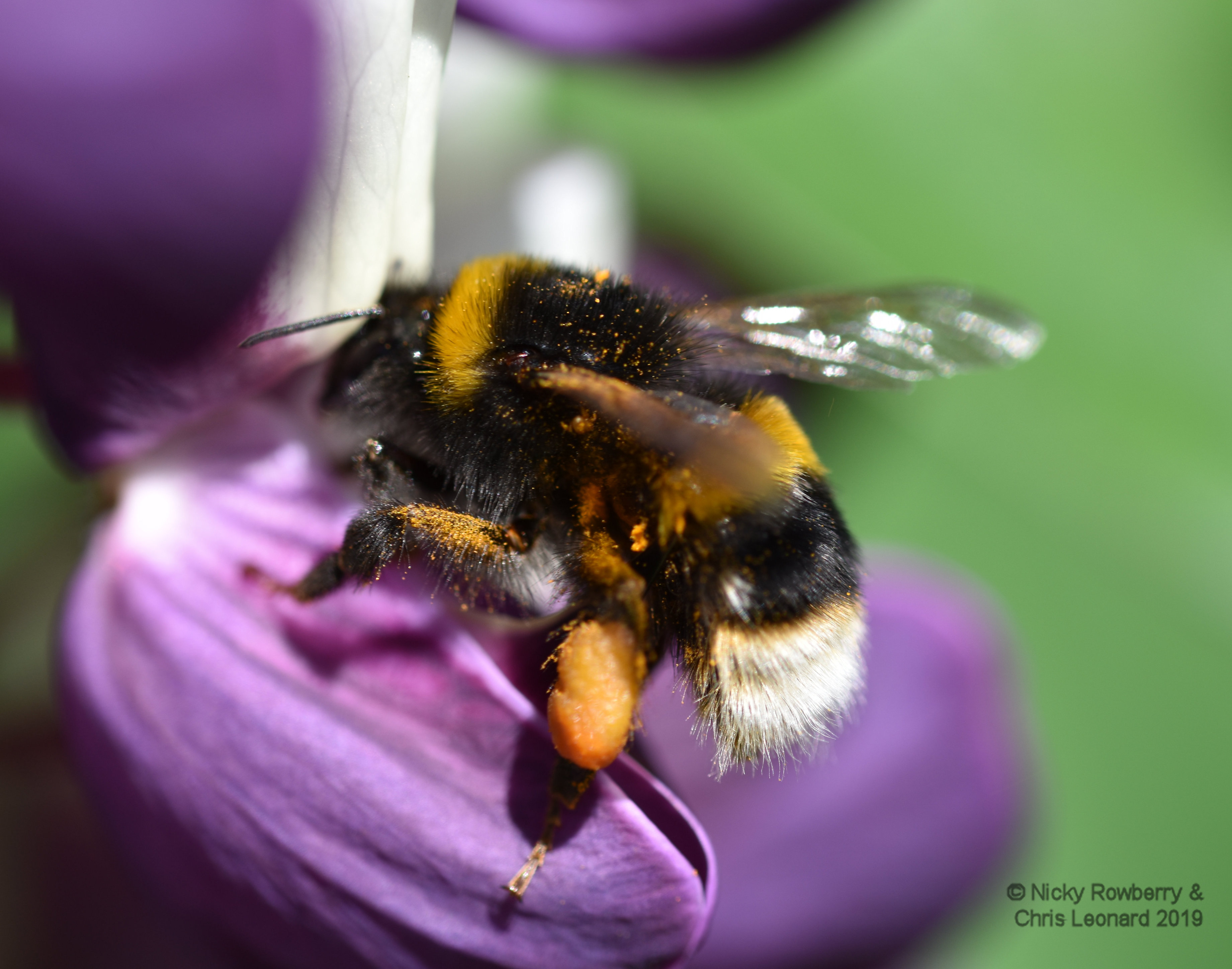
The cottage garden was well planted with plenty of shrubs and flowers for wildlife, including some gorgeous lupins that the bees absolutely loved.


One even got so carried away it forgot where it was and landed on my hand.

We saw a few butterflies in the garden, including our first Painted Lady of the year, but the highlight had to be this – a Green Hairstreak. To see these little beauties previously we’ve had to travel to nature reserves, so to have one virtually fly up to us in the garden was amazing. So amazing that I fumbled with the camera and only managed one rubbish photo – but it is just about recognisable as a green butterfly!

So we can highly recommend a stay at Bridge Cottage in Withypool for anyone interested in wildlife – there’s certainly plenty of it. The village itself was charming with a pub, shop and café – what more could you want from a holiday?

We did of course venture out while we were in the Exmoor area in search of more butterflies, but I’ll cover those in subsequent blog posts – watch this space!


Spring in the garden

The Spring Equinox has been and gone already and I’ve been gathering video clips for weeks now with signs of spring. I blogged about the allotment last week, so this time it’s the turn of the Too Lazy garden proper. I’ve had the cameras out all over the garden and got so many videos it’s taken a while to sort through them; but here are some highlights from the last few weeks.

Our first hedgehog woke from hibernation and appeared on the trail camera at the end of February – quite early, but given the mild winter we’ve had, maybe not too surprising.


It wasn’t long before one became two and a second larger hedgehog appeared in the same part of the garden. This second one didn’t seem too keen to share the food with the smaller one and there were a few tussles the first night. I had hoped One-eyed Tim, one of last year’s hedgehogs, might have appeared by now, but neither of these are optically challenged, so I hope he’s just late coming out of hibernation.


The garden birds, in particular the blue tits, seem to be feeling the spring in the air too. Blue tits used to nest in our garden, but for the last few years, they seem to have turned their noses (or beaks) up at it and although regular visitors, they must be nesting elsewhere. I did get hopeful when the old nest box we’d stuck on the apple tree seemed to be getting a bit of attention:


Unfortunately despite repeated visits to check it out, they seem to have found it lacking in some way. They may not be favouring our garden for their nest, but they’re not averse to making use of the nesting material we’ve put out for them. I’d filled an old hanging basket with hay and moss raked up from the lawn and the blue tits wasted no time helping themselves to it.


In the absence of nest box footage, I thought I’d make the most of the hay/moss collection and try and get some different shots of this activity instead. First I tried putting the GoPro on a branch above the basket, which worked reasonably well.


I then had a go putting the camera inside the basket cage itself. The blue tits weren’t bothered by it at all, so I got some half decent shots of them tugging at the moss to get the best bits.


Last month I succumbed to the urge to get yet another camera for the garden – this time one trained exclusively on a feeder. We can live feed it to the living room, which is great, although most of the time we end up just watching peanuts swinging in the breeze. But I did eventually manage to get a brief clip of the blue tits – once again happy to avail themselves of anything on offer in the garden (except the nest boxes).


The blackbirds made an early start gathering nesting material at the end of February – or at least the female in this video clip did, the male seemed more interested in making sure we got his best side on film!


The squirrel wasn’t doing anything particularly spring-like, other than checking whether the hedgehogs had left anything worthwhile; but I can never resist the squirrels, so here’s his few seconds of fame too.


The water bath seems to have been coming into its own again now spring’s here too. This blackbird was making the obvious use of it by bathing and of course lots of birds just drink from it.


But one magpie in particular has been using it for something a bit different. He or she has been eating bits of the cat food that I leave out for the hedgehogs. Most of it is eaten straight down, but some pieces are perhaps too hard, so it has been dropping them in the bird bath, presumably to soften them up a bit.


So there’s plenty of activity in the garden already this year and that’s without even discussing the insects that are all starting to appear too (I’ll save them for the next blog post). I love this time of year when everything is optimistic with the promise of the summer to come; perhaps the wildlife in the garden feels the same?