Island Life – Part 1

I’m just back from a fabulous week in the Isles of Scilly. I went with my long-suffering sister and her partner and their two dogs. I say long-suffering as they had to spend a week with my constant exclamations of  “ooh look at that beetle” and “wow a bee” and “can we go and see puffins” again and again! All I can say is that they’re very tolerant people.

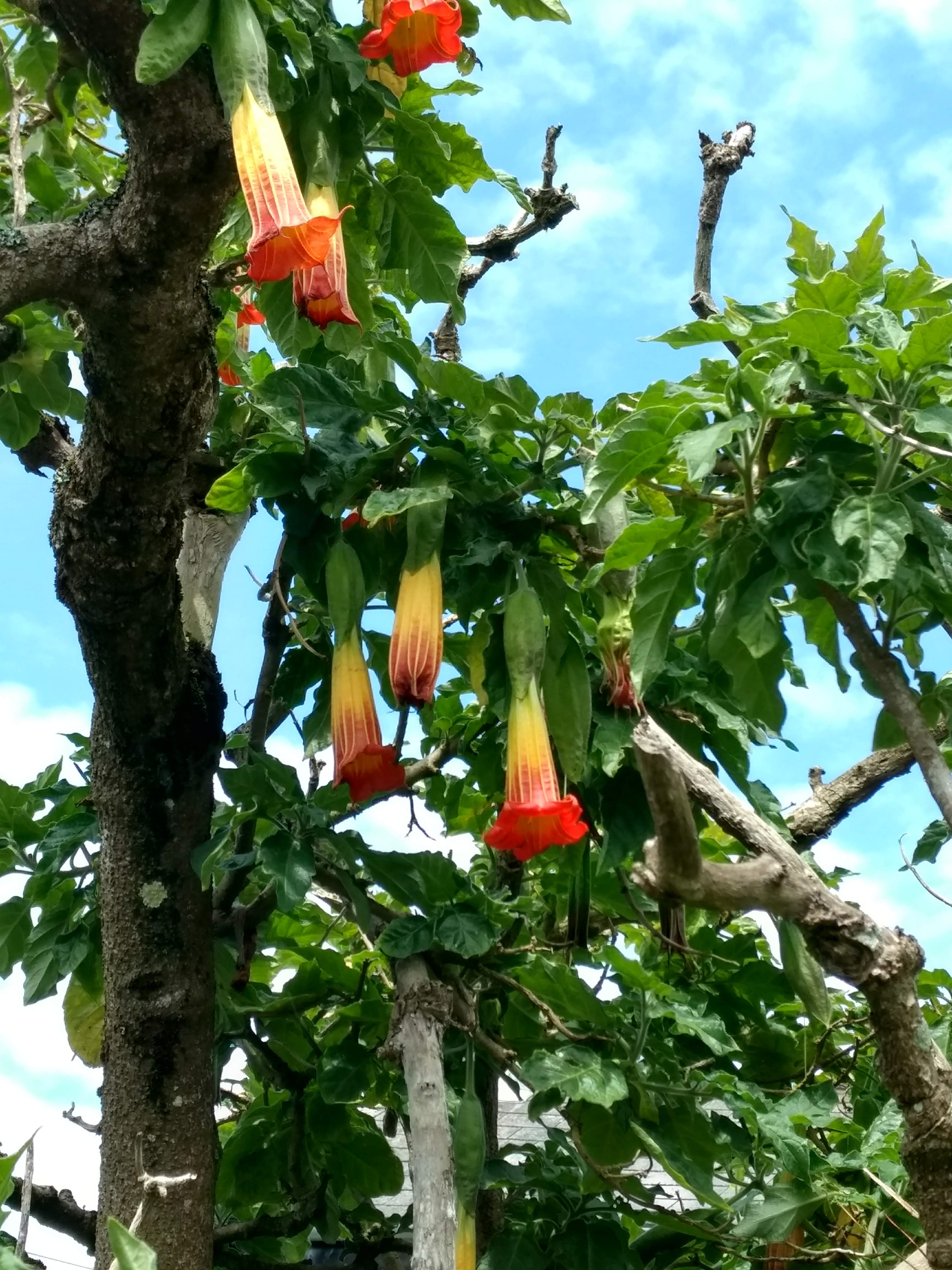
The Isles of Scilly are a small group of islands off the Cornish coast. They may only be about 28 miles from mainland England, but they feel like they’re somewhere far more exotic. With a mild maritime climate, tropical looking flowers flourish in a way I can only dream of back home in the relatively cold climes of Worcestershire. The gardens on Tresco are world famous, but the plant life proliferates everywhere. I particularly liked the Angel’s Trumpets (left) and the tall spikes of Echium that crop up all over the islands. Here’s a couple of the more alien looking species from the Tresco gardens.

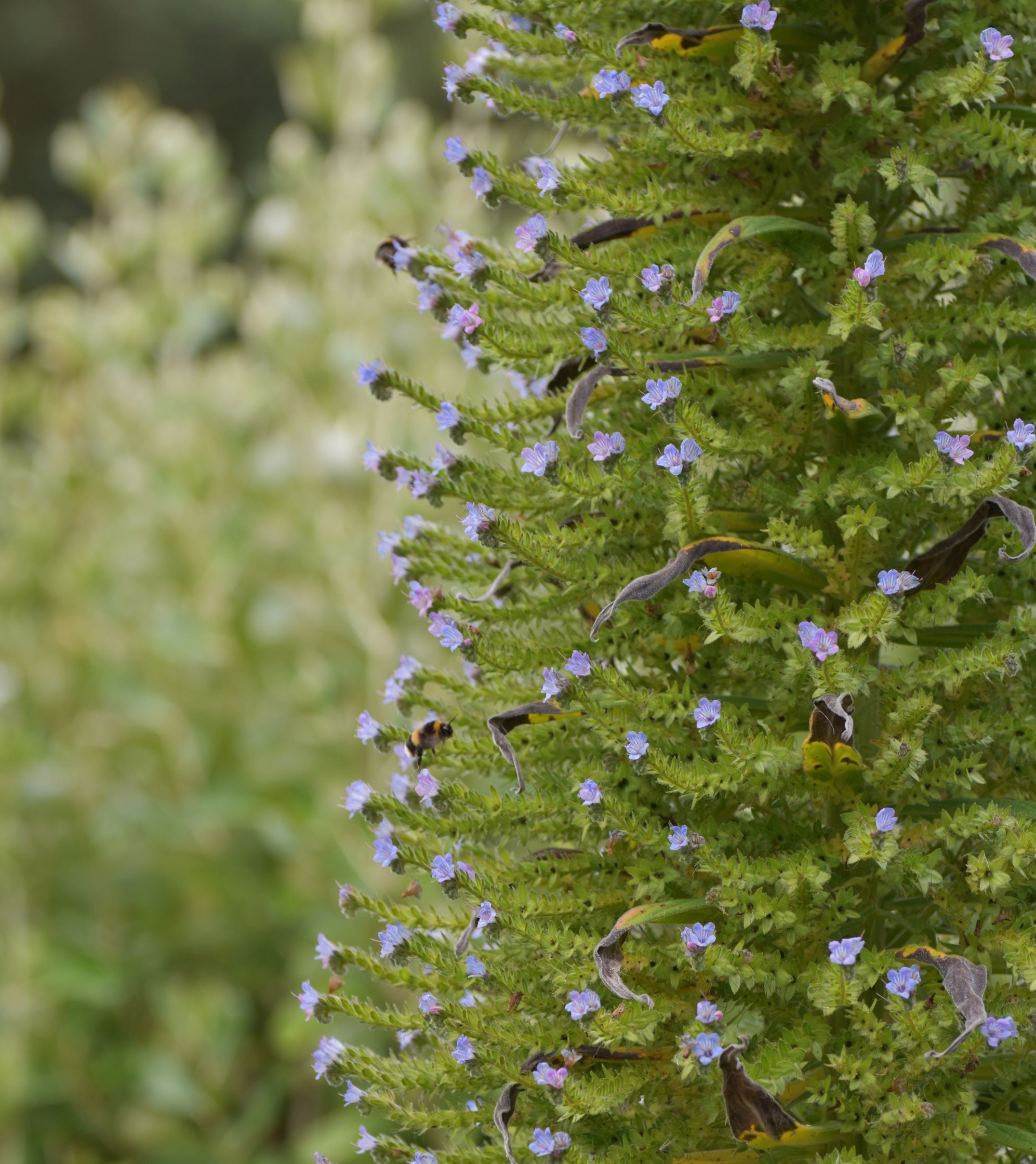
With an abundance of flowers comes an abundance of insects, particularly bees. The Echiums must have been several metres tall and were alive with bees making the most of the tall floral spikes. Elsewhere even the clover covered grass in gardens was humming with bees, in far greater numbers than I get at home. My favourite spot though was this leaf-cutter bee taking a break or perhaps regretting cutting such a large piece of leaf.

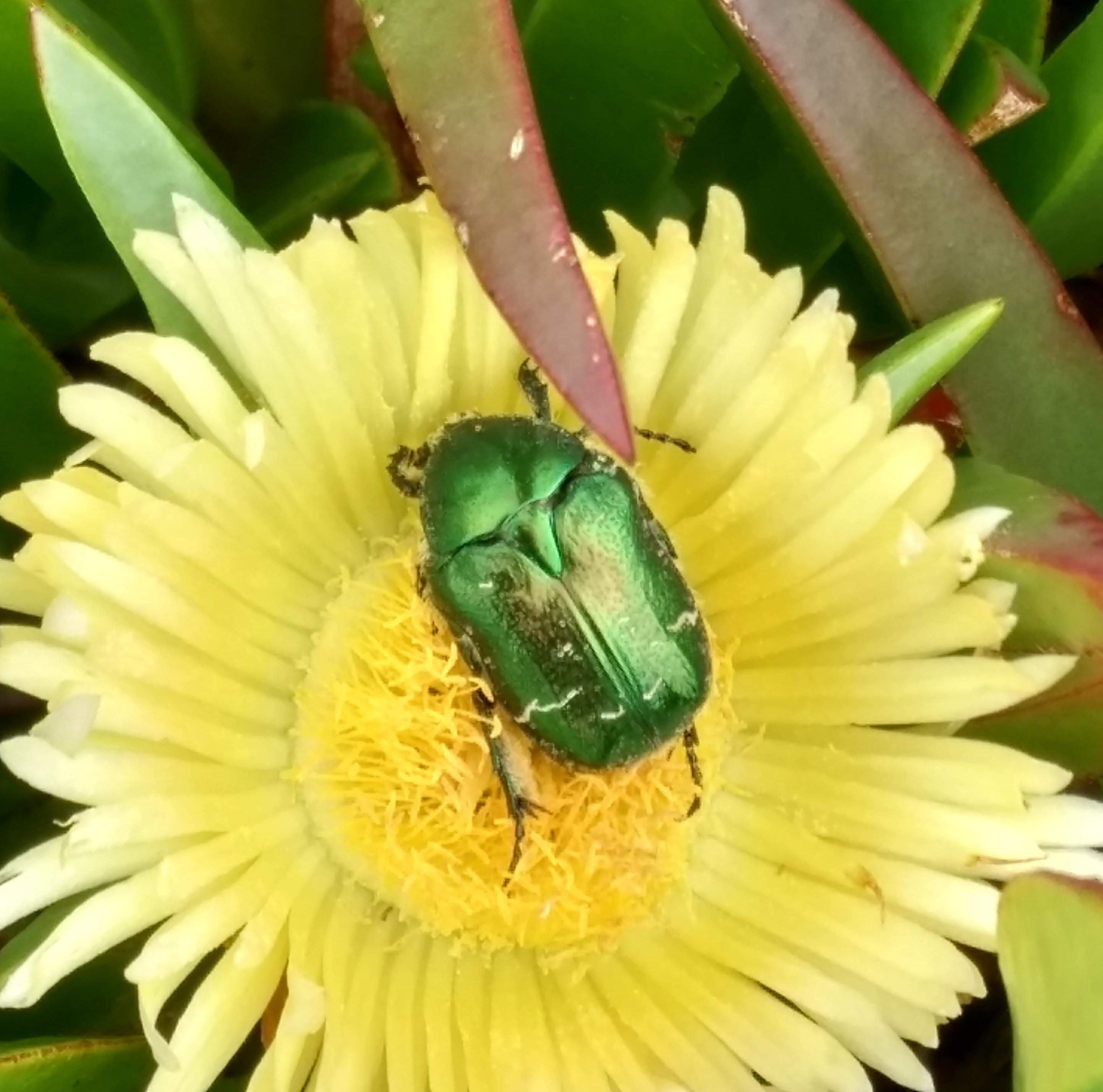
We saw some cracking beetles too as we walked the coastal paths. This Rose Chafer beetle was a stunning iridescent green and huge (I regret not sticking a finger in the photo for scale here). If you’ve ever read the book Miss Benson’s Beetle (and I highly recommend it) then you’ll understand I had a bit of a Miss Benson moment finding this.

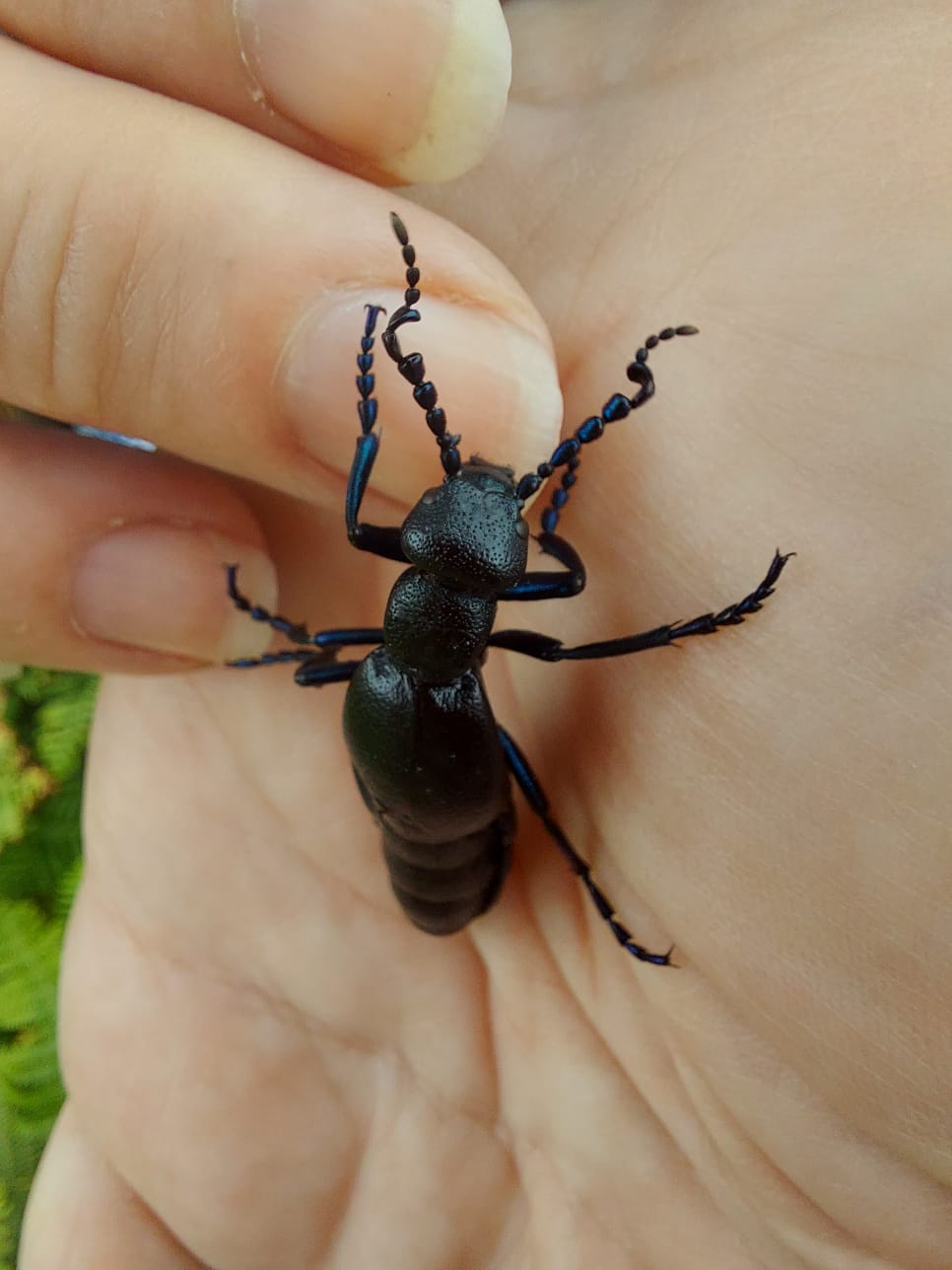
We also found a pair of these large black beetles on another path in Bryher. I think it’s an oil beetle, but more than happy to be corrected if it is not.

I did miss my moth trap while we were away. I had briefly considered packing a portable one, but where we were staying wasn’t really suitable for moth trapping without annoying the neighbours, so I resisted. I did get a bit of a moth fix in the form of hummingbird hawk-moths which popped up all over the place – even when we were on a boat out at sea. Many thanks to my sister for managing to catch this one on video with her phone.


So that’s probably enough of me sounding like an advert for Scilly for Part 1, I’ll be back soon with birds and mammals for Part 2.

The Blog is Back!

Hello again!

It may seem like I’ve just been Too Lazy To Blog, and I can’t deny there’s an element of that, but mainly life in the form of a very difficult 3 years has just got in the way. But hopefully now things are getting back on an even keel and I can resume my wildlife ramblings. The weeds in the garden have continued to grow and there’s still plenty of wildlife to be seen, photographed and waffled on about. So the blog is back!

I may not have been blogging, but I have seen a lot of amazing stuff in the last 3 years. Maybe not attack ships on fire off the shoulder of Orion (who doesn’t love Rutger Hauer), but all sorts of other interesting things. So in no particular order, here are some of the highlights of the last few years.

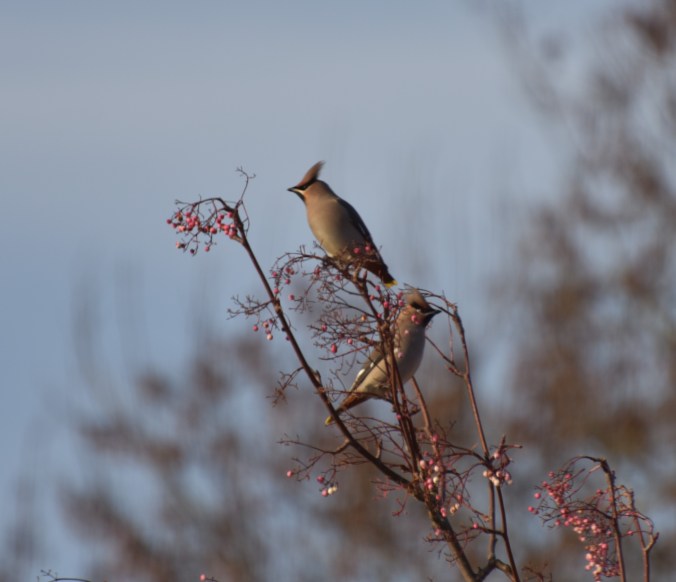
In December 2023 there was a lot of excitement on Twitter/X about Waxwings being seen in and around Malvern. Like many others I grabbed my camera and headed out in search. Not only did I eventually get to see them, but I made a new friend in the process, without whom I’d never have found them, so a definite win-win situation.
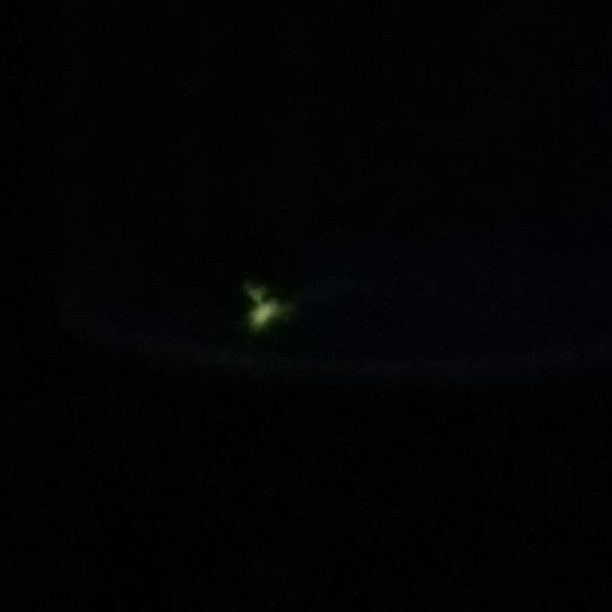
Last summer I was really excited to see my first ever glow worms. Tiny little green glows at a reserve just a few miles from home.  Not easy to spot, but once you get your eye in they really do what it says on the tin and glow a bright green. I only had my phone with me, so this “magnificent” picture will probably go down in history as one of the most atrocious photos ever. Perhaps I should just give it an abstract name – “Green Glow on Black Canvas” or something. But it’s the only proof I have that I saw a glow worm, so here it is!
In October last year I finally got to see the Northern Lights and from my back garden. Not quite the awe-inspiring spectacle you see photos of, but definite streaks of pink and green nonetheless. Again I’m probably up for some kind of award for awful photography for this, but I’m just happy to have finally seen this. Twenty odd years living in Scotland and I finally see it in Malvern!

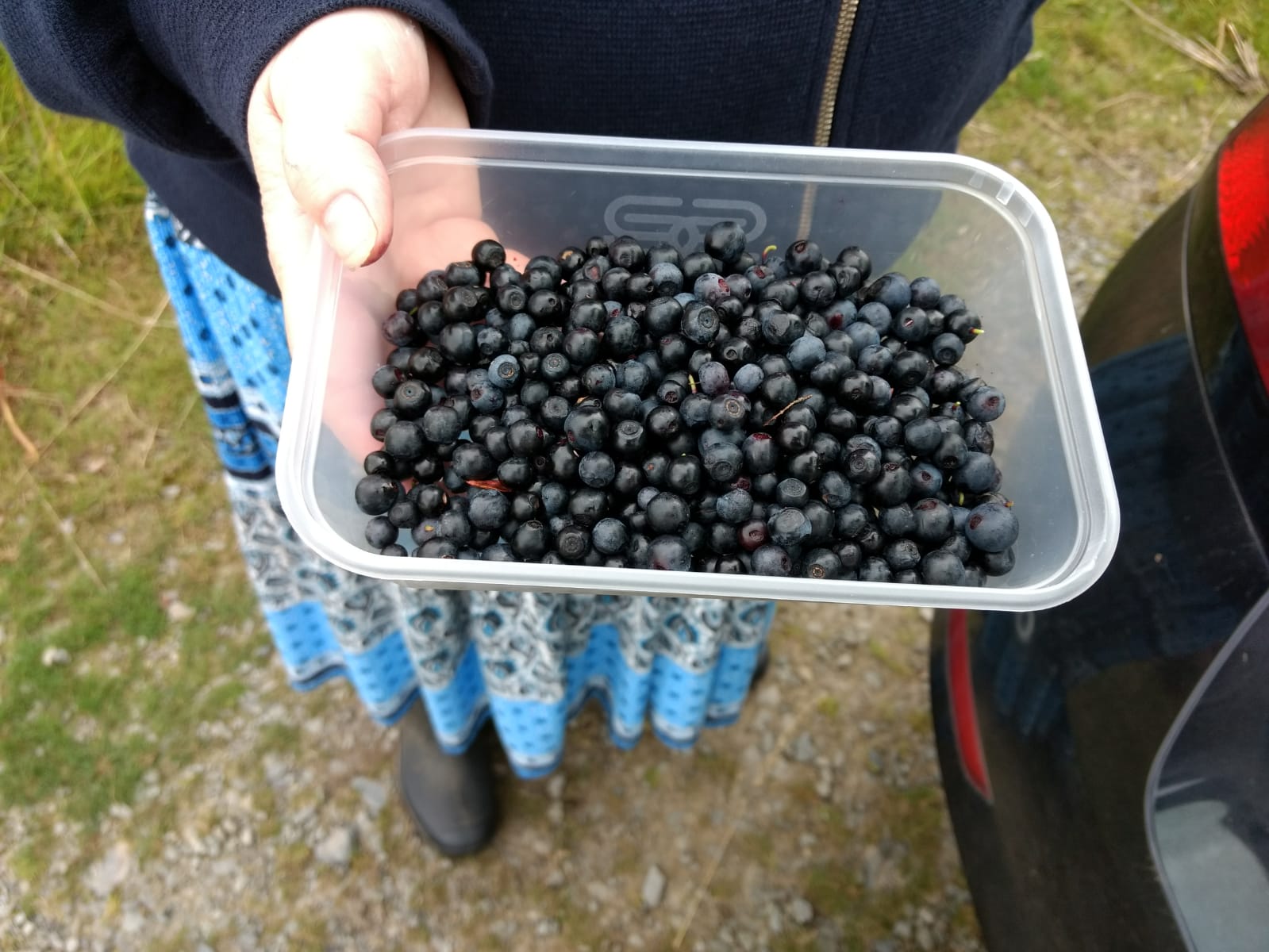
I’ve had a few days out and about doing some not-strictly wildlife things, but it was out in lovely countryside so I reckon that counts. In August last year my sister and I went whinberry picking for the first time since we were children. Whinberries (or Wimberries, Bilberries, or Blaeberries, depending on where you’re from) were our Dad’s favourite and grow wild in the Shropshire hills. We were a bit late in the season, so only managed to gather enough for a very small pie, but it was well worth it – the taste brought back many happy childhood memories and we certainly got to see a lot of the wilds of Shropshire while we hunted for them.

We also had a slightly bonkers trip to see the famous cheese rolling race in Gloucestershire. I must stress we valued our lives and vertebrae too much to actually take part chasing a 4 kilo wheel of Double Gloucester down a very steep hill. It was hard enough climbing high enough to watch it, without hurling ourselves at break-neck speed back down again. But it was a glorious spectacle when viewed from a safe distance.

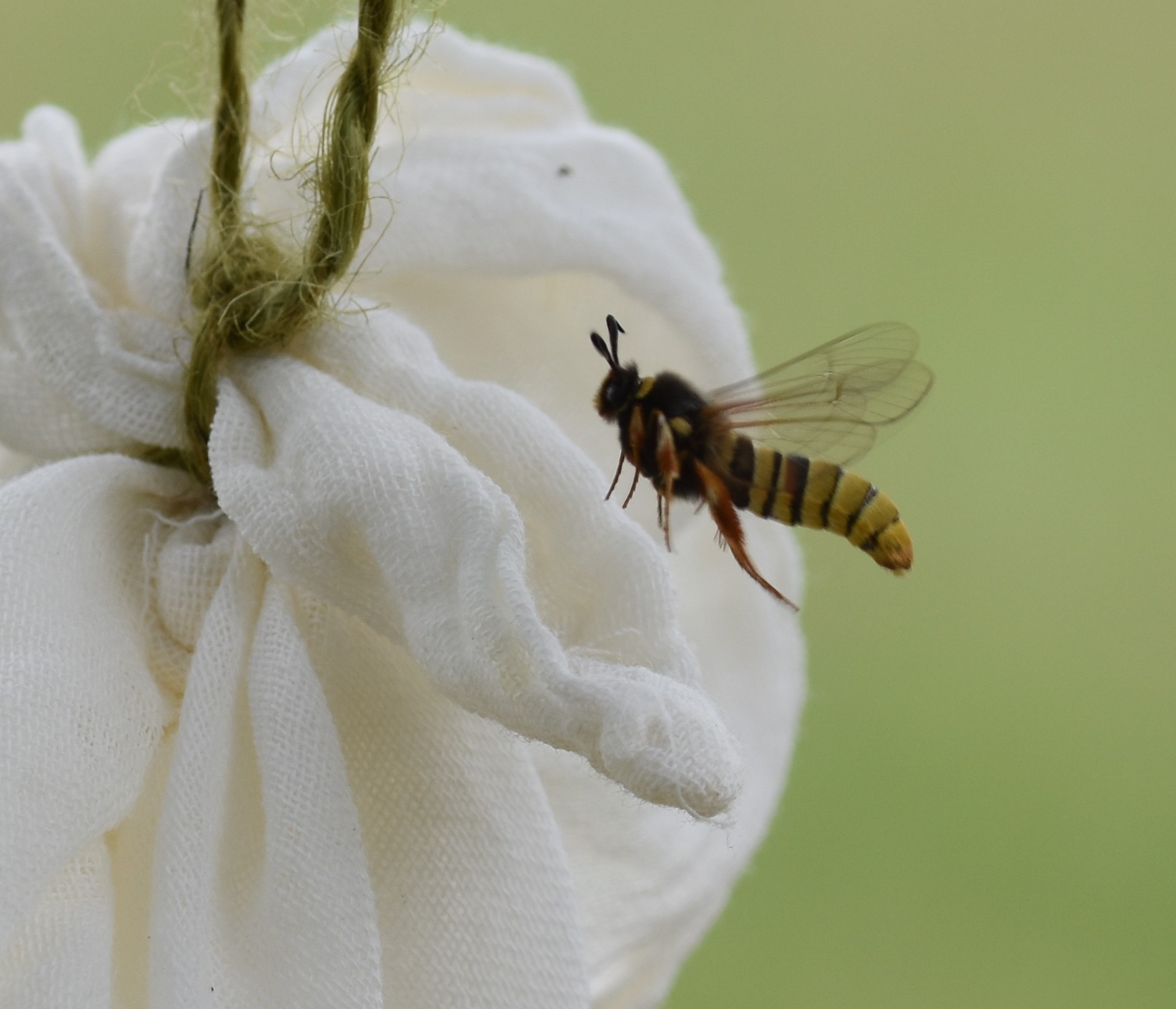
There have been lots of moths recorded in the garden in the last few years, but I’ll post about those separately. One interesting moth seen while venturing outside the garden was a Lunar Hornet Moth. These stunning moths don’t really look like moths with their clear wings and hornet like bodies. Their caterpillars live in the wood of old trees and the adults are attracted to pheromone lures.

Other highlights of the last few years include dolphin watching on a glorious sunny day in New Quay in Wales and a visit to the lovely Westonbury Mill Water Garden in Herefordshire just as the new season’s toadlets all emerged from the ponds. Never seen so many tiny toads (they were literally the size of a fingernail), it was virtually impossible to walk – we went round at a snail’s pace to avoid standing on them. Speaking of toads, I’ve also joined a local toad patrol – more of that in another blog post too.

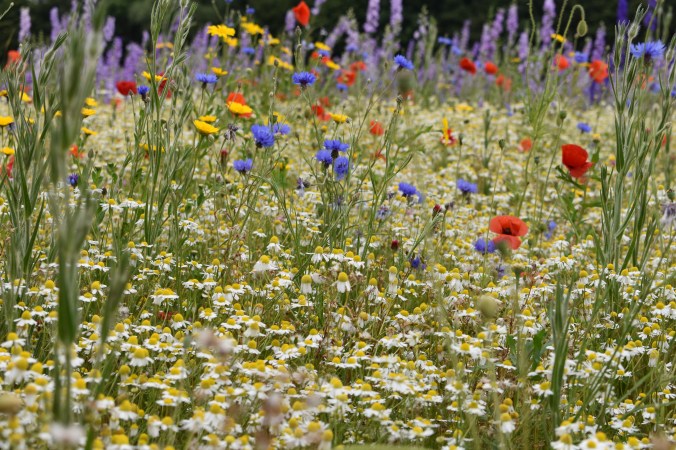
There’s been a visit to the Diglis Fish Pass in Worcester. Our guide showed us fantastic photos of large salmon, pike and even otters swimming by the viewing window, although on the day, all we saw were a few minnows. Another day out took us to the confetti fields, also in Worcestershire. The delphiniums are grown specifically to turn into environmentally friendly confetti, but I actually preferred the wildflower borders around the main crop.

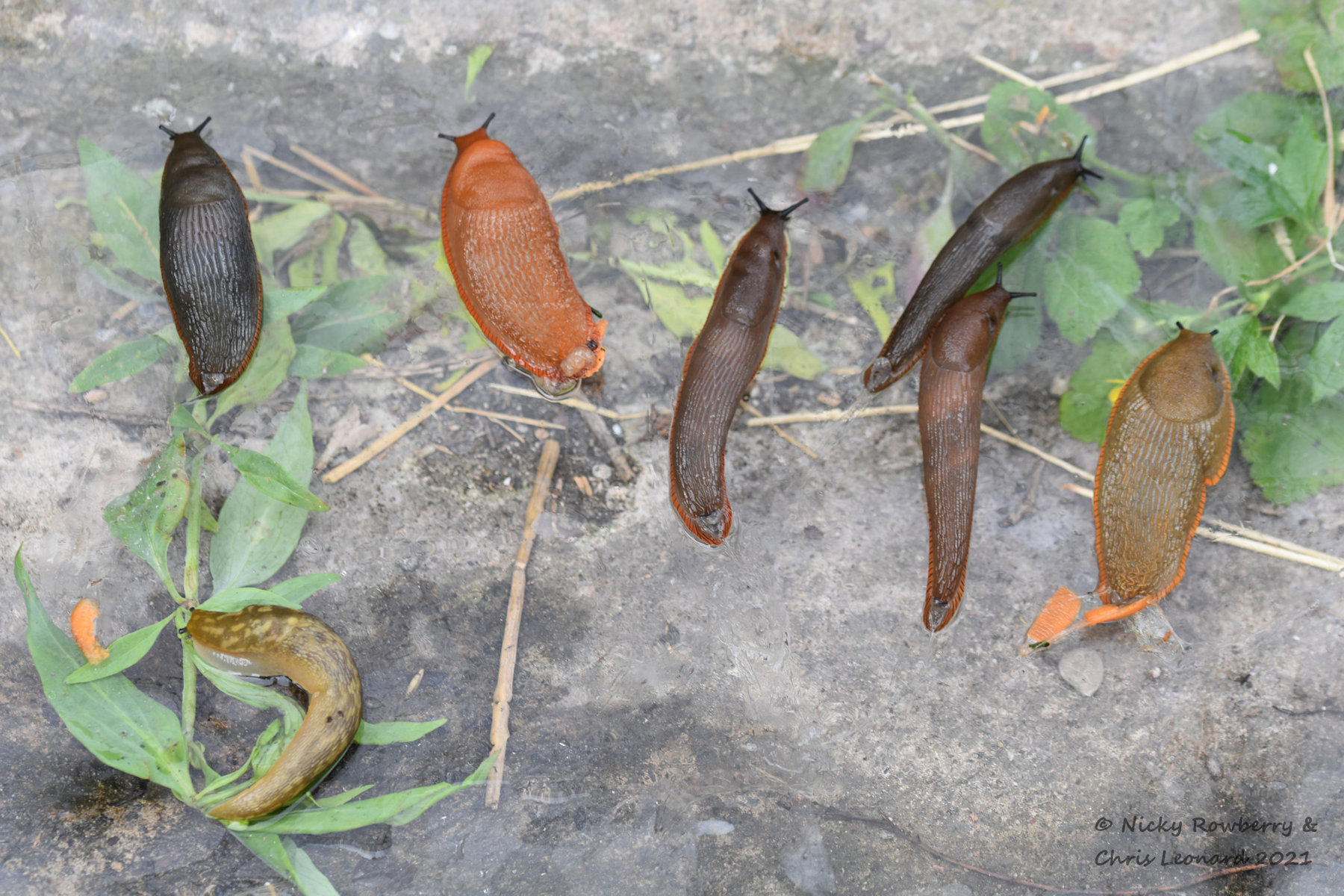
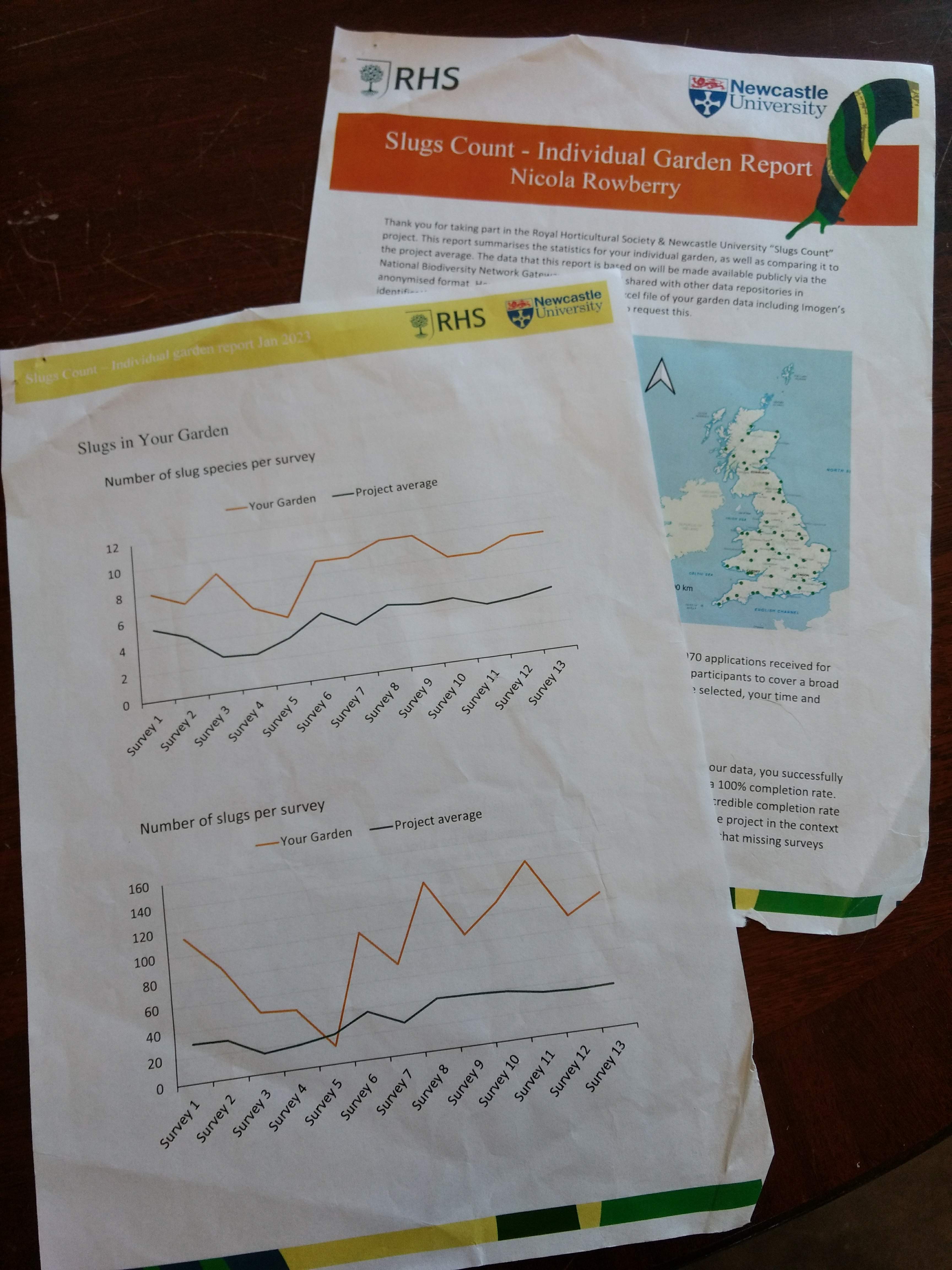
One final highlight of the last few years was a weekend in Harrogate for a slug conference! Harrogate is a really lovely town and a slug conference at Harlow Carr gardens to discuss the results of the slug survey I took part in, was a delightful, if slightly unusual treat! (as was Betty’s tearoom’s Fat Rascals!)

I felt ridiculously pleased that my garden had produced above average numbers of slugs compared to the other slug counters – something most gardeners would be horrified by, but I viewed it as a badge of honour for my scruffy garden.

So there are just a few hopefully interesting bits and pieces from the last few years. The plan is to start blogging again regularly, or at least not wait another 3 years before I can think of something to say.
 

Knapp Time

Lovely weather at the weekend, so we set out with great intentions of visiting a new (to us) nature reserve. Our chosen spot was a small wood not far away – unfortunately this wood only has a tiny car park and others clearly had the same idea. With nowhere to park, we headed back to our perennial favourite – the Knapp and Papermill Nature Reserve. We didn’t manage to get there last year so it was a very welcome “Plan B”.

In the wooded areas we were treated to our first banks of bluebells for the year, looking fabulous in the dappled light.

bluebells

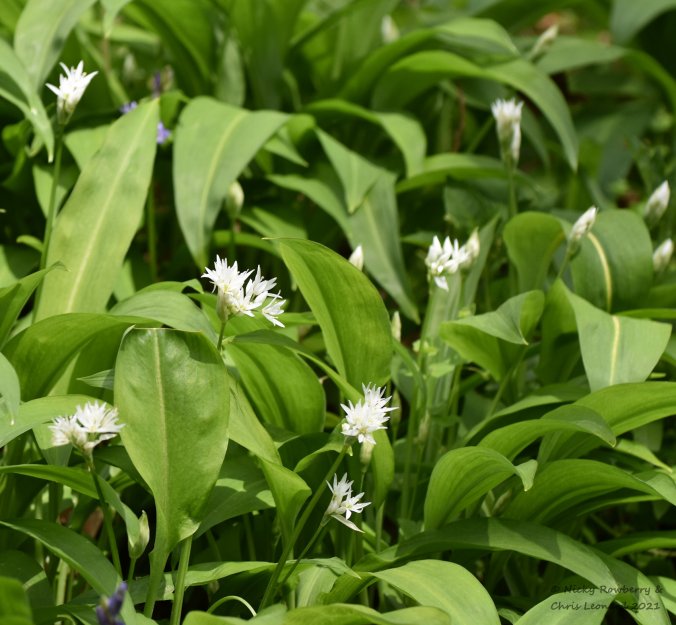
The smell of garlic was heavy in the air in places, with banks of Wild Garlic just coming into flower.

wild garlic 2

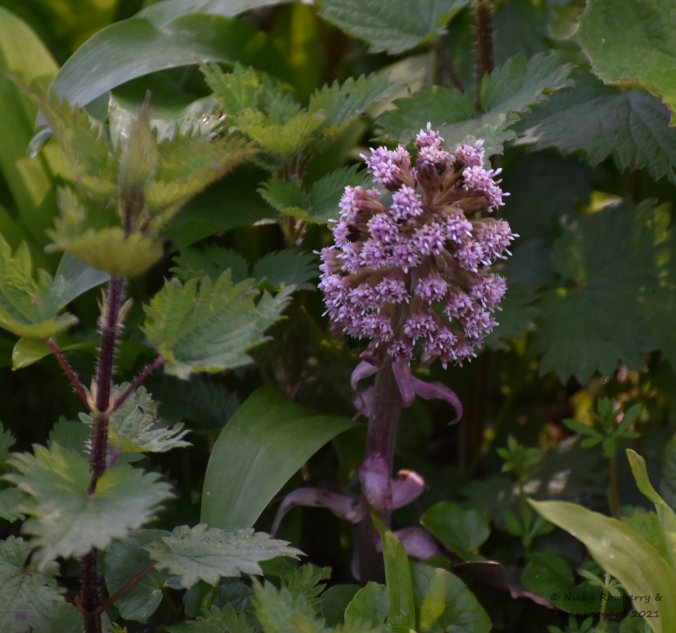
Lesser celandines, wood anemones and primroses completed the spring flower array. A plant we don’t see so often was the Butterbur. I always think the Butterbur flowerheads look slightly alien. The leaves in the summer grow huge and were apparently used to wrap butter before the invention of fridges!

butterbur

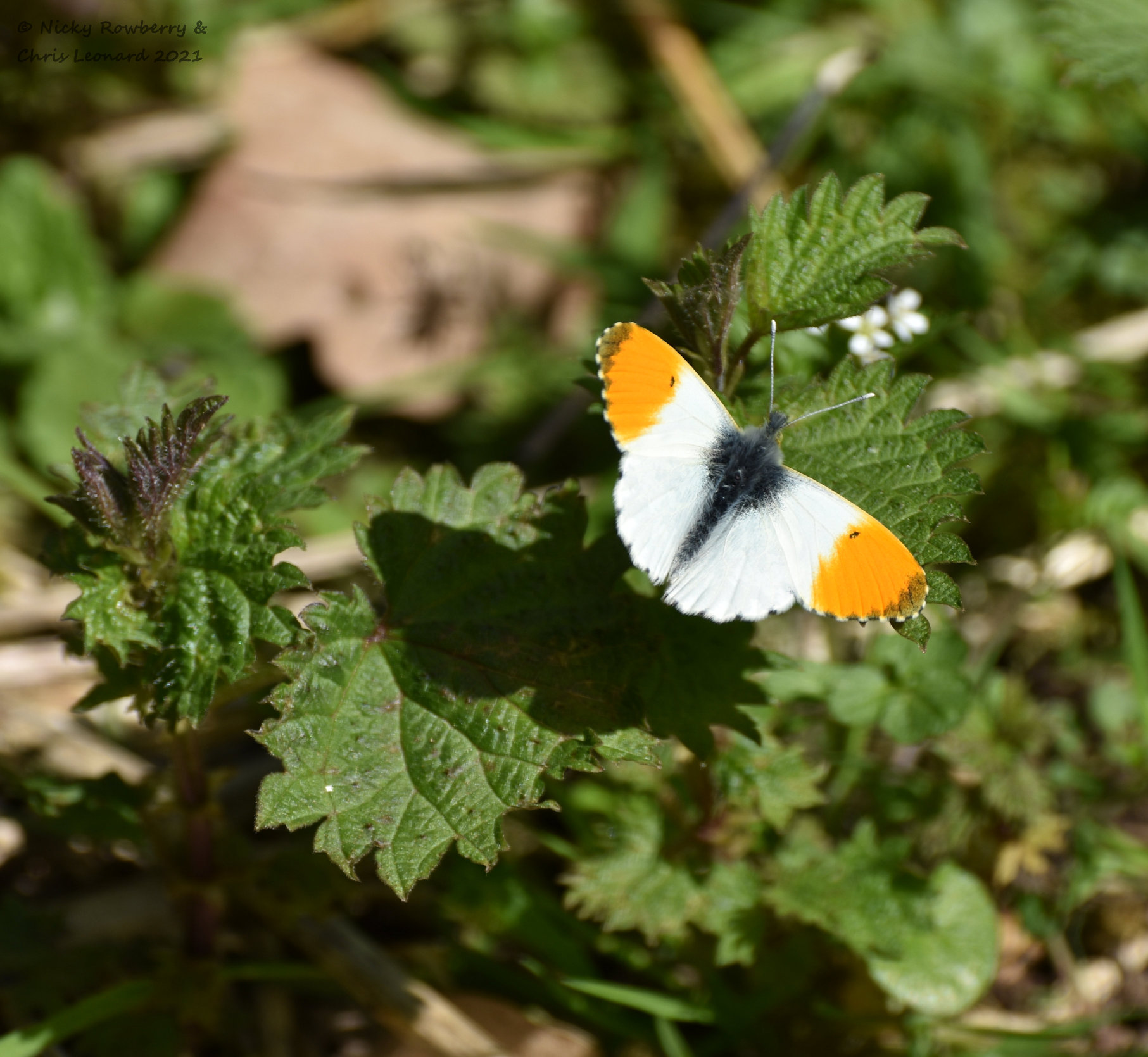
We’d hoped for some spring butterflies to complement the spring flowers and we weren’t disappointed – 6 species at least – Peacocks, Small Tortoiseshells, Commas, Holly Blues, Brimstones and Orange-Tips. The Orange-Tips really signal spring to me. We only saw males – hard to miss with their bright orange tipped wings. They were particularly prevalent around the cuckooflowers, a favourite food for their caterpillars.

There were buzzards overhead and what I thought was some weird loud bird in the woods, until we decided it was actually a deer calling! Slightly more recognisable were the calls of blue tits and chiffchaffs, although we never actually saw the latter and a pair of blackcaps.

Further upstream a Grey Wagtail was bobbing about around the weir. The weir seems to be a favourite spot for them to catch insects washed down the slope and we see wagtails here on most visits.


Out and About – Hollybed Farm Meadows

HollybedA sunny, if cold, Easter weekend and we took advantage of the lockdown easing to get out and about for the first time this year. So we headed out to find a small nature reserve that we’d not been to before – Hollybed Farm Meadows. We drove past hordes of people heading for the Malvern Hills, but fortunately Hollybed Meadows were virtually deserted and it felt like we had the reserve to ourselves. The meadows may not be at their best until the summer probably, but now we know how to get there, we will definitely go back later in the year.
The hedgerows were full of blossom; I think this is Blackthorn although I wouldn’t argue if someone says it’s Hawthorn. It was lovely whatever it was.

blackthorn

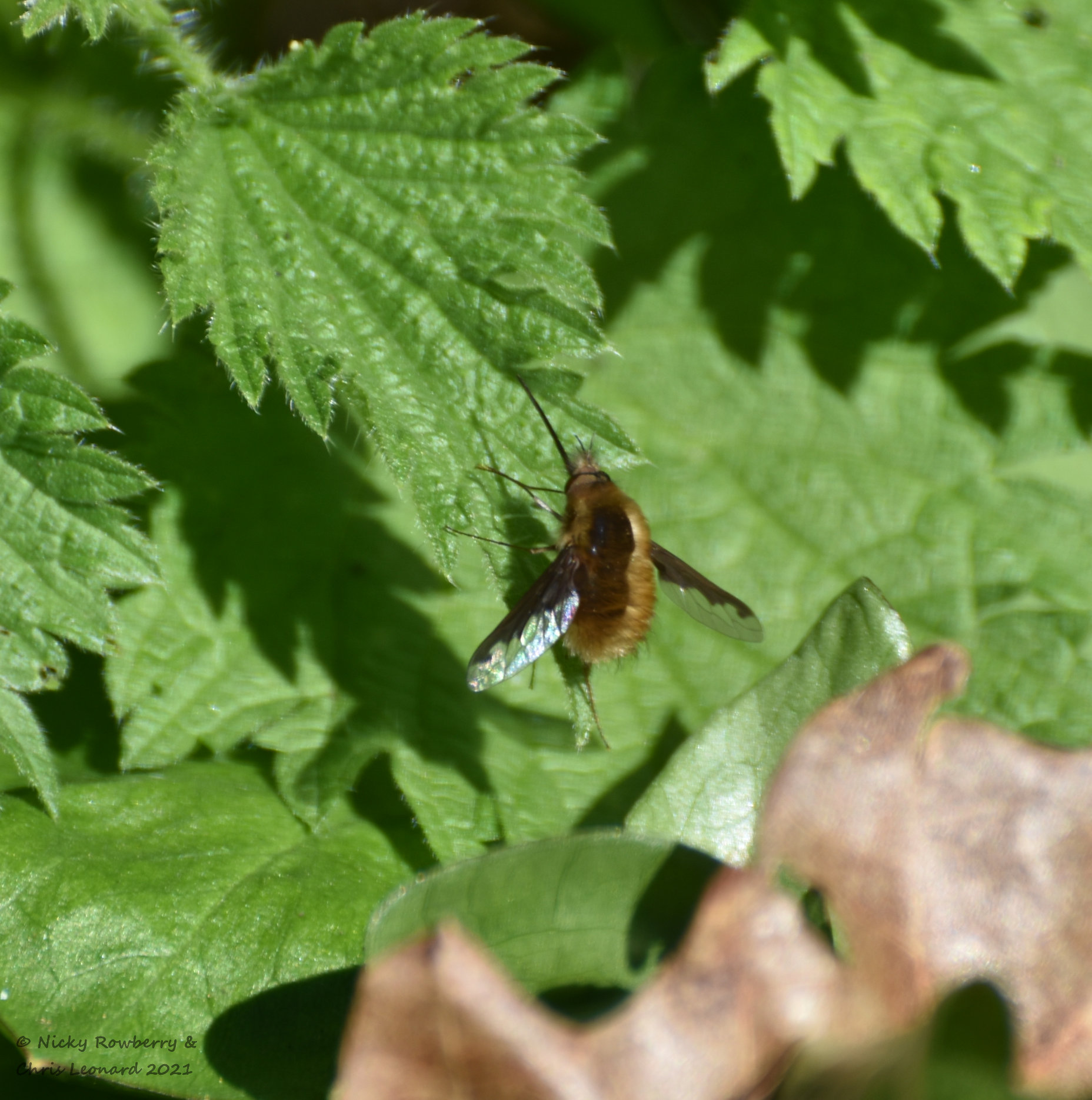
There were plenty of early spring bees enjoying the blossom, plus one of our favourites – the Dark-edged Bee-fly.

beefly 2

Besides the blossom in the hedgerows, the margins of the field were scattered with a variety of spring flowers (there may have been flowers all over the fields, but we were sticking to the footpaths around the edges).  We (tentatively) identified Wood Anemones, Violets (violet and white ones), Cowslips, Celandine and Dead-nettles.

wood anemone

Violets

cowslips

celandine

dead nettle

The floral highlight was probably spotting the first bluebells of the year, reminding us to go out later this month and see the carpets of bluebells on the Malverns.

bluebell

At the far side of the meadows, we went down a bank and were rewarded with the sounds of Chiffchaffs and woodpeckers. We also got lucky with sightings of our first Speckled Woods and Orange Tip butterflies of the year.

Orange Tip

Across a small stream we could see a field full of what we assumed to be wild daffodils. I don’t think it was part of the reserve, so we didn’t venture in, but it felt like a field full of spring!

field of daffodils

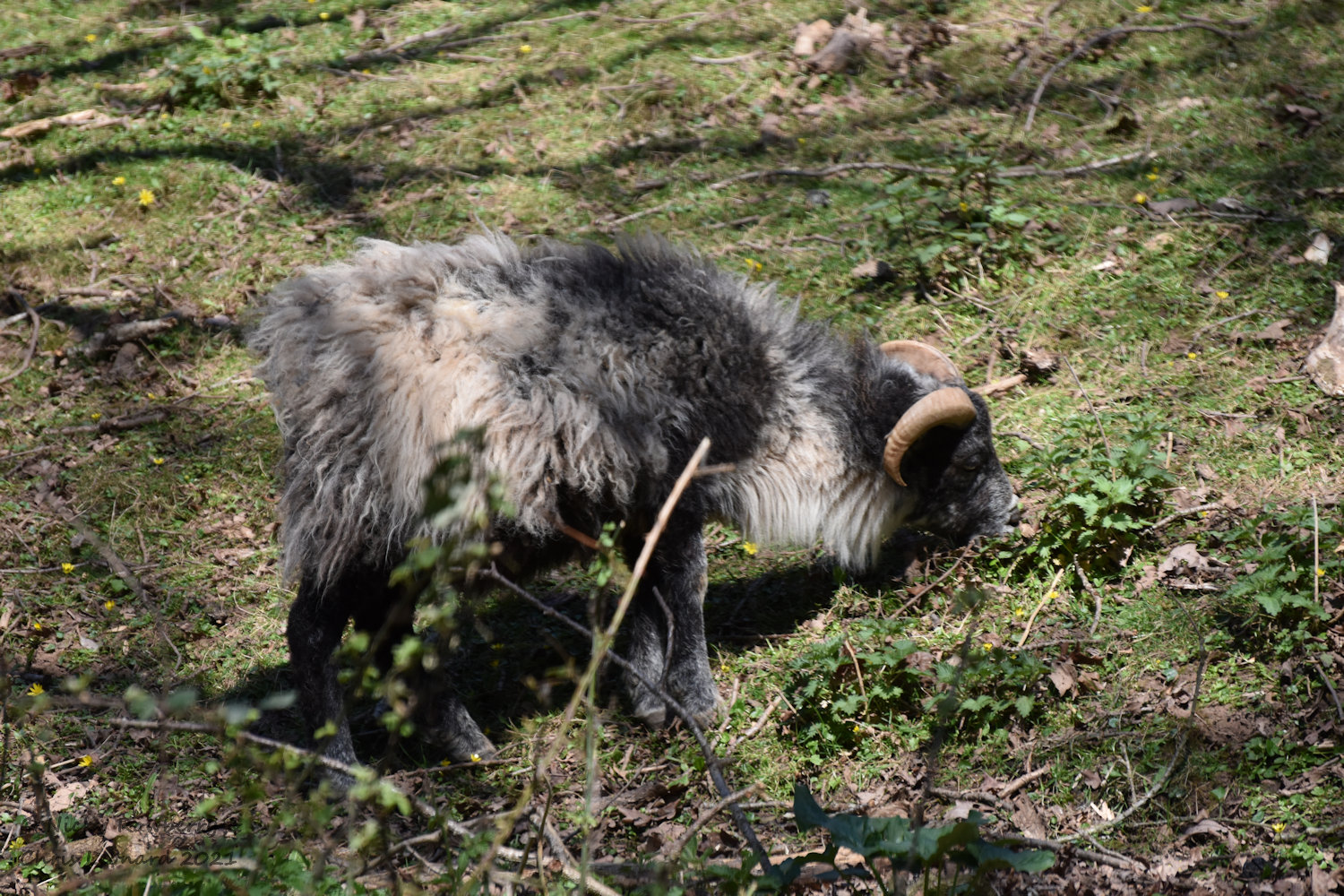
An orchard area was being grazed by the cutest, but scruffiest goats ever.

young goatGoat

As we headed back we were treated to a lovely sunny view of the Malvern Hills. We see the hills every day from our garden, but it was really nice to see them from a different perspective. All in all a very pleasant couple of hours and a taste of freedom!

Malvern hills


Spring Has Sprung

It was the Spring Equinox at the weekend – 20th March according to Google or 21st March according to my Dad whose birthday it was yesterday and he always said he was born on the first day of spring! Whichever day it was, the garden seems to be responding and there are signs of life everywhere after the long winter (and lockdown). 

Spring was ushered in a bit early back in February with the appearance of a new moth for the garden – the Spring Usher; an attractive moth and one that I’d been hoping to see for some years.

Spring Usher 1

Other insects have started to appear too. The garden has been graced with visits from both a Comma and a Brimstone butterfly – sadly both too fast and fleeting to get a decent photo of, but joys to see nonetheless. Pond skaters have popped up on the pond again. They were the first insects to move into the new pond last year so it’s nice to see them back again.

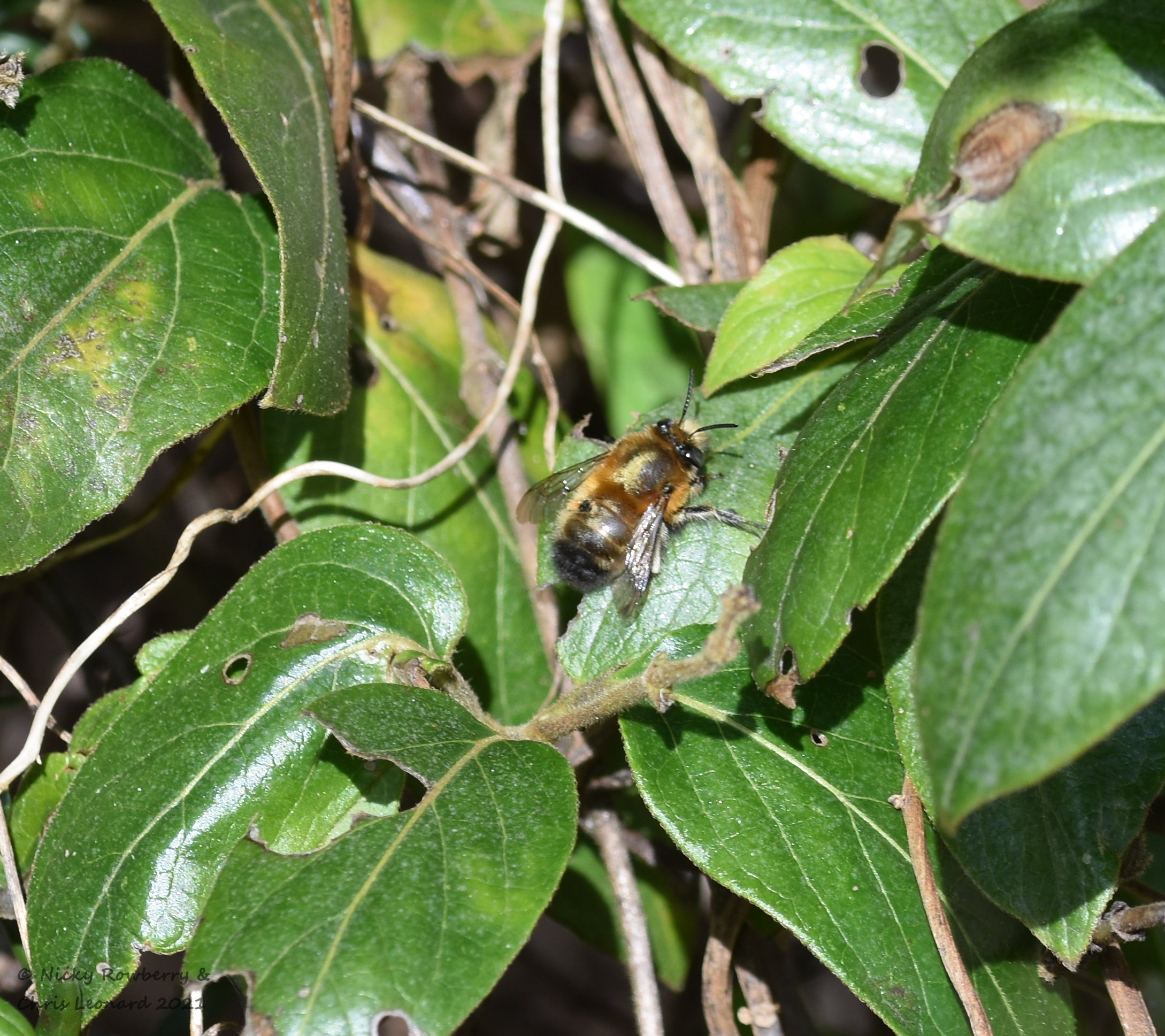
The first bees have emerged too. My perennial favourites the Hairy Footed Flower Bees are back buzzing round the garden. I’ve only seen males so far, but I think they do tend to appear before the females.

Hairy footed flower bee

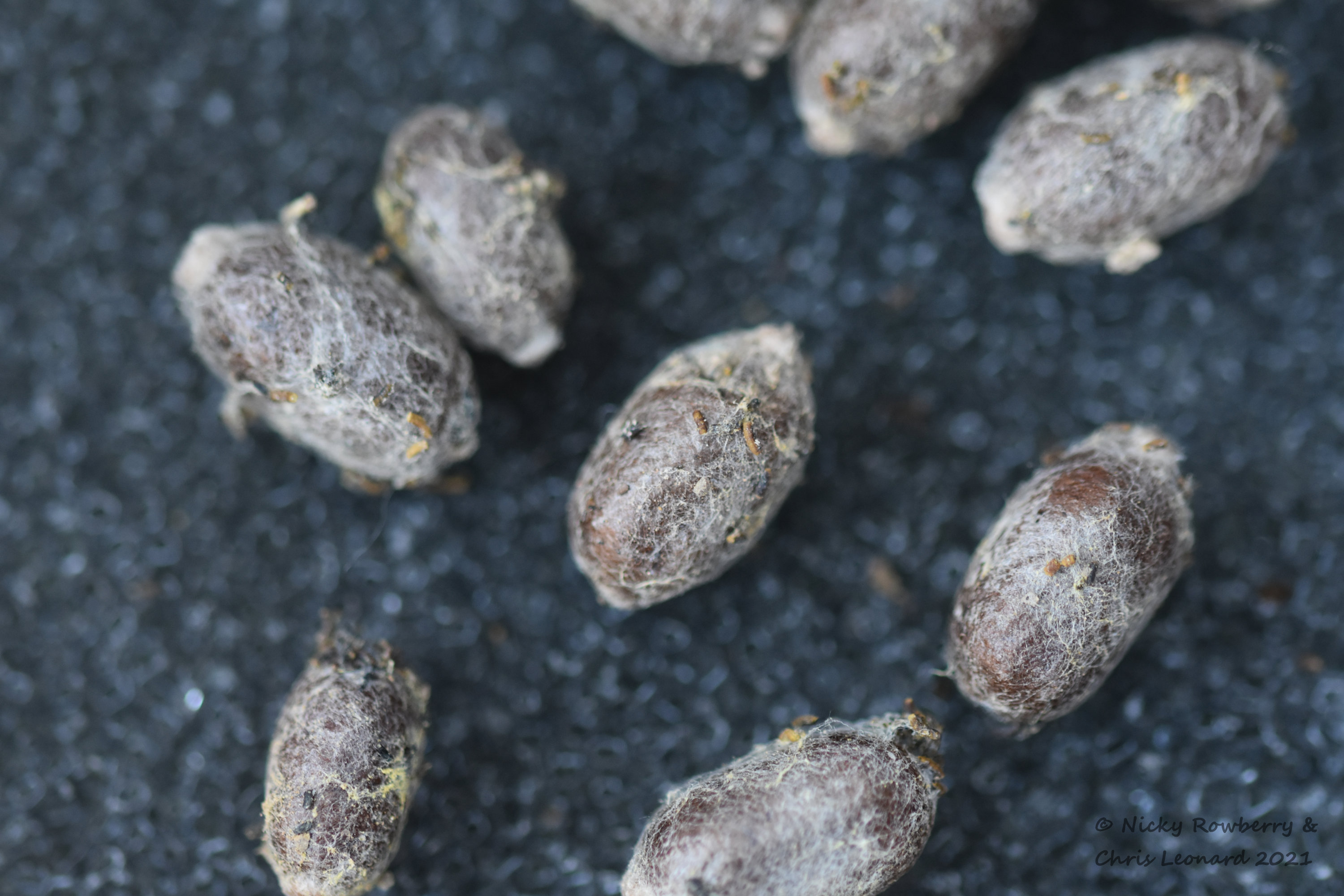
I’ve not seen any active Red Mason Bees yet, but they can’t be far off. I collected the cocoons from some of the tubes in the bee houses last year and they are now safely back out waiting for them to hatch. Again I think the males may hatch first.

red mason cocoons

Another favourite – the Dark-edged Beefly appeared just at the weekend. I don’t know why, but I’ve always found them to be cheery little insects and for me they really signal that spring is on its way.

beefly

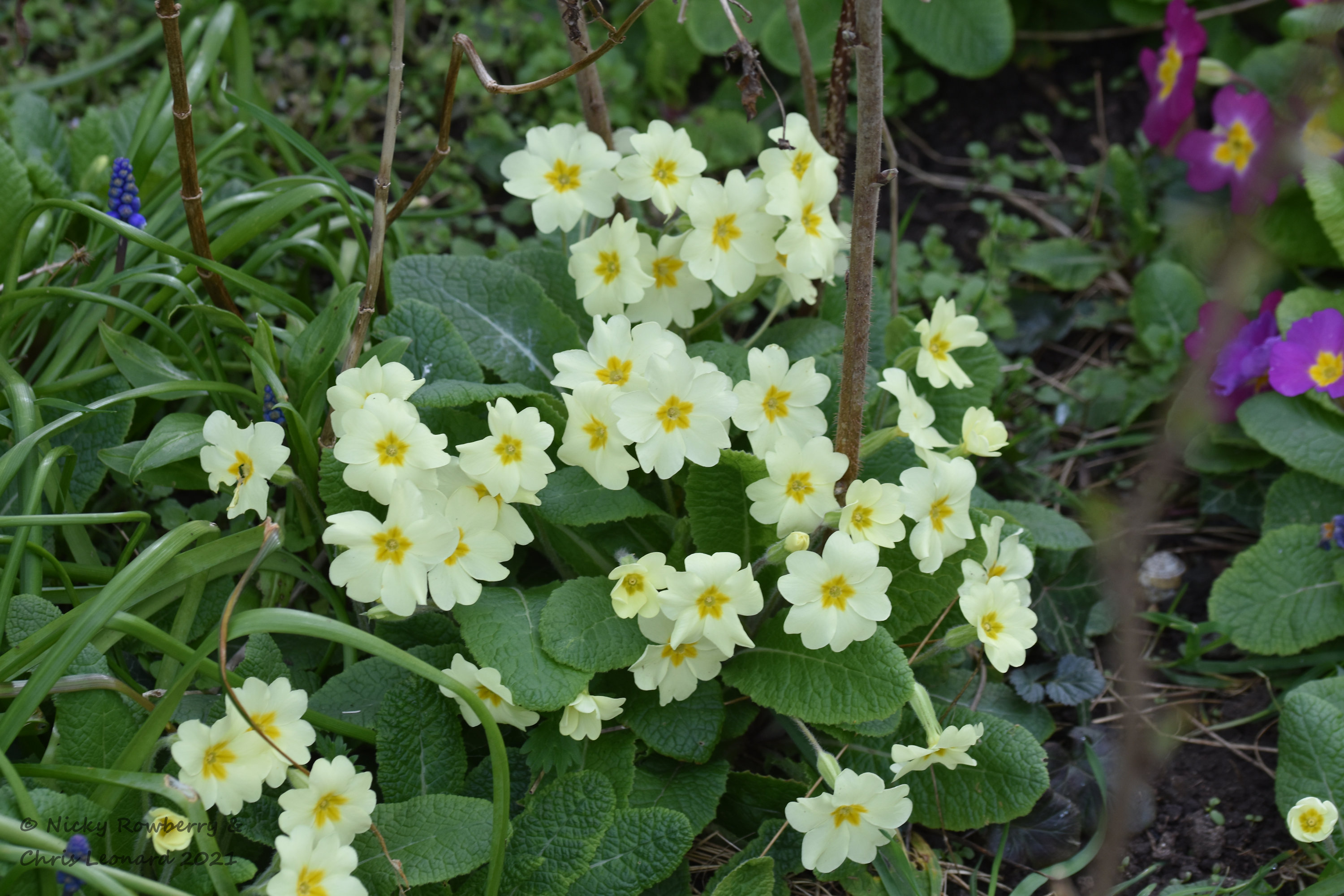
The spring flowers are out in force now – good news for the bees hopefully. We’ve got lots of self-seeded primroses all over the place and the occasion violet too.

primroses

Violet

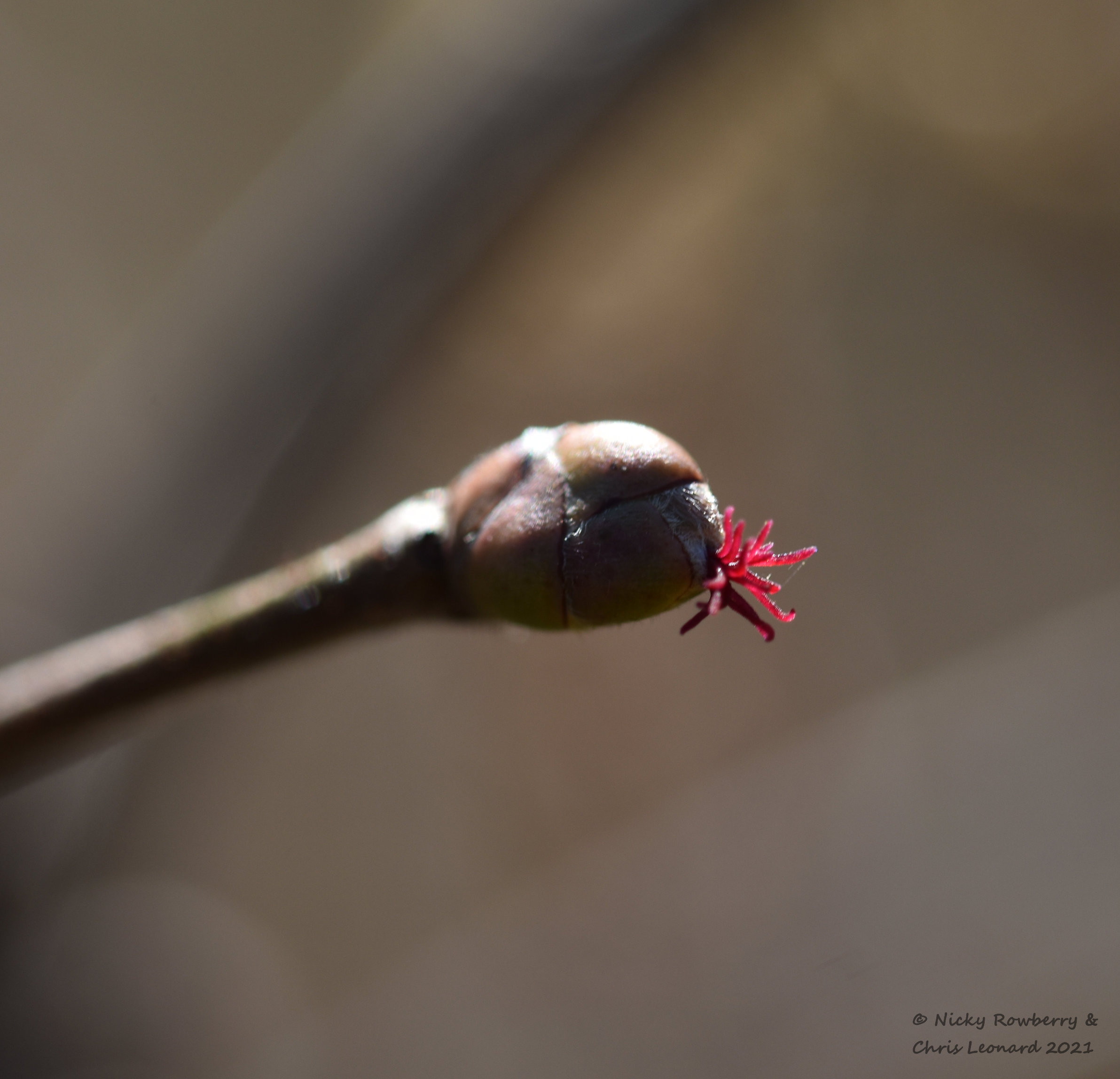
A surprise this year was to find that we have a Hazel tree. The little sapling has just appeared amongst the bushes – we can only guess that perhaps the squirrel buried a nut and then forgot about it. Having never known anything about catkins, I discovered that the trailing flowers I was familiar with were just the males and that there were much smaller red flowers that were the females. I had to go back out and search over our tiny tree, but sure enough there were female flowers too – you learn something new every day! The red female flowers are tiny in comparison and barely noticeable. 

Hazel male catkins (1)


Hazel female flower

The pond has been attracting a fair amount of non-insect life too. The birds as always using it for drinking and bathing – I was particularly pleased that our resident wren got caught on camera even if it was for just a second.

A couple of our hedgehogs have emerged early from hibernation and have been seen drinking from the pond most nights. It’s always a relief to know they have survived the winter.

But the BIG news is that we have frog spawn! The first spawn appeared on 20th February, followed by another clump the next day, then 2 more clumps three weeks later. Here’s the first beautiful batch. Frog spawn day 1

I’ll do a full froggy post soon, as I’ve taken too many photos and videos to include in this one. So despite what Google and my Dad said, for me spring began on 20th February with the glistening sight of our first frog spawn.

Blowing in the Wind

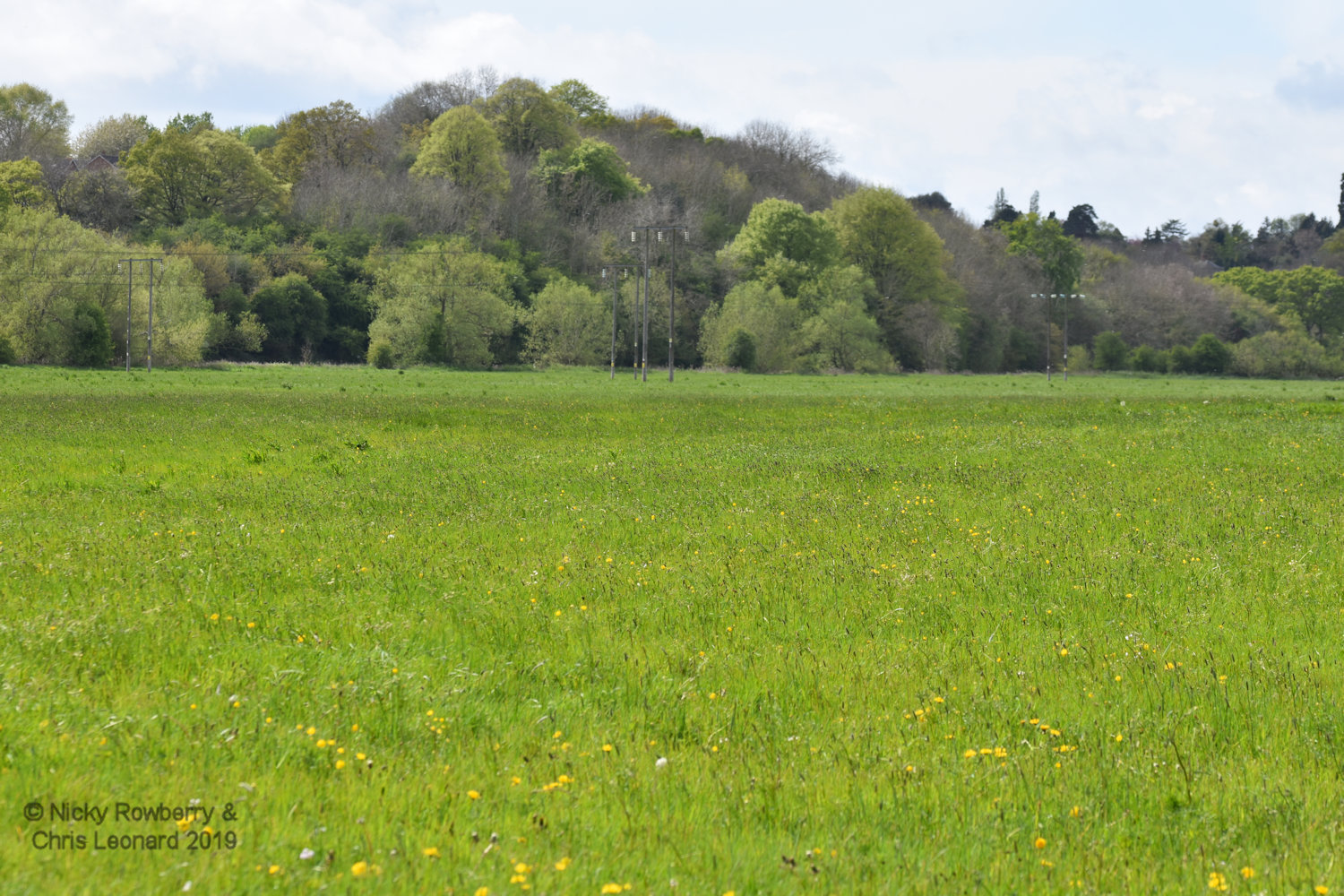
At the weekend, we finally got to go and see the Snake’s Head Fritillaries at Lugg Meadows near Hereford. I’ve been wanting to see these for ages now, but something always seems to crop up to stop us (last year the meadows were flooded for a start). So this year we booked on a guided walk with Herefordshire Wildlife Trust to go in search of these nationally scarce plants. Lugg Meadows are part of a very old system called Lammas Meadows, where the meadows are left through the summer to grow hay, which is then cut in late July (in time for Lammas Day 1st August), then animals allowed on to graze until the following year. In places like the Lugg Meadows, this practice has been going on for hundreds of years, possibly back to Roman times. So the history of these meadows predates Hereford Cathedral itself; they were even recorded in the Domesday Book.

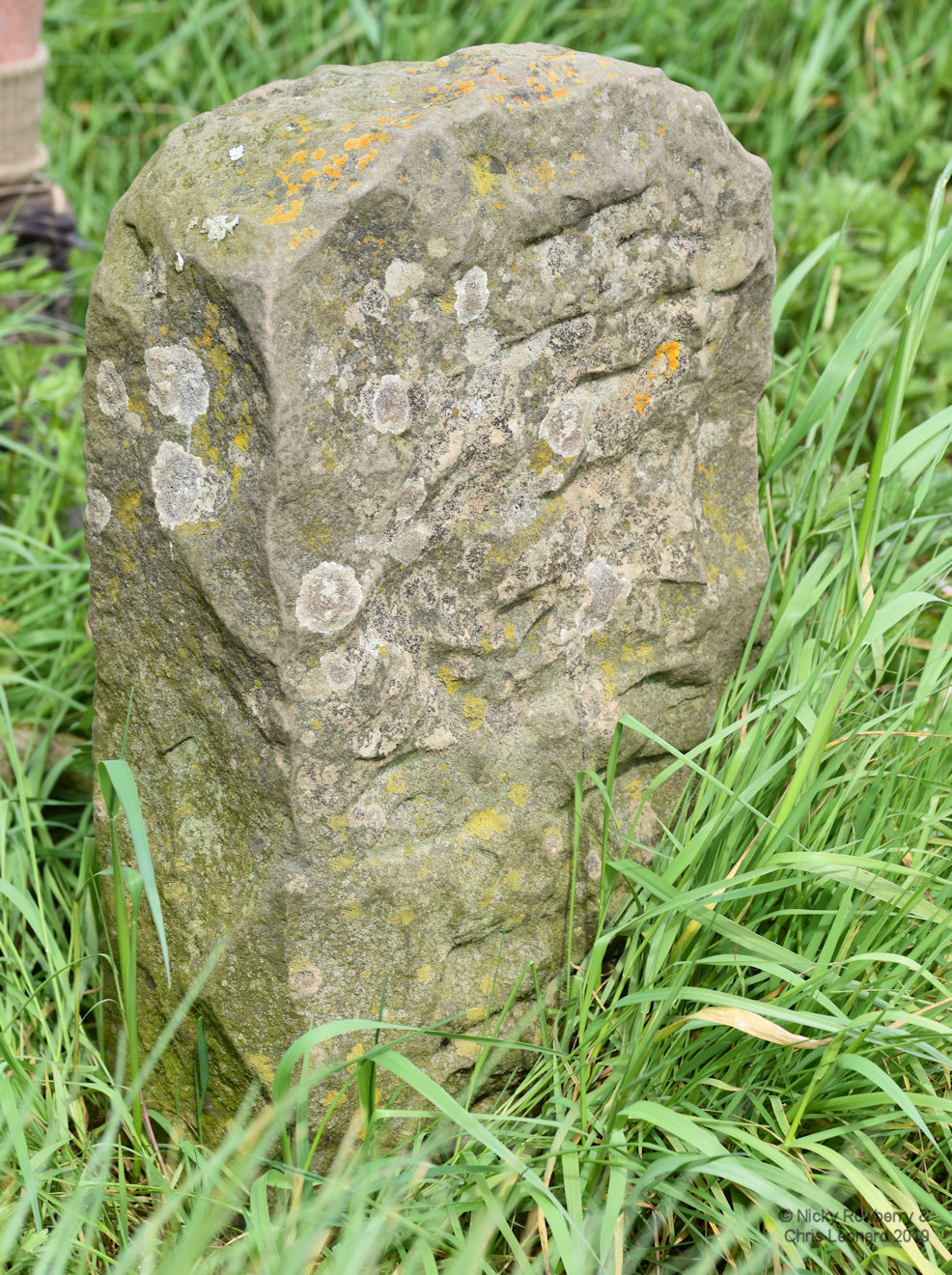
Lammas Meadows were once much more common, but now very few remain in as good a condition as those by the river Lugg. The meadows were divided into strips of land, the hay from which would then be harvested by different people. These strips were marked by “dole stones” like the one below.

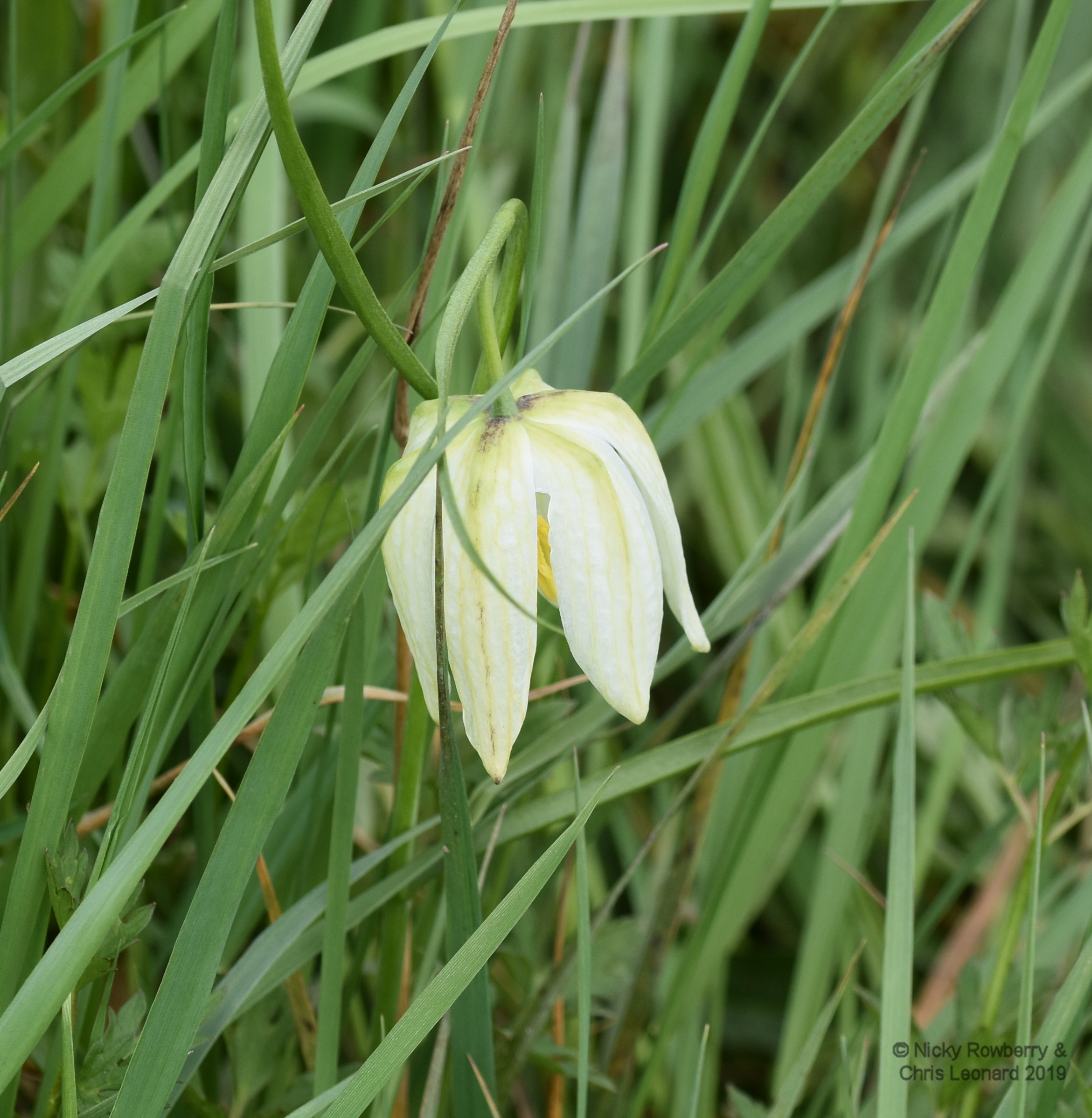
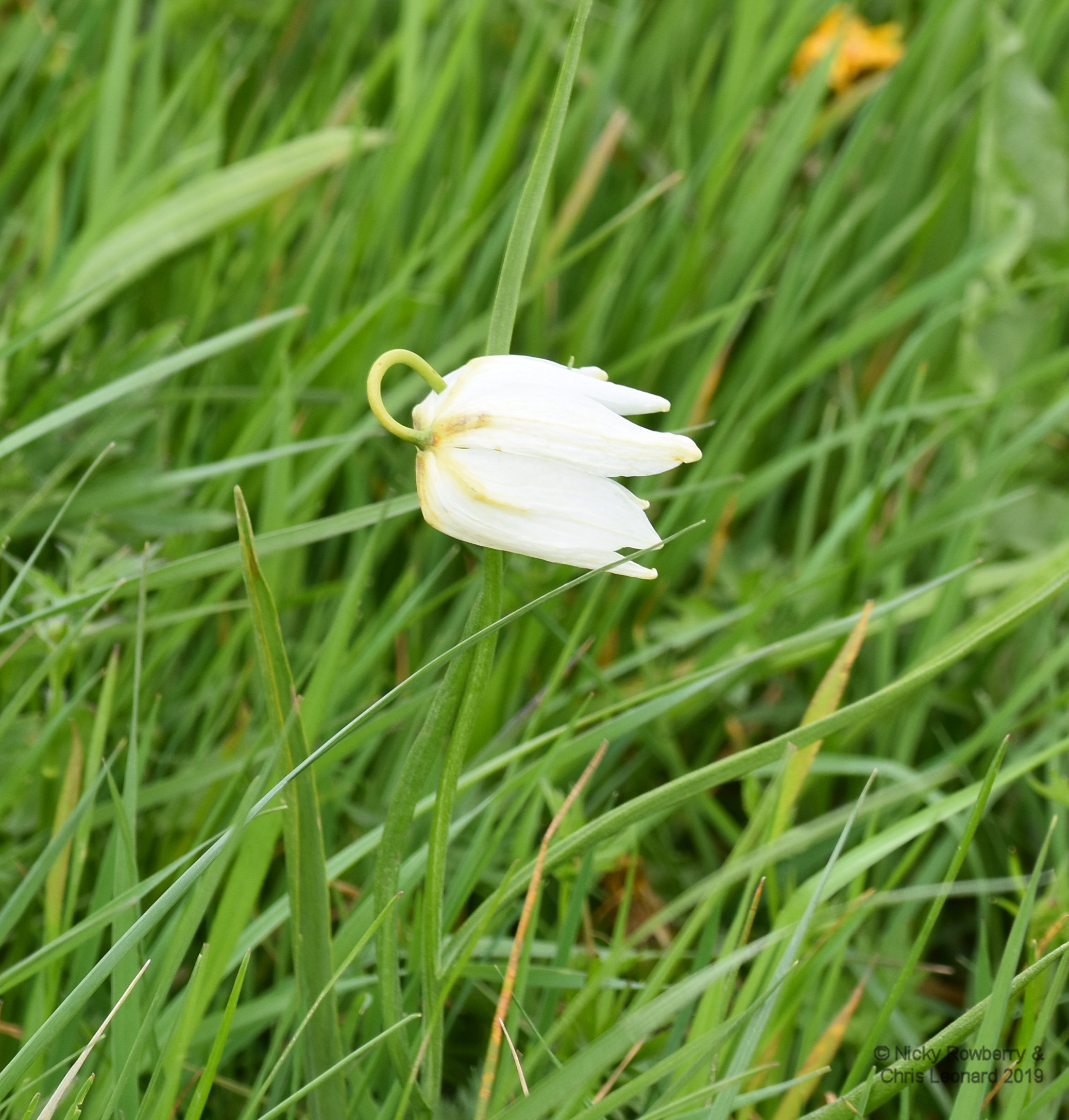
Our guide Peter was very entertaining and knowledgeable and despite the efforts of Storm Hannah trying to blow us over, took us straight to the relevant patch of the meadow to see the Snake’s Head Fritillaries. The meadows flood regularly, resulting in a rich soil and diverse flora. The fritillaries are nationally scarce, but are still doing well here. In most other similar sites, the Snake’s Head Fritillaries tend to be predominately purple, with just a few white ones. For some reason in the Lugg Meadows it is the other way around – the white flowers dominate with just a few purple ones.

With Storm Hannah blowing, it was perhaps not ideal conditions for taking photos of delicate flowers that were literally blowing in the wind, but we did our best.

The Latin name for the fritillaries Fritillaria meleagris apparently refers to the chequerboard pattern of spots on the normal purple variety.

I made a brief video clip to show how much the wind was making life difficult for steady photography.

Once we got our eye in, there were actually quite a few of the flowers nodding around in the wind. Apparently they had peaked a week or two before, but since the walk was pre-booked for today, we were happy to catch them at all.

While we oohed and ahhed over the flowers, we heard our first cuckoo of the year, which was a nice surprise. We couldn’t actually see the cuckoo, it was behind us somewhere in the trees. But we did see lots of these cuckoo flowers – one of the favourite food plants of the Orange-Tip butterfly – not that any butterflies were flying while the wind battered the meadows.

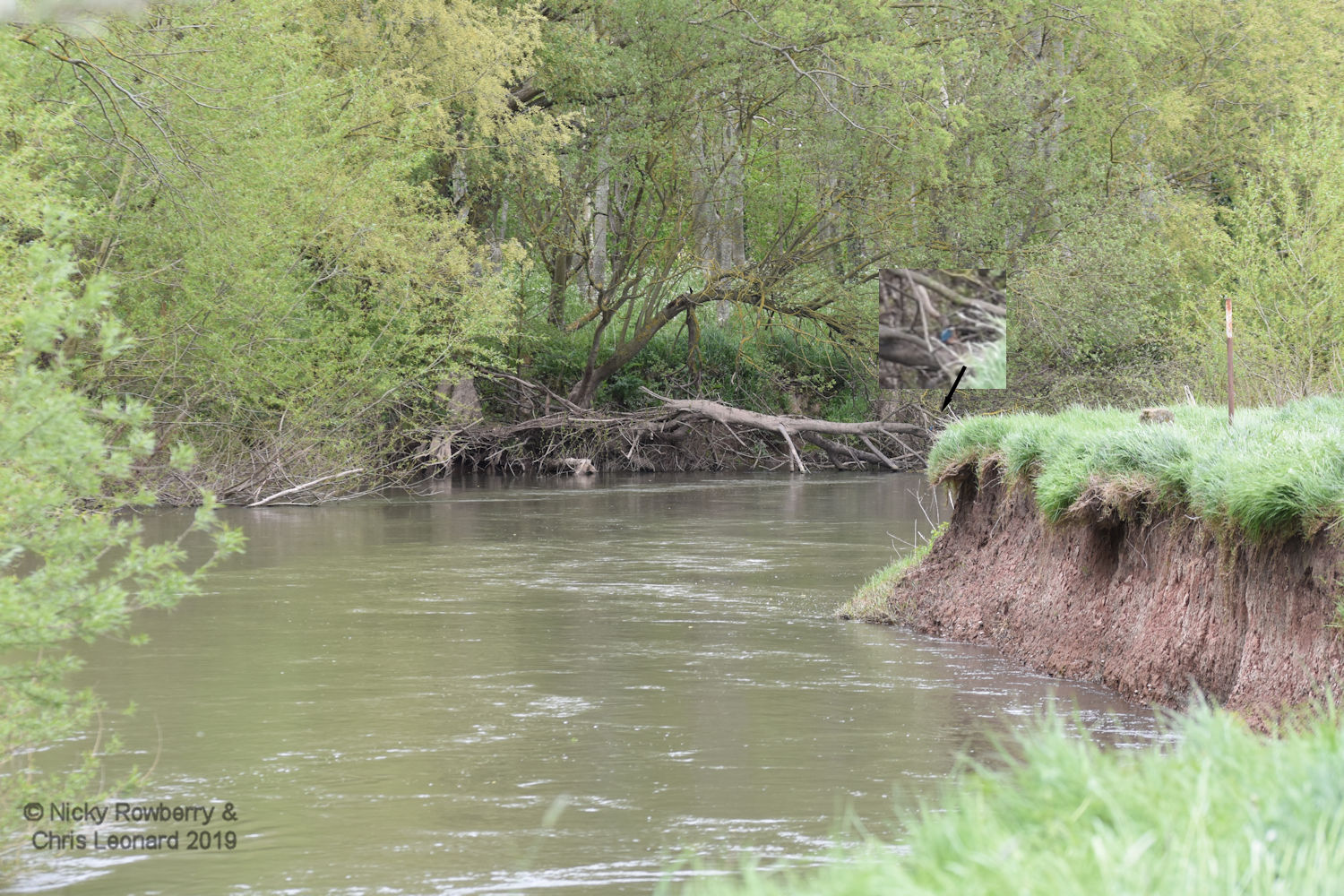
We returned to the car by crossing the meadows and walking alongside the river. We got the very briefest glimpse of a kingfisher as we walked. Such a brief glimpse, I’ve had to blow up the section of the photo just to prove there was really one there!
Herefordshire Wildlife Trust do a great job of managing these meadows. There is an area that has curlews nesting – access to this is restricted during the breeding season to try and help this struggling species. So all in all a very pleasant way of spending a Saturday afternoon.  Next year we can maybe go back under our own steam, now that we know the right area to look for the fritillaries and we can hopefully pick a weekend without a storm blowing!

Scilly Isles – Tresco

Here’s the second bloggy instalment from our recent trip to the Scilly Isles – this time covering Tresco. Tresco is the second largest of the islands and was just a short boat ride away from where we were staying on St Mary’s. As with all the Scilly Isles, you can’t really move for beautiful beaches and stunning views.

I particularly liked some of the rock formations which looked like they’d come out of a Flintstone movie!

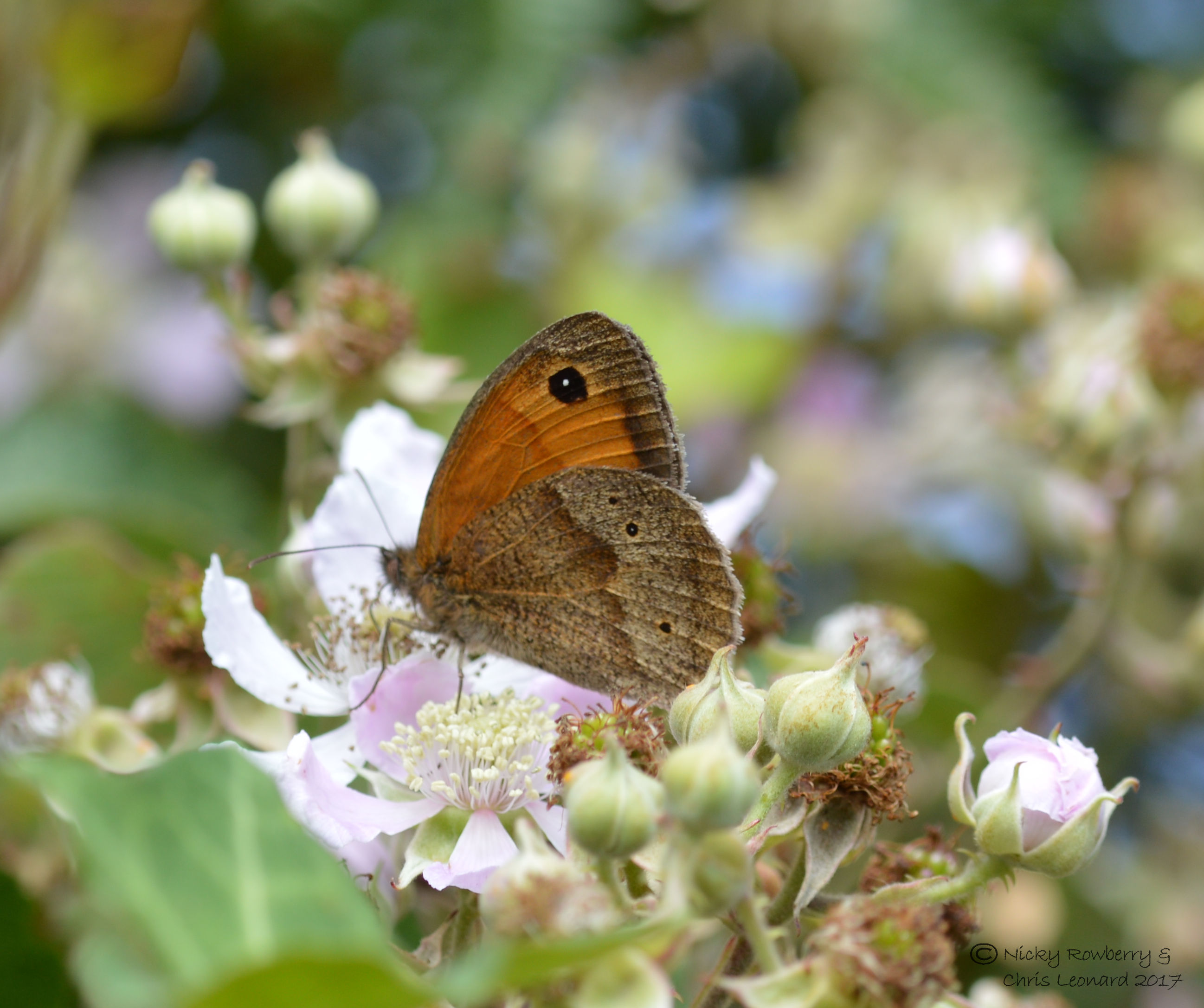
Tresco is perhaps the most touristy of the “off islands”, but within minutes of getting off the boat we were all by ourselves on a butterfly filled lane crossing the island. I’d visited the Scillies as a child with my parents and one of the things I remember most vividly was the abundance of butterflies (of course there were generally many more butterflies around everywhere back then in the 1970s).  So it was a delight to walk down lanes and be surrounded by them again. Meadow Browns were by far the most common species.

We saw lots of Red Admirals all over the Scilly Isles – far more than we ever see in Malvern. This is probably because most of them are migrants that get blown or fly over to Scilly from mainland Europe.

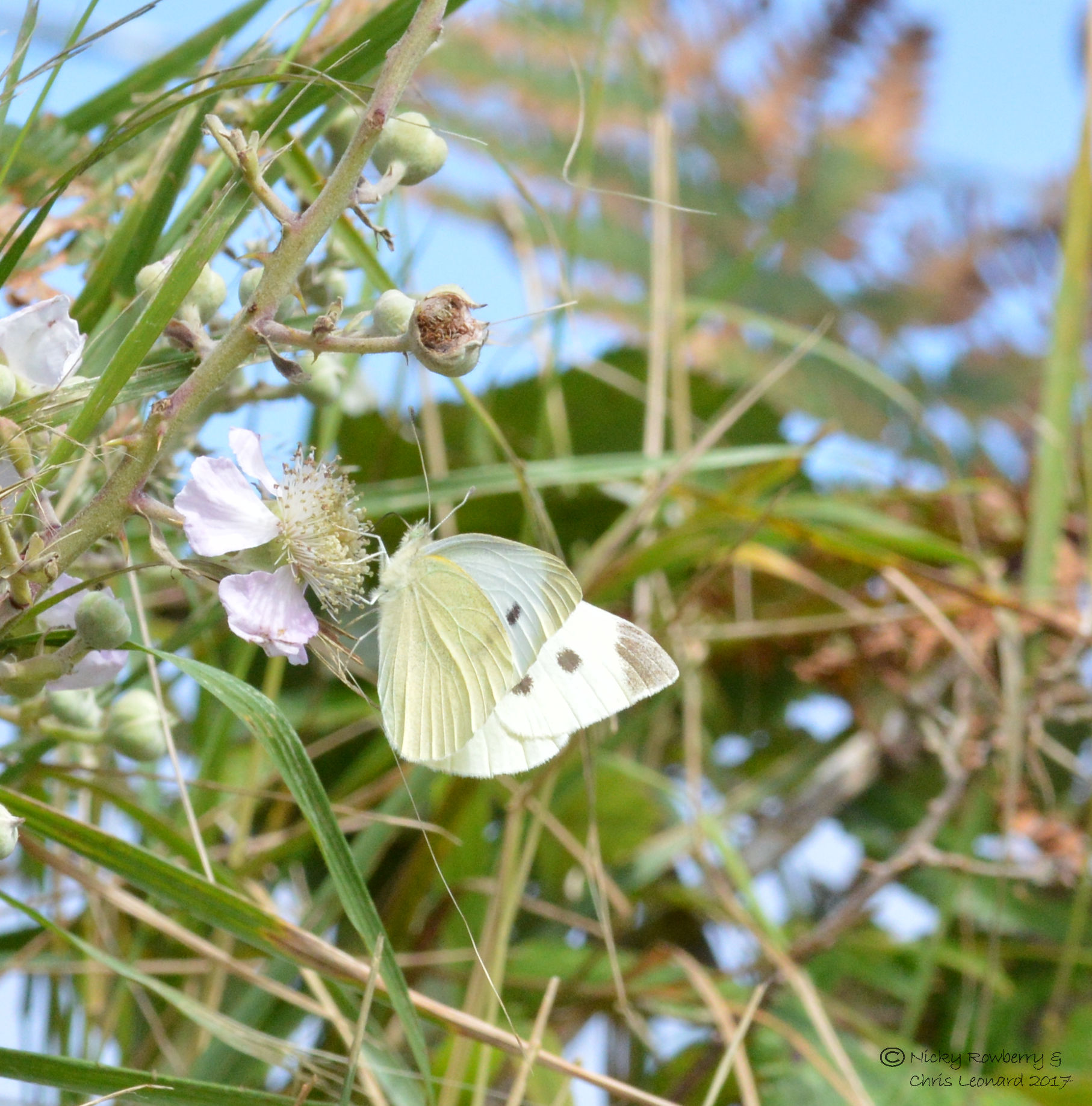
The lanes had plenty of the other common species too like Speckled Woods, Large Whites and Holly Blues.

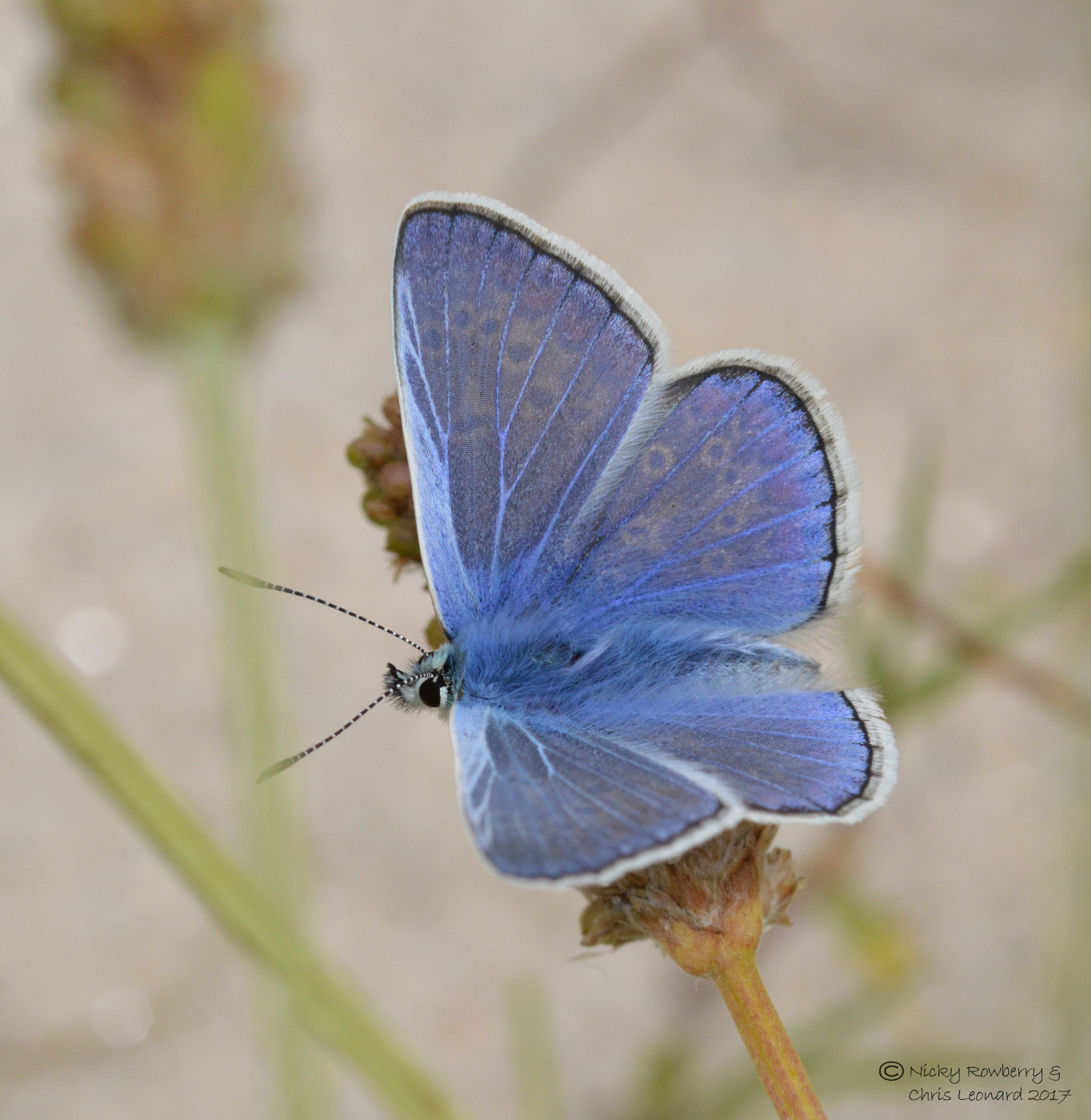
My favourites though on Tresco were the Small Coppers and Common Blues – both small jewel like butterflies. It was blue butterflies in particular that I remember from childhood, so seeing those here was lovely.

Tresco also supplied us with another new bird species – the stonechat (thanks to Neil for the identification). We saw lots of these little birds and heard even more, although sadly I don’t seem to have any photos.

Tresco has a very tropical feel to it, with lush vegetation pretty much everywhere. There were loads of these absolutely massive Echium plants – many of them at least twice as tall as me, although admittedly I am only about 5 foot 1!

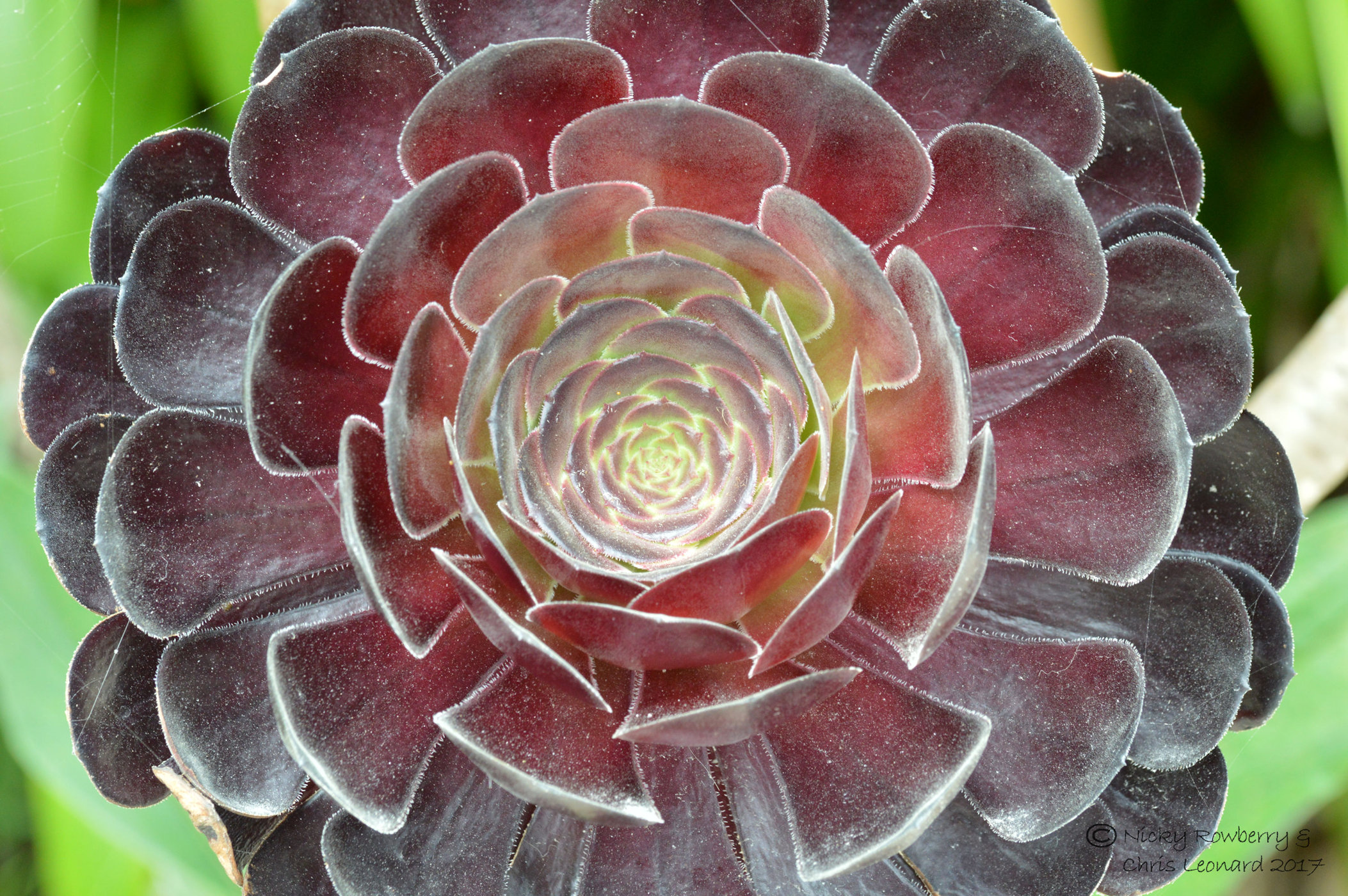
Many of the stone walls were covered in large succulent plants, like something off an alien movie. They are Aeonium plants and there were several different varieties around the Scillies.

Tresco seemed to have far more of these bright yellowy orange flowers  (Gazania – thanks Neil!) than the other islands.

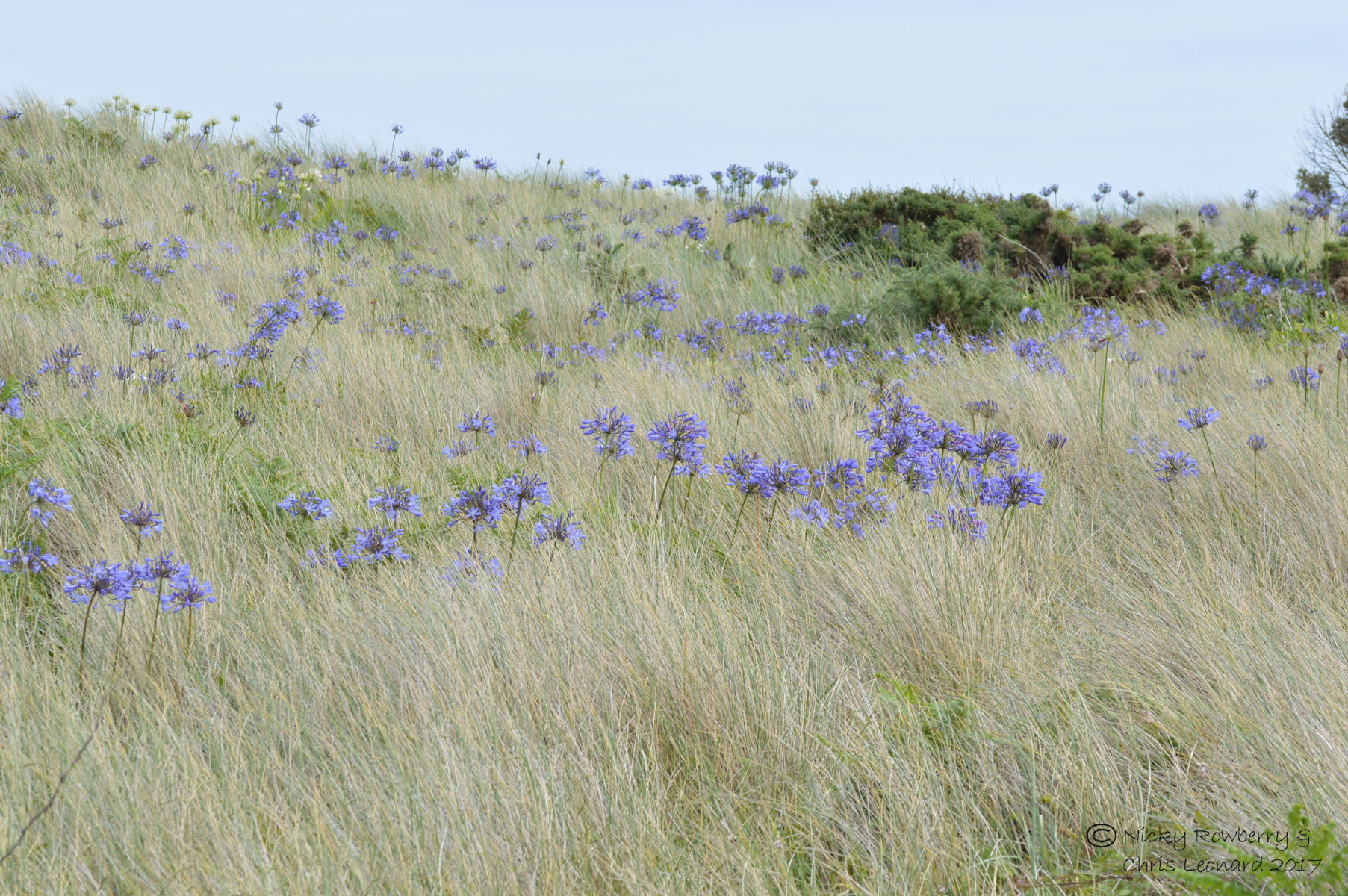
Blue (and white) agapanthus were common everywhere; whether in gardens and verges like this,

or seemingly naturalised on open ground.

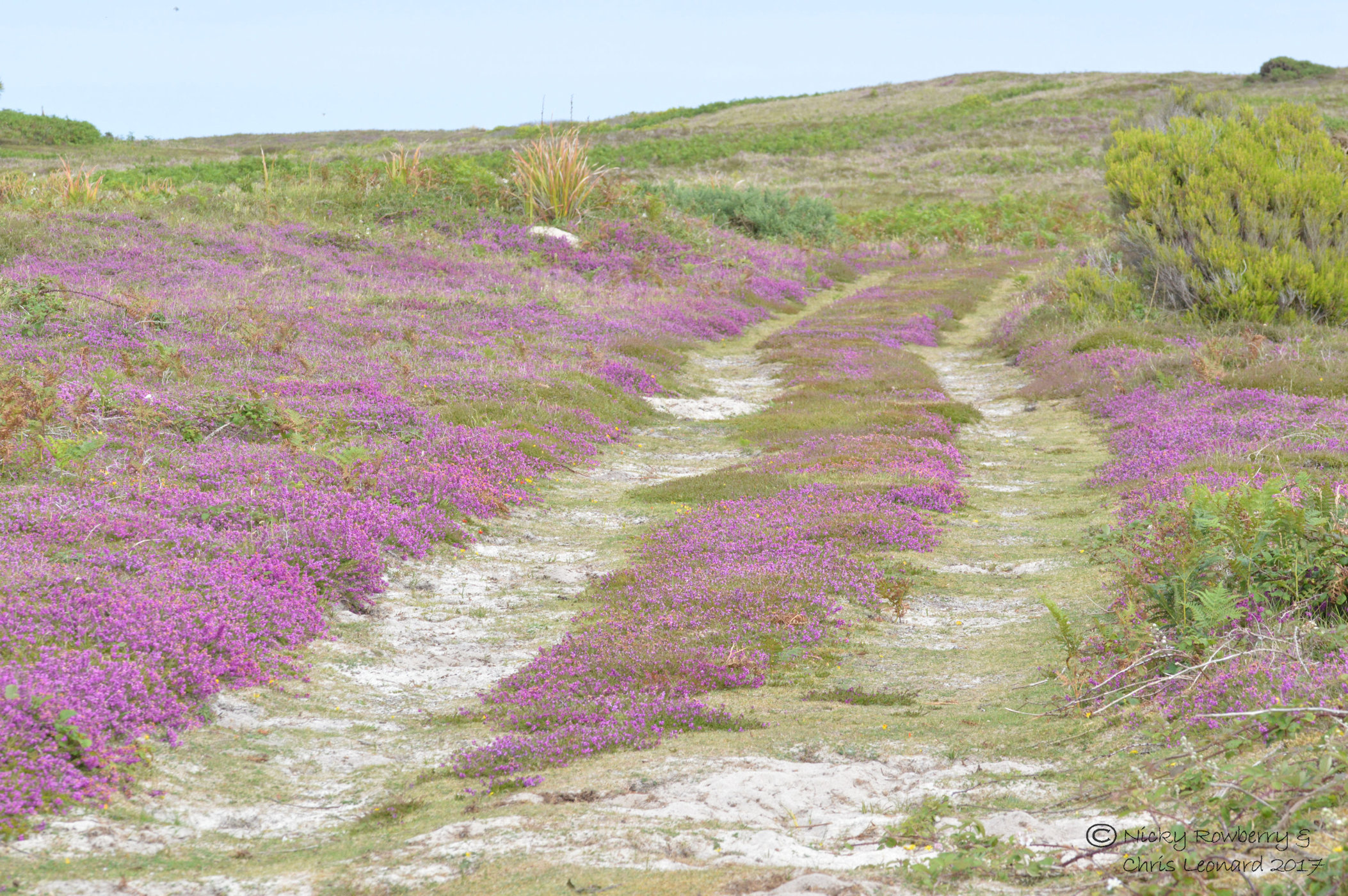
The areas further from habitation tended to have more natural, as in more British looking flora. Lots of the island was covered in gorgeous purple heather which was teeming with insects.

Bees were abundant everywhere – Tresco and indeed all the Scilly Isles must be bee paradise with all those flowers. Most of the ones I saw looked fairly familiar, but Tresco had a lot of these ones which seemed a bit different. The good people of the Facebook bee group suggested they might be Cliff Mining Bees (Andrena thoracica), although apparently we can’t be sure about this one as it had collected so much pollen it has obscured the vital bits for identification!

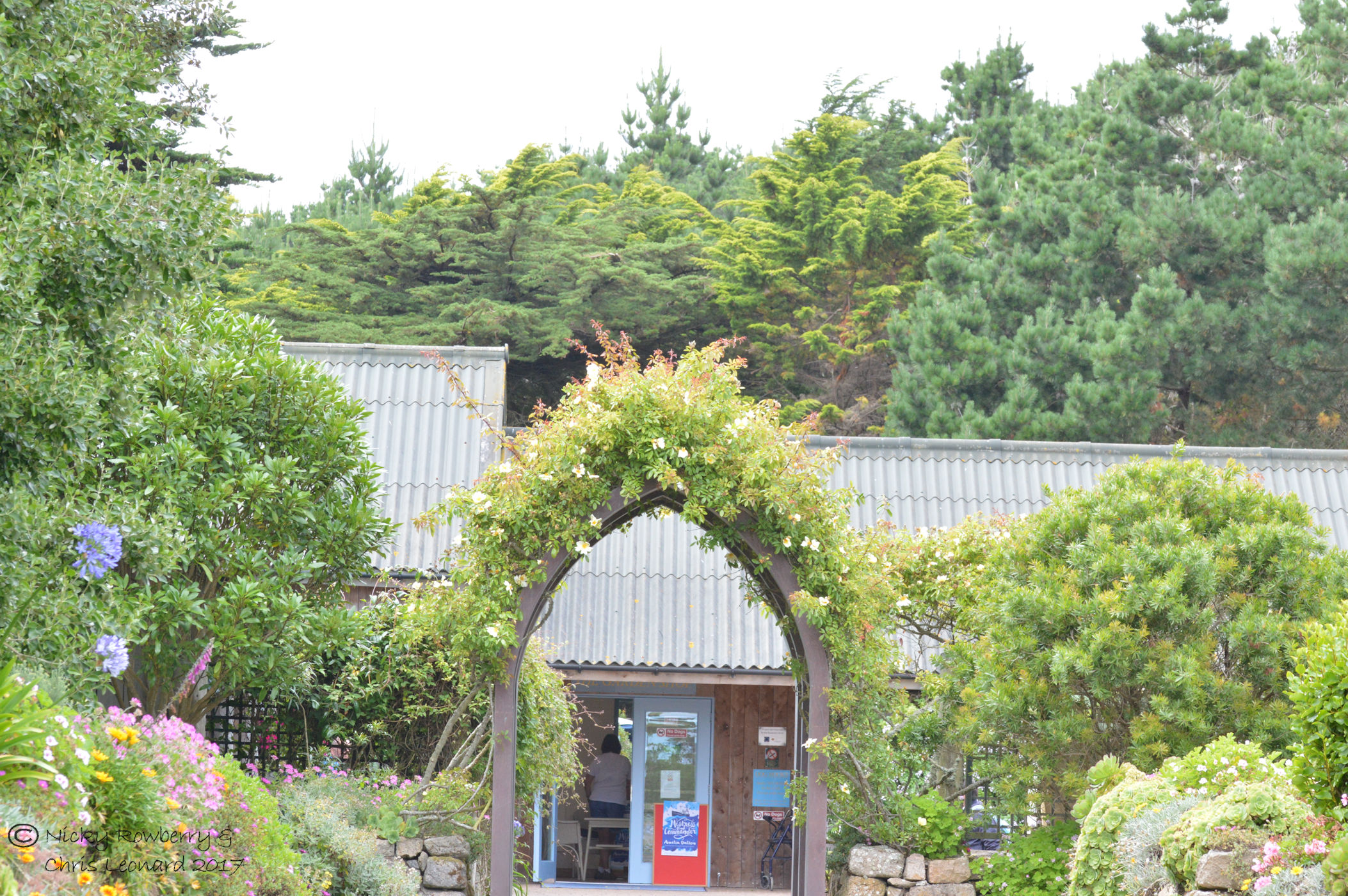
Tresco is famous for its tropical Abbey Gardens. Unfortunately we spent so much time dawdling around the island looking at butterflies (and admittedly eating a very good lunch at the Ruin Beach Café) that by the time we got to the Gardens there wasn’t really time to go in. So the entrance below is as close as we got.

Although it would no doubt have been nice to look round the gardens, there was so much tropical plant life all over Tresco that I don’t feel we missed out too much. And it’s always nice to leave something new for the next visit!


Scilly Isles – St Mary’s

After the rush of 30 Days Wild in June, I thought July would be a quiet month and I’d be able to blog at a leisurely pace. Somehow that doesn’t seem to have happened and we are now two thirds through the month! The good news is that we managed to squeeze in a fantastic holiday in the beautiful Scilly Isles. We took so many photos (over 2000!) that I’ll split them (not all of them obviously!) into blog posts for the different islands we visited.

So first up are some of the many things we saw on the main island – St Mary’s. We were staying on St Mary’s, so spent our first full day getting to know it (via some crazy golf buggy driving thanks to my brother-in-law), before taking boat trips to the other islands later in the week.

The Scilly Isles are off the southern tip of Cornwall and have a much more tropical climate than we get back home in Malvern. This was immediately apparent from the lush vegetation – palm trees, giant Echiums and Agapanthus everywhere. The rocky walls were generally covered in all manner of stunning flowers and the hedgerows were overflowing.

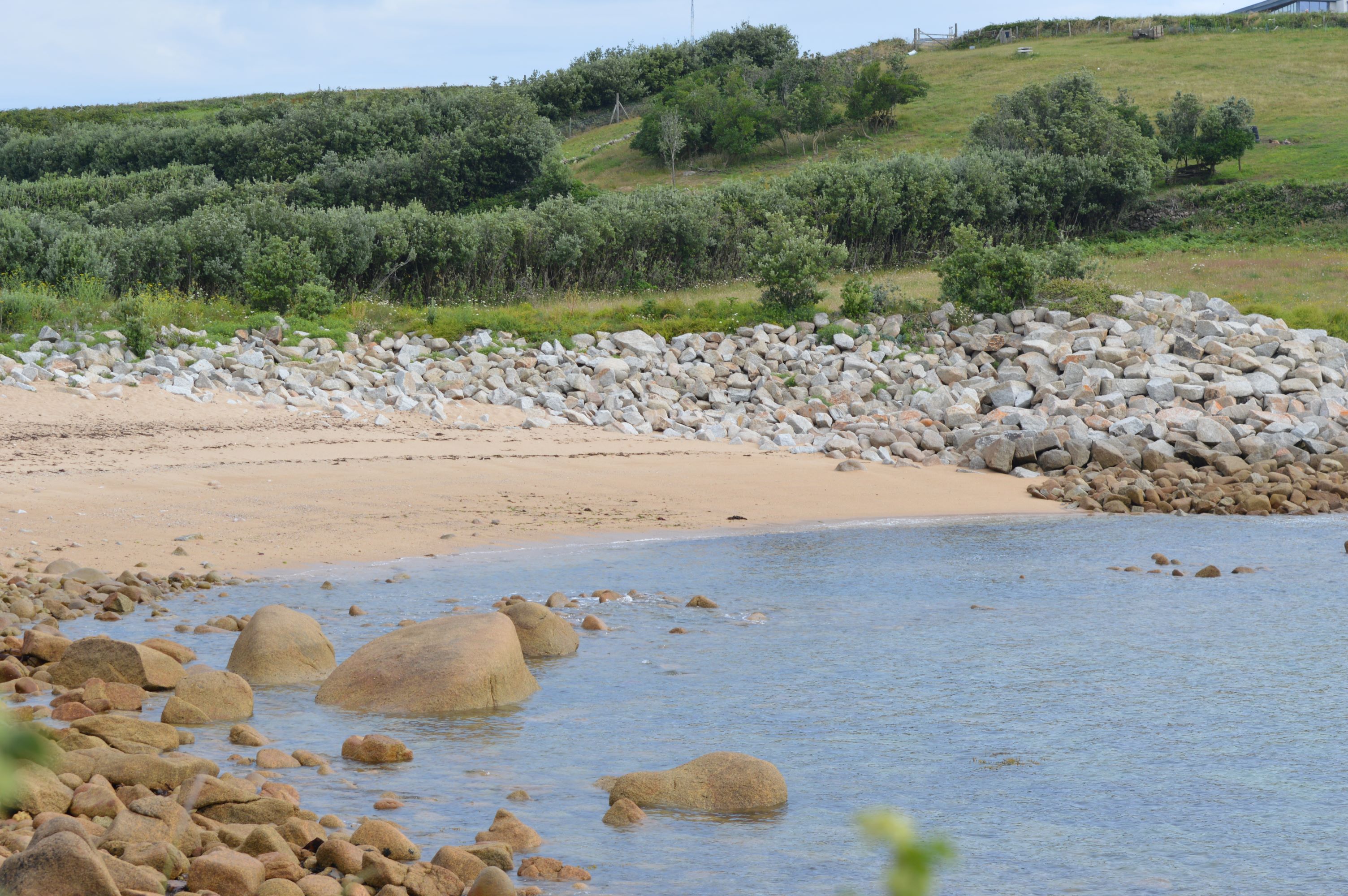
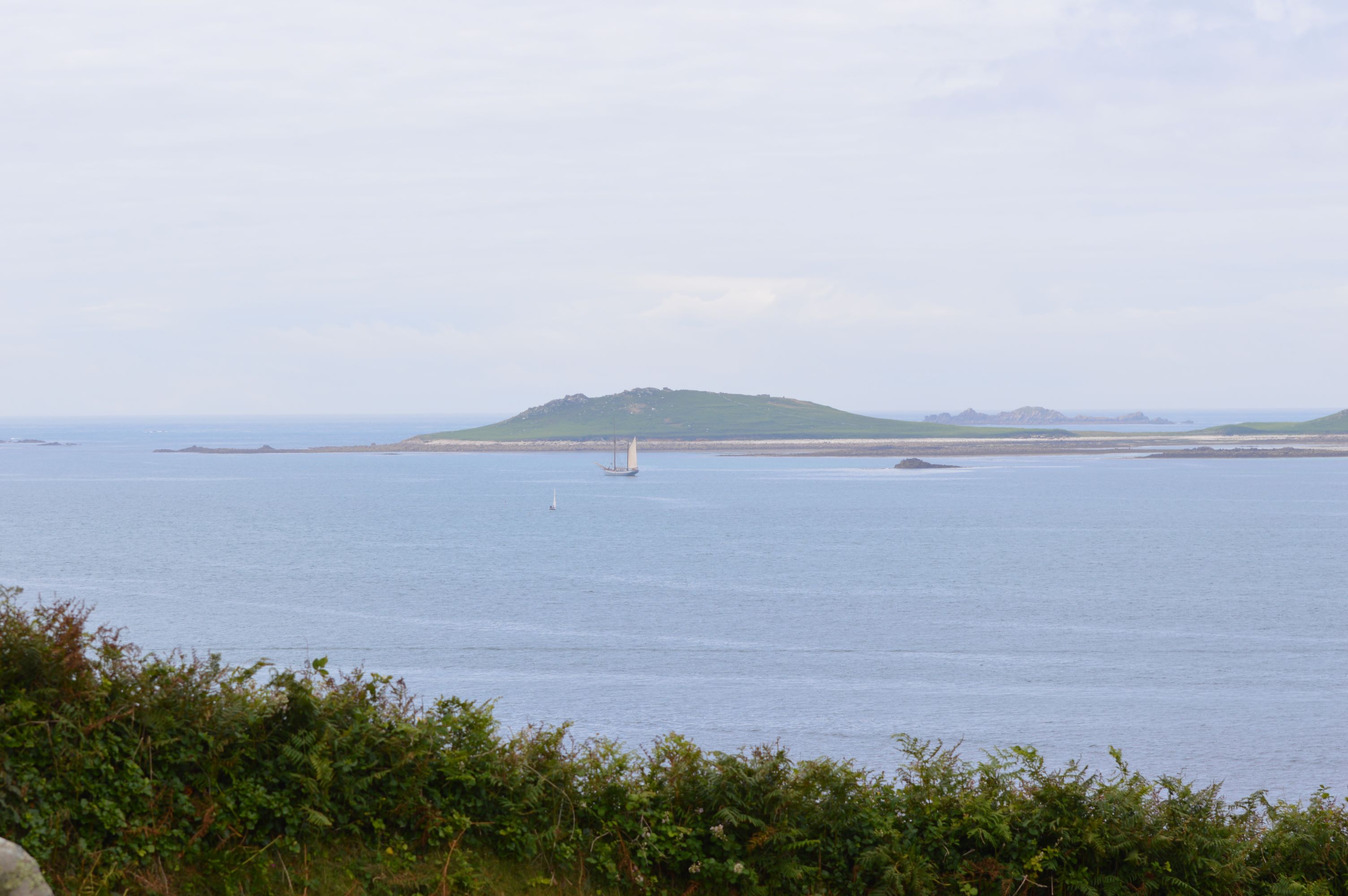
As we trundled around St Mary’s at the breakneck speed of 12mph on the buggy, the views were pretty much stunning from all angles. Beautiful beaches and some amazing rock formations.

I tried one of my usual shaky videos to give some idea of the panorama of islands all around us:

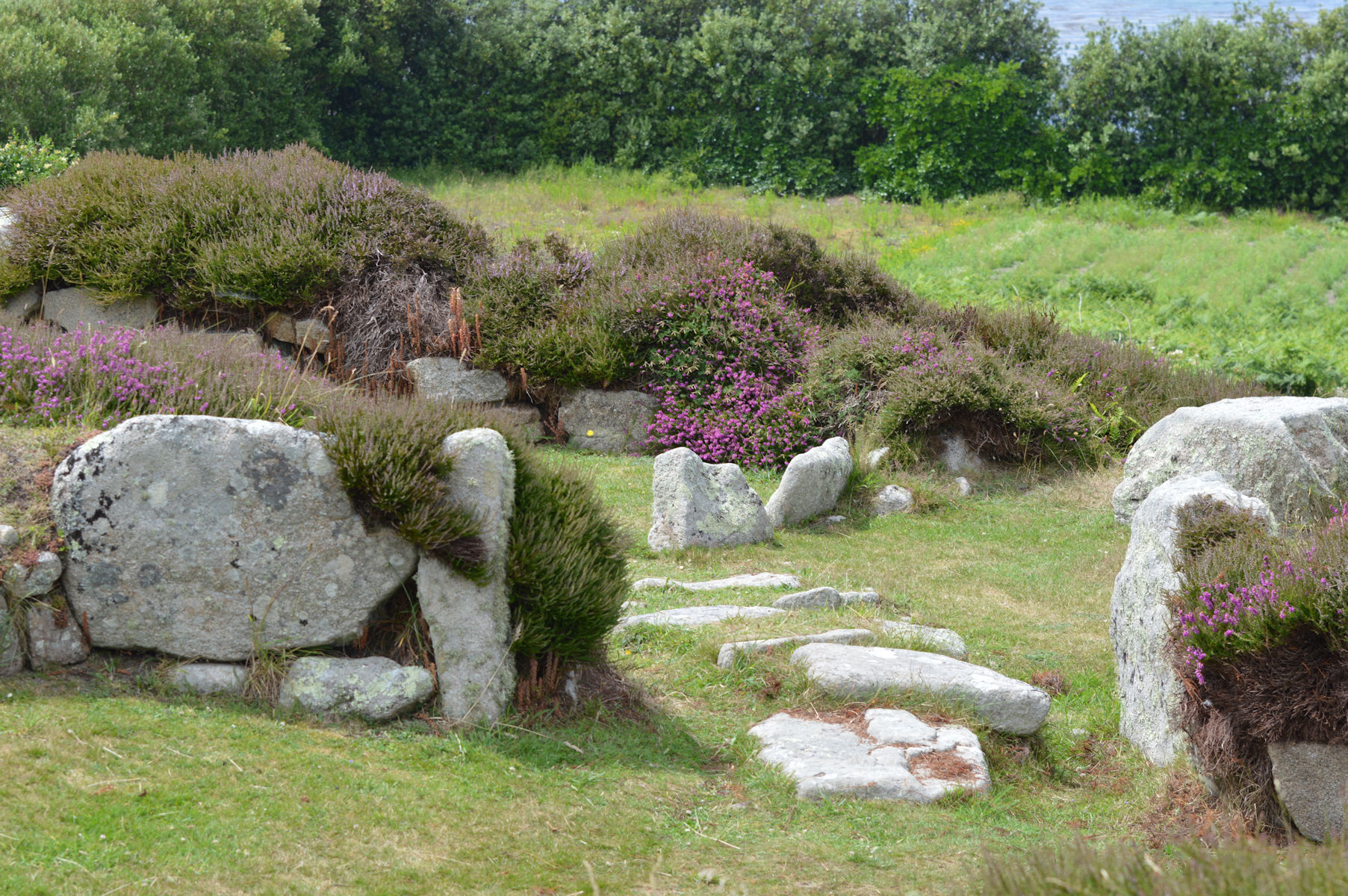
Normally  I focus on the natural history, but the Scilly Isles have been inhabited since Neolithic times, so it would have been rude not to pay a visit to at least one site.  This is Halangy Down; a village inhabited from the Iron Age through to the early Medieval period when it was abandoned as the area got buried in sand.

And this is Bant’s Carn – a 4000 year old burial chamber, just up the hill from the ancient village. I did actually go inside, but obviously couldn’t take a photo of myself!

Fascinating as the ancient history is, I always end up looking for the wildlife. The islands are of course full of birds, who have not only adapted to island life but to tourist life as well. The sparrows in particular had learnt that tourists were easy picking and wherever we went to eat they were there – greedy opportunists, making the most of us greedy visitors. I even managed a bit of sparrow whispering and got them to land on my hand by sacrificing a bit of my lunch to my new friends. If only I could get the robin on our allotment to do the same, I’d be very happy.

Of course we saw lots of other birds besides the sparrows. First new species for us was this Rock Pipit seen down on the shore near the Old Town area – please someone tell me if this is actually just another sparrow!

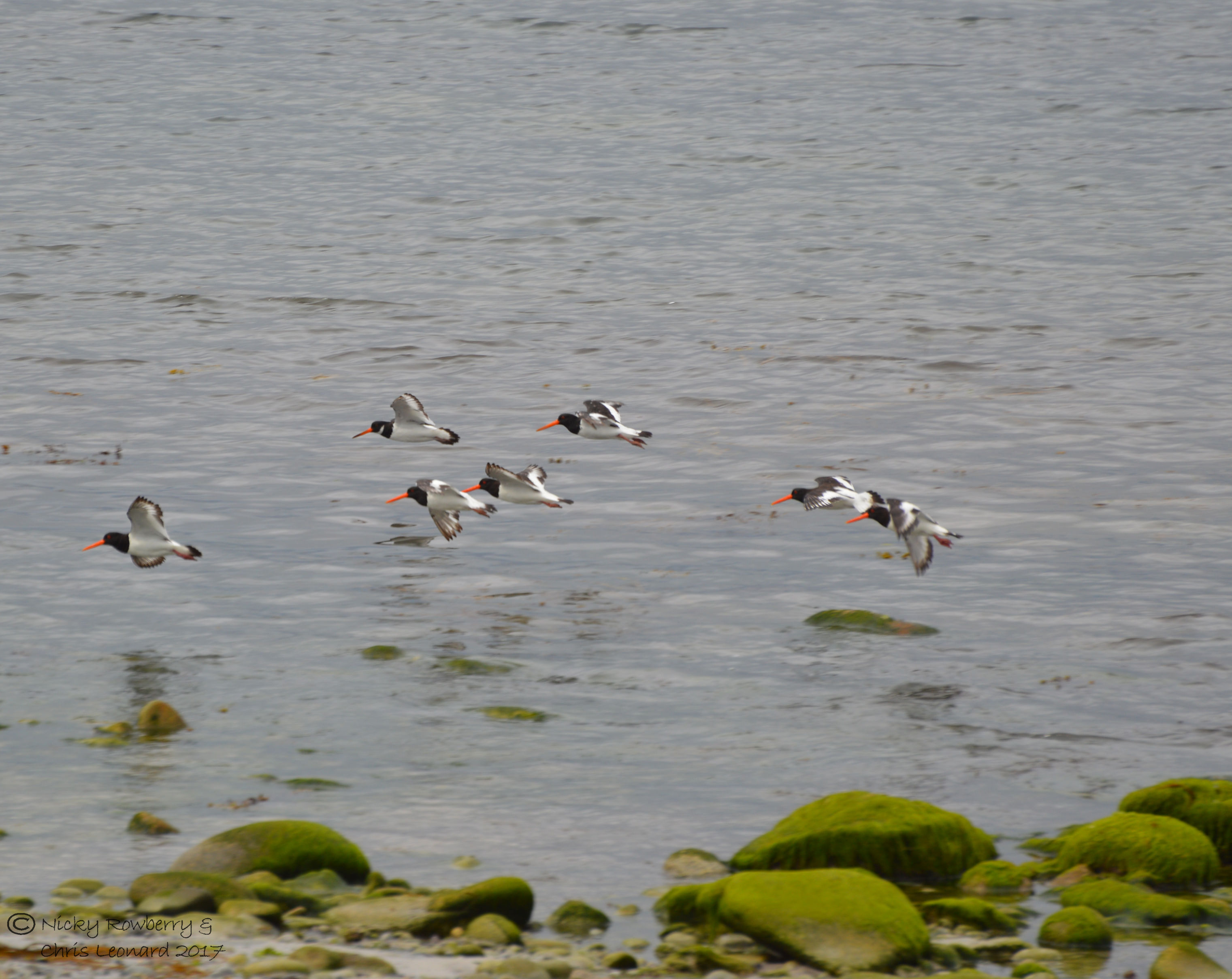
We saw lots of our perennial favourites – oystercatchers. I’m not sure I’d ever noticed before how disproportionately long their beaks are – although they are clearly well evolved to successfully fill the biological niche that would require such a beak!


We got one fleeting glimpse of a gannet, although they do occur all round the islands. I always struggle to tell cormorants from shags, but apparently the latter are much more common on the Scillies.

Gulls were of course present pretty much everywhere. We saw a lot of Great Black-Backed Gull – the largest gull in the world. The Scilly Isles have over 10% of the UK’s breeding population of this gull. Apparently they can swallow puffins whole, but the one we saw was making do with pecking at a crab shell it had probably nicked from a local restaurant.

I had been tempted to take the moth trap to the Scillies, but common sense prevailed and I was reduced to looking for day flying ones. Fortunately six spot burnett moths were sufficiently common around the islands to satisfy the mothy nerd in me.

As St Mary’s is the main island and therefore the most populous, we hadn’t really expected to see too much wildlife. We thought St Mary’s would be our foodie base and we’d use the outer islands for serious wildlife watching. But without really looking we stumbled upon loads of plants and animals that caught our interest – most of which was accessible from a golf buggy. Who knows what we might have seen if we’d got out and explored on foot!

More soon, when I’ve ploughed through the next 500 or so photos from our trip to the Scilly Isles! xx