30 Days Wild – Day 29 – Fine Crop of Flowers on the Lottie

It’s Day 29 of 30 Days Wild and since I didn’t get home until quite late and it was raining when I did, the choices for today’s “wild thing” were a bit limited. Fortunately my friend was still staying and I’d promised to show her the lottie, so we headed up there to see what we can find. Although not everyone at the allotment site gardens organically, enough do that there are plenty of wildflowers to see amongst the deliberately planted plants.

First thing we spotted was Pineapple Weed (Matricaria discoidea). I’d never noticed it before but my friend identified it and got me to crush a flower – it really does smell like pineapples! Does what it says on the tin!

Next up was Herb Robert (Geranium robertianum), a pretty wild version of Geraniums.
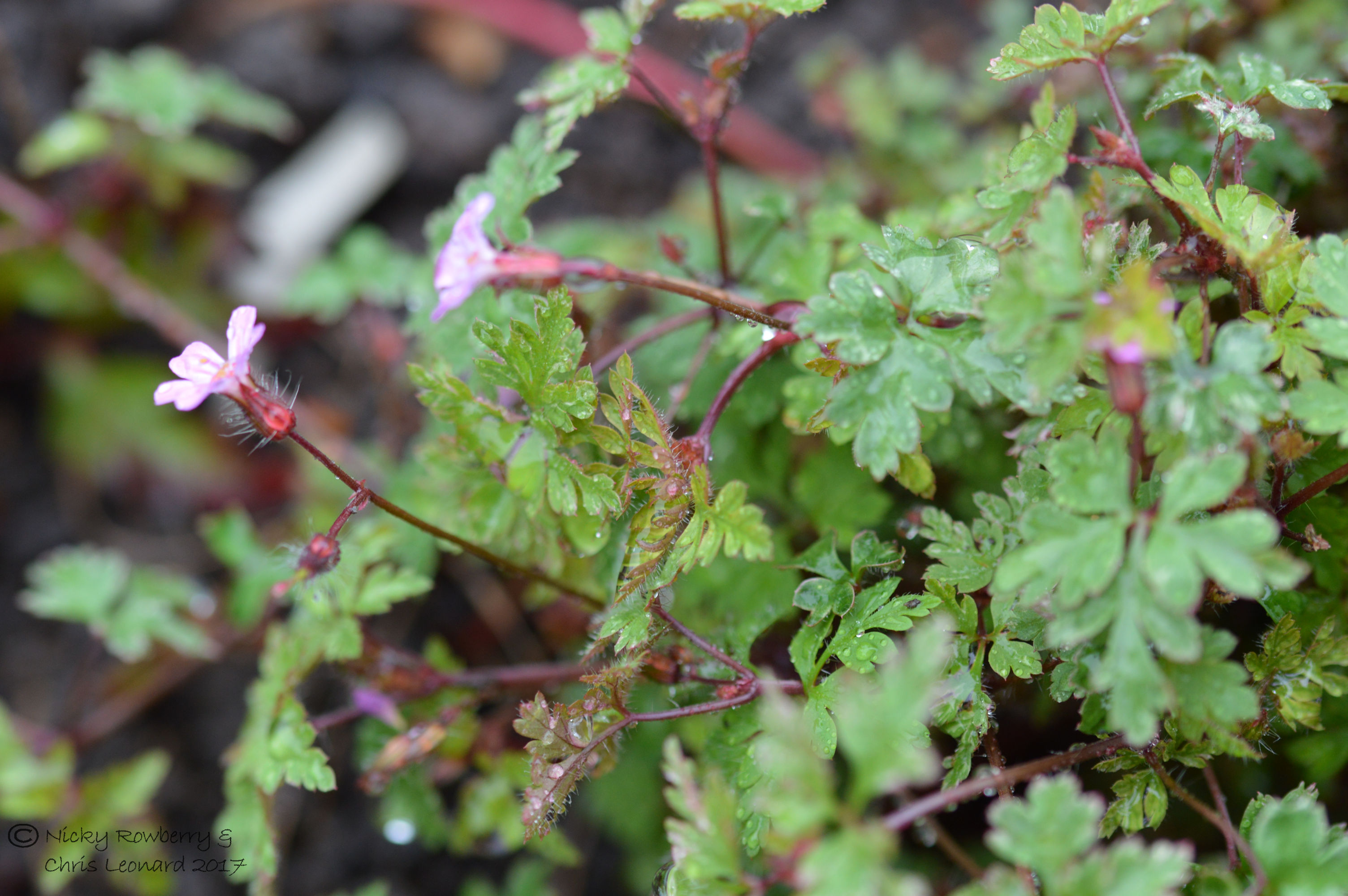
Another new one for me was a member of the Bistort family, possibly Redshank, but my dodgy rainy photo wasn’t good enough to be sure.
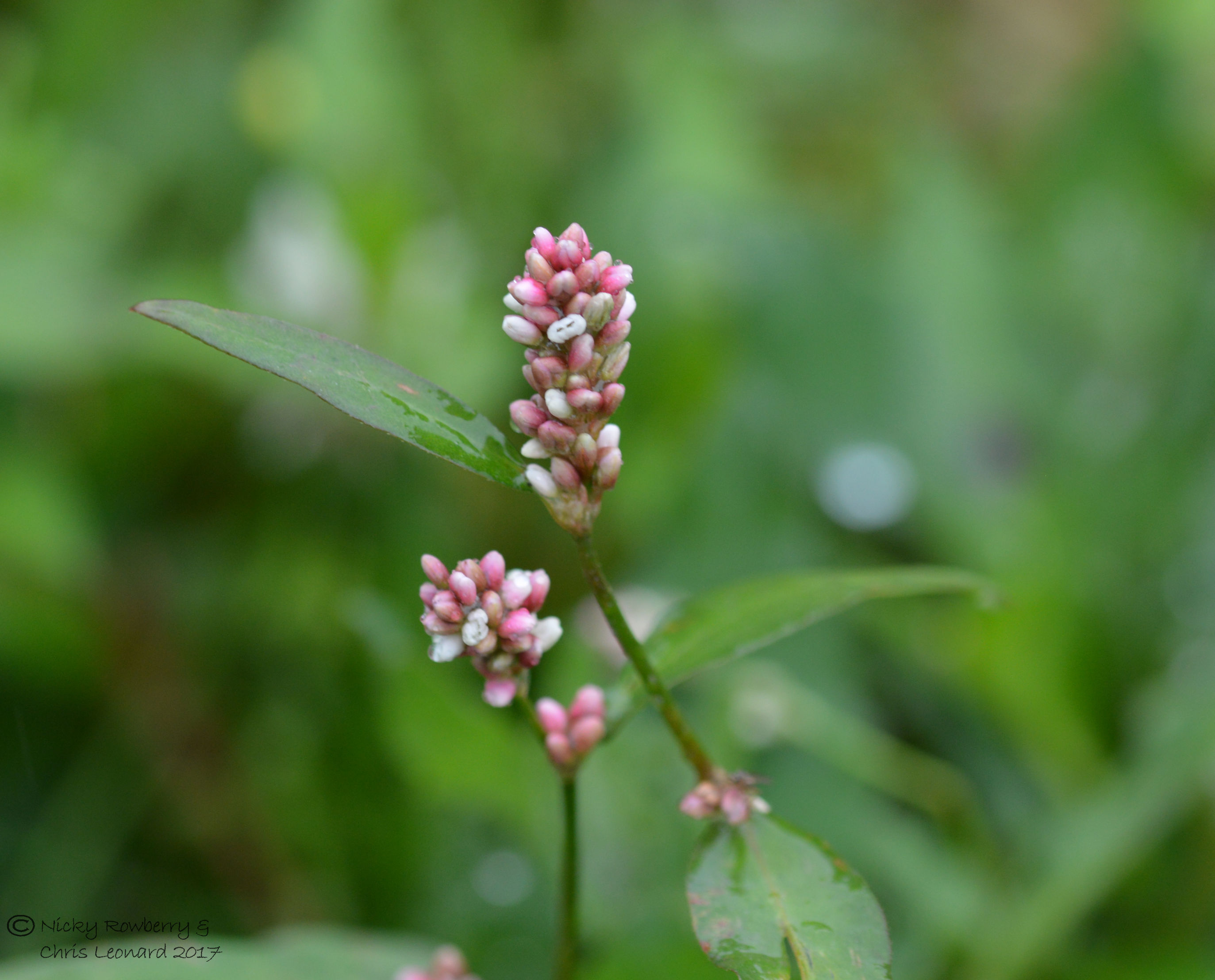
Next one we were a bit more confident about – Green Alkanet. The blue flowers were almost glowing in the rain. All these plants (weeds in some people’s books) were growing along the path as we walked down to our plot.
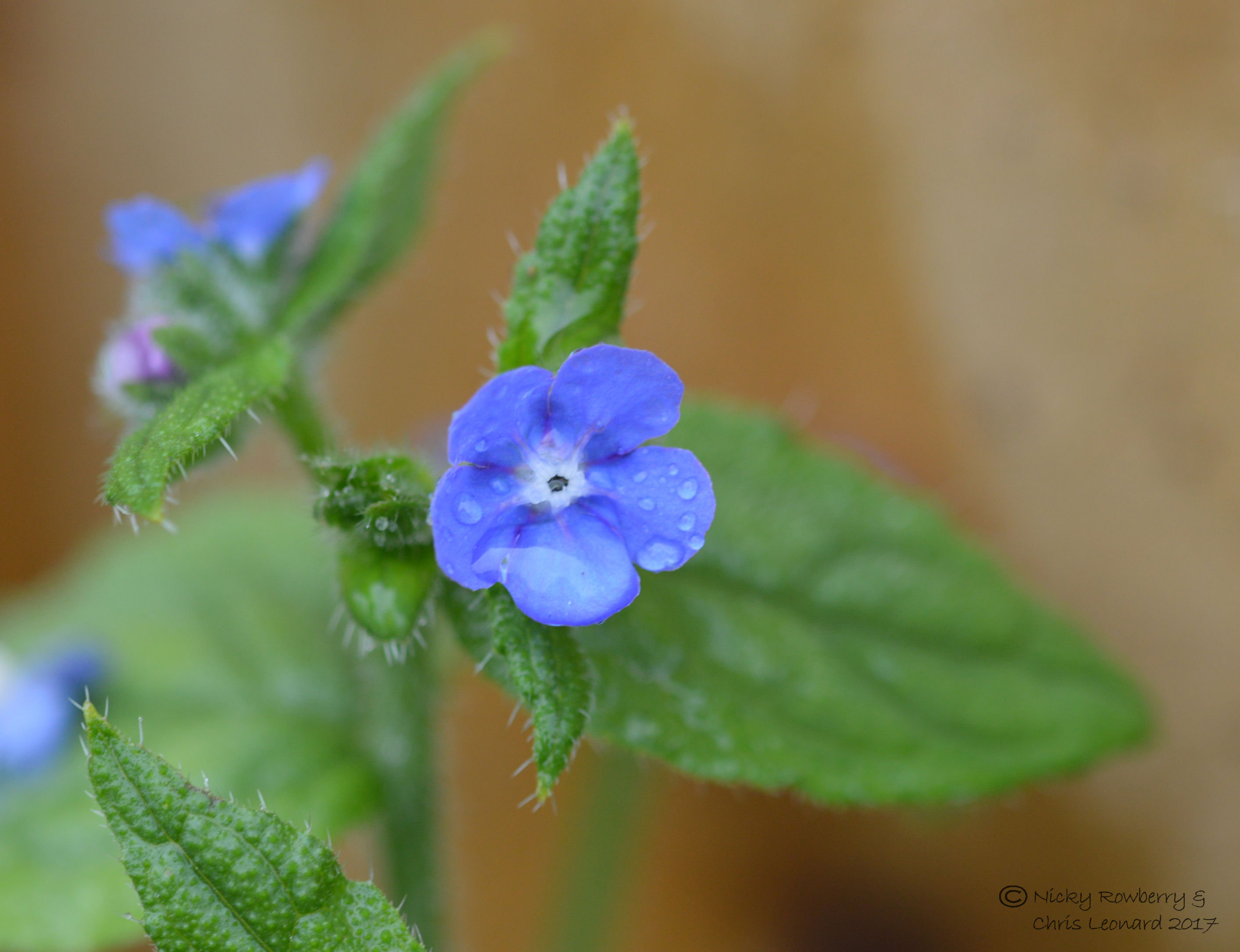
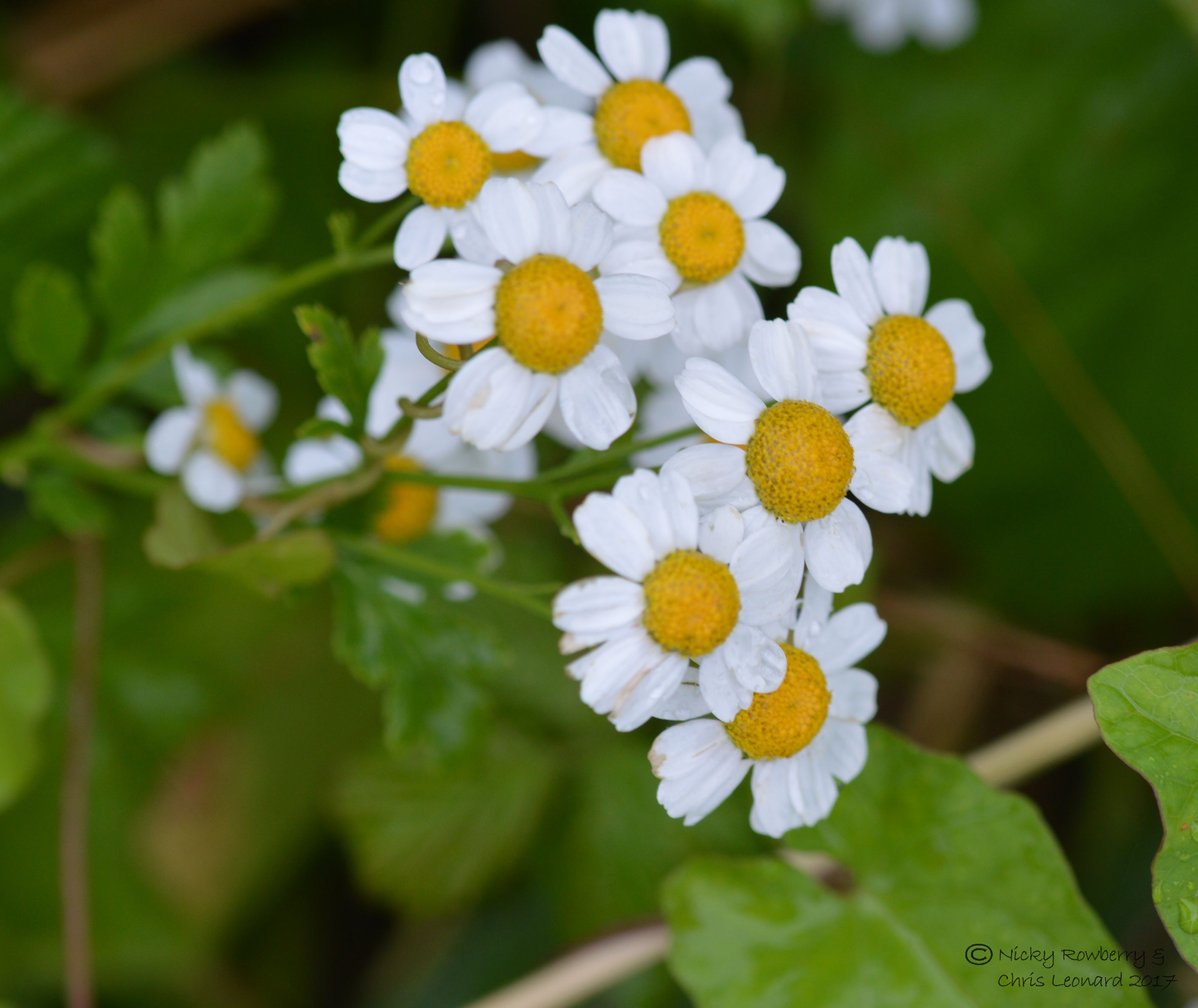
These pretty daisy-like flowers were actually Feverfew. As the name suggests, this plant has been used in traditional medicine to cure all manner of things. Like the bindweed photobombing in the corner!
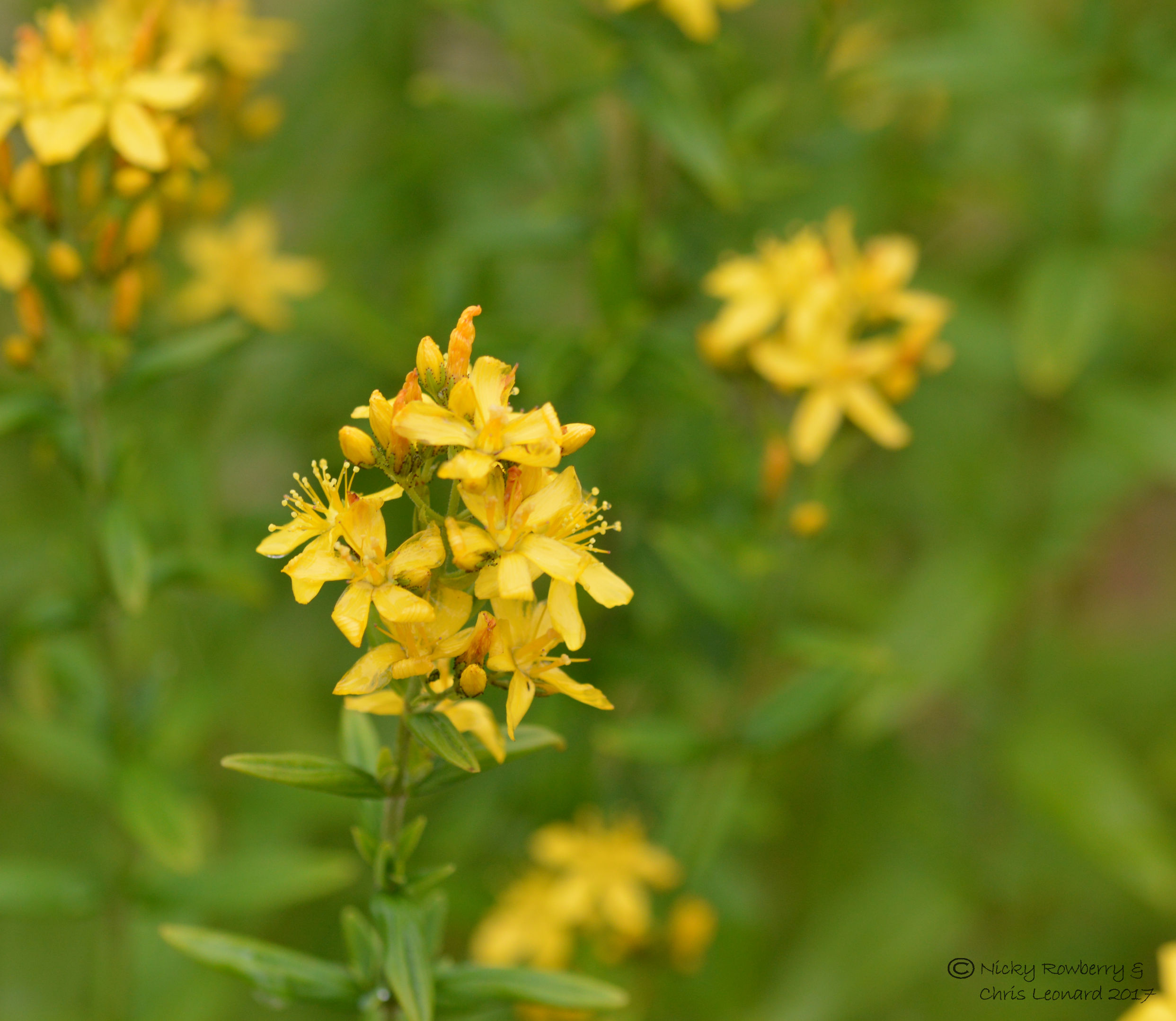
Another medicinal herb growing around the plots was this St John’s Wort.
It had been a few days since I’d been down to the allotment, so it was really nice to see how some of the deliberate plantings had come along. The runner beans were going great guns – hopefully we’ll get a good crop.

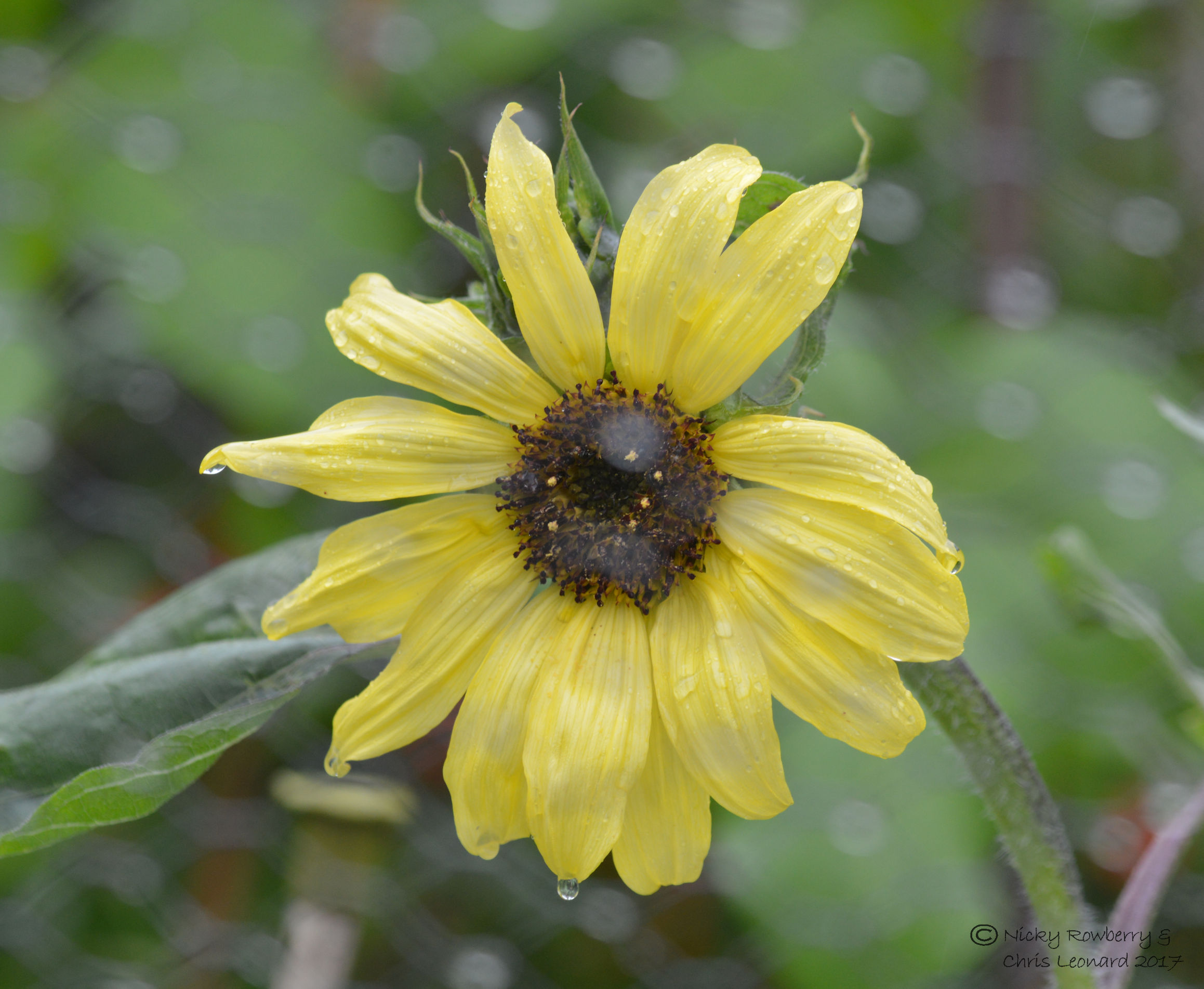
Really chuffed to see one of our sunflowers was out despite the complete lack of sun today.
As is so often the case we had a surprise on today’s walk – we found 3 huge puffballs. Thought at first they were footballs, but they were way better than that – giant fungi. Seen here with a foot for size comparison! If it hadn’t been so wet we might have been tempted to take it back to try fried puffball steaks.

So even on a unpromising wet work night, there was still plenty to see and enjoy if you get out and about. Get your wellies on and get out there!



30 Days Wild – Day 17 – Blue is the Colour!

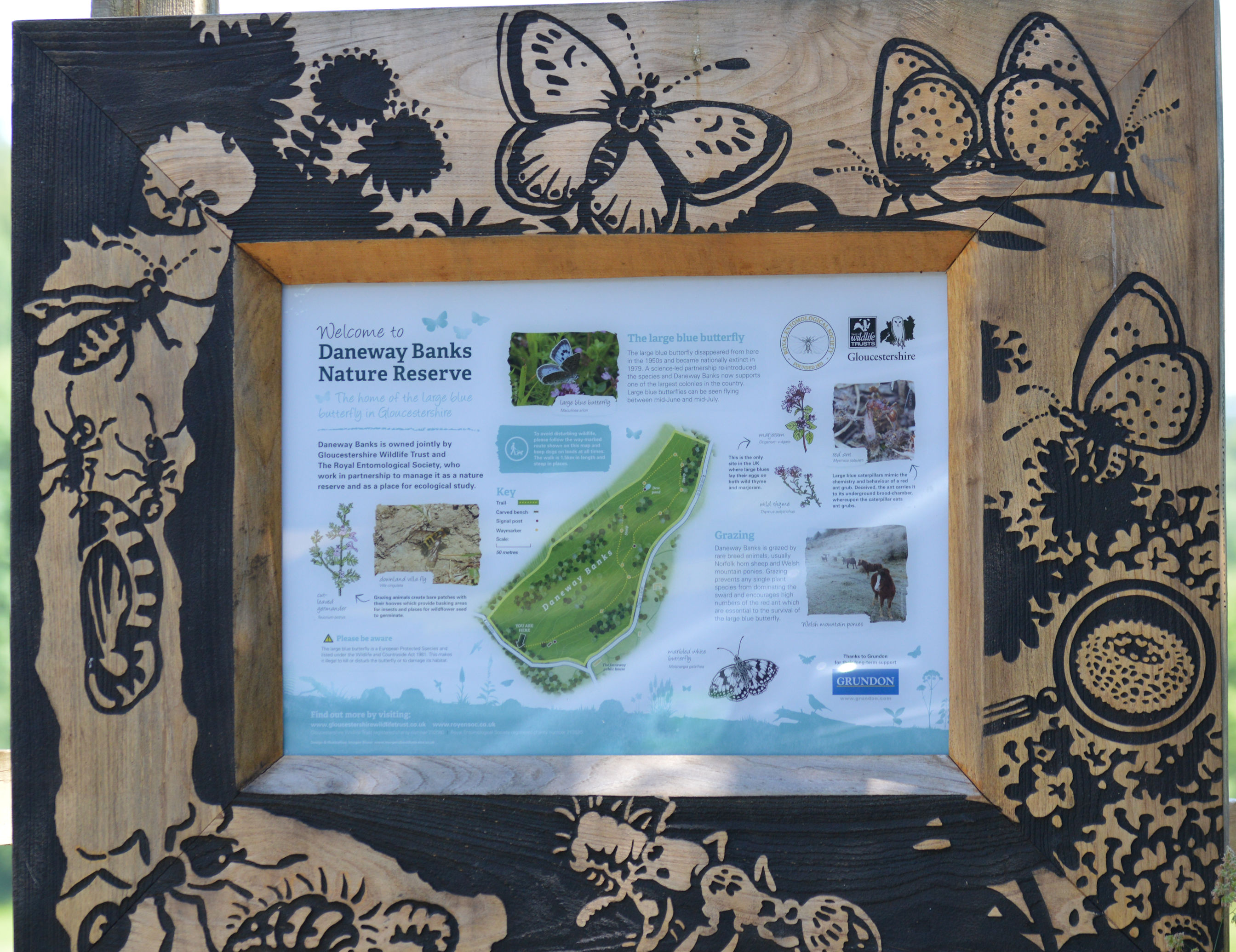
It’s Day 17 of 30 Days Wild and with blue skies above we went in search of the Large Blue Butterfly. The Large Blue is probably Britain’s rarest butterfly. It actually went extinct here in the 1970s, but thanks to great efforts by conservation bodies, it was reintroduced to a few sites in 1984. One of these sites is Daneway Banks in Gloucestershire and that’s where we headed today. Butterfly Conservation’s Gloucestershire Branch had an organised walk on and very kindly let us tag along.

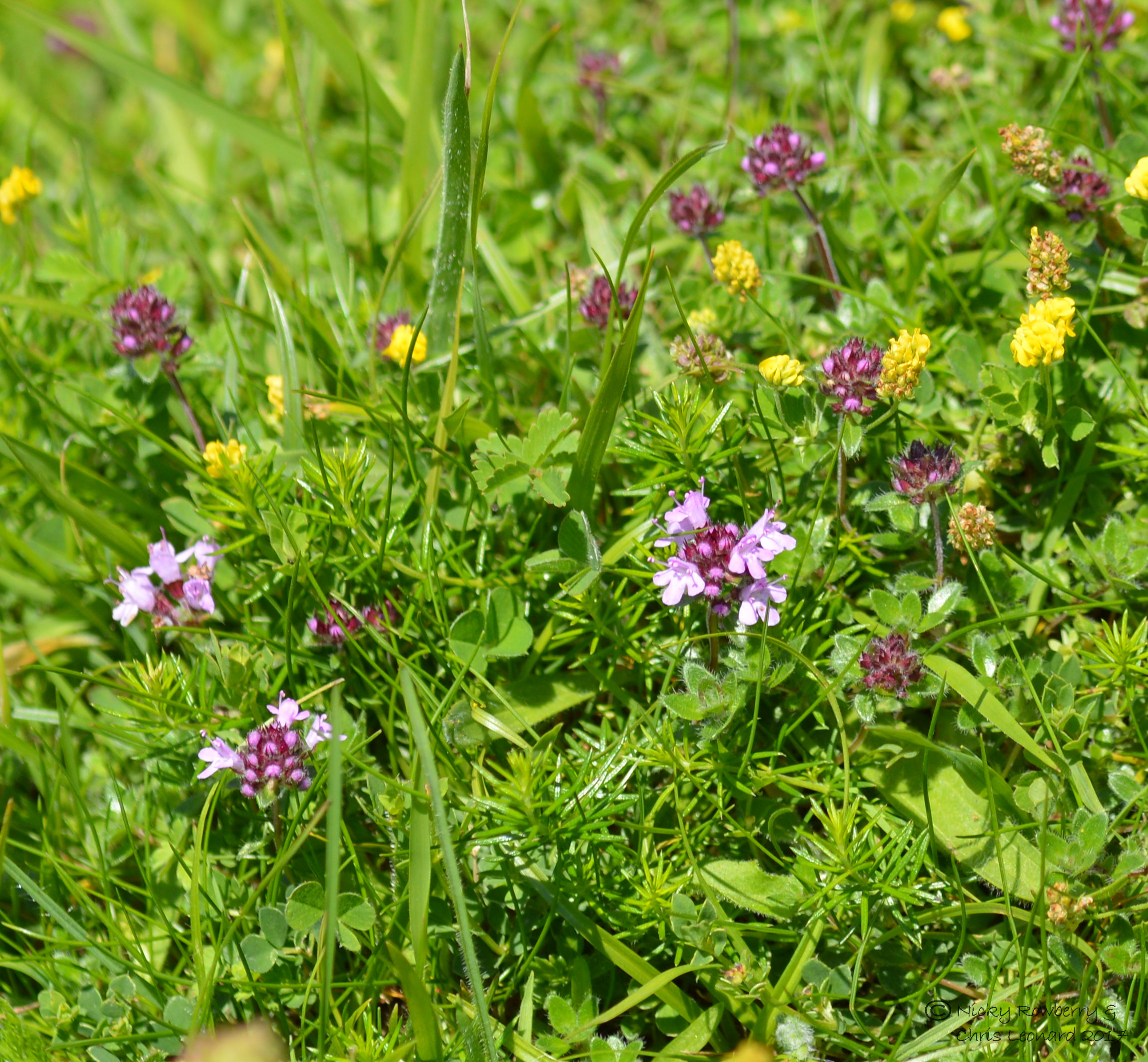
Large Blues have a really intriguing life cycle. The eggs are laid on wild thyme or marjoram. The tiny caterpillars hatch and secret a substance that attracts a particular species of red ant. The ants carry them to their nests, where the caterpillars feed on the ant grubs. Eventually the new adults emerge and have to crawl out of the ants’ nests before they can open their wings!

Daneway Banks consists of limestone grassland that is carefully managed by the Wildlife Trusts, to support the Large Blue butterfly, which of course has the side effect of supporting lots of other wildlife too. It is up a steep bank and looked stunning today in the sunshine, with wildflowers and butterflies galore!

Apart from the chatter of excited would-be Large Blue spotters, the predominant sound for me was the chirruping of grasshoppers. There must be hundreds there judging by the noise, which I love – it is one of the true sounds of summer for me.

So two whole posses of us set off in search of the Large Blue. There is quite a camaraderie about going out with a bunch of people all interested in seeing the same thing! Over the day we saw about 13 species in total, but initially the Large Blue remained elusive. But there were other blues to tempt our fancy. There were several Common Blues and small Blues were also reasonably common, although very difficult to get a decent shot of – the photo below was the best I managed.

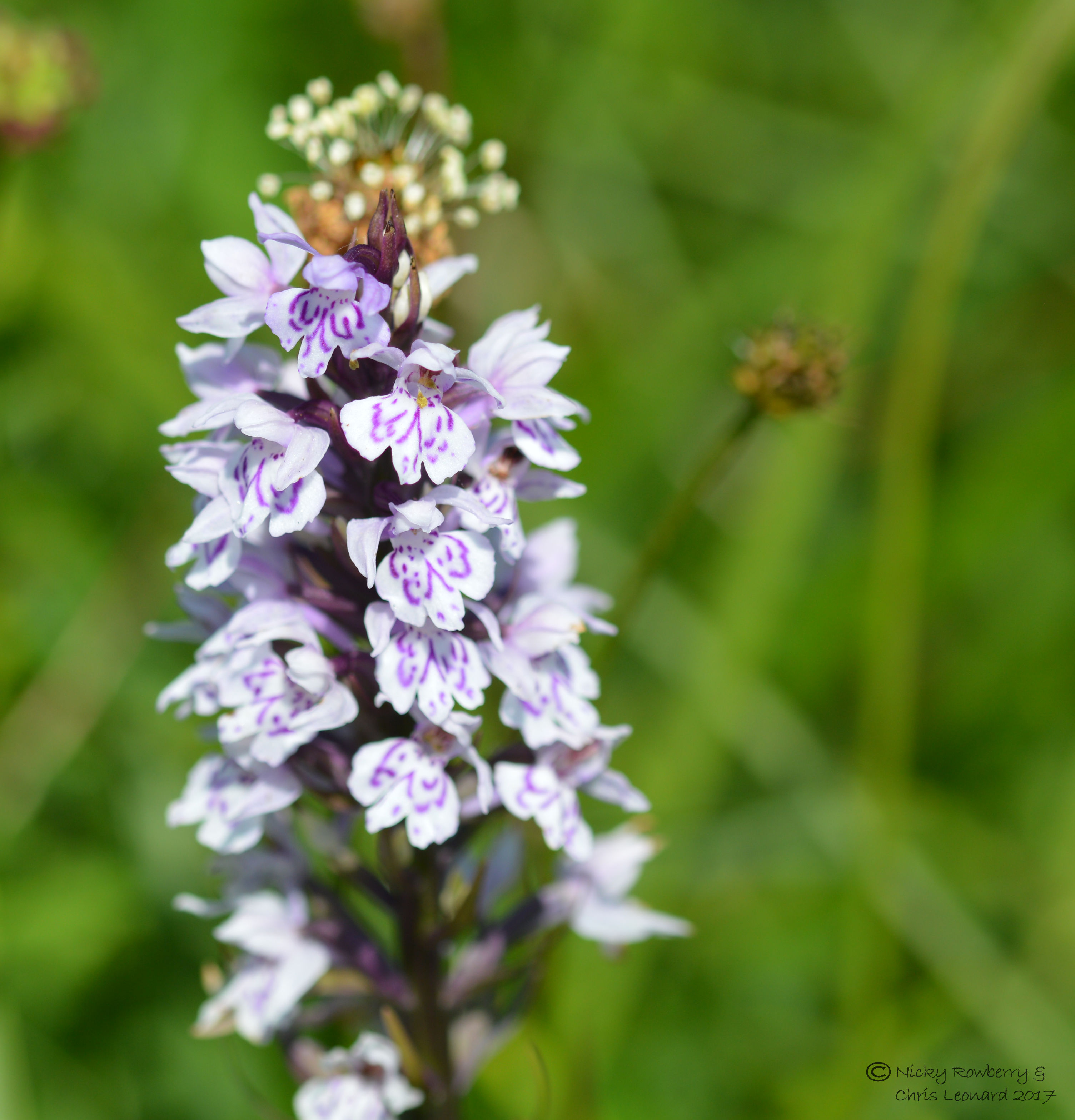
While we searched for our elusive target we saw plenty of beautiful orchids, which at least don’t fly off! Most were these ones (possibly Common Spotted Orchids).

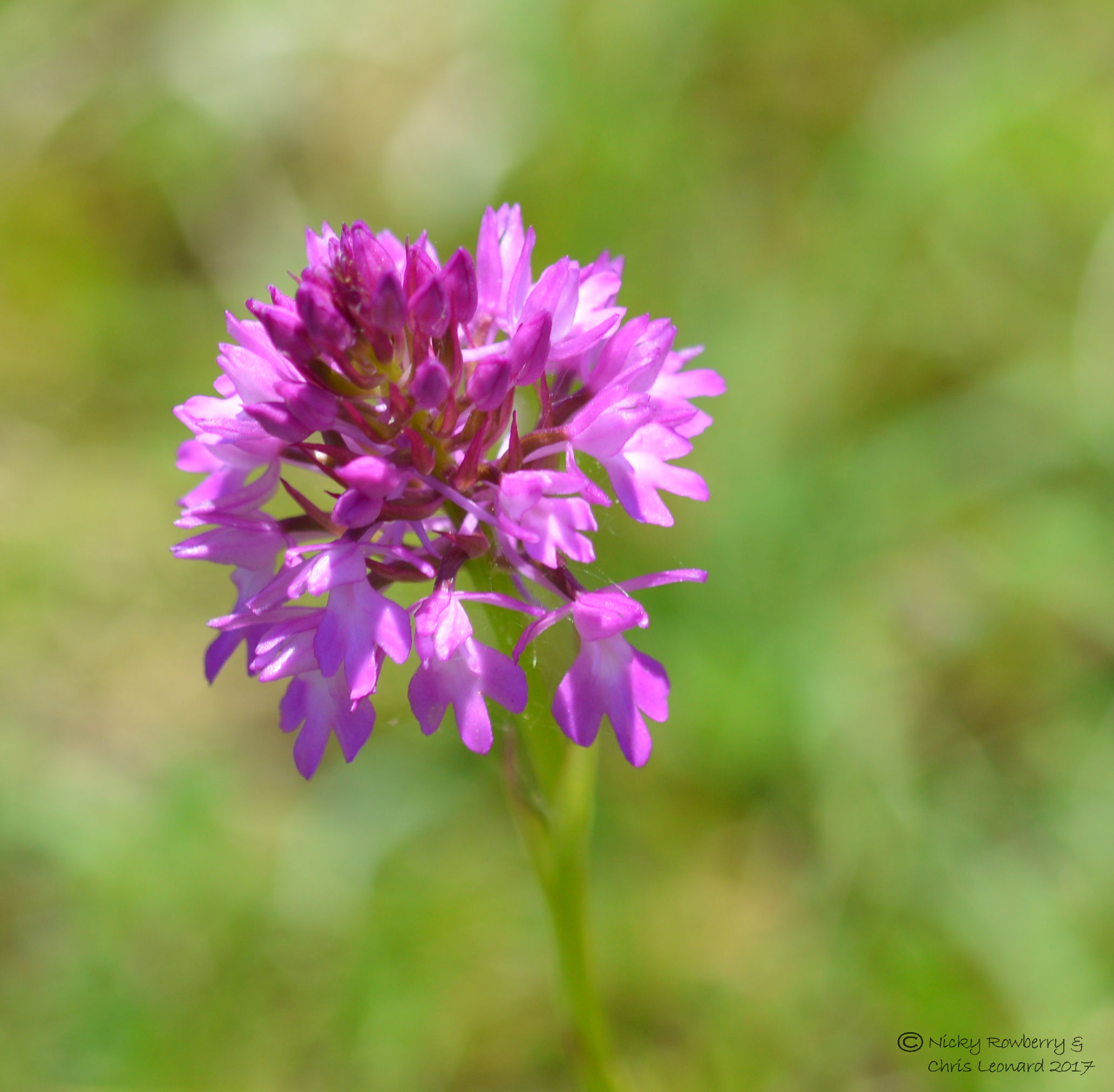
There were a few of these pretty purple ones, which I think may be Pyramidal Orchids?

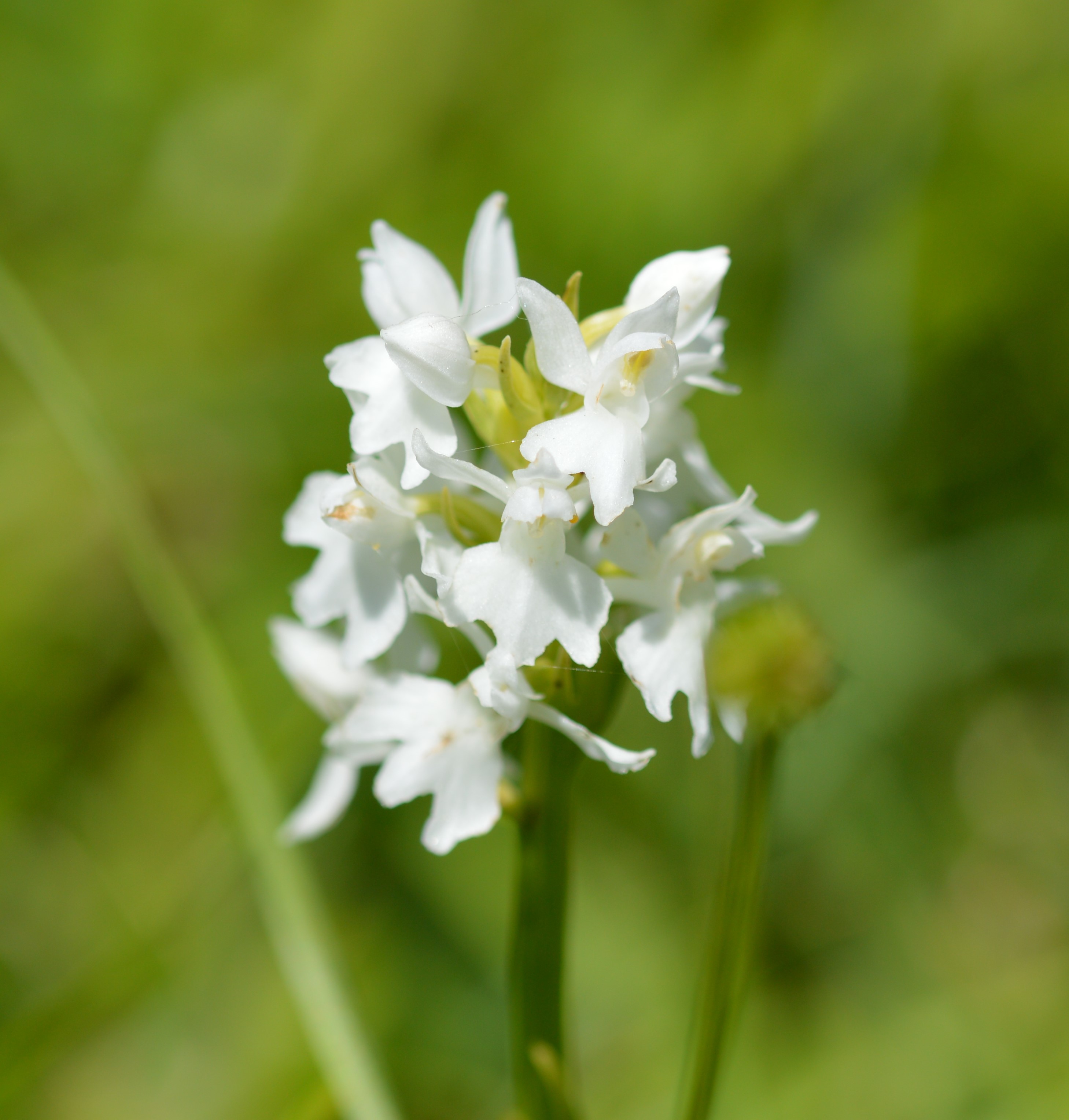
There was also a white orchid – I don’t know if this is a different species, or just a colour variation of the Pyramidal one.

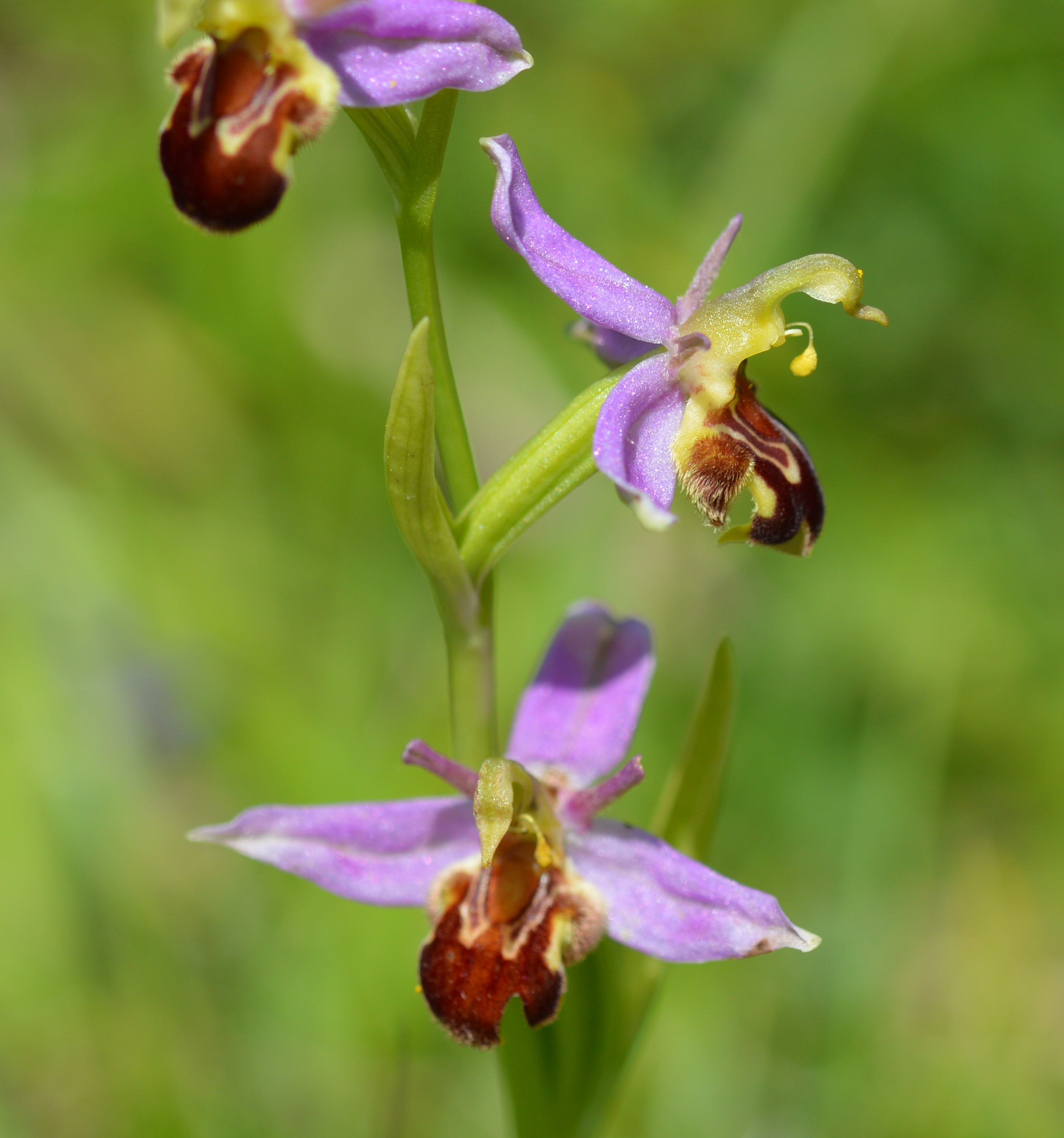
Prize of the day went to this Bee Orchid though – absolutely gorgeous and unlike any we’d seen before.


But back to the butterflies – Meadow Browns & Marbled Whites were present in abundance, but none would pose for a photo. This Ringlet and Small Heath were more agreeable to it, although still a bit flighty.

We eventually spotted a blue butterfly that looked larger than the rest. It flew off towards another enthusiast who was much more knowledgeable than us and confirmed it was indeed a Large Blue. We set off after it, joined by others as we hurried, only to lose it over a grassy bank. But at least we’d seen one, so that was progress!

Eventually we saw Andy – the group leader – waving us over. Unbelievably a mating pair of Large Blues had been found!  I hurried over to join the excited throng. None of us wanted to get too close to disturb the loved up pair, but we did manage to take some photos at least. So here are our Large Blues.

We saw a couple more Large Blues over the next hour, but despite our spirited pursuits, none stopped long enough to be photographed. So unfortunately we never got a shot of one with its wings open  – perhaps that’s something for next time.

I’d say seeing the Large Blues was the perfect end to the trip, but actually the cold drink in the very nice pub (Daneway Inn), finished off a boiling hot day just perfectly too.

So that’s the 42nd species of butterfly and one of the most interesting ones to boot! Huge thanks to Butterfly Conservation Gloucestershire for letting us midlanders tag along. I hadn’t really dared hope that I’d ever see a Large Blue, but to see a mating pair is simply amazing. Fingers crossed it was a successful union and that Daneway Banks is blessed with many more generations of blues to come!


30 Days Wild – Day 16 – Plant Pots for Pollinators

It’s Day 16 of 30 Days Wild and this evening I’ve been Planting a Pot for Pollinators. This isn’t just me randomly planting up a pot with more flowers, but part of a nationwide scheme to encourage people to do their bit for pollinating bees, hoverflies and butterflies etc.

It’s being organised by the Butterfly Conservation Society – for more information go to: http://www.plantpotsforpollinators.org The aim is simple – to get as many people as possible to plant up at least one pot in their garden with flowers that are good for our insect pollinators.

If you go to their website you can download instructions, but basically all you need is a big pot, some peat-free compost and some flowers. There’s a list of 6 suggestions – calendula, catmint, cosmos, French marigolds, Shasta daisies and dahlias (but only the single flowered varieties as these have pollen that is easy for the bees to get at).  You can of course choose others, provided they are good for pollinators.

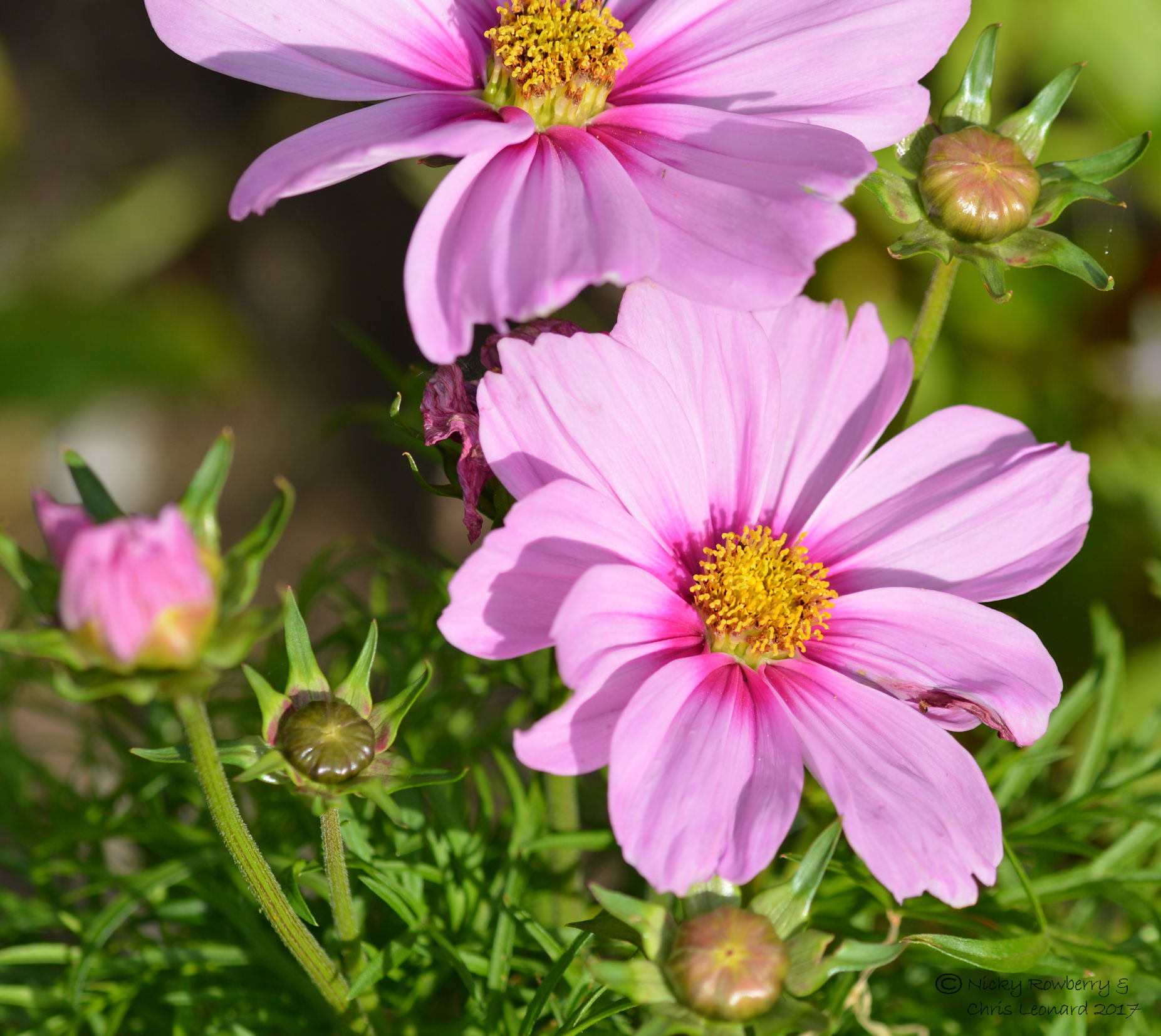
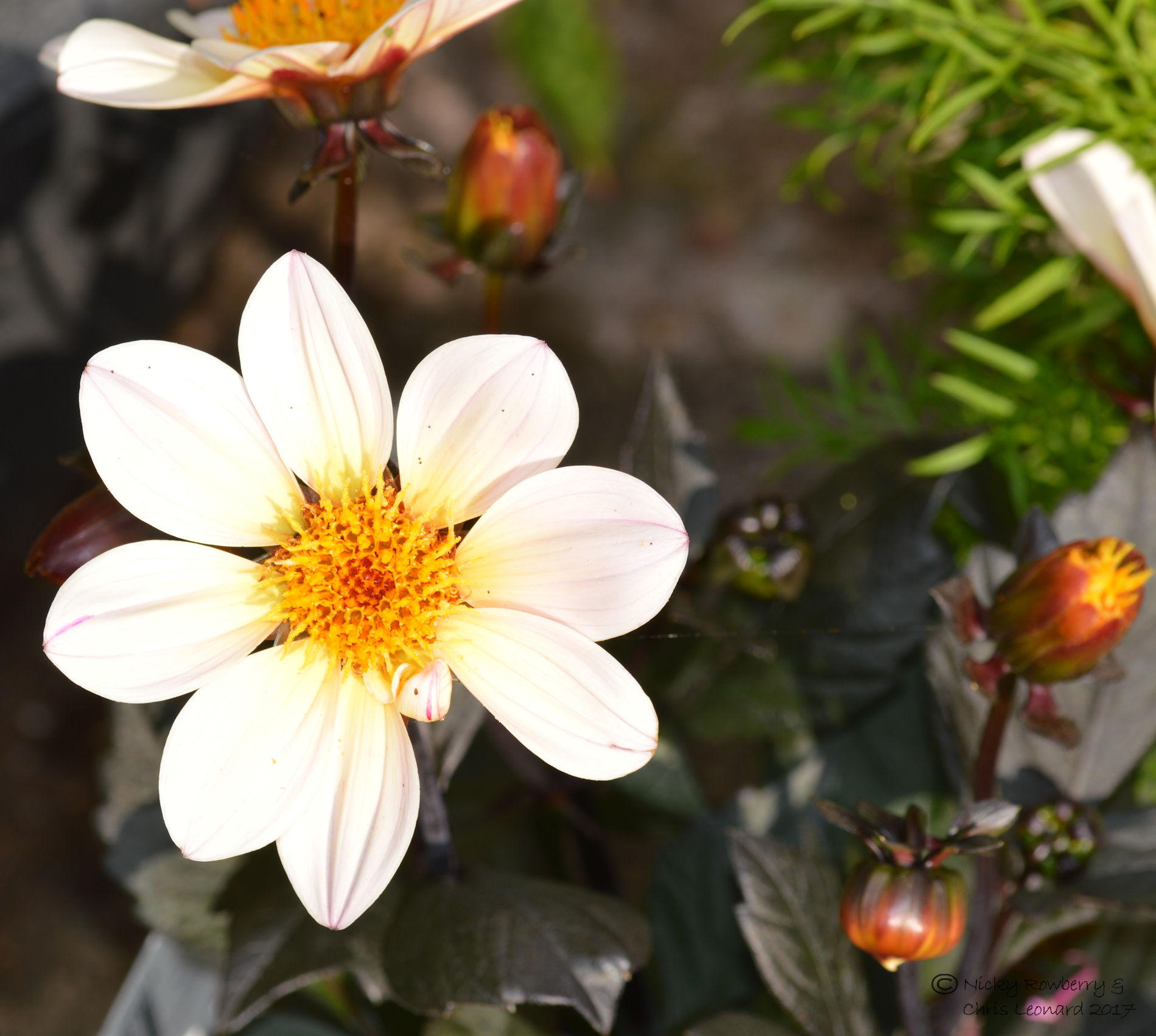
Of the 6, I bought, Cosmos (left), French marigolds and a Dahlia – all of which had bees on in the garden centre when I bought them – a good sign! I also supplemented these with some wildflower plants that I’d had sitting waiting to plant on for a while – Verbena bonariensis, Anthemis and Achillea.
 

It only took 5 minutes to fill the pot with compost and stick the 6 plants in. With hindsight I could probably have squeezed a couple more in and I may well do so at the weekend. Even if I don’t buy more, hopefully those that are there will bush out to fill the pot up a bit more. Hopefully the mix of different colours and shapes will attract a variety of pollinating insects.

So here is the (sort of) finished article, nothing fancy, but hopefully the bees will appreciate it. Ideally I would have liked to include some photos of insects actually on the pot, but since I did this after work, it was getting a bit late and there was not much buzzing about. Assuming I get something on them, I will add more photos when I can.

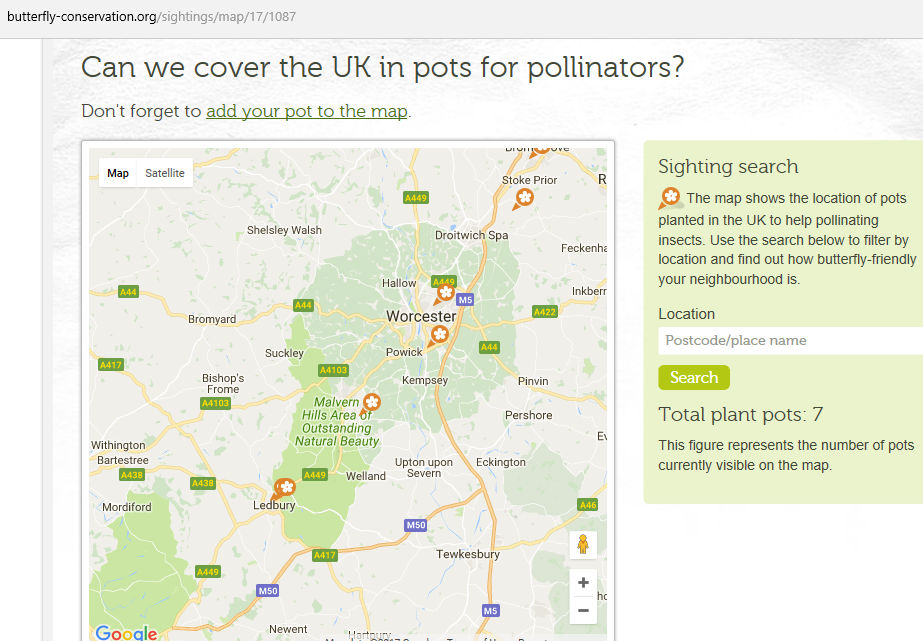
Having planted a pot, the website encourages you to plot your pot on their map. Butterfly Conservation hope to cover the UK in pots for pollinators. So being a good citizen scientist, I plotted my pot on the map. It is reassuring to see that ours isn’t the only one in Worcestershire!

Of course our garden being a weedfilled paradise for insects, you could argue that it didn’t really need another pot of flowers for pollinators. But you can never have too many, so why not? And by participating in a scheme like this, we are hopefully helping to spread the good word.

30 Days Wild – Day 15 – Mother’s Day

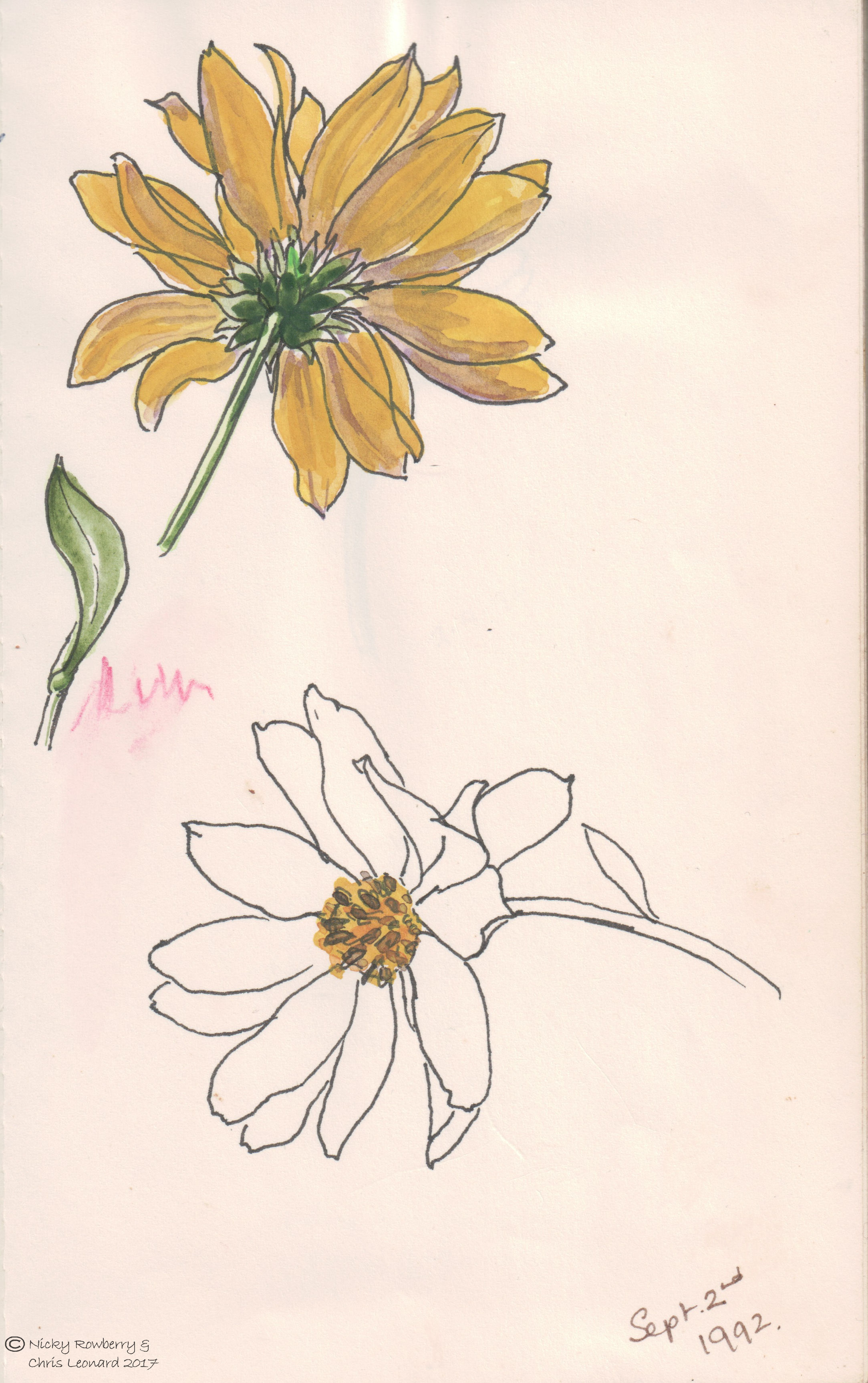
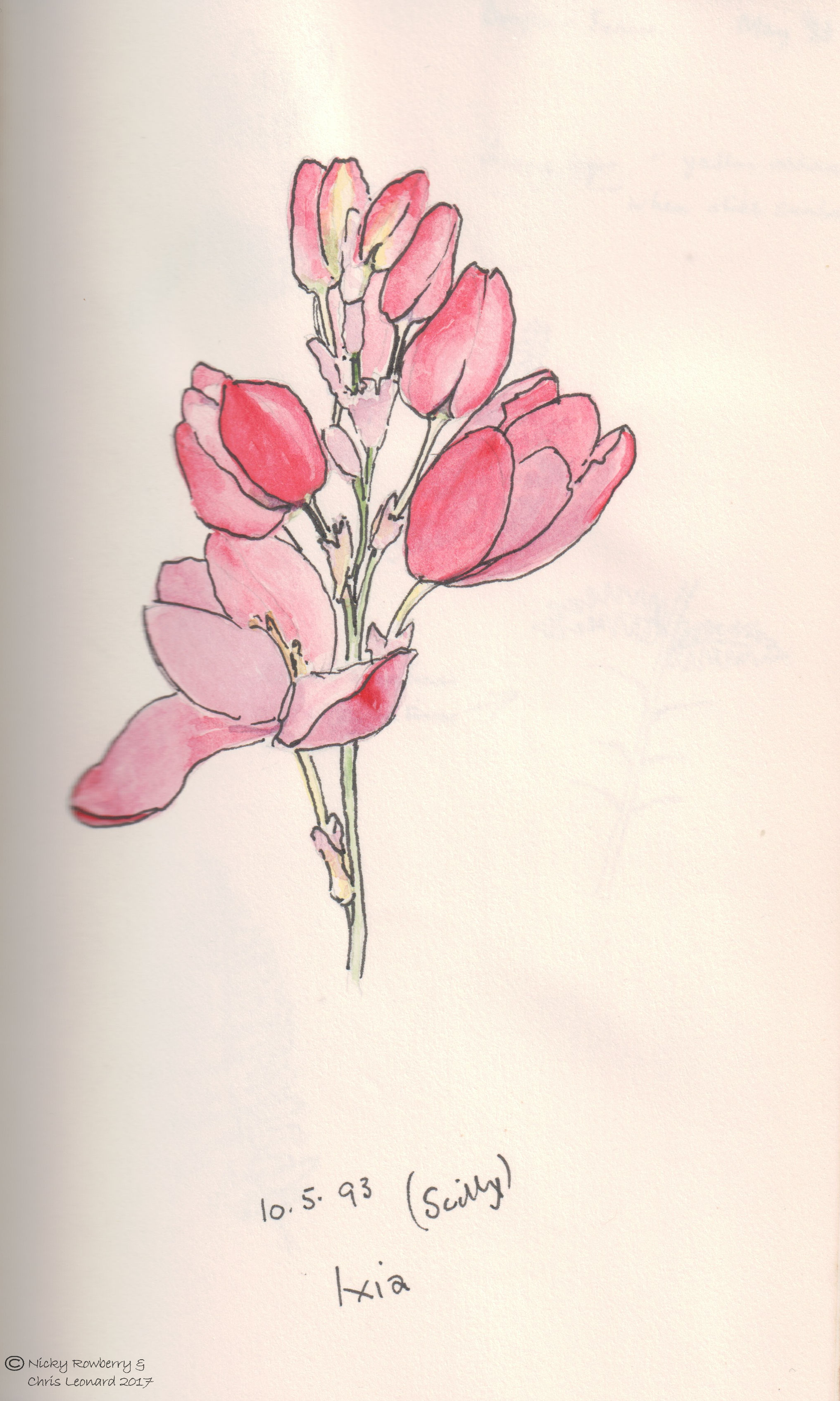
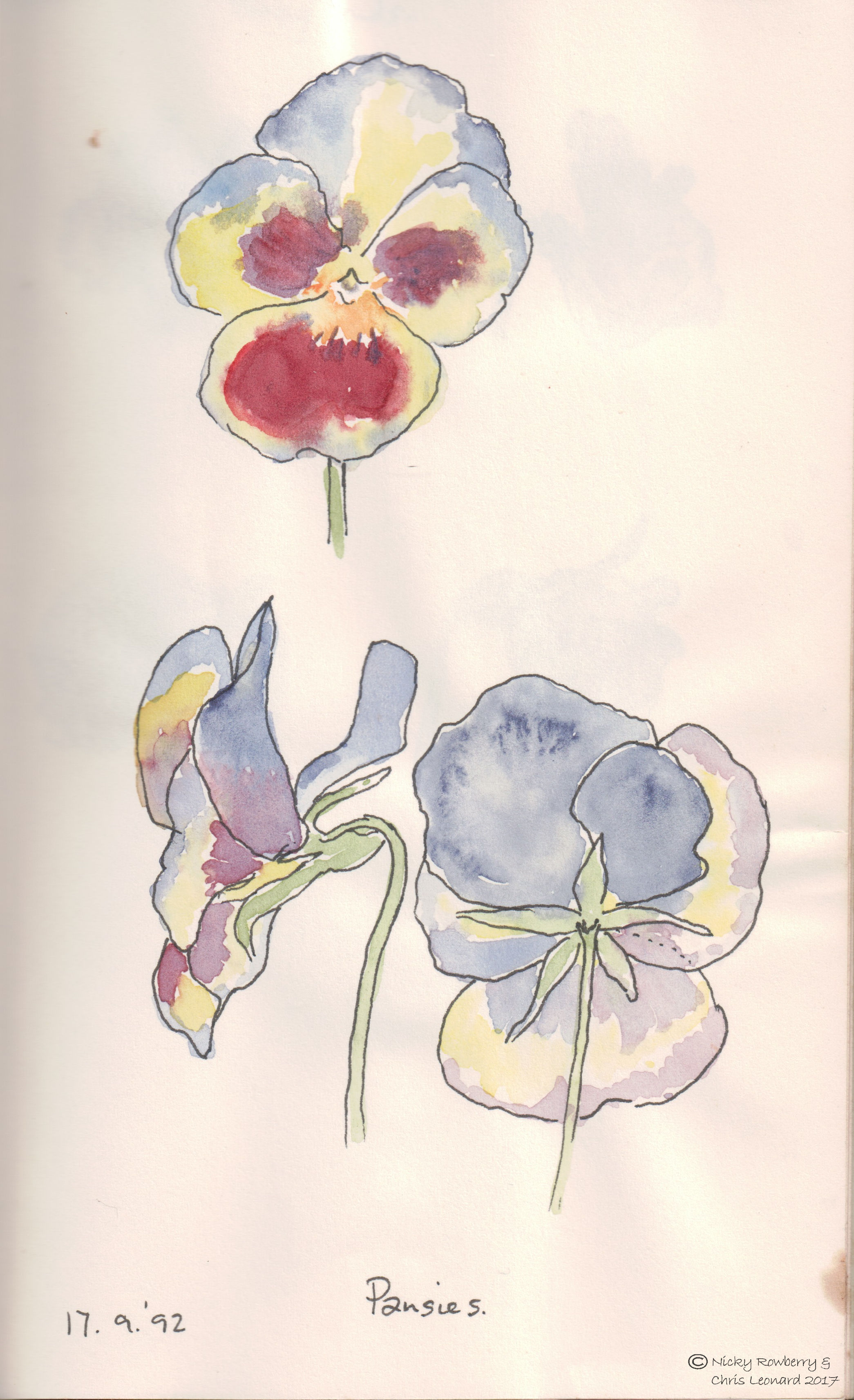
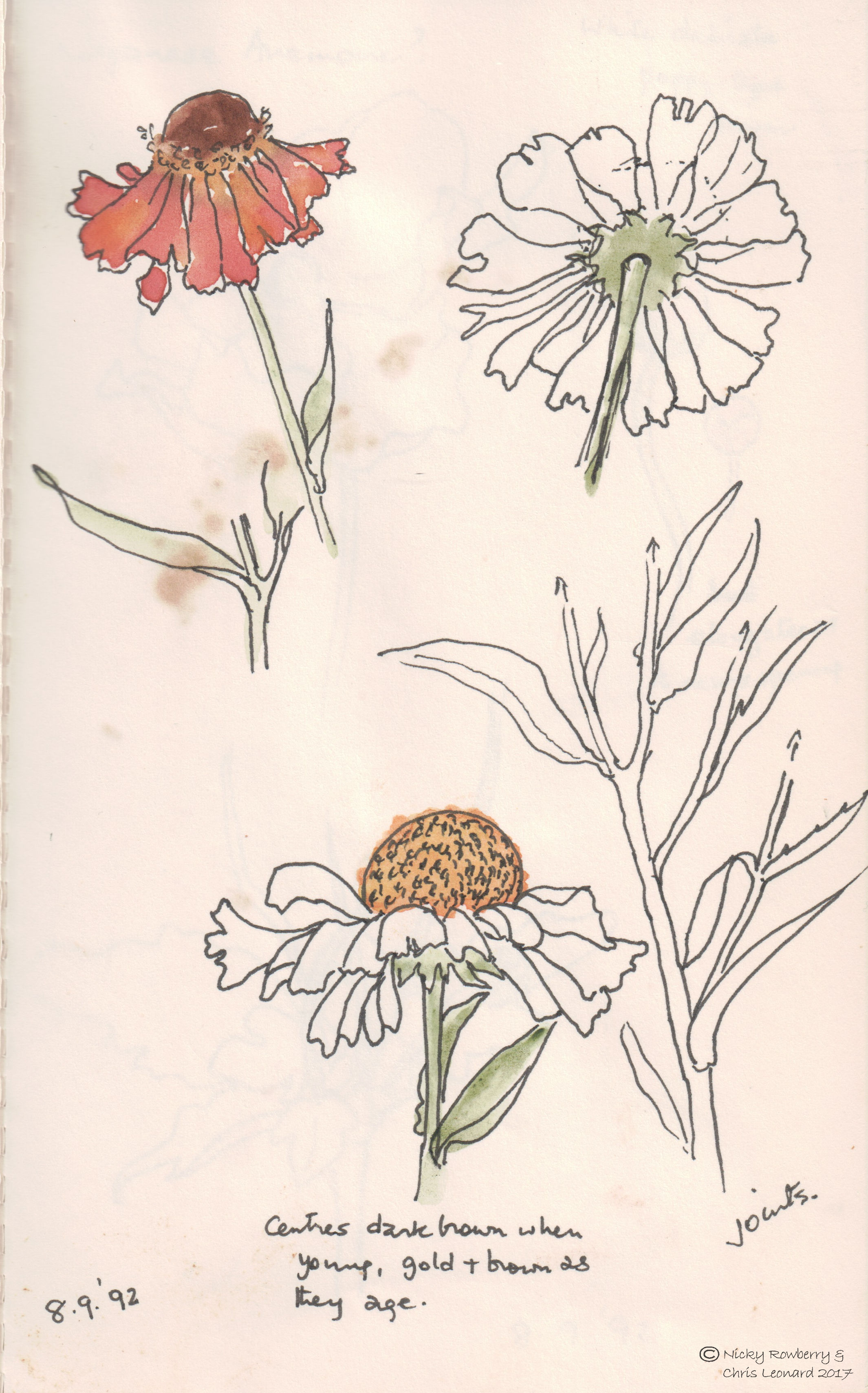
It’s Day 15 of 30 Days Wild and once again my plans for today’s theme took an unexpected turn. I had intended to do a review of the wildlife picked up on my trail cam that I’d left in my Dad’s garden overnight. His garden is packed with wildlife, but typically none of it chose to walk in front of the trail camera in the last 24 hours. However yesterday at Dad’s I’d found a little sketching notebook belonging to my Mum. One of the Random Acts of Wildness suggestions for 30 Days Wild is to “Unleash Your Inner Artist”. Well I’m not sure I’ve got an inner artist, but my Mum certainly had. I’d been thinking about her paintings on Day 12 of 30 Days Wild, when I’d taken a photo of a view with flowers in front which reminded me of her.  Then to cap it all I watched Springwatch tonight which had a couple of features from the Scilly Isles. My parents loved the Scillies and Mum painted a lot there. So today’s Act was reconnecting me with my Mum’s paintings and the Scilly Isles and through them with my mother herself.

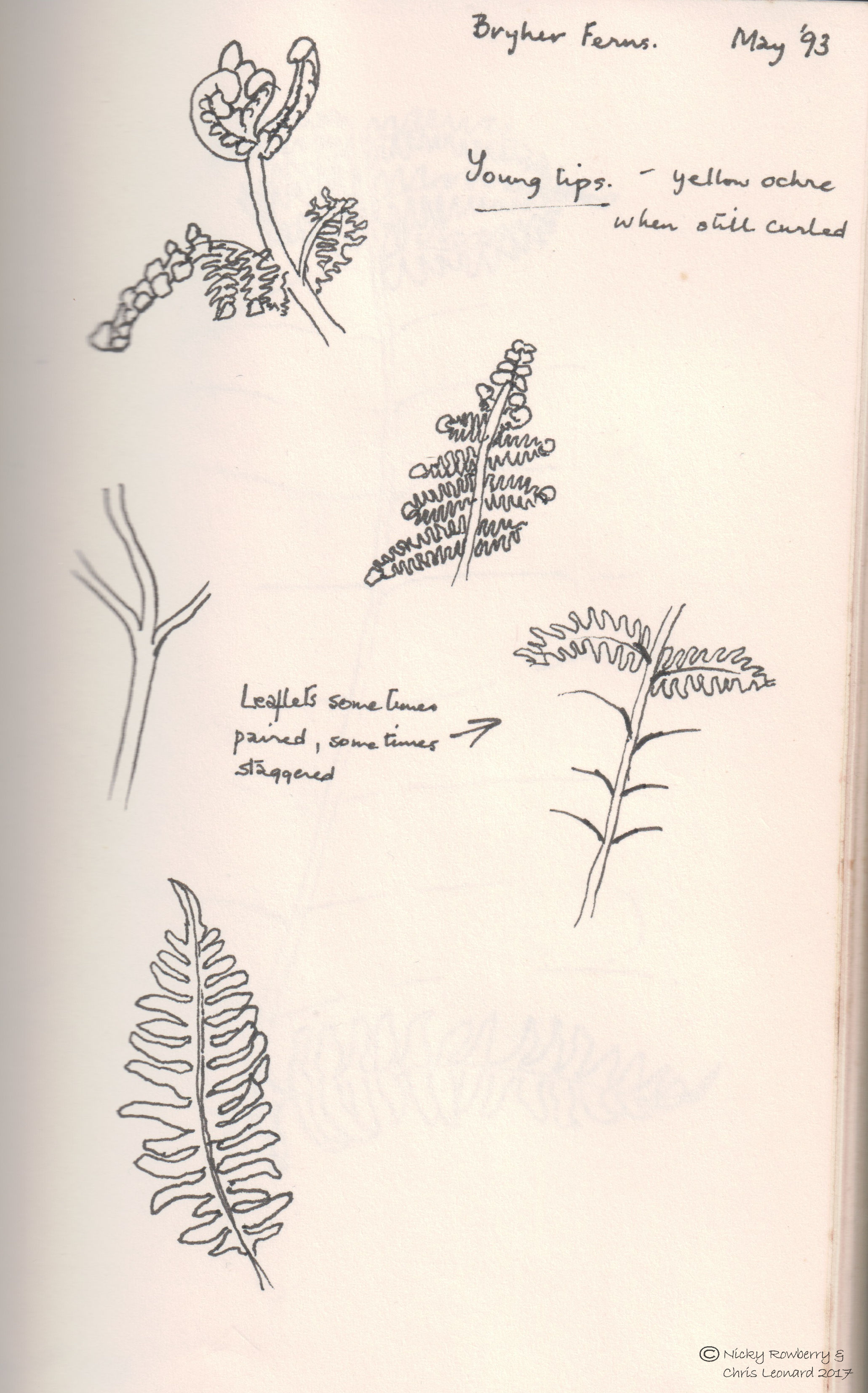
The notebook is full of little sketches and watercolours of flowers. They are all just simple little pictures, intended I presume to jog her memory for the details when she later wanted to paint full paintings. But to me they are beautiful in their own right.

There is more to so many of them though than just a flat picture of a flower. She drew or painted them from different angles, front and back, to get the feel for the whole plant not just the obvious view.

She painted them in full flower in bud, clearly realising that in any natural group of flowers, they don’t all open at the same time.

Although not a great gardener, she clearly knew the names of a lot of the plants. The artist in her noted the subtle colour differences.

Mum made notes about the arrangements of the leaves around the stems and how they changed with age, which way they faced and how the group together might form a mound.

So many of them are dated, it looks like she was using this notebook in the early 1990s. Sometimes places were named too; my parents always went to the Scilly Isles in May, so even if it doesn’t always say, I can guess some of those dated May were painted there.

This is one of my favourite completed paintings – not taken from the notebook, but hanging on my wall. It is the view from Bryher looking across the water to Tresco. It may only look like a simple watercolour, but if you’ve ever been to the Isles of Scilly I reckon it would conjure up the view perfectly.

I know I am biased but I think Mum was rather good. Looking through her notebook and seeing not only her sketches, but her familiar handwriting and thinking of her and Dad on the Scilly Isles together was quite emotional.

It struck me looking through Mum’s notebook, that she had made these little sketches as an artist, but they could equally have been done by a botanist. Her eye for the details of the plant and the notes she made would have been perfectly at home in a naturalist’s notebook. As a child I was always interested in animals and nature and Mum was always very encouraging; but what hadn’t occurred to me until tonight was that I didn’t just get supported by her, maybe I got it all from her in the first place? So tonight’s post is for you Mum – thank you for everything. xxx

The Darling Bugs Of May

Apologies for the title, couldn’t resist a bad pun! After the quiet winter and early spring months, all the insects are suddenly emerging in May. It feels like our garden is gearing itself up again ready for the 30 Days Wild in June. Everywhere I look there is something buzzing (everywhere except the bee hotel I’ve put up which is of course silent!)

May wouldn’t be May with out the arrival of the May Bugs in the moth trap. These huge beetles can apparently be a pest for farmers, but I love seeing them. They are fascinating animals and I can still remember my amazement the first time I found one in the moth trap a few years ago.

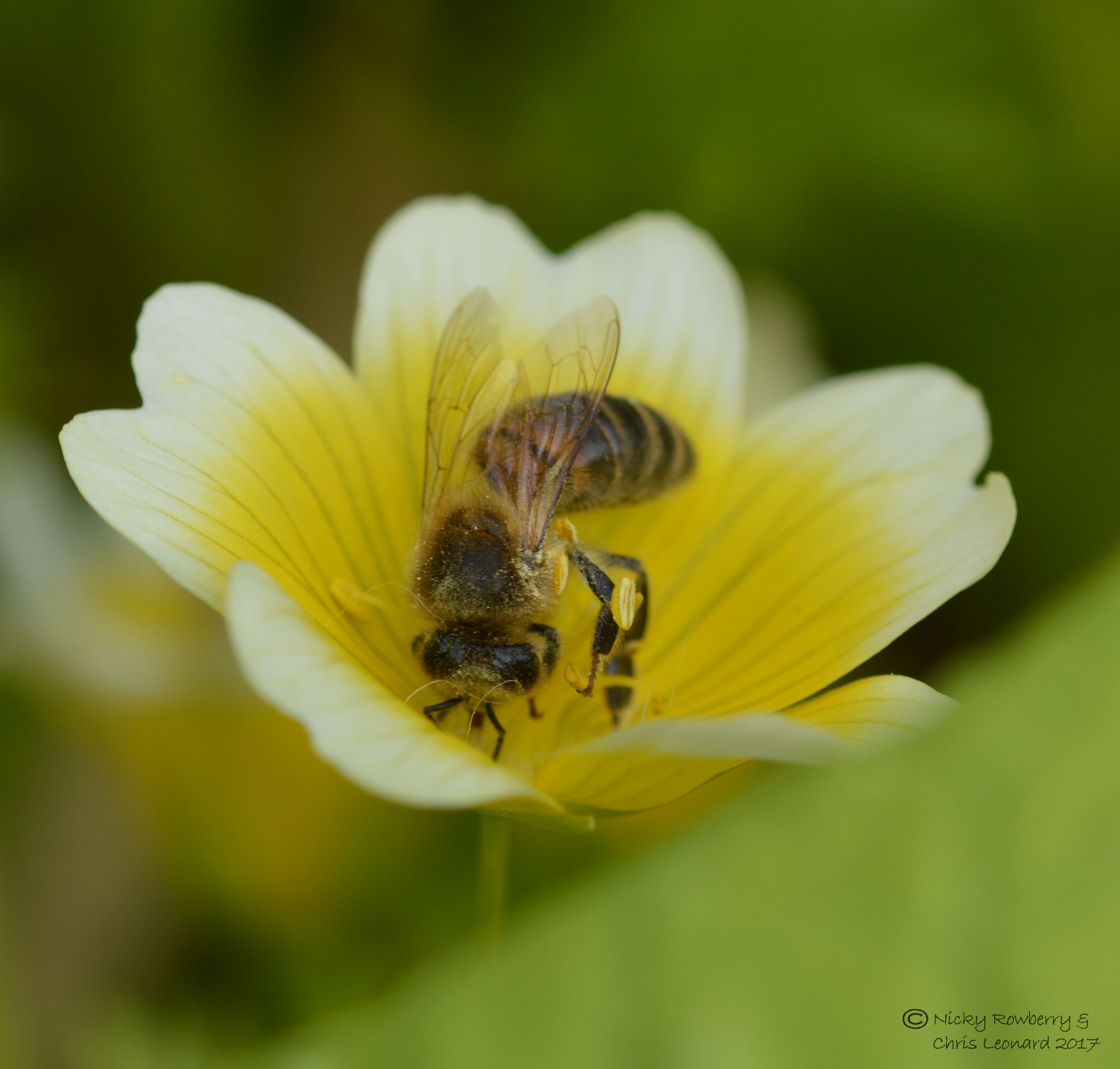
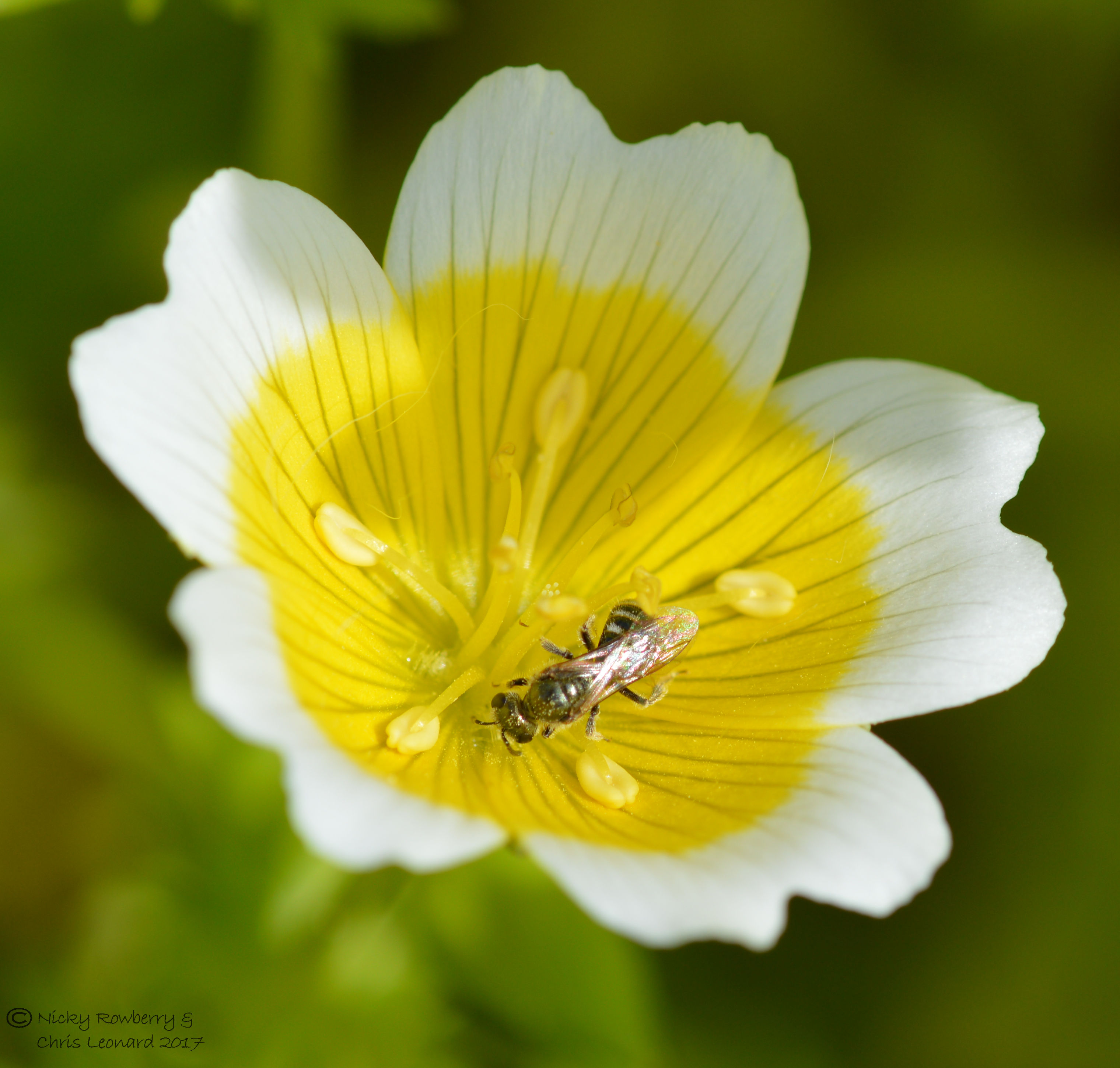
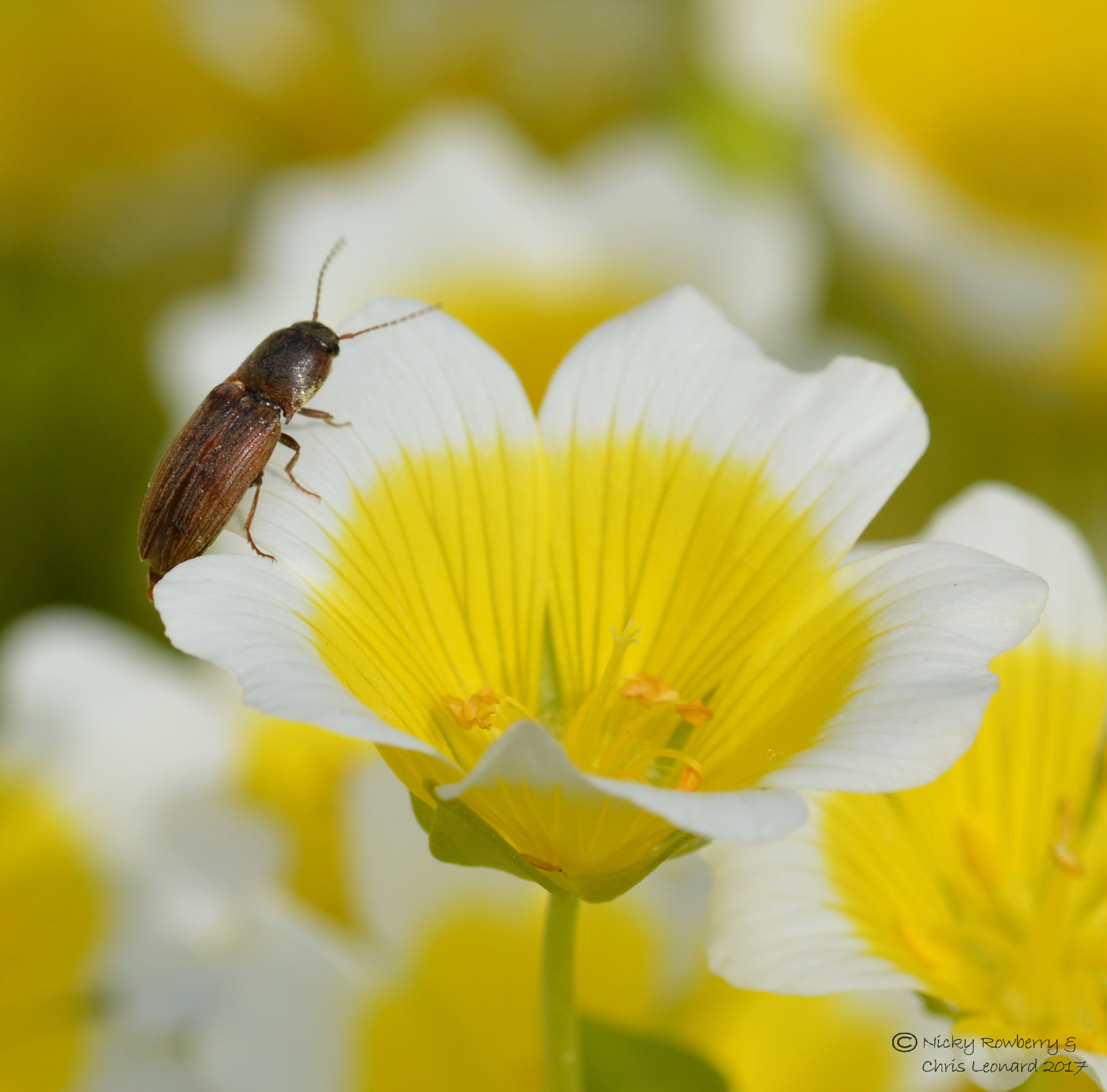
One of the areas particularly buzzing at the moment is a patch of poached egg flowers that I’d sown last year. I’d forgotten about them, but they all popped back again this year and look fantastic. I’d grown them originally as I’d read they were good for hoverflies – not sure about that but the bees love them!

Most of the bees are plain old honey bees (very welcome all the same of course).

There were also a few of these very small furrow bees Lasioglossum sp. It’s virtually impossible to get this one to species level without killing and examining it, which I’m not prepared to do, so it will have to remain a sp.

This next bee is one of the yellow faced bees – Hylaeus sp. Unfortunately since I didn’t manage to get a shot of its face, I also can’t identify this one to species. But since I’ve not recorded any other Hylaeus, I’ve counted this as bee species number 30 for the garden!

This next one did get identified to species (not by me but by a kind soul on facebook) as Osmia caerulescens – the Blue Mason Bee. This was also a new species for the garden, making 31 in total now over the last 2 years!

The bees weren’t the only ones enjoying a poached egg. This beetle (some kind of click beetle I think) spent a long time perusing the flowers.

This Hairy Shieldbug didn’t move much, just seemed to be using the flowers as a vantage point to survey the garden!

And of course my favourite – the Swollen Thighed Beetle had to get in on the act, displaying his fat thighs nicely.

The poached egg plants weren’t favoured by all the bees; some preferred other flowers like this Early Bumblebee on the alliums

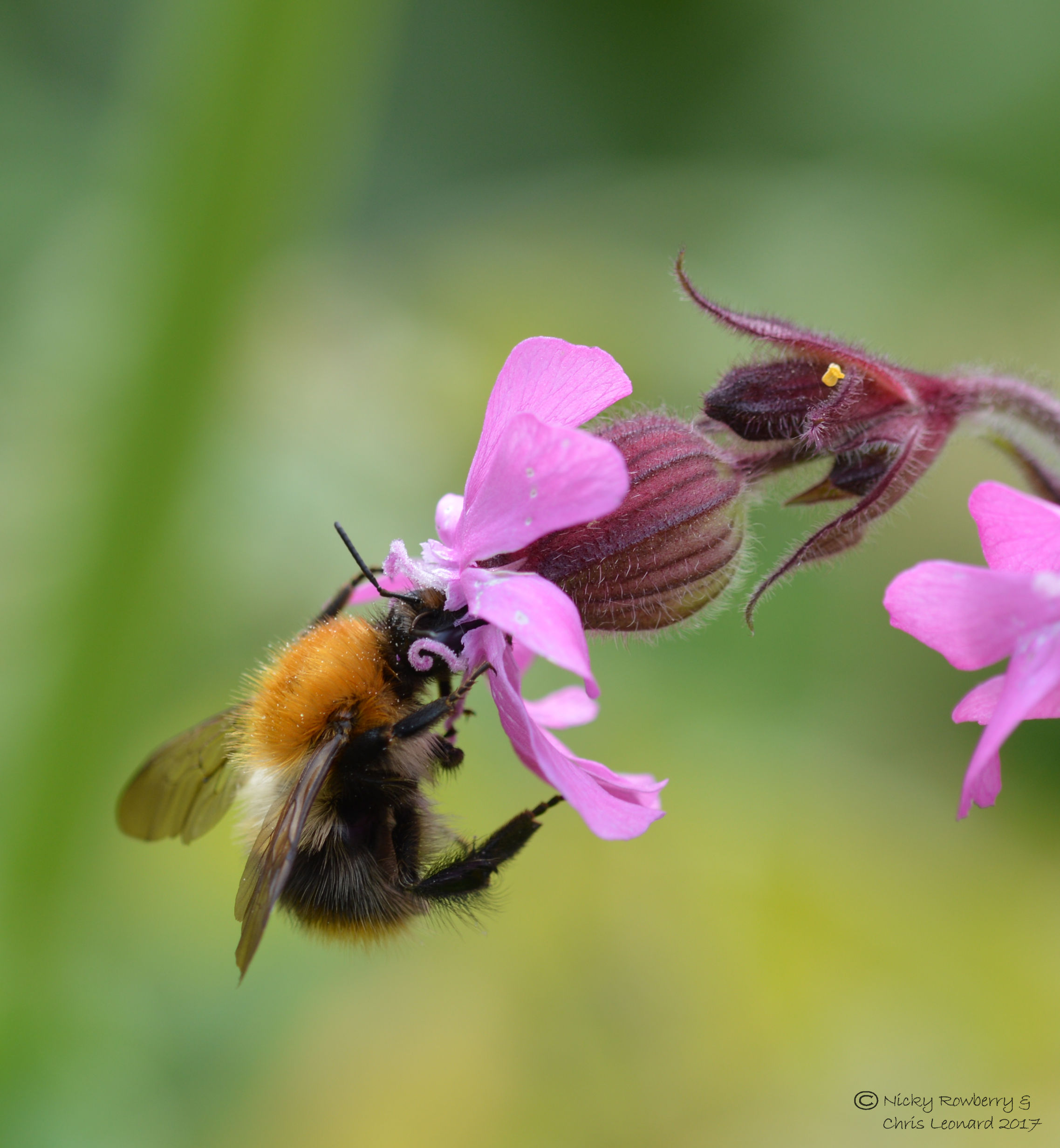
and this Common Carder bee on a campion.

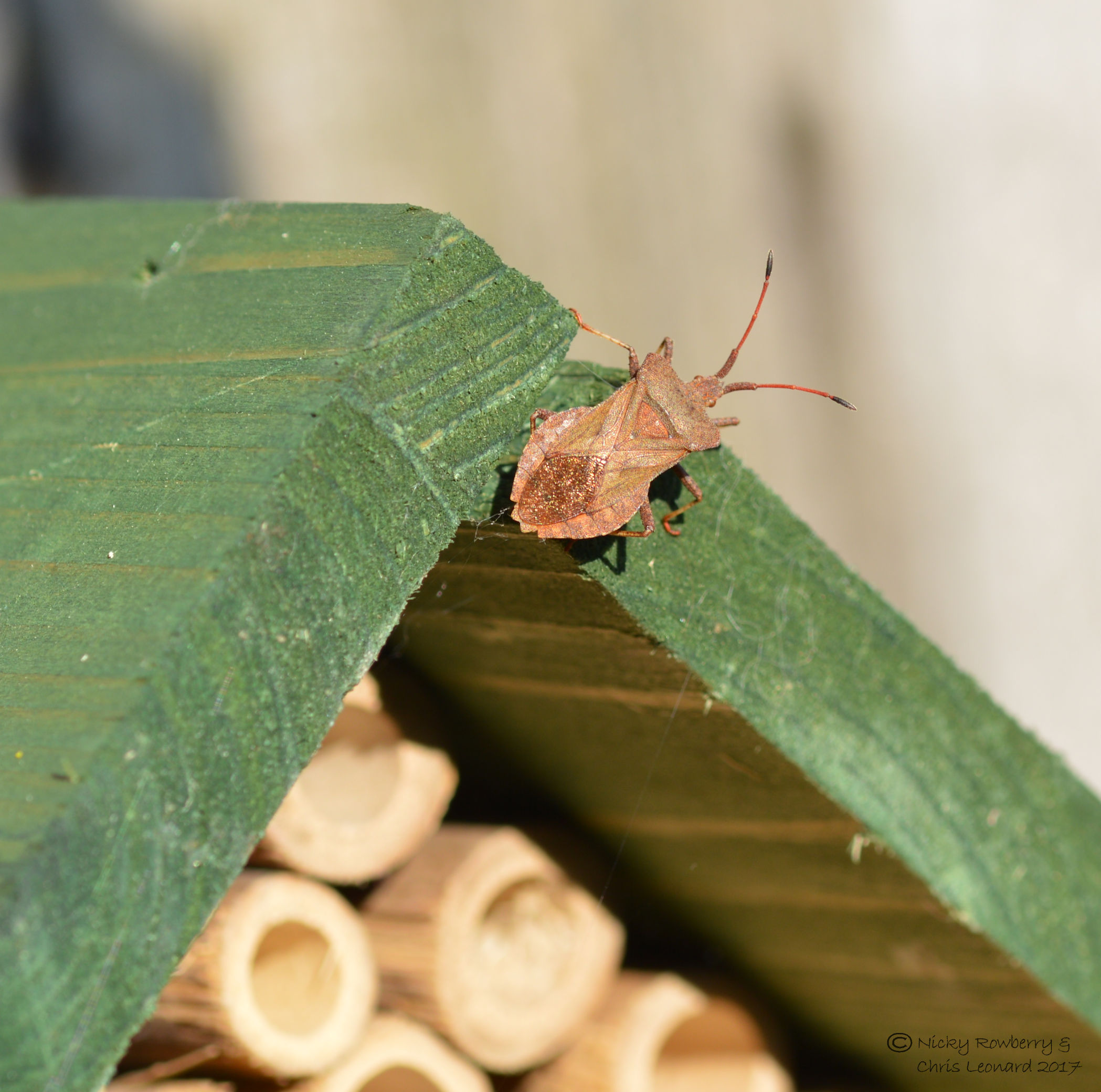
Somewhat inevitably the new bee hotel that I put up in the spring has been virtually ignored by all the bees. But at least it provided a resting place for this shieldbug.

The hoverflies were supposed to be interested in the poached egg flowers, but like most things in the garden, they never do what I expect! This little marmalade hoverfly preferred this small yellow flower to the slightly brash poached eggs.

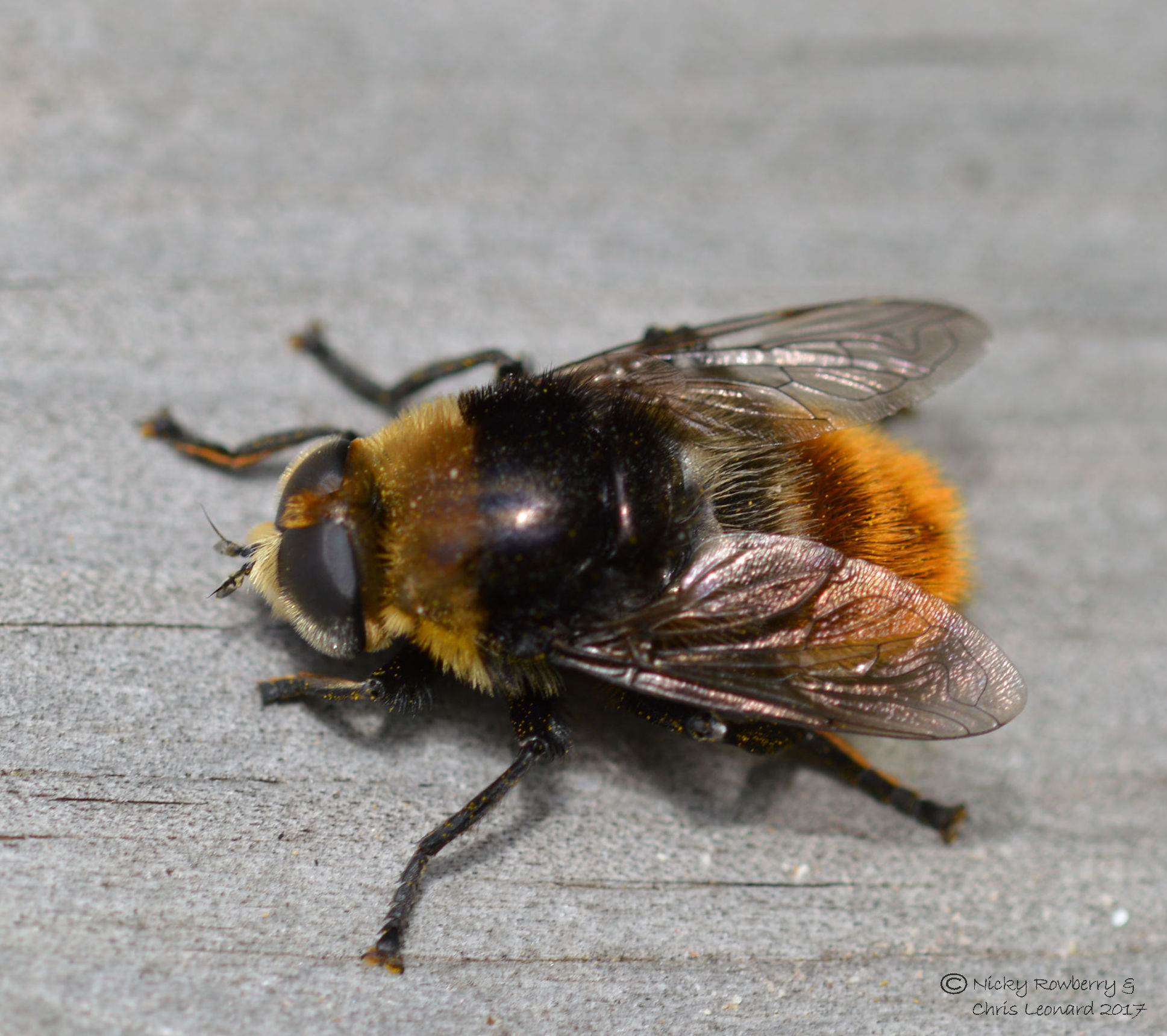
This large fat bumblebee-mimicking hoverfly (Merodon equestris) preferred just to perch on the leg of the bird table. Even when I had to move the bird table to a different part of the garden, the hoverfly followed it over – no idea why?

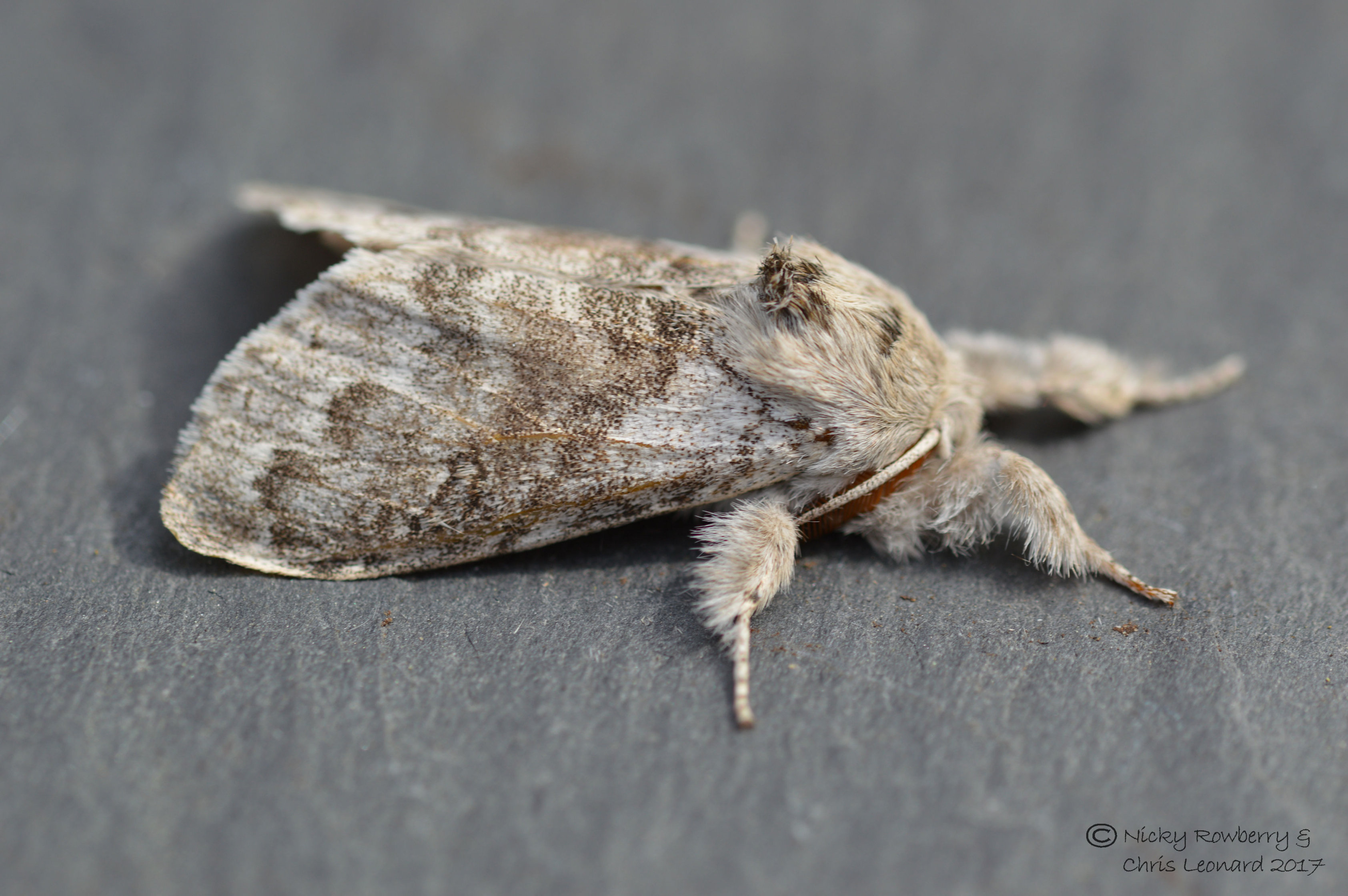
After a very quiet spring moth-wise, May has finally brought an increase in their numbers to the moth trap. The moths of winter and early spring are generally fairly subdued looking, so it’s always nice when some of the more interesting species start emerging. I love this Pale Tussock with its lovely furry legs.

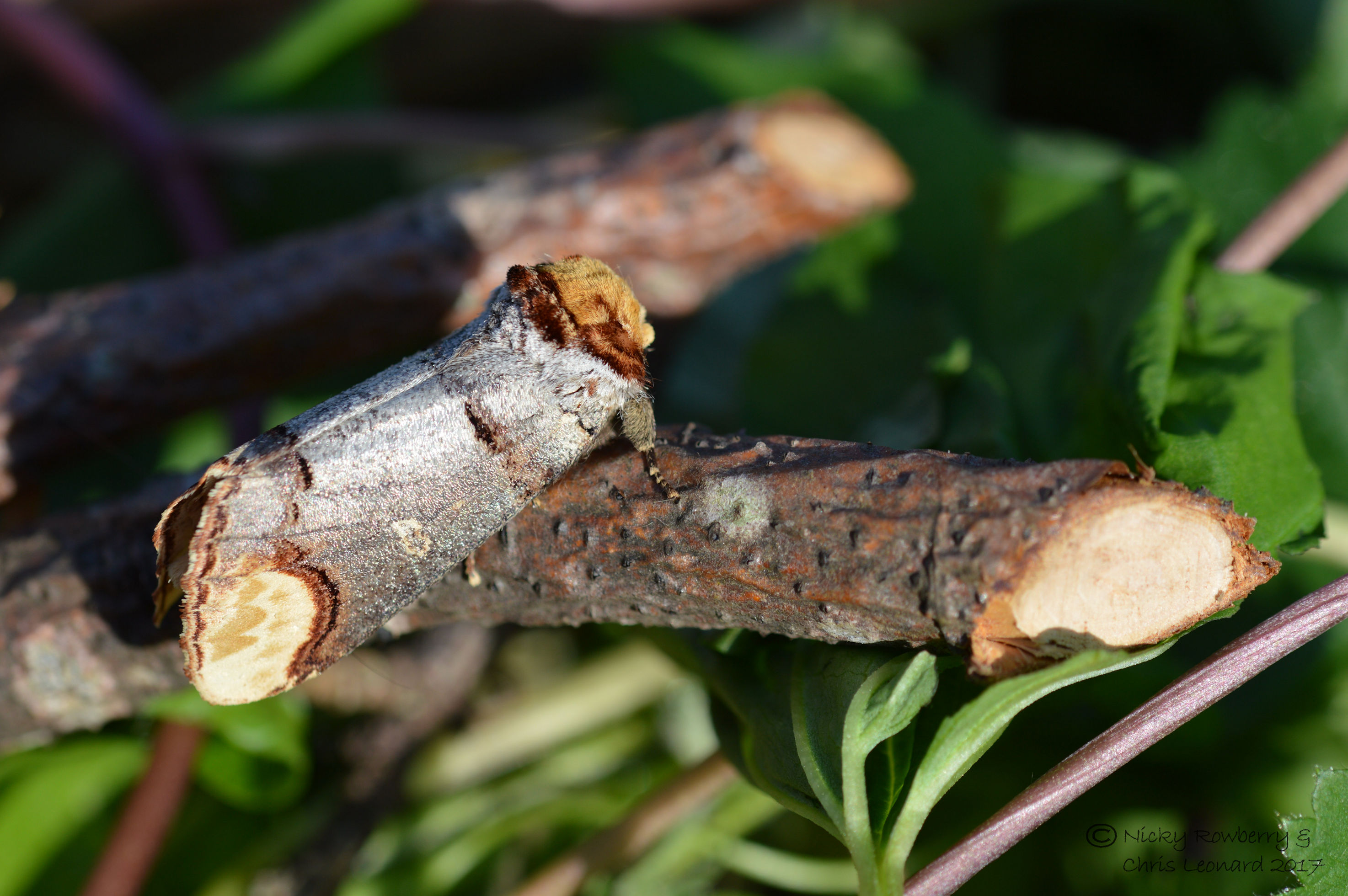
The Buff Tip is a regular visitor to our garden – it has the amazing ability to look just like a broken twig.

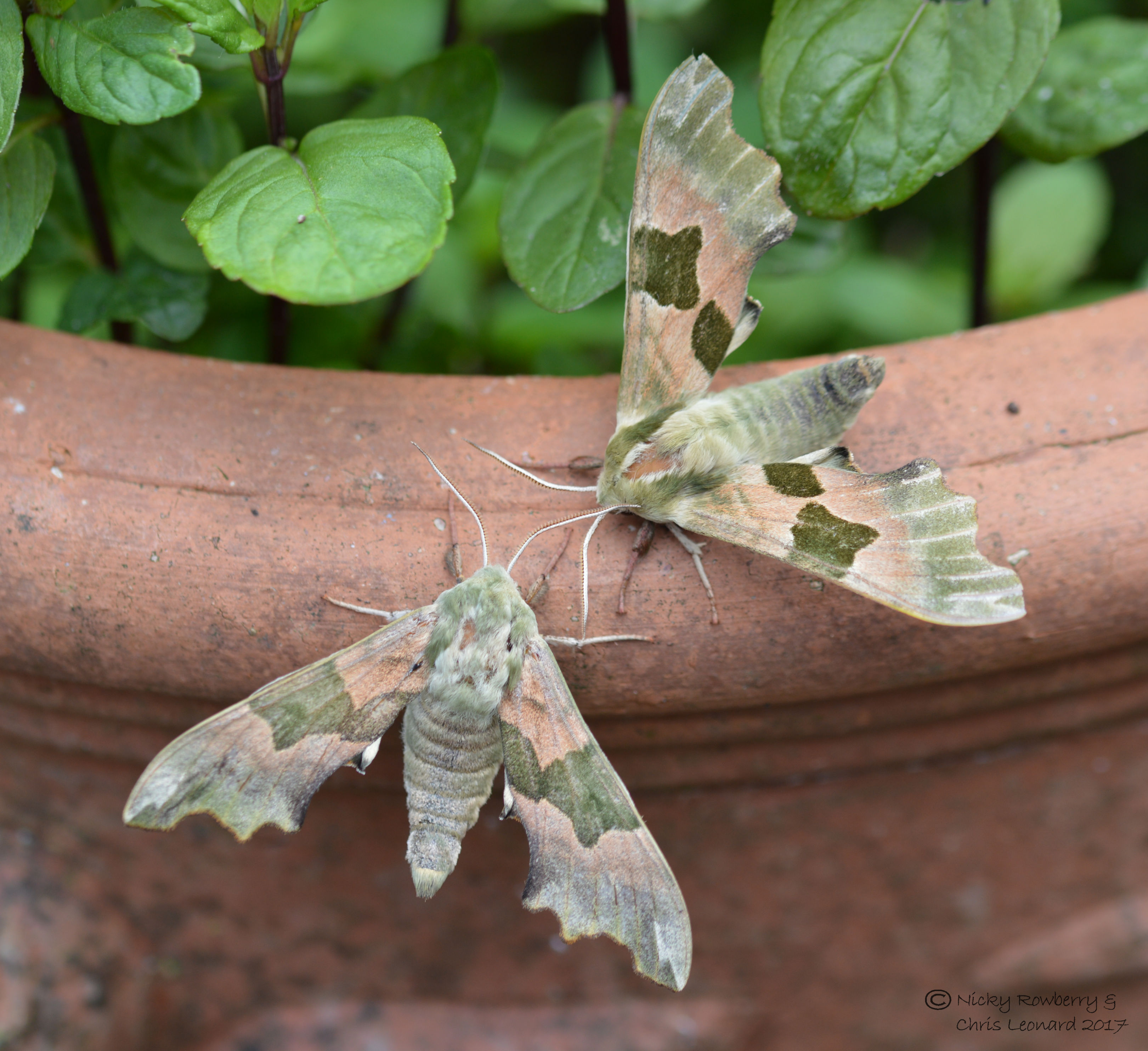
The hawkmoths are the biggest of our native species. Over the years we’ve had Elephants, Small Elephants, Eyed and Poplar Hawk-moths but never a Lime one. So I was thrilled when not one but two turned up last night!

With more moths emerging, more of their foes have emerged too. This beautiful but deadly (if you’re a moth of the wrong species) wasp Ichneumon stramentor parasitizes moth caterpillars.

As well as all of the above, there have been plenty of beetles, flies, caddis flies, daddy longlegs and other insects buzzing around this May, I just haven’t managed to take any photos of those. Something for another blog post maybe. But finally one of my favourite images from the month, a ladybird, even if it is a Harlequin rather than one of our native ones.

Jubilee Bells

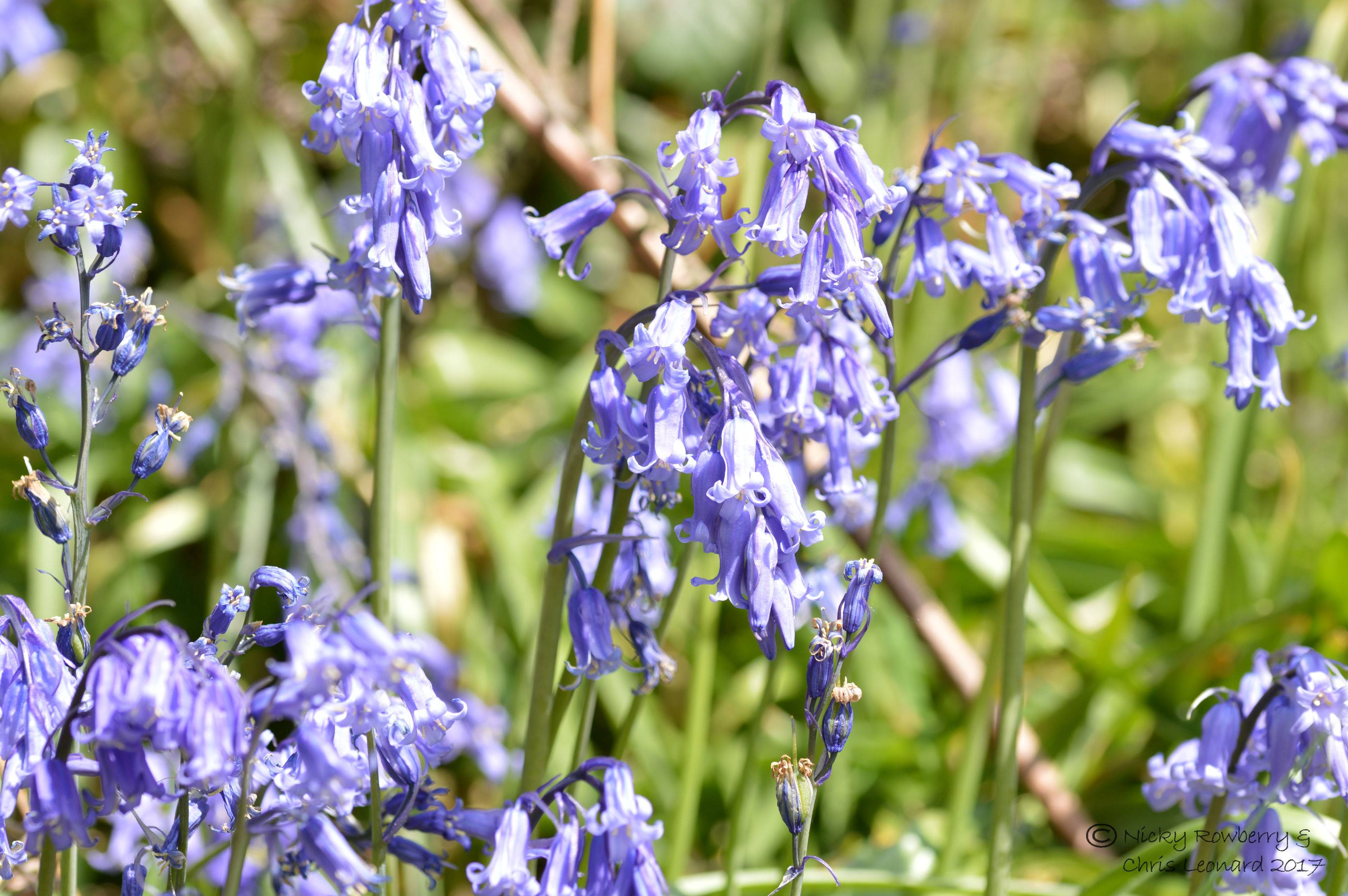
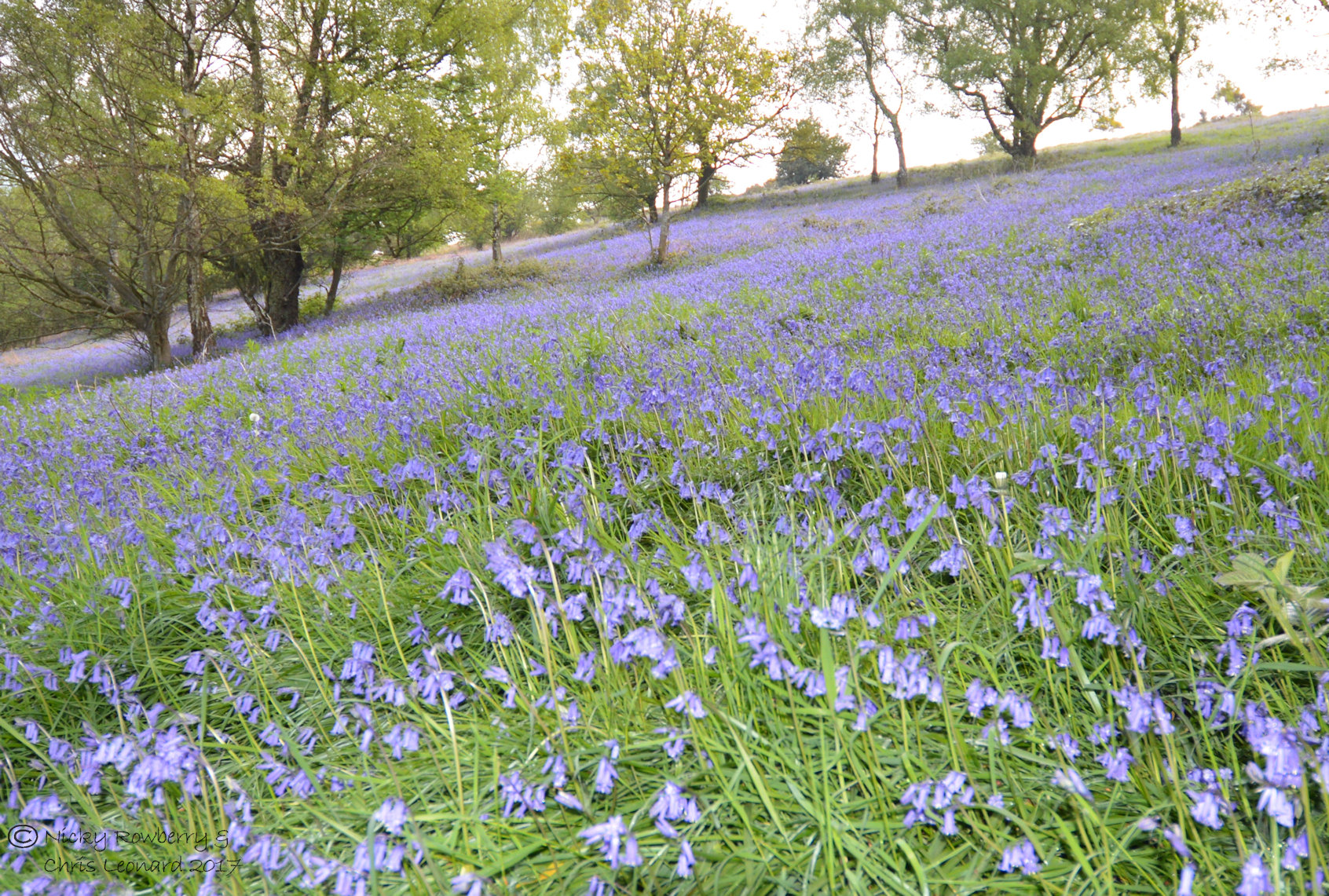
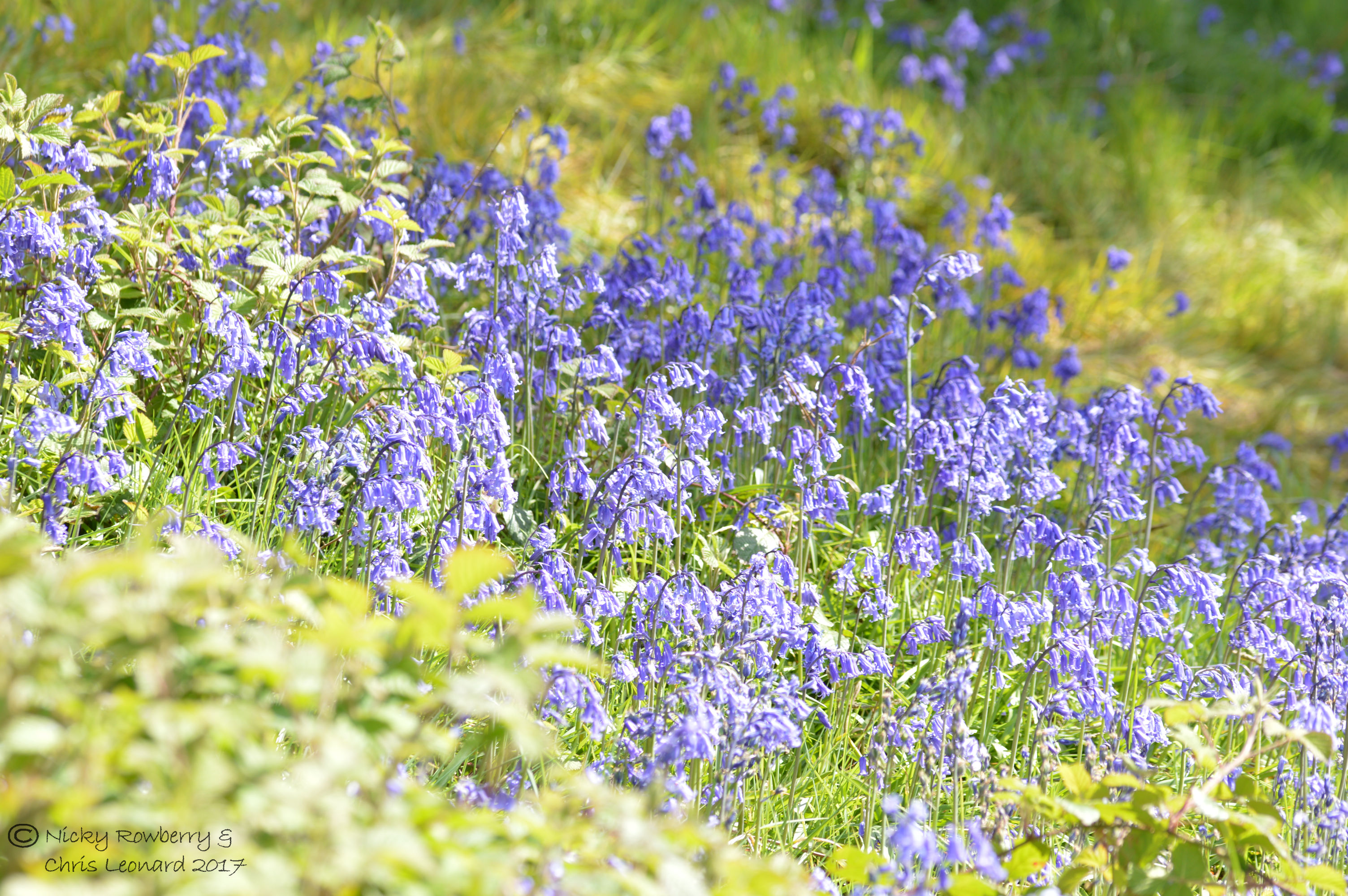
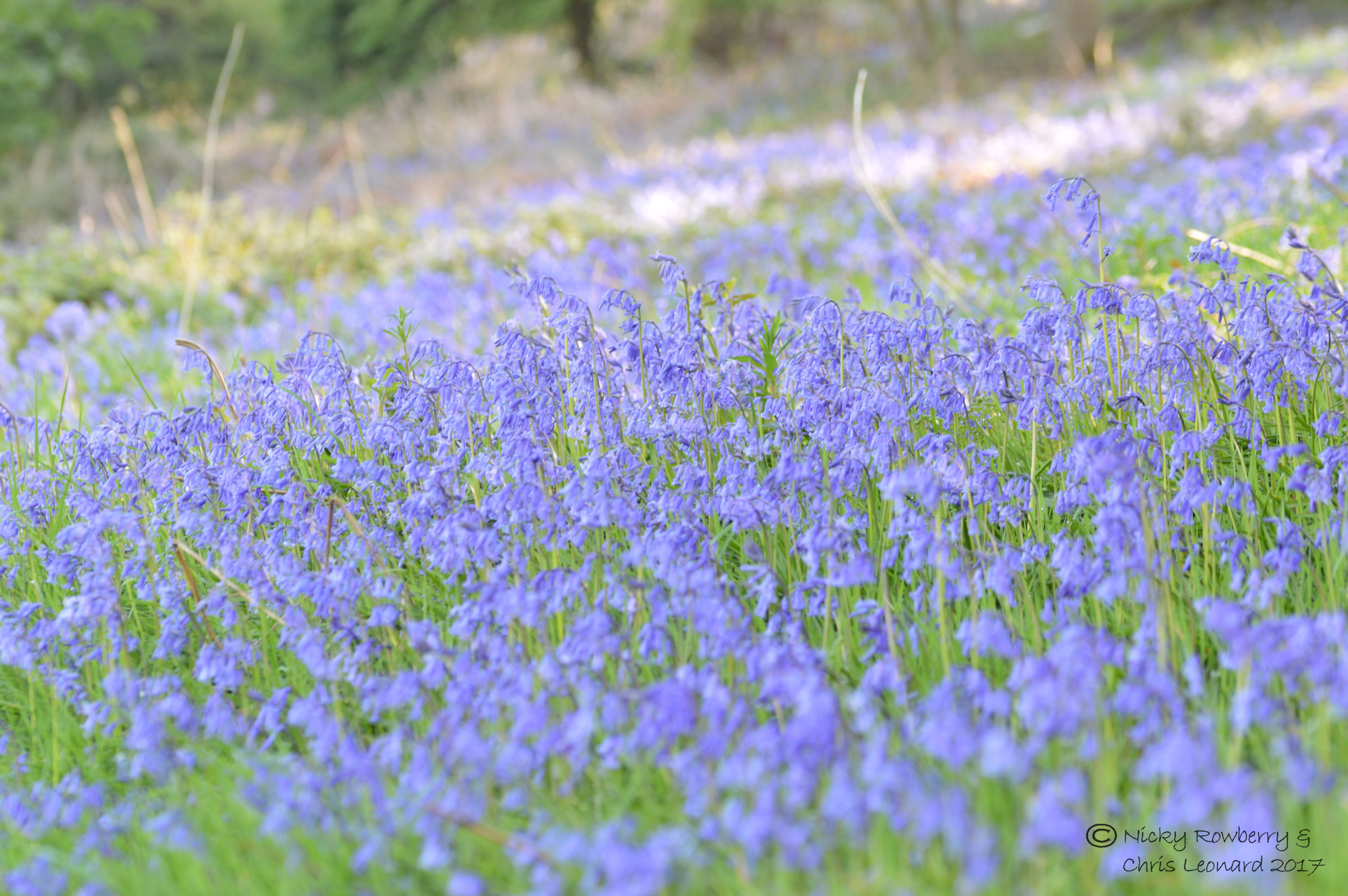
Every May I look forward to the bluebells appearing along Jubilee Drive in Malvern. Actually I start looking forward to them in April and find myself doing drive-bys on the off-chance that they’ve arrived early and the fear that I might miss them. Waiting for the bluebells is like waiting for the first strawberries in the garden or the first Orange Tip butterflies in the hedgerows. They’re all such pure pleasures, nothing showy, no monetary value, no prizes. And none of them ever disappoint, they all just make me happy! So please excuse me gushing over them, they are just so damned lovely.

They have been pretty much at their best over the last few weeks, so my drive-bys have turned to desperate hunts for parking spaces, as I make my now annual attempt to get decent photos of them. They grow in great swathes along Jubilee Drive and you’d think it would be easy to take photos, but somehow the pics never seem to do them justice. I can never seem to capture their full glory. I guess like so many things in nature they are best just witnessed for yourself. I usually give up after a while and just stare at them, enjoying the spectacle and the smell of thousands upon thousands of bluebells.

Inevitably I take hundreds of photos, most of which are rubbish, but here are a selection of some of the slightly better ones. There’s not a lot else I can say, other than if you get the chance to go and see bluebells where you live, then make the most of them before they disappear for another year.

Finchy Firsts

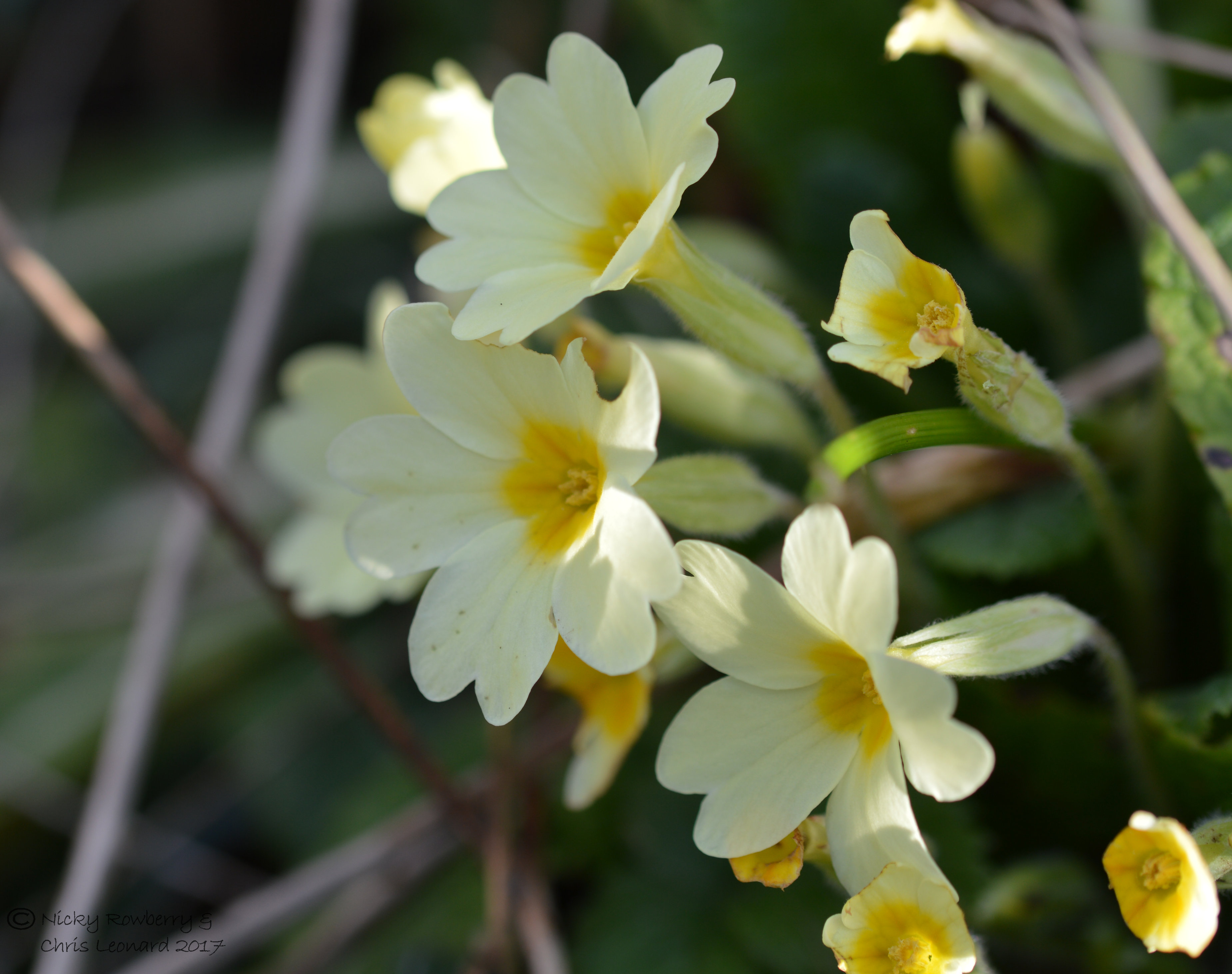
Yesterday there was a real feeling that spring was in the air. I know it’s technically still winter, but the day felt hopeful. The sun even made a (brief) appearance after what seems like weeks of grey skies here in Malvern. The primroses and crocuses were all out bringing a little cheer to the garden.

primroses

crocus

I had hoped there might be a few bees out and about, but was very happy instead to see my first hoverfly of the year. Eristalis tenax (also known rather unkindly as the Common Dronefly) was rather obligingly sunning itself on some large leaves. I’m very much a novice when it comes to hoverflies, but a very helpful man on Facebook ID’d it for me, with the top hoverfly tip that it is the only one like this that has enlarged hind tibia – which is probably the equivalent of fat calves on its back legs!

hoverfly-eristalis-tenax

I have been missing taking macro shots over the winter, so it was really nice to see at least one insect. I’ve tried the moth trap a few times over the last few weeks, but it has been completely empty each time – I need a mothy fix soon! The Garden Moth Scheme starts again in a few weeks, so I hope things pick up before then.

There may not have been many insects about lately, but there are always plenty of birds in the garden. This week we spotted both a chaffinch and a male bullfinch – neither of which we’d seen in the garden before. Sadly no photos of either, so you’ll just have to take my word for it.

I did however manage to see some goldfinches after spending an hour sitting behind a camouflage net in the garage peering through at the niger seed feeder. I was rewarded with a very brief glimpse and one dark and grainy shot of a goldfinch.

goldfinch

Just need a greenfinch now!


Autumn Flower Power

The colours in the garden are gradually changing from the bright floral ones to the more subtle leafy ones. While we can appreciate the change in the dynamics in the garden, it can be a really tough time for the insects that are still around. The leaves may look fabulous, but they don’t provide the nectar and pollen that the bees and other insects need to keep them going. Fortunately as the other flowers fade away, one comes into its own – the strange sputnik-like blooms of ivy.

ivy-flower

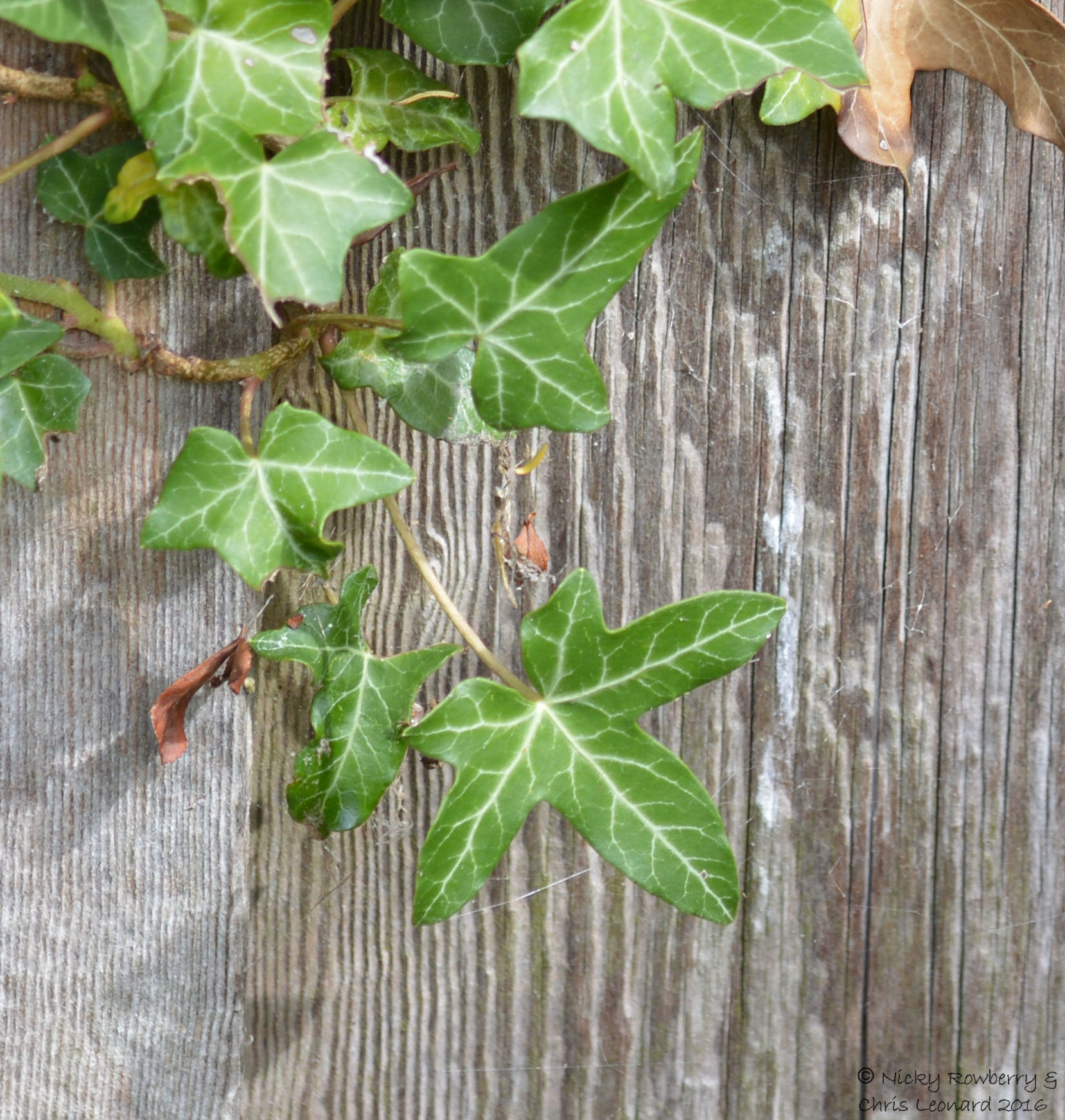
I am a relative newcomer to the ivy fan club, having not really appreciated their contribution until this year. We’ve had ivy growing along the fence for a long time, but I’d never noticed any flowers. Turns out this wasn’t just my short-sightedness, but the fact that ivy doesn’t flower until it is mature. Young ivy leaves are markedly lobed like the ones below.

young-ivy

On mature stems the leaves lose their lobes and have a more undefined wavy edged shape, like the ones below. The flowers only occur where there are mature stems. So it may be that it is only this year that our ivy has been old enough to flower, rather than me being spectacularly unobservant!

shieldbug-on-ivy

The leaves themselves are of course hugely beneficial habitats for a host of species. Our ivy has lots of the shieldbugs (as above), which are well camouflaged and can hide amongst the foliage. The ivy in our garden is confined to our fence and the ground immediately below it. The ground cover provides refuge for our resident frogs and the occasional toad. In places where the ivy is more extensive, it can apparently be a really good roosting place for bats (my dream house would be a big old one, covered in ivy and home to flocks of bats!!)

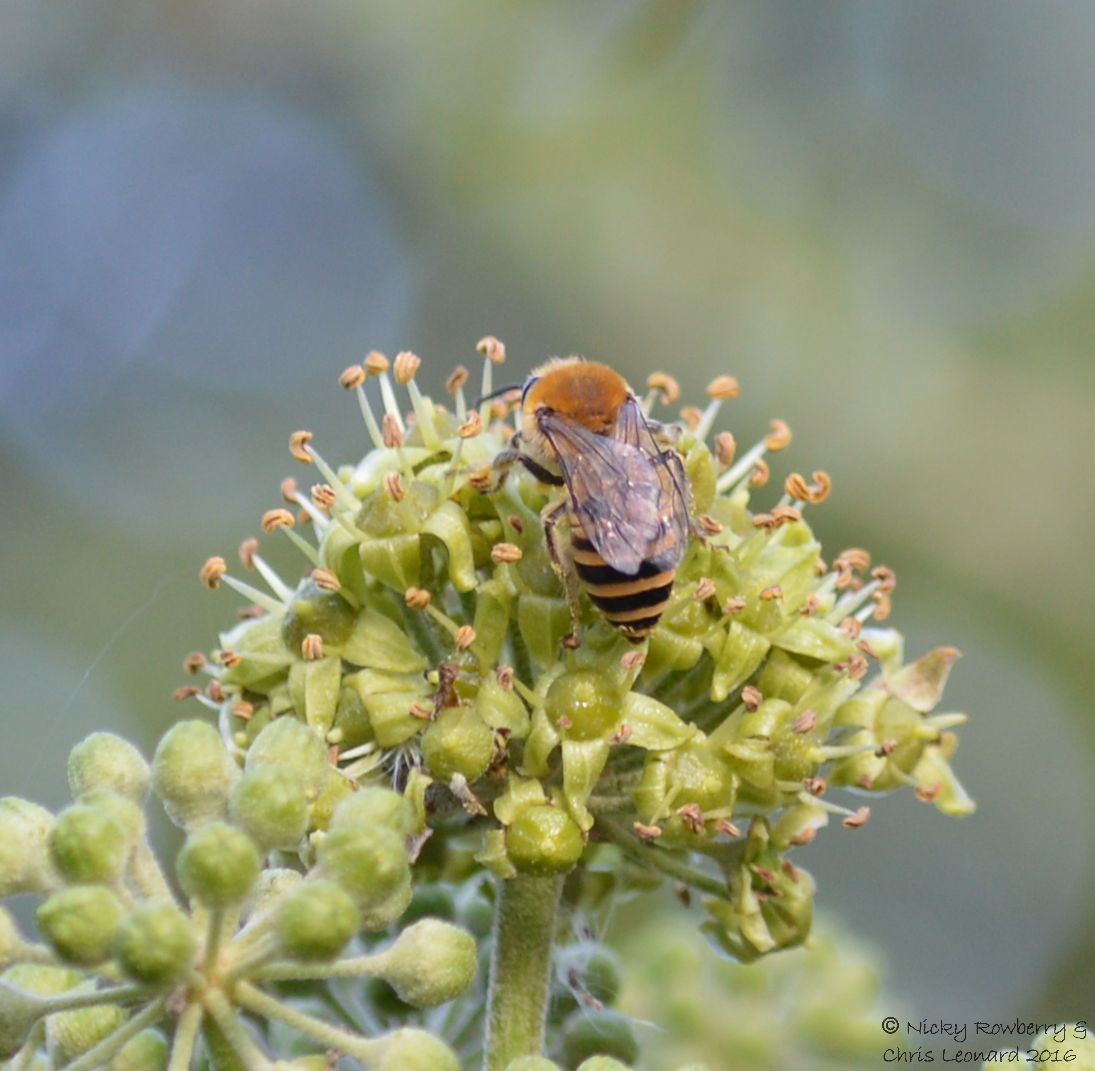
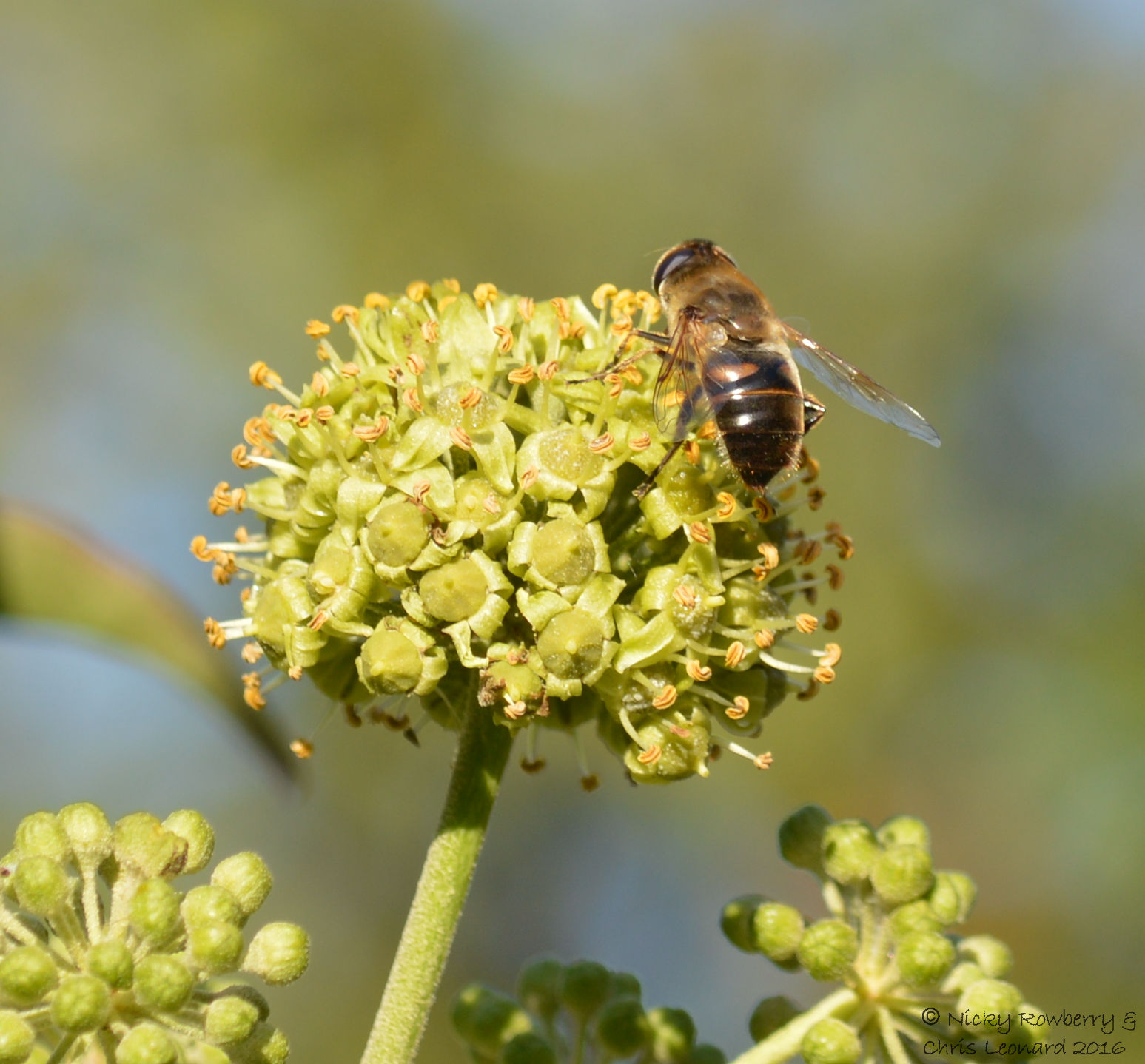
Ivy is of huge benefit to autumn insects – when most other flowers have faded, the ivy provides much needed pollen and nectar. One insect has based its whole life cycle on it – the Ivy Bee (below) even times the emergence of the adult bees to coincide with the ivy flowering.

ivy-bee

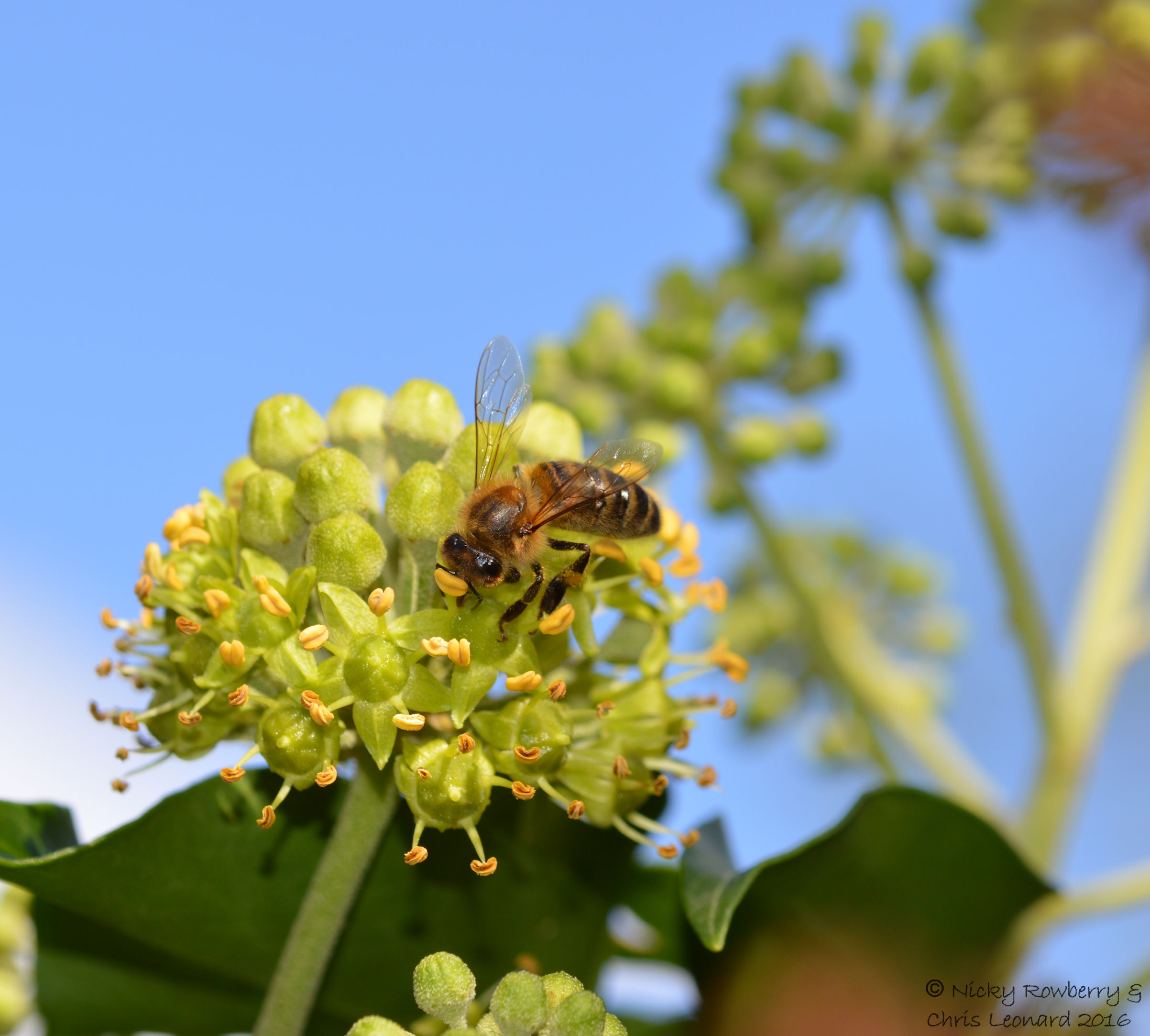
The Ivy Bee may feed specifically in ivy, but lots of other bees make good use of it too. In my quest to photograph the Ivy Bees, I’ve seen lots of other bees making the most of the flowers. A large patch of ivy can be absolutely buzzing with honey bees like the one below.

honey-bee-on-ivy-2

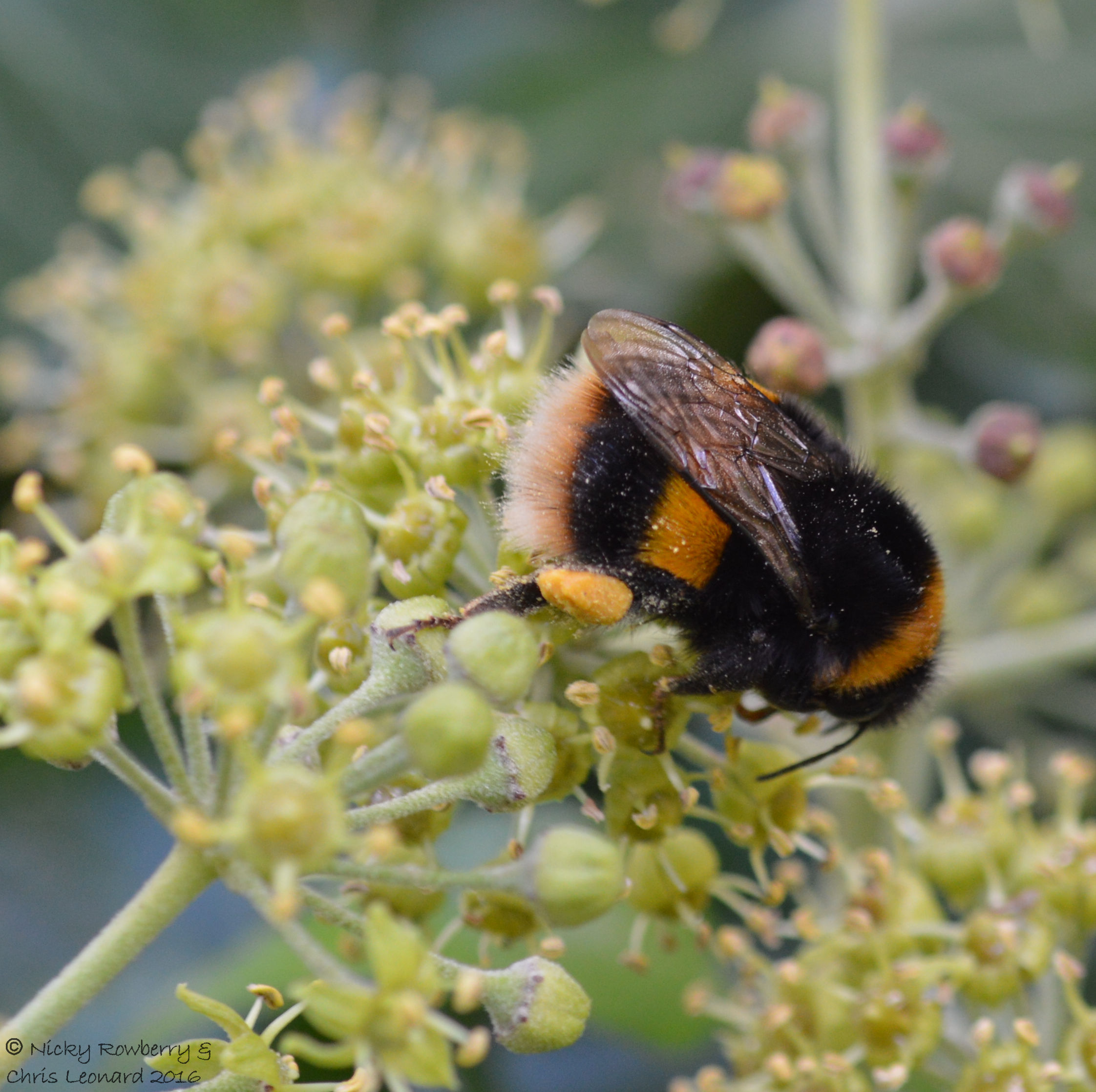
This queen Buff-tailed Bumblebee was loaded up with pollen and may have been preparing to start a new colony.

bumblebee

Some autumn butterflies will also make use of the ivy to build up energy reserves so they can hibernate over the winter. For weeks now I’ve been seeing other peoples’ photos of Red Admirals feeding on the ivy, but although we’ve had them fluttering around ours, they always seemed to land on the neighbour’s side of the fence, so I couldn’t get a photo! Finally last weekend I spotted this one in the churchyard in Bodenham and after a bit of chasing it settled down and let me take some pics.

red-admiral

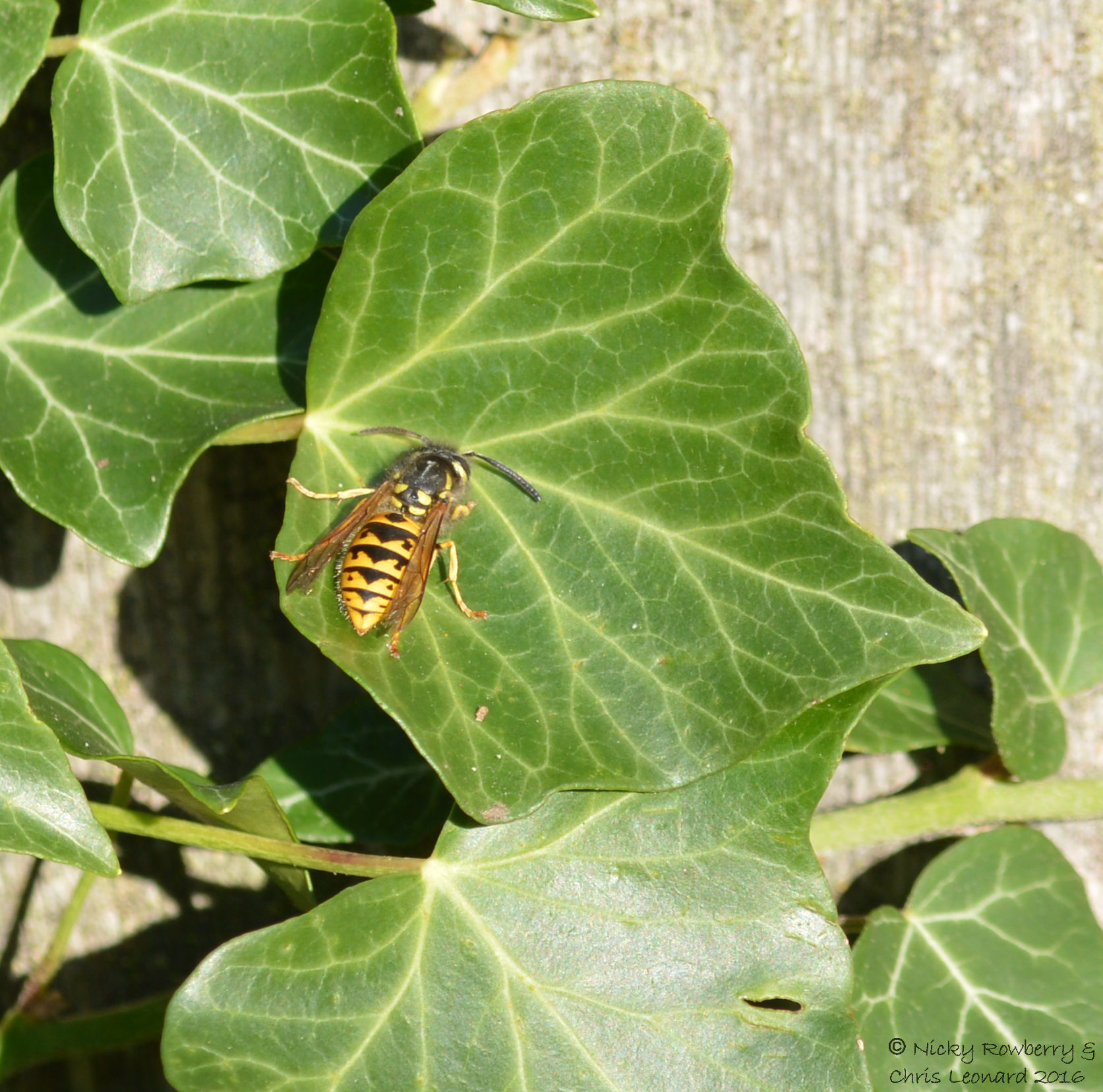
Our garden ivy gets a lot of wasps – probably more of them than the bees. They seem to like resting on the leaves in the sunshine, between bouts of feeding on the flowers.

wasp-on-ivy

wasp-v-vulgaris-on-ivy

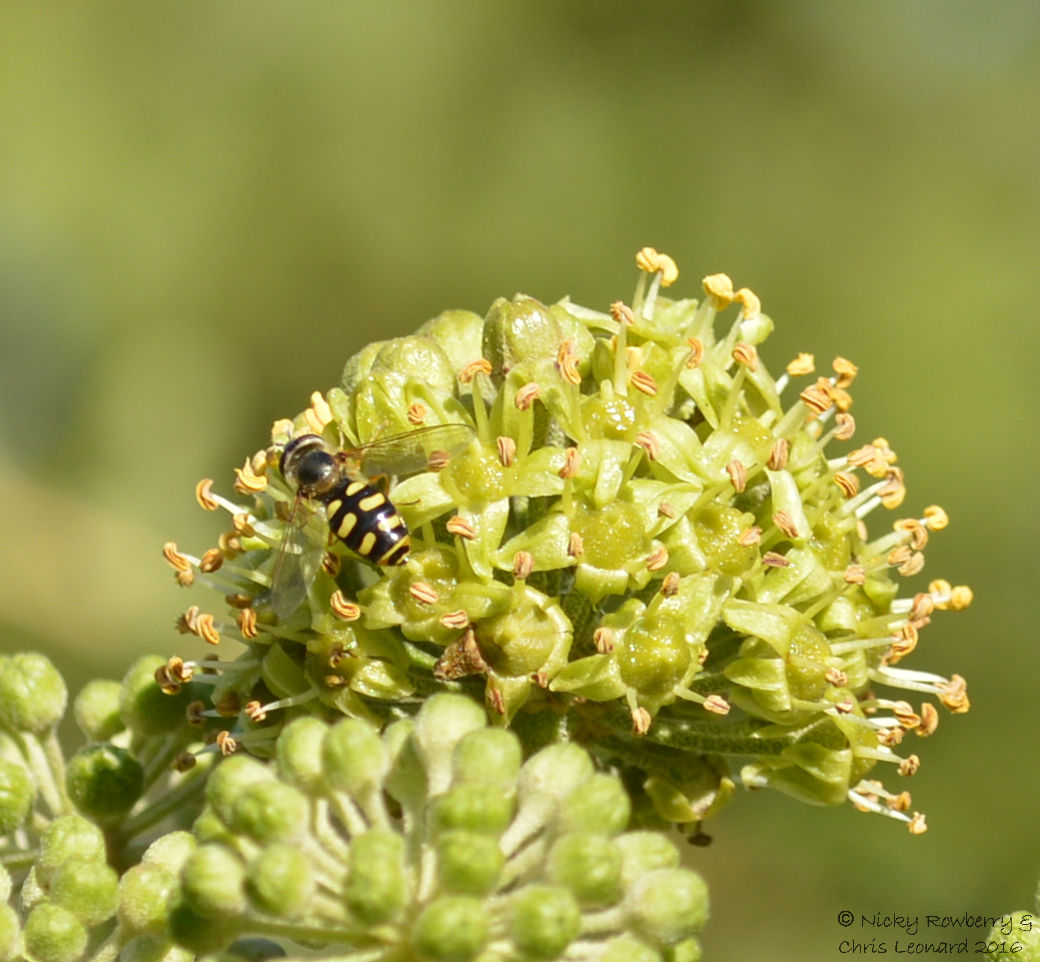
Hoverflies are also abundant on our ivy – here are just a couple – top a brightly coloured Eupeodes sp. and bottom an Eristalis sp.

hoverfly-on-ivy-3

hoverfly-on-ivy-2

Many other insects will make use of the ivy too. It is apparently an important source of food for many moths, although I’ve yet to successfully photograph one on ours. At the less glamourous end of the insect spectrum – the flies also enjoy a nice bit of ivy. This was one of the more attractive ones (I’d call it a Green Bottle, but no idea what its proper name is?).

fly-on-ivy

Once the flowering has finished, the ivy produces berries that are a valuable source of food for garden birds. The ivy berries last much better than some other fruit, so can provide food right through the winter, when hawthorn and rowanberries are long gone. Now that I have ivy flowers in the garden, I will hopefully get some berries – with a bit of luck I’ll be able to get some trail cam footage later in the winter of birds eating them!

Some gardeners consider ivy to be a nuisance, but for me the pros far out weigh the cons and now that I’m finally looking at it properly – it really is a beautiful plant!