Moths – A Whiter Shade of Pale

It’s apparently been National Moth Week this last week, although I’ve only just realised that today – a bit late. Fortunately I’d run the moth trap at the weekend anyway, so I was sort of participating in Moth Week, albeit unwittingly!

My star moth from this weekend was this beautiful white one – the Yellow Tail. It does have a yellow abdomen which it sticks out when disturbed, but personally I’d have called it something that described its beautiful white wings a bit better. But whatever the name, it’s a lovely moth and I was so happy to finally get one in our garden.

Yellow Tail

Two weeks ago I’d got another first for the garden which I’d initially thought was a Yellow Tail, until I realised it didn’t have one! Closer inspection revealed it to be a White Satin (whoever named this one was more on my wavelength), which has a lovely sheen to its wings and stripy little front legs.

White Satin

Feeling on a bit of a roll with the white moths, I raided the photos to see what other ones we’ve had. The most obvious was the White Ermine. We get these most summers and they really are stunning – and easy to identify making them the perfect moth in my book!

White Ermine

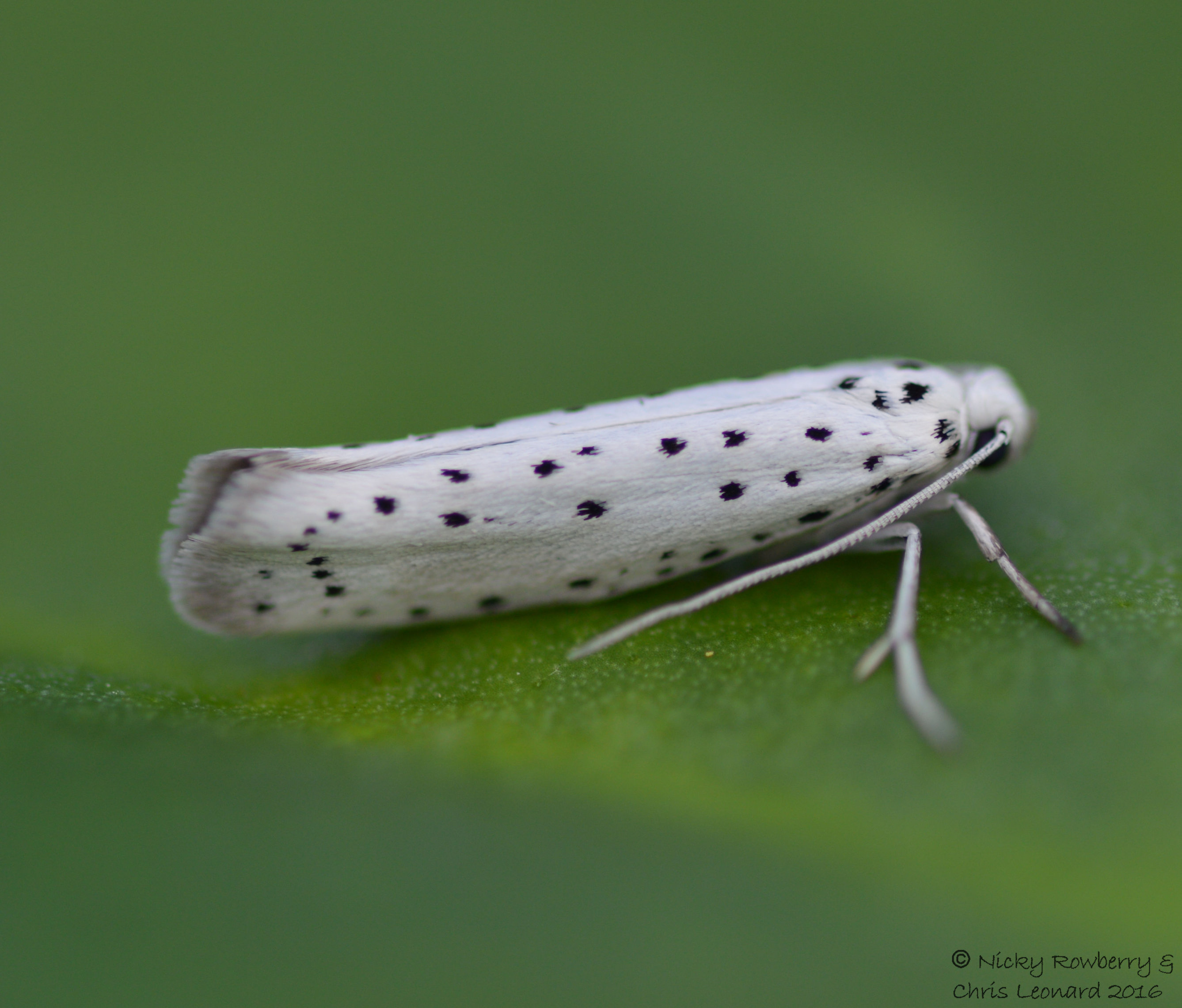
The next white moth I could think of was the other type of Ermines we get. These tiny micro moths feed on fruit trees and turn up in the moth trap regularly, but they are really difficult to identify. The books advise that you should breed them up from the food plant to be certain of the species, but that doesn’t help when you’ve just caught one in a trap. The trap was right next to our apple tree, so this maybe an Apple Ermine, but we have plum trees nearby too, so it could be an Orchard Ermine. We may even be getting both species.

Apple Ermine

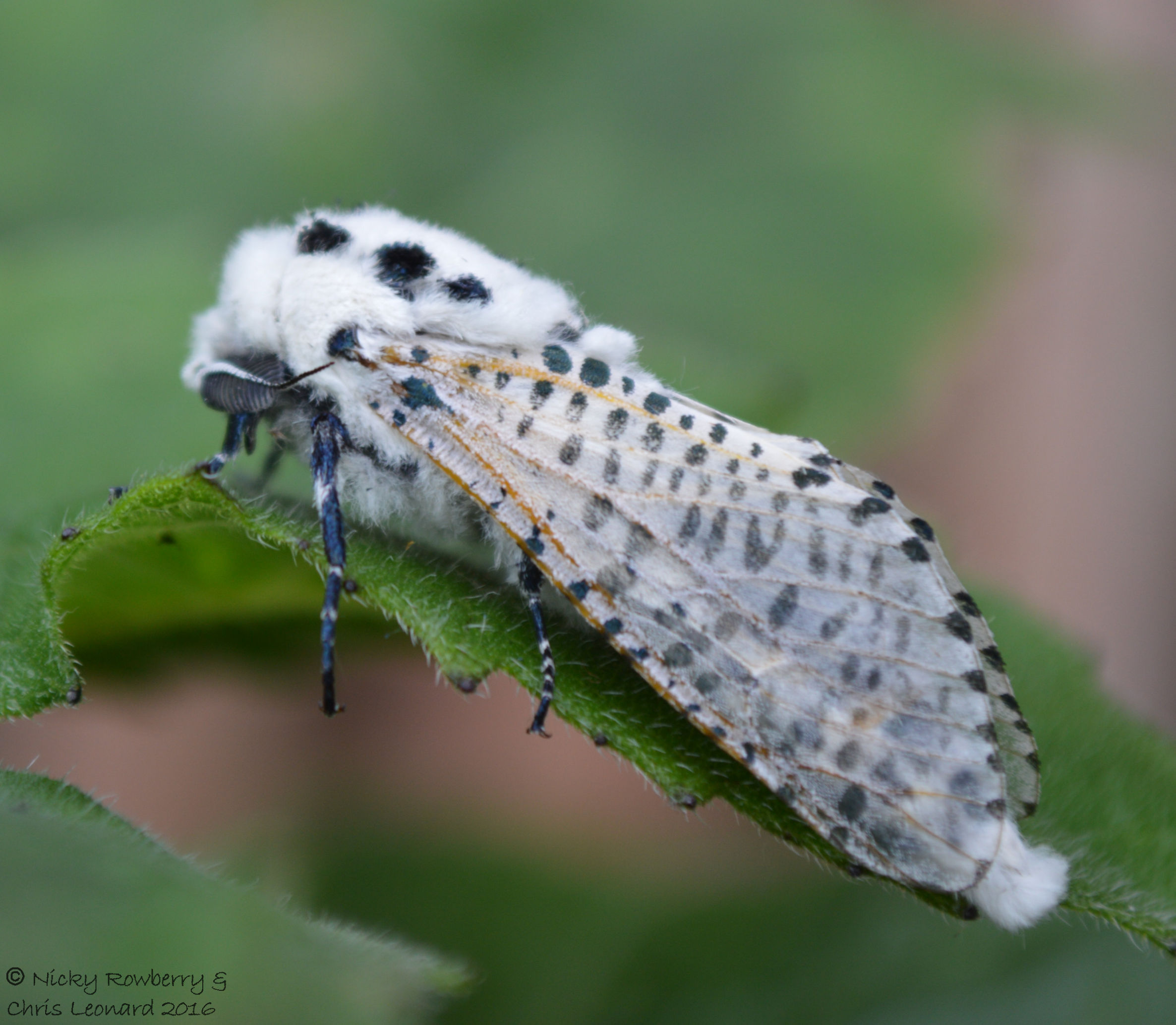
The final white moth of the day is the Leopard Moth. I’ve not seen one in the garden yet this year (although I did see one on the Wildlife Trust’s Moth Breakfast back in June), so this is a photo from last year. These are crazy unmistakable looking moths.

Leopard

I find these white moths really hard to photograph, mainly because I’m no good with camera settings so do most of it on auto. Trouble with using auto on white moths is that it struggles with the exposure as they are often too white against whatever background they’re on and the photos can look blown. The White Satin was particularly awkward as it flew out of the pot and landed on the black tripod leg. The only way to photograph it was to take the camera off the tripod – adding my shakiness to the equation. So that’s today’s excuses dealt with!

Hedgehog Update

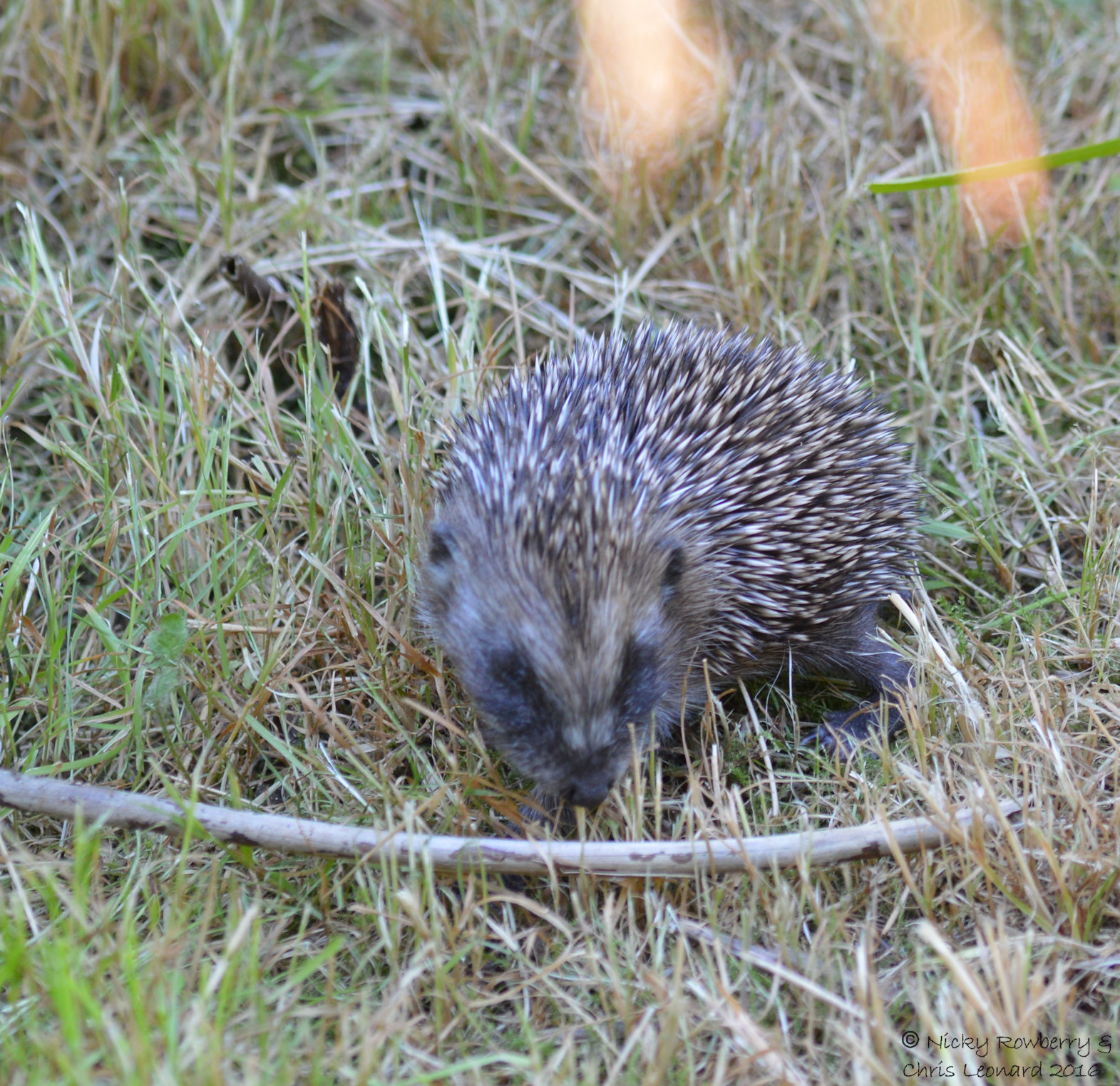
Just a quick update on our garden hedgehogs. The good news is that we spotted 2 healthy looking adult hedgehogs in the garden last night as it was getting dark. One was more adventurous and came out for a bowl of catfood, the other stayed in the bushes waiting for us to go away.

Adult hedgehog

Whilst it was great to see that we still had our adult hedgehogs, I was then worried that perhaps I’d unnecessarily removed the 2 babies I found on the hot lawn earlier in the week. Of course there is no guarantee that the 2 adults we saw last night were the parents. I contacted the hedgehog rescue lady who reassured me that we’d done the right thing removing the babies from the heat as they could have become dehydrated, got fly strike, or even been predated. They certainly shouldn’t have been out by themselves in the middle of the hot afternoon. Better to have taken them to safety than take any chances.  She also assured me that the babies were doing well.

I’ll probably put the trail camera out over the weekend and hope we get some better footage of our hedgehog friends, so perhaps more updates next week.

Too Hot for Hedgehogs

It’s boiling in Malvern today as it is around much of the country. Fortunately I managed to escape work early and got home mid afternoon. And it was really lucky I did – I went out into the garden to find two baby hedgehogs sitting out in the heat on the lawn.

DSC_8929

They were so small and although one was snuffling about the other wasn’t very lively – no wonder as the thermometer was saying 37°C!

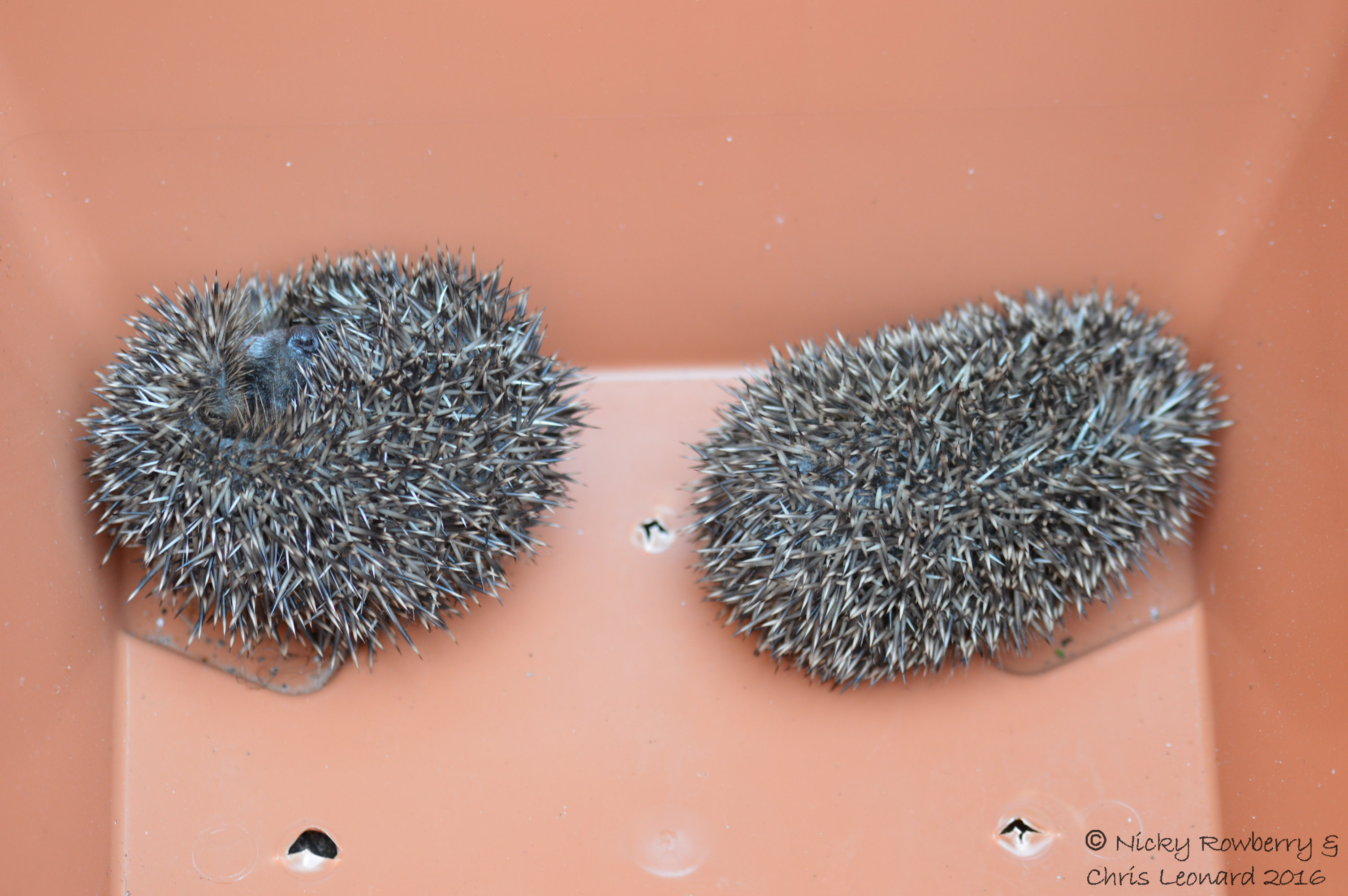
I had a quick look around the garden but no sign of adults, so I phoned our local hedgehog rescue centre. Thank goodness the wonderful woman answered the phone and told me to grab them quick and phone her back. One convenient large plant pot later…

DSC_8935

Fortunately the rescue lady was just around the corner so I took the babies down there straightaway. She weighed them – 82 and 90g, a male and a female – and estimated they were about 3 and a half weeks old as their teeth were just coming through. They were apparently in reasonable health and not dehydrated so she said the chances of them surviving were good.

Whilst I am relieved to hear these babies will probably make it, it is very sad to think that it probably means the mother is dead. We have been watching hedgehogs in the garden over the last few months and it’s really upsetting to think one of them may have died. Thank goodness I didn’t get home any later from work to find 2 dead baby hedgehogs in the heat on the lawn.

The lady at the rescue centre has taken my details and says when they are grown enough to survive we can have 2 back. She will apparently give us one of our original ones plus a different one (to avoid inbreeding between brother and sister). So at least that will hopefully be a happy ending. Hopefully I can give an update later in the year.

If anyone find a hedgehog in need of help in Malvern the rescue centre details can be found at http://www.malvernhedgehogrescue.co.uk/ It is run on a completely voluntary basis and relies on donations, so if anyone can help towards her running costs, please donate – either as a direct donation or by donating foods, cleaning materials etc.

Big Butterfly Count

Big Butterfly CountYesterday was the start of the 2016 Big Butterfly Count. One of my favourite “citizen science” projects; we’ve been doing this in the Too Lazy garden for a few years now. All you have to do is sit for 15 minutes and count the butterflies you see (only record the maximum number of a species you can see at any one time, so you don’t count the same individuals twice). You can do as many counts as you like in as many locations over the 3 week period the count runs.

So this afternoon I sat in the garden and counted the butterflies. Not a huge number; it was a bit of a dull day as so often seems to happen when the Butterfly Count is on. But I did see 5 individuals of three species – Large White, Meadow Brown and Ringlet. Best of all I saw a pair of Ringlets mating. This bodes well for future little Ringlets (would that make them Ringletlets?) in our garden.

Mating Ringlets

The meadow brown just whizzed through the garden and the Large Whites were way too flighty to get photos as usual. They may be one of the commonest species, but I find them the hardest to photograph.

So maybe not a spectacular start, but then the count isn’t about recording the highest numbers of butterflies. It’s about gathering long term data to assess the health of the UK’s butterfly populations. So my 5 butterflies still provide useful data.

More information on the Big Butterfly Count at: http://www.bigbutterflycount.org/


One Year Older and One Year Weedier

Just realised Too Lazy To Weed is one year old today! 13th July 2015 I first dipped my toe in the world of blogging; at the time I wasn’t sure if I had enough to share from my perspective of lazy non-gardening and wildlife watching. But as I think I said in my very first blog post – there’s something going on in the garden all the time. And if not in the garden, then there are things to discover in the wonderful countryside around us.

I started blogging on a wet Monday in mid July – one year later and it is now a wet Wednesday in mid July; the weather at least hasn’t improved over the year. A few things have progressed though – I think we’re getting better at the photography; still by no means experts, but at least producing recognisable photos (apart from some dubious bee in wall ones below). I’ve learnt how to use a Trail Camera and Bat detector and both my moth and bee identification skills have improved a bit. The garden itself is looking increasingly wild and woolly – some of the weeds are now reaching triffid proportions and we lost the greenhouse for a while until I hacked my way back to it!

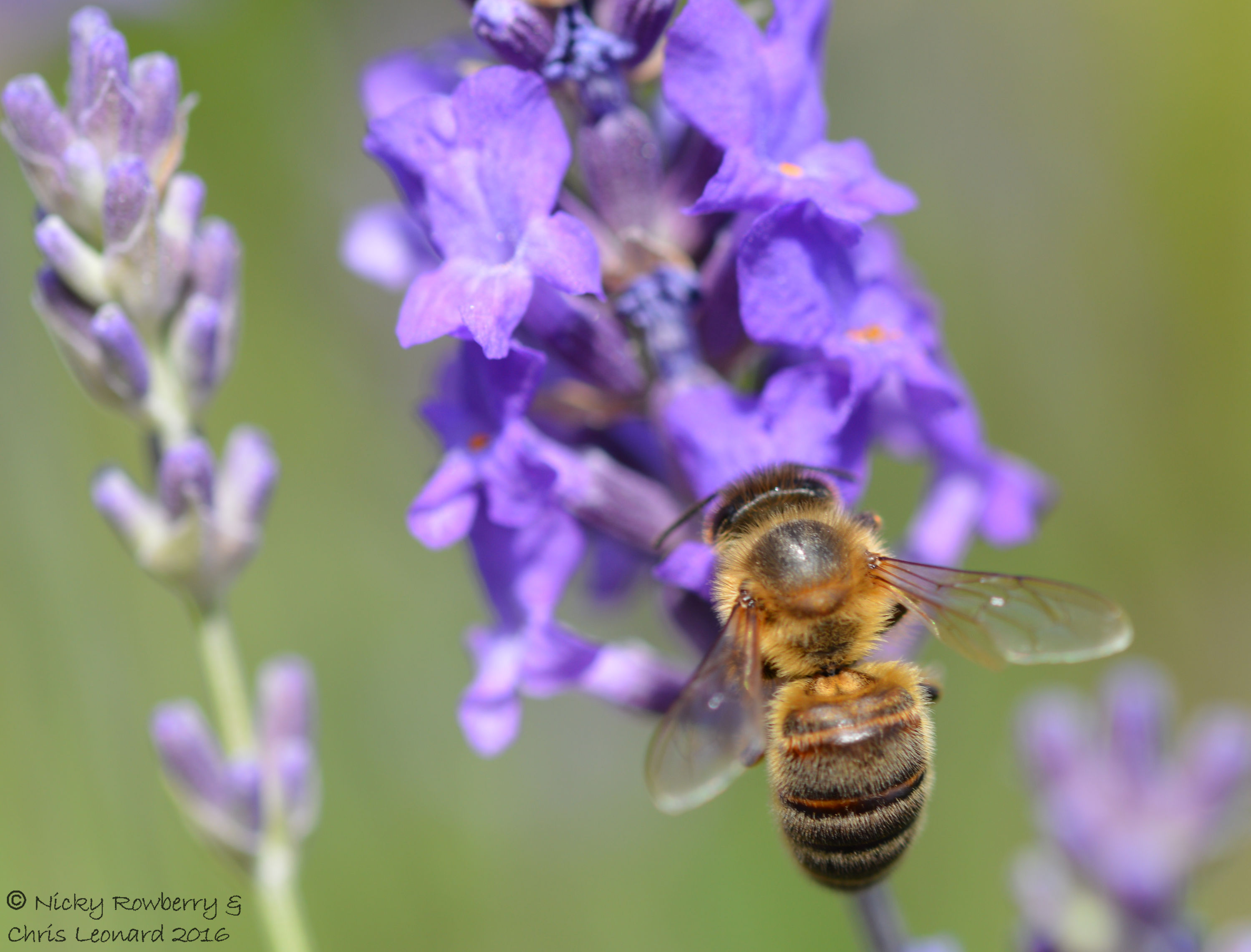
A year ago I was getting all excited at the prospect of the Big Butterfly Count and this year is no different. The Big Count starts again this weekend, so I  hope the weather perks up a bit. Quite a few of the blog posts lately have been about our trips out and about, but I thought for this anniversary post I should maybe focus back on what’s going on in the garden. The butterflies have so far been few and far between, but the bees have been out in force. The lavender is at its best right now and the bees absolutely love it.

Honey Bee 1

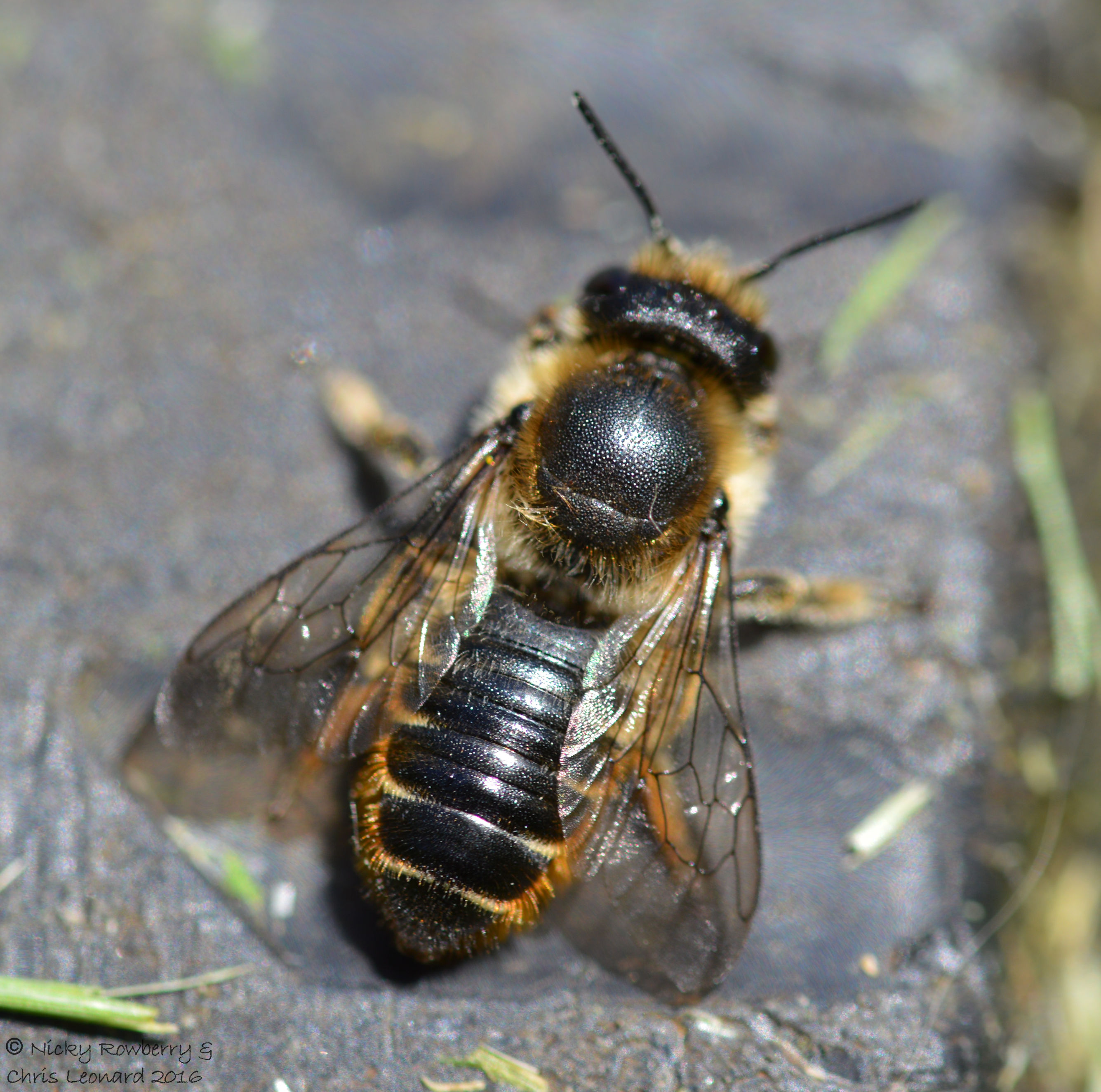
This week there was a particularly rare sighting in the Too Lazy To Weed garden – the lawnmower came out! This bee (a leafcutter) was perhaps so amazed it had to land on the wheel to have a closer look – a good excuse for me to stop work at least!

Megachile

I spent a lot of time at the weekend staring at our outside wall! We have a leafcutter bee (possibly even the one on the lawnmower above) nesting in there. I’ve seen on the internet wonderful photos that people have taken of bees emerging from holes in walls – all beautifully framed and in focus. Turns out it’s not that easy to do! The bee returned every 10-15 minutes so I was all set up with my tripod pointed at the hole. As soon as the bee appeared I clicked away, convinced I’d get award winning shots. Similarly as soon as it reappeared on its way back out I snapped away again. Not one perfectly focussed photo. Bees are apparently faster than either my camera and/or me. These blurry images were the best out of about 50 photos and an hour of my life staring at a wall!

Bee in wall 2

Bee in wall 1

One of my other bee recording efforts recently was to try and video them visiting the flowers in our mini meadow. We get plenty of bees there, so again I foolishly thought this would be easy. I set the trail camera up pointed at the flowers and left it for the day. As usual of course I’d forgotten to factor in the wind – blowing the flowers about and triggering the camera. 400 videos later of flailing flowers and I’d realised my mistake (I should have known this would happen, having had a similar problem with the bird feeder blowing in the wind earlier in the year). Amongst the flower flapping though the camera did at least manage to pick up a few bees – here are a couple of Buff Tailed Bumblebees enjoying the nectar buffet.

So one year on and I’m still getting just as much pleasure from watching the wildlife in our garden. Apart from the benefit to the wildlife itself of keeping an organic, natural (OK messy) garden, I find it beneficial to my own wellbeing. Coming home from work and watching the bees on the lavender, or the birds stuffing themselves on the birdfeeder, or the bats swooping in the evening  (even if they are after my beloved moths!) is a great way of unwinding. Maybe everyone should have a lazy garden!

30 Days Wild – Day 25

TWT 30 Days Wild_countdown_25


Day 25 of 30 Days Wild and I was up at the crack of dawn to empty the moth trap (thrilled by the way to get my first ever Shark moth, but I’ll do a moth blog another day). Since I was up and about on a Saturday morning long before the other half surfaced, I decided to spend an hour or so watching our wildflower “meadow” to see what if anything was using it. I did blog about our mini meadow a week or so ago, but I focused then mainly on the flowers, so this time I thought I’d look at the insect life. After all the whole point of it was to attract the insects.

So I watched for about an hour until the skies opened and it started chucking it down – I am a fair weather naturalist, so I retreated indoors at that point. I did pop out again later when the sun came out again and snapped a few more just to finish off.

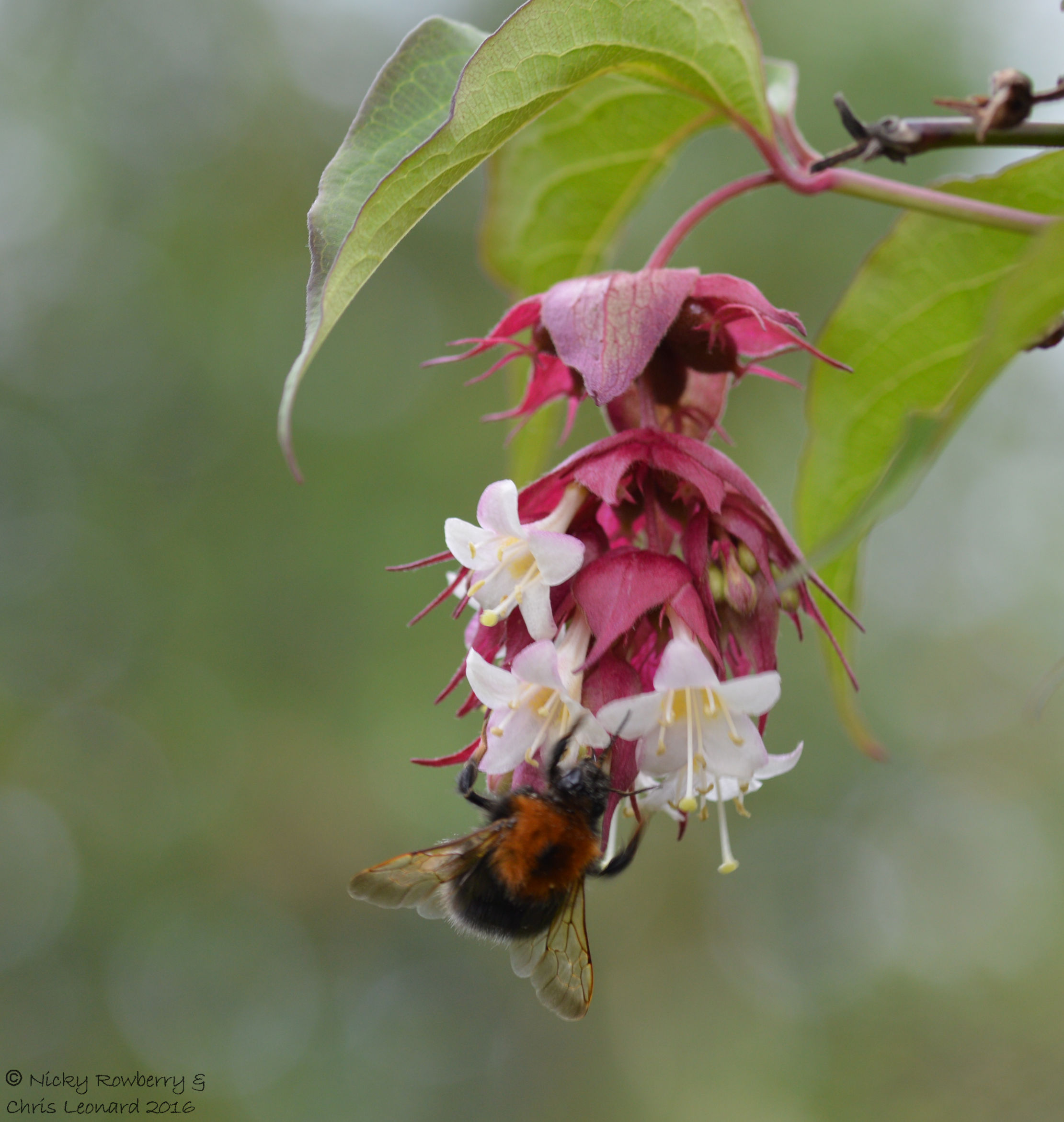
So not too surprisingly the bees were the most abundant visitors and several species as well which was great. The Phacelia flowers were probably doing the most business, including both a Red and a Buff Tailed Bumblebee. I love the way the red one has co-ordinated his pollen sacs with his red bum!

Red tailed bumblebee

Bee on Phacelia

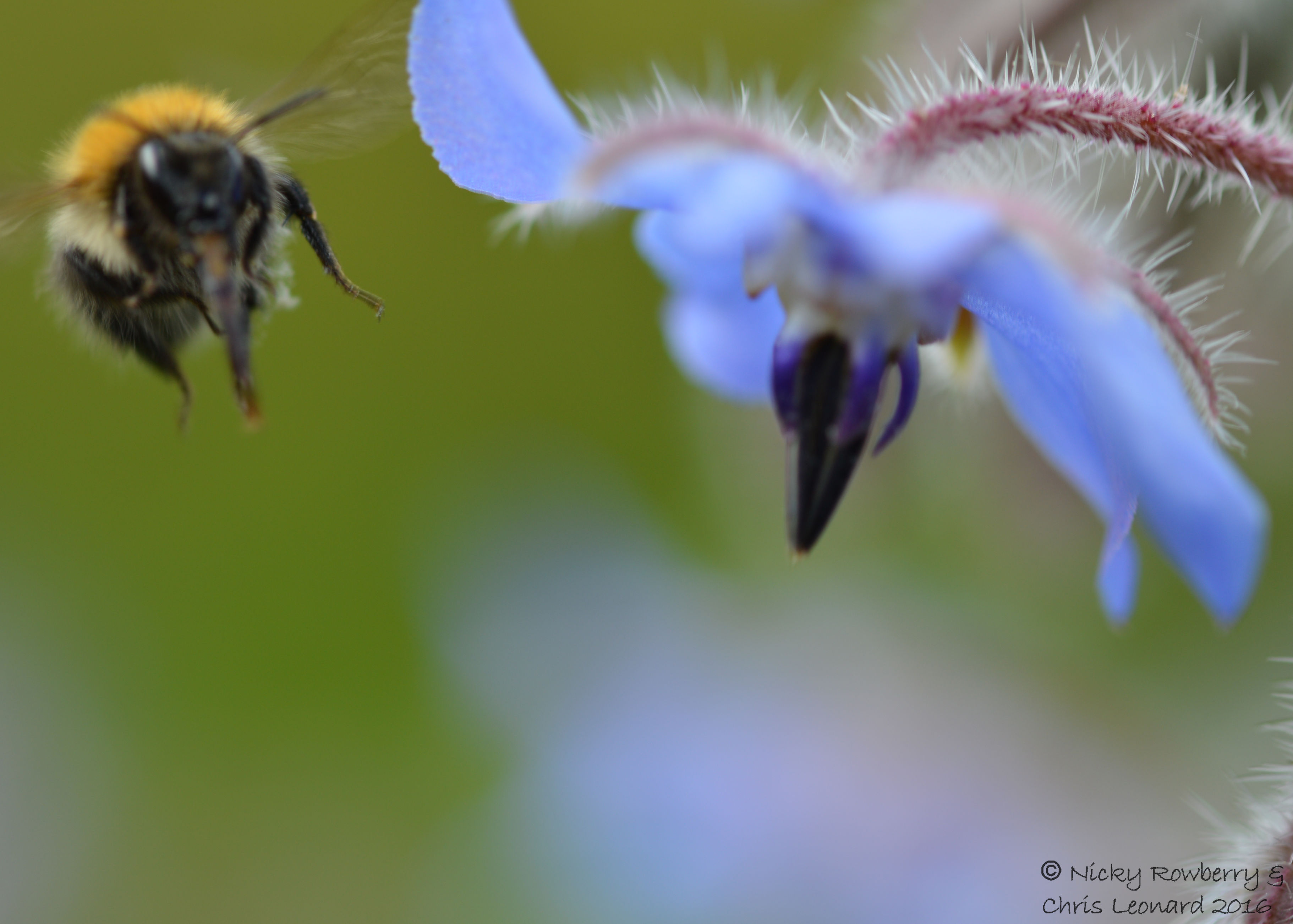
But the borage too was getting a fair few visitors. I think this is probably a Tree Bumblebee coming in to land.

Bee on Borage

I did at one point start to get “bee envy” when I noticed that this plant (no idea what it is?) in the neighbours garden was actually getting more bees than my patch. But then since it overhangs our fence, many of the bees were technically in our garden – so I’m counting them as ours!

Bee next door

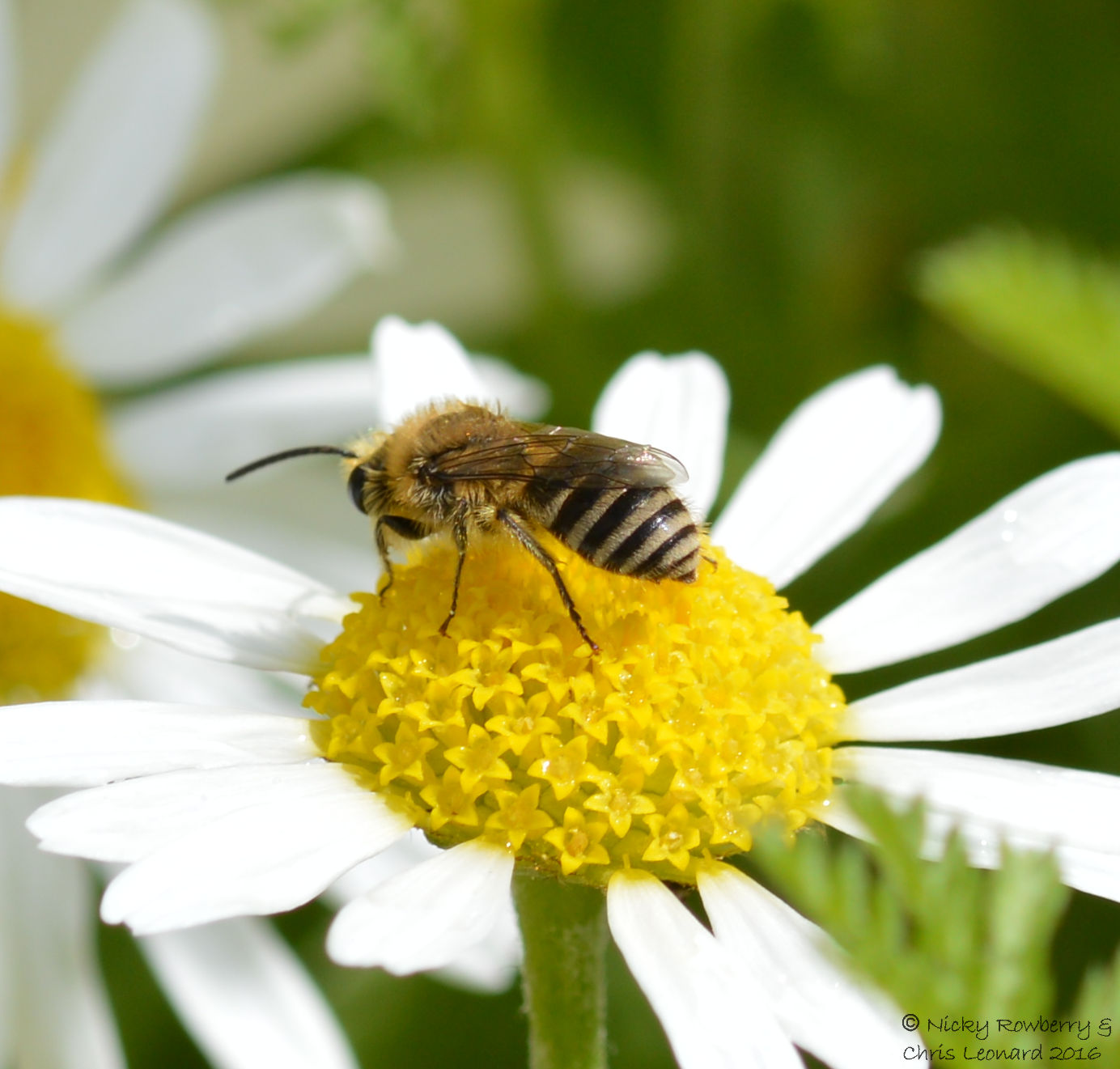
The bee highlight of the day was spotting this one on the chamomile flowers. It looked a bit different to others I’d seen so I stuck the photo on Facebook and someone kindly identified it as Colletes sp. for me – another new genus for the garden, taking our total to 23 this year. Colletes are known as the Plasterer bees, because of the way they line their nests with a secretion a bit like plaster!

Colletes sp.

The next group of visitors was the hoverflies. I saw at least 3 species on the mini meadow (although there were plenty of others around the rest of the garden). Afraid I don’t know the species for these 3 yet, although the bottom one looks like it might be another bumblebee mimic.

Small Hoverfly

Small Hoverfly 2

Large Hoverfly 2

The Swollen-thighed Beetles of course couldn’t miss a photo opportunity and were flaunting their generous curves at every opportunity.

Swollen thighed

There were various other small beetles usually nestled right in the middle of the flowers and impossible to get a decent photo of. But this one decided to land on my arm and after a bit of contorting I managed to get a photo of it. Must have thought my lily-white skin was some kind of giant flower – a disappointment no doubt!

Beetle on arm

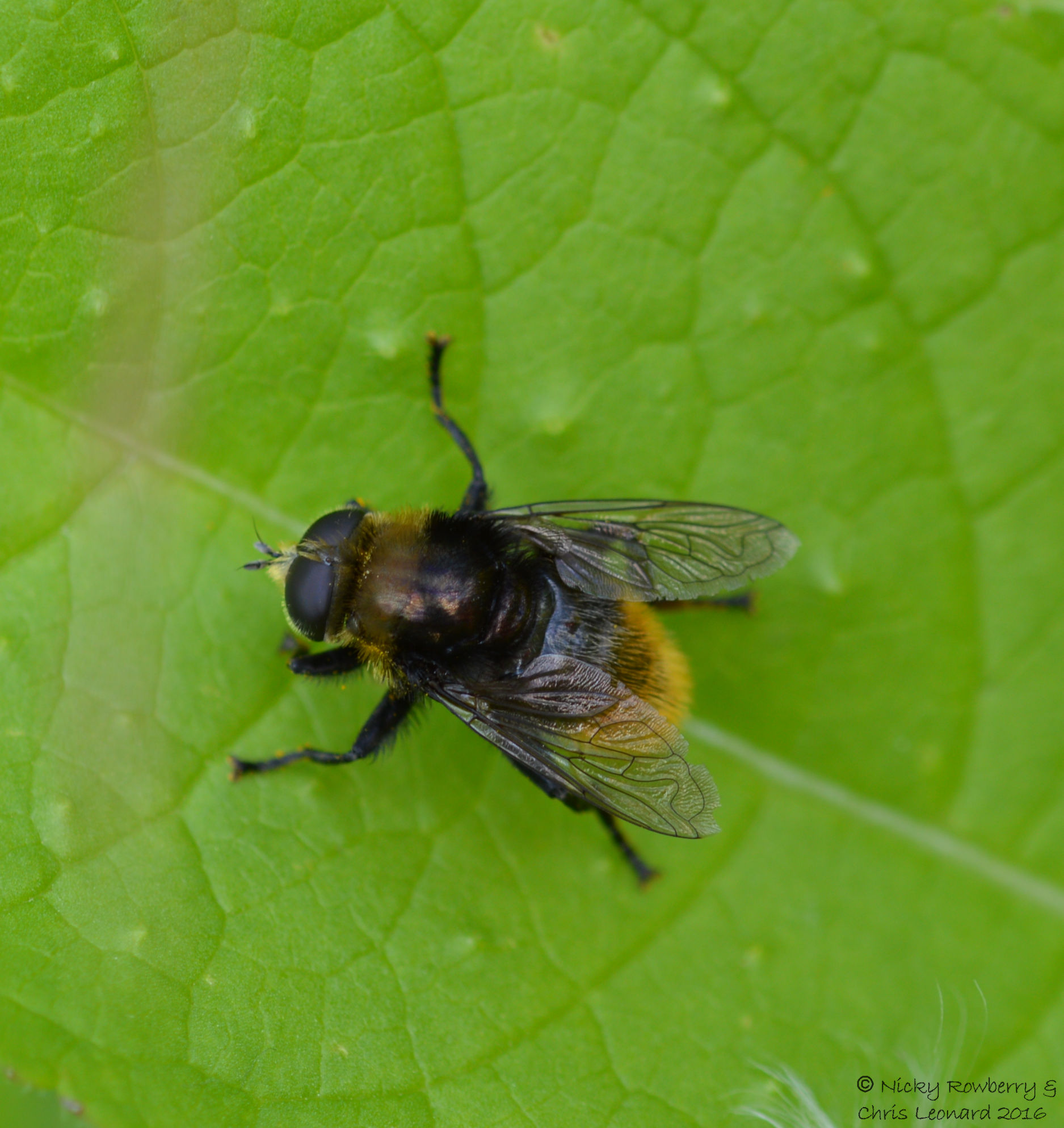
Spotted these interesting flies on one of the thistle leaves. There was a pair of them – possibly a mating pair – and this one kept sort of stepping back then raising and lowering its wings at the other one. Perhaps some kind of mating ritual or signalling. There is a group of flies called Signal Flies, so perhaps that is what these were?

Signal fly

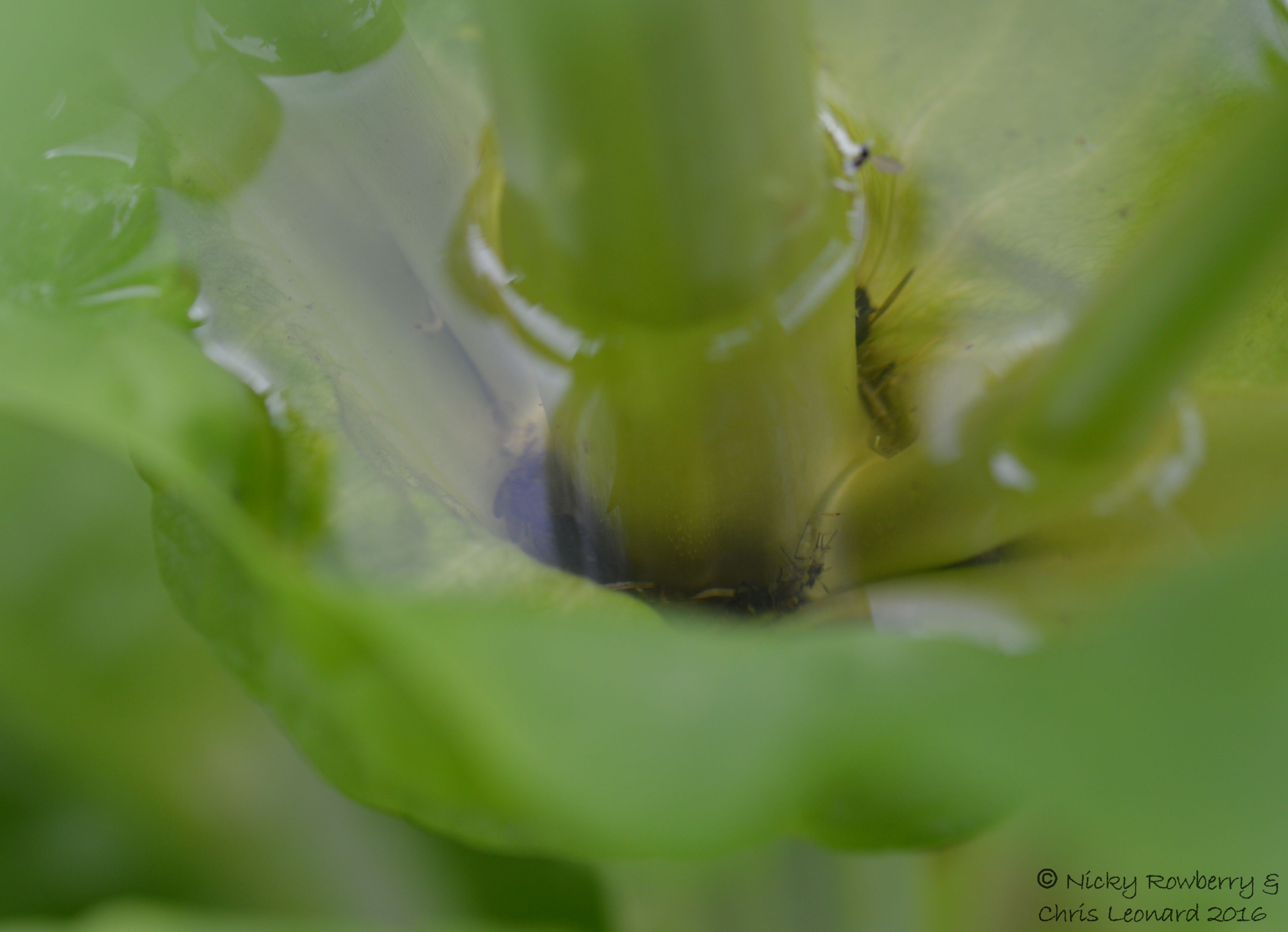
On the more gruesome side of things, the teasel leaves had formed mini pools at the point they joined the stem. These pools were full of dead and decaying insects – a bit like those tropical pitcher plants that drown animals then live off the nutrients! I don’t think the teasels were going that far, but other things were – there were clearly larvae of something (midges perhaps) in the water that were feeding off the dead insects. Sorry the photo doesn’t really capture that, with hindsight maybe I should have used some fancy polarising gizmo on the lens?

Mini pools

The final gruesome twist to my otherwise idyllic hour, was spotting this crab spider with his unfortunate victim – one of my beloved bees! The bee was still alive and I did consider rescuing it, but then I thought “What would Chris Packham do?” – almost certainly not save it! The crab spider has to eat too and it looked like he’d already got his fangs into the bee, so it was probably a goner anyway. Wasn’t expecting to witness “nature raw in tooth and claw” quite so vividly today!

Spider with bee

My hour by the flowers was very relaxing. The birds got accustomed to me sitting there and after a while came back to the bird feeders nearby, unbothered by my presence. A frog even started moving in the undergrowth near my feet. I guess I must be naturally very good at sitting still doing nothing for an hour!


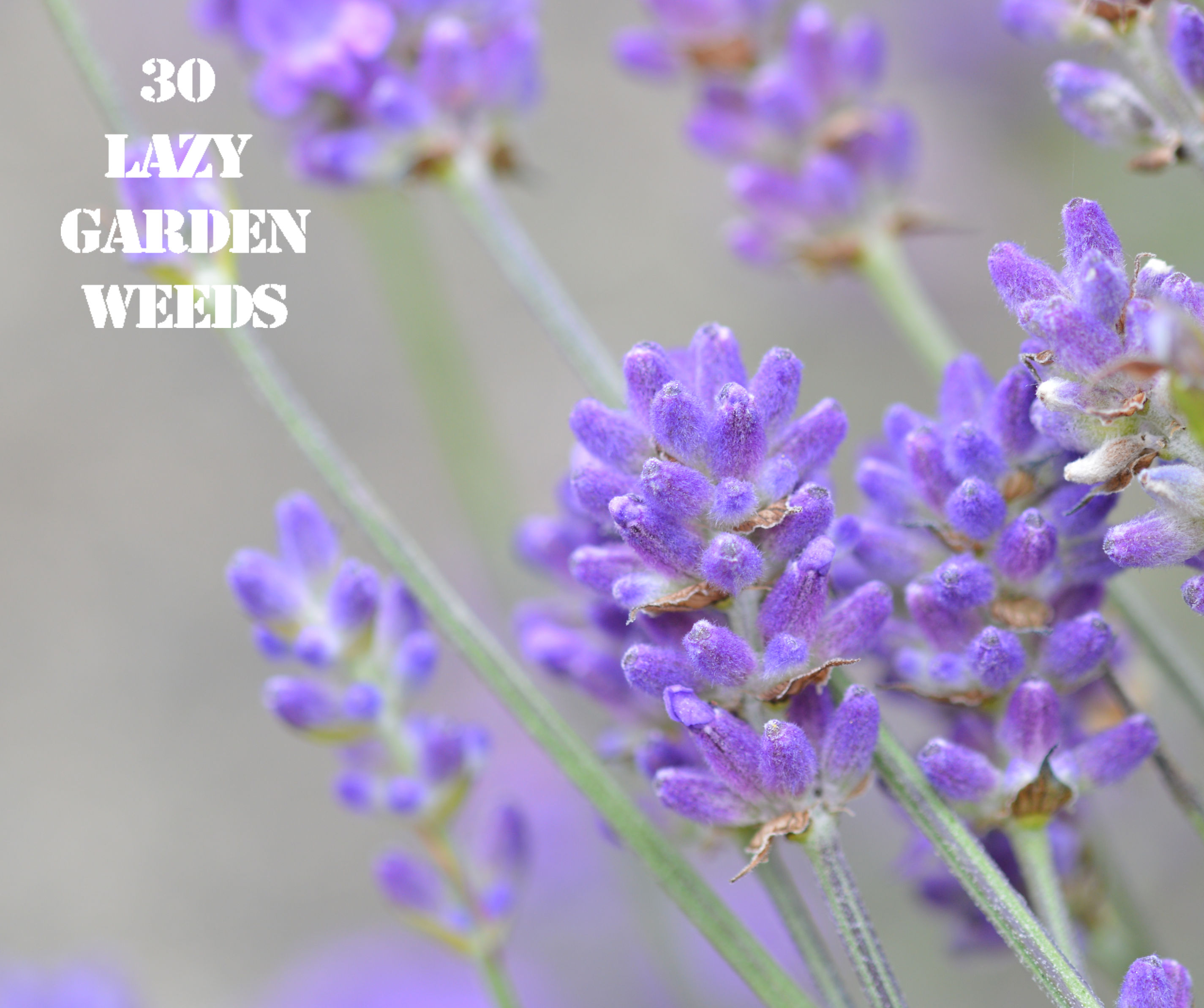
Lavender 30 WEEDS

And finally the weed for the day of my 30 Lazy Garden Weeds. Lavender – not a weed in the conventional sense, but it does keep seeding itself all over the garden and I have even been forced on occasion to weed some of it out (shock horror!) The smell and the colour are of course lovely and the bees go nuts for it. It’s just coming into flower about now. I did try a few years ago making Lavender essence – not a great success, I ended up with a jar of dingy looking liquid that somehow smelled of lavender but not in a good way. I tried a few drops in a macaroon mix and they ended up tasting like soap! But apart from my culinary failures, it is a lovely plant that would be welcome in most gardens.

30 Days Wild – Day 24

TWT 30 Days Wild_countdown_24Day 24 of 30 Days Wild and this is the first day I haven’t really had chance to get out and about doing something wild. Instead, having got home from a trying day at work (not to mention the vote!), I thought I’d spend the evening on the sofa (with very large glass of wine) and analyse the results from our Garden Bioblitz of a couple of weeks ago. It took me a couple of weeks to get all the photos identified and logged onto the Bioblitz website and I’ve been so busy since, that I’ve not really had chance to sit back and really see what we found. So tonight’s the night.

All the results had to be logged by last Monday. So I got as many on the database as I could. There were still quite a few things that I’d got photos of but couldn’t identify – either due to my lack of skills in ID or my lack of skills as a photographer! So we potentially had a few more than the final tally shows. But equally I may have got some things wrong, so they won’t be allowed when the experts check everything, so perhaps that balances it out? So our grand total was 119 species and I was thrilled to discover that our little garden is currently 13th in the Recorders League table. I took this screenshot from the Bioblitz website – just in case no-one believed me! I’ve obscured the names of the people ahead of me – not in some jealous pique (although I am jealous), but in case I was breaching anyone’s privacy by leaving in the full names.

Trending

119 species isn’t bad for an ordinary town garden like ours, so I’m really pleased. Of course if we’d had more time, we could have raised this figure, but then that was the whole point of the Bioblitz – it was what you could find in 24 hours.

So our 119 species covered a pretty broad spectrum of flora and fauna. Maybe not surprisingly the moths represented our biggest group – 42 species in total. This probably reflects our experience with moths – we’ve been moth trapping for a few years, so can identify most of the common species. There were probably just as many fly species in the garden that day, but we didn’t have the skills to ID them.
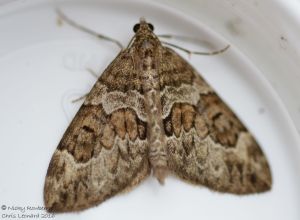
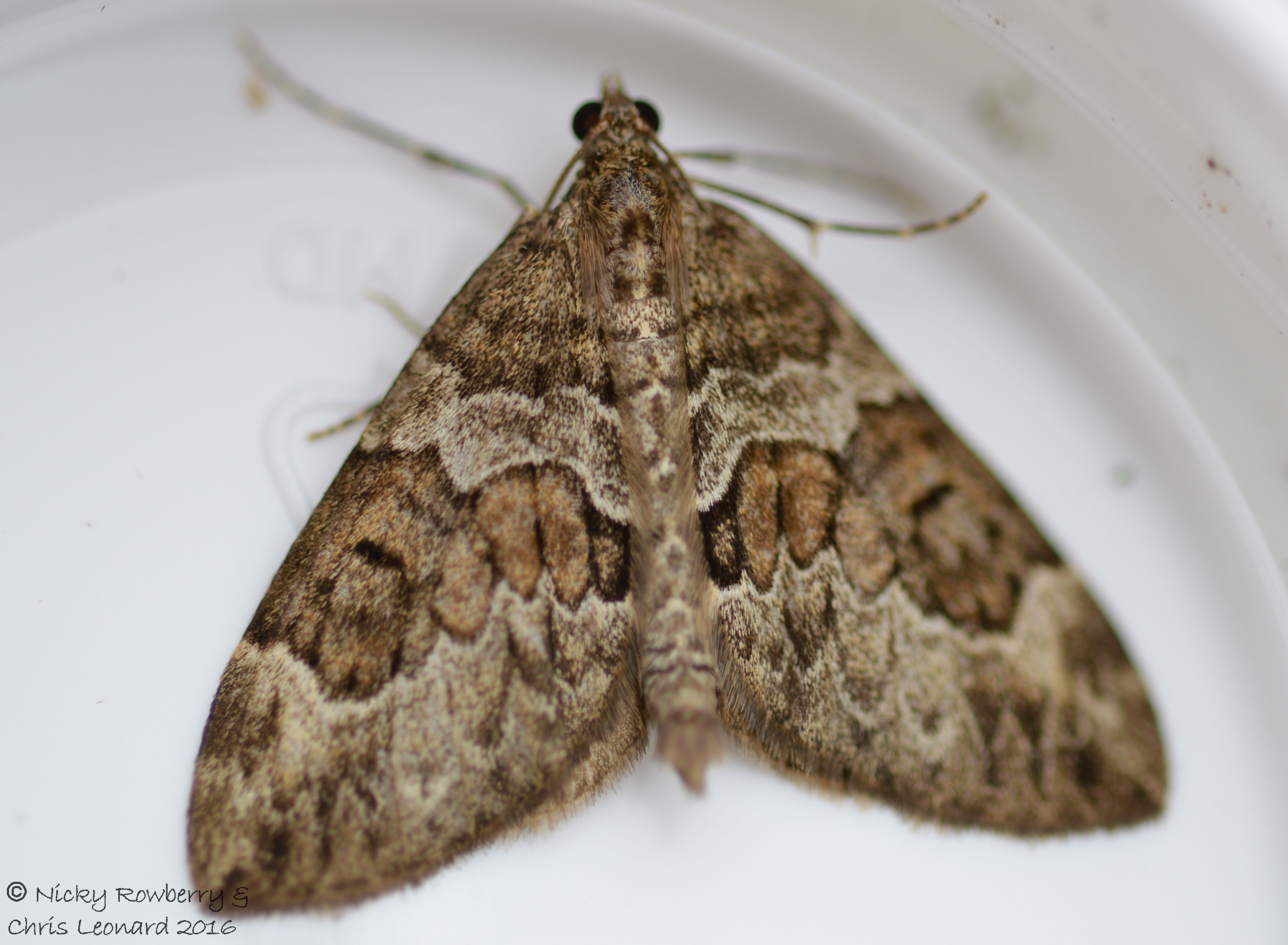
Spruce CarpetOf the 42 species of moth some were perennial favourites and spectacular ones like the Elephant Hawkmoth, but others were just as exciting as they were “firsts” for our garden – like this Spruce Carpet. (Our moth list for 2016 to date is currently 97 species!)

Bees were of course one of our prime targets and I was pleased we spotted 8 species that day. We’ve actually found 22 species this year, but to get 8 in the one day wasn’t bad. But the bee highlight was seeing a little chap flying around carrying his precious leaf – a Leaf Cutter Bee and a first for the garden.

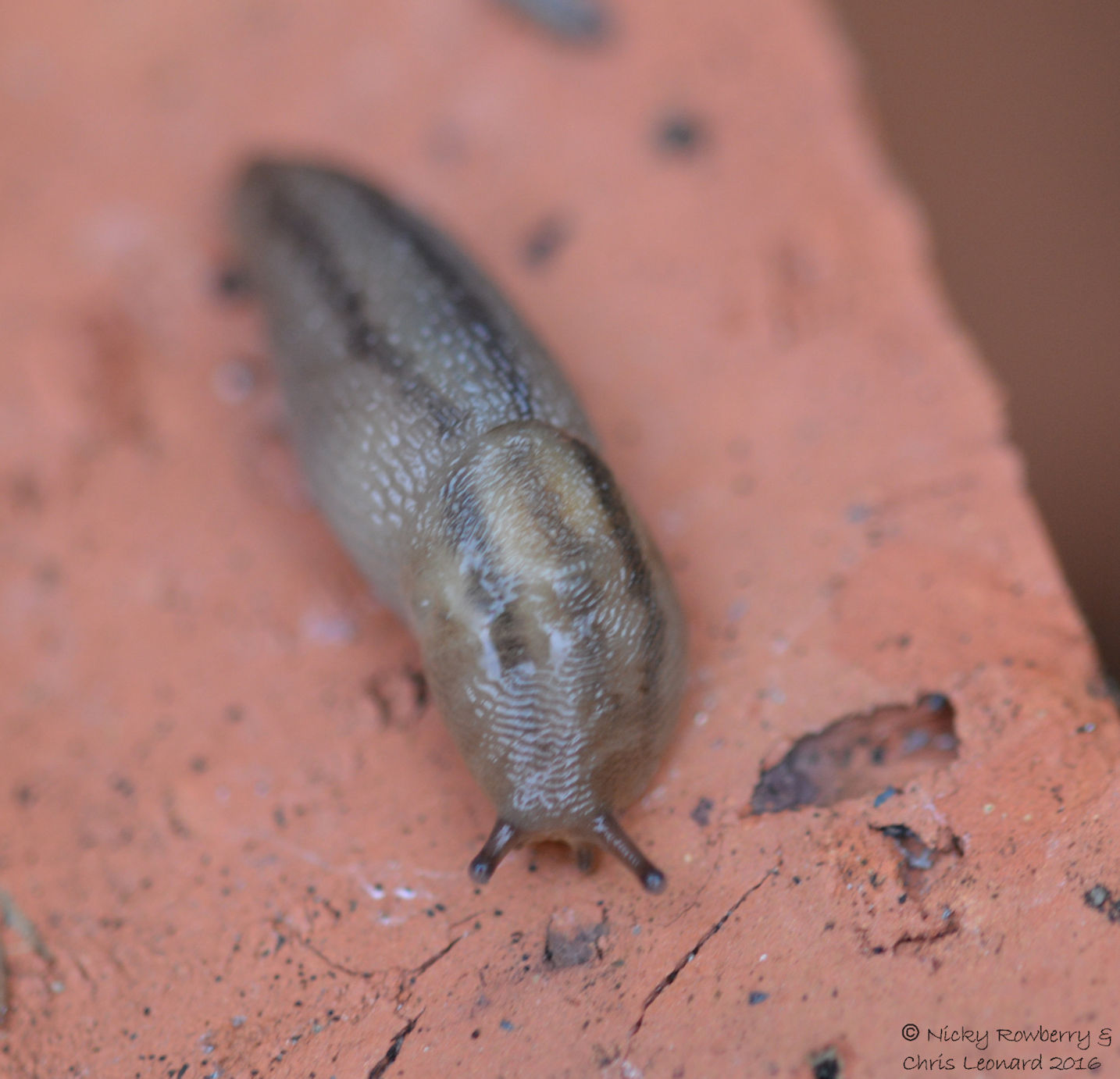
Iberian SlugMolluscs might have done better if it had been a rainier day (if we’d done the bioblitz the following week, we’d have done really well by that reckoning!) But we still managed a respectable 7 species – 4 snails and 3 slugs. One of the slugs was even a new one for the garden, although I suspect they’ve been around for ages and we’ve just not bothered to identify them. It was this Striped Slug – Ambigolimax valentianus no less!
Bordered Shieldbug

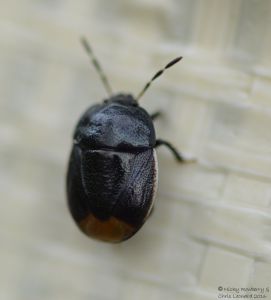
We got two species of Shieldbug on the day, but again one of them was new to us – this Bordered Shieldbug, which I initially thought was just a small beetle, until I enlarged the photo. Really chuffed to be able to add this species to our Shieldbug list – currently 8 now I think.
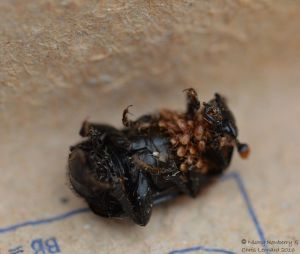
 

Sexton beetleBeetles came in at 8 species (11 species actually if you include the ladybirds which I had counted separately). Beetles are a group that we’re just getting in to, trying out pitfall traps to see what we’ve got. This one however flew into the moth trap. It is a Black Sexton Beetle and was absolutely covered in these mites. It looks lifeless in this photo, but honest it was just playing dead, because as soon as I turned away it was off. The mites are apparently harmless and just hitch a ride to the next dead animal that they and the beetle feed off. Can’t help thinking that so many mites must be really irritating though and affect his flight?
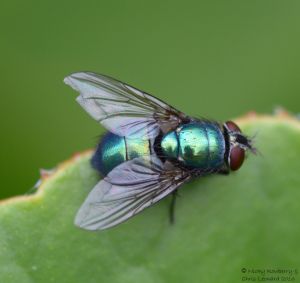
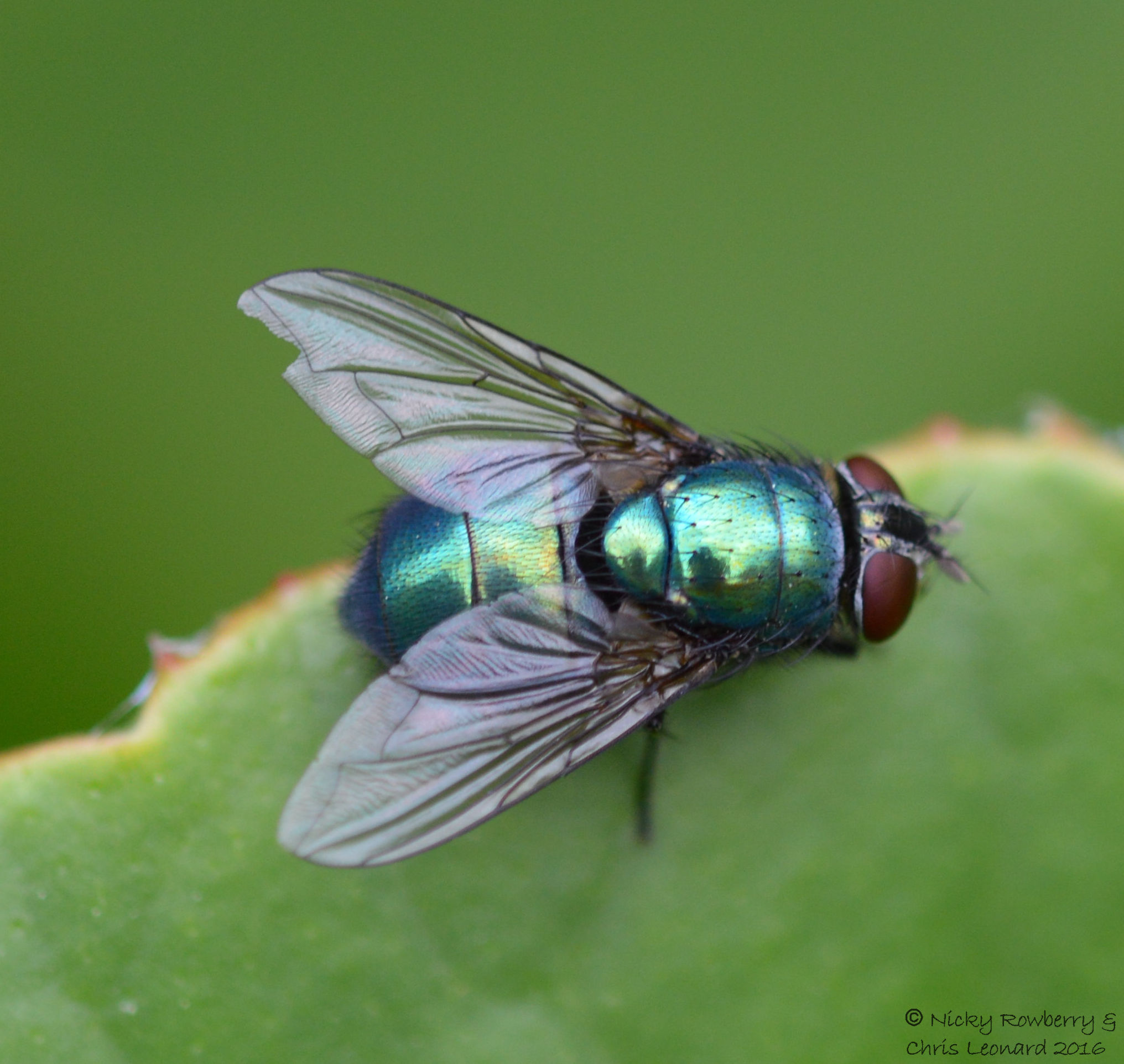
Lucilia green bottleThere were of course flies buzzing about all the time, but with virtually no knowledge of this group we didn’t pay them too much attention. This big Greenbottle though was quite photogenic and the good people of iSpot identified it to genus for us – Lucilia sp. We did manage to get 2 other fly species to genus as well, but they weren’t as “pretty” as this one!

Frog hopperOne of my favourite finds of the day was this Red & Black Leafhopper, which I’d previously only seen in photos. Not seen it in the garden before or since, but I’m glad it chose that day to make an appearance! It was a stunning little insect, so I hope we see more of them.


For the birds we only managed a slightly disappointing 8, all of which were the usual suspects like robins, blue tits and a Jackdaw. We do get quite a few other species, but I suppose it was a bit much to expect the Sparrowhawk to make an appearance within those 24 hours!

And finally for the animals, we managed a grand total of 3 vertebrates – a frog, a newt and the hedgehog.  The bats were around, but we didn’t actually see them in our garden and without photographic evidence (still not worked out how to get a photo of one flying), I’m not sure the Bioblitz database would accept them.

PimpernelOf course the Bioblitz included plants as well as animals. I did originally intend to go around the garden the week before and pre-identify all the plants, then all I’d have to do on the day was take a quick snap of each. But of course that didn’t happen, so instead we zigzagged about the garden photographing everything in sight with no real plan. But we still managed to record 24 species. With hindsight I realised we didn’t make any attempt at the grasses, the mosses, the lichens – oops!

Beside all of the above we also saw 1 butterfly, 2 crustaceans (woodlouse and water louse), 1 hoverfly, 2 spiders, 1 earwig, 1 weevil, 1 cranefly and 1 leech (from the pond), which round off our 119 species.

This is the second time we’ve done the Bioblitz and I find it a really interesting thing to do. I think lots of people would be amazed at how much is going on in their gardens if they just took a day to have a look!

Daisy Fleabane 30 WEEDSAnd finally as always the latest weed in 30 Lazy Garden Weeds – this daisy like flower is, I think, Fleabane. Unfortunately I didn’t manage to spot it during the Bioblitz, although it was almost certainly growing in the garden at the time, so that’s another species missed. These little flowers always remind me of kids’ drawings – what an archetypal flower looks like – petals sticking out all round a central disc. There’s something charming about them, so as always they are welcome in the Too Lazy garden!

30 Days Wild – Day 23

TWT 30 Days Wild_countdown_23Day 23 of 30 Days Wild and it’s starting to feel like we’re on the home run – only a week to go! Once again the car is in the garage, so I was restricted this afternoon to the home turf – quite literally. I decided to get down and see what we’d got in the grass! Not being ones for a pristine lawn, our “grassy areas” are far from a uniform monoculture of one species. We do mow them occasionally, so I’ve at least got somewhere to sit with a glass of wine, but generally they are left to do their own thing.
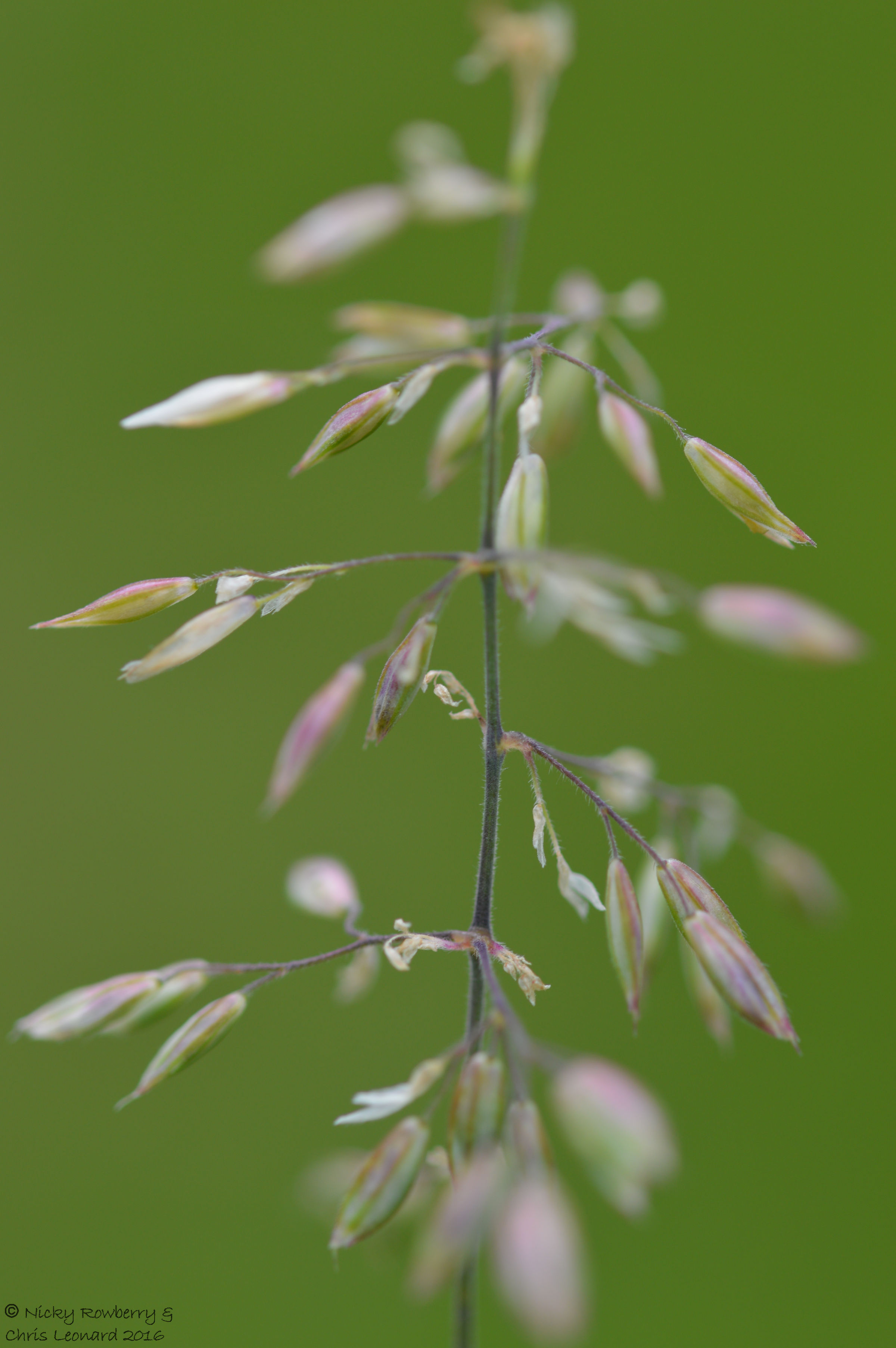
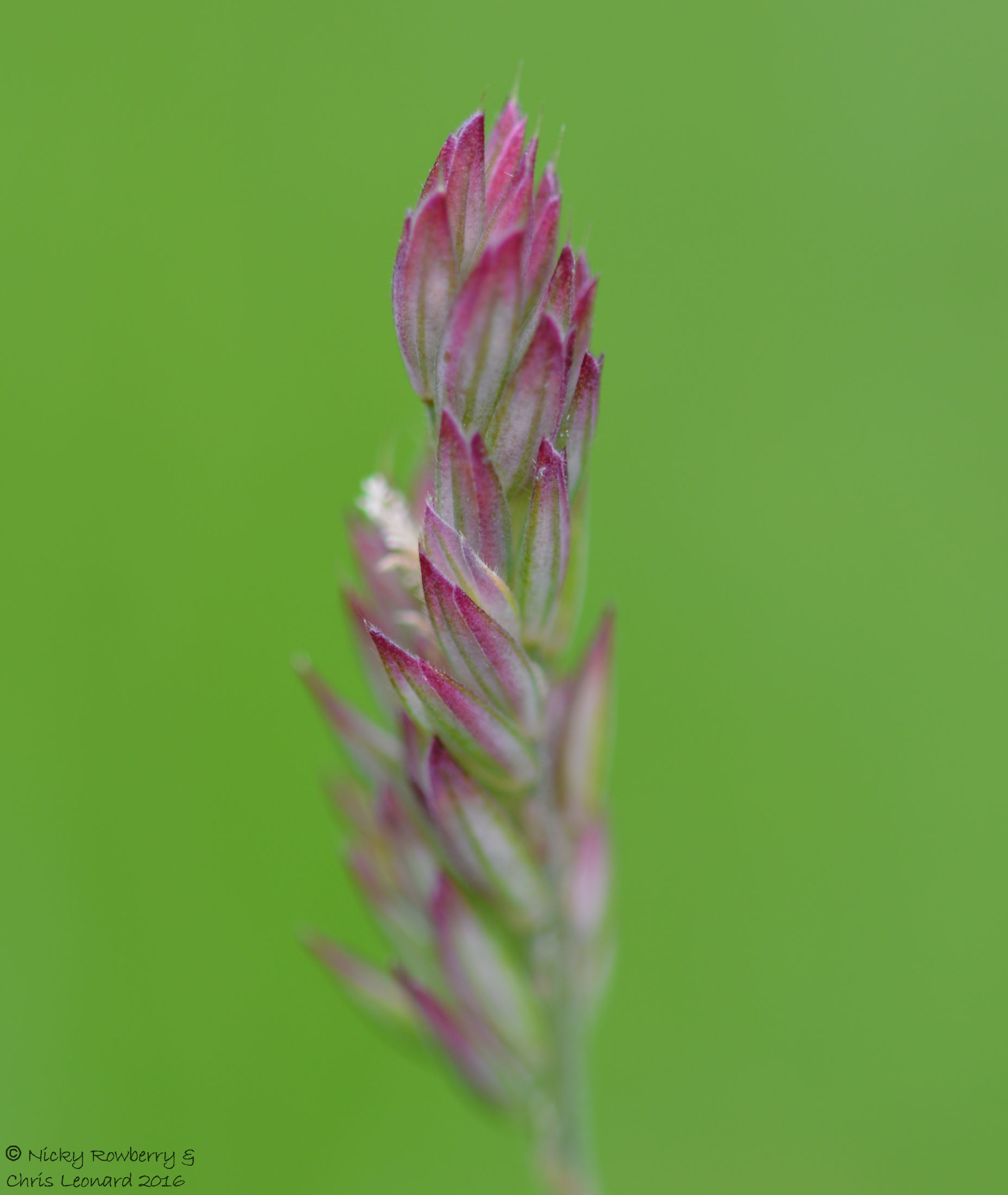
So first the grass itself – when I got down on my hands and knees and started looking at it properly, it is really rather beautiful. Because we’ve let it grow quite long, much of it is currently in flower – delicate and dainty grass flowers blowing in the wind. I’ve no idea whether the 3 photos below are different species, or the same species at different stages.

Grass 1

Grass 2

Grass 3

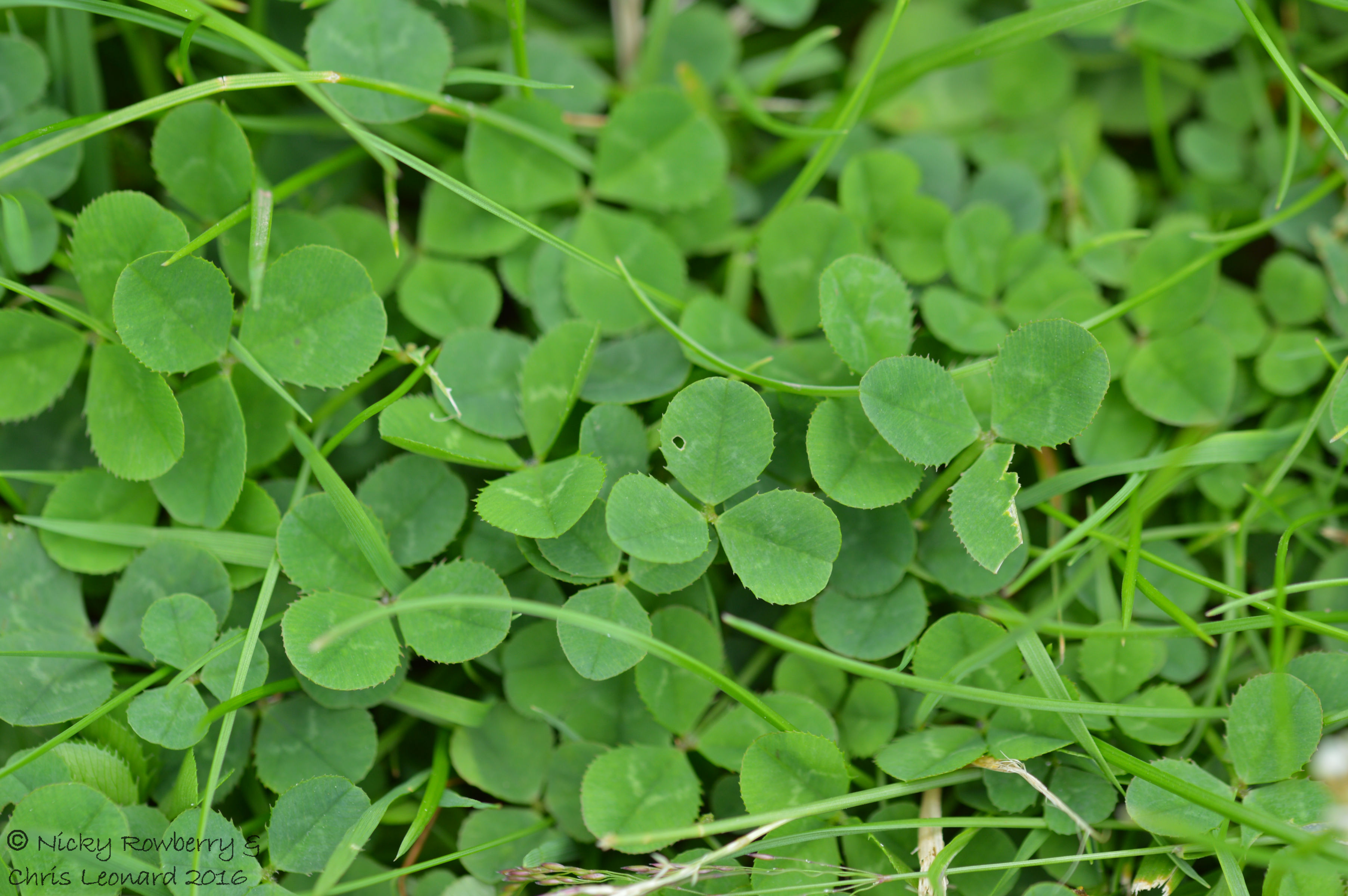
The grass is of course by no means the only green thing in our lawn – in fact I doubt it’s even the dominant plant. Clover covers pretty much the whole area. I know some gardeners do their best to rid themselves of it but why bother? It’s green, you can sit on it and the bees like it – that’s all I really require of a lawn, so if the clover fulfils this rather than the grass, it’s not the end of my world!

Clover 1

Clover 2

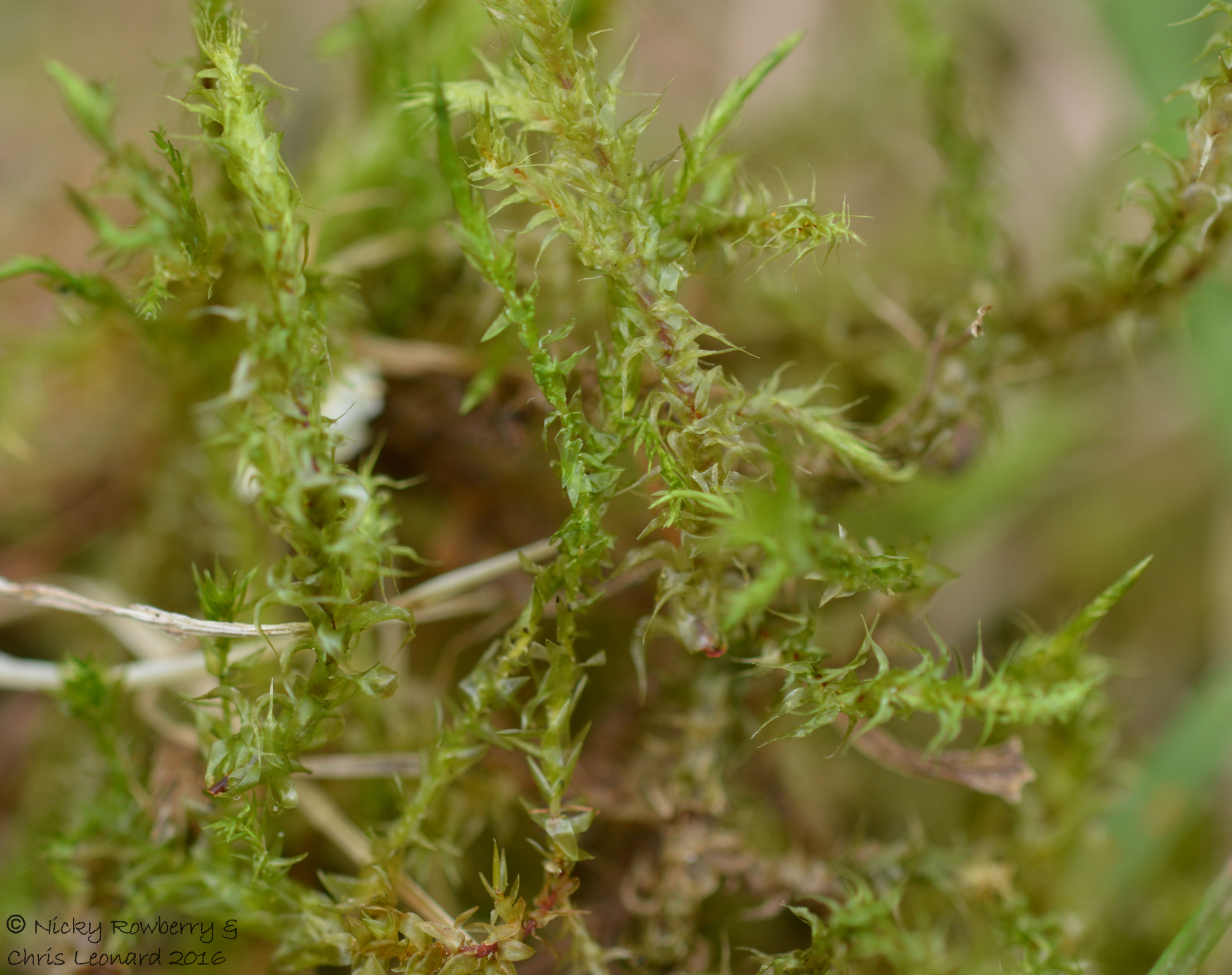
The clover itself is merely another layer, beneath which lies the moss – a lot of moss. The lawn almost feels like a mini forest with the grass providing the upper layer or tree canopy equivalent, the clover providing the intermediate bushes and the moss the low growing ground cover. Moss is not easy to photograph though as I discovered today, it grows at all angles so the camera struggles to focus (honest it’s the moss’s fault not mine for the poor photo!)

Moss

As well as the “green stuff”, there are of course flowers mixed in too. For some reason we don’t seem to have any daisies in our lawn – no idea why, I’d be quite happy to see them? But we do get Self Heal – a low growing plant with the reputation for healing wounds. It’s actually prettier than this photo indicates, but I couldn’t find any flowers that were properly in bloom yet.

Self Heal

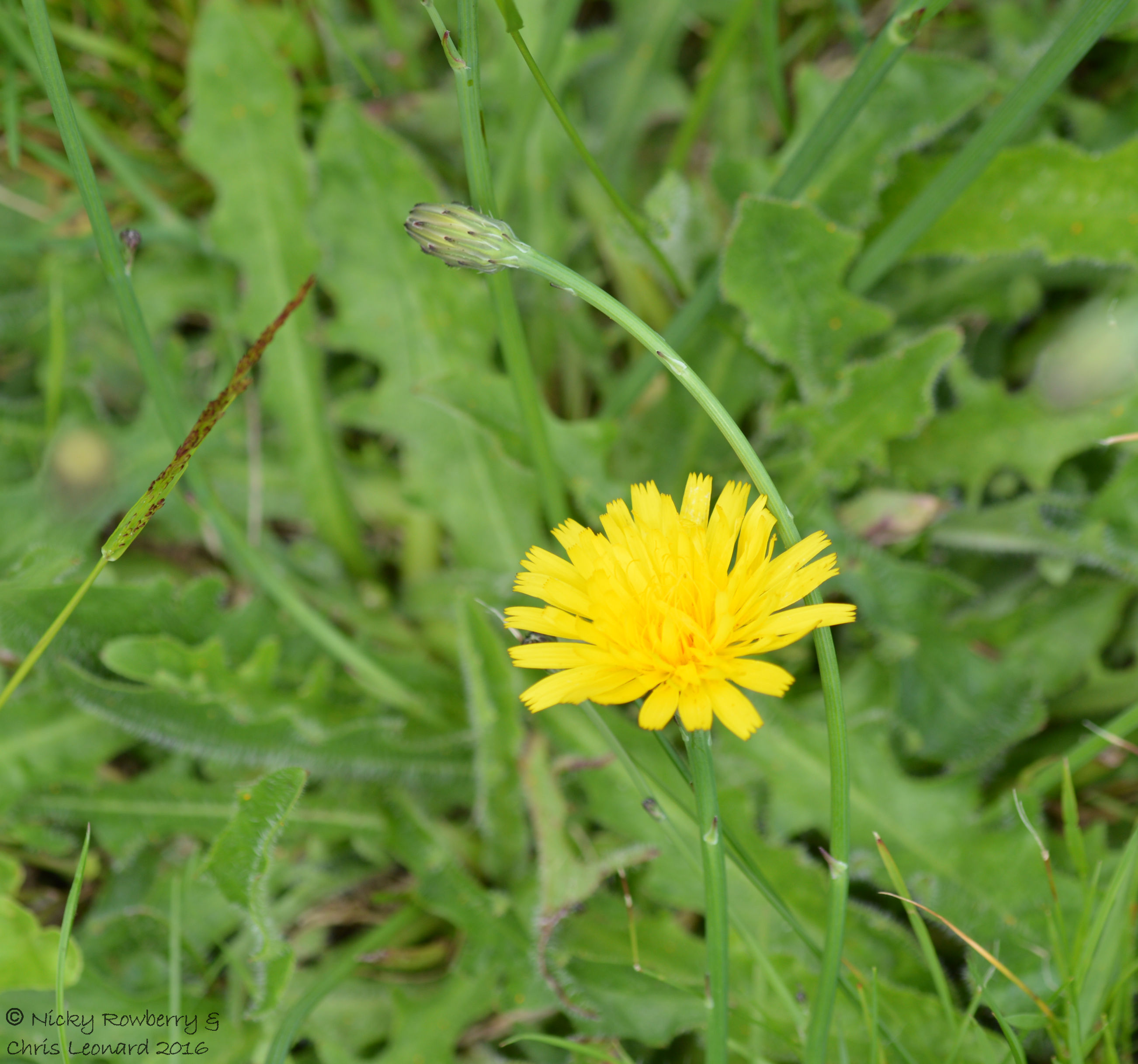
Slightly more obvious are the large flat florets of the Catsear leaves, with their bright yellow dandelion like flowers sticking up.

Catsear

I was surprised to find a patch of small mushrooms. Only small and presumably not edible – I certainly won’t be risking it. No idea whether they were “magic mushrooms” but they did look vaguely magical – sort of ethereal against the grass – the stuff of fairy tales perhaps!

Mushroom

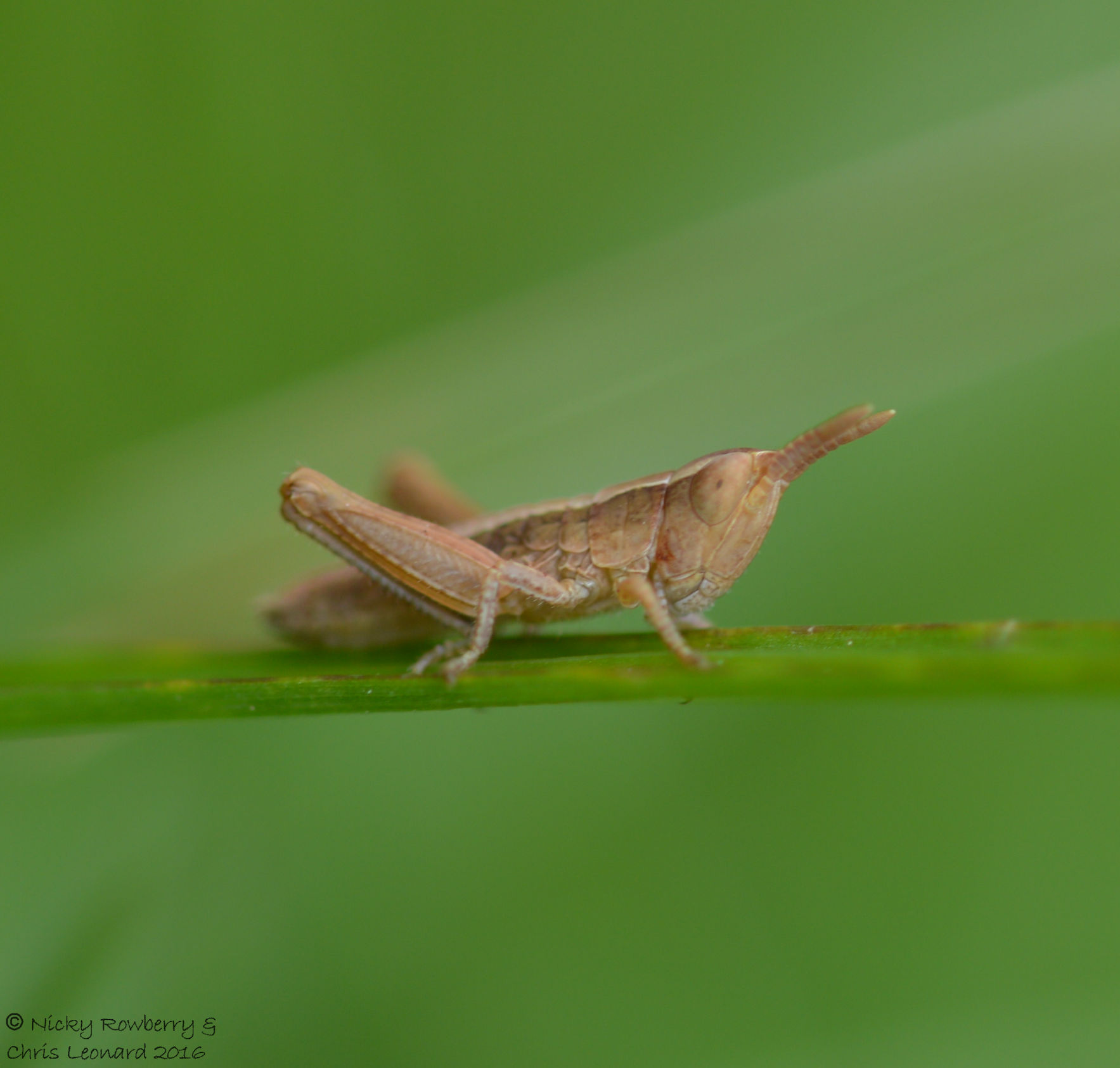
The mini jungle that is the lawn has its fair share of fauna too. As I grovelled about trying to take photos – tiny grasshoppers were pinging left, right and centre.

Grasshopper

The other animals leaping about were froghoppers – tiny little insects that can jump (or hop I suppose) a long way compared to their body size. It took several attempts chasing one round the grass to get this one even roughly in focus. They can be very brightly coloured, although this one is a more muted species.

Leaf hopper

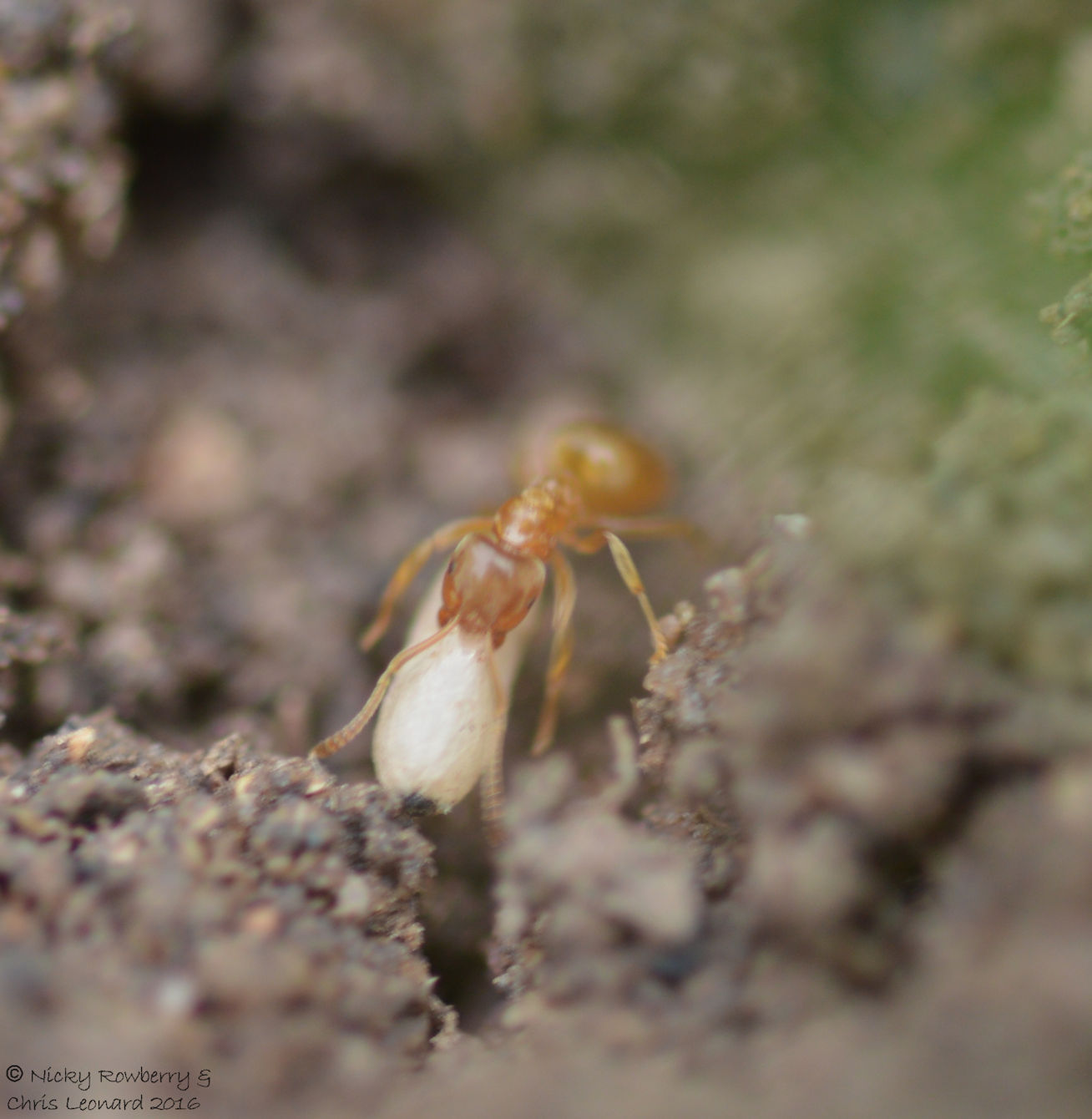
Ants nests are a common feature of our lawn, but like the moss I found the ants virtually impossible to take photos of. Never realised how fast they moved, until I tried to focus in on one!

Ant

So that was my mini grass safari. Really interesting to get down to that level and see what you can find. It wasn’t all lovely though – I did come face to face with a mummified frog and quite a lot of hedgehog poo, but even that I suppose shows we’ve got frogs and hedgehogs in the garden, so I should be pleased!


Fox and Cubs 30 WEEDSAnd finally today’s weed for 30 Lazy Garden Weeds – the intriguingly named – Fox and Cubs. It is apparently called this because the unopened flowers (the cubs) hide behind the fully opened ones (presumably the fox). It’s a type of Hawkweed and related to the dandelion. We only seem to get it in our front garden for some reason, growing up through cracks in the paving. It’s a cheery looking little flower though and one of the few orange ones we get, so I’m happy for it to stay.