Toad Patrol & Other Amphibious Delights

Just over a year ago, I went to a very nice pub and asked some people sitting outside whether they were “toad people”. They were not and were somewhat surprised to have been asked this while enjoying their Sunday pint! After some explaining to the nice couple, I then went inside and found my toad people. And so began my involvement with toad patrols as part of the Toads on Roads project run by the charity Froglife.

“Toad season” for this year has just finished. Toads travel back to their ancestral ponds every year in early spring, often having to cross roads as they go. Sadly this often ends in many toad fatalities, so the Toads on Roads project aims to help as many of them as possible get safely across the roads at their regular crossing points.

The toad patrol I joined is a few miles out of town and locals had reported that in the spring dozens of toads got killed every year. It wasn’t clear which pond the toads head to each year, but there was a definite hotspot on a lane at the edge of the village. So for the last 2 years I’ve joined a group of lovely volunteers, who go out at dusk to “help” the toads across the roads. Apologies for the poor photos, but my phone isn’t great at taking photos at night.

Last year we escorted approximately 240 amorous toads across the road. This year numbers were much lower with only 94 toads seen across the whole season.  We think this may have been because February and March this year were much colder and drier than they were in 2024. Toads apparently like it warmer and wetter before they reckon it’s worth travelling in pursuit of love! This is only the second year of toad patrols in this area, so it will be interesting to see if numbers always fluctuate like this from year to year.  Hopefully 2026 will bring a bumper toads season.

If anyone’s interested in learning more about the Toads on Roads project or wants to find their local group, take a look at https://www.froglife.org/what-we-do/toads-on-roads/

So toads are obviously the main focus of toad patrols, but Froglife encourages people to note other amphibians they spot at the same time. The occasional frog has wandered by, but I was absolutely delighted to spot an unusual looking newt crawling across the road last month. Much darker and with a rougher texture to the skin than my newts back home; it was a Great Crested Newt!

It didn’t look full grown; the only ones I’ve seen before were much bigger. Again apologies for the poor phone photo and shaky video – the shakiness was down to being just so excited to have seen one. I watched it for a few minutes to make sure it made it across the road to safety, then left it to go wherever it was going.

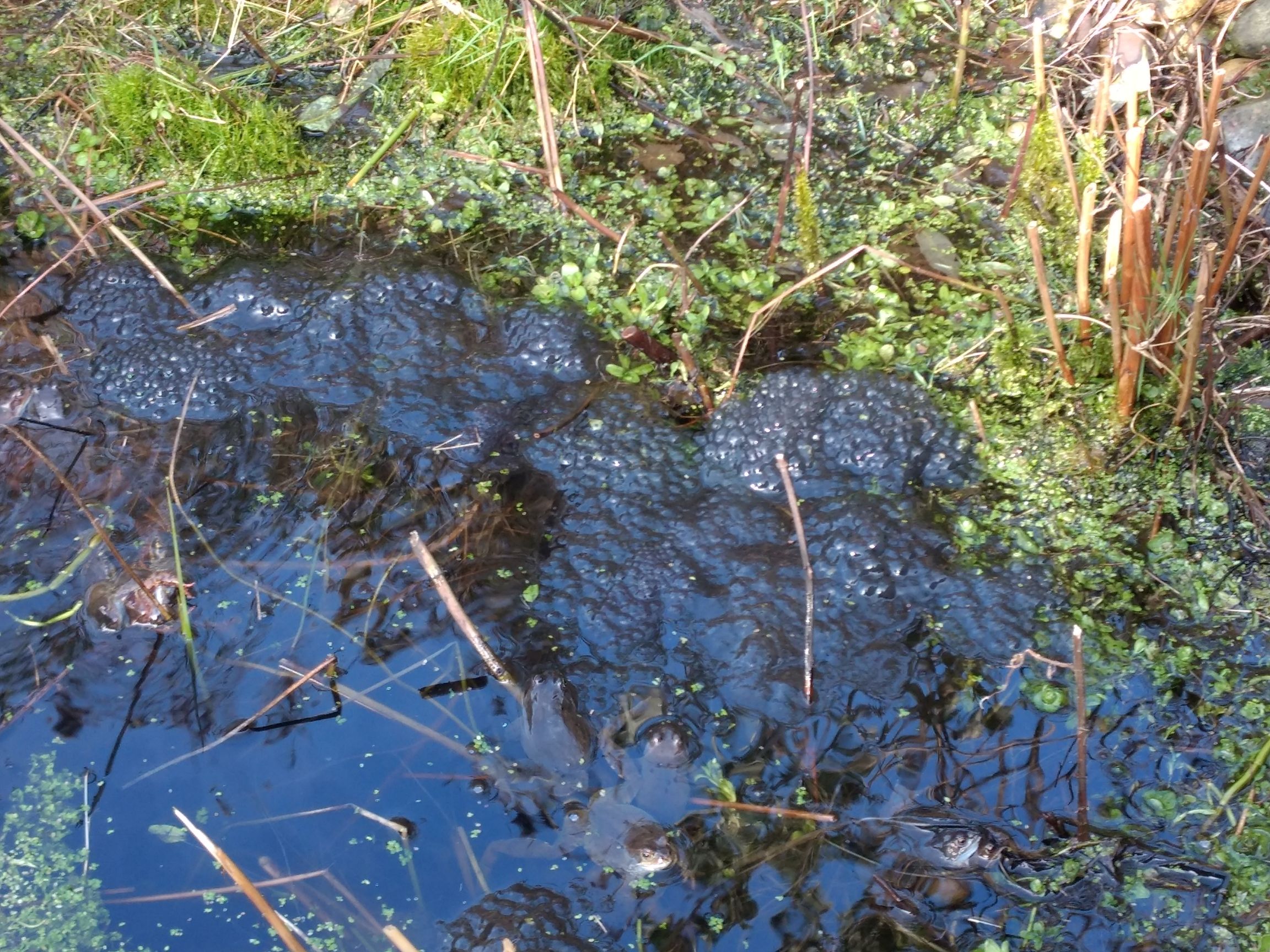
My garden does get the occasional toad, but my pond is too new, so they don’t use it for mating. Thankfully the frogs couldn’t care less about it being a new pond and I’ve counted at least 70 croaking away in the spring – mainly males calling for females and chasing anything remotely frog shaped that moved. This video was actually taken last year, but there were similar scenes this year too.

The throng of frogs produces a lot of frog spawn. This is just part of it from one side of the pond this year. They tend to lay the spawn in the shallows.
And then of course come the tadpoles. There must be thousands of them this year, all wriggling in the shallows of the pond, I guess where the water is a bit warmer. Such is the activity that the water actually froths up. Their tiny gills are clearly visible at this stage.

The photos above were taken a few weeks ago. The tadpoles are much bigger now. No sign of legs yet but don’t think it will be long before I’ve got froglets.

The smooth newts have probably been enjoying the glut of frog spawn and tadpoles. I saw several of them popping up amongst what to them must be a buffet of frog spawn. Fortunately the ratio of tadpoles to newts is big enough that I don’t think they’re doing any harm to the frog population and after all, a newt’s got to eat!

So that’s a round up of all things amphibian of late. The annual frog spawn season in the garden is always a joy, but the toad patrol is a relatively new pleasure. There’s something very calming about strolling along a country lane in the dark looking for toads, although I am lucky that this particular lane is pretty quiet traffic-wise; it’s maybe not so relaxing if it’s a busy site and you’re rushing to save toads from oncoming cars! But still well worth giving the Toads on Roads project a look if you’re interested in amphibians.
New Pond!

Excited doesn’t even begin to describe how I feel this week – we’ve got a new pond! I’ve been promising to do it for years now and finally we’ve done it! When I say “we” it is in the loosest sense of the word – as in it wasn’t me at all. Our lovely friend and Cycling Gardener, Gwyndaf came and did all the hard work while I flounced about the garden excitedly but pretty much ineffectually. Let’s hope the wildlife appreciates all Gwyndaf’s hard work.

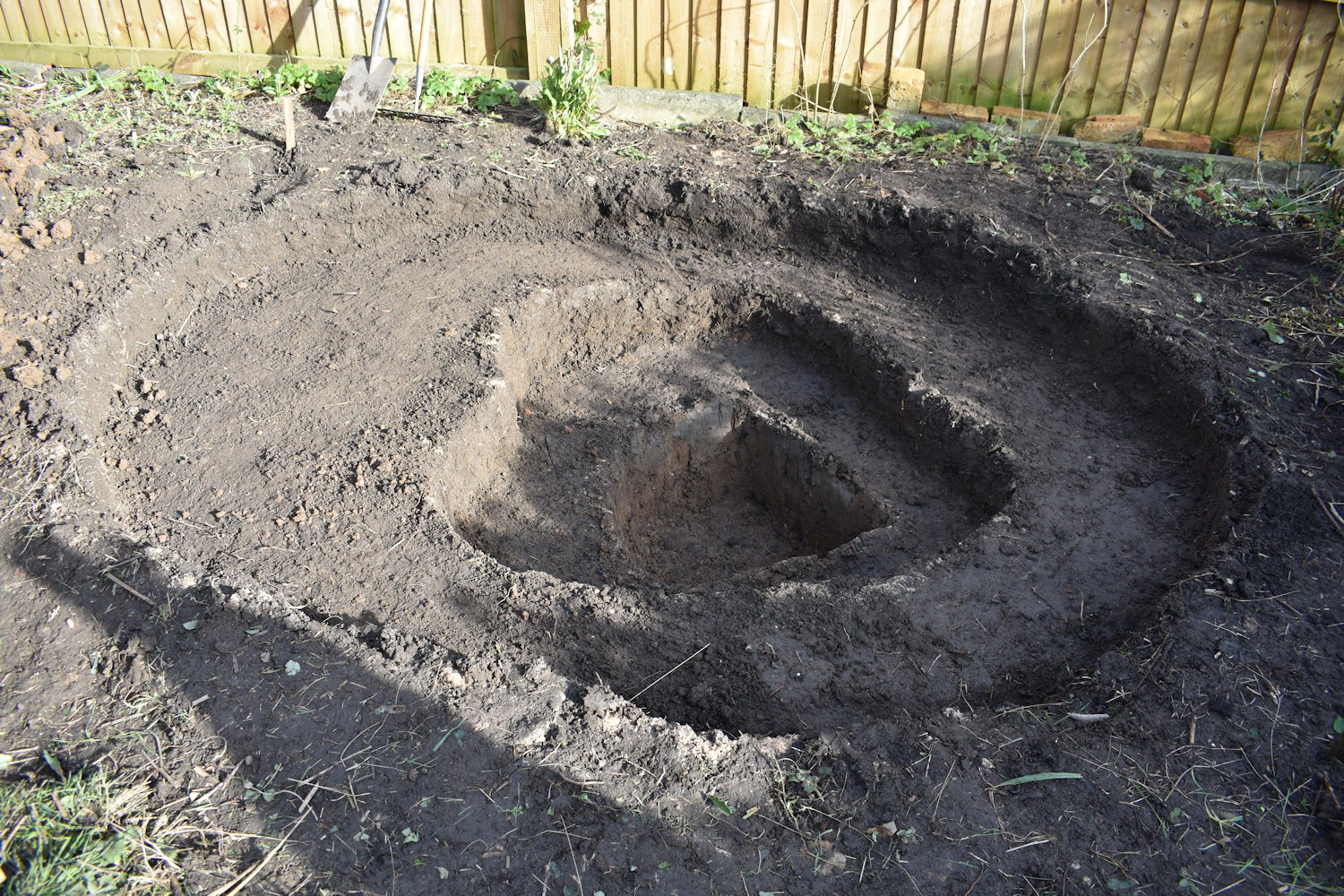
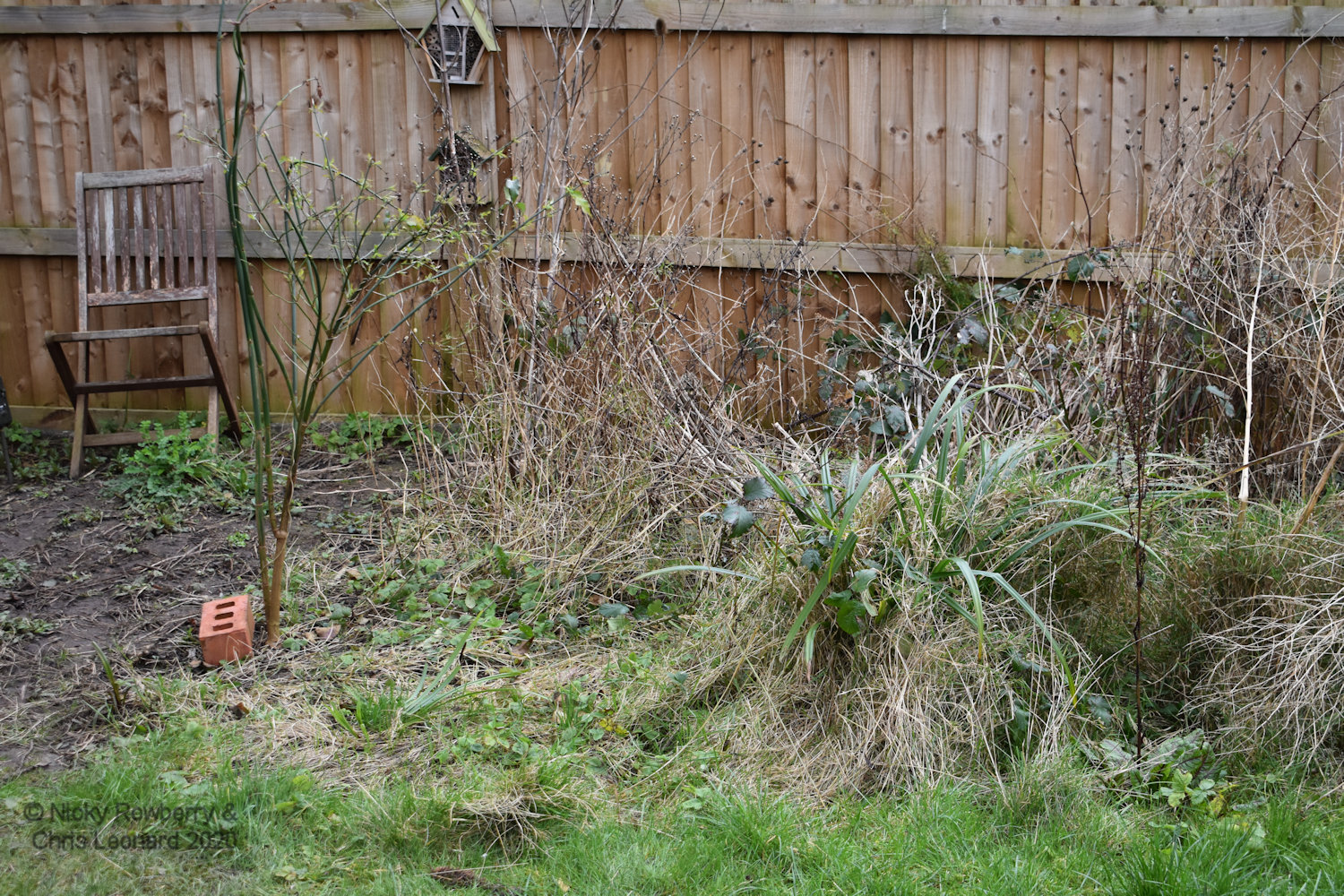
So here is the obligatory “before” photo – a fairly sunny spot near the fence in an area that had once been a veg patch but has long since been a weed patch.

Unusually for one of my ideas, I actually tried to do a bit of research rather than just launching into the pond without a plan. All the books explain the need for plenty of shallow areas, with perhaps a small deeper section. I even drew up an actual plan, although I don’t think I’ll win any awards for my draughtsmanship.

Fortunately Gwyndaf managed to interpret my messy scrawls and set to work digging our dream pond. Here are the various stages of digging.

Once dug, the area was checked for any sharp objects, then the pond lined with sand to hopefully prevent any rogue stones poking through.

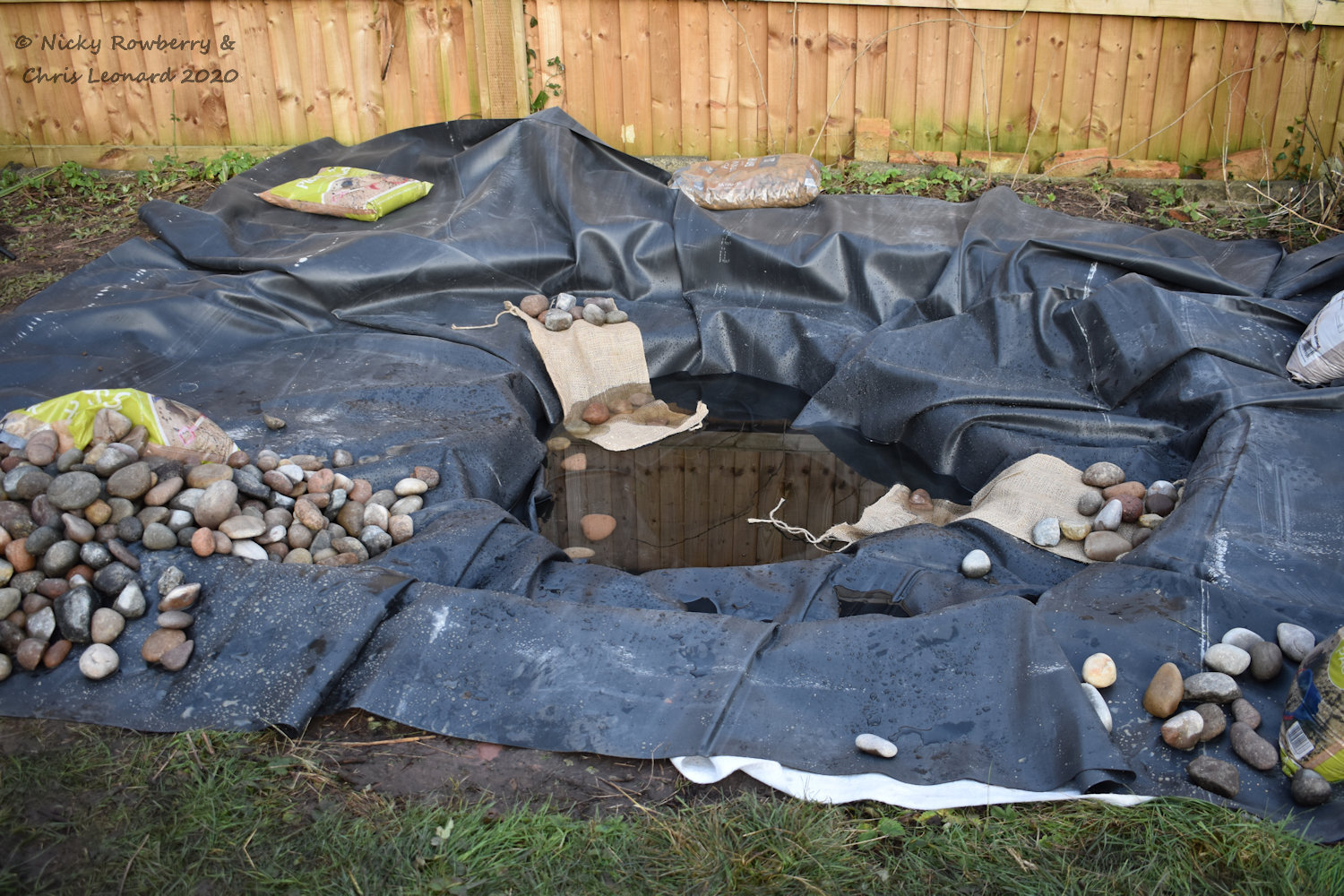
Next a layer of white underlayer to further protect against punctures, then the final EPDM rubber lining. It was a big relief when the lining was down to find we had measured up correctly and got a big enough liner.

Next essential element was of course water. All the books say to avoid tap water. We emptied the water butt which provided just enough water to fill the central deep section, but little more. I was terrified some poor animal would fall in and get trapped at this stage, so rigged up some hessian “ladders” so that anything falling in could crawl out.

Fortunately we live on the beautiful Malvern Hills – famous for their spring water, so we figured we might as well make use of our local resources. There is a handy well – The Cowleigh Spout – just up the road from us, so I made a few trips filling every available water container to fill the pond a bit further.

The UK was then battered this weekend by Storm Ciara, bad news for a lot of people, but good news when you’re trying to fill a pond. The downpours not only topped up the pond directly, but repeatedly filled the water butt again.

The pond now has the all important sloping beach one end, to allow anything that falls in to climb back out again. I’ve been particularly worried in case any of our hedgehogs took a dive, but now they should be able to get out easily. There are shallow areas for birds to bathe in and (fingers crossed) for amphibians to get loved up in.

We wanted to plant the pond up with native plants to give as natural a feel as possible and promote as much wildlife as possible. Although there are lots of online suppliers, it turns out February is not a good time to be buying pond plants as most are dormant for the winter. We did manage to source some Hornwort, which floats about oxygenating the water. A few others we’ve got as tiny plug plants – Purple Loosestrife, Flowering Rush, Marsh Marigolds and Woundwort and Brooklime. Still waiting for a few more to arrive, but hopefully we should end up with a good mix of marginals, floating and emergent plants to encourage an equally good mix of wildlife.

So here it is in all its half finished glory:

There’s still a lot of work to do finishing it off – hiding the liner edges, more planting in and around the pond, but hopefully by the summer we should have a proper wildlife pond again. In the meantime we’ve had our first wildlife visitor to the new pond. It may only be a pigeon, but it’s using the pond and it’s made me very happy!

Expect to see a lot more pondy posts!

30 Days Wild – Day 4

TWT 30 Days Wild_countdown_04Day 4 of 30 Days Wild and today we took part in another event – the National Garden Bioblitz, thereby ticking off two targets with one activity (in true Too Lazy fashion). The aim of the Garden Bioblitz is to find and record as many species of plants and animals as possible in the garden in 24 hours.  Since we’re always identifying things we find in the garden anyway, a bioblitz is just a natural extension of that.

Garden BioblitzLast time we did this a few years ago, we recorded about 120 species; but that was before we got into moth trapping and bee identifying, so hopefully we can beat that this time.  I’m writing this late evening – we’ve been busy in the garden all day, photographing and listing everything we could find. I’ve still got loads of things to identify from the photos and then everything has to get logged onto the i-record site.

It has pretty much been the perfect day. It started at about 4:30 am when I got up to empty the moth trap (to beat the cheeky robin to the catch). Then went back to bed for a bit more sleep (always good), before resuming the challenge at a more reasonable hour. For once the sun shone on the righteous (questionable I know) and we had the perfect conditions for trawling the garden for photo ops. Pretty much the whole day was spent crawling about the garden with the cameras. We finished off by cranking up the BBQ and cracking open a bottle of Prosecco – the perfect end to the perfect day.

During the day we tried every trick we could think of. Obviously the moth trap had been out over night and produced at least 20 species of moth – I’m still working through the photos, so this total may rise. Highlight was the always stunning Elephant Hawkmoth.

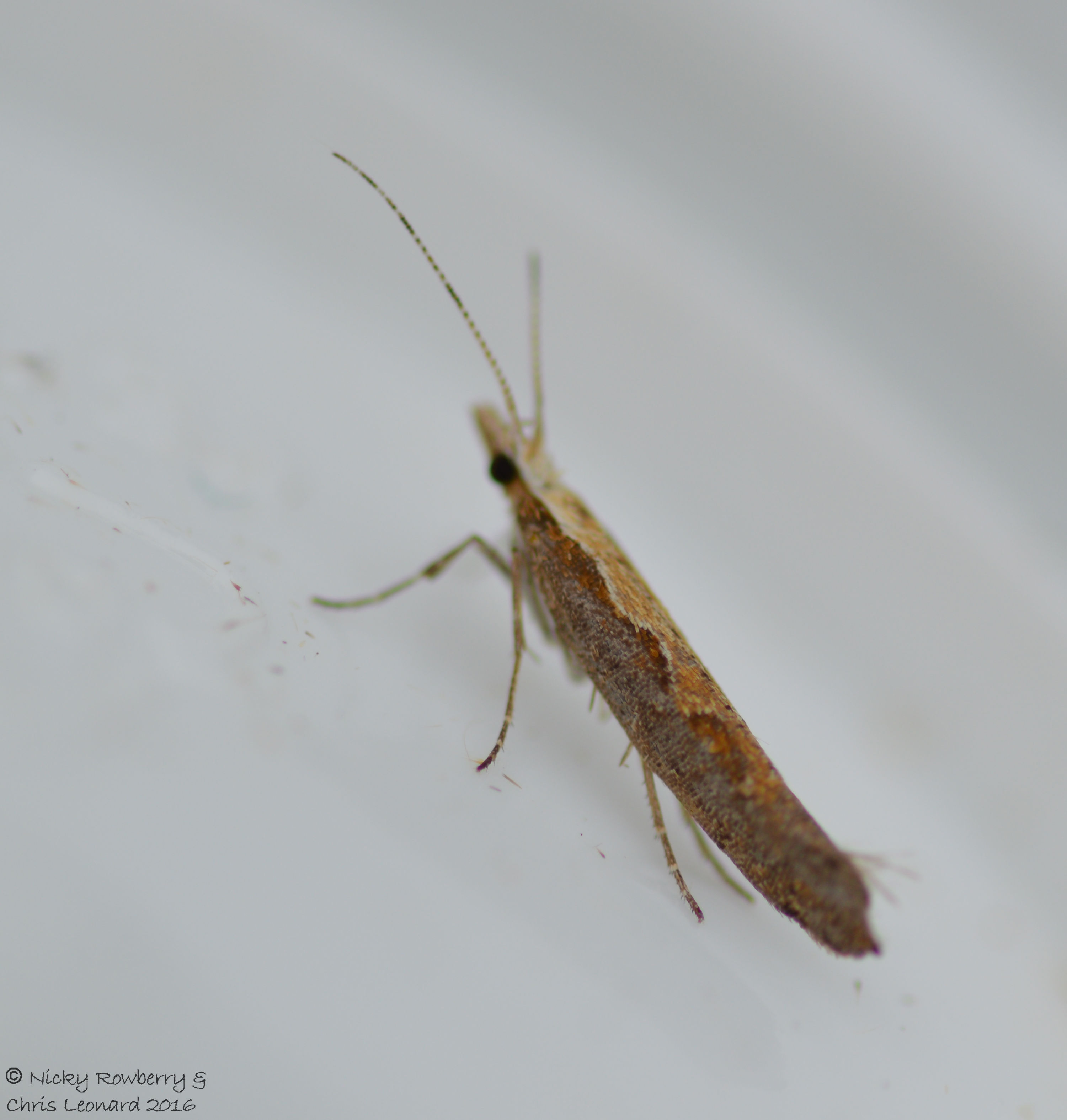
Diamond Back mothI was also really pleased to get several Diamond-back moths – tiny moths that migrate over from the Continent. They’d been mentioned on Springwatch and social media was full of people saying they’d had loads of them this week, so I felt ridiculously glad that Too Lazy’s garden hadn’t missed out. Moth envy is a terrible thing!

We also tried pitfall traps for the first time, using old plastic tubs buried in the ground. This produced this rather splendid (and still to be identified) beetle, plus a couple of woodlice and a spider (also still in need of ID). I suspect pitfall traps take a bit of practice in sussing the right location – we might try them again at other places in the garden.

We tried the “suspend an umbrella under a tree and wack the branches” technique as demonstrated by Chris Packham on Springwatch.  We only have the one mature tree (an apple) so this didn’t produce too much, but was interesting to try.

We dipped in the pond, which produced mainly duckweed, but also some leeches and water louse. It also meant we spotted one of our two amphibian species of the day – a Common Frog, watching us warily from his duckweed blanket.

NewtWe of course turned over stones and pieces of wood, which yielded our second amphibian – the Common Newt. We also found most of our molluscan species this way, both snails and slugs. We achieved a respectable 4 species of snail, but sadly the Girdled Snail, which I know we get in the garden, remained steadfastly hidden today.

The rest of the day was spent generally bird watching and chasing various bees and insects round the garden.  I haven’t tallied up the birds properly yet, but we managed at least 10 species including this Collared Dove. At least 6 bee species put in an appearance, with possibly a new one – we spotted some kind of leafcutter bee carrying (not surprisingly) a piece of leaf – hopefully we can get an ID on it soon, although the photo wasn’t brilliant. Fortunately other bees were more obliging.DSC_3856

Only 2 butterflies showed their faces today – a Small White and a Holly Blue. Assorted insects made up the remainder of the animal count, while the plant count is at least 25 species, with probably a few more to ID.

We’ve spent the whole day in the garden photographing our wildlife and it will probably take several days more to go through all the photos and get them loaded so that they count for the Bioblitz. But it’s been a thoroughly enjoyable experience and has got us rooting about bits of the garden, that we may otherwise ignore. We won’t know the final tally of species for a couple of days, but I’ll post an update when we do. I’d recommend having a go at a Garden Bioblitz for anyone – you don’t need to be especially skilled – just take it to whatever level  you can manage. You’re sure to learn something new and hopefully enjoy your garden all the more for it. There’s still time to do it for this year – http://www.gardenbioblitz.org/ for more information.

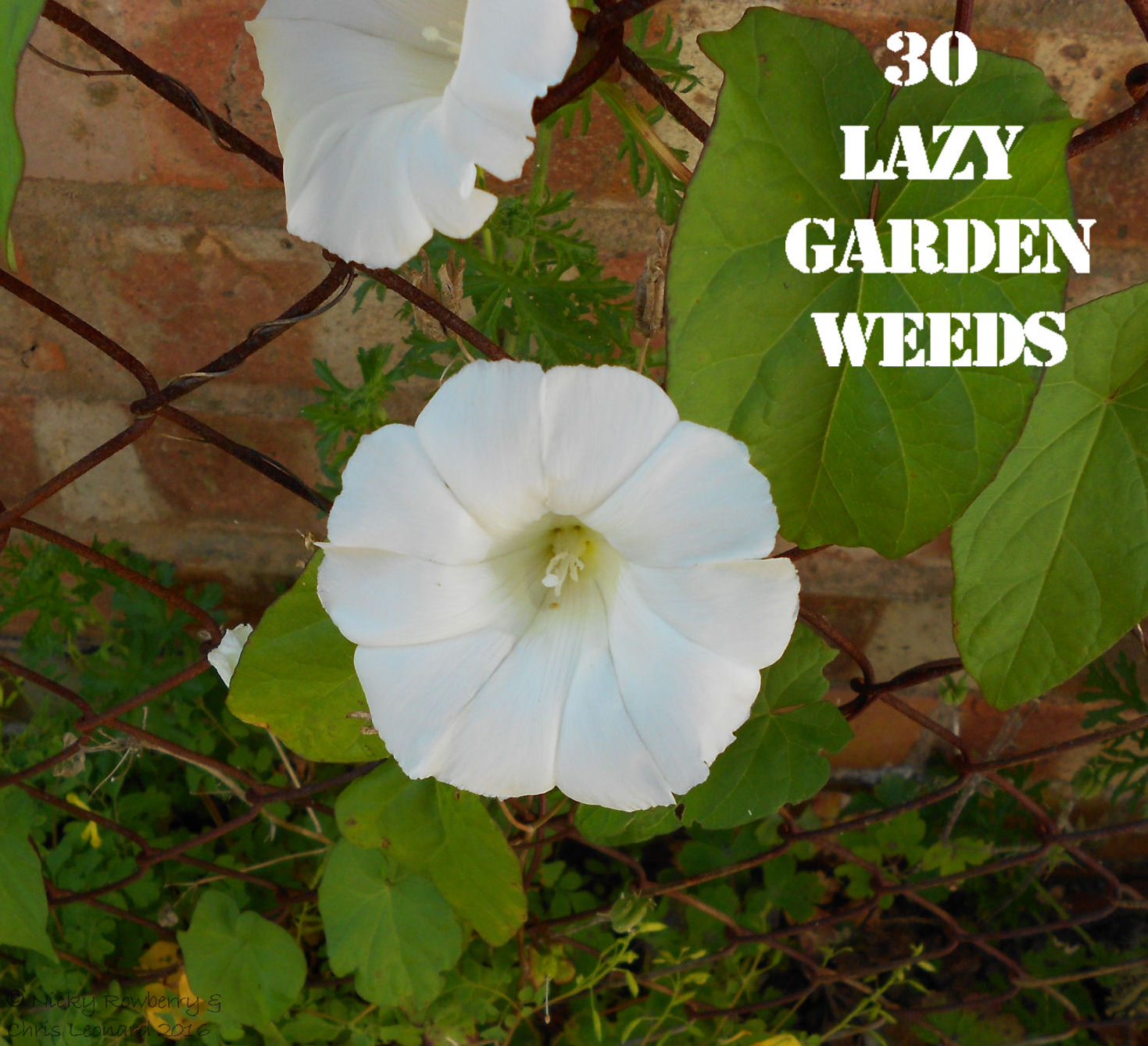
Bindweed 30 WEEDSDay 4 of 30 Lazy Weeds and a truly beautiful if sometimes bothersome flower – Bindweed. The bane of many a gardener, but if you take the time to look at the flower itself, it really is stunning. Pure white and beautiful in its simplicity. Gardeners will plant similar looking flowers, but weed out these, which seems a shame. I know their stems do wind themselves round pretty much everything, but for me the flowers more than make up for this.


New Year’s Resolutions

Well 2015 is over and I reckon it’s been a pretty good year for the wildlife in the garden. The final tally includes:

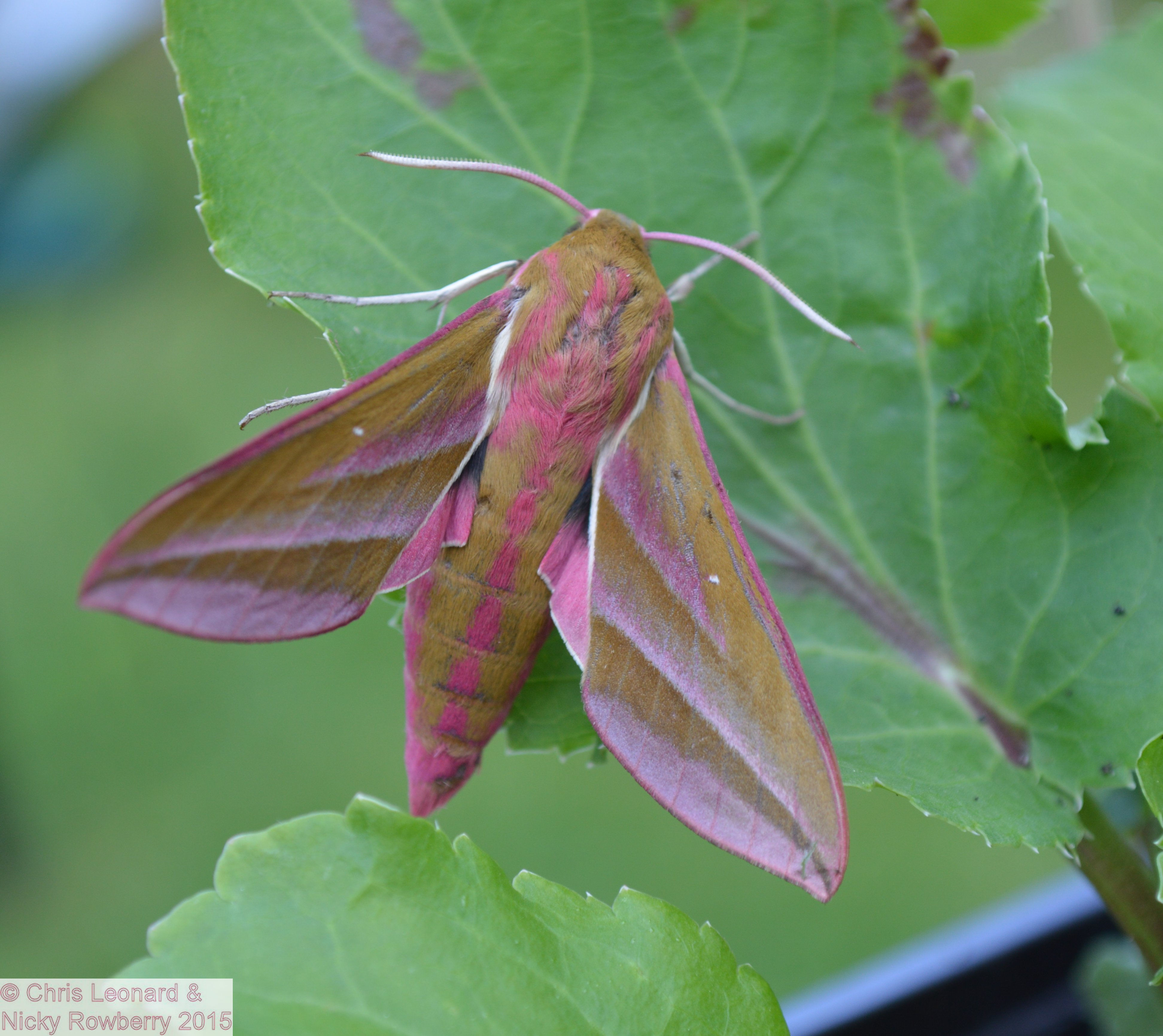
  • Elephant Hawk-moth155 species of moth recorded in the garden, plus about 6 more seen out and about. Most of the 155 came to the moth traps, but a few were more adventurous and made it as far as the bathroom!
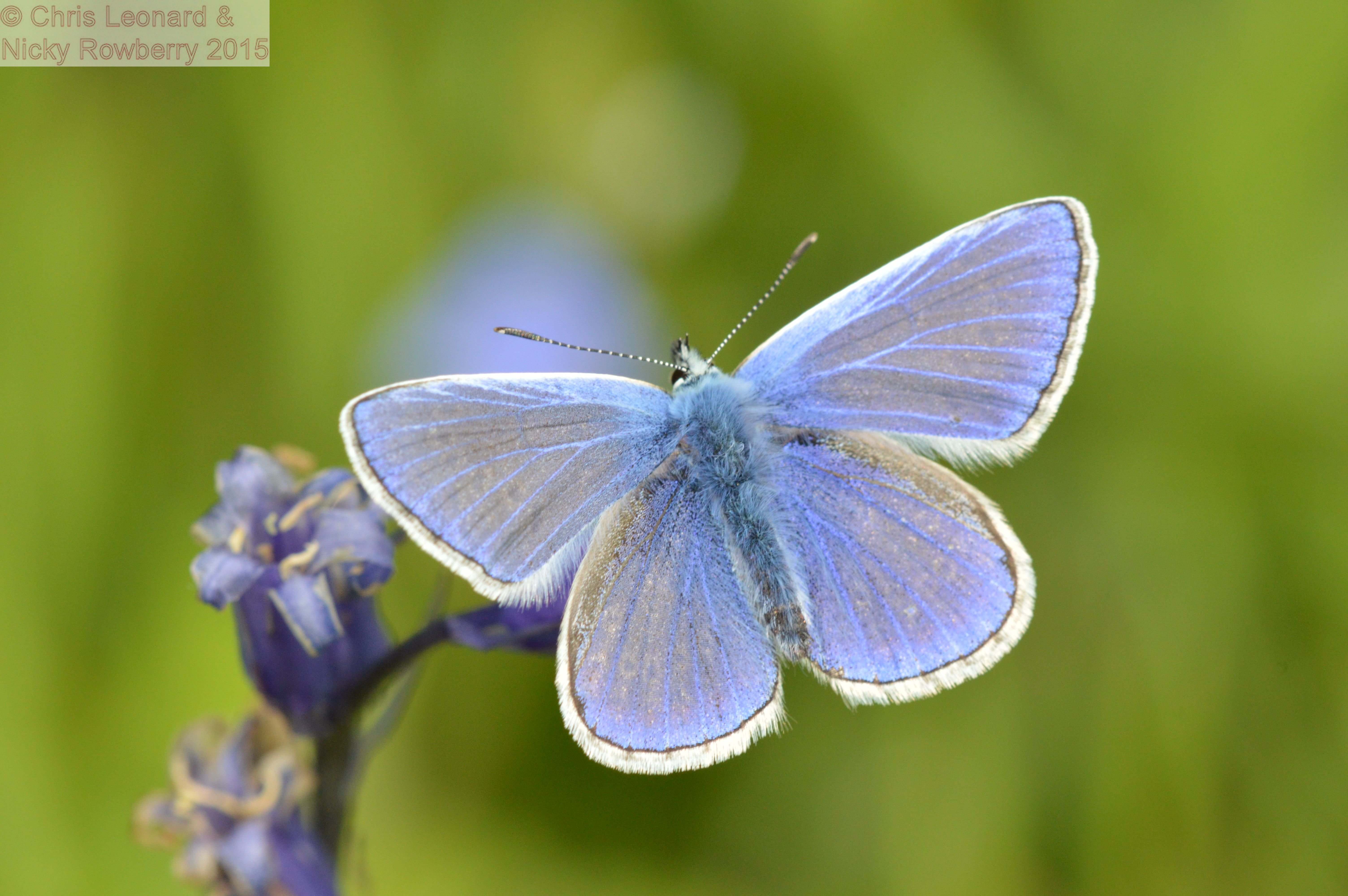
  • Common Blue28 species of butterfly bagged, of which 17 appeared in the garden at least once during the year.


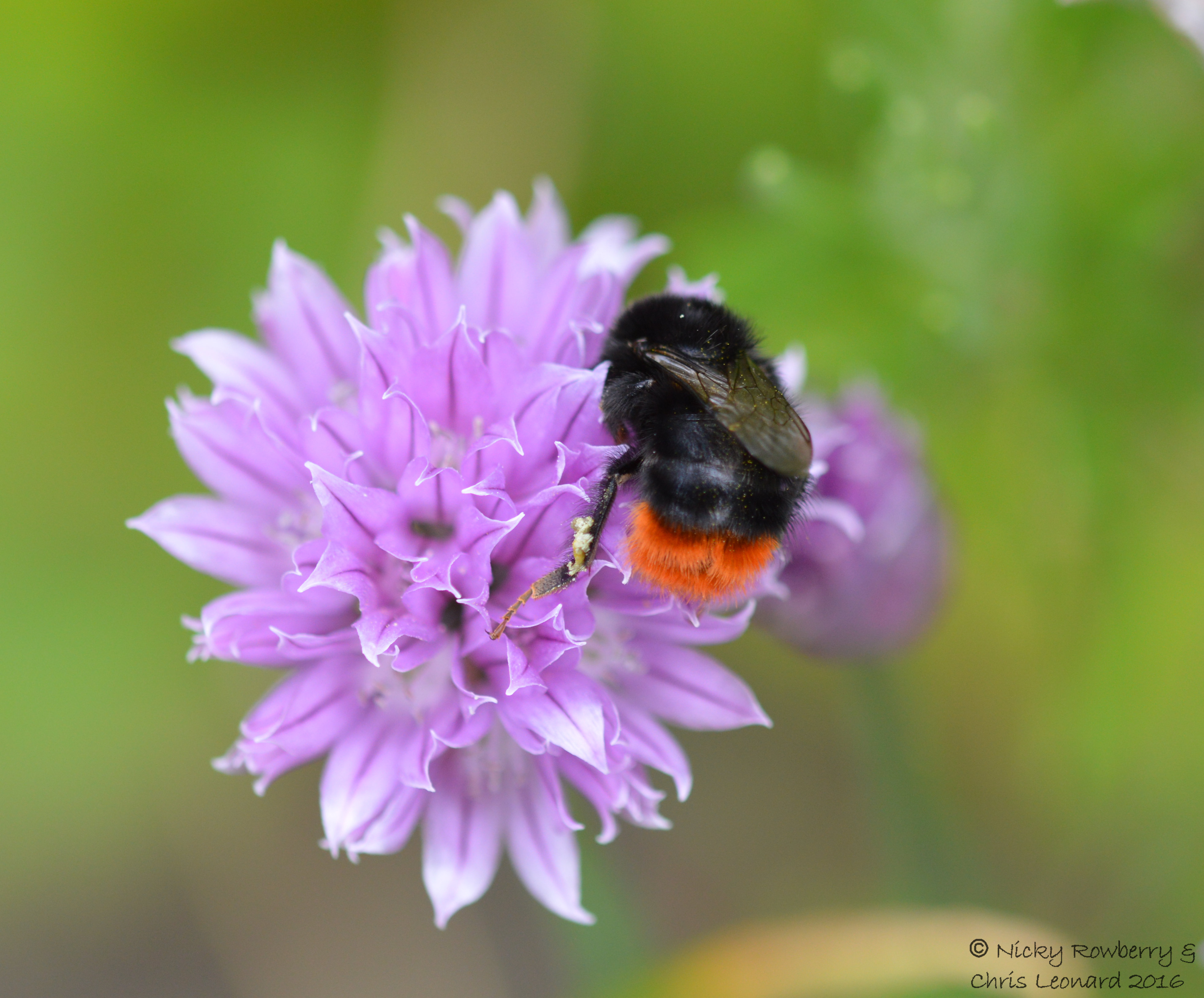
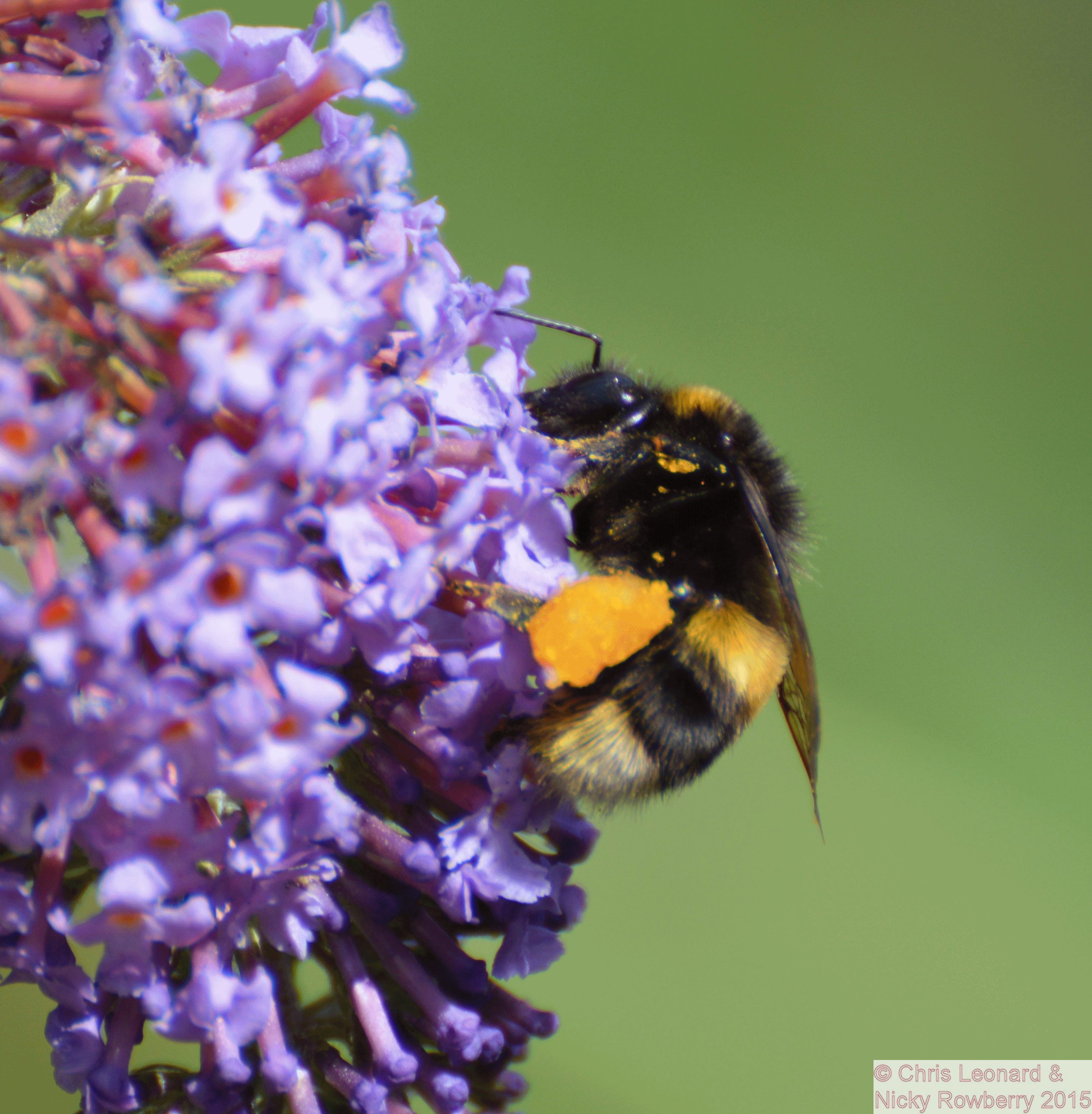
  • Bee on buddleia12 species of bee in the garden (which reminds me I must do a bee post soon). At the height of the summer (such as it was) the garden was buzzing with bee activity.


  • 7 species of shieldbug in the garden, including a rarity for Worcestershire – the Box Bug (which remains the only wildlife to have used our new bird bath!)


  • Hedgehog3 mammal species in the garden (grey squirrel, hedgehog and regular if unidentified bats) plus one family of mice living in the garage.


  • 3 amphibian species (toad, frog and common newt) visiting our pond/bog and surviving attacks from our garden furniture.


  • One sparrowhawk (and consequently one less sparrow) in the garden. Numerous other small birds though eating their way through a small fortune’s worth of bird seed.


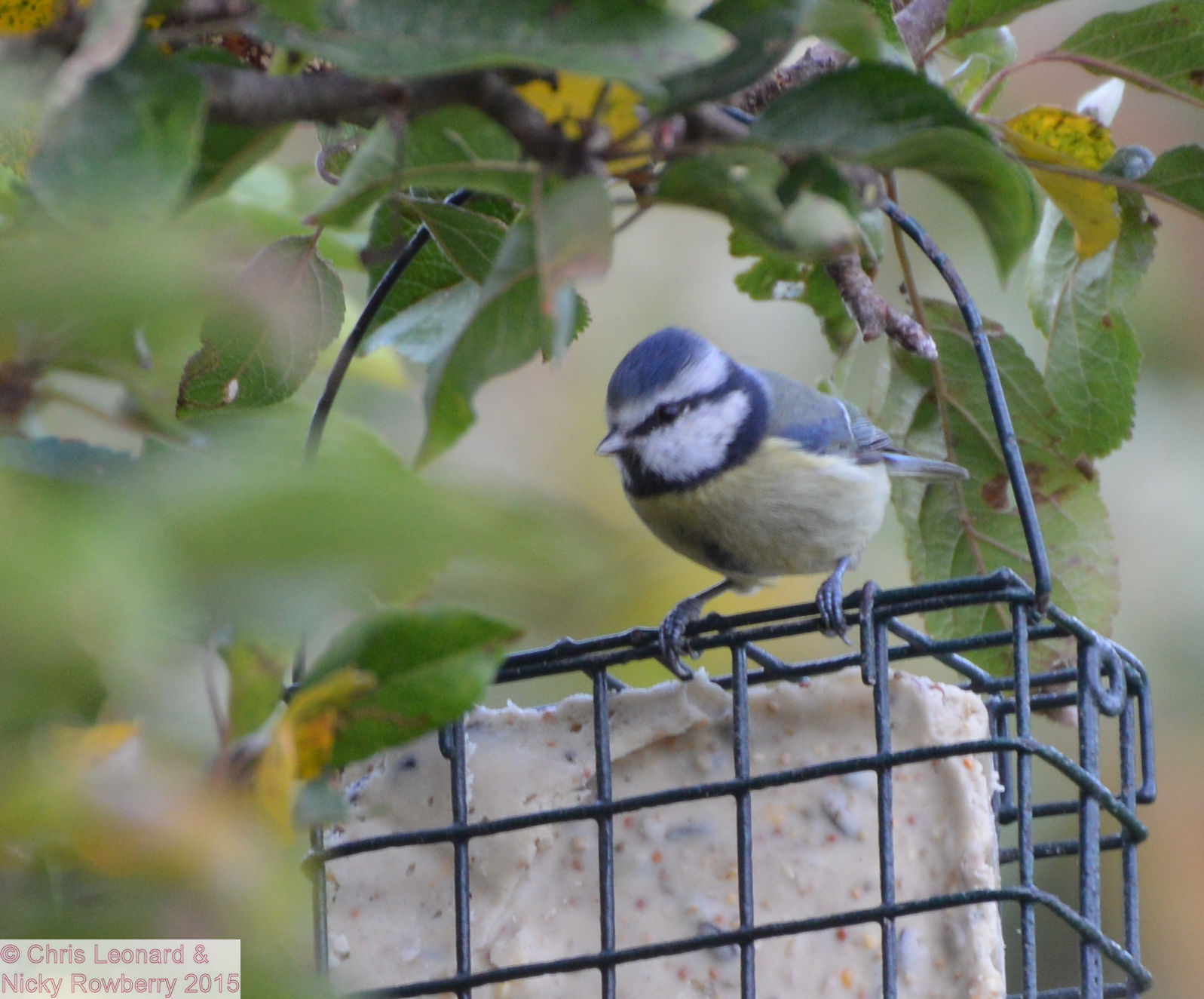
  • Blue Tit on Suet FeederOne family of blue tits successfully fledged from our bird box, after 6 years of it sitting empty. Fingers crossed for a repeat next year.


  • Swollen Thighed BeetlePlus numerous beetles (including my personal favourite – the swollen-thighed beetle), molluscs, ants, wasps, hoverflies and other assorted invertebrates.


  • TeaselsAnd finally of course to maintain the “too lazy” ethos – zero weeds were harmed in the making of this list!


So that brings me to 2016 and some New Year’s resolutions. As there is virtually no chance of me succeeding with any of my usual resolutions (cut down the drinking, lose weight, grow taller, read the classics, write a classic, stop fantasizing about George Clooney etc. etc. etc.) I thought I’d make an alternative list of things I might actually achieve.  So for 2016 I hope to:

  • Try and see at least 4 more species of butterfly – there are lots of great wildlife reserves within easy distance of Malvern, so hopefully we can bag at least some of the following: Grayling, Wood White, Purple Emperor, Small Pearl Bordered Fritillary, Silver-studded Blue and Green Hairstreak.
  • Have a go at beetle trapping. Having more or less got the hang of the moth traps, it would be good to expand our insect repertoire.
  • Dig a new pond – one that actually has water in, not just soggy mud.
  • Replace at least some of the overgrown weeds with more butterfly and bee flower beds.
  • Work out what species those unidentified bats are – it’s been bugging me for years!
  • Get that moth tattoo I’ve been toying with for ages!
  • Learn to photoshop convincingly so I can fabricate evidence of the above when I fail to achieve these resolutions too!

Wishing all lazy wildlife enthusiasts a happy, healthy and environmentally friendly 2016.