Island Life – Part 2 – Birds & Mammals

I thought it would only take me a day or two to write part 2 of this, but with 2 heatwaves this month, my productivity (always dubious at the best of times) has plummeted. But here at last are some of the gorgeous birds and mammals we saw on the Isles of Scilly in June.

I took a couple of bird-watching boat trips; one with my long-suffering family and one alone when they’d had enough of me. The Scillies are a fantastic place to spot seabirds; it made me wish I was better at identifying them. So please feel free to correct me if I’ve got any of these wrong. As so often is the case, I didn’t really have the right camera lens with me and that combined with rocking boats and user error, means none of these are exactly amazing photos, but hopefully they’re recognisable at least.

First up, what I am assuming to be a Black-headed Gull, due to its black head! I realise though there are other species that would fit this somewhat basic description, so please correct me if I’m wrong.

The next one I am at least confident is an Oystercatcher, although it does to my eye look quite like the penguin from Wallace & Gromit with a red beak stuff on it! Again a shockingly bad photo and I can’t even blame a rocking boat for this one as I think I took it from land.


We saw a few Shags, often standing looking quite aloof with a crowd of other birds nearby. Seen alone they are quite gawky looking birds and I always think there’s something a bit archaic about them.

One of the few seabirds I can readily recognise is the Gannet. It’s distinctive enough that it’s pretty much unmistakeable.  This one floated serenely by the boat, looking as if it had recently had a right good feed.

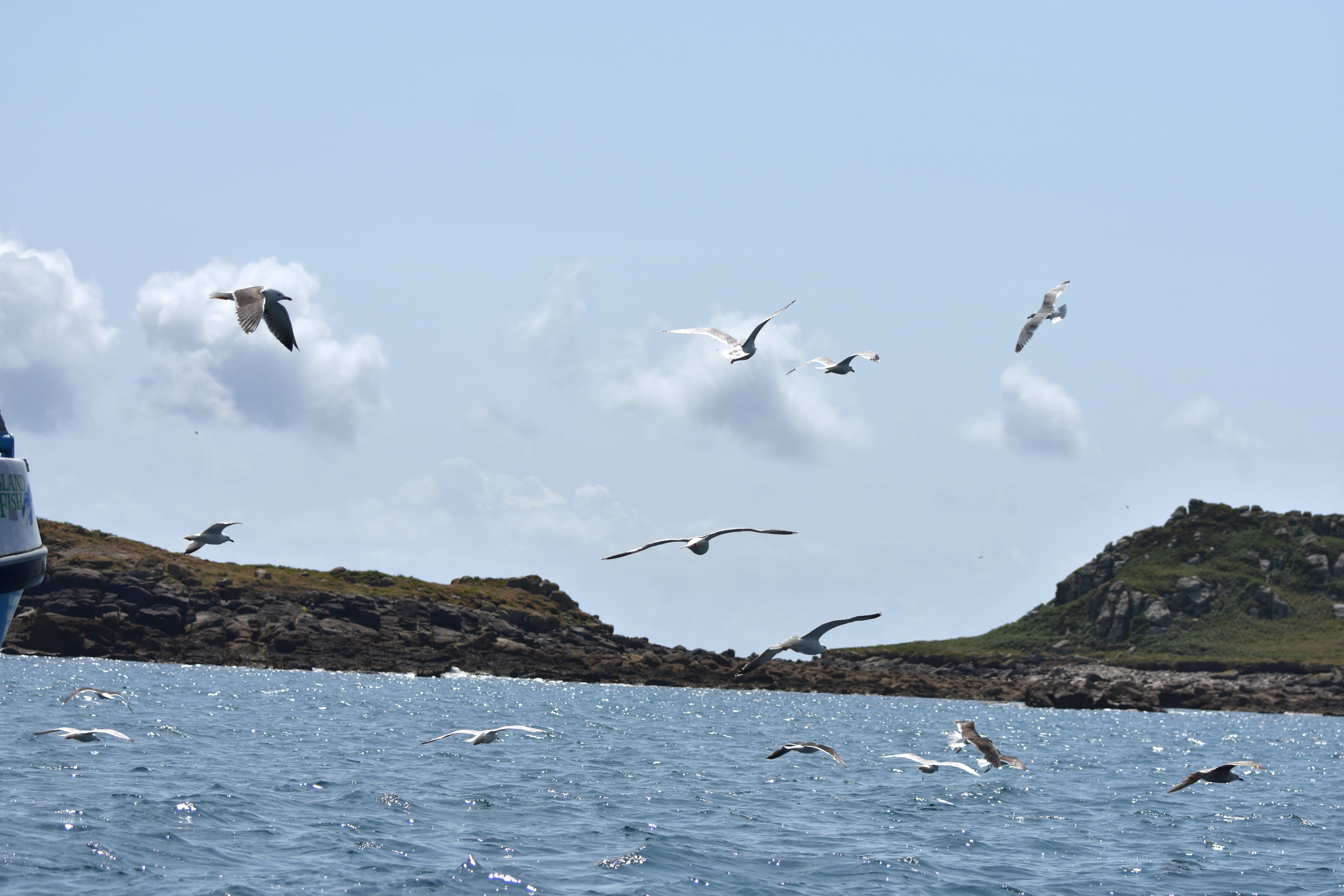
There were of course lots of large gulls present everywhere. We passed a fisherman, hauling in lobster pots at one point and the sky around his boat was just full of an assortment of gulls. Some have black backs (Black-backed gulls?), some have grey backs – to my disappointment there doesn’t seem to be one called a Grey-backed Gull, so I’m guessing these are Herring Gulls?
All the seabirds above are beautiful, but I can’t help having a soft spot for the Auk family. Apparently there are 5 species seen regularly in the UK and we were lucky enough to see 3 of these. The most plentiful that week were the Guillemots – sleek black/dark brown and white birds, gathering in groups on the rocks and in the water.

Then there were the Razorbills; I never saw these on the rocks, only in the water and often swimming with the Guillemots too. Razorbills are named for their famously sharp-edged beaks, ideal for grabbing fish.

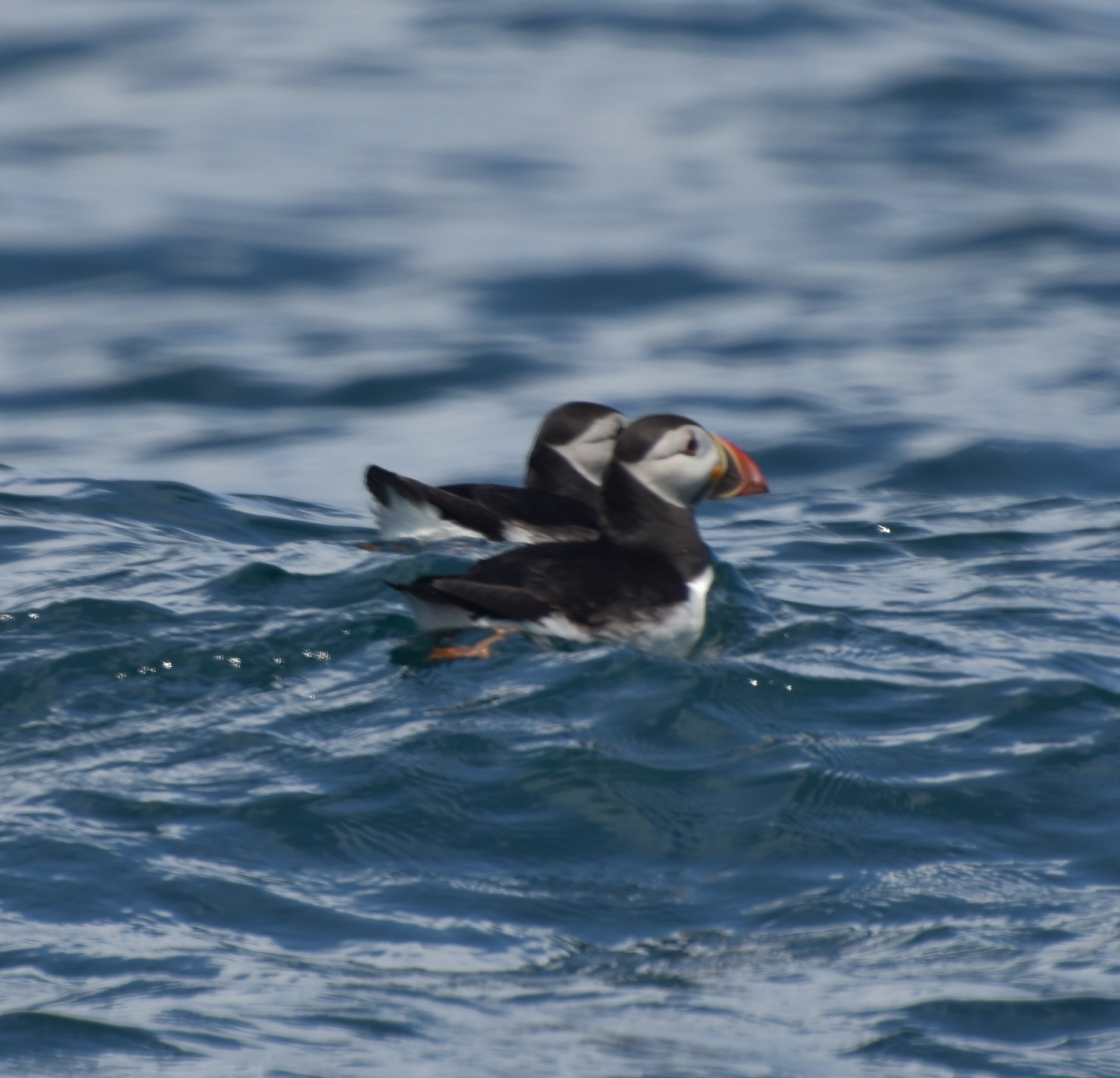
But of course top of the wish list was to see Puffins and thankfully we did. The Skipper wouldn’t take the boat too close to the cliffs where the puffins were nesting as we didn’t want to disturb them, but we were close enough to see several outside their burrows.
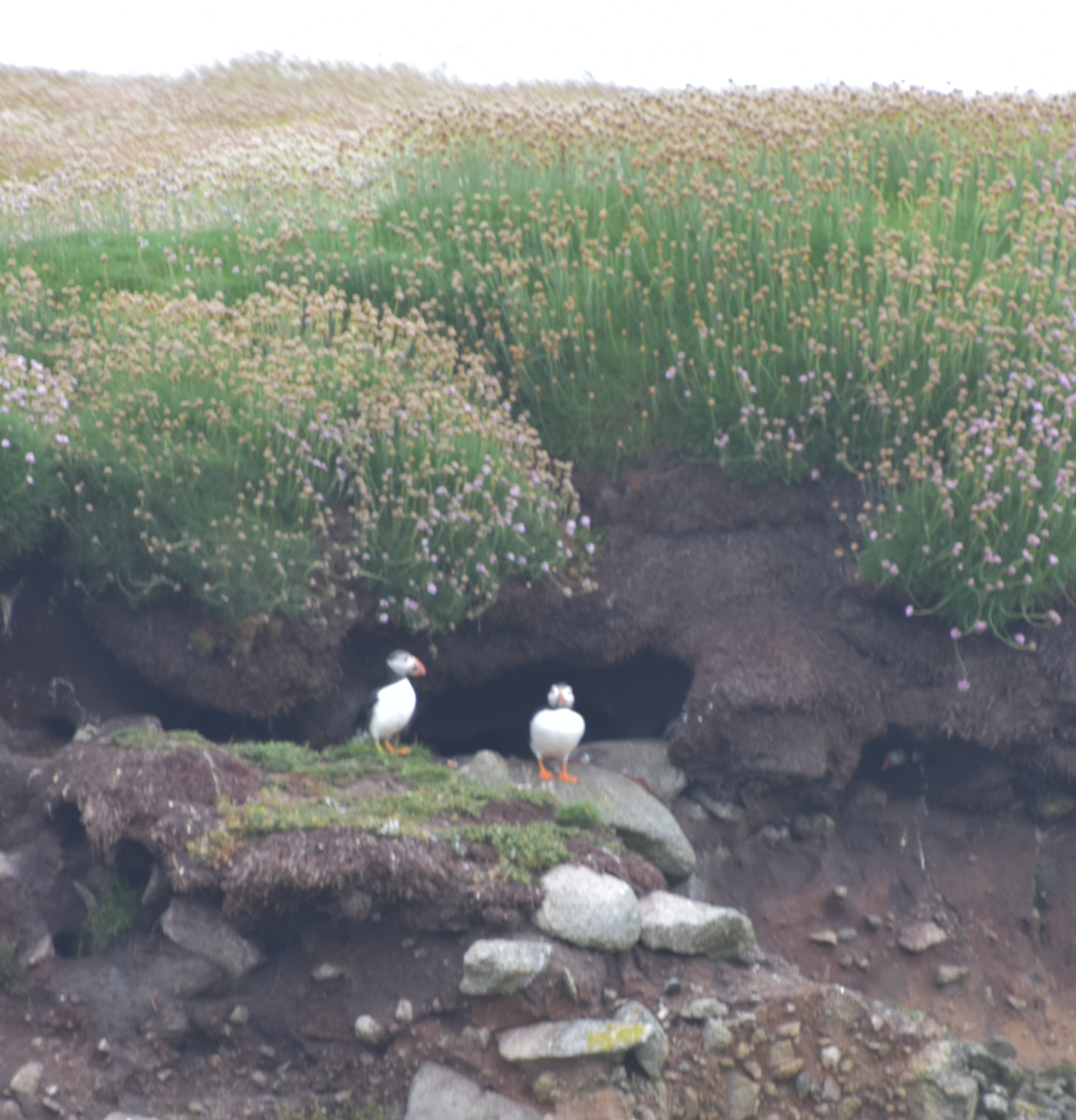
Then there were the ones we saw on the water. It’s no surprise that they are everyone’s favourite seabird; what’s not to love about those cheeky little faces.

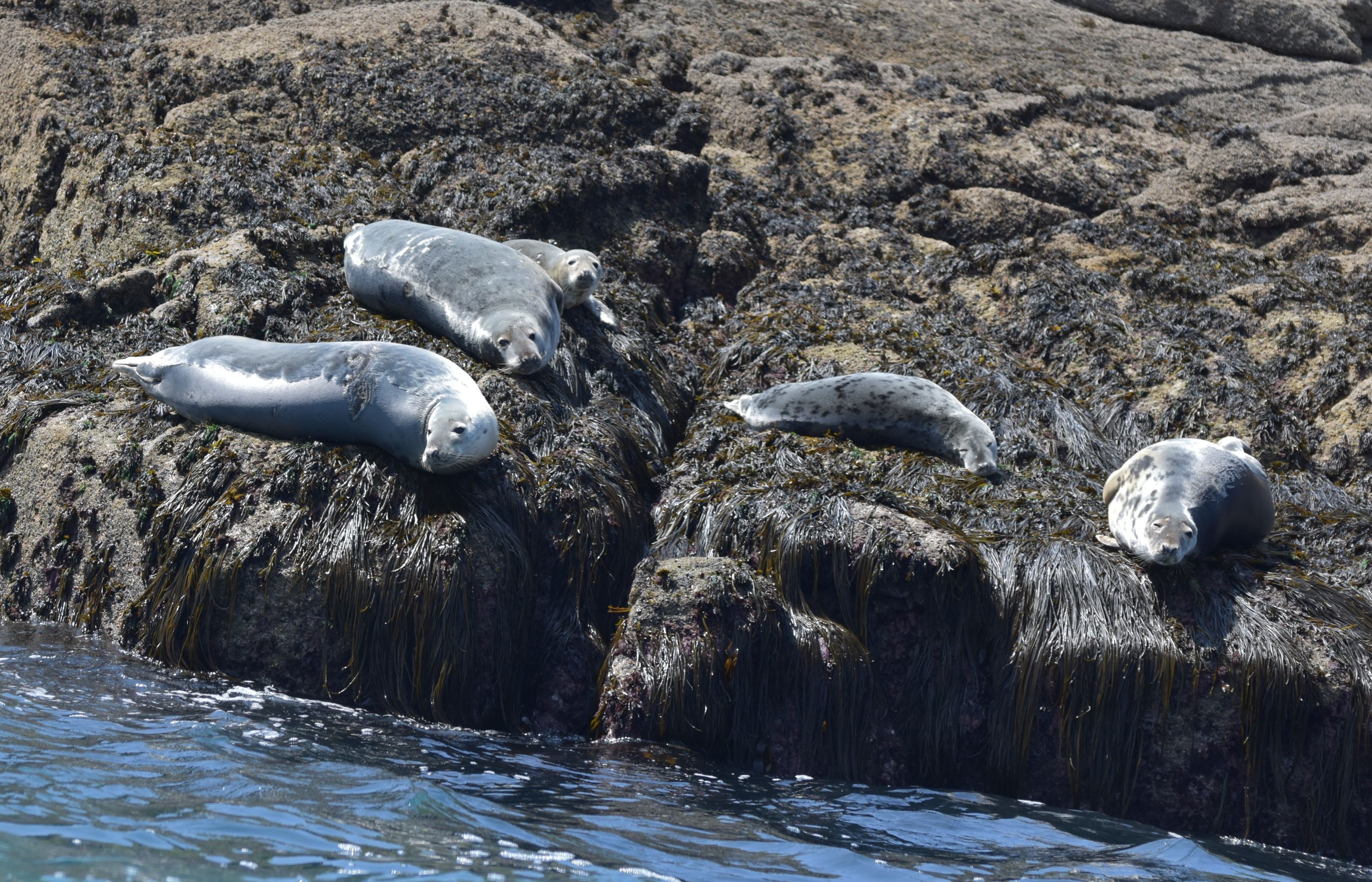
So on to the mammals. I did see a split-second glimpse of a dolphin from the Scillonian on the way back to the mainland, but that was it as far as cetaceans went. Grey seals were much more obliging. Again our skipper managed to get close enough for us to see some hauled up on the rocks, but not too close to frighten them.

At first we thought it was just adults, but in the second photo from a slightly different angle, you can see a seal pup at the back of the group. I was so thrilled; I’ve seen seals many times (even sieved seal poop for a living for a while – that’s a whole other story), but never seen a young one like this!
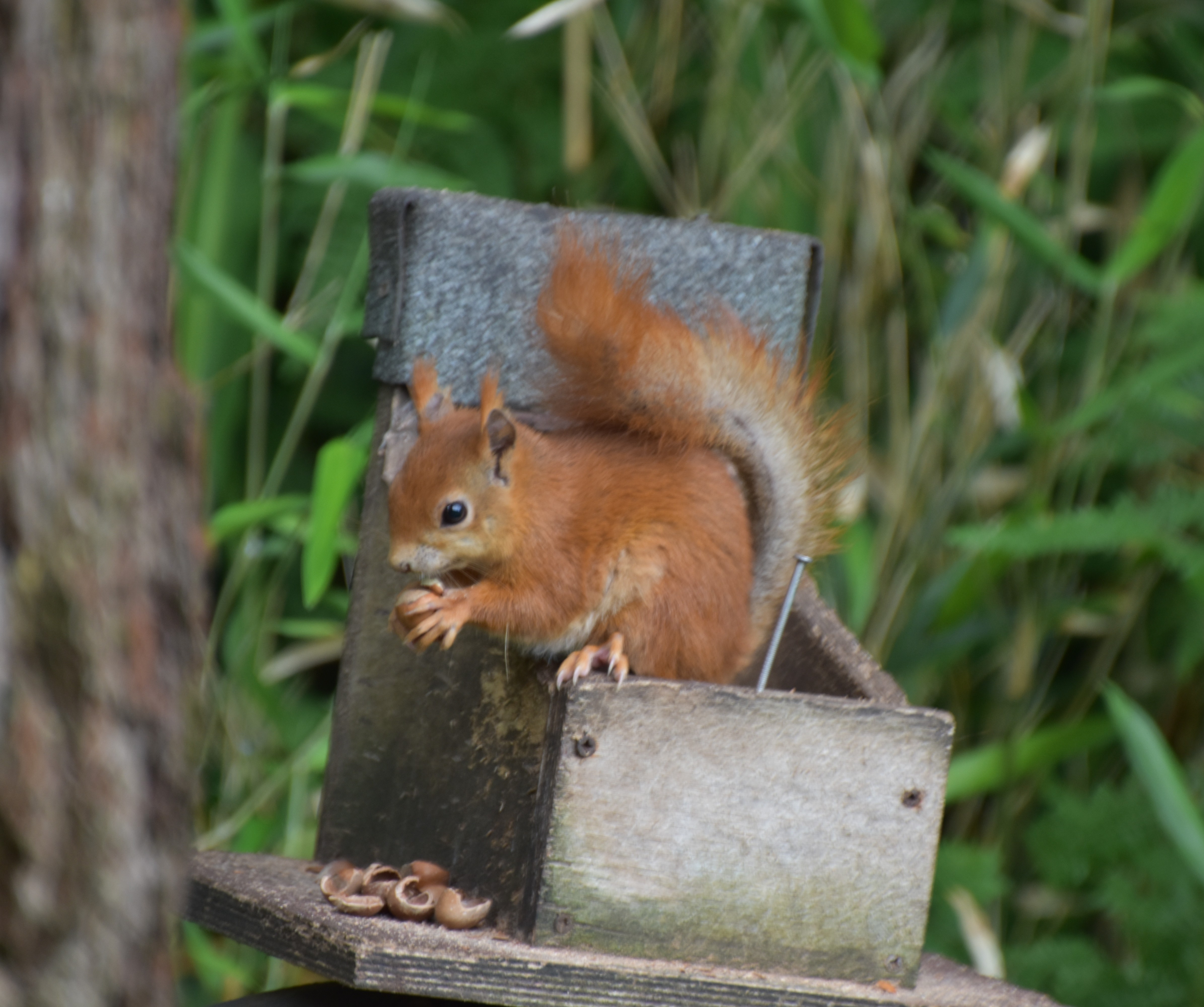
But the mammalian star of the show for me had to be a surprise we found on Tresco. I say surprise, but obviously the locals knew they were there as they’d been deliberately introduced. Red Squirrels! We saw a sign saying there were red squirrels as soon as we entered Tresco gardens, but I thought we’d be lucky just to get a glimpse. But then we turned around and there was a beautiful squirrel sitting right there, enjoying some nuts. I was fumbling with my camera , sure it would disappear, but no it was clearly unfazed by our presence and carried on snacking. The best views I’ve ever had of a red squirrel.
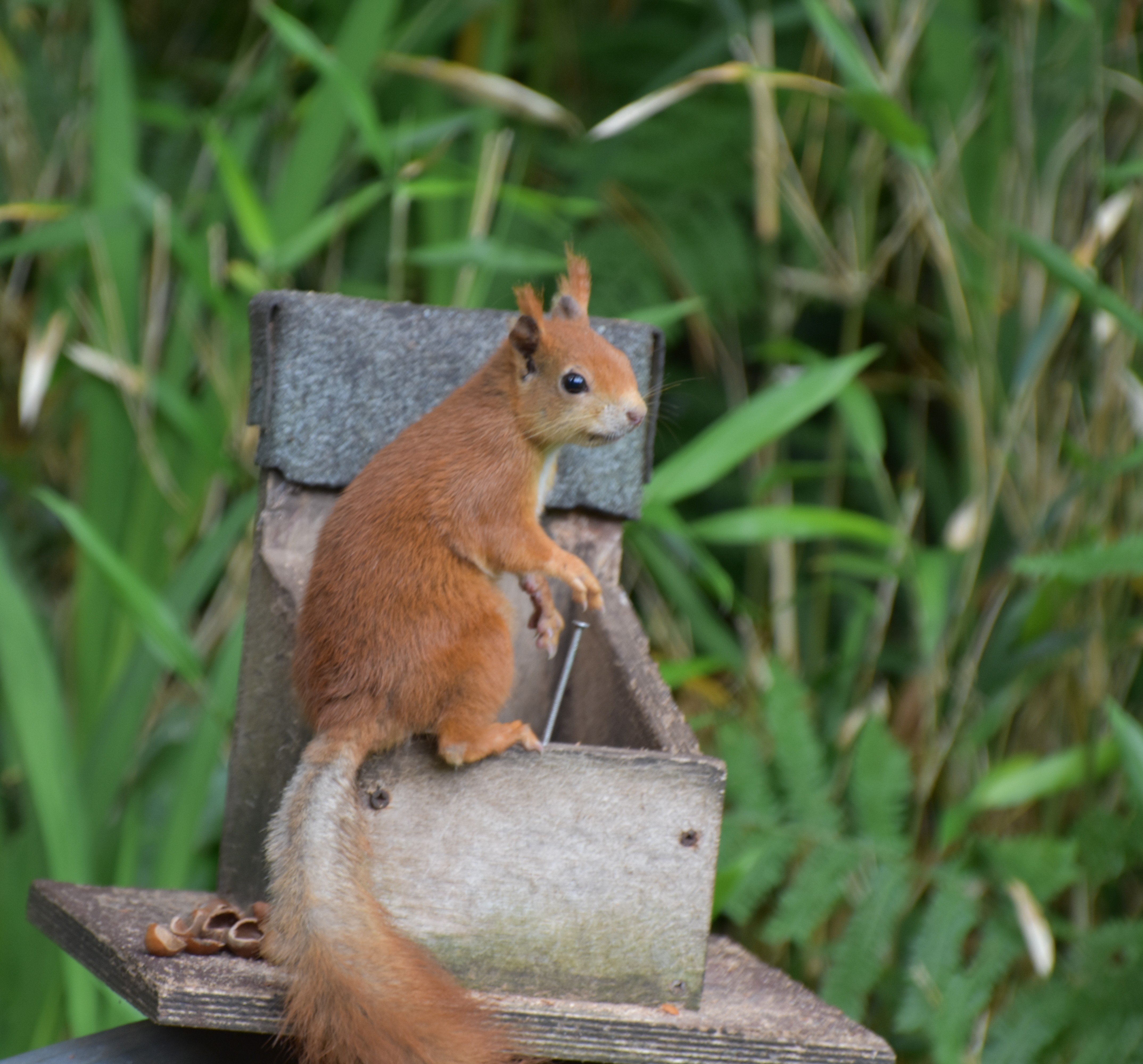
We saw several more as we enjoyed the gardens, although none as close as that first one. It must be an ideal habitat for them and they seemed to be doing really well.

So that’s my round-up of the wildlife we saw on the Isles of Scilly. It really is a fantastic place to visit, although I’m tempted to say “no it’s dreadful” to stop loads of people going and spoiling it! The isolation, the warm climate (warmer than most of the UK at least) and beautiful scenery make the islands the best wildlife destination I’ve been to in Britain and I can’t wait to go back.

The Blog is Back!

Hello again!

It may seem like I’ve just been Too Lazy To Blog, and I can’t deny there’s an element of that, but mainly life in the form of a very difficult 3 years has just got in the way. But hopefully now things are getting back on an even keel and I can resume my wildlife ramblings. The weeds in the garden have continued to grow and there’s still plenty of wildlife to be seen, photographed and waffled on about. So the blog is back!

I may not have been blogging, but I have seen a lot of amazing stuff in the last 3 years. Maybe not attack ships on fire off the shoulder of Orion (who doesn’t love Rutger Hauer), but all sorts of other interesting things. So in no particular order, here are some of the highlights of the last few years.

In December 2023 there was a lot of excitement on Twitter/X about Waxwings being seen in and around Malvern. Like many others I grabbed my camera and headed out in search. Not only did I eventually get to see them, but I made a new friend in the process, without whom I’d never have found them, so a definite win-win situation.

Last summer I was really excited to see my first ever glow worms. Tiny little green glows at a reserve just a few miles from home.  Not easy to spot, but once you get your eye in they really do what it says on the tin and glow a bright green. I only had my phone with me, so this “magnificent” picture will probably go down in history as one of the most atrocious photos ever. Perhaps I should just give it an abstract name – “Green Glow on Black Canvas” or something. But it’s the only proof I have that I saw a glow worm, so here it is!

In October last year I finally got to see the Northern Lights and from my back garden. Not quite the awe-inspiring spectacle you see photos of, but definite streaks of pink and green nonetheless. Again I’m probably up for some kind of award for awful photography for this, but I’m just happy to have finally seen this. Twenty odd years living in Scotland and I finally see it in Malvern!

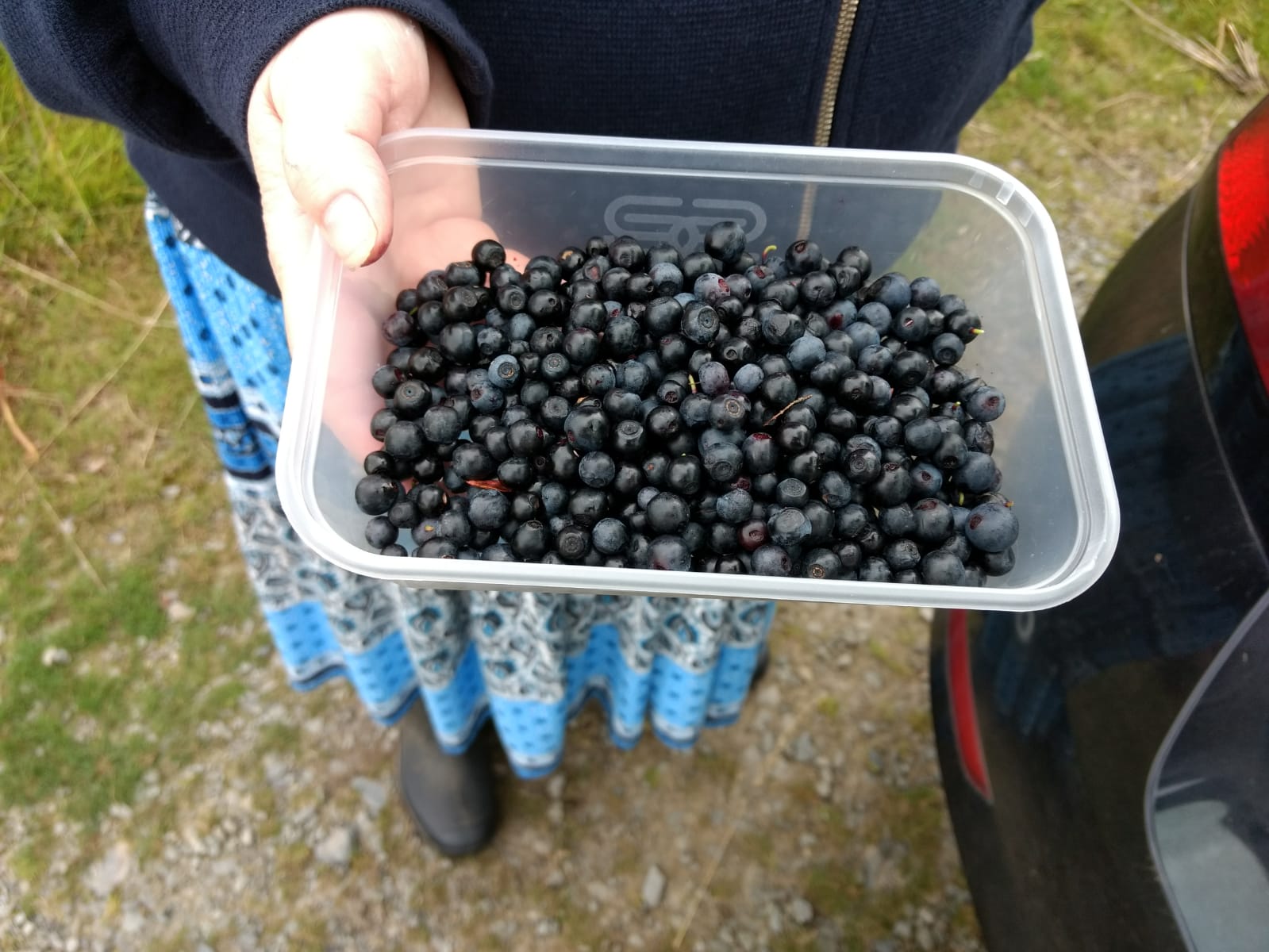
I’ve had a few days out and about doing some not-strictly wildlife things, but it was out in lovely countryside so I reckon that counts. In August last year my sister and I went whinberry picking for the first time since we were children. Whinberries (or Wimberries, Bilberries, or Blaeberries, depending on where you’re from) were our Dad’s favourite and grow wild in the Shropshire hills. We were a bit late in the season, so only managed to gather enough for a very small pie, but it was well worth it – the taste brought back many happy childhood memories and we certainly got to see a lot of the wilds of Shropshire while we hunted for them.

We also had a slightly bonkers trip to see the famous cheese rolling race in Gloucestershire. I must stress we valued our lives and vertebrae too much to actually take part chasing a 4 kilo wheel of Double Gloucester down a very steep hill. It was hard enough climbing high enough to watch it, without hurling ourselves at break-neck speed back down again. But it was a glorious spectacle when viewed from a safe distance.

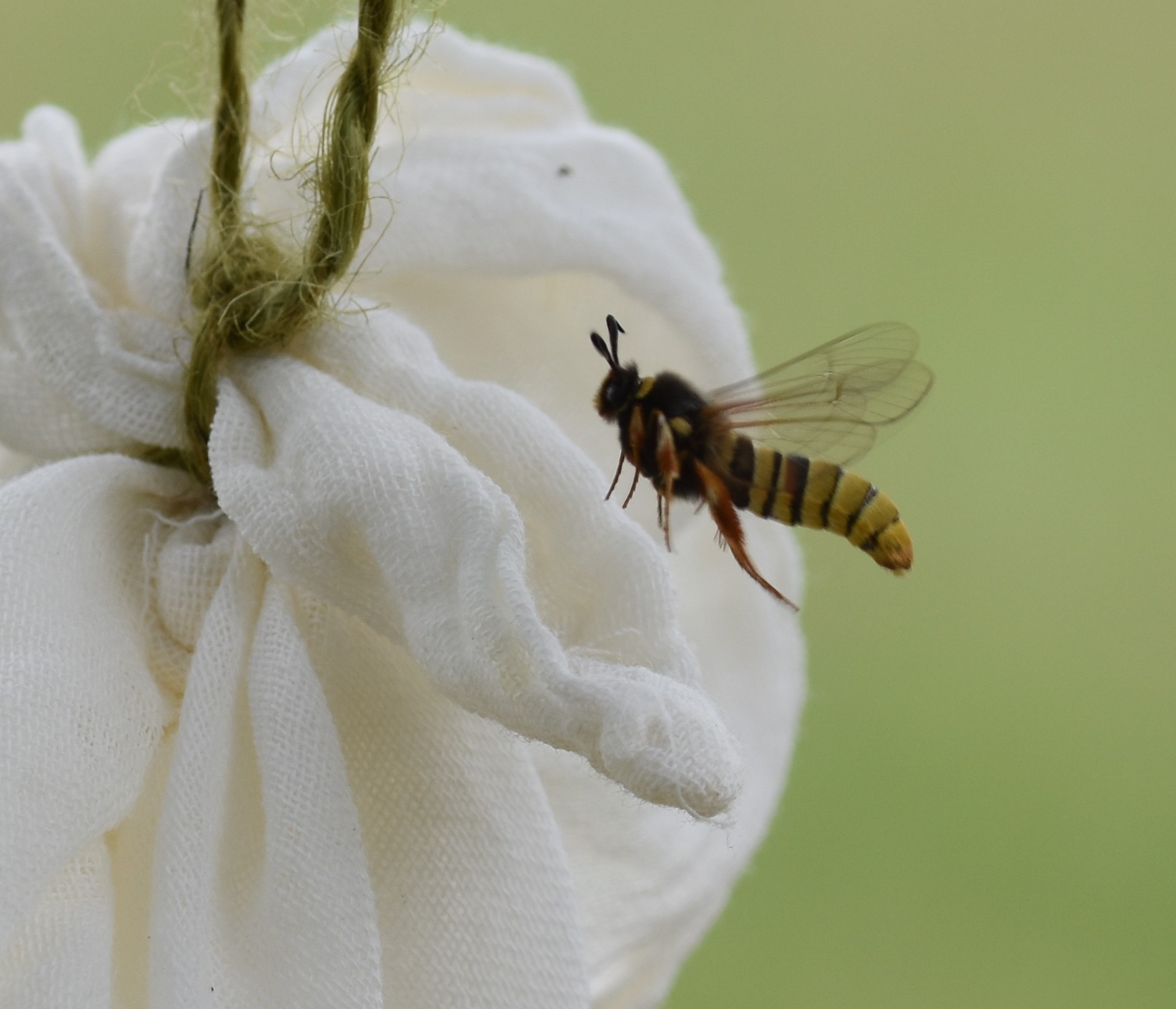
There have been lots of moths recorded in the garden in the last few years, but I’ll post about those separately. One interesting moth seen while venturing outside the garden was a Lunar Hornet Moth. These stunning moths don’t really look like moths with their clear wings and hornet like bodies. Their caterpillars live in the wood of old trees and the adults are attracted to pheromone lures.

Other highlights of the last few years include dolphin watching on a glorious sunny day in New Quay in Wales and a visit to the lovely Westonbury Mill Water Garden in Herefordshire just as the new season’s toadlets all emerged from the ponds. Never seen so many tiny toads (they were literally the size of a fingernail), it was virtually impossible to walk – we went round at a snail’s pace to avoid standing on them. Speaking of toads, I’ve also joined a local toad patrol – more of that in another blog post too.

There’s been a visit to the Diglis Fish Pass in Worcester. Our guide showed us fantastic photos of large salmon, pike and even otters swimming by the viewing window, although on the day, all we saw were a few minnows. Another day out took us to the confetti fields, also in Worcestershire. The delphiniums are grown specifically to turn into environmentally friendly confetti, but I actually preferred the wildflower borders around the main crop.

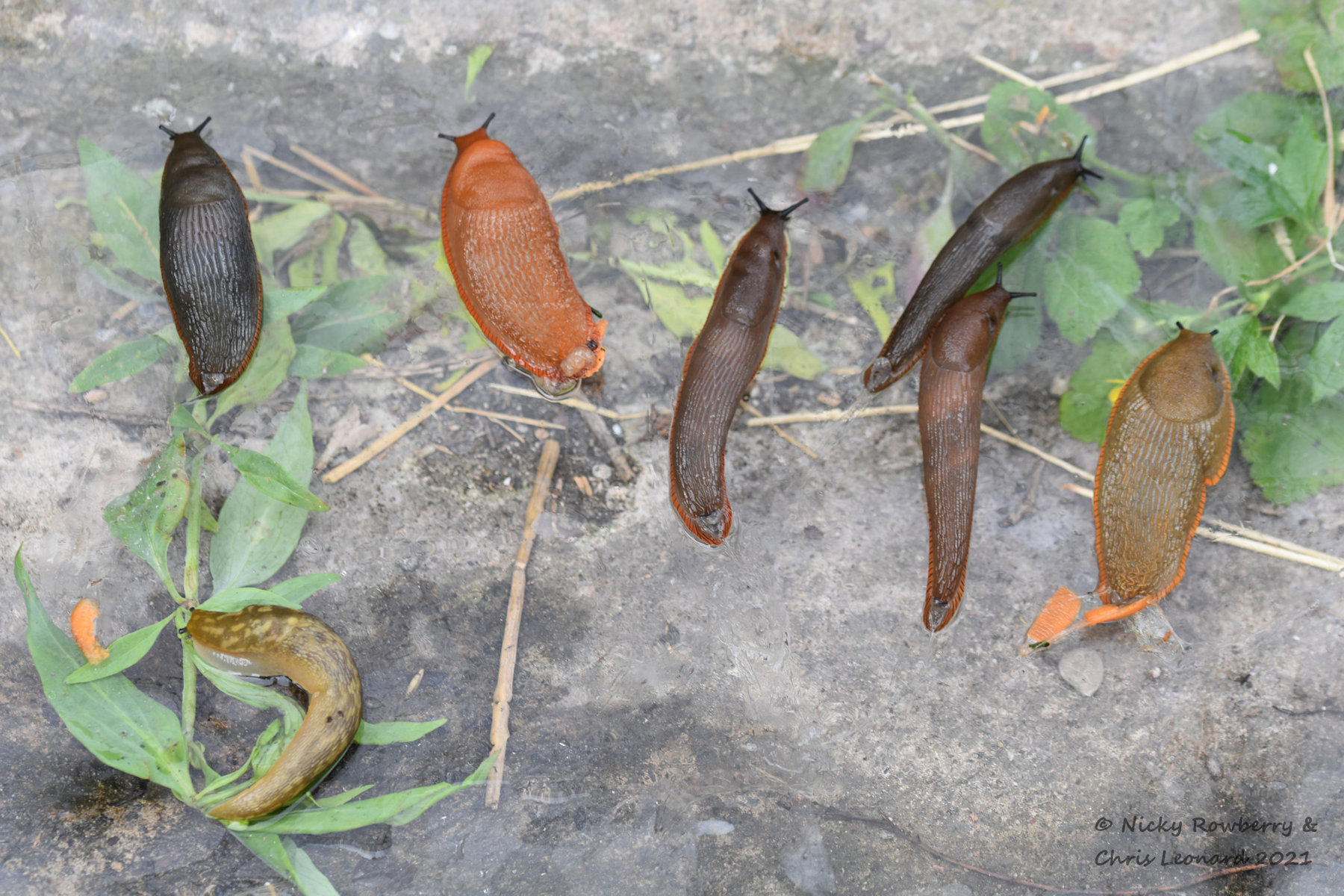
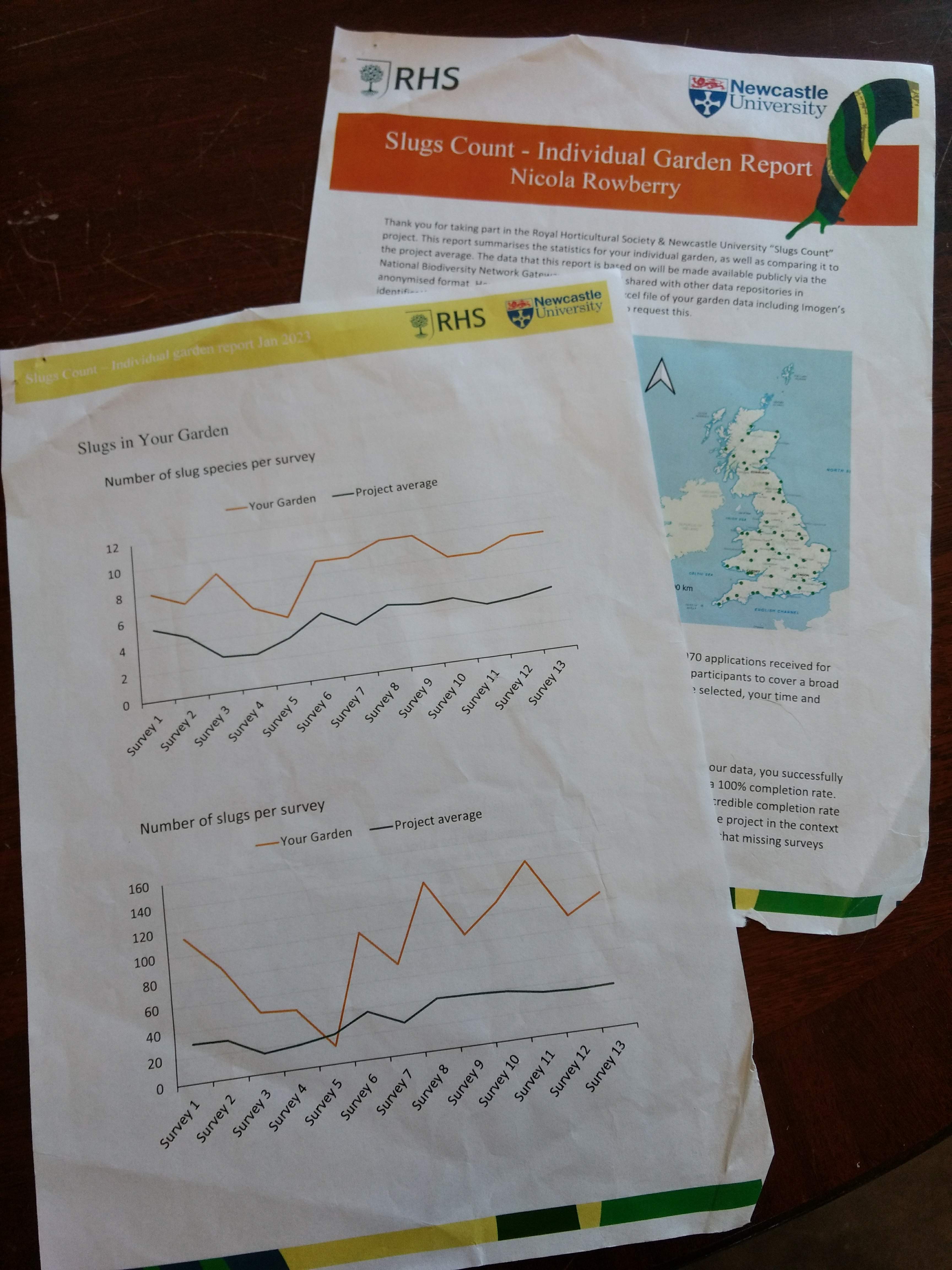
One final highlight of the last few years was a weekend in Harrogate for a slug conference! Harrogate is a really lovely town and a slug conference at Harlow Carr gardens to discuss the results of the slug survey I took part in, was a delightful, if slightly unusual treat! (as was Betty’s tearoom’s Fat Rascals!)

I felt ridiculously pleased that my garden had produced above average numbers of slugs compared to the other slug counters – something most gardeners would be horrified by, but I viewed it as a badge of honour for my scruffy garden.

So there are just a few hopefully interesting bits and pieces from the last few years. The plan is to start blogging again regularly, or at least not wait another 3 years before I can think of something to say.


Out & About – Blackhouse Wood & Crews Hill

Yesterday was a lovely sunny Sunday, so we thought we’d try and have a walk around the little nature reserve we’d failed to get to a few weeks ago – Blackhouse Wood and Crews Hill. Apparently yesterday was National Dawn Chorus Day, so a walk in the woods seemed like a nice idea to hear some bird song. With the Too Lazy ethos we were of course too late to really get the dawn chorus – the birds were doing more of a brunch chorus, by the time we got there, but it was lovely all the same.

Crews Hill signBlackhouse Wood and Crews Hill (which is also wooded) are both owned by Worcestershire Wildlife Trust and are joined to form one long thin area of semi-natural ancient woodland. The shape of the wood meant that for once, we were reasonably confident that we couldn’t possibly get lost!
The path ran pretty much straight through the wood, although it did undulate quite a bit thanks to old quarrying efforts years ago. We may not have quite been up in time for the dawn chorus, but for the first hour or so we didn’t see a soul. A lovely peaceful place to visit.

Crews woodland trail

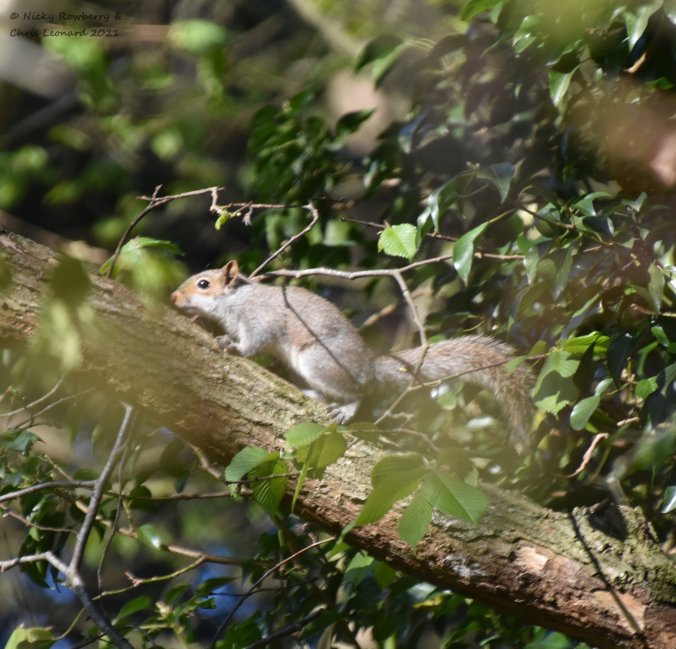
There were a lot of squirrels (all grey of course round here) scampering through the trees and lots of rustling of mice in the undergrowth.

Squirrel

The wood was full of bird song, although spotting the birds themselves wasn’t that easy. To start with there seemed to be loads of different birds singing, but they almost always turned out to be Blue Tits. I’d no idea Blue Tits had such a variety of songs!

Eventually of course we did manage to differentiate some other bird species. We had one of those apps that will identify bird songs for you and it picked up a song thrush although we didn’t actually see it. One of the few songs I can recognise is the chiffchaff but sadly it wasn’t obliging enough to pose for photos,

Blackbirds, robins, goldfinches and of course woodpigeons could also be heard singing their socks off. The surprising highlight of the vocals though was an owl calling – neither of us have ever heard one calling in broad daylight like that. Sadly we didn’t see the owl, but we were really lucky to get a good view of a buzzard.

There were quite a few butterflies flitting about in the more open sunny patches; most as usual too quick to photograph. Invertebrate highlight for me was spotting this tiny longhorn moth. As it fluttered down to land, it was its enormous antennae that caught my eye. The antennae are way longer than the moth’s body (hence the name) and it looks like it must take an extraordinary effort to keep them out of the way when flying.

Longhorn moth

We spent a very enjoyable couple of hours pottering around the wood; it’s nice to find another little gem of a reserve virtually on our doorstep.

Big Garden Birdwatch 2021

Another year, another lockdown; or more cheerily – another year, another Big Garden Birdwatch! The perfect thing to do for an hour when you can’t leave home.

Saturday it pretty much poured with rain all day, so today seemed like a better birding day. It was still bloomin’ cold sitting there though for an hour and my derrière was pretty numb by the time I finished.  Still it was worth it to record a very respectable 34 individuals of 12 species.

Top of the abundance was, as usual, the house sparrow. I  counted at least 12 in one go, although I’m sure we actually have more than that. Joint second were the blackbirds and jackdaws – 4 of each. I can’t tell the difference between male and female jackdaws, but for the blackbirds there was one female and at least 3 males.

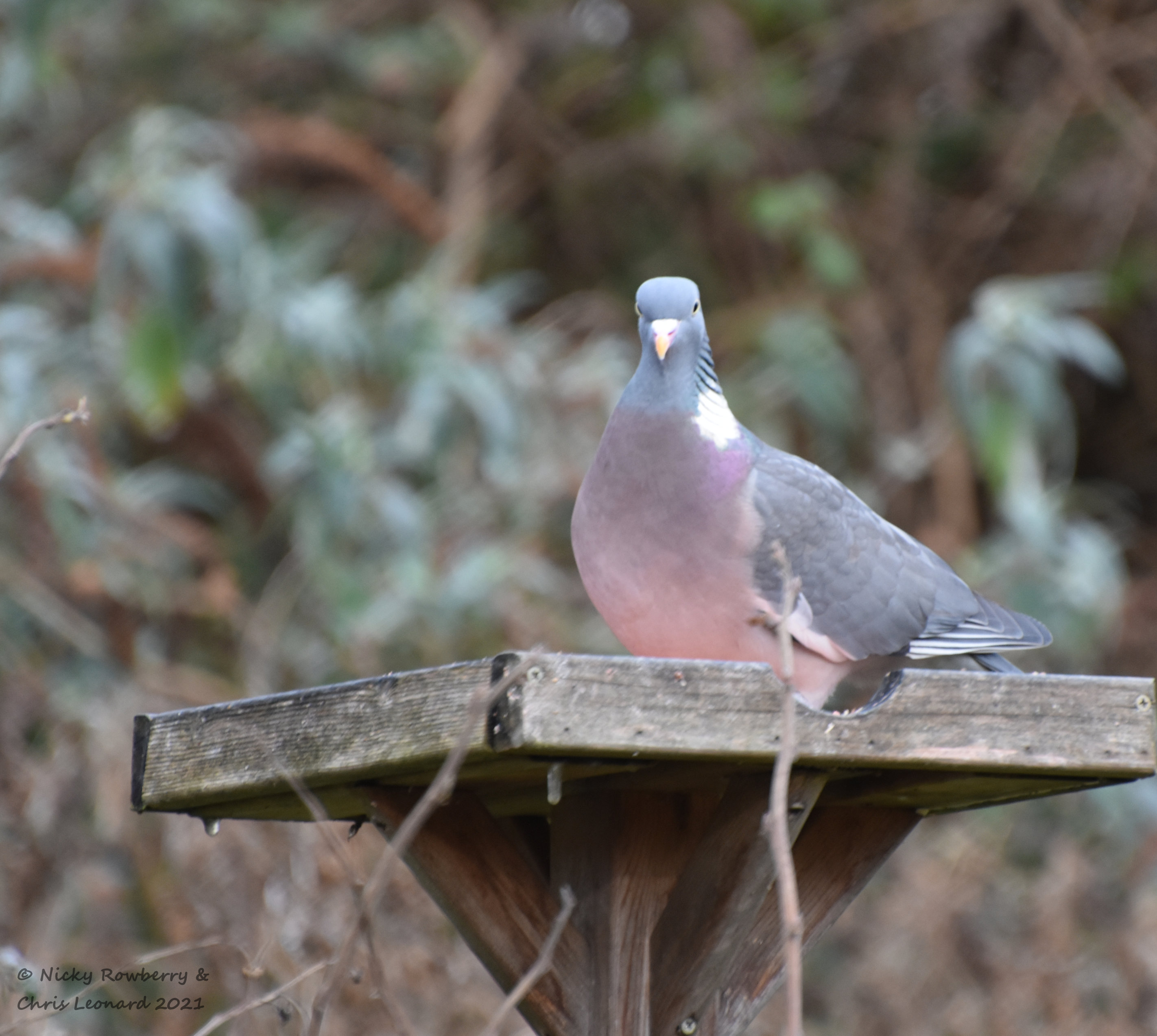
Most of the rest arrived in pairs – goldfinches, great tits, collared doves, wood pigeons, starlings and magpies, although I only seemed to manage to get photos of them one at a time.

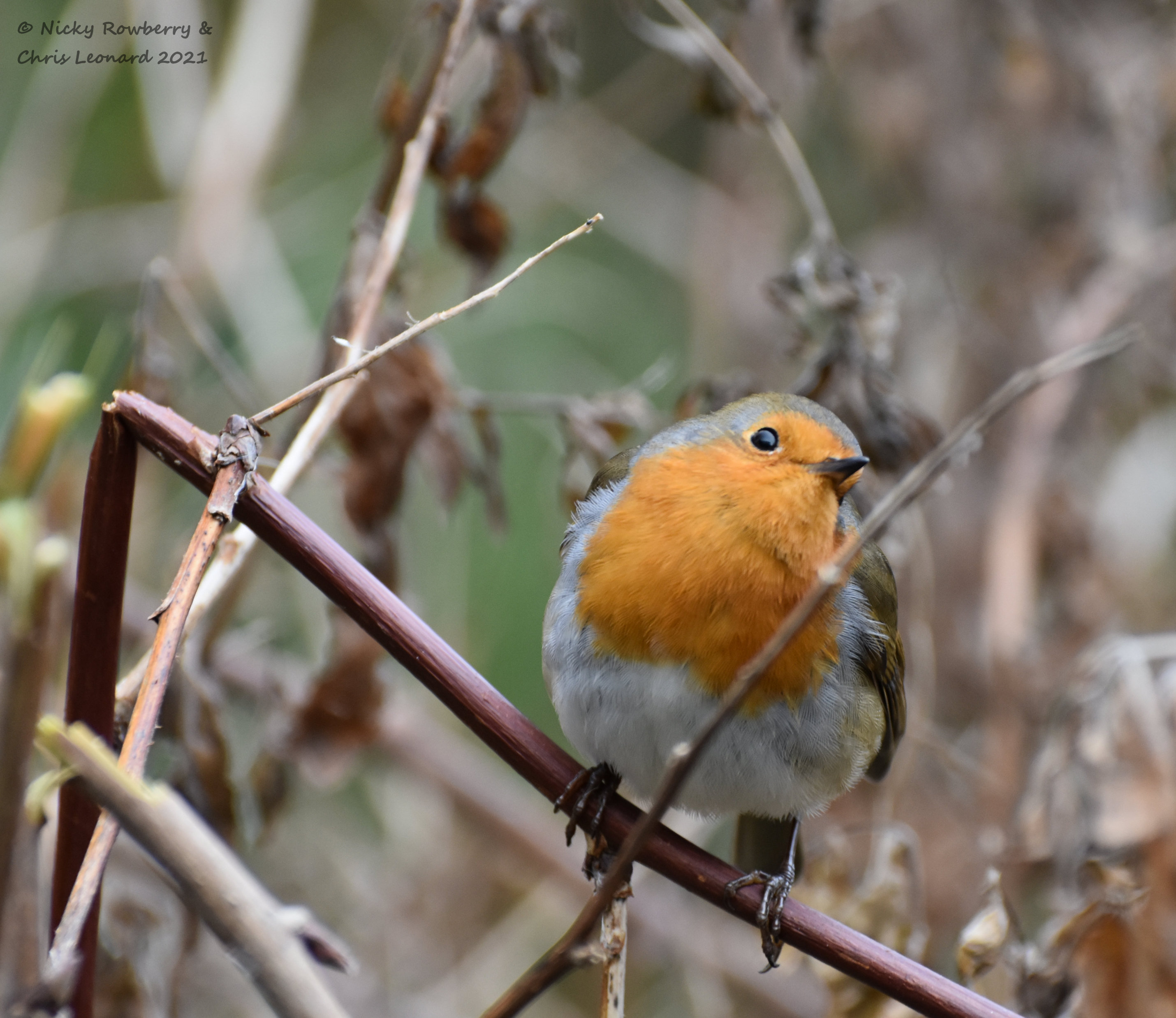
And then there was a singleton blue tit, dunnock and robin. The robin was the most sociable of the whole bunch. He even landed on the camouflage netting right by my head – too close to even get a photo. As if sensing that he might be missing his photo op, he then obligingly hopped down to some stems in front of me and posed so I could get his good side. Of course there was still a twig in the way – isn’t there always?

The (almost) highlight of the whole hour came near the end when I think a sparrowhawk zoomed across the garden after a small bird. Unfortunately it all happened so fast that I couldn’t be sure that’s what I saw and I almost got tangled in the camouflage netting in my haste to stand up and get a better look. So although I’m about 80% certain it was a sparrowhawk, I wasn’t sure enough to include it in my birdwatch results. So close!

A bit disappointed that our wren didn’t put in an appearance, nor the long-tailed tits. And really disappointed that our male blackcap was a no-show too. He’s been pretty much resident outside our patio doors for the last 3 weeks, but today of course he chose to have the morning off. Just to prove it, here he is from a few weeks ago.

Submitting my data took a few goes as the RSPB website seemed to be struggling. Hopefully that’s a good sign and means lots of people have been doing the count.

Success in the end though and nice to know I’d contributed in a small way to another bit of citizen science. Talking of which, tonight happens to be my next slug collection night for the Slug Count project. It’s all go!

Pond Arrivals

Never has the old adage “Build it and they will come” been more true of anything than of building a pond. Our new pond went in at the beginning of February – seems a world away now, given everything that has gone on in the world since then. The human world may be in chaos and despair, but for everything else life goes on and a new pond is a beacon attracting wildlife from all around. Every week if not every day something new finds its way to our pond. We’ve not been able to finish all the landscaping or get all the plants I would like to have got due to various restrictions, but it seems the wildlife doesn’t mind at all.

Quite a wide variety of insects have already found their way to the pond. A few tiny beetles whizzing around were the first we spotted, followed shortly by a lone water boatman. We suspect there are now more water boatmen, but since we only every see one at a time we can’t be sure. Both of the above have so far proved too fast to photograph.

Of course small flies and mosquitos were soon flitting over the surface of the water laying eggs, which soon hatched in large numbers into wriggling larvae. These will hopefully provide plenty of food for larger animals further up the food chain, so are a very welcome addition to the pond.

Within a couple of weeks our first pond skater arrived, followed by several of its friends! These insects are great to watch scooting across the surface of the pond in search of food. They regularly battle each other, that or they get very frisky, we’re not sure which. Apparently they use the middle legs for propulsion, the back legs to steer and the front ones for grabbing their prey.

Next insect to appear was a diving beetle which flew in and plopped into the pond while we were sitting watching. These diving beetles come to the surface and collect a bubble of air to breathe, so he or she pops up to the surface quite often.

Since then we have spotted numerous medium sized beetles whizzing around the pond, all adding to the food chain.

The biggest excitement though was the arrival of our first damselfly – a Large Red Damselfly to be precise. Hopefully this will be the first of many damselfly and dragonfly species to use the pond and I can do a full post on them soon.

Other insects have been using the pond in other ways; a Holly Blue caught drinking from the pond, an Orange Tip butterfly nectaring off the cuckooflower and snazzily striped hoverflies buzzing all over the place. The hoverflies have clearly been making whoopee as we’ve already started finding their larvae – the delightfully named rat-tailed maggots in the pond. Wriggling and semi-transparent these are very difficult to photograph, the best I could do was this short video.

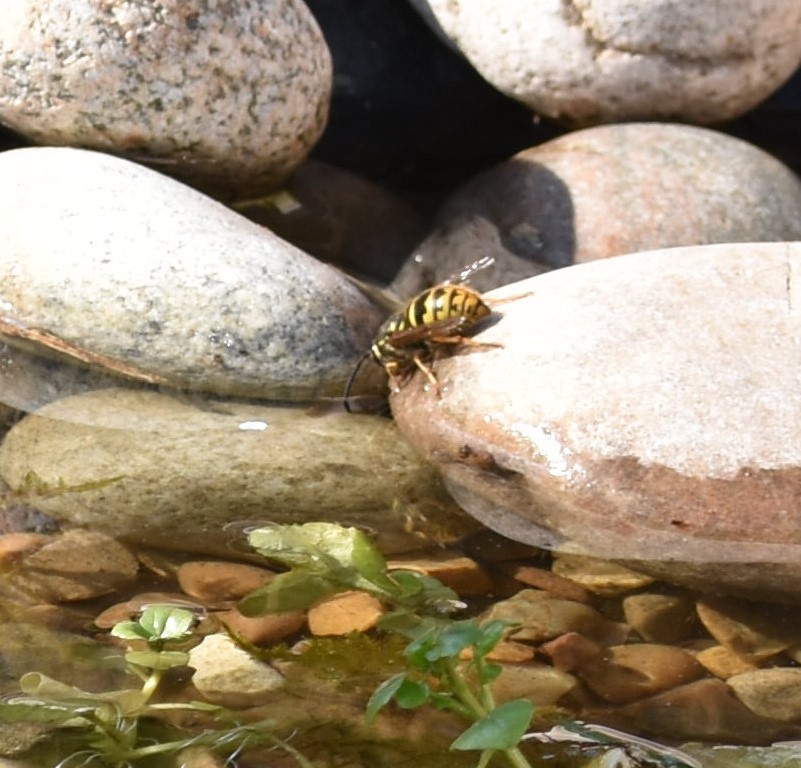
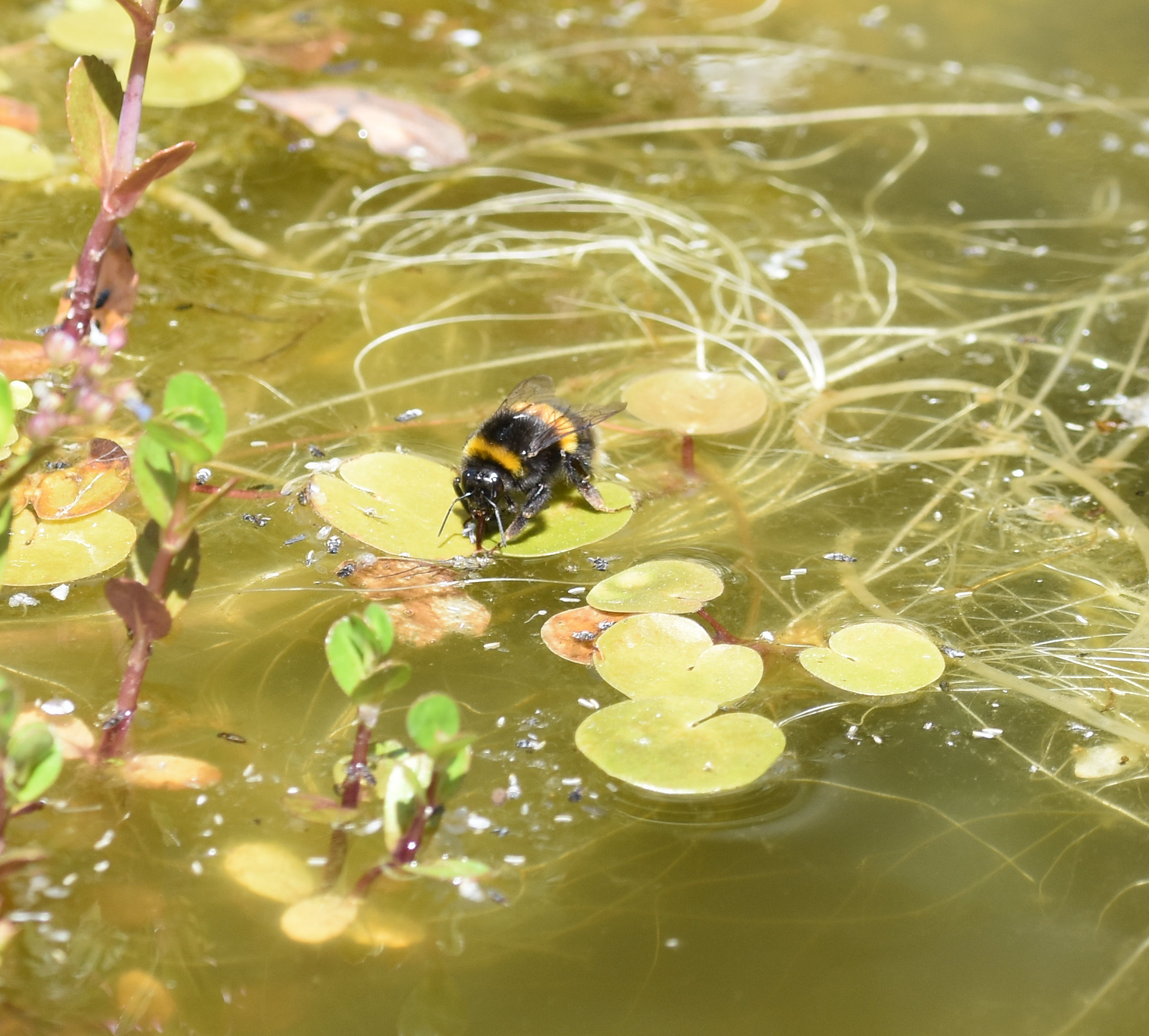
Various insects have been using either the stones or the floating frogbit from which to grab a quick drink.

The birds have of course continued to make good use of the pond (drinking, bathing, catching insects), to the point I feel they are annoyed with me for hogging it by sitting there for so long. My favourites so far are this pair of young magpies, exploring the world for the first time. They go everywhere together and particularly like the pond, squabbling one minute and then looking to each other for reassurance the next – a typical pair of siblings.

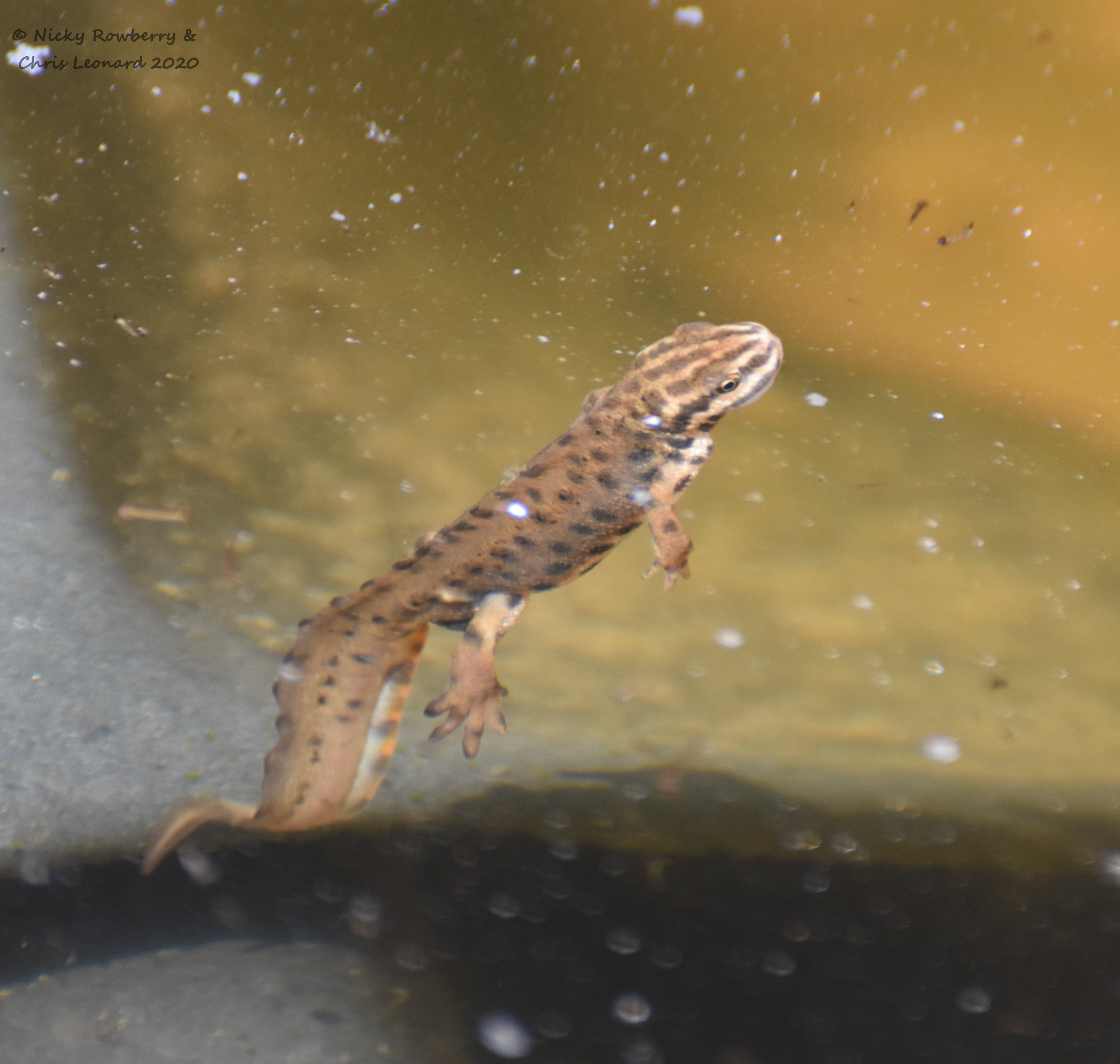
Sadly all the frog activity we saw in March came to nothing and we didn’t get any frog spawn this year. It’s not too surprising as the pond had literally only been in for a couple of weeks before their mating season. We’ve yet to see a toad around the pond either, but the newts have come up trumps. The first newt (they are Smooth Newts) arrived early April and since then there seems to have been more each day. I shall do a full newt blog soon as they’ve provided lots of photo and video opportunities, but here’s a taster.

Sometimes the things you don’t get to see in person can be the best though. Our hedgehogs have been making good use of the pond, carefully tiptoeing down the sloping beach that was put in specifically for them to access the pond. Obviously we rarely see them directly, but the night cameras pick them up regularly. This video shows 7 separate visits to the pond by at least 3 different hedgehogs over the course of one night. Shows the value of providing a drinking source for your hedgehogs, especially in hot weather.


I am so glad that we got to make the pond before the world went into lock-down. It has provided interest, relaxation, welcome distraction and so much more – we have spent an awful lot of time in the last 3 months gazing into the pond, grateful for having a garden we can sit in while staying home and staying safe.


Nesting Update

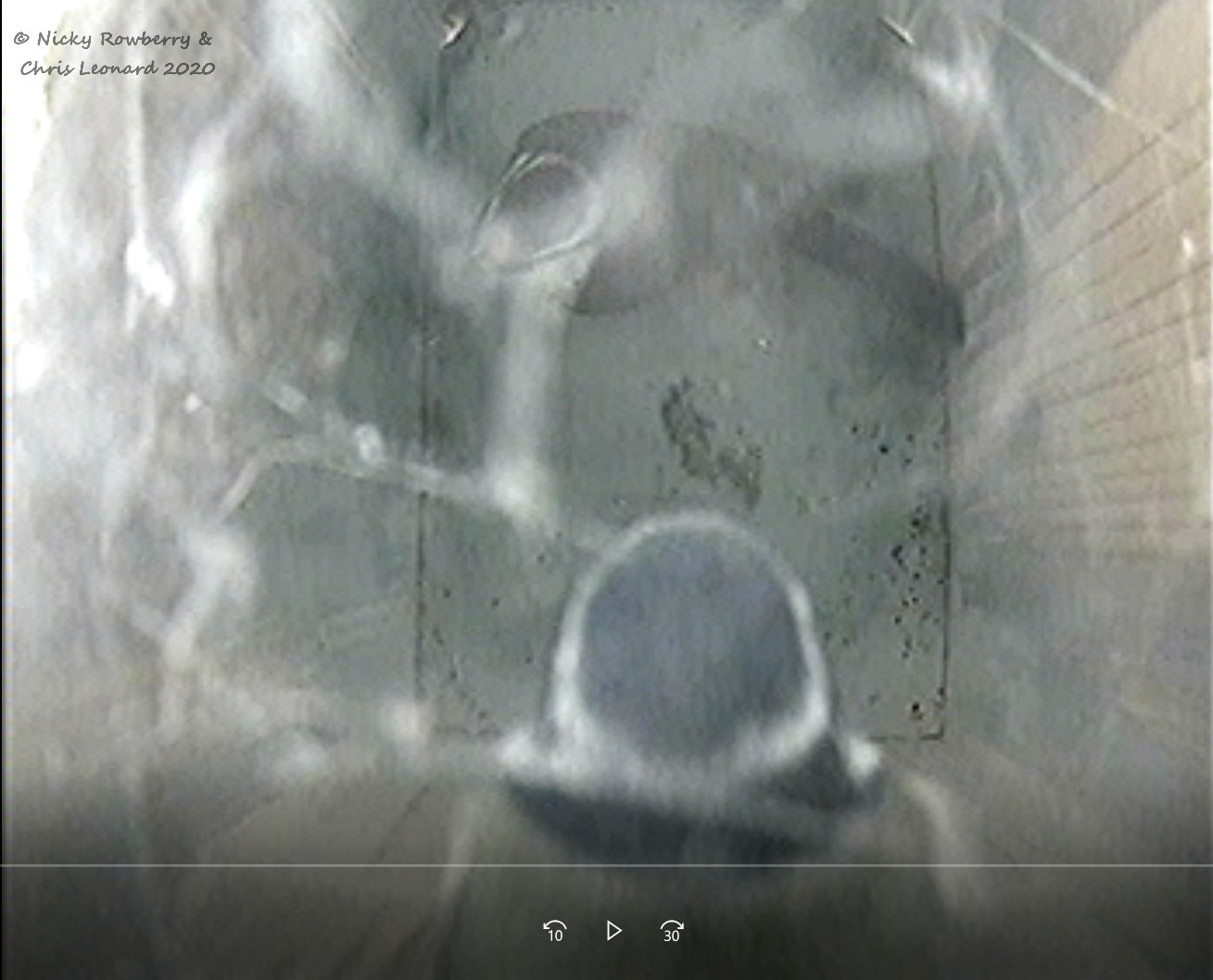
Back in February, I blogged about my hopes of finally getting a blue tit nesting in the bird box with the camera. A male blue tit seemed to have taken to roosting every night in the box and I started to get my hopes up. In March things were progressing well and he had a lady friend who would pop in, albeit it briefly, to inspect his choice of nest site. Her visits were generally so fleeting at this stage that most of the time they barely registered on the video feed, so here are a couple of stills taken from the video and a very brief video clip.


This carried on for quite a while; the male roosting at night and occasionally his lady friend popping in during the day to inspect. Then on 17th March, bits of moss started appearing in the box. My hopes continued to rise.

For the last few years I have tried to help the birds along by putting out nesting material. I use two hanging baskets tied together to make a sphere and stuff it with moss and grass. The blue tits are always very quick to find the sphere and make good use of it. The female was soon taking the moss, sorting through my offerings to find the bits that were just right. I can see the ball of nesting material from our window and for a while everything was going swimmingly. I could watch her take a beak full of nesting material and fly off with it towards the nest box. Seconds later she would appear inside the nest box and I could view it on the camera.


So everything was going well and I was getting excited at the prospect of blue tit eggs, when sometime around the beginning of April they decided the nest box wasn’t really suitable after all. I have an old nest box on the apple tree near the moss ball and for a while they seemed to be trying that out, before abandoning that too. She was still coming for the moss, but was then flying off and out of our garden with it. One of our neighbours has probably got a very lovely blue tit nest in! Here’s a compilation of some of her nest collecting activities.


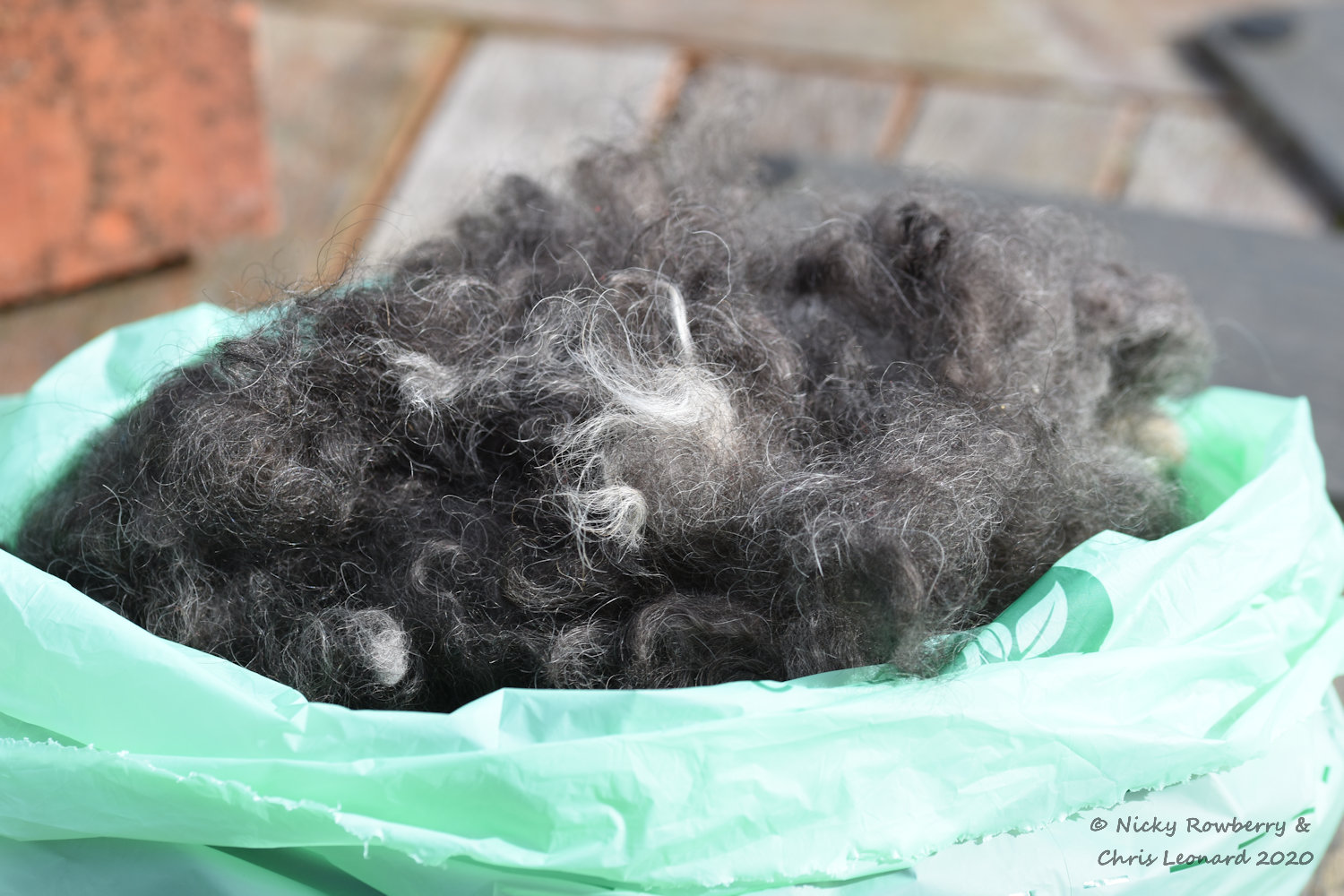
For the last 2 years I have also added some dog hair. My sister’s yorkie-poo Pip very generously donates his hair trimmings to the cause. He has lovely soft hair (that’s not been treated with any chemicals for fleas etc.), ideal for lining a nest.

Blue tits apparently make their nest with moss and straw etc. first then line it with softer stuff like hair and spiders’ webs afterwards. So initially the blue tit ignored Pip’s hair and just went for the moss. The jackdaws had no such qualms; they went straight in for the nice soft hair. Somewhere there is a very cosy jackdaw nest.

Although the blue tits weren’t nesting in our garden, she did eventually deign to take the dog hair too. Here’s a brief clip of her getting a beak full of the good stuff.


So it seems my hopes that Peter the blue tit and his mate were going to nest in our nest box have come to nought; I must console myself knowing that they are at least nesting somewhere and that is what is important. Once again they are using our garden as a supply stop – good for food and nesting material but apparently not residentially appealing. The same seems to be said for many of our other birds. We’ve seen robins pairing up and feeding each other in their courtships. Dunnocks have been flirting with each other and lots of birds have been helping themselves to the nesting material, but they all seem to do their actual nesting elsewhere. I think it must be because we don’t have the large trees they like.

So I had just about given up hope of finding a nest in the garden, when I became aware of a lot of rustling in the bay tree at the front of the house. Closer inspection revealed a pigeon’s nest. I would probably rather have had a robin or a blackbird, but beggars can’t be choosers and I am now very happy with our pigeon nest. Here is the proud mother pigeon watching my GoPro watching her.

So far the parents have sat steadfastly on the nest and I have been unable to see any eggs, but I assume there are some there. Hopefully once the chicks hatch I might get a glimpse of baby pigeons. Apparently there’s an internet thing where people query that you never see baby pigeons – well finally I might get to do so.

The birds may be refusing me nesting viewing opportunities, but I can always count on my hedgehogs for interest. They have all emerged from hibernation and are back romping round the garden again. Thankfully they are not as awkward as the birds and are quite happy to use the hedgehog house with the camera in it. I’ll do a full hedgehog update soon, but in the meantime here’s a short clip of Freda, last year’s rescue hog, having a bit of a yawn in the hedgehog house. Enjoy!


Pond Update

It’s the first day of Spring and it’s been about 6 weeks since our new pond went in. Although there is still work to be done on it, the wildlife has already started to move in. The pond still needs more plants and those that are there need to grow a bit to provide more cover. It’s a bit early in the season for many of the pond plant suppliers to have much stock. So as an emergency measure I’ve been chucking in bags of organic watercress from the supermarket! I also need to replant the area around the pond as it’s looking a bit bare at the moment. Hopefully this will all come together as spring gets going and we (finally) get a bit of sunshine. But in the meantime, here’s how the pond is looking now.

The birds were the first to really start making use of the pond. They love the shallow “beach” for drinking and bathing. The blackbirds and sparrows in particular have really taken to it, although we’ve also seen pigeons, robins, blue tits, starlings and magpies making use of it. The sparrows seem to like having a bit of a wash then jumping onto the big rock at the edge to dry off. Here’s a video of some of them enjoying their new splash pool.

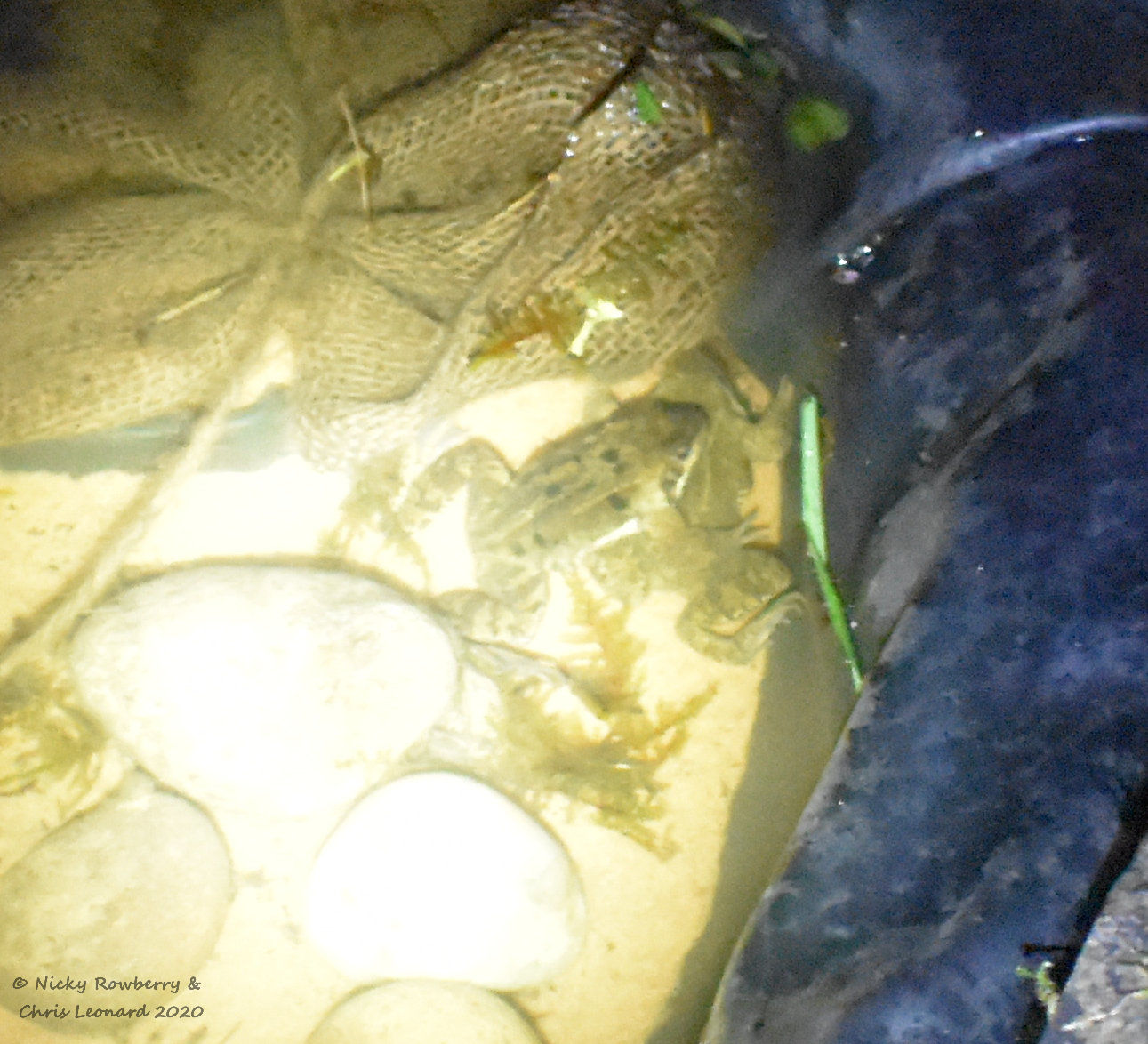
The frogs soon found the pond and I got very excited that we might get some frog spawn. But despite a lot of croaking there’s no sign of any spawn yet. Maybe there isn’t enough plant cover to tempt them yet and we’ll have to wait until next year.  I’m never very good at night-time photography so the best I’ve managed is this grainy shot of a couple of them.

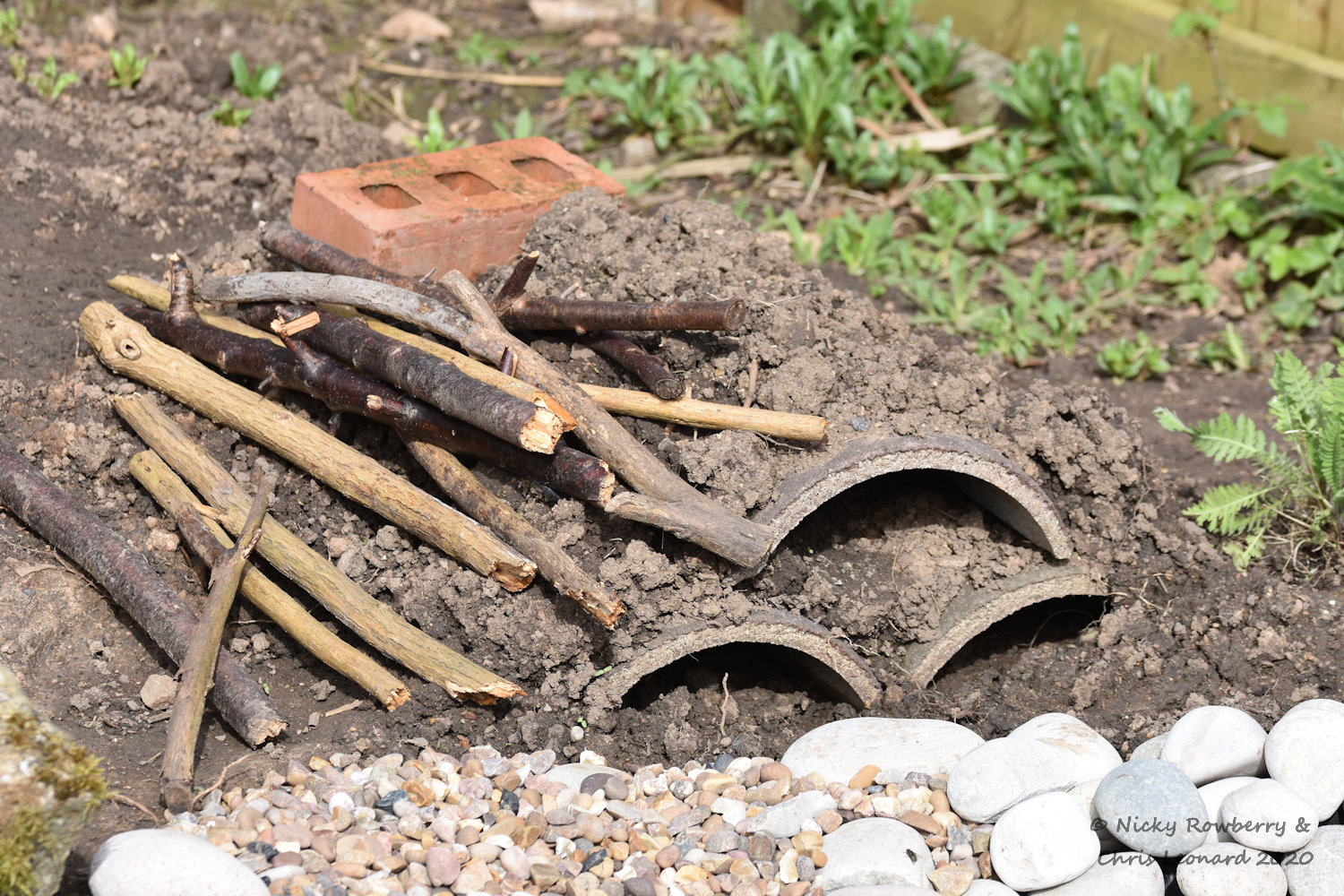
I have created “Toad Hall” using some old roof tiles buried into the soil that was excavated for the pond. Eventually it will be completely covered in branches and planted up. Hopefully it will appeal to some of our amphibian friends as a suitable home with en suite pond.

We may have drawn a blank with getting frog spawn in the new pond, but the old pond on the allotment has produced the goods. It may be a tiny pond, but it has been stuffed with frog spawn this spring. They are now starting to develop and a few tadpoles are even hatching. Here’s a short video from earlier this week:

Of course it wasn’t just amphibians we hoped to attract to the pond, any animals would be very welcome. So we were very pleased to get a fox checking the pond out within a few weeks of it being dug. So far we’ve only caught it circling round the pond, but hopefully soon it will view it as a suitable watering hole and take a drink.

The highlight for me so far has been this next video though. As spring slowly creeps in, hedgehogs are starting to emerge from hibernation. So I was really thrilled that this one has already incorporated the pond on his nightly meanderings. The gravel beach was put in specifically with hedgehogs in mind – easy access to the water and a means of getting out should they fall in. And this one seems to have got the message.

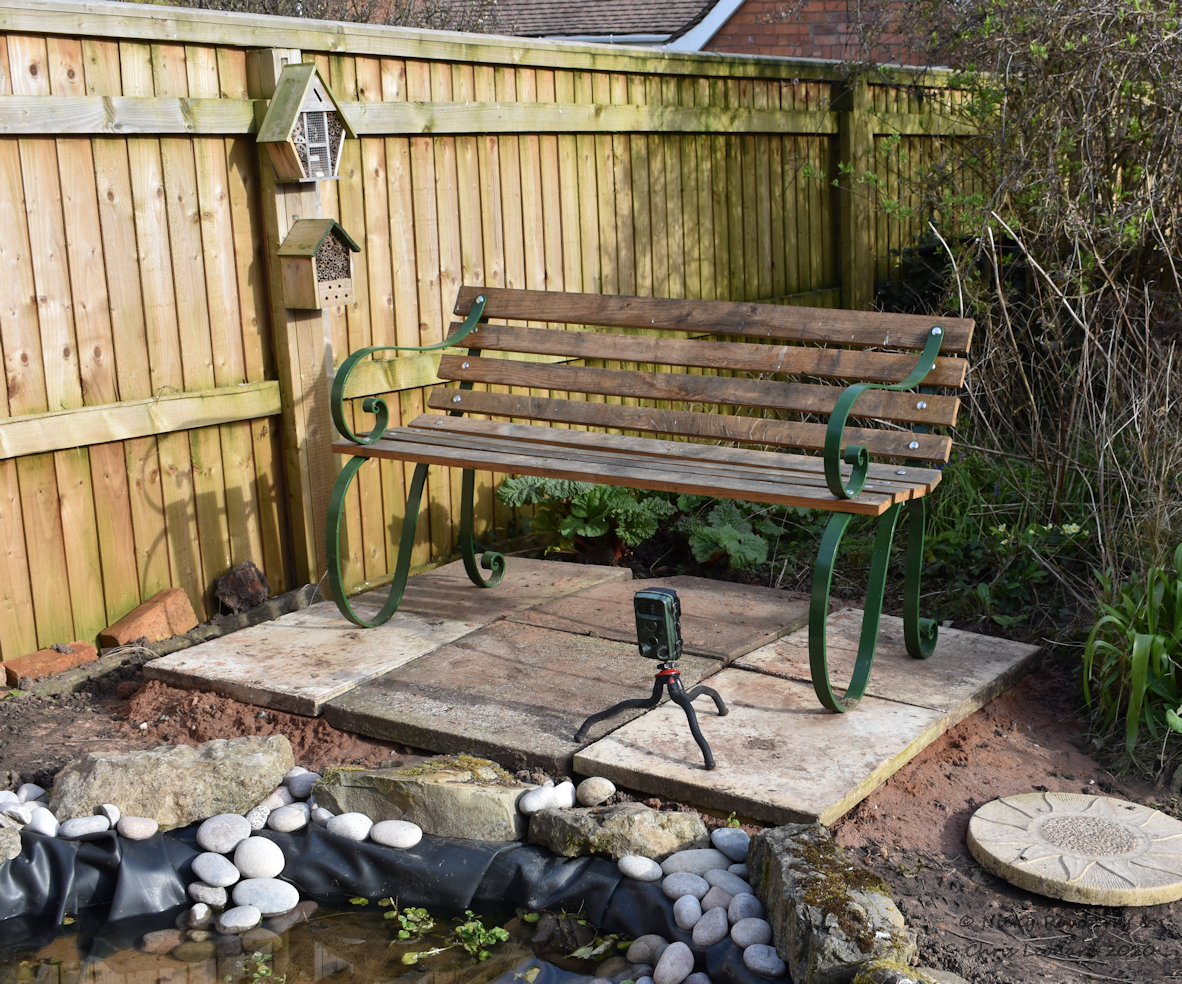
The final feature added to the pond is an indulgence for us rather than the wildlife. It’s the old bench from my grandfather’s pub, recently renovated by our ever-useful friend Gwyndaf. The perfect place to watch the wildlife in the pond while perhaps sipping a glass of something chilled. Roll on summer!

National Nest Box Week 2020

It’s National Nest Box Week again, a time to encourage everyone to put up nest boxes in their gardens if they can. You can find out more and get lots of useful tips at: https://www.nestboxweek.com/

We have several nest boxes in the garden, although they don’t seem to get used much sadly. Knowing it was National Nest Box Week coming up, I decided to plug in the camera we have in one (so far unused) blue tit box. I hadn’t checked this particular box for a while as nothing ever seemed to happen in it. So I was thrilled when I connected the camera one evening last week and got this:

A blue tit was using the box as a night time roost. We thought maybe it would just turn out to be a one-off event, but he or she has been back every night since, which is fantastic. Every night it arrives around 5pm just before it gets dark. The camera trigger is too slow to capture it actually coming in through the hole, but it catches it settling in for the night. Initially there’s always a bit of bobbing up and down and checking round the box, presumably as it decides whether it is still a safe place for the night.

The nights themselves aren’t as restful as I imagined they would be. There is an awful lot of fidgeting about and preening, but I suppose it’s a safe time and place to be doing that.

In the morning there is always a bit of stretching and bobbing up and down. It looks as if it’s trying to peer out of the hole to see if it is safe or perhaps just listening for any threats, before it hops up, has a final look around then flies off for the day.

The nights are still pretty cold for a small bird in an uninsulated box. The blue tit copes by fluffing up its feathers to create insulating air pockets. When the bird arrives in the box each night it starts of looking fairly sleek with feathers smooth against its body. As it settles down it fluffs up its downy under feathers – in the next video you can pretty well see it increasing in size as it fluffs up until it is an almost round ball of feathers. Another trick to keep warm is that it then tucks its head under a wing while it sleeps.

So of course now our Blue Tit (we’re calling him Peter after Blue Peter) is visiting regularly, we’re getting our hopes up that perhaps this will finally be the year we capture nesting action on video. We live in hope, but at least if nothing else we have provided a safe roosting space by putting up the nest box.

We’ve got a couple of new nest boxes to put up this year thanks to our lovely gardener Gwyndaf. One has a small hole in a solid front for blue tits or similar and the other is more open fronted – ideal for robins. Just need to find suitable spots to put them out of reach of the neighbours’ cats.

Further afield we are once again sponsoring a nest box through Worcestershire Wildlife Trust’s Rent-a-Nest scheme. We’ve been sponsoring the same nest for a couple of years now. The first year it had a family of blue tits that successfully fledged. Last year it was empty, but at least the money went to support the reserve it’s on (Knapp & Papermill Reserve) so still worth it. Fingers crossed it gets used this year though.

Although National Nest Box Week is primarily aimed at birds, I see no reason not to include other types of nest box – hedgehogs of course! If you’ve got space in your garden why not consider putting in a hedgehog house. Provide a safe dry house for them to build their nests in.

You can buy ready-made hedgehog houses (lots of online options or larger pet shops) or you can build your own. The British Hedgehog Preservation Society has an excellent leaflet with designs for building your own:

Hedgehog Homes

Watching a hedgehog making use of a home you’ve put out for it has to be one of the most rewarding things to do in your garden.