Island Life – Part 2 – Birds & Mammals

I thought it would only take me a day or two to write part 2 of this, but with 2 heatwaves this month, my productivity (always dubious at the best of times) has plummeted. But here at last are some of the gorgeous birds and mammals we saw on the Isles of Scilly in June.

I took a couple of bird-watching boat trips; one with my long-suffering family and one alone when they’d had enough of me. The Scillies are a fantastic place to spot seabirds; it made me wish I was better at identifying them. So please feel free to correct me if I’ve got any of these wrong. As so often is the case, I didn’t really have the right camera lens with me and that combined with rocking boats and user error, means none of these are exactly amazing photos, but hopefully they’re recognisable at least.

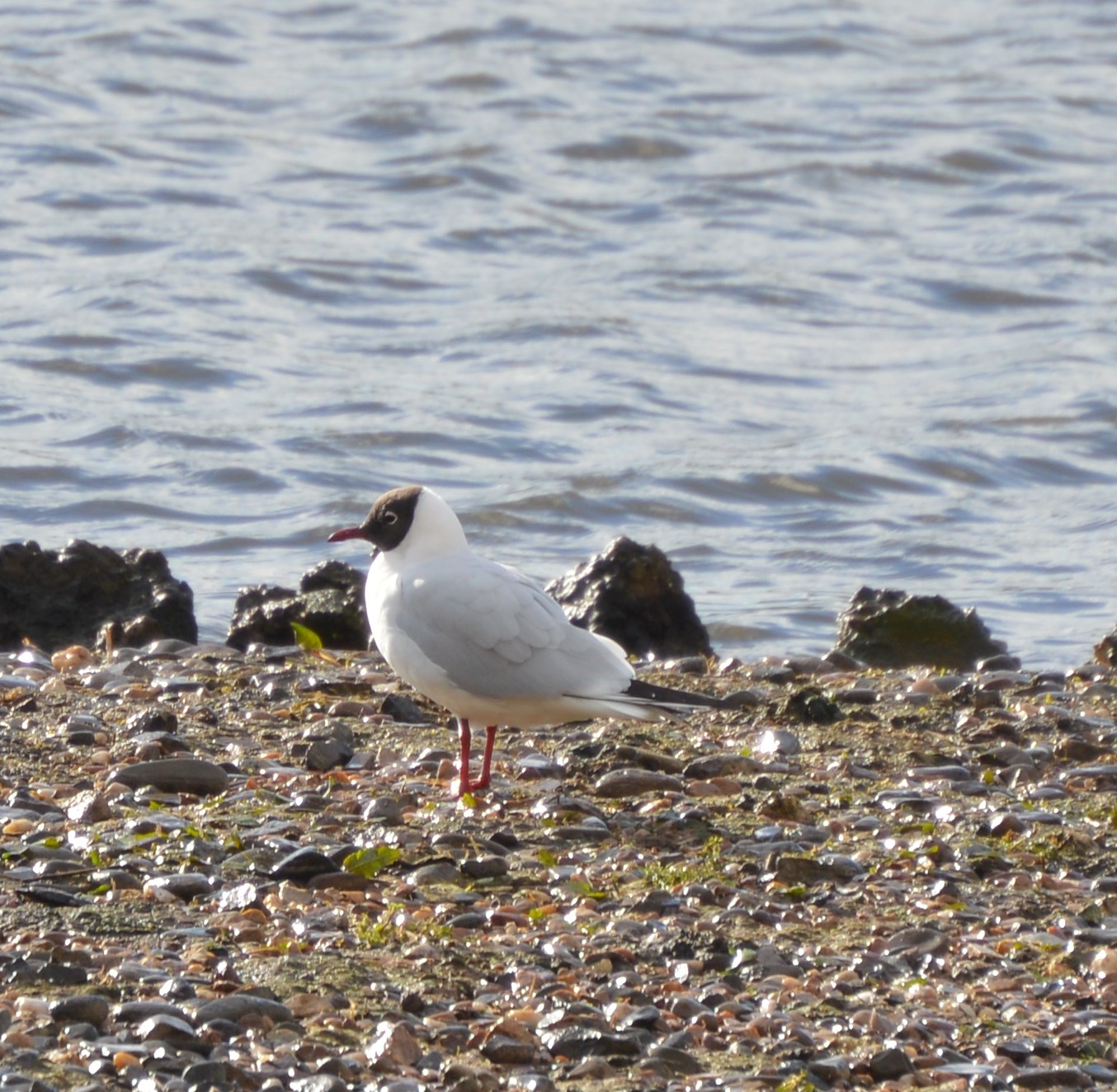
First up, what I am assuming to be a Black-headed Gull, due to its black head! I realise though there are other species that would fit this somewhat basic description, so please correct me if I’m wrong.

The next one I am at least confident is an Oystercatcher, although it does to my eye look quite like the penguin from Wallace & Gromit with a red beak stuff on it! Again a shockingly bad photo and I can’t even blame a rocking boat for this one as I think I took it from land.


We saw a few Shags, often standing looking quite aloof with a crowd of other birds nearby. Seen alone they are quite gawky looking birds and I always think there’s something a bit archaic about them.

One of the few seabirds I can readily recognise is the Gannet. It’s distinctive enough that it’s pretty much unmistakeable.  This one floated serenely by the boat, looking as if it had recently had a right good feed.

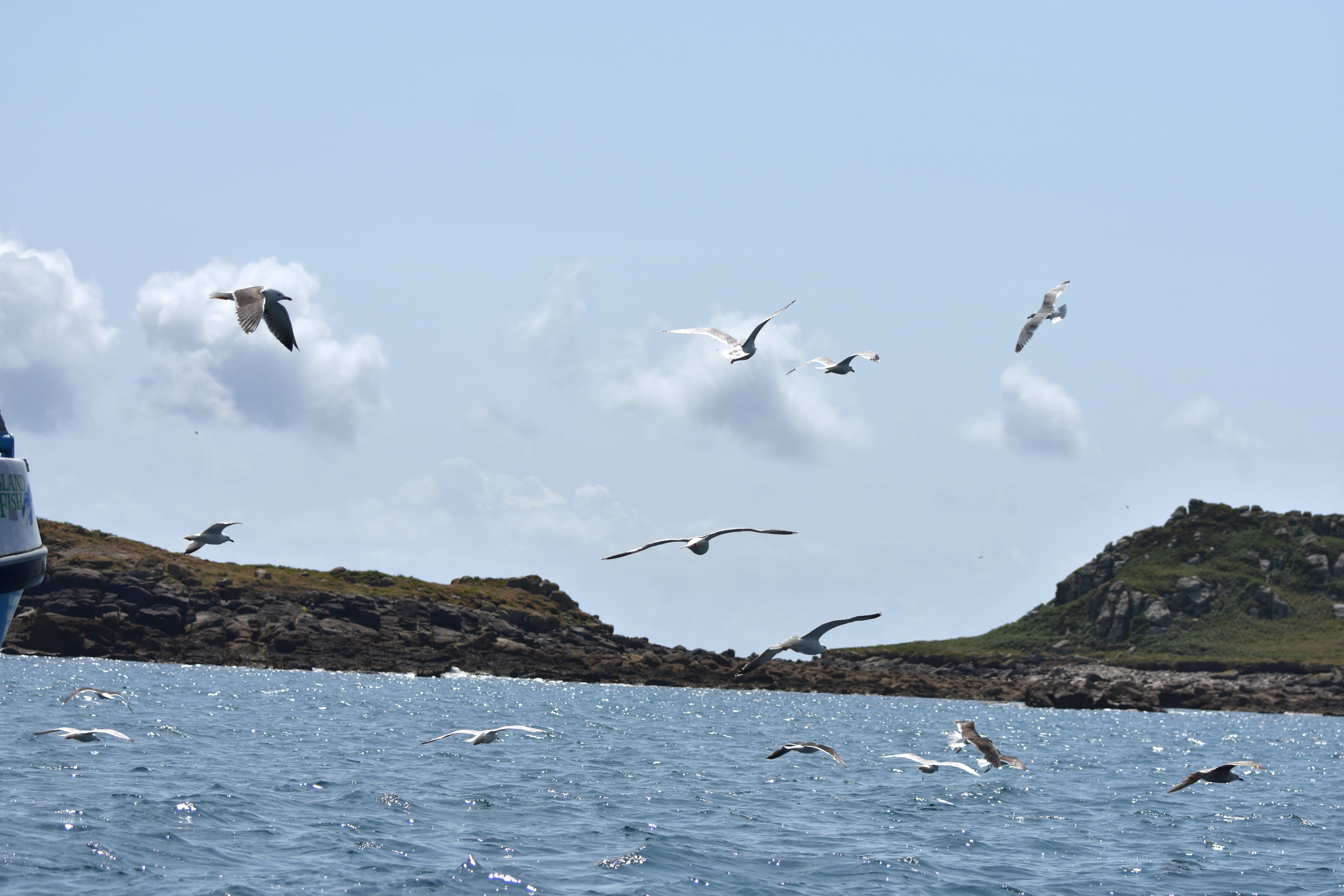
There were of course lots of large gulls present everywhere. We passed a fisherman, hauling in lobster pots at one point and the sky around his boat was just full of an assortment of gulls. Some have black backs (Black-backed gulls?), some have grey backs – to my disappointment there doesn’t seem to be one called a Grey-backed Gull, so I’m guessing these are Herring Gulls?
All the seabirds above are beautiful, but I can’t help having a soft spot for the Auk family. Apparently there are 5 species seen regularly in the UK and we were lucky enough to see 3 of these. The most plentiful that week were the Guillemots – sleek black/dark brown and white birds, gathering in groups on the rocks and in the water.

Then there were the Razorbills; I never saw these on the rocks, only in the water and often swimming with the Guillemots too. Razorbills are named for their famously sharp-edged beaks, ideal for grabbing fish.

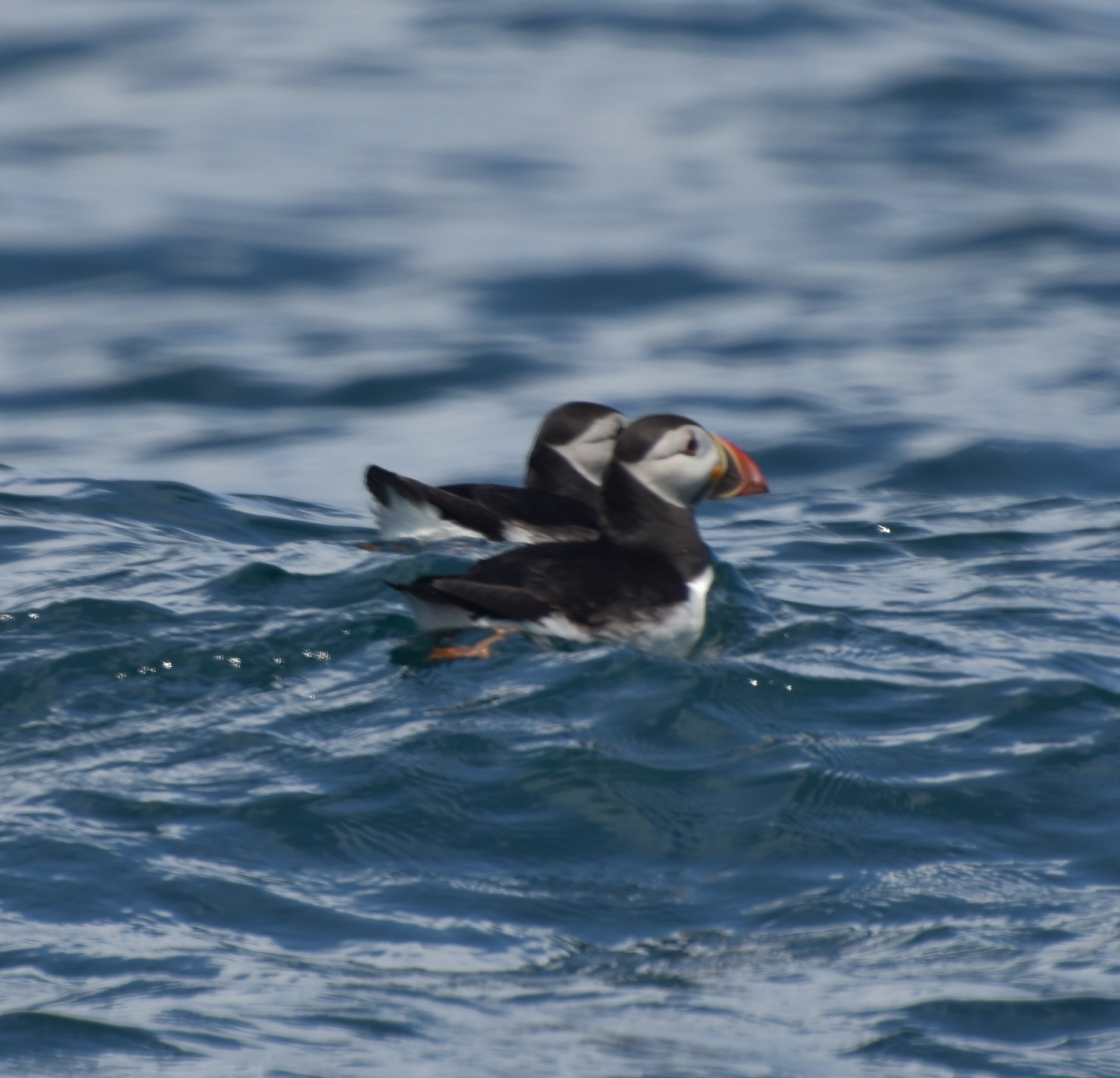
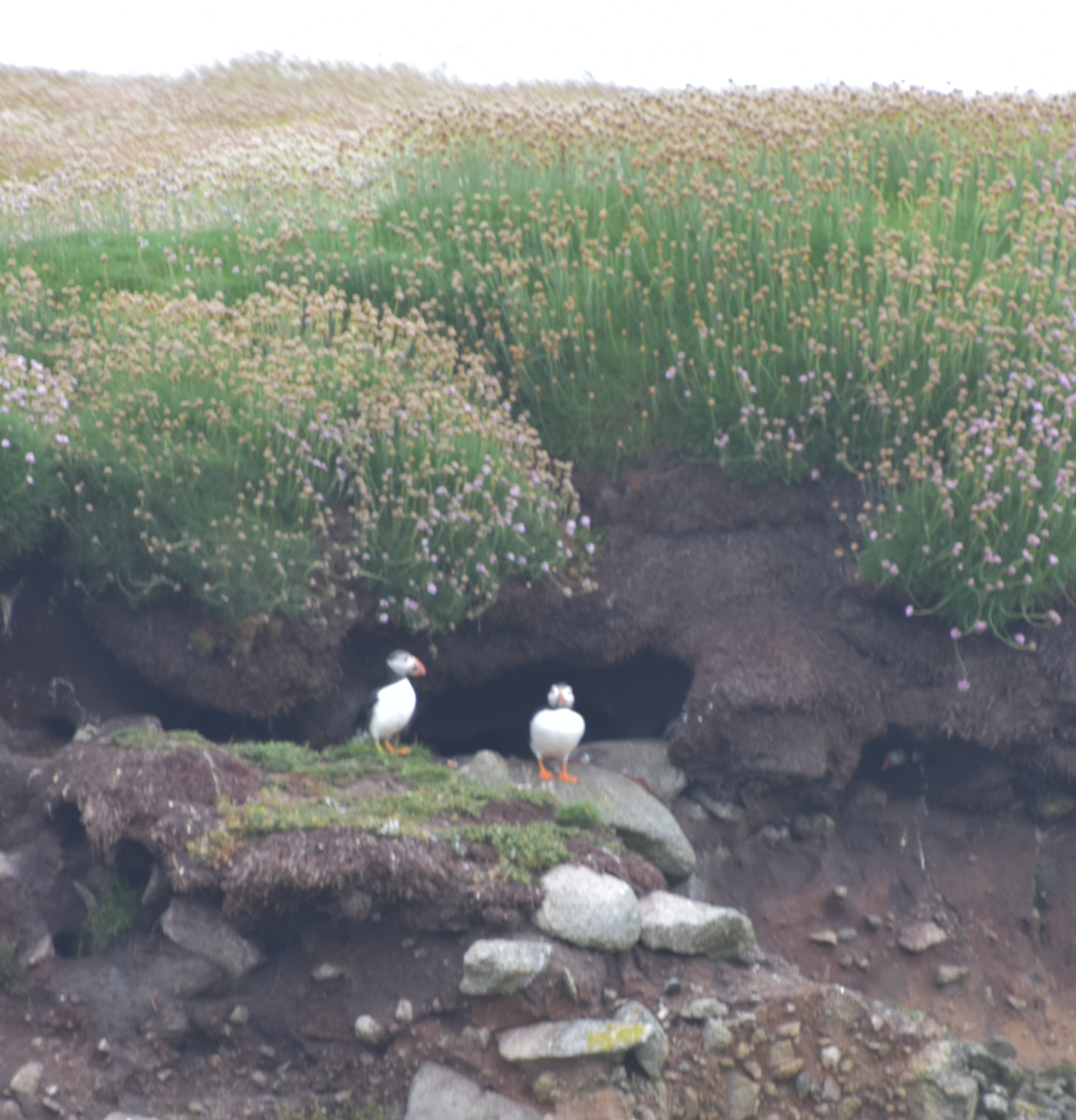
But of course top of the wish list was to see Puffins and thankfully we did. The Skipper wouldn’t take the boat too close to the cliffs where the puffins were nesting as we didn’t want to disturb them, but we were close enough to see several outside their burrows.
Then there were the ones we saw on the water. It’s no surprise that they are everyone’s favourite seabird; what’s not to love about those cheeky little faces.

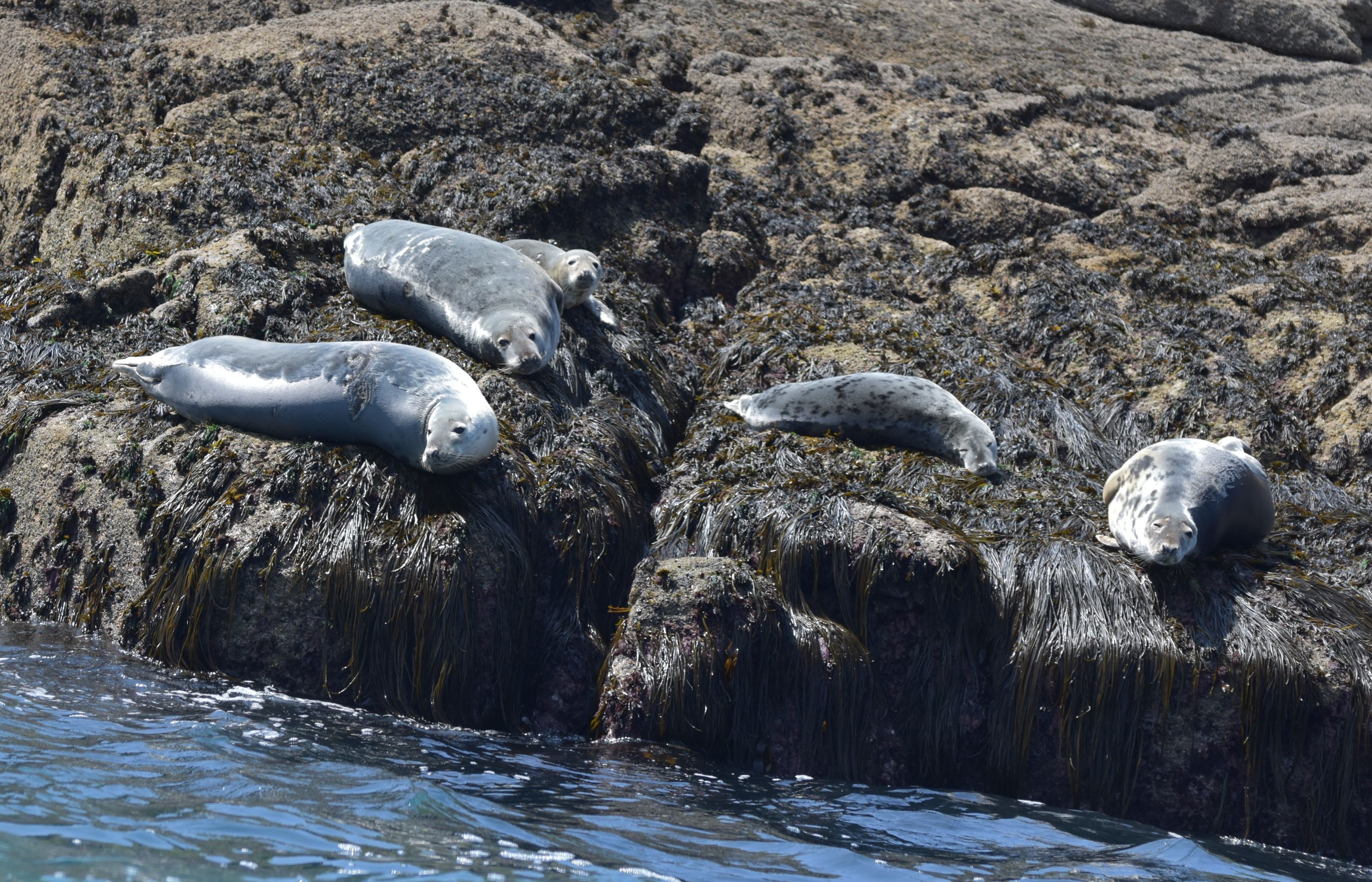
So on to the mammals. I did see a split-second glimpse of a dolphin from the Scillonian on the way back to the mainland, but that was it as far as cetaceans went. Grey seals were much more obliging. Again our skipper managed to get close enough for us to see some hauled up on the rocks, but not too close to frighten them.

At first we thought it was just adults, but in the second photo from a slightly different angle, you can see a seal pup at the back of the group. I was so thrilled; I’ve seen seals many times (even sieved seal poop for a living for a while – that’s a whole other story), but never seen a young one like this!
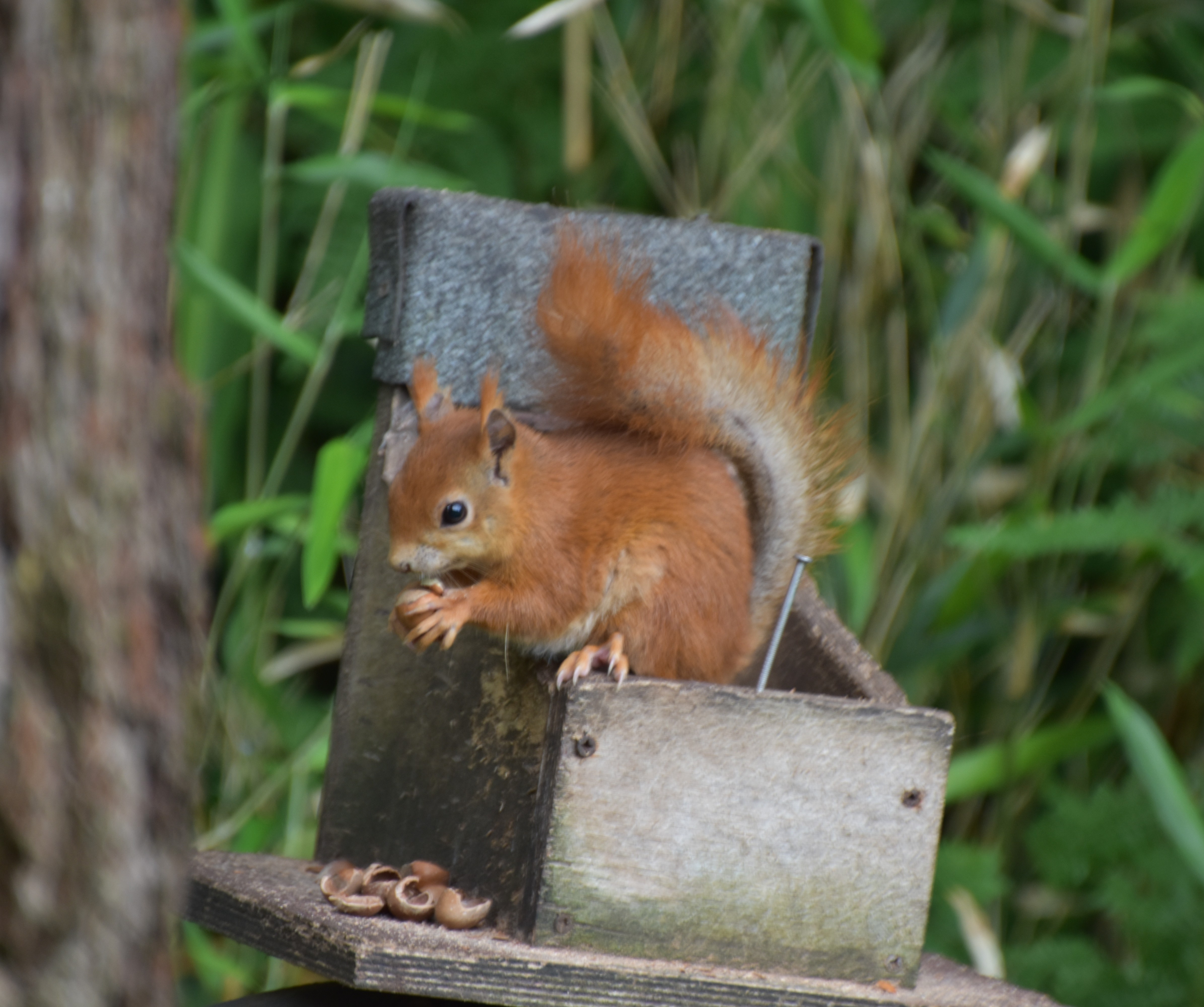
But the mammalian star of the show for me had to be a surprise we found on Tresco. I say surprise, but obviously the locals knew they were there as they’d been deliberately introduced. Red Squirrels! We saw a sign saying there were red squirrels as soon as we entered Tresco gardens, but I thought we’d be lucky just to get a glimpse. But then we turned around and there was a beautiful squirrel sitting right there, enjoying some nuts. I was fumbling with my camera , sure it would disappear, but no it was clearly unfazed by our presence and carried on snacking. The best views I’ve ever had of a red squirrel.
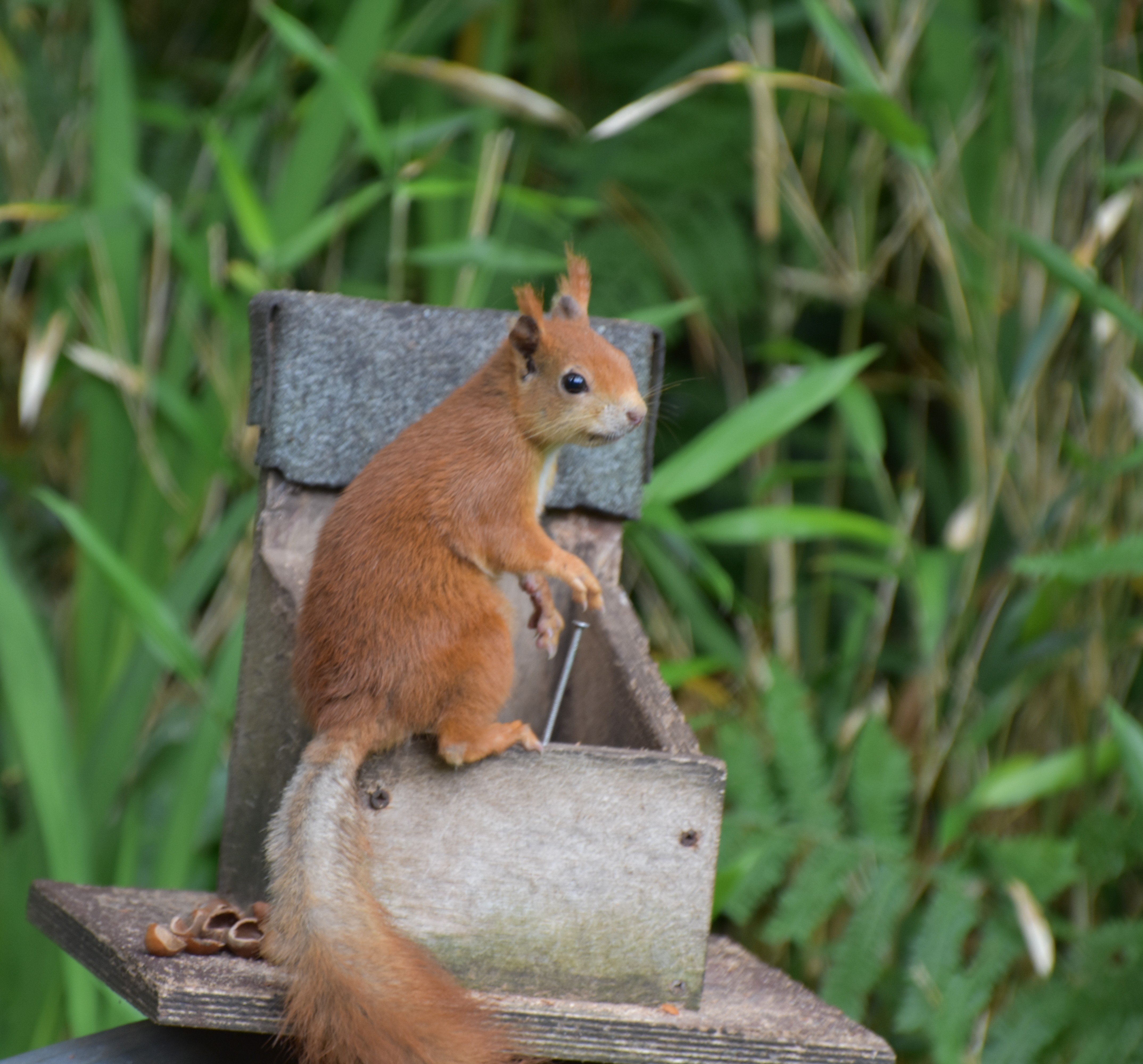
We saw several more as we enjoyed the gardens, although none as close as that first one. It must be an ideal habitat for them and they seemed to be doing really well.

So that’s my round-up of the wildlife we saw on the Isles of Scilly. It really is a fantastic place to visit, although I’m tempted to say “no it’s dreadful” to stop loads of people going and spoiling it! The isolation, the warm climate (warmer than most of the UK at least) and beautiful scenery make the islands the best wildlife destination I’ve been to in Britain and I can’t wait to go back.

Buntings, Warblers and Fishers

Last year for my birthday we had an amazing day at some local Nature Photography Hides. As part of the deal we were entitled to a return visit to one hide this year. So a couple of weeks ago we headed over there for another lovely peaceful day – this time at their reed bed hide. This provided pretty much what it says on the tin – a hide in the middle of a reed bed.

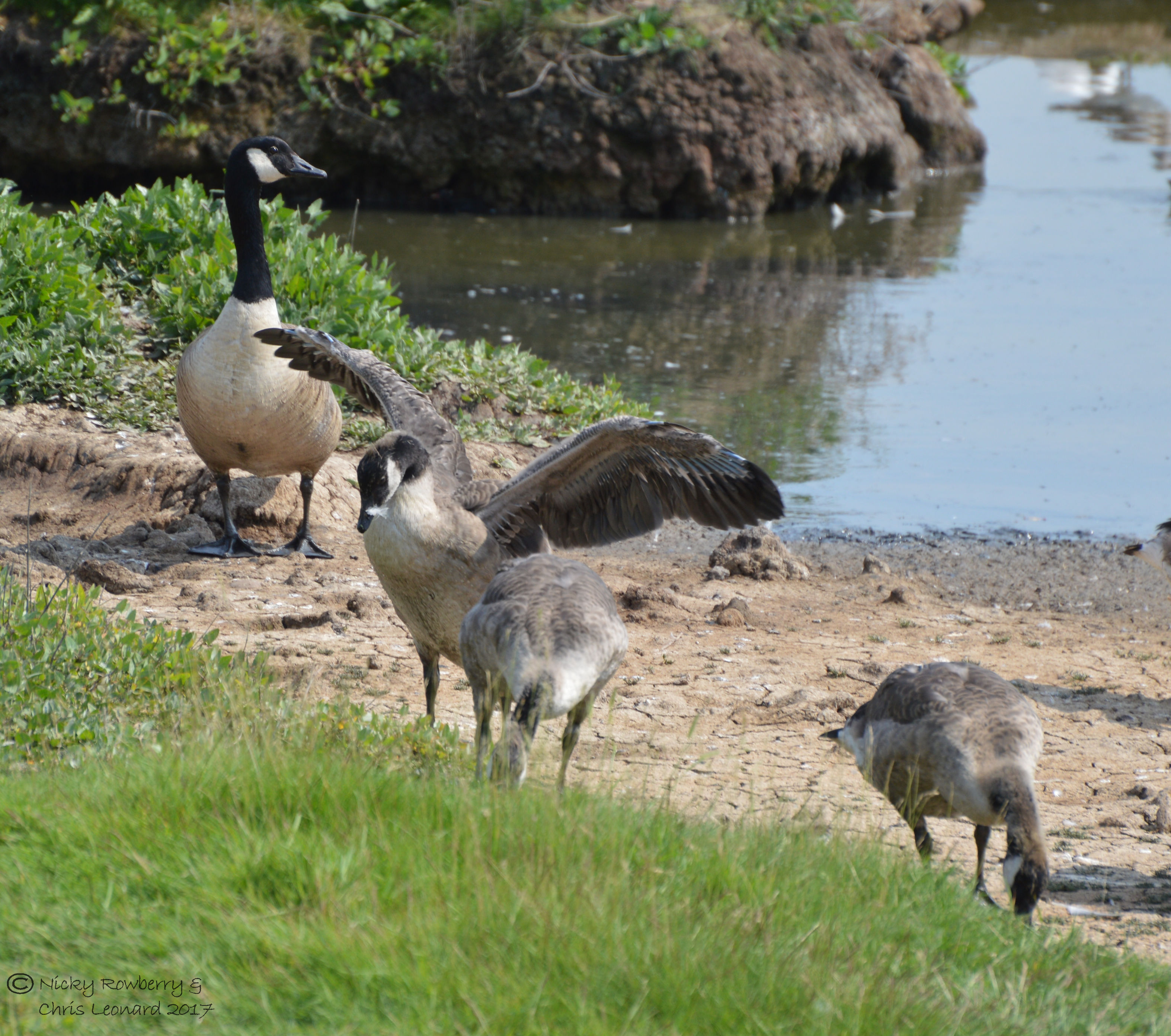
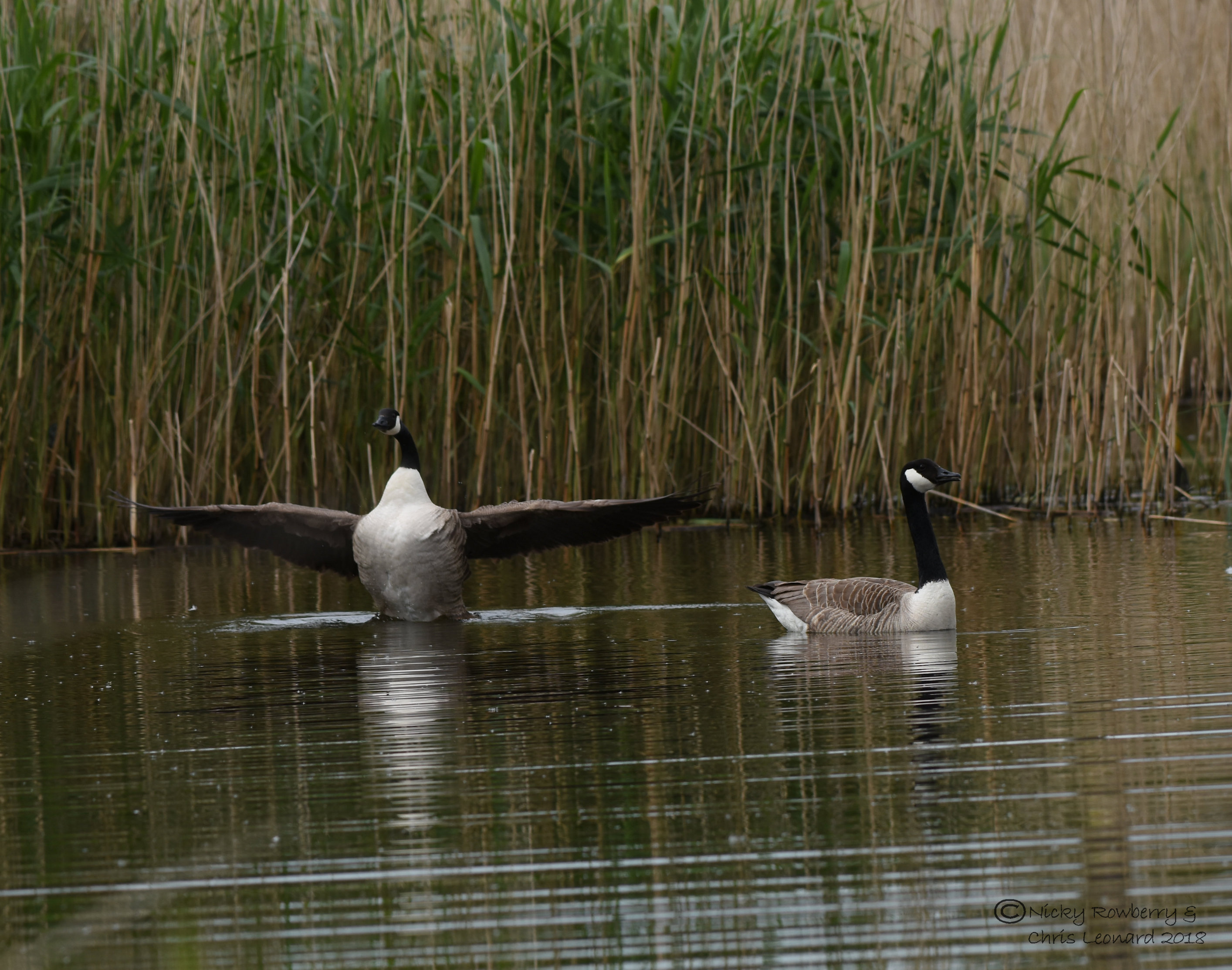
Not knowing much about the ecology of reed beds, we weren’t sure what we would see, but as soon as we got there we could certainly hear plenty. Lots of small birds were clearly hiding in the reeds and singing their socks off. Much more visible and considerably noisier was a small flock of Canada Geese which flew in almost as soon as we got settled in the hide.

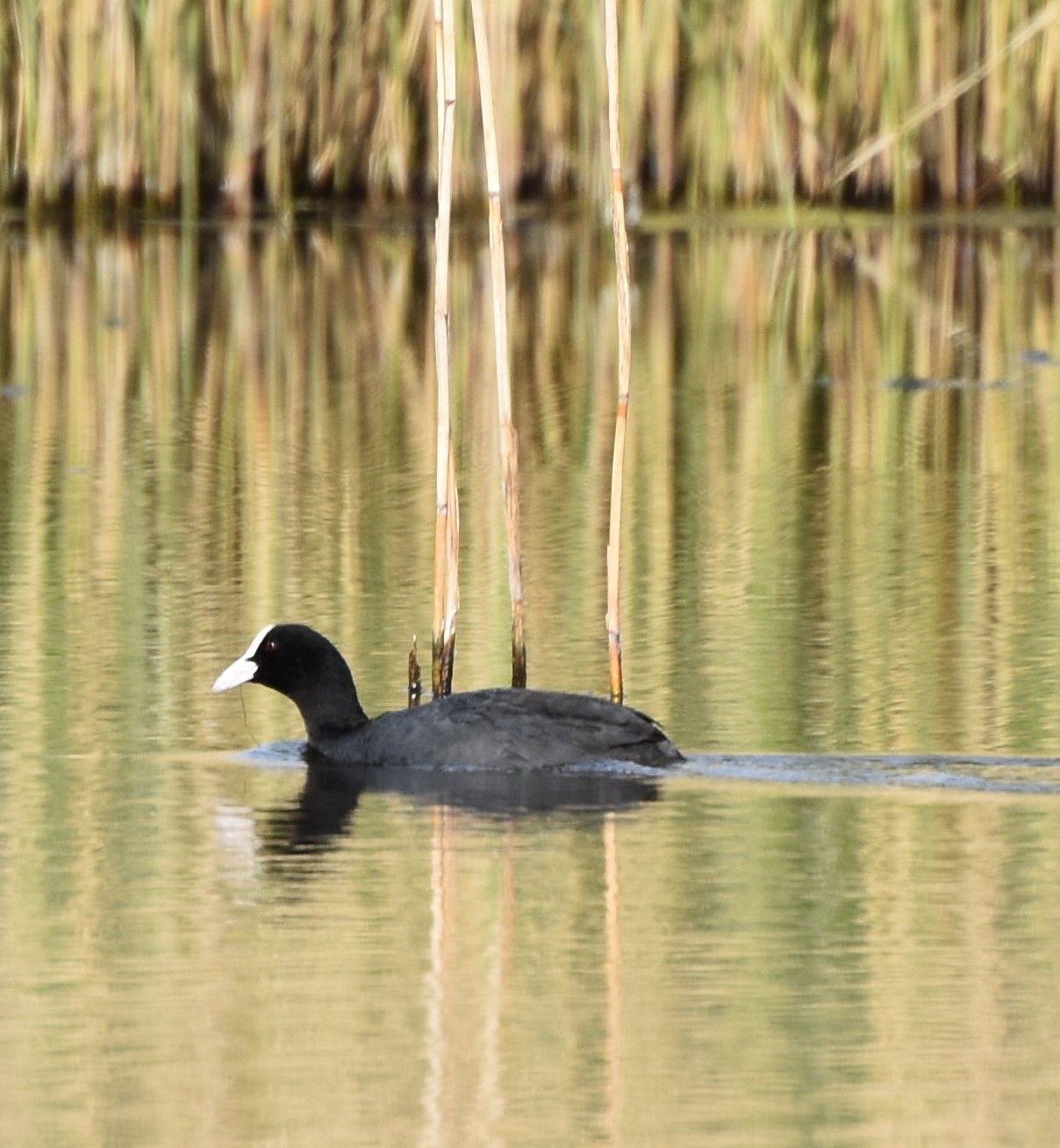
They are noisy, boisterous birds and seemed to be constantly squabbling with each other, although there seemed to be plenty of room for everyone. While they jostled for position a lone coot sailed serenely around, unfazed by their kerfuffle.

Another small water bird also emerged periodically from the reeds. We didn’t know what it was at first, but the good people of the iSpot website identified it as a Little Grebe. It was a fairly dumpy little thing, but was clearly very good at diving. Sadly it didn’t ever really come close enough for a very good photo.

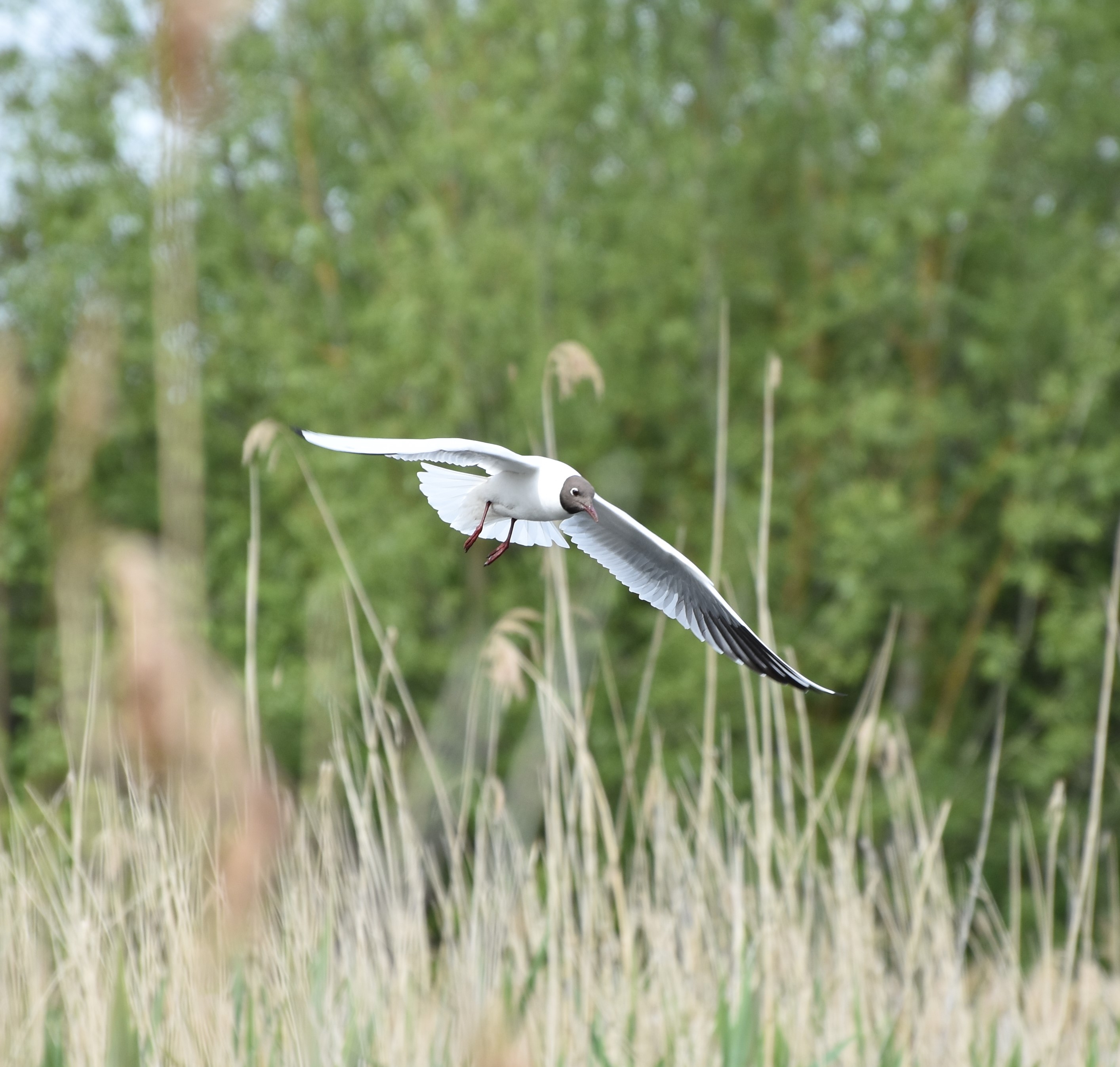
Another species which arrived in a small flock was Black Headed Gulls. At least half a dozen of them would appear and hover over the water before diving for small fish. They are beautifully sleek looking gulls, with perfect delineation between their black heads and white bodies – as if the heads had just been dipped in black ink.

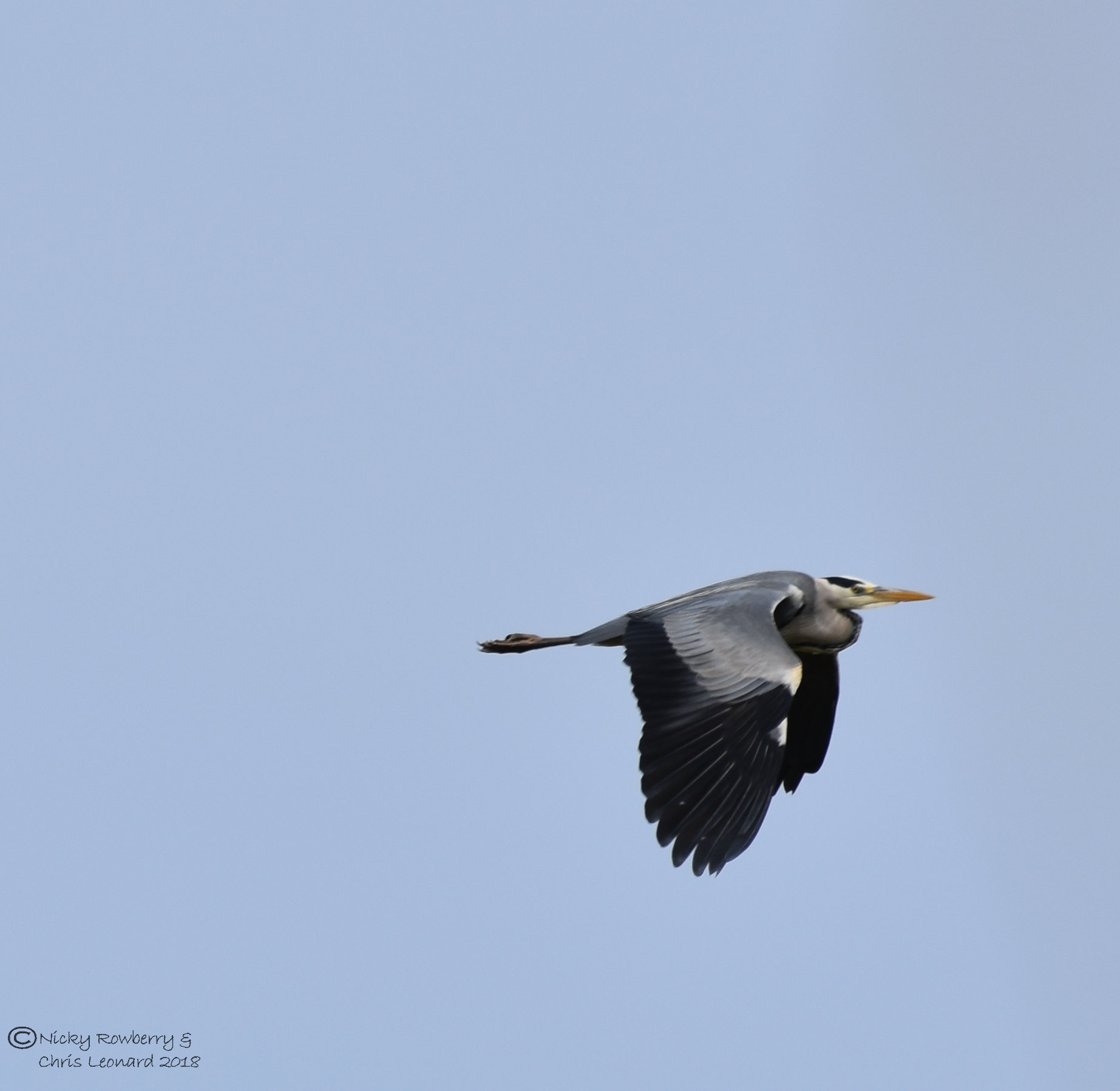
Several other species put in fleeting appearances. Swallows skimmed the water for insects, but were way to quick to catch on camera. Buzzards soared above us, but were too high and silhouetted against the pale sky were also too hard to photograph. A heron did flap lazily by a couple of times, flying slow enough to get recognisable shots, but sadly not landing anywhere within sight of the hide.

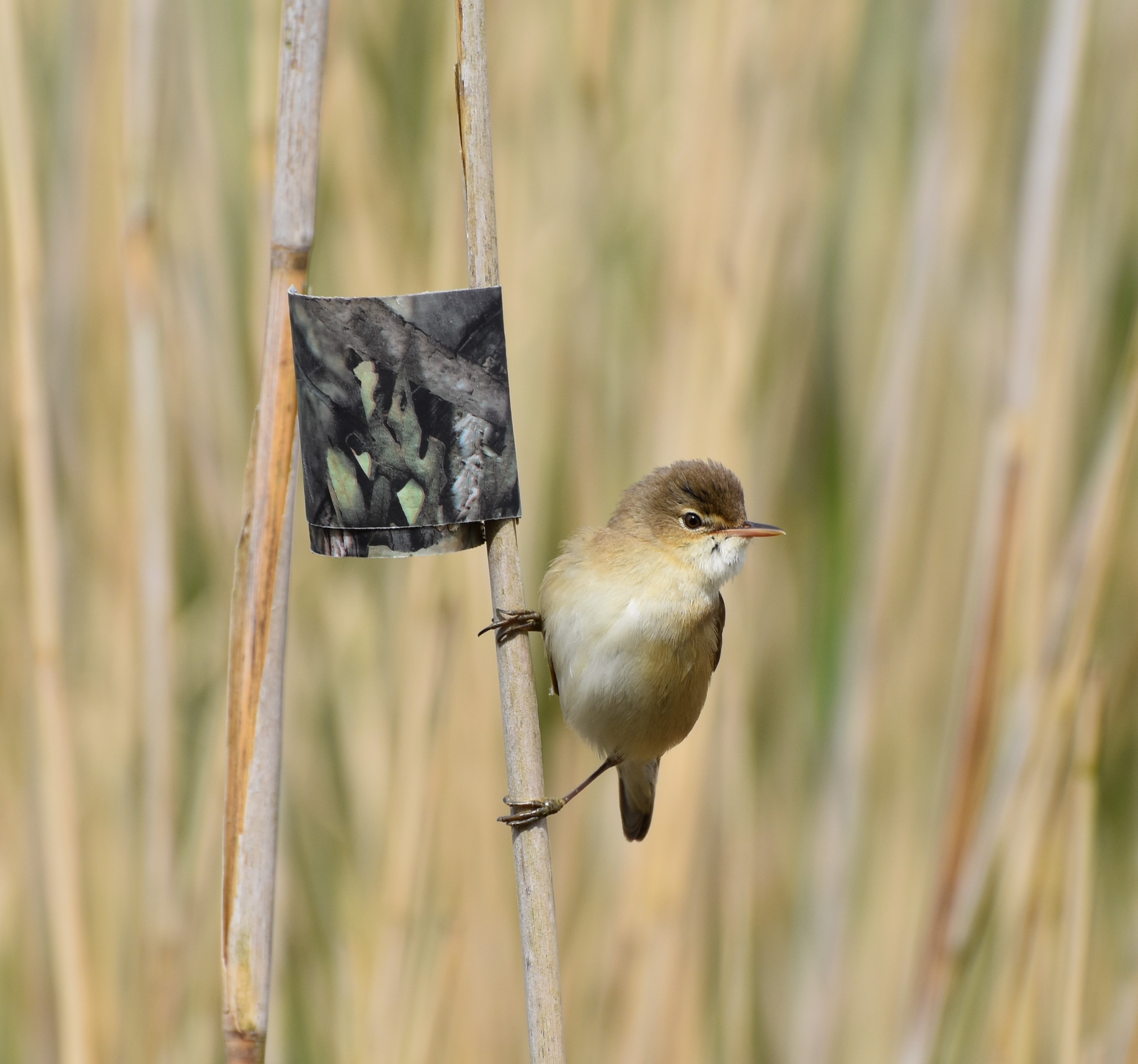
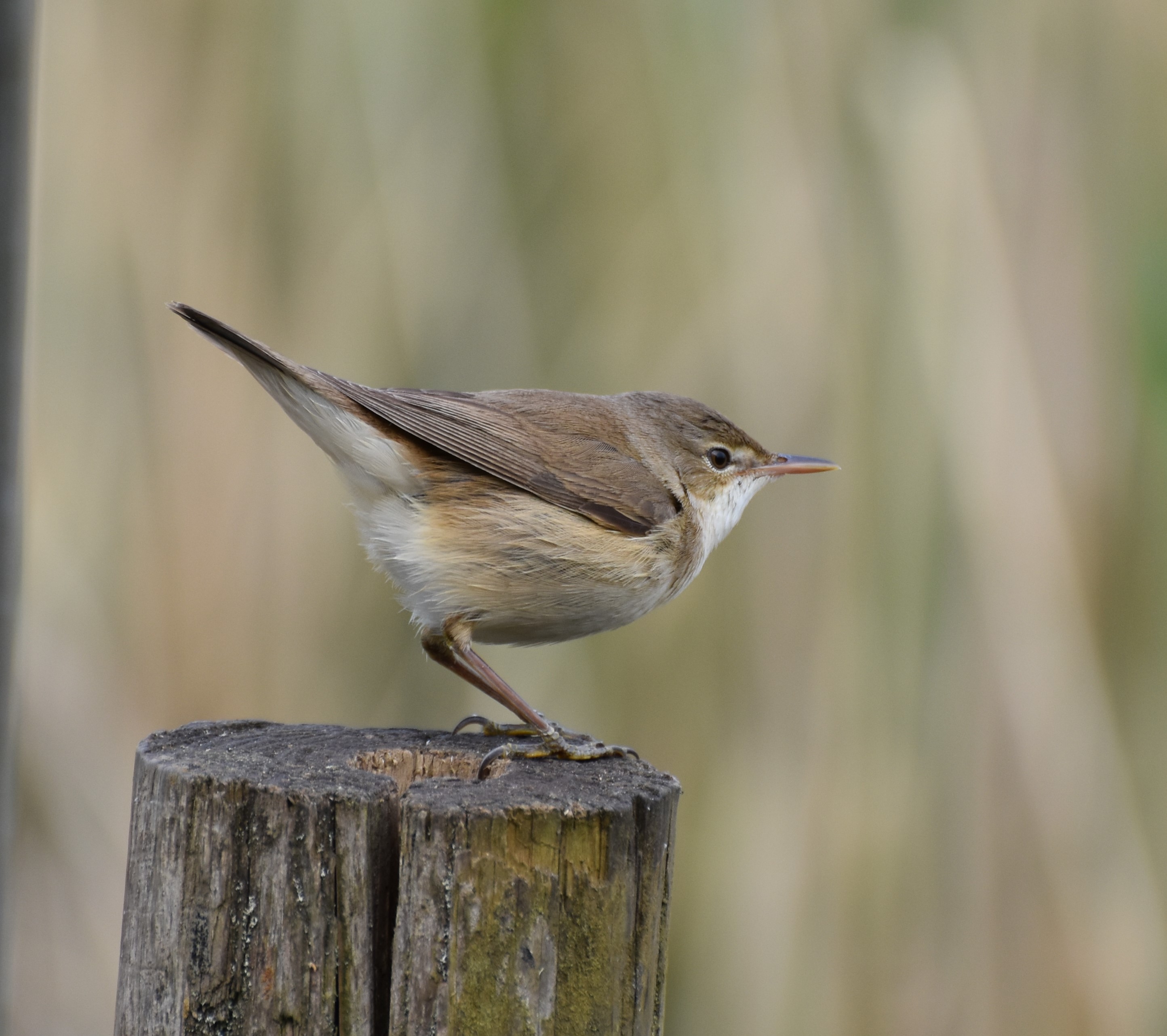
Aside from the distractions of the larger birds coming and going, the most common birds proved to be the buntings and warblers that we’d heard in the reeds when we first arrived. As usual we took literally hundreds of photos, which I’ve gradually whittled down to a few half decent ones. The willow warblers were singing all around us and often obliged by landing photogenically on reeds near the hides.

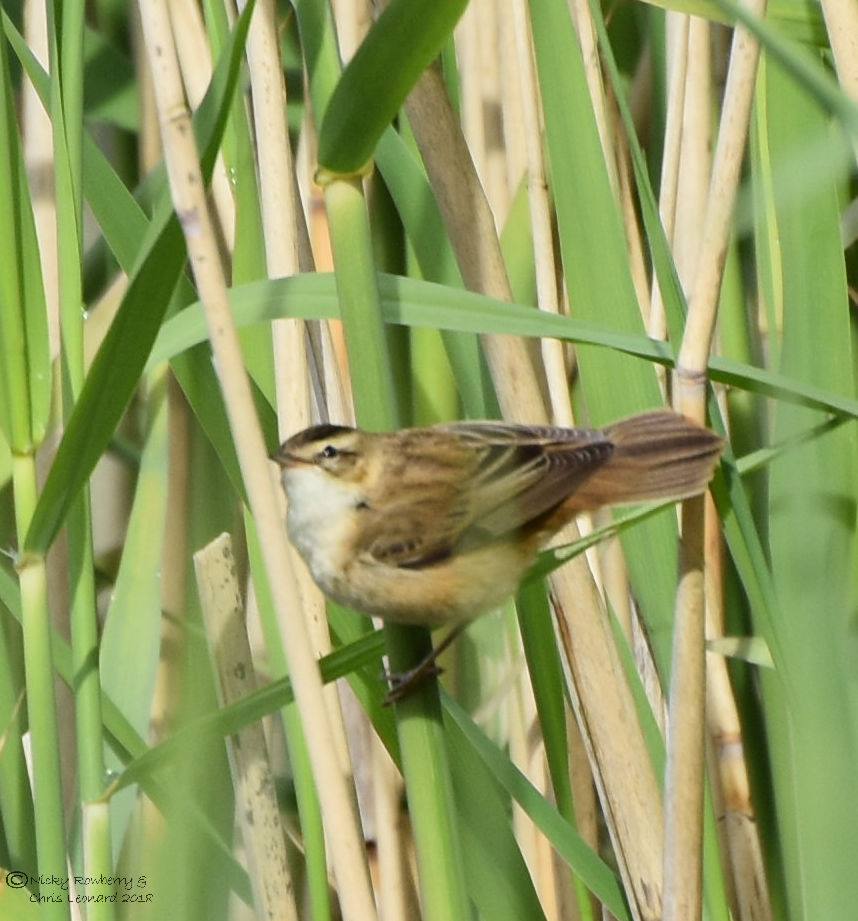
While scanning through the warbler photos, I found one that looked a bit different – it had more of a white stripe over its eye. Turns out this one was probably a Sedge Warbler. Shame there was only the one slightly blurred photo.

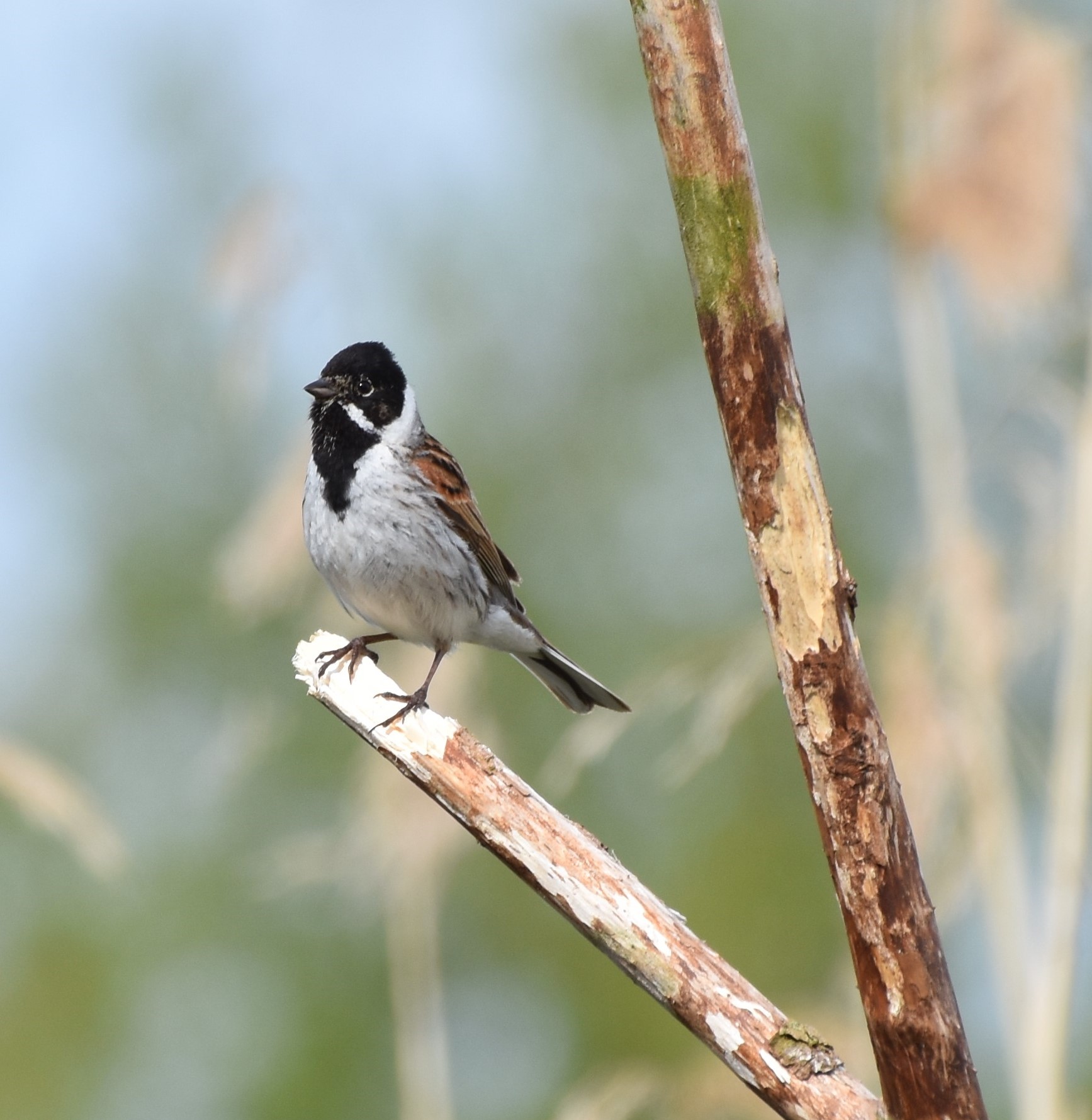
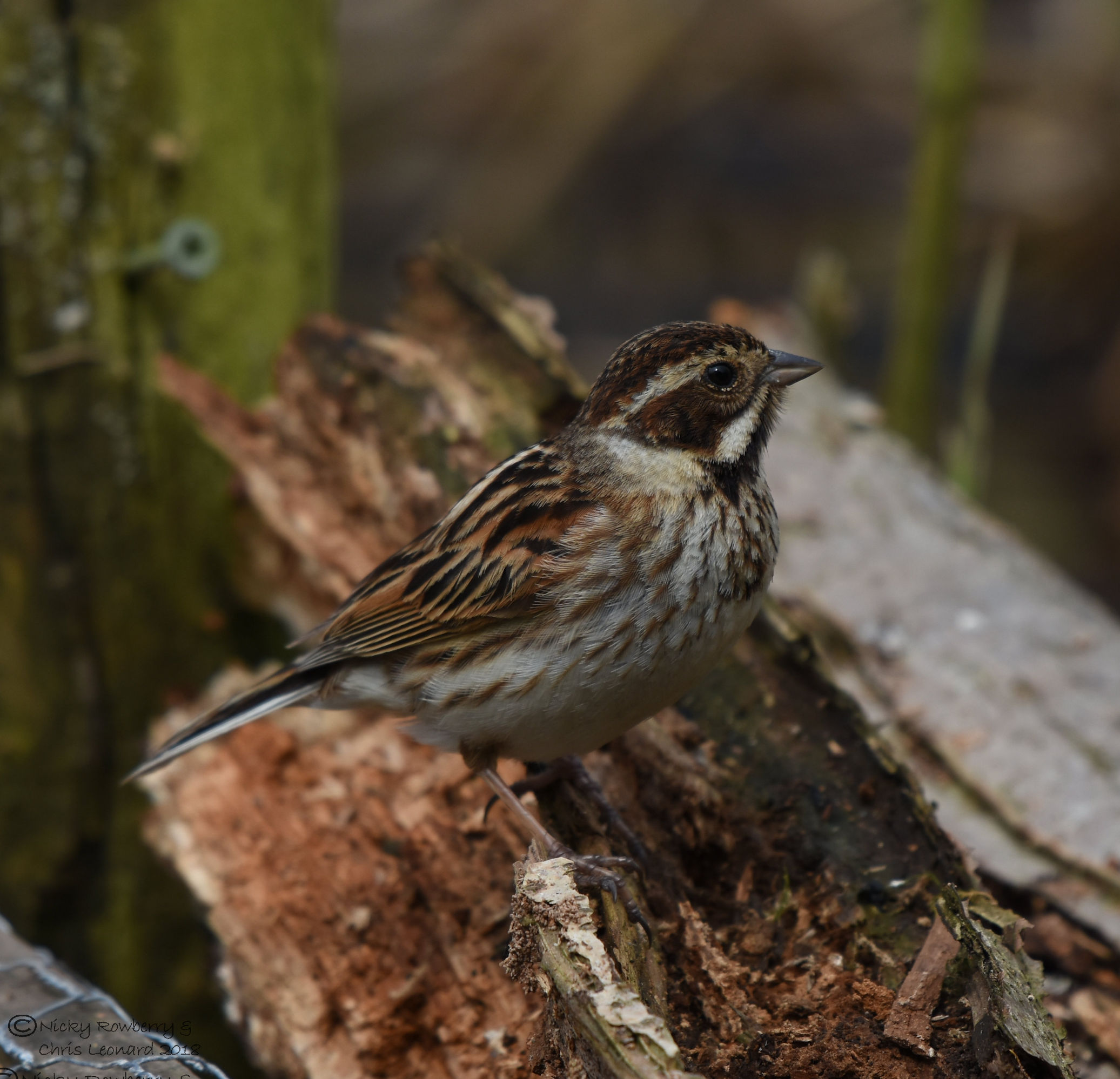
The reed buntings were as abundant as the willow warblers and also had a penchant for posing photogenically on the reeds. The males are more distinctive with a black head and white collar above a mottled brown body.

The people who run the hide site, supplied us with mealworms to attract the birds. This one is feeding from a tiny pot, camouflaged and stuck to the reeds.

The females are a bit plainer, without the black and white headgear, but beautiful nonetheless. They also seemed a bit bolder than the males, often coming onto wood near the walkway quite close to the hide.

We even got to see one of the female reed buntings gathering nest material, although we never saw a nest.

There is always the hope whenever you visit a hide near water of seeing a kingfisher. The site we were on has a dedicated kingfisher hide and last year we’d spent a very happy couple of hours with amazing views of one right in front of us (see https://toolazytoweed.uk/2017/01/16/wildlife-hides-part-2-the-king-of-fishers/ for last year’s blog post)  After a few hours in our reed bed hide though we hadn’t been so lucky.  Eventually I spotted one up on the power lines, too high up to get a photo though. The power lines were a long way up, but incredibly the kingfisher could still look down and focus on the fish in the water below. We watched amazed as it dived straight down to catch them.

Although my short legs would have benefited from stretching, I stayed put and continued trying to get the perfect shot of a reed bunting. I was so focussed on this that I initially missed the fact that the kingfisher had landed on a perch just feet in front of me. I got so flustered when I did see it that I couldn’t focus in time, so only managed this blurred shot of it flying off. But at least it proved that I had indeed seen the king again!


Birding in Bewdley

Since the New Year I’ve been suffering (rather pathetically even by my own low standards) from the flu, but by last Sunday I’d finally had enough of my sick bed and was keen to get out and see some wildlife. While spluttering round the house, I’d kept seeing on Twitter that there were lots of Hawfinches in the UK this year and that in particular there was a group of them in Bewdley, which isn’t far from us. People were still tweeting sightings of the Bewdley birds there on the Saturday so we set off on Sunday with fingers crossed.

Bewdley is a lovely little town, right by the river Severn. We’ve passed through it a few times on the way to the Wyre Forest, but never stopped before. So this time we parked down by the river and set off to find Jubilee Gardens where all the Hawfinches were apparently hanging around waiting for their photos to be taken. Since there’s never any guarantee of spotting your target species, we always take photos of other things as we go and the Severn was full of birds as we walked along the towpath.

There were quite a few of these small pretty gulls, several of whom seemed content to perch on the bollards. A quick check on Google when we got home later confirmed they were Black Headed Gulls – in their winter plumage though, so no actual “black heads”.

Another bird that we more commonly associate with the sea is the Cormorant, but there was at least one happily paddling up and down the Severn in Bewdley. It was totally undeterred by the Canada Geese that not only outnumbered him, but were much larger too. The Cormorant faced down at least one goose to get the resting spot he wanted near the steps.

We found Jubilee Gardens tucked away behind the riverfront houses. It is really a small park completely surrounded by the town of Bewdley, but with some large mature trees and a small pond.  There were plenty of small birds flitting around, including a small flock of the lovely long-tailed tits.

A splendid Grey Wagtail was patrolling, with tail wagging, up and down near the pond. I always have to think twice about these, not to call them Yellow Wagtails, despite their obvious yellow colouring.

We knew we’d found the right spot though, when we turned a corner and were confronted with at least a dozen birders with cameras/binoculars/telescopes all pointed up at some of the tall trees. Clearly I’m not the only one who follows the reports on Twitter! There were also a few other, slightly bemused looking, non birders trying to enjoy a Sunday stroll through the gardens and wondering what all the fuss was about.

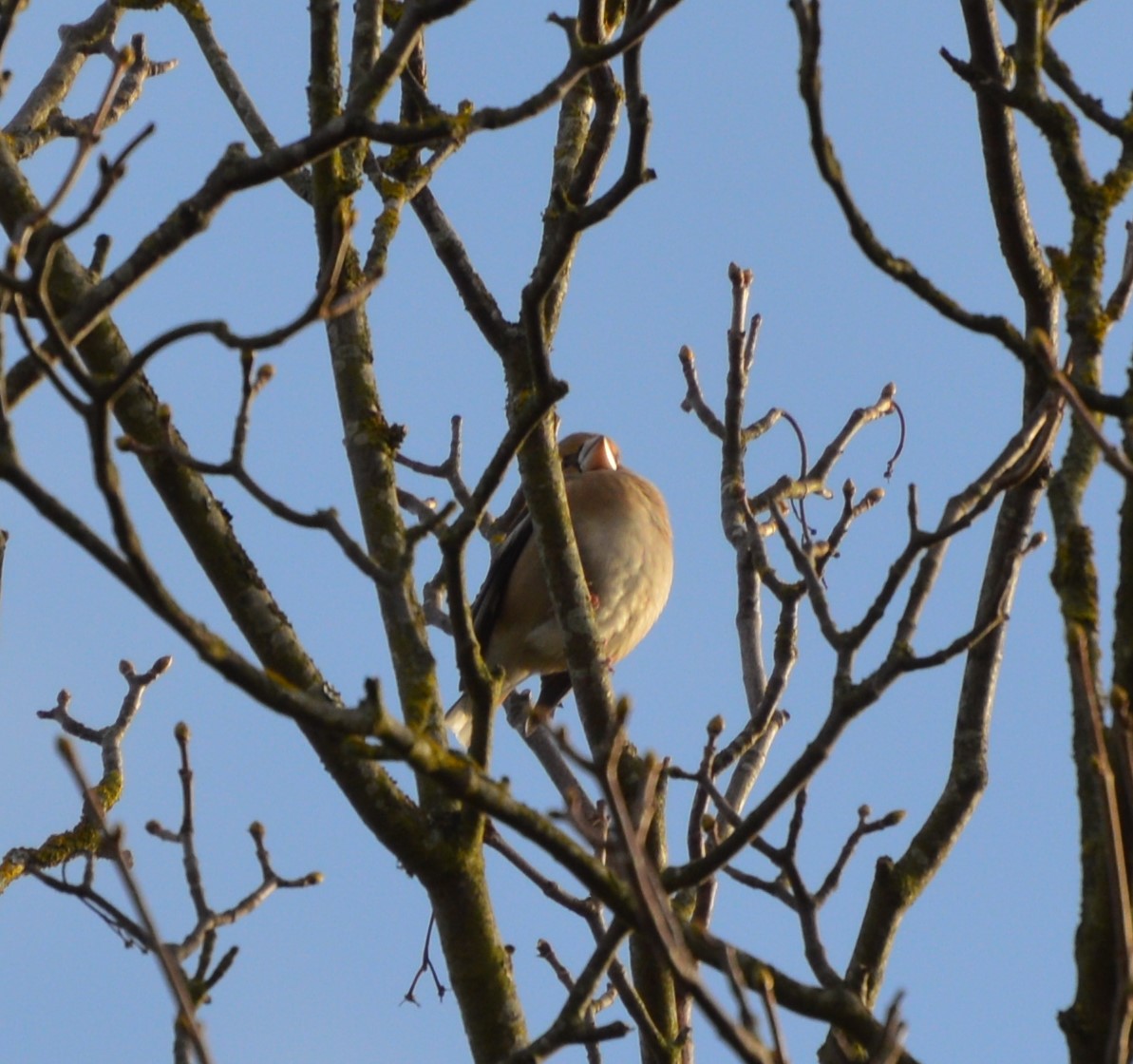
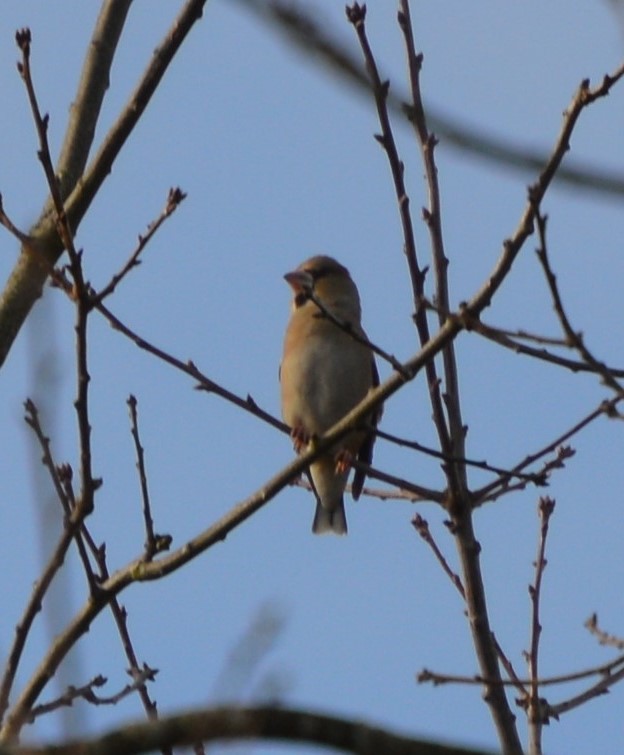
Anyway we followed the direction all the lenses were pointed in and sure enough there were a small group of Hawfinches, high up in the trees. They may have been distant glimpses, but we had found our first ever Hawfinches. Their powerful beaks were clearly visible even from a distance and they are have to my mind quite quirky, curious faces. We spent about an hour pottering round the gardens, hoping they’d come lower down. Not surprisingly, given the large number of people staring at them, they chose to remain high up in the trees. I didn’t really have a long enough lens to get anything even half decent. So these were the best shots I managed – just about recognisable as Hawfinches, if you sort of squint and use your imagination!

I don’t think I’d ever have spotted them on my own, but the combination of helpful Twitter feeds (thank you @WorcsBirding) and of course a large flock of Twitchers made it possible. We just need the equivalent combination for some Waxwings now!

Scilly Isles – Bryher

Continuing with our tour of the Scilly Isles, here’s the latest instalment – Bryher. Bryher is the smallest of the inhabited islands and has a special meaning to our family. My parents used to stay in the same guesthouse there every year for many years and absolutely loved the place.

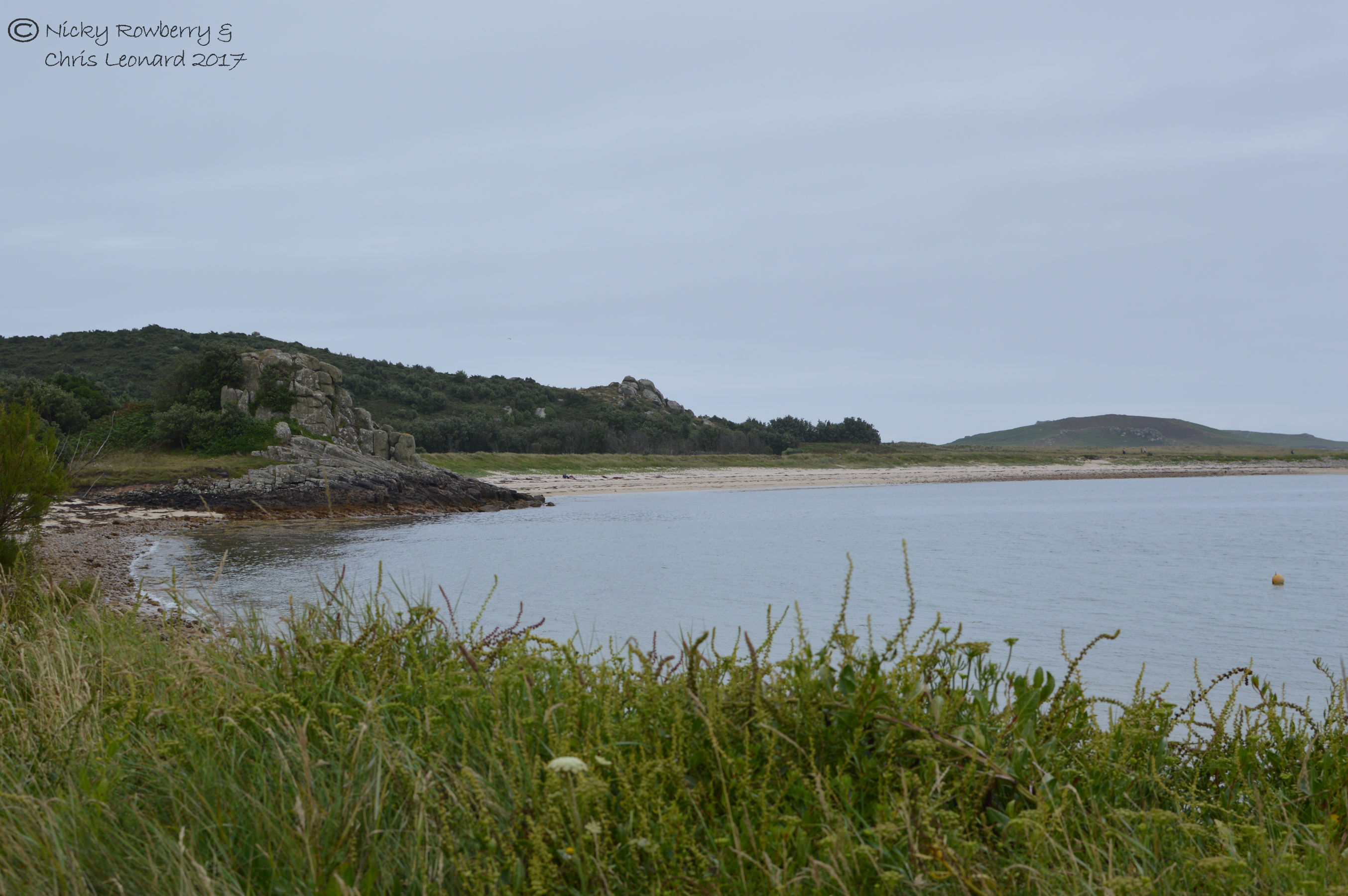
Like all the Scilly Isles you can’t move for beautiful beaches and picturesque views. Bryher is perhaps quieter and less developed than some of the other islands and has a lovely peaceful quality (not that the other islands are exactly noisy!)

Like the other islands too, most of the fields tend to be small with high hedges to provide protection against the wind. It makes for very attractive views compared to high intensity large farms on the mainland.

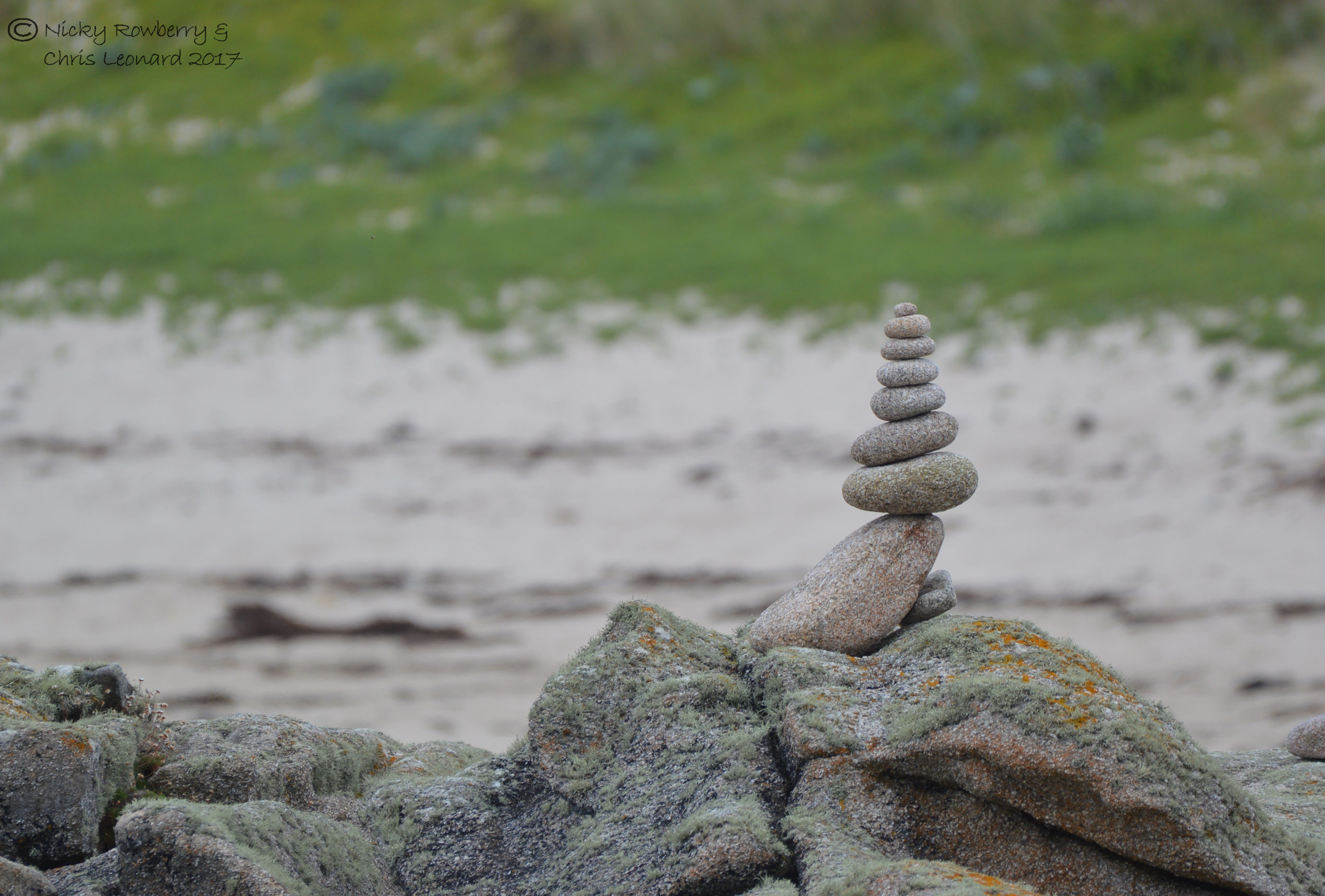
Someone on the island must have been into a bit of rock art as there were lots of these neat piles of stones balanced around the Porth bays (one of which is delightfully named Stinking Porth!)

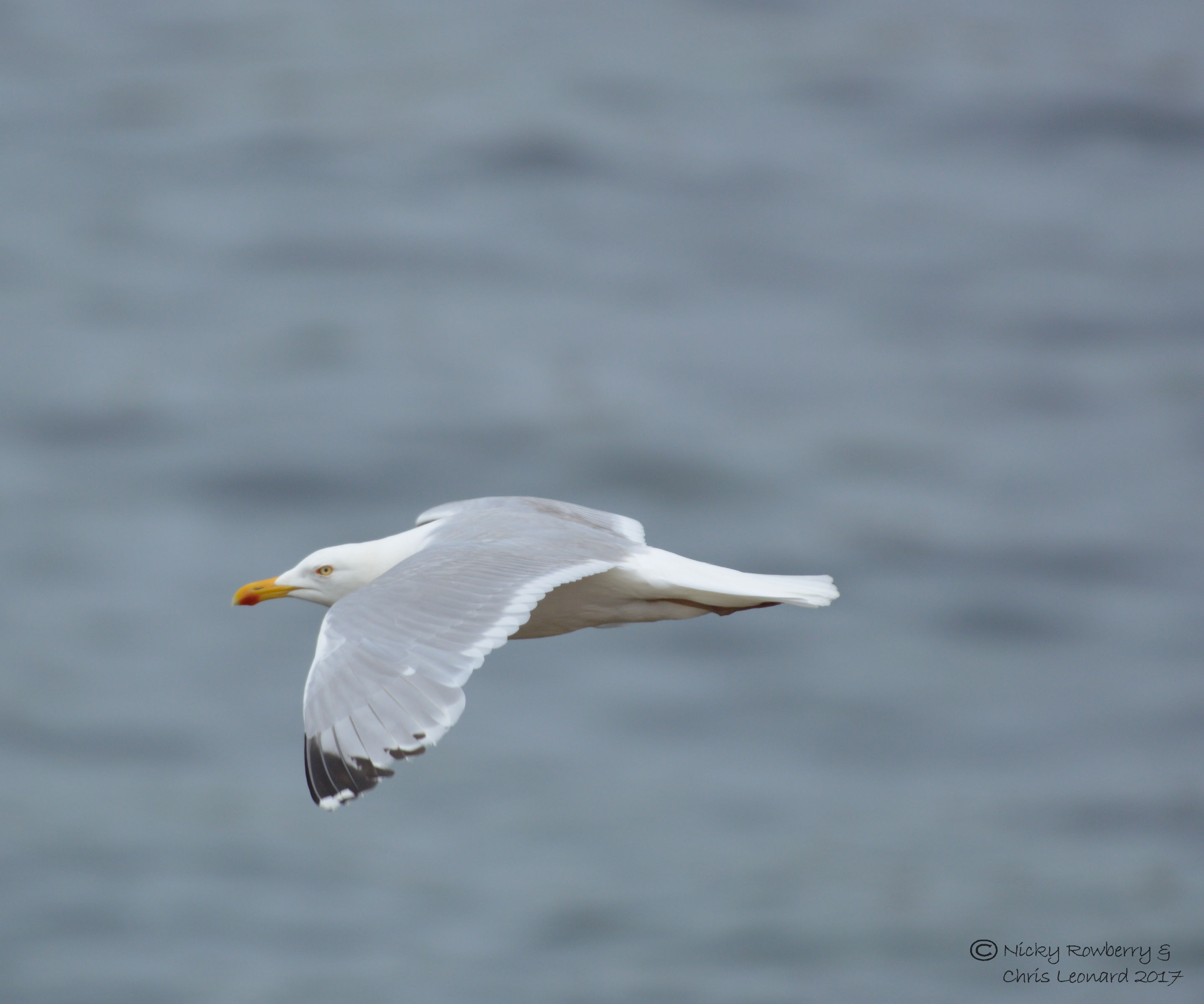
Birds were of course plentiful everywhere. It was nice to add the Herring Gull to our tally of seabirds for the trip. I’m sure we were seeing these everywhere, but this was the first time we’d got decent enough photos to get a positive ID.

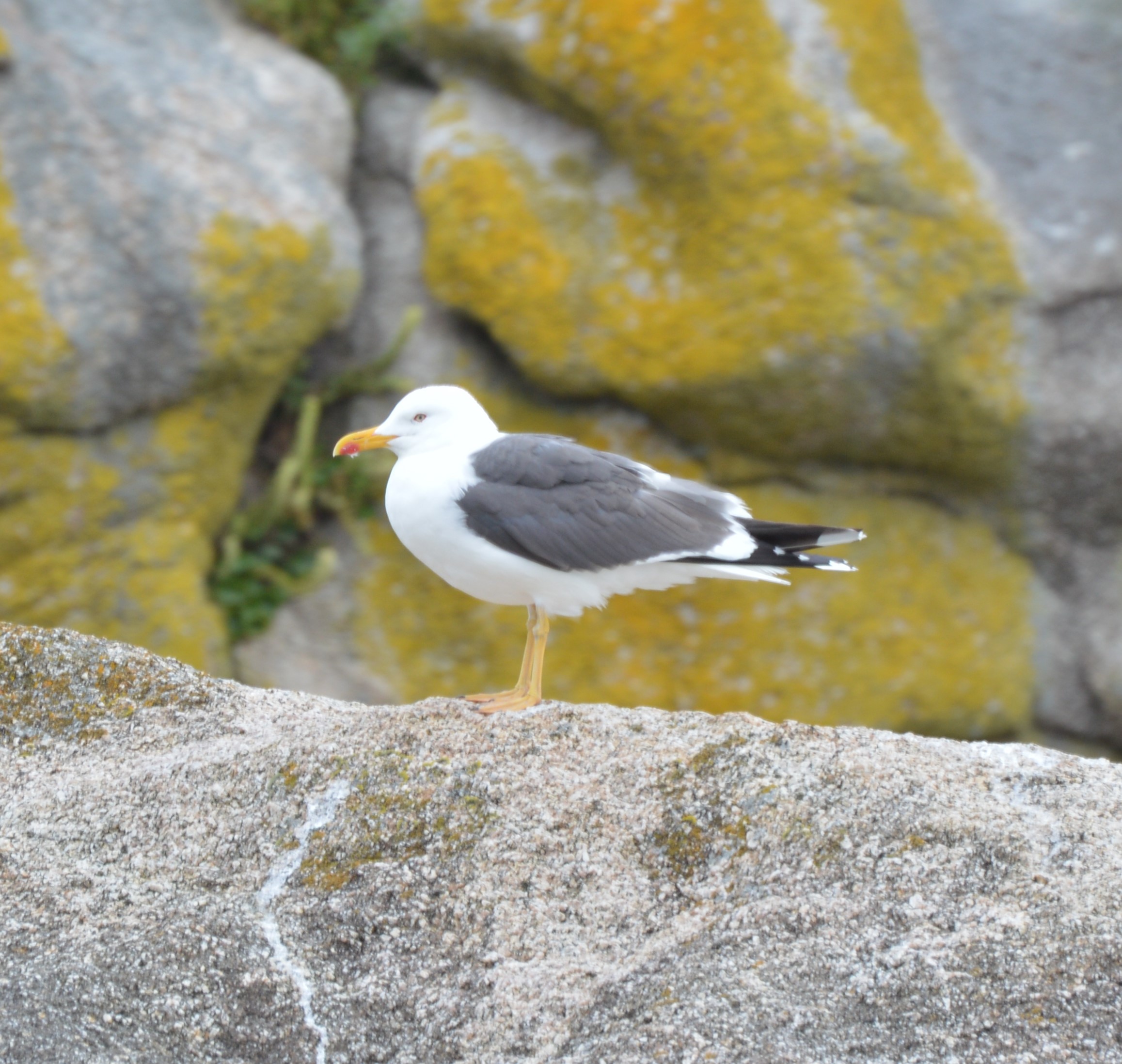
Nice also to catch a photo of a Lesser Black-Backed Gull – distinguished from the Greater version by his yellow legs. (I’m learning!)

Then we spotted a Heron flying across the bay in the distance.

The ubiquitous Shags were also present (unless these are cormorants?) I’ve got a bit of a soft spot for these gawky gangly looking birds.

One bird I love and always try to photograph, although usually with limited success, is the wren.  This Bryher wren though was quite obliging and posed beautifully on some lichens.

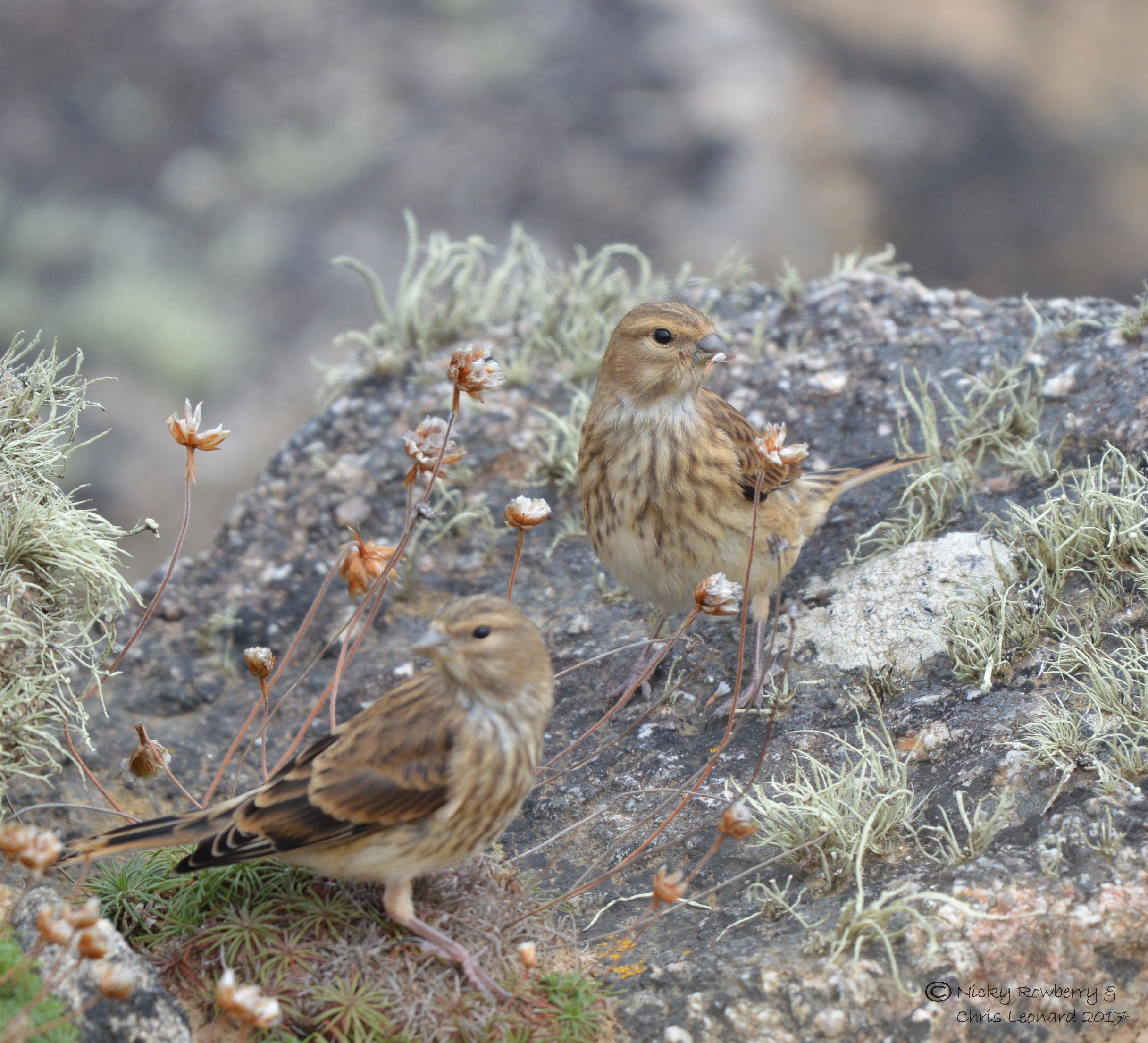
As well as getting to grips with gull identification, I was getting in a bit of a muddle with some of the smaller birds. But I’m reasonably confident that these are linnets – with a brighter coloured male (top) and a pair of females (below). Linnets have a supposedly melodious song which unfortunately meant they used to fall victim to the caged bird trade. Hopefully that is no longer the case.

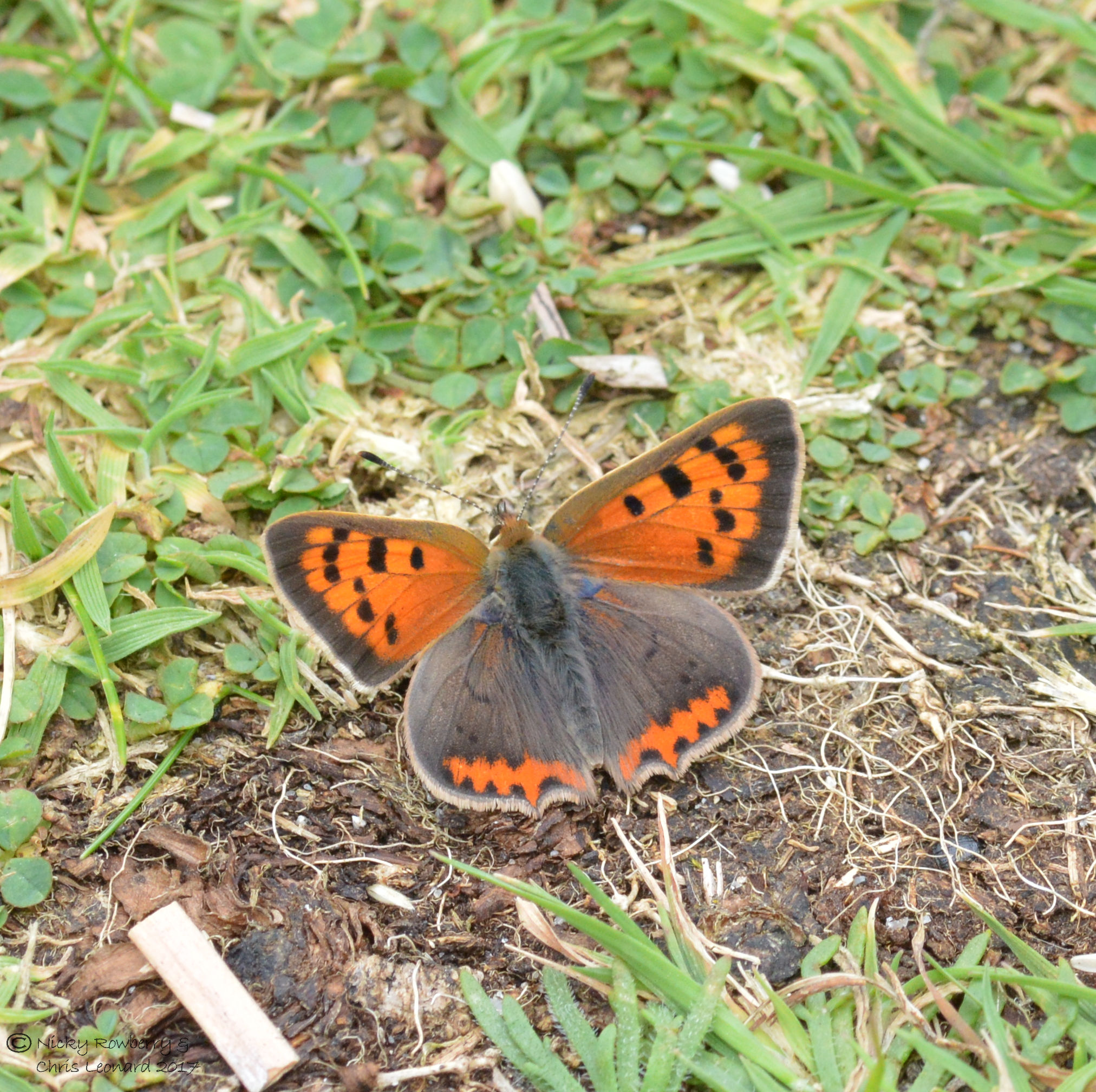
I can never resist including a butterfly photo. Although Meadow Browns were by far the most common species we saw on the Scilly Isles, we also saw quite a lot of Small Coppers. We don’t get many around us in Malvern any more (we’ve only recorded them twice in our own garden), so it was lovely to see them here in decent numbers.

Our final thing on Bryher was the latest chapter in a long running bit of fun between my Dad and his Austrian friend. My parents used to holiday on Bryher for many years and made friends with another regular visitor from Austria. According to my Dad, his Austrian friend used to enjoy sitting on the same flat rock every day enjoying the scenery of Bryher. One year my  Dad planted a small flag and sent a photo to his Austrian friend saying he had “claimed” the rock for Britain. The following year his friend sent another photo back with an Austrian flag, “claiming” it back for Austria. My sister and I thought it would be fun to claim it back again. Unfortunately we only had a rough description of where the rock was – and there are a lot of flat rocks around Bryher! So we’ve no idea whether we’ve reclaimed the right rock, but hopefully our Austrian friend will appreciate the effort and perhaps send us a photo back?


Scilly Isles – Eastern Isles

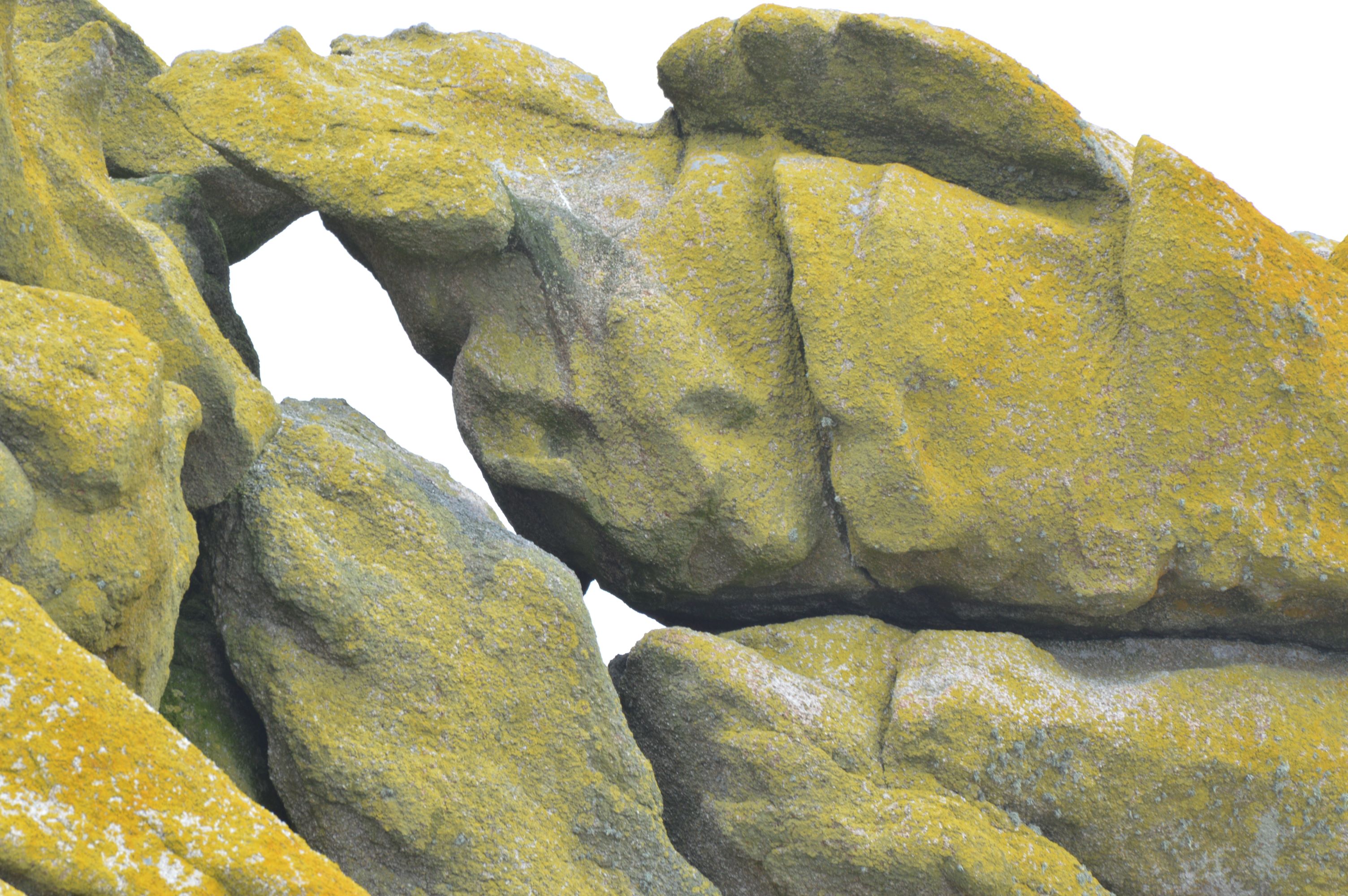
Next instalment on our recent trip to the Scilly Isles. This time we were out on a glass bottom boat tour of the Eastern Isles – small uninhabited islands with unusual names like Little Arthur and Great Ganilly. There were lots of interesting rock formations around, all covered with lichens, which provided sufficient interest until we got to the wildlife.

As it turned out we didn’t actually see very much through the glass bottom (a few jellyfish and a lot of seaweed), but what we saw all around more than made up for it. Most of our time was spent watching seals – Grey Seals to be precise. The Scilly Isles have a large and nationally important colony of grey seals and we were lucky enough to see quite a few on our trip. At first we just glimpsed them bobbing about in the water, watching us as much as we were watching them.

But our guide (and skipper) soon spotted one hauled out on a rock. He identified it as a fully grown adult male grey seal. Unfortunately it seemed to have got something stuck around its neck – perhaps old fishing gear. It didn’t seem to be causing him any problems and hopefully as he was already an adult he won’t grow any more to cause it to tighten around his neck.
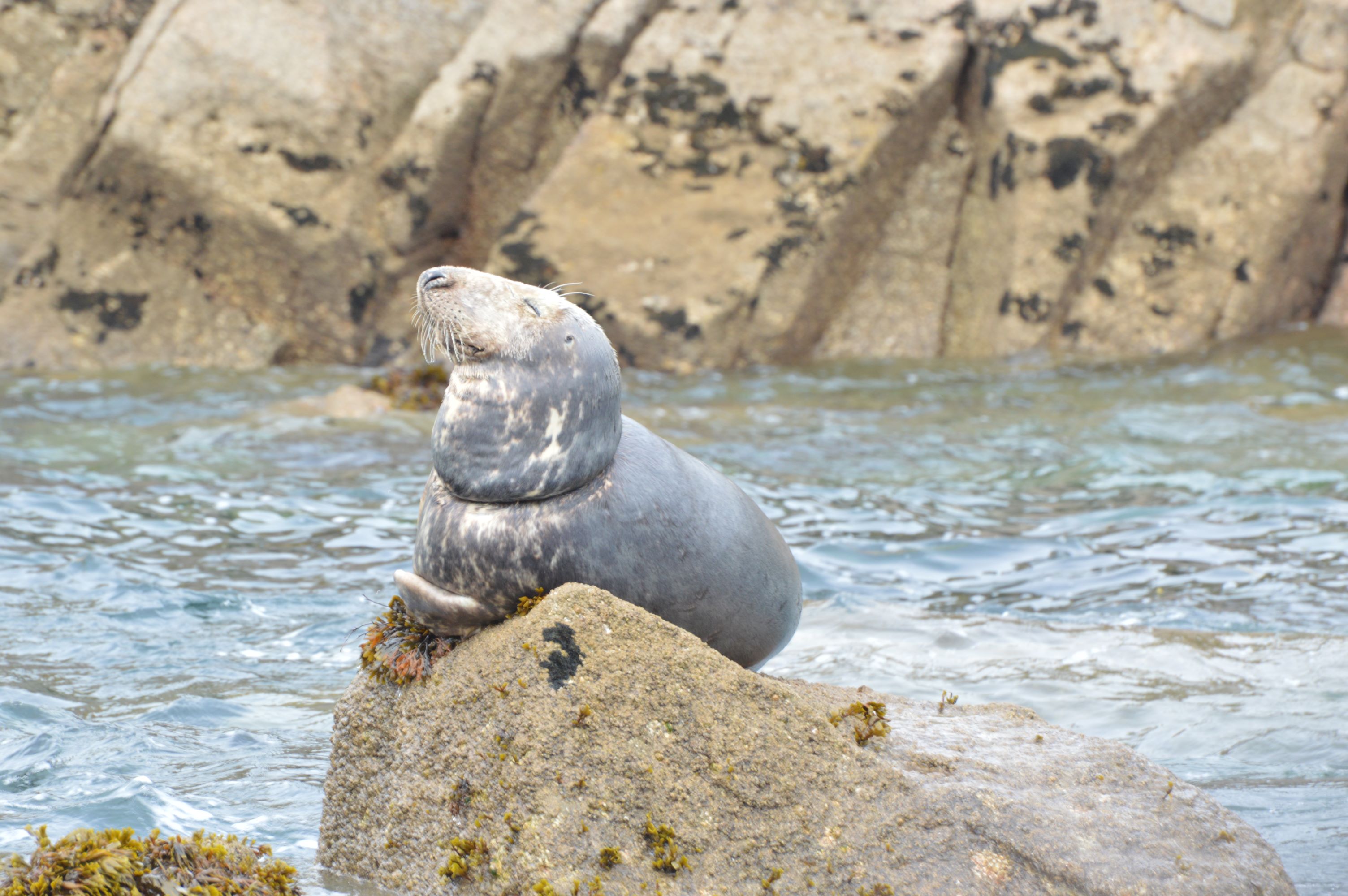
We continued round the various rocky outcrops that make up the Eastern Isles and eventually spotted another seal hauled out. All the seals seemed to be quite used to the boat and tourists and look unfazed by our visit.
We had seen photos online of seals swimming under the boat so you could see them through the glass bottom. One of the reasons why we were maybe not lucky enough to see this was the presence of a group of snorkelers. The snorkelers were also there to see the seals and the seals in turn were much more interested in the people in the water than coming over to our boat.

Maybe next time we go to Scilly we could try the snorkelling thing ourselves – it must be amazing to swim with them and they clearly weren’t bothered, just curious.

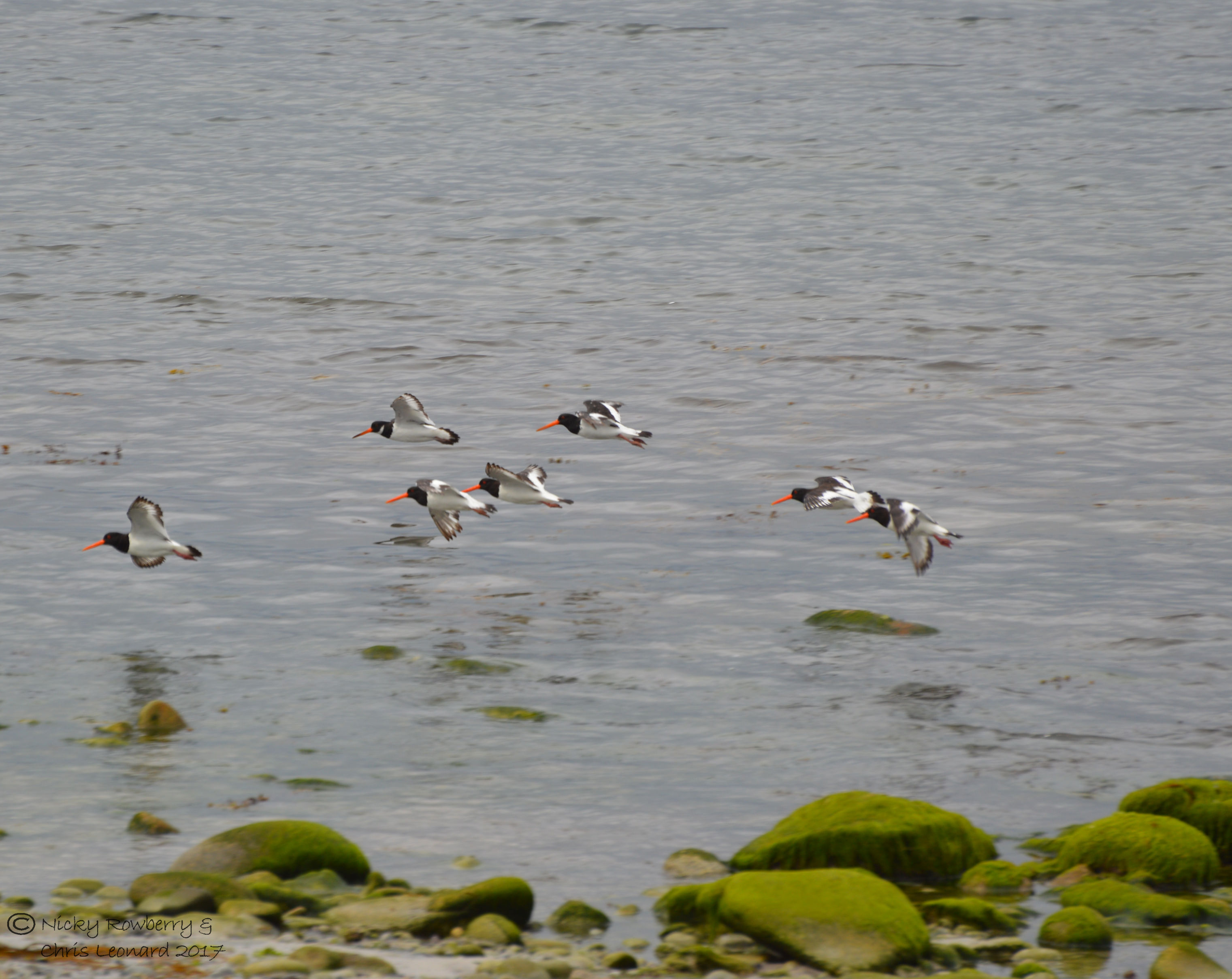
As you’d expect of a boat tour around any part of the Scilly Isles – seabirds were abundant. Fairly early on a flock of oystercatchers took off over the boat, sadly too fast for my slow camera action. We got one of our few sightings of Fulmars while on this trip, beautiful birds albeit with slightly odd looking beaks.

There were quite a few Great Black-Backed Gulls around. I must admit before this trip I’d never been able to tell the different gull species apart. While still far from expert, I am starting to learn a few things. So I’m fairly sure this is the Great Black-Backed, since it was a large gull with pink legs, a yellow beak with red dot and of course a black back! (As always though happy to be corrected if I’ve got it wrong!)

While we were there, one of these gulls caught and killed a shag. The gulls of course have to eat too, so although it was a bit sad to witness, it is all part and parcel of life. The unfortunate final outcome though was that the gull then managed to drop the dead shag down amongst the rocks, where it didn’t seem to be able to reach it. So the poor thing died for nothing – although I suppose something else probably ate it in the end.

The biggest surprise of this boat trip came in the shape of birds I’d never associated with the sea – Peregrine Falcons! Our guide mentioned that there was a pair nesting with chicks on one of the islands, but we hadn’t really expected to see them. But sure enough they were there. We couldn’t get a proper look at the adults but the two chicks were clearly visible sitting on rocks waiting for the next feed. They were quite high up and we couldn’t get very close, but it was still lovely to see.

Scilly Isles – St Mary’s

After the rush of 30 Days Wild in June, I thought July would be a quiet month and I’d be able to blog at a leisurely pace. Somehow that doesn’t seem to have happened and we are now two thirds through the month! The good news is that we managed to squeeze in a fantastic holiday in the beautiful Scilly Isles. We took so many photos (over 2000!) that I’ll split them (not all of them obviously!) into blog posts for the different islands we visited.

So first up are some of the many things we saw on the main island – St Mary’s. We were staying on St Mary’s, so spent our first full day getting to know it (via some crazy golf buggy driving thanks to my brother-in-law), before taking boat trips to the other islands later in the week.

The Scilly Isles are off the southern tip of Cornwall and have a much more tropical climate than we get back home in Malvern. This was immediately apparent from the lush vegetation – palm trees, giant Echiums and Agapanthus everywhere. The rocky walls were generally covered in all manner of stunning flowers and the hedgerows were overflowing.

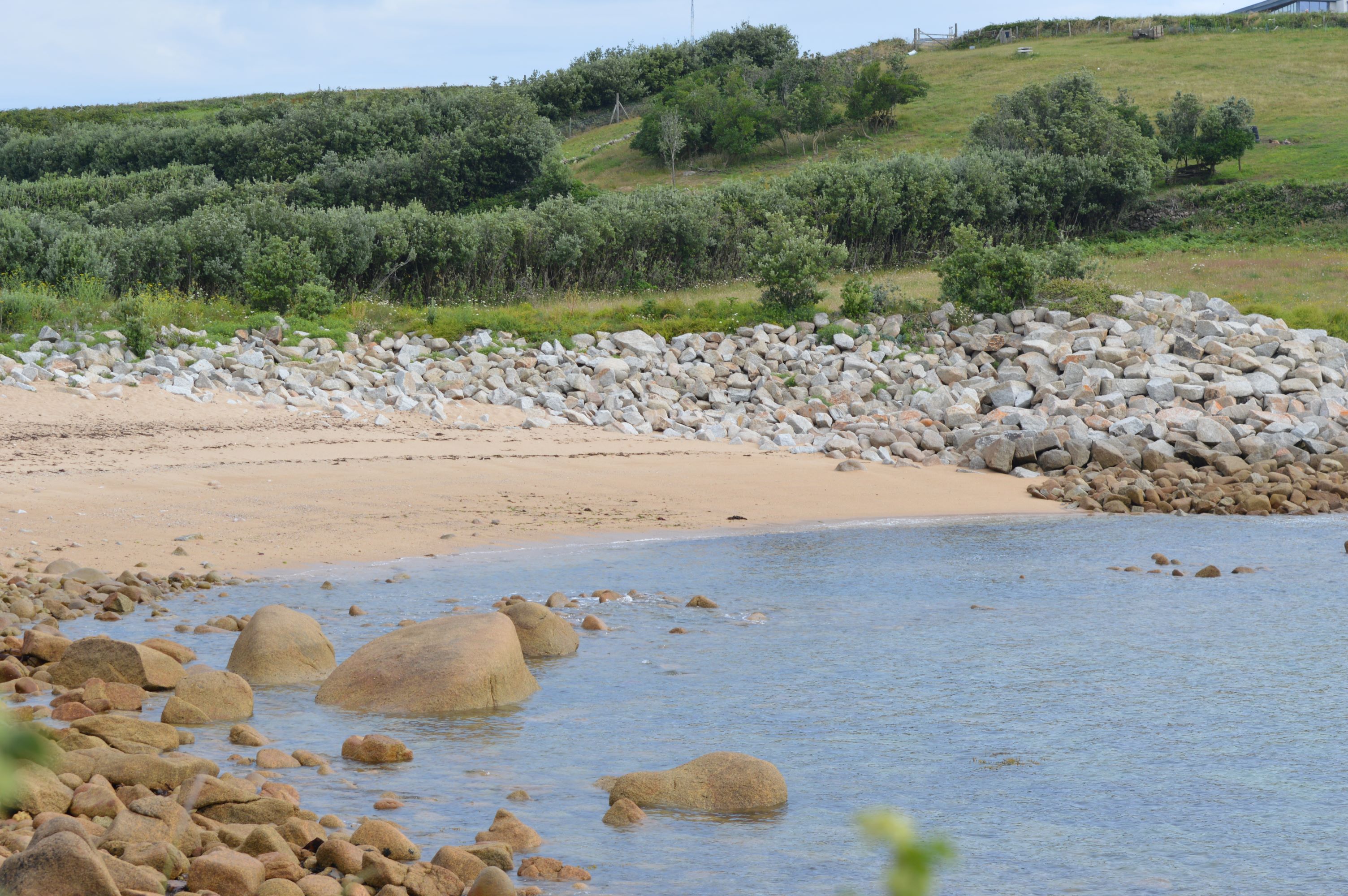
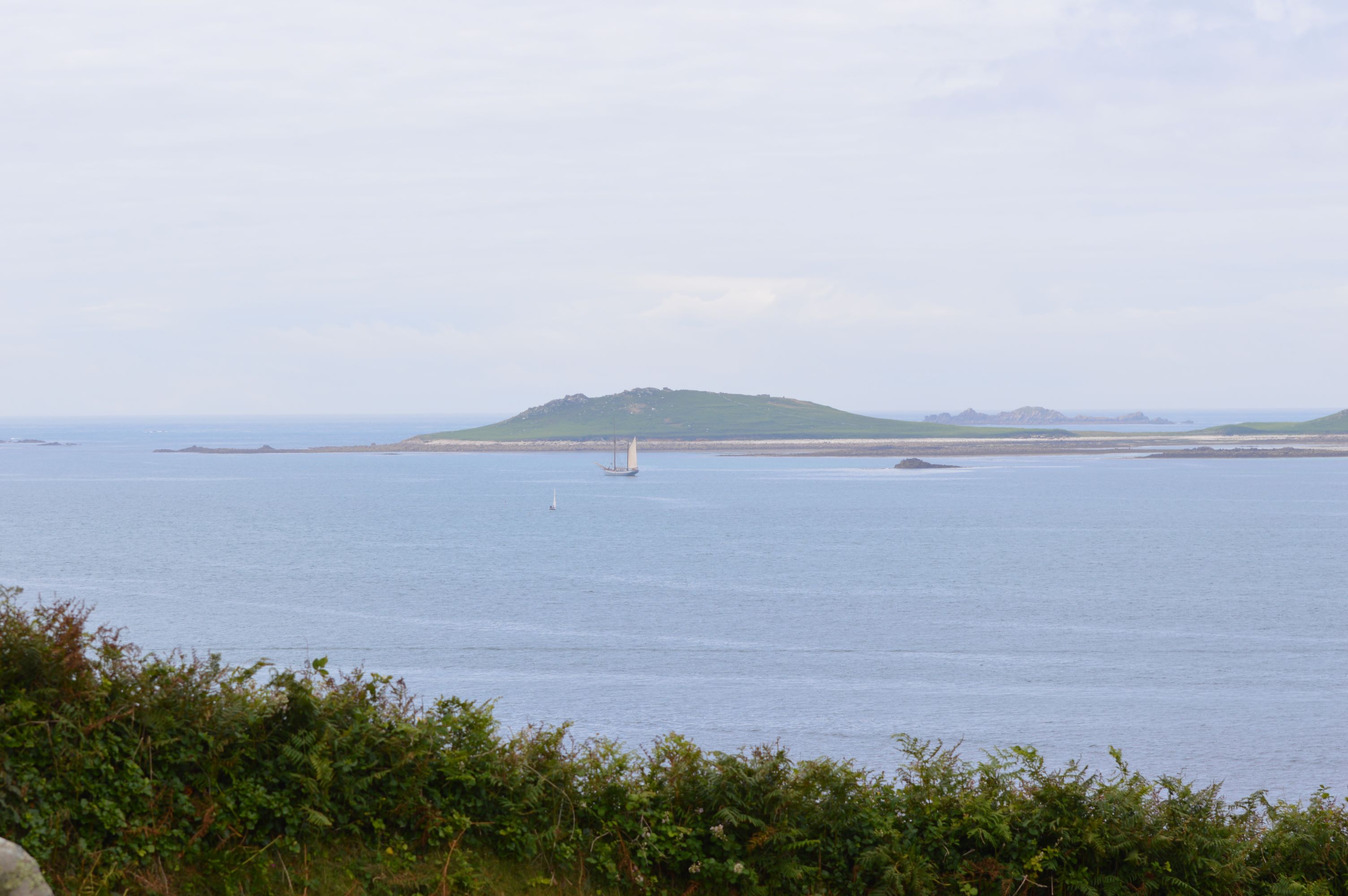
As we trundled around St Mary’s at the breakneck speed of 12mph on the buggy, the views were pretty much stunning from all angles. Beautiful beaches and some amazing rock formations.

I tried one of my usual shaky videos to give some idea of the panorama of islands all around us:

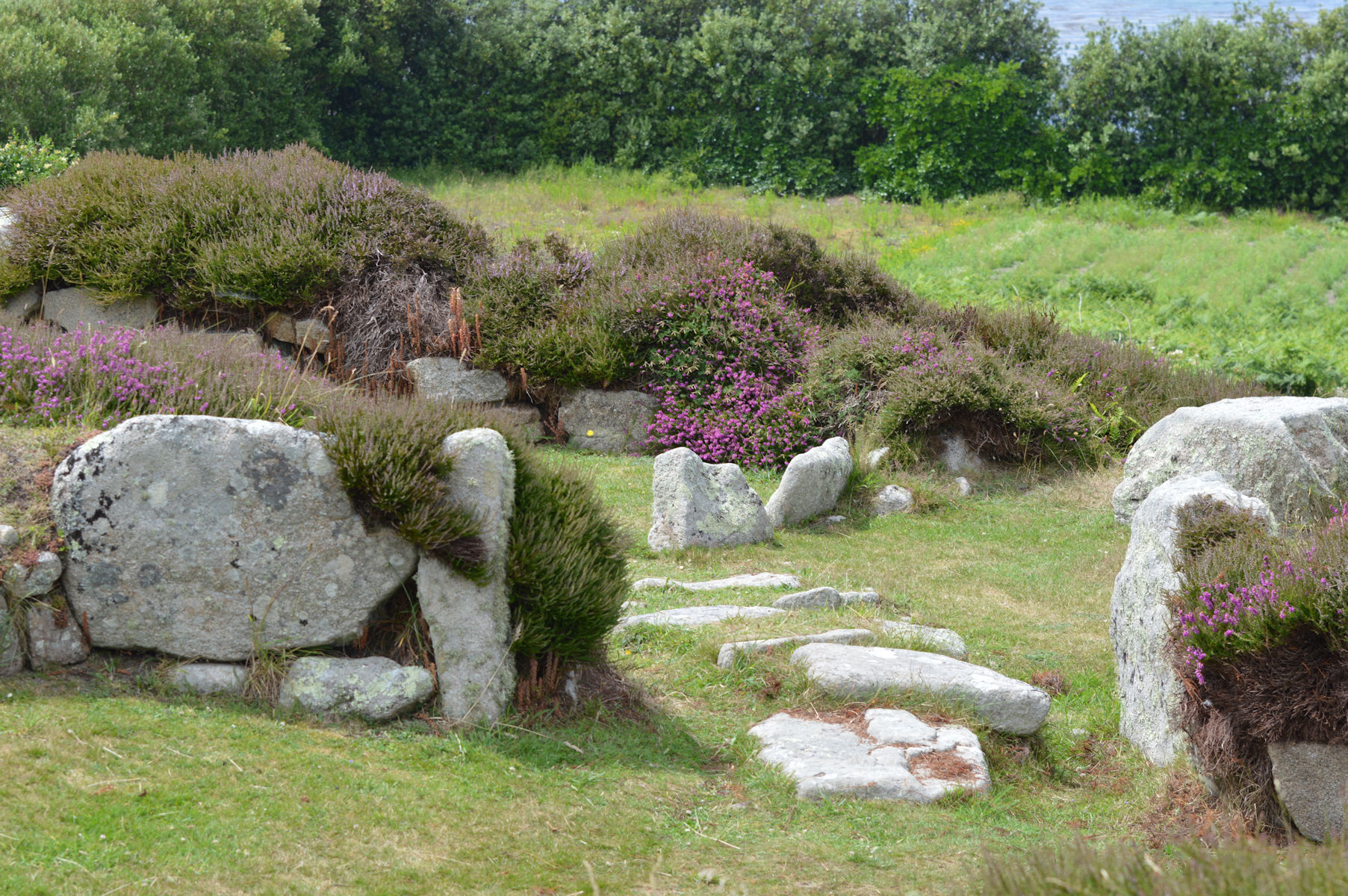
Normally  I focus on the natural history, but the Scilly Isles have been inhabited since Neolithic times, so it would have been rude not to pay a visit to at least one site.  This is Halangy Down; a village inhabited from the Iron Age through to the early Medieval period when it was abandoned as the area got buried in sand.

And this is Bant’s Carn – a 4000 year old burial chamber, just up the hill from the ancient village. I did actually go inside, but obviously couldn’t take a photo of myself!

Fascinating as the ancient history is, I always end up looking for the wildlife. The islands are of course full of birds, who have not only adapted to island life but to tourist life as well. The sparrows in particular had learnt that tourists were easy picking and wherever we went to eat they were there – greedy opportunists, making the most of us greedy visitors. I even managed a bit of sparrow whispering and got them to land on my hand by sacrificing a bit of my lunch to my new friends. If only I could get the robin on our allotment to do the same, I’d be very happy.

Of course we saw lots of other birds besides the sparrows. First new species for us was this Rock Pipit seen down on the shore near the Old Town area – please someone tell me if this is actually just another sparrow!

We saw lots of our perennial favourites – oystercatchers. I’m not sure I’d ever noticed before how disproportionately long their beaks are – although they are clearly well evolved to successfully fill the biological niche that would require such a beak!


We got one fleeting glimpse of a gannet, although they do occur all round the islands. I always struggle to tell cormorants from shags, but apparently the latter are much more common on the Scillies.

Gulls were of course present pretty much everywhere. We saw a lot of Great Black-Backed Gull – the largest gull in the world. The Scilly Isles have over 10% of the UK’s breeding population of this gull. Apparently they can swallow puffins whole, but the one we saw was making do with pecking at a crab shell it had probably nicked from a local restaurant.

I had been tempted to take the moth trap to the Scillies, but common sense prevailed and I was reduced to looking for day flying ones. Fortunately six spot burnett moths were sufficiently common around the islands to satisfy the mothy nerd in me.

As St Mary’s is the main island and therefore the most populous, we hadn’t really expected to see too much wildlife. We thought St Mary’s would be our foodie base and we’d use the outer islands for serious wildlife watching. But without really looking we stumbled upon loads of plants and animals that caught our interest – most of which was accessible from a golf buggy. Who knows what we might have seen if we’d got out and explored on foot!

More soon, when I’ve ploughed through the next 500 or so photos from our trip to the Scilly Isles! xx

30 Days Wild – Day 19 – Upton Warren Wetlands

It’s Day 19 of 30 Days Wild and after yesterday’s lethargy, I was determined to get out and about. So I headed out to Upton Warren Wetlands Reserve. For some reason I thought it might be cooler near water and I fondly imagined bird hides would also be oases of calm in the heat. How wrong can you be? It was of course hot and humid there like everywhere else and the bird hides were more like ovens than fridges!

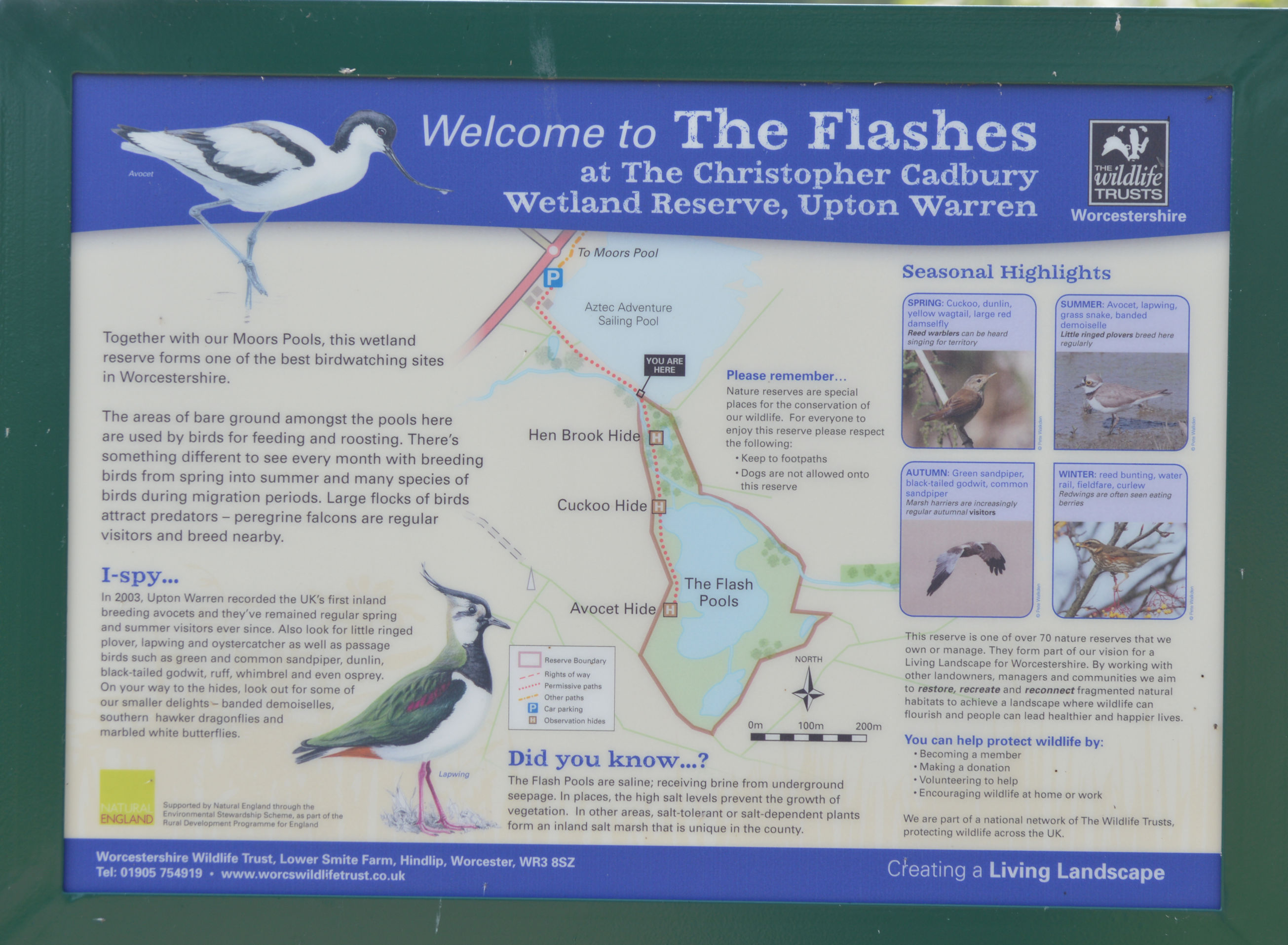
I had been to Upton Warren a couple of months ago, but had only had time to visit the Moors section of the reserve. So this time I headed for The Flashes, which are saline pools and so attract an interesting array of birds, especially for such an inland location. Since I was expecting to photograph birds, I left the macro lens at home – with hindsight another error of judgment for today! Fortunately the lens I did take, wasn’t too bad for insects (although I couldn’t get as close as I would have liked), because the place was alive with damselfies, demoiselles and dragonflies.

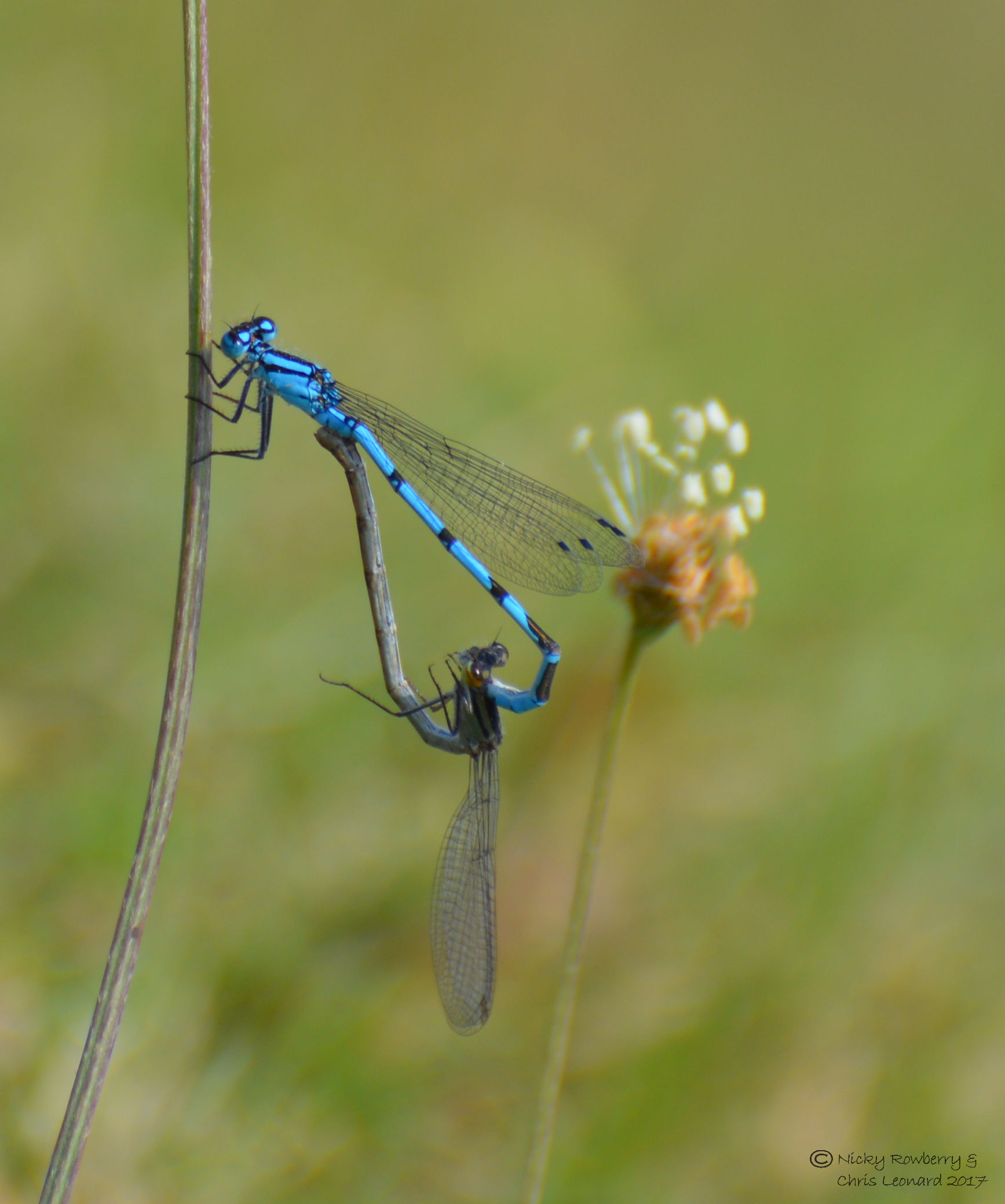
The sailing pool was absolutely awash with Common Blue damselflies – they were everywhere. They certainly lived up to their name today – they were very common and very blue. There were so many I was afraid of treading on one.

Then I spotted something bigger, which fortunately settled on a landing platform. I think it is a Black Tailed Skimmer. It was certainly skimming low over the water.

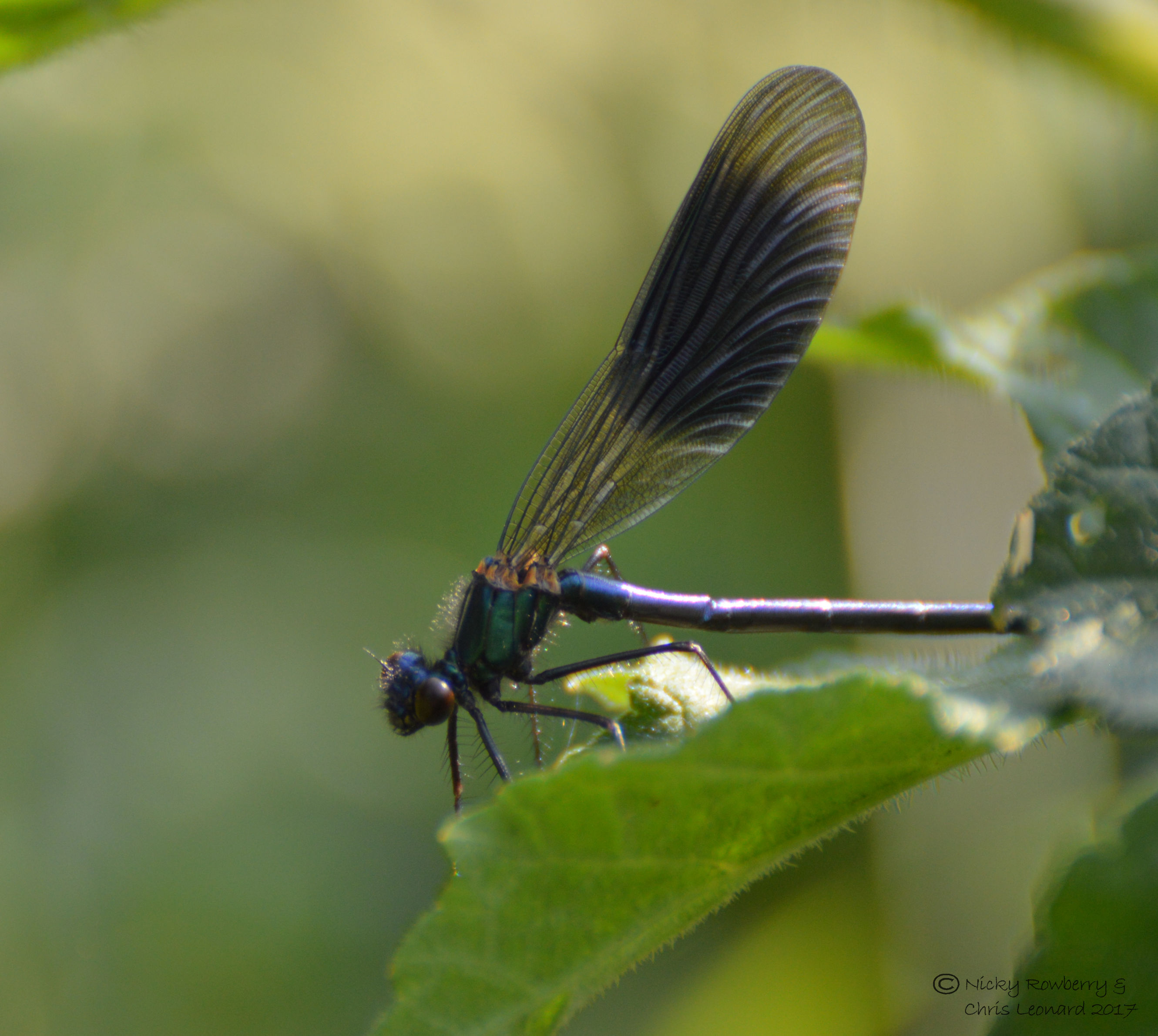
Next up was a Banded Demoiselle; my second demoiselle species of the year.

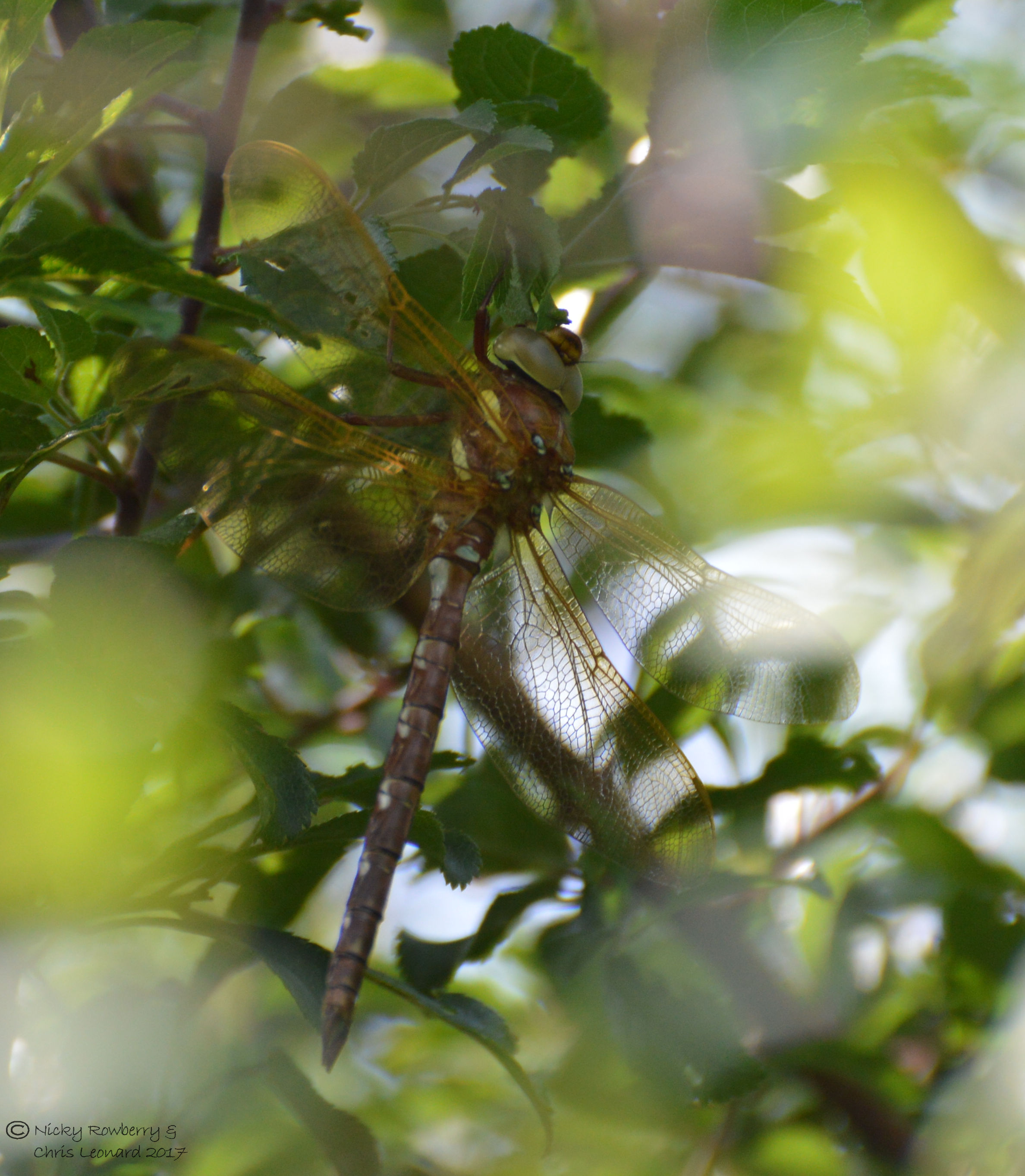
The final one was this huge dragonfly I spotted as I finished up for the morning. I say spotted, but actually I heard it first. It was so big that when it flew off, its wings made such a noise, I actually thought I’d disturbed a small bird and turned round to see what it was. I think it is some kind of hawker dragonfly.

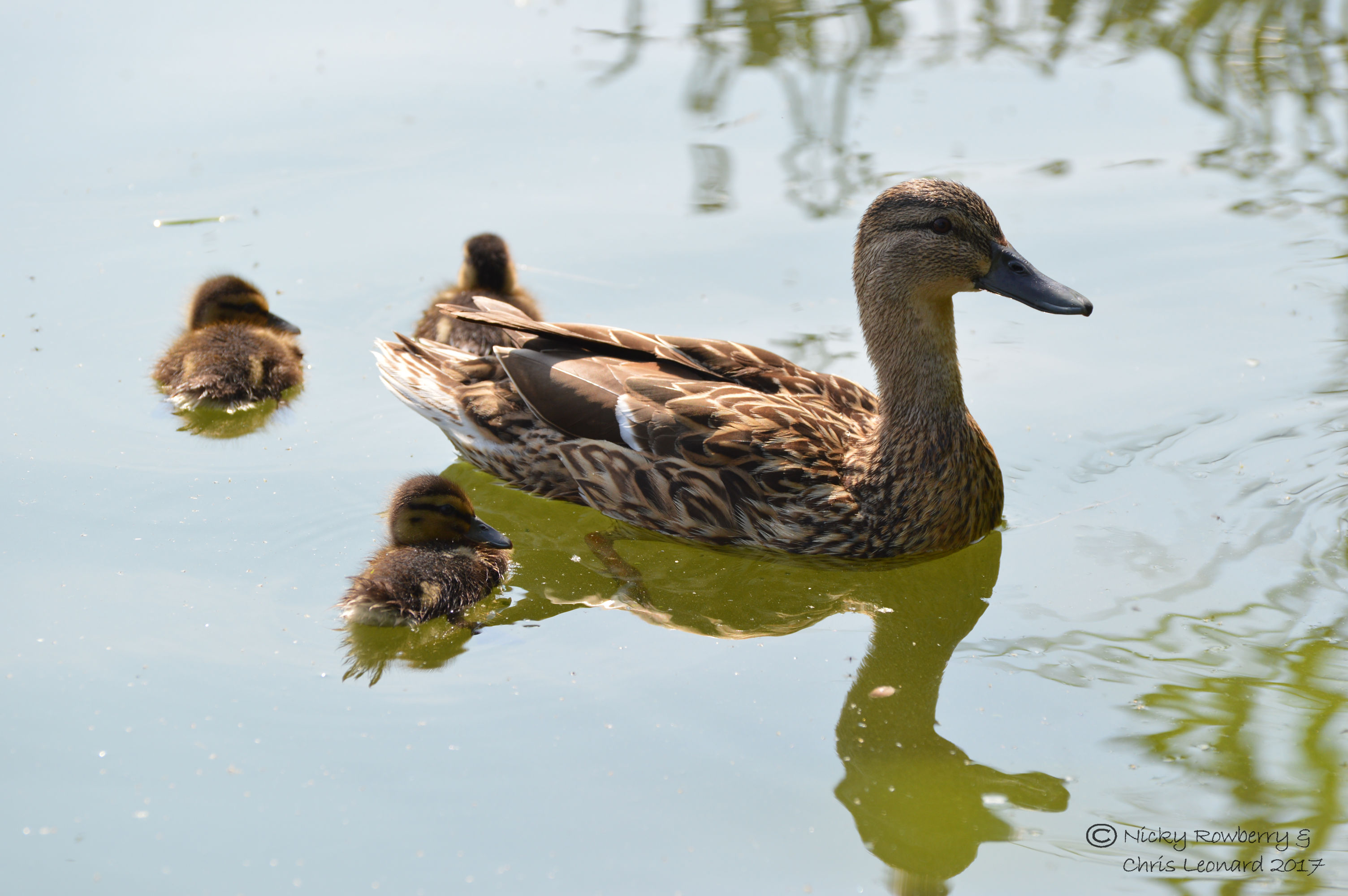
Anyway on to the birds – there were of course plenty there, despite me being distracted by the dragonflies. First happy sighting was this mother duck with her ducklings.

Moving on, probably the most common bird I saw this morning was the Black Headed Gull – again it does what it says on the tin – a gull with a black head! This one is an adult in breeding plumage.

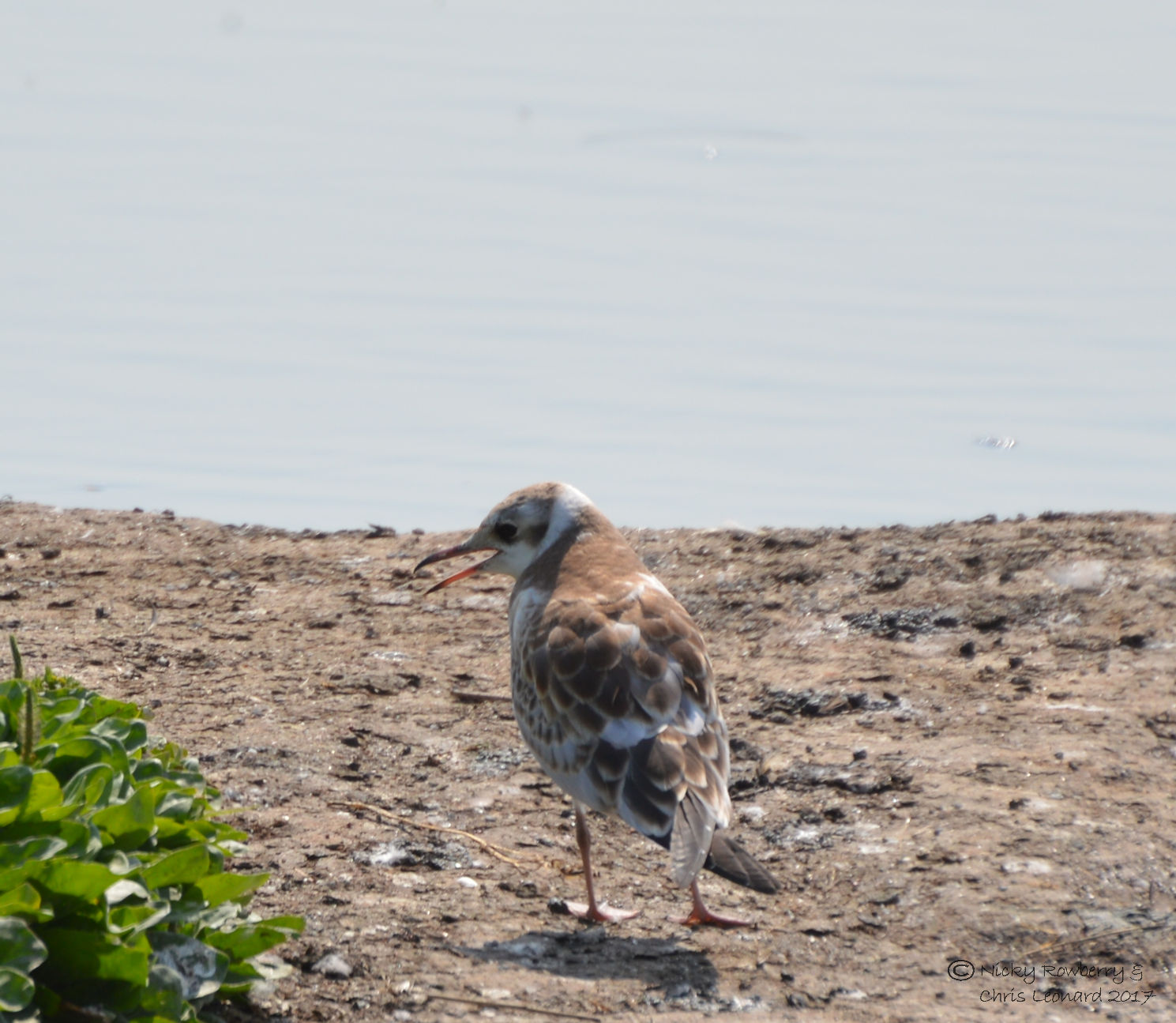
Although this one looks completely different, I think it is also a black headed gull, but a juvenile this time.

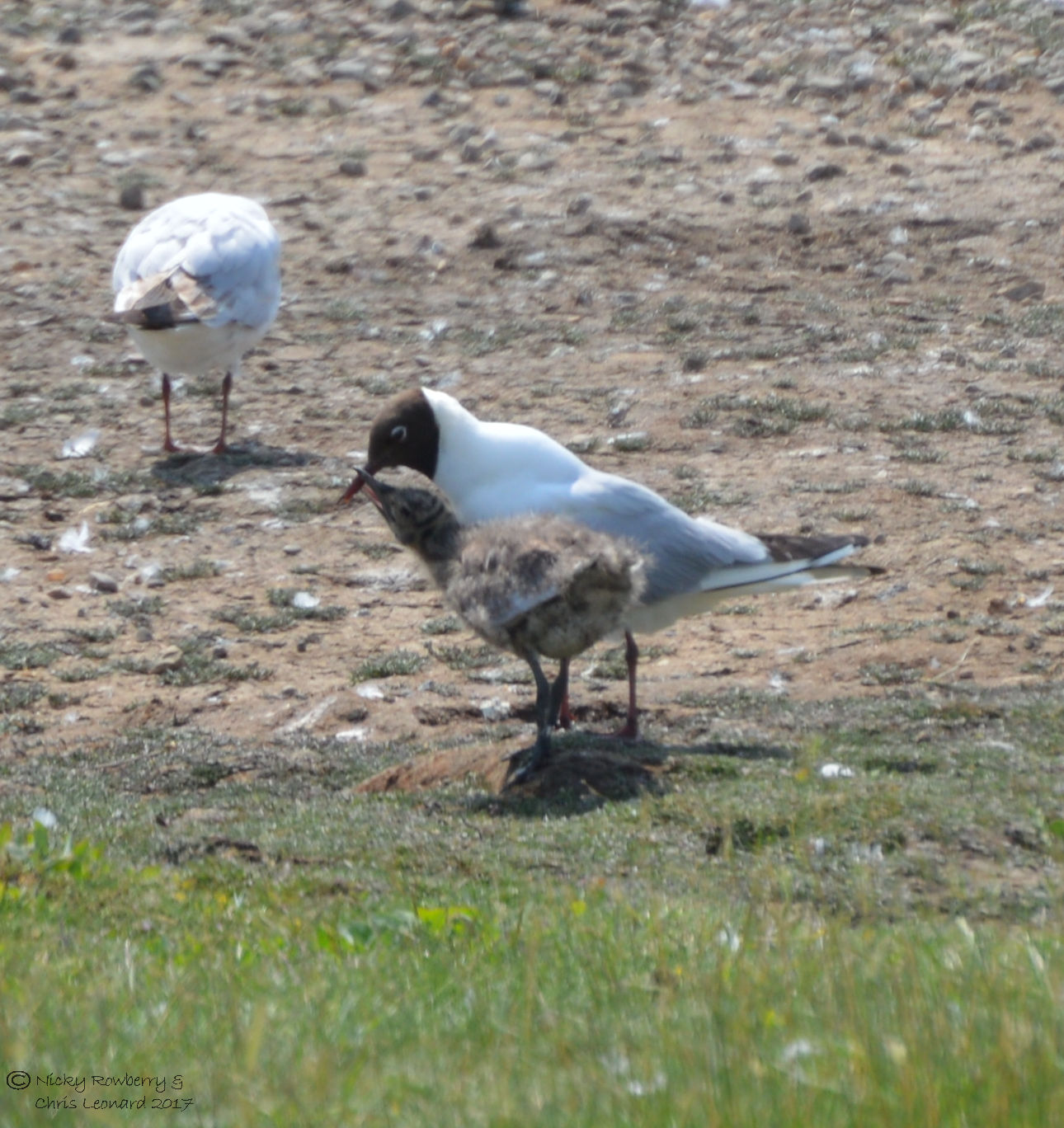
And to confirm the difference in plumage, here is a poor photo of an adult feeding an even younger one.

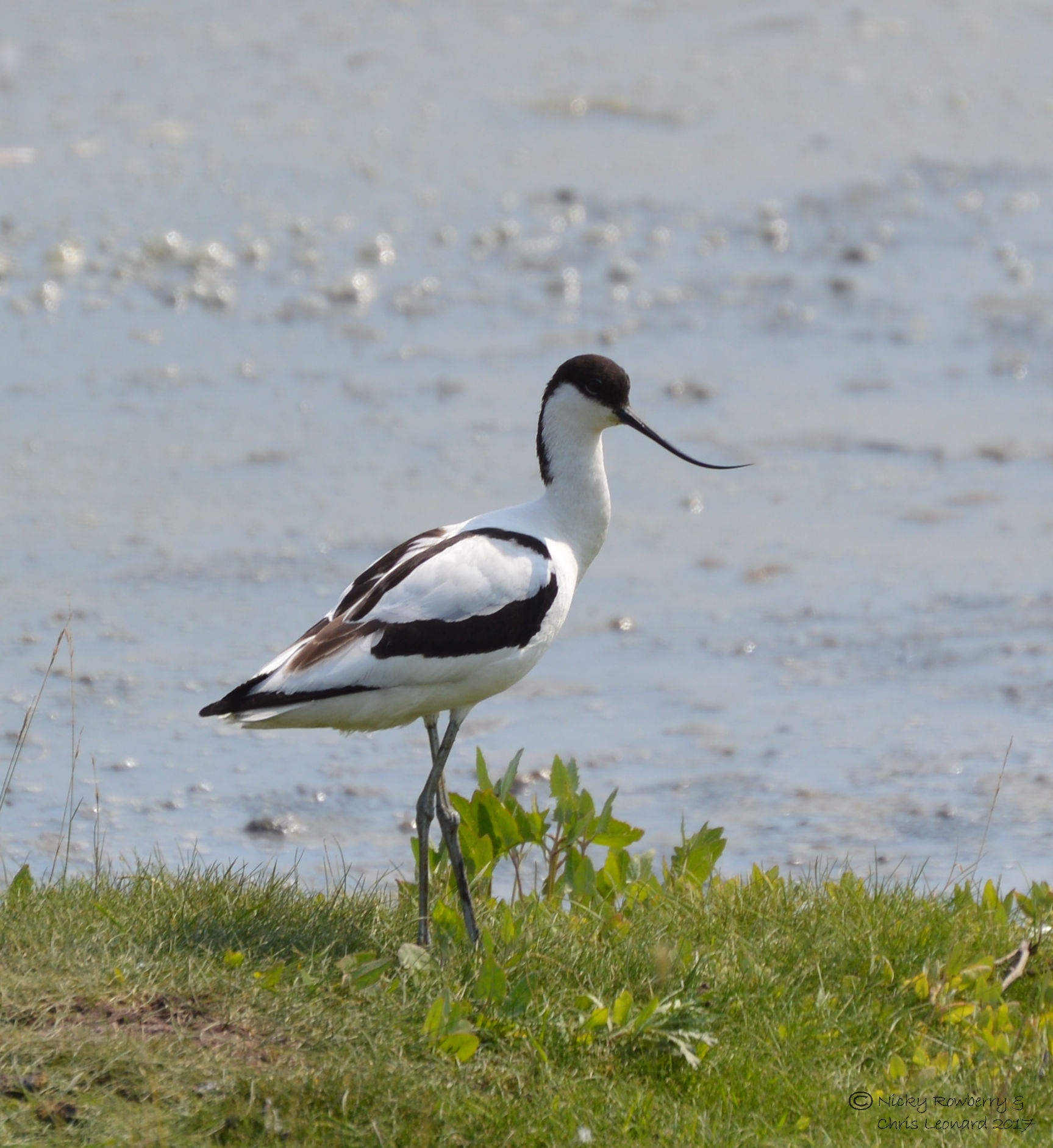
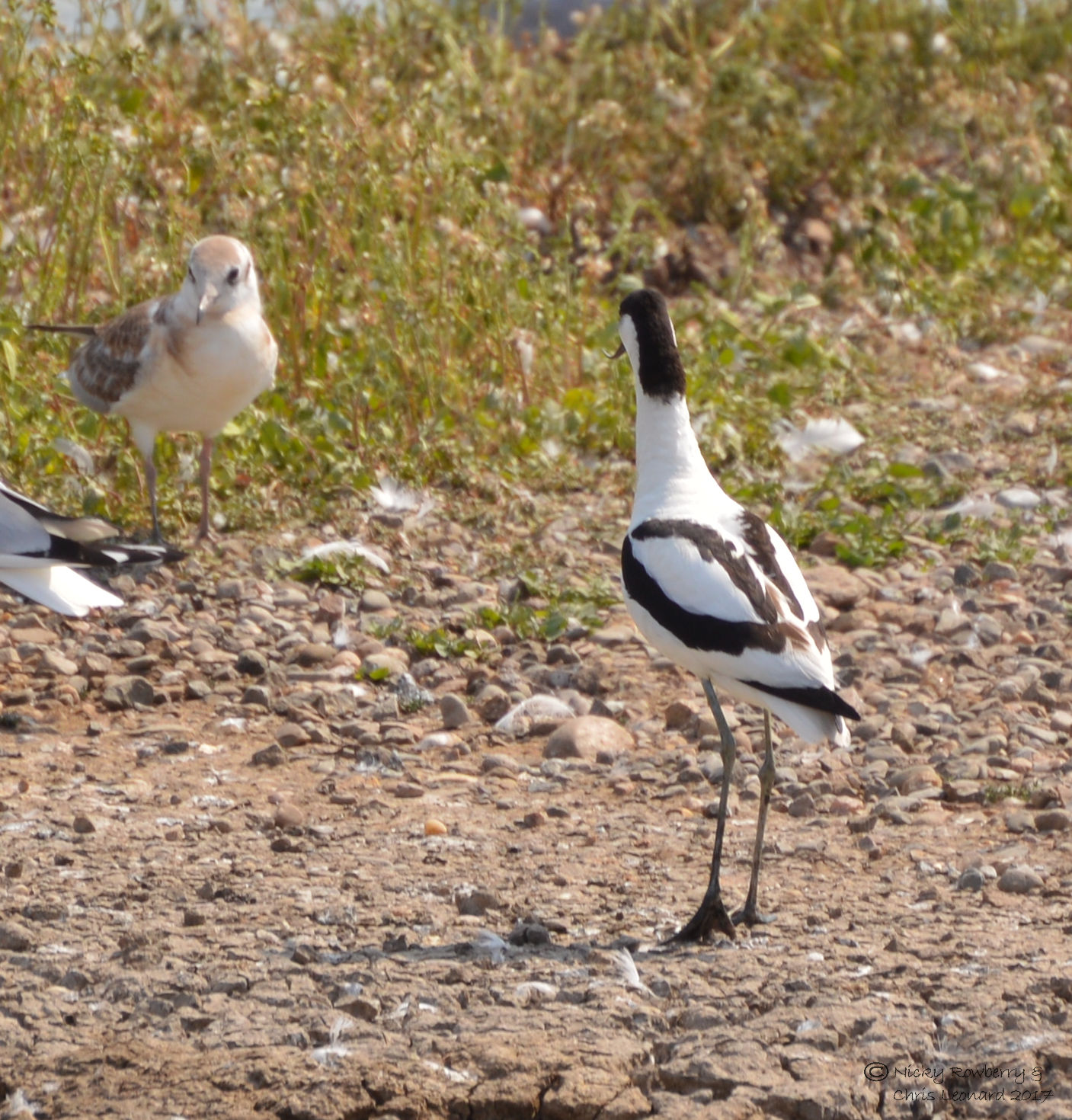
My favourite bird from today, and the one I went hoping to see, was the Avocet. Absolutely stunning black and white birds with long curved bills. I couldn’t help but take loads of photos! They seemed very territorial, chasing off anything that came within their patch, regardless of size of the intruder.

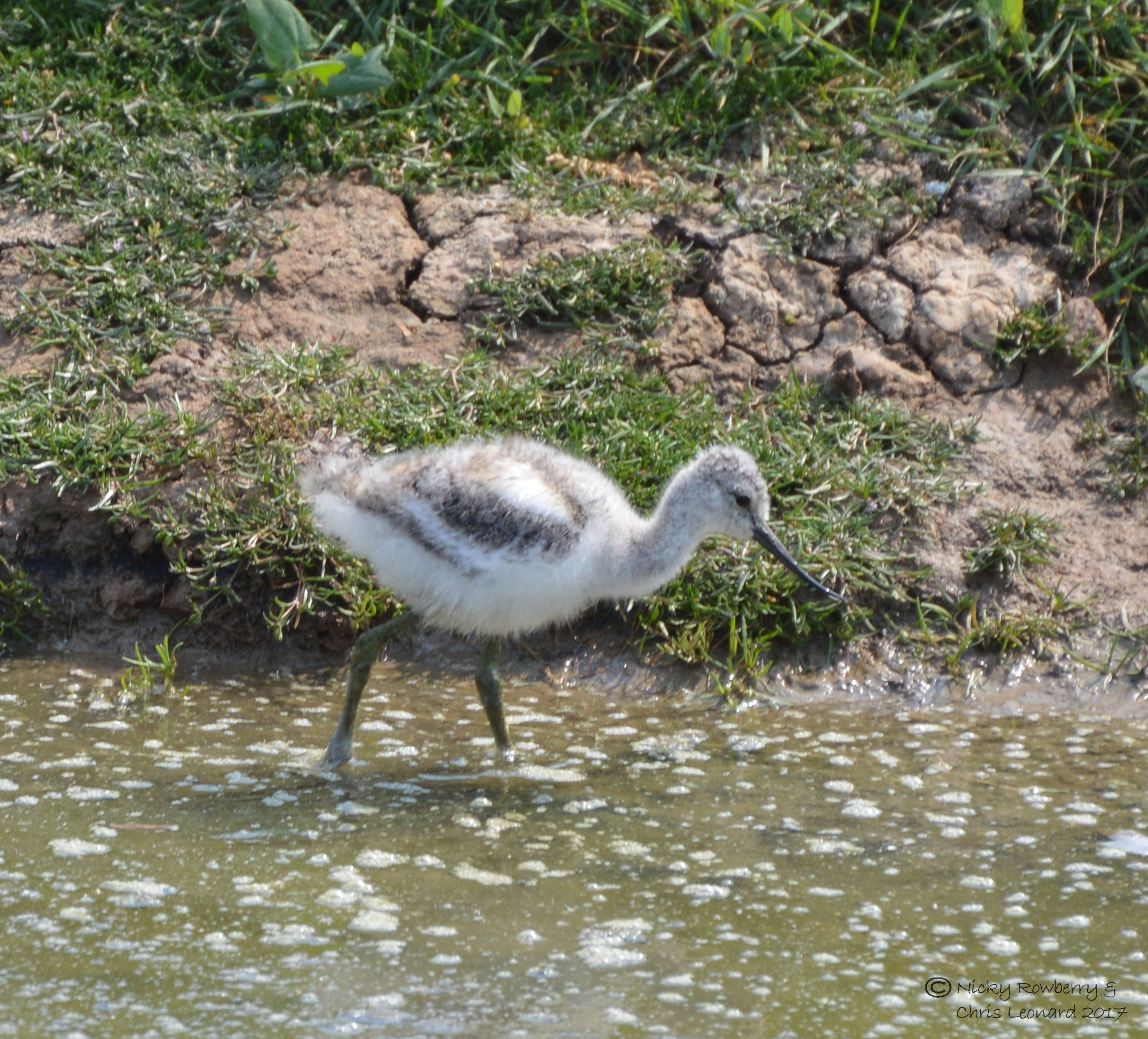
And this I think is an avocet chick. It’s not got the adult plumage yet, but the beak is the same and it was behaving the same.

Both adult and young avocets behaved the same way – poking about through the water with their long bills looking for food. I managed a couple of shaky videos of them doing this. You can tell from the noise in the background, just how many birds were around today.


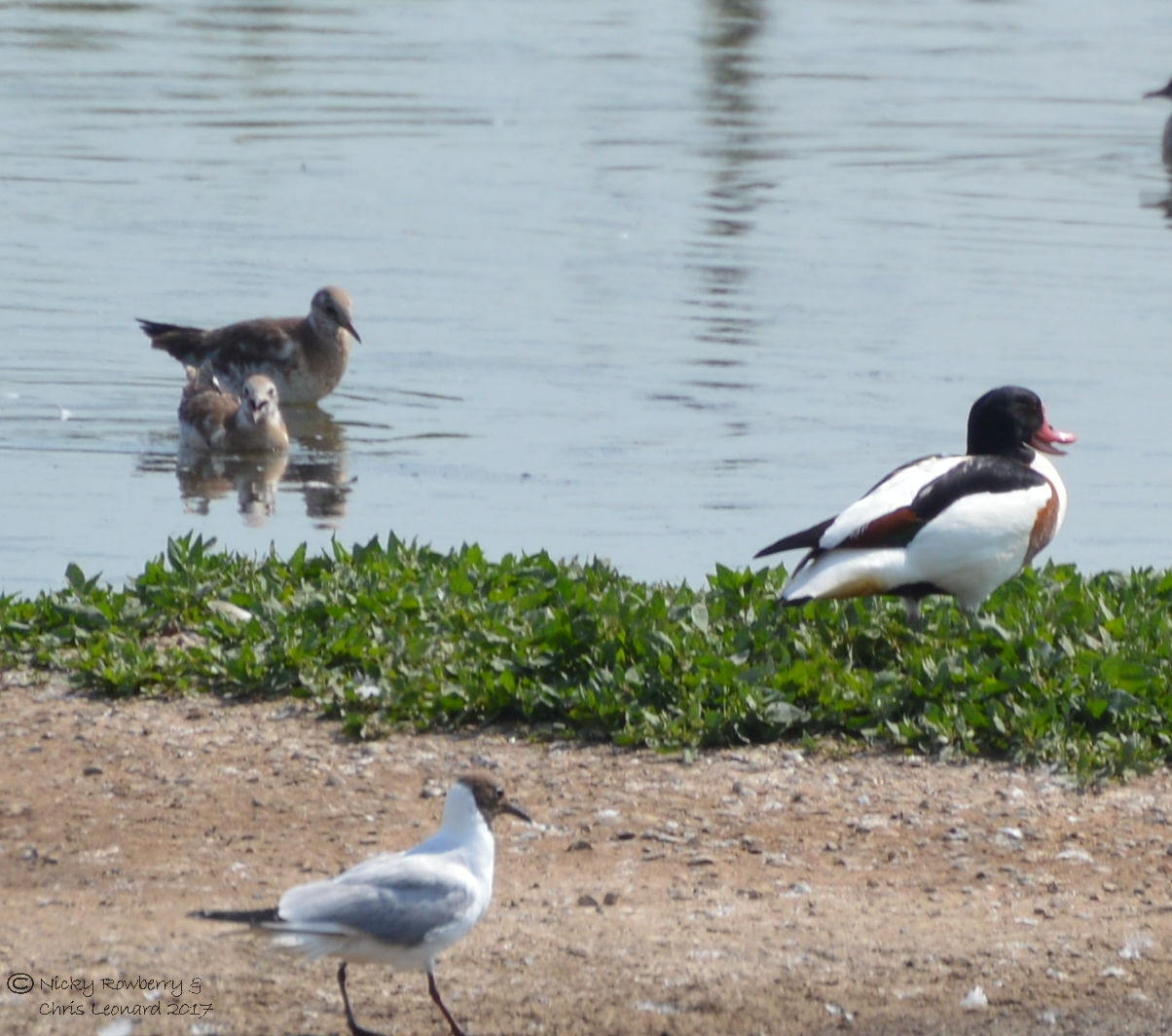
There was a real cacophony of bird sound all morning, most of which was unidentifiable to me, although I did think that perhaps there were some warblers near the hides – something definitely seemed to be warbling! Although there were birds everywhere, the only other species I really took photos of were this Shelduck and some Canadian Geese.

I no doubt missed lots of other species. Someone in one of the sweltering bird hides told me they’d seen a Mediterranean Gull from the next hide. I don’t think I saw one of those, but then I’m not sure I’d have been able to tell the difference if I did! Although it would be nice to be more knowledgeable about the birds, I don’t really mind going to places like Upton Warren as a novice. Just seeing so many birds, species I’d only ever seen on the telly (thank you Springwatch), is glorious. Upton Warren is a delight and I’m already looking forward to going back again – although I might wait for a cooler day!


Out and About – Upton Warren Wetlands

It’s March and I ventured Out and About properly last weekend for the first time this year. I’d joined Worcestershire Wildlife Trust a few months ago and decided to take advantage of this by visiting the Upton Warren Wetland Reserve.  It was so nice to get some fresh air and explore somewhere new. The reserve has a mixture of freshwater and saline pools (the result of previous brine extraction work), which attract a wide variety of birds. The reserve is pretty big, so I only managed to do about half of it on this first visit. It’s a fantastic site though, so I will definitely be back soon to try out the other half.

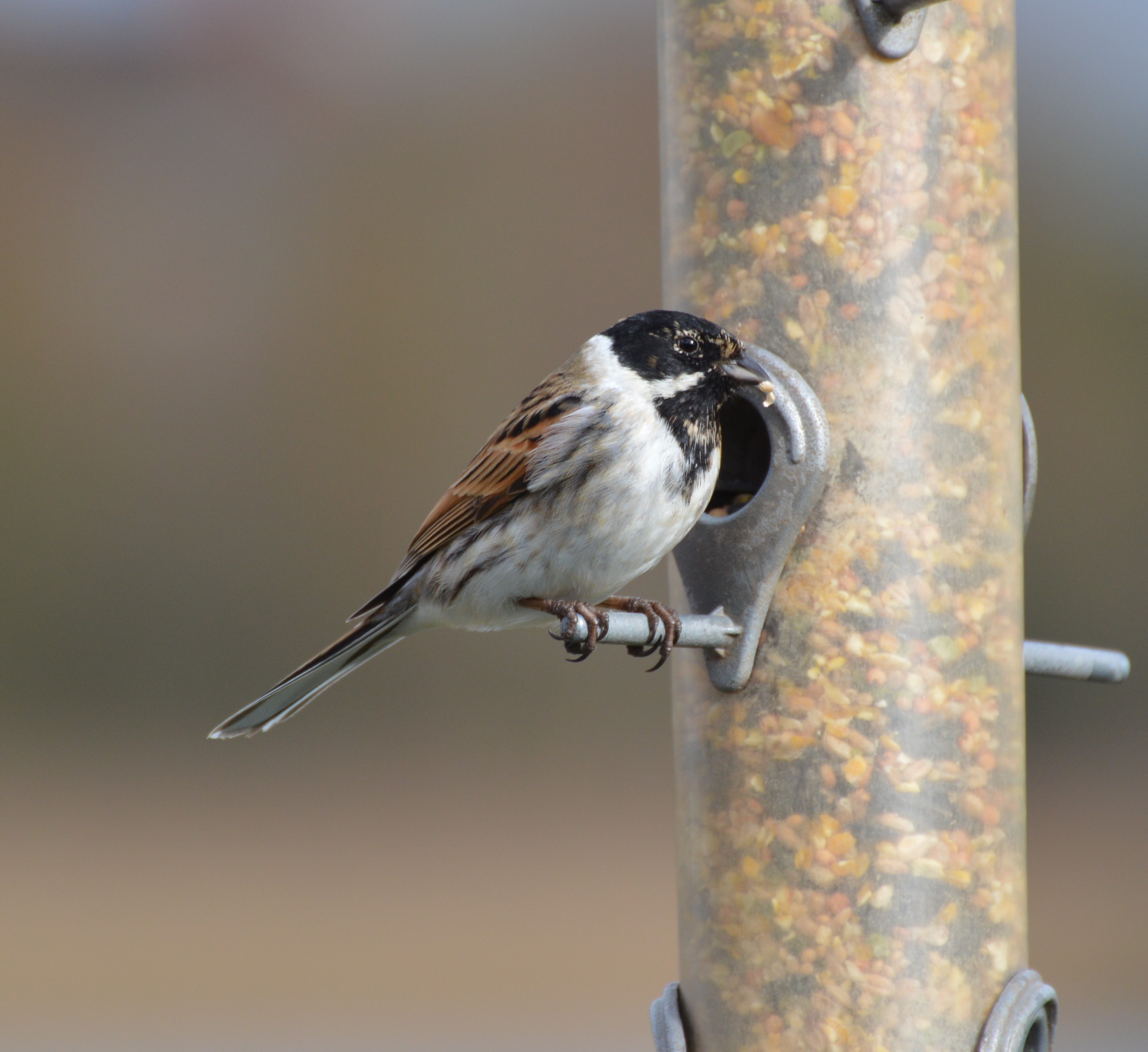
At the first hide, the Trust people had hung out a few bird feeders and I noticed a lot of small brownish birds that looked a bit like sparrows. Being a novice, I had to ask the helpful gentleman who was in the hide with me what they were – I was a bit worried he might just say that they were sparrows, then I really would look clueless, but fortunately it turned out they were reed buntings. I had sort of expected reed buntings to hang about in the reeds and be difficult to see, but I guess why would they do that when there were easy pickings from a feeder?  Top one here is a male and the bottom is the female (at least I think it is, unless it turns out to be an embarrassing sparrow).

reed-bunting-female

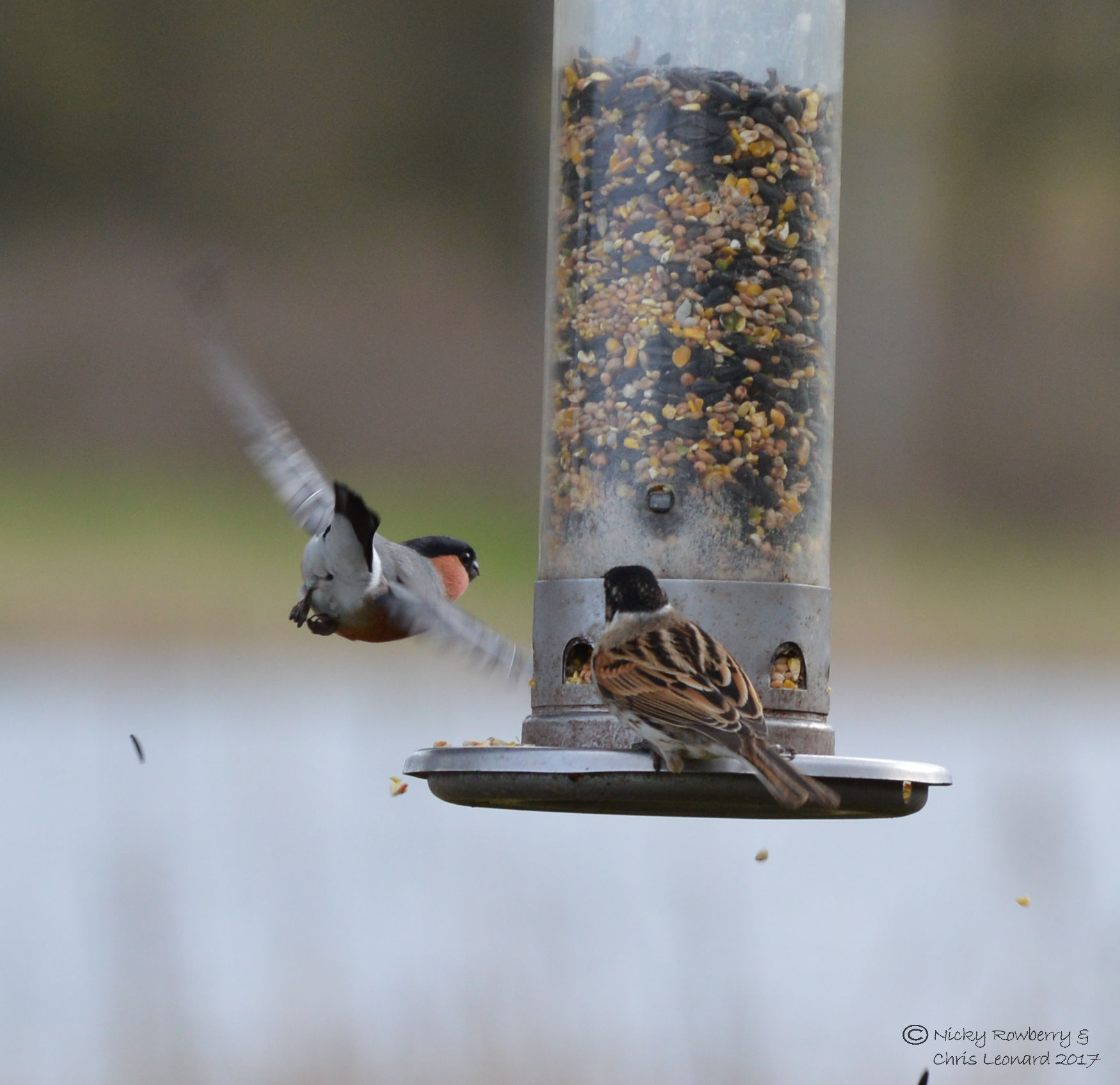
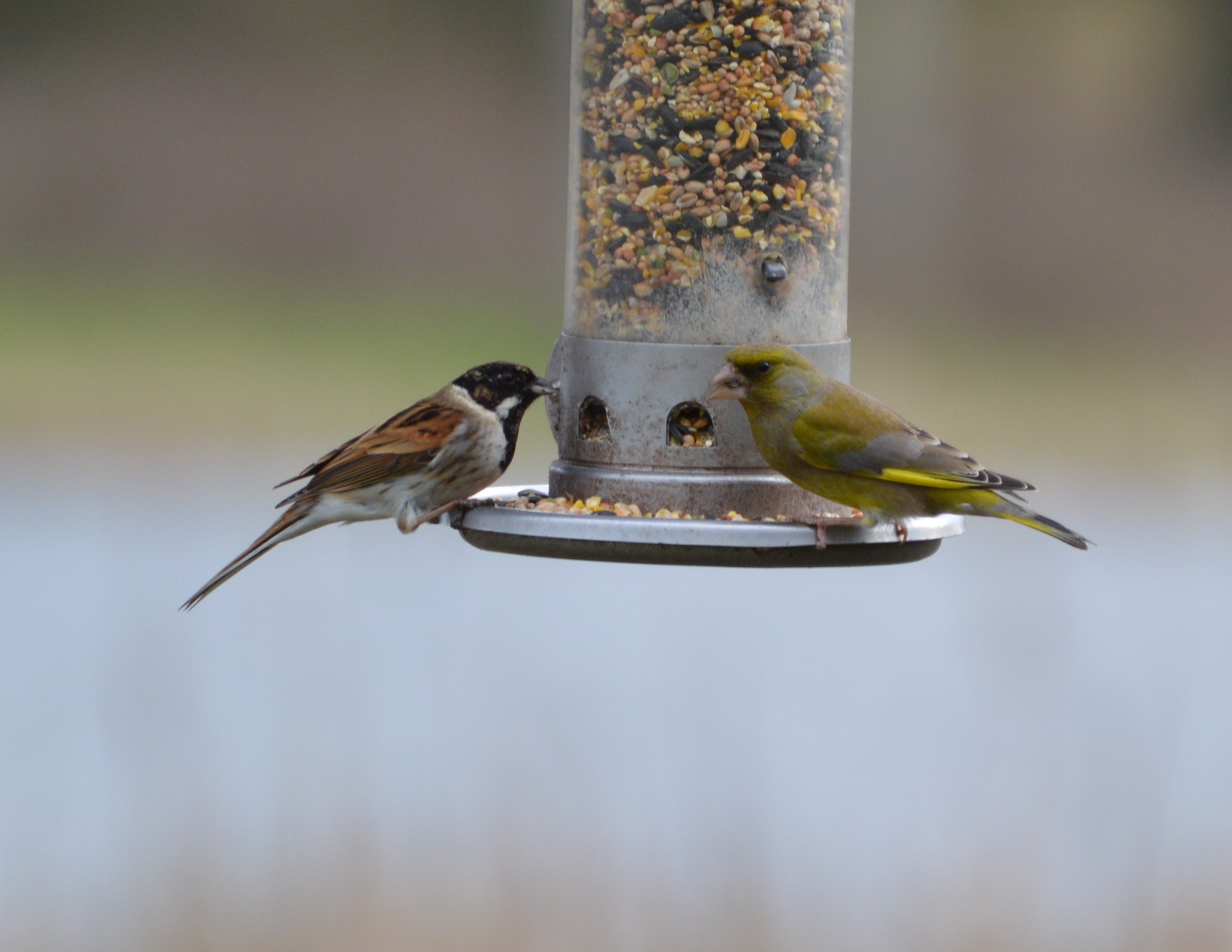
The reed buntings weren’t the only ones using the bird feeders; they had stiff competition from the bullfinches in particular, who in turn had to contend with the greenfinches.

bullfinch-bunting-2

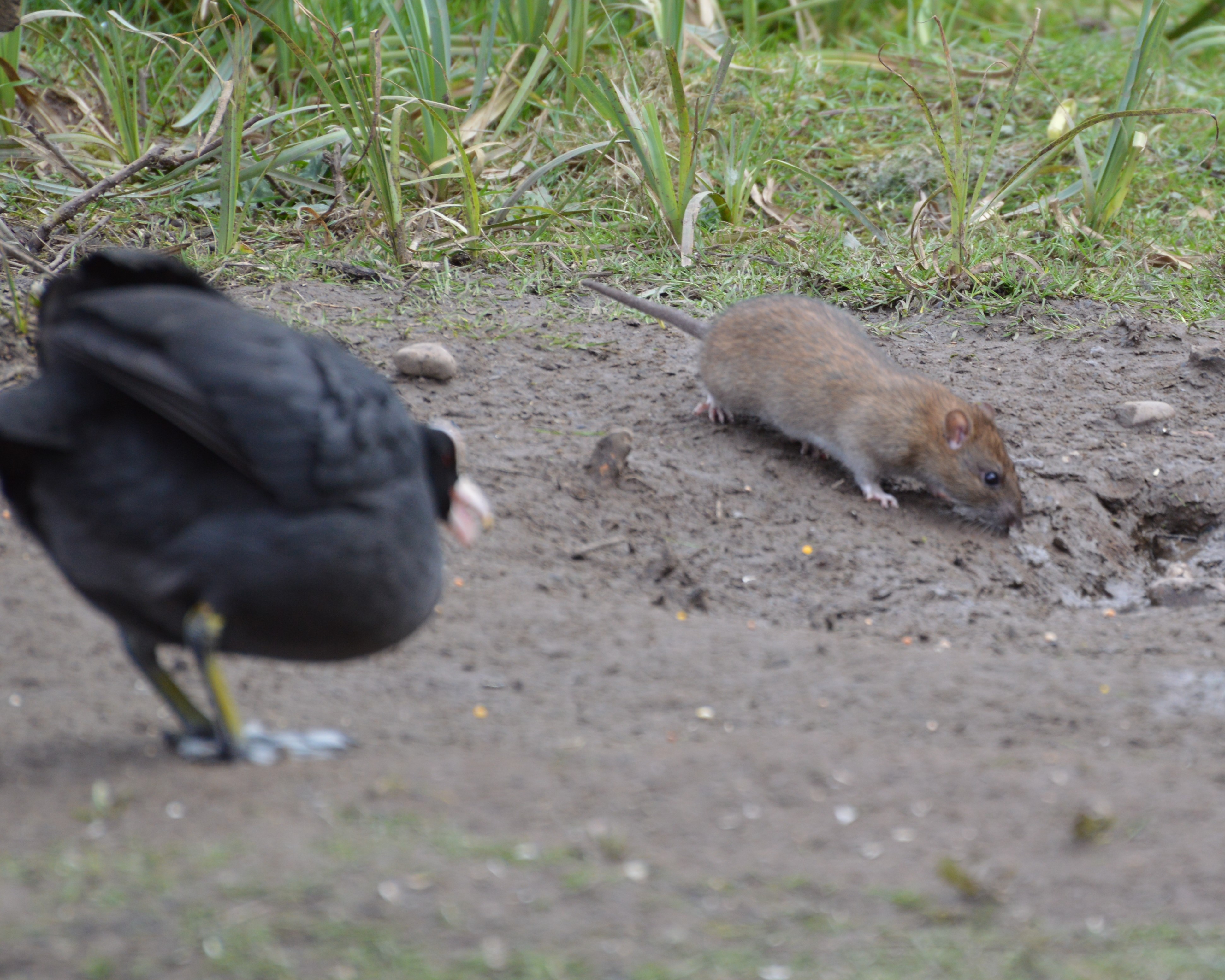
All the dropped seed of course attracted the inevitable rats, including this particularly bold one. Not the most welcome visitor to a bird reserve, but it was interesting to see a rat that close up in broad daylight – a first for me.

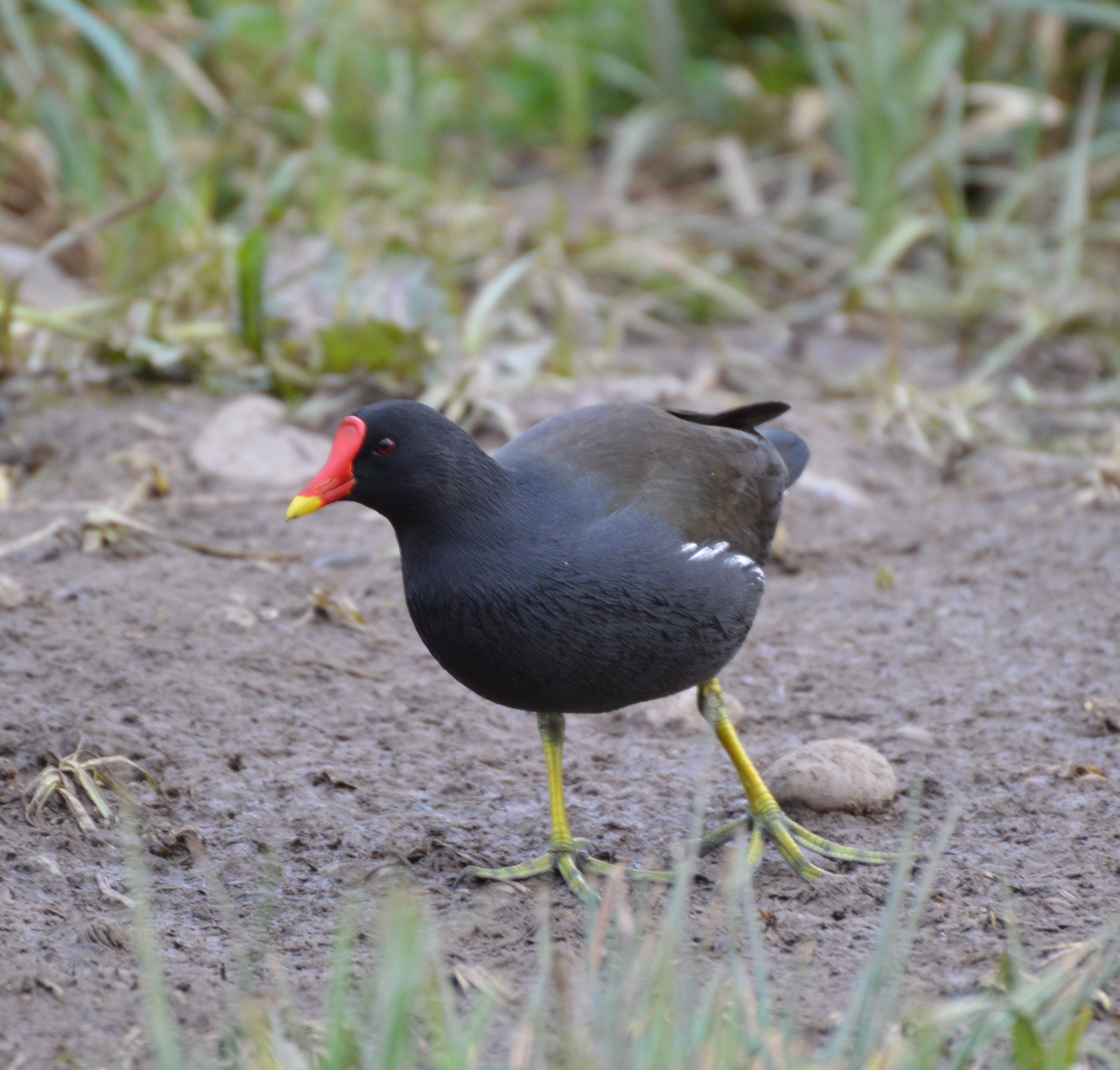
A portly looking moorhen was lazily scanning around for bird seed, while a coot cruised the nearby inlet.

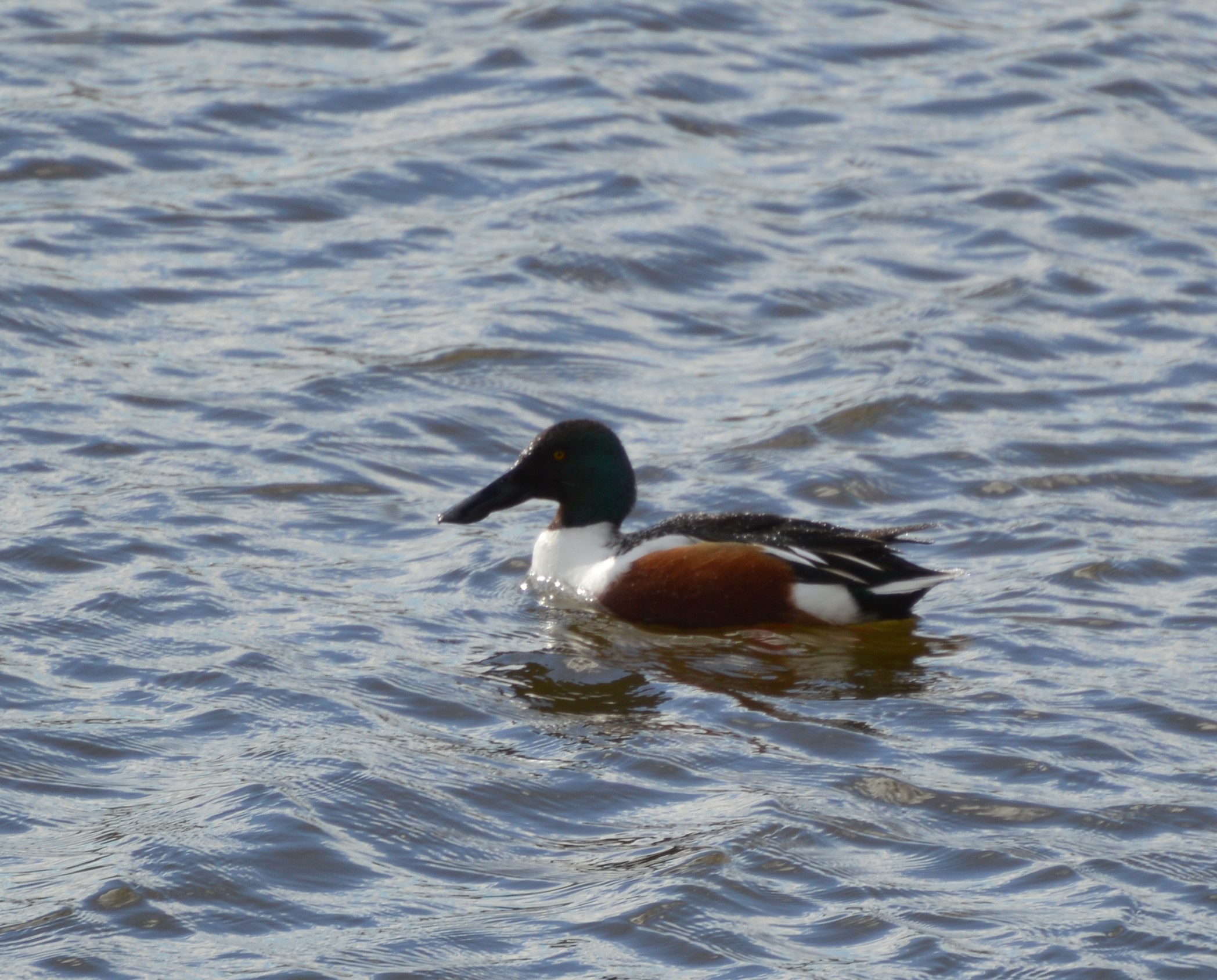
There were quite a few regular mallards about, but then a duck appeared that looked a bit different. Umpteen blurry photos later, I finally got one good enough to identify it as a Shoveler Duck. Turns out they are fairly common, but it was new to me.

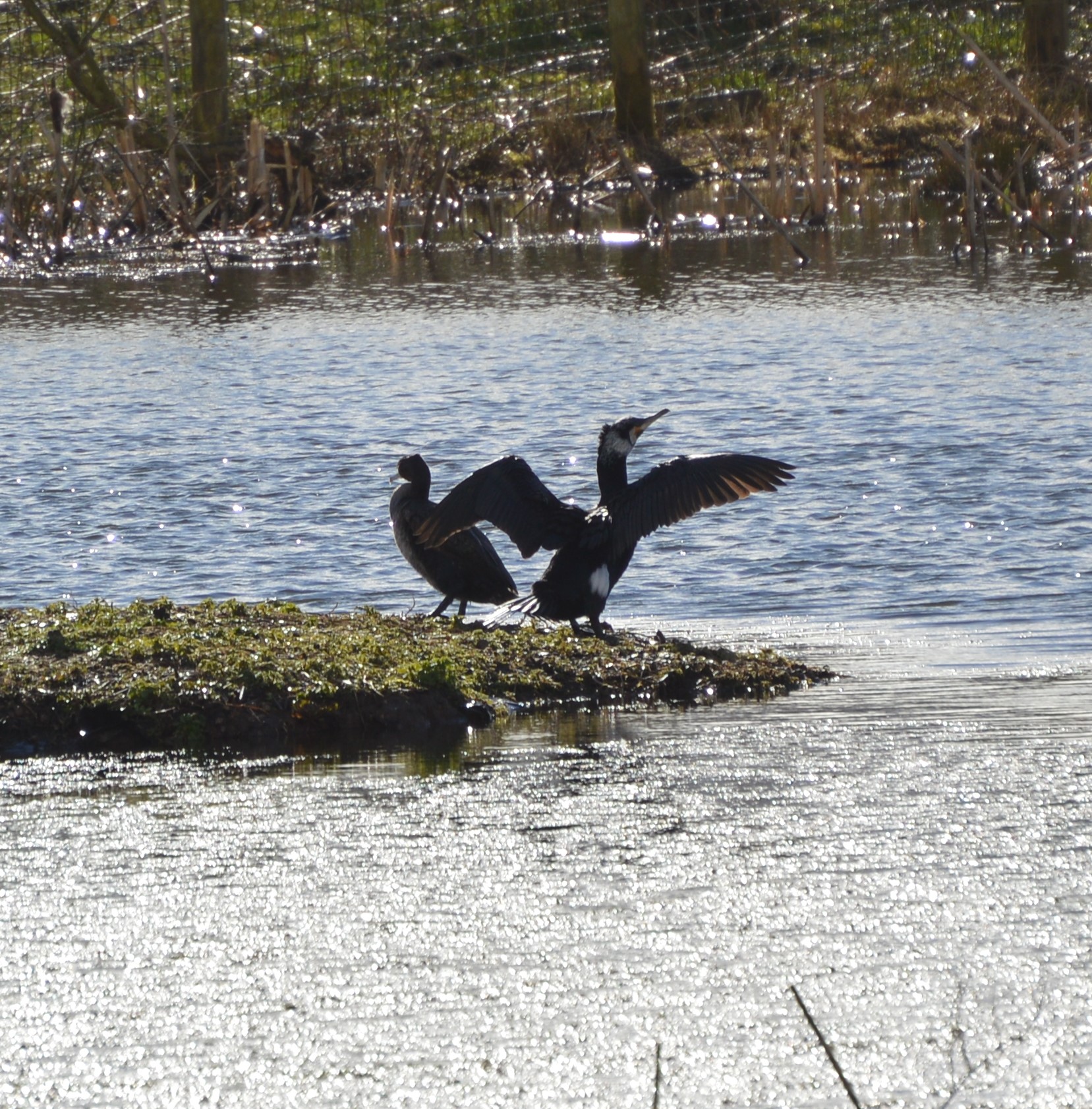
There were a few cormorants about – weird looking birds. Even the RSPSB website describes them as reptilian looking, which seems a tad unkind!

By far the most common birds I saw were these black-headed gulls, this one in his winter plumage still.

One species I was really pleased to see was the lapwing. I’d only ever seen these on TV (Springwatch most likely) and they are such characterful looking birds, I was really chuffed to find a small flock of them. They were a bit far away to get really good photos, although when they all took off I got a slightly better view.

Having lived by the coast for many years, one bird I was familiar with was the oystercatcher – never imagined I’d see them in the middle of Worcestershire though! I heard them at Upton before I saw them – that distinctive, fairly shrill call. A pair landed on a small island in front of me, easily recognisable with their bright red beaks and legs (I do like an obvious bird!) Again they were a bit far away to get really good photos.

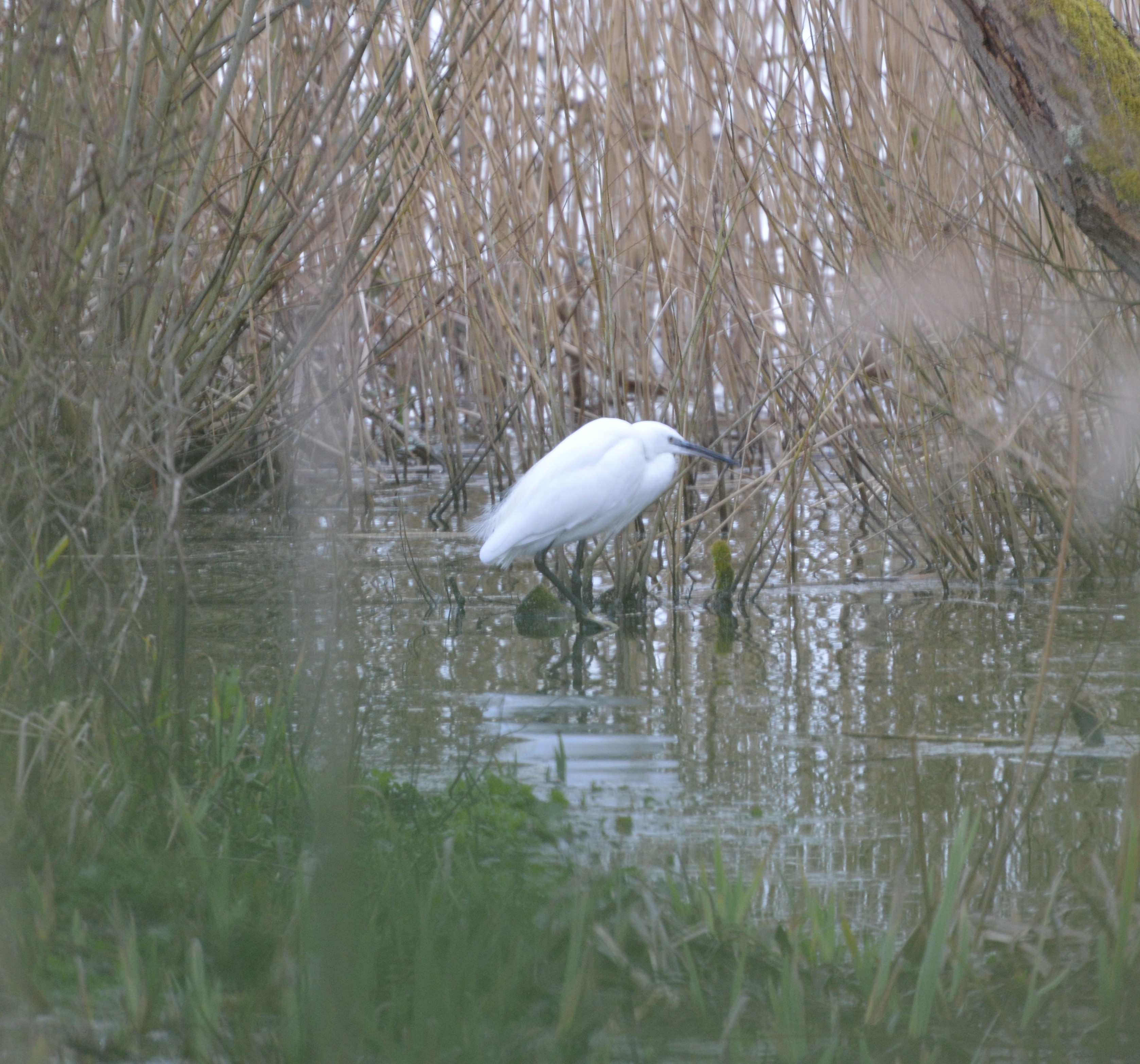
Without doubt the most beautiful bird we saw was this Little Egret,  spotted as I walked between hides. Almost ethereal with its pure white plumage, I watched it for a few minutes before it disappeared into the reeds.

All in all a great afternoon and although I was only there for a few hours, I still clocked up 18 species of bird, several of which were completely new to me. I heard another birdwatcher commenting that there was “nothing much showing” – he was no doubt much more experienced than I was and probably hoping for something unusual. Sometimes it’s good to be a novice, as I was absolutely delighted with everything I saw – lots of the birds were new to me, so it was all exciting and I was happy just watching what was there. For me there was plenty showing.