Beautiful Pea-Green Moths

The end of the annual Garden Moth Scheme is nigh, so I’ve been checking my moth records ready to submit them to the scheme coordinator. I’ve posted previously about the autumn colours of moths – how the various Sallows mimic piles of dead leaves etc. But looking at the moth list from the last few weeks, the colour that stood out was green. When people think of moths, they don’t tend to picture green ones, but there are some stunning ones out there. So this week’s blog is in praise of the beautiful pea-green (and other verdant shades) moths I’ve found in the garden.

I’ll start though with my most rubbish photo – the Green Pug. I’ve caught these several times, but all the Pug moths tend to be really flighty and as soon as you open the collecting pot, they fly off. So despite repeated efforts this shot through the plastic pot is the best I’ve managed for a Green Pug. You can at least see that it is green and, if you’re into moths, you’d see that it is the typical pug shape.
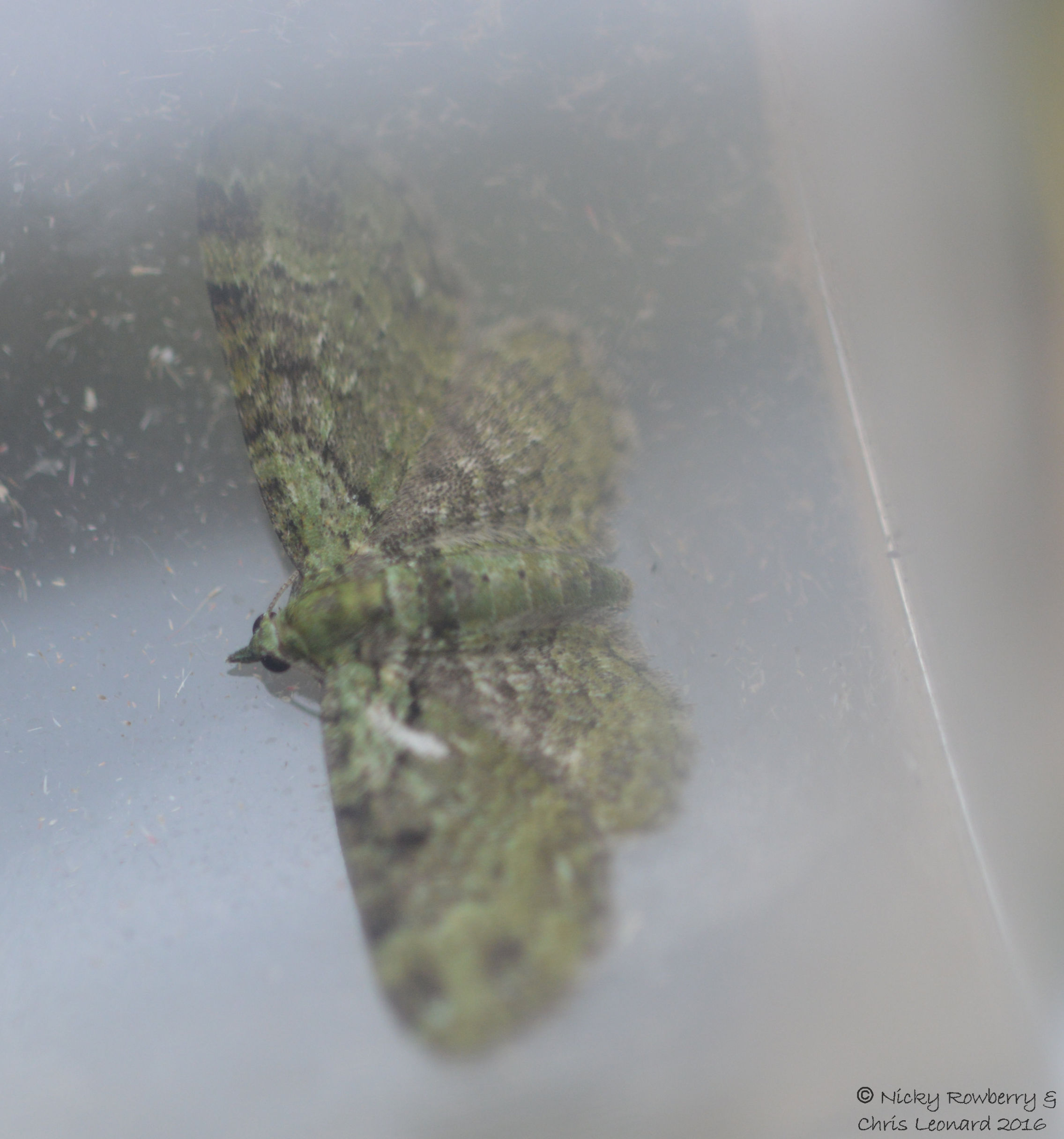
green-pug

There’s a whole group of moths called the Emeralds – a great name for these gorgeous green moths.  We’re lucky to get at least three species in the garden. The palest green one is the Light Emerald (a name that does what it says on the tin!) This is the largest of the emeralds we get here and has reddish tips to the end of its wings (although this one has lost one where something’s taken a bite out of it).
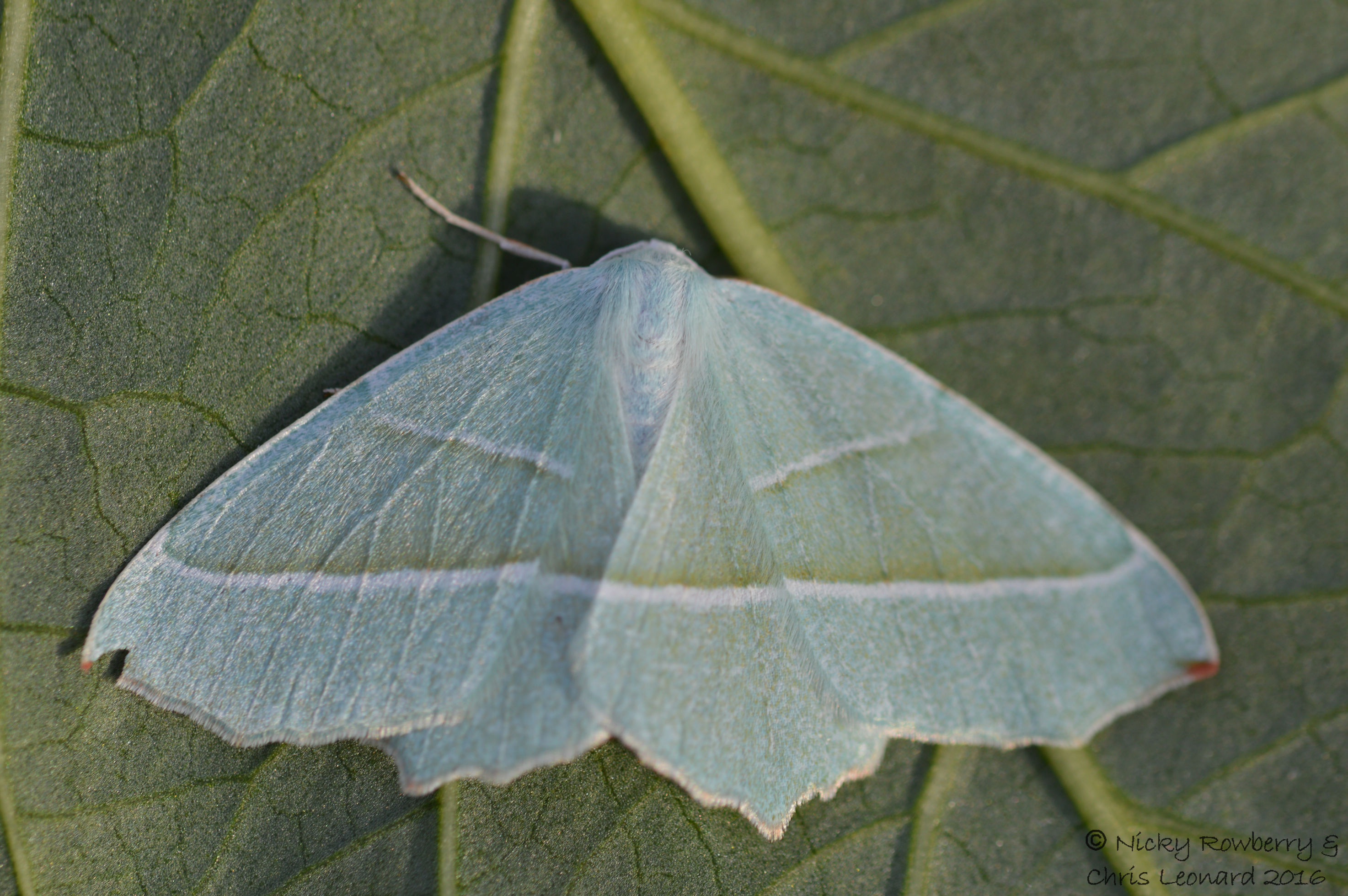
light-emerald

Next up is the Small Emerald, which is the brightest green of the three. For some reason the best photo I could find of this one was of it sitting on my fingers. (not to self, get manicure before posting photos of scruffy finger nails!)
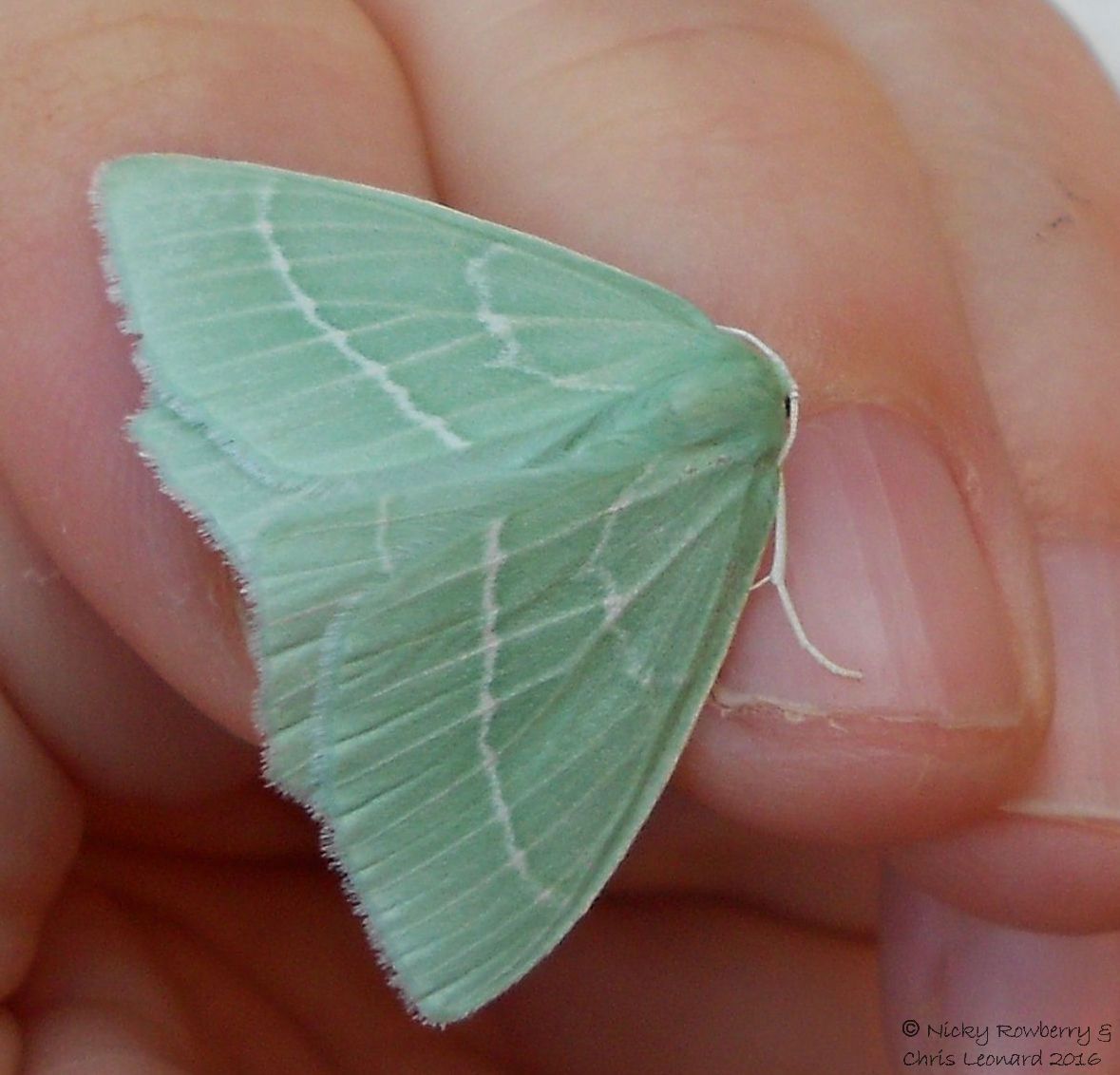
small-emerald

The third one is a Common Emerald which didn’t actually put in an appearance in the garden this year (perhaps it’s not that common?), but we’ve had it previously. Confusingly it is smaller than the Small Emerald!
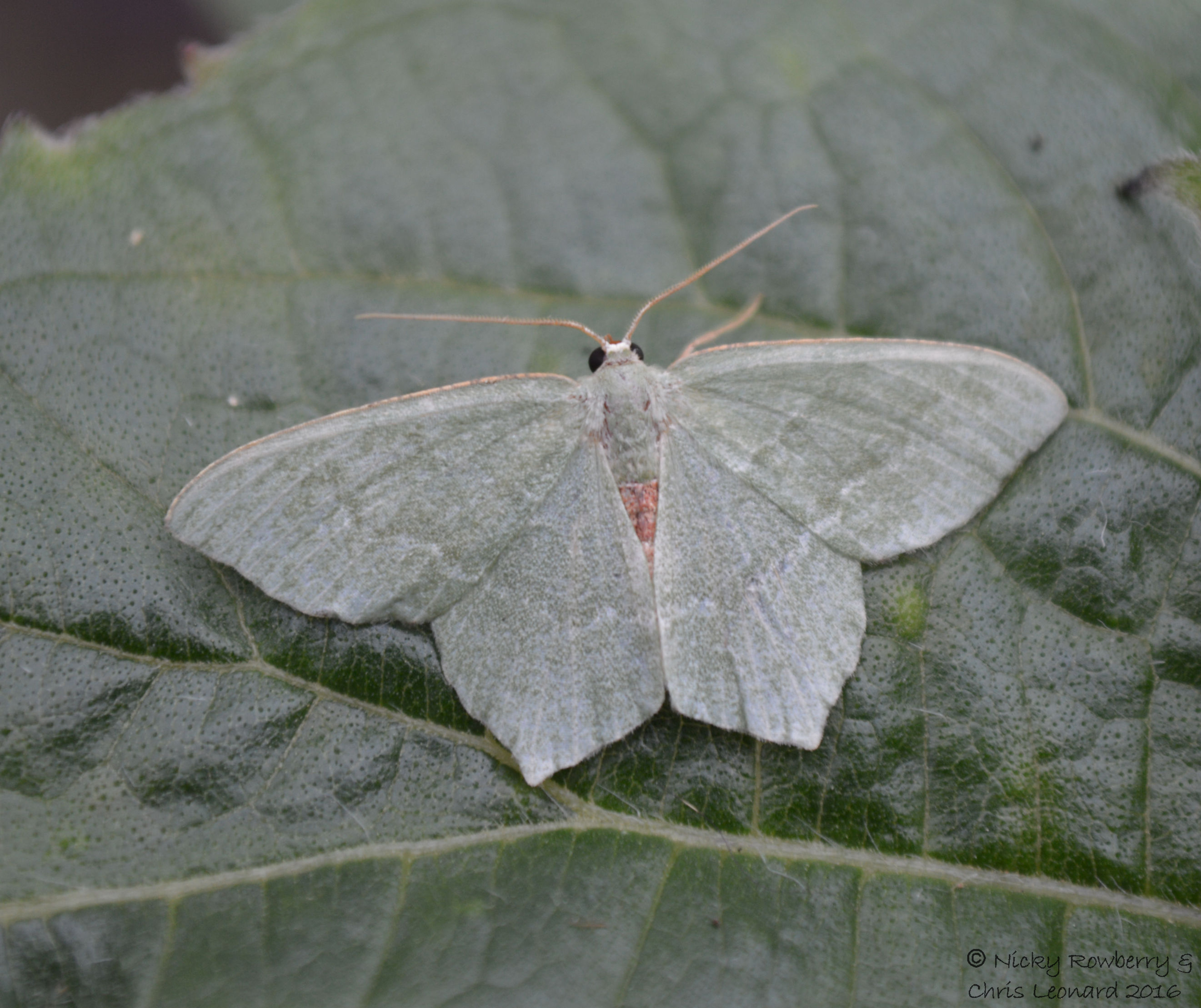
common-emerald

From a “Common” moth that didn’t appear this year to a “Scarce” moth that did – the Scarce Silver Lines. This is a stunning moth with pales lines across a green background that are presumably intended to resemble veins on a leaf.
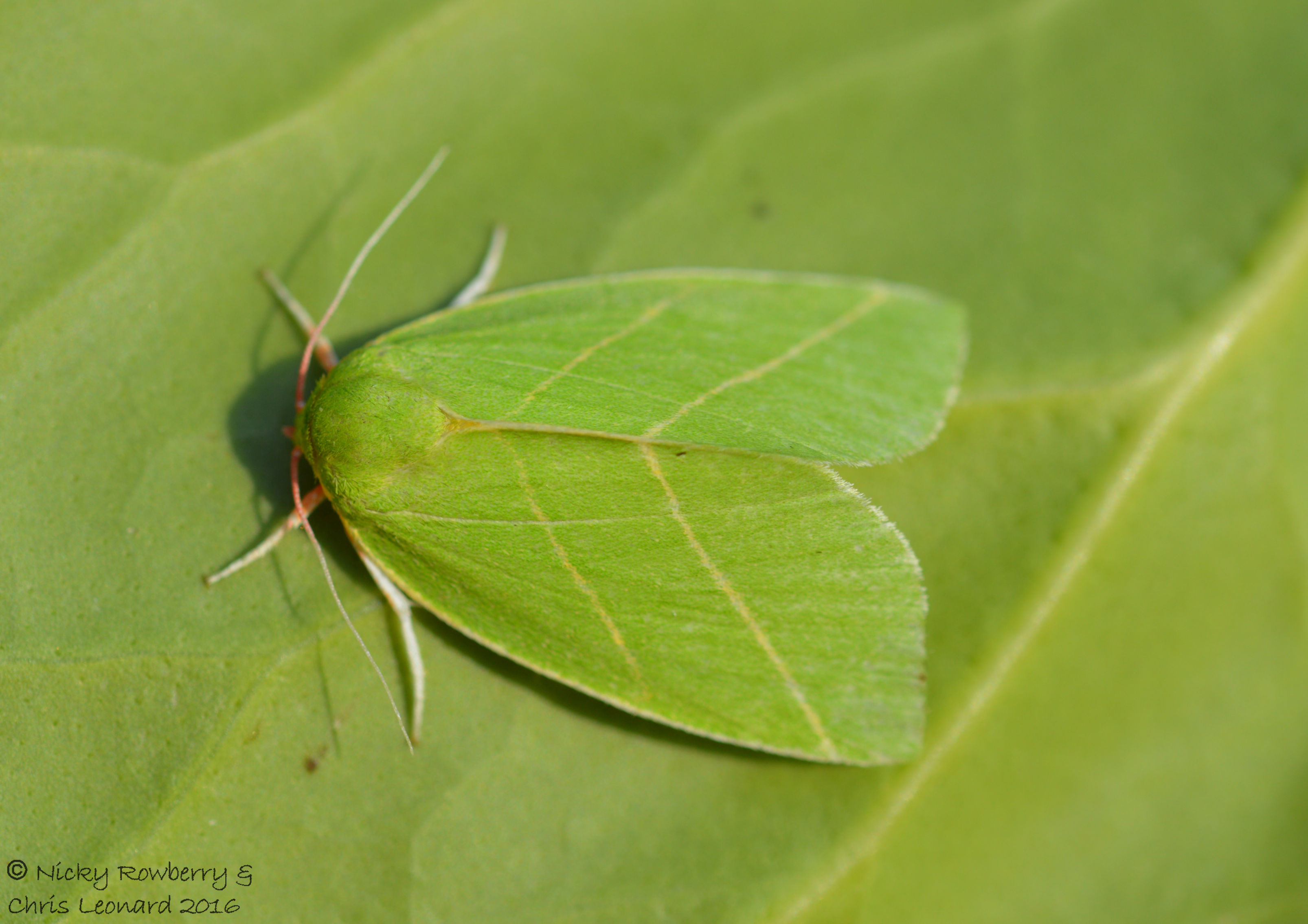
scarce-silver-lines

The Red-Green Carpet moth below is quite common in our garden right now. These carpet moths have nothing to do with the ones that eat your carpets indoors. They are definitely outdoor moths and are named because the patterning supposedly reminded the Victorians of their intricate carpets.
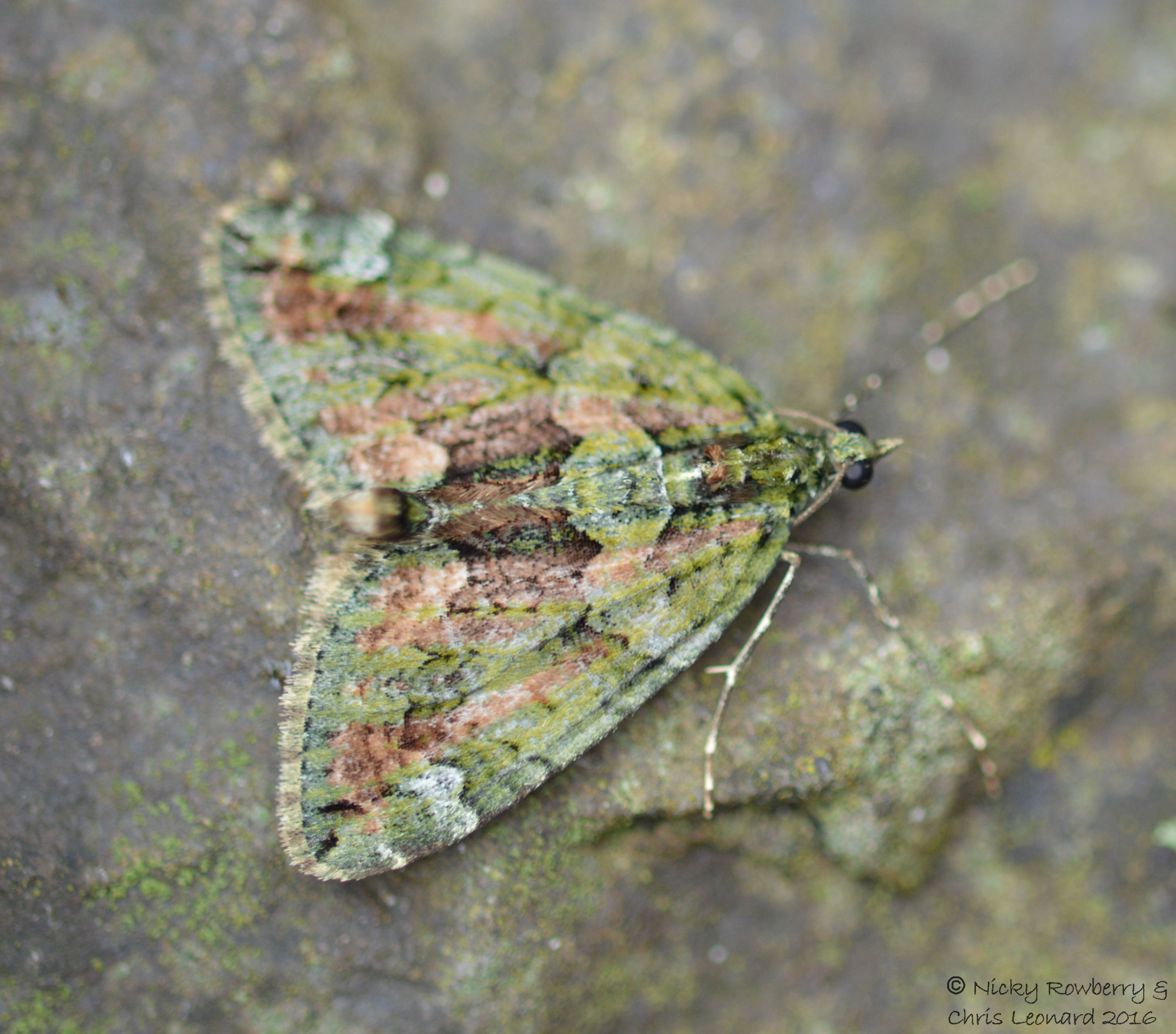
red-green-carpet

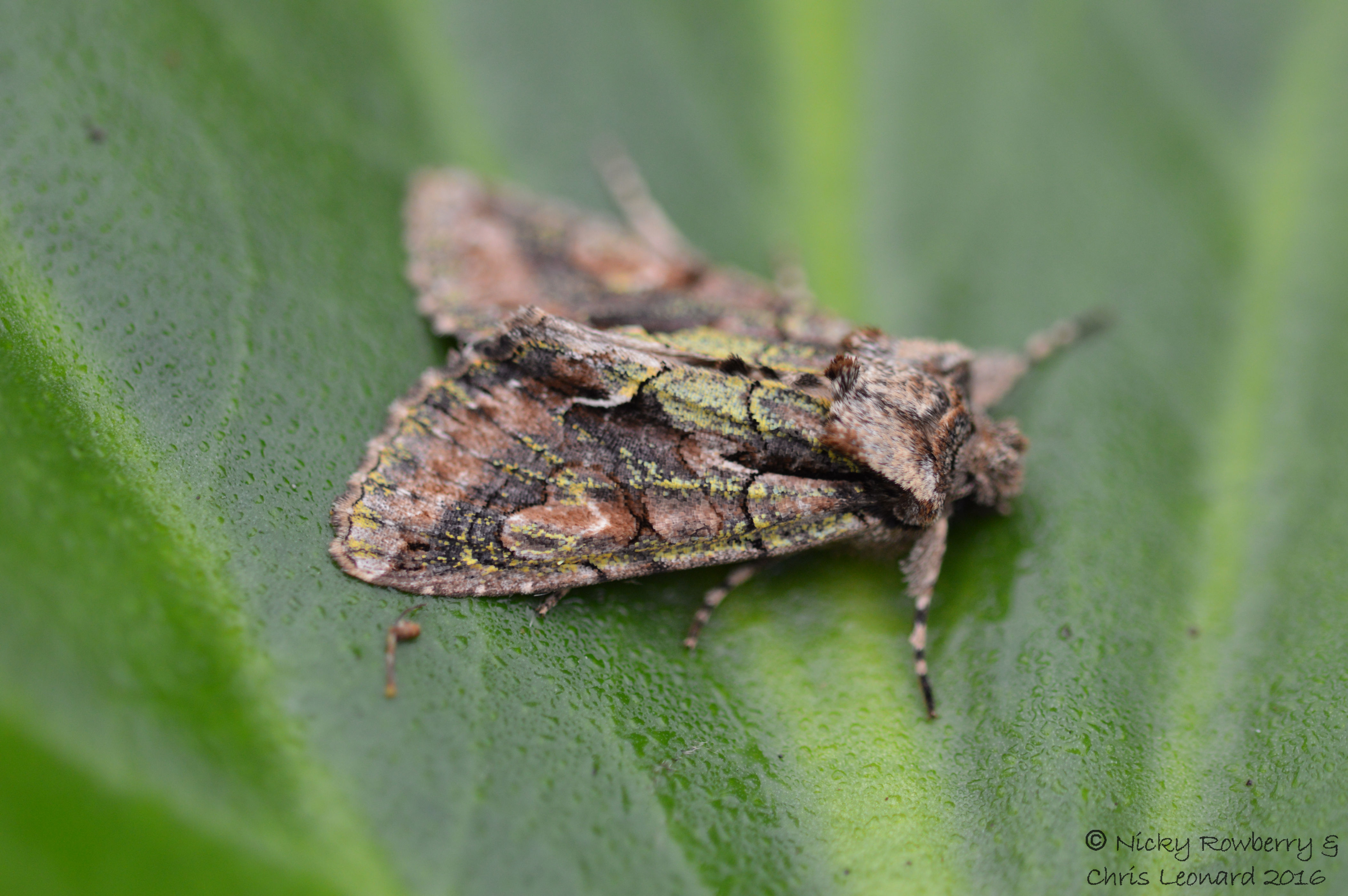
The base colour of the Green-brindled Crescent is a fairly dull mottled brown. But is has areas of metallic green scales (close up below) that shimmer in the right light to give it a beautiful green sheen. There have been a few of these in the trap recently, the new ones almost glitter green, but later in the season they lose the green scales and become much duller.
green-brindled-crescent

moth-scales

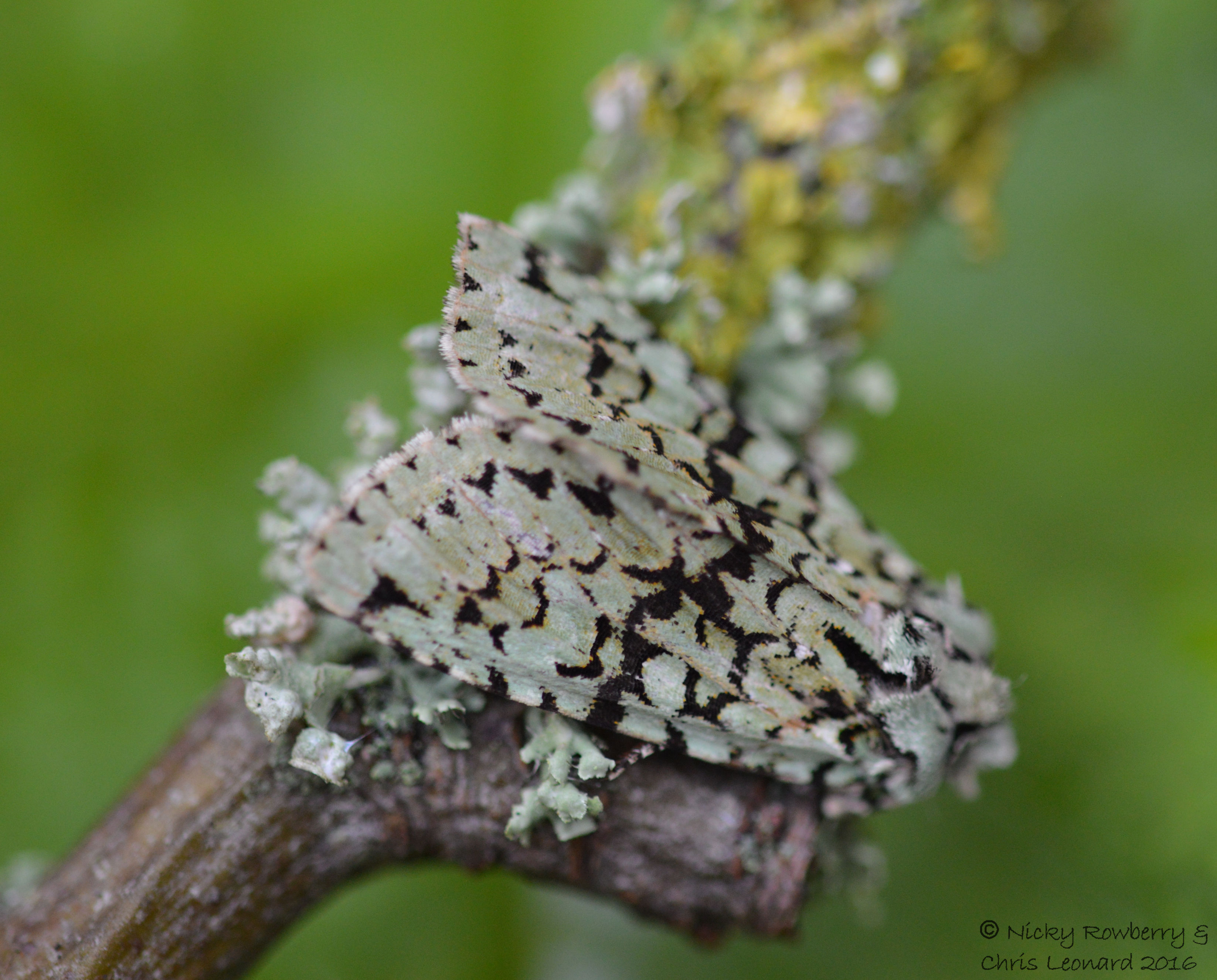
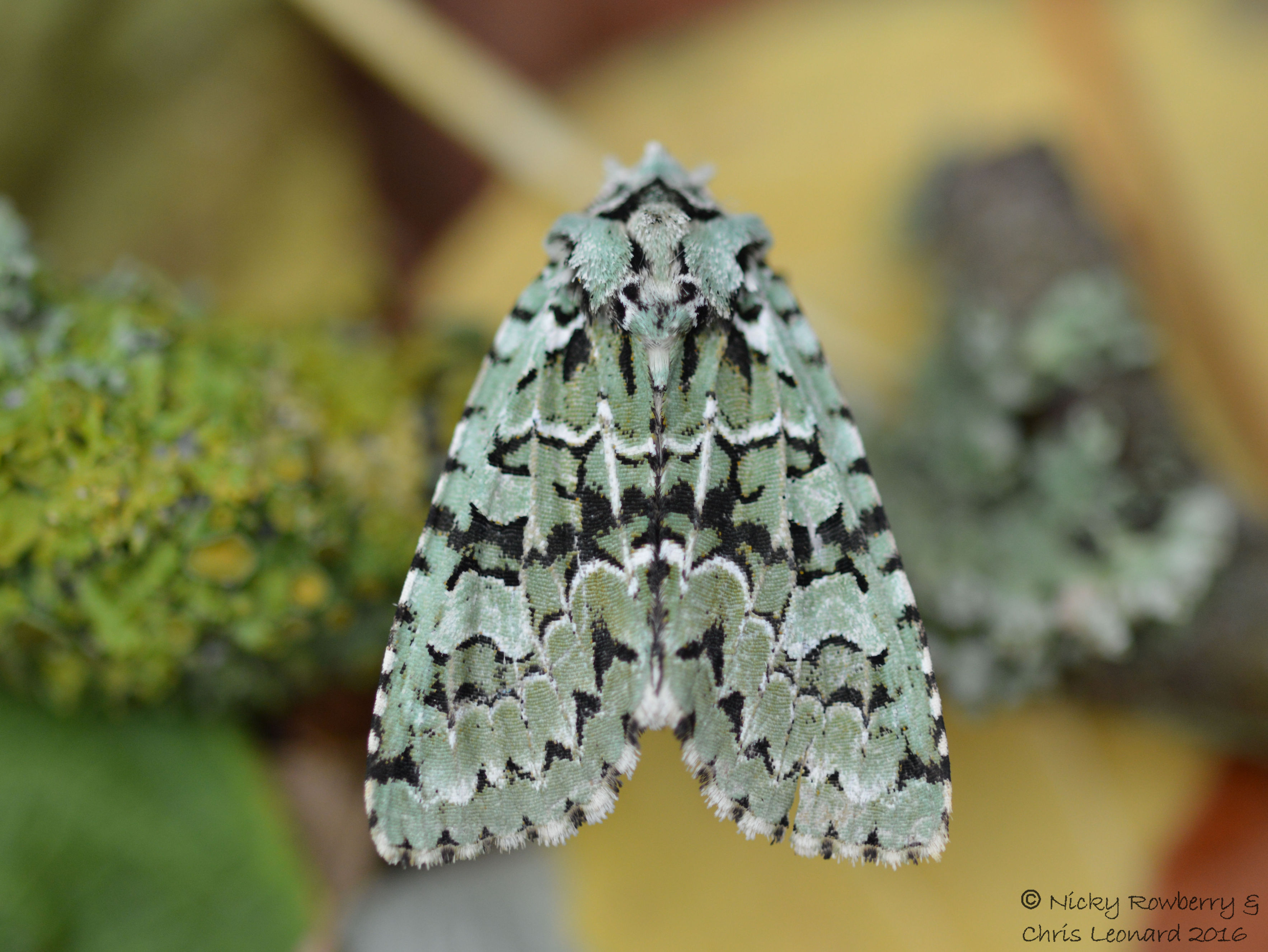
I have saved my favourite to last – the absolutely stunning Merveille du Jour. I love everything about these moths – their marvellous (or should that be mervellous – sorry!!) name, their fabulous colours and even the fact that they tend to be really docile and patient while I try and take photos. This gorgeous moth mimics lichens on tree branches, which means I’ve spent an awful lot of time trying to get the perfect shot of one doing just that. The following are by no means perfect, but they do at least hopefully show what I’m on about.
merveille-du-jour

merveille

There are lots of other green moths out there, so hopefully I can add to this collection as the years go by. There is even one called the Scarce Merveille du Jour – I can but dream!!

Autumn Flower Power

The colours in the garden are gradually changing from the bright floral ones to the more subtle leafy ones. While we can appreciate the change in the dynamics in the garden, it can be a really tough time for the insects that are still around. The leaves may look fabulous, but they don’t provide the nectar and pollen that the bees and other insects need to keep them going. Fortunately as the other flowers fade away, one comes into its own – the strange sputnik-like blooms of ivy.

ivy-flower

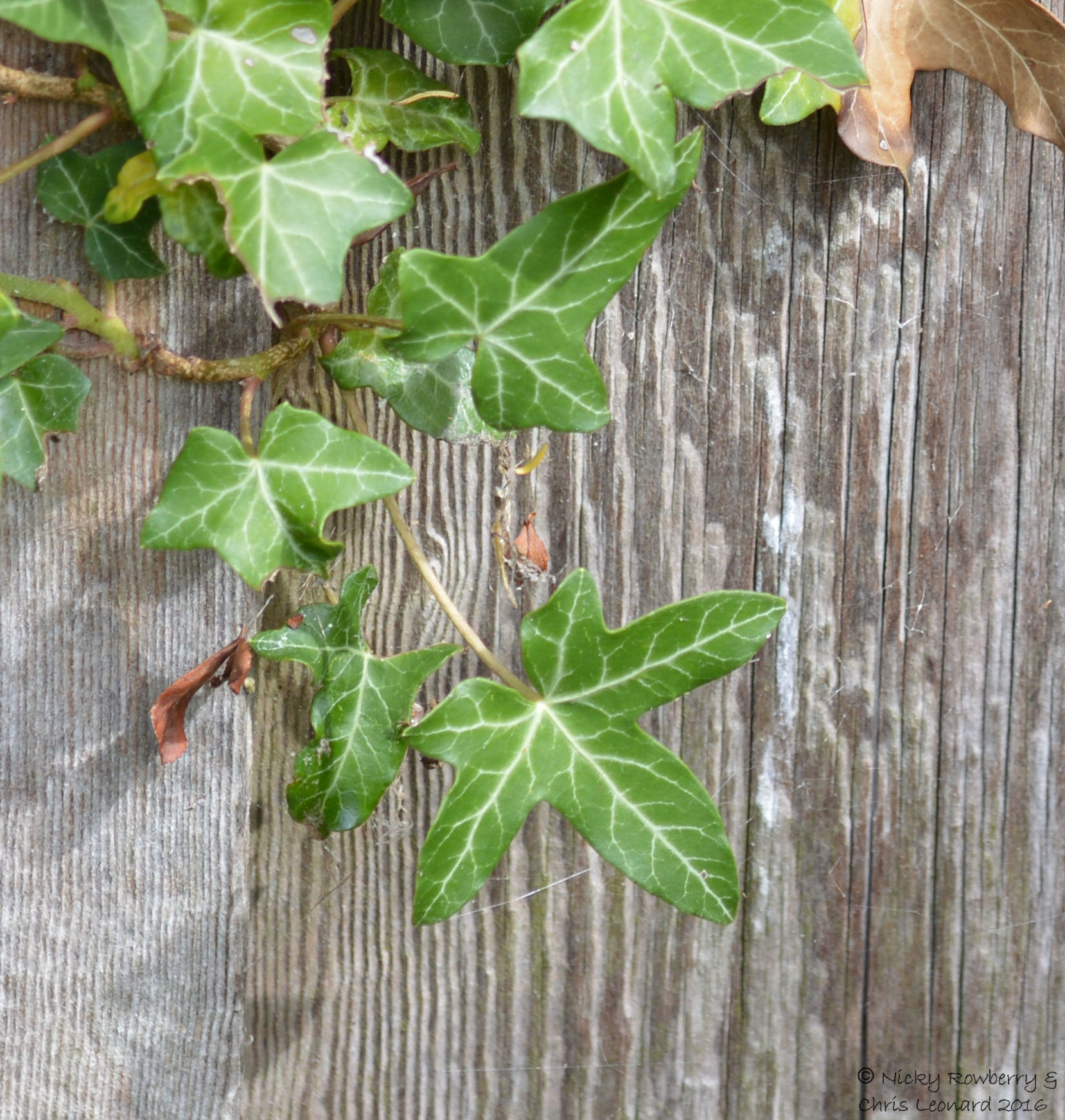
I am a relative newcomer to the ivy fan club, having not really appreciated their contribution until this year. We’ve had ivy growing along the fence for a long time, but I’d never noticed any flowers. Turns out this wasn’t just my short-sightedness, but the fact that ivy doesn’t flower until it is mature. Young ivy leaves are markedly lobed like the ones below.

young-ivy

On mature stems the leaves lose their lobes and have a more undefined wavy edged shape, like the ones below. The flowers only occur where there are mature stems. So it may be that it is only this year that our ivy has been old enough to flower, rather than me being spectacularly unobservant!
shieldbug-on-ivy

The leaves themselves are of course hugely beneficial habitats for a host of species. Our ivy has lots of the shieldbugs (as above), which are well camouflaged and can hide amongst the foliage. The ivy in our garden is confined to our fence and the ground immediately below it. The ground cover provides refuge for our resident frogs and the occasional toad. In places where the ivy is more extensive, it can apparently be a really good roosting place for bats (my dream house would be a big old one, covered in ivy and home to flocks of bats!!)

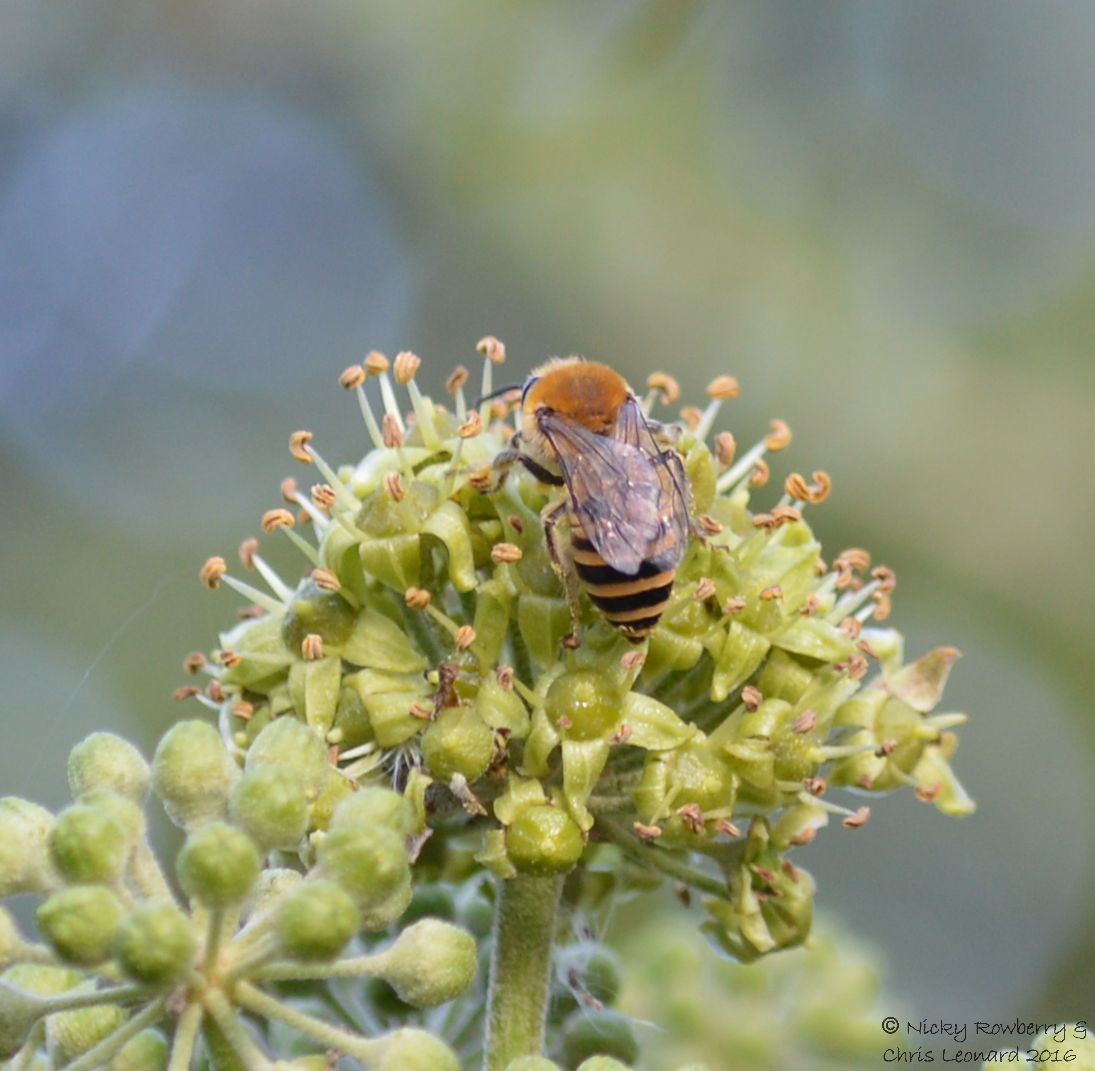
Ivy is of huge benefit to autumn insects – when most other flowers have faded, the ivy provides much needed pollen and nectar. One insect has based its whole life cycle on it – the Ivy Bee (below) even times the emergence of the adult bees to coincide with the ivy flowering.

ivy-bee

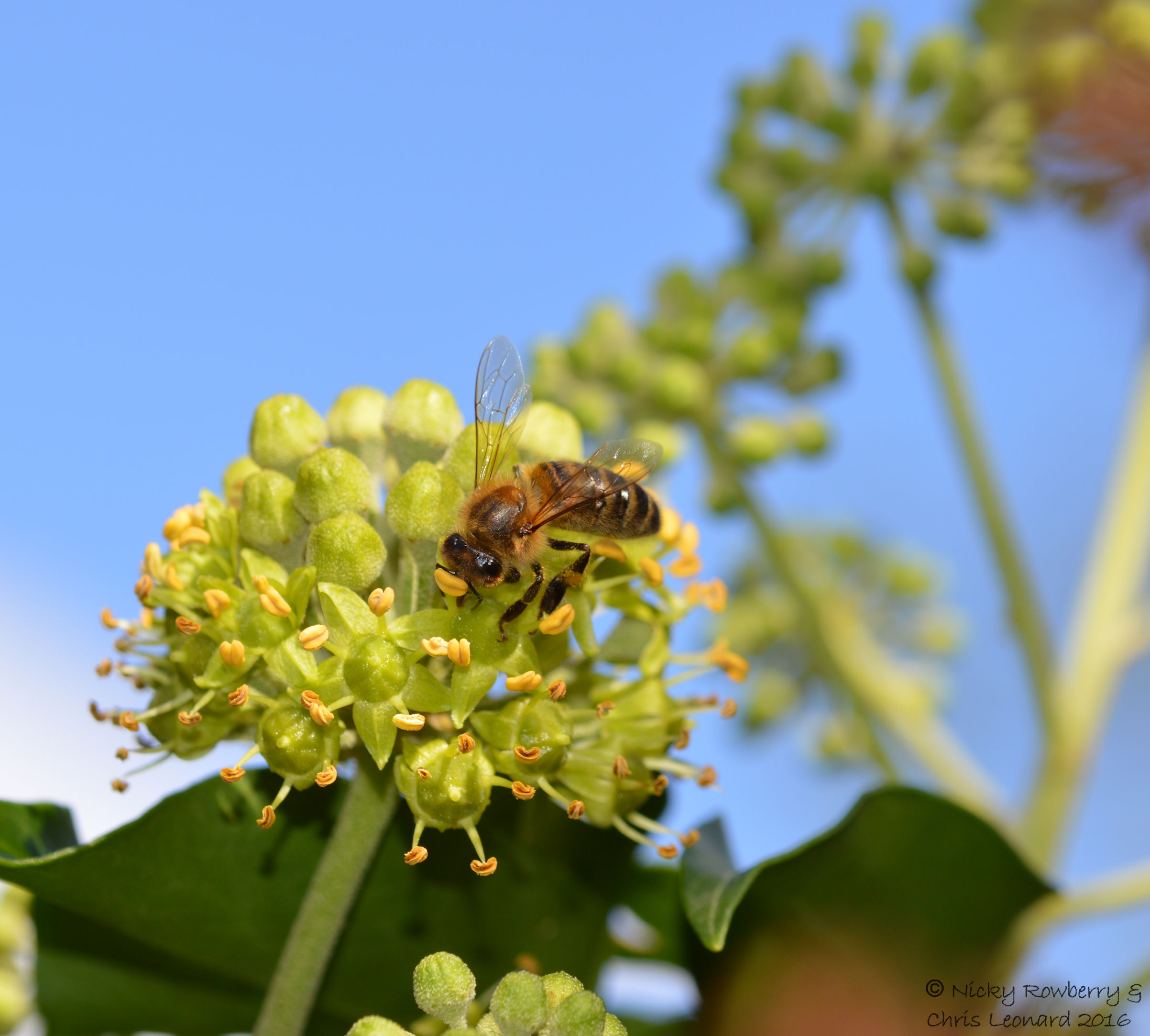
The Ivy Bee may feed specifically in ivy, but lots of other bees make good use of it too. In my quest to photograph the Ivy Bees, I’ve seen lots of other bees making the most of the flowers. A large patch of ivy can be absolutely buzzing with honey bees like the one below.

honey-bee-on-ivy-2

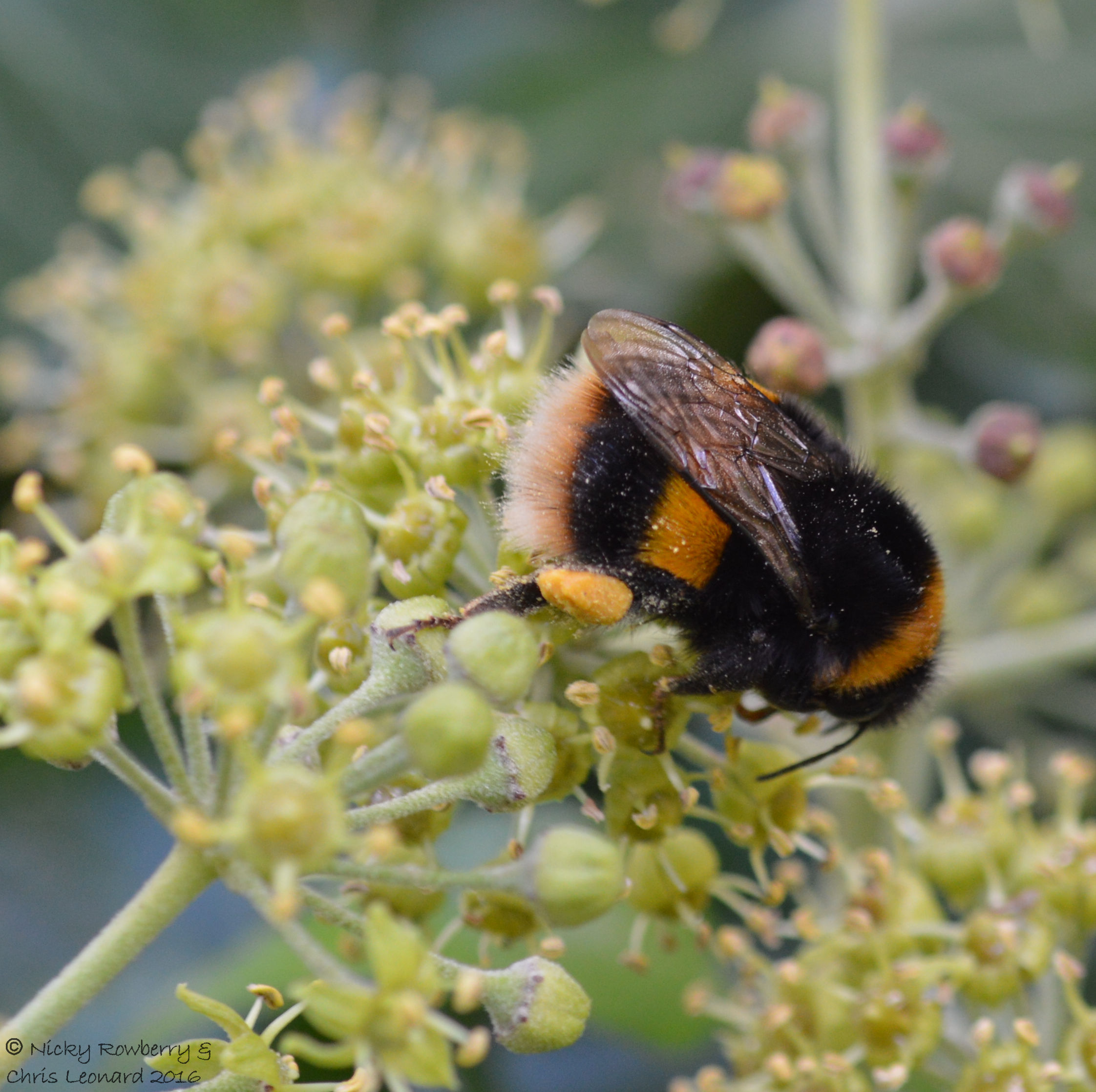
This queen Buff-tailed Bumblebee was loaded up with pollen and may have been preparing to start a new colony.

bumblebee

Some autumn butterflies will also make use of the ivy to build up energy reserves so they can hibernate over the winter. For weeks now I’ve been seeing other peoples’ photos of Red Admirals feeding on the ivy, but although we’ve had them fluttering around ours, they always seemed to land on the neighbour’s side of the fence, so I couldn’t get a photo! Finally last weekend I spotted this one in the churchyard in Bodenham and after a bit of chasing it settled down and let me take some pics.

red-admiral

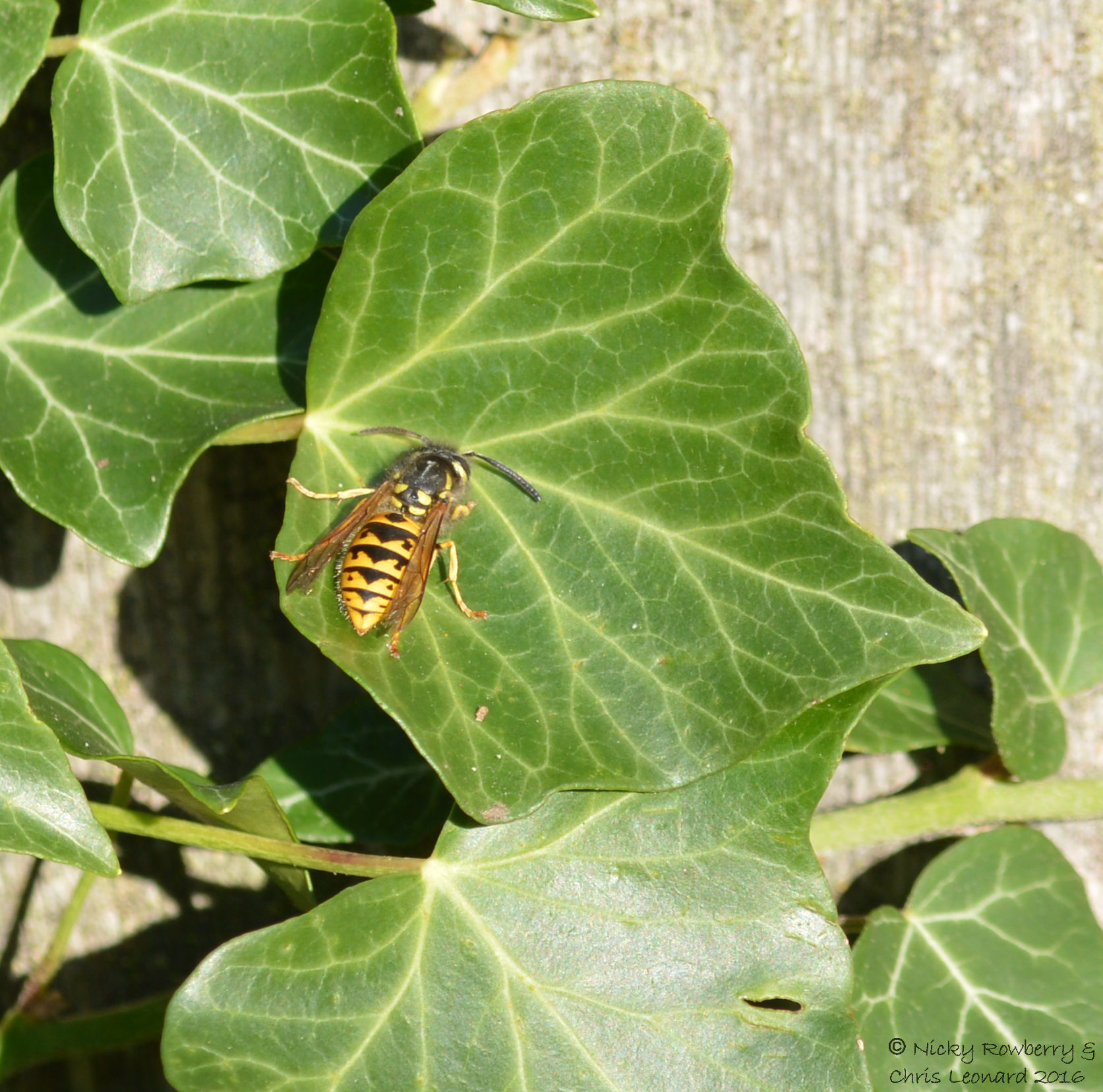
Our garden ivy gets a lot of wasps – probably more of them than the bees. They seem to like resting on the leaves in the sunshine, between bouts of feeding on the flowers.

wasp-on-ivy

wasp-v-vulgaris-on-ivy

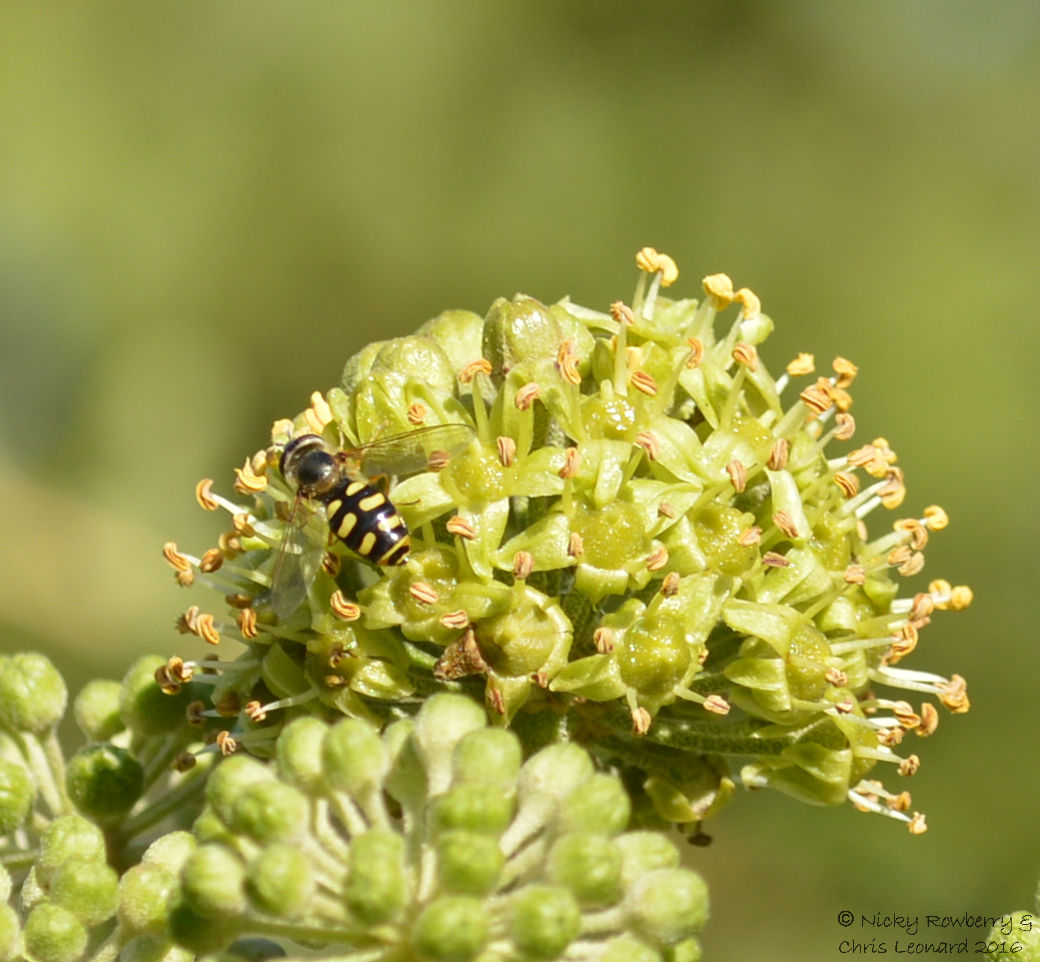
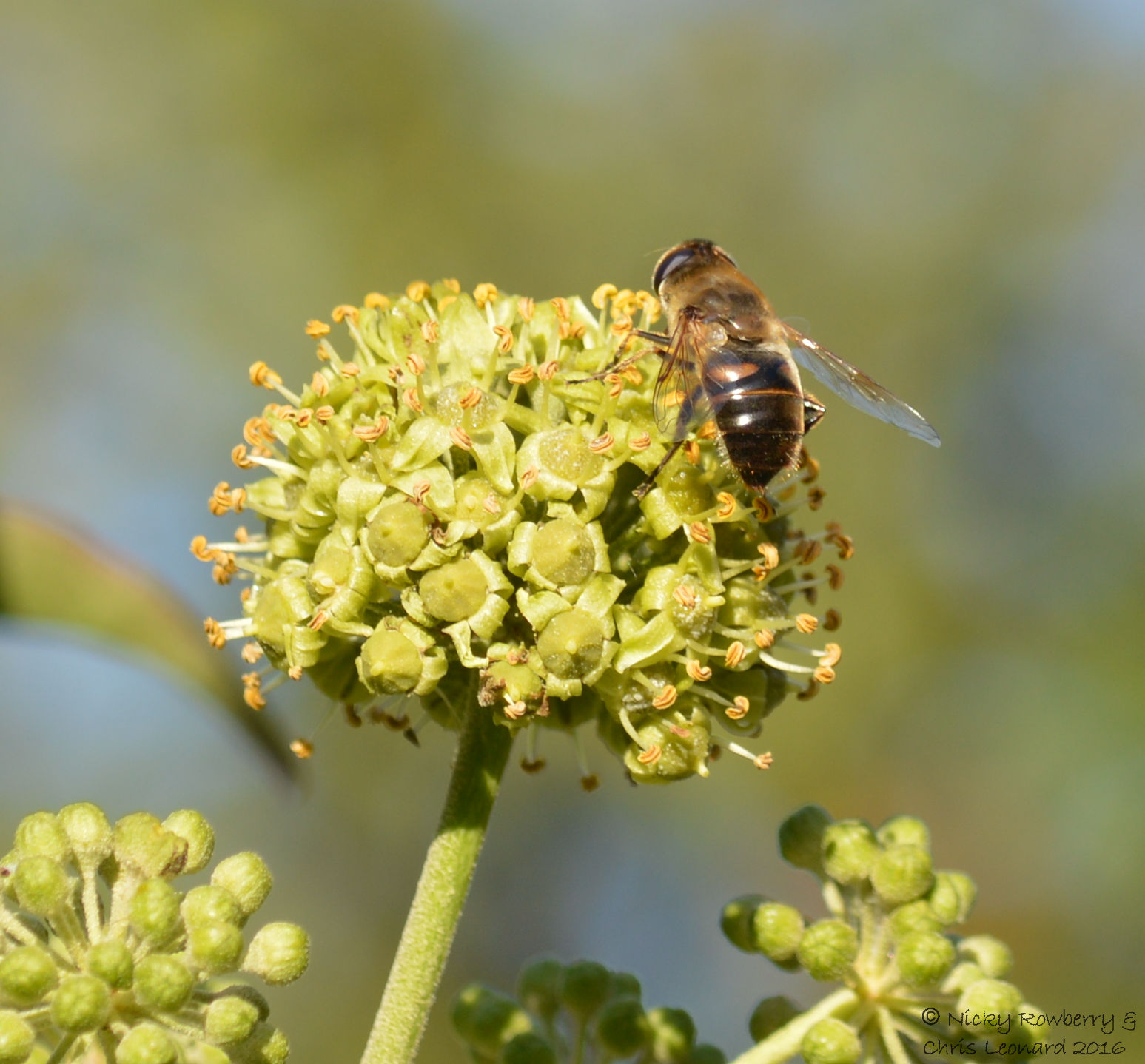
Hoverflies are also abundant on our ivy – here are just a couple – top a brightly coloured Eupeodes sp. and bottom an Eristalis sp.

hoverfly-on-ivy-3

hoverfly-on-ivy-2

Many other insects will make use of the ivy too. It is apparently an important source of food for many moths, although I’ve yet to successfully photograph one on ours. At the less glamourous end of the insect spectrum – the flies also enjoy a nice bit of ivy. This was one of the more attractive ones (I’d call it a Green Bottle, but no idea what its proper name is?).

fly-on-ivy

Once the flowering has finished, the ivy produces berries that are a valuable source of food for garden birds. The ivy berries last much better than some other fruit, so can provide food right through the winter, when hawthorn and rowanberries are long gone. Now that I have ivy flowers in the garden, I will hopefully get some berries – with a bit of luck I’ll be able to get some trail cam footage later in the winter of birds eating them!

Some gardeners consider ivy to be a nuisance, but for me the pros far out weigh the cons and now that I’m finally looking at it properly – it really is a beautiful plant!


Awesome Autumn

Feeling the need to get out and about at the weekend before the days got too cold, I headed over to Bodenham in Herefordshire. This is the village I grew up in – there’s something very comforting about an autumnal walk around childhood haunts. The area has beautiful woods, lakes, a small river & a pretty village – all the ingredients for the perfect walk. This post is mainly and unashamedly a celebration of autumnal colours.

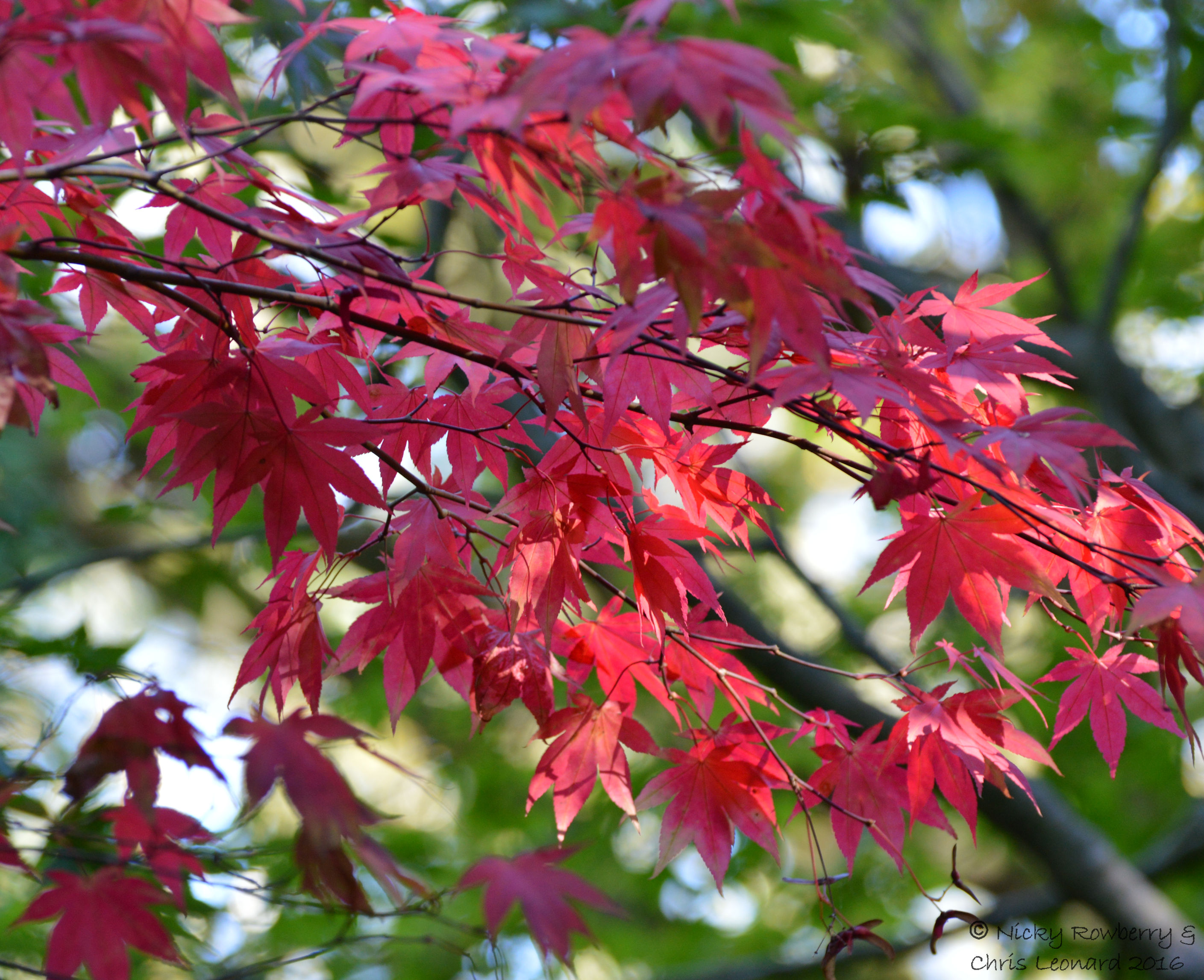
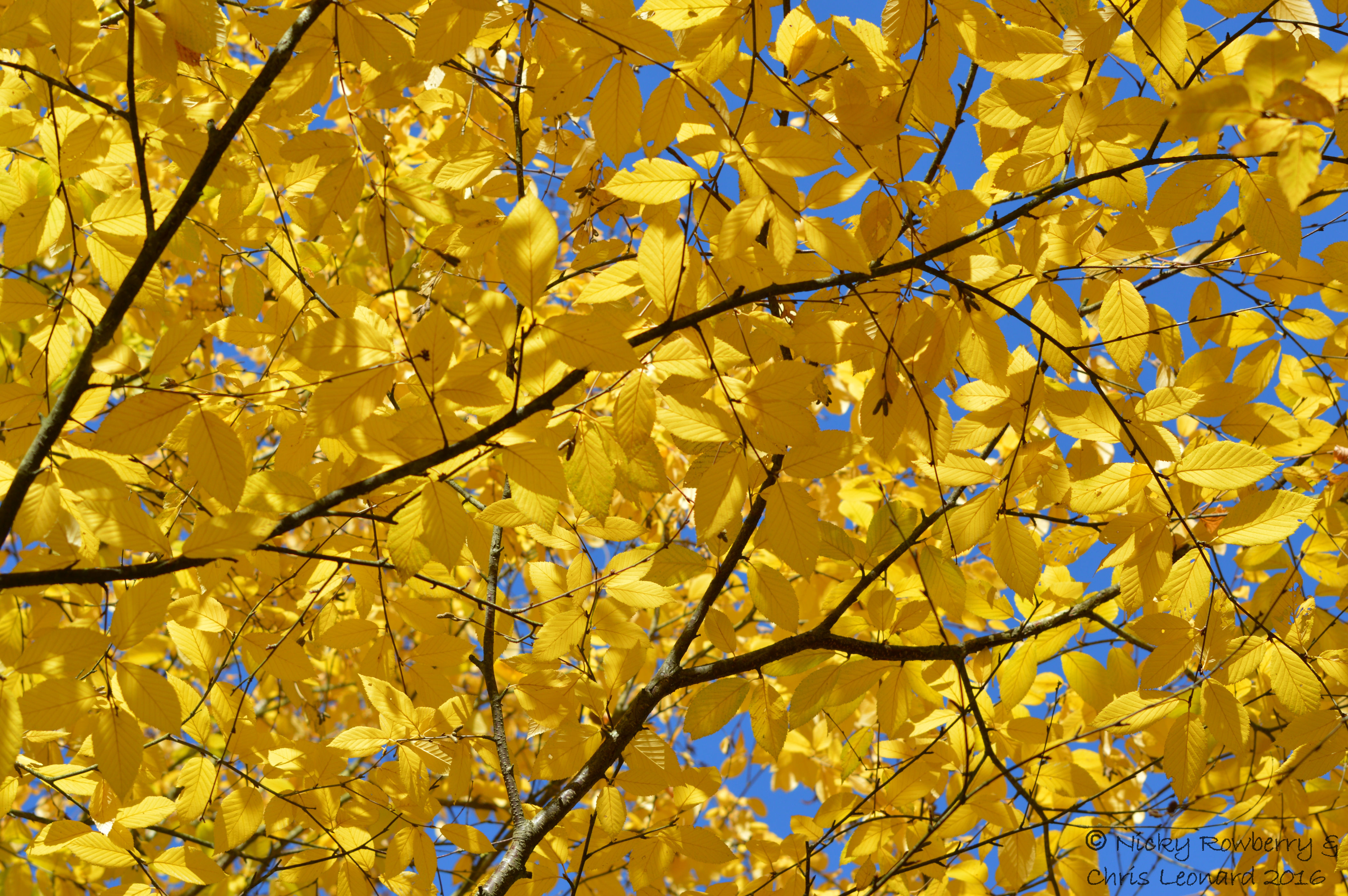
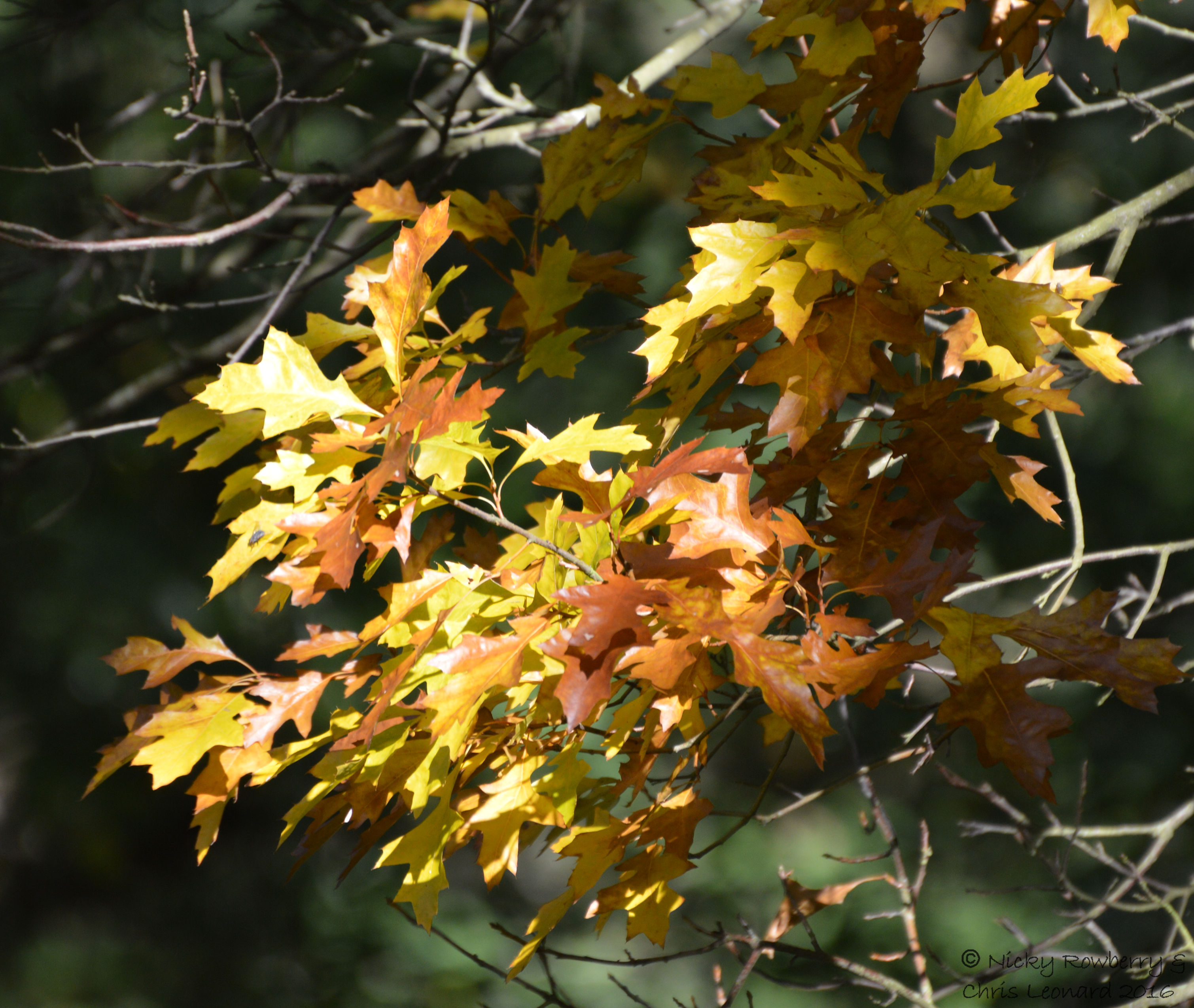
I started off in Queenswood Country Park. The trees were just starting to come into their full autumn glory. I’m not good on tree identification, but I really just loved the colours – it doesn’t really matter what the species are.

leaves-6

leaves-3

leaves-5

leaves-4

The leaves of course look great when you see them on a larger scale still on the trees. But they also look good if you focus in on just a few on the ground.

leaves-7

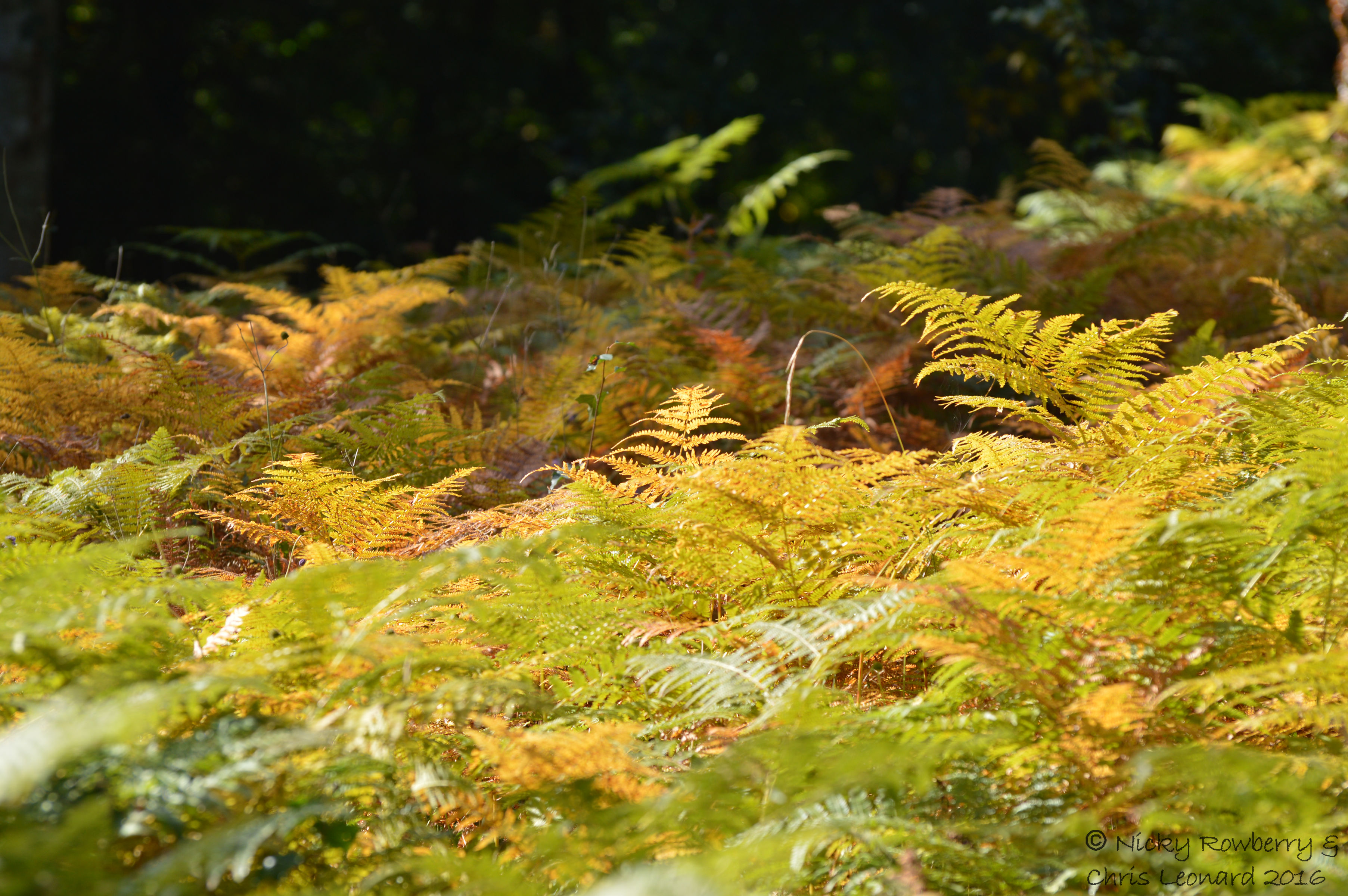
The trees weren’t the only plants turning colour – the ferns were looking splendid too, turning coppery gold in the sunshine.

ferns

ferns-3

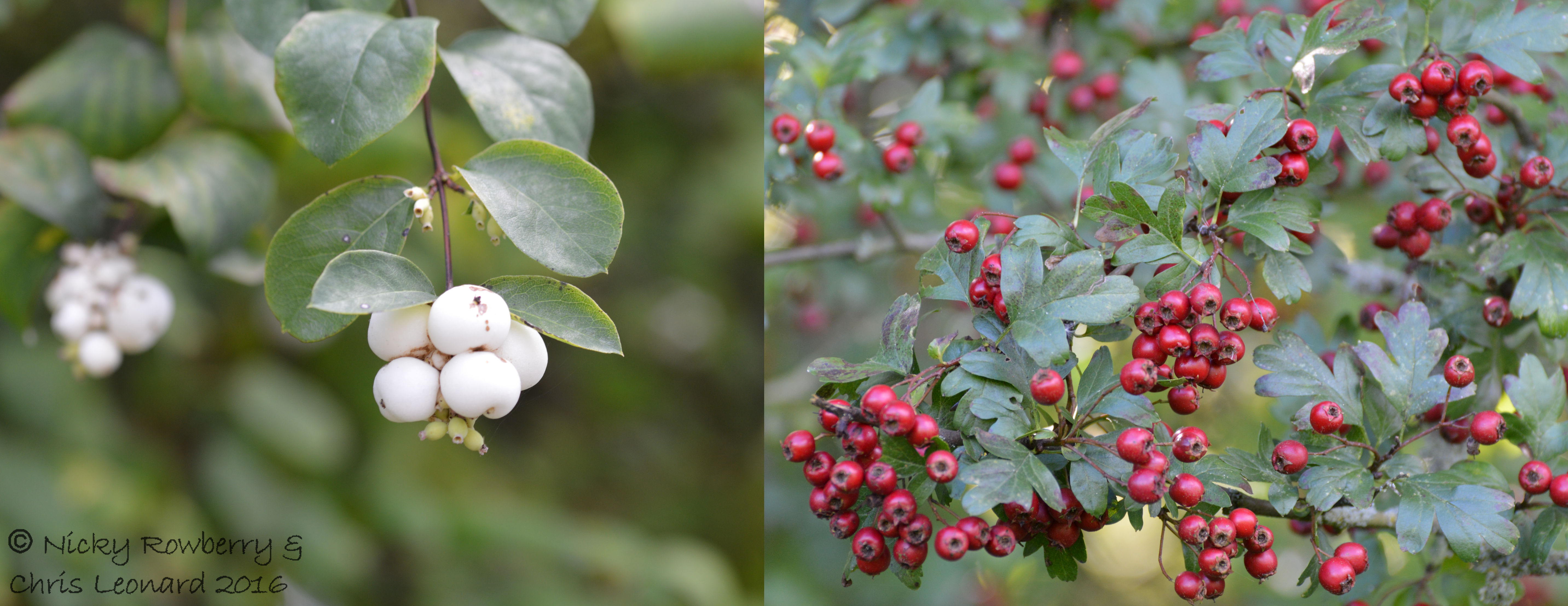
The woods and hedgerows were bursting with berries and fruit of all colours, which was great to see, although the holly did make me feel like Christmas was on its way!

berries

red-white-berries

black-rowanberry

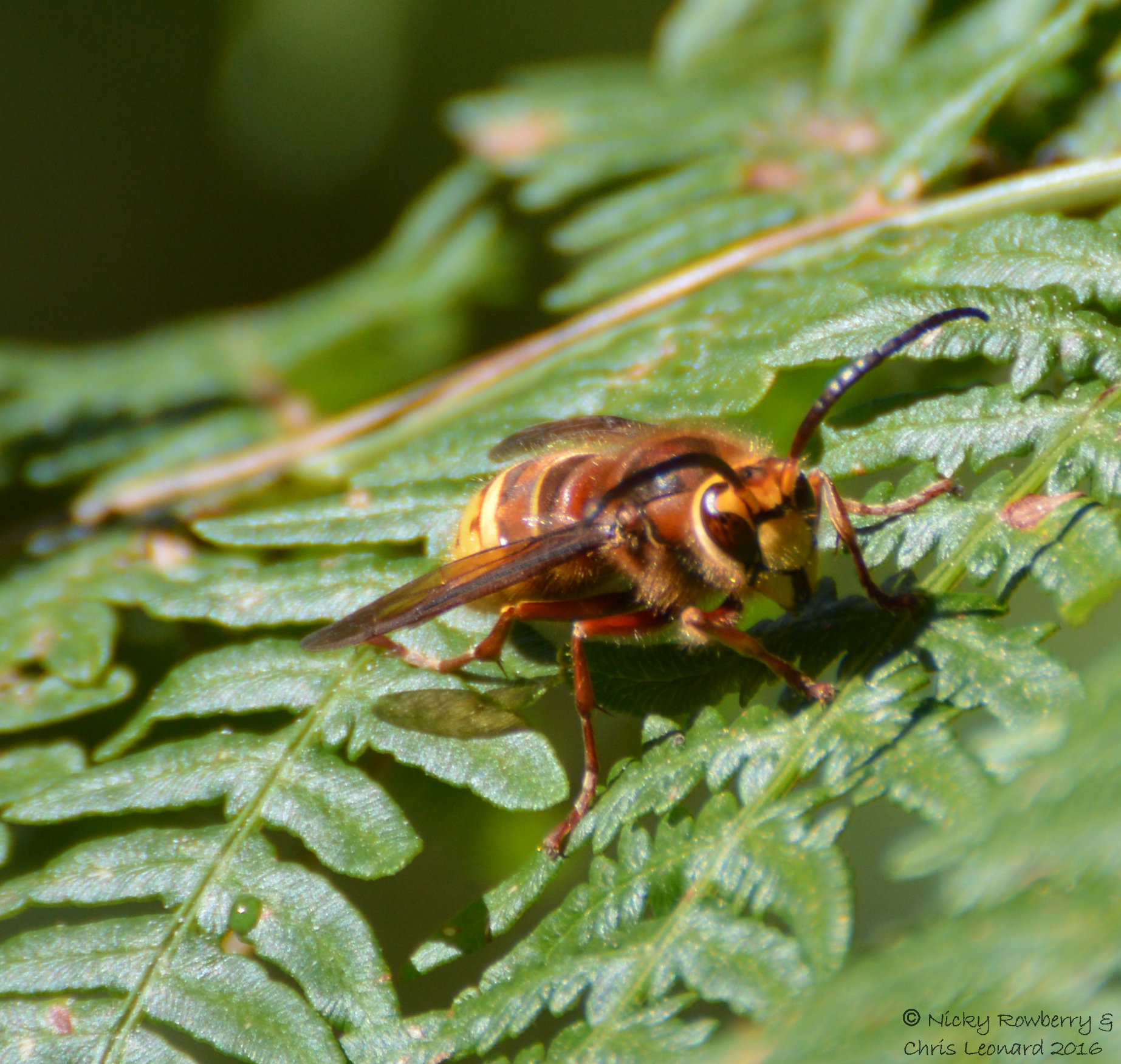
It may be late in the year, but there were still plenty of insects about. The ferns in the wood had several large hornets buzzing around (no need to panic, they were our normal hornets, not the dreaded Asian hornets). I’ve always rather liked hornets and if you don’t bother them, they don’t bother you!

hornet

There were also still a few bees around, like this Common Carder and a large Buff-tailed Bumblebee queen gathering pollen from the ivy.

carder-bee

bumblebee

The village has a lot of ivy and of course I couldn’t resist checking it for Ivy Bees. After chasing a lot of Honey Bees, I finally spotted a single Ivy Bee – good to know that this new British species has reached Bodenham (the record has been duly logged on iRecord for the Ivy Bee mapping project).

ivy-bee

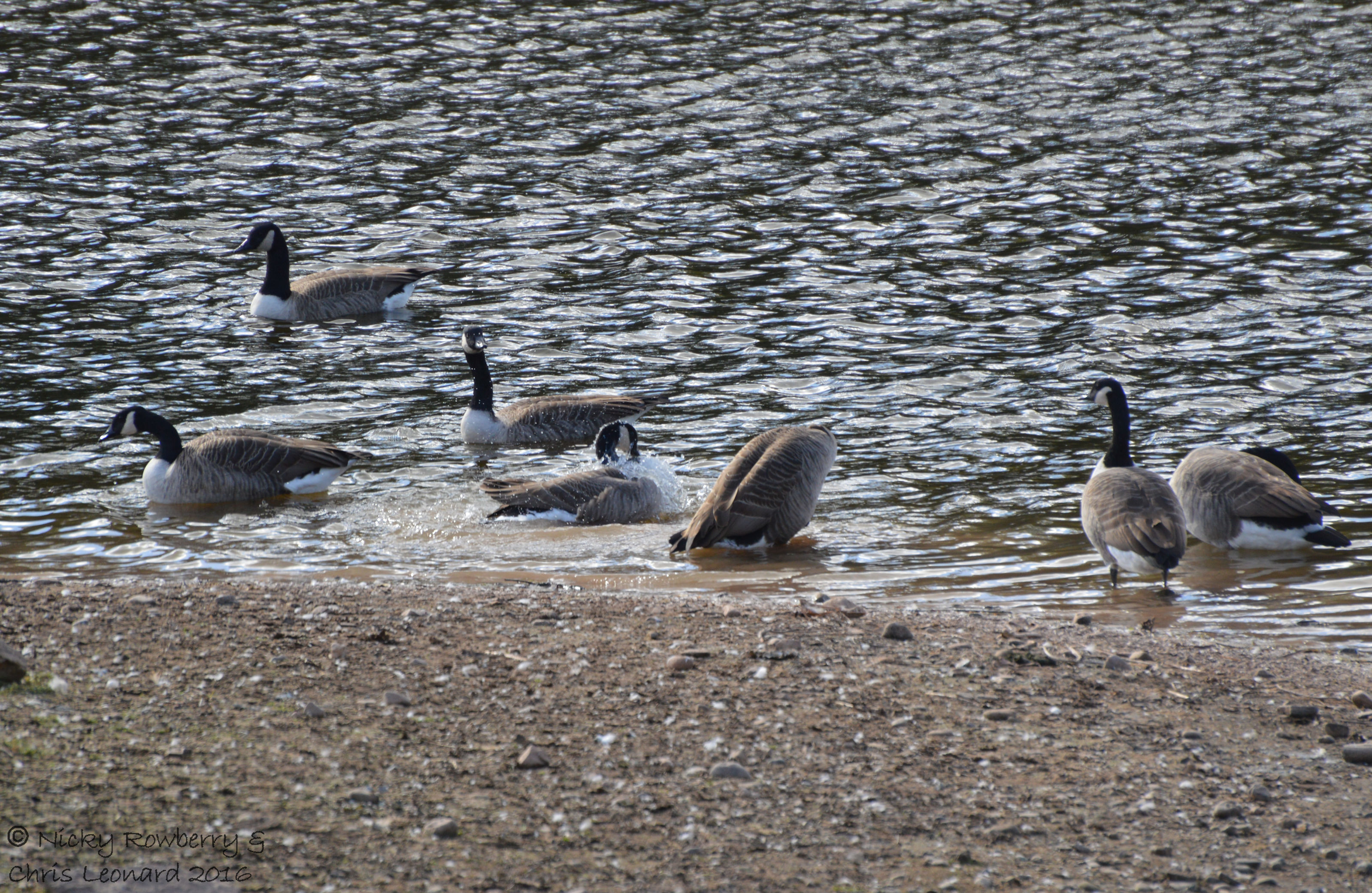
The woods of course had lots of birds and squirrels rustling about in the canopy, all making a point of staying out of clear shot of the camera. Fortunately Bodenham Lakes have a bird hide, so I whiled away some time watching a large flock of Canada Geese, splashing about in the shallows.

canada-geese

Autumn is a photographers dream – I wish my photos did it justice. It also makes me wish that I could paint to capture the subtle ochres and tawny russets that epitomise this time of year for me.


Ivy Stakeout

As stakeouts go, this may not have been the most action packed and I doubt they’ll make a movie of this one; but the end result for me was all the excitement I needed! We’d been seeing loads of posts on social media about Ivy Bees (Colletes hederae). This species of bee was only discovered in Britain in 2001, when they were spotted in Dorset. Since then they’ve been spreading north and have reached as far as Staffordshire.  They forage pretty much exclusively on ivy flowers, so the adults emerge in time to match the ivy flowering in September.

As usual bee envy set in and I wanted to see them too.  So this is how I came to be staking out the ivy in our garden today. It’s not a huge patch of ivy like the one down the road, but it is flowering, so I sat down to wait.

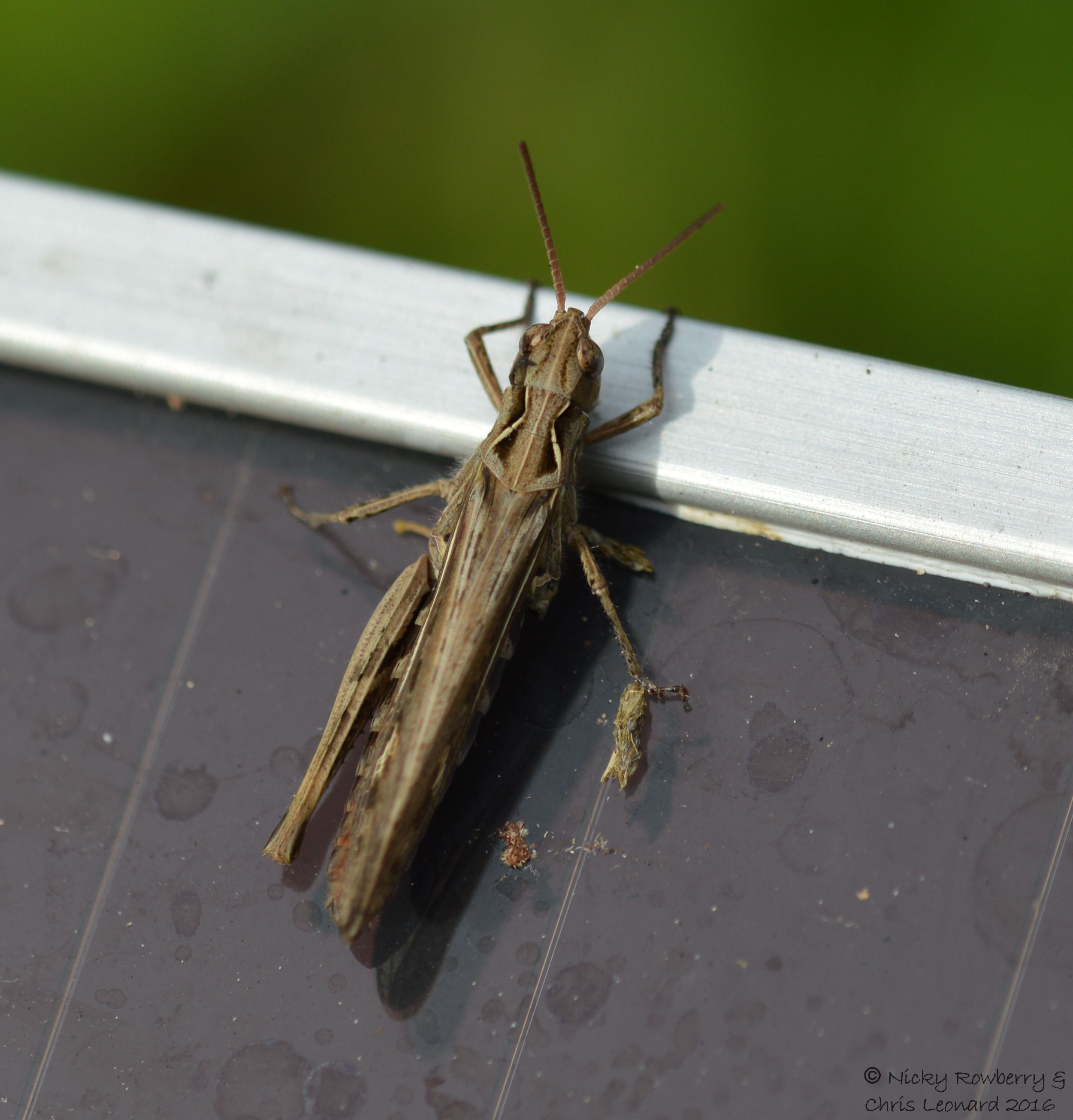
Since I wasn’t immediately inundated with the desired bees, I spent time observing the other insects. There was a surprising amount around considering it is now technically autumn. This grasshopper may have been missing one back leg, but it was making the most of the sunshine, sitting on top of one of the solar panels for the pond pumps.

grasshopper-on-solar-panel

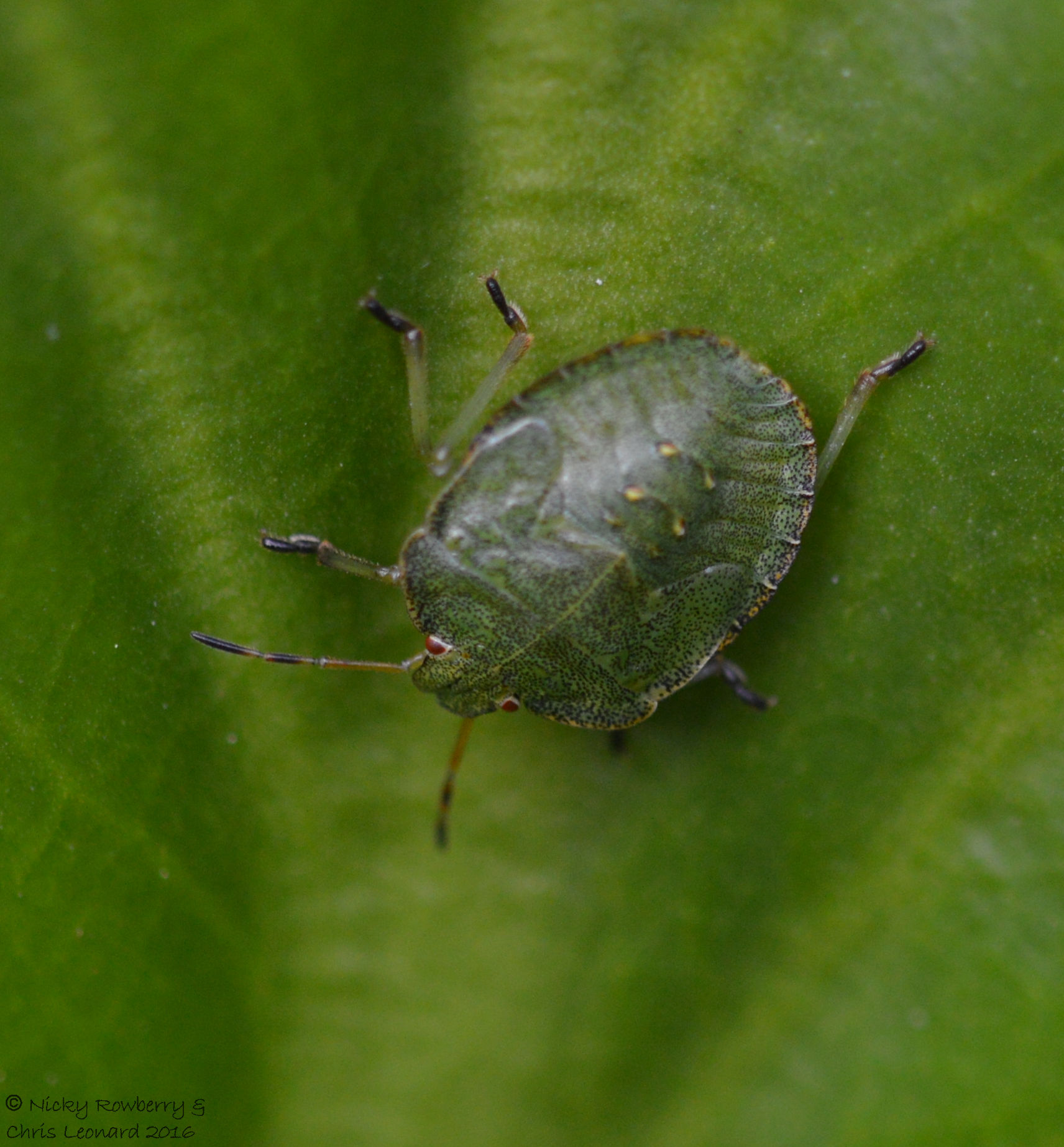
There were also a few Green Shieldbug nymphs, of varying stages, meandering about the leaves at my feet, with at least one adult visible but out of photographic range.

shieldbug-nymph

shieldbug-nymph-2

I got a bit excited when I spotted something on the ivy flowers, but it turned out to be just a Common Wasp.

wasp-v-vulgaris-on-ivy

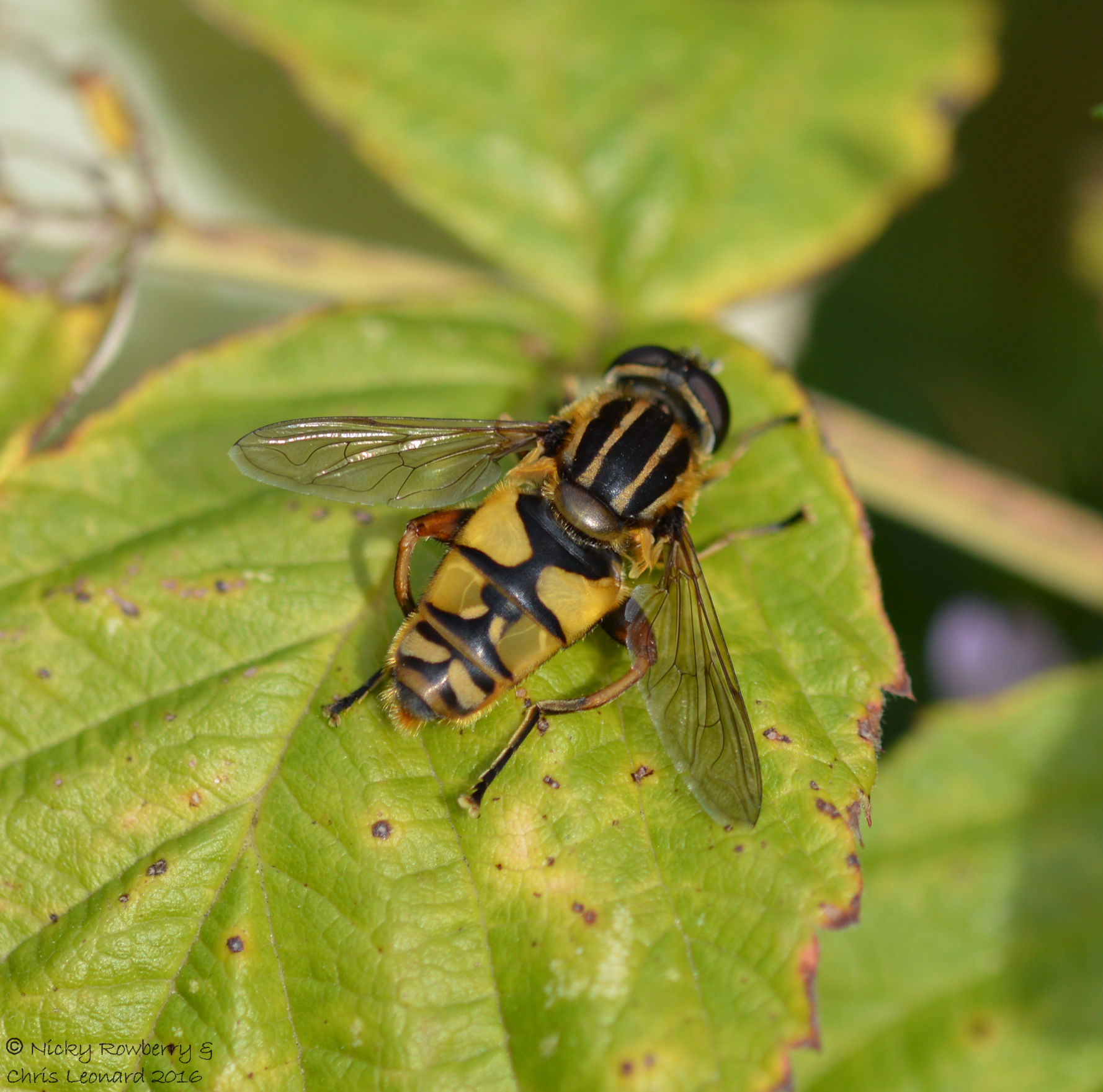
One of my favourite hoverflies clearly wanted in on the photo shoot too – this is Helophilus pendulus, which is sometimes known as The Footballer because his stripy thorax is supposed to look a bit like a football shirt!

hoverfly

There were quite a few bees about – such as this rather tatty looking Common Carder (top) and slightly fresher looking Honey Bee (bottom)

carder-bee

honey-bee

I was about to give up for the day, when a single bee landed next to the ivy.  It didn’t hang about long, so I didn’t get the chance for many photos, but at least I got enough to confirm it was an Ivy Bee – my stakeout had paid off!

ivy-bee-7


The Bees, Wasp & Ant Recording Society (BWARS) have got a mapping project going to record the spread of the Ivy Bees, so my sightings in the garden have been duly logged. If anyone else spots these distinctive bees, do please record them as well, so that they can build up a better picture of the current distribution. http://www.bwars.com/content/colletes-hederae-mapping-project

Harlequins and Hoppers

It’s been an interesting few nights for the moth trap this week. The moths themselves have been fairly unremarkable, but for some reason the trap has been attracting all sorts of other insects. Not that I mind – it’s all good news for the biodiversity of the garden. Well mainly good news – one of the surprises of the moth trap this week was an influx of Harlequin Ladybirds (Harmonia axyridis). I found at least 12 of them in the trap from Tuesday night.

The Harlequin is a non-native ladybird, originating from Eastern Asia. The species was first found in the UK in 2004. It’s got a wider range of food preferences and a longer breeding season and is basically out-competing our native species and spreading rapidly across the country. So finding 12 in my trap in one go, probably isn’t good news for the other ladybird species in our garden. Especially as this pair seemed keen on producing more Harlequins.

DSC_1597

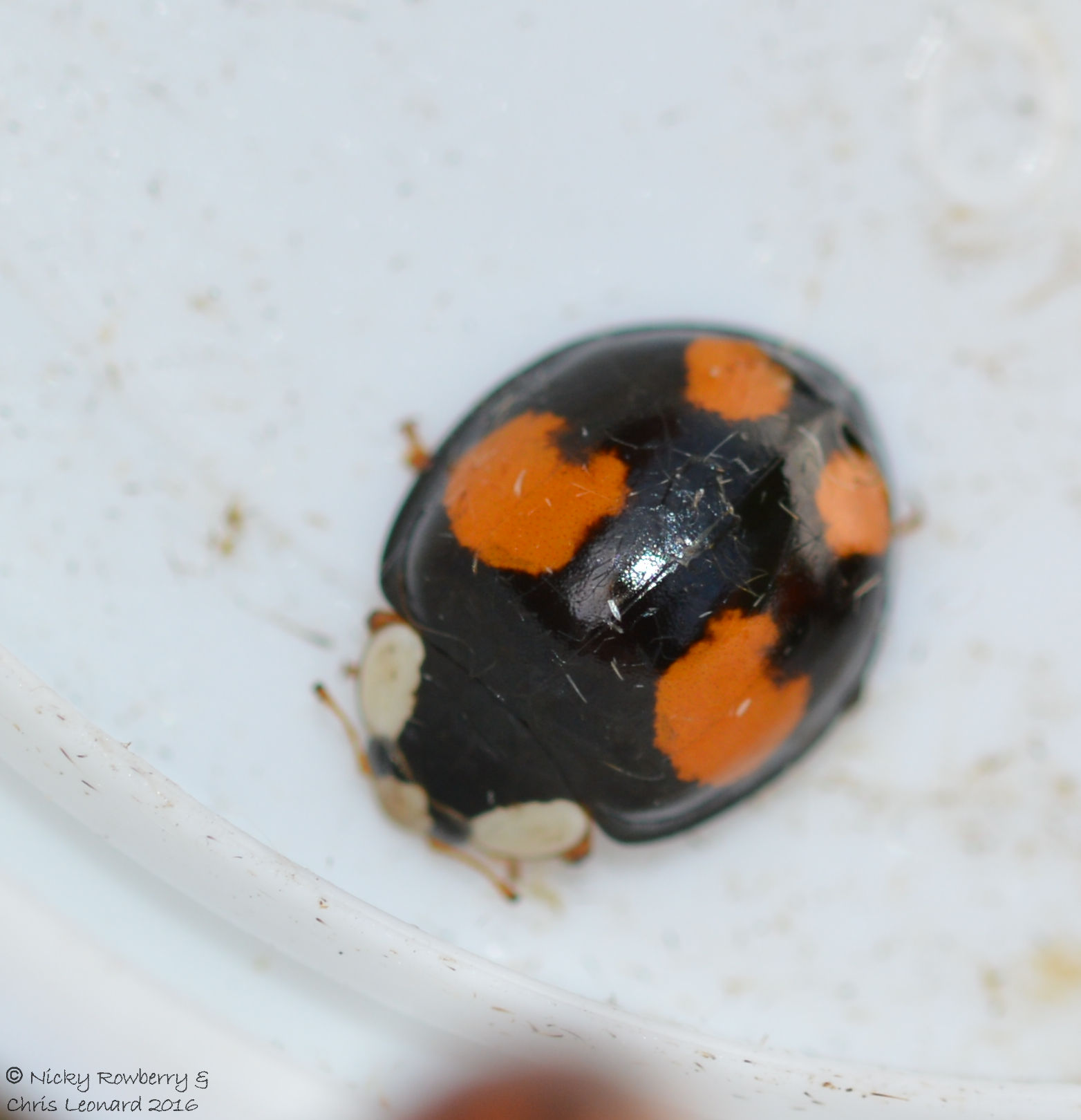
The Harlequin ladybirds have a huge variety of colour variations, making them difficult sometimes to distinguish from our native species. (one of the reasons the Ladybird survey people don’t advocate killing the Harlequins – just in case you’ve got it wrong!) Most of the ones from the trap were red, but there were a couple of these black ones too.

Harlequins

The only thing to do with them was submit my sightings to the Harlequin Ladybird Survey.

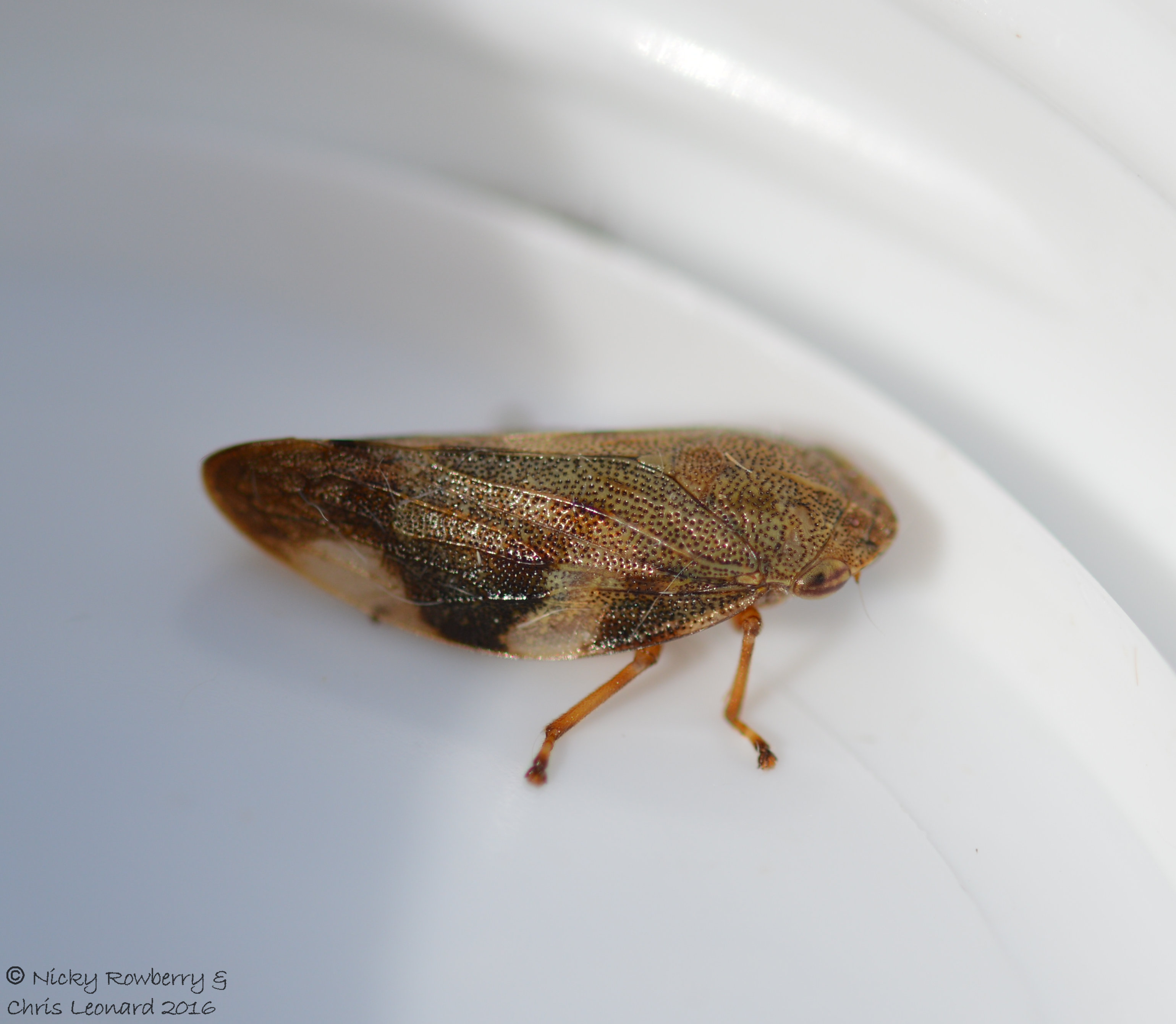
Fortunately Harlequins weren’t the only non moth species in the trap. There were the usual selection of wasps, diving beetles (which surprised me no end the first time they turned up in the trap!), caddis flies, daddy-long-legs and assorted flies. But most interesting were a selection of Leafhoppers and Froghoppers – subsequent IDs revealed 4 species.

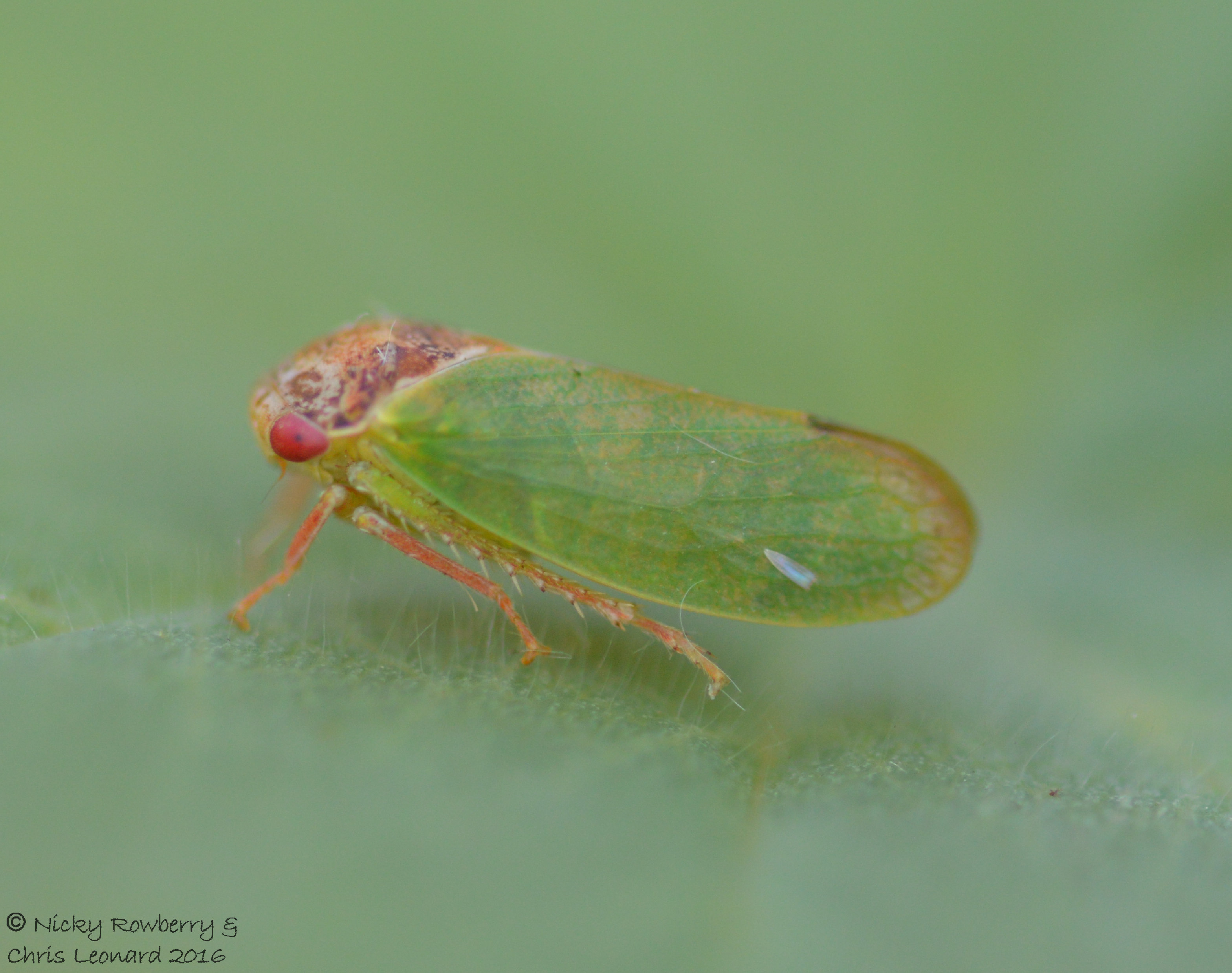
These first two are Leaf Hoppers (I’m still not sure what makes a Hopper a leafy one or a froggy one). I can’t find common names for either of them although they are apparently quite common species. I guess not enough people look at these tiny insects for anyone to have bothered giving them English names. The first one was a lovely green insect with red eyes (maybe I should invent common names – the Ruby-eyed Emerald Leafhopper!) called Iassus lanio.

Iassus lanio

The second was a slightly subtler individual called Allygus sp. (my name – Mottled Brown Leafhopper!)

Allygus mixtus

One thing I’ve found all these Hoppers have in common is the ability to ping away in a split second as you try and photograph them. They seem quite sedentary lazy creatures one minute, then suddenly ping – they’ve gone. So I didn’t get much time to compose and focus beautiful photographs!

The next one is a froghopper and has actually managed to get itself a common name – the Alder Spittlebug (Aphrophora alni). The immature stages of these bugs form foamy nests on plants (frog spit or cuckoo spit) which help them regulate moisture and temperature.

Alder Spittlebug

The final one was a very large leafhopper, the largest British species in fact – Ledra aurita. It’s common name on one website was given as Eared Leafhopper, although Horned Leafhopper would seem more accurate to me. It is normally very well camouflaged on trees, but stands out a bit in a moth trap.

Ledra aurita

All these insects appeared in the moth trap on Tuesday night, but on Friday night the same trap in the same location didn’t catch anything but moths!

Out and About – Grafton Wood

Grafton Wood in Worcestershire is one of our favourite butterfly spotting locations and at only a half hour drive away provided the perfect day out yesterday. We went seeking the Brown Hairstreak, as we’d seen them there before. This is Worcestershire’s rarest butterfly and Grafton Wood is its stronghold, but unfortunately yesterday the Brown Hairstreak refused to put in an appearance. Hopefully we’ll have chance to go back later in the month, but in the meantime here’s one we photographed last year.

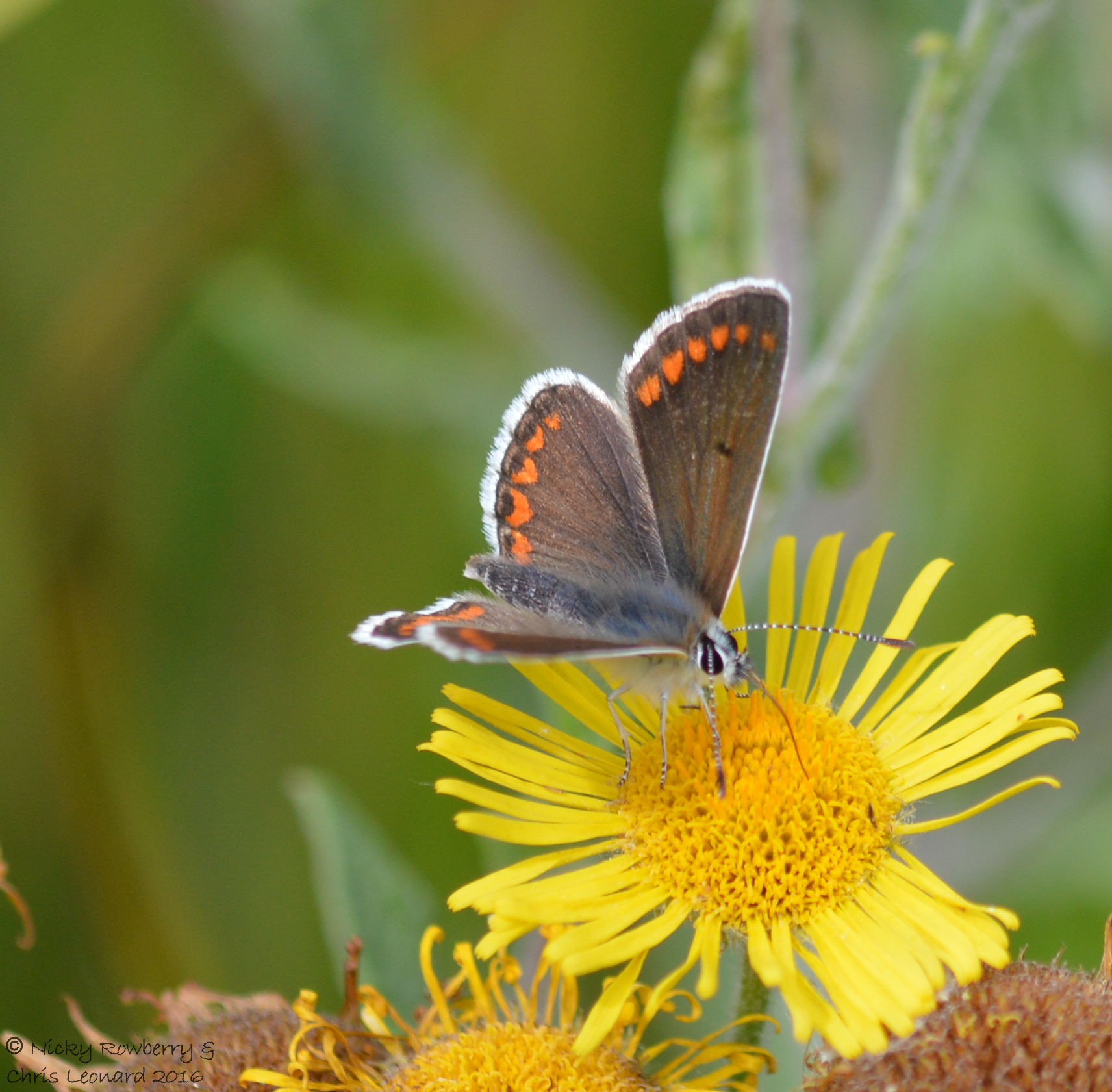
We may not have seen the Brown Hairstreak yesterday, but we did manage 14 other butterfly species, so we’re not complaining. One of the highlights was our second ever Brown Argus, having only seen these for the first time last week at Prestbury Hill.

Brown Argus

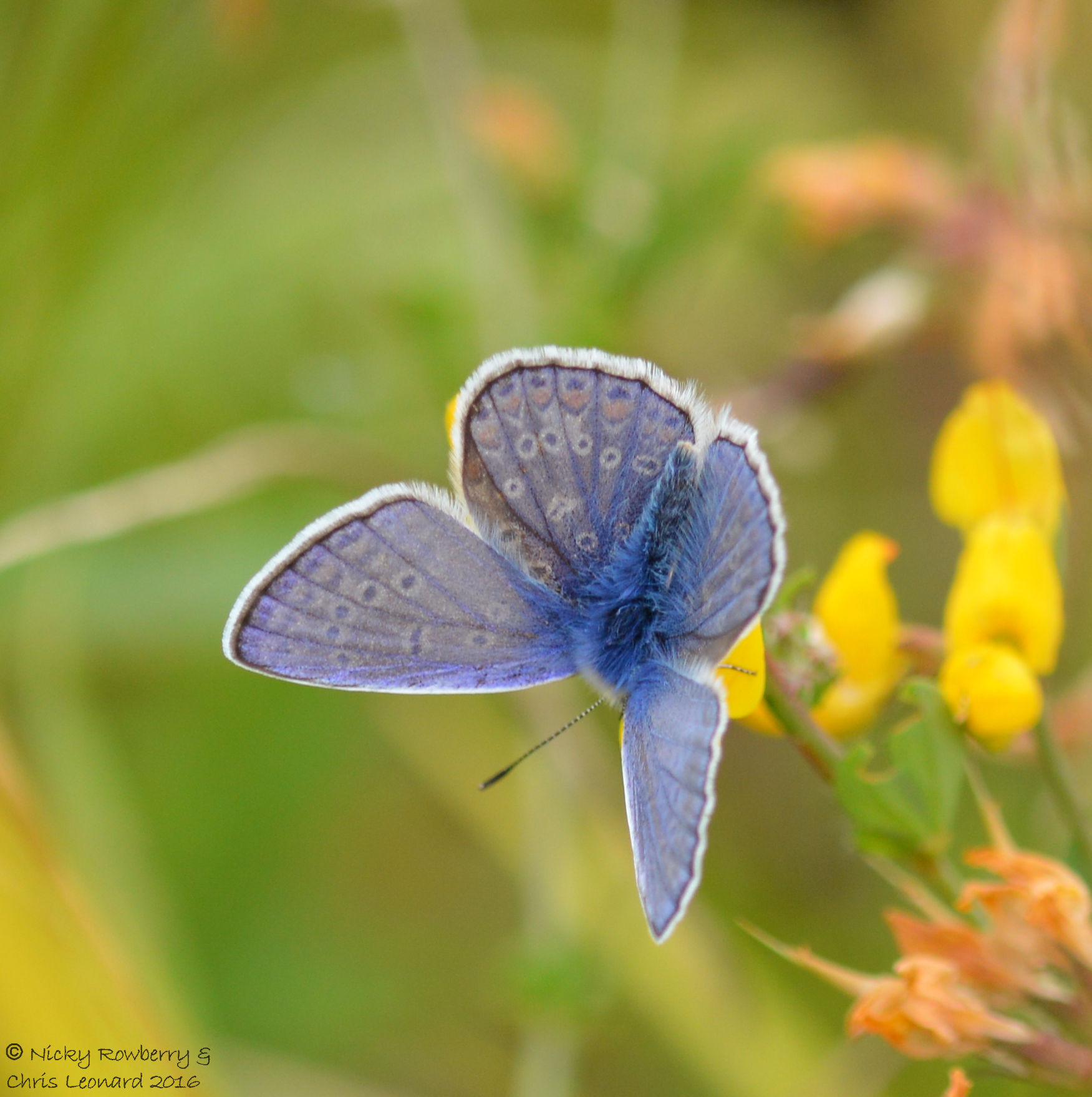
Common Blues were abundant as well. The name implies somehow that by being common they are maybe ordinary, but when the light shines on the males in the right way (like this one below sharing a flower with another favourite of mine, the Swollen Thighed Beetle), they are simply stunning.

Common Blue 3

The colours in the next photo aren’t quite as vibrant, but I love the way you can see the spots from the underside showing through.

Common Blue 4

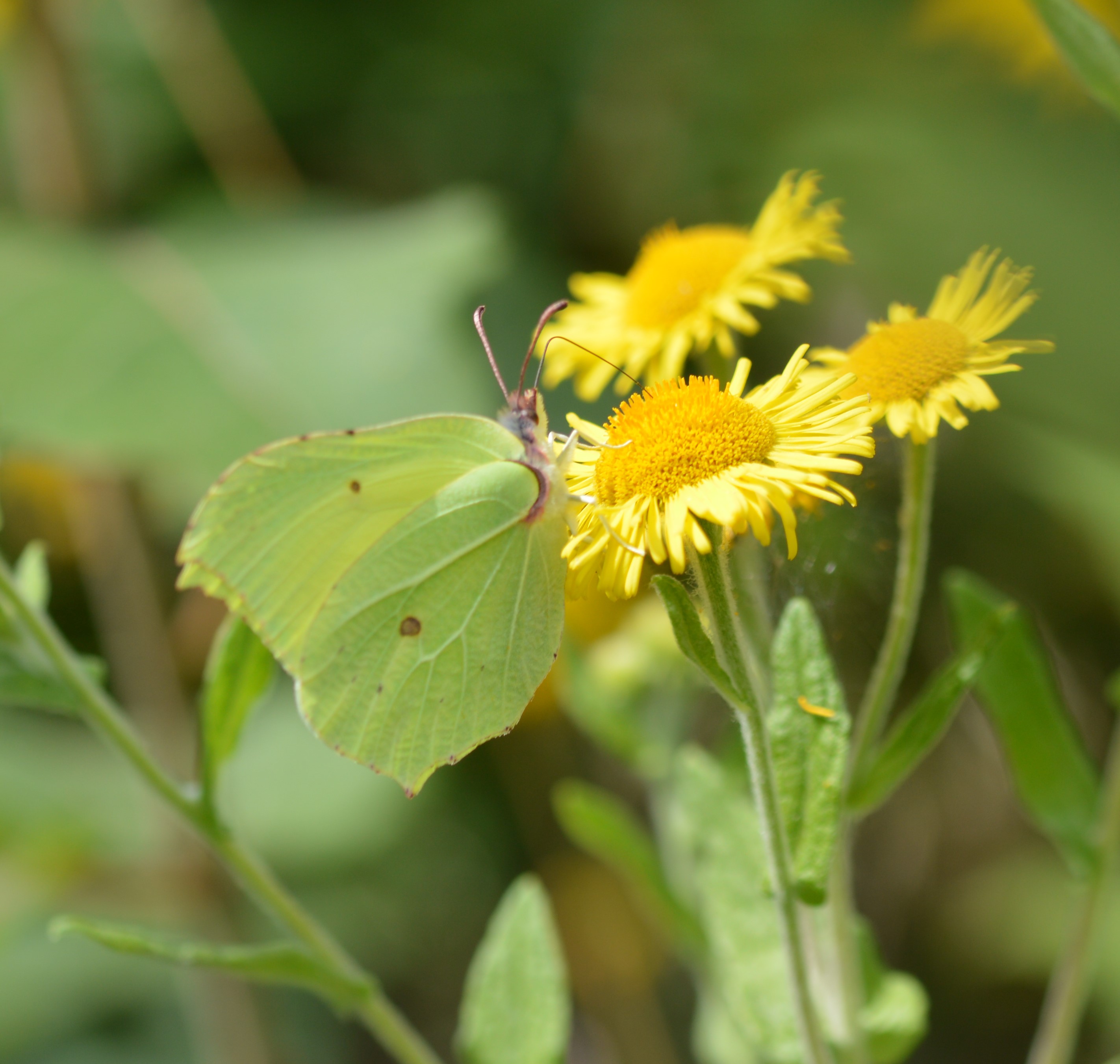
I think we get a bit hung up sometimes seeking out the new species of butterfly, so it was nice yesterday at Grafton to see some of the old favourite species and have time to appreciate them in their own right. So in no particular order of preference – Red Admiral, Brimstone, Peacock and Small Copper.

Small Copper 2

The Red Admiral and Small Copper can both be seen feeding on Hemp Agrimony. This plant seems to be a butterfly magnet and is the one we saw the Brown Hairstreak on last year.

Butterflies weren’t the only insects of interest yesterday though – the dragonflies and damselflies were abundant too. Highlight was probably an Emperor dragonfly, but the swine thing wouldn’t land, so no photo of that. Next best was a Southern Hawker, which was almost as magnificent, but equally difficult to photograph.

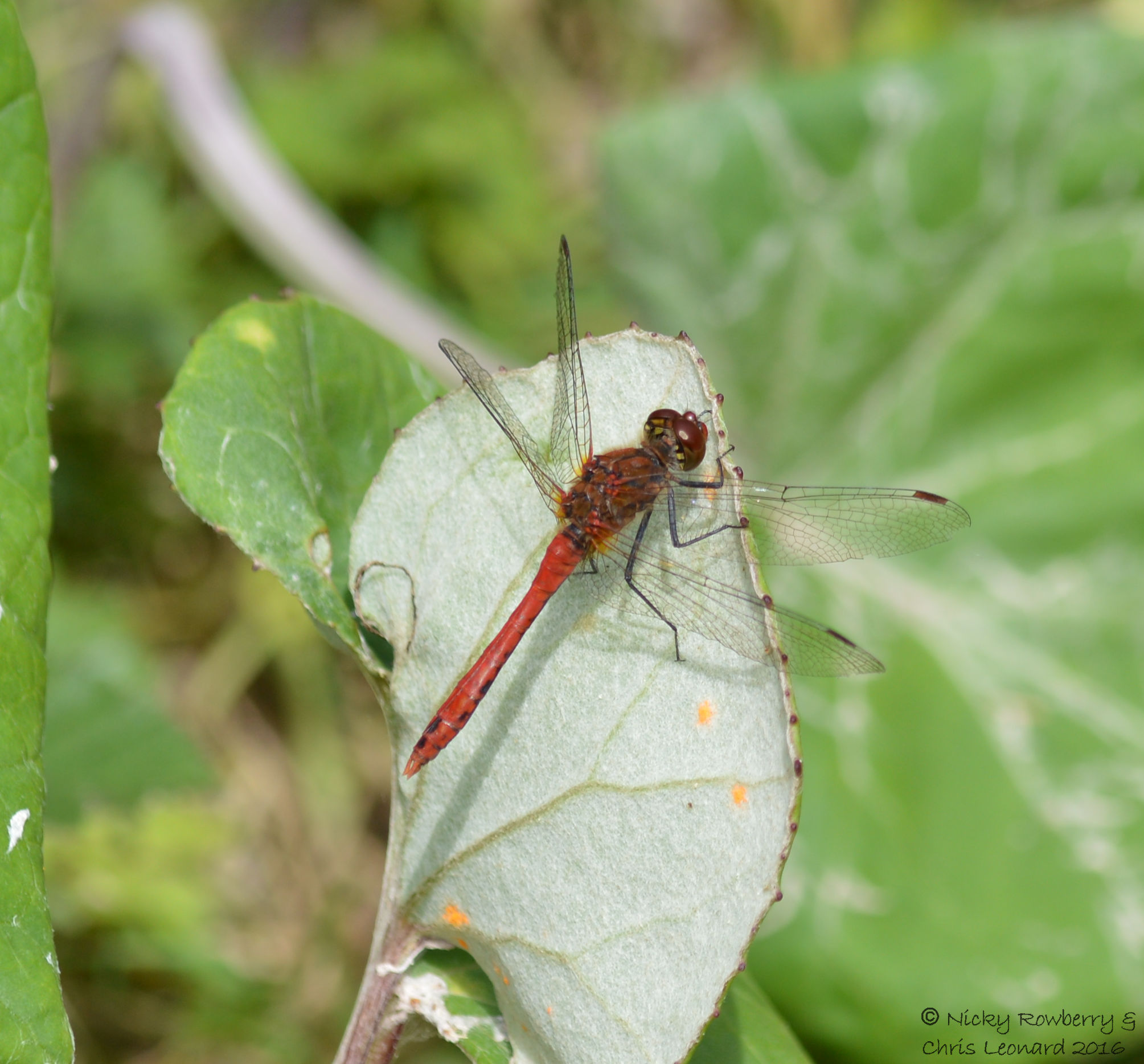
There were lots of Darters about too. At first I thought they were all Common Darters, but closer inspection of the photos back home revealed a Ruddy Darter too. The Ruddy one is a slightly brighter red, but the most diagnostic difference is the colour of the legs – the Ruddy’s legs are all black, whereas the Common has paler segments.

Ruddy Darter

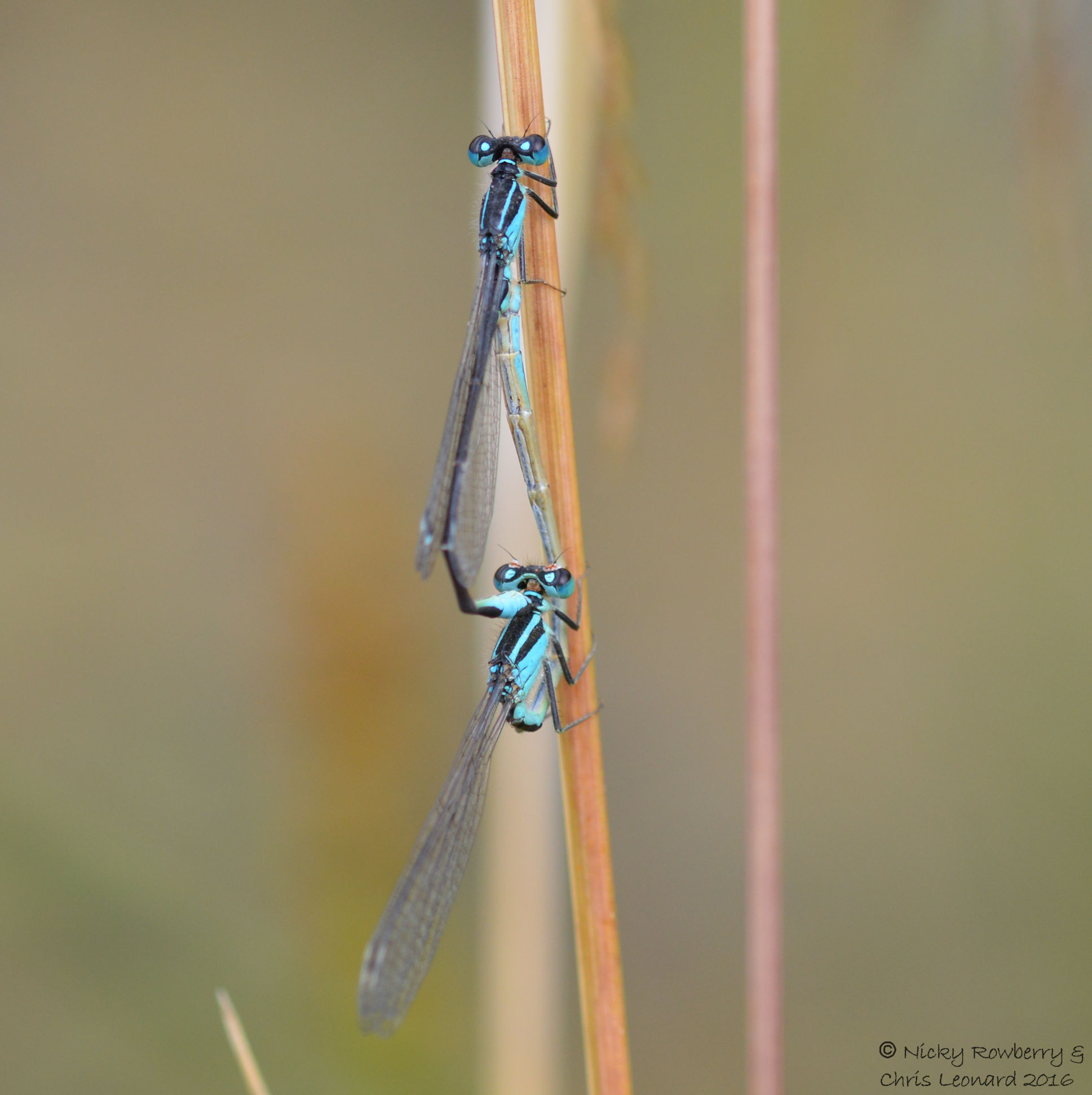
At a small pond we spotted this mating pair of Blue-tailed Damselfies – a new species for us I think. The male is the one at the top and he’s holding onto the back of the neck of the female below, while she curves her body up to his to receive the sperm. They can stay locked like this for quite a while!

Blue Tailed Damselflies 2

Back at the carpark by Grafton church, we rounded off the day by finding our first ever geocache! Not the greatest level of difficulty, but we were pleased with our success on the first attempt. Another thing to get addicted to “bagging”!

Out and About – Prestbury Hill – The Return!

I’m not normally given to the expression OMG, but OMG Prestbury Hill is an amazing place! We made a return trip today to see the Chalkhill Blue butterflies that we didn’t see a few weeks ago (because I’d got their season wrong!) We ended up seeing 15 species of butterfly, a beautiful bird of prey, some moths and a new snail! Pretty amazing for a few hours walking in beautiful countryside.

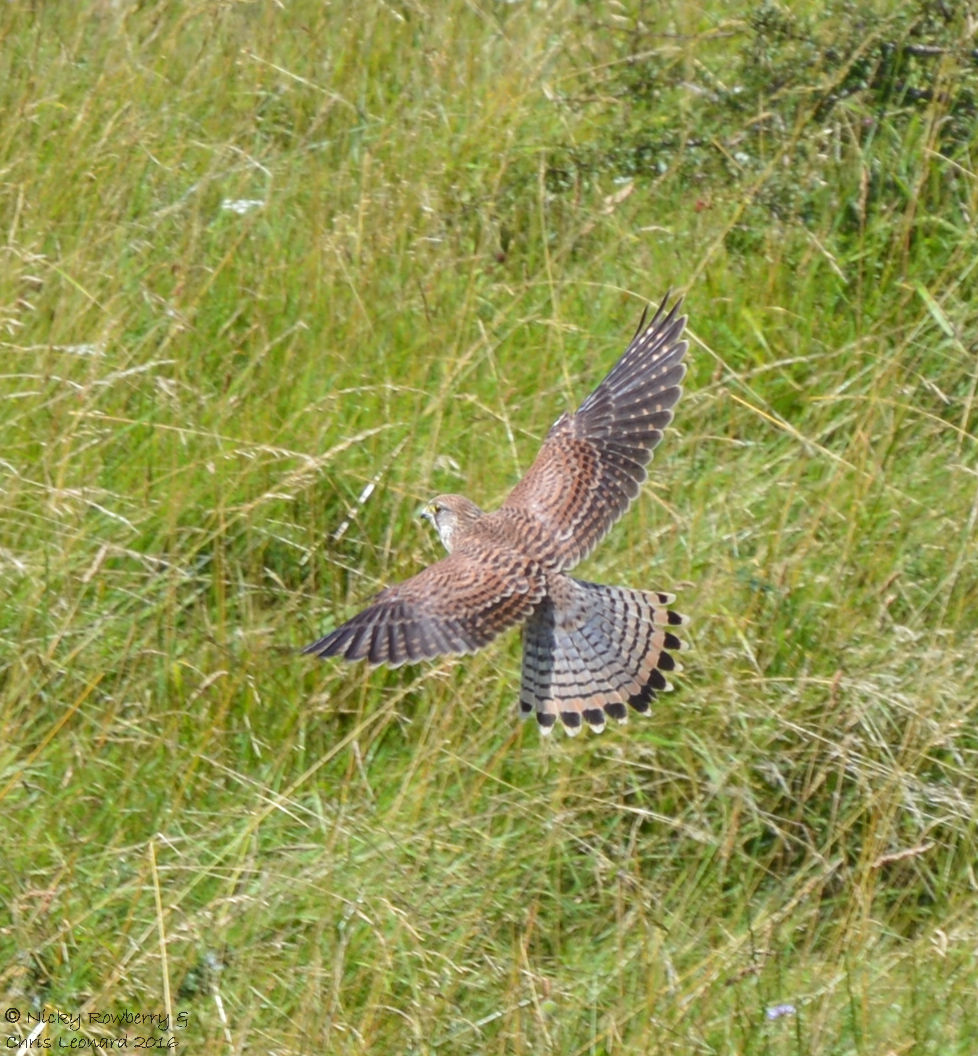
We started leisurely by heading to a bench for a picnic (I’d love to be able to claim that I’d loving crafted cucumber sandwiches and other home-made delights, but actually it was left-over fried chicken from the night before!) We spotted our first Chalkhill Blues before we even reached the bench, but decided to eat first then take photos later. Said bench has glorious views out over Cheltenham and beyond and is the perfect place for a picnic. We could see a bird of prey hovering over fields below – turned out it was this beautiful kestrel. We couldn’t get very close, so this is taken zoomed in from a fair distance, but you can still see what a stunning bird it is.

Kestrel

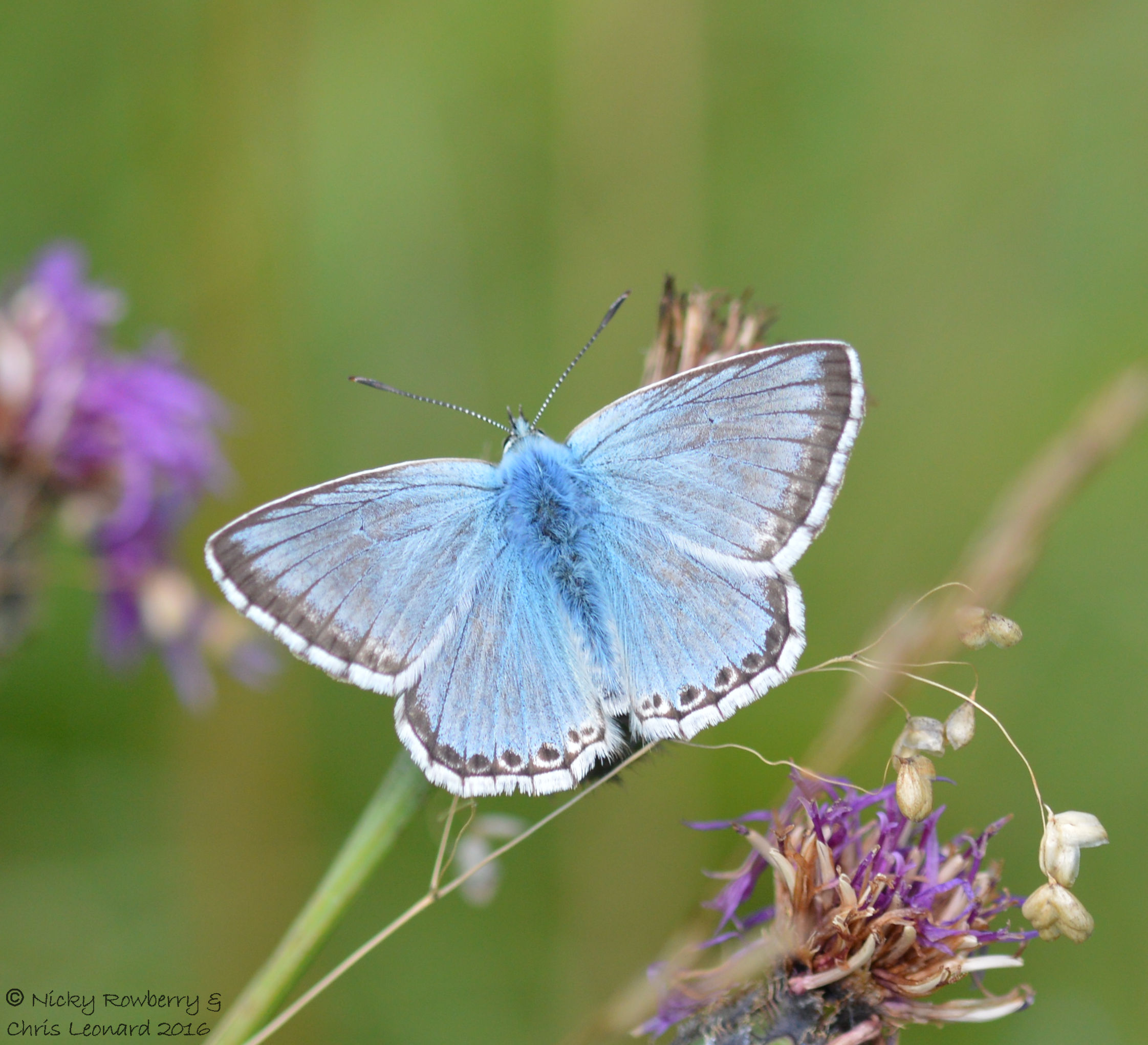
It hovered round about for much of our visit, never coming close enough for a better photo though. But by then we were distracted by the object of our desires – the Chalkhill Blues. The beautiful blue butterflies need either chalk or limestone grassland (Prestbury is limestone) and are one of the last species to appear each year. The males have gorgeous bright blue upper wings edged with black.

Chalkhill Blue

The underneath of the wings have a pattern of dots quite similar to the Common Blue.

As is so often the case with butterflies, the female is much drabber. We saw mainly males today, but that could be just that they are easier to spot with their bright colouring. The few females we did see were often being pursued by more than one admirer.

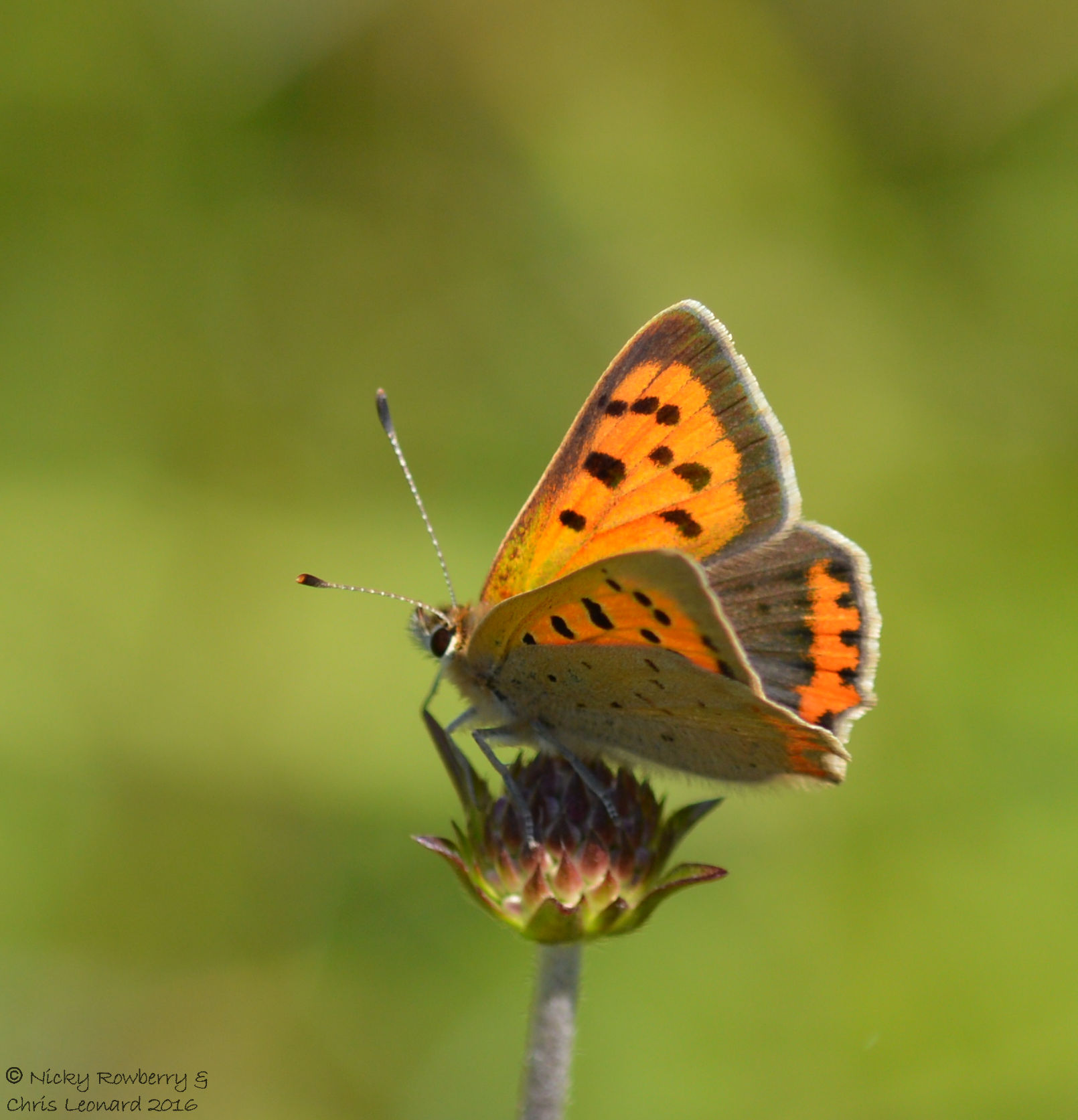
Already delighted with having bagged our Chalkhills we got chatting to some fellow butterfly twitchers, who knew much more about the area than we did and were very helpful. They mentioned that they’d seen Brown Argus further up the slope – a species that we’d never seen before. Needless to say we puffed our way back up the hill to the area they’d described in the hope of a second prize for the day. We caught a glimpse of something different, which turned out though to be some lovely Small Coppers. My photo doesn’t really do them justice, but they were positively glowing a coppery red in the sunshine today.

Small Copper

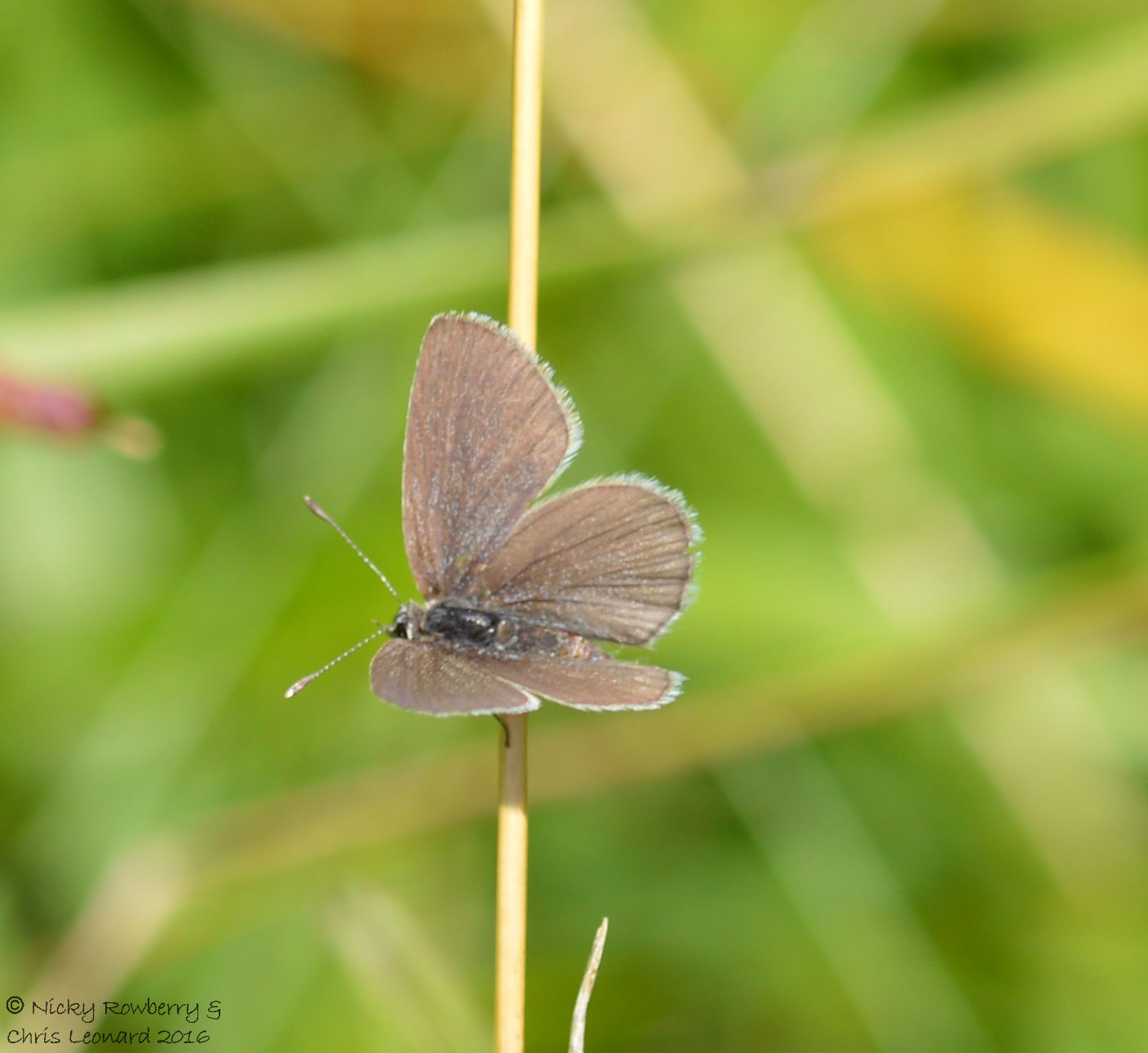
I then noticed a tiny, fairly plain little butterfly, so took a few quick photos thinking it would probably turn out to be a Common Blue. So we were amazed when I downloaded the photos later and realised it had actually been a Small Blue! Another new species for us – two in one day!

Small Blue open

We carried on back up the hill and about half way up saw another small butterfly. This time we’d found it – a male Brown Argus. Our third new species of the day! Again they look quite similar to the female Common Blues, but have the orange dots going right the way to the end of each wing.

Brown Argus male

Obviously seeing three brand new ones was the highlight of the day, but we also saw 12 other species, including our first Small Skipper of the year and some nice fresh looking Gatekeepers.

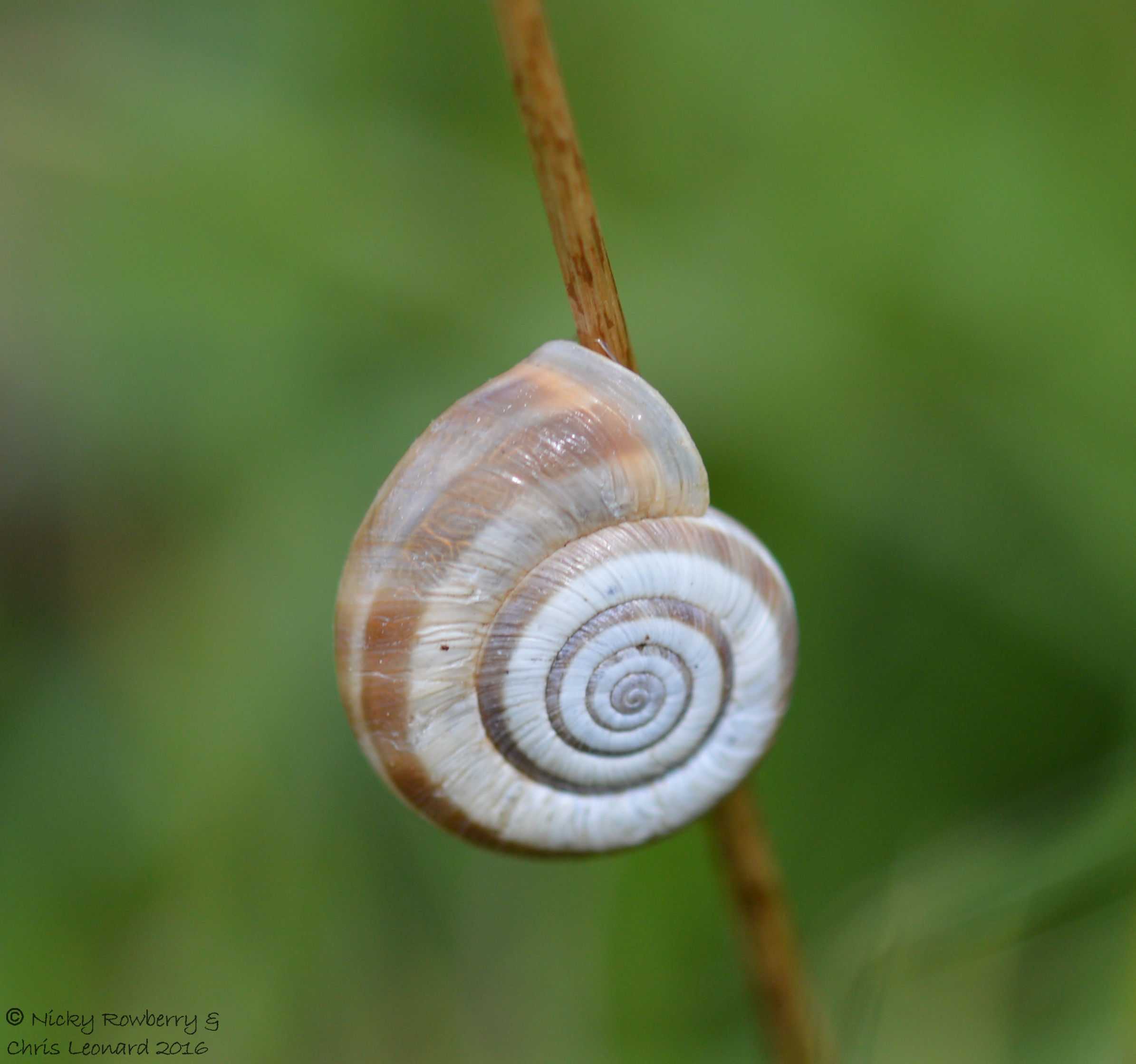
We also saw lots of these interesting snails. They are Heath Snails (Helicella itala) and seemed to have the habit of climbing grass stems like this.

Heath Snail

And finally we couldn’t have a day out without finding a moth – this time a Shaded Broad-Bar as we headed back to the car.

Moth

So if you want to see butterflies, I can’t think of many places better to go than Prestbury Hill. And it still has more to offer – Duke of Burgundy butterflies in the early summer apparently, so we’ll be back again next year.

One Year Older and One Year Weedier

Just realised Too Lazy To Weed is one year old today! 13th July 2015 I first dipped my toe in the world of blogging; at the time I wasn’t sure if I had enough to share from my perspective of lazy non-gardening and wildlife watching. But as I think I said in my very first blog post – there’s something going on in the garden all the time. And if not in the garden, then there are things to discover in the wonderful countryside around us.

I started blogging on a wet Monday in mid July – one year later and it is now a wet Wednesday in mid July; the weather at least hasn’t improved over the year. A few things have progressed though – I think we’re getting better at the photography; still by no means experts, but at least producing recognisable photos (apart from some dubious bee in wall ones below). I’ve learnt how to use a Trail Camera and Bat detector and both my moth and bee identification skills have improved a bit. The garden itself is looking increasingly wild and woolly – some of the weeds are now reaching triffid proportions and we lost the greenhouse for a while until I hacked my way back to it!

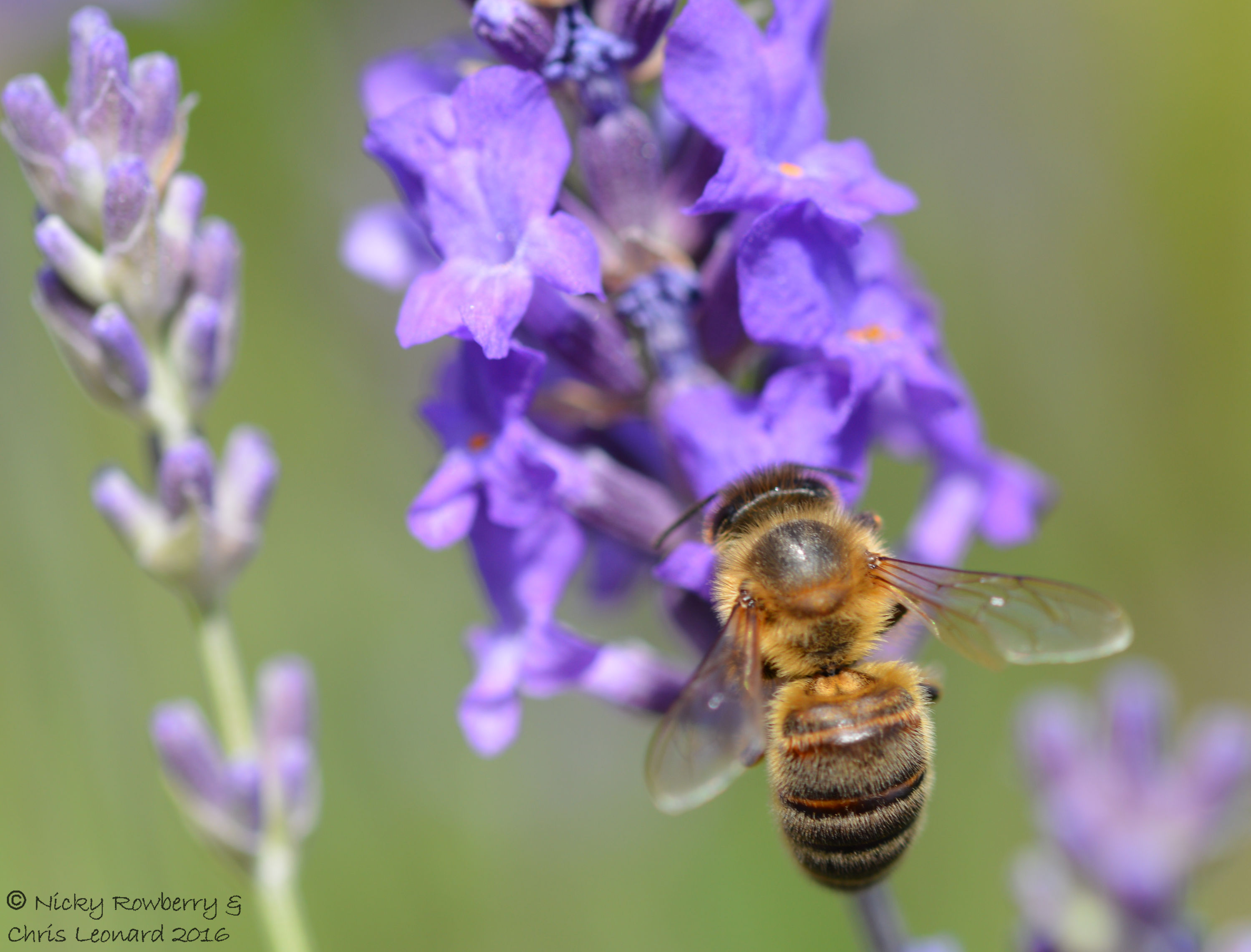
A year ago I was getting all excited at the prospect of the Big Butterfly Count and this year is no different. The Big Count starts again this weekend, so I  hope the weather perks up a bit. Quite a few of the blog posts lately have been about our trips out and about, but I thought for this anniversary post I should maybe focus back on what’s going on in the garden. The butterflies have so far been few and far between, but the bees have been out in force. The lavender is at its best right now and the bees absolutely love it.

Honey Bee 1

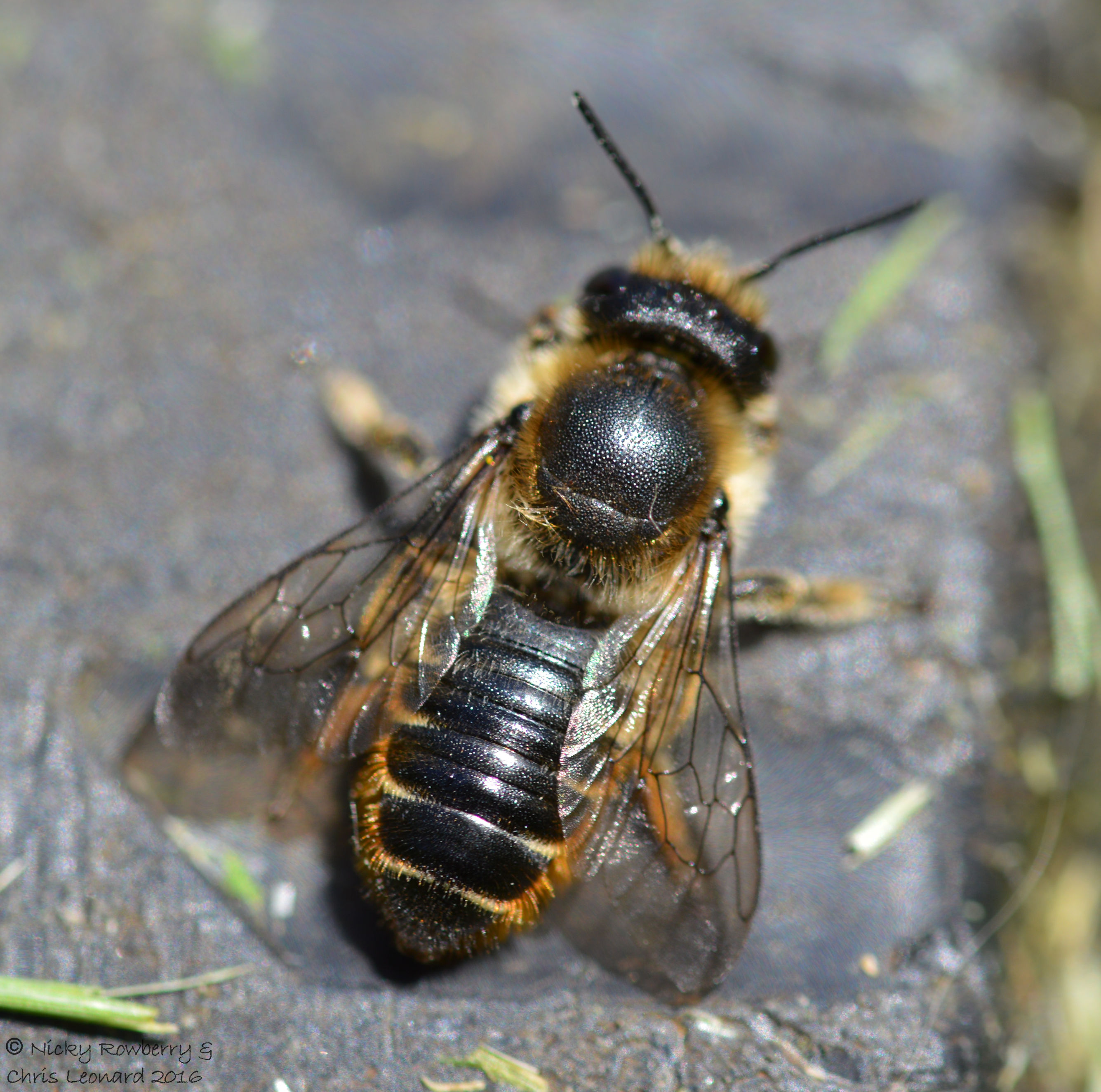
This week there was a particularly rare sighting in the Too Lazy To Weed garden – the lawnmower came out! This bee (a leafcutter) was perhaps so amazed it had to land on the wheel to have a closer look – a good excuse for me to stop work at least!

Megachile

I spent a lot of time at the weekend staring at our outside wall! We have a leafcutter bee (possibly even the one on the lawnmower above) nesting in there. I’ve seen on the internet wonderful photos that people have taken of bees emerging from holes in walls – all beautifully framed and in focus. Turns out it’s not that easy to do! The bee returned every 10-15 minutes so I was all set up with my tripod pointed at the hole. As soon as the bee appeared I clicked away, convinced I’d get award winning shots. Similarly as soon as it reappeared on its way back out I snapped away again. Not one perfectly focussed photo. Bees are apparently faster than either my camera and/or me. These blurry images were the best out of about 50 photos and an hour of my life staring at a wall!

Bee in wall 2

Bee in wall 1

One of my other bee recording efforts recently was to try and video them visiting the flowers in our mini meadow. We get plenty of bees there, so again I foolishly thought this would be easy. I set the trail camera up pointed at the flowers and left it for the day. As usual of course I’d forgotten to factor in the wind – blowing the flowers about and triggering the camera. 400 videos later of flailing flowers and I’d realised my mistake (I should have known this would happen, having had a similar problem with the bird feeder blowing in the wind earlier in the year). Amongst the flower flapping though the camera did at least manage to pick up a few bees – here are a couple of Buff Tailed Bumblebees enjoying the nectar buffet.

So one year on and I’m still getting just as much pleasure from watching the wildlife in our garden. Apart from the benefit to the wildlife itself of keeping an organic, natural (OK messy) garden, I find it beneficial to my own wellbeing. Coming home from work and watching the bees on the lavender, or the birds stuffing themselves on the birdfeeder, or the bats swooping in the evening  (even if they are after my beloved moths!) is a great way of unwinding. Maybe everyone should have a lazy garden!