The Large Heath – Butterfly No. 46!

We headed off again on Saturday in search of our next butterfly species – the Large Heath. Whixall Moss is a peat bog on the English/Welsh border and the only place anywhere near us where we might see this increasingly rare butterfly. The bog has the beautiful Llangollen canal running along one side of it. We had to stop and wait for the bridge over the canal to be hand-winched back down as a narrow boat passed through.

We’d seen reports a mere 4 days before of sightings of upwards of 30 Large Heaths at Whixall Moss, so we’d set off with high hopes of nailing this one easily. These hopes were slightly dampened almost as soon as we left the carpark when we met an exhausted looking lady (carrying her even more exhausted little dog) who’d been searching in the scorching heat for 5 hours and not seen a single one. Undeterred (while slightly deterred to be honest) we carried on, following the walk described in the Butterflies of the West Midlands book.

We’d been walking for about an hour and a half and it was starting to look as if we’d draw a blank, although we had seen lots of other lovely wildlife. But then finally, just as we were about to head back, I spotted a butterfly dancing about the path. Initially I wasn’t sure what it was as it didn’t look like I’d expected. Turns out the Large Heath would struggle to pass the trade description law – it is actually really small! It was a raggedy little specimen and it insisted on hiding behind bits of grass, but at least we’d found one. It proved to be the only one we saw that day, but after a 2 hour drive and an hour and a half walk, we were grateful just to have found one. So here it is – our one and only Large Heath.

It looks a bit like a Meadow Brown but smaller and with spots like a Ringlet.

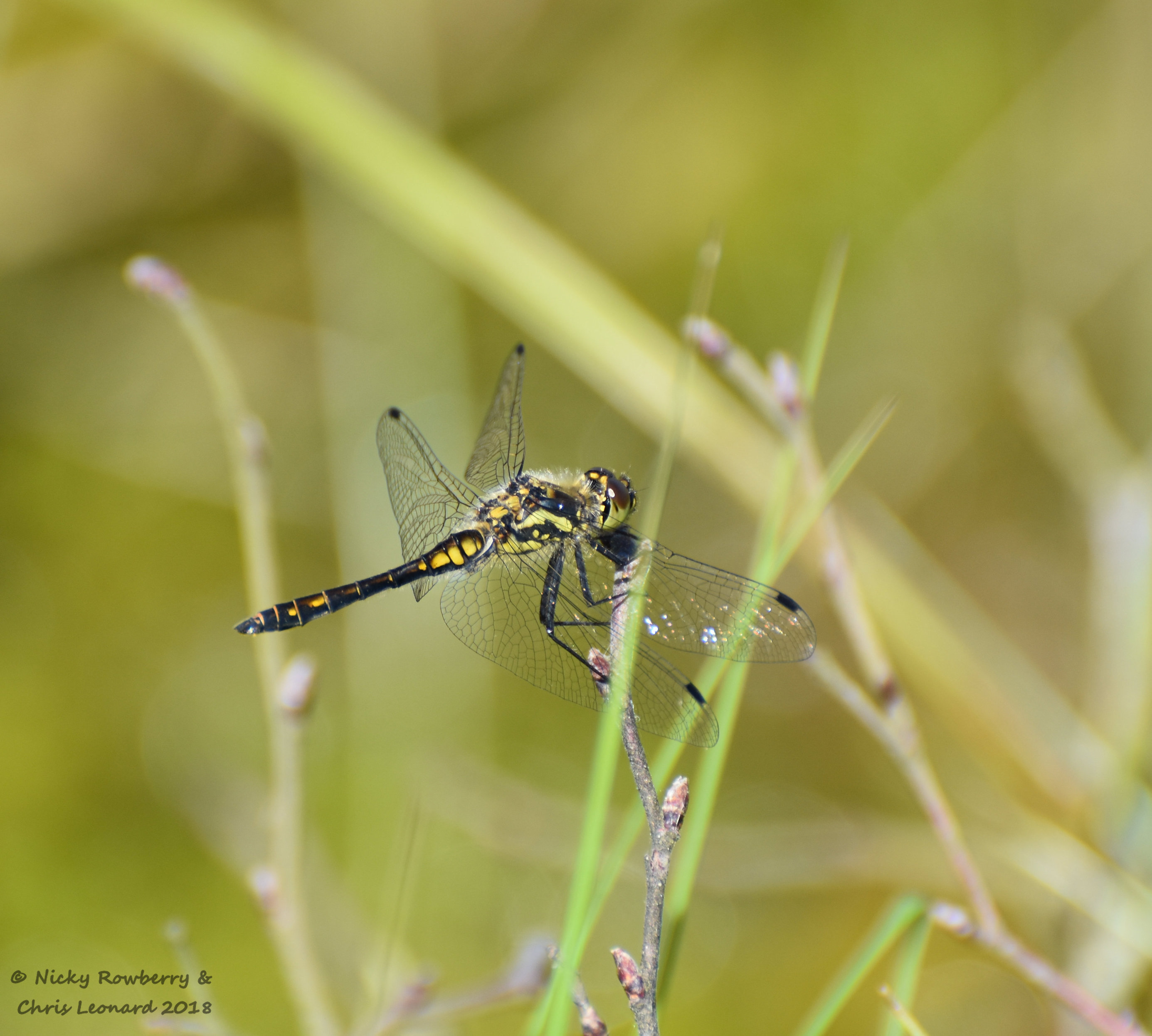
Whixall Moss is also well known for its population of White-faced dragonflies. Despite taking lots of dragonfly photos, none of them turned out to be white-faced. But we did get a new one for us – the Black Darter. Here is a male (top) and female (bottom).
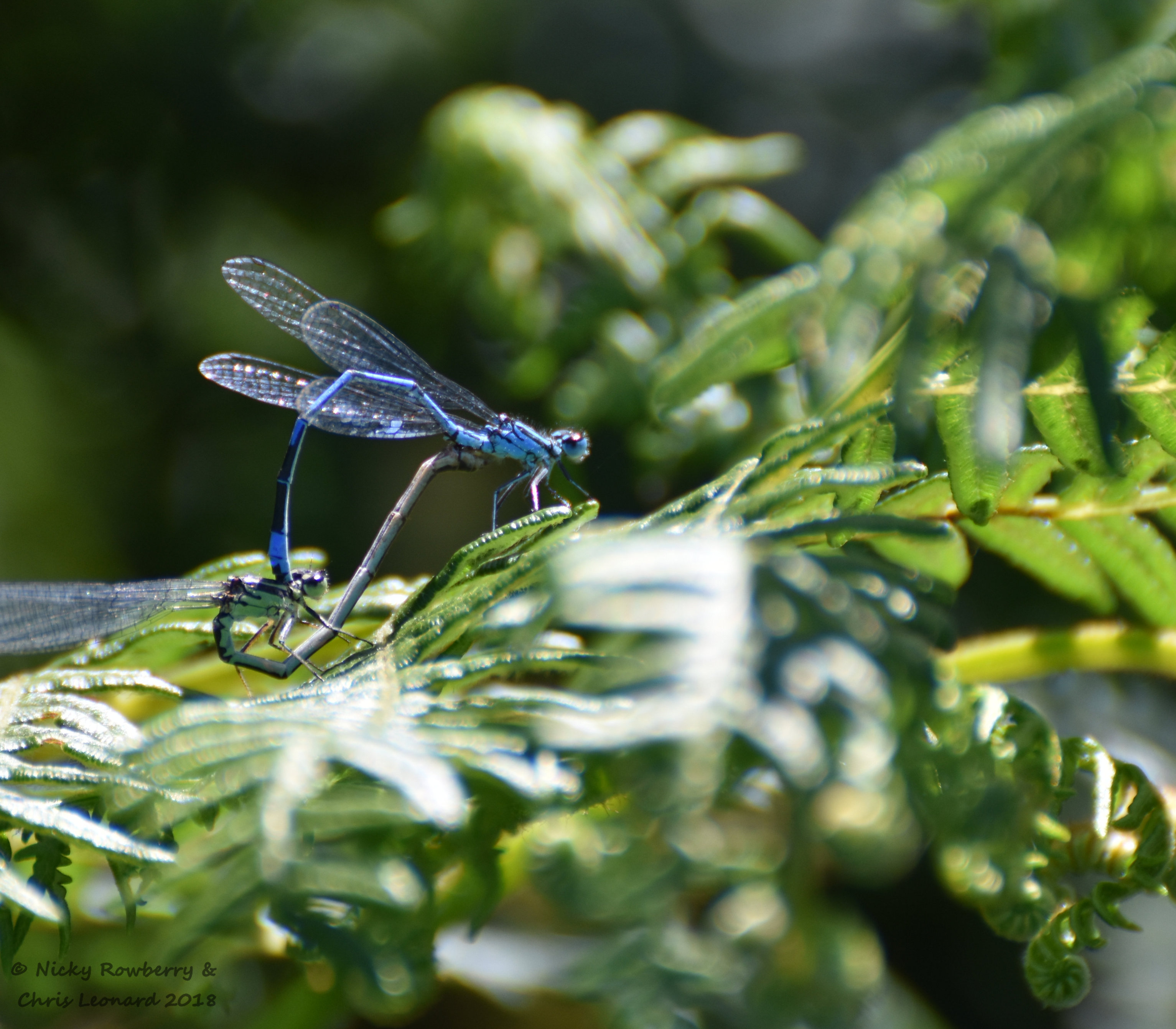
There were blue and red damselflies everywhere and love seemed to be in the air for many of them, including this mating pair of Azure ones.
Aside from the whirring of insect wings in the air, there was the chirping of grasshoppers in the undergrowth. This one hopped obligingly onto the path in front of me.

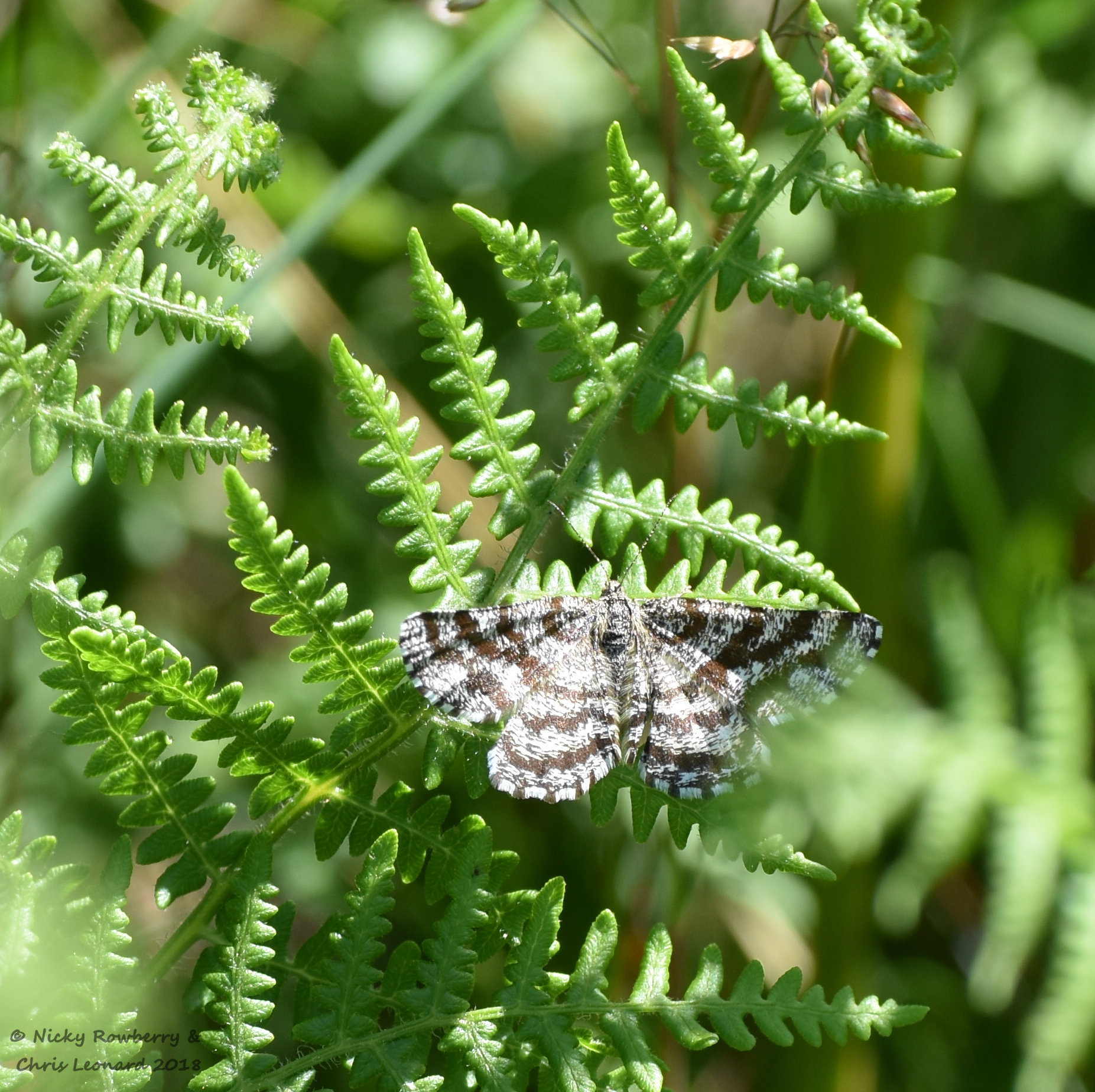
The final insect of the day was a day flying moth and a new one for me – the Common Heath. As the Large Heath wasn’t particularly large, so the Common Heath didn’t seem to be particularly common, but I did manage to chase one down to get a photo.
As we’d walked along the path, something had scared up a pair of ground nesting birds. They took to the air for a few minutes until the danger had passed. We didn’t know what they were at first, but turned out they were lapwings.


A bit further on and we found more of them – this time looking a bit more relaxed, nesting by a pooled area. Lapwings have suffered major declines in the UK in recent years, so it’s always nice to go somewhere that has them.

So it was a long hot day at Whixall Moss, but the success of seeing the Large Heath and the bonus of the lapwings, made it all worthwhile. Butterfly species no. 46 ticked off the list – only another dozen or so to go!
Out and About – Upton Warren Wetlands

It’s March and I ventured Out and About properly last weekend for the first time this year. I’d joined Worcestershire Wildlife Trust a few months ago and decided to take advantage of this by visiting the Upton Warren Wetland Reserve.  It was so nice to get some fresh air and explore somewhere new. The reserve has a mixture of freshwater and saline pools (the result of previous brine extraction work), which attract a wide variety of birds. The reserve is pretty big, so I only managed to do about half of it on this first visit. It’s a fantastic site though, so I will definitely be back soon to try out the other half.

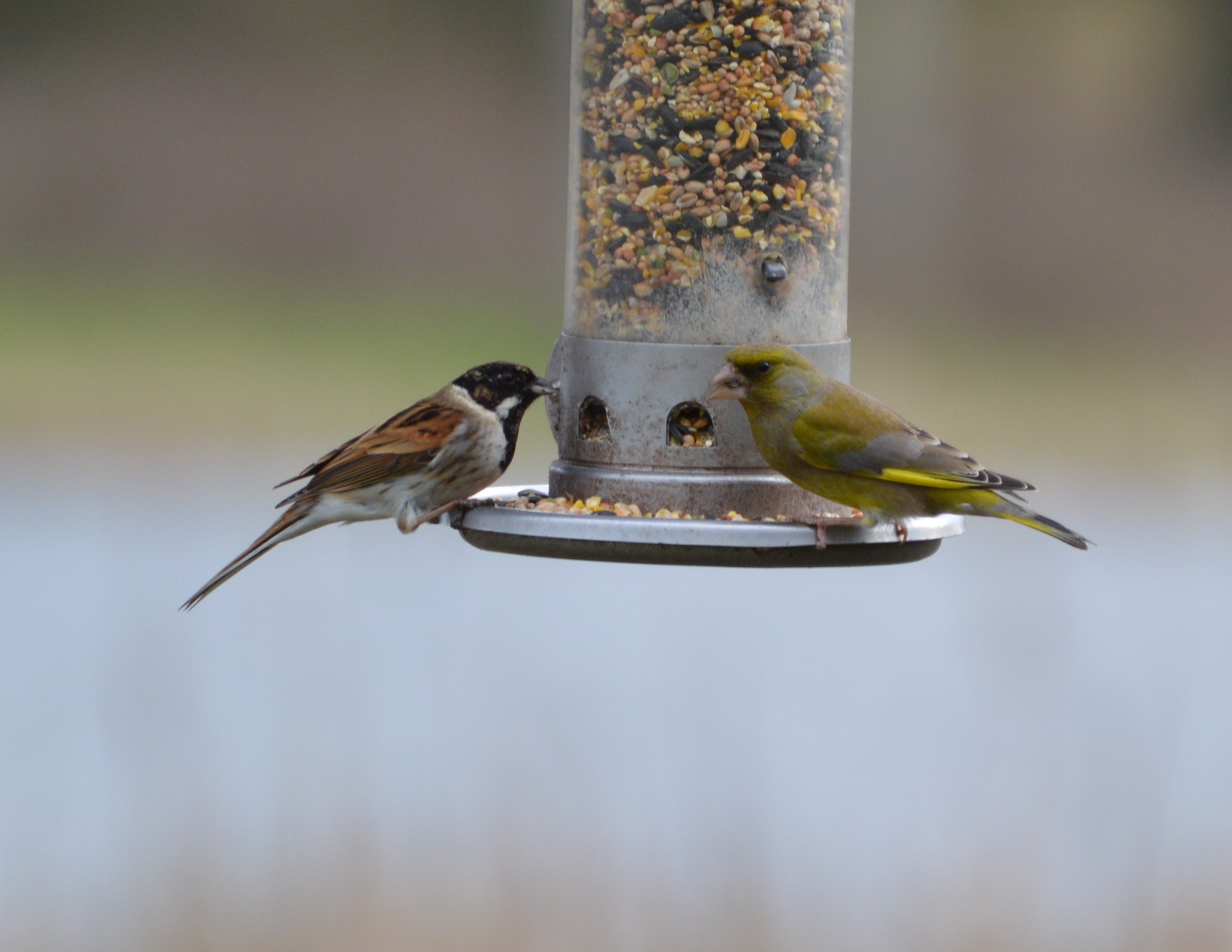
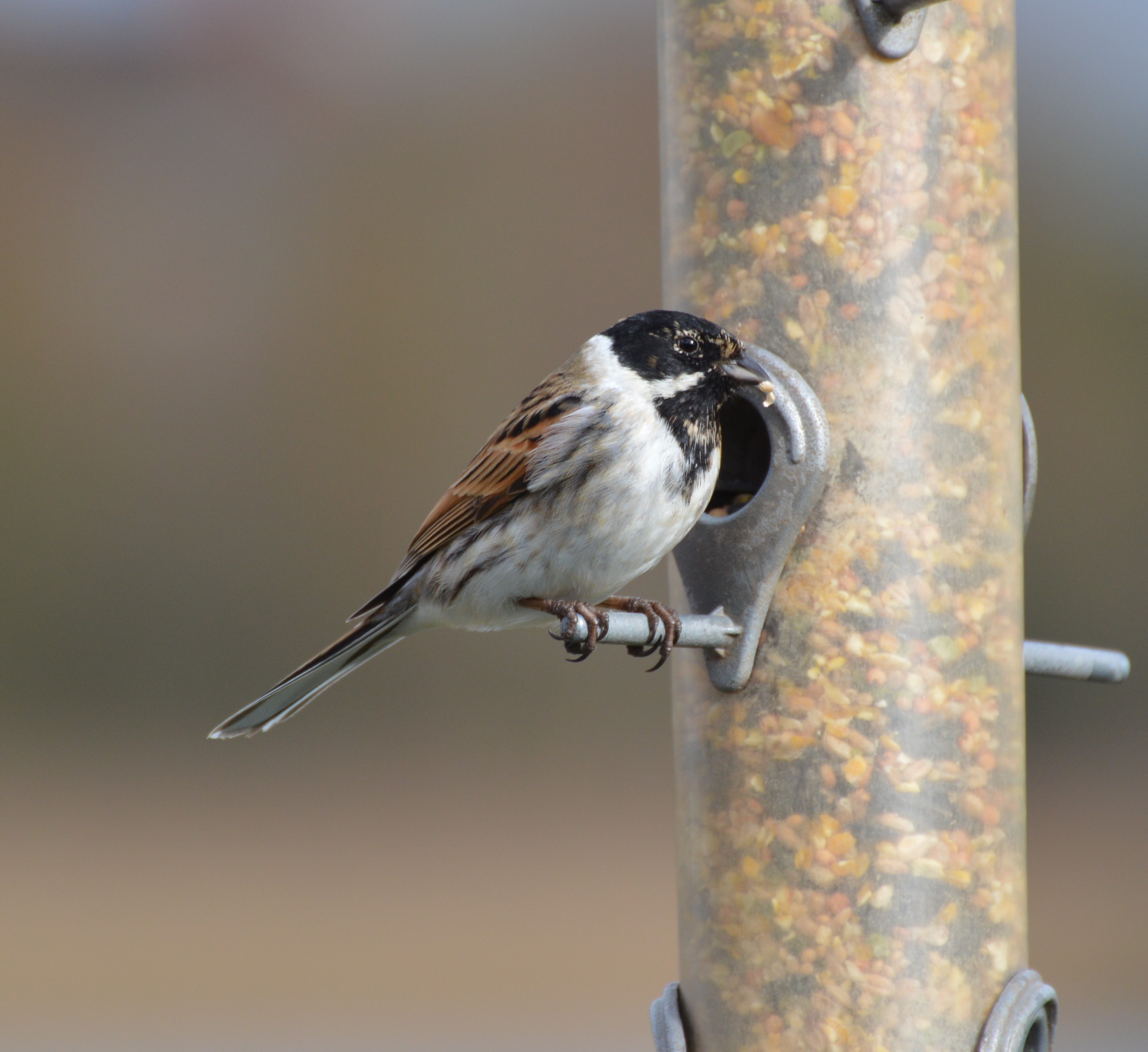
At the first hide, the Trust people had hung out a few bird feeders and I noticed a lot of small brownish birds that looked a bit like sparrows. Being a novice, I had to ask the helpful gentleman who was in the hide with me what they were – I was a bit worried he might just say that they were sparrows, then I really would look clueless, but fortunately it turned out they were reed buntings. I had sort of expected reed buntings to hang about in the reeds and be difficult to see, but I guess why would they do that when there were easy pickings from a feeder?  Top one here is a male and the bottom is the female (at least I think it is, unless it turns out to be an embarrassing sparrow).

reed-bunting-female

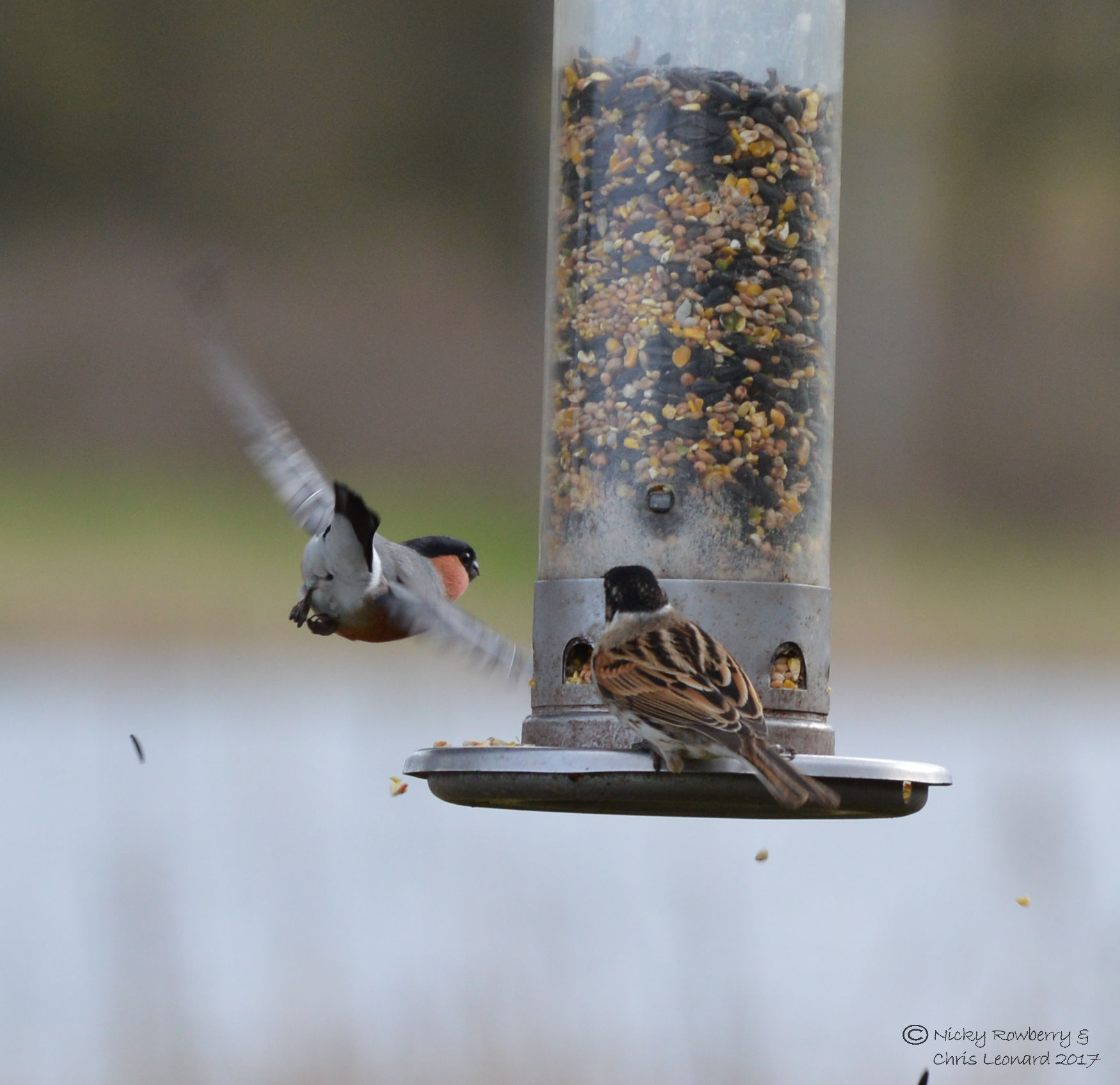
The reed buntings weren’t the only ones using the bird feeders; they had stiff competition from the bullfinches in particular, who in turn had to contend with the greenfinches.

bullfinch-bunting-2

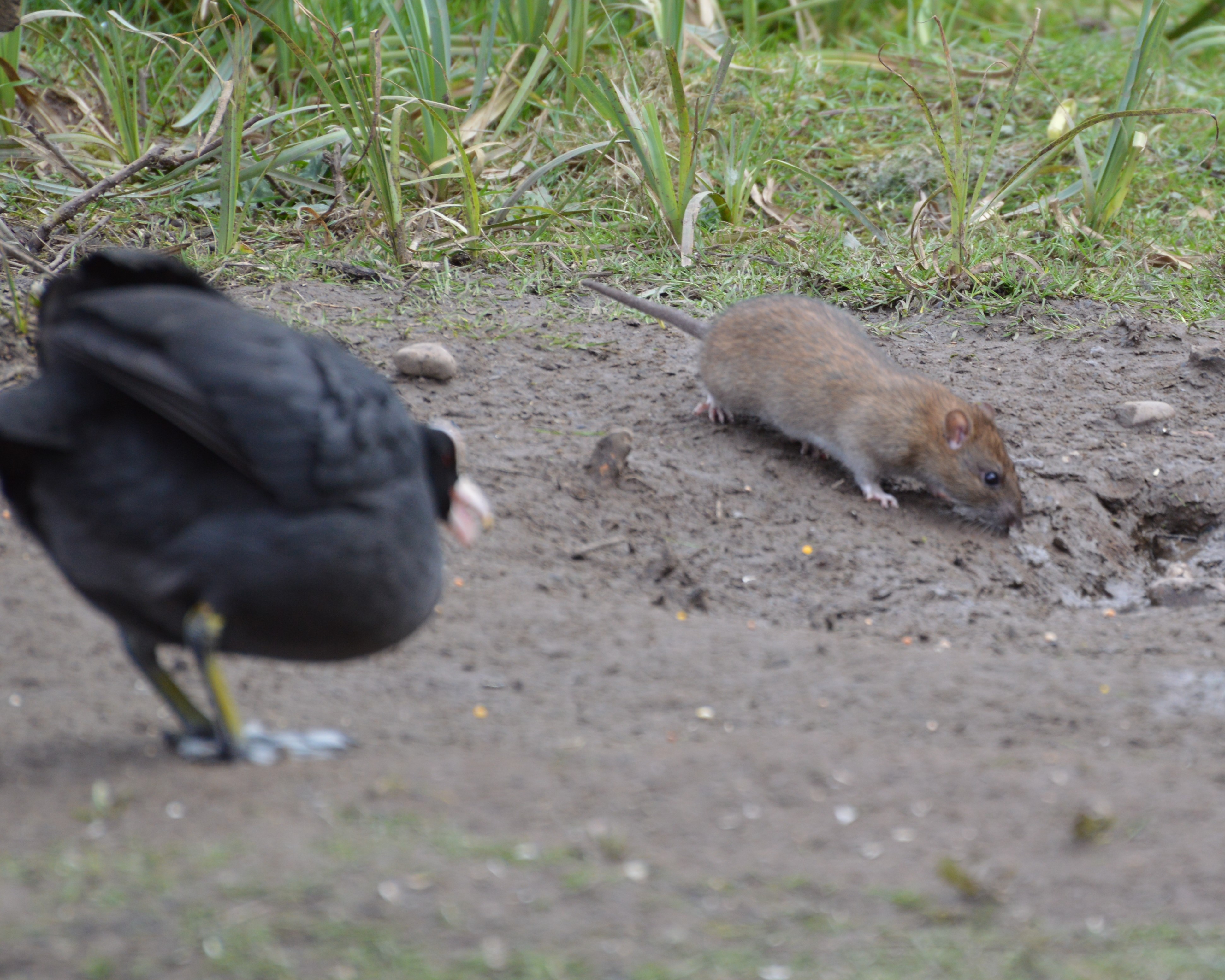
All the dropped seed of course attracted the inevitable rats, including this particularly bold one. Not the most welcome visitor to a bird reserve, but it was interesting to see a rat that close up in broad daylight – a first for me.

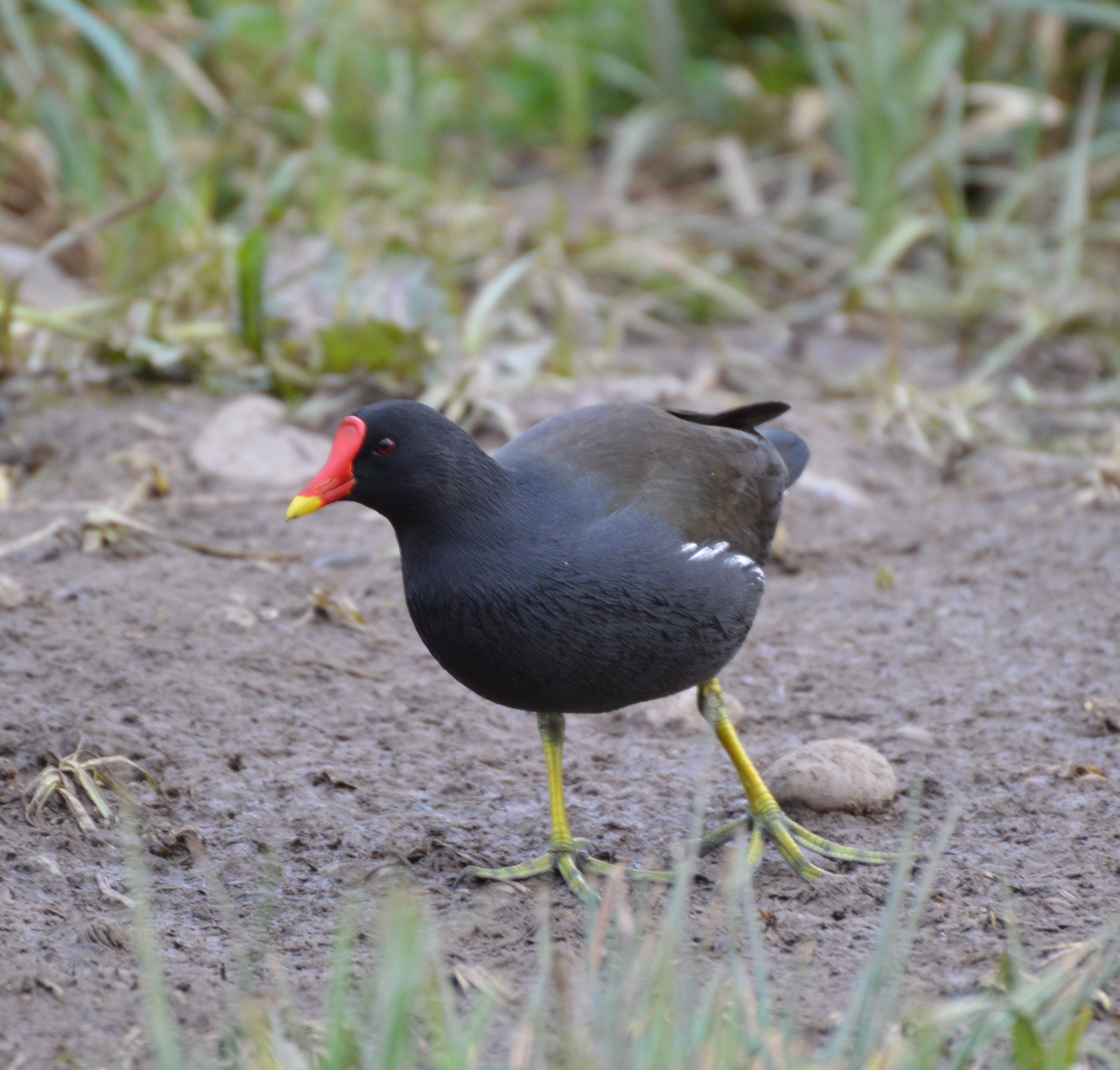
A portly looking moorhen was lazily scanning around for bird seed, while a coot cruised the nearby inlet.

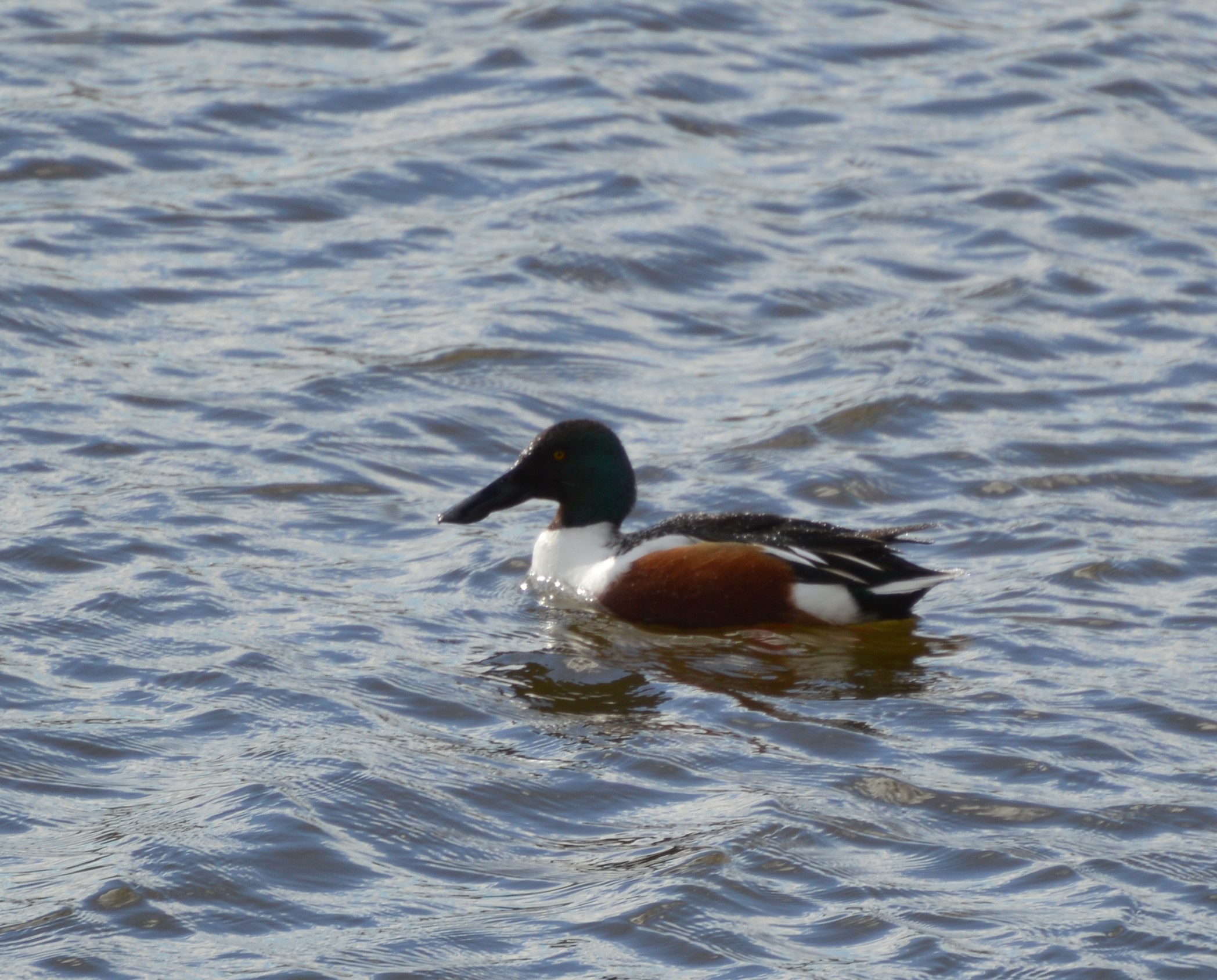
There were quite a few regular mallards about, but then a duck appeared that looked a bit different. Umpteen blurry photos later, I finally got one good enough to identify it as a Shoveler Duck. Turns out they are fairly common, but it was new to me.

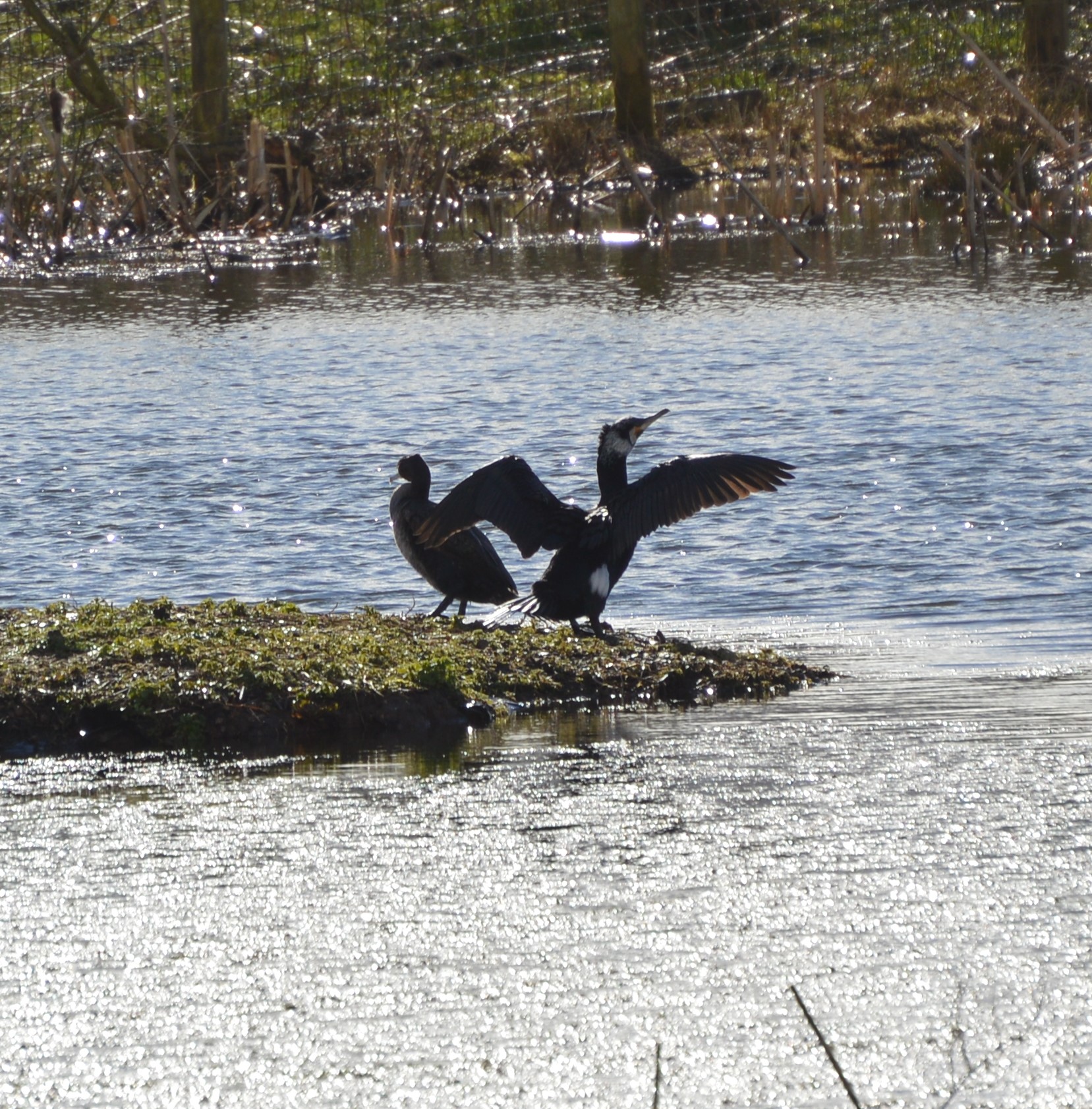
There were a few cormorants about – weird looking birds. Even the RSPSB website describes them as reptilian looking, which seems a tad unkind!

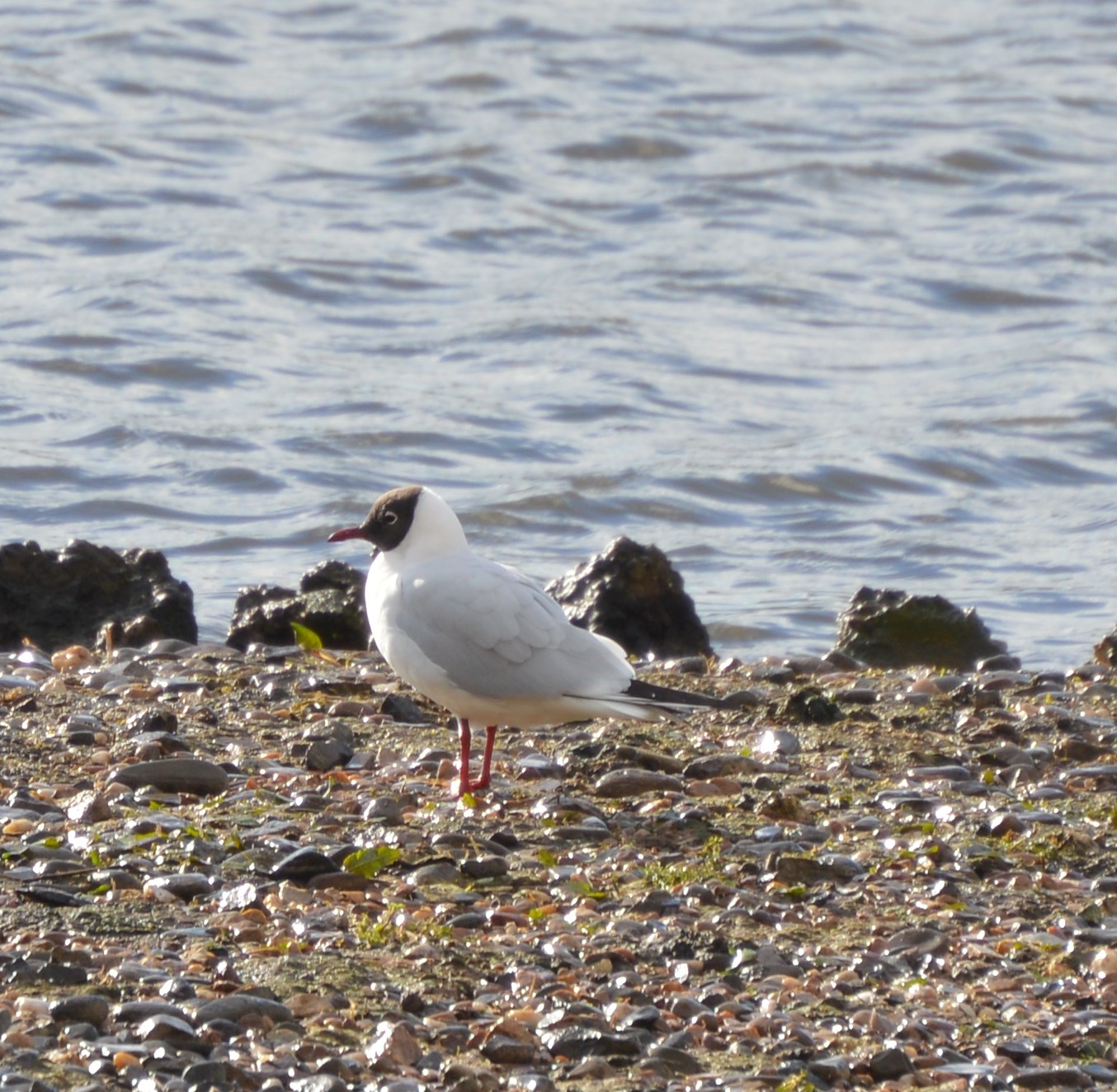
By far the most common birds I saw were these black-headed gulls, this one in his winter plumage still.

One species I was really pleased to see was the lapwing. I’d only ever seen these on TV (Springwatch most likely) and they are such characterful looking birds, I was really chuffed to find a small flock of them. They were a bit far away to get really good photos, although when they all took off I got a slightly better view.

Having lived by the coast for many years, one bird I was familiar with was the oystercatcher – never imagined I’d see them in the middle of Worcestershire though! I heard them at Upton before I saw them – that distinctive, fairly shrill call. A pair landed on a small island in front of me, easily recognisable with their bright red beaks and legs (I do like an obvious bird!) Again they were a bit far away to get really good photos.

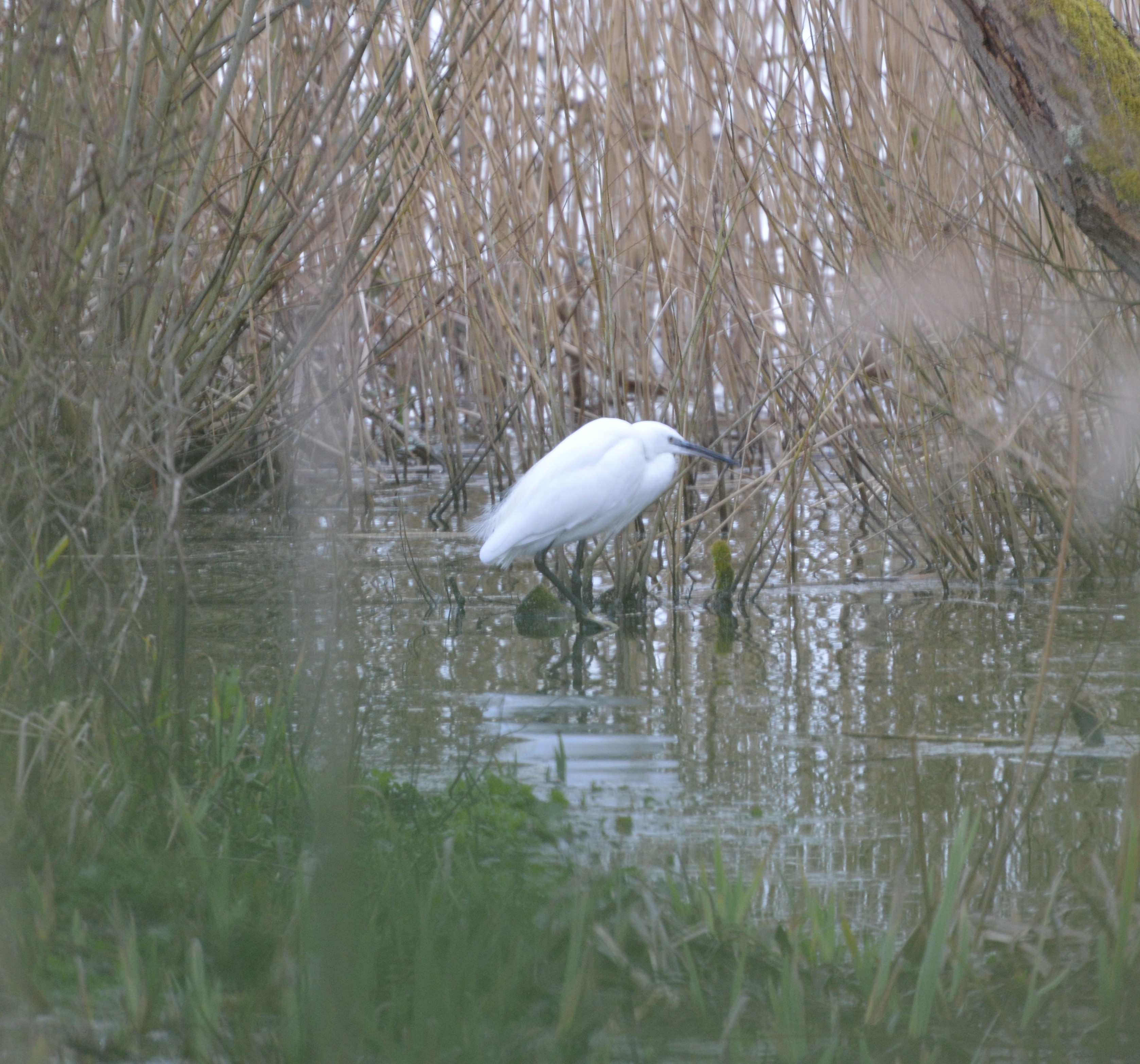
Without doubt the most beautiful bird we saw was this Little Egret,  spotted as I walked between hides. Almost ethereal with its pure white plumage, I watched it for a few minutes before it disappeared into the reeds.

All in all a great afternoon and although I was only there for a few hours, I still clocked up 18 species of bird, several of which were completely new to me. I heard another birdwatcher commenting that there was “nothing much showing” – he was no doubt much more experienced than I was and probably hoping for something unusual. Sometimes it’s good to be a novice, as I was absolutely delighted with everything I saw – lots of the birds were new to me, so it was all exciting and I was happy just watching what was there. For me there was plenty showing.