Bags of Bees and Blossom

I’ve not managed to blog anything in the last few weeks, but it’s not been for lack of things going on in the garden. Almost the opposite in fact – spring is here and so much wildlife in our garden is stirring, that I can hardly keep up with it!

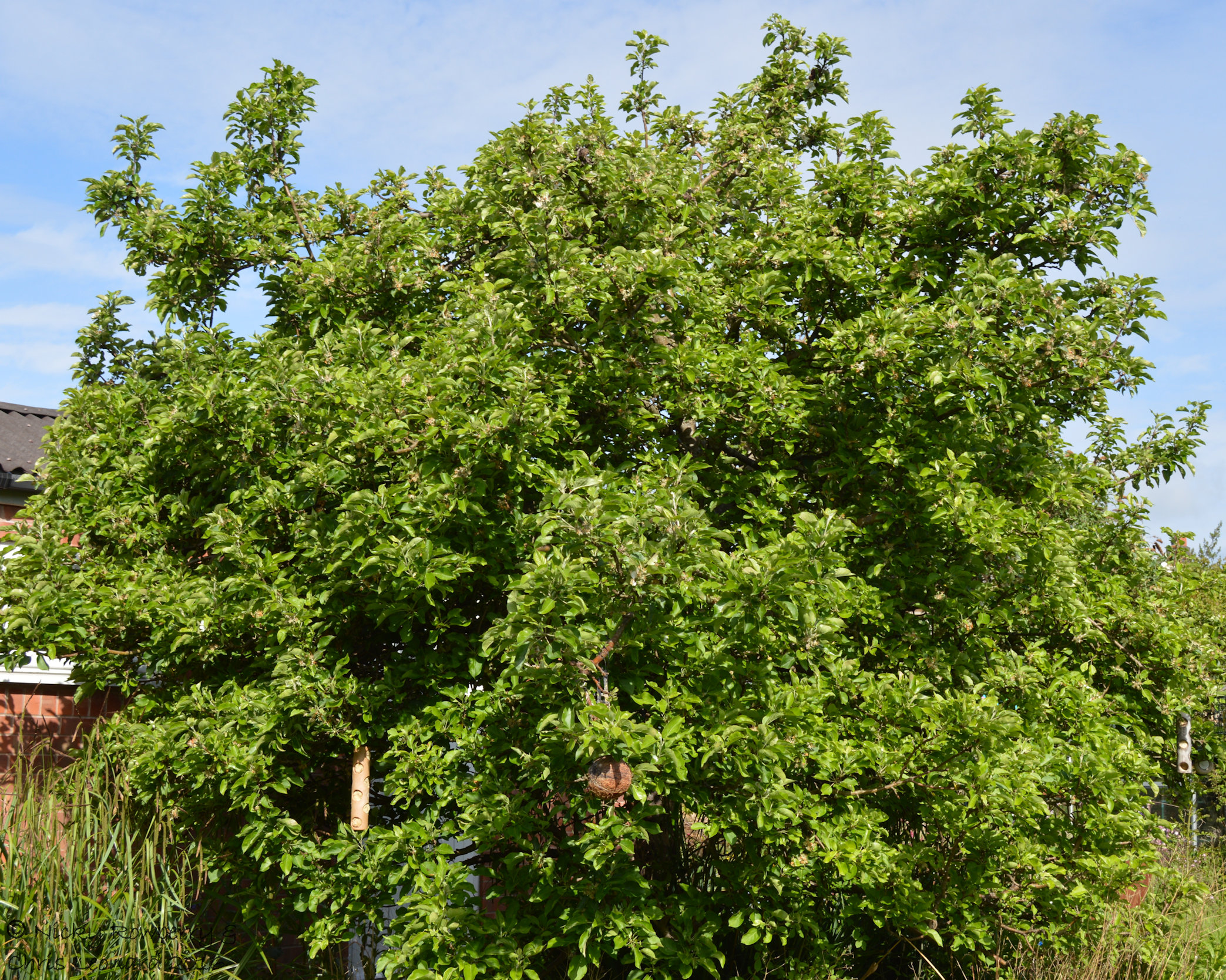
The apple tree has been in full blossom the last few weeks. 2017 seems to be one of those years where the whole tree turns pinky white with flowers. Comparing this year’s photo (top) with 2016 (below), there is a huge difference in the amount of blossom. It is also in full flower a lot earlier – this year it peaked mid April, last year what little there was peaked in early May. Due to the mild winter or just a natural cycle?

With an apple tree full of blossom, you would of course expect a load of bees. What I hadn’t expected was this Girdle Snail sitting pretty in the middle of it all!

Apart from the stray molluscs though there were indeed plenty of bees. Honey bees were probably the most common. We get lots in the garden, I’d love to know if someone is keeping bees nearby (feel they owe us a pot of honey if they are!)

There have also been plenty of these small Red Mason Bees (Osmia bicornis)
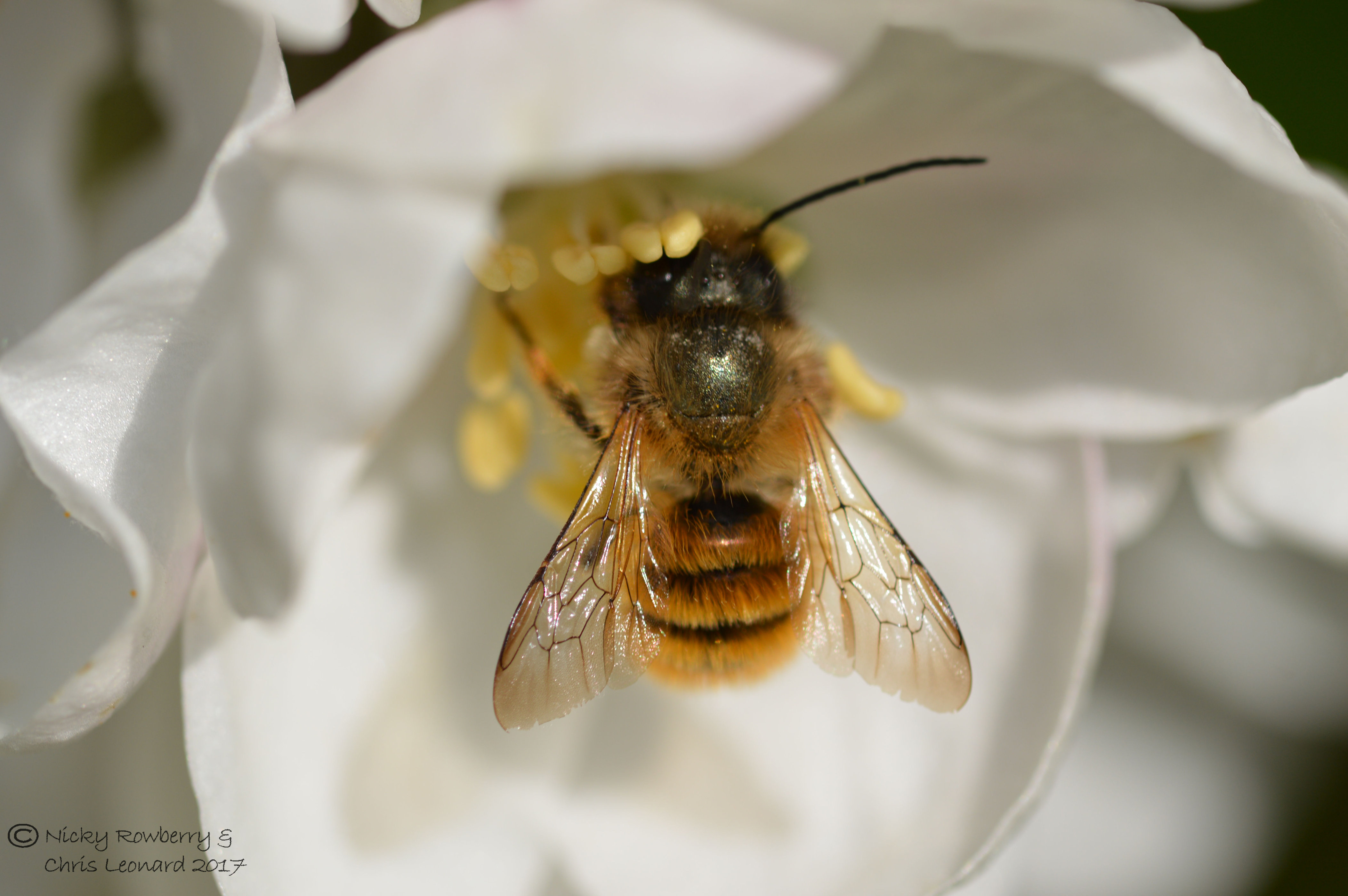
and these slightly larger Buff-tailed Bumblebees (Bombus terrestris)

I usually only see these Ashy Mining Bees (Andrena cineraria) flying low around the grass, so it was nice to catch one up in the tree. I’ve got a soft spot for this species – probably because it’s one of only two Andrena species I can identify at a glance with its distinctive black and white colouration.

The other Andrena species I know easily is this female Tawny Mining Bee (Andrena fulva). The females have this amazing bright red bushy appearance. I thought we had them in the garden last year, but never managed a photo to confirm. This year I finally snapped one, which made it the 27th confirmed bee species for the garden (actually now at 28, but more on that in another blog post).

As well as the above, I’ve also spotted Hairy Footed Flower Bees, Red-tailed Bumblebees and at least one other Andrena species making the most of the blossom. The final one that I actually managed to get a (bad) photo of was this Tree Bumblebee (Bombus hypnorum). These relative newcomers to the UK are one of our most frequent and distinctive bumblebees in the garden.

The Tree Bumblebees have also turned up in a most unlikely place this last week. Our next door neighbour was clearing out his garage when he moved a bag of waste fluff from the tumble dryer. Much to his surprise the bag was full of bees! A colony of Tree Bumblebees had decided that a bag of tumble dryer fluff was the perfect place to nest and they weren’t happy at being moved. I offered to take the fluffy bag of bees, but with hindsight I should maybe have thought it through first. I put the bag under a lean-to cover we’ve got, where we sit out if it’s raining.  Unfortunately this is probably where it’s going to have to stay. I can’t leave it out in the open, as the fluff will probably set like cement if it gets wet and I don’t want to entomb the bees in their nest. I also daren’t move it again as it might crush the nest. So we’ll have to share the lean-to with a bag of bees for the summer.
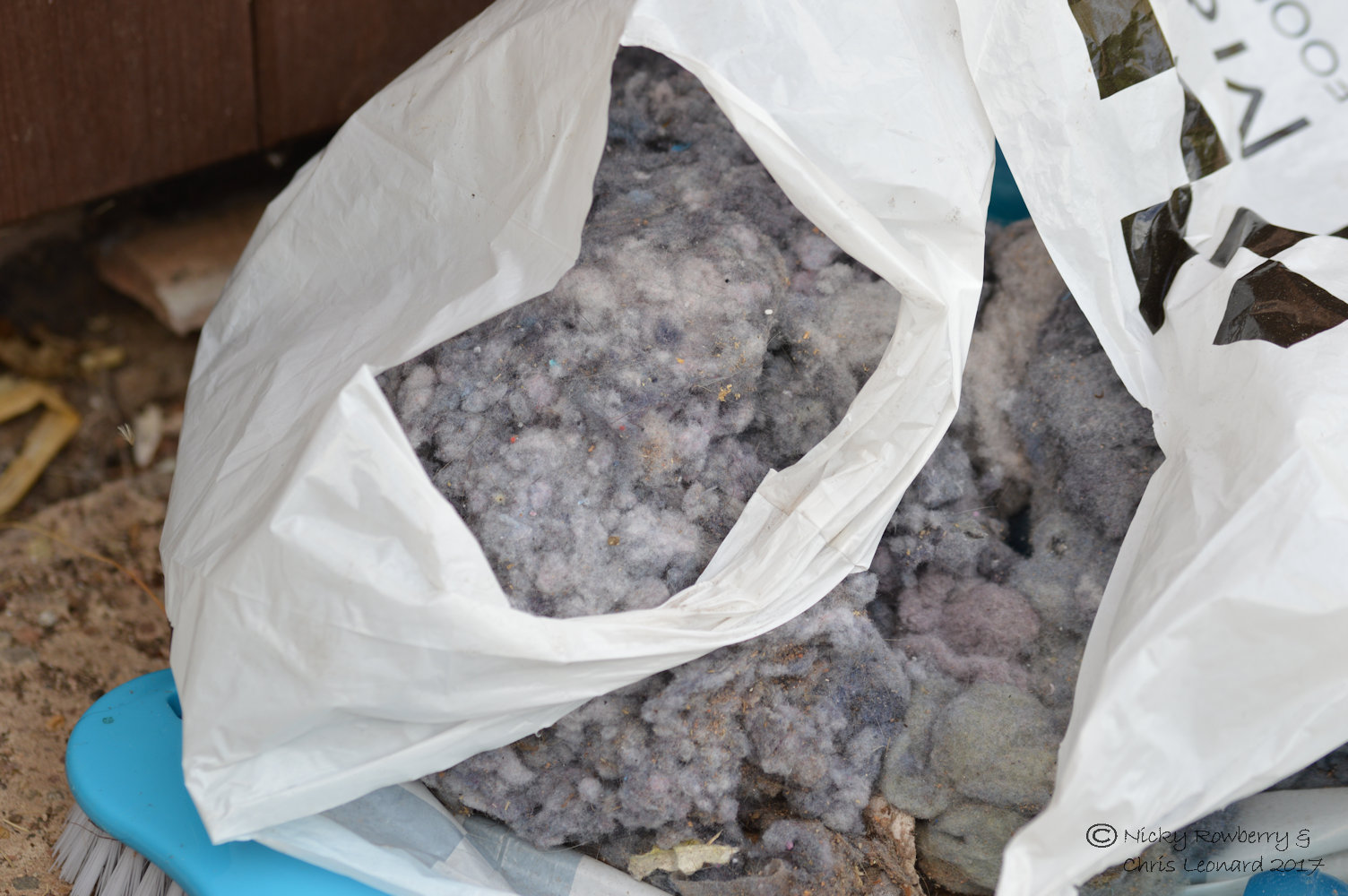
I then spent about an hour yesterday lying flat on the floor trying to get photos of the bees coming and going from the bag. As it happens they seem to be accessing the nest right next to a small smiley face sticker that’s somehow ended up in there amongst the fluff. It makes me smile every time I look at these photos!

The Tree Bumblebees aren’t the only ones to have been popping up in unexpected places. The new nest box that we put up back in January has unfortunately not attracted any nesting birds yet. But I was surprised to spot this large bumblebee bouncing about inside it a few weeks ago. I’d have settled for a bee nest in the absence of a birdy one, but after a few minutes clumsily wandering around, it buzzed off.

So it’s only April and we already have, quite literally, bags of bees in the garden!
Hedgehog Housekeeping

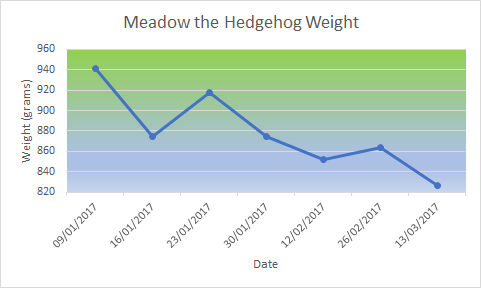
Just a short post today with an update on our foster hedgehog Meadow. We’ve had him now since early January and I’m very relieved that’s he survived the winter with us! We’ve been weighing him every fortnight and although he’s lost a bit of weight, he is still a very healthy 800g or so – plenty heavy enough to see him through to the spring hopefully.

Since we last weighed him he has become increasingly active and has presumably decided he’s had enough of hibernation. For the first 2 months our care duties had consisted mainly of checking each day that he had fresh water and food, but while he was asleep, there was little else to do.

Now he is an eating and pooping machine! His food bowl is at best empty every morning and at worst he’s pooped in it! The water bowl is regularly slopped about soaking the newspapers and he has generally managed to poop in every corner of the hutch! So every day he needs fresh food, water and newspapers and a general clean of the hutch. We never see him though (apart from when we take him out to weigh), he’s always buried in the hay when we look in.

Invisible he may be, but since he is clearly very active when we’re not around, I had a go with the old trail camera in his hutch.  There’s not much space to position it without disturbing him, but I managed to get it wedged by the roof out of his way and he seemed blissfully unaware of it. The field of view is pretty small since it is so close up, but I got lots of clips of him doing what he’s good at – eating and pooping and rearranging his bedding. He clearly doesn’t approve of my style of housekeeping as he is constantly dragging the hay and/or the newspapers around to where he thinks they should be.

So below are a couple of stills taken from the video showing him a) eating of course and b) dragging the hay around. Then there is a compilation of video clips taken over roughly a 24 hour period. Note his food bowl starts of clean and full of food and ends up empty and covered in poop and hay! But he’s a little character and we will miss him when we eventually get the go ahead for releasing him in the spring.

Apple Tree Life Cycle

I haven’t managed to blog much lately – the tail end of 2016 seems to have been way to busy (social whirl darhhhlings!) As the year draws to a close though, I feel a few reviewing posts coming on. One little project I started back at the beginning of the year was to try and document the life and times of our garden apple tree. I had originally planned to take a photo of the tree once a week throughout the year, but a) I kept forgetting and b) no-one would really want to look at 52 photos of the same tree! So although this post is full of photos, there’s hopefully a bit more variety.

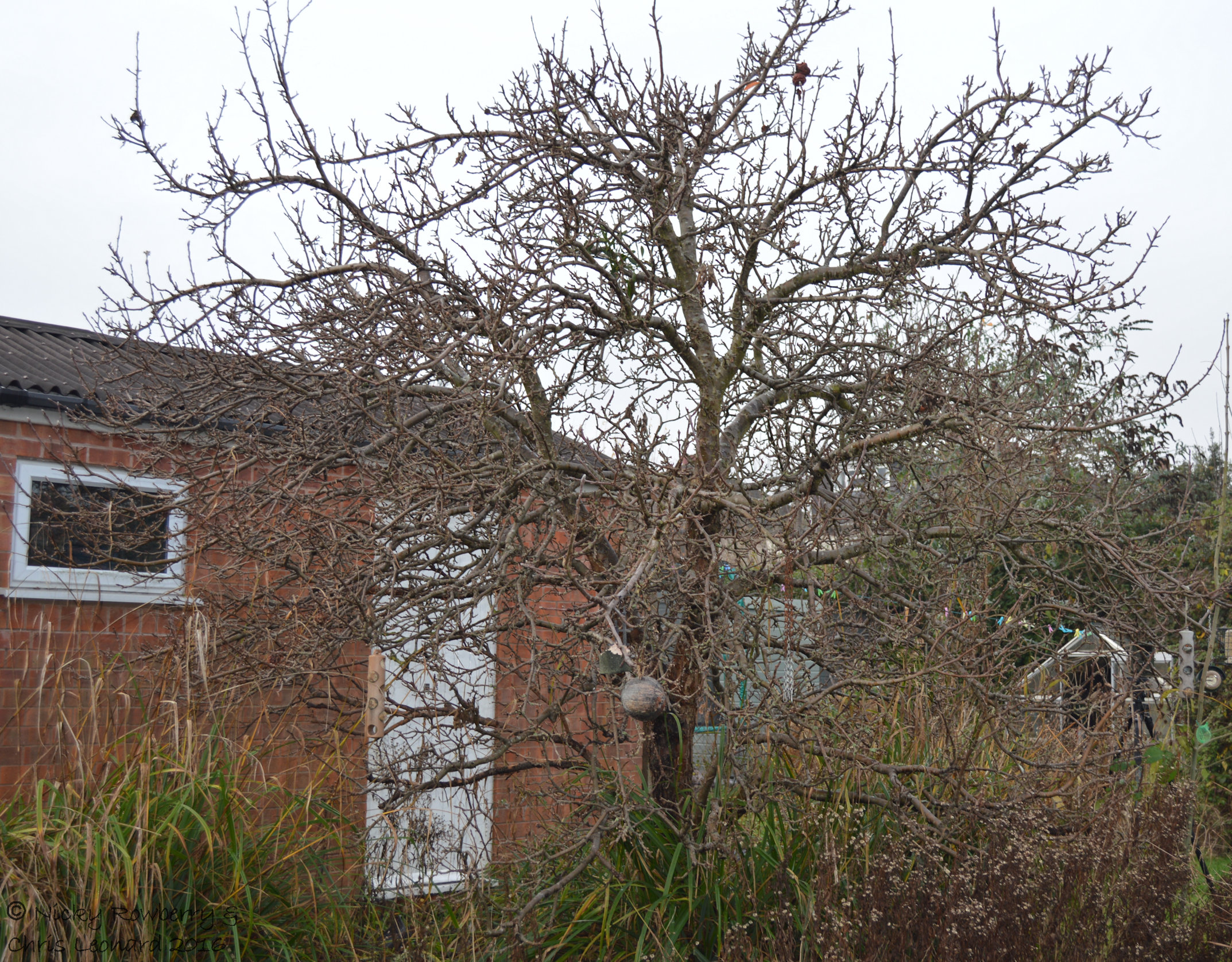
Our apple tree is a medium sized, but fairly productive one, that gives us loads of delicious Discovery apples most years. At the beginning of the year though the tree was of course completely bare and remained so right up until the end of March.

apple-tree-mar-27

A couple of weeks later in mid April and the leaf buds were just about visible and starting to open up.

apple-tree-april-16

Two more weeks and the leaves were filling out. I much prefer it when the tree is in leaf as it provides more privacy in the garden (not that our neighbours I’m sure have any interest in what we get up to in our garden!)

apple-tree-april-30

A mere 8 days later still and not only was the tree almost completely greened out, but the blossom was open too. The blossom seems to go on a two yearly cycle – one year it will completely cover the tree, the next year we don’t get very much – this year was one of the not very much years. It still looked beautiful though and was buzzing with bees for the short time it was out. The blossom never lasts long and this year it all got knocked off by a torrential downpour just a couple of days after this photo was taken.

apple-tree-may-8

Two weeks later at the end of May and the blossom was gone and the tree was fully green. The birds appreciate the cover provided by the leaves, although they never seem to actually nest in it.

apple-tree-may-22

By mid June small apples were visible. Although there hadn’t seemed like there was much blossom, we still had a lot of apples, so I guess the bees did a good job on what was there. On years where there is a huge amount of blossom, there can actually be too many apples. They crowd together on the branches, with not enough room to grow properly and many end up dropping off, so we don’t really get any more apples than on a poor blossom year.

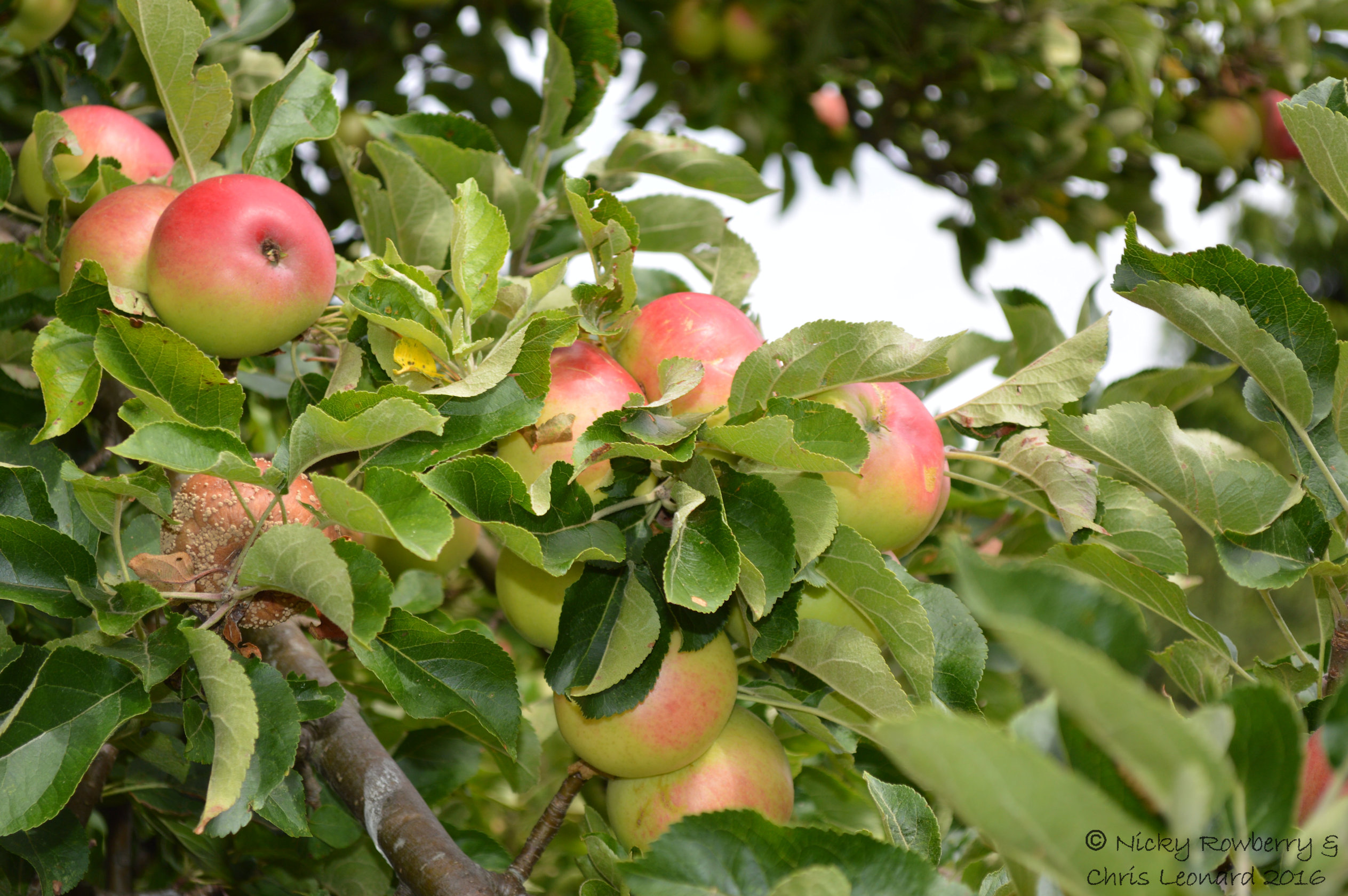
By August the apples had turned the characteristic shiny red of the Discovery. The ones that get most sun turn the brightest red – they always remind me of the apple the witch uses to tempt Snow White!

apple-tree-aug-07

We always end up with far too many apples for our own use, but we have a friend who makes cider, so he comes and clears the tree for us. Not only do the apples get put to good use, but it saves us having to pick up loads of rotting ones off the grass. So by September the apples were all gone and just a few of the leaves were starting to turn yellow.

apple-tree-sept-24

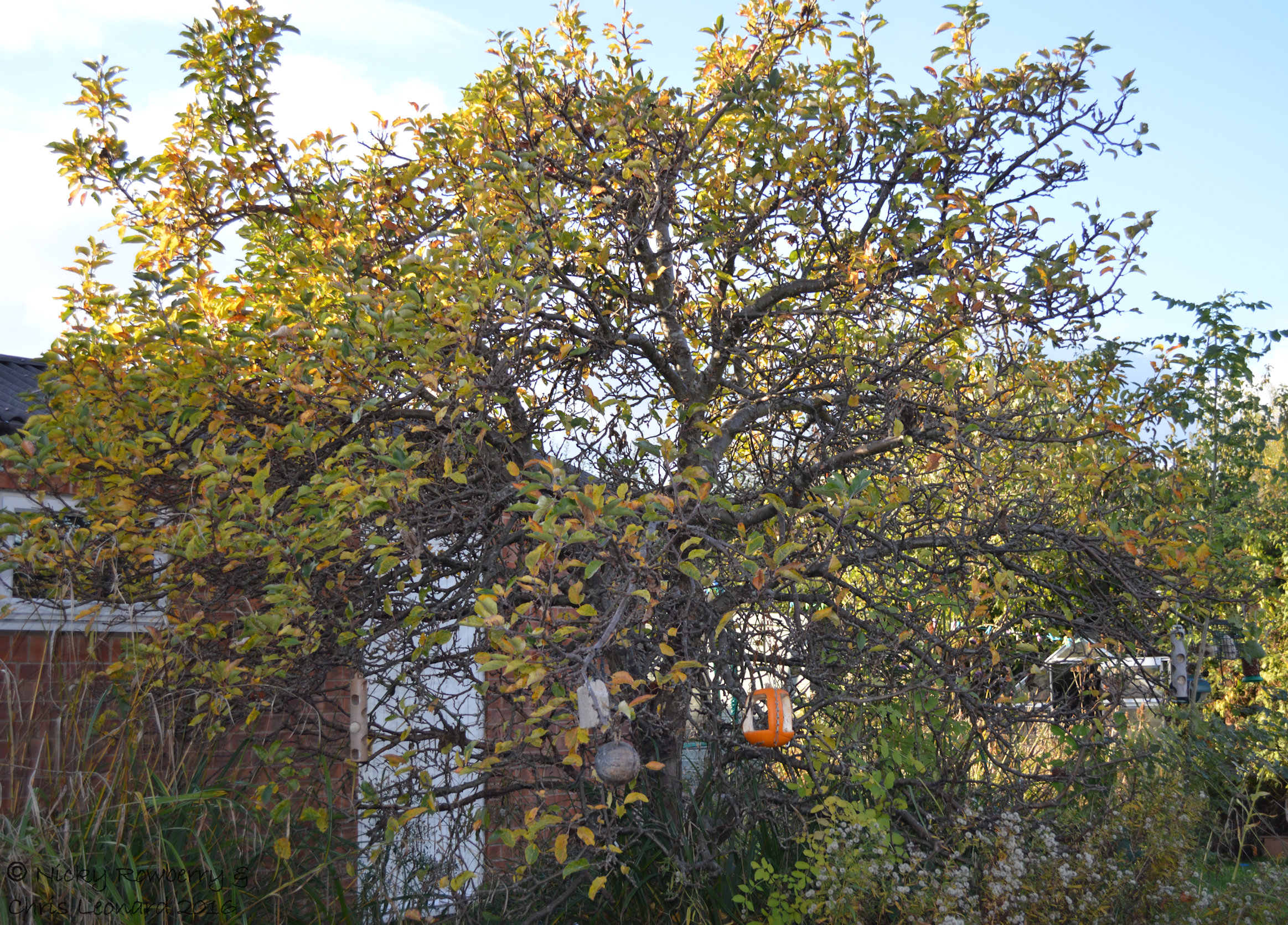
By October the leaves were still all there but were definitely wearing their autumnal colours

apple-tree-oct-29

A few windy days at the end of October and most of the leaves had gone by November.

apple-tree-nov-7

And by yesterday the tree was back to square one – the only green left a few clumps of mistletoe that has recently colonised it.

apple-tree-dec-17

As well as taking general shots of the whole tree, I tried to capture close ups of some of the individual parts. The leaf buds at the beginning of the year were brown and tightly furled but by mid April the young leaves had emerged, looking lovely and fresh green.

leaf-bud-2

The blossom is of course effortlessly photogenic. It starts of a gorgeous deep pink before the flowers unfurl to almost pure white with just a hint of a blush. We’re very lucky to live in the Herefordshire/Worcestershire area, where in the spring there are orchards all around filled with apple blossom. It looks great on just our single tree, but when you see whole orchards in bloom it really is stunning.

blossombuds

blossom

blossom-4

The whole point of an apple tree (from a human point of view at least) is of course the apples.  The  young apples were green and had a downy fuzz (I’d never noticed the fuzziness before until I took these photos!) In May as the apples first form you could still see the remnants of the blossom flowers sticking out at the top.

baby-apples

As the apples matured they lost their fuzziness and turned shiny and red; the upper sides almost always turning red first as they got the most sunshine.

apples-on-tree

Most of the apples were of course turned into cider. They didn’t all get picked though and the few remaining ended up as food for wasps on the ground.

rotten-apple

Every year I do pick a few for our own use before the cider makers take the main crop.

apple-bowl

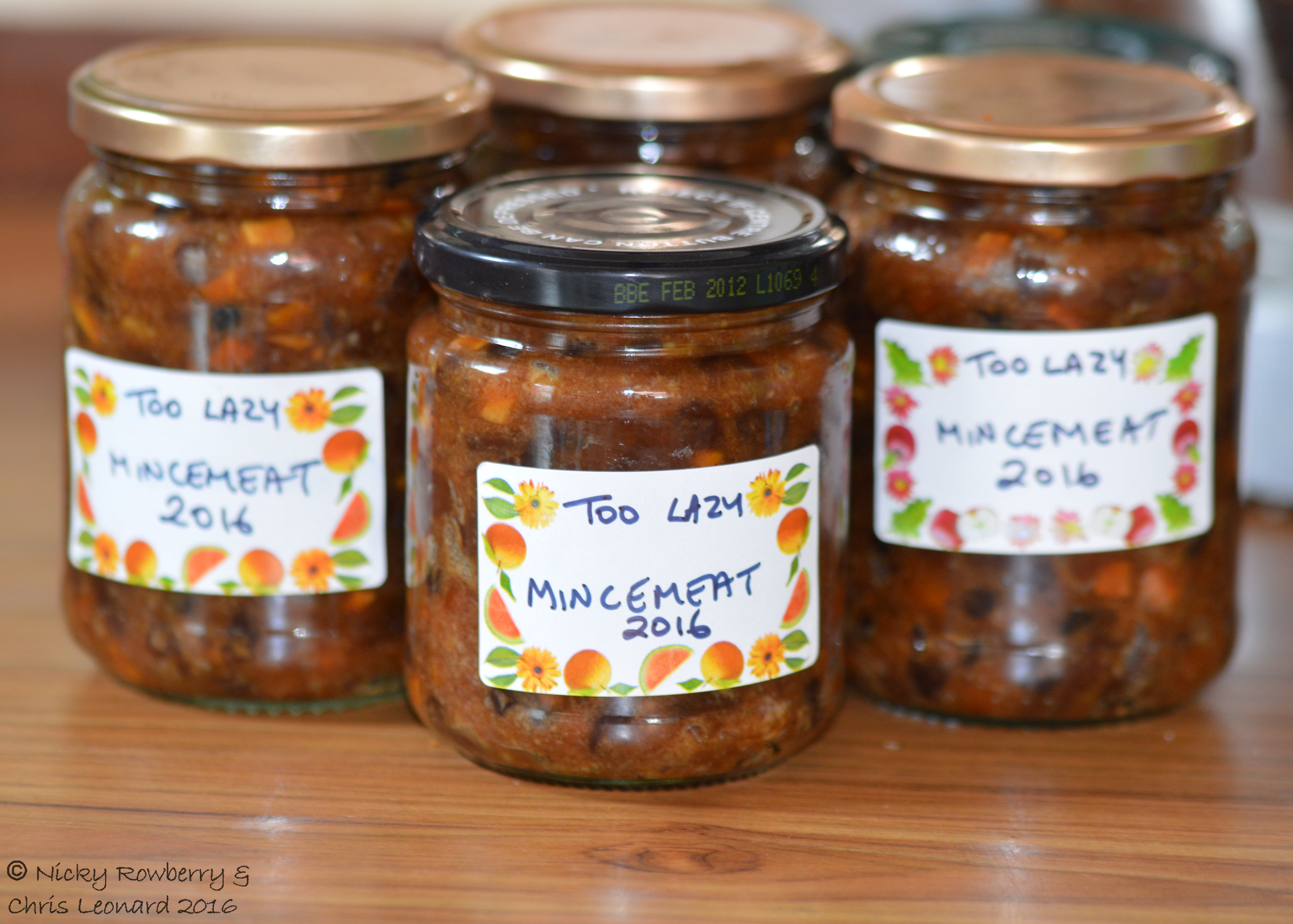
Discovery apples aren’t particularly good for storage, so you either have to eat them quickly or find some other use for them. Fortunately I’ve found they make very good mincemeat, courtesy of an excellent Delia (who else) recipe.

mincemeat-bowl

So the final stage in the life of our apples – jars of homemade mincemeat. It is nearly Christmas after all!

mincemeat-jar

A Cold and Frosty Morning

I always love the first good frosts of the year. They transform the garden into something magical, giving everything a crystalline coating that sparkles in the sunshine. Last year we hardly had any decent frosts, but this week November’s wintery breath has dressed our garden in delicate white lace. Winter is coming!

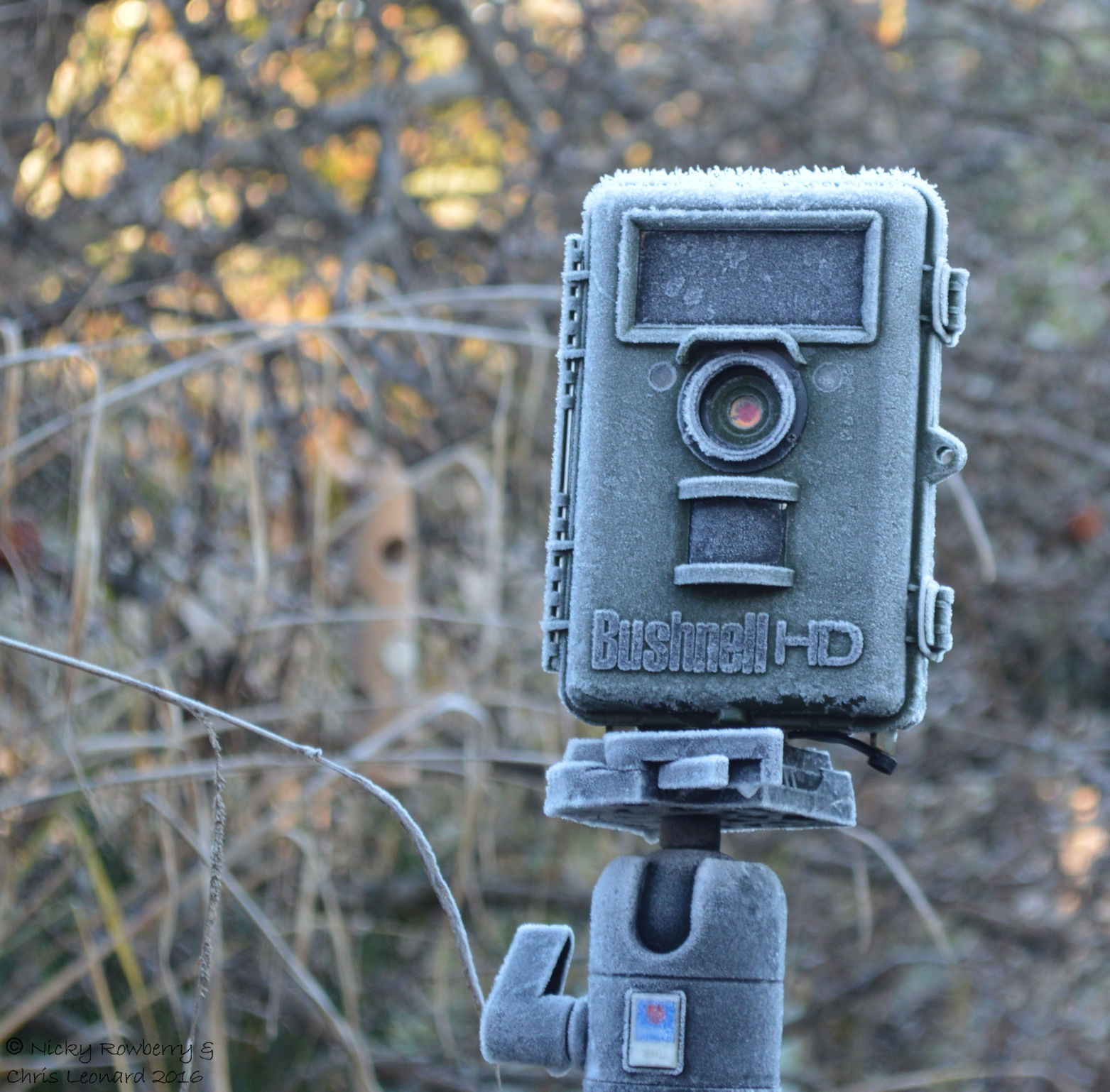
The thermometer registered that it had dropped to -4.7C in the garden last night, so I went out this morning armed with multiple layers of clothing and a thick woolly bobble hat. The trail camera had been foolishly left out overnight and was not only frosted, but the tripod was frozen solid to the ground. After a brief but strenuous battle I managed to wrest it from the garden’s icy grip, so that I could use the tripod for my frosty photos.

trail-cam-frost

I’d gone out into the garden hoping for spiders’ webs glistening with icy beads, or red berries frosted on the bushes, or icicles dripping from a branch. Of course I couldn’t find any of these things, but what I did find was just as good.

We have a small flimsy porch type thing around our back door with single layers of glass. These were covered in beautiful “fern frost”. Window frost like this used to be much more common before the advent of double glazing. Double glazing restricts the contrasting temperatures needed either side of the glass for the formation of this type of frost. Our tatty little porch is not normally a thing of beauty, but this morning Jack Frost had transformed it with these feathery fractal patterns.

window-frost-2

A wooden garden chair had also been left out last night and was now covered in hoar frost. Hoar frost forms white crystals of ice that coat everything with a sugar-like dusting. The frost on the chair was really quite thick – up to a centimetre in places, looking like icy white fur.

chair-1

chair-3

I loved the way on one side of the chair the frost had started to melt and sparkled like golden glitter, while on the other side it was still silvery white.

chair-2

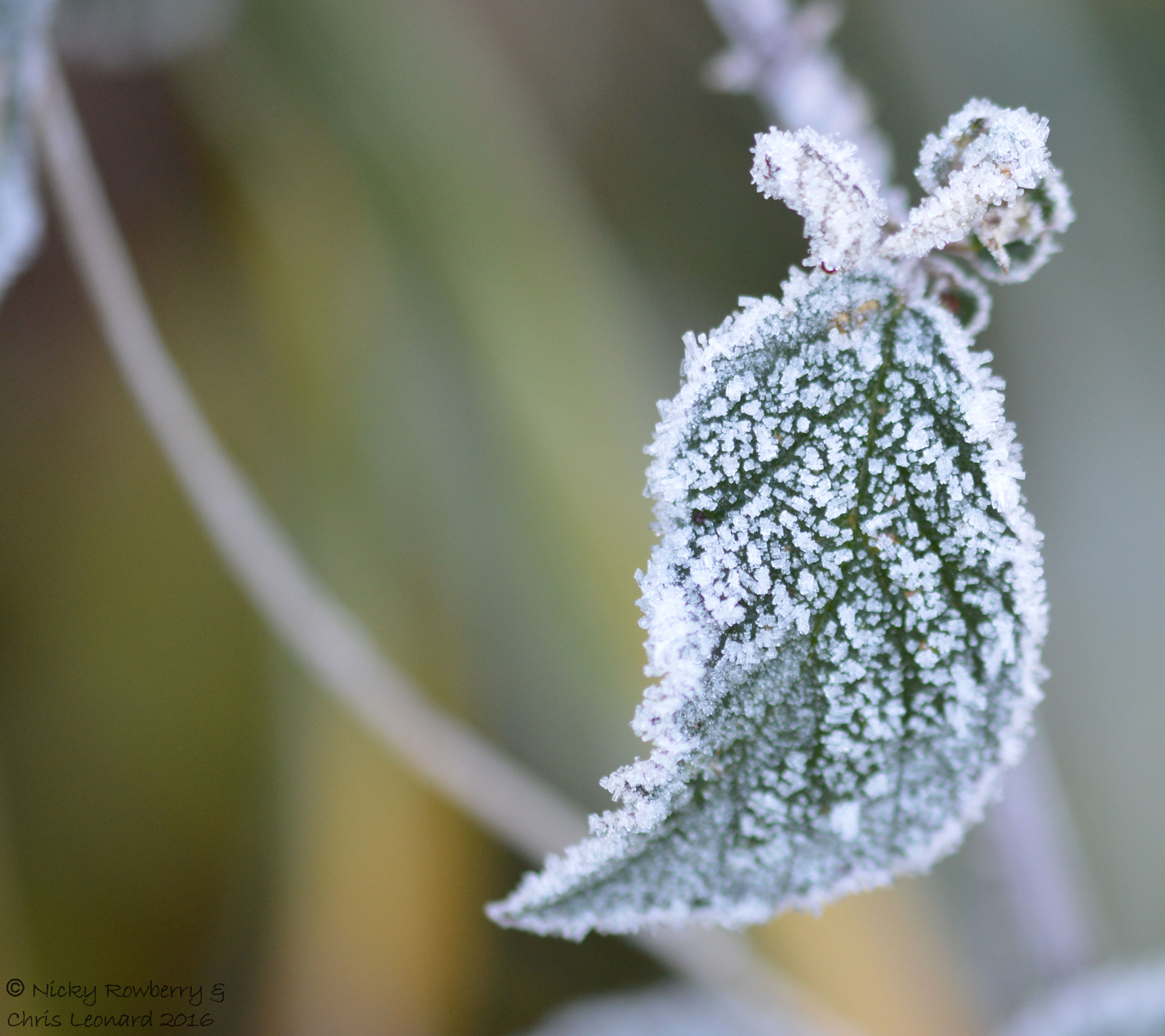
The grass was lovely and crunchy under foot; it seemed a shame almost to trample it as I snooped around the garden. Leaves everywhere were of course covered in the ice crystals, looking like they’d been dipped in some frenzied attempt to candy coat the whole garden.

leaf-5leaf-1

leaf-3ivy

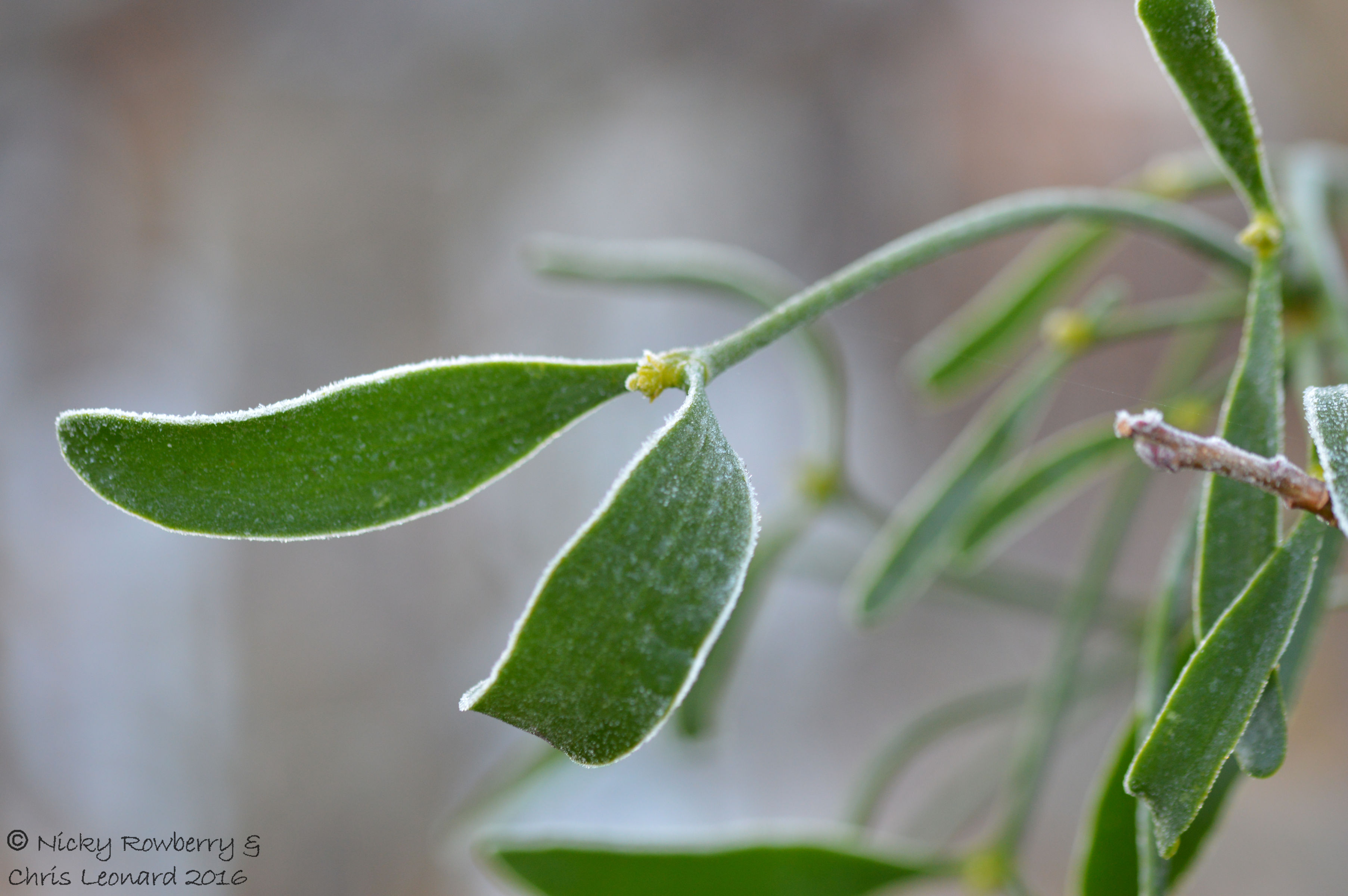
The presence of the mistletoe (visible again now the leaves have fallen off the apple tree), made it feel quite Christmassy (reminding me that I need to go in and give the Christmas cake another good soaking of brandy!).

mistletoe

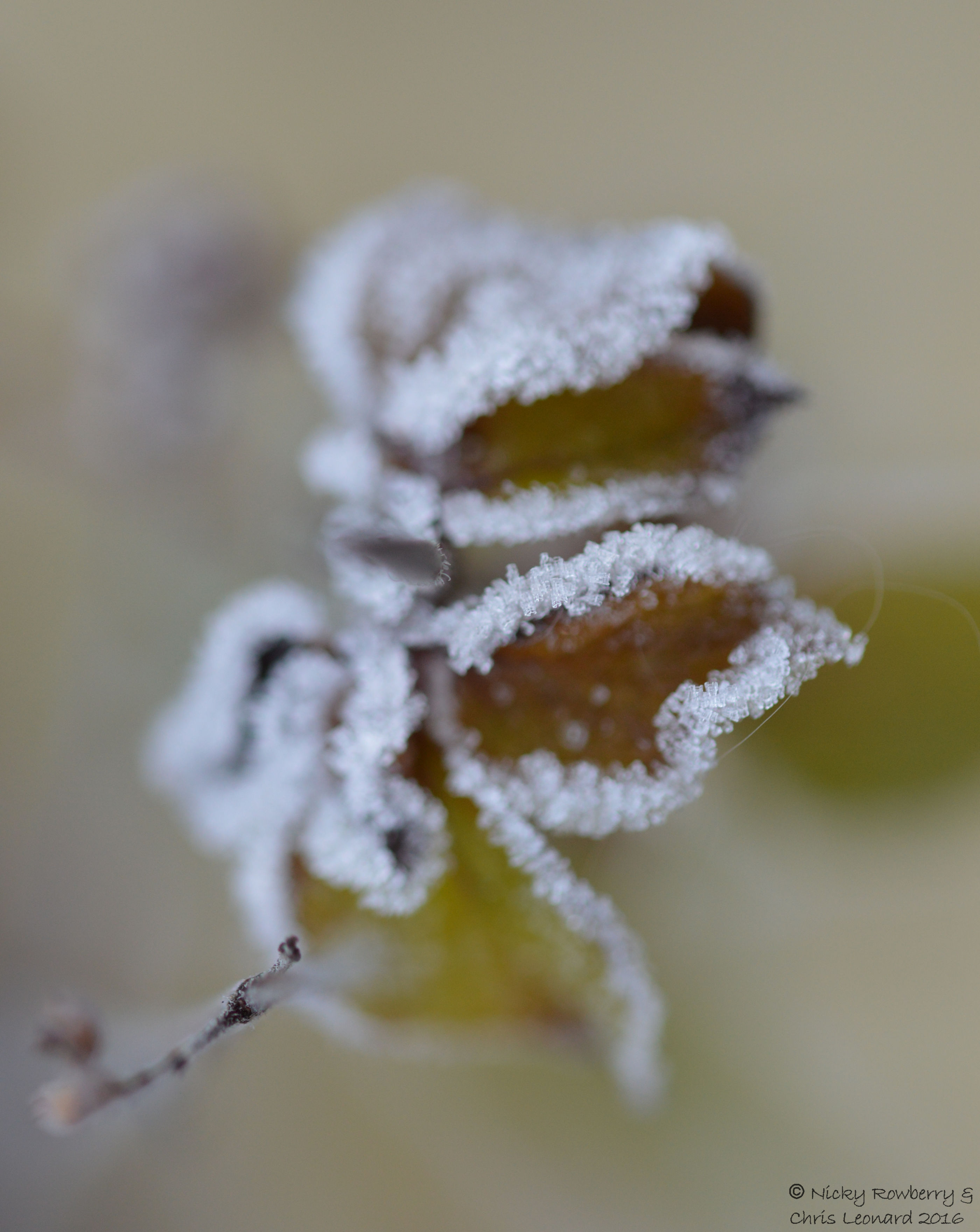
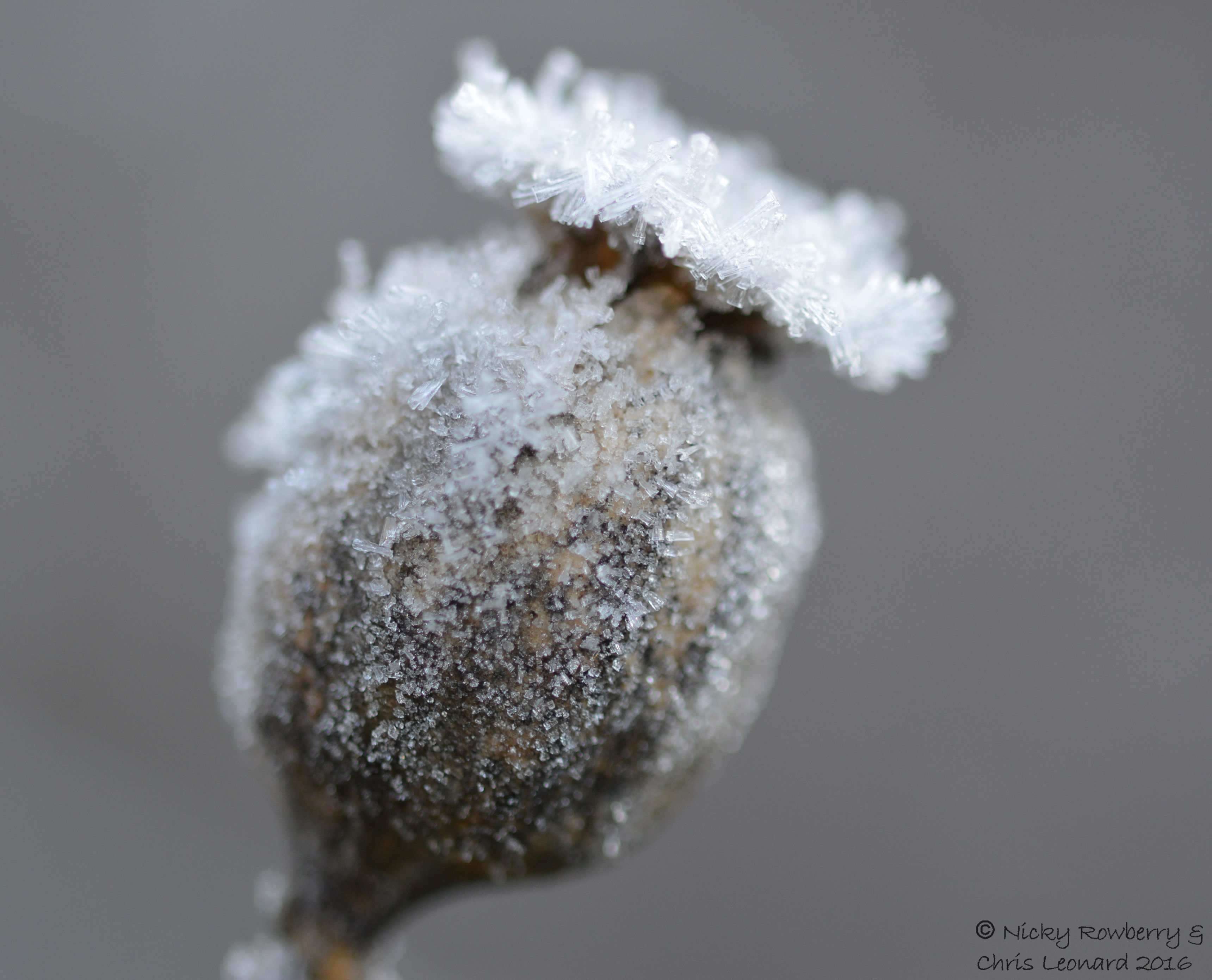
I found a poppy seed head, which looked great from the side, but even better from above – like a tiny diamond encrusted crown.

poppy-frost

poppy-frost-2

I can never resist taking a photo of the teasels. The frost on them actually looked more like snow, being much finer for some reason than that around the rest of the garden.

teasel-1

There were a few splashes of colour amongst the wintery white. We have one patch of lavender that had still been flowering, long after the rest in the garden had finished. I suspect the frost will have put an end to that though.

lavender

The Verbena bonariensis that I grow in the hope of attracting butterflies (with little success) was clearly a frost magnet. Chunky little crystals were stacked up all over the old flower heads.

verbena-2

Possibly my favourite snap of the day was of this brave little flower, still glowing yellow in the morning sun despite its diamond coating.

yellow-frosted-flower

I thought it would only take me a few minutes this morning to photograph the frost, but when I came back in I found I’d been out there for an hour. It was just so beautiful and peaceful, I hadn’t noticed the time go by.

I did have a moment of panic while I was downloading the photos, when I realised there were absolutely no birds to be seen in the garden. We normally have hoards of them, especially as I’d topped up the bird feeders while I was out there. I had this sudden irrational fear that the frost had killed them all off! (I know it made no sense, as there’d be no birds anywhere if one frost could kill them that easily!) Very quickly though they reappeared – they’d probably all just been traumatised by the sight of me and my bobble hat so early in the morning and taken a few minutes to get their nerves back!!


Stumpy the Magpie

It’s grey and a bit dreary weather-wise here in Malvern at the moment. The hedgehogs are hibernating (probably our bats too), insects are few and far between and the moth trap’s been empty the last couple of times I’ve put it out.  We’ve not even had any frosts to provide sparkly, wintery photo ops. Fortunately the birds in our garden are plentiful and greedy, so the bird feeders have provided the main interest this month. Last week we had the excitement of the woodpecker on the peanuts.

woodpecker

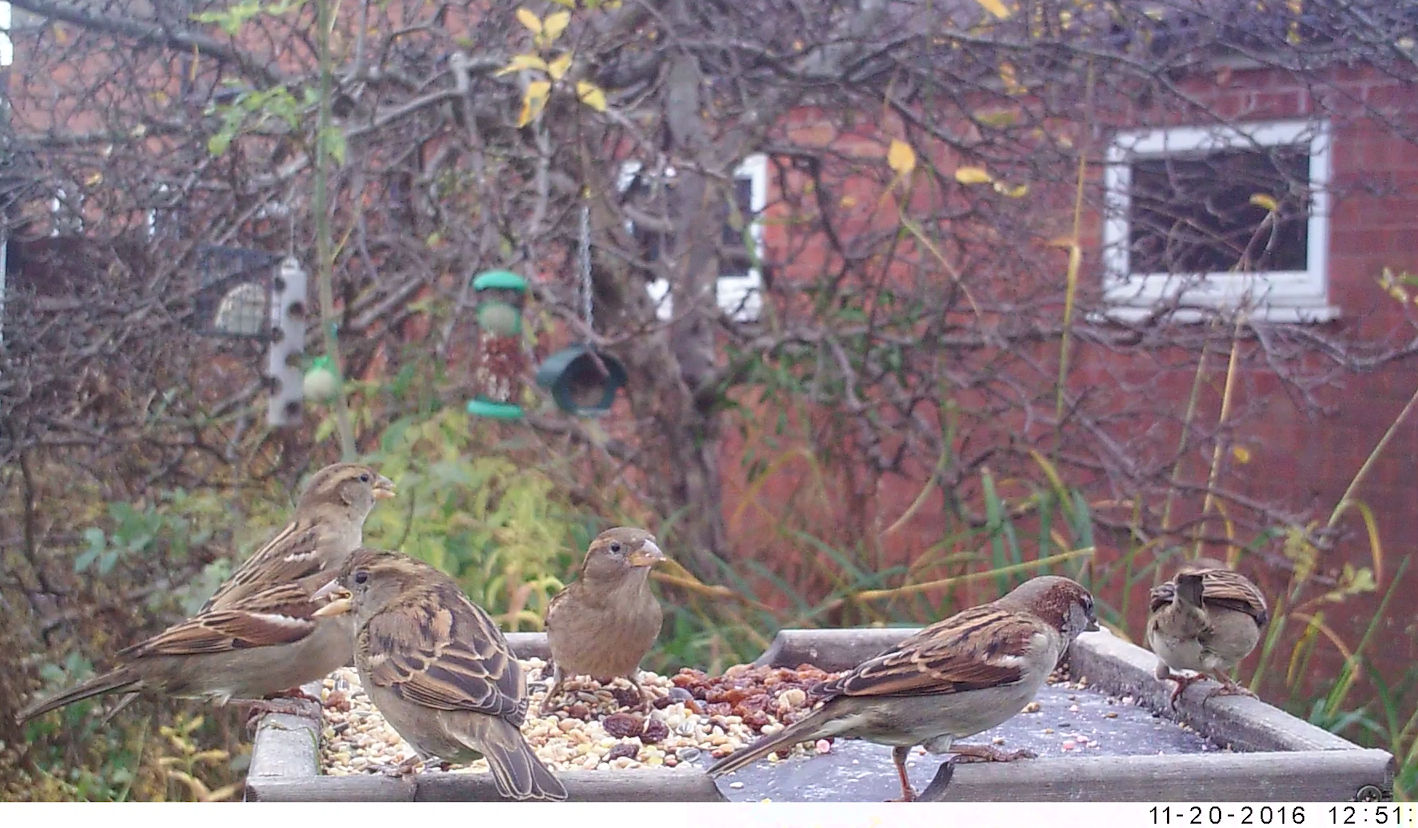
This week we’ve turned out attentions and the trail camera towards the bird table. The bird table attracts a different set of birds to the hanging feeders, although the sparrows of course are the commonest on both. We have quite a large group of sparrows who use our garden (possibly as many as twenty, but they’re hard to count in the bushes) and at least half a dozen were using the bird table at any one time this weekend.

sparrows-galore

Back in October we had a pair of magpies that were regular visitors to the garden. One I nicknamed Stumpy because he had none of the long tail feathers he (or she) should have had. Here’s Stumpy on the bird table about a month ago.

I’ve no idea what happened to his tail, but you can clearly see the difference between Stumpy’s rear end and a “normal” magpie in the next video. These two often appear at the table together – perhaps mates, or parent and offspring, or siblings?

The lack of tail feathers doesn’t seem to impede his flight or balance at all and he seems otherwise perfectly healthy. A quick google revealed that his tail feathers should grow back. I’ve had the trail camera pointed at the hanging feeders for a couple of weeks, so it’s only been this weekend that it’s been pointing back at the bird table. A couple of magpies once again appeared to see what was on offer. One had broken tail feathers that looked a bit shorter than the others.

magpieIs this Stumpy with his tail feathers partially regrown? I really hope so. Whoever it was, they weren’t put off their lunch by the arrival of a large jackdaw.

magpie-jackdaw

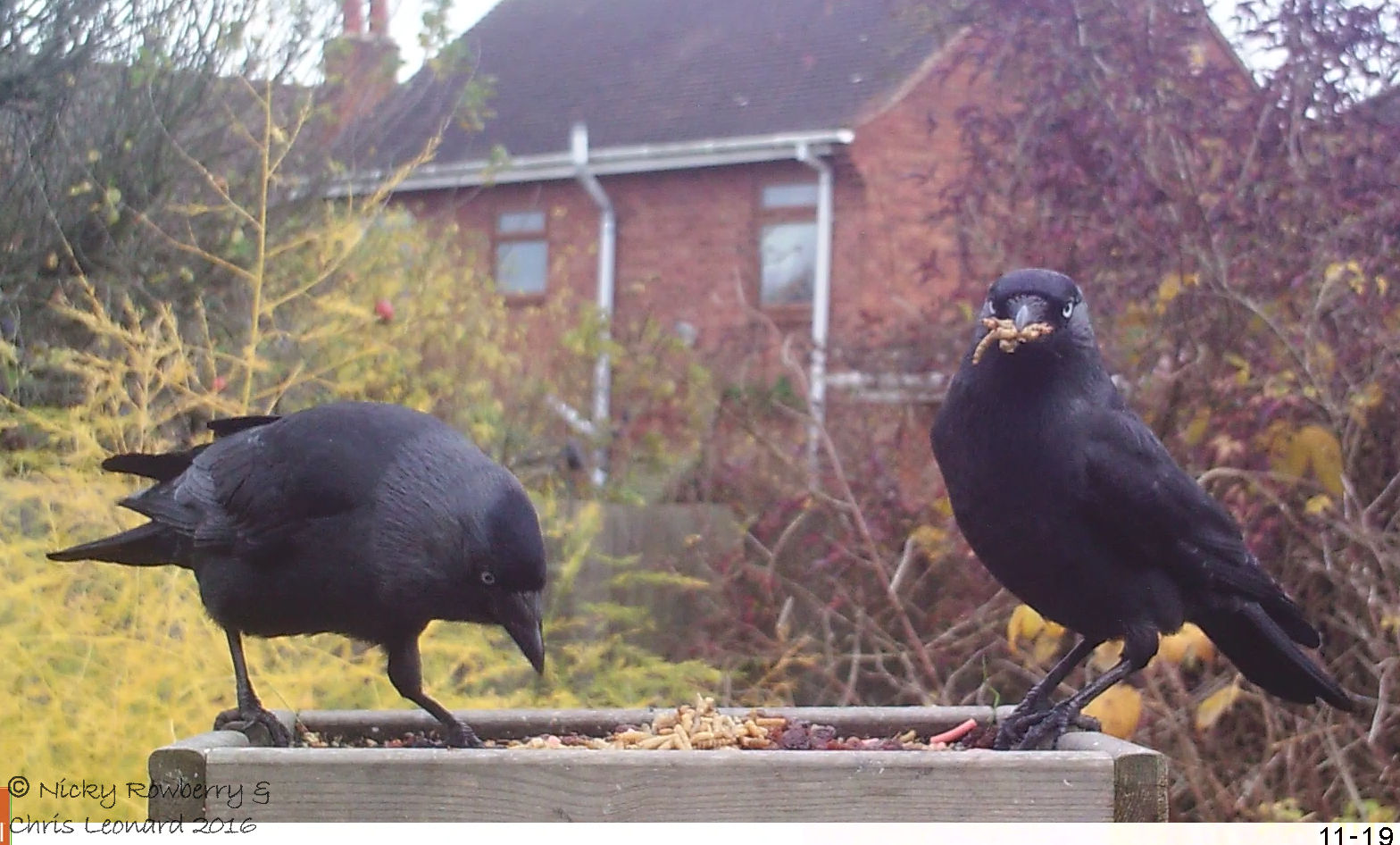
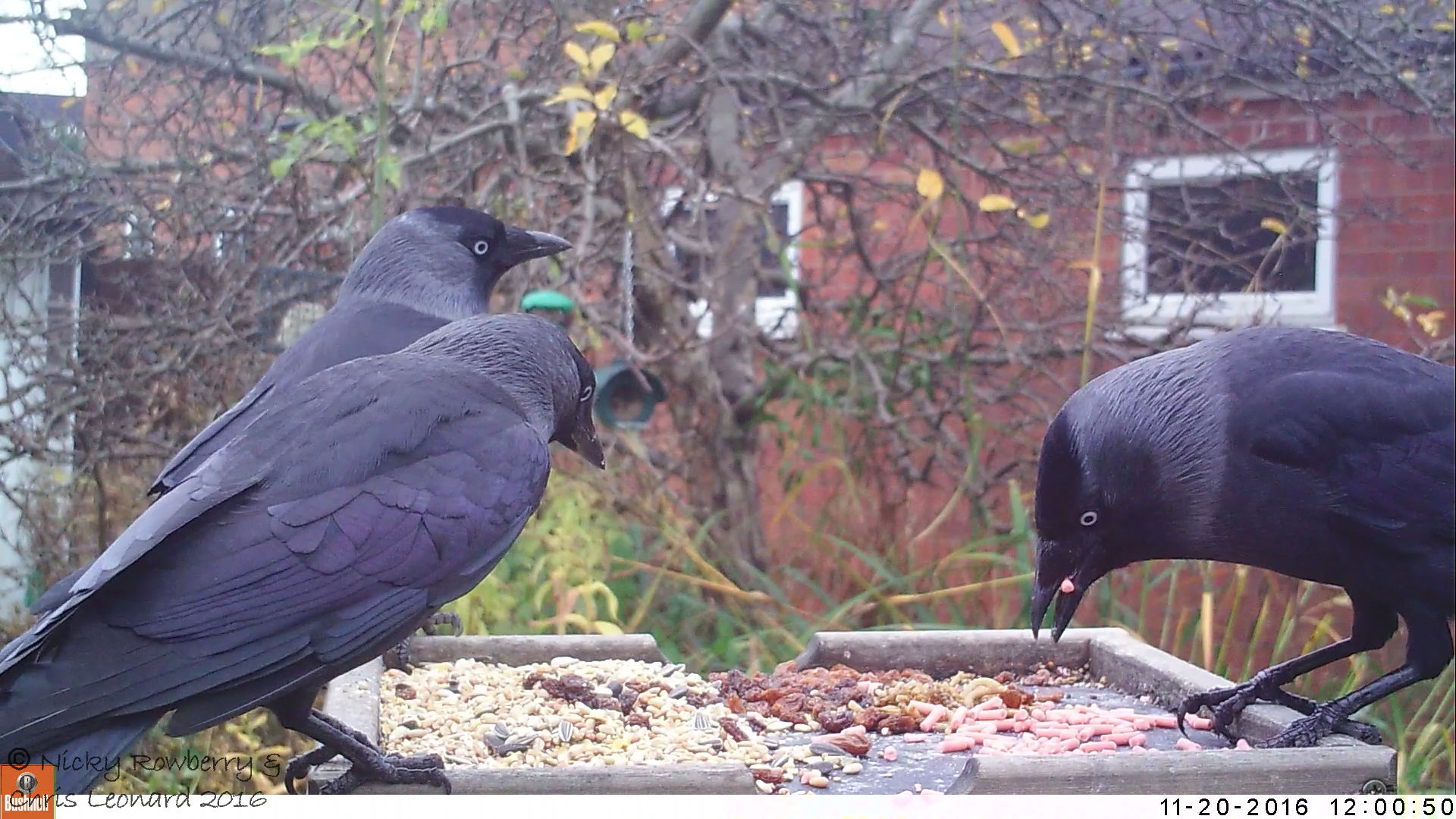
The jackdaws are usually some of the first birds to appear when I restock the bird table. They always seem intelligent, shrewd birds. The one on the right here certainly wasn’t daft – he’d crammed at least 5 mealworms into his mouth before the other had got a look in.

jackdawsWe get at least 4 of them coming down to feed, although I’ve noticed one has an injured foot. He’s still eating OK, but not sure whether it will prove to be a fatal problem for him.

jackdaw-trio

The blackbirds appreciate the bird table offerings as they are not very good on the hanging feeders. Fortunately they don’t mind sharing the table with the sparrows.

blackbird

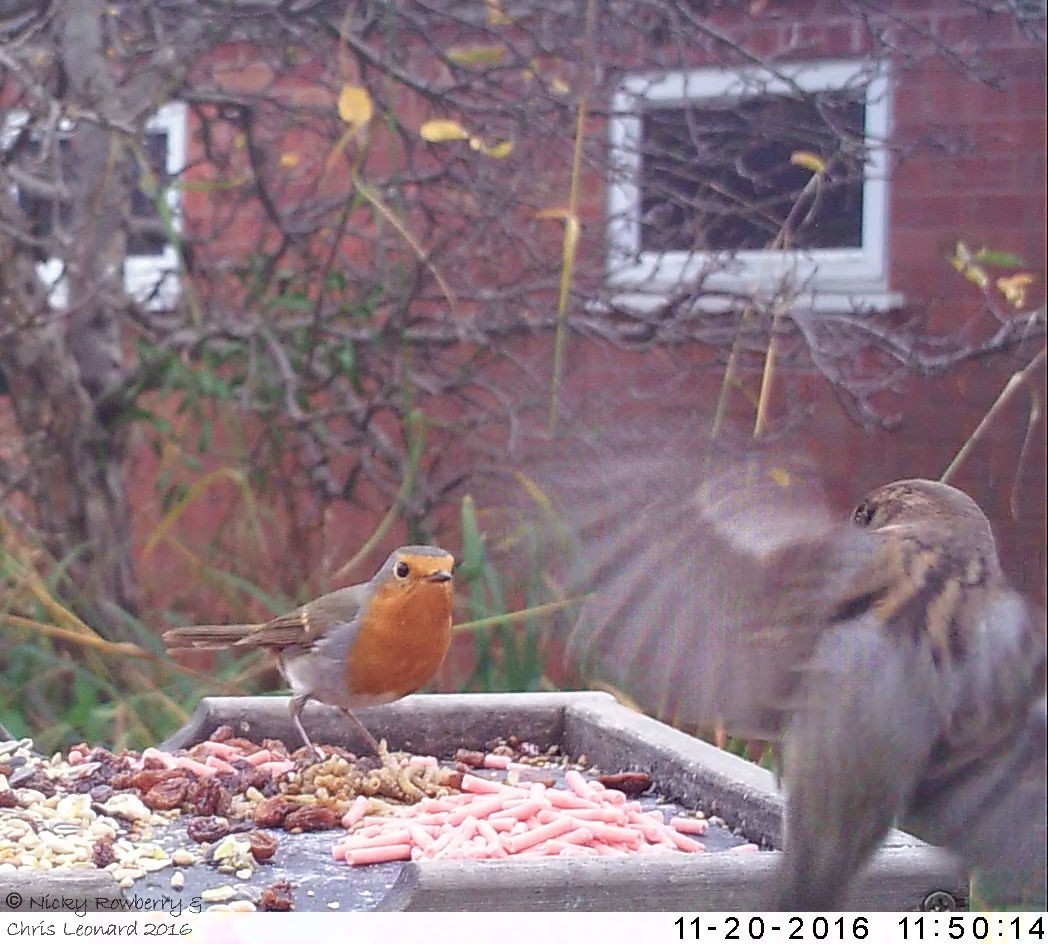
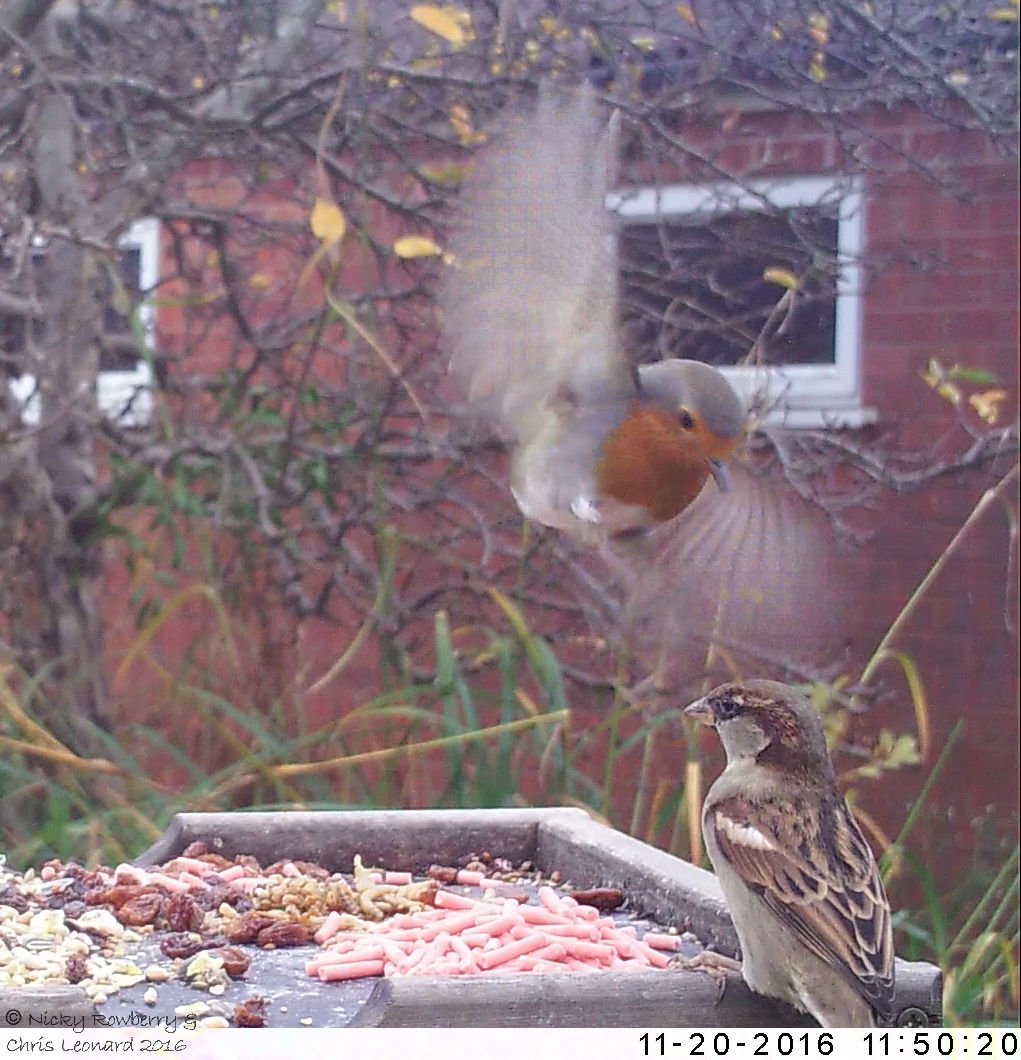
The robin on the other hand gets really quite grumpy when the sparrows land. Any larger birds and he just flies off, but with the sparrows he does his best to shoo them away.

robin-and-sparrow

robin-and-sparrow-2

Watching the birds like this in the garden for a while now, I feel we’ve got a small insight into some of their life stories. Stumpy with his tail loss and regrowth, the jackdaw family with an injured member, the territorial robin defending his patch of the table. Without the trail camera we’d probably still see all these birds, but miss some of the dynamics of what was going on in our garden. It’s been worth every penny spent and every hour spent watching the videos!

Autumn Flower Power

The colours in the garden are gradually changing from the bright floral ones to the more subtle leafy ones. While we can appreciate the change in the dynamics in the garden, it can be a really tough time for the insects that are still around. The leaves may look fabulous, but they don’t provide the nectar and pollen that the bees and other insects need to keep them going. Fortunately as the other flowers fade away, one comes into its own – the strange sputnik-like blooms of ivy.

ivy-flower

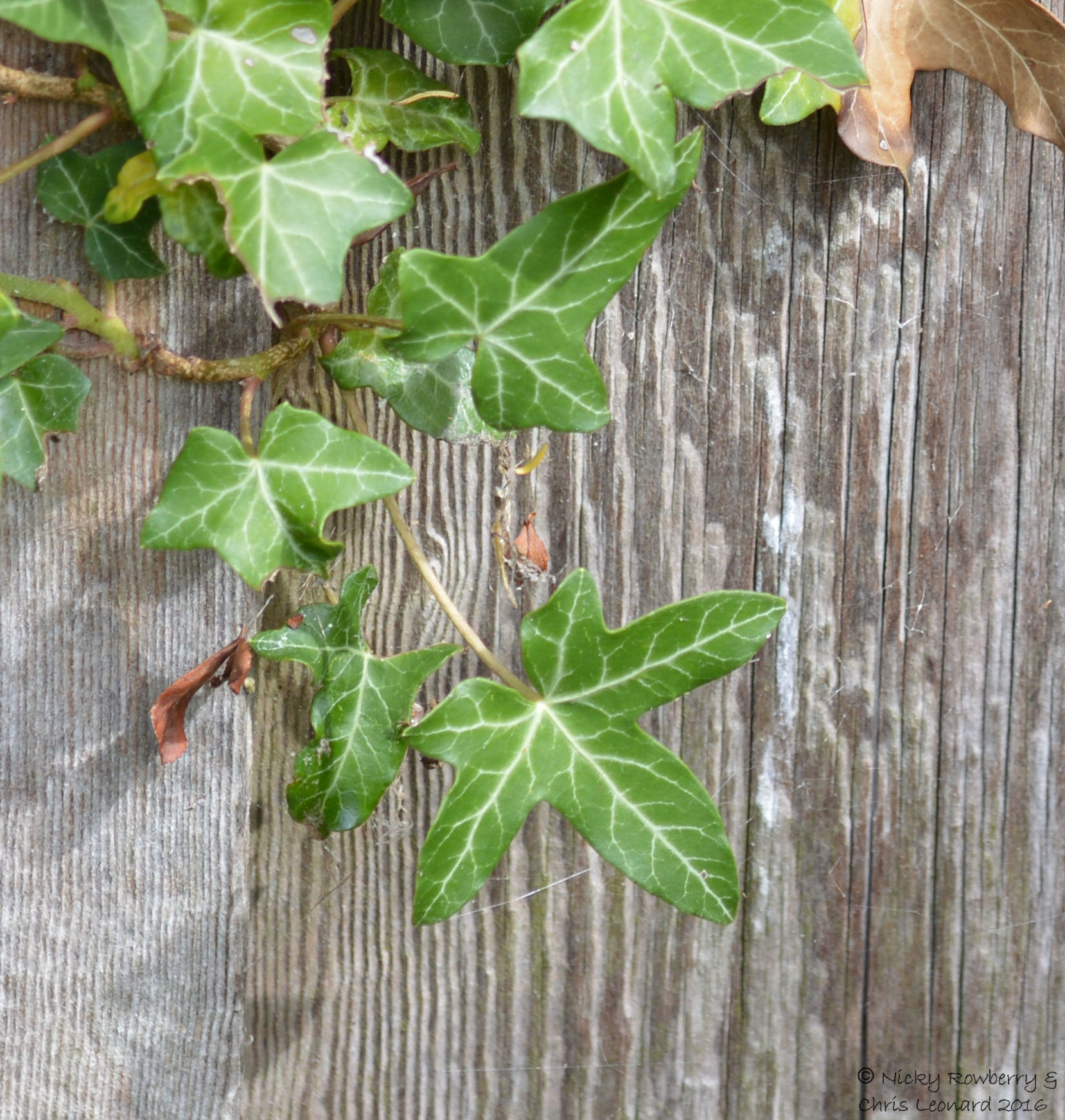
I am a relative newcomer to the ivy fan club, having not really appreciated their contribution until this year. We’ve had ivy growing along the fence for a long time, but I’d never noticed any flowers. Turns out this wasn’t just my short-sightedness, but the fact that ivy doesn’t flower until it is mature. Young ivy leaves are markedly lobed like the ones below.

young-ivy

On mature stems the leaves lose their lobes and have a more undefined wavy edged shape, like the ones below. The flowers only occur where there are mature stems. So it may be that it is only this year that our ivy has been old enough to flower, rather than me being spectacularly unobservant!

shieldbug-on-ivy

The leaves themselves are of course hugely beneficial habitats for a host of species. Our ivy has lots of the shieldbugs (as above), which are well camouflaged and can hide amongst the foliage. The ivy in our garden is confined to our fence and the ground immediately below it. The ground cover provides refuge for our resident frogs and the occasional toad. In places where the ivy is more extensive, it can apparently be a really good roosting place for bats (my dream house would be a big old one, covered in ivy and home to flocks of bats!!)

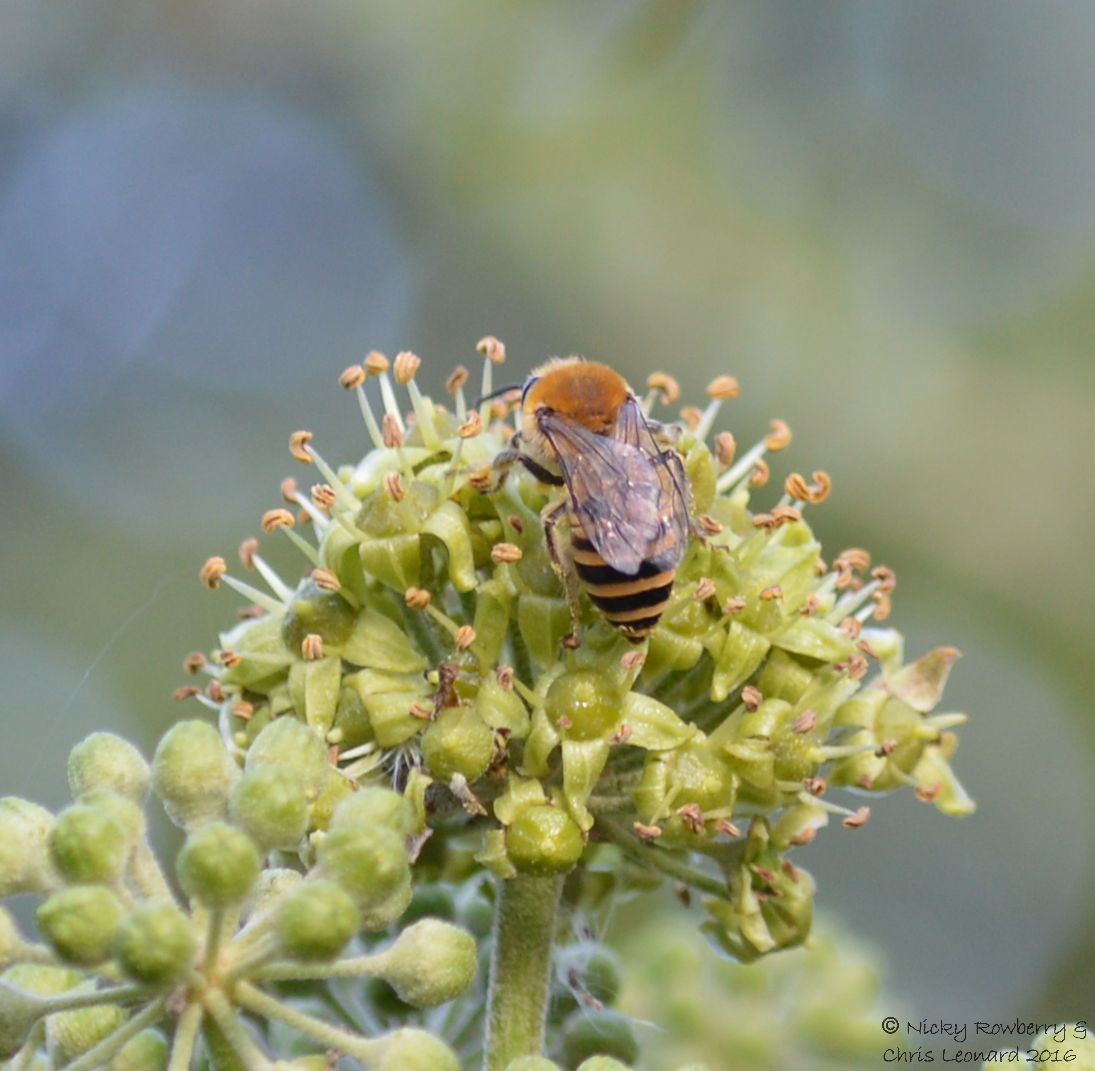
Ivy is of huge benefit to autumn insects – when most other flowers have faded, the ivy provides much needed pollen and nectar. One insect has based its whole life cycle on it – the Ivy Bee (below) even times the emergence of the adult bees to coincide with the ivy flowering.

ivy-bee

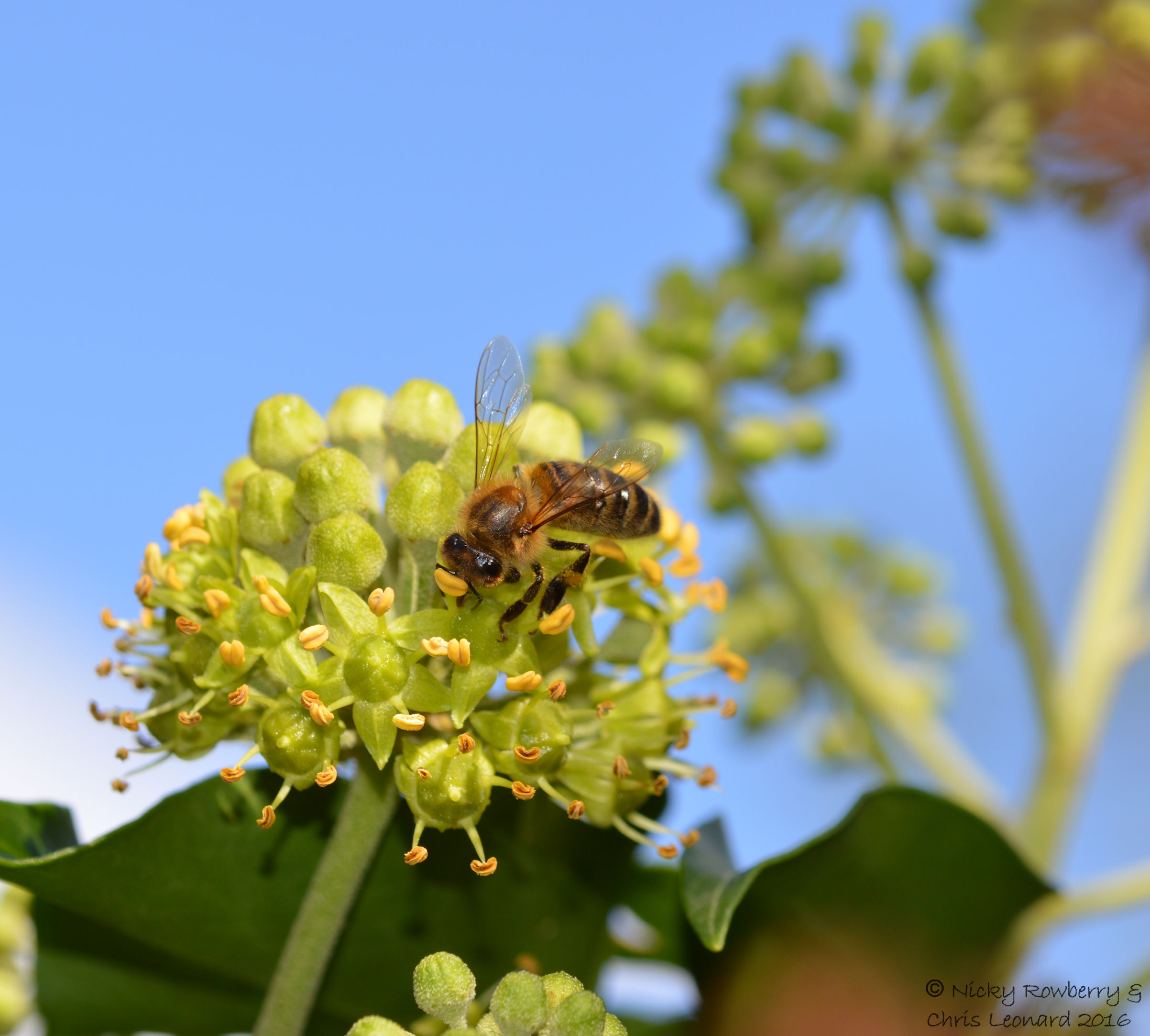
The Ivy Bee may feed specifically in ivy, but lots of other bees make good use of it too. In my quest to photograph the Ivy Bees, I’ve seen lots of other bees making the most of the flowers. A large patch of ivy can be absolutely buzzing with honey bees like the one below.

honey-bee-on-ivy-2

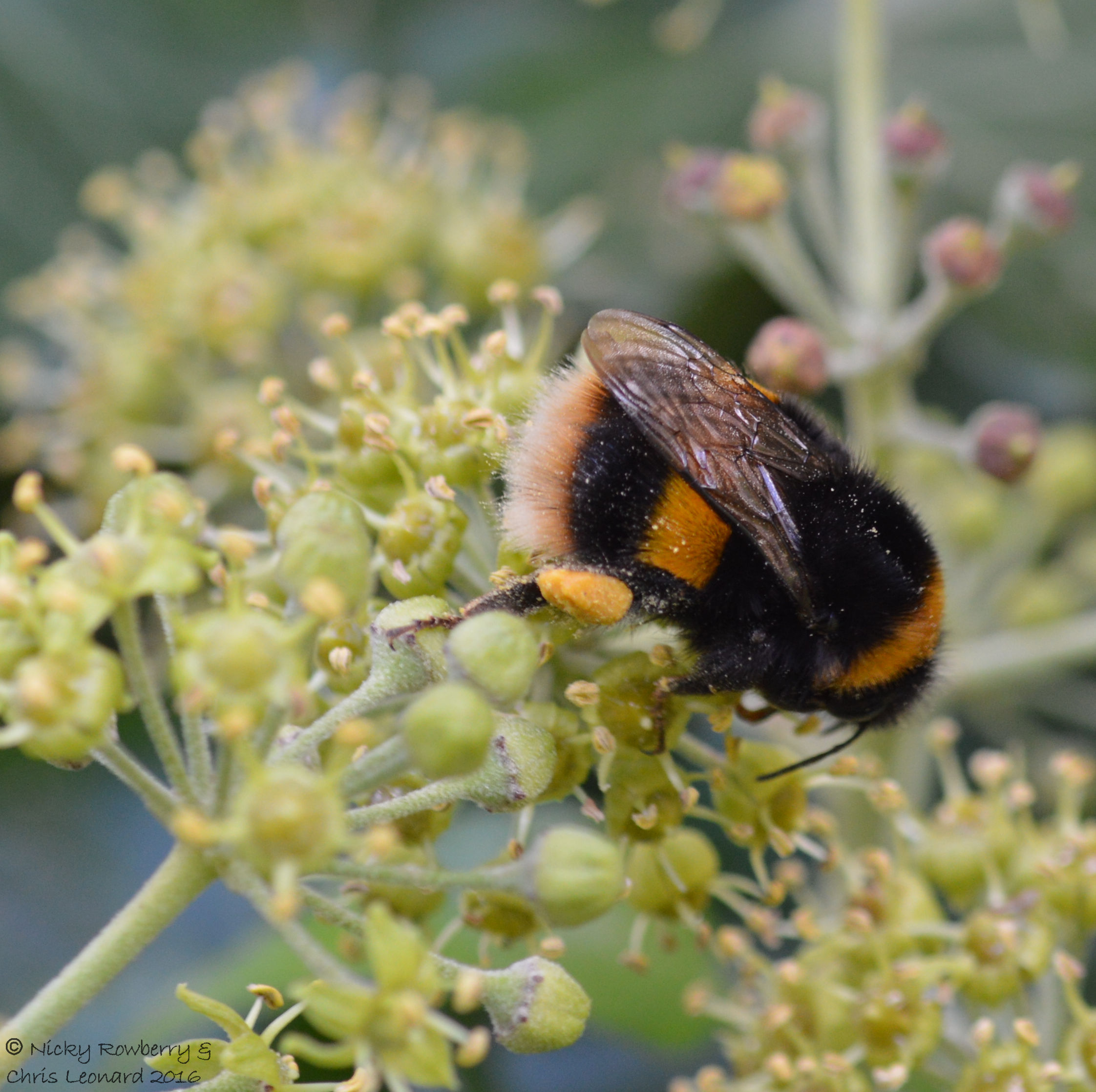
This queen Buff-tailed Bumblebee was loaded up with pollen and may have been preparing to start a new colony.

bumblebee

Some autumn butterflies will also make use of the ivy to build up energy reserves so they can hibernate over the winter. For weeks now I’ve been seeing other peoples’ photos of Red Admirals feeding on the ivy, but although we’ve had them fluttering around ours, they always seemed to land on the neighbour’s side of the fence, so I couldn’t get a photo! Finally last weekend I spotted this one in the churchyard in Bodenham and after a bit of chasing it settled down and let me take some pics.

red-admiral

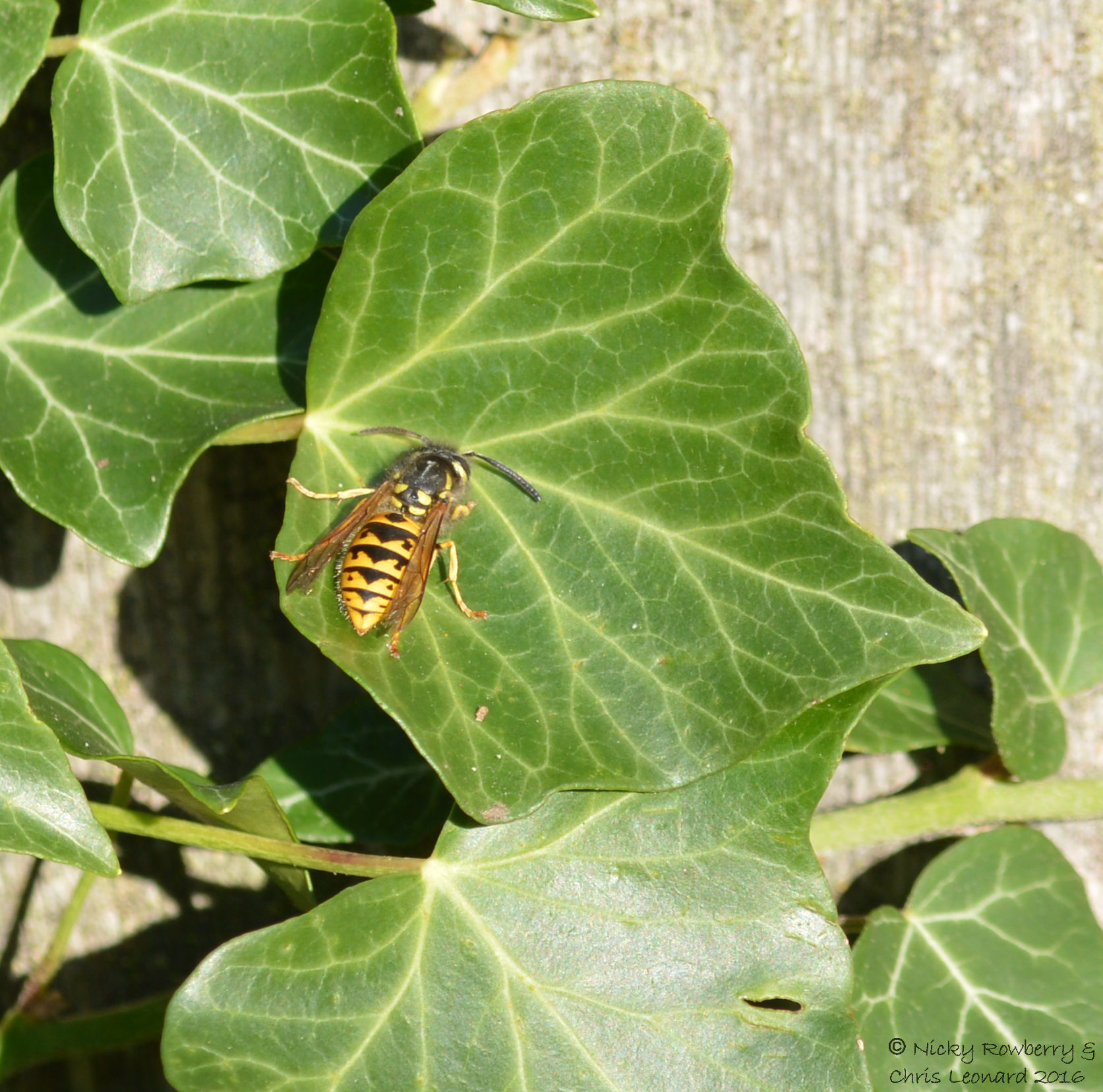
Our garden ivy gets a lot of wasps – probably more of them than the bees. They seem to like resting on the leaves in the sunshine, between bouts of feeding on the flowers.

wasp-on-ivy

wasp-v-vulgaris-on-ivy

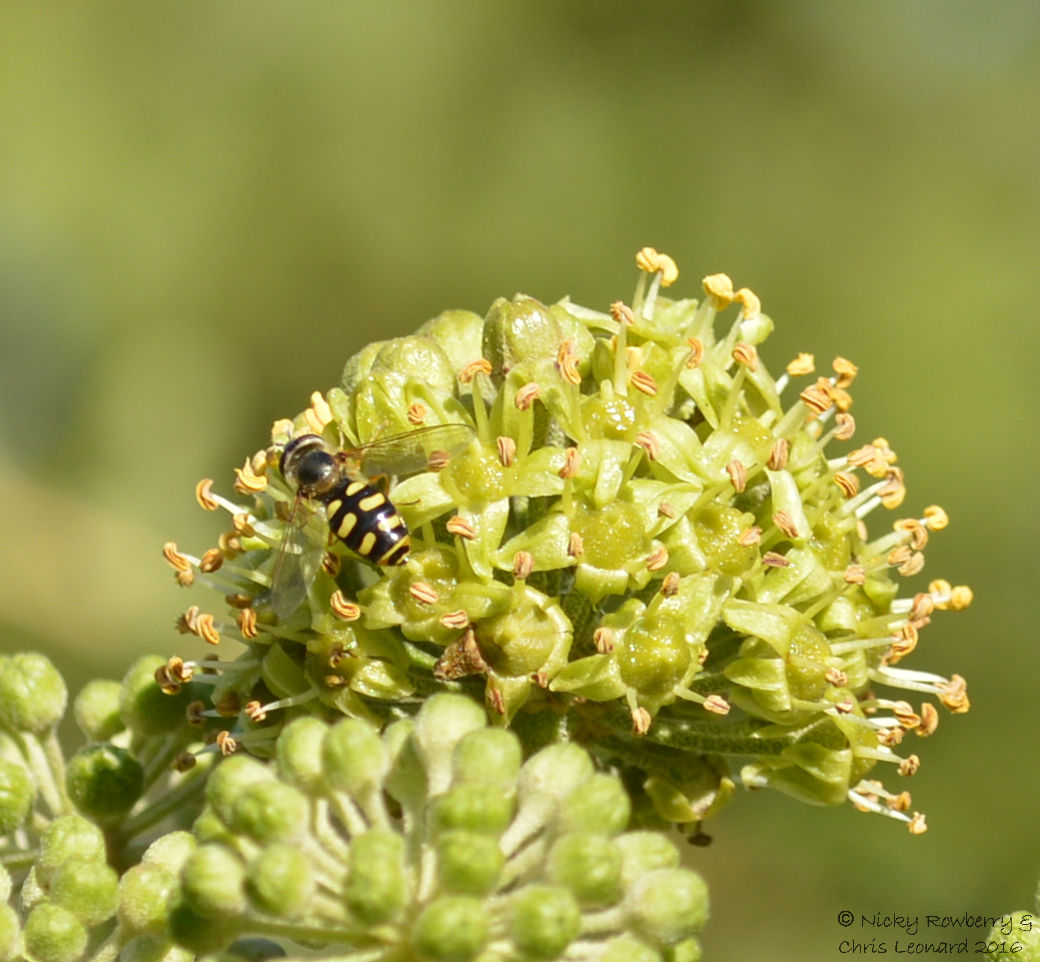
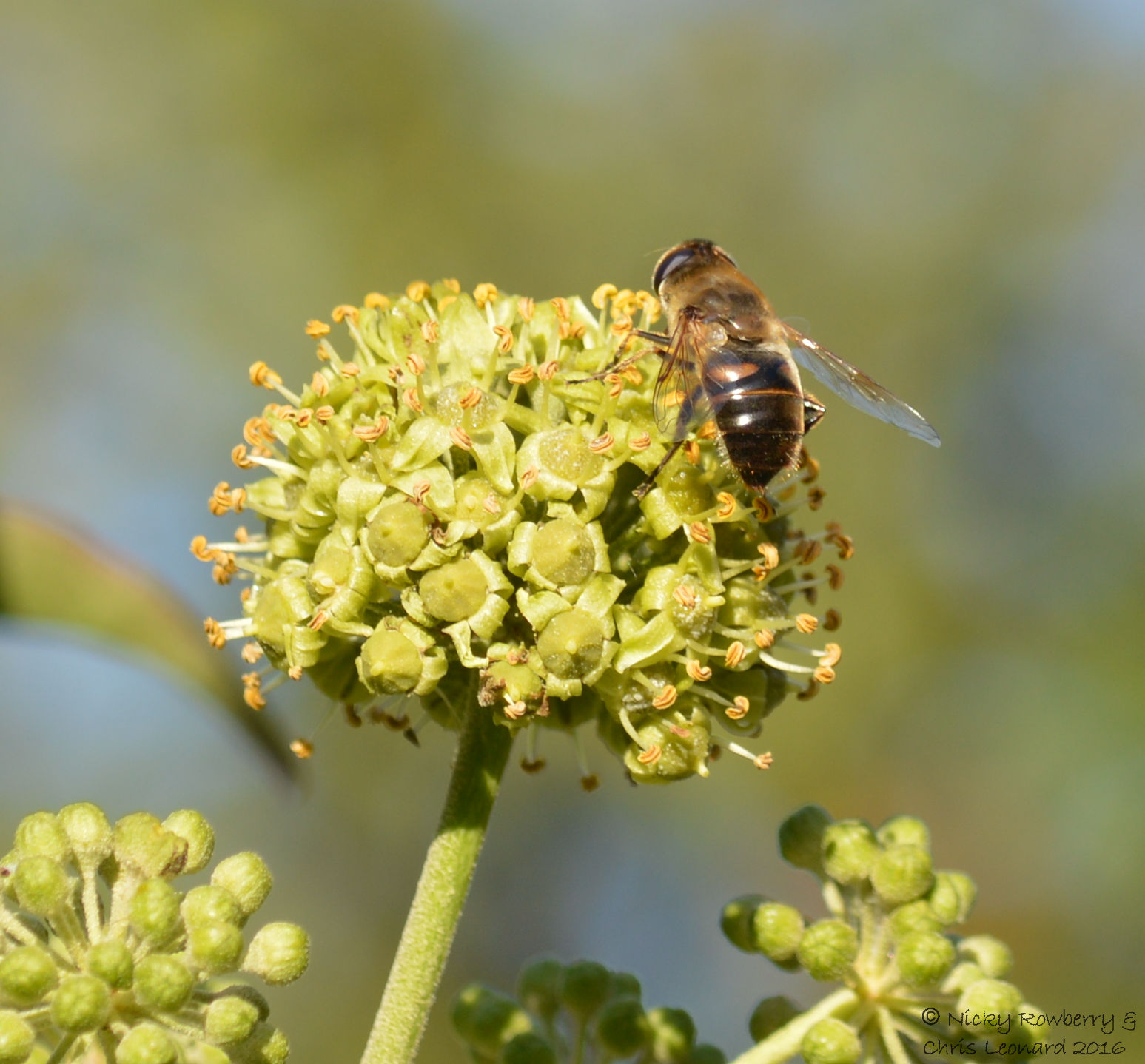
Hoverflies are also abundant on our ivy – here are just a couple – top a brightly coloured Eupeodes sp. and bottom an Eristalis sp.

hoverfly-on-ivy-3

hoverfly-on-ivy-2

Many other insects will make use of the ivy too. It is apparently an important source of food for many moths, although I’ve yet to successfully photograph one on ours. At the less glamourous end of the insect spectrum – the flies also enjoy a nice bit of ivy. This was one of the more attractive ones (I’d call it a Green Bottle, but no idea what its proper name is?).

fly-on-ivy

Once the flowering has finished, the ivy produces berries that are a valuable source of food for garden birds. The ivy berries last much better than some other fruit, so can provide food right through the winter, when hawthorn and rowanberries are long gone. Now that I have ivy flowers in the garden, I will hopefully get some berries – with a bit of luck I’ll be able to get some trail cam footage later in the winter of birds eating them!

Some gardeners consider ivy to be a nuisance, but for me the pros far out weigh the cons and now that I’m finally looking at it properly – it really is a beautiful plant!


Hedgehog Self-Anointing

The hedgehogs have been busy in our garden and I’ve been busy watching them over the last few weeks. I could spend hours watching them – which is fortunate as I’ve ended up with a lot of trail cam footage – mainly of them stuffing their faces with the food I’m putting out. But amongst all the scoffing, there’s been some really interesting behaviour; so here’s another hoggy update.

If you’ve read some of my recent blog posts, you might remember that a few weeks ago  we took custody again of Fred, one of two young hedgehogs we’d rescued from a hot lawn earlier in the summer. Fred had been cared for by Malvern Hedgehog Rescue until he was old enough and big enough to come back to our garden. He seems to have settled in well and appears regularly on the trail cam. He’s now been seen several times doing this to the older, larger hedgehog:

Initially we had no idea what was going on, but thanks to Little Silver Hedgehog (https://littlesilverhedgehog.wordpress.com/) we now know that Fred was probably self-anointing. A bit of googling revealed that this slightly odd behaviour is common in hedgehogs. If they find a smell that they find particularly interesting (not necessarily a pleasant one!) they will lick or chew at the source of the smell and then twist round to lick themselves with frothy saliva. It’s not clear why they do this – perhaps trying to blend in with the smell of their surroundings? If this is the case it seems Fred was finding the smell of the larger hog really interesting and either wanted to smell the same (hedgehoggy equivalent to wanting to smell like a celebrity’s perfume!) or was just trying to fit in with the local hedgehogs?

Whatever the reason, he was very persistent to the point that he really started to annoy the larger hog (who I am now calling Fred Senior). Fred Senior initially starts to curl into a ball, perhaps thinking he’s under attack.

But once he realises it is only a smaller hedgehog he spins round and snaps at poor Fred with an annoyed squeak.

Fred is undeterred though and continues rooting about in the adult’s spines before wriggling about to lick the smell onto his own spines.

Without the trail cam we would never have known about self-anointing, let alone witnessed it in our own garden. Hopefully we’ll get more interesting behaviour from our prickly friends over time.

With autumn fast approaching (technically already here as we’re passed the equinox), we decided to provide a (hopefully) des res for our hoggy friends. We could have built one ourselves, but this is after all a Lazy Garden, so an online purchase did the job instead. New residence features an entrance tunnel, which hopefully the hogs can get in but the cats can’t. Runners beneath the box and ventilation gap in the top allow air to circulate and prevent condensation.

hedgehog-box

The box has been tucked away in a corner of the garden and following advice from the good people of Twitter, has been provided with straw bedding and a plastic sheet on top to prevent the lid getting cold and wet. I’m also trying to gather up leaves in the garden as they fall to dry out and provide further bedding.

Of course having put the box out, I couldn’t resist setting up the camera to see if it would get any action. I put some food out near the box to tempt them into the corner of the garden. Really chuffed that within the first couple of nights Fred headed into the box to check it out. I don’t expect him to set up residence in it just yet, but it seems a good sign that he’s investigating it.

Fred senior has been making the most of the food and sniffing round the box, but I’ve not actually caught him going in it yet. But I was really pleased last night when a beetle had fallen in the food bowl (beetle was probably not so pleased) and got stuck – Fred senior was munching the regular food when he clearly spots the black beetle and snaps it up. Beetles are apparently a favourite food, so it was great to catch this on camera.

One extra thing I’ve been trying to do was to get some footprints.  I’d seen on other blogs that you can get ink sheets for recording animal footprints – so another internet purchase later and our hogs are immortalised in ink! The pads contain harmless black ink which the animals simply walk through then leave footprints on the attached cards. Of course they don’t just walk neatly where you want them to and most of the prints were either smudged or crisscrossed over each other. But I did get at least the couple of clear prints in the photo below. They’re really quite sweet little footprints. You can just about see a few dots which are the tips of their claws in front of the toe pad prints.

hedgehog-footprint

As a final bonus in this mainly hedgehoggy post, a different mammalian video. I tend to leave the trail cam running during the day after a night hog filming (mainly because I don’t have time in the mornings to go out and switch it off). Most of the time I just get clips of grass swaying or pigeons rooting about, but last week I was surprised to find a squirrel! Of course it’s a grey not a red squirrel, but it was still nice to watch.

Ivy Stakeout

As stakeouts go, this may not have been the most action packed and I doubt they’ll make a movie of this one; but the end result for me was all the excitement I needed! We’d been seeing loads of posts on social media about Ivy Bees (Colletes hederae). This species of bee was only discovered in Britain in 2001, when they were spotted in Dorset. Since then they’ve been spreading north and have reached as far as Staffordshire.  They forage pretty much exclusively on ivy flowers, so the adults emerge in time to match the ivy flowering in September.

As usual bee envy set in and I wanted to see them too.  So this is how I came to be staking out the ivy in our garden today. It’s not a huge patch of ivy like the one down the road, but it is flowering, so I sat down to wait.

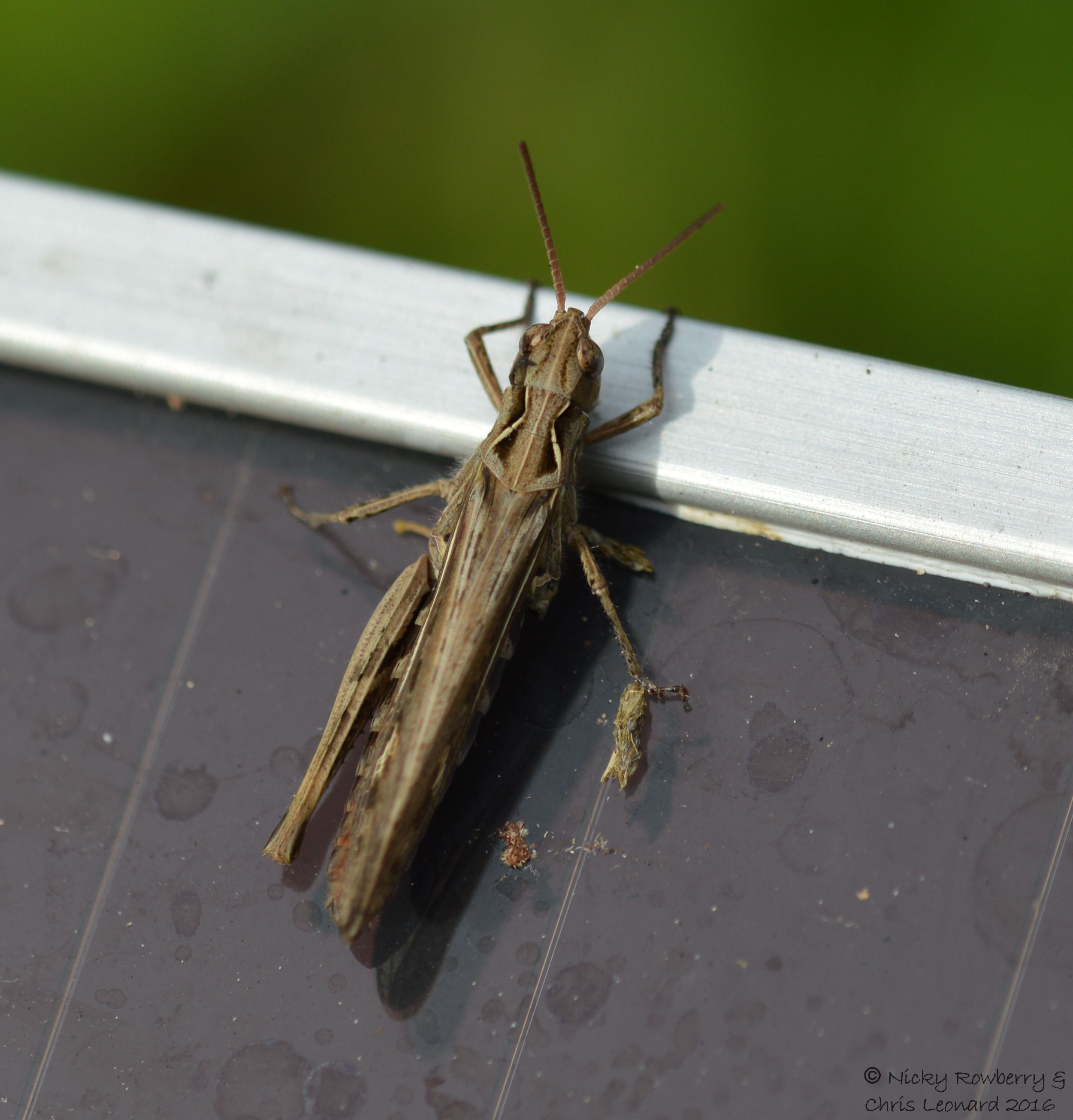
Since I wasn’t immediately inundated with the desired bees, I spent time observing the other insects. There was a surprising amount around considering it is now technically autumn. This grasshopper may have been missing one back leg, but it was making the most of the sunshine, sitting on top of one of the solar panels for the pond pumps.

grasshopper-on-solar-panel

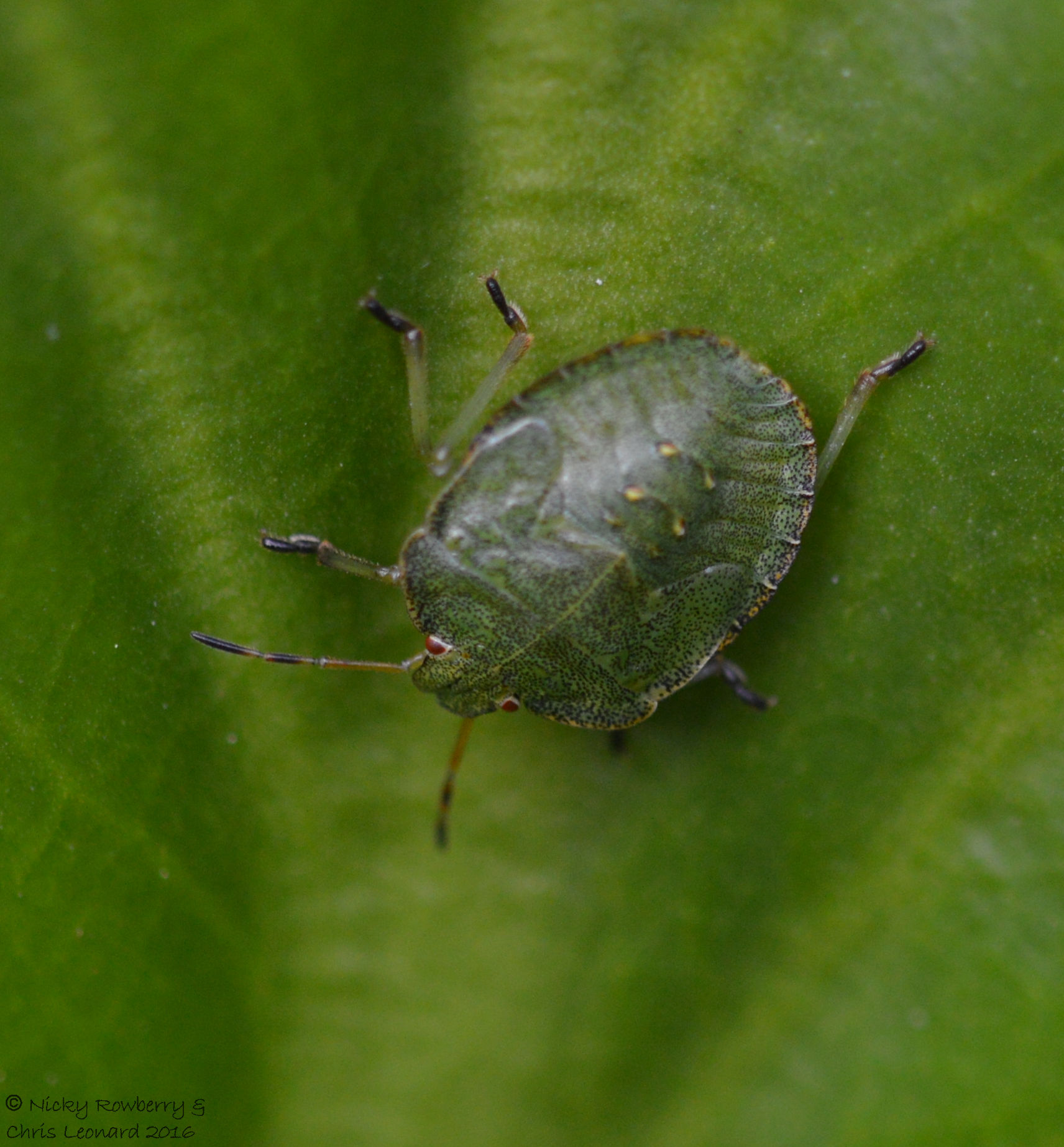
There were also a few Green Shieldbug nymphs, of varying stages, meandering about the leaves at my feet, with at least one adult visible but out of photographic range.

shieldbug-nymph

shieldbug-nymph-2

I got a bit excited when I spotted something on the ivy flowers, but it turned out to be just a Common Wasp.

wasp-v-vulgaris-on-ivy

One of my favourite hoverflies clearly wanted in on the photo shoot too – this is Helophilus pendulus, which is sometimes known as The Footballer because his stripy thorax is supposed to look a bit like a football shirt!

hoverfly

There were quite a few bees about – such as this rather tatty looking Common Carder (top) and slightly fresher looking Honey Bee (bottom)

carder-bee

honey-bee

I was about to give up for the day, when a single bee landed next to the ivy.  It didn’t hang about long, so I didn’t get the chance for many photos, but at least I got enough to confirm it was an Ivy Bee – my stakeout had paid off!

ivy-bee-7


The Bees, Wasp & Ant Recording Society (BWARS) have got a mapping project going to record the spread of the Ivy Bees, so my sightings in the garden have been duly logged. If anyone else spots these distinctive bees, do please record them as well, so that they can build up a better picture of the current distribution. http://www.bwars.com/content/colletes-hederae-mapping-project