Knapp Time

Lovely weather at the weekend, so we set out with great intentions of visiting a new (to us) nature reserve. Our chosen spot was a small wood not far away – unfortunately this wood only has a tiny car park and others clearly had the same idea. With nowhere to park, we headed back to our perennial favourite – the Knapp and Papermill Nature Reserve. We didn’t manage to get there last year so it was a very welcome “Plan B”.

In the wooded areas we were treated to our first banks of bluebells for the year, looking fabulous in the dappled light.

bluebells

The smell of garlic was heavy in the air in places, with banks of Wild Garlic just coming into flower.
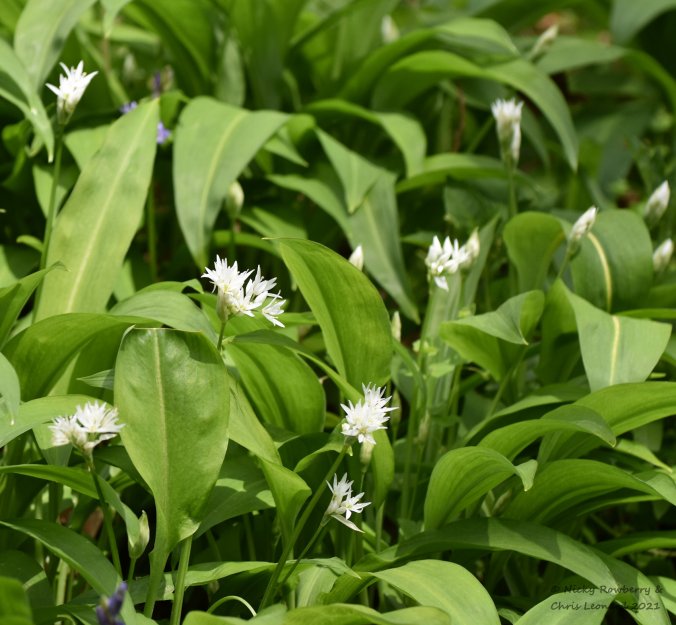
wild garlic 2

Lesser celandines, wood anemones and primroses completed the spring flower array. A plant we don’t see so often was the Butterbur. I always think the Butterbur flowerheads look slightly alien. The leaves in the summer grow huge and were apparently used to wrap butter before the invention of fridges!
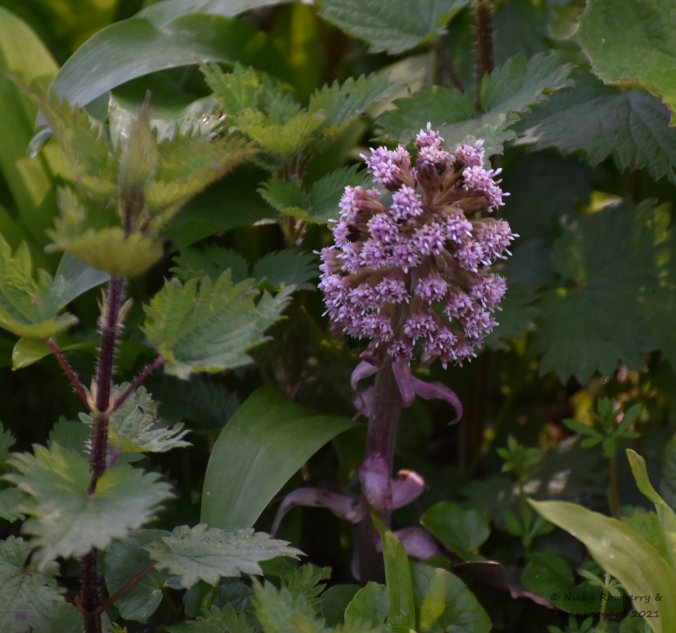
butterbur

We’d hoped for some spring butterflies to complement the spring flowers and we weren’t disappointed – 6 species at least – Peacocks, Small Tortoiseshells, Commas, Holly Blues, Brimstones and Orange-Tips. The Orange-Tips really signal spring to me. We only saw males – hard to miss with their bright orange tipped wings. They were particularly prevalent around the cuckooflowers, a favourite food for their caterpillars.

There were buzzards overhead and what I thought was some weird loud bird in the woods, until we decided it was actually a deer calling! Slightly more recognisable were the calls of blue tits and chiffchaffs, although we never actually saw the latter and a pair of blackcaps.

Further upstream a Grey Wagtail was bobbing about around the weir. The weir seems to be a favourite spot for them to catch insects washed down the slope and we see wagtails here on most visits.

 

Big Garden Birdwatch 2019

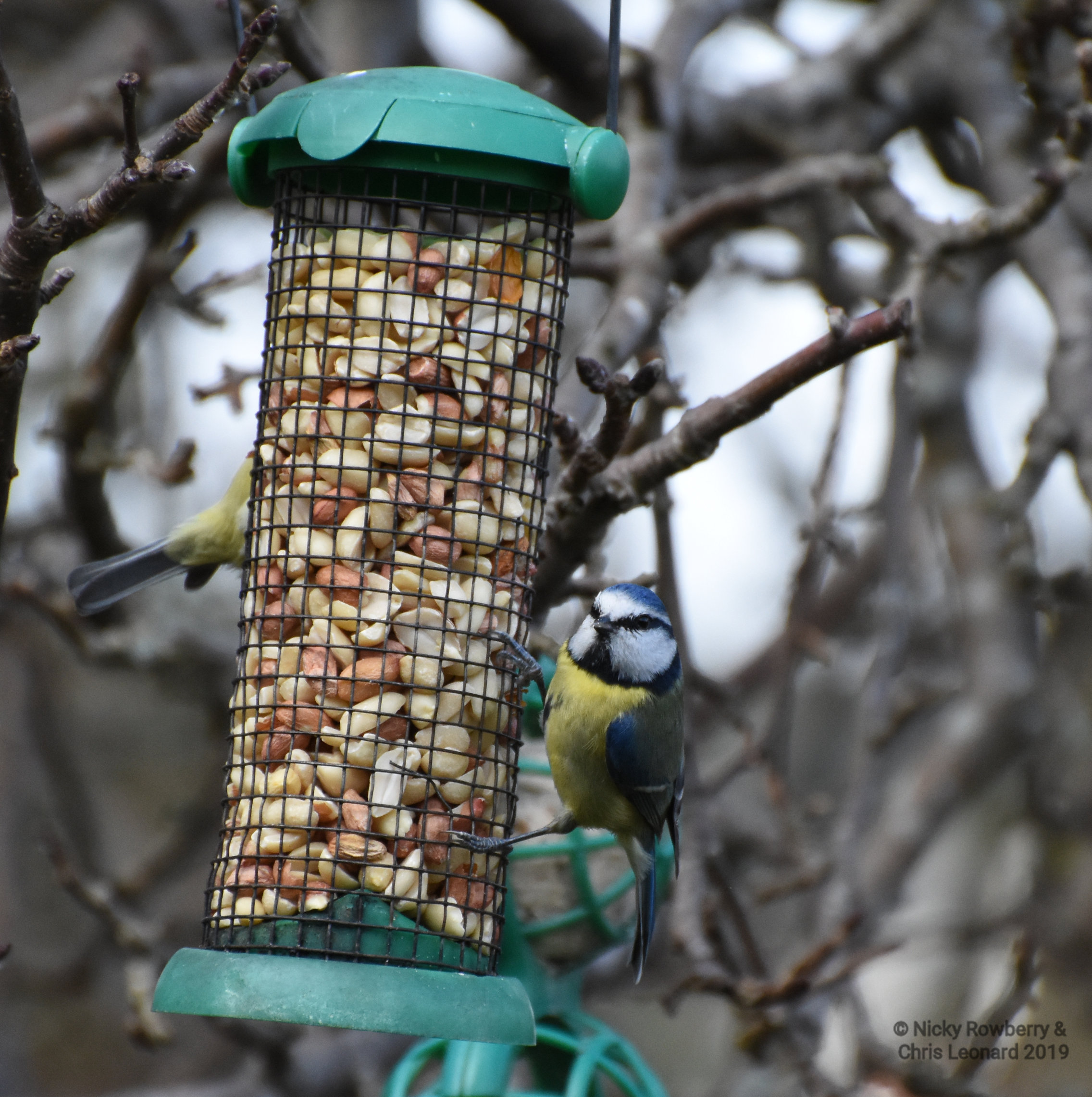
It’s that time of year again – the Big Garden Birdwatch. I think every year I write a similar post about that mixture of anticipation and frustration that this fantastic bit of Citizen Science brings. The usual feeling of “where have all my regular birds gone” followed by the joy a pair of blue tits bring when they appear in the nick of time to make the cut. The red kites last week were undoubtedly magnificent, but when you’ve been sitting freezing your proverbial off for an hour, the sight of a pair of blue tits can be just as rewarding.

I did our garden count on Sunday, an unfortunately blustery day, which I presume is what put a lot of our birds off; rather than just sheer wilfulness to avoid being counted. In the end I only recorded 27 birds of 7 species – way below our garden norm and less even than I can see just glancing out now.  But data is data, so I hope our paltry count will still be of use. So all I saw was:

  • 14 sparrows – there may actually have been double that but, they were in the bushes and impossible to count more for certain.
  • 2 collared doves
  • 1 wood pigeon
  • 2 magpies
  • 1 blackbird
  • 5 jackdaws
  • 2 blue tits

I did try to take photos of those that landed on the bird table, but our overgrown teasels were flapping about in the wind in my line of sight, so I only managed one of the jackdaws.

The blue tits were a bit easier as they were feeding in the apple tree closer to the house.

So that’s it over for another year. Apparently this year was the 40th anniversary of the Big Garden Birdwatch. It started as a survey just for children to do, but thankfully us adults are allowed to join in now too. Our garden birds often seem to make themselves scarce during this annual count, but it still gives me an enormous sense of satisfaction to know that we’re contributing to a really useful bit of science. And sitting just quietly watching the wildlife in your garden for an hour, with no interruptions or distractions is no bad thing either!


Birding in Bewdley

Since the New Year I’ve been suffering (rather pathetically even by my own low standards) from the flu, but by last Sunday I’d finally had enough of my sick bed and was keen to get out and see some wildlife. While spluttering round the house, I’d kept seeing on Twitter that there were lots of Hawfinches in the UK this year and that in particular there was a group of them in Bewdley, which isn’t far from us. People were still tweeting sightings of the Bewdley birds there on the Saturday so we set off on Sunday with fingers crossed.

Bewdley is a lovely little town, right by the river Severn. We’ve passed through it a few times on the way to the Wyre Forest, but never stopped before. So this time we parked down by the river and set off to find Jubilee Gardens where all the Hawfinches were apparently hanging around waiting for their photos to be taken. Since there’s never any guarantee of spotting your target species, we always take photos of other things as we go and the Severn was full of birds as we walked along the towpath.

There were quite a few of these small pretty gulls, several of whom seemed content to perch on the bollards. A quick check on Google when we got home later confirmed they were Black Headed Gulls – in their winter plumage though, so no actual “black heads”.

Another bird that we more commonly associate with the sea is the Cormorant, but there was at least one happily paddling up and down the Severn in Bewdley. It was totally undeterred by the Canada Geese that not only outnumbered him, but were much larger too. The Cormorant faced down at least one goose to get the resting spot he wanted near the steps.

We found Jubilee Gardens tucked away behind the riverfront houses. It is really a small park completely surrounded by the town of Bewdley, but with some large mature trees and a small pond.  There were plenty of small birds flitting around, including a small flock of the lovely long-tailed tits.

A splendid Grey Wagtail was patrolling, with tail wagging, up and down near the pond. I always have to think twice about these, not to call them Yellow Wagtails, despite their obvious yellow colouring.

We knew we’d found the right spot though, when we turned a corner and were confronted with at least a dozen birders with cameras/binoculars/telescopes all pointed up at some of the tall trees. Clearly I’m not the only one who follows the reports on Twitter! There were also a few other, slightly bemused looking, non birders trying to enjoy a Sunday stroll through the gardens and wondering what all the fuss was about.

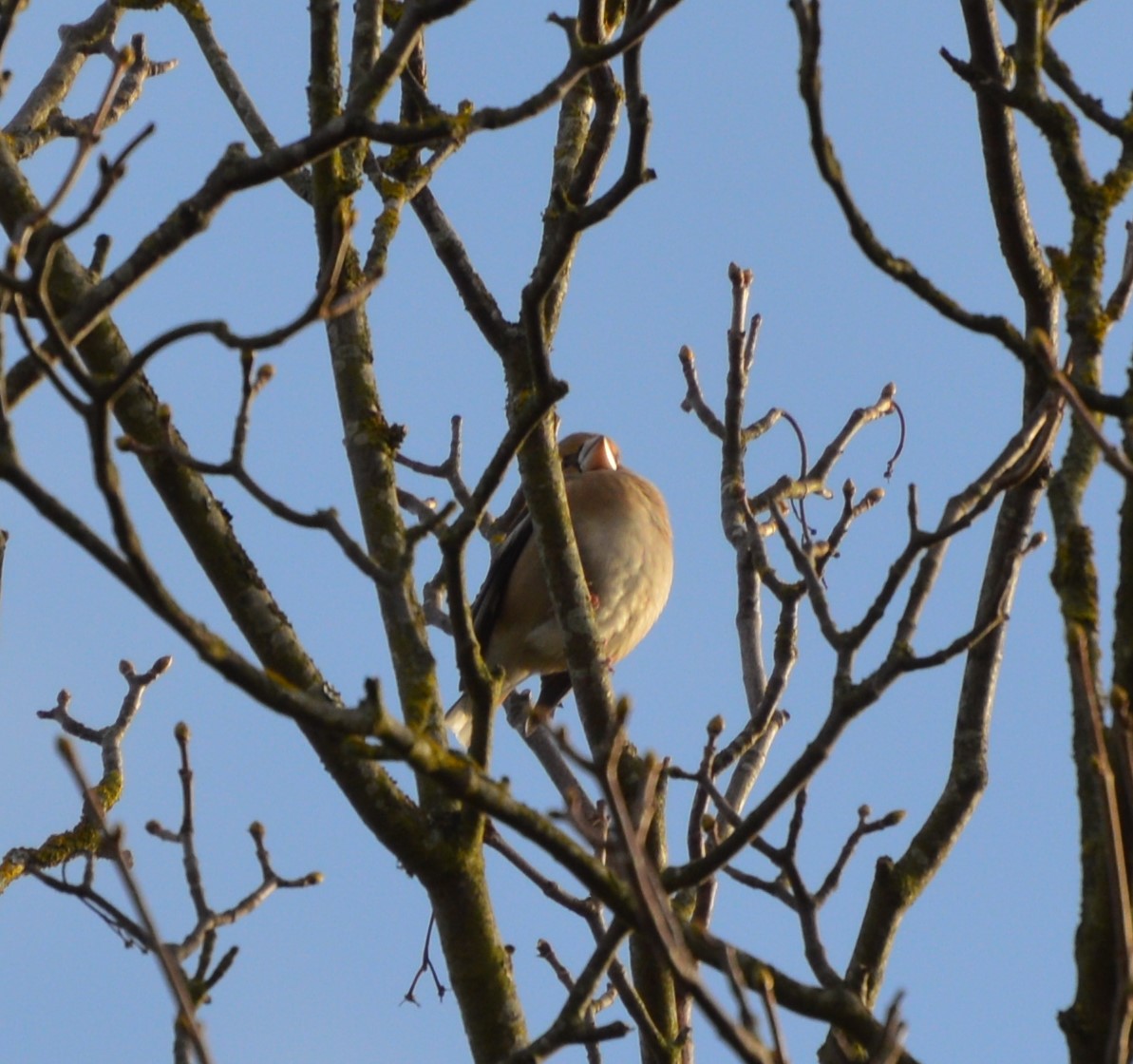
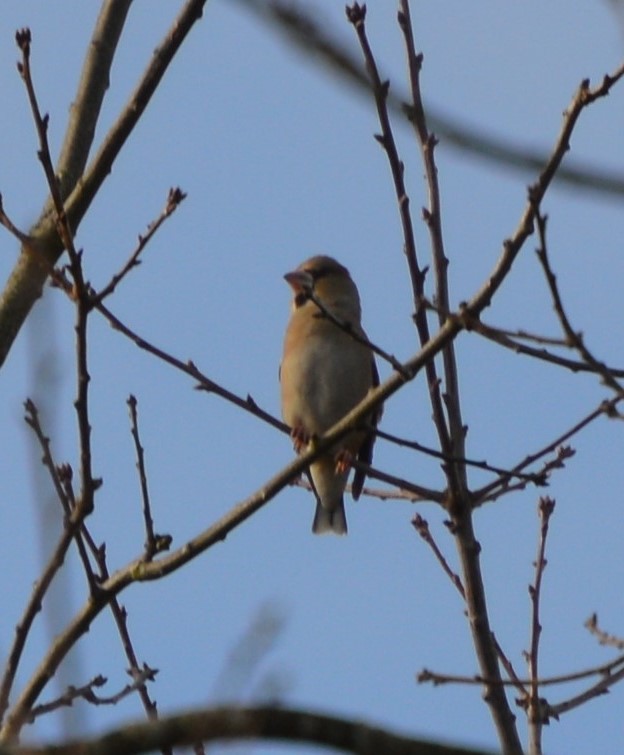
Anyway we followed the direction all the lenses were pointed in and sure enough there were a small group of Hawfinches, high up in the trees. They may have been distant glimpses, but we had found our first ever Hawfinches. Their powerful beaks were clearly visible even from a distance and they are have to my mind quite quirky, curious faces. We spent about an hour pottering round the gardens, hoping they’d come lower down. Not surprisingly, given the large number of people staring at them, they chose to remain high up in the trees. I didn’t really have a long enough lens to get anything even half decent. So these were the best shots I managed – just about recognisable as Hawfinches, if you sort of squint and use your imagination!

I don’t think I’d ever have spotted them on my own, but the combination of helpful Twitter feeds (thank you @WorcsBirding) and of course a large flock of Twitchers made it possible. We just need the equivalent combination for some Waxwings now!