30 Days Wild – Day 10

TWT 30 Days Wild_countdown_10Day 10 of 30 Days Wild and it’s our wedding anniversary! Seventeen (in)glorious years! 17 doesn’t seem to be one of those anniversaries where you buy something special – 2 for paper, 25 for silver etc., but my husband has just bought himself (sorry us!) a Pit BBQ, so I guess it’s become the BBQ anniversary.
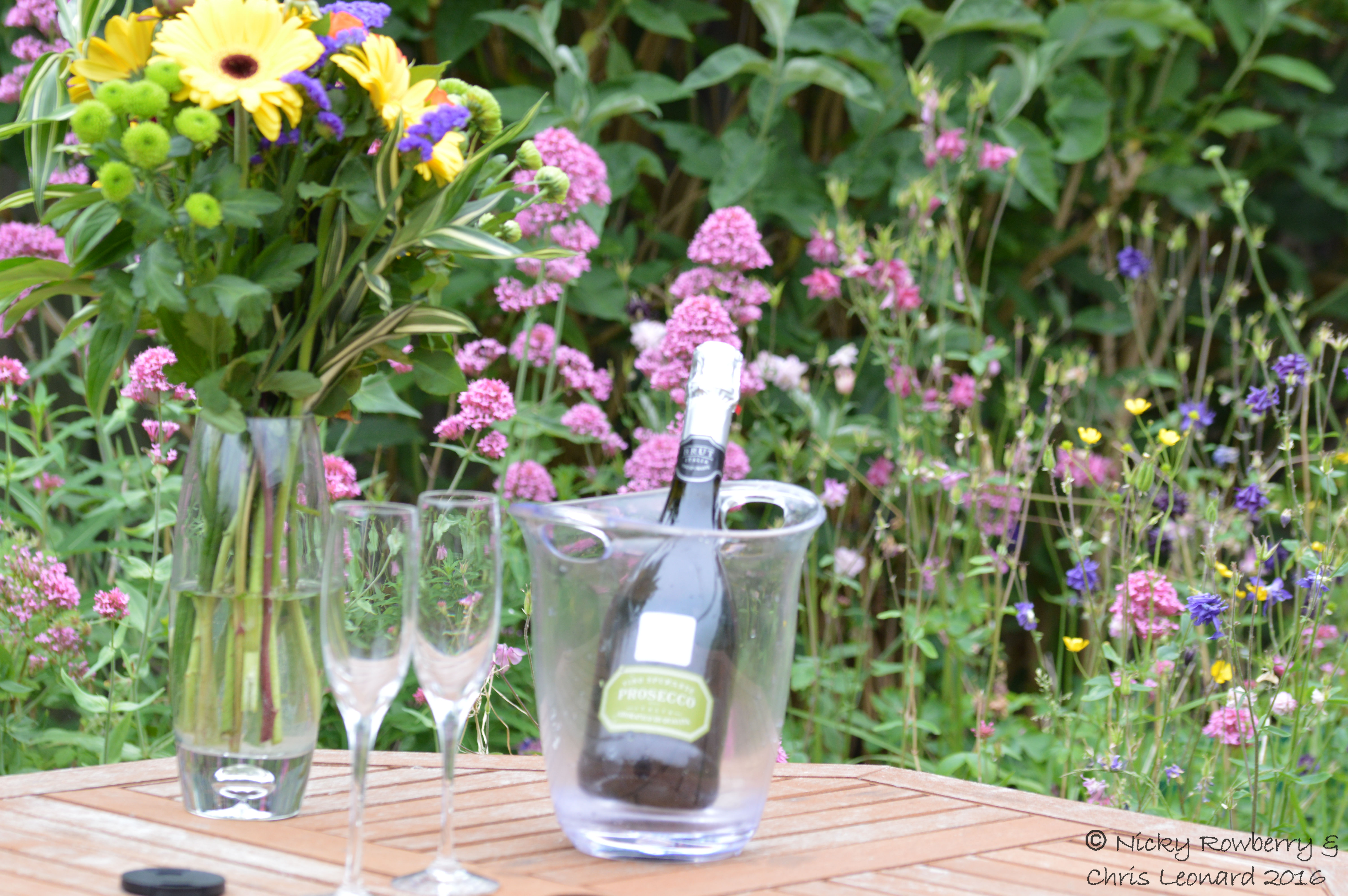
ProseccoI had planned to eat outside this evening anyway – I’d ordered American crayfish (the ones you’re supposed to eat to protect out native ones) from our fish supplier at work, but sod’s law being what it is, they couldn’t get any this week. So it’s a burger instead – not quite got the same cache, but what can you do. I’m sitting typing outside while the coals heat up and it’s starting to drizzle – sometimes life just doesn’t quite live up to expectations. But it is at least warm drizzle and it’s Friday night and I’m outside, so not really complaining.

When we got married in Scotland all those moons ago, the dolphins in Aberdeen harbour appeared and put on a display that felt like it was just for us. 17 years later and we haven’t got anything quite so spectacular to help us celebrate, but I’m honestly just as happy watching the wildlife in our garden. There’s something special about knowing that the bees and the birds are all there in part at least because of our lazy attitude to weeding and organic approach to gardening.

Asparagus beetleWe decided to grill some of the asparagus from the garden, but first we had to remove its residents – the asparagus beetles. They are such striking beetles, it’s just a pity they have quite such a taste for our asparagus. Fortunately for them there was a lot of asparagus left that we’d let grow too big – so it was too tough for us to eat, but the beetles didn’t seem to mind.

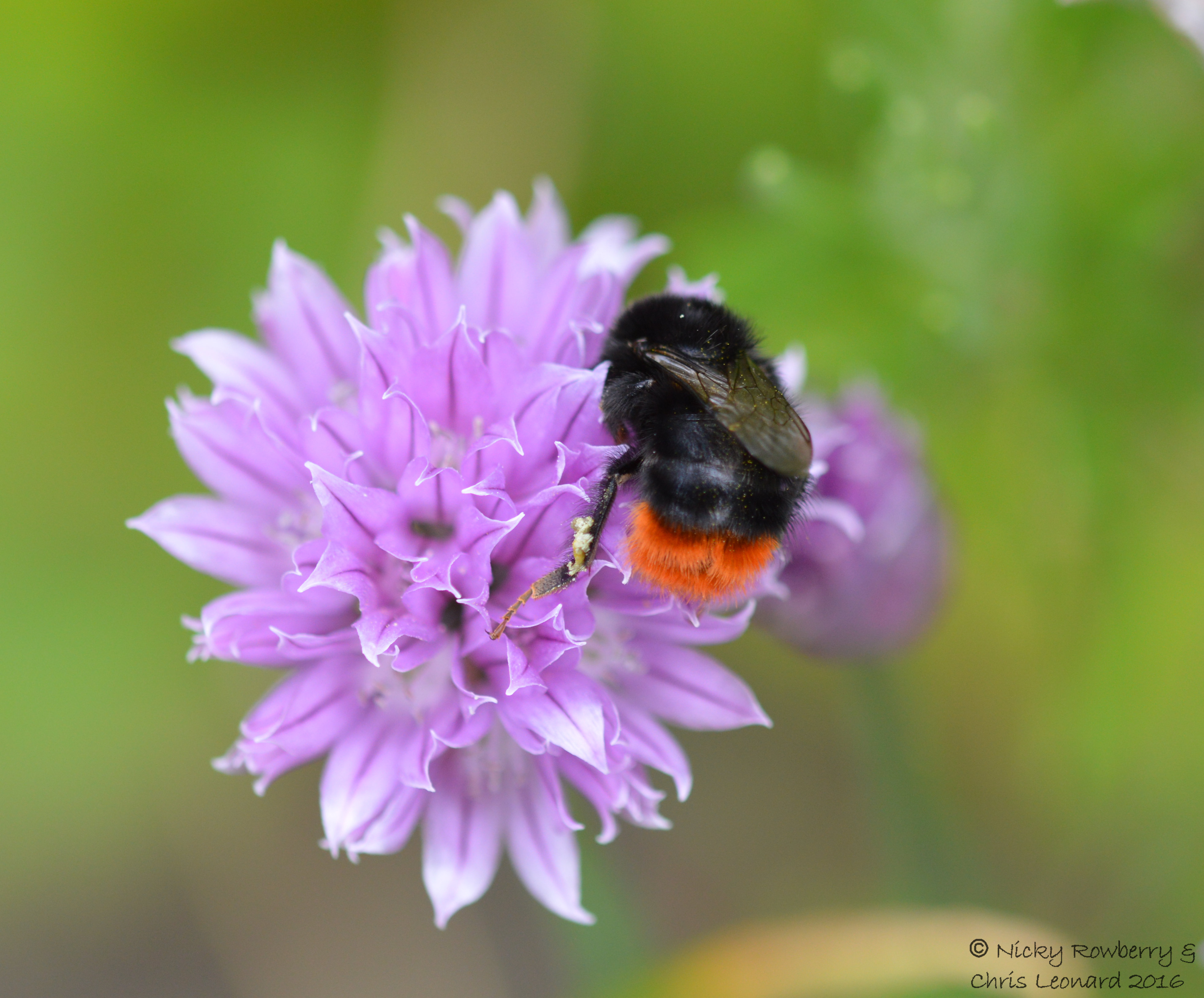
Even though it was not exactly a sunny evening, the bees and hoverflies were out in force. I particularly liked this Early Bumblebee, such a brightly coloured  little guy.

Early bumblebee

Managed to get a photo of a small Marmalade Hoverfly.

Marmalade

My husband had bought me a large bunch of flowers, which we took outside to decorate the table for the BBQ. They were big, bold, beautiful flowers, but for all the time they were out in the garden, none of the bees or hoverflies came anywhere near them. They clearly preferred our native weeds, as they flew right past the vase even though it was very close to the natural flowers. Again it sort of justifies our decision to have a “wild” garden, as we’d much rather have the subtler British flowers buzzing with insects, than the showier cultivated varieties.

Corydalis 30 WEEDSAnd finally as always the latest weed in my 30 Lazy Weeds from our garden – Yellow Corydalis. This is apparently a garden escapee that originally grew in the Alps, but has now spread round Britain. I probably shouldn’t like it as it is a non-native plant, but it’s hard not to like. I’ve always been attracted to plants with more unusual shaped flowers or leaves and the little yellow trumpets fit into this category. It grows easily in shade and unloved areas of the garden, so brightens up our driveway no end.


30 Days Wild – Day 7

TWT 30 Days Wild_countdown_07Day 7 of 30 Days Wild and after what for some reason felt like a long day at work, I thought I’d just chill out in the garden for a bit (much better than sitting in and looking at the housework!) The garden is looking particularly colourful at the moment and I thought it would be nice to celebrate the natural palette of colours you get when you just let whatever wants to, grow in your garden. While still pondering this, our first Painted Lady of the year flew into view, so I thought I’d include some animals in this too.
The childhood rhyme for remembering the colours of the rainbow has always stuck in my head – Richard Of York Gave Battle In Vain, for red, orange, yellow, green, blue, indigo and violet. Not sure this selection of 7 colours really has any foundation in optical science, but it seemed a good enough basis for today’s blog. Of course what would have been really good would have been an actual rainbow appearing at this point – but all I got was drizzle! So:

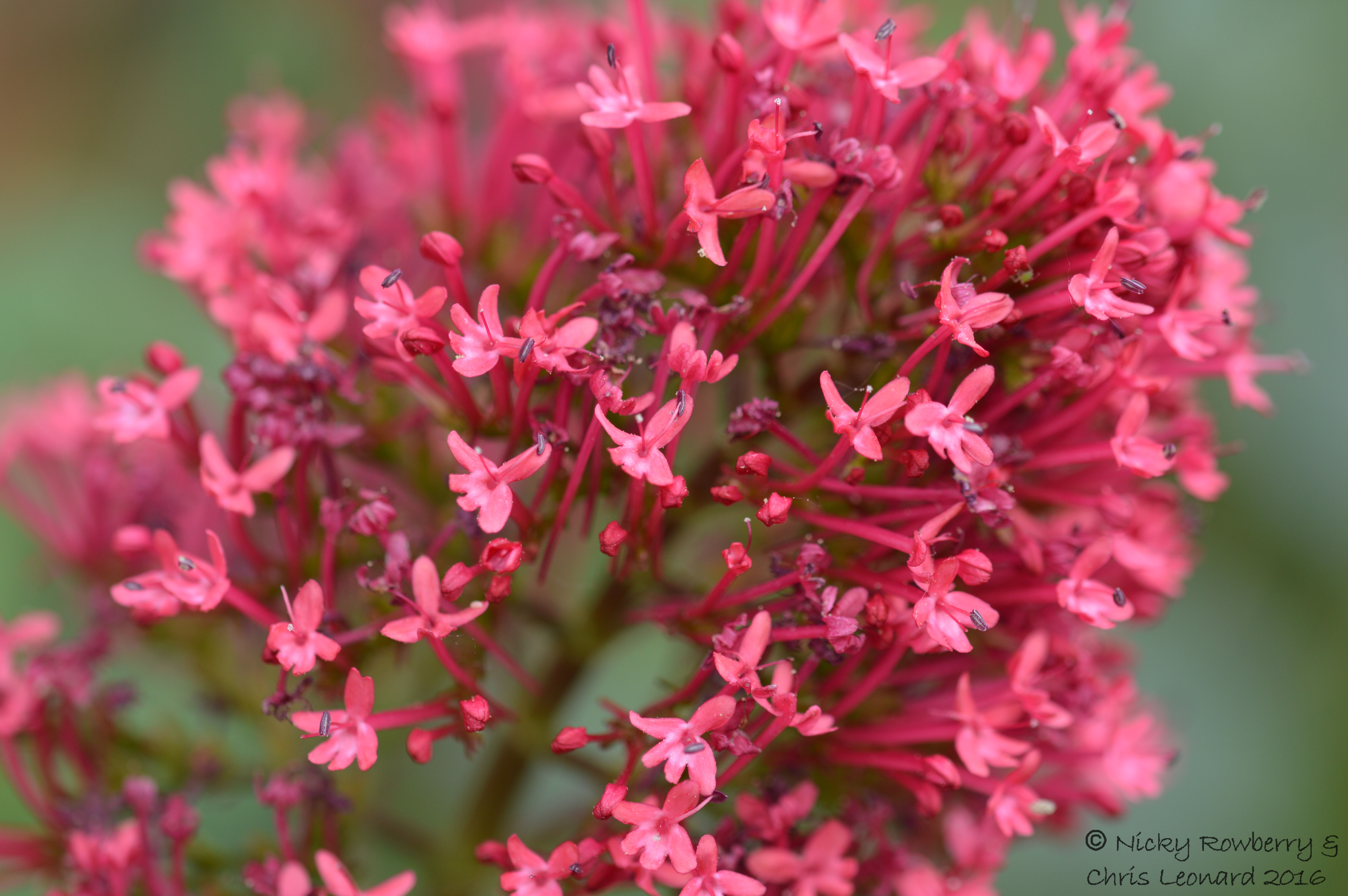
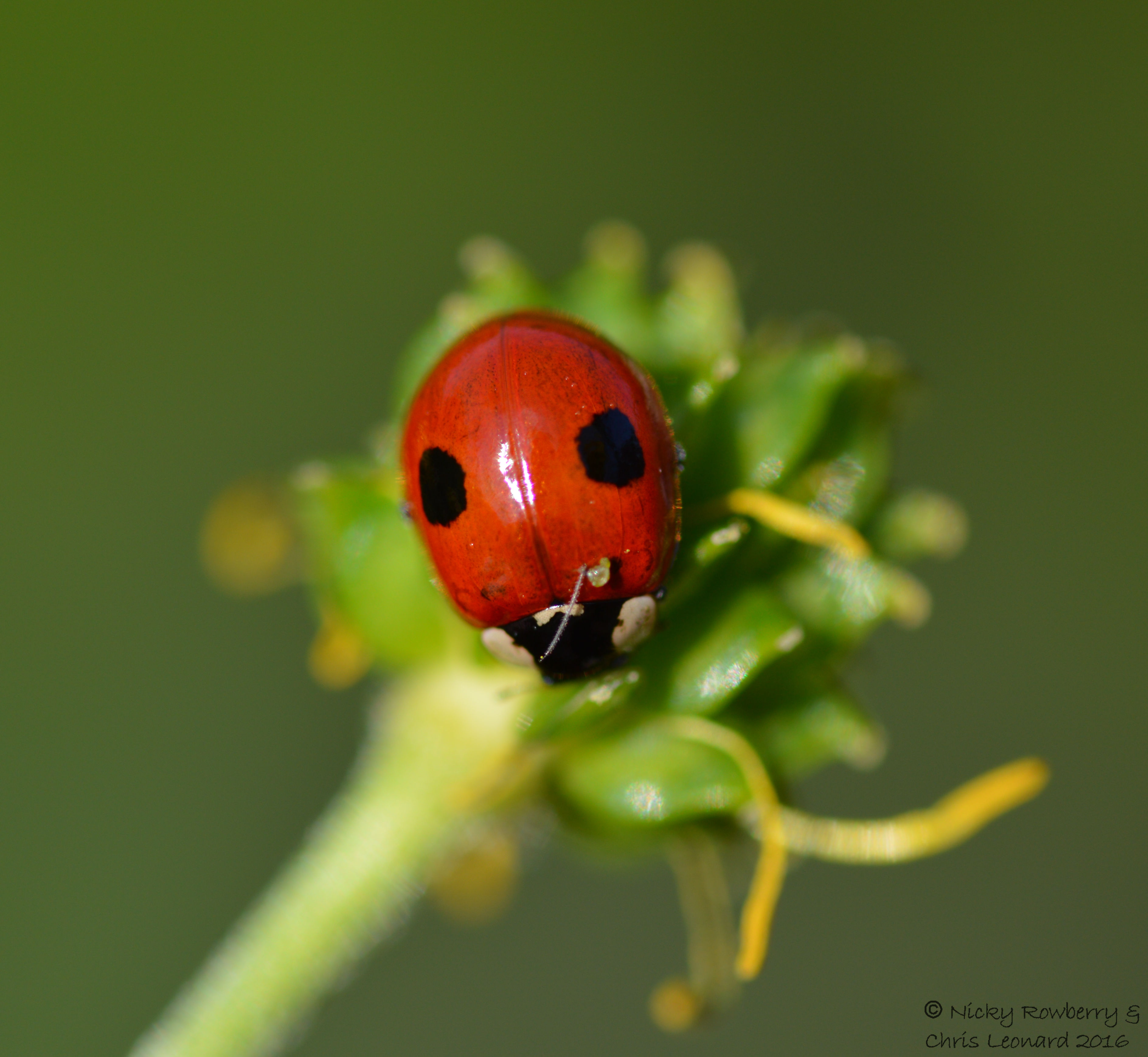
RED – Well the Red Valerian is pretty much dominating the garden at the moment. The flowers do vary in tone, from deep pink to this slightly redder version I found this afternoon. For a red animal it had to be a ladybird – I spotted (no pun intended) this lovely little 2-spot ladybird last week – first one of the year and nice to get a British one rather than the all conquering Harlequin ones.

Red - ValerianRed - Two Spot Ladybird

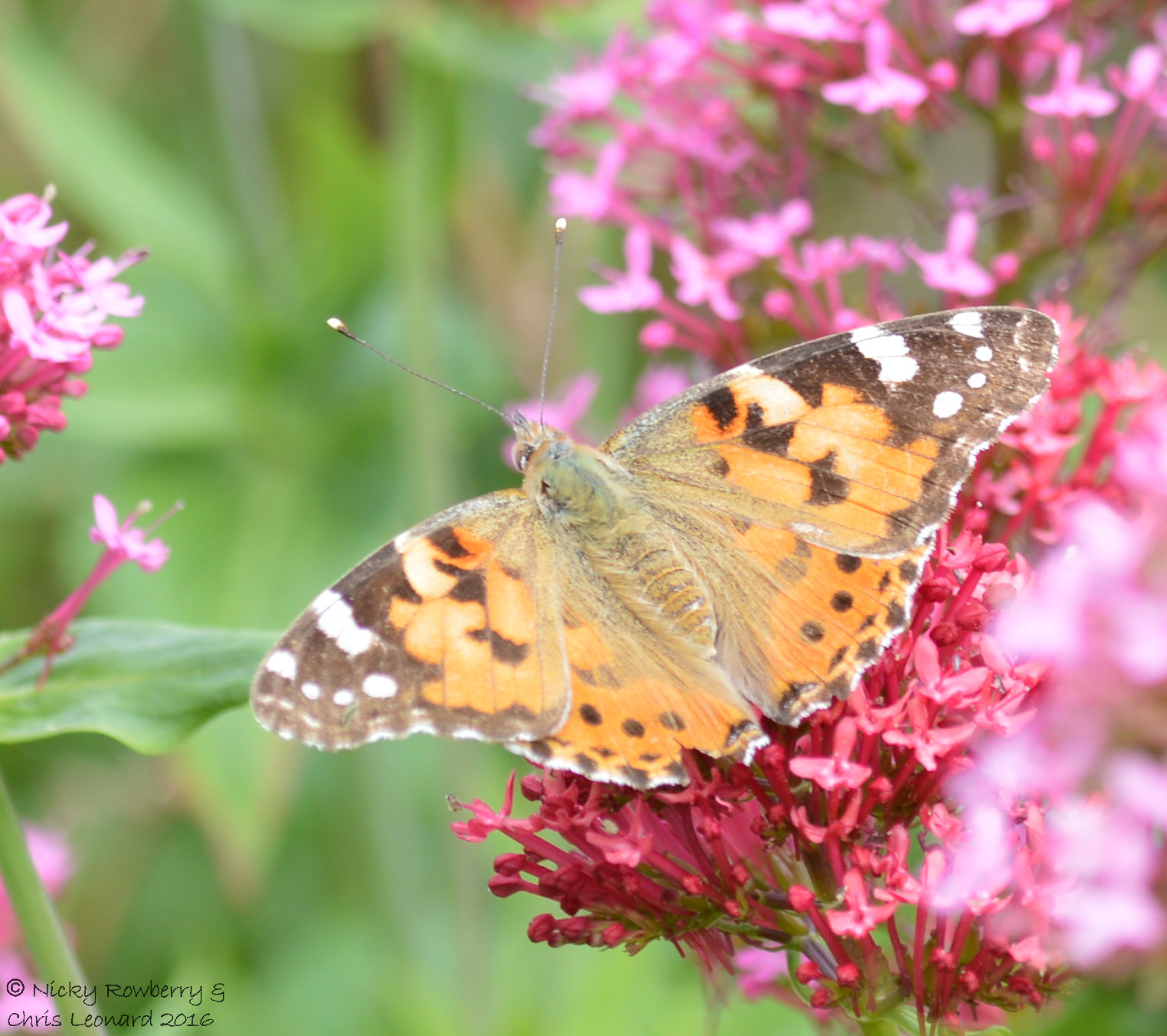
ORANGE – We’ve got these really striking orange poppies – I think they may be Californian Poppies. No idea where they came from, but they are a gorgeous deep orange colour. Today’s Painted Lady provides the animal orange – it was a slightly faded specimen – but then given how far it has probably travelled, I can forgive it a bit of wear and tear!

Orange - Californian PoppyOrange - Painted Lady

YELLOW. These bright yellow lilies have gradually been spreading round the garden. We make sure they’re nowhere near our cats as lilies are toxic to felines and they may be one plant that I do try and control for that reason. But they are beautiful and very definitely yellow. I would have liked to include a yellow Brimstone butterfly, but although we get them in the garden, they never pause long enough for a decent shot. So instead here’s a wasp – perhaps not as popular with some people as the butterflies, but they are to my mind quite stunning when you see them close up like this.

Yellow LilyCommon Wasp

GREEN. Well obviously there’s no shortage of green plants in the garden, but I’ve gone for one with a green flower – Petty Spurge. It’s easy to overlook this little plant with its nodding green heads of flowers, but I quite like it. It pops up all over the place, often between the cracks in the paving, so must be fairly adaptable. For a green animal, it had to be my favourite – the Swollen Thighed Beetle. Not only a fantastic name (only the males have swollen thighs by the way), but a glorious shiny green colour and there were loads of them flying around today.

Green - Petty SpurgeGreen - Swollen thighed beetle

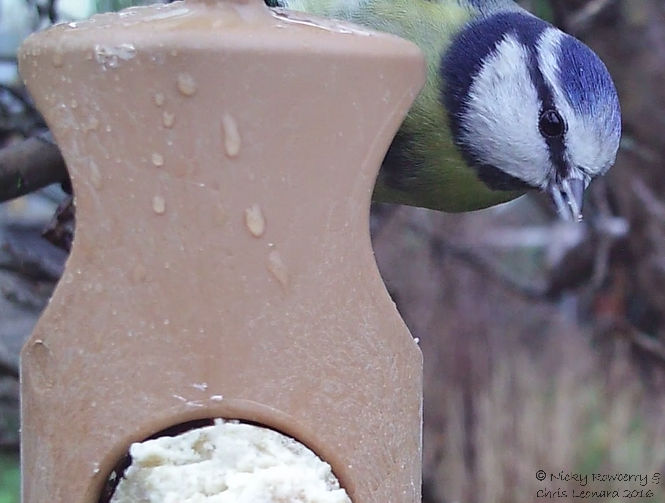
BLUE. The blue in the garden seems to be giving way to other colours now, but there are still small patches of my favourite Forget-me-nots cheering up what should be the veg patch. For an animal – well it had to be the Blue Tit (Holly Blue butterflies might have got a look in here if only they’d slow down a bit too).

Blue - forget me notBlue Tit trail cam photo

INDIGO. Now this is the point in the nursery rhyme where I started to struggle a bit. For a start I’ve never been quite sure what colour indigo is. I’m kind of hoping no-one else does either, so I can use a bit of artistic license. I’ve also got the problem that it’s really hard to find an indigo animal! So for the flower, I’ve gone for the Aquilegia’s which we get in a vast array of colours in the garden. I’ve picked one that is as close to indigo as I can imagine – I stand to be corrected though. For the animal, well I’ve just had to cheat and assume that a) indigo is close enough to Purple and b) that a Purple Thorn moth would count even though it’s not really purple!

Indigo - AquilegiaPurple - thorn

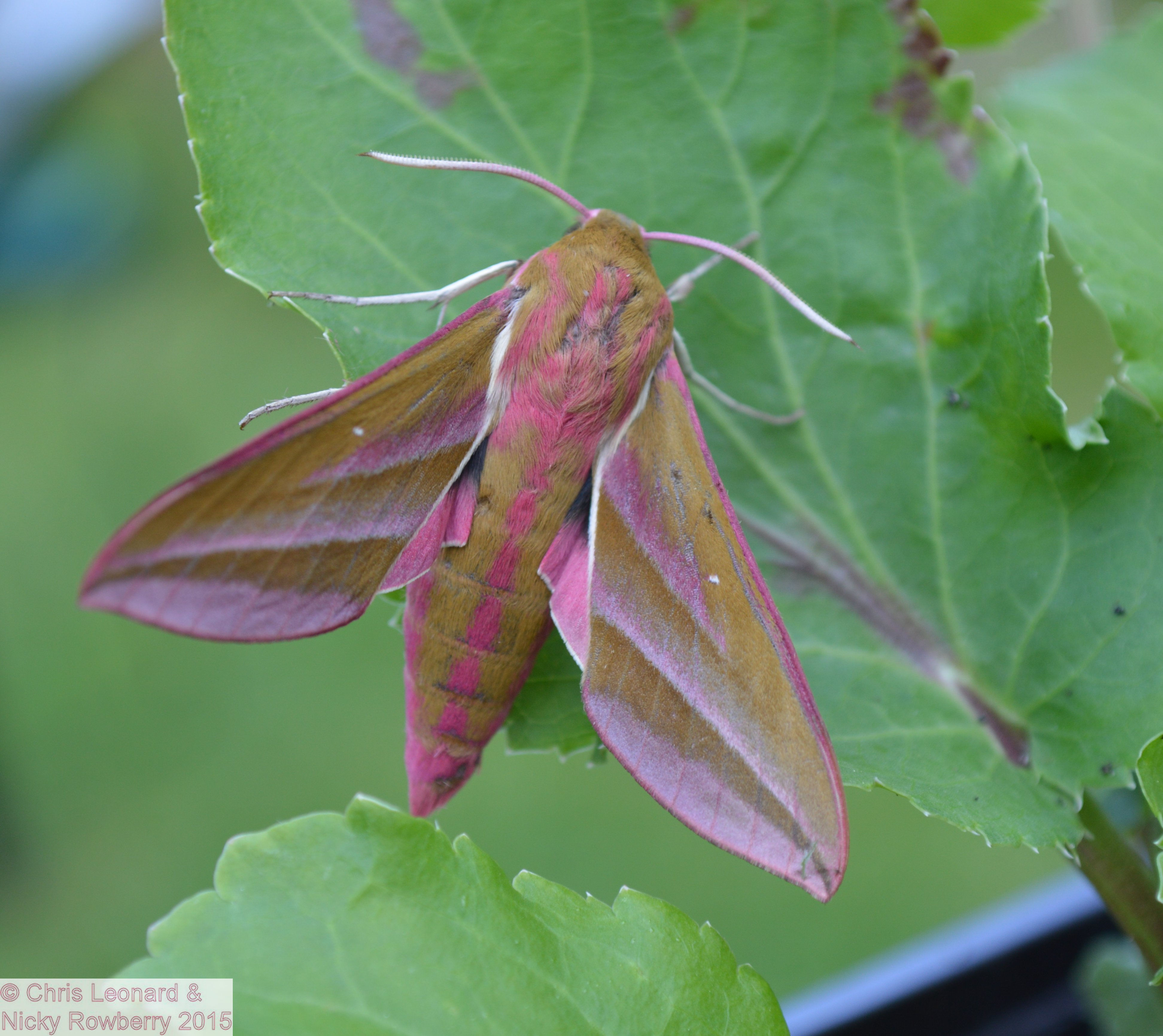
VIOLET. Well this would have been easier if the Viola’s were still in flower, but I couldn’t find any. So I’ve gone for a chive flower as we’ve got lots of those right now and they’re sort of violet coloured. The animal – well I’m really stretching the point now – you do get Violet Ground Beetles, but sadly none have ventured into our garden that I know of. Closest I could find a photo of is an Elephant Hawkmoth, which I’m trying to convince myself is a pale violet colour – I know it’s really pink, but am hoping that the beauty of the moth will outweigh my colour-blindness on this count.

Violet - Chive

So that’s my slightly contrived rainbow of colours from the garden. It was a very pleasant way of spending an hour or so pottering round the garden admiring the colours and thinking of possible (or impossible) animals to match!

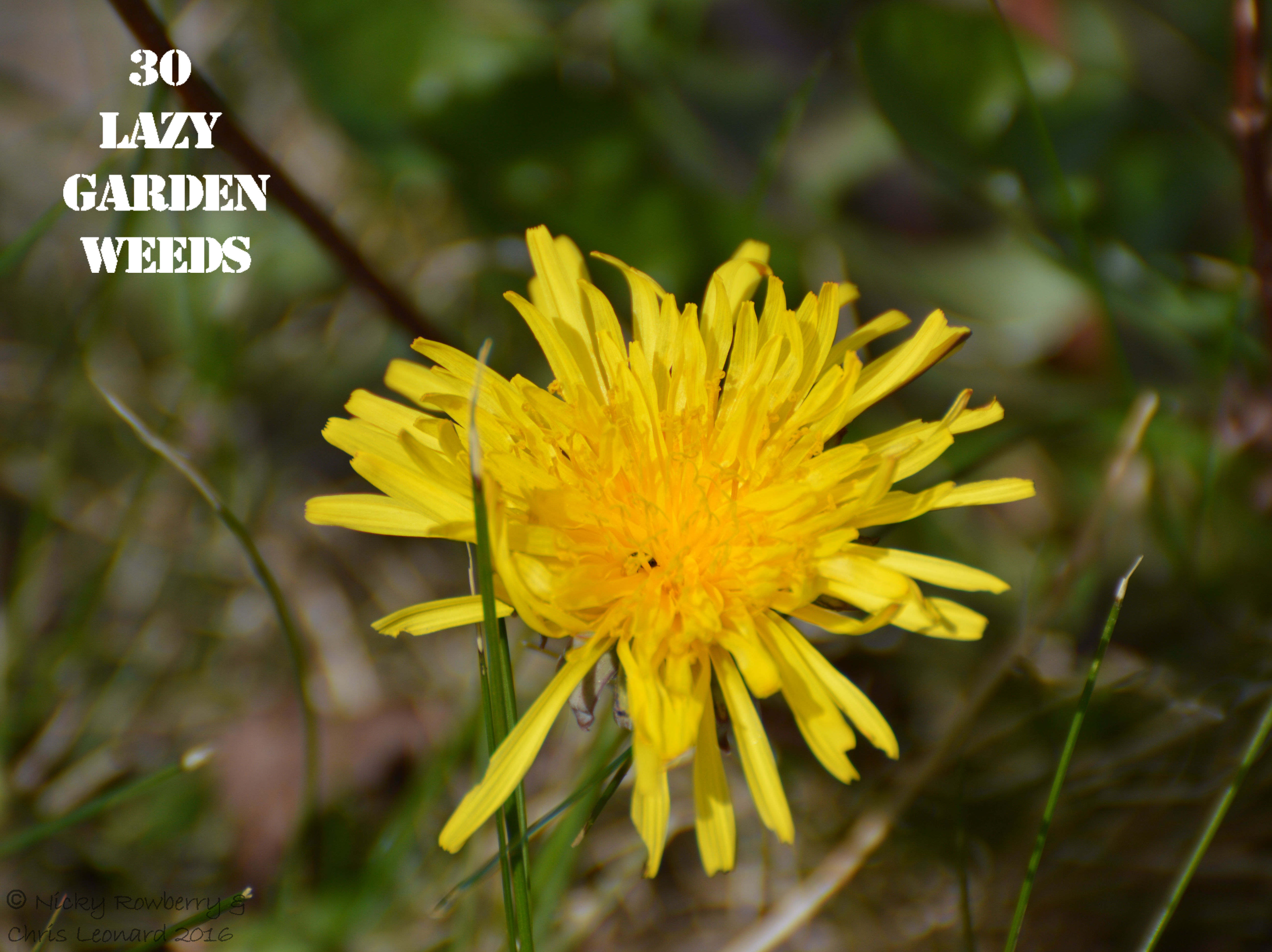
Dandelion 30 WEEDSSo to finish with the latest weed in my 30 Days of weeds series – the Dandelion. Loathed by many, but loved by bees and other insects. I’ve never quite understood why they are so despised – bright and cheerful and an early nectar source in the garden. There’s been a bit of a campaign this year not to chop them down, which is great – they’re certainly thriving in our garden.


30 Days Wild – Day 4

TWT 30 Days Wild_countdown_04Day 4 of 30 Days Wild and today we took part in another event – the National Garden Bioblitz, thereby ticking off two targets with one activity (in true Too Lazy fashion). The aim of the Garden Bioblitz is to find and record as many species of plants and animals as possible in the garden in 24 hours.  Since we’re always identifying things we find in the garden anyway, a bioblitz is just a natural extension of that.

Garden BioblitzLast time we did this a few years ago, we recorded about 120 species; but that was before we got into moth trapping and bee identifying, so hopefully we can beat that this time.  I’m writing this late evening – we’ve been busy in the garden all day, photographing and listing everything we could find. I’ve still got loads of things to identify from the photos and then everything has to get logged onto the i-record site.

It has pretty much been the perfect day. It started at about 4:30 am when I got up to empty the moth trap (to beat the cheeky robin to the catch). Then went back to bed for a bit more sleep (always good), before resuming the challenge at a more reasonable hour. For once the sun shone on the righteous (questionable I know) and we had the perfect conditions for trawling the garden for photo ops. Pretty much the whole day was spent crawling about the garden with the cameras. We finished off by cranking up the BBQ and cracking open a bottle of Prosecco – the perfect end to the perfect day.

During the day we tried every trick we could think of. Obviously the moth trap had been out over night and produced at least 20 species of moth – I’m still working through the photos, so this total may rise. Highlight was the always stunning Elephant Hawkmoth.

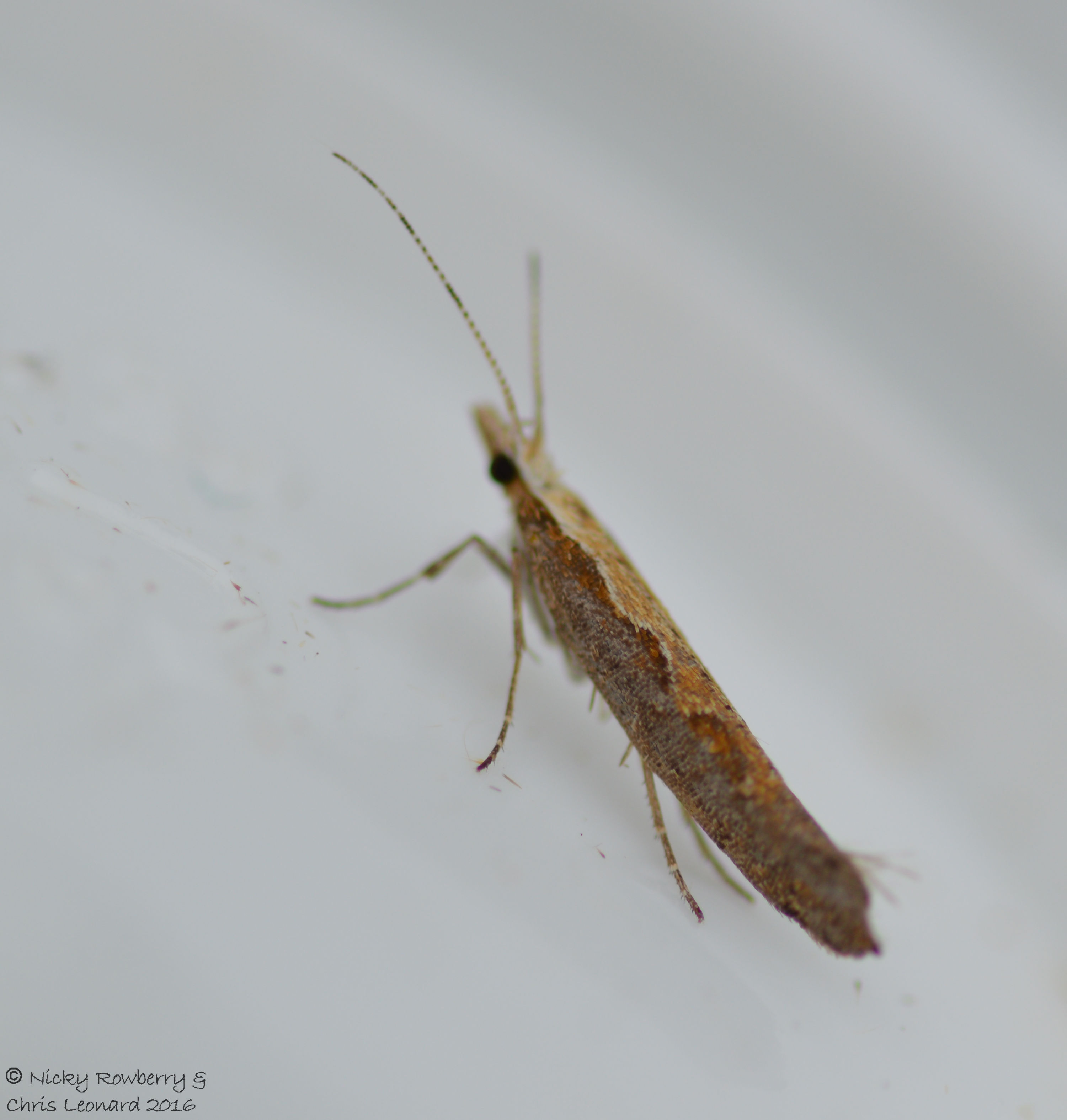
Diamond Back mothI was also really pleased to get several Diamond-back moths – tiny moths that migrate over from the Continent. They’d been mentioned on Springwatch and social media was full of people saying they’d had loads of them this week, so I felt ridiculously glad that Too Lazy’s garden hadn’t missed out. Moth envy is a terrible thing!

We also tried pitfall traps for the first time, using old plastic tubs buried in the ground. This produced this rather splendid (and still to be identified) beetle, plus a couple of woodlice and a spider (also still in need of ID). I suspect pitfall traps take a bit of practice in sussing the right location – we might try them again at other places in the garden.

We tried the “suspend an umbrella under a tree and wack the branches” technique as demonstrated by Chris Packham on Springwatch.  We only have the one mature tree (an apple) so this didn’t produce too much, but was interesting to try.

We dipped in the pond, which produced mainly duckweed, but also some leeches and water louse. It also meant we spotted one of our two amphibian species of the day – a Common Frog, watching us warily from his duckweed blanket.

NewtWe of course turned over stones and pieces of wood, which yielded our second amphibian – the Common Newt. We also found most of our molluscan species this way, both snails and slugs. We achieved a respectable 4 species of snail, but sadly the Girdled Snail, which I know we get in the garden, remained steadfastly hidden today.

The rest of the day was spent generally bird watching and chasing various bees and insects round the garden.  I haven’t tallied up the birds properly yet, but we managed at least 10 species including this Collared Dove. At least 6 bee species put in an appearance, with possibly a new one – we spotted some kind of leafcutter bee carrying (not surprisingly) a piece of leaf – hopefully we can get an ID on it soon, although the photo wasn’t brilliant. Fortunately other bees were more obliging.DSC_3856

Only 2 butterflies showed their faces today – a Small White and a Holly Blue. Assorted insects made up the remainder of the animal count, while the plant count is at least 25 species, with probably a few more to ID.

We’ve spent the whole day in the garden photographing our wildlife and it will probably take several days more to go through all the photos and get them loaded so that they count for the Bioblitz. But it’s been a thoroughly enjoyable experience and has got us rooting about bits of the garden, that we may otherwise ignore. We won’t know the final tally of species for a couple of days, but I’ll post an update when we do. I’d recommend having a go at a Garden Bioblitz for anyone – you don’t need to be especially skilled – just take it to whatever level  you can manage. You’re sure to learn something new and hopefully enjoy your garden all the more for it. There’s still time to do it for this year – http://www.gardenbioblitz.org/ for more information.

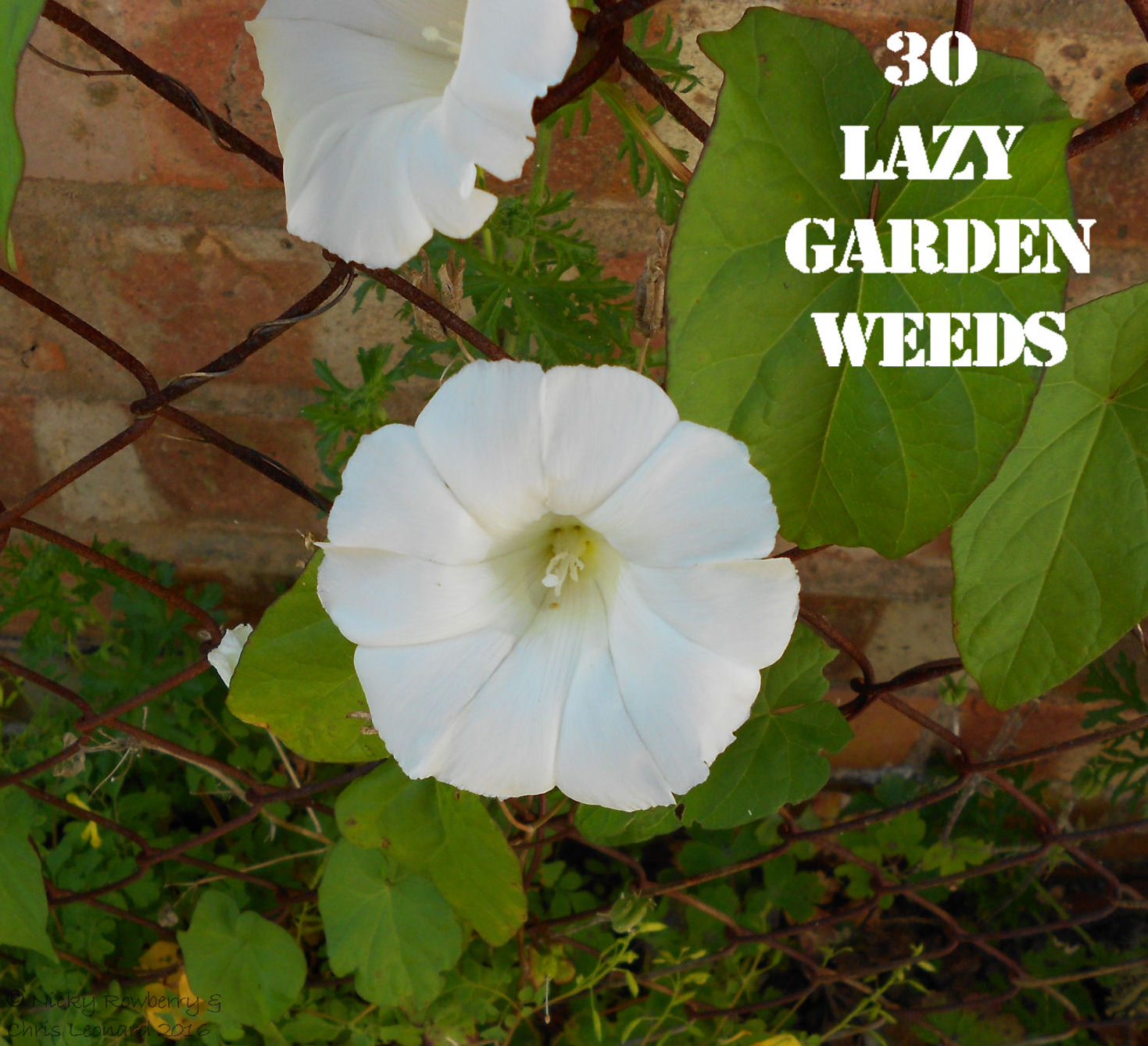
Bindweed 30 WEEDSDay 4 of 30 Lazy Weeds and a truly beautiful if sometimes bothersome flower – Bindweed. The bane of many a gardener, but if you take the time to look at the flower itself, it really is stunning. Pure white and beautiful in its simplicity. Gardeners will plant similar looking flowers, but weed out these, which seems a shame. I know their stems do wind themselves round pretty much everything, but for me the flowers more than make up for this.


Out and About – Haugh Wood

Yesterday’s expedition produced not only the result we’d set out for, but a completely unexpected bonus. We’d set out in search of Wood White butterflies – a species neither of us had ever seen before, so one on our hit list to “bag” this year. The new Butterflies of the West Midlands book suggested a walk in Haugh Wood, Herefordshire so we ventured forth once again – it’s becoming a bit of a weekend habit this abandonment of our sofas!

Haugh Woods (there seems to be some debate as to whether it is pronounced Haugh as in Laugh or Hoff as in The Hoff!) is run by the Forestry Commission and is a nationally important wood for butterflies – in particular the Wood White. The Wood White is a nationally vulnerable species, so we’re lucky to have a colony close enough to visit.

The first white butterfly to show its wings though was a Green Veined White. Of course it took a bit of chasing around to confirm that it wasn’t a Wood White – we didn’t discover how small the Woodies were until later on. Still the Green Veined was lovely to see, even if it refused to pose its wings properly upright to see the veins.

DSC_2638

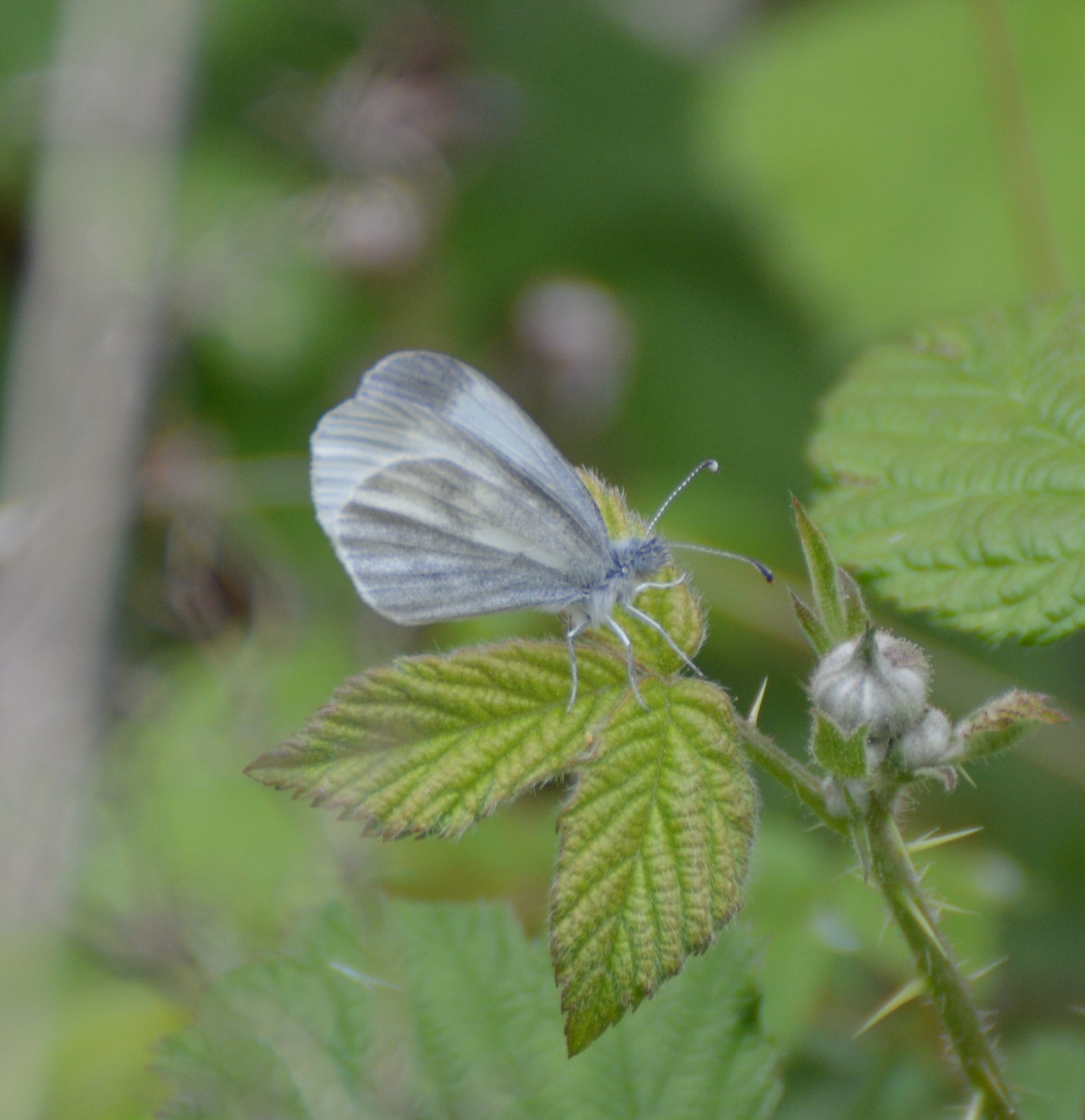
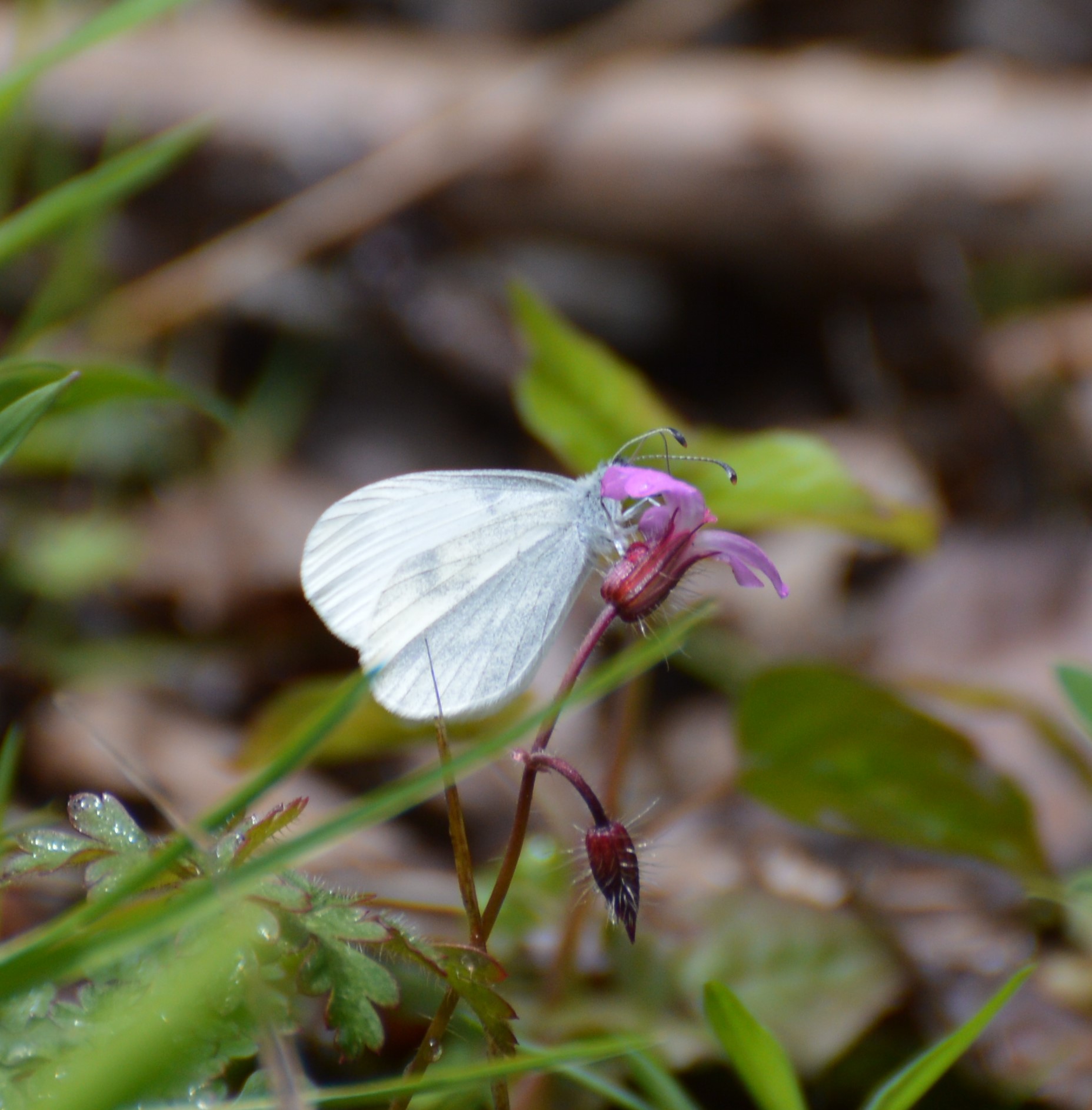
It wasn’t long though before another much smaller white flapped by – again it took a bit of chasing around until it stopped long enough to confirm a Wood White. They’re really much smaller than I’d expected and not the most energetic of butterflies, which was good news for us pursuing them!

We eventually saw several more once the showers passed and the sun came out again.

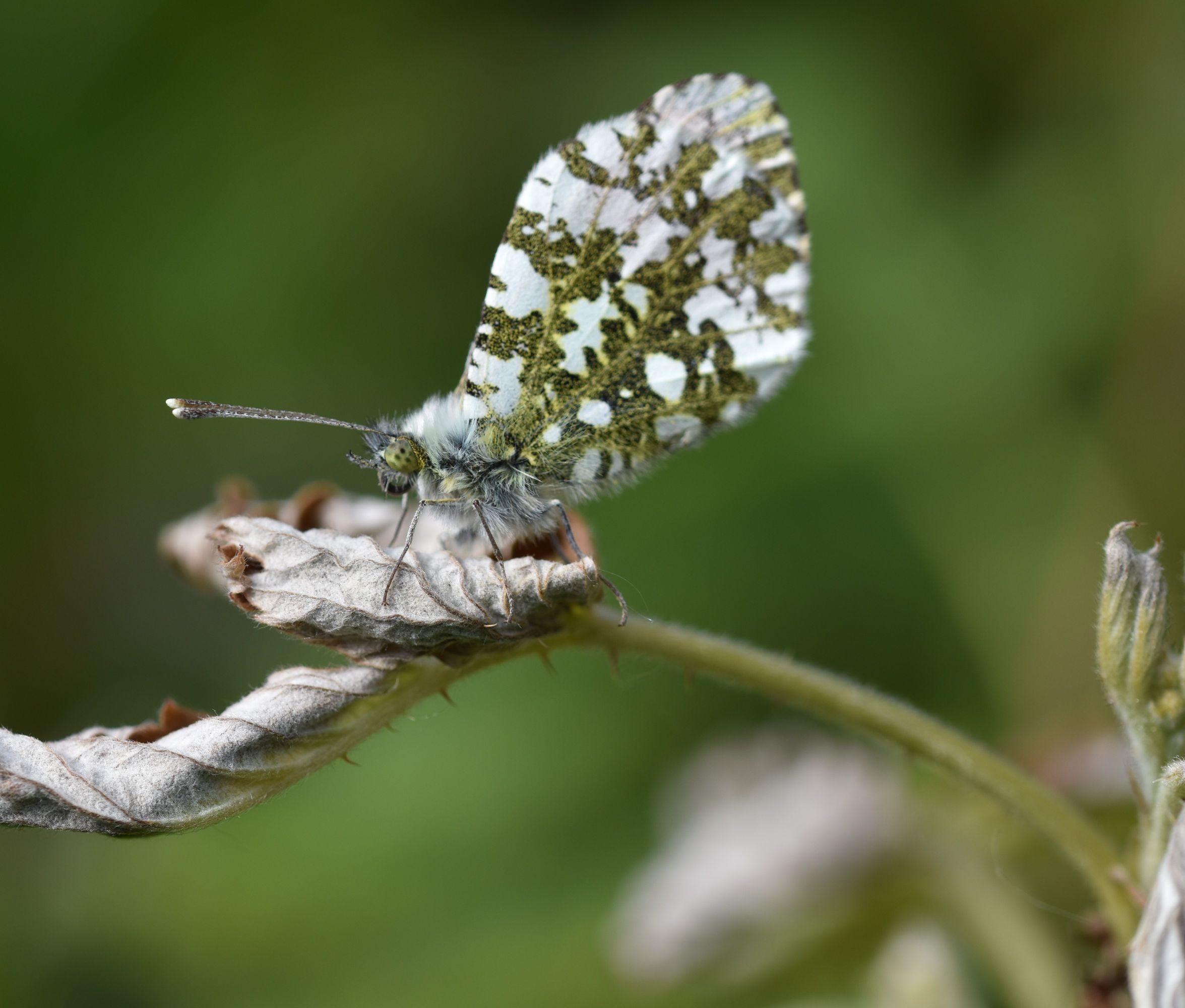
Near the end of our walk a third white species showed up – an Orange Tip.


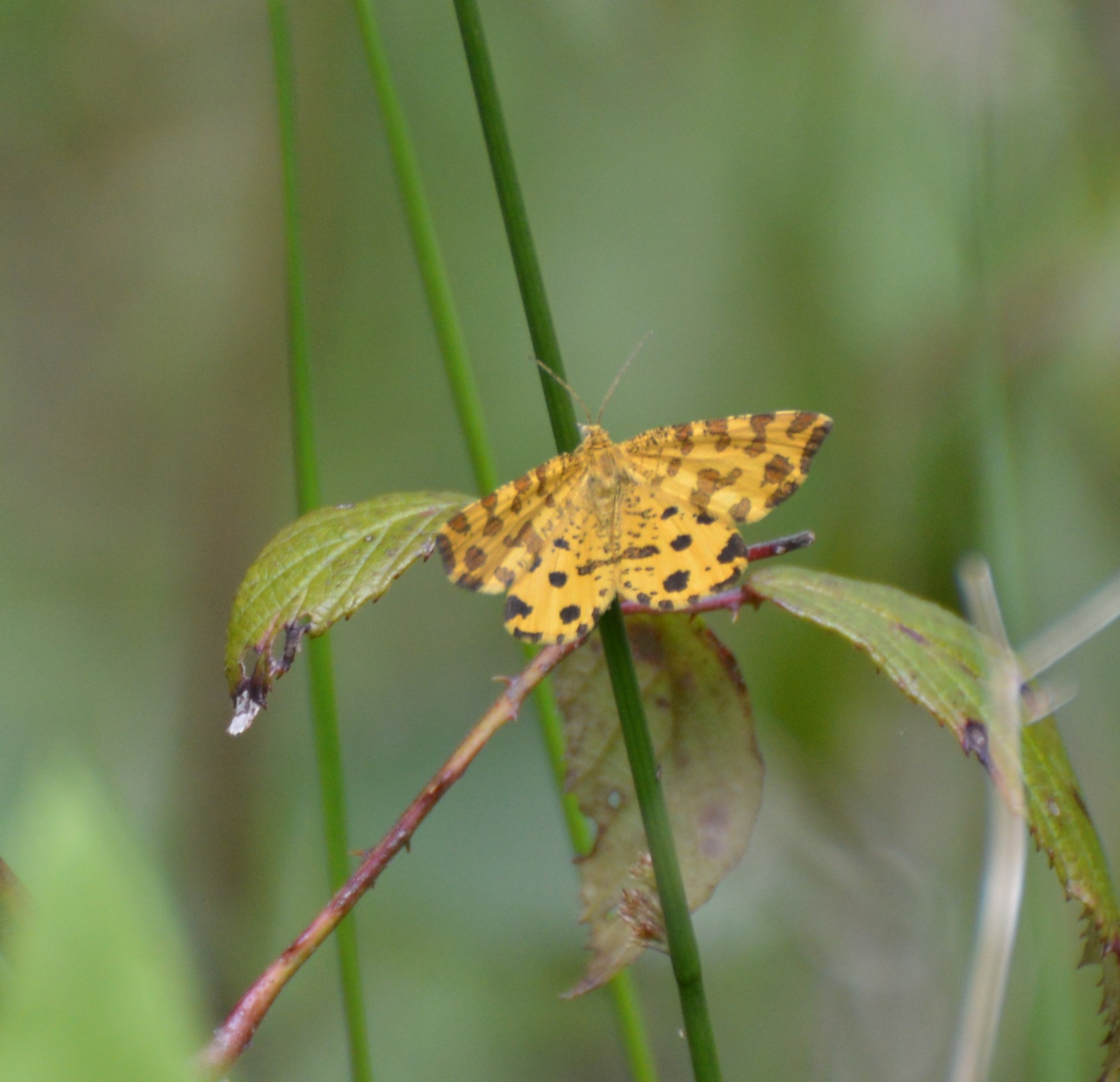
Throughout the wood we’d also been seeing Speckled Yellow moths flitting about. They are notoriously difficult to photograph, but we finally chased one down back near the carpark.

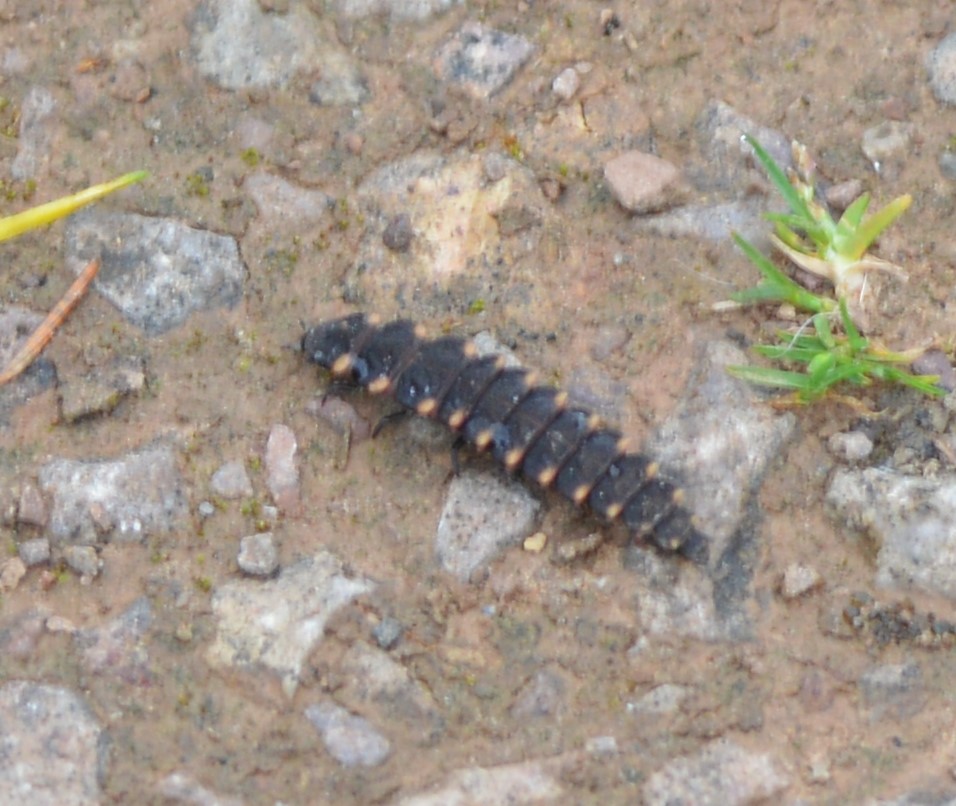
The real bonus of the trip though was something we only discovered we’d seen when we got back home and downloaded the photos. We had spotted what we thought was a caterpillar trundling across the path, so we’d taken a few snaps and then moved it to safety (probably a good job we moved it, as we had to double back down the path a few minutes later having got lost despite the very clear path markers – I’d hate to  have trodden on it!)

Looking at the photos properly back home, it didn’t look like a caterpillar at all. A quick google combined with a plea for help on Facebook and iSpot, confirmed we’d found a Glow Worm larva. It is principally the adult females that glow, although the larvae do glow a bit, but obviously not at 11:30 on a Sunday morning while tootling along a path! So it was hardly a bioluminescent spectacle (like the recent, excellent David Attenborough programme on the phenomenon), but we can still say we’ve seen a glow worm, so I’m happy with that. I feel a trip back to Haugh Woods in the dark may be coming up some time soon though!


Out and About – Hartlebury Common

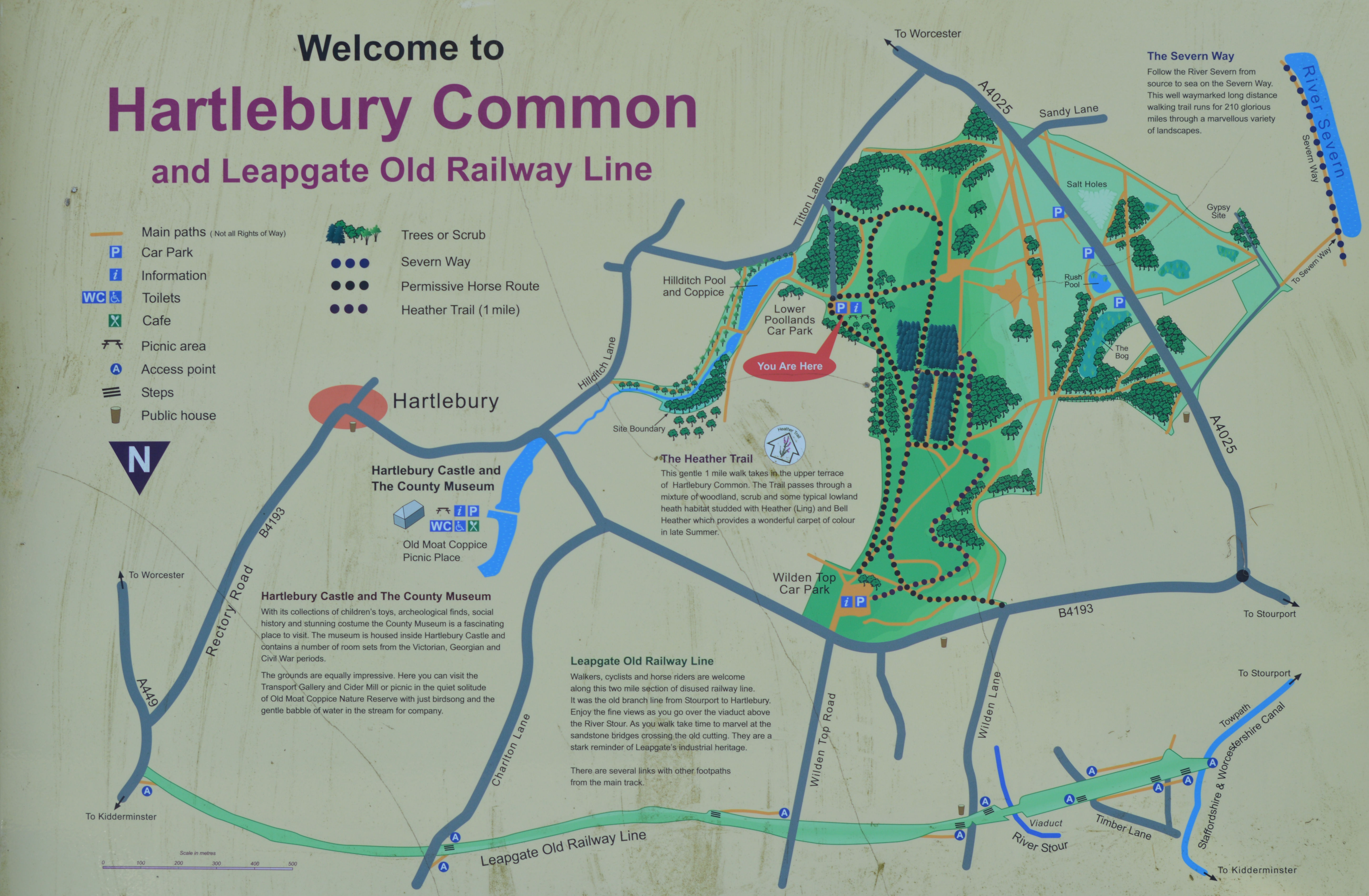
Once again we ventured forth from our sofas and hit the outside world in search of adventure – or more precisely moths! We’d heard that Hartlebury Common in North Worcestershire might have Emperor Moths – large day flying moths that we’ve always wanted to see. Hartlebury Common is an SSSI, consisting of lowland heath and supposedly good for Emperors.

Hartlebury Map

Needless to say after several hours tramping about in intermittent sunshine, there were no signs of the regal Emperors. Fortunately Hartlebury  provided other wildlife of interest. Insect-wise there were lots of bees feeding on the gorse and broom. A single Tortoiseshell butterfly provided fleeting hope that we’d spotted an Emperor; but a Bloody-nosed Beetle (Timarcha tenebricosa) stopped us in our tracks as he trundled across the path. When we tried to gently move him to one side, he secreted his trademark blood red liquid from his mouth, which made identifying him later a hell of a lot easier!

The gorse bushes also offered up a Gorse Shieldbug (Piezodorus lituratus) – a species we’d never seen before, so nice to bag another one.

The birds were abundant and singing all round us. A green woodpecker taunted us all morning, but remained steadfastly out of camera range. A tree creeper posed on a tree trunk just long enough for us to spot him, but not long enough for us to focus and get a photo. Fortunately a wren was slightly more accommodating, although a bit far away to get a really good shot.

Wren at Hartlebury

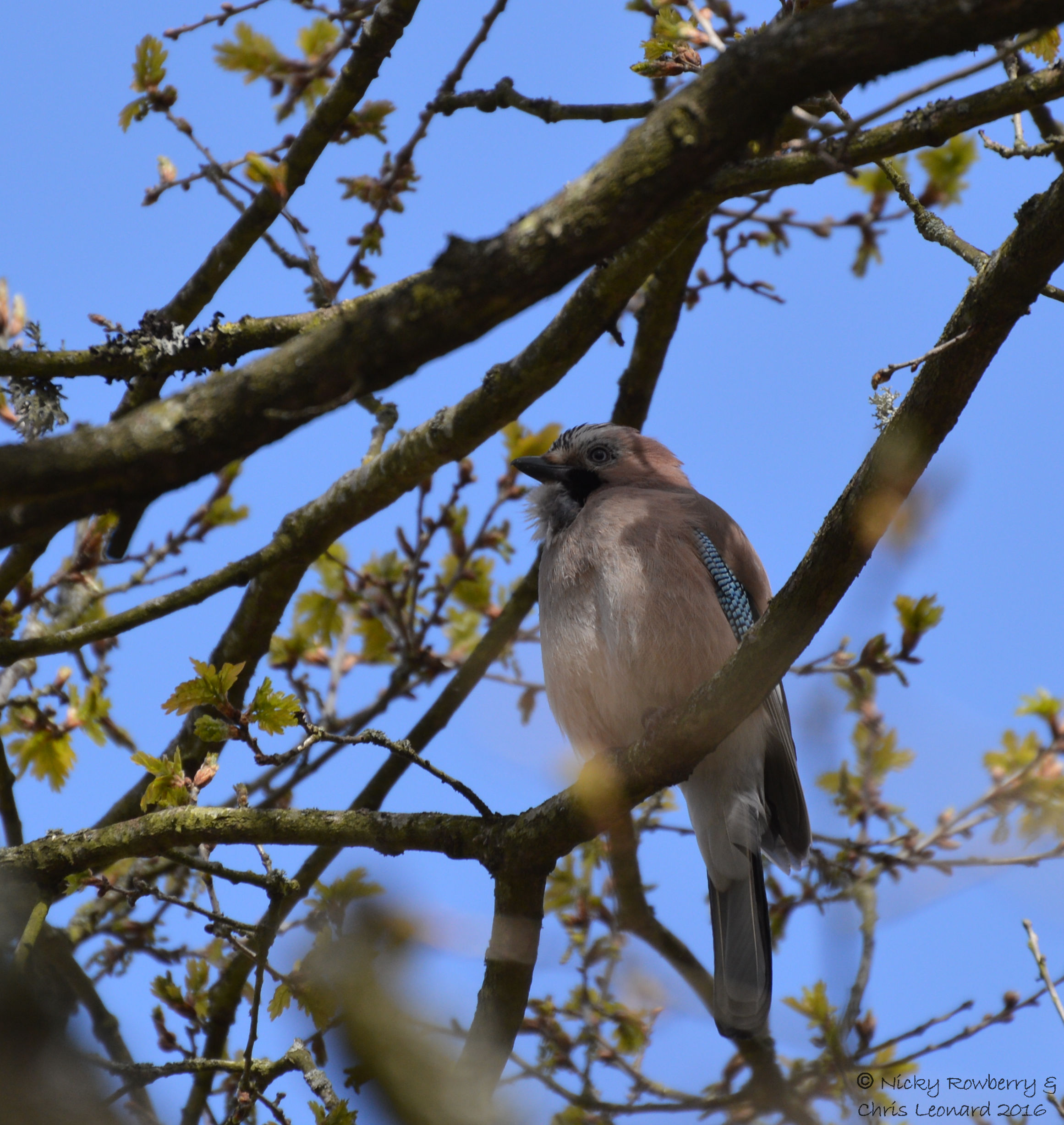
A pair of Jays made the trip all worthwhile though. I’d previously only seen glimpses of these beautiful birds, so to see them as clearly as this made my day.

Jay at Hartlebury 2

Jay at Hartlebury

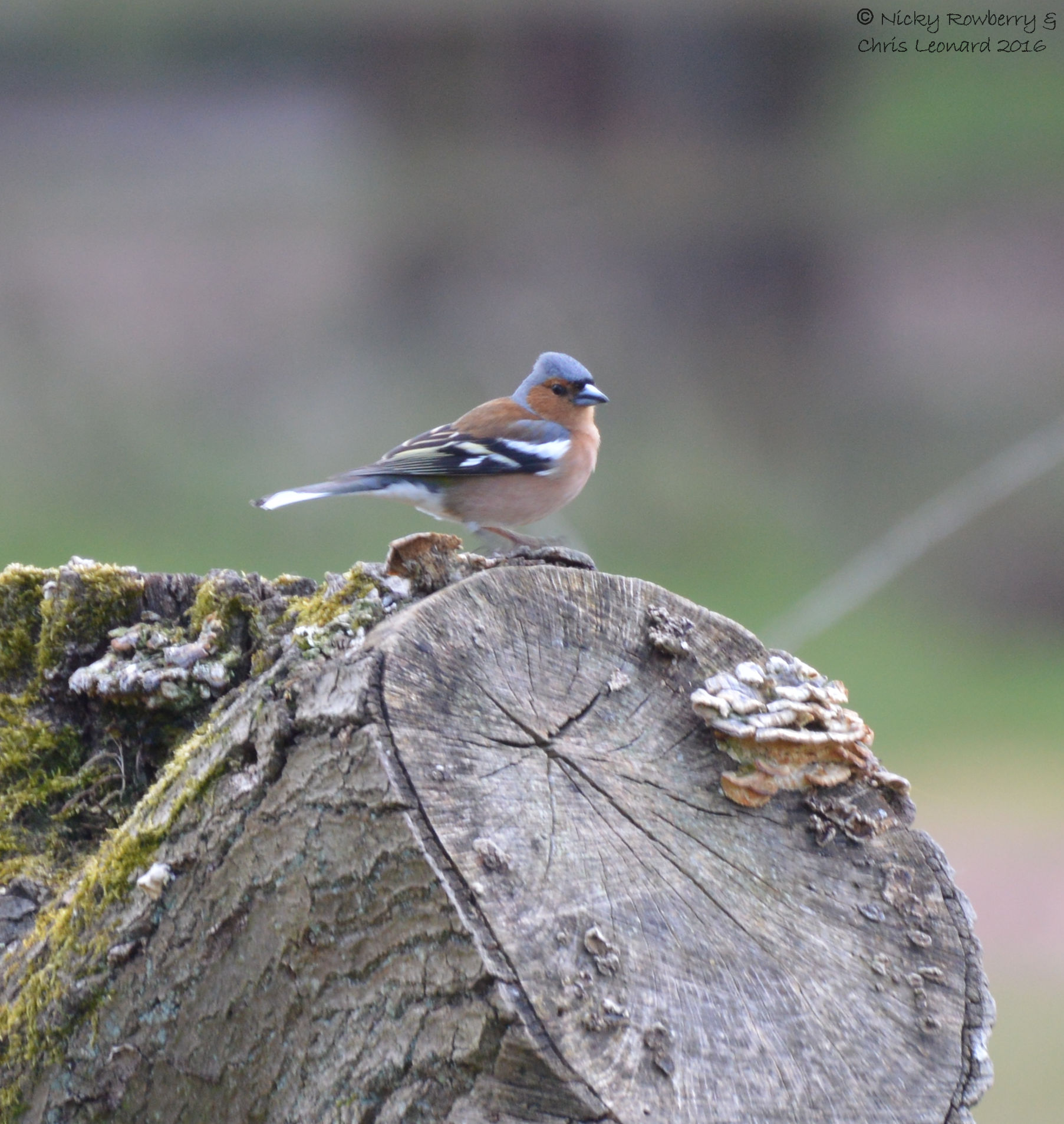
A chaffinch also posed perfectly on an old tree stump.

Chaffinch at Hartlebury (2)

The final bird of the day was either a Chiffchaff or a Willow Warbler. Apparently the two are very similar and the best way to tell them apart is by their songs. Of course we were so intent on taking photos, that we didn’t really pay much attention to the songs. Back at home and listening to sample bird songs on “tinternet”, I still couldn’t decide if we’d heard a Chiffchaff or a Warbler. So if anyone can confirm the bird by appearance alone and settle it, that would be great.

Chiffchaff (11)

Having never before stood under a pylon (slightly incongruous in the middle of the Common), I thought I’d attempt an arty shot – not sure I’ve really got the hang of art though!

Pylon at Hartlebury

So Hartlebury Common may not have offered up any Imperial sightings, but there was plenty of interest to while away a few hours.


Wonky Carrots and Asparagus Forests

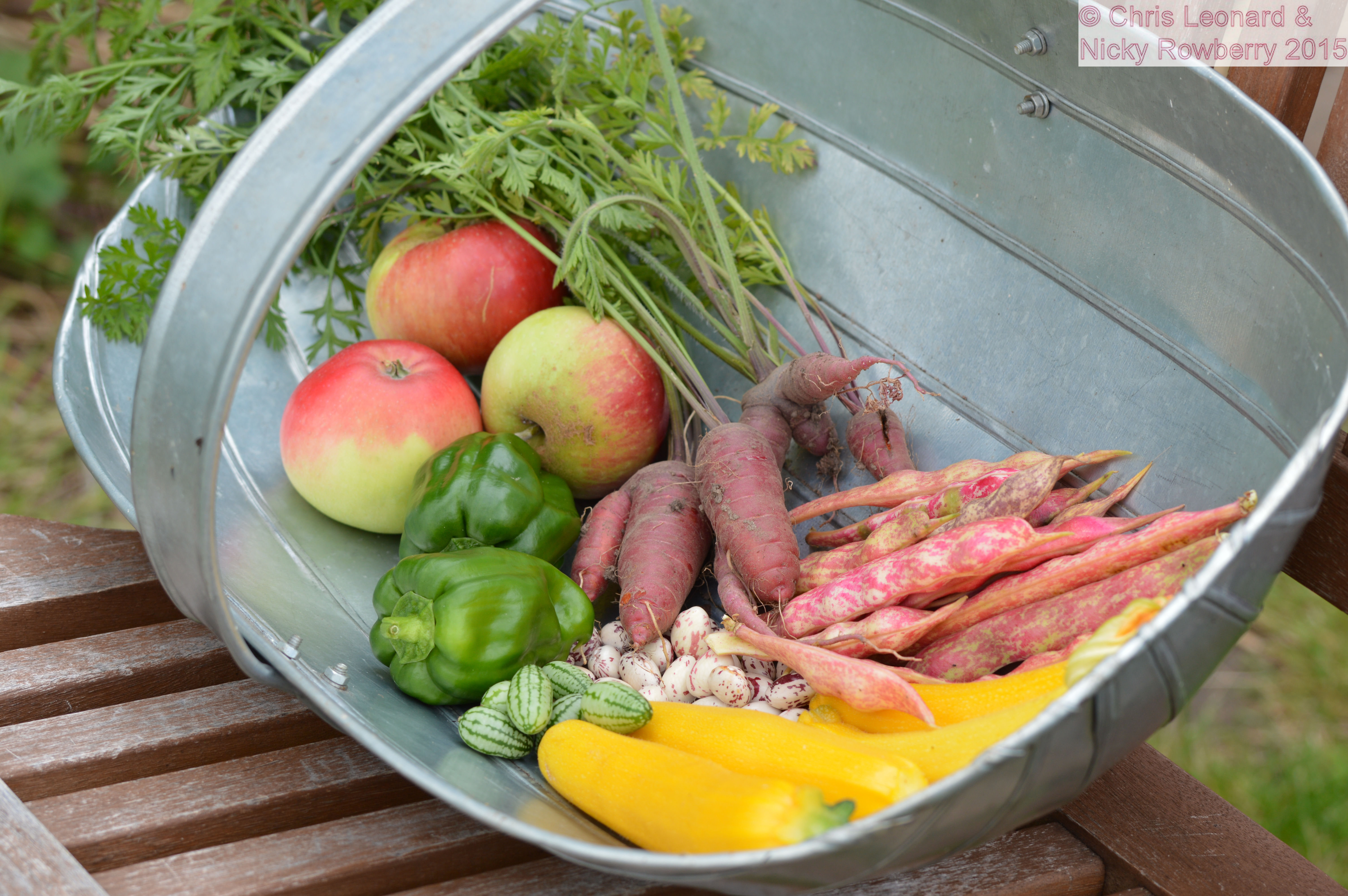
Harvest timeBehold the bounty from a lazy organic garden! We’re a long way from being self-sufficient and I’m not quite sure what we’re going to make out of this particular combo of apples, vaguely rude carrots, peppers, courgettes, borlotti beans and a handful of cucamelons, but it does go to show that you can still grow edible stuff without resorting to pesticides. Of course we are also growing a lot of greenfly, slugs and caterpillars (the Large White butterflies in particular have a penchant for kohlrabi it seems), but their need is probably greater than ours. We should also get a good crop of blackberries if the birds don’t beat us to it and chillies if I remember to water them in the greenhouse.

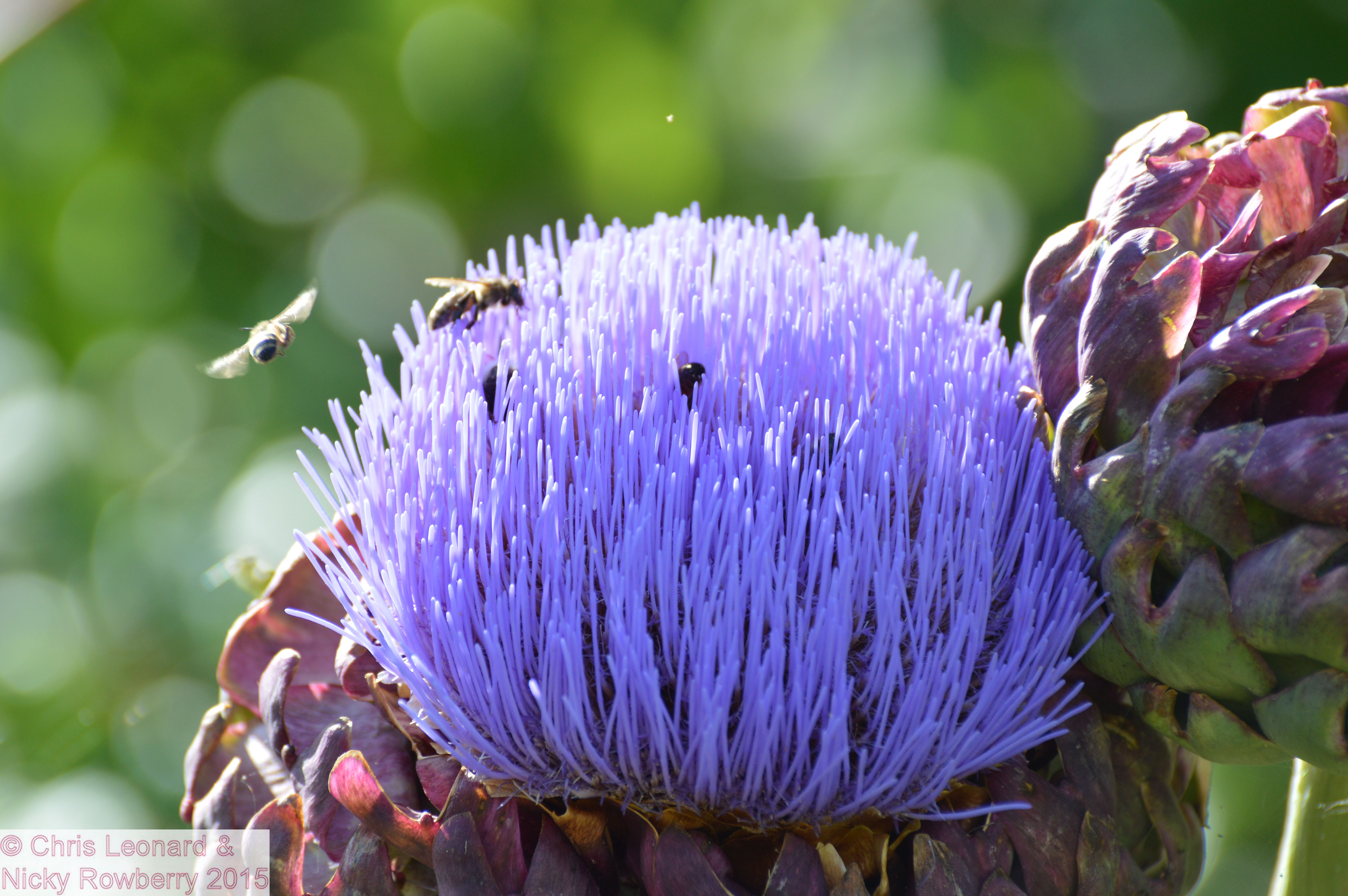
Artichoke flowersWe would also have had a lot of globe artichokes if, in true lazy fashion, we hadn’t let them get way too big. They would now be too tough to eat, but on the plus side, I think they look great like this with their crazy purple hairdos and the bees absolutely love them.

Asparagus ForestWe did get a good crop of asparagus this year – traditionally you stop harvesting this on the summer solstice, then leave the stems to grow to lay down nutrients for next year. The result is this fluffy asparagus forest, which the insects love too, although we could do without the asparagus beetles getting jiggy in it!

Asparagus Beetles