Hedges and Maybe Fledges?

It’s been a mixed week with the trail cam this last week or so. We’ve either had two happy successes in the garden or one success and one disappointment and we can’t work out which.  The undecided is our baby blue tits.

We’ve been filming the adults going in and out for a few weeks now. They seemed to be doing a good job feeding the babies and we could hear chicks chirping. Then suddenly about 9am last Wednesday the adults started flying back to the box with caterpillars, stopping, peering in and looking confused. We’d had the trail cam on the box continuously and this was a very marked change in behaviour. For the first couple of mini video clips I thought great – because the adults were hanging around outside, clutching the food which made for much better shots. But after the 20th clip of the same thing, we started to worry. We also couldn’t hear the chicks tweeting any more. There was no evidence on any of the films of predation (next door’s cat had been a likely candidate, but couldn’t reach the box with the chicken wire over it). Could the chicks have all fledged and the camera just missed them leaving the box? Have they just died in the box – why would they, when the parents were doing a good job with the food?  Here are a couple of clips of the confused looking adults.

The adults seem to have stopped using the box now, so we could check to see if there are dead chicks in there, but while we don’t know for sure, there’s still hope that they did fledge and it’s a happy ending. The adults are still feeding in the garden and disappear into various trees, so it could be there are chicks hiding amongst the leaves. There’s a lot of general chirping in our apple tree and next door’s damson tree, so fingers crossed they made it.

The definite happy event is that our hedgehog is back! He or she may have been around for weeks, but as we’ve had the trail cam pointed up for bird activity rather than down on the grass we hadn’t realised. So the upside of the end of the bird box activity was that I tried filming downwards at night instead of up! And lo and behold the hedgehog trundled into view.  The first film is a bit blurry – wrong lens or LED setting or something technical (blame the operator!)

Second attempt is a bit sharper and I’d added a bowl of catfood as a bit of a temptation which seemed to do the trick.

Previous years we’ve had a pair of hedgehogs (but of course no trail cam to record them), so fingers crossed we have two this year too. So hopefully more hedgehog action to come.

If anyone can shed any light on the blue tit behaviour – any thoughts would be much appreciated. It will be disappointing if they’ve fledged and the camera missed it, but not as disappointing as if they didn’t make it at all. One final happy thought though – when up this morning before 5am to empty the moth trap and check the hedgehog cam, I spotted what looked like a pair of Long Tailed Tit chicks in the apple tree – so one happy little bird family in the garden at least.


Out and About – Wyre Forest

The sun was still shining on the righteous at the weekend, so we decided to make the most of it and headed up to the Wyre Forest in search of the Pearl Bordered Fritillaries. We took a slightly circuitous route, via one of our favourite pubs – The Live and Let Live on Bringsty Common. Fabulous pub with great food and lots of wildlife around. Lots of bees and butterflies (Small Copper, Orange Tip, fast flying and therefore unidentifiable whites!) and birds, but only this little wren paused long enough to get its photo taken.

Live & Let Live

Wren at Live & Let Live2 Wren at Live & Let Live1

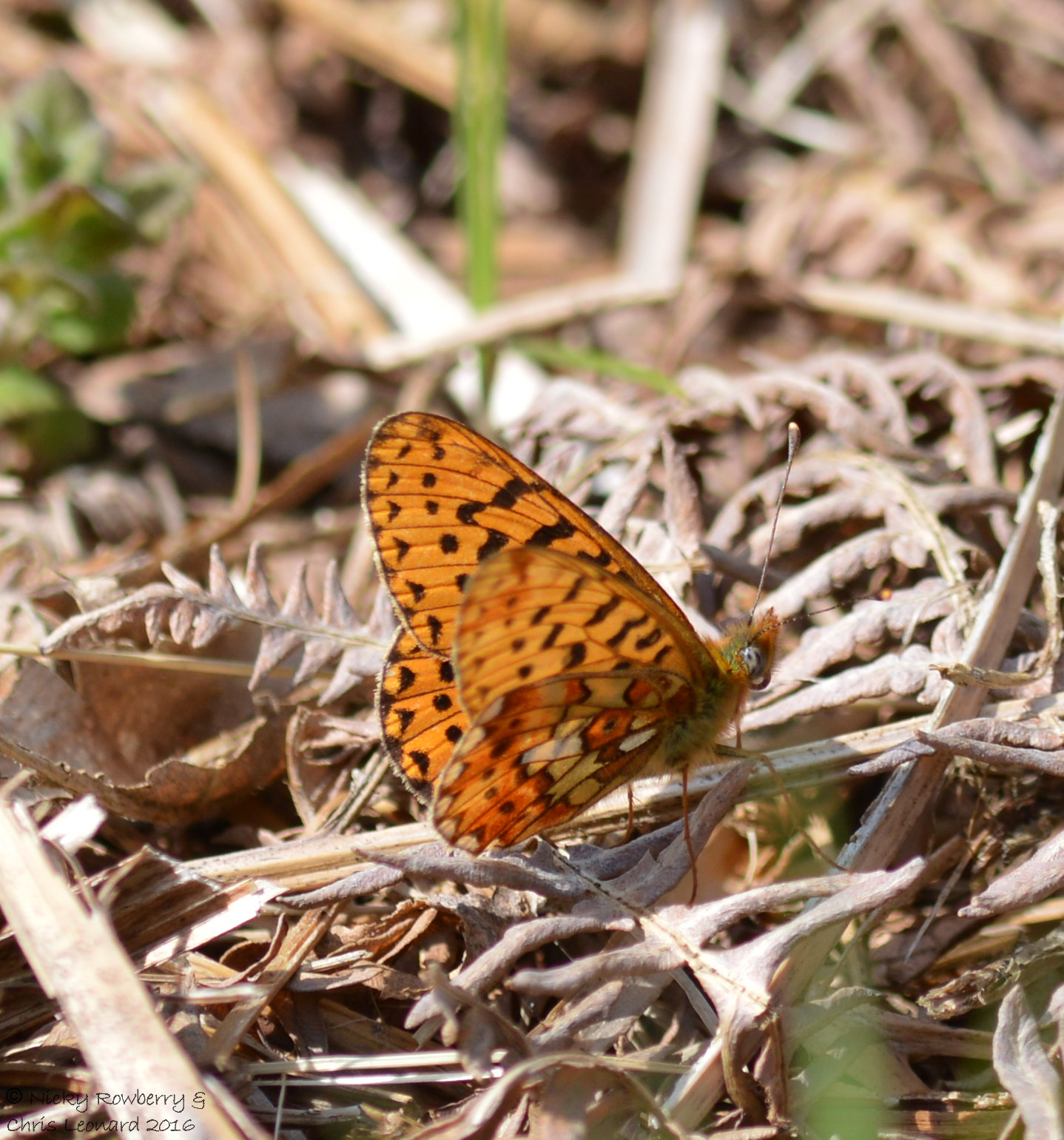
Suitably fuelled we headed off to the Wyre Forest. The Pearly Bordered Fritillaries were our main butterfly target of the day as the Wyre Forest is one of their strongholds in the West Midlands. The Wyre is managed by the Forestry Commission and Butterfly Conservation to restore a diverse woodland environment, providing the right habitats for many butterflies. It’s not only good for butterflies, but is a lovely place to just go for a walk.

Within minutes walking along the old railway track, we’d reached a gateway to a more open area where we’d seen the fritillaries last year. Sure enough, just yards from the gate we spotted our first one.


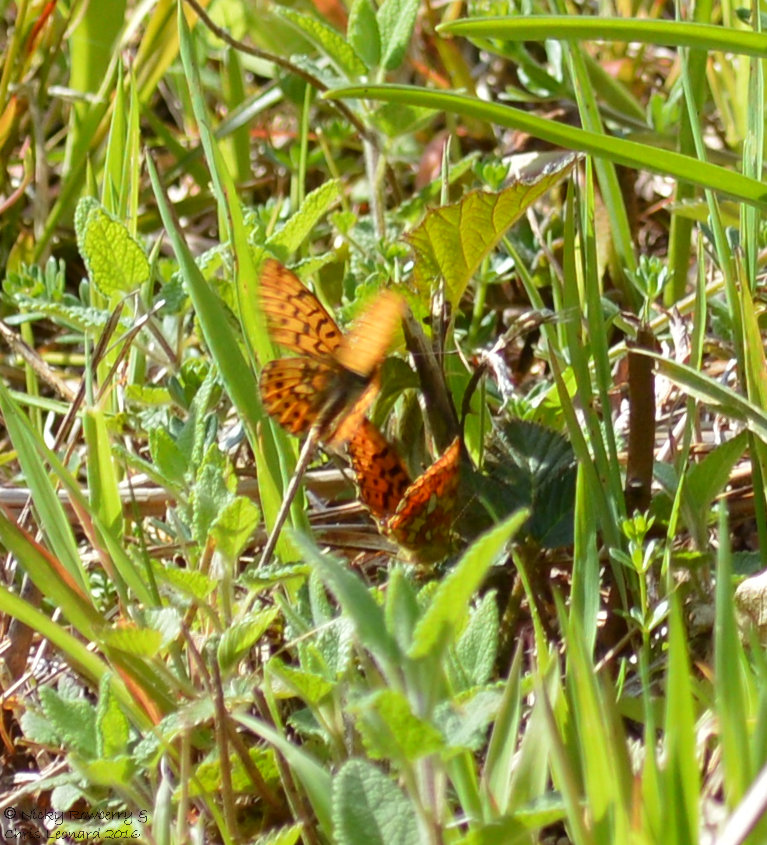
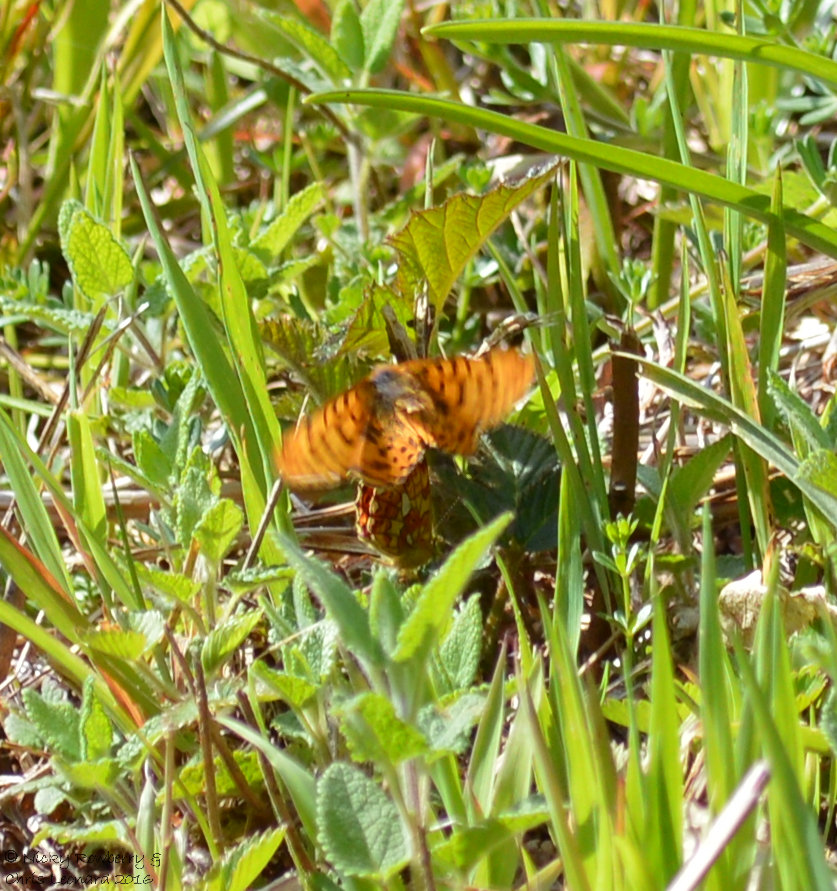
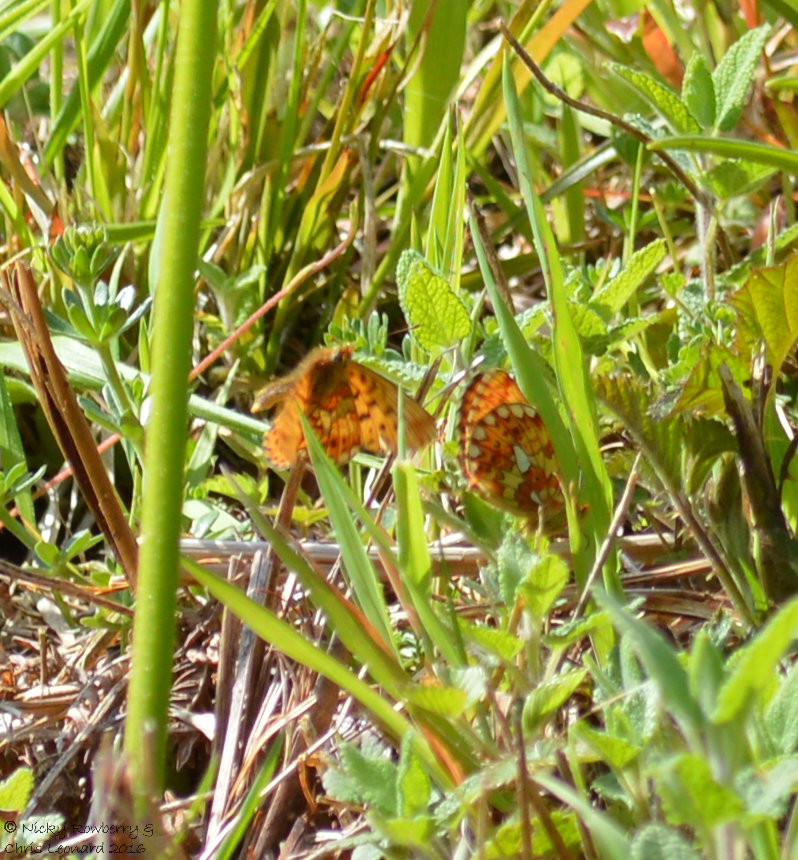
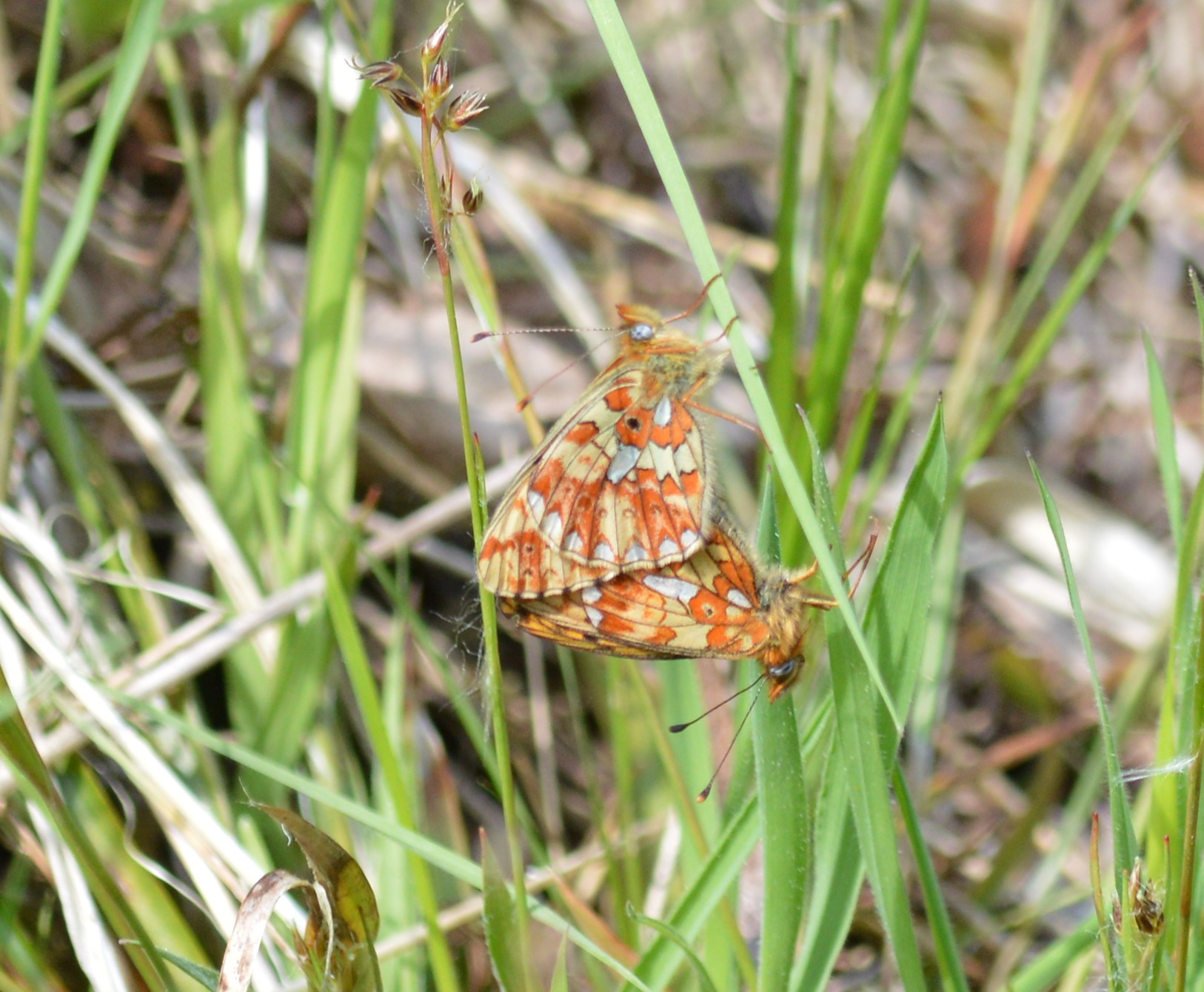
Needless to say it didn’t hang around to get many photos, so we went back to the track and headed along to an area with sunny sheltered banks. Here there were numerous Pearl Bordered Fritillaries fluttering in the sunshine. We were really chuffed initially to get these distant shots of a pair getting down to business.

Pearl Bordered Fritillaries (6) Pearl Bordered Fritillaries (5) Pearl Bordered Fritillaries (2)

But eventually we spotted a pair clearly too engrossed in what they were about to be bothered by us taking photos! I managed to get a few photos of them together. In the photo you can see how pearlescent the central white spot in particular is. I love the underside of their wings – like beautiful stained glass windows.

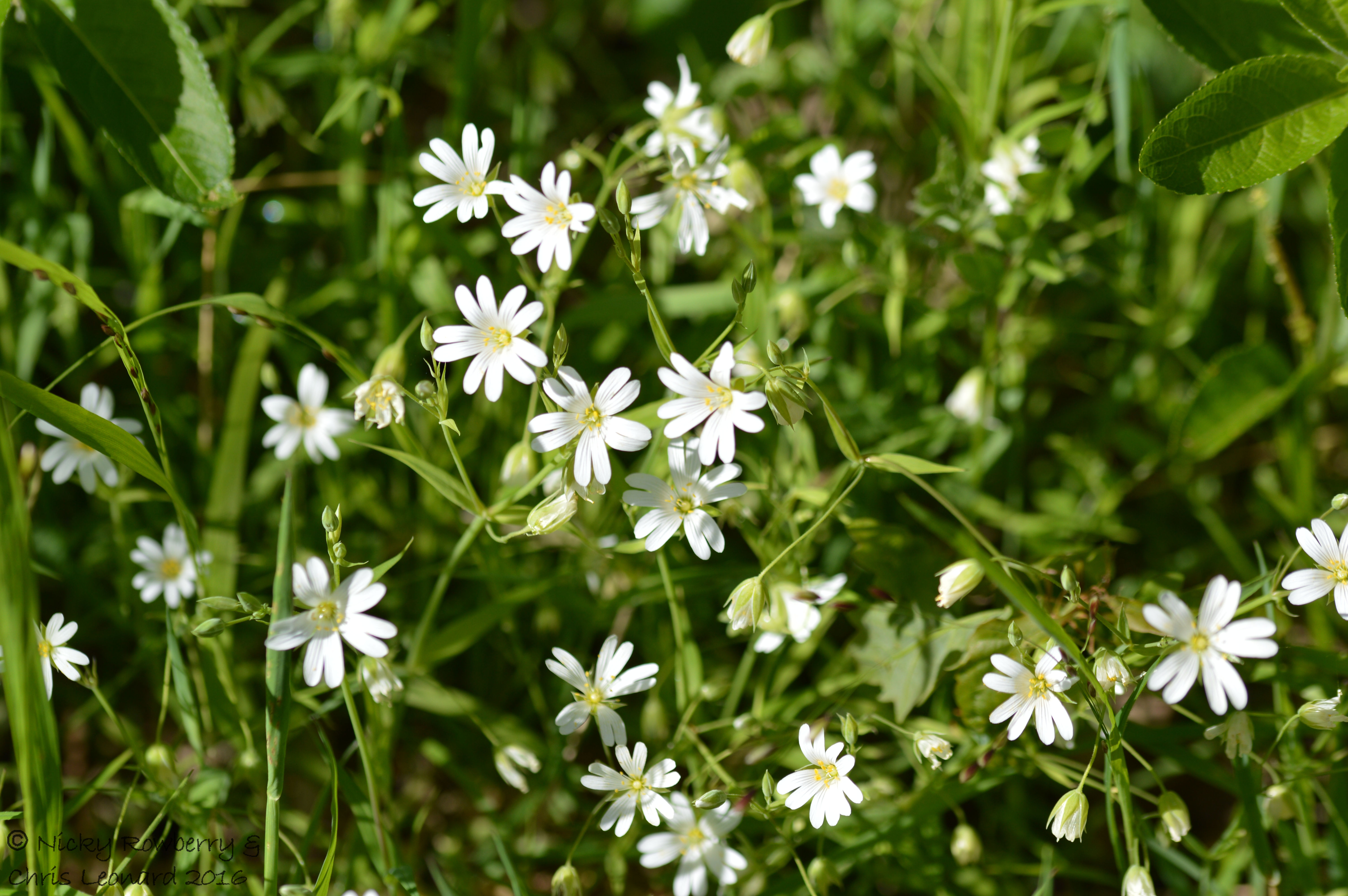
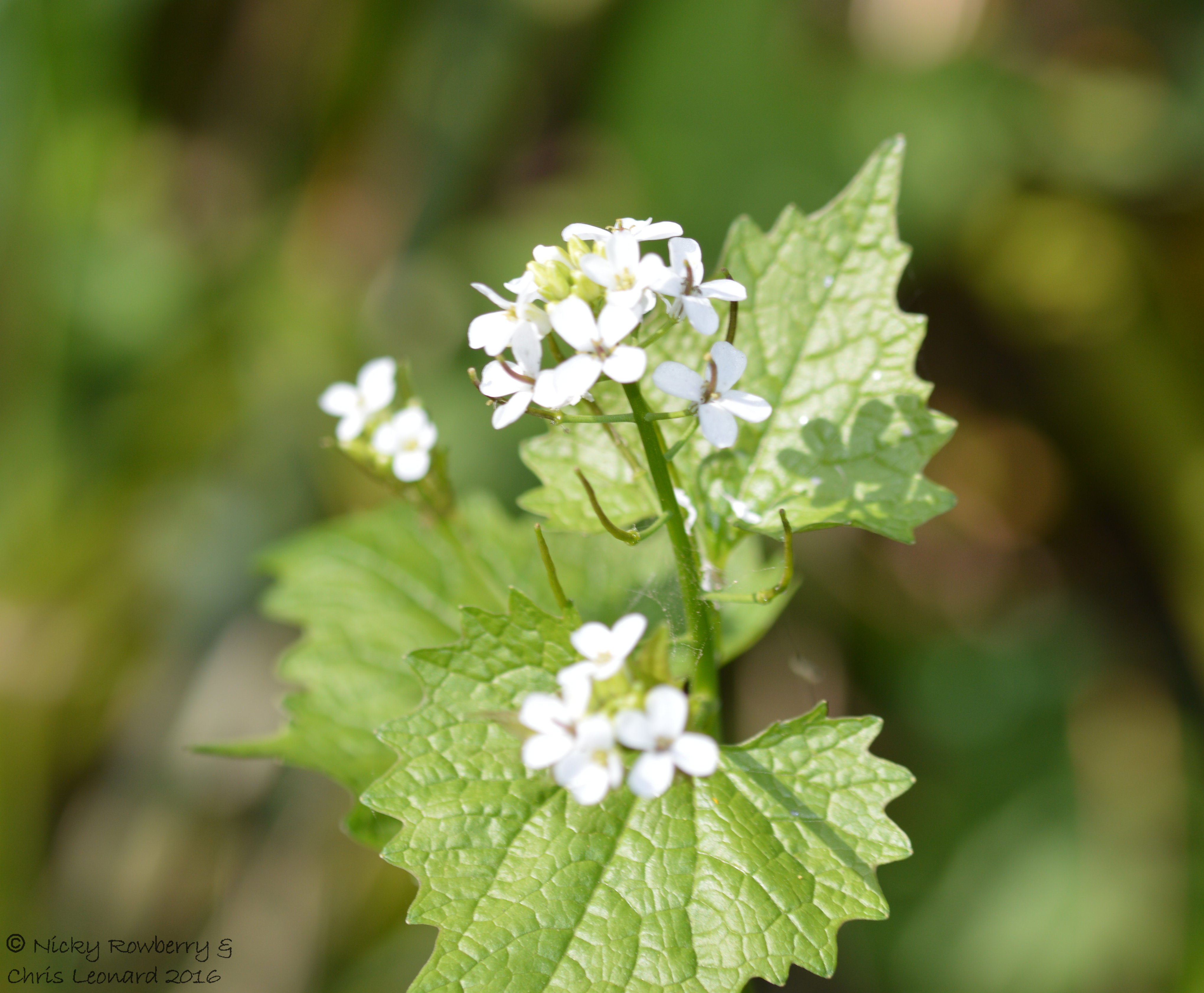
Of course although the fritillaries were the highlight, there was lots to see besides the butterflies. Spring flowers were abundant, attracting a variety of insects. I’m not too hot on wildflower ID, but I’m fairly sure the following are Greater Stitchwort, Jack-by-the-Hedge (aka Garlic Mustard) and Yellow Deadnettle.

Greater stitchwort

Jack by the hedge

Yellow Deadnettle

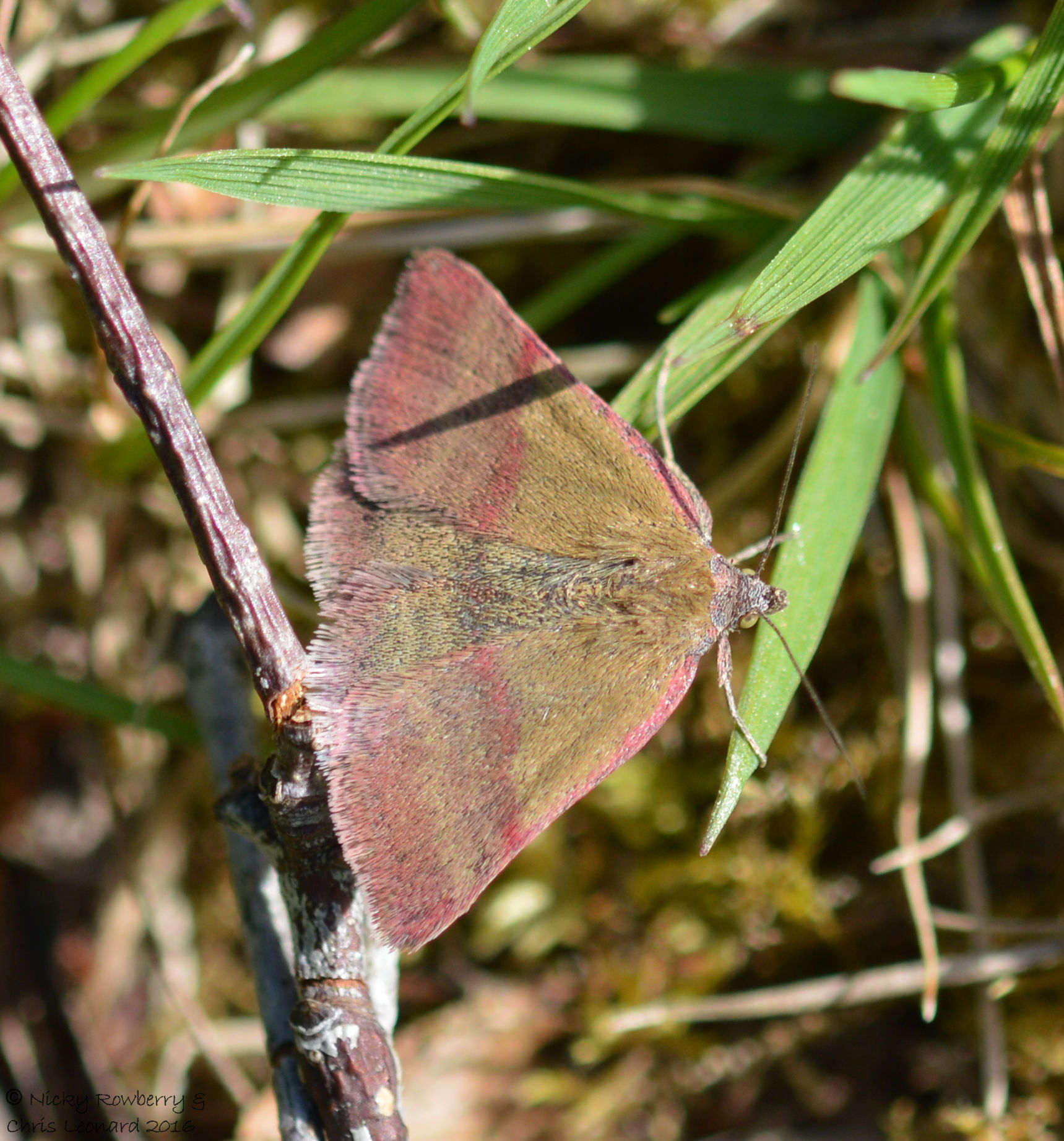
There were also a few day flying moths about, some of which I’d not seen before. The Small Purple-barred (Phytometra viridaria) was a new one, but was thankfully easy to identify.

Small Purple-barred


So all in all a very good day out. The Wyre Forest is definitely worth a visit for anyone wanting to see the beautiful Pearl Bordered Fritillaries.


Hungry Mouths to Feed

Hooray the robins in our garden have successfully fledged!! Two juvenile robins have been flitting around our garden all week, with the parents never very far away. They may be able to fly, but they still seem determined to sponge off Mum & Dad (typical teenagers) for as long as possible. So I’ve spent the week chasing them around the garden trying to get the perfect shot of them being fed by the doting parents. The results were mixed to say the least – if I got a perfectly focussed photo then they weren’t doing anything very interesting. If they started feeding the chicks, then in my excitement the photos came out blurred!

The adults were as always pretty easy to photograph – they seem to love the camera and pose happily on any available perch.

Robin

They’ve always taken a keen interest in whatever was out on the bird table and of late I’d seen them flying off with their bounty rather than eating it there and then, so I’d suspected chicks might have hatched. We’ve never spotted the robin nest, so perhaps they’re nesting in one of the neighbours gardens and just using us as a buffet?

Robin (3)

The fledglings appeared a week or so ago. Initially they were shy, keeping to the bushes, but have gradually got bolder. At first I thought it was just one – perhaps one fledged before the other. The one below looks particularly dejected as if it’s been told of by the adult, although it’s probably just fed up with the bank holiday weather like the rest of us!

Juvenile robins (7)

This weekend though, I started seeing two of them together (although this photo only shows one and a half fledglings!)

Juvenile robins (1)

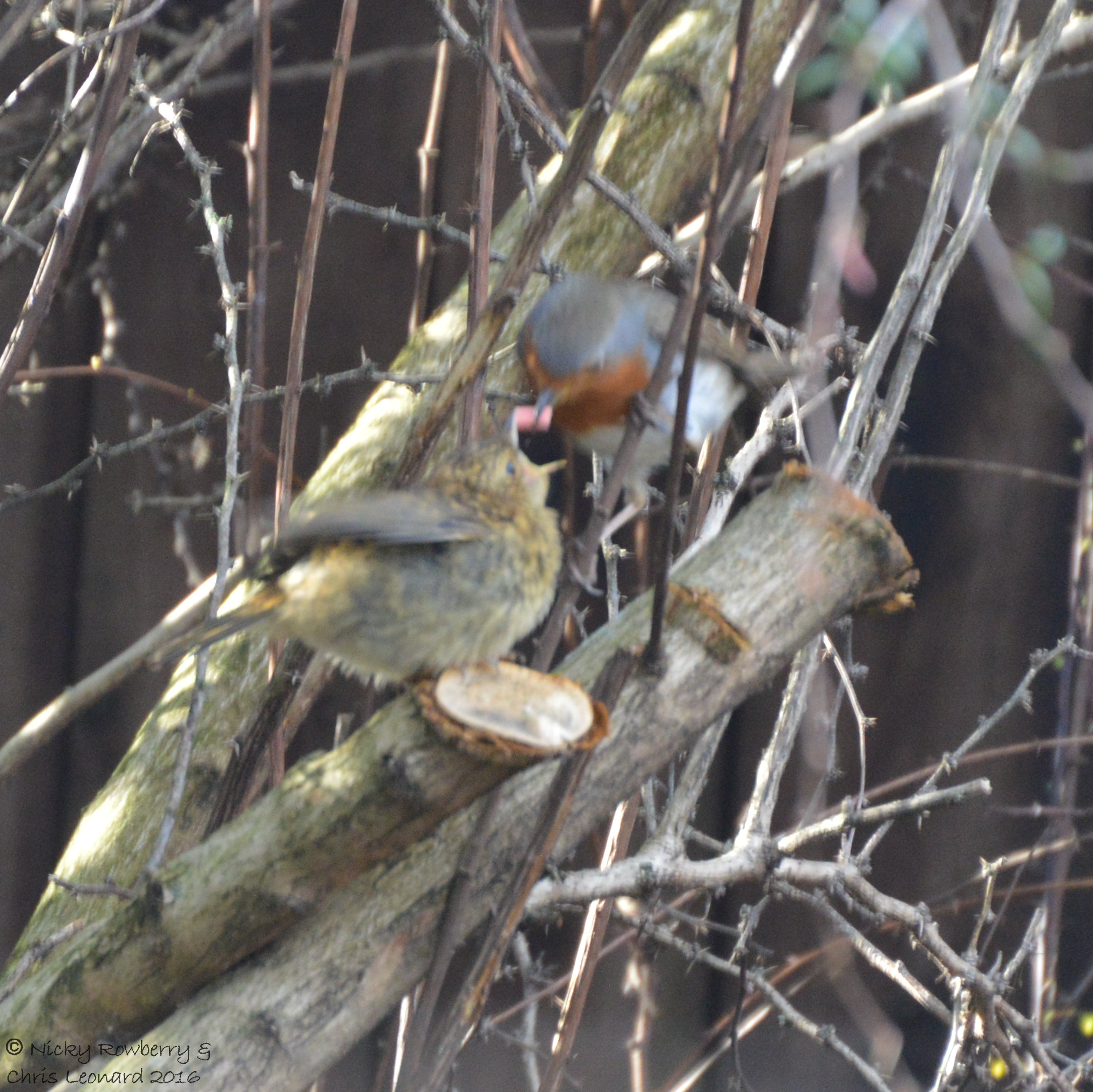
Despite seeing the parents feed them several times, it took ages to catch them doing it somewhere where I could get a relatively clear shot with the camera. Of course when I did, the photos came out blurred – the excitement must have got to me! But you can at least see the parent is feeding a suet pellet to the eager juvenile.

Robin and baby (5)

Robin and baby (2)

They seemed to use this corner of the garden regularly to feed the young – perhaps the thorny Berberis twigs offer some protection from the neighbours cat? So I tried setting up the trail cam to capture the action – 163 videos of twigs blowing in the wind later and I got a few brief snippets of the young. They were indeed still using this area to feed them, but always it seemed just out of camera shot.

So I may not have got the perfect photo or perfect video, but the main thing is that we seem to have 2 healthy (and very greedy) fledgling robins in the garden. Fingers crossed we get the same success with the blue tits.

Busy Birds

The birds are certainly busy in Malvern at the moment (as no doubt they are all across the country of course). There is a constant buzz of activity in the garden, be it gathering nesting material or just a feeding frenzy over the food we put out. The sparrows in particular have been keen on last year’s artichoke flowers for nesting material. It’s amazing how much they can stuff into their beaks, ending up with  ludicrously oversized moustaches!

Sparrow nesting material

In true Too Lazy fashion, we had left the old flowers standing thinking they would provide seeds for birds and maybe shelter for overwintering insects. I hadn’t realised they would make such good nesting material, but clearly the sparrows knew better. I’ve seen them plucking at the flowers in all weather, even when the high winds rock them about in the video below.

I already knew the blue tits had been checking out the bird box, so it was really nice to see this one taking nesting material in, although he or she did seem to be struggling a bit to get it all through the hole!

Birds of all sorts have been eating us out of house and home in the garden, hopefully building up their energy reserves for nesting. The blue tits regularly perform for the trail camera, but it was nice recently to get footage of the starlings and sparrows who have tended to be more camera shy. Being able to see the starlings close up like this you can appreciate what beautiful and colourful birds they really are – not just the plain black they can sometimes appear from a distance.

Starling on suet

The sparrows gather round the suet feeder in groups of up to about 8, although they can rarely manage to squeeze more than 3 or 4 on it at any one time.

There are still several species that have so far refused to be filmed although we see them regularly in the garden – Great Tits, Coal Tits, Goldfinches and of course the Sparrowhawk.


Out and About – Hartlebury Common

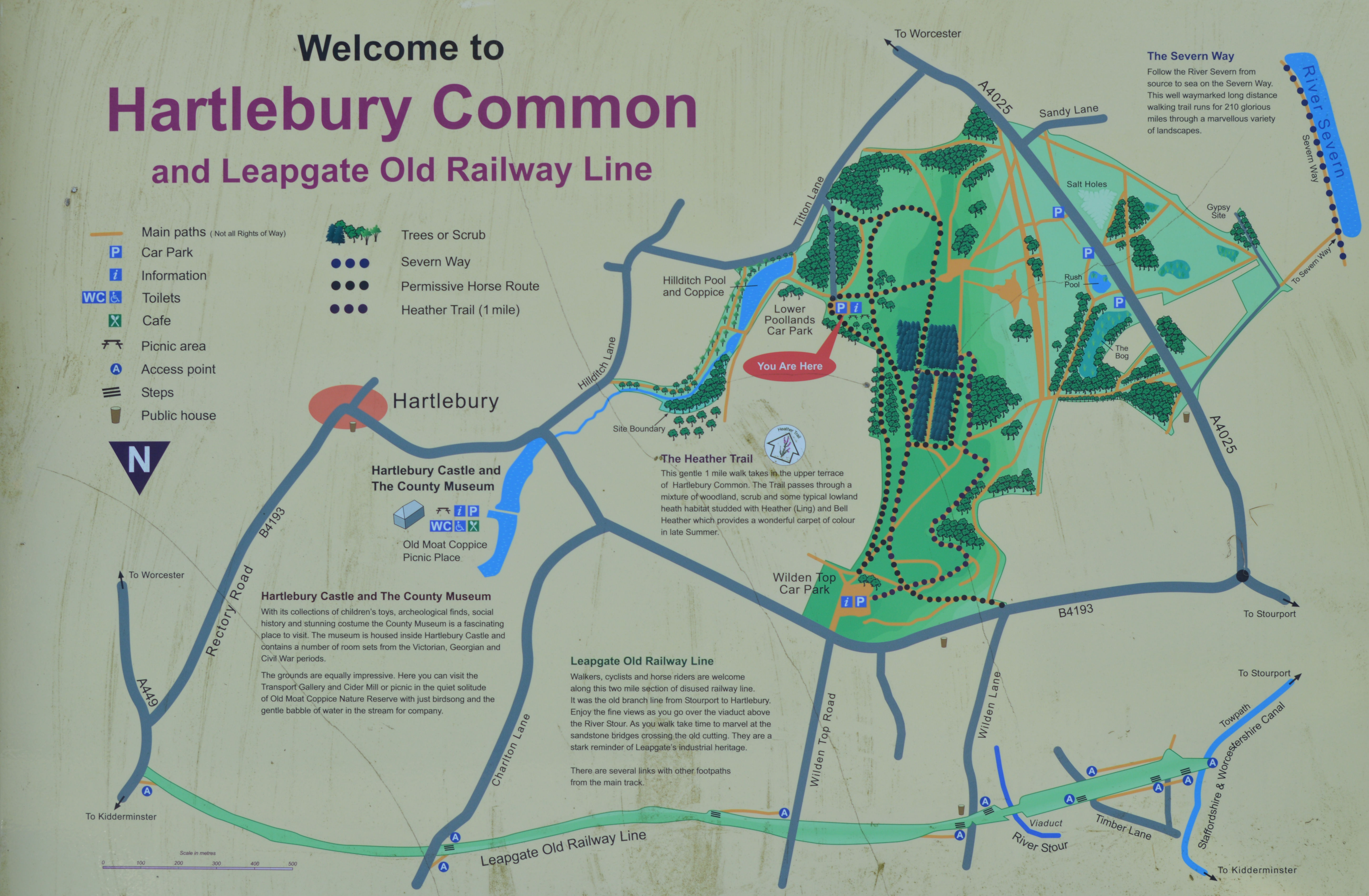
Once again we ventured forth from our sofas and hit the outside world in search of adventure – or more precisely moths! We’d heard that Hartlebury Common in North Worcestershire might have Emperor Moths – large day flying moths that we’ve always wanted to see. Hartlebury Common is an SSSI, consisting of lowland heath and supposedly good for Emperors.

Hartlebury Map

Needless to say after several hours tramping about in intermittent sunshine, there were no signs of the regal Emperors. Fortunately Hartlebury  provided other wildlife of interest. Insect-wise there were lots of bees feeding on the gorse and broom. A single Tortoiseshell butterfly provided fleeting hope that we’d spotted an Emperor; but a Bloody-nosed Beetle (Timarcha tenebricosa) stopped us in our tracks as he trundled across the path. When we tried to gently move him to one side, he secreted his trademark blood red liquid from his mouth, which made identifying him later a hell of a lot easier!

The gorse bushes also offered up a Gorse Shieldbug (Piezodorus lituratus) – a species we’d never seen before, so nice to bag another one.

The birds were abundant and singing all round us. A green woodpecker taunted us all morning, but remained steadfastly out of camera range. A tree creeper posed on a tree trunk just long enough for us to spot him, but not long enough for us to focus and get a photo. Fortunately a wren was slightly more accommodating, although a bit far away to get a really good shot.

Wren at Hartlebury

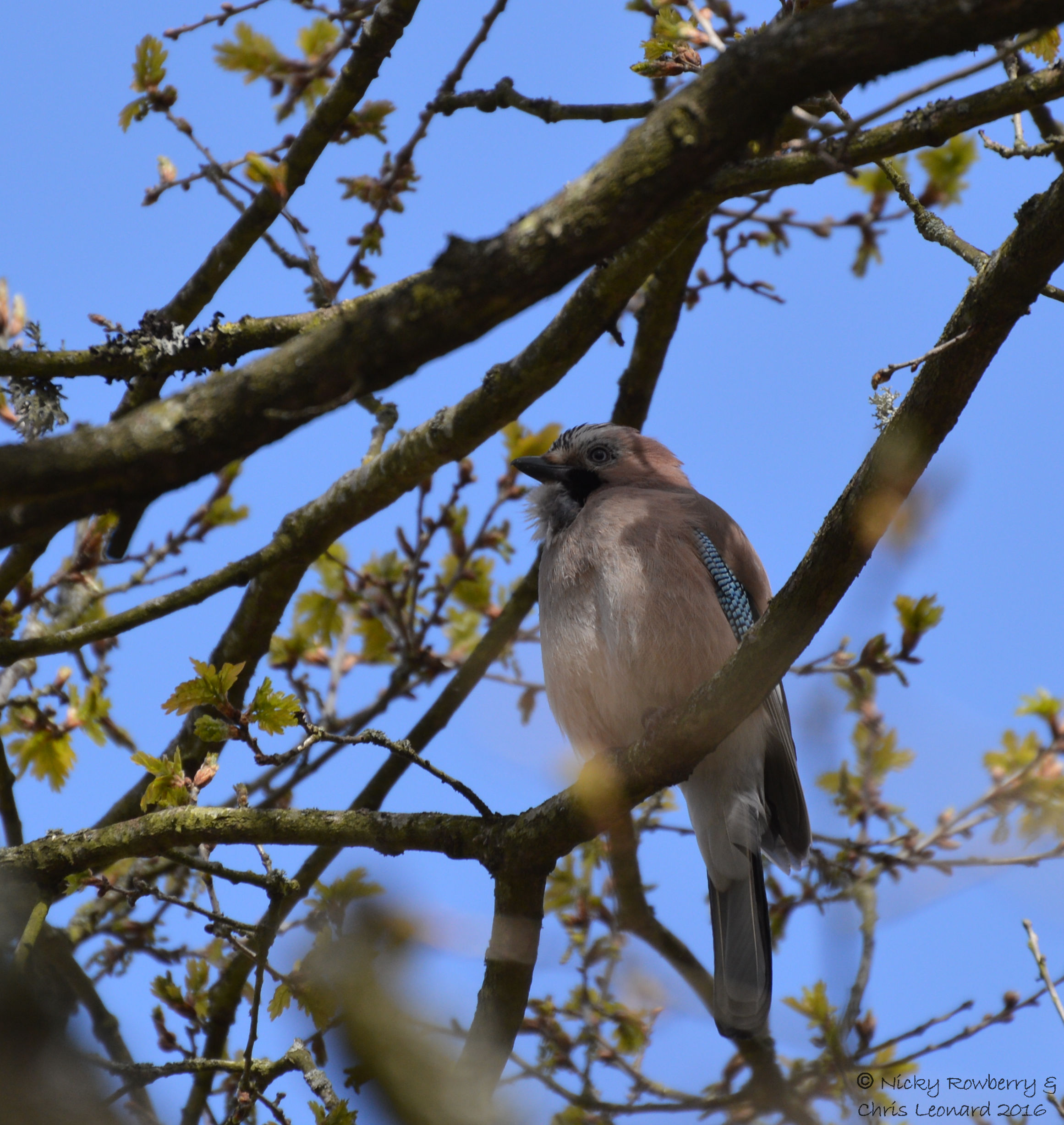
A pair of Jays made the trip all worthwhile though. I’d previously only seen glimpses of these beautiful birds, so to see them as clearly as this made my day.

Jay at Hartlebury 2

Jay at Hartlebury

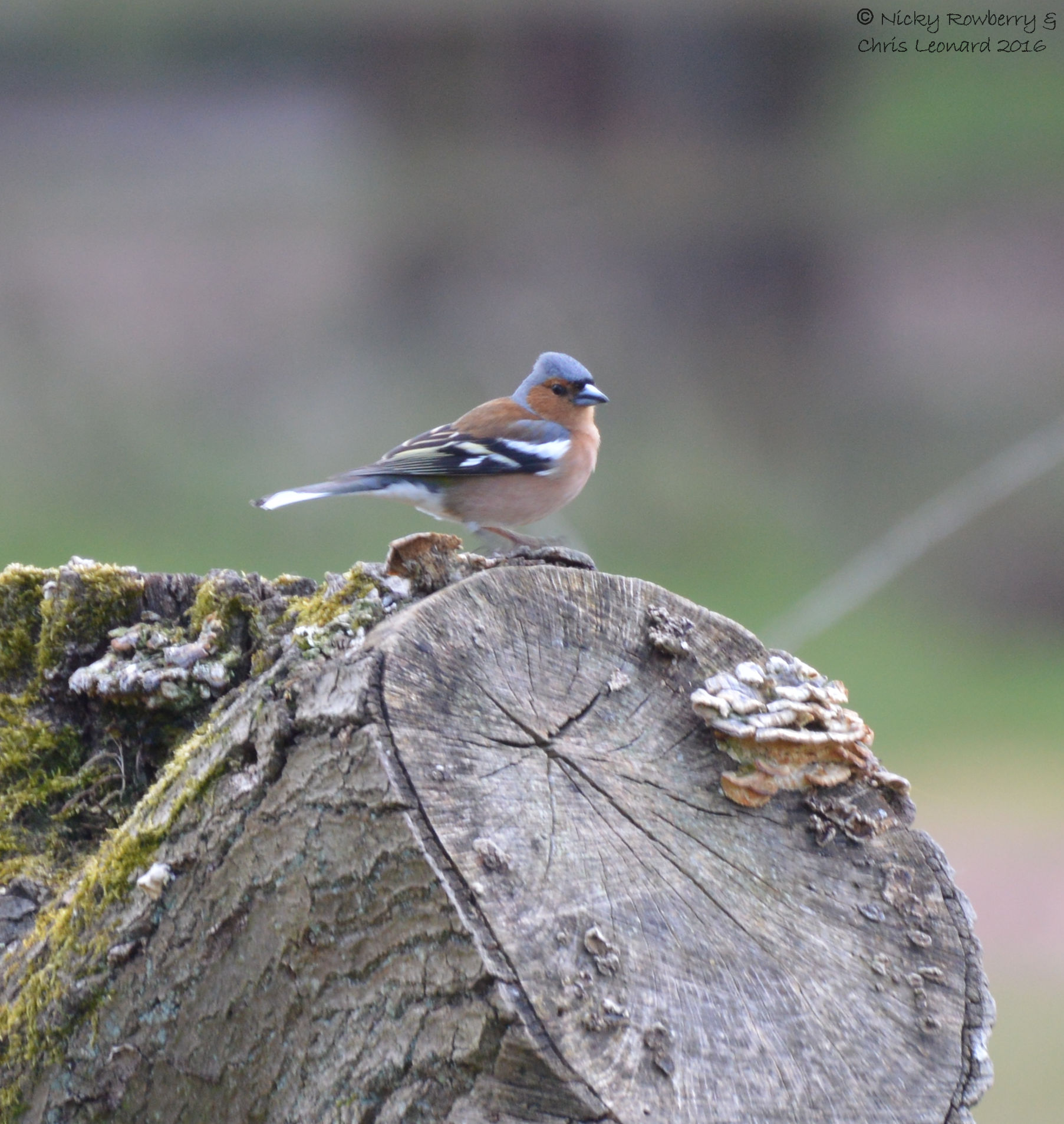
A chaffinch also posed perfectly on an old tree stump.

Chaffinch at Hartlebury (2)

The final bird of the day was either a Chiffchaff or a Willow Warbler. Apparently the two are very similar and the best way to tell them apart is by their songs. Of course we were so intent on taking photos, that we didn’t really pay much attention to the songs. Back at home and listening to sample bird songs on “tinternet”, I still couldn’t decide if we’d heard a Chiffchaff or a Warbler. So if anyone can confirm the bird by appearance alone and settle it, that would be great.

Chiffchaff (11)

Having never before stood under a pylon (slightly incongruous in the middle of the Common), I thought I’d attempt an arty shot – not sure I’ve really got the hang of art though!

Pylon at Hartlebury

So Hartlebury Common may not have offered up any Imperial sightings, but there was plenty of interest to while away a few hours.


A Teasel’s Life

Bee

I don’t know how we originally came to have teasels – none of the immediate neighbours grow these giants, but the seeds must have blown in from somewhere (and we may not be popular as they blow out again each year!). They have become a bit of a fixture in our garden and a very welcome one for all sorts of wildlife.

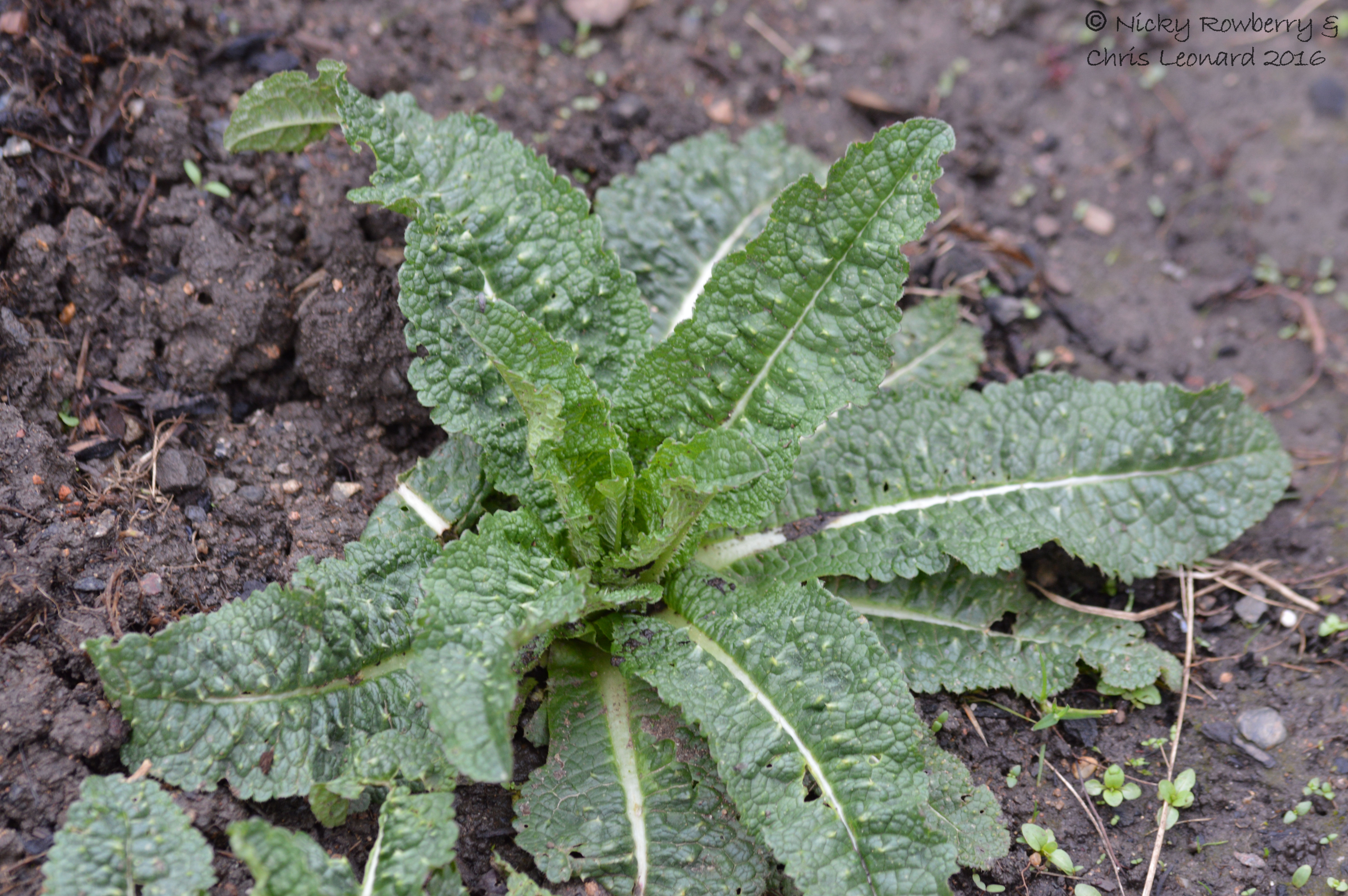
They start off as fairly non-descript plants, forming low growing rosettes that look like they might turn into at most a thistle type of thing. They only flower in their second year, so I’m hoping the ones below, that I think overwintered, will flower this summer.

Baby Teasels

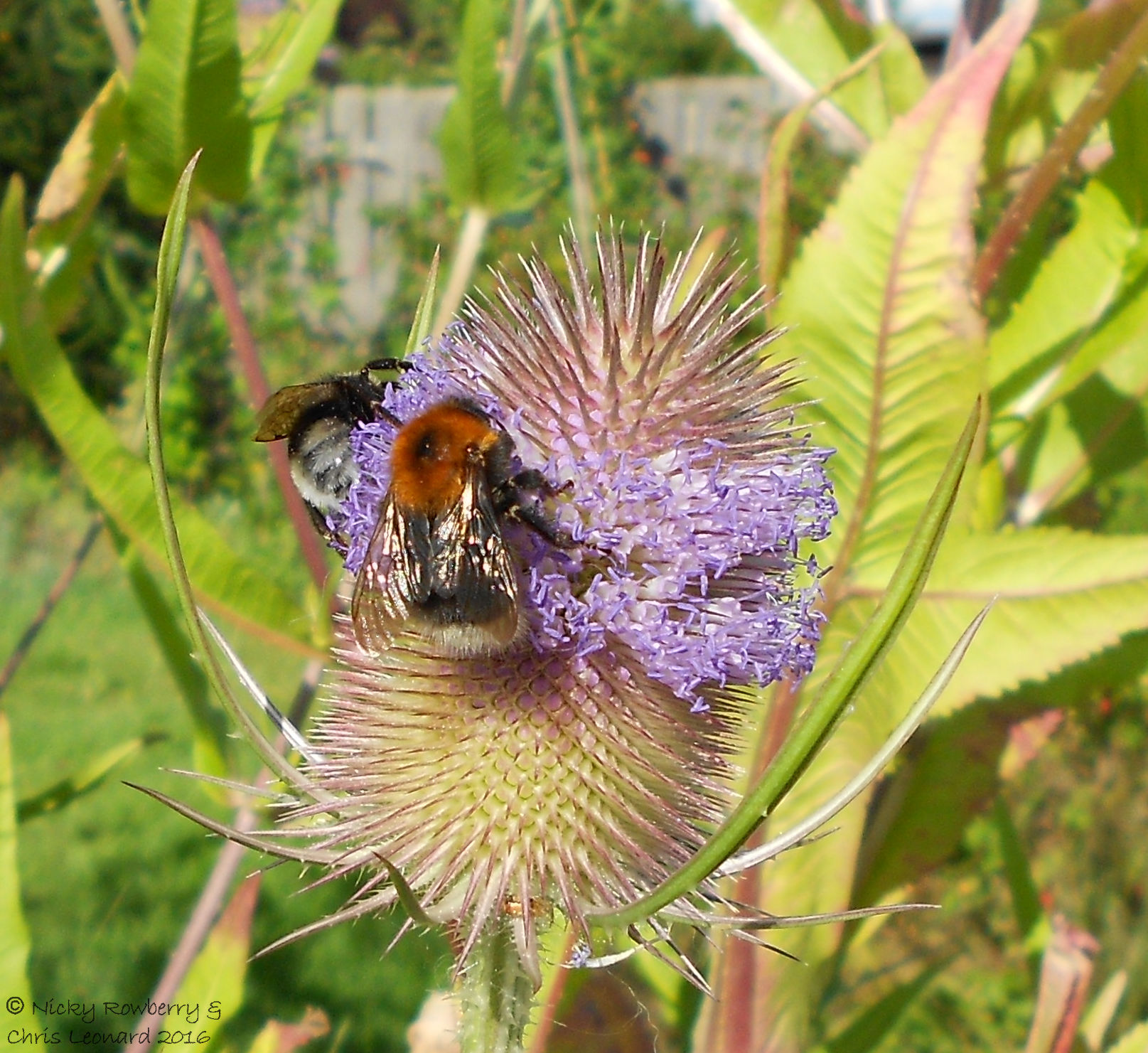
When they do put on their growth spurt, they are easily taller than me (I only manage a mere 5 foot 1 on a good day!) Their flowers are irresistible to the bees in the garden, which is the main reason we let them grow every year. These ones below are full grown ones from previous years

Bees on Teasels

Bees on Teasels 2

The stems and leaves provide homes for lots of other insects too, with water tending to collect at the base of each leaf.

We always leave them once they’ve finished flowering, as they still provide benefit right through the winter. For us humans they provide structure and interest in the garden.

Frosty teasel 2

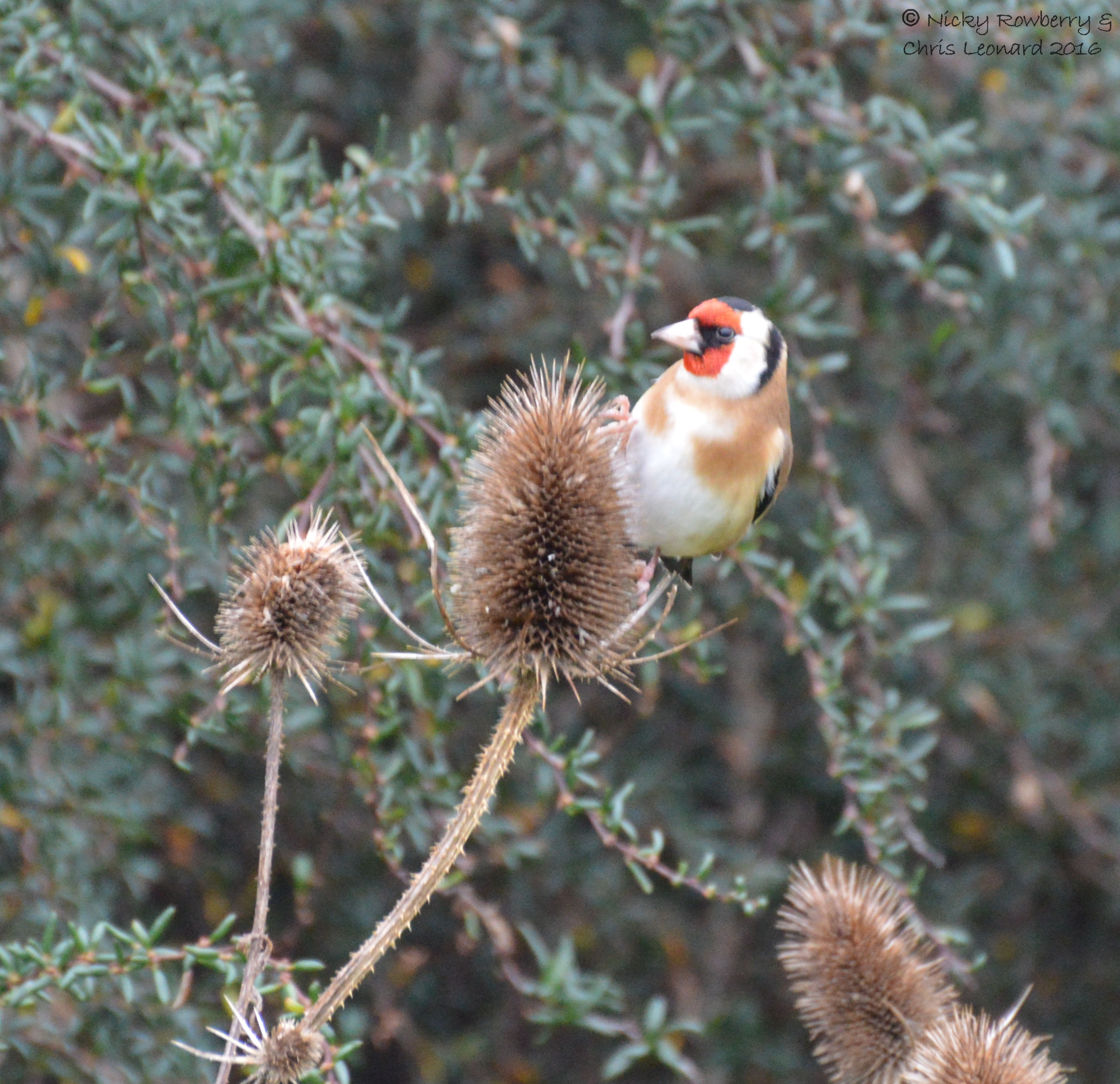
The teasels themselves are packed with seeds that the birds love. Goldfinches are well-known teasel fans, but we’ve seen several other species such as this Coal Tit making the most of them too.

Goldfinch 1

Coal Tit on Teasel

Of course we do eventually have to chop them down, if only to provide space for next year’s crop. This year we decided to save some of the hollow stems and turn them into something useful – a Bug Hotel. The RSPB are running a “Give Nature a Home” campaign, so a pile of teasel stems and an empty squash bottle later and we have hopefully made one small home. With a bit of luck we’ll be able to post photos later in the year of some new residents.

Teasel canes

Bee Hotel

So that’s the life of the teasels in our garden – the plant that keeps on giving to wildlife – even when it’s chopped up into pieces!


Dunnock Dating

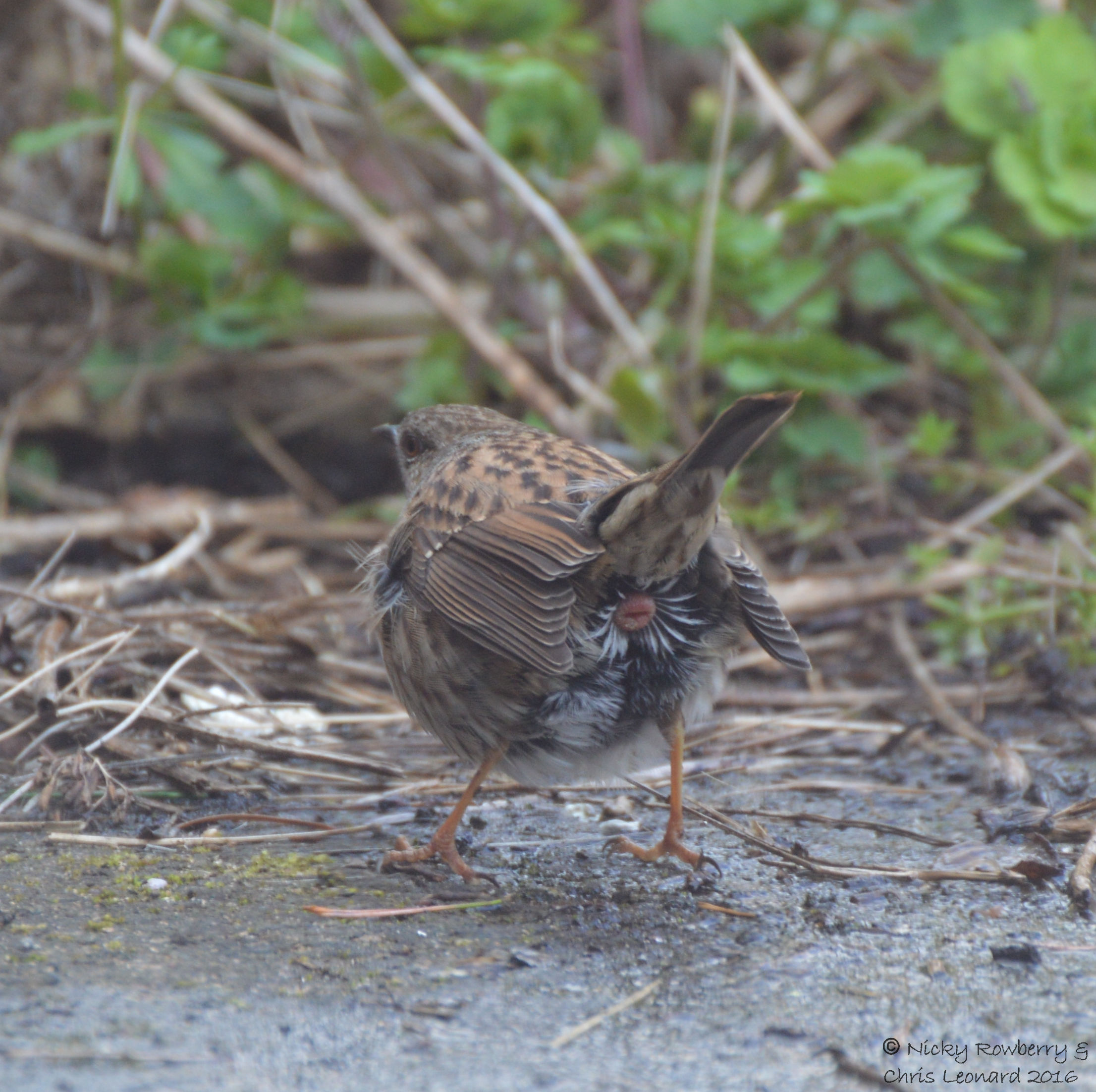
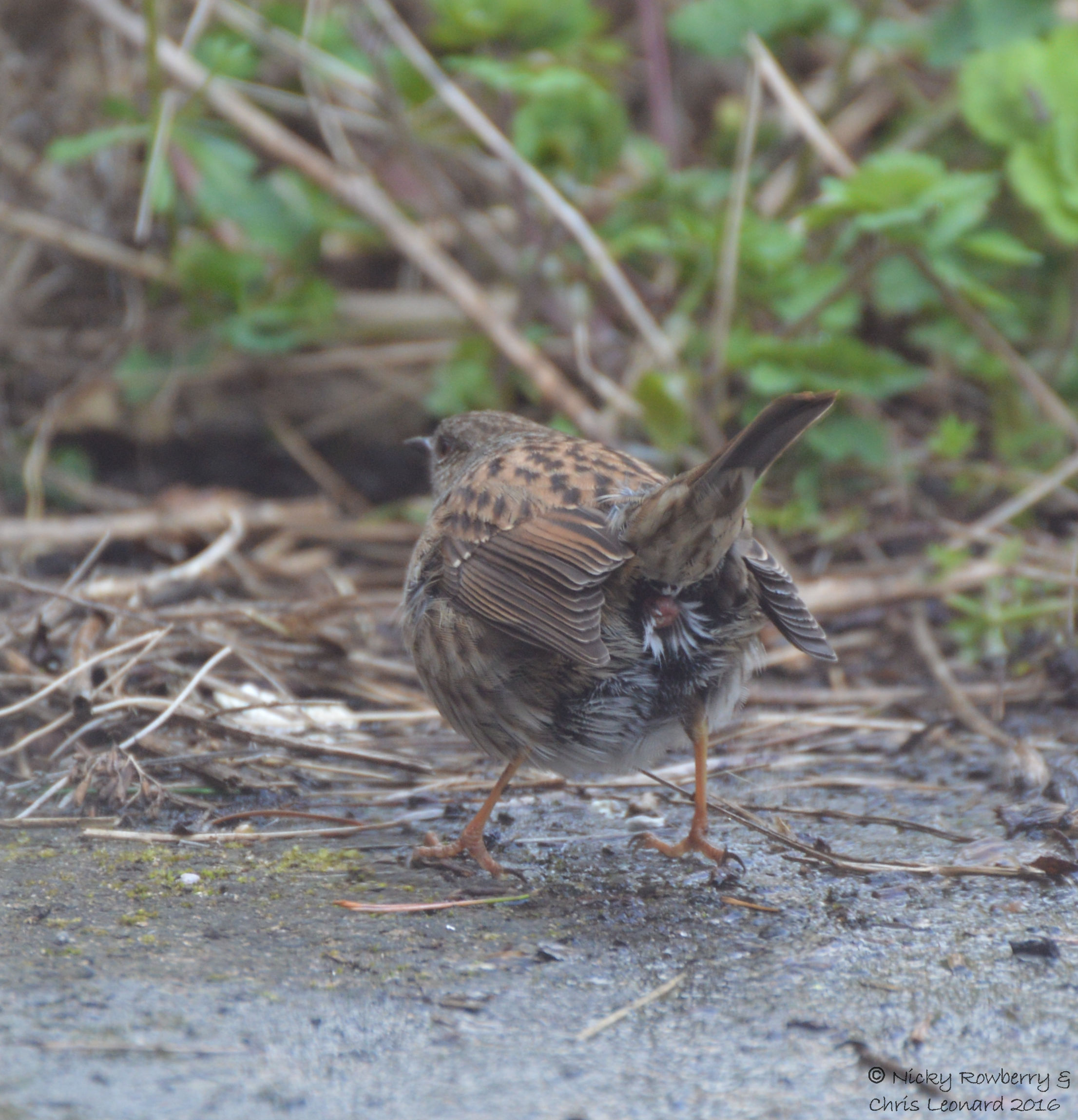
The dunnocks in our garden are clearly getting frisky. They’re normally quite shy birds staying out of sight in our plentiful undergrowth, but this week I caught them displaying in a quite amazing fashion. (Look away now if you don’t want to see parts of a dunnock that are maybe best left to the imagination!)

I caught this pair outside the patio doors while I lolled on the sofa – fortunately for once a camera was within reach. As I hadn’t been anticipating a photo shoot, conditions weren’t ideal – I had to try and focus over the coffee table and dodge the cat’s scratch post; both of which obscured my view a bit, but I didn’t want to move and alert the dunnocks to my presence. So apologies if the photos aren’t quite as sharp as I’d have liked.

Dunnock pair

I thought at first the pair were just rooting about for food – and indeed that did seem to be what the male was mainly interested in. But the female started behaving very oddly. I thought at first there was something wrong with her – she seemed to be repeatedly straining her rear end (cloaca as I’ve since found out) while fluffing her feathers at the male. He didn’t seem particularly interested in her antics – can’t say I blame him, it wasn’t an attractive dance she did! The photos show her rear end in various stages of flexing (I did warn you to look away!)

Dunnock closed

Dunnock half open

Dunnock open

A quick bit of googling revealed that female dunnocks may mate with more than one male and that the males will peck at her cloaca to get her to eject the previous male’s sperm. This female seemed to be actively encouraging him to do so. I’d never heard of this behaviour, let alone seen it.  So you learn something new every day – even when just lolling about on your sofa!

Baby Blues (hopefully)

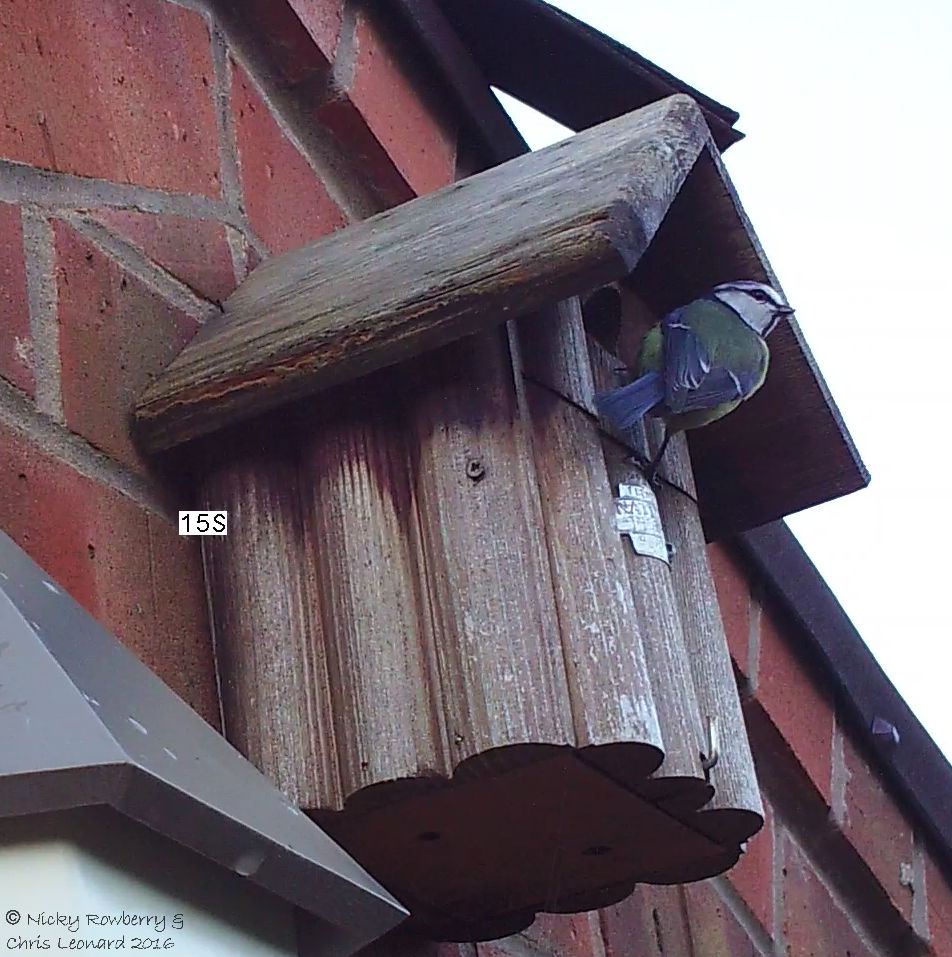
In the last couple of weeks the posts seem to have been colour themed, first red, then yellow and now blue! The big blue news is that the Blue Tits are nesting!! So excited to see them using the bird box (the old one of course – they’ve turned their beaks up at the new deluxe one!) The brief video clip below shows both adults flying in and one exiting again. I think at this stage they were still making the nest as we saw them with nesting material.

The photo below is a still taken from the film. Hopefully things will go well for our pair and we can give updates on their progress – fingers crossed for a successful fledging and baby blue tits.

Blue Tit on Bird Box


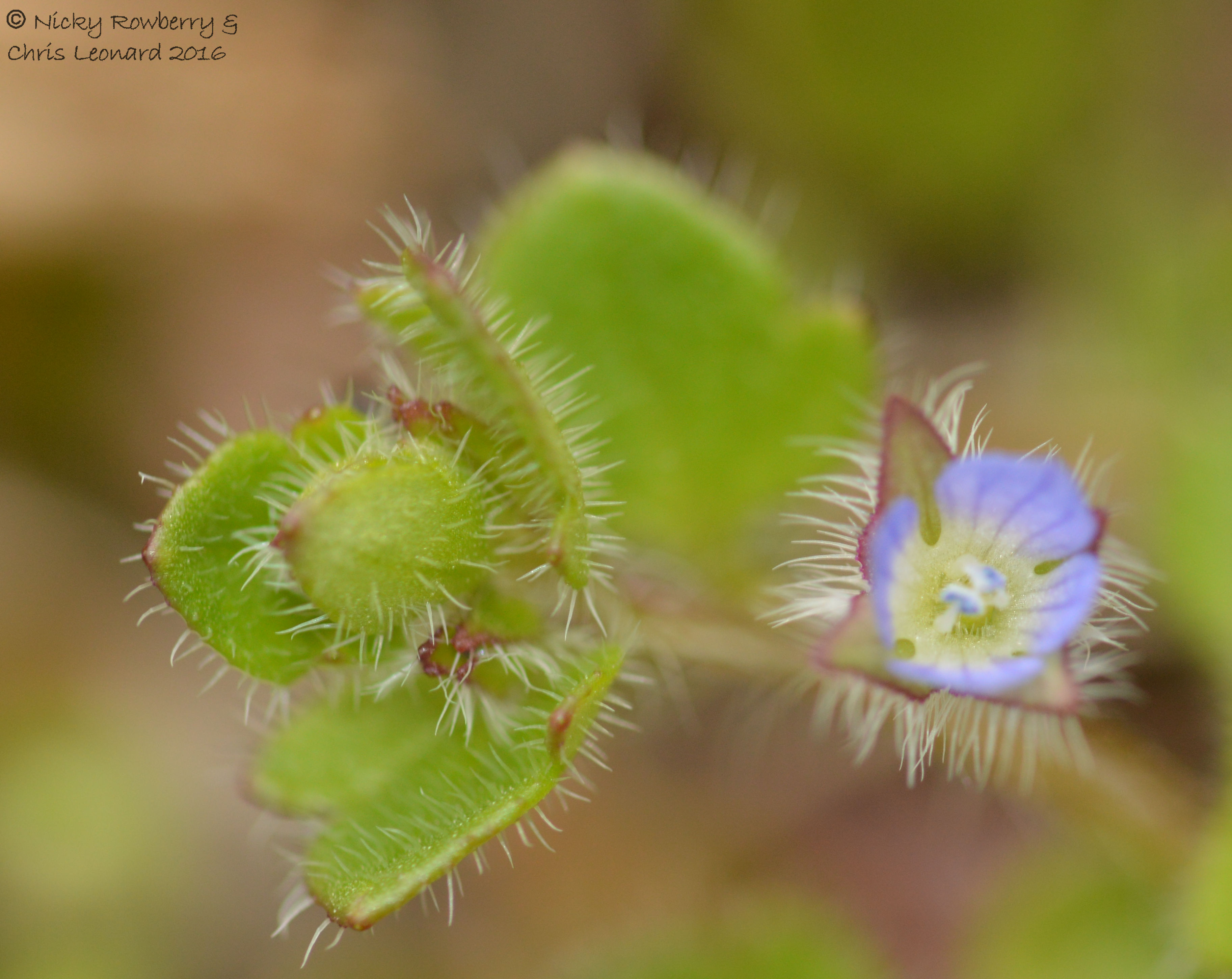
The blue tones seem to be spreading round the garden too, with the emergence of several  blue hued flowers. Today I spotted these tiny Speedwell flowers hidden amongst the grasses. Not the easiest to photograph as they are so damn small. I didn’t realise they were so hairy either until I downloaded the photos.

Speedwell

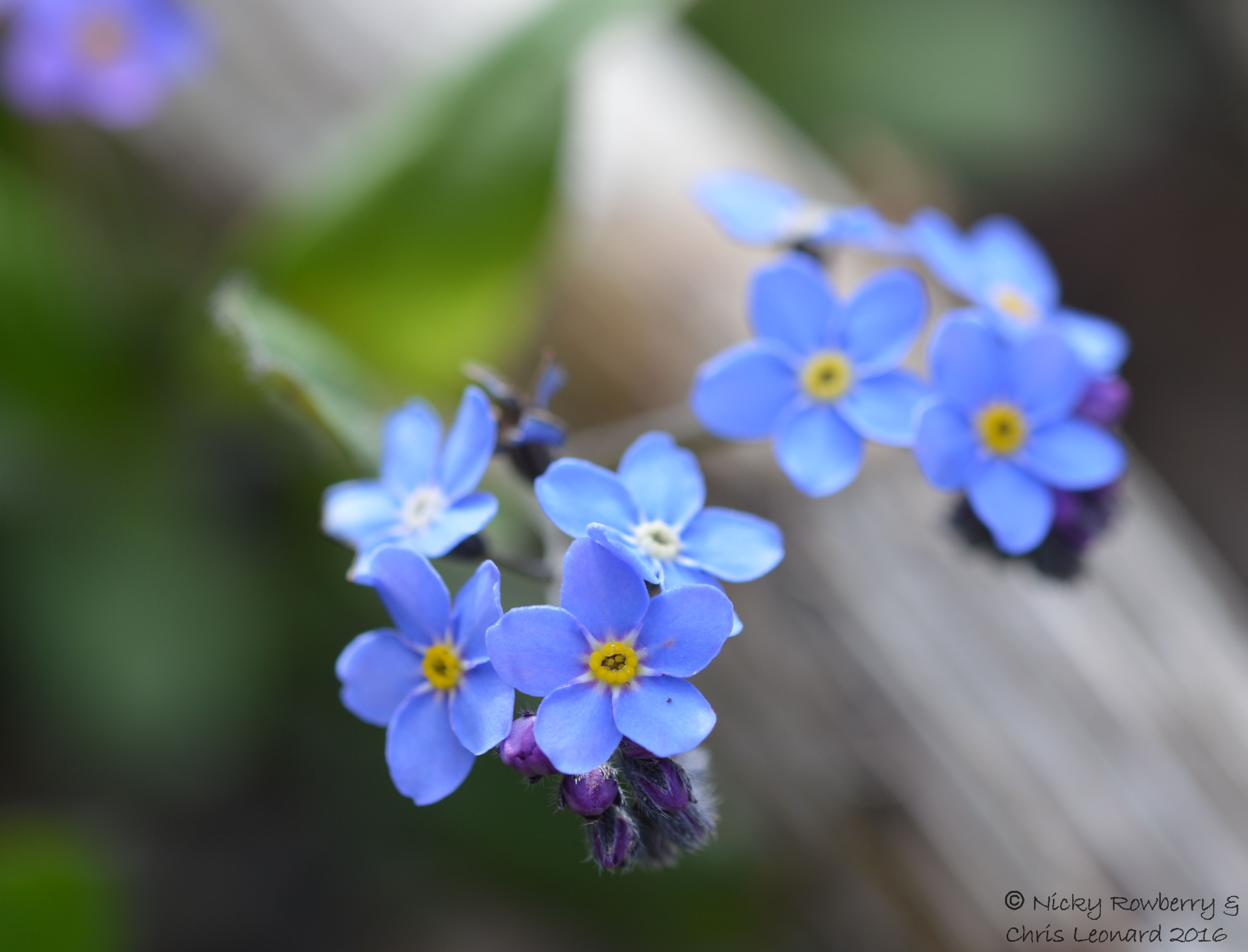
And finally, no blue post would be complete without Forget-me-nots. These bright little flowers have been a favourite since I was a child (many moons ago) and are a sort of unofficial totem for Too Lazy To Weed. They spring up wherever we haven’t weeded – so pretty much over the whole garden!

Forget me not