Big Lazy Review of the Year

Can’t believe 2016 is all but over. It’s been an awful year in many respects (depressing national and international voting outcomes, various terrorist atrocities, plus the loss of some truly great people), but our garden has provided welcome relief throughout. We may live in the middle of Malvern, but the garden is quiet and peaceful and the wildlife never fails to cheer me up. So here’s a bit of a round up of some of the highlights from 2016.

The year began with one of the many “citizen science” projects we try to participate in – the Big Garden Bird Survey. Throughout the year we also took part in the Big Butterfly Count, the Garden Bioblitz, the Garden Moth Scheme and Moth night as well as submitting assorted records for bees, ladybirds, dragonflies and even a glow worm.

30DAYSWILD_ID1 blackThe biggest project was taking part in the Wildlife Trusts 30 Days Wild Challenge. This ran throughout June and I managed to blog about something “wild” we’d done each of the 30 days. I was really chuffed when the blog made it to the final short list for the 30 Days Wild Blogger Awards. We didn’t win, but that didn’t matter as I had such fun doing it.


Scarlet TigerMoths were, as always, a big part of my year. The trap was out once a week throughout the summer for the Garden Moth Scheme. In the end we recorded 211 species in the garden – a new record total, which included many firsts for our garden. All beautiful, but none more so than this Tiger.

One of my resolutions from last year was to see more butterfly species. We may not be able to attract any more species to our garden, but when we were Out & About we managed to bag 10 more species – way more than I’d hoped for. This takes our lifetime tally to 38 – only about 20 more UK species to go! Every one was a delight, but ultimately you can’t beat the Purple Emperor!

ivy-bee-7Last year we recorded 12 species of bee in the garden, which I’d thought was pretty good. This year we made it to 25! There may even have been more, but some require microscopic identification and as I don’t want to kill any, that was out. The final bee of the year was this Ivy Bee – new to Britain this species is gradually spreading north, so we were really excited to find it in our garden.
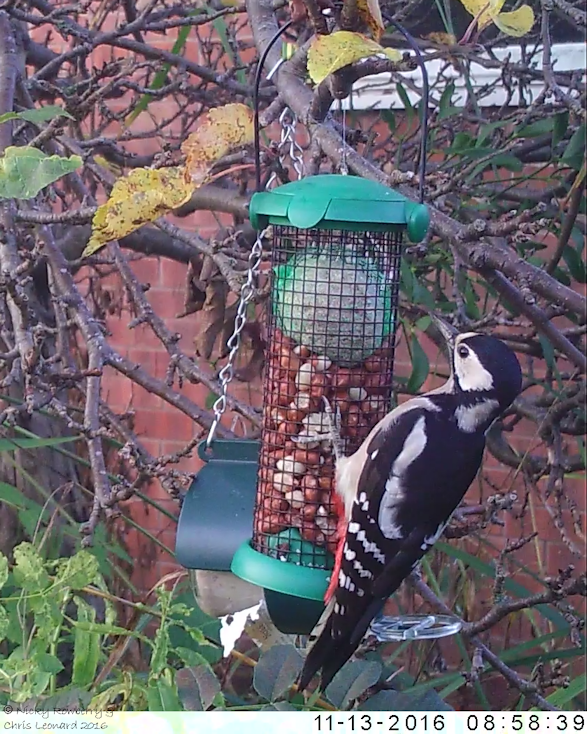
woodpecker-2One major innovation for the garden was our Trail Camera. Wish I’d bought one of these years ago as they are brilliant! We’ve been able to watch blue tits using the nest box, catch the squirrel stealing the bird food outside and mice stealing it in the garage, as well as watching the birds themselves feeding up close. We discovered we’d got Siskins and a Woodpecker that we’d never seen and followed Stumpy the magpie.


hedgehog-fredOne particular joy from the trail camera has been being able to watch our hedgehogs. We rescued 2 baby hedgehogs one boiling hot day in July, who were then cared for by our local hedgehog rescue lady. One of them (Fred) was returned to us and we watched him trundle around our garden with another older hog. We’ve now got 2 hedgehog houses and have learnt a lot about their behaviour from watching the video footage. Fingers crossed Fred and his friend survive the winter.
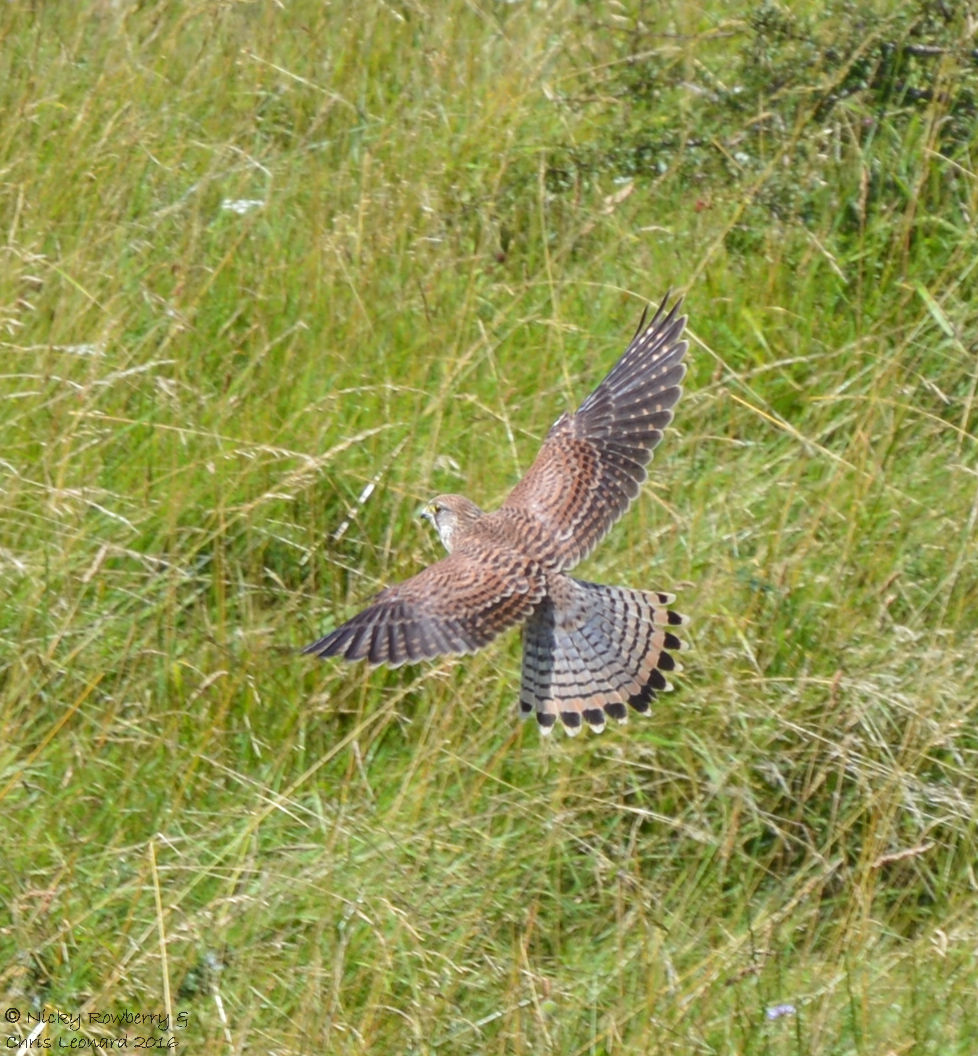
KestrelAs well as watching the wildlife in our garden, we were out and about quite a bit in the summer. We are lucky here to have so many wonderful nature reserves within easy distance. As well as the various new butterflies, we’ve seen slow worms and glow worms (the latter only as a larva unfortunately), kestrels, deer, puffins (admittedly we did have to go a bit further for these) and of course some beautiful countryside.

2016-12-31-14_39_48_315Last year I set out some wildlife resolutions and surprisingly we’ve actually managed to achieve some of them (wildlife resolutions are clearly much easier to follow than the ones about losing weight or cutting back on the Prosecco!) We did see more butterfly species, I did have a go at beetle trapping (not a huge success, but at least I tried), we did replace some of the naturally thriving weeds with specific butterfly/bee loving wildflowers. I even managed to identify the bats that come to the garden in the summer (Pipistrelles) thanks to another new toy, my bat detector.

We didn’t however manage to dig a new pond and the old one is getting increasingly silted up. I also haven’t got round to the new moth tattoo, although I have made some enquiries with various tattooed lorry drivers who come to my work as to where they got theirs done. (much to their bemusement I expect!)

So New Year’s resolutions for 2017?

  • The new pond has to be top of the list, before our frogs and newts give up on us totally.
  • Get video/photos of the blue tits fledging this time (assuming they nest in the garden again). Although we filmed the adults feeding, we somehow managed to miss the babies emerging, so really want to get that this year.
  • Try to bag a few more butterfly species – targets will be Small Pearl Bordered Fritillary, Duke of Burgundy and Grizzled Skipper, but more if we can manage.
  • Try and find Ivy bees at a few more sites. Don’t think there are many records for Herefordshire yet, so hopefully we can head over to my Dad’s and add a few more dots to the map.
  • Start compiling records for hoverflies in our garden – I know we get lots, but we’ve never really had a proper go at identifying them all. I feel a new obsession coming on!
  • 30 Days Wild for 2017.
  • Maybe that tattoo!

Thank you to all the people we met while out and about this year. We met some lovely people who helped us identify birds and butterflies and pointed us in the right direction when we were wandering aimlessly in search of this species or that. Thanks also to our local hedgehog lady Viv who does such an amazing job and let us have Fred back all fattened up and healthy. And thanks to everyone who’s been following the blog and to all the other bloggers that I follow and who are so inspiring. Wishing you all a happy, healthy and wildlife-filled 2017!

Stumpy the Magpie

It’s grey and a bit dreary weather-wise here in Malvern at the moment. The hedgehogs are hibernating (probably our bats too), insects are few and far between and the moth trap’s been empty the last couple of times I’ve put it out.  We’ve not even had any frosts to provide sparkly, wintery photo ops. Fortunately the birds in our garden are plentiful and greedy, so the bird feeders have provided the main interest this month. Last week we had the excitement of the woodpecker on the peanuts.

woodpecker

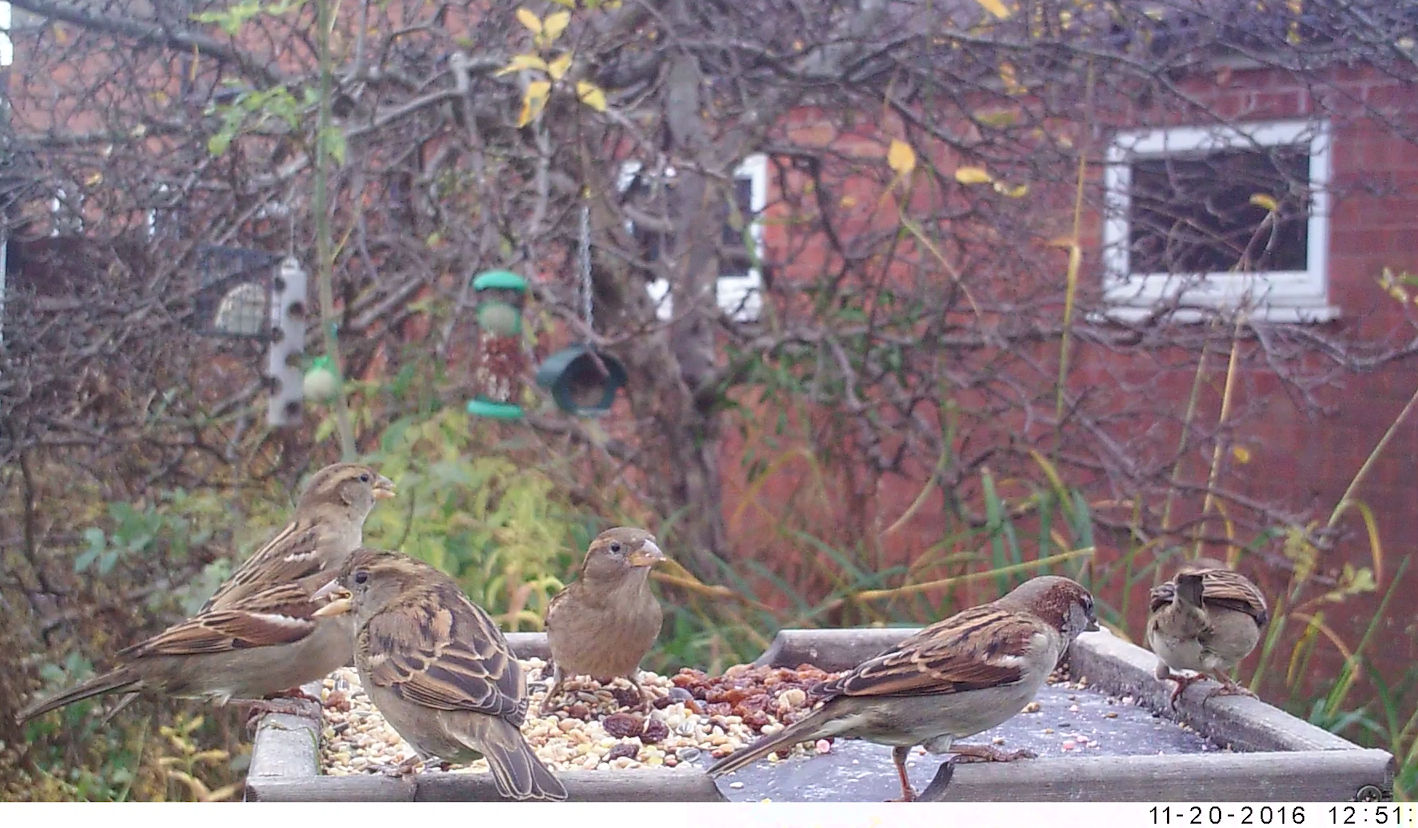
This week we’ve turned out attentions and the trail camera towards the bird table. The bird table attracts a different set of birds to the hanging feeders, although the sparrows of course are the commonest on both. We have quite a large group of sparrows who use our garden (possibly as many as twenty, but they’re hard to count in the bushes) and at least half a dozen were using the bird table at any one time this weekend.

sparrows-galore

Back in October we had a pair of magpies that were regular visitors to the garden. One I nicknamed Stumpy because he had none of the long tail feathers he (or she) should have had. Here’s Stumpy on the bird table about a month ago.

I’ve no idea what happened to his tail, but you can clearly see the difference between Stumpy’s rear end and a “normal” magpie in the next video. These two often appear at the table together – perhaps mates, or parent and offspring, or siblings?

The lack of tail feathers doesn’t seem to impede his flight or balance at all and he seems otherwise perfectly healthy. A quick google revealed that his tail feathers should grow back. I’ve had the trail camera pointed at the hanging feeders for a couple of weeks, so it’s only been this weekend that it’s been pointing back at the bird table. A couple of magpies once again appeared to see what was on offer. One had broken tail feathers that looked a bit shorter than the others.

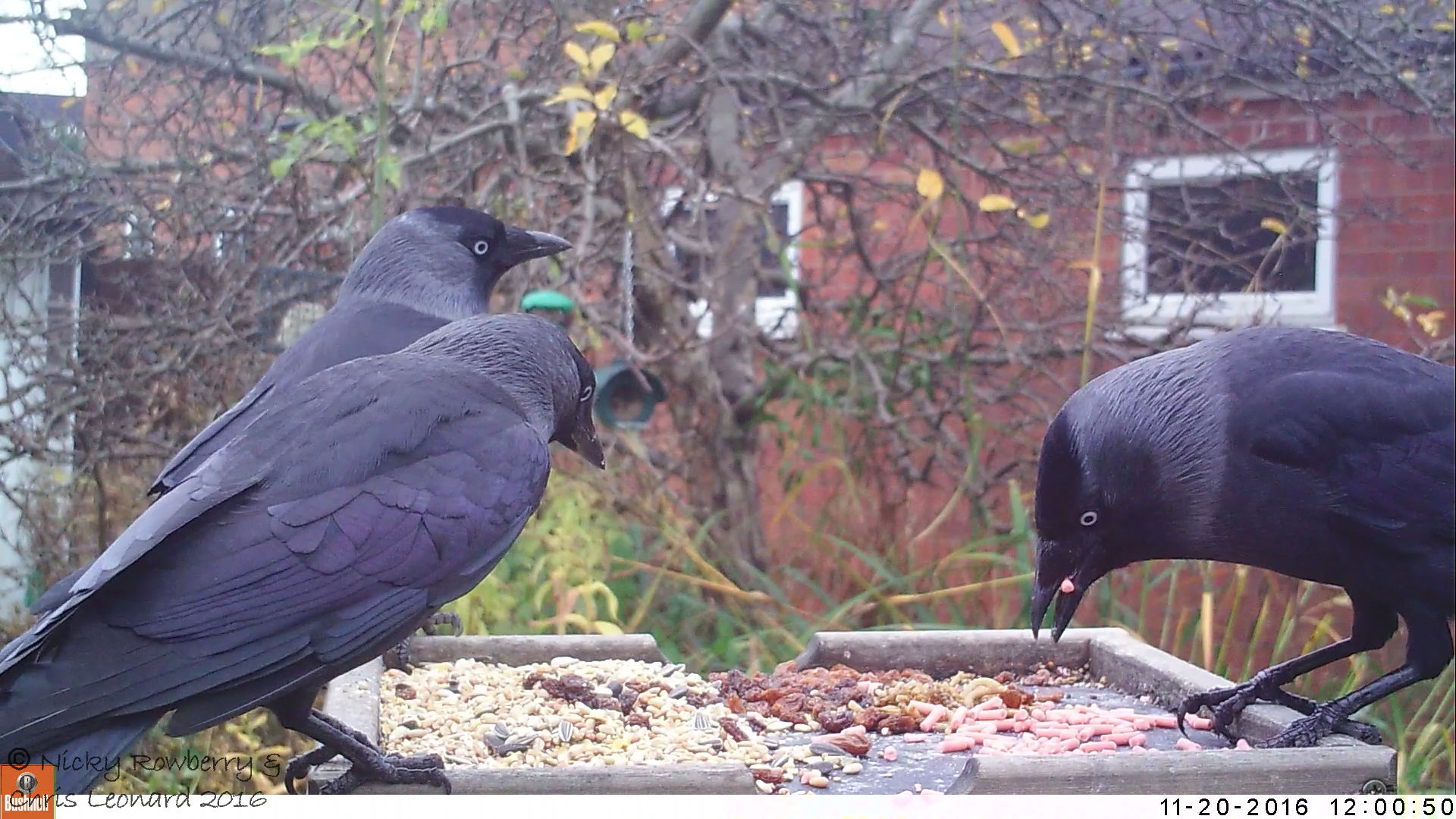
magpieIs this Stumpy with his tail feathers partially regrown? I really hope so. Whoever it was, they weren’t put off their lunch by the arrival of a large jackdaw.

magpie-jackdaw

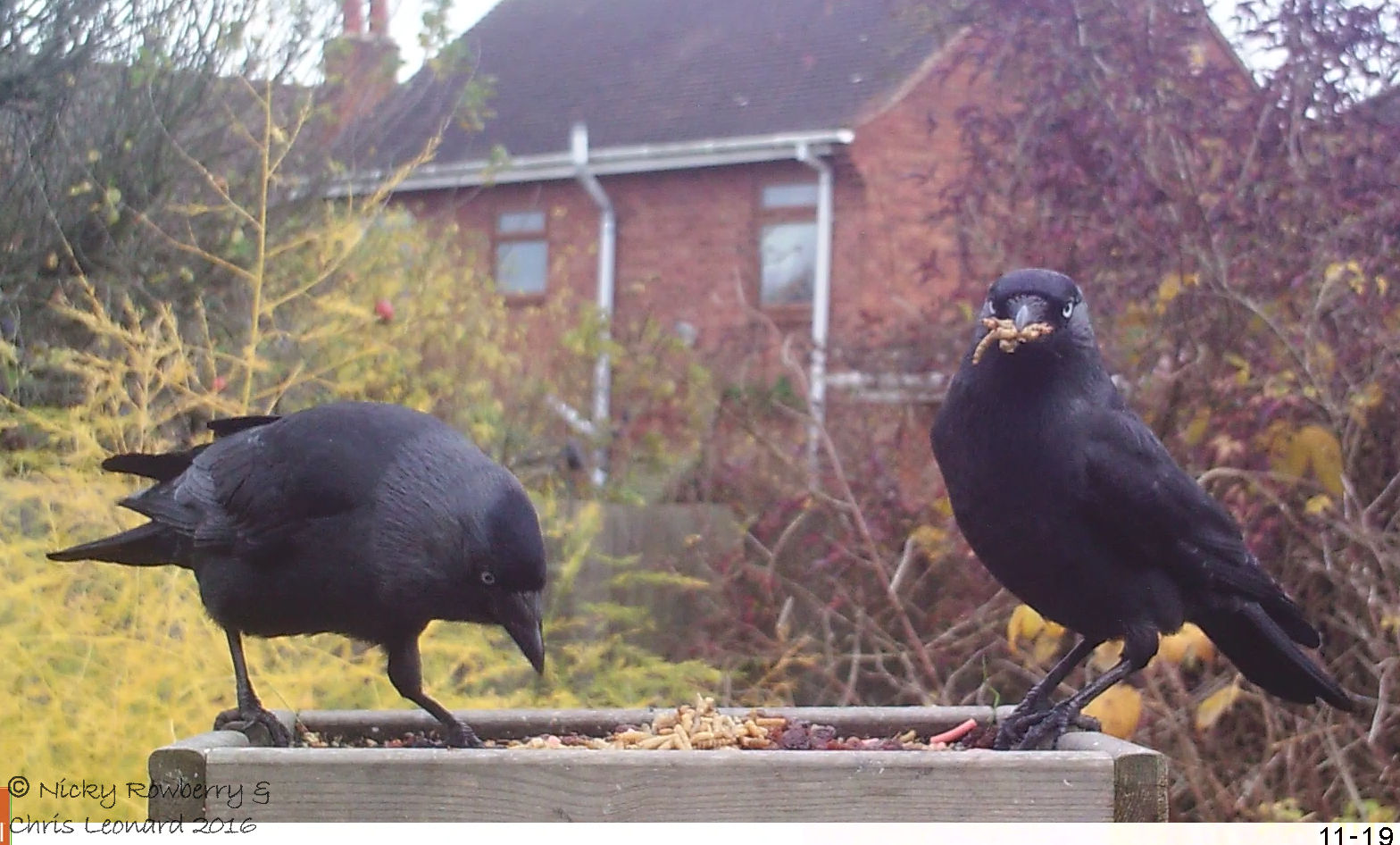
The jackdaws are usually some of the first birds to appear when I restock the bird table. They always seem intelligent, shrewd birds. The one on the right here certainly wasn’t daft – he’d crammed at least 5 mealworms into his mouth before the other had got a look in.

jackdawsWe get at least 4 of them coming down to feed, although I’ve noticed one has an injured foot. He’s still eating OK, but not sure whether it will prove to be a fatal problem for him.

jackdaw-trio

The blackbirds appreciate the bird table offerings as they are not very good on the hanging feeders. Fortunately they don’t mind sharing the table with the sparrows.

blackbird

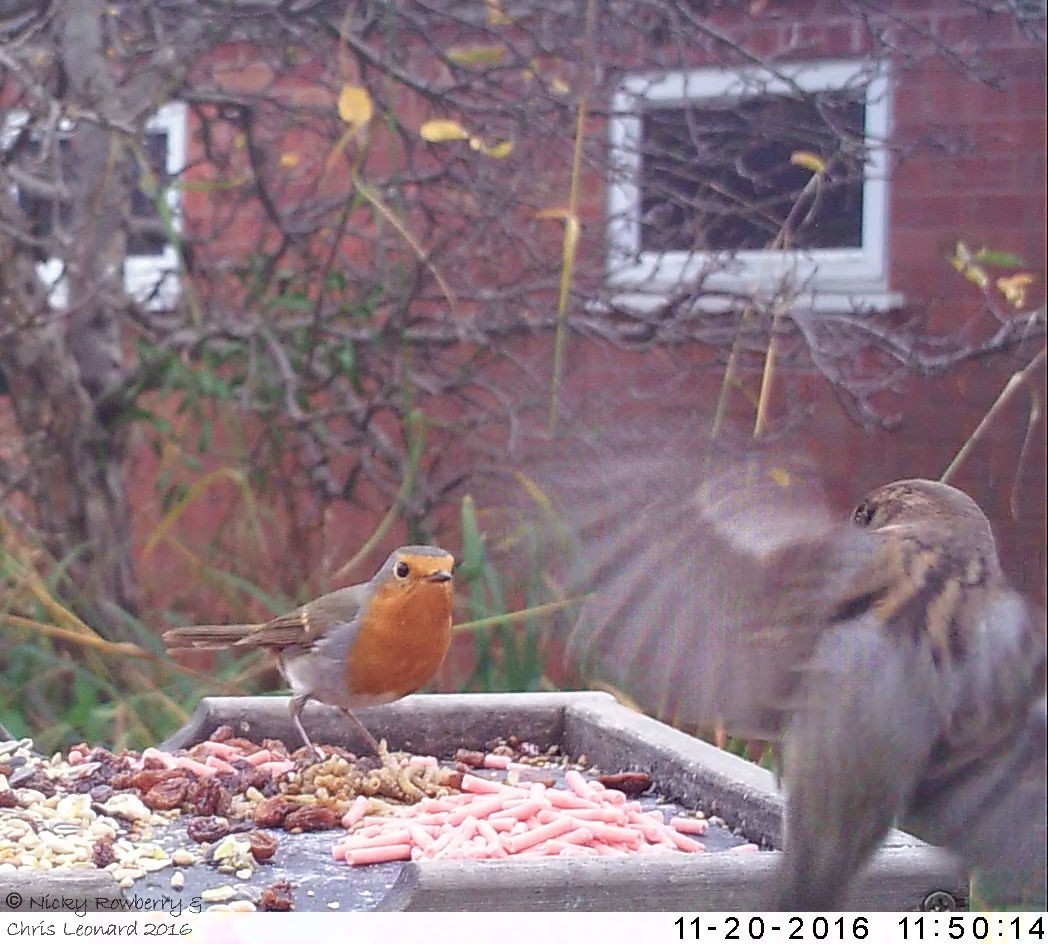
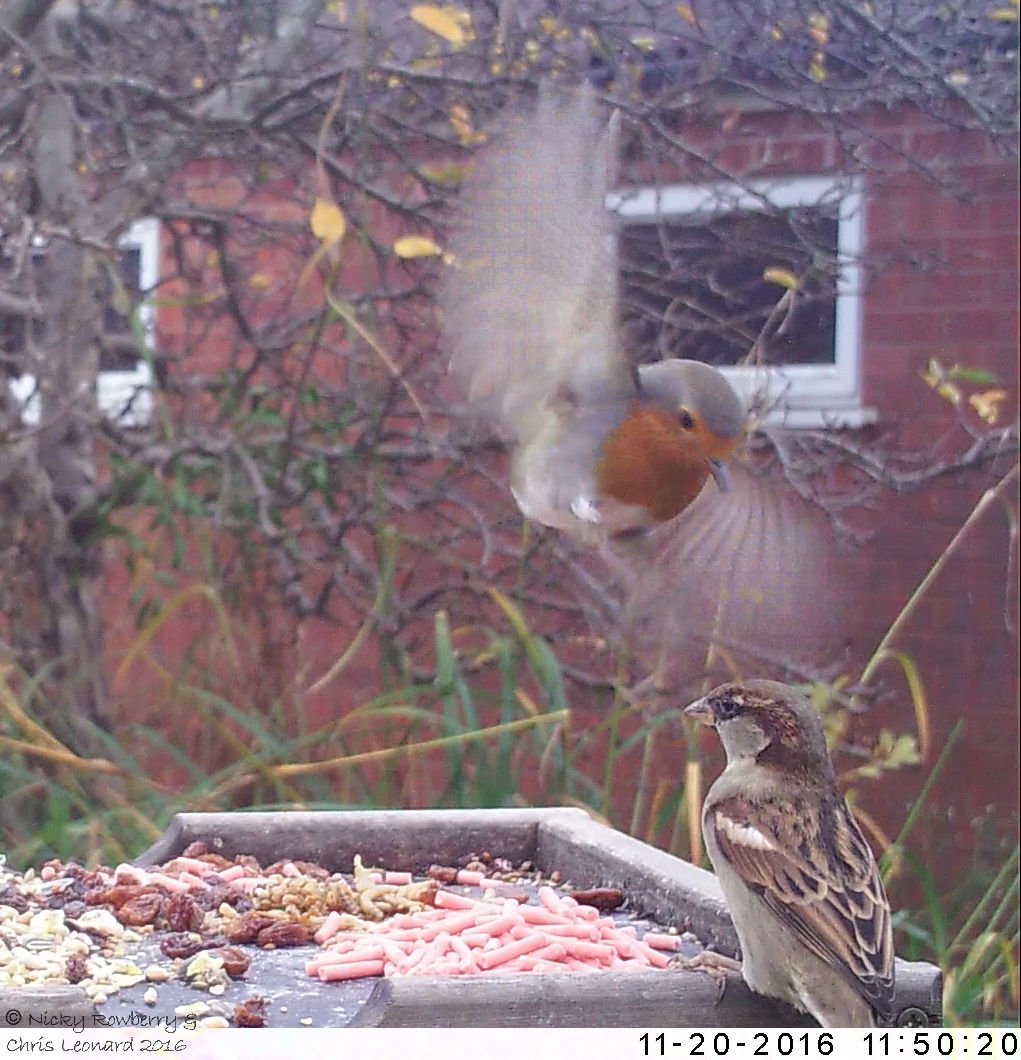
The robin on the other hand gets really quite grumpy when the sparrows land. Any larger birds and he just flies off, but with the sparrows he does his best to shoo them away.

robin-and-sparrow

robin-and-sparrow-2

Watching the birds like this in the garden for a while now, I feel we’ve got a small insight into some of their life stories. Stumpy with his tail loss and regrowth, the jackdaw family with an injured member, the territorial robin defending his patch of the table. Without the trail camera we’d probably still see all these birds, but miss some of the dynamics of what was going on in our garden. It’s been worth every penny spent and every hour spent watching the videos!

Pumpkin Demise but Woodpecker Surprise

Having blogged excitedly about the success of our pumpkin birdfeeder last week, I came home from work the following day to find a sad little orange heap on the grass.

squashed-pumpkin

I suspect one of our magpies was the culprit – too heavy for the already soft flesh of the pumpkin to support the added weight. While I did feel a bit sad that the pumpkin feeder was no more (can you actually mourn a large orange member of the squash family?), at least it saved me having to decide when was the right time to take it down and send it to its final resting place (the compost heap).

So the trail camera got moved to point at some of the other feeders instead. I wasn’t expecting anything other than the usual suspects – sparrows, blue tits, the occasional robin if I was lucky. So I was very surprised when I downloaded the latest set of video clips to find a Greater Spotted Woodpecker!

woodpecker-2

She (and I’m fairly sure she is a she – no red patch on the head) has so far visited the peanuts three times this weekend. In 10 years living here, I can only remember catching a glimpse of a woodpecker once in the garden and that was years ago. So it was a huge surprise to discover we have one visiting fairly regularly at the moment. Of course we’ve still not seen our woodpecker in the flesh, but the trail camera never lies – she must just choose to come when we’re looking elsewhere. Perhaps this is reason enough to abandon any household chores and just sit staring down the garden for the rest of the day?

Anyway we now have about 20 short videos of our woodpecker. In most she is focussed on the peanuts while a few sparrows feast nearby on the suet block.

But in this one, something spooks the sparrows and the woodpecker stops feeding and lines herself up on the peanut feeder – perhaps to make herself less visible. Whatever it was couldn’t have been too scary though as she was back to the peanuts a few seconds later.

This is one of the things I love about having the trail camera in the garden now. You just never know what is going to pop up on it. Makes me wonder what else visits our garden that we just don’t see?

Pumpkin Feeder

It may have been over a week ago now, but Halloween is still featuring in our garden in the form of our pumpkin bird feeder. I got the idea from the brilliant Wildlife Gadget Man (http://wildlifegadgetman.com/) who posted this on Twitter and I shamelessly copied it.

pumpkin-birdfeeder

Of course as is always the way, the wildlife didn’t appreciate it was Halloween and nothing visited it until the date was long gone. With hindsight, I think I initially hung the pumpkin too close to the house, but it wasn’t helped by the miserable foggy weather around the end of October which seemed to deter all but the hardiest of wildlife in our garden. Eventually though the squirrel appeared to check it out and I got a couple of very grainy grey videos of him, which really aren’t worth uploading so I’ve just taken this still from them.

squirrel-pumpkin

So the pumpkin got moved to the apple tree instead and after a cautious start, the birds have now taken to it (just as the pumpkin itself is starting to show its age and look a bit green around the gills). So far we’ve had sparrows, dunnocks, robins, blue tits and great tits, as you can see from the assorted short videos below.

We left the trail camera running over night quite often. As the birds don’t always go to bed as soon as it gets dark, nor wait until it is fully light to get up, it meant that we got some footage of them feeding in the dark. The robin in particular didn’t seem to be bothered by the light levels and I love the spooky look the infrared camera gives him – maybe he’s channelling the Halloween vibe after all?

Out and About – Symonds Yat

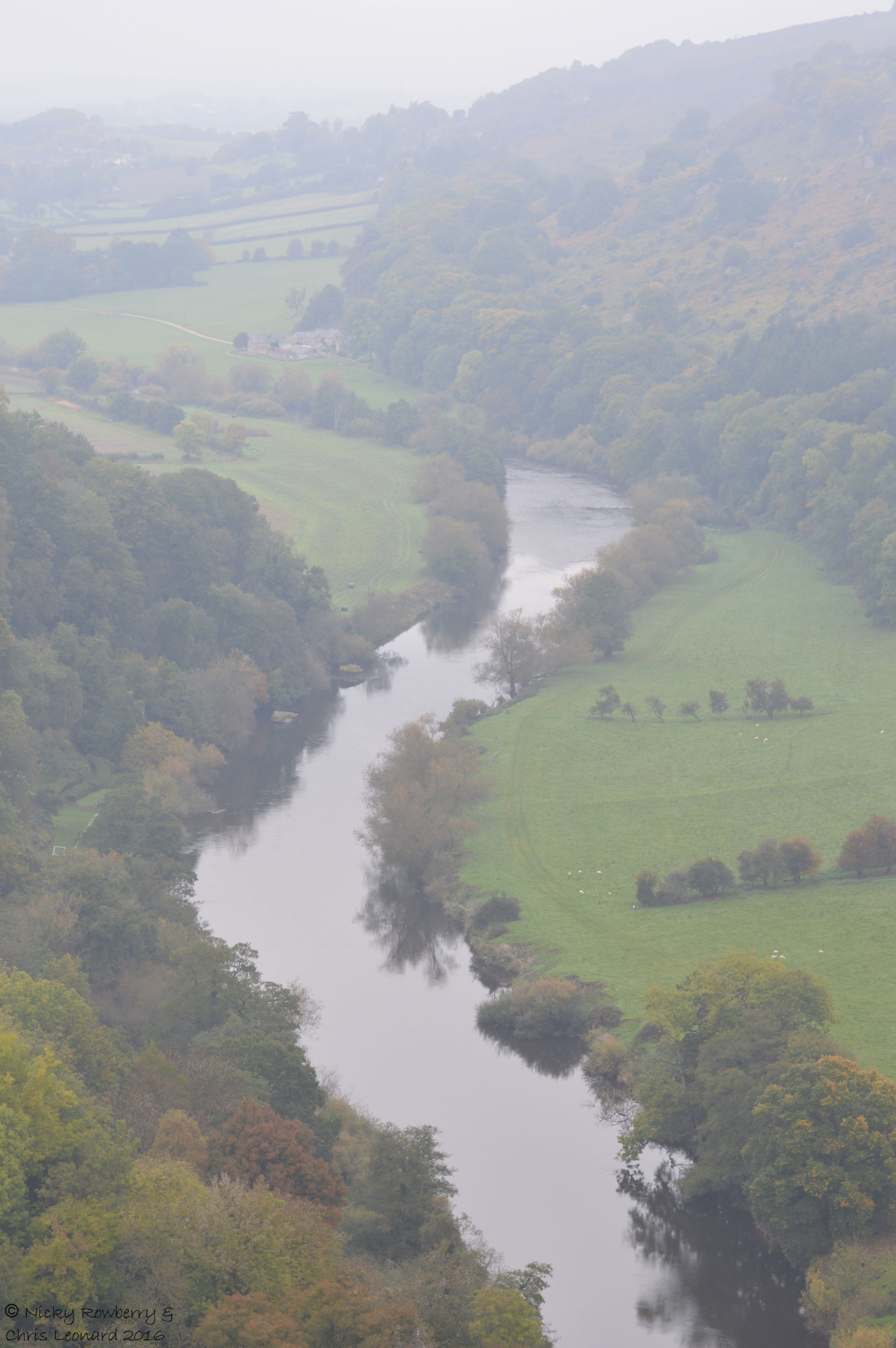
We had what seemed like a brilliant idea yesterday to head down to Symonds Yat to see the trees there in all their autumn splendour. As usual of course we didn’t really see what we’d aimed to see, but as is so often the case with our wildlife days out, what we did see more than made up for it. For a start the glorious autumn sunshine we’d hoped for had been replaced with a dull grey mist. Secondly the trees down at Symonds Yat must be a bit behind the ones in Malvern, as they’d not really changed colour yet. So what we could see through the mist wasn’t really the autumn spectacle we’d hoped for. Still we headed to Symonds Yat Rock which sits high up overlooking the horseshoe bend in the River Wye.  The trees below may not all have been golden brown but the view was still stunning.

river

We could see the cliffs where Peregrine Falcons nest and thanks to some very kind people who let us use their telescopic sights, we even saw one of the birds in a hole in the rocks. It was way too far away for us to get a photo – but at least we can say we saw a falcon!

The same helpful couple informed us that the strange noises we could hear were rutting Fallow Deer in the woods below (I’d thought the sound was Wild Boar, so  good job we met people who knew what they were talking about!) We didn’t see the deer but were reliably informed by our new-found friends that they do sometimes appear and go down to the river.

We may not have managed to see the deer or get photos of the falcons, but fortunately there was plenty of smaller animals that were much more obliging. Volunteers (possibly our two helpers from above) regularly put out bird food at the viewing point on the rock. This was attracting plenty of smaller birds who were clearly used to the flocks of visitors clicking away with their cameras (actually mainly phones of course, apart from us old fogies with actual cameras!) The highlight was a gorgeous Nuthatch – the closest either of us had ever been to one.

Various members of the Tit family were also making the most of the bird food. Coal Tits, Blue Tits & Great Tits were all completely unfazed by the visitors. Apparently Marsh Tits frequented the area too, but unfortunately not while we were there. A Chaffinch completed the array of small birds we saw up on the rock.

One final surprise though was a visitor on the ground beneath all the bird seed. The Bank Vole had clearly learnt that there were easy pickings to be had here and was also relatively unbothered by all the people.

We could have spent a lot longer up at the rock, but we’d booked lunch in one of the pubs down by the river in Symonds Yat East, so headed back down. Symonds Yat East is on the Gloucestershire side of the river, while Symonds Yat West is in Herefordshire. You can get a tiny hand-pulled passenger ferry between the two – the lad pulling the ferry across must have biceps of steel, as he never stopped going back and forth all the time we were there!

As we stood watching the river and the canoeists braving the rapids, we spotted the unmistakable flash of a kingfisher. Of course we’d left the camera back in the car while we had lunch,  and by the time the camera was retrieved, the kingfisher was long gone. A lovely flock of Long Tailed Tits flew in though to complete our small bird collection for the day.

So the day may not have provided an autumn spectacle, but we saw a kingfisher, heard some deer, just about saw a falcon, met some nice people and watched a vole – I’d call that a result!

In The Pink

This week I managed to combine a visit to Slimbridge Wetland Centre with meeting friends for lunch – a win-win day out in my book! Slimbridge is only an hour’s drive from us and is the most amazing wetland reserve, overflowing with birds both native and from abroad. If you’re into bird watching, it must be one of the top UK sites to visit. In the few hours we were there, we only managed to get round maybe less than half of it (probably due to too much time scoffing sandwiches and yapping in the café!)

I was trying to take photos as we meandered around, but there’s almost too much to take in and I kept forgetting to actually snap away. For some reason, when I got back and looked at the photos, I appear to have got a bit obsessed by flamingos! Nearly half the day’s photos seem to feature them. There are apparently 6 species, although I think I’ve only got 3 here (which vaguely irritates my OCD that having unwittingly got a bit obsessed, I didn’t then photograph them all!)

These first ones are Caribbean Flamingos – the brightest pink ones we saw. The colour always seems unnatural to me, but logically I know that it’s due to their food and that Slimbridge aren’t dying their flamingos for our gratification!

caribbean-flamingos

This next one is an Andean Flamingo and possibly my favourite of the ones we saw. The feathers are absolutely stunning. Unfortunately this species is classed as Threatened – mainly by hunting, mining activities and habitat loss.

andean-flamingo

The next two photos are of Lesser Flamingos. In the upper photo you can see the teeth or serrations along the edge of the beak that it uses to filter the food out of the water. The lower photo I included just because I like the way they sinuously wrap their necks around – it’s hard to tell where one bird ends and the next begins.

flamingo-head

flamingo-knot

Besides flamingos, there were birds everywhere – particularly geese and ducks. Many had clearly learnt that visitors = food, but this Bar-headed Goose was way too dignified for that and just sailed serenely by.

barr-headed-goose

There were lots of quite showy birds, but for some reason I really liked this South Georgian Pintail Duck. Nothing flashy, just quintessentially ducky!

south-georgian-pintail

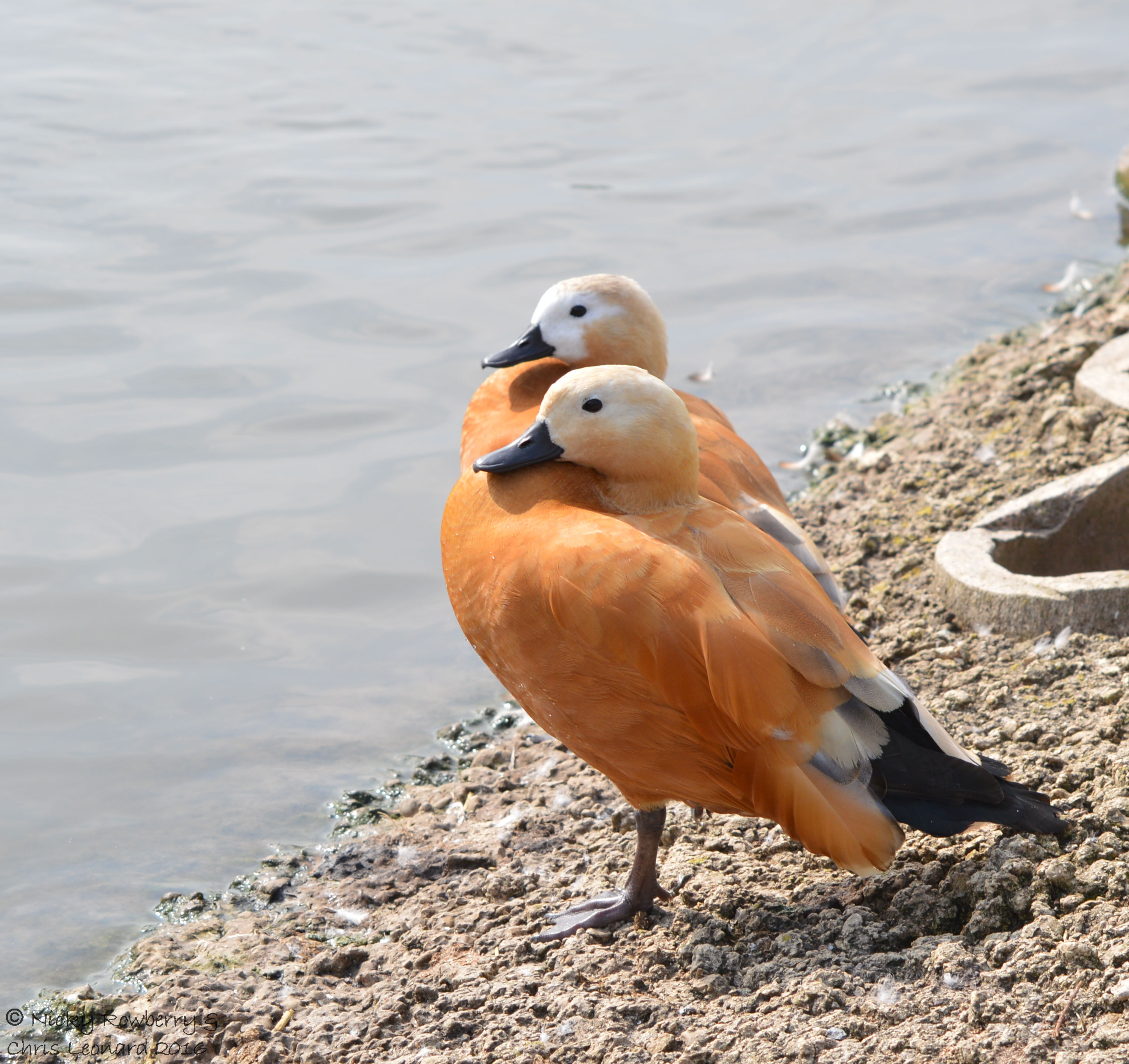
Probably my favourite photo of the day is this seemingly two headed duck! (Ruddy Eider Ducks I think)

two-headed-duck

We listened to a very interesting talk by one of the WWT volunteers, all about the Great Cranes. Slimbridge has been heavily involved in a project to reintroduce these majestic birds into Britain. It’s hard to believe but these huge birds were once common here until they were hunted to extinction. Fortunately they survived in Europe and thanks to the efforts of the WWT, they have got a toehold back in Britain.

cranes

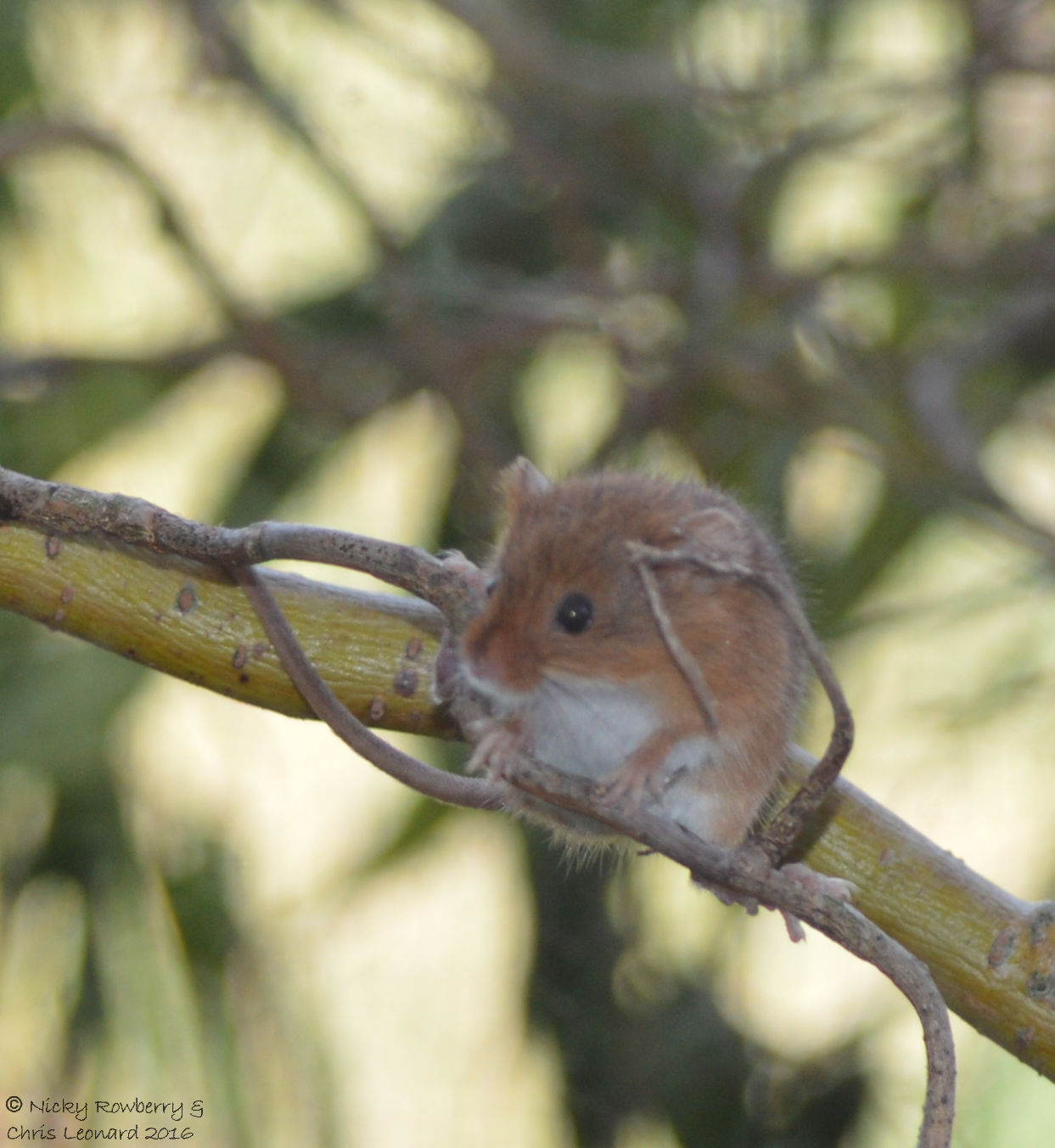
It’s not all birds at the wetland centre though. They have several mammals, including otters, a beaver, voles, shrews and these adorable harvest mice – the only ones who would pose nicely for photographs. Unfortunately they were behind glass, so the images aren’t great, but they were wonderful to watch – such quick inquisitive little creatures.

harvest-mouse

harvest-mouse-2

Final bird of the day though was this Spoon-billed Sandpiper – made entirely of Lego. They were setting up giant Lego animals while we were there for a children’s trail opening this Saturday. The lady who gave us the Crane talk had told us about these little birds (in non-Lego reality they are apparently tiny) and how the WWT is doing such valuable work to try and save them. This was the closest we got to seeing one though!

spoon-billed-sandpiper

You don’t have to be into birdwatching to enjoy Slimbridge, although it is obviously a bonus if you are. I’d definitely recommend it as a day out for anyone even remotely interested in wildlife and conservation. For more information go to: http://www.wwt.org.uk/wetland-centres/slimbridge/

Out and About – Prestbury Hill – The Return!

I’m not normally given to the expression OMG, but OMG Prestbury Hill is an amazing place! We made a return trip today to see the Chalkhill Blue butterflies that we didn’t see a few weeks ago (because I’d got their season wrong!) We ended up seeing 15 species of butterfly, a beautiful bird of prey, some moths and a new snail! Pretty amazing for a few hours walking in beautiful countryside.

We started leisurely by heading to a bench for a picnic (I’d love to be able to claim that I’d loving crafted cucumber sandwiches and other home-made delights, but actually it was left-over fried chicken from the night before!) We spotted our first Chalkhill Blues before we even reached the bench, but decided to eat first then take photos later. Said bench has glorious views out over Cheltenham and beyond and is the perfect place for a picnic. We could see a bird of prey hovering over fields below – turned out it was this beautiful kestrel. We couldn’t get very close, so this is taken zoomed in from a fair distance, but you can still see what a stunning bird it is.

Kestrel

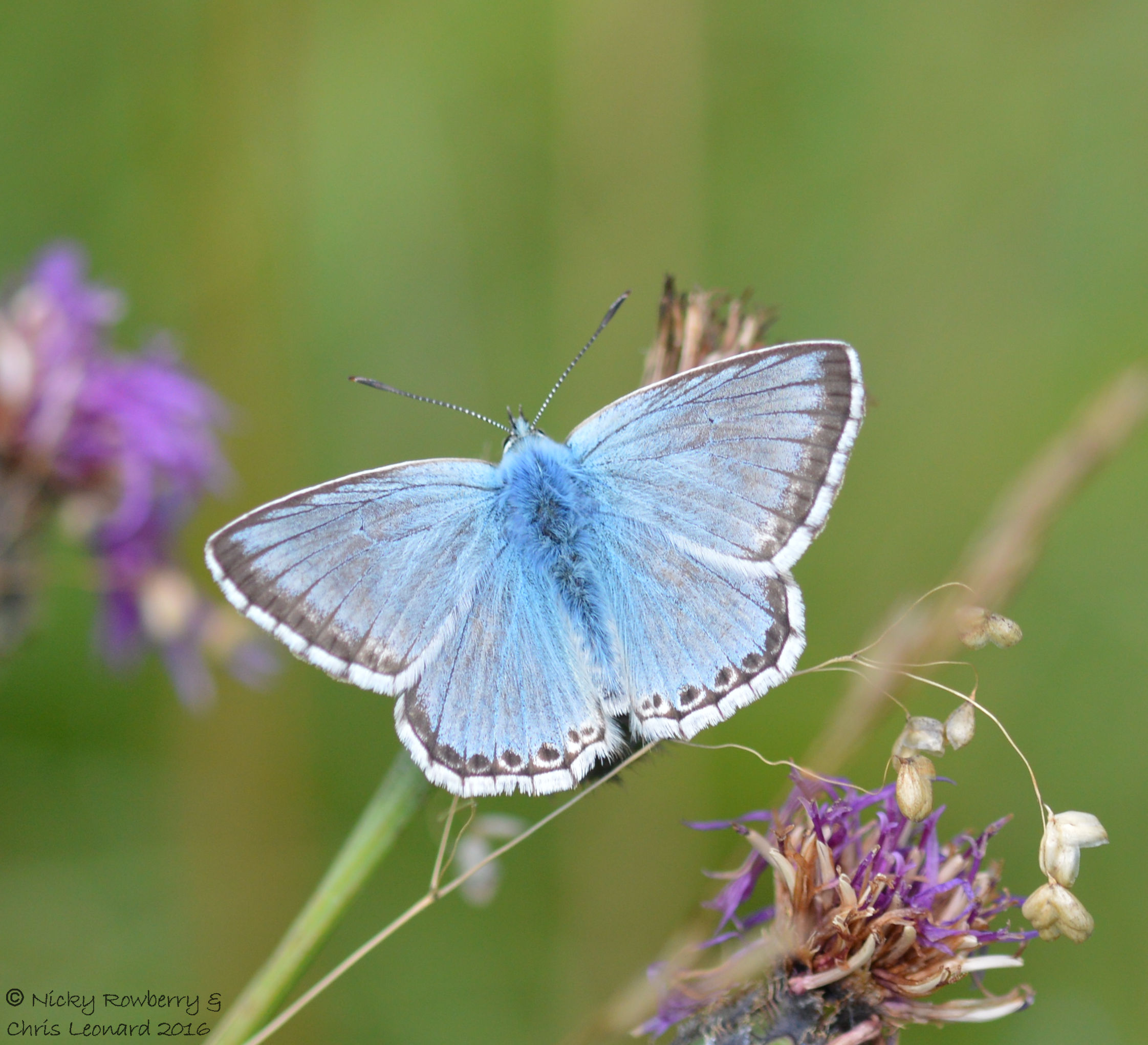
It hovered round about for much of our visit, never coming close enough for a better photo though. But by then we were distracted by the object of our desires – the Chalkhill Blues. The beautiful blue butterflies need either chalk or limestone grassland (Prestbury is limestone) and are one of the last species to appear each year. The males have gorgeous bright blue upper wings edged with black.

Chalkhill Blue

The underneath of the wings have a pattern of dots quite similar to the Common Blue.

As is so often the case with butterflies, the female is much drabber. We saw mainly males today, but that could be just that they are easier to spot with their bright colouring. The few females we did see were often being pursued by more than one admirer.

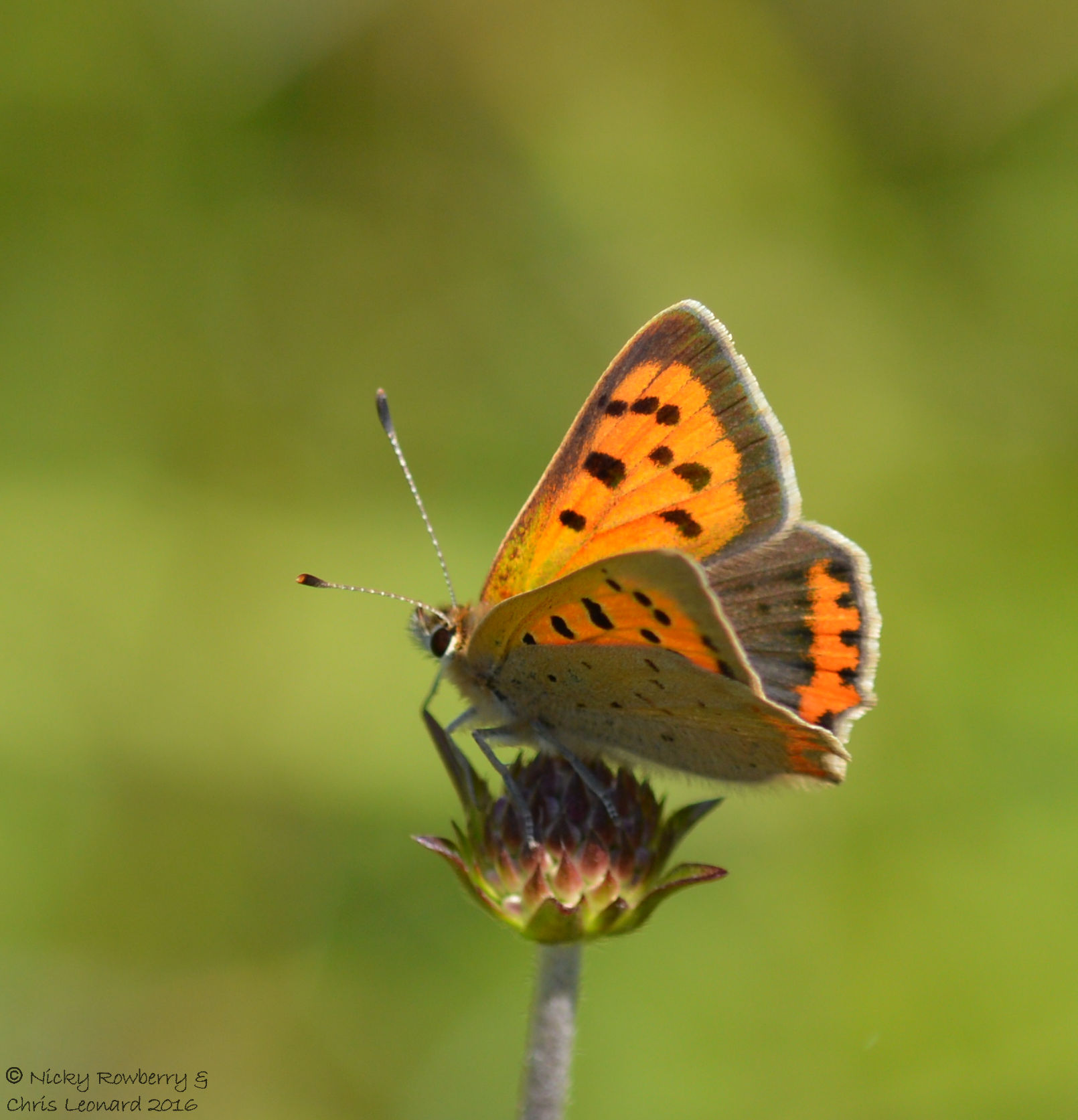
Already delighted with having bagged our Chalkhills we got chatting to some fellow butterfly twitchers, who knew much more about the area than we did and were very helpful. They mentioned that they’d seen Brown Argus further up the slope – a species that we’d never seen before. Needless to say we puffed our way back up the hill to the area they’d described in the hope of a second prize for the day. We caught a glimpse of something different, which turned out though to be some lovely Small Coppers. My photo doesn’t really do them justice, but they were positively glowing a coppery red in the sunshine today.

Small Copper

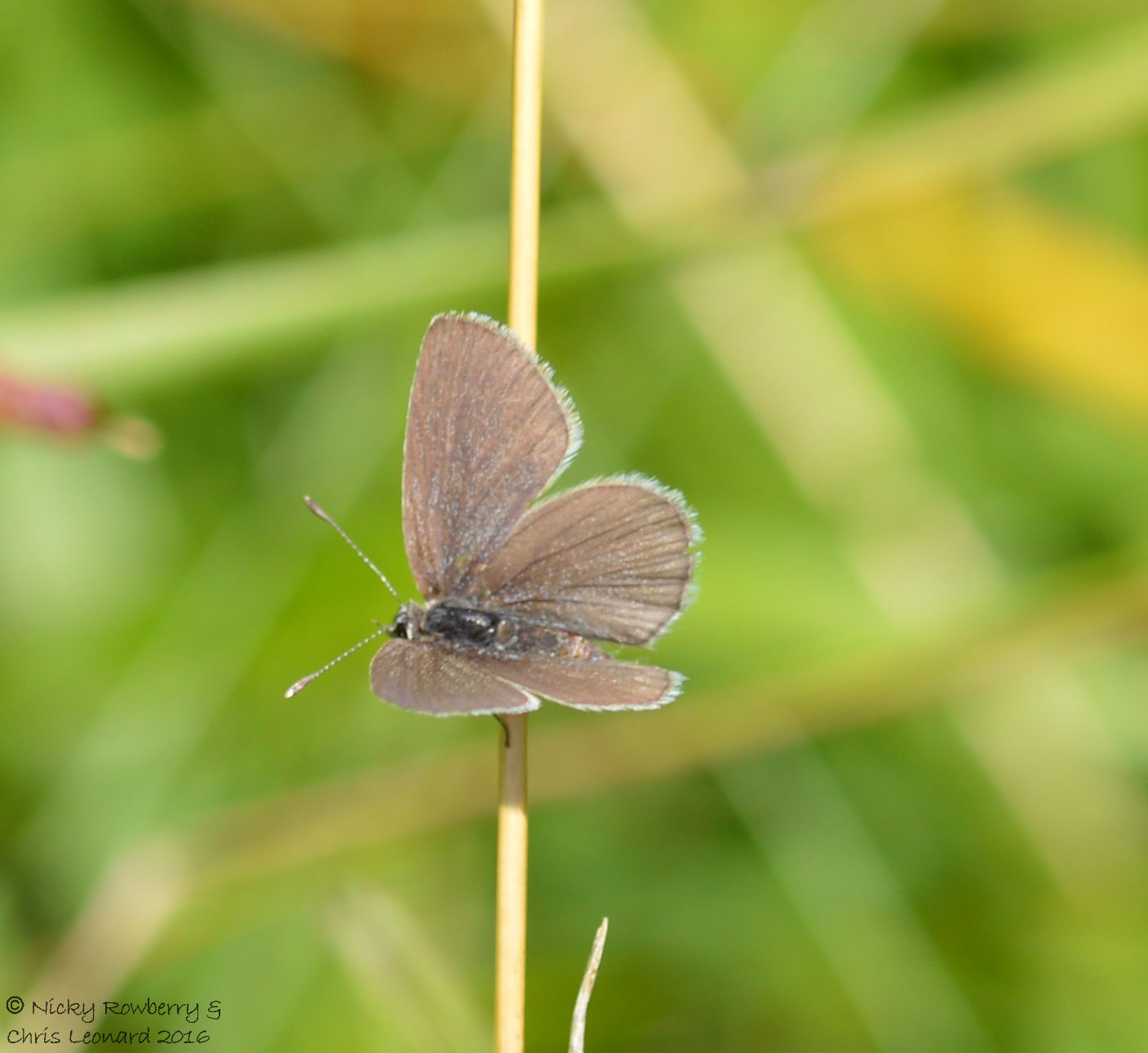
I then noticed a tiny, fairly plain little butterfly, so took a few quick photos thinking it would probably turn out to be a Common Blue. So we were amazed when I downloaded the photos later and realised it had actually been a Small Blue! Another new species for us – two in one day!

Small Blue open

We carried on back up the hill and about half way up saw another small butterfly. This time we’d found it – a male Brown Argus. Our third new species of the day! Again they look quite similar to the female Common Blues, but have the orange dots going right the way to the end of each wing.

Brown Argus male

Obviously seeing three brand new ones was the highlight of the day, but we also saw 12 other species, including our first Small Skipper of the year and some nice fresh looking Gatekeepers.

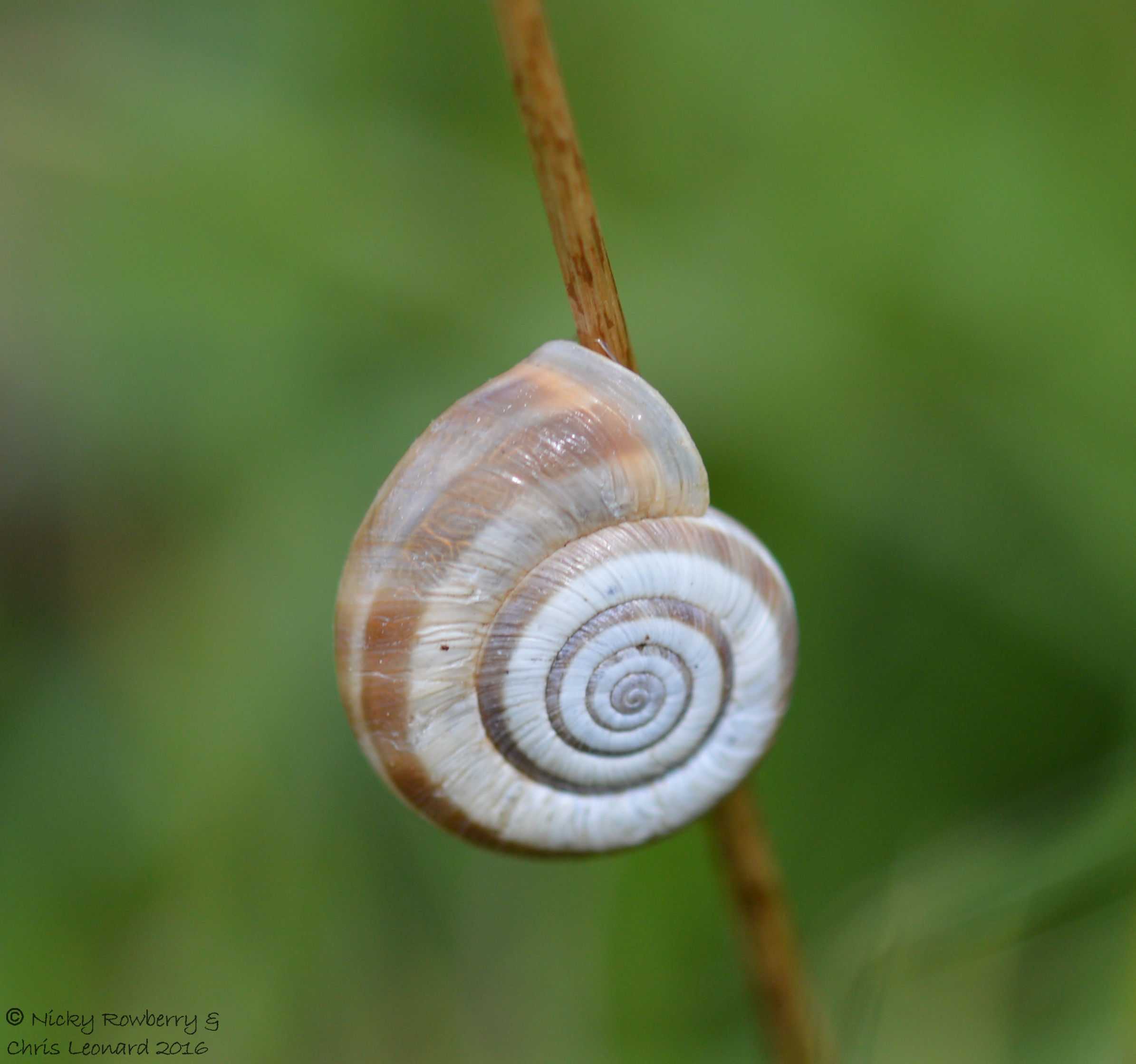
We also saw lots of these interesting snails. They are Heath Snails (Helicella itala) and seemed to have the habit of climbing grass stems like this.

Heath Snail

And finally we couldn’t have a day out without finding a moth – this time a Shaded Broad-Bar as we headed back to the car.

Moth

So if you want to see butterflies, I can’t think of many places better to go than Prestbury Hill. And it still has more to offer – Duke of Burgundy butterflies in the early summer apparently, so we’ll be back again next year.

30 Days Wild – Day 26

TWT 30 Days Wild_countdown_26Day 26 of 30 Days Wild and we were driving about quite a bit today, which can restrict the opportunities for nature spotting. But, if you choose the right spots, there’s wildlife to be found all over the place. We stopped at two motorway service stations – deliberately picking ones we knew had some kind of water feature and slightly more environmental credentials. The result was a couple of very pleasant interludes to break up the monotony of driving.

First stop just had a small pond, but it still attracted quite a few birds – mainly ducks. There were also a few of these striking Black Headed Gulls. They were clearly totally used to the crowds of humans around them and let us get quite close up.

The second stop had more of a lake and grasslands surrounding it. Full marks to them as they’d left a large area un-mowed and it was full of butterflies. We saw  three species – Ringlet, Meadow Brown and Small Heath, plus lots of damselflies and bees.

Swallows were flying about over the water and we caught this one having a bit of a rest. There was a nest a few yards away with another one sitting in – perhaps incubating eggs?

There was one majestic swan gliding about – he came really close to us, we could have reached out and touched him, although I suspect he would expect food from us if we had taken such a liberty. We saw him again later from a distance, stretching his wings. I’d forgotten what beautiful birds they are.

Our final species was a new one that required a quick google to identify as a Tufted Duck, although with hindsight he was a duck with a tuft, so perhaps we could have worked that out for ourselves!

So not bad at all for wildlife in the short time it took us to stretch our legs. Just shows that with a bit of effort these motorway services don’t have to be sterile environments. Shame more of them don’t make that effort.

Prickly Sow Thistle 30 WEEDS

And finally the latest weed in my 30 Lazy Garden Weeds – the Prickly Sow Thistle. I can see why it’s called Prickly and I can see that it looks like a Thistle, but I’ve no idea where the Sow bit comes in? They can grow really big – we have a massive one under our apple tree that is about as tall as me (admittedly that is only about 5 foot tall). Their prickles may not endear them to some people, but under our apple tree it is not a problem and they brighten up what would otherwise be quite a dull shady spot in the garden. So they’ve redeemed themselves in my book.