A Grizzly Day Out

Yesterday we went out on our first butterfly bagging expedition of the year – our target the Grizzled Skipper. Using the excellent        Butterflies of the West Midlands book as our guide we headed down to the Doward in South Herefordshire. The woodlands of the Doward are part of an Area of Outstanding Beauty – always a good starting point for any day out!

The butterfly guide book had described the best route to take to see the Grizzled Skippers, start at the main entrance to the White Rocks Nature Reserve. In our usual disorganised way we managed to head off in completely the wrong direction and somehow started at the other entrance. This was no great disaster though as it took us into the woodland which was carpeted with wild garlic (you could smell it in the air) and looked stunning.

Our accidental route also meant that we stumbled across King Arthur’s Cave. The Doward lies on limestone rocks and the cave goes deep inside them (not that we ventured very far ourselves). It has apparently been used by humans since Palaeolithic times, with everything from flint tools to mammoth bones having been found in there.

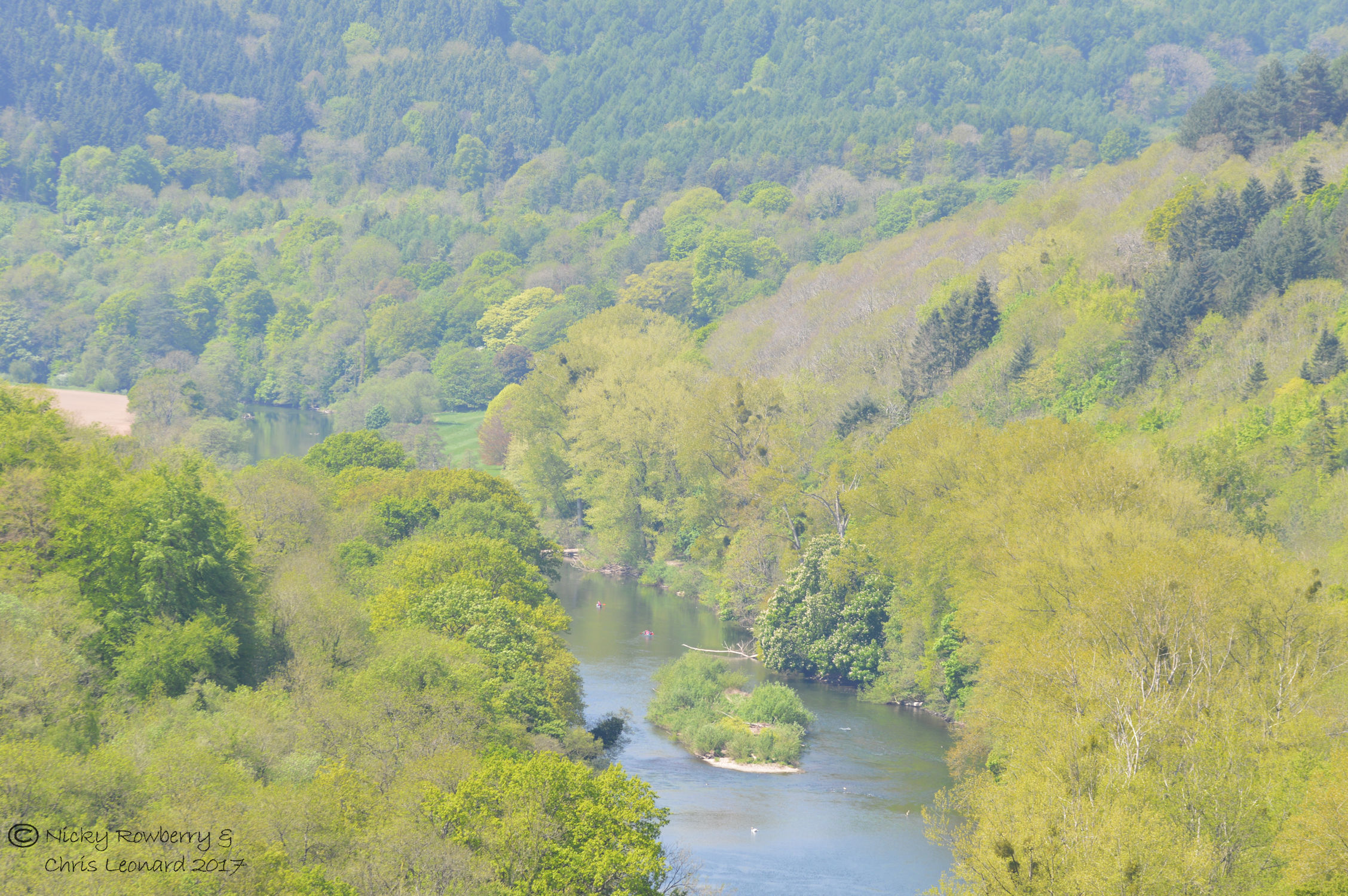
We carried on our erroneous path and came to a stunning view point looking over the River Wye.

By this time we’d twigged that we were on the wrong path, so tried heading back up hill, stumbling upon a large quarry as we did. It was baking hot in the quarry, so I stayed at the edge. While I loitered by the gate, I spotted what I thought was a small moth darting about.  Closer inspection revealed it was actually a Grizzled Skipper – I’d found one by shear chance after all! I’d never realised that they would be so small, or so fast – it could disappear very quickly.

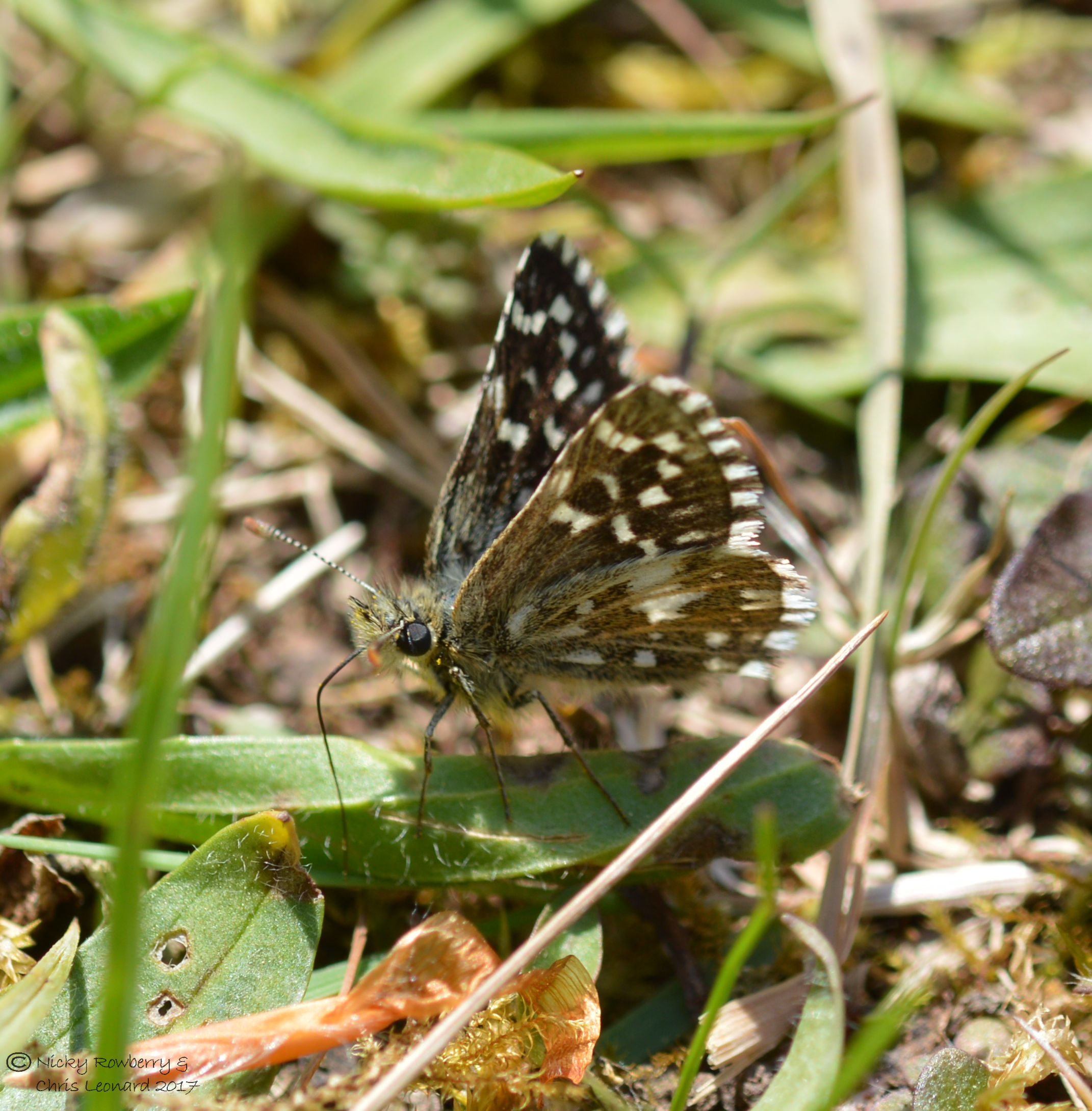
My first ever Grizzled Skipper wasn’t unfortunately a pristine specimen, looking a bit ragged at the edges, but it was what I came looking for, so I took loads of pictures.

He or she looks a bit more respectable from the side as you can’t see the missing bits of wing.

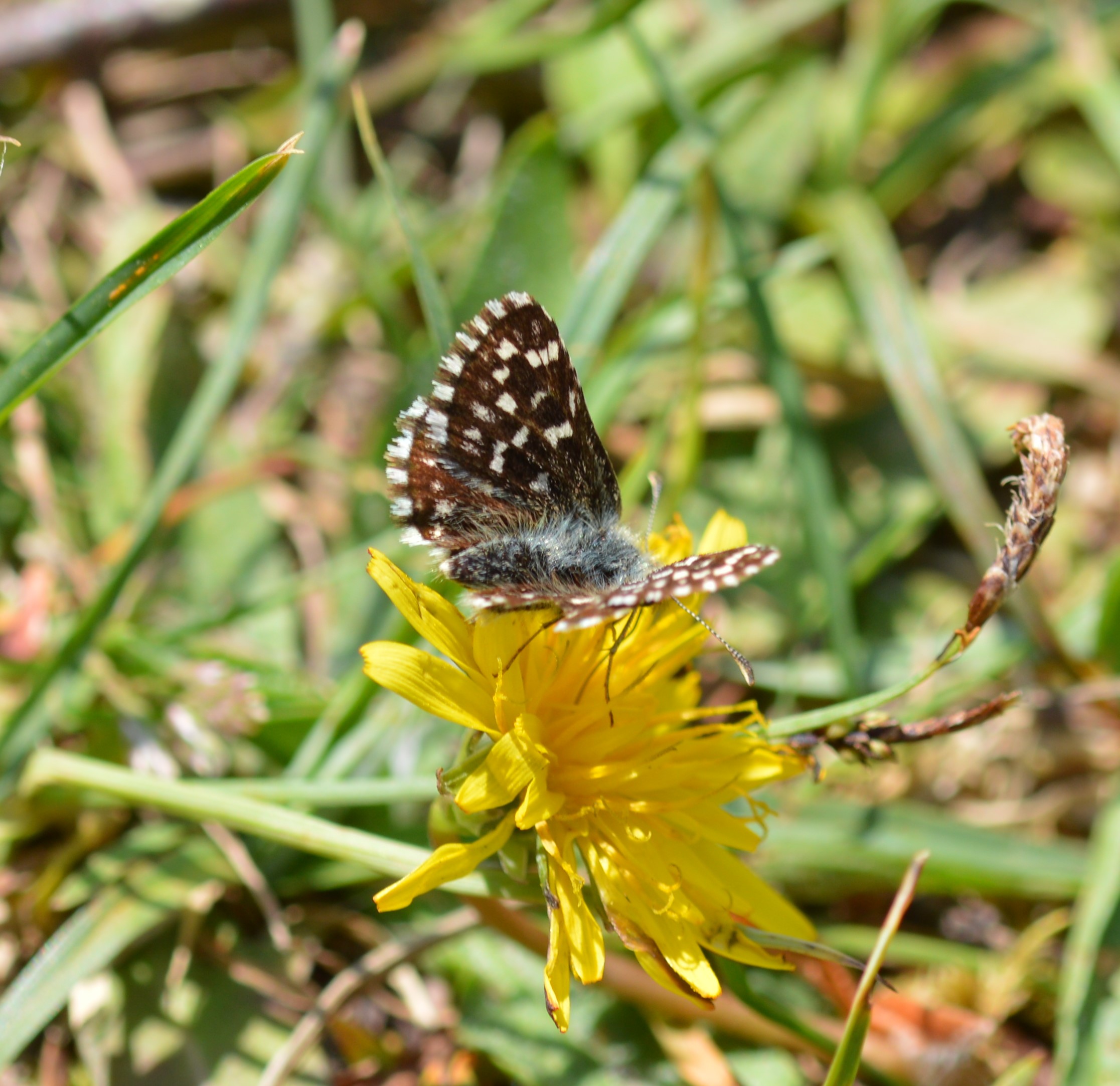
Flushed with success (and the heat of the quarry) I decided to head back to the car and start again on the proper route. Not too surprisingly on the proper route it was a lot easier to spot the skippers. I quickly found about half a dozen flitting around a sparse area of ground. They were so quick though it was difficult to track them – I think these were both of the same slightly slower specimen.

It is still relatively early in the “butterfly season”, but I did spot a few other species around the bluebells – this female orange tip and a large white.

The Grizzled Skipper is a delightful little butterfly, but it unfortunately becoming increasingly rare.  There are not many sites around us where we could have seen them, so we were very lucky to be able to add this species to our butterfly tally. Species number 39, only 20 more to go, but I have the feeling they are going to become increasingly difficult to find!

Big Lazy Review of the Year

Can’t believe 2016 is all but over. It’s been an awful year in many respects (depressing national and international voting outcomes, various terrorist atrocities, plus the loss of some truly great people), but our garden has provided welcome relief throughout. We may live in the middle of Malvern, but the garden is quiet and peaceful and the wildlife never fails to cheer me up. So here’s a bit of a round up of some of the highlights from 2016.

The year began with one of the many “citizen science” projects we try to participate in – the Big Garden Bird Survey. Throughout the year we also took part in the Big Butterfly Count, the Garden Bioblitz, the Garden Moth Scheme and Moth night as well as submitting assorted records for bees, ladybirds, dragonflies and even a glow worm.
30DAYSWILD_ID1 blackThe biggest project was taking part in the Wildlife Trusts 30 Days Wild Challenge. This ran throughout June and I managed to blog about something “wild” we’d done each of the 30 days. I was really chuffed when the blog made it to the final short list for the 30 Days Wild Blogger Awards. We didn’t win, but that didn’t matter as I had such fun doing it.


Scarlet TigerMoths were, as always, a big part of my year. The trap was out once a week throughout the summer for the Garden Moth Scheme. In the end we recorded 211 species in the garden – a new record total, which included many firsts for our garden. All beautiful, but none more so than this Tiger.
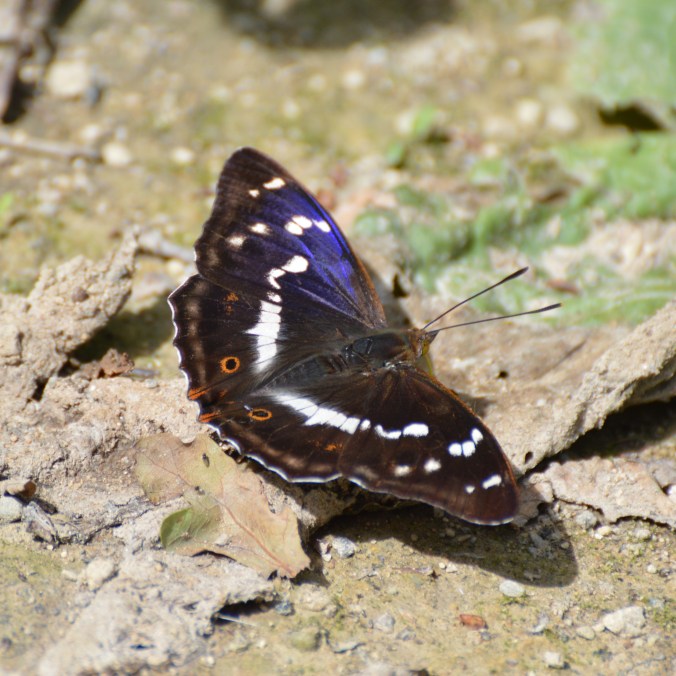
One of my resolutions from last year was to see more butterfly species. We may not be able to attract any more species to our garden, but when we were Out & About we managed to bag 10 more species – way more than I’d hoped for. This takes our lifetime tally to 38 – only about 20 more UK species to go! Every one was a delight, but ultimately you can’t beat the Purple Emperor!

ivy-bee-7Last year we recorded 12 species of bee in the garden, which I’d thought was pretty good. This year we made it to 25! There may even have been more, but some require microscopic identification and as I don’t want to kill any, that was out. The final bee of the year was this Ivy Bee – new to Britain this species is gradually spreading north, so we were really excited to find it in our garden.
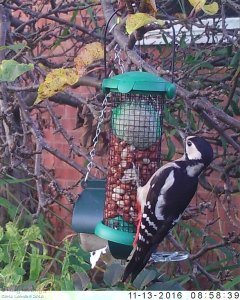
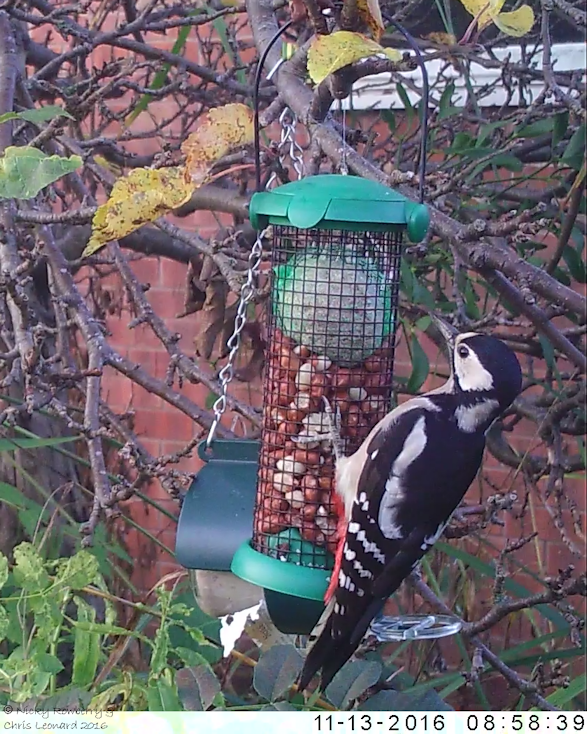
woodpecker-2One major innovation for the garden was our Trail Camera. Wish I’d bought one of these years ago as they are brilliant! We’ve been able to watch blue tits using the nest box, catch the squirrel stealing the bird food outside and mice stealing it in the garage, as well as watching the birds themselves feeding up close. We discovered we’d got Siskins and a Woodpecker that we’d never seen and followed Stumpy the magpie.
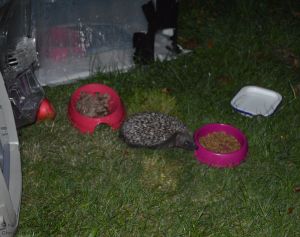
 

hedgehog-fredOne particular joy from the trail camera has been being able to watch our hedgehogs. We rescued 2 baby hedgehogs one boiling hot day in July, who were then cared for by our local hedgehog rescue lady. One of them (Fred) was returned to us and we watched him trundle around our garden with another older hog. We’ve now got 2 hedgehog houses and have learnt a lot about their behaviour from watching the video footage. Fingers crossed Fred and his friend survive the winter.

KestrelAs well as watching the wildlife in our garden, we were out and about quite a bit in the summer. We are lucky here to have so many wonderful nature reserves within easy distance. As well as the various new butterflies, we’ve seen slow worms and glow worms (the latter only as a larva unfortunately), kestrels, deer, puffins (admittedly we did have to go a bit further for these) and of course some beautiful countryside.

2016-12-31-14_39_48_315Last year I set out some wildlife resolutions and surprisingly we’ve actually managed to achieve some of them (wildlife resolutions are clearly much easier to follow than the ones about losing weight or cutting back on the Prosecco!) We did see more butterfly species, I did have a go at beetle trapping (not a huge success, but at least I tried), we did replace some of the naturally thriving weeds with specific butterfly/bee loving wildflowers. I even managed to identify the bats that come to the garden in the summer (Pipistrelles) thanks to another new toy, my bat detector.

We didn’t however manage to dig a new pond and the old one is getting increasingly silted up. I also haven’t got round to the new moth tattoo, although I have made some enquiries with various tattooed lorry drivers who come to my work as to where they got theirs done. (much to their bemusement I expect!)

So New Year’s resolutions for 2017?

  • The new pond has to be top of the list, before our frogs and newts give up on us totally.
  • Get video/photos of the blue tits fledging this time (assuming they nest in the garden again). Although we filmed the adults feeding, we somehow managed to miss the babies emerging, so really want to get that this year.
  • Try to bag a few more butterfly species – targets will be Small Pearl Bordered Fritillary, Duke of Burgundy and Grizzled Skipper, but more if we can manage.
  • Try and find Ivy bees at a few more sites. Don’t think there are many records for Herefordshire yet, so hopefully we can head over to my Dad’s and add a few more dots to the map.
  • Start compiling records for hoverflies in our garden – I know we get lots, but we’ve never really had a proper go at identifying them all. I feel a new obsession coming on!
  • 30 Days Wild for 2017.
  • Maybe that tattoo!

Thank you to all the people we met while out and about this year. We met some lovely people who helped us identify birds and butterflies and pointed us in the right direction when we were wandering aimlessly in search of this species or that. Thanks also to our local hedgehog lady Viv who does such an amazing job and let us have Fred back all fattened up and healthy. And thanks to everyone who’s been following the blog and to all the other bloggers that I follow and who are so inspiring. Wishing you all a happy, healthy and wildlife-filled 2017!

Autumn Flower Power

The colours in the garden are gradually changing from the bright floral ones to the more subtle leafy ones. While we can appreciate the change in the dynamics in the garden, it can be a really tough time for the insects that are still around. The leaves may look fabulous, but they don’t provide the nectar and pollen that the bees and other insects need to keep them going. Fortunately as the other flowers fade away, one comes into its own – the strange sputnik-like blooms of ivy.

ivy-flower

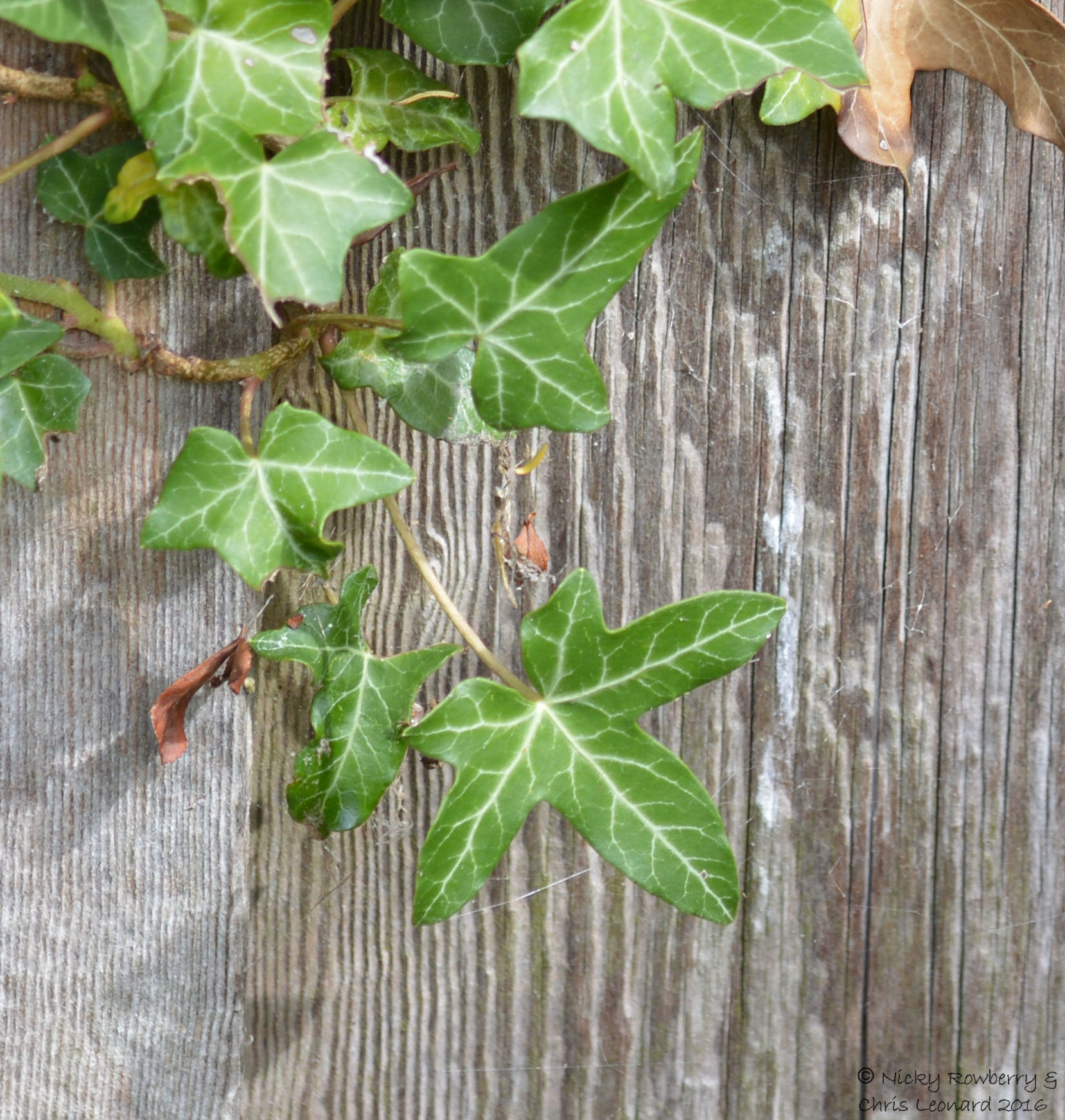
I am a relative newcomer to the ivy fan club, having not really appreciated their contribution until this year. We’ve had ivy growing along the fence for a long time, but I’d never noticed any flowers. Turns out this wasn’t just my short-sightedness, but the fact that ivy doesn’t flower until it is mature. Young ivy leaves are markedly lobed like the ones below.

young-ivy

On mature stems the leaves lose their lobes and have a more undefined wavy edged shape, like the ones below. The flowers only occur where there are mature stems. So it may be that it is only this year that our ivy has been old enough to flower, rather than me being spectacularly unobservant!

shieldbug-on-ivy

The leaves themselves are of course hugely beneficial habitats for a host of species. Our ivy has lots of the shieldbugs (as above), which are well camouflaged and can hide amongst the foliage. The ivy in our garden is confined to our fence and the ground immediately below it. The ground cover provides refuge for our resident frogs and the occasional toad. In places where the ivy is more extensive, it can apparently be a really good roosting place for bats (my dream house would be a big old one, covered in ivy and home to flocks of bats!!)

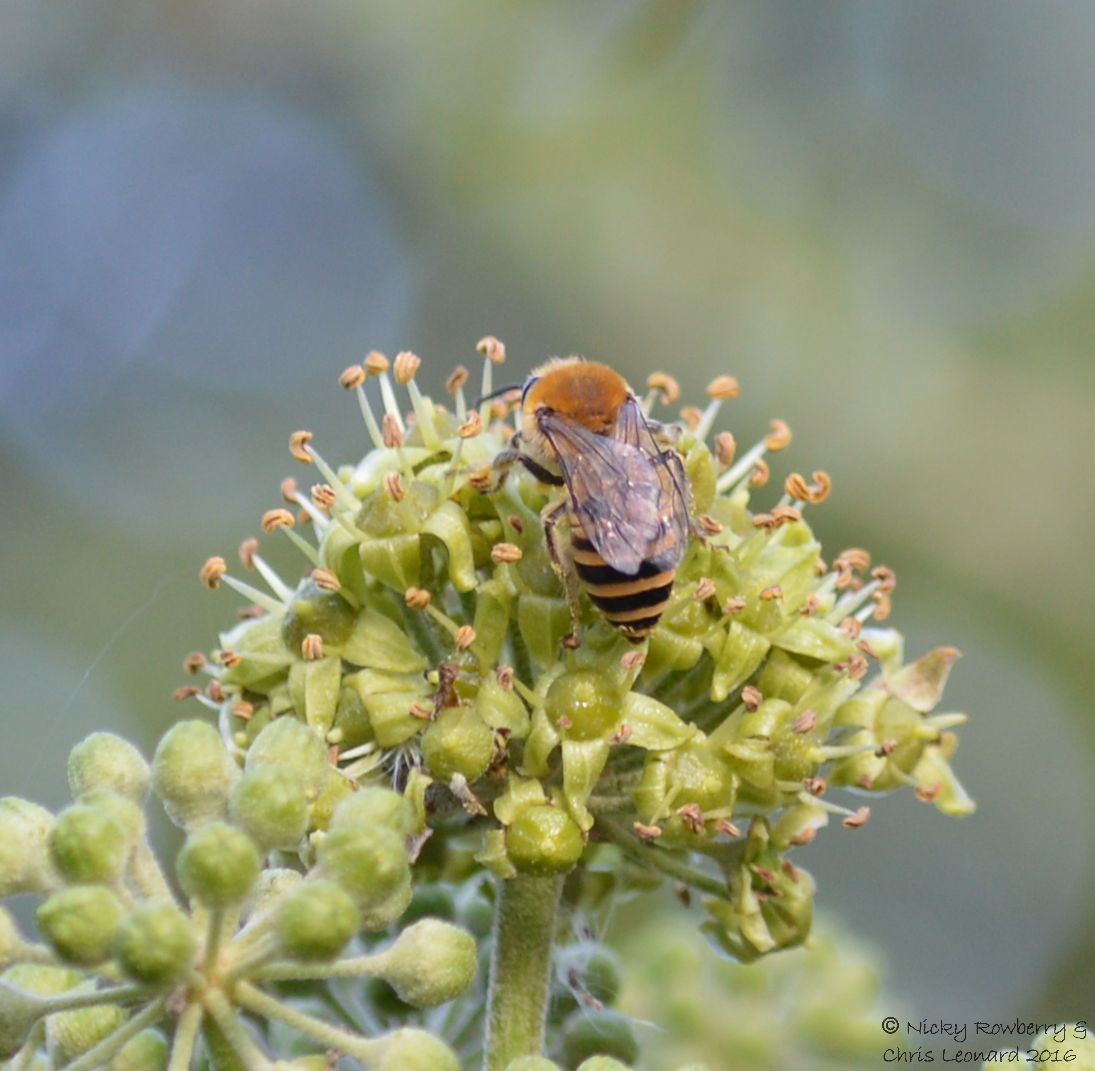
Ivy is of huge benefit to autumn insects – when most other flowers have faded, the ivy provides much needed pollen and nectar. One insect has based its whole life cycle on it – the Ivy Bee (below) even times the emergence of the adult bees to coincide with the ivy flowering.

ivy-bee

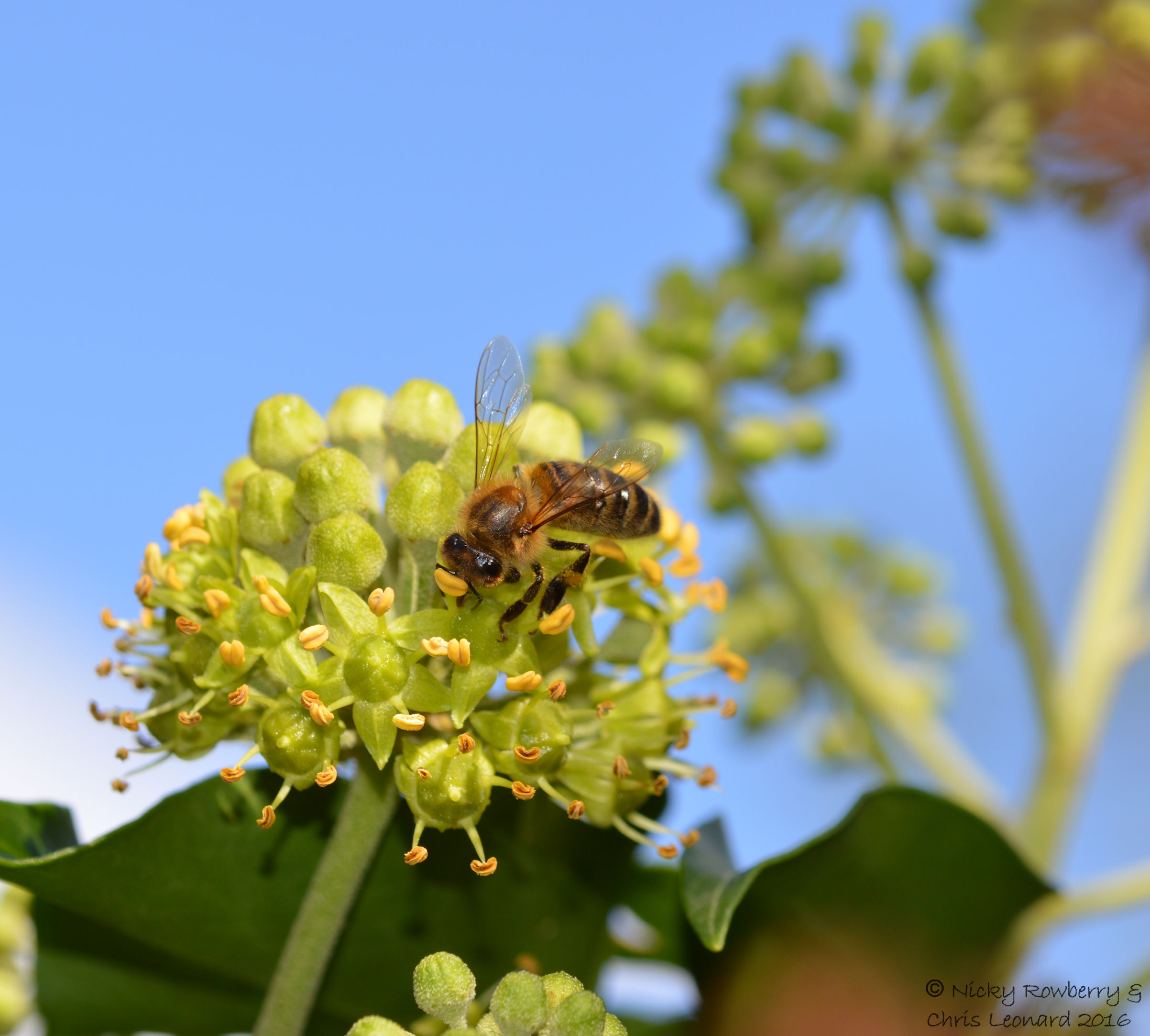
The Ivy Bee may feed specifically in ivy, but lots of other bees make good use of it too. In my quest to photograph the Ivy Bees, I’ve seen lots of other bees making the most of the flowers. A large patch of ivy can be absolutely buzzing with honey bees like the one below.

honey-bee-on-ivy-2

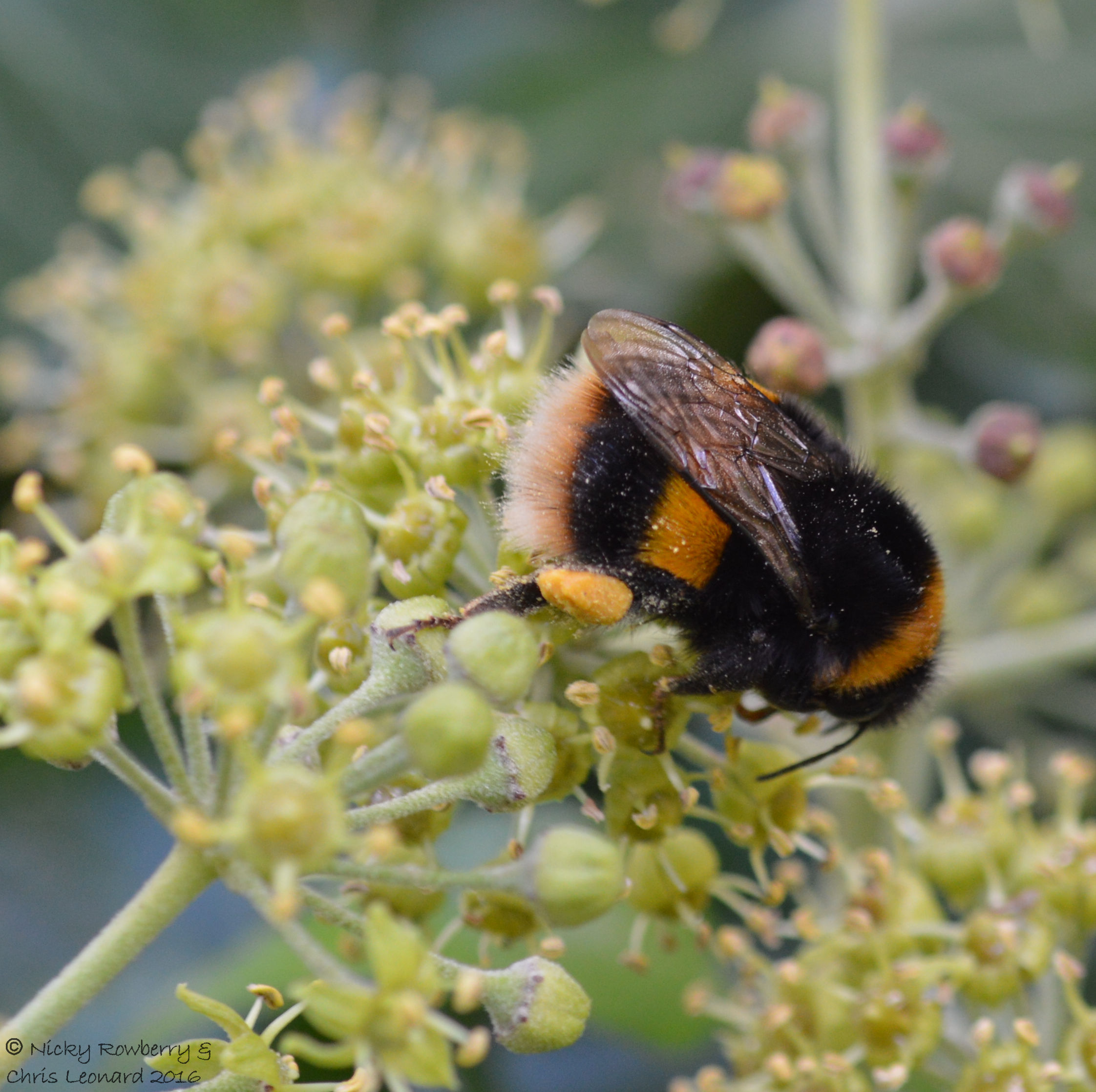
This queen Buff-tailed Bumblebee was loaded up with pollen and may have been preparing to start a new colony.

bumblebee

Some autumn butterflies will also make use of the ivy to build up energy reserves so they can hibernate over the winter. For weeks now I’ve been seeing other peoples’ photos of Red Admirals feeding on the ivy, but although we’ve had them fluttering around ours, they always seemed to land on the neighbour’s side of the fence, so I couldn’t get a photo! Finally last weekend I spotted this one in the churchyard in Bodenham and after a bit of chasing it settled down and let me take some pics.

red-admiral

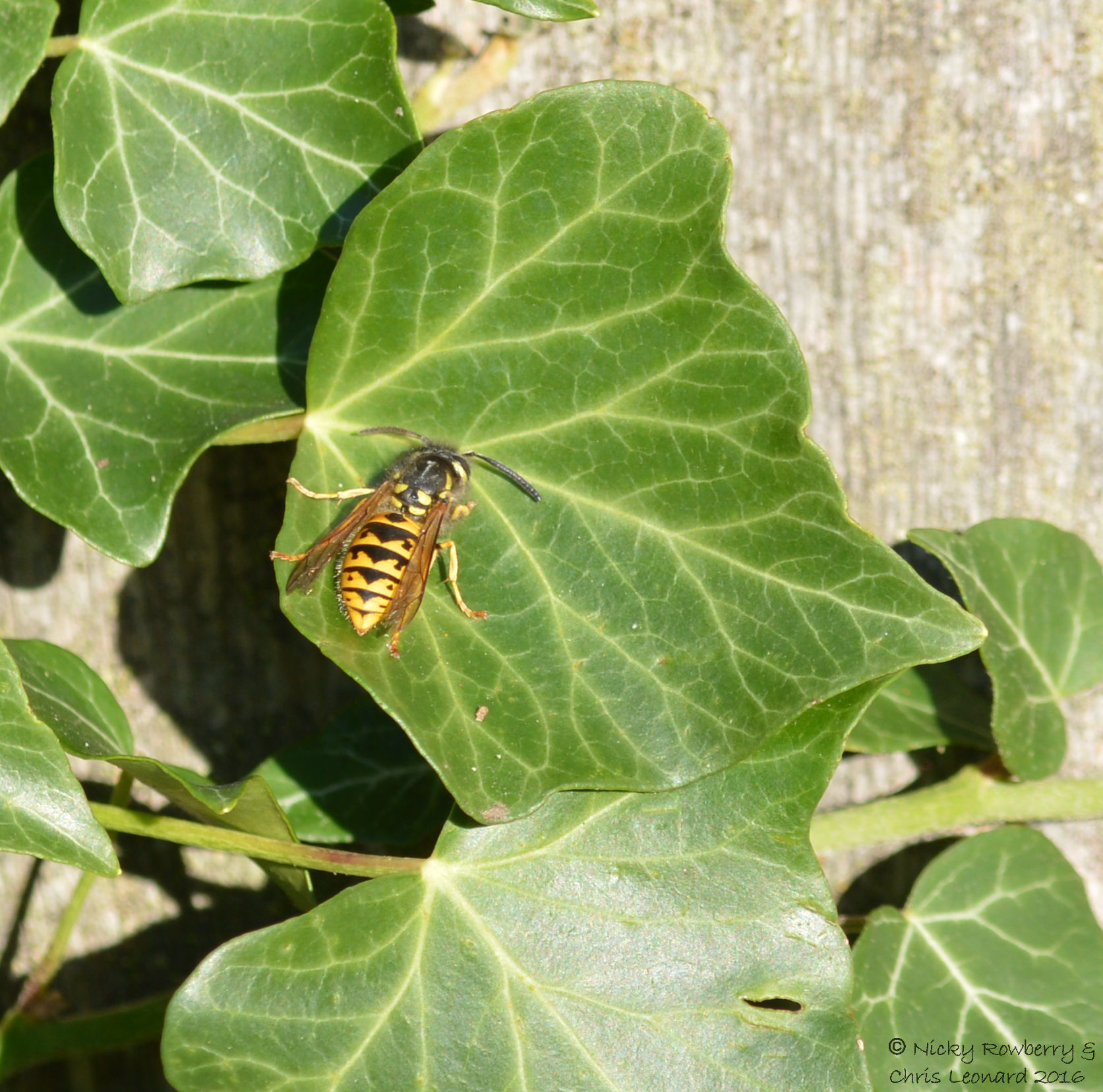
Our garden ivy gets a lot of wasps – probably more of them than the bees. They seem to like resting on the leaves in the sunshine, between bouts of feeding on the flowers.

wasp-on-ivy

wasp-v-vulgaris-on-ivy

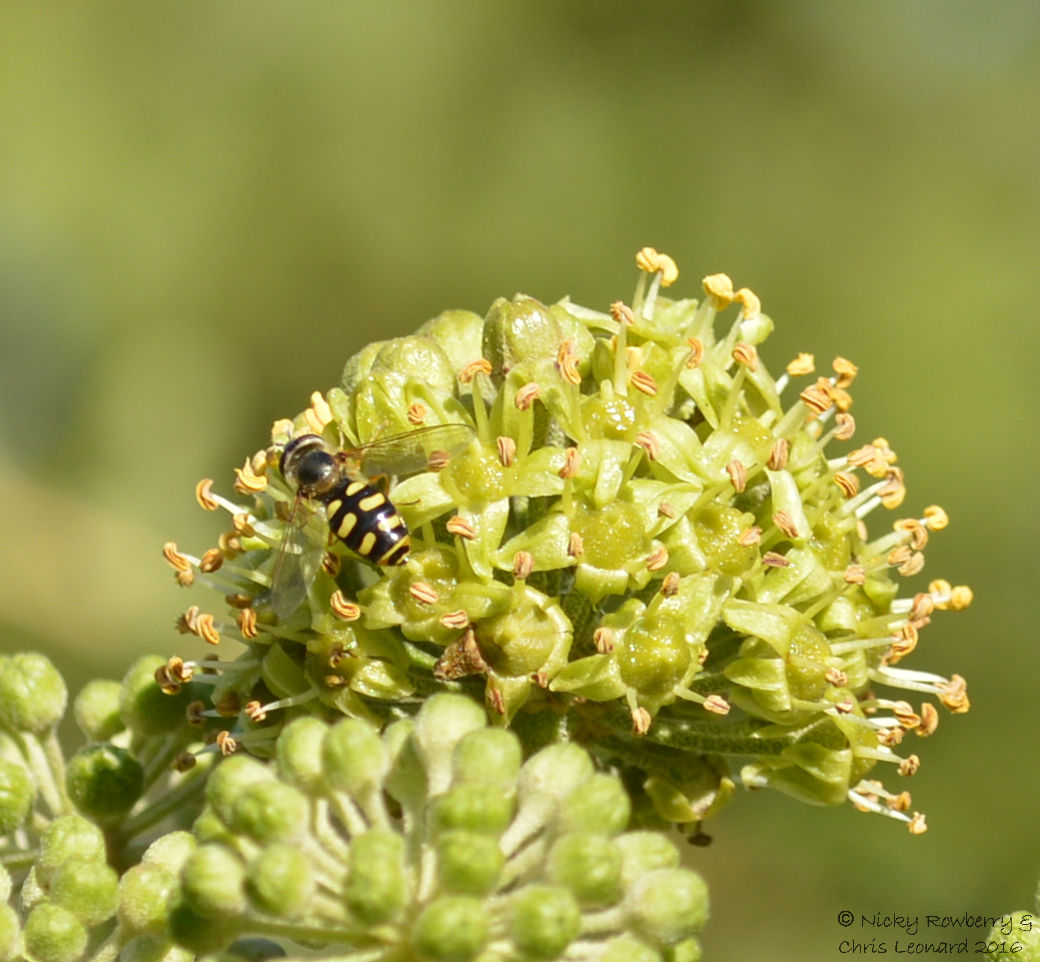
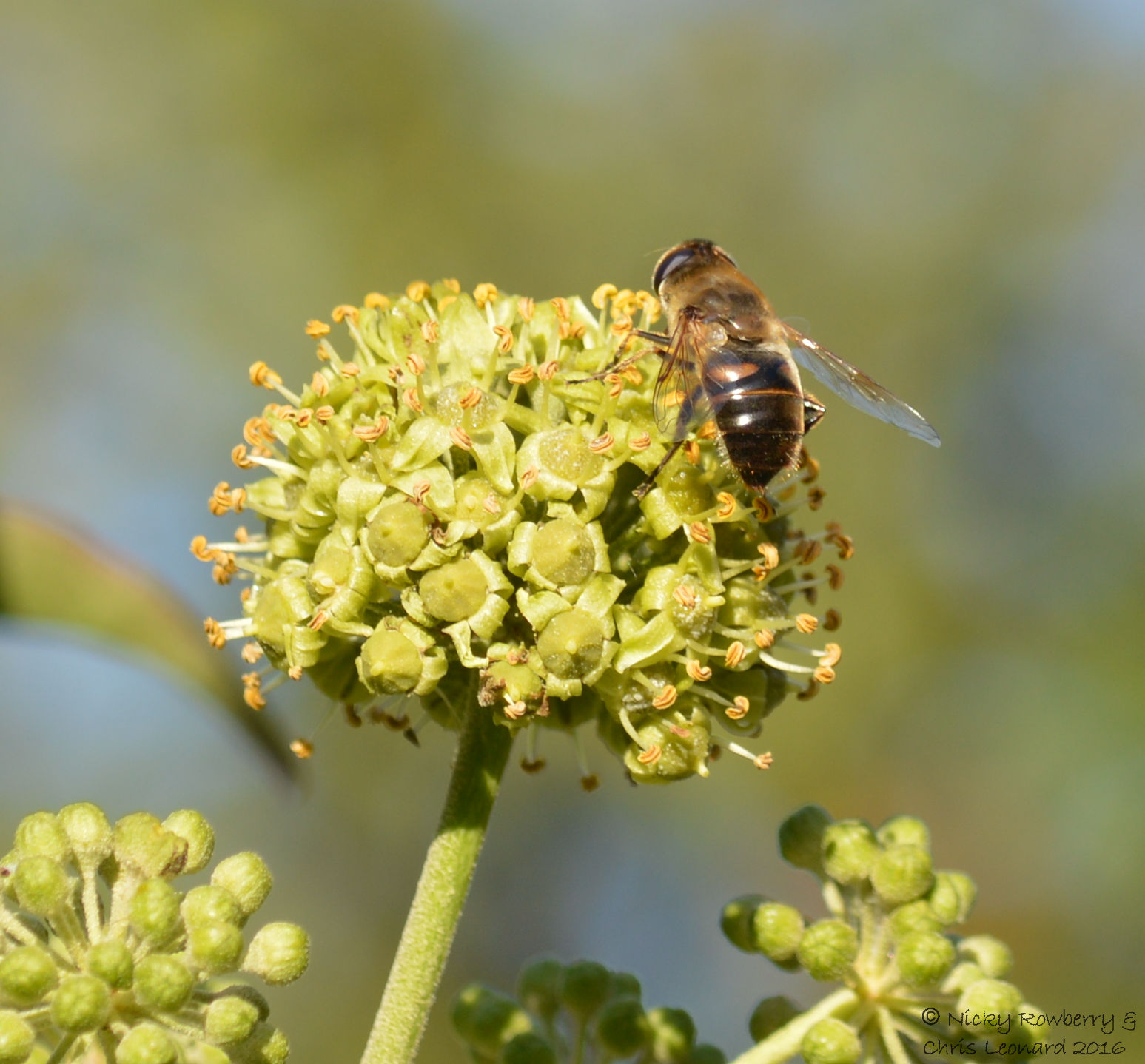
Hoverflies are also abundant on our ivy – here are just a couple – top a brightly coloured Eupeodes sp. and bottom an Eristalis sp.

hoverfly-on-ivy-3

hoverfly-on-ivy-2

Many other insects will make use of the ivy too. It is apparently an important source of food for many moths, although I’ve yet to successfully photograph one on ours. At the less glamourous end of the insect spectrum – the flies also enjoy a nice bit of ivy. This was one of the more attractive ones (I’d call it a Green Bottle, but no idea what its proper name is?).

fly-on-ivy

Once the flowering has finished, the ivy produces berries that are a valuable source of food for garden birds. The ivy berries last much better than some other fruit, so can provide food right through the winter, when hawthorn and rowanberries are long gone. Now that I have ivy flowers in the garden, I will hopefully get some berries – with a bit of luck I’ll be able to get some trail cam footage later in the winter of birds eating them!

Some gardeners consider ivy to be a nuisance, but for me the pros far out weigh the cons and now that I’m finally looking at it properly – it really is a beautiful plant!


Out and About – Grafton Wood

Grafton Wood in Worcestershire is one of our favourite butterfly spotting locations and at only a half hour drive away provided the perfect day out yesterday. We went seeking the Brown Hairstreak, as we’d seen them there before. This is Worcestershire’s rarest butterfly and Grafton Wood is its stronghold, but unfortunately yesterday the Brown Hairstreak refused to put in an appearance. Hopefully we’ll have chance to go back later in the month, but in the meantime here’s one we photographed last year.

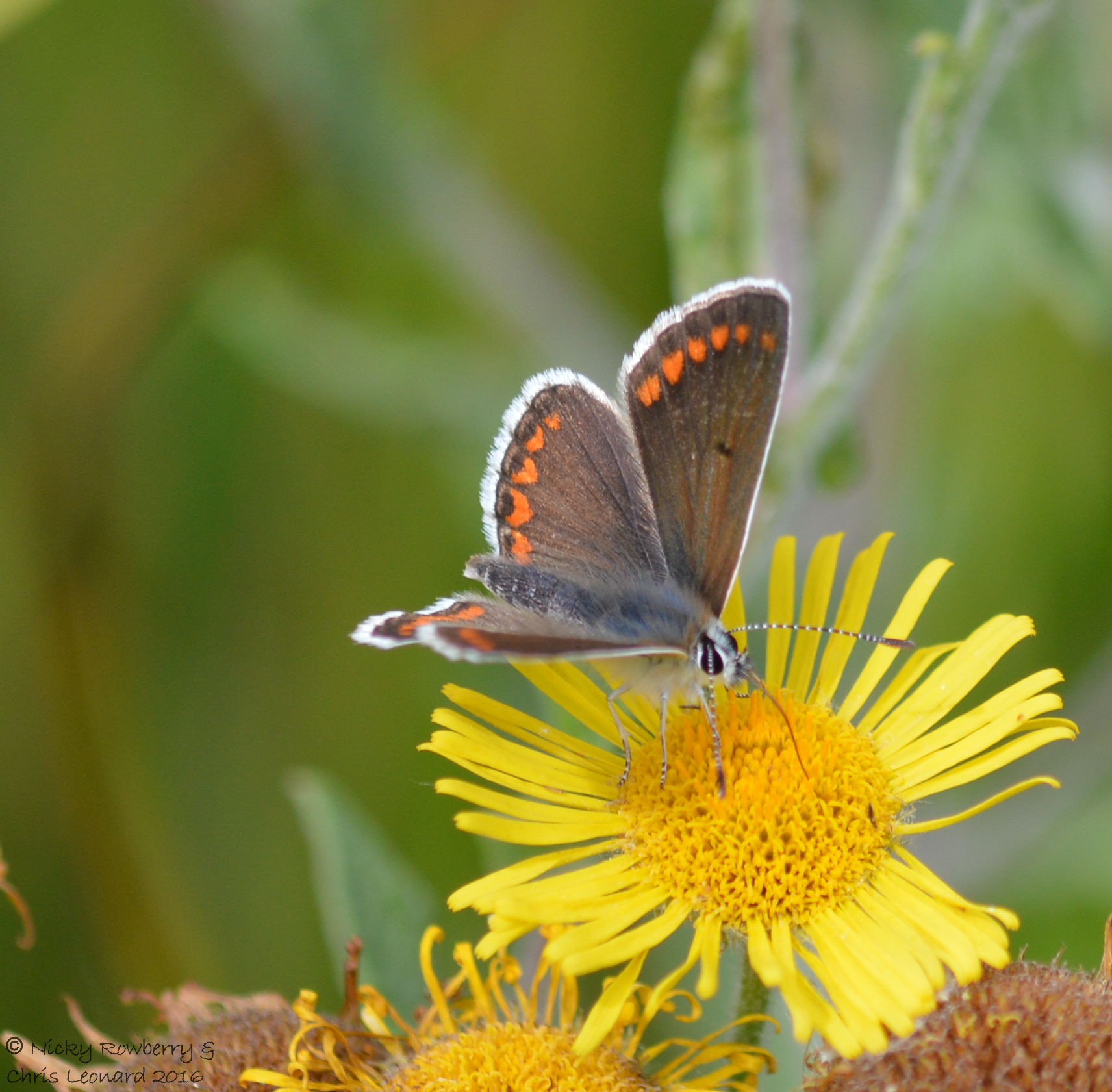
We may not have seen the Brown Hairstreak yesterday, but we did manage 14 other butterfly species, so we’re not complaining. One of the highlights was our second ever Brown Argus, having only seen these for the first time last week at Prestbury Hill.

Brown Argus

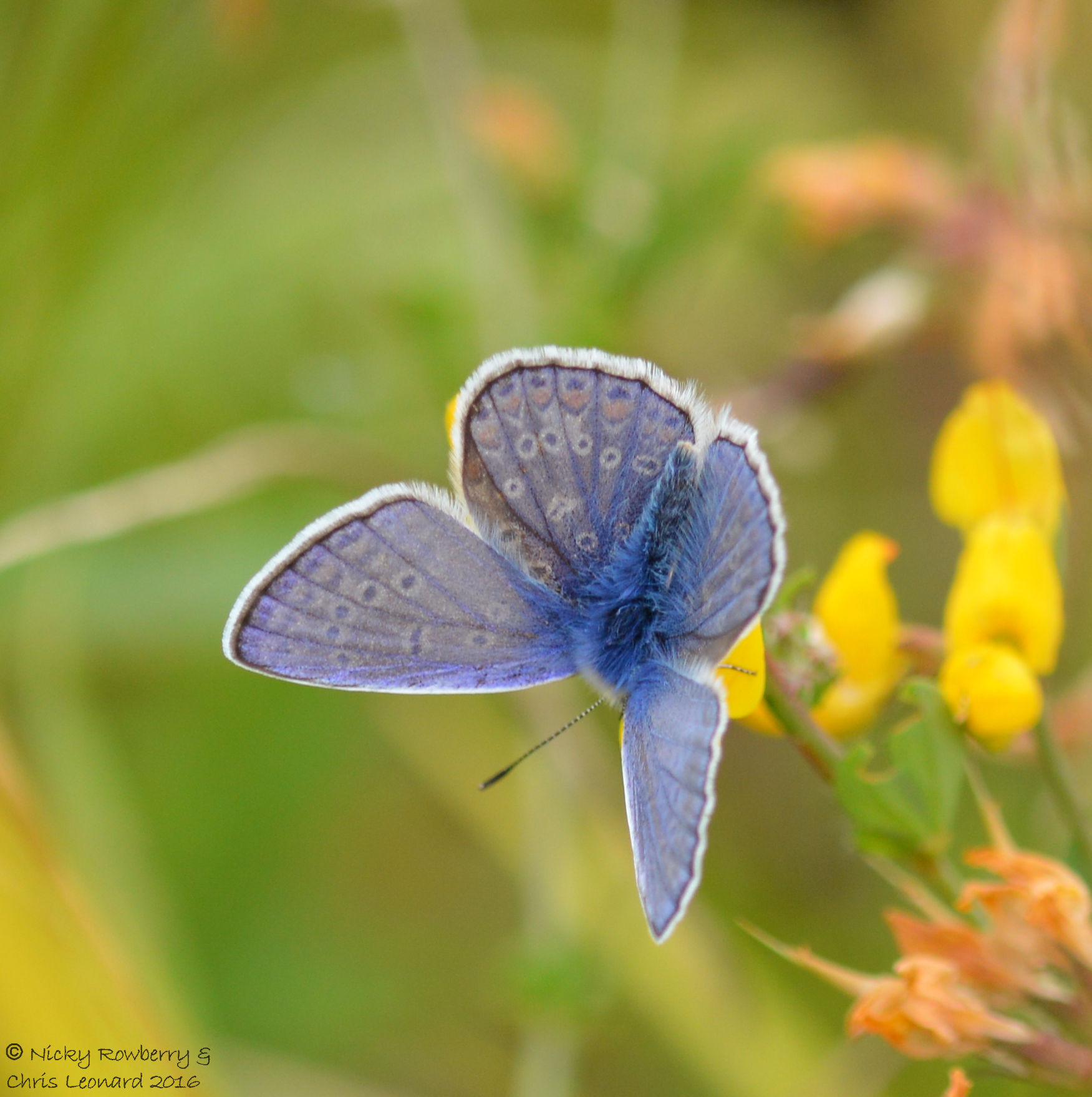
Common Blues were abundant as well. The name implies somehow that by being common they are maybe ordinary, but when the light shines on the males in the right way (like this one below sharing a flower with another favourite of mine, the Swollen Thighed Beetle), they are simply stunning.

Common Blue 3

The colours in the next photo aren’t quite as vibrant, but I love the way you can see the spots from the underside showing through.

Common Blue 4

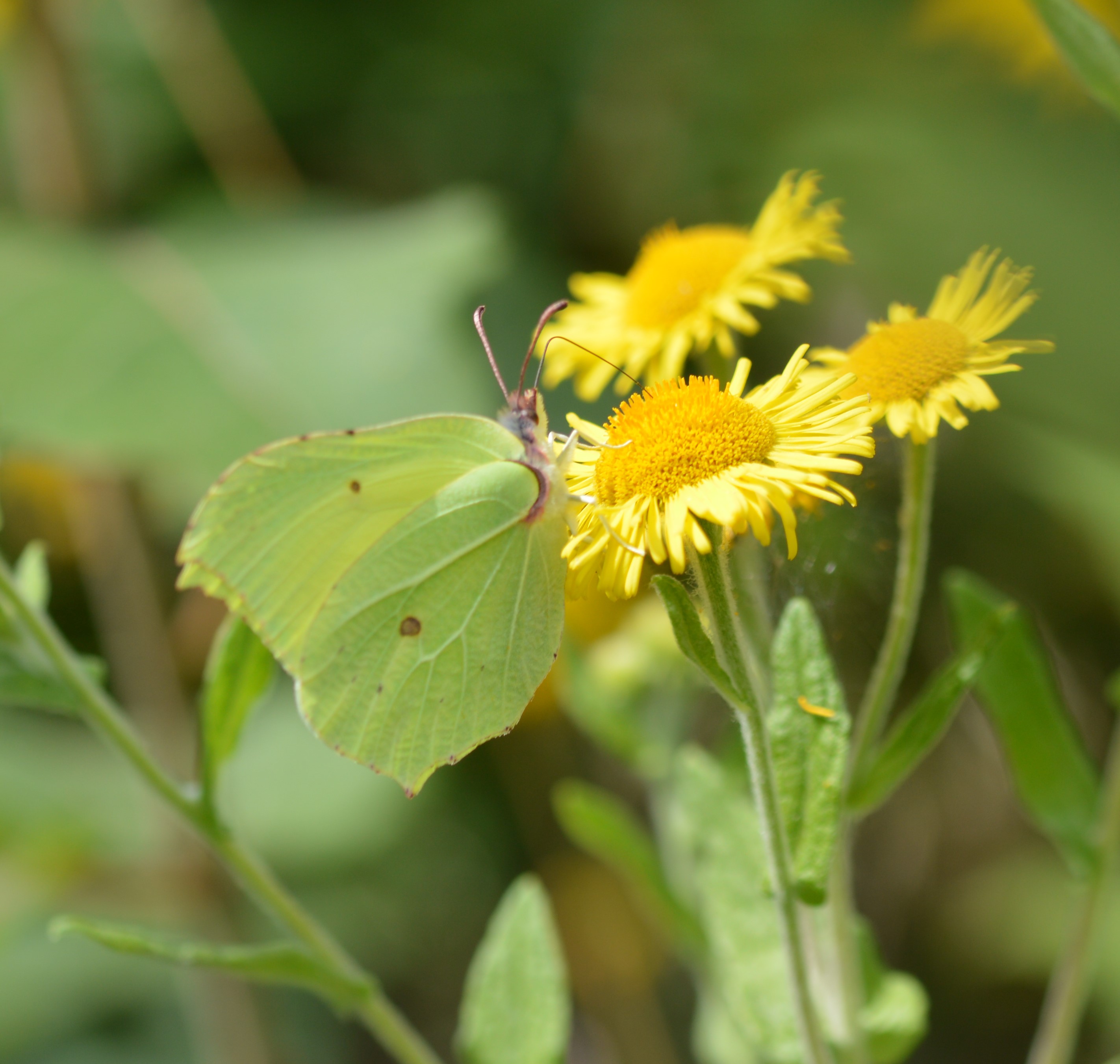
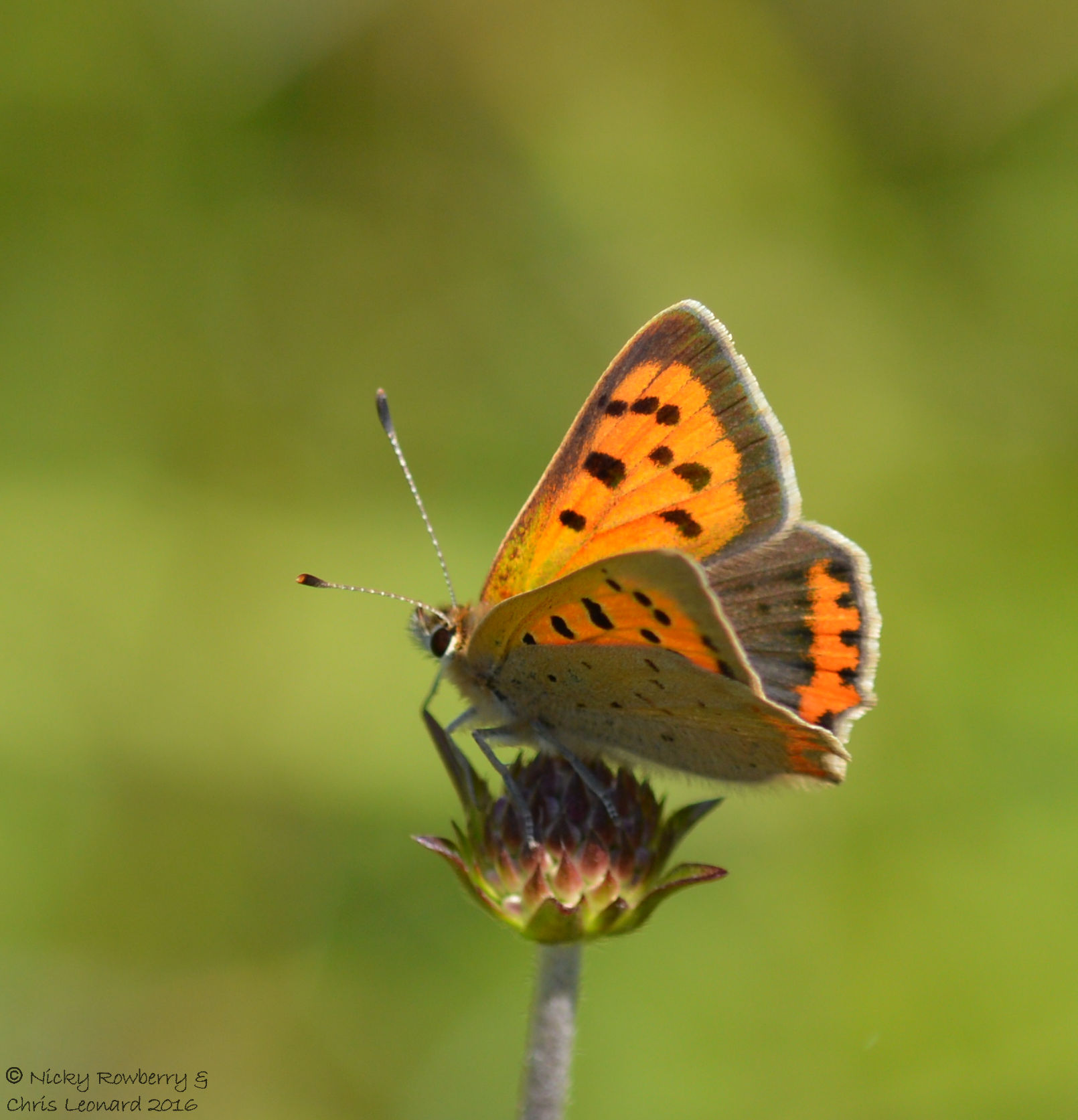
I think we get a bit hung up sometimes seeking out the new species of butterfly, so it was nice yesterday at Grafton to see some of the old favourite species and have time to appreciate them in their own right. So in no particular order of preference – Red Admiral, Brimstone, Peacock and Small Copper.

Small Copper 2

The Red Admiral and Small Copper can both be seen feeding on Hemp Agrimony. This plant seems to be a butterfly magnet and is the one we saw the Brown Hairstreak on last year.

Butterflies weren’t the only insects of interest yesterday though – the dragonflies and damselflies were abundant too. Highlight was probably an Emperor dragonfly, but the swine thing wouldn’t land, so no photo of that. Next best was a Southern Hawker, which was almost as magnificent, but equally difficult to photograph.

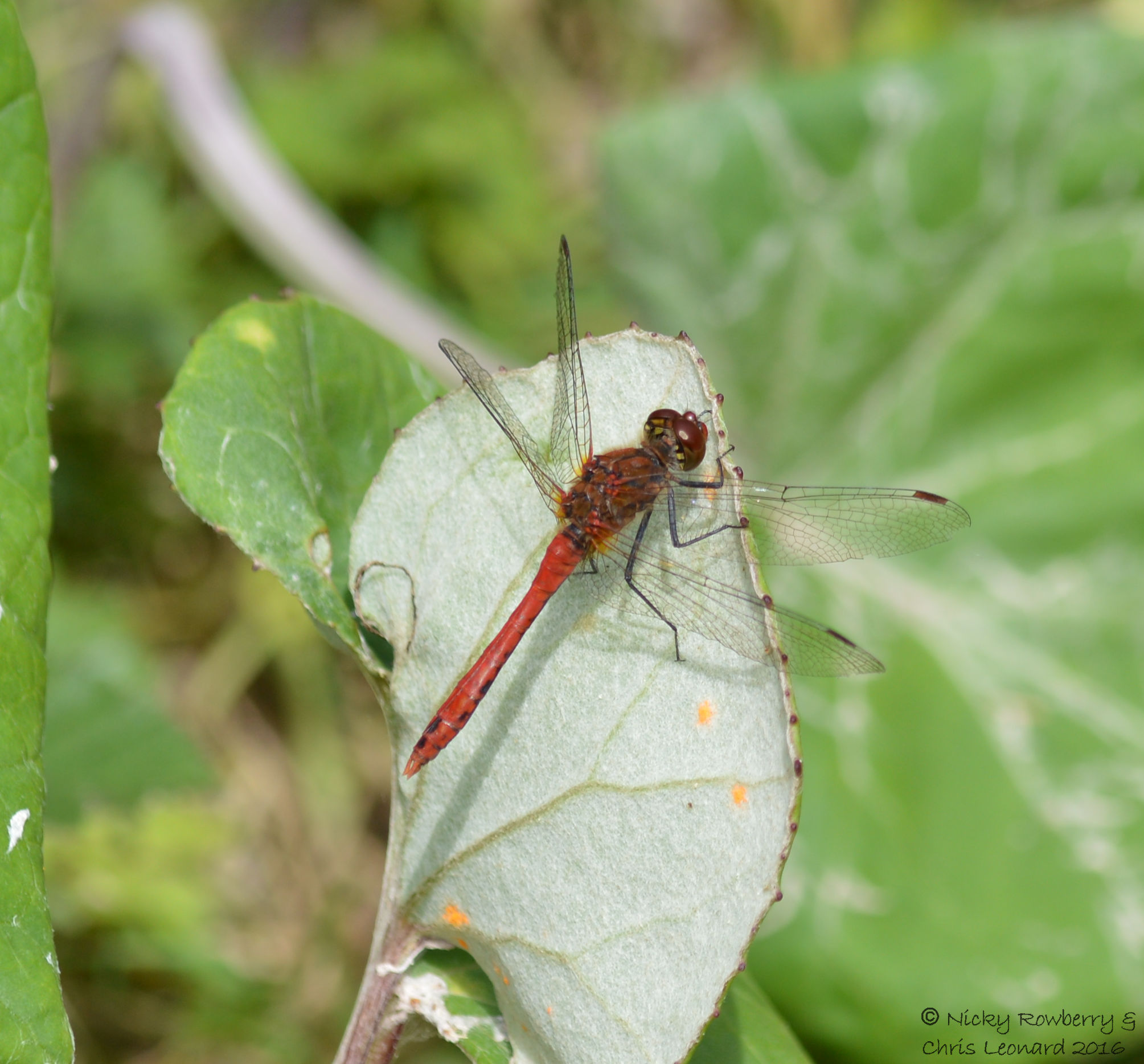
There were lots of Darters about too. At first I thought they were all Common Darters, but closer inspection of the photos back home revealed a Ruddy Darter too. The Ruddy one is a slightly brighter red, but the most diagnostic difference is the colour of the legs – the Ruddy’s legs are all black, whereas the Common has paler segments.

Ruddy Darter

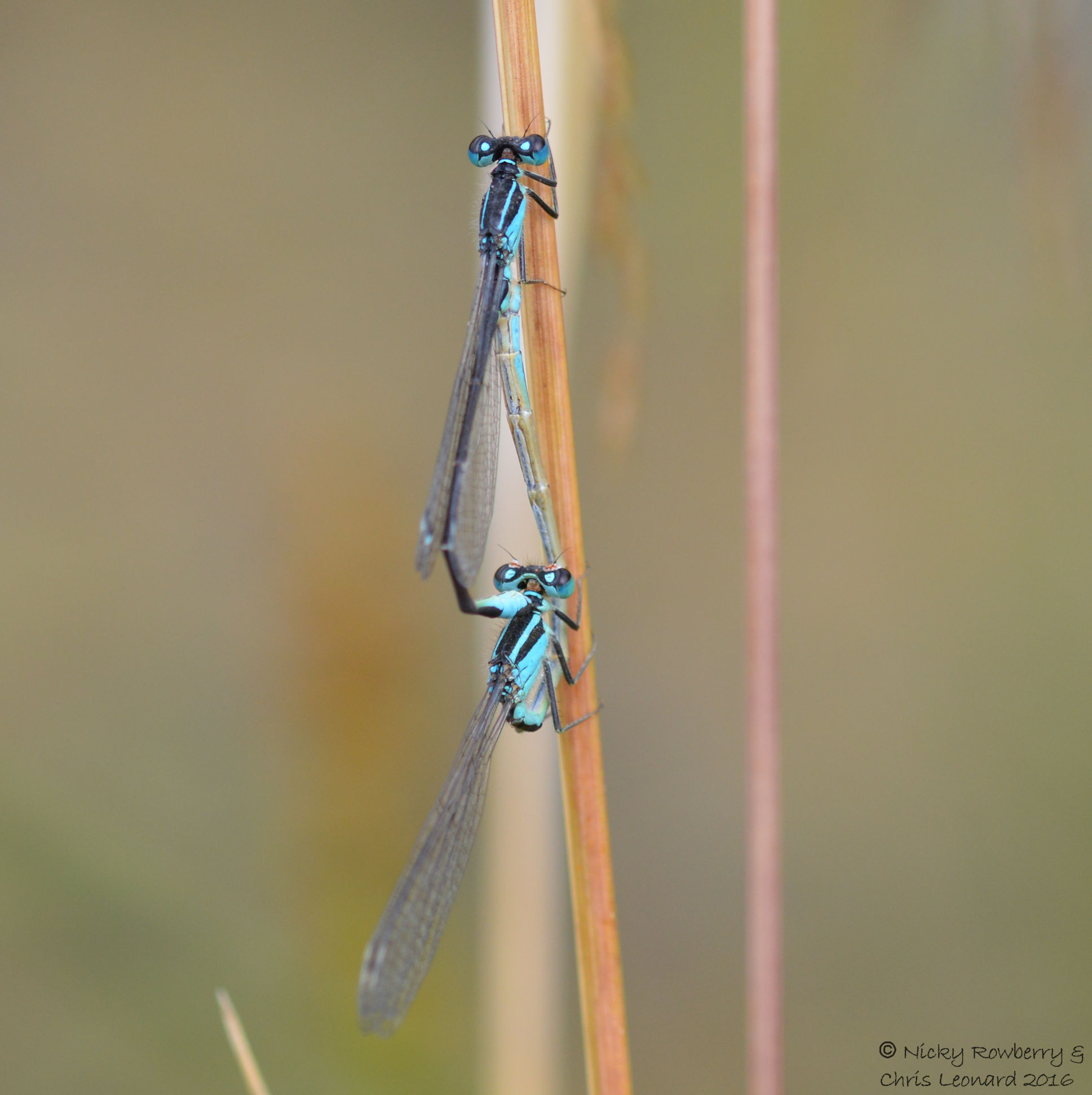
At a small pond we spotted this mating pair of Blue-tailed Damselfies – a new species for us I think. The male is the one at the top and he’s holding onto the back of the neck of the female below, while she curves her body up to his to receive the sperm. They can stay locked like this for quite a while!

Blue Tailed Damselflies 2

Back at the carpark by Grafton church, we rounded off the day by finding our first ever geocache! Not the greatest level of difficulty, but we were pleased with our success on the first attempt. Another thing to get addicted to “bagging”!

Out and About – Prestbury Hill – The Return!

I’m not normally given to the expression OMG, but OMG Prestbury Hill is an amazing place! We made a return trip today to see the Chalkhill Blue butterflies that we didn’t see a few weeks ago (because I’d got their season wrong!) We ended up seeing 15 species of butterfly, a beautiful bird of prey, some moths and a new snail! Pretty amazing for a few hours walking in beautiful countryside.

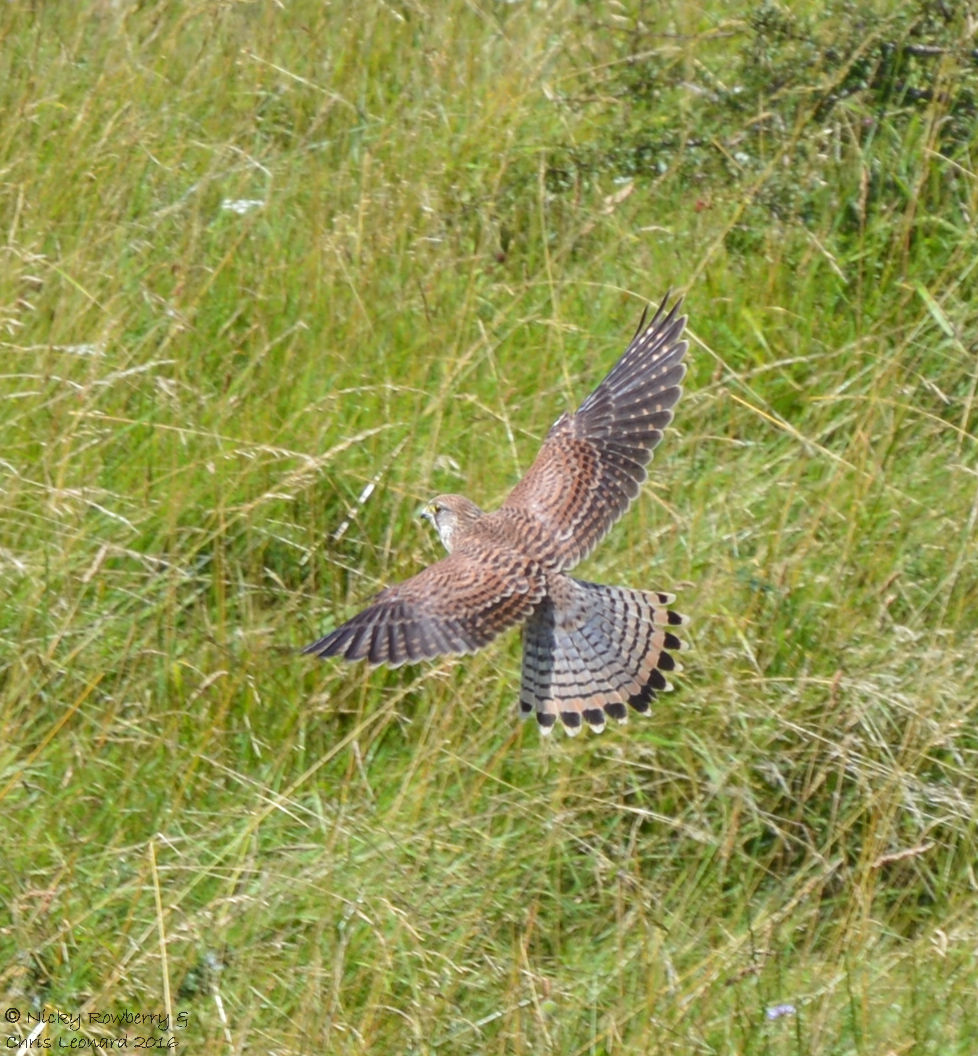
We started leisurely by heading to a bench for a picnic (I’d love to be able to claim that I’d loving crafted cucumber sandwiches and other home-made delights, but actually it was left-over fried chicken from the night before!) We spotted our first Chalkhill Blues before we even reached the bench, but decided to eat first then take photos later. Said bench has glorious views out over Cheltenham and beyond and is the perfect place for a picnic. We could see a bird of prey hovering over fields below – turned out it was this beautiful kestrel. We couldn’t get very close, so this is taken zoomed in from a fair distance, but you can still see what a stunning bird it is.

Kestrel

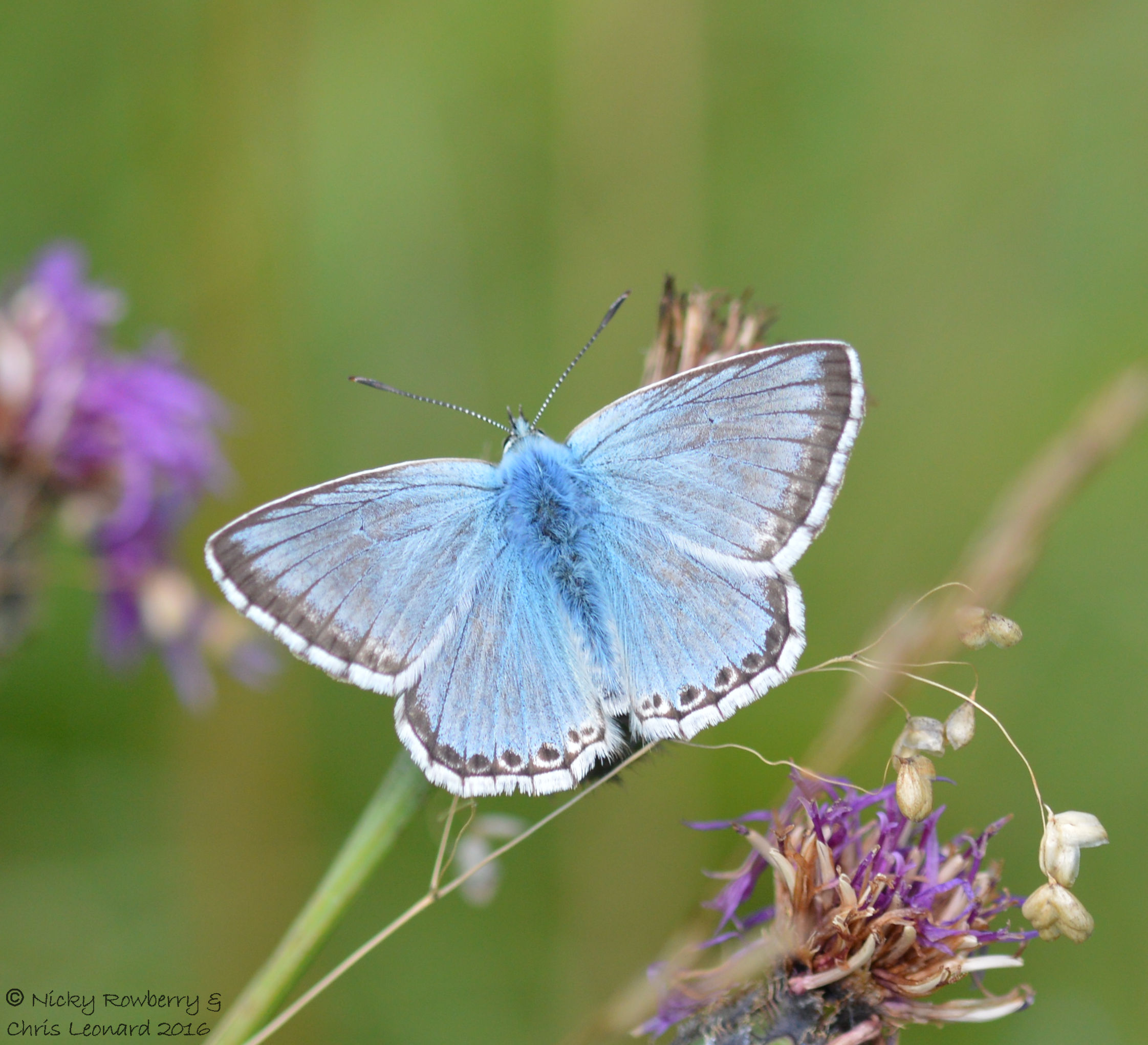
It hovered round about for much of our visit, never coming close enough for a better photo though. But by then we were distracted by the object of our desires – the Chalkhill Blues. The beautiful blue butterflies need either chalk or limestone grassland (Prestbury is limestone) and are one of the last species to appear each year. The males have gorgeous bright blue upper wings edged with black.

Chalkhill Blue

The underneath of the wings have a pattern of dots quite similar to the Common Blue.

As is so often the case with butterflies, the female is much drabber. We saw mainly males today, but that could be just that they are easier to spot with their bright colouring. The few females we did see were often being pursued by more than one admirer.

Already delighted with having bagged our Chalkhills we got chatting to some fellow butterfly twitchers, who knew much more about the area than we did and were very helpful. They mentioned that they’d seen Brown Argus further up the slope – a species that we’d never seen before. Needless to say we puffed our way back up the hill to the area they’d described in the hope of a second prize for the day. We caught a glimpse of something different, which turned out though to be some lovely Small Coppers. My photo doesn’t really do them justice, but they were positively glowing a coppery red in the sunshine today.

Small Copper

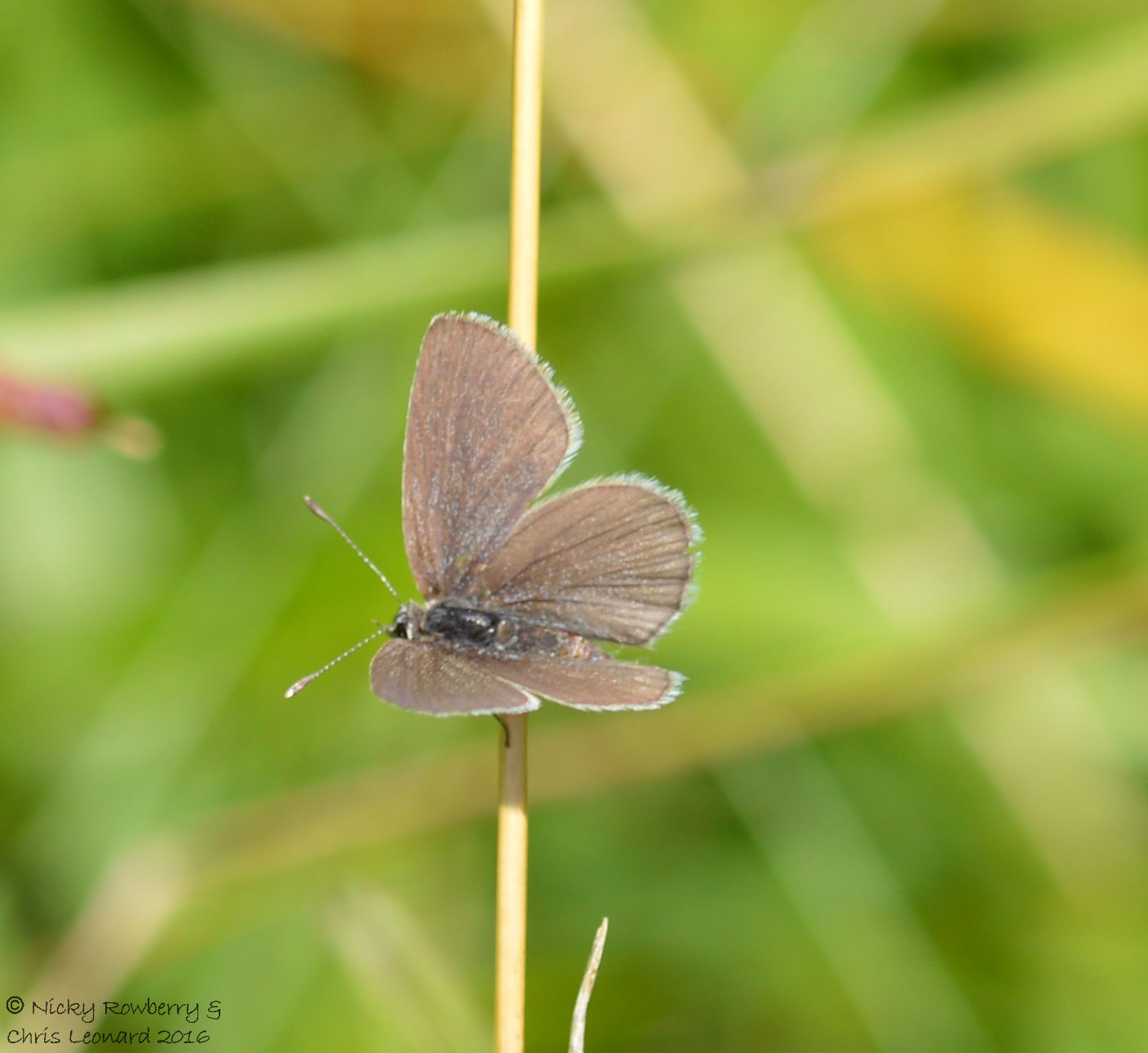
I then noticed a tiny, fairly plain little butterfly, so took a few quick photos thinking it would probably turn out to be a Common Blue. So we were amazed when I downloaded the photos later and realised it had actually been a Small Blue! Another new species for us – two in one day!

Small Blue open

We carried on back up the hill and about half way up saw another small butterfly. This time we’d found it – a male Brown Argus. Our third new species of the day! Again they look quite similar to the female Common Blues, but have the orange dots going right the way to the end of each wing.

Brown Argus male

Obviously seeing three brand new ones was the highlight of the day, but we also saw 12 other species, including our first Small Skipper of the year and some nice fresh looking Gatekeepers.

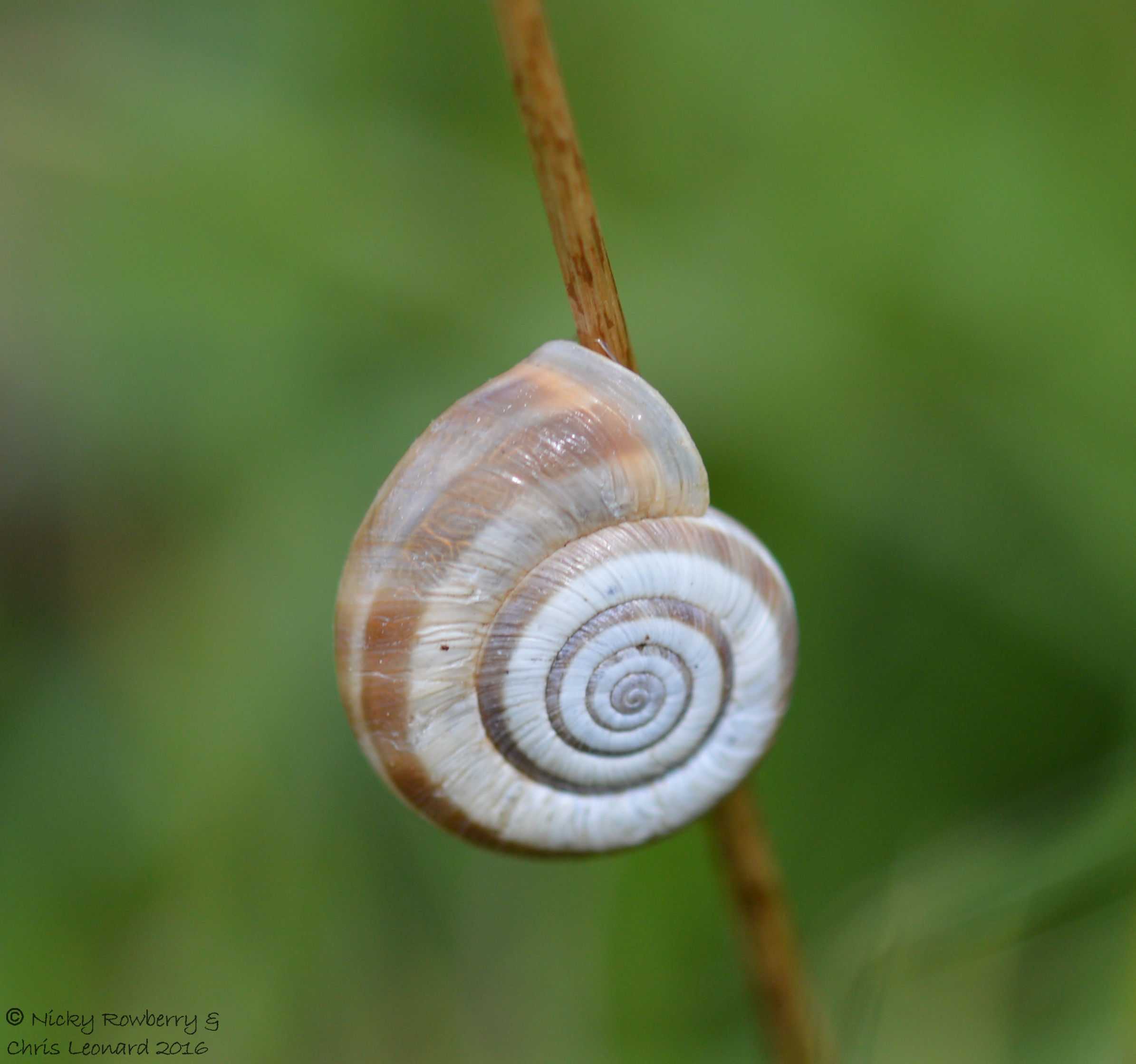
We also saw lots of these interesting snails. They are Heath Snails (Helicella itala) and seemed to have the habit of climbing grass stems like this.

Heath Snail

And finally we couldn’t have a day out without finding a moth – this time a Shaded Broad-Bar as we headed back to the car.

Moth

So if you want to see butterflies, I can’t think of many places better to go than Prestbury Hill. And it still has more to offer – Duke of Burgundy butterflies in the early summer apparently, so we’ll be back again next year.

Out and About – Prestbury Hill

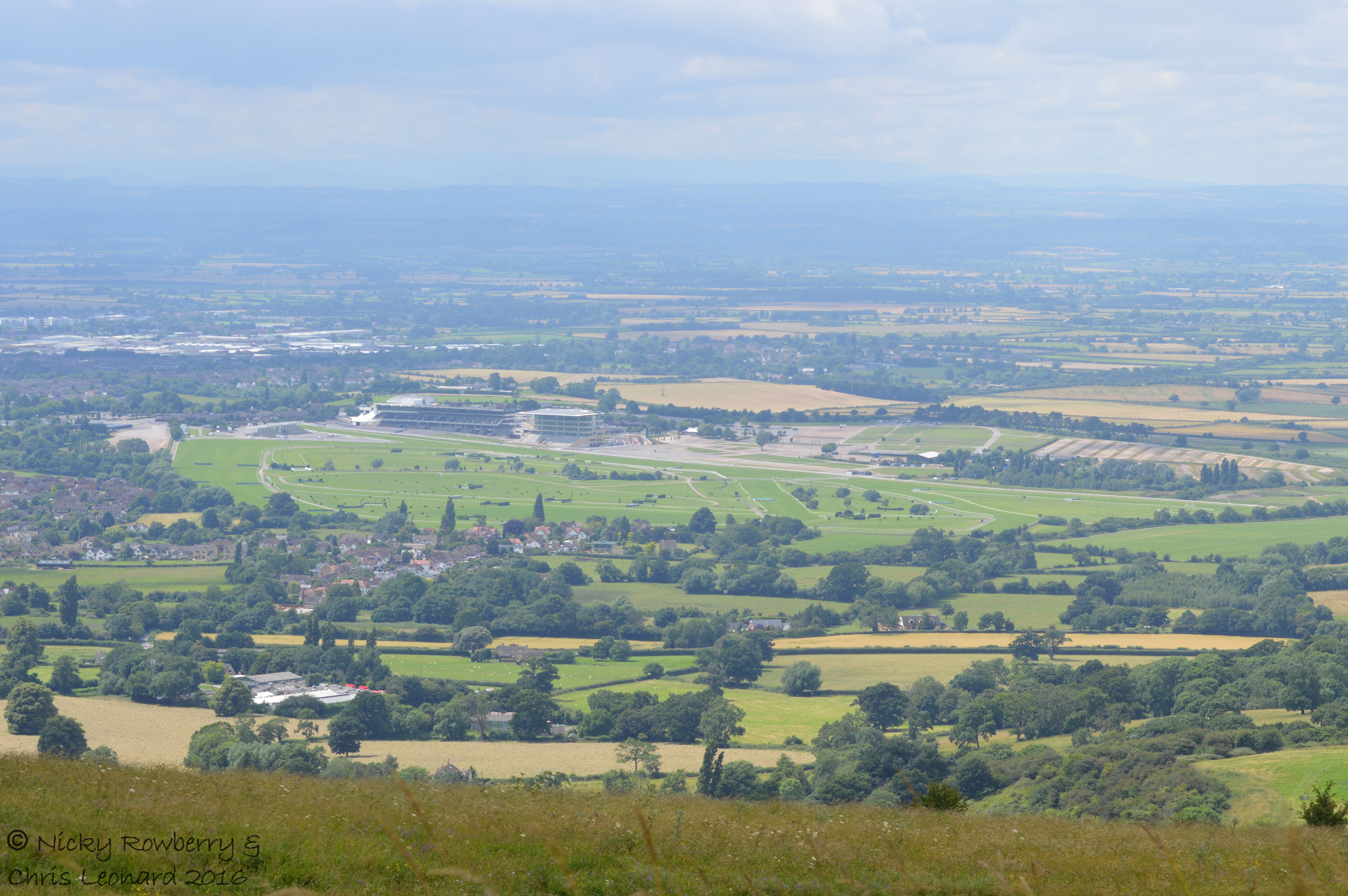
It’s taken me over a week to write this latest post, partly because I’ve kept getting side-tracked by things in the garden and partly because we’ve had friends staying – so I had to spend time tidying the house (although I doubt they could tell that) and drinking Prosecco! But over a week ago now, I headed down to Prestbury Hill, near Cheltenham in search of the Chalkhill Blue and Dark Green Fritillary butterflies. Prestbury Hill is, as its name suggests, high up, with stunning views over Cheltenham racecourse.

View 1

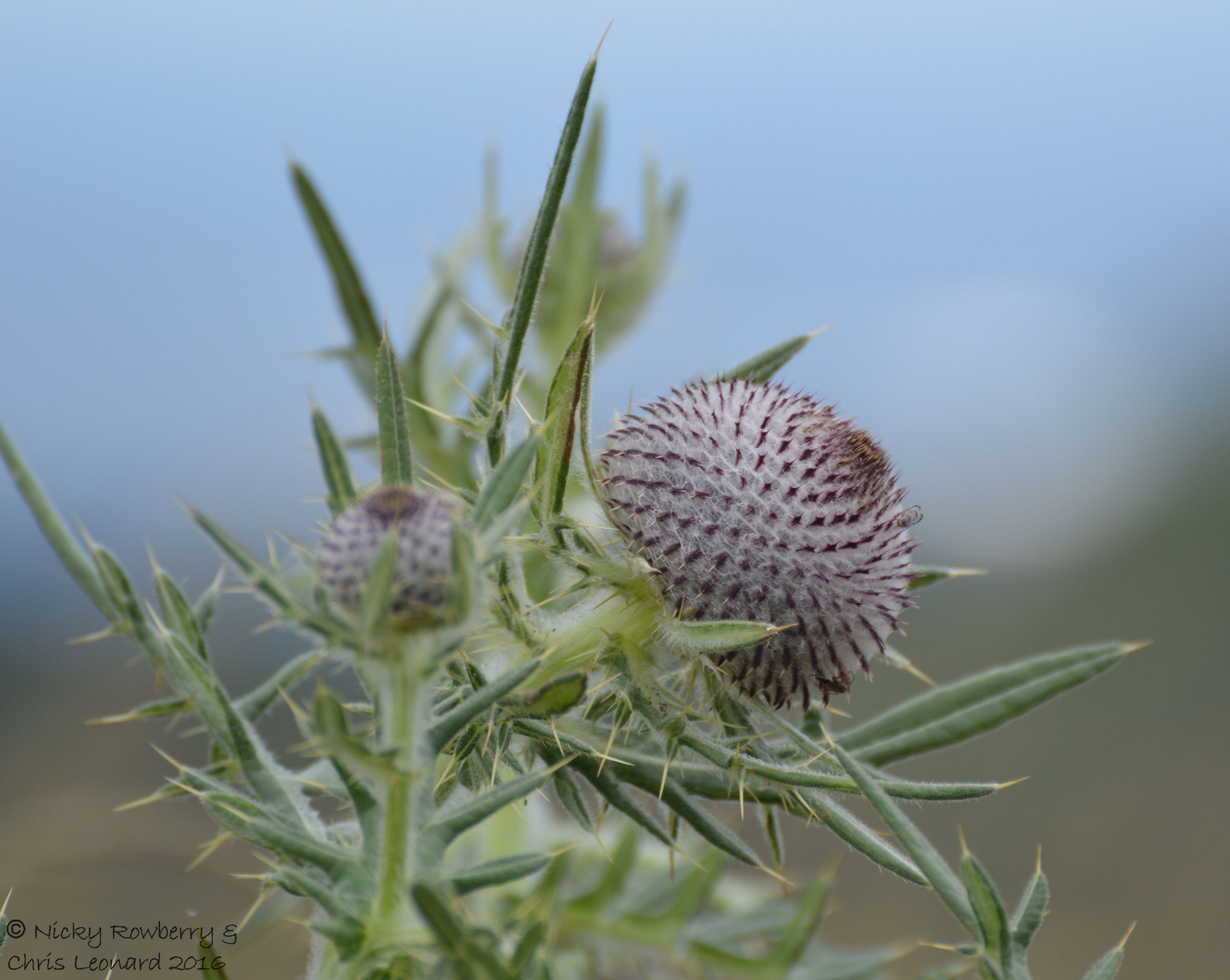
The reserve is run by Butterfly Conservation and consists of 2 areas of limestone grassland. The sloping grasslands are full of wildflowers and insects and would be a lovely place to walk even if you weren’t into butterflies. I particularly liked these Cotton Thistles, with their huge spiralling flower heads.

Thistle

Although we went looking for butterflies, the first insect of interest we spotted was a beautiful Brassy Longhorn moth – I’ve no idea how they manage to fly with such long antennae?

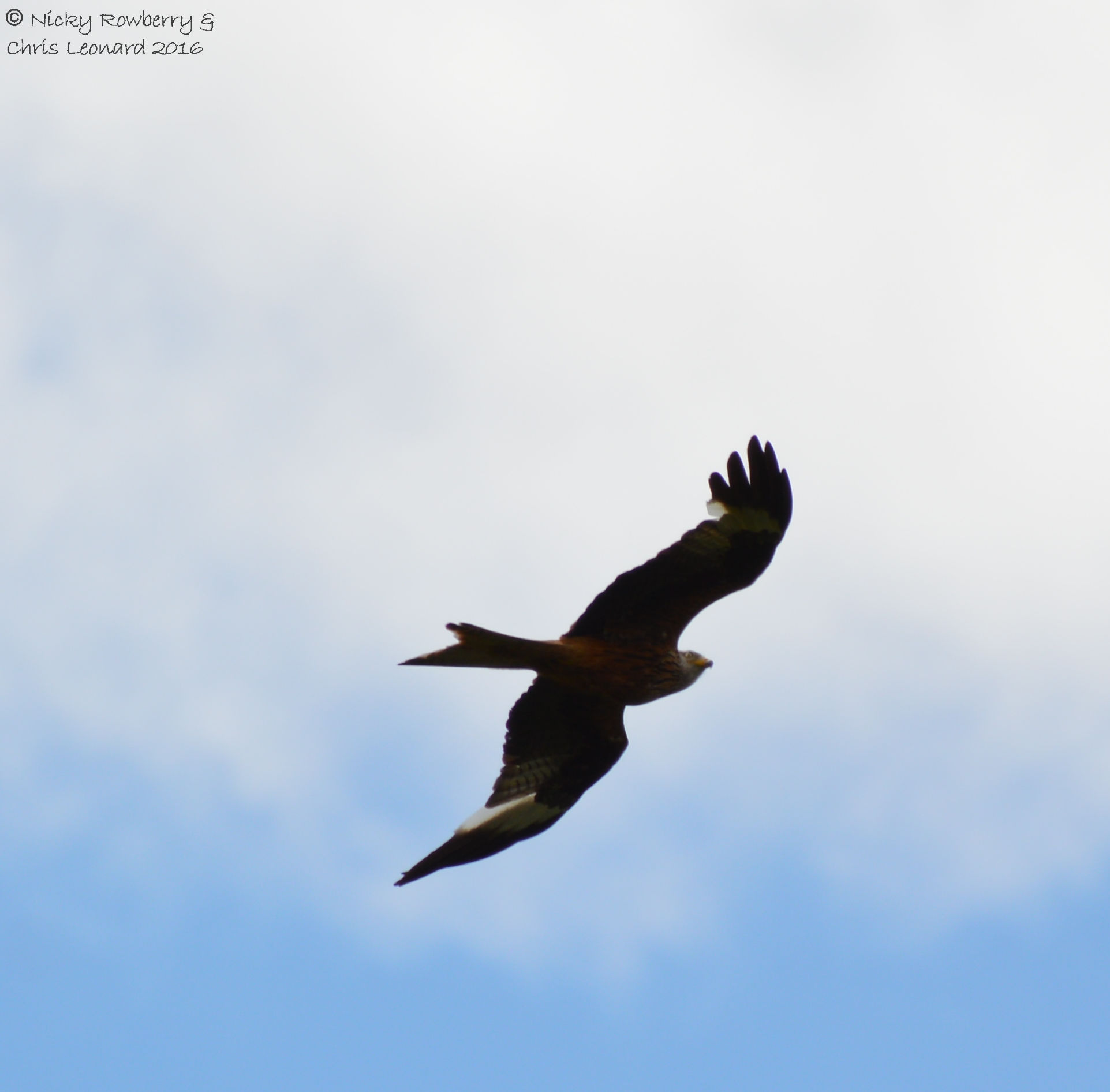
Although on these walks we tend to be looking down, or at least across for butterflies, we did look up long enough to spot this Red Kite soaring above us. Not a great photo as it was difficult to do against the bright sky. There were buzzards too, but as we see those fairly regularly at home, the kite got all the attention.

Kite 2

We followed the paths for quite a while, spotting lots of Marbled Whites and Large Skippers, while we searched for the blues and fritillaries.

Marbled White

Eventually though we found the first prize of the day – a Dark Green Fritillary. It then took about 20 minutes of chasing about to get a photo to confirm that it was indeed our target photo. And then longer still to get another photo of it with its wings open, but it was well worth the hunt as it is a gorgeous butterfly.

Dark Green fritillary

The reserve is divided into 2 sections, so having “bagged” our fritillary we headed over to the other half to look for the Chalkhill Blues. Turns out though our researcher (i.e. me) had got a bit ahead of herself as we were apparently a couple of weeks too early for these. Fortunately we met some butterfly enthusiasts who put us right before we spent hours pointlessly searching for them.

We did see some more fritillaries though, which we initially assumed were more of the Dark Green ones. It was only when we got back and downloaded the photos, that we realised these ones were actually Silver Washed Fritillaries. They look very similar when they’re flying around.

One final treat was finding several Small Heath butterflies. This had been a new species for us a few weeks ago and now they’re popping up everywhere!

So another great day out and another butterfly species ticked off the list. We will hopefully make it back to Prestbury sometime soon to see the Chalkhill Blues – so watch this space!

Big Butterfly Count

Big Butterfly CountYesterday was the start of the 2016 Big Butterfly Count. One of my favourite “citizen science” projects; we’ve been doing this in the Too Lazy garden for a few years now. All you have to do is sit for 15 minutes and count the butterflies you see (only record the maximum number of a species you can see at any one time, so you don’t count the same individuals twice). You can do as many counts as you like in as many locations over the 3 week period the count runs.

So this afternoon I sat in the garden and counted the butterflies. Not a huge number; it was a bit of a dull day as so often seems to happen when the Butterfly Count is on. But I did see 5 individuals of three species – Large White, Meadow Brown and Ringlet. Best of all I saw a pair of Ringlets mating. This bodes well for future little Ringlets (would that make them Ringletlets?) in our garden.

Mating Ringlets

The meadow brown just whizzed through the garden and the Large Whites were way too flighty to get photos as usual. They may be one of the commonest species, but I find them the hardest to photograph.

So maybe not a spectacular start, but then the count isn’t about recording the highest numbers of butterflies. It’s about gathering long term data to assess the health of the UK’s butterfly populations. So my 5 butterflies still provide useful data.

More information on the Big Butterfly Count at: http://www.bigbutterflycount.org/


One Year Older and One Year Weedier

Just realised Too Lazy To Weed is one year old today! 13th July 2015 I first dipped my toe in the world of blogging; at the time I wasn’t sure if I had enough to share from my perspective of lazy non-gardening and wildlife watching. But as I think I said in my very first blog post – there’s something going on in the garden all the time. And if not in the garden, then there are things to discover in the wonderful countryside around us.

I started blogging on a wet Monday in mid July – one year later and it is now a wet Wednesday in mid July; the weather at least hasn’t improved over the year. A few things have progressed though – I think we’re getting better at the photography; still by no means experts, but at least producing recognisable photos (apart from some dubious bee in wall ones below). I’ve learnt how to use a Trail Camera and Bat detector and both my moth and bee identification skills have improved a bit. The garden itself is looking increasingly wild and woolly – some of the weeds are now reaching triffid proportions and we lost the greenhouse for a while until I hacked my way back to it!

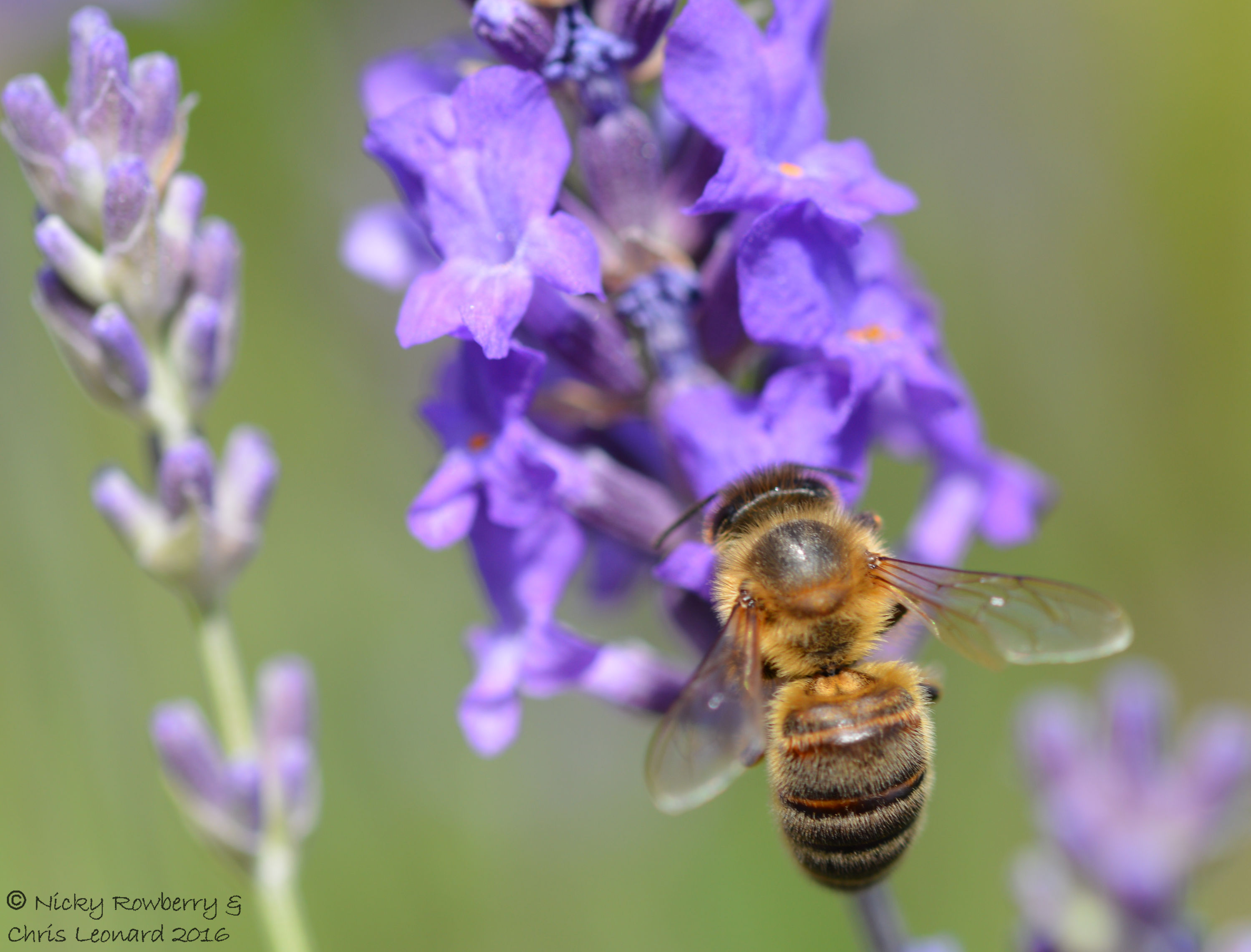
A year ago I was getting all excited at the prospect of the Big Butterfly Count and this year is no different. The Big Count starts again this weekend, so I  hope the weather perks up a bit. Quite a few of the blog posts lately have been about our trips out and about, but I thought for this anniversary post I should maybe focus back on what’s going on in the garden. The butterflies have so far been few and far between, but the bees have been out in force. The lavender is at its best right now and the bees absolutely love it.

Honey Bee 1

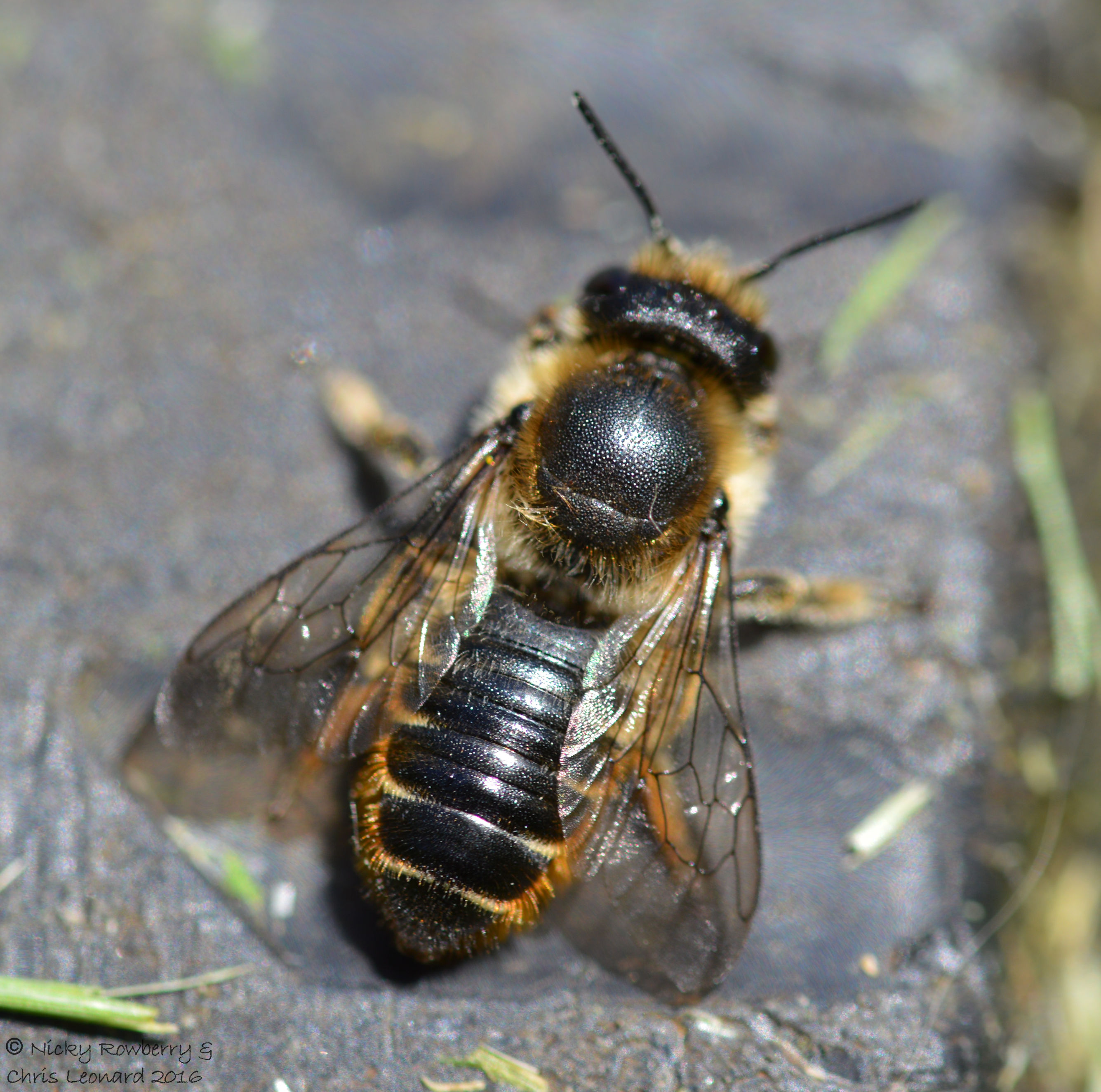
This week there was a particularly rare sighting in the Too Lazy To Weed garden – the lawnmower came out! This bee (a leafcutter) was perhaps so amazed it had to land on the wheel to have a closer look – a good excuse for me to stop work at least!
Megachile

I spent a lot of time at the weekend staring at our outside wall! We have a leafcutter bee (possibly even the one on the lawnmower above) nesting in there. I’ve seen on the internet wonderful photos that people have taken of bees emerging from holes in walls – all beautifully framed and in focus. Turns out it’s not that easy to do! The bee returned every 10-15 minutes so I was all set up with my tripod pointed at the hole. As soon as the bee appeared I clicked away, convinced I’d get award winning shots. Similarly as soon as it reappeared on its way back out I snapped away again. Not one perfectly focussed photo. Bees are apparently faster than either my camera and/or me. These blurry images were the best out of about 50 photos and an hour of my life staring at a wall!
Bee in wall 2

Bee in wall 1

One of my other bee recording efforts recently was to try and video them visiting the flowers in our mini meadow. We get plenty of bees there, so again I foolishly thought this would be easy. I set the trail camera up pointed at the flowers and left it for the day. As usual of course I’d forgotten to factor in the wind – blowing the flowers about and triggering the camera. 400 videos later of flailing flowers and I’d realised my mistake (I should have known this would happen, having had a similar problem with the bird feeder blowing in the wind earlier in the year). Amongst the flower flapping though the camera did at least manage to pick up a few bees – here are a couple of Buff Tailed Bumblebees enjoying the nectar buffet.

So one year on and I’m still getting just as much pleasure from watching the wildlife in our garden. Apart from the benefit to the wildlife itself of keeping an organic, natural (OK messy) garden, I find it beneficial to my own wellbeing. Coming home from work and watching the bees on the lavender, or the birds stuffing themselves on the birdfeeder, or the bats swooping in the evening  (even if they are after my beloved moths!) is a great way of unwinding. Maybe everyone should have a lazy garden!