Bumbling Around for Butterflies

My quest to see all 58 species of butterflies in the UK seems to have stalled somewhat, but I’ve still had a really good summer for butterflies this year, both at home and out and about. Best and most surprising of all was getting to see some Large Copper butterflies less than 40 miles from home. Given that the Large Copper is actually considered extinct in the UK and has been so since the 1850s, it’s not a butterfly I ever imagined seeing. But some bright spark had chosen to release them (possibly as caterpillars) at the brilliantly named Bumble Hole Nature Reserve in Dudley.

I resisted for at least 10 days after the first photos started appearing on Facebook, but finally gave in to temptation and headed north to Dudley. With some help from a kind lady in the visitor centre, I headed to the butterfly hotspot – obvious when I was in the right area due to the dozen or so other butterfly twitchers. I was still fumbling to get my camera out, when the first Large Copper appeared.
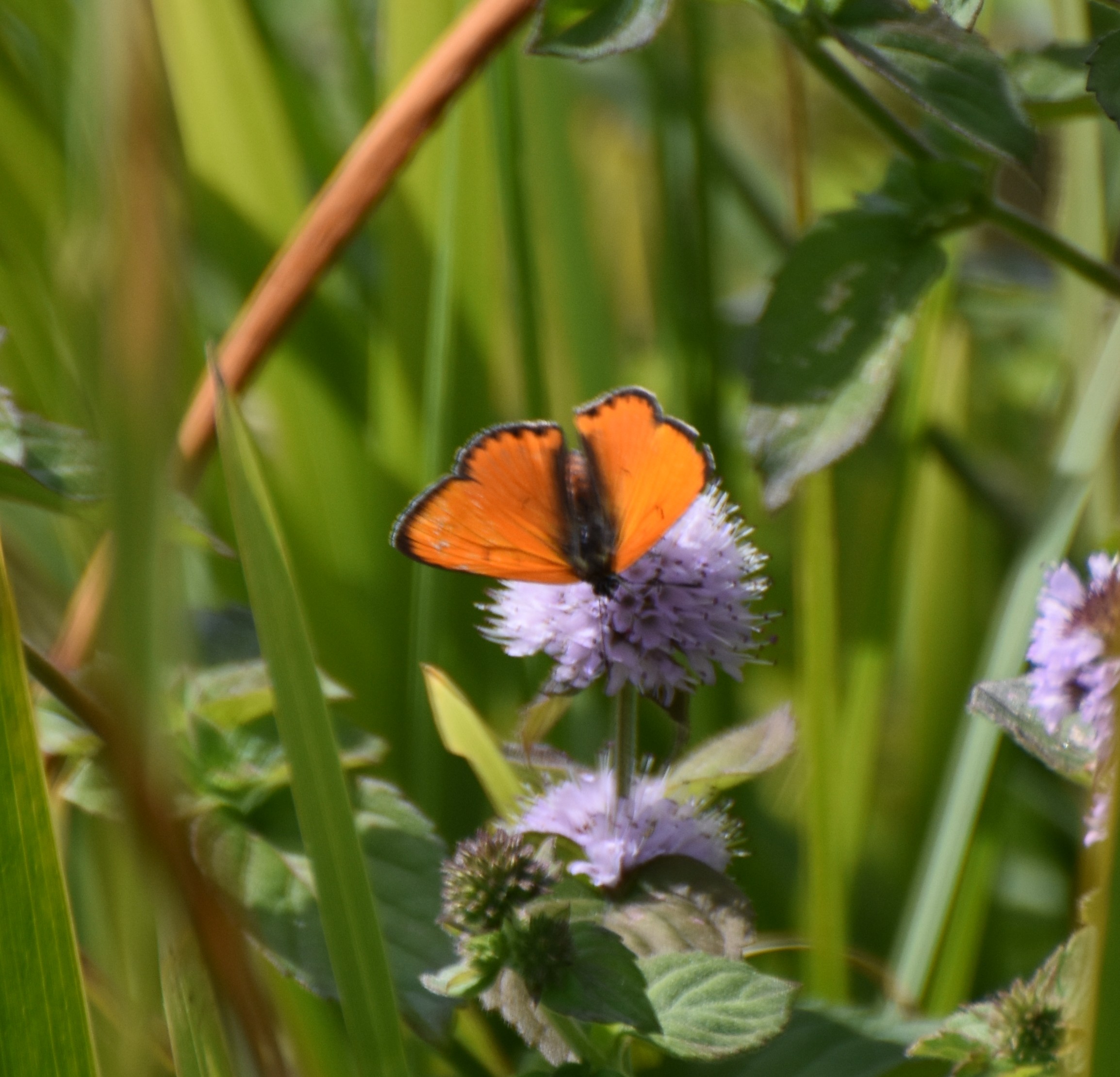
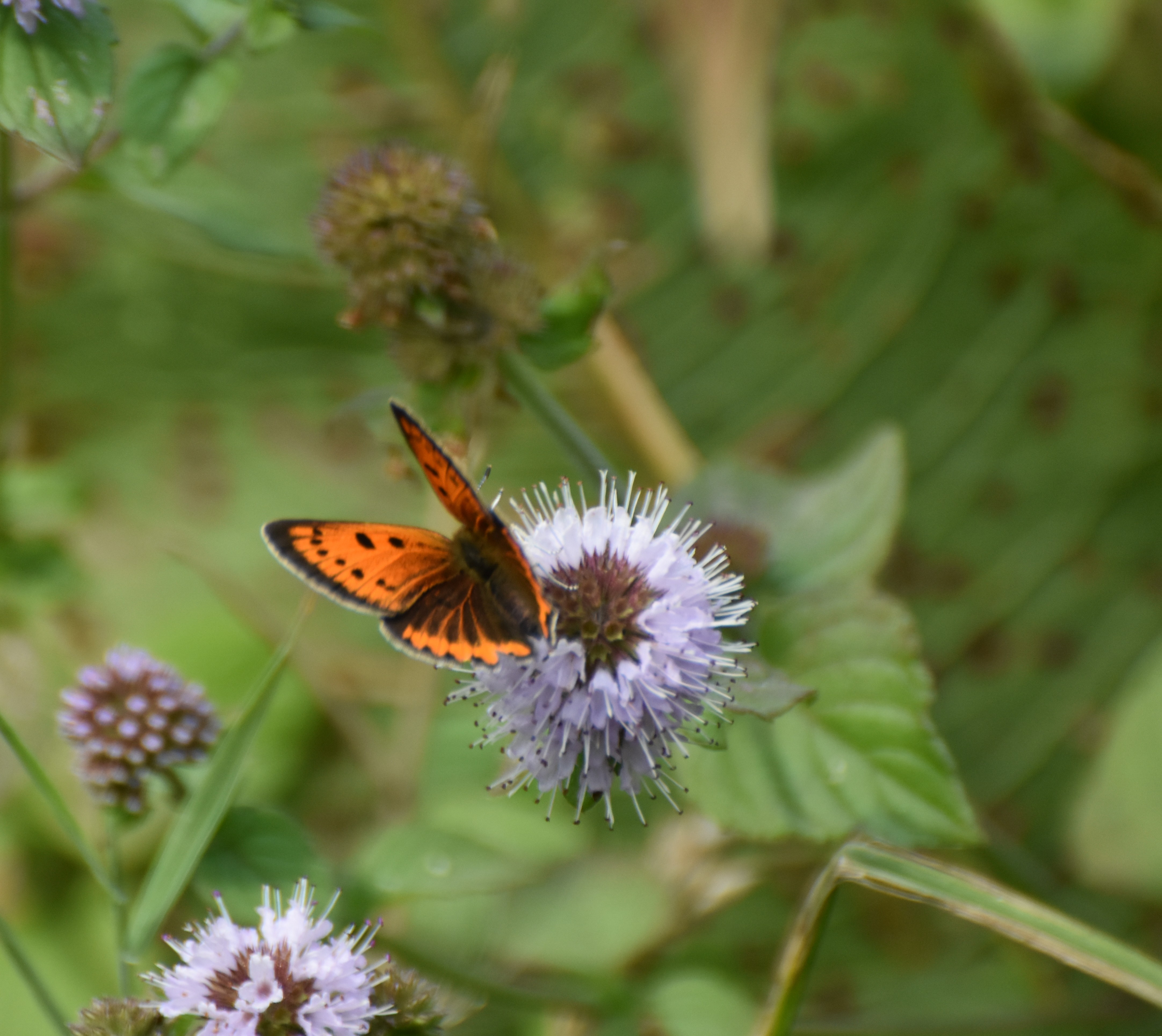
The males are pretty much all bright orange on the upper surface of the wings, with a pale blue dotted with black spots underneath.
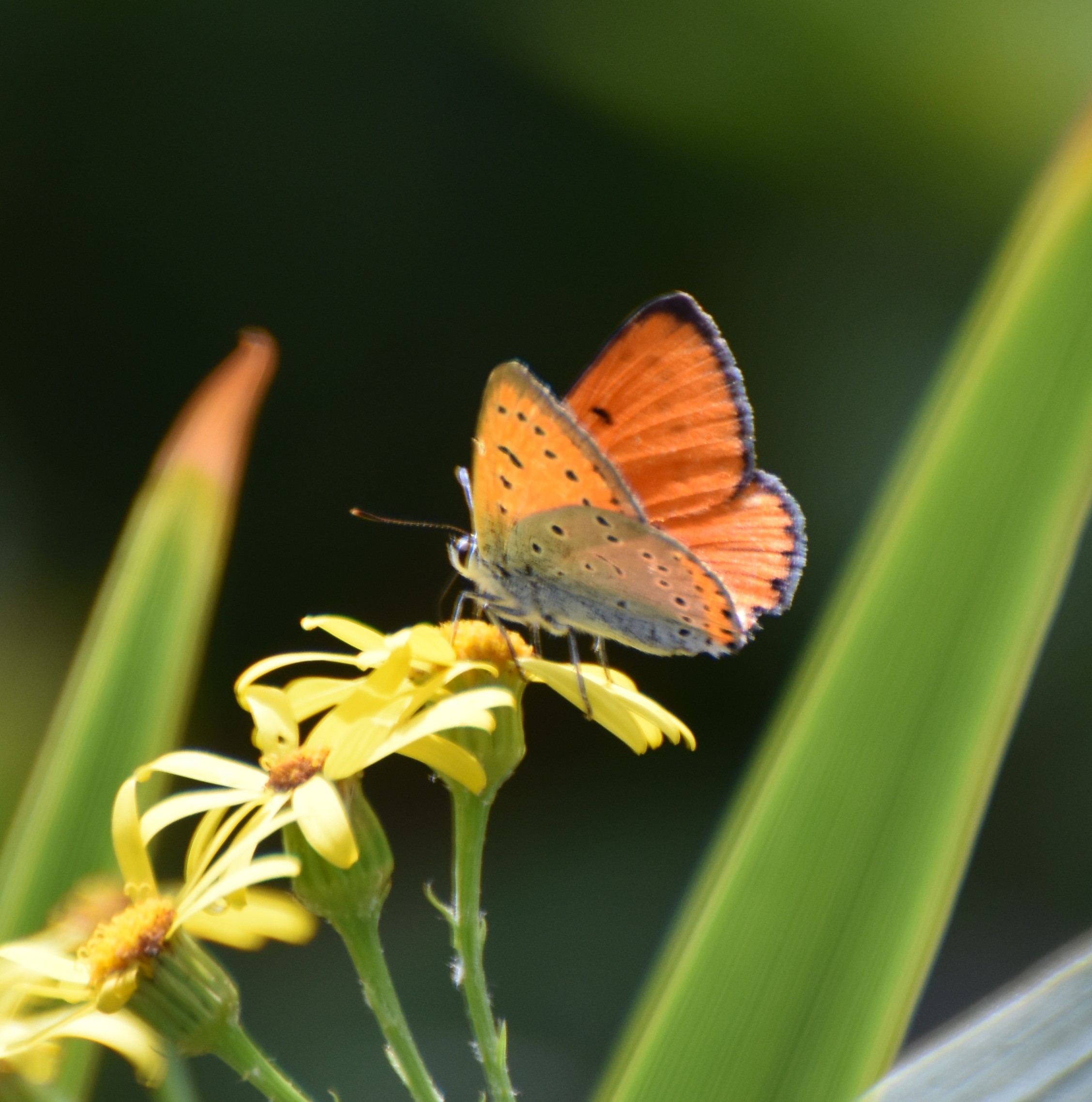
The females have more brown markings, stripes and spots on the upper side, but are similar underneath.
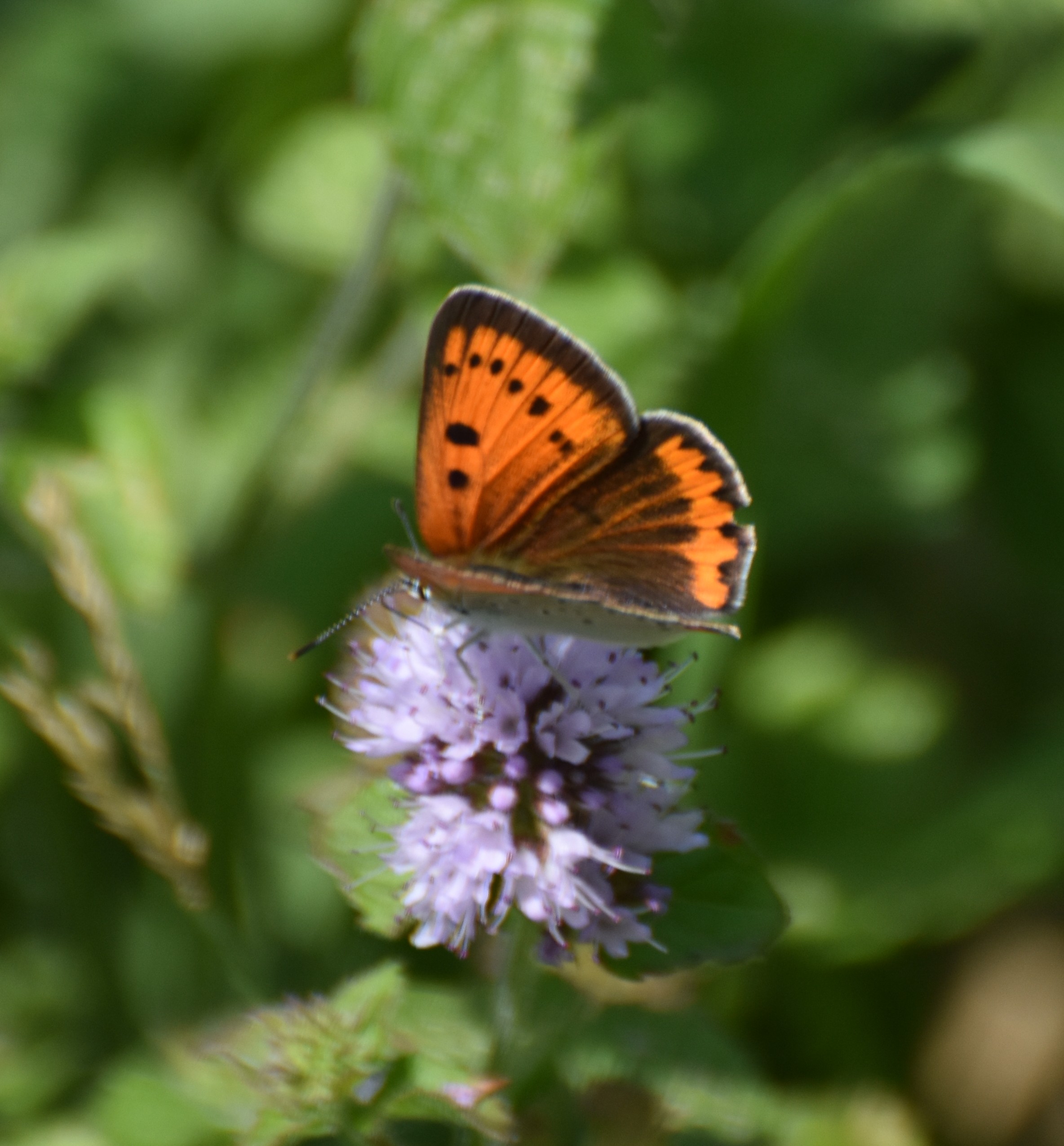
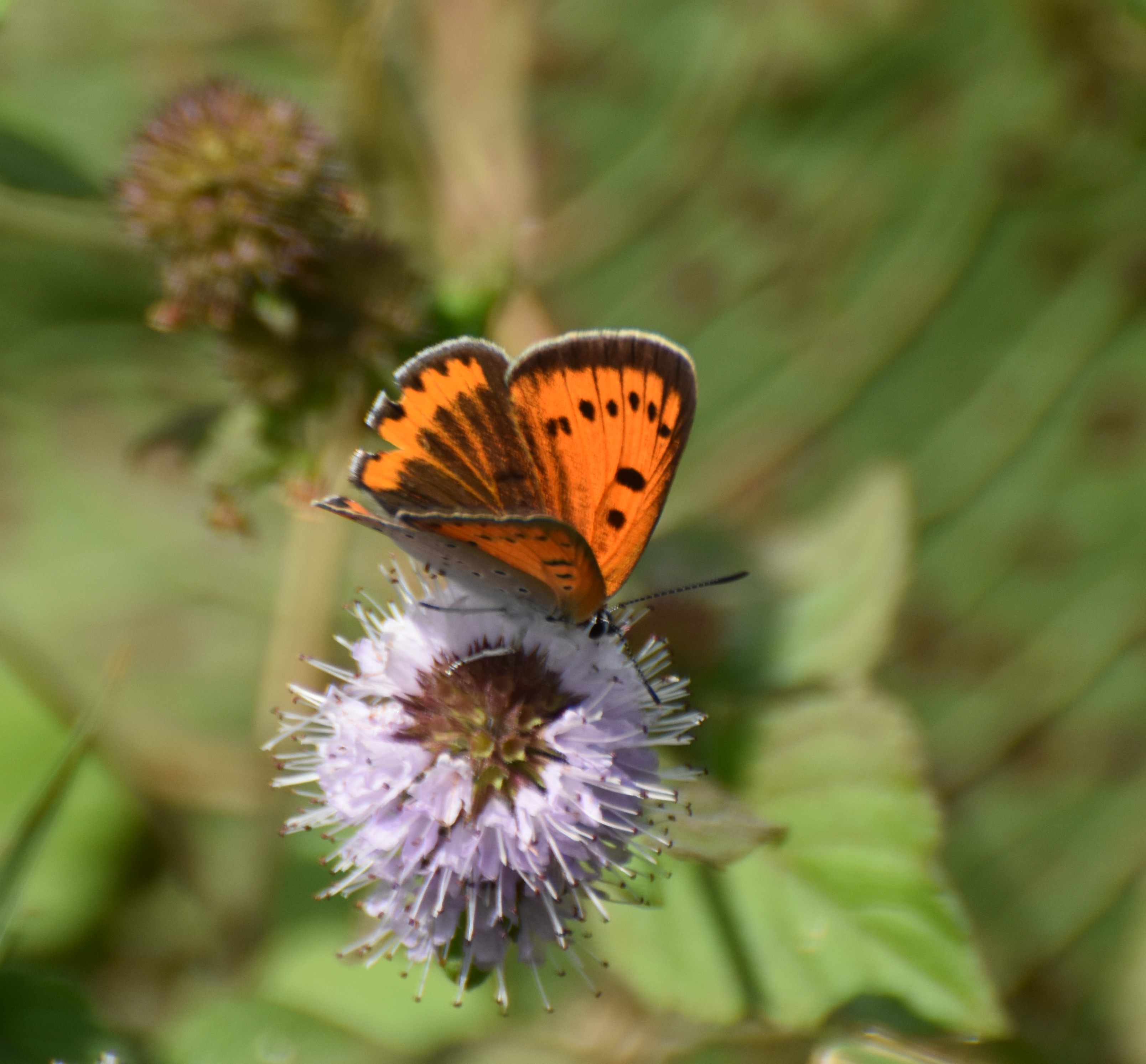
It was a baking hot day and my plan originally had been to stay out just long enough to see the butterflies and then head back to the safety of the air-con in the car! But the butterflies were so stunning and more numerous than I had expected, so I kept getting side-tracked by another one each time I started to head back. My final reward for this heroic effort (an hour in baking sun for a dumpy middle-aged woman is I’m sure the equivalent of an iron-man challenge for other people) was to spot this female laying eggs. Well worth the sunburn.

It was a magical thing to see these butterflies in the UK, but sadly it is probably not all good news. As their release seems to have been unsanctioned, the chances of the butterflies surviving at this site are apparently small. Although they were clearly mating and obviously laying eggs, will the eggs and/or caterpillars be able to make it through to next summer? It would be wonderful if they did manage to establish a colony here, but many people are doubtful that the conditions at Bumble Hole will be right for them.

For comparison here’s a Small Copper taken at Croome Park this week.

In other news the local Facebook groups were buzzing with the news that there were multiple Clouded Yellow butterflies down in the fields near Grafton Wood. As usual I could resist anything but temptation, so headed down there to see for myself. First attempt was a complete wash-out as I picked the only cold cloudy day in August, but second attempt was more productive. Together with a very nice couple I met down there, I watched in frustration as the bright yellow flashes of several Clouded Yellows dashed about the centre of the fields. Not wanting to trample across the farmer’s fields we could only watch and hope they would eventually come to the margins. Eventually a few did, but they were so flighty that all I managed was these blurry yellow blobs for photos. But at least I saw them.

Slightly more obliging were some Common Blue, Small Heath and Brown Argus.

At home I did a couple of Big Butterfly Counts earlier this month. The garden generally has been busier than recent years for butterflies, but as usual most of them declined to put in an appearance during the 15 minute counts. But so far this year I’ve seen Red Admiral, Peacock, Small Tortoiseshell, Comma, Painted Lady, Large White, Small White, Holly Blue, Gatekeeper, Meadow Brown, Speckled Wood and Ringlet butterflies in the garden. But best of all was a Silver-washed Fritillary which graced my buddleia and bramble-strewn garden with its presence over several days.

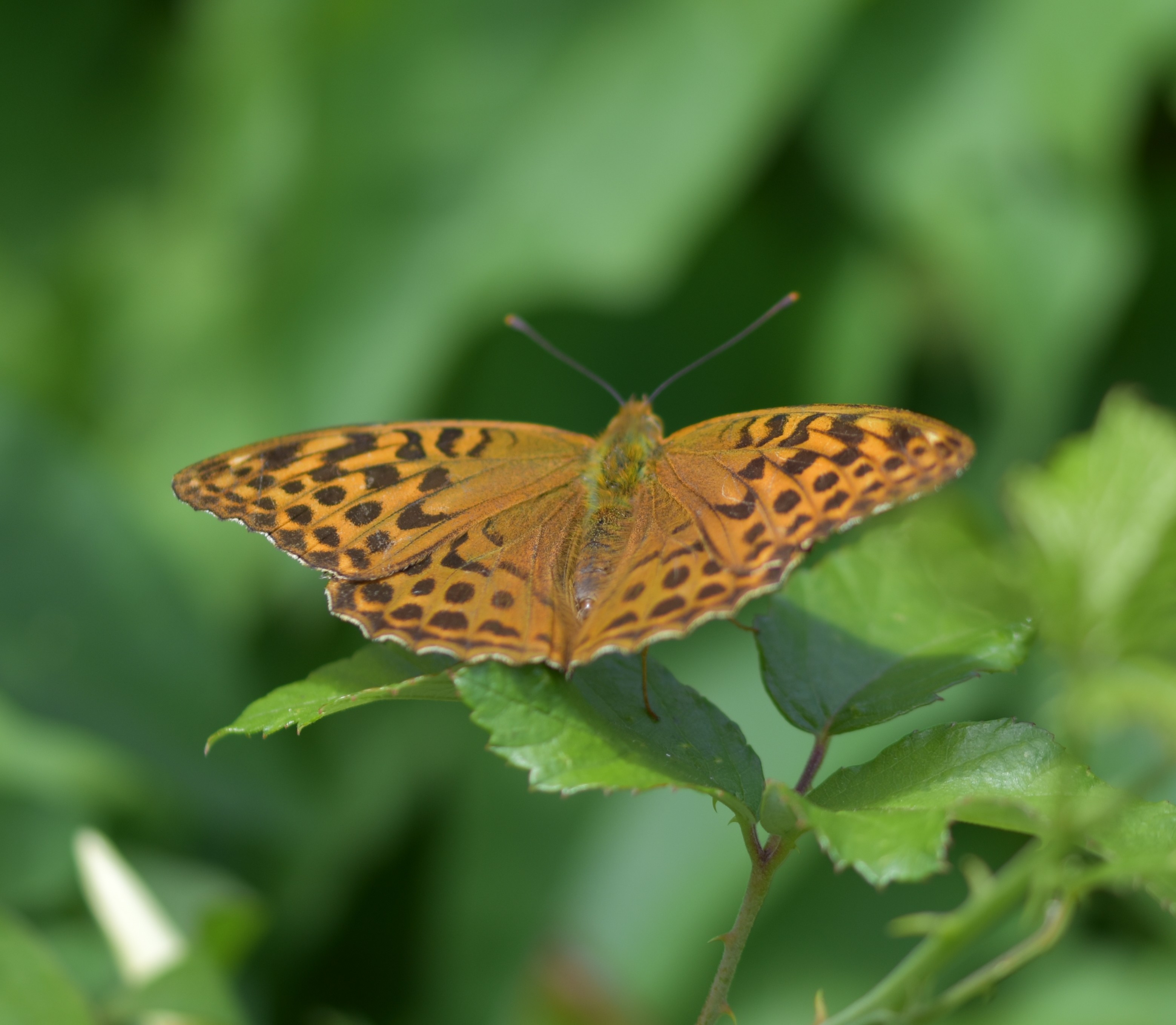
So that’s a round-up of this summer’s butterflies; some old favourites and one completely off the radar “extinct” species.

 

The Blog is Back!

Hello again!

It may seem like I’ve just been Too Lazy To Blog, and I can’t deny there’s an element of that, but mainly life in the form of a very difficult 3 years has just got in the way. But hopefully now things are getting back on an even keel and I can resume my wildlife ramblings. The weeds in the garden have continued to grow and there’s still plenty of wildlife to be seen, photographed and waffled on about. So the blog is back!

I may not have been blogging, but I have seen a lot of amazing stuff in the last 3 years. Maybe not attack ships on fire off the shoulder of Orion (who doesn’t love Rutger Hauer), but all sorts of other interesting things. So in no particular order, here are some of the highlights of the last few years.

In December 2023 there was a lot of excitement on Twitter/X about Waxwings being seen in and around Malvern. Like many others I grabbed my camera and headed out in search. Not only did I eventually get to see them, but I made a new friend in the process, without whom I’d never have found them, so a definite win-win situation.

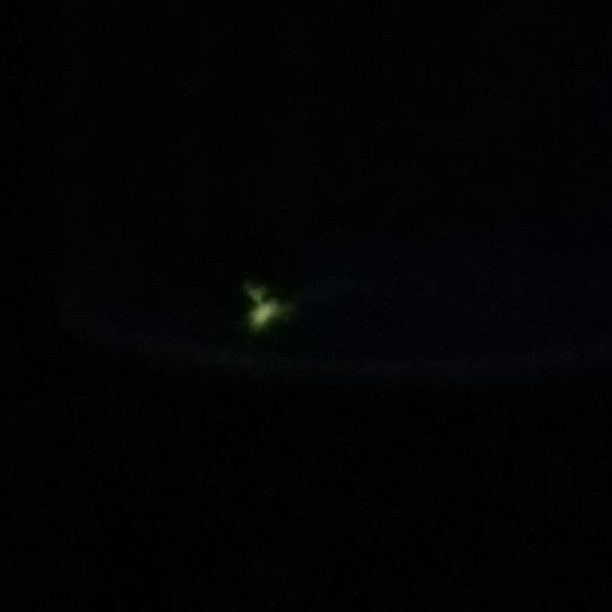
Last summer I was really excited to see my first ever glow worms. Tiny little green glows at a reserve just a few miles from home.  Not easy to spot, but once you get your eye in they really do what it says on the tin and glow a bright green. I only had my phone with me, so this “magnificent” picture will probably go down in history as one of the most atrocious photos ever. Perhaps I should just give it an abstract name – “Green Glow on Black Canvas” or something. But it’s the only proof I have that I saw a glow worm, so here it is!

In October last year I finally got to see the Northern Lights and from my back garden. Not quite the awe-inspiring spectacle you see photos of, but definite streaks of pink and green nonetheless. Again I’m probably up for some kind of award for awful photography for this, but I’m just happy to have finally seen this. Twenty odd years living in Scotland and I finally see it in Malvern!

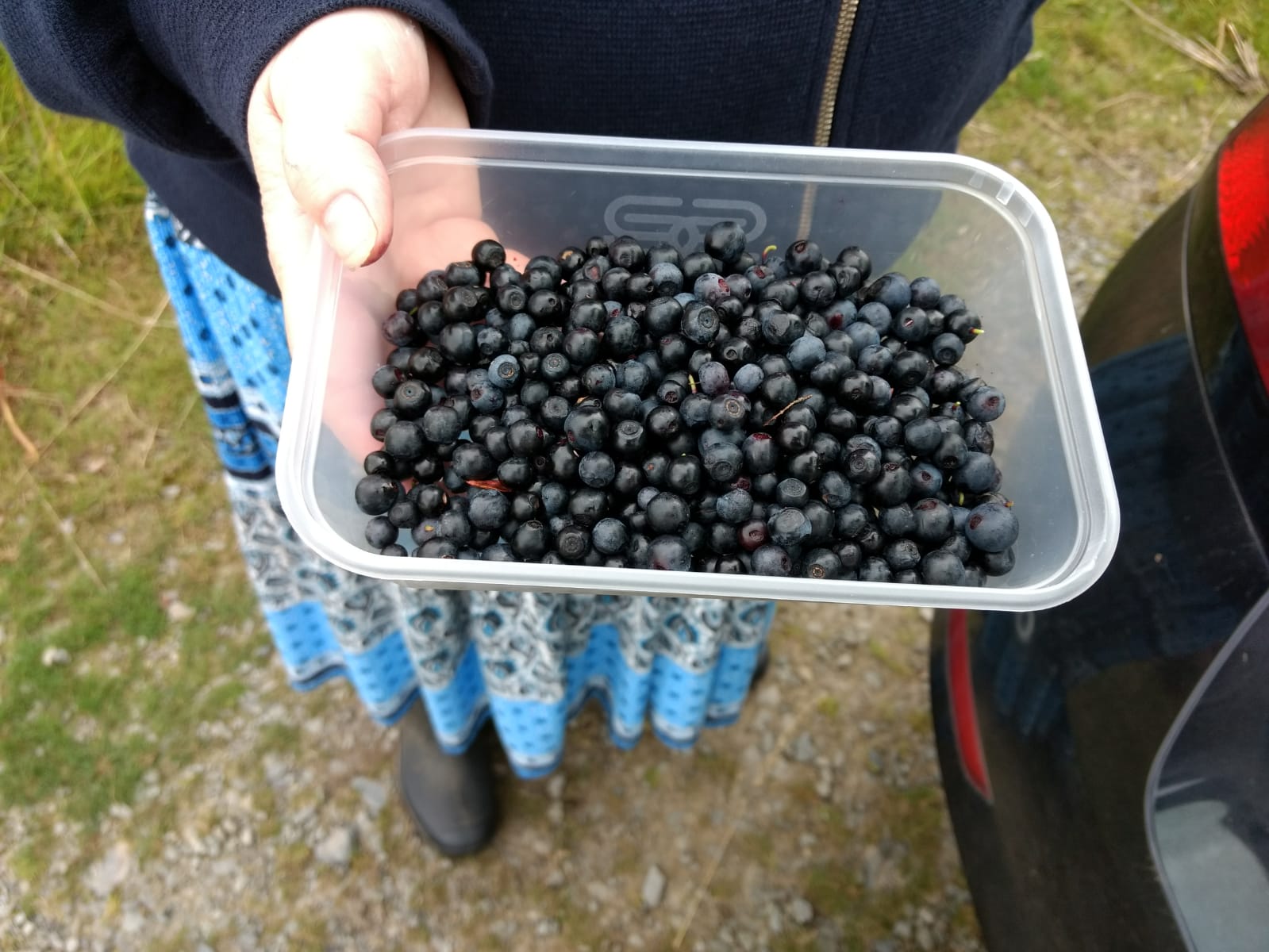
I’ve had a few days out and about doing some not-strictly wildlife things, but it was out in lovely countryside so I reckon that counts. In August last year my sister and I went whinberry picking for the first time since we were children. Whinberries (or Wimberries, Bilberries, or Blaeberries, depending on where you’re from) were our Dad’s favourite and grow wild in the Shropshire hills. We were a bit late in the season, so only managed to gather enough for a very small pie, but it was well worth it – the taste brought back many happy childhood memories and we certainly got to see a lot of the wilds of Shropshire while we hunted for them.

We also had a slightly bonkers trip to see the famous cheese rolling race in Gloucestershire. I must stress we valued our lives and vertebrae too much to actually take part chasing a 4 kilo wheel of Double Gloucester down a very steep hill. It was hard enough climbing high enough to watch it, without hurling ourselves at break-neck speed back down again. But it was a glorious spectacle when viewed from a safe distance.

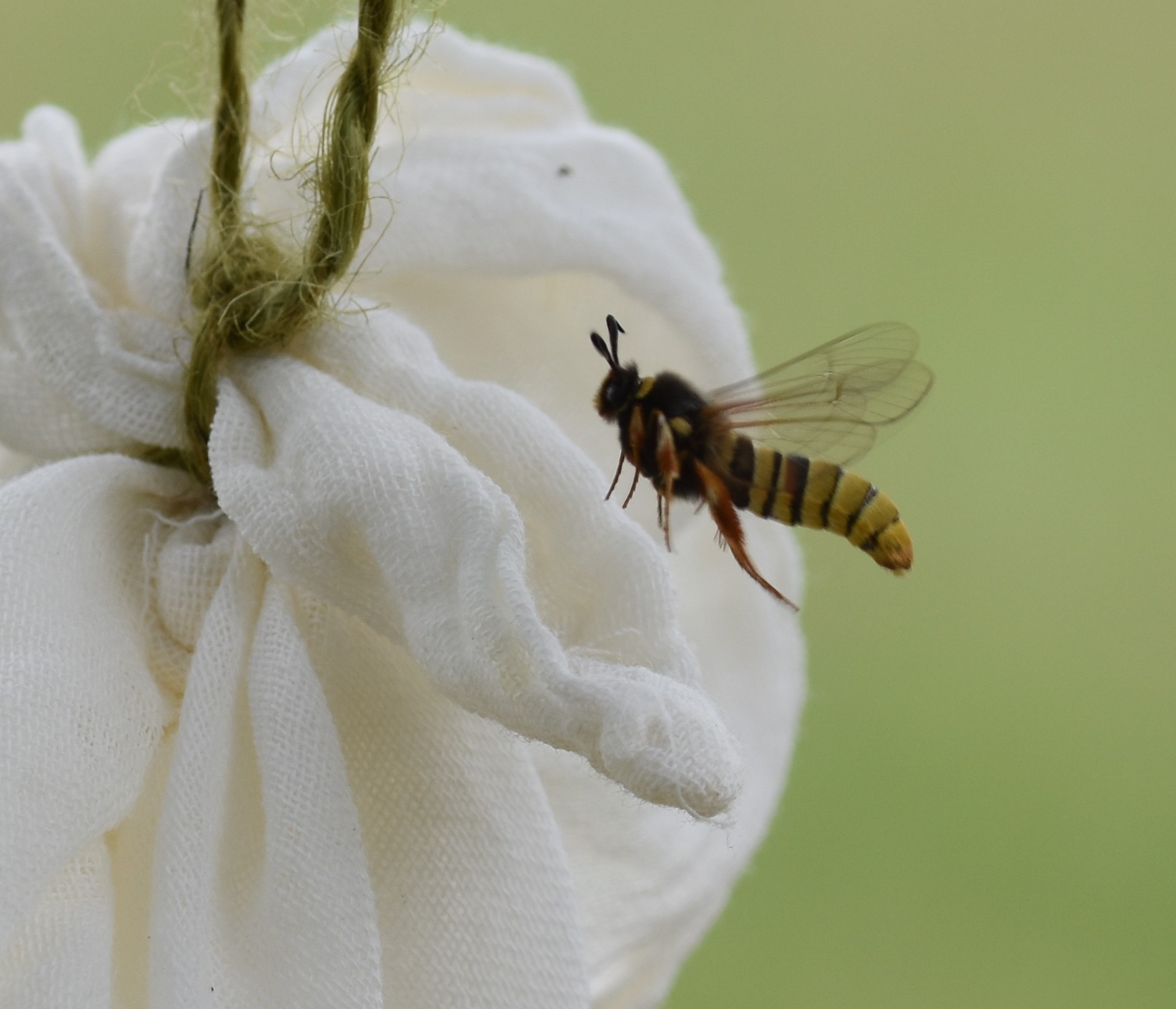
There have been lots of moths recorded in the garden in the last few years, but I’ll post about those separately. One interesting moth seen while venturing outside the garden was a Lunar Hornet Moth. These stunning moths don’t really look like moths with their clear wings and hornet like bodies. Their caterpillars live in the wood of old trees and the adults are attracted to pheromone lures.

Other highlights of the last few years include dolphin watching on a glorious sunny day in New Quay in Wales and a visit to the lovely Westonbury Mill Water Garden in Herefordshire just as the new season’s toadlets all emerged from the ponds. Never seen so many tiny toads (they were literally the size of a fingernail), it was virtually impossible to walk – we went round at a snail’s pace to avoid standing on them. Speaking of toads, I’ve also joined a local toad patrol – more of that in another blog post too.

There’s been a visit to the Diglis Fish Pass in Worcester. Our guide showed us fantastic photos of large salmon, pike and even otters swimming by the viewing window, although on the day, all we saw were a few minnows. Another day out took us to the confetti fields, also in Worcestershire. The delphiniums are grown specifically to turn into environmentally friendly confetti, but I actually preferred the wildflower borders around the main crop.

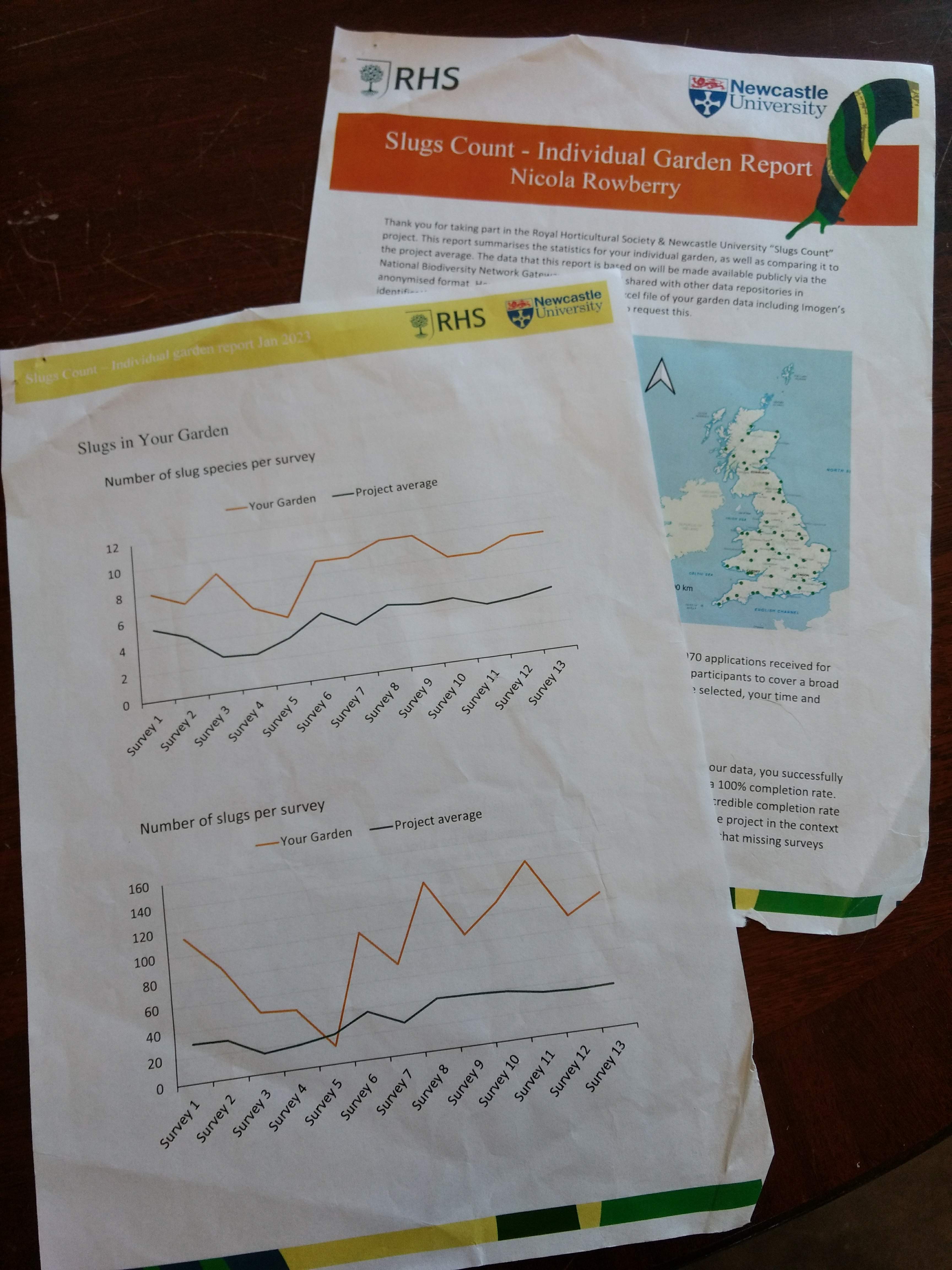
One final highlight of the last few years was a weekend in Harrogate for a slug conference! Harrogate is a really lovely town and a slug conference at Harlow Carr gardens to discuss the results of the slug survey I took part in, was a delightful, if slightly unusual treat! (as was Betty’s tearoom’s Fat Rascals!)

I felt ridiculously pleased that my garden had produced above average numbers of slugs compared to the other slug counters – something most gardeners would be horrified by, but I viewed it as a badge of honour for my scruffy garden.

So there are just a few hopefully interesting bits and pieces from the last few years. The plan is to start blogging again regularly, or at least not wait another 3 years before I can think of something to say.


National Moth Week

It’s National Moth Week (or International since it’s worldwide) and for once I’m on the ball enough to be blogging on time and on topic! This is mainly due to the fact that I read a lovely blog post this morning on this very subject by Nature is My Therapy: https://natureismytherapy.com/2022/07/26/moths-not-just-for-after-dark/  So thank you Kim for the timely reminder.

National Moth Week celebrates the beauty and diversity of moths, a sentiment close to my heart as I’ve been fascinated by the moths in my garden since I started trapping in 2013. This week, after 9 years of moth trapping and perfectly timed for National Moth Week, I recorded the 450th species of moth in my garden! I never dreamt when I started looking at moths that I’d find anywhere near this number in my suburban garden. Just goes to show you don’t know what’s out there until you start looking. Of course of those 450 species, some have only been recorded once – often migrant moths just passing through. But a good chunk of the species are regular attendees at my moth trap.

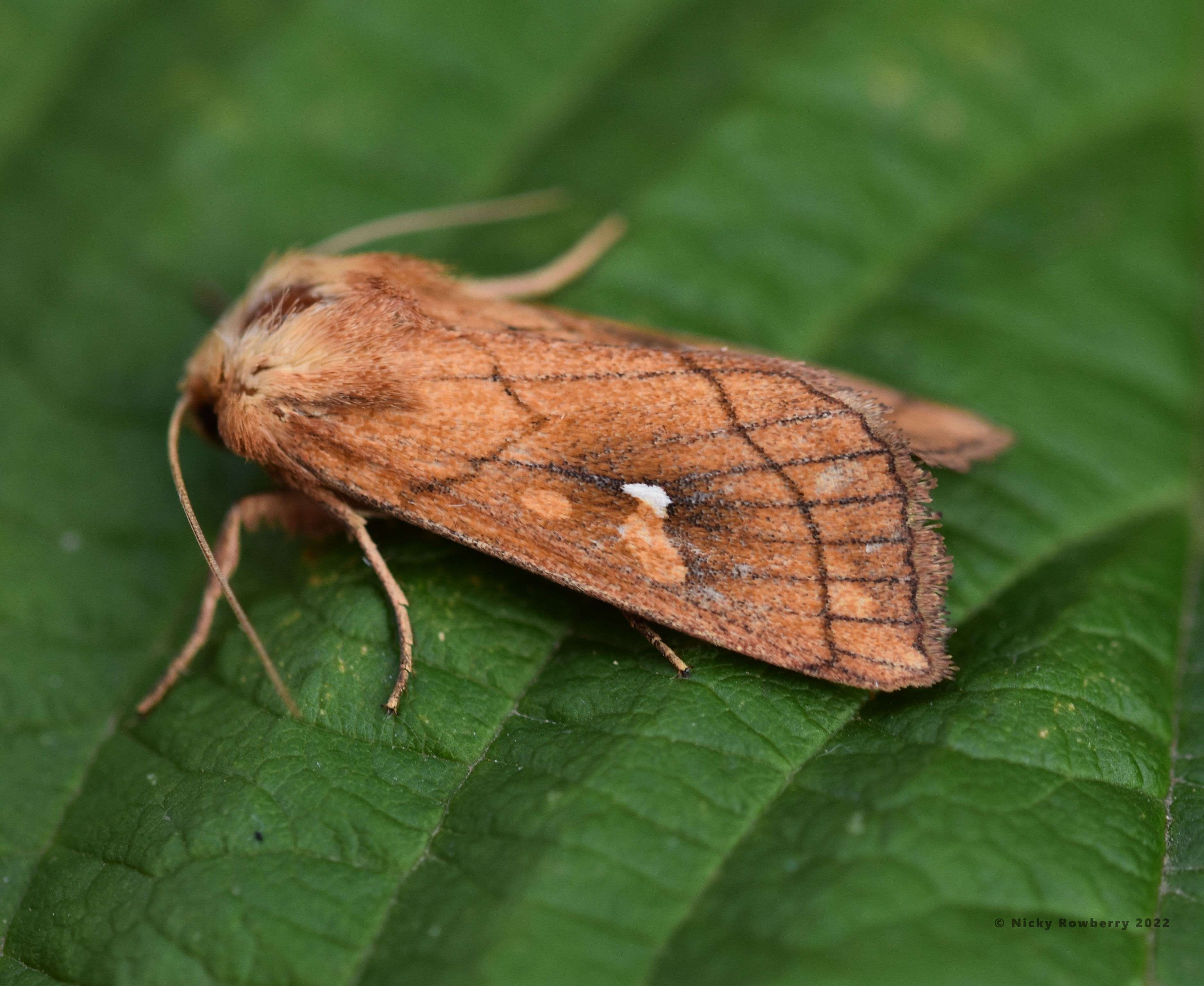
So here is no 450 – the Brown-Line Bright Eye (Mythimna conigera) – so called because (not surprisingly) it has a brown line and a bright eye spot.

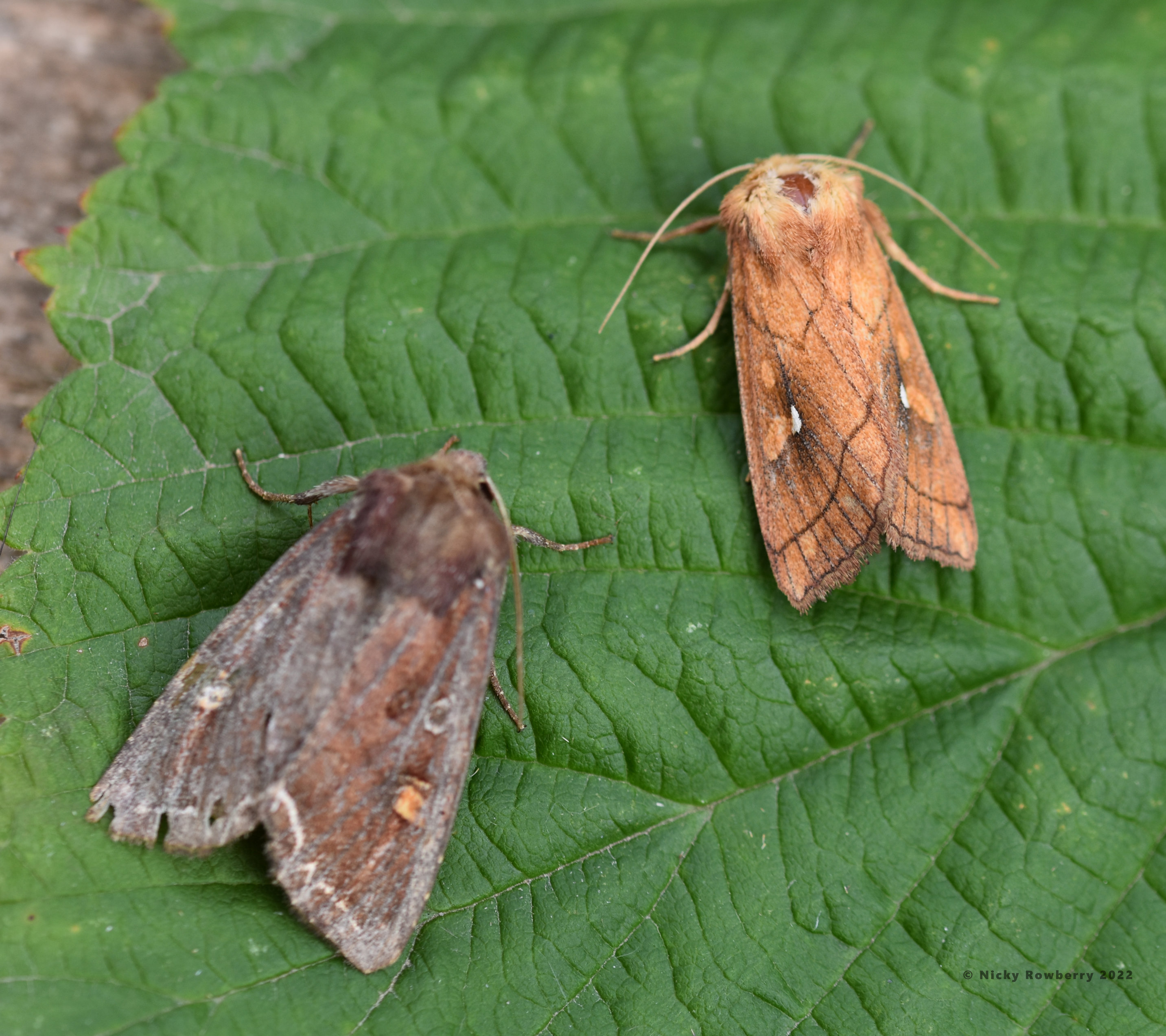
Coincidentally the same night I also trapped the very similarly named Bright-Line Brown-Eye (Lacanobia oleracea). So here they are side by side.

I trap 2 or 3 times a week through the summer and usually once a week in the winter. I started this year with a running total of 438 species, so another 12 have been added since then. Of the new ones, a couple are ones I’ve wanted to see for a while and others haven’t even been on my radar. The longed for ones include a Nut-tree Tussock a (Colocasia coryli) and a Muslin Footman (Nudaria mundana).

Of the more unexpected ones this Italian Tubic (Metalampra italica) micro moth was rather lovely and one I’d never even heard of. Apparently it’s a recent colonist that’s spreading north from the south of England.

So the trap is out again tonight and I’ll be up at the crack of dawn to check the contents, hopefully before the robin beats me to it. It’s one of the things I love about moth-trapping – you never know what you’re going to get – it’s like Christmas morning for moth nerds!

Happy National Moth Week everyone.


Showbiz Slugs

Last November I joined 59 other volunteers in a project monitoring the slugs in our gardens. Our Slug Count Survey was being run by the lovely Imogen as part of her PhD with the RHS and Newcastle University. Once every 4 weeks we had to go out into our gardens and collect all the slugs we could find in half an hour. We’d then attempt to identify them, before posting them off to Imogen for “proper” identifications.

This year has flown passed for any number of reasons, but I still can’t believe my year of slug counting is already up. It took a bit of explaining to my neighbours as to why I went out each month with a head torch in the dark to wander round the garden with a bucket of carrot shavings (food for the slugs) for half an hour, not to mention explaining to the lovely lady in the post office why I was posting slugs! I actually found it really interesting to go out in the garden after dark and just look at what was around. I was used to going out to check on the moth trap, or feed the hedgehogs, but tended to be focussed on those activities. Searching for slugs, I noticed for the first time all the caterpillars that were out and active, the worms on the grass that vanished as they felt my footsteps approach and the spiders and woodlice and all manner of other species going about their business at night. The garden at night becomes a whole other world.

In total over the 13 counts, I sent off an amazing 1145 slugs! You’d think that might have reduced the population in my garden, but they are still very abundant. Going out the night after a count there seemed to be just as many slugs roaming the garden as before, with no sign of diminishing populations.

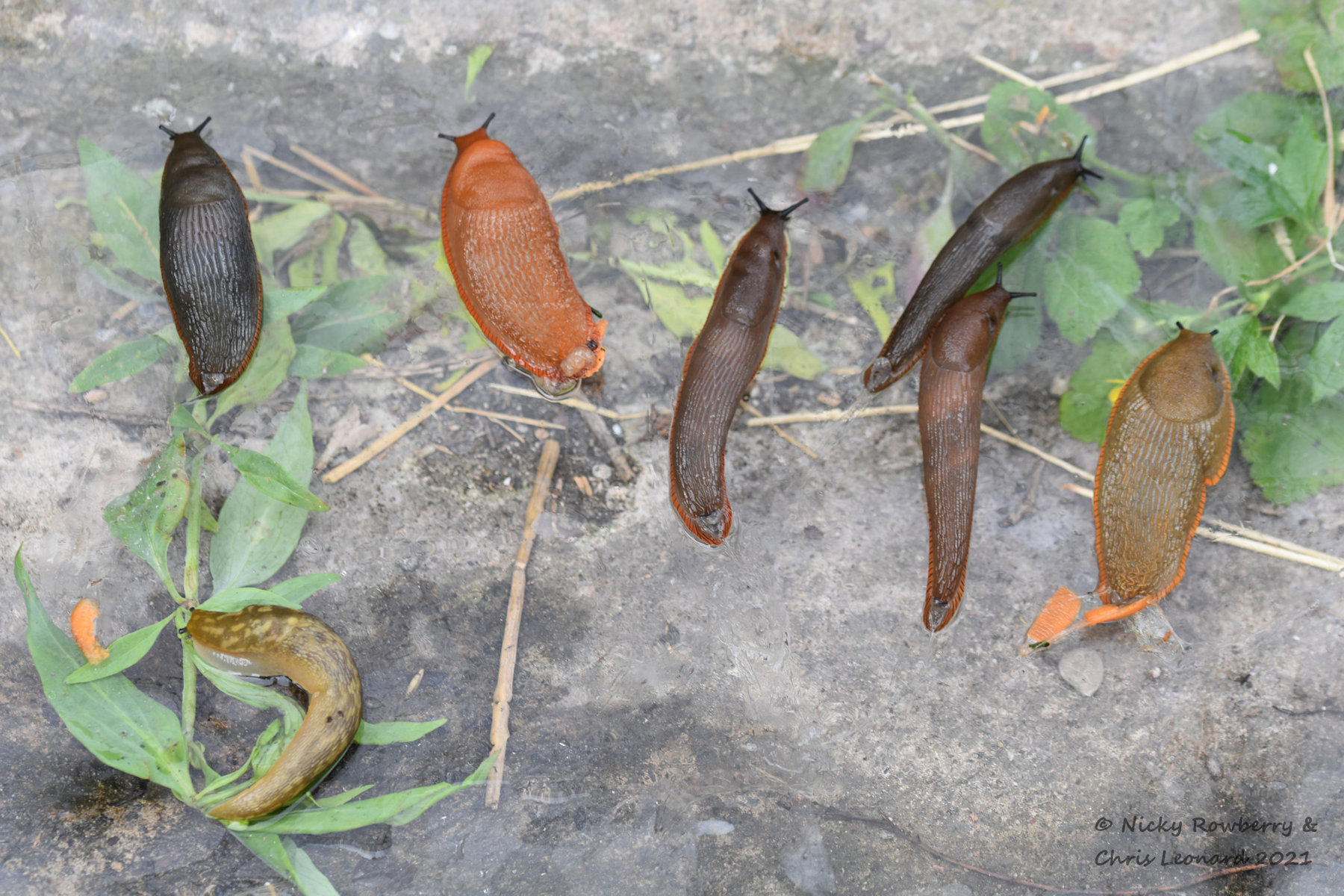
And the slugs themselves were clearly doing their bit to increase numbers.  Through September there were several nights when I saw pairs of large Arion slugs trailing each other round the grass. There is clearly a season for it, as I saw multiple pairs for a couple of weeks, but none before or since.

Whatever romancing was involved, it was clearly successful and I can presumably expect more Arion slugs next year.

As well as getting to see a bit of slug romance, I was really chuffed to film one of the Arion slugs getting its wriggle on. This squirming action in the video below is a characteristic feature of a couple of Arion species when disturbed.

The total number of species recorded has yet to be finalised (some are apparently getting sent for DNA analysis!), but is probably around 14. There were at least 4 species of short-keeled slugs, including this Ambigolimax sp.

There were at least 7 species of round-backed slugs including the familiar large Arion species. Finally there were 3 species of the long-keeled slugs. The one below is the Crimean Keeled Slug (Tandonia cristata) which has a network of dark lines criss-crossing the body.
My most unusual find was a Worm Slug (Boettgerilla pallens), another long-keeled slug, which as the name suggests looks like a worm! I only found 1 in all the surveys.

Finding the worm slug was good, but the best was yet to come. Our survey leader appeared on BBC’s Gardener’s World in July to try and convince the (possibly sceptical) viewing public of the delights of slugs. As part of the feature there was footage of several specimens. I was beyond excited when she told me that one of my actual slugs had been filmed for the show. Here’s a still from iPlayer showing my very own slug TV star (a Netted Field Slug, Deroceras reticulatum).

Not only did my slug feature, but it was described as being one of the biggest pest species, doing the most damage to plants. I don’t know why, but I felt ridiculously pleased that I’d got effectively the bad boy of the slug world!

So all in all this slug project has been fascinating. I love doing these citizen science projects. You usually learn something new, or see something new and either way you get the pleasure of enjoying some aspect of nature whilst contributing hopefully useful data to scientists. This particular project has given me a whole new appreciation for slugs, a group I’d previously given little thought to. I know they are not popular with gardeners and they can be a worry for those with hedgehogs in their gardens (slugs can carry parasites such as fluke and lungworm which can pass to the hedgehogs). But everything has its place and slugs have just as much right to be in a garden as everything else.


Big Garden Birdwatch 2021

Another year, another lockdown; or more cheerily – another year, another Big Garden Birdwatch! The perfect thing to do for an hour when you can’t leave home.

Saturday it pretty much poured with rain all day, so today seemed like a better birding day. It was still bloomin’ cold sitting there though for an hour and my derrière was pretty numb by the time I finished.  Still it was worth it to record a very respectable 34 individuals of 12 species.

Top of the abundance was, as usual, the house sparrow. I  counted at least 12 in one go, although I’m sure we actually have more than that. Joint second were the blackbirds and jackdaws – 4 of each. I can’t tell the difference between male and female jackdaws, but for the blackbirds there was one female and at least 3 males.

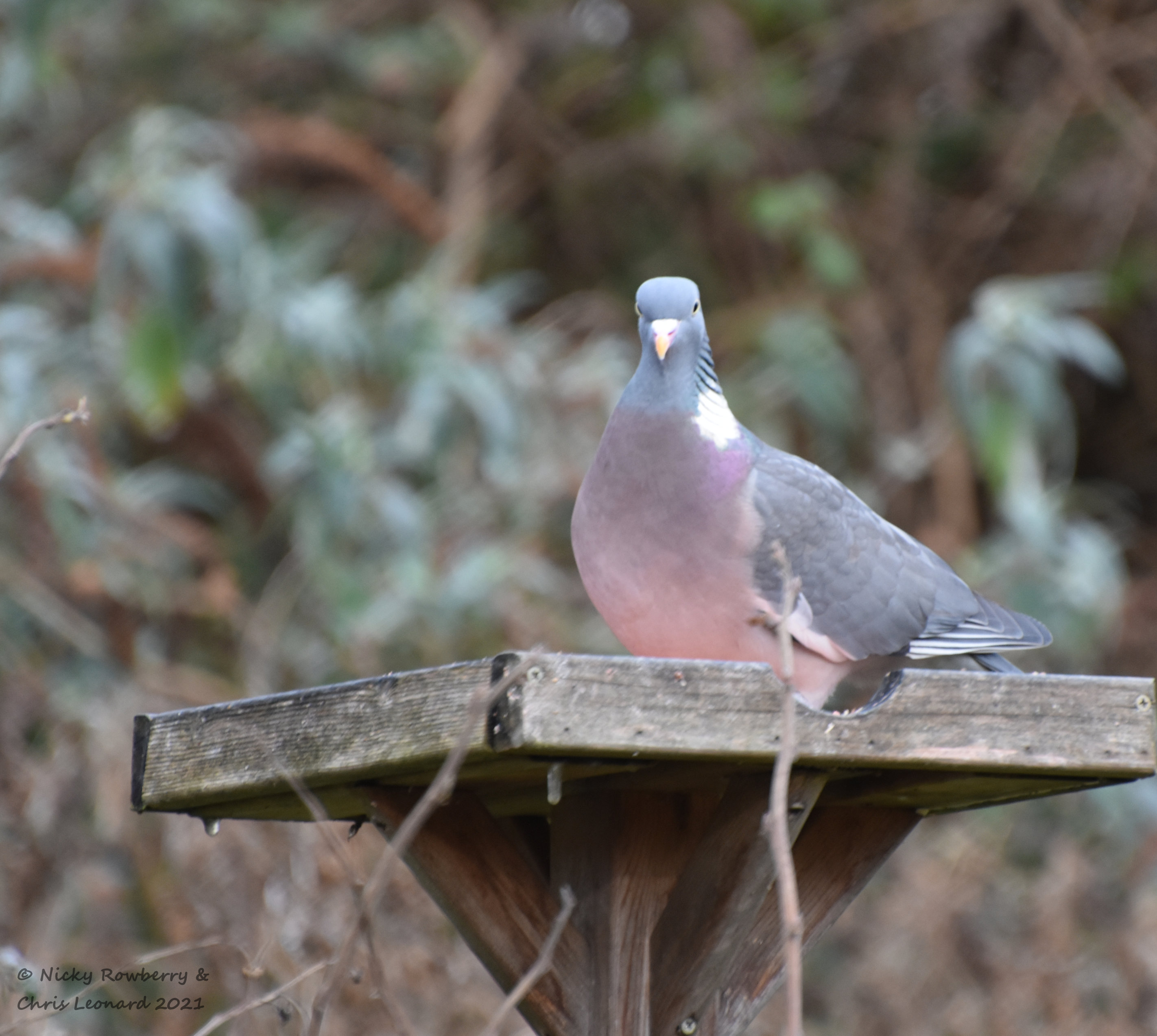
Most of the rest arrived in pairs – goldfinches, great tits, collared doves, wood pigeons, starlings and magpies, although I only seemed to manage to get photos of them one at a time.

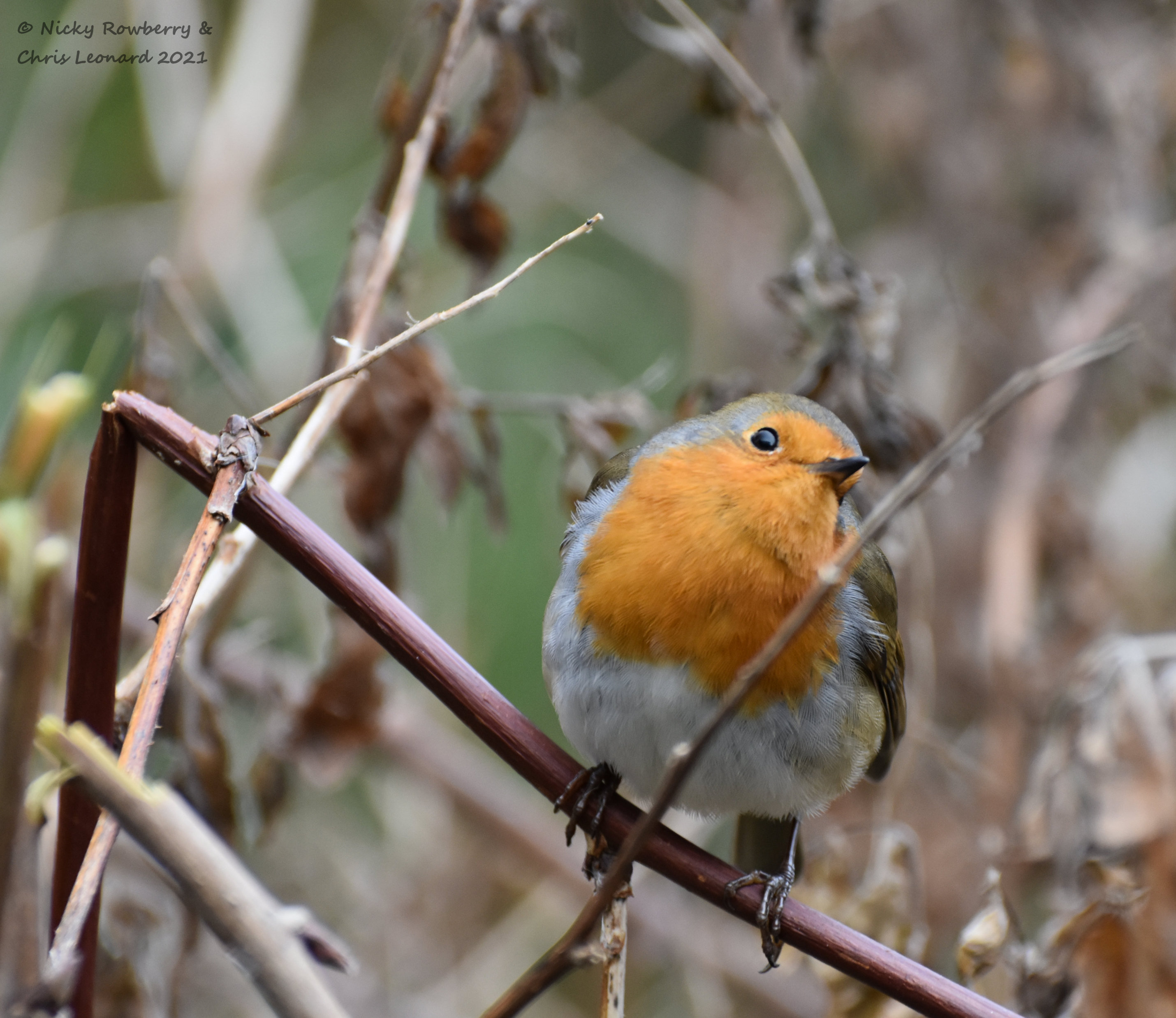
And then there was a singleton blue tit, dunnock and robin. The robin was the most sociable of the whole bunch. He even landed on the camouflage netting right by my head – too close to even get a photo. As if sensing that he might be missing his photo op, he then obligingly hopped down to some stems in front of me and posed so I could get his good side. Of course there was still a twig in the way – isn’t there always?

The (almost) highlight of the whole hour came near the end when I think a sparrowhawk zoomed across the garden after a small bird. Unfortunately it all happened so fast that I couldn’t be sure that’s what I saw and I almost got tangled in the camouflage netting in my haste to stand up and get a better look. So although I’m about 80% certain it was a sparrowhawk, I wasn’t sure enough to include it in my birdwatch results. So close!

A bit disappointed that our wren didn’t put in an appearance, nor the long-tailed tits. And really disappointed that our male blackcap was a no-show too. He’s been pretty much resident outside our patio doors for the last 3 weeks, but today of course he chose to have the morning off. Just to prove it, here he is from a few weeks ago.

Submitting my data took a few goes as the RSPB website seemed to be struggling. Hopefully that’s a good sign and means lots of people have been doing the count.

Success in the end though and nice to know I’d contributed in a small way to another bit of citizen science. Talking of which, tonight happens to be my next slug collection night for the Slug Count project. It’s all go!

2020 – The Year of the Pond

Well there are probably lots of ways to describe 2020, but most of those aren’t repeatable on what tries to be an upbeat blog. So I will gloss over the obvious and instead try and focus on the many good things that happened in the last year.

First and foremost was that we finally managed to put in a new pond. The timing for this couldn’t have been better – the pond went in during February and of course in March we went into lockdown. Having the pond to sit by and watch develop through those long months was a real sanity-saver. It was amazing how quickly the wildlife moved in and as it matures I’m sure it will only get better.

A real highlight and sense of achievement came at the end of May when George, the Eyed Hawkmoth I’d reared from an egg, finally emerged. I’d been nurturing him for 10 months since I’d found the egg in the moth trap and so I felt like a proud mum when he emerged and flew off into the night. Hopefully there will be sons and daughters of George in flight this summer too.

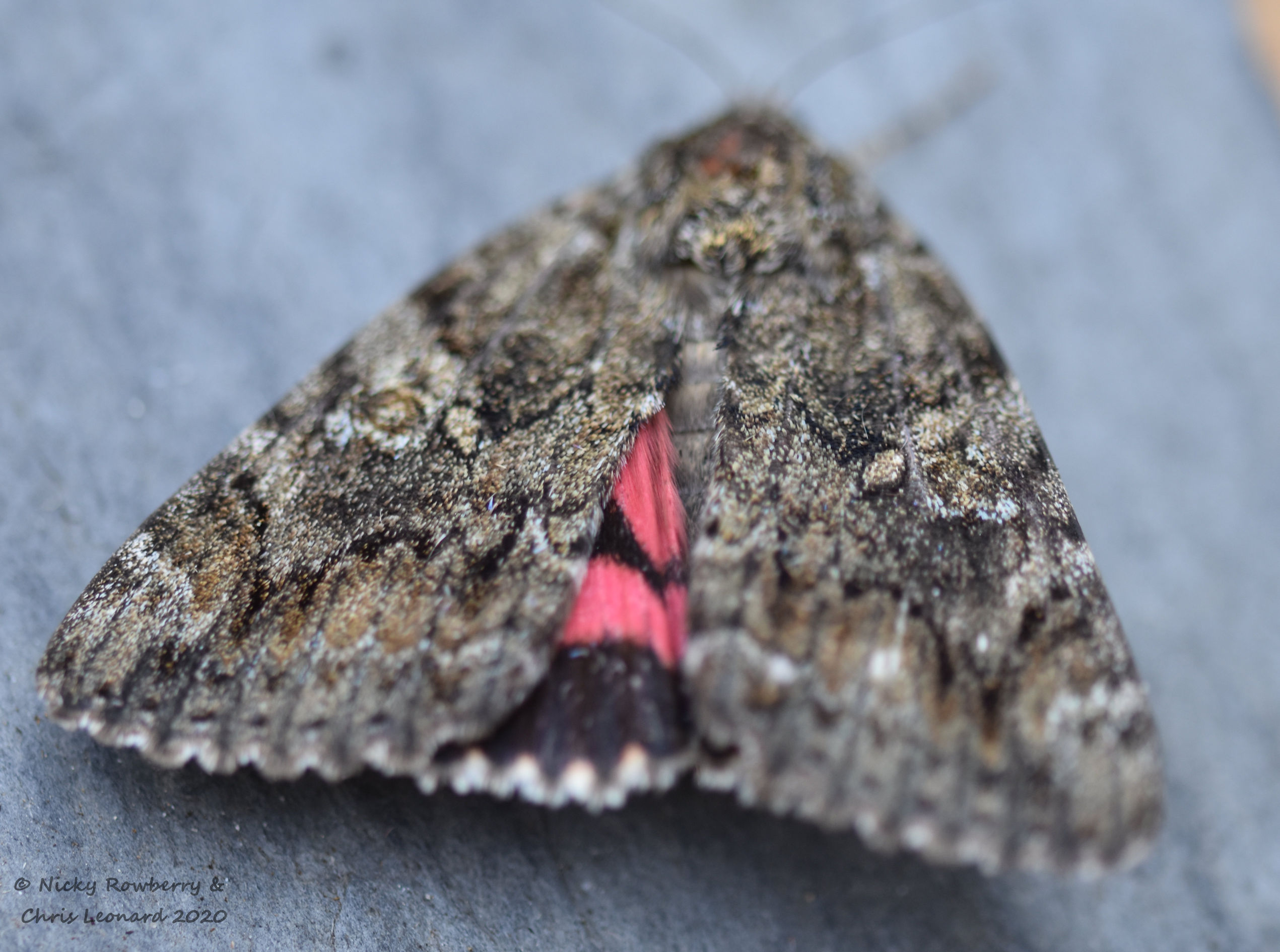
Another moth related achievement was the creation of our Moon Garden – an area planted specifically to attract moths. And it worked. 39 new moth species were recorded, bringing the running total for the garden to 405. Best of all it attracted a Dark Crimson Underwing – believed to be the first record for this species for the whole of the West Midlands.

2020 turned out to be a good year for butterflies too. Between lockdowns, we managed to add 2 more species (Silver-spotted Skipper and Black Hairstreak) in our mission to see all the British butterflies. We also noted 2 new species for the garden (Silver-washed Fritillary & Brown Argus), although this was more by luck than good management.

The new bee hotels provided lots of interest and again we added 2 species to our garden count (Willughby’s Leafcutter and a Sharp-tailed Bee). Being able to watch both Red Mason & Leafcutter bees build their nests in the tubes was really fascinating.

Despite lockdowns, we still managed to take part in various citizen science projects – including Big Butterfly Count & Garden Moth Scheme. A new project this year is the Slugs Count project.  This is a monthly survey of the garden for slugs and it’s been great (trying) to get to grips with a whole new group.

As I do every year, I’d made various wildlife resolutions at the start of 2020. Of course back in January none of us had any idea of how the year was going to turn out! Not surprisingly the Covid imposed restrictions had an impact on some of my resolutions, but at least this year I’ve got a really good excuse for not completing them all! So here were last year’s targets:

  • New pond – well at least we smashed this one. Many thanks to Gwyndaf the Cycling Gardener who was the one who did all the hard work digging, while we sat back and reaped the rewards.
  • Create a Moon Garden. I think we pretty much nailed this one too. The Moon garden was a big success both aesthetically and for the moths.
  • See 2 more species of British Butterfly. For a while it seemed touch and go whether we would achieve this one. Our planned trip to Norfolk to see the Swallowtails was of course cancelled, but in the end we did manage 2 other species (always good to have a plan B). So we’ve now seen 52 of the 58 species.
  • Visit 5 new nature reserves. I think we only managed 2 new ones (Glapthorne Meadows and Aston Rowant NR), but then many of the nature reserves were closed to the public during the lockdowns, so I figure we have an excuse.
  • Go rockpooling. Had hoped to do this one in Norfolk, but of course that went out the window. Not much scope for rockpooling in Worcestershire, so this one will have to get bumped to next year.
  • Go and see some wild Ospreys. Again we were thwarted by Covid. I had hoped to go up to see the Dyfi Ospreys, but for a large part of the year we’ve not been allowed into Wales!
  • The moth tattoo! I genuinely thought this would be the year I’d get a moth tattoo – I’ve even decided it should be of George the Eyed Hawkmoth. But of course tattoo parlours were one of the first things to get closed down – so that’s my excuse at least.

So to New Year’s Resolutions for 2021. Covid may continue to thwart our efforts, but we can at least hope to enjoy as much wildlife as possible.

  • Try and video a dragonfly emerging from the pond. We had lots of dragonfly/damselfly egg laying activity in the new pond last year, so hopefully I can catch some of them emerging in the summer.
  • Expand the moon garden – it’s been great so far, but I’m hoping to double the area.
  • See 2 more species of British Butterfly. We’ve now seen 52 of the 58 species, but we’re having to go further and further afield to see the remaining ones. Fingers crossed we can see the Swallowtail in Norfolk at least this year.
  • Visit 5 new nature reserves.
  • Rockpooling. Again fingers crossed we make it to Norfolk for this.
  • Go and see some wild Ospreys – if we’re allowed back in Wales!
  • The moth tattoo!

If 2020 has taught me anything it is that I am very grateful to have a wildlife filled garden and that I am lucky it brings me so much pleasure. It must be awful for those who didn’t get the chance to enjoy wildlife this year, but then I think it would be awful in any year not find joy in the nature that is all around us if we take the time to look.

Our Garden Butterflies

The Big Butterfly Count results were announced last week, so it seemed a good time to take a look at the butterflies we’ve had in our own garden this year. Sadly the Big Butterfly Count suggested a poor year for butterflies, although the very warm spring may have meant their numbers peaked before the Count took place – let’s hope that’s the reason.

It might not have been a great year nationally, but we have actually done pretty well here in the garden. By the end of 2019 we had recorded 18 butterfly species in the garden in the 12 years or so we have lived here. In 2020 we were very pleased to add two more to that list.

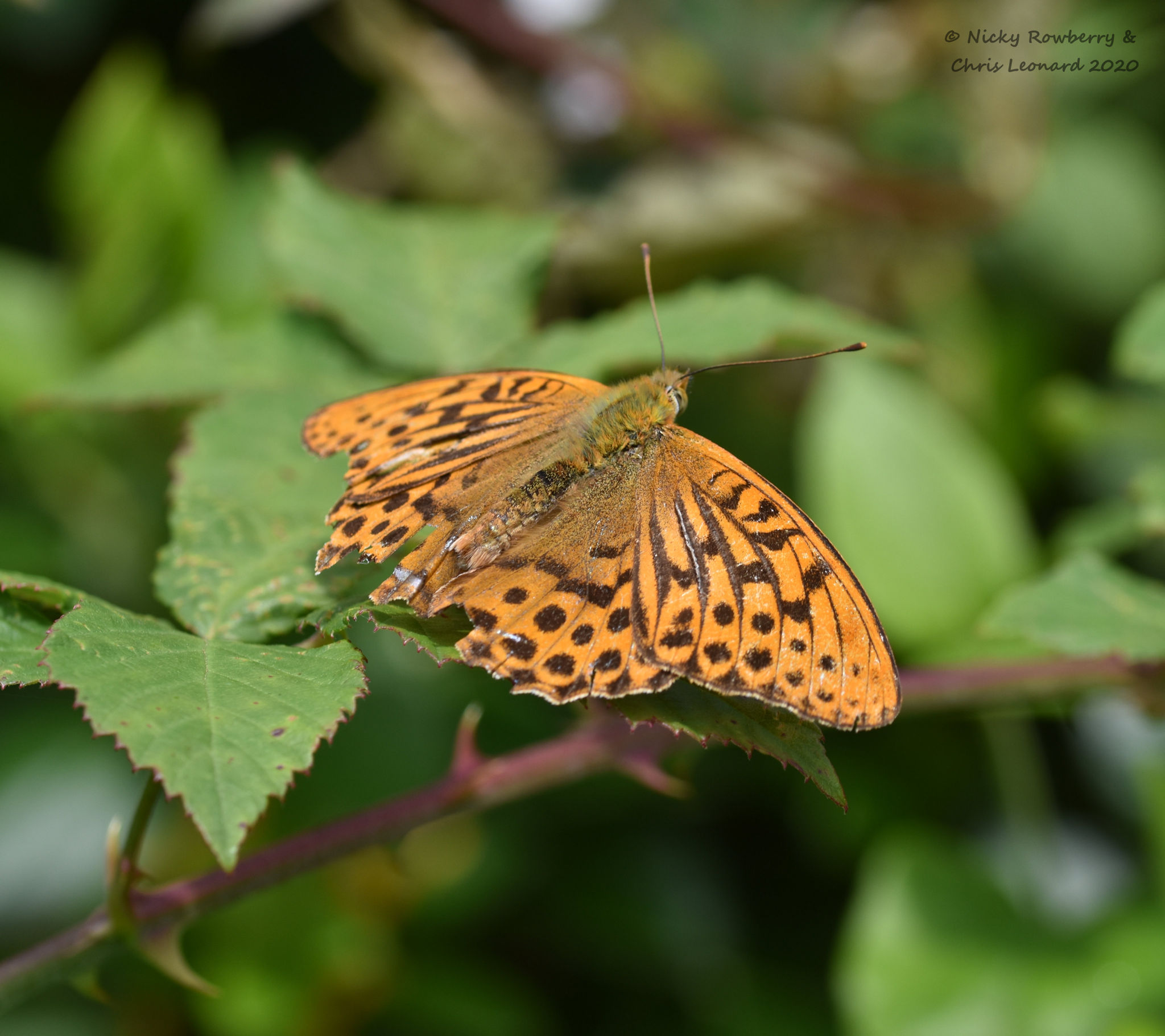
In the middle of July I was amazed to spot a Silver-washed Fritillary in the garden. It was a bit tatty and probably a bit lost, but you take what you can get with wildlife sightings! Having an overgrown, brambled covered garden had paid off. For once I even had the camera to hand, so snapped a few photos before it disappeared. It moved from the brambles to a buddleia and I managed a few more photos before it realised it probably wasn’t in the right place and flew off.

Seeing a Silver-washed Fritillary in our own garden was particularly enjoyable as, thanks to Covid, we hadn’t manage to get out to many of our usual places, so hadn’t seen them anywhere else this year.

Then a couple of weeks later we were sitting by the pond (as so much of 2020 has been spent) when a small butterfly landed on the Eryngium flowers. We thought at first it was a female Common Blue, which in itself would be a bit of a rarity in the garden, but it turned out to be a Brown Argus – our 20th butterfly species for the garden.

Besides the newcomers above, we’ve had a fairly steady stream of butterflies throughout the summer. As with the Big Butterfly Count results, the white butterflies were the most numerous ones – Small Whites in particular seemed to have a good year here in Malvern. I try and record the butterflies I see daily for the Garden Butterfly Survey and for most days through the summer I was seeing at least some Small Whites and some days up to 8 or 9 in one go.  The numbers of Painted Lady butterflies we saw were down on last year, but then last year was a particularly good year for them nationwide.

Commas, Red Admirals, Peacocks and Small Tortoiseshells all appeared, although never in more than 1s or 2s, despite us having a lot of Buddleias in the garden. The grassy areas (we can’t call them lawns any more) produced Ringlets, Gatekeepers and Meadow Browns and the Speckled Woods & Holly Blues liked the brambles and apple tree. I’d planted up a few Bird’s Foot Trefoils in the hope of attracting some Common Blues, so was really chuffed when one finally deigned to appreciate my efforts and land on the flowers.

The final treat for the year was a second brood Small Copper which took advantage of some of the late summer Asters growing wild all over our garden. It’s got blue spots in the wings which apparently makes it the caeruleopunctata form, which was an interesting snippet to learn about.

So it may not have been particularly good news nationally for butterflies, but it seems our Malvern garden has been lucky.  Whether we’ve genuinely had more species visiting or whether we’ve just been seeing more because, thanks to lockdown, we’ve spent more time in the garden I don’t know. Whatever the reason, they have certainly been very welcome little rays of sunshine in an otherwise troubled year.

Big Garden Birdwatch 2019

It’s that time of year again – the Big Garden Birdwatch. I think every year I write a similar post about that mixture of anticipation and frustration that this fantastic bit of Citizen Science brings. The usual feeling of “where have all my regular birds gone” followed by the joy a pair of blue tits bring when they appear in the nick of time to make the cut. The red kites last week were undoubtedly magnificent, but when you’ve been sitting freezing your proverbial off for an hour, the sight of a pair of blue tits can be just as rewarding.

I did our garden count on Sunday, an unfortunately blustery day, which I presume is what put a lot of our birds off; rather than just sheer wilfulness to avoid being counted. In the end I only recorded 27 birds of 7 species – way below our garden norm and less even than I can see just glancing out now.  But data is data, so I hope our paltry count will still be of use. So all I saw was:

  • 14 sparrows – there may actually have been double that but, they were in the bushes and impossible to count more for certain.
  • 2 collared doves
  • 1 wood pigeon
  • 2 magpies
  • 1 blackbird
  • 5 jackdaws
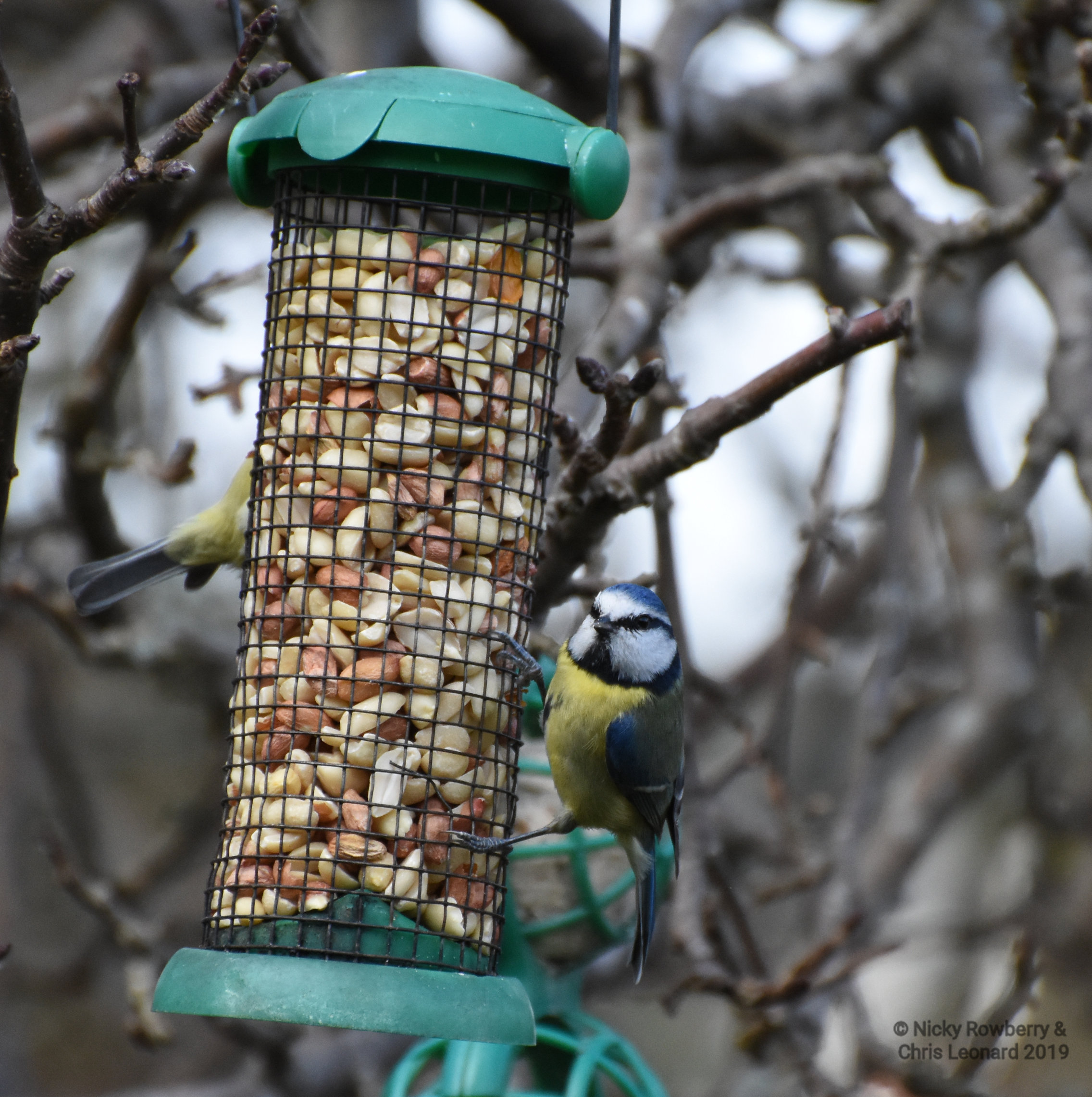
  • 2 blue tits

I did try to take photos of those that landed on the bird table, but our overgrown teasels were flapping about in the wind in my line of sight, so I only managed one of the jackdaws.

The blue tits were a bit easier as they were feeding in the apple tree closer to the house.

So that’s it over for another year. Apparently this year was the 40th anniversary of the Big Garden Birdwatch. It started as a survey just for children to do, but thankfully us adults are allowed to join in now too. Our garden birds often seem to make themselves scarce during this annual count, but it still gives me an enormous sense of satisfaction to know that we’re contributing to a really useful bit of science. And sitting just quietly watching the wildlife in your garden for an hour, with no interruptions or distractions is no bad thing either!