30 Days Wild – Day 22

TWT 30 Days Wild_countdown_22Day 22 of 30 Days Wild and it’s Wednesday, which means pub lunch with my Dad – today it was the delightful little town of Presteigne just over the Welsh border. It always feels like we’ve stepped back in time when we go there – Presteigne seems to run at a gentler, slower pace of life than anywhere else.

Anyway, don’t know if it was the Presteigne effect or what, but I decided to go back in time and explore Dad’s garden looking at things like I did when we were kids. My sister and I spent an awful lot of our childhood knee deep in mud and water in the stream that ran alongside our garden or just generally mucking about outside. The joys of a 1970s childhood!

We grew up in Herefordshire in a small village in a house that had been built on an old orchard. Our garden still retained quite a few apple trees which, when we were kids, were still quite productive – we even earned money occasionally picking the apples and selling them to a local farmer; we probably only got a few quid, but as children it seemed like we’d made a fortune! Now (more years later than I care to calculate) most of the trees have gone – mainly fallen in high winds as they got too old and brittle. There are a few left, like this cider apple one, which is still fairly sound and producing apples.

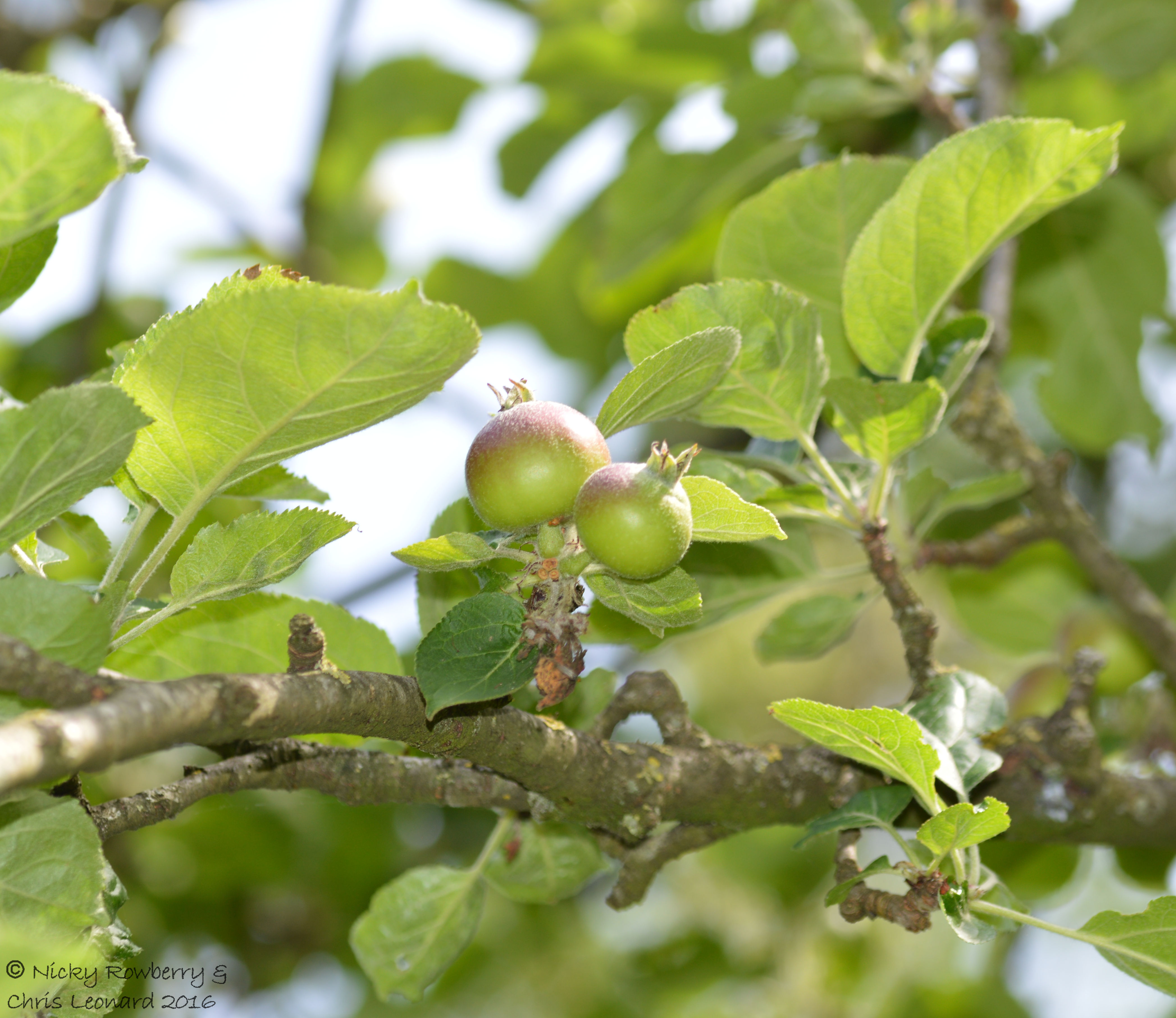
Apple tree

Apples

Several of the others though are little more than tall hollow stumps. This one had bits of wool around the hole, so unless the local sheep have started climbing, I think the hollow trunks are being used for bird nests, which is great.

Hollow apple tree

Several of the trees have clearly been choked by ivy growing up them. It’s probably a good job they weren’t like this when we were kids, or we’d have tried to climb them. (I’m old enough and heavy enough now not to consider this today!)

Ivy on tree

All the apple trees are covered in mistletoe. It is a little family ritual still that every year we pick big bunches of mistletoe from the apple trees for Christmas – there’s something lovely about growing your own Christmas decorations!

Mistletoe

I was really pleased that the elderflower was in bloom in the garden. This too brought back childhood memories. We used to fill buckets with the flowers then turn them into “Elderflower Champagne”. No idea whether it was actually alcoholic, but we drank it as children (may explain a lot about my later life!) It was quite explosive – I seem to remember being woken in the night by bottles exploding in the kitchen on a fairly regular basis. As smaller children we used to make elderberry “pies” – basically a bowl of mushed up elderberries that no-one would eat.

Elderflower

The bottom of the garden is a bit overgrown (just how I like my gardens). One plant that is doing particularly well is Cleavers – or as we called them as kids – sticky buds. Childhood days in the garden always ended up with both us and the cats coming back inside covered in these.
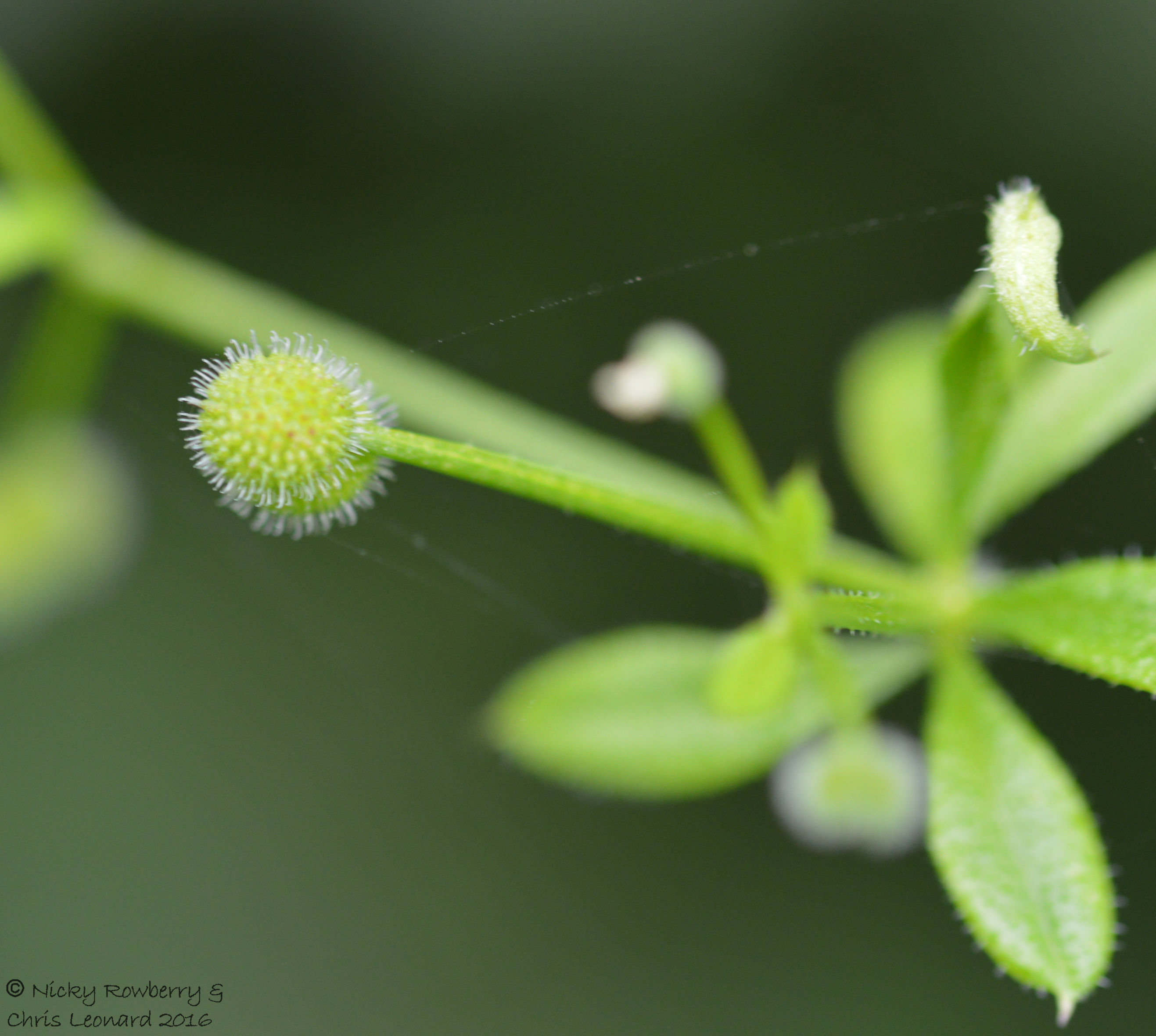
Sticky Buds

Dad’s garden is always full of birds and today was no exception. As I walked down to the bottom, a buzzard flew out of a tree – he’d clearly spotted me before I spotted him. Needless to say he was too quick for me to get a photo. I had more luck with a pheasant that was wandering by the stream, but they don’t feel like much of a challenge.
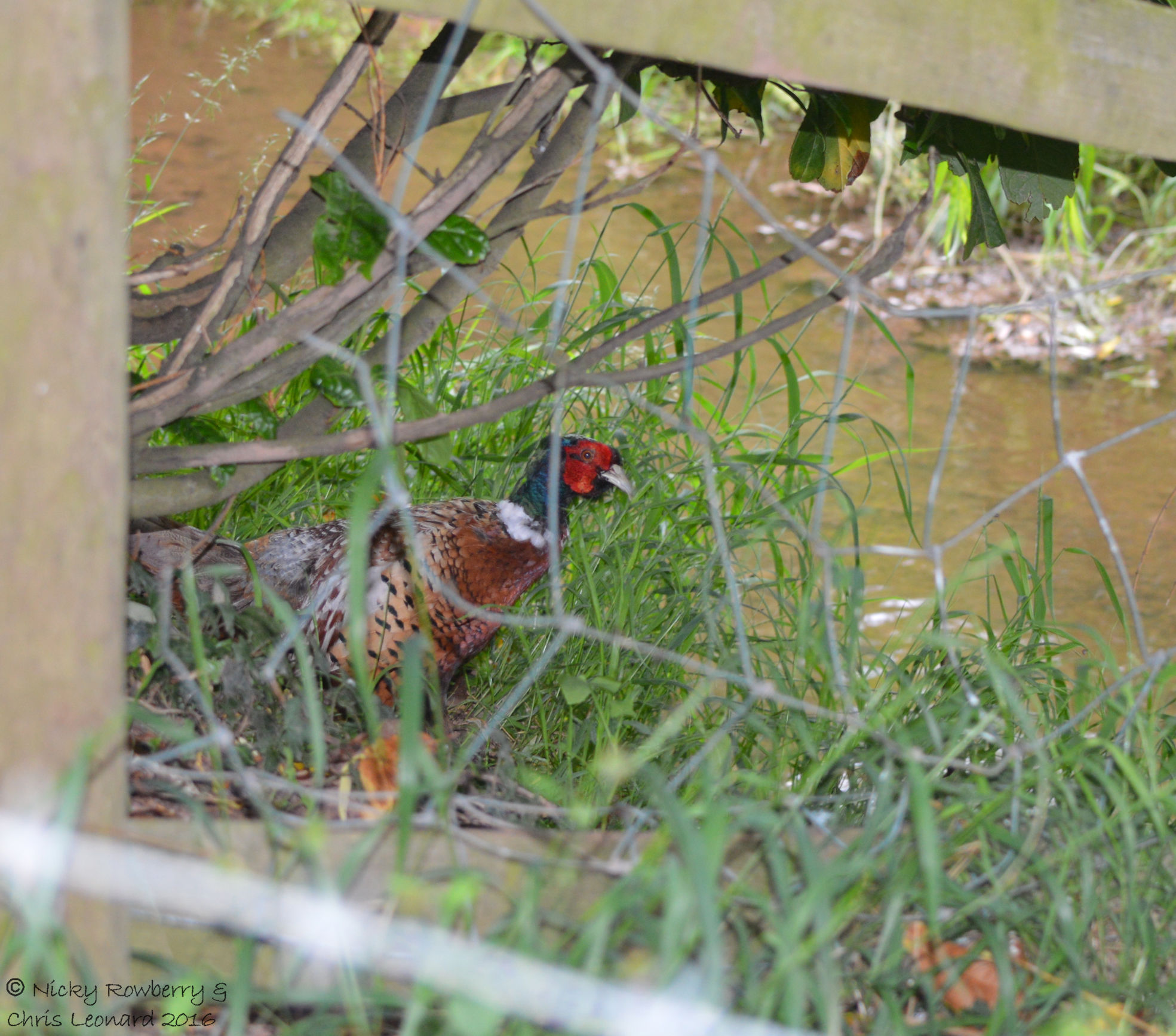
Pheasant

I could hear lots of the birds this afternoon in the garden, but there’s one that really evokes childhood for me. It’s nothing fancy or rare – just the sound of pigeons cooing at each other.  You can hear them on and off all day. Even now if I hear them in my own garden and close my eyes I am transported back to my parents’ house – for me it’s always been a very comforting sound.  One thing I noticed while trying to get a recording of them today, was that there’s a lot more traffic going past Dad’s house than there was in the 1970s – I suppose that’s inevitable, even though his house is pretty much out in the sticks. So it took several goes to record them without too much traffic noise in the background.


They say smell is a very evocative sense when it comes to recalling memories. Dad’s garden has a lot of old fashioned roses – ones that are actually scented and smell like roses should. They are big, blousy varieties – one of which Dad took from his mother’s garden back in the 1960s! Sniffing them today reminded me of the garden in summer’s past. Roses today from shops just don’t smell like this.

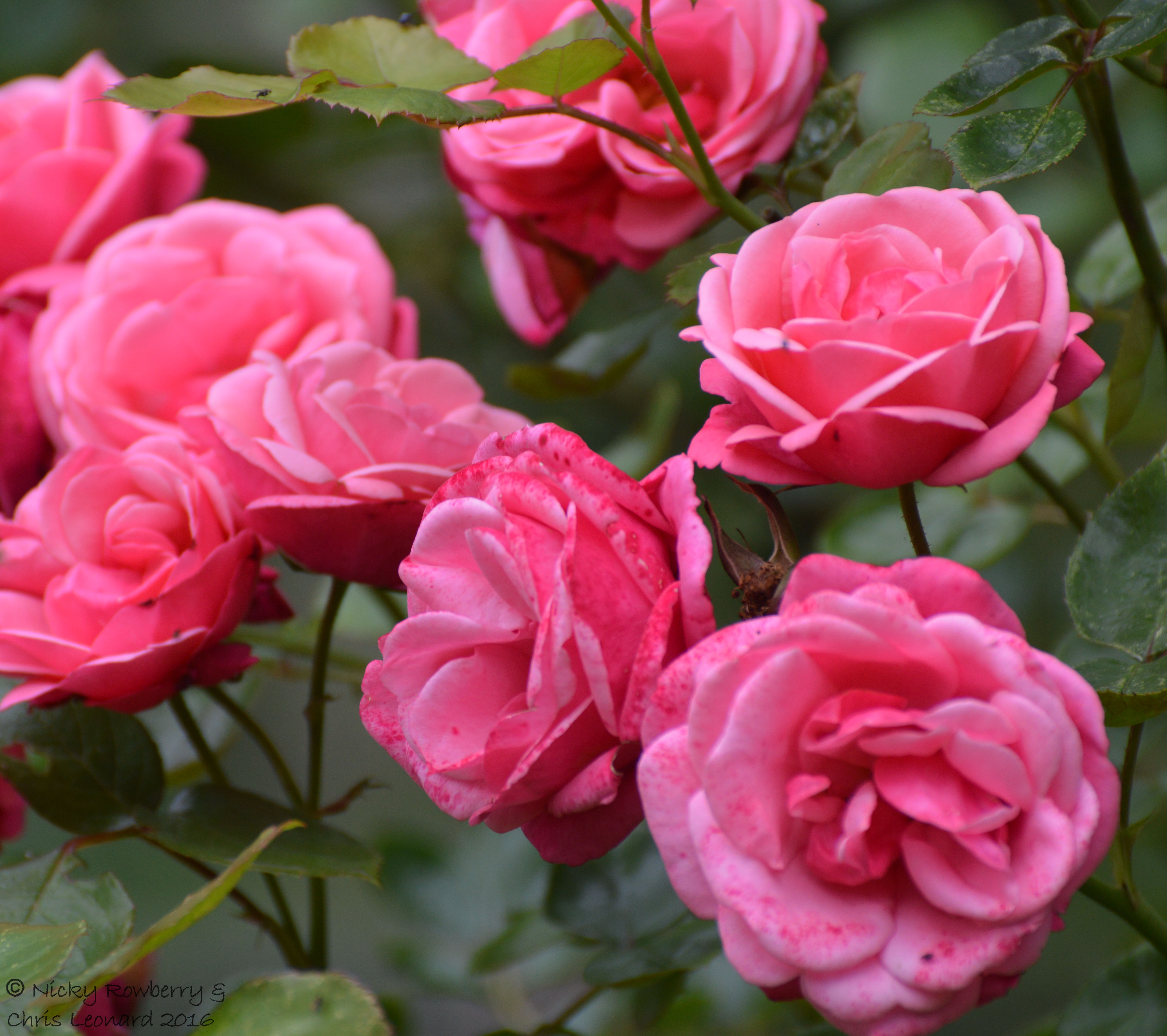
Roses

Roses 2

The stream that runs alongside the garden was one of the main sources of entertainment for us as children. The stream is still there, although it’s a bit harder to get to now. Of course it could just be that the middle-aged me is less flexible climbing through fences than the childhood me was! It is only a small stream that feeds into the River Lugg and it’s possibly not the most picturesque (the various deposits from the farm next door add to the ambience shall we say!), but for me it will always be a special place.

Stream

We used to spend endless hours fishing for minnows and sticklebacks, which we’d then keep in an old paddling pool. With hindsight the poor things probably didn’t enjoy the experience very much, but we (and the cats) were enthralled by them. So in honour of my childhood I borrowed a kid’s fishing net from my sister (who also kindly took a photo of it when I realised I’d forgotten to do so). It was quite a deluxe model compared to the ones we had as kids, which just had plain canes and nets that were always getting torn and having to be repaired!
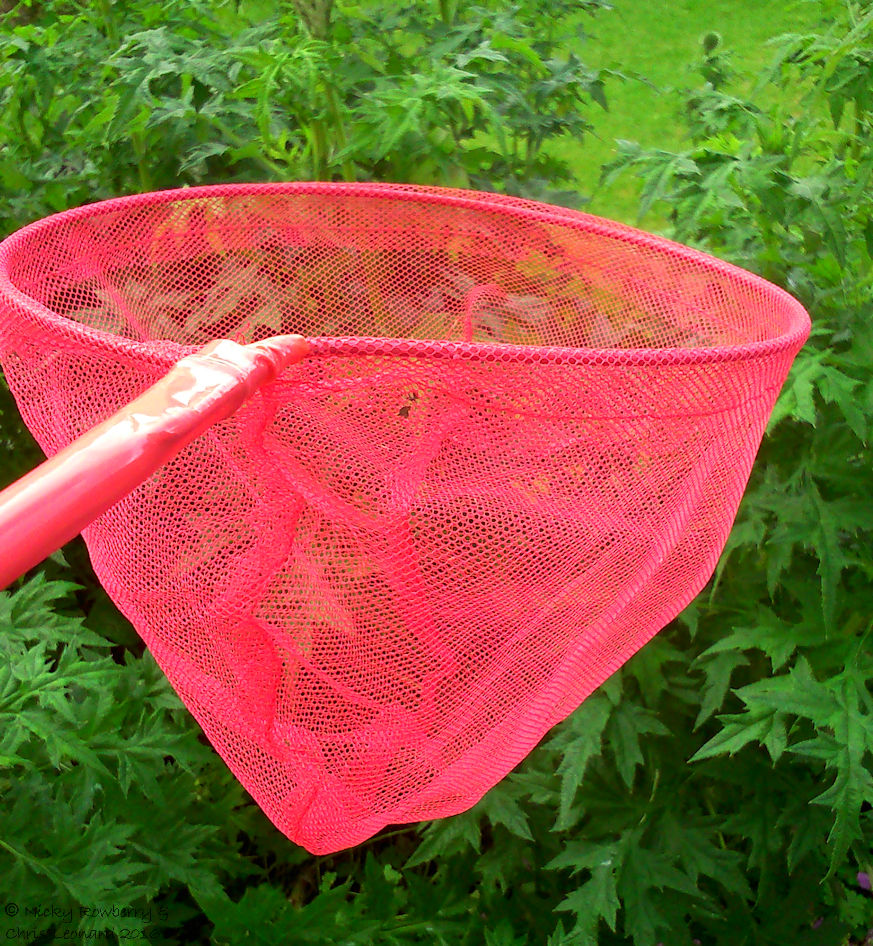
net

Grabbing the net, I scrambled through the fence and down to the stream. Standing there, net in hand, peering into the water I was 10 years old again. Happy Days. And much to my surprise (and his) I caught a stickleback. A Spineless Si of my very own (if you didn’t watch Springwatch last year you won’t know what I’m on about here), except this one did indeed have spines. He didn’t look very impressed by the experience though.

Stickleback

Stickleback 2

This Spined Si was of course released back into the stream as soon as I’d photographed him (no overheated paddling pool for him!) and I hope the whole experience wasn’t too traumatic for him.

Of all the things I’ve done on 30 Days Wild – I think fishing in the stream today, with a cheap plastic net, catching a stickleback, is probably the best. It’s easy to view your childhood with rose tinted spectacles, but I do truly think we were very lucky to grow up where we did and how we did. It was things like this, that left me with a lifelong love of nature and set me on the path I’ve taken for the rest of my life – all thanks perhaps to a few small fish.

Bramble 30 WEEDSAnd to finish as always the latest weed in my 30 Lazy Garden Weeds – the Bramble, seen here with a Honey Bee making the most of it. We have a dense thicket of brambles at the end of our garden, separating us from the neighbours. When the brambles are in flower they are abuzz with bees. And of course in the late summer we are rewarded with a plentiful supply of blackberries – the beauty of organic gardening is we don’t need to worry about there being any chemicals on these – although I do make sure we only pick those out of reach of cat’s scent marking the garden!


30 Days Wild – Day 18

TWT 30 Days Wild_countdown_18Day 18 of 30 Days Wild and we’re Malvern bound as the car is in for its MOT, so no grand excursions today! So I decided to spend a bit of time in the garden and review how my “wildflower meadow” was progressing. Meadow is probably a bit of an exaggeration as it is very small – more of a meadowlet on what used to be one of our veg patches.
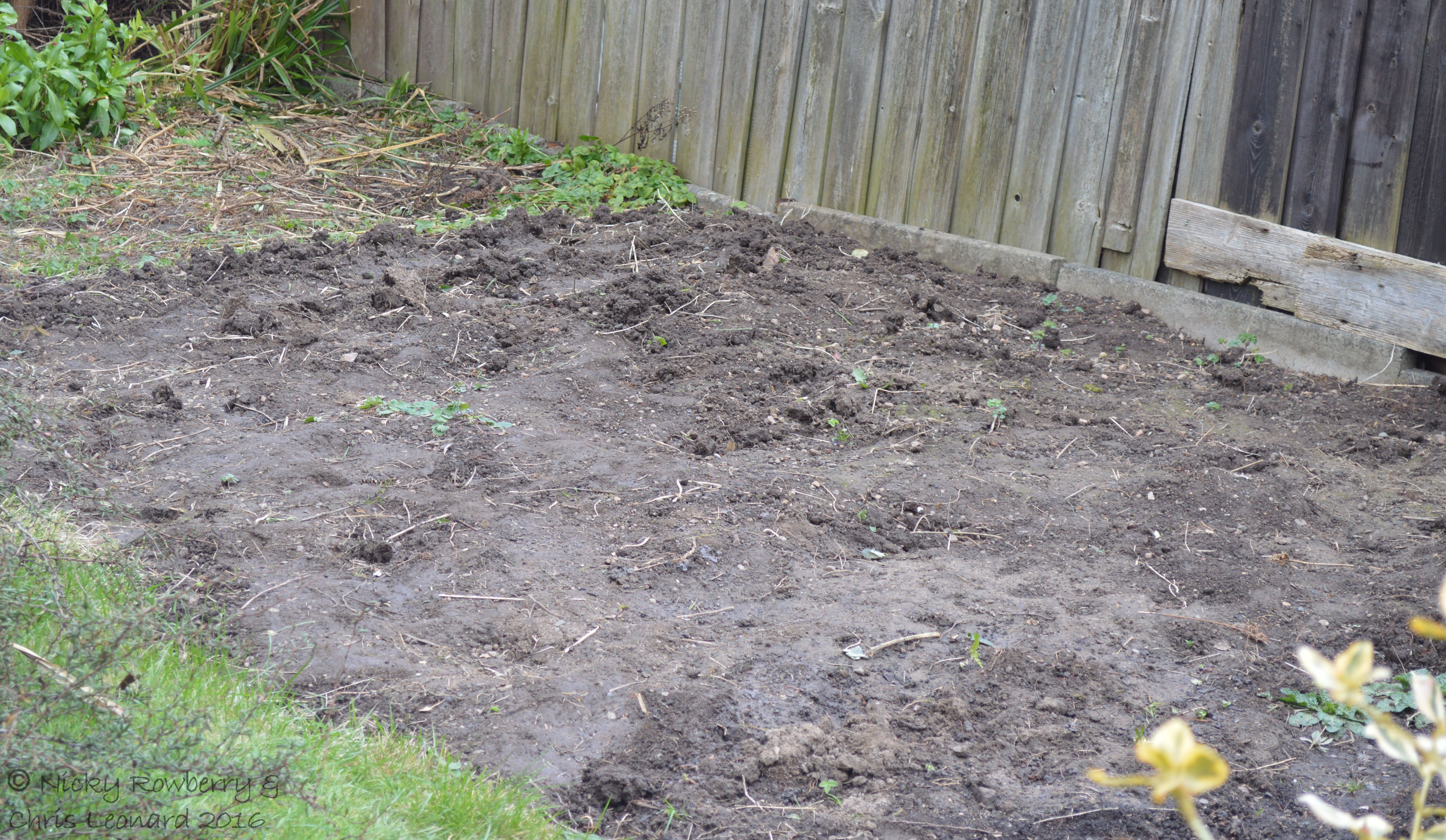
Back in March this is what the old veg patch looked like. We were rubbish at growing veg as we didn’t water or weed regularly enough, so we figured we might as well turn the patch into something more wildlife friendly.

Meadow before

And this is what it looks like today. Shame it wasn’t a sunnier morning for photographs, but it’s amazing what a difference a few short months have made.

Meadow 2

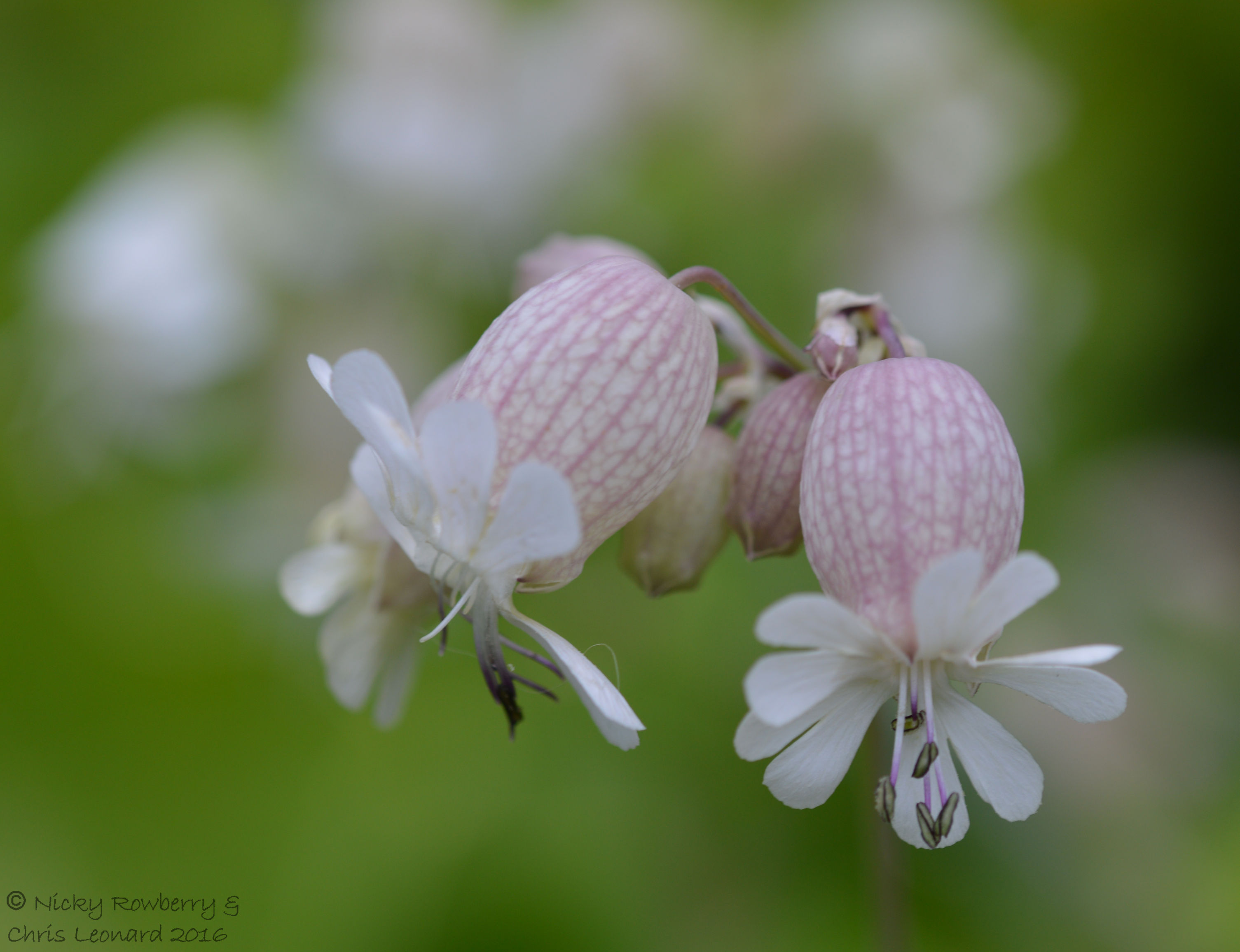
The “meadow” is still maturing – some flowers are at their peak and fully open, while others are still a way off. I’m not great on flower ID, but even worse when the flowers aren’t actually out and I’ve only got leaves to go on. So I’m not sure of all the species we’ve got. But here are a few I can manage. The first is the Bladder Campion with its unusual “swollen” flowers. This is supposed to attract froghoppers, although I’ve not actually seen any on it. It’s fragrance is apparently stronger in the evening and attracts moths – I must check it one night.

Bladder Campion

I think the next is Phacelia, which as you can see is already attracting plenty of bees.

Phacelia

Bee on Phacelia

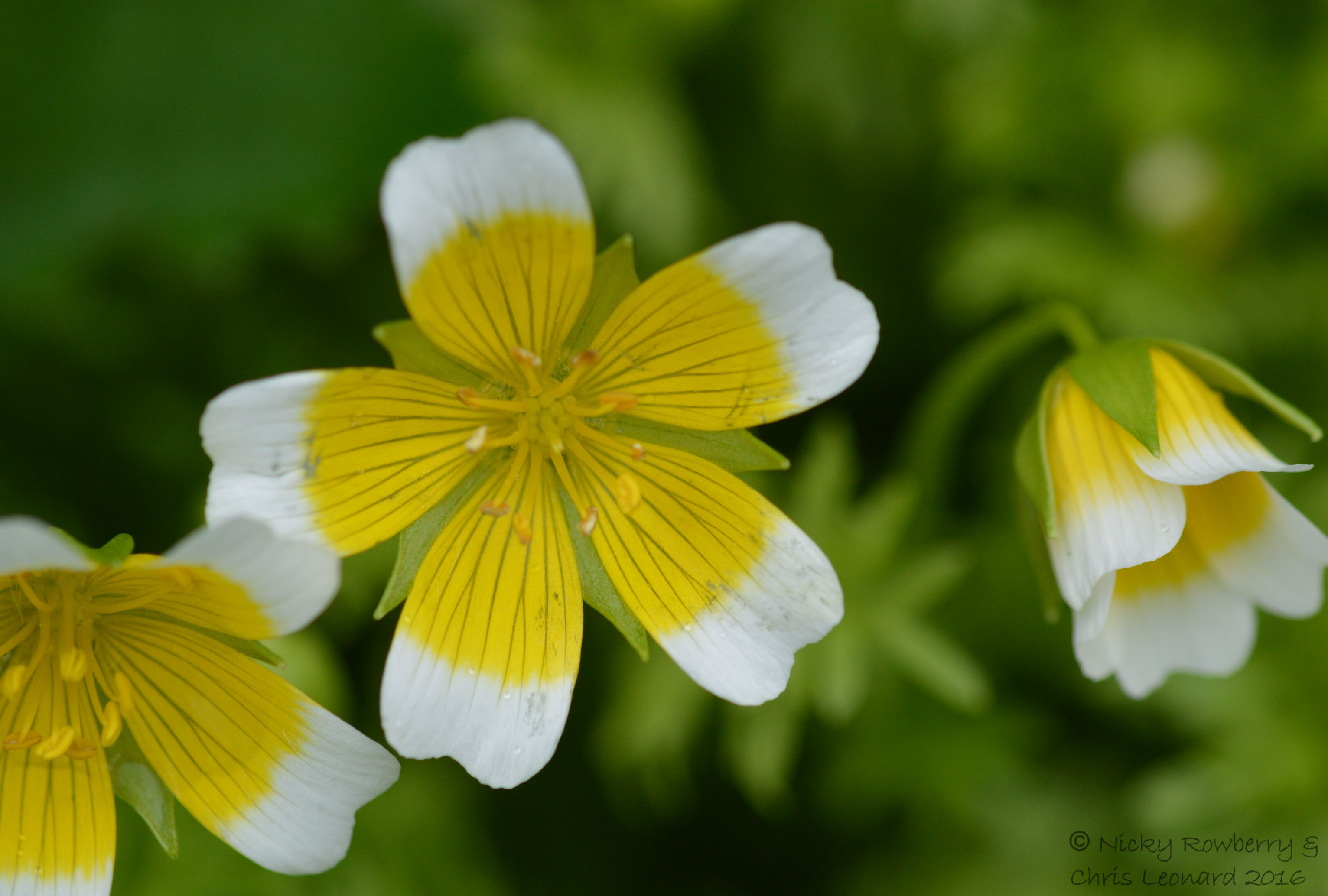
The Poached Egg Plant is a real cheery addition to the meadow. I bought this as I read on someone else’s blog (sorry I can’t remember who, but thank you whoever you were!) that it was particularly good for hoverflies. Not seen that many of them on it yet, but it’s only just come into flower and the weather’s not been great since then, but hopefully it will live up to its promise soon.

Poached egg plant

The corn chamomile has spread and formed a large patch which has been attracting hoverflies. Sod’s law being what it was though there weren’t any on it this morning – but if you sow it they will come!

Corn chamomile

The Borage is looking good and just starting to open its flowers and will hopefully be pulling in the bees soon.

Borage

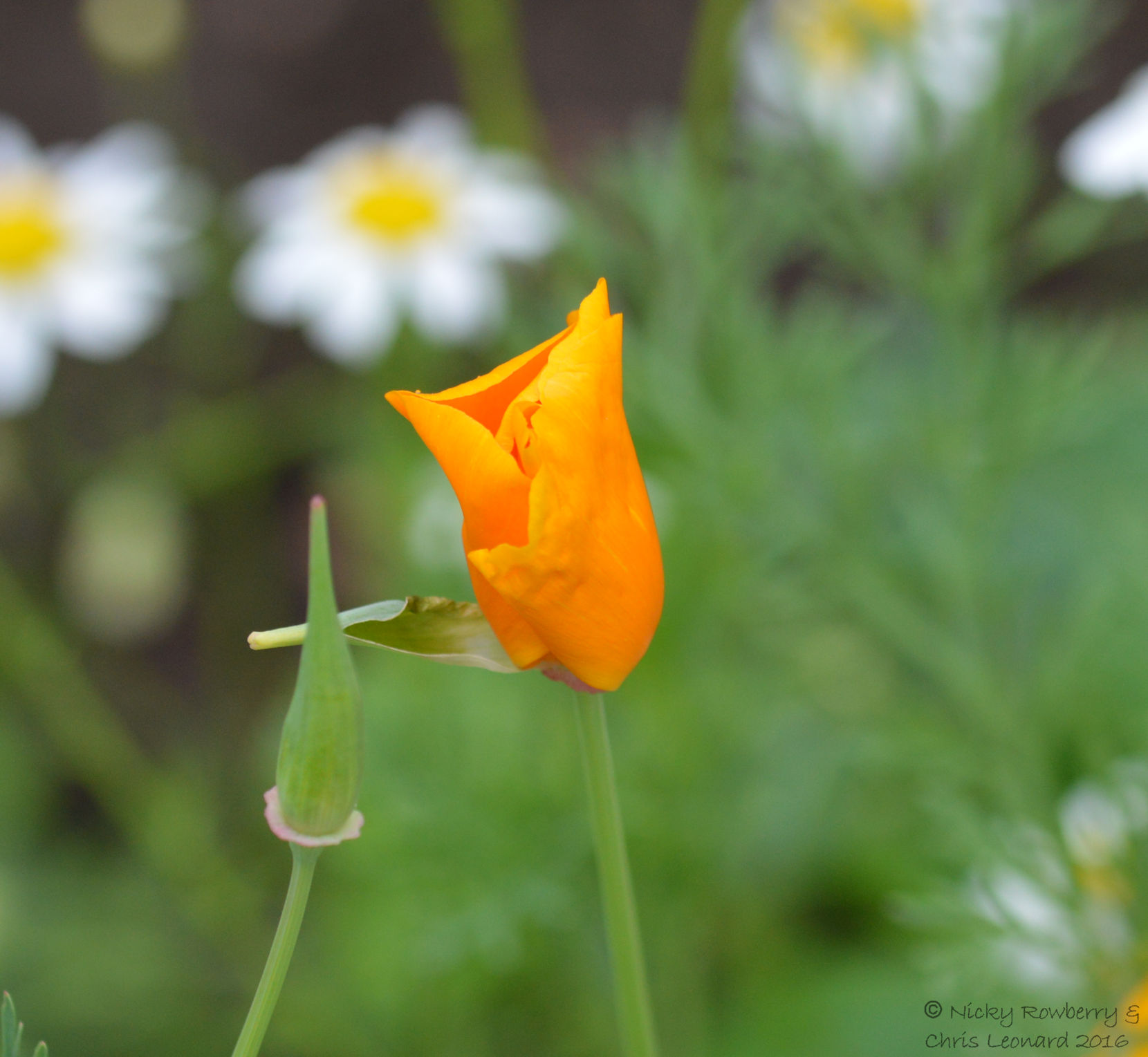
The next two haven’t really opened up yet, but I think they are a Cornflower and some kind of Poppy.

Cornflower bud

Californian Poppy

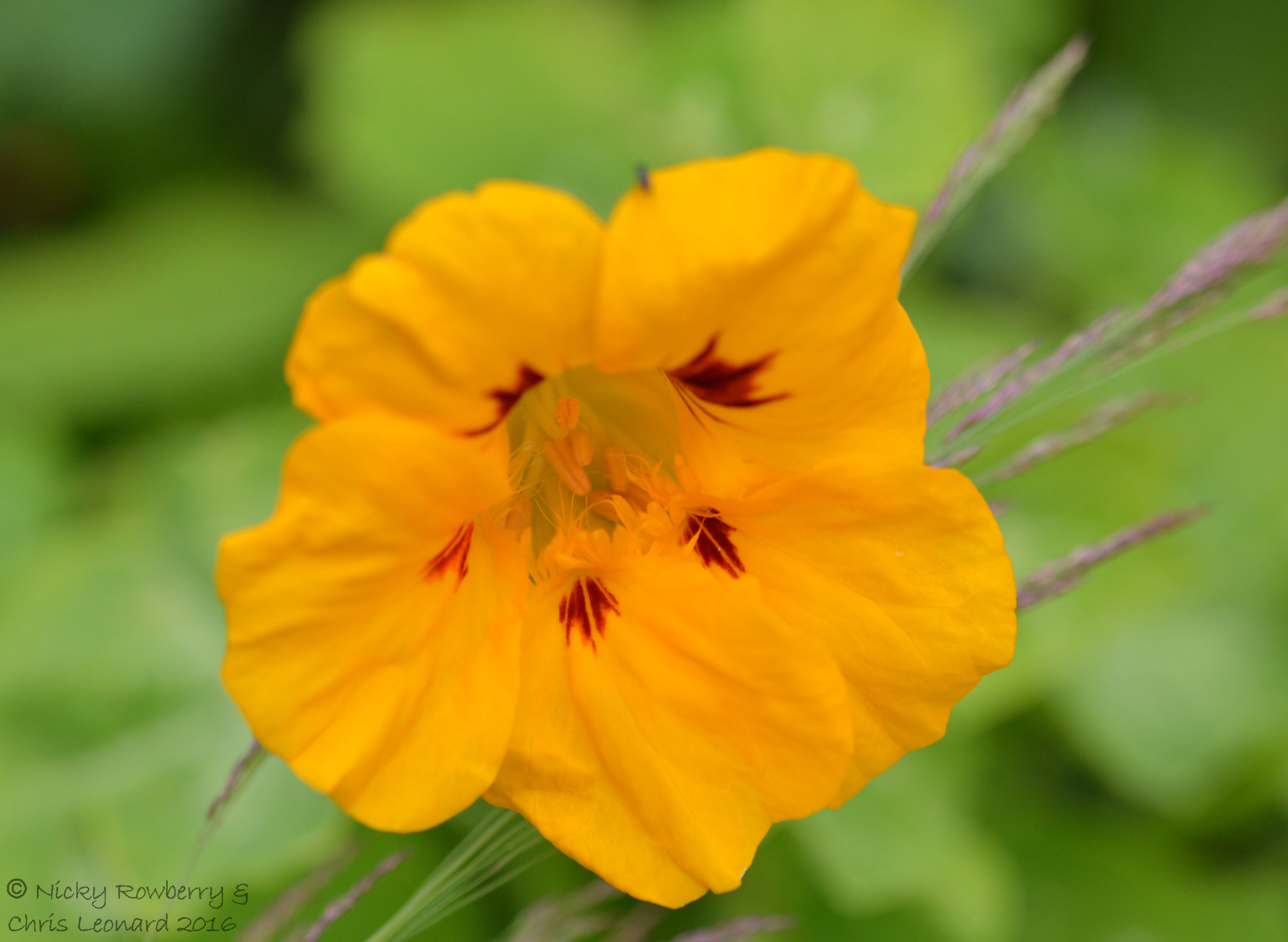
The Nasturtium wasn’t really planted as part of the meadow, but I’ve left them there as they’re good for insects too. We had a go at companion planting with them a few years ago and as they tend to produce masses of seeds, they’ve been popping up everywhere since!

Nasturtium

There are a few other things poking up through the meadow, but I’ll have to wait until they hopefully flower to work out what they are. I’m really pleased with the results so far though, so much better than a scruffy, ill-maintained veg plot!

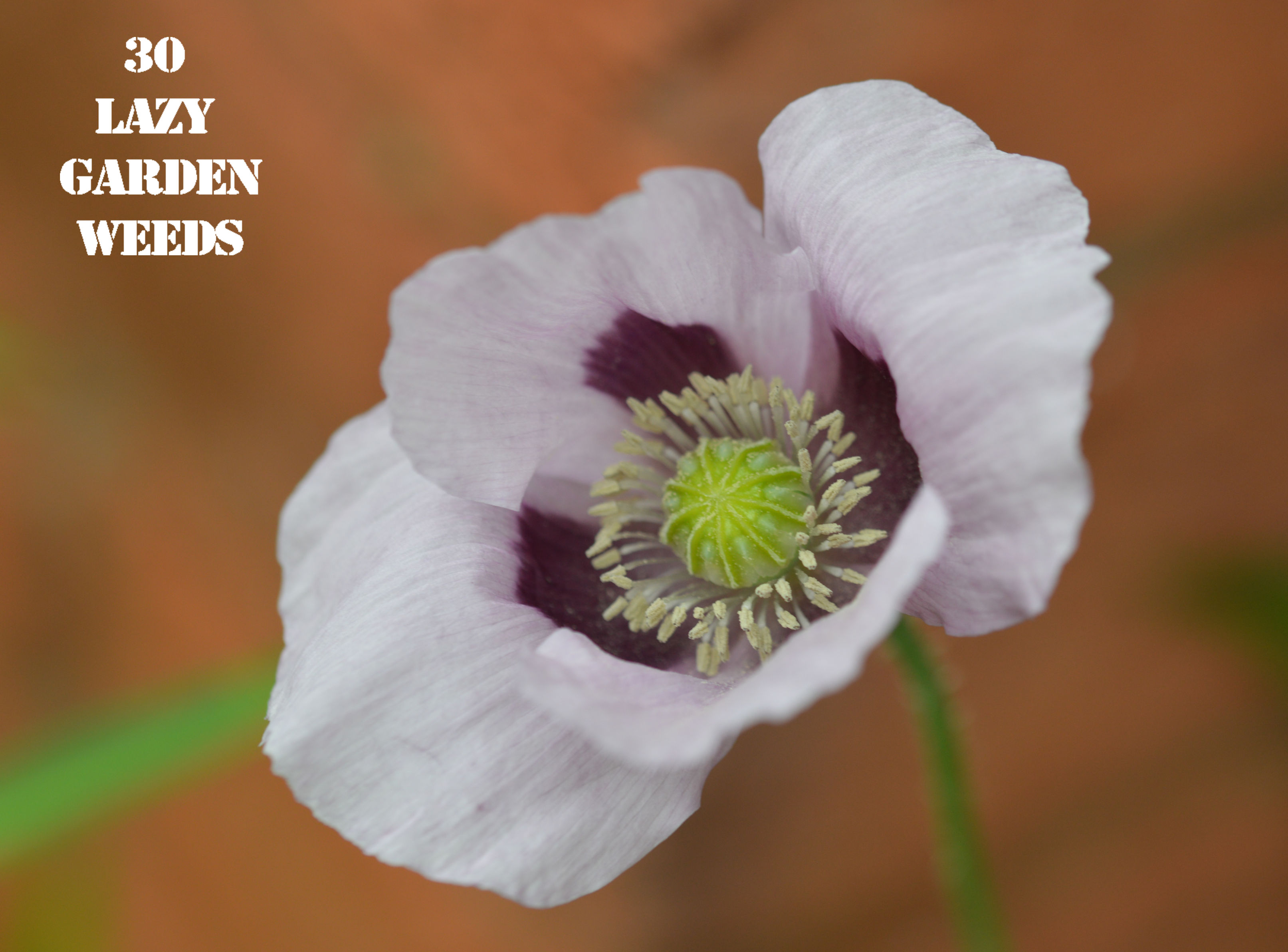
Poppy 30 WEEDS

And finally weed No. 18 in my 30 Lazy Garden Weeds is this Poppy. They are so delicate and ephemeral – each flower lasting barely a day, but that makes them all the more special. They pop up everywhere from cracks in the drive to the flower beds and remaining veg plot. Collecting seeds from their rattly seed heads reminds me of childhood – not that there’s really any need to collect the seeds – they’re doing a pretty good job of seeding themselves!

30 Days Wild – Day 4

TWT 30 Days Wild_countdown_04Day 4 of 30 Days Wild and today we took part in another event – the National Garden Bioblitz, thereby ticking off two targets with one activity (in true Too Lazy fashion). The aim of the Garden Bioblitz is to find and record as many species of plants and animals as possible in the garden in 24 hours.  Since we’re always identifying things we find in the garden anyway, a bioblitz is just a natural extension of that.

Garden BioblitzLast time we did this a few years ago, we recorded about 120 species; but that was before we got into moth trapping and bee identifying, so hopefully we can beat that this time.  I’m writing this late evening – we’ve been busy in the garden all day, photographing and listing everything we could find. I’ve still got loads of things to identify from the photos and then everything has to get logged onto the i-record site.

It has pretty much been the perfect day. It started at about 4:30 am when I got up to empty the moth trap (to beat the cheeky robin to the catch). Then went back to bed for a bit more sleep (always good), before resuming the challenge at a more reasonable hour. For once the sun shone on the righteous (questionable I know) and we had the perfect conditions for trawling the garden for photo ops. Pretty much the whole day was spent crawling about the garden with the cameras. We finished off by cranking up the BBQ and cracking open a bottle of Prosecco – the perfect end to the perfect day.

During the day we tried every trick we could think of. Obviously the moth trap had been out over night and produced at least 20 species of moth – I’m still working through the photos, so this total may rise. Highlight was the always stunning Elephant Hawkmoth.

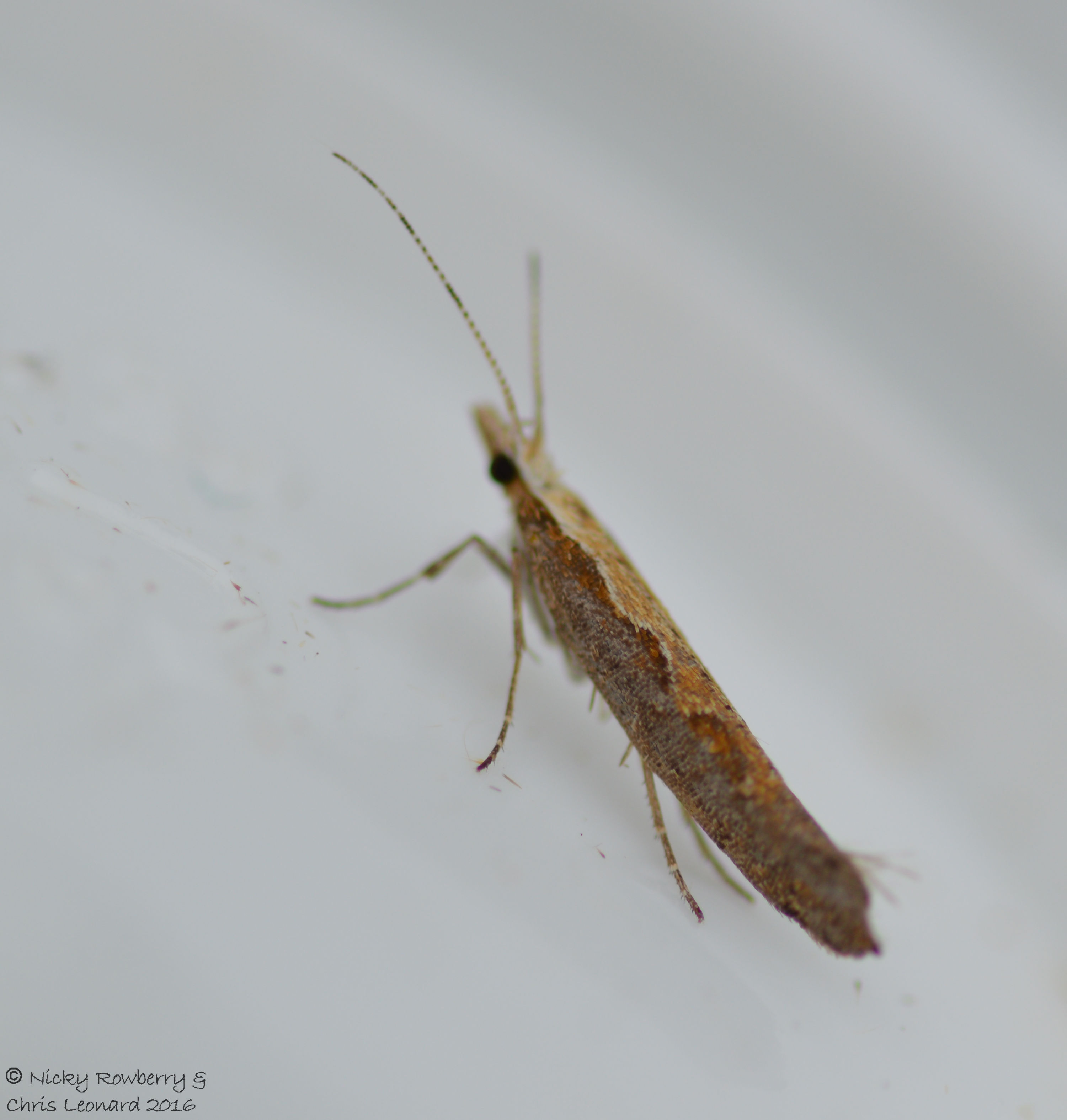
Diamond Back mothI was also really pleased to get several Diamond-back moths – tiny moths that migrate over from the Continent. They’d been mentioned on Springwatch and social media was full of people saying they’d had loads of them this week, so I felt ridiculously glad that Too Lazy’s garden hadn’t missed out. Moth envy is a terrible thing!

We also tried pitfall traps for the first time, using old plastic tubs buried in the ground. This produced this rather splendid (and still to be identified) beetle, plus a couple of woodlice and a spider (also still in need of ID). I suspect pitfall traps take a bit of practice in sussing the right location – we might try them again at other places in the garden.

We tried the “suspend an umbrella under a tree and wack the branches” technique as demonstrated by Chris Packham on Springwatch.  We only have the one mature tree (an apple) so this didn’t produce too much, but was interesting to try.

We dipped in the pond, which produced mainly duckweed, but also some leeches and water louse. It also meant we spotted one of our two amphibian species of the day – a Common Frog, watching us warily from his duckweed blanket.

NewtWe of course turned over stones and pieces of wood, which yielded our second amphibian – the Common Newt. We also found most of our molluscan species this way, both snails and slugs. We achieved a respectable 4 species of snail, but sadly the Girdled Snail, which I know we get in the garden, remained steadfastly hidden today.

The rest of the day was spent generally bird watching and chasing various bees and insects round the garden.  I haven’t tallied up the birds properly yet, but we managed at least 10 species including this Collared Dove. At least 6 bee species put in an appearance, with possibly a new one – we spotted some kind of leafcutter bee carrying (not surprisingly) a piece of leaf – hopefully we can get an ID on it soon, although the photo wasn’t brilliant. Fortunately other bees were more obliging.DSC_3856

Only 2 butterflies showed their faces today – a Small White and a Holly Blue. Assorted insects made up the remainder of the animal count, while the plant count is at least 25 species, with probably a few more to ID.

We’ve spent the whole day in the garden photographing our wildlife and it will probably take several days more to go through all the photos and get them loaded so that they count for the Bioblitz. But it’s been a thoroughly enjoyable experience and has got us rooting about bits of the garden, that we may otherwise ignore. We won’t know the final tally of species for a couple of days, but I’ll post an update when we do. I’d recommend having a go at a Garden Bioblitz for anyone – you don’t need to be especially skilled – just take it to whatever level  you can manage. You’re sure to learn something new and hopefully enjoy your garden all the more for it. There’s still time to do it for this year – http://www.gardenbioblitz.org/ for more information.

Bindweed 30 WEEDSDay 4 of 30 Lazy Weeds and a truly beautiful if sometimes bothersome flower – Bindweed. The bane of many a gardener, but if you take the time to look at the flower itself, it really is stunning. Pure white and beautiful in its simplicity. Gardeners will plant similar looking flowers, but weed out these, which seems a shame. I know their stems do wind themselves round pretty much everything, but for me the flowers more than make up for this.


30 Days Wild – Day 2

TWT 30 Days Wild_countdown_02Day 2 on the challenge and I feel a bit like a marathon runner (actually I’ve no idea what that feels like and probably never will!) just getting going and setting my pace so I don’t run out of steam. So with that in mind, Day 2’s activity was none too strenuous and involved dragging my lazy bones only as far as the garden. I did however have to get up BEFORE the crack of dawn, so still feel deserving of some kind of medal.

So the reason for getting up at such an ungodly hour – to listen to the dawn chorus. This is something that always seemed such a lovely thing to do (memories of Bill Oddie enthusing about it on past TV programmes perhaps), but somehow I’ve never quite achieved – the lure of the duvet has always been too strong. So 30 Days Wild felt like the time to finally do it.

Unusually, I was organised. A digital dictation machine was borrowed well in advance (couldn’t think how else to record it as my phone is from the dark ages) and a few practice runs attempted – not at ridiculous o’clock in the morning of course, but in more civilised early evenings. We live in a pretty quiet street, but you don’t realise how much noise there actually is until you start trying to record something relatively quiet like bird song. First attempts resulted in 30 seconds of a neighbour hammering something. Next one a dog barked incessantly. Third one sounded as if the Hell’s Angels had decided to do wheelies down our street – all duly recorded (I might have kept that recording if he’d said we were having something that sounded a bit more glamorous and foodie than beans!) At least they proved the sound recording worked.

Sunrise this morning was supposed to be about 5am here in Malvern. According to the RSPB website the chorus begins about an hour before sunrise, so by 4am I was up and out and sitting in splendid isolation in the garden. Last night I’d been stressing a bit that I wouldn’t be able to identify the birds from their songs. I listened to various bird recordings online to try and memorise them – with little success. But as I got up this morning, I thought to hell with that – it’s way too early in the day to be stressing about anything, much better to sit back and just enjoy the birds as they come. I already pretty much know what birds we get in the garden and it seemed unlikely that a nightingale would suddenly start singing without me realising it!

Initially it seemed our garden was silent. I could hear birds singing in the distance but it was too faint to hear properly, let alone record. First noise that would have been audible on tape was a plane going over about 04:05 am – I didn’t even really think we were on a flightpath – just shows what you can notice when you’re alone in your garden in the dark! Gradually the bird song seemed to move closer – like a Mexican wave of tweeting washing over Malvern.

BlackbirdAbout 5 minutes later, the blackbird started up. I can say this with confidence as I could see him on top of next door’s roof. It was still pretty much dark, but he was singing his little socks off – and really loud. I know I’ve heard blackbirds sing before but I’ve never consciously sat and just listened to one – beautiful but definitely loud. Here’s a brief recording of him.

Once the blackbird had got going, more birds seemed to join in, although I couldn’t identify anything specific from the mix. I would have expected perhaps robins and the wren – if anyone can confirm whether these are on the next couple of audio clips, that would be great. Of course the main thing  you can still hear over-riding everything is the blackbird.


About 04:30 the bottom of the garden was filled with lots of cheaping voices – the sparrows had woken up. We are fortunate to have a lot of House Sparrows in the garden and they clearly all woke up together.


As I’m not normally up in the garden in the semi-gloom of pre-dawn, it had never occurred to me that bees might be up at that time too. I had always sort of assumed that they didn’t stir until it got warmer. But while wandering the garden with my microphone, I became aware of lots of buzzing around the raspberry canes – sure enough about half a dozen Tree Bumblebees were making the most of an early breakfast. They are just about audible on this clip.


The robin appeared on the fence about 04:45 and looked at me as if to ask “what on earth are you doing up at this time and does this mean  you’re going to feed me?” (and I did).

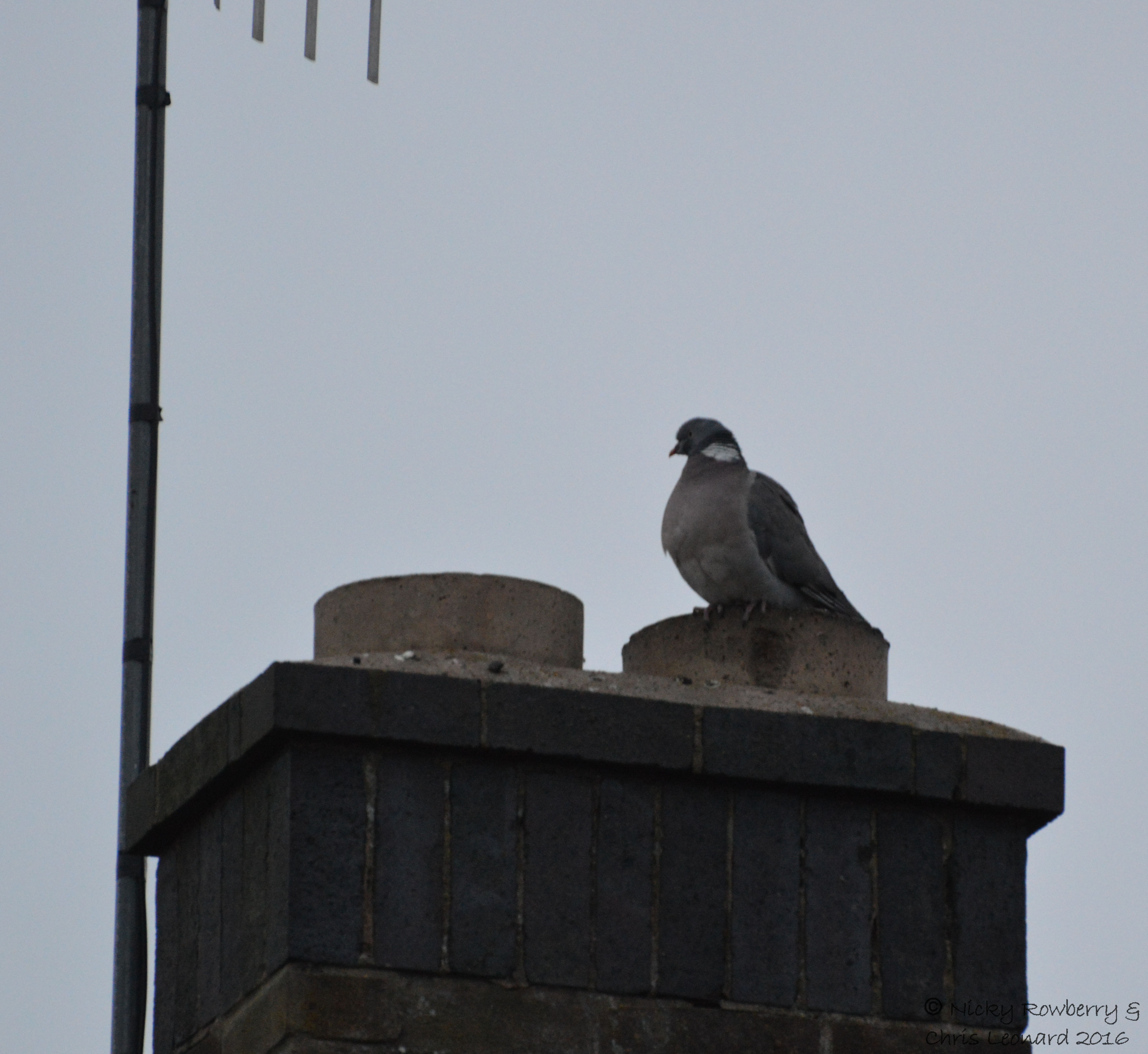
PigeonThe bigger birds were the last to get up. Just after I’d seen the Robin, I could hear the woodpigeons faintly in the distance. Just before 5am they finally came close enough to record, although their gentle cooing was rudely interrupted by a Jackdaw squawking.


As everyone in the garden now seemed to be up, I decided it was time for me to go back to bed. It was actually very relaxing sitting in the garden for an hour that early (once my body had got over the shock of being up!) With none of the usual modern day distractions, it was like some kind of sensory relaxation therapy to just sit and listen to the (mainly) natural sounds all around me. I might even be tempted to do it again!

Primroses 30 WEEDSIt’s Day 2 as well of my 30 Lazy Garden Weeds – this time the Primrose. It is a native plant and must surely be one of Britain’s most loved wildflowers and I doubt anyone weeds these out. Our garden in spring is a mass of these yellow clusters and the bees love them. They provide a much needed early season nectar source for the bees and they brighten up the garden no end. Even Shakespeare wrote about them in Midsummer Night’s Dream “And in the wood, where often you and I
Upon faint primrose-beds were wont to lie…”

Hedges and Maybe Fledges?

It’s been a mixed week with the trail cam this last week or so. We’ve either had two happy successes in the garden or one success and one disappointment and we can’t work out which.  The undecided is our baby blue tits.

We’ve been filming the adults going in and out for a few weeks now. They seemed to be doing a good job feeding the babies and we could hear chicks chirping. Then suddenly about 9am last Wednesday the adults started flying back to the box with caterpillars, stopping, peering in and looking confused. We’d had the trail cam on the box continuously and this was a very marked change in behaviour. For the first couple of mini video clips I thought great – because the adults were hanging around outside, clutching the food which made for much better shots. But after the 20th clip of the same thing, we started to worry. We also couldn’t hear the chicks tweeting any more. There was no evidence on any of the films of predation (next door’s cat had been a likely candidate, but couldn’t reach the box with the chicken wire over it). Could the chicks have all fledged and the camera just missed them leaving the box? Have they just died in the box – why would they, when the parents were doing a good job with the food?  Here are a couple of clips of the confused looking adults.

The adults seem to have stopped using the box now, so we could check to see if there are dead chicks in there, but while we don’t know for sure, there’s still hope that they did fledge and it’s a happy ending. The adults are still feeding in the garden and disappear into various trees, so it could be there are chicks hiding amongst the leaves. There’s a lot of general chirping in our apple tree and next door’s damson tree, so fingers crossed they made it.

The definite happy event is that our hedgehog is back! He or she may have been around for weeks, but as we’ve had the trail cam pointed up for bird activity rather than down on the grass we hadn’t realised. So the upside of the end of the bird box activity was that I tried filming downwards at night instead of up! And lo and behold the hedgehog trundled into view.  The first film is a bit blurry – wrong lens or LED setting or something technical (blame the operator!)

Second attempt is a bit sharper and I’d added a bowl of catfood as a bit of a temptation which seemed to do the trick.

Previous years we’ve had a pair of hedgehogs (but of course no trail cam to record them), so fingers crossed we have two this year too. So hopefully more hedgehog action to come.

If anyone can shed any light on the blue tit behaviour – any thoughts would be much appreciated. It will be disappointing if they’ve fledged and the camera missed it, but not as disappointing as if they didn’t make it at all. One final happy thought though – when up this morning before 5am to empty the moth trap and check the hedgehog cam, I spotted what looked like a pair of Long Tailed Tit chicks in the apple tree – so one happy little bird family in the garden at least.


Garden Moth Scheme

It’s the end of the first quarter of my first year participating in the Garden Moth Scheme. It’s not exactly been a flying start (no pun intended); the moths have been few and far between this spring. But I’m consoling myself with the fact that all data is useful, even if it shows disappointing numbers.

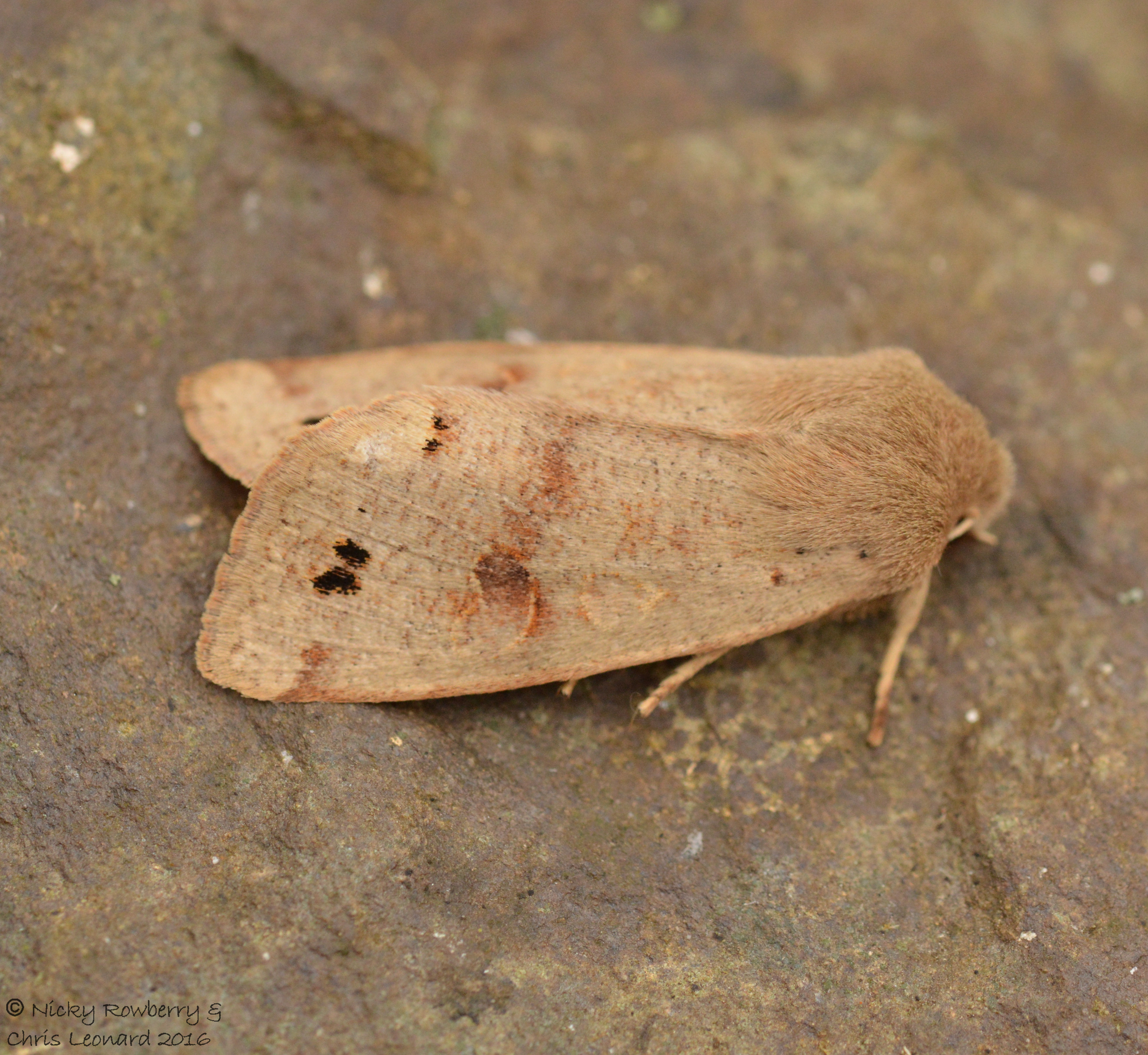
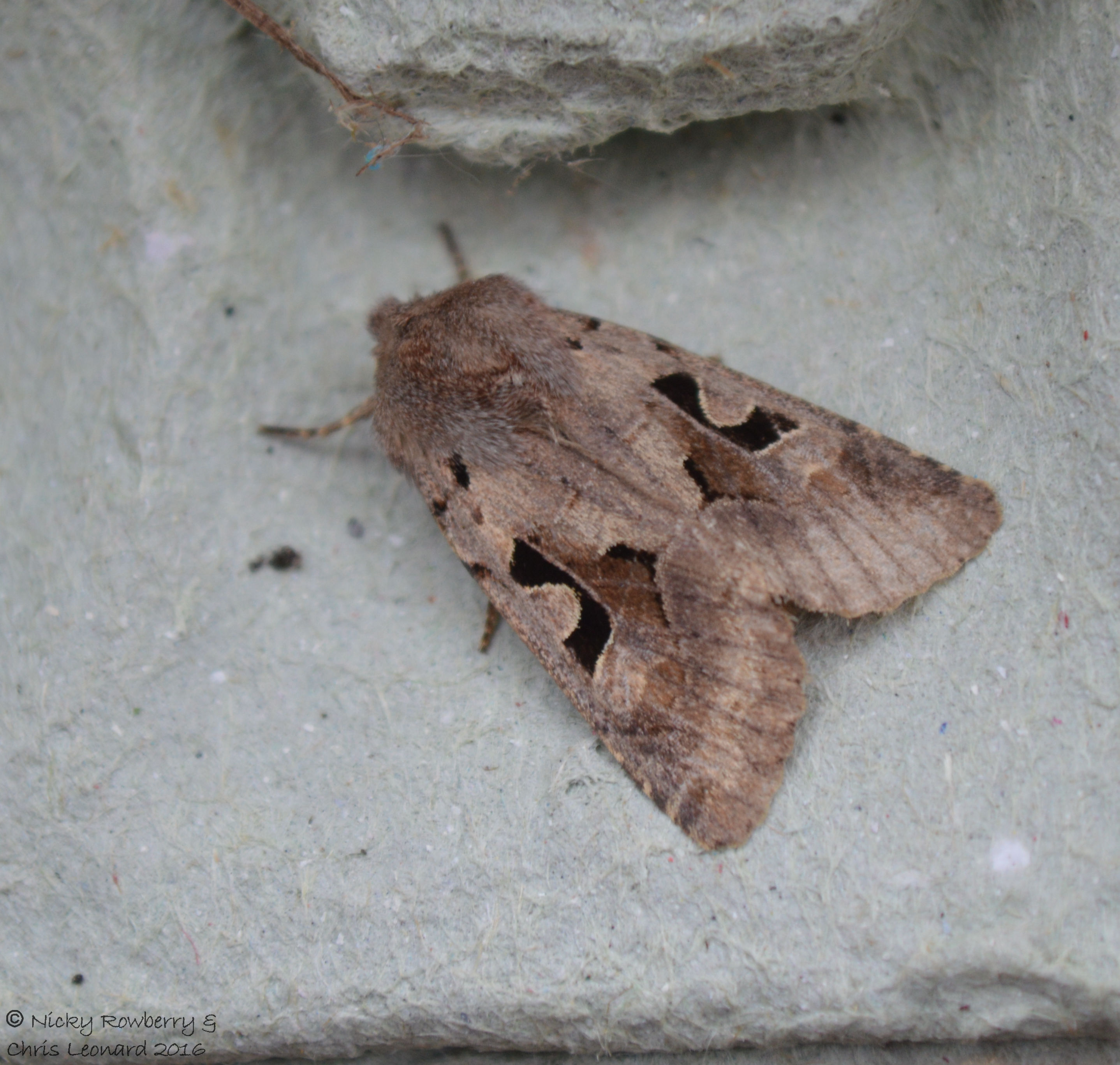
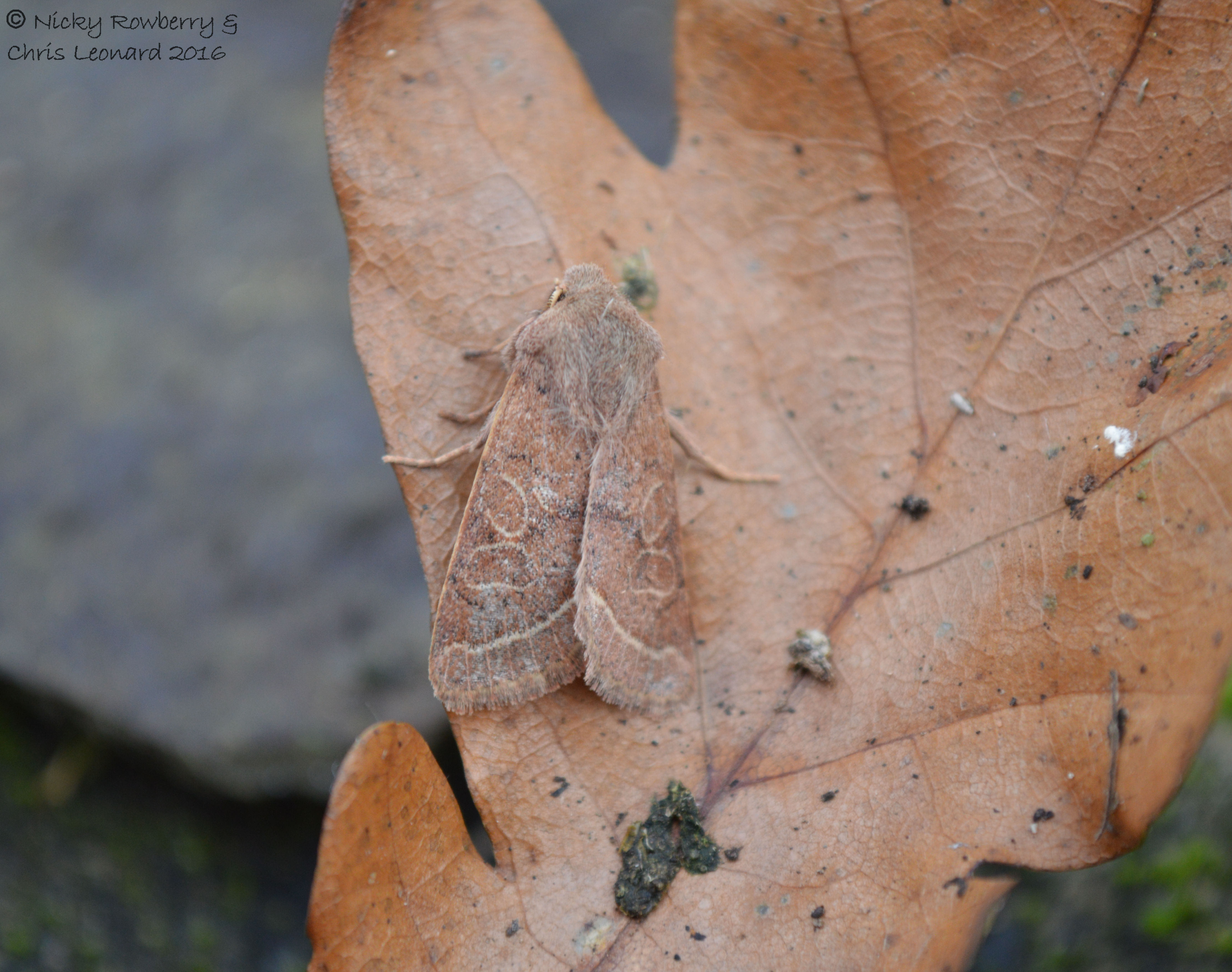
On the 9 nights the moth trap has been out for the scheme, only 46 moths have deigned to make an appearance. On two of the nights nothing showed up at all! The 46 moths represented individuals of 9 species. These 9 species were dominated by the Orthosia – 5 species of this genus; all typical spring moths.  I was particularly chuffed with the Twin-spotted Quaker record, as it was a new one for our garden. With the exception of the Hebrew Character, they are generally quite plain looking moths – see photos below.

Small Quaker (Orthosia cruda)

Small Quaker

Common Quaker (Orthosia cerasi)

Common Quaker 2

Clouded Drab (Orthosia incerta)

Clouded Drab

Twin Spotted Quaker (Orthosia munda)

Twin spot quaker (6)

Hebrew Character (Orthosia gothica)

Hebrew Character (2)

The GM scheme records 6 species of Orthosia  and the final species, Powdered Quaker (Orthosia gracilis), did indeed turn up in the trap, just not on a GMS night.

Powdered Quaker

 Besides the Orthosia moths, the other 4 species making up the 9 for the GM scheme were Common Plume (Emmelina monodactyla), Double Striped Pug (Gymnoscelis rufifasciata), Early Grey (Xylocampa areola) and a Brindled Beauty (Lycia hirtaria).

For the year to date though I’ve recorded 22 species – it’s just that most of them seem to appear on nights that aren’t official GM scheme nights so don’t get logged for the project, which is a bit of a shame. For some reason as well the non GMS nights seem to attract the more striking moths (not that they aren’t all lovely to my eyes!), such as the Herald, Oak Beauty and this  Early Thorn.


Early Thorn

Hopefully the next quarter will bring a greater variety and abundance of moths. The trap is out again tonight – it’s not a GMS night so I’ll probably get something huge and spectacular  – Mothra perhaps?

Hungry Mouths to Feed

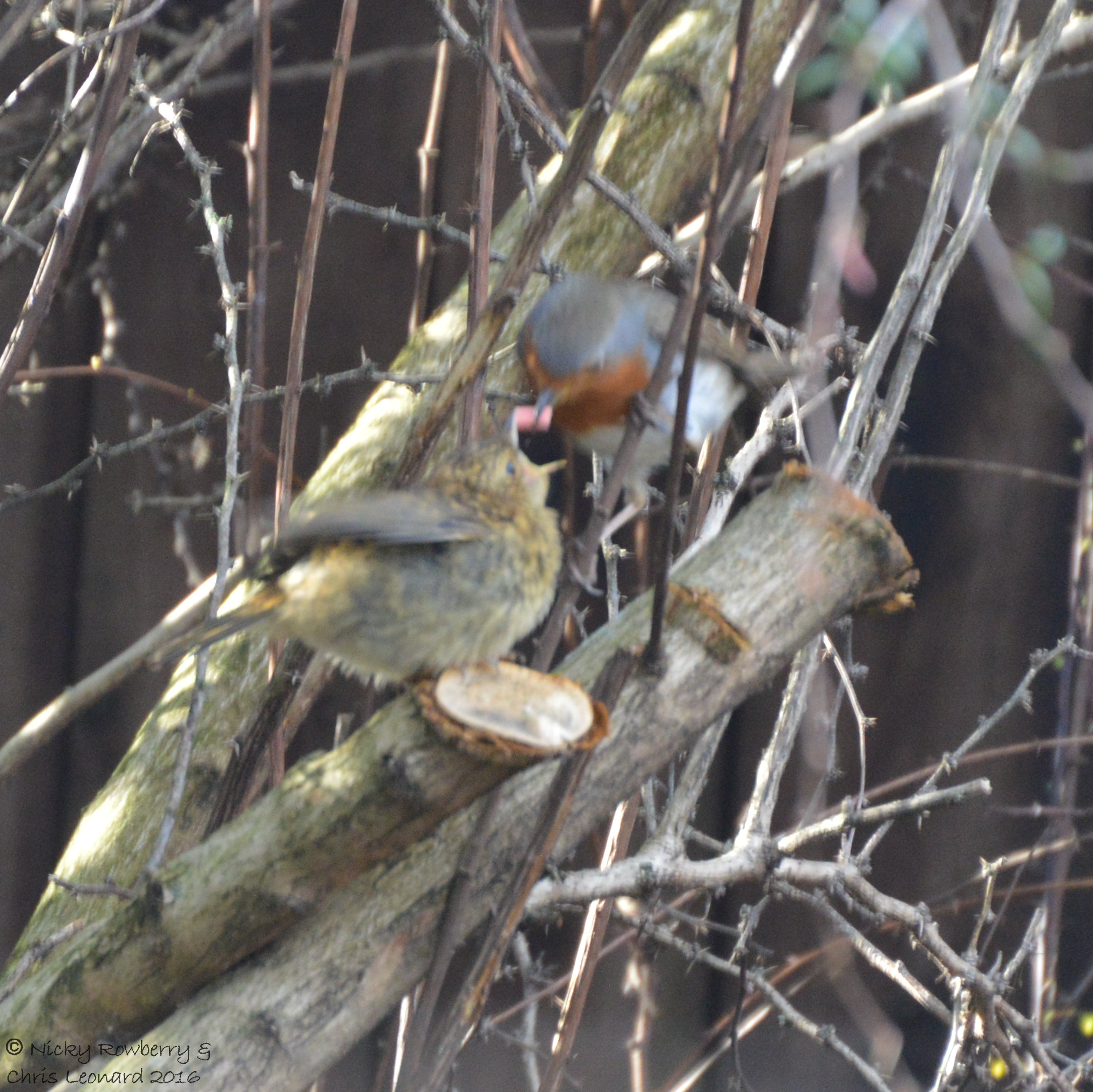
Hooray the robins in our garden have successfully fledged!! Two juvenile robins have been flitting around our garden all week, with the parents never very far away. They may be able to fly, but they still seem determined to sponge off Mum & Dad (typical teenagers) for as long as possible. So I’ve spent the week chasing them around the garden trying to get the perfect shot of them being fed by the doting parents. The results were mixed to say the least – if I got a perfectly focussed photo then they weren’t doing anything very interesting. If they started feeding the chicks, then in my excitement the photos came out blurred!

The adults were as always pretty easy to photograph – they seem to love the camera and pose happily on any available perch.

Robin

They’ve always taken a keen interest in whatever was out on the bird table and of late I’d seen them flying off with their bounty rather than eating it there and then, so I’d suspected chicks might have hatched. We’ve never spotted the robin nest, so perhaps they’re nesting in one of the neighbours gardens and just using us as a buffet?

Robin (3)

The fledglings appeared a week or so ago. Initially they were shy, keeping to the bushes, but have gradually got bolder. At first I thought it was just one – perhaps one fledged before the other. The one below looks particularly dejected as if it’s been told of by the adult, although it’s probably just fed up with the bank holiday weather like the rest of us!

Juvenile robins (7)

This weekend though, I started seeing two of them together (although this photo only shows one and a half fledglings!)

Juvenile robins (1)

Despite seeing the parents feed them several times, it took ages to catch them doing it somewhere where I could get a relatively clear shot with the camera. Of course when I did, the photos came out blurred – the excitement must have got to me! But you can at least see the parent is feeding a suet pellet to the eager juvenile.

Robin and baby (5)

Robin and baby (2)

They seemed to use this corner of the garden regularly to feed the young – perhaps the thorny Berberis twigs offer some protection from the neighbours cat? So I tried setting up the trail cam to capture the action – 163 videos of twigs blowing in the wind later and I got a few brief snippets of the young. They were indeed still using this area to feed them, but always it seemed just out of camera shot.

So I may not have got the perfect photo or perfect video, but the main thing is that we seem to have 2 healthy (and very greedy) fledgling robins in the garden. Fingers crossed we get the same success with the blue tits.

Busy Birds

The birds are certainly busy in Malvern at the moment (as no doubt they are all across the country of course). There is a constant buzz of activity in the garden, be it gathering nesting material or just a feeding frenzy over the food we put out. The sparrows in particular have been keen on last year’s artichoke flowers for nesting material. It’s amazing how much they can stuff into their beaks, ending up with  ludicrously oversized moustaches!

Sparrow nesting material

In true Too Lazy fashion, we had left the old flowers standing thinking they would provide seeds for birds and maybe shelter for overwintering insects. I hadn’t realised they would make such good nesting material, but clearly the sparrows knew better. I’ve seen them plucking at the flowers in all weather, even when the high winds rock them about in the video below.

I already knew the blue tits had been checking out the bird box, so it was really nice to see this one taking nesting material in, although he or she did seem to be struggling a bit to get it all through the hole!

Birds of all sorts have been eating us out of house and home in the garden, hopefully building up their energy reserves for nesting. The blue tits regularly perform for the trail camera, but it was nice recently to get footage of the starlings and sparrows who have tended to be more camera shy. Being able to see the starlings close up like this you can appreciate what beautiful and colourful birds they really are – not just the plain black they can sometimes appear from a distance.

Starling on suet

The sparrows gather round the suet feeder in groups of up to about 8, although they can rarely manage to squeeze more than 3 or 4 on it at any one time.

There are still several species that have so far refused to be filmed although we see them regularly in the garden – Great Tits, Coal Tits, Goldfinches and of course the Sparrowhawk.