Bumbling Around for Butterflies

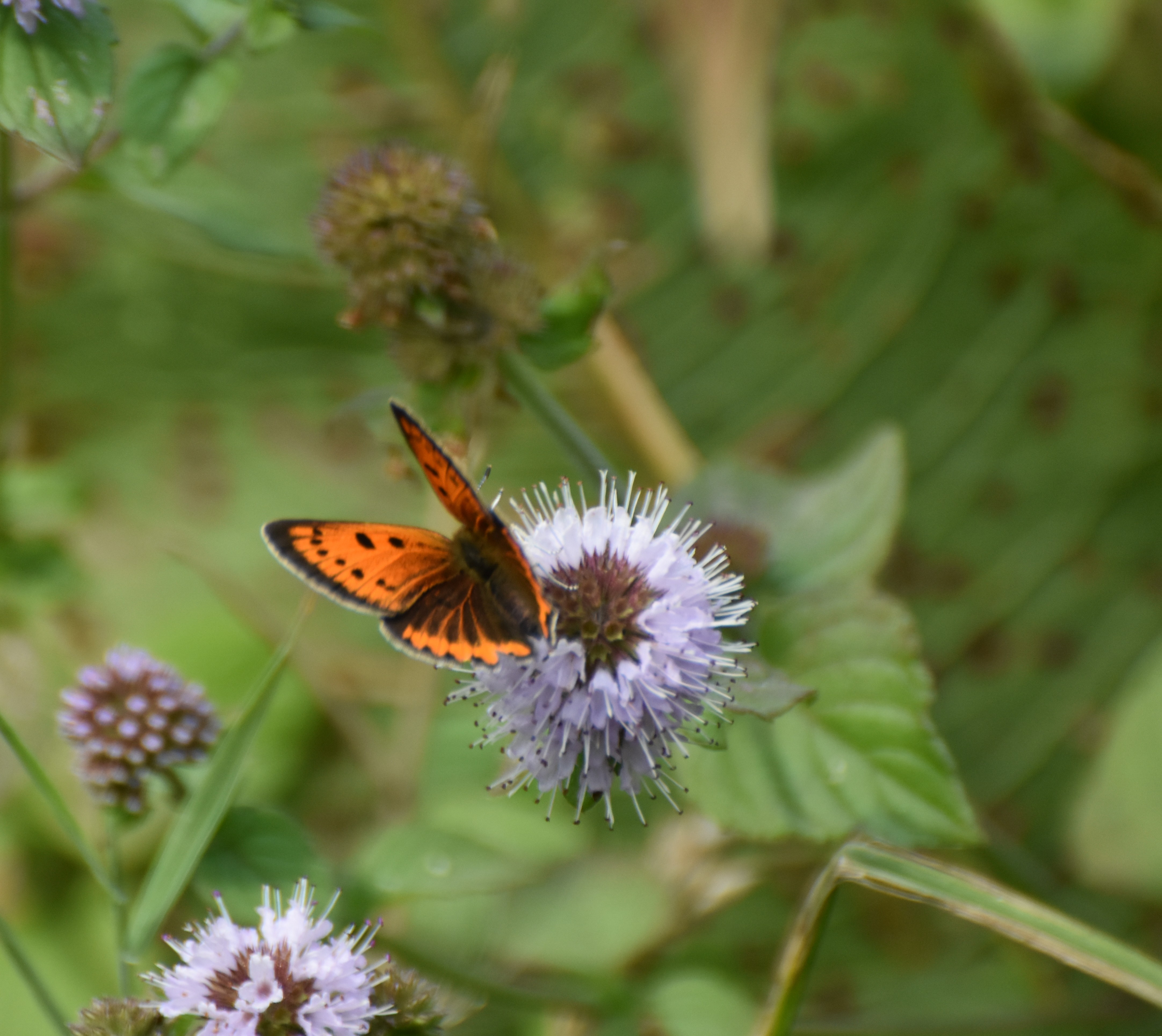
My quest to see all 58 species of butterflies in the UK seems to have stalled somewhat, but I’ve still had a really good summer for butterflies this year, both at home and out and about. Best and most surprising of all was getting to see some Large Copper butterflies less than 40 miles from home. Given that the Large Copper is actually considered extinct in the UK and has been so since the 1850s, it’s not a butterfly I ever imagined seeing. But some bright spark had chosen to release them (possibly as caterpillars) at the brilliantly named Bumble Hole Nature Reserve in Dudley.

I resisted for at least 10 days after the first photos started appearing on Facebook, but finally gave in to temptation and headed north to Dudley. With some help from a kind lady in the visitor centre, I headed to the butterfly hotspot – obvious when I was in the right area due to the dozen or so other butterfly twitchers. I was still fumbling to get my camera out, when the first Large Copper appeared.
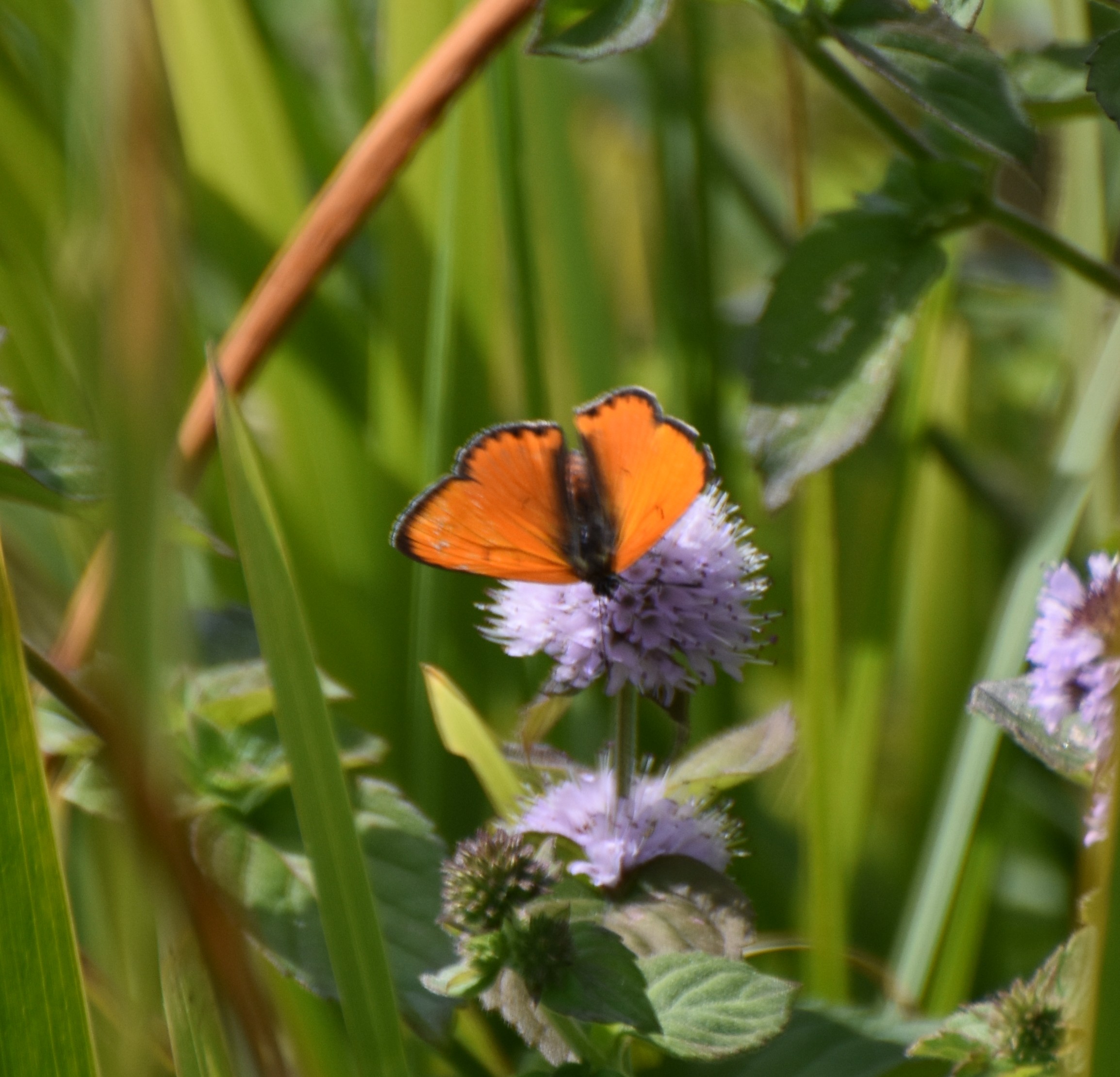
The males are pretty much all bright orange on the upper surface of the wings, with a pale blue dotted with black spots underneath.
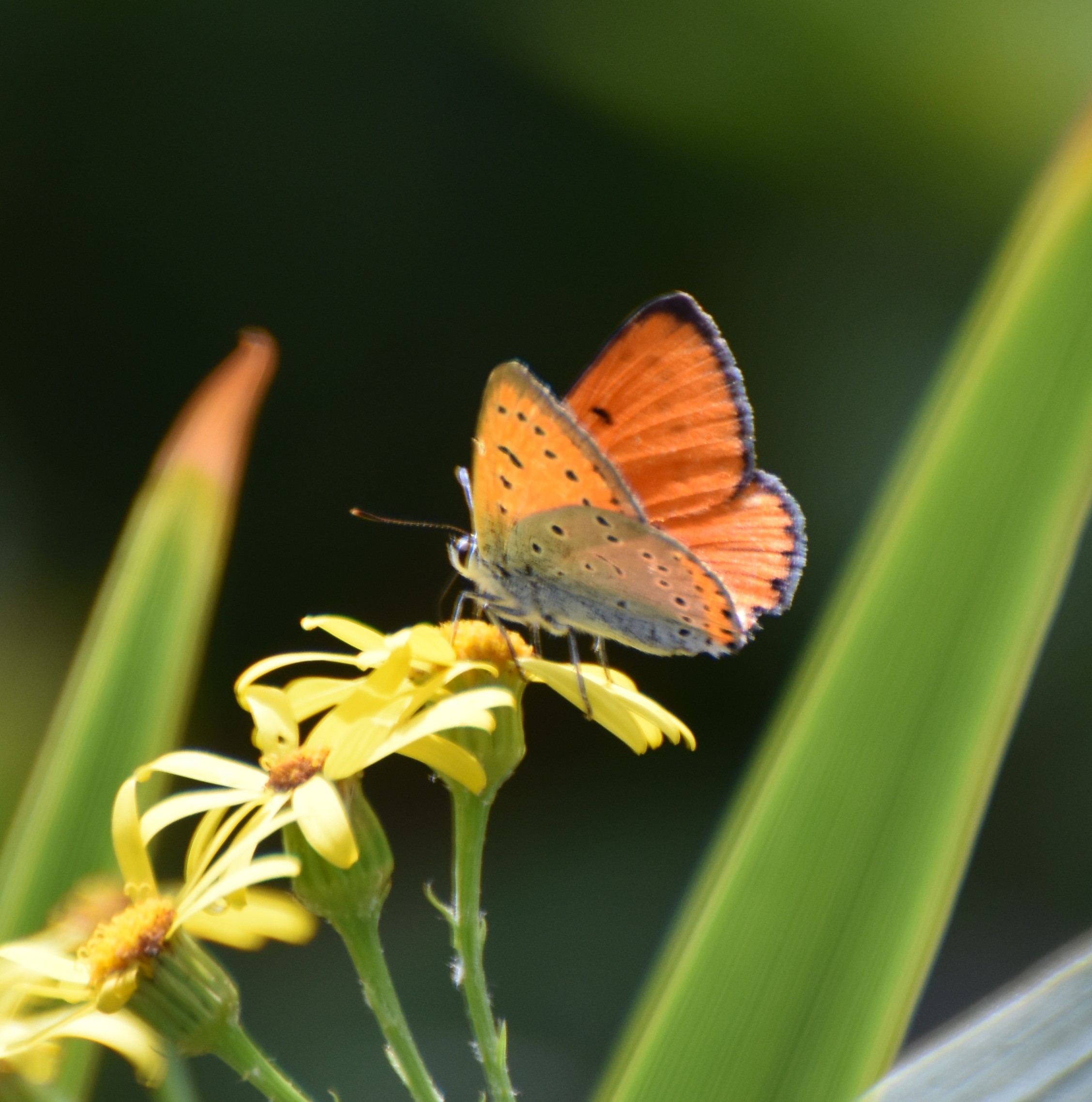
The females have more brown markings, stripes and spots on the upper side, but are similar underneath.
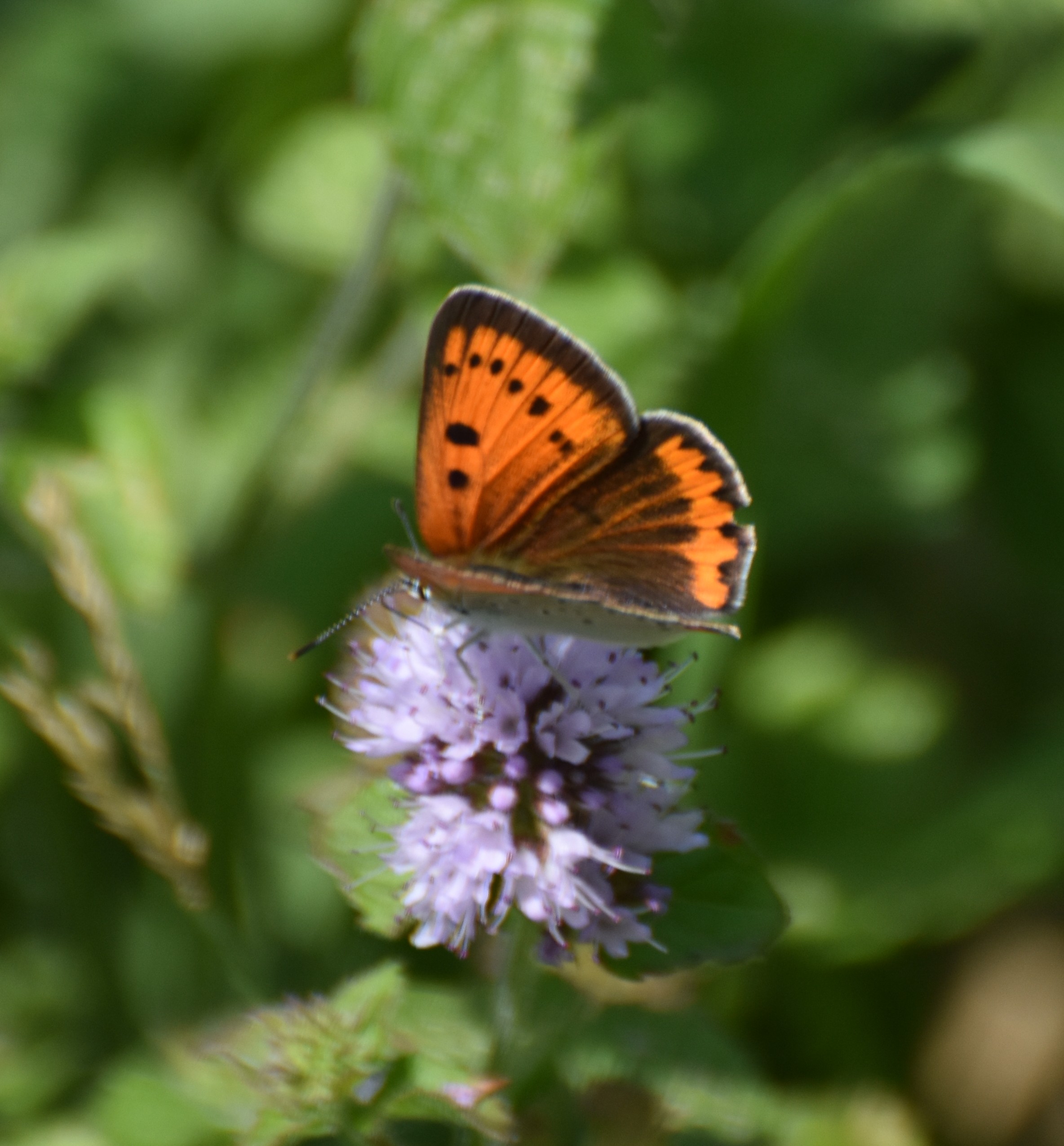
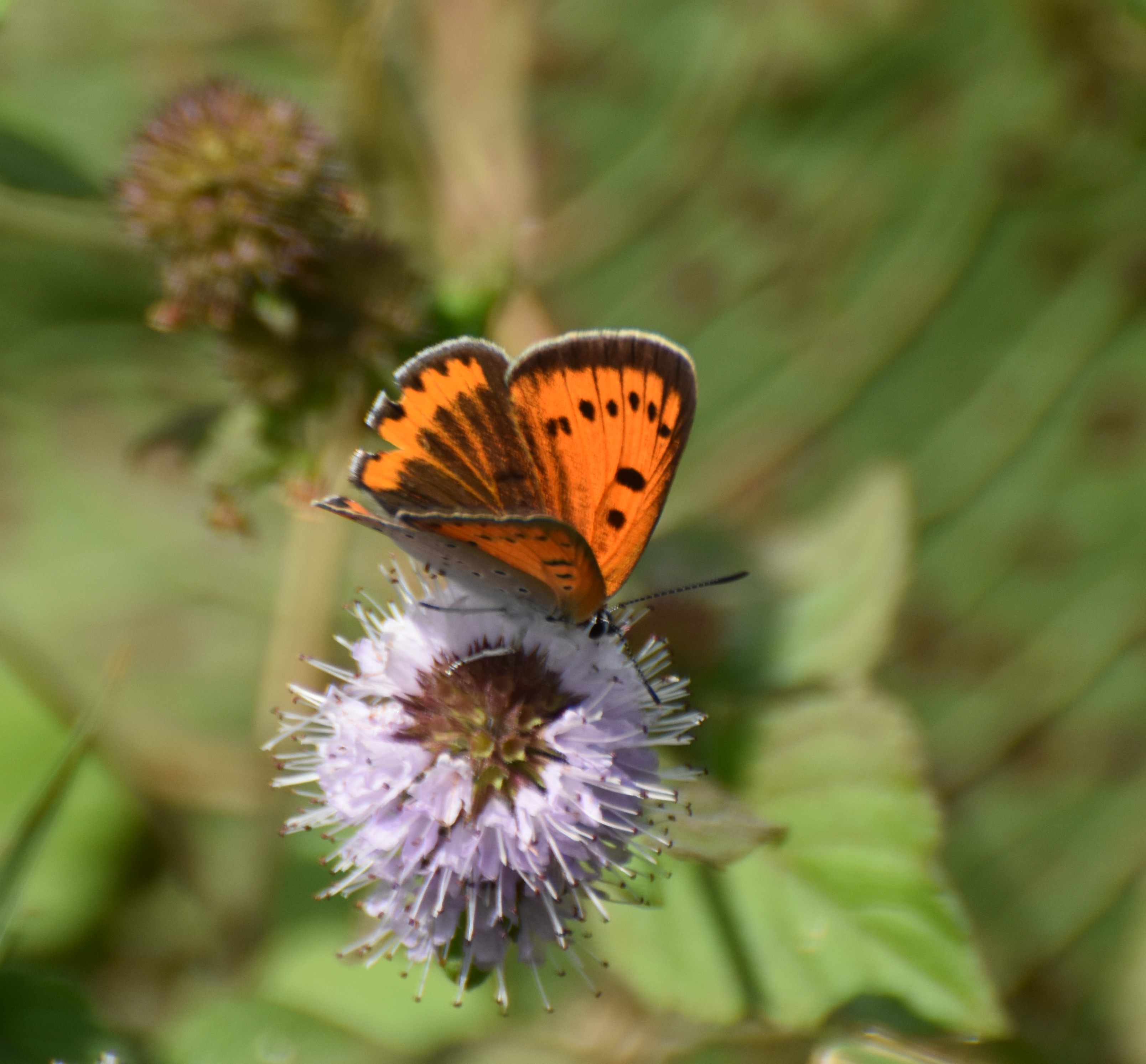
It was a baking hot day and my plan originally had been to stay out just long enough to see the butterflies and then head back to the safety of the air-con in the car! But the butterflies were so stunning and more numerous than I had expected, so I kept getting side-tracked by another one each time I started to head back. My final reward for this heroic effort (an hour in baking sun for a dumpy middle-aged woman is I’m sure the equivalent of an iron-man challenge for other people) was to spot this female laying eggs. Well worth the sunburn.

It was a magical thing to see these butterflies in the UK, but sadly it is probably not all good news. As their release seems to have been unsanctioned, the chances of the butterflies surviving at this site are apparently small. Although they were clearly mating and obviously laying eggs, will the eggs and/or caterpillars be able to make it through to next summer? It would be wonderful if they did manage to establish a colony here, but many people are doubtful that the conditions at Bumble Hole will be right for them.

For comparison here’s a Small Copper taken at Croome Park this week.

In other news the local Facebook groups were buzzing with the news that there were multiple Clouded Yellow butterflies down in the fields near Grafton Wood. As usual I could resist anything but temptation, so headed down there to see for myself. First attempt was a complete wash-out as I picked the only cold cloudy day in August, but second attempt was more productive. Together with a very nice couple I met down there, I watched in frustration as the bright yellow flashes of several Clouded Yellows dashed about the centre of the fields. Not wanting to trample across the farmer’s fields we could only watch and hope they would eventually come to the margins. Eventually a few did, but they were so flighty that all I managed was these blurry yellow blobs for photos. But at least I saw them.

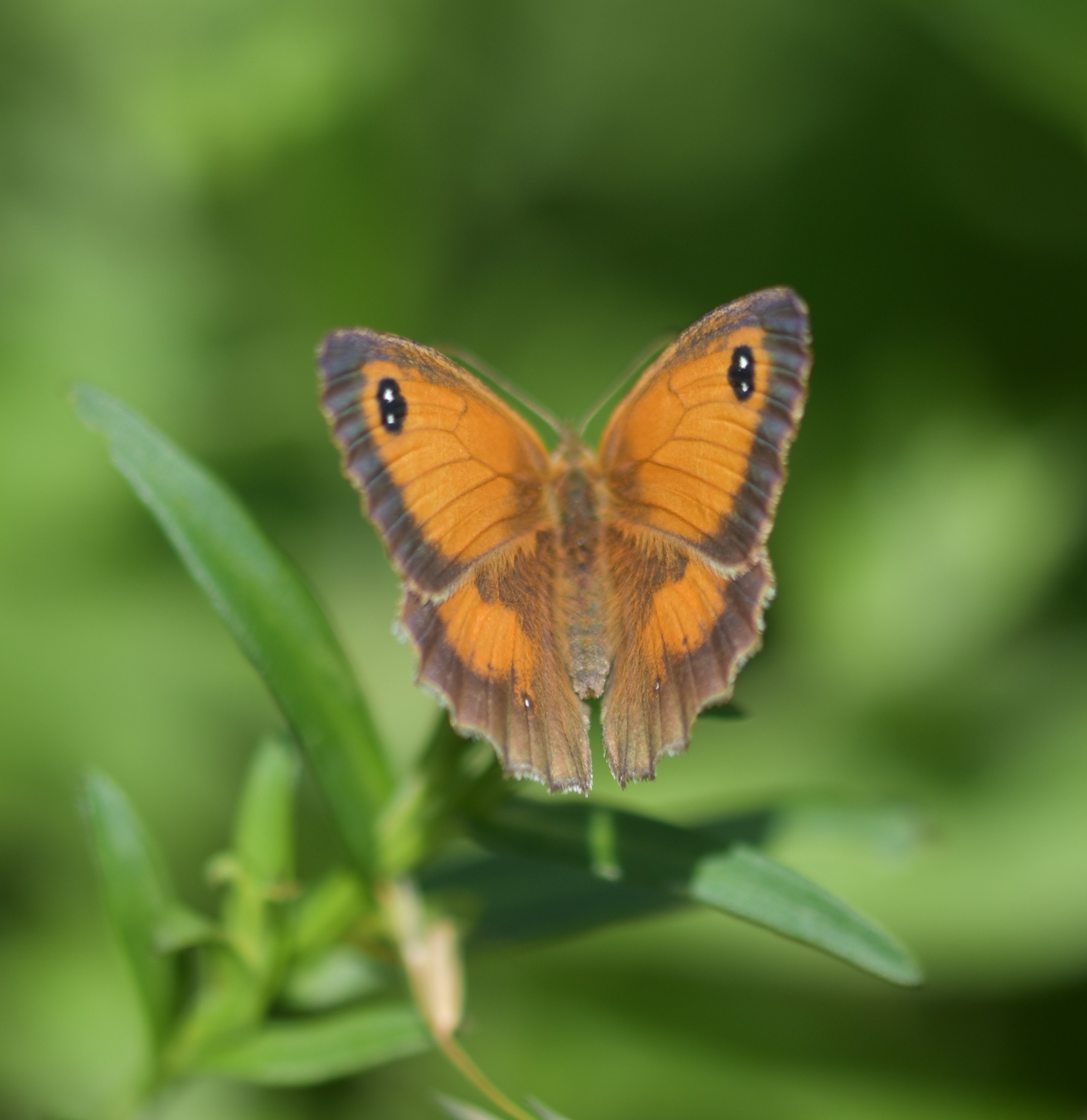
Slightly more obliging were some Common Blue, Small Heath and Brown Argus.

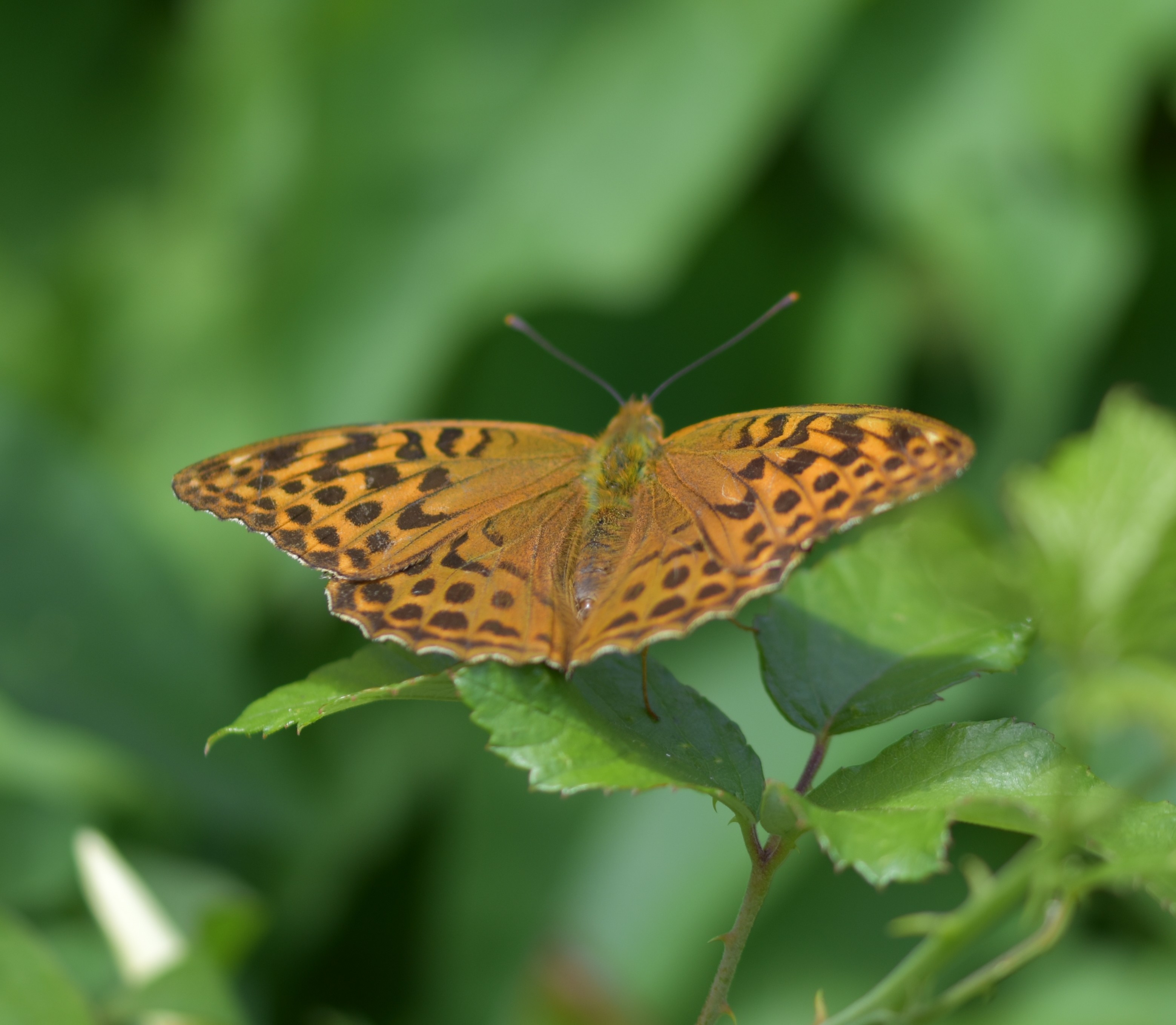
At home I did a couple of Big Butterfly Counts earlier this month. The garden generally has been busier than recent years for butterflies, but as usual most of them declined to put in an appearance during the 15 minute counts. But so far this year I’ve seen Red Admiral, Peacock, Small Tortoiseshell, Comma, Painted Lady, Large White, Small White, Holly Blue, Gatekeeper, Meadow Brown, Speckled Wood and Ringlet butterflies in the garden. But best of all was a Silver-washed Fritillary which graced my buddleia and bramble-strewn garden with its presence over several days.

So that’s a round-up of this summer’s butterflies; some old favourites and one completely off the radar “extinct” species.


Norfolk Dragonflies

It seems a bit like a lifetime ago already, but in June we had a fantastic holiday in Norfolk. Although the species we were most keen to see was the Swallowtail butterfly, we made the most of the opportunity to see as much other wildlife as we could. One of the groups that we saw in abundance was the Odonata – the dragonflies and damselflies. In total we saw 9 species, 6 of which were new to us. I’ve been very lucky to have help identifying them all from a very friendly and helpful group on Facebook called UK Dragonflies & Damselflies.

We lucked out with our holiday let – a lovely house in Wroxham on the banks of the River Bure. Our holiday garden ran right down to the river with its own inlet for mooring boats (with our complete lack of boating skills we weren’t brave enough to have our own boat!). The area was positively alive with dragonflies and damselflies, so we could just sit and enjoy them without having to go anywhere. We saw 5 species in the garden alone.

One we had seen before, but which is still a delight every time we see it, is the Banded Demoiselle.

demoiselle drakes

They’ve got a lovely way of flicking their wings open and shut when they are resting.

We’d also seen Common Blue Damselflies before, although they’re not a species we get in the garden at home, so it was nice to just chill and watch them.

Red-eyed Damselflies were new for us and were probably the most abundant species at our holiday let. The males, as the name suggests, have vivid red eyes, with a blue body and blue tip to the tail.

red eyed damselfly male

The females don’t have the eye colour and are also more of a greeny body colour.

The red-eyed damselflies were mating all over the place, but their favourite romantic rendezvous were the water lilies. They were literally queuing up for a turn on the lily flowers. If you look closely you can see that some pairs are actually submerged, seemingly undeterred in their eagerness!

red eyed mating

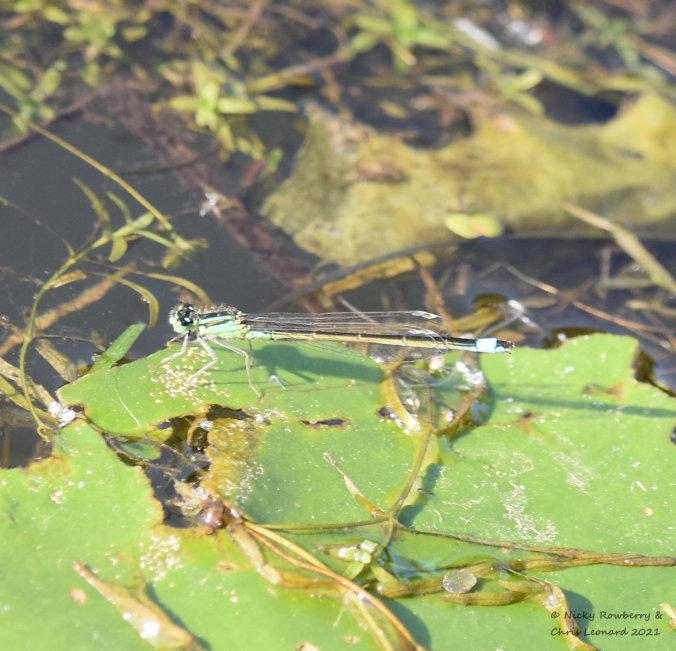
There was also a 3rd species of damselfly in the garden – the Blue-tailed Damselfly. The males have a light blue spot near the end of the abdomen, but somehow I didn’t manage to get a photo of a male. The females are more interesting though in that they have at least 5 different colour forms. There seemed to be at least 2 of these forms flitting around the garden – the top one below is the more typical colour and below that is the rather grandly named “rufescens obsoleta” form.

female blue tailed

female blue tailed damsel - rufescens obsoleta

There were quite a few of the larger dragonflies about the garden, but the only one we managed to photograph was the Black-tailed Skimmer. The males start of a golden colour, but when mature they turn blue, with a blackened tip to the abdomen – like this one we saw at Hickling Broad.

black tailed skimmer male 2 hickling

Having the river on our doorstep meant that when we got up in the mornings, we were lucky enough on a couple of occasions to spot dragonflies emerging from their larval stage. This first one is another Black-tailed Skimmer – a male (thanks again to the FB dragonfly people for identifying this). We missed the initial breaking out of the exuvia, but got this sequence of photos.

Black tail skimmer emerging 1

Black tail skimmer emerging 2

Black Tail Skimmer emerging 3

We also managed to catch on video the moment he opened his wings for the very first time – quite a privilege to see!

We did catch another dragonfly actually bursting free. It never ceases to amaze me how they expand into such huge insects out of such relatively small larvae.

Dragonfly 1 emerging 3

Our adventures out and about in Norfolk took us to various nature reserves with more dragonfly delights. At Hickling Broad we glimpsed this Hairy Dragonfly. Not a great photo but another new one for us.

Hairy dragonfly Hickling

Also at Hickling Broad we saw this gorgeous Four-spotted Chaser – so named for the spots on his wings.

At Strumpshaw Fen we were graced by the presence of a Scarce Chaser. They are as the name suggests “scarce” and in fact are classified as “near threatened”, so it was a lucky spot. Sadly a photograph of it proved even scarcer!

Star of the show though was the Norfolk Hawker. We saw them at Hickling Broad, Horsey Mere and Strumpshaw Fen. The Scarce Chaser may have been scarce, but the Norfolk Hawker is actually considered to be endangered and one of the rarest dragonflies in the UK. They are stunning dragonflies with green eyes, brown bodies and a yellow triangular mark at the top of the abdomen.

We even caught this pair of Norfolks doing the best to ensure that they became just that little bit less rare!

Norfolk hawkers mating hickling

So that’s 9 species of dragon/damselfly seen in a week without really even trying! A few years ago we started on a quest to see all the British species of butterfly and only have 5 to go on those. I think we may just have found the next group to focus on – and Norfolk has given us a great start already.

Another Bee Blog

I’ve not managed to blog much lately, but rather than it being for lack of things to blog about, there’s almost been too much. There’s a lot going on in the garden at this time of year and I get distracted far too easily! Bees, moths, dragonflies, tadpoles – I spend so much time watching them all, I don’t quite get round to writing about them. But it’s a nice problem to have and much better than having an empty garden devoid of wildlife!

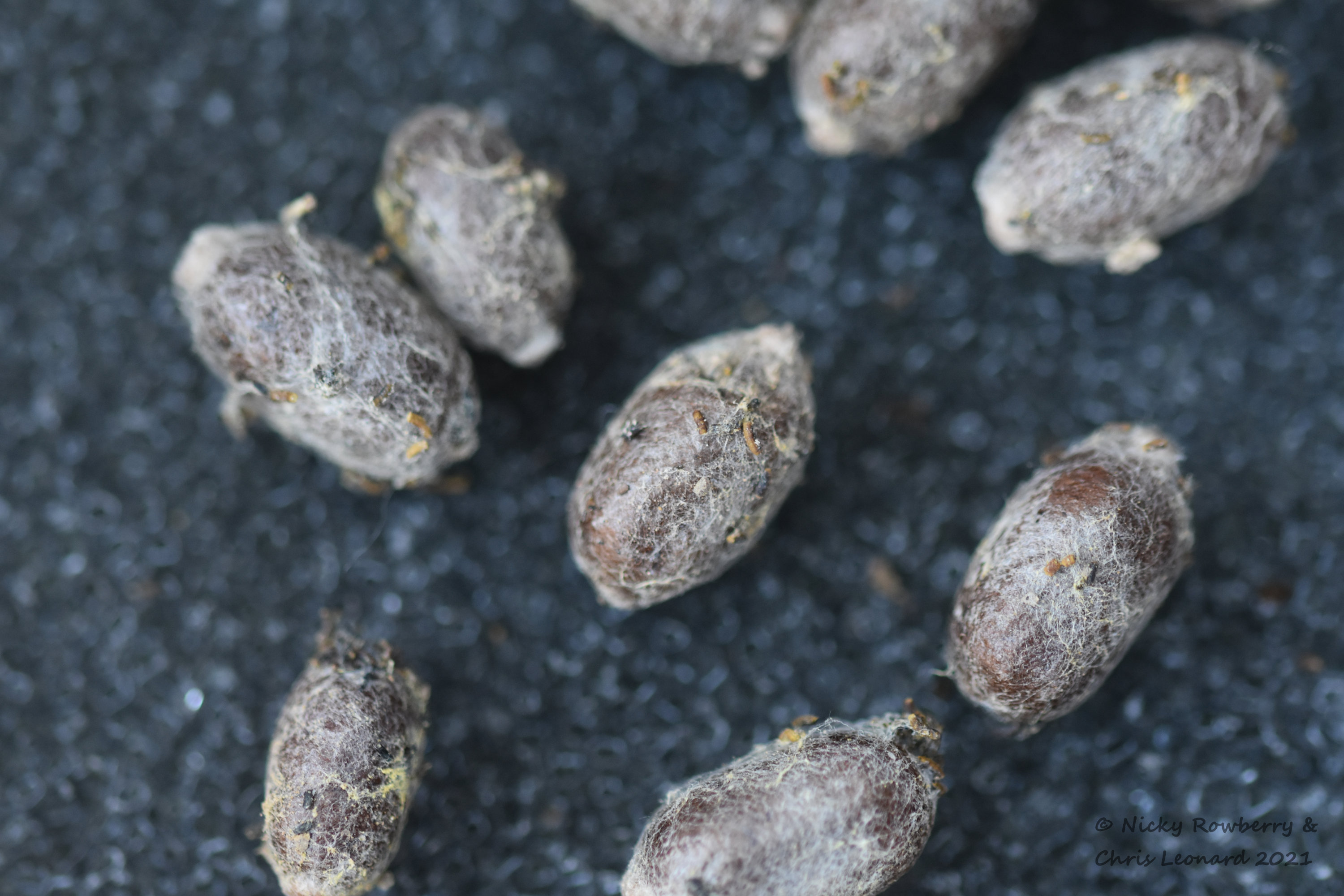
Anyway I’ve finally managed to collate some photos of this year’s red mason bees. I blogged about these bees last year (Bee ‘n’ Bees | Too Lazy To Weed) so this kind of follows on with their story. Last year I’d bought a super-duper new bee hotel with viewing windows. At the end of last summer I was left with a number of the tubes in the hotel filled with red mason bee cocoons, all neatly separated by their little mud walls.

Red mason cocoons in house

In February this year I removed the cocoons to allow me to clean out the chambers for reuse. The cocoons were safely stored in a special storage container, before being put out in the release chamber of the bee hotel, ready for them to emerge when conditions were right for them. It was fascinating to see these perfect little bundles, knowing they contained the next generation of red mason bees.

red mason cocoons

The bees started emerging in April, leaving behind their empty cocoons.

empty cocoons

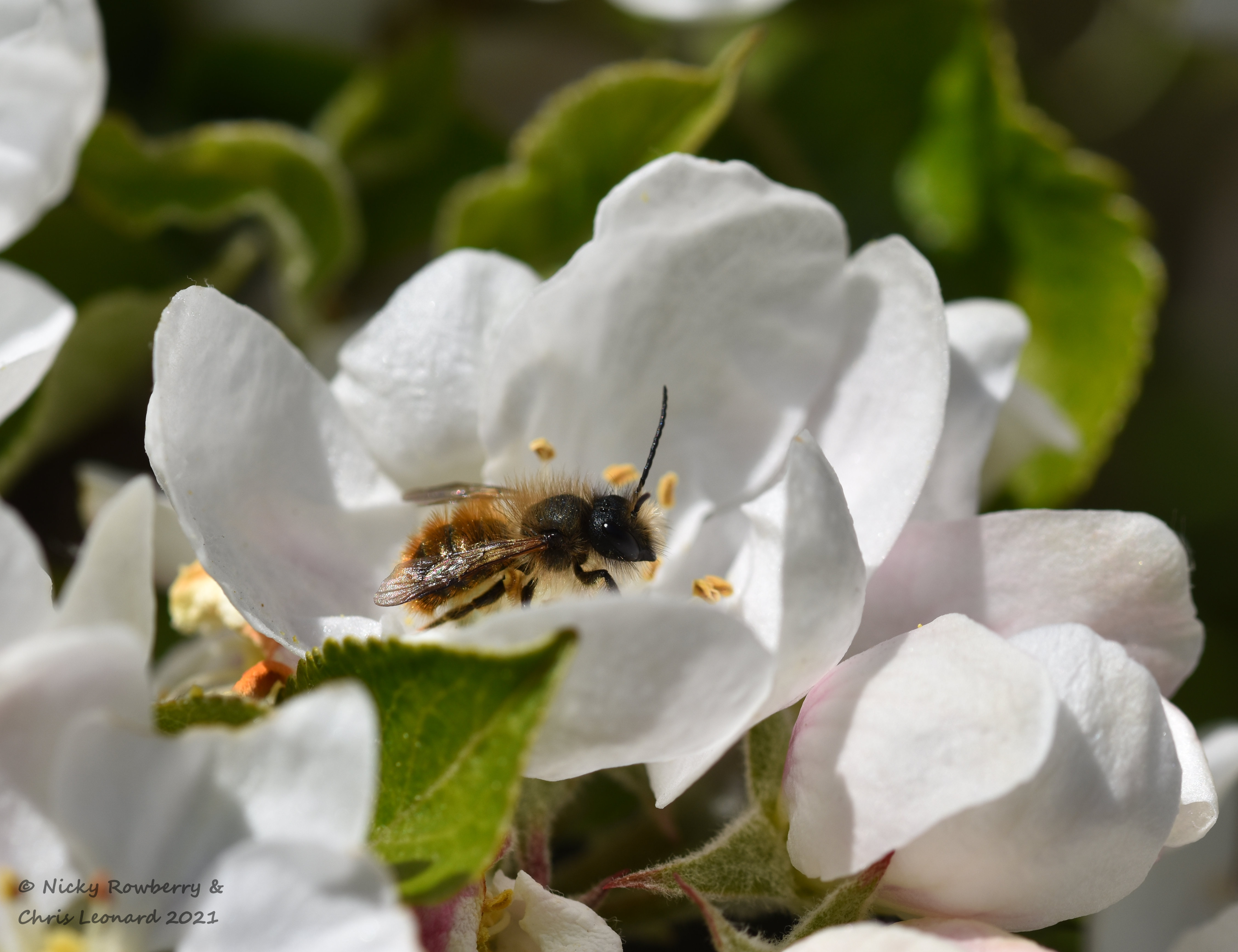
The males tend to emerge first and hang around waiting for the females. Their emergence coincides with the apple blossom, which is always alive with bees of all kinds, including the red masons.

red mason


red mason in blossom

When the females start to appear, the males go crazy buzzing round the hotels trying to be the first to mate. On some sunny days it was a real frenzy around the hotels.

The mating pairs often drop to the ground to “continue their business”, so we have to be very careful where we tread when walking passed the hotels.

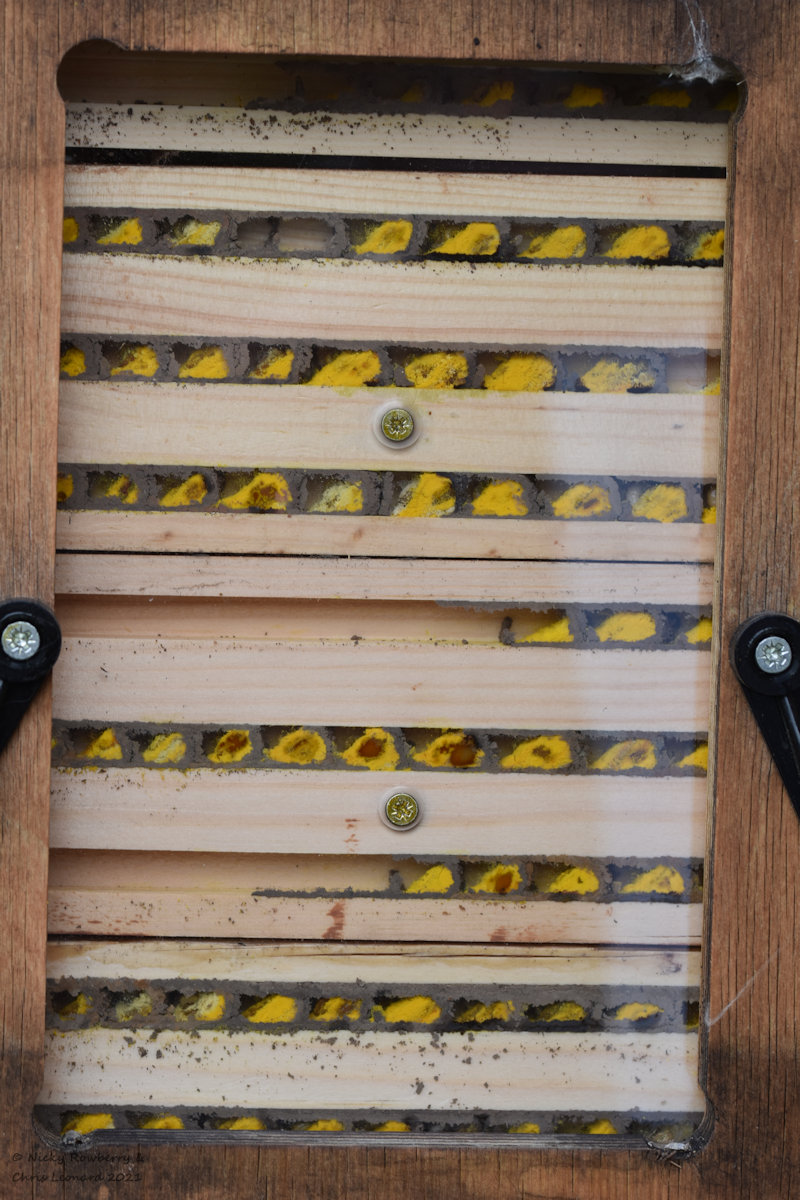
Once mated the females start filling up the bee hotels with the next generation. Each egg is provisioned with fresh, bright yellow pollen and sealed in its little mud chamber.

almost full

full mason bee house

The female carries the pollen in a “pollen brush” consisting of hairs on the underside of her abdomen. She then uses her legs to scrape the pollen off the brush and deposit it in the new cell.

There are still a few females about, but the bee hotels are almost full and it’s coming to the end of their season. At the moment there are plenty of developing bee embryos, so the garden should be buzzing with red mason bees again next spring. One slight cloud (albeit a very pretty cloud) on the bee horizon is the presence of ruby-tailed wasps. These wasps parasitize the bee nests, laying their own eggs in there when they get the chance. There have been quite a few of these gorgeous looking wasps around this year, but hopefully the bees have laid enough eggs to spare a few for the wasps.

ruby tailed wasp

Out and About – Hollybed Farm Meadows

HollybedA sunny, if cold, Easter weekend and we took advantage of the lockdown easing to get out and about for the first time this year. So we headed out to find a small nature reserve that we’d not been to before – Hollybed Farm Meadows. We drove past hordes of people heading for the Malvern Hills, but fortunately Hollybed Meadows were virtually deserted and it felt like we had the reserve to ourselves. The meadows may not be at their best until the summer probably, but now we know how to get there, we will definitely go back later in the year.
The hedgerows were full of blossom; I think this is Blackthorn although I wouldn’t argue if someone says it’s Hawthorn. It was lovely whatever it was.

blackthorn

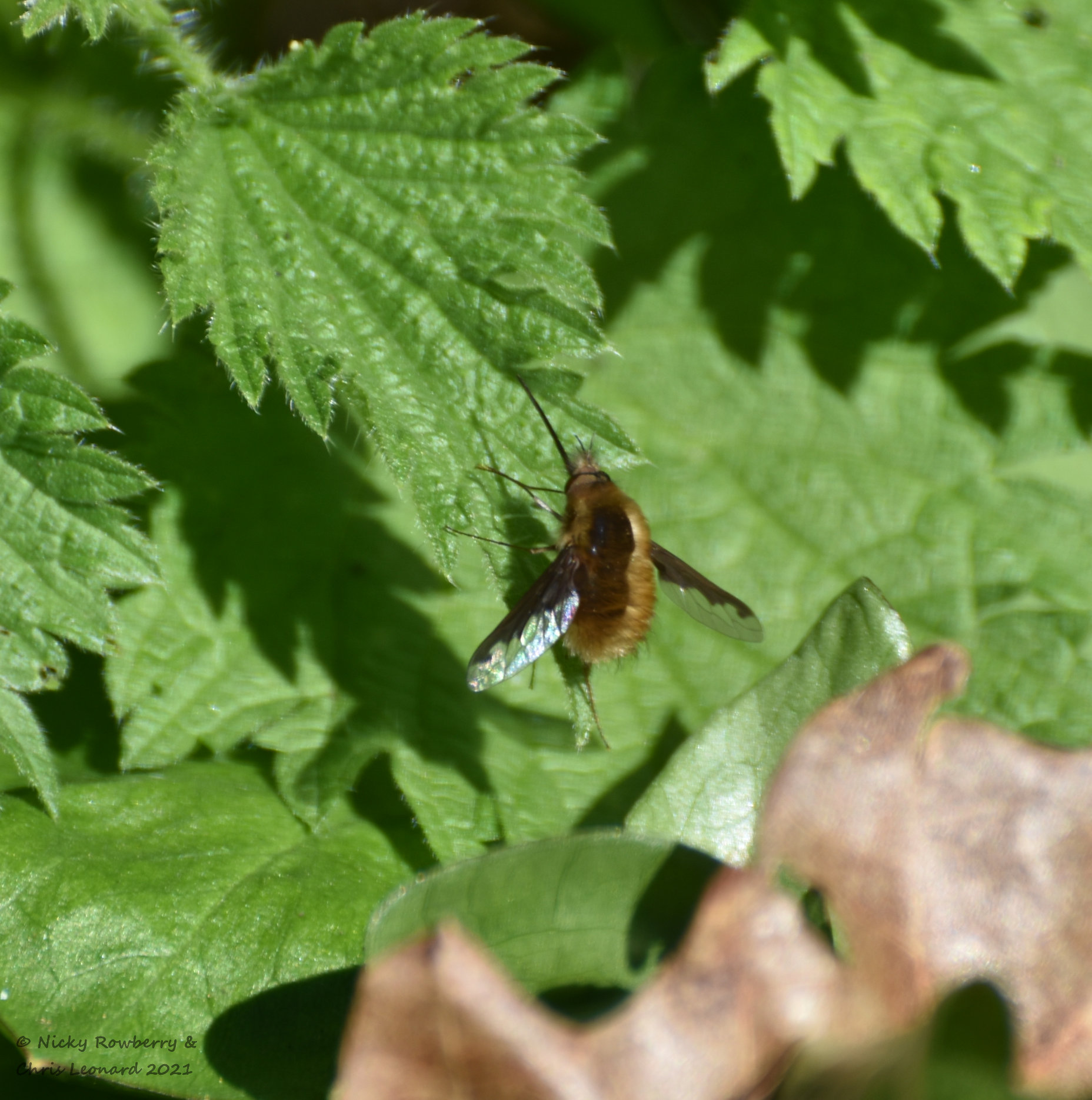
There were plenty of early spring bees enjoying the blossom, plus one of our favourites – the Dark-edged Bee-fly.

beefly 2

Besides the blossom in the hedgerows, the margins of the field were scattered with a variety of spring flowers (there may have been flowers all over the fields, but we were sticking to the footpaths around the edges).  We (tentatively) identified Wood Anemones, Violets (violet and white ones), Cowslips, Celandine and Dead-nettles.

wood anemone

Violets

cowslips

celandine

dead nettle

The floral highlight was probably spotting the first bluebells of the year, reminding us to go out later this month and see the carpets of bluebells on the Malverns.

bluebell

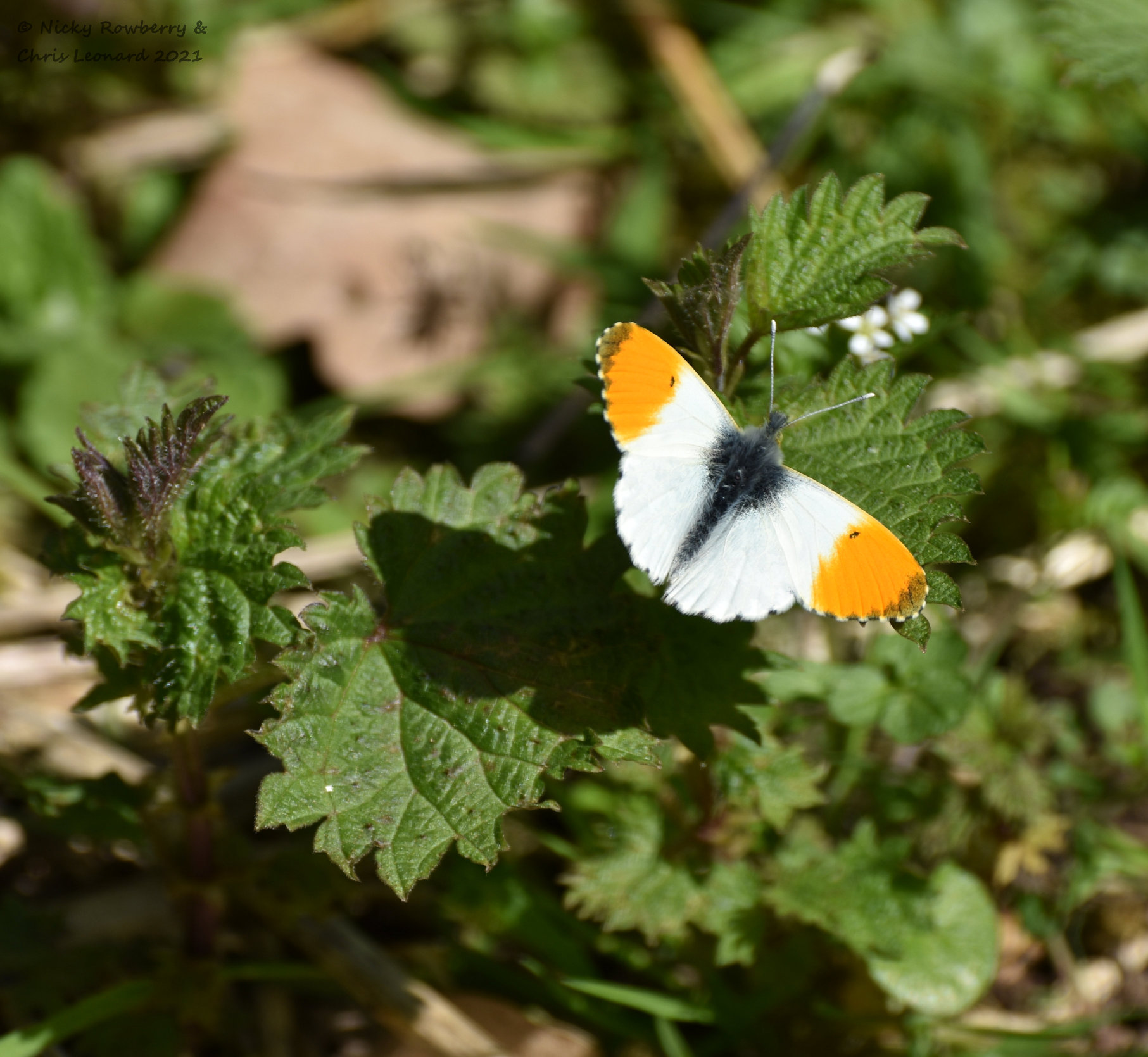
At the far side of the meadows, we went down a bank and were rewarded with the sounds of Chiffchaffs and woodpeckers. We also got lucky with sightings of our first Speckled Woods and Orange Tip butterflies of the year.
Orange Tip

Across a small stream we could see a field full of what we assumed to be wild daffodils. I don’t think it was part of the reserve, so we didn’t venture in, but it felt like a field full of spring!

field of daffodils

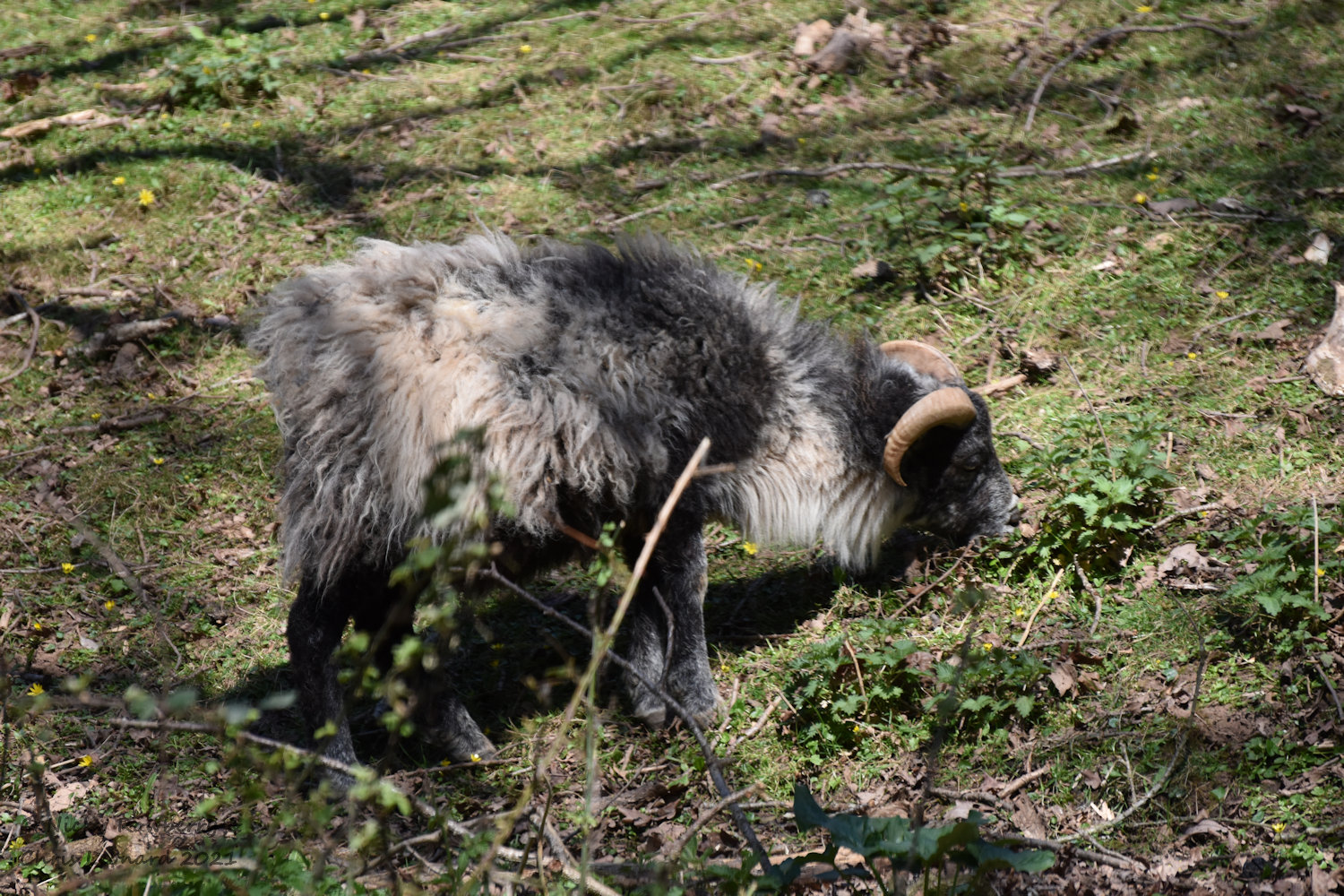
An orchard area was being grazed by the cutest, but scruffiest goats ever.

young goatGoat

As we headed back we were treated to a lovely sunny view of the Malvern Hills. We see the hills every day from our garden, but it was really nice to see them from a different perspective. All in all a very pleasant couple of hours and a taste of freedom!

Malvern hills


Spring Has Sprung

It was the Spring Equinox at the weekend – 20th March according to Google or 21st March according to my Dad whose birthday it was yesterday and he always said he was born on the first day of spring! Whichever day it was, the garden seems to be responding and there are signs of life everywhere after the long winter (and lockdown). 

Spring was ushered in a bit early back in February with the appearance of a new moth for the garden – the Spring Usher; an attractive moth and one that I’d been hoping to see for some years.

Spring Usher 1

Other insects have started to appear too. The garden has been graced with visits from both a Comma and a Brimstone butterfly – sadly both too fast and fleeting to get a decent photo of, but joys to see nonetheless. Pond skaters have popped up on the pond again. They were the first insects to move into the new pond last year so it’s nice to see them back again.

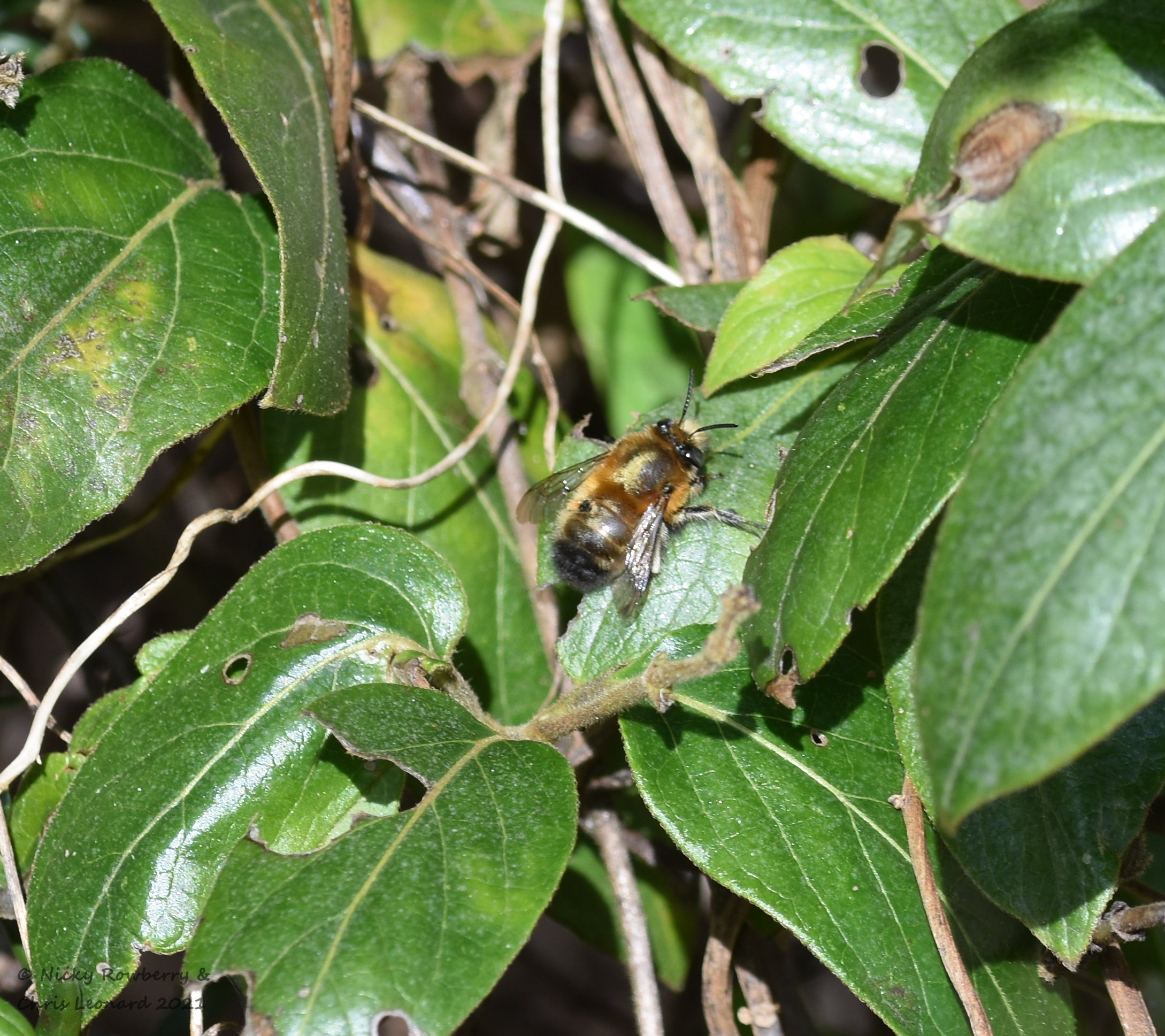
The first bees have emerged too. My perennial favourites the Hairy Footed Flower Bees are back buzzing round the garden. I’ve only seen males so far, but I think they do tend to appear before the females.

Hairy footed flower bee

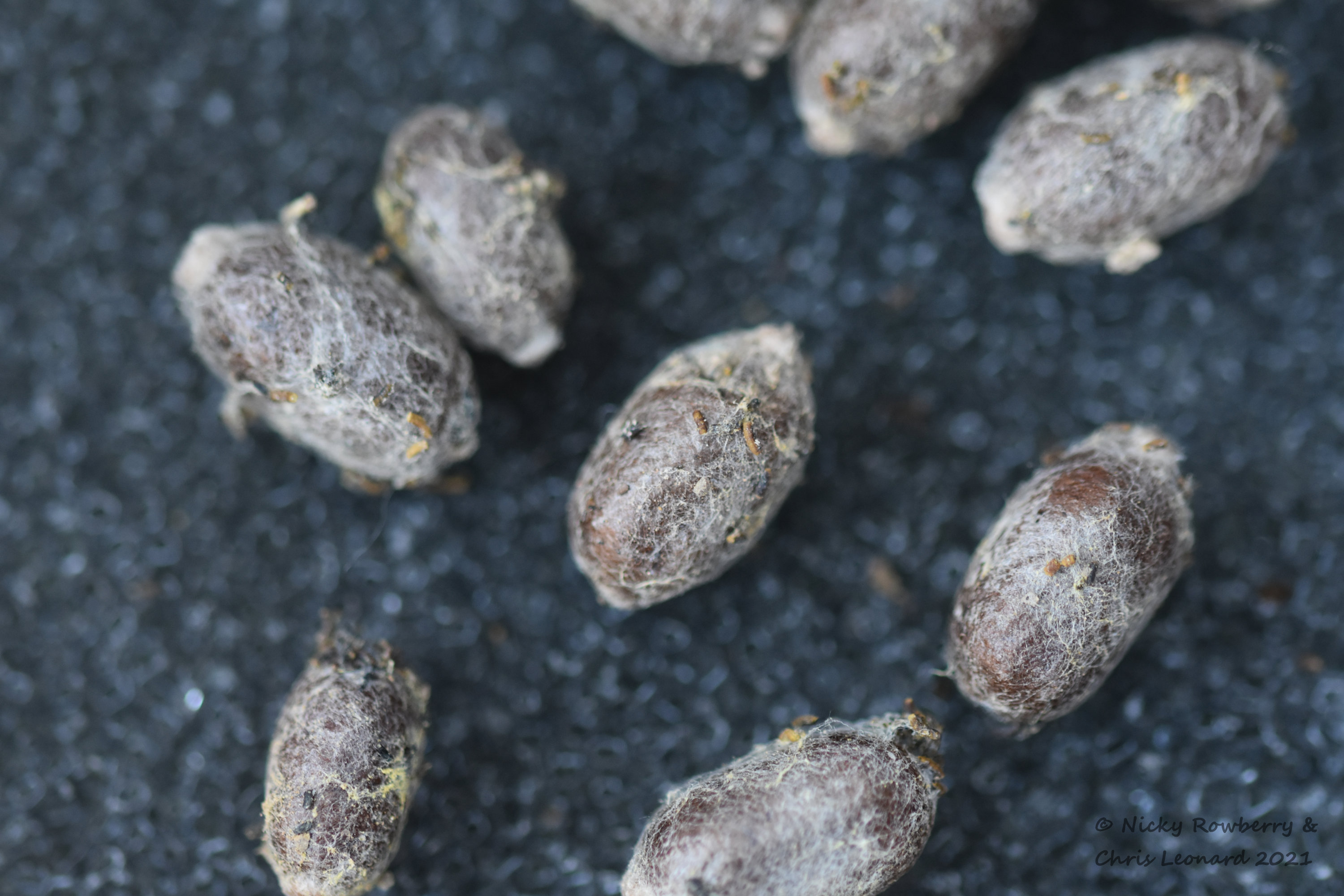
I’ve not seen any active Red Mason Bees yet, but they can’t be far off. I collected the cocoons from some of the tubes in the bee houses last year and they are now safely back out waiting for them to hatch. Again I think the males may hatch first.

red mason cocoons

Another favourite – the Dark-edged Beefly appeared just at the weekend. I don’t know why, but I’ve always found them to be cheery little insects and for me they really signal that spring is on its way.

beefly

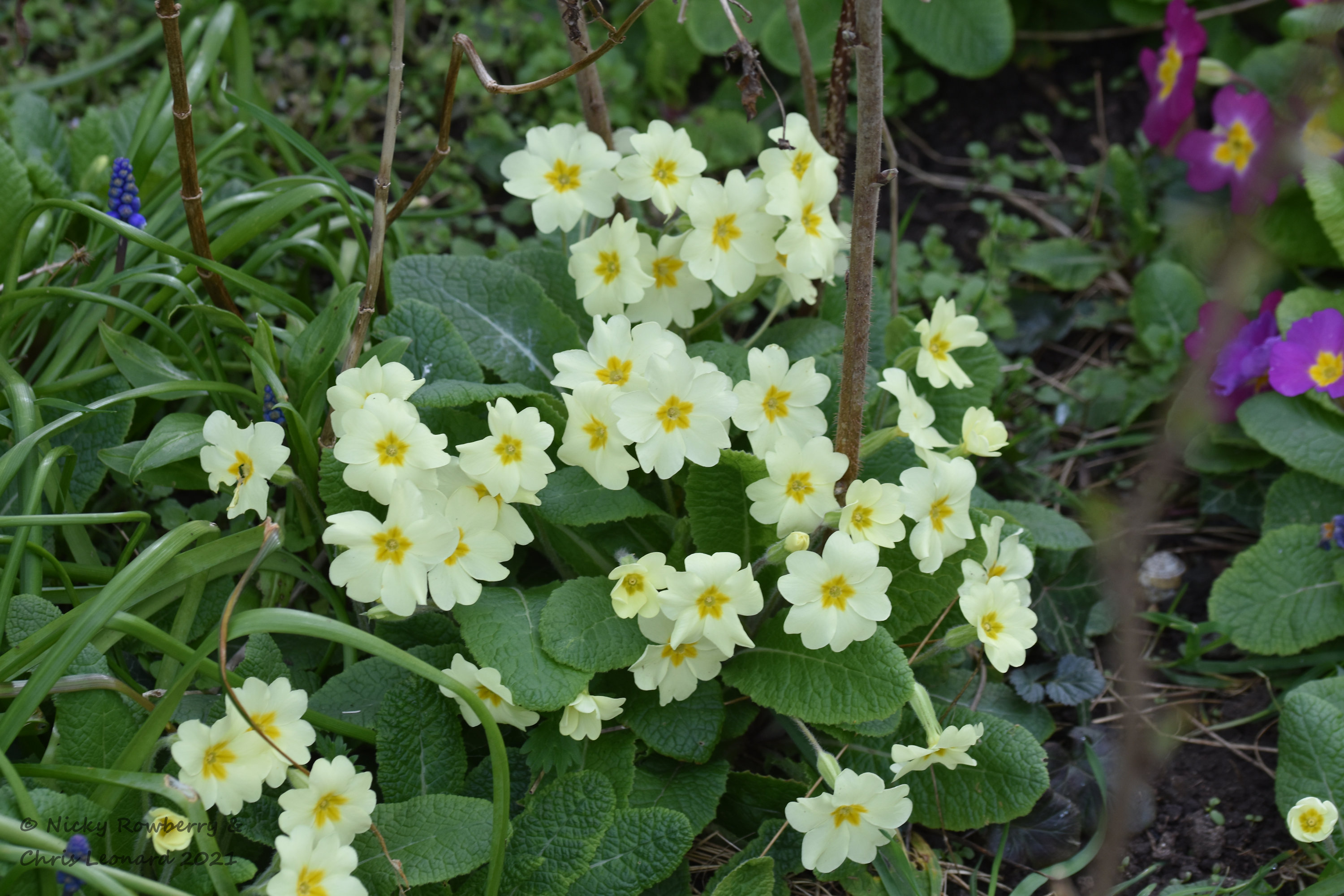
The spring flowers are out in force now – good news for the bees hopefully. We’ve got lots of self-seeded primroses all over the place and the occasion violet too.

primroses

Violet

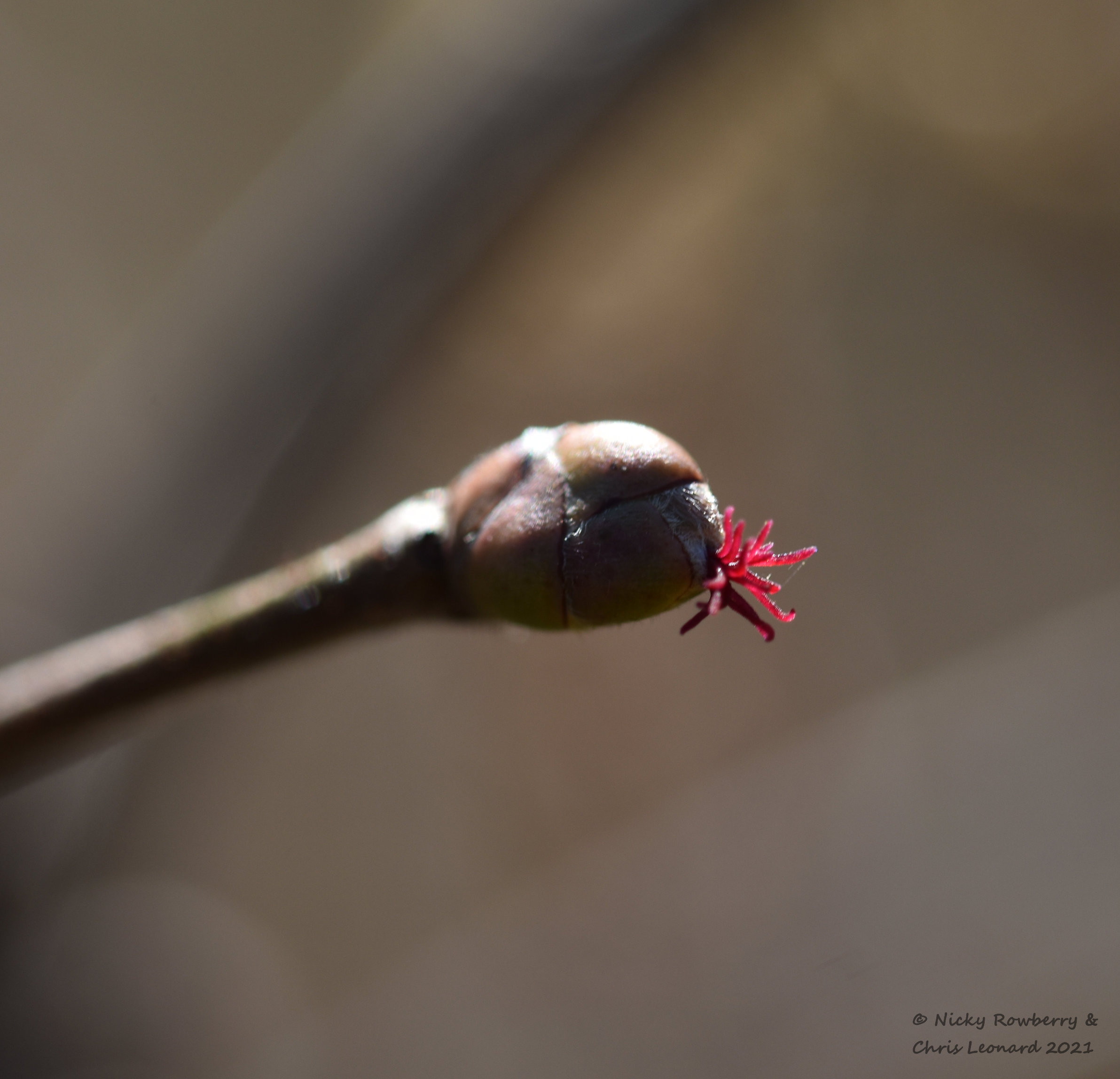
A surprise this year was to find that we have a Hazel tree. The little sapling has just appeared amongst the bushes – we can only guess that perhaps the squirrel buried a nut and then forgot about it. Having never known anything about catkins, I discovered that the trailing flowers I was familiar with were just the males and that there were much smaller red flowers that were the females. I had to go back out and search over our tiny tree, but sure enough there were female flowers too – you learn something new every day! The red female flowers are tiny in comparison and barely noticeable. 

Hazel male catkins (1)


Hazel female flower

The pond has been attracting a fair amount of non-insect life too. The birds as always using it for drinking and bathing – I was particularly pleased that our resident wren got caught on camera even if it was for just a second.

A couple of our hedgehogs have emerged early from hibernation and have been seen drinking from the pond most nights. It’s always a relief to know they have survived the winter.

But the BIG news is that we have frog spawn! The first spawn appeared on 20th February, followed by another clump the next day, then 2 more clumps three weeks later. Here’s the first beautiful batch. Frog spawn day 1

I’ll do a full froggy post soon, as I’ve taken too many photos and videos to include in this one. So despite what Google and my Dad said, for me spring began on 20th February with the glistening sight of our first frog spawn.

Happy Birthday Pond

Our pond is one year old! It’s been quite a year (in more ways than one!) but the pond has been a huge success for the wildlife and for us in terms of a calming presence in an otherwise stressful year. So in a year the pond has gone from this:

to this:

It’s looking pretty well bedded in now, although there are still a few bare spots where the lining is showing that I need to sort.

The wildlife has been abundant. We’ve had frogs and newts – the newts in particular doing really well with possibly hundreds of baby newts hatched.

There’s been plenty of insect activity with beetles, pond skaters and dragonflies quickly moving in.  9 species of dragonfly/damselfly have found their way to the pond already, which is amazing.

As well as the insects we had perhaps anticipated or hoped for, there were others more surprising like moths – this Meadow Longhorn spotted on the marginal plants.

The birds have been making good use of the pond for bathing and hedgehogs, squirrels and the neighbours’ cats have all been seen drinking from it.

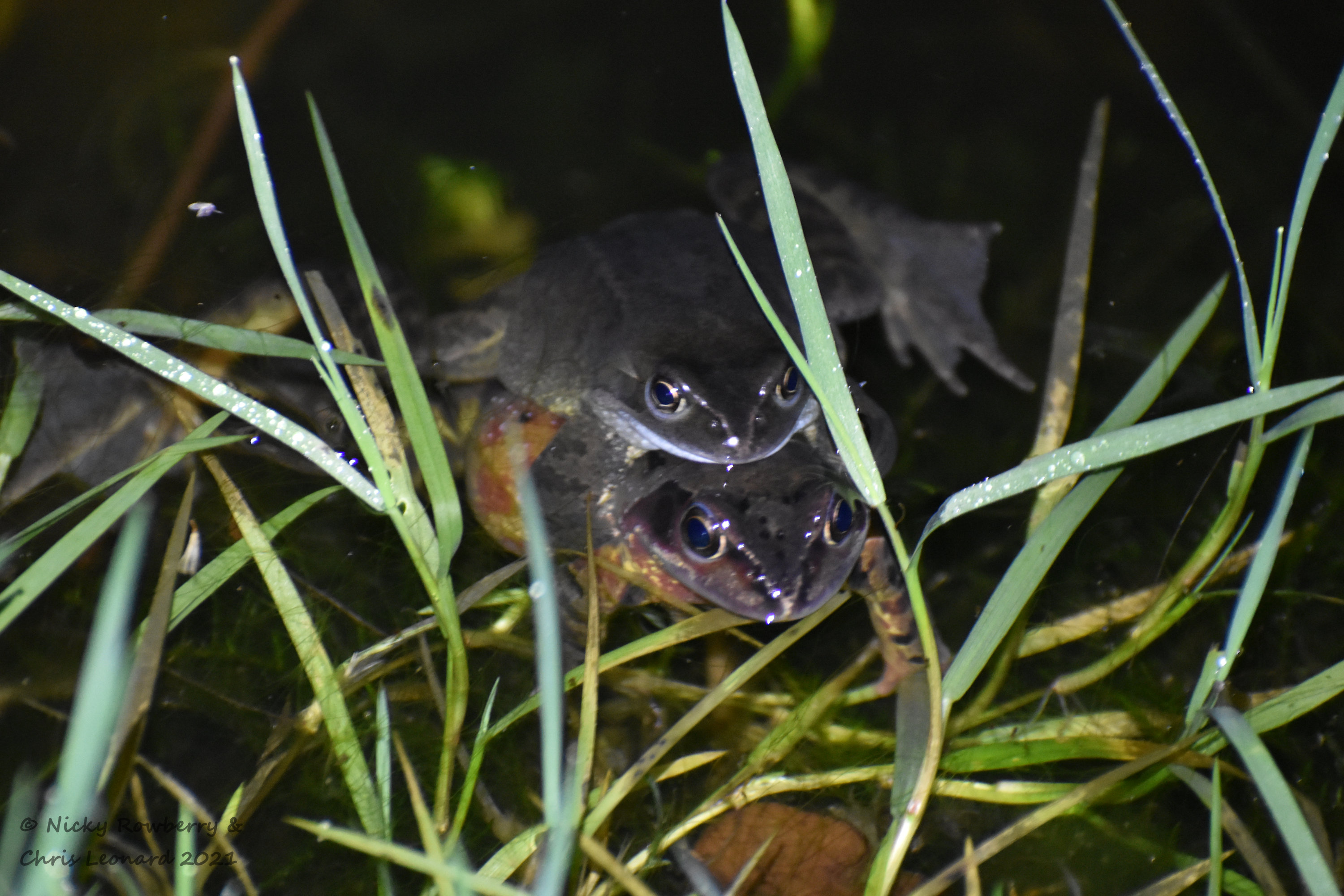
The only slight disappointment with the pond last year was that we didn’t get any frog spawn; but the pond was so new at spawning time it was perhaps not surprising. Will we get any this year? Well nothing yet, but it’s looking promising. This pair of frogs in an amplexus embrace have been seen for several nights – so fingers crossed.

So Happy Birthday to our pond. May the coming year bring you (and us) lots more wildlife encounters.

Miscellaneous Delights

Despite being stuck at home like many people, for much of this year, I don’t seem to have blogged as much as I would have liked. It certainly wasn’t for lack of interest in the garden – having spent an inordinate amount of time sitting out, there was plenty to see. Perhaps there was too much, or perhaps I just couldn’t face being cooped up inside to write. Whatever the reason, I’ve ended up with a lot of interesting (to me at least) snippets, that never saw the light of day. So here’s a miscellany of wildlife moments from the garden this year – they all cheered me up and they deserve their moment!

Most of this will be insects, but there are a trio of mammals making the cut.  Hedgehogs of course featured regularly in the garden. Freda our 3-legged hedgehog from the previous year not only made it through the winter, but produced at least one hoglet. Here she is looking like many mums – slightly harassed by her offspring.


Bats (most likely Common Pipistrelles) have always used our garden as a hunting ground in the summer months. A weed-filled garden tends also to be an insect-filled garden, so there are plenty of moths and other food for them. It may be wishful thinking on my part, but the bats do seem to be coming more frequently now we have the new pond. The pond is surely generating extra insect activity, which hopefully means more bats. I’ve tried with very limited success to film them – this was the best of a shoddy selection of shaky videos. I reckon there are at least 3 bats visible towards the end of the clip.

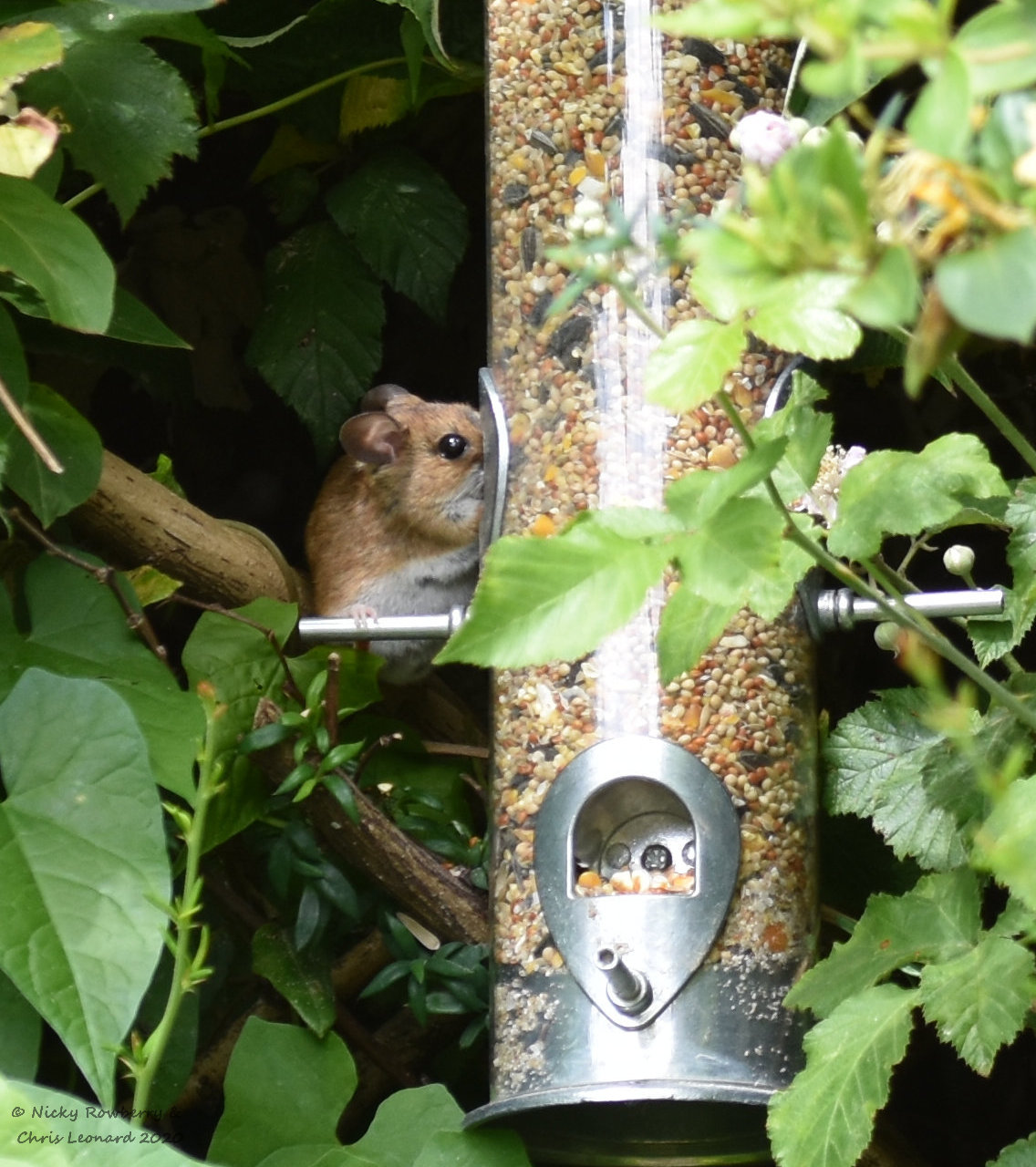
Third mammal is this mouse at the bird feeder, for no other reason than it was so cute.

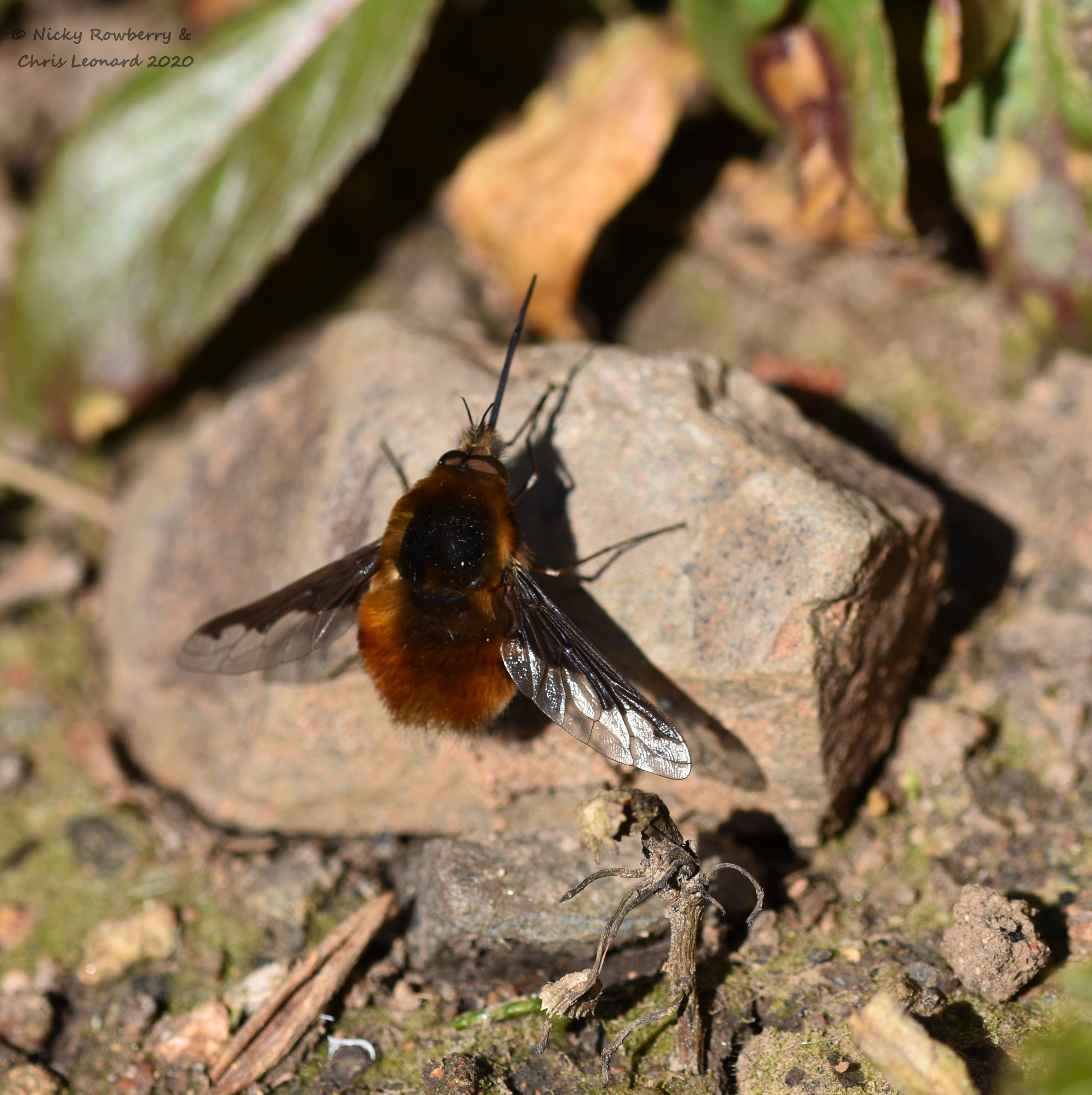
So on to the insects. I was really chuffed to spot a Dotted Bee-fly again this year, amongst all the regular bee-flies. Both species seemed to favour warm stones around the pond.


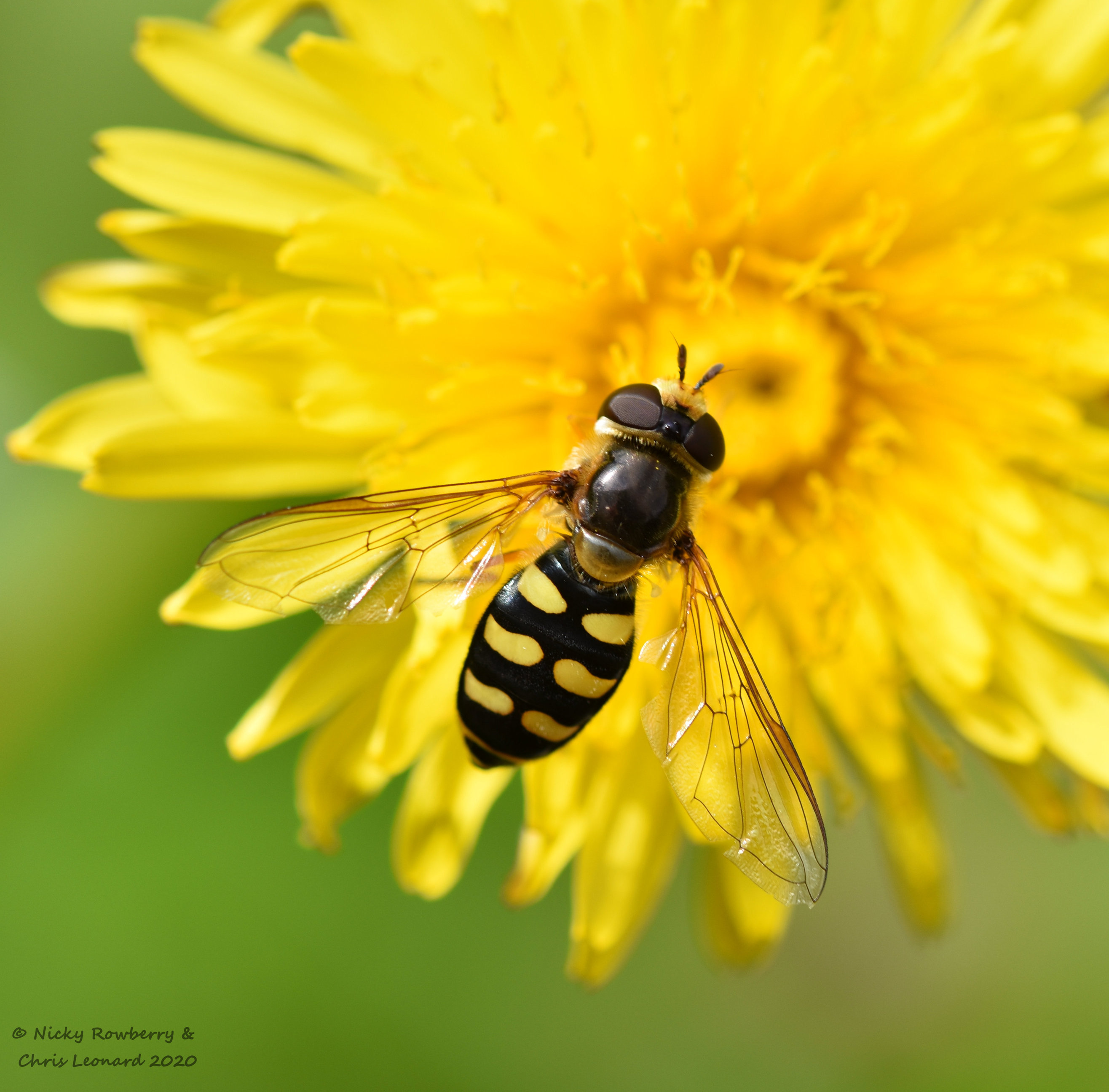
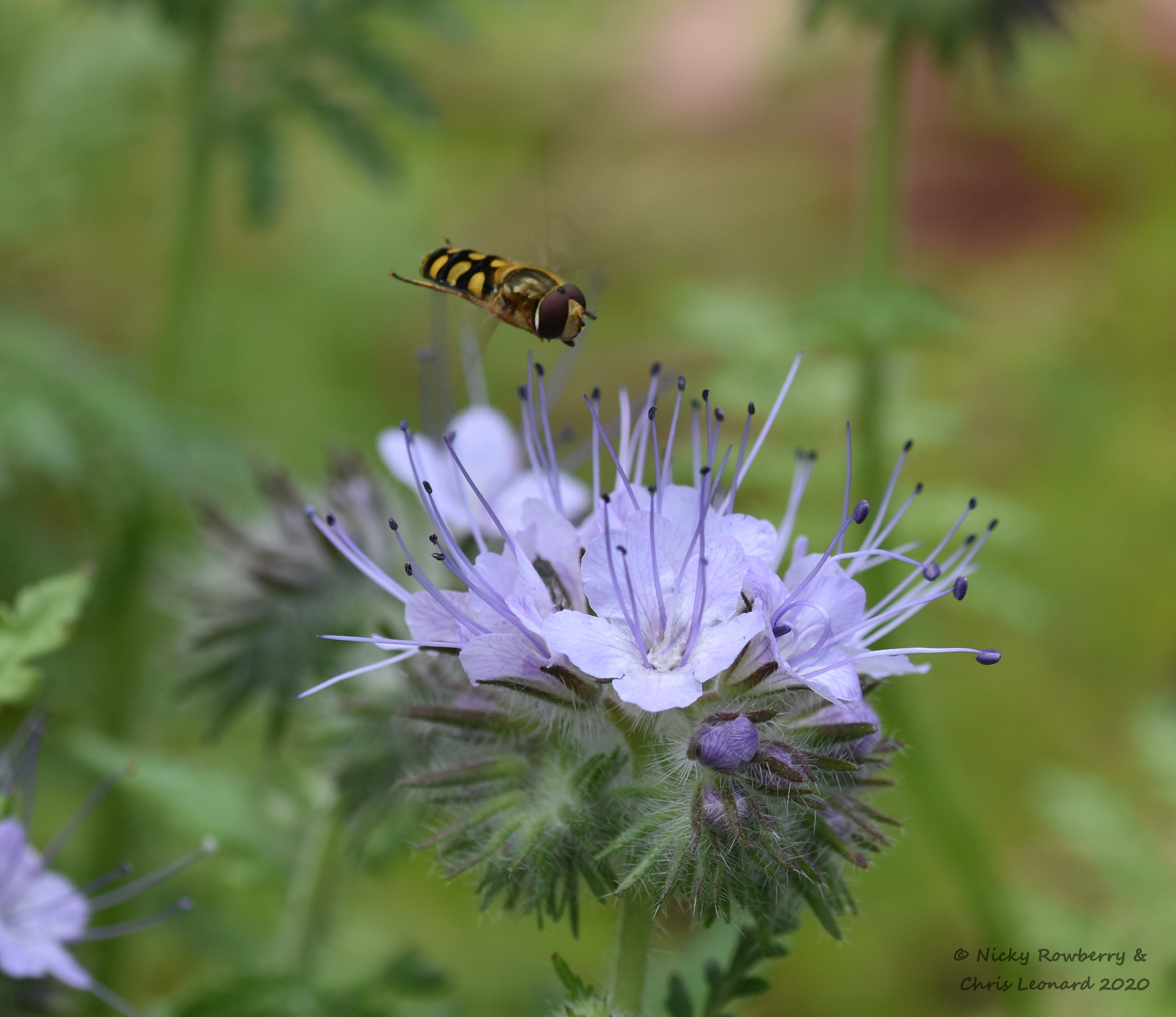
Hoverflies were abundant in the garden and as usual I failed completely to get to grips with identifying them all. There were lots of different shapes and colours though, including some of the delightful bee mimic ones.


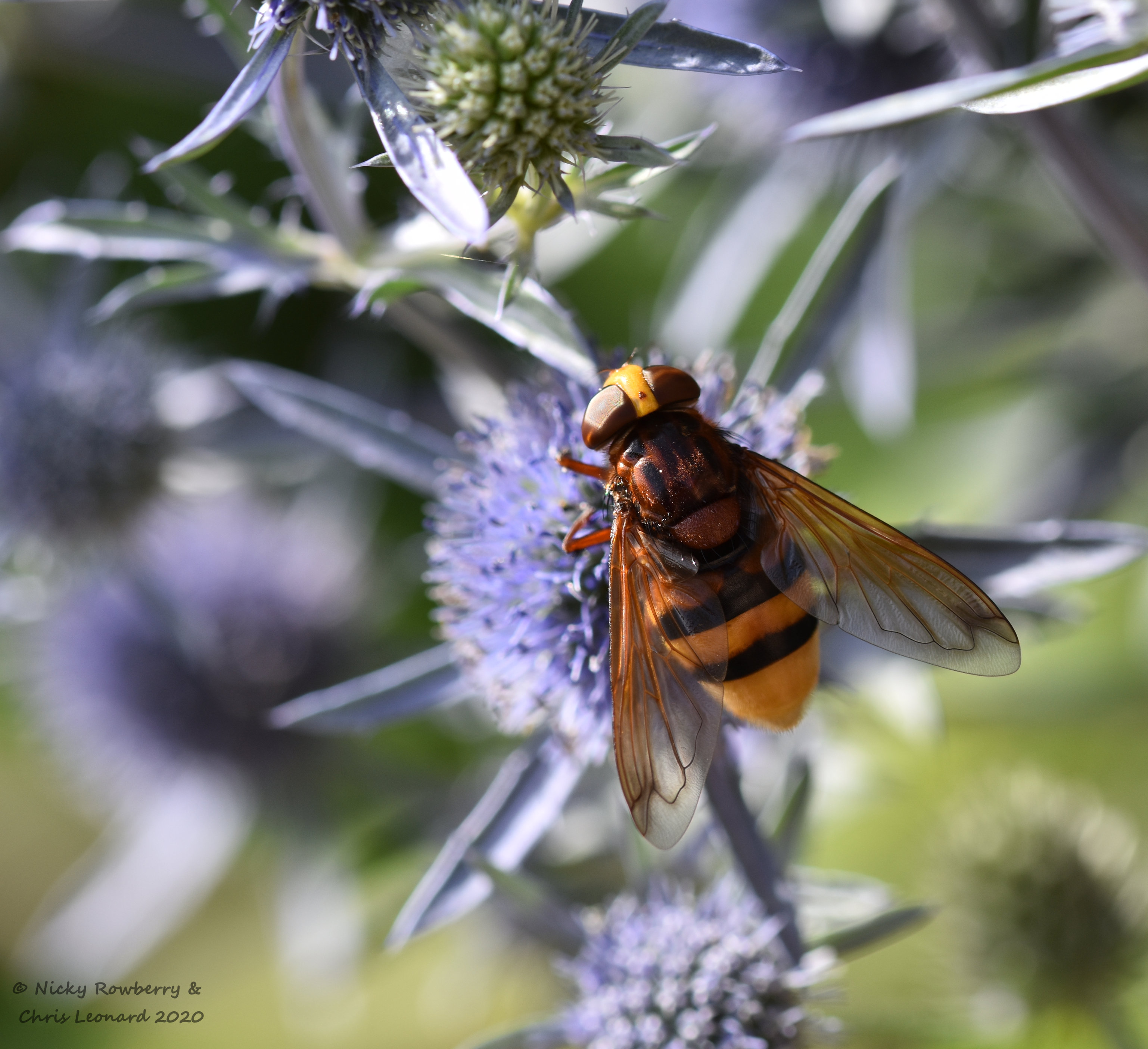
One I did manage to identify though was the Hornet Mimic Hoverfly (Volucella zonaria) – one of the biggest British species. They really were huge compared to the other hoverflies.

A new species to me and in fact a new group was this Potter Wasp – so called because some species construct little mud pots for nests.

Continuing on the waspy theme, here’s one of the gorgeous ruby-tailed wasp species. I tend to have mixed feelings towards these – they are of course stunningly beautiful, but they do parasitize mason bee nests and I feel very protective of my little mason bees. But live and let live and it’s nice to have diversity in the garden.

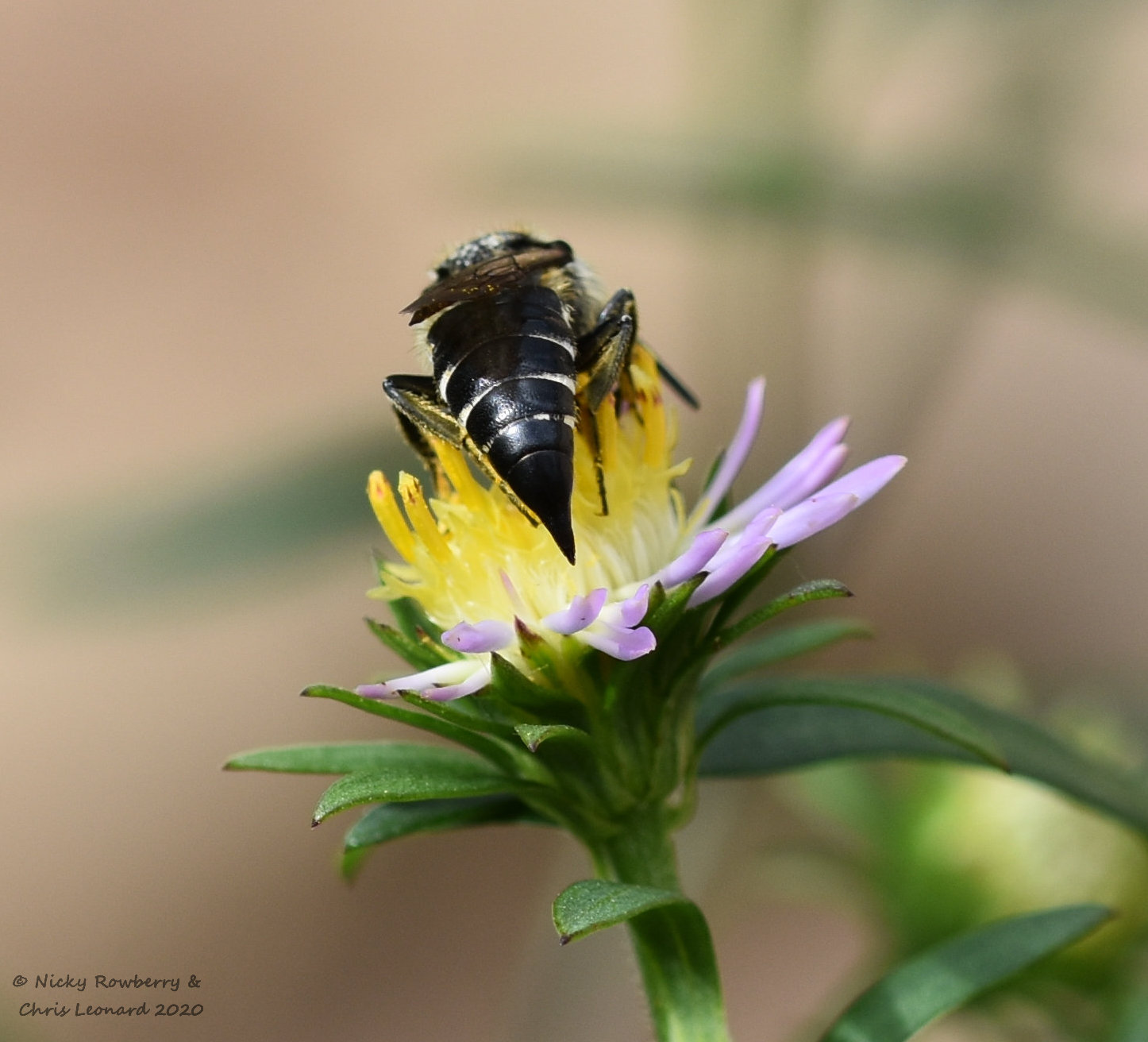
The wasps aren’t the only parasitic insects in the garden. I discovered this new addition to our garden bee fauna this year – a Sharp-tailed bee Coelioxys sp.  These ones make use of leaf-cutter bee nests.

Talking of leafcutter bees, I had meant to do a whole blog post on them. I’ve got a lot of photos and a lot of videos – so many in fact I think it became too daunting to sort through. So a full leafcutter post will have to wait until next year. In the meantime here’s a snippet.
 

We’ve had a few interesting beetles this year too. This one I spotted on the garage wall, while out checking the moth trap one night. For a split second I thought I’d got a Stag Beetle, then reality set in and I realised it was a Lesser Stag Beetle. Still a first for the garden, so very pleased to add it to our list.

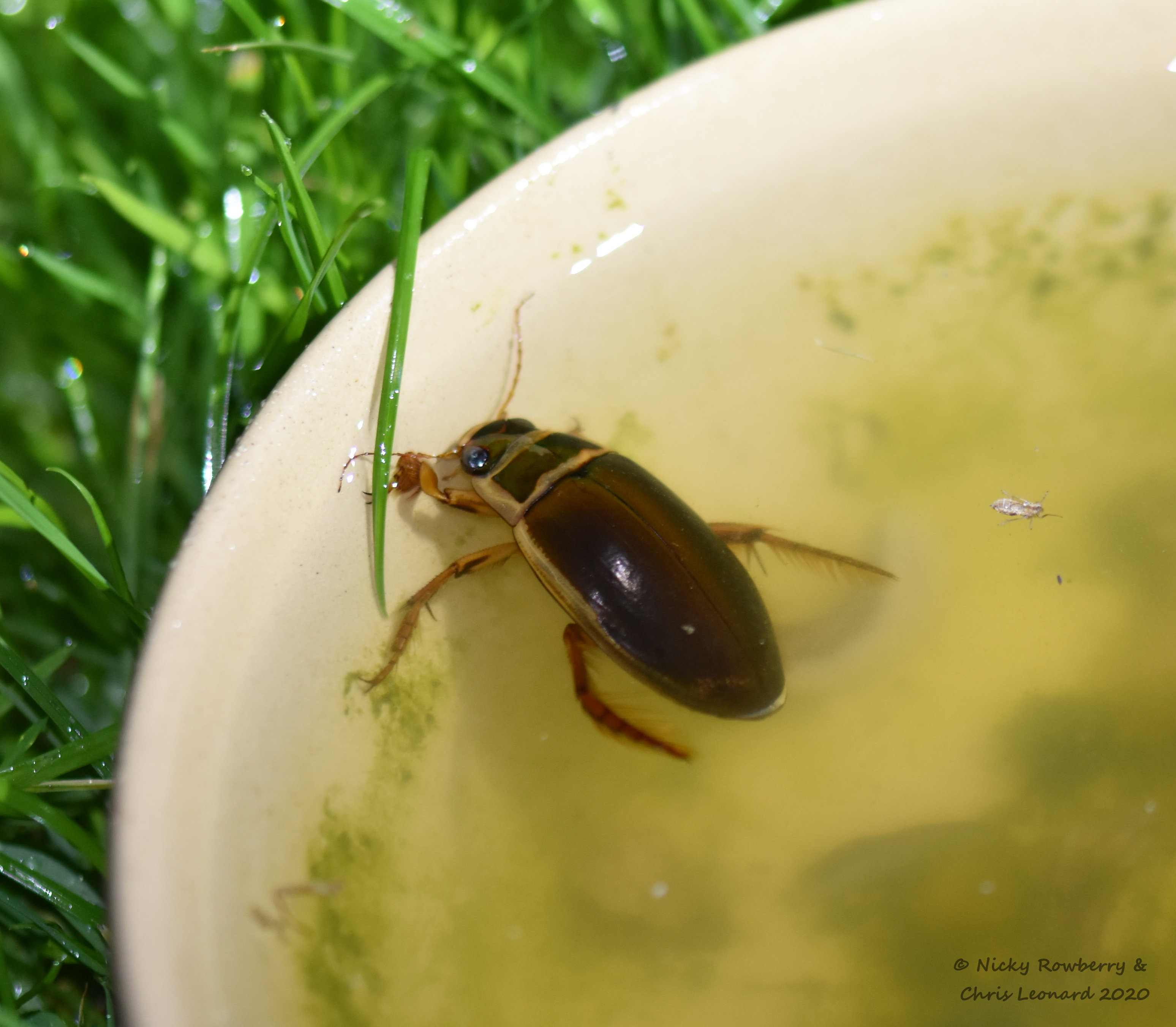
The pond of course attracted lots of water beetles. This huge Great Diving Beetle misjudged his landing though and ended up in the hedgehog’s water bowl.

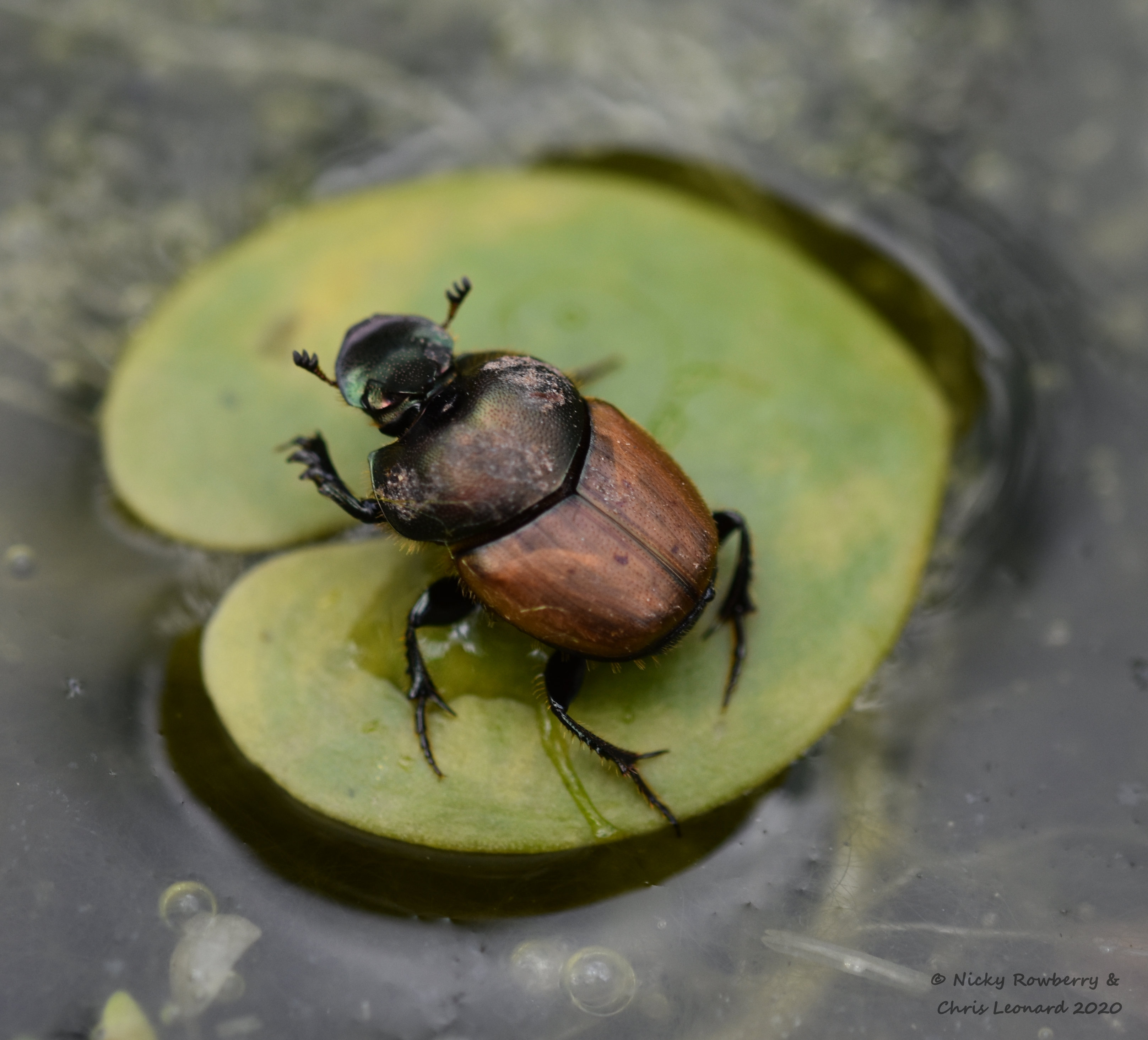
Also misjudging his landing was this Dung Beetle (Onthophagus coenobita) which ended up on a bit of frogbit in the pond.

Moths I’ve covered fairly extensively in other blog posts, but possibly my favourite odd moment this year was watching a male Black Arches moth flare it’s genitalia at me! It was perched on the edge of a pot and while I tried to photograph it, it started this weird behaviour. Don’t know whether it was trying to warn me off, or perhaps entice me (should I be flattered?), but it was certainly very odd. I sent the video clip to some moth experts and they weren’t sure why it was doing it either.
So that’s it really – a quick round-up of some of the wonderful wildlife I was lucky enough to see in our garden, but didn’t manage to blog about before. I feel very lucky to have had a garden to enjoy in 2020; it really has made things a lot easier to deal with when you’re surrounded by so much wildlife.

I’ll do a summary of everything else we’ve seen this year in the next blog post, with hopes and dreams for next year too. Happy New Year everyone. xx


Moon Garden

One of the things on my New Year’s Resolution list, way back before 2020 went crazy, was to create a Moon Garden. I’d got the idea originally from one of Butterfly Conservation’s e-newsletters; amongst the tips for things to do to encourage wildlife was to make a Moon Garden. This is specifically planted to encourage night time wildlife, in particular moths. Most of the plants are white/cream or pale yellow, so they almost glow in the moonlight. Many of them are also more fragrant at night and so should attract plenty of moths. Although at the beginning of 2020 we had already recorded 367 species of moth in the garden, there was always more to hope for!

A patch of garden had been roughly cleared in late autumn, so just needed digging over and any remaining weeds removed.  Here’s the obligatory “before” photo of the soon-to-be Moon Garden area.

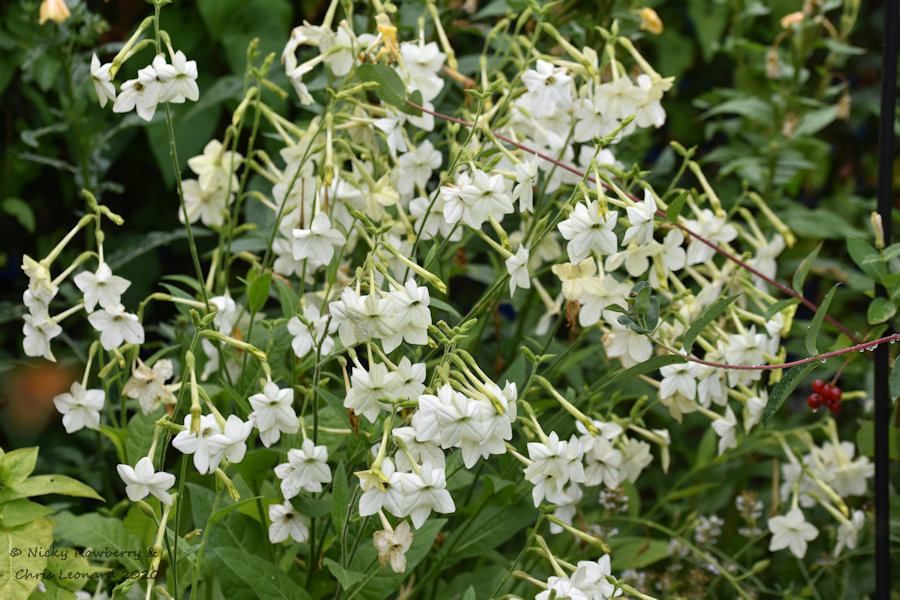
Using the list from Butterfly Conservation’s website I ordered some of the plants as ready grown specimens and, to cut down costs a bit, some of the plants as seeds. One of the plants I was particularly keen to grow was the Tobacco Plant (Nicotiana alata) – known to attract the Convolvulus Hawk-moth, a large migrant moth. These grow quite large and tall and have long tubular flowers perfect for the moth’s long proboscis.

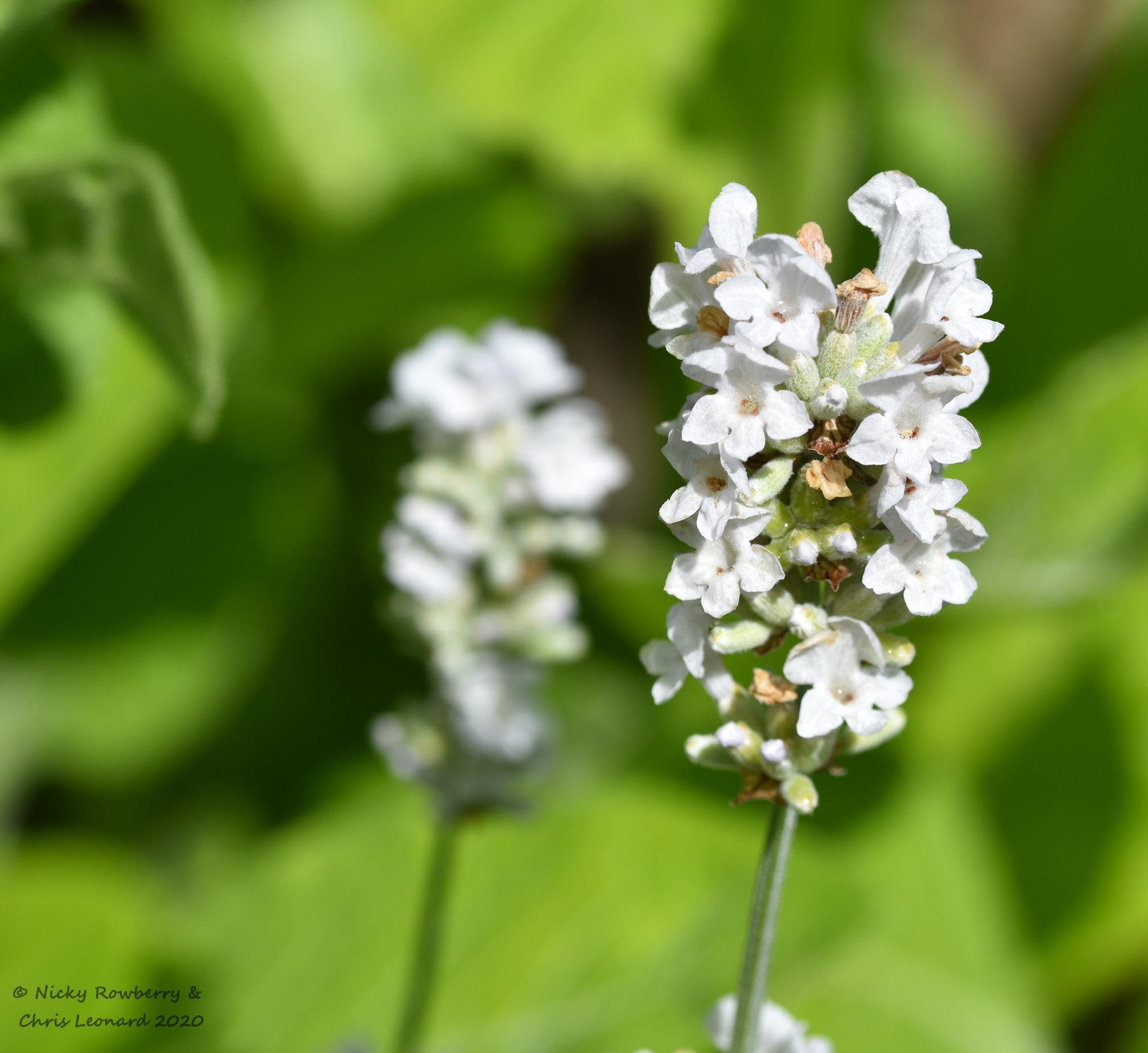
Other pale flowers included white alyssums and lavenders, evening primroses, night-scented stocks and phlox, hebe, jasmine and honeysuckle. There were a few, such as white campion, that I simply couldn’t get this year – thanks to covid closures of local garden centres and online sources being swamped with orders. But all in all I was very lucky to get a nice mix of flowers for the moon garden.

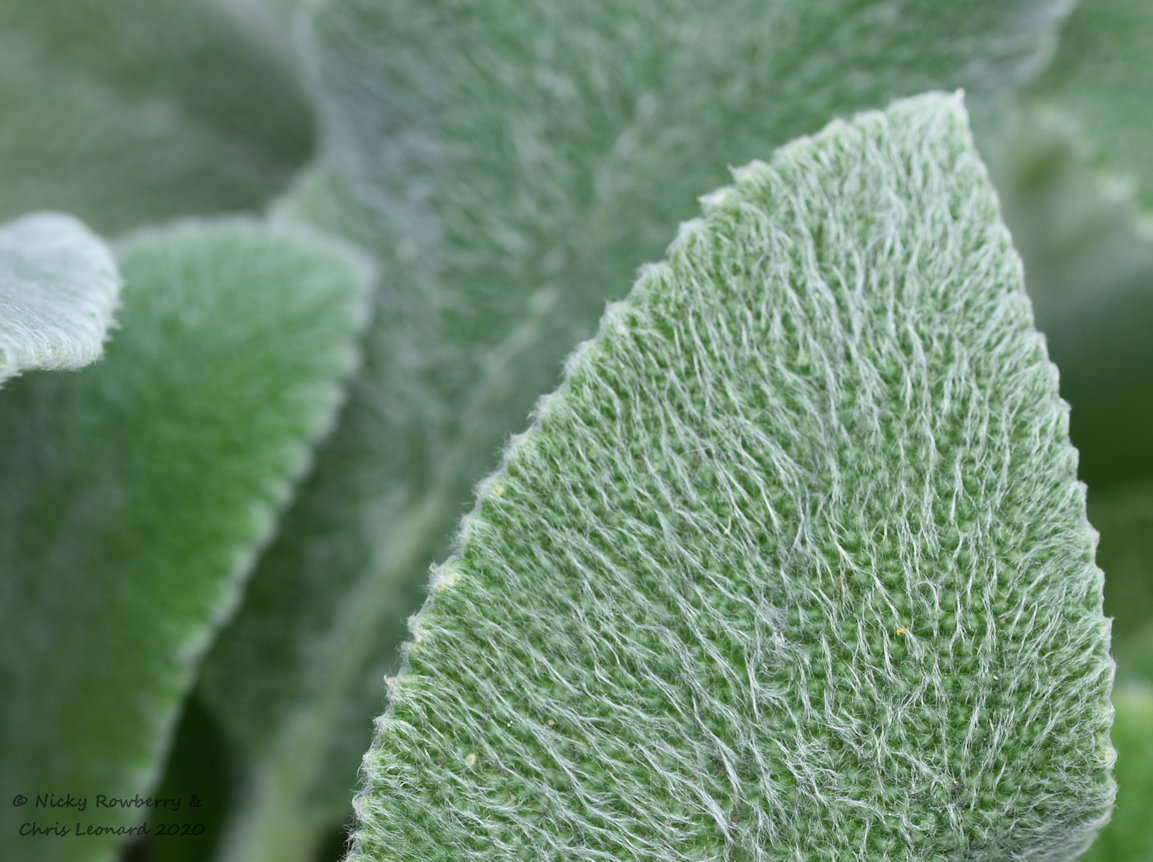
A final addition to the garden was Lamb’s Ears (Stachys byzantina)- grown not only for the silvery-ness but also the hairiness of its foliage. This had two-fold appeal – the plant is not only attractive to moths, but the hairs on the leaves are collected by Wool Carder Bees. I’ve only ever seen one Wool Carder Bee in the garden, so had hoped to attract more. Sadly if they did come they did so while my back was turned. But the Lamb’s Ears have grown well, so hopefully next year I can split the plants to get greater coverage.

So this is what I ended up with – or at least this is the stage mid-summer before the Nicotiana and evening primroses took over. For some reason I forgot to take a photo later on before they all died off again! This part of the garden really did smell lovely in the evenings, with the mix of the honeysuckle and other night scented flowers.

So I’d built it, but would they come? Well I may not have got a Convolvulus Hawk-moth yet, but plenty of other species have been more obliging. We started the year on 367 moth species recorded for the garden and to date we now have 405 – an increase of 38.  Of course I can’t prove that all these 38 are a direct result of planting the moon garden, but I’m sure some of them at least must be. And since the garden looks and smells lovely anyway, it’s certainly a win-win thing to do.

Although I was primarily expecting to see the moths in the moon garden at night, it was nice to find the occasional one resting there during the day – like this Garden Carpet on the evening primroses. A slightly more impressive find though was this Poplar Hawk-moth roosting during the day on the Nicotiana.

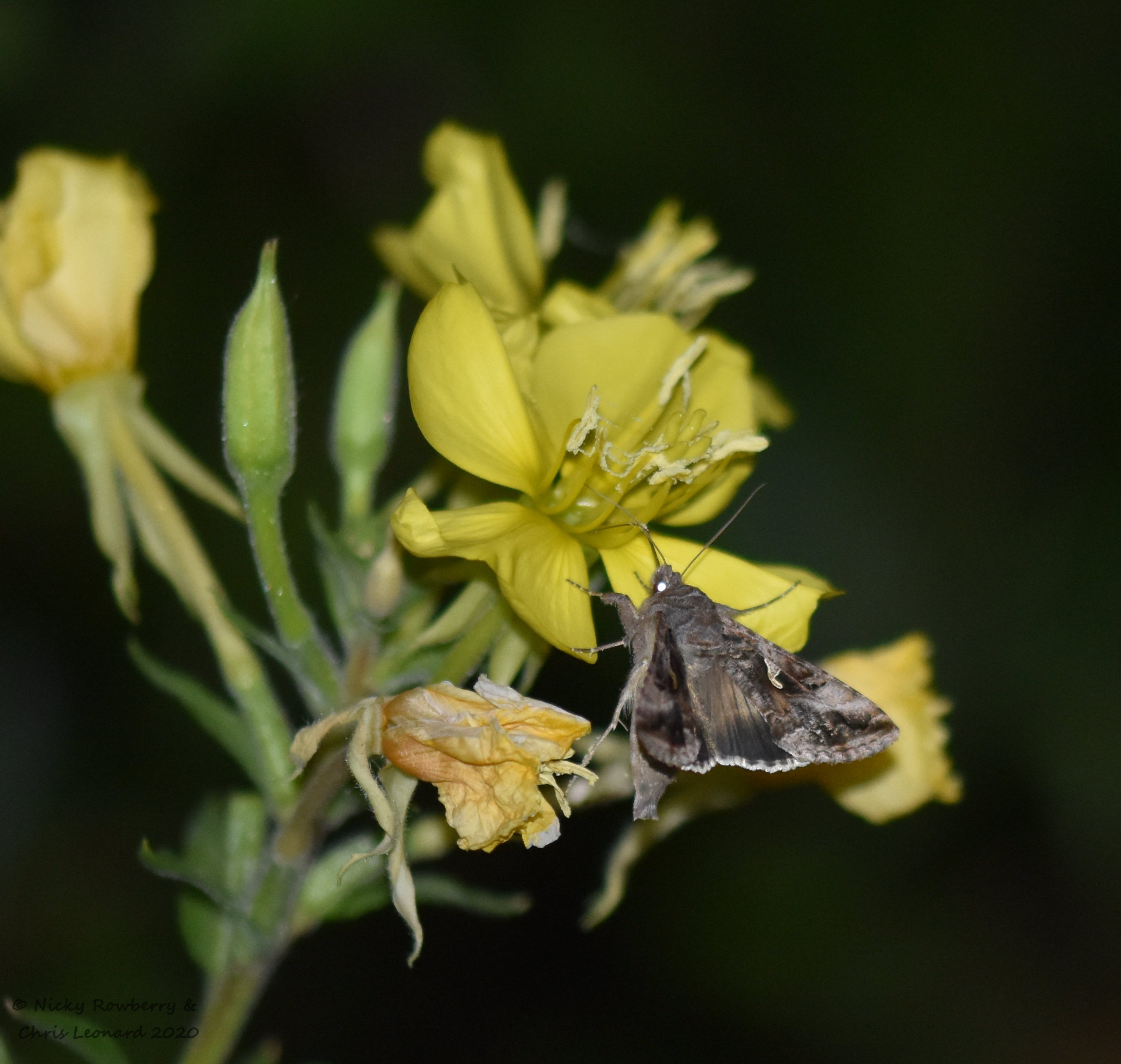
At night the evening primrose flowers were particularly well used by Silver Y moths.

I run my moth trap most weeks close to where the moon garden now is. It may be co-incidence but some species certainly seemed to increase in numbers this year compared to previous years. The Elephant Hawk-moths for instance were arriving in veritable herds compared to the usual singletons.

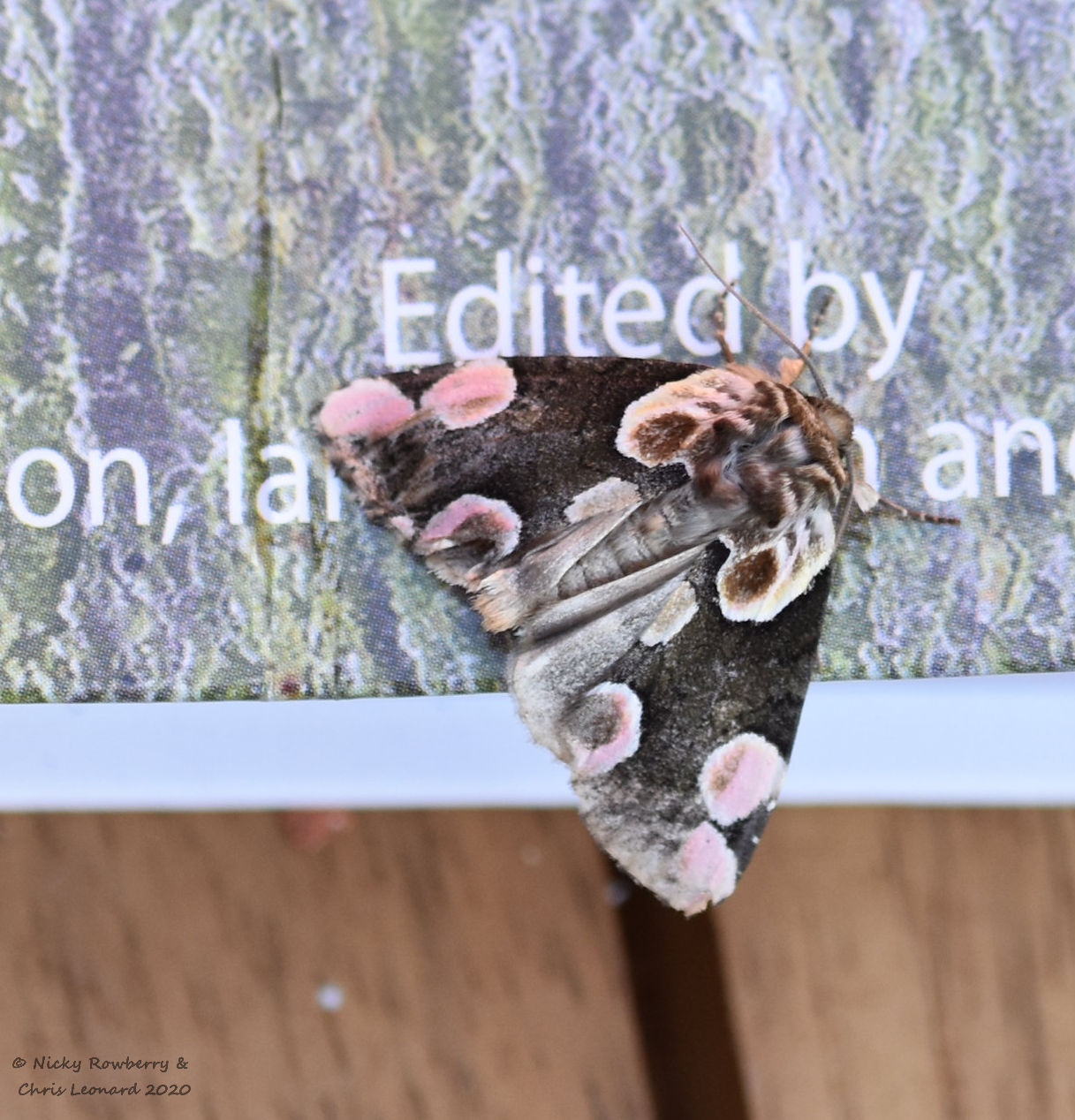
The new species were a mix of macro and micro moths. Some I’d been longing to see for ages like this Peach Blossom.

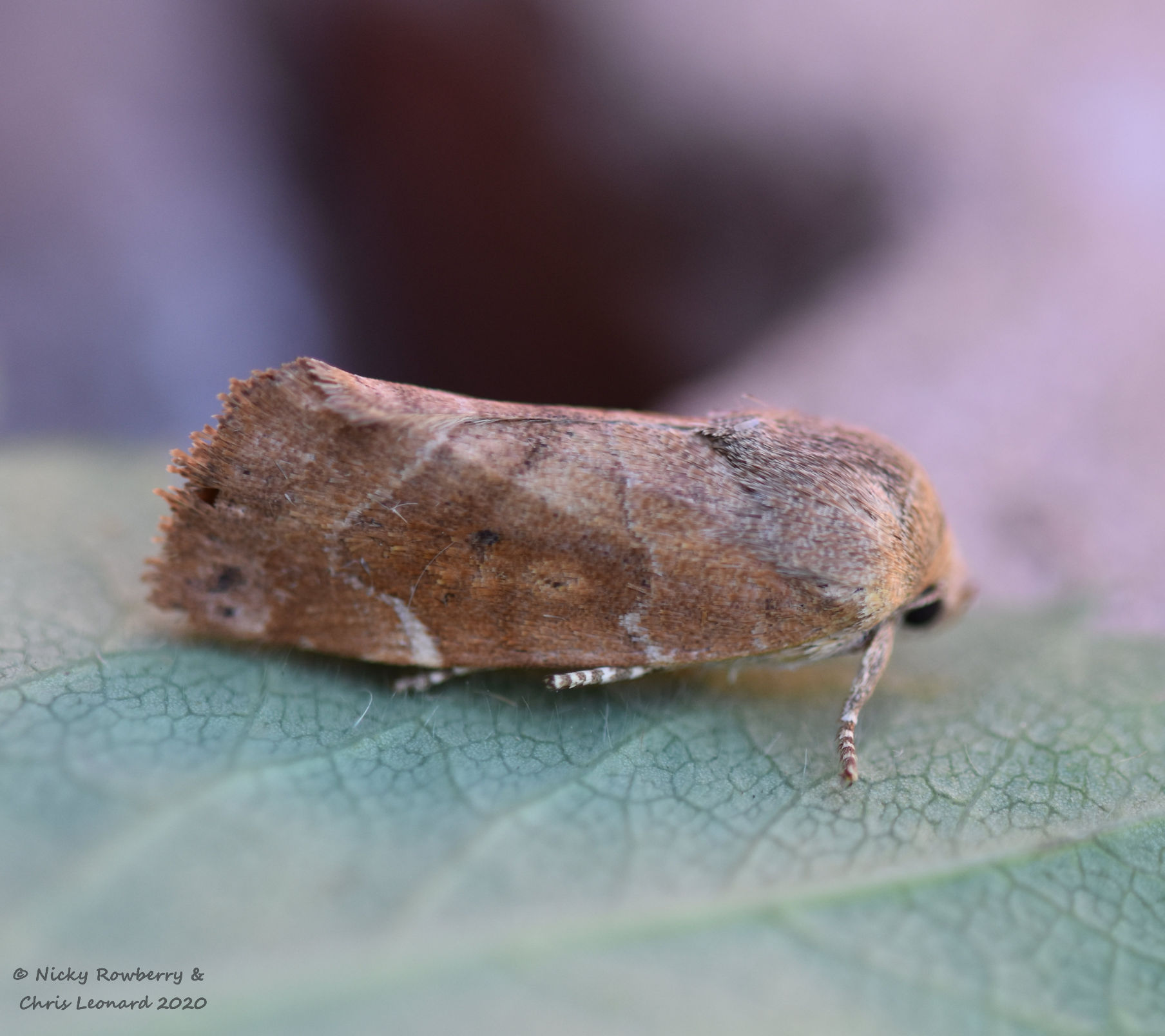
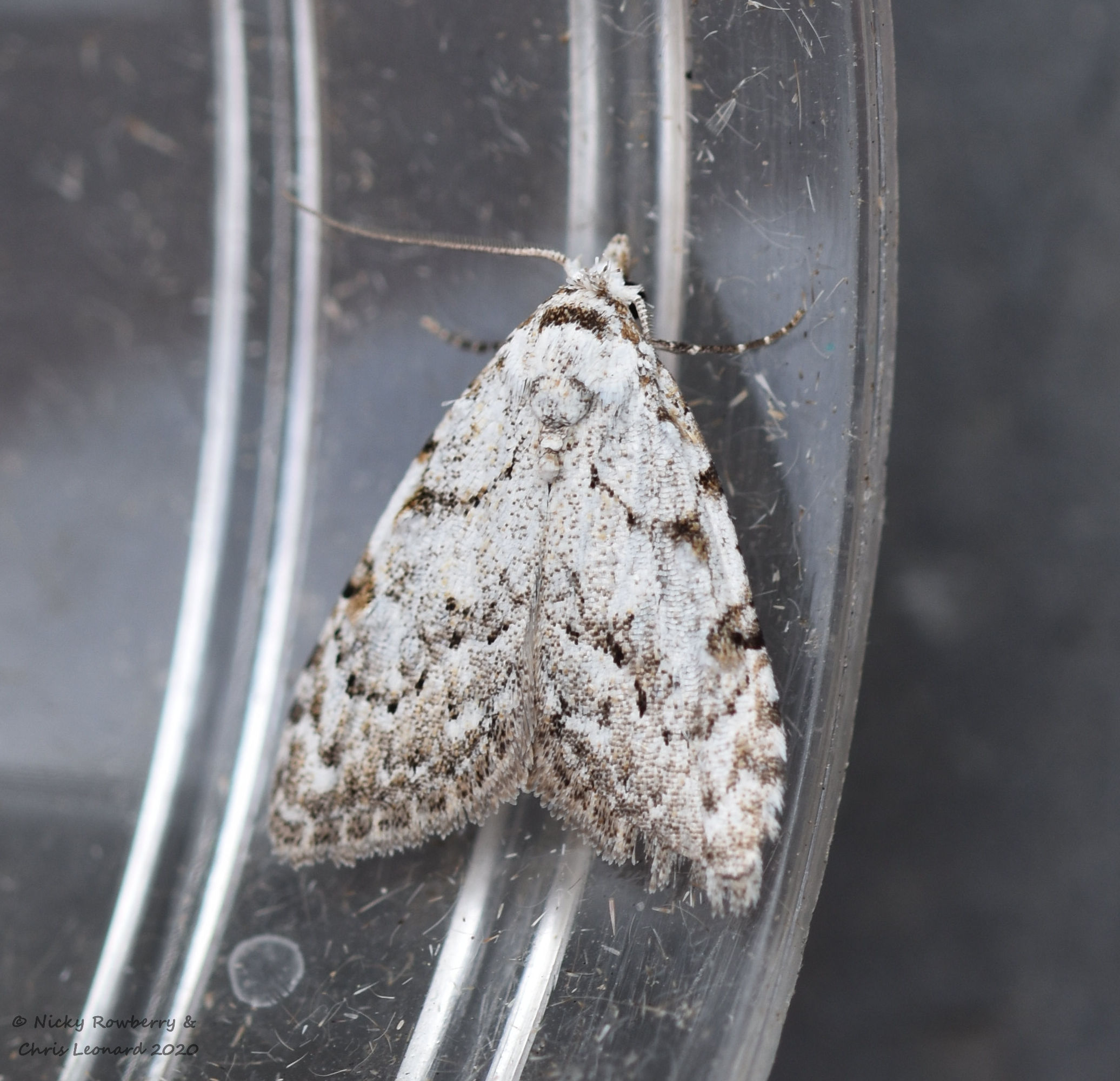
But others were completely new to me. Here are a few favourites – Triple Barred Argent (Argyresthia trifasciata for the purists – a stunning golden striped micro), Lesser Spotted Pinion and Least Black Arches.

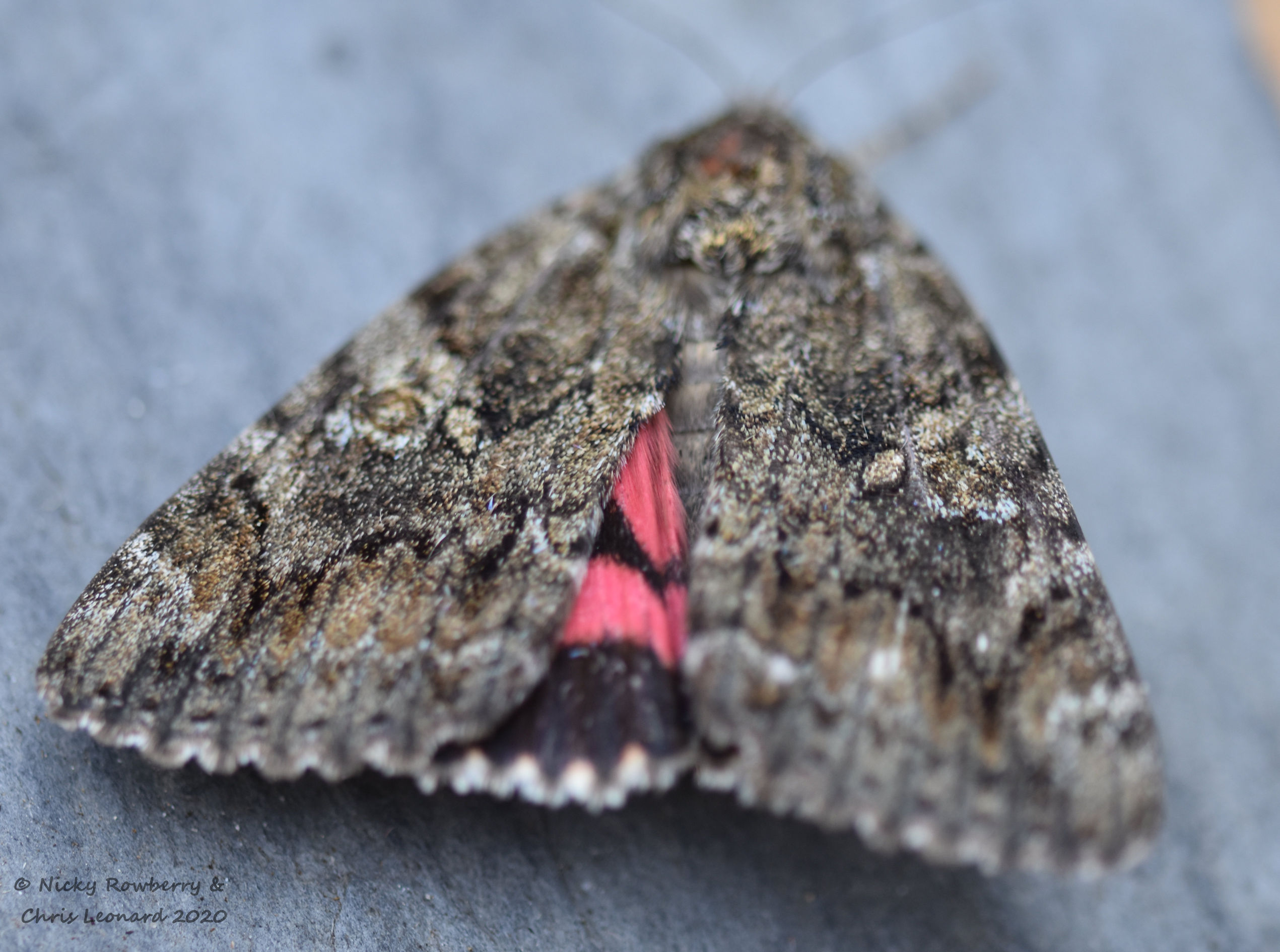
The undoubted highlight has to be the moment I discovered a Dark Crimson Underwing in the trap. I nearly put it down as being one of the regular Red Underwings (in my defence, it did after all appear to have red underwings) which I have occasionally found in the garden before. But it looked a bit different, so I double-checked with those much wiser than me and was thrilled to find it was a Dark Crimson instead. Not only did this turn out to be a new species for Worcestershire, it is probably new for the whole of the West Midlands region – result!

So all in all I’ve been very pleased with the results from my moon garden experiment. So much so in fact that I intend to extend it next year and hopefully double the area. Some of the perennials may take years to grow to their full potential, so hopefully it will get better as time goes on. Again it may be coincidence but we noticed more bat activity over the garden this year (hope they didn’t snaffle my longed-for convolvulous hawk-moth, although I suspect it would be too big!), which is great too. Perhaps next year I might plant an area specifically for caterpillar food plants too – it’s all got to be beneficial after all.

Our local branch of Butterfly Conservation had asked earlier this year for moth related articles for the magazine. I was delighted that they included an article on our Malvern Moon Garden. It was Butterfly Conservation’s article that inspired me to plant it in the first place, so it would be lovely if our garden could then inspire someone else to have a go and encourage more moths into their own garden.

I’m not normally one given to poetic quotes, but there’s a line from William Blake – “The Moon, like a flower in heaven’s high bower, with silent delight, sits and smiles on the night” which makes me think of our moon garden – a silent delight giving both me and hopefully the moths great pleasure.