A Host of Golden Daffodils

Not sure how many daffodils you need to qualify for “a host”, but what few we’ve got are at their best in the garden right now. They seem to be a lot later than everyone else’s in Malvern, the neighbours daffodils were blooming marvellous about 6 weeks ago; but better late than never.

Daffodils

Yellow is definitely this season’s colour at the moment. Some is of course down to me choosing yellow, such as these crocuses, to brighten up the cold days.

Crocuses 2

But a lot of it is due to the more natural, self seeding “weeds” such as the primroses and dandelions that proliferate in our garden.

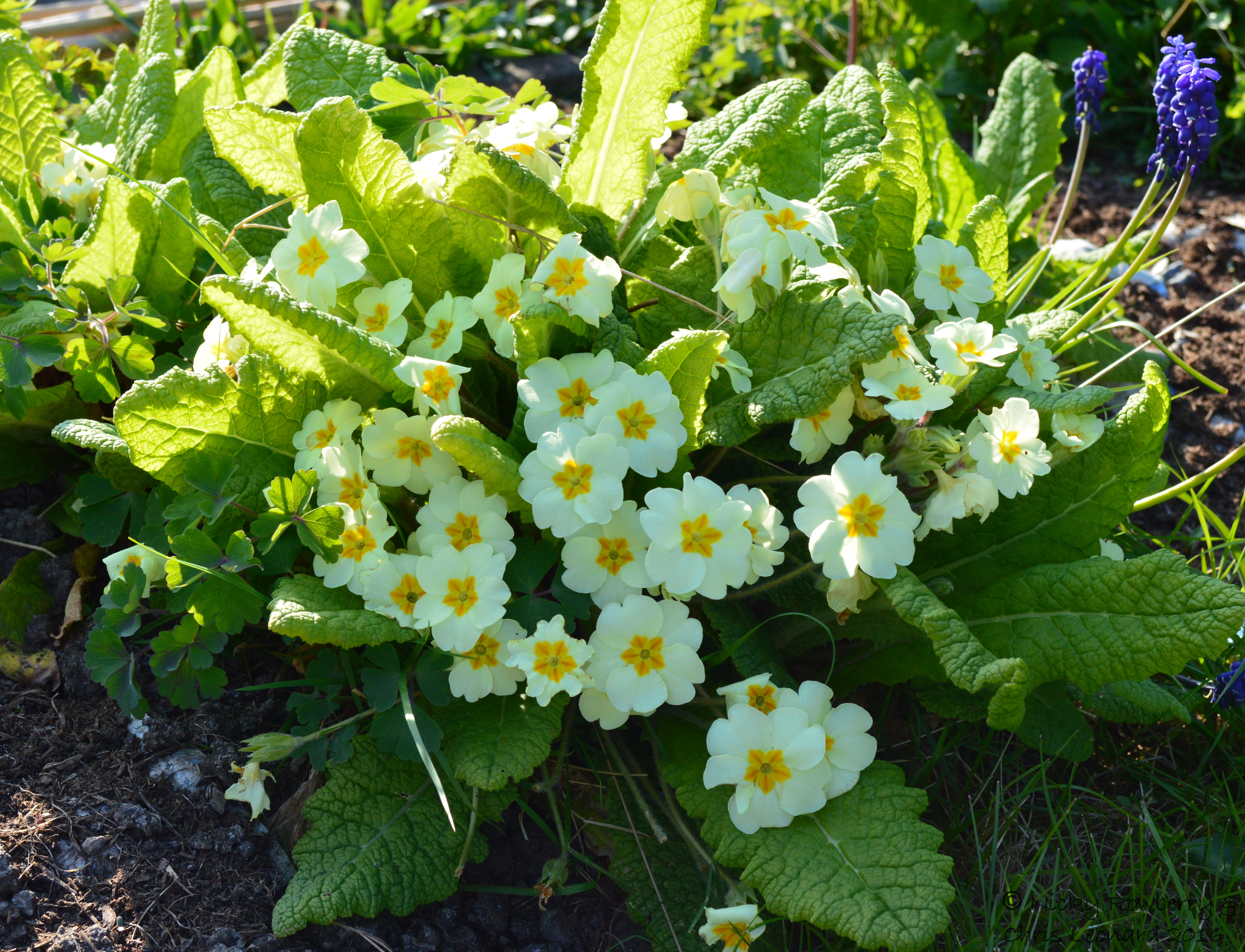
Dandelion PrimrosesAll these spring flowers are good news for the insects, which are now starting to arrive in the garden in moderate numbers. The yellowyness of Spring continued with the first butterfly in the garden – a Brimstone. In typical Brimstone fashion it was too fast to get a photo, but we think it was a male as it was bright yellow – the original “butter coloured fly” or butterfly. Hopefully soon one will hang around long enough to get his photo taken. But the good news was that it meant I could log it onto the new online garden butterfly survey – http://www.gardenbutterflysurvey.org/ – my first record for the year.

As well as the first butterflies and bees, the first wasp put in an appearance too. It was a bit dopey and hung about on the fence, warming itself in the spring sunshine for quite a while – good news for my photography attempts. I know wasps aren’t everyone’s favourites, but close up they really are quite stunning!

Common Wasp

The Bees Knees (or Feet)

This last week of sunshine (and showers) has brought the bees out in our garden – at least three species already, plus a massive unidentified one going like a bumblebee out of hell over the roof!

When it comes to identifying bees, it would seem a bee’s knees are hardly relevant at all. In the case of our first positively identified species this year, it was the feet that were key for the charmingly named Hairy Footed Flower Bee (Anthophora plumipes). This is one of the earliest bee species to appear in the spring and we had several merrily tucking into the primroses last weekend.

Hairy Footed Flower Bee

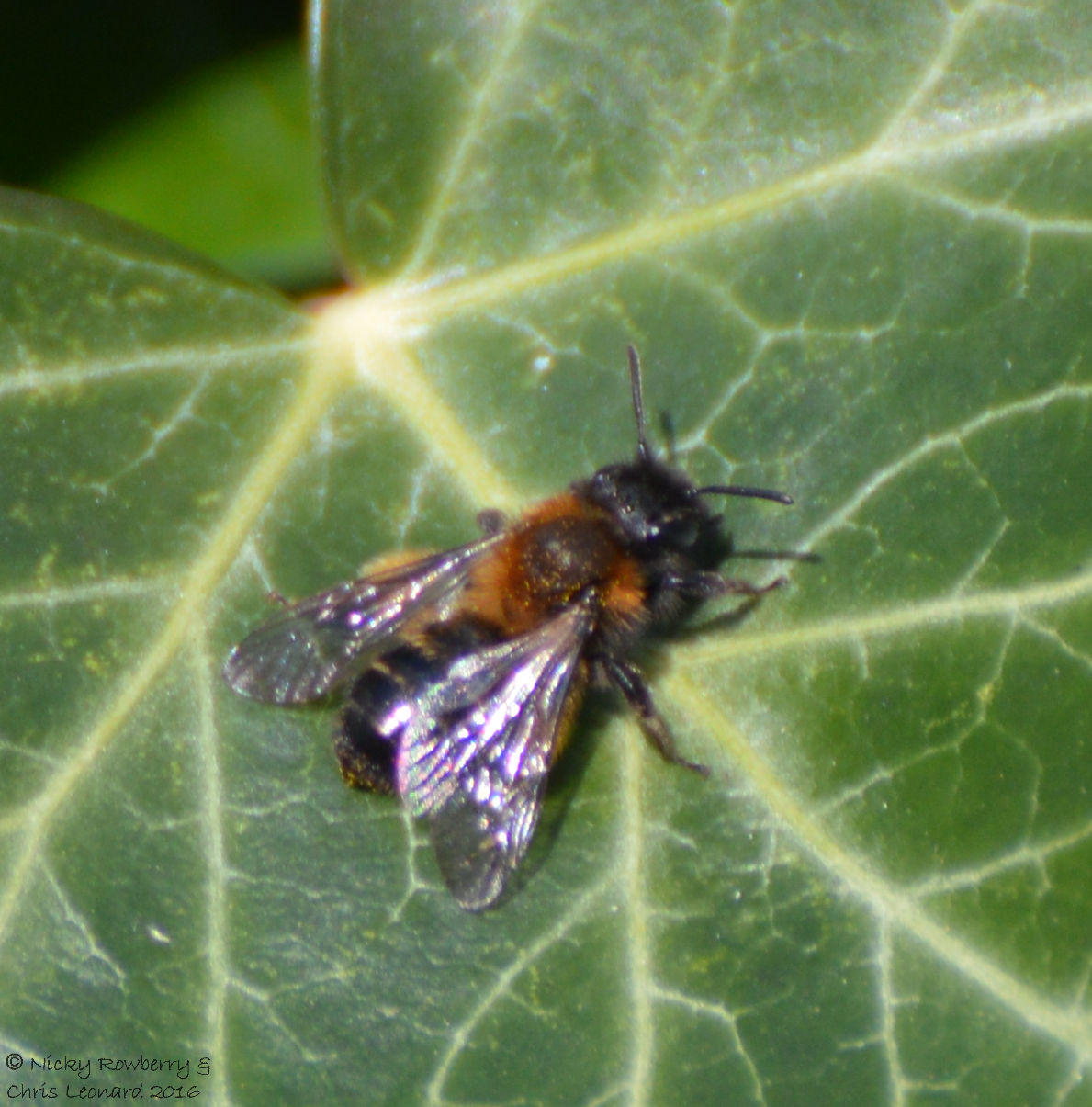
The second species to be spotted in the Lazy Garden was this little mining bee (Andrena sp.) seen basking on an ivy leaf in the sunshine. Unfortunately there are lots of species of mining bees and my photography wasn’t up to scratch enough to be able to identify this one. I did load it onto the ever-useful iSpot website, where several very helpful people discussed various possibilities (I would love to say “debate raged” over my bee, but that would be a bit over dramatic), before concluding that it was best to just stick with Andrena sp. rather than get it wrong. Hopefully our mining bee will reappear sometime and I can get a better photo to nail the identification.

Mining Bee Andrena sp

The final species this week was the humble, but oh so important, Honey Bee (Apis mellifera) seen here already sporting a fine set of pollen sacs. Bee populations in general are struggling so much at the moment, it was great to see 3 species at least surviving in our garden.

Honey Bee

And finally I’ve been having a go with the trail cam filming our bee friends. As per usual with the trail cam, I had to wade through quite a lot of footage of things blowing about in the wind (in this case mainly primroses) before finding this short film of our Hairy Footed Flower Bee, doing what he does best – landing on flowers with his hairy little feet!

Doomed Beauty

It was week two of the Garden Moth Scheme last weekend – I put the trap out twice – once for the official GMS count and once just because I probably need to get out more! Needless to say the non-GMS night produced more moths than the official night, but then it was several degrees warmer. I was tempted to log the better of the two results, but decided to be a good citizen scientist – after all the aim of the scheme is to find out about moth numbers on average nights, not just on the best ones!

The official night still produced 6 moths of 4 species, including a small Double Striped Pug (Gymnoscelis rufifasciata), which landed on the garage wall next to the trap at the beginning of the night and stayed there until dawn.


The trap also attracted a Common Plume (Emmelina monodactyla) – a funny stick like micro moth, shaped like a capital T, hence its other common name T-moth.

Emmelina

The second trapping night produced 24 moths of 8 species, including a new species for our garden the March Tubic (Diurnea fagella).


Another first for the garden was this much more attractive (apologies to the above March Tubic) Herald moth (Scoliopteryx libatrix). I’d been wanting to find one of these in the garden for a while (having previously only seen it when I’d rescued a few from a friend’s building site of a garage). Herald moths overwinter as adults, so this was probably one that had been hibernating somewhere nearby and emerged on one of the first warm nights.


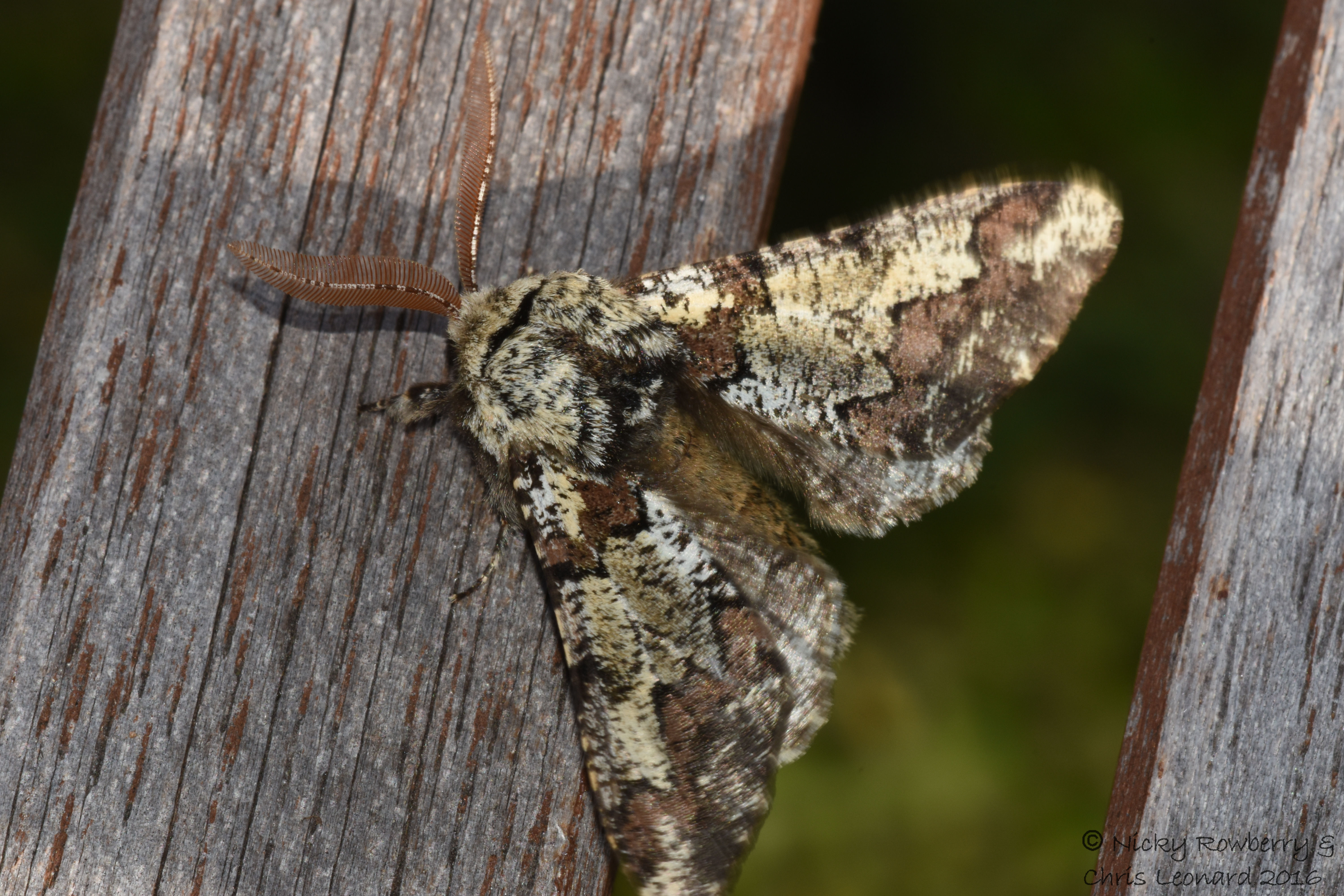
But the star of the show was this magnificent Oak Beauty (Biston strataria) – a large moth with fantastic feathered antennae. We have had them in the garden before, but this was a lovely fresh specimen, looking his or her best. Sadly this beauty was doomed. Before I could move him to the safety of a quiet corner, he took off, flapping towards the apple tree. Unfortunately hubby and I weren’t the only ones watching him go and before we knew it, a robin swooped down and had our bright beauty for breakfast. It must have made a big fat treat for the robin, but I must admit I felt more than a little guilty at our part in this poor moth’s short life!

Oak Beauty

So the two nights trapping brings the total species count for the year to 12, which includes 4 new records for the garden – not a bad start to the year at all. Sadly the Oak Beauty can’t say the same!

New Year’s Resolutions

Well 2015 is over and I reckon it’s been a pretty good year for the wildlife in the garden. The final tally includes:

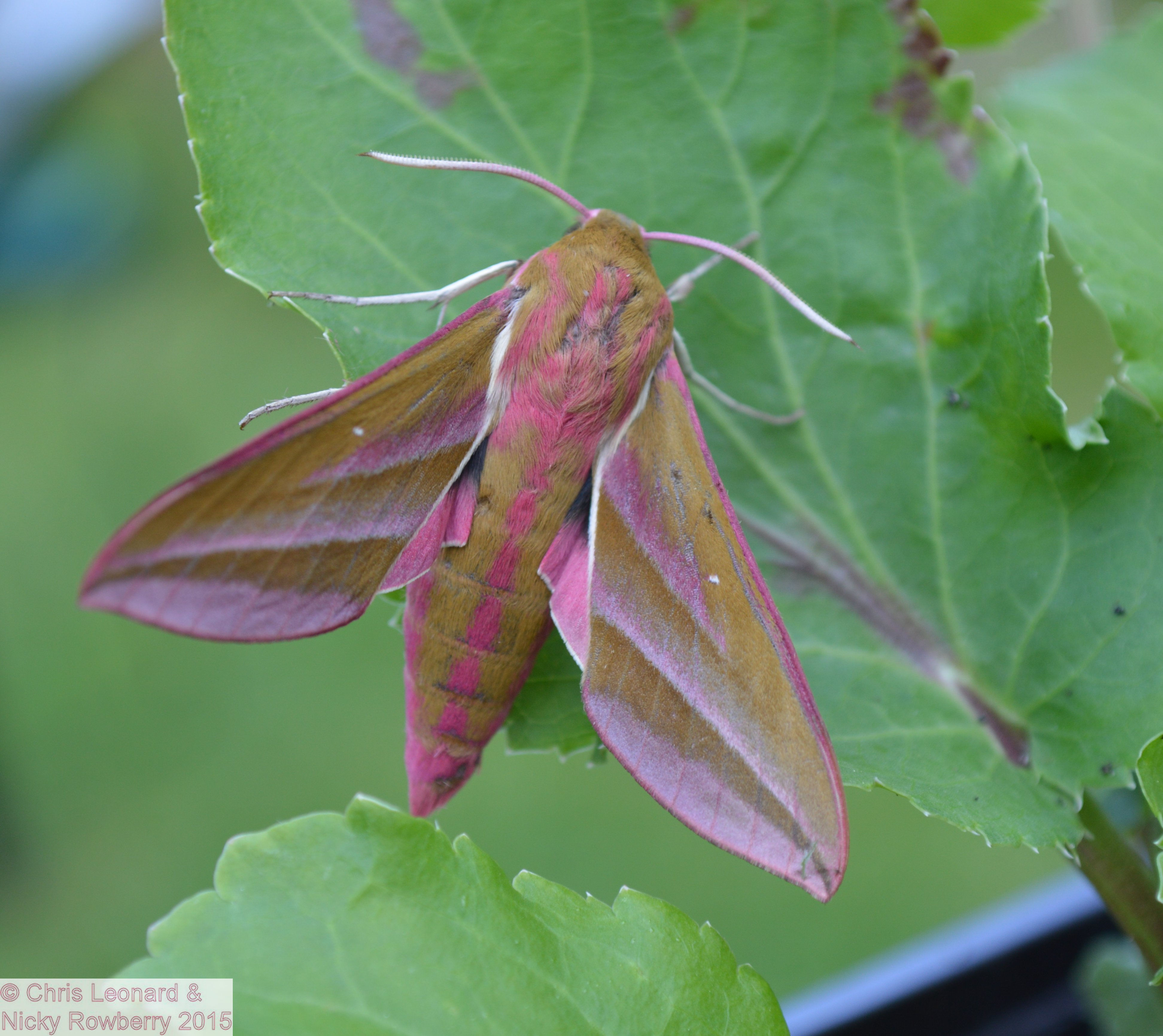
  • Elephant Hawk-moth155 species of moth recorded in the garden, plus about 6 more seen out and about. Most of the 155 came to the moth traps, but a few were more adventurous and made it as far as the bathroom!
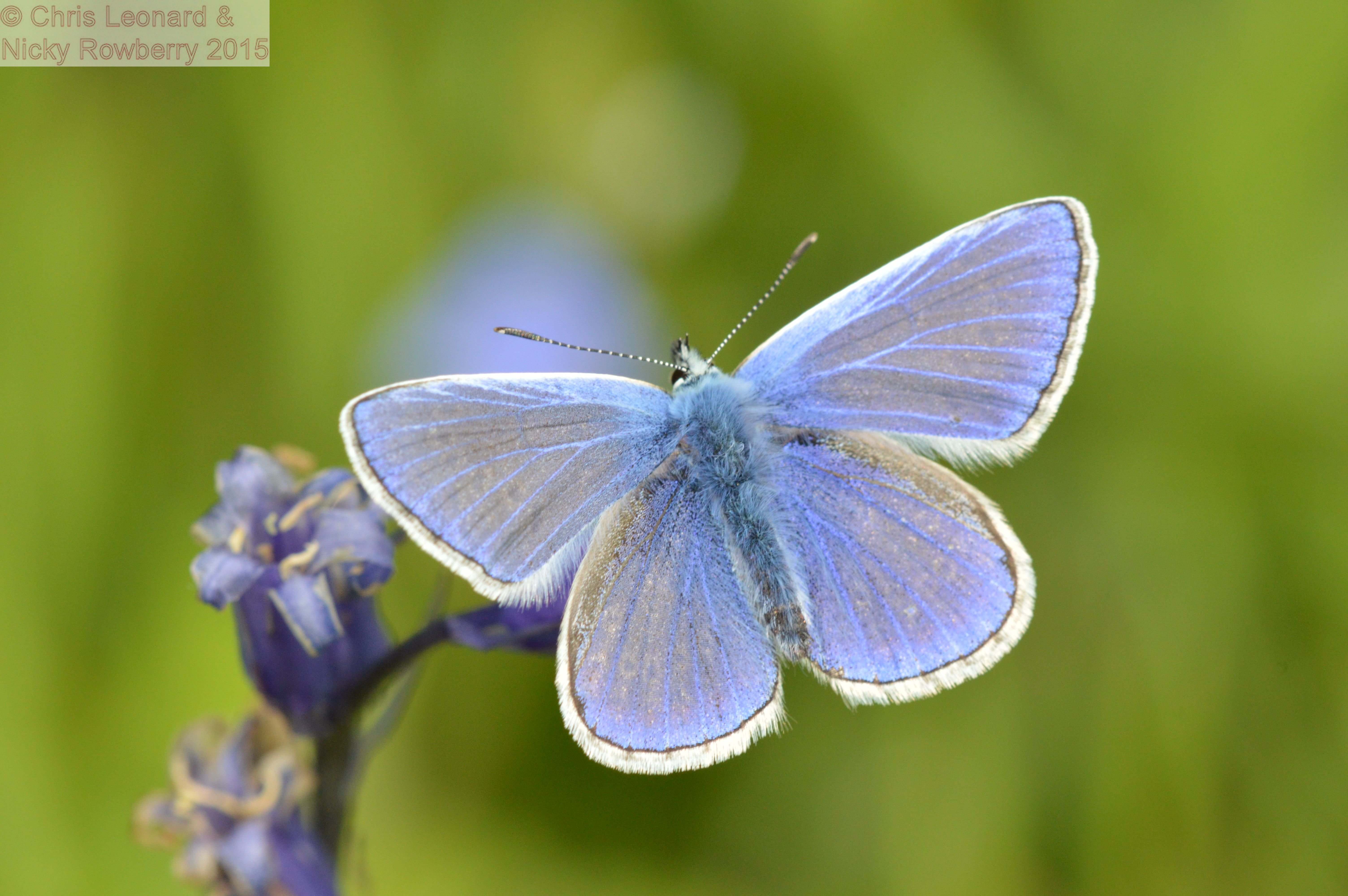
  • Common Blue28 species of butterfly bagged, of which 17 appeared in the garden at least once during the year.


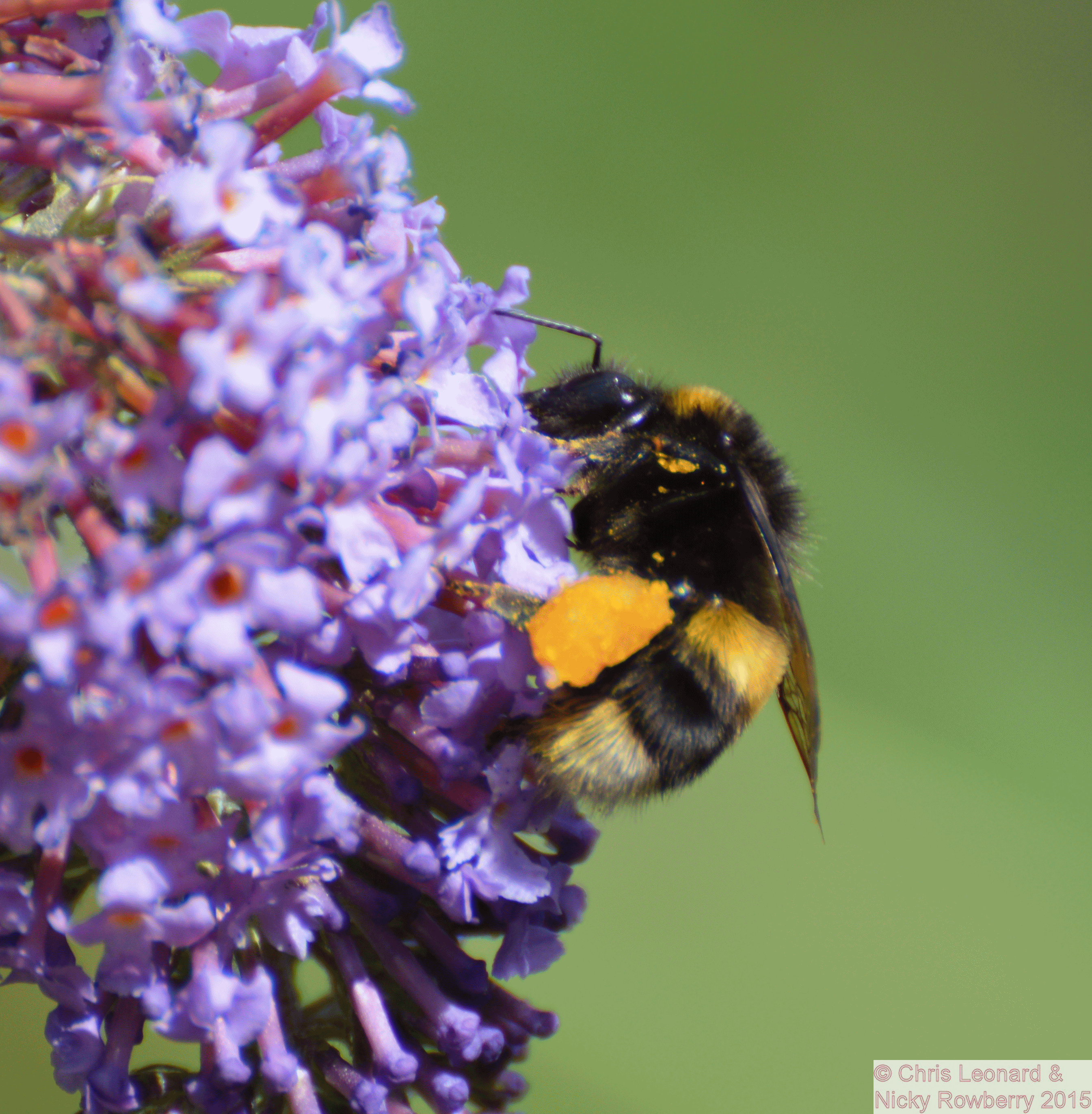
  • Bee on buddleia12 species of bee in the garden (which reminds me I must do a bee post soon). At the height of the summer (such as it was) the garden was buzzing with bee activity.


  • 7 species of shieldbug in the garden, including a rarity for Worcestershire – the Box Bug (which remains the only wildlife to have used our new bird bath!)


  • Hedgehog3 mammal species in the garden (grey squirrel, hedgehog and regular if unidentified bats) plus one family of mice living in the garage.


  • 3 amphibian species (toad, frog and common newt) visiting our pond/bog and surviving attacks from our garden furniture.


  • One sparrowhawk (and consequently one less sparrow) in the garden. Numerous other small birds though eating their way through a small fortune’s worth of bird seed.


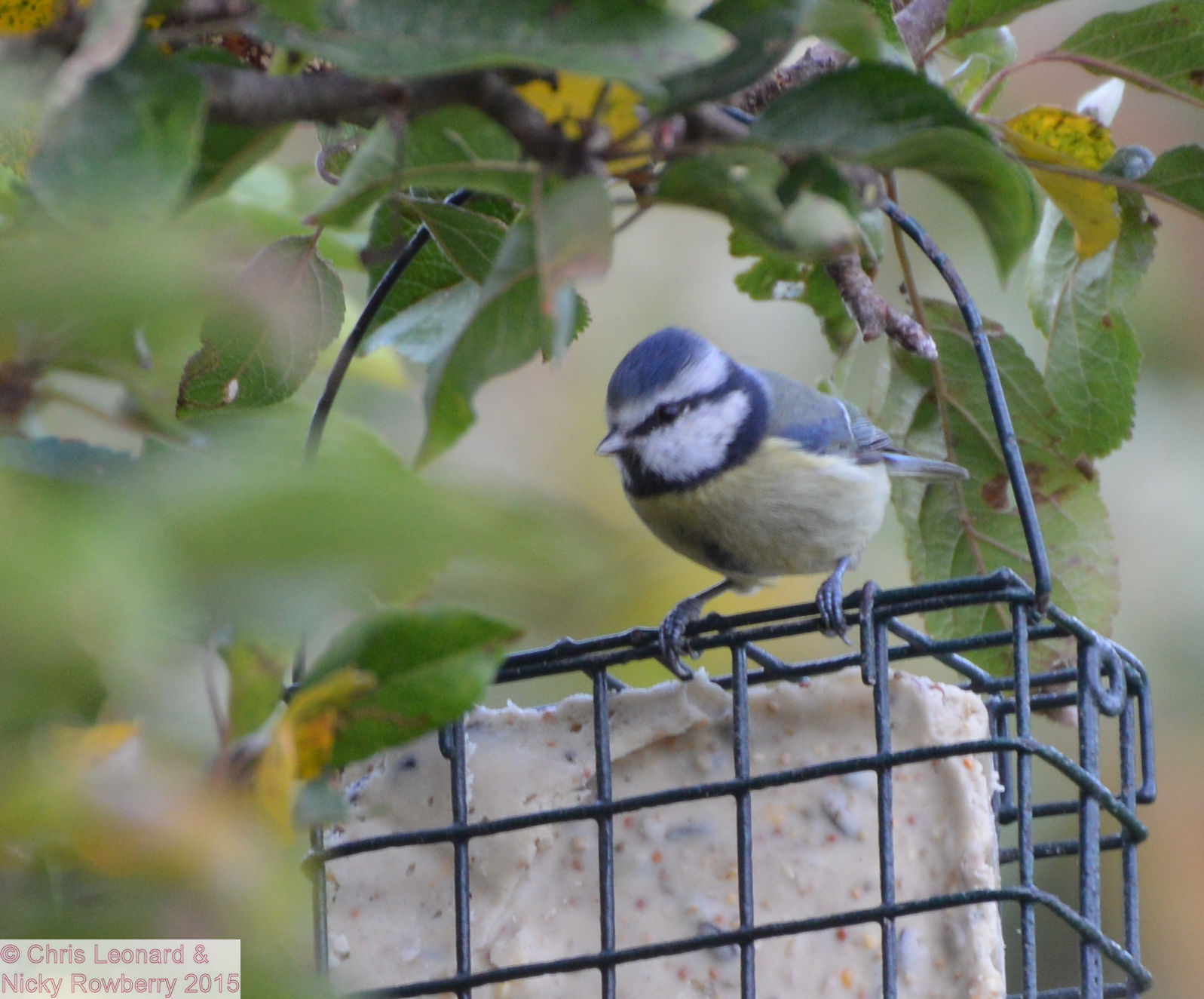
  • Blue Tit on Suet FeederOne family of blue tits successfully fledged from our bird box, after 6 years of it sitting empty. Fingers crossed for a repeat next year.


  • Swollen Thighed BeetlePlus numerous beetles (including my personal favourite – the swollen-thighed beetle), molluscs, ants, wasps, hoverflies and other assorted invertebrates.


  • TeaselsAnd finally of course to maintain the “too lazy” ethos – zero weeds were harmed in the making of this list!


So that brings me to 2016 and some New Year’s resolutions. As there is virtually no chance of me succeeding with any of my usual resolutions (cut down the drinking, lose weight, grow taller, read the classics, write a classic, stop fantasizing about George Clooney etc. etc. etc.) I thought I’d make an alternative list of things I might actually achieve.  So for 2016 I hope to:

  • Try and see at least 4 more species of butterfly – there are lots of great wildlife reserves within easy distance of Malvern, so hopefully we can bag at least some of the following: Grayling, Wood White, Purple Emperor, Small Pearl Bordered Fritillary, Silver-studded Blue and Green Hairstreak.
  • Have a go at beetle trapping. Having more or less got the hang of the moth traps, it would be good to expand our insect repertoire.
  • Dig a new pond – one that actually has water in, not just soggy mud.
  • Replace at least some of the overgrown weeds with more butterfly and bee flower beds.
  • Work out what species those unidentified bats are – it’s been bugging me for years!
  • Get that moth tattoo I’ve been toying with for ages!
  • Learn to photoshop convincingly so I can fabricate evidence of the above when I fail to achieve these resolutions too!

Wishing all lazy wildlife enthusiasts a happy, healthy and environmentally friendly 2016.

Bug Life

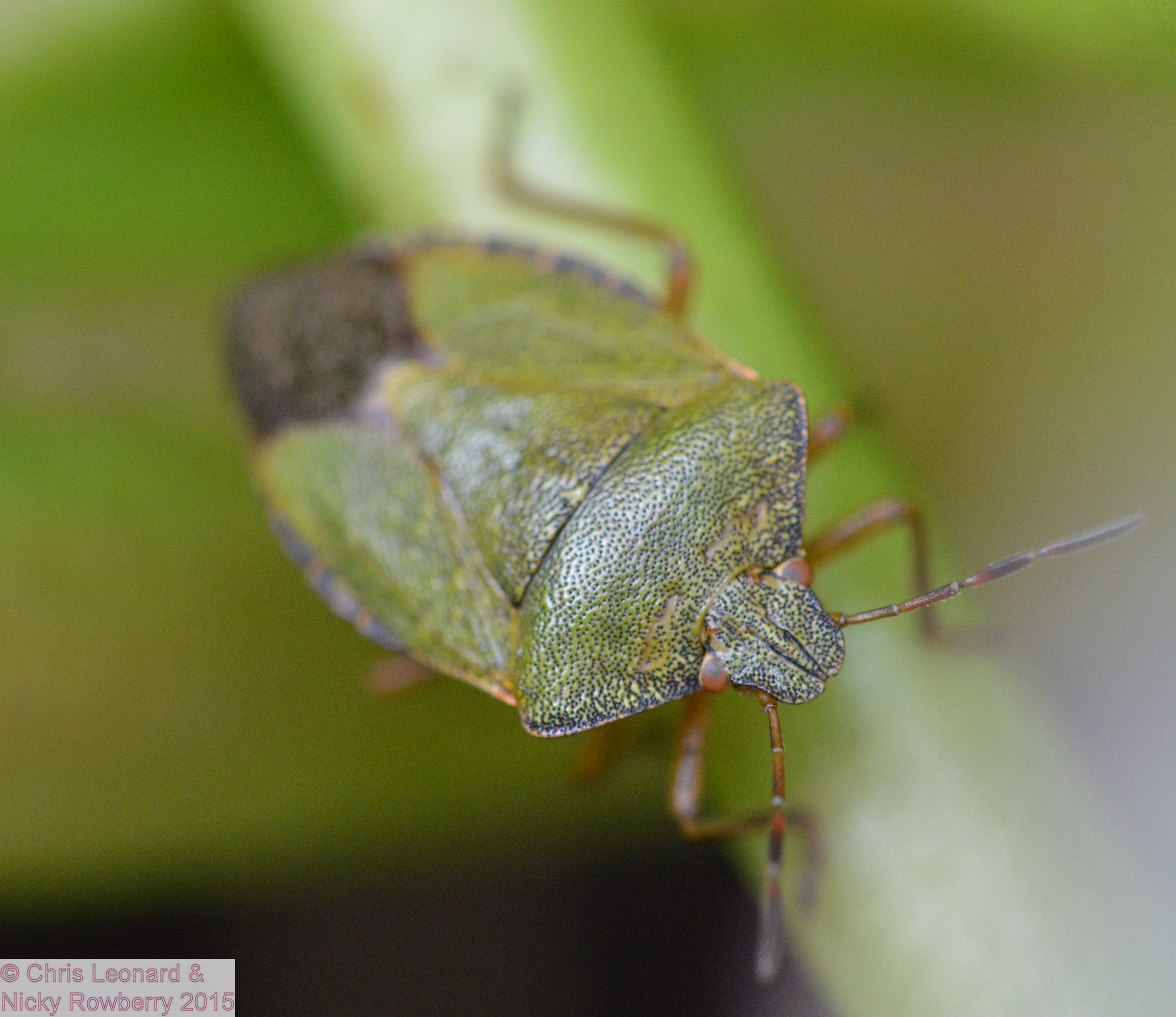
I think the shield bugs must be one of my favourite groups of insect. There’s something about them; they look so determined waddling around like minute clockwork toys. When they fly they make a loud whirring noise out of all proportion to their size and have a habit of landing on me if I wear green in the garden (must stop wearing that Robin Hood outfit!) Besides my prized Box Bug from a previous blog post, we’ve recorded 6 other species in the garden – all cute little characters in their own right. By far the most common is the Green Shield Bug. Their exoskeletons are leathery with small dark pits all over them. In the spring and summer they are green like the one below, but in the autumn and winter they turn a bronze colour.Green Shield BugThey start of as tiny nymphs and develop through various stages called instars before taking their adult form.  We had loads of these in the garden, dotted around like little green smarties.

The remaining 5 species have been less common in the garden, but all have put in an appearance at least once this year. The first is the Red Legged Shieldbug – named, not surprisingly, for its red legs. It’s a predatory shieldbug – in the world of predators, it may not rank as the most fearsome, but I guess if you’re a small caterpillar, then the Red Legged Shieldbug is perhaps your worst nightmare!

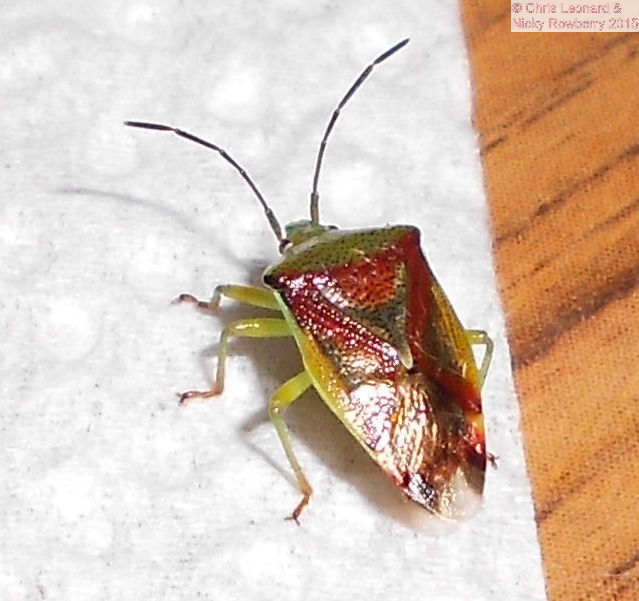
The Green Birch shieldbug is apparently more of a vegetarian and has a tendency to be attracted to lights – as this one was coming to the moth trap one night. Unfortunately it didn’t hang around long enough for me to get a more arty photo, hence him sitting on a bit of kitchen towel!  Green Birch ShieldbugThe remaining three species are the Sloe or Hairy Shieldbug, the Dock Bug and my favourite this adorable little Tortoise Shieldbug. I’m sure there must be other species in the garden waiting to be discovered – just need to fight through the weeds to find them next summer.


Tortoise bug

Wonder of the Day

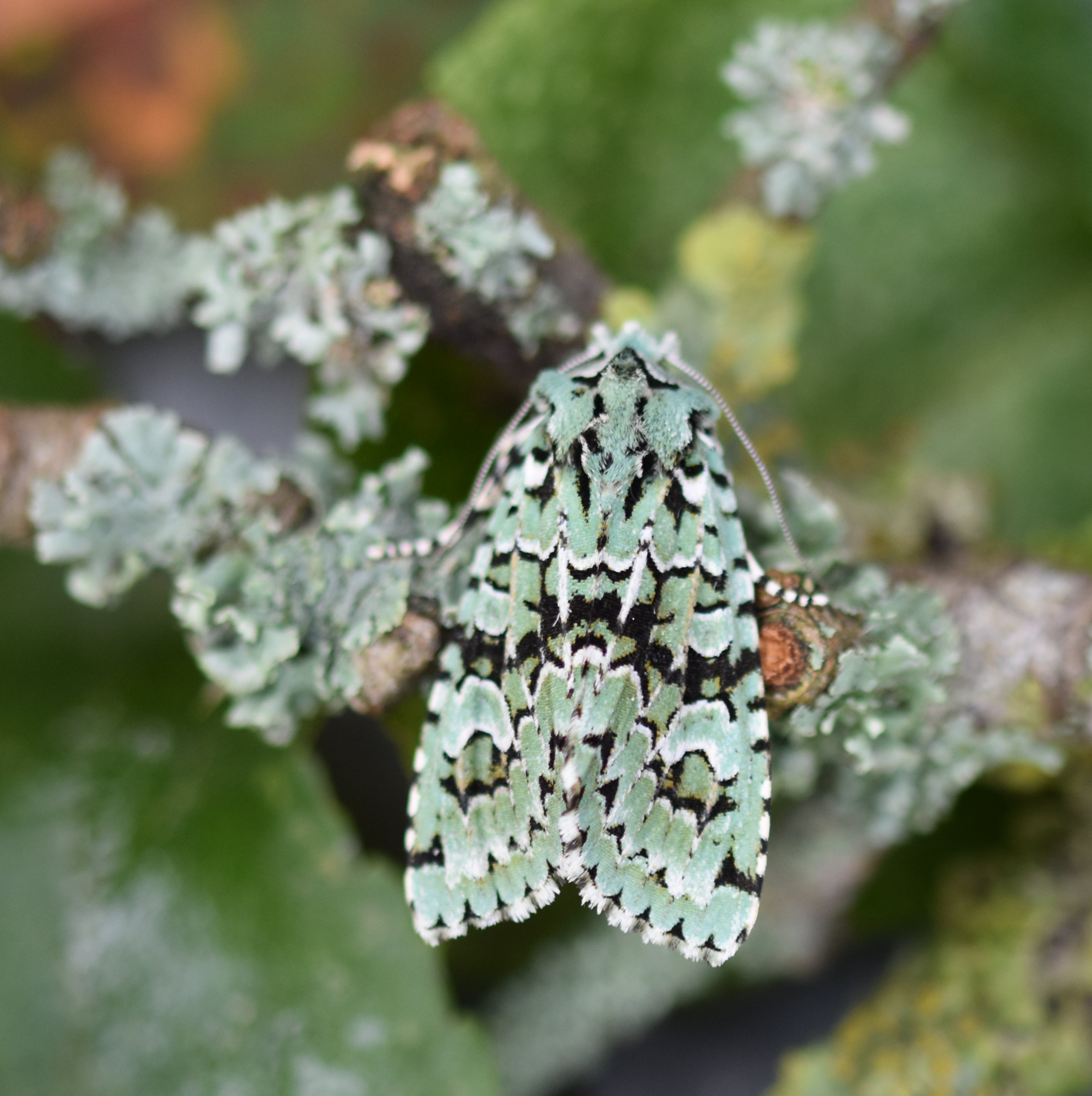
Emptying the moth trap last weekend at the crack of dawn, I could hear the frogs croaking in the half-light, while the garden was swathed in a light mist, spider webs draped around the trees glistening with dew – made me feel like I was deep in the Louisiana swamps (I have an active imagination at that time of day it seems). But the strange atmosphere was all forgotten when I spotted a Merveille du Jour; a French name for a beautiful British moth whose name means Wonder of the Day. I’d been wanting to see one of these little beauties for ages and been growing increasingly envious (moth envy is a terrible thing) of photos posted on Facebook showing Merveilles sitting beautifully camouflaged on green lichen. Of course my little wonder refused point blank to sit on the perfect bit of lichen I found on the apple tree, preferring instead to crawl up a brown twig – no sense of artistry!

The Merveille du Jour’s appearance had the added bonus of taking my moth species tally to 150 for the year – an arbitrary target I’d set myself. The trouble with setting yourself random targets is that as soon as you reach them, you set another one – so I now want 160 species this year! Fortunately my little wonder brought some of his mates along to the trap, so I bagged another 4 species taking the total to 154.

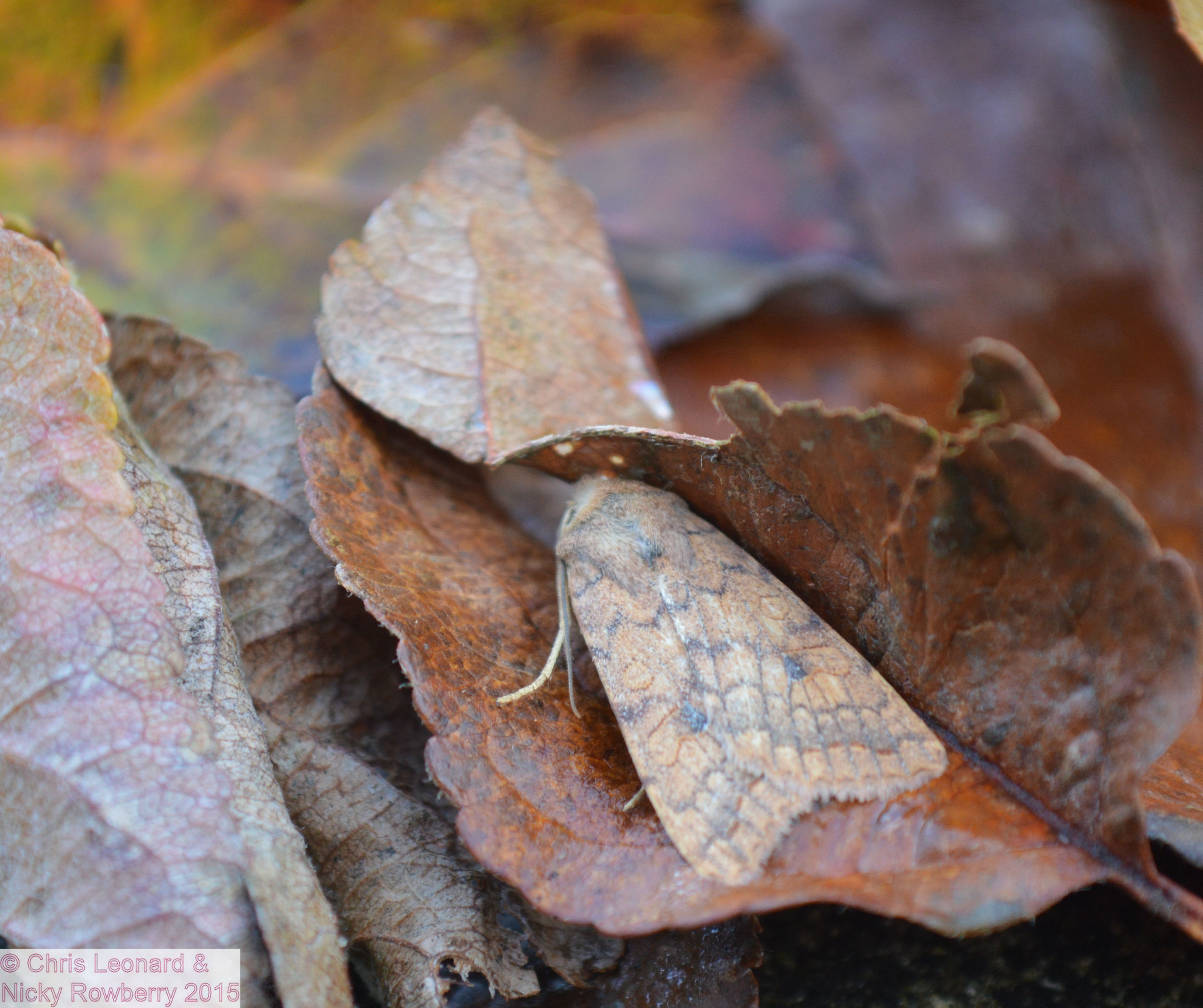
Several of these also displayed camouflage tendencies with subtle autumn colours, such as the Brick with its muted russet brown tones.

Brick

Beautiful Hook TipMy favourite though was perhaps this Beautiful Hook Tip, whose wings even had veins and curled slightly at the edges mimicking a dead leaf. Moths have a reputation of being dull grey or brown things, but I find these autumnal moths every bit as beautiful as their more showy cousins the butterflies.