Island Life – Part 2 – Birds & Mammals

I thought it would only take me a day or two to write part 2 of this, but with 2 heatwaves this month, my productivity (always dubious at the best of times) has plummeted. But here at last are some of the gorgeous birds and mammals we saw on the Isles of Scilly in June.

I took a couple of bird-watching boat trips; one with my long-suffering family and one alone when they’d had enough of me. The Scillies are a fantastic place to spot seabirds; it made me wish I was better at identifying them. So please feel free to correct me if I’ve got any of these wrong. As so often is the case, I didn’t really have the right camera lens with me and that combined with rocking boats and user error, means none of these are exactly amazing photos, but hopefully they’re recognisable at least.

First up, what I am assuming to be a Black-headed Gull, due to its black head! I realise though there are other species that would fit this somewhat basic description, so please correct me if I’m wrong.

The next one I am at least confident is an Oystercatcher, although it does to my eye look quite like the penguin from Wallace & Gromit with a red beak stuff on it! Again a shockingly bad photo and I can’t even blame a rocking boat for this one as I think I took it from land.


We saw a few Shags, often standing looking quite aloof with a crowd of other birds nearby. Seen alone they are quite gawky looking birds and I always think there’s something a bit archaic about them.

One of the few seabirds I can readily recognise is the Gannet. It’s distinctive enough that it’s pretty much unmistakeable.  This one floated serenely by the boat, looking as if it had recently had a right good feed.

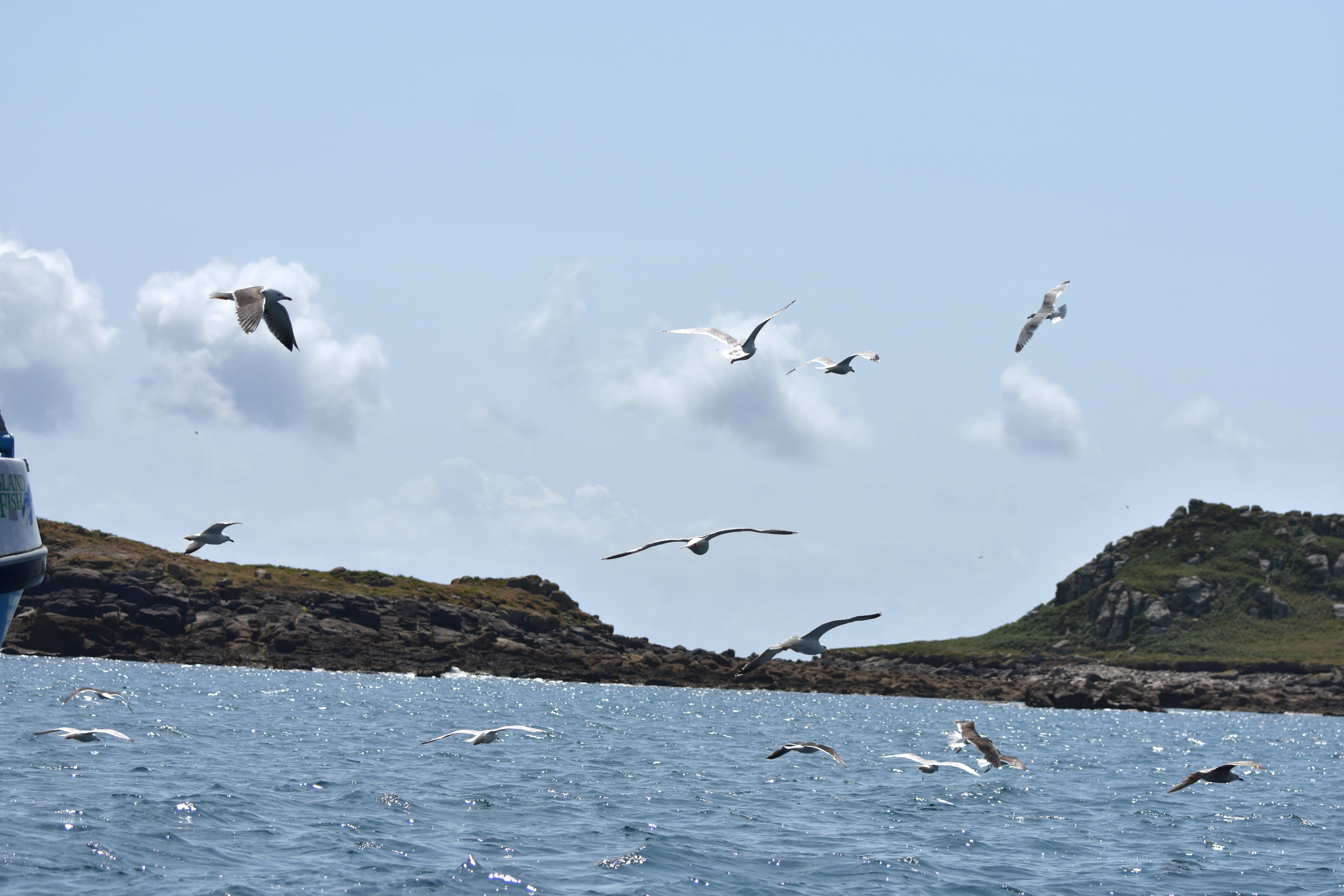
There were of course lots of large gulls present everywhere. We passed a fisherman, hauling in lobster pots at one point and the sky around his boat was just full of an assortment of gulls. Some have black backs (Black-backed gulls?), some have grey backs – to my disappointment there doesn’t seem to be one called a Grey-backed Gull, so I’m guessing these are Herring Gulls?
All the seabirds above are beautiful, but I can’t help having a soft spot for the Auk family. Apparently there are 5 species seen regularly in the UK and we were lucky enough to see 3 of these. The most plentiful that week were the Guillemots – sleek black/dark brown and white birds, gathering in groups on the rocks and in the water.

Then there were the Razorbills; I never saw these on the rocks, only in the water and often swimming with the Guillemots too. Razorbills are named for their famously sharp-edged beaks, ideal for grabbing fish.

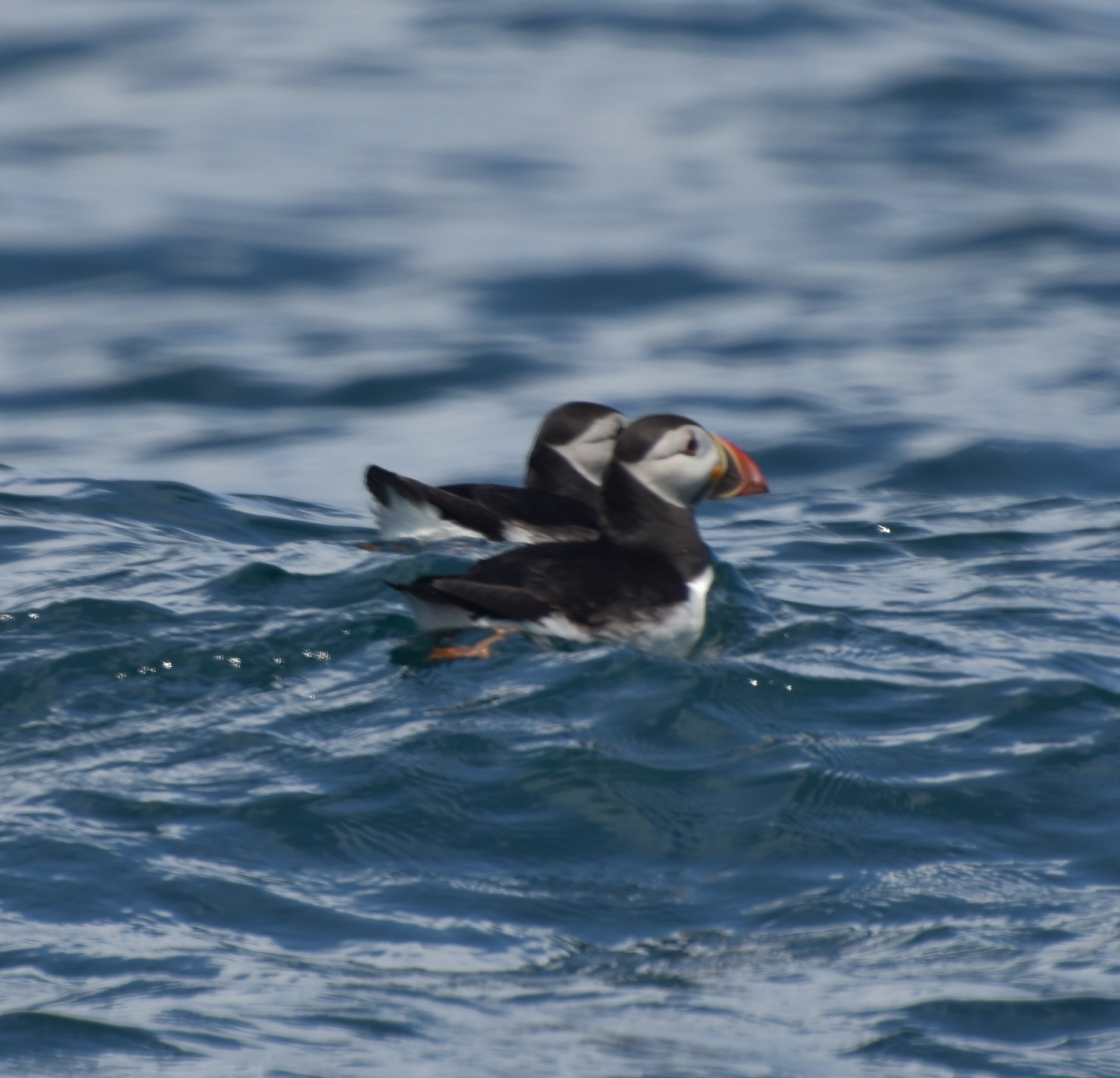
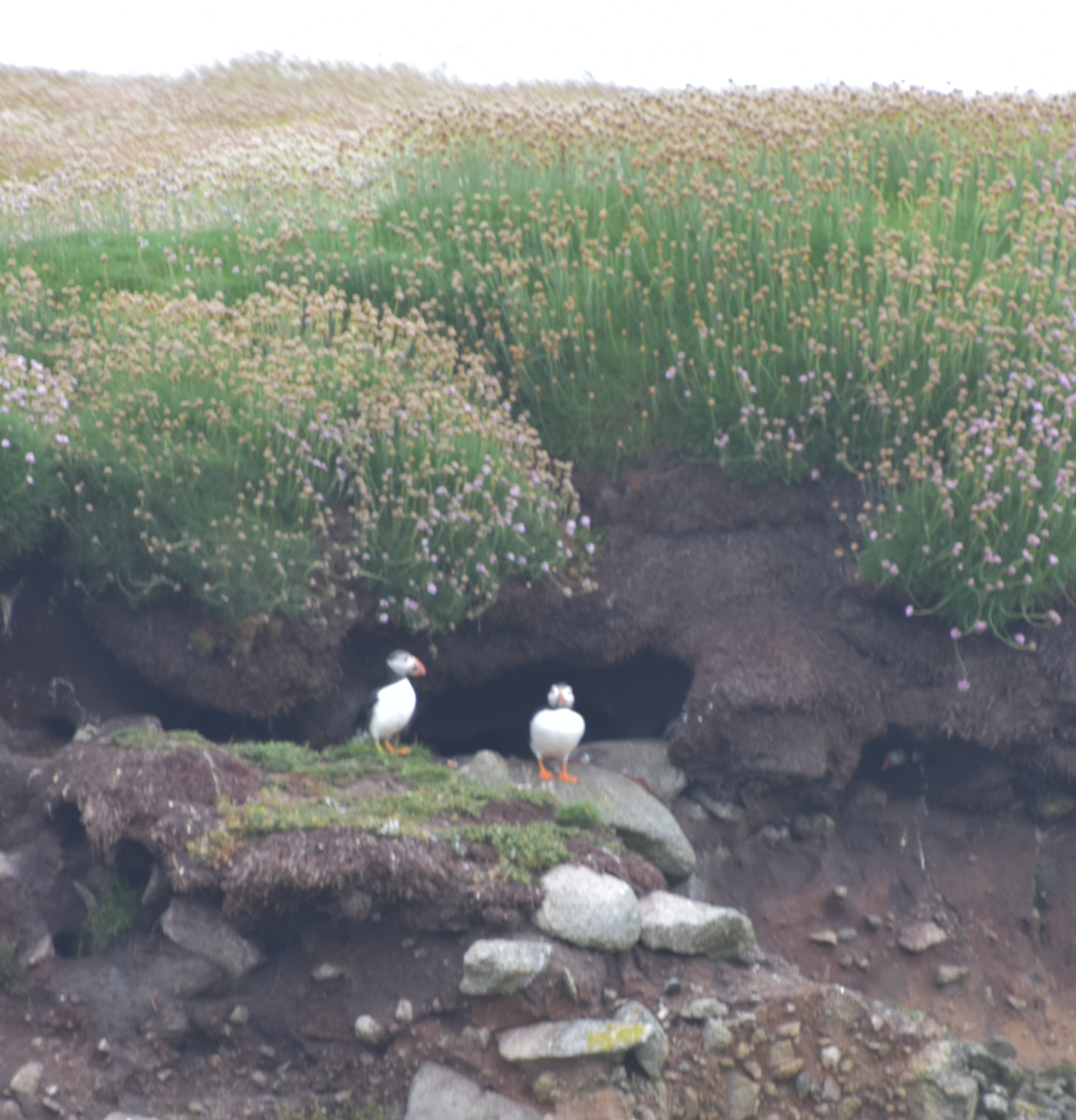
But of course top of the wish list was to see Puffins and thankfully we did. The Skipper wouldn’t take the boat too close to the cliffs where the puffins were nesting as we didn’t want to disturb them, but we were close enough to see several outside their burrows.
Then there were the ones we saw on the water. It’s no surprise that they are everyone’s favourite seabird; what’s not to love about those cheeky little faces.

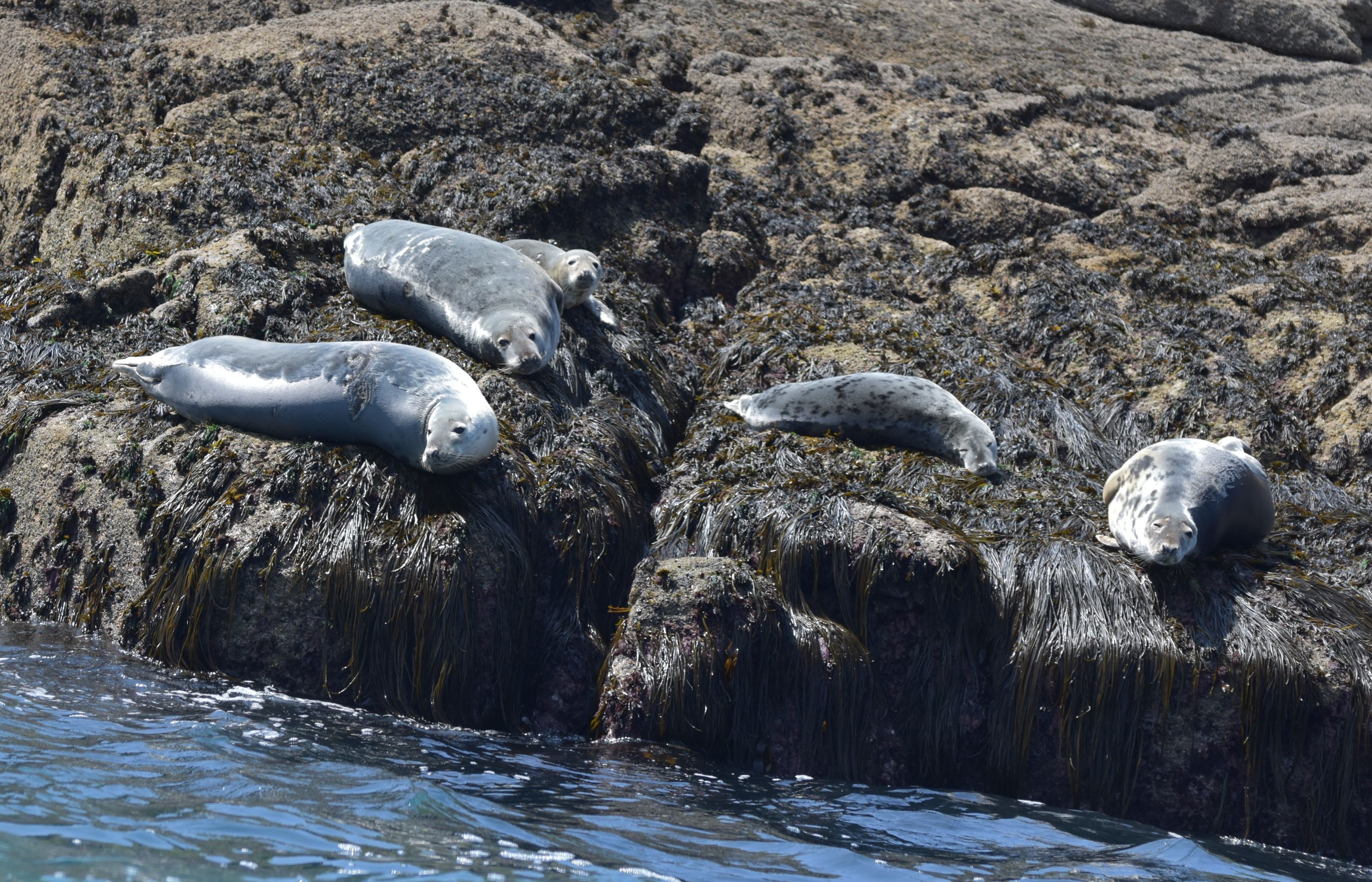
So on to the mammals. I did see a split-second glimpse of a dolphin from the Scillonian on the way back to the mainland, but that was it as far as cetaceans went. Grey seals were much more obliging. Again our skipper managed to get close enough for us to see some hauled up on the rocks, but not too close to frighten them.

At first we thought it was just adults, but in the second photo from a slightly different angle, you can see a seal pup at the back of the group. I was so thrilled; I’ve seen seals many times (even sieved seal poop for a living for a while – that’s a whole other story), but never seen a young one like this!
But the mammalian star of the show for me had to be a surprise we found on Tresco. I say surprise, but obviously the locals knew they were there as they’d been deliberately introduced. Red Squirrels! We saw a sign saying there were red squirrels as soon as we entered Tresco gardens, but I thought we’d be lucky just to get a glimpse. But then we turned around and there was a beautiful squirrel sitting right there, enjoying some nuts. I was fumbling with my camera , sure it would disappear, but no it was clearly unfazed by our presence and carried on snacking. The best views I’ve ever had of a red squirrel.
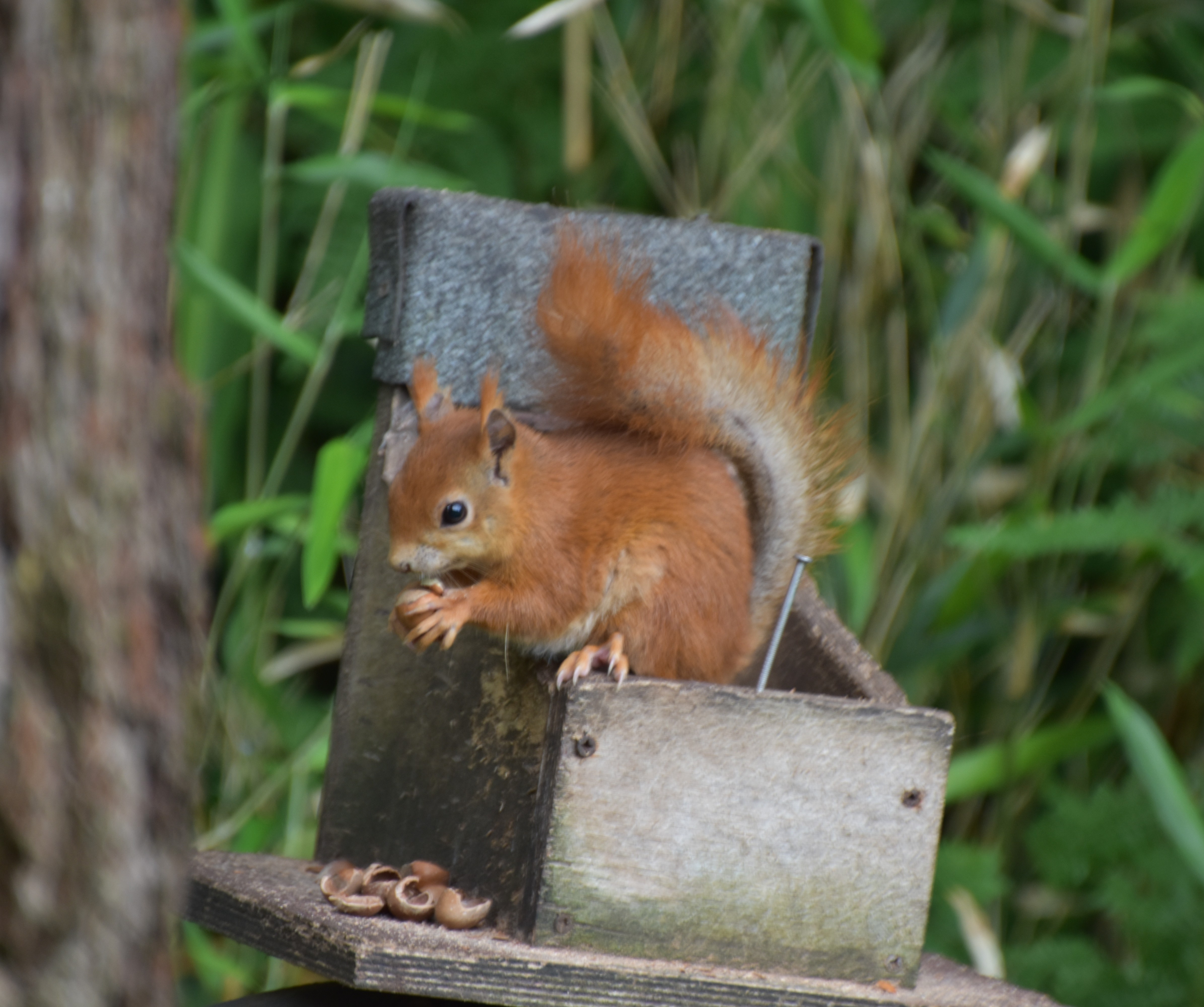
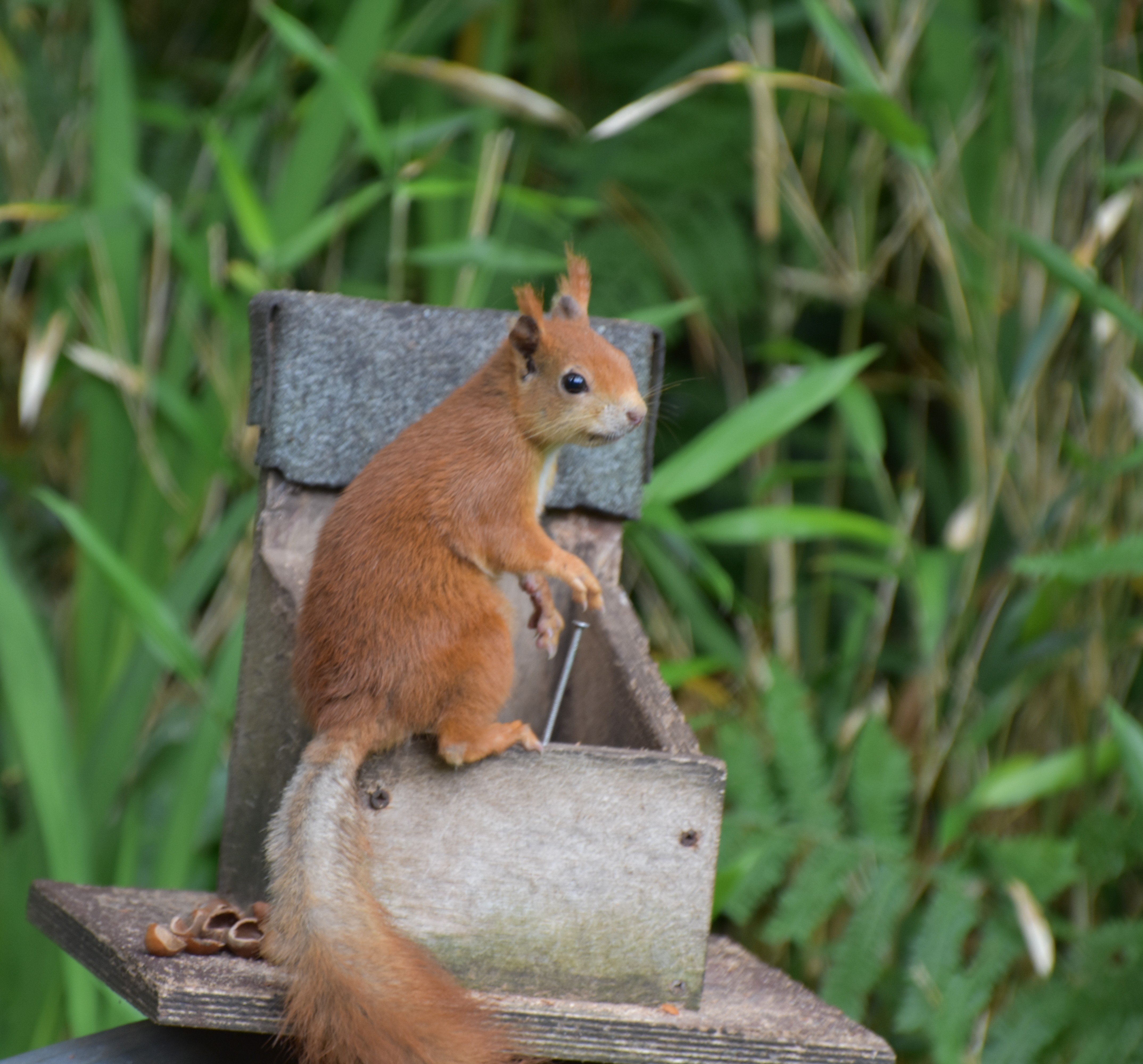
We saw several more as we enjoyed the gardens, although none as close as that first one. It must be an ideal habitat for them and they seemed to be doing really well.

So that’s my round-up of the wildlife we saw on the Isles of Scilly. It really is a fantastic place to visit, although I’m tempted to say “no it’s dreadful” to stop loads of people going and spoiling it! The isolation, the warm climate (warmer than most of the UK at least) and beautiful scenery make the islands the best wildlife destination I’ve been to in Britain and I can’t wait to go back.

Freda – A Hog’s Tale

If anyone reads this blog regularly, they will know that hedgehogs feature quite a lot. We feed the hogs, put water out for the hogs, provide houses for the hogs, pester the neighbours to put gaps in fences for hogs, watch the hogs on cameras and generally worry about our hogs and their well-being on a near daily basis.

When we got a hedgehog house with built in camera, we were thrilled to get one using it regularly. Never staying the whole night, but most nights he or she would come and have a rest for an hour or so, before continuing with the nightly foraging. Here’s a compilation from a few nights of resting and yawning!

This hog came at a similar time every night, so we think it was the same one. Following the events below, we hardly saw one using the box for months, our regular just stopped coming. So I think the yawning one above is the one who went on to have an eventful summer – Freda.

In the middle of May we caught a hedgehog with difficulties on one of the cameras. There was clearly something wrong with one back leg in the video below.

I messaged Viv our local hedgehog rehabilitator and she kindly came round to help me look for our limping hog. I had thought I might have to sit up for nights trying to see the struggling hog, but thankfully Viv found it in one of our hedgehog houses. “It” turned out to be a “she” and so she was named Freda. Freda had one back foot missing completely. We’ll never know what happened – whether it was an animal attack or a strimming incident, but it was heart-breaking to see.

Hedgehogs can manage quite well with one back leg missing, but it is usually best to remove the leg entirely. If they are left with a stump it drags on the ground when they walk and the wound keeps getting opened up again and infections would set in. So it was decided that it would be best for Freda to have the leg amputated and she would stay at Viv’s until her wound had healed and her spines had grown back.

Poor Freda had more drama in store though. Having survived the operation successfully, it turned out she was pregnant. In June she gave birth to 5 hoglets. Unfortunately Freda had developed an infection and was unable to suckle the babies properly. Sadly by the time this was discovered it was too late to save the  hoglets.

Fortunately Freda herself responded well to antibiotics and began to recover from her ordeals. By the middle of July she was well enough to be fostered back to us in our hutch in the garden. We could feed and monitor her for a while and it would free up space at Viv’s for other hedgehogs in more need. I pointed a camera at the hutch to check how Freda was doing on her first nights in the hutch. Although she could move around the hutch well on 3 legs, unfortunately she seemed completely stressed out by it all. She could now smell the garden and like most wild animals was desperate to be free. She was climbing the front of the hutch and scratching at the walls trying to get out.

Stress can be a killer for hedgehogs, so we couldn’t keep her cooped up like this any longer. Viv has someone with an enclosed garden that she uses to do soft releases for hedgehogs like Freda. Freda could be released into this garden and monitored to make sure she could cope back outside on her own and move around OK with only 3 legs. Fortunately Freda proved that she could cope very well, so after a week it was decided to catch her and bring her back to our place to release in the garden properly this time. It is always best to release hedgehogs back where they came from if at all possible, so Freda came back home.

I put her in the hedgehog house with the inside camera and blocked the entrance so she’d stay there until it got dark. She settled right in and had a bit of a nap as if she knew she was home. When it got dark enough, I unblocked the entrance and off she went.

The video below shows her emerging from the hedgehog house (ignore the date on one of the cameras, it wasn’t set right). Almost immediately she finds some smell she’s interested in and starts self-anointing – a good sign I think that she’s behaving naturally. Then off she trundles into the rest of the garden.

We had cameras set up round the garden for the next few nights to check she was OK. Fortunately she seems happy to stay in our garden where there is plenty of food and water. Her gait may not be gainly but it doesn’t stop her moving around and finding food, water and shelter.

We weren’t the only ones pleased to have her back in the garden. By the second night she had already attracted an admirer. We’ve had a one-eyed hedgehog in the garden for some time – we hadn’t known whether it was male or female, but given the attention it was paying to Freda I think we can safely assume it’s a male. I’ve named him Wodan – the Anglo-Saxon variation on Odin the one eyed god! In the video below Freda goes into the hedgehog house and within minutes Wodan is running up and down looking for her, before realising she’s in the house and following her in.

Wodan may be keen, but Freda is less so. A couple of nights after her return to the garden he pursued her for at least an hour and a half. They circled round and round with lots of annoyed huffing from Freda.

The same happened inside the house – she clearly wasn’t impressed and did her best to turf him out.

Whether Wodan got his way with Freda in the end – well we won’t know unless of course she has another litter of hoglets. It’s getting late in the year for hoglets to be born now – they won’t have enough time to put on weight before the winter. So that will be the next worry for us and for Freda. Fingers crossed though that the dramas are over for Freda now and that she can live a long and healthy life in the relative safety of our garden.

A huge thank you to Viv at Malvern Hedgehog Rescue http://www.malvernhedgehogrescue.co.uk/  for all she’s done for Freda and all the other hedgehogs in her care. Hedgehog rescues like Viv’s tend to be self-funded so please consider supporting your local one. Donations of food, supplies or just good old financial support are always welcome.

Or why not consider becoming a supporter of the British Hedgehog Preservation Society https://www.britishhedgehogs.org.uk/ – raising awareness and campaigning on behalf of our native hedgehogs.

Or simply help the hedgehogs in your own garden. Put out shallow dishes of water; all year round but especially in hot dry weather. Supplement their natural food with either meaty cat or dog food, dry cat food or good quality hedgehog food. Leave a bit of your garden wild to provide natural food and shelter. Simple things that can make a big difference.


Hedgehog Awareness Week – Hog Blog

It’s Hedgehog Awareness Week and time for another hoggy blog! There are lots of hedgehog events going on around the country; we may not have any events in the garden, but there is plenty of hedgehog activity. Our first hedgehog emerged from hibernation at the end of February. We now have at least 3 hedgehogs out and about at night, possibly more, but as we don’t mark them it is hard to know for sure. I think I’ve seen One-Eyed Tim – one of our released hogs from last year, so it’s nice he’s made it through the winter hibernation. They don’t always get on and there can be a fair bit of pushing and shoving!

Every night we can hear hedgehogs snuffling around the garden and some nights we can hear them up to a lot more than that – Love is in the air! On a slightly less romantic note, there are also plenty of deposits round the garden to indicate their presence too. Here’s a photo from last year, showing a typical hedgehog poop with bits of beetle clearly visible.

Last year our neighbours replaced the fence running between our gardens. Thankfully they were more than happy to leave gaps for hedgehogs to come and go between the gardens. Here’s a compilation of hedgehogs using our “Hedgehog Highway”.


Hedgehog Highways like this are vital for linking up gardens to provide sufficient habitats to support a healthy hedgehog population. You can find more about the value of connecting gardens on https://www.hedgehogstreet.org/ but basically all you need to do is make 13cm/5 inch square gaps in your fence to allow them to come and go. There are moves afoot to try and make it part of the legal process to include Hedgehog Highways in all new housing developments’ planning applications. So far over half a million people have signed a petition to try and get the government to act on this: https://www.change.org/p/help-save-britain-s-hedgehogs-with-hedgehog-highways

Having provided access to you garden then food, water and shelter should be the next things on the hedgehog help tick list. Shallow dishes of water dotted around the garden can be life savers not only for hedgehogs but for all kinds of other creatures.


Leaving areas of your garden a bit wild (or very wild in our case) will provide habitat for insects which would be the natural food for hedgehogs. If you wanted to supplement their diet further, then meaty cat or dog food (poultry flavours in jelly would be best), dry cat food or specialist hedgehog food can all be offered. NEVER give them bread or milk. You can provide a feeding station like the one on the British Hedgehog Preservation Society’s website: https://www.britishhedgehogs.org.uk/wp-content/uploads/2018/04/Feeding_Station.pdf or check out Little Silver Hedgehog’s advice on https://littlesilverhedgehog.com/2016/06/20/build-a-hedgehog-feeding-station/


I realise not everyone wants their garden to be a total wilderness like ours, but if you do decide to do some tidying, please be hedgehog aware. Strimmers in particular can cause horrific injuries to hedgehogs, so always check an area carefully before charging in with the strimmer. A hedgehog’s natural defence is to curl up, but this won’t save it from a strimmer, so please be careful.

If you leave some wild areas in your garden, hedgehogs may choose to nest there, but many people also like to provide a nest box or hedgehog house. There are lots of these available on the market – the best designs have a base and an integrated tunnel of some kind that not only keeps out cold draughts but deters predators too. We now have 4 boxes in our garden, all of which are currently being used and 2 of which had hibernating hogs in over the winter. Here’s one of our hogs last autumn gathering nesting material (some of which appeared to be fighting back given the struggle he was having) and taking it into his hedgehog house.


Our 4th hedgehog house was only bought a month or so ago and came with an integrated camera to film them inside. We waited with baited breath for a couple of weeks until a hedgehog finally deigned to check it out. We now have one popping in for a bit of a nap most nights. Having the camera in there is a revelation – seeing a hedgehog yawn for a start is just one of the best things ever!


Hopefully one will choose to use this box as a regular day nest or hibernation nest or dare we even hope – to have babies in!

Although most people love hedgehogs, they do still have a lot of dangers to face in their lives and can often be found in need of help. If you do find a hedgehog that looks like it’s struggling for whatever reason, don’t delay, seek help as soon as you can. If you don’t know a number for a local contact, call the British Hedgehog Preservation Society (01584 890801) and they will tell you your nearest one as well as giving you basic advice on first aid for your casualty. You can also find information on first aid on their website: https://www.britishhedgehogs.org.uk/wp-content/uploads/2019/02/First-Aid-Leaflets.pdf

If you don’t have hedgehogs in your garden, or perhaps don’t even have a garden, there are still things you can do to help. It could be as simple as picking up rubber bands on the street. Every day hundreds of rubber bands get dropped (often sadly by postmen) and hedgehogs (and other wildlife) can easily get a leg or even head stuck in the bands which can then cause horrible injuries or even death.

You could support your local hedgehog rescuer – most of them are volunteers who are self funded and do amazing work rehabilitating sick or injured or orphaned hedgehogs. You could help by volunteering with them (help is often needed cleaning out and feeding), or donating food or other supplies (even old newspapers are useful) or a more monetary contribution. My local hedgehog rescuer Viv (http://www.malvernhedgehogrescue.co.uk/ ) often has over 100 hedgehogs in her care – a massive undertaking and amazing commitment.

Or you could support the British Hedgehog Preservation Society (BHPS) https://www.britishhedgehogs.org.uk/ who work to promote hedgehog awareness, campaign on hedgehoggy issues, fund hedgehoggy research and supply hedgehoggy information to schools and other organisations.

So why not celebrate Hedgehog Awareness Week by pledging to do at least one thing to help hedgehogs!


Spring & Surprises at the Lottie

Spring has well and truly sprung down on the allotment, bringing with it some old favourites, a new generation and a big surprise.

Being fair-weather gardeners we’ve not done much down the lottie over the winter, but when we have been down a pair of robins tend to follow our every move – always on the look out for a freshly unearthed worm.

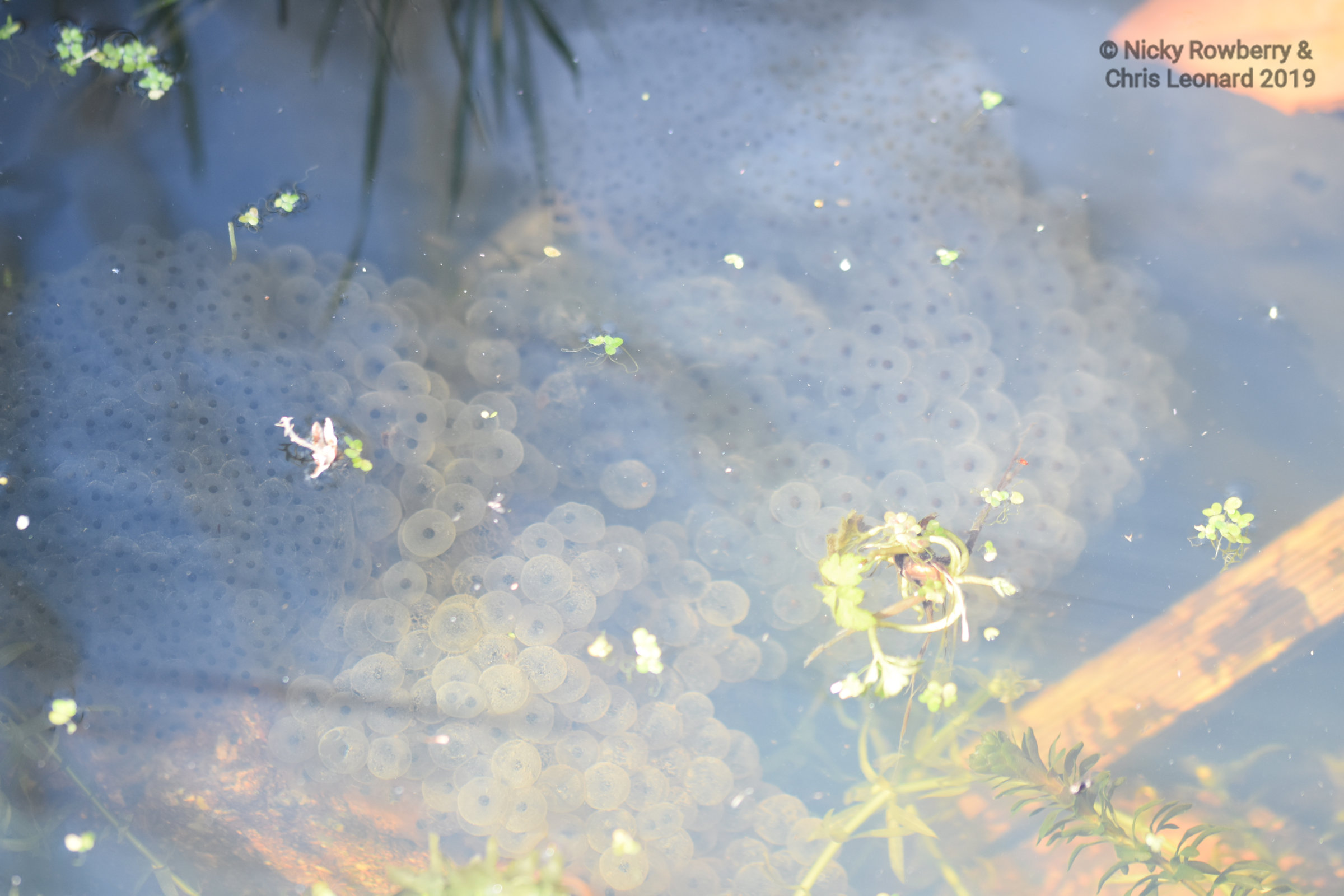
I’ve been going down more frequently for the last couple of weeks to check on the pond – it’s frog spawn season! So I was very pleased when on 2nd March I spotted for the first clump of spawn in the pond. It could only have been laid a day or two before, making it about 10 days earlier than last year.

So out with the camera and the GoPro to record the start of a new amphibian generation.


By the 9th of March 3 more clumps of spawn had been laid – you can see the difference in size of the embryos and jelly in the photo and video below.

The GoPro did catch a blurry image if what I assume is a pair of frogs in a passionate embrace underwater. Having said that the smaller one does look a bit toad-ish to me, but there’s been no sign of any toad spawn in the pond so far. I read somewhere that 80% of toads return to the pool they were born in to breed, so it may take some years before we get any toad spawn.

In the hope of getting some froggy action on camera, I left one of the trail cameras running on the allotment for a few days. I ended up with a lot of videos of cats walking by, but eventually got this one – a stand off between a cat and a floating frog. Thankfully the frog has enough sense to dive when the cat makes its move.

I did have hopes of getting a fox on camera as I know we have them on the allotment. But what I did get next was a huge surprise – a badger drinking from the pond!

We’d no idea we had badgers down there, so this was a real bonus. It looks like another pair of frogs get spooked by the badger and also dive for cover. Needless to say the camera has been left down there in the hope of getting more footage – but so far nothing but more cats.

Hopefully in the coming weeks I can get footage of the frog spawn developing into tadpoles. Fingers crossed the newts return soon too and maybe even a toad or two. All this does show the  benefit of putting in a pond – this one only went in 2 years ago when we first got the allotment. We’d expected frogs and newts would use it and maybe birds would drink from it, but never dreamed that we’d get a badger. I guess “Build it and they will come”!


Mammals in our Garden

Great excitement in the Too Lazy world this week as our mammal tally for the garden increased by 25% from 4 to 5!  Our initial 4 were mice, grey squirrels, pipistrelle bats and of course hedgehogs.

An awful lot of our trail camera efforts are directed at filming the hedgehogs. We’ve filmed them eating, drinking, nesting and in this case having a good old scratch!


We did originally video the mice in our garage (who were helping themselves to the bird seed until we invested in proper storage containers). But since then mice have also cropped up on the supposed hedgehog videos, often cheekily investigating either the hedgehog feeding station or even the hedgehog’s house. We’ve not managed to work out for sure what kind of mice they are – probably either house or wood mice. If anyone can shed any light on the species, it would be much appreciated.


Grey squirrels are regular visitors to our garden too. Often attracted to our bird feeders and caught on camera doing acrobatics in the apple tree like this one.

This last month or so we’ve been finding quite a few hazelnuts, still in their green wrappers, dotted around the lawn. It was clearly the work of a squirrel and we finally managed to catch him on camera, bringing the nuts into the garden (no idea where the nearest hazelnut tree is though).


The bats have so far proved impossible to film. We obviously don’t want to use any intrusive lights or indeed anything that might put off the bats who regularly visit our garden. With all our natural vegetation (aka weeds), there are plenty of insects at night  – although I try not to think of the bats eating my beloved moths, I know they have to eat too! We have determined that our bats are most likely Common Pipistrelles as they echo-locate at a frequency of about 45kHz and other species who use that frequency are much rarer. The best I’ve managed so far is this brief video of the bat detector picking up some of their calls.


Finally this week we got a brief glimpse on camera of a much longed for 5th mammal species – a fox! We’ve seen them running down the street occasionally at night, but never knowingly had one in the garden. So it was a lovely surprise to download what I thought would be just hedgehog videos, to suddenly see a fox emerge from the undergrowth at the bottom of the garden.

So long as Mr Fox doesn’t have a go at our hedgehogs, he will be a very welcome addition to our mammalian fauna. I think it’s likely that we’ll stick with 5 mammal species in the garden for the foreseeable future. It’s unlikely that we’ll ever get a badger or rabbits and I’m hoping we don’t get rats (not that I mind them that much, but the neighbours wouldn’t be too happy with us), so unless we have more than one species of mouse, I think this will be our lot. But the 5 we’ve got are all more than welcome to share our little bit of Malvern for as long as they want.

For the Love of Hogs

There’s been a lot in the press this week about dwindling hedgehog numbers, so I thought it might be a good time to recap a few things that can be done to help hedgehogs in our gardens. Many urban or suburban gardens can have hedgehogs but being nocturnal animals they may go unseen. Look out for tell-tale droppings – about the size of a ladies little finger and usually a dark brown or black colour. This prime example (yes I go around photographing poo in my garden!) even shows the remains of a beetle (jaws next to red arrow) – one of hedgehogs’ favourite foods.

If you think you have hedgehogs, or even if you don’t think you’ve got them but would like them, there are several things you can do to help. The first is of course access – if a garden is completely blocked off and surrounded by a high fence or wall, no hedgehog is going to get in.  We discovered our hedgehogs were using a gap under the fence to get between us and the neighbour’s garden.

Having realised this was one of their entrances, we put up this little sign to mark the spot.

You can buy these Hedgehog Highway signs from the British Hedgehog Preservation Society – get two to mark either side of the fence if you can, to discourage people from filling in the gap. Try and make holes or gaps in fences (about 5 inch square is all that is needed) and encourage your neighbours to do the same to connect as many gardens as possible. Hedgehogs can roam over a mile a night so they need lots of connected gardens.

Having made it possible for hedgehogs to get in and out of the garden, providing extra food and water can really help them. A shallow dish of water (or even better several dishes) in the garden can be a life saver for hedgehogs, especially in a hot summer like the one we’ve just had. Water can be just as vital in the winter when non-frozen water can be in short supply.

Putting out some extra food will also be a big help, giving them that extra boost to put on much-needed weight before winter hibernation. The best foods to offer are either meaty cat or dog food (poultry/white meat flavours in jelly are best) or dry cat food or specialist hedgehog food. All of these foods can of course be taken by local cats, so if this is a problem, then perhaps consider building a feeding station. I built this one a few years ago (based on instructions from Little Silver Hedgehog https://littlesilverhedgehog.com/2016/06/20/build-a-hedgehog-feeding-station/ ) and the hedgehogs quickly got used to it. You can find a similar design on the British Hedgehog Society’s website  https://www.britishhedgehogs.org.uk/wp-content/uploads/2018/04/Feeding_Station.pdf


If you can consider leaving a bit of a messy or wild area in your garden (we have no shortage of those in ours) then it will benefit all sorts of wildlife but particularly hedgehogs. Not only will it give them areas to shelter in, but the weeds will provide food for the insects and other invertebrates that will in turn feed the hedgehogs. If you’ve got a pond, please check that it is hedgehog friendly. Hedgehogs can swim, but if they get stuck in a pond with no way of climbing out they will eventually tire and drown. Sloping sides to the pond, or a few large stones or a ramp will provide safe ways of getting out for any hedgehogs that have accidentally taken a dip.

I realise not everyone wants their garden to be a total wilderness like ours, but if you do decide to do some tidying, please be hedgehog aware. Strimmers in particular can cause horrific injuries to hedgehogs, so always check an area carefully before charging in with the strimmer. A hedgehog’s natural defence is to curl up, but this won’t save it from a strimmer, so please be careful.

Similarly please check compost heaps or piles of leaves carefully before sticking a dirty great fork in – these are ideal places for hedgehogs to rest up and they can easily get spiked. If you are planning on a bonfire – please don’t pile the wood up and leave it for days. Bonfires look like perfect places to sleep for hedgehogs and so many get burnt alive in bonfires. Best to build and light a bonfire the same day. If you must gather the wood earlier then please lift it all up and check underneath before lighting.

Many people like to provide a nest box or hedgehog house. There are lots of these available on the market – the best designs have an integrated tunnel of some kind that not only keeps out cold draughts but deters predators too. We have a couple of boxes in our garden – it’s taken a couple of years but we finally have hedgehogs using both of them, so do be patient.

Here’s one of our hedgehogs (One-eyed Tim – named for obvious reasons) collecting nesting material for his house.

And here’s some more clips of what I think is a female hedgehog at our other hedgehog house. In the first clip she seems to be trying to drag something in that is still attached as she has a real struggle with it!

The slight flashing you see on this second clip is just the infrared going off – nothing that would disturb the hedgehog.


Please keep an eye out for sick or injured hedgehogs. As a general rule most hedgehogs seen out during the day are in trouble and need rescuing. The exception to this is a pregnant or new mum hedgehog who might take short breaks from the nest during the day to gather nesting material or food – she will generally be a large hedgehog and be moving quickly and purposefully and won’t stay out too long. If you see any small hedgehogs or wobbly confused looking ones, or particularly ones just lying out in the sun, then best to rescue them immediately and get them to your local hedgehog rescue. If you don’t know a number for a local contact, call the British Hedgehog Preservation Society (01584 890801) and they will tell you your nearest one. I found these two babies out on our lawn a couple of years ago on a baking hot July afternoon. I took them straight around to our local hedgehog rescuer Viv, who thankfully managed to save them. Fred & Freda as they were called weighed less than 100g when they were found and wouldn’t have lasted long without intervention.

The other problem to look out for is young hedgehogs that are too small to get through the winter hibernation. If you see any really small ones towards the end of October/beginning of November try and catch them to check their weight. They need to be an absolute minimum of 450g (but preferably bigger) to get through the winter. If they are too small, get them to your local hedgehog rescuer. Last year we had a small hog in our garden at the end of October. You can see how much smaller he was than the adult in the clip below.

I weighed him and he was only 400g, so probably wouldn’t have made it through the winter. Thankfully Viv took Tiny Tim (as we imaginatively named him!) in and he thrived under her care over the winter, before being released back in our garden in the spring.

Finally if you don’t have hedgehogs in your garden, or perhaps don’t even have a garden, there are still things you can do to help. It could be as simple as picking up rubber bands on the street. Every day hundreds of rubber bands get dropped (often sadly by postmen) and hedgehogs (and other wildlife) can easily get a leg or even head stuck in the bands which can then cause horrible injuries or even death.

You could support your local hedgehog rescuer – most of them are volunteers who are self funded and do amazing work rehabilitating sick or injured or orphaned hedgehogs. You could help by volunteering with them (help is often needed cleaning out and feeding), or donating food or other supplies (even old newspapers are useful) or a more monetary contribution. My local hedgehog rescuer Viv (http://www.malvernhedgehogrescue.co.uk/  ) often has over 100 hedgehogs in her care – a massive undertaking and amazing commitment.

Or you could support the British Hedgehog Preservation Society (BHPS)  https://www.britishhedgehogs.org.uk/  who work to promote hedgehog awareness, campaign on hedgehoggy issues, fund hedgehoggy research and supply hedgehoggy information to schools and other organisations.

Having hedgehogs in your garden and knowing you are doing your own small bit to help them is such a rewarding thing. They need all the help they can get at the moment and a few small changes could make a big difference locally, and if we all did it, then who knows what a difference it could make nationally.


The Adventures of Tiny Tim the Hedgehog

I’ve been meaning to do an update on our garden hedgehogs for a while now, so today is finally the day. Although we haven’t seen a hedgehog in the garden since December 17th, we now have a resident foster hog – here’s his story. In my last hedgehoggy blog post, way back at the end of October, I mentioned that we had a large and a small hedgehog visiting the garden.

The two often appeared together, although they tended to arrive separately. The little one (Tiny Tim) generally seemed quite interested in the bigger one (Fat Sam as I’ve been calling him), but Fat Sam didn’t seem quite so impressed!

They would sometimes even go into the feeding station together. On one occasion the Tiny Tim got trapped in there for a few minutes when Fat Sam decided to plonk himself down just outside the entrance – effectively blocking the Tim in. The video below is a compilation of several short trail cam clips taken over a few minutes while he was trapped! Eventually Sam got bored and wandered off, freeing the youngster.

Although it was great to see the two together, I was worried  that Tiny Tim might not be big enough to get through the winter. The only way to be sure was to catch him and weigh him – hedgehogs need to be an absolute minimum of 450g to have enough fat reserves for hibernation.

Unfortunately our diminutive visitor didn’t come at a regular time, so the only way to catch him or her was to sit out and wait. After a couple of fruitless nights (my commitment to sitting outside in the dark didn’t extend beyond a few hours at a time) and a few false alarms (Fat Sam got himself weighed too – a very respectable 800g), I eventually got lucky at the beginning of November.  Fortunately he turned up at the feeding station at about 8:30pm and was no doubt a bit surprised to find me lurking nearby with a set of kitchen scales. The little guy only weighed about 400g so wouldn’t have made it through the winter without some help. So into the cat basket he went and along to Viv at Malvern Hedgehog Rescue.

Viv checked him over and found he had a cough, so he was treated for lungworm; a potentially fatal condition, so another good reason to rescue him besides his size. Viv was also able to confirm Tim was indeed a he!

A couple of months later and Tiny Tim is not so tiny any more – a very healthy 1100g, plenty big enough to survive hibernation now. So he’s come back to our garden to stay in the hutch until the Spring. I’ve not taken a photo of him, as I wanted to let him settle in and don’t want to disturb him any more than I have to. I will try and get the trail cam pointed at the hutch, to see if I can get any footage of him moving around at night. Hopefully though he’ll settle down and hibernate, but if not he’s got a des-res with food and water until it’s time to let him go. Many thanks to Viv (http://www.malvernhedgehogrescue.co.uk/) for getting him through the winter.

Tiny Tim may have spent most of the winter in the lap of luxury, but Fat Sam had to take his chances in our neighbourhood gardens. Fortunately  several of the neighbours like hedgehogs too and don’t mind having gaps in their fences so that the hogs can roam freely between the gardens at night. This footage shows Fat Sam squeezing himself under our fence and into next door’s garden.

We’ve put a couple of hedgehog houses out in the garden in hope of tempting Fat Sam to hibernate. I got my hopes up for a few days when the trail cam spotted him checking out one of the houses,

Unfortunately it didn’t impress him enough for him to make a nest in it. Hopefully he found somewhere more to his liking elsewhere in our garden or in one of the neighbours’ gardens. There are certainly plenty of wild untidy bits in ours that would hopefully make good nesting sites.

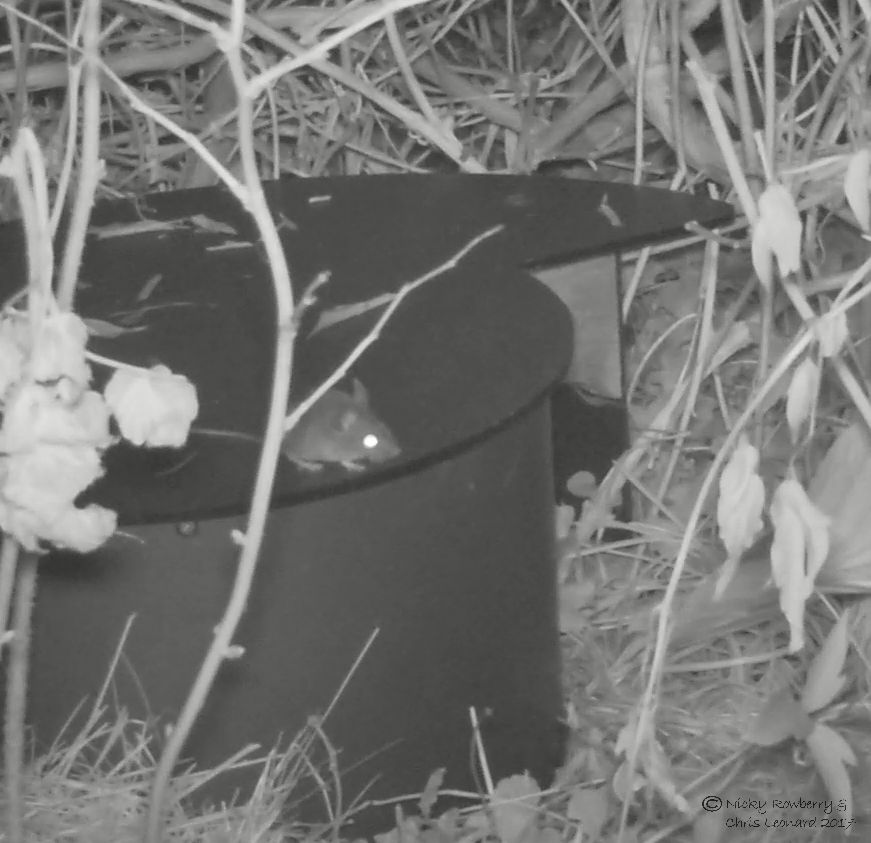
Fat Sam may not have made it his home, but the hedgehog house did attract some other visitors. This mouse appeared several times, clambering up the old clematis stems to sit on the box.

And this large fluffy cat (one of the neighbours’ not ours) also seemed to like sitting on top – perhaps knowing there were mice nearby?

Hopefully I’ll be able to post some videos of Tim in his hutch at night, but failing that I’ll post an update on Tiny Tim and Fat Sam in the spring when they come out of hibernation. Fingers crossed for a successful hibernation for hedgehogs everywhere.


Moth (and Mouse) Night

This weekend is Moth Night (it troubles me every year that Moth Night is actually a weekend!). It was supposed to be a fairly windy night and the various moth groups I follow were abuzz with prospects of exciting migrant moths being blown in from the Continent. One of the themes for this year’s Moth Night was the importance of ivy as an autumn food source. I cleared a path to our patch of ivy, so I could get close up for nocturnal photos and out my moth trap went in hope and anticipation. As anyone who reads my blog, or indeed anyone who has ever tried photographing wildlife knows, things rarely go to plan.

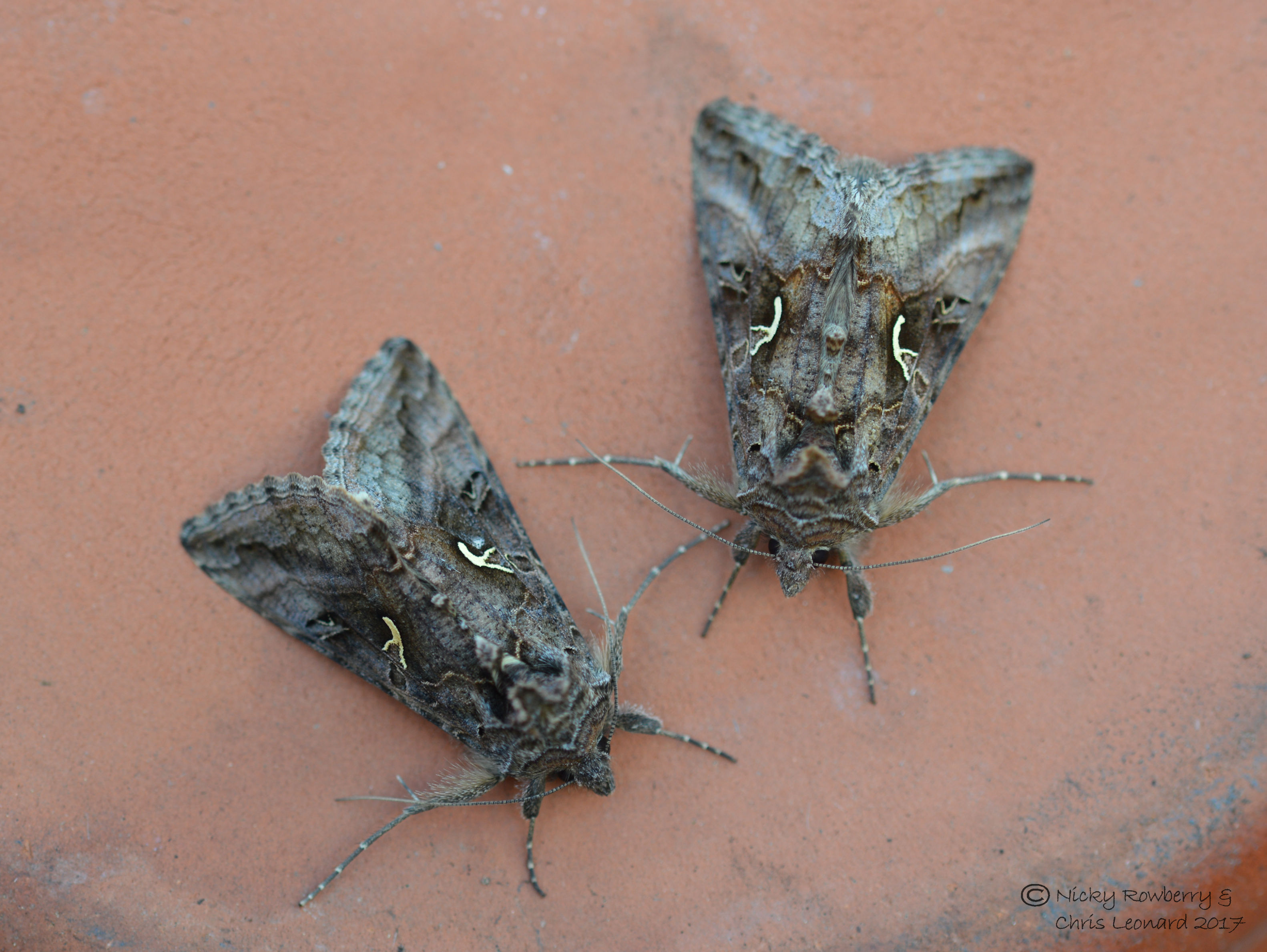
So the moth trap attracted just a measly 10 individuals of 8 species. October is getting near the end of moth season, so I was never going to get hundreds of moths, but I had hoped for a bit more of a selection. There are some lovely colourful autumn moth species, but none of them fancied my moth trap last night. I did get two migrants – both Silver Y moths – seen here with their distinctive y or gamma (hence their latin name Autographa gamma) marks on the wings.

The remaining 8 moths were made up of 2 Common Marbled Carpets, 1 Light Brown Apple Moth, 1 Blair’s Shoulder Knot, 1 Lesser Yellow Underwing, 1 Setaceous Hebrew Character, 1 Black Rustic and 1 Shuttle-shaped Dart. All lovely moths in their own right, but not the most exciting selection.

The ivy was also a complete wash out. Although it was in full flower, I didn’t see a single moth on it. Admittedly I didn’t sit in the bushes staring at it all night, but I did pop out for frequent spot checks. Maybe the light from the moth trap was doing too good a job attracting what few moths there were and keeping them away from the ivy? I’ll keep checking the ivy over the next few nights – it will be too late for Moth Night, but I’d like to get a photo of at least one moth on it. I did check out the ivy this morning and it was buzzing with bees (who had clearly got the memo the moths had missed about it being a good source of food in the autumn!). No sign of any Ivy Bees, but plenty of Honey Bees making the most of it.

One surprise find to finish off Moth Night was this mouse. As I was putting the moth trap away in the garage, I saw movement from the box with the birds’ peanuts in. A mouse had got stuck in there and looked just as surprised as me. A quick photo and he was running free in the garden again, although he may have preferred to stay in the garage with the bird food.