Butterfly No. 41!

May finished in fine style with a trip to the Wyre Forest and the hunt for another new (to me) species of butterfly. I was joined by my friend Anna who was visiting from Scotland and didn’t mind being dragged out into the woods in search of butterflies. Not only did she not mind, but she is a photographer, who is generous enough with her expertise to give lots of tips and hints (not that they all went in!)

I parked in the usual spot at the end of Dry Mill Lane and we headed off down the old railway track. First stop was an ornately carved bench with a lovely gentleman and his robin friend, who he fed with mealworms regularly.

After a brief chat, we headed on down the track towards a long open area with banks either side –  looked like perfect butterfly ground!

Our primary target was the Small Pearl-Bordered Fritillary which should be out at the end of May/early June. We all got very excited by the first fritillary type butterfly we found, but then realised it was a Pearl-Bordered, not a Small Pearl-Bordered. The former are coming to the end of their season, but there were still a few about. It was still a beautiful butterfly all the same.
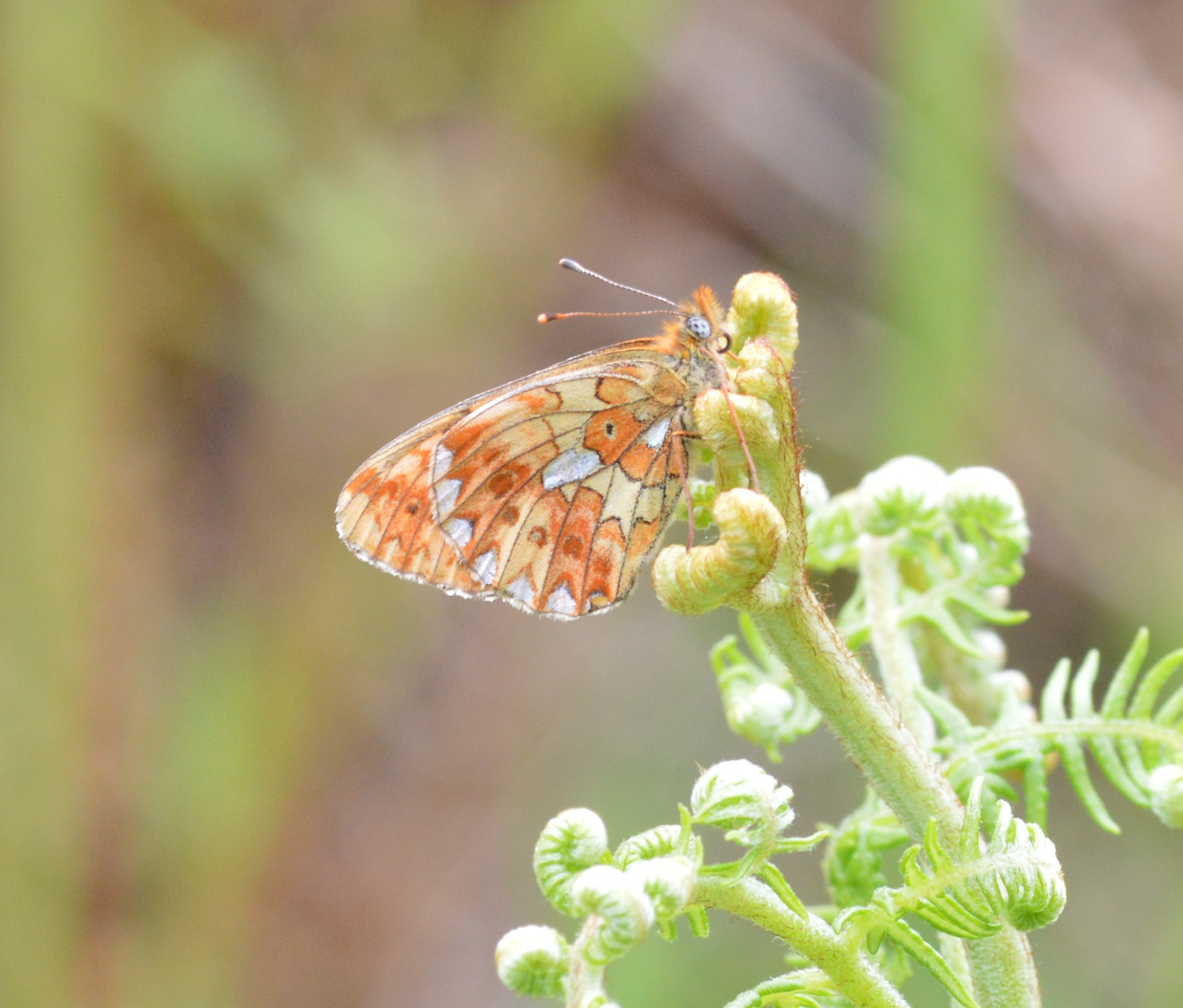
We saw lots of the Pearl-Bordered Fritillaries last year (more photos of those on a previous blog post https://toolazytoweed.uk/2016/05/18/out-and-about-wyre-forest/), so we continued with our hunt for the small ones.

The sun came out about 3pm and suddenly the Small PBFs all started flying. It was hard to count as they don’t really stay still or all show themselves at the same time, but there were probably at least half a dozen. Eventually a few slowed down enough to get some pics.

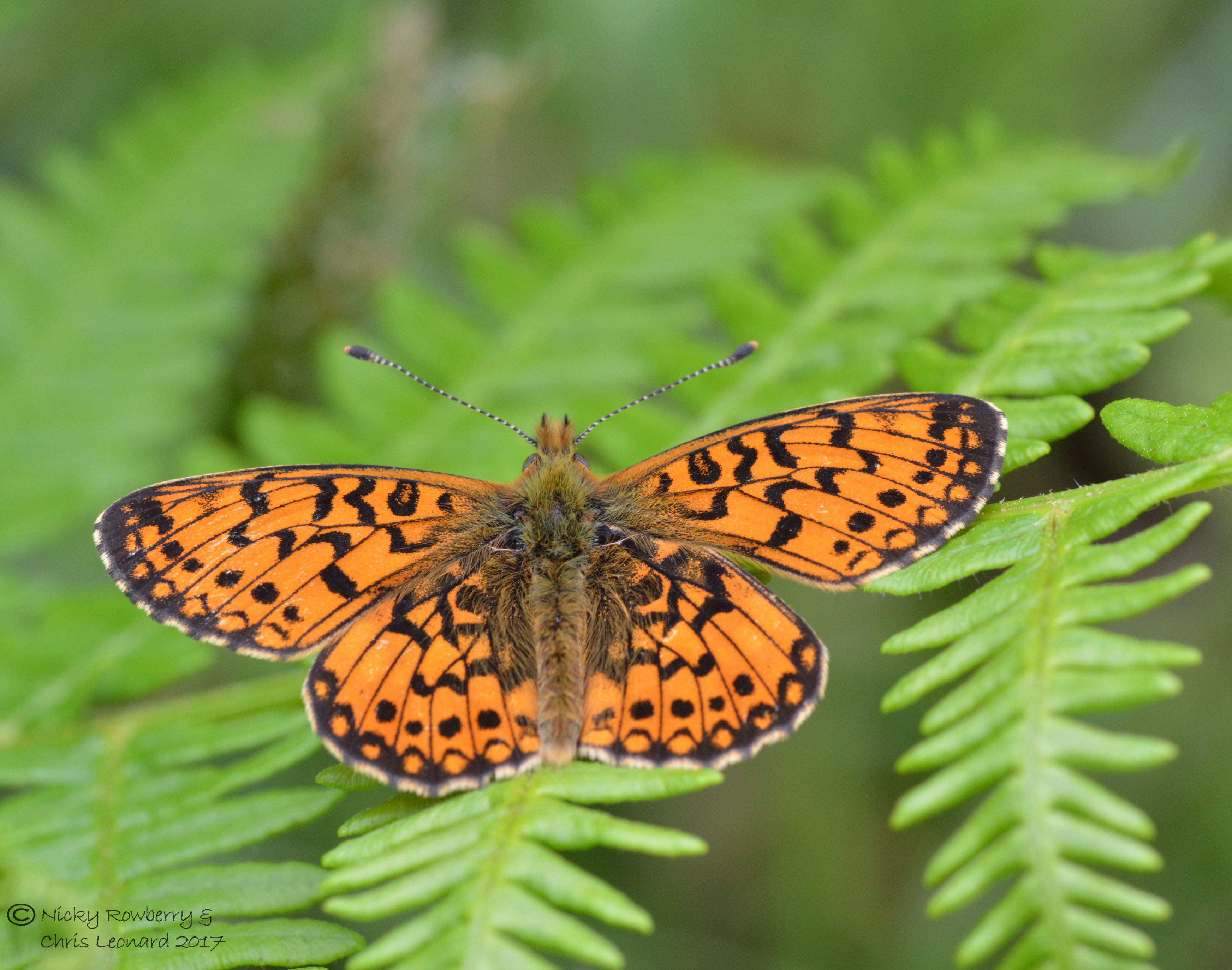
They are beautiful bright orange little butterflies. To be honest we weren’t totally sure we were seeing both species, although the presence of black marks resembling “730” is supposed be diagnostic of the small ones – see close up photo below.

Thankfully the good people on Butterfly Conservation West Midlands Facebook page confirmed we’d got both species.

We had hoped to get photos of the underside of the Small PBF wings, which are beautifully marked like stained glass windows, but they wouldn’t oblige and settle with wings  up. The best we managed was this shot taken while crouching down lower than the butterfly – it gives a glimpse of the underside, but is far from ideal.

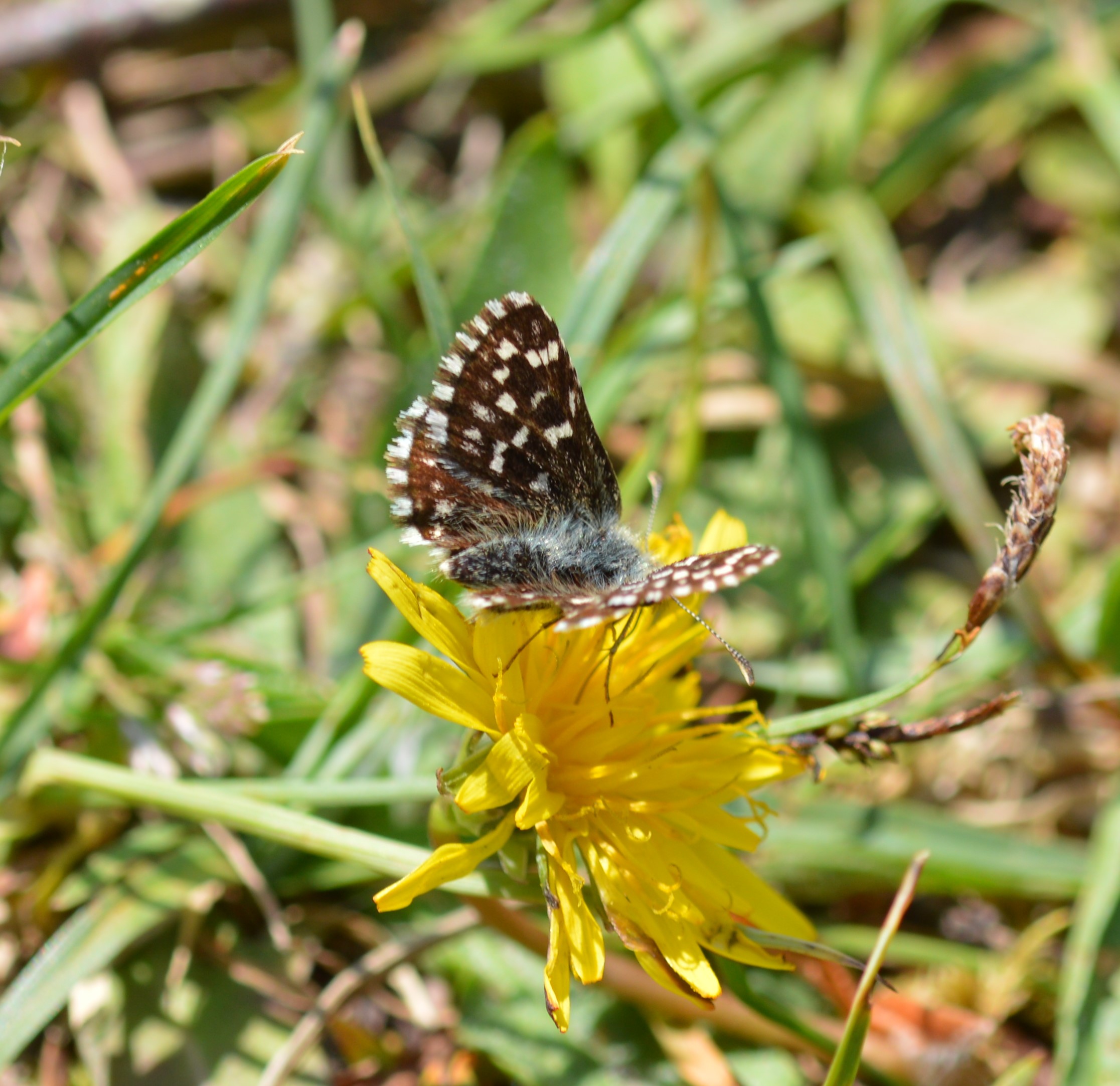
Heading back to the car, we spotted a couple of Large Skippers (or possibly one that was just following us!) The Large Skippers were a bit more obliging than the fritillaries and posed on some bird’s foot trefoil flowers.

The Small Pearl-Bordered Fritillary is the 41st species of British butterfly we’ve managed to see since we started butterfly spotting. It is the 3rd “new” species that we’ve found in the Wyre Forest, highlighting what a fantastic place the Wyre is for butterflies!
The Duke of Prestbury Hill

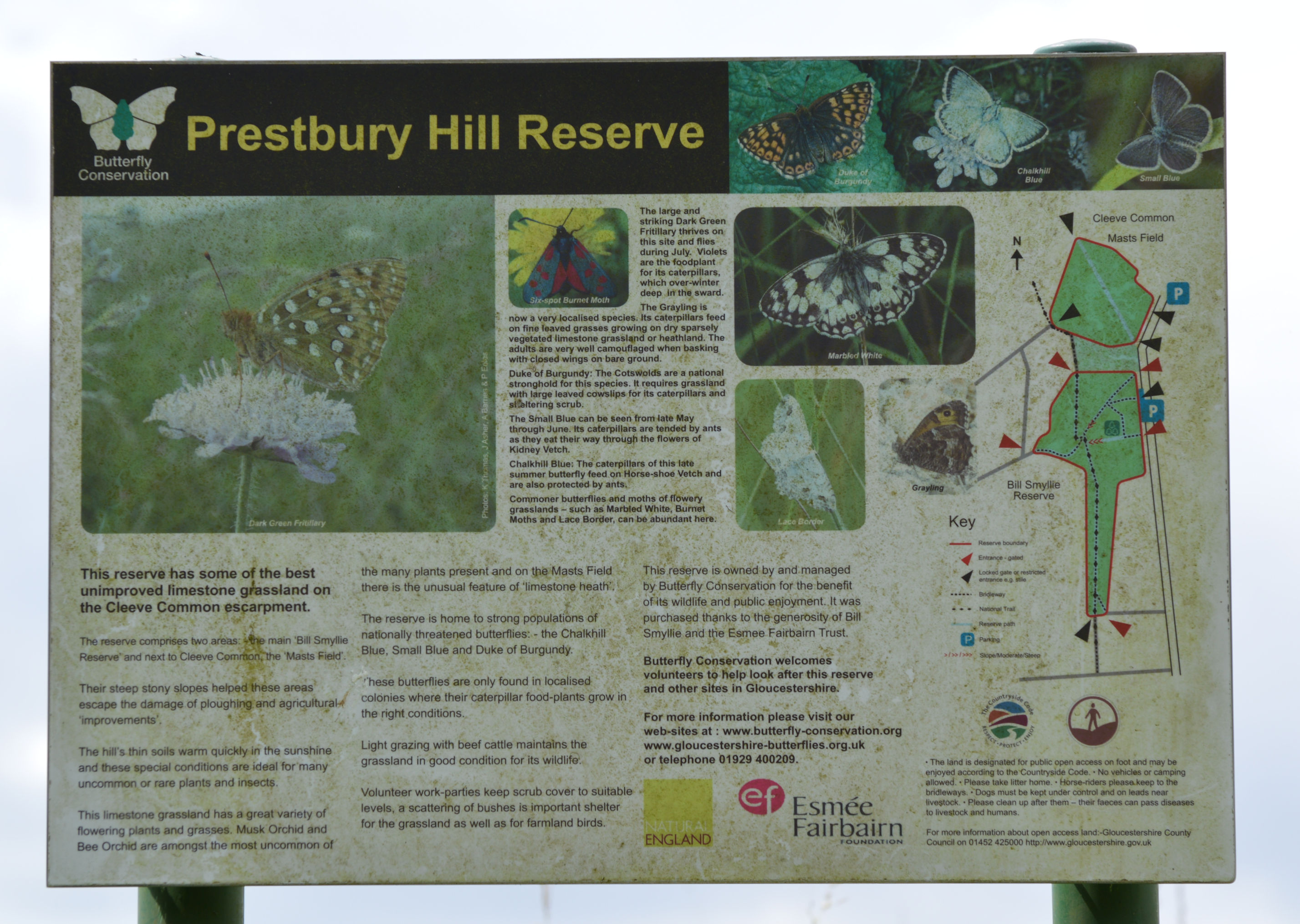
Flushed with the success of finding the Grizzled Skipper the previous weekend, we headed out again on Sunday in search of our next target butterfly – the grandly named Duke Of Burgundy. The nearest place we could find with a colony of Dukes was Prestbury Hill near Cheltenham – a fantastic site that we’d already visited at other times of the year.

Prestbury Hill reserve consists of 2 areas joined by a section of the Cotswold Way. We started off at the top of Masts Field which has amazing views out over Cheltenham and for miles around. It also has a convenient bench near the top for lunch. While we were sitting there, a pair of kestrels were hovering almost at eye level in front of us. Although they were more or less stationary in the air, they were still impossible to get decent shots of.

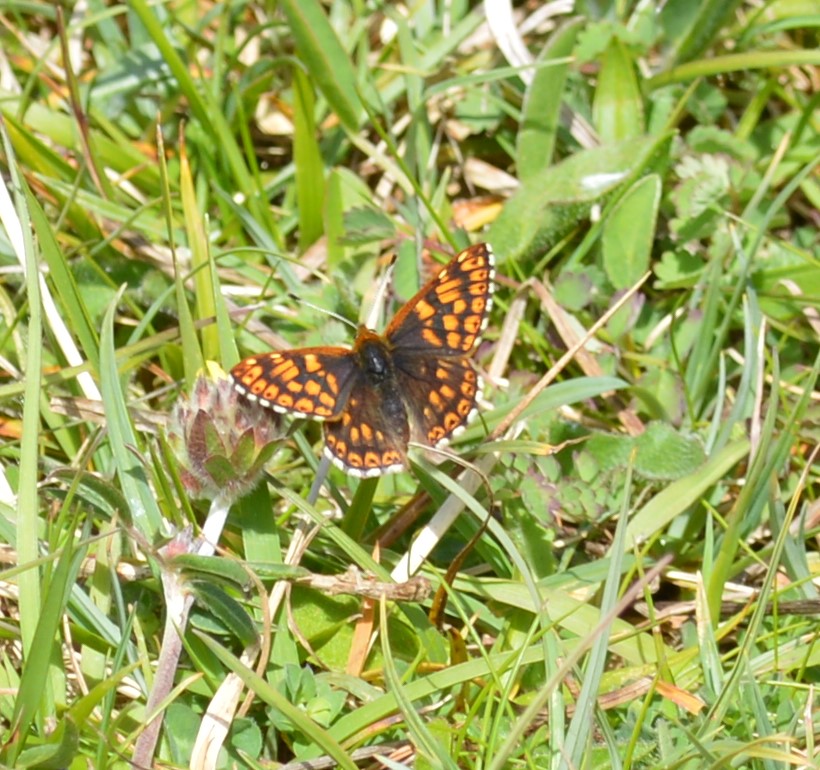
We spotted our first Duke almost immediately as we entered the field – it’s not often we get so lucky. Considering it is one of Britain’s most threatened butterflies, it seemed almost too easy! It’s quite a small butterfly, looking like a miniature fritillary.  In fact it used to be called Mr Vernon’s Small Fritillary – I’ve no idea who Mr Vernon was, nor why it is now named after a duke! (if anyone knows I’d love to find out?)


His Grace (I’ve googled the proper term for addressing a duke!) is small but perfectly formed, with lovely stripy antennae and pretty orange and brown/black patterned wings.


The males are territorial and like to display themselves on prominent leaves or grasses. The Duke of Burgundy is really unusual in that the female has 6 legs, but the male only has 4.  So I reckon the one in the photo below must be a male – showing off!

Although we saw quite a few Dukes on the day, I didn’t know at the time about counting the legs, so don’t know if any of our Dukes were actually Duchesses!

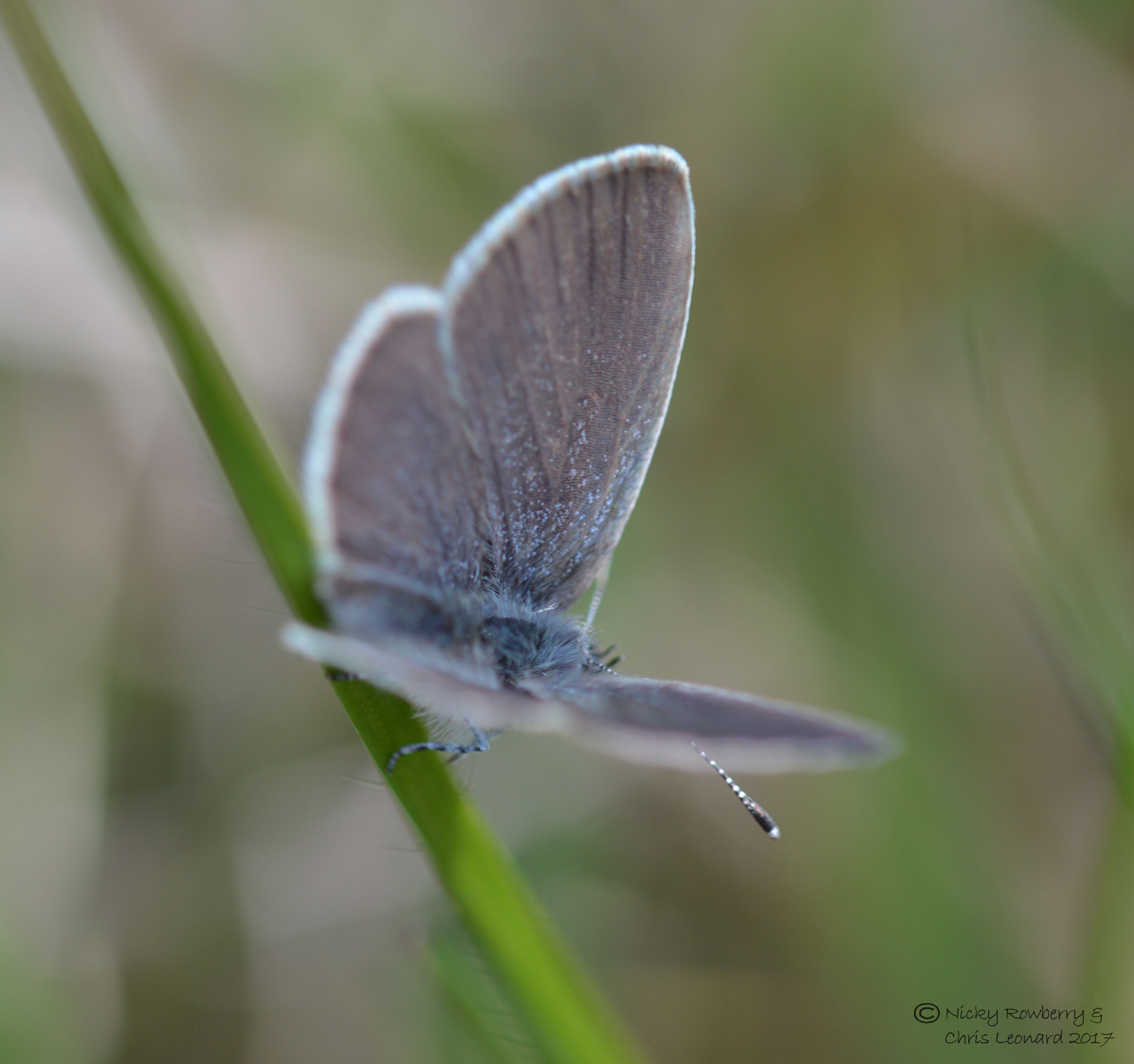
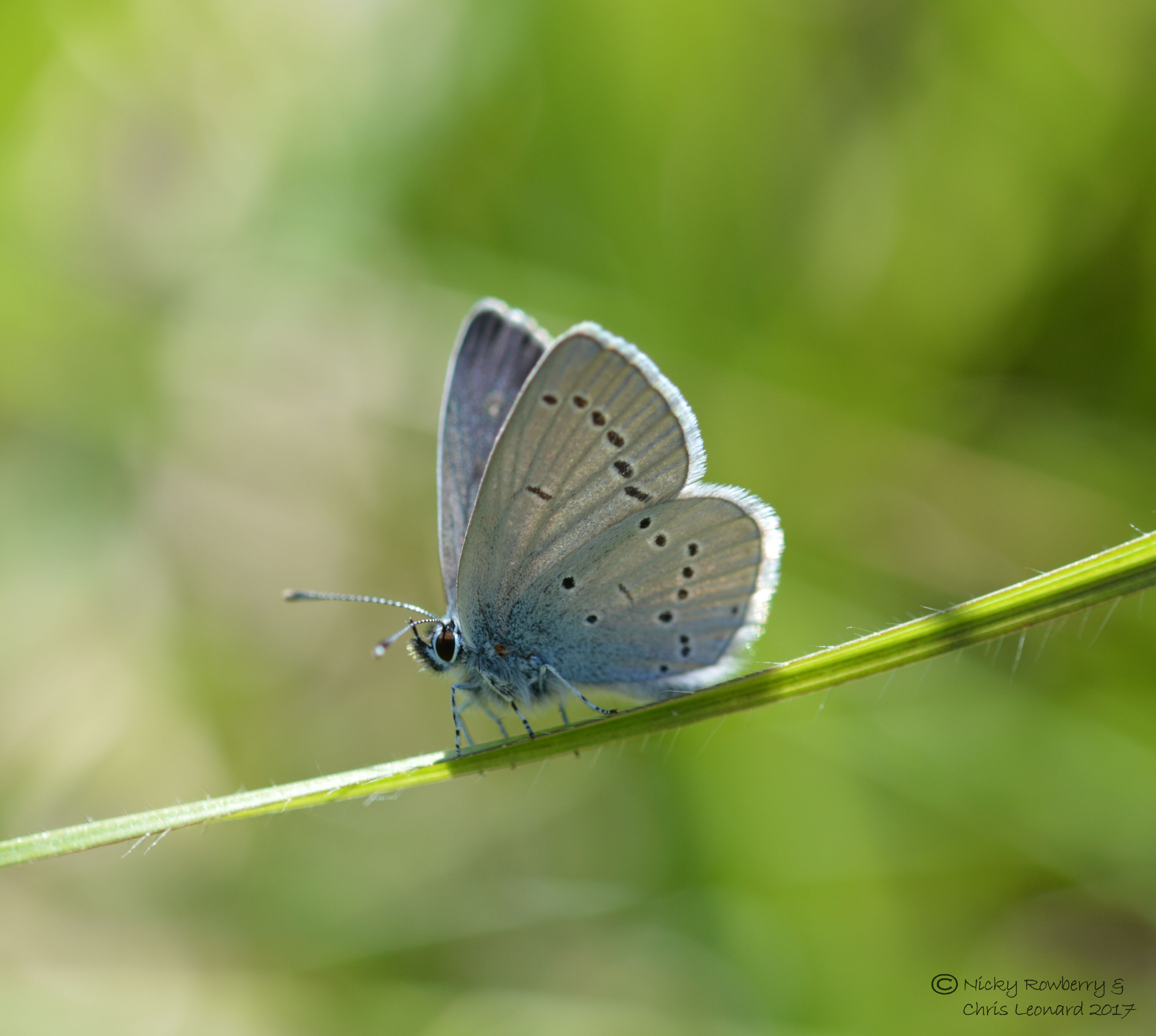
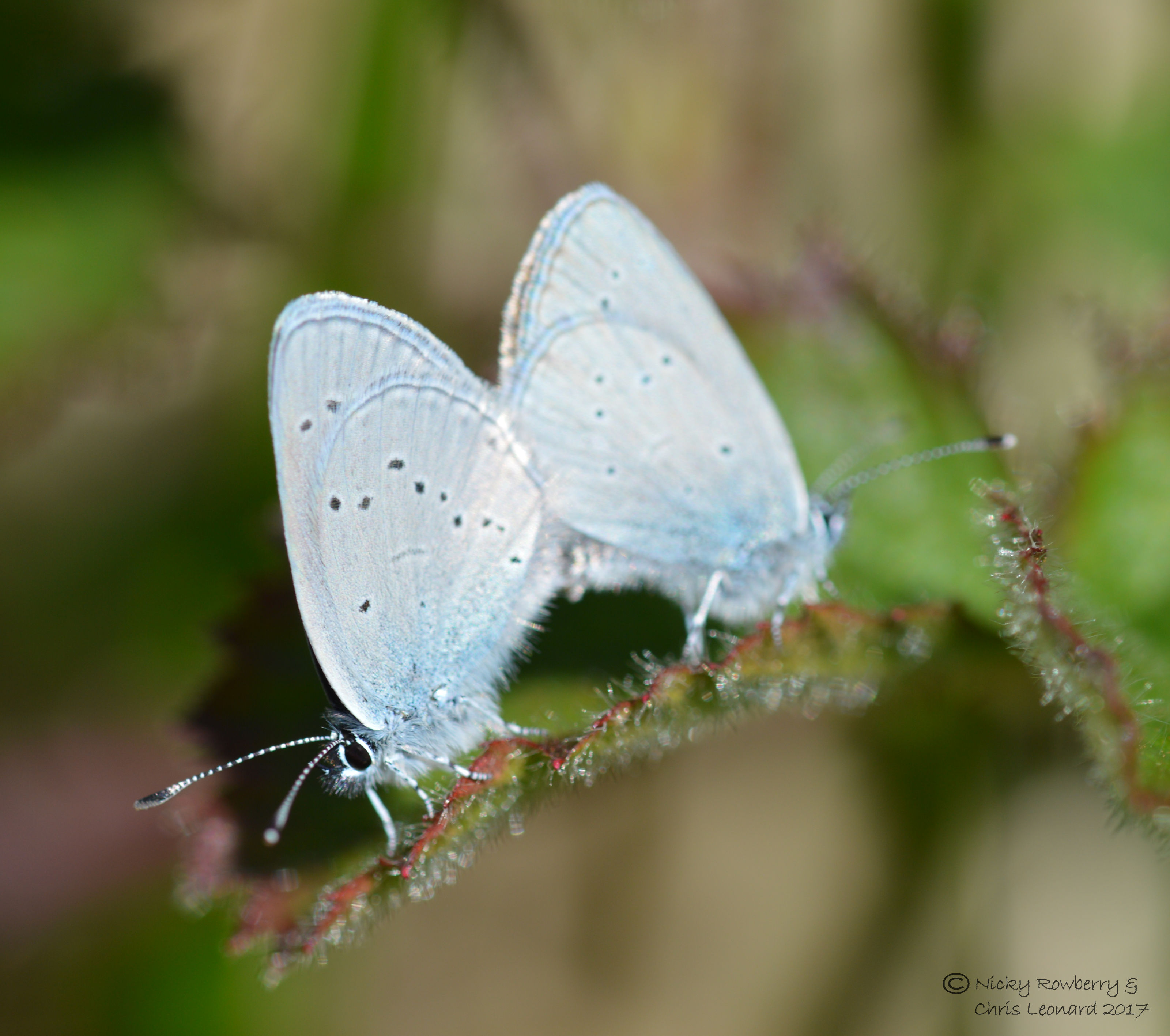
The other butterfly we’d hoped to see at Prestbury on this visit was the Small Blue. I had glimpsed one once before, so it wasn’t a new one for the list, but we wanted to get a proper look. Again we were lucky and there were plenty of Small Blues around. They really are what it says on the tin – small and blue! They are Britain’s smallest species of butterfly and are absolutely tiny. Once we got our eye in though, we found loads at Prestbury. They’ve got a beautiful dusting of pale blue scales on the upperside of the wings, while the underside is almost all blue with a few black spots.

We even found a few pairs mating (so unlike the Dukes we can at least be sure we were seeing males and females!) The only trouble with them being so small and so shiny blue on the underside is that it makes it really difficult to photograph them – especially with the inevitable bits of grass blowing across the shot!


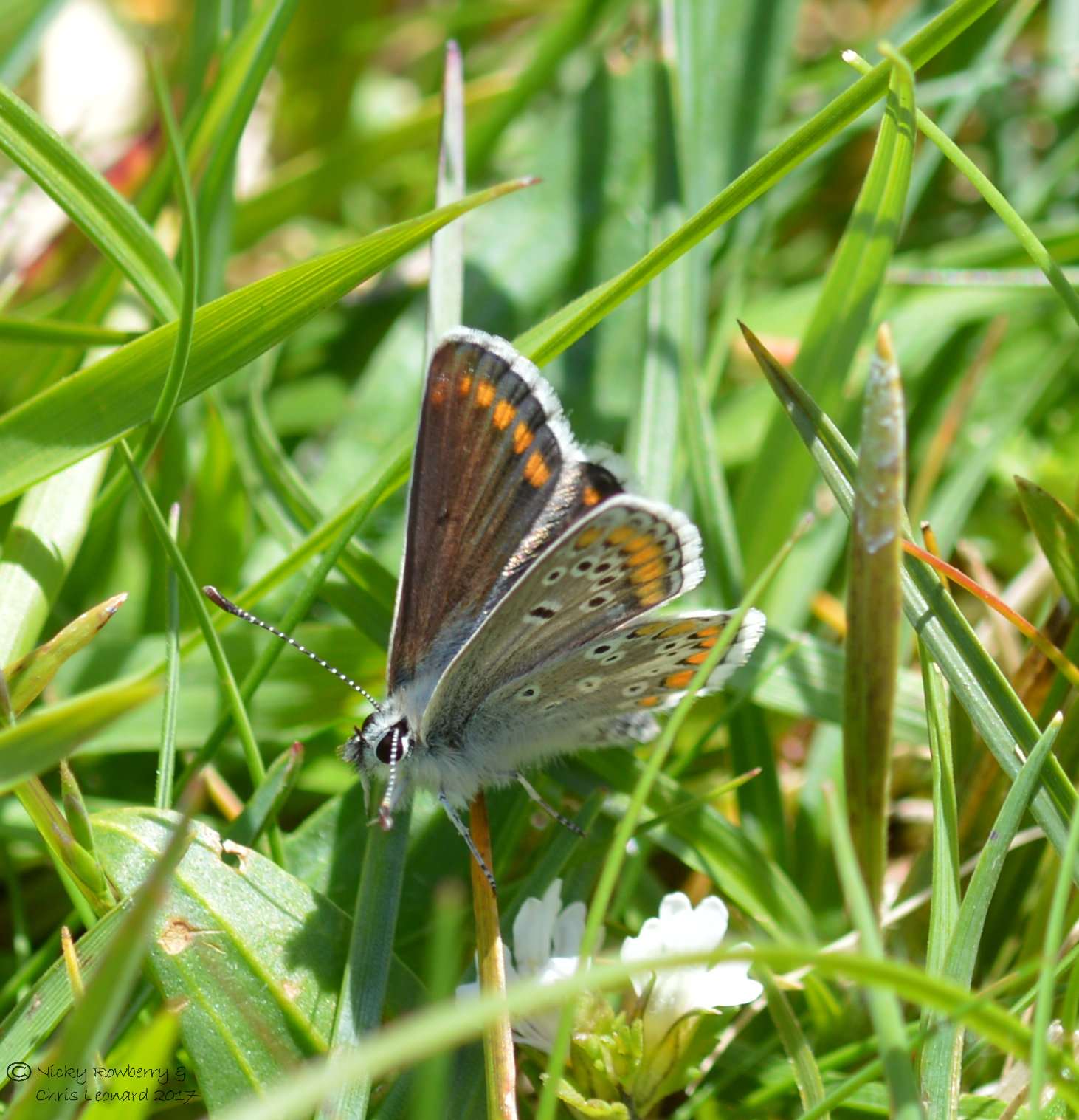
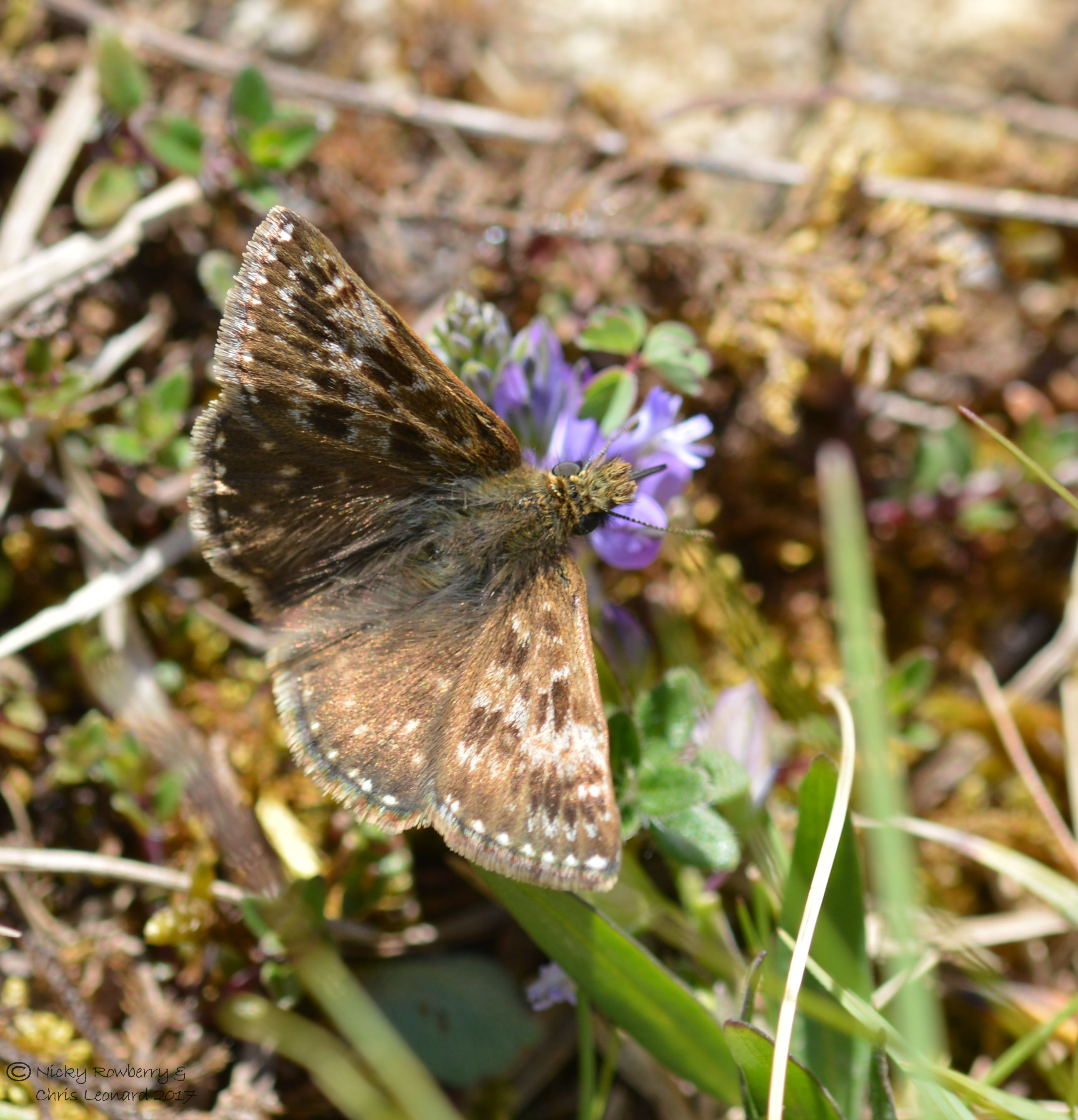
Prestbury is great for butterflies of lots of species so it was really nice to spot this Brown Argus and a lot of Dingy Skippers. I do feel sorry for the Dingy Skippers with their lowly sounding name next to the Duke of Burgundy!

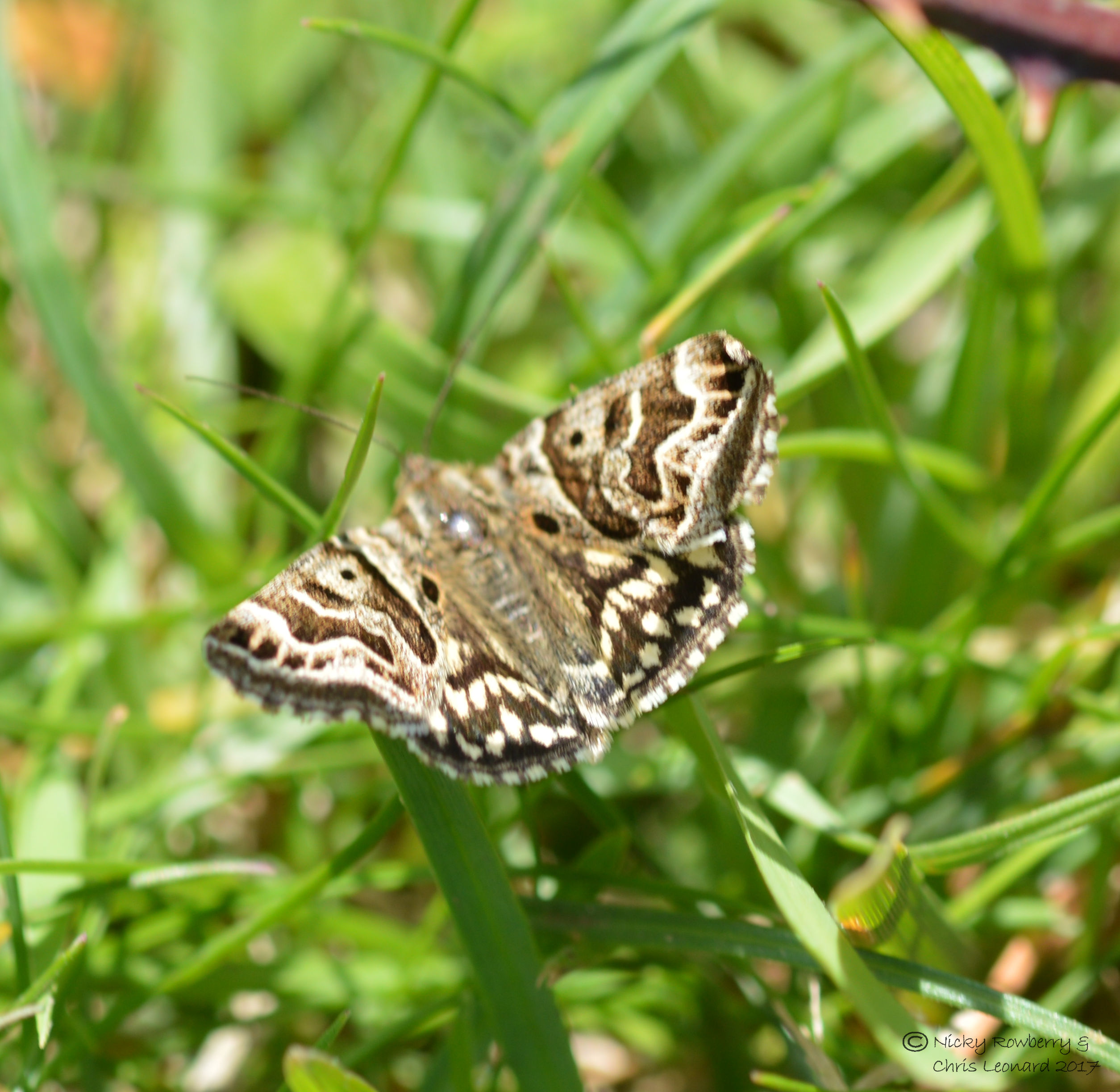
I also couldn’t resist taking photos of one of  my favourite moths – the Mother Shipton. I do at least know the origins of this name – the moth is named after a 16th century Yorkshire witch because its marking are supposed to resemble her with an eye and hooked nose and chin!

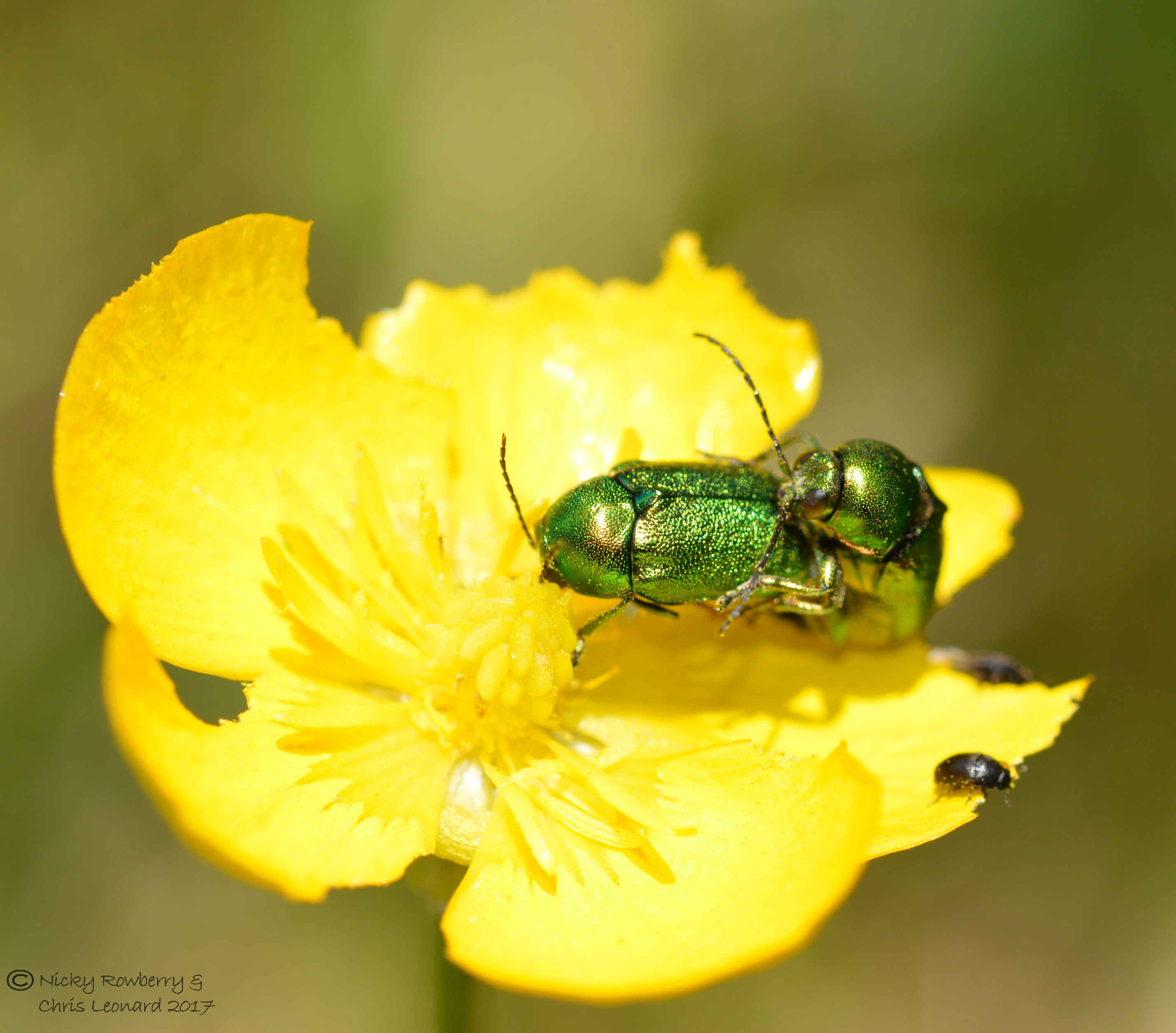
And finally Spring was clearly in the air for these beetles. I’ve no idea what they are, but they looked so shiny and green against the yellow buttercup, I just couldn’t resist.


A Grizzly Day Out

Yesterday we went out on our first butterfly bagging expedition of the year – our target the Grizzled Skipper. Using the excellent        Butterflies of the West Midlands book as our guide we headed down to the Doward in South Herefordshire. The woodlands of the Doward are part of an Area of Outstanding Beauty – always a good starting point for any day out!

The butterfly guide book had described the best route to take to see the Grizzled Skippers, start at the main entrance to the White Rocks Nature Reserve. In our usual disorganised way we managed to head off in completely the wrong direction and somehow started at the other entrance. This was no great disaster though as it took us into the woodland which was carpeted with wild garlic (you could smell it in the air) and looked stunning.

Our accidental route also meant that we stumbled across King Arthur’s Cave. The Doward lies on limestone rocks and the cave goes deep inside them (not that we ventured very far ourselves). It has apparently been used by humans since Palaeolithic times, with everything from flint tools to mammoth bones having been found in there.

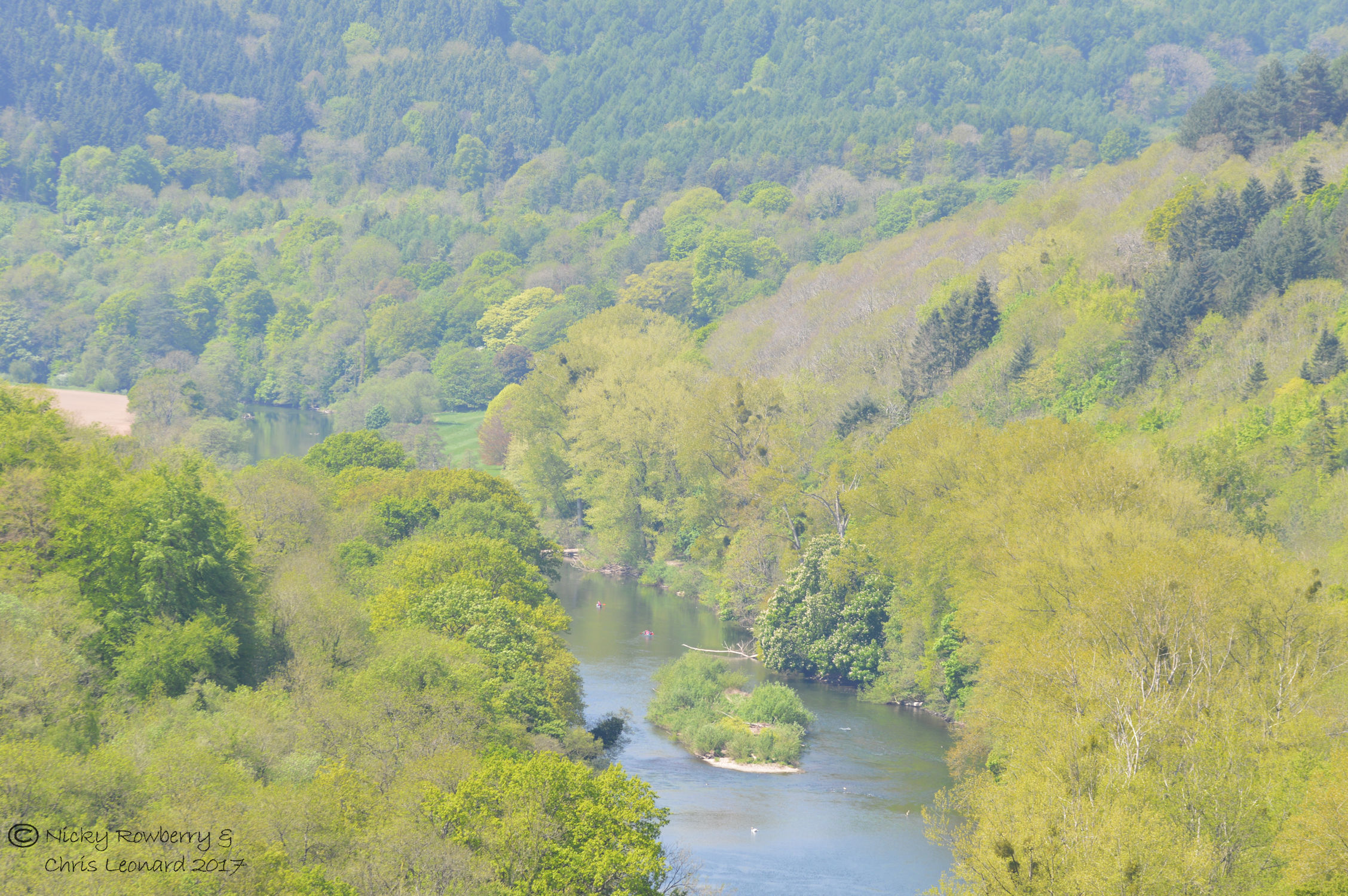
We carried on our erroneous path and came to a stunning view point looking over the River Wye.

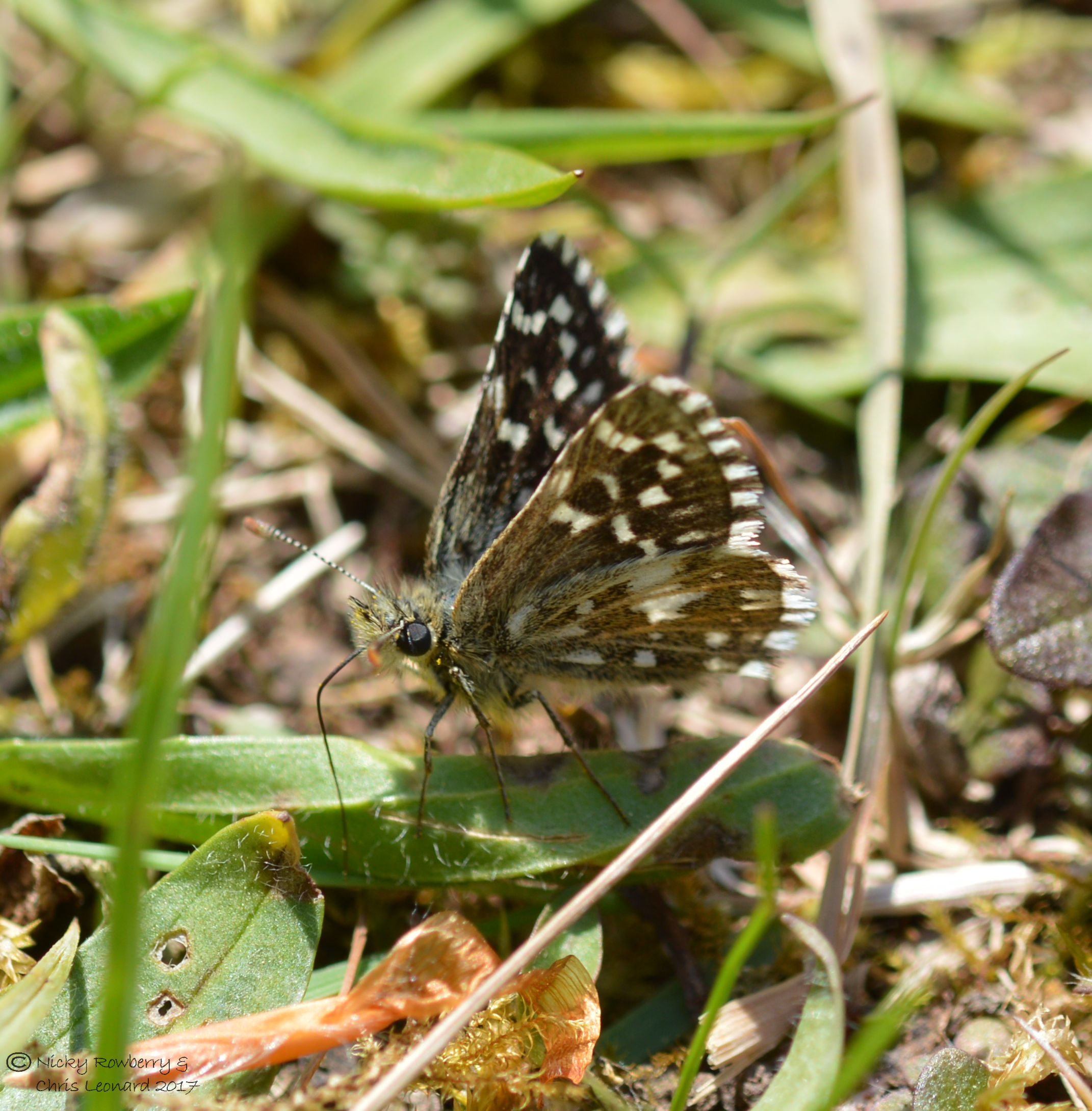
By this time we’d twigged that we were on the wrong path, so tried heading back up hill, stumbling upon a large quarry as we did. It was baking hot in the quarry, so I stayed at the edge. While I loitered by the gate, I spotted what I thought was a small moth darting about.  Closer inspection revealed it was actually a Grizzled Skipper – I’d found one by shear chance after all! I’d never realised that they would be so small, or so fast – it could disappear very quickly.

My first ever Grizzled Skipper wasn’t unfortunately a pristine specimen, looking a bit ragged at the edges, but it was what I came looking for, so I took loads of pictures.

He or she looks a bit more respectable from the side as you can’t see the missing bits of wing.

Flushed with success (and the heat of the quarry) I decided to head back to the car and start again on the proper route. Not too surprisingly on the proper route it was a lot easier to spot the skippers. I quickly found about half a dozen flitting around a sparse area of ground. They were so quick though it was difficult to track them – I think these were both of the same slightly slower specimen.

It is still relatively early in the “butterfly season”, but I did spot a few other species around the bluebells – this female orange tip and a large white.

The Grizzled Skipper is a delightful little butterfly, but it unfortunately becoming increasingly rare.  There are not many sites around us where we could have seen them, so we were very lucky to be able to add this species to our butterfly tally. Species number 39, only 20 more to go, but I have the feeling they are going to become increasingly difficult to find!

Out and About – Grimley Brick and Gravel Pits

The weekend brought some gloriously sunny weather – forget spring, it felt like we had skipped ahead to summer. So we ventured forth, if not very far, to Grimley which is just north of Worcester. Grimley has several old flooded gravel extraction pits, which now form important wildfowl sites for the county. There are 2 main areas – each situated conveniently next to a pub! Unfortunately I didn’t really have the right lens for birdie photos, so the best I could manage was some blurry distance shots for most of the birds I saw.

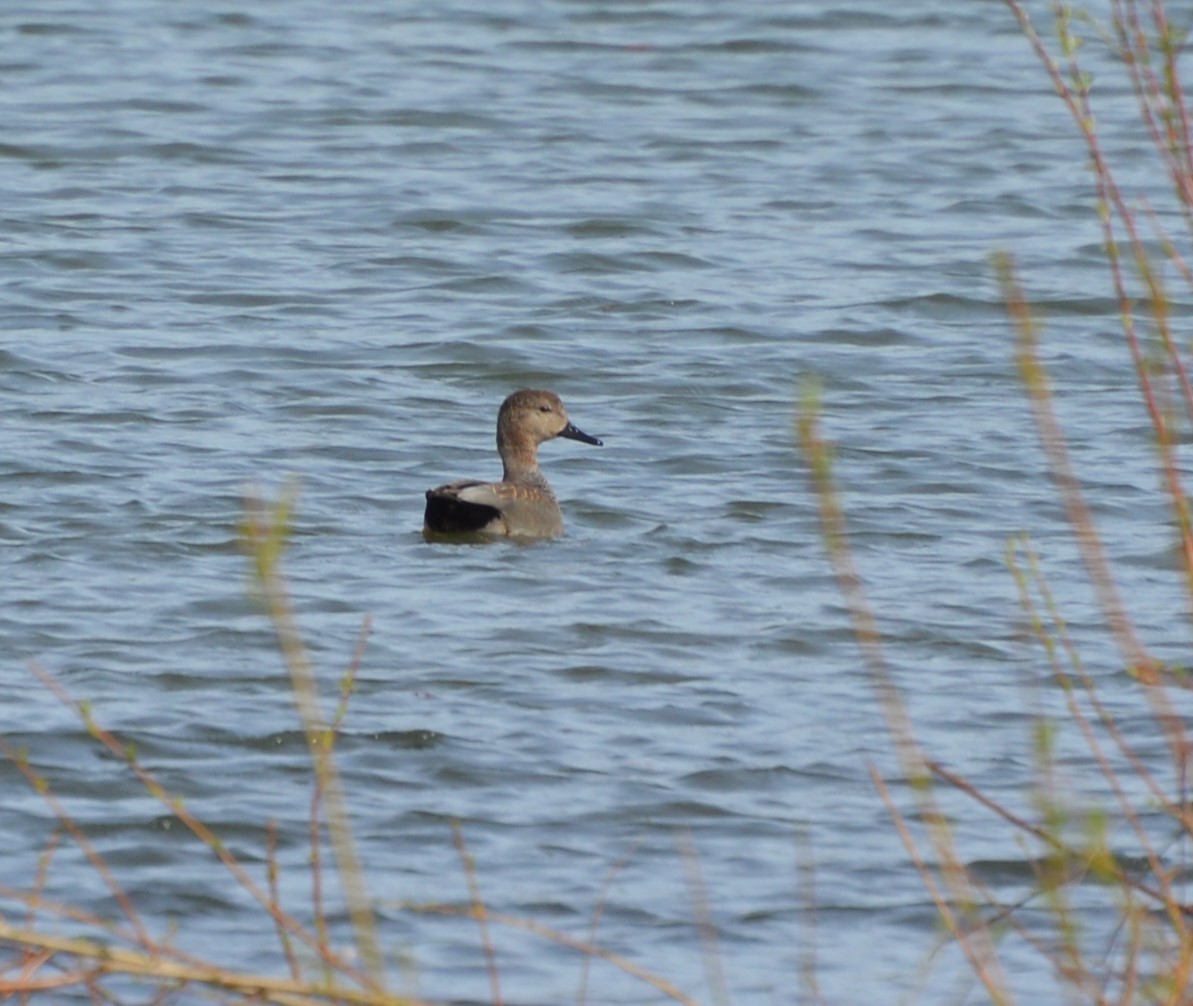
The first pit we went to was off Wagon Wheel Lane. The Worcester Birding twitter feed had been full of news that an American wigeon had been spotted amongst our British wigeons. Having never seen a wigeon of any nationality, I hoped to see some. Having said that, it would probably have helped if I’d googled what a wigeon looked like before setting off! All I really knew was that they were ducks, so I snapped photos of anything vaguely duck like.  Fortunately when I got back and studied the photos, it turned out I had seen some of the British ones, although no sign of the elusive American. So I think this is a female Widgeon, although happy to be corrected.

Of course while chasing anything duck like, I inevitably got pics of a few other species. This lucky female Northern Shoveller was accompanied by at least 4 males.

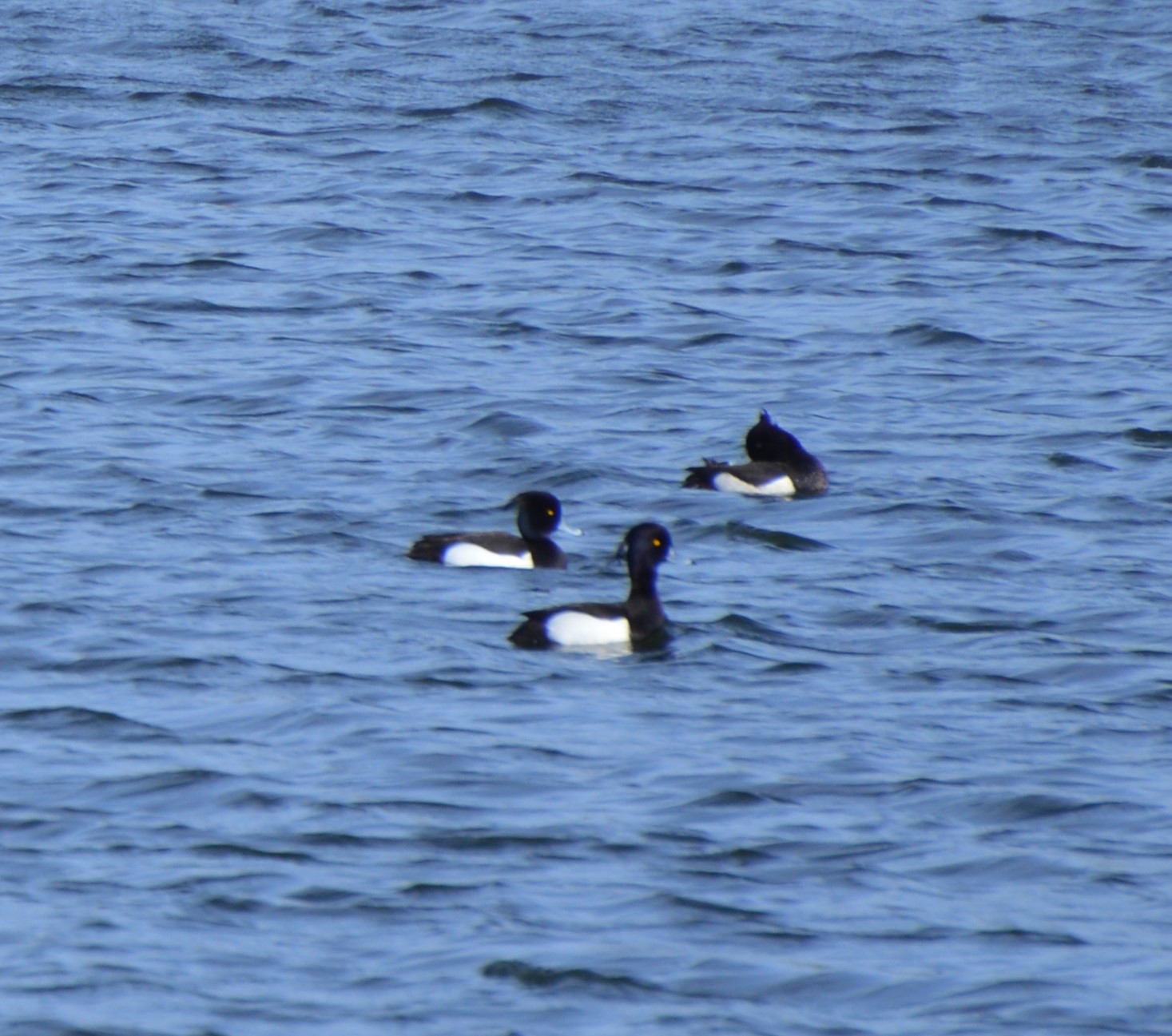
Tufted ducks were bobbing about everywhere. I love the clean lines of the black and white plumage and the bright golden eye of the males.

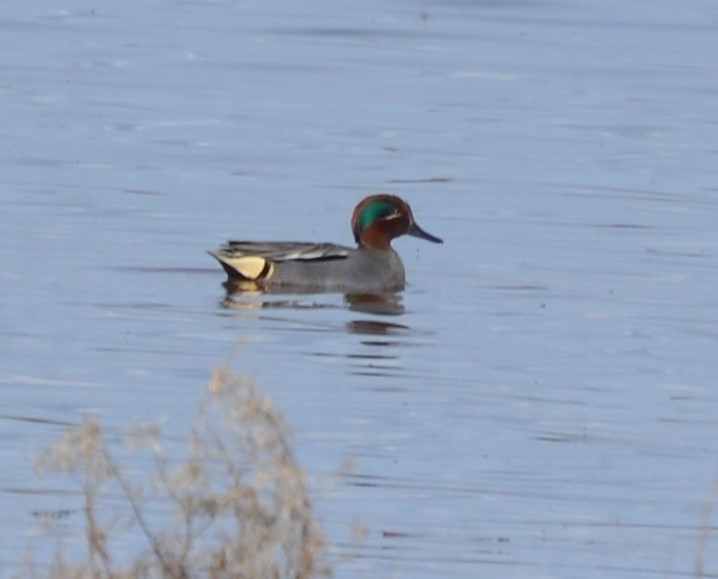
Another species that was new to me was the Common Teal. I didn’t manage to get very close and from a distance I thought initially these were just mallards, until I spotted the creamy yellow rump. From my distant viewpoint it hadn’t been possible to make out the beautiful red and green plumage on the head, but thanks to the power of the zoom on the computer I could appreciate it back home.

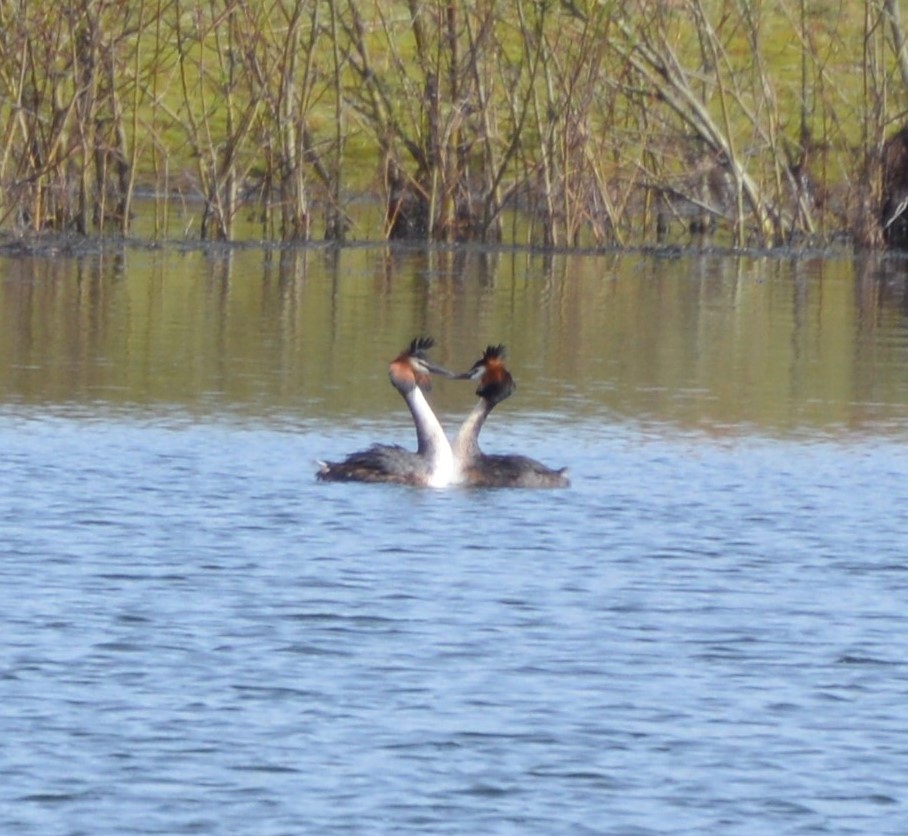
Possibly the stars of the show on this trip were the exotic looking Great Crested Grebes – birds that I’d only ever seen on Springwatch before.  There was a pair doing what looked like a courtship display on the far side of the lake. They bobbed up and down facing each other. If they’d been a bit closer I’d have tried videoing it, but they were just too far away for that.

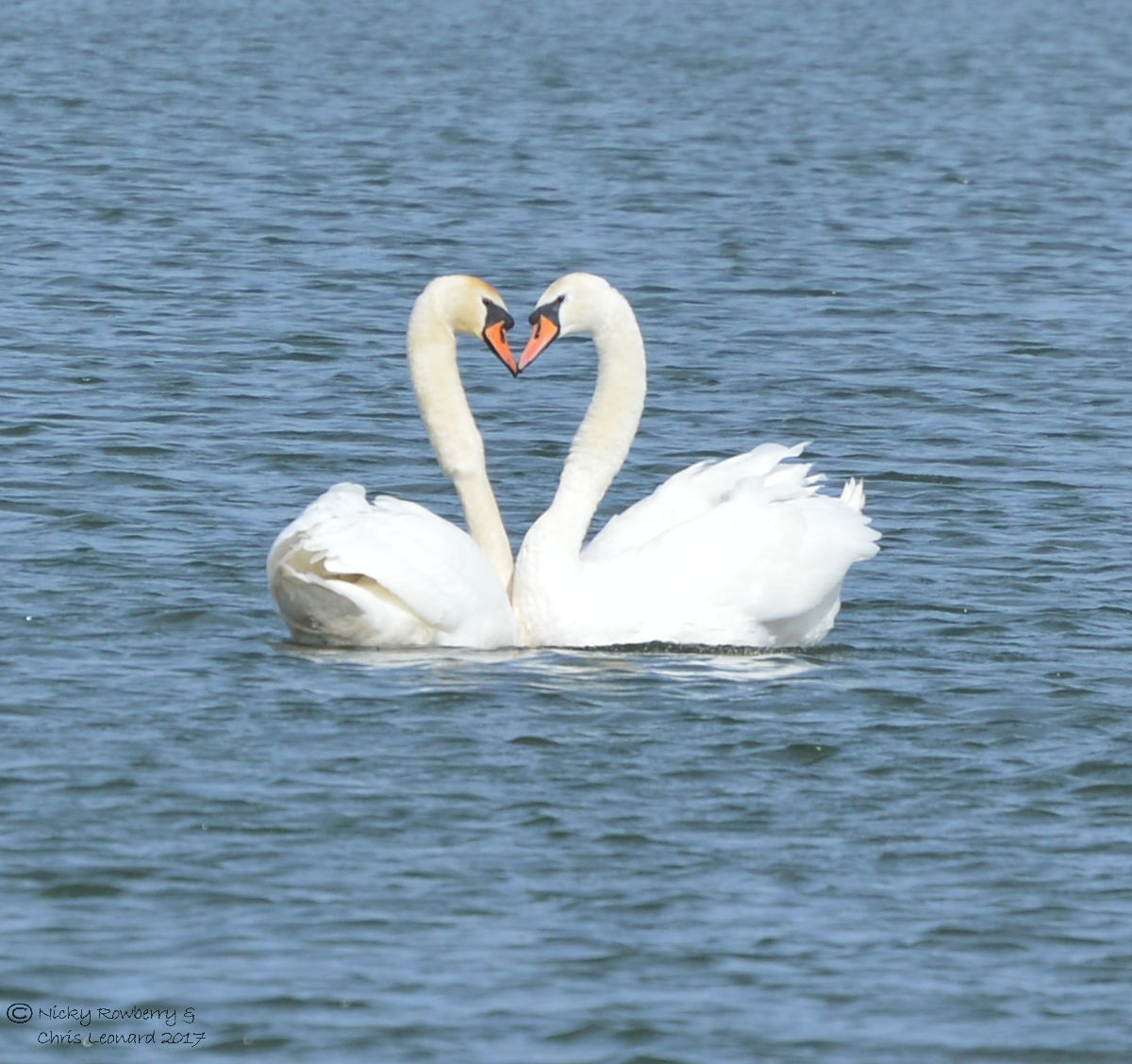
Love seemed to be in the air for a pair of swans too. One was already on the lake when another one landed further away. The first one spotted it and hurtled across the water – I thought at first it was an aggressive or territorial thing, but then they started entwining their necks around each other, so I guess they had other things in mind!

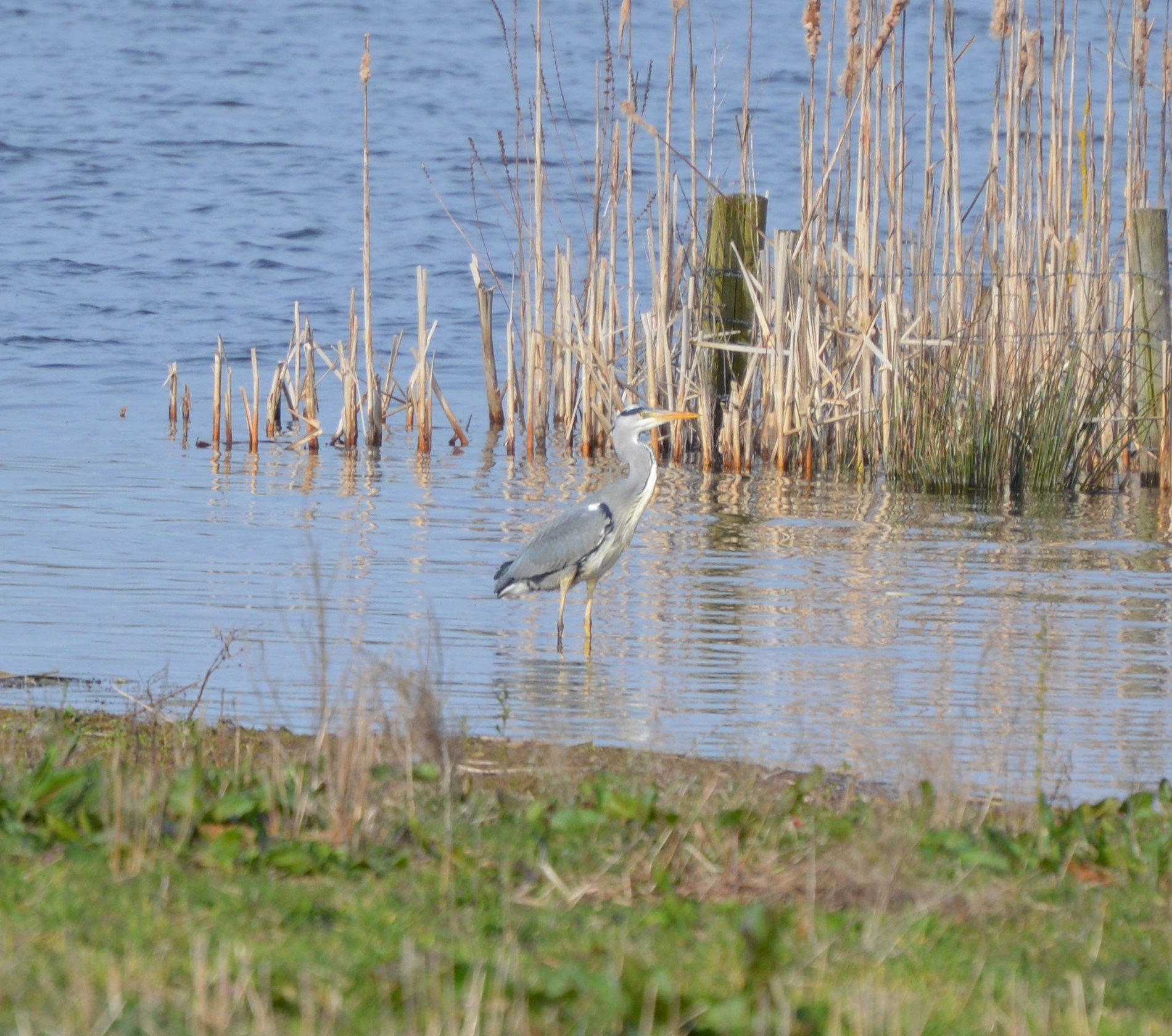
After a short pit stop at the Camp House Inn, I headed to the other set of pits nearby. First sight was this heron – I’d never studied one before and hadn’t realised just how large they were. I tried creeping closer to get a better shot, but as I was going across an open field, he spotted me straight away and flew off when he considered I was too close for comfort.

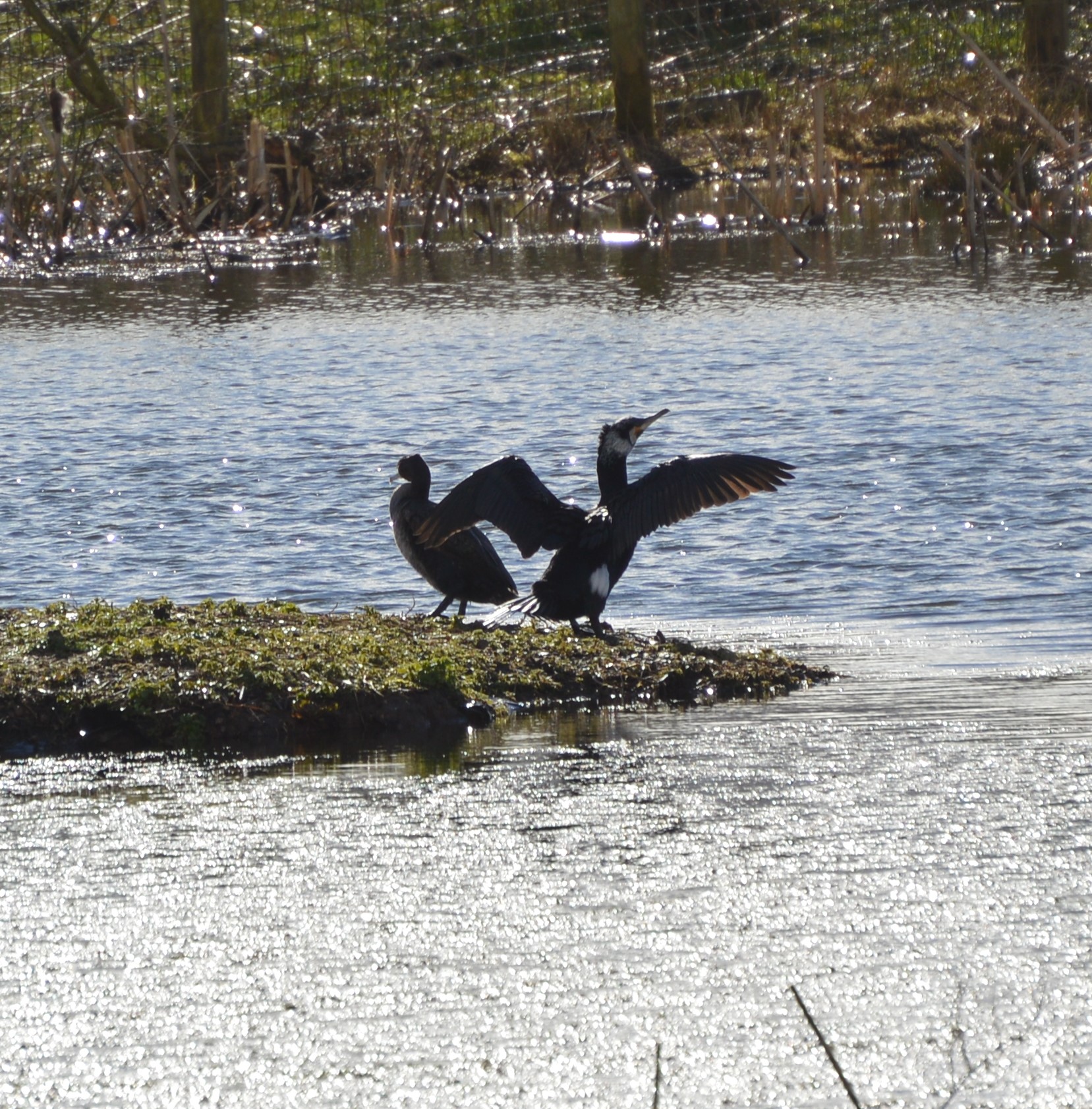
These lakes were clearly popular with a group of cormorants that were perched on fence posts in the middle and in trees. I still find it hard to get my head round seeing what I think of as sea birds this far in land!

While trying to concentrate on the birds, I kept getting side tracked by the insects. There were quite a few large bumblebees buzzing around and the pussy willow was provided much needed sustenance to several, like this Red Tailed Bumblebee.

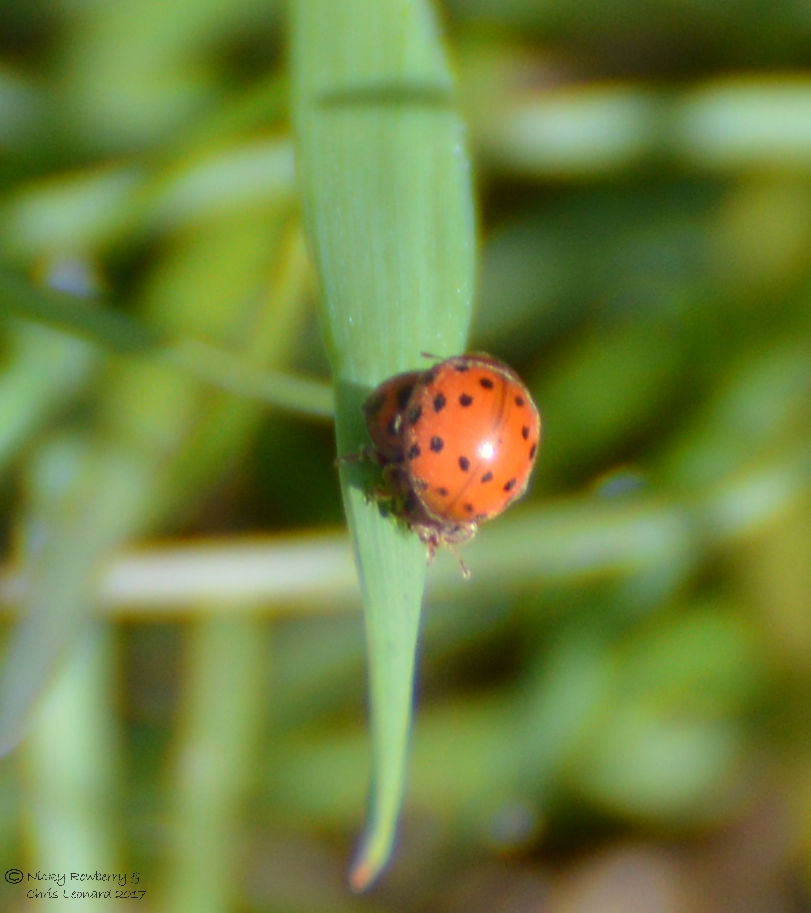
While trying to get a decent photo of a buff tailed bumblebee, I spotted (no pun intended) this pair of 24 spot ladybirds. They were very small and the grass they were on was waving around in the breeze, hence the less than perfect photo. They were slightly less shiny than other ladybirds and look as if they have a fine covering of downy hairs, which would make them the 24 spot ones  – a new one for me.

When I was looking at the red ladybirds above, I hadn’t noticed at the time that there was a pile of creamy coloured ones right next to them. Again they are not perfectly in focus, as I obviously wasn’t focussing on them as I didn’t know they were there! These ones turned out to be 16 spot ladybirds – another new species.

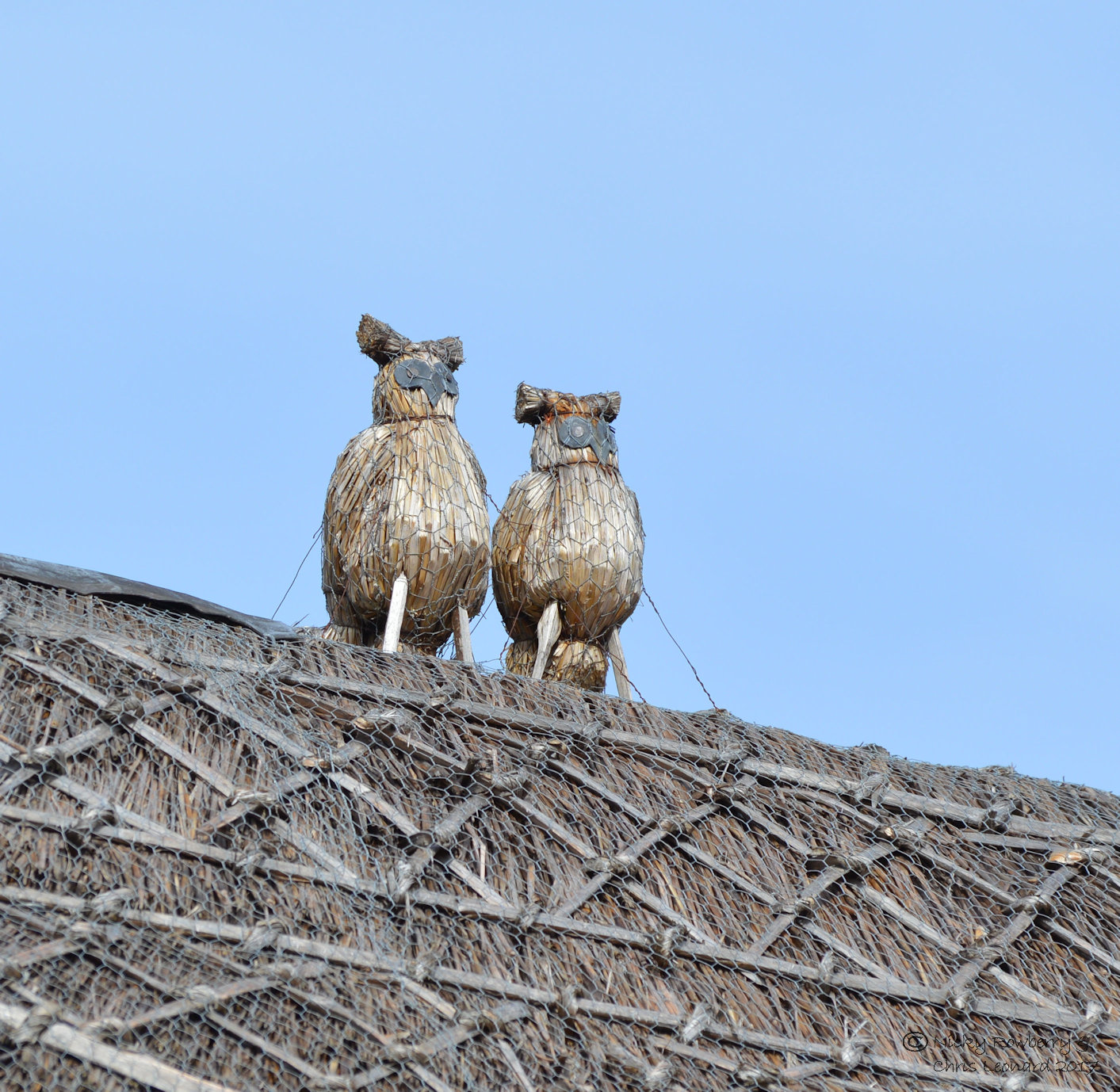
And finally, because I can never resist a comedy photo – here is the very rare 4 winged duck and a rather splendid pair of owls on top of the Wagon Wheel Inn’s thatched roof.

Out and About – Upton Warren Wetlands

It’s March and I ventured Out and About properly last weekend for the first time this year. I’d joined Worcestershire Wildlife Trust a few months ago and decided to take advantage of this by visiting the Upton Warren Wetland Reserve.  It was so nice to get some fresh air and explore somewhere new. The reserve has a mixture of freshwater and saline pools (the result of previous brine extraction work), which attract a wide variety of birds. The reserve is pretty big, so I only managed to do about half of it on this first visit. It’s a fantastic site though, so I will definitely be back soon to try out the other half.

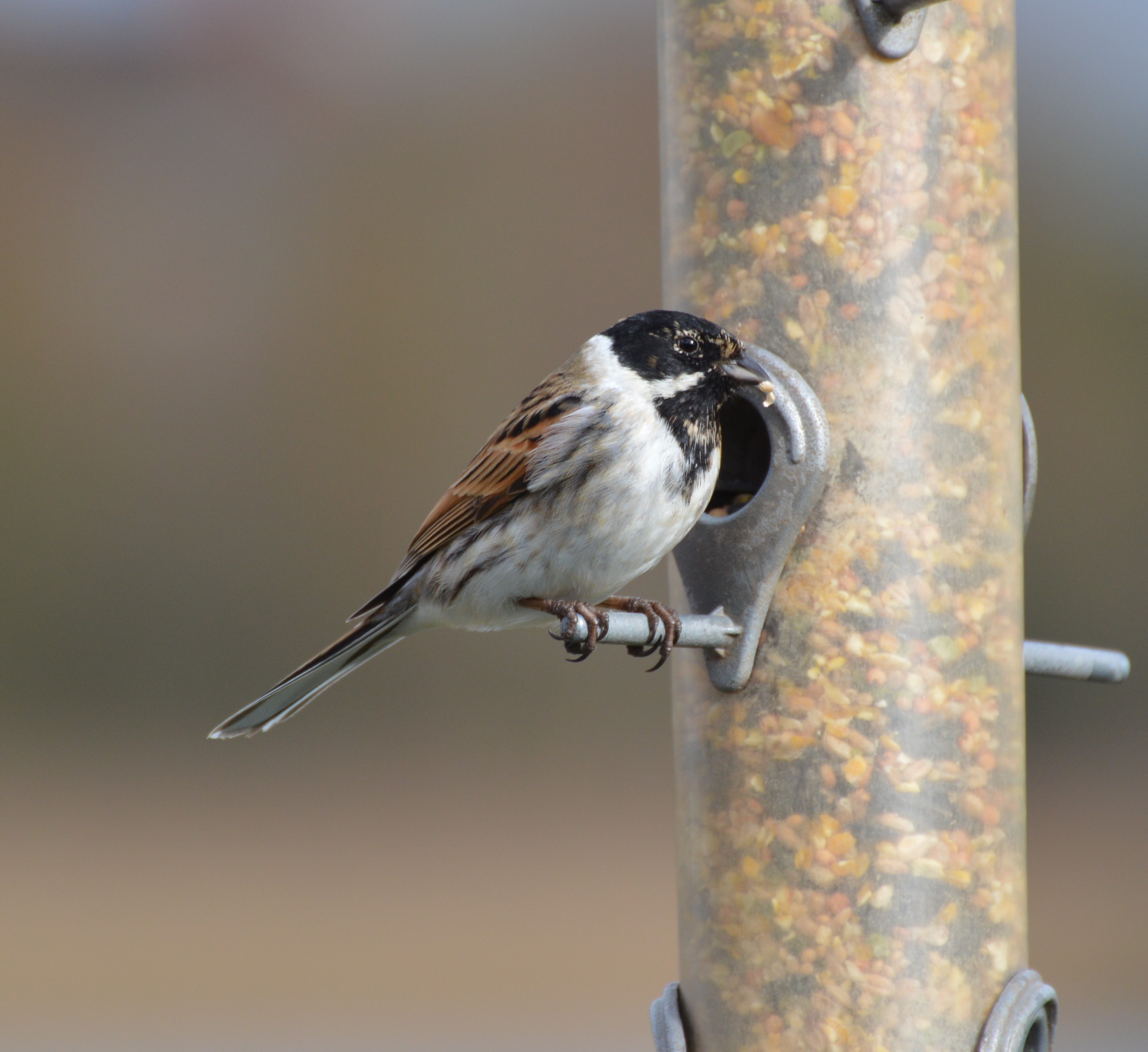
At the first hide, the Trust people had hung out a few bird feeders and I noticed a lot of small brownish birds that looked a bit like sparrows. Being a novice, I had to ask the helpful gentleman who was in the hide with me what they were – I was a bit worried he might just say that they were sparrows, then I really would look clueless, but fortunately it turned out they were reed buntings. I had sort of expected reed buntings to hang about in the reeds and be difficult to see, but I guess why would they do that when there were easy pickings from a feeder?  Top one here is a male and the bottom is the female (at least I think it is, unless it turns out to be an embarrassing sparrow).

reed-bunting-female

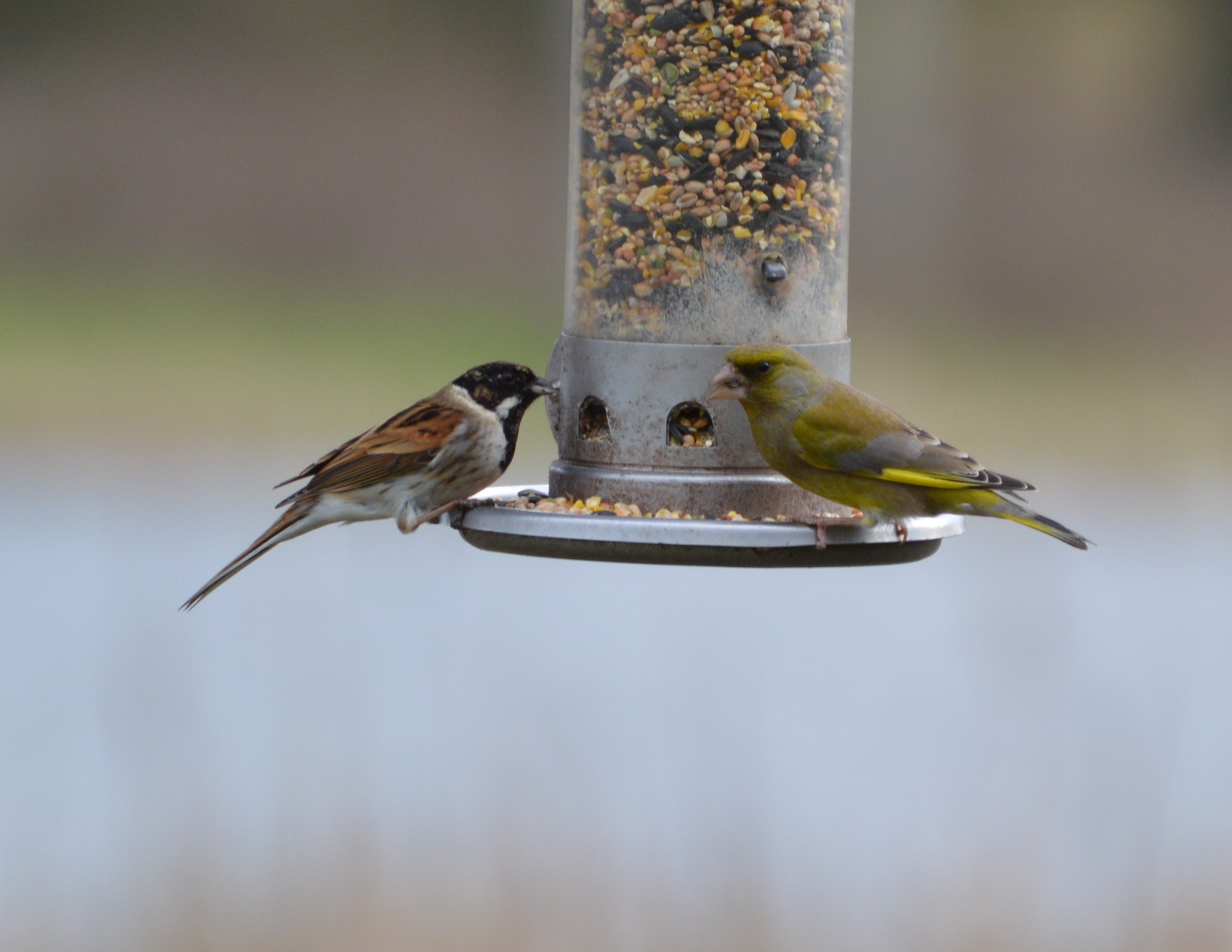
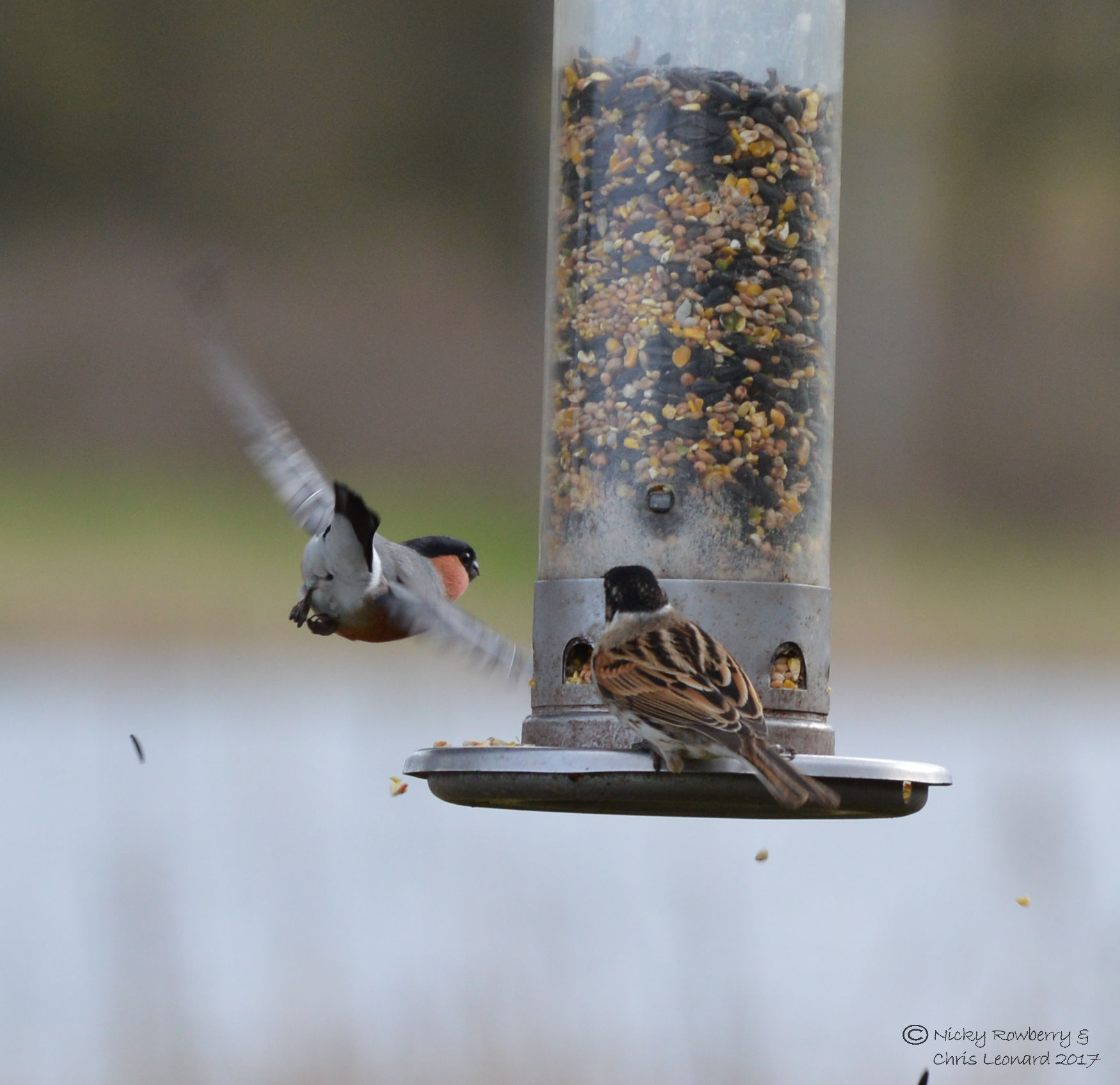
The reed buntings weren’t the only ones using the bird feeders; they had stiff competition from the bullfinches in particular, who in turn had to contend with the greenfinches.

bullfinch-bunting-2

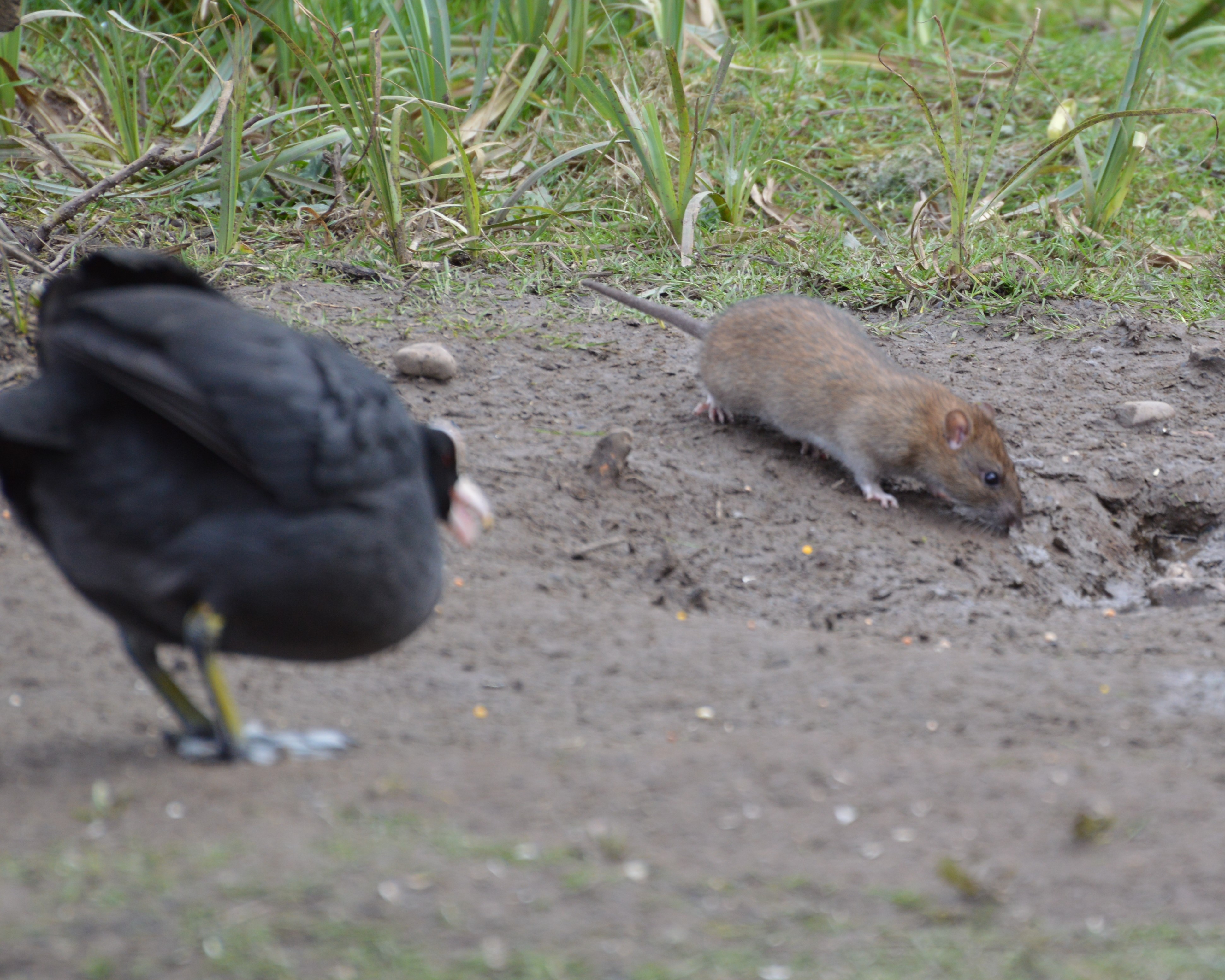
All the dropped seed of course attracted the inevitable rats, including this particularly bold one. Not the most welcome visitor to a bird reserve, but it was interesting to see a rat that close up in broad daylight – a first for me.

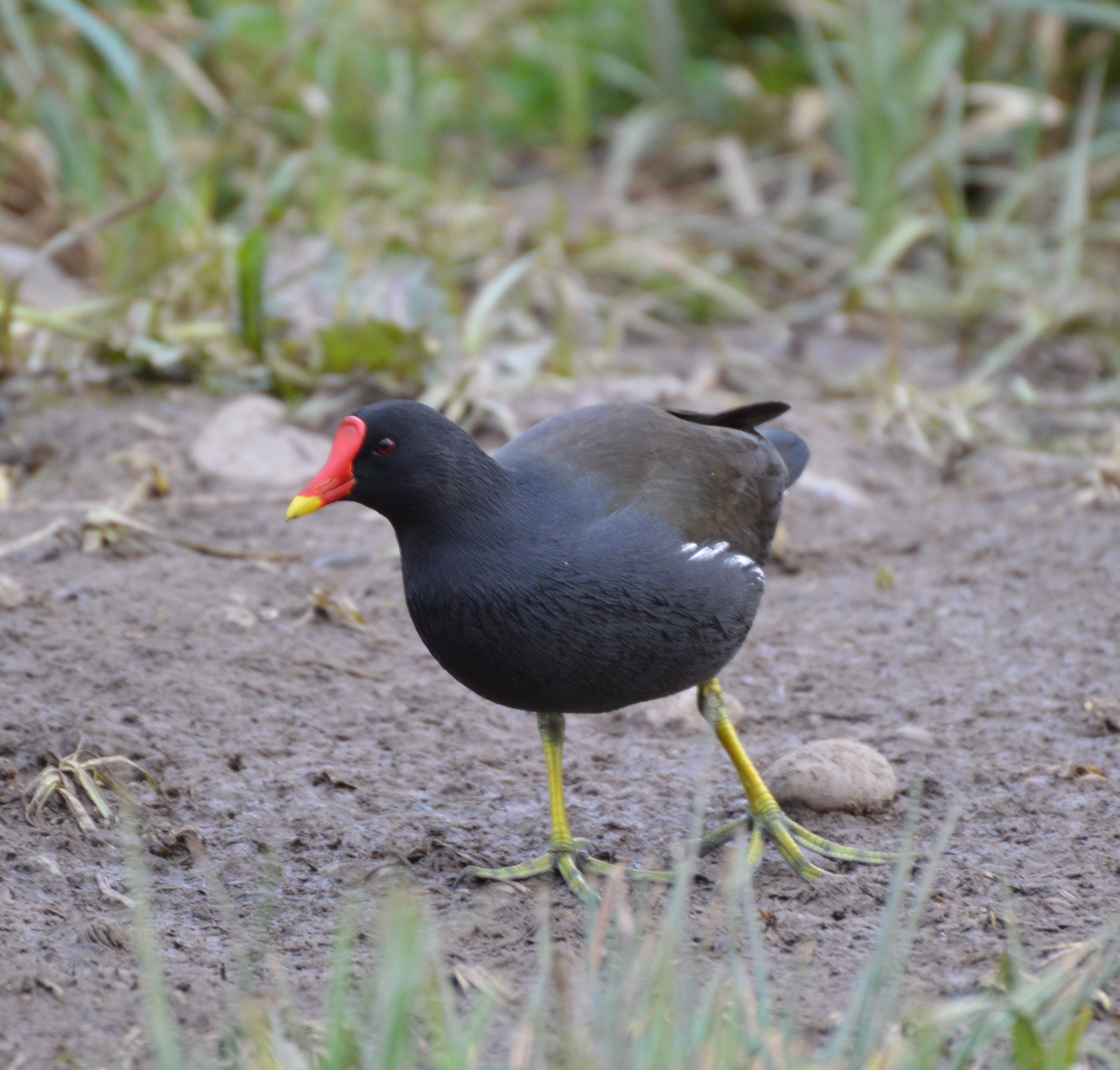
A portly looking moorhen was lazily scanning around for bird seed, while a coot cruised the nearby inlet.

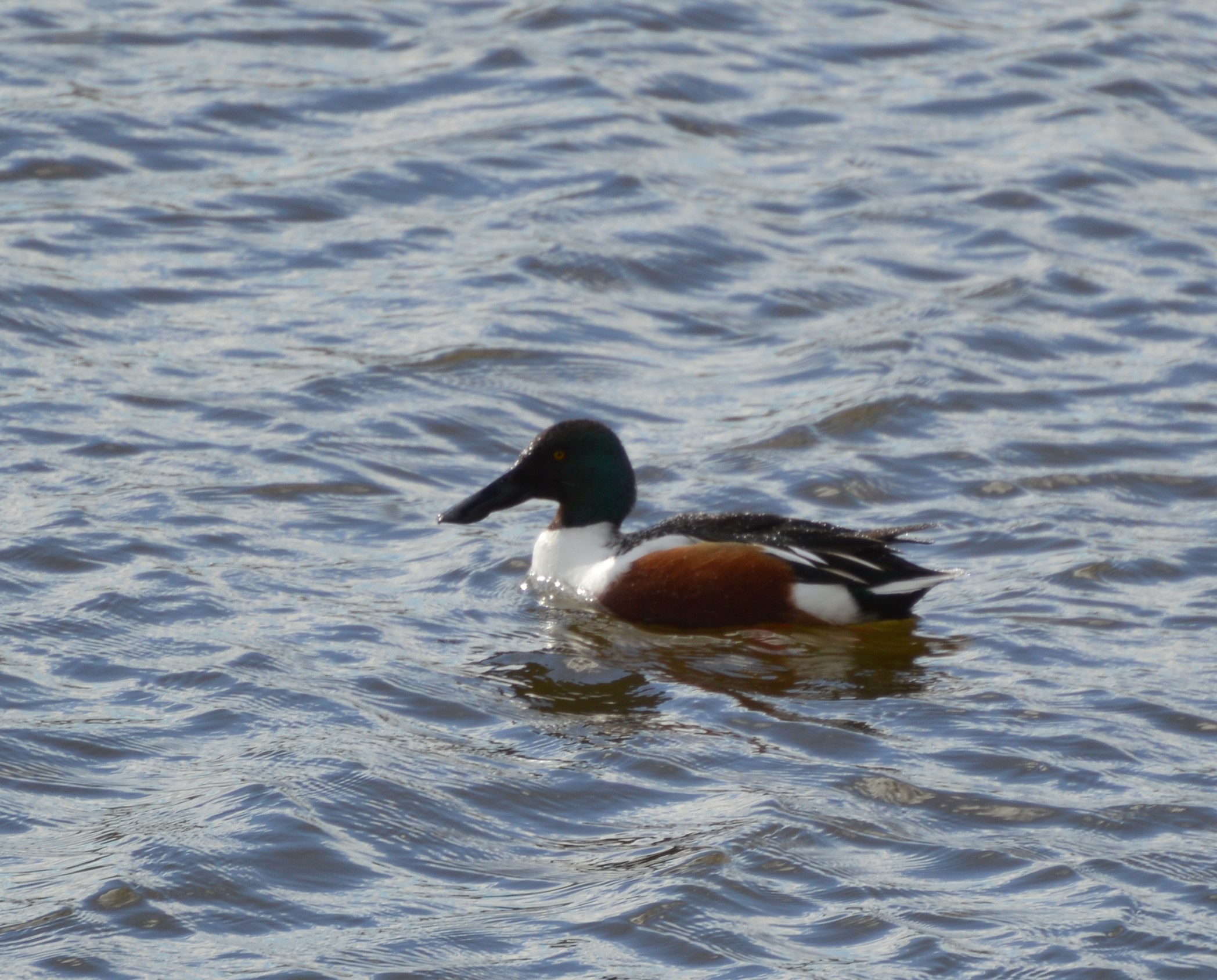
There were quite a few regular mallards about, but then a duck appeared that looked a bit different. Umpteen blurry photos later, I finally got one good enough to identify it as a Shoveler Duck. Turns out they are fairly common, but it was new to me.

There were a few cormorants about – weird looking birds. Even the RSPSB website describes them as reptilian looking, which seems a tad unkind!

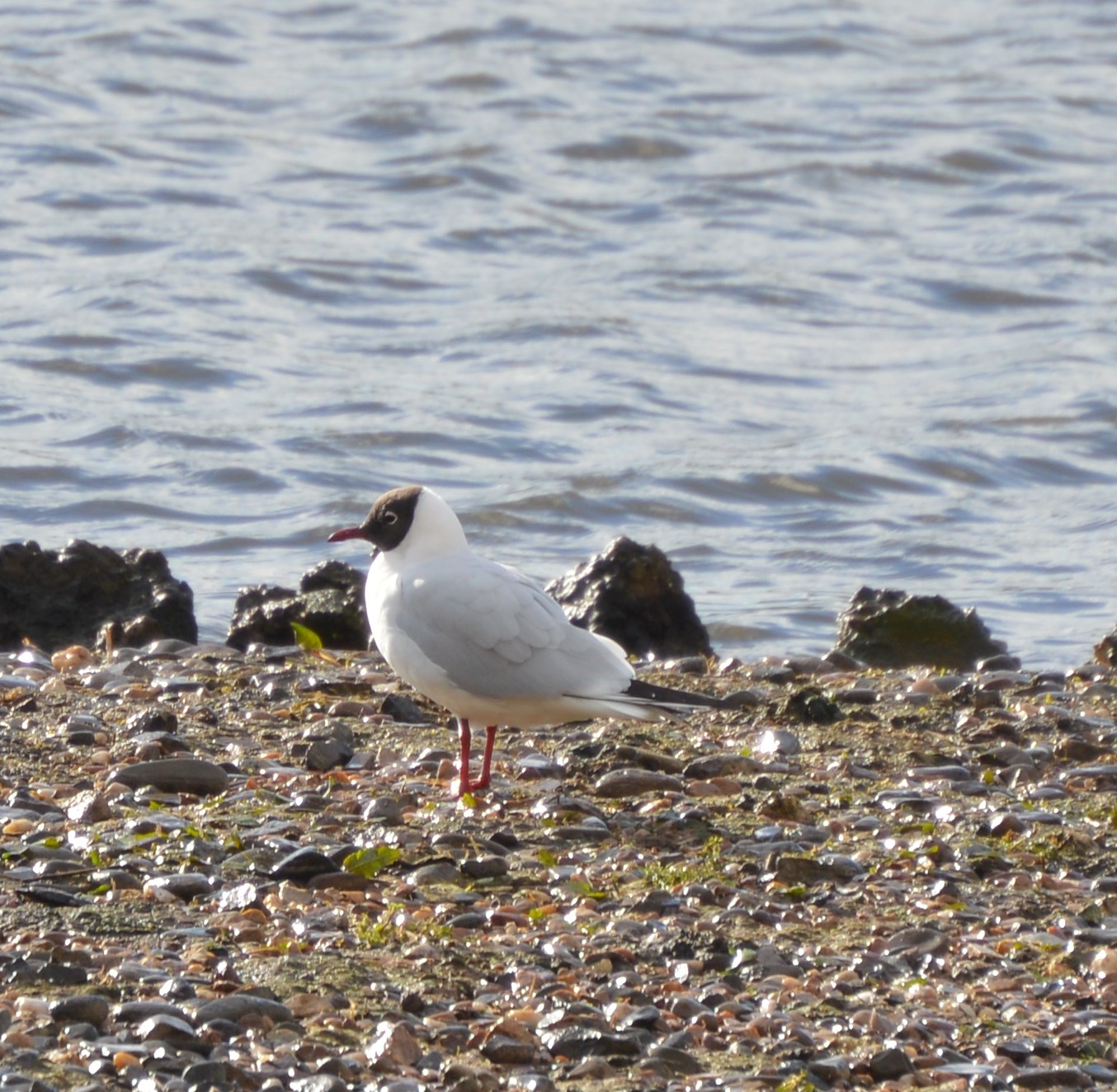
By far the most common birds I saw were these black-headed gulls, this one in his winter plumage still.

One species I was really pleased to see was the lapwing. I’d only ever seen these on TV (Springwatch most likely) and they are such characterful looking birds, I was really chuffed to find a small flock of them. They were a bit far away to get really good photos, although when they all took off I got a slightly better view.

Having lived by the coast for many years, one bird I was familiar with was the oystercatcher – never imagined I’d see them in the middle of Worcestershire though! I heard them at Upton before I saw them – that distinctive, fairly shrill call. A pair landed on a small island in front of me, easily recognisable with their bright red beaks and legs (I do like an obvious bird!) Again they were a bit far away to get really good photos.

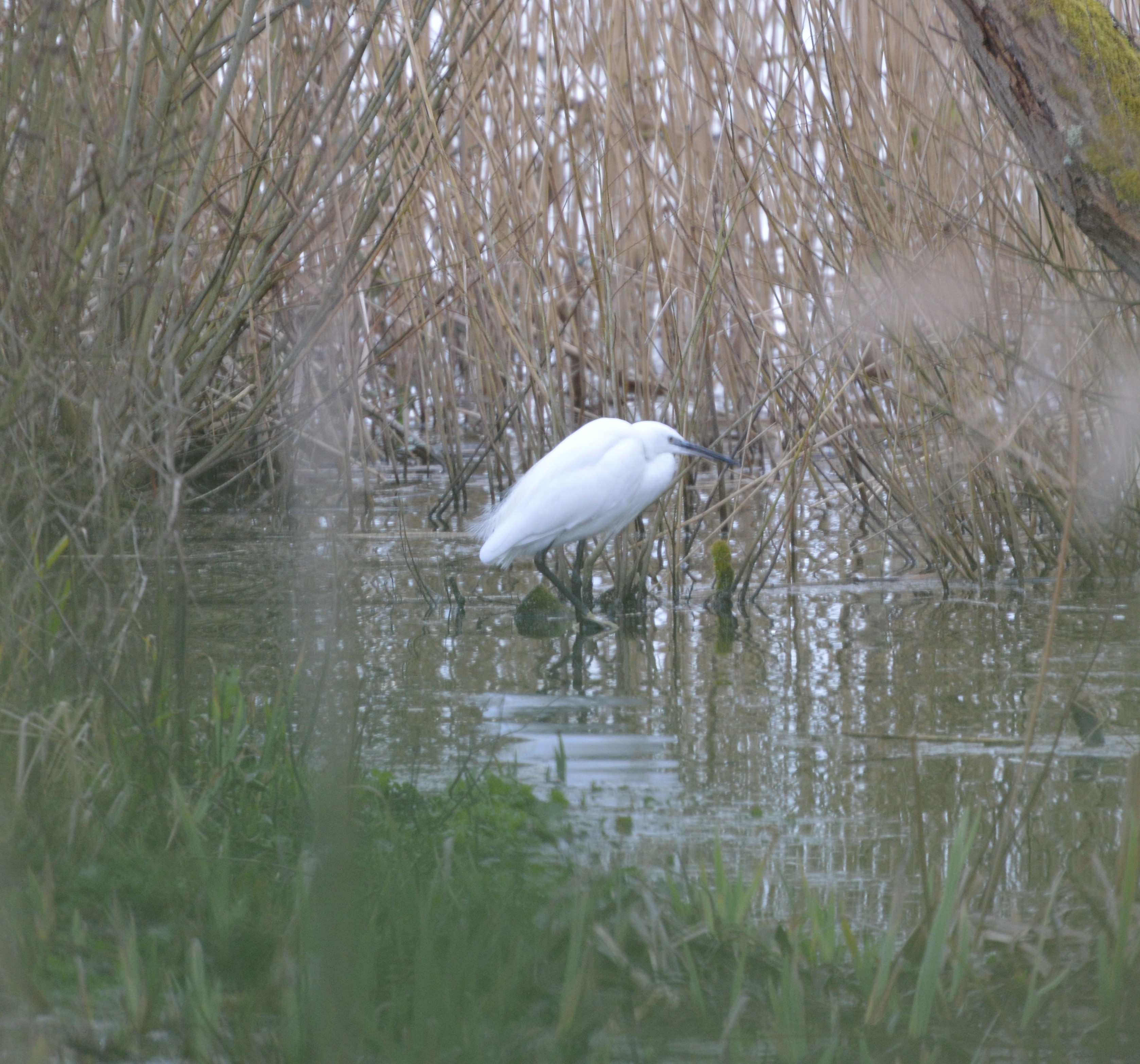
Without doubt the most beautiful bird we saw was this Little Egret,  spotted as I walked between hides. Almost ethereal with its pure white plumage, I watched it for a few minutes before it disappeared into the reeds.

All in all a great afternoon and although I was only there for a few hours, I still clocked up 18 species of bird, several of which were completely new to me. I heard another birdwatcher commenting that there was “nothing much showing” – he was no doubt much more experienced than I was and probably hoping for something unusual. Sometimes it’s good to be a novice, as I was absolutely delighted with everything I saw – lots of the birds were new to me, so it was all exciting and I was happy just watching what was there. For me there was plenty showing.

Out and About – Symonds Yat

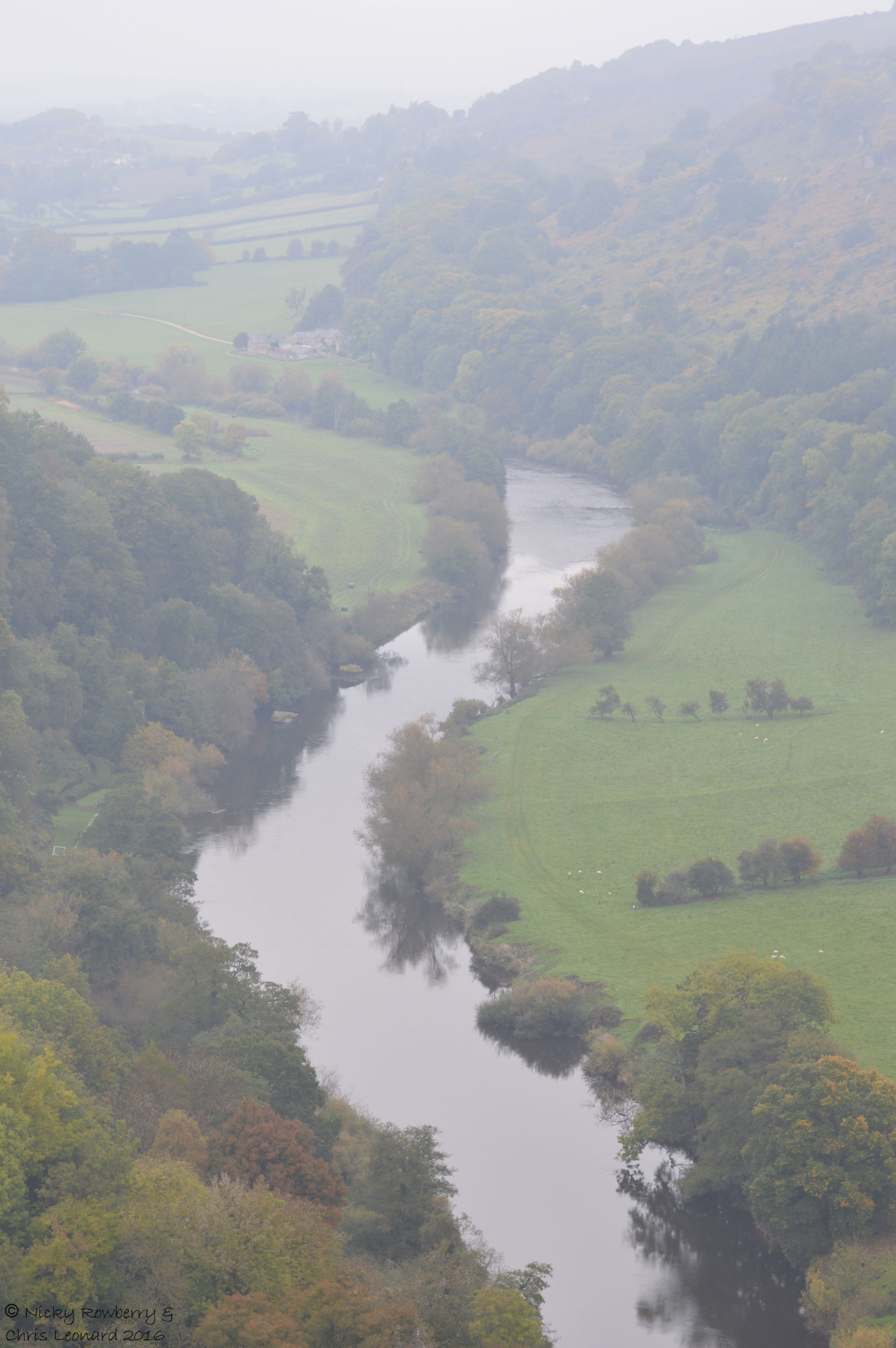
We had what seemed like a brilliant idea yesterday to head down to Symonds Yat to see the trees there in all their autumn splendour. As usual of course we didn’t really see what we’d aimed to see, but as is so often the case with our wildlife days out, what we did see more than made up for it. For a start the glorious autumn sunshine we’d hoped for had been replaced with a dull grey mist. Secondly the trees down at Symonds Yat must be a bit behind the ones in Malvern, as they’d not really changed colour yet. So what we could see through the mist wasn’t really the autumn spectacle we’d hoped for. Still we headed to Symonds Yat Rock which sits high up overlooking the horseshoe bend in the River Wye.  The trees below may not all have been golden brown but the view was still stunning.

river

We could see the cliffs where Peregrine Falcons nest and thanks to some very kind people who let us use their telescopic sights, we even saw one of the birds in a hole in the rocks. It was way too far away for us to get a photo – but at least we can say we saw a falcon!

The same helpful couple informed us that the strange noises we could hear were rutting Fallow Deer in the woods below (I’d thought the sound was Wild Boar, so  good job we met people who knew what they were talking about!) We didn’t see the deer but were reliably informed by our new-found friends that they do sometimes appear and go down to the river.

We may not have managed to see the deer or get photos of the falcons, but fortunately there was plenty of smaller animals that were much more obliging. Volunteers (possibly our two helpers from above) regularly put out bird food at the viewing point on the rock. This was attracting plenty of smaller birds who were clearly used to the flocks of visitors clicking away with their cameras (actually mainly phones of course, apart from us old fogies with actual cameras!) The highlight was a gorgeous Nuthatch – the closest either of us had ever been to one.

Various members of the Tit family were also making the most of the bird food. Coal Tits, Blue Tits & Great Tits were all completely unfazed by the visitors. Apparently Marsh Tits frequented the area too, but unfortunately not while we were there. A Chaffinch completed the array of small birds we saw up on the rock.

One final surprise though was a visitor on the ground beneath all the bird seed. The Bank Vole had clearly learnt that there were easy pickings to be had here and was also relatively unbothered by all the people.

We could have spent a lot longer up at the rock, but we’d booked lunch in one of the pubs down by the river in Symonds Yat East, so headed back down. Symonds Yat East is on the Gloucestershire side of the river, while Symonds Yat West is in Herefordshire. You can get a tiny hand-pulled passenger ferry between the two – the lad pulling the ferry across must have biceps of steel, as he never stopped going back and forth all the time we were there!

As we stood watching the river and the canoeists braving the rapids, we spotted the unmistakable flash of a kingfisher. Of course we’d left the camera back in the car while we had lunch,  and by the time the camera was retrieved, the kingfisher was long gone. A lovely flock of Long Tailed Tits flew in though to complete our small bird collection for the day.

So the day may not have provided an autumn spectacle, but we saw a kingfisher, heard some deer, just about saw a falcon, met some nice people and watched a vole – I’d call that a result!

In The Pink

This week I managed to combine a visit to Slimbridge Wetland Centre with meeting friends for lunch – a win-win day out in my book! Slimbridge is only an hour’s drive from us and is the most amazing wetland reserve, overflowing with birds both native and from abroad. If you’re into bird watching, it must be one of the top UK sites to visit. In the few hours we were there, we only managed to get round maybe less than half of it (probably due to too much time scoffing sandwiches and yapping in the café!)

I was trying to take photos as we meandered around, but there’s almost too much to take in and I kept forgetting to actually snap away. For some reason, when I got back and looked at the photos, I appear to have got a bit obsessed by flamingos! Nearly half the day’s photos seem to feature them. There are apparently 6 species, although I think I’ve only got 3 here (which vaguely irritates my OCD that having unwittingly got a bit obsessed, I didn’t then photograph them all!)
These first ones are Caribbean Flamingos – the brightest pink ones we saw. The colour always seems unnatural to me, but logically I know that it’s due to their food and that Slimbridge aren’t dying their flamingos for our gratification!

caribbean-flamingos

This next one is an Andean Flamingo and possibly my favourite of the ones we saw. The feathers are absolutely stunning. Unfortunately this species is classed as Threatened – mainly by hunting, mining activities and habitat loss.

andean-flamingo

The next two photos are of Lesser Flamingos. In the upper photo you can see the teeth or serrations along the edge of the beak that it uses to filter the food out of the water. The lower photo I included just because I like the way they sinuously wrap their necks around – it’s hard to tell where one bird ends and the next begins.

flamingo-head

flamingo-knot

Besides flamingos, there were birds everywhere – particularly geese and ducks. Many had clearly learnt that visitors = food, but this Bar-headed Goose was way too dignified for that and just sailed serenely by.

barr-headed-goose

There were lots of quite showy birds, but for some reason I really liked this South Georgian Pintail Duck. Nothing flashy, just quintessentially ducky!

south-georgian-pintail

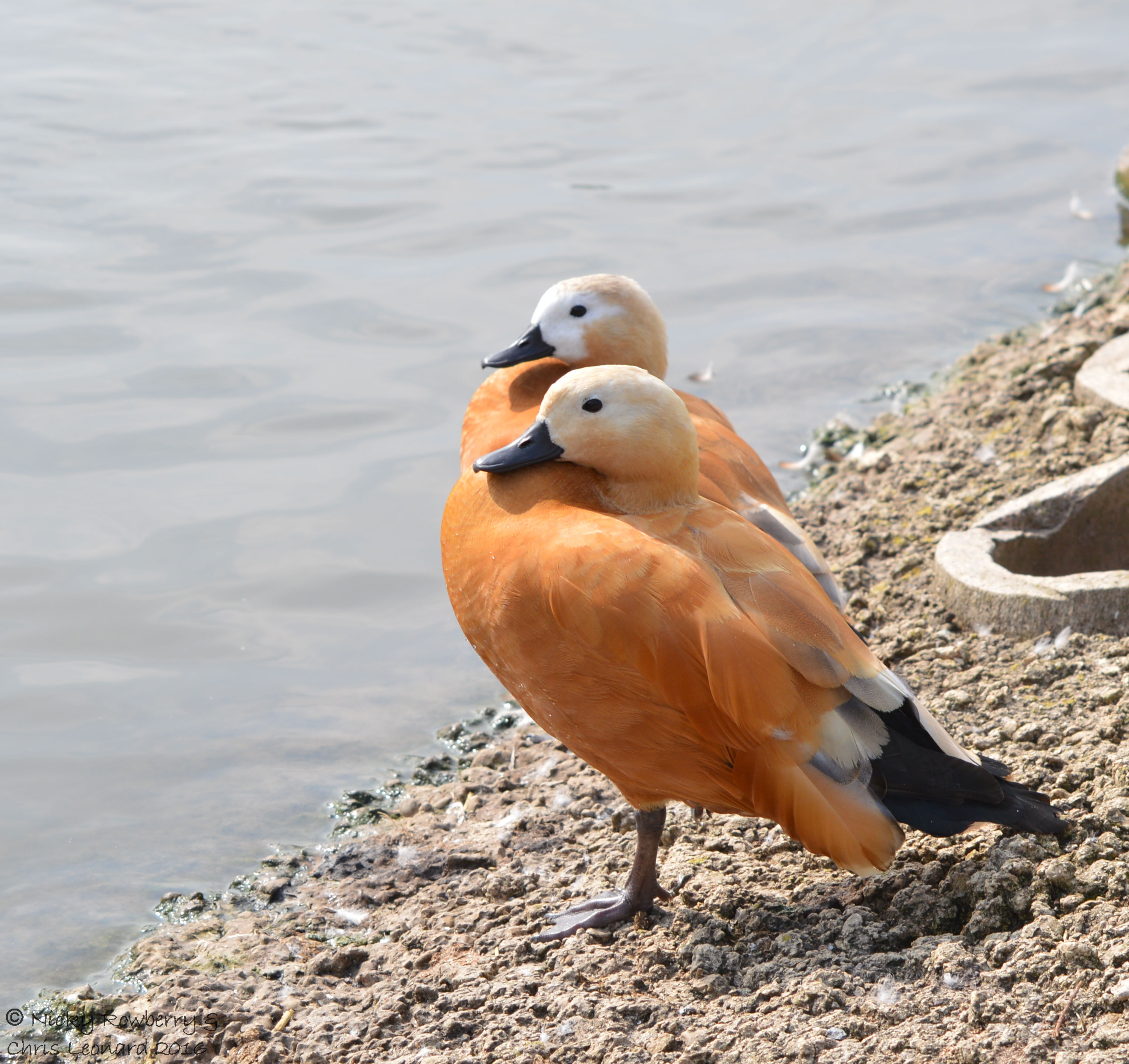
Probably my favourite photo of the day is this seemingly two headed duck! (Ruddy Eider Ducks I think)

two-headed-duck

We listened to a very interesting talk by one of the WWT volunteers, all about the Great Cranes. Slimbridge has been heavily involved in a project to reintroduce these majestic birds into Britain. It’s hard to believe but these huge birds were once common here until they were hunted to extinction. Fortunately they survived in Europe and thanks to the efforts of the WWT, they have got a toehold back in Britain.

cranes

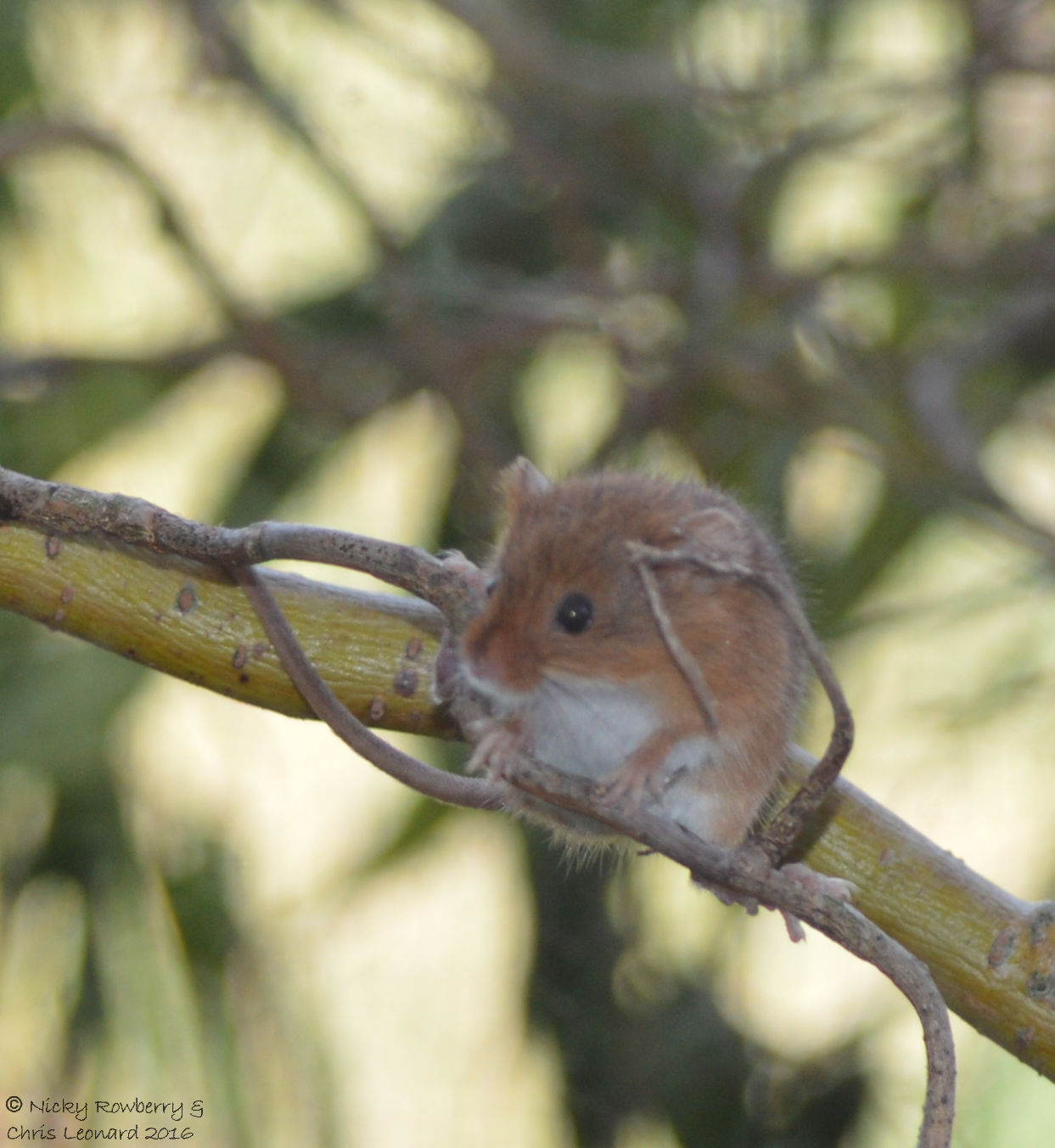
It’s not all birds at the wetland centre though. They have several mammals, including otters, a beaver, voles, shrews and these adorable harvest mice – the only ones who would pose nicely for photographs. Unfortunately they were behind glass, so the images aren’t great, but they were wonderful to watch – such quick inquisitive little creatures.

harvest-mouse

harvest-mouse-2

Final bird of the day though was this Spoon-billed Sandpiper – made entirely of Lego. They were setting up giant Lego animals while we were there for a children’s trail opening this Saturday. The lady who gave us the Crane talk had told us about these little birds (in non-Lego reality they are apparently tiny) and how the WWT is doing such valuable work to try and save them. This was the closest we got to seeing one though!

spoon-billed-sandpiper

You don’t have to be into birdwatching to enjoy Slimbridge, although it is obviously a bonus if you are. I’d definitely recommend it as a day out for anyone even remotely interested in wildlife and conservation. For more information go to: http://www.wwt.org.uk/wetland-centres/slimbridge/

Out and About – Grafton Wood

Grafton Wood in Worcestershire is one of our favourite butterfly spotting locations and at only a half hour drive away provided the perfect day out yesterday. We went seeking the Brown Hairstreak, as we’d seen them there before. This is Worcestershire’s rarest butterfly and Grafton Wood is its stronghold, but unfortunately yesterday the Brown Hairstreak refused to put in an appearance. Hopefully we’ll have chance to go back later in the month, but in the meantime here’s one we photographed last year.

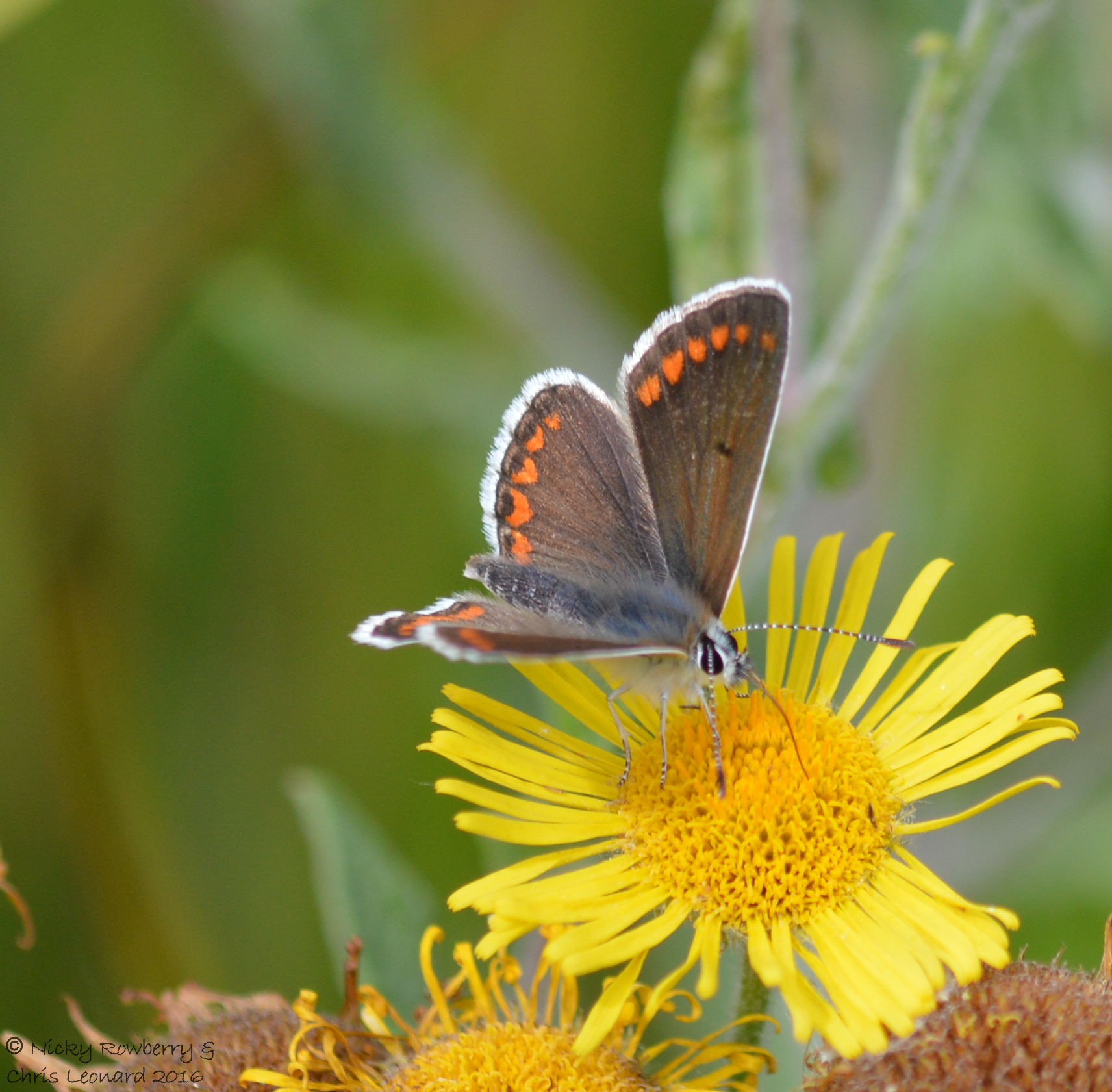
We may not have seen the Brown Hairstreak yesterday, but we did manage 14 other butterfly species, so we’re not complaining. One of the highlights was our second ever Brown Argus, having only seen these for the first time last week at Prestbury Hill.

Brown Argus

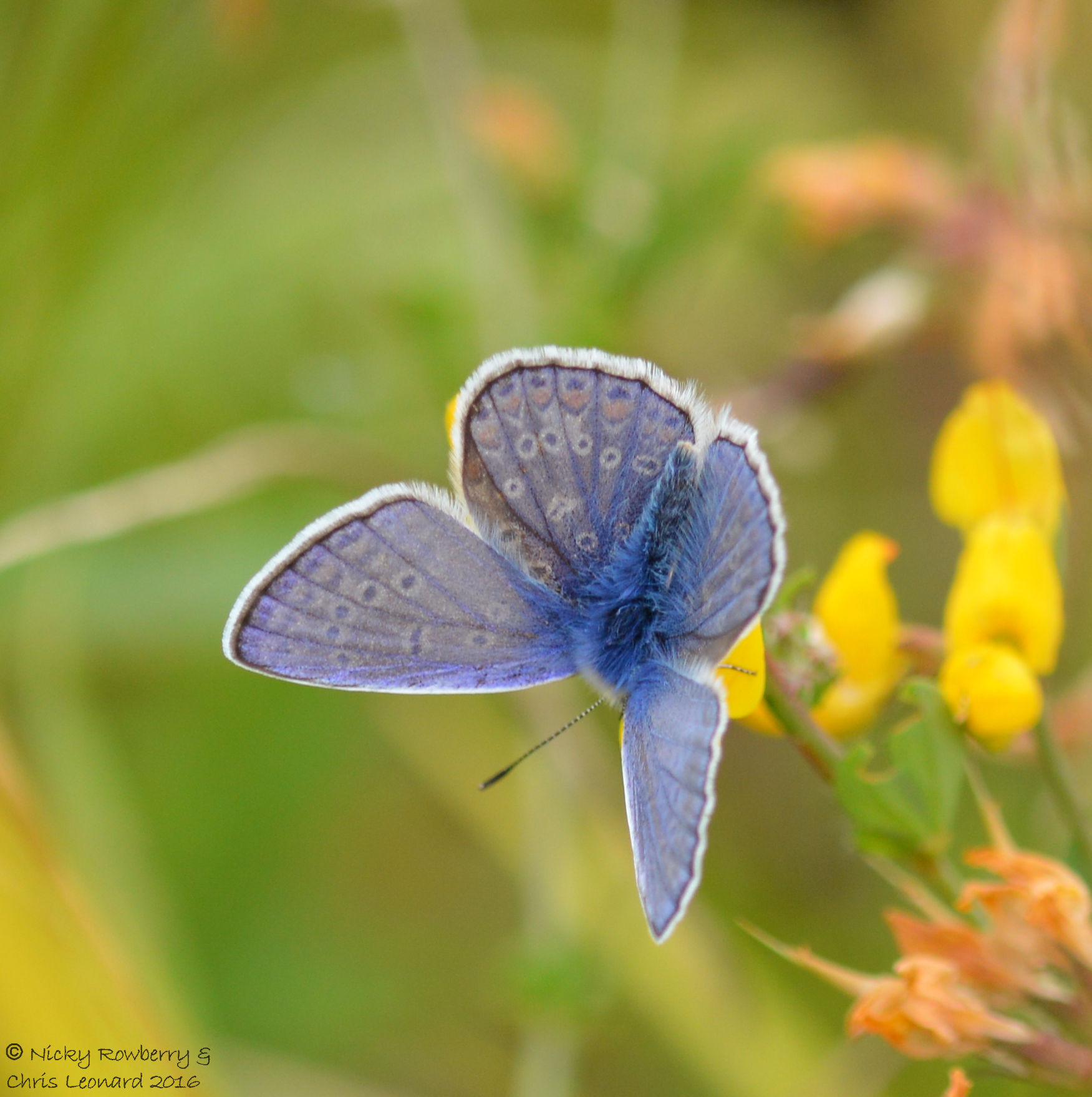
Common Blues were abundant as well. The name implies somehow that by being common they are maybe ordinary, but when the light shines on the males in the right way (like this one below sharing a flower with another favourite of mine, the Swollen Thighed Beetle), they are simply stunning.

Common Blue 3

The colours in the next photo aren’t quite as vibrant, but I love the way you can see the spots from the underside showing through.

Common Blue 4

I think we get a bit hung up sometimes seeking out the new species of butterfly, so it was nice yesterday at Grafton to see some of the old favourite species and have time to appreciate them in their own right. So in no particular order of preference – Red Admiral, Brimstone, Peacock and Small Copper.

Small Copper 2

The Red Admiral and Small Copper can both be seen feeding on Hemp Agrimony. This plant seems to be a butterfly magnet and is the one we saw the Brown Hairstreak on last year.

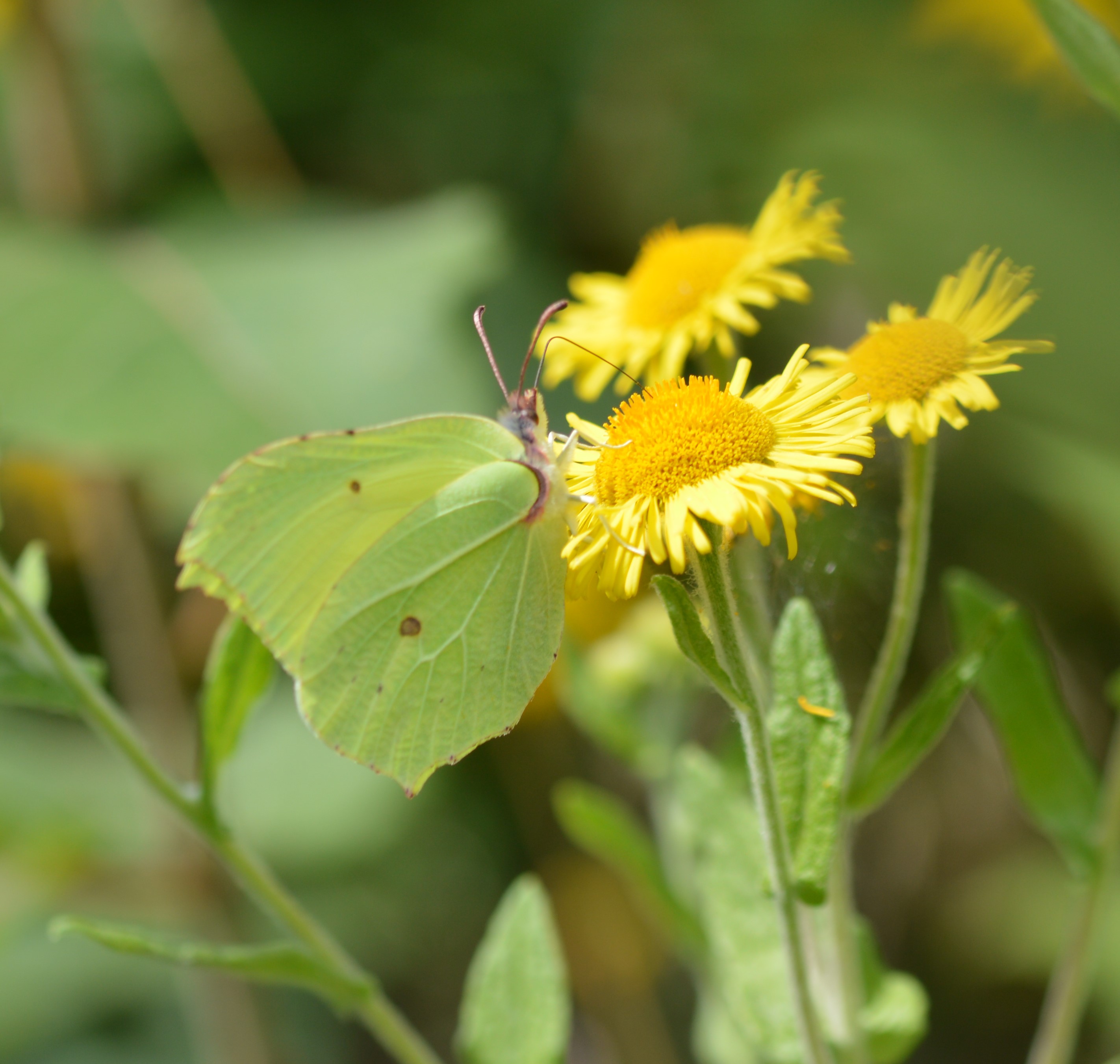
Butterflies weren’t the only insects of interest yesterday though – the dragonflies and damselflies were abundant too. Highlight was probably an Emperor dragonfly, but the swine thing wouldn’t land, so no photo of that. Next best was a Southern Hawker, which was almost as magnificent, but equally difficult to photograph.

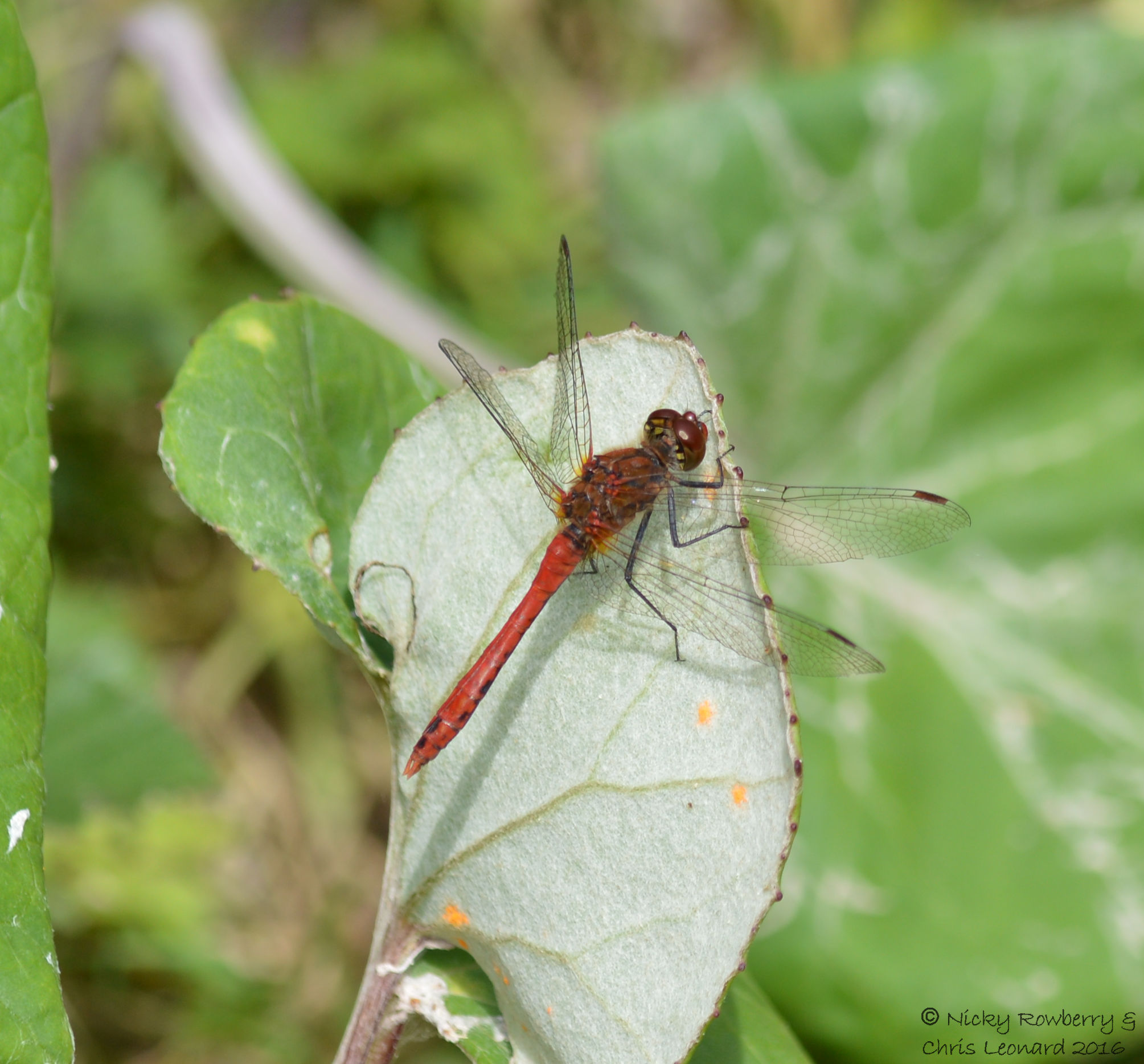
There were lots of Darters about too. At first I thought they were all Common Darters, but closer inspection of the photos back home revealed a Ruddy Darter too. The Ruddy one is a slightly brighter red, but the most diagnostic difference is the colour of the legs – the Ruddy’s legs are all black, whereas the Common has paler segments.

Ruddy Darter

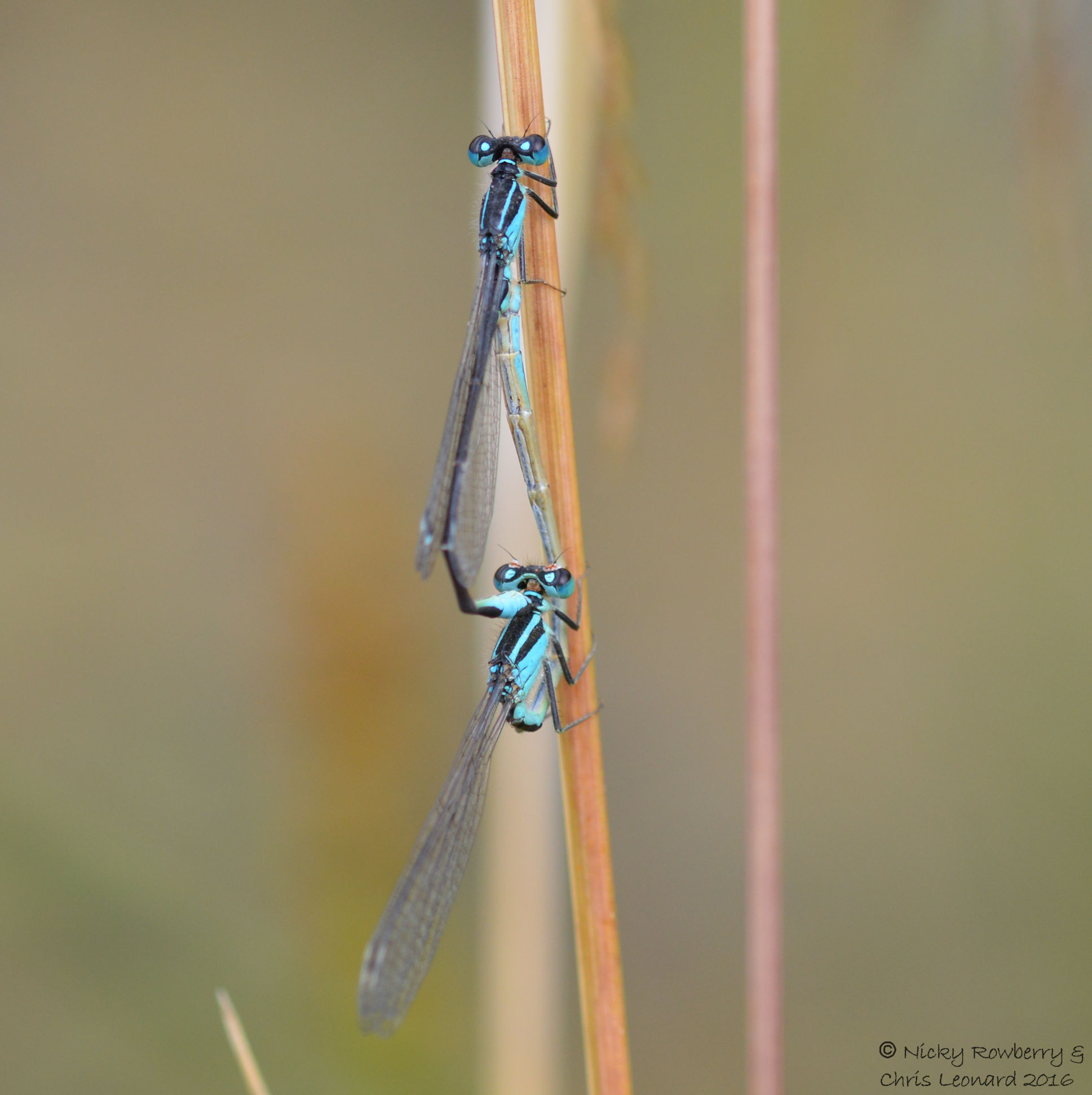
At a small pond we spotted this mating pair of Blue-tailed Damselfies – a new species for us I think. The male is the one at the top and he’s holding onto the back of the neck of the female below, while she curves her body up to his to receive the sperm. They can stay locked like this for quite a while!

Blue Tailed Damselflies 2

Back at the carpark by Grafton church, we rounded off the day by finding our first ever geocache! Not the greatest level of difficulty, but we were pleased with our success on the first attempt. Another thing to get addicted to “bagging”!