Blowing in the Wind

At the weekend, we finally got to go and see the Snake’s Head Fritillaries at Lugg Meadows near Hereford. I’ve been wanting to see these for ages now, but something always seems to crop up to stop us (last year the meadows were flooded for a start). So this year we booked on a guided walk with Herefordshire Wildlife Trust to go in search of these nationally scarce plants. Lugg Meadows are part of a very old system called Lammas Meadows, where the meadows are left through the summer to grow hay, which is then cut in late July (in time for Lammas Day 1st August), then animals allowed on to graze until the following year. In places like the Lugg Meadows, this practice has been going on for hundreds of years, possibly back to Roman times. So the history of these meadows predates Hereford Cathedral itself; they were even recorded in the Domesday Book.
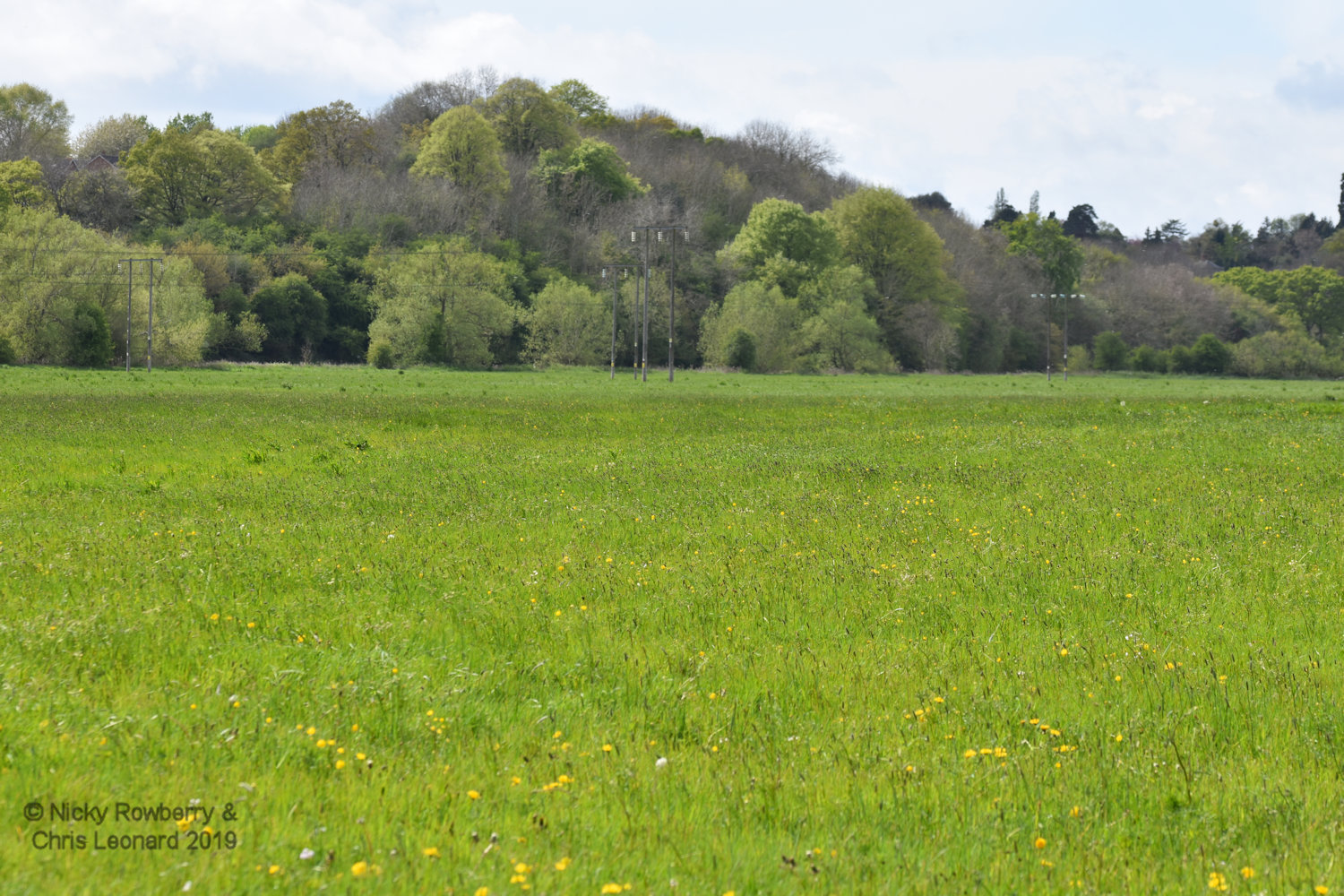
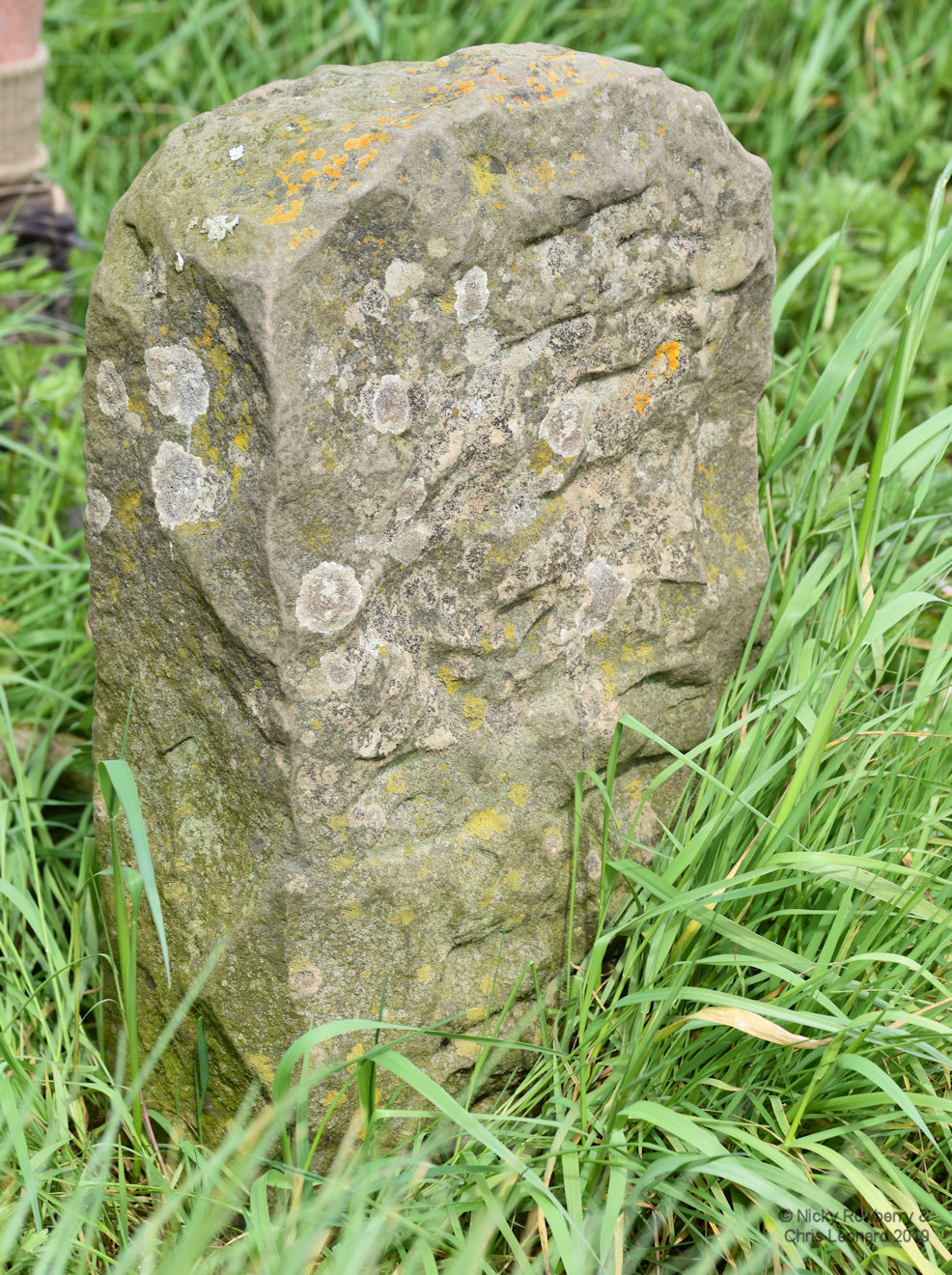
Lammas Meadows were once much more common, but now very few remain in as good a condition as those by the river Lugg. The meadows were divided into strips of land, the hay from which would then be harvested by different people. These strips were marked by “dole stones” like the one below.
Our guide Peter was very entertaining and knowledgeable and despite the efforts of Storm Hannah trying to blow us over, took us straight to the relevant patch of the meadow to see the Snake’s Head Fritillaries. The meadows flood regularly, resulting in a rich soil and diverse flora. The fritillaries are nationally scarce, but are still doing well here. In most other similar sites, the Snake’s Head Fritillaries tend to be predominately purple, with just a few white ones. For some reason in the Lugg Meadows it is the other way around – the white flowers dominate with just a few purple ones.
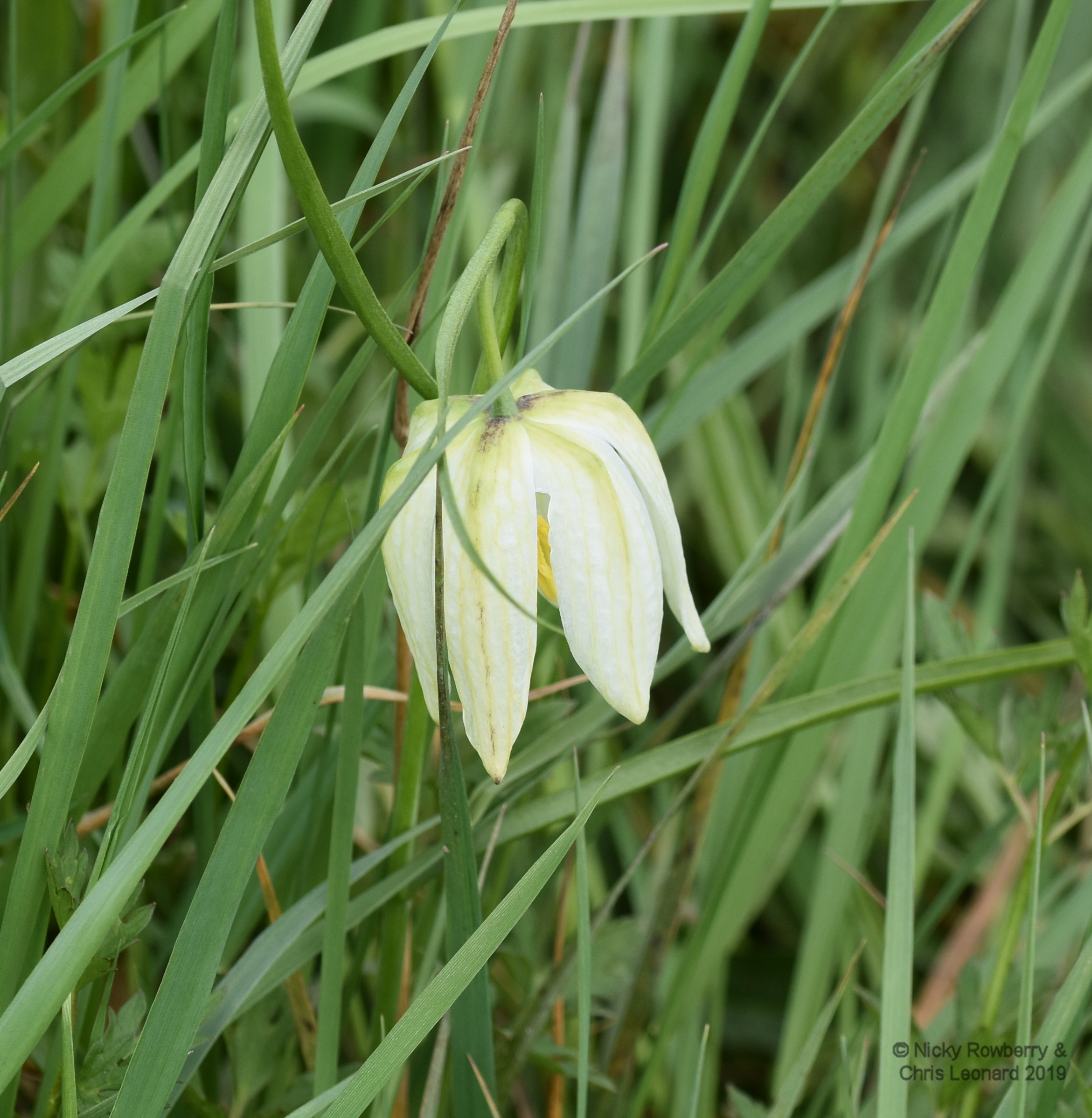
With Storm Hannah blowing, it was perhaps not ideal conditions for taking photos of delicate flowers that were literally blowing in the wind, but we did our best.
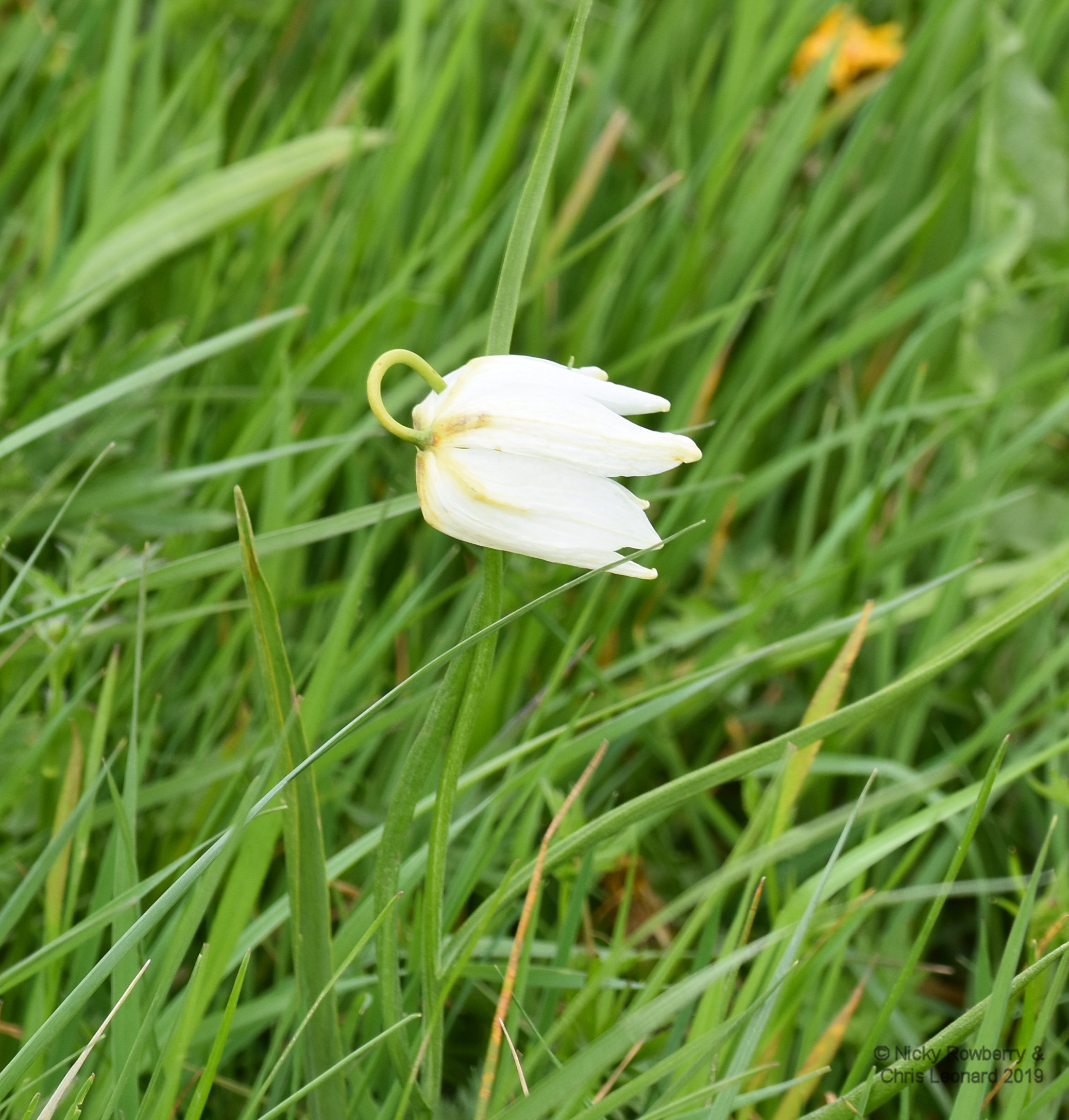
The Latin name for the fritillaries Fritillaria meleagris apparently refers to the chequerboard pattern of spots on the normal purple variety.

I made a brief video clip to show how much the wind was making life difficult for steady photography.

Once we got our eye in, there were actually quite a few of the flowers nodding around in the wind. Apparently they had peaked a week or two before, but since the walk was pre-booked for today, we were happy to catch them at all.

While we oohed and ahhed over the flowers, we heard our first cuckoo of the year, which was a nice surprise. We couldn’t actually see the cuckoo, it was behind us somewhere in the trees. But we did see lots of these cuckoo flowers – one of the favourite food plants of the Orange-Tip butterfly – not that any butterflies were flying while the wind battered the meadows.

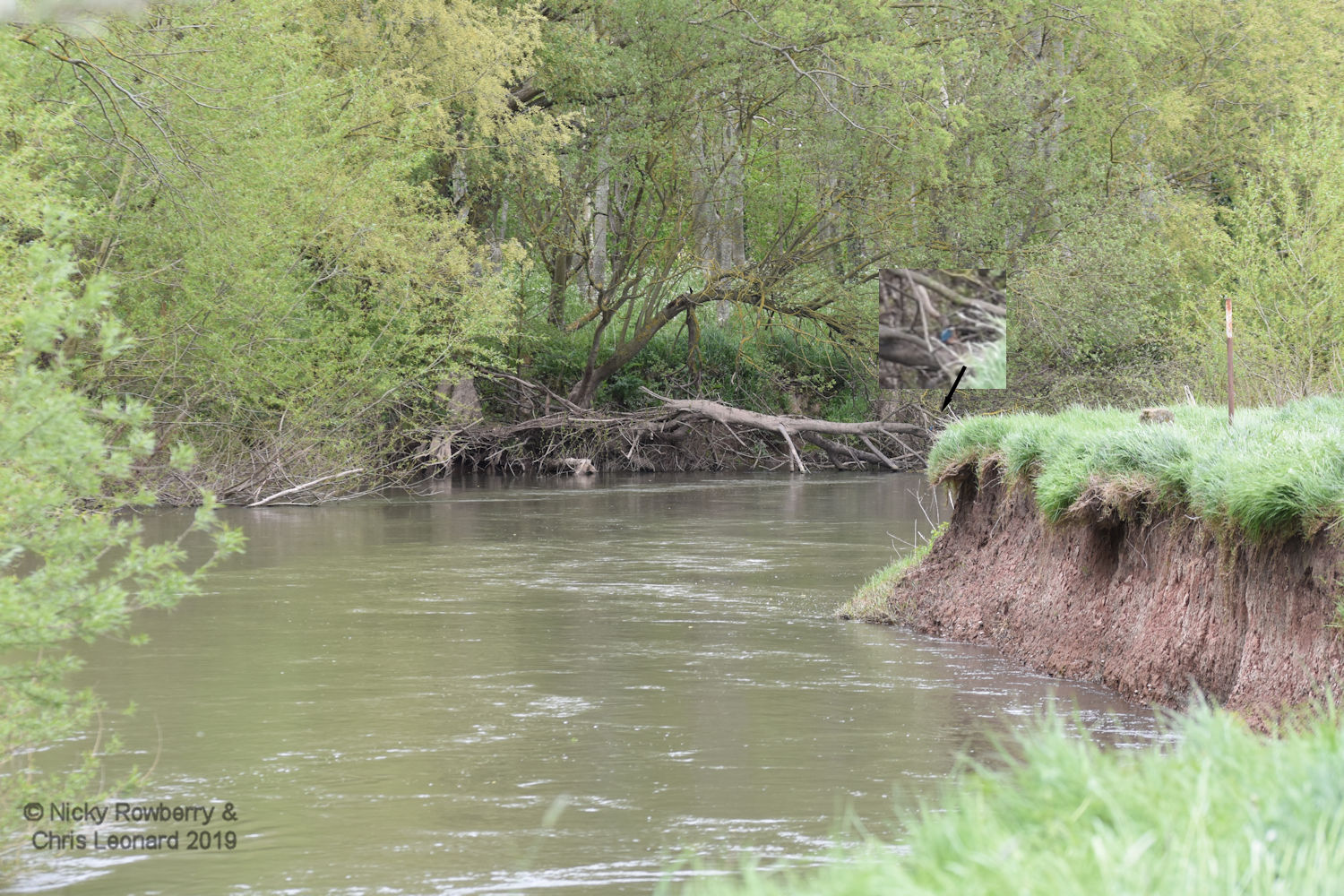
We returned to the car by crossing the meadows and walking alongside the river. We got the very briefest glimpse of a kingfisher as we walked. Such a brief glimpse, I’ve had to blow up the section of the photo just to prove there was really one there!
Herefordshire Wildlife Trust do a great job of managing these meadows. There is an area that has curlews nesting – access to this is restricted during the breeding season to try and help this struggling species. So all in all a very pleasant way of spending a Saturday afternoon.  Next year we can maybe go back under our own steam, now that we know the right area to look for the fritillaries and we can hopefully pick a weekend without a storm blowing!

Red Mason Bees

The fabulous weather over the Easter weekend brought the blossom out in full force on our apple tree and with it a flurry of bees all around the garden. The tree is of the Discovery variety so produces early blossom for early apples and the bees certainly seemed to appreciate it.

I have two bee hotel boxes on the garage wall just a few feet away from the apple tree. These were used last year by both red mason bees and some leaf-cutter ones. So far this year it has mainly been the red mason bees buzzing around it. Initially all I could see were several red masons flying up to the holes, checking them out and rapidly flying away again. They were not only really quick, but the bee hotel is quite high up on the wall which meant I had to wobble about on a chair to try and get a photo – all of which goes to excuse this blurry shot!
I couldn’t understand at first why they kept coming and going, without actually going into any of the tubes. They would repeatedly check out the same tube. A quick google revealed that they were probably males, who emerge first. The females emerge a bit later having been laid further back in the tubes and the males were hovering around waiting for a fresh female to emerge. Having failed to get a decent still photo, I tried to get a video of them using the GoPro on a stick (more wobbling about) with mixed success:

The females must have started to emerge a few days ago. The males clearly don’t hang about or spend a long time “wooing” the females, as I found this happy couple immediately below the bee hotels. It looked as if the male had grabbed the female immediately as she emerged and the pair had dropped to the ground.

A bit of grovelling on the ground and I managed to get a video of the loved up pair.

The males are a good bit smaller than the females and he does look a bit like he’s hanging on for dear life. She also doesn’t look that impressed and seems more bothered by washing her antennae!

With the apple blossom so close to the bee boxes, it provides plenty of pollen for the bees right on their doorstep.


The red masons obviously aren’t the only ones making the most of the blossom while it lasts.  I’ve counted at least 8 species on the tree in the last week, but here are just three – a Nomada bee, an Ashy Mining Bee and a Red-tailed Bumblebee.

We already have the two bee hotels on the side of the garage, one on the front of the house and one old one just lying in the garden. The spring sunshine seemed the perfect opportunity to get the old one back up and add a new one to the bees’ property portfolio. The neighbours had replaced the fence between us last year and it catches the sun for a lot of the day, so it is the perfect place for more bee hotels. So the old one went up along with this new beauty. There may be more to follow as the fence looks very bare and basically – why not?


I’ve not managed to get photos yet of any bees using the new one, but within hours there were a couple of red mason bees checking it out.

Bees of course were finding places to nest long before we started thinking of providing bee hotels. This, I think, is the entrance to a ground nesting bee’s nest – possibly one of the Andrena species. There are a few of these little holes dotted around our so-called lawn.


Every garden must have space for at least one bee hotel/bug house. Even if you don’t really have a garden you could put one on an outside wall. So why not give a home for nature and put up a bee hotel?


Spring Insects

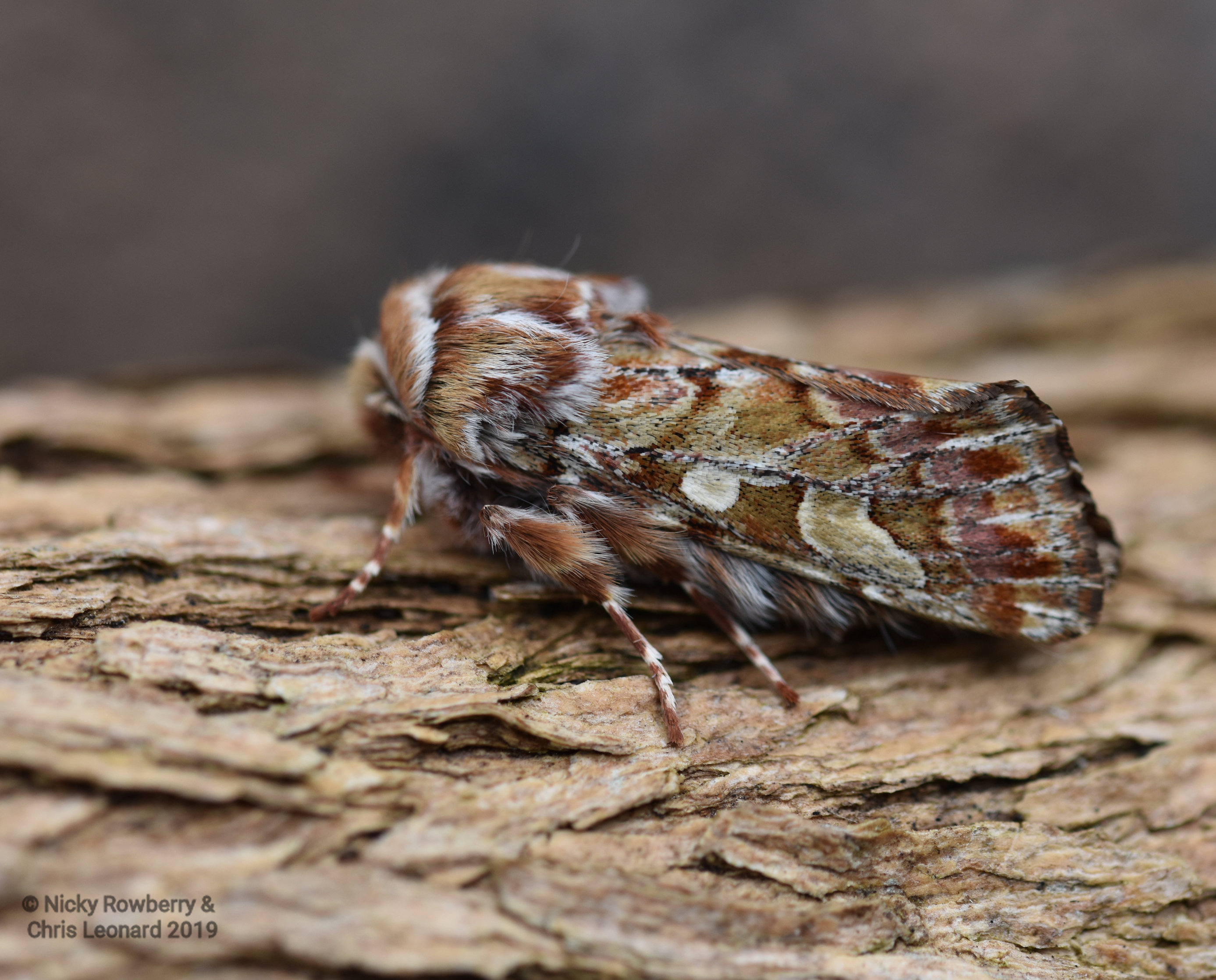
This last week the insects seem to have been coming out in force in the garden. After the relative quiet of the winter, it’s great to hear the buzz of insects in the air again. Moths may not buzz, but it’s still really nice to have them appearing again too. March brought the start of the Garden Moth Scheme for the summer. After a few weeks of fairly plain looking moths (sorry Common Quakers, but you aren’t the most showy of moths), it was nice last weekend to get a few of the more beautiful ones – in fact the Pine Beauty and Oak Beauty.

Hopefully it won’t be too long before the really spectacular hawk-moths start turning up in the trap too.  Butterflies have been proving a bit more elusive than the moths; so far I’ve just seen a few Small Tortoiseshells in the garden, but not managed to nab any photos.

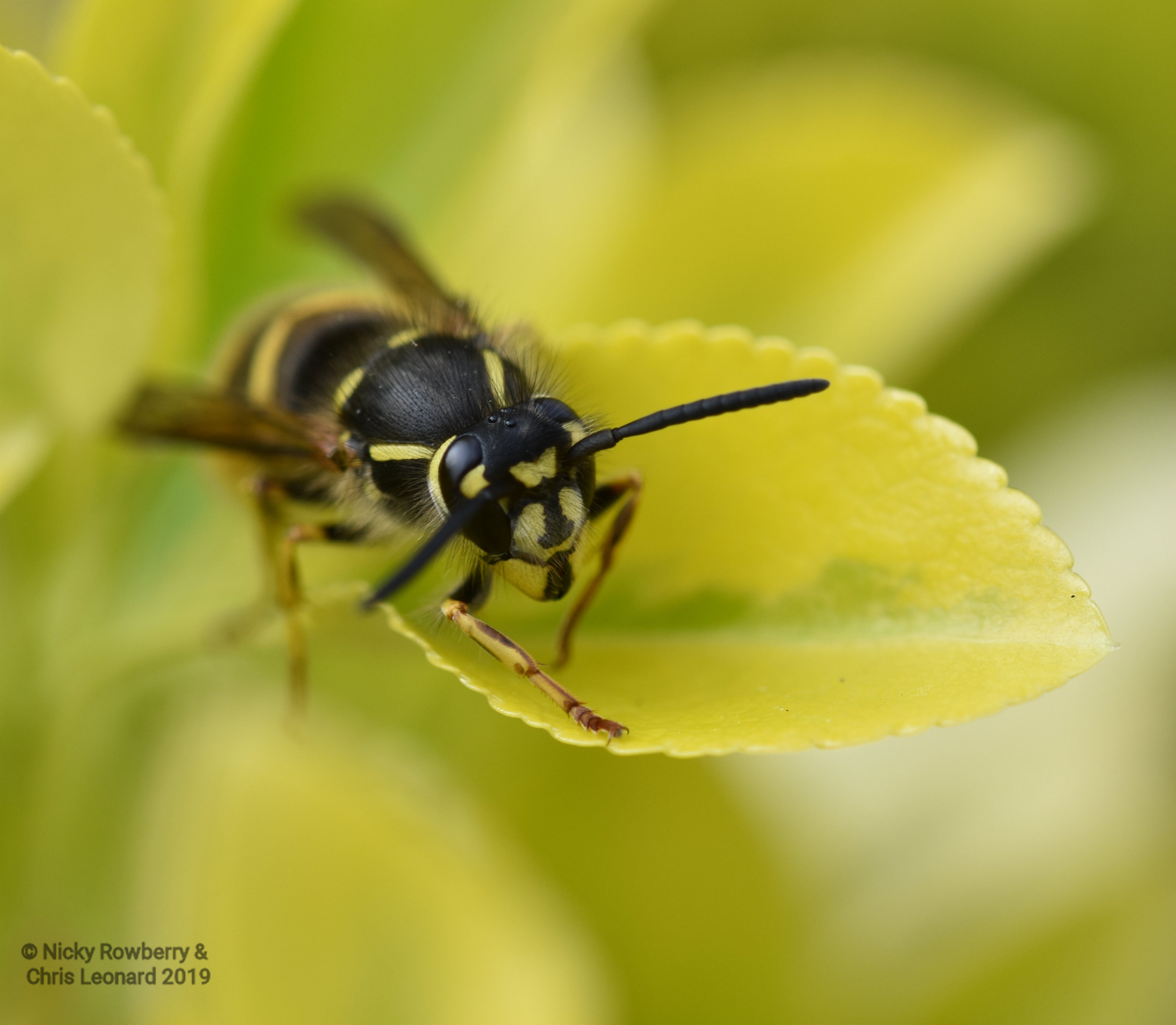
Wasps may not be popular with everyone, but when you study them close up, they really are stunning insects and they are already making themselves known around the garden this year.

In the last 2 weeks, we’ve already recorded 12 species of bee in the garden – a promising start to the bee season. First up was my perennial favourite – the Hairy Footed Flower Bee. The males appeared first, patrolling frenetically around the garden, seeing off anything remotely bee-shaped that got in their way.

The last few days, I’ve been seeing more of the females – distinguishable by their all black bodies with orangey pollen brushes on the back legs. Our garden has naturalised primroses all over the place and the bees love them.

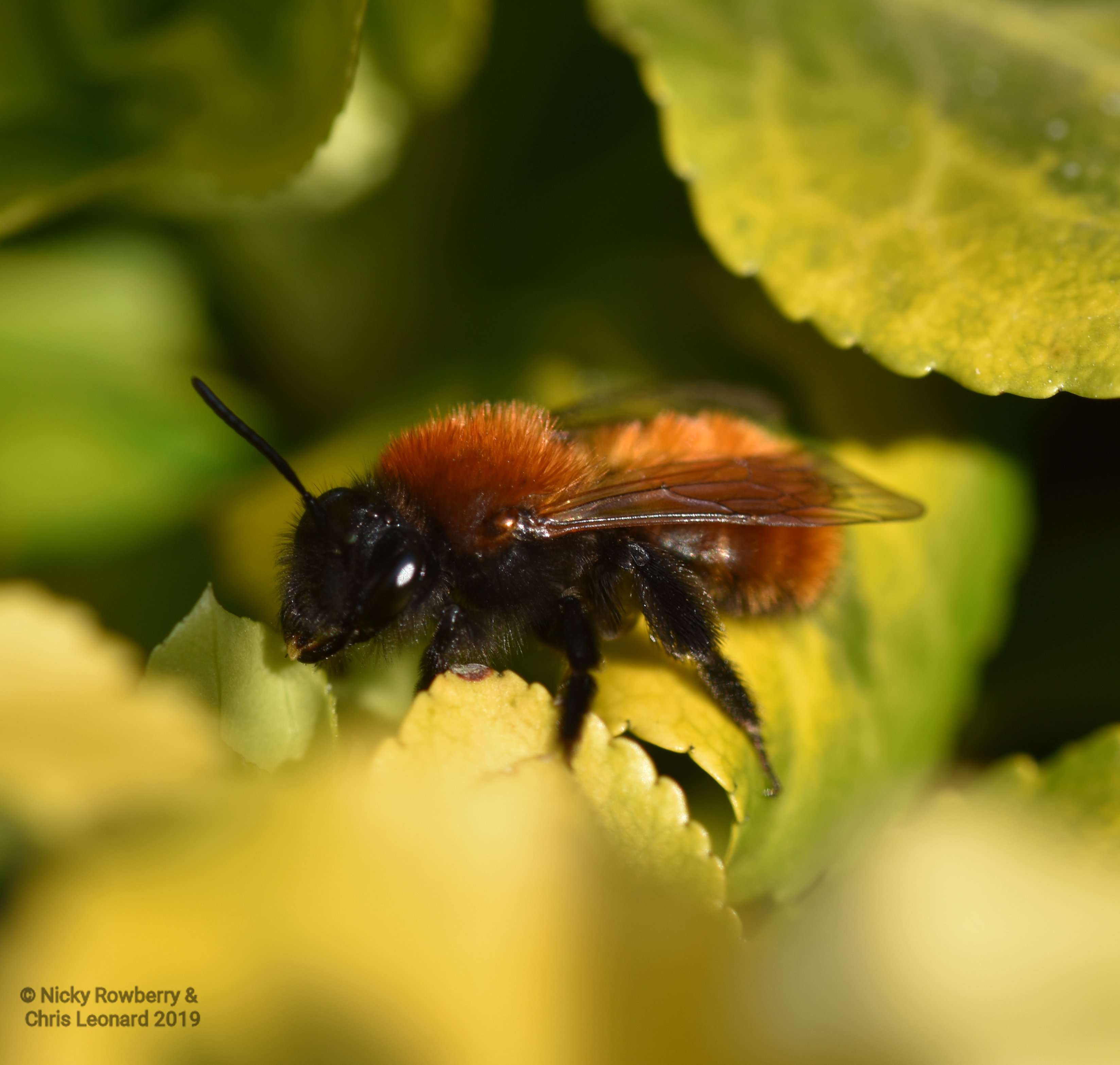
Another favourite is the Tawny Mining Bee, in particular the females who have this bright red foxy looking hair all over them. I spend (some may say waste) an awful lot of time chasing these round the garden, trying to get the perfect photo to do them justice.

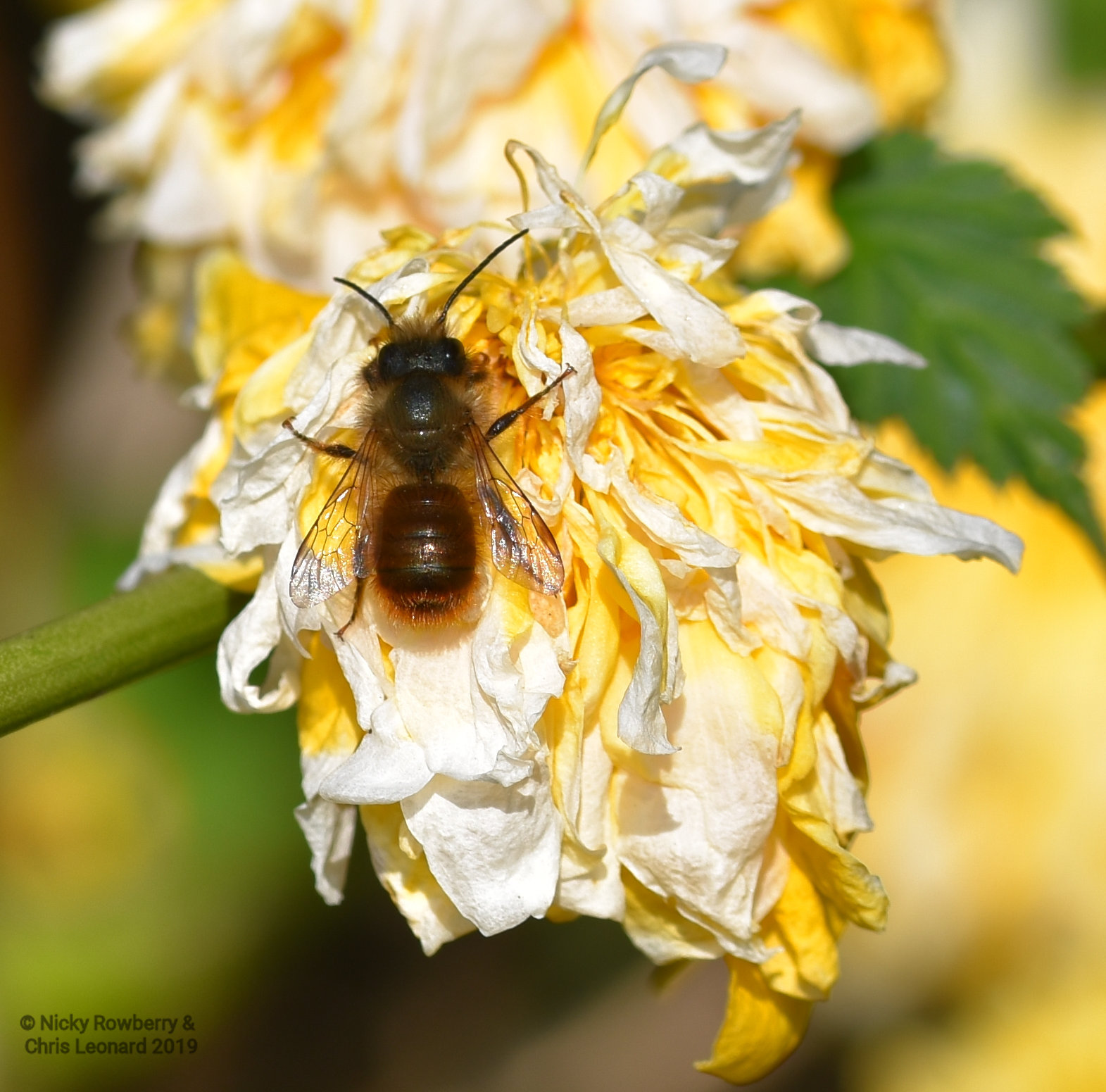
Not quite so showy and much smaller is the Red Mason Bee. We get these little bees every year, finding nooks and crannies in the brickwork to nest in.

The much larger Red-tailed Bumblebee is also on the wing now, although so far I’ve only seen Queen bees like this one (I think).


The strikingly coloured Mourning Bees have already been busy on the rosemary flowers. These are also a favourite, not least because of the obvious white “kneecaps” which make them a cinch to identify.

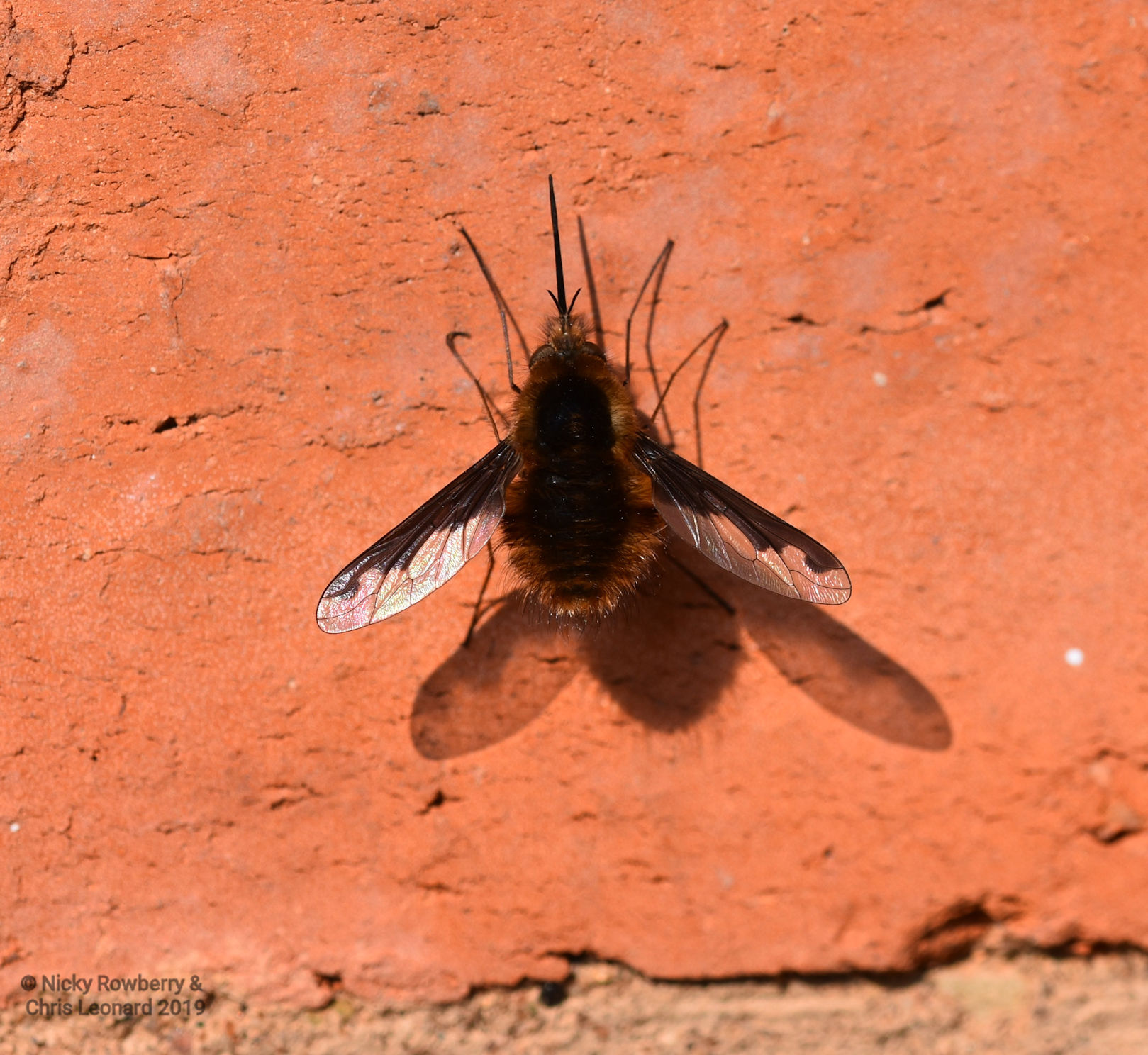
Buzzing like a bee, but actually a fly, Bee-Flies seem particularly abundant this spring. I’ve previously only ever seen the one below – the Dark-edged Bee-Fly. They seem to torment the male Hairy Footed Flower Bees by hovering around “their” primroses. They also seem curious about us and often hover in front of me as if they’re trying to work out what this huge being is?

But there is a second species of Bee-Fly – the Dotted Bee-Fly. I’ve been hoping to see one of these for years and have chased a lot of the Dark-bordered ones around fruitlessly trying to find one with dots on. Then I read on Twitter this week to look out for the white stripe on the abdomen – easier to spot when they are flying than the dots on wings whirring like mad. And so I was thrilled when using this marker, I finally spotted one – complete with dotty wings and white striped bum (white stripe is more apparent in the second photo below).

As for other groups of insects, well they’re all starting to appear too. Hoverflies are always fairly abundant, although tricky to get a decent photo of. This male (male because its eyes meet in the middle, so I’m told) Eupeodes was more obliging than most.

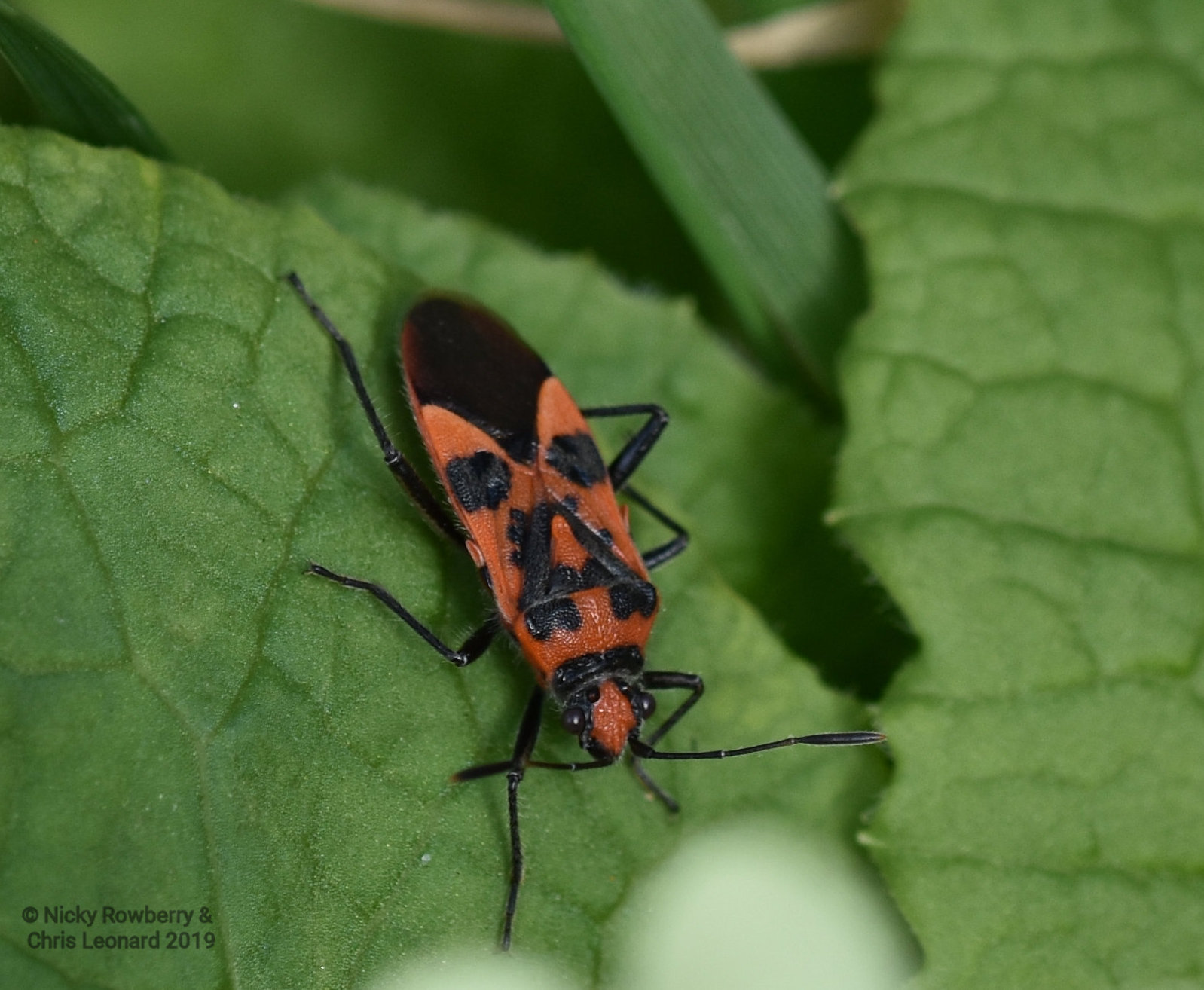
A single Cinnamon Bug so far, but easily visible against the primrose leaves.

I’ve always had a soft spot for the Shield Bug family of insects. We’ve recorded 7 species in the garden in total, although so far this year we’ve only seen the green one and this Dock Bug.

Not had the time yet to go rooting about in the undergrowth looking for beetles, but did at least spot the first ladybird of the year. Slightly disappointingly I think it is a Harlequin, so not an ideal spot, but hopefully some of the native species will appear soon too.

Final photo for the blog, this crab spider lying in wait for a bee. I know they’re not actually insects, but having spotted him today posing so nicely on the red valerian, it seemed rude not to include him. I thought these spiders were supposed to be able to camouflage themselves, but this one doesn’t seem to be doing a very good job.

So that’s a round up of the spring invertebrates currently buzzing/flying/crawling around the garden. It feels like everything is springing into life at last and we can look forward to an insect (and arachnid) filled summer.


Spring in the garden

The Spring Equinox has been and gone already and I’ve been gathering video clips for weeks now with signs of spring. I blogged about the allotment last week, so this time it’s the turn of the Too Lazy garden proper. I’ve had the cameras out all over the garden and got so many videos it’s taken a while to sort through them; but here are some highlights from the last few weeks.

Our first hedgehog woke from hibernation and appeared on the trail camera at the end of February – quite early, but given the mild winter we’ve had, maybe not too surprising.


It wasn’t long before one became two and a second larger hedgehog appeared in the same part of the garden. This second one didn’t seem too keen to share the food with the smaller one and there were a few tussles the first night. I had hoped One-eyed Tim, one of last year’s hedgehogs, might have appeared by now, but neither of these are optically challenged, so I hope he’s just late coming out of hibernation.


The garden birds, in particular the blue tits, seem to be feeling the spring in the air too. Blue tits used to nest in our garden, but for the last few years, they seem to have turned their noses (or beaks) up at it and although regular visitors, they must be nesting elsewhere. I did get hopeful when the old nest box we’d stuck on the apple tree seemed to be getting a bit of attention:


Unfortunately despite repeated visits to check it out, they seem to have found it lacking in some way. They may not be favouring our garden for their nest, but they’re not averse to making use of the nesting material we’ve put out for them. I’d filled an old hanging basket with hay and moss raked up from the lawn and the blue tits wasted no time helping themselves to it.


In the absence of nest box footage, I thought I’d make the most of the hay/moss collection and try and get some different shots of this activity instead. First I tried putting the GoPro on a branch above the basket, which worked reasonably well.


I then had a go putting the camera inside the basket cage itself. The blue tits weren’t bothered by it at all, so I got some half decent shots of them tugging at the moss to get the best bits.


Last month I succumbed to the urge to get yet another camera for the garden – this time one trained exclusively on a feeder. We can live feed it to the living room, which is great, although most of the time we end up just watching peanuts swinging in the breeze. But I did eventually manage to get a brief clip of the blue tits – once again happy to avail themselves of anything on offer in the garden (except the nest boxes).


The blackbirds made an early start gathering nesting material at the end of February – or at least the female in this video clip did, the male seemed more interested in making sure we got his best side on film!


The squirrel wasn’t doing anything particularly spring-like, other than checking whether the hedgehogs had left anything worthwhile; but I can never resist the squirrels, so here’s his few seconds of fame too.


The water bath seems to have been coming into its own again now spring’s here too. This blackbird was making the obvious use of it by bathing and of course lots of birds just drink from it.


But one magpie in particular has been using it for something a bit different. He or she has been eating bits of the cat food that I leave out for the hedgehogs. Most of it is eaten straight down, but some pieces are perhaps too hard, so it has been dropping them in the bird bath, presumably to soften them up a bit.


So there’s plenty of activity in the garden already this year and that’s without even discussing the insects that are all starting to appear too (I’ll save them for the next blog post). I love this time of year when everything is optimistic with the promise of the summer to come; perhaps the wildlife in the garden feels the same?

Spring & Surprises at the Lottie

Spring has well and truly sprung down on the allotment, bringing with it some old favourites, a new generation and a big surprise.

Being fair-weather gardeners we’ve not done much down the lottie over the winter, but when we have been down a pair of robins tend to follow our every move – always on the look out for a freshly unearthed worm.

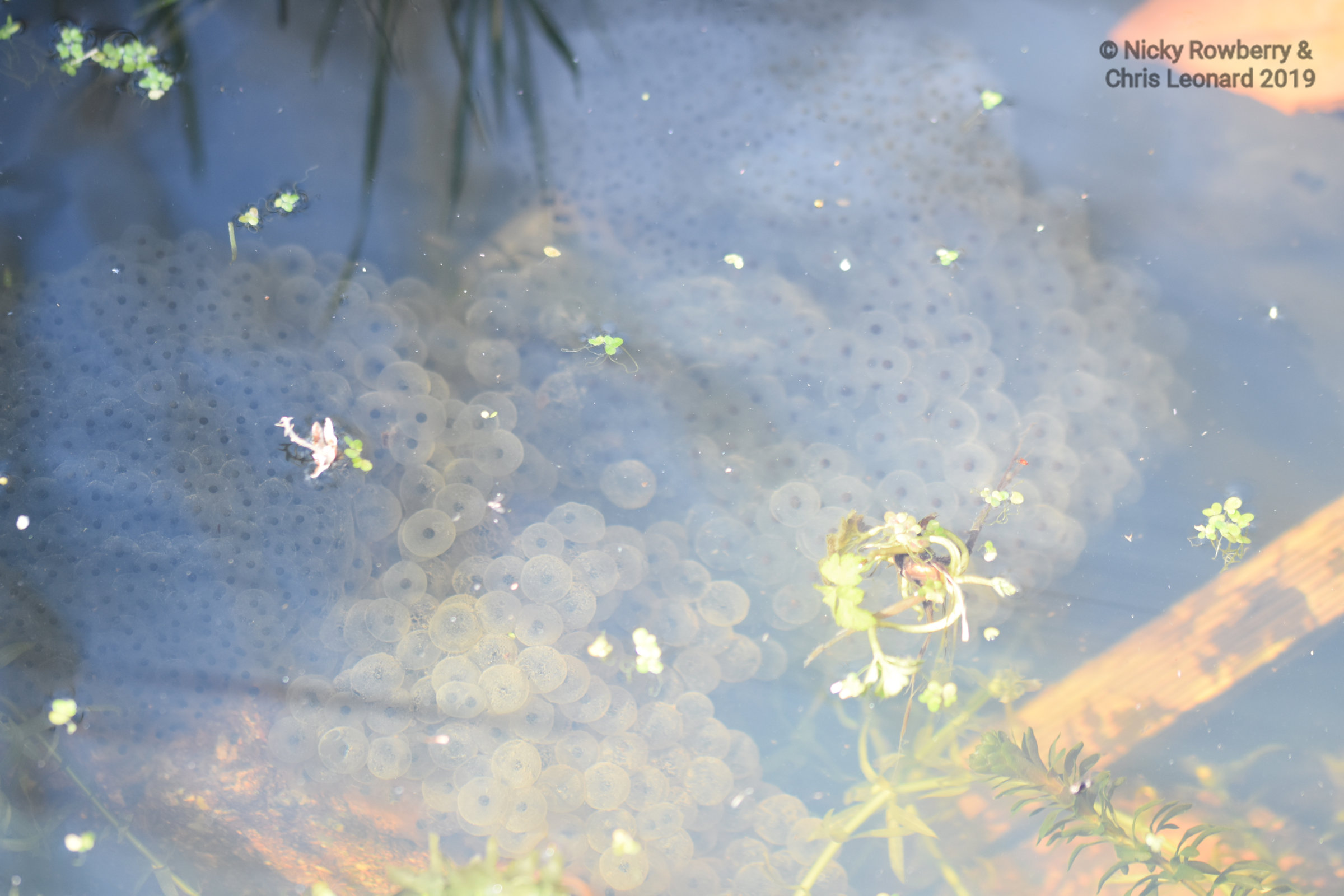
I’ve been going down more frequently for the last couple of weeks to check on the pond – it’s frog spawn season! So I was very pleased when on 2nd March I spotted for the first clump of spawn in the pond. It could only have been laid a day or two before, making it about 10 days earlier than last year.

So out with the camera and the GoPro to record the start of a new amphibian generation.


By the 9th of March 3 more clumps of spawn had been laid – you can see the difference in size of the embryos and jelly in the photo and video below.

The GoPro did catch a blurry image if what I assume is a pair of frogs in a passionate embrace underwater. Having said that the smaller one does look a bit toad-ish to me, but there’s been no sign of any toad spawn in the pond so far. I read somewhere that 80% of toads return to the pool they were born in to breed, so it may take some years before we get any toad spawn.

In the hope of getting some froggy action on camera, I left one of the trail cameras running on the allotment for a few days. I ended up with a lot of videos of cats walking by, but eventually got this one – a stand off between a cat and a floating frog. Thankfully the frog has enough sense to dive when the cat makes its move.

I did have hopes of getting a fox on camera as I know we have them on the allotment. But what I did get next was a huge surprise – a badger drinking from the pond!

We’d no idea we had badgers down there, so this was a real bonus. It looks like another pair of frogs get spooked by the badger and also dive for cover. Needless to say the camera has been left down there in the hope of getting more footage – but so far nothing but more cats.

Hopefully in the coming weeks I can get footage of the frog spawn developing into tadpoles. Fingers crossed the newts return soon too and maybe even a toad or two. All this does show the  benefit of putting in a pond – this one only went in 2 years ago when we first got the allotment. We’d expected frogs and newts would use it and maybe birds would drink from it, but never dreamed that we’d get a badger. I guess “Build it and they will come”!


A Day-Flying Moth Hunt

We’ve had some glorious weather here in Malvern this week; it really felt as if spring or perhaps even summer had arrived early it was so warm. Not only was the warm weather tempting softies like me outside, it was also apparently tempting some of the early day-flying moths to get out and about too. I’d seen reports of a particularly attractive moth – the Orange Underwing – being seen locally at Gullet Quarry, so this seemed the perfect excuse for a walk.

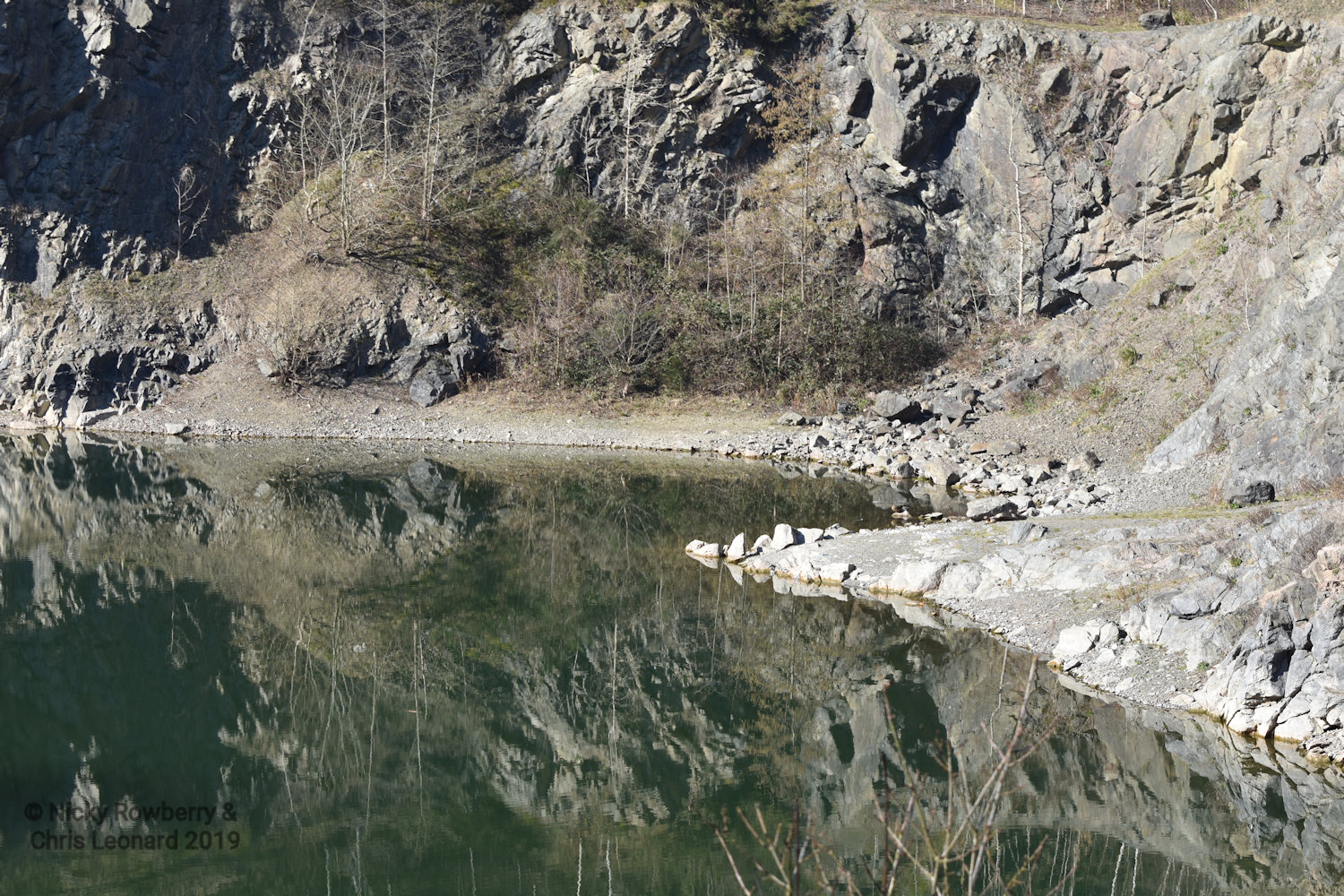
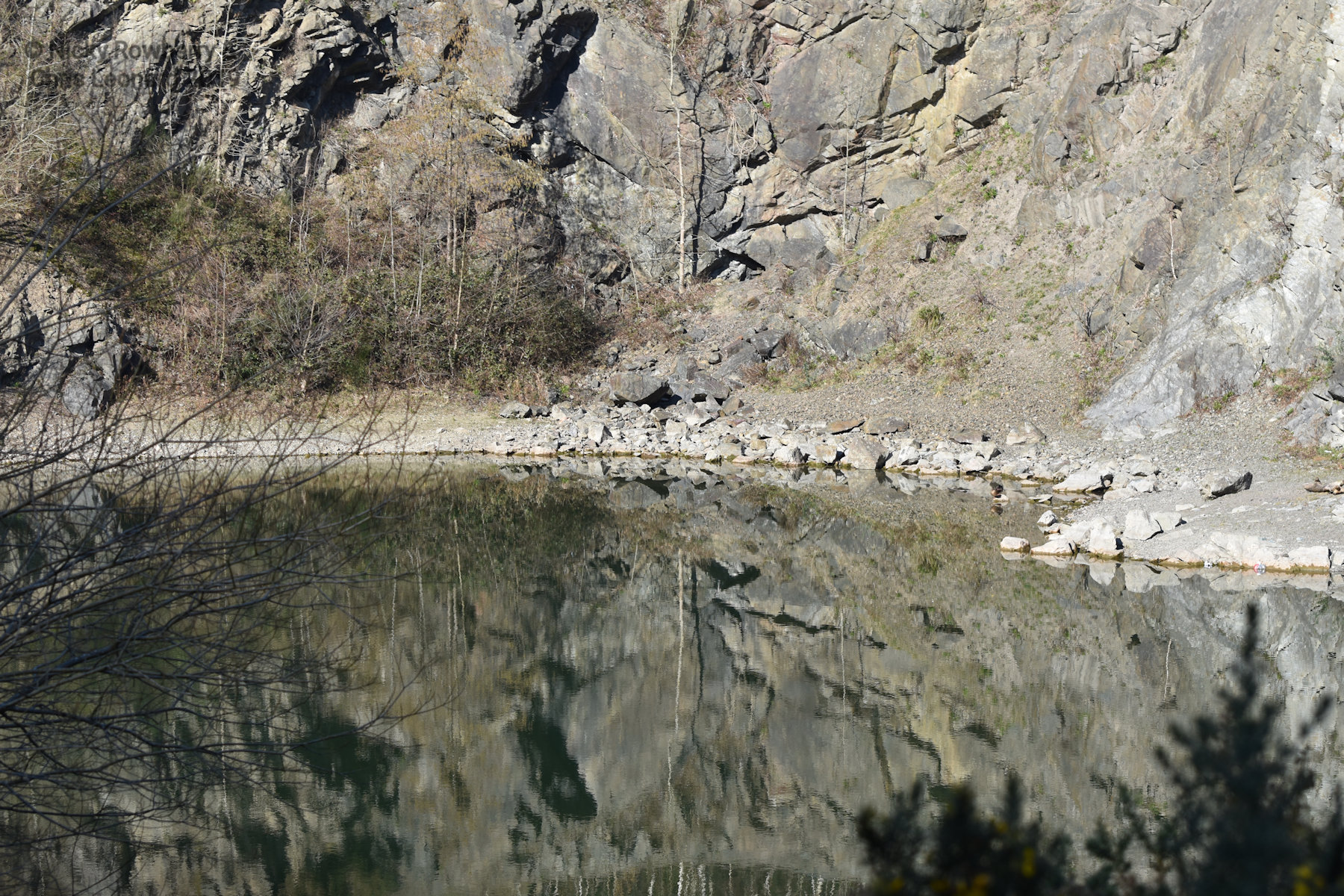
The not-too-attractively named Gullet Quarry is much prettier than its name suggests. With the sun shining and clear blue skies, the rocks were reflecting nicely in the water. Sadly due to some terrible accidents at the quarry, it is now fenced off and you can no longer get down to the water’s edge, so I had to view most of it from a distance.

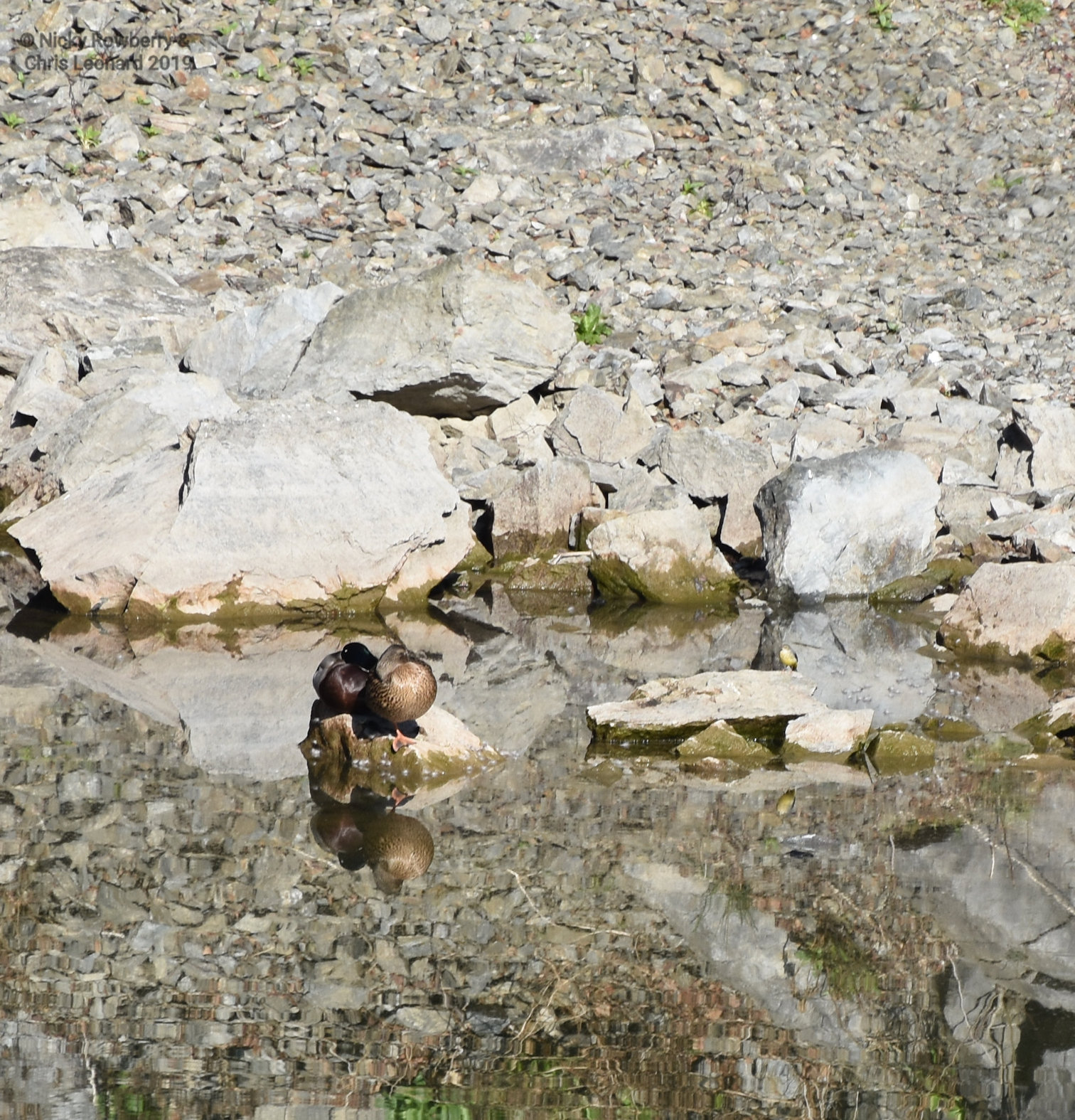
I could just about make out a flash of yellow on the far side of the quarry – a Grey Wagtail flitting up and down catching insects. I tried zooming in on him (not very effectively) and only realised there was a pair of ducks sitting next to him when I downloaded the photos later! The wagtail is just about visible as a yellow smudge on the rock to the right of the ducks.

As I arrived it seemed like looking for a moth around the quarry was a bit of a needle in a haystack type mission, so I was amazed when one flew right passed me almost immediately. I set off in pursuit (incurring unfortunate contact between my boot and a large sheep deposit as I wasn’t looking where I was treading!) and tracked him to a high up twig.

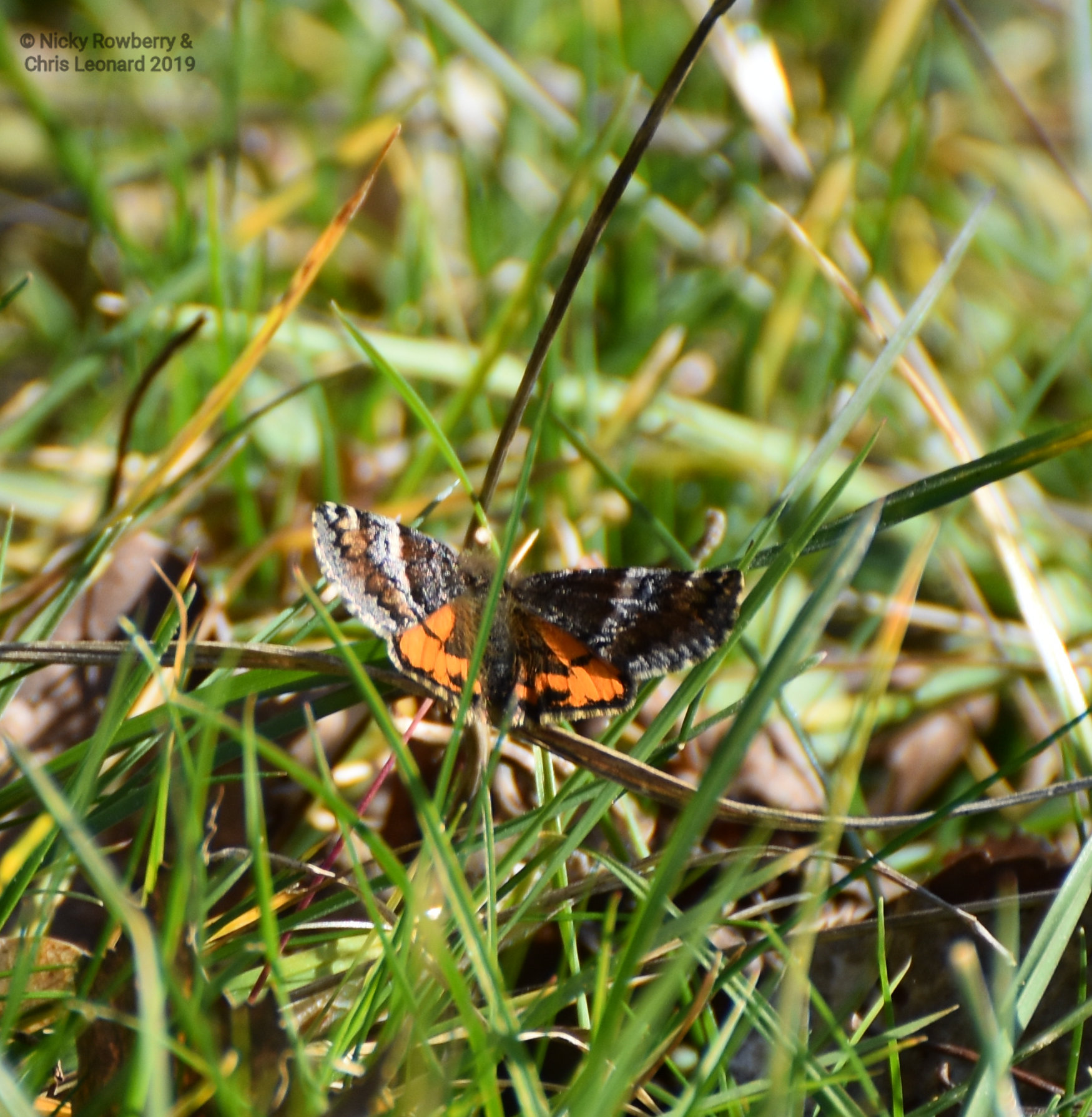
He then sped off again and settled amongst the grass. Despite repeated attempts I couldn’t get a clear shot of him without a blade of grass in the way. But at least his lovely orange underwings are clearly visible. Mission accomplished.

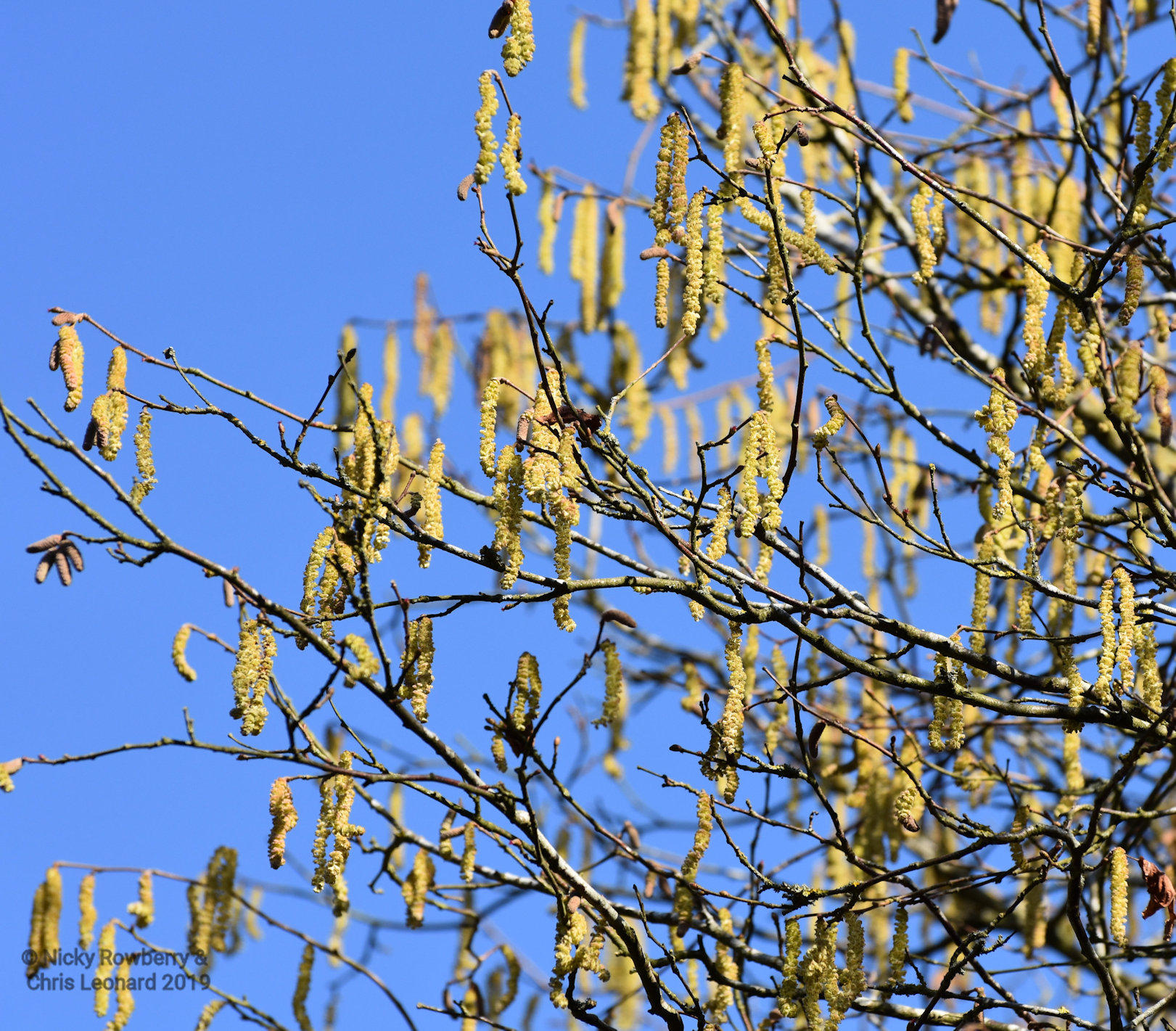
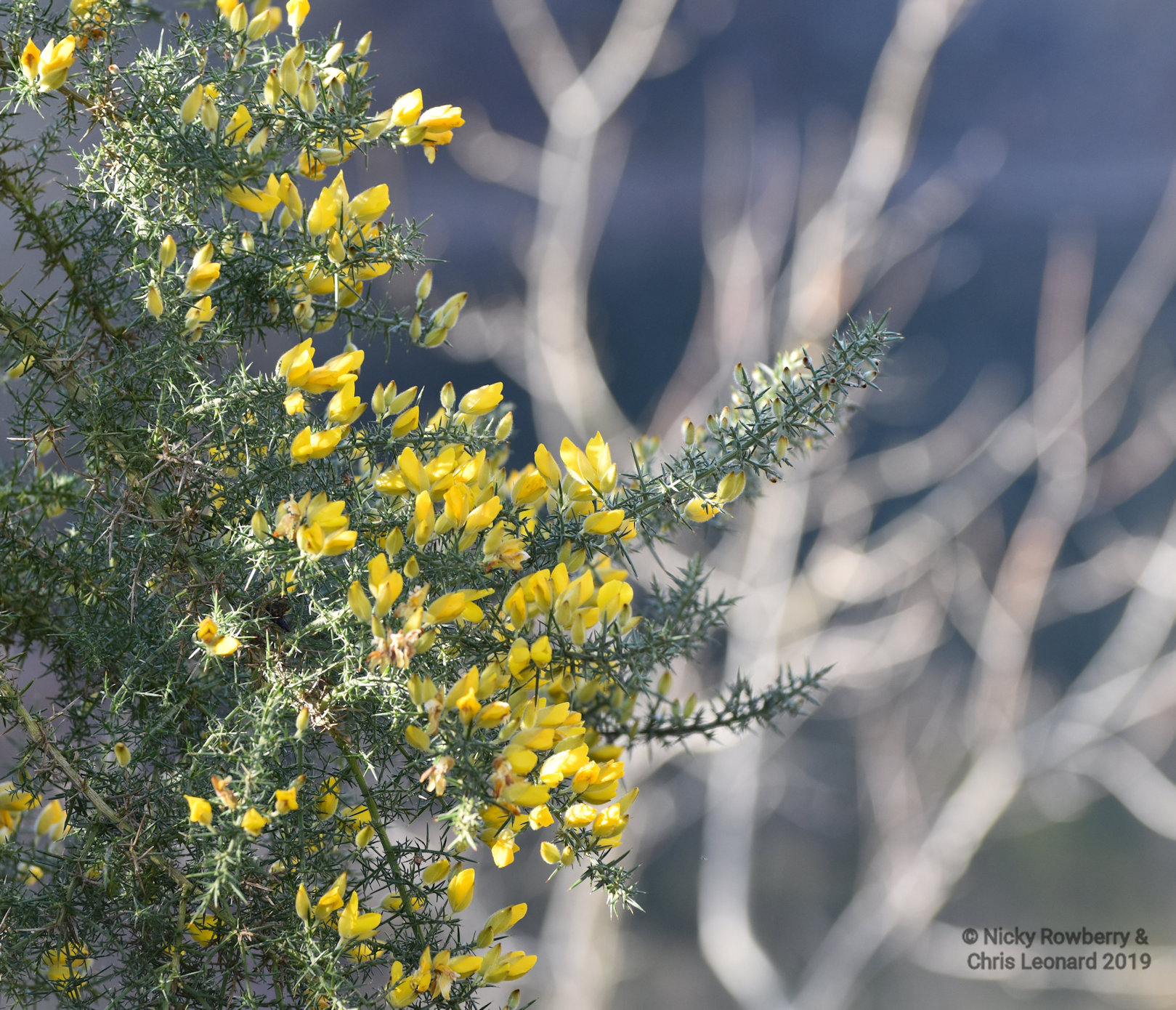
Since it was such lovely weather I spent another lovely half hour pottering around enjoying the first signs of spring. A male Brimstone butterfly shot passed me, as usual way too fast to get a photo. Catkins were dangling all around and the gorse bushes were in full flower.

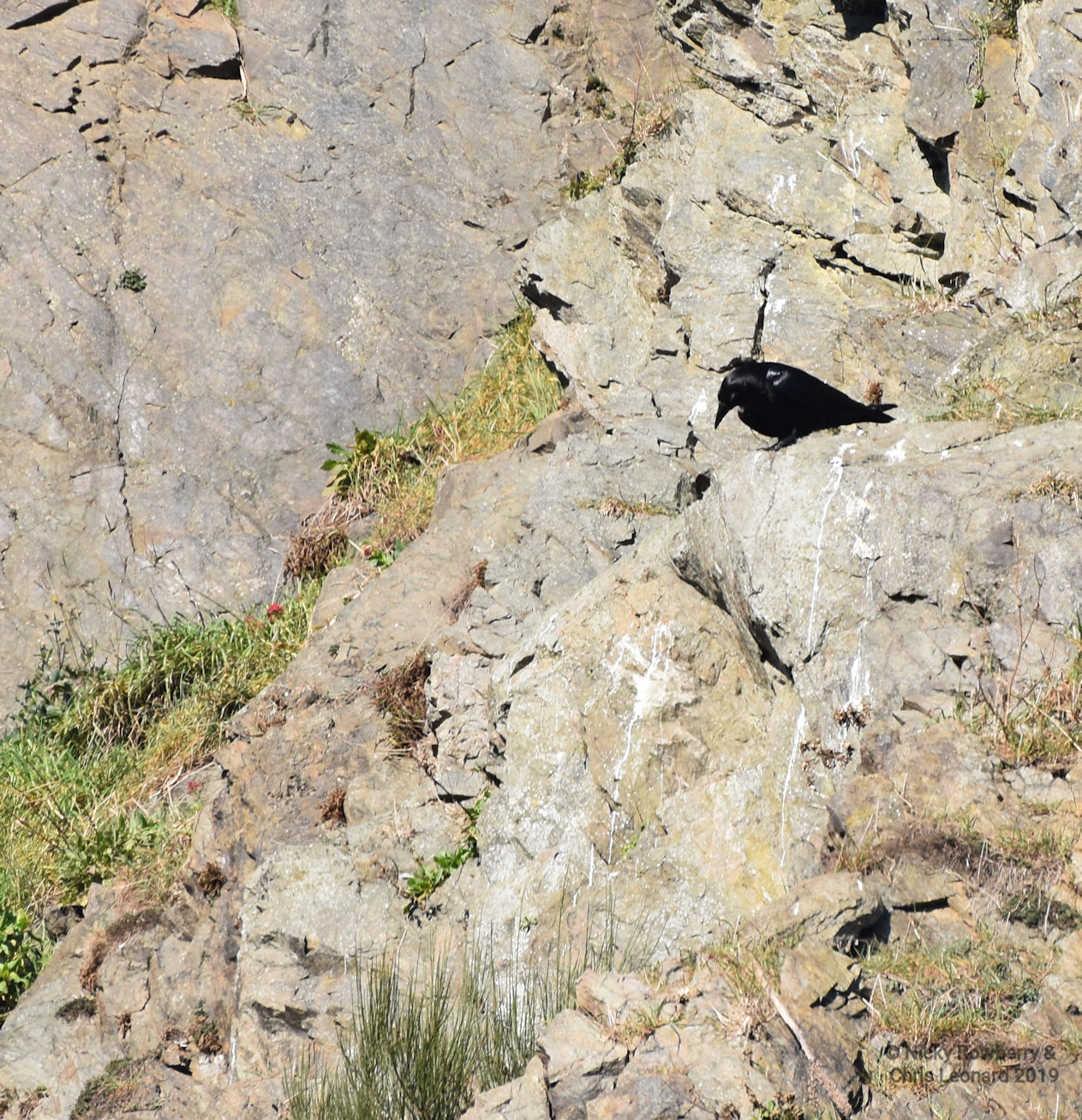
I wasn’t the only one watching the wildlife. High up on the rocks above the quarry, several crows were looking down, presumably on the look out for the next meal.

All in all it was a lovely short walk in the early spring sunshine,  whetting my appetite for the summer to come!


National Nest Box Week

It’s National Nest Box Week again (14th to 21st February), so no prizes for guessing what today’s blog post is about. The idea of Nest Box Week is to encourage people to put up more nest boxes for their garden birds. It’s coming up to the time of year when birds start thinking about finding a mate and then looking for a suitable nest site. So by putting up the nest boxes now, the new couples will hopefully have plenty of choice come the spring.

We did have an open fronted nest box on the fence last year, but had to take it down when the fence was replaced. So this weekend seemed the perfect time to put it back up again. Open fronted nest boxes are suitable for robins and wrens, both of which we get in the garden, so fingers crossed they fancy the new location.

We also had an old and slightly tatty nest box more suited to blue tits; it had seen better days, but we’ve stuck it up anyway on the apple tree in case our birds aren’t too picky!

We’ve still got the two blue tit nest boxes up on the garage wall, one with a camera fitted. So far the blue tits have refused to use these the last few years, despite using one previously in exactly the same location! We remain ever hopeful that this year will be the year we get footage of a nest!

Even if you don’t have a suitable space to put up your own nest box, you can still help by sponsoring one. Many wildlife organisations have schemes whereby you can sponsor or “rent” a nest box, giving the charities much needed funds to support their chosen species. Our local Worcestershire Wildlife Trust runs just such a scheme, so we’ve sponsored Nest Box Number 15 again this year. We supported the same nest box last year and got a lovely letter saying a family of blue tits had used it – result! Fingers crossed for more of the same this year.

National Nest Box Week may be aimed primarily at birds, but if you can, why not consider providing a home for other animals. Hedgehogs can benefit from extra places to hibernate, but they also need places to sleep during the day for the rest of the year. So although it may be too late for hibernation this year, a hedgehog house put out now could be used through the spring and summer as a day nest.


Big Garden Birdwatch 2019

It’s that time of year again – the Big Garden Birdwatch. I think every year I write a similar post about that mixture of anticipation and frustration that this fantastic bit of Citizen Science brings. The usual feeling of “where have all my regular birds gone” followed by the joy a pair of blue tits bring when they appear in the nick of time to make the cut. The red kites last week were undoubtedly magnificent, but when you’ve been sitting freezing your proverbial off for an hour, the sight of a pair of blue tits can be just as rewarding.

I did our garden count on Sunday, an unfortunately blustery day, which I presume is what put a lot of our birds off; rather than just sheer wilfulness to avoid being counted. In the end I only recorded 27 birds of 7 species – way below our garden norm and less even than I can see just glancing out now.  But data is data, so I hope our paltry count will still be of use. So all I saw was:

  • 14 sparrows – there may actually have been double that but, they were in the bushes and impossible to count more for certain.
  • 2 collared doves
  • 1 wood pigeon
  • 2 magpies
  • 1 blackbird
  • 5 jackdaws
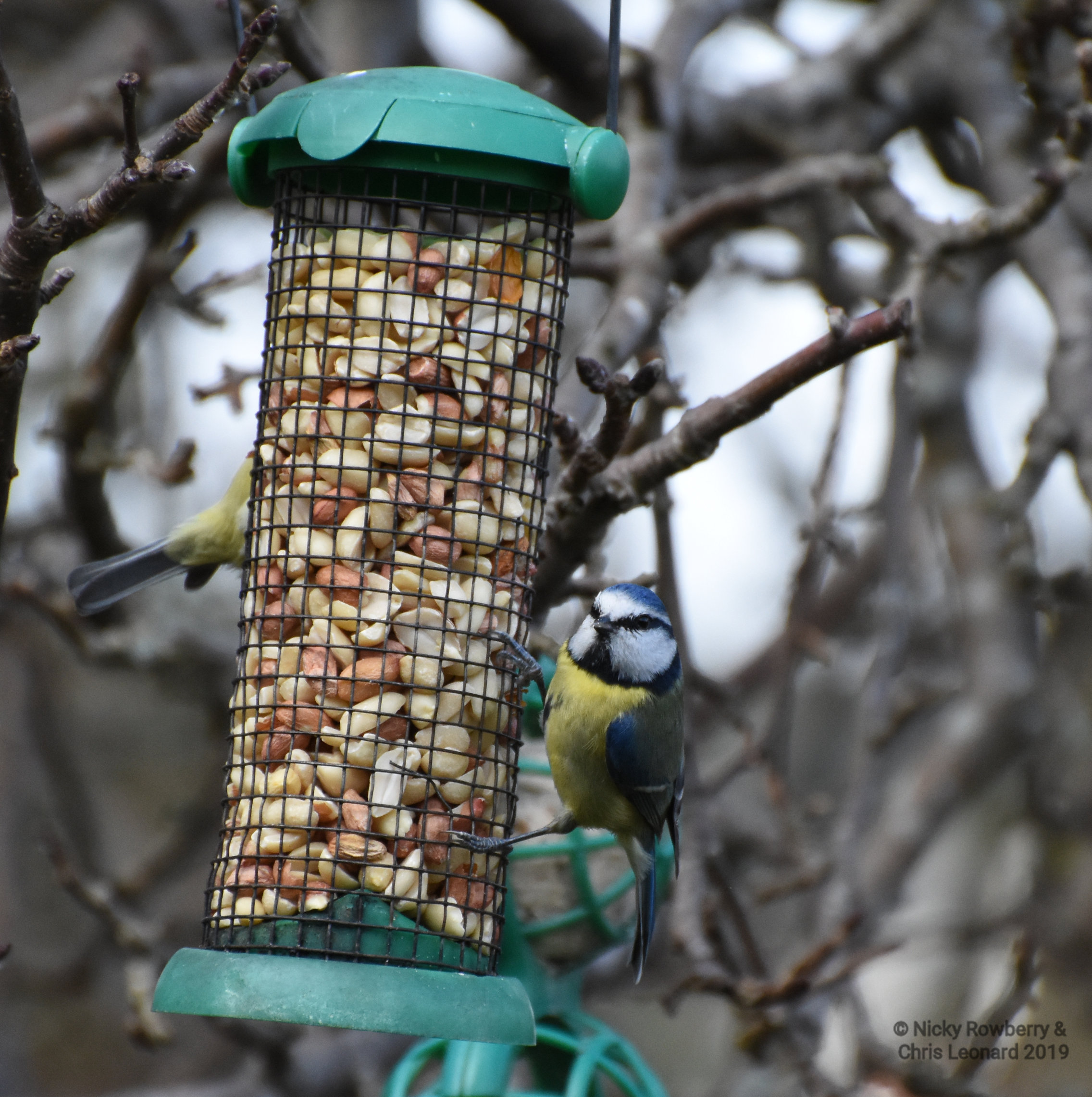
  • 2 blue tits

I did try to take photos of those that landed on the bird table, but our overgrown teasels were flapping about in the wind in my line of sight, so I only managed one of the jackdaws.

The blue tits were a bit easier as they were feeding in the apple tree closer to the house.

So that’s it over for another year. Apparently this year was the 40th anniversary of the Big Garden Birdwatch. It started as a survey just for children to do, but thankfully us adults are allowed to join in now too. Our garden birds often seem to make themselves scarce during this annual count, but it still gives me an enormous sense of satisfaction to know that we’re contributing to a really useful bit of science. And sitting just quietly watching the wildlife in your garden for an hour, with no interruptions or distractions is no bad thing either!