I’d been feeling the need to feed my moth mania for a while now and share some mothy photos, but hadn’t really got a theme in mind. Then this week a surprise moth in the trap provided the necessary inspiration – a blog post about hawks!
I’ve been lucky enough now to see 10 species of hawk-moth in my garden. Most are fairly common, but a couple have been rare migrants that were beyond my mothy dreams. I love all moths, but there’s something really special about spotting a new species of hawk-moth in the trap.
 The first hawk-moth I ever saw, before I even got into moths, was the Humming-bird Hawk-moth. These amazing moths, don’t look that exciting when at rest (photo left), but when they take off and buzz from flower to flower, they really do what it says on the tin and look like miniature hummingbirds. I’ve always wondered what these moths were called before we discovered the Americas and saw hummingbirds? They are still a highlight of my summer when they appear, often seeking out the red valerian or the buddleia in the garden.
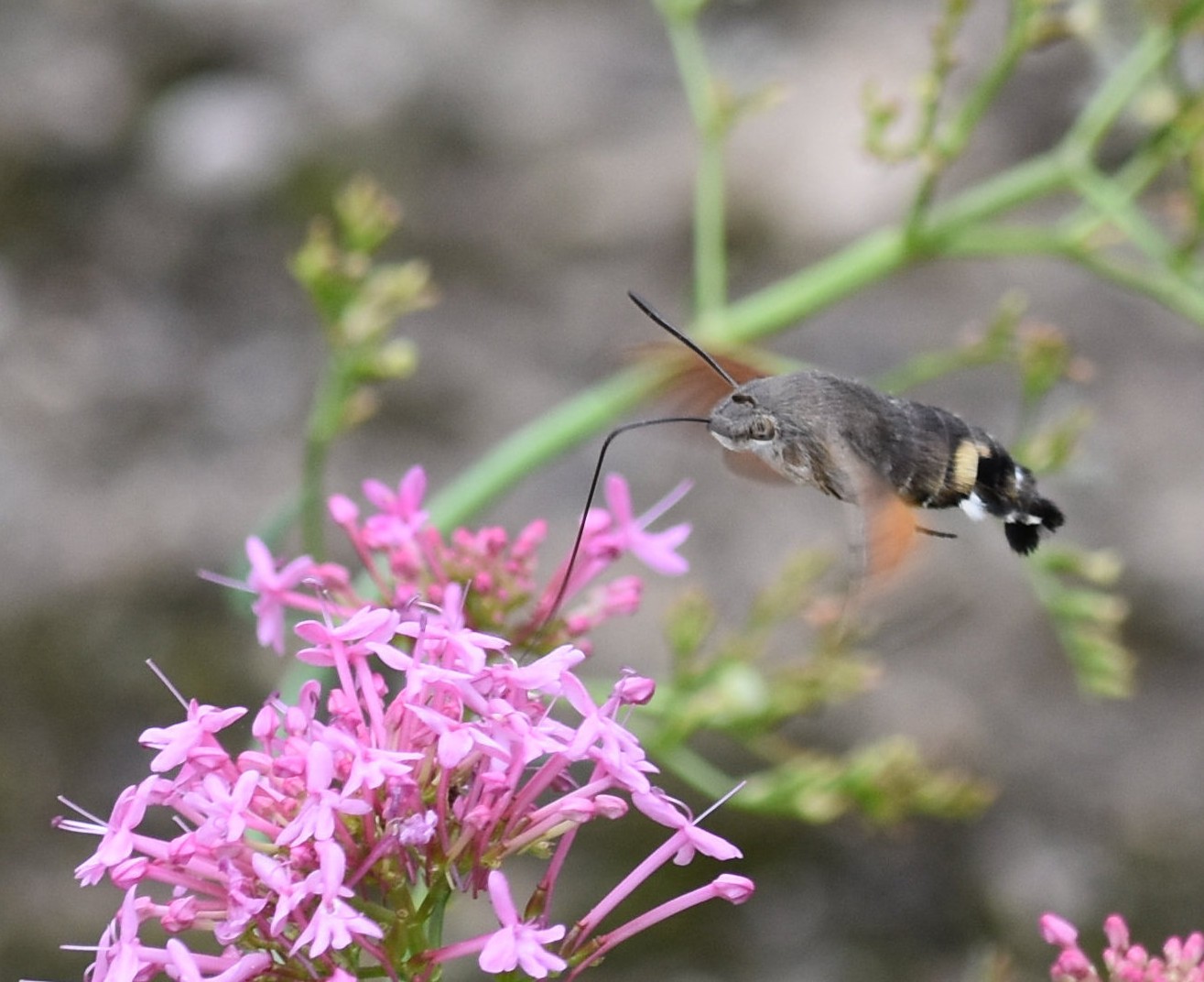
They’re so quick it’s hard to get a decent photo or video, but here’s a brief clip of one from a few years ago.
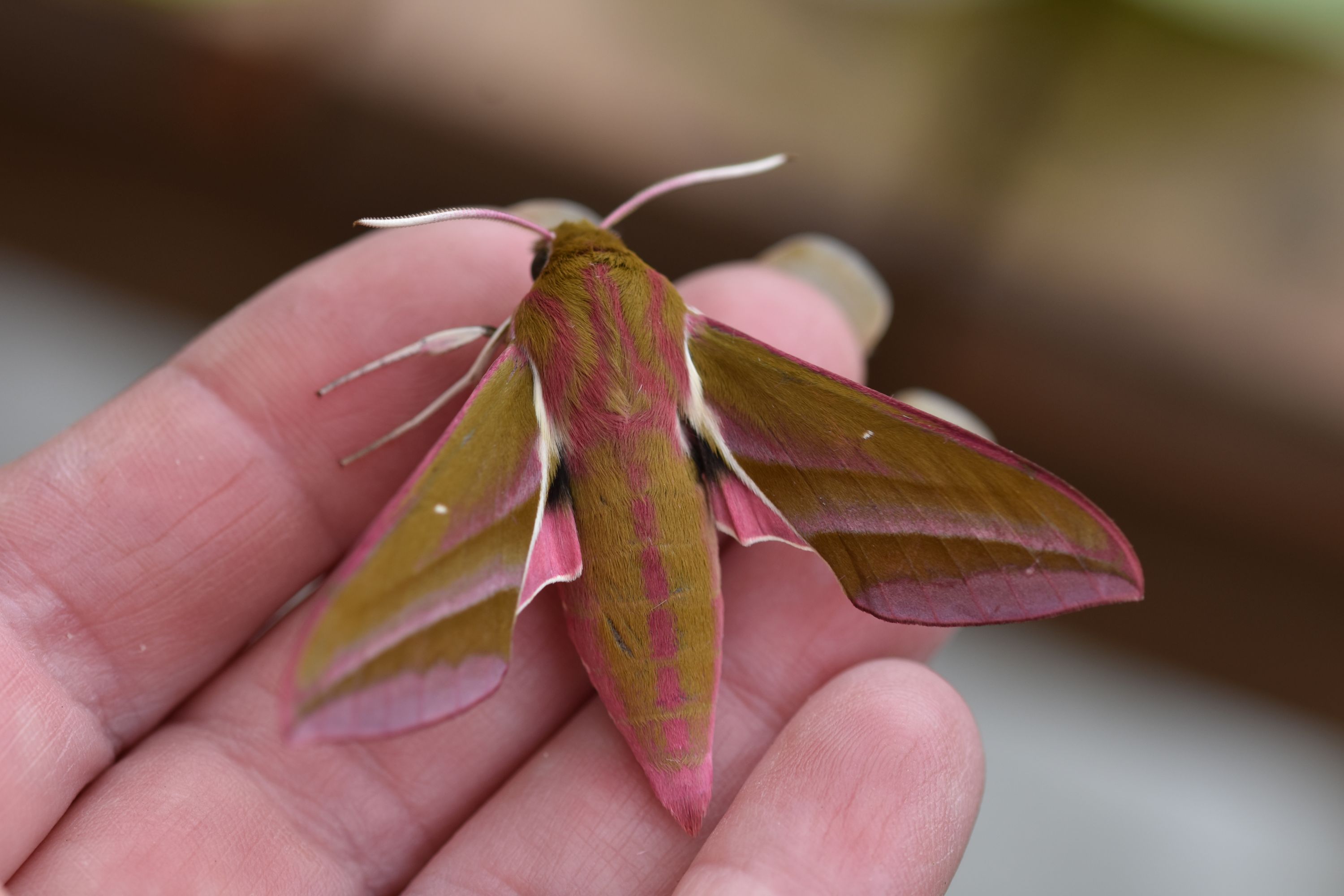
The first of the big hawks I ever caught in a moth trap was the Elephant Hawk-moth. It was my first summer of moth trapping and I can still remember the feeling of absolute incredulity that I could have found this incredible big pink moth in my own garden. They still thrill me now and are my go-to moth when people say moths are dull brown things!
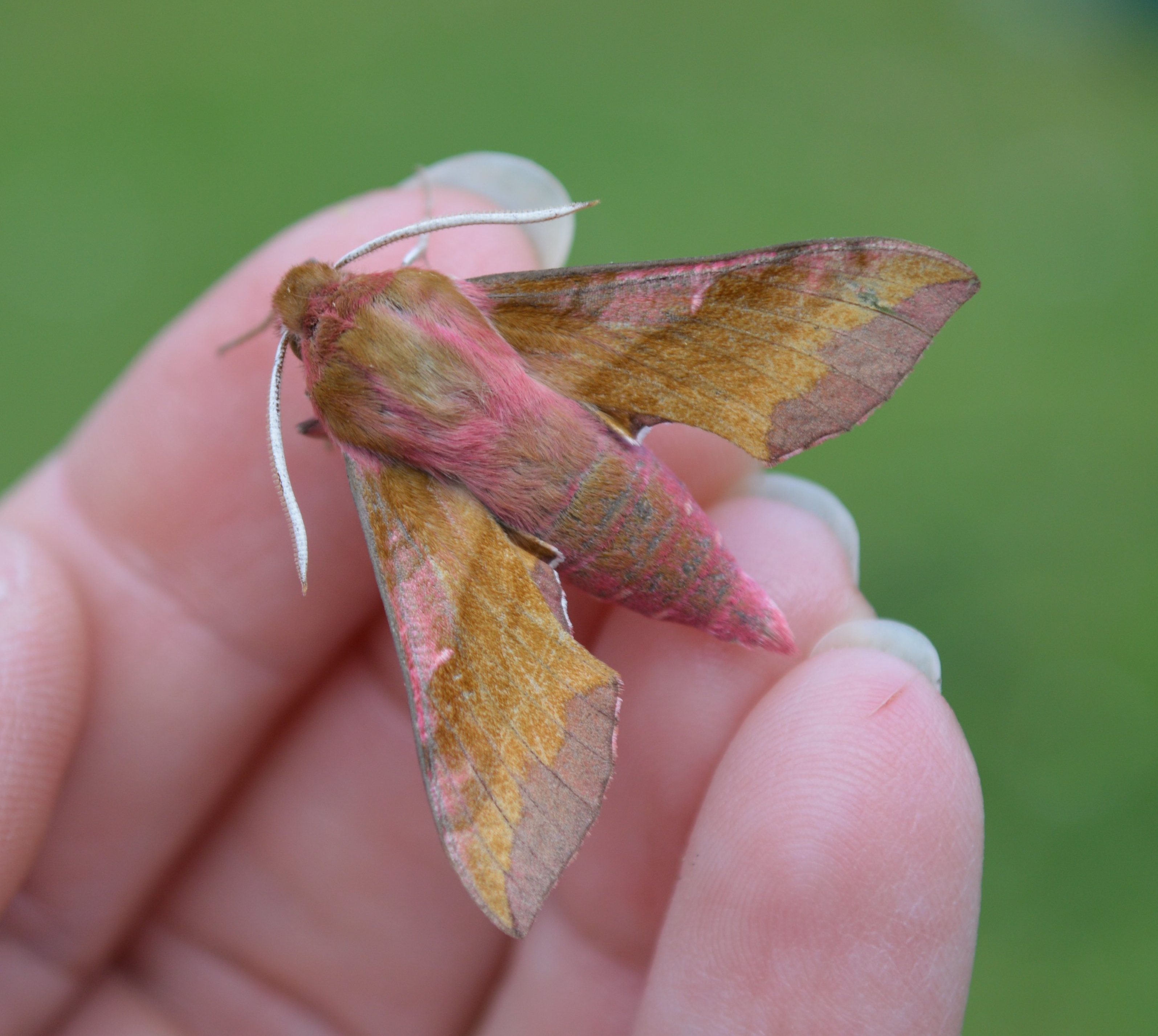
I am lucky enough to also get the Small Elephant version, not as big (obviously) and flashy as his counterpart, but a striking beast nonetheless.
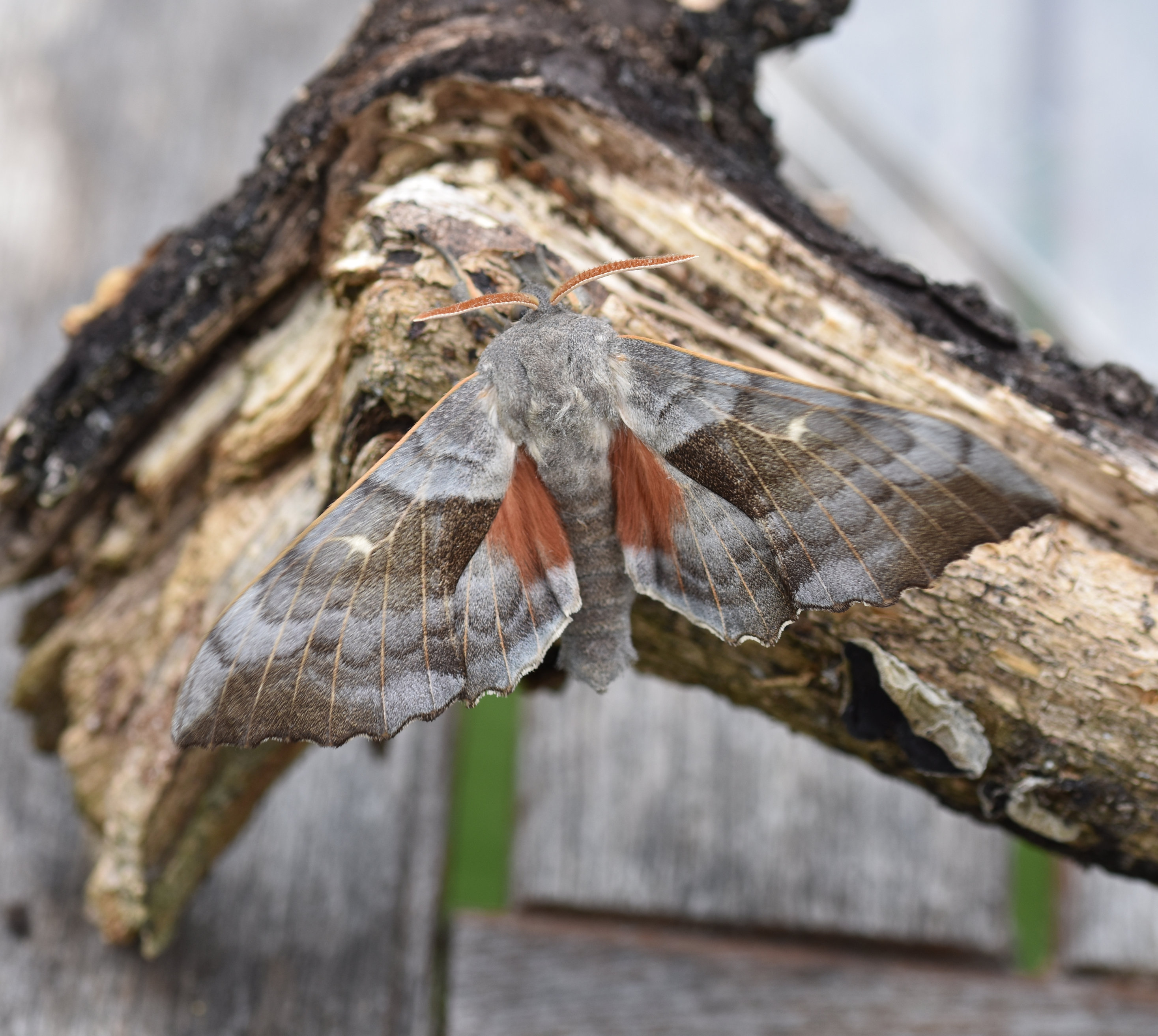
The next most common hawk I get is the Poplar Hawk-moth. These large moths appear every summer and have a striking way of holding their wings sort of out from their bodies.
A slightly less frequent visitor is the Lime Hawk-moth. These come in two colour variations. The most common one I get is the typical green and pink form, but I have occasionally had the more unusual brown variant.


The next hawk will always hold a special place in my heart as I managed to raise one from an egg – the Eyed Hawk-moth. I did a whole blog post about Lonesome George (as the egg/caterpillar became known) which you can read here https://toolazytoweed.uk/2019/08/29/lonesome-george/ and https://toolazytoweed.uk/2020/05/22/lonesome-george-born-free/. But for now here’s a photo of him in all his adult glory.

The next hawk I’ve only seen twice in the garden and neither have been exactly pristine specimens, both worn and well passed their best. But still a thrill and totally unexpected to see such a large moth in the trap.
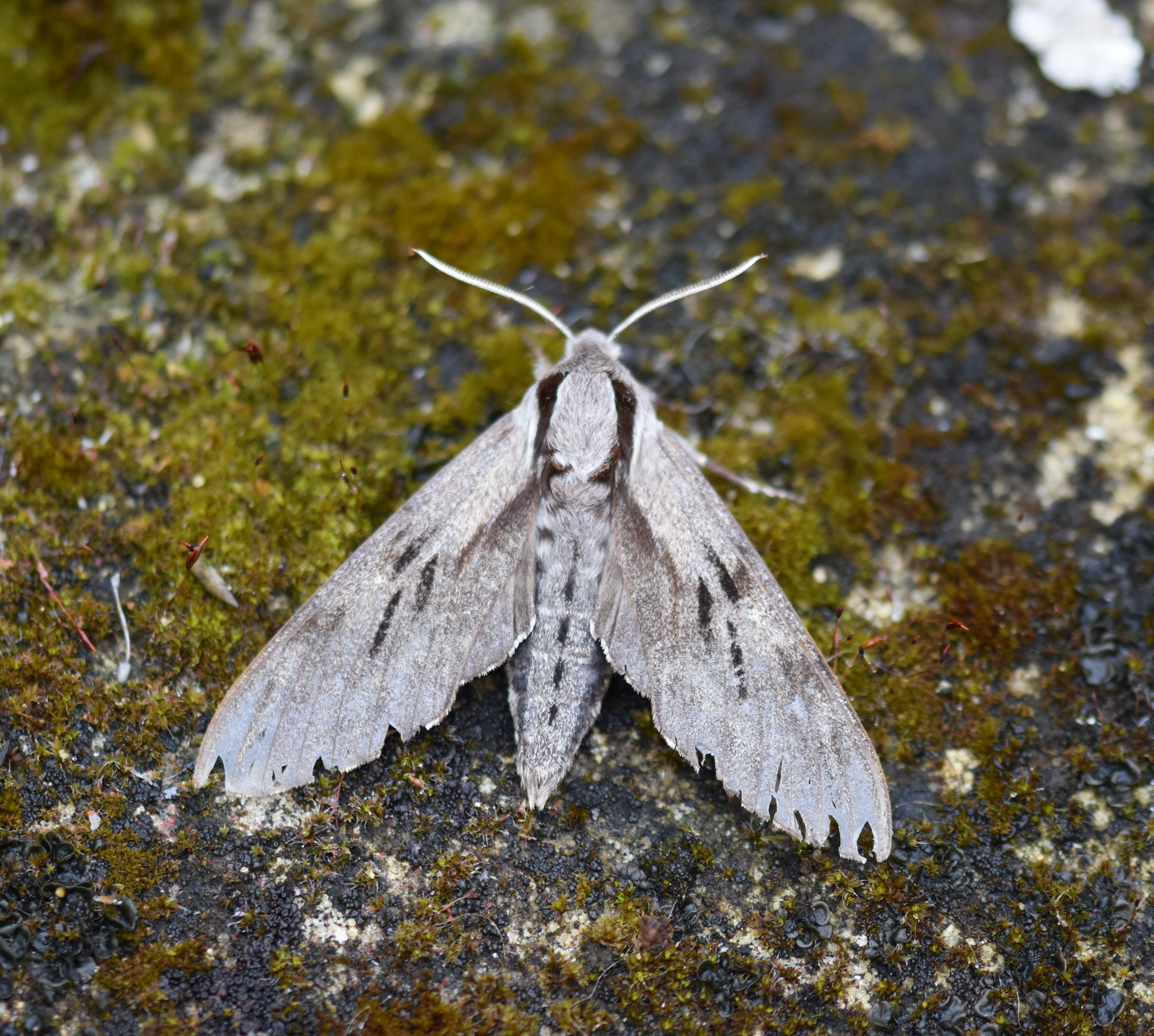
The next one has only graced the moth trap once – a Privet Hawk-moth. This is not a particularly common moth in Worcestershire, so it was a real surprise to get one in the trap. And it was big, much bigger than the other hawks I’ve seen!

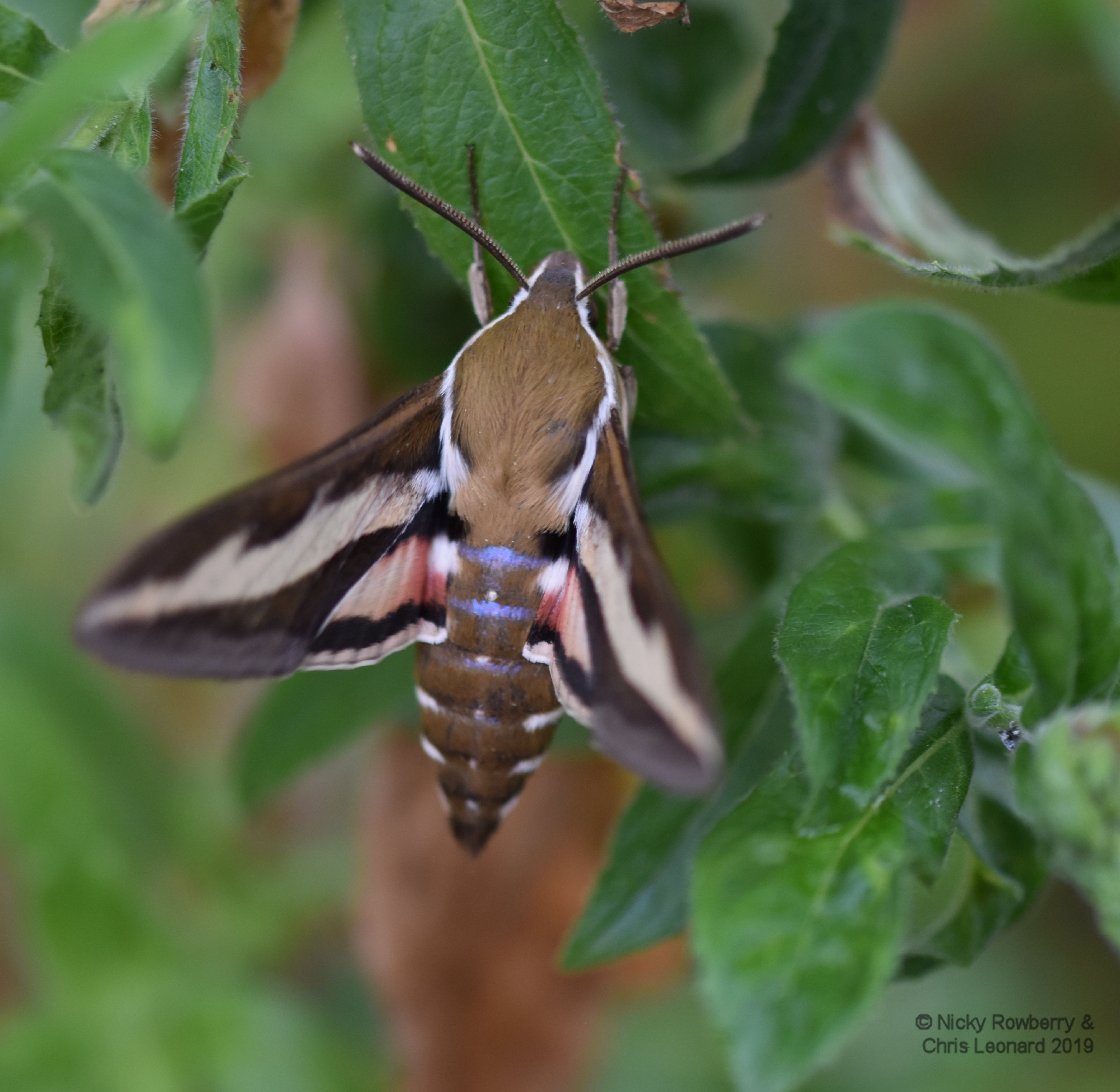
The final two hawk-moths were real surprises. Neither are resident in Worcestershire, but are rare migrants, so I’d never dared hope to see them. But in 2019 I saw a few social media posts about Bedstraw Hawk-moths being seen. Each night I’d hope for one to arrive in Malvern, but never really expected it to happen. But then at the beginning of August, I saw it sitting in the trap – a dream come true. It’s surprisingly nerve-wracking getting a moth like this out of the trap – terrified it would fly off before I could get a photo as proof. But proof I have and I must admit it was glorious to be able to post on social media that a Bedstraw Hawk had deigned to visit my garden. People literally came from miles around to see it.

So I didn’t think I’d ever beat my Bedstraw, but just this week the moth gods favoured me again. I’d been seeing posts from Cornwall with people trapping multiple Striped Hawk-moths, but as a rare migrant I didn’t imagine one would ever reach as far north as Malvern. But the winds must have been blowing in the right direction and on Monday I got up at the crack of dawn to find a Striped Hawk casually sitting in the corner of the trap – unbelievable! I only recognised it because I’d seen the Cornish photos, as otherwise it wouldn’t even have been on my radar as a possibility. Not taking any chances, I took a few photos through the Perspex of the trap, before opening the trap to get it out. Some better photos later on and I could once again bask in moth-envy from my fellow moth-ers.

The West Midlands moth website lists 16 species of hawk-moth, so to have seen 10 species in the garden is pretty amazing. Of course there are still those moths of legend that I’d love to see – the Convolvulus and Death’s Head Hawk-moths being the ultimate dream moths – but there’s always another moth trap and you never know your luck!


 Too Lazy To Weed