Ivy Stakeout

As stakeouts go, this may not have been the most action packed and I doubt they’ll make a movie of this one; but the end result for me was all the excitement I needed! We’d been seeing loads of posts on social media about Ivy Bees (Colletes hederae). This species of bee was only discovered in Britain in 2001, when they were spotted in Dorset. Since then they’ve been spreading north and have reached as far as Staffordshire.  They forage pretty much exclusively on ivy flowers, so the adults emerge in time to match the ivy flowering in September.

As usual bee envy set in and I wanted to see them too.  So this is how I came to be staking out the ivy in our garden today. It’s not a huge patch of ivy like the one down the road, but it is flowering, so I sat down to wait.

Since I wasn’t immediately inundated with the desired bees, I spent time observing the other insects. There was a surprising amount around considering it is now technically autumn. This grasshopper may have been missing one back leg, but it was making the most of the sunshine, sitting on top of one of the solar panels for the pond pumps.
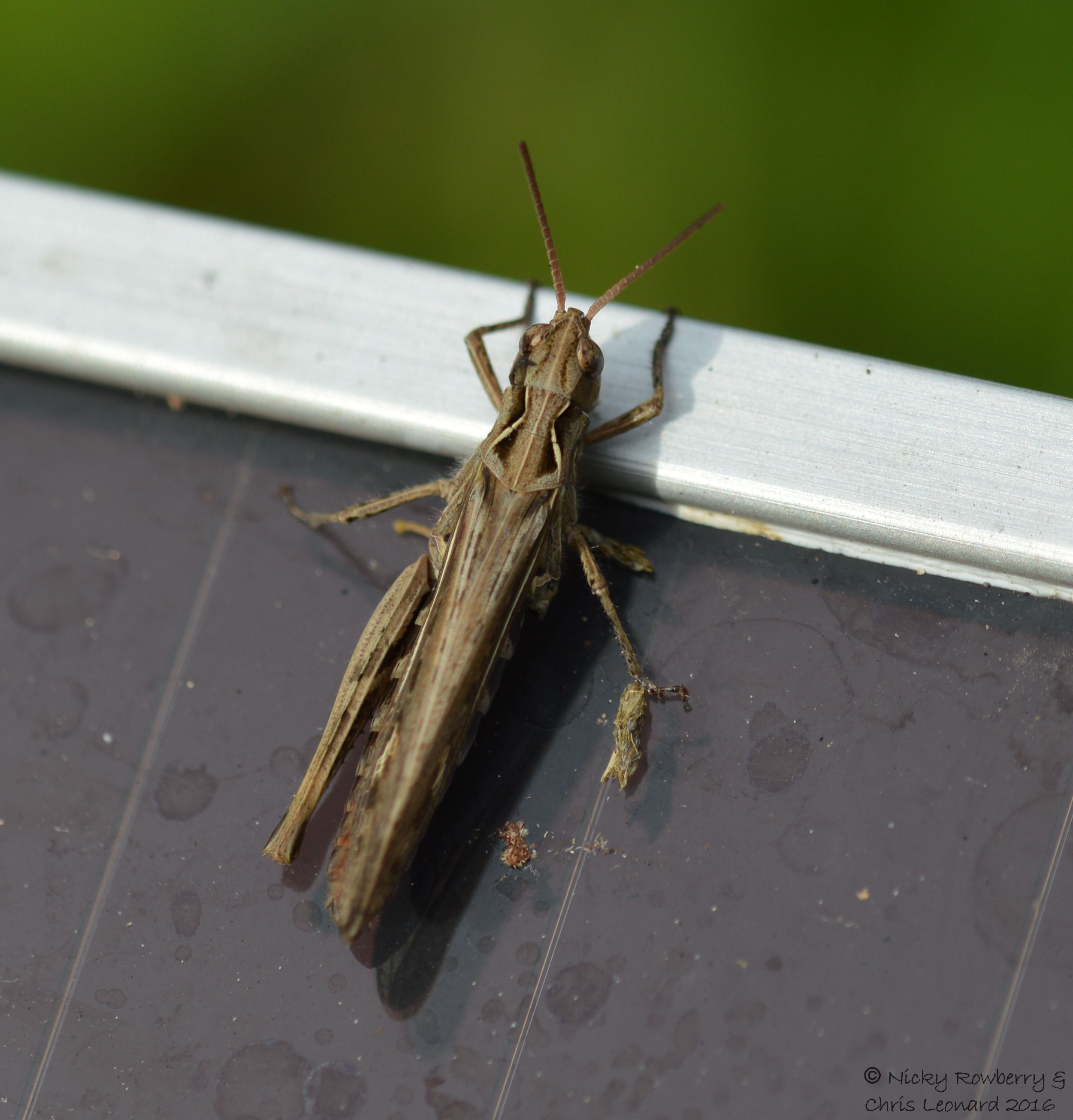
grasshopper-on-solar-panel

There were also a few Green Shieldbug nymphs, of varying stages, meandering about the leaves at my feet, with at least one adult visible but out of photographic range.

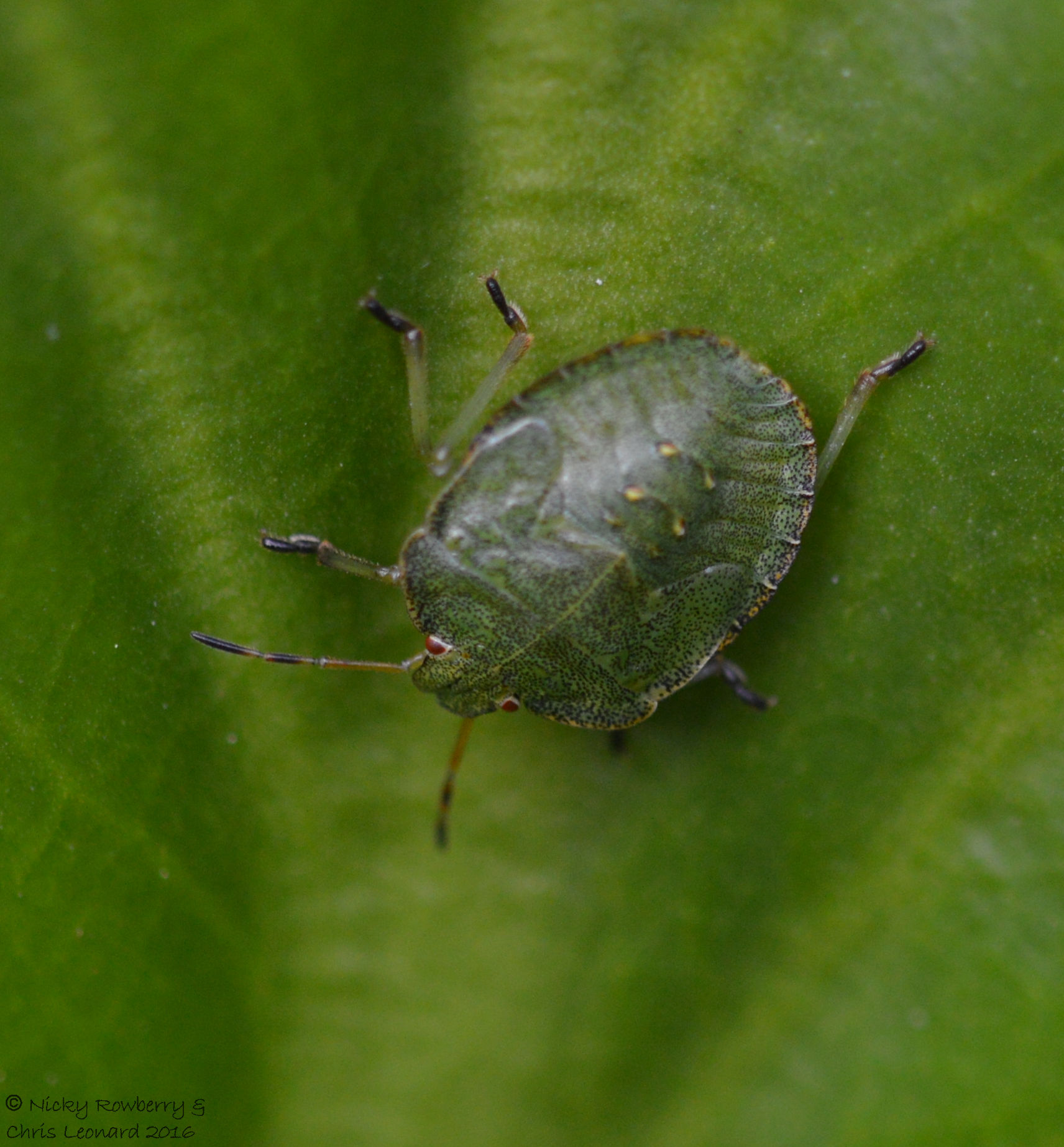
shieldbug-nymph

shieldbug-nymph-2

I got a bit excited when I spotted something on the ivy flowers, but it turned out to be just a Common Wasp.

wasp-v-vulgaris-on-ivy

One of my favourite hoverflies clearly wanted in on the photo shoot too – this is Helophilus pendulus, which is sometimes known as The Footballer because his stripy thorax is supposed to look a bit like a football shirt!
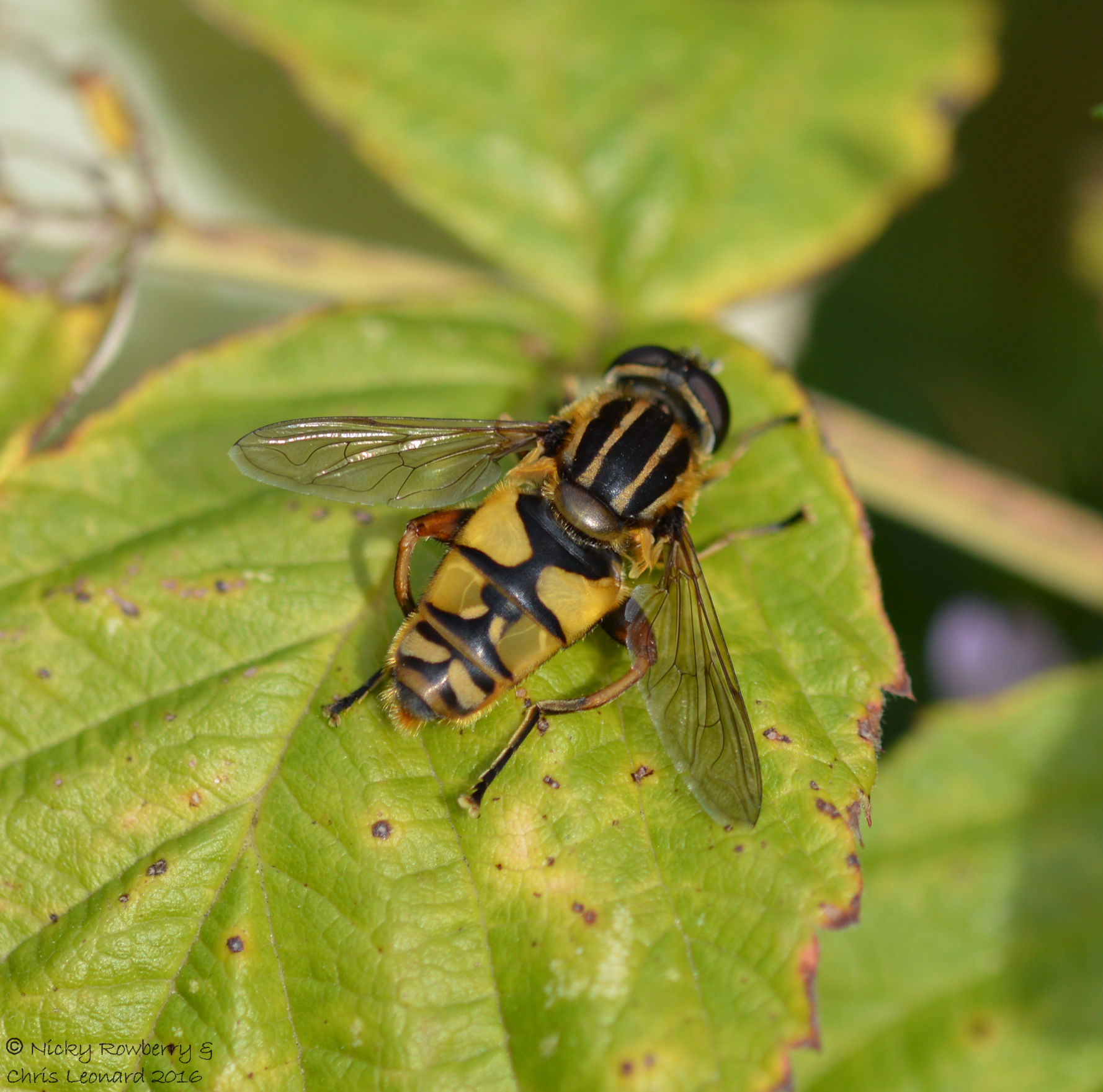
hoverfly

There were quite a few bees about – such as this rather tatty looking Common Carder (top) and slightly fresher looking Honey Bee (bottom)

carder-bee

honey-bee

I was about to give up for the day, when a single bee landed next to the ivy.  It didn’t hang about long, so I didn’t get the chance for many photos, but at least I got enough to confirm it was an Ivy Bee – my stakeout had paid off!

ivy-bee-7


The Bees, Wasp & Ant Recording Society (BWARS) have got a mapping project going to record the spread of the Ivy Bees, so my sightings in the garden have been duly logged. If anyone else spots these distinctive bees, do please record them as well, so that they can build up a better picture of the current distribution. http://www.bwars.com/content/colletes-hederae-mapping-project

Moths Reach Double Century!

When I first started on my mothy learning curve, I never dreamt just how many moths we would get in our garden. The first year I kept a serious count (2014) we hit 127 species, which I thought was amazing. In 2015 we got 155 species and I thought we’d never beat that. This year as we reached the upper 180s, grim determination set in that we’d reach 200. Of course as soon as you set your mind to something like that, everything seems to slow down, but gradually the numbers edged closer to the magic double century. We finally reached number 199 last week with a species I’d been longing to see – the delightfully named Vestal Moth. This is an attractive migrant species, that I’d been envying on other people’s twitter feeds for a while, so I was really chuffed to get one in the garden. Shame it didn’t hang around long enough for a better photo.

vestal

Following the excitement of the Vestal, there were then a few nights trapping with nothing new to add to the list. Lots of interesting moths, but nothing to take me to the magic 200. Lunar Underwings were particularly abundant and very varied. Both the examples below are Lunar Underwings, but they look quite different.

dsc_2817

Lunar Underwing

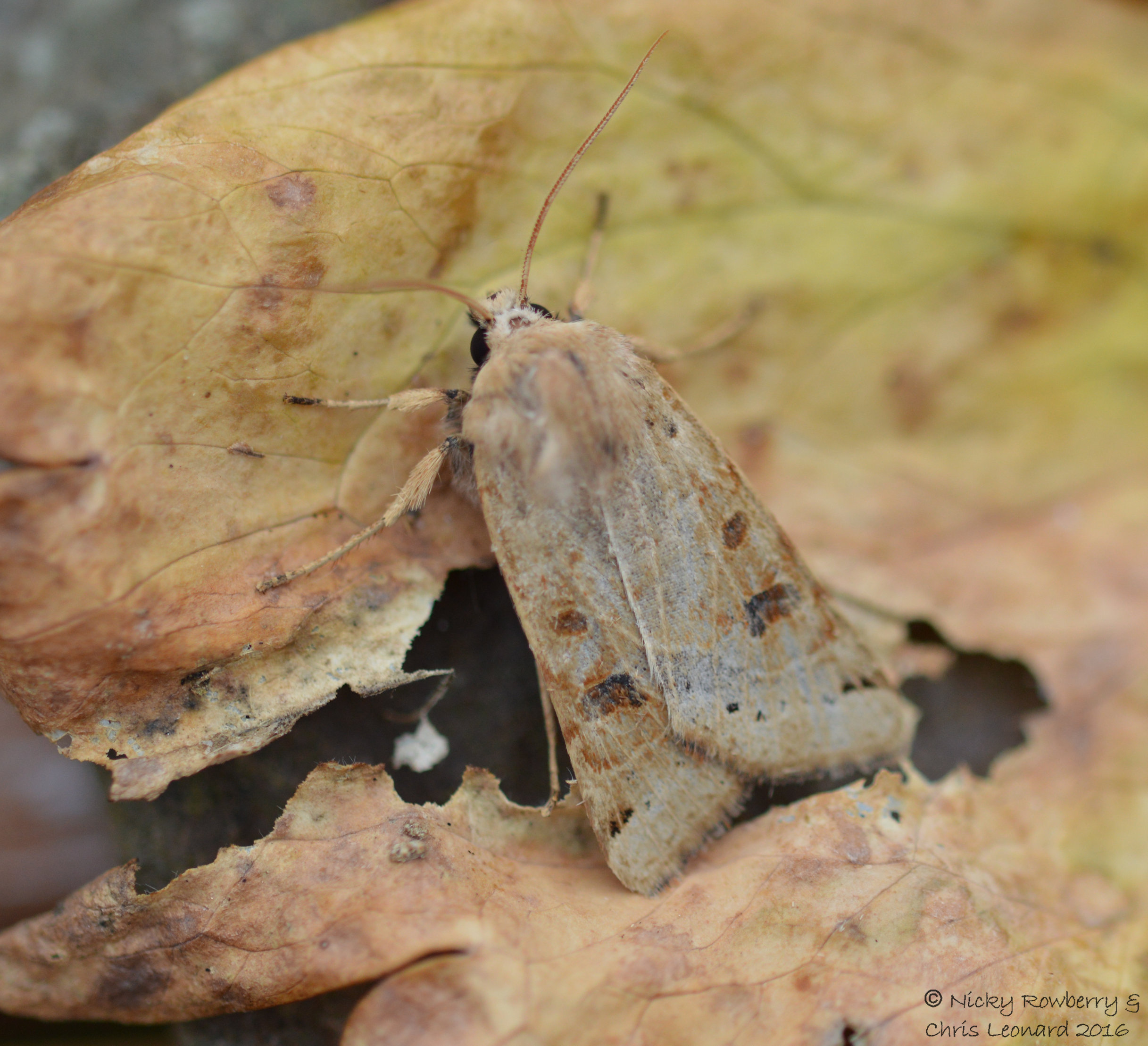
Finally last night in flew not only number 200, but numbers 201 and 202! Number 200 was this – a Blair’s Shoulder Knot. Don’t know who the original Mr Blair was (presumably not Tony), but I was very happy to see his moth. Funnily enough it had been a Blair’s Shoulder Knot that took me to my final figure of 127 species back in 2014. A lucky species for our garden perhaps?

blairs-shoulder-knot

No. 201 was a Black Rustic – which actually looks a lot glossier and blacker than this photo suggests.

black-rustic

No. 202 was the autumnal looking Sallow. You can see how easily it would blend in with piles of autumn leaves – as would the Centre Barred Sallow below.

sallow

centre-barred-sallow

So I’m very happy to have reached 202 species of moth and we’re not even in October yet. Hopefully we’ll get a few more species before the year is out.

Why have we recorded so many more this year? Well I think it’s partly because of the Garden Moth Scheme. Having to make sure I trap at least once a week over the summer months, has clearly paid off in terms of overall species count. I did run the traps quite a lot last year, but there were definitely weeks when it was too wet or windy or I just didn’t feel like getting up at the crack of dawn to check it! Secondly I’ve made more of an effort to identify the micro moths. Previously I’d ignored a lot of them as being too small to identify or even photograph, but I realise now I was missing out on a whole range. Many of the micros are very beautiful when you get close enough to look at them properly (I feel a micro moth post coming soon!)

Of course all this will leave me with a problem for next year. Realistically moth numbers in our garden can’t keep increasing at this rate. I know there are several species that we’ve had previous years that have been no shows this year, but then some that we’ve seen this year maybe won’t appear next. Will I be disappointed if we don’t get more next year? Maybe, but then I could always start compiling a definitive list of all moths species seen in the garden to date since I started trapping. Or of course I could start obsessing about another group – anyone know anything about hoverflies?

Hedgehog Comes Home

Happiness is a Hedgehog come Home! Very happy to report that this evening the male hedgehog that we’d rescued from our baking hot lawn a couple of months ago has recovered and been returned to the Too Lazy garden. We picked him up tonight from the Malvern Hedgehog Rescue, where he’d been cared for by the wonderful Viv. Viv had named him Fred (and his sister is Freda).

When we found the babies in July they were too small to survive on their own and at the time we feared that something must have happened to the parents. You can read about their initial rescue on the original blog post here: https://toolazytoweed.uk/2016/07/19/too-hot-for-hedgehogs/

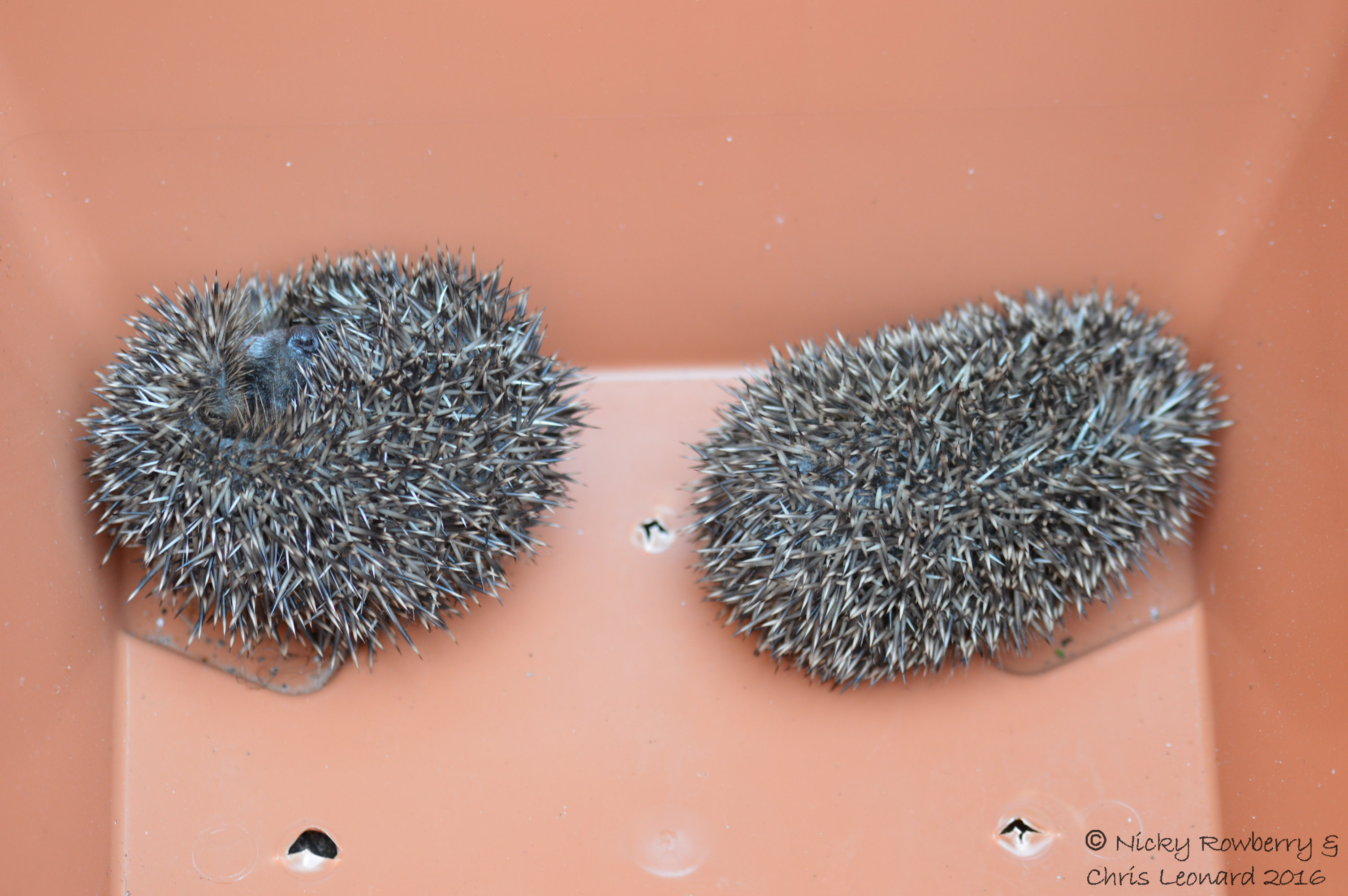
This is what the babies looked like when we found them in July – way too small to be out on their own.

DSC_8935

And this is what Fred looks like now, admittedly looking a bit sulky in the cat box we brought him back in tonight.

hedgehog-basket

He is now big and round and weighs a healthy 600g or so, compared to only about 90g when we found him. His sister is still not quite big enough to be released, but even when she is, she will probably go to another garden. Instead we will get a different rescued female back – so that we don’t end up with brother and sister – we don’t want any dodgy soap type plots going on in our garden! Fred has also been microchipped, so that should he decide our garden is not desirable enough (maybe he’ll want a tidier garden?) and is found in trouble elsewhere, Viv at Malvern Hedgehog Rescue will know his history.

We brought him home early evening but had to wait until dusk to release him. I opened the cat basket next to a positive buffet of hoggy food and waited for him to come out. I was so excited with this, I even missed the first half of Great British Bake Off to wait for him to emerge! If I could have got hold of the Born Free music, I would have been tempted to go for it. Half an hour later he emerged, had a bit of a scratch and headed straight for the food. This bodes well for his future! It was too dark for decent photos with the camera, but I did manage to get one with a flash (didn’t want to take many with the flash though and frighten him on his first night back).

hedgehog-fred

Fortunately for once I’d got the trail camera pointed in roughly the right direction, so it picked up Fred’s first forays back out in the wild.

He didn’t hang around for long before he headed off into our abundant weeds. With a bit of luck, Fred will settle back into our neighbourhood. We still have at least one other adult hedgehog using the garden – possibly even one of Fred’s parents. Hopefully there won’t be any family agro between them!

If anyone finds a hedgehog in need of help in Malvern the rescue centre details can be found at http://www.malvernhedgehogrescue.co.uk/ It is run on a completely voluntary basis and relies on donations, so if anyone can help towards her running costs, please donate – either as a direct donation or by donating foods, cleaning materials, help towards vet bills etc.

Harlequins and Hoppers

It’s been an interesting few nights for the moth trap this week. The moths themselves have been fairly unremarkable, but for some reason the trap has been attracting all sorts of other insects. Not that I mind – it’s all good news for the biodiversity of the garden. Well mainly good news – one of the surprises of the moth trap this week was an influx of Harlequin Ladybirds (Harmonia axyridis). I found at least 12 of them in the trap from Tuesday night.

The Harlequin is a non-native ladybird, originating from Eastern Asia. The species was first found in the UK in 2004. It’s got a wider range of food preferences and a longer breeding season and is basically out-competing our native species and spreading rapidly across the country. So finding 12 in my trap in one go, probably isn’t good news for the other ladybird species in our garden. Especially as this pair seemed keen on producing more Harlequins.

DSC_1597

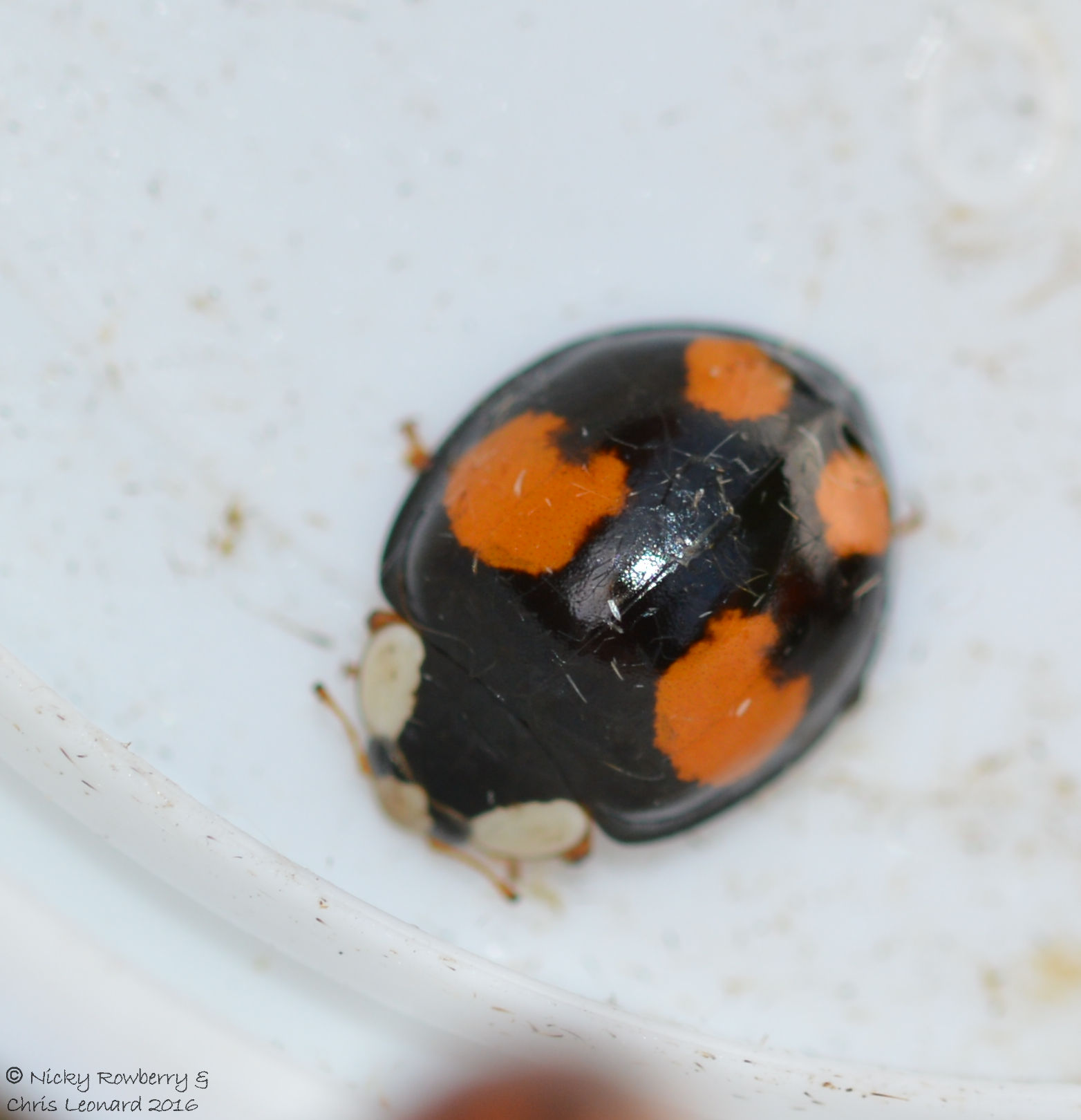
The Harlequin ladybirds have a huge variety of colour variations, making them difficult sometimes to distinguish from our native species. (one of the reasons the Ladybird survey people don’t advocate killing the Harlequins – just in case you’ve got it wrong!) Most of the ones from the trap were red, but there were a couple of these black ones too.

Harlequins

The only thing to do with them was submit my sightings to the Harlequin Ladybird Survey.

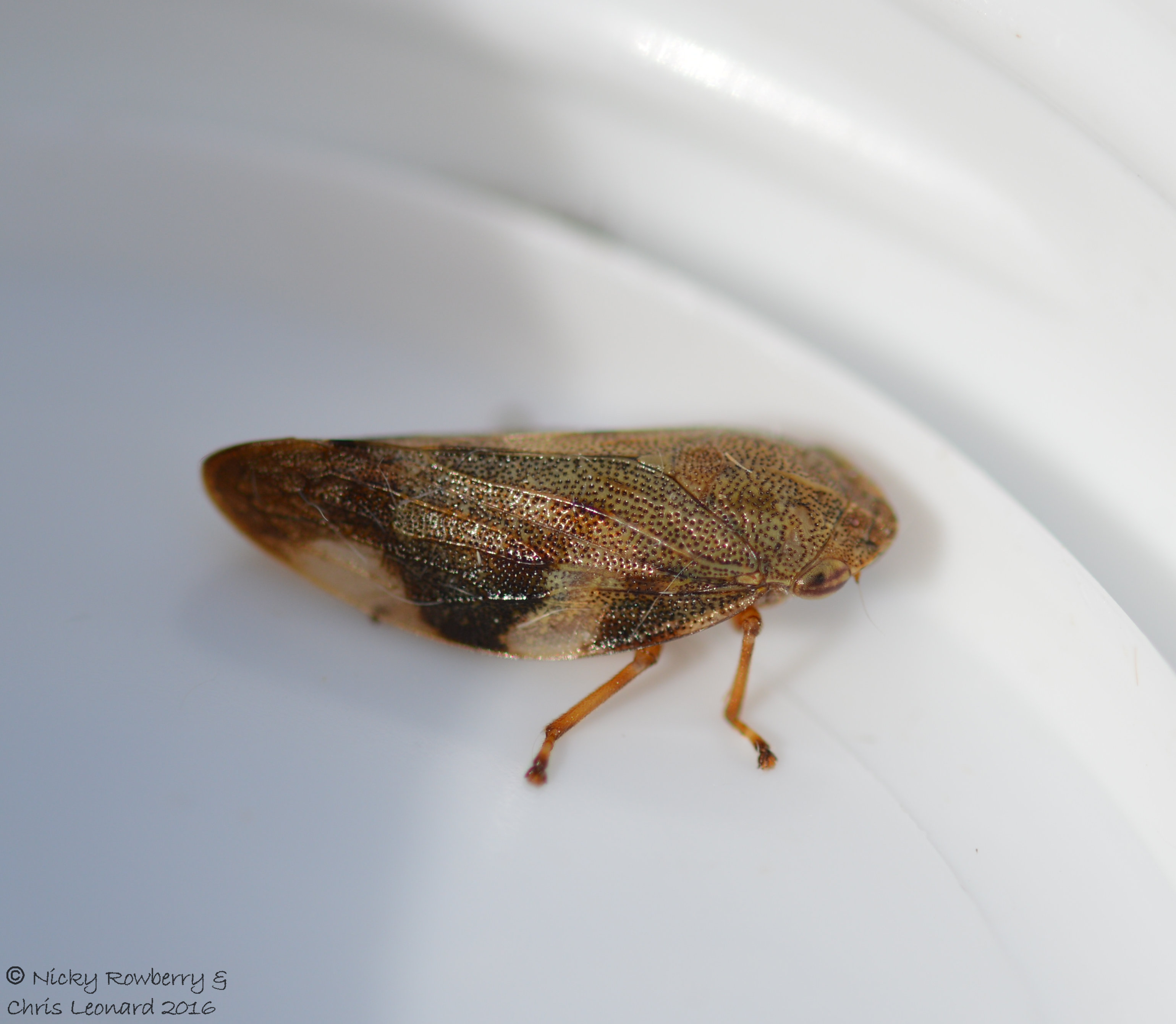
Fortunately Harlequins weren’t the only non moth species in the trap. There were the usual selection of wasps, diving beetles (which surprised me no end the first time they turned up in the trap!), caddis flies, daddy-long-legs and assorted flies. But most interesting were a selection of Leafhoppers and Froghoppers – subsequent IDs revealed 4 species.

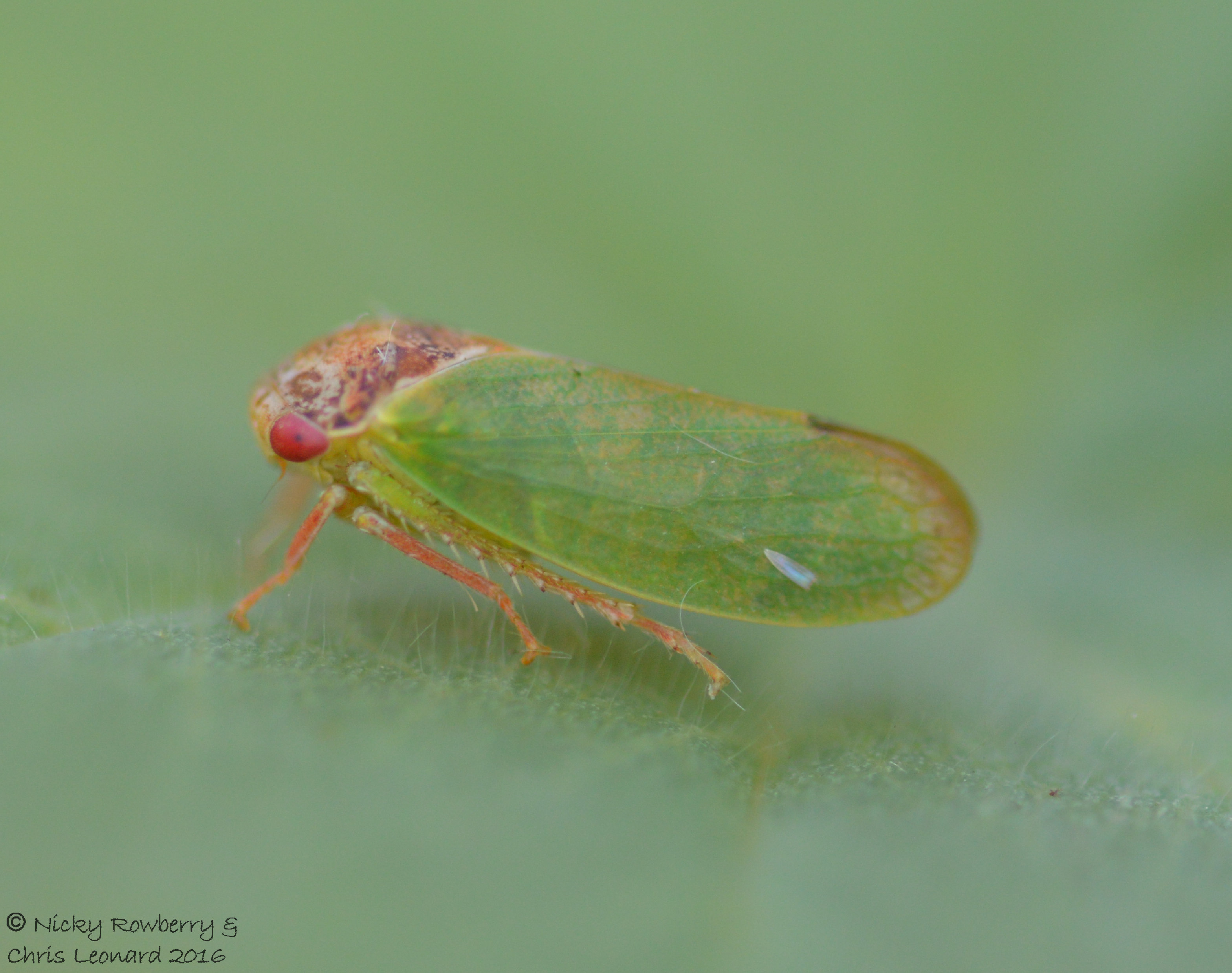
These first two are Leaf Hoppers (I’m still not sure what makes a Hopper a leafy one or a froggy one). I can’t find common names for either of them although they are apparently quite common species. I guess not enough people look at these tiny insects for anyone to have bothered giving them English names. The first one was a lovely green insect with red eyes (maybe I should invent common names – the Ruby-eyed Emerald Leafhopper!) called Iassus lanio.

Iassus lanio

The second was a slightly subtler individual called Allygus sp. (my name – Mottled Brown Leafhopper!)

Allygus mixtus

One thing I’ve found all these Hoppers have in common is the ability to ping away in a split second as you try and photograph them. They seem quite sedentary lazy creatures one minute, then suddenly ping – they’ve gone. So I didn’t get much time to compose and focus beautiful photographs!

The next one is a froghopper and has actually managed to get itself a common name – the Alder Spittlebug (Aphrophora alni). The immature stages of these bugs form foamy nests on plants (frog spit or cuckoo spit) which help them regulate moisture and temperature.

Alder Spittlebug

The final one was a very large leafhopper, the largest British species in fact – Ledra aurita. It’s common name on one website was given as Eared Leafhopper, although Horned Leafhopper would seem more accurate to me. It is normally very well camouflaged on trees, but stands out a bit in a moth trap.

Ledra aurita

All these insects appeared in the moth trap on Tuesday night, but on Friday night the same trap in the same location didn’t catch anything but moths!

Hedgehog Hydration

Our hedgehogs seem to be getting mighty picky with their food this week. After the successes of the first few nights of the feeding station, they’ve been turning their little hoggy noses up at my latest offerings. Lots of videos of them going into the box, looking at the food and wandering back out again. Of course because the neighbourhood cat can’t get into the box, I’m left with a bowl of smelly cat food to dispose of each morning.

So far they’ve refused 2 supermarket brands and two supposedly upmarket pet brands of catfood. I’ve been avoiding fishy flavours, but so far they’ve rejected chicken, beef, lamb and even duck! If anyone has any suggestions as to which is the best cat food to feed them with, it would be much appreciated.

But there is good news. They may not be eating the food I’ve put out, but they have at least been drinking the water.  We’ve been leaving bowls of water around the garden and I finally had the brainwave of leaving one in front of the camera. Sure enough at least one of our hogs has been drinking from it.

They don’t show much respect for the water bowl though – this one tramping through it when he or she decides they’ve had enough!

This is really good news as hedgehogs can apparently become dehydrated in hot weather. The Hedgehog Preservation Society advises all gardeners to leave water out for their hedgehogs (and for other wildlife).

So you can lead a hedgehog to food but you cannot make him eat – but you can at least get him to have a good drink! Perhaps the not eating thing is actually a good sign – that they are not that hungry and our garden is providing enough natural food. I hope so.

Hedgehog Feeding Station

“If you build, it they will come” – not originally referring to hedgehogs, but I was hoping it would still hold true. Following my previous post about attempts to feed hedgehogs mainly ending with success at feeding neighbouring cats, I got some very helpful suggestions via Twitter. Probably the most helpful was from Paula who suggested I try out the instructions for building your own feeding station on Little Silver Hedgehog’s excellent blog (https://littlesilverhedgehog.wordpress.com/2016/06/20/build-a-hedgehog-feeding-station/)

The idea behind the feeding station is simple enough – provide a safe place for the hedgehog to eat with an entrance hole too small for the cats to get in. I’m not the most DIY-minded person, but thought I could just about manage this! So one plastic box, a pair of scissors, some sticky tape and a brick later, this was the result!

The Box

It may not be a build of great architectural beauty, but I was hoping the hedgehogs wouldn’t be too bothered by the aesthetics (or the choice of reading material I’d lined the bottom with). The catfood went at one end and the trail cam was set up and I just had to wait for morning to see if it worked.

In the morning I was really chuffed to find that the food had all been eaten – of course the question was – Who or What ate it? Trail cam footage first showed the usual cunning cat peering at the box and looking mildly annoyed that it couldn’t get to the food. Then at about 12:40 am the hedgehog appeared to view my handiwork for the first time.

He or she was cautious at first, peering in and eating some food near the entrance.

Then followed a few more nervous entries into the box until by 3am our hedgehog was striding in and going straight for the food. Clearly his or her confidence was such that by the morning all the food had gone.

I am so pleased with this – it has way exceeded my expectations, especially for a first night trial. I’ve stocked up on catfood and hopefully this success will continue throughout the summer. The only slightly annoying thing is that my trail cam will only record 15 seconds at a time when in night-time mode, but I can live with that.

I can’t thank Little Silver Hedgehog enough for her excellent advice (do check out her blog for all things hedgehog related https://littlesilverhedgehog.wordpress.com/) and Paula on Twitter for pointing me in the right direction in the first place. Social media working at its best!

2021 update – Please note that since I wrote this blog, concern has been raised about feeding hedgehogs with mealworms. It is no longer considered advisable to feed hedgehogs with mealworms. The concern is that hedgehogs that eat a lot of mealworms could develop a condition called Metabolic Bone Disease. So please just stick to either meaty cat or dog food, dry cat food or a good quality (i.e. high protein content) hedgehog food.

On the Trail of a Hedgehog

Hedgehog in bowlFor the last few weeks I’ve been on a bit of a mission to capture some footage of our garden hedgehogs. As always when using our Trail Cam it’s a bit hit or miss what footage we get, with the usual array of grass flapping and leaves falling tending to dominate the films.

I’ve been putting out bowls of catfood, not just to try and film the hedgehogs but also to give them a bit of a helping hand when they might have young. Not too surprisingly though, if you put out catfood you get – cats! In this case one of the neighbours’ cats has learnt this is an easy midnight feast when he’s peckish, although in the footage below he has to share it with some very large slugs!

I have an awful lot of clips of the same black cat stuffing his furry face each night.

Most of the time I persevered with the cat food, until I happened to find a pack of blueberries at the back of the fridge that had gone a bit squishy for my liking. Again I thought this might tempt our hog – again I was wrong. They were all still there in the morning. On the plus side one of our blackbirds did like the look of them. I don’t know if he’s been in a fight with other blackbirds or even the cat, but he’s the scruffiest blackbird ever. But he did like the blueberries – I was a bit worried when I saw this that he was going to choke on one, but he seemed to gobble them down in the end and is still flying tattily around the garden with no ill effects.

The robin (probably the same one who stalks my moth trap) has also learnt that the hedgehog bowl is easy pickings. He’s not that keen on the catfood, but has tried most of my other offerings.

I have managed to get some clips of the hedgehog feeding or at least investigating the bowl. We’ve definitely got 2 adult hedgehogs using the garden as I’ve seen them some evenings, but never managed to get them both to come to the food bowl at the same time!

If nothing else my attempts to feed the hedgehogs are supporting a variety of other wildlife in the garden – blackbird, robin, slugs, assorted flies and spiders and of course the neighbours’ cat! The brief glimpses we get of the hedgehogs though make it all worthwhile. The clips may only be short (for some reason the trail cam won’t do videos of more than 15 seconds at night?), but they give a small insight into the lives of our hoggy friends that we wouldn’t get otherwise.

Moths – A Whiter Shade of Pale

It’s apparently been National Moth Week this last week, although I’ve only just realised that today – a bit late. Fortunately I’d run the moth trap at the weekend anyway, so I was sort of participating in Moth Week, albeit unwittingly!

My star moth from this weekend was this beautiful white one – the Yellow Tail. It does have a yellow abdomen which it sticks out when disturbed, but personally I’d have called it something that described its beautiful white wings a bit better. But whatever the name, it’s a lovely moth and I was so happy to finally get one in our garden.

Yellow Tail

Two weeks ago I’d got another first for the garden which I’d initially thought was a Yellow Tail, until I realised it didn’t have one! Closer inspection revealed it to be a White Satin (whoever named this one was more on my wavelength), which has a lovely sheen to its wings and stripy little front legs.

White Satin

Feeling on a bit of a roll with the white moths, I raided the photos to see what other ones we’ve had. The most obvious was the White Ermine. We get these most summers and they really are stunning – and easy to identify making them the perfect moth in my book!

White Ermine

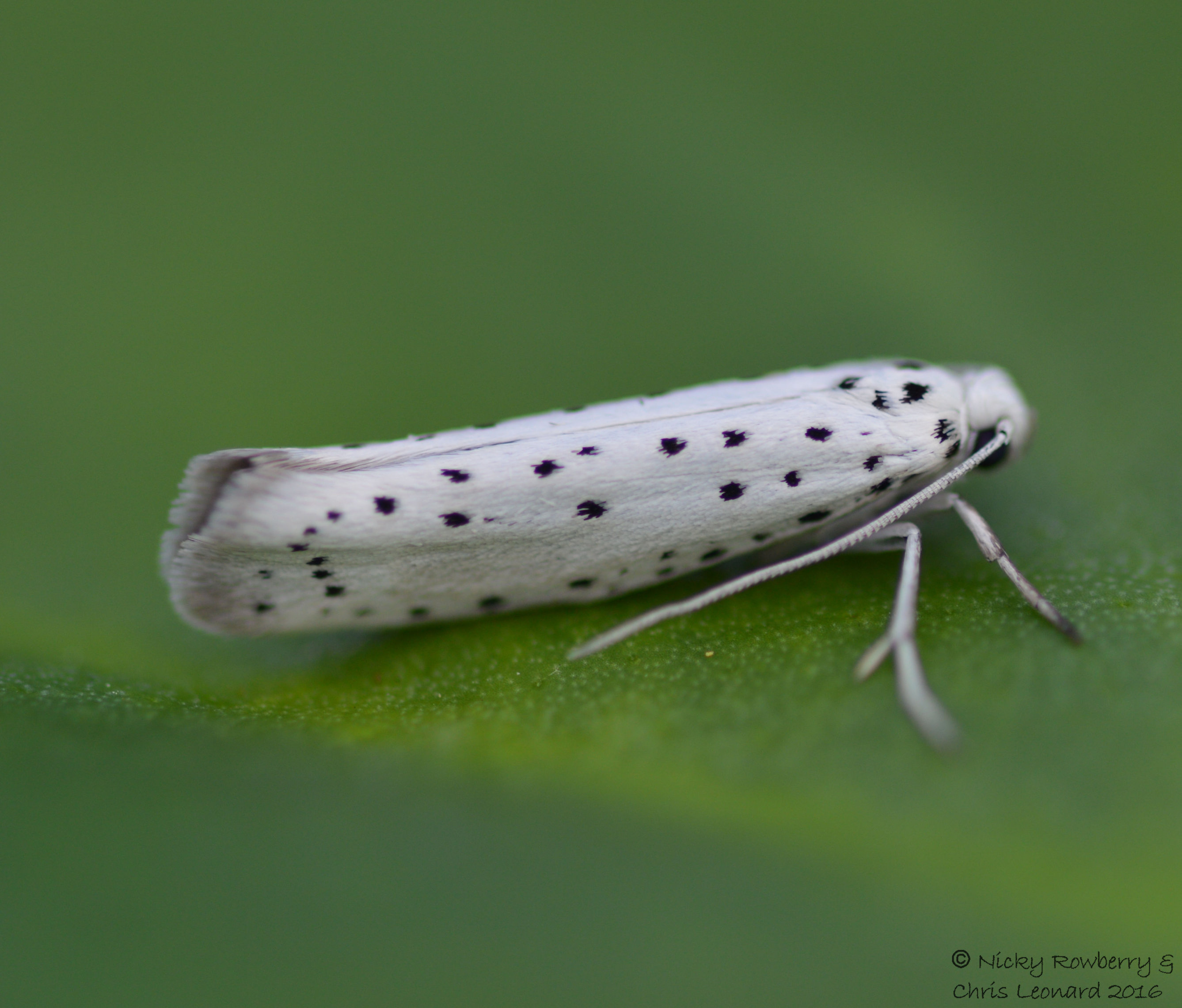
The next white moth I could think of was the other type of Ermines we get. These tiny micro moths feed on fruit trees and turn up in the moth trap regularly, but they are really difficult to identify. The books advise that you should breed them up from the food plant to be certain of the species, but that doesn’t help when you’ve just caught one in a trap. The trap was right next to our apple tree, so this maybe an Apple Ermine, but we have plum trees nearby too, so it could be an Orchard Ermine. We may even be getting both species.

Apple Ermine

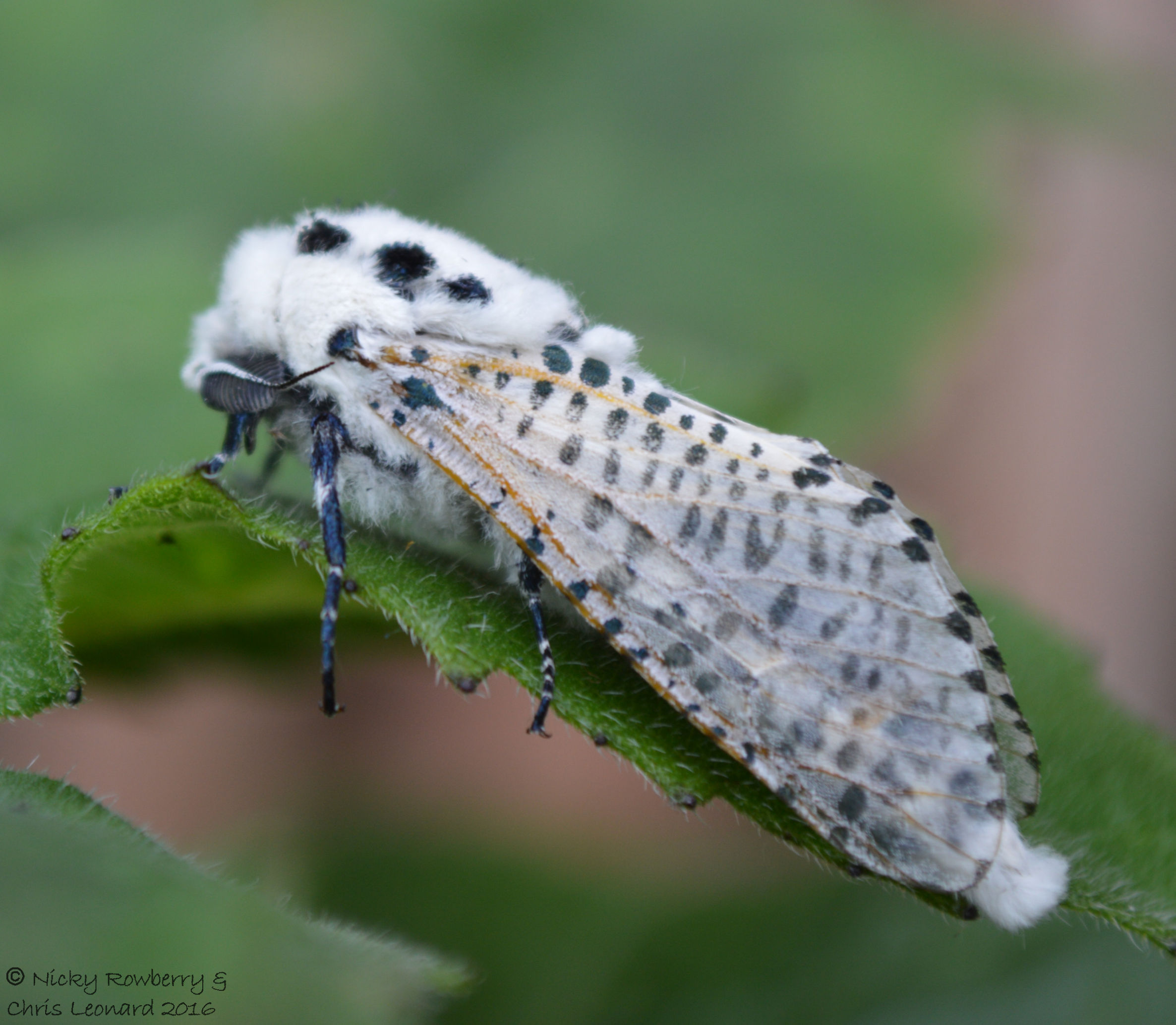
The final white moth of the day is the Leopard Moth. I’ve not seen one in the garden yet this year (although I did see one on the Wildlife Trust’s Moth Breakfast back in June), so this is a photo from last year. These are crazy unmistakable looking moths.

Leopard

I find these white moths really hard to photograph, mainly because I’m no good with camera settings so do most of it on auto. Trouble with using auto on white moths is that it struggles with the exposure as they are often too white against whatever background they’re on and the photos can look blown. The White Satin was particularly awkward as it flew out of the pot and landed on the black tripod leg. The only way to photograph it was to take the camera off the tripod – adding my shakiness to the equation. So that’s today’s excuses dealt with!