The Bees Knees (or Feet)

This last week of sunshine (and showers) has brought the bees out in our garden – at least three species already, plus a massive unidentified one going like a bumblebee out of hell over the roof!

When it comes to identifying bees, it would seem a bee’s knees are hardly relevant at all. In the case of our first positively identified species this year, it was the feet that were key for the charmingly named Hairy Footed Flower Bee (Anthophora plumipes). This is one of the earliest bee species to appear in the spring and we had several merrily tucking into the primroses last weekend.

Hairy Footed Flower Bee

The second species to be spotted in the Lazy Garden was this little mining bee (Andrena sp.) seen basking on an ivy leaf in the sunshine. Unfortunately there are lots of species of mining bees and my photography wasn’t up to scratch enough to be able to identify this one. I did load it onto the ever-useful iSpot website, where several very helpful people discussed various possibilities (I would love to say “debate raged” over my bee, but that would be a bit over dramatic), before concluding that it was best to just stick with Andrena sp. rather than get it wrong. Hopefully our mining bee will reappear sometime and I can get a better photo to nail the identification.
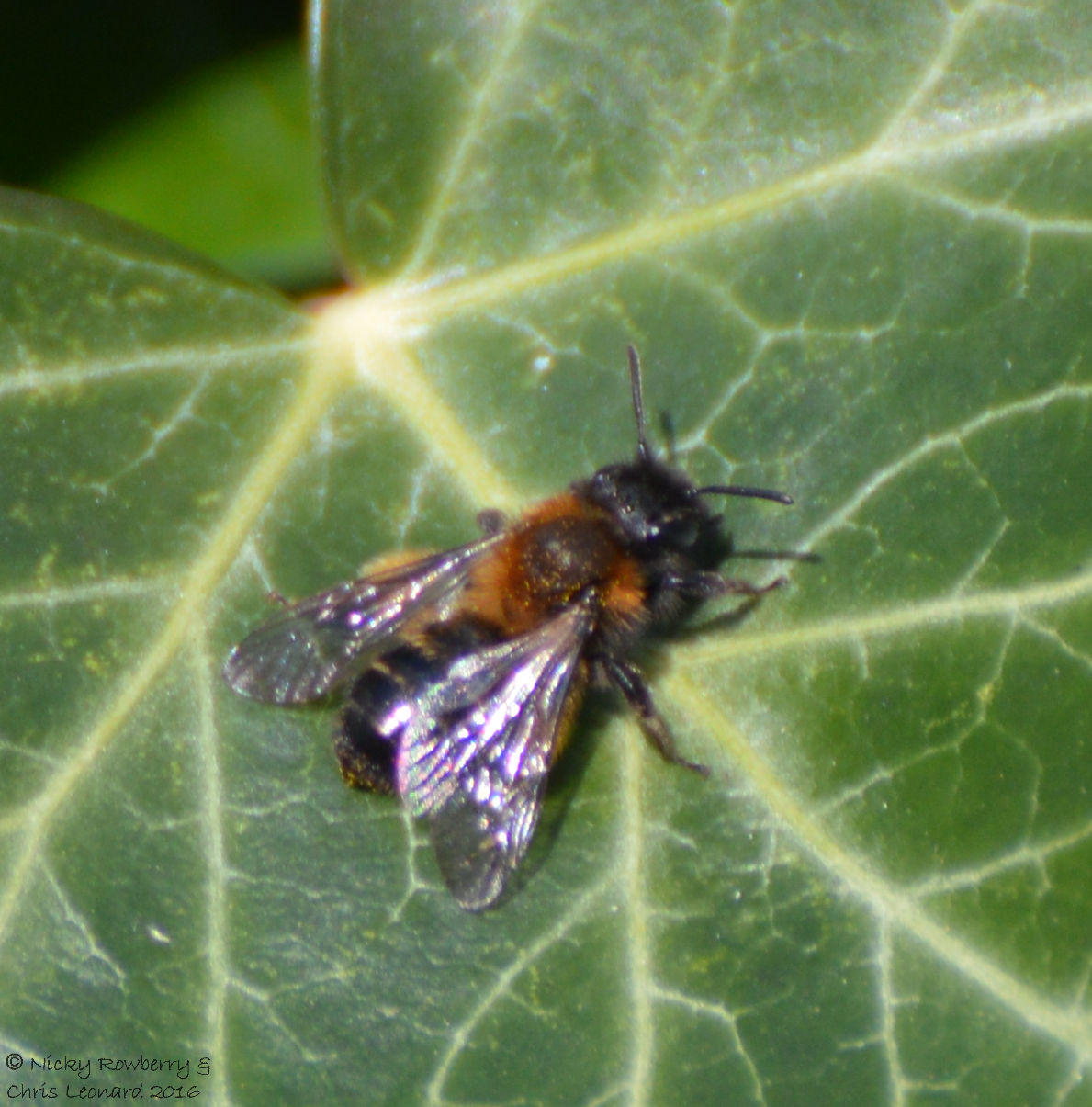
Mining Bee Andrena sp

The final species this week was the humble, but oh so important, Honey Bee (Apis mellifera) seen here already sporting a fine set of pollen sacs. Bee populations in general are struggling so much at the moment, it was great to see 3 species at least surviving in our garden.

Honey Bee

And finally I’ve been having a go with the trail cam filming our bee friends. As per usual with the trail cam, I had to wade through quite a lot of footage of things blowing about in the wind (in this case mainly primroses) before finding this short film of our Hairy Footed Flower Bee, doing what he does best – landing on flowers with his hairy little feet!

Doomed Beauty

It was week two of the Garden Moth Scheme last weekend – I put the trap out twice – once for the official GMS count and once just because I probably need to get out more! Needless to say the non-GMS night produced more moths than the official night, but then it was several degrees warmer. I was tempted to log the better of the two results, but decided to be a good citizen scientist – after all the aim of the scheme is to find out about moth numbers on average nights, not just on the best ones!

The official night still produced 6 moths of 4 species, including a small Double Striped Pug (Gymnoscelis rufifasciata), which landed on the garage wall next to the trap at the beginning of the night and stayed there until dawn.


The trap also attracted a Common Plume (Emmelina monodactyla) – a funny stick like micro moth, shaped like a capital T, hence its other common name T-moth.

Emmelina

The second trapping night produced 24 moths of 8 species, including a new species for our garden the March Tubic (Diurnea fagella).


Another first for the garden was this much more attractive (apologies to the above March Tubic) Herald moth (Scoliopteryx libatrix). I’d been wanting to find one of these in the garden for a while (having previously only seen it when I’d rescued a few from a friend’s building site of a garage). Herald moths overwinter as adults, so this was probably one that had been hibernating somewhere nearby and emerged on one of the first warm nights.


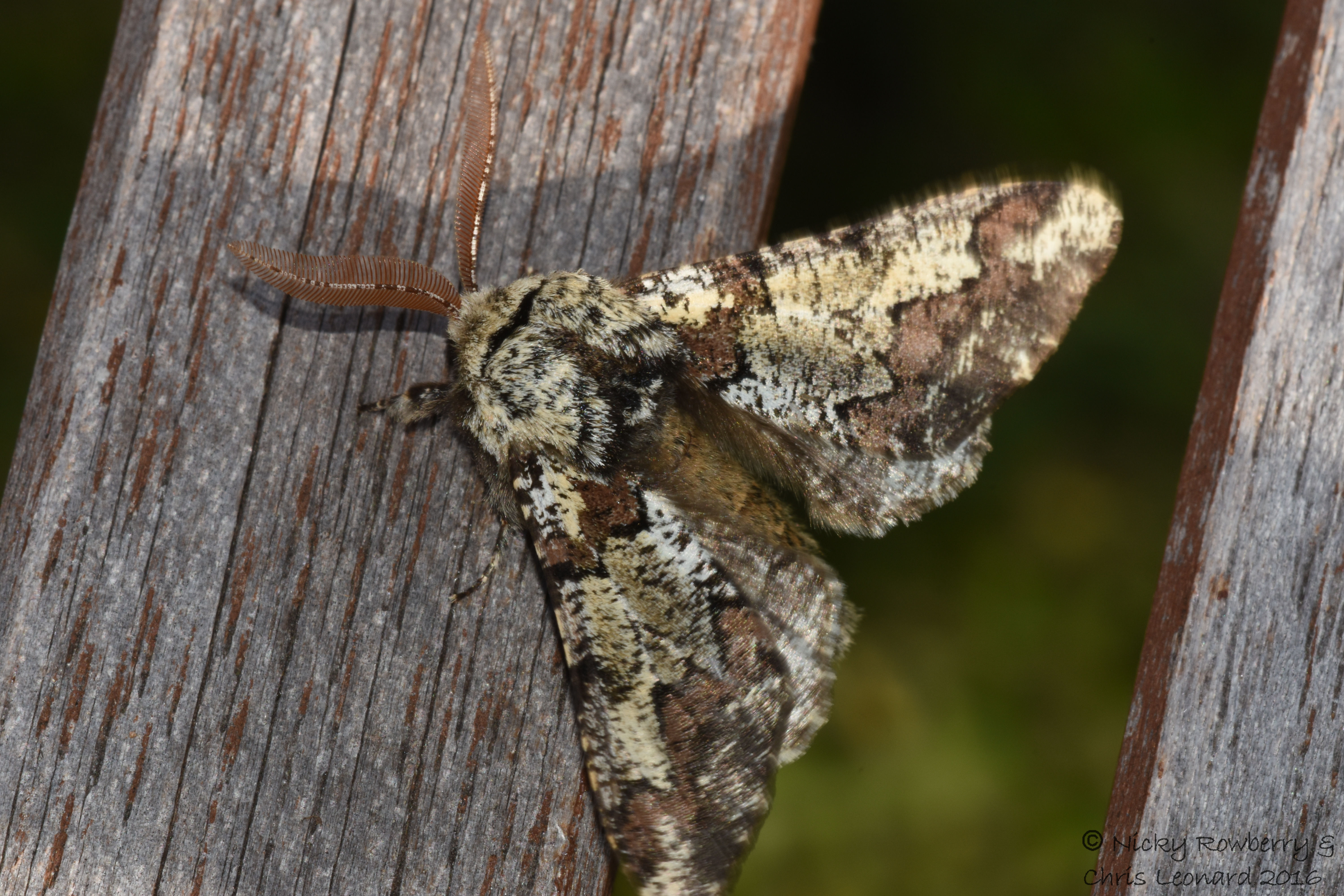
But the star of the show was this magnificent Oak Beauty (Biston strataria) – a large moth with fantastic feathered antennae. We have had them in the garden before, but this was a lovely fresh specimen, looking his or her best. Sadly this beauty was doomed. Before I could move him to the safety of a quiet corner, he took off, flapping towards the apple tree. Unfortunately hubby and I weren’t the only ones watching him go and before we knew it, a robin swooped down and had our bright beauty for breakfast. It must have made a big fat treat for the robin, but I must admit I felt more than a little guilty at our part in this poor moth’s short life!

Oak Beauty

So the two nights trapping brings the total species count for the year to 12, which includes 4 new records for the garden – not a bad start to the year at all. Sadly the Oak Beauty can’t say the same!

Siskin Surprise

The wildlife interest in our garden seems to be swinging at the moment to and fro between the moth traps and the trail cam. Last weekend the trail cam definitely came out on top though, when it threw up a complete surprise in the garden. I guess many of us put out these cameras with the vague hope that they will reveal something unexpected and this weekend ours did. It may not have captured anything super rare, but it did film a Siskin – a bird which we didn’t even know we had in the garden. Of course it would have been nice to see the Siskin in the flesh rather than just on film, but at least we know now to look out for it!

We’d hung this bird table out a week or so ago and were initially a bit annoyed that its design meant it immediately swivelled, tipping all the seeds into one corner.  But this jaunty angle actually appears to be working to our advantage, as the slope (and general instability) seems to be deterring the pigeons and larger birds and allowing the smaller ones to get a look in.

The Siskin is an attractive bird, so I tried to get some correspondingly attractive still images from the film. Unfortunately it was so intent on scoffing the sunflower seeds, that it was difficult to get an image without food hanging from its mouth, so these were the best I could do.

Siskin 1

Siskin 2

The sloping feeder attracted several other species that afternoon, although none stayed as long, or were quite so fond of their food, as the Siskin – a bird after my own heart!

Great Tit

Robin 3


Moth Count Down

Less than a week to go until the summer Garden Moth Scheme starts, so I’ve been dusting off the trap and my ID skills, such as they are. Although I’ve been moth trapping for a couple of years now, this will be the first time I’ve submitted my results to any study like this and I’m really looking forward to it.

So on Friday night I put the moth trap out as a sort of a dry run,  in the site I’ll be using through the summer for the scheme.  It was a slightly warmer night than it has been recently (a balmy 2.3°C) and virtually no wind, so I was reasonably optimistic about catching something at least. Sure enough, my optimism was rewarded with the grand total of 7 moths of 4 species; more moths than I’ve had in all the other trap nights this year put together. I even had one species I’ve never recorded in the garden before (probably because I don’t normally trap in February). The Grey Shoulder-knot (Lithophane ornitopus) below most probably hibernated as an adult moth over winter to emerge in the spring.

Grey Shoulder Knot

The remaining 3 species all belonged to the Orthosia genus of moths, which would have spent the winter as pupae. The first of these was the Common Quaker (Orthosia cerasi) which I’d already caught this year and mentioned in earlier blog posts.  The second was the unfortunately named Clouded Drab (Orthosia incerta) seen below camouflaged very well against a stone background.

Clouded Drab

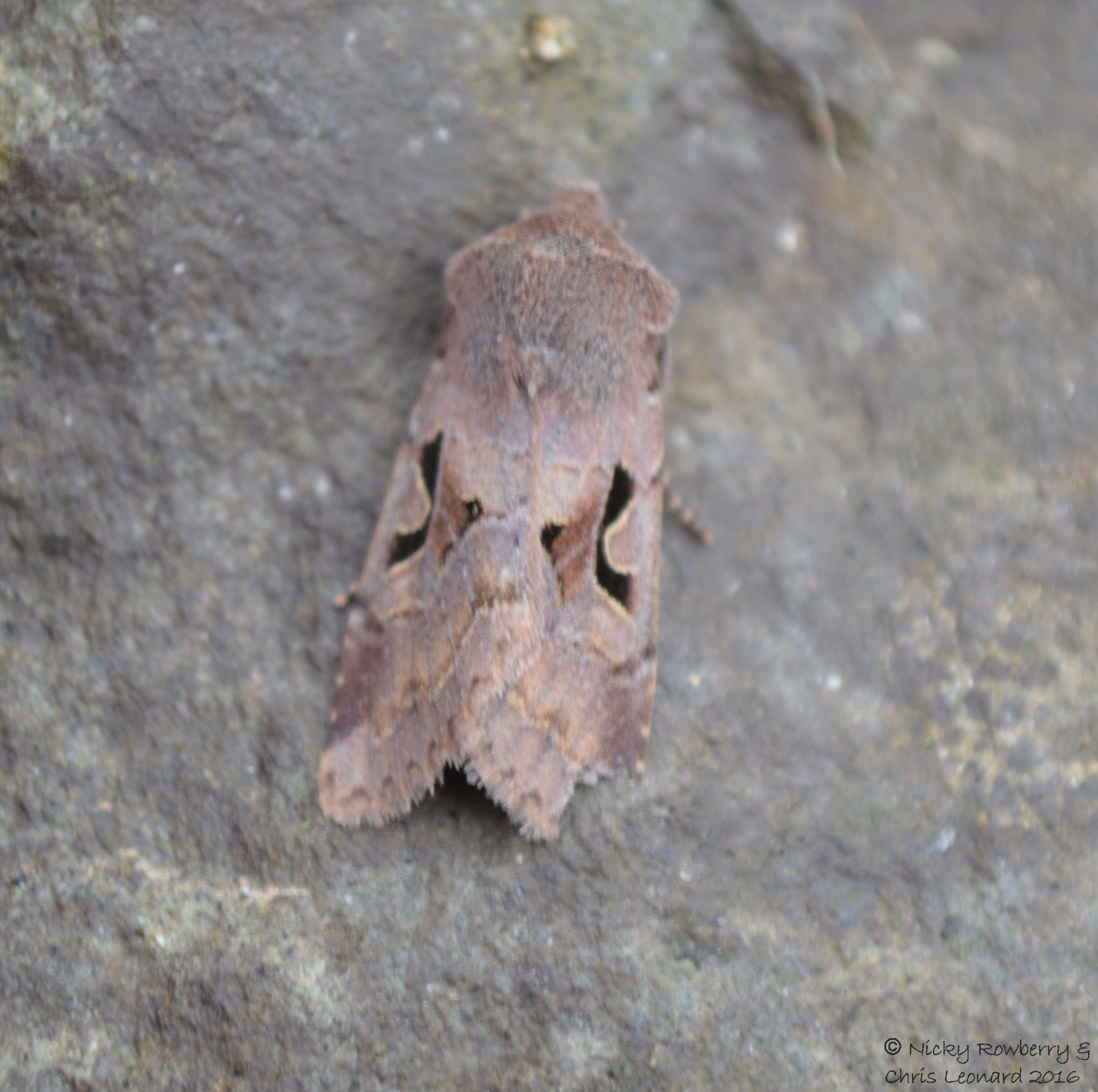
The final species was the much more interestingly titled Hebrew Character (Orthosia gothica), named apparently because the dark mark on its wing looks like the Hebrew character Nun: It’s not a perfect match, but you can see what they were getting at, when whoever it was named this moth.

Hebrew Character

So 6 species of moth under my belt for this year so far and looking forward to seeing what the garden holds in the coming months. Having the discipline of having to put the moth trap out every week for the scheme, will hopefully yield a few extra species that I would otherwise miss. And it’s nice to know that our Malvern moths are in some small way contributing to the wider knowledge of the UK moth fauna.