Birdy Benefits of the Beast from the East

Well if February was freezing, March so far has been all about the snow. The so called Beast from the East weather front certainly dumped a whole lot of snow on us in Malvern. I couldn’t get to work on Thursday or Friday due to the drifting snow, so have spent much of the last few days birdwatching in the garden. The upside of all this snow is that it has brought lots of birds in from the fields looking for food. In particular, the Beast from the East has brought us fieldfares and redwings – lots of them!

But first surprise was to find a very large gull on the bird table. We see them flying overhead quite a bit, but this was the first time I’d seen one actually land in the garden. I’ve nothing against gulls, but I don’t think I can afford the seed bill if they start regularly hoovering up the bird food!

When the snow arrived at the end of last week, I was hopeful we might get a fieldfare or two, but there was a whole flock of them. Of course being wilful, they seemed to sense that I was the one on the street desperate for a photo, so stayed mainly just out of photo range in the neighbours’ gardens. But eventually a couple graciously honoured our garden. This first one looked distinctly unimpressed by the weather though and sat hunched in the bush with snow settling on him.
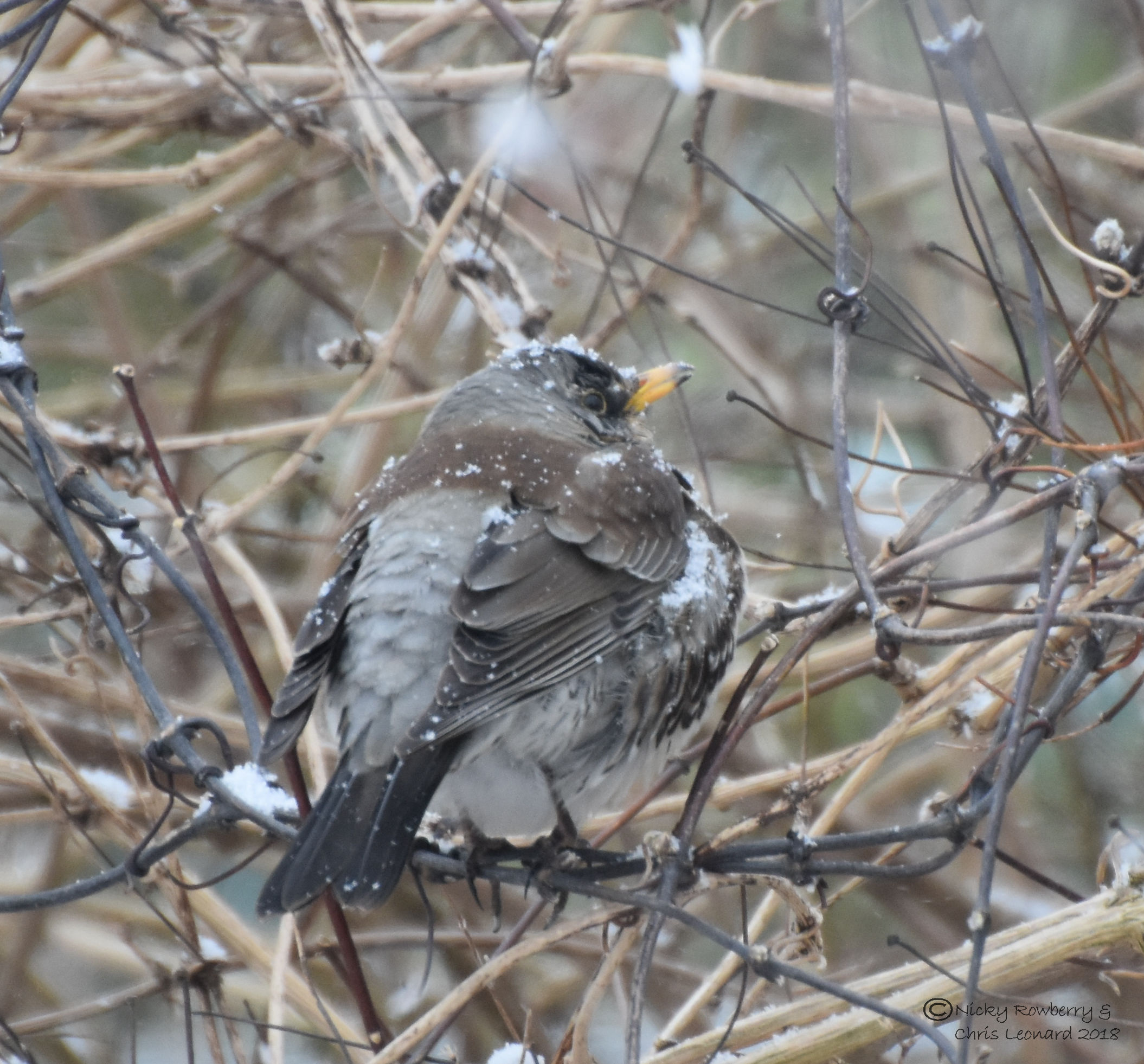
He did however discover some berries we’d got left so I could get a few more attractive photos, although unfortunately these had to be taken through our grubby windows so aren’t as sharp as I would have liked, but better than nothing.

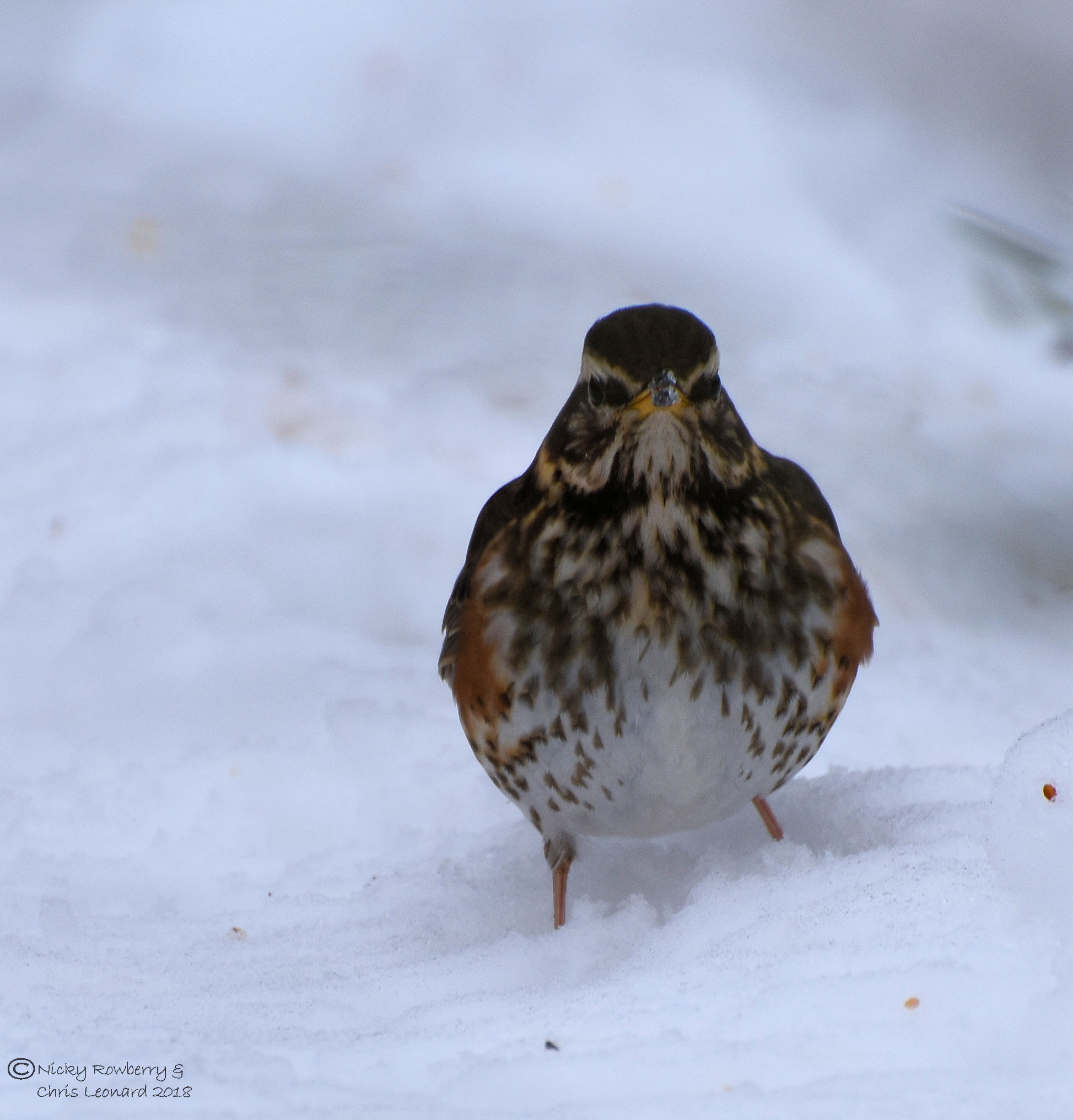
Having bagged a few fieldfare photos, I then started to wish there were some redwings around as well. Right on cue a small flock of these turned up too. (Maybe I should have wished for a Golden Eagle or a hummingbird?) Again it took me a few attempts stalking around the garden to get a half decent shot, but persistence paid off in the end.
Not to be outshone by his bigger and showier cousins, our resident song thrush was a frequent visitor this weekend too. Counting the blackbirds too, that’s 4 members of the thrush family in one weekend. Not bad.

I would have been quite happy with all of the above, but the goldfinches decided finally that they would like to spend some quality time in our garden. There were 4 in total, although I never managed to get more than 2 in one shot. Absolutely beautiful birds, I’ve always loved goldfinches.

I read on Twitter that goldcrests sometimes come into gardens when it’s snowy and again much to my amazement one appeared in the buddleia bush. Only the second time we’ve seen one on our garden. Sadly I was too slow to get a shot of it, he was just too quick.

So March has come in like a lion, let’s hope it goes out like a lamb. All this snow and birdlife has been lovely, but I’m starting to long for butterflies and bees and moths – roll on spring!
Big Garden Birdwatch 2018

Last weekend was the annual Big Garden Birdwatch – one of my favourite bits of citizen science to participate in. Unfortunately it was one of those dull, grey January days where the sun just doesn’t come out – and nor did many of the birds. Coupled with that, my camera was in for repairs so I couldn’t even take photos of the ones that did appear. I persevered though as it would have been a shame to miss out on it this year, having done it for the last few years.

So I spent an hour crouched behind my camouflage netting hoping neither the birds nor the neighbours could see me (neighbours think we’re mad enough as it is without seeing the camouflage!). As always seems to be the case, the birds which moments before had seemed so plentiful, all disappeared as soon as I got my notepad out. But my masterplan worked as I’d topped up all the bird feeders just before and they couldn’t resist indefinitely.

The sparrows were abundant as usual. I’ve no idea how many we really have visiting the garden, but I’m sure it’s much more than the 13 I managed to count in one go. I suspect we have closer to 25 or even 30, but they’re impossible to count all together, so I stuck with the 13 definite that I could see at once.  Next largest presence was the jackdaws – 5 of whom put in an appearance on the bird table. These are at least big enough and obvious enough to be much easier to count.

The rest of the birds came in just ones and twos: blue tits, robin, blackbird, goldfinches, starlings, woodpigeons, crow, dunnock, blackcap (female) and magpie. A total of 32 birds of 12 species. As usual I had several no shows – birds that have graced our garden in the days before and days after the count. These include the wren, great tits, coal tits, long-tailed tits and chaffinch – all of whom I’ve seen today.

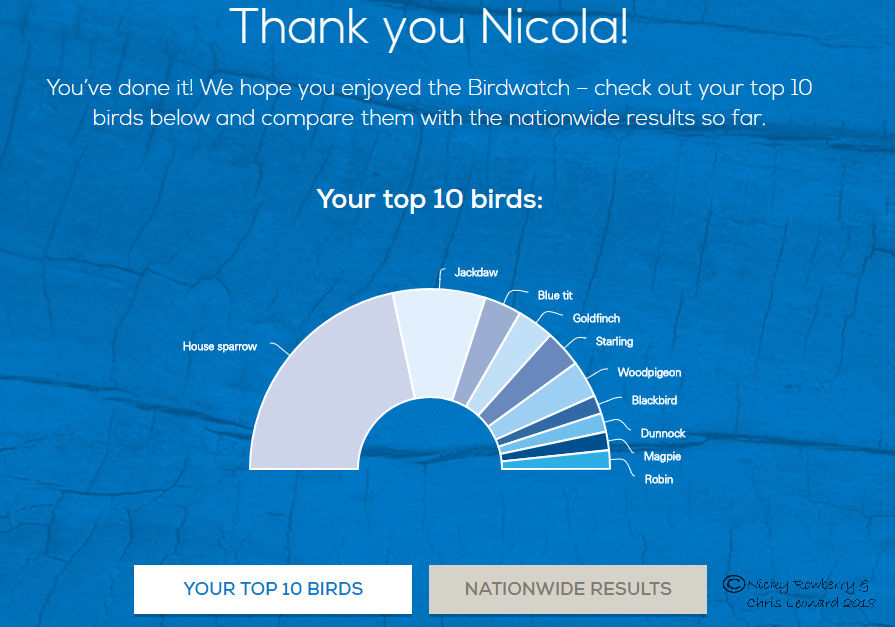
The RSPB give you a nice little pie chart when you upload your results. It only shows 10 species, so misses out the crow and the blackcap, but at least represents 30 out of the 32 birds I saw.

You can also get a similar representation of the national results so far. So as of this afternoon, sparrows were leading the way nationally, as they were in our garden. But there was no sign of our second most abundant bird, the jackdaw, in the nation’s top 10. Perhaps we are just in a hotspot for jackdaws, or they particularly like the selection of bird food we put out here?

This year’s results for our garden were very similar to last year’s (https://toolazytoweed.uk/2017/01/28/big-garden-birdwatch-2017/). So it’s good to know there are no dreadful declines here at least – keep putting out the bird food and they will come!

So a bit of birdy citizen science – a weekend well spent I reckon.

Save Langdale Wood

This week I finally got round to visiting a local wood that I’ve been meaning to stop at for donkeys years. Langdale Wood is just on the outskirts of the Malvern Hills and I’ve driven past hundreds of times, often thinking “I must stop and have a look sometime”. Unfortunately it was the sad news that this wood might soon be lost that finally prompted me to get up and go.

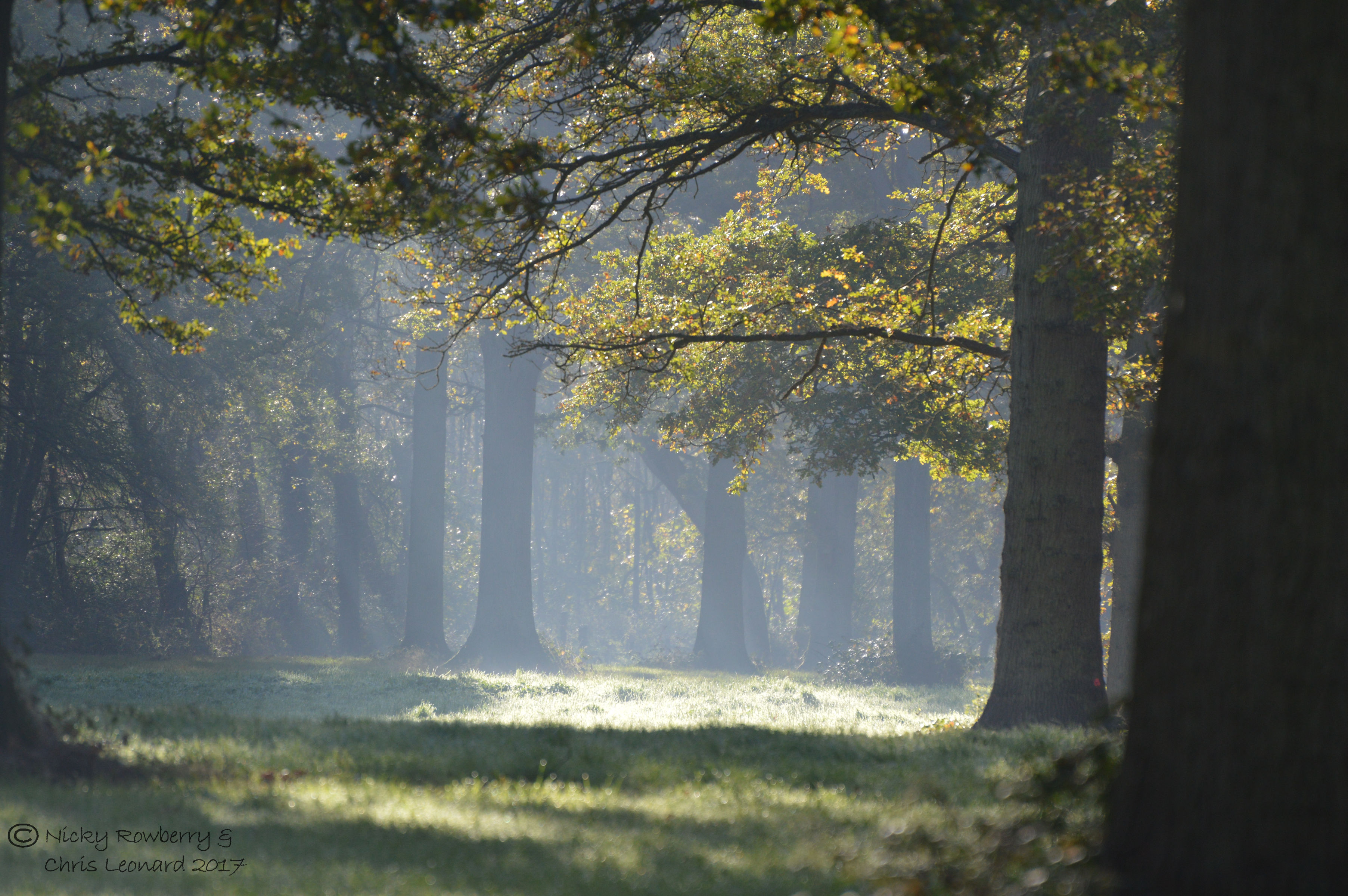
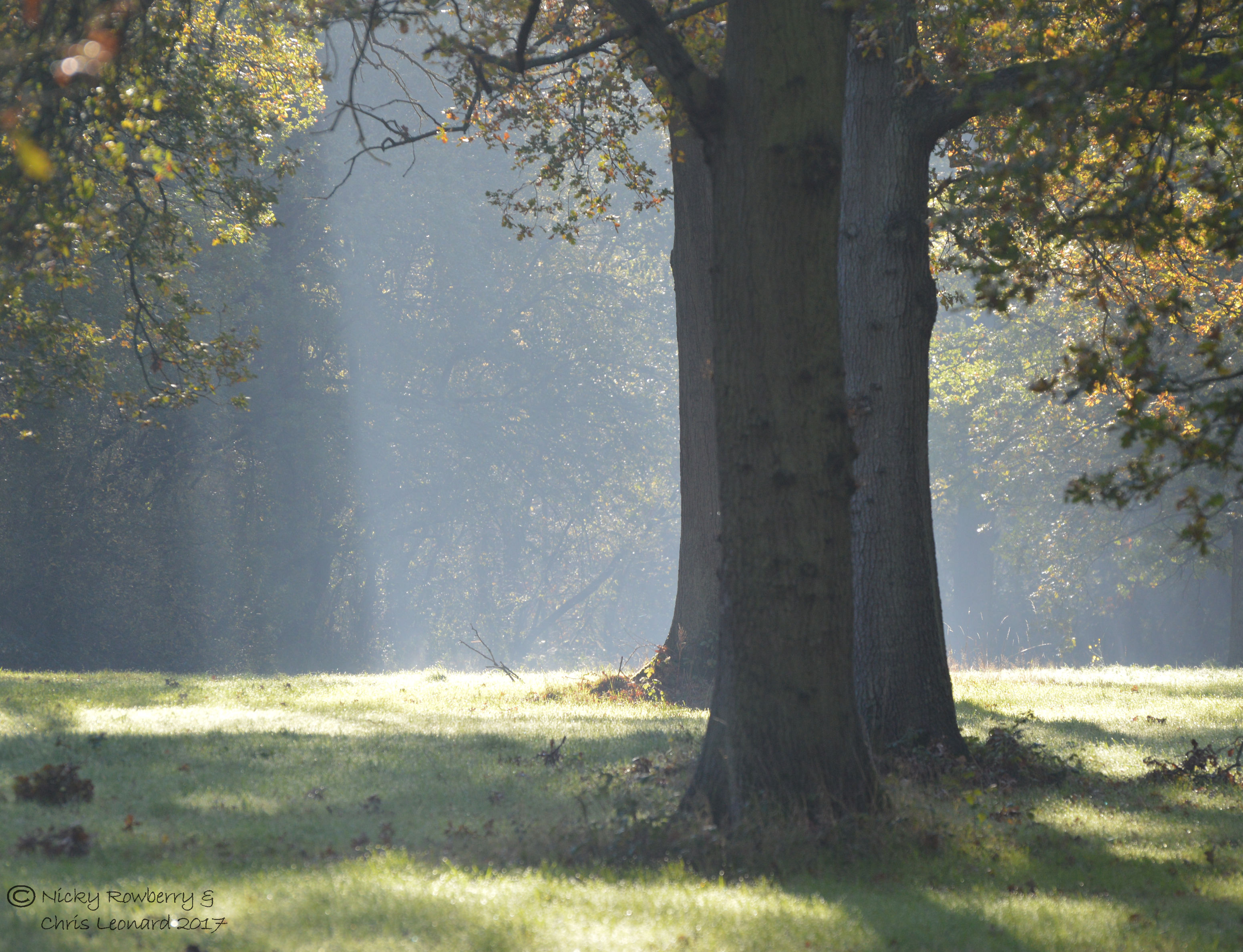
I got down there fairly early (for me) and the wood was still lit by a pearly mist with shafts of sunlight giving it a real ethereal quality.

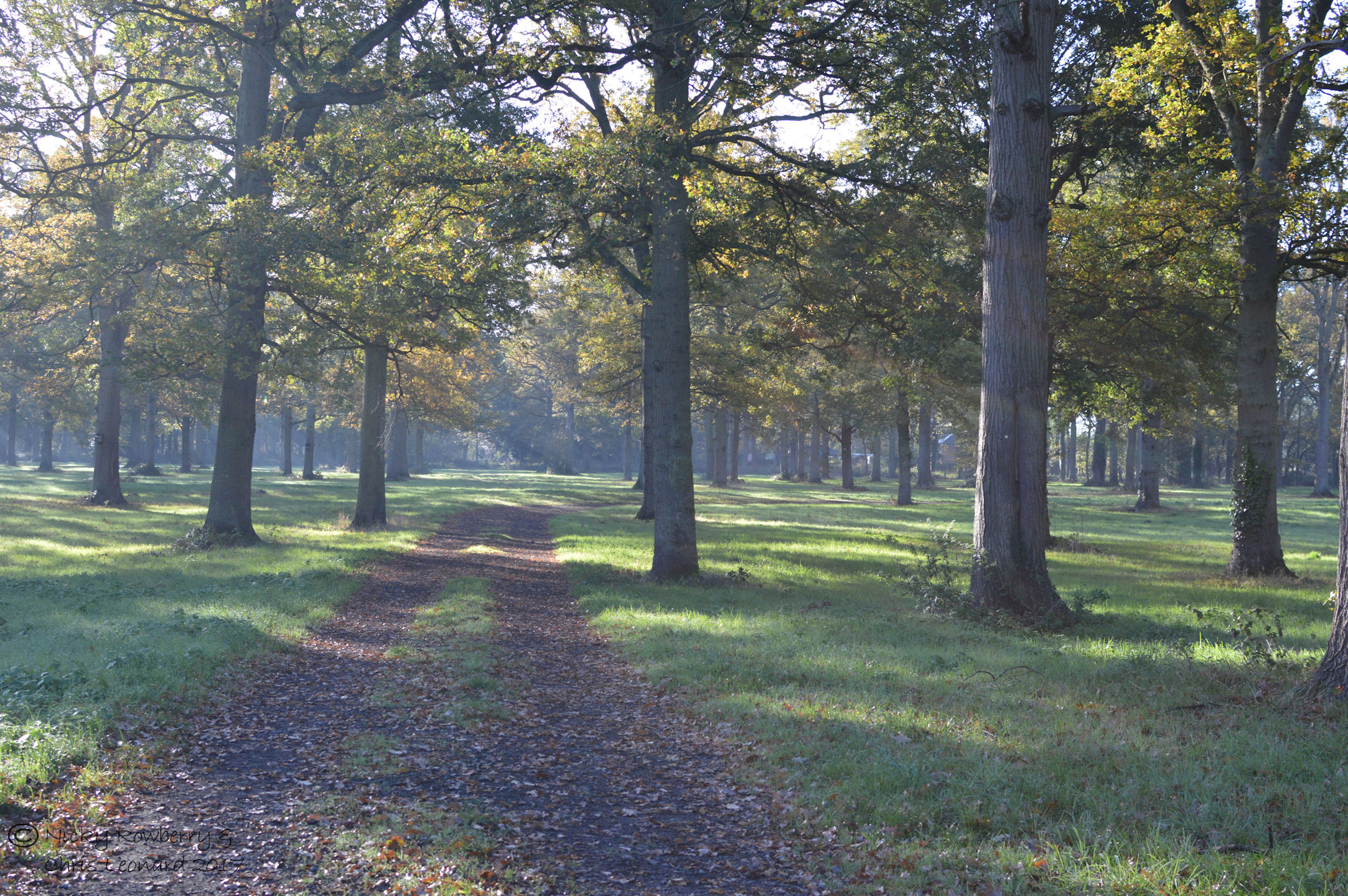
The area closest to the road consists of many huge trees which must be pretty old to have reached such a size. They are all widely spaced with plenty of light reaching the ground; I expect in spring and summer there are plenty of flowers beneath the trees. There are clear paths through the trees, although you could go off-piste if you fancied. Since it was my first visit, I stuck to the path and just followed to see where it would take me.

I’d picked only the second frosty morning of the autumn, and the ground was delightfully crunchy still underfoot where the sun hadn’t yet warmed it up; the ground cover twinkling with its crystalline coating.

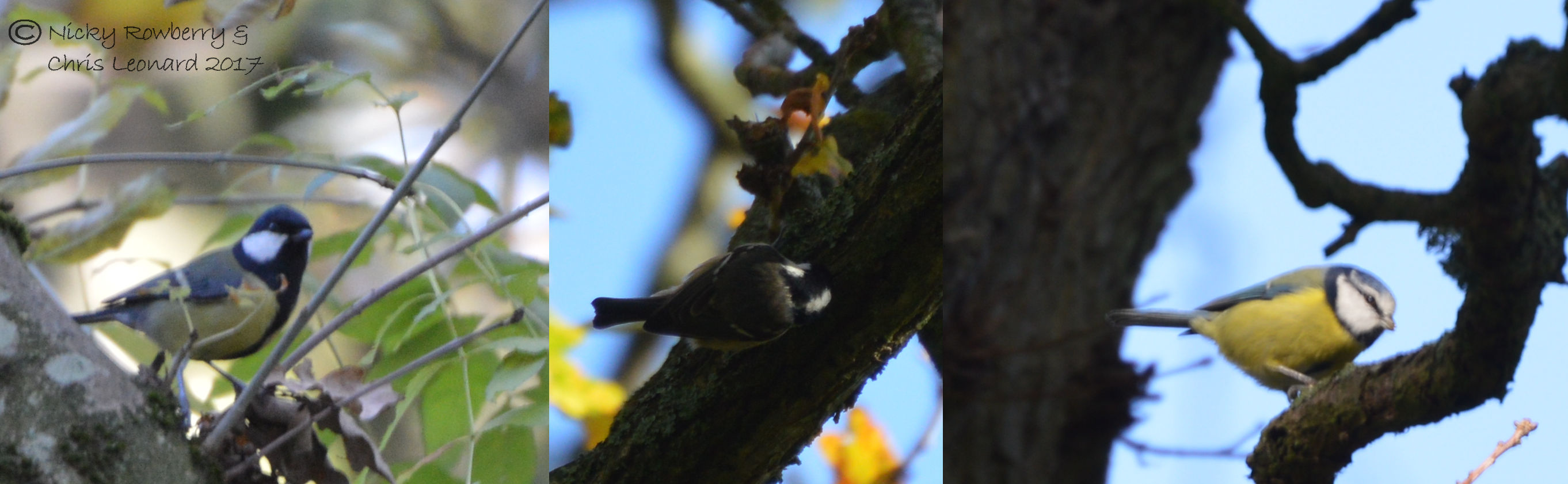
While I meandered about, the bird song all around me just didn’t stop. No idea what most of it was, but it was clear there was no shortage of birds. In the hour or so I was there I counted 15 species and that was just the ones I could see – no doubt there were plenty more. I discovered the big problem with big trees, especially when you are of diminutive stature yourself, is that you can’t get close enough to the birds to get decent photos. So for instance, although I saw 4 species of Tit (Blue, Coal, Great and Long tail) I only managed a few poor photos.

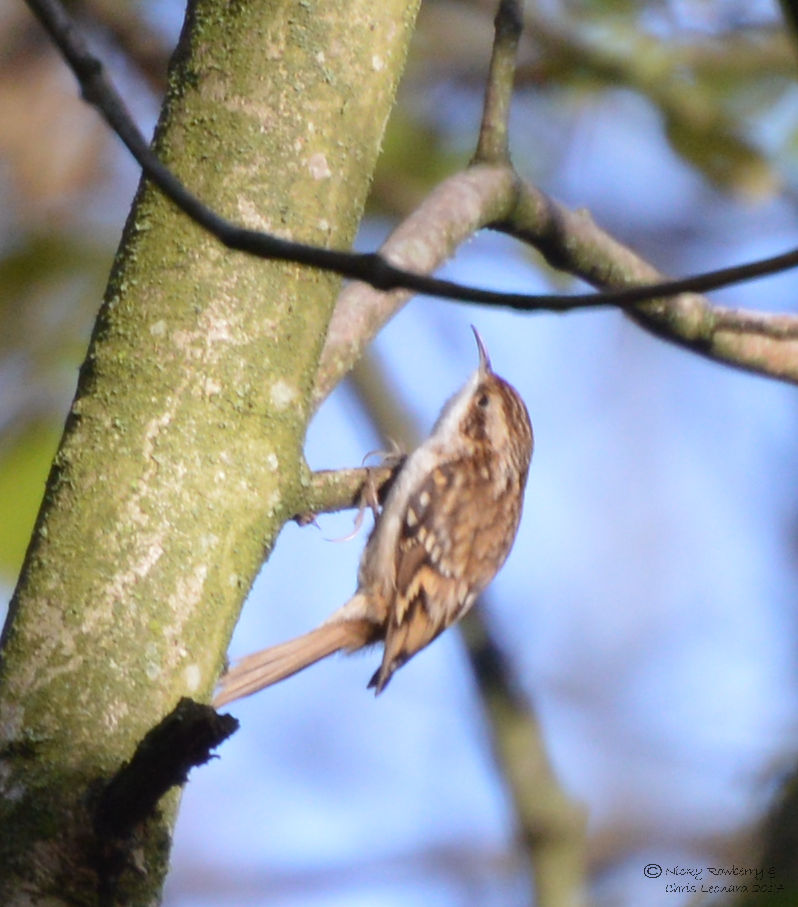
I was really chuffed to spot a Tree Creeper, which although it wasn’t actually that high in the trees, did not stay still for an instant. Each time I just got focussed he was off round the back of the tree – so this was the best I managed of him.

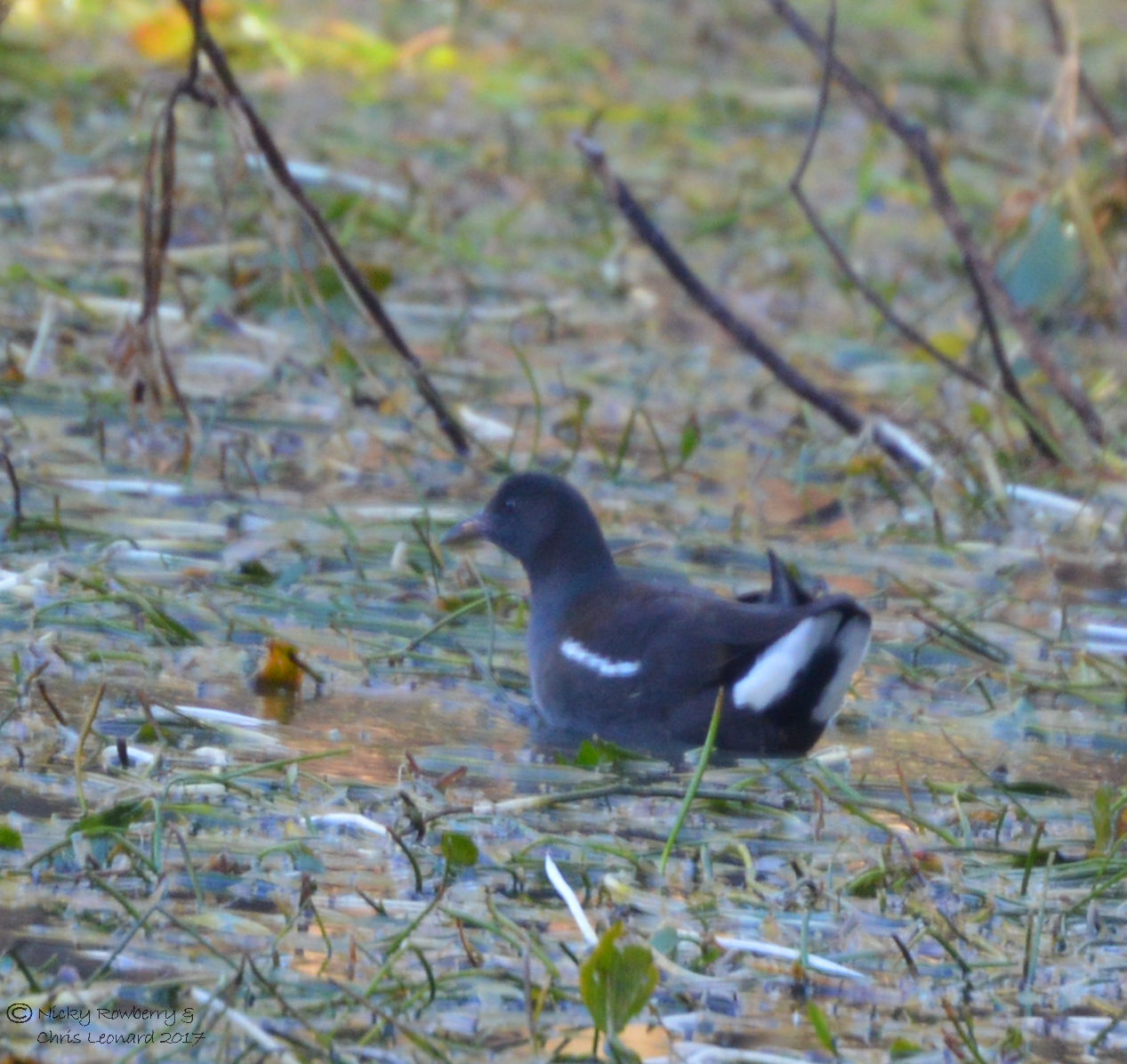
There is a decent sized pond in the woods too, surrounded by trees with a patch of bulrushes at one end (I’ve made a mental note to check these for dragonflies next summer). There was a trio of moorhens picking their way around the pond weeds – we played chase for a while, I would move to one side of the pond and they would move to the other! So again a distant blurry shot.

My prize find of the morning though was a tiny Goldcrest. At least I think it was a Goldcrest – it was very, very small and moved like lightning, so I can’t really be sure. This was the best shot I managed of it and you can’t even see its gold crest! There seemed to be a couple of them in one corner of the wood, so I’ll have to go back with a better lens.

The remaining  tally of birds spotted included robins, blackbirds, a wren, a dunnock, several crows, a pair of chaffinches, numerous pigeons, and some noisy jays. No wood would be complete without squirrels and I saw a few about – only grey ones of course, but always a cheery sight nonetheless.

It was only my first (though long overdue) visit to Langdale Wood, but it struck me as quite a magical place. Stunning huge trees with wide open walkways in some areas, but other areas with denser more scrubby natural woodland. It was clearly a popular place with dog walkers, many of whom exchanged morning pleasantries with me as I chased the elusive birds round with my camera. Unbelievably to me though, Langdale Wood is in danger – there are plans to build holiday lodges on it. Not only will this deprive the locals of a unique recreation area, but it will have a devastating effect on the trees and animals that live there.

A campaign group has been set up to try and fight the proposals. You can join the group on Facebook to show your support: https://www.facebook.com/langdalewood/

There is also an online petition – please if you live in the Malvern area, consider signing this petition: https://you.38degrees.org.uk/petitions/save-langdale-wood

I have lived in Malvern for quite a while and I honestly can’t think of anywhere in the area quite like it. There are other wooded areas of course, but none as spacious, open and calming as Langdale. Stupidly it’s taken me this long to go and see these woods, so I’ve only seen them in late autumn. I hope I get the chance to visit in winter, spring and summer, not just next year, but for many years to come.