Bumbling Around for Butterflies

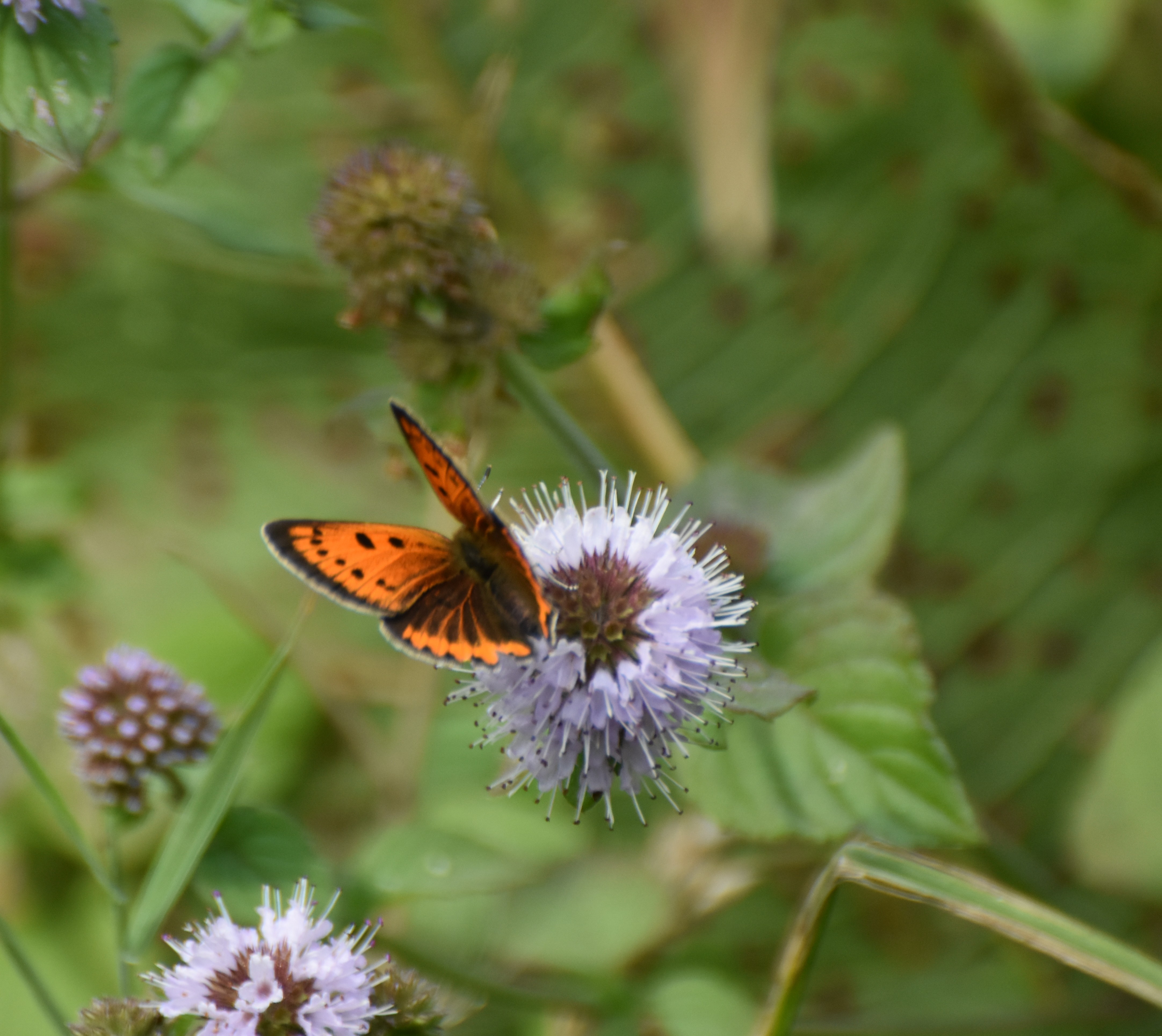
My quest to see all 58 species of butterflies in the UK seems to have stalled somewhat, but I’ve still had a really good summer for butterflies this year, both at home and out and about. Best and most surprising of all was getting to see some Large Copper butterflies less than 40 miles from home. Given that the Large Copper is actually considered extinct in the UK and has been so since the 1850s, it’s not a butterfly I ever imagined seeing. But some bright spark had chosen to release them (possibly as caterpillars) at the brilliantly named Bumble Hole Nature Reserve in Dudley.

I resisted for at least 10 days after the first photos started appearing on Facebook, but finally gave in to temptation and headed north to Dudley. With some help from a kind lady in the visitor centre, I headed to the butterfly hotspot – obvious when I was in the right area due to the dozen or so other butterfly twitchers. I was still fumbling to get my camera out, when the first Large Copper appeared.
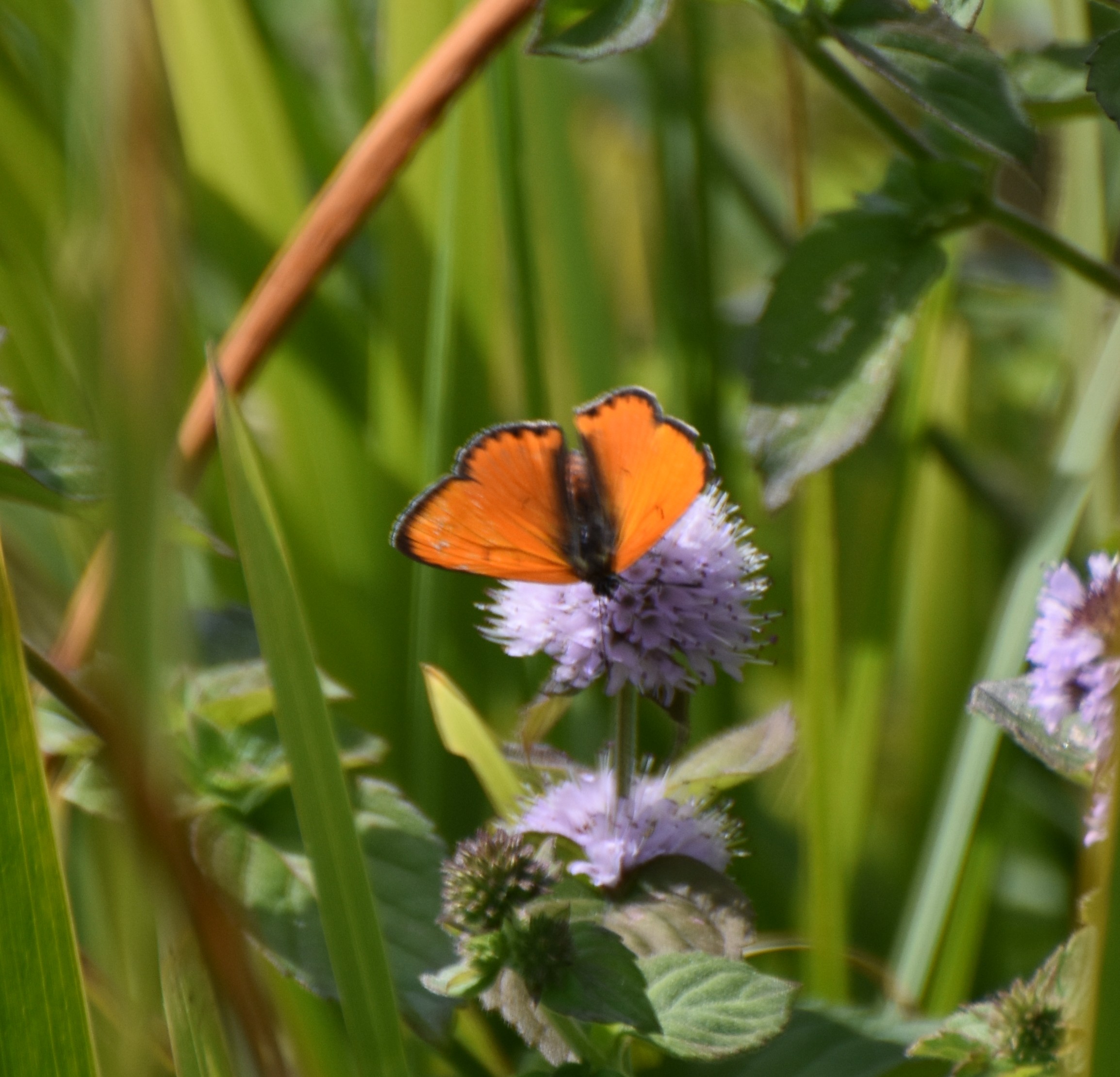
The males are pretty much all bright orange on the upper surface of the wings, with a pale blue dotted with black spots underneath.
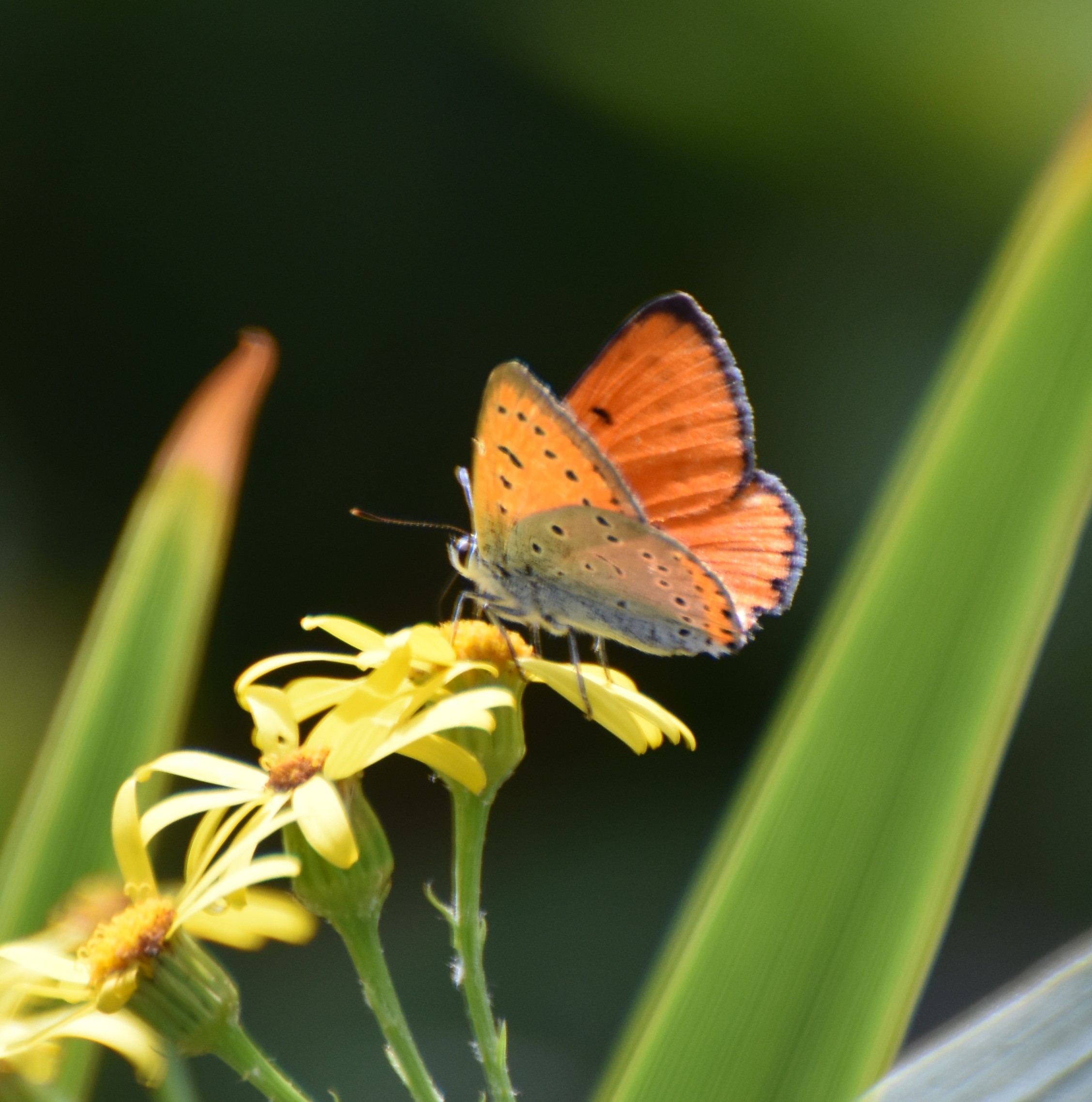
The females have more brown markings, stripes and spots on the upper side, but are similar underneath.
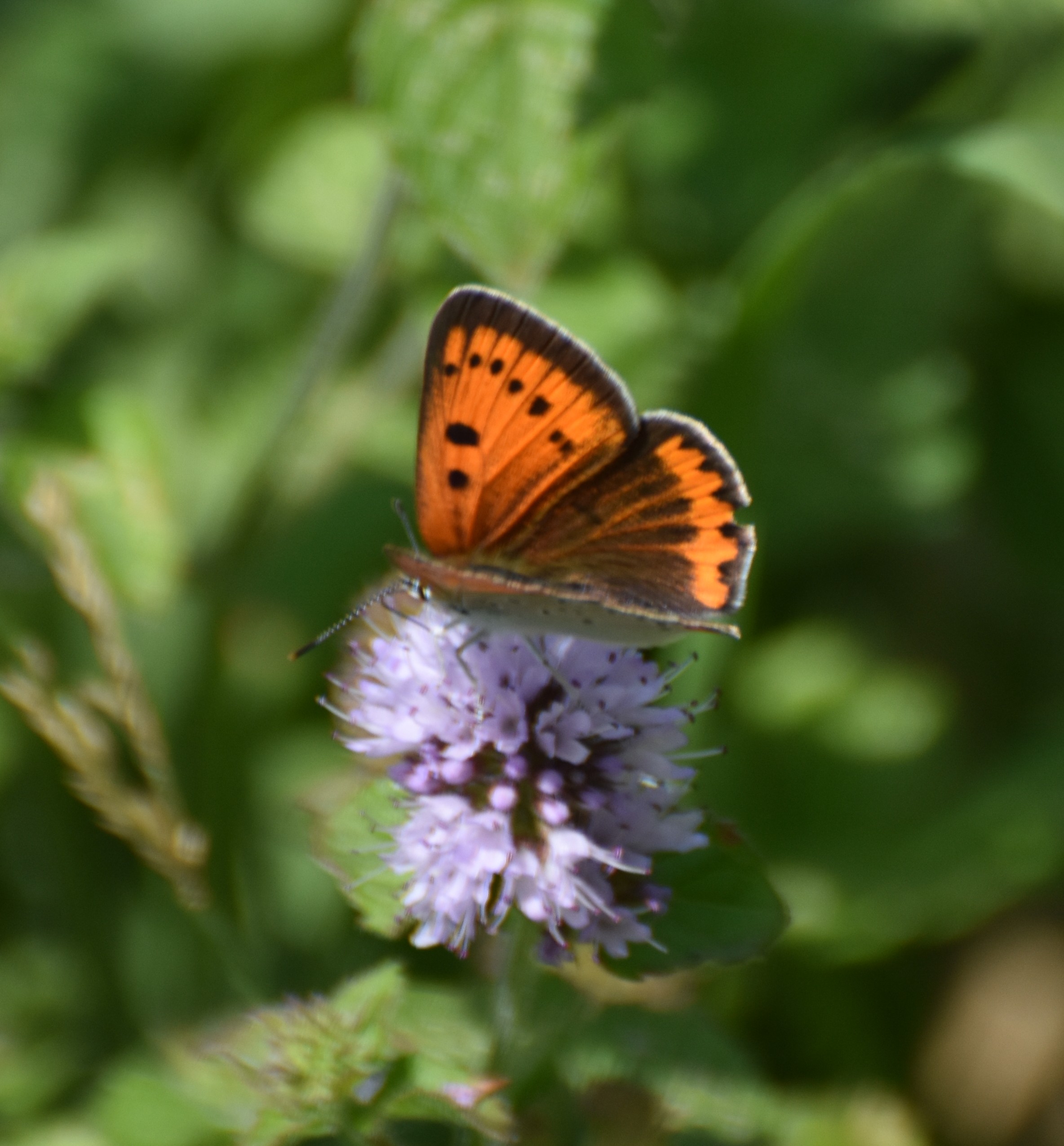
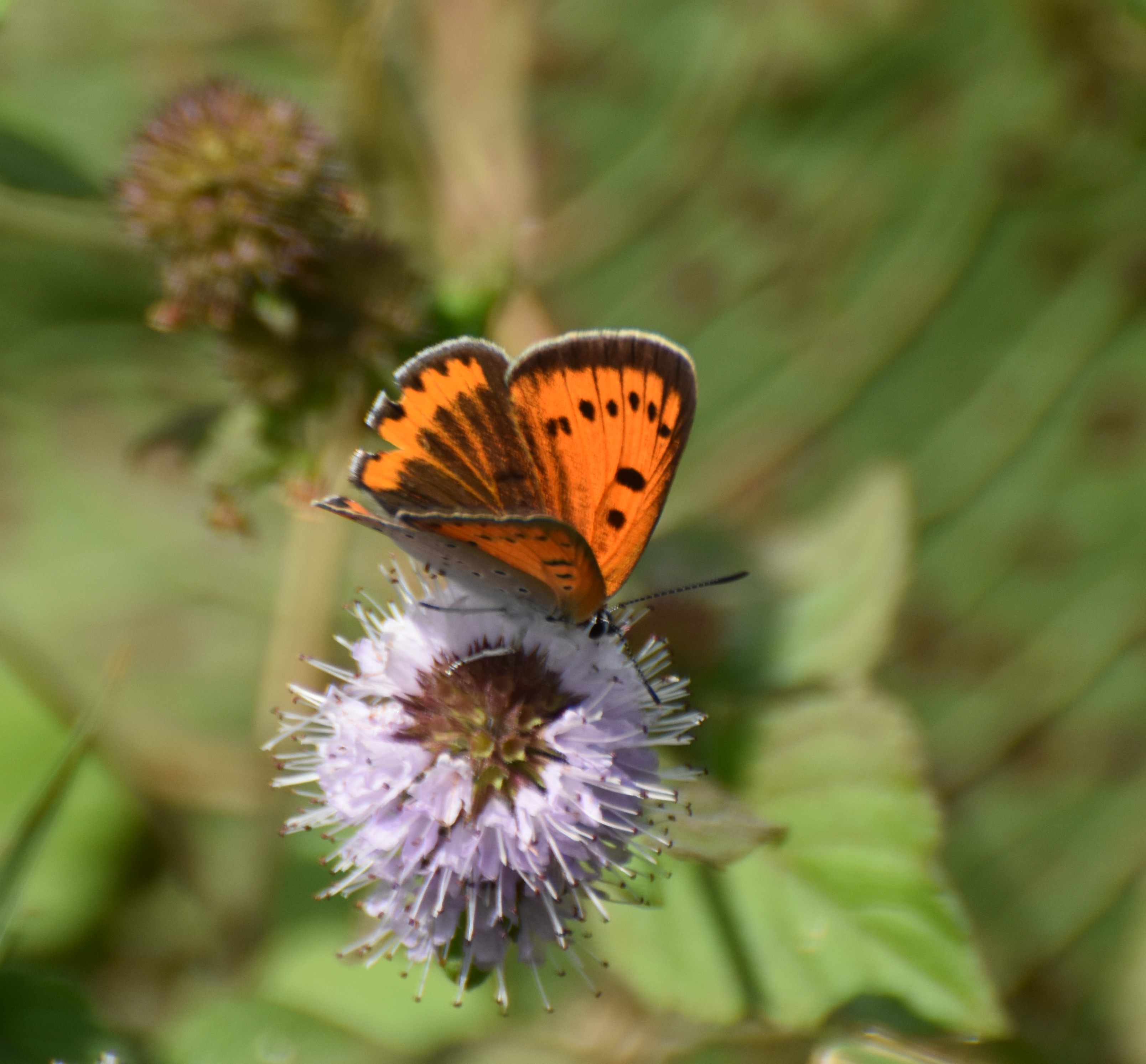
It was a baking hot day and my plan originally had been to stay out just long enough to see the butterflies and then head back to the safety of the air-con in the car! But the butterflies were so stunning and more numerous than I had expected, so I kept getting side-tracked by another one each time I started to head back. My final reward for this heroic effort (an hour in baking sun for a dumpy middle-aged woman is I’m sure the equivalent of an iron-man challenge for other people) was to spot this female laying eggs. Well worth the sunburn.

It was a magical thing to see these butterflies in the UK, but sadly it is probably not all good news. As their release seems to have been unsanctioned, the chances of the butterflies surviving at this site are apparently small. Although they were clearly mating and obviously laying eggs, will the eggs and/or caterpillars be able to make it through to next summer? It would be wonderful if they did manage to establish a colony here, but many people are doubtful that the conditions at Bumble Hole will be right for them.

For comparison here’s a Small Copper taken at Croome Park this week.

In other news the local Facebook groups were buzzing with the news that there were multiple Clouded Yellow butterflies down in the fields near Grafton Wood. As usual I could resist anything but temptation, so headed down there to see for myself. First attempt was a complete wash-out as I picked the only cold cloudy day in August, but second attempt was more productive. Together with a very nice couple I met down there, I watched in frustration as the bright yellow flashes of several Clouded Yellows dashed about the centre of the fields. Not wanting to trample across the farmer’s fields we could only watch and hope they would eventually come to the margins. Eventually a few did, but they were so flighty that all I managed was these blurry yellow blobs for photos. But at least I saw them.

Slightly more obliging were some Common Blue, Small Heath and Brown Argus.

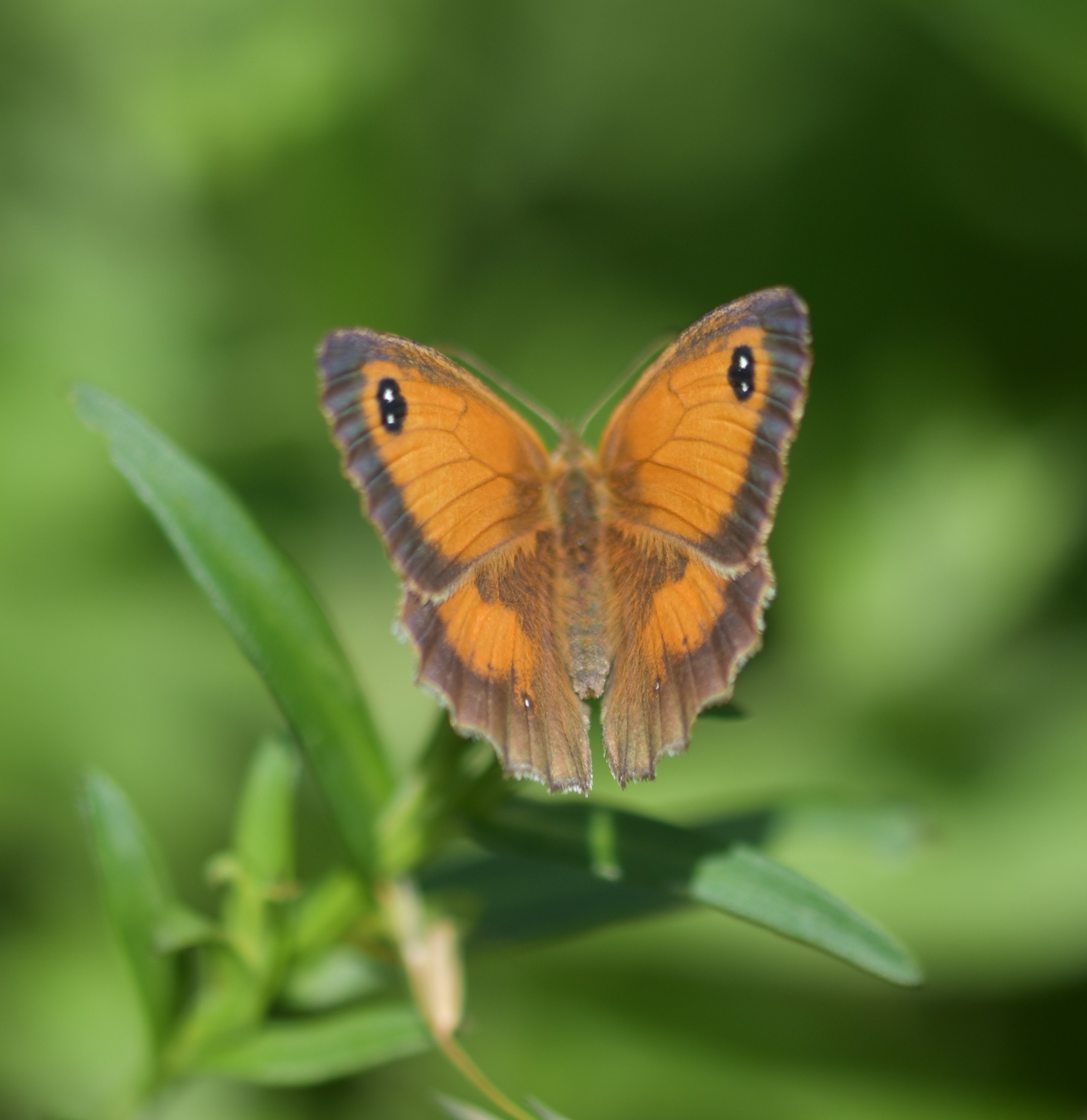
At home I did a couple of Big Butterfly Counts earlier this month. The garden generally has been busier than recent years for butterflies, but as usual most of them declined to put in an appearance during the 15 minute counts. But so far this year I’ve seen Red Admiral, Peacock, Small Tortoiseshell, Comma, Painted Lady, Large White, Small White, Holly Blue, Gatekeeper, Meadow Brown, Speckled Wood and Ringlet butterflies in the garden. But best of all was a Silver-washed Fritillary which graced my buddleia and bramble-strewn garden with its presence over several days.

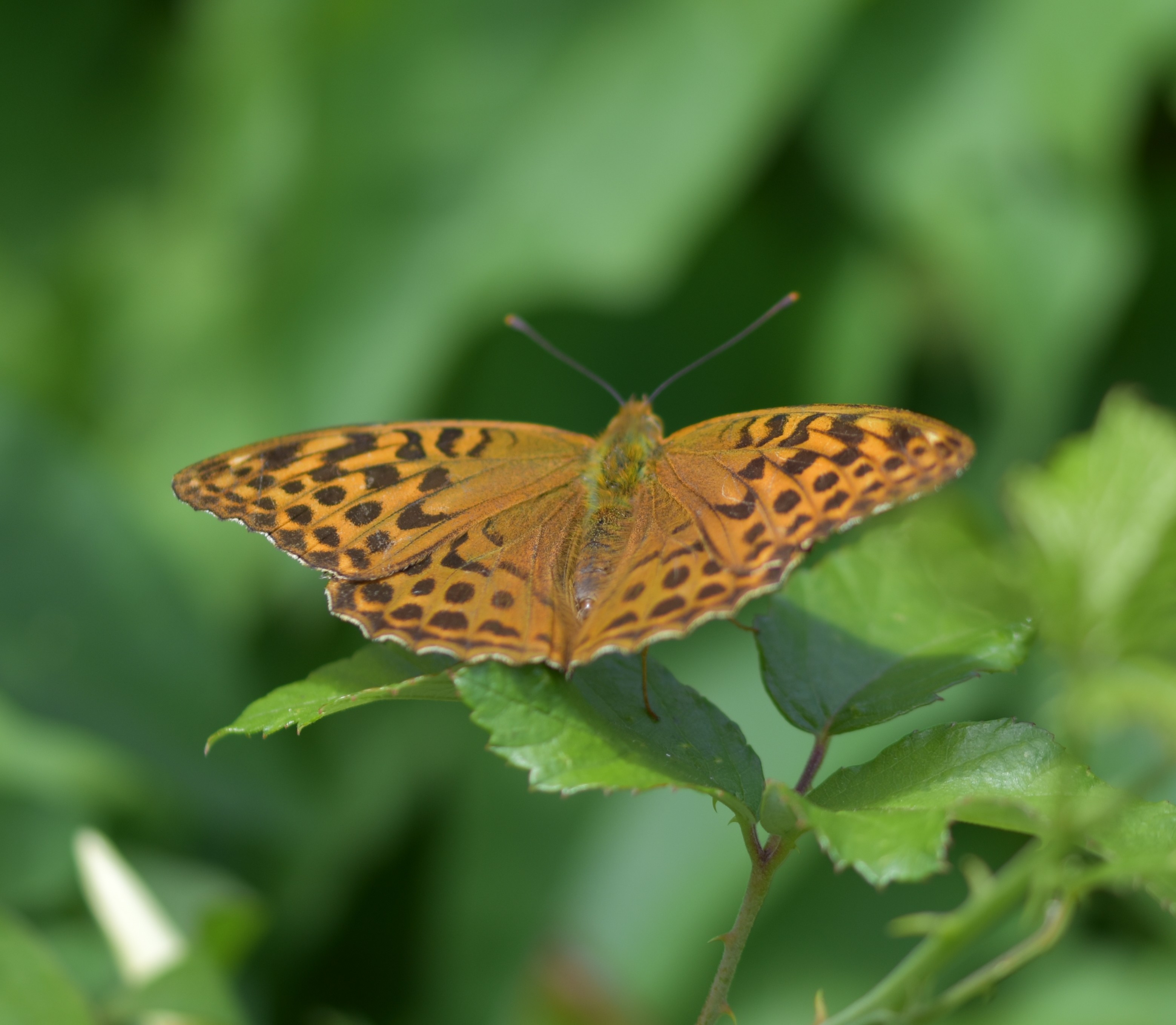
So that’s a round-up of this summer’s butterflies; some old favourites and one completely off the radar “extinct” species.


Island Life – Part 2 – Birds & Mammals

I thought it would only take me a day or two to write part 2 of this, but with 2 heatwaves this month, my productivity (always dubious at the best of times) has plummeted. But here at last are some of the gorgeous birds and mammals we saw on the Isles of Scilly in June.

I took a couple of bird-watching boat trips; one with my long-suffering family and one alone when they’d had enough of me. The Scillies are a fantastic place to spot seabirds; it made me wish I was better at identifying them. So please feel free to correct me if I’ve got any of these wrong. As so often is the case, I didn’t really have the right camera lens with me and that combined with rocking boats and user error, means none of these are exactly amazing photos, but hopefully they’re recognisable at least.

First up, what I am assuming to be a Black-headed Gull, due to its black head! I realise though there are other species that would fit this somewhat basic description, so please correct me if I’m wrong.

The next one I am at least confident is an Oystercatcher, although it does to my eye look quite like the penguin from Wallace & Gromit with a red beak stuff on it! Again a shockingly bad photo and I can’t even blame a rocking boat for this one as I think I took it from land.


We saw a few Shags, often standing looking quite aloof with a crowd of other birds nearby. Seen alone they are quite gawky looking birds and I always think there’s something a bit archaic about them.

One of the few seabirds I can readily recognise is the Gannet. It’s distinctive enough that it’s pretty much unmistakeable.  This one floated serenely by the boat, looking as if it had recently had a right good feed.

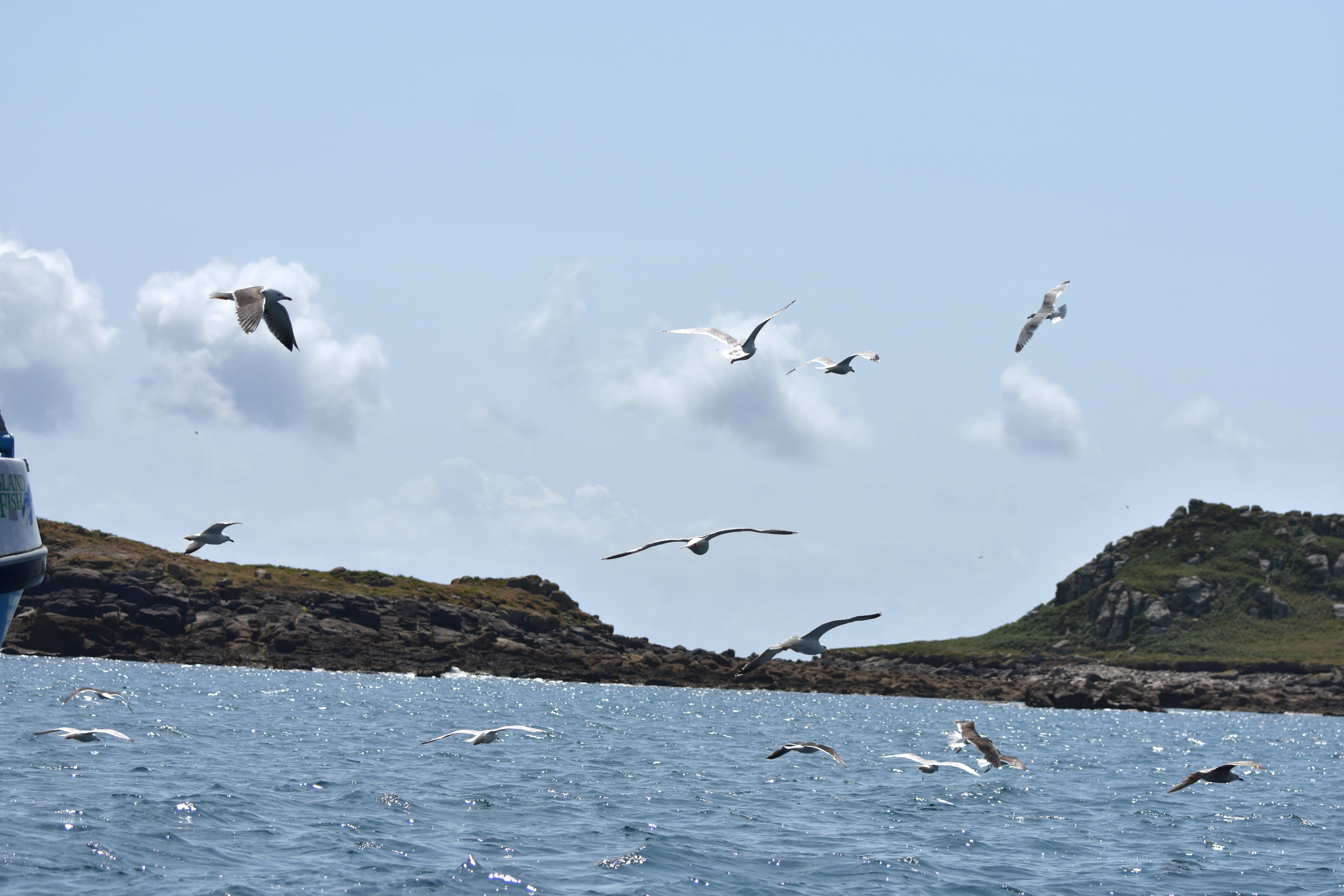
There were of course lots of large gulls present everywhere. We passed a fisherman, hauling in lobster pots at one point and the sky around his boat was just full of an assortment of gulls. Some have black backs (Black-backed gulls?), some have grey backs – to my disappointment there doesn’t seem to be one called a Grey-backed Gull, so I’m guessing these are Herring Gulls?

All the seabirds above are beautiful, but I can’t help having a soft spot for the Auk family. Apparently there are 5 species seen regularly in the UK and we were lucky enough to see 3 of these. The most plentiful that week were the Guillemots – sleek black/dark brown and white birds, gathering in groups on the rocks and in the water.

Then there were the Razorbills; I never saw these on the rocks, only in the water and often swimming with the Guillemots too. Razorbills are named for their famously sharp-edged beaks, ideal for grabbing fish.

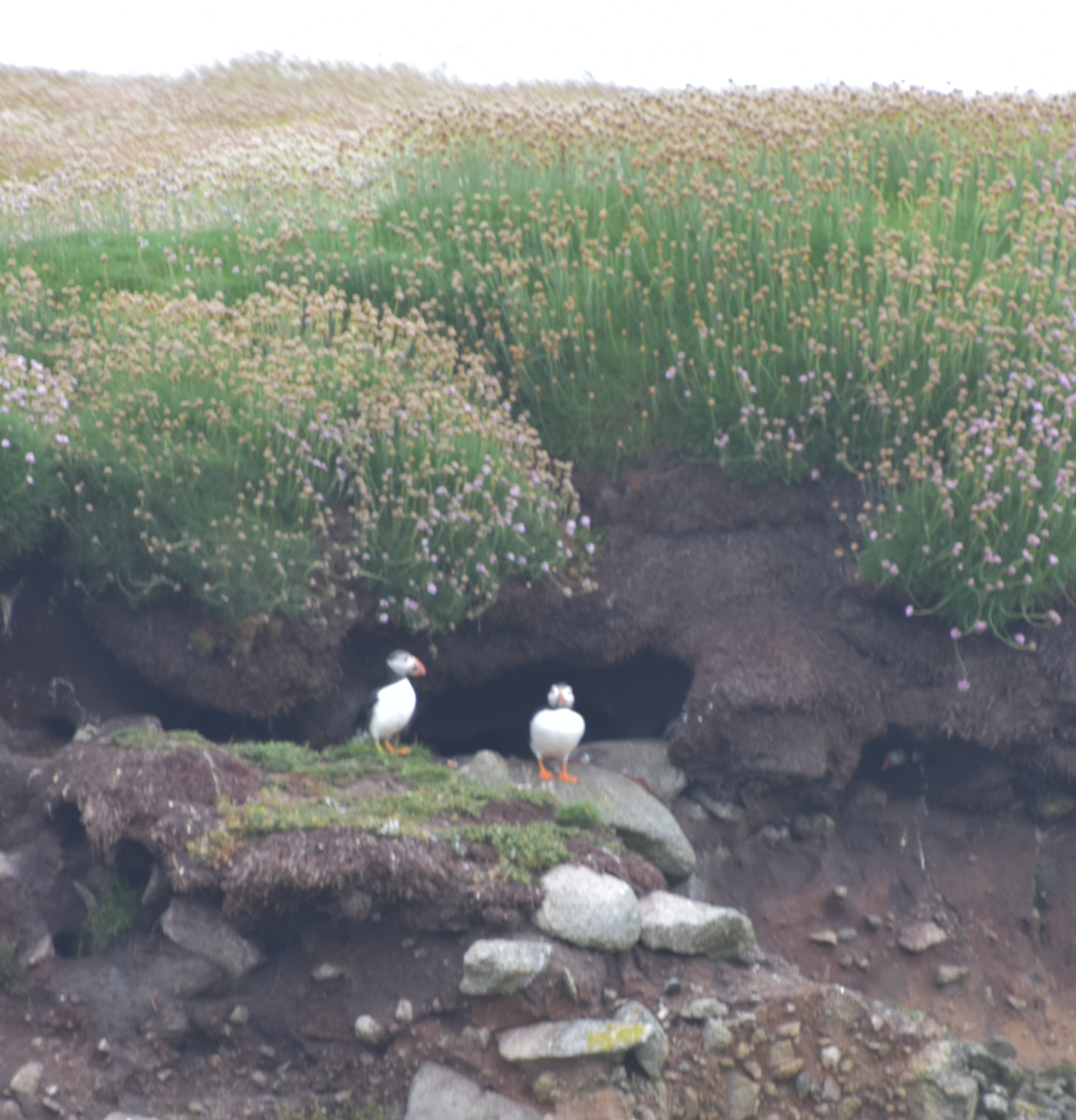
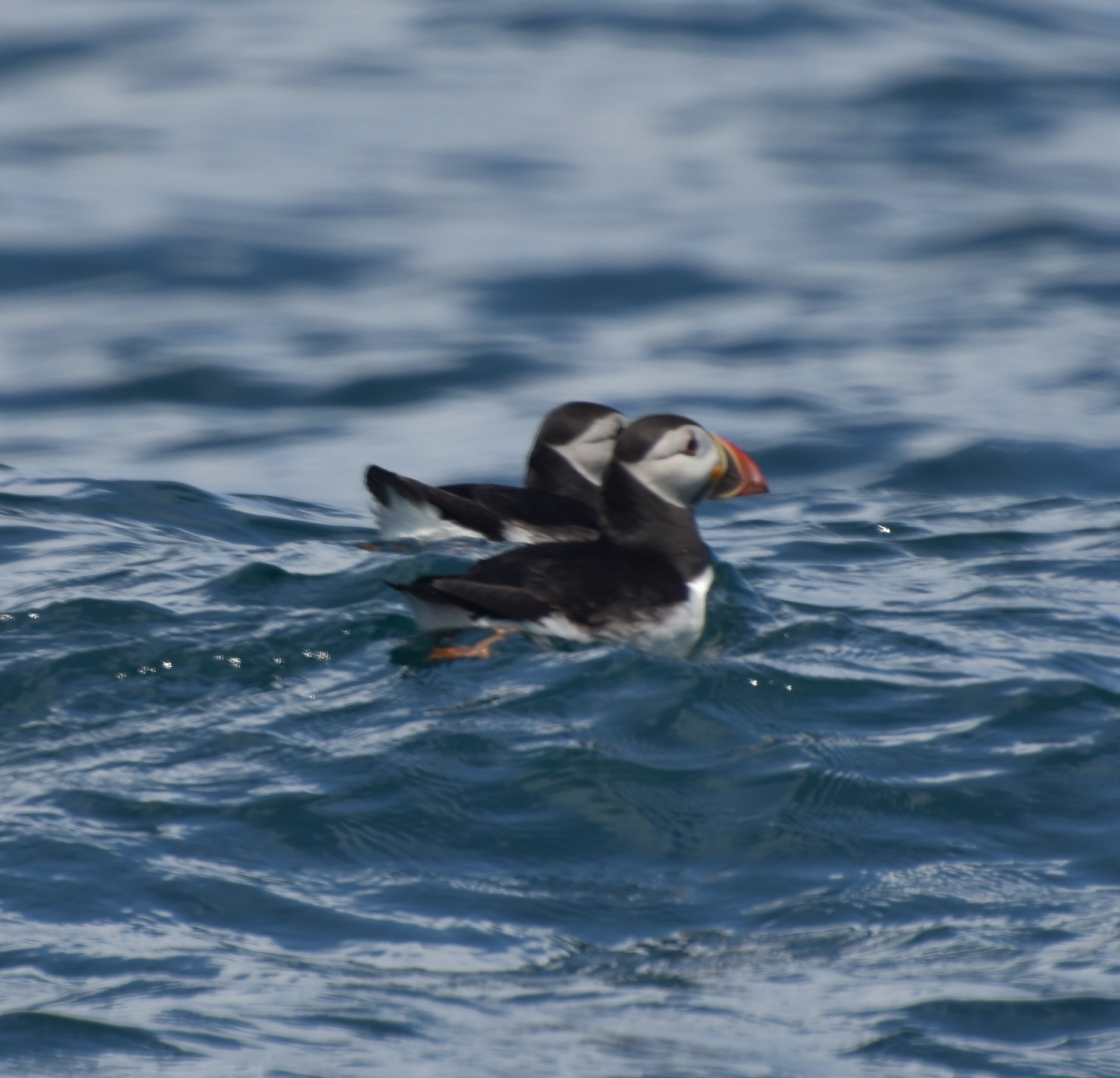
But of course top of the wish list was to see Puffins and thankfully we did. The Skipper wouldn’t take the boat too close to the cliffs where the puffins were nesting as we didn’t want to disturb them, but we were close enough to see several outside their burrows.

Then there were the ones we saw on the water. It’s no surprise that they are everyone’s favourite seabird; what’s not to love about those cheeky little faces.

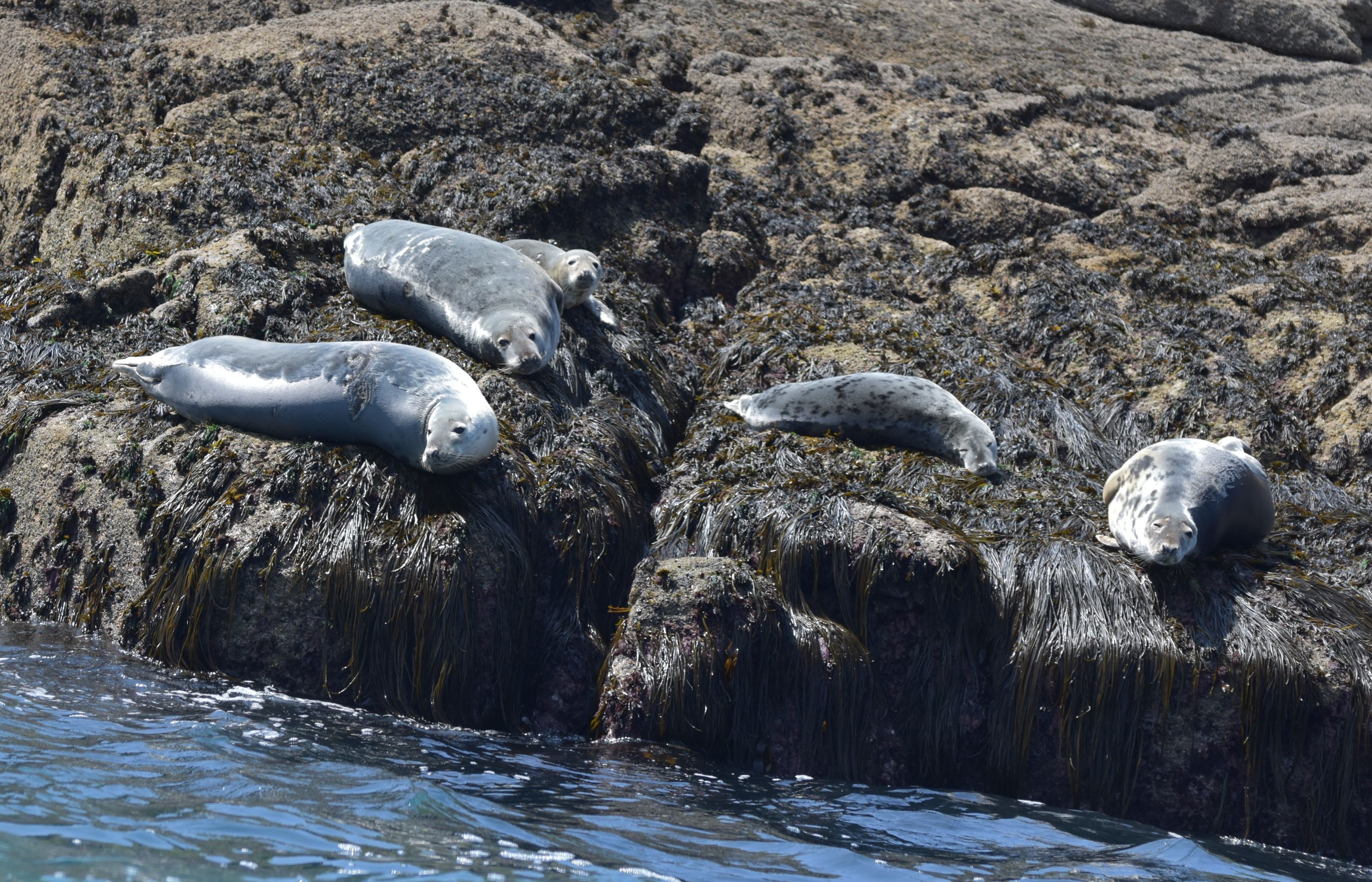
So on to the mammals. I did see a split-second glimpse of a dolphin from the Scillonian on the way back to the mainland, but that was it as far as cetaceans went. Grey seals were much more obliging. Again our skipper managed to get close enough for us to see some hauled up on the rocks, but not too close to frighten them.

At first we thought it was just adults, but in the second photo from a slightly different angle, you can see a seal pup at the back of the group. I was so thrilled; I’ve seen seals many times (even sieved seal poop for a living for a while – that’s a whole other story), but never seen a young one like this!

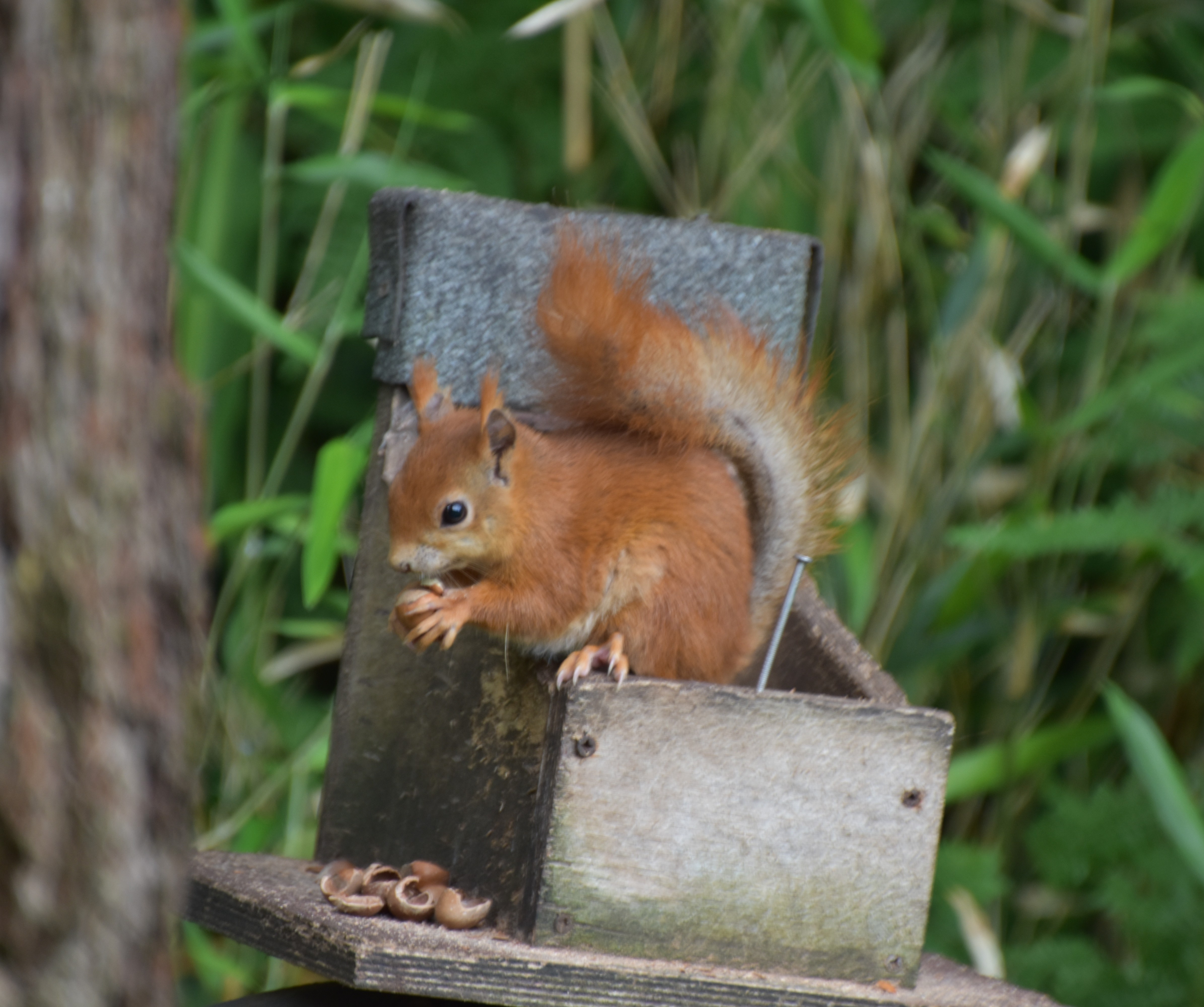
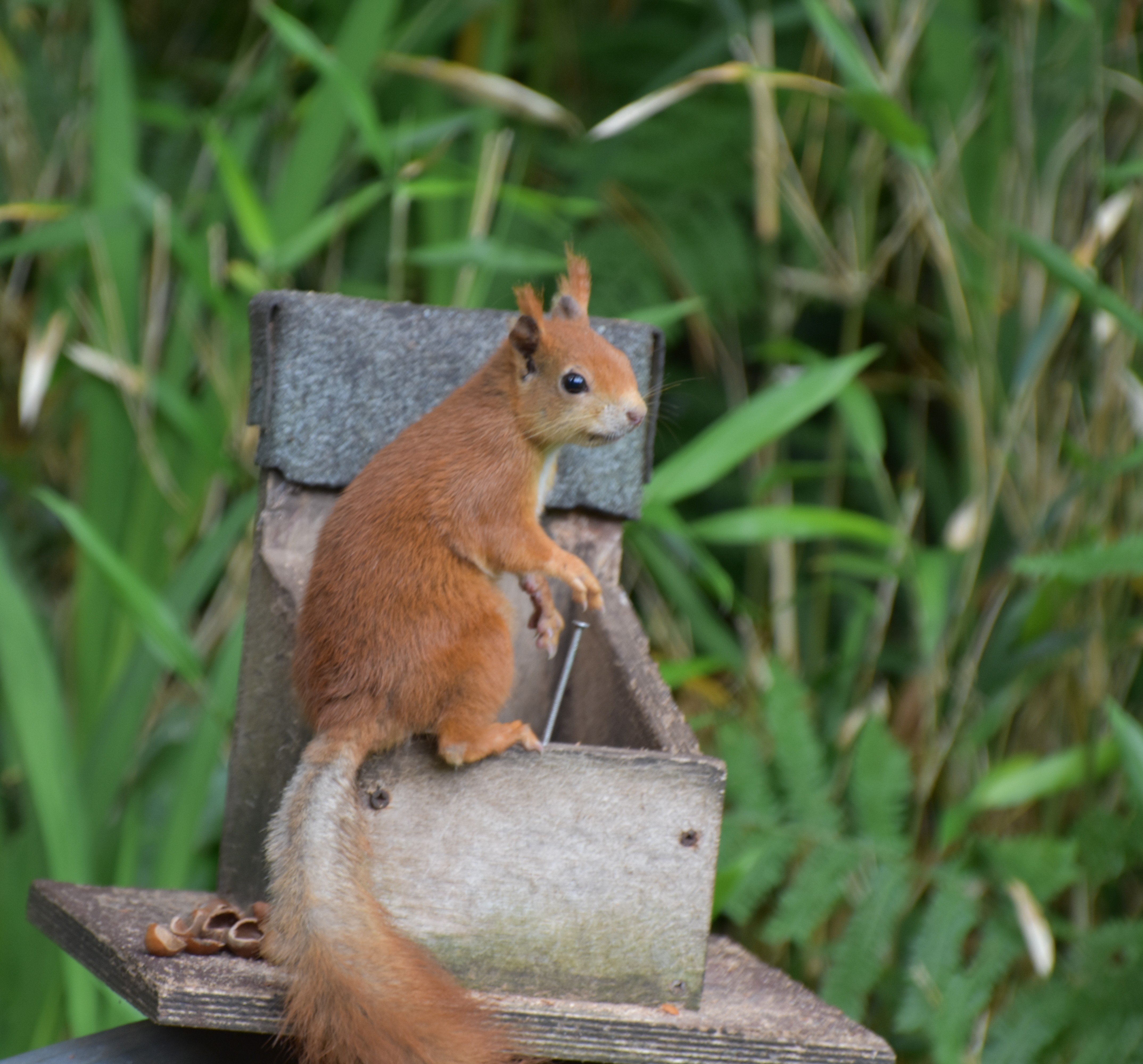
But the mammalian star of the show for me had to be a surprise we found on Tresco. I say surprise, but obviously the locals knew they were there as they’d been deliberately introduced. Red Squirrels! We saw a sign saying there were red squirrels as soon as we entered Tresco gardens, but I thought we’d be lucky just to get a glimpse. But then we turned around and there was a beautiful squirrel sitting right there, enjoying some nuts. I was fumbling with my camera , sure it would disappear, but no it was clearly unfazed by our presence and carried on snacking. The best views I’ve ever had of a red squirrel.

We saw several more as we enjoyed the gardens, although none as close as that first one. It must be an ideal habitat for them and they seemed to be doing really well.

So that’s my round-up of the wildlife we saw on the Isles of Scilly. It really is a fantastic place to visit, although I’m tempted to say “no it’s dreadful” to stop loads of people going and spoiling it! The isolation, the warm climate (warmer than most of the UK at least) and beautiful scenery make the islands the best wildlife destination I’ve been to in Britain and I can’t wait to go back.

The Blog is Back!

Hello again!

It may seem like I’ve just been Too Lazy To Blog, and I can’t deny there’s an element of that, but mainly life in the form of a very difficult 3 years has just got in the way. But hopefully now things are getting back on an even keel and I can resume my wildlife ramblings. The weeds in the garden have continued to grow and there’s still plenty of wildlife to be seen, photographed and waffled on about. So the blog is back!

I may not have been blogging, but I have seen a lot of amazing stuff in the last 3 years. Maybe not attack ships on fire off the shoulder of Orion (who doesn’t love Rutger Hauer), but all sorts of other interesting things. So in no particular order, here are some of the highlights of the last few years.

In December 2023 there was a lot of excitement on Twitter/X about Waxwings being seen in and around Malvern. Like many others I grabbed my camera and headed out in search. Not only did I eventually get to see them, but I made a new friend in the process, without whom I’d never have found them, so a definite win-win situation.

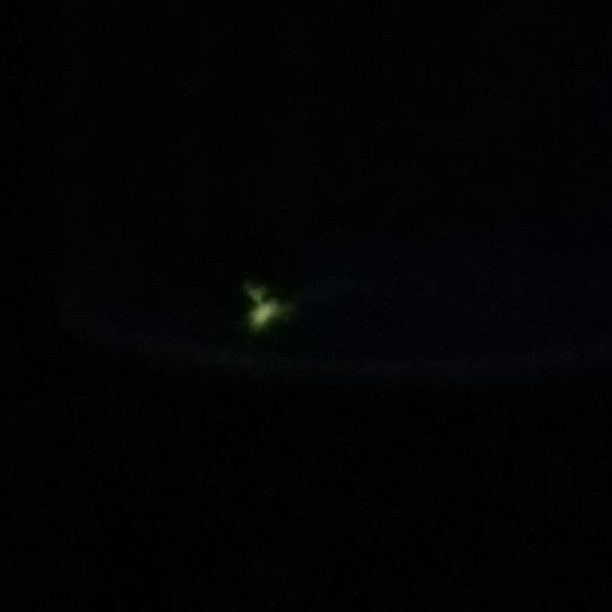
Last summer I was really excited to see my first ever glow worms. Tiny little green glows at a reserve just a few miles from home.  Not easy to spot, but once you get your eye in they really do what it says on the tin and glow a bright green. I only had my phone with me, so this “magnificent” picture will probably go down in history as one of the most atrocious photos ever. Perhaps I should just give it an abstract name – “Green Glow on Black Canvas” or something. But it’s the only proof I have that I saw a glow worm, so here it is!

In October last year I finally got to see the Northern Lights and from my back garden. Not quite the awe-inspiring spectacle you see photos of, but definite streaks of pink and green nonetheless. Again I’m probably up for some kind of award for awful photography for this, but I’m just happy to have finally seen this. Twenty odd years living in Scotland and I finally see it in Malvern!

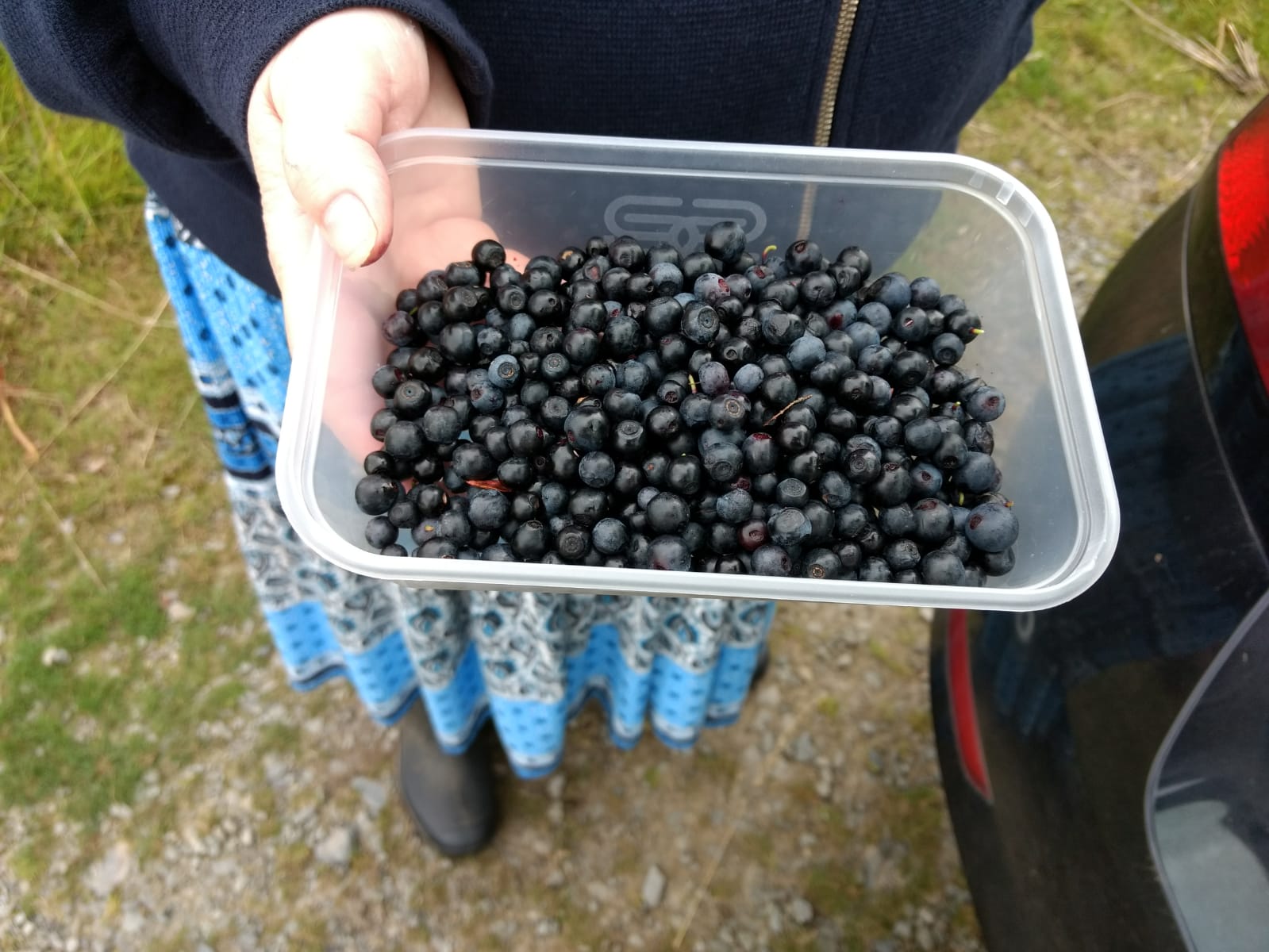
I’ve had a few days out and about doing some not-strictly wildlife things, but it was out in lovely countryside so I reckon that counts. In August last year my sister and I went whinberry picking for the first time since we were children. Whinberries (or Wimberries, Bilberries, or Blaeberries, depending on where you’re from) were our Dad’s favourite and grow wild in the Shropshire hills. We were a bit late in the season, so only managed to gather enough for a very small pie, but it was well worth it – the taste brought back many happy childhood memories and we certainly got to see a lot of the wilds of Shropshire while we hunted for them.

We also had a slightly bonkers trip to see the famous cheese rolling race in Gloucestershire. I must stress we valued our lives and vertebrae too much to actually take part chasing a 4 kilo wheel of Double Gloucester down a very steep hill. It was hard enough climbing high enough to watch it, without hurling ourselves at break-neck speed back down again. But it was a glorious spectacle when viewed from a safe distance.

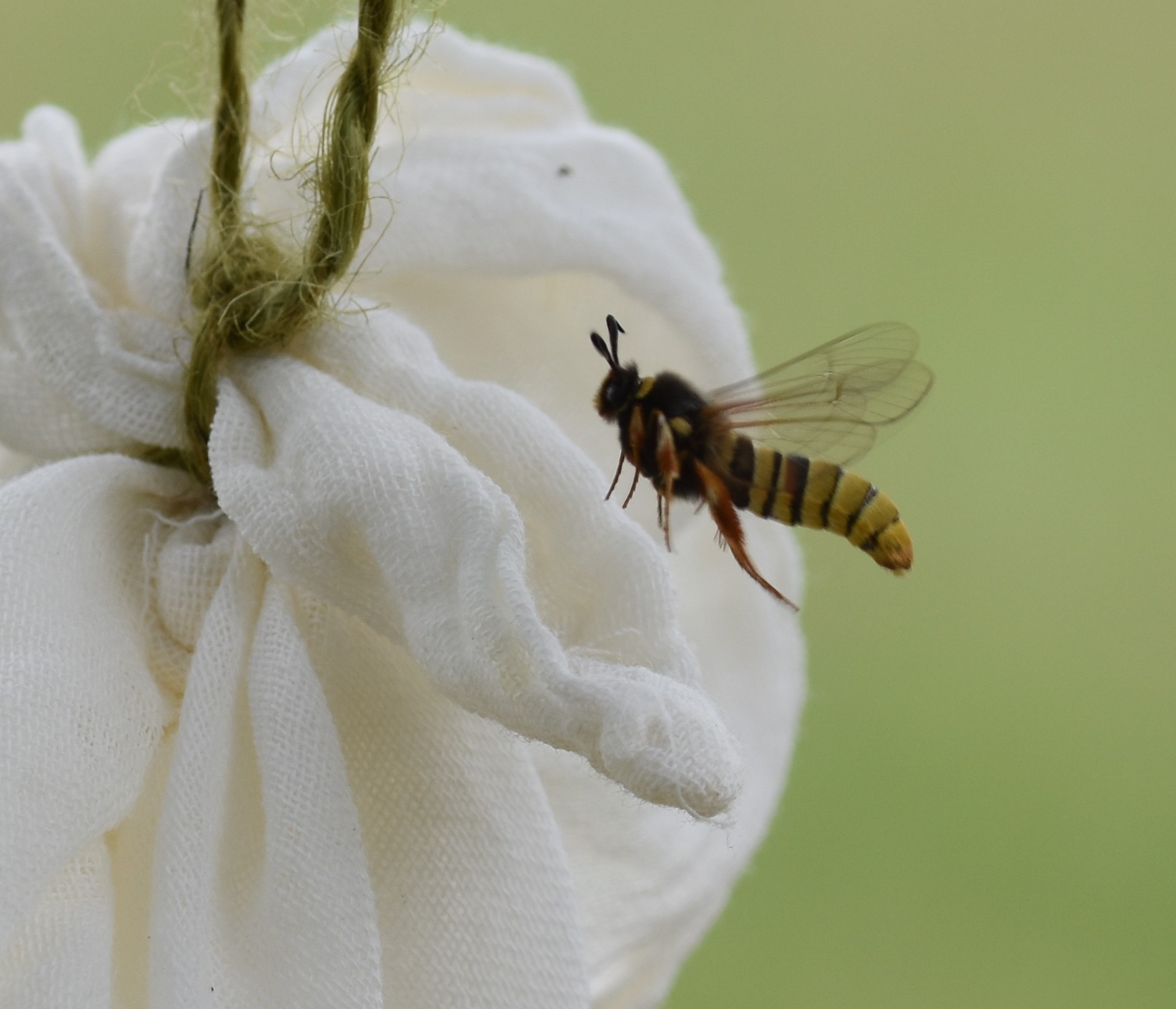
There have been lots of moths recorded in the garden in the last few years, but I’ll post about those separately. One interesting moth seen while venturing outside the garden was a Lunar Hornet Moth. These stunning moths don’t really look like moths with their clear wings and hornet like bodies. Their caterpillars live in the wood of old trees and the adults are attracted to pheromone lures.

Other highlights of the last few years include dolphin watching on a glorious sunny day in New Quay in Wales and a visit to the lovely Westonbury Mill Water Garden in Herefordshire just as the new season’s toadlets all emerged from the ponds. Never seen so many tiny toads (they were literally the size of a fingernail), it was virtually impossible to walk – we went round at a snail’s pace to avoid standing on them. Speaking of toads, I’ve also joined a local toad patrol – more of that in another blog post too.

There’s been a visit to the Diglis Fish Pass in Worcester. Our guide showed us fantastic photos of large salmon, pike and even otters swimming by the viewing window, although on the day, all we saw were a few minnows. Another day out took us to the confetti fields, also in Worcestershire. The delphiniums are grown specifically to turn into environmentally friendly confetti, but I actually preferred the wildflower borders around the main crop.

One final highlight of the last few years was a weekend in Harrogate for a slug conference! Harrogate is a really lovely town and a slug conference at Harlow Carr gardens to discuss the results of the slug survey I took part in, was a delightful, if slightly unusual treat! (as was Betty’s tearoom’s Fat Rascals!)

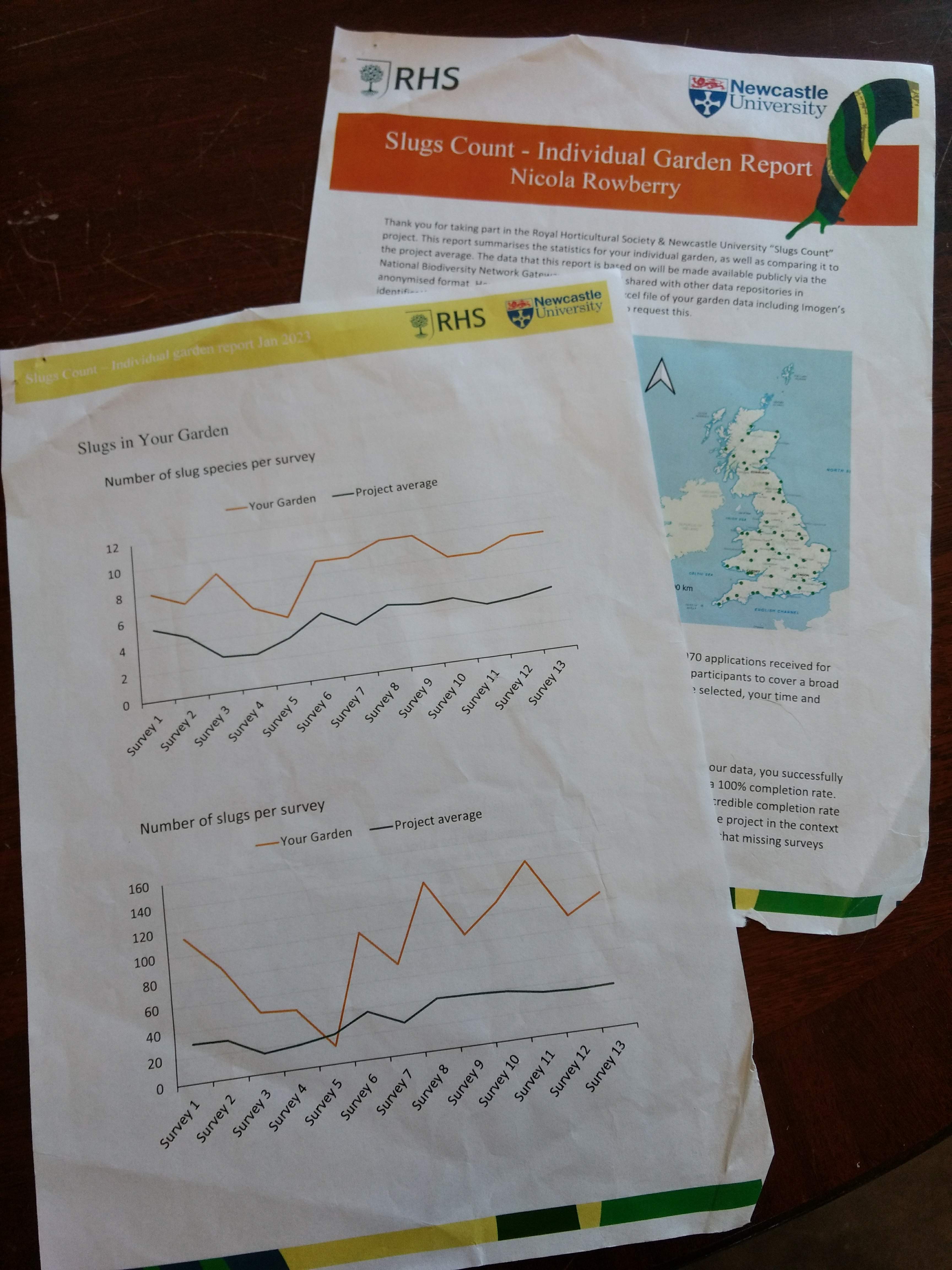
I felt ridiculously pleased that my garden had produced above average numbers of slugs compared to the other slug counters – something most gardeners would be horrified by, but I viewed it as a badge of honour for my scruffy garden.

So there are just a few hopefully interesting bits and pieces from the last few years. The plan is to start blogging again regularly, or at least not wait another 3 years before I can think of something to say.


Butterflies No 54 & 55!

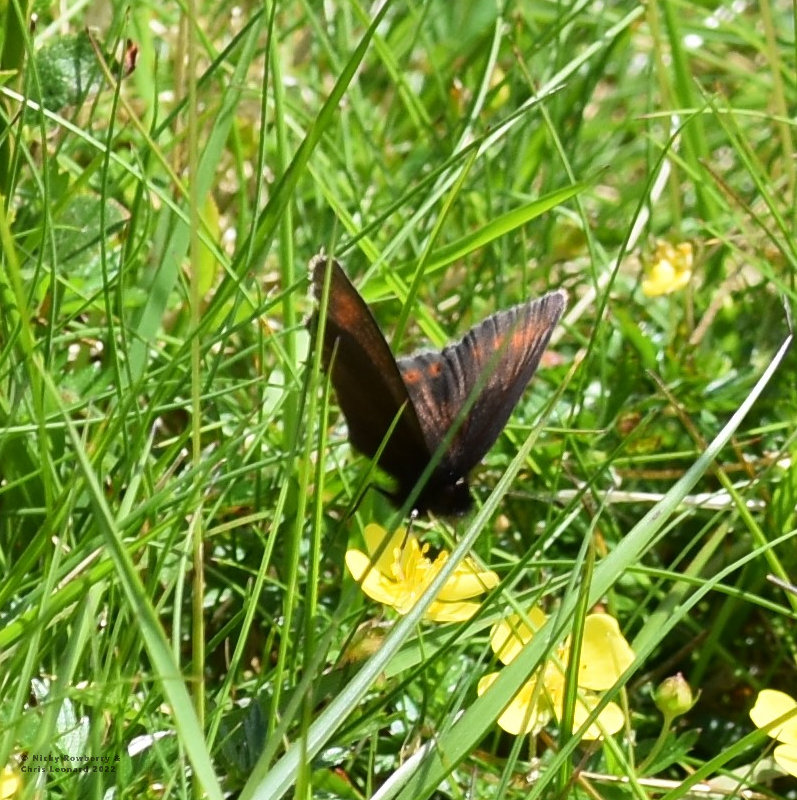
Yes I’m creeping ever closer (albeit at snail’s pace) to my target of seeing all 58 species of butterfly in mainland Britain! Last week I had a lovely holiday just south of the Lake District near a village called Silverdale. As well as enjoying a relaxing week, the aim was to see 2 new species of butterfly – the Northern Brown Argus and the Mountain Ringlet.

The weather at the beginning the week was not on our side – grey skies, cooler temperatures and blowing a gale – not ideal butterfly spotting conditions. But after a couple of days, things had perked up enough to have a go for the first species – the Northern Brown Argus. We tried a couple of sites – Warton Crag nature reserve & Jenny Brown’s Point in Silverdale with no luck. Arnside Knott, a hill nearby, was going to be our next attempt, but we weren’t sure whereabouts on the hill to look. Then a stroke of luck on Facebook – someone had seen these butterflies at Arnside Knott the day before and very kindly posted a google map shot with the spots marked on. I headed over and it was as if the butterflies had seen the FB post too – they were spot on for the map location.

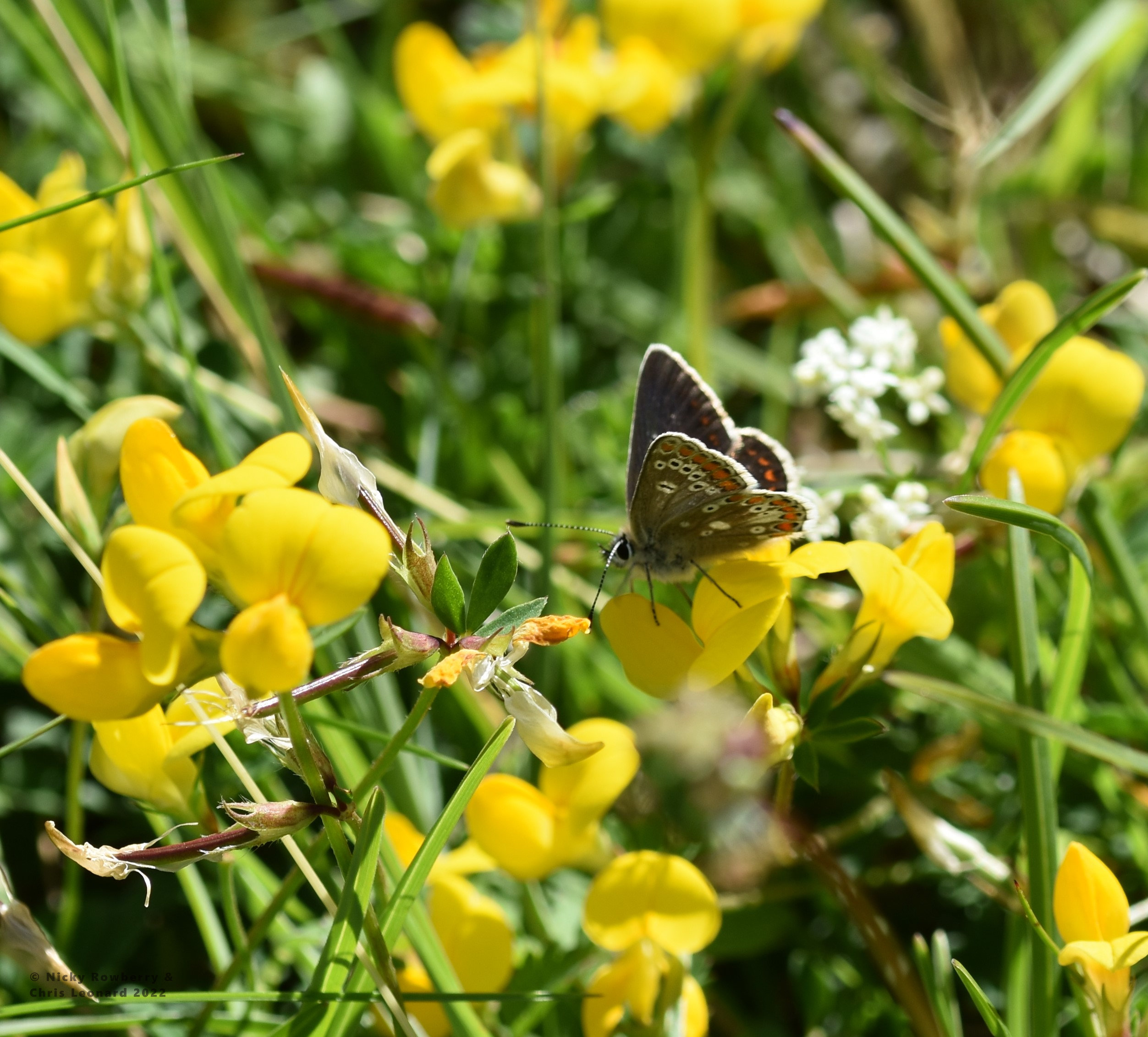
Finding them was one thing,  but photographing them was another. They were very small and very fast. The first one snapped was barely a record shot – enough to confirm it was indeed a Northern Brown Argus.

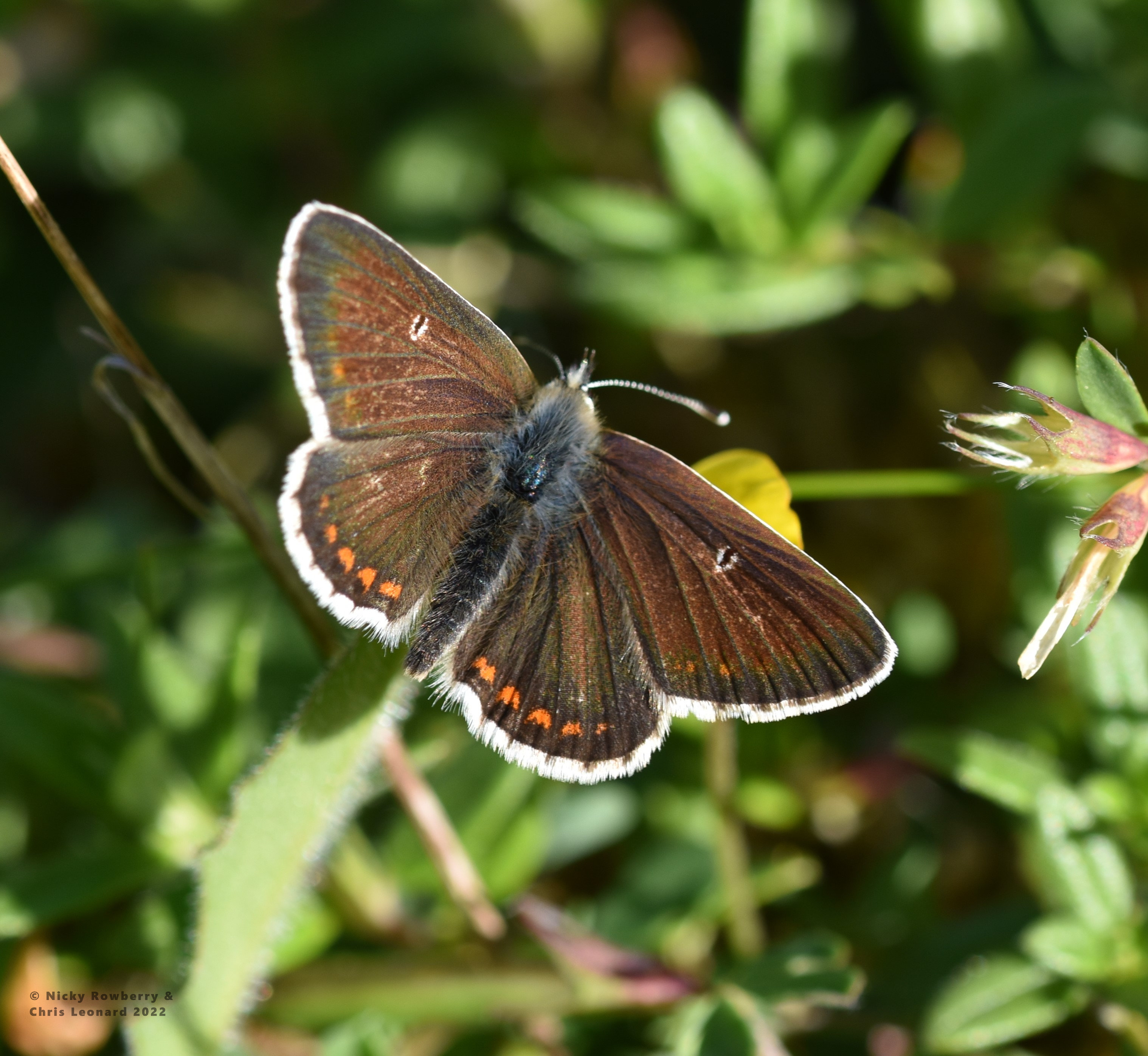
An hour or so of chasing butterflies madly around in the sunshine and I managed a few more respectable shots. On the upperside of the wings you can see the dark dot with the white outline which marks it out as a Northern Brown Argus (the dot and of course the location this far north).

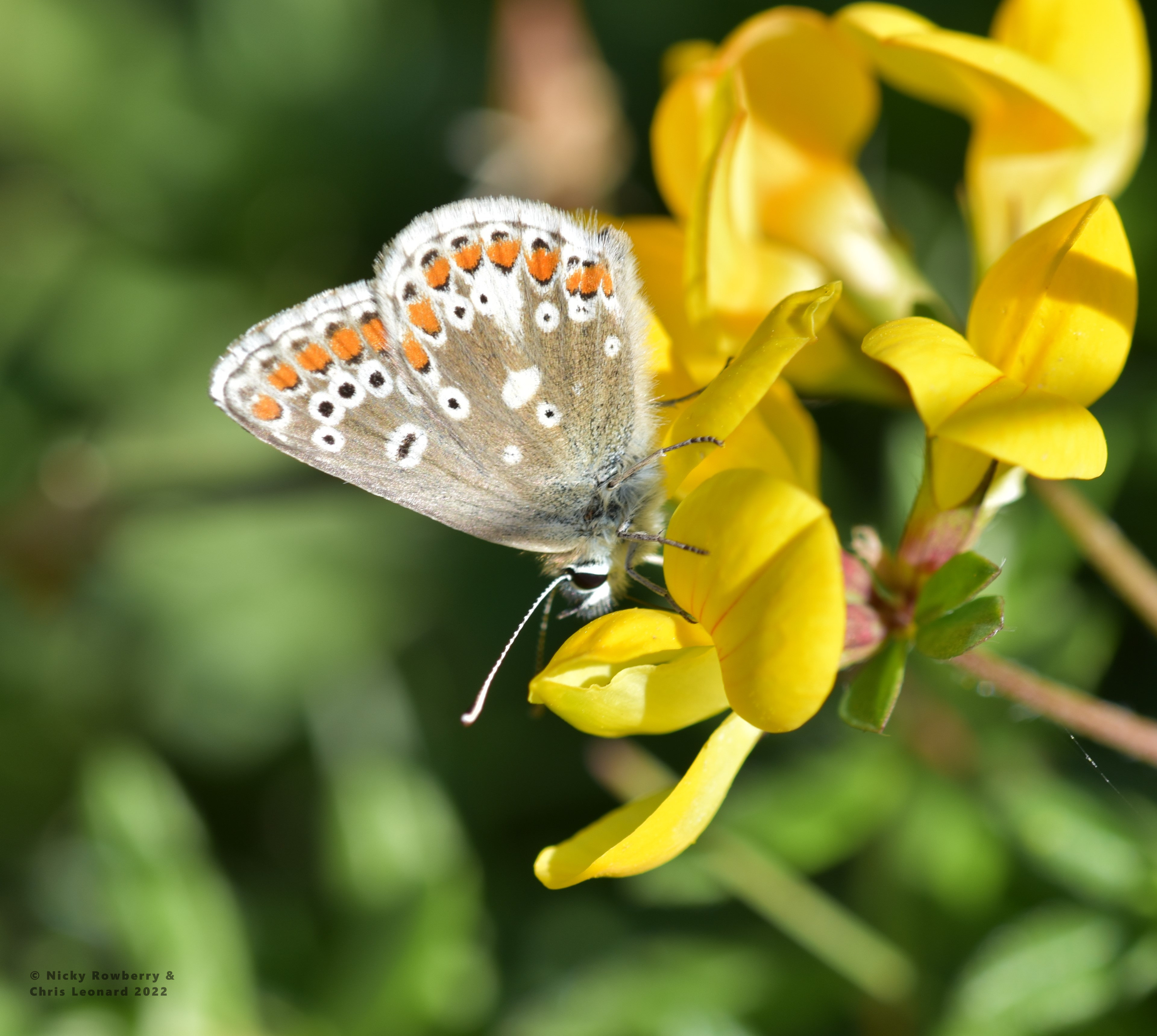
On the underside of the wings, the forewing is missing a black spot near the base that would have made it a Common Blue.

No. 54 proved relatively painless in the end, but no. 55 was going to be more of a challenge. The Mountain Ringlet, as the name suggests, likes to live up hills – big hills! It is the UK’s only montane butterfly and I am not a montane kind of woman! But there was going to be no other way than to climb, so climb I did – up Irton Fell in Cumbria. Most of the people I met that day also seemed to be looking for the same butterfly, so at least I knew I was in the right place. It nearly killed me, but it was worth it – for the butterflies and the views.

As with the Northern Brown Argus, the Mountain Ringlet is small and fast. Fortunately its chocolate brown colour stood out well against the grasses and heather when it was flying; but once it went down into the grass it was virtually impossible to find. I saw quite a few of them but most eluded the camera. So the best I managed was this – blurry, but just about recognisable as a Mountain Ringlet –  hastily taken before it shot off again.

But at least butterfly no. 55 had been ticked off the list.

I’m unlikely to manage any more new species this year, so for now will remain 3 short of the goal – the Lulworth Skipper, the Scotch Argus and the Chequered Skipper will have to wait another year.


2021 – The Year of the Slug

Well we all started out with high hopes that 2021 was going to be better than 2020. I’m not sure it achieved that, but best to dwell on the positives rather than the (many) negatives of the year. So here’s a round-up of some of my wildlife highlights from 2021, including a catch-up on my clearly over-ambitious New Year’s Resolutions.

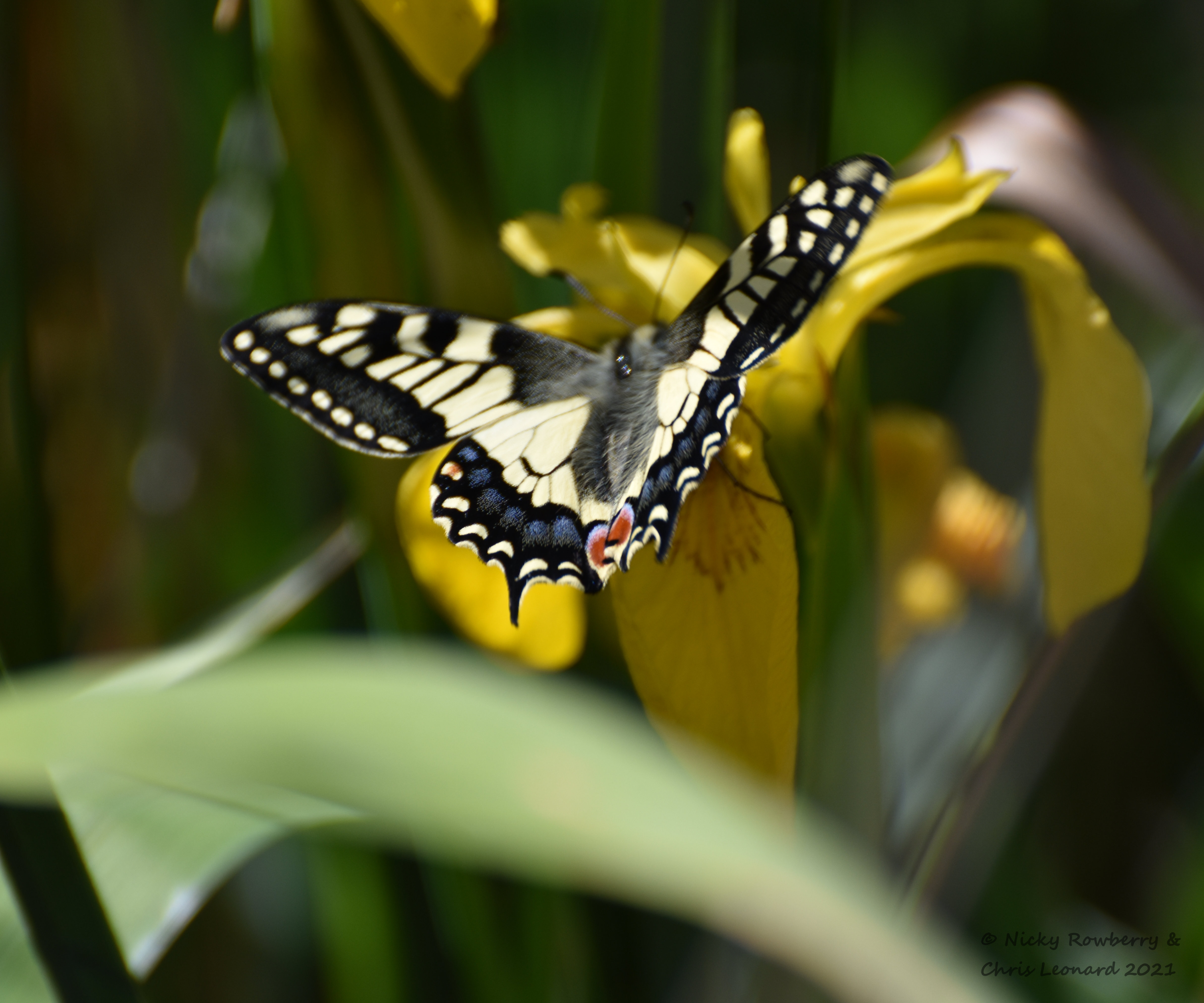
The main highlight was probably going to Norfolk. I had originally planned to go in 2020, but covid put paid to that, but I finally made it there in June 2021. I had a rental right by the river in Wroxham, so was surrounded by wildlife from the start – birds, dragonflies and even a resident pike.  I ticked off number 53 on our list of British butterflies with the gorgeous Swallowtail and saw loads of dragonflies and birds. As I write, this I’ve realised I never actually got round to blogging about the birds, so will have to do a bit of a summary of those in a separate post. I visited lots of nature reserves and it was great to see a completely different set of wildlife to that which I get back home in Worcestershire.

Back at home, there’s been plenty of interest in the garden. The moth trap has been running throughout the year, bringing 34 new species to the garden. This takes the total up to an amazing 438 species recorded since I started in 2013. I’d never have dreamed back then that I could get such a huge variety of moths visiting my modest suburban garden. Highlights from this year include whoppers like the Pine Hawkmoth and this Privet Hawkmoth:

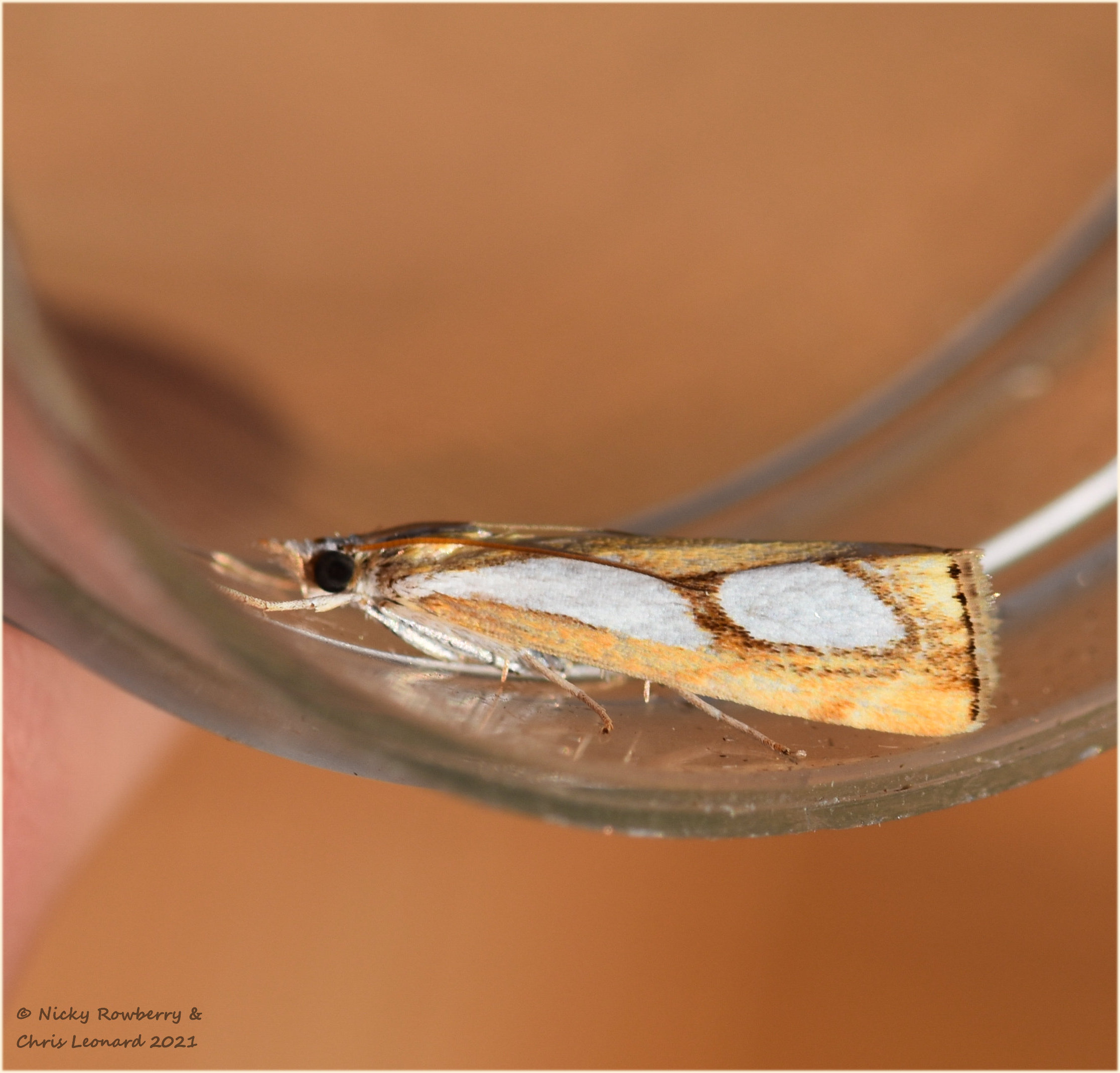
At the other end of the size spectrum, there were some lovely micro moths, including this Pearl Grass-veneer – a species I’d been hoping to see for a while.

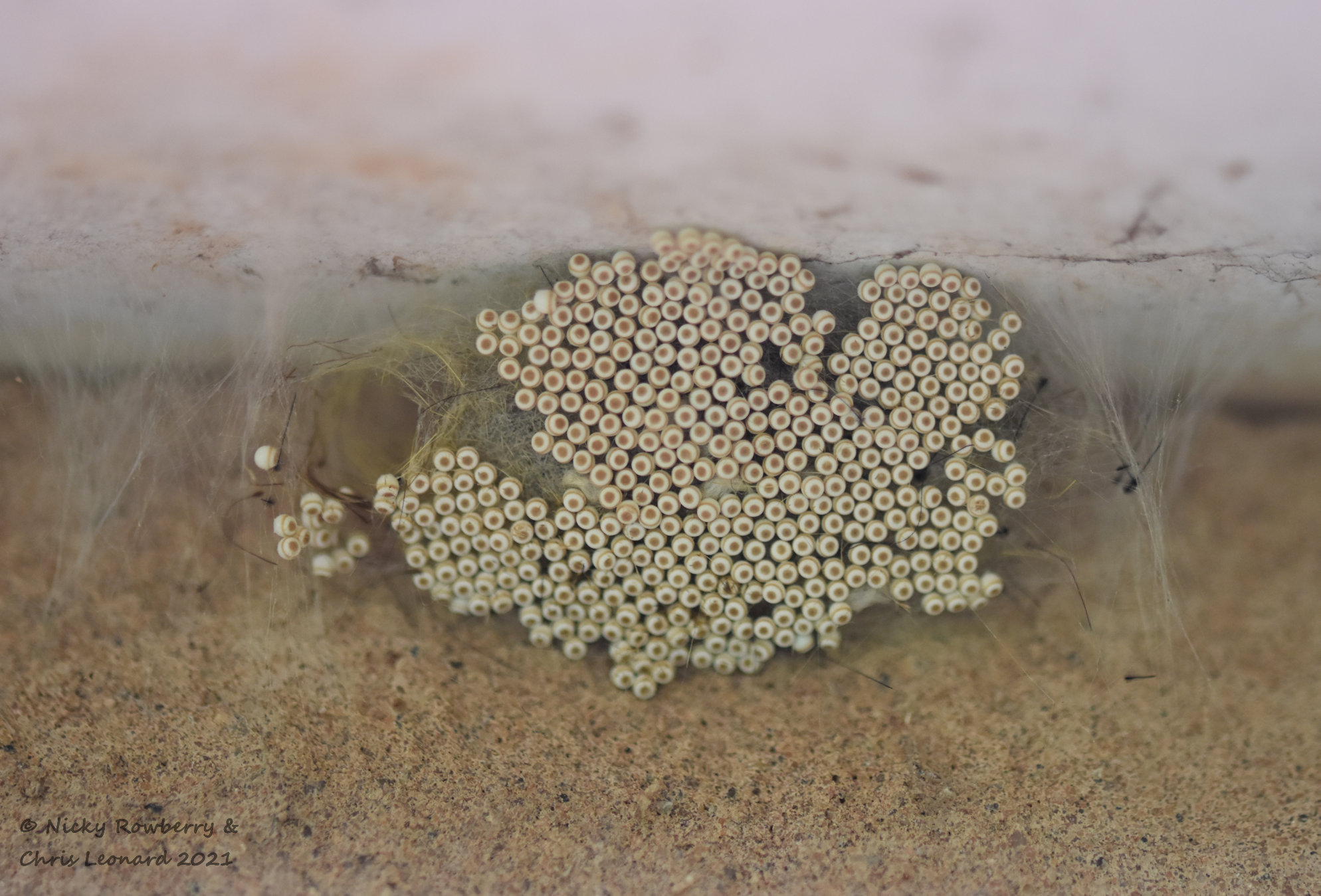
Another mothy highlight was finally getting to see the flightless female vapourer moth and not only that, but getting to watch her laying eggs on our garage wall.

More bee hotels went up last year and were rewarded with plenty of solitary bee activity. No new species recorded in the garden, but thrilled to finally catch a leaf-cutter bee actually cutting leaves.


The pond continued to delight and I spent many a happy hour there last year watching the wildlife. We got frog spawn in it for the first time and the newts were busy too. I would love to get toad spawn, but I gather they tend to be faithful to the ponds they were born in, so we will be lucky to get those – but I live in hope. We had plenty of dragonfly and damselfly activity, including home-grown damselflies hatching from the pond. Only one new species was spotted – this Blue-tailed Damselfly, bringing our total Odonata species list for the garden to 10.

We’ve had happy and sad news with our hedgehogs in the garden. The good news is that through the warmer months we were visited nightly by at least one, and sometimes as many as three hedgehogs. Lots of courtship behaviour witnessed on the cameras and a few heated hoggy debates over food or ladies. Some of the courtship was quite late in the year though and the inevitable result was at least one late litter of hoglets. While a second litter may seem like a good idea, the resulting hoglets often don’t have time to fatten up before the winter. The result was that in a 2 week period between the end of October and early November, I had to rescue 6 very underweight hoglets, 2 of whom were out during the day as well. None of these would have survived hibernation without intervention as they just didn’t have the fat reserves. The 6 were all taken to local rescues. Sadly despite the best efforts of the rehabilitators, 3 of them still didn’t make it.

Thankfully the remaining 3 have survived. One has even grown enough that he was released back in our garden during a mild spell. Hopefully the remaining 2 can be released back home in the spring too.

Despite all the enjoyment I’ve had from all of the above, the animals of the year have to be slugs! Not everyone’s favourite I know, but over the last year I’ve grown quite fond of them. For most of this year I participated in a nationwide slug survey and am now a slug fan. Some of the slugs are still being analysed back at slug HQ (a RHS lab), so I’ll have to wait a bit for the final conclusions. But slugs really reached the dizzy heights for me when one of the actual slugs from our garden featured on Gardener’s World – it doesn’t get more exciting than that!

As to last year’s New Year’s Resolutions, I think I’ve failed pretty dismally on most of them (as with most things, I blame this on Covid). Here’s what I set out to do and what I did or did not achieve:

  • Video a dragonfly emerging from our pond. I did see some damselfly larvae and found several exuviae on rocks and plants, but didn’t manage to see them actually emerge in our pond. But I did see some emerging while we were in Norfolk, so can I count that???
  • Expand the moon garden – nope – the moon garden is stuck at the same size it was last year. I still had a good year for moths, but there’s always hope for more.
  • See 2 more species of British Butterfly. Only managed to see 1 more, but it was the fabulous Swallowtail, so more than happy with that.
  • Visit 5 new nature reserves. I think I did do that if I include the ones I went to in Norfolk.
  • Rockpooling. Nope – only managed to see sandy beaches in Norfolk, so no chance for rockpooling.
  • Go and see some wild Ospreys. Nope and again I blame Covid for travel restrictions during Osprey season.
  • The moth tattoo! Maybe I should give up on this!

So what about resolutions for 2022?

  • Continue the quest to see all the British species of butterfly. So far I’ve seen 53 out of the 58. I’m hoping to holiday in the Lake District this year, so with luck might be able to tick 2 more species off the list.
  • I had planned on starting a nature journal, recording the daily goings on in the garden. But as I write this, we are already on the 9th of January and I haven’t made a single journal entry – maybe I can start it in the spring?
  • Rockpooling. I would still really love to be able to film some wildlife in a rockpool with the GoPro. Hopefully there will be some rocky coasts round Cumbria to try this out.
  • Try a night-time safari in the garden. While doing the slug surveys, I was amazed how much invertebrate life was active after dark. So it would be nice to spend a night seeing the other side of our garden life.
  • Do a wildlife audit of the garden – hopefully this will be a lot more fun than that makes it sound. I already know how many moths and bee and dragonfly species we get, but I thought it would be interesting to tally up ALL the species we get. Since we’ve got over 400 moths alone, the total species count should easily make it over 500.
  • The moth tattoo – one of these days.

So despite a pandemic’s efforts to put a dampener on 2021, there was still much to enjoy in terms of wildlife. Being blessed with an interest in wildlife can be a real life-saver when so much of the rest of the world is doom and gloom. There is always something in nature to lift your spirits, whether it’s spotting some exotic bird or getting a slug on Gardener’s World! xx

Showbiz Slugs

Last November I joined 59 other volunteers in a project monitoring the slugs in our gardens. Our Slug Count Survey was being run by the lovely Imogen as part of her PhD with the RHS and Newcastle University. Once every 4 weeks we had to go out into our gardens and collect all the slugs we could find in half an hour. We’d then attempt to identify them, before posting them off to Imogen for “proper” identifications.

This year has flown passed for any number of reasons, but I still can’t believe my year of slug counting is already up. It took a bit of explaining to my neighbours as to why I went out each month with a head torch in the dark to wander round the garden with a bucket of carrot shavings (food for the slugs) for half an hour, not to mention explaining to the lovely lady in the post office why I was posting slugs! I actually found it really interesting to go out in the garden after dark and just look at what was around. I was used to going out to check on the moth trap, or feed the hedgehogs, but tended to be focussed on those activities. Searching for slugs, I noticed for the first time all the caterpillars that were out and active, the worms on the grass that vanished as they felt my footsteps approach and the spiders and woodlice and all manner of other species going about their business at night. The garden at night becomes a whole other world.

In total over the 13 counts, I sent off an amazing 1145 slugs! You’d think that might have reduced the population in my garden, but they are still very abundant. Going out the night after a count there seemed to be just as many slugs roaming the garden as before, with no sign of diminishing populations.

And the slugs themselves were clearly doing their bit to increase numbers.  Through September there were several nights when I saw pairs of large Arion slugs trailing each other round the grass. There is clearly a season for it, as I saw multiple pairs for a couple of weeks, but none before or since.

Whatever romancing was involved, it was clearly successful and I can presumably expect more Arion slugs next year.

As well as getting to see a bit of slug romance, I was really chuffed to film one of the Arion slugs getting its wriggle on. This squirming action in the video below is a characteristic feature of a couple of Arion species when disturbed.

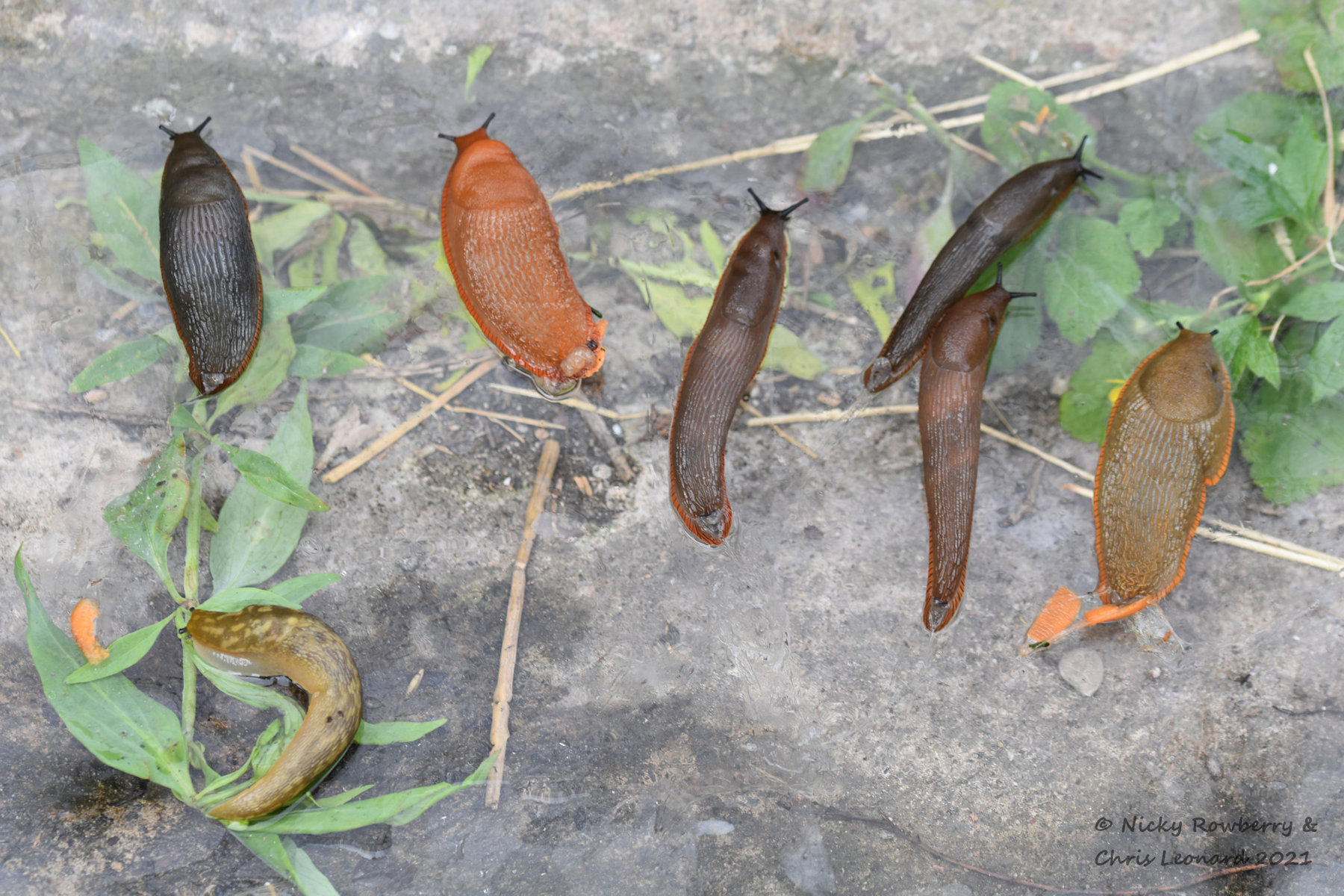
The total number of species recorded has yet to be finalised (some are apparently getting sent for DNA analysis!), but is probably around 14. There were at least 4 species of short-keeled slugs, including this Ambigolimax sp.

There were at least 7 species of round-backed slugs including the familiar large Arion species. Finally there were 3 species of the long-keeled slugs. The one below is the Crimean Keeled Slug (Tandonia cristata) which has a network of dark lines criss-crossing the body.

My most unusual find was a Worm Slug (Boettgerilla pallens), another long-keeled slug, which as the name suggests looks like a worm! I only found 1 in all the surveys.

Finding the worm slug was good, but the best was yet to come. Our survey leader appeared on BBC’s Gardener’s World in July to try and convince the (possibly sceptical) viewing public of the delights of slugs. As part of the feature there was footage of several specimens. I was beyond excited when she told me that one of my actual slugs had been filmed for the show. Here’s a still from iPlayer showing my very own slug TV star (a Netted Field Slug, Deroceras reticulatum).

Not only did my slug feature, but it was described as being one of the biggest pest species, doing the most damage to plants. I don’t know why, but I felt ridiculously pleased that I’d got effectively the bad boy of the slug world!

So all in all this slug project has been fascinating. I love doing these citizen science projects. You usually learn something new, or see something new and either way you get the pleasure of enjoying some aspect of nature whilst contributing hopefully useful data to scientists. This particular project has given me a whole new appreciation for slugs, a group I’d previously given little thought to. I know they are not popular with gardeners and they can be a worry for those with hedgehogs in their gardens (slugs can carry parasites such as fluke and lungworm which can pass to the hedgehogs). But everything has its place and slugs have just as much right to be in a garden as everything else.


Flightless but Fabulous

This week I finally got to see a moth I’ve been wanting to see for a very long time – a female Vapourer. We often see Vapourer caterpillars in the garden and sometimes the male adult moths, but the female is something else. The female Vapourer has the, perhaps unenviable, trait of being flightless! Her life as a caterpillar proceeds the same as the male, but when she pupates, instead of emerging with beautiful wings, she appears as short dumpy lump who can hardly move (perhaps this is why I empathise with her!). A female Vapourer’s lot is not a glamorous one.

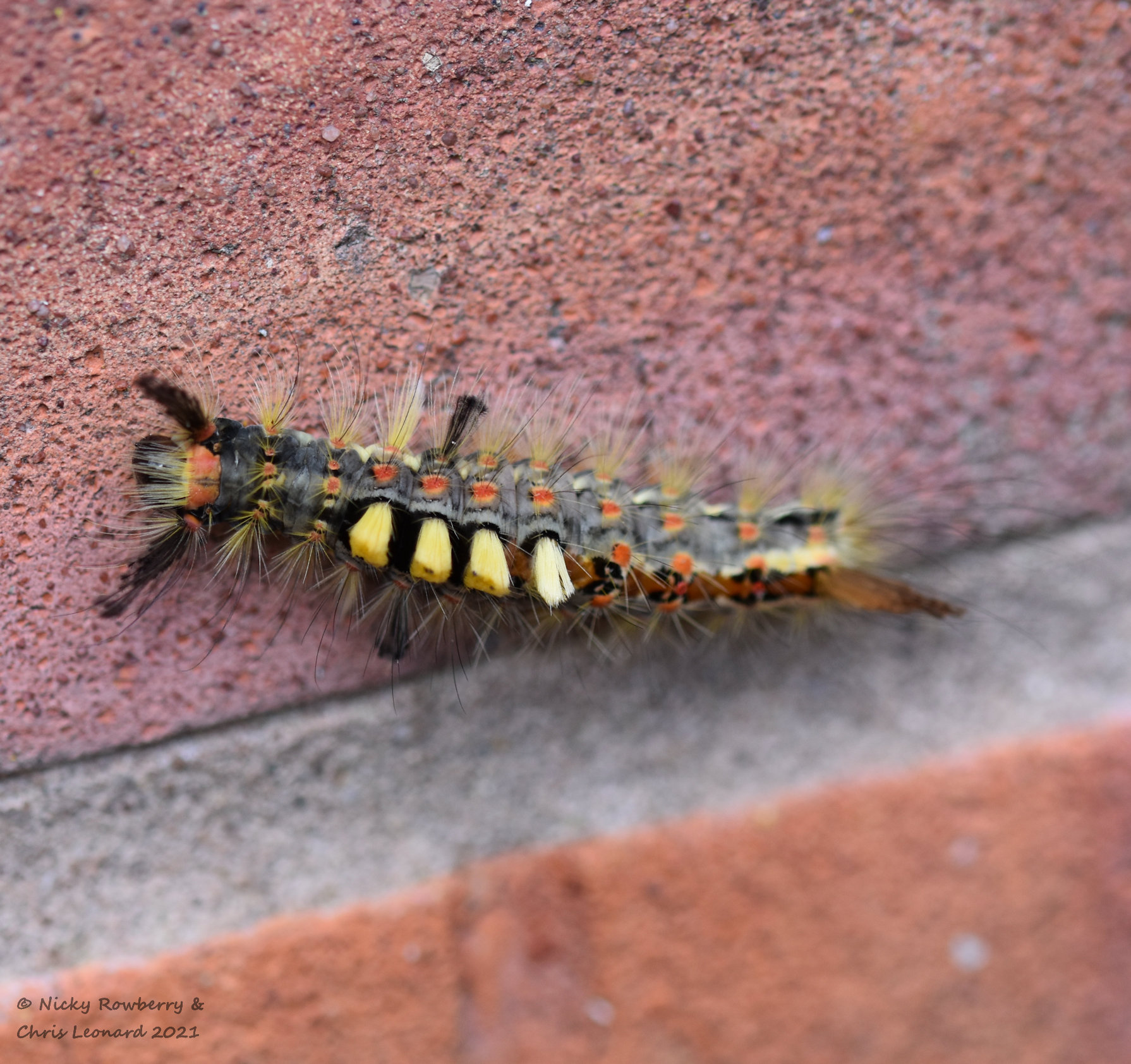
Back at the beginning of July I spotted this large Vapourer caterpillar on the garage wall. They are spectacular looking caterpillars with tufts protruding here, there and everywhere. 

This caterpillar very purposefully headed up the garage wall until it reached the overhang at the top – and there it settled. I saw it there an hour or so later and at first thought it had been snared by a spider’s web, but it was in fact pupating.

The caterpillars spin themselves a fairly thin whispy cocoon and can emerge as an adult within 2 weeks. The good people on a local Facebook group suggested this could be a female, so I checked the cocoon every day for weeks hoping to catch it emerge. Sadly just as the time should have been up, it looked like the garden sparrows or blue tits had pecked her out of her cocoon. We often see them pecking at small spiders and insects on the walls and it seemed this was her fate.

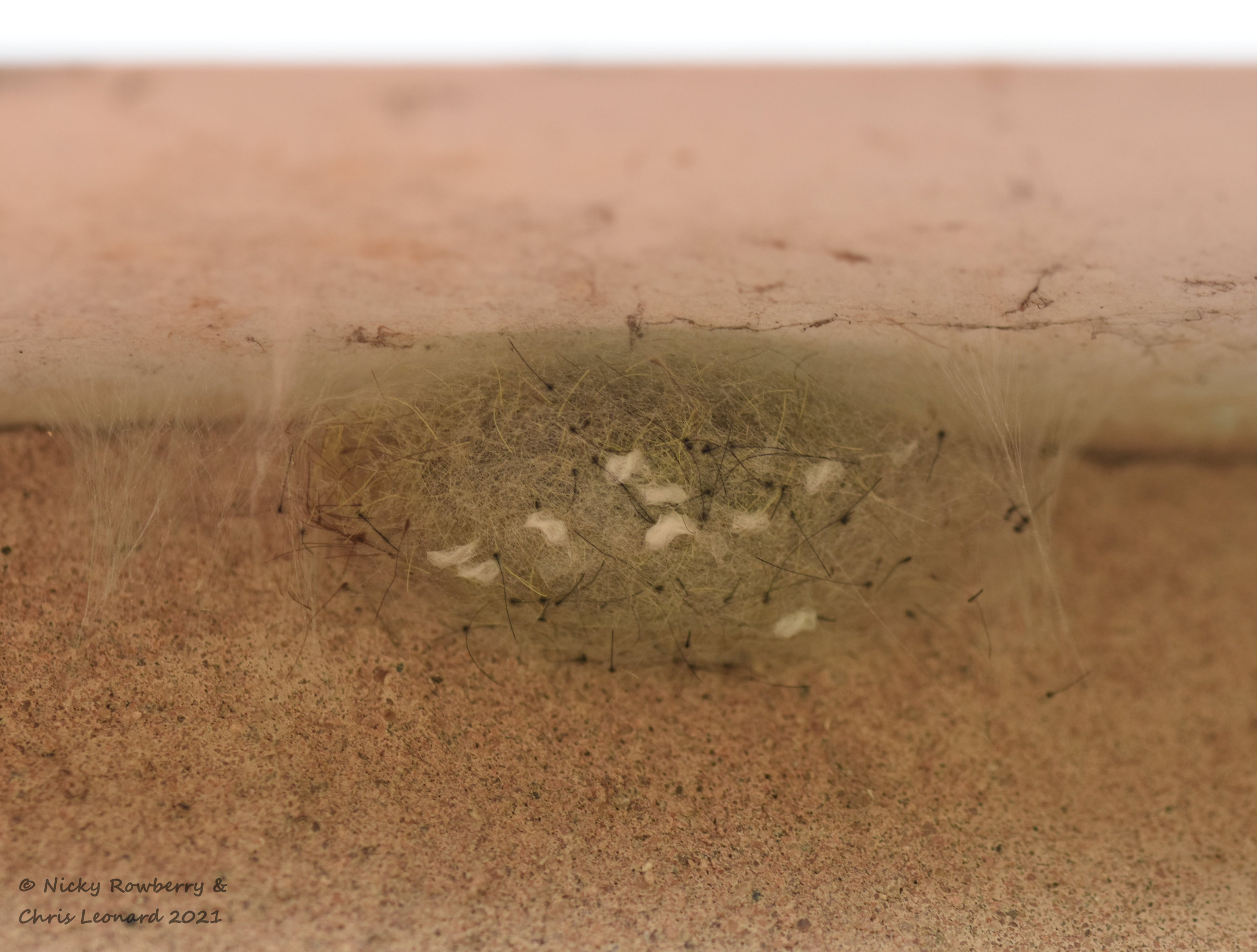
Fortunately that same week, I spotted another 2 caterpillars – also on the garden wall, but this time choosing a slightly safer place to pupate – beneath the garage windowsills. Tucked away there, they were less visible to the birds and perhaps stood a better chance. These ones also had the advantage (for me) of being much lower down the wall, so I could watch them more closely. The caterpillars (at this stage I didn’t know whether I’d got males or females) use some of their hairs and tufts to “decorate”  the cocoon. Since these hairs are irritants, this may serve to provide additional protection to the developing moth inside. You can see various hairs and tufts on the picture below, photographed under the windowsill.

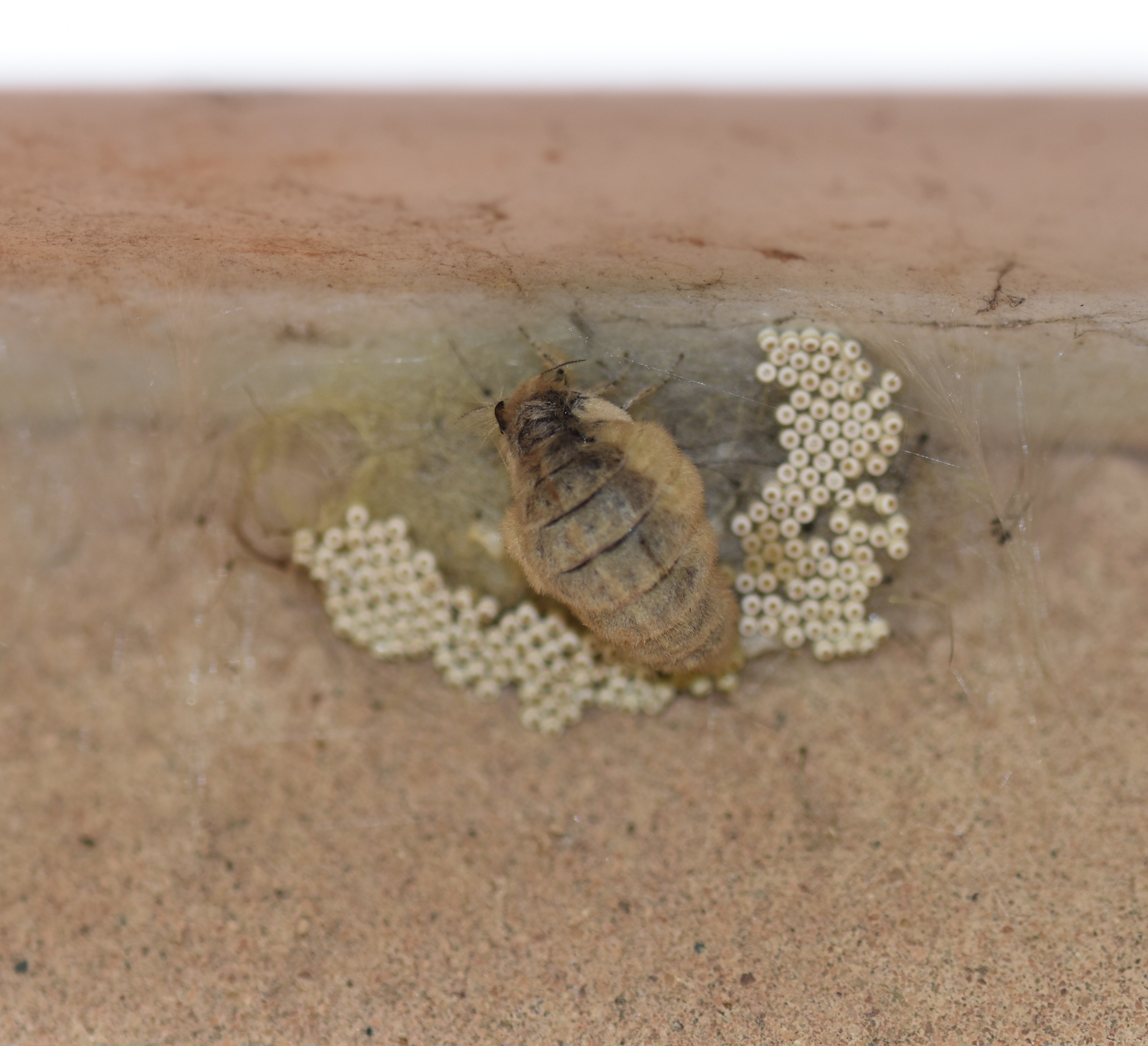
On Sunday, exactly 14 days after I’d seen her crawl under the windowsill, a female Vapourer emerged. When they emerge the females emit pheromones to attract the males. Since the females can’t really move, the males have to come to them and the pheromones draw them in very quickly. So quickly in fact that I missed this stage of the process. I’d checked the cocoons at about 8am – no sign of any activity. I was out for the morning and by the time I checked again at noon, the female was in full egg-laying mode. The males had been and gone. Disappointing as that was, it was still fantastic to see the female laying eggs. Here are a selection of photos taken somewhat awkwardly beneath the windowsill.

Her body is really a furry sac, stuffed full of eggs. She has legs at the front to hold onto the cocoon. On the photo below you can see what I think are the vestigial remains of wings – looking like fluffy ears, either side of her head.

The eggs are laid directly onto the cocoon. They looked wet and a sort of olive colour as they emerged but soon turned white with a darker centre spot.

I did try to video the process, not easy as the light wasn’t great underneath the windowsill. She works determinedly laying egg after egg, all neatly arranged on the remains of the cocoon.

In all she laid 401 eggs – I read online that they can lay between 200 and 400, so she excelled herself!

I suppose I should show a photo of a male Vapourer, although their contribution to the whole process is fleeting to say the least. He is, it has to be said, a very attractive moth, with large feathery antennae for detecting the females’ pheromones.

Sadly once the female finishes laying her eggs, she dies. Her body by then has shrunk and shrivelled once it is empty of eggs. I found this one the next day lying on the ground beneath the windowsill, her eggs still safely sitting on the cocoon. I actually felt quite sad to see her like that, but her work was done and with 401 eggs she had hopefully ensured her genes would live on. Her adult life may have been brief, but she packed a lot into it. Flightless she may have been, but to me a fabulous moth. 
Norfolk Dragonflies

It seems a bit like a lifetime ago already, but in June we had a fantastic holiday in Norfolk. Although the species we were most keen to see was the Swallowtail butterfly, we made the most of the opportunity to see as much other wildlife as we could. One of the groups that we saw in abundance was the Odonata – the dragonflies and damselflies. In total we saw 9 species, 6 of which were new to us. I’ve been very lucky to have help identifying them all from a very friendly and helpful group on Facebook called UK Dragonflies & Damselflies.
We lucked out with our holiday let – a lovely house in Wroxham on the banks of the River Bure. Our holiday garden ran right down to the river with its own inlet for mooring boats (with our complete lack of boating skills we weren’t brave enough to have our own boat!). The area was positively alive with dragonflies and damselflies, so we could just sit and enjoy them without having to go anywhere. We saw 5 species in the garden alone.

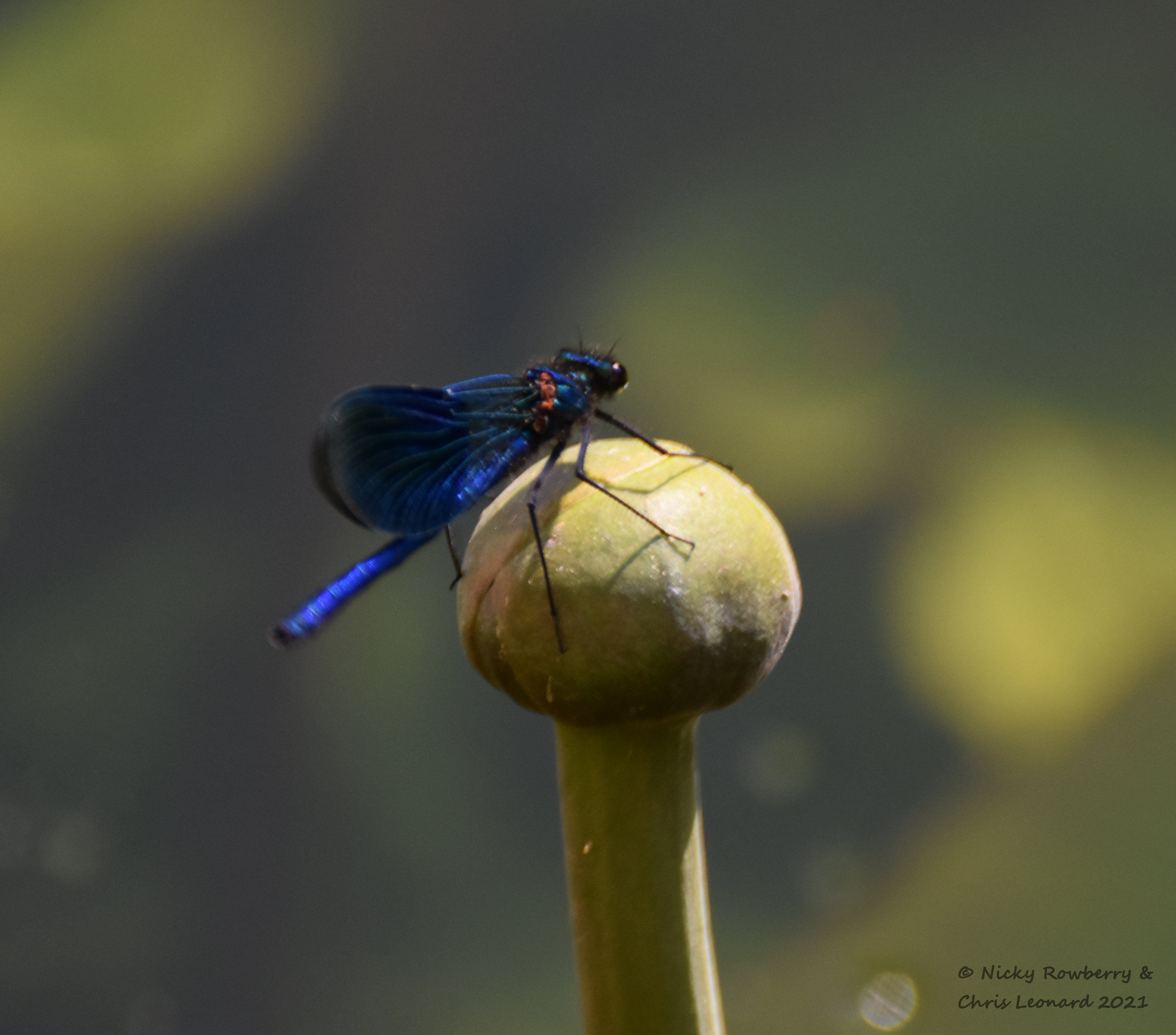
One we had seen before, but which is still a delight every time we see it, is the Banded Demoiselle.

demoiselle drakes

They’ve got a lovely way of flicking their wings open and shut when they are resting.

We’d also seen Common Blue Damselflies before, although they’re not a species we get in the garden at home, so it was nice to just chill and watch them.

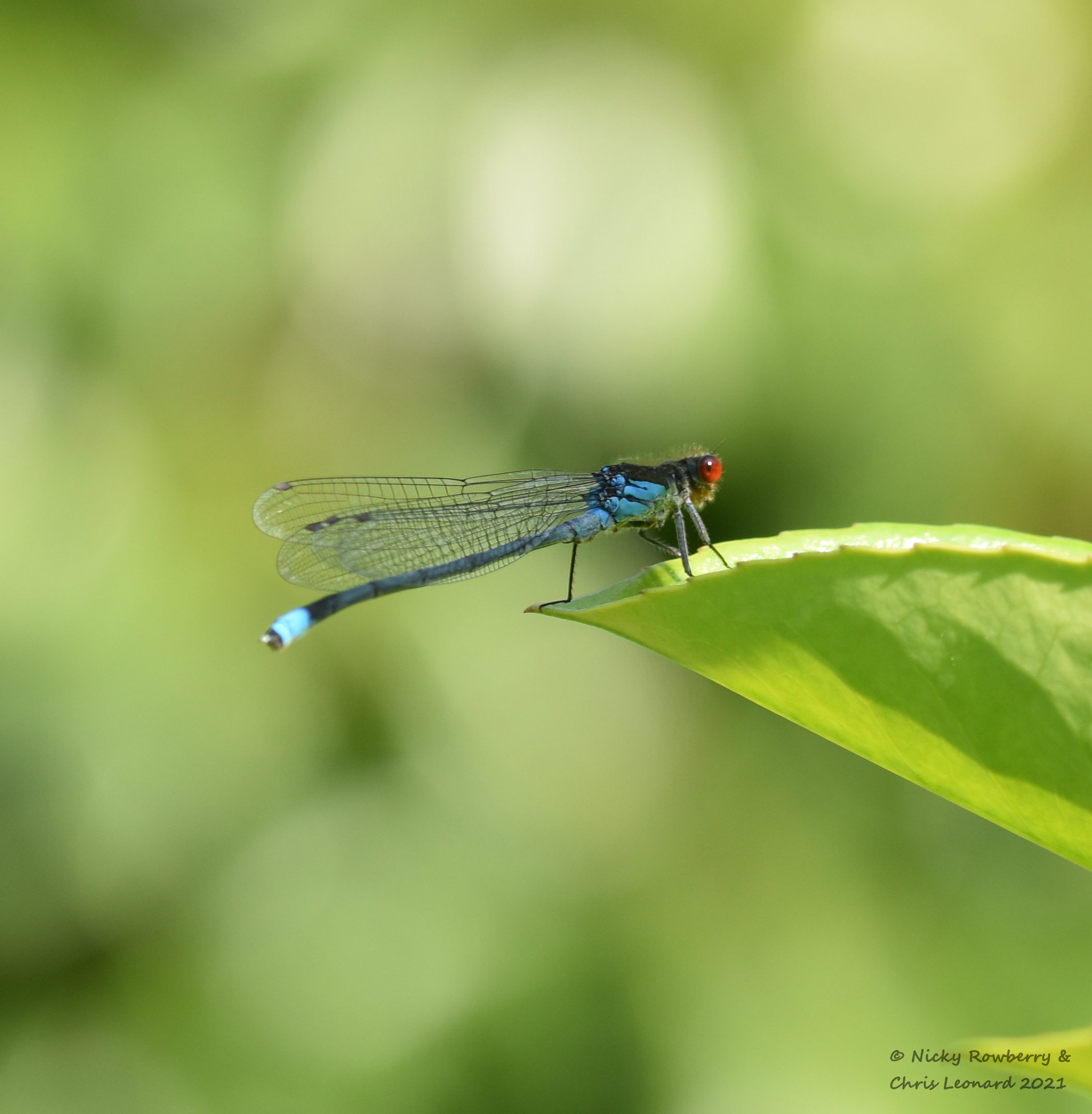
Red-eyed Damselflies were new for us and were probably the most abundant species at our holiday let. The males, as the name suggests, have vivid red eyes, with a blue body and blue tip to the tail.

red eyed damselfly male

The females don’t have the eye colour and are also more of a greeny body colour.

The red-eyed damselflies were mating all over the place, but their favourite romantic rendezvous were the water lilies. They were literally queuing up for a turn on the lily flowers. If you look closely you can see that some pairs are actually submerged, seemingly undeterred in their eagerness!

red eyed mating

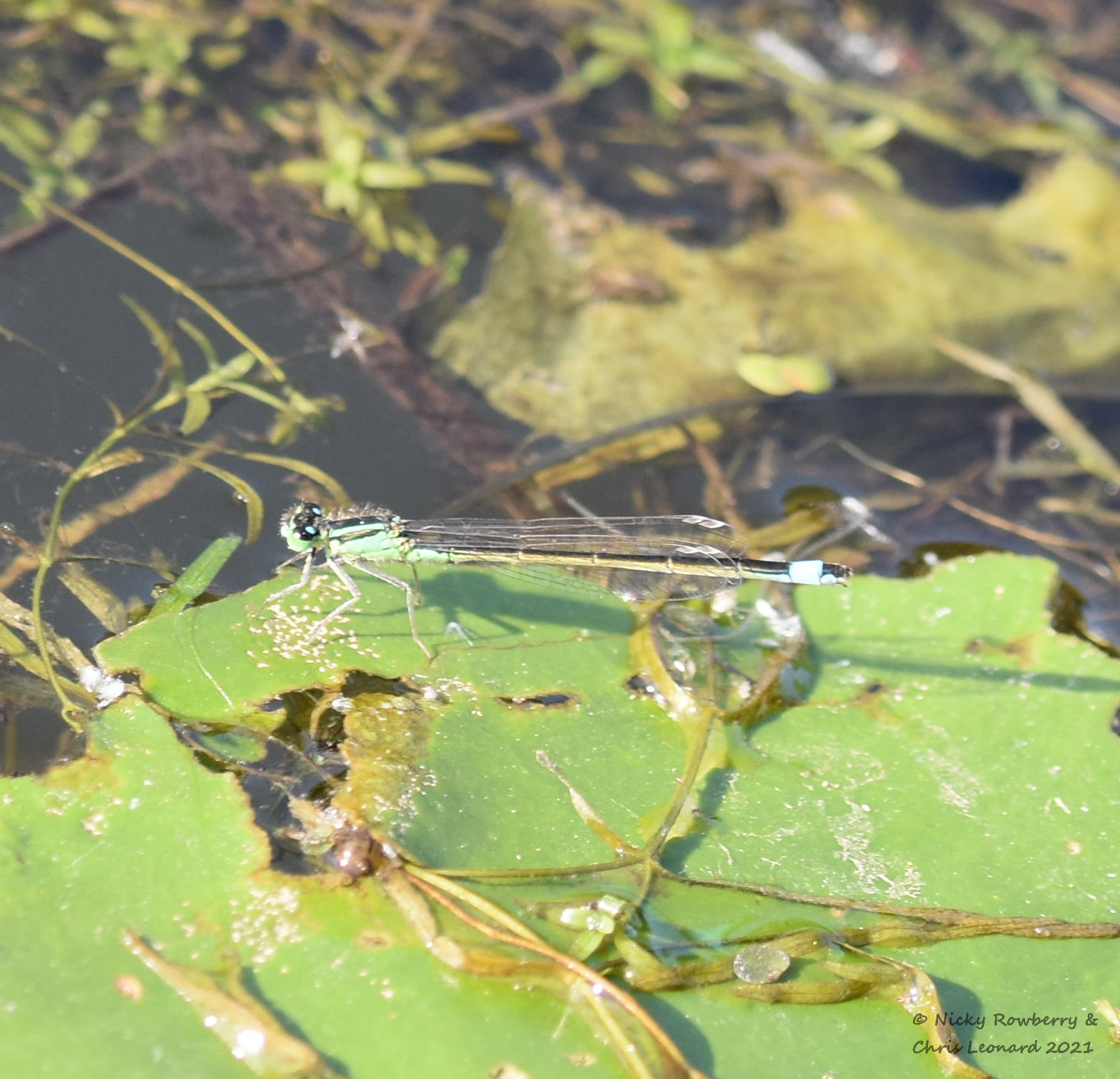
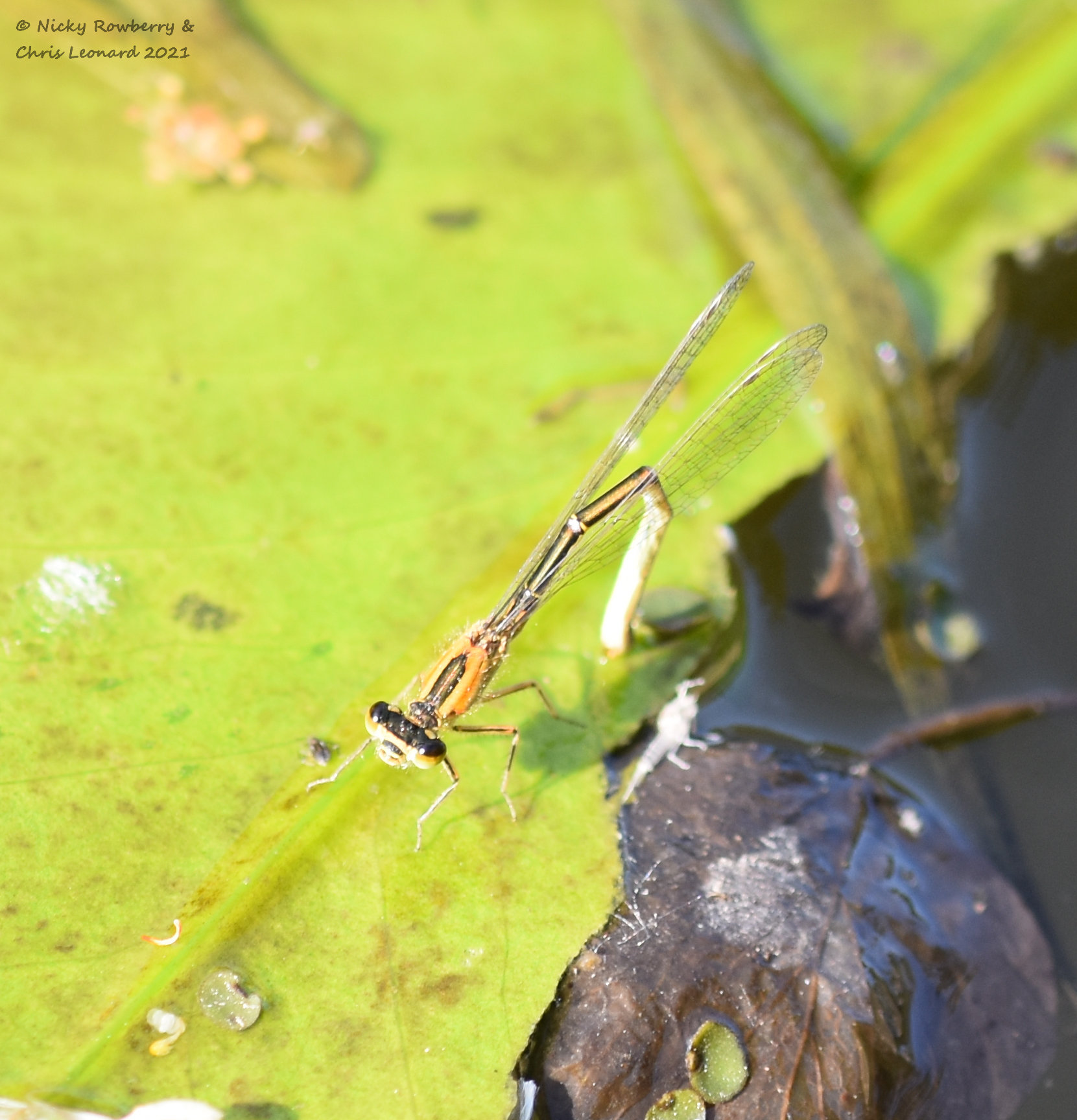
There was also a 3rd species of damselfly in the garden – the Blue-tailed Damselfly. The males have a light blue spot near the end of the abdomen, but somehow I didn’t manage to get a photo of a male. The females are more interesting though in that they have at least 5 different colour forms. There seemed to be at least 2 of these forms flitting around the garden – the top one below is the more typical colour and below that is the rather grandly named “rufescens obsoleta” form.

female blue tailed

female blue tailed damsel - rufescens obsoleta

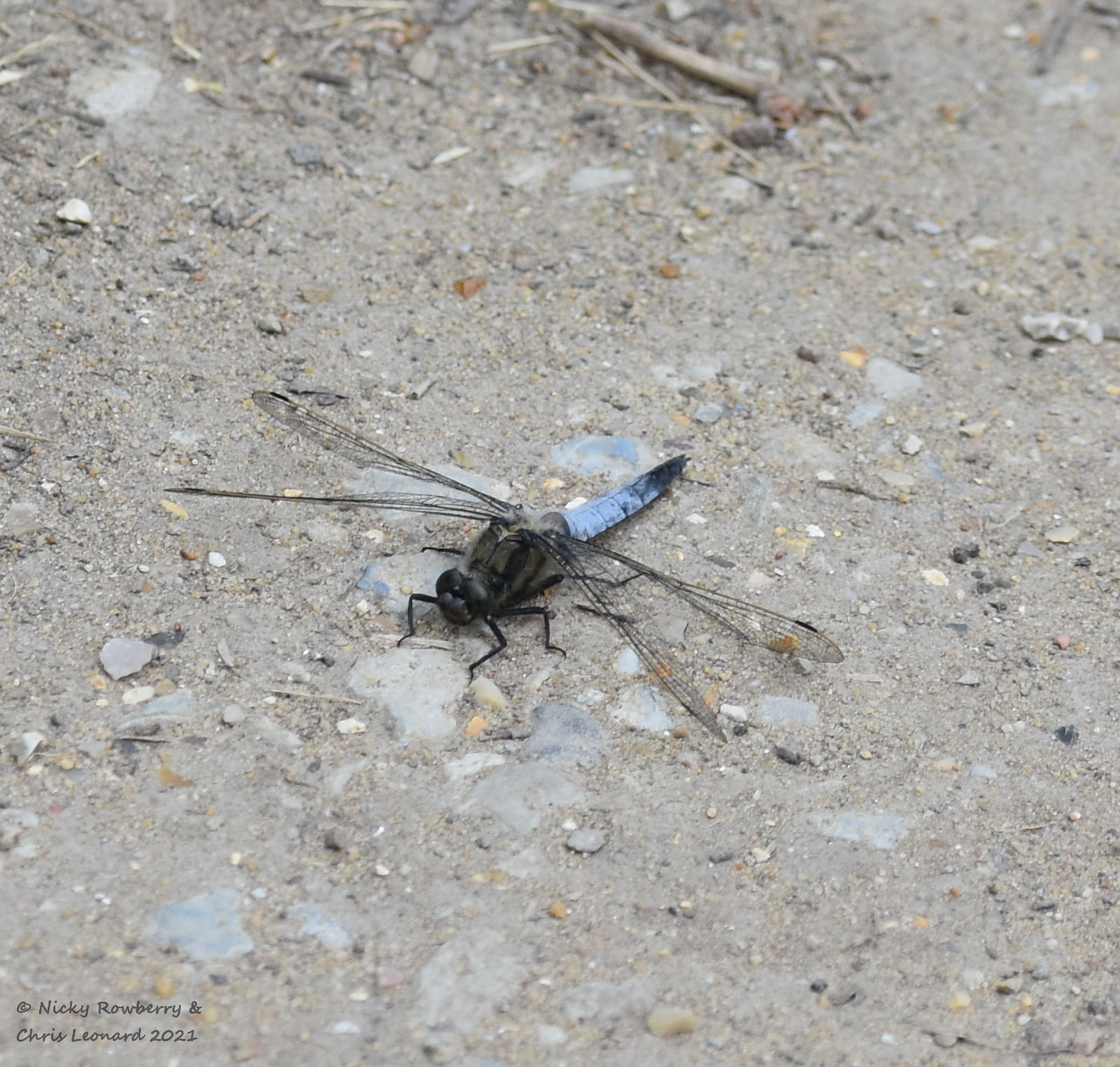
There were quite a few of the larger dragonflies about the garden, but the only one we managed to photograph was the Black-tailed Skimmer. The males start of a golden colour, but when mature they turn blue, with a blackened tip to the abdomen – like this one we saw at Hickling Broad.

black tailed skimmer male 2 hickling

Having the river on our doorstep meant that when we got up in the mornings, we were lucky enough on a couple of occasions to spot dragonflies emerging from their larval stage. This first one is another Black-tailed Skimmer – a male (thanks again to the FB dragonfly people for identifying this). We missed the initial breaking out of the exuvia, but got this sequence of photos.

Black tail skimmer emerging 1

Black tail skimmer emerging 2

Black Tail Skimmer emerging 3

We also managed to catch on video the moment he opened his wings for the very first time – quite a privilege to see!

We did catch another dragonfly actually bursting free. It never ceases to amaze me how they expand into such huge insects out of such relatively small larvae.

Dragonfly 1 emerging 3

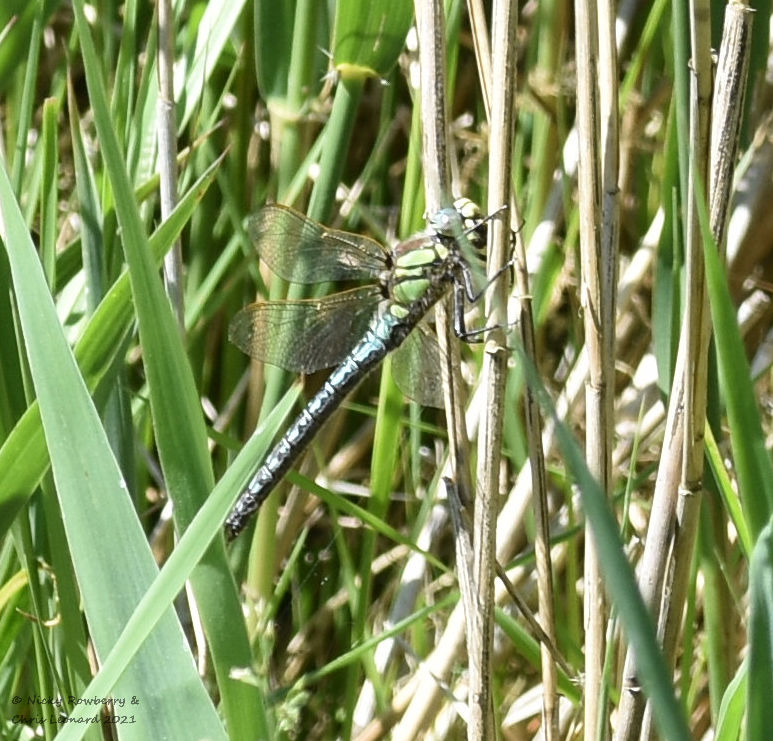
Our adventures out and about in Norfolk took us to various nature reserves with more dragonfly delights. At Hickling Broad we glimpsed this Hairy Dragonfly. Not a great photo but another new one for us.

Hairy dragonfly Hickling

Also at Hickling Broad we saw this gorgeous Four-spotted Chaser – so named for the spots on his wings.

At Strumpshaw Fen we were graced by the presence of a Scarce Chaser. They are as the name suggests “scarce” and in fact are classified as “near threatened”, so it was a lucky spot. Sadly a photograph of it proved even scarcer!

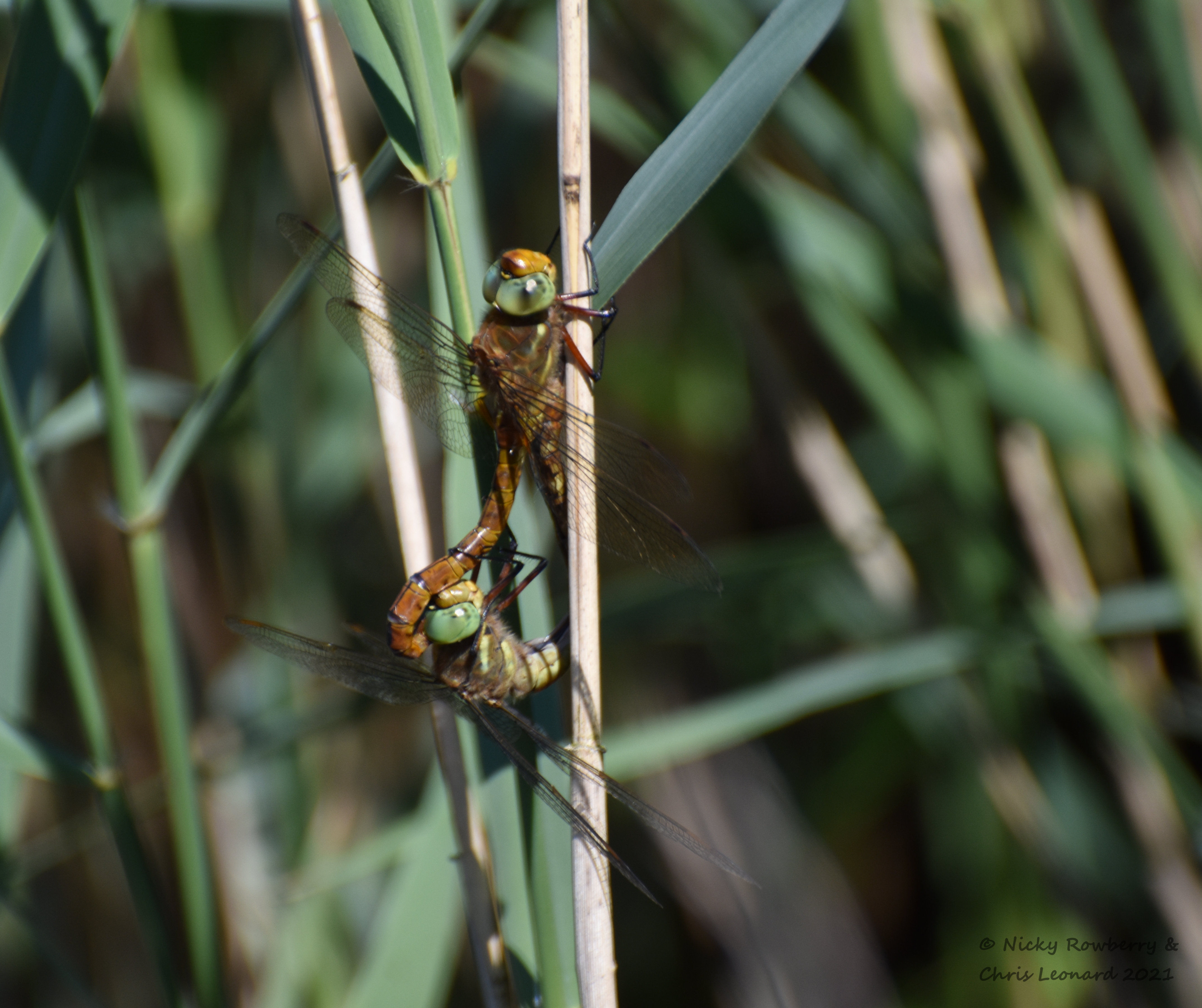
Star of the show though was the Norfolk Hawker. We saw them at Hickling Broad, Horsey Mere and Strumpshaw Fen. The Scarce Chaser may have been scarce, but the Norfolk Hawker is actually considered to be endangered and one of the rarest dragonflies in the UK. They are stunning dragonflies with green eyes, brown bodies and a yellow triangular mark at the top of the abdomen.

We even caught this pair of Norfolks doing the best to ensure that they became just that little bit less rare!

Norfolk hawkers mating hickling

So that’s 9 species of dragon/damselfly seen in a week without really even trying! A few years ago we started on a quest to see all the British species of butterfly and only have 5 to go on those. I think we may just have found the next group to focus on – and Norfolk has given us a great start already.