Nest Box No. 15

Way back in February, we took up Worcestershire Wildlife Trust’s Rent-a-Nest scheme. Having failed spectacularly to get anything to nest in our boxes at home, we figured we could at least support one at one of our favourite local nature reserves. So we chose a Knapp & Papermill nest box and were allocated Box No. 15. As part of the lease, we were to get a guided tour of “our” nest box in the spring. So skip forward a few months and a week or so ago, we met up with Garth from Worcestershire WT who led us on a very entertaining and informative walk to see Nest Box No. 15. Amazingly the sun shone down even though it was a bank holiday weekend and the public were out in force enjoying the nature reserve. It was great having Garth point out things on the walk that we would never have known were there – such as a Mandarin duck nesting quite high up in an old tree trunk!

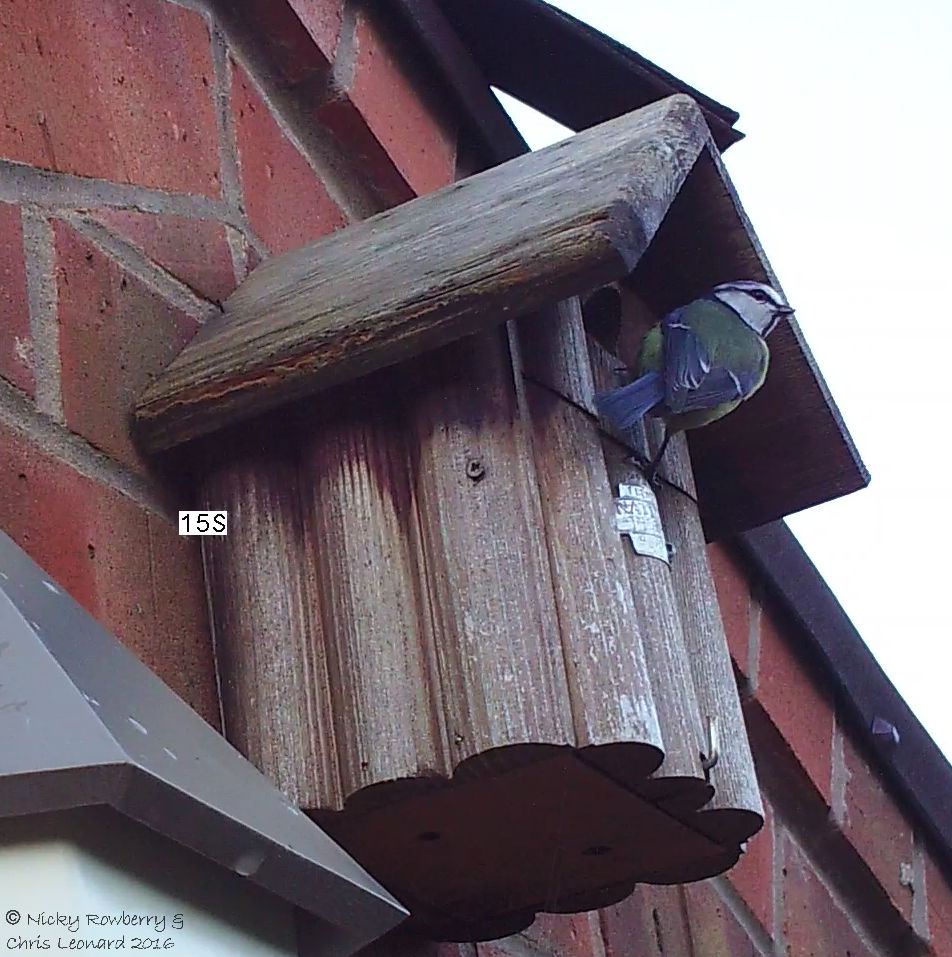
We reached Nest Box No. 15, tucked away from sight and Garth cautiously peered in and confirmed that our box was occupied by a blue tit. I had a very quick look in and could just see a little blue head. Obviously we couldn’t take a photo of the blue tit inside the box as we didn’t want to terrify it with the flash, so all I can offer is a photo of the box itself. The entrance has been reinforced with metal to prevent larger birds getting in to predate the chicks.

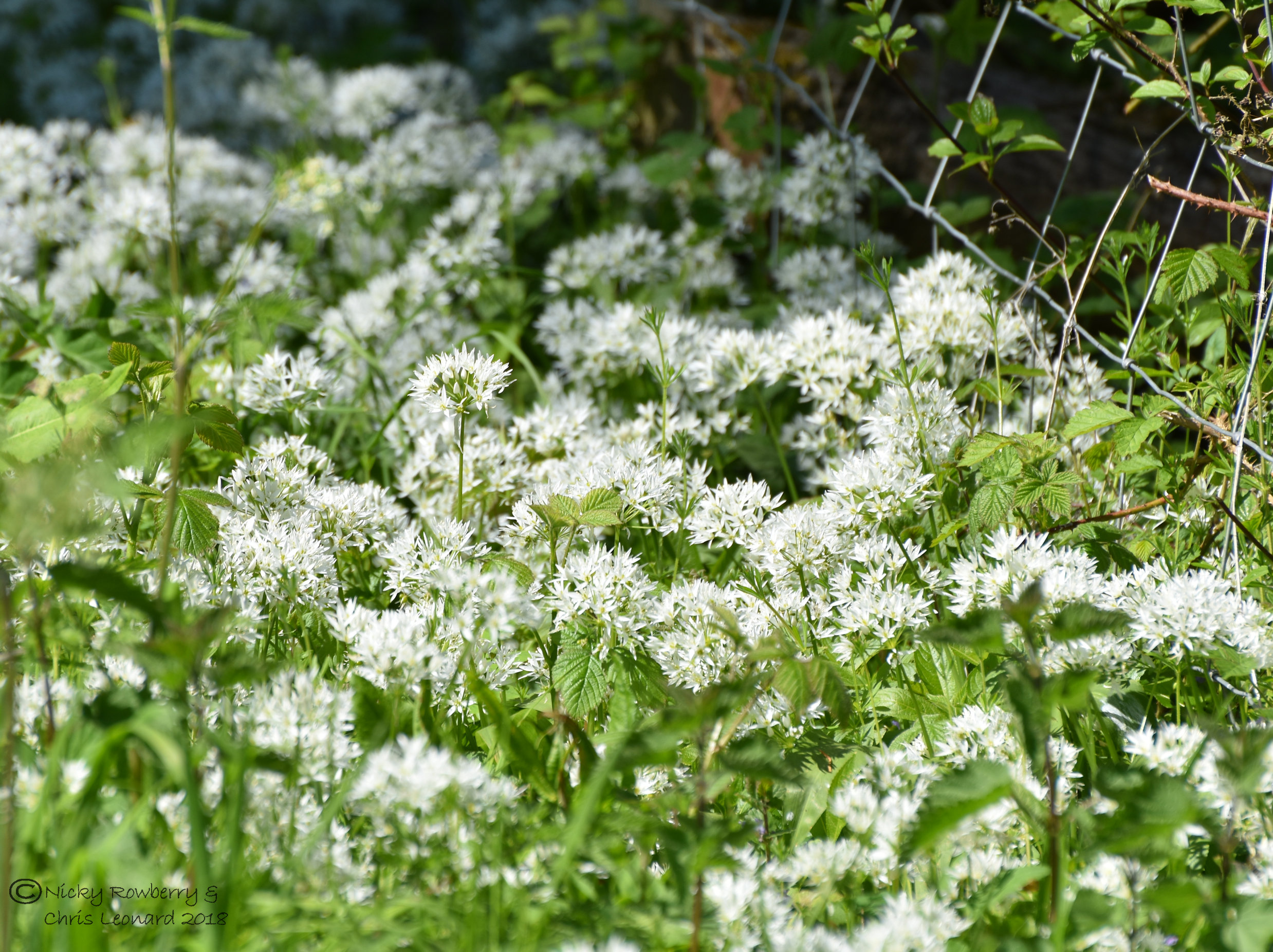
We left Garth to carry on his walk and his butterfly count (part of a regular count he does for Butterfly Conservation) and pottered around the reserve on our own for a bit. We’d last been to Knapp & Papermill in the winter when everything was green and white with snow drops. Now, in spring, we had the same colour scheme, but it was wild garlic that carpeted the slopes amongst the trees. The scent was unmistakable, but fortunately we like garlic!
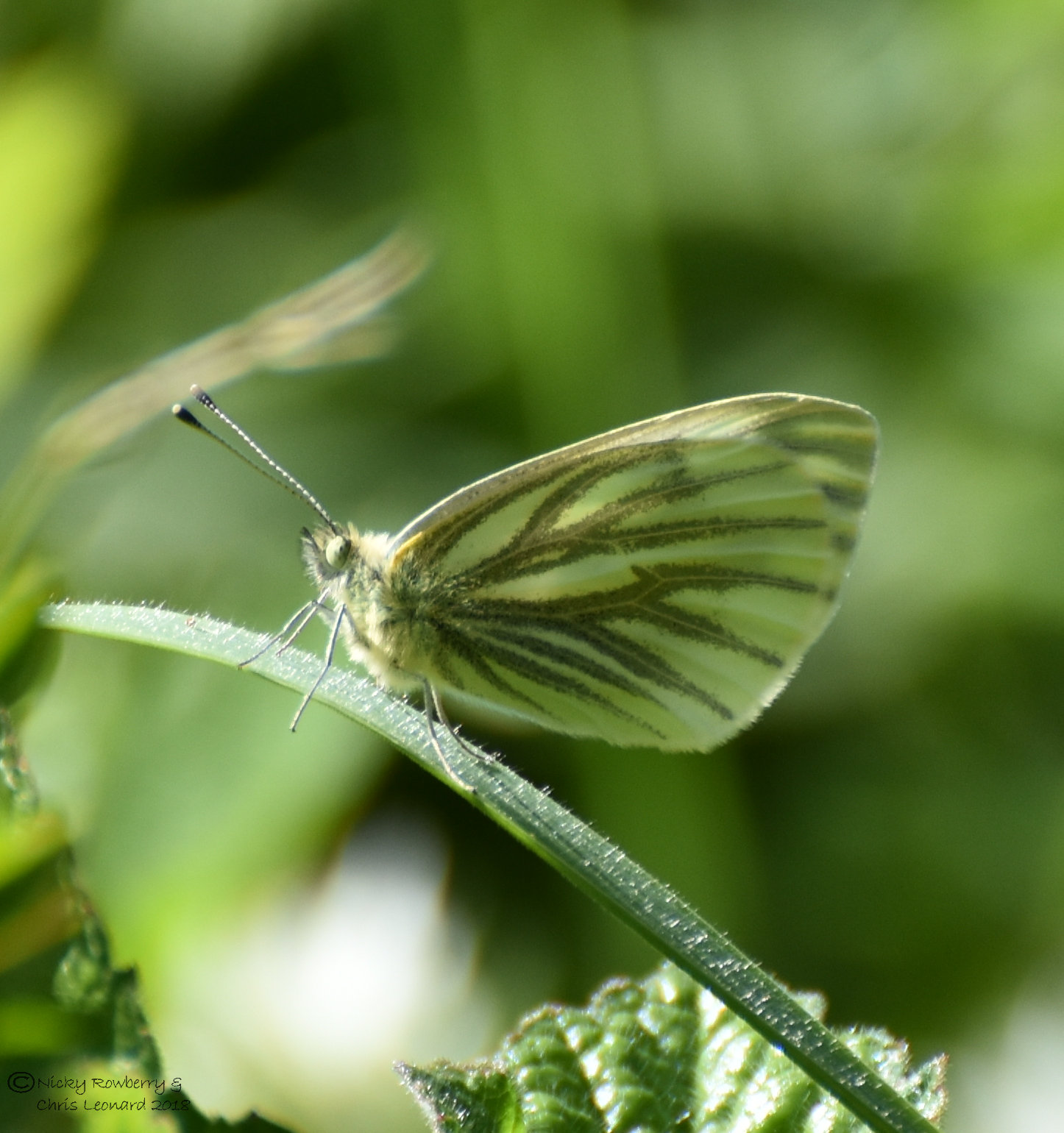
Butterflies were out in good numbers – lots of Orange Tips that were too fast to photograph, but also a few lovely fresh Green-Veined Whites who were a bit easier to track.
The reserve is one of the best sites we know of to see demoiselles, but it was still a bit early for these. But the pond near the reserve entrance provided our first damselfly of the year – a Large Red Damselfly.

So all in all a lovely way to spend a few hours on a bank holiday weekend. There are nest boxes (and bat boxes) all over the reserve, but apparently only about 25% are sponsored. Hopefully we can continue to sponsor a box in years to come. The money helps with the costs of maintaining the reserve and we get the pleasure of seeing a nest box that actually gets used – if only the Knapp blue tits could pass the word on to our own blue tits and get them to use our garden box too!

Luring an Emperor

Having missed most of last week’s sunny spell, (due to the considerable inconvenience of having to work for a living!) we headed out on Sunday to Hartlebury Common. Almost exactly 2 years ago we’d gone to Hartlebury in search of the Emperor Moth – with zero success that time. But this time we had a secret weapon – a pheromone lure!

Male emperor moths fly during the day looking for females. The females fly at night, but during the day they sit in the undergrowth wafting irresistible pheromones out to the males. The males pick up the scent with their feathered antennae and home in on the object of their desire. You can now buy pheromone lures that will fool the poor males into thinking you are a desirable female. This does feel a  bit like cheating and a bit mean to deceive the males this way. But since it was probably the only way we were going to see this beautiful moth, I’m afraid we went for it – although making sure we didn’t leave the pheromone lure out for too long to disrupt their normal behaviour. Please note as pointed out in the comments below that you shouldn’t use the lures for Emperor moths with a pheromone trap as the moths are too large and may get damaged when trying to get into the trap. Better to suspend the lure in a muslin cloth or similar that they can’t hurt themselves on.

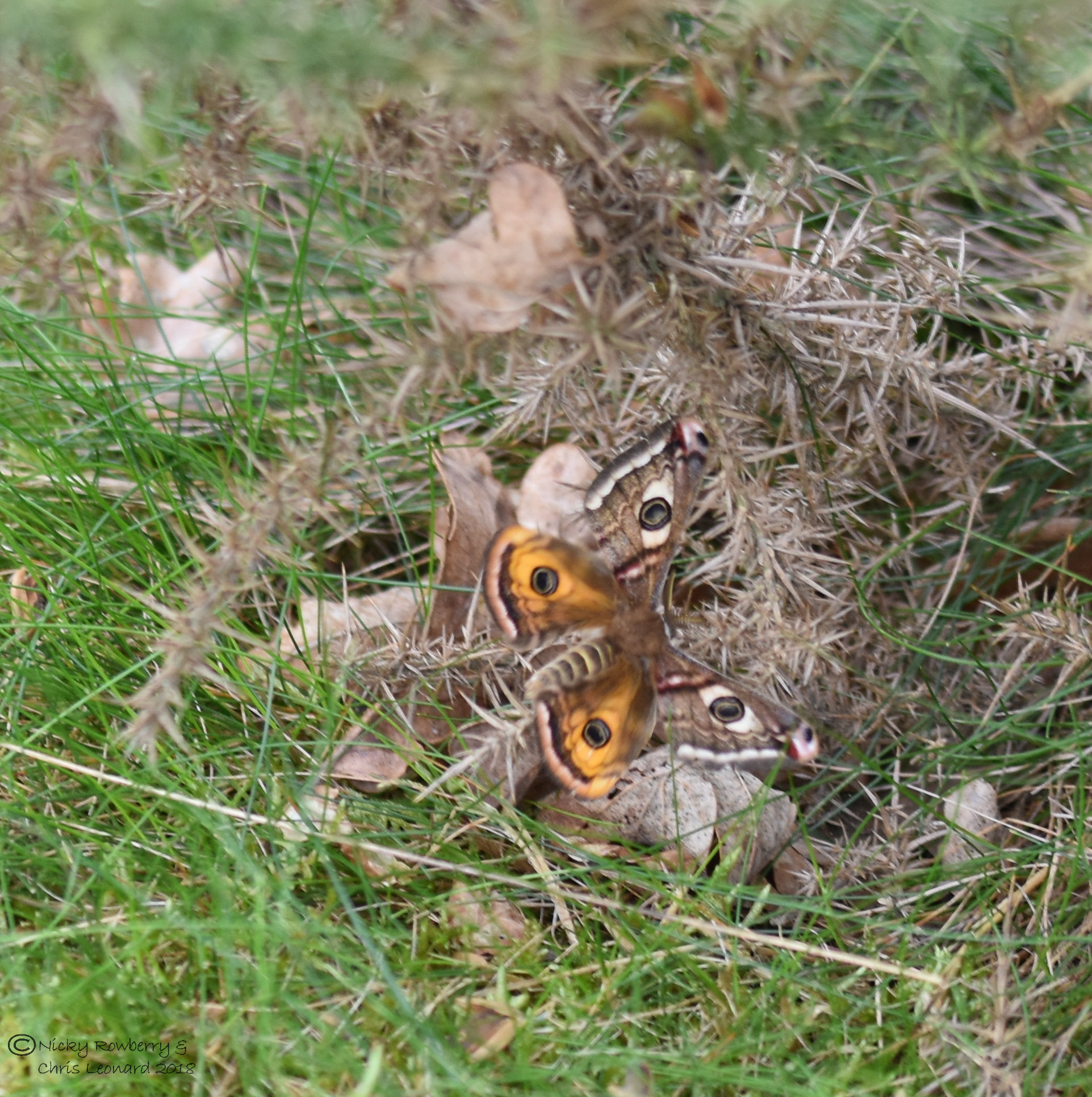
So we wandered about for a bit before selecting what seemed a suitable spot to put the lure down. We’d barely got set up when the first male came hurtling over the gorse. It shot over the lure and landed on a gorse bush nearby, where he then stayed. They are big moths, so you’d think they’d be easy to spot, but it was surprisingly difficult even when we knew roughly where he’d landed. When we did find him, he was hanging on a twig with his underside towards us – so here’s one of our first photos.

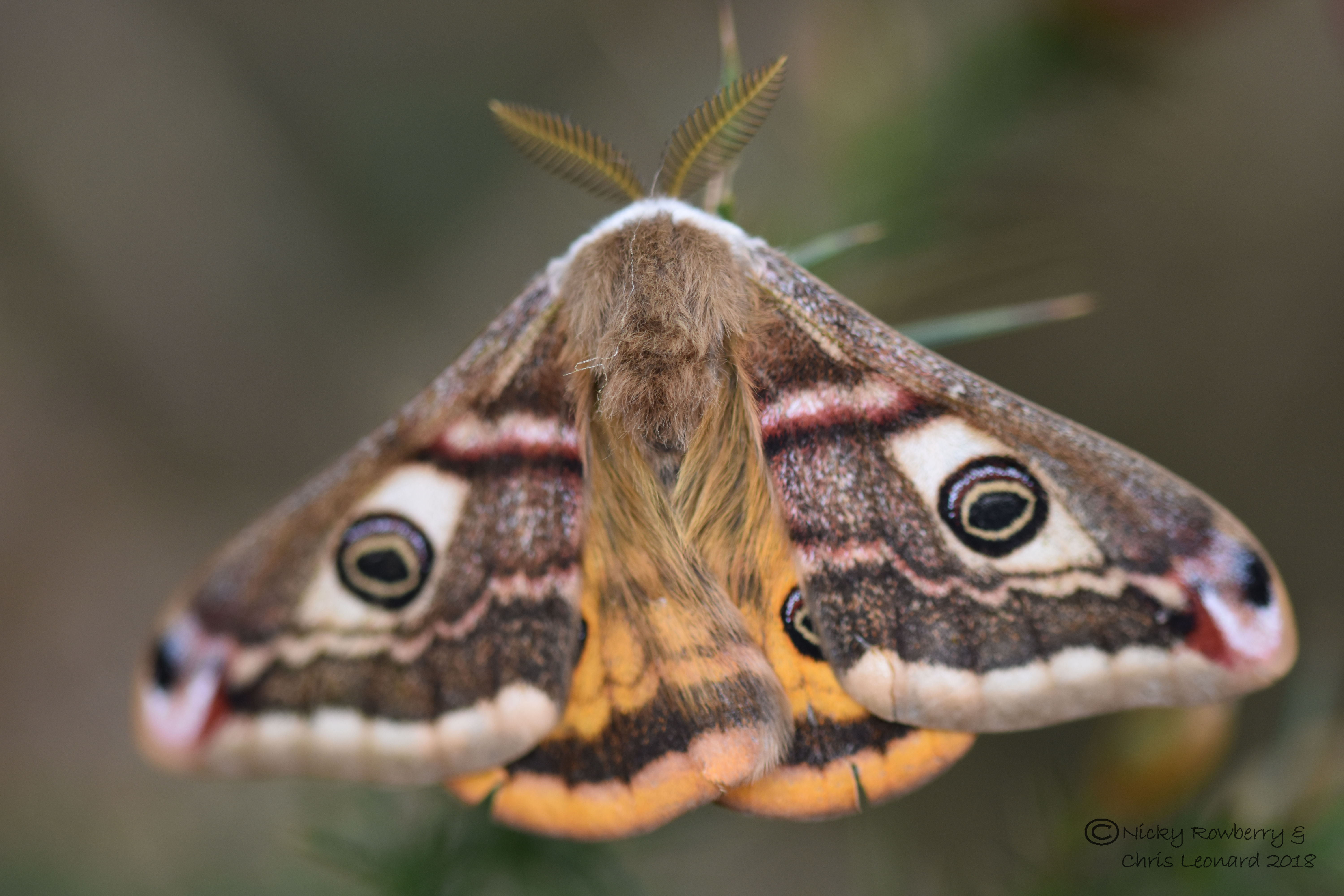
They are really quite furry/hairy moths with very impressive big eye spots on the wings. The males’ antennae are very large and feathery to pick up the female pheromones. Not easy to focus on, but here’s my best effort.

Almost immediately a second male came bombing in towards the lure. This one however refused to settle. It seemed (not surprisingly) confused by the lure and flew around excitedly looking for a female.

While he hovered around the lure looking for the female, I hovered around him trying to get a decent photo. As he didn’t settle, the best I managed of him was this flying shot. Not great, but at least you can see the lovely yellow underwings and all four peacock-like eyespots.

This second male eventually gave up and disappeared back into the gorse. The original male though eventually shifted position, so that we could now see his other side. So we finally got the classic Emperor moth shots we were looking for.

Having got the photos we wanted, we packed up to leave the males in peace to pursue genuine females. The moths weren’t the only animals with love on their minds though – these bloody-nosed beetles were clearly feeling spring in the air.

Hartlebury Common is very busy with birds. Last year we’d seen a small bird that was new to us and had identified it as either a Chiffchaff or a Willow Warbler. They are only distinguishable by their song and since we didn’t know to pay attention to this until it was too late, we couldn’t identify the bird. But this year we were definitely hearing Chiffchaffs all around us, so I’m reasonably confident that the previous one was too.

The most obvious animals on the common were cows with resplendent horns. No idea of the breed, but they were pretty impressive. They appeared to be free to roam, so were presumably used to maintain the status quo of the vegetation.

So all in all we were very happy with our latest trip to Hartlebury. The pheromone lure worked a treat and the moths were every bit as stunning as we’d hoped. I’ve also bought the pheromone for the currant clearwing moth. These moths won’t come to regular moth traps, but like the emperors, the males are attracted to pheromones. So I’m hoping in the summer to try this out around our currant bushes on the allotment. Fingers crossed.

Spring Is In The Air (and in the Pond)

It is now a couple of weeks since the official start of spring, but it’s felt like it’s been a bit slow actually happening. But having looked at some of the animals we’ve seen in the last few weeks, maybe spring is slowly, tentatively, making itself known after all.

So first up, one of my all time favourites and the first bee of the year – the Hairy Footed Flower Bee. As is so often the case with these, I heard it before I saw it – a male buzzing energetically around the primroses. No sign of any females yet, I think they emerge slightly later.

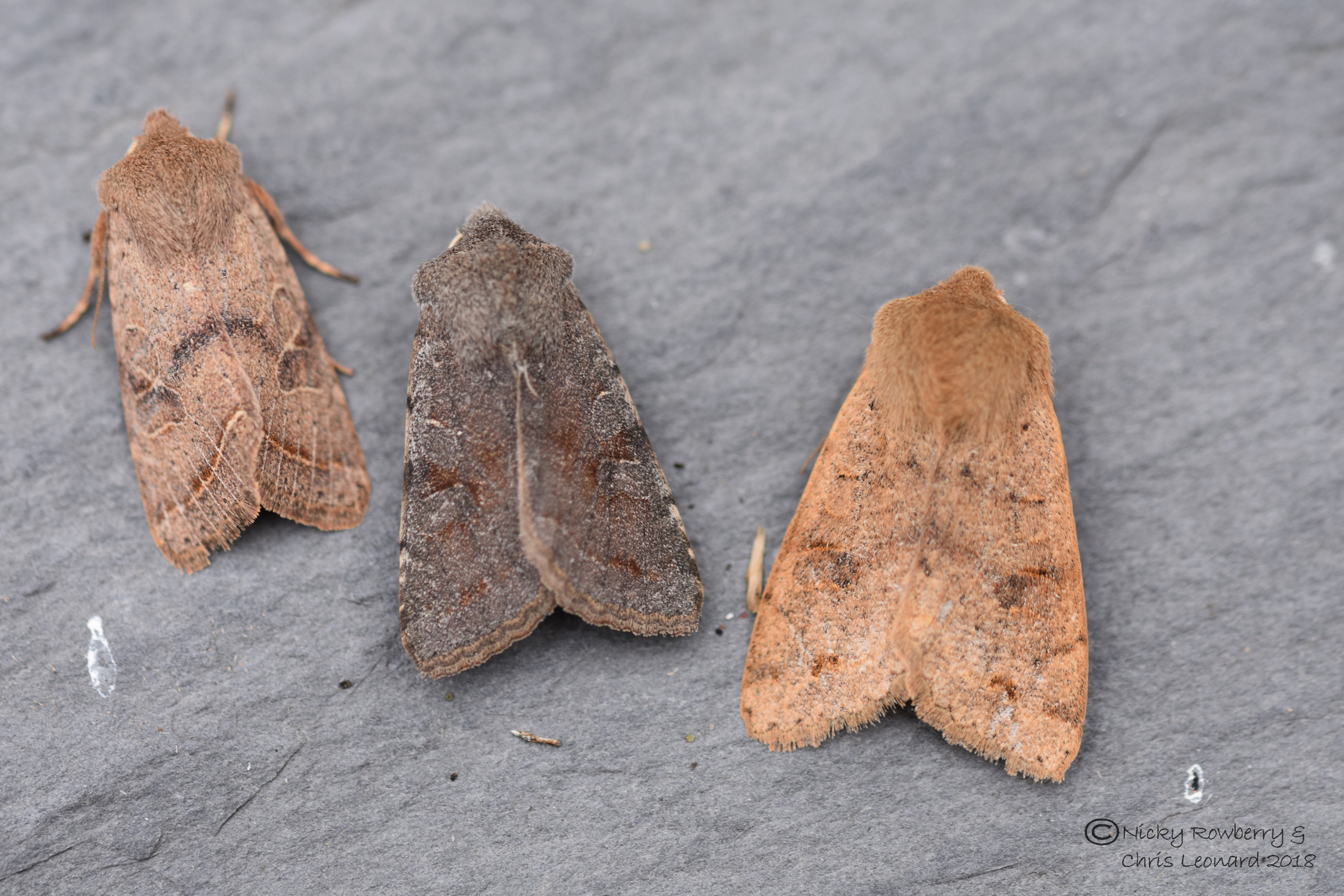
March also sees the start of the annual Garden Moth Scheme. It’s been a particularly cold and wet start so I’ve not had a huge variety, but numbers are slowly picking up. Here’s a nice trio of the Orthosia genus – a Common Quaker, Clouded Drab & Twin-spotted Quaker.

The moths may be trickling in, but the butterflies have been very slow – not seen a single one in the garden yet this year. But we went for a walk in nearby Priory Gardens a week or so ago and spotted quite a few. A bright yellow Brimstone (way too fast to get a photo), several Commas and at least half a dozen Small Tortoiseshells – all basking in the sunshine.

One thing I’ve been particularly looking forward to is the arrival of frog spawn in our allotment pond. We put the pond in too late last year to get spawn laid, but this year we were good to go and the frogs didn’t disappoint. Here’s a quick video using the new GoPro camera. More froggy updates to follow in the next blog post as the tadpoles develop.

We didn’t see any frog spawn in the ponds at Priory Gardens, but there was plenty of bird activity. A couple of moorhens and lots of ducks, including a splendid looking mallard. There’s something about watching ducks on a pond in the sunshine that is not only really relaxing, but feels very spring-like to me.

The previous blog post was all about the peregrines up on the hill, but they weren’t the only birds we saw that day. A male bullfinch looked to be enjoying the spring sunshine sitting on a wild cherry tree (cherry blossom buds being one of their favourite foods apparently).

We also spotted jackdaws that had found some crevices in the rock face to nest in. The hole didn’t look that big, but they were taking quite sizeable twigs in there, so perhaps it opened out inside.

I don’t know if this dunnock was sensing spring or just feeling a bit odd, but it was behaving very strangely. It spent about 10 minutes sitting on top of the hedgehog house (not a safe spot since the neighbour’s cat often sits there), fluffing up its feathers repeatedly and shuffling about. It looked almost as if it was incubating eggs but there was no nest there (I did check it hadn’t laid anything). It stretched its neck out a few times and gaped its beak as well. I know dunnocks have some weird mating habits, but there didn’t seem to be another dunnock around for it to impress with the behaviour. Whatever it was doing it got fed up eventually and flew off into the bushes quite normally. If anyone can shed any light on the behaviour, it would be very much appreciated.

The dunnock may have been behaving strangely, but it was perfectly obvious what this blue tit was up to – gathering nest material. I saw someone suggest recently that you could provide nesting material by tying two hanging basket frames together to form a rough ball and filling them with moss and the like. Apologies to whoever’s idea it was, as I can’t remember where I saw it to be able to credit them properly – but it was a great idea, thank you. We had some old hanging baskets kicking around the garage and the “lawn” is full of moss,  so this was an easy idea to achieve. And the blue tits seem to appreciate it as almost immediately they started taking great beakfuls of moss and flying off with it.

Once it had got a beak’s worth of moss it would then stop on a twig to rearrange the moss a bit more tidily (presumably so it could see where it was flying), before taking off.

If only these blue tits had taken the moss back to the lovely nesting box with camera in that we’ve now had up for 2 years in exactly the spot where they used to nest! But no, they must be nesting elsewhere and all we’ve got on the nestcam is a spider’s web! Still at least we know they are nesting somewhere and that we’ve helped a little bit.

And finally spring must surely be on its way because our hedgehog is back! Whether it is Fat Sam from last year emerged from hibernation or a completely different hog, I have no idea. But it looks big and healthy and has a good appetite.

None of these signs of spring maybe big newsworthy events,  but sometimes it’s spotting the small things in life that gives the most pleasure. And we’re certainly very happy that spring is finally on its way to Malvern.


Easter Peregrines

We woke up this morning to a surprise – the sun was actually shining! We hadn’t been expecting to do much wildlife watching today, but headed up the Malverns as quickly as we could, before the weather could change its mind. We’ve been wanting to head up the hill for a week or so now, since a fellow Malvern resident (Jude thank you so much) mentioned Peregrine Falcons, but the hills have tended to be shrouded in mist. Not ideal for bird watching, so we grabbed the chance today.

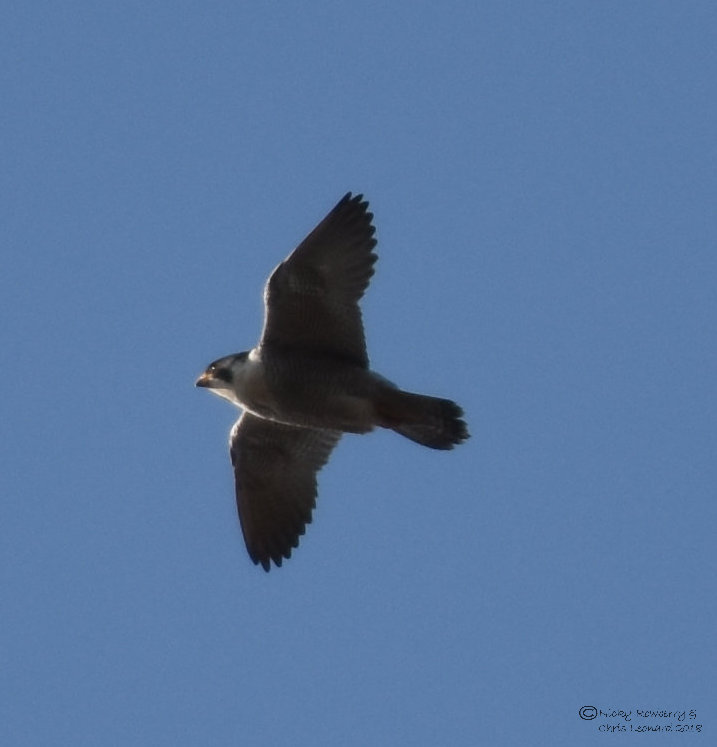
So we headed up to what we hoped was roughly the right area. A friendly dog-walker assured us that yes, he heard them almost every day, then paused and said “but not today”! Undeterred we carried on and almost immediately heard the distinctive calls and spotted this one circling above us.

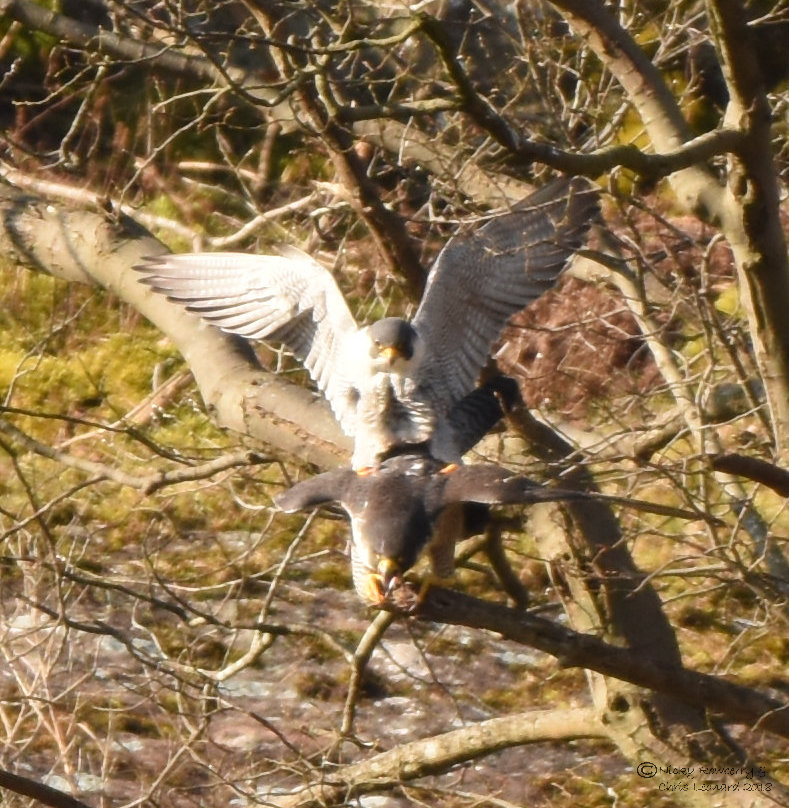
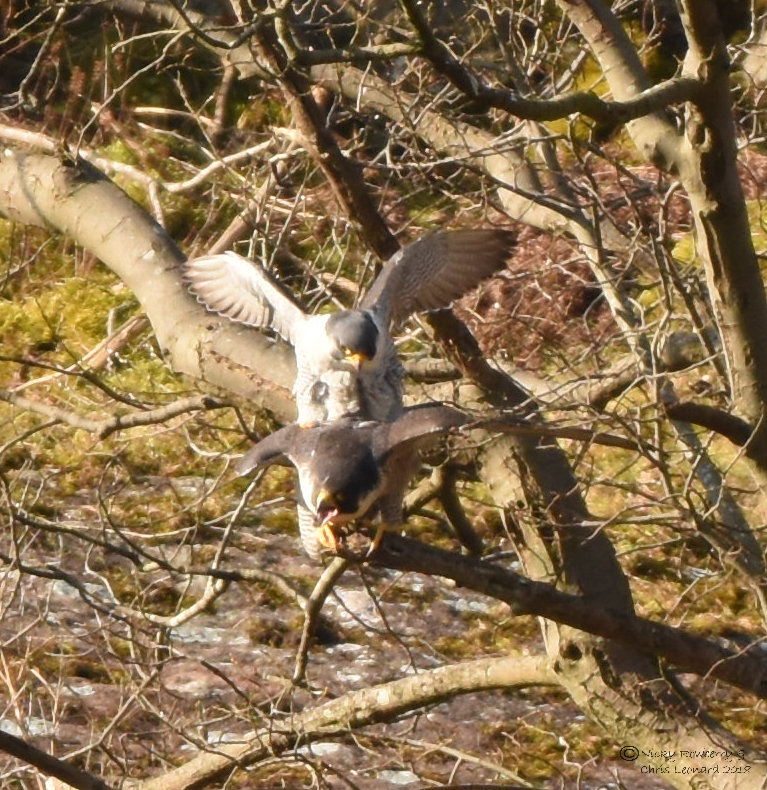
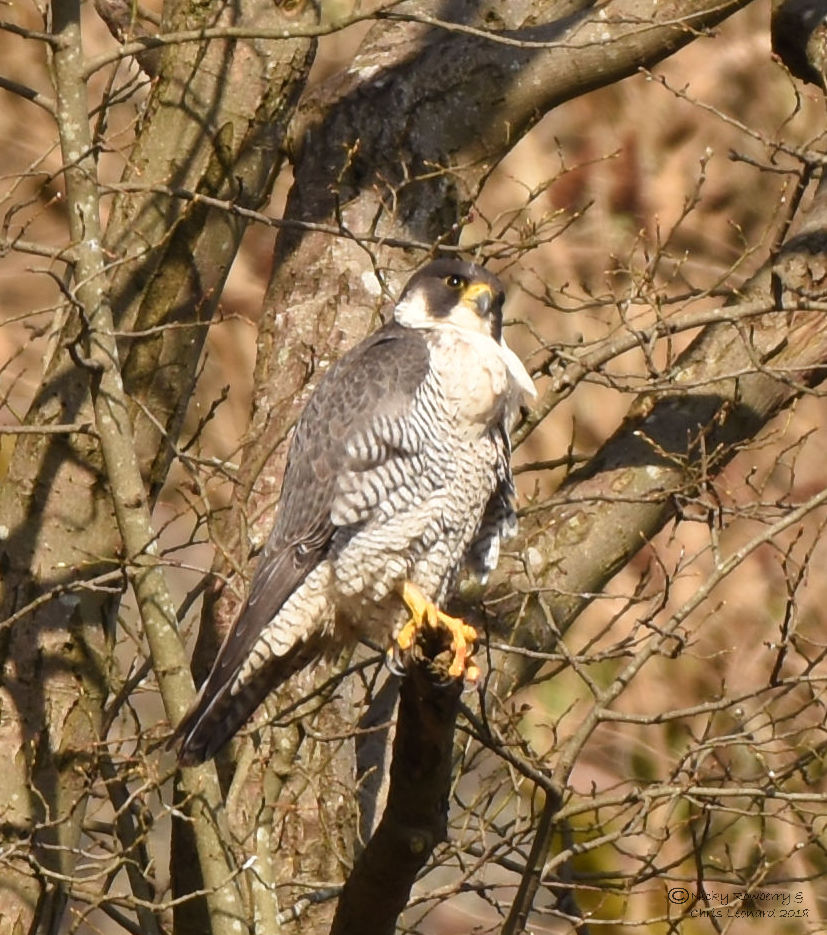
We would have been perfectly happy with this outcome – one falcon seen and heard, but then it got even better. High up in a tree we saw it land and there were two! (You wait all your life to see one peregrine then two come along!) Not only two, but judging by their next activities they were clearly a male and a female. We were a long way away and really at the limit of our lenses, but managed to catch “the action” on camera.

It didn’t last very long then the male perched on a branch above her. The female looked a bit rumpled by all the activity.

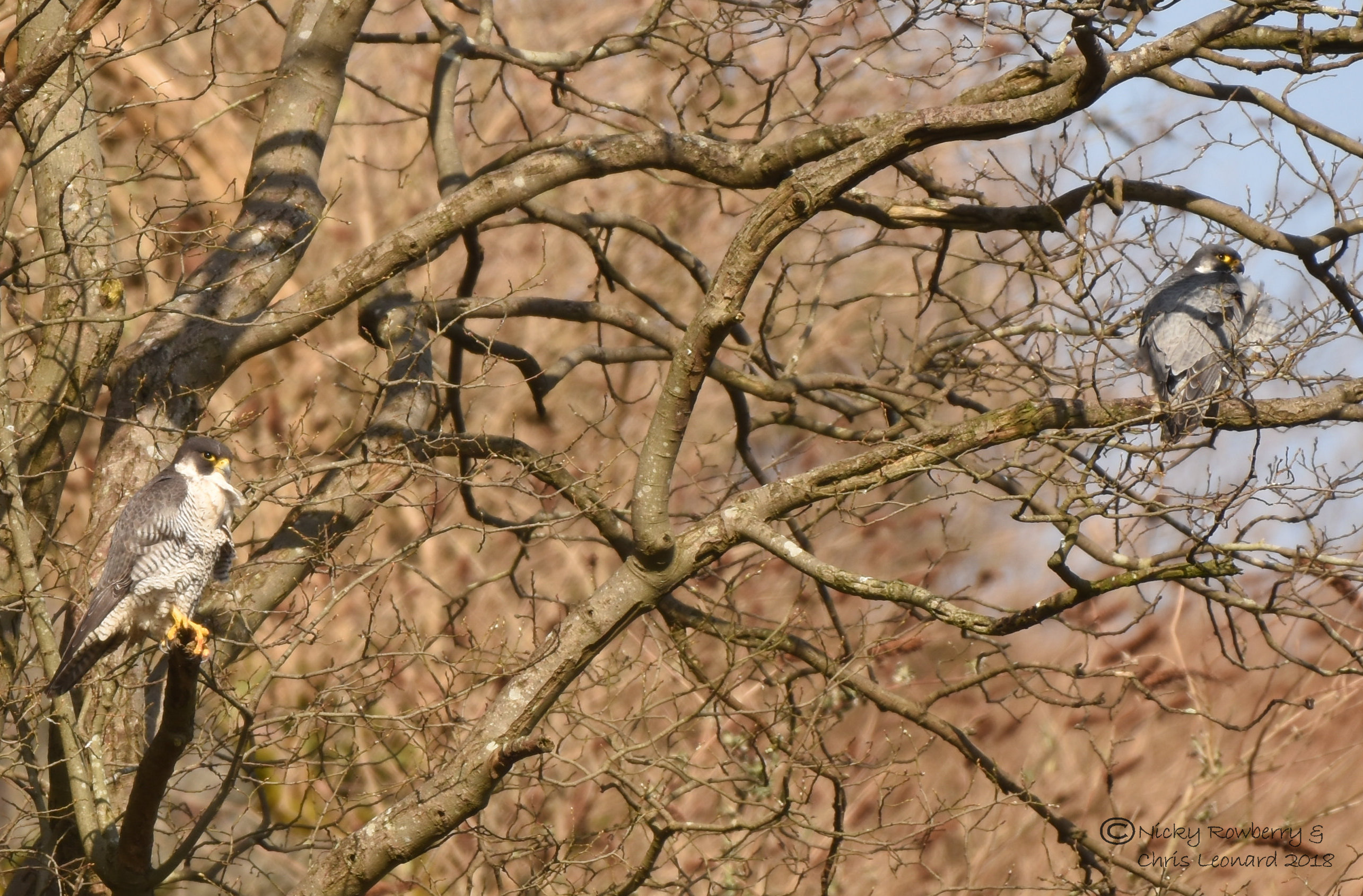
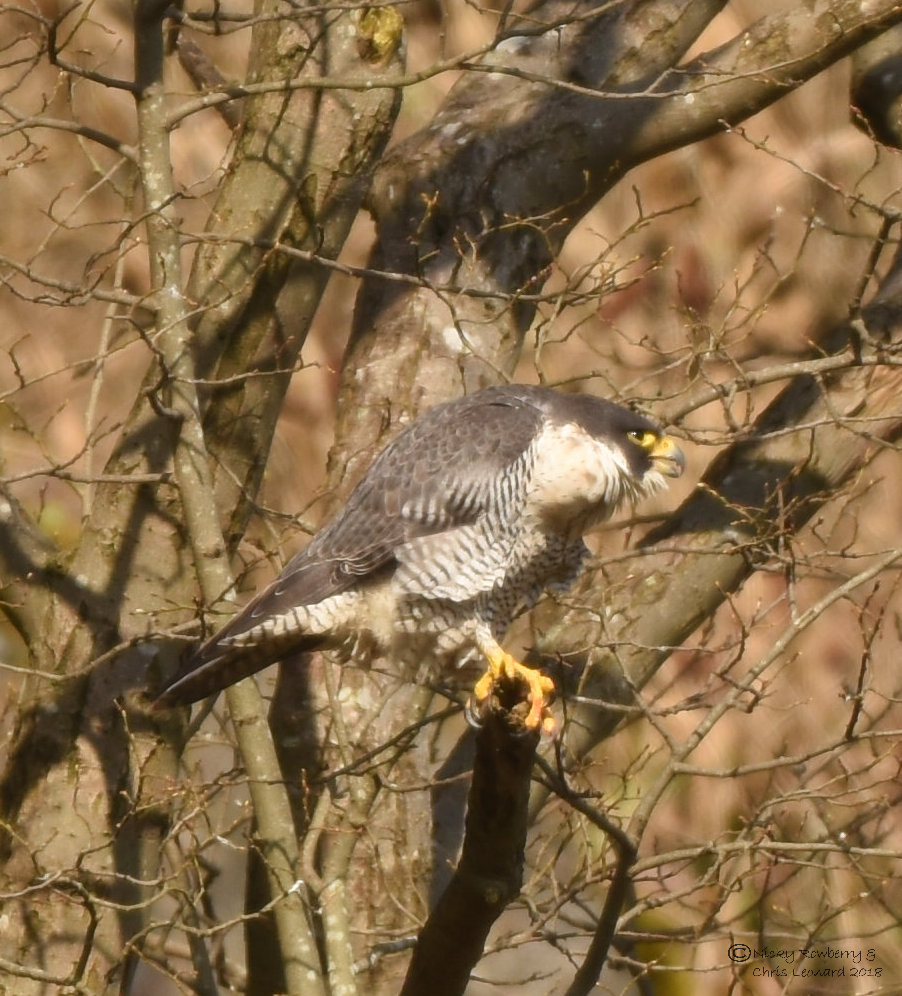
Since we were such a long way away, we found another path and headed further up the hill and found a better vantage point. The pair were still sitting in the same tree – I think the female is the one on the left and the male is on the right with his back to us – but happy to be corrected on this.

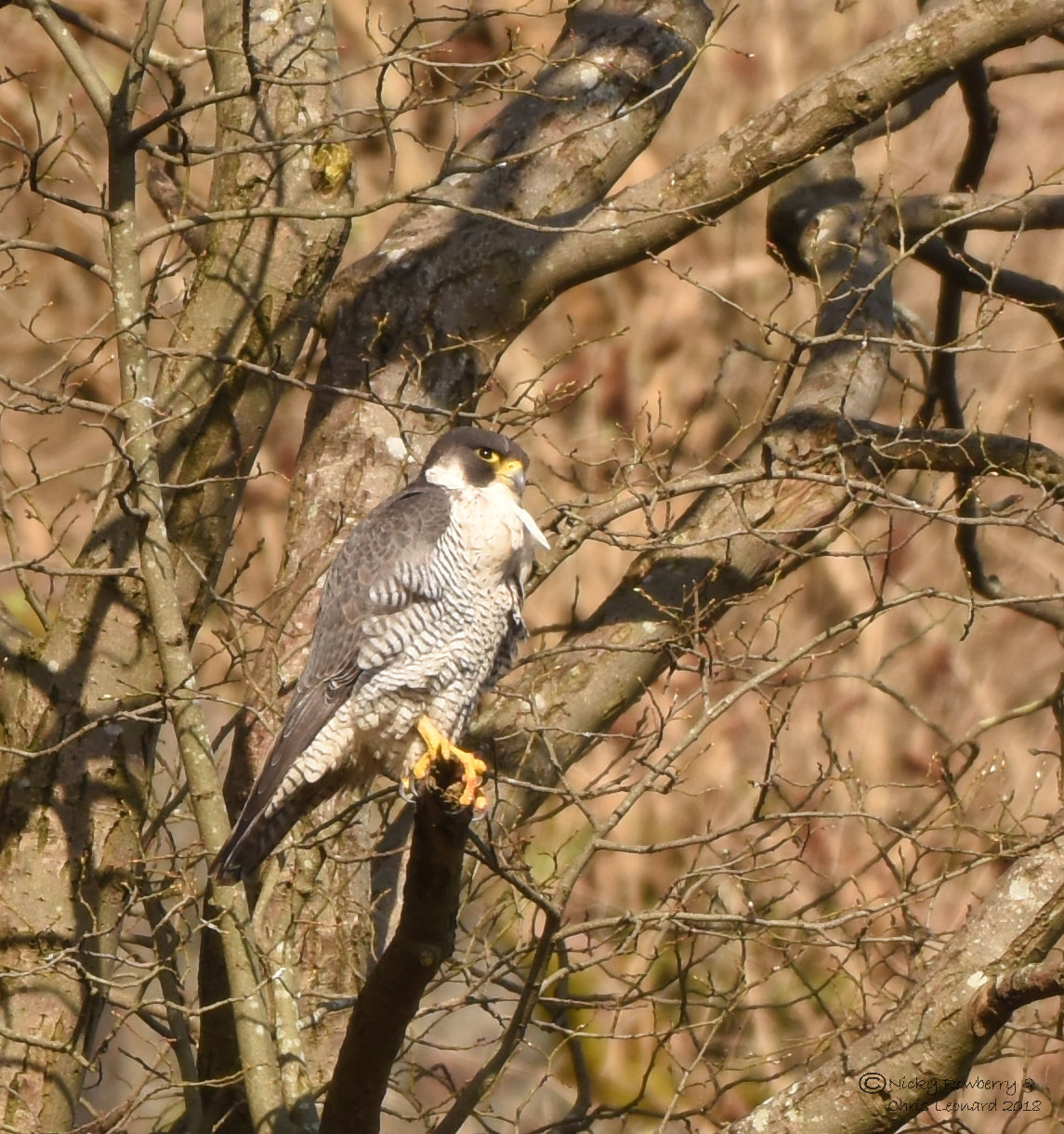
They stayed there for another 10 minutes or so, allowing  us to get some half decent shots of the one facing us. You can really see the size of those talons!

So a lovely surprise on a Sunday morning – two gorgeous falcons almost on our doorstep. Now we know to look for them, I think this will be the first of many trips to see them. Fingers crossed, given today’s activities, that they build a nest and produce eggs in the near future.

Spring Cleaning

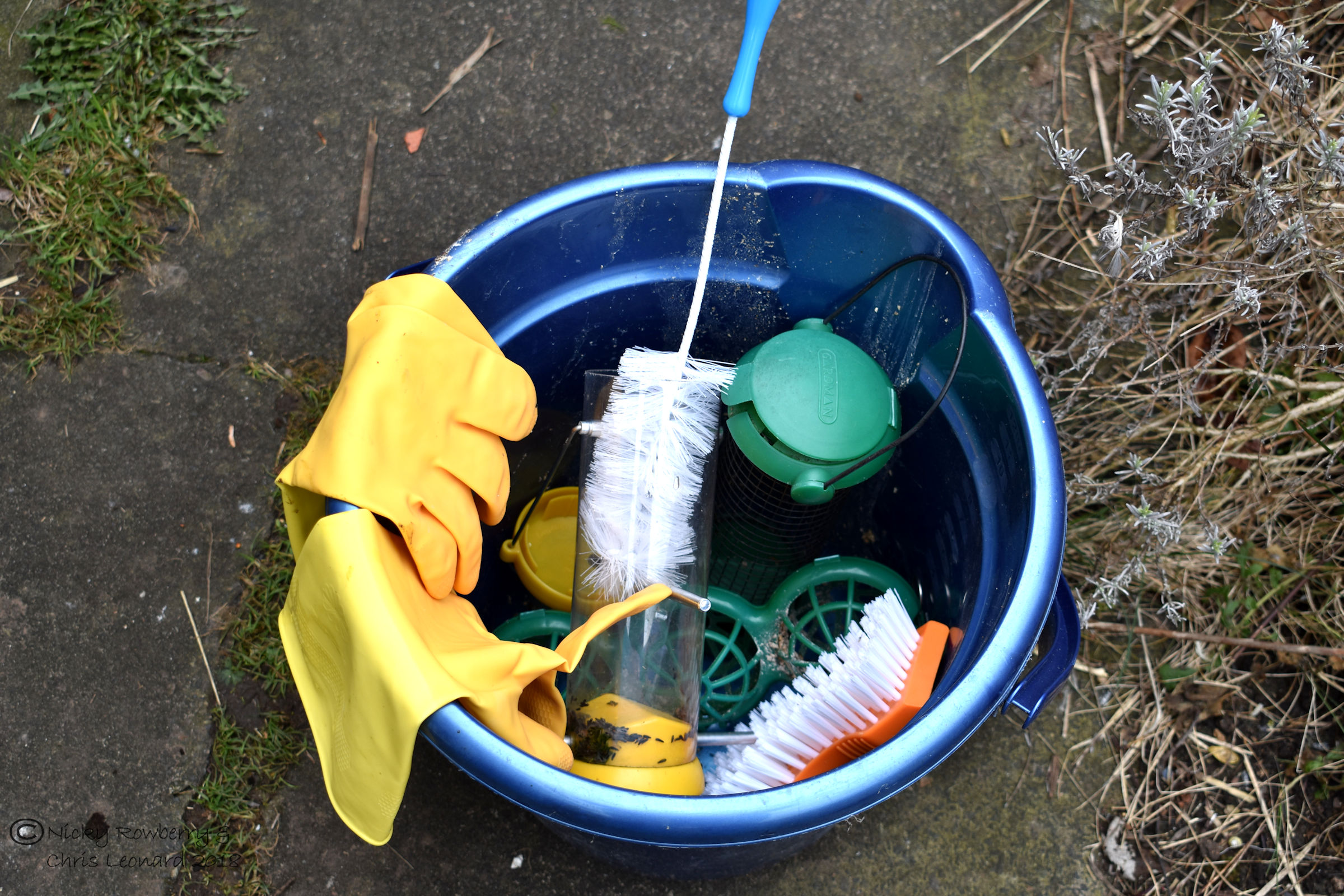
There’s been a lot in the press and on social media lately about the importance of cleaning your bird feeders. This is something we all probably know we should do, but don’t get around to as often as we should – I know we are definitely guilty of this. So with the first day of spring last week, what better time to have a spring clean for our feathered friends. Armed with a bucket, rubber gloves, scrubbing and bottle brushes I set to work.

I hadn’t really noticed how many bird feeders we’d actually got, until I came to have to clean them! It seemed best to do them in 2 lots, not only because there were quite a few, but so that the birds still had something out there left to eat while I slaved over the bucket. All washed, the two batches got hung out to dry in a rare spot of sunshine.

The bird baths got a good scrub too, since the  birds seem to use them for all manner of bodily functions, not just drinking and washing! It might just be a coincidence, but having cleaned the birdbaths, I’ve seen goldfinches using them for the first time – they must be fussier than the other birds!

I was a bit concerned that the birds might have been put off by me interfering with their feeders, but I needn’t have worried. They were back on them in no time. I must have hung the suet balls in a slightly different position, as the starlings could now reach them from below rather than balancing from above.

The blue tits were equally happy with a nice fresh supply of peanuts.

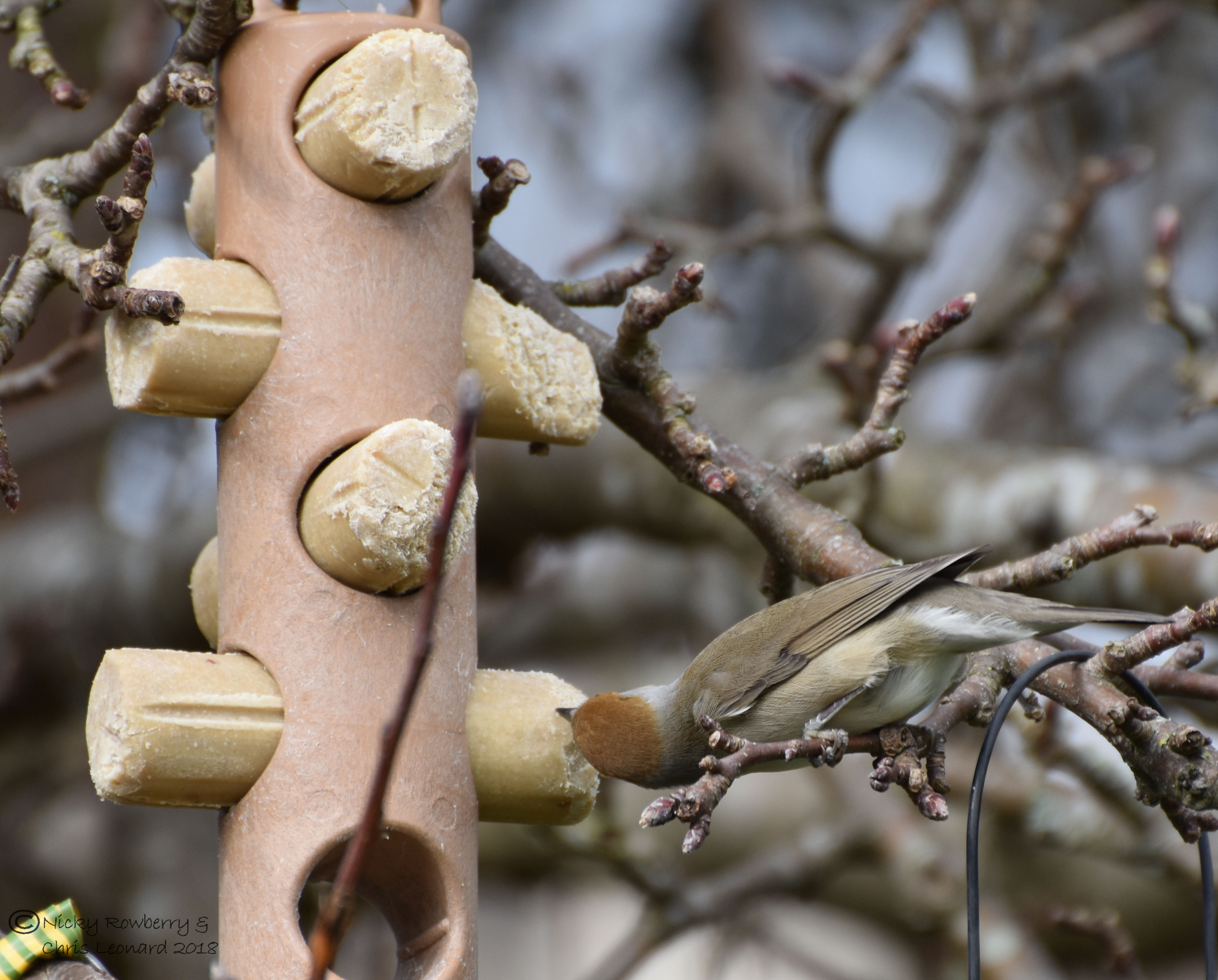
There are plenty of vantage points to reach the suet logs, but for some reason our female blackcap preferred to contort at this odd angle to reach a particular bit.

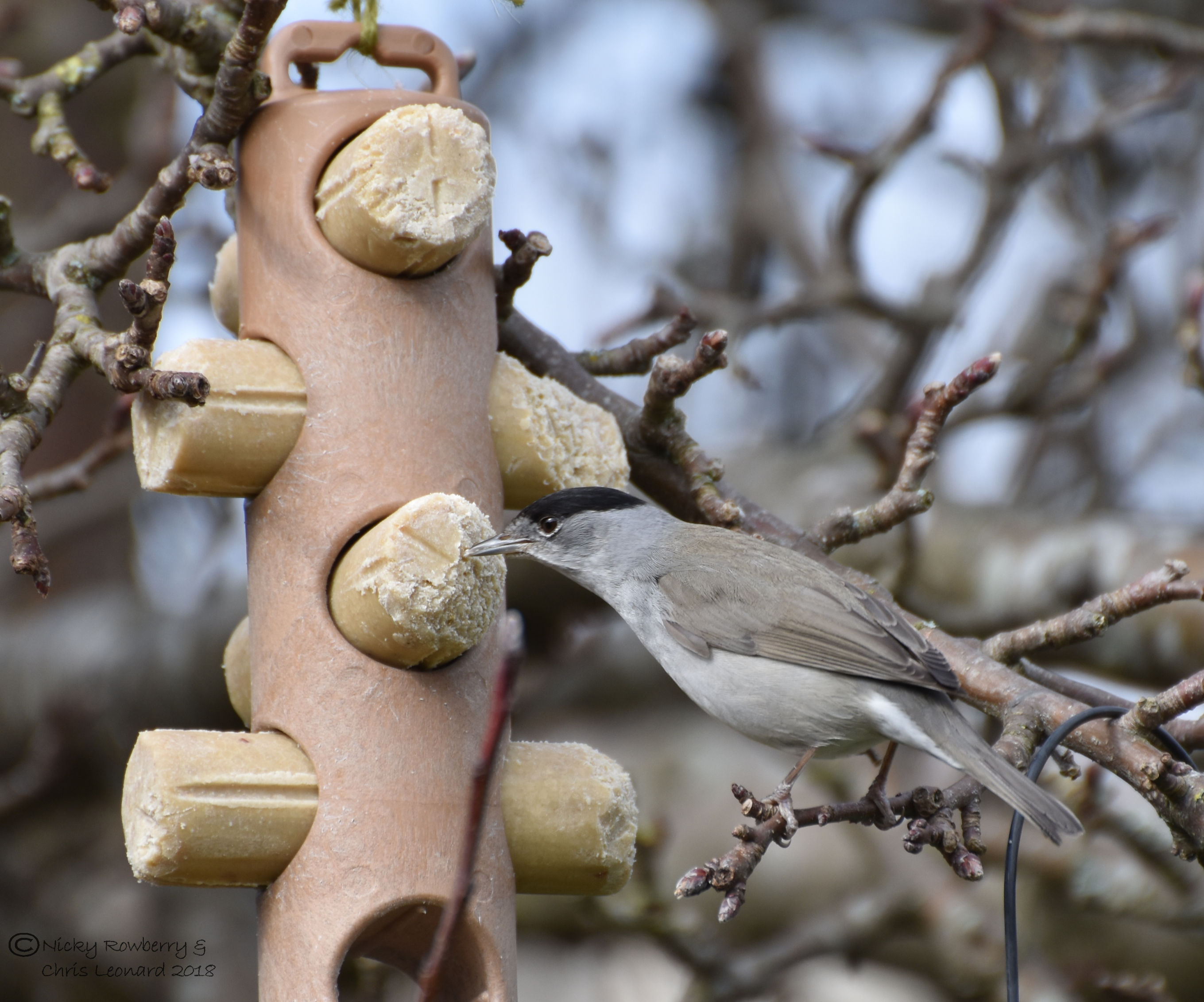
The male blackcap took a much more standard approach.

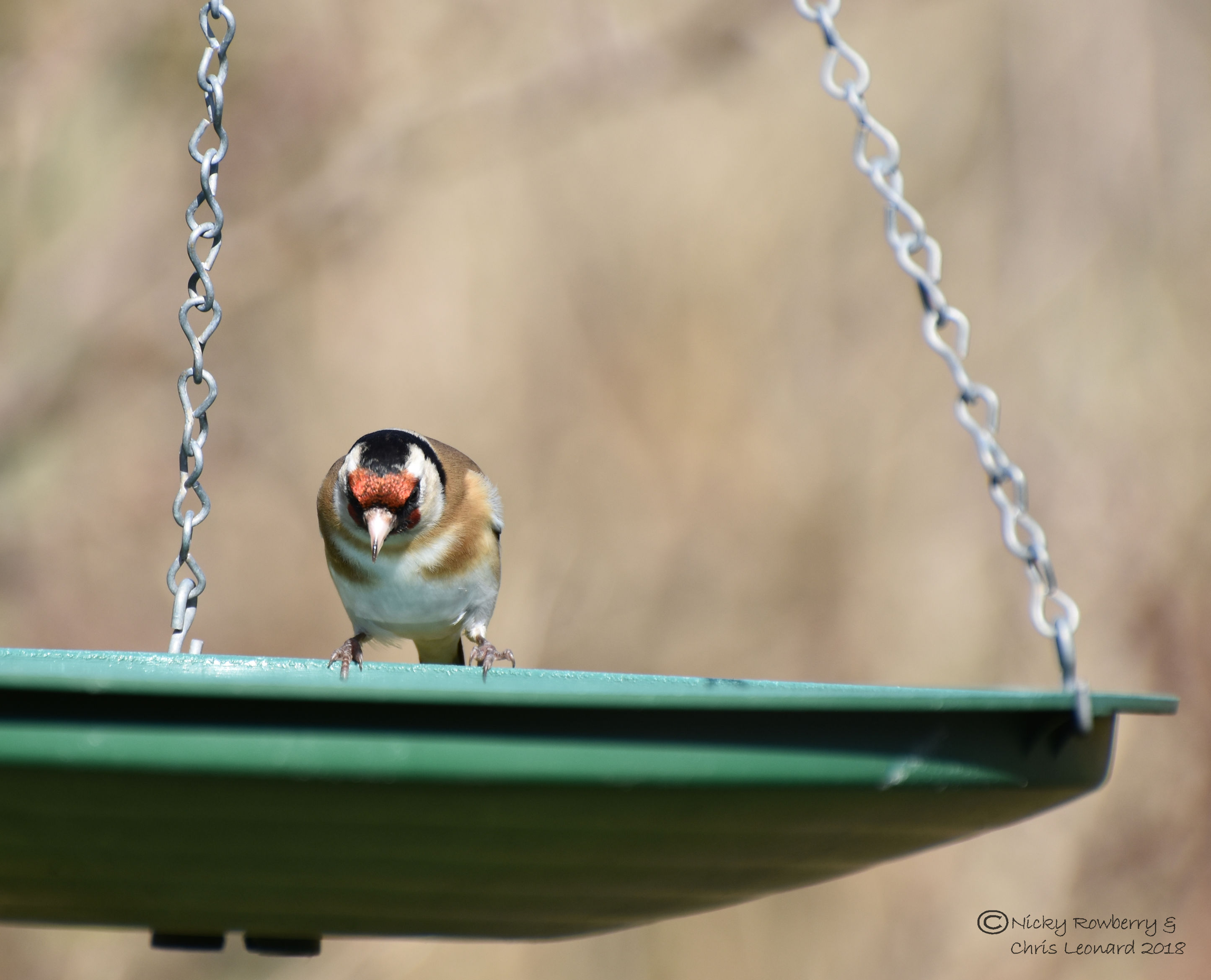
The goldfinches have been regular visitors to the niger seeds for a few weeks now, but the siskins’ visits are much more intermittent. So it was great today when this male siskin turned up and stayed long enough for me to grab the camera and sneak out the patio doors to get some photos. I had hoped it would sit facing the goldfinch so I could get profile shots of them both, but you can’t have everything!

So the feeders are all clean and the birds seem happy with my efforts. I’ve made a note on the calendar to try and clean them a bit more regularly from now on.

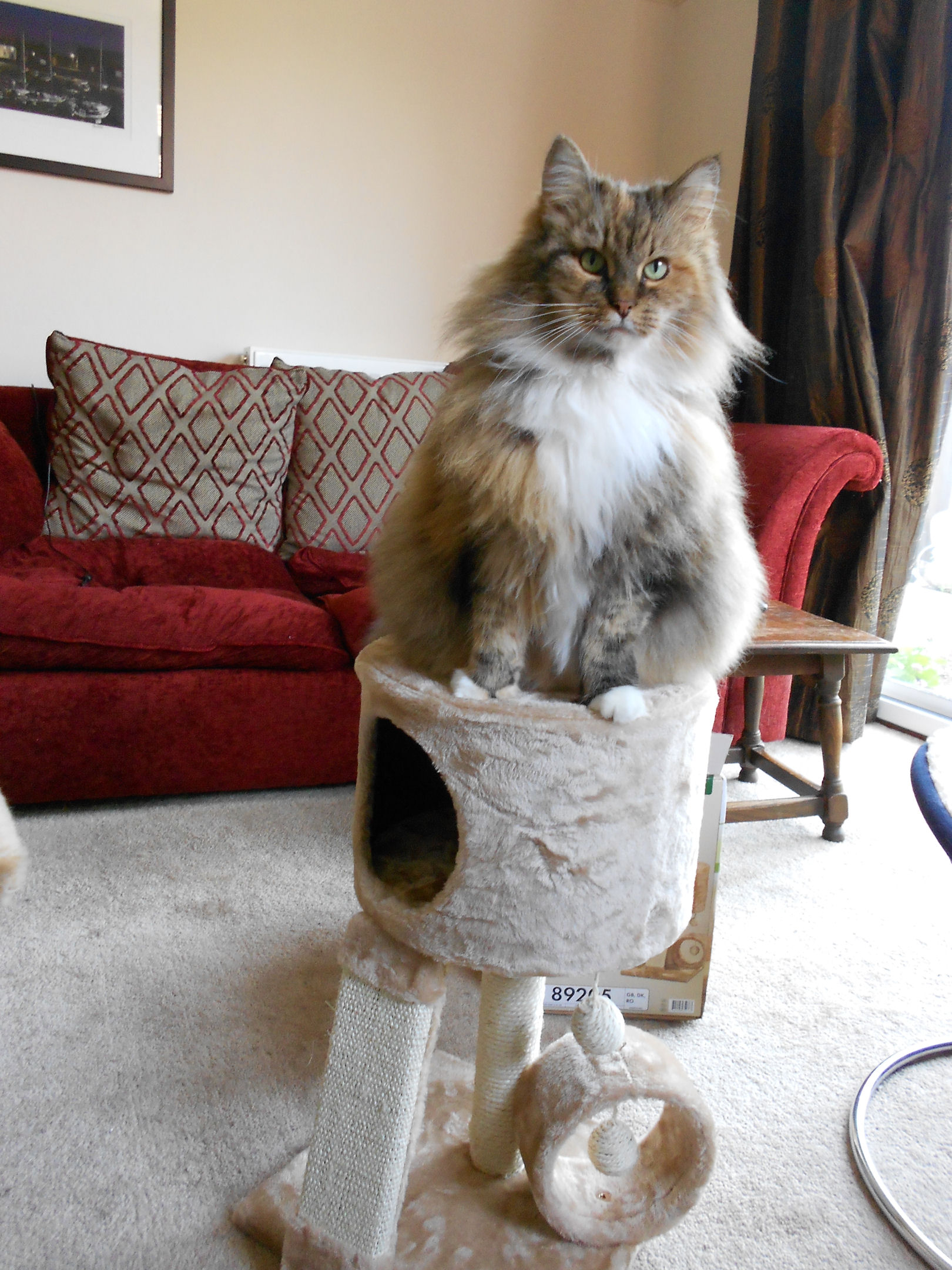
Although I was happy with the bird feeder cleaning, last week was actually a very sad one for us. We had to say goodbye to our beautiful Norwegian Forest Cat, Puddle. She’d been with us for the last 13 years, since she was a kitten and we are devastated to lose her – far too soon. Although an indoor cat, she loved sitting watching the birds with me from the comfort of the sofa. She was the sweetest natured cat I think I’ve ever known, and I will miss her for ever.


Birdy Benefits of the Beast from the East

Well if February was freezing, March so far has been all about the snow. The so called Beast from the East weather front certainly dumped a whole lot of snow on us in Malvern. I couldn’t get to work on Thursday or Friday due to the drifting snow, so have spent much of the last few days birdwatching in the garden. The upside of all this snow is that it has brought lots of birds in from the fields looking for food. In particular, the Beast from the East has brought us fieldfares and redwings – lots of them!

But first surprise was to find a very large gull on the bird table. We see them flying overhead quite a bit, but this was the first time I’d seen one actually land in the garden. I’ve nothing against gulls, but I don’t think I can afford the seed bill if they start regularly hoovering up the bird food!

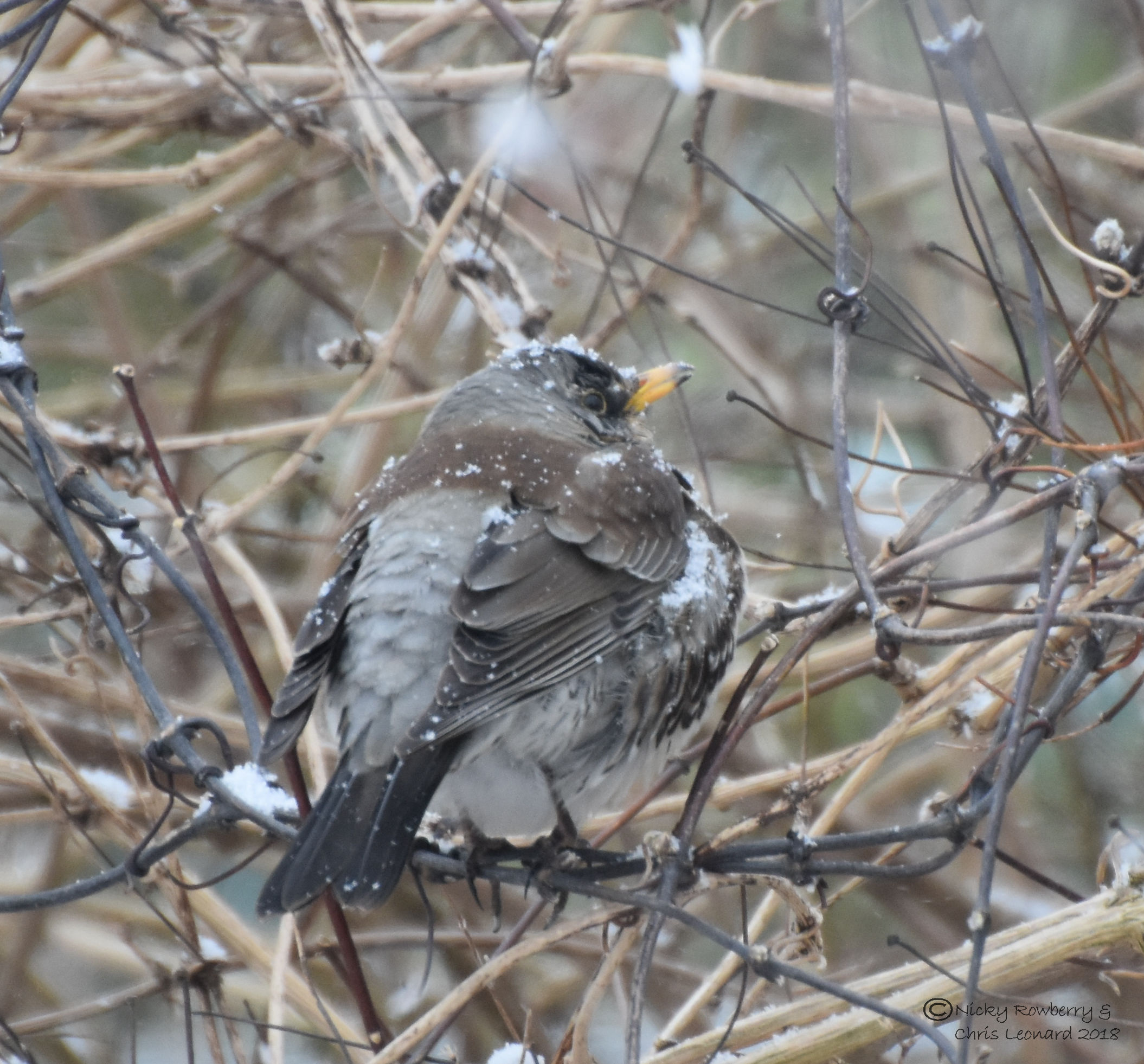
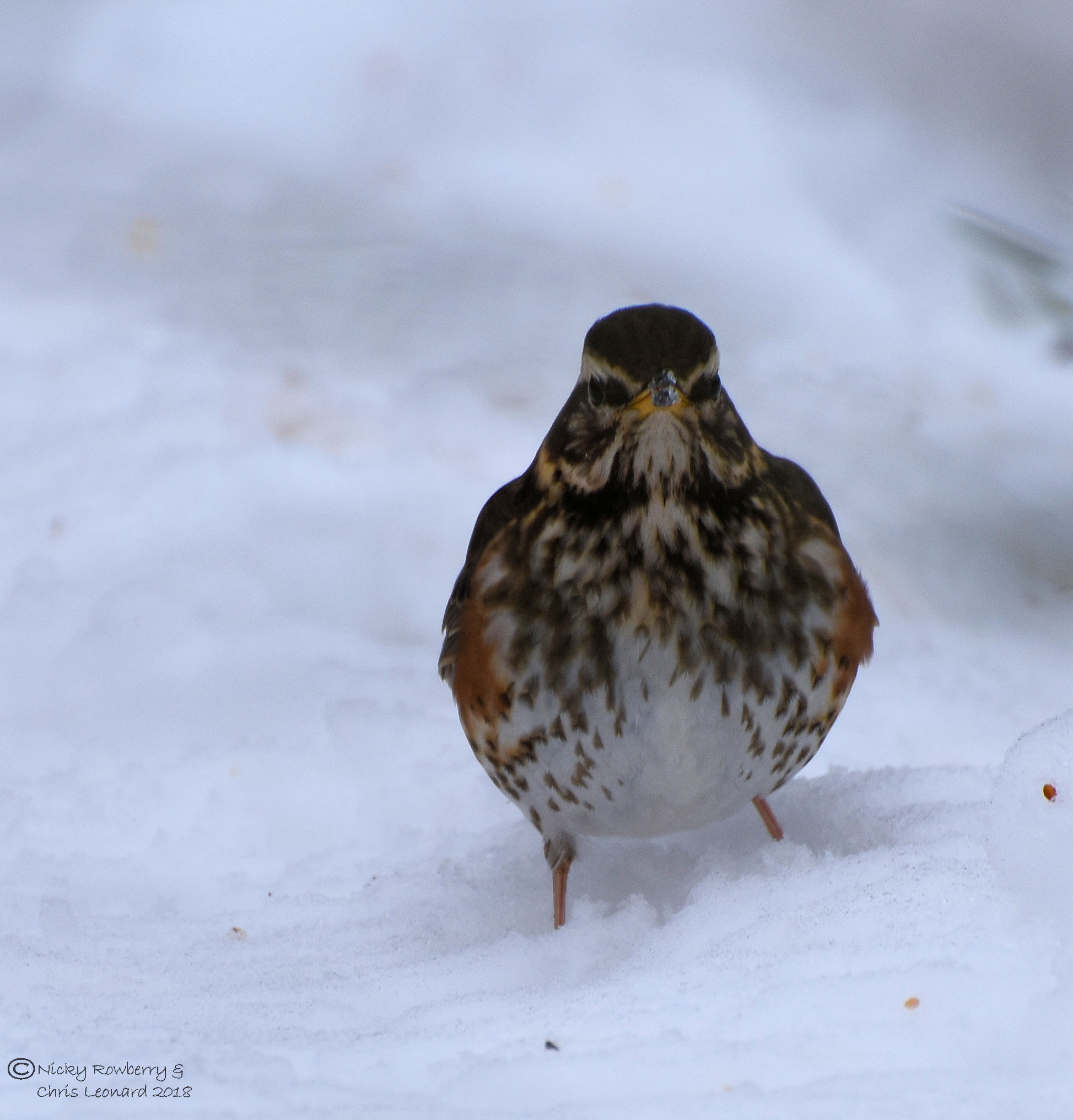
When the snow arrived at the end of last week, I was hopeful we might get a fieldfare or two, but there was a whole flock of them. Of course being wilful, they seemed to sense that I was the one on the street desperate for a photo, so stayed mainly just out of photo range in the neighbours’ gardens. But eventually a couple graciously honoured our garden. This first one looked distinctly unimpressed by the weather though and sat hunched in the bush with snow settling on him.

He did however discover some berries we’d got left so I could get a few more attractive photos, although unfortunately these had to be taken through our grubby windows so aren’t as sharp as I would have liked, but better than nothing.

Having bagged a few fieldfare photos, I then started to wish there were some redwings around as well. Right on cue a small flock of these turned up too. (Maybe I should have wished for a Golden Eagle or a hummingbird?) Again it took me a few attempts stalking around the garden to get a half decent shot, but persistence paid off in the end.

Not to be outshone by his bigger and showier cousins, our resident song thrush was a frequent visitor this weekend too. Counting the blackbirds too, that’s 4 members of the thrush family in one weekend. Not bad.

I would have been quite happy with all of the above, but the goldfinches decided finally that they would like to spend some quality time in our garden. There were 4 in total, although I never managed to get more than 2 in one shot. Absolutely beautiful birds, I’ve always loved goldfinches.

I read on Twitter that goldcrests sometimes come into gardens when it’s snowy and again much to my amazement one appeared in the buddleia bush. Only the second time we’ve seen one on our garden. Sadly I was too slow to get a shot of it, he was just too quick.

So March has come in like a lion, let’s hope it goes out like a lamb. All this snow and birdlife has been lovely, but I’m starting to long for butterflies and bees and moths – roll on spring!

Freezing February Birds

It’s February and it’s freezing and being a bit of a fair weather nature watcher I’ve not been out much – other than to constantly top up the bird feeders and defrost the bird baths of course! So it’s been a month mainly of bird watching through the window or via the cameras in the garden. Our array of camera gadgets is slowly growing. Trouble is with each one you get, you tend to want more; or at least that’s how it seems in our house. No matter where we’ve got cameras pointed, there always seems to be something more interesting happening elsewhere in the garden!

Anyway like much of the country we’ve had snow yesterday and today – not a huge amount, but it’s never really got above freezing here.  So it was a nice surprise to download the trail cam in the afternoon and find a pair of goldfinches had visited our new niger seed feeder. Sorry the video is a bit dark, but it was snowing!

Inspired by our intrepid goldfinches, I got round to sorting through some videos we’d taken in the garden in the last week or so, to see what else I could find.

We’ve got a new GoPro camera which can be remotely activated using a phone. Perfect on a cold day for sitting on the sofa hitting record whenever something interesting appears. I’ve been trying out different angles and distances to see what works best. This video was shot with the camera only about a foot away from the action.

This next video compilation was the GoPro again, but this time filmed from a greater distance looking down. The greater distance does of course give a wider field of view and I think  the GoPro lens may be a wide-angle one too. You can still see lumps of ice in the bird bath although I had already taken two kettle loads of warm water out to defrost it.  Lots of different species of birds have been using the bird bath in this cold weather though, so it’s well worth thawing it out.

This next little compilation was filmed with the GoPro strapped to a branch next to some of the feeders. The GoPro has the advantage here over the old trail camera in that it is much smaller, making it easier to position closer to things. You can strap it to twigs that would be too thin to support the trail cam.

But I have not abandoned my old faithful Bushnell trail cam. I had it pointed at the same feeders, but from a different angle. I was really chuffed that it filmed a couple of the siskins that we’d been so excited to see the previous week. It also picked  up the female blackcap, although the male still eludes us. It was nice too, that between the two cameras, there was footage of 3 of the 4 species of tit we get in our garden – blue, great and coal. The long tailed tits as usual refused to perform for either camera.

One final surprise the cameras threw up was a visit from our squirrel – trying (but failing) to get into the peanut feeder.  I suspect he managed to get some of the other food out of shot.

Most of our regular bird species show up on one or other of the remote cameras but not all. So sometimes I just need to get off the sofa and sit in the garden with a “proper” camera. These jackdaws are regular visitors to the bird table and are particularly keen on the suet pellets. It does look slightly oddly like the one on the right is taking suet to the table rather than taking it away?

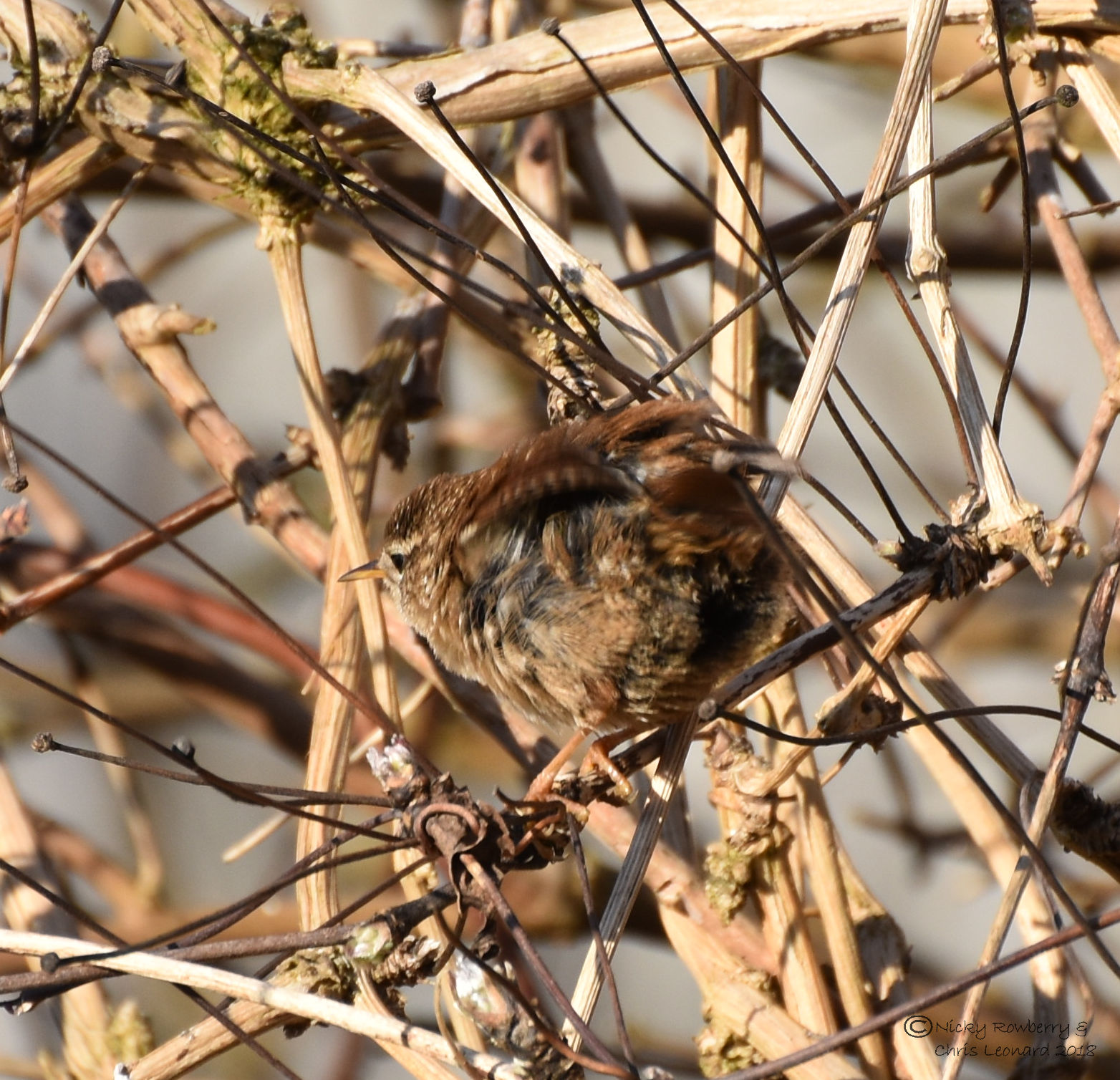
The wren of course seldom deigns to feature on the trail cam/GoPro videos. But this week he/she was more obliging than usual and did allow me to get a few shots. None perfect, but recognisable at least.

It even sat for a while preening itself, hence the next sequence of three “rumpled” looking photos.

So although it’s bloomin’ freezing, there’s plenty to watch in the garden. The bird feeders are busier than ever, so hopefully our garden birds will make it through this cold spell.


National Nest Box Week

Apparently it is National Nest Box Week, so it seemed only right to review our nest box endeavours in the garden and beyond. Not that our efforts to provide suitable des res’ in the garden have been entirely successful over the years, but we do try.  We had one old bird box on the garage wall for a few years and blue tits started nesting in it about 2014. Although we got photos and videos of the adults coming and going, we never managed to catch any of them fledging.

So last year we decided to replace the old bird box with a new one with integral camera. With hindsight perhaps we should have stuck with the old adage “if it ain’t broke don’t fix it”, because needless to say nothing nested in it.

We did get very excited when a blue tit roosted in it for a night within a week or putting the box up, but nothing else has used it since (apart from a spider which covered the camera with web!).

Anyway we’re living in hope that this year will be our year and we can have our very own Springwatch experience, but of course we may have to resort to just watching the real Springwatch again (no great hardship).

We also put up a wren/robin box last year, which also remained vacant. This open fronted box is on our fence, hidden by bushes and ivy. The ivy is starting to grow over the box, but we may well have to move this one anyway as the neighbours want to replace the fence this year.

So we may not have much luck on the home front when it comes to nest boxes, but we now have an interest slightly further afield. Worcestershire Wildlife Trust were advertising a “rent-a-nest” scheme to fund nest boxes on some of their reserves. So for Valentine’s Day last week, rather than muck about with flowers and chocolates, we sponsored a nest. You could choose between 4 of the local reserves, so we plumped for our nearest and one of our favourites – Knapp & Papermill.

Apparently we will get invited to view “our” nest box in the spring – fingers crossed something actually uses this one!

And finally, nothing really to do with nests, but thrilled to spot a small flock of siskins in the garden yesterday. I’ve only ever seen one in the garden once before (and then only on the trail camera, not actually “live”), so to see a whole flock was fantastic. There were at least 6 males, but we only saw one female – this could have been though because they are not as showy, so not as easy to spot. Unfortunately we were indoors and they were obviously outdoors, so no photos, but a delight to see nonetheless.