30 Days Wild – Day 23 – Festival Season!

It’s Day 23 of 30 Days Wild – can’t believe there is just one week to go now! I was working today, so plan A was to stop off at a nature reserve on the way home. I picked a small one just outside Bromyard that I hadn’t been to before, not necessarily a good idea given my navigational skills! After three passes up and down the same bit of road looking for it, I gave up and carried on home. I have since googled it properly and think I can probably locate it for another time, but too late for today.

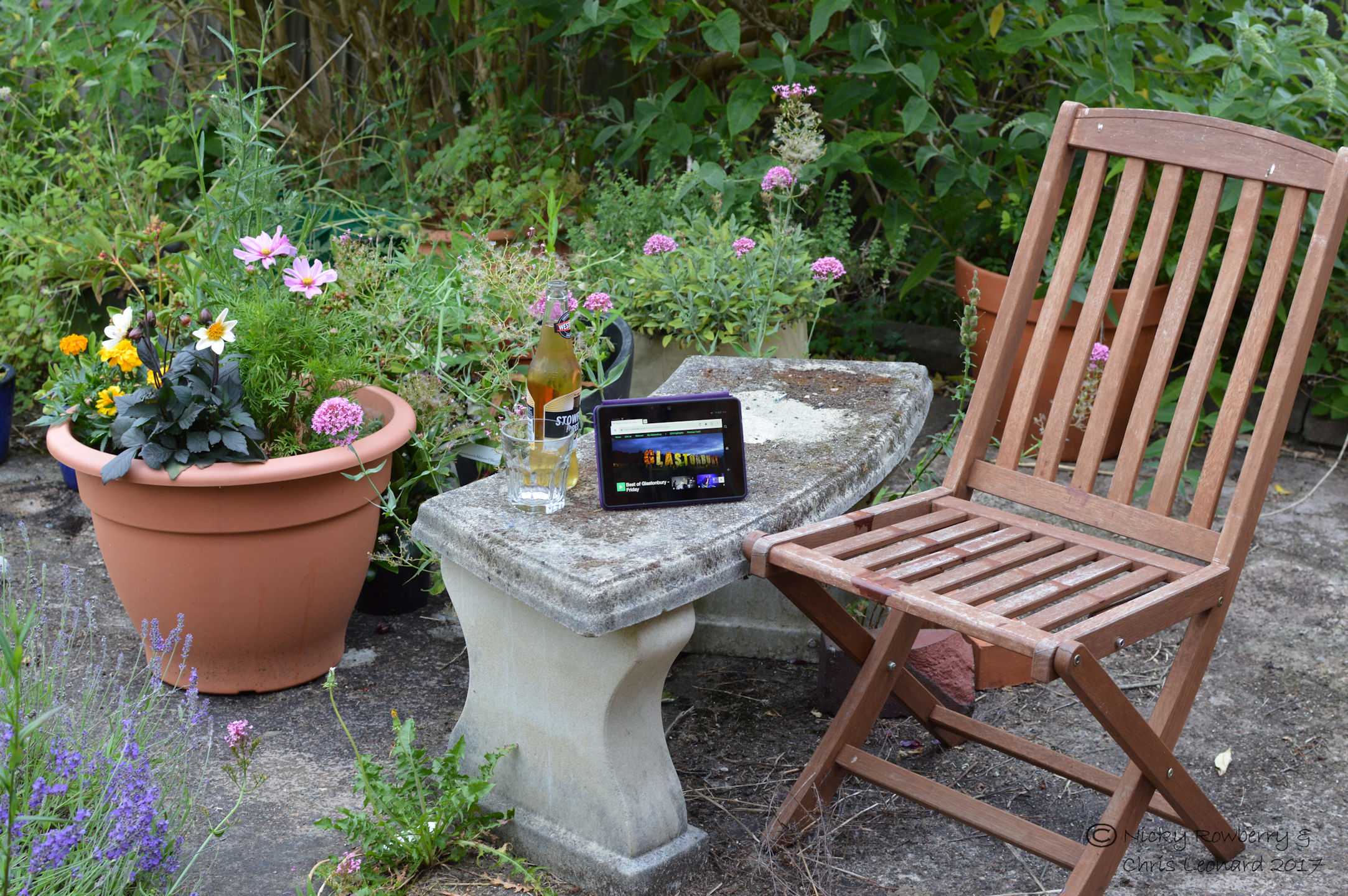
So instead it was Plan B, which formed rapidly on about the 3rd drive along the country road above. The radio was full of talk of it being the first day of the Glastonbury Festival. It was clearly a bit late to organise myself into going to the real thing, but I decided to have my own very mini festival in the back garden. Items required were a chair (tick), a couple of bottles of cider – local Herefordshire brew of course (tick) and my Kindle logged onto the BBC’s Glastonbury live coverage (tick).

The result a very chilled out hour or so in the back garden, listening to several bands that admittedly I’d never heard of. I sat next to my pollinator pot and was rewarded with a swollen thighed beetle for company. All far less tiring than going to the real festival and I don’t have to sleep in a field tonight!

I switched the music off after a while to listen to the sounds of the garden instead. A lone buff-tailed bumblebee was buzzing around the nearby lavender. The birds were giving their best evening chorus, I could make out the sparrows and blackbirds and the pigeons were cooing loudly. And then our hedgehogs came out or at least woke up and started snuffling about in the undergrowth. I could hear two and just about see one of them. I guess I don’t need to recapture my youth with a wild and crazy festival, I’m just happy listening to the snuffling of wildlife in my garden on a beautiful Friday night.

30 Days Wild – Day 21 – Summer Solstice

It’s Day 21 of 30 Days Wild and it is the Summer Solstice, the longest day of the year. So for today’s act of wildness I thought I’d make the most of the daylight hours by getting up to take photos at dawn and doing the same again at dusk. Between 04:48 and 21:34 (the official sunrise and sunset for Malvern according to the BBC!) there are 16 hours and 48 minutes of daylight, if I’ve done my maths right!

So I got up in plenty of time to capture sunrise – unfortunately there was thick fog over the hills. Glad I hadn’t climbed up there to wait for the sun to come up, as I’d have seen nothing. So instead I took this photo of what should have been the hills at exactly 04:48. It looks like it should have been cold and gloomy, but it was actually just hot and humid and quite cheery with the birds singing.

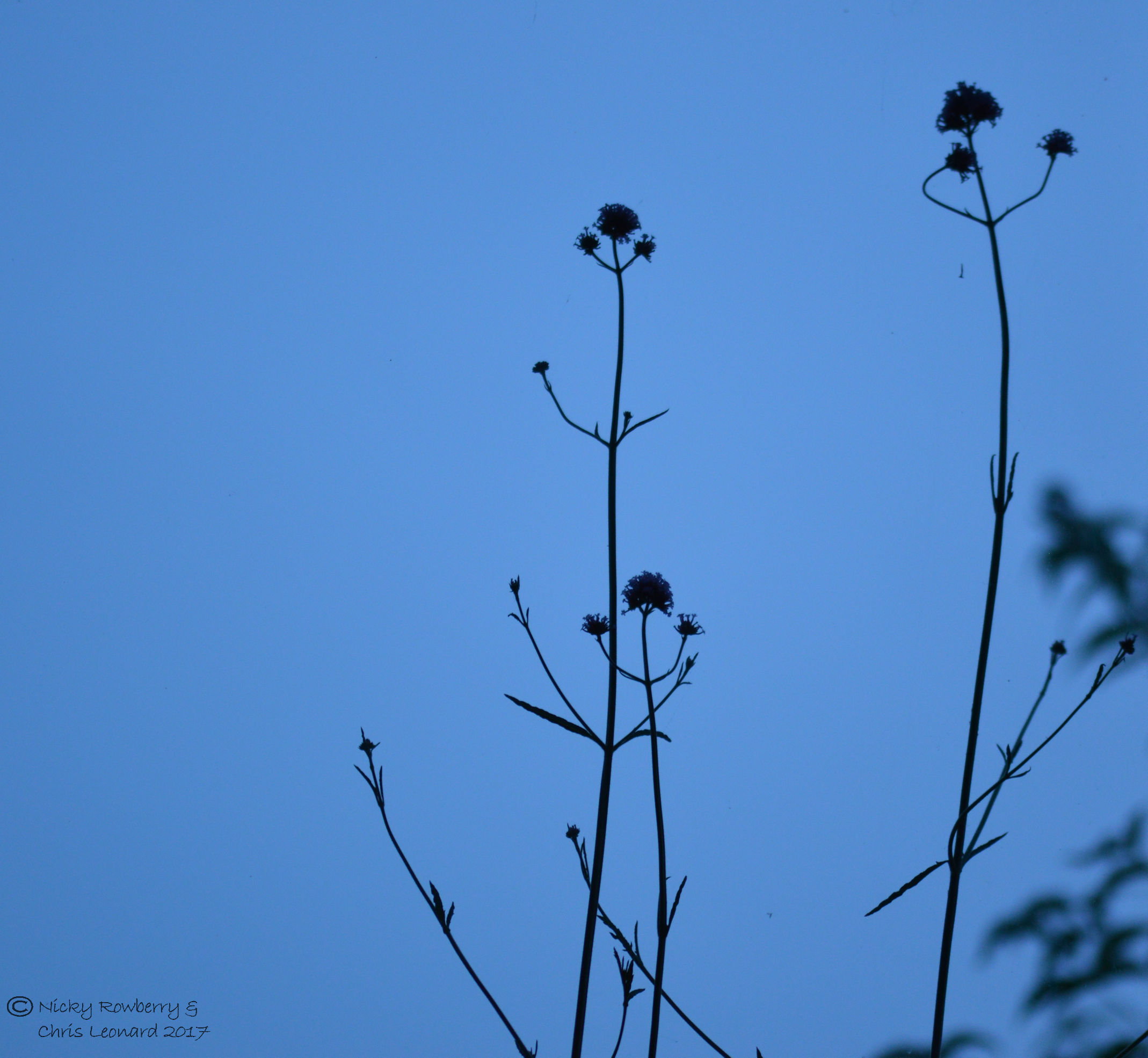
Although the official sunrise was 04:48, it was light for quite a while before that. When I first got up at about 04:30 I took this photo through the patio doors of the Verbena growing in a pot outside – the sky looks blue here, although I think this was a trick of the light refracting through the glass as it didn’t really look like that outside. I love the look of the plants though silhouetted against the sky.

Once outside I took this shot of the hanging basket about 4 minutes before “sunrise” – the light is bright enough that it could easily be a photo from much later in the day.

Although I regularly get up at odd hours to empty the moth trap, I’m always busy sorting out the moths and don’t really look at the quality of the light. So it was an interesting experiment to get up purely for the purposes of looking at the light and the sky and just to get a feel for what dawn is really all about.

I filled the hours between sunrise and sunset today with my regular Wednesday visit to see my Dad. It being such a gorgeous day, we had our pub lunch outside by the River Lugg at the Riverside Inn at Aymestrey, Herefordshire. Always a delight there, with the river gently flowing by and demoiselles darting around us. We ate lunch at about 1 o’clock which was almost perfectly half way through today’s supposed 16 hours 48 minutes of daylight!

So in the evening I once again took the camera out into the garden to experience “sunset” at 21:34. The hills were at least visible this time, although after a day of sunshine, they were starting to haze over again. This time I could really smell the lavender and buddleia – a day of sunshine must have released all their essential oils!

I also took a photo of the verbena again through the window; the sky was more mottled this time, but they still looked beautiful in silhouette.

Malvern remained light still well after the allotted sunset. Even now as I type at nearly 10pm everything in the garden is still quite visible. I guess sunset is a fluid thing. I could however hear a hedgehog moving about, perhaps he at least considered the sun had gone down.

In scientific terms, the summer solstice can be explained as simply the result of the way the earth tilts on its axis towards the sun – being the most inclined towards the sun at this time of year. And of course the opposite applies at the winter solstice and in the southern hemisphere. But there are less pragmatic more ethereal concepts to the summer solstice. It has long been a time of worship for many religions. By some it was considered the time when the veil between this world and next was at its thinnest & when fairies might cross over and be seen. While not normally given to such notions, at 04:48 this morning, with Malvern shrouded in mist, perhaps I could have been tempted to imagine fairies snuffling in the garden – or was that just our hedgehog?

30 Days Wild – Day 18 – Flaming June

They say be careful what you wish for – last week I was wishing the wind would drop and it would get warmer. Well it’s certainly flaming June now and I’m regretting last week’s wishes, as we swelter here in Malvern! It’s Day 18 of 30 Days Wild and it’s so hot it’s hard to find the energy to do anything. I haven’t ventured further than the garden, so today’s post is pretty much restricted to what is going on there. All I really managed was a gentle bit of garden bird watching, but there are worse ways to spend your day!

We have assorted feeders all over the garden, but I was restricted to photographing those I could see from the shade! I think perhaps it was too hot even for the birds as not that many showed themselves, despite me putting out several bowls of water. I even poured a load of water into the wheelbarrow to give them an impromptu pond (our other pond being more silt than water).

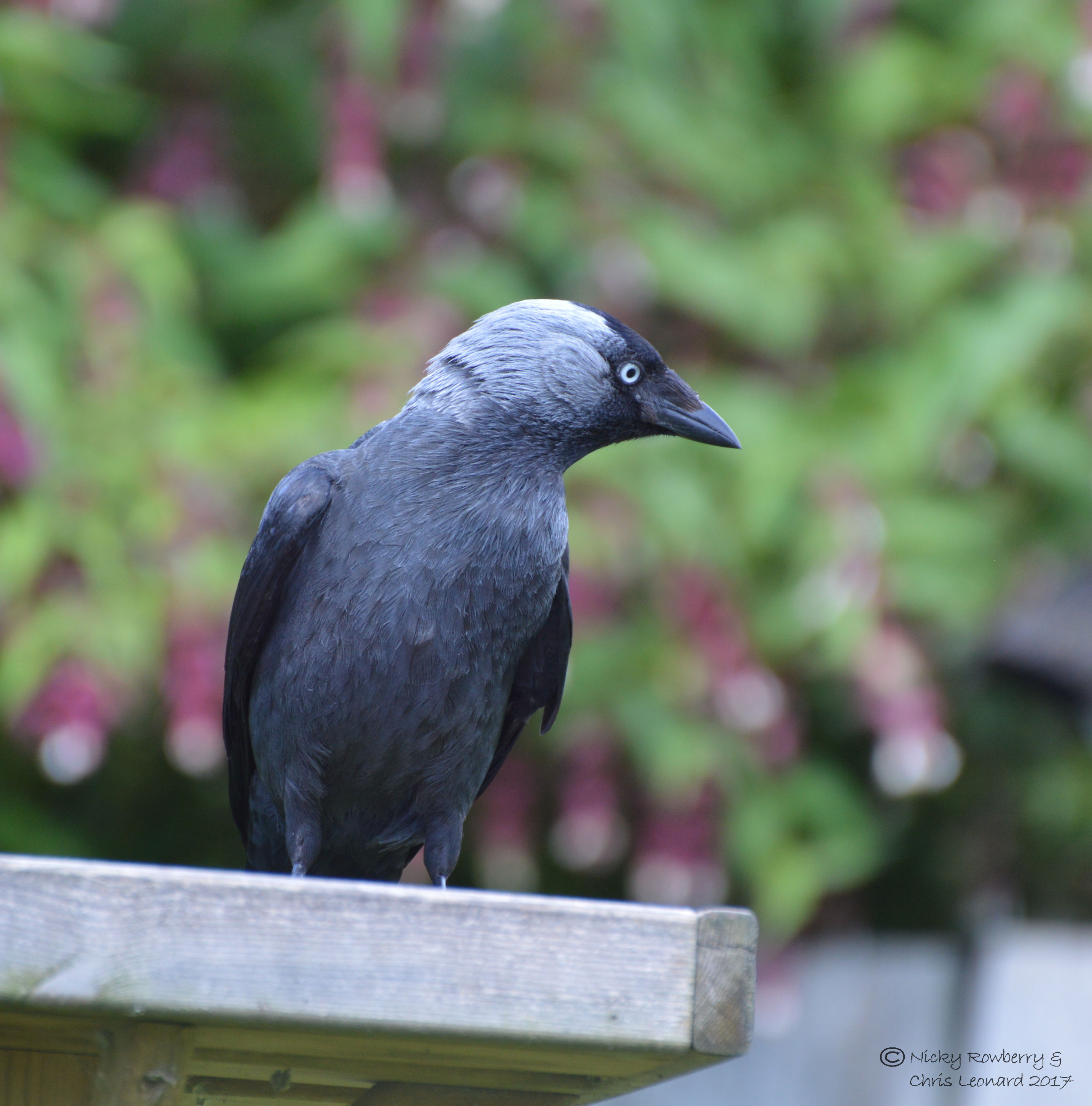
The old faithfuls the jackdaws did of course appear when I put out some suet shreds. They are always first down to the bird table – they must have good eyesight to spot me putting out food from wherever they are. I know they get a bit of a bad press, but they are beautiful birds really.

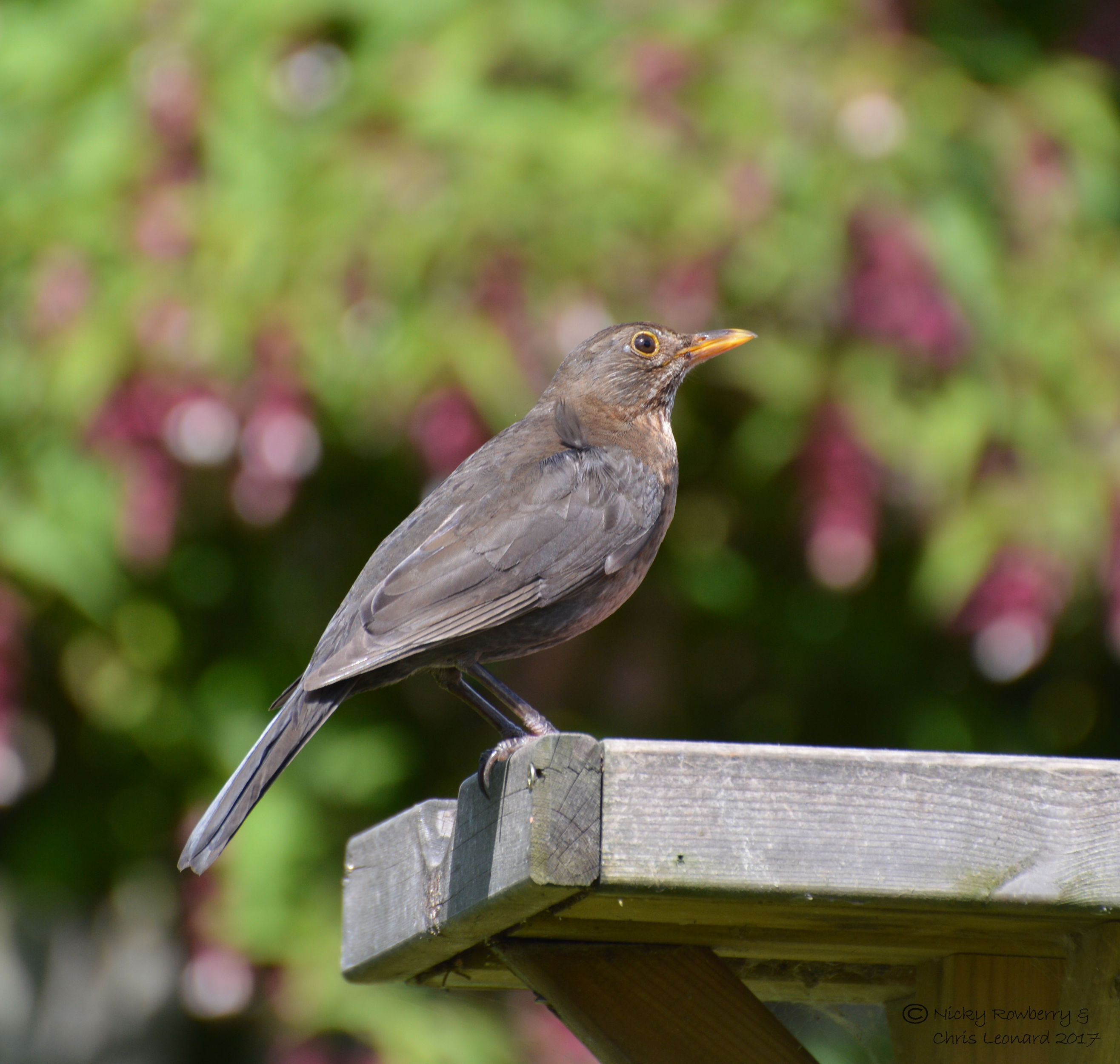
Next down to the table was this blackbird – more cautious than the jackdaws.

The only other birds I saw in abundance while I watched were the sparrows. They were everywhere, but too nervy to get a good photo. I kept seeing adults feeding fledglings, it looks as if it’s been a good year for sparrow babies in our garden at least. I never seemed to be able to get a clear shot though and in the end the best I managed was this blurry one – from a distance and through our grubby patio doors, so not ideal.

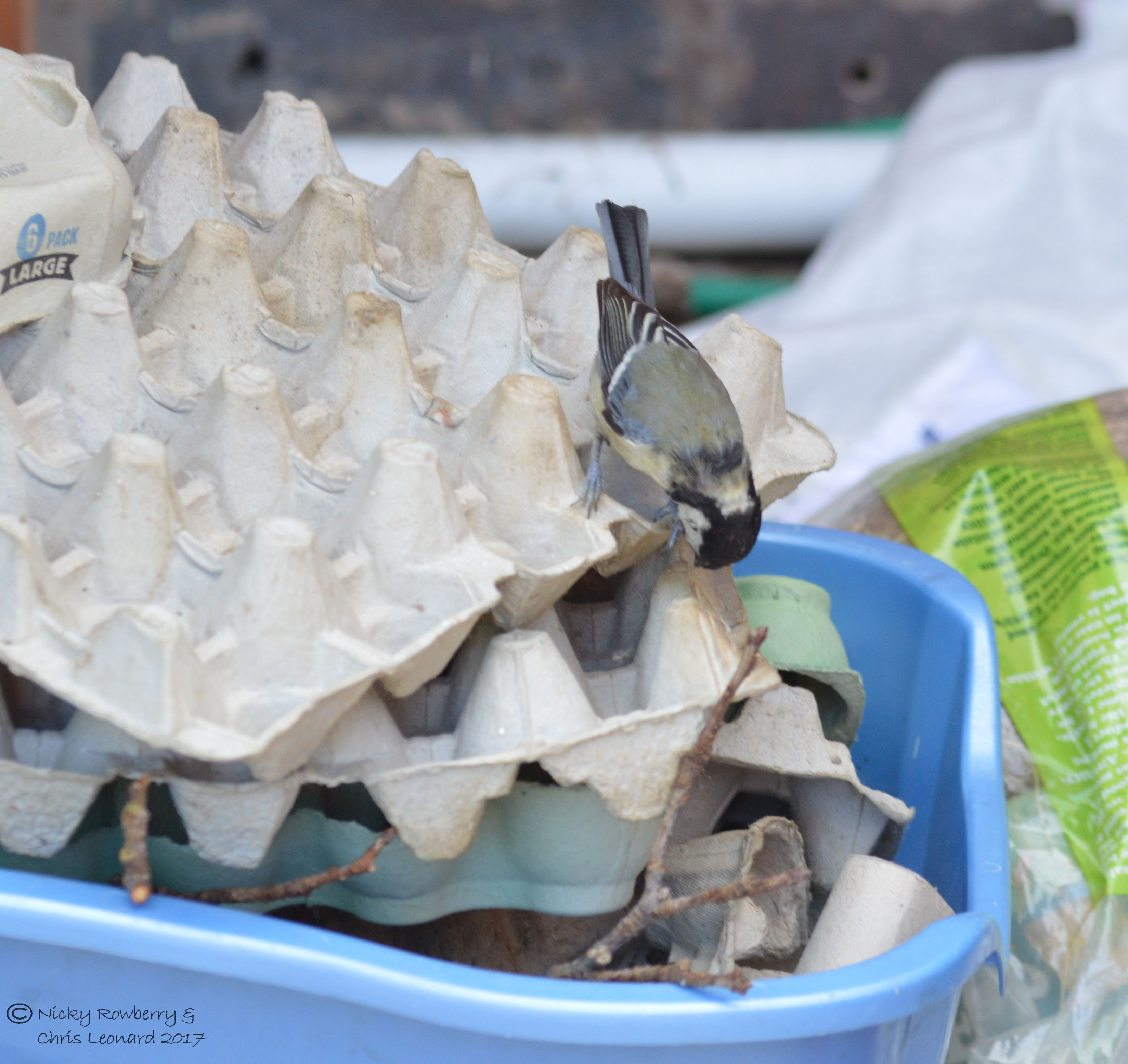
Of course you can put out all the intentional bird food you like, but sometimes the birds are just canny enough to help themselves to things you don’t want. This morning a Great Tit found the box full of egg trays that I’d put the moths in from last night’s trap, ready for them to fly off when it gets dark. He must have thought Christmas had come early until I moved it inside the boxes inside the old hedgehog hutch. Even then he managed to squeeze through the bars to get more until I blocked it up. Hard to be cross though, as he needs to feed his family too.

So not my most productive wildlife day, but very enjoyable all the same.


30 Days Wild – Day 16 – Plant Pots for Pollinators

It’s Day 16 of 30 Days Wild and this evening I’ve been Planting a Pot for Pollinators. This isn’t just me randomly planting up a pot with more flowers, but part of a nationwide scheme to encourage people to do their bit for pollinating bees, hoverflies and butterflies etc.

It’s being organised by the Butterfly Conservation Society – for more information go to: http://www.plantpotsforpollinators.org The aim is simple – to get as many people as possible to plant up at least one pot in their garden with flowers that are good for our insect pollinators.

If you go to their website you can download instructions, but basically all you need is a big pot, some peat-free compost and some flowers. There’s a list of 6 suggestions – calendula, catmint, cosmos, French marigolds, Shasta daisies and dahlias (but only the single flowered varieties as these have pollen that is easy for the bees to get at).  You can of course choose others, provided they are good for pollinators.

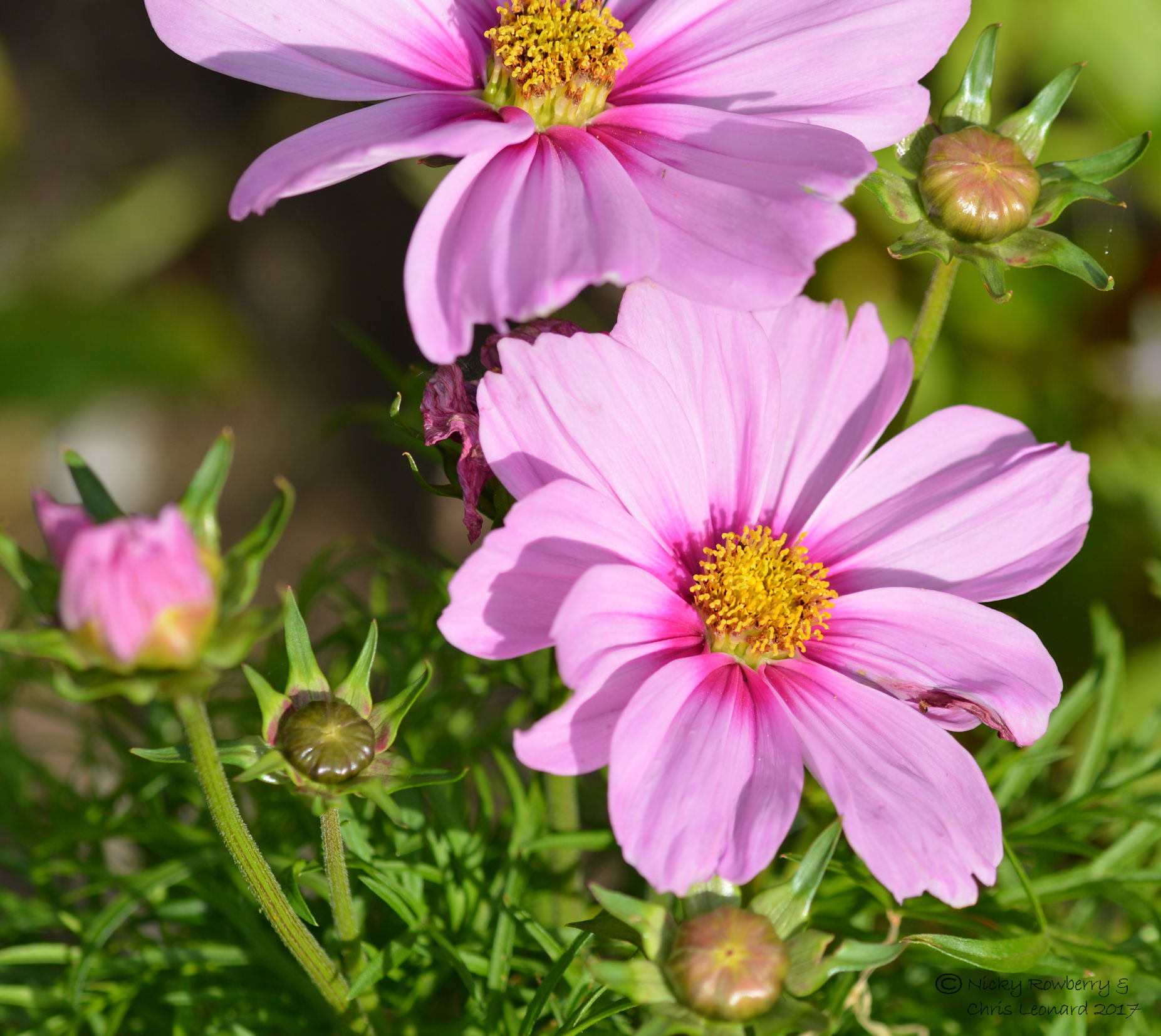
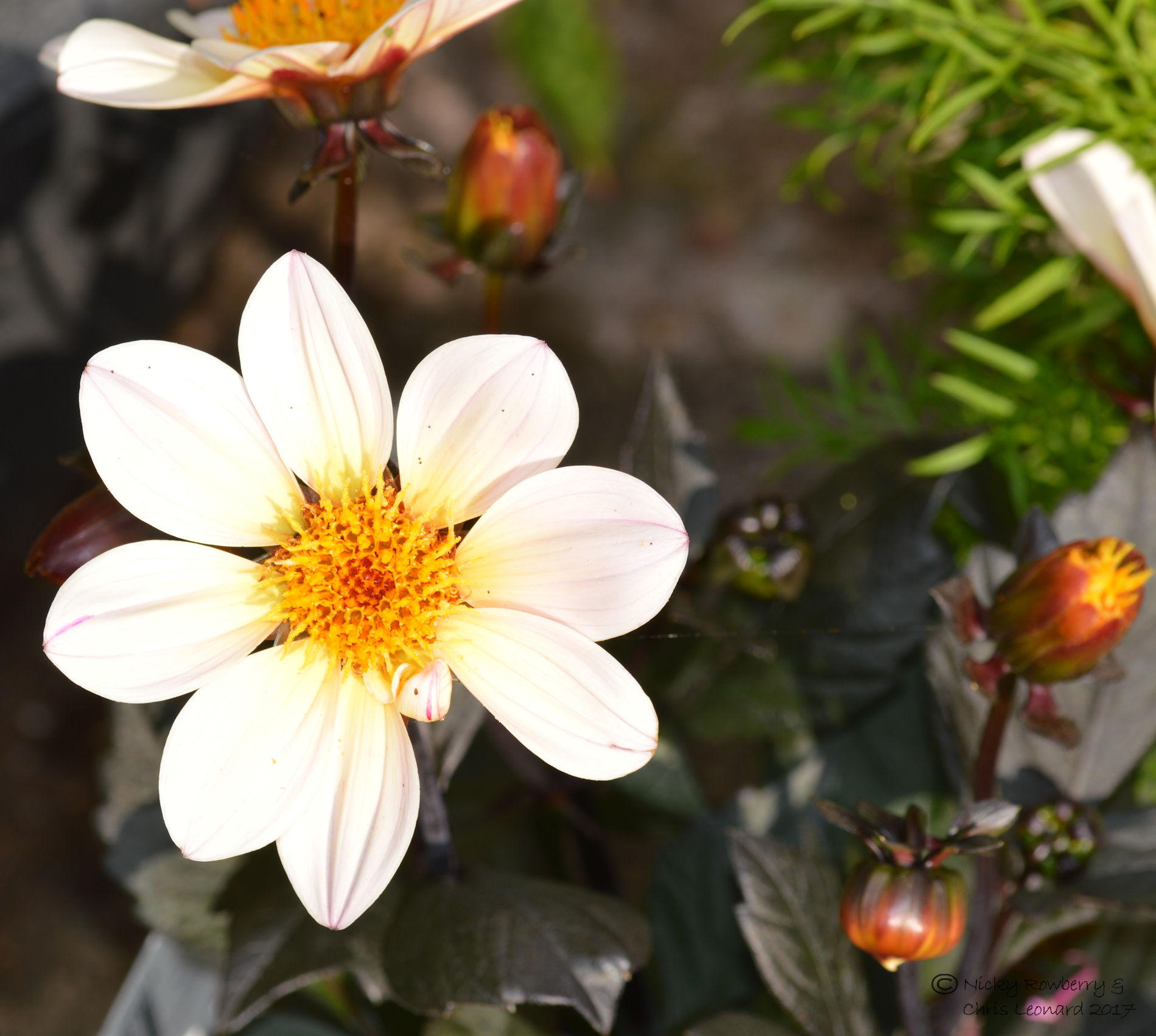
Of the 6, I bought, Cosmos (left), French marigolds and a Dahlia – all of which had bees on in the garden centre when I bought them – a good sign! I also supplemented these with some wildflower plants that I’d had sitting waiting to plant on for a while – Verbena bonariensis, Anthemis and Achillea.


It only took 5 minutes to fill the pot with compost and stick the 6 plants in. With hindsight I could probably have squeezed a couple more in and I may well do so at the weekend. Even if I don’t buy more, hopefully those that are there will bush out to fill the pot up a bit more. Hopefully the mix of different colours and shapes will attract a variety of pollinating insects.

So here is the (sort of) finished article, nothing fancy, but hopefully the bees will appreciate it. Ideally I would have liked to include some photos of insects actually on the pot, but since I did this after work, it was getting a bit late and there was not much buzzing about. Assuming I get something on them, I will add more photos when I can.

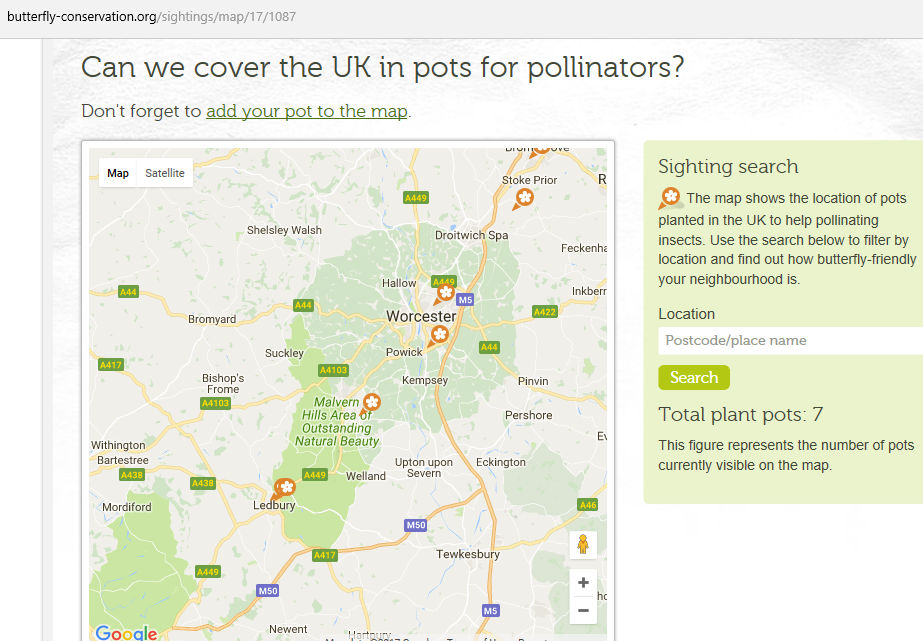
Having planted a pot, the website encourages you to plot your pot on their map. Butterfly Conservation hope to cover the UK in pots for pollinators. So being a good citizen scientist, I plotted my pot on the map. It is reassuring to see that ours isn’t the only one in Worcestershire!

Of course our garden being a weedfilled paradise for insects, you could argue that it didn’t really need another pot of flowers for pollinators. But you can never have too many, so why not? And by participating in a scheme like this, we are hopefully helping to spread the good word.

30 Days Wild – Day 7 – Birdwatching Surprise

Day 7 of 30 Days Wild and I was at my Dad’s house in rural Herefordshire. I spent the morning doing a bit of cleaning in his kitchen and while doing so, observed that his garden was full of birds (clearly I wasn’t 100% focussed on my cleaning duties!) Since I’d got the camera with me it seemed the ideal thing for today’s bit of wildness – a spot of birdwatching in his garden. First of course we had to have our pub lunch – there are certain priorities in life after all! Needless to say by the time we got back and I got myself set up in the garden, all the birds had decided they’d got better places to be!

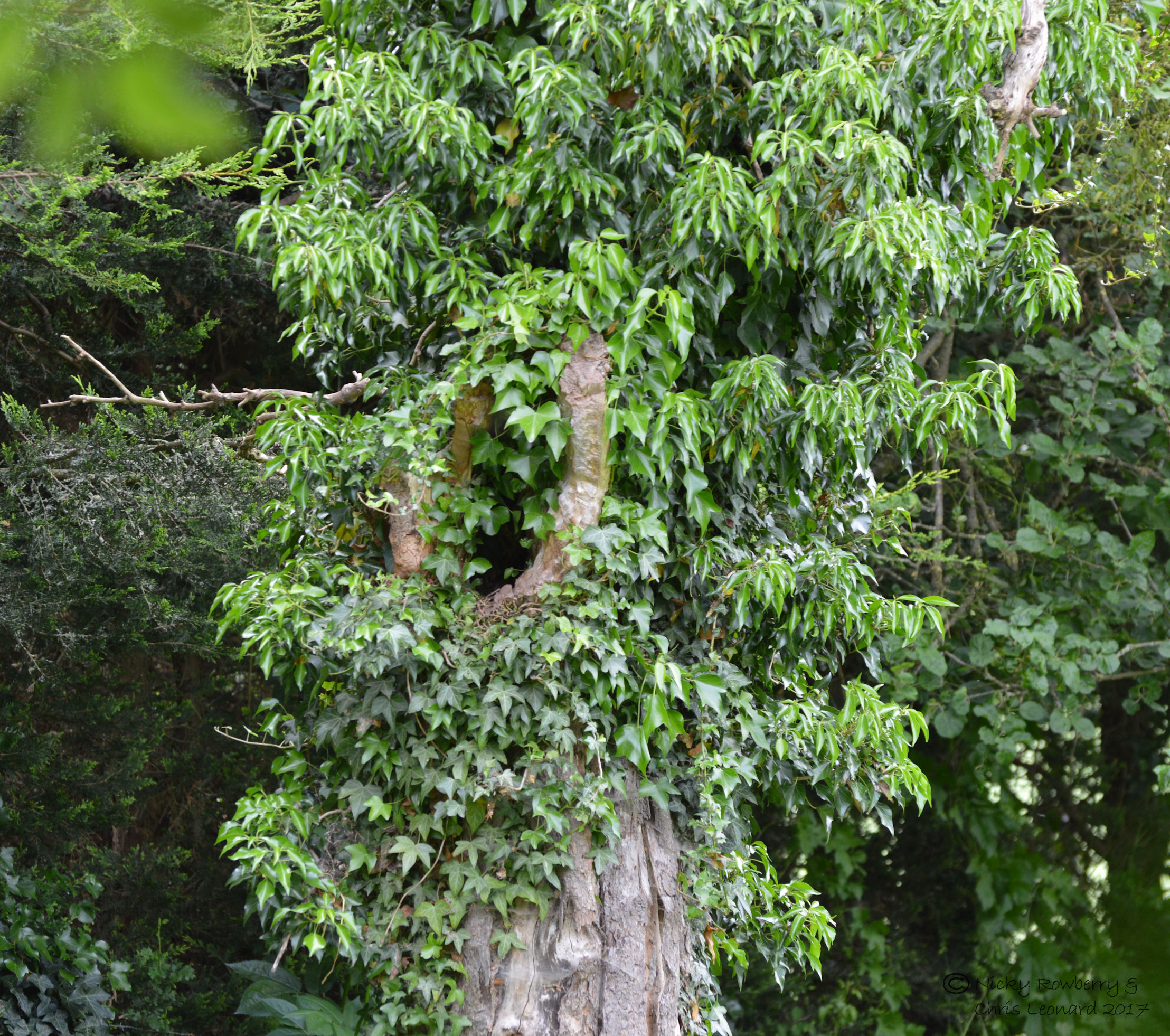
In the morning there had been several large black birds (too far away to see if they were crows or jackdaws) going in and out of this hole in an old apple tree. They must have been too smart to do so while I was watching, as not one appeared while I waited, although I could hear them in the trees nearby. I might take my trail cam down and leave it pointed at the tree sometime, but in the meantime I drew a blank.

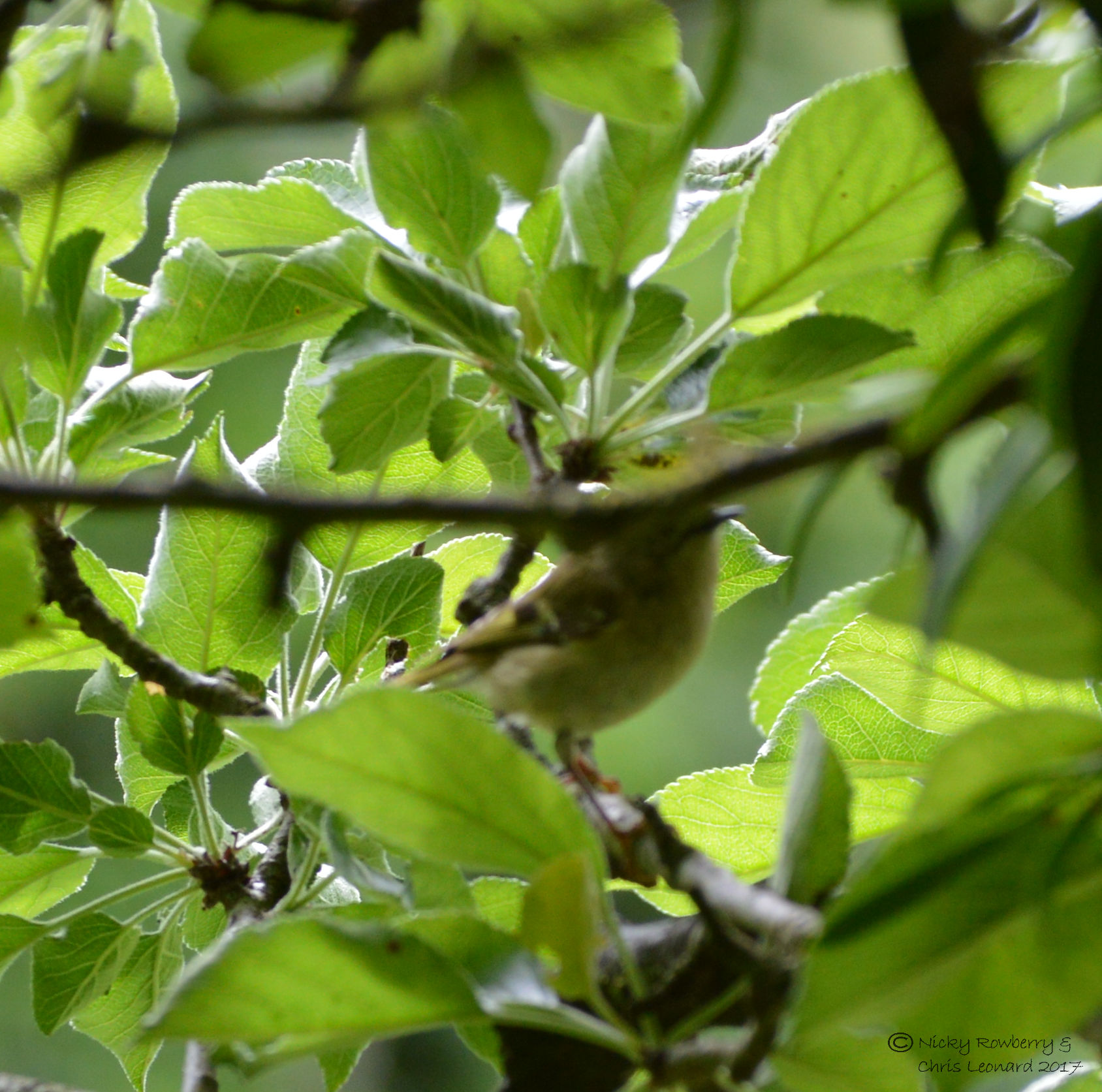
In the morning I had also seen magpies, wrens, robins, blue tits and pigeons – in the afternoon – zilch, zippo, nada! Then just as I was about to give up on them all –  a total surprise. I was leaning against another old apple tree (Dad’s house was built in an old orchard) when a Gold Crest suddenly appeared just a few feet in front of me. By the time my brain registered what it was, it had already spotted me and started to move, so I only managed this one rubbish shot. You’ll probably have to take my word for it that he was indeed a gold crest, since the key bit – i.e. his crest, is hidden by a twig. Still his appearance made up for the absence of everything else. I grew up in that garden and don’t ever remember seeing a gold crest before, so it was a real treat.

Loitering under various trees did have the unplanned benefit of letting me admire the tree canopies. There is a beautiful large copper beech tree overhanging Dad’s garden and the leaves were stunning from below (or indeed from any angle).

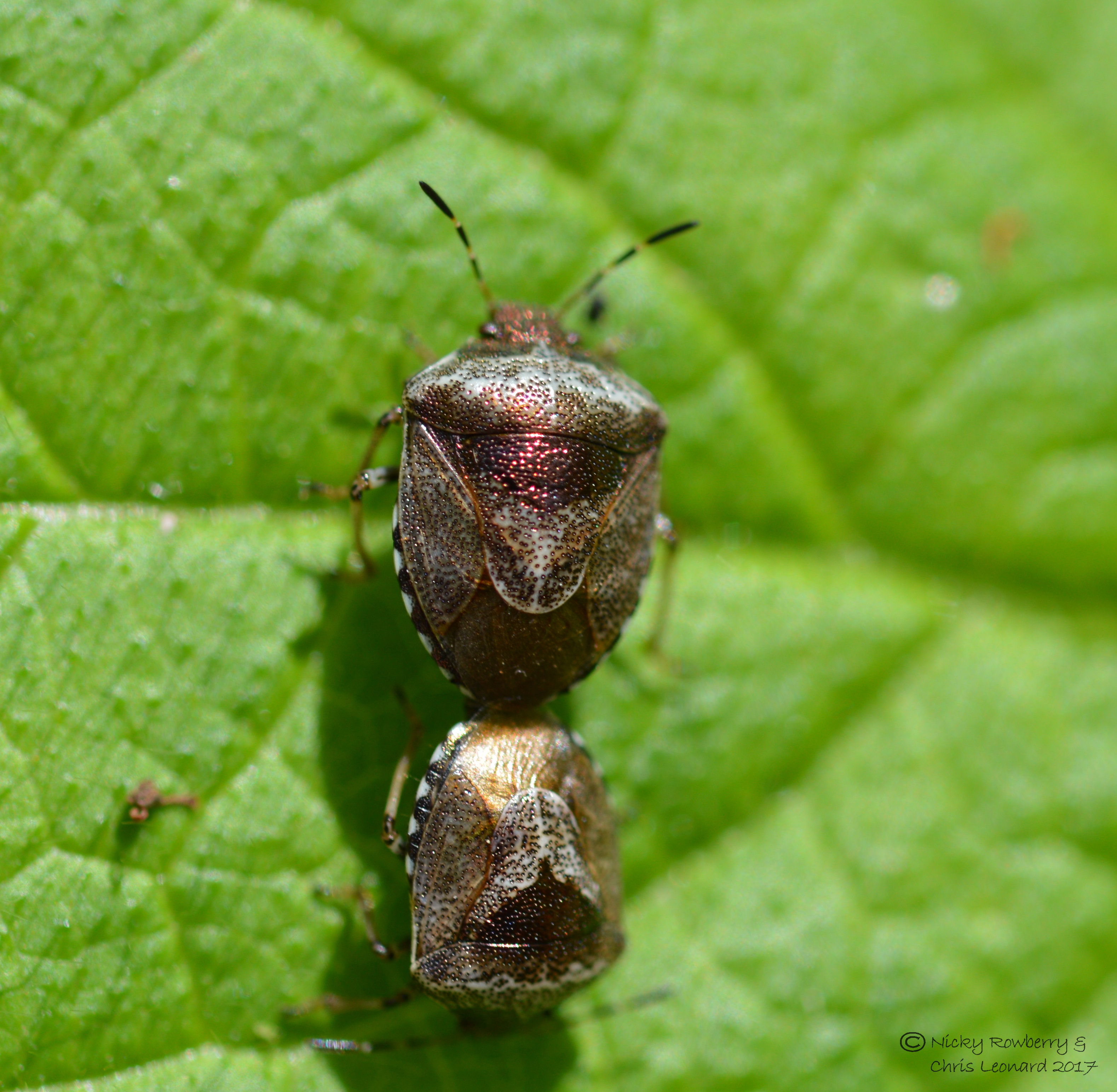
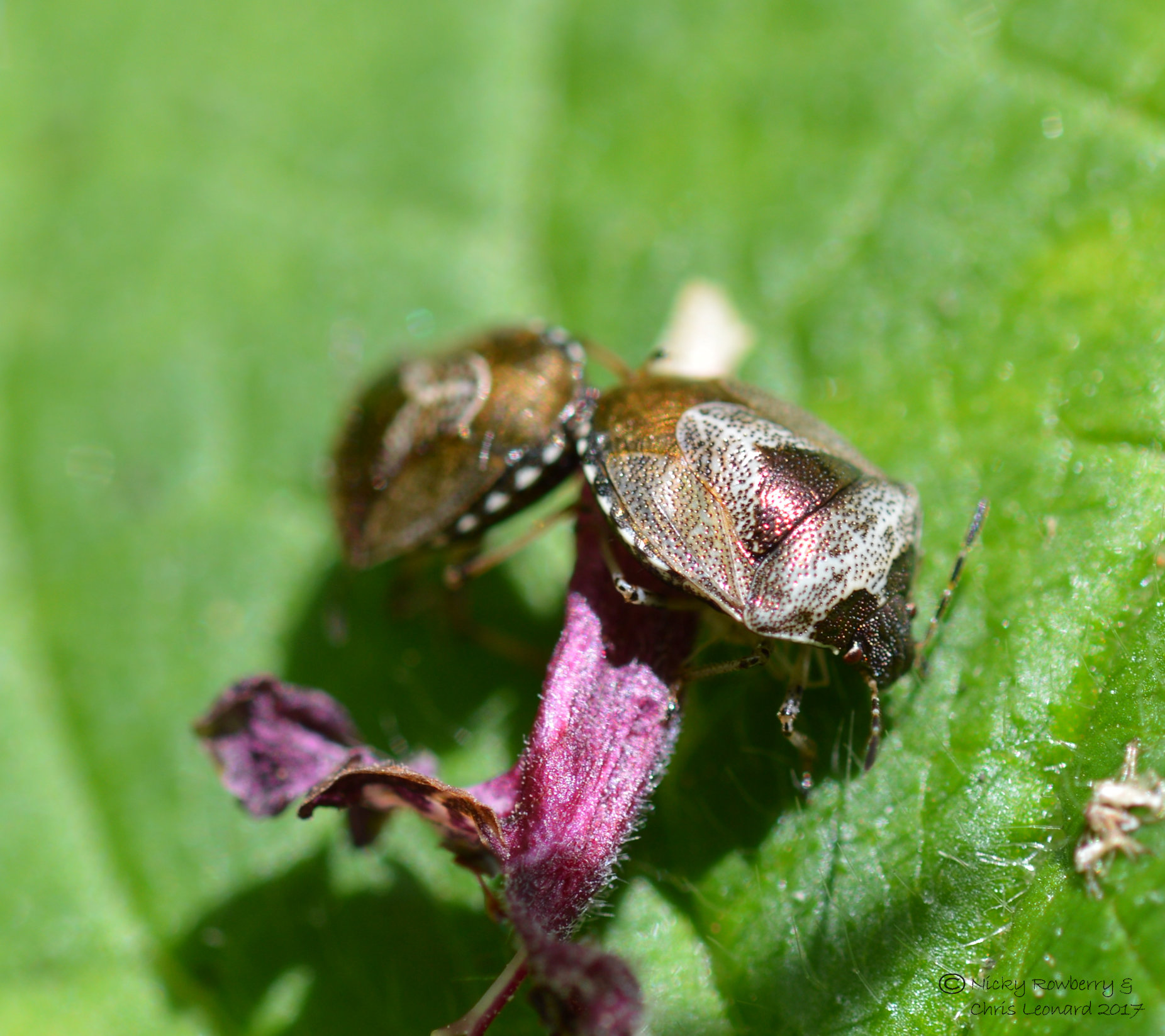
The birds may have been a bit contrary today, but fortunately a few insects were a bit more obliging. I spotted several pairs of these adorable little Woundwort Shieldbugs, all feeling the love in one of Dad’s flower beds. Not a species I’d come across before and smaller than other species I’ve seen.

A rather striking fly – the grandly named Pellucid Fly (Volucella pellucens) is one of Britain’s largest flies, but was a welcome sight given the lack of birds to photograph.

Although the garden was once part of an orchard, most of the apple trees have got too old and fallen. Those that are still there are covered in ivy and mistletoe. The hedges are full of hawthorn and other native plants, notably elderflower. All great habitats for wildlife. Seeing the elderflower in bloom reminds me of my childhood and the smell takes me right back.

I think I’ve seen a few other people on 30 Days Wild making elderflower champagne. We used to make this as children too, so I picked a load and took them home. This is as far as they’ve got at the moment. I’ll have to dig out a recipe and hopefully turn  them into something drinkable over the next few days – fingers crossed.

So as is so often the case with my 30 Days Wild acts, things didn’t go quite as planned. But who cares – a pub lunch and an enjoyable hour or so spent in Dad’s garden, listening to, if not seeing a lot of birds. There are worse ways to spend your day!

30 Days Wild – Day 4 – Garden Bioblitz Part 2

It’s day 4 of 30 Days Wild and I spent the morning taking more photos of the wildlife for our Garden Bioblitz. I’d started the bioblitz at about 09:30 yesterday, so I was trying to cram in as many more species as I could before 09:30 this morning. This wasn’t helped by the fact that my camera has packed in, so apologies for the lack of photos in this post.

The day started at 04:30 to beat the birds to the contents of the moth trap. I had hoped for a good haul to boost my species tally, but the trap was fairly quiet – possibly because it had been quite windy last night. Still there were some nice moths including a few of the beautiful and distinctive Angle Shades – virtually impossible to mistake these for anything else, which I like in a moth!


Star of the moth show was an Elephant Hawkmoth making a timely debut for the year in our garden. I’ll never tire of these stunning moths with their bright pink bodies. If you were to make a toy moth, I reckon this would be it.


I put a specimen of each moth in the fridge (it does no harm but keeps them calm until  you can photograph them) and went back to bed for a couple of hours. 8 o’clock though and I was back up photographing said moths, then scouring the garden for more wildlife. I hadn’t managed to photograph any birds yesterday, so I topped up the feeders and waited expectantly to see what would show up. As usual the sparrows were the first to show, landing on last year’s teasels to check things out before heading to the bird table.


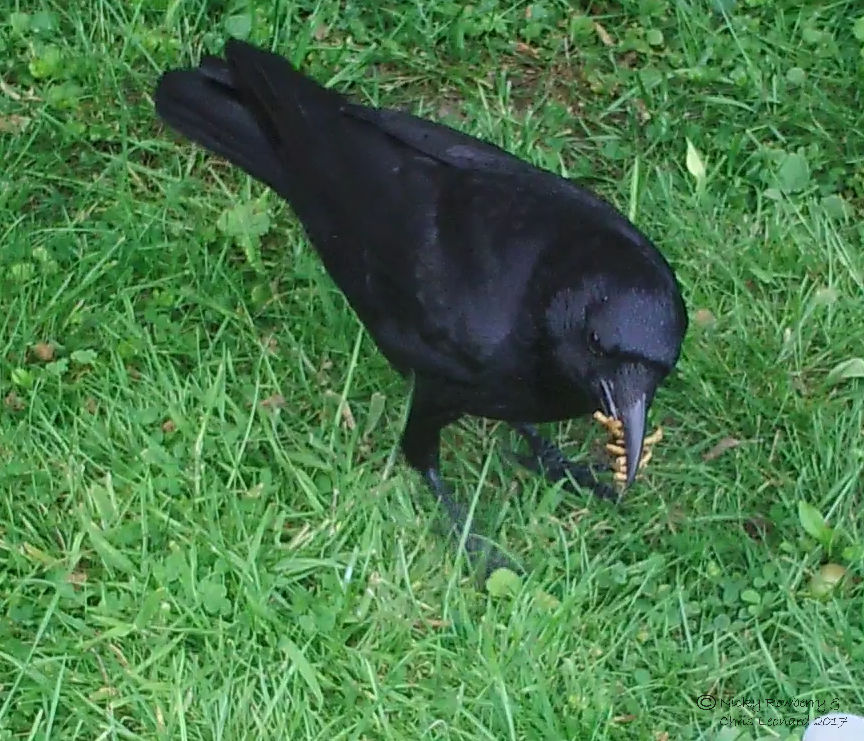
The starlings and jackdaws came next, followed by the blackbirds and pigeons. There were several no shows for birds that normally frequent the garden – no sign of the robin, wren, collared doves, great tits or gold finches. A blue tit just appeared in the last minutes to scrape into the bioblitz total. For the last few days I’d been seeing a big black bird, bigger then the jackdaws, so was disappointed initially when it didn’t show for the camera. But then I downloaded the trail camera which had been running for the last couple of days and there he was – a carrion crow.

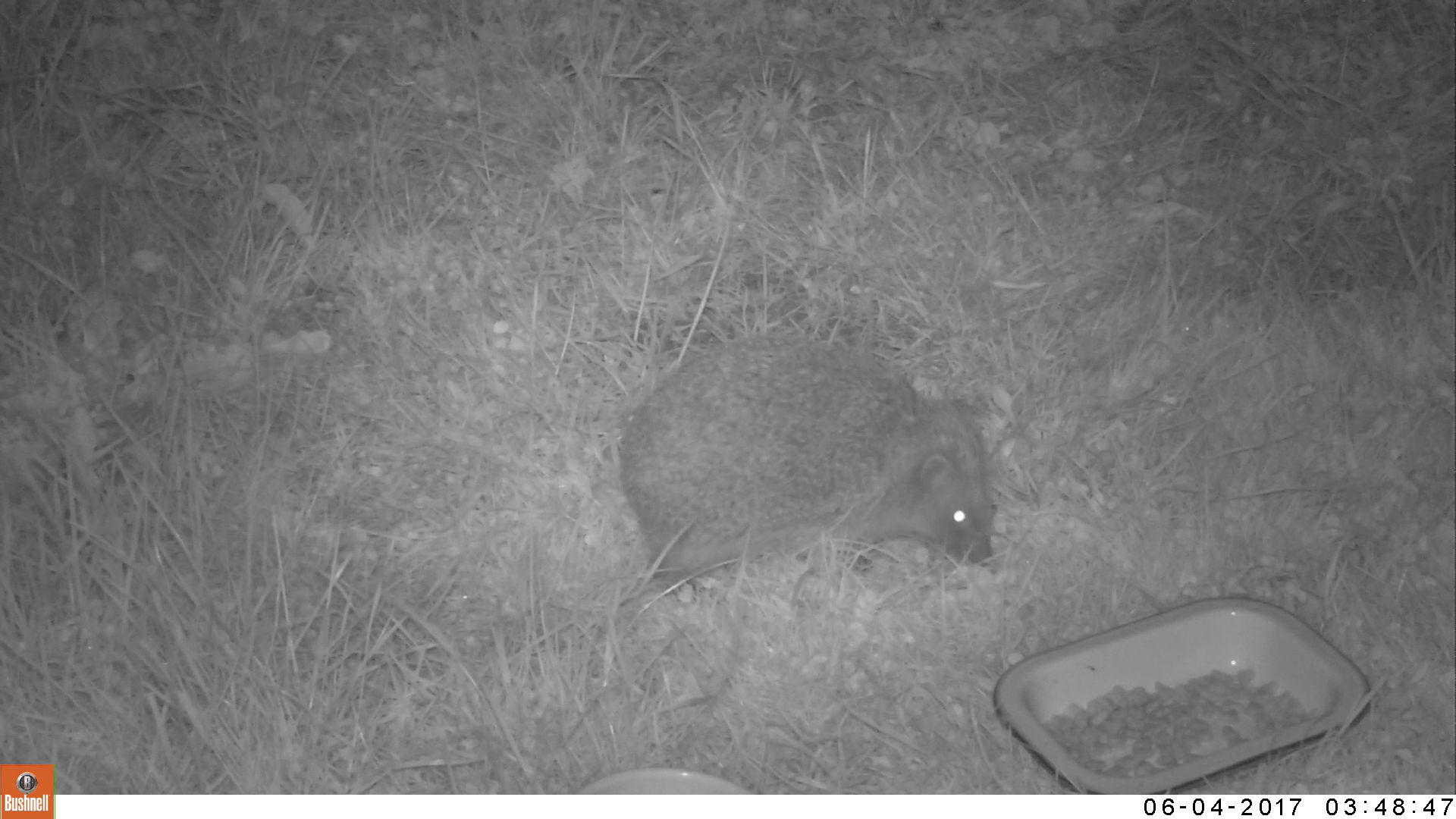
The trail cam also picked up a couple of hedgehogs – one of which looks like our old foster hedgehog Meadow – i.e. it was a big chunky looking hog!

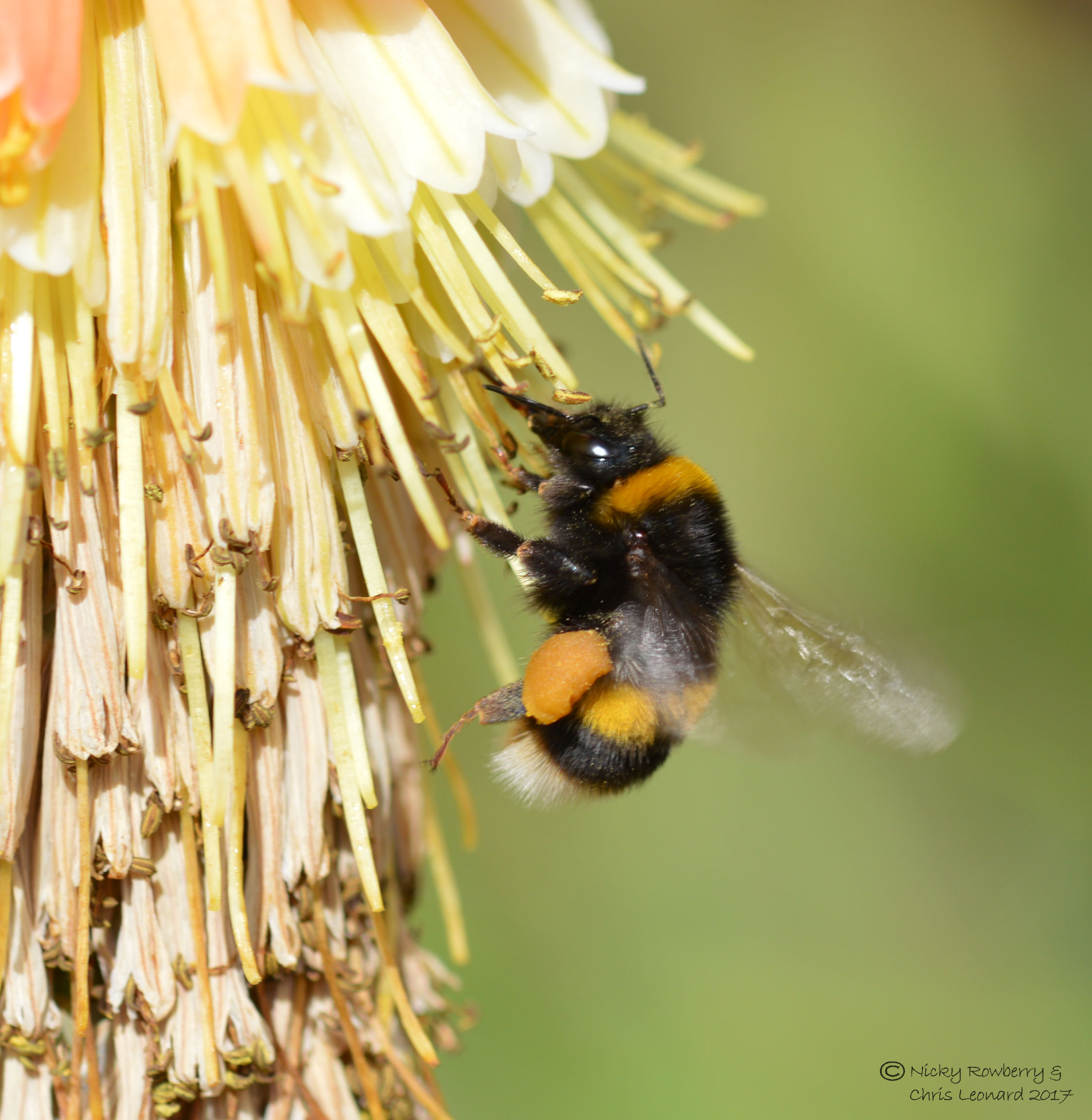
There were of course bees in the garden, although being a busy bee myself chasing everything else around I didn’t actually manage to get that many photos of them. But here’s one of my favourites – a Buff-tailed Bumblebee.


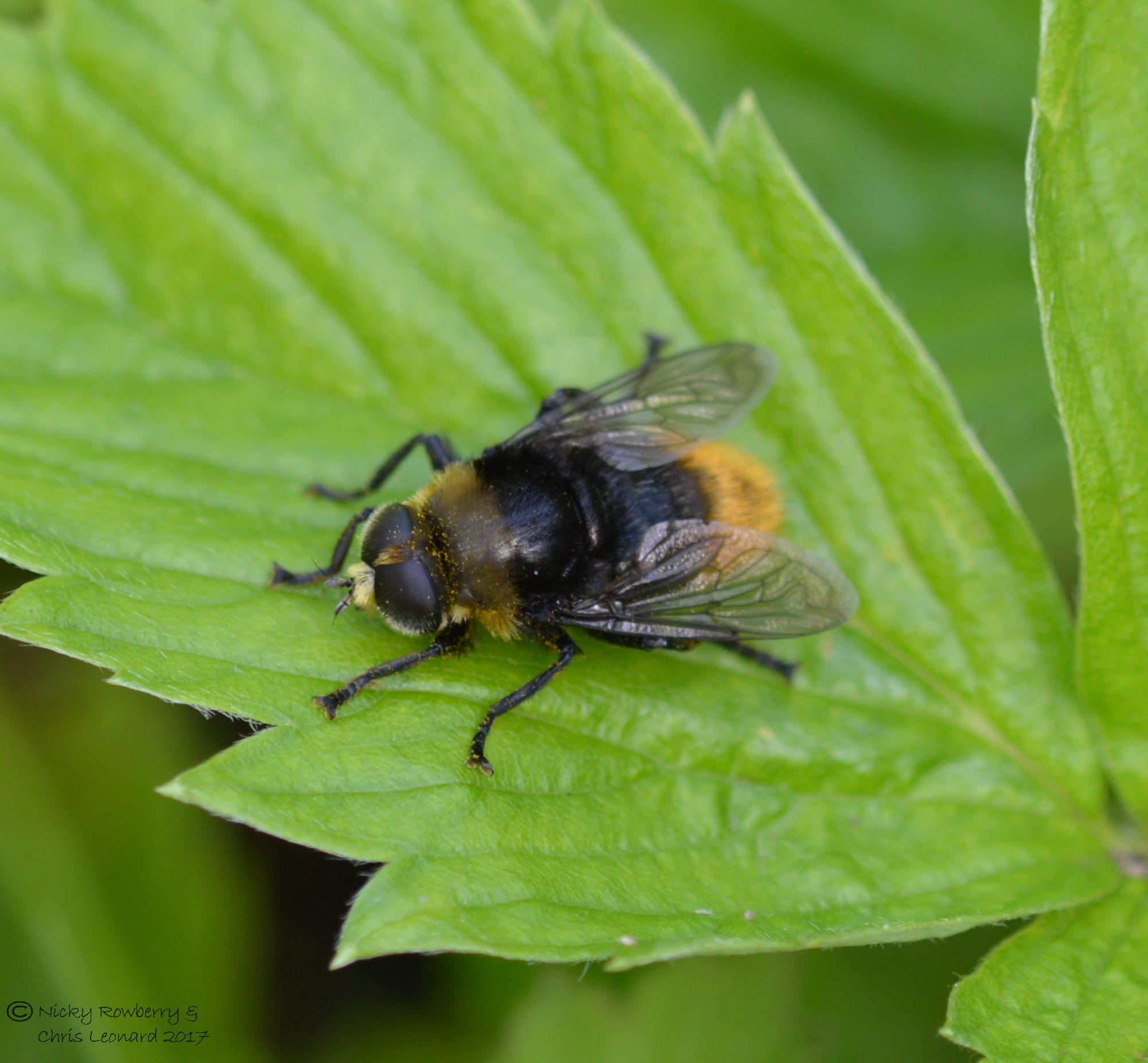
There was also this bumblebee mimicking hoverfly (Merodon equestris).

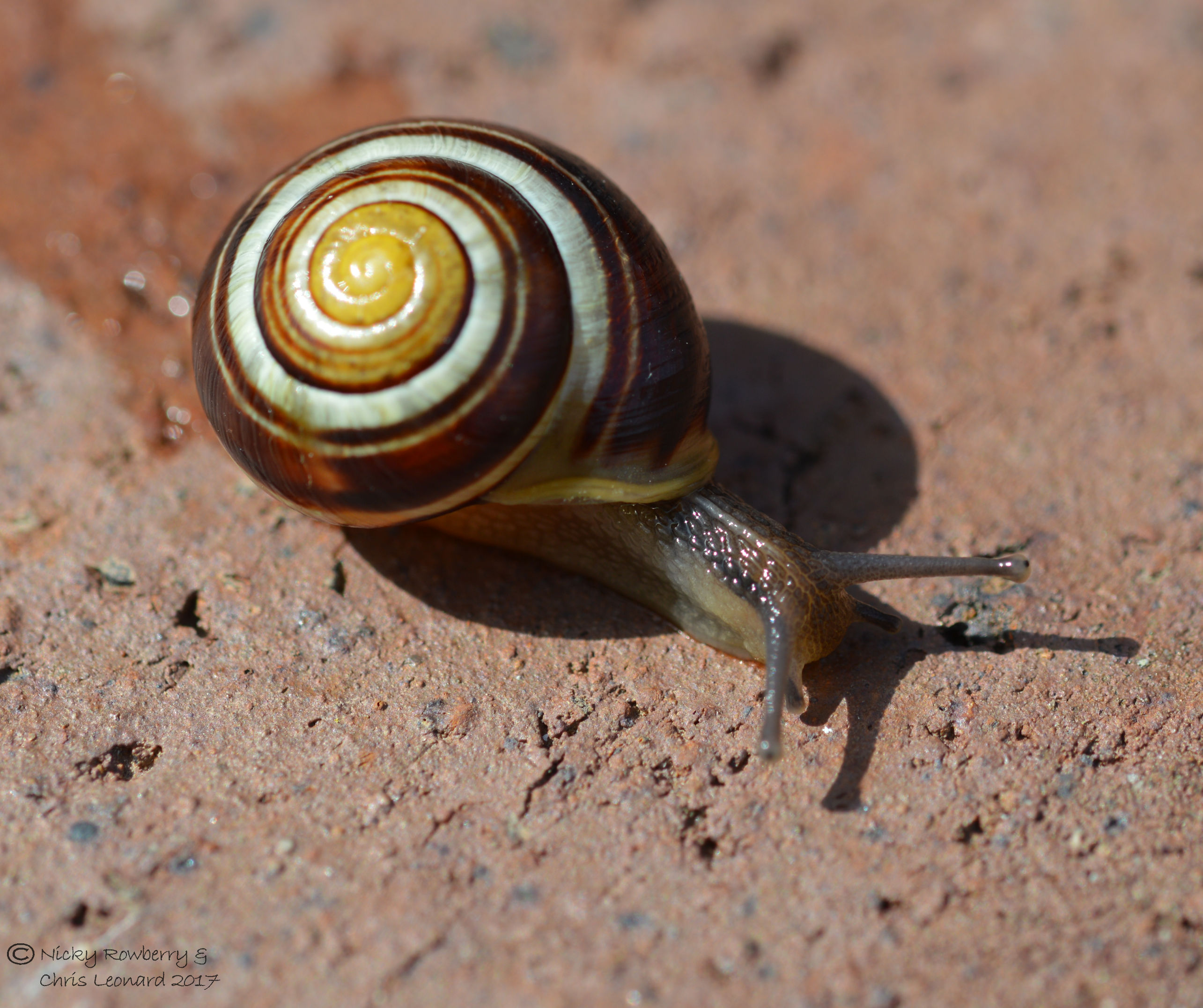
Our snails were also being sneeky and hiding away over the last 24 hours – several species that I know we get refused to show. Fortunately both the White Lipped (photo below) and a Brown Lipped appeared out of the Pendulous Sedge to get their photos taken.


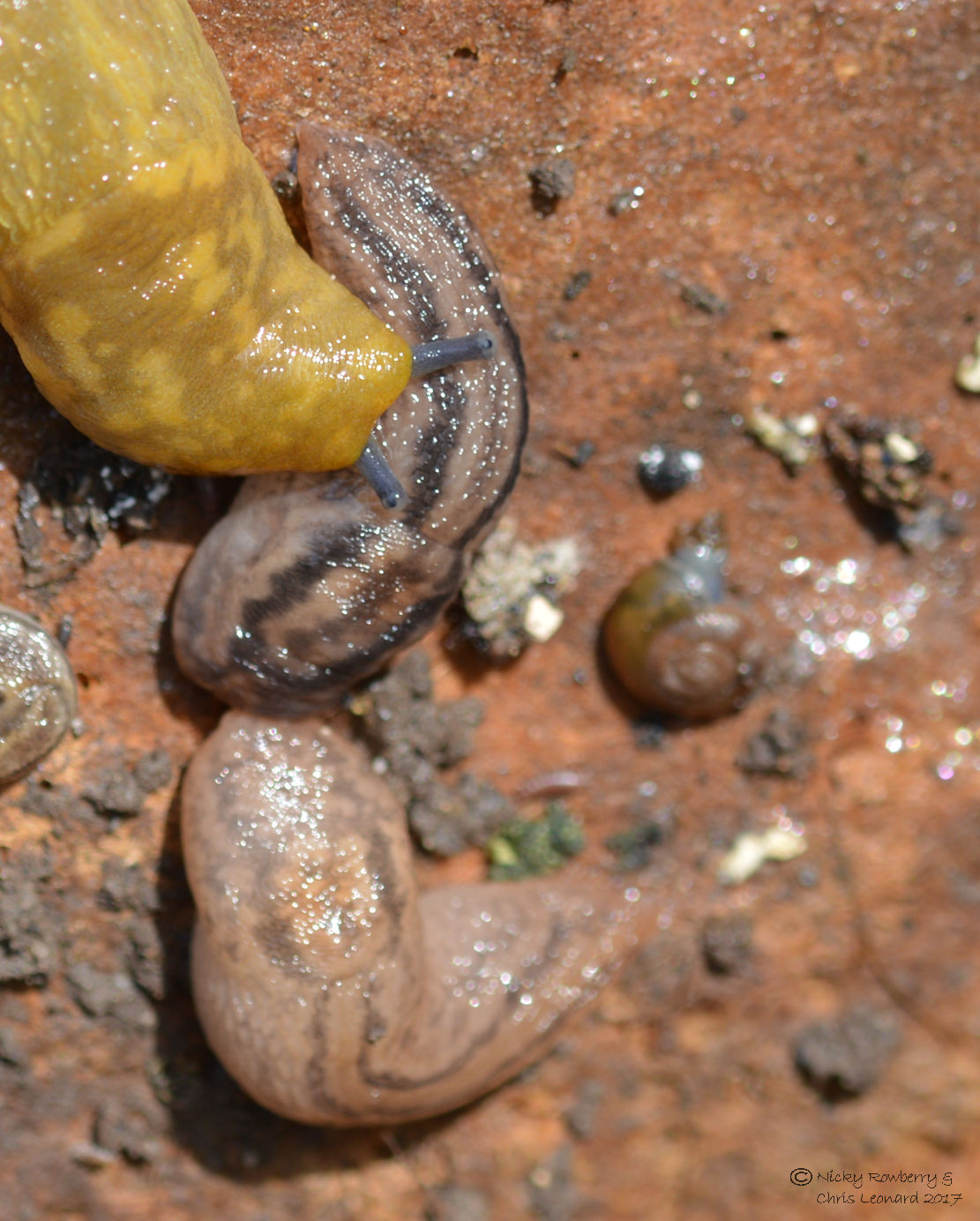
I also found three species of slug including this large yellow one and the stripy ones which I think are Iberian slugs.

I spotted this tiny nymph of the Speckled Bush Cricket, when I saw its antennae poking over the edge of a buttercup. Unfortunately the buttercup was blowing about in the wind a bit – hence the less than perfect focussing!

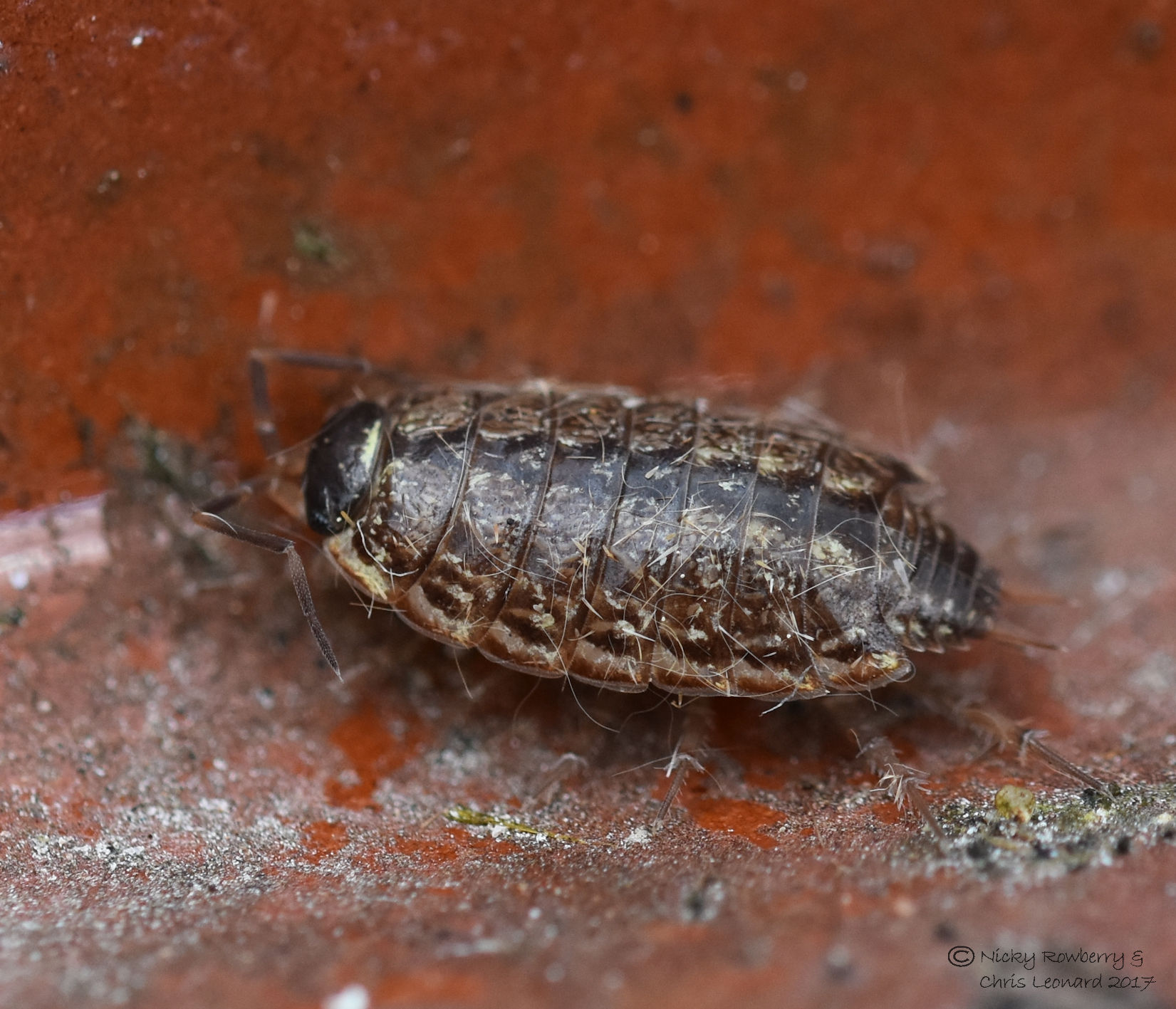
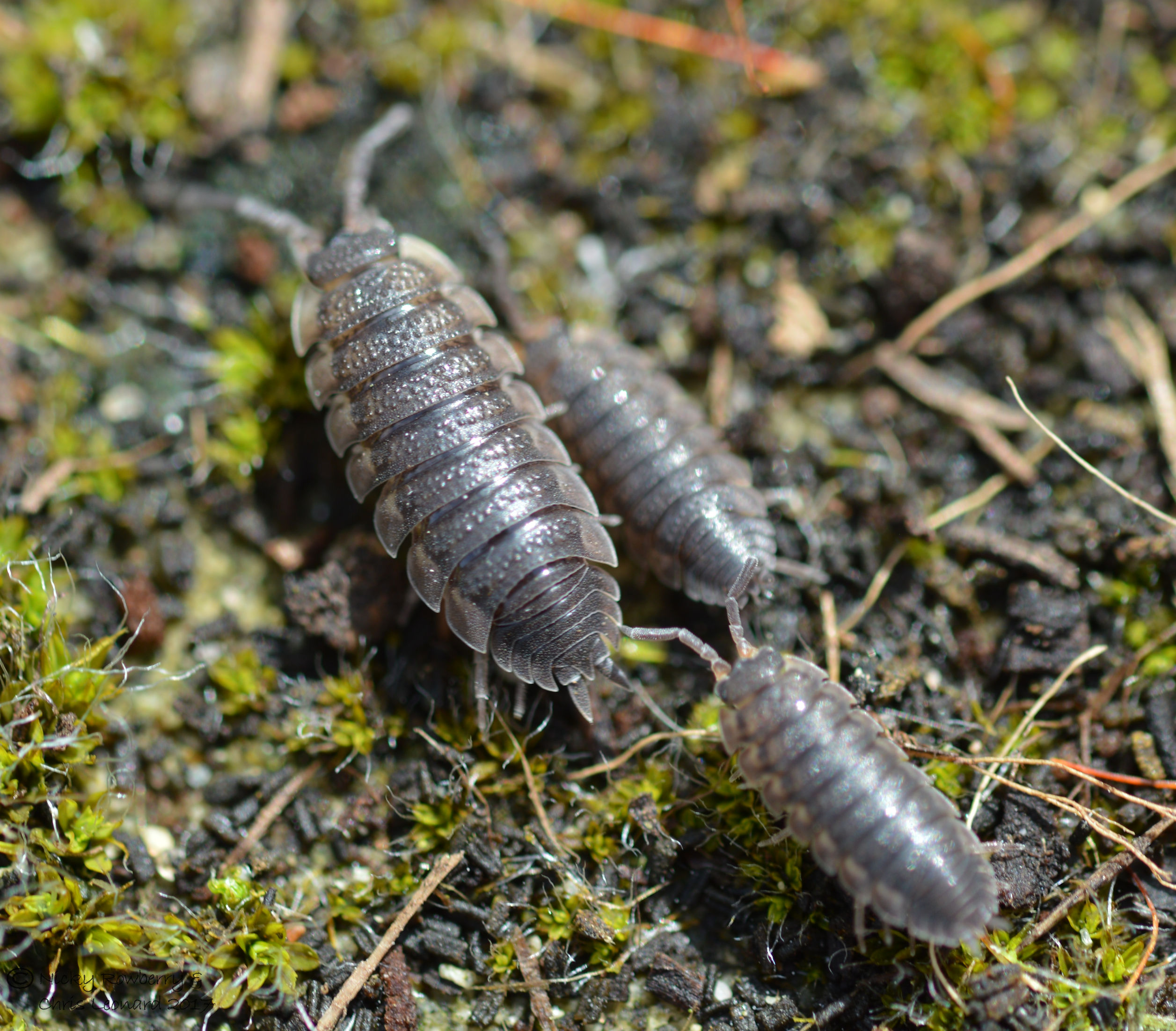
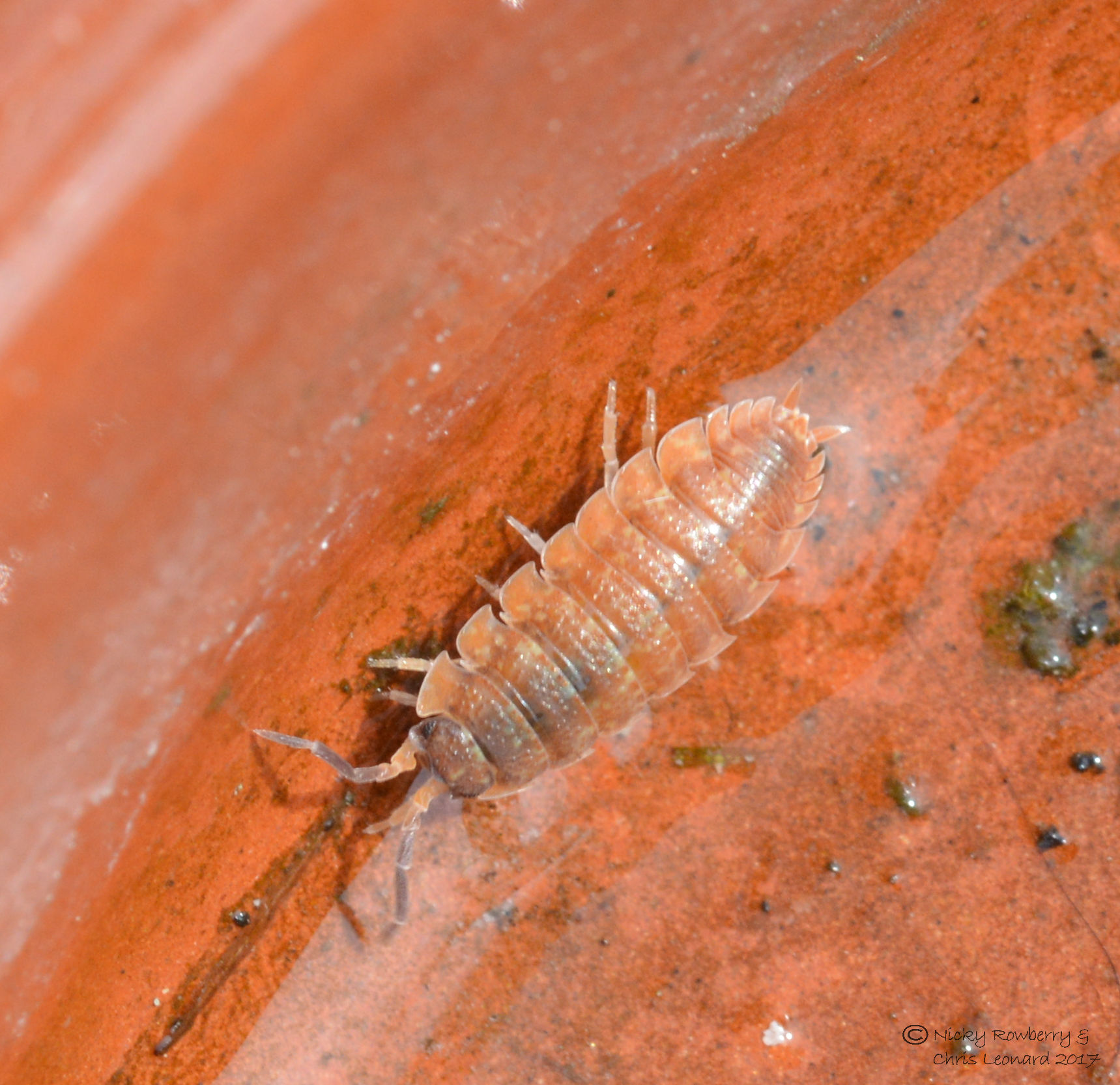
While turning over stones, I disturbed loads of woodlice. There were Common Striped Woodlice and the ones below that are Common Rough Woodlice. The bottom pinky one may just be a variant of the latter, but I hoping it might be a 3rd species – just waiting for someone on i-Spot to confirm one way or another.


Beetles are the largest insect group in the world, so it would have been a bit weird if I hadn’t found any in the garden. My favourite Swollen-thighed beetle of course appeared, as did a lovely shiny Black Clock Beetle.


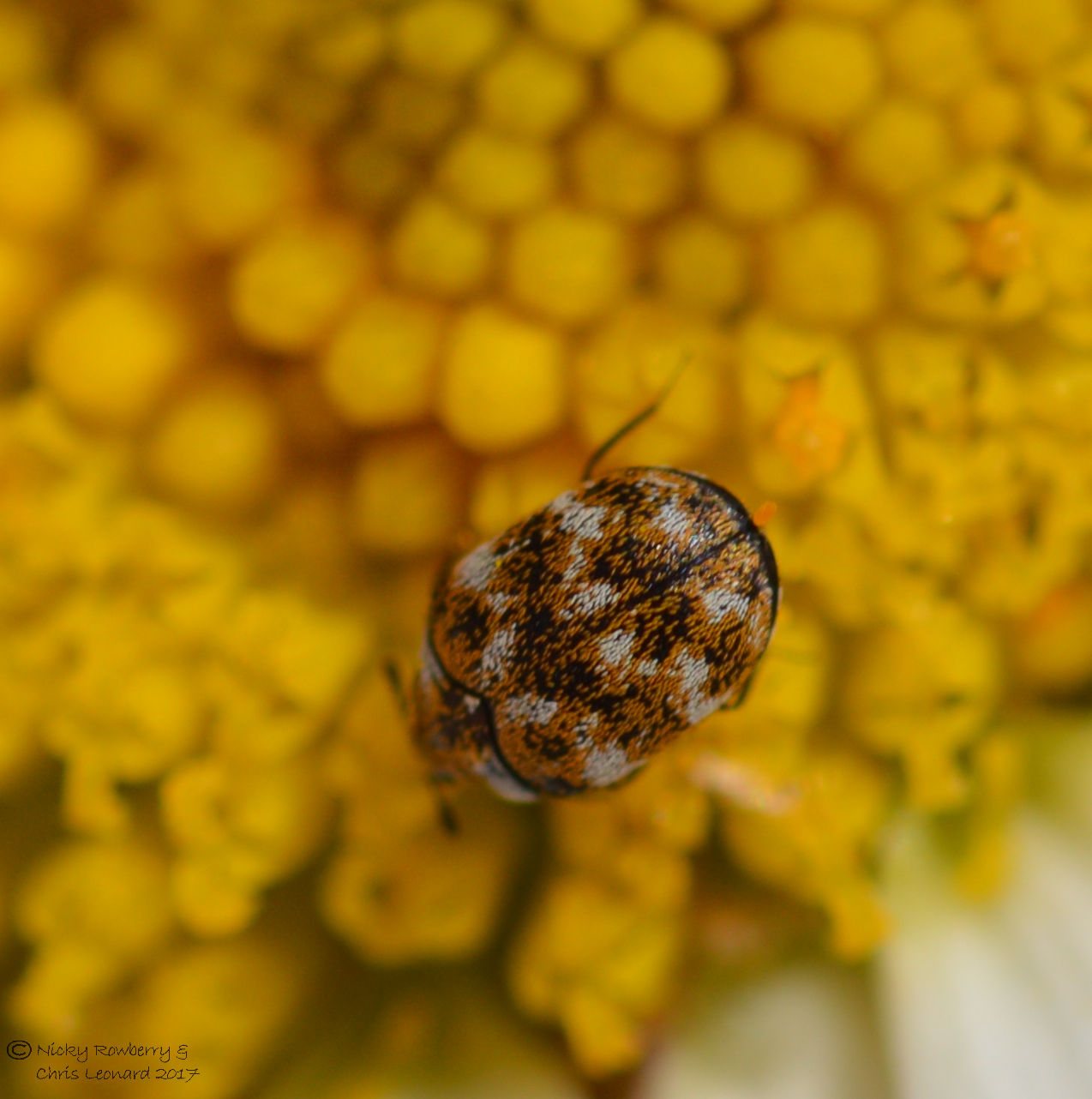
This tiny carpet beetle was making the most of the flowers.

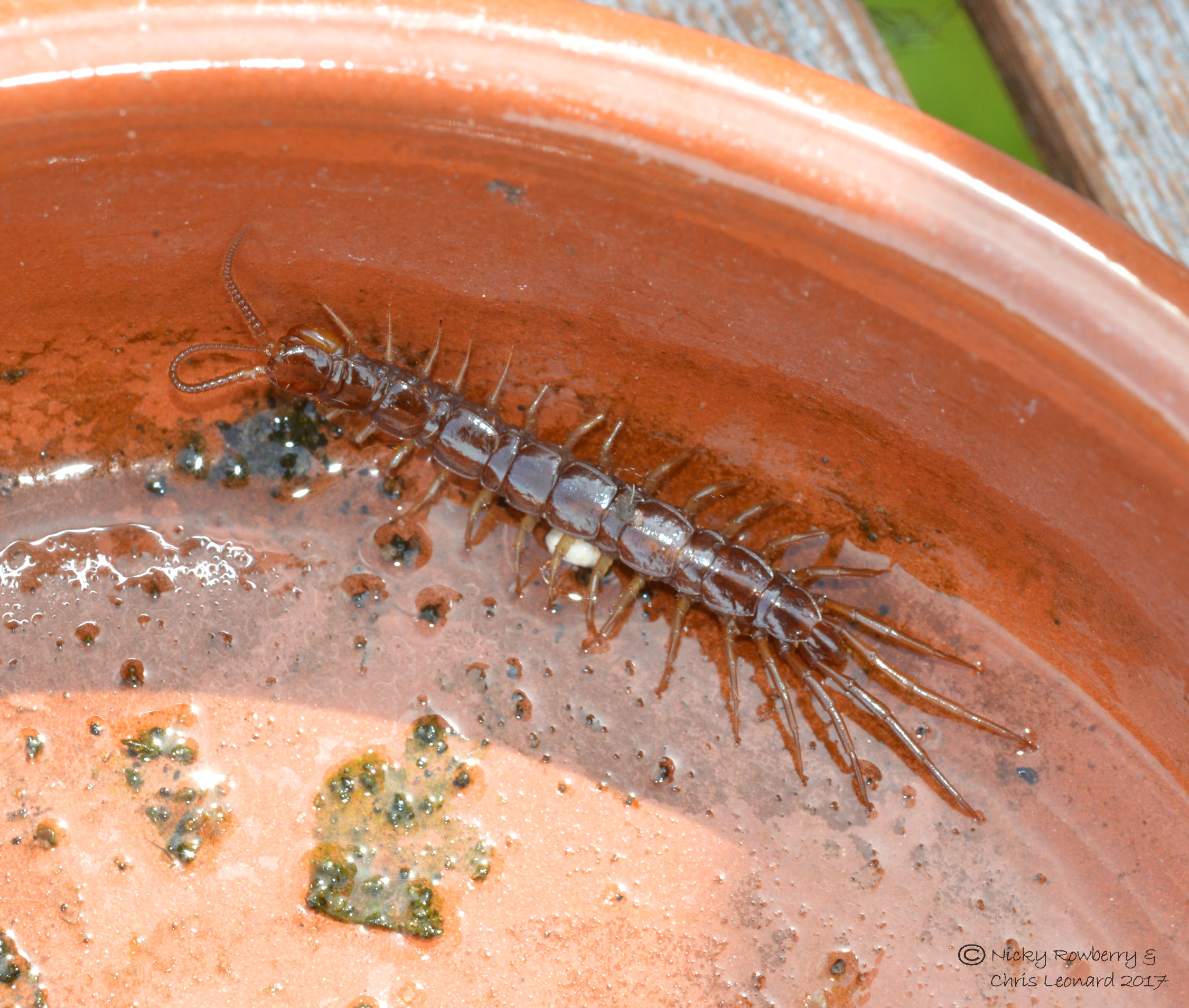
One group I’ve never really studied is the centipedes/millipedes. This beauty turned up under an old piece of wood. I’ve yet to work out the species though (suggestions gratefully received).

So that’s a selection of our bioblitz species for 2017. As always I ran out of time, so didn’t manage to root about in the pond, or look for ants, flies, grass moths and a host of other things. It was also a bit disappointing that no butterflies or shieldbugs or ladybirds appeared in the last 24 hours, but then that’s the way it goes. The bioblitz is just a snapshot of what you can find in the garden over a day. I love that it gets me looking for groups that I don’t normally study (easy to get in a bit of a rut with the bees and moths and butterflies and forget the others sometimes) – always good to broaden my wildlife horizons.

I’m still identifying photos and gradually uploading them to the i-Record website, so I won’t know the final tally for a while yet. So far I’ve only managed to load 32 species, which apparently puts me 10th on the bioblitz league table. Sounds good until I realised the person in the top spot at the moment has 167 species – I’ve got a way to go yet!


30 Days Wild – Day 3 – Garden Bioblitz

It’s day 3 of 30 Days Wild and it’s also Garden Bioblitz weekend. We’ve done this in the garden for the last few years. The idea is to record as many species as you can find in your own garden in 24 hours. Hopefully you manage to take a photo of each and load it on to the i-Record website. It was doing the garden bioblitz a few years ago that really got us into looking at the wildlife in our garden and into taking photos generally. So it’s thanks to the garden bioblitz that the Too Lazy To Weed blog was born!

You can find out more about the garden bioblitz on their website: http://www.gardenbioblitz.org/ This year it runs today and tomorrow, so there’s still time to take part. You don’t need any special skills, just identify what you can. For anything a bit tricky there is plenty of help online. It’s a great way of getting children involved in wildlife too.


You don’t have to stay up for 24 hours, just do what you can within the time. We started at about 09:30 this morning, so will finish the same time tomorrow. We started photographing the plants – easier as they don’t fly off. So far we’ve got photos of about 20 species – there are no doubt loads more, particularly grass species, but it’s not a bad start. Here are just a few of our weedy wildflowers.

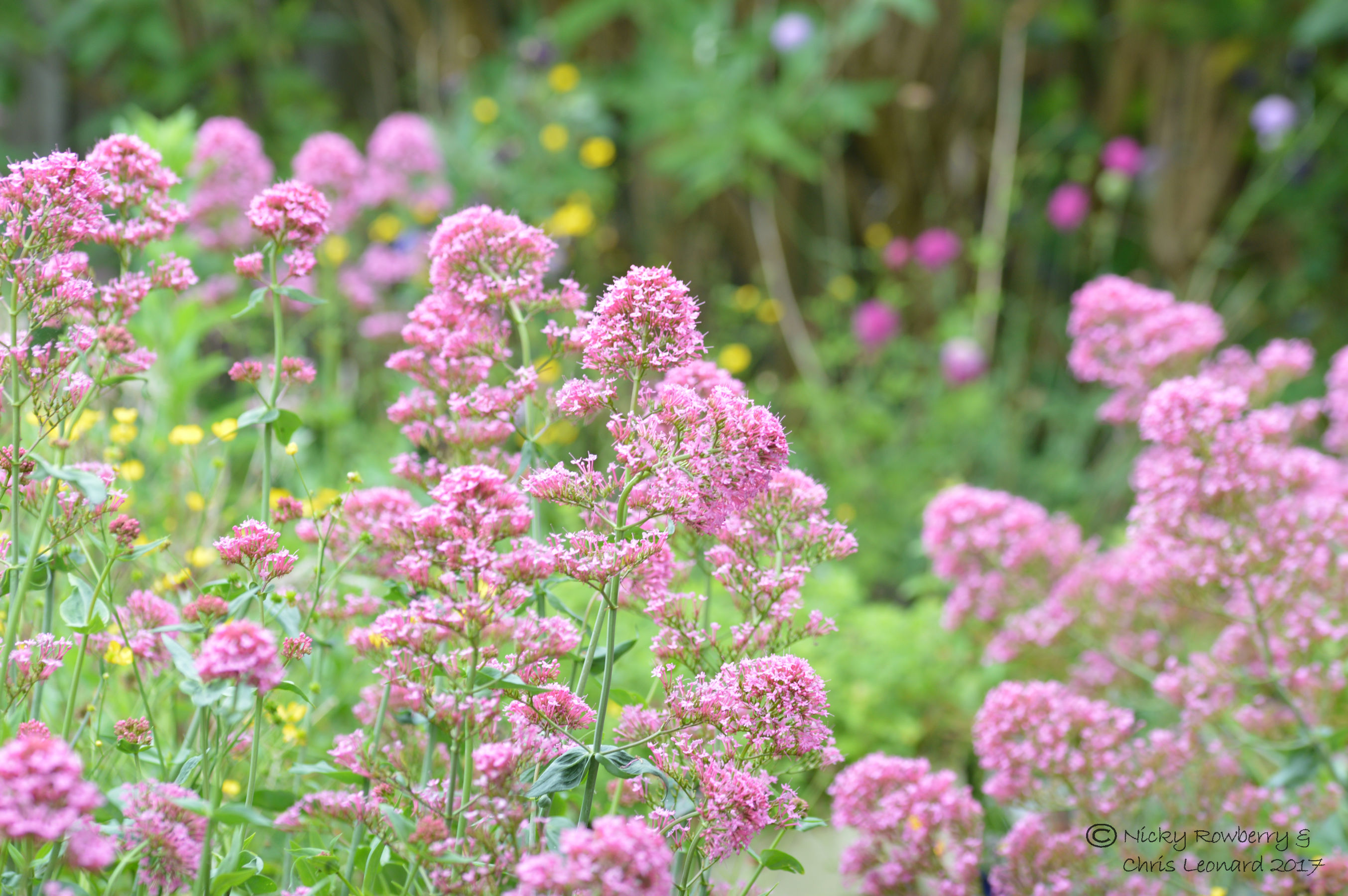
The dominant flower/weed in the garden at the moment is the Red Valerian. It is popping up everywhere. Fortunately it is not only attractive, but the insects love it. Why pay loads for fancy garden centre plants when you can have this instead?

Lady’s Mantle is another common one – I love the way the rain forms shiny beads on its surface, which gradually roll down and collect at the centre.

The pond has a lot of Creeping Jenny around it. It’s a low growing plant that spreads out horizontally, with cheery yellow flowers.

Even smaller than the creeping jenny is the Scarlet Pimpernel, which tends to grow under other larger plants. Maybe that’s how it gets its name – you have to seek it out in the undergrowth?

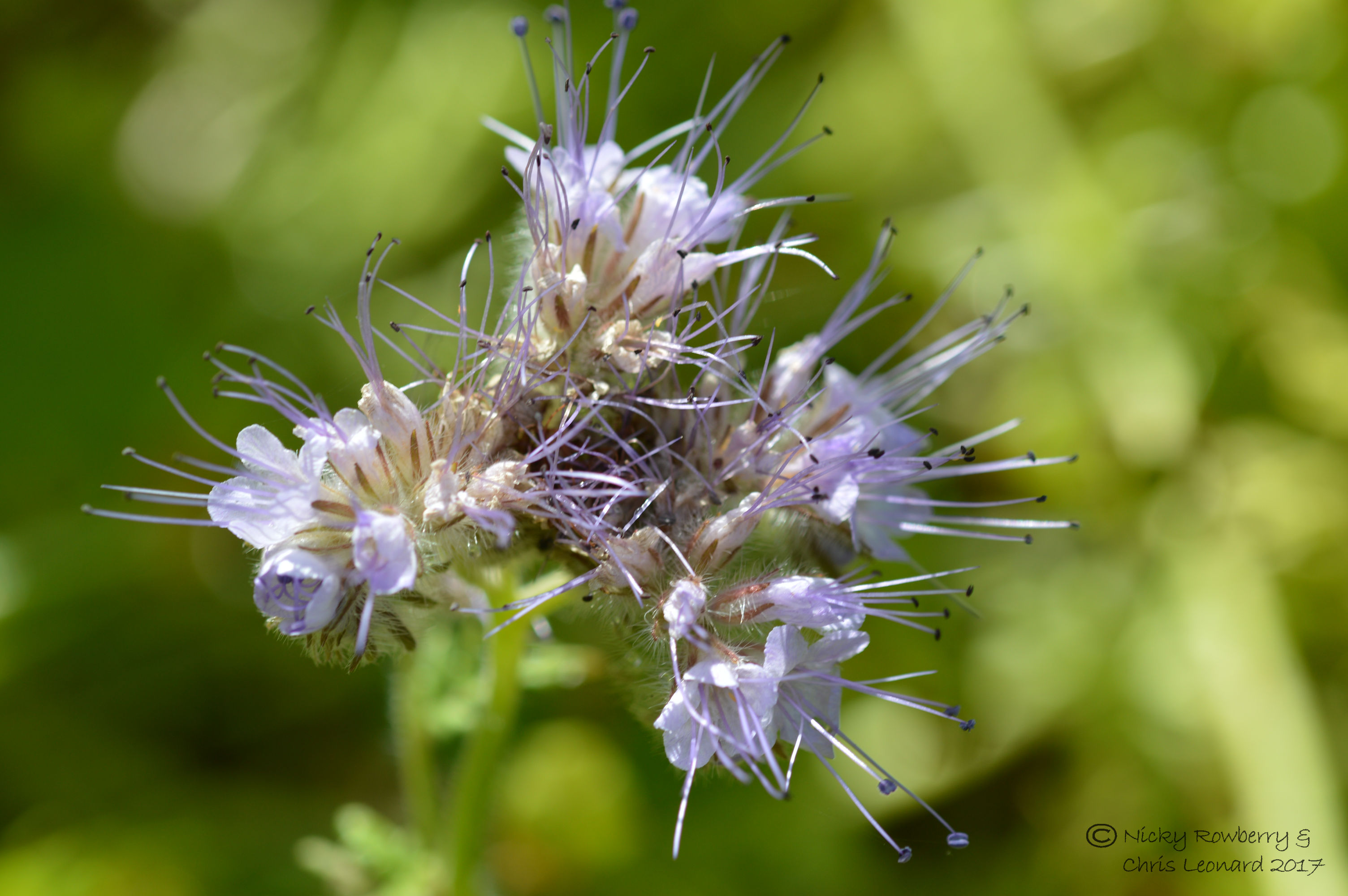
Two more insect attracting flowers are the Bladder Campion and Phacelia .

A childhood favourite and gardener’s nightmare is Cleavers (or sticky willow, goosegrass etc.). The sticky buds are surprisingly pretty when you see them close up.

Not only are we still taking photos as the day progresses, but I’m still ploughing through the ID on the ones we’ve already taken. So tomorrow’s blog post will hopefully have photos of some of the birds, insects and other animals we’ve managed to find in the 24 hours. Also we should have more of an idea of the total number of species this year. In the meantime here’s at least one mini beast – an often forgotten crustacean from under some of our plant pots – the humble woodlouse.

We can’t count Bert, our elder statesman of a cat, as part of the bioblitz, but he did spend quite a bit of time watching me poke around the garden. Don’t think he really approved of so much activity on a Saturday morning judging by his expression though!

The Darling Bugs Of May

Apologies for the title, couldn’t resist a bad pun! After the quiet winter and early spring months, all the insects are suddenly emerging in May. It feels like our garden is gearing itself up again ready for the 30 Days Wild in June. Everywhere I look there is something buzzing (everywhere except the bee hotel I’ve put up which is of course silent!)

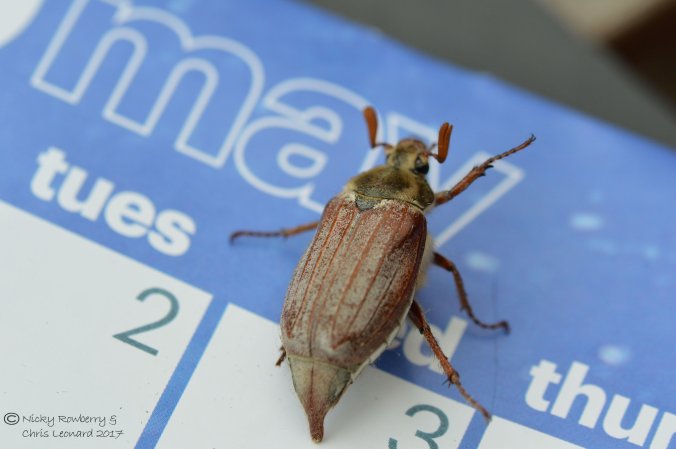
May wouldn’t be May with out the arrival of the May Bugs in the moth trap. These huge beetles can apparently be a pest for farmers, but I love seeing them. They are fascinating animals and I can still remember my amazement the first time I found one in the moth trap a few years ago.
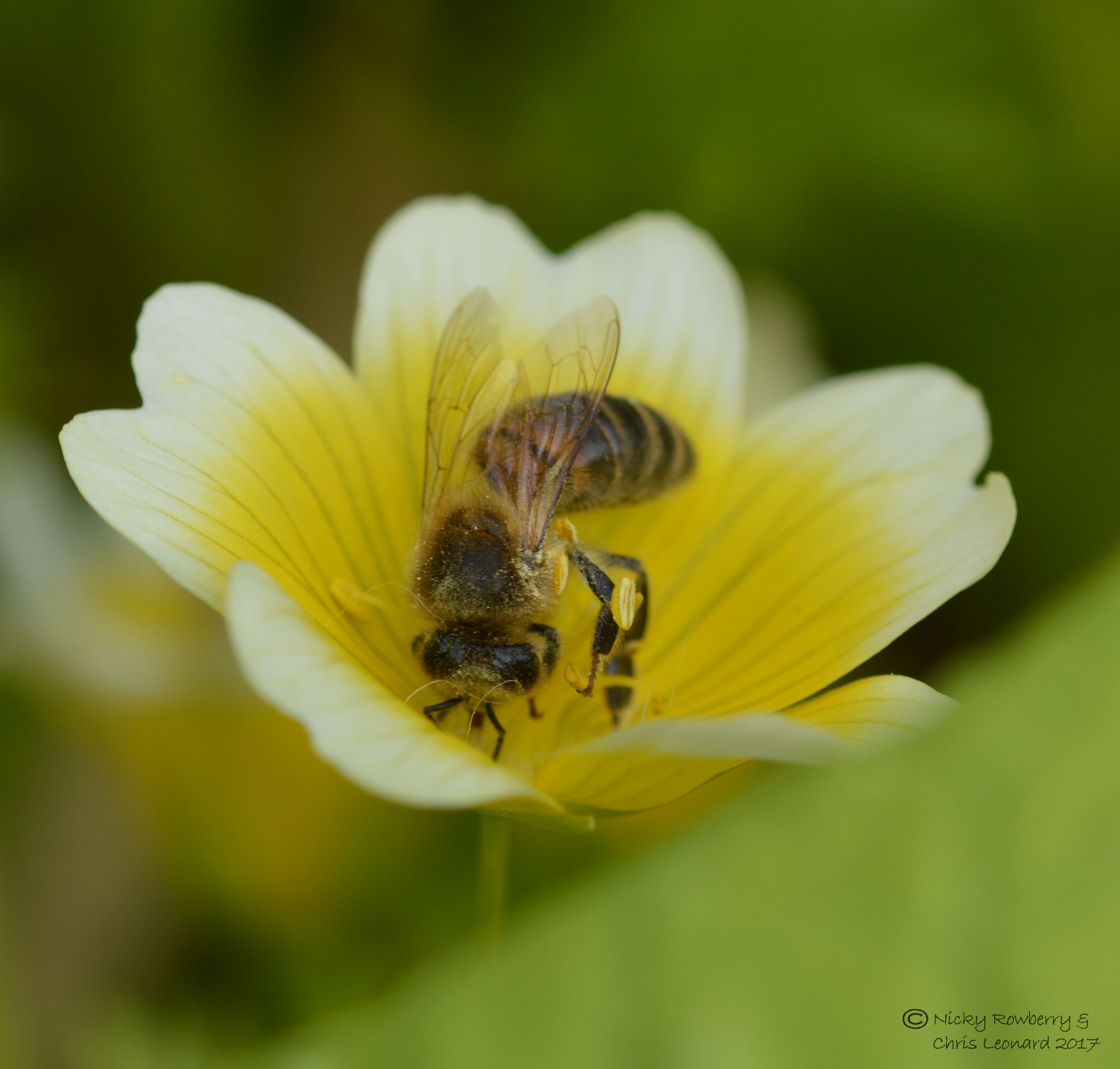
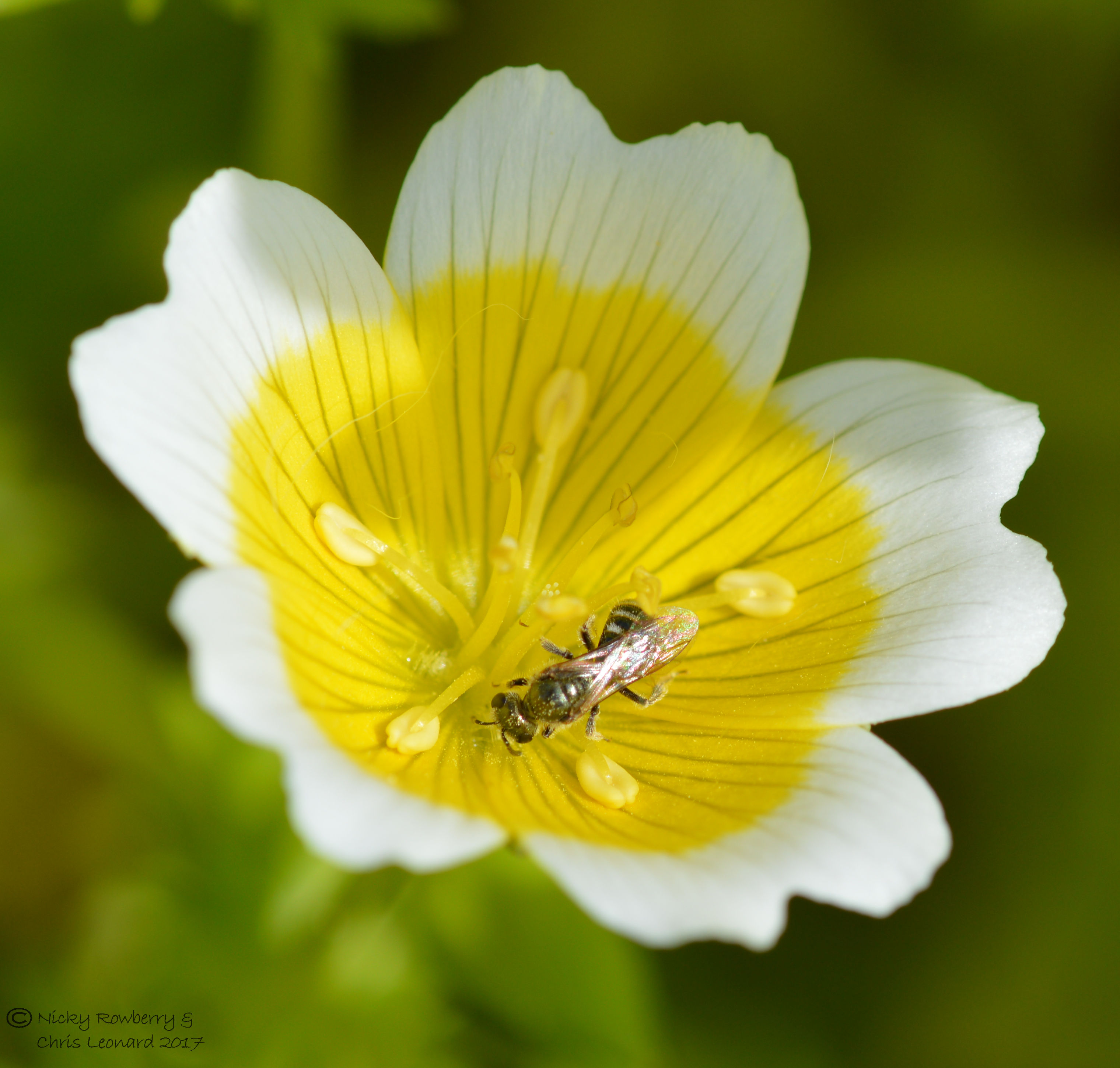
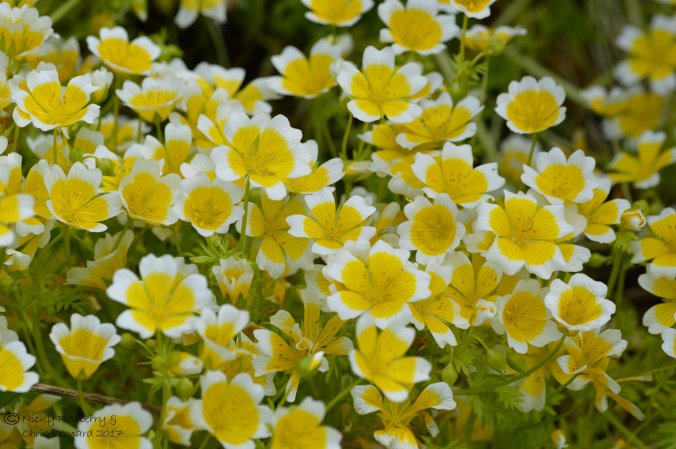
One of the areas particularly buzzing at the moment is a patch of poached egg flowers that I’d sown last year. I’d forgotten about them, but they all popped back again this year and look fantastic. I’d grown them originally as I’d read they were good for hoverflies – not sure about that but the bees love them!
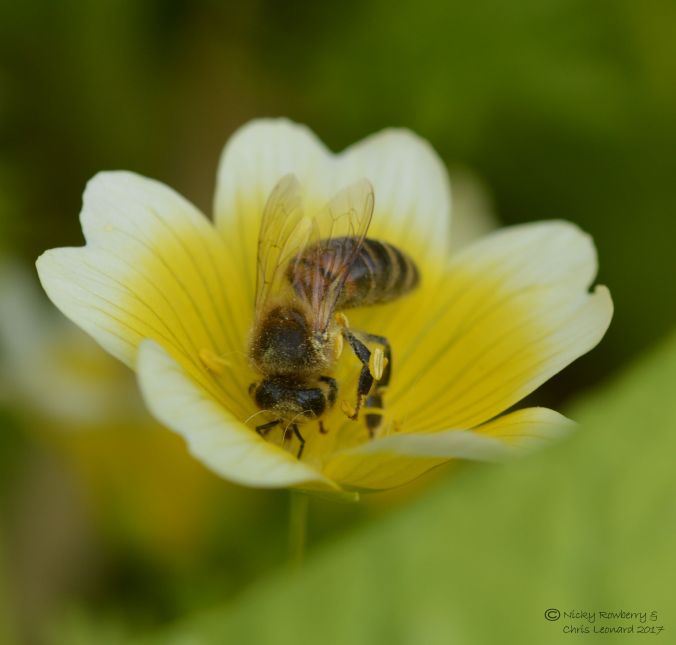
Most of the bees are plain old honey bees (very welcome all the same of course).
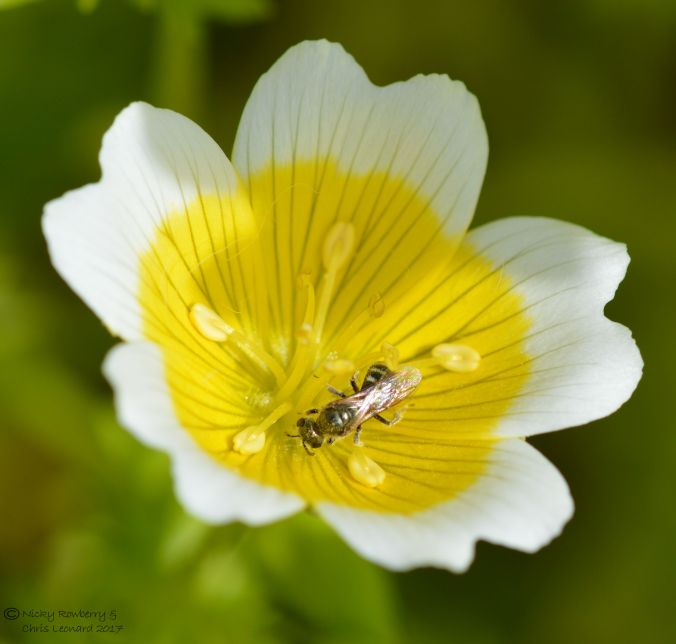
There were also a few of these very small furrow bees Lasioglossum sp. It’s virtually impossible to get this one to species level without killing and examining it, which I’m not prepared to do, so it will have to remain a sp.
This next bee is one of the yellow faced bees – Hylaeus sp. Unfortunately since I didn’t manage to get a shot of its face, I also can’t identify this one to species. But since I’ve not recorded any other Hylaeus, I’ve counted this as bee species number 30 for the garden!
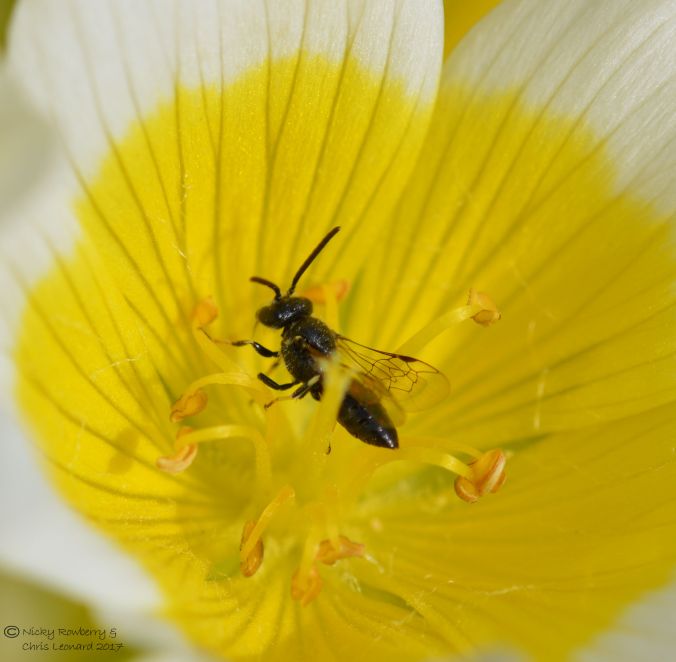
This next one did get identified to species (not by me but by a kind soul on facebook) as Osmia caerulescens – the Blue Mason Bee. This was also a new species for the garden, making 31 in total now over the last 2 years!

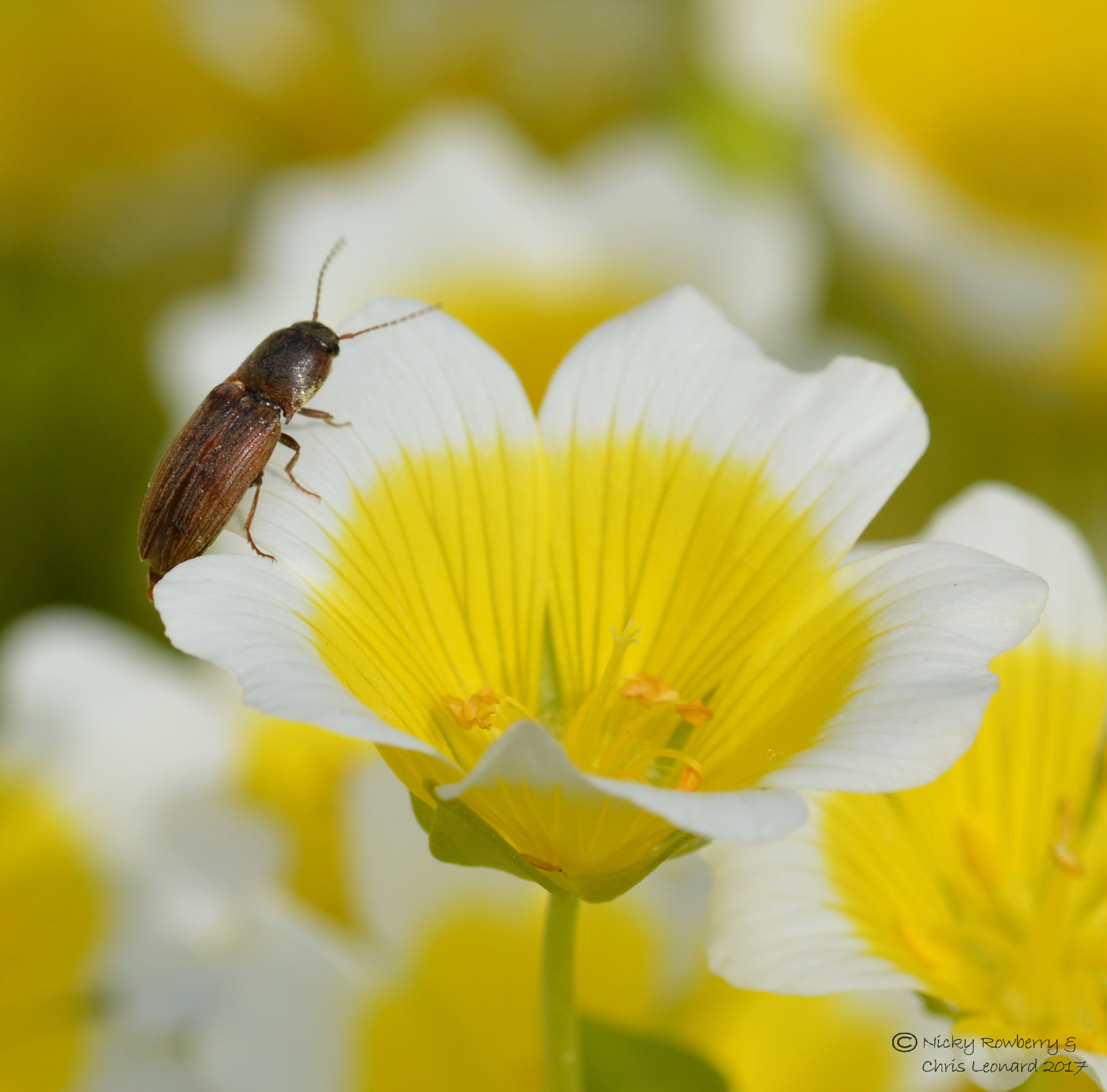
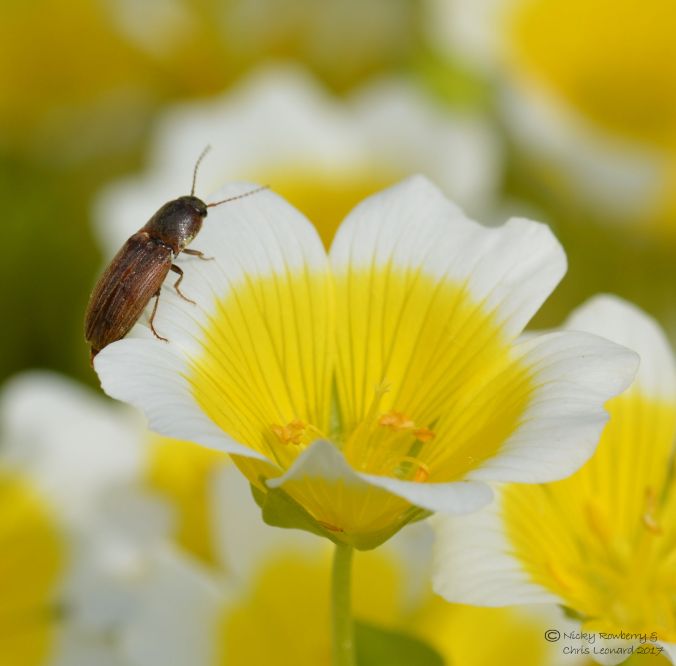
The bees weren’t the only ones enjoying a poached egg. This beetle (some kind of click beetle I think) spent a long time perusing the flowers.
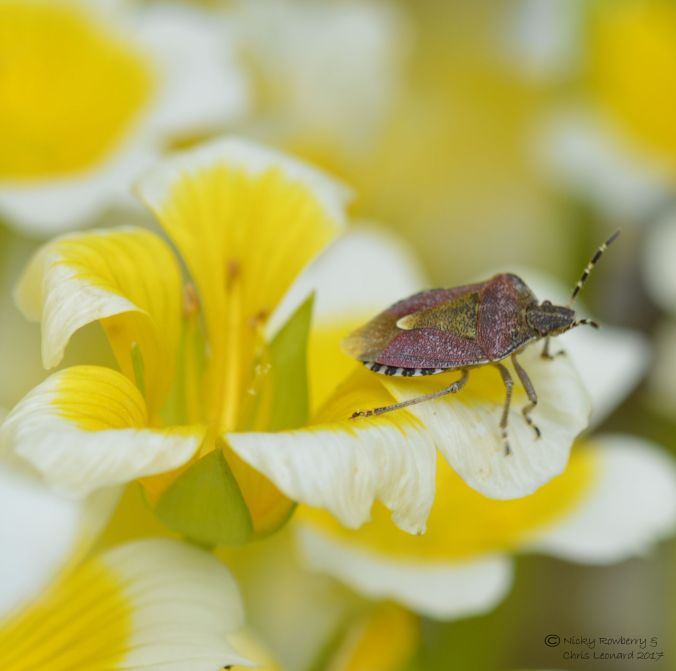
This Hairy Shieldbug didn’t move much, just seemed to be using the flowers as a vantage point to survey the garden!
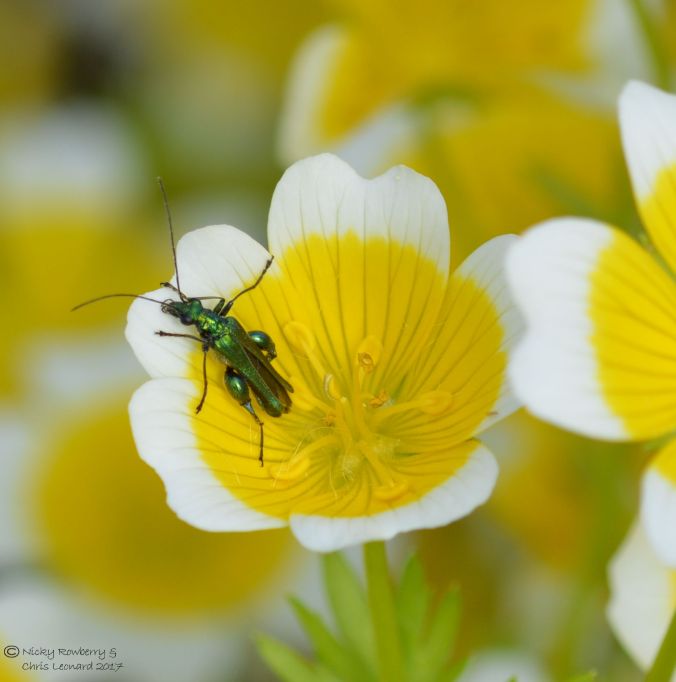
And of course my favourite – the Swollen Thighed Beetle had to get in on the act, displaying his fat thighs nicely.
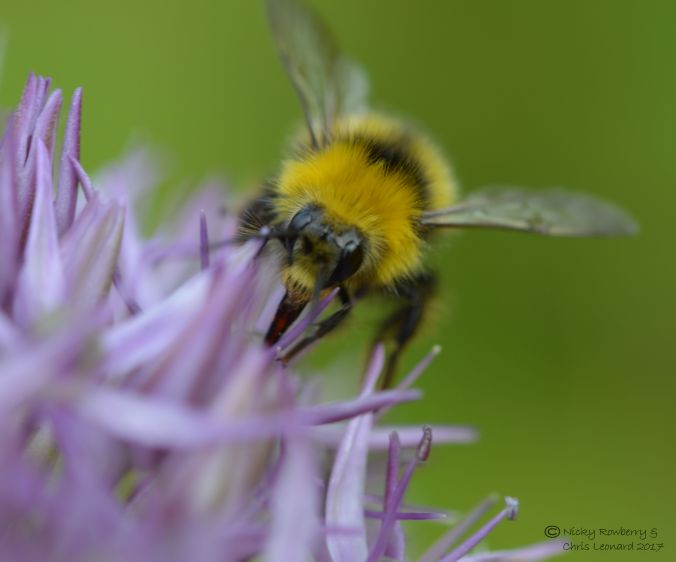
The poached egg plants weren’t favoured by all the bees; some preferred other flowers like this Early Bumblebee on the alliums
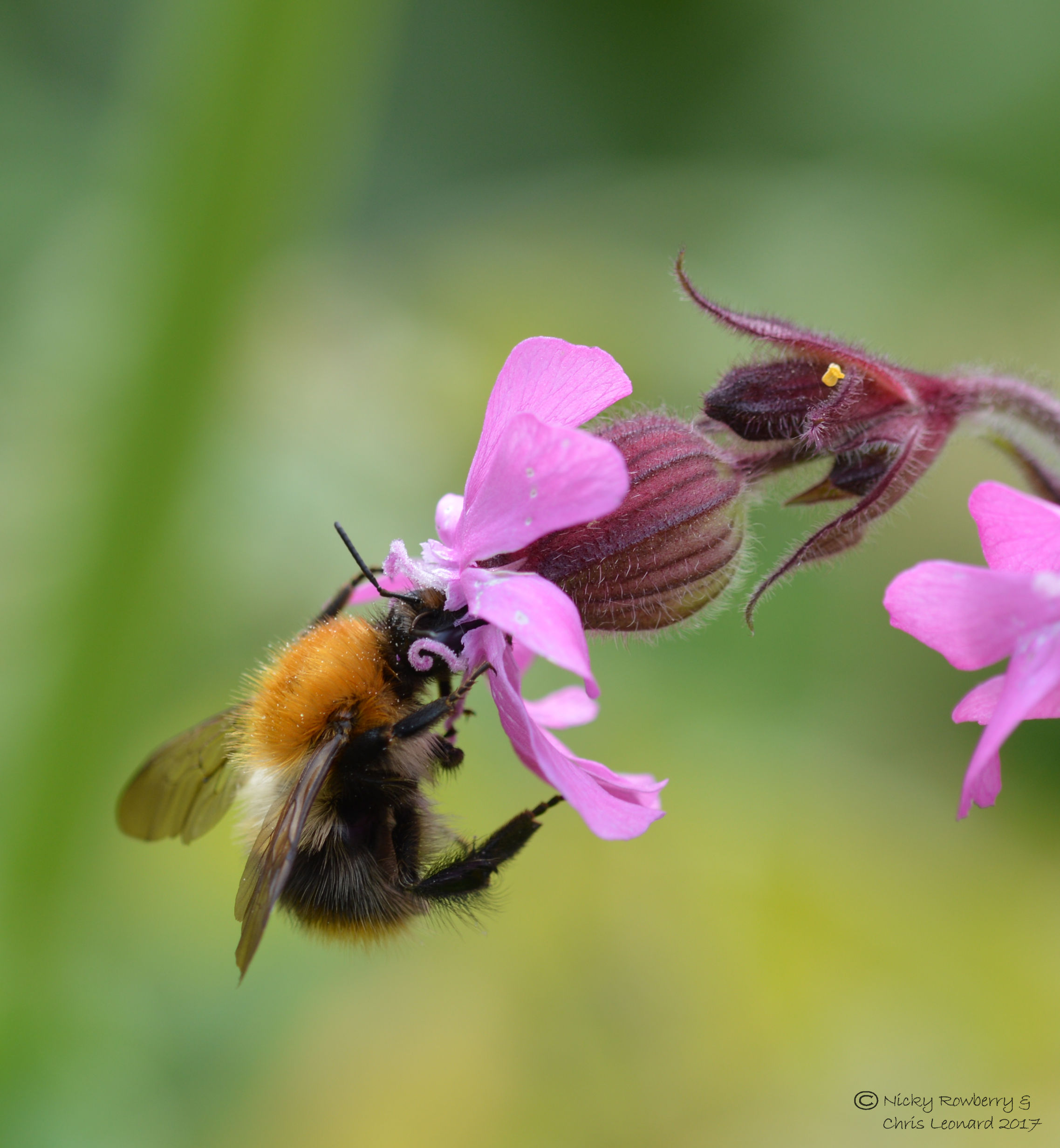
and this Common Carder bee on a campion.

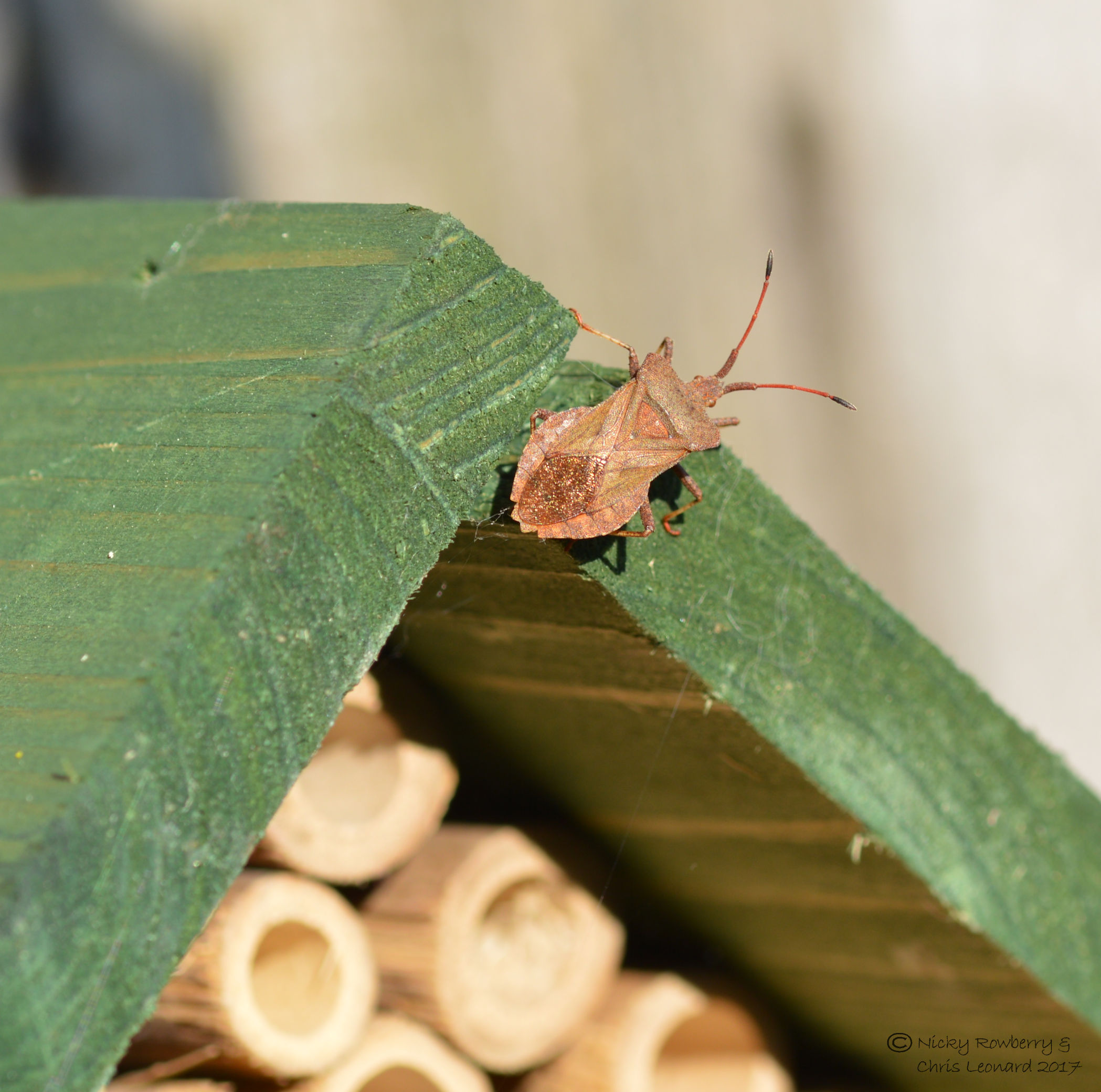
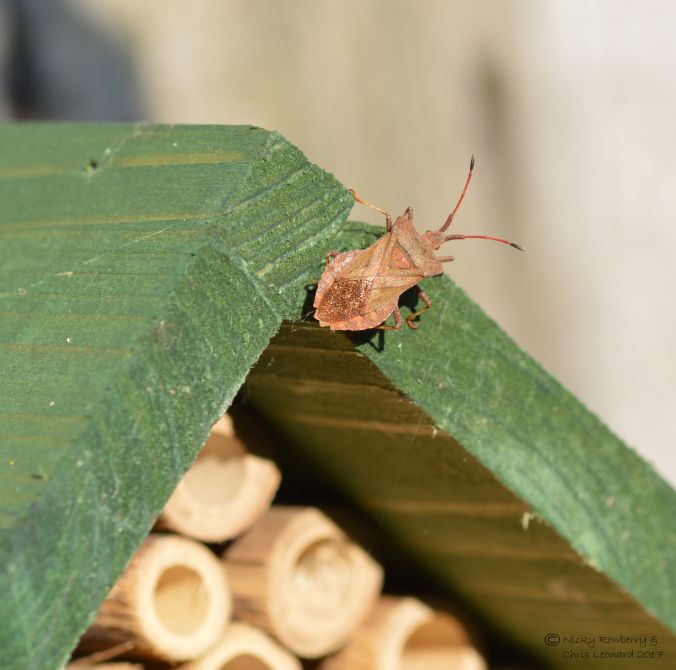
Somewhat inevitably the new bee hotel that I put up in the spring has been virtually ignored by all the bees. But at least it provided a resting place for this shieldbug.
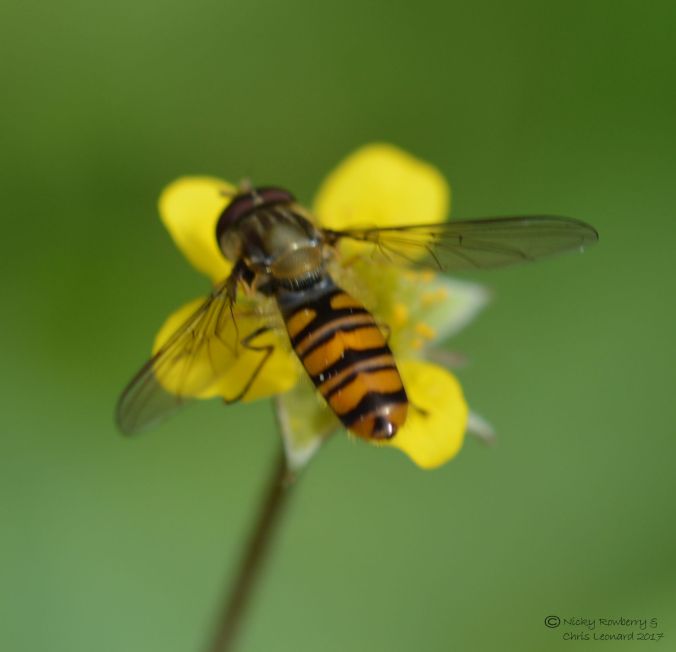
The hoverflies were supposed to be interested in the poached egg flowers, but like most things in the garden, they never do what I expect! This little marmalade hoverfly preferred this small yellow flower to the slightly brash poached eggs.
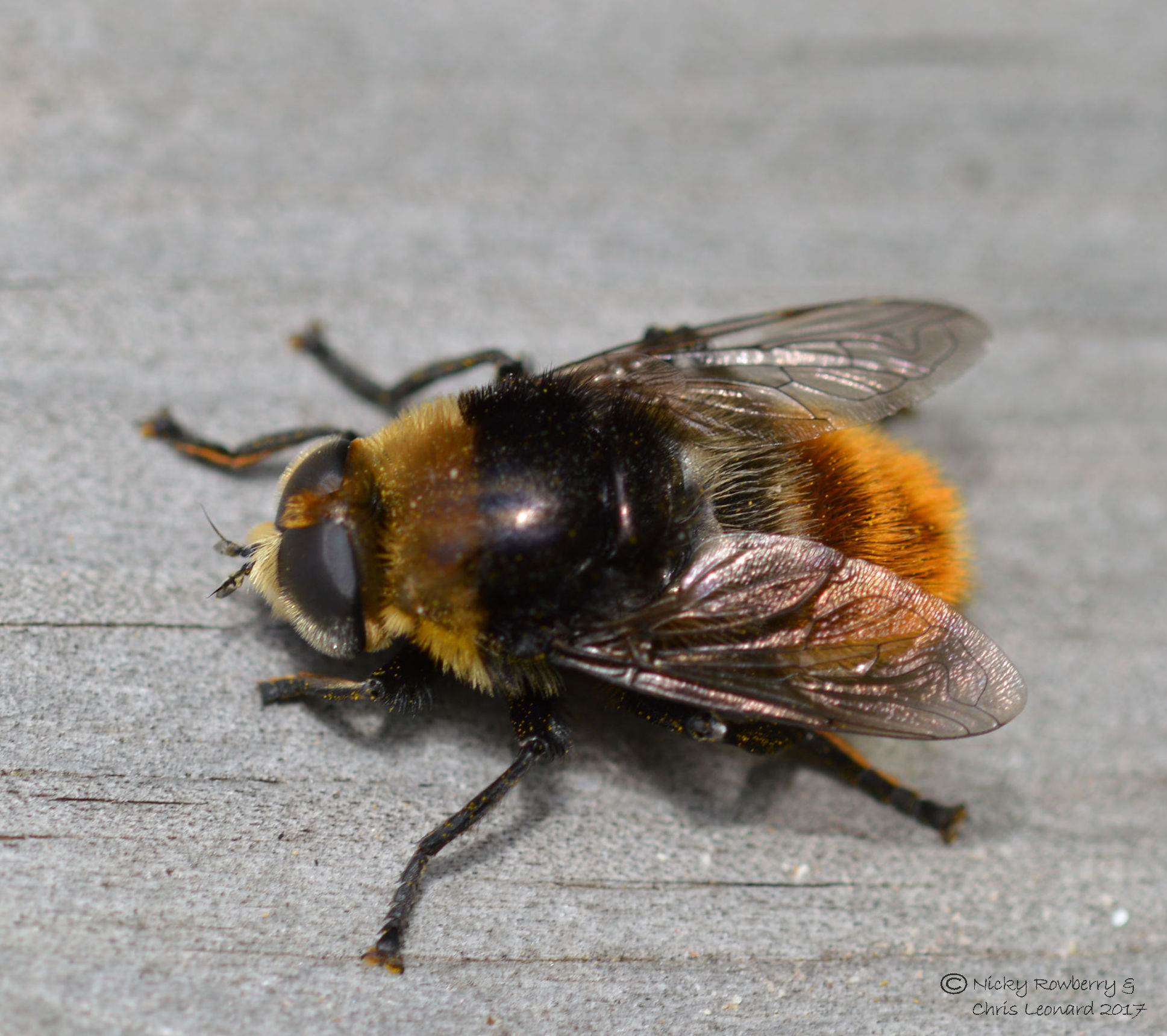
This large fat bumblebee-mimicking hoverfly (Merodon equestris) preferred just to perch on the leg of the bird table. Even when I had to move the bird table to a different part of the garden, the hoverfly followed it over – no idea why?

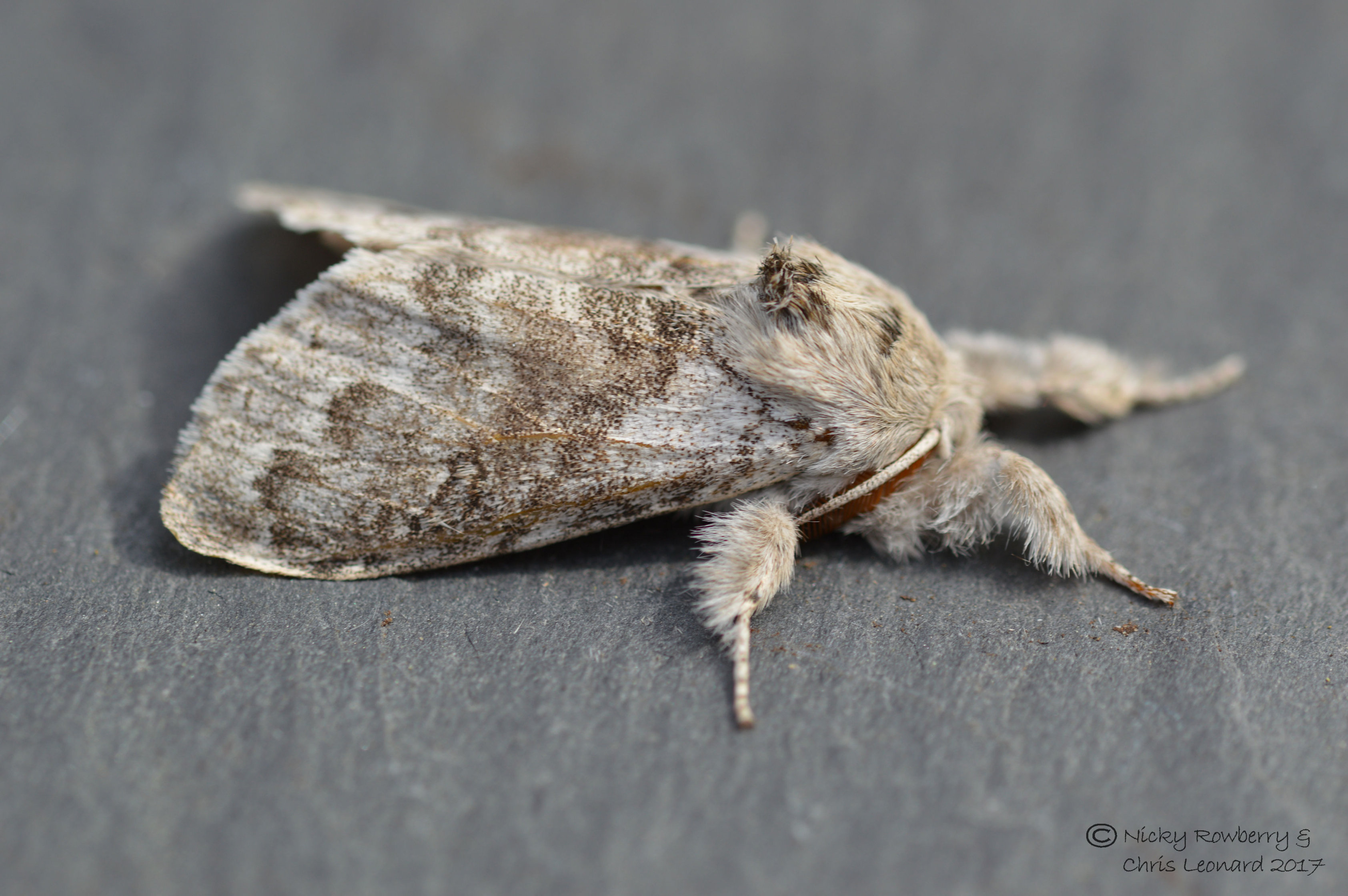
After a very quiet spring moth-wise, May has finally brought an increase in their numbers to the moth trap. The moths of winter and early spring are generally fairly subdued looking, so it’s always nice when some of the more interesting species start emerging. I love this Pale Tussock with its lovely furry legs.

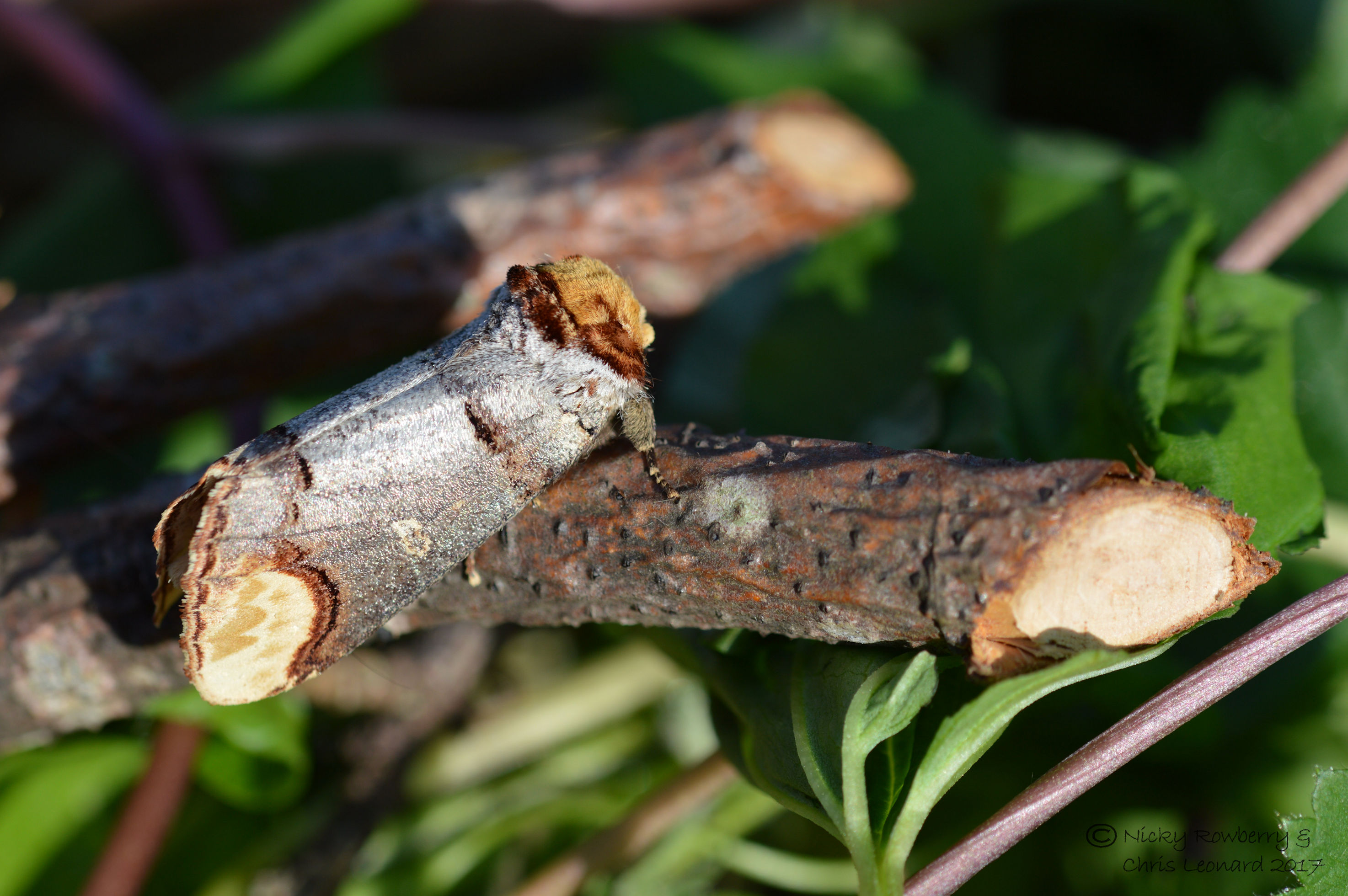
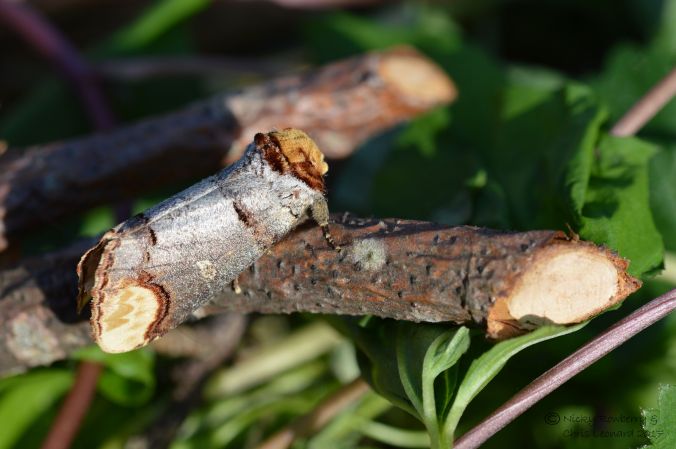
The Buff Tip is a regular visitor to our garden – it has the amazing ability to look just like a broken twig.
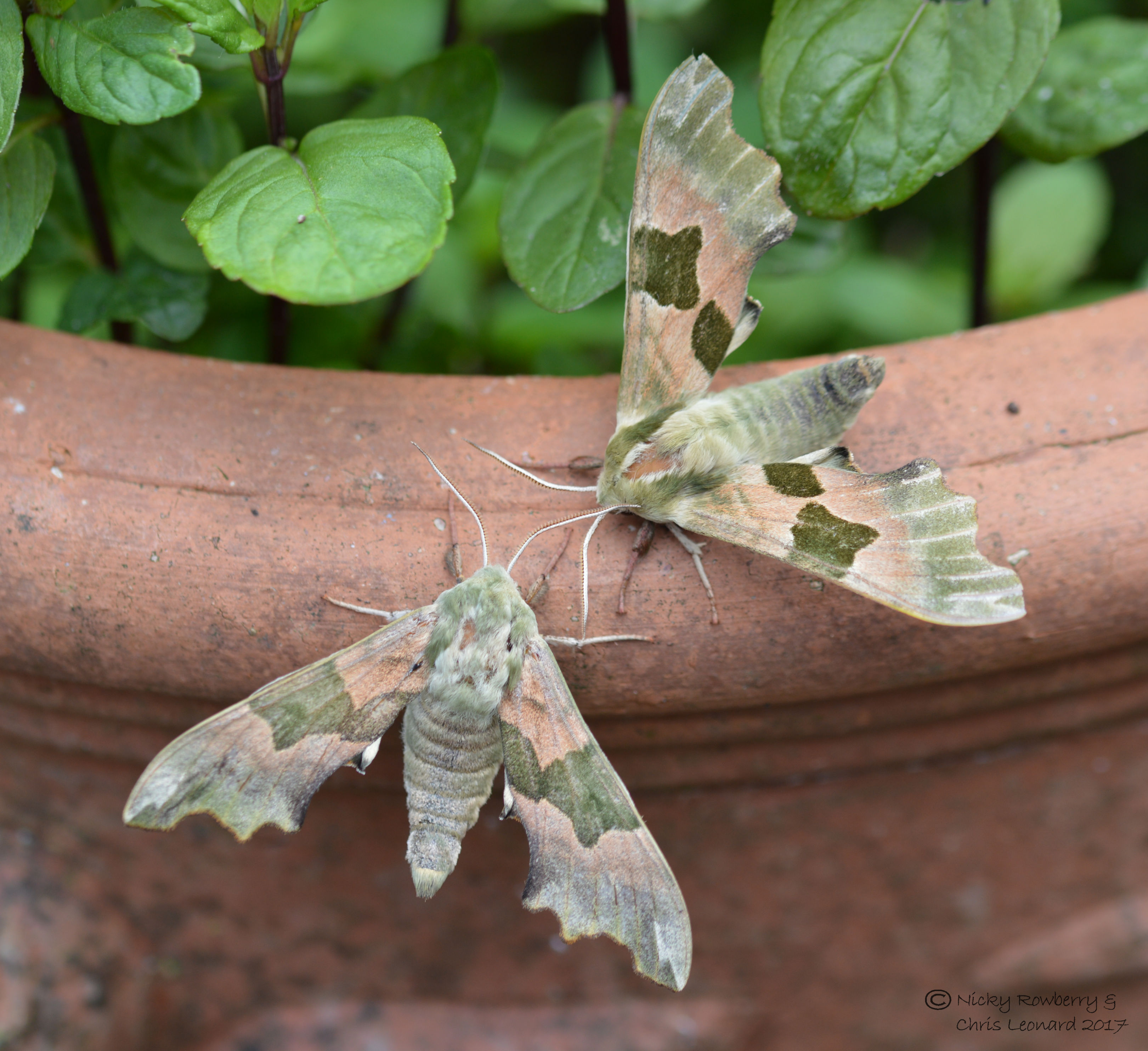
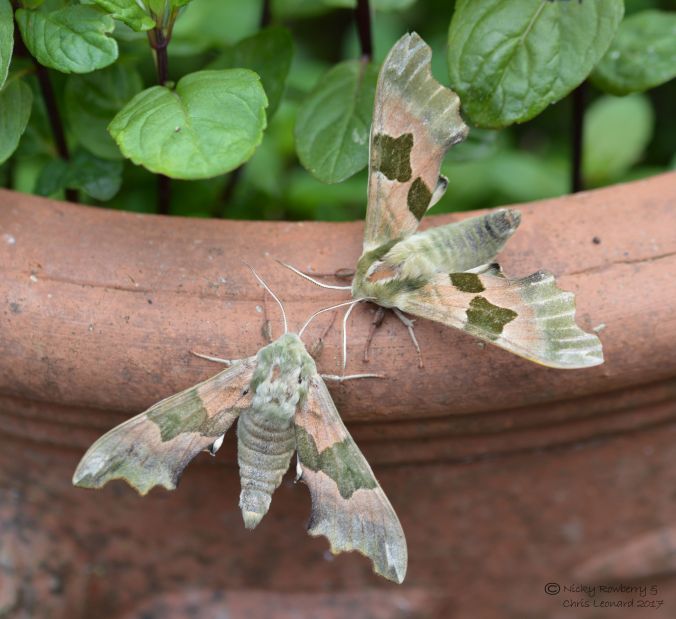
The hawkmoths are the biggest of our native species. Over the years we’ve had Elephants, Small Elephants, Eyed and Poplar Hawk-moths but never a Lime one. So I was thrilled when not one but two turned up last night!
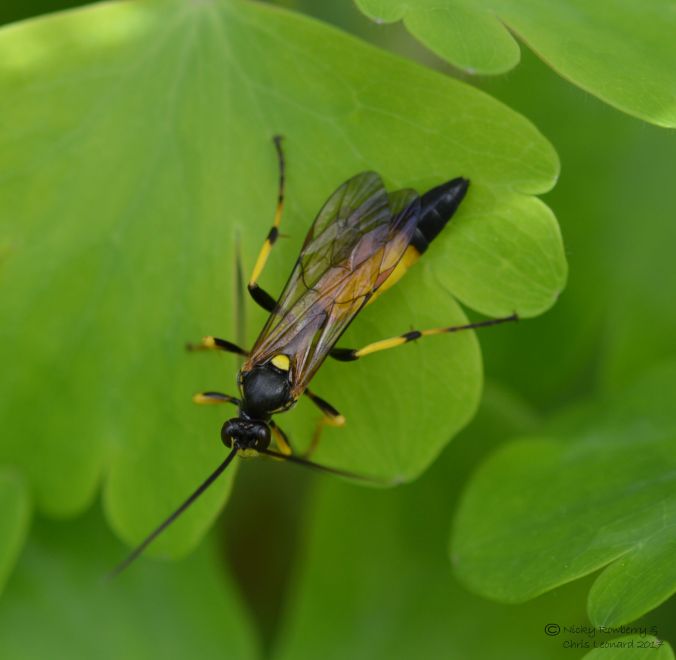
With more moths emerging, more of their foes have emerged too. This beautiful but deadly (if you’re a moth of the wrong species) wasp Ichneumon stramentor parasitizes moth caterpillars.
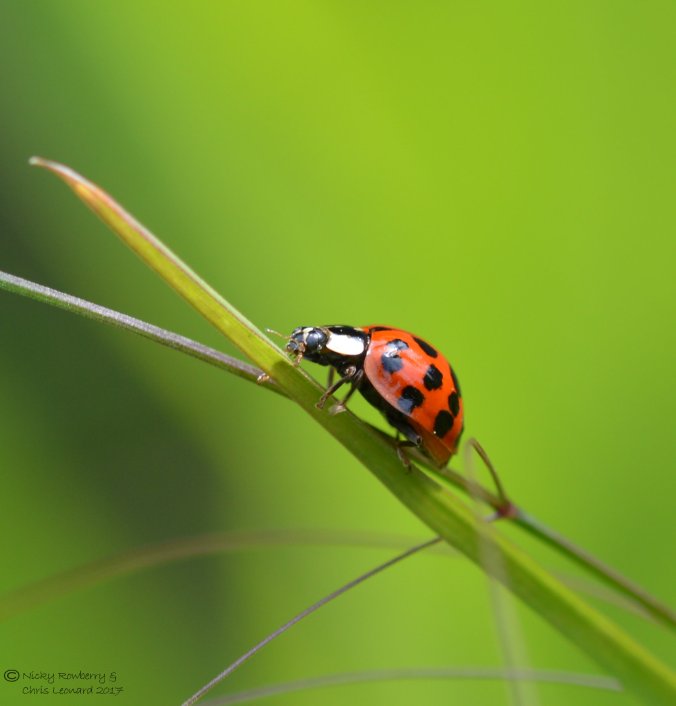
As well as all of the above, there have been plenty of beetles, flies, caddis flies, daddy longlegs and other insects buzzing around this May, I just haven’t managed to take any photos of those. Something for another blog post maybe. But finally one of my favourite images from the month, a ladybird, even if it is a Harlequin rather than one of our native ones.