Hedgehog Feeding Station

“If you build, it they will come” – not originally referring to hedgehogs, but I was hoping it would still hold true. Following my previous post about attempts to feed hedgehogs mainly ending with success at feeding neighbouring cats, I got some very helpful suggestions via Twitter. Probably the most helpful was from Paula who suggested I try out the instructions for building your own feeding station on Little Silver Hedgehog’s excellent blog (https://littlesilverhedgehog.wordpress.com/2016/06/20/build-a-hedgehog-feeding-station/)

The idea behind the feeding station is simple enough – provide a safe place for the hedgehog to eat with an entrance hole too small for the cats to get in. I’m not the most DIY-minded person, but thought I could just about manage this! So one plastic box, a pair of scissors, some sticky tape and a brick later, this was the result!

The Box

It may not be a build of great architectural beauty, but I was hoping the hedgehogs wouldn’t be too bothered by the aesthetics (or the choice of reading material I’d lined the bottom with). The catfood went at one end and the trail cam was set up and I just had to wait for morning to see if it worked.

In the morning I was really chuffed to find that the food had all been eaten – of course the question was – Who or What ate it? Trail cam footage first showed the usual cunning cat peering at the box and looking mildly annoyed that it couldn’t get to the food. Then at about 12:40 am the hedgehog appeared to view my handiwork for the first time.

He or she was cautious at first, peering in and eating some food near the entrance.

Then followed a few more nervous entries into the box until by 3am our hedgehog was striding in and going straight for the food. Clearly his or her confidence was such that by the morning all the food had gone.

I am so pleased with this – it has way exceeded my expectations, especially for a first night trial. I’ve stocked up on catfood and hopefully this success will continue throughout the summer. The only slightly annoying thing is that my trail cam will only record 15 seconds at a time when in night-time mode, but I can live with that.

I can’t thank Little Silver Hedgehog enough for her excellent advice (do check out her blog for all things hedgehog related https://littlesilverhedgehog.wordpress.com/) and Paula on Twitter for pointing me in the right direction in the first place. Social media working at its best!

2021 update – Please note that since I wrote this blog, concern has been raised about feeding hedgehogs with mealworms. It is no longer considered advisable to feed hedgehogs with mealworms. The concern is that hedgehogs that eat a lot of mealworms could develop a condition called Metabolic Bone Disease. So please just stick to either meaty cat or dog food, dry cat food or a good quality (i.e. high protein content) hedgehog food.
Out and About – Prestbury Hill – The Return!

I’m not normally given to the expression OMG, but OMG Prestbury Hill is an amazing place! We made a return trip today to see the Chalkhill Blue butterflies that we didn’t see a few weeks ago (because I’d got their season wrong!) We ended up seeing 15 species of butterfly, a beautiful bird of prey, some moths and a new snail! Pretty amazing for a few hours walking in beautiful countryside.

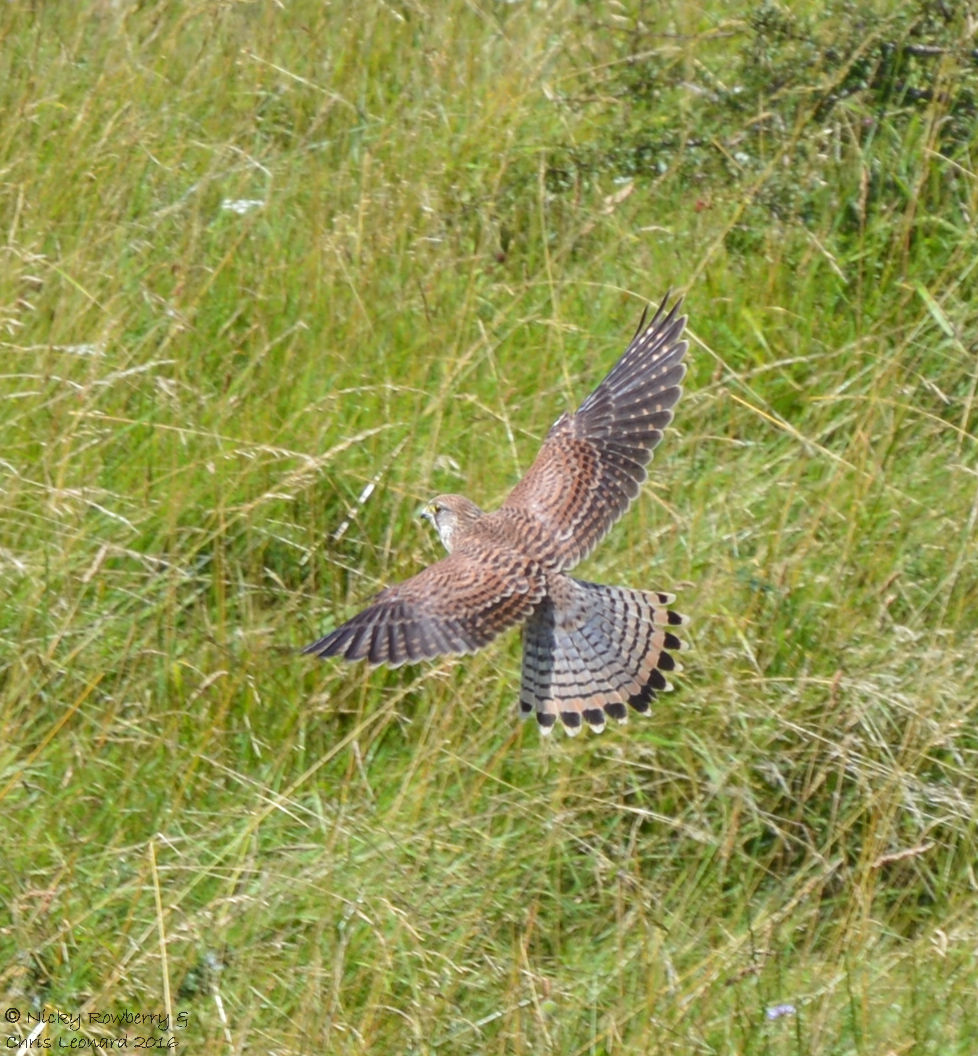
We started leisurely by heading to a bench for a picnic (I’d love to be able to claim that I’d loving crafted cucumber sandwiches and other home-made delights, but actually it was left-over fried chicken from the night before!) We spotted our first Chalkhill Blues before we even reached the bench, but decided to eat first then take photos later. Said bench has glorious views out over Cheltenham and beyond and is the perfect place for a picnic. We could see a bird of prey hovering over fields below – turned out it was this beautiful kestrel. We couldn’t get very close, so this is taken zoomed in from a fair distance, but you can still see what a stunning bird it is.

Kestrel

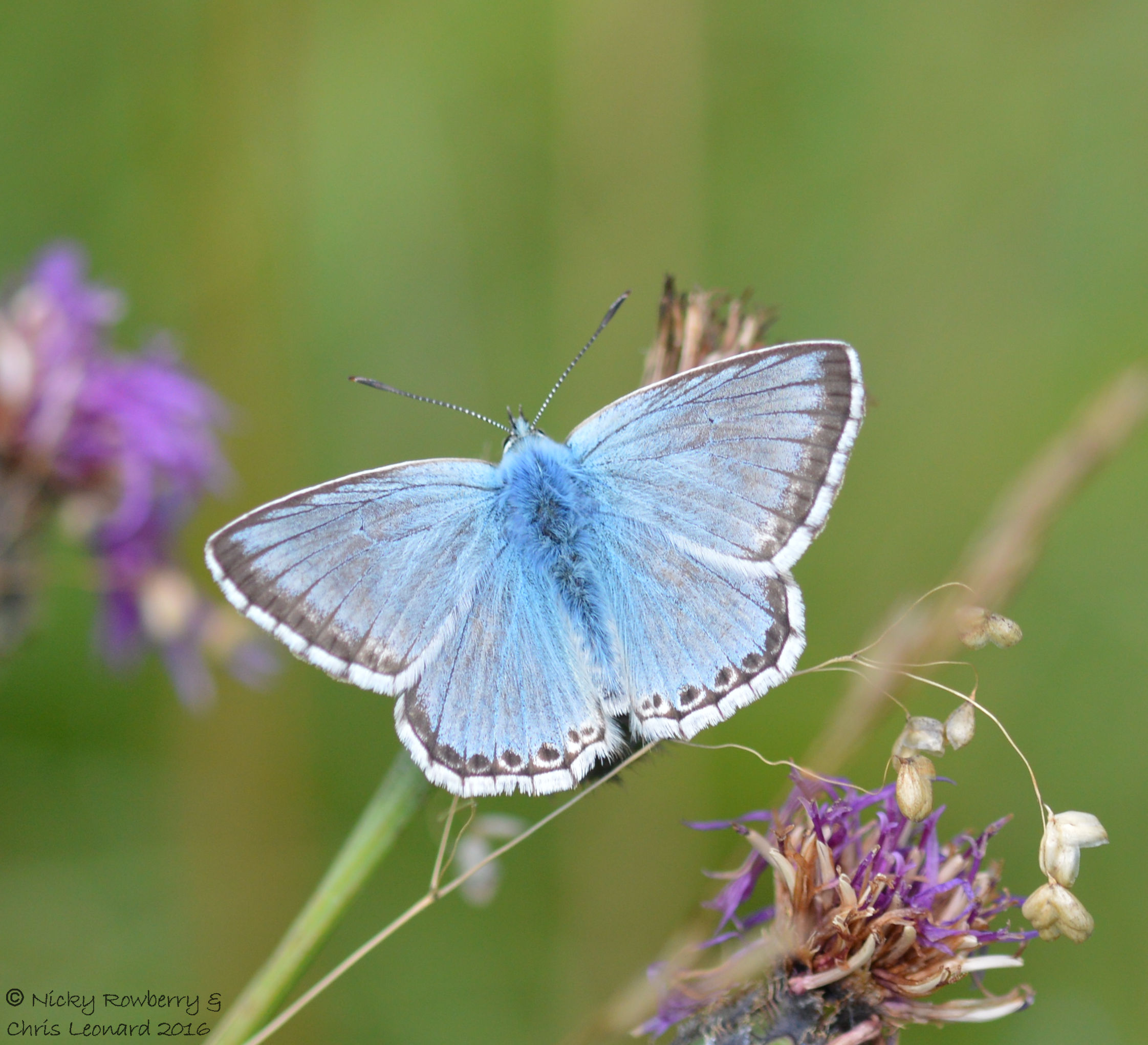
It hovered round about for much of our visit, never coming close enough for a better photo though. But by then we were distracted by the object of our desires – the Chalkhill Blues. The beautiful blue butterflies need either chalk or limestone grassland (Prestbury is limestone) and are one of the last species to appear each year. The males have gorgeous bright blue upper wings edged with black.

Chalkhill Blue

The underneath of the wings have a pattern of dots quite similar to the Common Blue.

As is so often the case with butterflies, the female is much drabber. We saw mainly males today, but that could be just that they are easier to spot with their bright colouring. The few females we did see were often being pursued by more than one admirer.

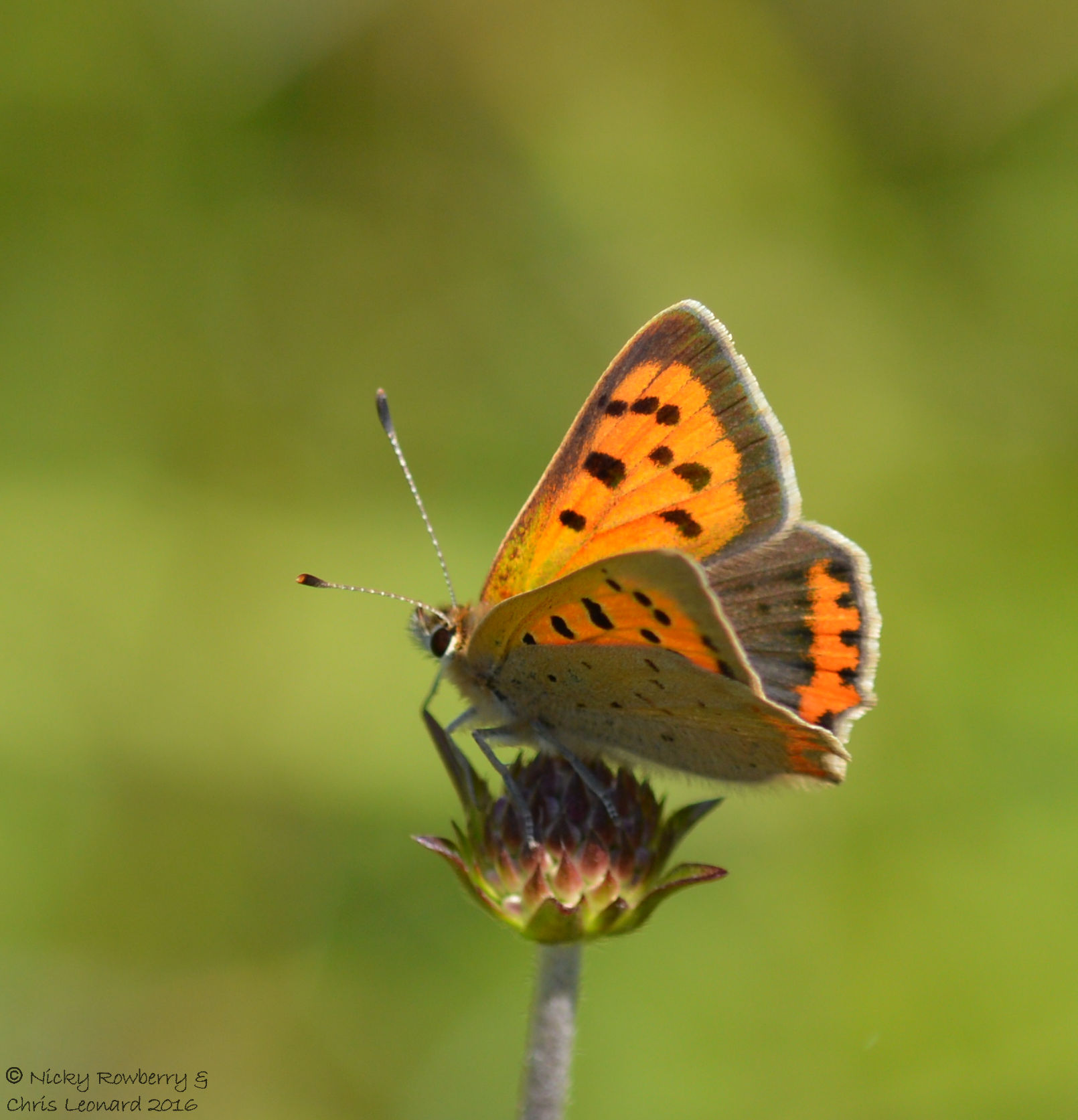
Already delighted with having bagged our Chalkhills we got chatting to some fellow butterfly twitchers, who knew much more about the area than we did and were very helpful. They mentioned that they’d seen Brown Argus further up the slope – a species that we’d never seen before. Needless to say we puffed our way back up the hill to the area they’d described in the hope of a second prize for the day. We caught a glimpse of something different, which turned out though to be some lovely Small Coppers. My photo doesn’t really do them justice, but they were positively glowing a coppery red in the sunshine today.

Small Copper

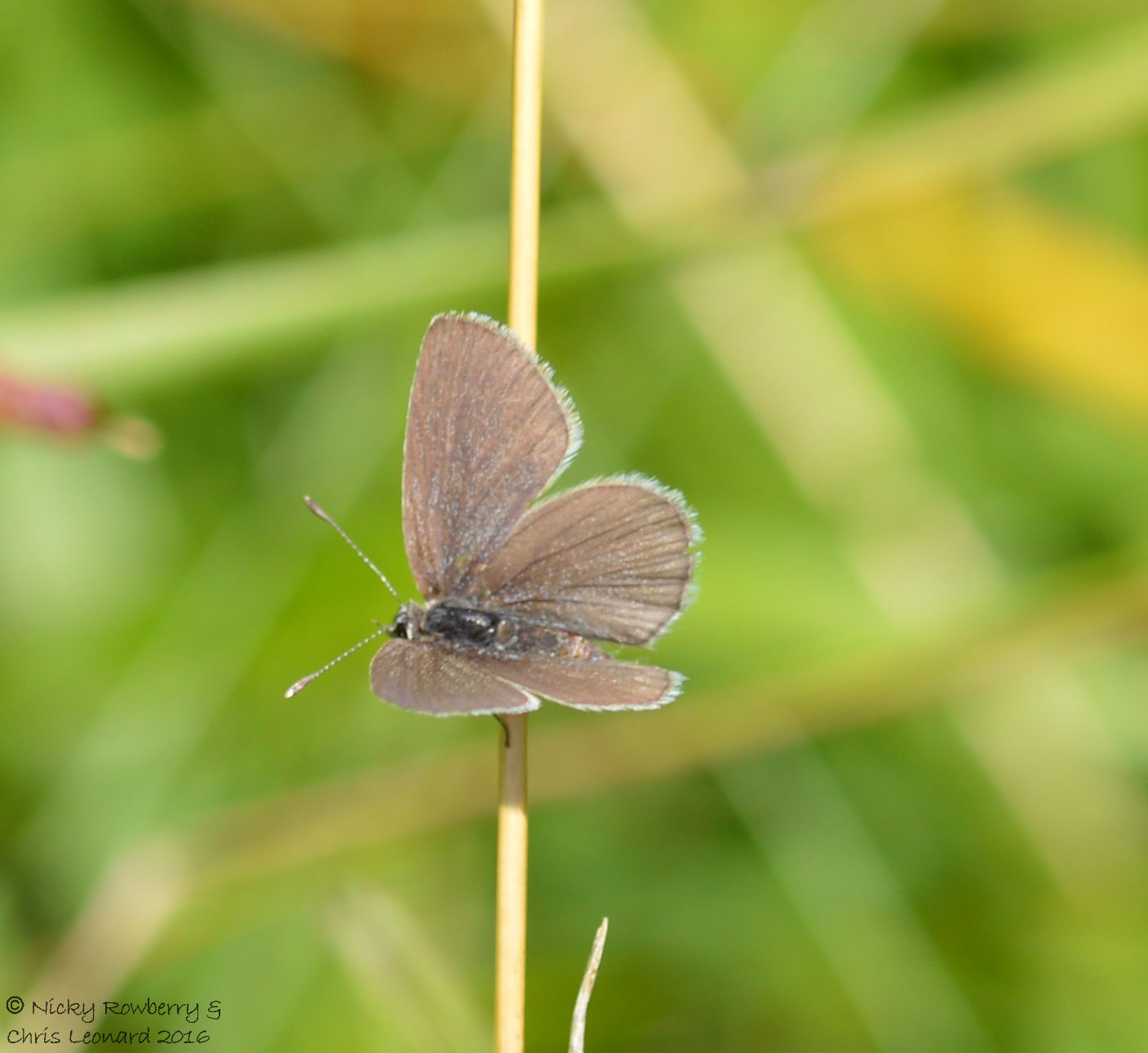
I then noticed a tiny, fairly plain little butterfly, so took a few quick photos thinking it would probably turn out to be a Common Blue. So we were amazed when I downloaded the photos later and realised it had actually been a Small Blue! Another new species for us – two in one day!

Small Blue open

We carried on back up the hill and about half way up saw another small butterfly. This time we’d found it – a male Brown Argus. Our third new species of the day! Again they look quite similar to the female Common Blues, but have the orange dots going right the way to the end of each wing.

Brown Argus male

Obviously seeing three brand new ones was the highlight of the day, but we also saw 12 other species, including our first Small Skipper of the year and some nice fresh looking Gatekeepers.

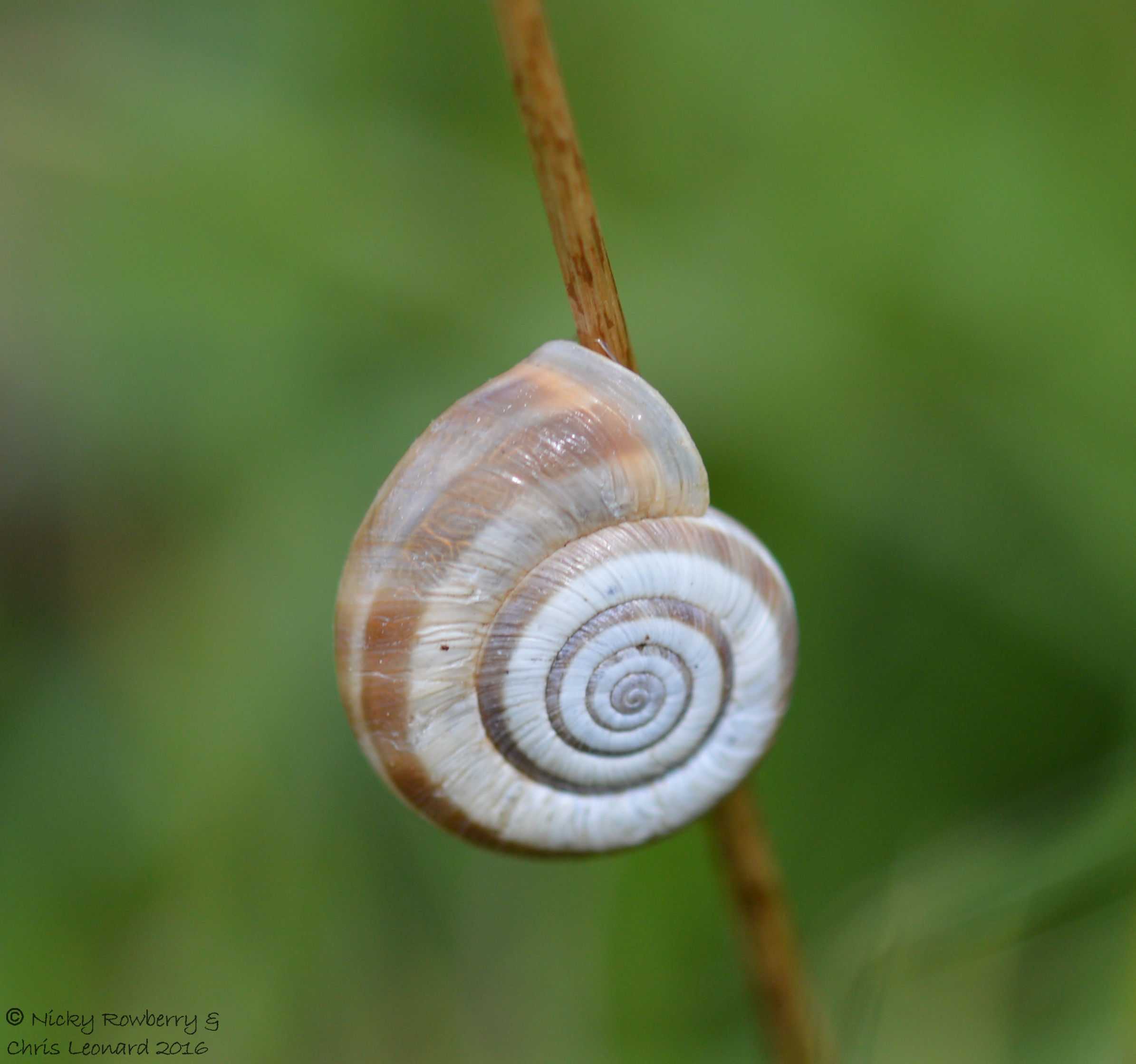
We also saw lots of these interesting snails. They are Heath Snails (Helicella itala) and seemed to have the habit of climbing grass stems like this.

Heath Snail

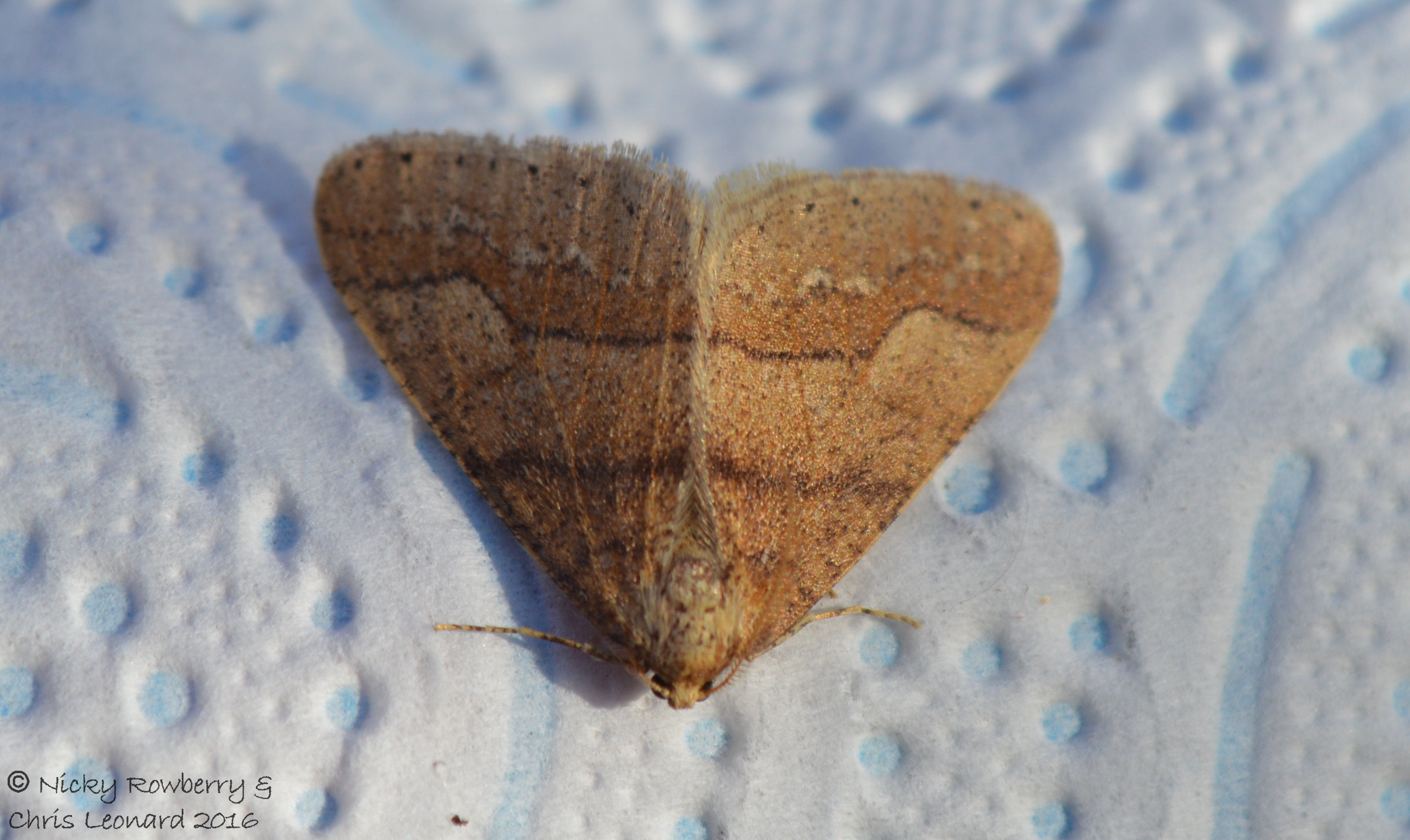
And finally we couldn’t have a day out without finding a moth – this time a Shaded Broad-Bar as we headed back to the car.

Moth

So if you want to see butterflies, I can’t think of many places better to go than Prestbury Hill. And it still has more to offer – Duke of Burgundy butterflies in the early summer apparently, so we’ll be back again next year.

30 Days Wild – Day 12

TWT 30 Days Wild_countdown_12Day 12 of 30 Days Wild and it’s been all about the moths. This weekend has been the annual Moth Night (which slightly confusingly has run for 3 nights) – a celebration of all things mothy. The theme of this year’s Moth Night was Hawkmoths, so I was really hoping I’d get some in the traps.

I had both moth traps out last night and was up at 4am this morning to empty them before the robin beat me to it. The last 2 days I’ve been pretty much eyeball to eyeball with this robin as he has clearly learnt that moth traps provide easy pickings! I only have to turn around for a second and he’s there sitting on the edge of the trap, peering in. If only he could tell me their names, he’d be a big help!

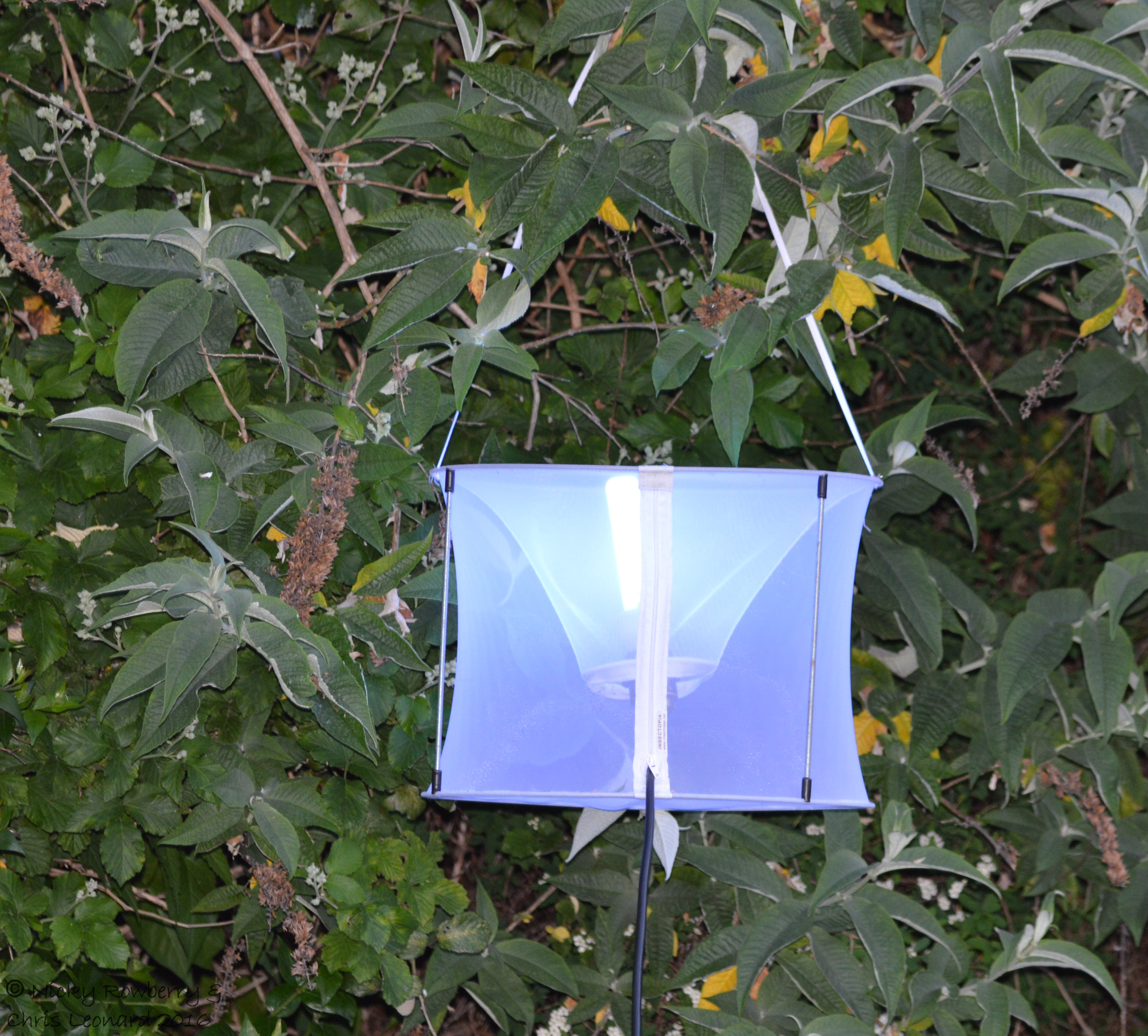
Skinner TrapI’d run one trap on Friday night as usual for my weekly Garden Moth Scheme count. So I could use those numbers for Moth Night too – great when the data can be used for 2 schemes at once!


Safari TrapLast night though I put the other trap out as well (I can only use the wooden one for the Garden Moth Scheme) to try and maximise my haul for Moth Night. Fortunately the rain held off last night until about 5:30am, by which time I had collected all the moths ready to photograph at a more civilised hour.

I’ve spent a large part of today identifying the moths I’d photographed this morning and yesterday. I’ve no idea yet how other moth trappers got on, but I was pretty pleased with my total count of 174 moths of 41 species over the 2 days. Interestingly the number of traps didn’t make much difference – I got 27 species the first night with one trap and 29 last night with the 2 traps.

I was really chuffed to get 2 species of Hawkmoth – the Elephant (on the left below) and the Small Elephant (on the right obviously!).  We get the bigger one quite often in June and the small one less frequently. It would have been nice to get some of the other big hawkmoths too, but that’s the way it goes.

Pair of elephants

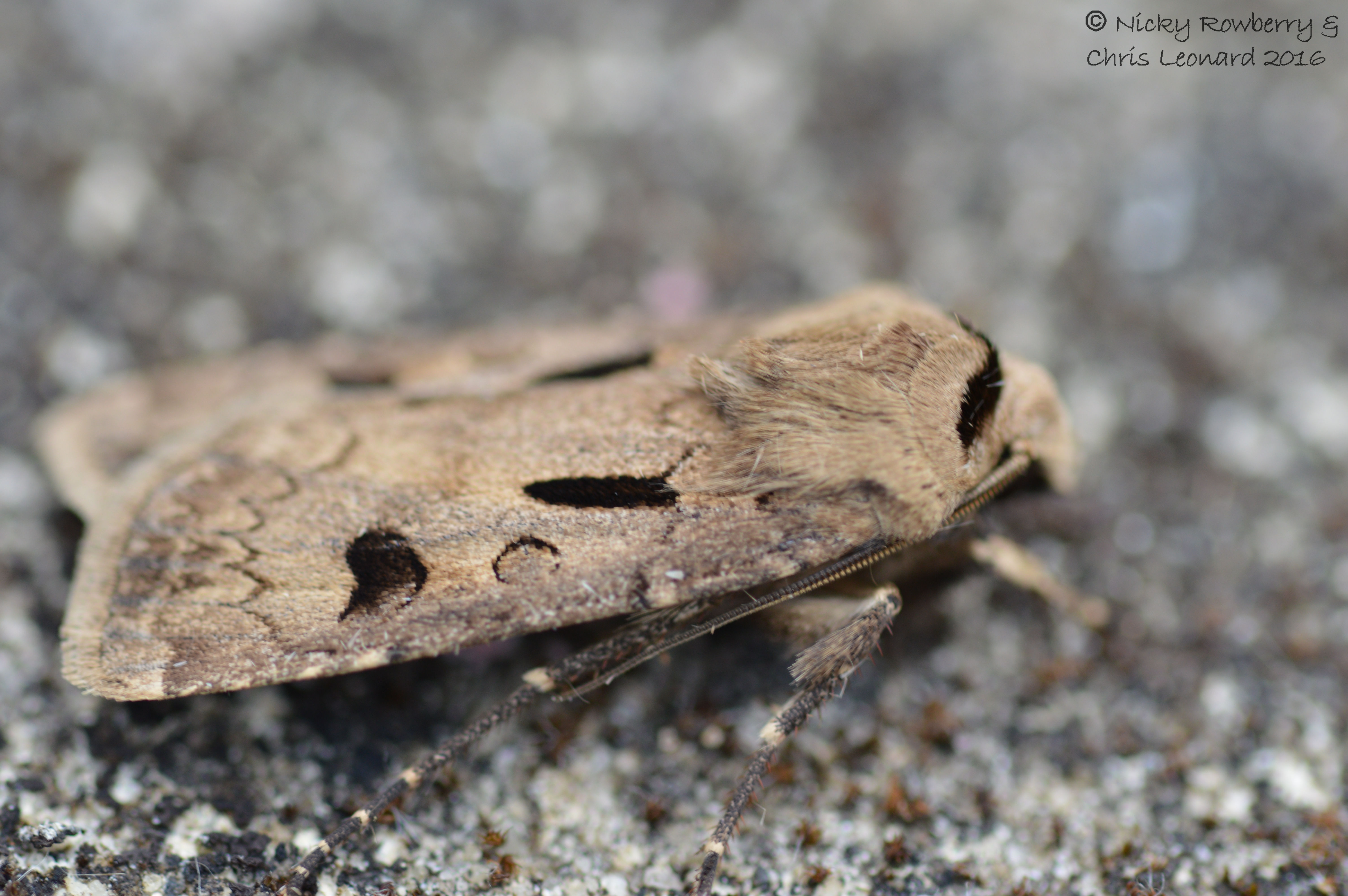
The dominant species in terms of sheer numbers was the Heart and Dart, which accounted for about a third of the total number of individuals. I love the way many of the moths are named – the Heart & Dart is so called because it has dark markings shaped like a heart and a dart! It does what it says on the tin!

Heart & Dart

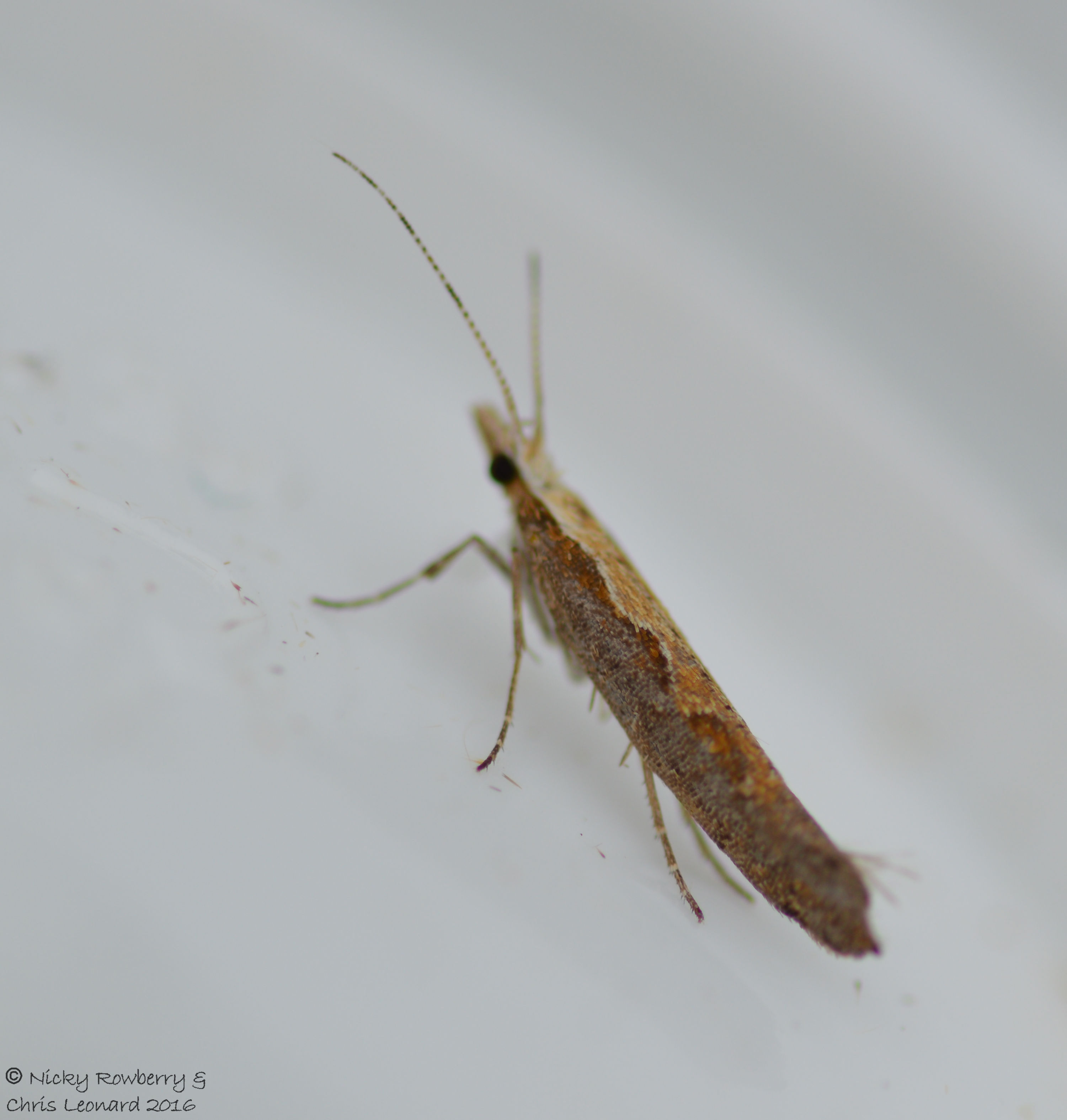
The other numerous moth in the trap was a micro one – the Diamond Back Moth – named for its diamond shaped pattern on its back! This tiny moth is actually an immigrant and they’ve been blown over to the UK in recent weeks in huge numbers – they even got a mention on Springwatch.

Diamond Back moth

The Diamond Back wasn’t the only incomer, I also trapped a Silver Y moth each night – again named for the silvery Y shape on its wing. The Silver Y is one of the more famous immigrants in the moth world and even got recorded as part of the Big Butterfly Count last year.

Silver Y

Moths can generally be split into Macro and Micro moths. I tend to prefer the Macro ones because not only are they bigger, but they are usually easier to identify. This weekend brought some particularly impressive ones. The Scarlet Tiger is so bright and colourful it is often mistaken for a butterfly. They regularly fly in sunshine, but this one came to the trap at the weekend.
Scarlet Tiger

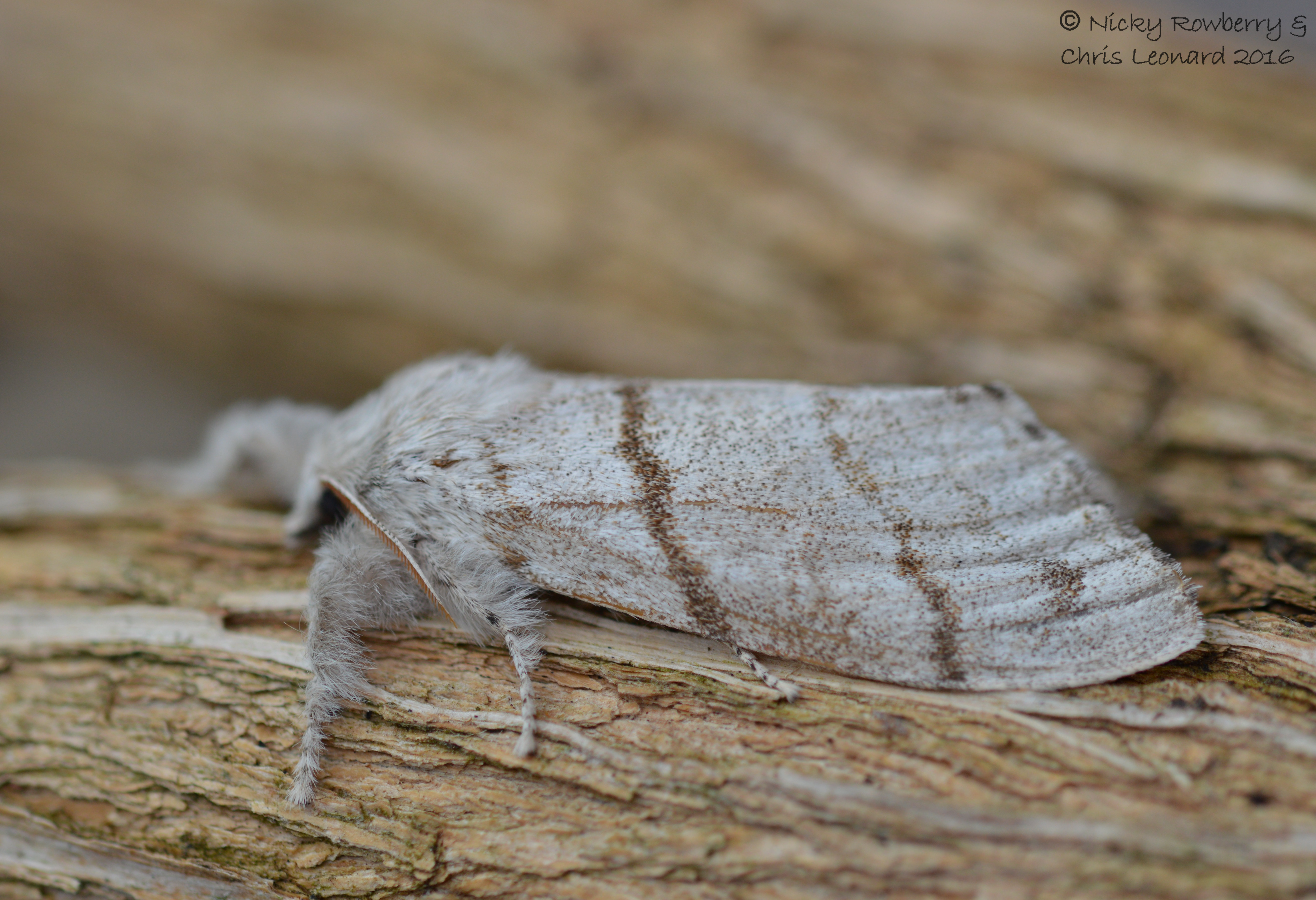
The Puss Moth and Pale Tussock are two other large species that turned up for Moth Night. I love the way the Puss sits with its front legs stretched out ahead.

Puss Moth

Pale Tussock

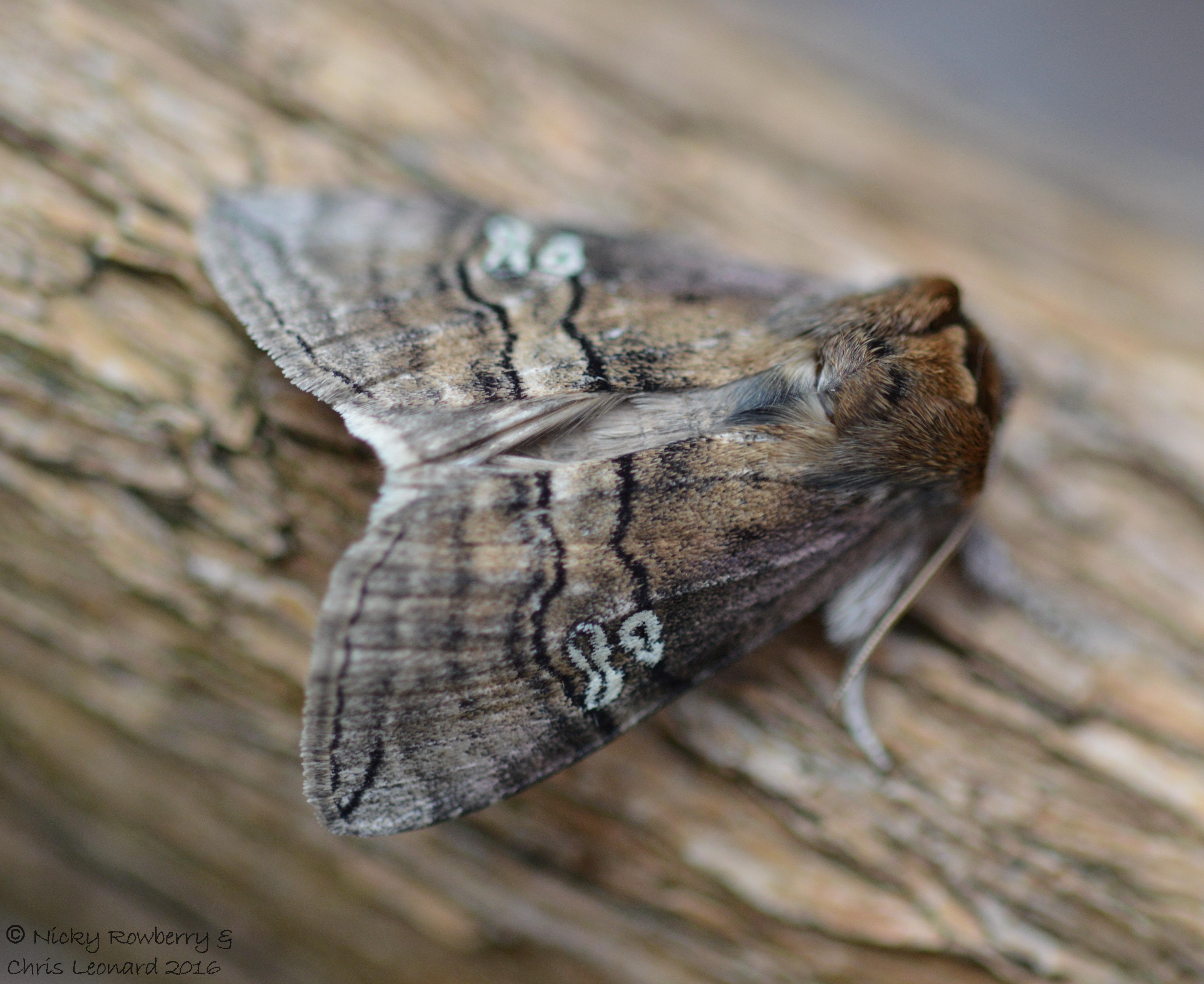
I was really pleased to find this next moth in the trap this morning as I’d only ever seen it in the books before – the Figure of 80 – so named because it looks like someone’s written 80 on each of its wings!

Figure of 80

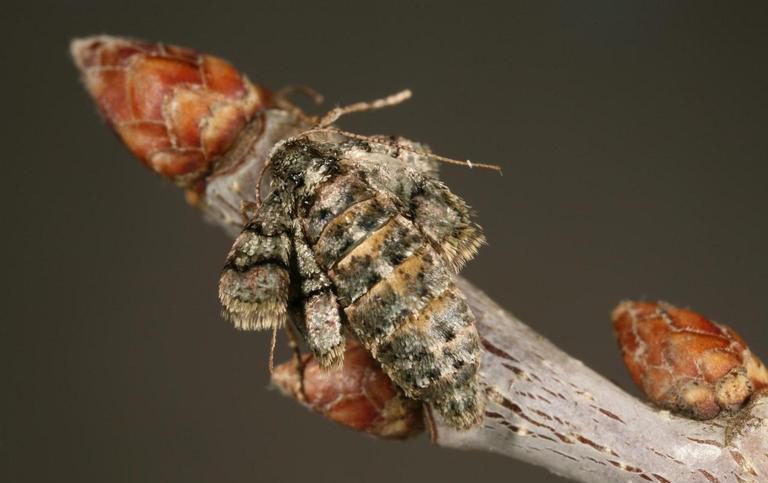
Although the Micro moths are obviously smaller and so generally harder to ID, many of them are really quite stunning when you look at them close up, like this Cherry Bark Moth (top) and Barred Marble (below).  They’re both probably less than a centimetre long, but there’s such detail in their colouring.

Cherry Bark


Barred Marble

So that’s Moth Night over for another year. Hopefully they will have had lots of results submitted from all over the country and it will have raised the profile of moths generally.  I really enjoy taking part in projects like this; it’s great sharing the photos on social media and seeing what all the other moth-ers around the country are getting in their traps.

For more info have a look at their website:  http://www.mothnight.info/www/


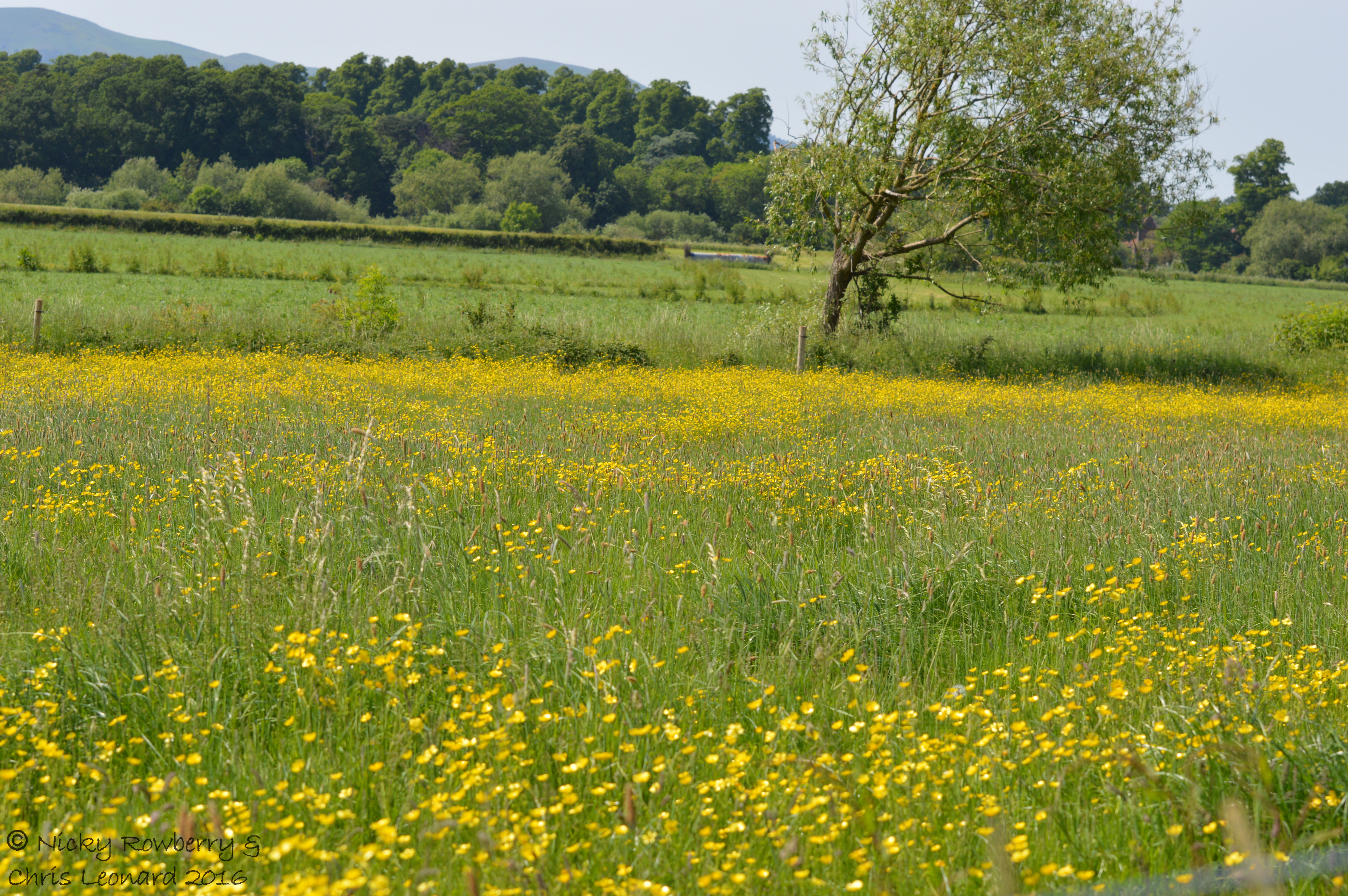
Buttercup 30 WEEDS

Weed no. 12 in my 30 Lazy Weeds from the garden and it’s the Buttercup. One of our most iconic flowers, that even children will recognise. Most kids will have tried the old custom where you hold a buttercup under your chin and if it reflects yellow, it means you like butter. Of course all it really proves is that the buttercup’s petals reflect light very well, but that’s not quite so romantic a thought! Maybe it is that old custom though, as buttercups hold an innocent charm for me that few of the other flowers do.

30 Days Wild – Day 6

TWT 30 Days Wild_countdown_06

I am very lucky in that not only do I work on a farm, but it is an organic farm in an area of beautiful countryside – Upton-on-Severn to be precise. Despite having worked there nearly 5 years now, I’m ashamed to say I’d never actually gone for a walk to explore it. It took Day 6 of 30 Days Wild to get me up from my desk and out with my camera. With hindsight I maybe shouldn’t have picked the hottest day of the year to venture out – I did look a bit like a boiled lobster by the time I got back (much to the amusement of the other staff), but I had a lovely walk. I didn’t get as far as I intended, mainly due to the excessive heat, but I can explore other bits another day – I really should of course get down to the River Severn itself!

We have lovely views at work across the Severn towards the Malvern Hills, which were looking a bit hazy in the heat today.

DSC_4283

As you might expect on an organic farm, the fields and hedgerows are full of wildflowers and insects.

DSC_4298

DSC_4291

A lot of the flowers I was familiar with like the Cow Parsley and this Red Campion.

Red Campion

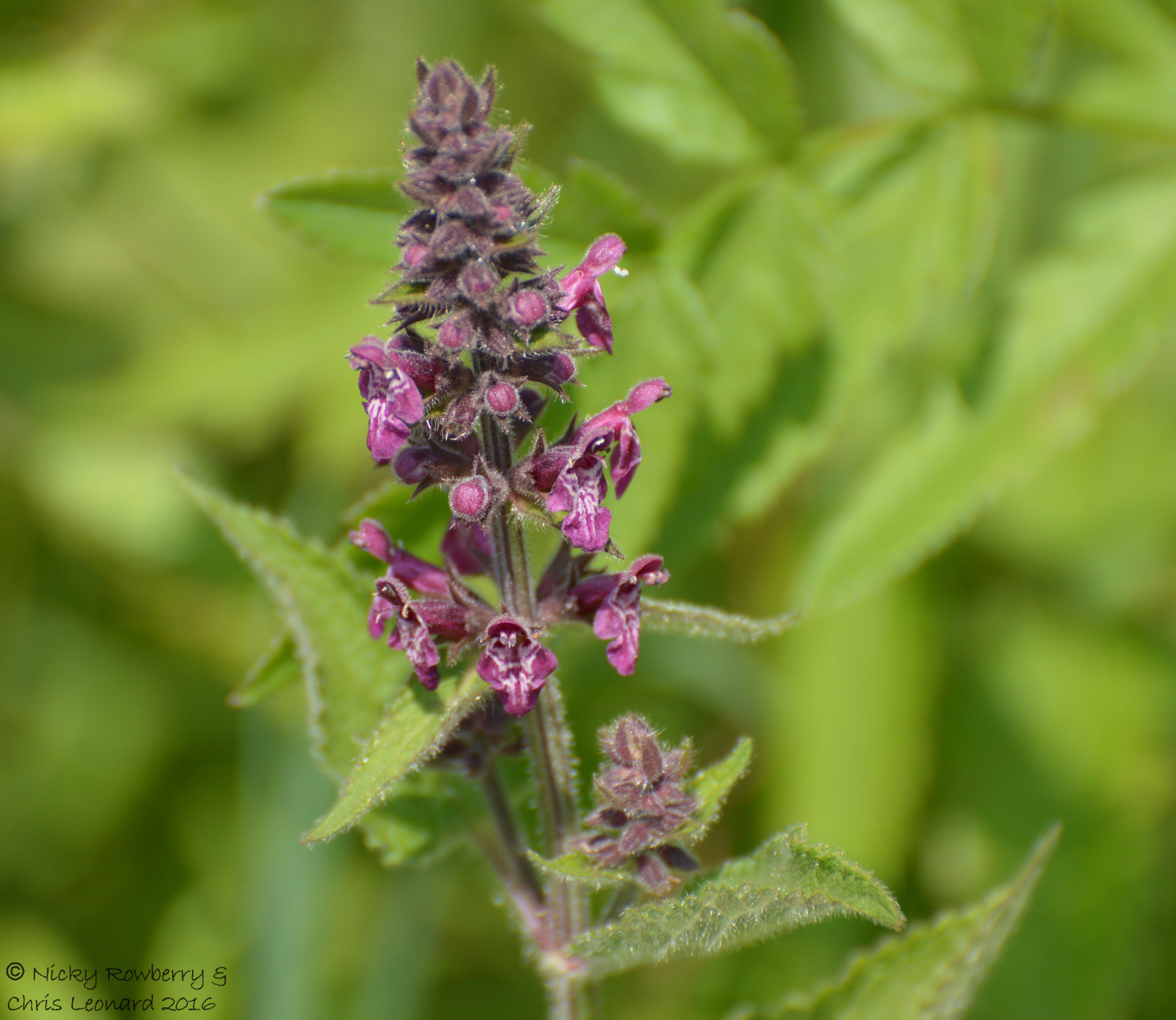
But others were new to me like this Hedge Woundwort and Black Medick – the power of Google and the good people of i-Spot were needed to identify these.

Hedge Woundwort

Black Medick

It was great to see so many bees making the most of the sunshine too. There were lots of different species about, but I only managed to get photos of 3 (what can I say, the bees were very quick and I was very slow in the heat!) The honey bees were fairly easy to identify straight off (famous last words, someone will probably tell me this is something else!)

Honey Bee

The cute little male Early Bumblebee I also managed to ID myself too. I love the second photo of him – I know the bee isn’t in focus, but somehow he’s got attitude as he flies off!

Early Bumblebee male 2

Early Bumblebee male

The final bee is a Grey Patched Mining Bee (Andrena nitida), which I needed the ever helpful Bee and Wasp Facebook group to identify for me.

Andrena nitida Grey patched mining bee

Butterflies were abundant too, although like the bees too fast to get many photos. Pretty sure though I saw Speckled Woods, Brimstones, Painted Lady and some really small Common Blues. I was particularly chuffed with the Common Blues as they’re the first I’ve seen this year. Again apologies for poor photo, I couldn’t get close enough to get a better one.

Common Blue (1)

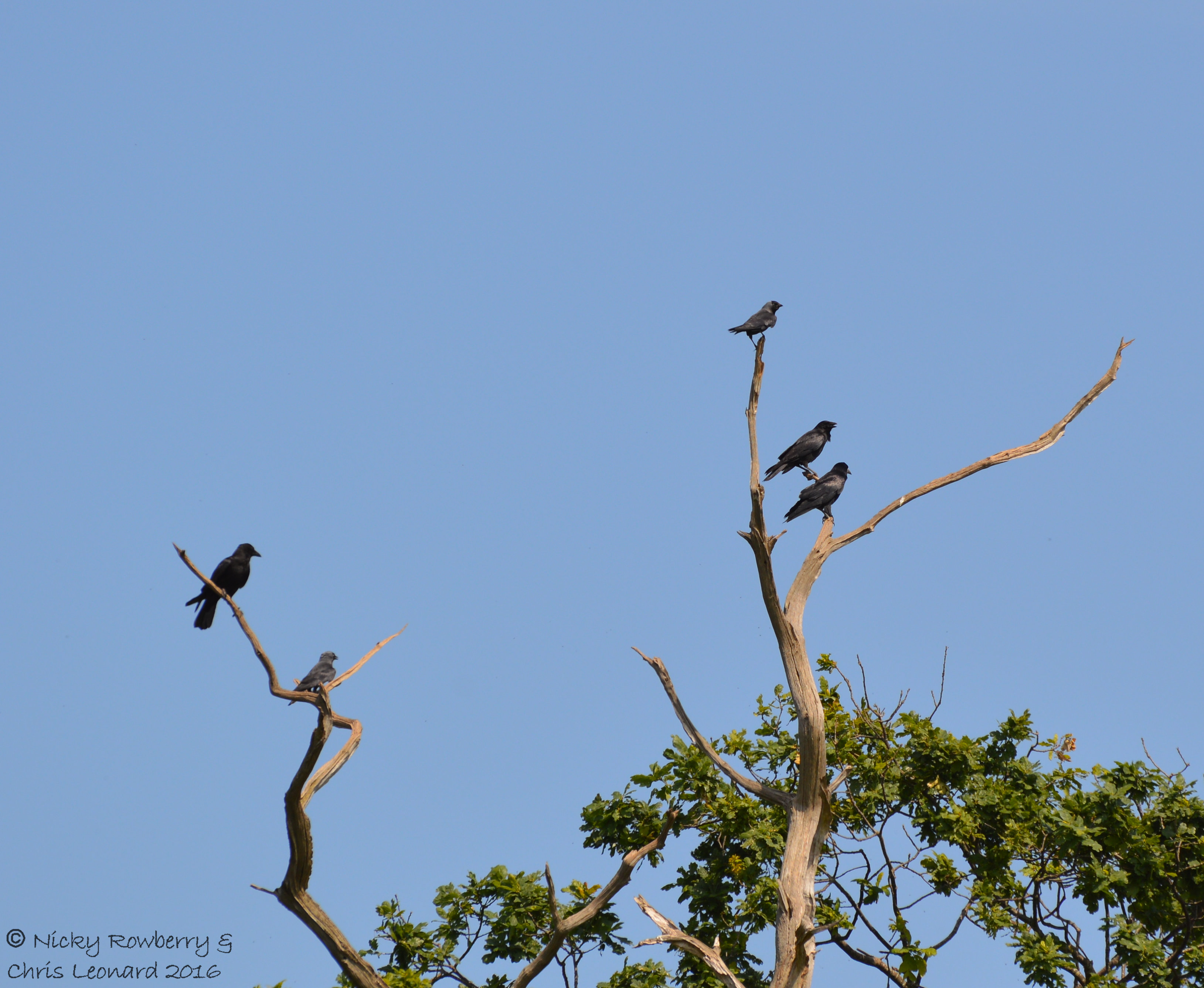
Although birds were abundant everywhere, the most obvious ones were the large members of the Crow family. Not being very good at bird ID, I snapped some photos with the plan of identifying them when I got home. Turns out I got three for the price of one in this photo. On the right hand side, there appears to be from top to bottom, a Jackdaw, a Carrion Crow and a Rook!

DSC_4305

While I was watching the crows/rooks/jackdaws, a Buzzard flew into the field, much to the annoyance of the other birds. I’m not sure which of the 3 species it was, but several of them chased the Buzzard until it flew off. They were really going for it, although they are clearly much smaller than the Buzzard.

DSC_4311

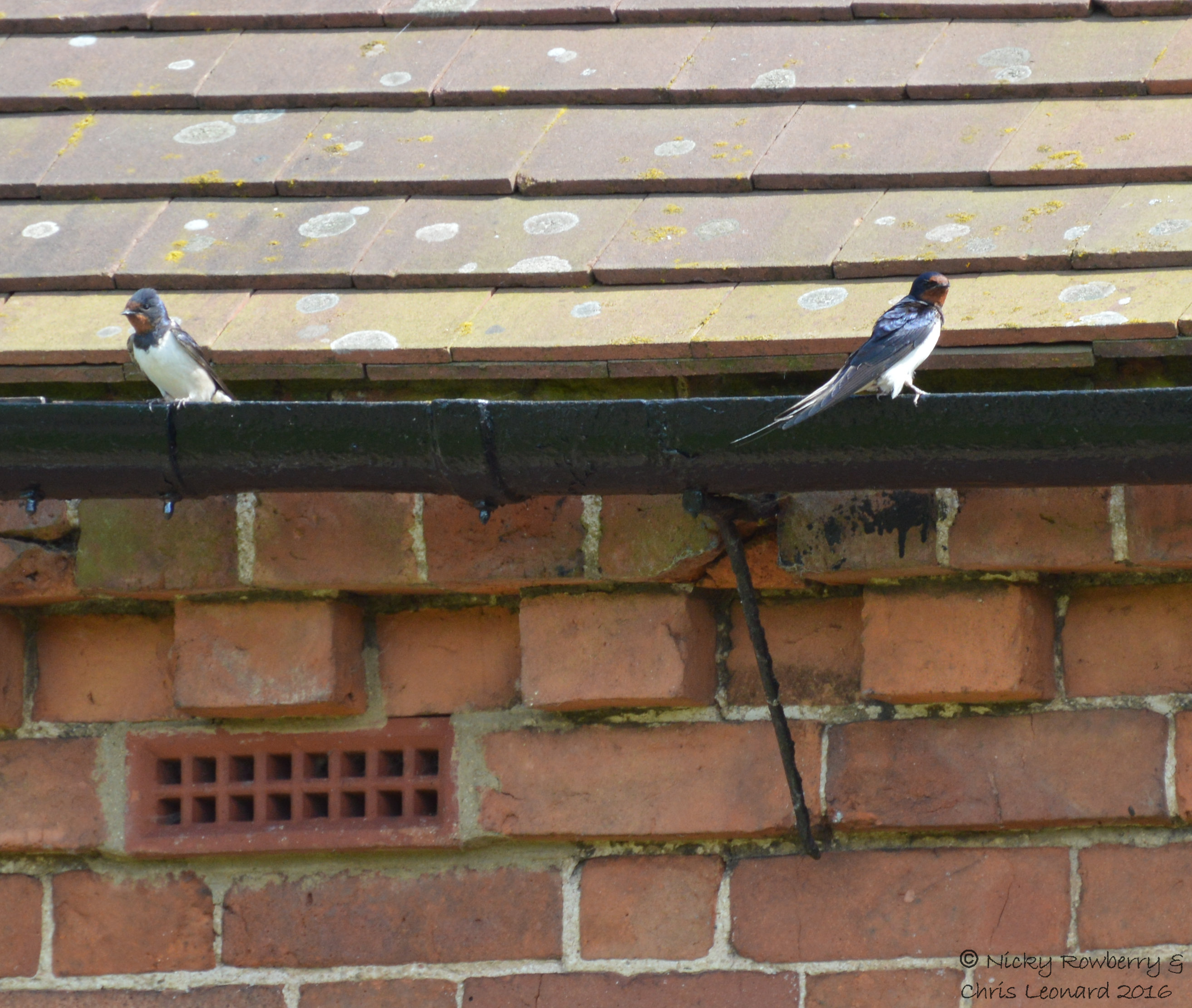
Finally as I headed back to the office, the Swallows were flying round the farm buildings and swooping over the field. Fortunately a couple of them landed on the roof long enough to get a snap.

Swallows

So Swallows in the farmyard and sunburn all over my face – can only mean summer is here! Really enjoyed my walk out and about on the farm and will definitely try and do it again soon. The farm has hares and foxes too, so maybe I’ll get up early and go for a walk before I start work next time, as more chance of seeing them that way – cooler too hopefully!

Teasel 30 WEEDS

And finally the latest weed in my 30 Lazy Garden Weeds – The Teasel. Undoubtedly the largest weed we get in the garden (easily taller than my paltry 5 foot 1!) The teasel has to be one of the best things in the garden for wildlife – the bees love them in the summer and the birds love the seeds through the winter and I love them all year round. They do take up a lot of room though, so perhaps only for serious weed fiends like us at Too Lazy To Weed!

A Host of Golden Daffodils

Not sure how many daffodils you need to qualify for “a host”, but what few we’ve got are at their best in the garden right now. They seem to be a lot later than everyone else’s in Malvern, the neighbours daffodils were blooming marvellous about 6 weeks ago; but better late than never.

Daffodils

Yellow is definitely this season’s colour at the moment. Some is of course down to me choosing yellow, such as these crocuses, to brighten up the cold days.

Crocuses 2

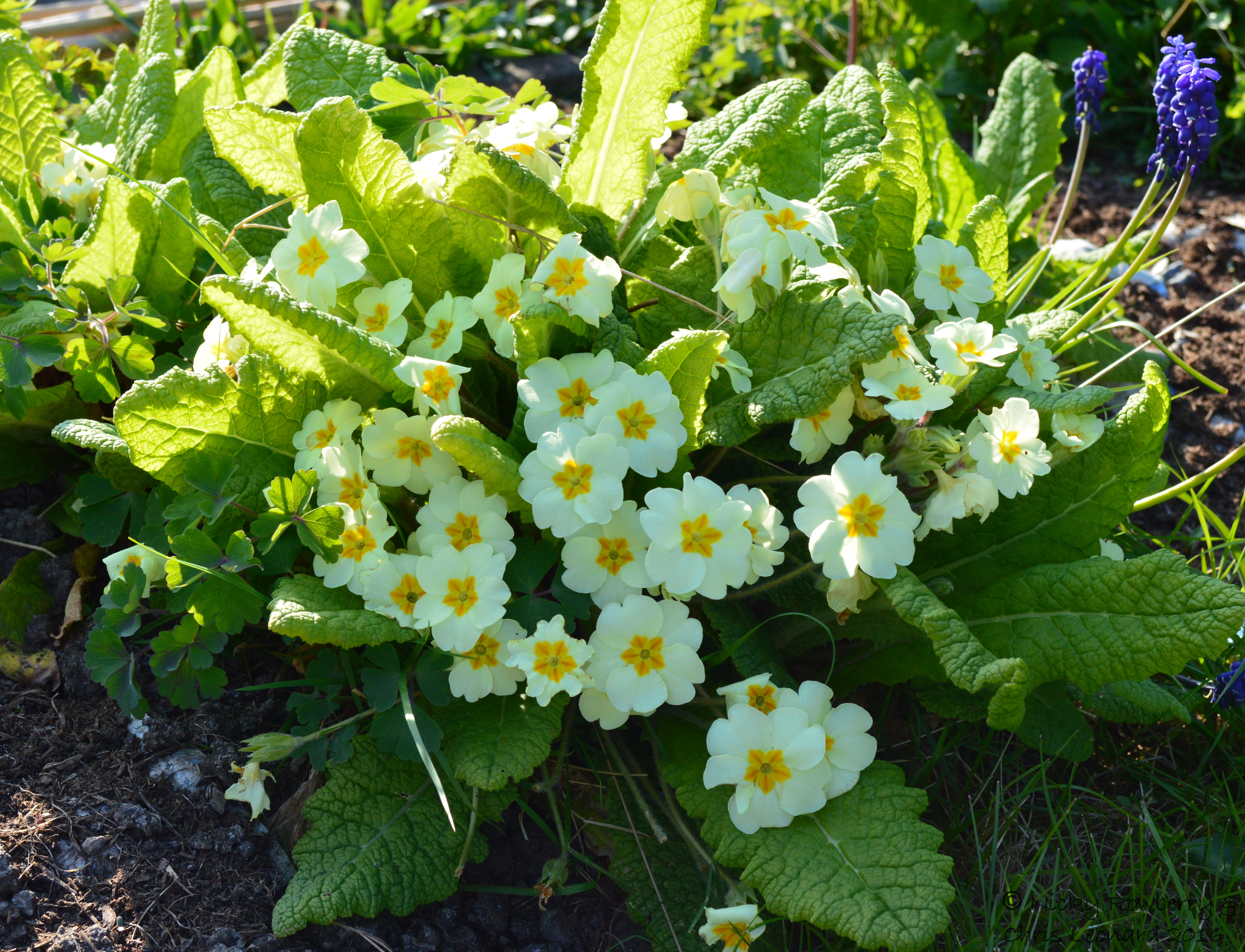
But a lot of it is due to the more natural, self seeding “weeds” such as the primroses and dandelions that proliferate in our garden.

Dandelion PrimrosesAll these spring flowers are good news for the insects, which are now starting to arrive in the garden in moderate numbers. The yellowyness of Spring continued with the first butterfly in the garden – a Brimstone. In typical Brimstone fashion it was too fast to get a photo, but we think it was a male as it was bright yellow – the original “butter coloured fly” or butterfly. Hopefully soon one will hang around long enough to get his photo taken. But the good news was that it meant I could log it onto the new online garden butterfly survey – http://www.gardenbutterflysurvey.org/ – my first record for the year.

As well as the first butterflies and bees, the first wasp put in an appearance too. It was a bit dopey and hung about on the fence, warming itself in the spring sunshine for quite a while – good news for my photography attempts. I know wasps aren’t everyone’s favourites, but close up they really are quite stunning!

Common Wasp

The Bees Knees (or Feet)

This last week of sunshine (and showers) has brought the bees out in our garden – at least three species already, plus a massive unidentified one going like a bumblebee out of hell over the roof!

When it comes to identifying bees, it would seem a bee’s knees are hardly relevant at all. In the case of our first positively identified species this year, it was the feet that were key for the charmingly named Hairy Footed Flower Bee (Anthophora plumipes). This is one of the earliest bee species to appear in the spring and we had several merrily tucking into the primroses last weekend.

Hairy Footed Flower Bee

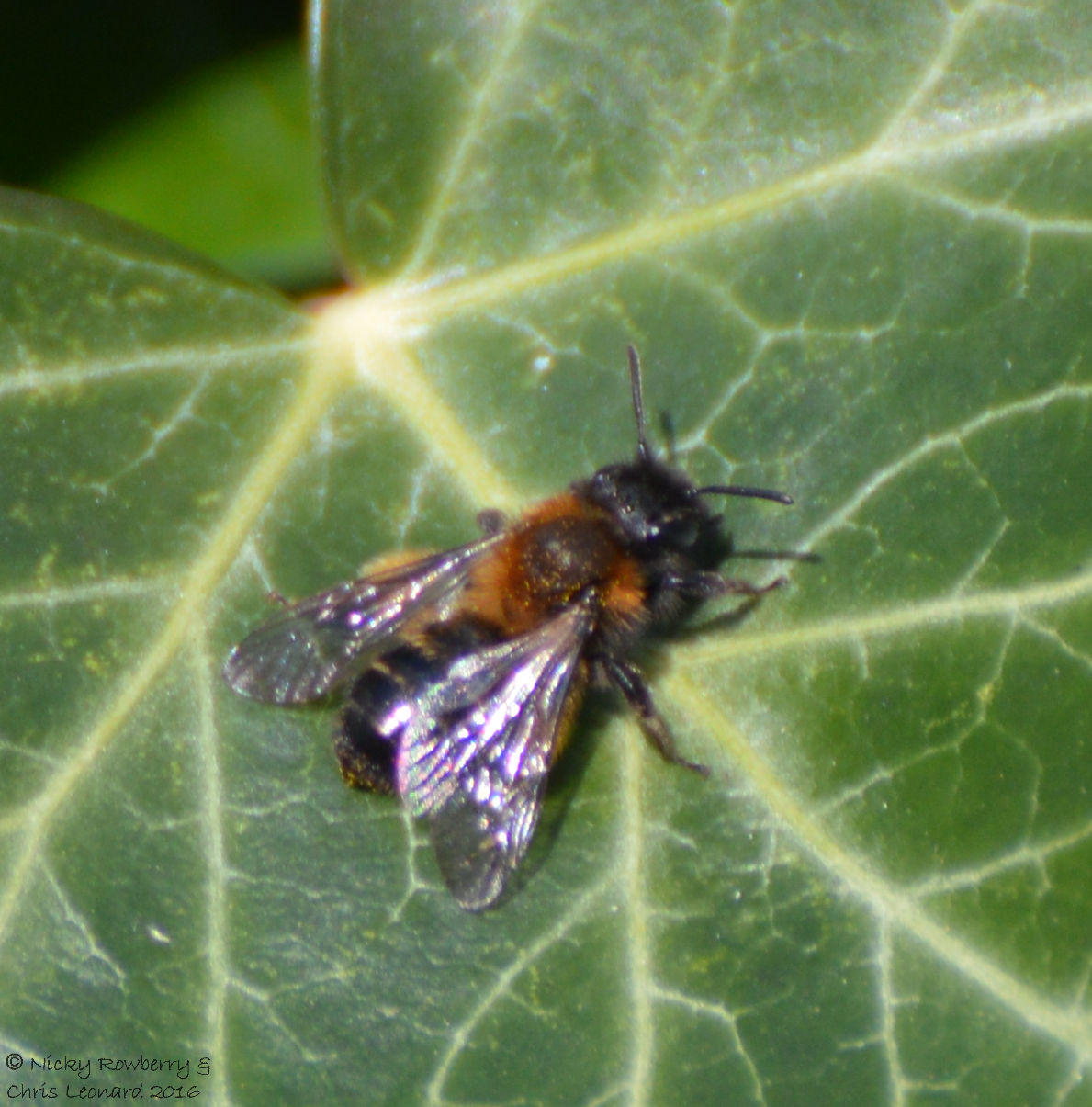
The second species to be spotted in the Lazy Garden was this little mining bee (Andrena sp.) seen basking on an ivy leaf in the sunshine. Unfortunately there are lots of species of mining bees and my photography wasn’t up to scratch enough to be able to identify this one. I did load it onto the ever-useful iSpot website, where several very helpful people discussed various possibilities (I would love to say “debate raged” over my bee, but that would be a bit over dramatic), before concluding that it was best to just stick with Andrena sp. rather than get it wrong. Hopefully our mining bee will reappear sometime and I can get a better photo to nail the identification.

Mining Bee Andrena sp

The final species this week was the humble, but oh so important, Honey Bee (Apis mellifera) seen here already sporting a fine set of pollen sacs. Bee populations in general are struggling so much at the moment, it was great to see 3 species at least surviving in our garden.

Honey Bee

And finally I’ve been having a go with the trail cam filming our bee friends. As per usual with the trail cam, I had to wade through quite a lot of footage of things blowing about in the wind (in this case mainly primroses) before finding this short film of our Hairy Footed Flower Bee, doing what he does best – landing on flowers with his hairy little feet!

Moth Count Down

Less than a week to go until the summer Garden Moth Scheme starts, so I’ve been dusting off the trap and my ID skills, such as they are. Although I’ve been moth trapping for a couple of years now, this will be the first time I’ve submitted my results to any study like this and I’m really looking forward to it.

So on Friday night I put the moth trap out as a sort of a dry run,  in the site I’ll be using through the summer for the scheme.  It was a slightly warmer night than it has been recently (a balmy 2.3°C) and virtually no wind, so I was reasonably optimistic about catching something at least. Sure enough, my optimism was rewarded with the grand total of 7 moths of 4 species; more moths than I’ve had in all the other trap nights this year put together. I even had one species I’ve never recorded in the garden before (probably because I don’t normally trap in February). The Grey Shoulder-knot (Lithophane ornitopus) below most probably hibernated as an adult moth over winter to emerge in the spring.

Grey Shoulder Knot

The remaining 3 species all belonged to the Orthosia genus of moths, which would have spent the winter as pupae. The first of these was the Common Quaker (Orthosia cerasi) which I’d already caught this year and mentioned in earlier blog posts.  The second was the unfortunately named Clouded Drab (Orthosia incerta) seen below camouflaged very well against a stone background.

Clouded Drab

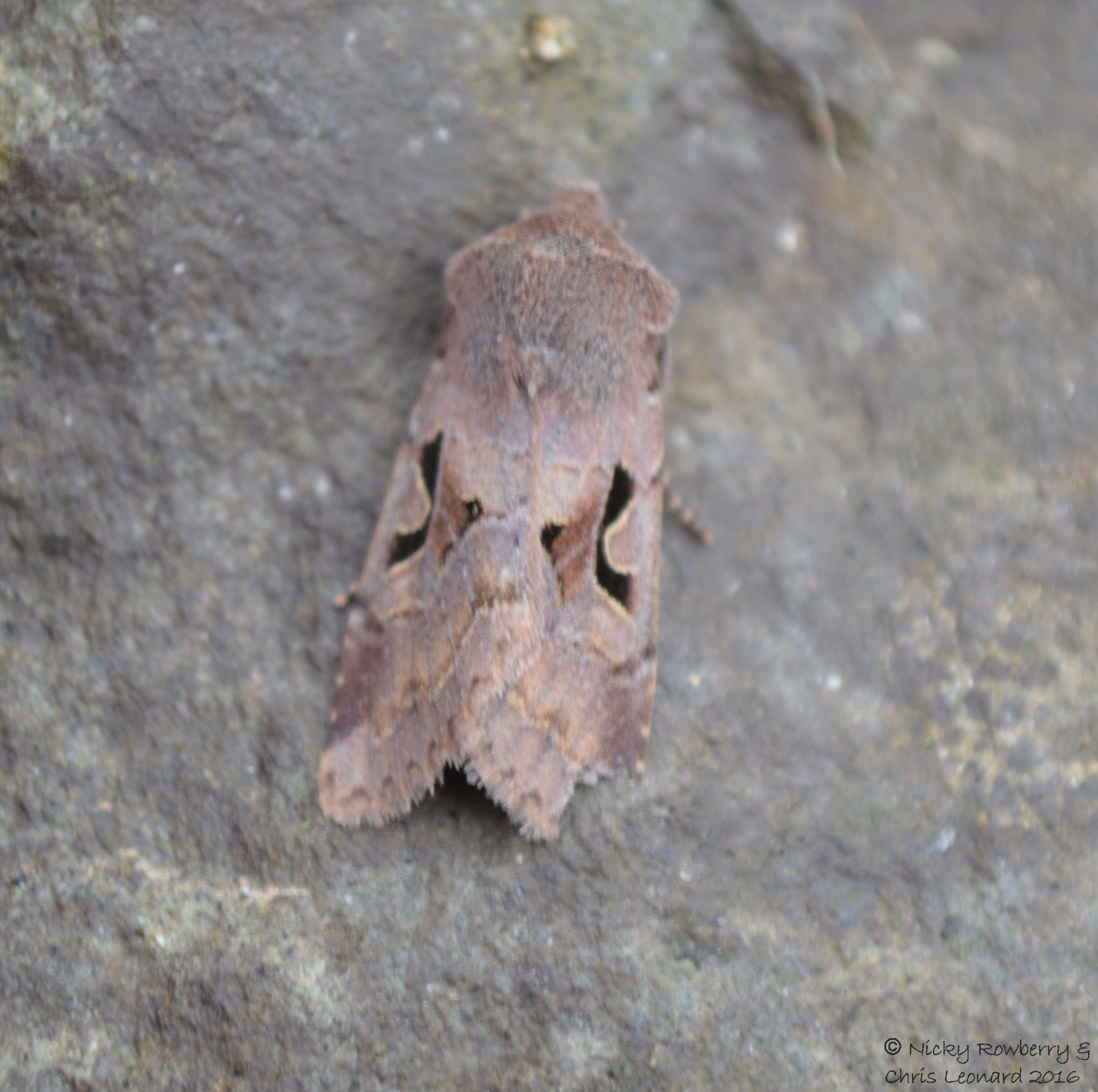
The final species was the much more interestingly titled Hebrew Character (Orthosia gothica), named apparently because the dark mark on its wing looks like the Hebrew character Nun: It’s not a perfect match, but you can see what they were getting at, when whoever it was named this moth.

Hebrew Character

So 6 species of moth under my belt for this year so far and looking forward to seeing what the garden holds in the coming months. Having the discipline of having to put the moth trap out every week for the scheme, will hopefully yield a few extra species that I would otherwise miss. And it’s nice to know that our Malvern moths are in some small way contributing to the wider knowledge of the UK moth fauna.


A Down-trodden Female and a Bit of a Puritan

Whilst waiting for my trail camera skills to miraculously perfect themselves, I decided to run the moth trap at the weekend. It was cold but dry at least, so I ran the trap both Friday and Saturday night. Friday drew a complete blank, but Saturday produced the huge haul of 2 moths, bringing my grand total for the year so far to 3 moths – at this rate I should hit double figures by about June! The Garden Moth Scheme starts in a few weeks’ time, so I hope numbers pick up a bit by then.

One of my 2 prize specimens this weekend was another Common Quaker (also the one moth to be trapped in January). The Quaker moths are apparently so-named because they’re supposed to look dowdy and dull and not given to flashy colours – appearances of which the religious Quakers would have approved. But looking at the photos I think they have a more subtle charm and aren’t deserving of their drab reputation. Admittedly the one on the left isn’t looking his or her best on a bit of kitchen paper, but I’m to blame for the aesthetics of this photo, not the moth. Once it had flown down onto the soil, the camouflage potential of its subtle colouring becomes clearer as it blends in with the dead leaves – bright colours are all very well, unless they get you eaten!

Common QuakerCommon Quaker on soil

The second intrepid February moth was a male Dotted Border. I’m not usually so confident at sexing my moths, but with this one it is easy, as the female of the species has got a really duff deal. The Dotted Border is one of the relatively few British species where the female is flightless – they have only stumpy vestigial wings. This seems wholly unfair to me – surely the great joy of being a moth (on the slightly romantic assumption that moths can experience great joy!) is being able to fly! The poor down-trodden females just have to sit and wait for the Mr Dotted Border to come and visit. The moth on the left is my lucky male (again apologies for lack of aesthetic photo, he blew away before I could get better) and the one on the right is the female. This photo comes courtesy of the Wikimedia Commons website (so free to copy here), as I’ve yet to find a female in the garden here.

Dotted BorderAgriopis_marginaria_fem