Hedgehog Awareness Week

Today marks the start of Hedgehog Awareness Week – an annual event focussed on all things hoggy, organised by the British Hedgehog Preservation Society. I’ve been saving up hedgehog related news for a few weeks now, in readiness for Awareness Week and I’ve got a surprising amount to report!

The big news for me personally was that I handed my notice in at my previous job and had planned to have a bit of time off. That was until I spotted an admin job going at the British Hedgehog Preservation Society (BHPS) – it was just too tempting to resist.  I applied and am absolutely thrilled to say I got the job! It’s only 2 days a week which is absolutely perfect for me as it gives me plenty of time to be not weeding the garden! So here is my new place of work:

The next big piece of news is that Meadow our foster hedgehog has now been released into the Too Lazy To Weed garden. I took him back to be checked over by Viv at Malvern Hedgehog Rescue before we released him. This is him in the cat basket on the way there.
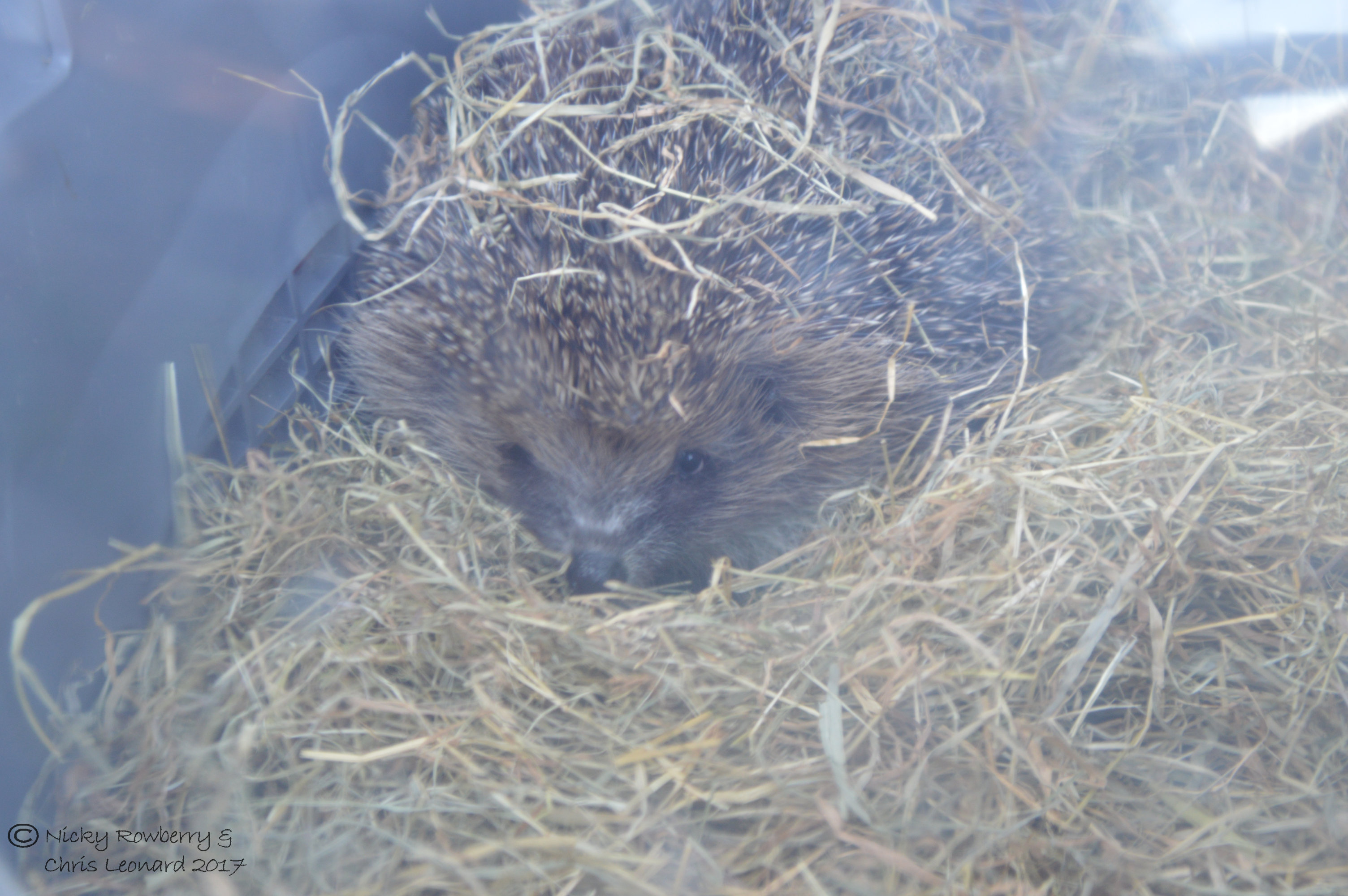
Viv checked his weight (he’d actually put on a lot of weight as apparently the catfood he’d been on for the last few weeks was a bit rich for him – I’ll know better next time) and then gave the go ahead for him to be released into our garden. He’d been with us since January and in a way I was sorry to see him go, although obviously it was the right thing to do. We waited until dusk, then put the cat basket out under the apple tree where there was plenty of cover for him and just let him come out whenever he was ready. (I was tempted to have the Born Free theme tune playing the background but resisted) This is him emerging from the cat box and taking his first steps in our garden.

I left the trail cam out for the next couple of nights and sure enough he appeared, making a beeline for the food I’d put out. I’m fairly sure it’s him in these next 2 clips as it’s a pretty big hedgehog so I reckon that’s our boy!

Assuming it is him, he seems to be doing well and has obviously found somewhere safe to rest during the day and knows where I put food and water out each night. Live long and prosper Meadow!

I’d been putting the trail camera out in the hope of getting hoggy videos for a few weeks before Meadow’s release. Most of the footage was of course taken in the dark, but I got this one short film of a hedgehog in the very early hours of the morning in daylight (I think the camera’s clock was out by an hour or two though as it wasn’t this light at 04:30am). Hopefully he or she was just getting a last minute snack before hiding away for the day somewhere.

It’s never easy to distinguish the hedgehogs in the garden (apart from Meadow’s currently distinctive chubby form), so it’s difficult to know how many we get. But a lot of trail cam footage shows a pair of hogs, so we know we’ve got at least 2 (3 now with Meadow).

The first time two appeared together it looked like a fight! Don’t know if it was a territorial dispute between 2 males or an overly aggressive male and female, but the one managed to shove the other half way across the lawn.

The following night though there were 2 hogs again. Not so aggressive this time, although the one did seem to be seriously annoying the other. They circled round like this for well over an hour – was it perhaps the start of mating, with the female playing hard to get initially. Have to admire his persistence if it was courtship, although he did seem to get distracted by the food bowl quite often!

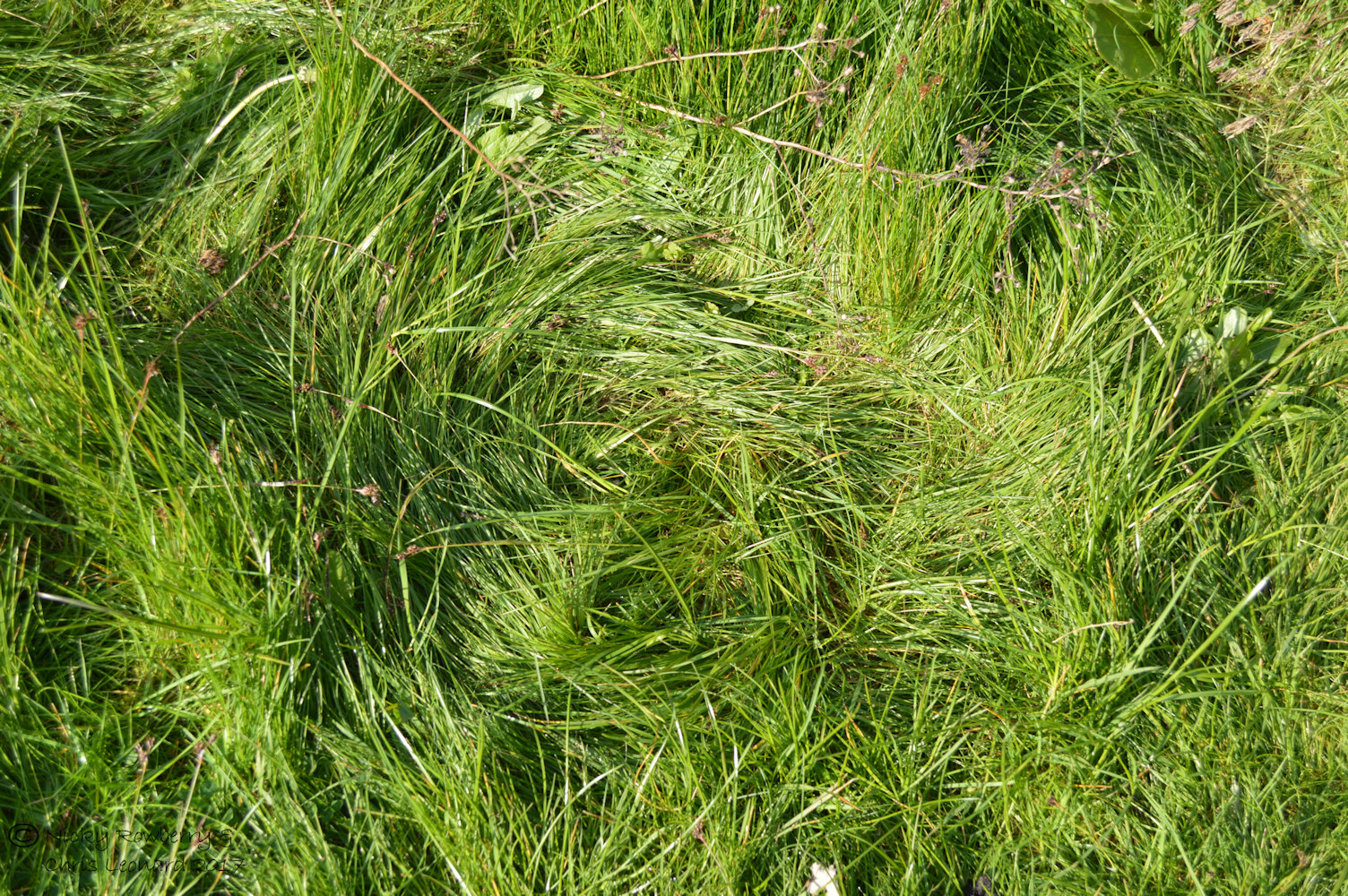
A few days after seeing the possible amorous antics on the trail cam, we spotted several areas of grass, flattened and twisted around – presumably the result of all the circling behaviour. You’ve heard of crop circles, we’ve got hedgehog circles!
So that’s all the news from our garden. If anyone wants to do something extra to support hedgehogs during Awareness Week, there are lots of things that can be done.

To support or encourage hedgehogs into your own garden, you can put out food (never bread or milk) and water. If you have a pond, make sure you install a ramp or some other means for hedgehogs to get out if they fall in. Make sure there are gaps in fences/walls so hedgehogs can come and go between gardens – they roam quite a bit during the night so ideally need a large network of gardens. Be super careful when mowing, particularly with strimmers which can inflict terrible injuries on hedgehogs.

If you don’t have a garden or at least don’t get hedgehogs in it, there are still lots of other ways of supporting them. You could join BHPS – your subscription will help support their work. Or you could simply Text HHOG17 to 70070 to donate £5 to the charity.

There are also hundreds of hedgehog volunteer carers around the country – you could do something to help your local one. Donations of cash or food or other general supplies are always welcome. Our local one is Malvern Hedgehog Rescue and Viv there does amazing work caring for up to 100 rescue hogs at a time. Her website has loads of useful information: http://www.malvernhedgehogrescue.co.uk/

Another great example is Little Silver Hedgehog run by Emma. Not only does she rescue & rehabilitate lots of hedgehogs, her blog https://littlesilverhedgehog.wordpress.com/ is full of useful hoggy advice. In addition she makes beautiful silver jewellery that she sells to raise funds for the hedgehogs – I treated myself to this cute pendant to celebrate getting the job with BHPS.

And finally you could always just tweet or post a message on Facebook (or go old school and talk to people) showing your support for these lovely animals – they need all the help they can get.

Bags of Bees and Blossom

I’ve not managed to blog anything in the last few weeks, but it’s not been for lack of things going on in the garden. Almost the opposite in fact – spring is here and so much wildlife in our garden is stirring, that I can hardly keep up with it!

The apple tree has been in full blossom the last few weeks. 2017 seems to be one of those years where the whole tree turns pinky white with flowers. Comparing this year’s photo (top) with 2016 (below), there is a huge difference in the amount of blossom. It is also in full flower a lot earlier – this year it peaked mid April, last year what little there was peaked in early May. Due to the mild winter or just a natural cycle?

With an apple tree full of blossom, you would of course expect a load of bees. What I hadn’t expected was this Girdle Snail sitting pretty in the middle of it all!

Apart from the stray molluscs though there were indeed plenty of bees. Honey bees were probably the most common. We get lots in the garden, I’d love to know if someone is keeping bees nearby (feel they owe us a pot of honey if they are!)

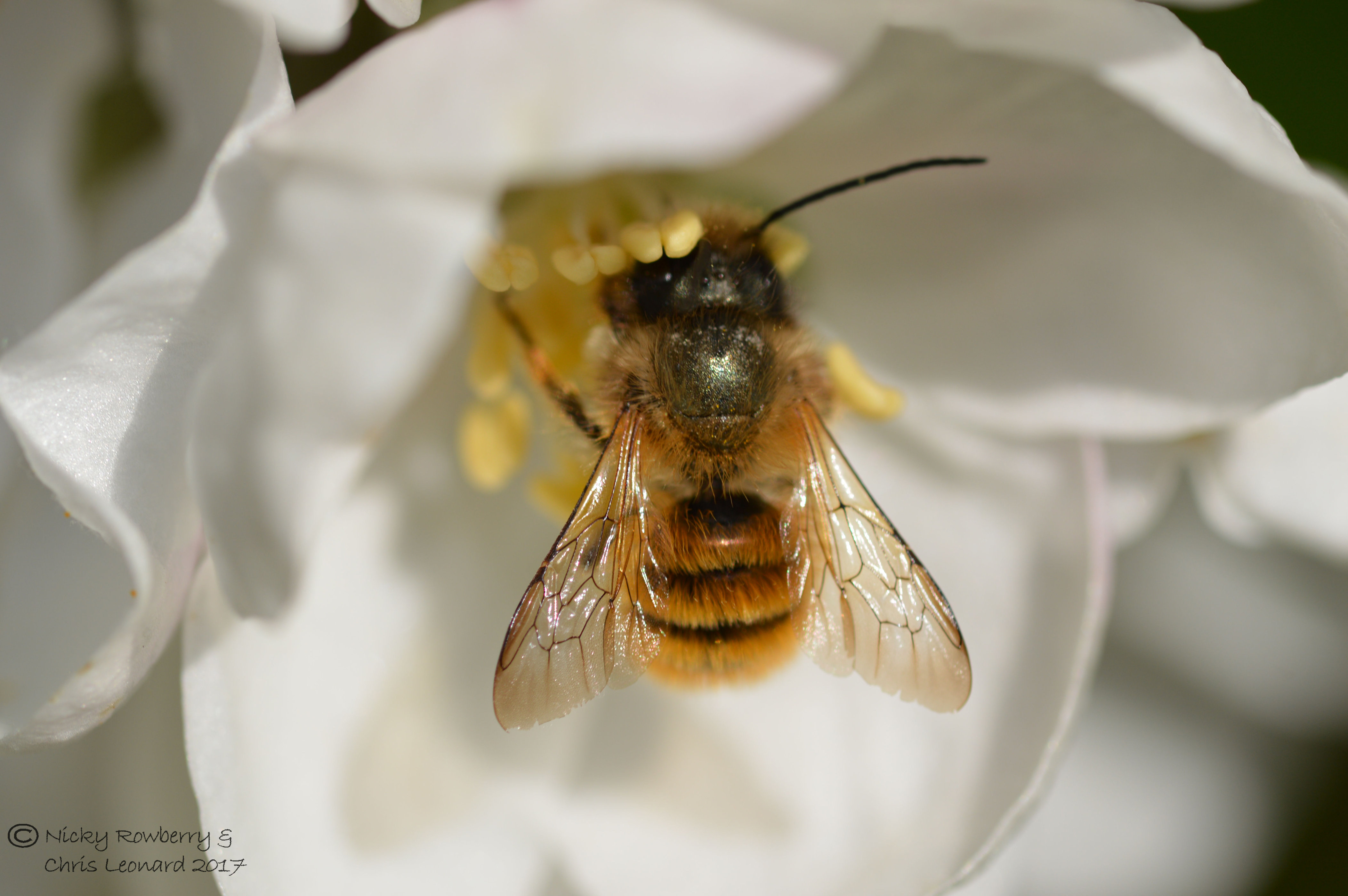
There have also been plenty of these small Red Mason Bees (Osmia bicornis)

and these slightly larger Buff-tailed Bumblebees (Bombus terrestris)

I usually only see these Ashy Mining Bees (Andrena cineraria) flying low around the grass, so it was nice to catch one up in the tree. I’ve got a soft spot for this species – probably because it’s one of only two Andrena species I can identify at a glance with its distinctive black and white colouration.

The other Andrena species I know easily is this female Tawny Mining Bee (Andrena fulva). The females have this amazing bright red bushy appearance. I thought we had them in the garden last year, but never managed a photo to confirm. This year I finally snapped one, which made it the 27th confirmed bee species for the garden (actually now at 28, but more on that in another blog post).

As well as the above, I’ve also spotted Hairy Footed Flower Bees, Red-tailed Bumblebees and at least one other Andrena species making the most of the blossom. The final one that I actually managed to get a (bad) photo of was this Tree Bumblebee (Bombus hypnorum). These relative newcomers to the UK are one of our most frequent and distinctive bumblebees in the garden.

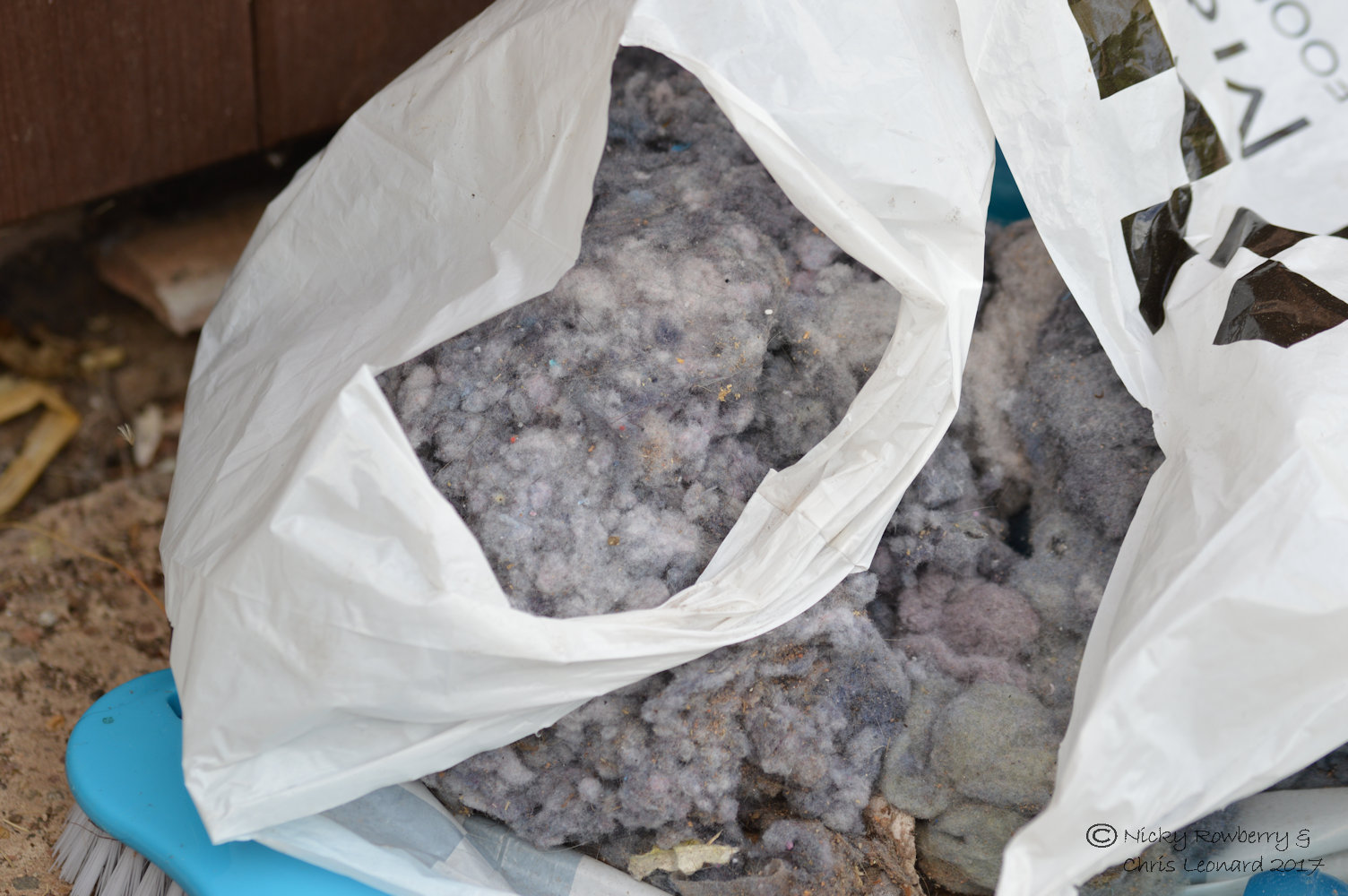
The Tree Bumblebees have also turned up in a most unlikely place this last week. Our next door neighbour was clearing out his garage when he moved a bag of waste fluff from the tumble dryer. Much to his surprise the bag was full of bees! A colony of Tree Bumblebees had decided that a bag of tumble dryer fluff was the perfect place to nest and they weren’t happy at being moved. I offered to take the fluffy bag of bees, but with hindsight I should maybe have thought it through first. I put the bag under a lean-to cover we’ve got, where we sit out if it’s raining.  Unfortunately this is probably where it’s going to have to stay. I can’t leave it out in the open, as the fluff will probably set like cement if it gets wet and I don’t want to entomb the bees in their nest. I also daren’t move it again as it might crush the nest. So we’ll have to share the lean-to with a bag of bees for the summer.

I then spent about an hour yesterday lying flat on the floor trying to get photos of the bees coming and going from the bag. As it happens they seem to be accessing the nest right next to a small smiley face sticker that’s somehow ended up in there amongst the fluff. It makes me smile every time I look at these photos!

The Tree Bumblebees aren’t the only ones to have been popping up in unexpected places. The new nest box that we put up back in January has unfortunately not attracted any nesting birds yet. But I was surprised to spot this large bumblebee bouncing about inside it a few weeks ago. I’d have settled for a bee nest in the absence of a birdy one, but after a few minutes clumsily wandering around, it buzzed off.
So it’s only April and we already have, quite literally, bags of bees in the garden!

Out and About – Grimley Brick and Gravel Pits

The weekend brought some gloriously sunny weather – forget spring, it felt like we had skipped ahead to summer. So we ventured forth, if not very far, to Grimley which is just north of Worcester. Grimley has several old flooded gravel extraction pits, which now form important wildfowl sites for the county. There are 2 main areas – each situated conveniently next to a pub! Unfortunately I didn’t really have the right lens for birdie photos, so the best I could manage was some blurry distance shots for most of the birds I saw.

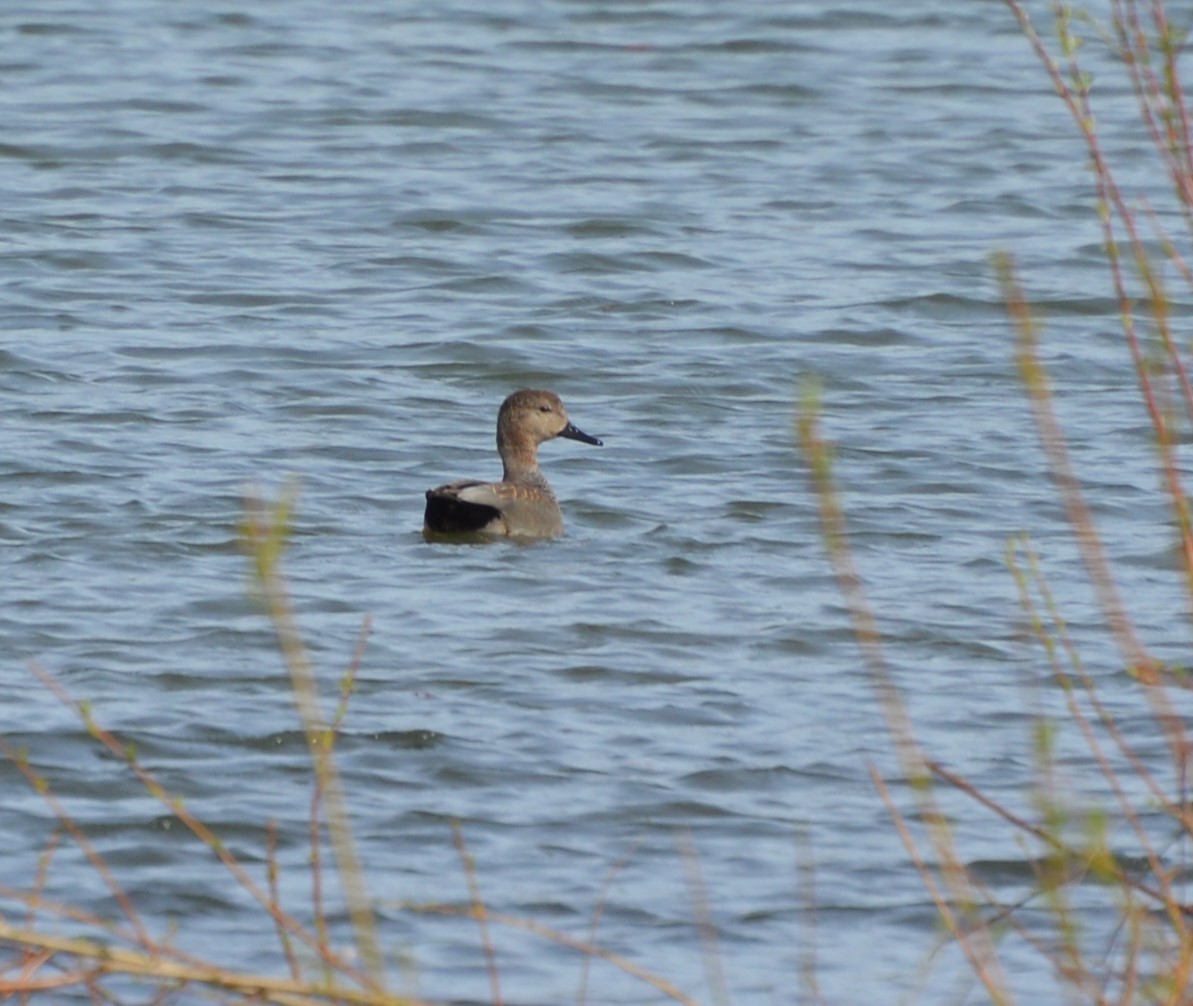
The first pit we went to was off Wagon Wheel Lane. The Worcester Birding twitter feed had been full of news that an American wigeon had been spotted amongst our British wigeons. Having never seen a wigeon of any nationality, I hoped to see some. Having said that, it would probably have helped if I’d googled what a wigeon looked like before setting off! All I really knew was that they were ducks, so I snapped photos of anything vaguely duck like.  Fortunately when I got back and studied the photos, it turned out I had seen some of the British ones, although no sign of the elusive American. So I think this is a female Widgeon, although happy to be corrected.

Of course while chasing anything duck like, I inevitably got pics of a few other species. This lucky female Northern Shoveller was accompanied by at least 4 males.

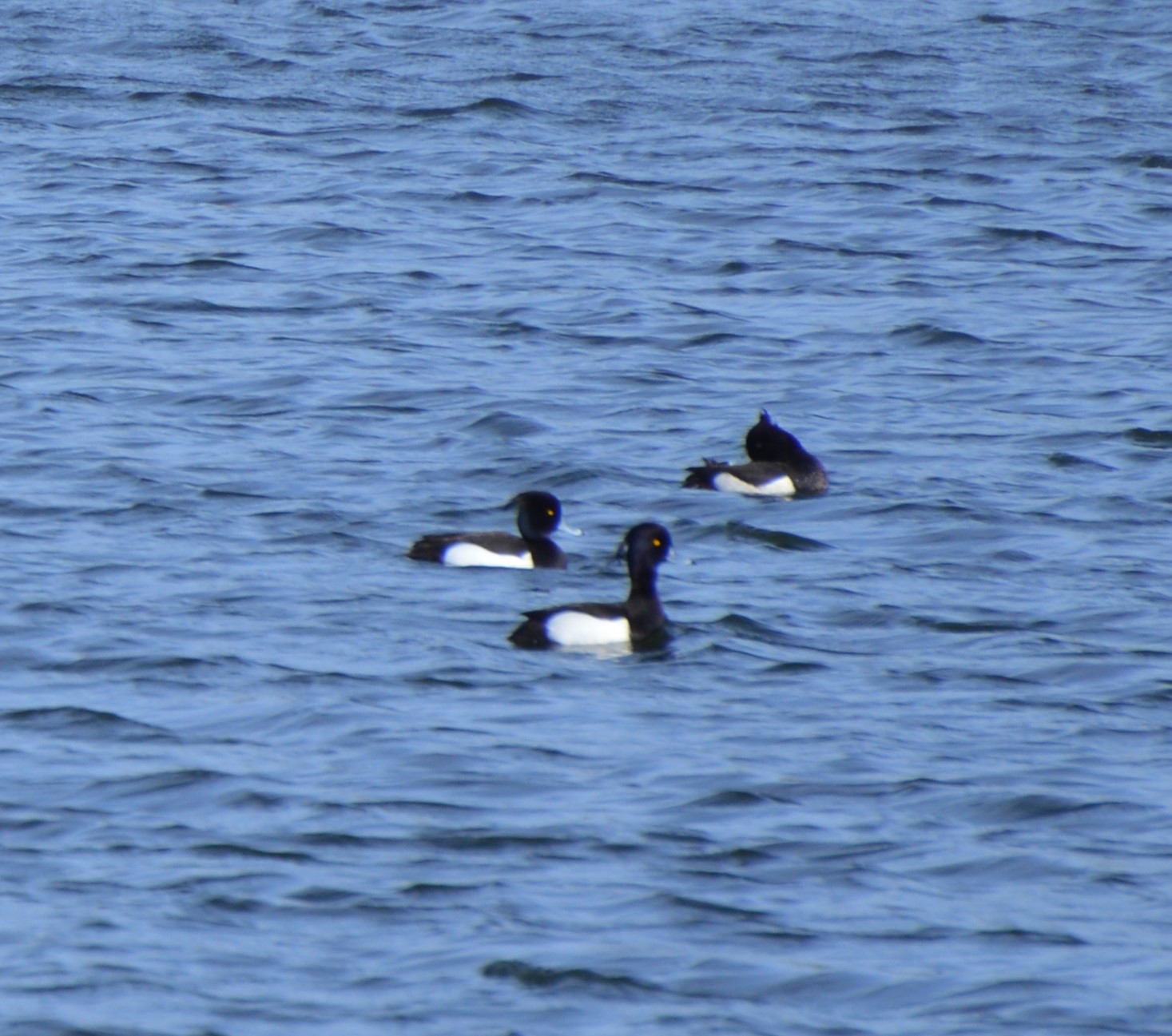
Tufted ducks were bobbing about everywhere. I love the clean lines of the black and white plumage and the bright golden eye of the males.

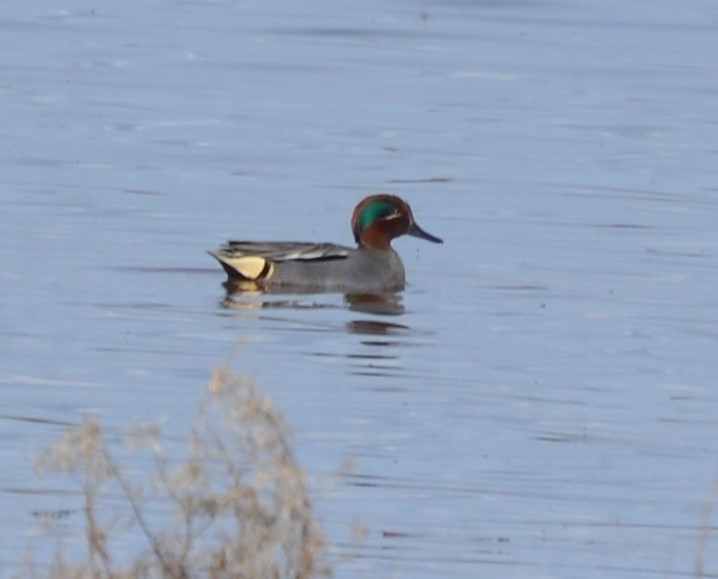
Another species that was new to me was the Common Teal. I didn’t manage to get very close and from a distance I thought initially these were just mallards, until I spotted the creamy yellow rump. From my distant viewpoint it hadn’t been possible to make out the beautiful red and green plumage on the head, but thanks to the power of the zoom on the computer I could appreciate it back home.

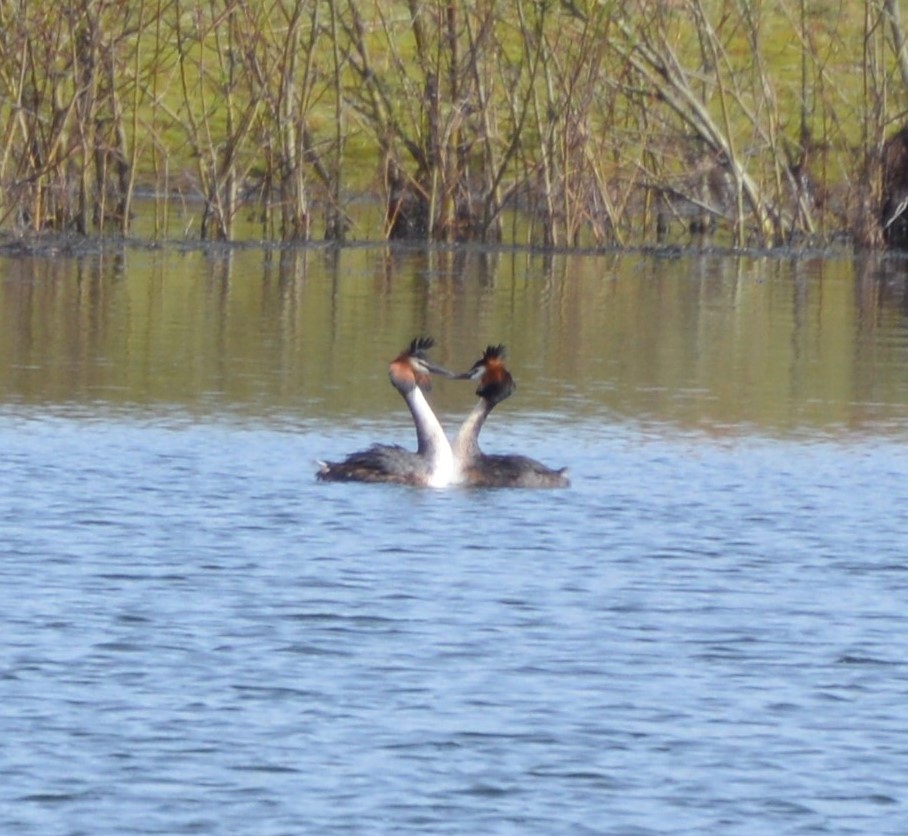
Possibly the stars of the show on this trip were the exotic looking Great Crested Grebes – birds that I’d only ever seen on Springwatch before.  There was a pair doing what looked like a courtship display on the far side of the lake. They bobbed up and down facing each other. If they’d been a bit closer I’d have tried videoing it, but they were just too far away for that.

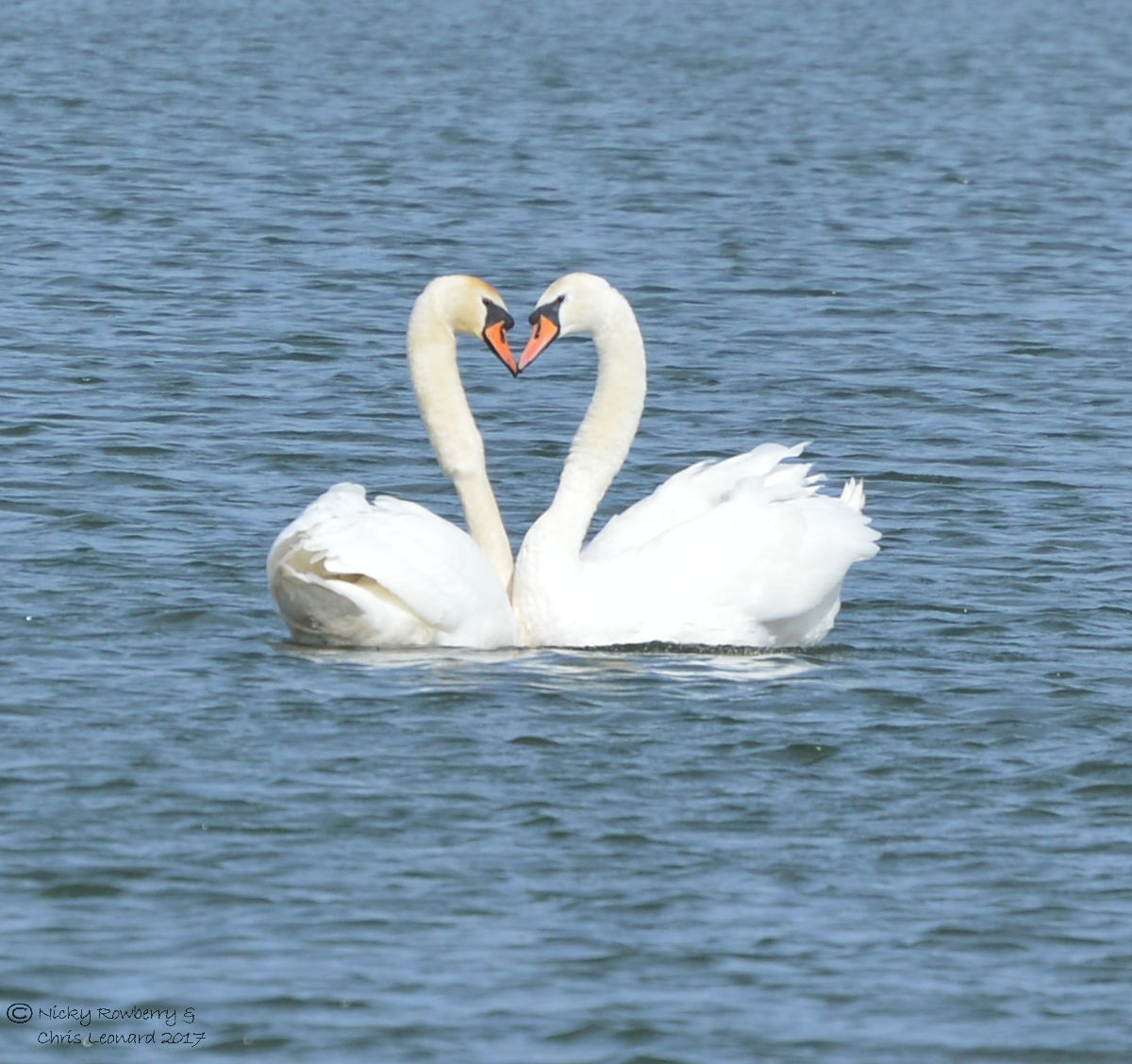
Love seemed to be in the air for a pair of swans too. One was already on the lake when another one landed further away. The first one spotted it and hurtled across the water – I thought at first it was an aggressive or territorial thing, but then they started entwining their necks around each other, so I guess they had other things in mind!

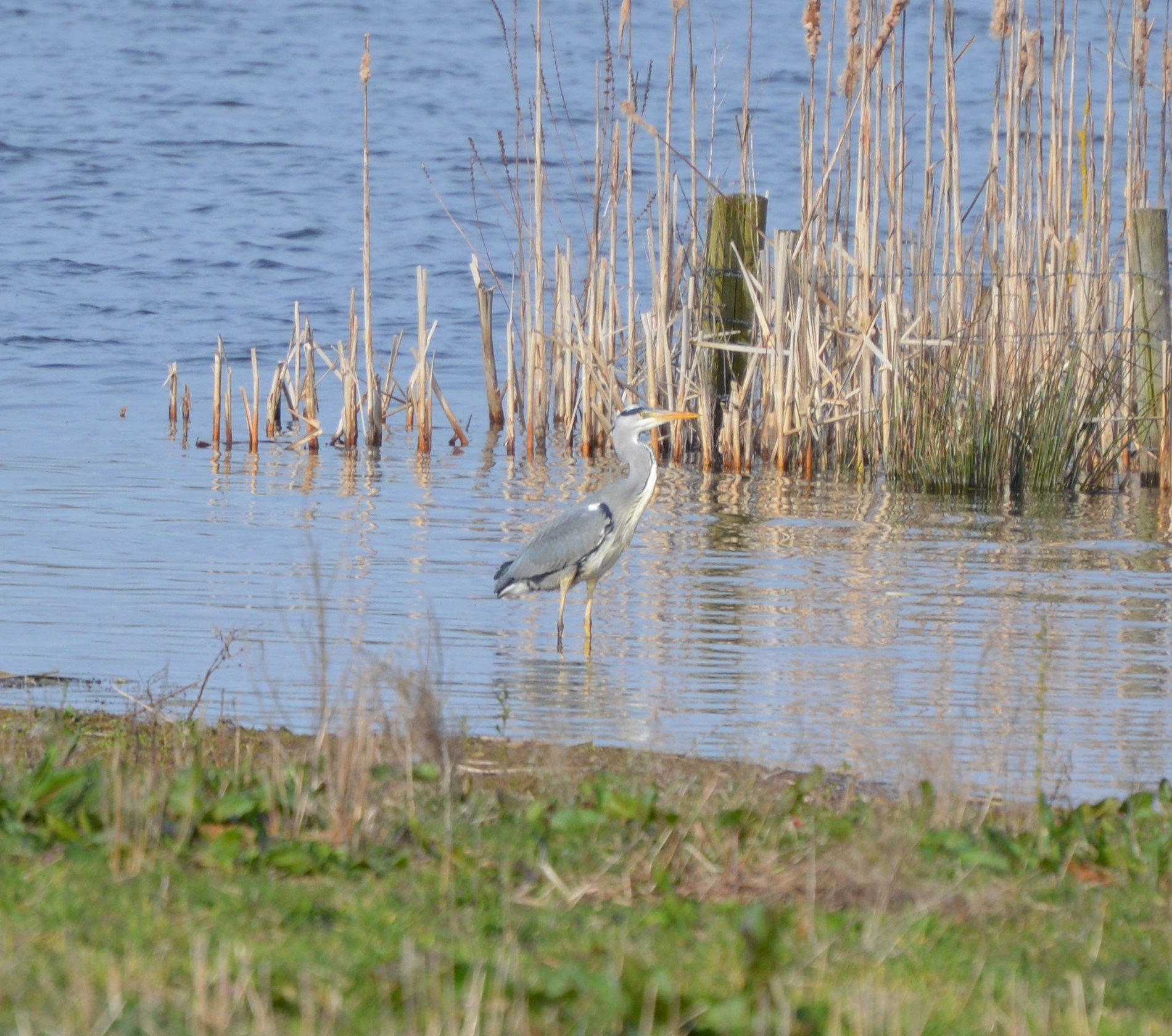
After a short pit stop at the Camp House Inn, I headed to the other set of pits nearby. First sight was this heron – I’d never studied one before and hadn’t realised just how large they were. I tried creeping closer to get a better shot, but as I was going across an open field, he spotted me straight away and flew off when he considered I was too close for comfort.

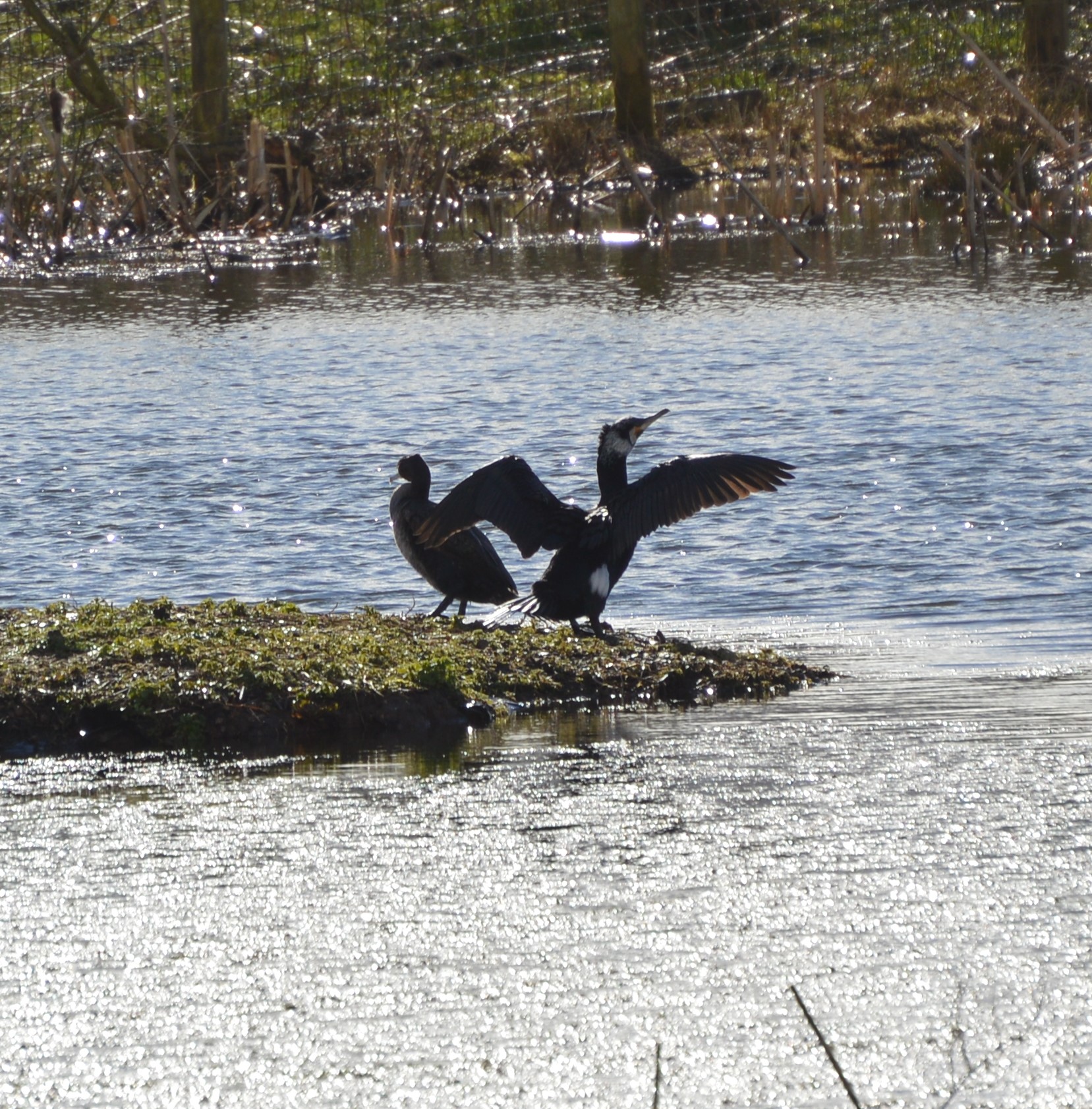
These lakes were clearly popular with a group of cormorants that were perched on fence posts in the middle and in trees. I still find it hard to get my head round seeing what I think of as sea birds this far in land!

While trying to concentrate on the birds, I kept getting side tracked by the insects. There were quite a few large bumblebees buzzing around and the pussy willow was provided much needed sustenance to several, like this Red Tailed Bumblebee.

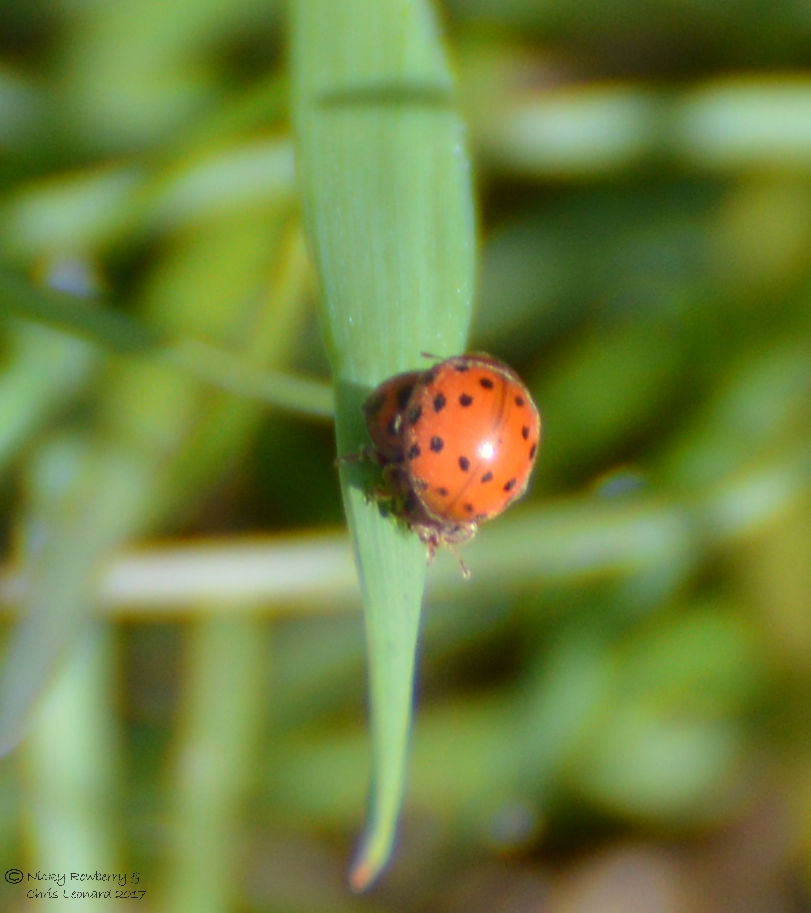
While trying to get a decent photo of a buff tailed bumblebee, I spotted (no pun intended) this pair of 24 spot ladybirds. They were very small and the grass they were on was waving around in the breeze, hence the less than perfect photo. They were slightly less shiny than other ladybirds and look as if they have a fine covering of downy hairs, which would make them the 24 spot ones  – a new one for me.

When I was looking at the red ladybirds above, I hadn’t noticed at the time that there was a pile of creamy coloured ones right next to them. Again they are not perfectly in focus, as I obviously wasn’t focussing on them as I didn’t know they were there! These ones turned out to be 16 spot ladybirds – another new species.

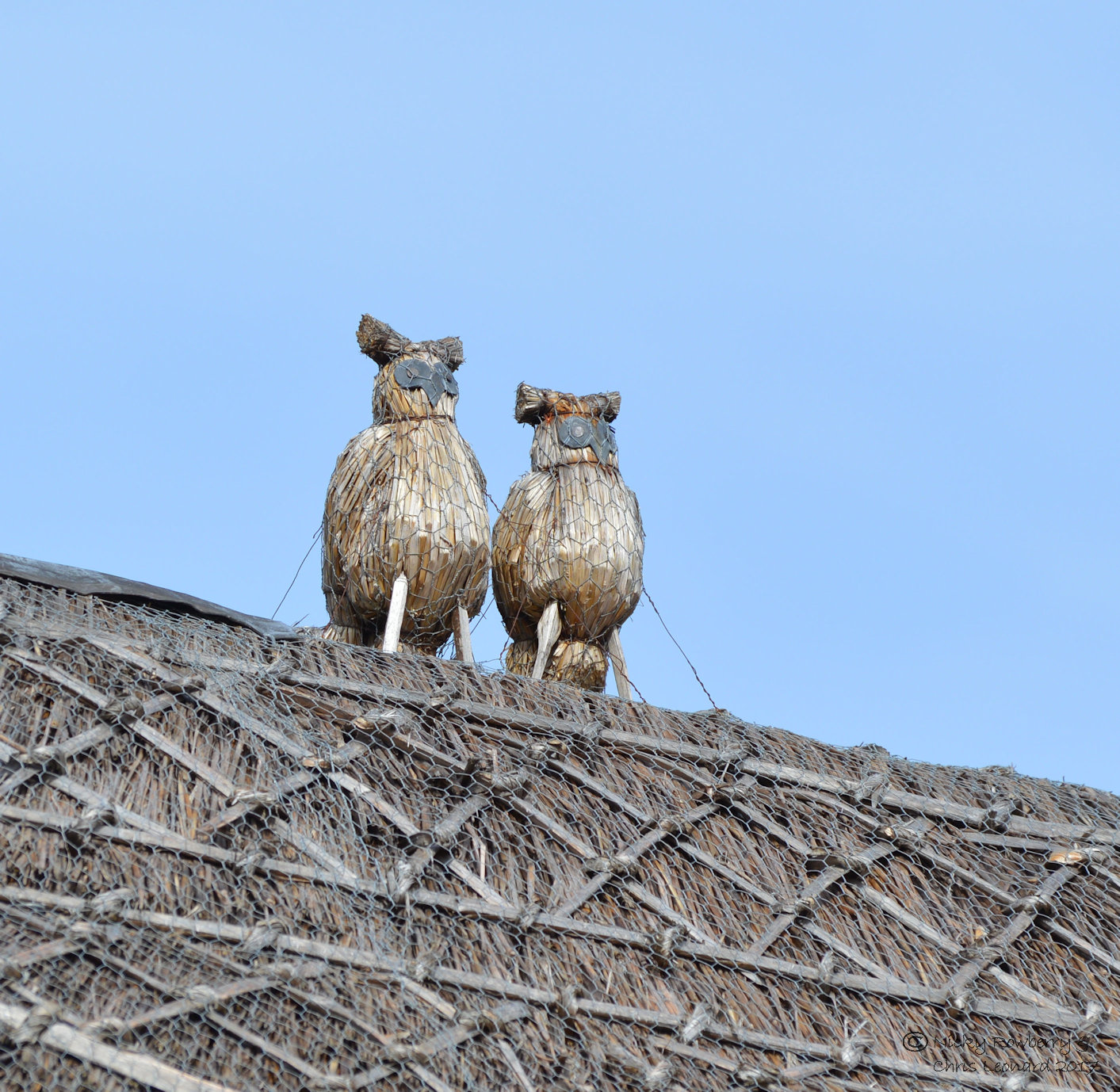
And finally, because I can never resist a comedy photo – here is the very rare 4 winged duck and a rather splendid pair of owls on top of the Wagon Wheel Inn’s thatched roof.

Out and About – Upton Warren Wetlands

It’s March and I ventured Out and About properly last weekend for the first time this year. I’d joined Worcestershire Wildlife Trust a few months ago and decided to take advantage of this by visiting the Upton Warren Wetland Reserve.  It was so nice to get some fresh air and explore somewhere new. The reserve has a mixture of freshwater and saline pools (the result of previous brine extraction work), which attract a wide variety of birds. The reserve is pretty big, so I only managed to do about half of it on this first visit. It’s a fantastic site though, so I will definitely be back soon to try out the other half.

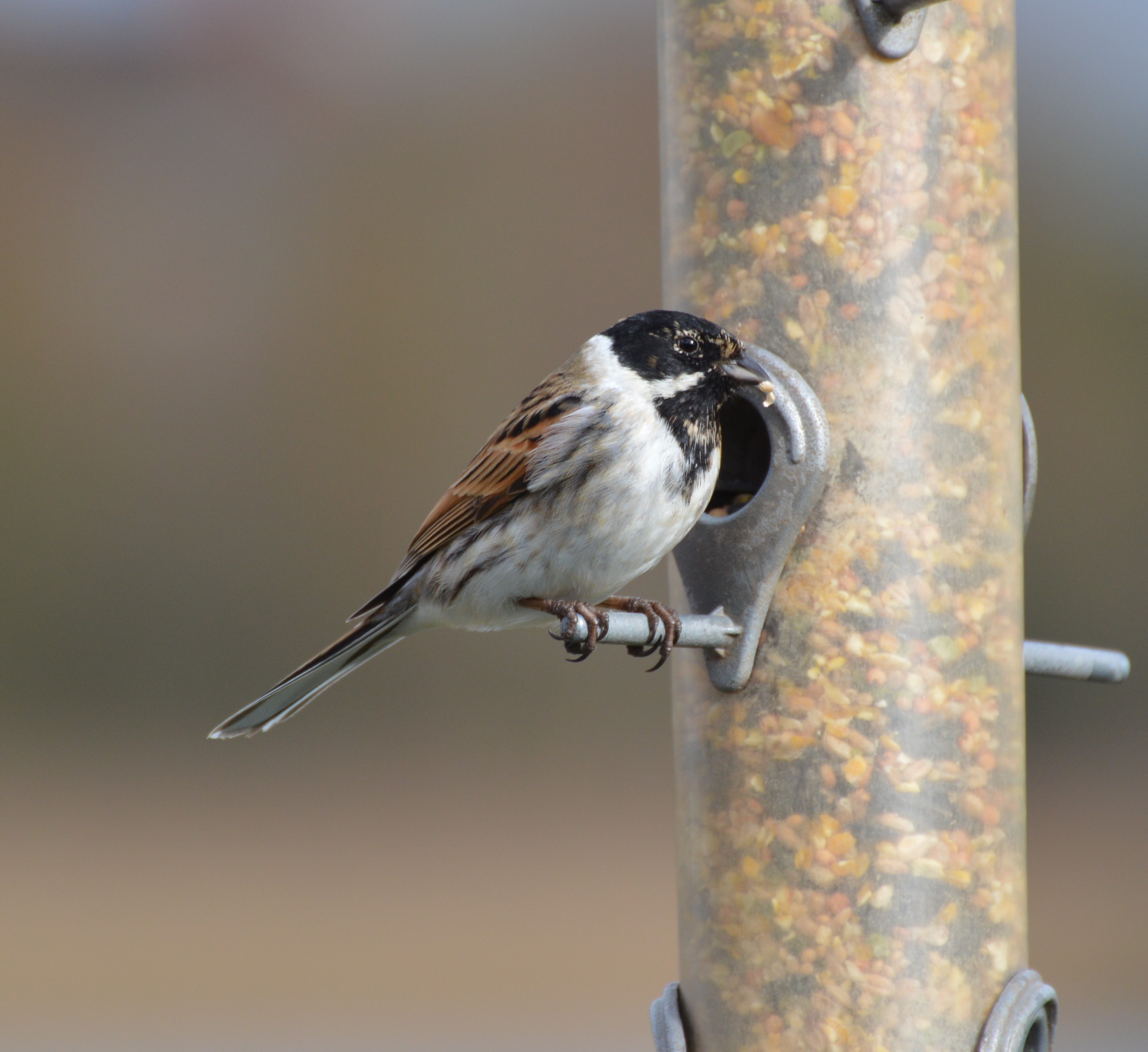
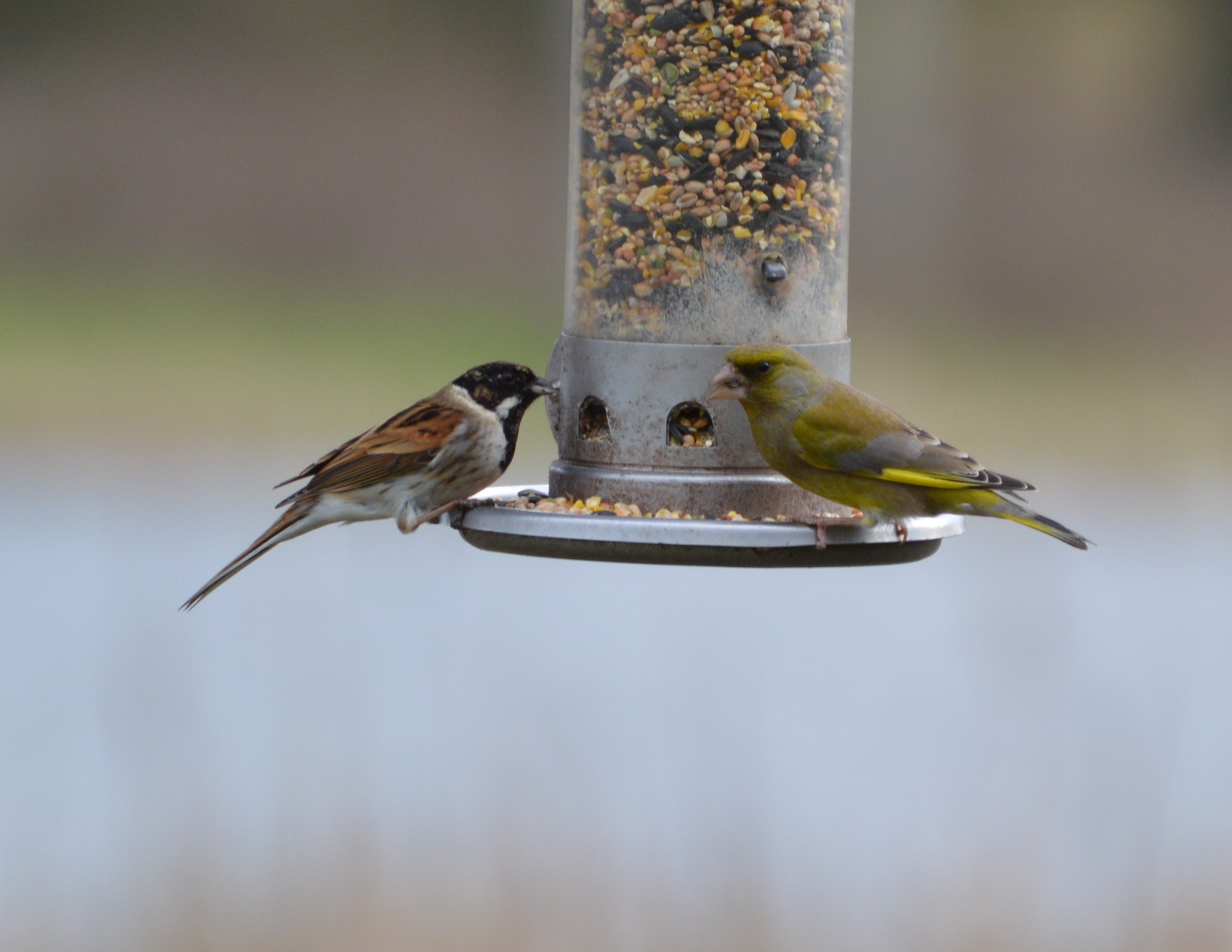
At the first hide, the Trust people had hung out a few bird feeders and I noticed a lot of small brownish birds that looked a bit like sparrows. Being a novice, I had to ask the helpful gentleman who was in the hide with me what they were – I was a bit worried he might just say that they were sparrows, then I really would look clueless, but fortunately it turned out they were reed buntings. I had sort of expected reed buntings to hang about in the reeds and be difficult to see, but I guess why would they do that when there were easy pickings from a feeder?  Top one here is a male and the bottom is the female (at least I think it is, unless it turns out to be an embarrassing sparrow).

reed-bunting-female

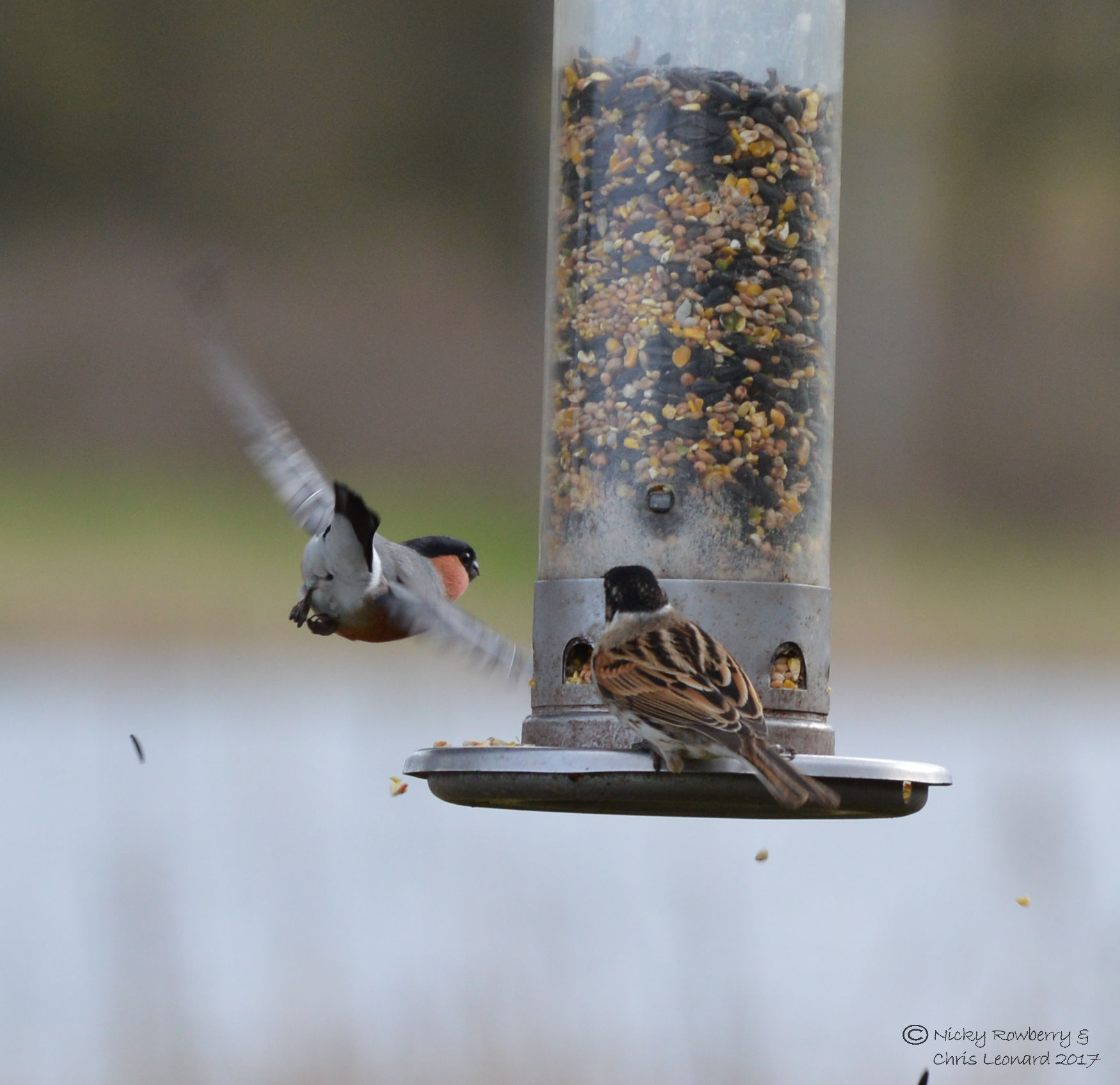
The reed buntings weren’t the only ones using the bird feeders; they had stiff competition from the bullfinches in particular, who in turn had to contend with the greenfinches.

bullfinch-bunting-2

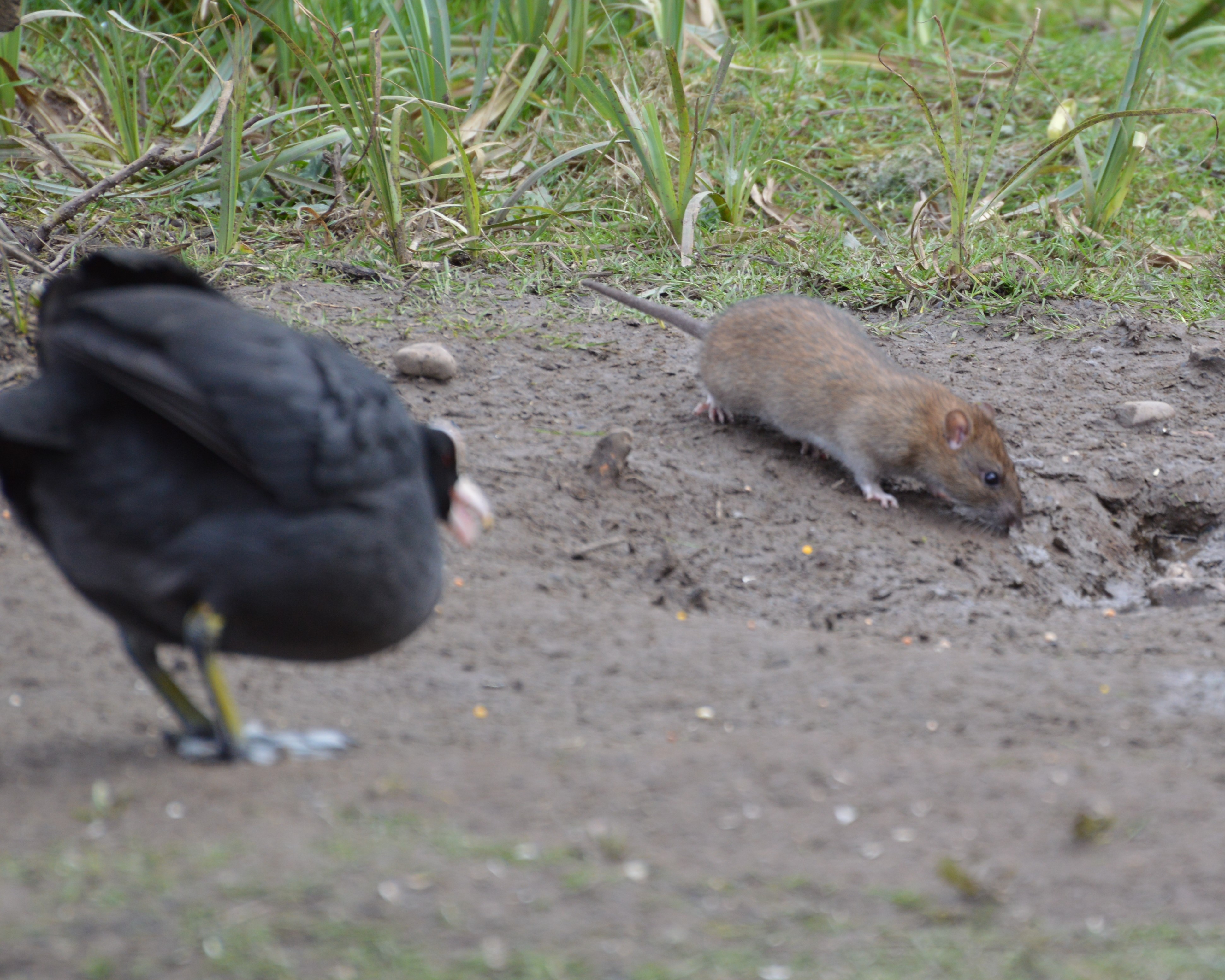
All the dropped seed of course attracted the inevitable rats, including this particularly bold one. Not the most welcome visitor to a bird reserve, but it was interesting to see a rat that close up in broad daylight – a first for me.

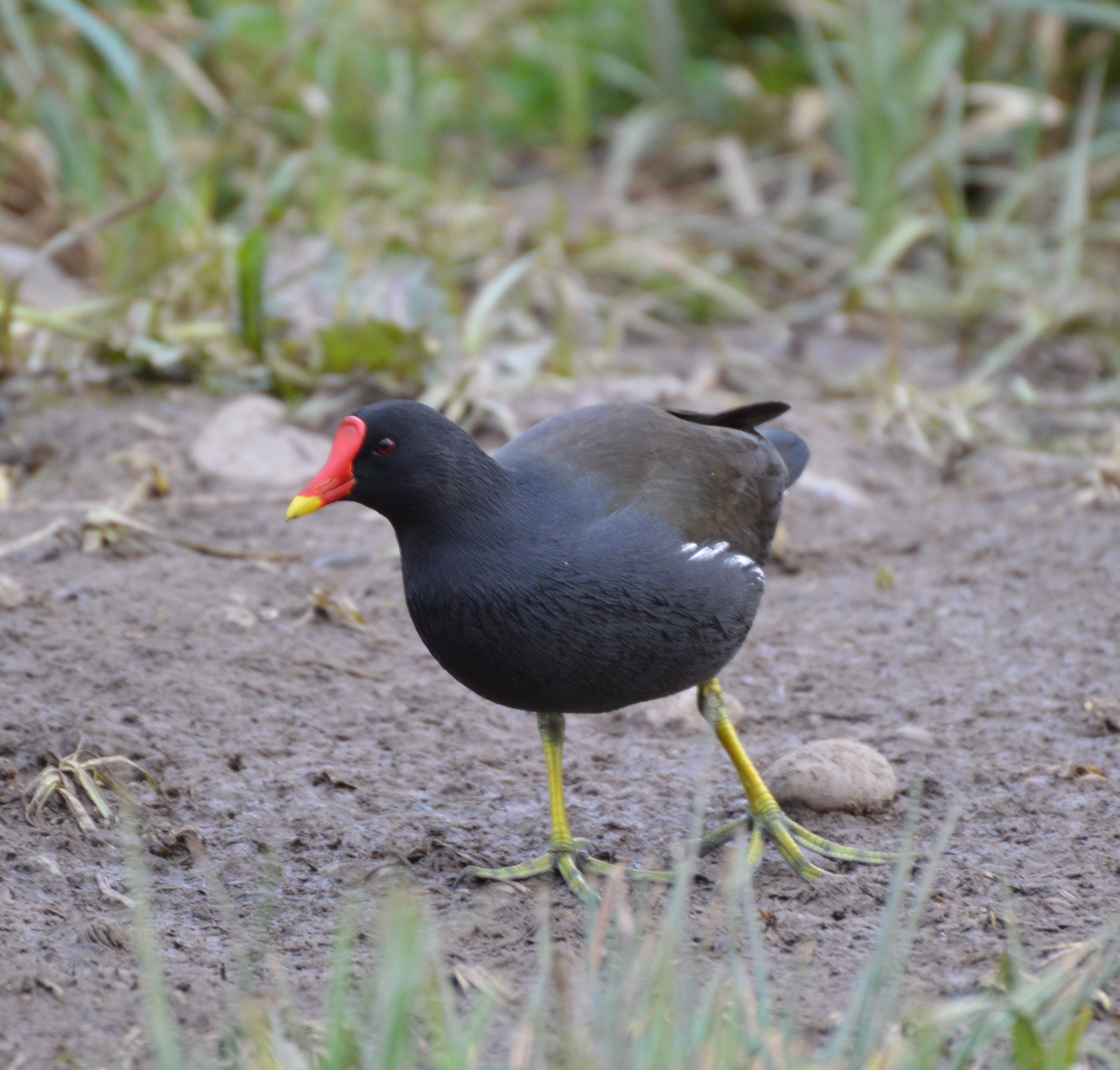
A portly looking moorhen was lazily scanning around for bird seed, while a coot cruised the nearby inlet.

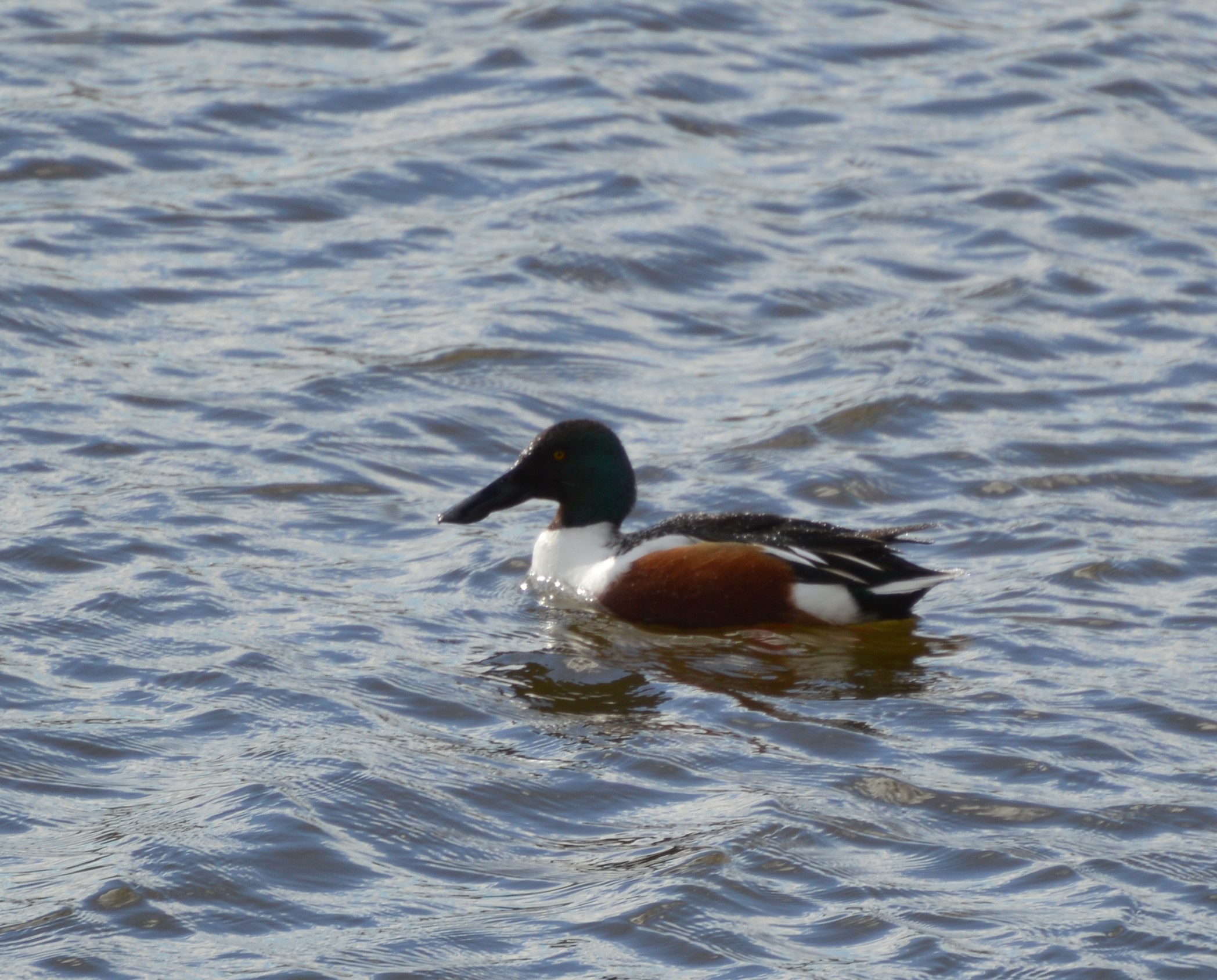
There were quite a few regular mallards about, but then a duck appeared that looked a bit different. Umpteen blurry photos later, I finally got one good enough to identify it as a Shoveler Duck. Turns out they are fairly common, but it was new to me.

There were a few cormorants about – weird looking birds. Even the RSPSB website describes them as reptilian looking, which seems a tad unkind!

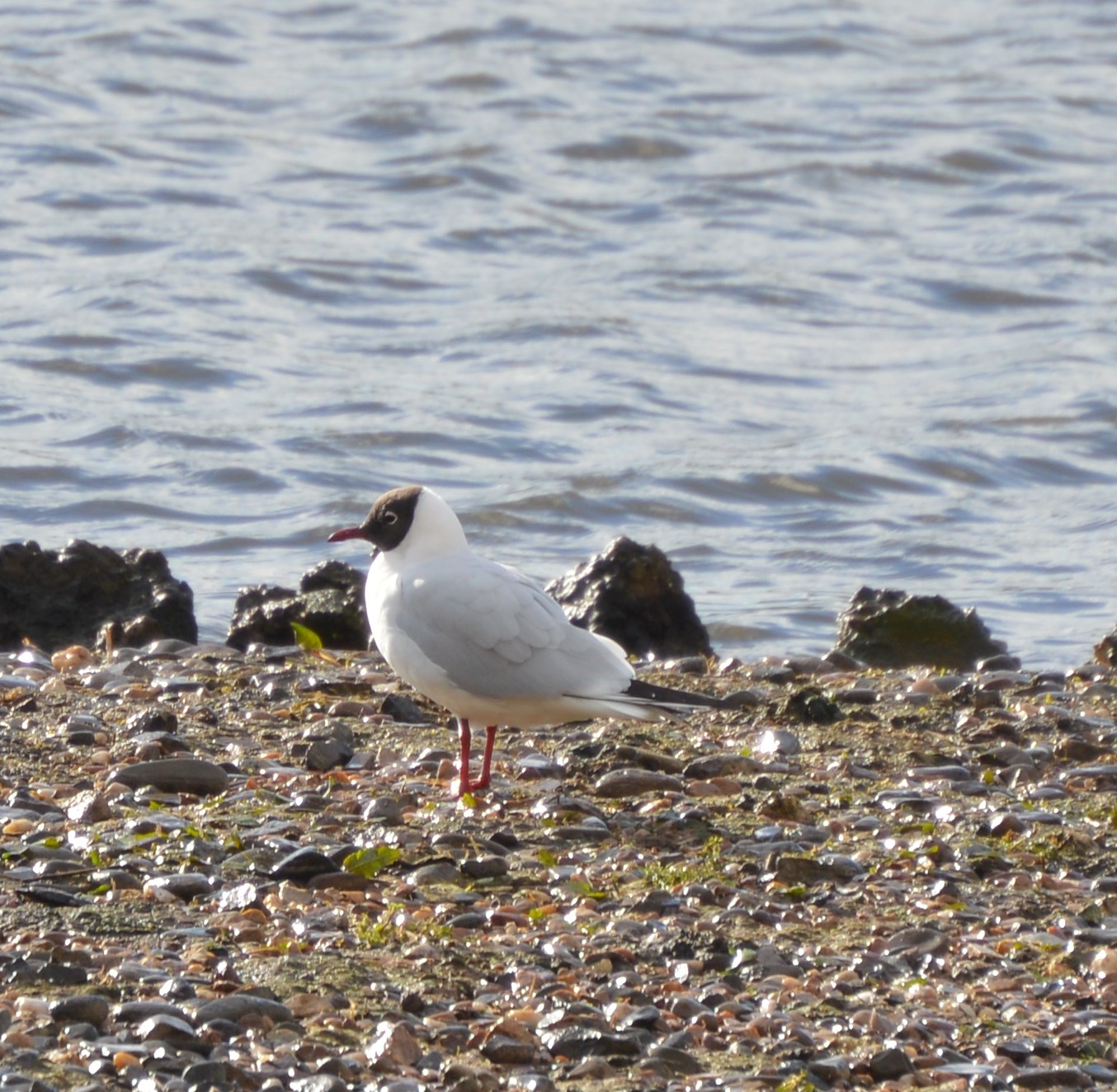
By far the most common birds I saw were these black-headed gulls, this one in his winter plumage still.

One species I was really pleased to see was the lapwing. I’d only ever seen these on TV (Springwatch most likely) and they are such characterful looking birds, I was really chuffed to find a small flock of them. They were a bit far away to get really good photos, although when they all took off I got a slightly better view.

Having lived by the coast for many years, one bird I was familiar with was the oystercatcher – never imagined I’d see them in the middle of Worcestershire though! I heard them at Upton before I saw them – that distinctive, fairly shrill call. A pair landed on a small island in front of me, easily recognisable with their bright red beaks and legs (I do like an obvious bird!) Again they were a bit far away to get really good photos.

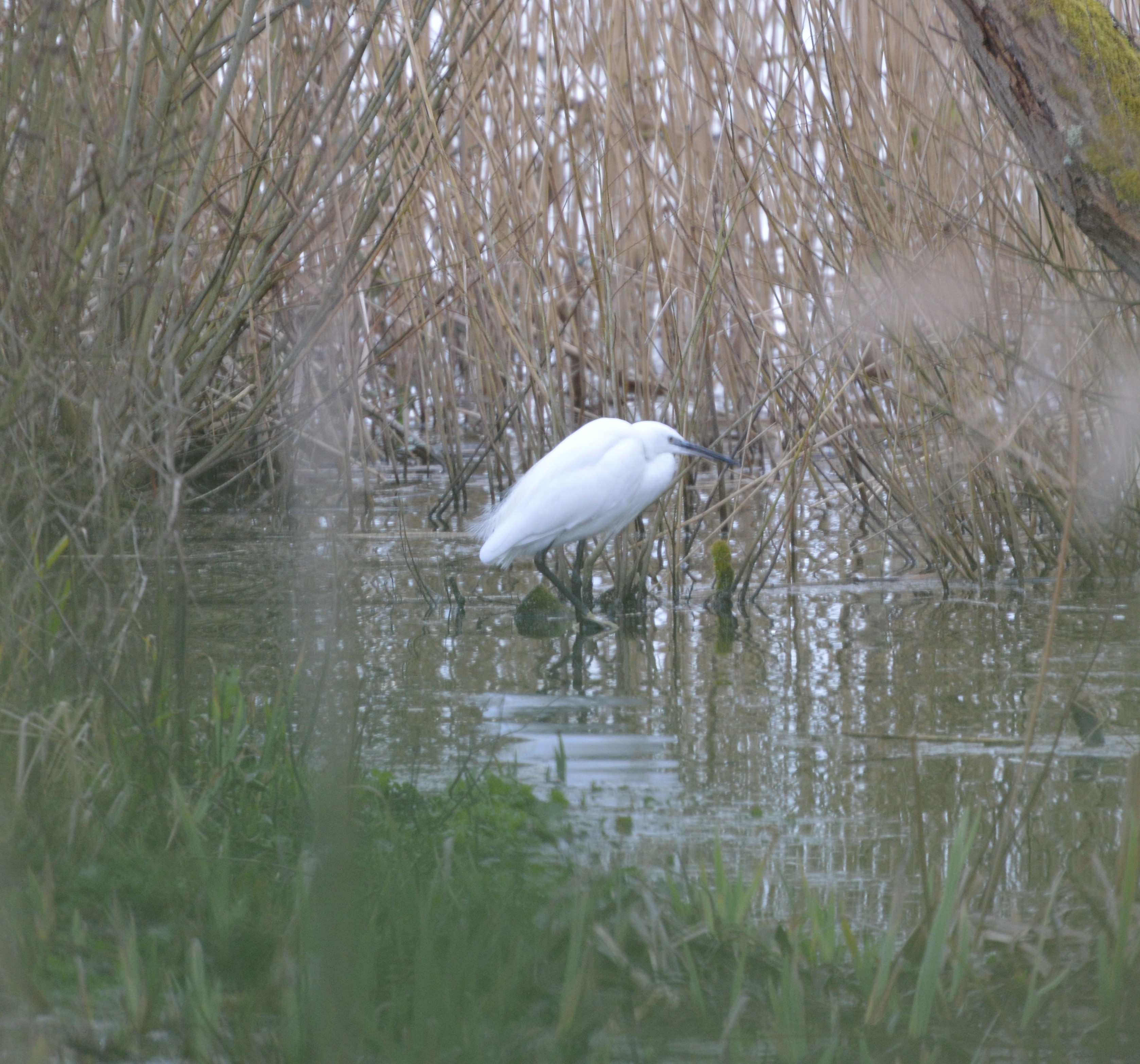
Without doubt the most beautiful bird we saw was this Little Egret,  spotted as I walked between hides. Almost ethereal with its pure white plumage, I watched it for a few minutes before it disappeared into the reeds.

All in all a great afternoon and although I was only there for a few hours, I still clocked up 18 species of bird, several of which were completely new to me. I heard another birdwatcher commenting that there was “nothing much showing” – he was no doubt much more experienced than I was and probably hoping for something unusual. Sometimes it’s good to be a novice, as I was absolutely delighted with everything I saw – lots of the birds were new to me, so it was all exciting and I was happy just watching what was there. For me there was plenty showing.

Hoggy Weight Watchers

Just a quick update on the newest member of our family – our foster hedgehog Meadow. He’s been with us now for over a month and I’m very relieved to say he seems to be doing fine.

We check on him every day to make sure he’s got plenty of food and water and that his newspapers don’t need changing, but other than that he is pretty low maintenance.  We think he’s been hibernating quite a bit as most days his food’s not been touched, although he does get up occasionally for a snack. We hardly ever see him as he is normally buried deep inside a nest of hay and we try to disturb him as little as possible.

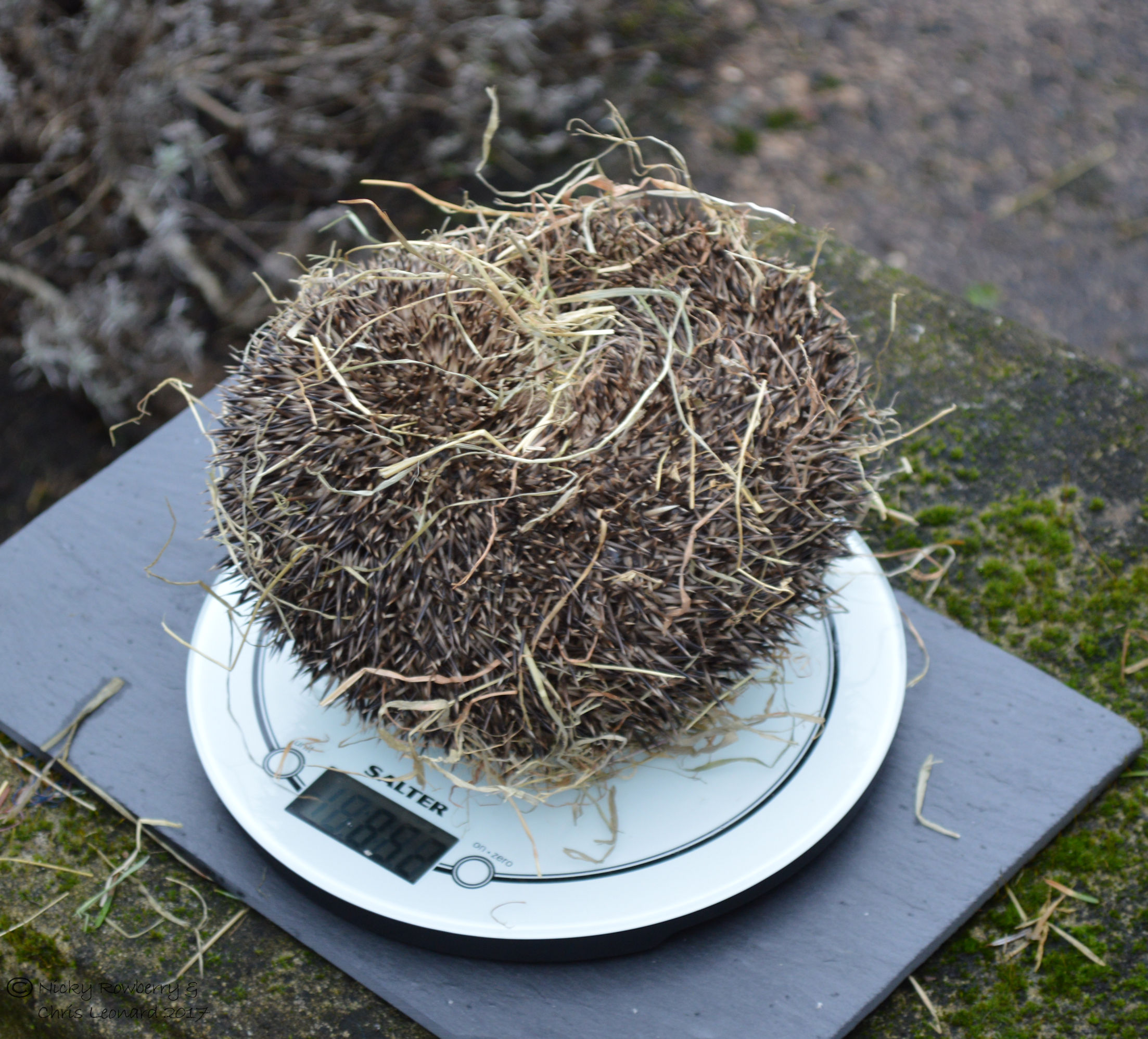
But Viv our hedgehog guru from Malvern Hedgehog Rescue has asked us to weigh him, initially every week, but now we do it fortnightly. So today was weigh-in day. Armed with a pair of gloves, a set of scales and a husband, I approached the hay stuffed sleeping bag he uses. I grabbed what I hoped was a ball of hay around a hedgehog.  There was a lot of huffing noises coming from the hay, so I knew he was in there. It took a while extract him , but eventually we cleared enough hay to reveal him and popped him on the scales.

meadow-on-scales

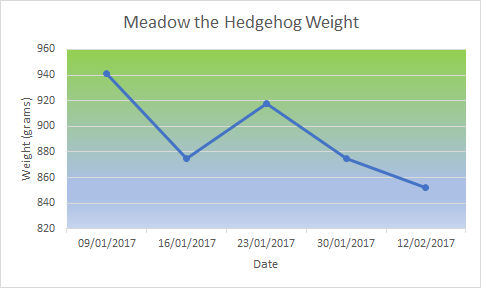
A respectable 852g (minus a few grams for stray hay perhaps). He was about 940g when he came to us, so he’s lost a bit in the last month. Considering he’s been hibernating most of the time, the weight loss isn’t cause for concern. He does after all always have food there if he wants it.

I do love a good graph, so Meadow’s weight provides the perfect excuse (of course I have a spreadsheet too, satisfying my inner geek!)

meadow-weight

He stayed curled in a ball while I cleaned out his hutch and put fresh food and water down.

meadow-in-hutch

We then repacked him into his hay filled sleeping bag.  We’ve probably not got it all arranged to his liking, so he may well come out tonight and drag things around a bit to get everything how he wants it. So that should be it and we hopefully won’t have to disturb him for another fortnight. Sleep well Meadow.

Big Garden Birdwatch 2017

Today has been all about the birds. It started when I switched on the tv to check our new nest box camera. I was amazed to discover something had left a “deposit” in the box  – clearly visible via the camera. Never have I been so excited by a poop in a box! Then it got even better – a blue tit appeared on screen in the box, had a look around and removed the poop. We hadn’t yet got the software to record the video feed (that arrived in the post about an hour later of course!) and I was too surprised to even grab the camera to take a photo of the telly. So you’ll just have to take my word for it. (I could post a photo of the stain left by the poop but that is probably more than anyone wants to see) Hopefully this is all a sign that the blue tits approve of the box and will start using it as more than a toilet in the next few weeks.

The main focus of this weekend though is the annual Big Garden Birdwatch – one of my favourite examples of citizen science. This birdwatch is also the world’s largest wildlife survey – an amazing achievement. We’ve been making sure the bird feeders have been well topped up the last few weeks and there have certainly been plenty of birds in the garden recently.

assorted-birds

So I sat down late morning in the garden to do my allotted hour of bird watching; camera and notepad at the ready. Although not everything showed up in the hour, I was really chuffed to record 14 species and 30 individuals – a significant improvement on last year when I only got 21 individuals of 7 species. I do love a graph and the RSPB sent me this little pie chart (well half a pie) of 10 of my species.

birdwatch-results

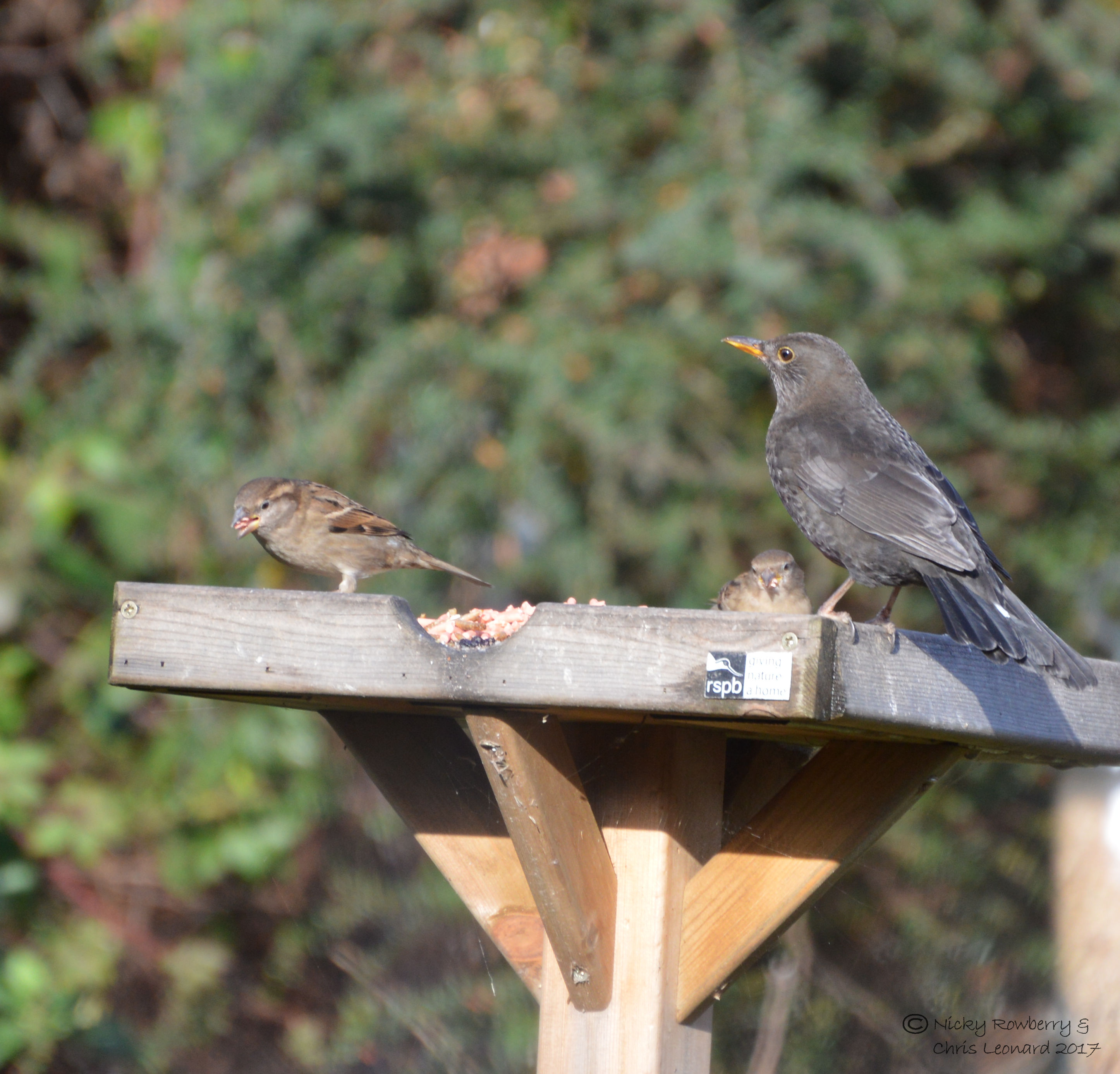
So topping the list was the house sparrow with 12 birds – I’m sure we actually have about 20, but I could only manage to count 12 at any one time. Last year I counted for the hour then took photos afterwards. This year I tried to get photos of everything as I counted them, although the best I could manage was 2 sparrows in one shot. I’d tucked myself away in the corner of a garden so that I disturbed the birds as little as possible, so I was actually a bit far away for taking photos – hence the dubious quality in some cases (excuses, excuses).

sparrows

The next most common bird today was the jackdaw – three appeared but only two ever seemed to land at the same time.

jackdaws

Collared doves and blackbirds both managed 2 individuals. The collared doves landed nicely together, the blackbirds of course kept their distance, so I’ve only got one.

collared-doves

blackbird

We’ve got a pair of blackcaps that regularly visit the garden and both male and female showed up within the hour. The female was more nervous though so I only got a shot of the male.

blackcap

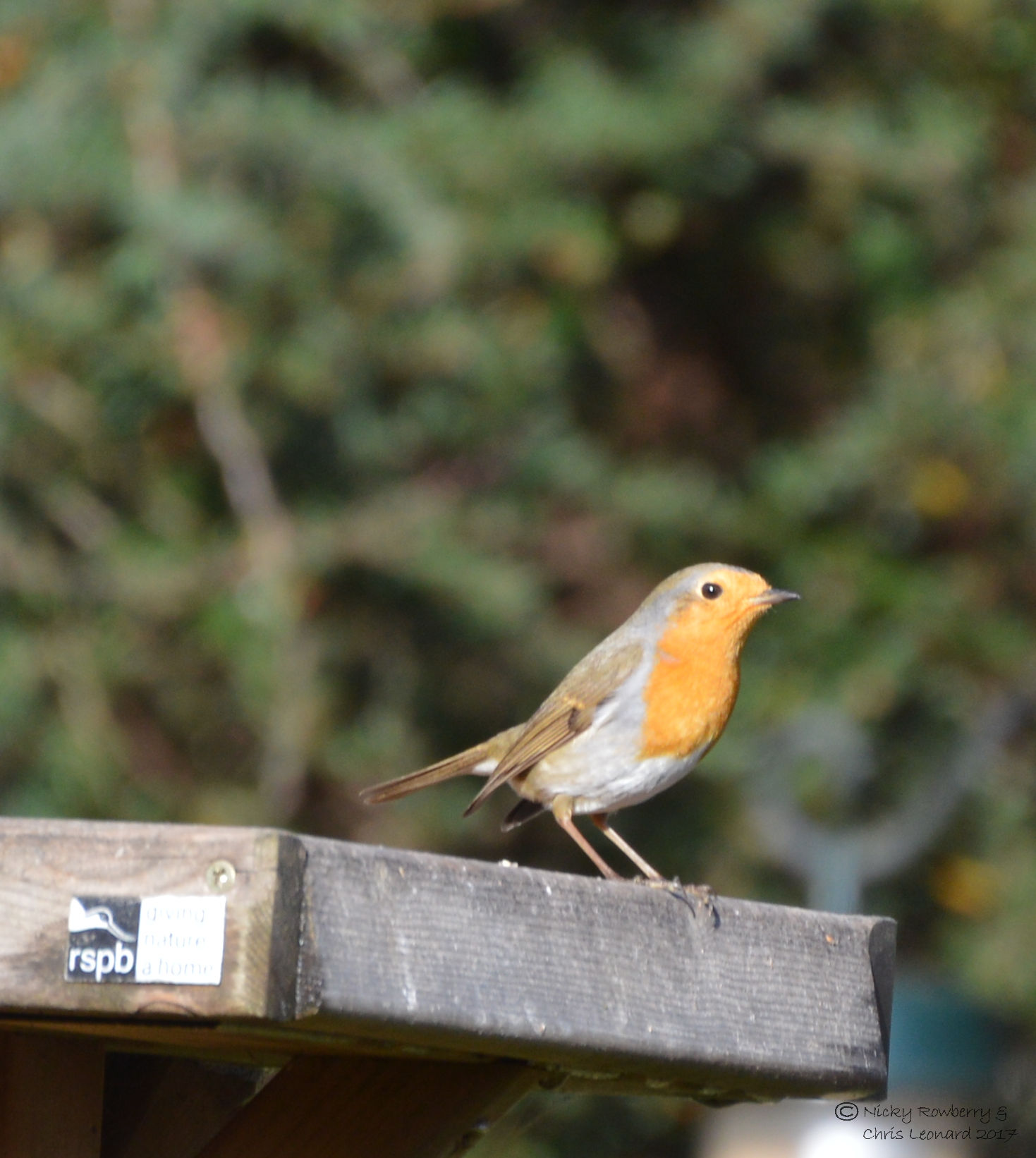
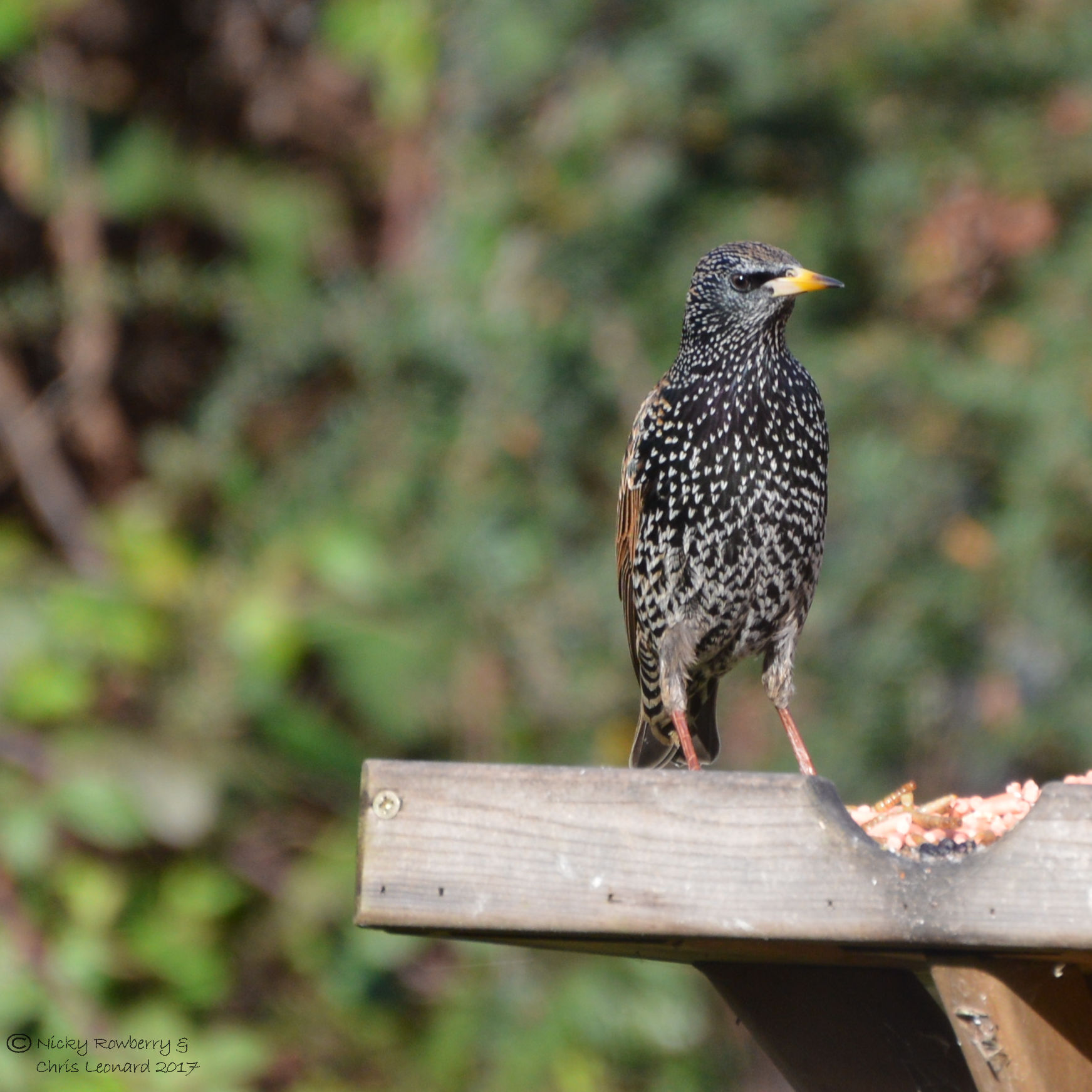
The robin, a starling (one of 4 we sometimes get) and the song thrush all turned up on cue for a change.

robin

starling

song-thrush

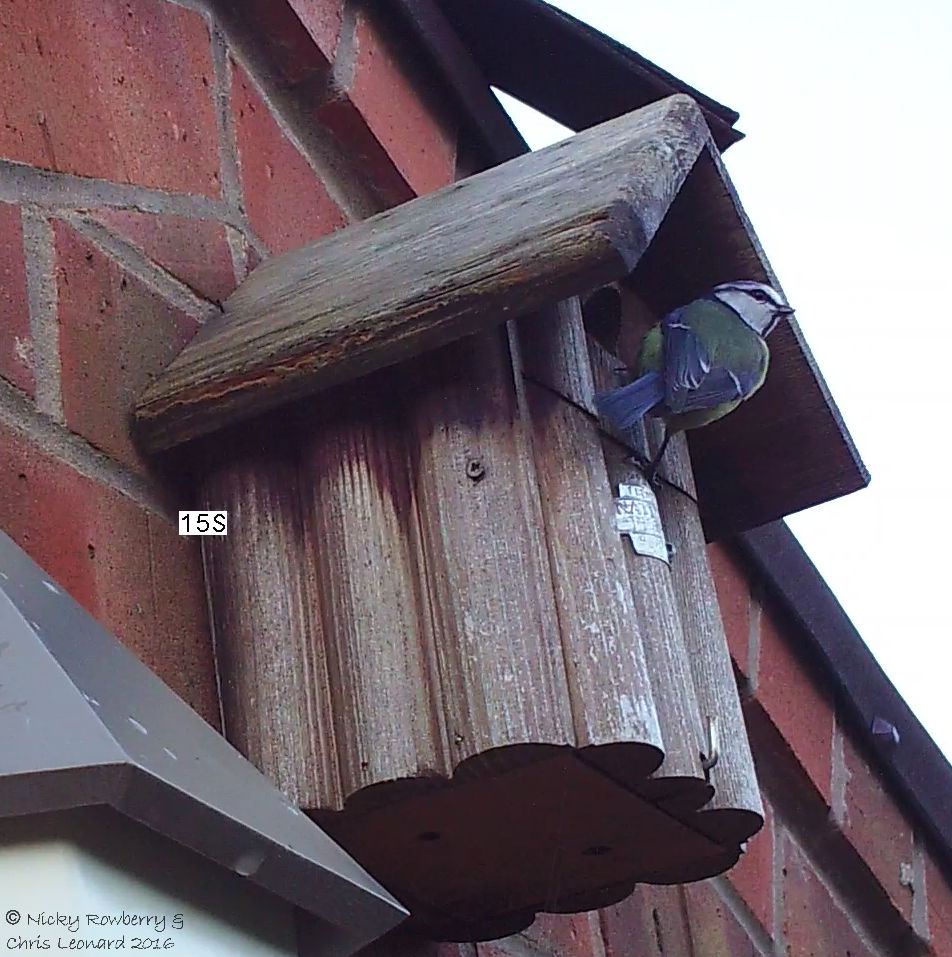
Earlier in the morning I’d seen several long-tailed tits, a great tit and a pair of blue tits. Of these only a single blue tit deigned to put in an appearance during the hour.

blue-tit

I’d put up a new niger seed feeder just a couple of days ago and the goldfinches had found it almost immediately. I’d seen 3 or 4 of them on it yesterday, but today I was grateful when just one arrived. Unfortunately when positioning the niger seeds I hadn’t considered trying to take photos from the other side of the tree – so there’s a few too many twigs in the way!

goldfinch

A magpie, a dunnock and a wood pigeon all appeared briefly, but out of range of the camera. The final bird was a wren. This wren has been tormenting me for weeks. It has a tendency to appear whenever I’m in the garden without the camera. If I do have the camera, it appears but hides behind as many twigs/branches/weeds as it can find. So believe it or not this is probably the best photo I’ve ever managed to get of it – which isn’t saying much!

wren

I’d had the trail camera on while I was counting, just in case it could pick up something I’d missed. It didn’t spot anything different, but it did film this goldfinch – probably the same one I photographed from the other side of the tree.

Of course once the hour was up and I was back on the sofa, the birds returned en masse to taunt me. Leading the mockery was the woodpecker, which I haven’t seen for weeks but chose to land on the bird table just after I’d submitted my results. The long-tailed tits flew back in and the wren perched on the most photogenic spots possible – safe in the knowledge that I couldn’t get a photo from this distance!

Anyone thinking of taking part in the birdwatch has until Monday to have a go. Full details on: https://ww2.rspb.org.uk/get-involved/activities/birdwatch

As I now have the image capture software all loaded, I will probably be spending the rest of the weekend watching an empty nest box with only a dubious stain on the bottom!


New Nest Box

With the Big Garden Birdwatch just around the corner, we’ve been reviewing what we could do to attract more birds into the garden. We already get quite a lot, but the more the merrier!  So I’ve added a few more bird feeders and have been keeping the existing ones well topped up. Spring will hopefully be here before too long, so we’ve also been looking at the nest boxes.

It may just be that we’ve been watching too much Spring/Autumn/Winterwatch, but we (well mainly I) have been longing to get footage from inside a nest box. Last year we were delighted to get shots like this of our blue tits using the old nest box.

Blue Tit on Bird Box

Of course as soon as we have a bit of success with one thing, we want more. Last year we could only film the adults coming and going, so this year we’re hoping to get the action from inside the box. So we’ve gone wild and bought a new bird box complete with fitted camera. We’ve only a limited number of places where we can put a bird box, so decided to take the old one down and replace it with the new one. We may of course regret this if the blue tits reject the new one and we get no nesting activity at all! So first job was to take down the old box. On opening it up we found last year’s nest still pretty much intact inside. It’s the first time I’ve ever really had the chance to look at a nest up close like this. It was very well made and still held together firmly. We were intrigued by the bright green stuff, which looks remarkably like the green fluff you get off a tennis ball – they certainly didn’t get that from our garden. The rest was made up of bits of grass, moss and possibly wool.

blue-tit-nest

There was still one tiny perfect intact egg inside – not even the size of a 5 pence coin.

blue-tit-egg

Slightly less attractive was a couple of tiny skeletons – presumably chicks that didn’t make it to fledging. Blue tits can lay large clutches of eggs, so we just hope that these skeletons and unhatched egg, were just the unlucky ones and most made it to adulthood last year.

blue-tit-skeleton

The new nest box is now up (still complete with wire netting to prevent next door’s cat getting an easy meal) and all ready to go. The new box has Perspex panels each side to increase the amount of light getting in for the camera. The transmitter is the black box to the right.

birdbox-system

The whole thing came pretty much set up and was all very easy to install. So we can in theory now watch all the action – assuming there is any – from the comfort of our living room. This is the current view of the empty box. Hopefully we won’t still be looking at an empty box in a few months time!

tv-view-of-birdbox

We’ve got plenty of blue tits (as well as great, coal and long-tailed tits) using the garden at the moment, so hopefully some of them are from last year’s brood and will remember what a great place our garage wall was to grow up!!

blue-tits

While searching for information on nest boxes, I discovered that the British Trust for Ornithology runs a survey called the Nest Box Challenge. They want people to submit observations on nests/nest boxes in their gardens. Since I can never resist filling in a form and a bit of citizen science, I have registered our new nest box. Fingers crossed it gets occupied and I don’t end up just submitting “empty” as my observation each time – although even that would apparently be useful data. Anyone interested in registering their own nests can find all the info at: https://www.bto.org/volunteer-surveys/nbc

Wildlife Hides – Part 3 The Kestrel

This is the third and final part of the blog about our wonderful day spent at the Wildlife Hides near Droitwich. Our last hide of the day was the Kestrel one. Once again we were a bit worried when the previous 2 groups had all seen kestrels feeding – would they be too full to fly down for us?

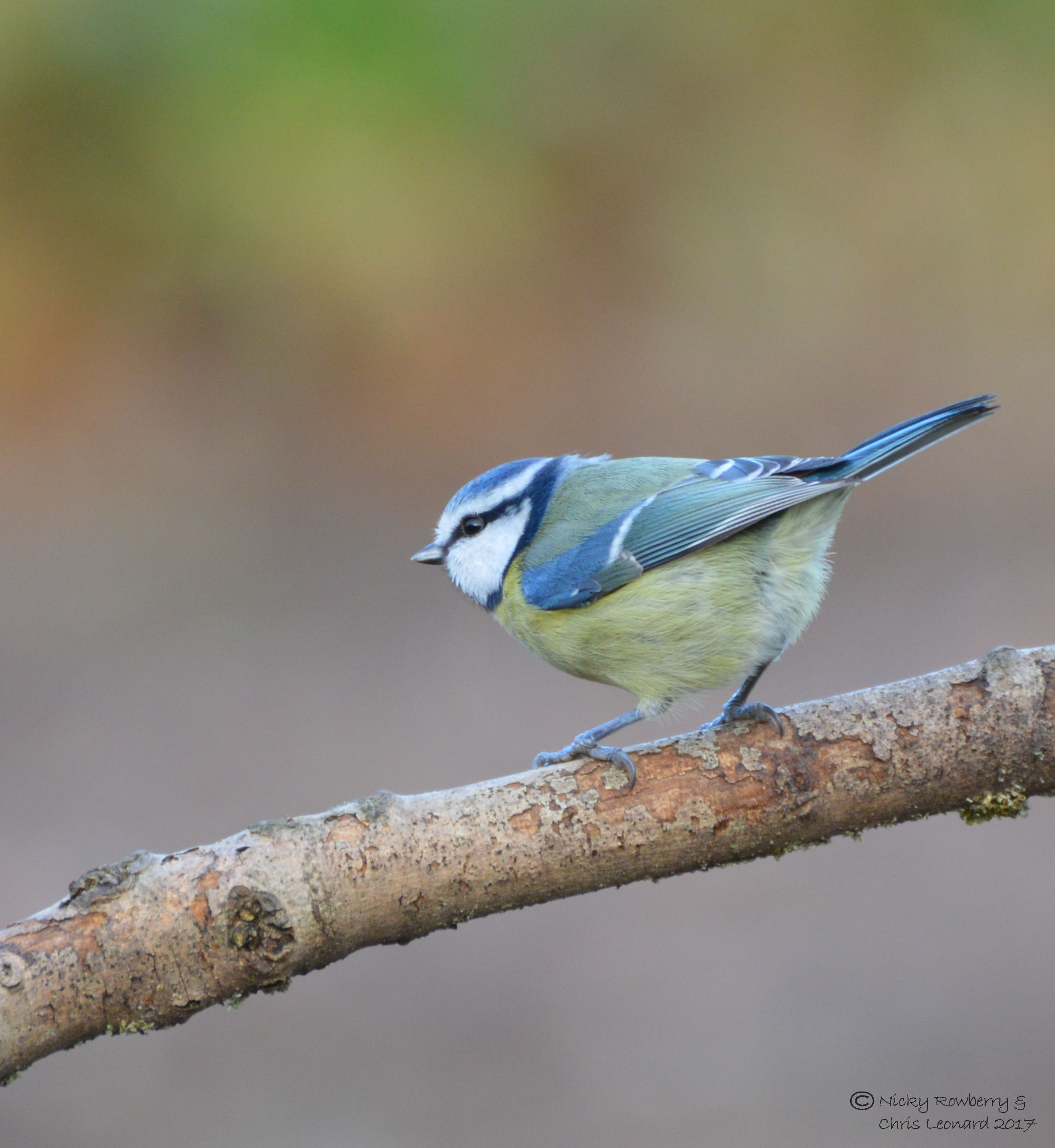
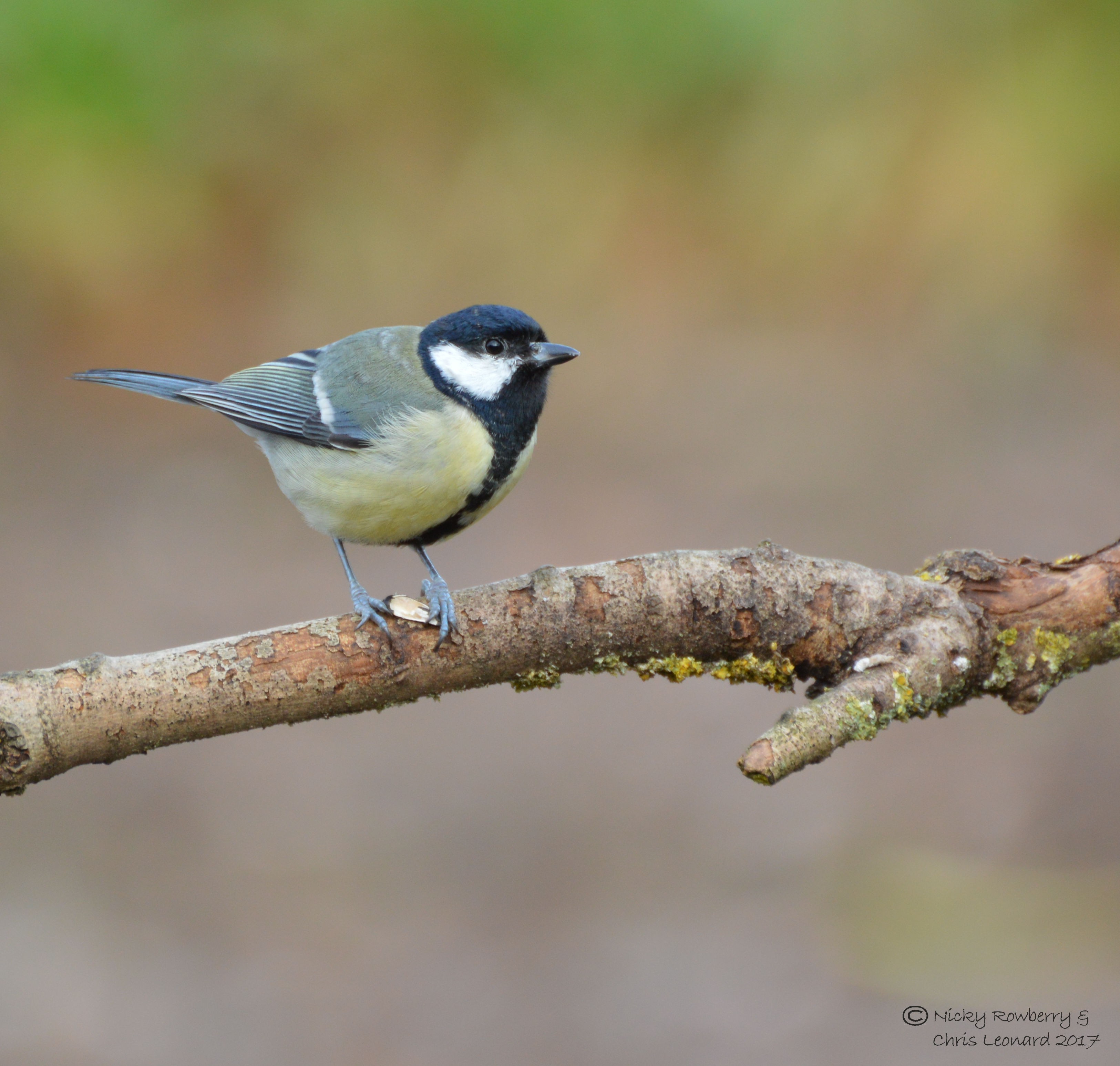
Initially all we could see was a very distant kestrel perched on a telegraph pole way across the field. Dead mice were positioned in front of our hide, so we just had to hope she was still hungry. While we waited (with everything crossed) for her to fly down, we could at least enjoy lots of the small birds that were flitting about. The blue tits and great tits posed obligingly on a branch in front of us and a chaffinch was poking about in the mud on the field. A wagtail and an absolutely stunning bullfinch also made appearances, but we didn’t manage to get decent photos of either.

blue-tit

great-tit

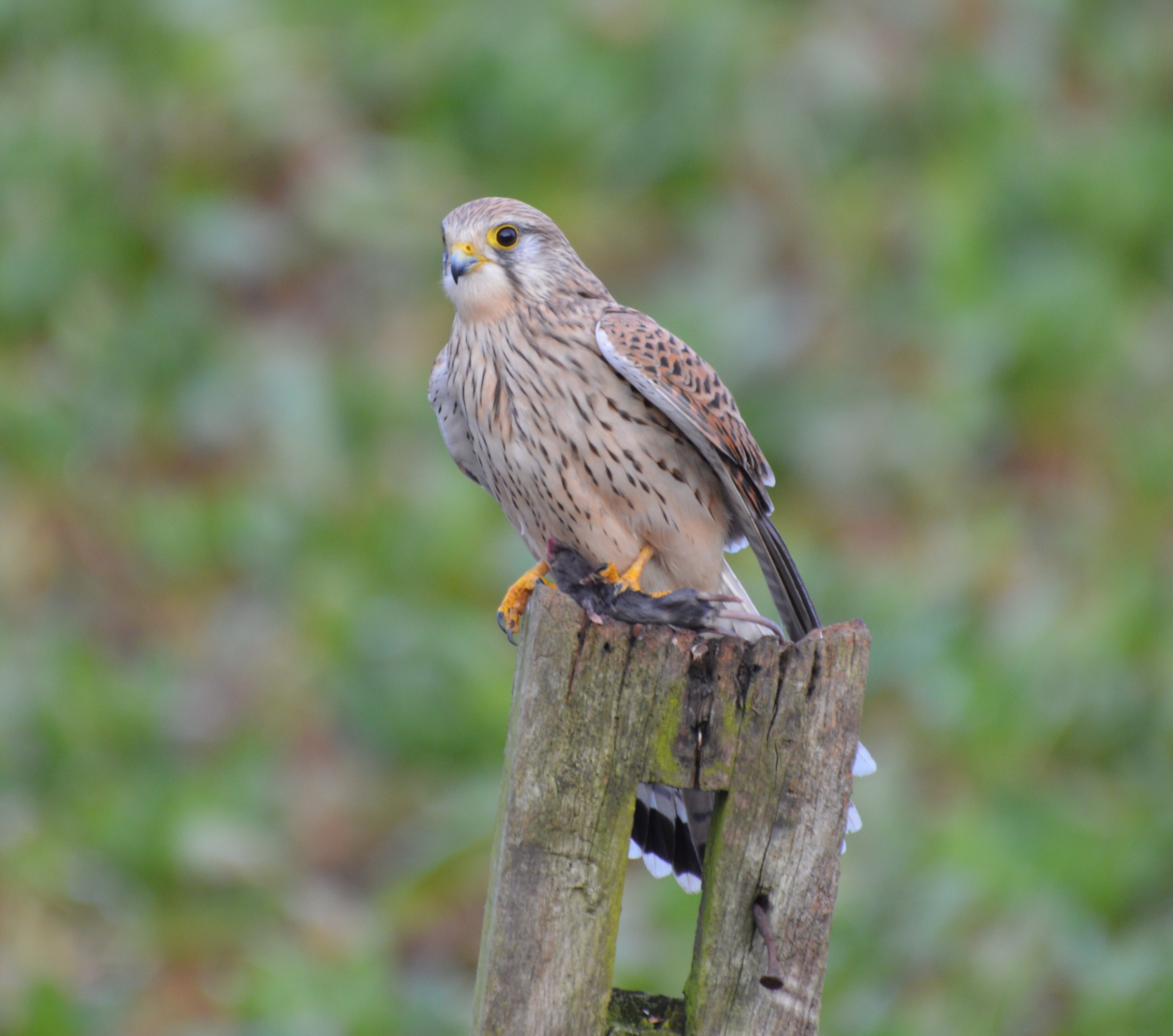
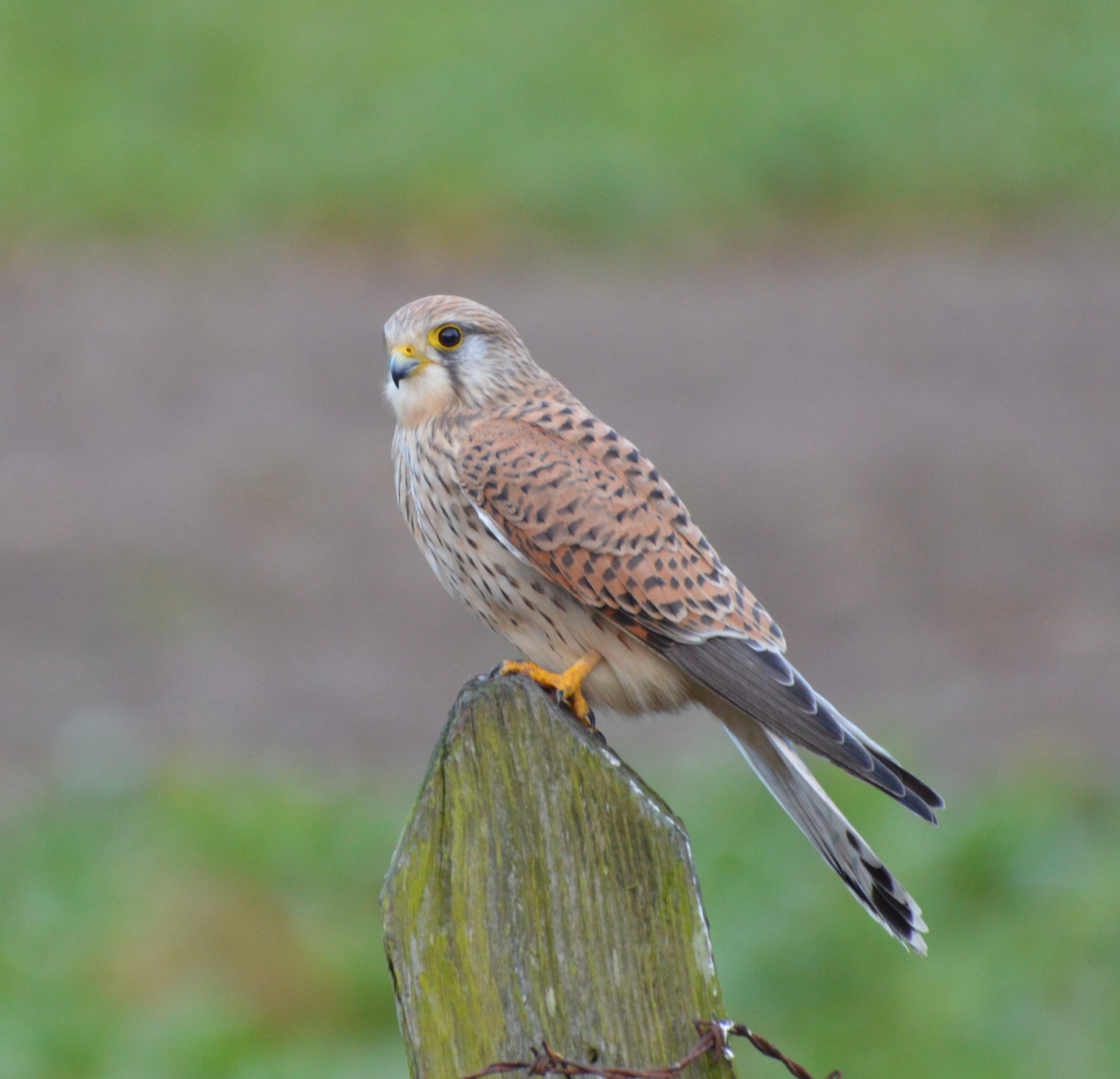
While we’d been watching the small birds, the female kestrel had been joined by the male on top of the telegraph pole. After what seemed like an age they eventually both took off and after a bit of hunting about, the female landed on one of the posts in front of us. All 3 of us clicked away frenziedly, to the point that we didn’t even notice the male had landed until it took off again – doh! So we only got photos of the female, but she was stunning. I’d never been so close to a kestrel before and hadn’t realised just how beautiful they were.

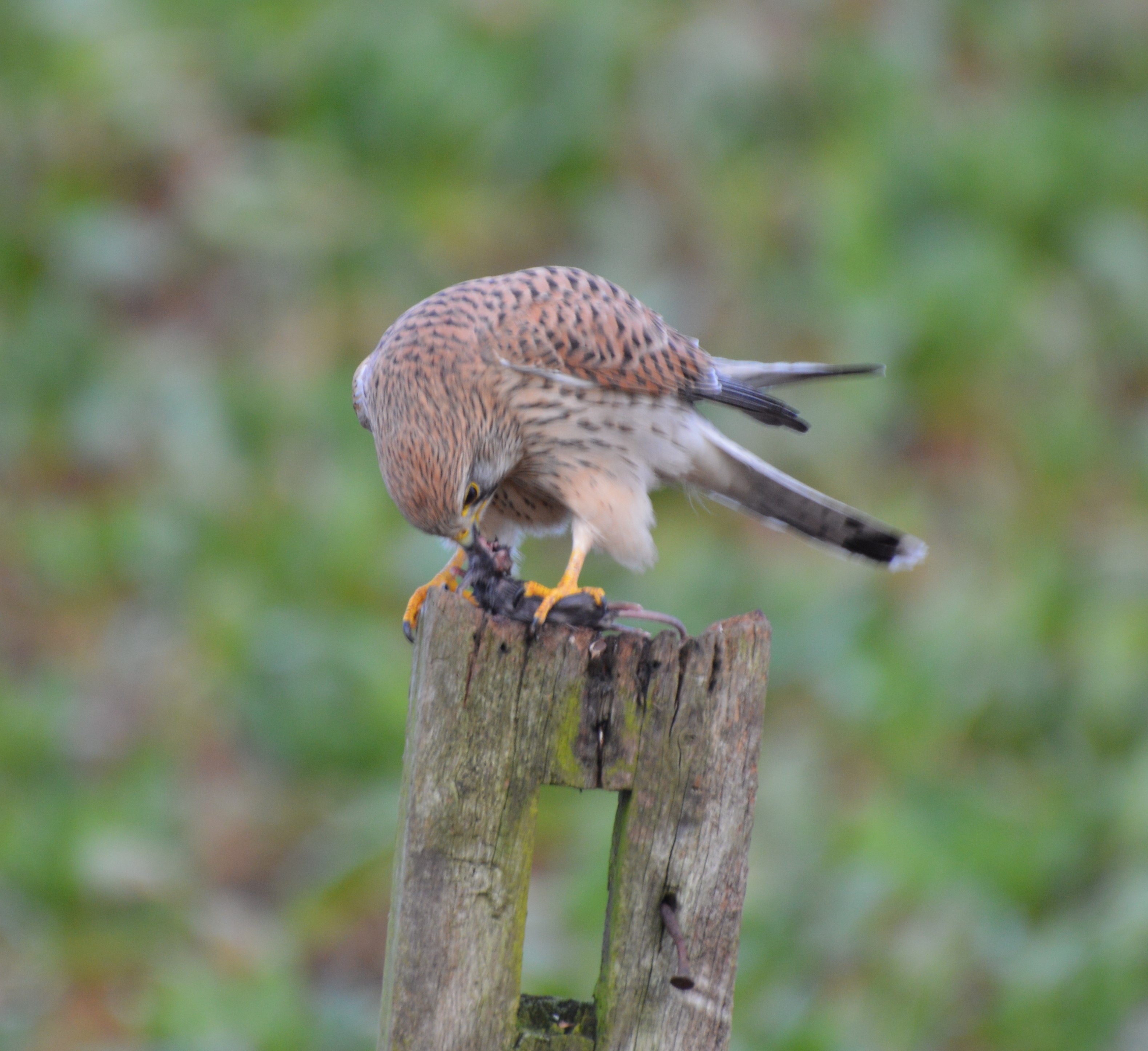
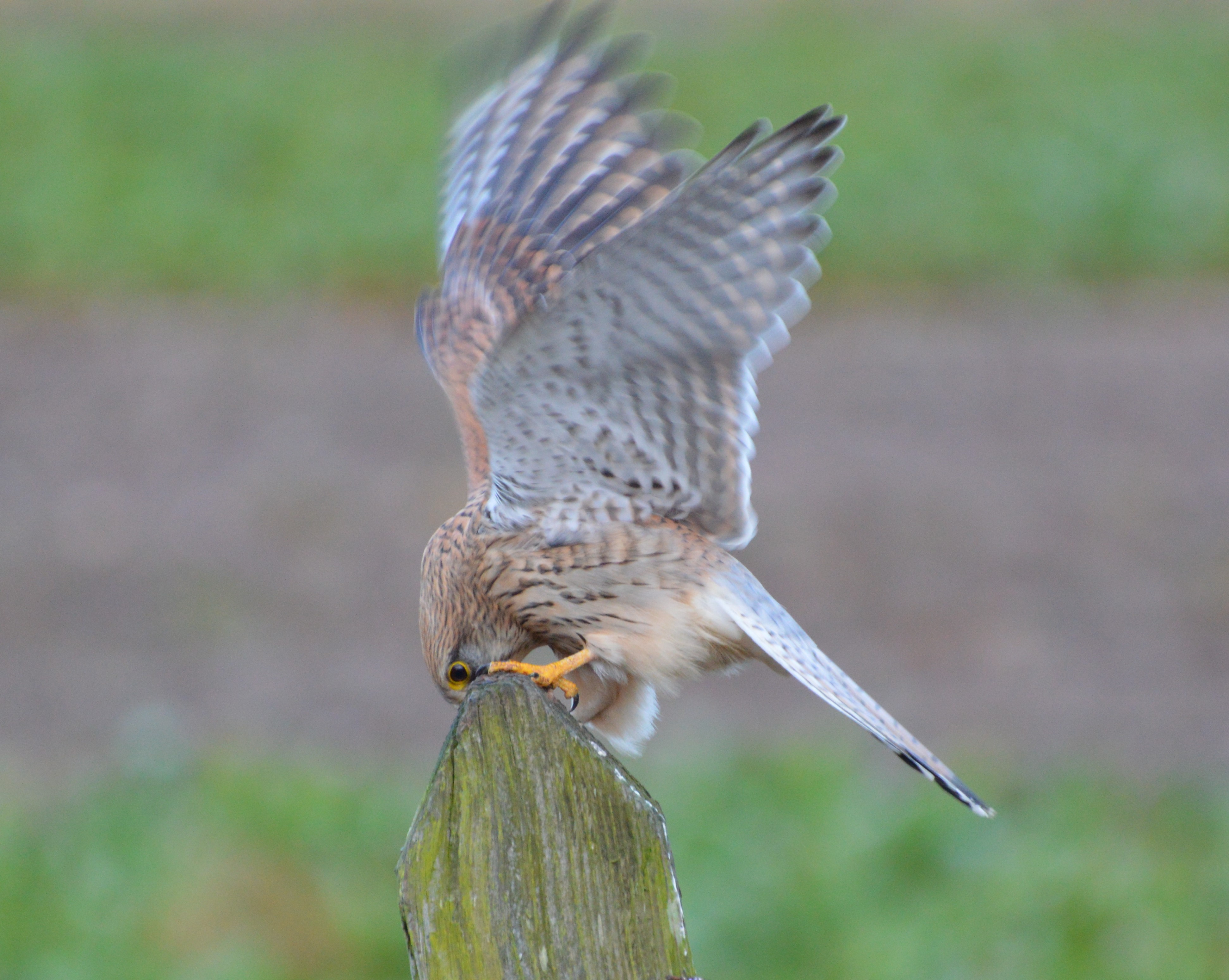
I think we made a bit too much noise and spooked her (and the male) off, but it wasn’t long before she returned. As we stayed put in the hide and kept quiet, she decided to have another go for the mice.

We could have happily stayed and watched the kestrels for a lot longer, but by now the light was starting to go. Before we packed up for the day though we had one final visitor – an inquisitive squirrel. I know it’s not a red one, but I still can’t resist them.

squirrel

I also had a go at videoing. They are such beautiful birds to watch, but you get a real sense of their strength when you see her pulling at the mouse. I wouldn’t want to be at the wrong end of those claws or beak!

All the hides featured in these last 3 blog posts were at Nature Photography’s site near Droitwich, which is only a half hour’s drive from Malvern – brilliant! Other hide rental sites are no doubt available, but we were very happy with our day and couldn’t have asked for better views of the birds. If anyone’s interested in trying something like this for themselves, here’s their website: http://www.naturephotographyhides.co.uk/  They also have hides in Scotland for red squirrel and mountain hares – very tempted for next year!!

I know in an ideal world we would have gone out and found these animals for ourselves, but when you have limited time and resources, sometimes it’s good to take a short cut. The birds were all still wild and there were no guarantees of seeing anything, so it was a big thrill for us just being able to watch them. For beginners like us, it was also a good way of practising taking birdy photos – it’s very hard to practice if there’s nothing there to photograph!