30 Days Wild – Day 24

TWT 30 Days Wild_countdown_24Day 24 of 30 Days Wild and this is the first day I haven’t really had chance to get out and about doing something wild. Instead, having got home from a trying day at work (not to mention the vote!), I thought I’d spend the evening on the sofa (with very large glass of wine) and analyse the results from our Garden Bioblitz of a couple of weeks ago. It took me a couple of weeks to get all the photos identified and logged onto the Bioblitz website and I’ve been so busy since, that I’ve not really had chance to sit back and really see what we found. So tonight’s the night.

All the results had to be logged by last Monday. So I got as many on the database as I could. There were still quite a few things that I’d got photos of but couldn’t identify – either due to my lack of skills in ID or my lack of skills as a photographer! So we potentially had a few more than the final tally shows. But equally I may have got some things wrong, so they won’t be allowed when the experts check everything, so perhaps that balances it out? So our grand total was 119 species and I was thrilled to discover that our little garden is currently 13th in the Recorders League table. I took this screenshot from the Bioblitz website – just in case no-one believed me! I’ve obscured the names of the people ahead of me – not in some jealous pique (although I am jealous), but in case I was breaching anyone’s privacy by leaving in the full names.

Trending

119 species isn’t bad for an ordinary town garden like ours, so I’m really pleased. Of course if we’d had more time, we could have raised this figure, but then that was the whole point of the Bioblitz – it was what you could find in 24 hours.

So our 119 species covered a pretty broad spectrum of flora and fauna. Maybe not surprisingly the moths represented our biggest group – 42 species in total. This probably reflects our experience with moths – we’ve been moth trapping for a few years, so can identify most of the common species. There were probably just as many fly species in the garden that day, but we didn’t have the skills to ID them.
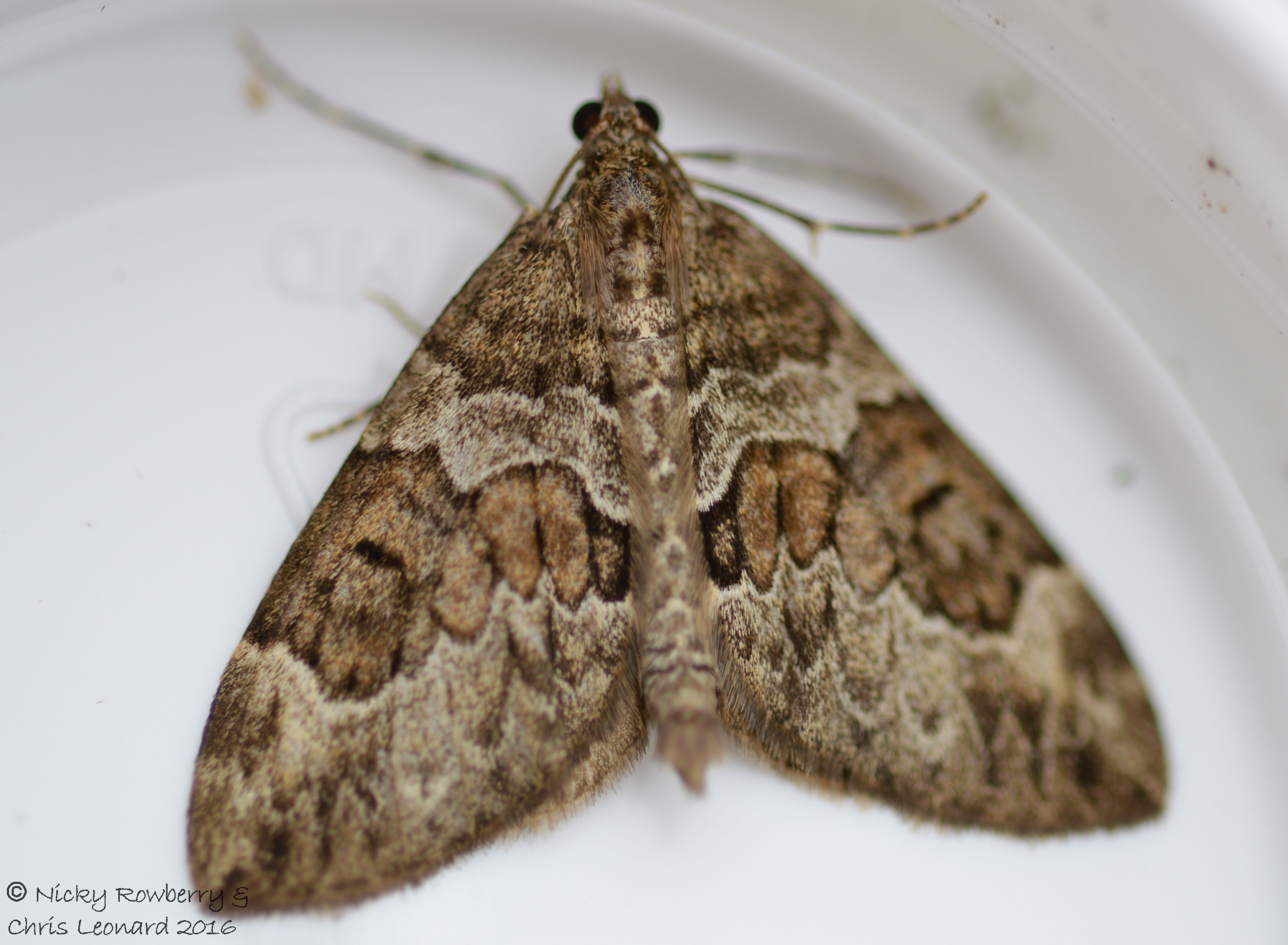
Spruce CarpetOf the 42 species of moth some were perennial favourites and spectacular ones like the Elephant Hawkmoth, but others were just as exciting as they were “firsts” for our garden – like this Spruce Carpet. (Our moth list for 2016 to date is currently 97 species!)

Bees were of course one of our prime targets and I was pleased we spotted 8 species that day. We’ve actually found 22 species this year, but to get 8 in the one day wasn’t bad. But the bee highlight was seeing a little chap flying around carrying his precious leaf – a Leaf Cutter Bee and a first for the garden.
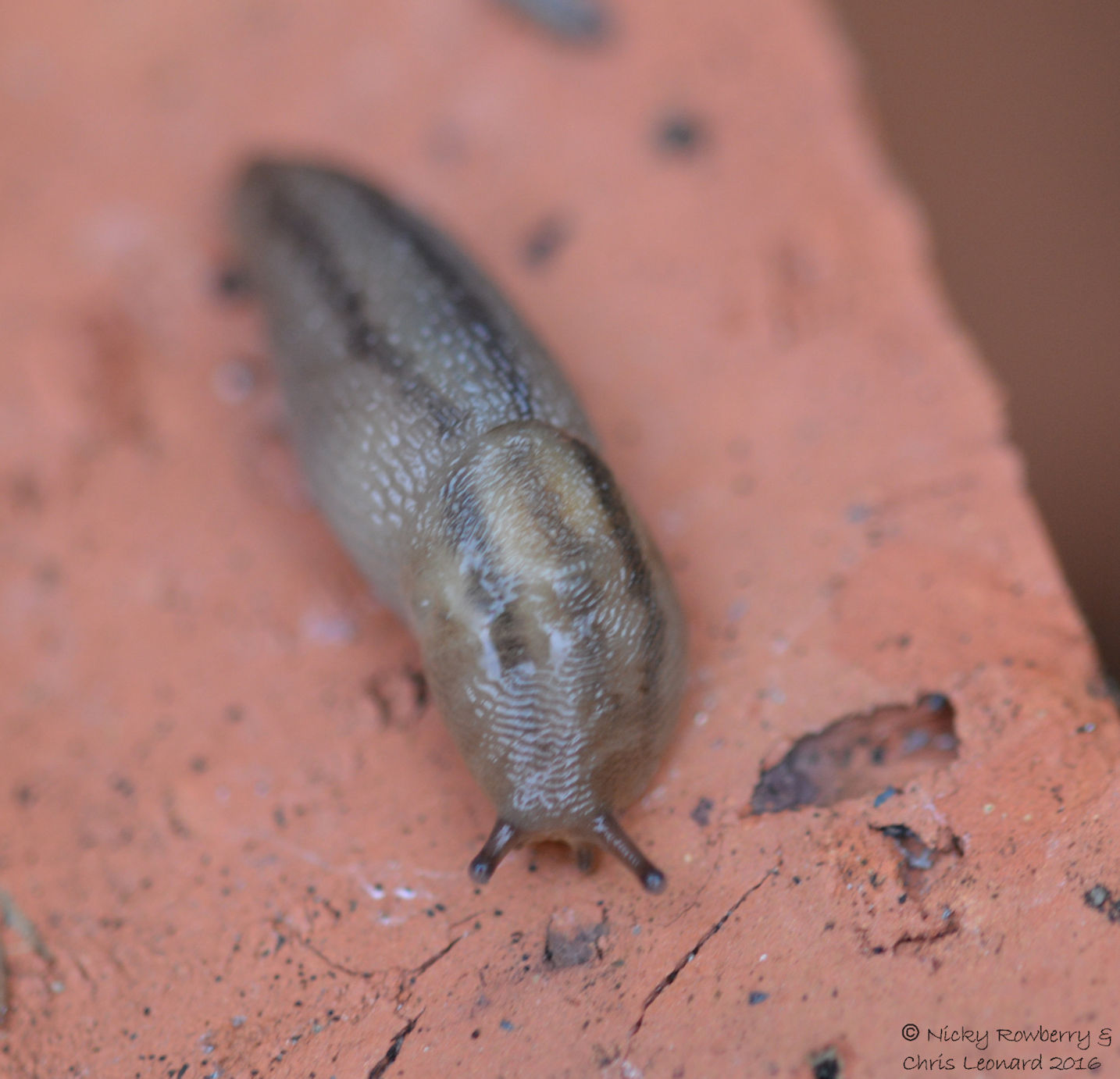
Iberian SlugMolluscs might have done better if it had been a rainier day (if we’d done the bioblitz the following week, we’d have done really well by that reckoning!) But we still managed a respectable 7 species – 4 snails and 3 slugs. One of the slugs was even a new one for the garden, although I suspect they’ve been around for ages and we’ve just not bothered to identify them. It was this Striped Slug – Ambigolimax valentianus no less!

Bordered Shieldbug

We got two species of Shieldbug on the day, but again one of them was new to us – this Bordered Shieldbug, which I initially thought was just a small beetle, until I enlarged the photo. Really chuffed to be able to add this species to our Shieldbug list – currently 8 now I think.


Sexton beetleBeetles came in at 8 species (11 species actually if you include the ladybirds which I had counted separately). Beetles are a group that we’re just getting in to, trying out pitfall traps to see what we’ve got. This one however flew into the moth trap. It is a Black Sexton Beetle and was absolutely covered in these mites. It looks lifeless in this photo, but honest it was just playing dead, because as soon as I turned away it was off. The mites are apparently harmless and just hitch a ride to the next dead animal that they and the beetle feed off. Can’t help thinking that so many mites must be really irritating though and affect his flight?
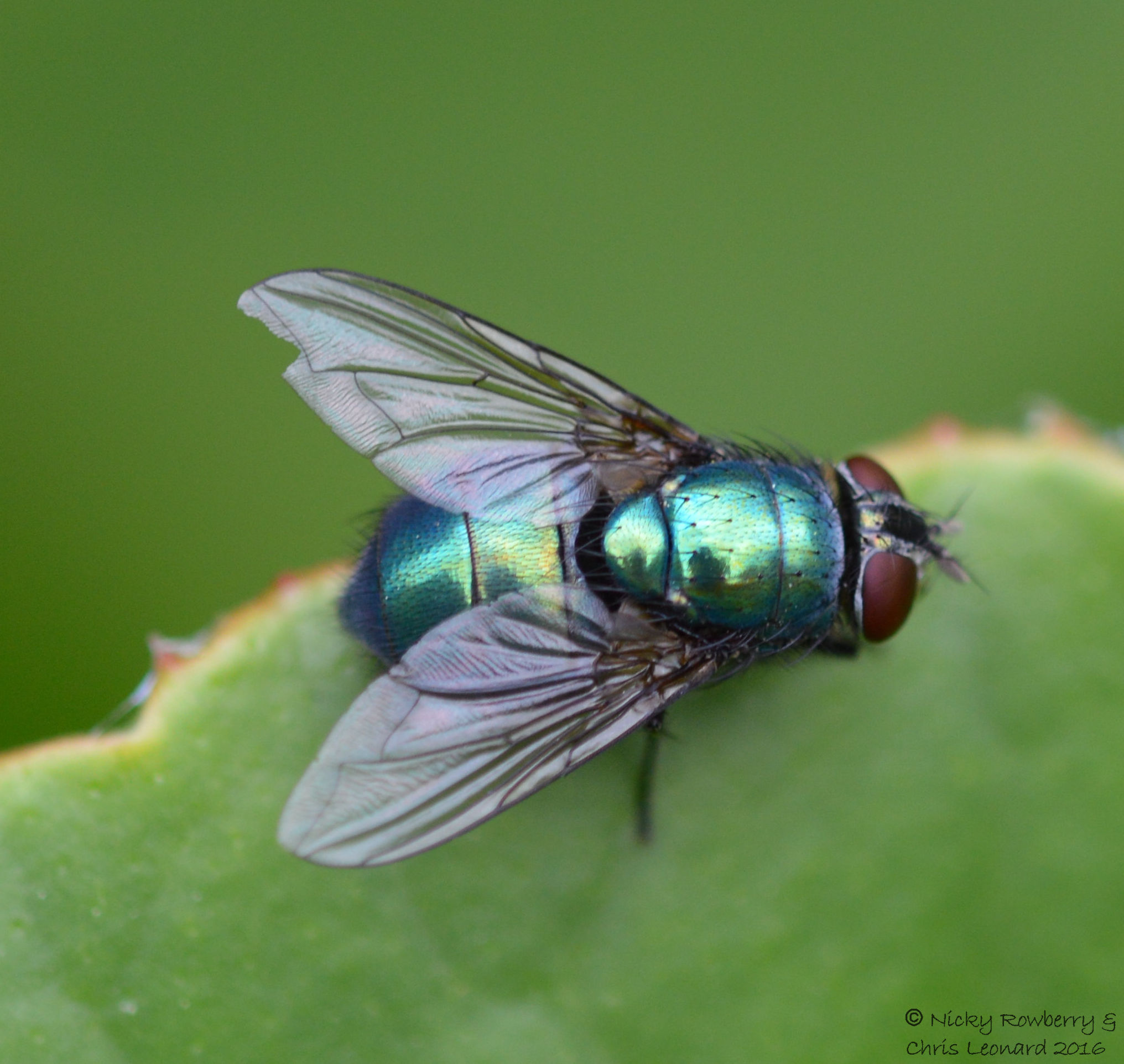
Lucilia green bottleThere were of course flies buzzing about all the time, but with virtually no knowledge of this group we didn’t pay them too much attention. This big Greenbottle though was quite photogenic and the good people of iSpot identified it to genus for us – Lucilia sp. We did manage to get 2 other fly species to genus as well, but they weren’t as “pretty” as this one!

Frog hopperOne of my favourite finds of the day was this Red & Black Leafhopper, which I’d previously only seen in photos. Not seen it in the garden before or since, but I’m glad it chose that day to make an appearance! It was a stunning little insect, so I hope we see more of them.


For the birds we only managed a slightly disappointing 8, all of which were the usual suspects like robins, blue tits and a Jackdaw. We do get quite a few other species, but I suppose it was a bit much to expect the Sparrowhawk to make an appearance within those 24 hours!

And finally for the animals, we managed a grand total of 3 vertebrates – a frog, a newt and the hedgehog.  The bats were around, but we didn’t actually see them in our garden and without photographic evidence (still not worked out how to get a photo of one flying), I’m not sure the Bioblitz database would accept them.

PimpernelOf course the Bioblitz included plants as well as animals. I did originally intend to go around the garden the week before and pre-identify all the plants, then all I’d have to do on the day was take a quick snap of each. But of course that didn’t happen, so instead we zigzagged about the garden photographing everything in sight with no real plan. But we still managed to record 24 species. With hindsight I realised we didn’t make any attempt at the grasses, the mosses, the lichens – oops!

Beside all of the above we also saw 1 butterfly, 2 crustaceans (woodlouse and water louse), 1 hoverfly, 2 spiders, 1 earwig, 1 weevil, 1 cranefly and 1 leech (from the pond), which round off our 119 species.

This is the second time we’ve done the Bioblitz and I find it a really interesting thing to do. I think lots of people would be amazed at how much is going on in their gardens if they just took a day to have a look!
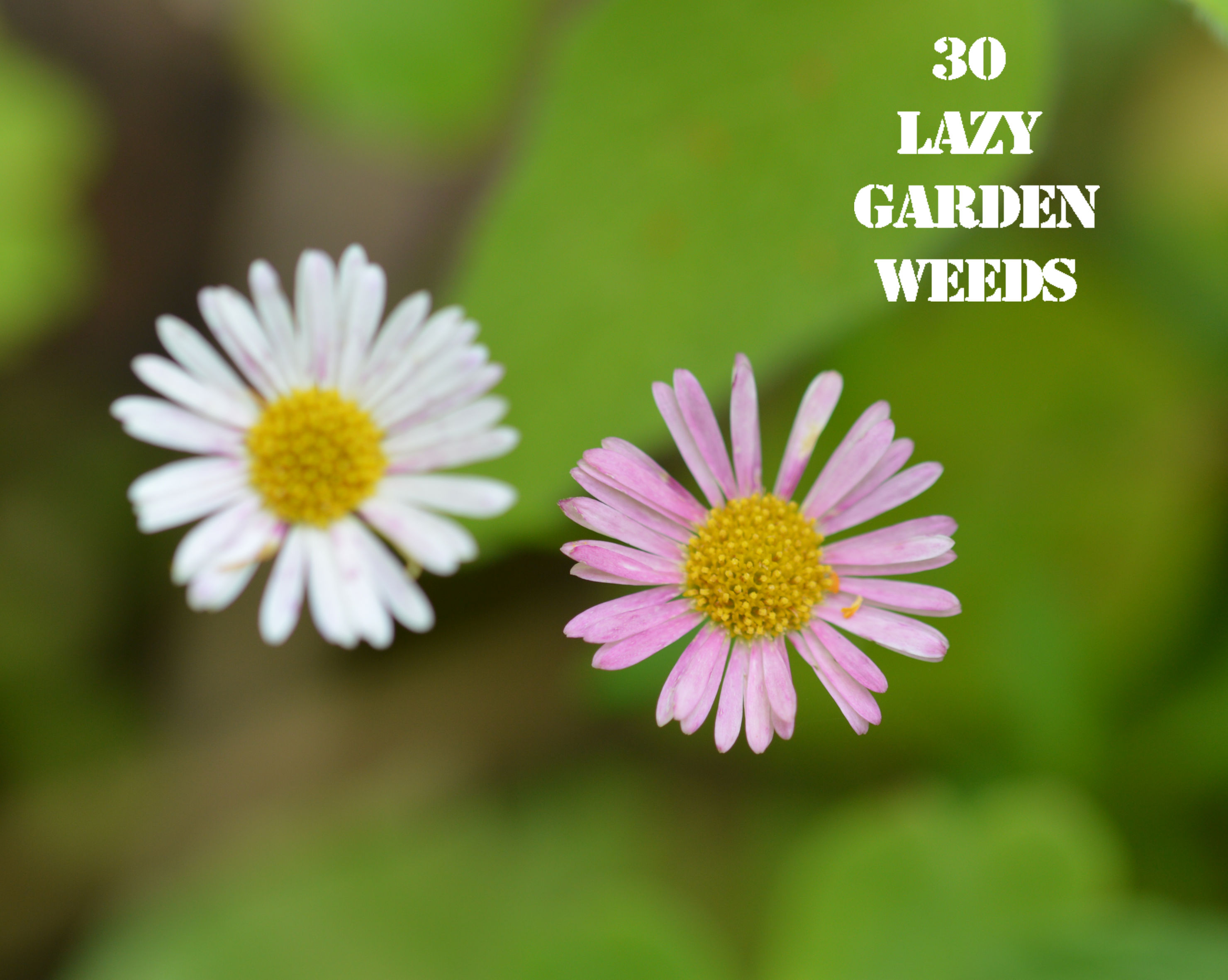
Daisy Fleabane 30 WEEDSAnd finally as always the latest weed in 30 Lazy Garden Weeds – this daisy like flower is, I think, Fleabane. Unfortunately I didn’t manage to spot it during the Bioblitz, although it was almost certainly growing in the garden at the time, so that’s another species missed. These little flowers always remind me of kids’ drawings – what an archetypal flower looks like – petals sticking out all round a central disc. There’s something charming about them, so as always they are welcome in the Too Lazy garden!

30 Days Wild – Day 19

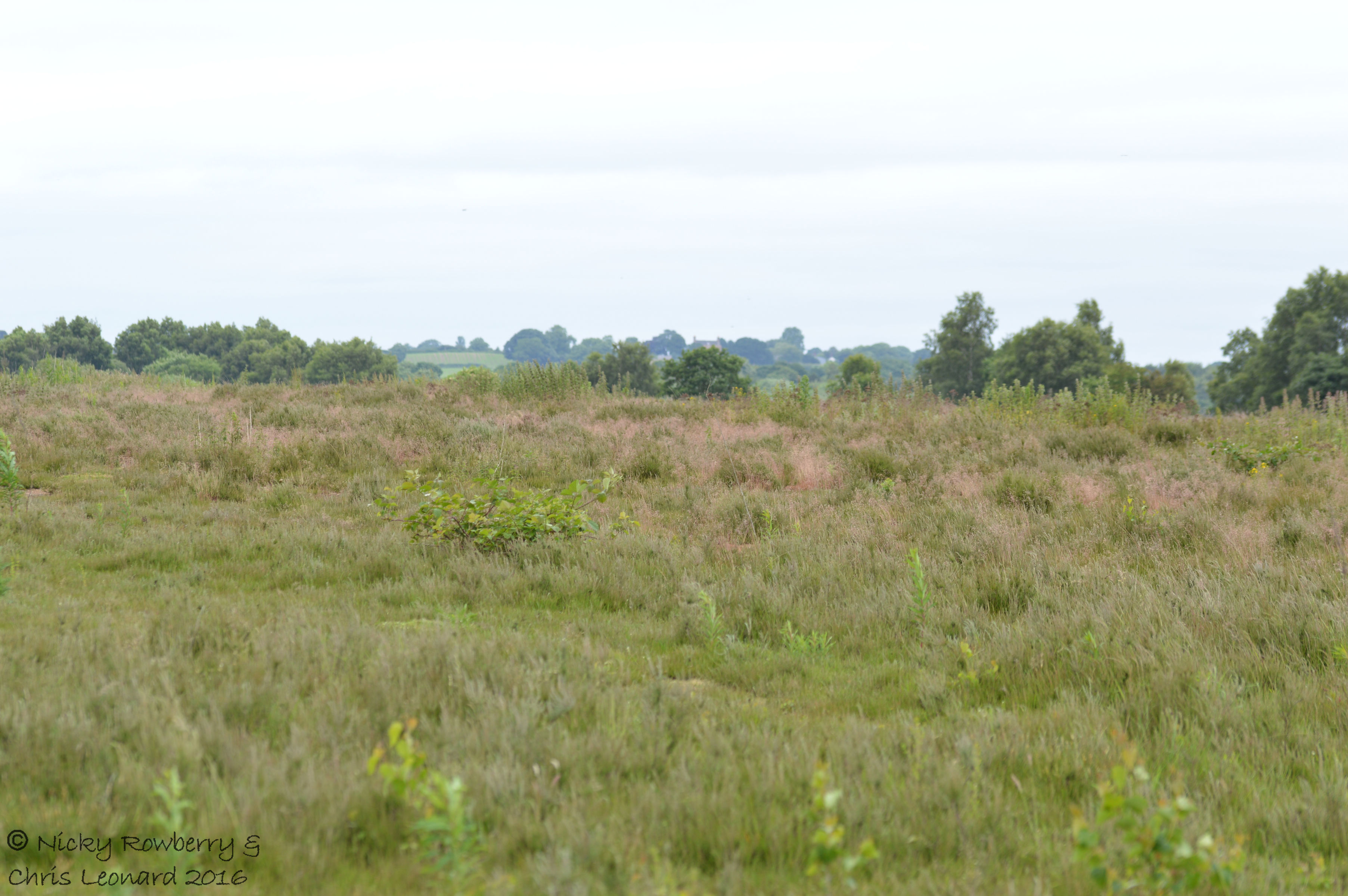
TWT 30 Days Wild_countdown_19It’s very appropriate that the Day 19 graphic on the left here has butterflies, as that is exactly what we went looking for this afternoon – the Silver Studded Blue to be precise.  This is a butterfly neither of us had ever seen before and there is only one place in the West Midlands where you can still find them – Prees Heath in Shropshire.  At first sight it’s not the most promising site, being sandwiched between two A roads, but looks can be deceiving. Butterfly Conservation have been working on it to improve the heathland and grassland for the benefit of the wildlife and it has obviously paid off.

Heath

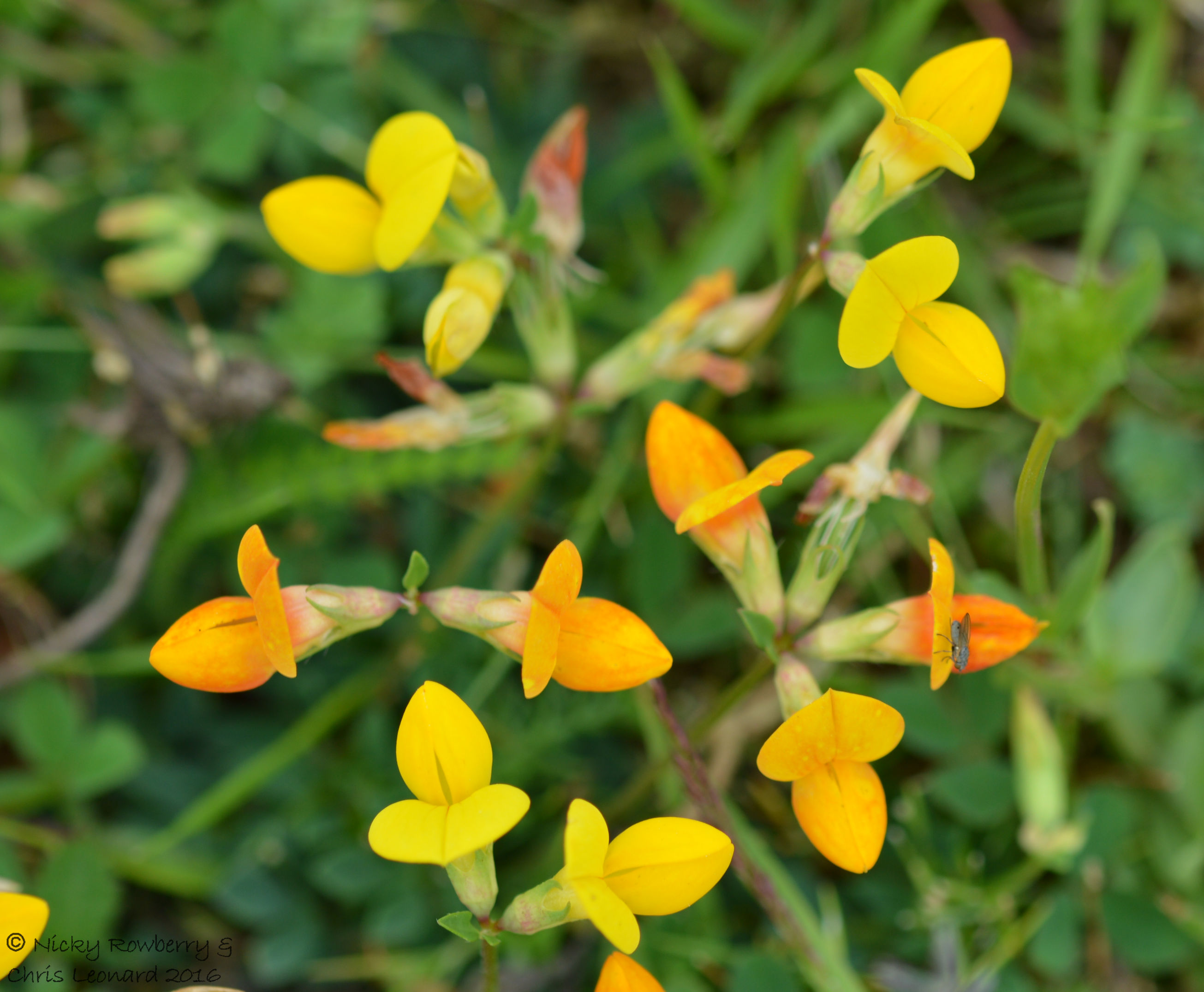
The Silver Studded Blue caterpillars feed mainly on heather and Bird’s Foot Trefoil, both of which we saw in abundance today.

Heather

Birds Foot Trefoil

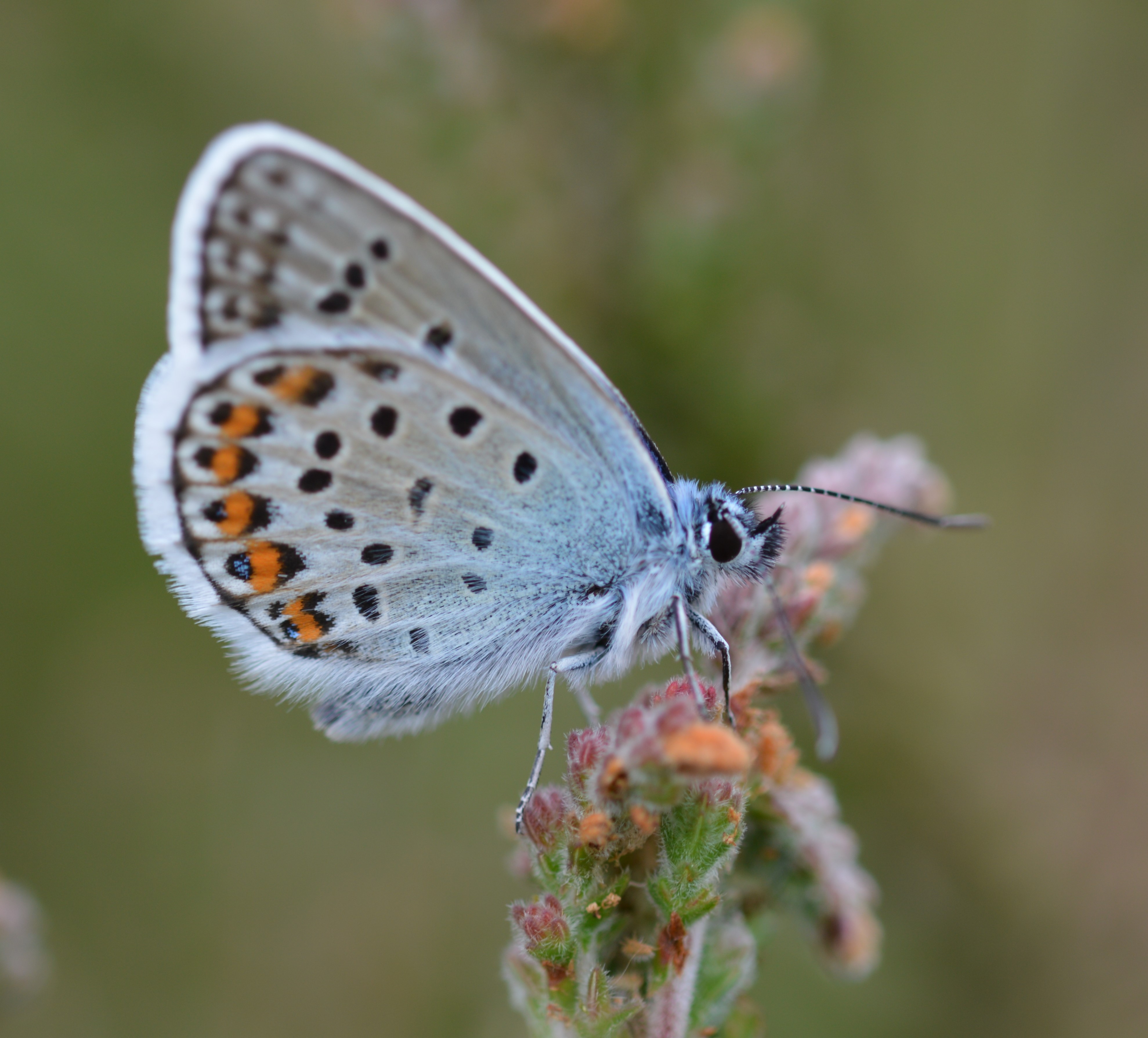
It was a dull and cloudy day, so we were a bit sceptical that we’d see any – so were thrilled when we saw first one and eventually probably a dozen or more of these little beauties. The “silver studs” are actually more of a shiny blue, but they are still absolutely gorgeous little butterflies. Whether it was the dull weather, or just their nature, but the ones we saw were surprisingly docile and let us get really close up for photos.

It was a bit of a windy day and the butterflies were blowing about a bit on their heather stems for photography. I did try to video one – here is a very short clip below.

It took a bit longer to get a photo of one with its wings open, but eventually one obliged.

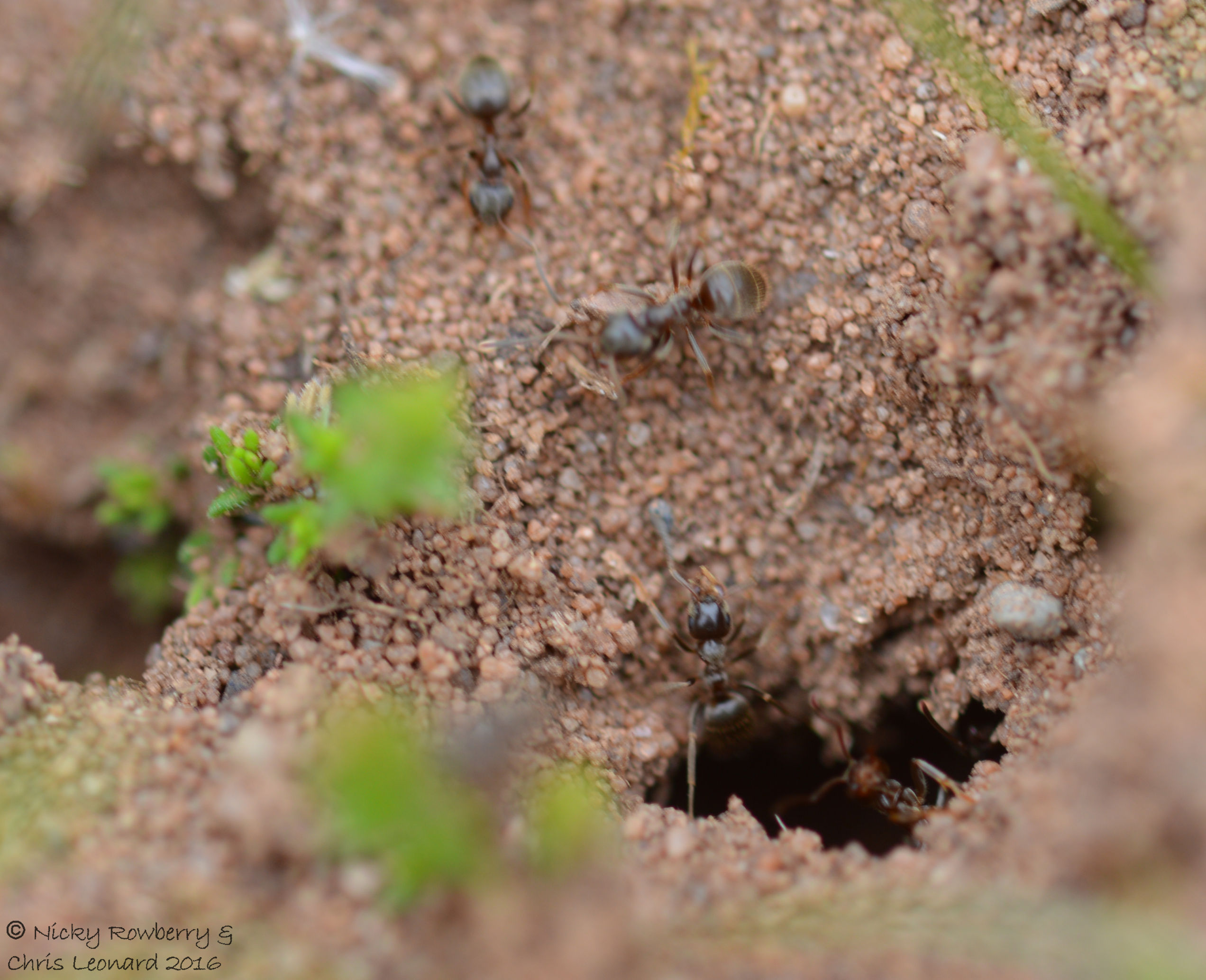
The Silver Studded Blues have an interesting life cycle that involves their caterpillars being taken into ants nests by the ants and tended to by their hosts, who in turn get a sugary solution from the caterpillars. The female butterflies deliberately choose sites near the ants to lay their eggs. Not sure if the photo below is the right kind of ant nest, but there were certainly plenty of them about.

Ant nest

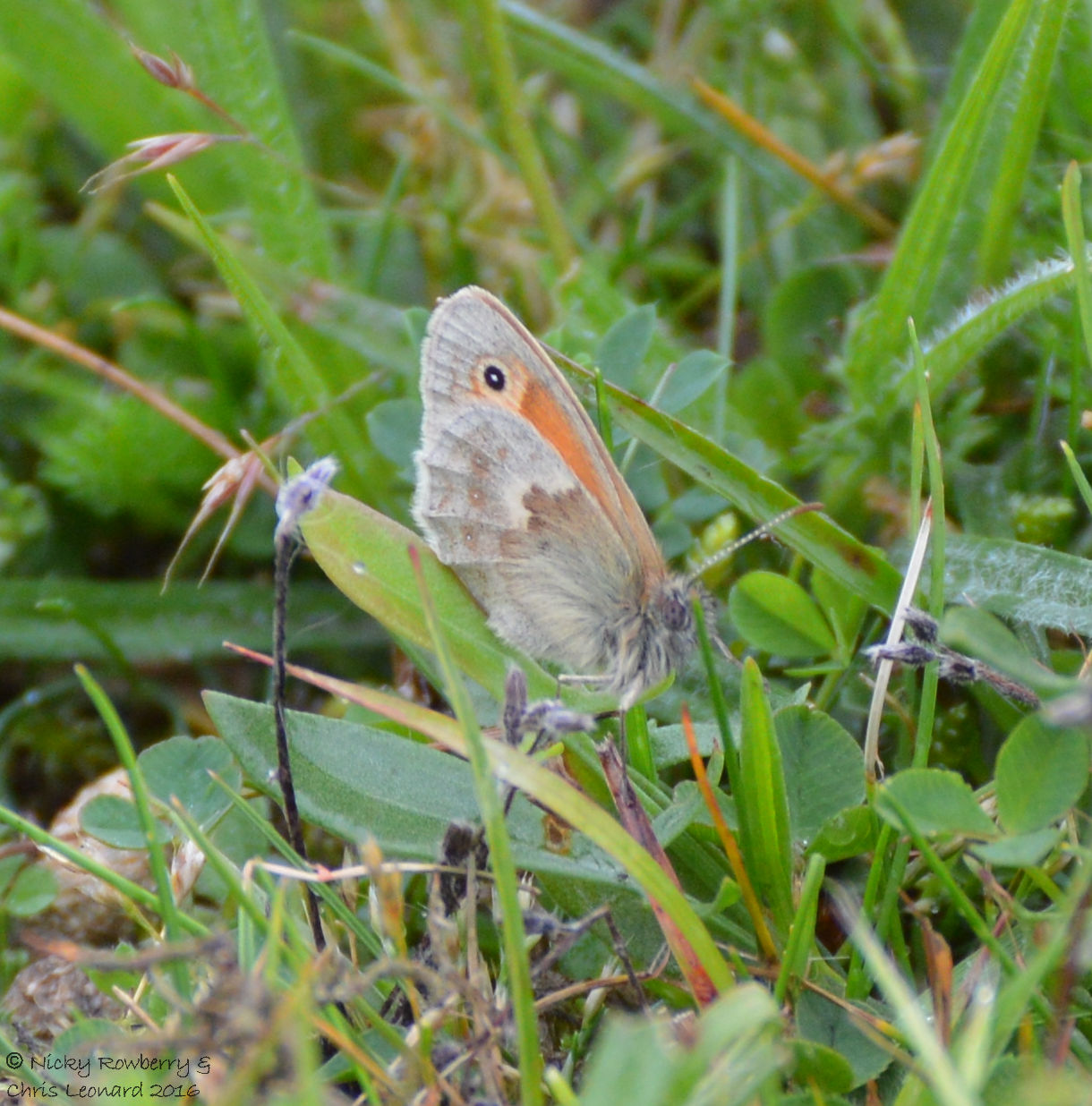
We only saw two non-blue butterflies the whole time we were there. We got a few non-brilliant photos of them and I’d assumed at the time that they were Meadow Browns. But when we got home and looked at the photos properly, I started to get excited that they might be Small Heaths, a butterfly we’d never knowingly seen before. Thanks once more to the good people of the Facebook butterfly group, this has now been confirmed. This means we ticked off two brand new species for our butterfly checklist today – fantastic!

Small Heath

Once we’d had our fill of taking photos of the blue butterflies (several hundred photos later!) we could take in some of the other wildlife around us. Prees Heath is known to have Skylarks and we could hear lots of what we think were these increasingly rare birds all around us. We saw them a few times high in the sky above the heather, singing their hearts out. Mostly they were way too high to get a photo of, but I did manage this poor shot of one hovering – at least I think it’s a skylark!

Sky Lark

The area was full of large black birds – I think Crows. They let me get quite close, probably because they were big enough and tough enough not to be bothered by a little woman like me!

Crow

The whole heath is riddled with rabbit burrows – you have to be quite careful where you walk not to twist an ankle. The rabbits of course were not as bold as the crows, but I did eventually get one bunny to sit still long enough to get his portrait taken.

Rabbit

So our trip today was not only a triumph, but double the success we had hoped for – two brand new species for the price of one – Silver Studded Blue and Small Heath! I doubt we’ll have many butterfly expeditions that will be this successful.

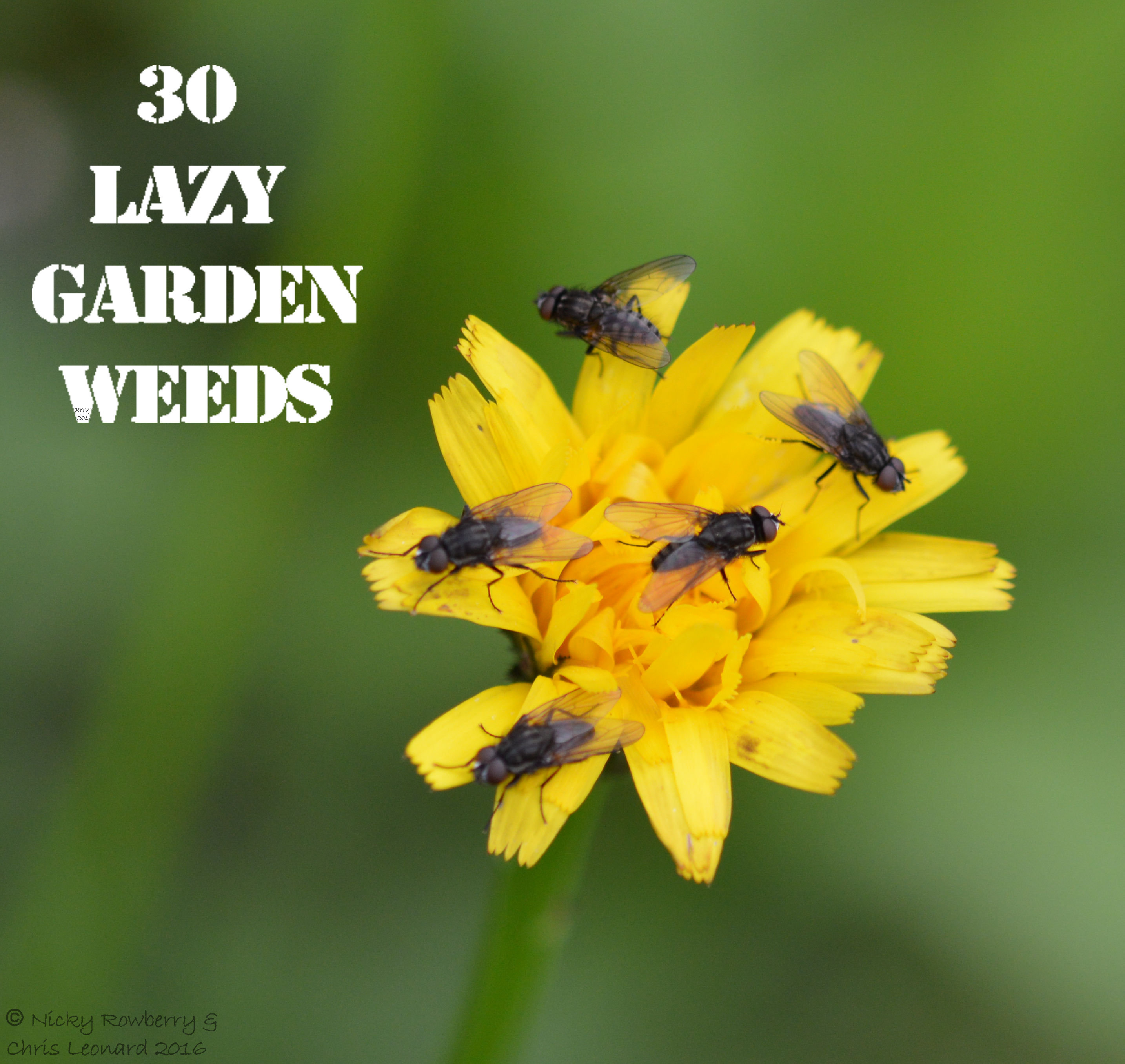
Hawkweed 30 WEEDSAnd finally today’s weed for 30 Lazy Weeds from our garden – the dandelion look alike. I think it’s either a Catsear or a Hawkweed. Whichever it is, it is clearly very popular with the garden flies. Flies may not be the most charismatic of our garden insects, but they are all food for something, so fine by me. The yellow Catsear or Hawkweed is brightening up the un-mowed areas of our so called lawn and if the flies are happy with it, so are we.


30 Days Wild – Day 14

TWT 30 Days Wild_countdown_14Embrace the rain! I decided that was my motto for today – Day 14 of 30 Days Wild. I got soaked at work about 3 times and the clouds were looking ominous over the Malvern Hills as I set off for home. So I decided rather than avoid it, I would just go for a walk in the rain. I can’t remember when I last did that (not sure I ever have)? Of course I’ve been for walks and got caught in downpours, but that’s not the same as deliberately setting out to walk in the rain. It was quite liberating in a way, knowing you are going to get wet, so no point trying to avoid it.

Having decided on a watery walk, I figured I might as well take the wet and wild theme a step further and walk along the river. Since I work on the edge of Upton on Severn this wasn’t a difficult thing to achieve. It wasn’t a long walk, but I really did enjoy it. Even in the rain there was plenty to enjoy and take photographs of – spoiler alert – there is some serious cuteness at the end of this blog!

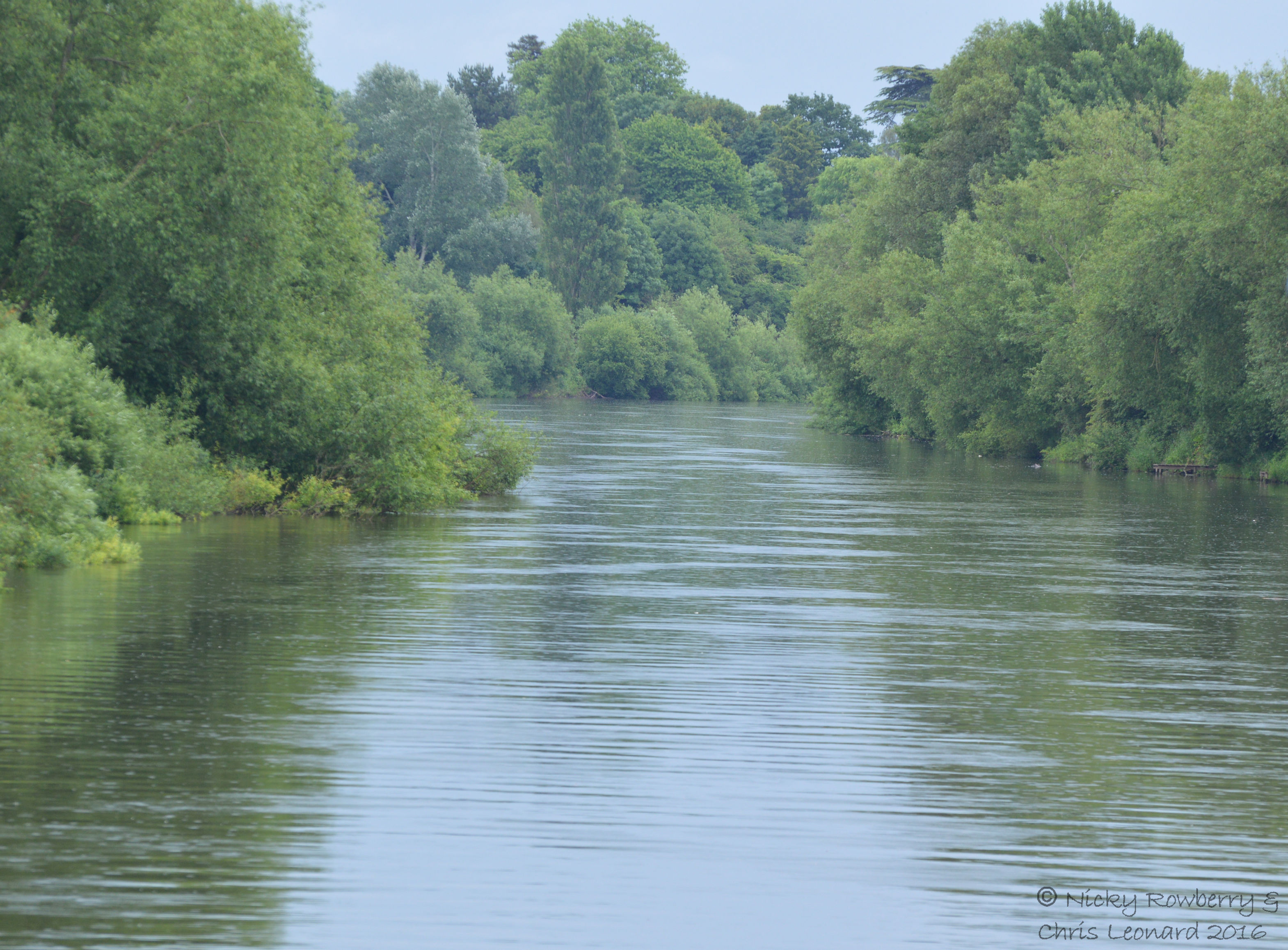
View downstream

The rain was pretty much non-stop as I walked – not torrential, but definitely constant. I loved watching the rain falling on the river and the tiny concentric circles emanating from each droplet. It was quite hypnotic and had there been somewhere to sit without getting a wet bum, I could have watched for ages.

Rain on the river 2

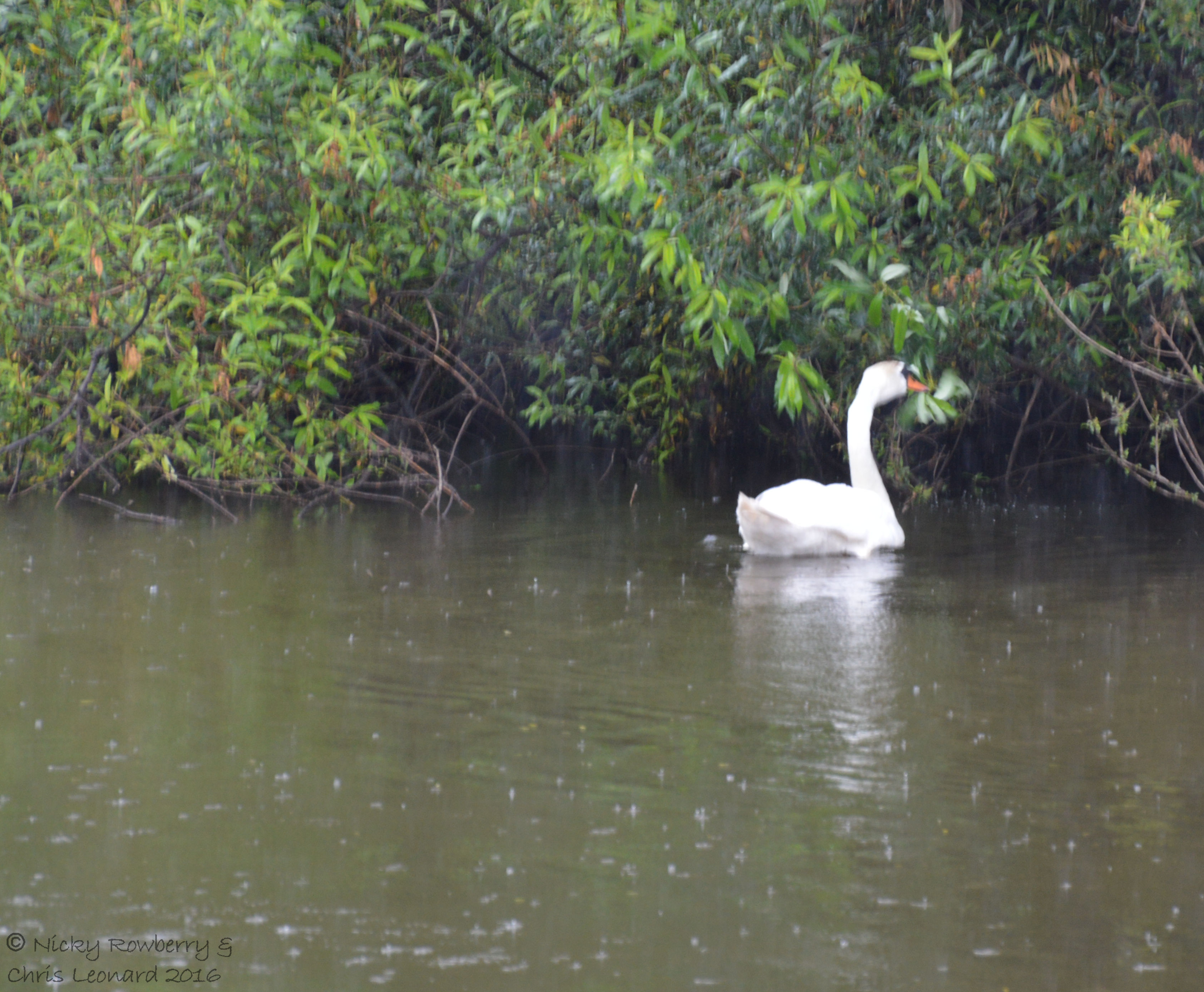
The first wildlife I saw was a swan the other side of the river, pulling leaves off the overhanging bushes. It was a bit far away to get a decent photo, but at least it is recognisable as a swan!

Swan

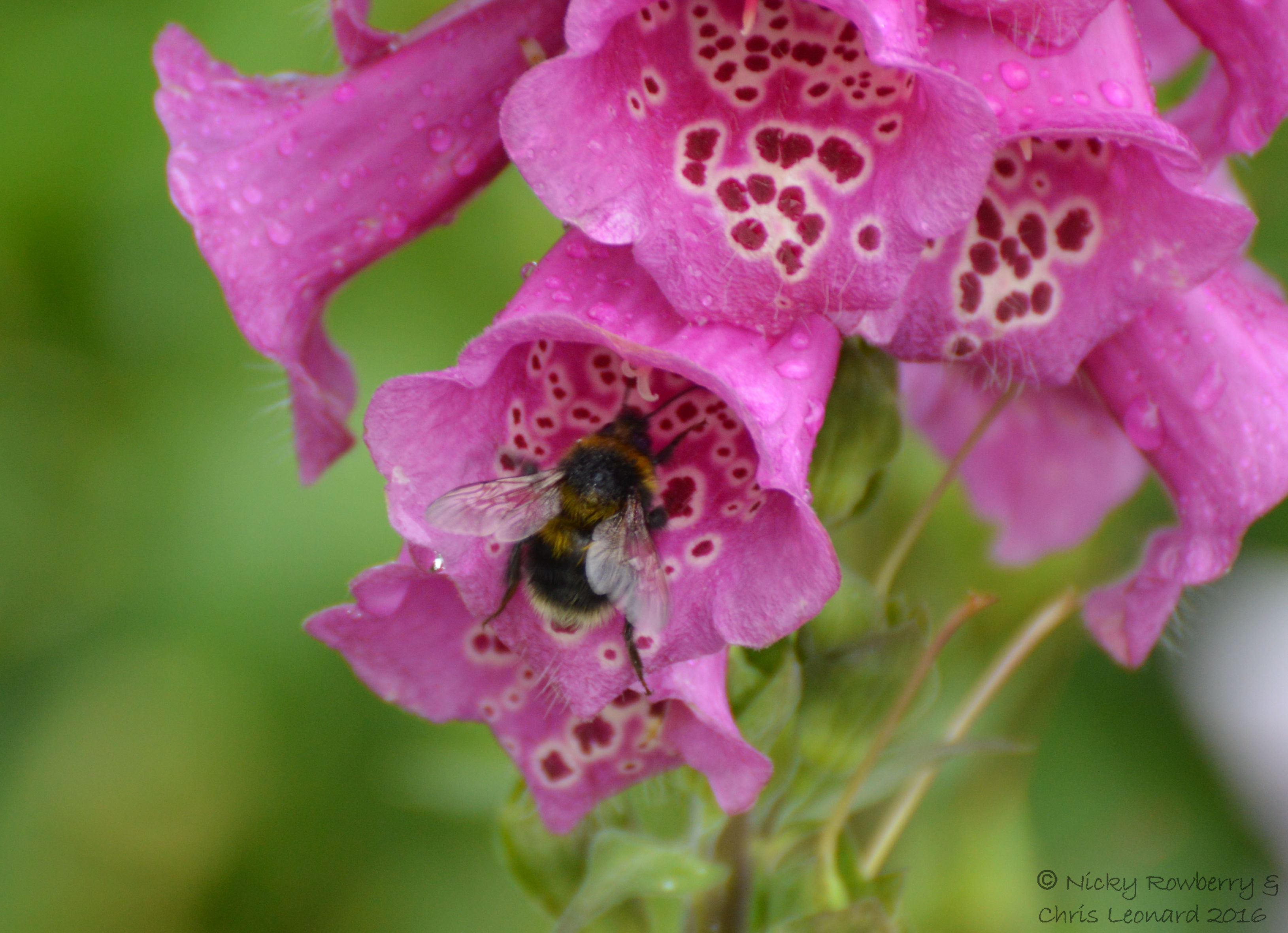
I hadn’t really expected to see much in the way of insect life today, but this bee had found this patch of foxgloves and was as busy as ever. Whether he was really after the nectar or just using the foxgloves as walk in umbrellas though I don’t know.

Bee in foxglove

There were lots of House Martins swooping low over the river, presumably catching insects over the water. They were virtually impossible to photograph as they were just too quick. The best I managed is a (very) brief glimpse of them in this video flying past a duck that was progressing more sedately down the river.


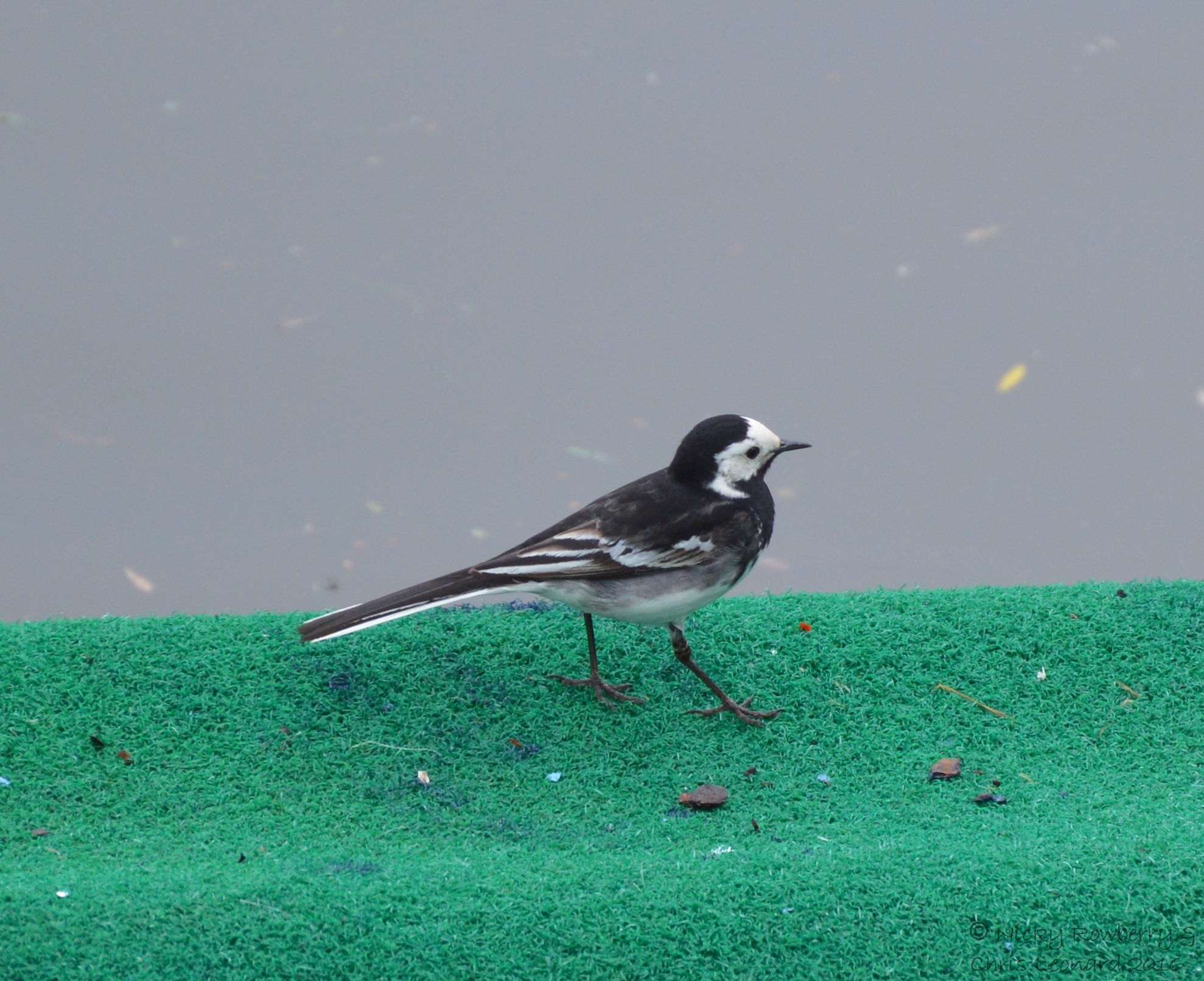
A wagtail kept me company on the walk, tail bobbing up and down as it searched for insects (or possibly for food dropped by the riverside pub customers!) Shame that in the only half decent photo I got of him, he was standing on what looks like astro-turf rather than somewhere more scenic!

Wagtail

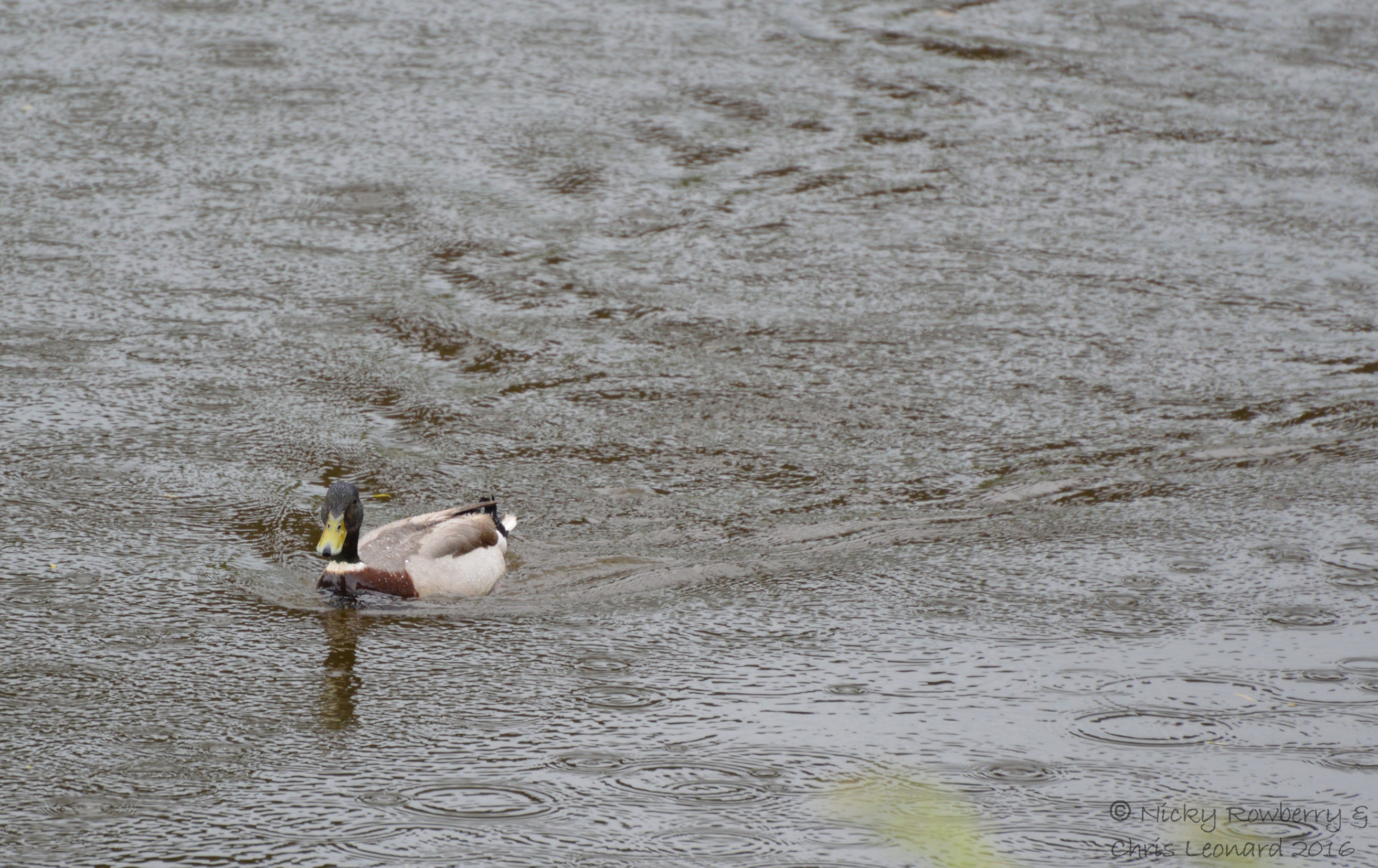
But of course it was the ducks that were really the stars of my watery walk. There were a few cruising up and down the river – I love the bow wave that has formed around this one as he paddles serenely up stream.

Duck & bow wave

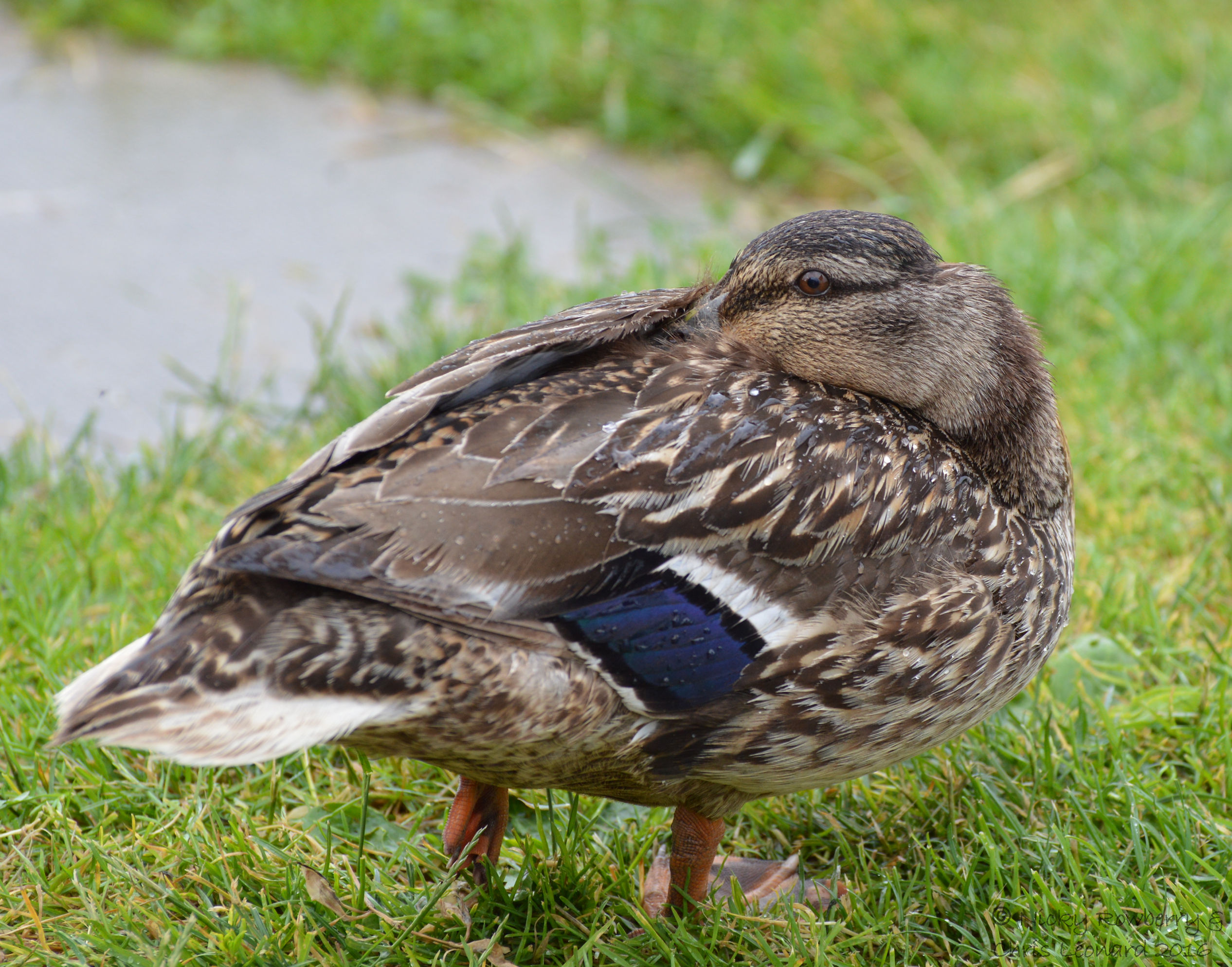
Quite a few though were just sitting on the bank – although it was supposedly “nice weather for ducks” today, they didn’t actually look that happy about it.

DSC_5666

Female duck

I think these were all Mallards – they may be common ducks, but the colours on the males in particular are absolutely stunning.

Male duck close up

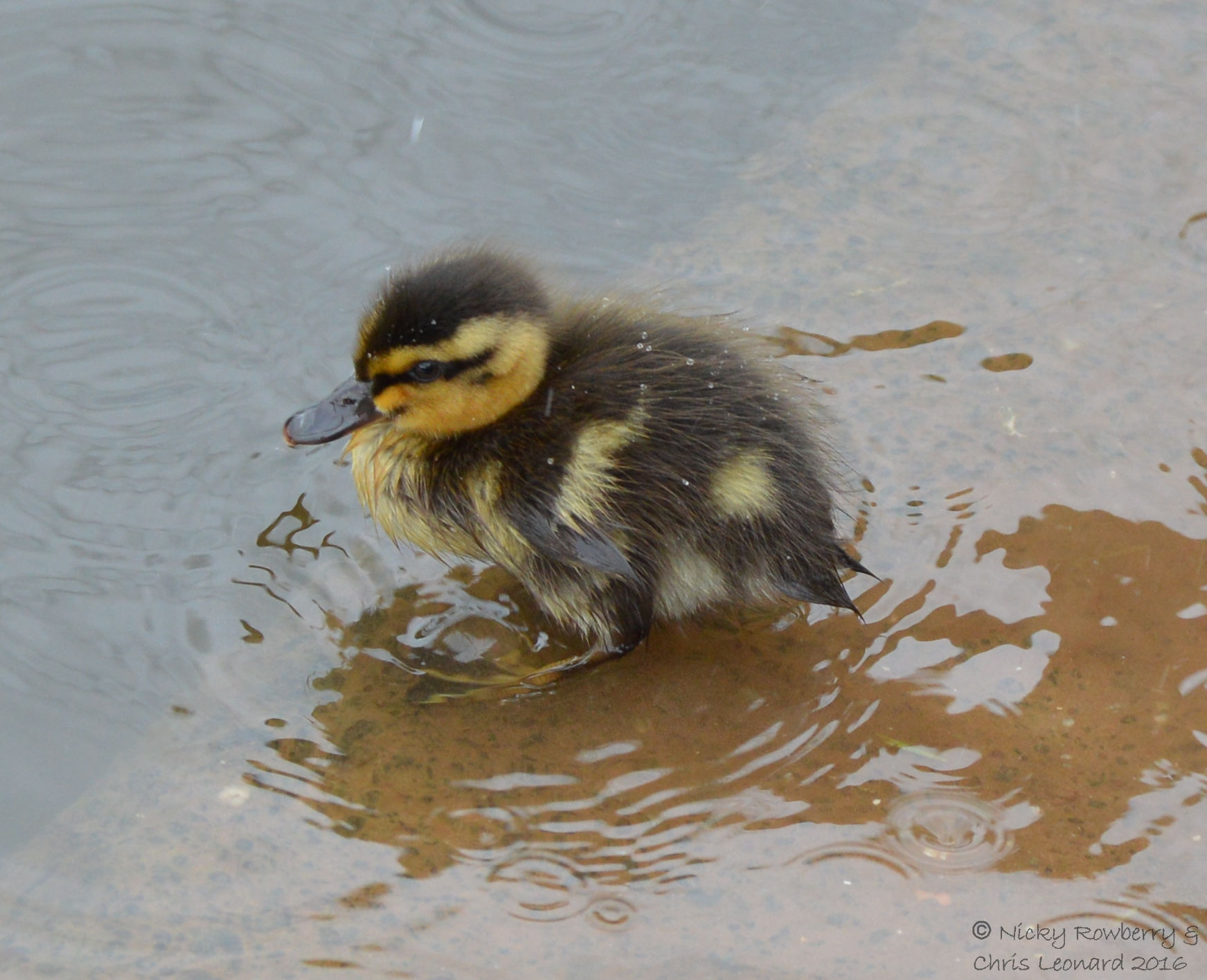
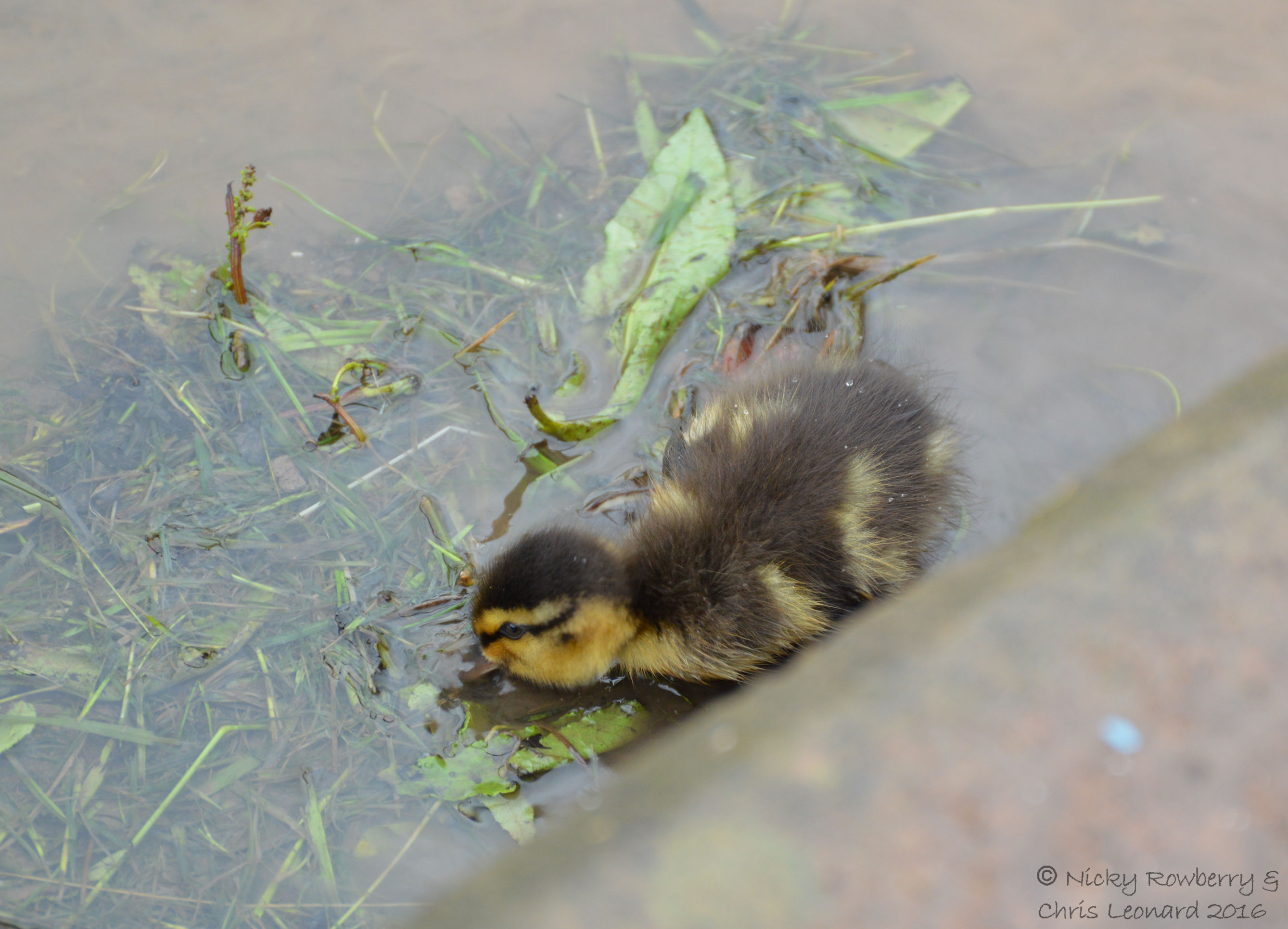
I was just starting to head back to the car, when a group of people peering over the edge of the river wall waved me over. Baby ducklings – what can I say, but serious cuteness overload! There were 5 in total, paddling about with their Mum. I could easily have loaded dozens of photos of them here, but have restricted myself to just the two.

Baby duck

Baby duck 2

I couldn’t resist trying to video them as well. They may only be small, but they’ve clearly got the hang already of rummaging about in the weeds for food.


I’d guessed that I’d probably see ducks today in the rain; but to find ducklings was better than I could have hoped for – the perfect end to my walk.

Ivy 30 weedsAnd finally the latest weed in my 30 Lazy Garden weeds is Ivy. Beautiful glossy leaves, covering up our ugly fence – evergreen, so brightening up the area all year round. Ivy is particularly good for insects, providing not only cover and homes, but the flowers provide much needed nectar when there’s little else around. Moths of course absolutely love Ivy – so for that reason alone it would get my vote!

30 Days Wild – Day 4

TWT 30 Days Wild_countdown_04Day 4 of 30 Days Wild and today we took part in another event – the National Garden Bioblitz, thereby ticking off two targets with one activity (in true Too Lazy fashion). The aim of the Garden Bioblitz is to find and record as many species of plants and animals as possible in the garden in 24 hours.  Since we’re always identifying things we find in the garden anyway, a bioblitz is just a natural extension of that.

Garden BioblitzLast time we did this a few years ago, we recorded about 120 species; but that was before we got into moth trapping and bee identifying, so hopefully we can beat that this time.  I’m writing this late evening – we’ve been busy in the garden all day, photographing and listing everything we could find. I’ve still got loads of things to identify from the photos and then everything has to get logged onto the i-record site.

It has pretty much been the perfect day. It started at about 4:30 am when I got up to empty the moth trap (to beat the cheeky robin to the catch). Then went back to bed for a bit more sleep (always good), before resuming the challenge at a more reasonable hour. For once the sun shone on the righteous (questionable I know) and we had the perfect conditions for trawling the garden for photo ops. Pretty much the whole day was spent crawling about the garden with the cameras. We finished off by cranking up the BBQ and cracking open a bottle of Prosecco – the perfect end to the perfect day.

During the day we tried every trick we could think of. Obviously the moth trap had been out over night and produced at least 20 species of moth – I’m still working through the photos, so this total may rise. Highlight was the always stunning Elephant Hawkmoth.

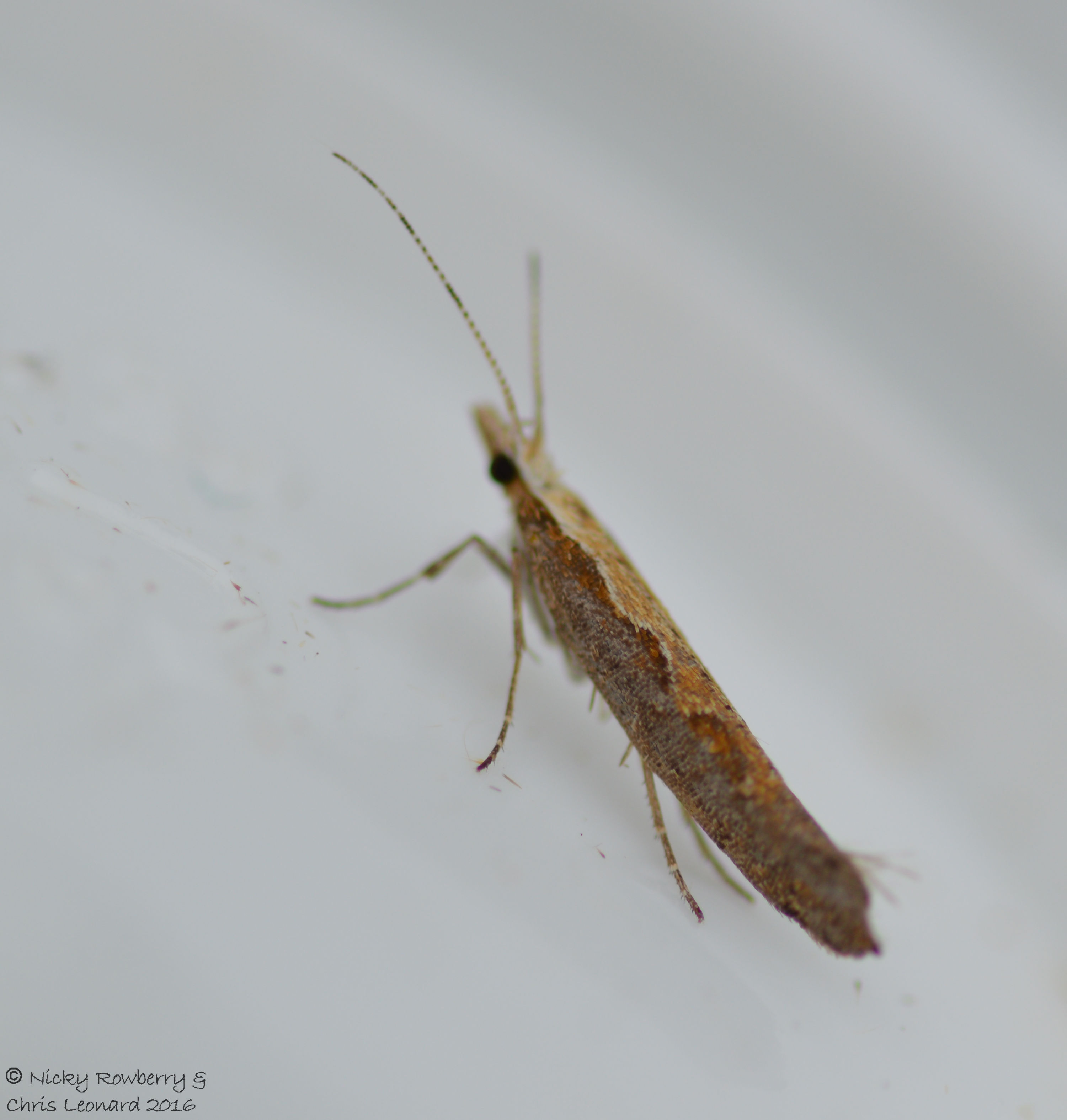
Diamond Back mothI was also really pleased to get several Diamond-back moths – tiny moths that migrate over from the Continent. They’d been mentioned on Springwatch and social media was full of people saying they’d had loads of them this week, so I felt ridiculously glad that Too Lazy’s garden hadn’t missed out. Moth envy is a terrible thing!

We also tried pitfall traps for the first time, using old plastic tubs buried in the ground. This produced this rather splendid (and still to be identified) beetle, plus a couple of woodlice and a spider (also still in need of ID). I suspect pitfall traps take a bit of practice in sussing the right location – we might try them again at other places in the garden.

We tried the “suspend an umbrella under a tree and wack the branches” technique as demonstrated by Chris Packham on Springwatch.  We only have the one mature tree (an apple) so this didn’t produce too much, but was interesting to try.

We dipped in the pond, which produced mainly duckweed, but also some leeches and water louse. It also meant we spotted one of our two amphibian species of the day – a Common Frog, watching us warily from his duckweed blanket.

NewtWe of course turned over stones and pieces of wood, which yielded our second amphibian – the Common Newt. We also found most of our molluscan species this way, both snails and slugs. We achieved a respectable 4 species of snail, but sadly the Girdled Snail, which I know we get in the garden, remained steadfastly hidden today.

The rest of the day was spent generally bird watching and chasing various bees and insects round the garden.  I haven’t tallied up the birds properly yet, but we managed at least 10 species including this Collared Dove. At least 6 bee species put in an appearance, with possibly a new one – we spotted some kind of leafcutter bee carrying (not surprisingly) a piece of leaf – hopefully we can get an ID on it soon, although the photo wasn’t brilliant. Fortunately other bees were more obliging.DSC_3856

Only 2 butterflies showed their faces today – a Small White and a Holly Blue. Assorted insects made up the remainder of the animal count, while the plant count is at least 25 species, with probably a few more to ID.

We’ve spent the whole day in the garden photographing our wildlife and it will probably take several days more to go through all the photos and get them loaded so that they count for the Bioblitz. But it’s been a thoroughly enjoyable experience and has got us rooting about bits of the garden, that we may otherwise ignore. We won’t know the final tally of species for a couple of days, but I’ll post an update when we do. I’d recommend having a go at a Garden Bioblitz for anyone – you don’t need to be especially skilled – just take it to whatever level  you can manage. You’re sure to learn something new and hopefully enjoy your garden all the more for it. There’s still time to do it for this year – http://www.gardenbioblitz.org/ for more information.

Bindweed 30 WEEDSDay 4 of 30 Lazy Weeds and a truly beautiful if sometimes bothersome flower – Bindweed. The bane of many a gardener, but if you take the time to look at the flower itself, it really is stunning. Pure white and beautiful in its simplicity. Gardeners will plant similar looking flowers, but weed out these, which seems a shame. I know their stems do wind themselves round pretty much everything, but for me the flowers more than make up for this.


30 Days Wild – Day 2

TWT 30 Days Wild_countdown_02Day 2 on the challenge and I feel a bit like a marathon runner (actually I’ve no idea what that feels like and probably never will!) just getting going and setting my pace so I don’t run out of steam. So with that in mind, Day 2’s activity was none too strenuous and involved dragging my lazy bones only as far as the garden. I did however have to get up BEFORE the crack of dawn, so still feel deserving of some kind of medal.

So the reason for getting up at such an ungodly hour – to listen to the dawn chorus. This is something that always seemed such a lovely thing to do (memories of Bill Oddie enthusing about it on past TV programmes perhaps), but somehow I’ve never quite achieved – the lure of the duvet has always been too strong. So 30 Days Wild felt like the time to finally do it.

Unusually, I was organised. A digital dictation machine was borrowed well in advance (couldn’t think how else to record it as my phone is from the dark ages) and a few practice runs attempted – not at ridiculous o’clock in the morning of course, but in more civilised early evenings. We live in a pretty quiet street, but you don’t realise how much noise there actually is until you start trying to record something relatively quiet like bird song. First attempts resulted in 30 seconds of a neighbour hammering something. Next one a dog barked incessantly. Third one sounded as if the Hell’s Angels had decided to do wheelies down our street – all duly recorded (I might have kept that recording if he’d said we were having something that sounded a bit more glamorous and foodie than beans!) At least they proved the sound recording worked.

Sunrise this morning was supposed to be about 5am here in Malvern. According to the RSPB website the chorus begins about an hour before sunrise, so by 4am I was up and out and sitting in splendid isolation in the garden. Last night I’d been stressing a bit that I wouldn’t be able to identify the birds from their songs. I listened to various bird recordings online to try and memorise them – with little success. But as I got up this morning, I thought to hell with that – it’s way too early in the day to be stressing about anything, much better to sit back and just enjoy the birds as they come. I already pretty much know what birds we get in the garden and it seemed unlikely that a nightingale would suddenly start singing without me realising it!

Initially it seemed our garden was silent. I could hear birds singing in the distance but it was too faint to hear properly, let alone record. First noise that would have been audible on tape was a plane going over about 04:05 am – I didn’t even really think we were on a flightpath – just shows what you can notice when you’re alone in your garden in the dark! Gradually the bird song seemed to move closer – like a Mexican wave of tweeting washing over Malvern.

BlackbirdAbout 5 minutes later, the blackbird started up. I can say this with confidence as I could see him on top of next door’s roof. It was still pretty much dark, but he was singing his little socks off – and really loud. I know I’ve heard blackbirds sing before but I’ve never consciously sat and just listened to one – beautiful but definitely loud. Here’s a brief recording of him.

Once the blackbird had got going, more birds seemed to join in, although I couldn’t identify anything specific from the mix. I would have expected perhaps robins and the wren – if anyone can confirm whether these are on the next couple of audio clips, that would be great. Of course the main thing  you can still hear over-riding everything is the blackbird.


About 04:30 the bottom of the garden was filled with lots of cheaping voices – the sparrows had woken up. We are fortunate to have a lot of House Sparrows in the garden and they clearly all woke up together.


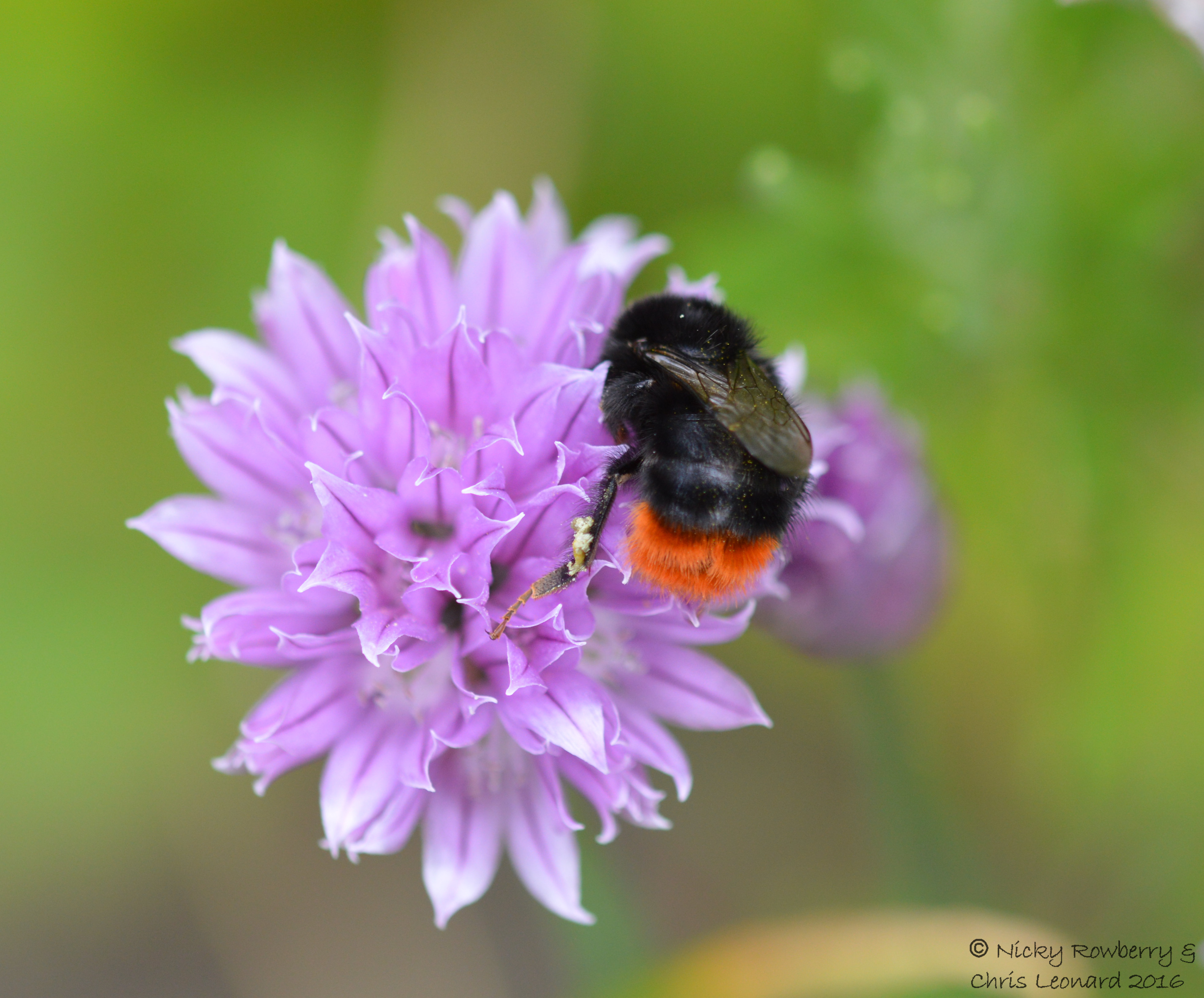
As I’m not normally up in the garden in the semi-gloom of pre-dawn, it had never occurred to me that bees might be up at that time too. I had always sort of assumed that they didn’t stir until it got warmer. But while wandering the garden with my microphone, I became aware of lots of buzzing around the raspberry canes – sure enough about half a dozen Tree Bumblebees were making the most of an early breakfast. They are just about audible on this clip.


The robin appeared on the fence about 04:45 and looked at me as if to ask “what on earth are you doing up at this time and does this mean  you’re going to feed me?” (and I did).

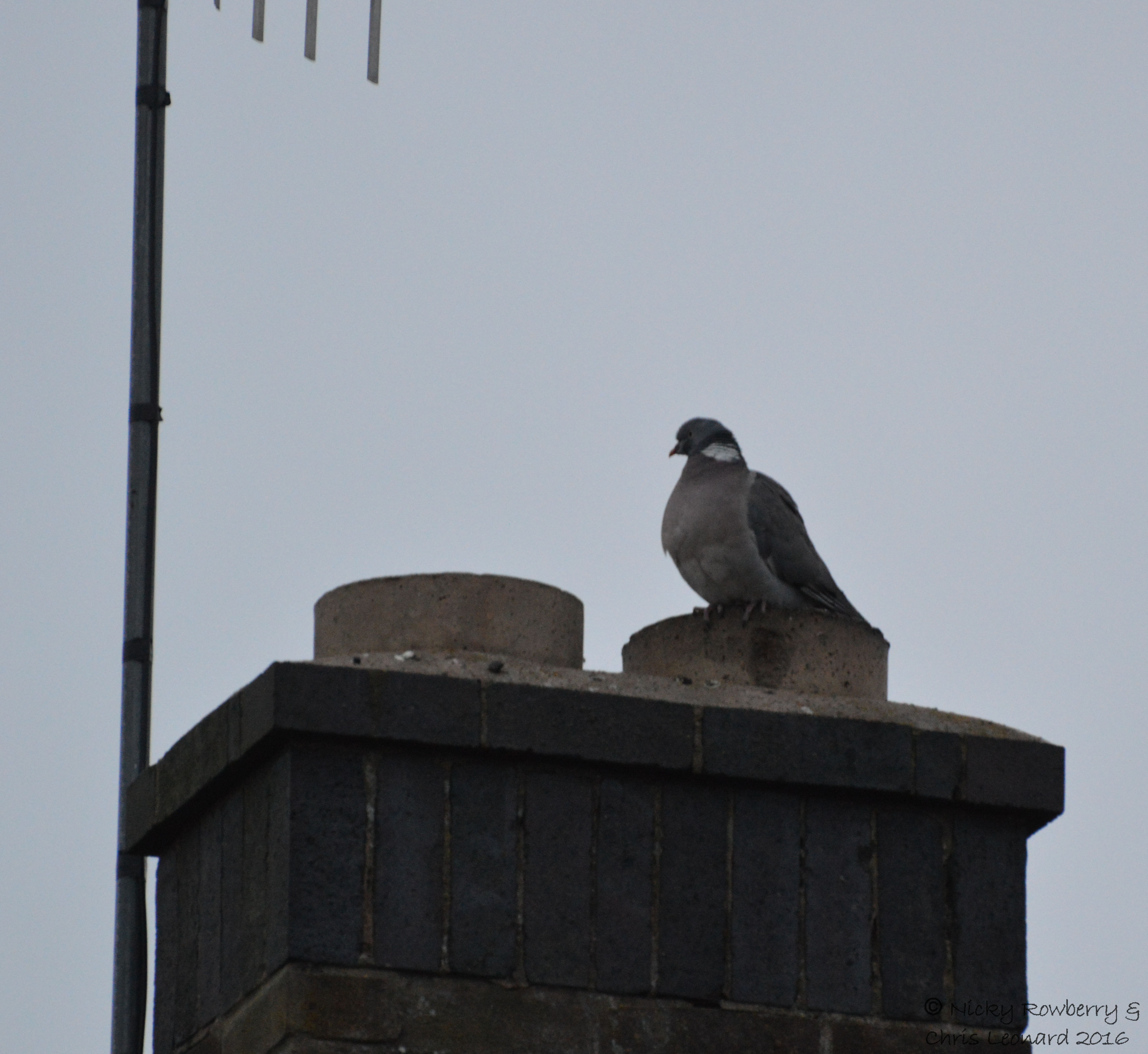
PigeonThe bigger birds were the last to get up. Just after I’d seen the Robin, I could hear the woodpigeons faintly in the distance. Just before 5am they finally came close enough to record, although their gentle cooing was rudely interrupted by a Jackdaw squawking.


As everyone in the garden now seemed to be up, I decided it was time for me to go back to bed. It was actually very relaxing sitting in the garden for an hour that early (once my body had got over the shock of being up!) With none of the usual modern day distractions, it was like some kind of sensory relaxation therapy to just sit and listen to the (mainly) natural sounds all around me. I might even be tempted to do it again!

Primroses 30 WEEDSIt’s Day 2 as well of my 30 Lazy Garden Weeds – this time the Primrose. It is a native plant and must surely be one of Britain’s most loved wildflowers and I doubt anyone weeds these out. Our garden in spring is a mass of these yellow clusters and the bees love them. They provide a much needed early season nectar source for the bees and they brighten up the garden no end. Even Shakespeare wrote about them in Midsummer Night’s Dream “And in the wood, where often you and I
Upon faint primrose-beds were wont to lie…”

Hedges and Maybe Fledges?

It’s been a mixed week with the trail cam this last week or so. We’ve either had two happy successes in the garden or one success and one disappointment and we can’t work out which.  The undecided is our baby blue tits.

We’ve been filming the adults going in and out for a few weeks now. They seemed to be doing a good job feeding the babies and we could hear chicks chirping. Then suddenly about 9am last Wednesday the adults started flying back to the box with caterpillars, stopping, peering in and looking confused. We’d had the trail cam on the box continuously and this was a very marked change in behaviour. For the first couple of mini video clips I thought great – because the adults were hanging around outside, clutching the food which made for much better shots. But after the 20th clip of the same thing, we started to worry. We also couldn’t hear the chicks tweeting any more. There was no evidence on any of the films of predation (next door’s cat had been a likely candidate, but couldn’t reach the box with the chicken wire over it). Could the chicks have all fledged and the camera just missed them leaving the box? Have they just died in the box – why would they, when the parents were doing a good job with the food?  Here are a couple of clips of the confused looking adults.

The adults seem to have stopped using the box now, so we could check to see if there are dead chicks in there, but while we don’t know for sure, there’s still hope that they did fledge and it’s a happy ending. The adults are still feeding in the garden and disappear into various trees, so it could be there are chicks hiding amongst the leaves. There’s a lot of general chirping in our apple tree and next door’s damson tree, so fingers crossed they made it.

The definite happy event is that our hedgehog is back! He or she may have been around for weeks, but as we’ve had the trail cam pointed up for bird activity rather than down on the grass we hadn’t realised. So the upside of the end of the bird box activity was that I tried filming downwards at night instead of up! And lo and behold the hedgehog trundled into view.  The first film is a bit blurry – wrong lens or LED setting or something technical (blame the operator!)

Second attempt is a bit sharper and I’d added a bowl of catfood as a bit of a temptation which seemed to do the trick.

Previous years we’ve had a pair of hedgehogs (but of course no trail cam to record them), so fingers crossed we have two this year too. So hopefully more hedgehog action to come.

If anyone can shed any light on the blue tit behaviour – any thoughts would be much appreciated. It will be disappointing if they’ve fledged and the camera missed it, but not as disappointing as if they didn’t make it at all. One final happy thought though – when up this morning before 5am to empty the moth trap and check the hedgehog cam, I spotted what looked like a pair of Long Tailed Tit chicks in the apple tree – so one happy little bird family in the garden at least.


Out and About – Wyre Forest

The sun was still shining on the righteous at the weekend, so we decided to make the most of it and headed up to the Wyre Forest in search of the Pearl Bordered Fritillaries. We took a slightly circuitous route, via one of our favourite pubs – The Live and Let Live on Bringsty Common. Fabulous pub with great food and lots of wildlife around. Lots of bees and butterflies (Small Copper, Orange Tip, fast flying and therefore unidentifiable whites!) and birds, but only this little wren paused long enough to get its photo taken.

Live & Let Live

Wren at Live & Let Live2 Wren at Live & Let Live1

Suitably fuelled we headed off to the Wyre Forest. The Pearly Bordered Fritillaries were our main butterfly target of the day as the Wyre Forest is one of their strongholds in the West Midlands. The Wyre is managed by the Forestry Commission and Butterfly Conservation to restore a diverse woodland environment, providing the right habitats for many butterflies. It’s not only good for butterflies, but is a lovely place to just go for a walk.

Within minutes walking along the old railway track, we’d reached a gateway to a more open area where we’d seen the fritillaries last year. Sure enough, just yards from the gate we spotted our first one.


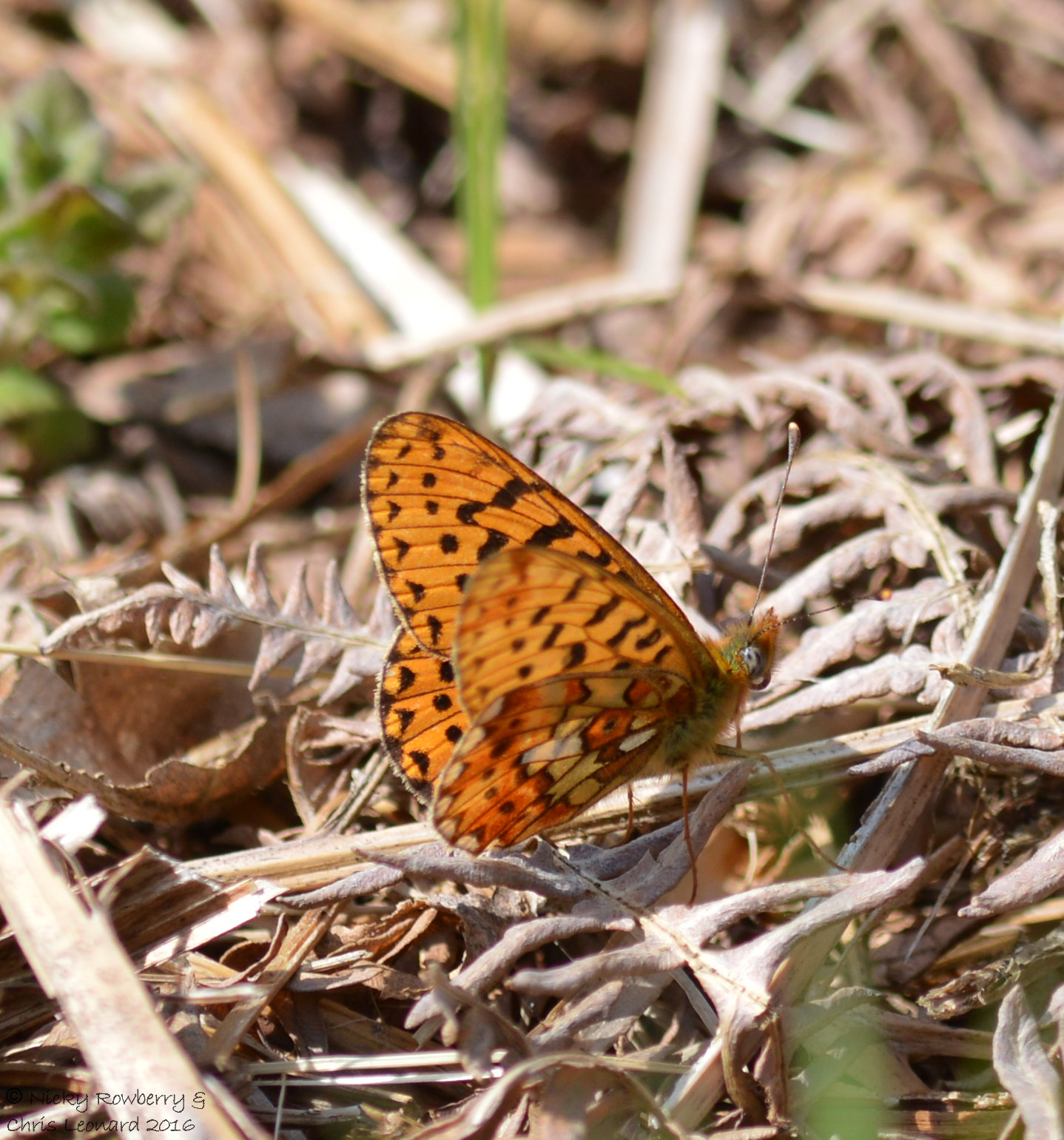
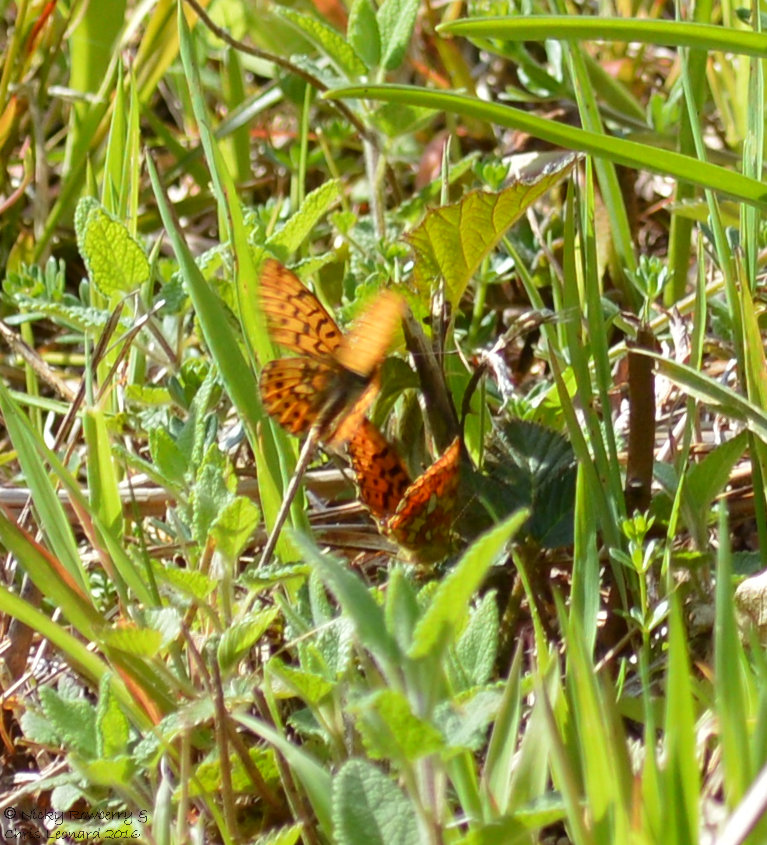
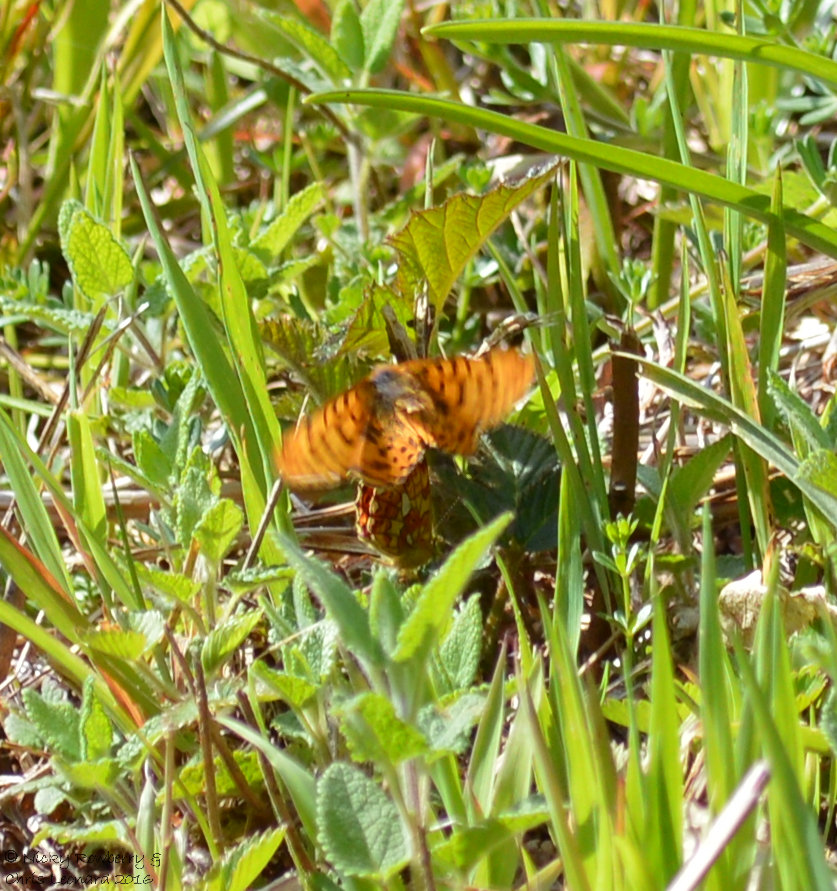
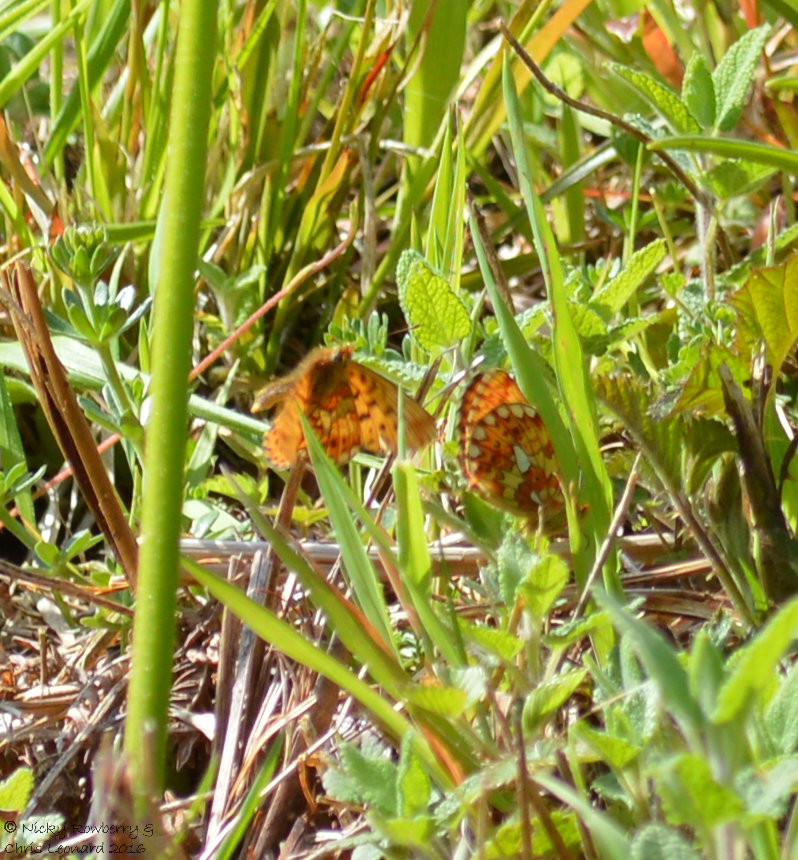
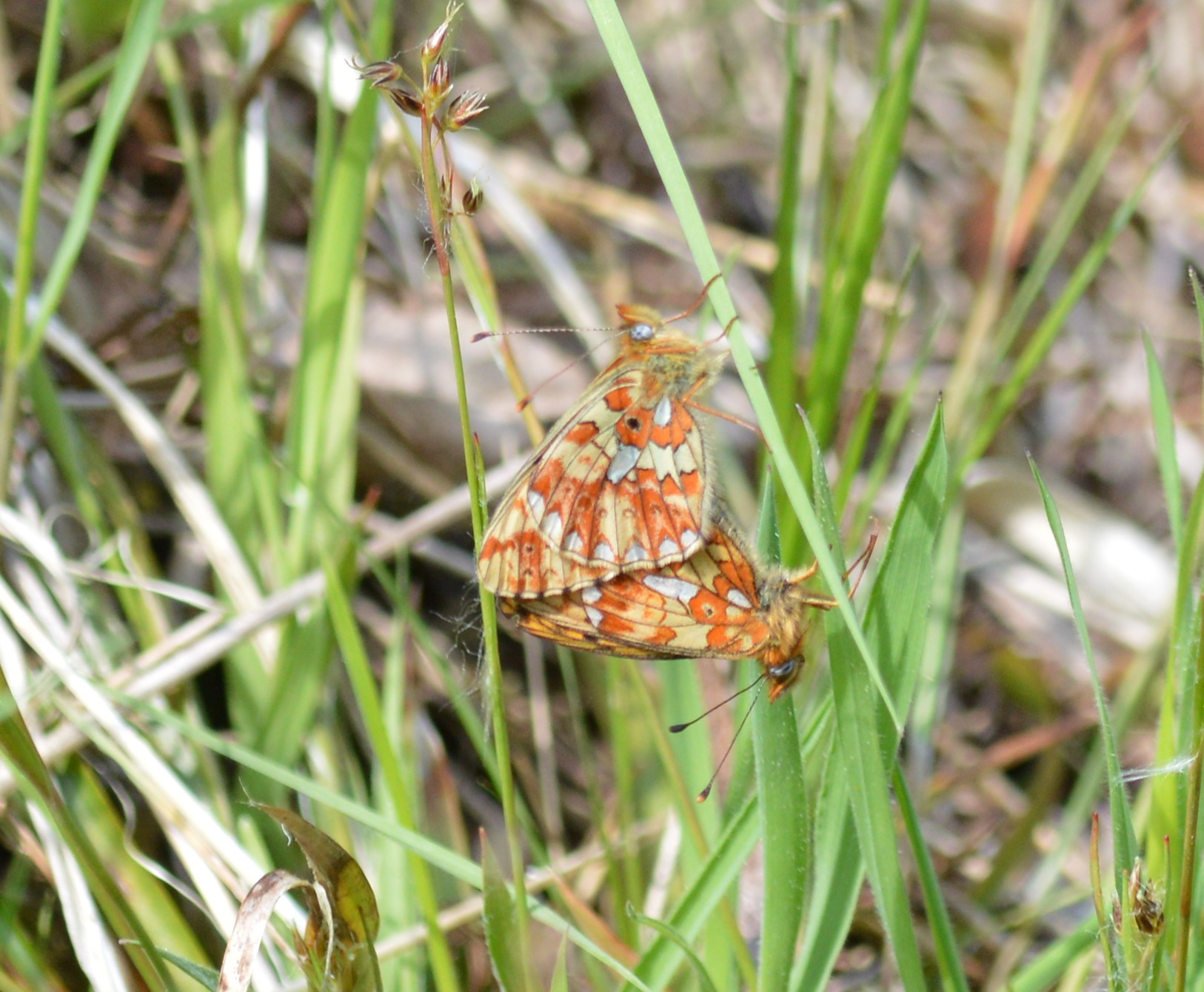
Needless to say it didn’t hang around to get many photos, so we went back to the track and headed along to an area with sunny sheltered banks. Here there were numerous Pearl Bordered Fritillaries fluttering in the sunshine. We were really chuffed initially to get these distant shots of a pair getting down to business.

Pearl Bordered Fritillaries (6) Pearl Bordered Fritillaries (5) Pearl Bordered Fritillaries (2)

But eventually we spotted a pair clearly too engrossed in what they were about to be bothered by us taking photos! I managed to get a few photos of them together. In the photo you can see how pearlescent the central white spot in particular is. I love the underside of their wings – like beautiful stained glass windows.

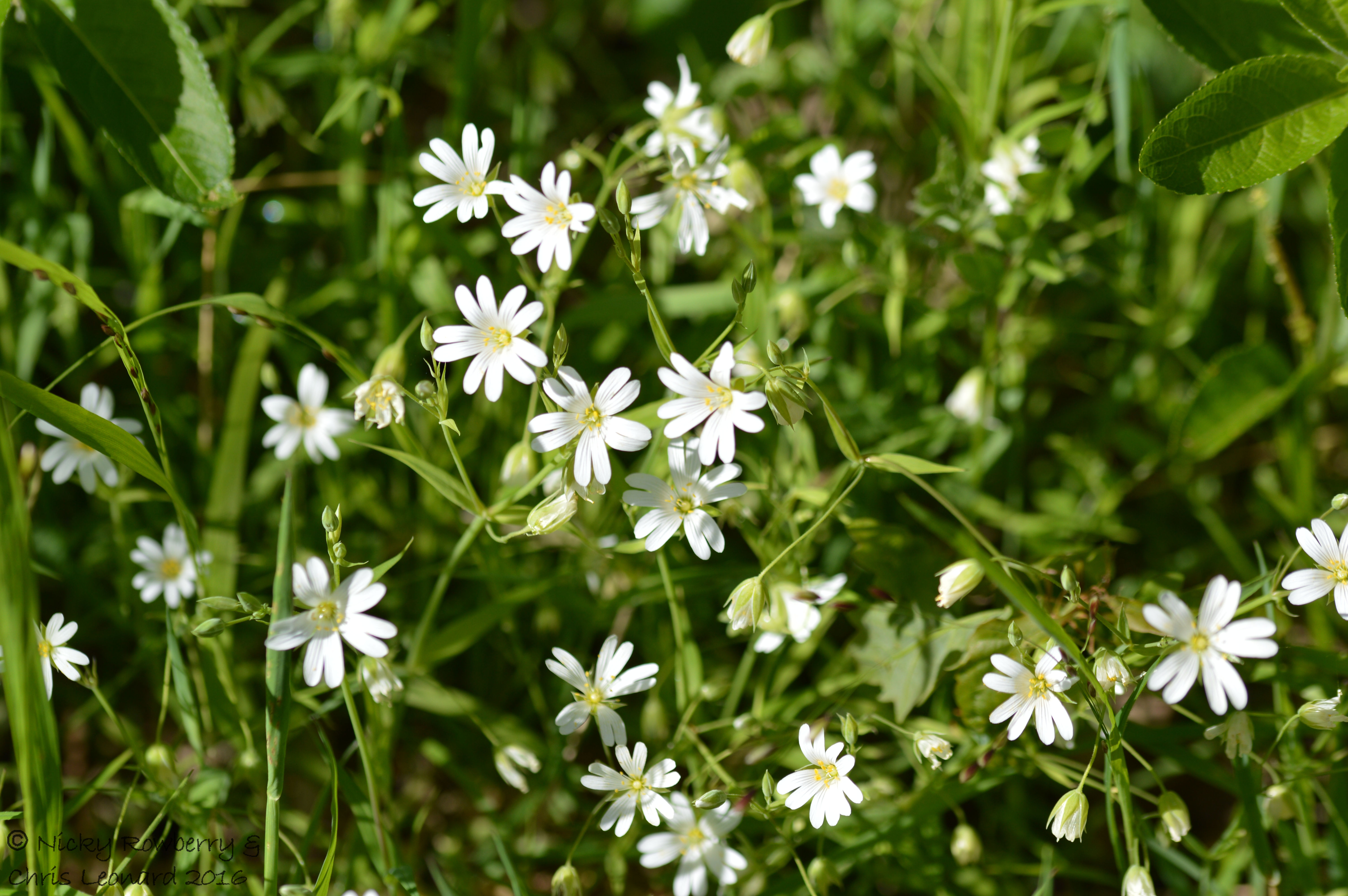
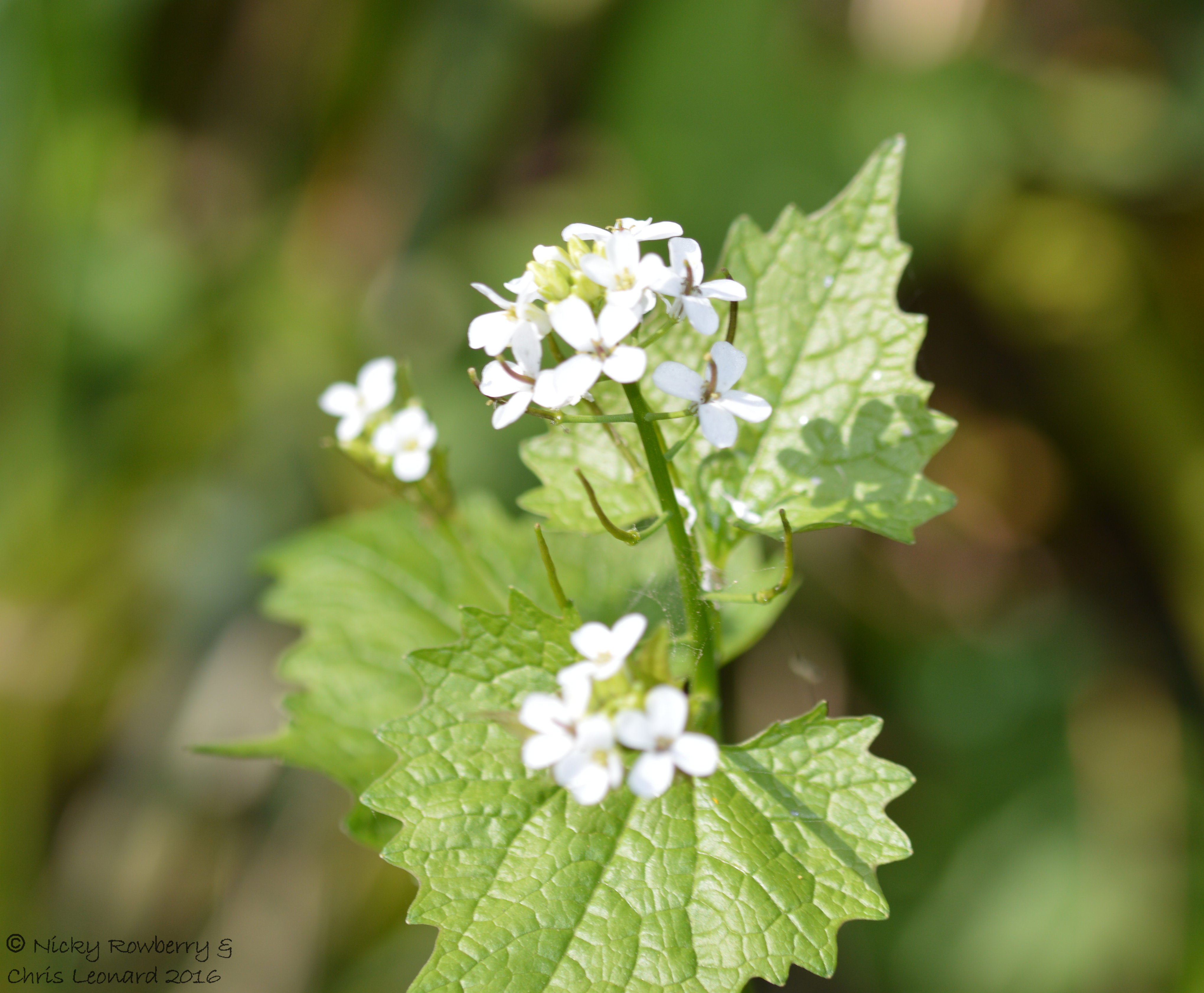
Of course although the fritillaries were the highlight, there was lots to see besides the butterflies. Spring flowers were abundant, attracting a variety of insects. I’m not too hot on wildflower ID, but I’m fairly sure the following are Greater Stitchwort, Jack-by-the-Hedge (aka Garlic Mustard) and Yellow Deadnettle.

Greater stitchwort

Jack by the hedge

Yellow Deadnettle

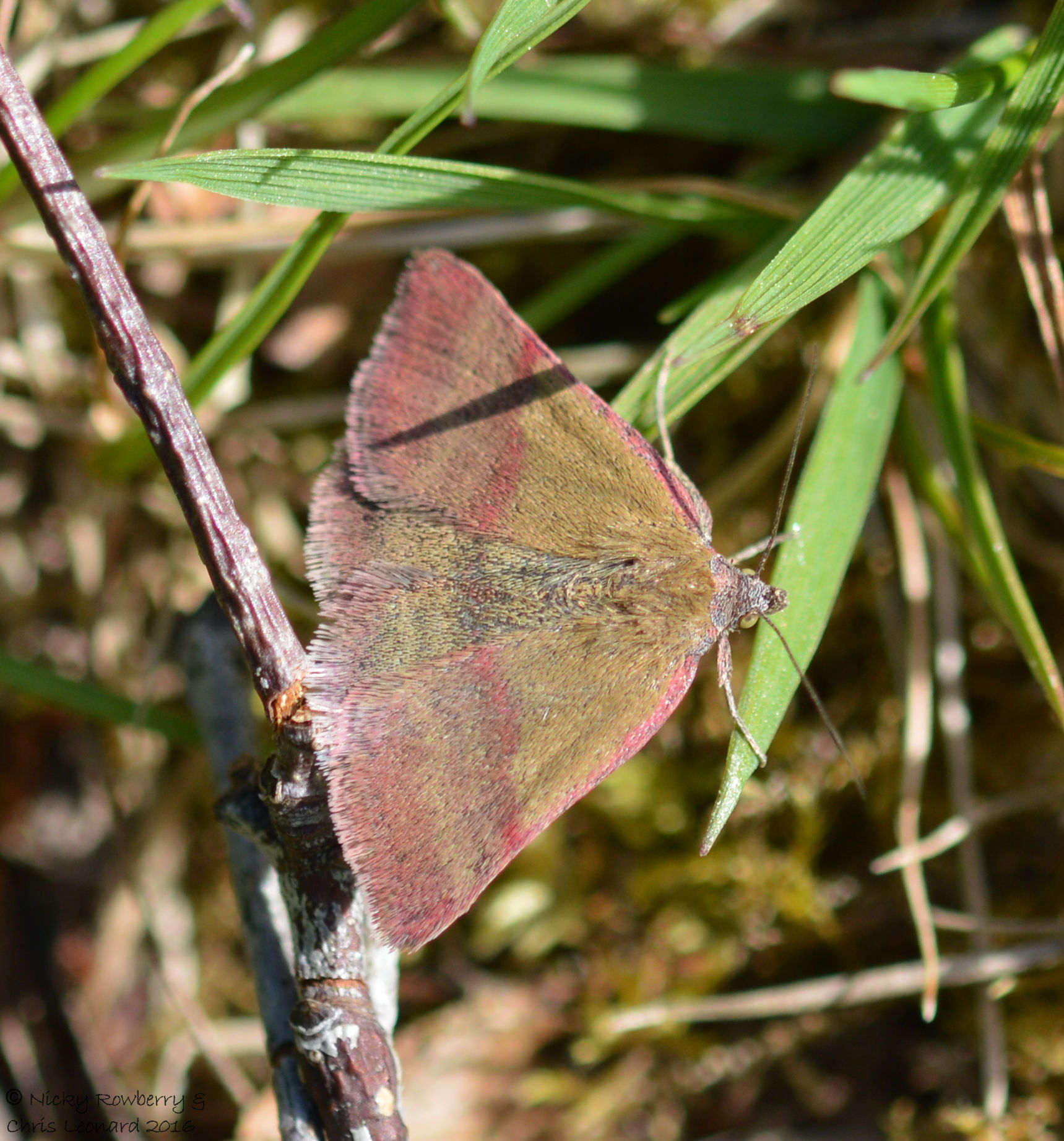
There were also a few day flying moths about, some of which I’d not seen before. The Small Purple-barred (Phytometra viridaria) was a new one, but was thankfully easy to identify.

Small Purple-barred


So all in all a very good day out. The Wyre Forest is definitely worth a visit for anyone wanting to see the beautiful Pearl Bordered Fritillaries.


Hungry Mouths to Feed

Hooray the robins in our garden have successfully fledged!! Two juvenile robins have been flitting around our garden all week, with the parents never very far away. They may be able to fly, but they still seem determined to sponge off Mum & Dad (typical teenagers) for as long as possible. So I’ve spent the week chasing them around the garden trying to get the perfect shot of them being fed by the doting parents. The results were mixed to say the least – if I got a perfectly focussed photo then they weren’t doing anything very interesting. If they started feeding the chicks, then in my excitement the photos came out blurred!

The adults were as always pretty easy to photograph – they seem to love the camera and pose happily on any available perch.

Robin

They’ve always taken a keen interest in whatever was out on the bird table and of late I’d seen them flying off with their bounty rather than eating it there and then, so I’d suspected chicks might have hatched. We’ve never spotted the robin nest, so perhaps they’re nesting in one of the neighbours gardens and just using us as a buffet?

Robin (3)

The fledglings appeared a week or so ago. Initially they were shy, keeping to the bushes, but have gradually got bolder. At first I thought it was just one – perhaps one fledged before the other. The one below looks particularly dejected as if it’s been told of by the adult, although it’s probably just fed up with the bank holiday weather like the rest of us!

Juvenile robins (7)

This weekend though, I started seeing two of them together (although this photo only shows one and a half fledglings!)

Juvenile robins (1)

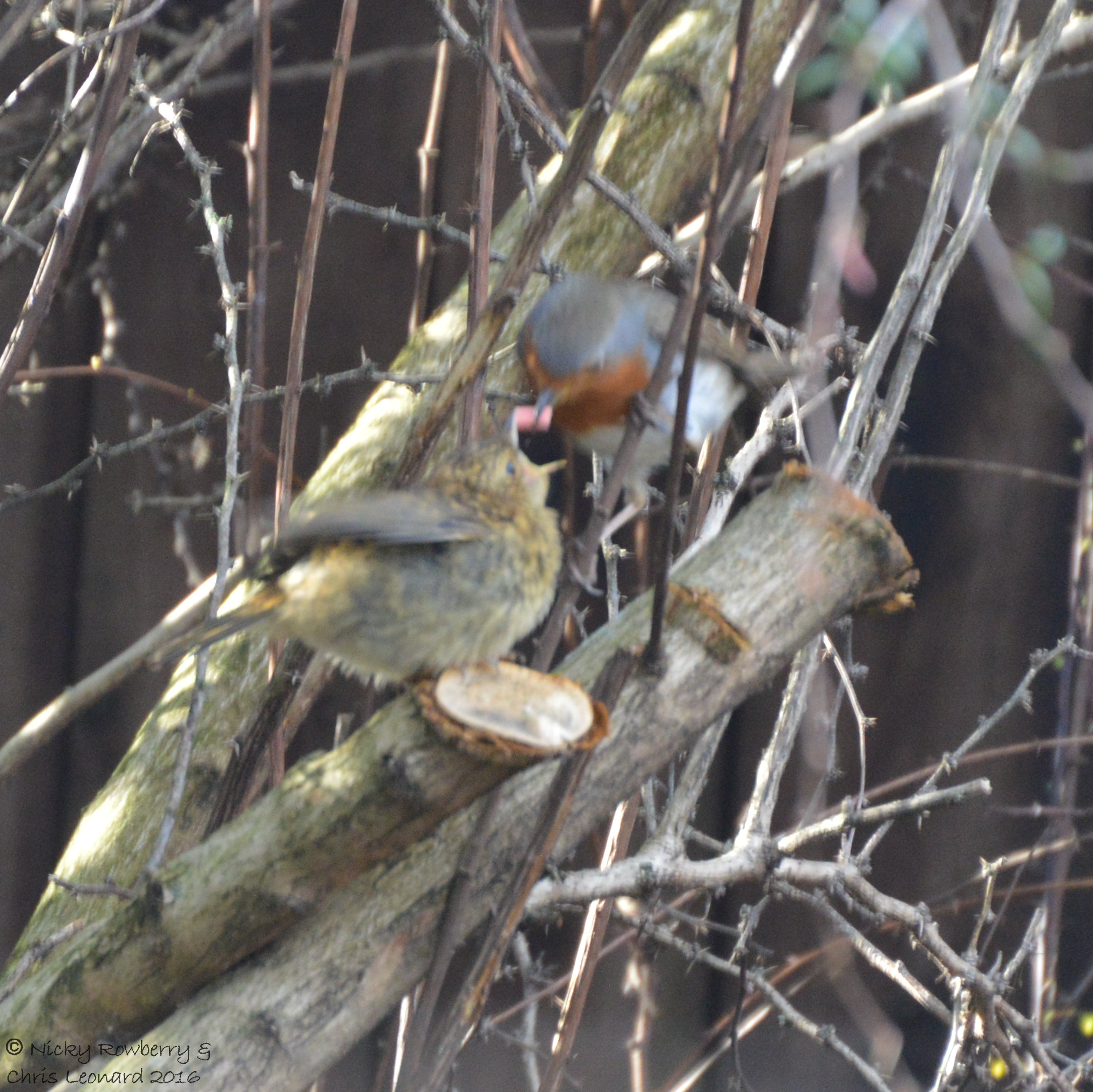
Despite seeing the parents feed them several times, it took ages to catch them doing it somewhere where I could get a relatively clear shot with the camera. Of course when I did, the photos came out blurred – the excitement must have got to me! But you can at least see the parent is feeding a suet pellet to the eager juvenile.

Robin and baby (5)

Robin and baby (2)

They seemed to use this corner of the garden regularly to feed the young – perhaps the thorny Berberis twigs offer some protection from the neighbours cat? So I tried setting up the trail cam to capture the action – 163 videos of twigs blowing in the wind later and I got a few brief snippets of the young. They were indeed still using this area to feed them, but always it seemed just out of camera shot.

So I may not have got the perfect photo or perfect video, but the main thing is that we seem to have 2 healthy (and very greedy) fledgling robins in the garden. Fingers crossed we get the same success with the blue tits.