30 Days Wild – Day 7 – Birdwatching Surprise

Day 7 of 30 Days Wild and I was at my Dad’s house in rural Herefordshire. I spent the morning doing a bit of cleaning in his kitchen and while doing so, observed that his garden was full of birds (clearly I wasn’t 100% focussed on my cleaning duties!) Since I’d got the camera with me it seemed the ideal thing for today’s bit of wildness – a spot of birdwatching in his garden. First of course we had to have our pub lunch – there are certain priorities in life after all! Needless to say by the time we got back and I got myself set up in the garden, all the birds had decided they’d got better places to be!
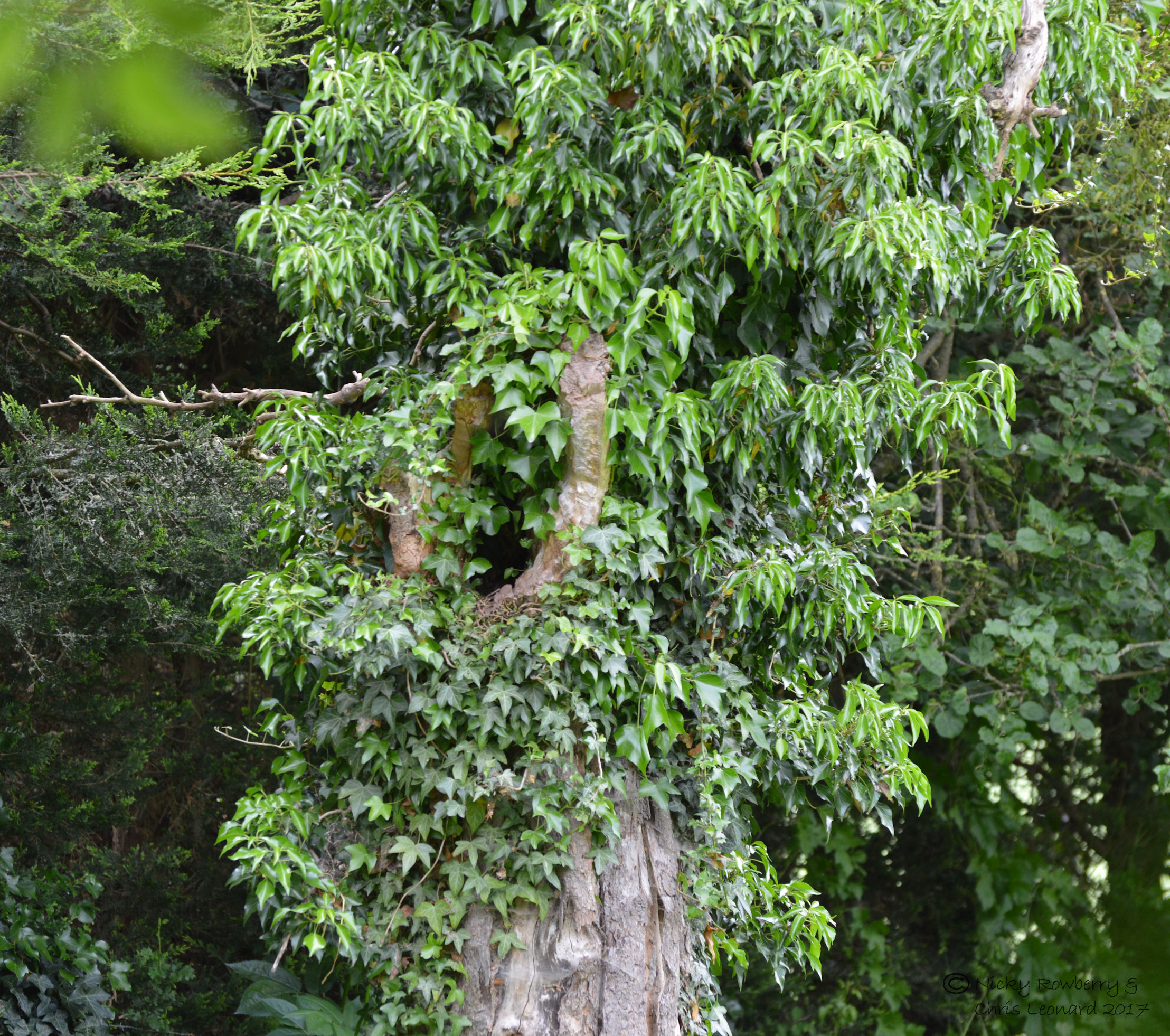
In the morning there had been several large black birds (too far away to see if they were crows or jackdaws) going in and out of this hole in an old apple tree. They must have been too smart to do so while I was watching, as not one appeared while I waited, although I could hear them in the trees nearby. I might take my trail cam down and leave it pointed at the tree sometime, but in the meantime I drew a blank.

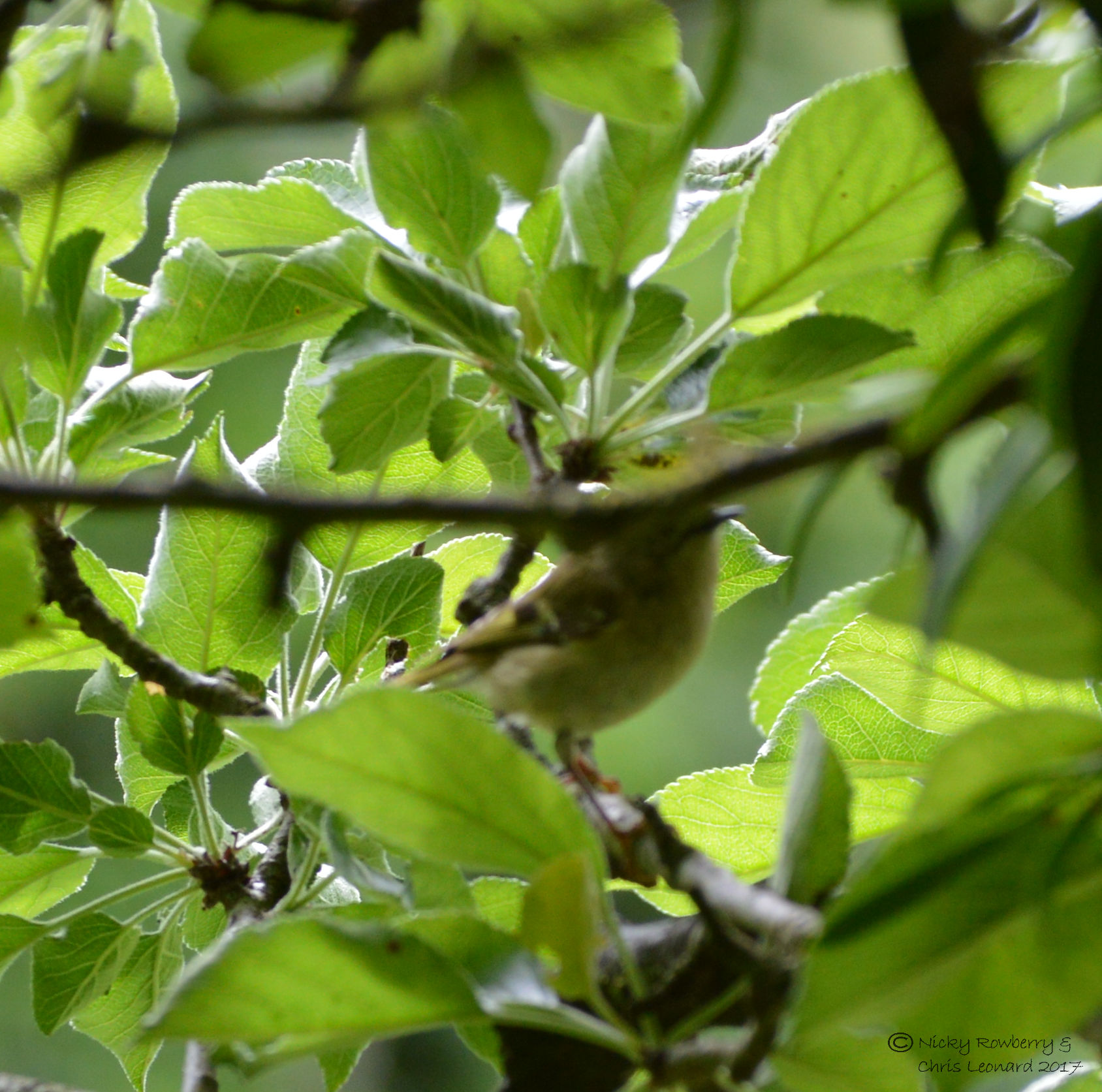
In the morning I had also seen magpies, wrens, robins, blue tits and pigeons – in the afternoon – zilch, zippo, nada! Then just as I was about to give up on them all –  a total surprise. I was leaning against another old apple tree (Dad’s house was built in an old orchard) when a Gold Crest suddenly appeared just a few feet in front of me. By the time my brain registered what it was, it had already spotted me and started to move, so I only managed this one rubbish shot. You’ll probably have to take my word for it that he was indeed a gold crest, since the key bit – i.e. his crest, is hidden by a twig. Still his appearance made up for the absence of everything else. I grew up in that garden and don’t ever remember seeing a gold crest before, so it was a real treat.
Loitering under various trees did have the unplanned benefit of letting me admire the tree canopies. There is a beautiful large copper beech tree overhanging Dad’s garden and the leaves were stunning from below (or indeed from any angle).

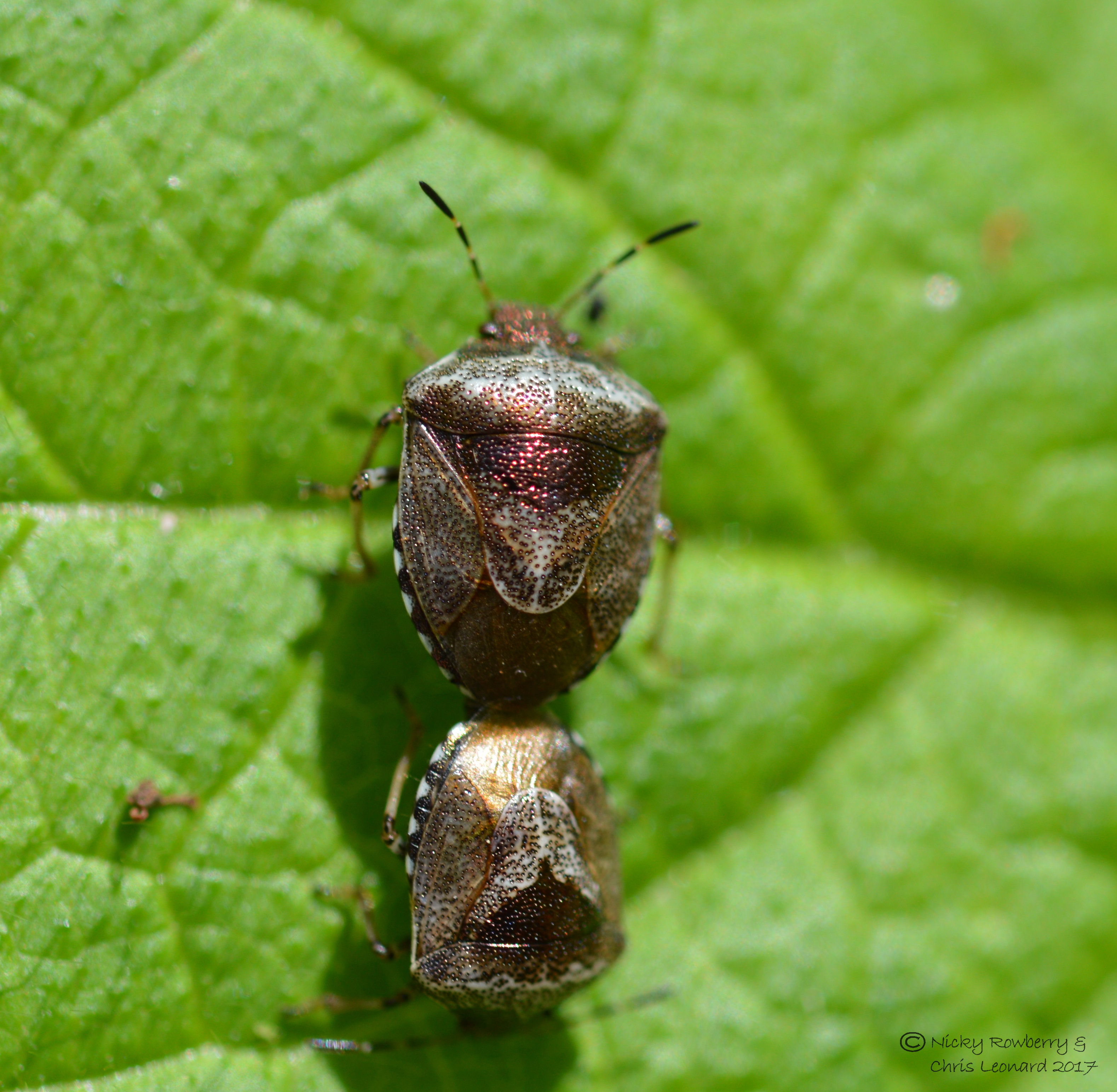
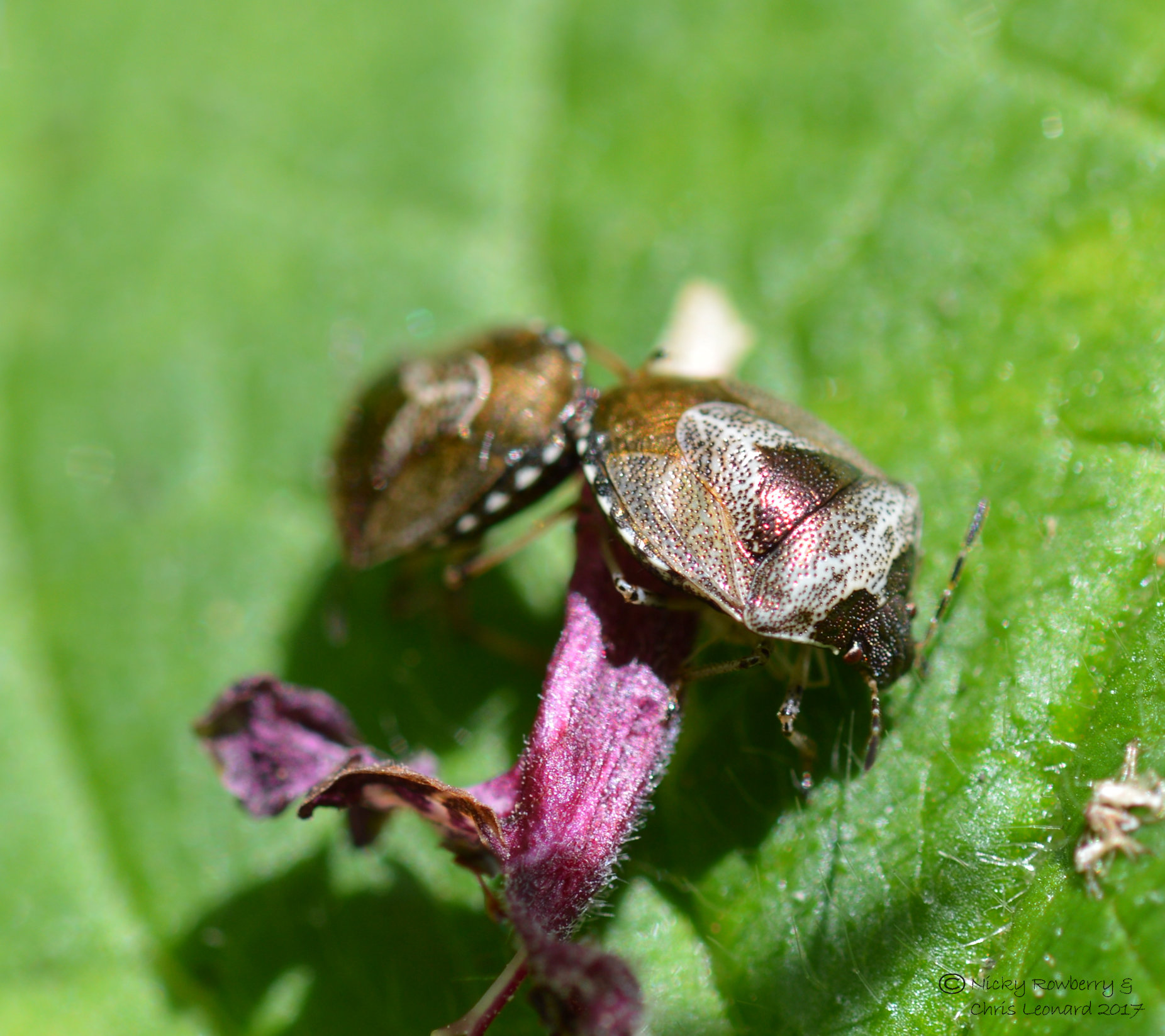
The birds may have been a bit contrary today, but fortunately a few insects were a bit more obliging. I spotted several pairs of these adorable little Woundwort Shieldbugs, all feeling the love in one of Dad’s flower beds. Not a species I’d come across before and smaller than other species I’ve seen.
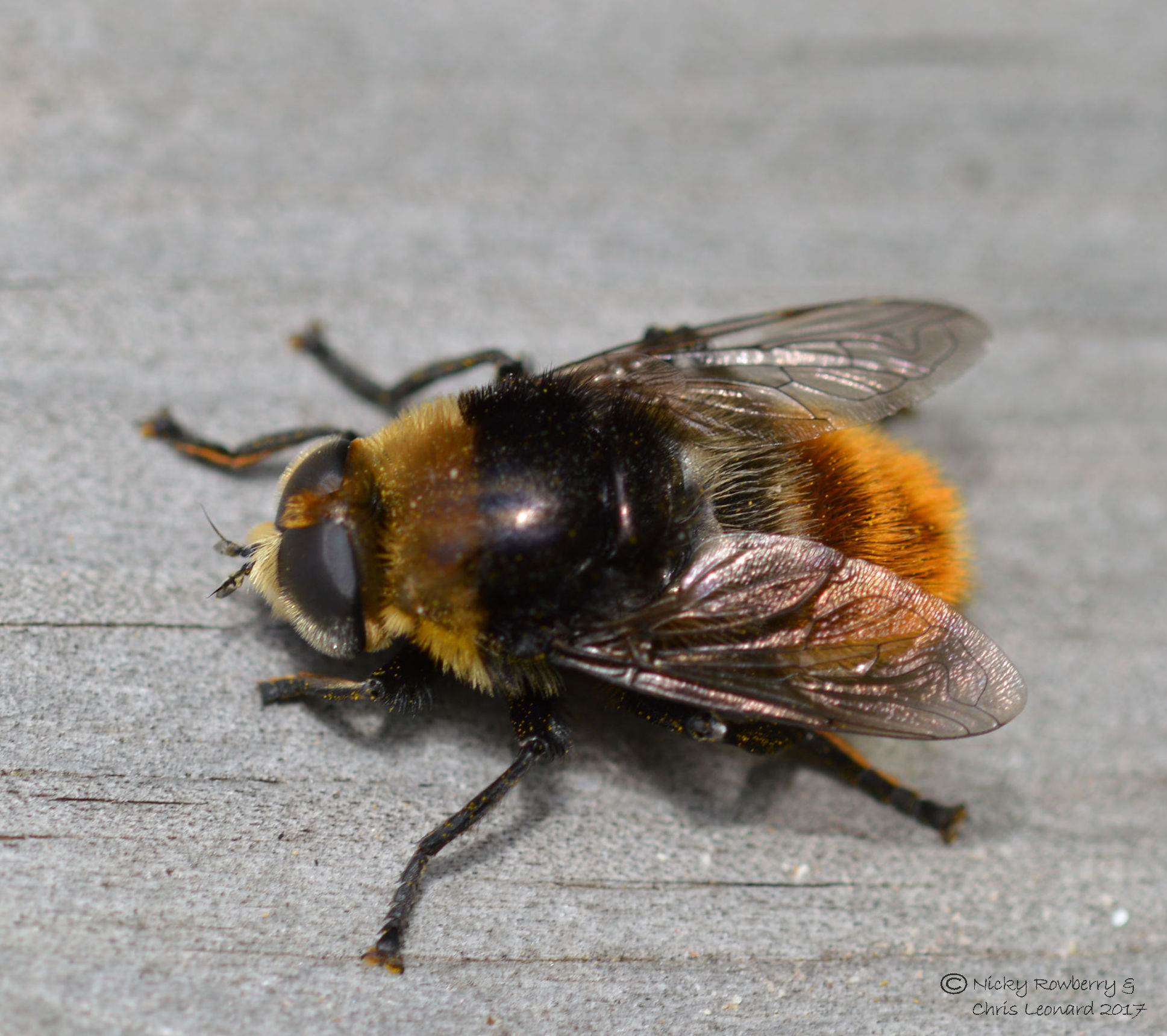
A rather striking fly – the grandly named Pellucid Fly (Volucella pellucens) is one of Britain’s largest flies, but was a welcome sight given the lack of birds to photograph.

Although the garden was once part of an orchard, most of the apple trees have got too old and fallen. Those that are still there are covered in ivy and mistletoe. The hedges are full of hawthorn and other native plants, notably elderflower. All great habitats for wildlife. Seeing the elderflower in bloom reminds me of my childhood and the smell takes me right back.

I think I’ve seen a few other people on 30 Days Wild making elderflower champagne. We used to make this as children too, so I picked a load and took them home. This is as far as they’ve got at the moment. I’ll have to dig out a recipe and hopefully turn  them into something drinkable over the next few days – fingers crossed.

So as is so often the case with my 30 Days Wild acts, things didn’t go quite as planned. But who cares – a pub lunch and an enjoyable hour or so spent in Dad’s garden, listening to, if not seeing a lot of birds. There are worse ways to spend your day!

30 Days Wild – Day 6 – A Bracing Day

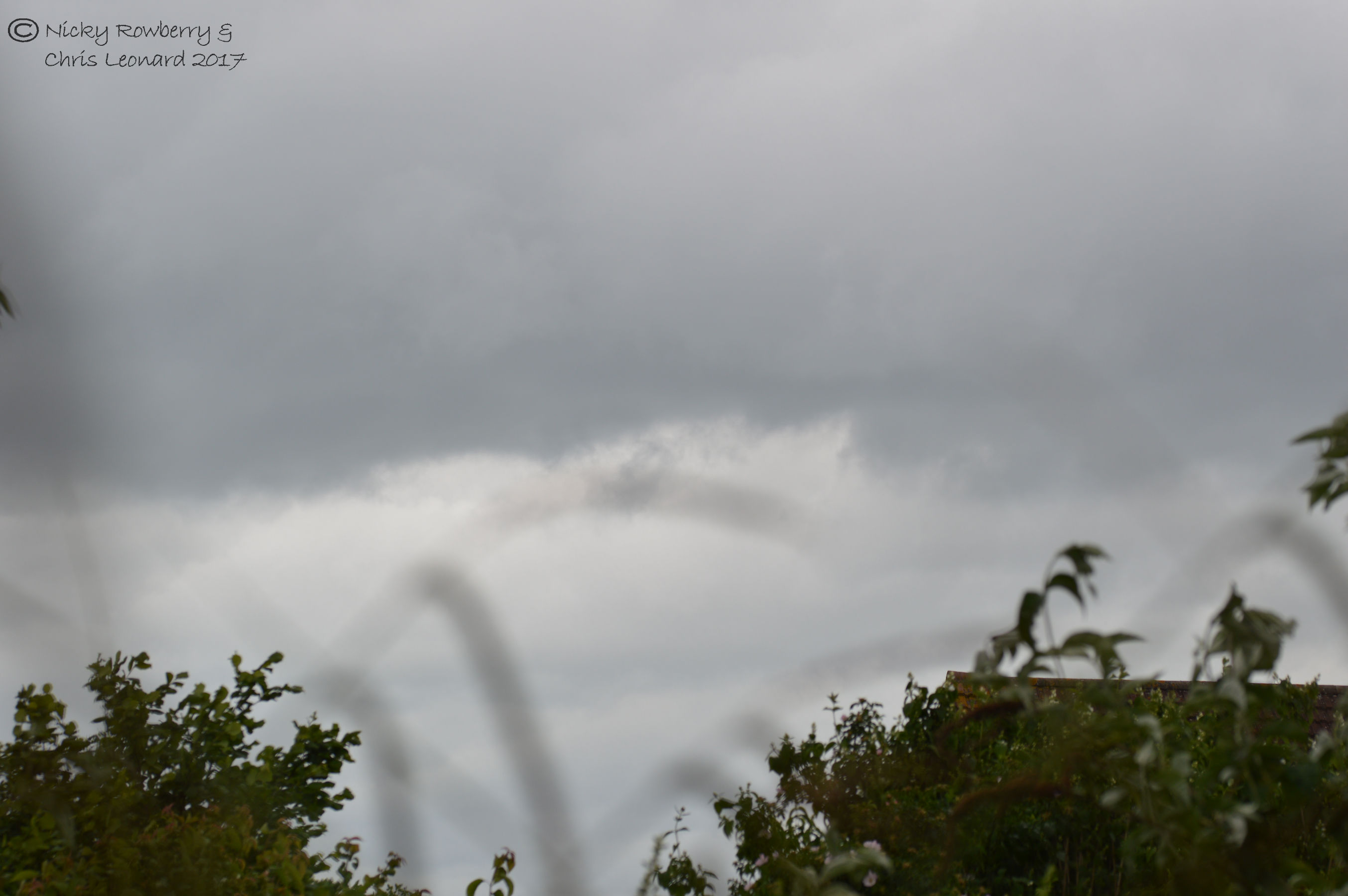
It’s day 6 of 30 Days Wild and a wet and windy one it is too. The car is in for its MOT so I can’t really head off to find anywhere drier either! By the time I’d trudged home from the garage I was well and truly braced! There didn’t initially seem much scope for wildness today, until I considered that the weather itself was more than wild enough to be the focus of today’s activities.

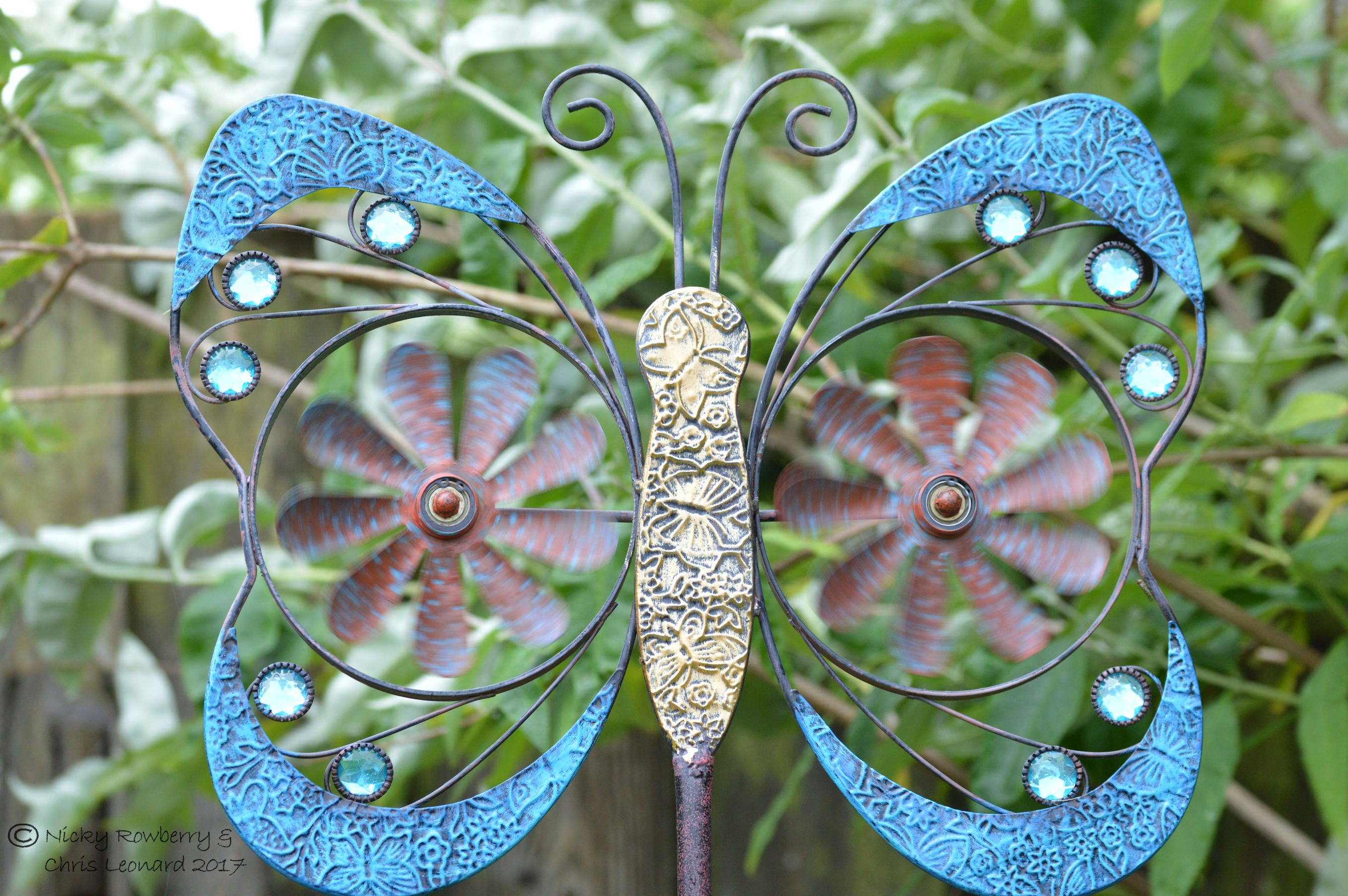
I don’t have an anemometer to measure wind speed, but the BBC weather app (an app I do actually use regularly) reckoned there were gusts of up to 48mph in our area. Our weather vane thingy was certainly going like the clappers.  So in an unusually bold move for me, I thought I’d have a go off the auto setting on my camera and tried taking a photo of the weather vane on a  really slow shutter speed to capture the movement. (Of course I could have just made a short video!) Anyway I was quite pleased by the blurring effect as the wheels whirred round.

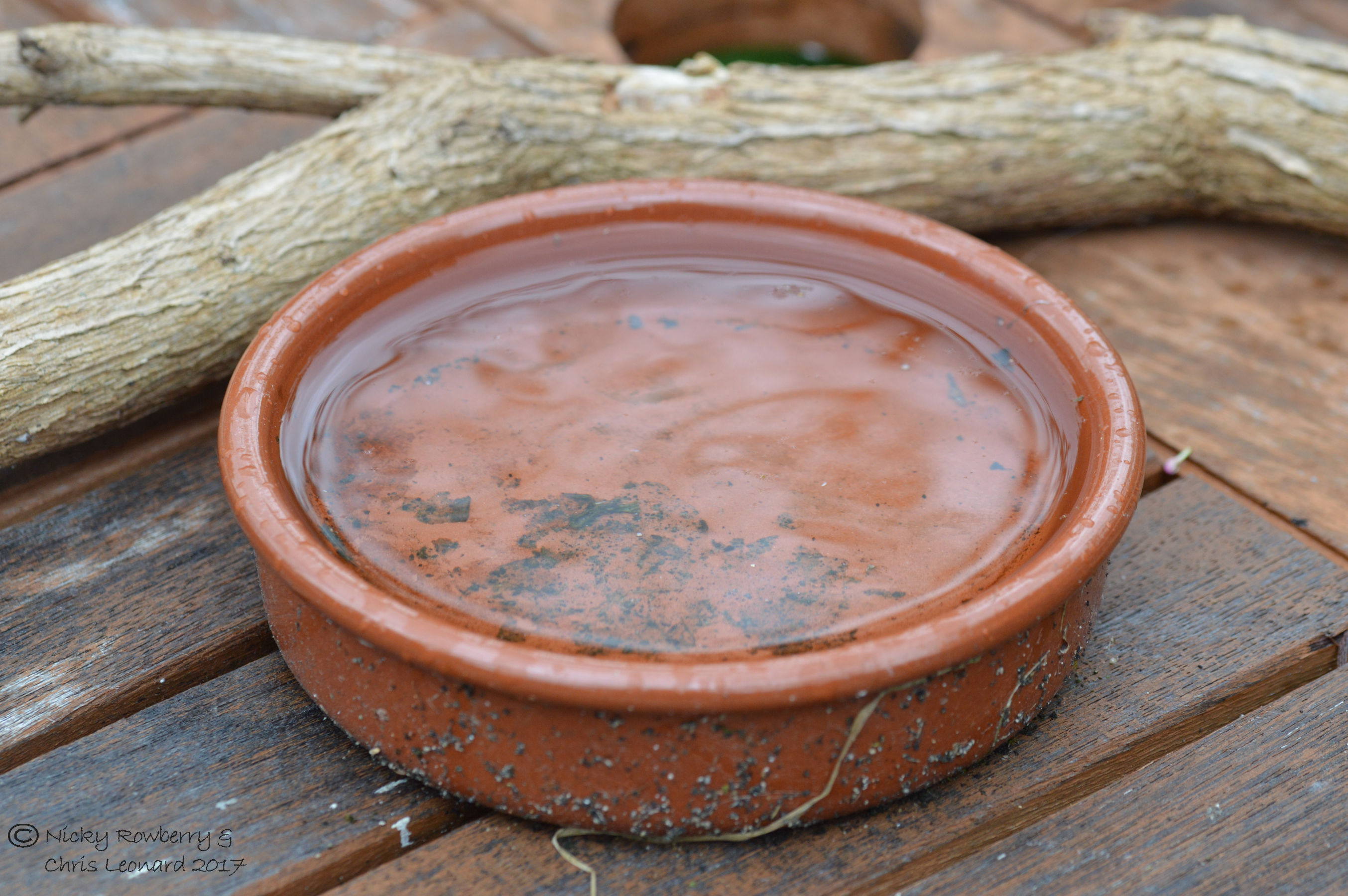
By mistake I then tried taking a photo of raindrops in a dish with the same shutter speed – the effect in this case was to make the water look sort of lumpy. (It reminded me of that shot in one of the Jurassic films where you see water in a cup shake as the T. rex approaches).

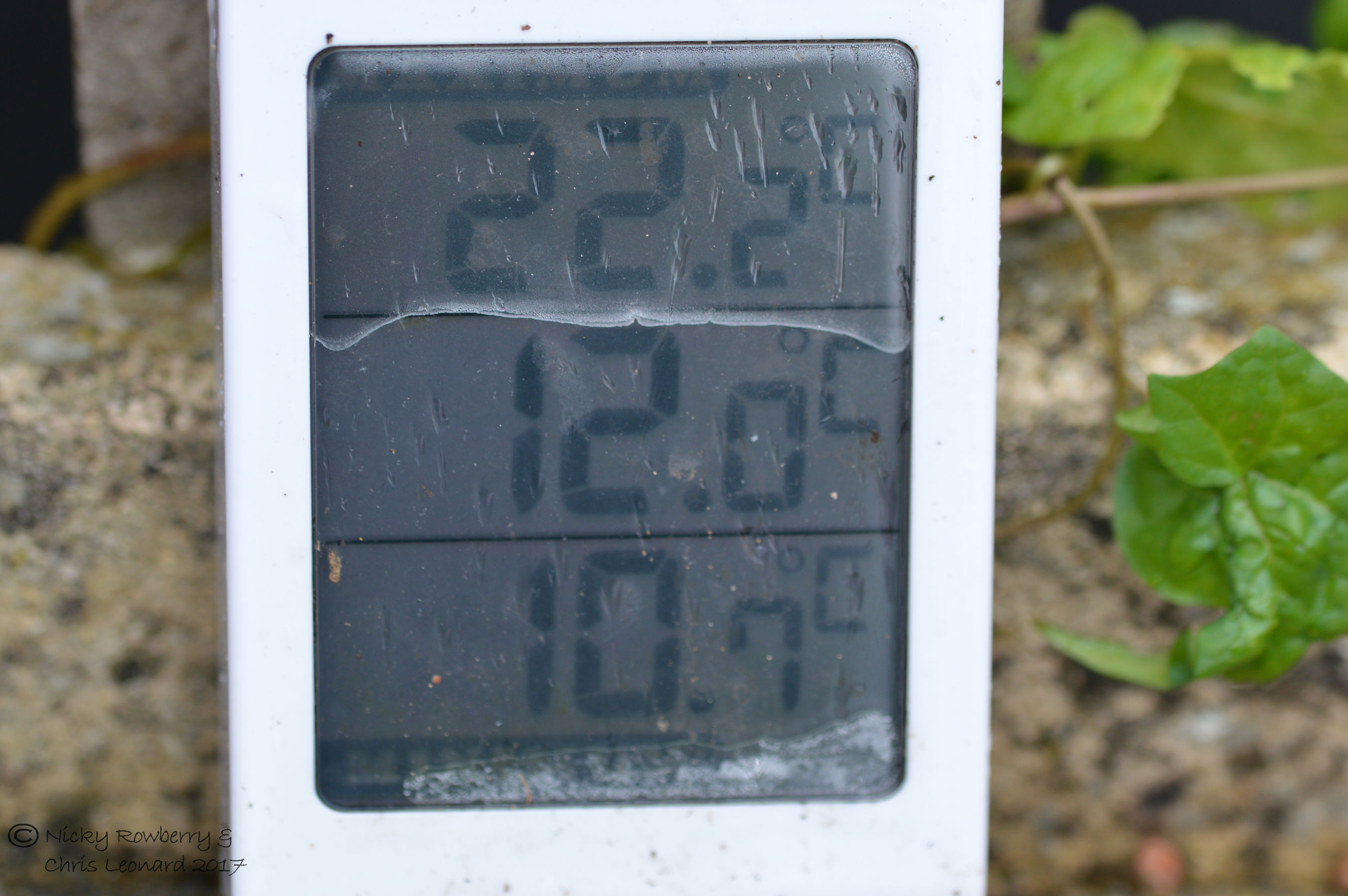
It intermittently chucked it down then drizzled for much of the morning. The thermometer said it was 12C, but it felt much colder so I retreated inside for a bit. I’m still working through the photos from the bioblitz, so it was a good excuse to sit on the sofa and carry on with them.

By the afternoon the sun had come out but it was still helluva windy. So much so that our recycling bin blew over – surprising since it was heavily weighted down with wine bottles, which were now rolling about the drive! (can’t fool the neighbours that I’m a teetotaller now)

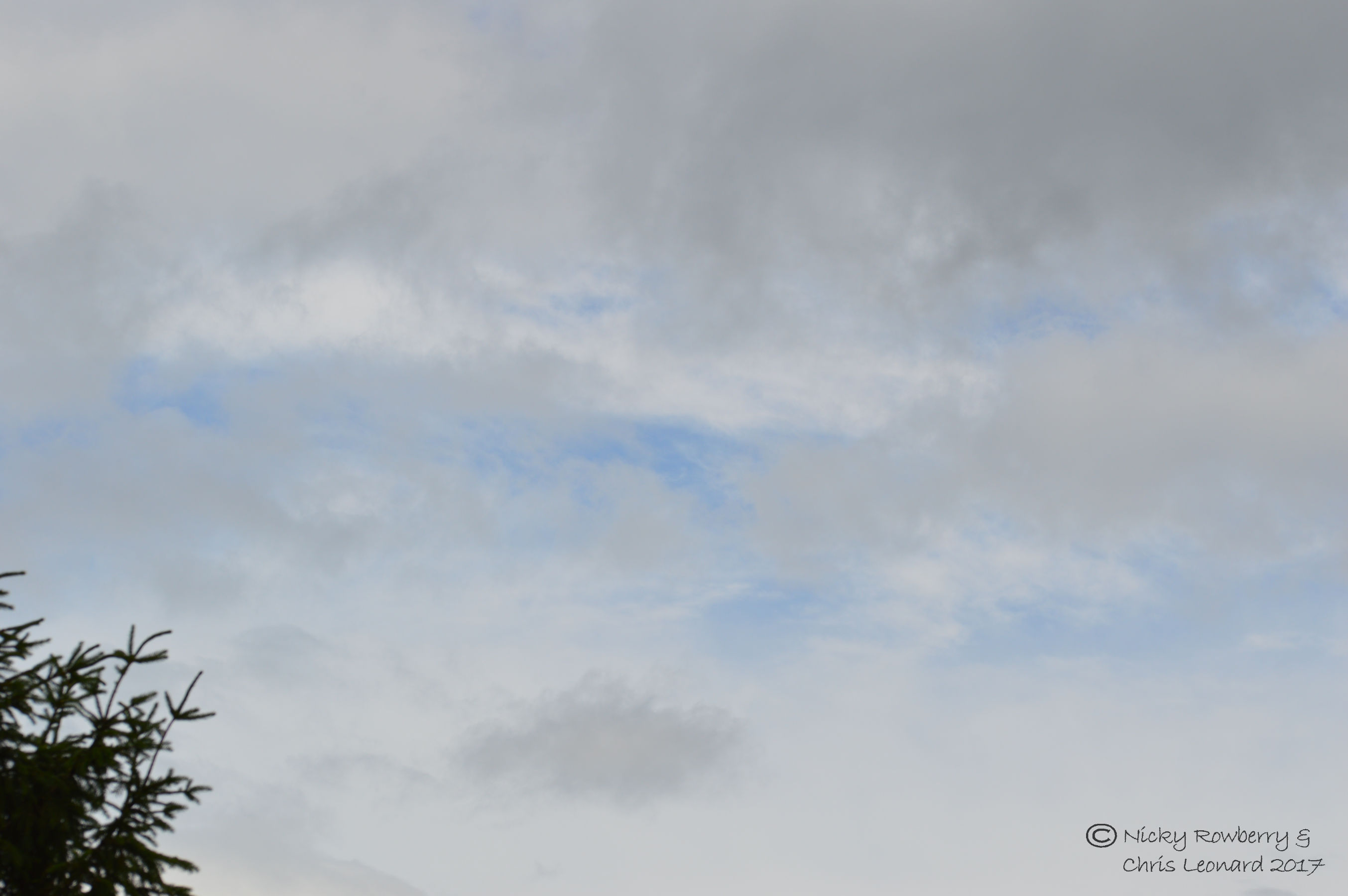
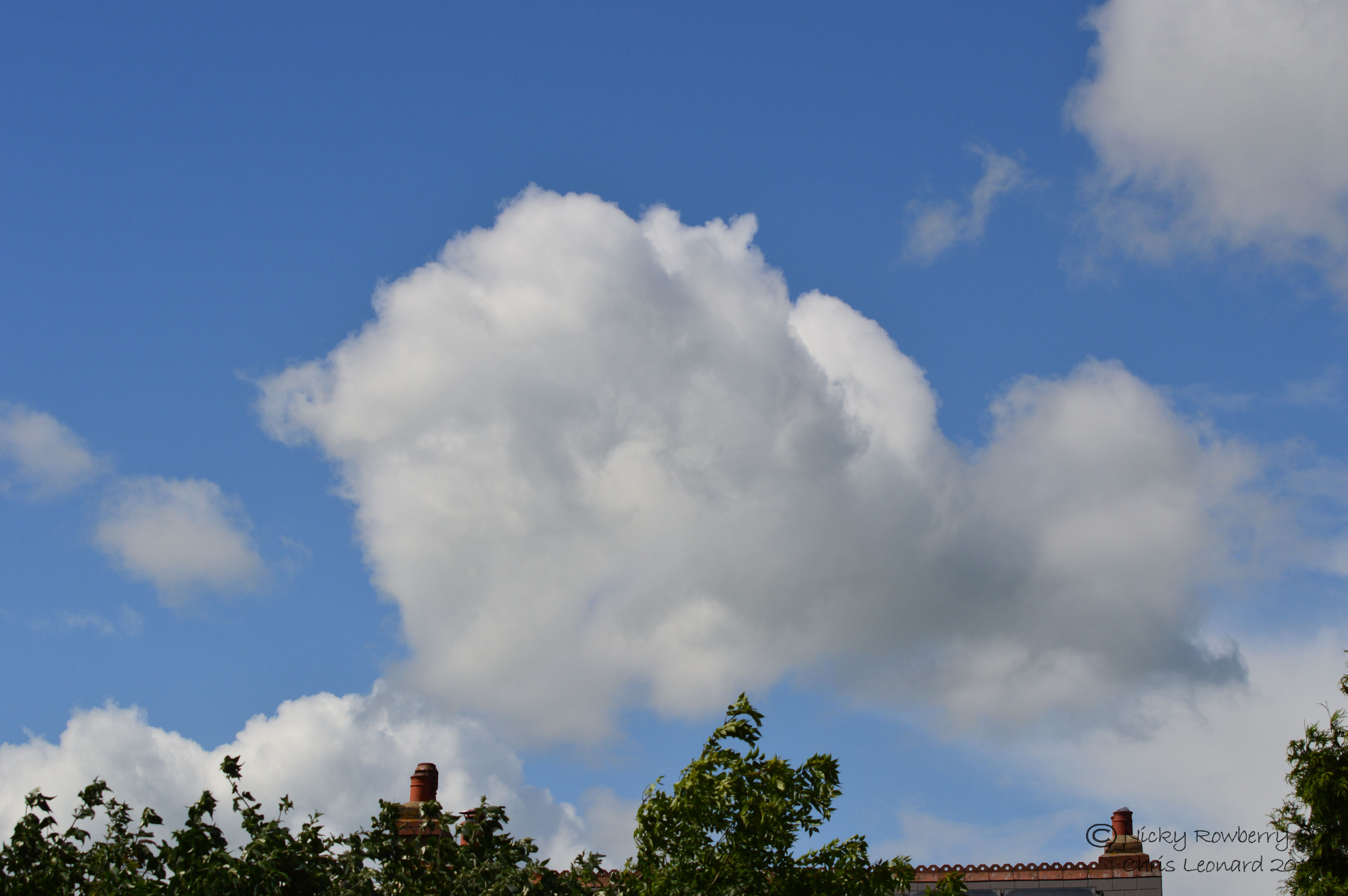
The sky had gradually brightened during the day; by the afternoon the blanket of grey had been replaced by blue skies with picture perfect fluffy white clouds.

The buddleias in our garden were still thrashing about in wind though.

Bumblebees that had come out now the sun was shining were valiantly clinging to the red valerian. How something so small doesn’t just get battered to death in winds this strong amazes me.

The bird feeders were all bobbing about like mad, but it didn’t stop the sparrows who hung on for dear life, as if they were on a crazy roller coaster ride.


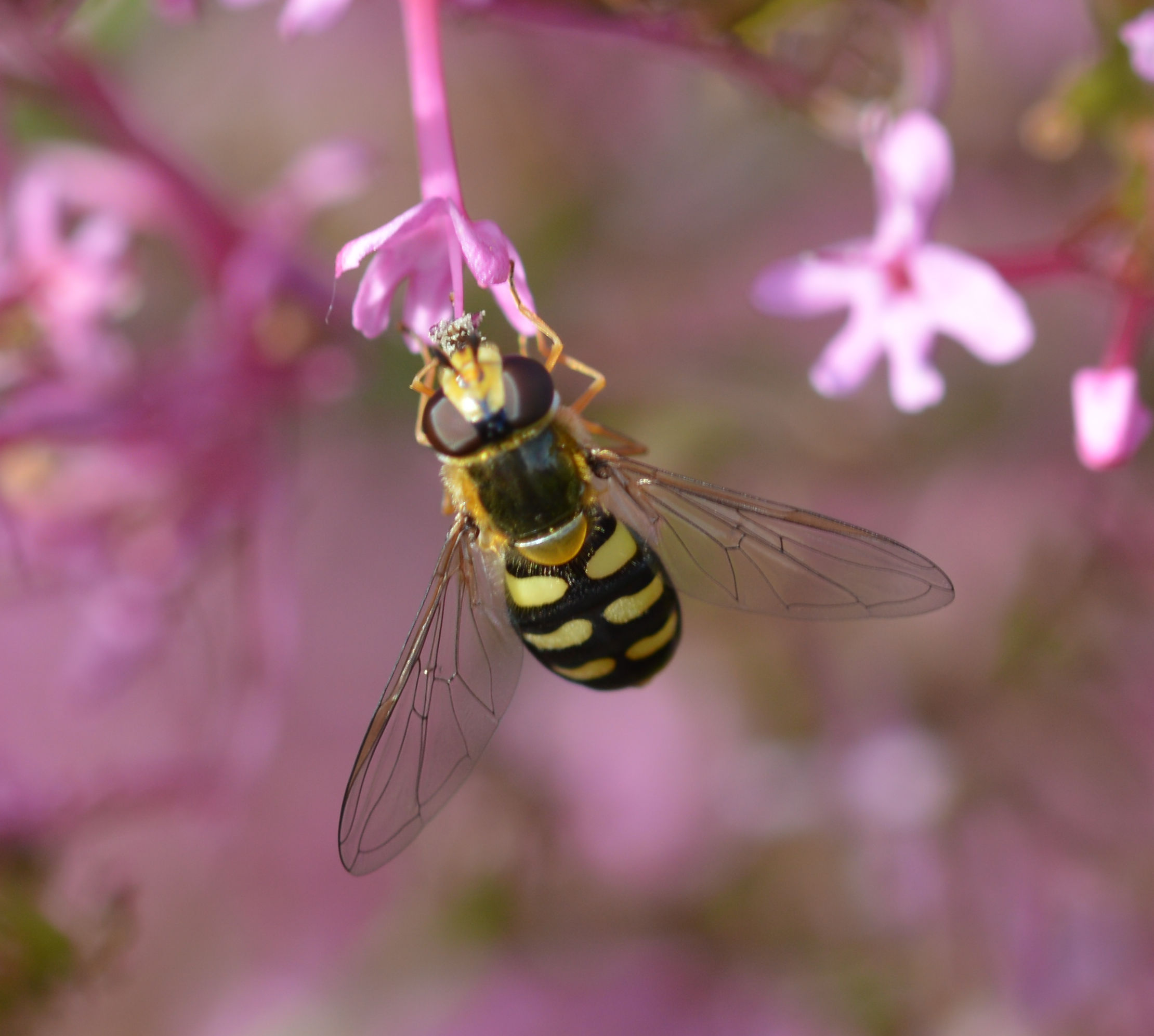
In the meantime from the relative calm of the sofa, I’ve now managed to ID (with a lot of help from people on Facebook, Twitter and iSpot) about 70 species from the bioblitz and loaded up 56 of them onto iRecord. Still loads of photos to go through, so final tally a way off yet. This little beauty of a hoverfly was one of the highlights so far – Eupeodes luniger.

The wind and rain may be frustrating in some ways, but like most things, you can’t appreciate the good without the bad.  It will make the next sunny calm June day all the more enjoyable.


30 Days Wild – Day 4 – Garden Bioblitz Part 2

It’s day 4 of 30 Days Wild and I spent the morning taking more photos of the wildlife for our Garden Bioblitz. I’d started the bioblitz at about 09:30 yesterday, so I was trying to cram in as many more species as I could before 09:30 this morning. This wasn’t helped by the fact that my camera has packed in, so apologies for the lack of photos in this post.

The day started at 04:30 to beat the birds to the contents of the moth trap. I had hoped for a good haul to boost my species tally, but the trap was fairly quiet – possibly because it had been quite windy last night. Still there were some nice moths including a few of the beautiful and distinctive Angle Shades – virtually impossible to mistake these for anything else, which I like in a moth!


Star of the moth show was an Elephant Hawkmoth making a timely debut for the year in our garden. I’ll never tire of these stunning moths with their bright pink bodies. If you were to make a toy moth, I reckon this would be it.


I put a specimen of each moth in the fridge (it does no harm but keeps them calm until  you can photograph them) and went back to bed for a couple of hours. 8 o’clock though and I was back up photographing said moths, then scouring the garden for more wildlife. I hadn’t managed to photograph any birds yesterday, so I topped up the feeders and waited expectantly to see what would show up. As usual the sparrows were the first to show, landing on last year’s teasels to check things out before heading to the bird table.


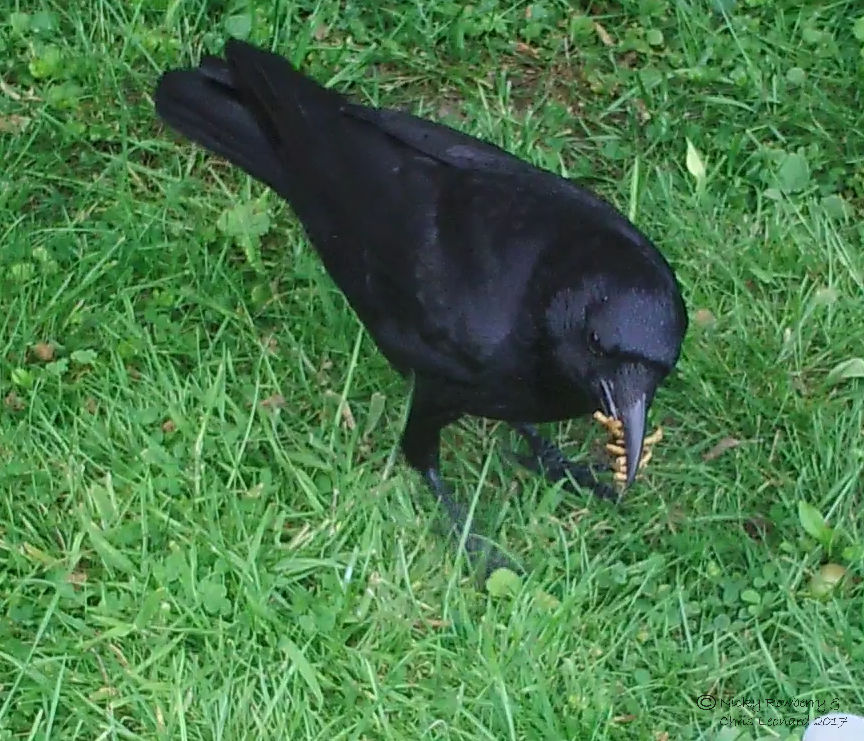
The starlings and jackdaws came next, followed by the blackbirds and pigeons. There were several no shows for birds that normally frequent the garden – no sign of the robin, wren, collared doves, great tits or gold finches. A blue tit just appeared in the last minutes to scrape into the bioblitz total. For the last few days I’d been seeing a big black bird, bigger then the jackdaws, so was disappointed initially when it didn’t show for the camera. But then I downloaded the trail camera which had been running for the last couple of days and there he was – a carrion crow.

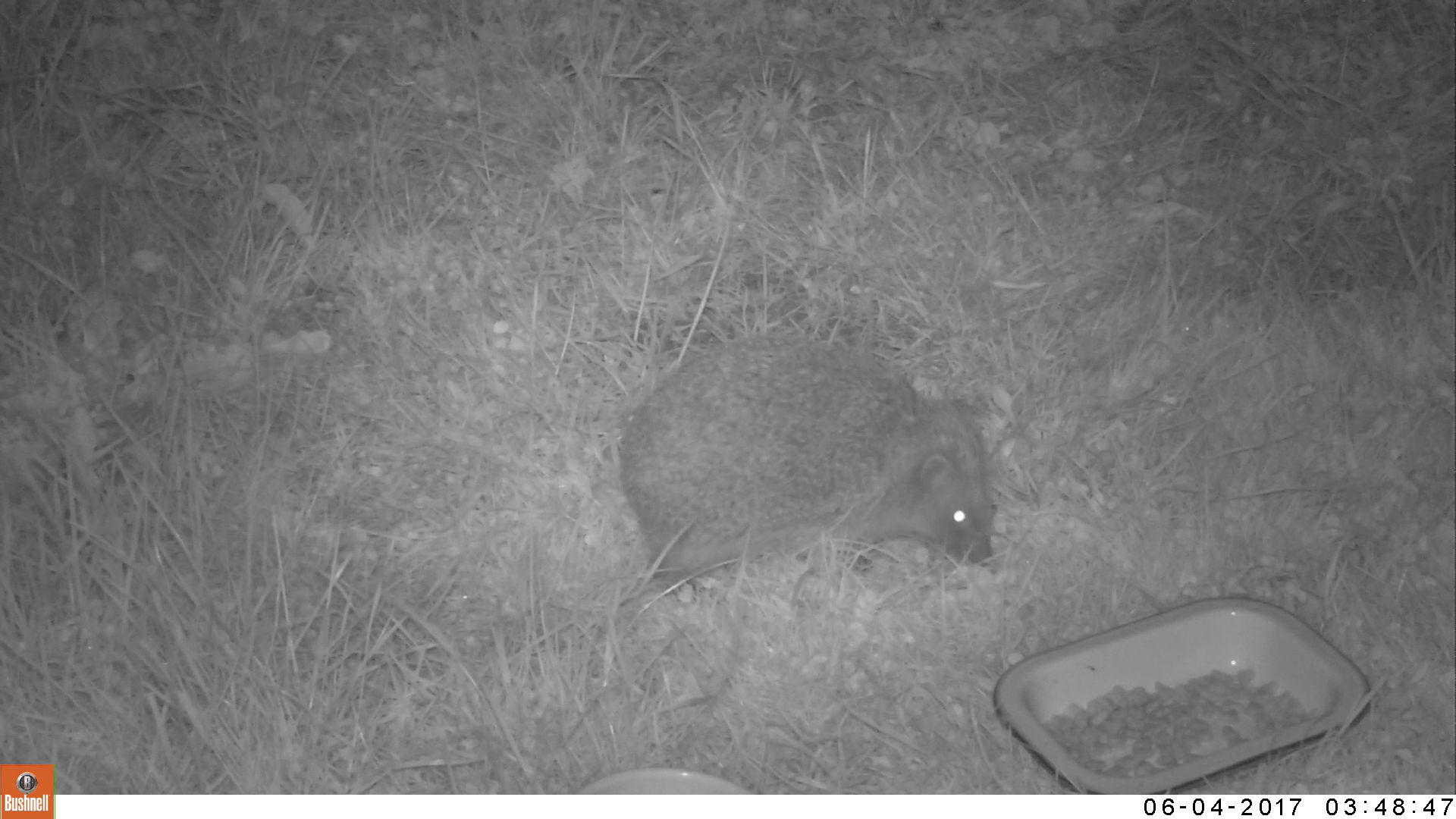
The trail cam also picked up a couple of hedgehogs – one of which looks like our old foster hedgehog Meadow – i.e. it was a big chunky looking hog!

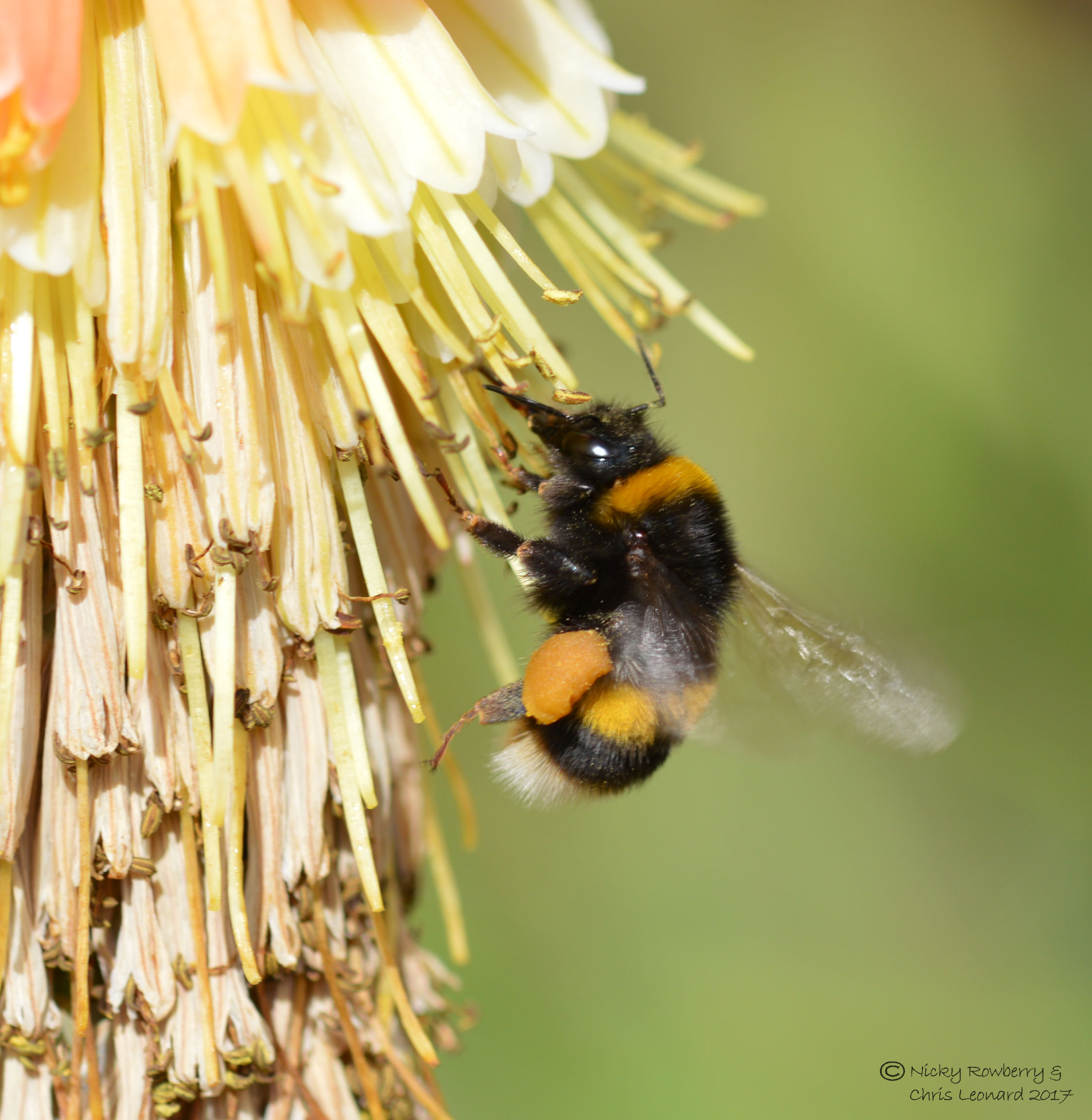
There were of course bees in the garden, although being a busy bee myself chasing everything else around I didn’t actually manage to get that many photos of them. But here’s one of my favourites – a Buff-tailed Bumblebee.


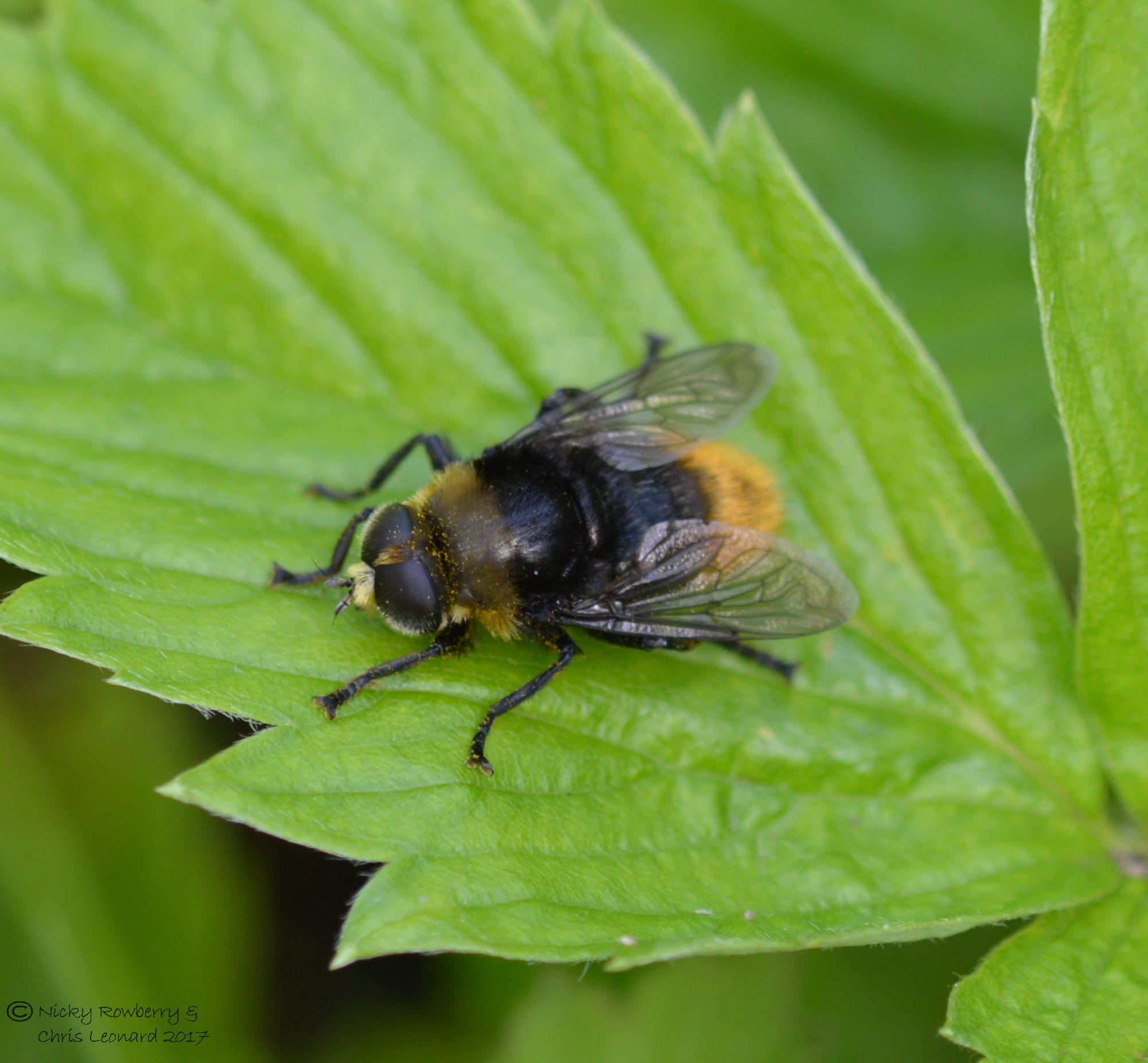
There was also this bumblebee mimicking hoverfly (Merodon equestris).

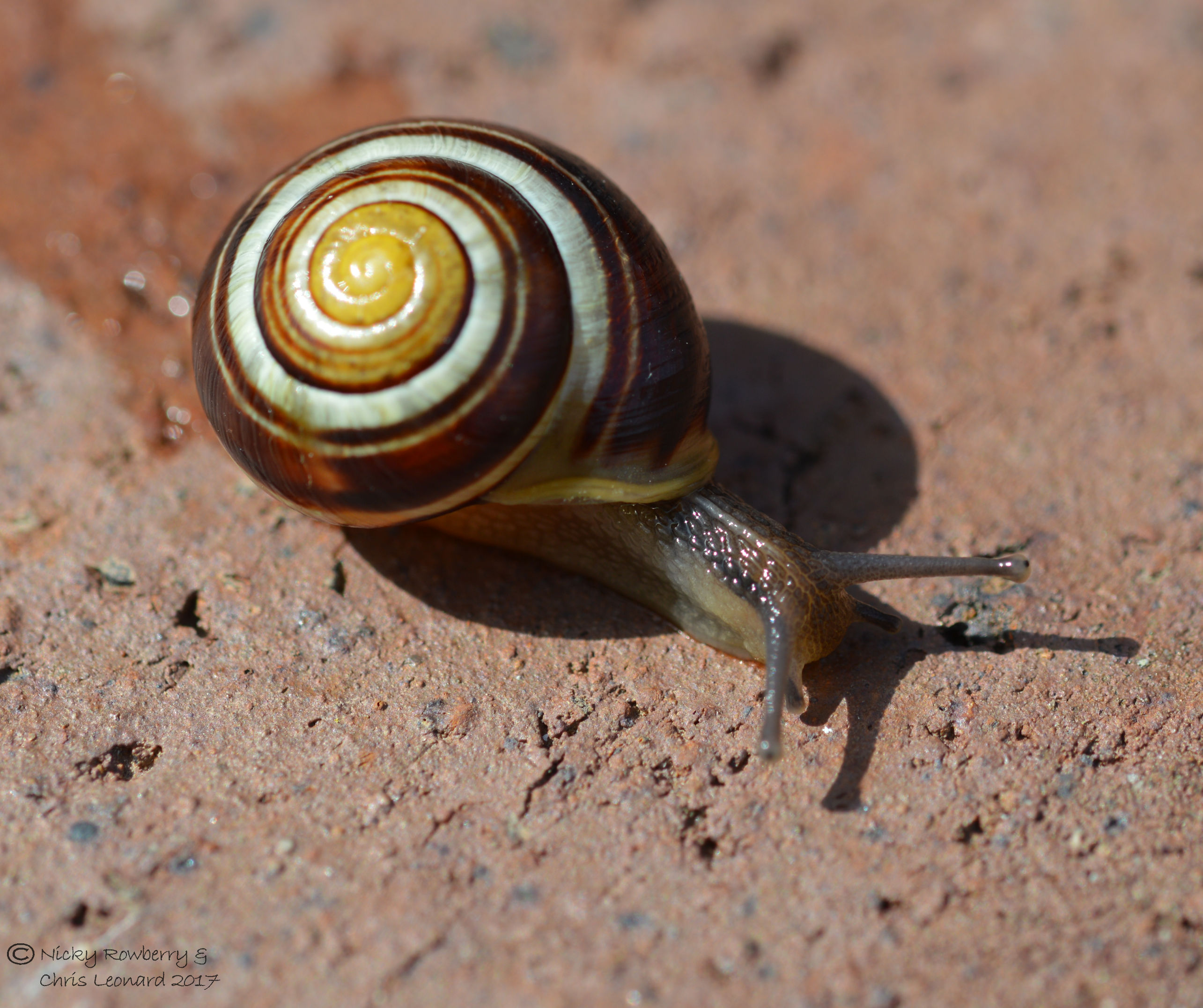
Our snails were also being sneeky and hiding away over the last 24 hours – several species that I know we get refused to show. Fortunately both the White Lipped (photo below) and a Brown Lipped appeared out of the Pendulous Sedge to get their photos taken.


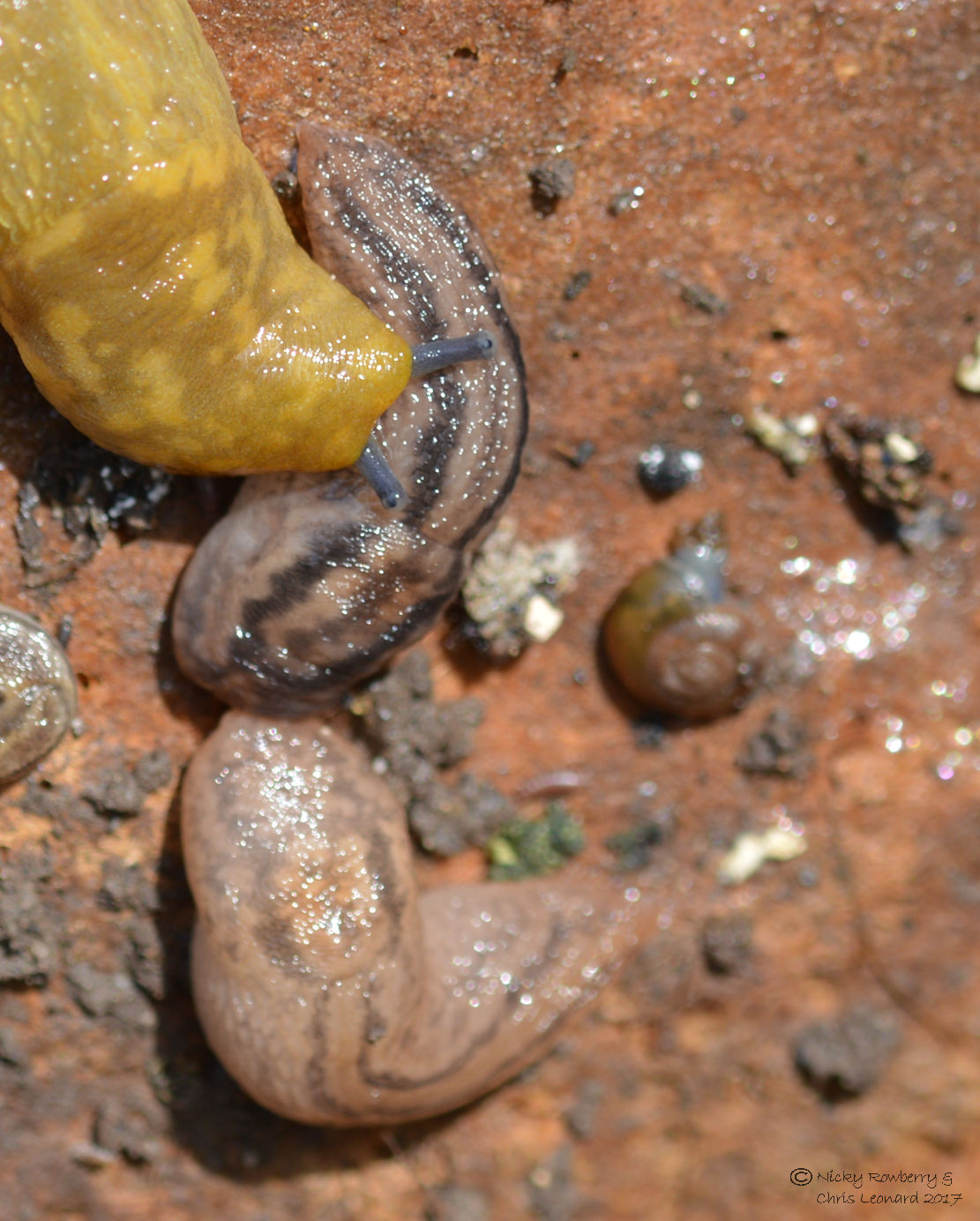
I also found three species of slug including this large yellow one and the stripy ones which I think are Iberian slugs.

I spotted this tiny nymph of the Speckled Bush Cricket, when I saw its antennae poking over the edge of a buttercup. Unfortunately the buttercup was blowing about in the wind a bit – hence the less than perfect focussing!

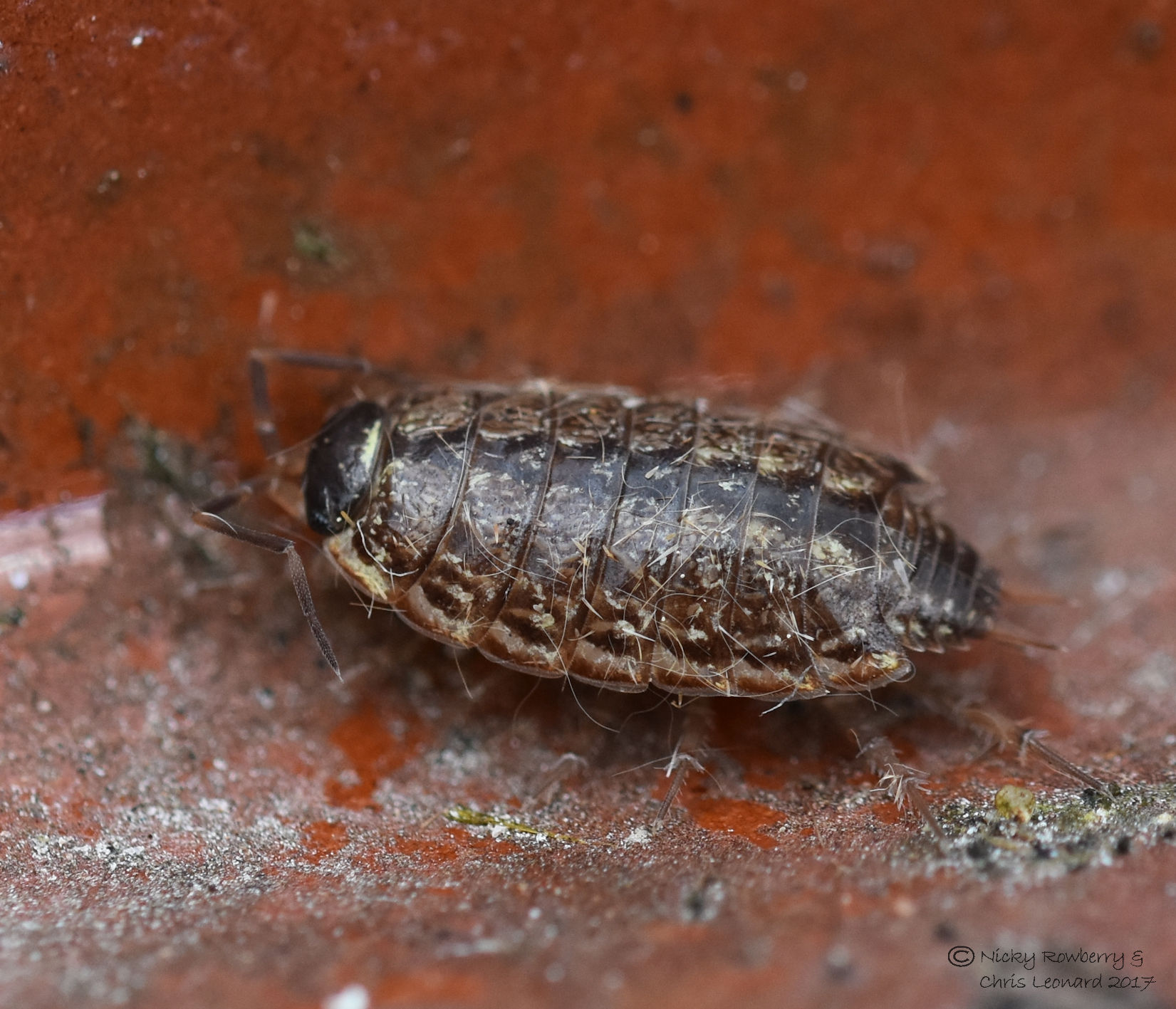
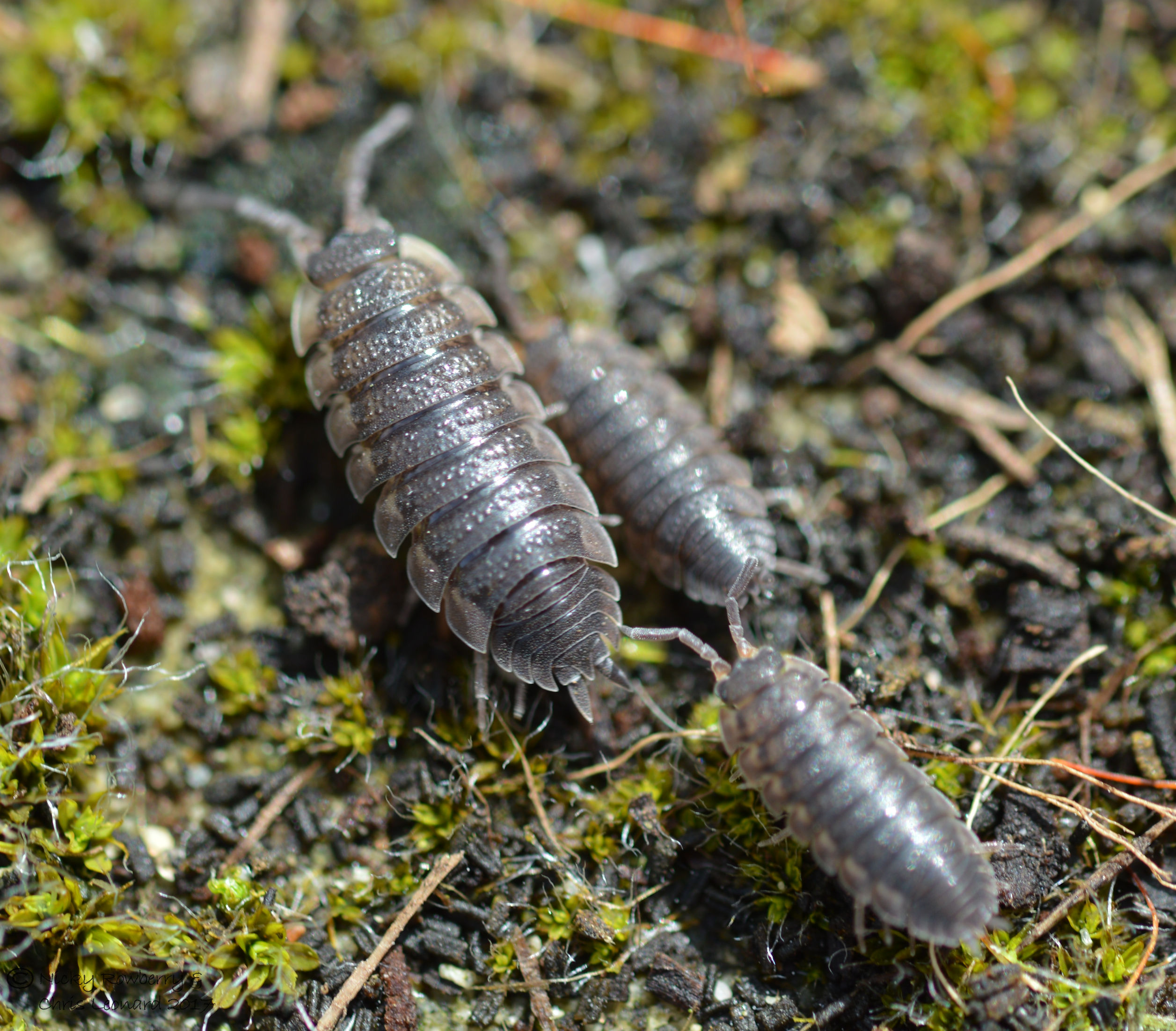
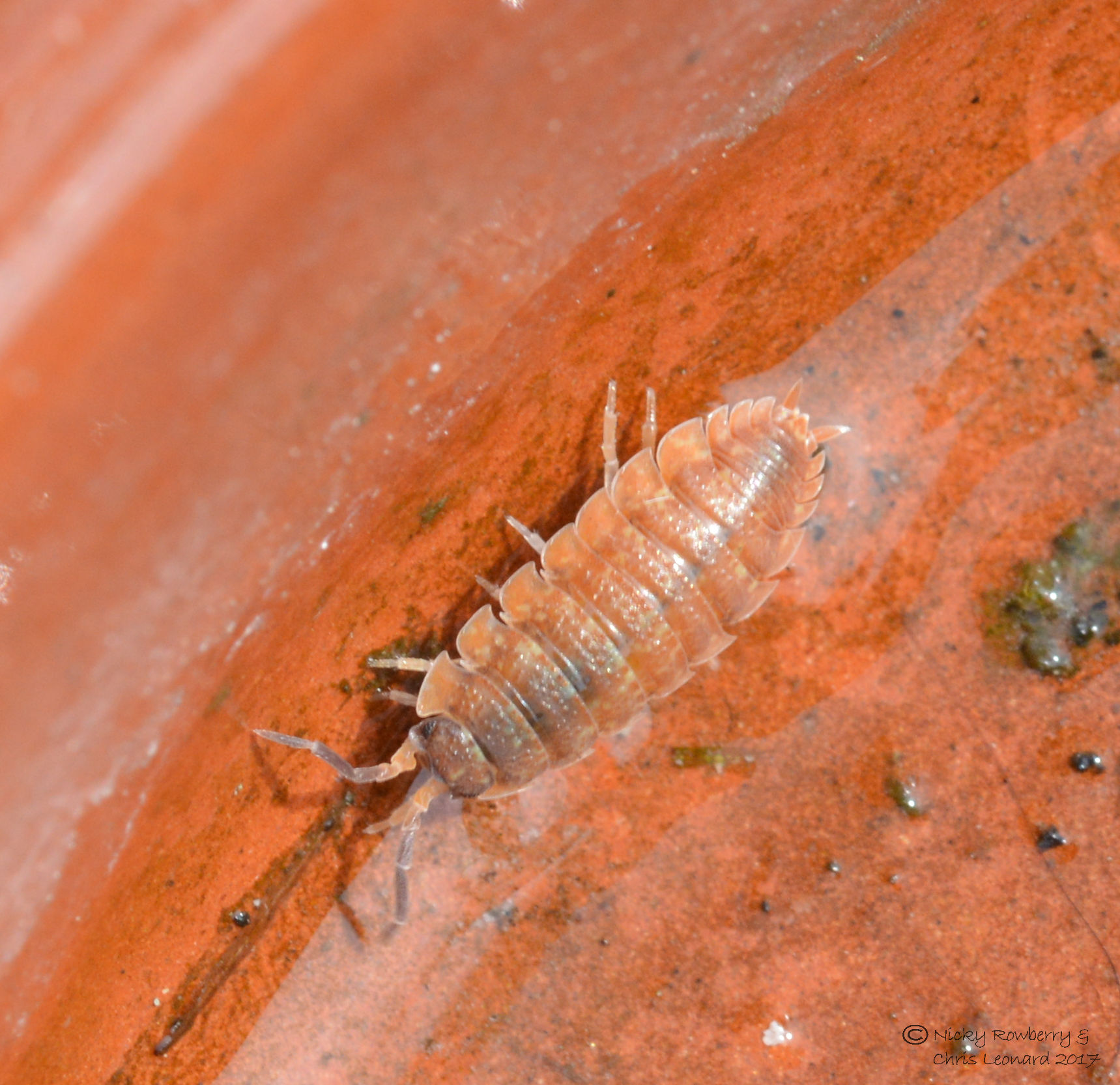
While turning over stones, I disturbed loads of woodlice. There were Common Striped Woodlice and the ones below that are Common Rough Woodlice. The bottom pinky one may just be a variant of the latter, but I hoping it might be a 3rd species – just waiting for someone on i-Spot to confirm one way or another.


Beetles are the largest insect group in the world, so it would have been a bit weird if I hadn’t found any in the garden. My favourite Swollen-thighed beetle of course appeared, as did a lovely shiny Black Clock Beetle.


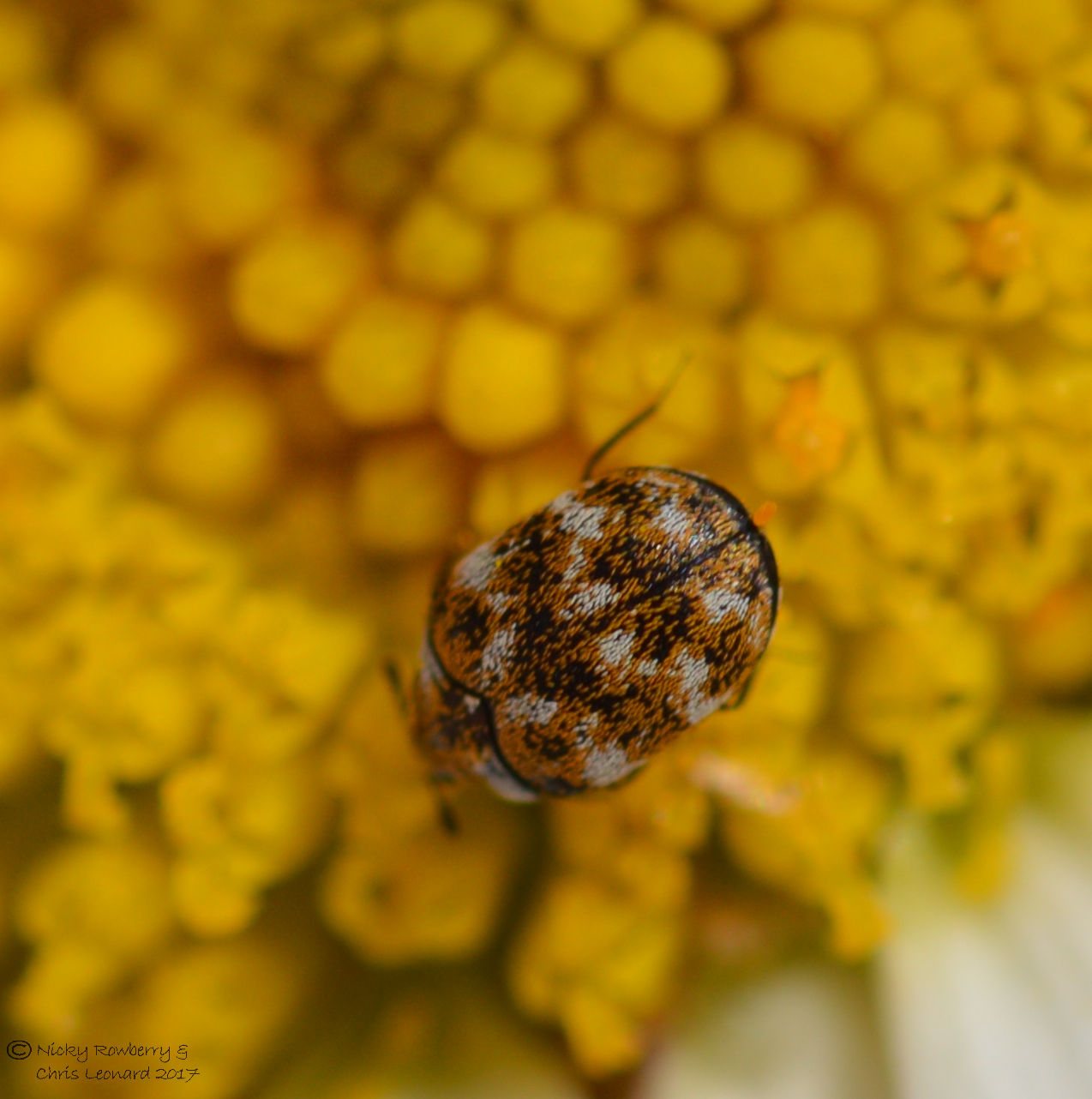
This tiny carpet beetle was making the most of the flowers.

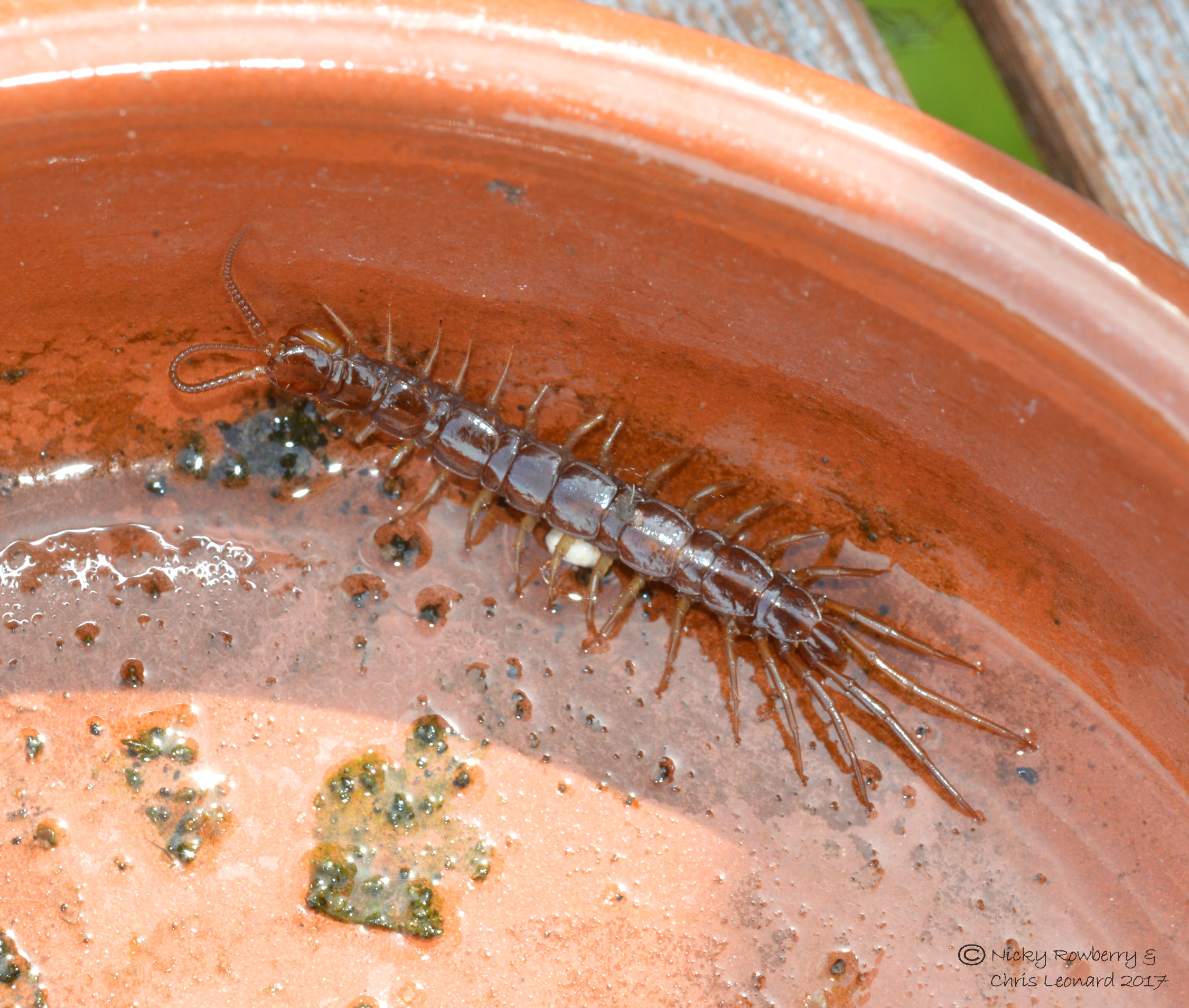
One group I’ve never really studied is the centipedes/millipedes. This beauty turned up under an old piece of wood. I’ve yet to work out the species though (suggestions gratefully received).

So that’s a selection of our bioblitz species for 2017. As always I ran out of time, so didn’t manage to root about in the pond, or look for ants, flies, grass moths and a host of other things. It was also a bit disappointing that no butterflies or shieldbugs or ladybirds appeared in the last 24 hours, but then that’s the way it goes. The bioblitz is just a snapshot of what you can find in the garden over a day. I love that it gets me looking for groups that I don’t normally study (easy to get in a bit of a rut with the bees and moths and butterflies and forget the others sometimes) – always good to broaden my wildlife horizons.

I’m still identifying photos and gradually uploading them to the i-Record website, so I won’t know the final tally for a while yet. So far I’ve only managed to load 32 species, which apparently puts me 10th on the bioblitz league table. Sounds good until I realised the person in the top spot at the moment has 167 species – I’ve got a way to go yet!


30 Days Wild – Day 3 – Garden Bioblitz

It’s day 3 of 30 Days Wild and it’s also Garden Bioblitz weekend. We’ve done this in the garden for the last few years. The idea is to record as many species as you can find in your own garden in 24 hours. Hopefully you manage to take a photo of each and load it on to the i-Record website. It was doing the garden bioblitz a few years ago that really got us into looking at the wildlife in our garden and into taking photos generally. So it’s thanks to the garden bioblitz that the Too Lazy To Weed blog was born!

You can find out more about the garden bioblitz on their website: http://www.gardenbioblitz.org/ This year it runs today and tomorrow, so there’s still time to take part. You don’t need any special skills, just identify what you can. For anything a bit tricky there is plenty of help online. It’s a great way of getting children involved in wildlife too.


You don’t have to stay up for 24 hours, just do what you can within the time. We started at about 09:30 this morning, so will finish the same time tomorrow. We started photographing the plants – easier as they don’t fly off. So far we’ve got photos of about 20 species – there are no doubt loads more, particularly grass species, but it’s not a bad start. Here are just a few of our weedy wildflowers.

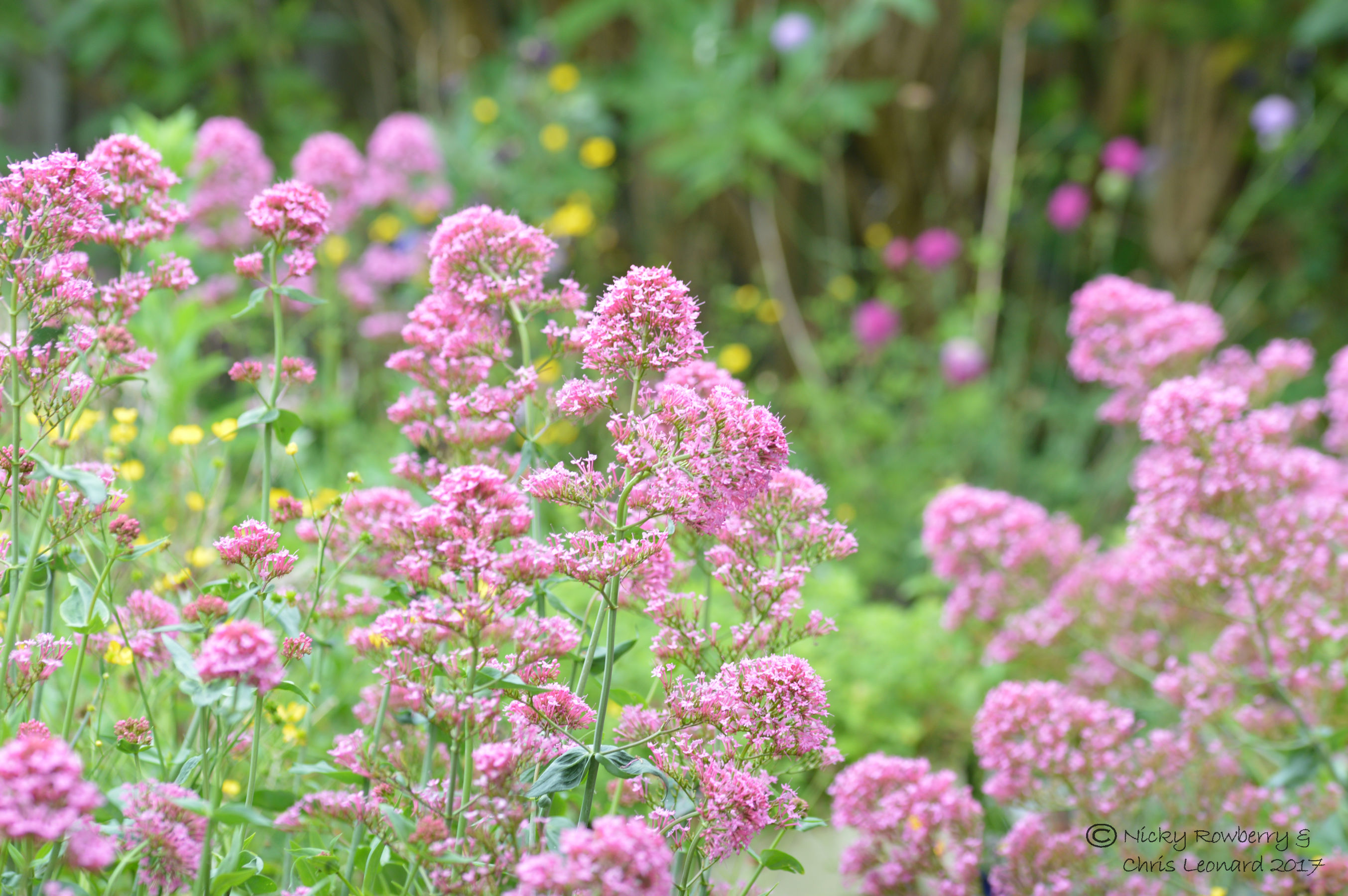
The dominant flower/weed in the garden at the moment is the Red Valerian. It is popping up everywhere. Fortunately it is not only attractive, but the insects love it. Why pay loads for fancy garden centre plants when you can have this instead?

Lady’s Mantle is another common one – I love the way the rain forms shiny beads on its surface, which gradually roll down and collect at the centre.

The pond has a lot of Creeping Jenny around it. It’s a low growing plant that spreads out horizontally, with cheery yellow flowers.

Even smaller than the creeping jenny is the Scarlet Pimpernel, which tends to grow under other larger plants. Maybe that’s how it gets its name – you have to seek it out in the undergrowth?

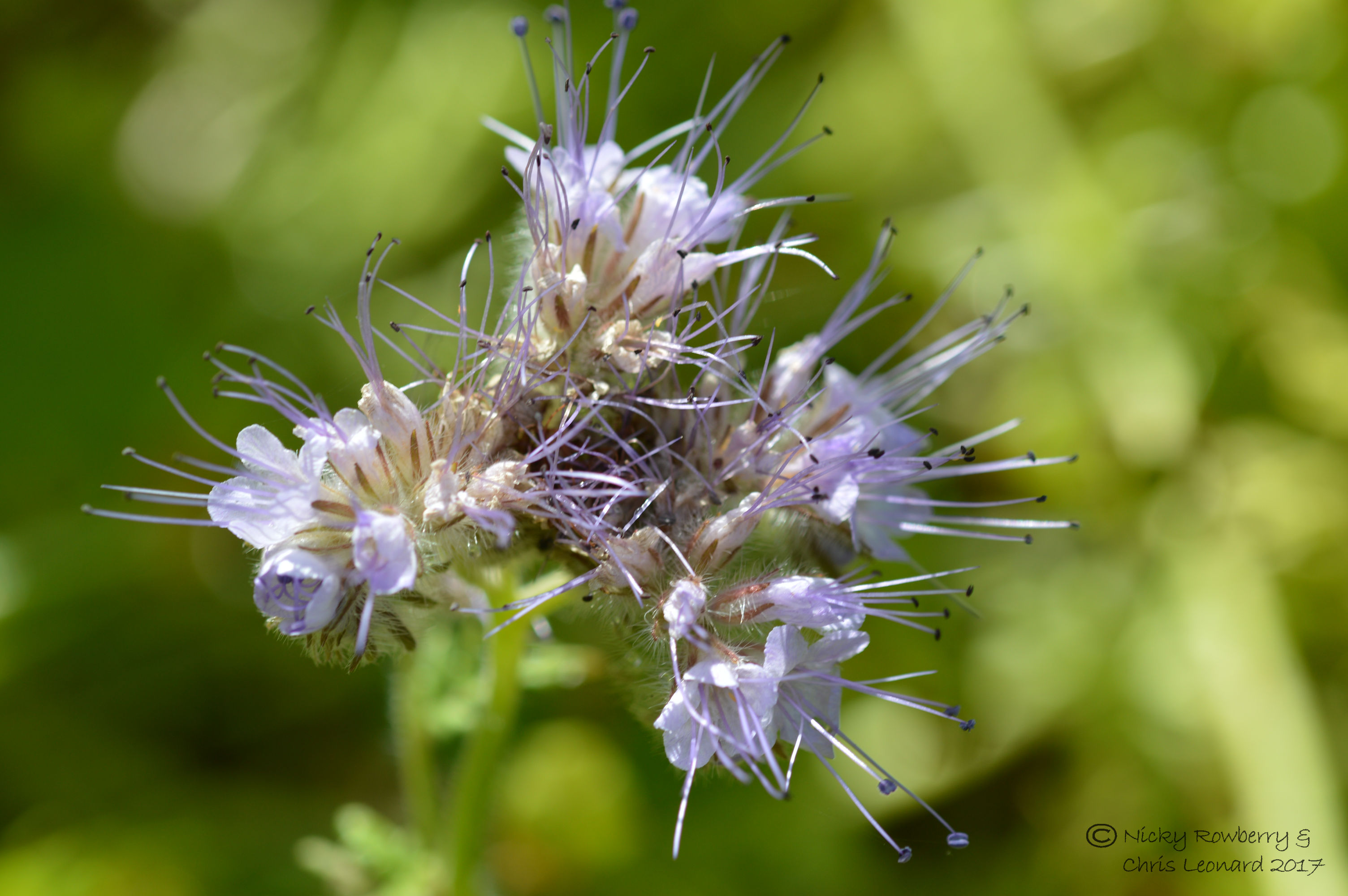
Two more insect attracting flowers are the Bladder Campion and Phacelia .

A childhood favourite and gardener’s nightmare is Cleavers (or sticky willow, goosegrass etc.). The sticky buds are surprisingly pretty when you see them close up.

Not only are we still taking photos as the day progresses, but I’m still ploughing through the ID on the ones we’ve already taken. So tomorrow’s blog post will hopefully have photos of some of the birds, insects and other animals we’ve managed to find in the 24 hours. Also we should have more of an idea of the total number of species this year. In the meantime here’s at least one mini beast – an often forgotten crustacean from under some of our plant pots – the humble woodlouse.

We can’t count Bert, our elder statesman of a cat, as part of the bioblitz, but he did spend quite a bit of time watching me poke around the garden. Don’t think he really approved of so much activity on a Saturday morning judging by his expression though!

The Darling Bugs Of May

Apologies for the title, couldn’t resist a bad pun! After the quiet winter and early spring months, all the insects are suddenly emerging in May. It feels like our garden is gearing itself up again ready for the 30 Days Wild in June. Everywhere I look there is something buzzing (everywhere except the bee hotel I’ve put up which is of course silent!)

May wouldn’t be May with out the arrival of the May Bugs in the moth trap. These huge beetles can apparently be a pest for farmers, but I love seeing them. They are fascinating animals and I can still remember my amazement the first time I found one in the moth trap a few years ago.

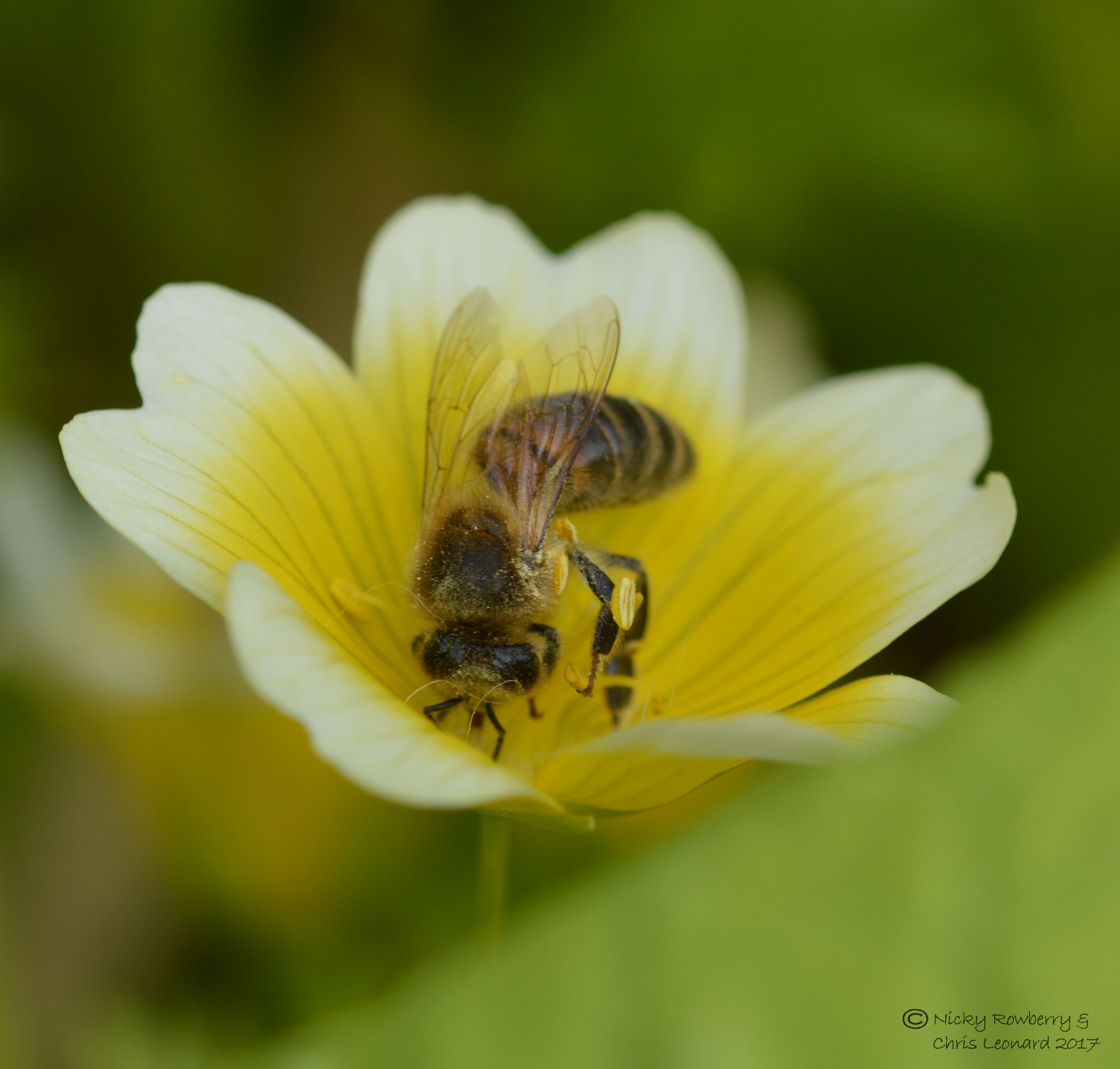
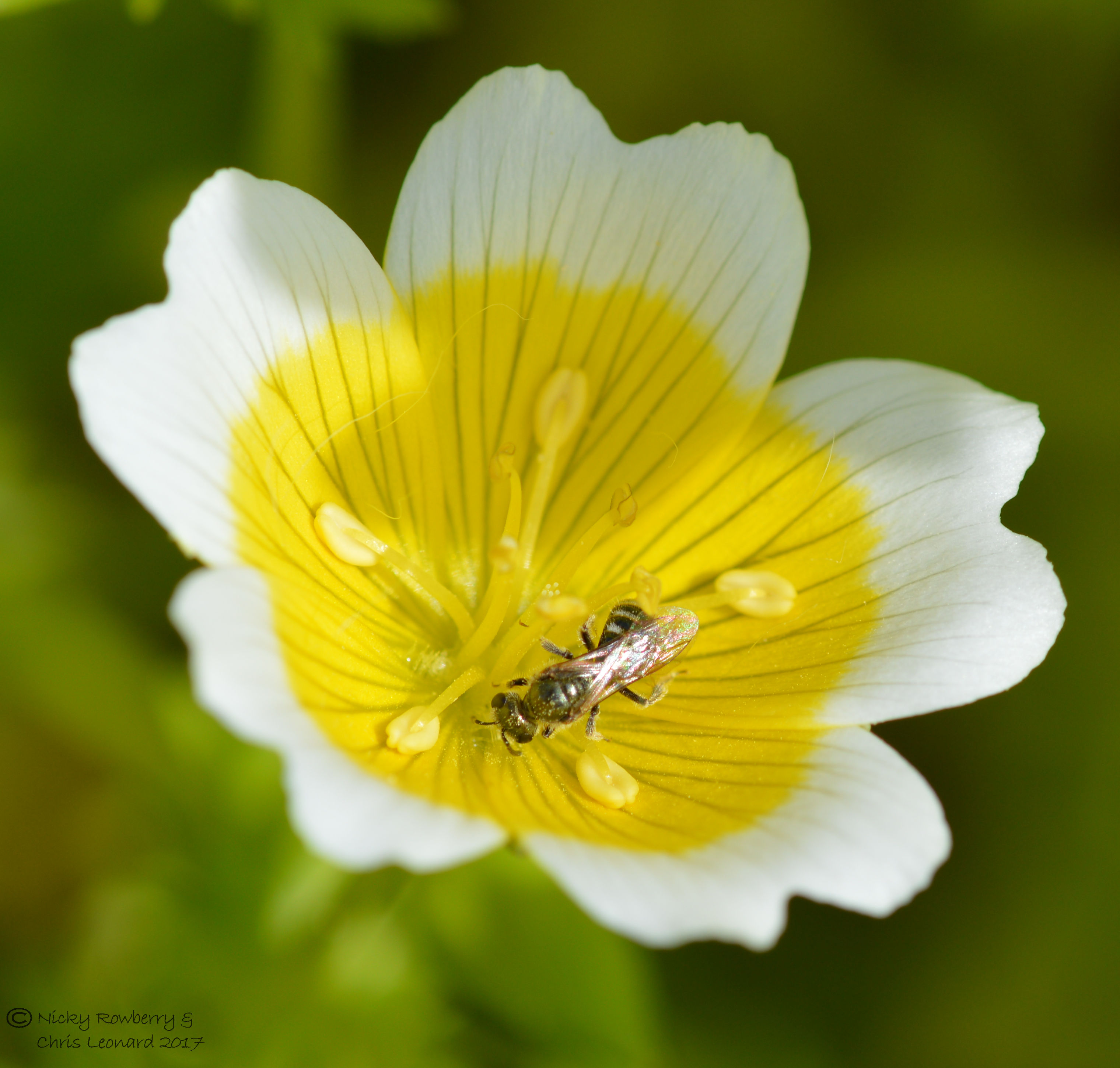
One of the areas particularly buzzing at the moment is a patch of poached egg flowers that I’d sown last year. I’d forgotten about them, but they all popped back again this year and look fantastic. I’d grown them originally as I’d read they were good for hoverflies – not sure about that but the bees love them!

Most of the bees are plain old honey bees (very welcome all the same of course).

There were also a few of these very small furrow bees Lasioglossum sp. It’s virtually impossible to get this one to species level without killing and examining it, which I’m not prepared to do, so it will have to remain a sp.

This next bee is one of the yellow faced bees – Hylaeus sp. Unfortunately since I didn’t manage to get a shot of its face, I also can’t identify this one to species. But since I’ve not recorded any other Hylaeus, I’ve counted this as bee species number 30 for the garden!

This next one did get identified to species (not by me but by a kind soul on facebook) as Osmia caerulescens – the Blue Mason Bee. This was also a new species for the garden, making 31 in total now over the last 2 years!

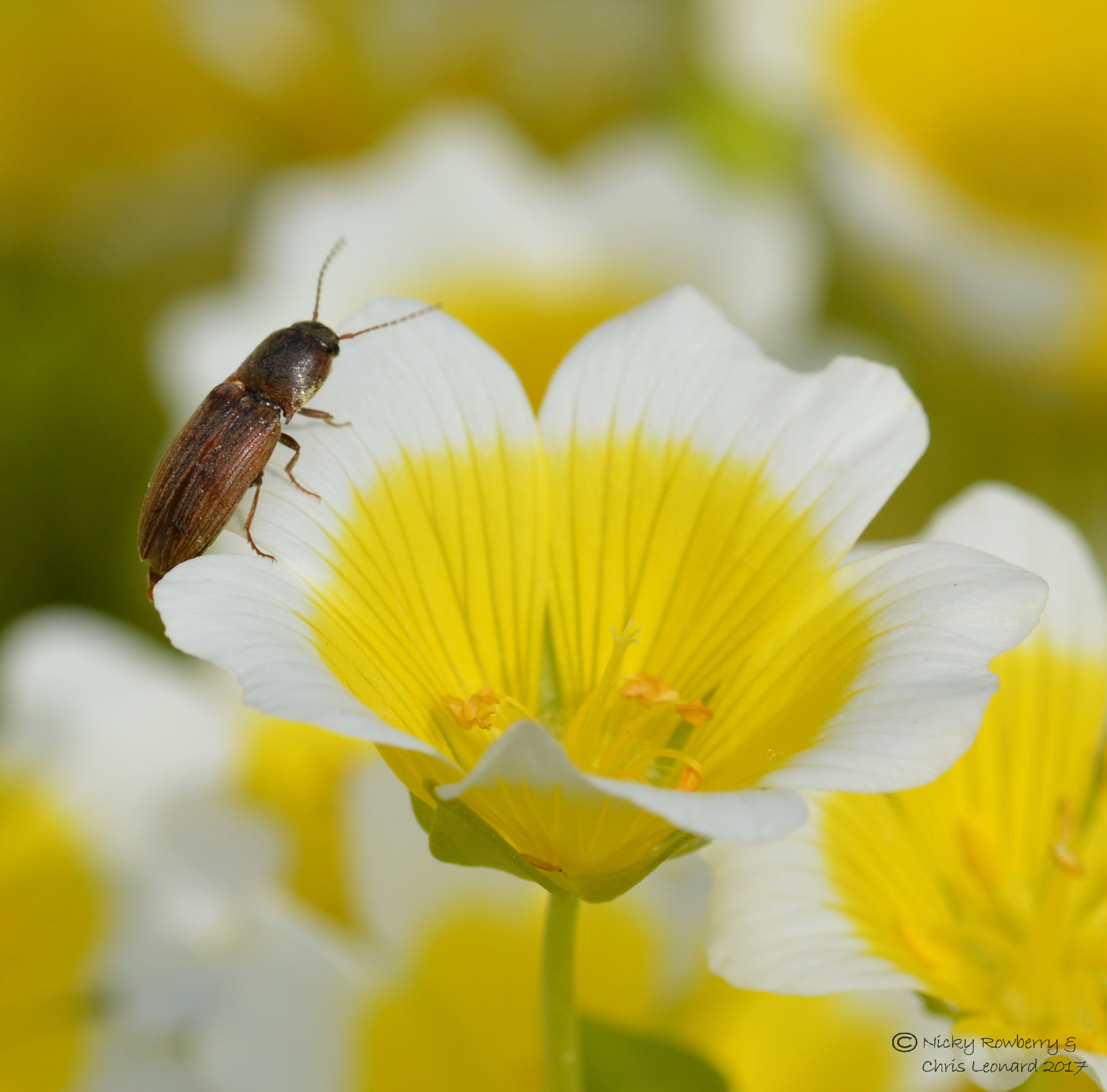
The bees weren’t the only ones enjoying a poached egg. This beetle (some kind of click beetle I think) spent a long time perusing the flowers.

This Hairy Shieldbug didn’t move much, just seemed to be using the flowers as a vantage point to survey the garden!

And of course my favourite – the Swollen Thighed Beetle had to get in on the act, displaying his fat thighs nicely.

The poached egg plants weren’t favoured by all the bees; some preferred other flowers like this Early Bumblebee on the alliums

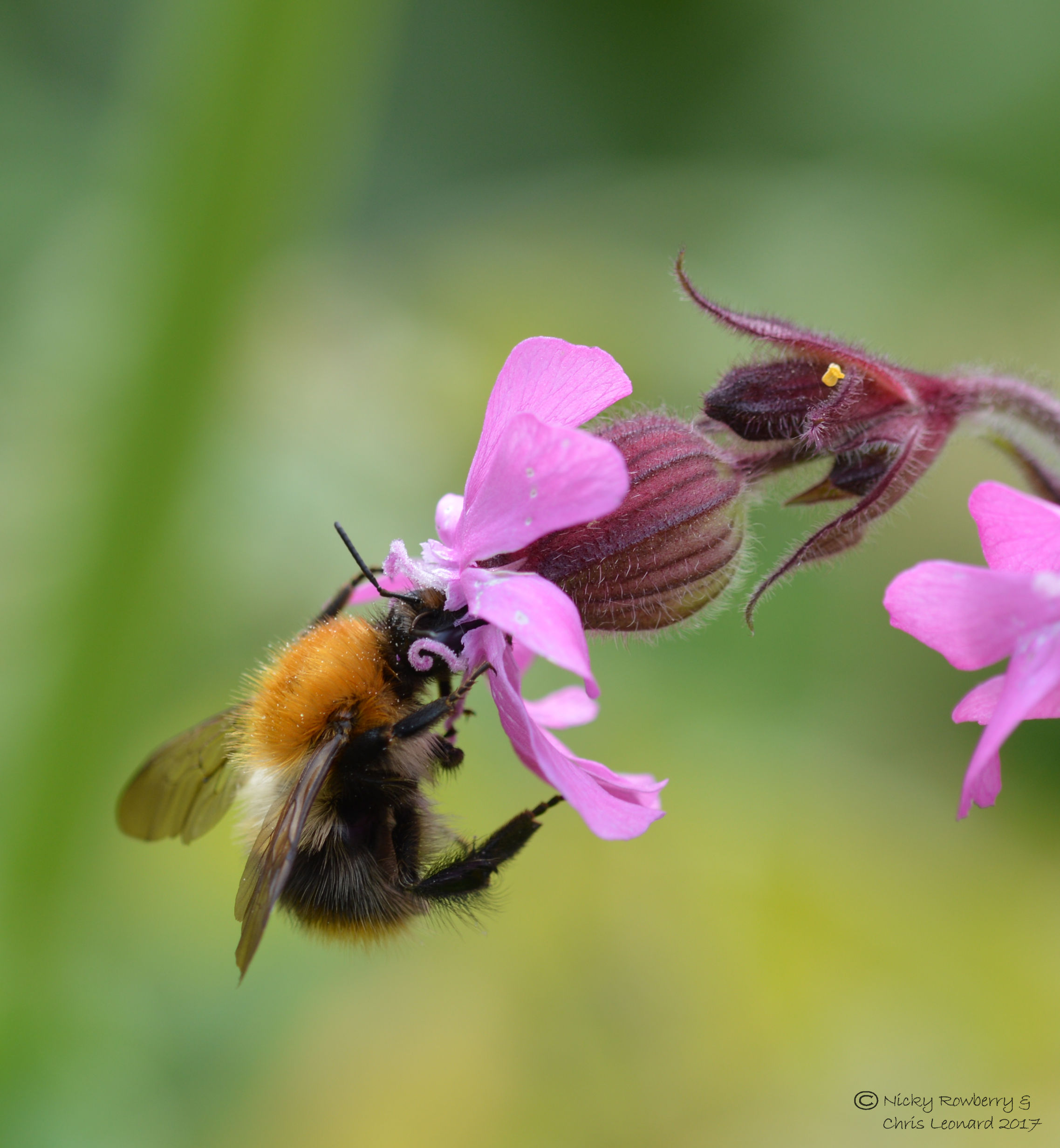
and this Common Carder bee on a campion.

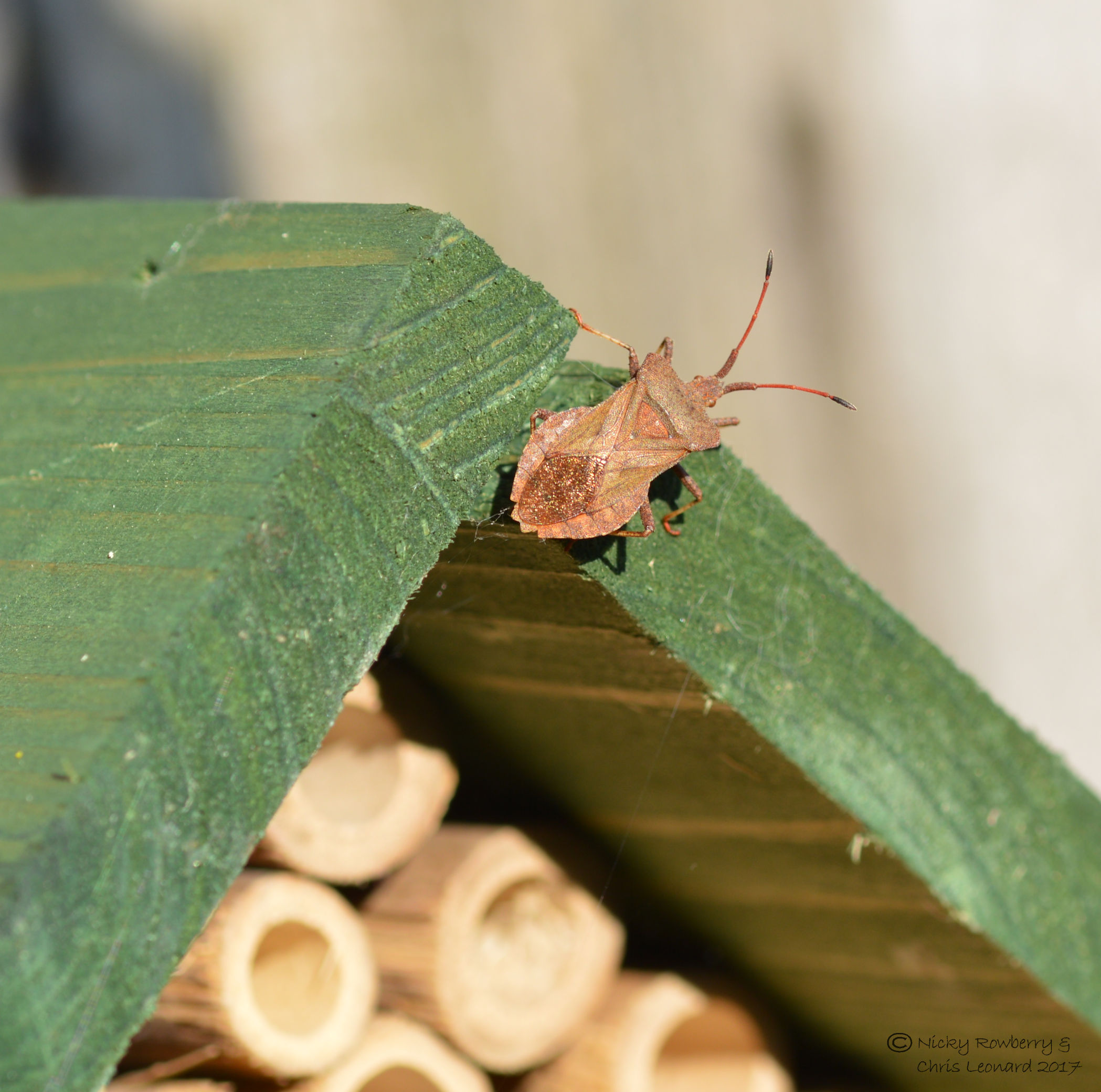
Somewhat inevitably the new bee hotel that I put up in the spring has been virtually ignored by all the bees. But at least it provided a resting place for this shieldbug.

The hoverflies were supposed to be interested in the poached egg flowers, but like most things in the garden, they never do what I expect! This little marmalade hoverfly preferred this small yellow flower to the slightly brash poached eggs.

This large fat bumblebee-mimicking hoverfly (Merodon equestris) preferred just to perch on the leg of the bird table. Even when I had to move the bird table to a different part of the garden, the hoverfly followed it over – no idea why?

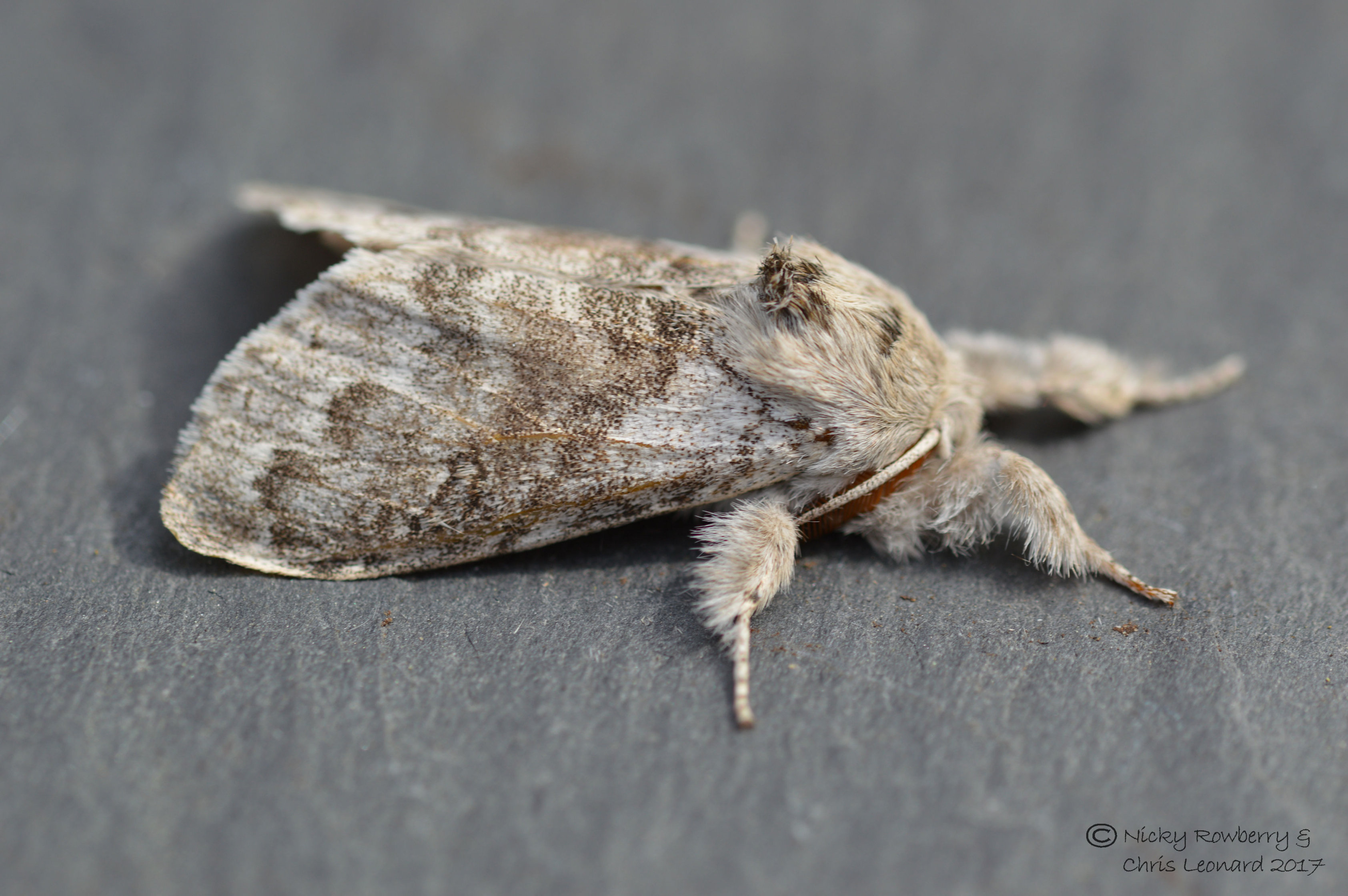
After a very quiet spring moth-wise, May has finally brought an increase in their numbers to the moth trap. The moths of winter and early spring are generally fairly subdued looking, so it’s always nice when some of the more interesting species start emerging. I love this Pale Tussock with its lovely furry legs.

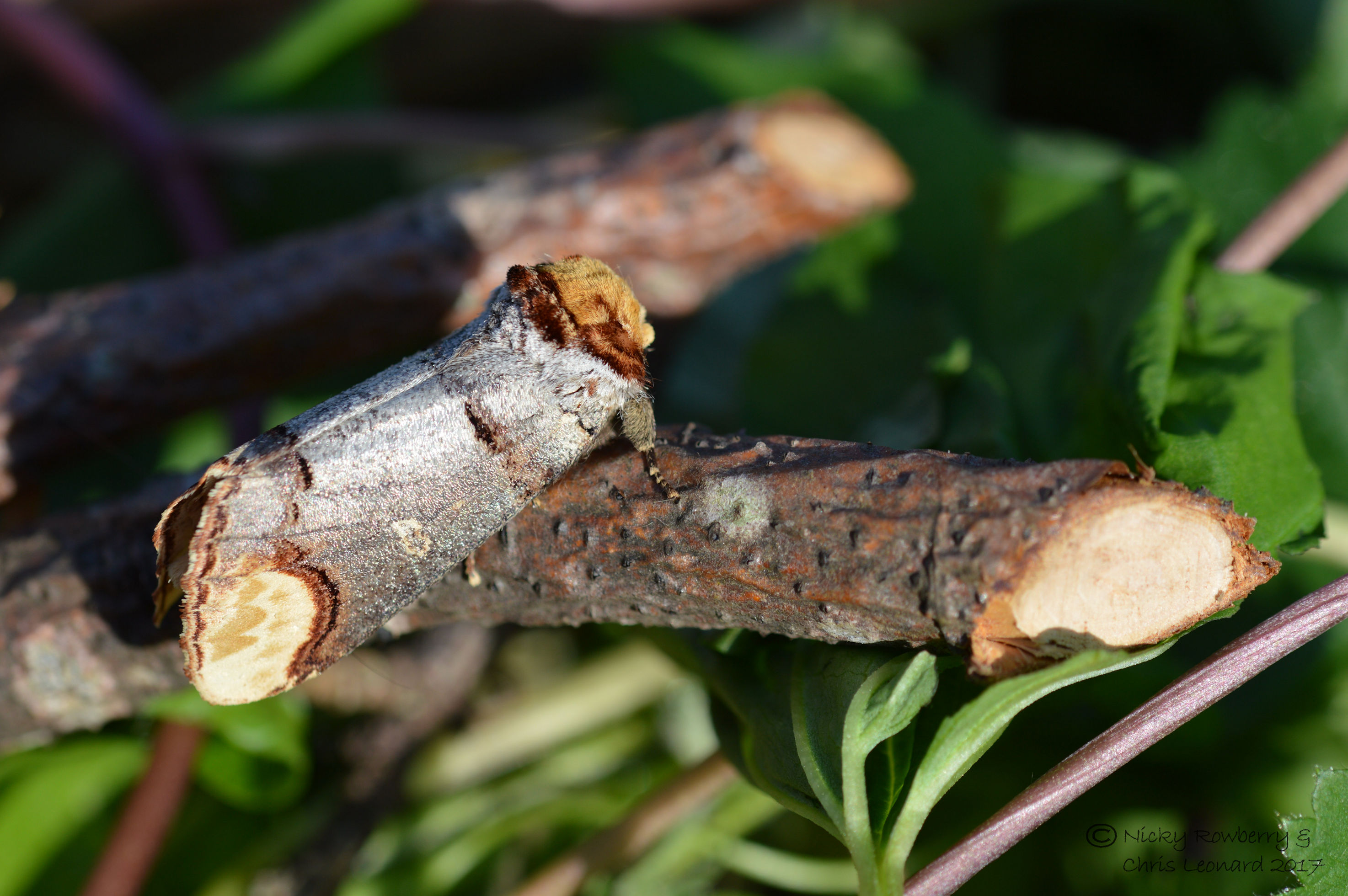
The Buff Tip is a regular visitor to our garden – it has the amazing ability to look just like a broken twig.

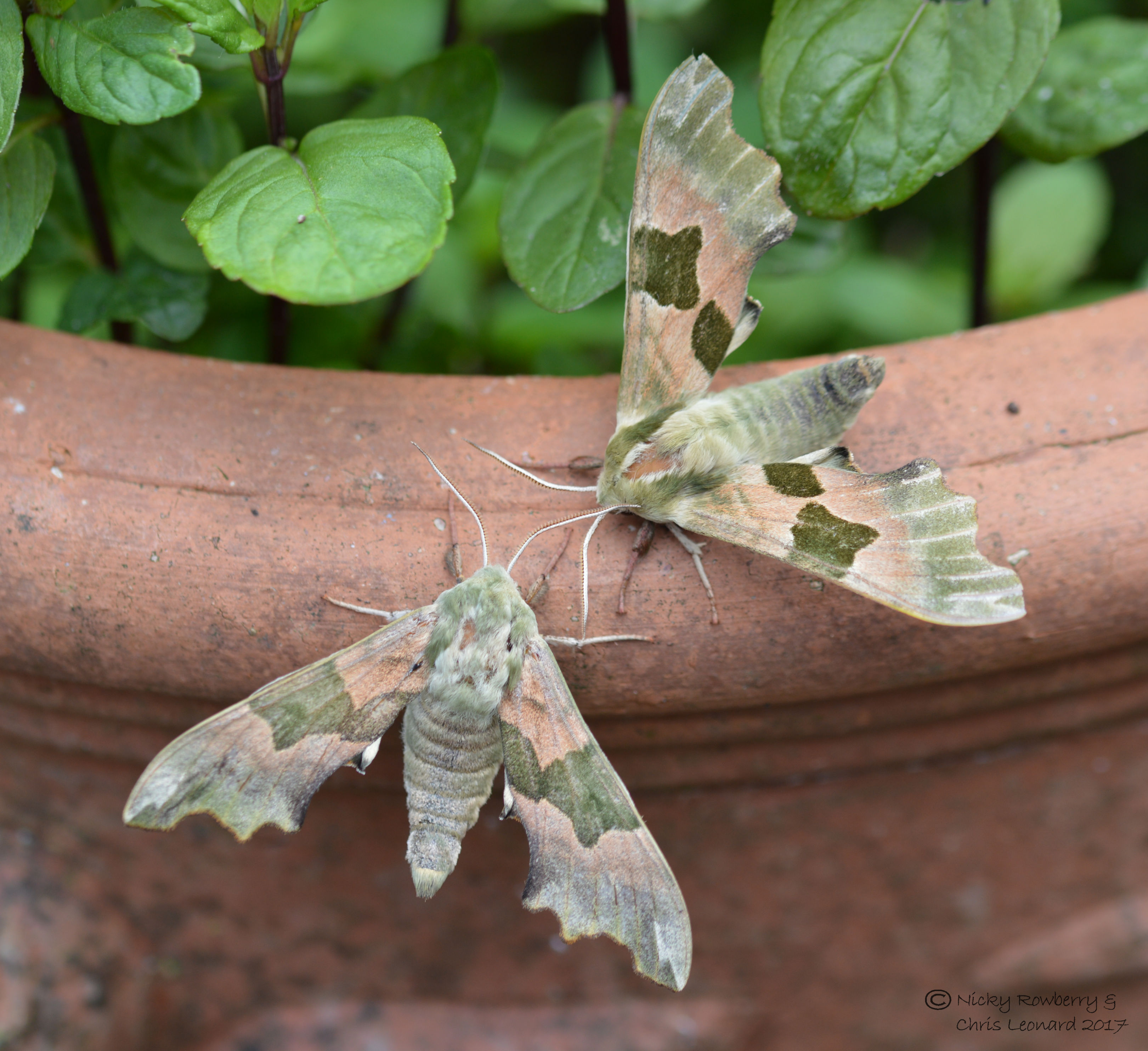
The hawkmoths are the biggest of our native species. Over the years we’ve had Elephants, Small Elephants, Eyed and Poplar Hawk-moths but never a Lime one. So I was thrilled when not one but two turned up last night!

With more moths emerging, more of their foes have emerged too. This beautiful but deadly (if you’re a moth of the wrong species) wasp Ichneumon stramentor parasitizes moth caterpillars.

As well as all of the above, there have been plenty of beetles, flies, caddis flies, daddy longlegs and other insects buzzing around this May, I just haven’t managed to take any photos of those. Something for another blog post maybe. But finally one of my favourite images from the month, a ladybird, even if it is a Harlequin rather than one of our native ones.

Hedgehog Awareness Week

Today marks the start of Hedgehog Awareness Week – an annual event focussed on all things hoggy, organised by the British Hedgehog Preservation Society. I’ve been saving up hedgehog related news for a few weeks now, in readiness for Awareness Week and I’ve got a surprising amount to report!

The big news for me personally was that I handed my notice in at my previous job and had planned to have a bit of time off. That was until I spotted an admin job going at the British Hedgehog Preservation Society (BHPS) – it was just too tempting to resist.  I applied and am absolutely thrilled to say I got the job! It’s only 2 days a week which is absolutely perfect for me as it gives me plenty of time to be not weeding the garden! So here is my new place of work:

The next big piece of news is that Meadow our foster hedgehog has now been released into the Too Lazy To Weed garden. I took him back to be checked over by Viv at Malvern Hedgehog Rescue before we released him. This is him in the cat basket on the way there.

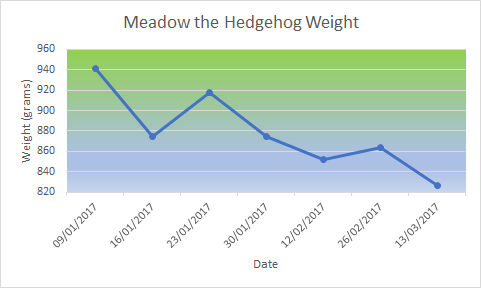
Viv checked his weight (he’d actually put on a lot of weight as apparently the catfood he’d been on for the last few weeks was a bit rich for him – I’ll know better next time) and then gave the go ahead for him to be released into our garden. He’d been with us since January and in a way I was sorry to see him go, although obviously it was the right thing to do. We waited until dusk, then put the cat basket out under the apple tree where there was plenty of cover for him and just let him come out whenever he was ready. (I was tempted to have the Born Free theme tune playing the background but resisted) This is him emerging from the cat box and taking his first steps in our garden.

I left the trail cam out for the next couple of nights and sure enough he appeared, making a beeline for the food I’d put out. I’m fairly sure it’s him in these next 2 clips as it’s a pretty big hedgehog so I reckon that’s our boy!

Assuming it is him, he seems to be doing well and has obviously found somewhere safe to rest during the day and knows where I put food and water out each night. Live long and prosper Meadow!

I’d been putting the trail camera out in the hope of getting hoggy videos for a few weeks before Meadow’s release. Most of the footage was of course taken in the dark, but I got this one short film of a hedgehog in the very early hours of the morning in daylight (I think the camera’s clock was out by an hour or two though as it wasn’t this light at 04:30am). Hopefully he or she was just getting a last minute snack before hiding away for the day somewhere.

It’s never easy to distinguish the hedgehogs in the garden (apart from Meadow’s currently distinctive chubby form), so it’s difficult to know how many we get. But a lot of trail cam footage shows a pair of hogs, so we know we’ve got at least 2 (3 now with Meadow).

The first time two appeared together it looked like a fight! Don’t know if it was a territorial dispute between 2 males or an overly aggressive male and female, but the one managed to shove the other half way across the lawn.

The following night though there were 2 hogs again. Not so aggressive this time, although the one did seem to be seriously annoying the other. They circled round like this for well over an hour – was it perhaps the start of mating, with the female playing hard to get initially. Have to admire his persistence if it was courtship, although he did seem to get distracted by the food bowl quite often!

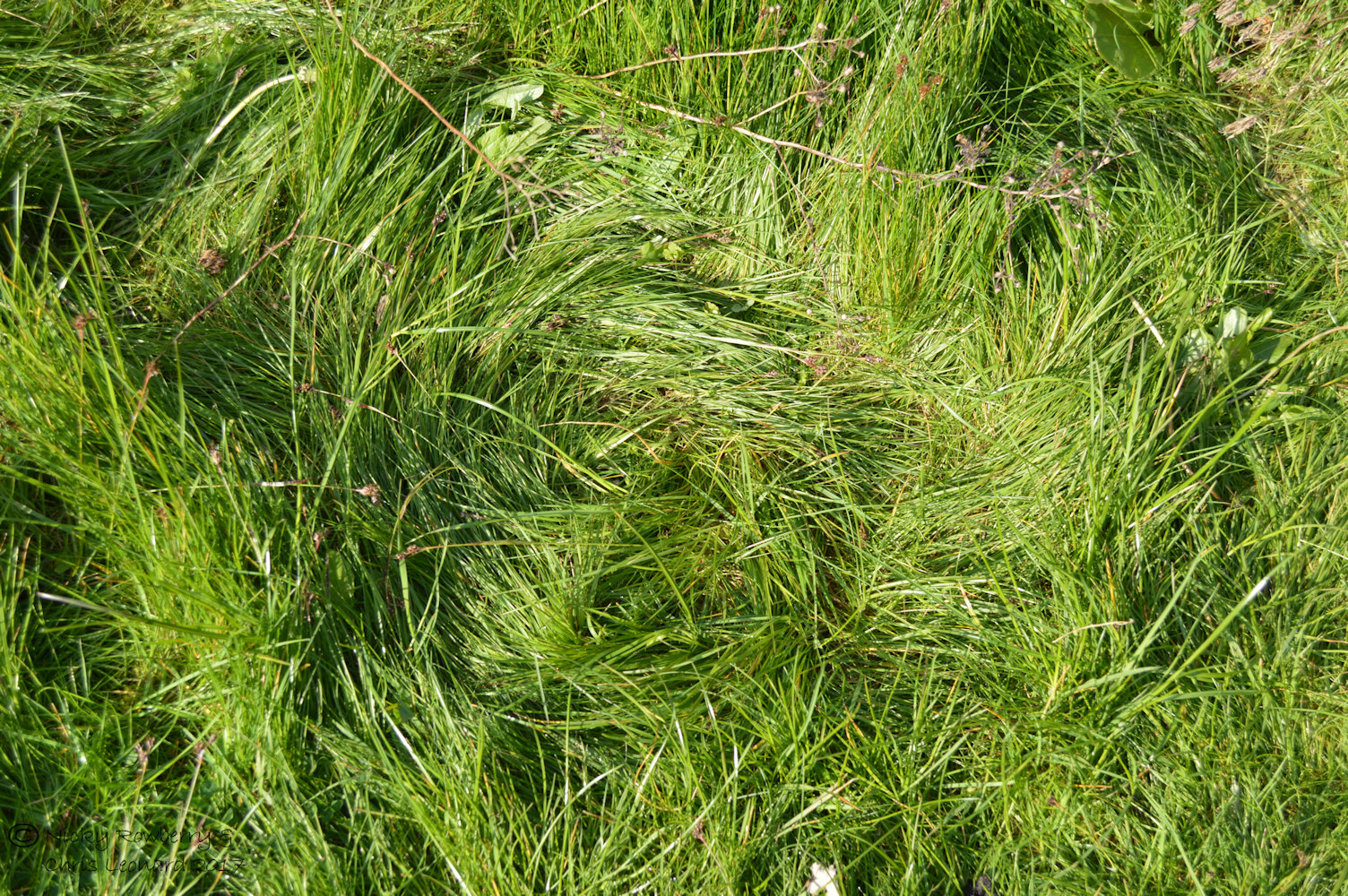
A few days after seeing the possible amorous antics on the trail cam, we spotted several areas of grass, flattened and twisted around – presumably the result of all the circling behaviour. You’ve heard of crop circles, we’ve got hedgehog circles!

So that’s all the news from our garden. If anyone wants to do something extra to support hedgehogs during Awareness Week, there are lots of things that can be done.

To support or encourage hedgehogs into your own garden, you can put out food (never bread or milk) and water. If you have a pond, make sure you install a ramp or some other means for hedgehogs to get out if they fall in. Make sure there are gaps in fences/walls so hedgehogs can come and go between gardens – they roam quite a bit during the night so ideally need a large network of gardens. Be super careful when mowing, particularly with strimmers which can inflict terrible injuries on hedgehogs.

If you don’t have a garden or at least don’t get hedgehogs in it, there are still lots of other ways of supporting them. You could join BHPS – your subscription will help support their work. Or you could simply Text HHOG17 to 70070 to donate £5 to the charity.

There are also hundreds of hedgehog volunteer carers around the country – you could do something to help your local one. Donations of cash or food or other general supplies are always welcome. Our local one is Malvern Hedgehog Rescue and Viv there does amazing work caring for up to 100 rescue hogs at a time. Her website has loads of useful information: http://www.malvernhedgehogrescue.co.uk/

Another great example is Little Silver Hedgehog run by Emma. Not only does she rescue & rehabilitate lots of hedgehogs, her blog https://littlesilverhedgehog.wordpress.com/ is full of useful hoggy advice. In addition she makes beautiful silver jewellery that she sells to raise funds for the hedgehogs – I treated myself to this cute pendant to celebrate getting the job with BHPS.

And finally you could always just tweet or post a message on Facebook (or go old school and talk to people) showing your support for these lovely animals – they need all the help they can get.

Bags of Bees and Blossom

I’ve not managed to blog anything in the last few weeks, but it’s not been for lack of things going on in the garden. Almost the opposite in fact – spring is here and so much wildlife in our garden is stirring, that I can hardly keep up with it!

The apple tree has been in full blossom the last few weeks. 2017 seems to be one of those years where the whole tree turns pinky white with flowers. Comparing this year’s photo (top) with 2016 (below), there is a huge difference in the amount of blossom. It is also in full flower a lot earlier – this year it peaked mid April, last year what little there was peaked in early May. Due to the mild winter or just a natural cycle?

With an apple tree full of blossom, you would of course expect a load of bees. What I hadn’t expected was this Girdle Snail sitting pretty in the middle of it all!

Apart from the stray molluscs though there were indeed plenty of bees. Honey bees were probably the most common. We get lots in the garden, I’d love to know if someone is keeping bees nearby (feel they owe us a pot of honey if they are!)

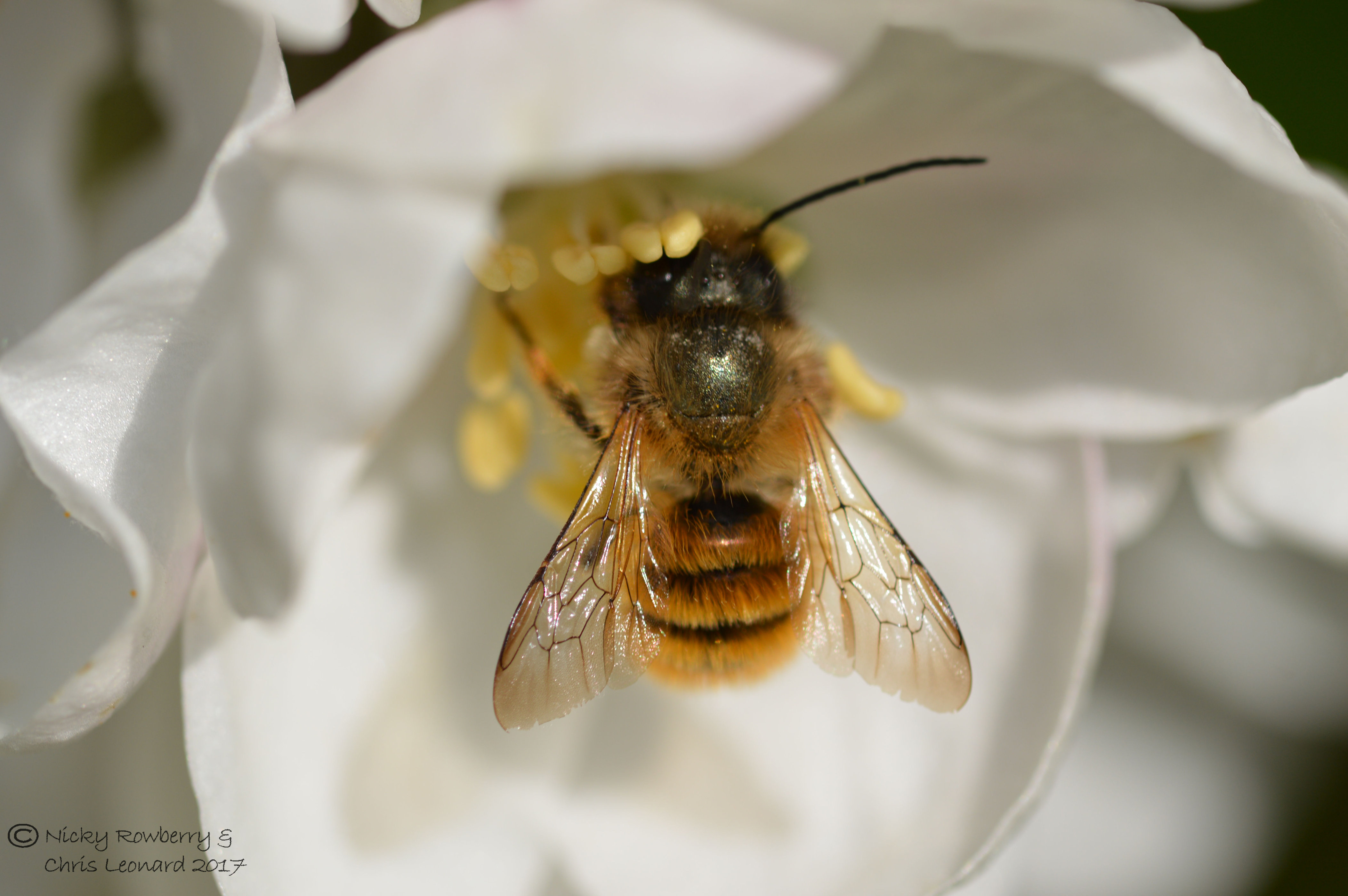
There have also been plenty of these small Red Mason Bees (Osmia bicornis)

and these slightly larger Buff-tailed Bumblebees (Bombus terrestris)

I usually only see these Ashy Mining Bees (Andrena cineraria) flying low around the grass, so it was nice to catch one up in the tree. I’ve got a soft spot for this species – probably because it’s one of only two Andrena species I can identify at a glance with its distinctive black and white colouration.

The other Andrena species I know easily is this female Tawny Mining Bee (Andrena fulva). The females have this amazing bright red bushy appearance. I thought we had them in the garden last year, but never managed a photo to confirm. This year I finally snapped one, which made it the 27th confirmed bee species for the garden (actually now at 28, but more on that in another blog post).

As well as the above, I’ve also spotted Hairy Footed Flower Bees, Red-tailed Bumblebees and at least one other Andrena species making the most of the blossom. The final one that I actually managed to get a (bad) photo of was this Tree Bumblebee (Bombus hypnorum). These relative newcomers to the UK are one of our most frequent and distinctive bumblebees in the garden.

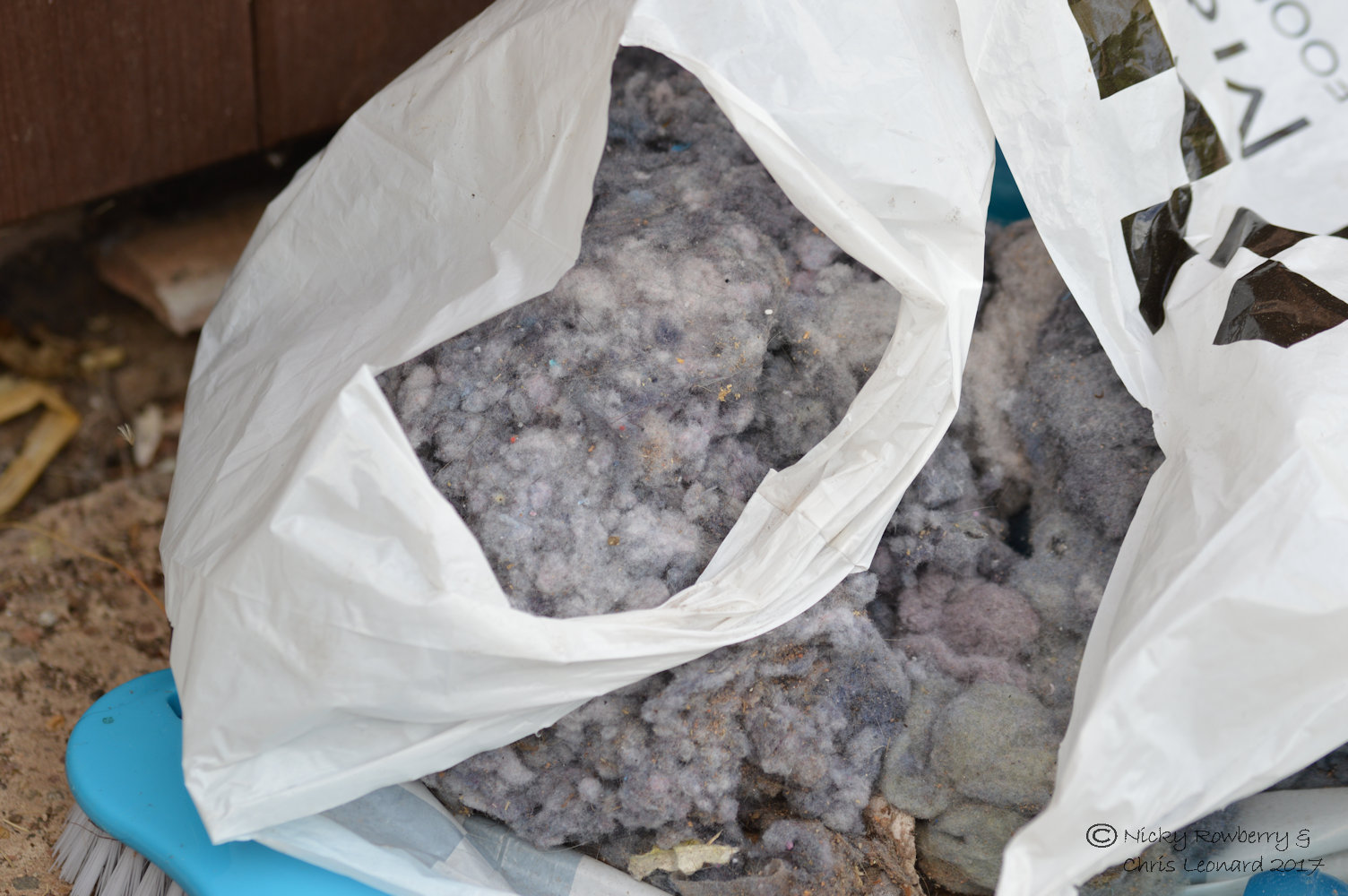
The Tree Bumblebees have also turned up in a most unlikely place this last week. Our next door neighbour was clearing out his garage when he moved a bag of waste fluff from the tumble dryer. Much to his surprise the bag was full of bees! A colony of Tree Bumblebees had decided that a bag of tumble dryer fluff was the perfect place to nest and they weren’t happy at being moved. I offered to take the fluffy bag of bees, but with hindsight I should maybe have thought it through first. I put the bag under a lean-to cover we’ve got, where we sit out if it’s raining.  Unfortunately this is probably where it’s going to have to stay. I can’t leave it out in the open, as the fluff will probably set like cement if it gets wet and I don’t want to entomb the bees in their nest. I also daren’t move it again as it might crush the nest. So we’ll have to share the lean-to with a bag of bees for the summer.

I then spent about an hour yesterday lying flat on the floor trying to get photos of the bees coming and going from the bag. As it happens they seem to be accessing the nest right next to a small smiley face sticker that’s somehow ended up in there amongst the fluff. It makes me smile every time I look at these photos!

The Tree Bumblebees aren’t the only ones to have been popping up in unexpected places. The new nest box that we put up back in January has unfortunately not attracted any nesting birds yet. But I was surprised to spot this large bumblebee bouncing about inside it a few weeks ago. I’d have settled for a bee nest in the absence of a birdy one, but after a few minutes clumsily wandering around, it buzzed off.

So it’s only April and we already have, quite literally, bags of bees in the garden!

Hedgehog Housekeeping

Just a short post today with an update on our foster hedgehog Meadow. We’ve had him now since early January and I’m very relieved that’s he survived the winter with us! We’ve been weighing him every fortnight and although he’s lost a bit of weight, he is still a very healthy 800g or so – plenty heavy enough to see him through to the spring hopefully.

Since we last weighed him he has become increasingly active and has presumably decided he’s had enough of hibernation. For the first 2 months our care duties had consisted mainly of checking each day that he had fresh water and food, but while he was asleep, there was little else to do.

Now he is an eating and pooping machine! His food bowl is at best empty every morning and at worst he’s pooped in it! The water bowl is regularly slopped about soaking the newspapers and he has generally managed to poop in every corner of the hutch! So every day he needs fresh food, water and newspapers and a general clean of the hutch. We never see him though (apart from when we take him out to weigh), he’s always buried in the hay when we look in.

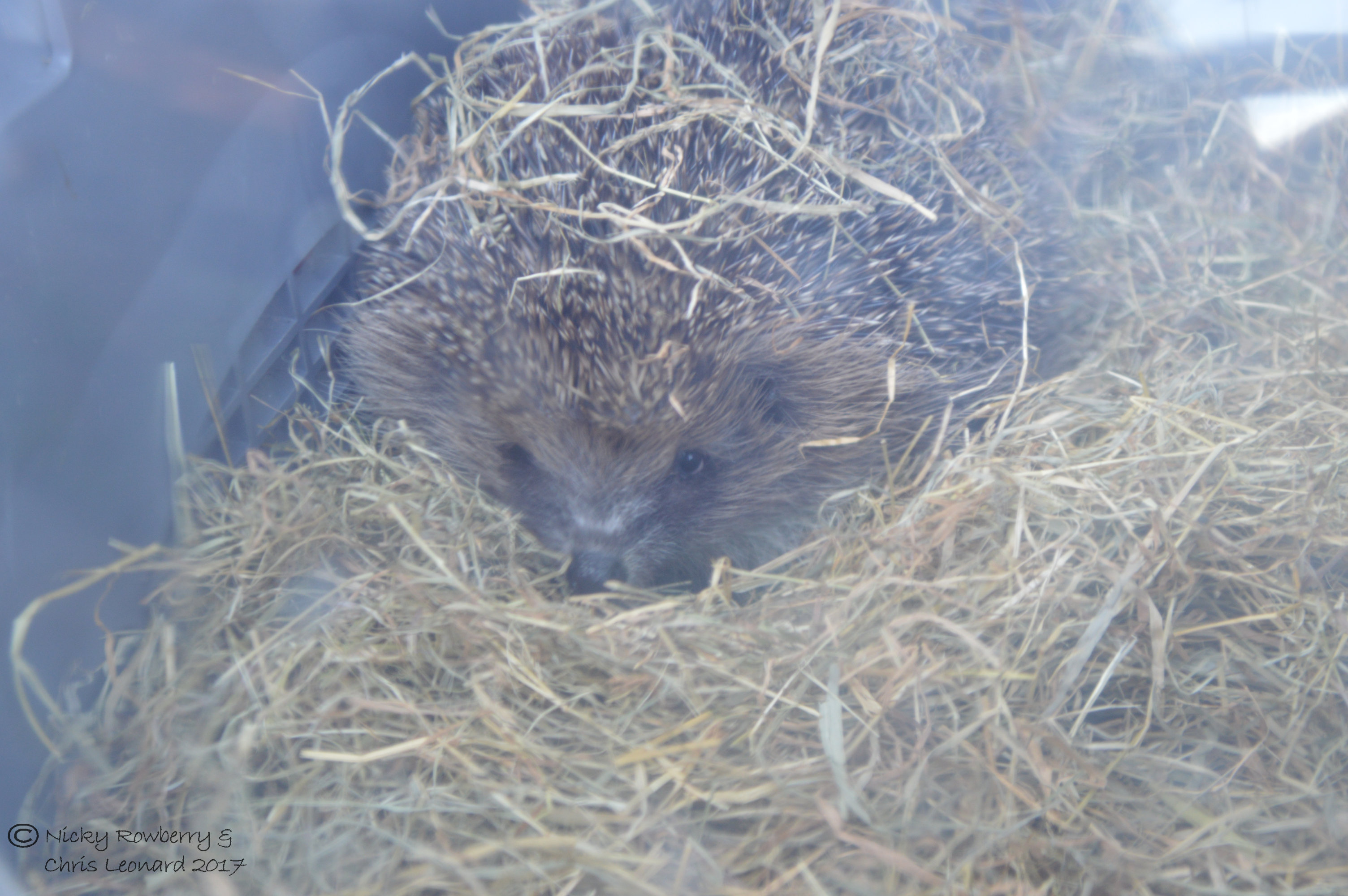
Invisible he may be, but since he is clearly very active when we’re not around, I had a go with the old trail camera in his hutch.  There’s not much space to position it without disturbing him, but I managed to get it wedged by the roof out of his way and he seemed blissfully unaware of it. The field of view is pretty small since it is so close up, but I got lots of clips of him doing what he’s good at – eating and pooping and rearranging his bedding. He clearly doesn’t approve of my style of housekeeping as he is constantly dragging the hay and/or the newspapers around to where he thinks they should be.

So below are a couple of stills taken from the video showing him a) eating of course and b) dragging the hay around. Then there is a compilation of video clips taken over roughly a 24 hour period. Note his food bowl starts of clean and full of food and ends up empty and covered in poop and hay! But he’s a little character and we will miss him when we eventually get the go ahead for releasing him in the spring.