Hawk Surprises

I’d been feeling the need to feed my moth mania for a while now and share some mothy photos, but hadn’t really got a theme in mind. Then this week a surprise moth in the trap provided the necessary inspiration – a blog post about hawks!

I’ve been lucky enough now to see 10 species of hawk-moth in my garden. Most are fairly common, but a couple have been rare migrants that were beyond my mothy dreams. I love all moths, but there’s something really special about spotting a new species of hawk-moth in the trap.

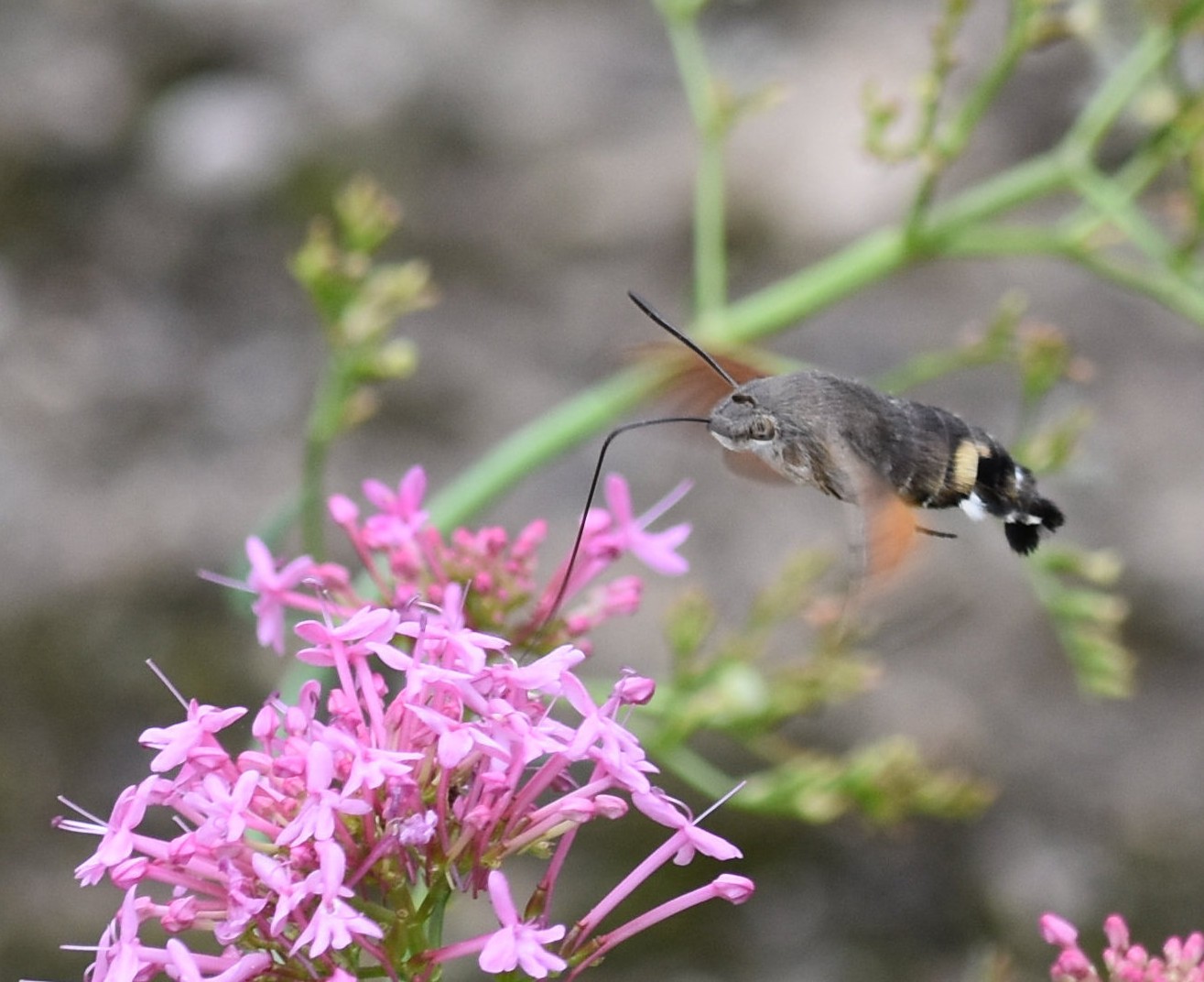
The first hawk-moth I ever saw, before I even got into moths, was the Humming-bird Hawk-moth. These amazing moths, don’t look that exciting when at rest (photo left), but when they take off and buzz from flower to flower, they really do what it says on the tin and look like miniature hummingbirds. I’ve always wondered what these moths were called before we discovered the Americas and saw hummingbirds? They are still a highlight of my summer when they appear, often seeking out the red valerian or the buddleia in the garden.
They’re so quick it’s hard to get a decent photo or video, but here’s a brief clip of one from a few years ago.

The first of the big hawks I ever caught in a moth trap was the Elephant Hawk-moth. It was my first summer of moth trapping and I can still remember the feeling of absolute incredulity that I could have found this incredible big pink moth in my own garden. They still thrill me now and are my go-to moth when people say moths are dull brown things!
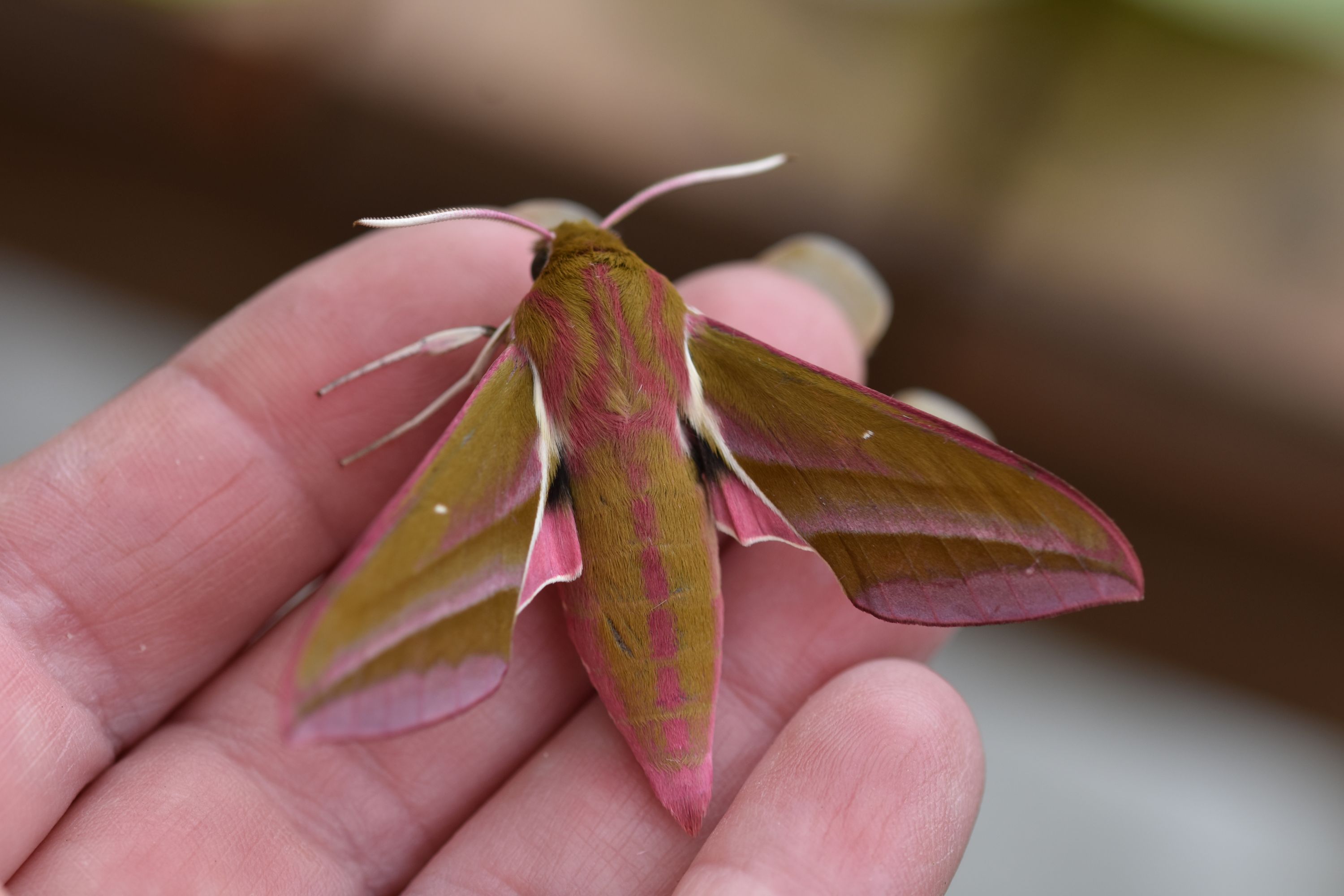
I am lucky enough to also get the Small Elephant version, not as big (obviously) and flashy as his counterpart, but a striking beast nonetheless.
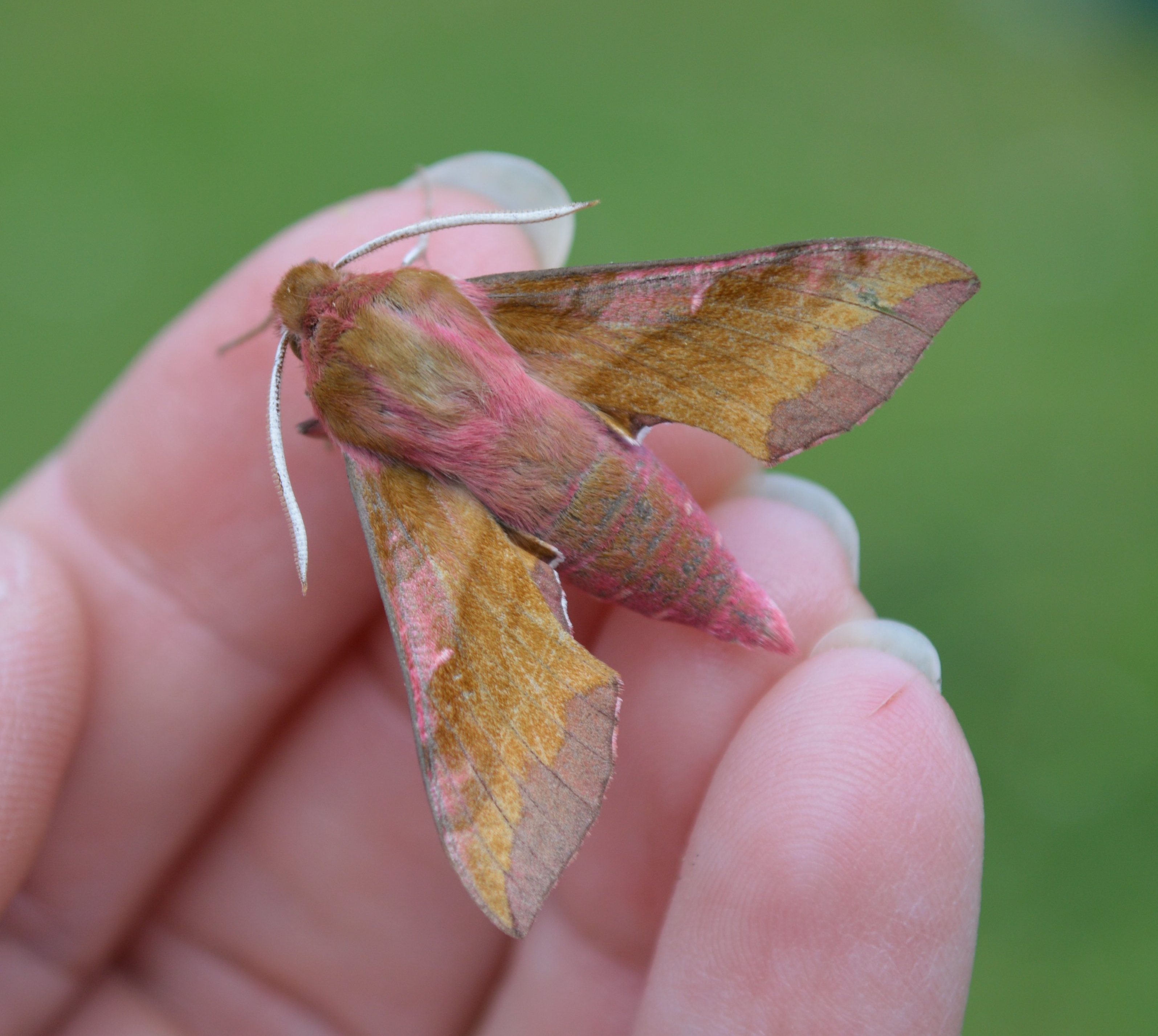
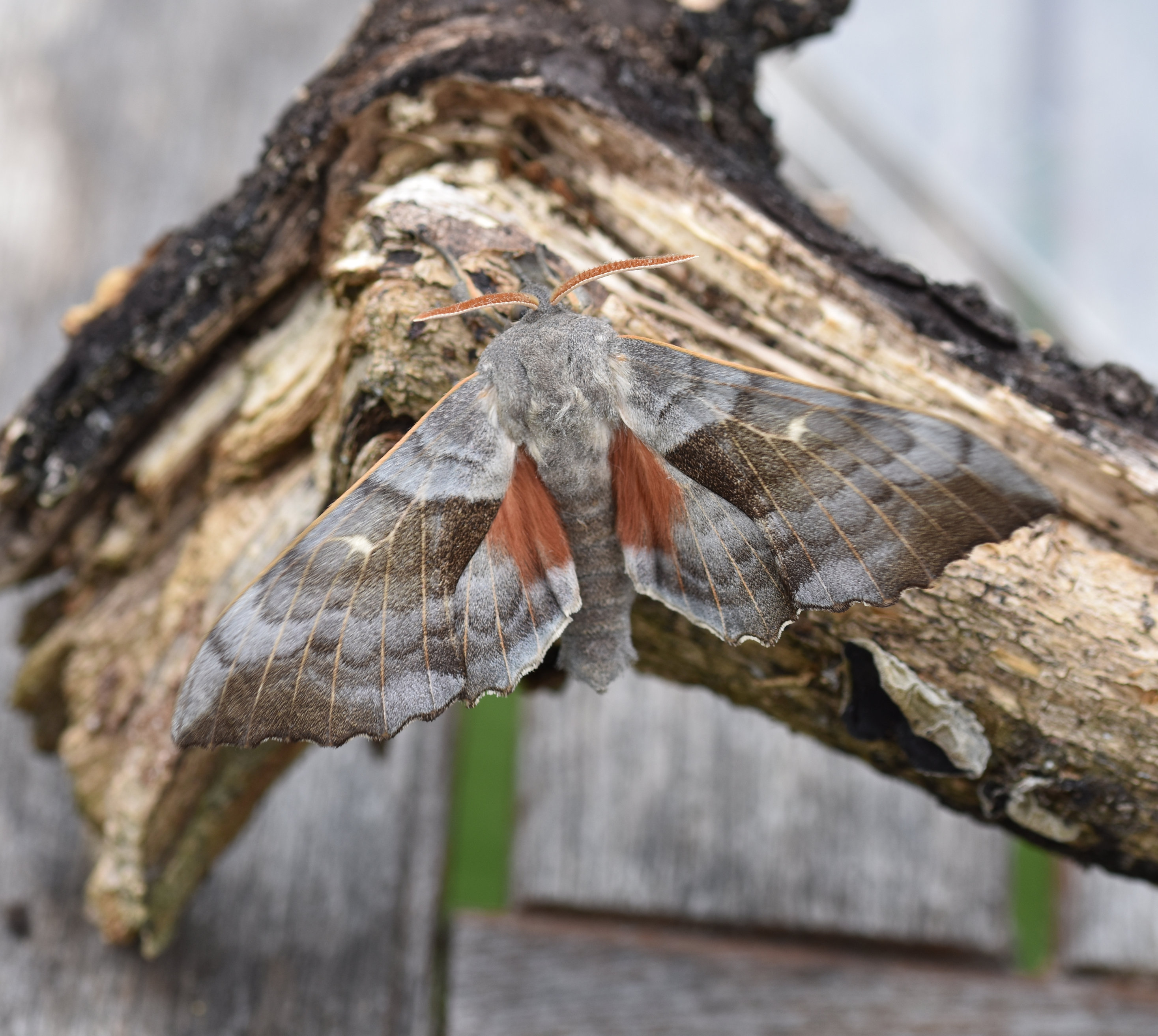
The next most common hawk I get is the Poplar Hawk-moth. These large moths appear every summer and have a striking way of holding their wings sort of out from their bodies.
A slightly less frequent visitor is the Lime Hawk-moth. These come in two colour variations. The most common one I get is the typical green and pink form, but I have occasionally had the more unusual brown variant.

The next hawk will always hold a special place in my heart as I managed to raise one from an egg – the Eyed Hawk-moth. I did a whole blog post about Lonesome George (as the egg/caterpillar became known) which you can read here https://toolazytoweed.uk/2019/08/29/lonesome-george/ and https://toolazytoweed.uk/2020/05/22/lonesome-george-born-free/. But for now here’s a photo of him in all his adult glory.

The next hawk I’ve only seen twice in the garden and neither have been exactly pristine specimens, both worn and well passed their best. But still a thrill and totally unexpected to see such a large moth in the trap.
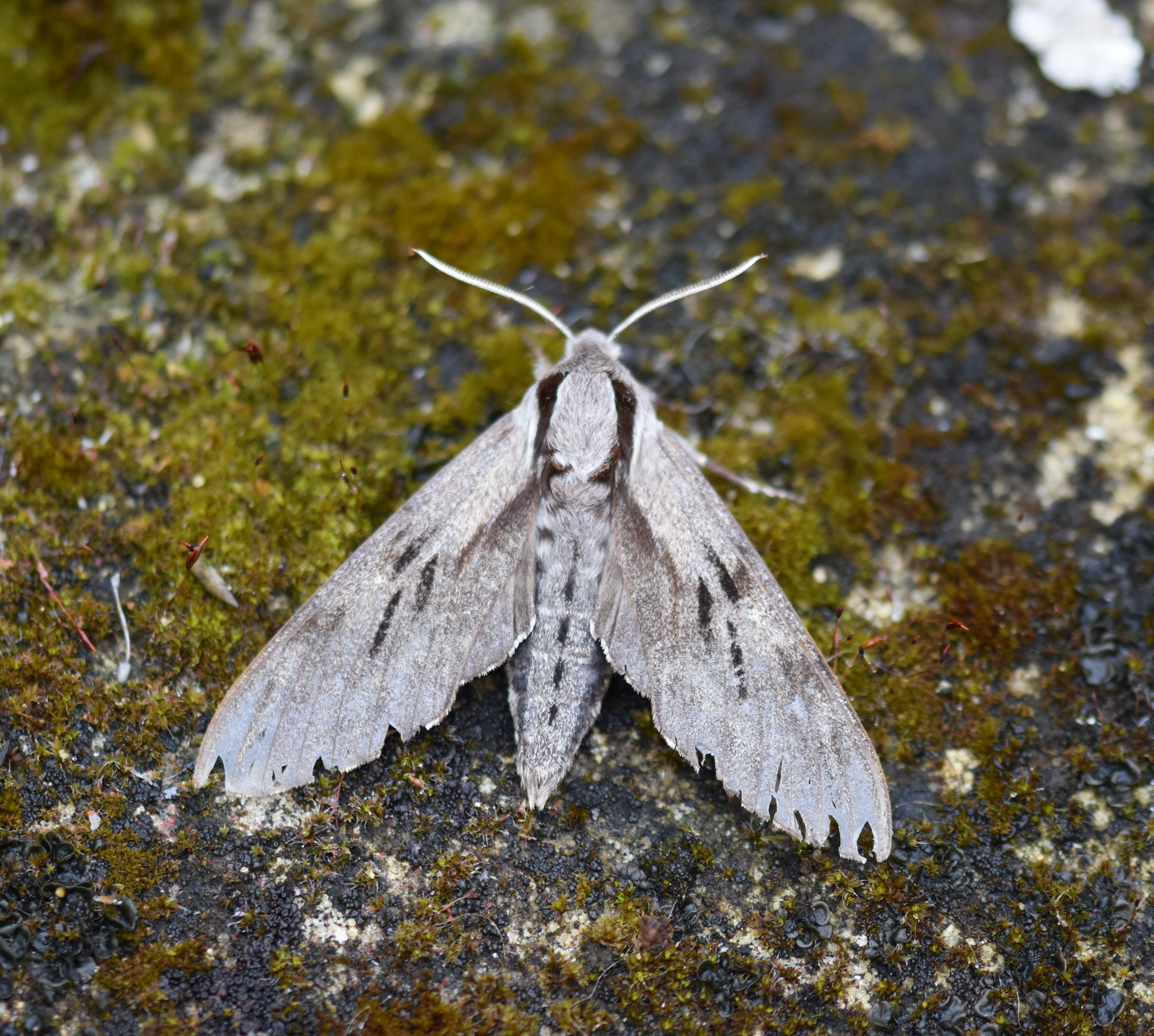
The next one has only graced the moth trap once – a Privet Hawk-moth. This is not a particularly common moth in Worcestershire, so it was a real surprise to get one in the trap. And it was big, much bigger than the other hawks I’ve seen!

The final two hawk-moths were real surprises. Neither are resident in Worcestershire, but are rare migrants, so I’d never dared hope to see them. But in 2019 I saw a few social media posts about Bedstraw Hawk-moths being seen. Each night I’d hope for one to arrive in Malvern, but never really expected it to happen. But then at the beginning of August, I saw it sitting in the trap – a dream come true. It’s surprisingly nerve-wracking getting a moth like this out of the trap – terrified it would fly off before I could get a photo as proof.  But proof I have and I must admit it was glorious to be able to post on social media that a Bedstraw Hawk had deigned to visit my garden. People literally came from miles around to see it.

So I didn’t think I’d ever beat my Bedstraw, but just this week the moth gods favoured me again. I’d been seeing posts from Cornwall with people trapping multiple Striped Hawk-moths, but as a rare migrant I didn’t imagine one would ever reach as far north as Malvern. But the winds must have been blowing in the right direction and on Monday I got up at the crack of dawn to find a Striped Hawk casually sitting in the corner of the trap – unbelievable! I only recognised it because I’d seen the Cornish photos, as otherwise it wouldn’t even have been on my radar as a possibility. Not taking any chances, I took a few photos through the Perspex of the trap, before opening the trap to get it out. Some better photos later on and I could once again bask in moth-envy from my fellow moth-ers.

The West Midlands moth website lists 16 species of hawk-moth, so to have seen 10 species in the garden is pretty amazing.  Of course there are still those moths of legend that I’d love to see – the Convolvulus and Death’s Head Hawk-moths being the ultimate dream moths – but there’s always another moth trap and you never know your luck!

 

The Blog is Back!

Hello again!

It may seem like I’ve just been Too Lazy To Blog, and I can’t deny there’s an element of that, but mainly life in the form of a very difficult 3 years has just got in the way. But hopefully now things are getting back on an even keel and I can resume my wildlife ramblings. The weeds in the garden have continued to grow and there’s still plenty of wildlife to be seen, photographed and waffled on about. So the blog is back!
I may not have been blogging, but I have seen a lot of amazing stuff in the last 3 years. Maybe not attack ships on fire off the shoulder of Orion (who doesn’t love Rutger Hauer), but all sorts of other interesting things. So in no particular order, here are some of the highlights of the last few years.

In December 2023 there was a lot of excitement on Twitter/X about Waxwings being seen in and around Malvern. Like many others I grabbed my camera and headed out in search. Not only did I eventually get to see them, but I made a new friend in the process, without whom I’d never have found them, so a definite win-win situation.

Last summer I was really excited to see my first ever glow worms. Tiny little green glows at a reserve just a few miles from home.  Not easy to spot, but once you get your eye in they really do what it says on the tin and glow a bright green. I only had my phone with me, so this “magnificent” picture will probably go down in history as one of the most atrocious photos ever. Perhaps I should just give it an abstract name – “Green Glow on Black Canvas” or something. But it’s the only proof I have that I saw a glow worm, so here it is!

In October last year I finally got to see the Northern Lights and from my back garden. Not quite the awe-inspiring spectacle you see photos of, but definite streaks of pink and green nonetheless. Again I’m probably up for some kind of award for awful photography for this, but I’m just happy to have finally seen this. Twenty odd years living in Scotland and I finally see it in Malvern!

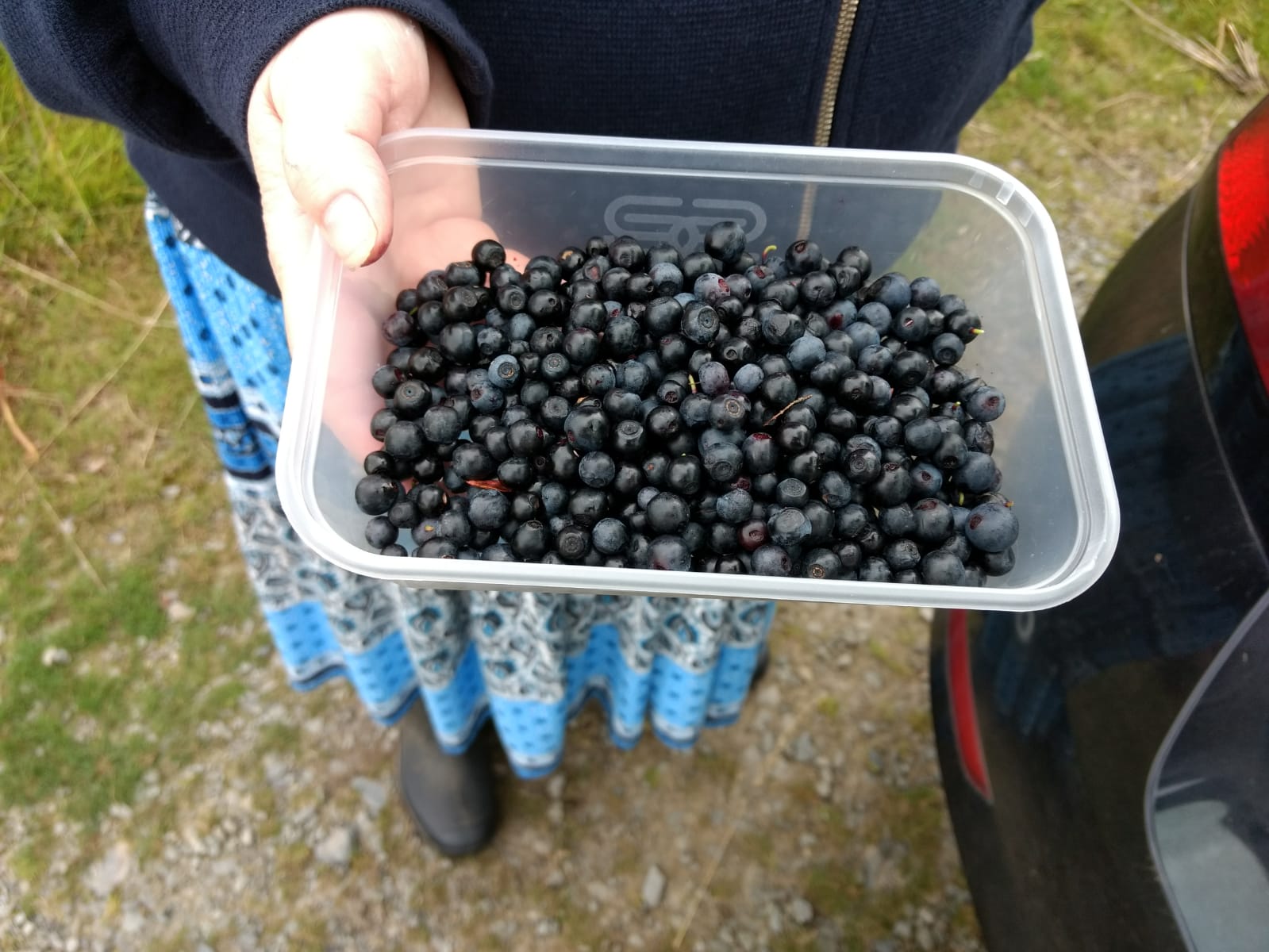
I’ve had a few days out and about doing some not-strictly wildlife things, but it was out in lovely countryside so I reckon that counts. In August last year my sister and I went whinberry picking for the first time since we were children. Whinberries (or Wimberries, Bilberries, or Blaeberries, depending on where you’re from) were our Dad’s favourite and grow wild in the Shropshire hills. We were a bit late in the season, so only managed to gather enough for a very small pie, but it was well worth it – the taste brought back many happy childhood memories and we certainly got to see a lot of the wilds of Shropshire while we hunted for them.

We also had a slightly bonkers trip to see the famous cheese rolling race in Gloucestershire. I must stress we valued our lives and vertebrae too much to actually take part chasing a 4 kilo wheel of Double Gloucester down a very steep hill. It was hard enough climbing high enough to watch it, without hurling ourselves at break-neck speed back down again. But it was a glorious spectacle when viewed from a safe distance.

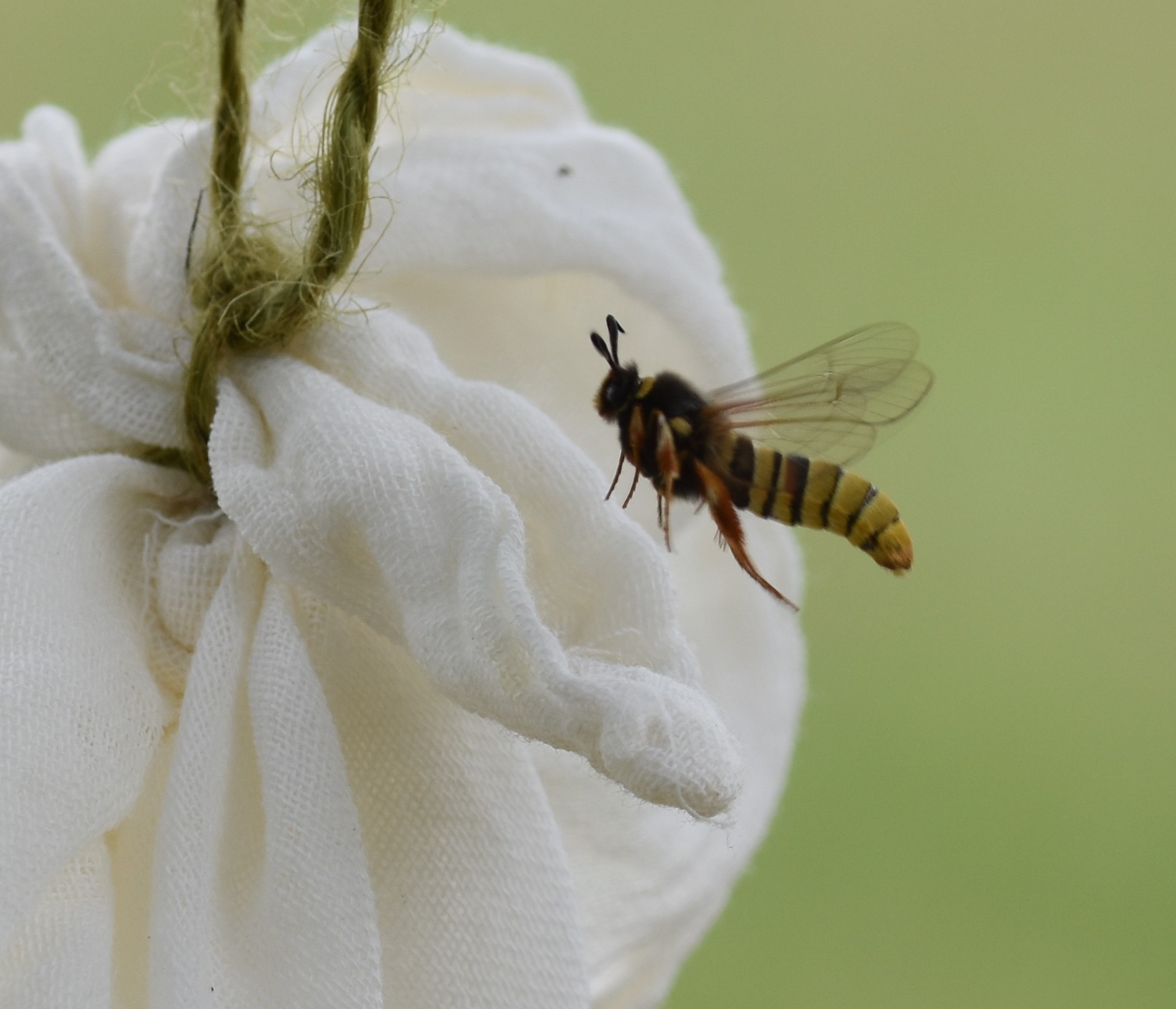
There have been lots of moths recorded in the garden in the last few years, but I’ll post about those separately. One interesting moth seen while venturing outside the garden was a Lunar Hornet Moth. These stunning moths don’t really look like moths with their clear wings and hornet like bodies. Their caterpillars live in the wood of old trees and the adults are attracted to pheromone lures.

Other highlights of the last few years include dolphin watching on a glorious sunny day in New Quay in Wales and a visit to the lovely Westonbury Mill Water Garden in Herefordshire just as the new season’s toadlets all emerged from the ponds. Never seen so many tiny toads (they were literally the size of a fingernail), it was virtually impossible to walk – we went round at a snail’s pace to avoid standing on them. Speaking of toads, I’ve also joined a local toad patrol – more of that in another blog post too.

There’s been a visit to the Diglis Fish Pass in Worcester. Our guide showed us fantastic photos of large salmon, pike and even otters swimming by the viewing window, although on the day, all we saw were a few minnows. Another day out took us to the confetti fields, also in Worcestershire. The delphiniums are grown specifically to turn into environmentally friendly confetti, but I actually preferred the wildflower borders around the main crop.

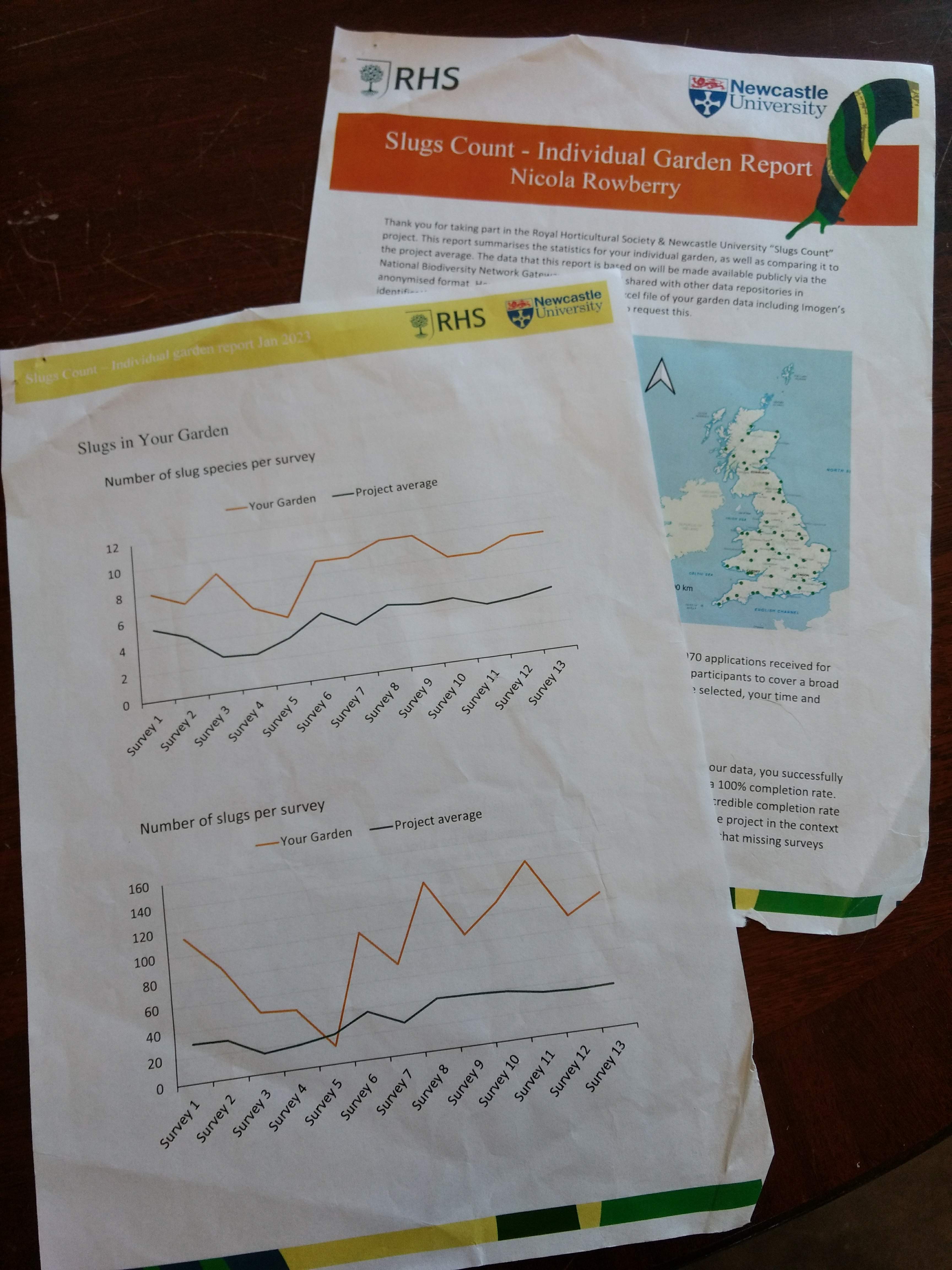
One final highlight of the last few years was a weekend in Harrogate for a slug conference! Harrogate is a really lovely town and a slug conference at Harlow Carr gardens to discuss the results of the slug survey I took part in, was a delightful, if slightly unusual treat! (as was Betty’s tearoom’s Fat Rascals!)

I felt ridiculously pleased that my garden had produced above average numbers of slugs compared to the other slug counters – something most gardeners would be horrified by, but I viewed it as a badge of honour for my scruffy garden.

So there are just a few hopefully interesting bits and pieces from the last few years. The plan is to start blogging again regularly, or at least not wait another 3 years before I can think of something to say.


National Moth Week

It’s National Moth Week (or International since it’s worldwide) and for once I’m on the ball enough to be blogging on time and on topic! This is mainly due to the fact that I read a lovely blog post this morning on this very subject by Nature is My Therapy: https://natureismytherapy.com/2022/07/26/moths-not-just-for-after-dark/  So thank you Kim for the timely reminder.

National Moth Week celebrates the beauty and diversity of moths, a sentiment close to my heart as I’ve been fascinated by the moths in my garden since I started trapping in 2013. This week, after 9 years of moth trapping and perfectly timed for National Moth Week, I recorded the 450th species of moth in my garden! I never dreamt when I started looking at moths that I’d find anywhere near this number in my suburban garden. Just goes to show you don’t know what’s out there until you start looking. Of course of those 450 species, some have only been recorded once – often migrant moths just passing through. But a good chunk of the species are regular attendees at my moth trap.

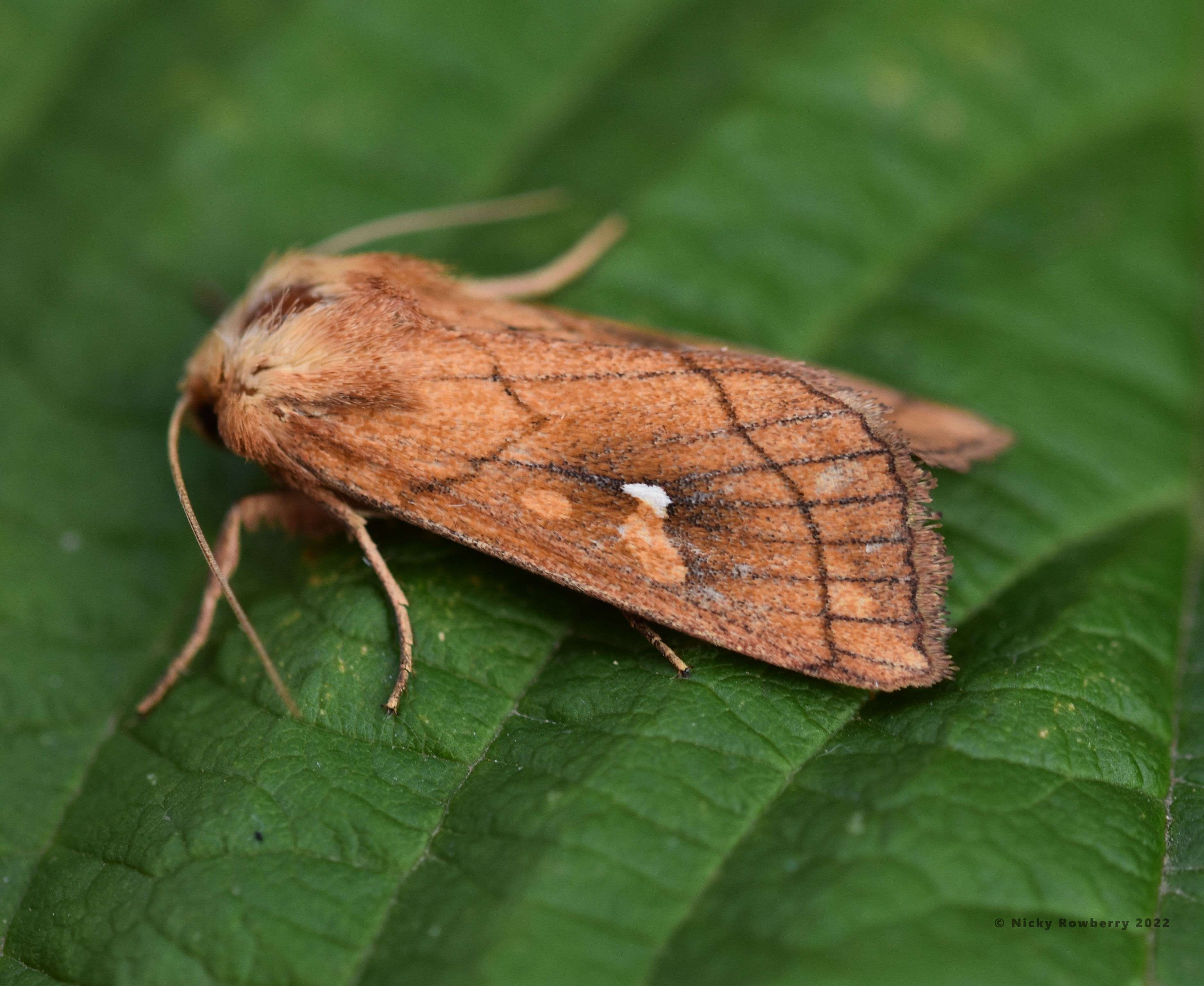
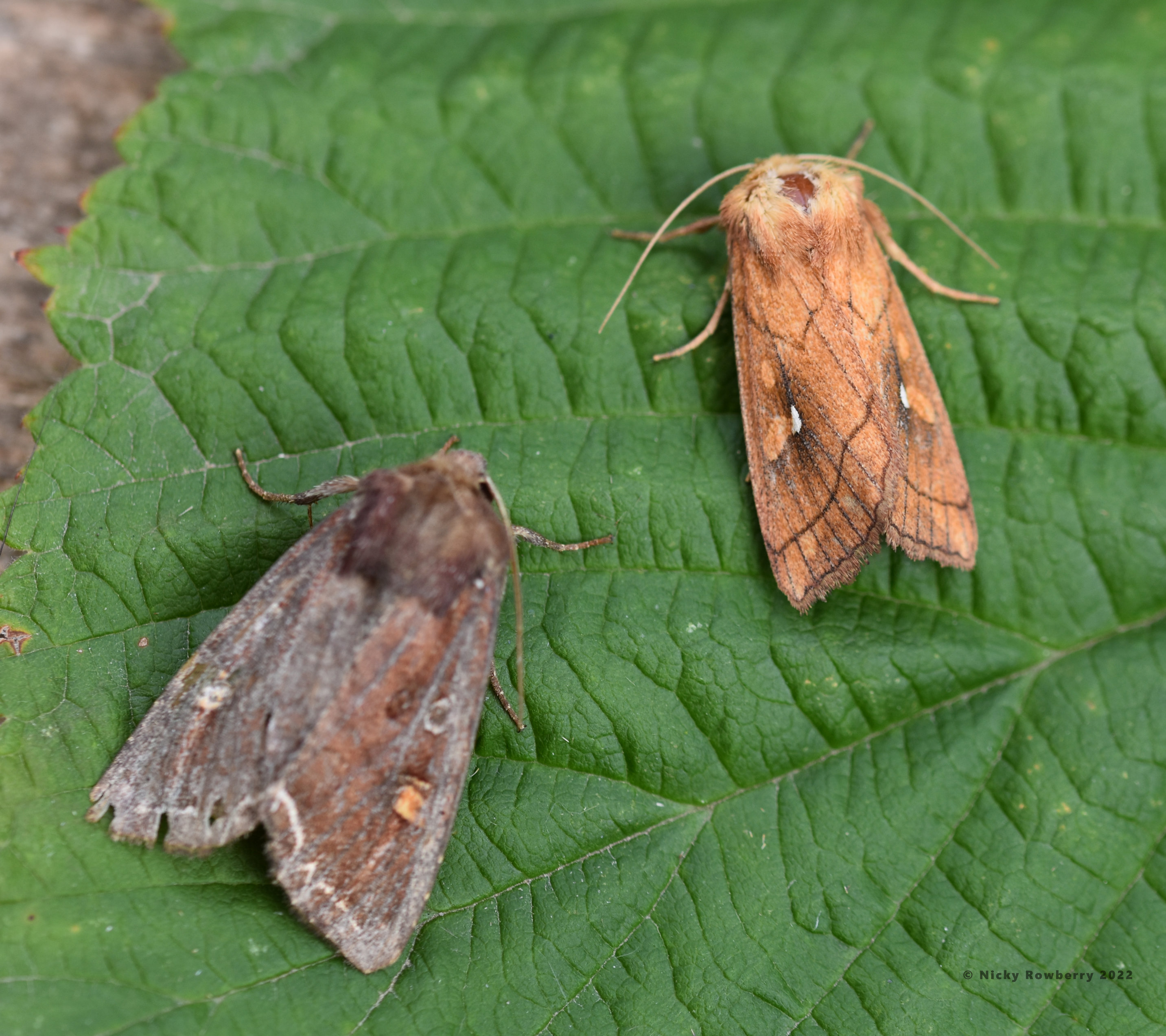
So here is no 450 – the Brown-Line Bright Eye (Mythimna conigera) – so called because (not surprisingly) it has a brown line and a bright eye spot.

Coincidentally the same night I also trapped the very similarly named Bright-Line Brown-Eye (Lacanobia oleracea). So here they are side by side.

I trap 2 or 3 times a week through the summer and usually once a week in the winter. I started this year with a running total of 438 species, so another 12 have been added since then. Of the new ones, a couple are ones I’ve wanted to see for a while and others haven’t even been on my radar. The longed for ones include a Nut-tree Tussock a (Colocasia coryli) and a Muslin Footman (Nudaria mundana).

Of the more unexpected ones this Italian Tubic (Metalampra italica) micro moth was rather lovely and one I’d never even heard of. Apparently it’s a recent colonist that’s spreading north from the south of England.

So the trap is out again tonight and I’ll be up at the crack of dawn to check the contents, hopefully before the robin beats me to it. It’s one of the things I love about moth-trapping – you never know what you’re going to get – it’s like Christmas morning for moth nerds!

Happy National Moth Week everyone.


Holiday Snaps – Part 1

I imagine many people make a list of stuff they will need to take when they go on holiday: swimsuit, sunglasses, sun cream, bat detector, night vision googles, trail camera, GoPro camera and moth trap. My packing list may not be 100% conventional, but for me these are all part of the fun of going somewhere new – essentials for discovering the wildlife in and around a holiday cottage. Last month in northern Lancashire, just south of the Lake District was no exception. The main target may have been the 2 new butterfly species in the last blog post, but we’re always keen to see what else is around.

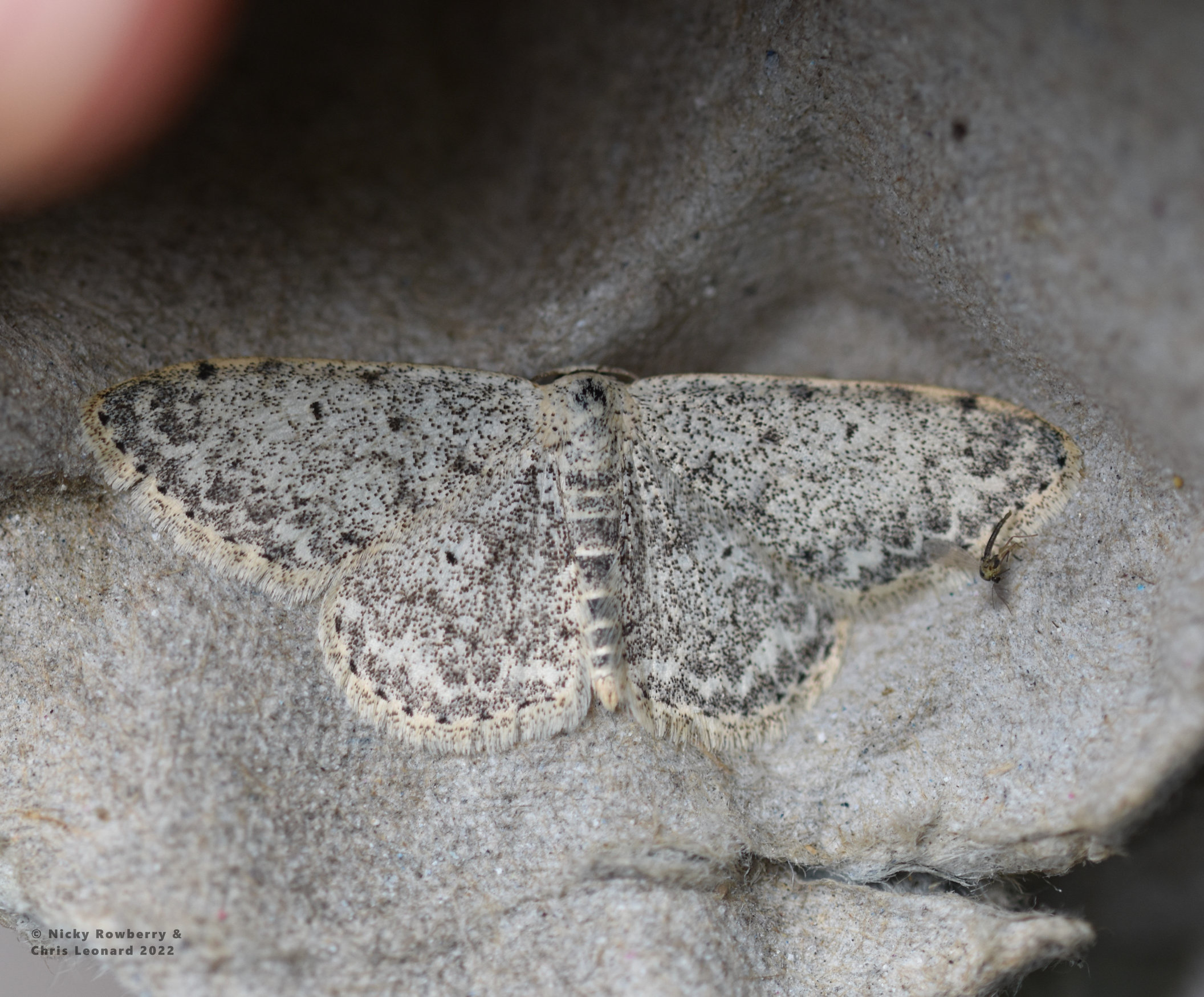
In the end it was a bit windy for a lot of the week, so I only managed to put the moth trap out once, but it still produced some species that we’ve never seen in our own garden. This Mullein Wave was completely new to me, looking like a larger version of a Small Dusty Wave.

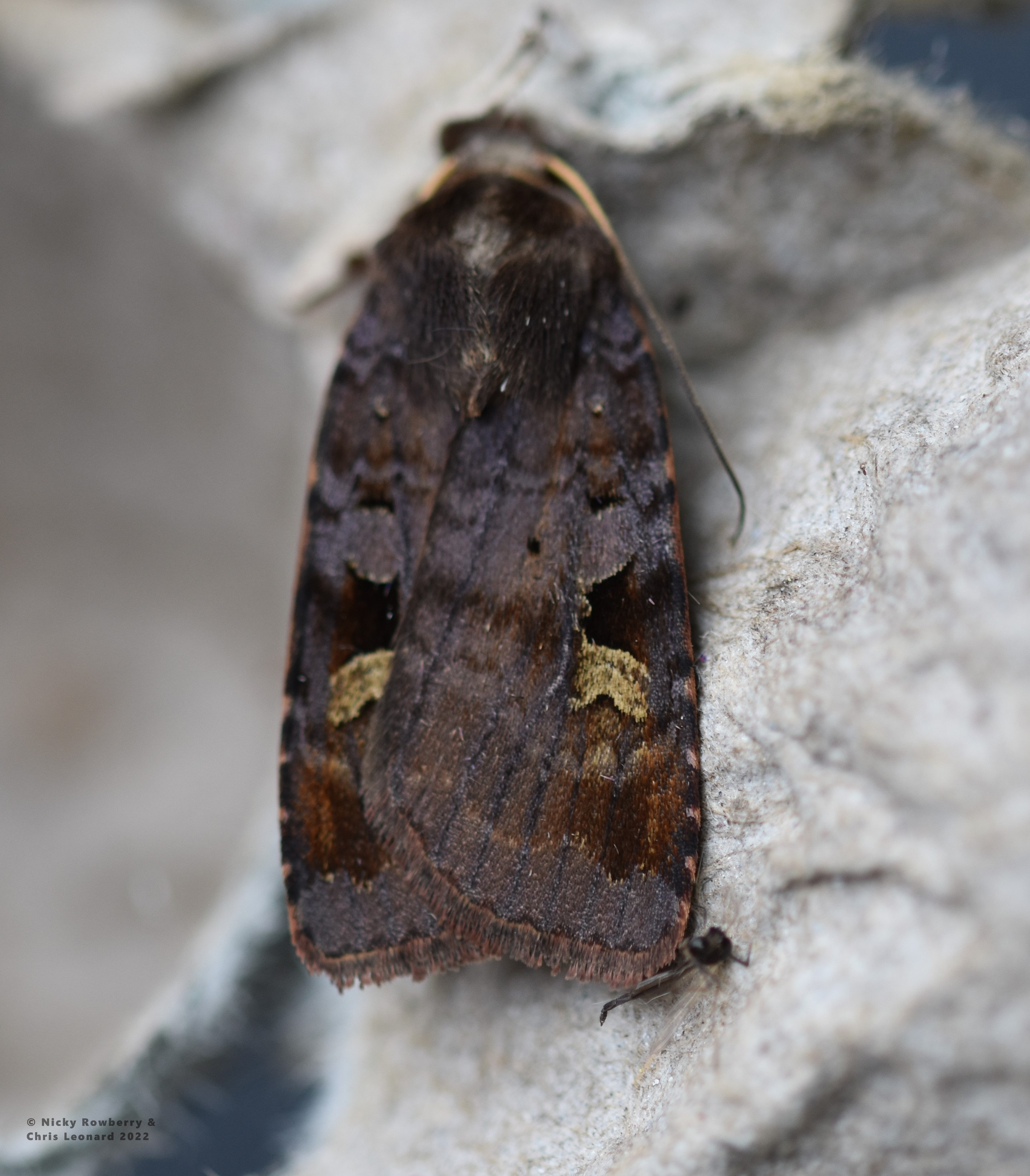
Then there were 2 purples – Purple Clay and Purple Bar, both new to me as the only purple we get at home is a Purple Thorn.

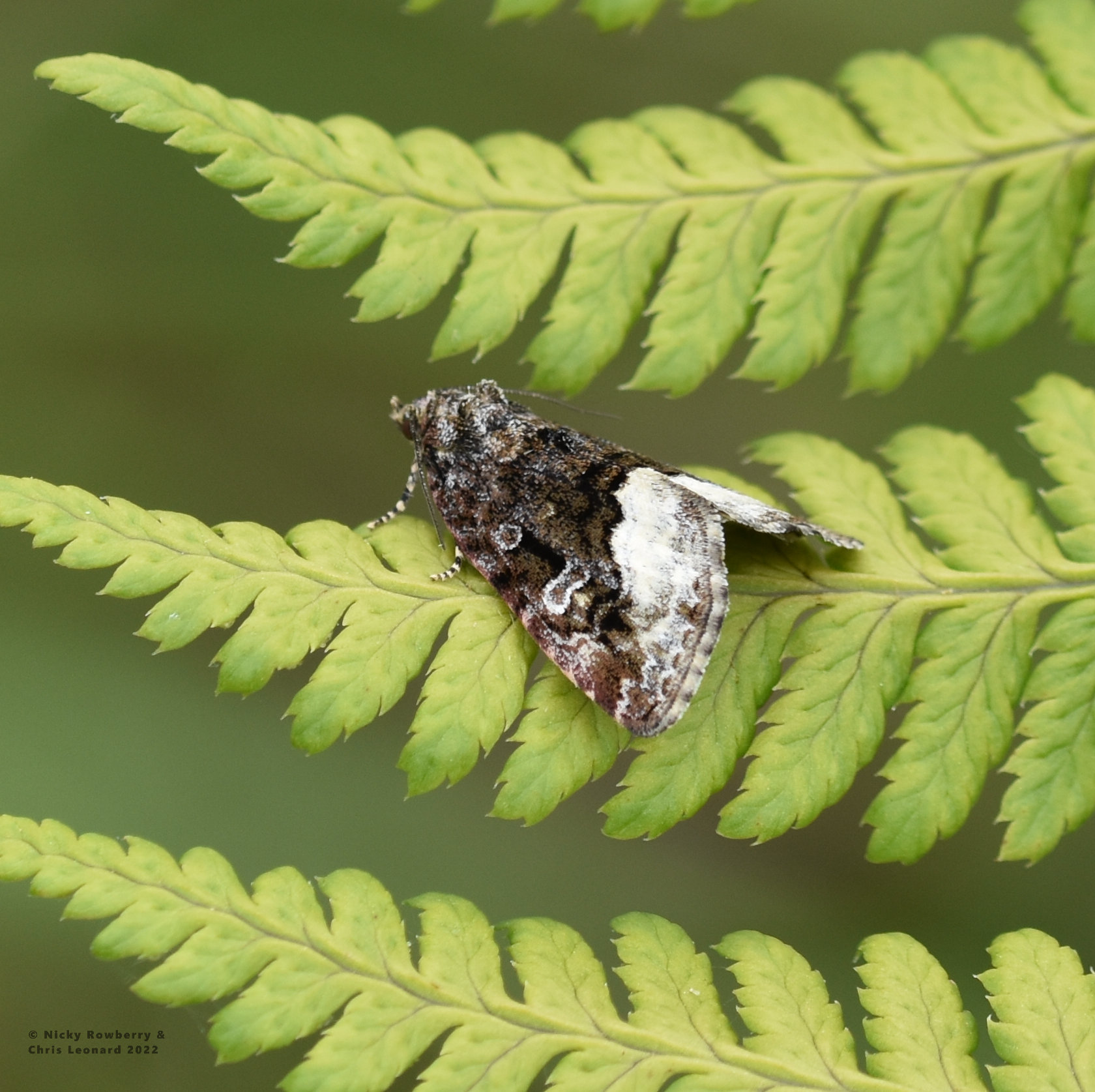
The rest of the moths in the trap were ones I had seen before, although in different proportions – lots more White Ermines than I ever get at home for instance. The Brown China Mark (below) was perhaps not surprising, given that their caterpillars are aquatic and we had a lake at the bottom of the garden at the holiday cottage.

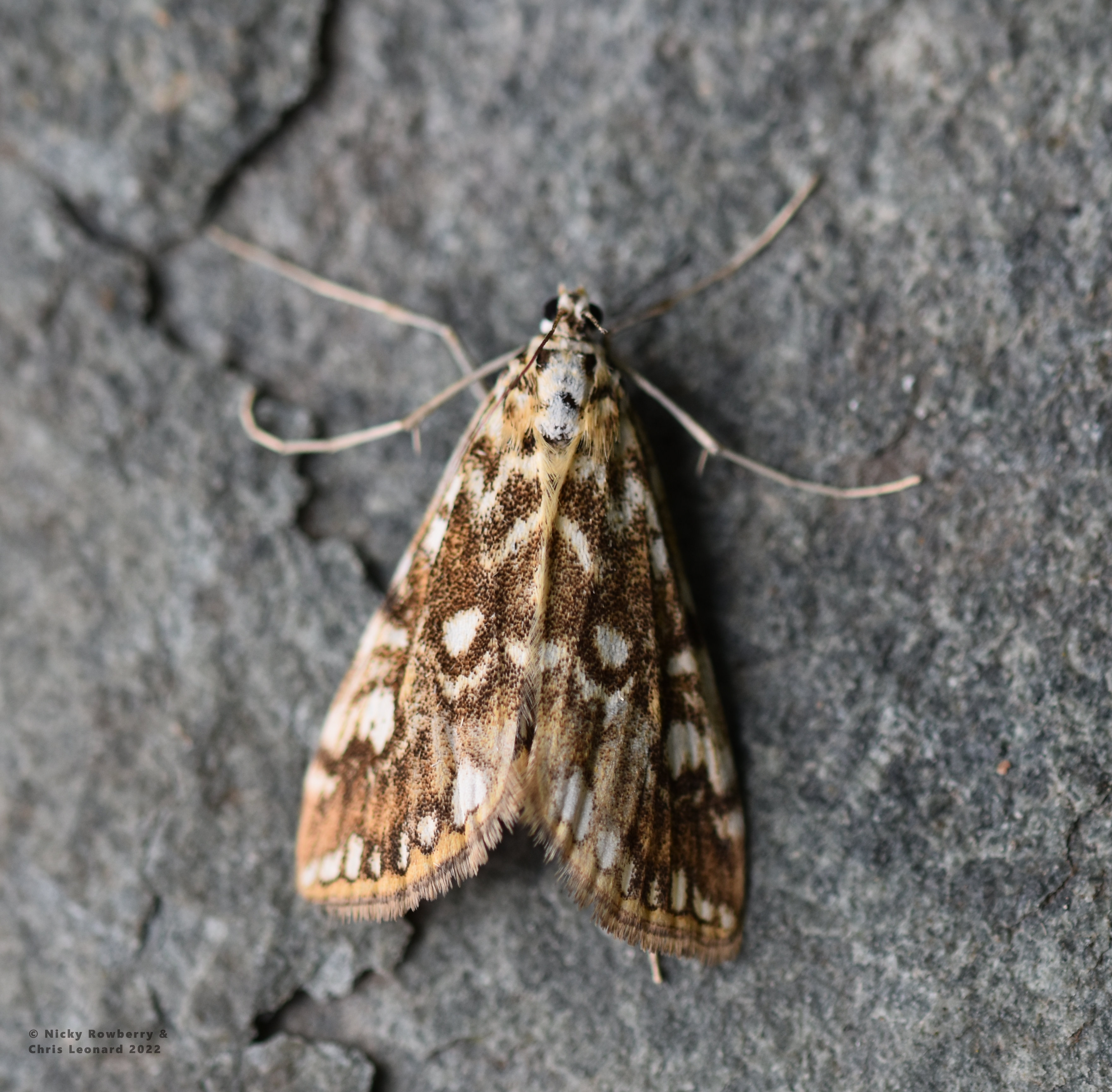
We tend to keep an eye out for moths as well as butterflies when we’re out on walks and were lucky enough to spot a few day-flying ones. The Marbled White Spot was a bit more of an unusual find for us at the Foulshaw Moss Nature Reserve.

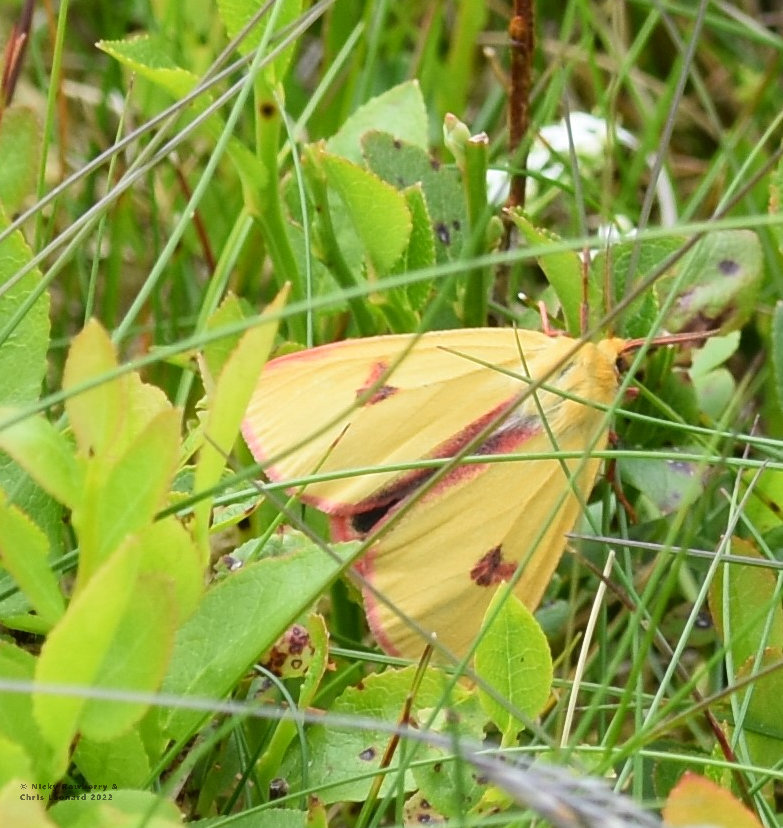
Mothy highlight for me though was finding this Clouded Buff up on Irton Fell –  a stunning moth, that my poor photo doesn’t do justice to, but it shot off before I could get a better pic (and having used all my energy just getting up Irton Fell, I was in no state to chase it!).

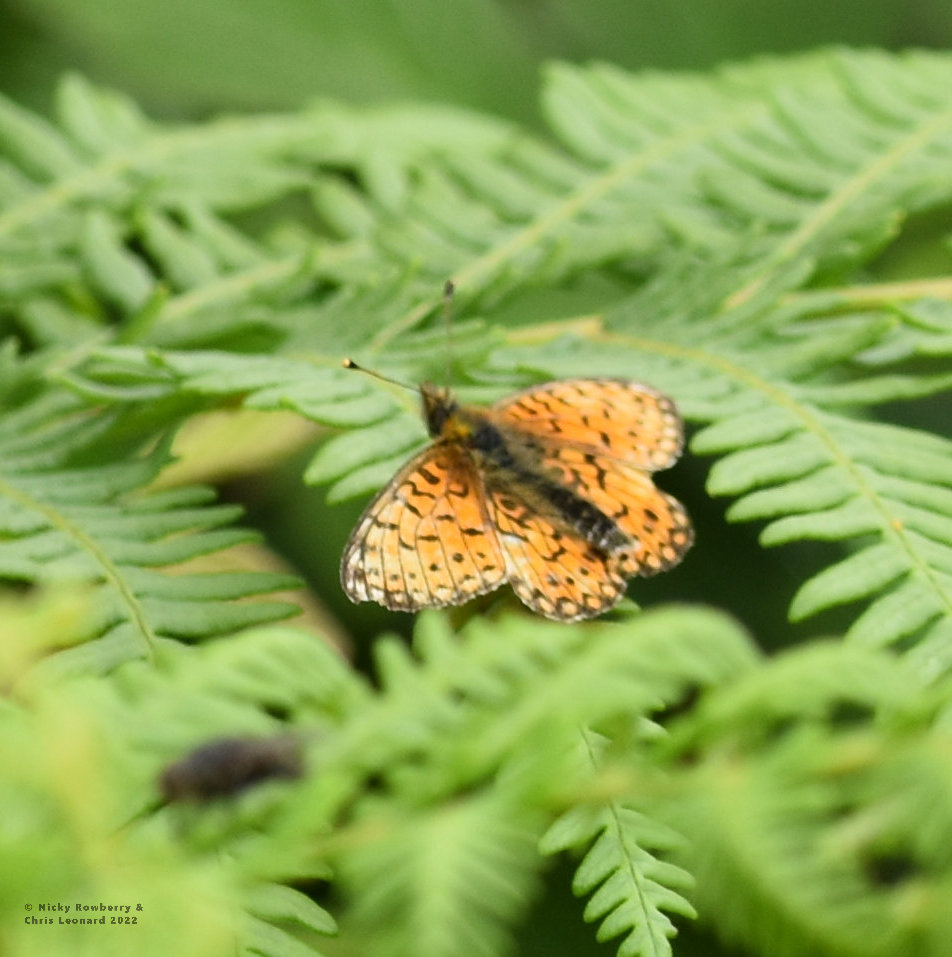
Although we’d gone keen to see the Mountain Ringlet and Northern Brown Argus, any butterfly sightings are always welcome. This faded Pearl or Small Pearl Bordered Fritillary (if anyone can confirm which I’d appreciate it) was spotted at Warton Crags Nature Reserve.

Small Heath butterflies were fairly common at a lot of the places we visited and several had the decency to pose nicely for photographs.

We were particularly pleased to find Large Heath butterflies at Foulshaw Moss, as we’d only seen them once before at Whixall Moss. Unfortunately it was blowing a gale at Foulshaw and then started to rain, so we didn’t get any really decent photos, but it’s definitely a site to go back to in the future.

Finally we also saw a lot of Large Skippers, also at Foulshaw, but in areas more sheltered from the wind. Large Skippers always seem quite happy to have their photos taken and several posed peacefully on the bracken.

My holiday photos are perhaps as odd as my holiday packing list, I don’t take many of people, just the wildlife around me – it is after all far more photogenic!


2021 – The Year of the Slug

Well we all started out with high hopes that 2021 was going to be better than 2020. I’m not sure it achieved that, but best to dwell on the positives rather than the (many) negatives of the year. So here’s a round-up of some of my wildlife highlights from 2021, including a catch-up on my clearly over-ambitious New Year’s Resolutions.

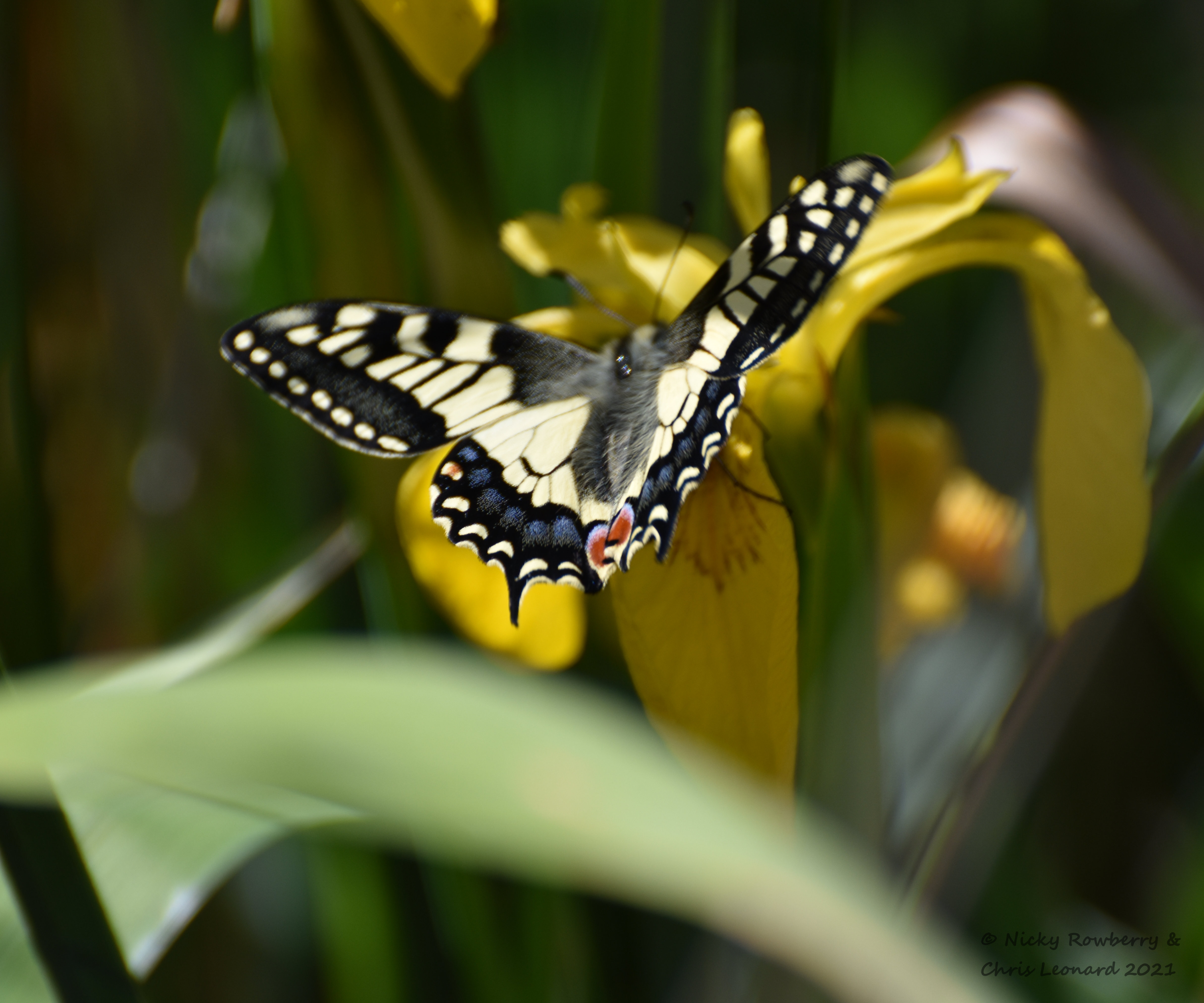
The main highlight was probably going to Norfolk. I had originally planned to go in 2020, but covid put paid to that, but I finally made it there in June 2021. I had a rental right by the river in Wroxham, so was surrounded by wildlife from the start – birds, dragonflies and even a resident pike.  I ticked off number 53 on our list of British butterflies with the gorgeous Swallowtail and saw loads of dragonflies and birds. As I write, this I’ve realised I never actually got round to blogging about the birds, so will have to do a bit of a summary of those in a separate post. I visited lots of nature reserves and it was great to see a completely different set of wildlife to that which I get back home in Worcestershire.

Back at home, there’s been plenty of interest in the garden. The moth trap has been running throughout the year, bringing 34 new species to the garden. This takes the total up to an amazing 438 species recorded since I started in 2013. I’d never have dreamed back then that I could get such a huge variety of moths visiting my modest suburban garden. Highlights from this year include whoppers like the Pine Hawkmoth and this Privet Hawkmoth:

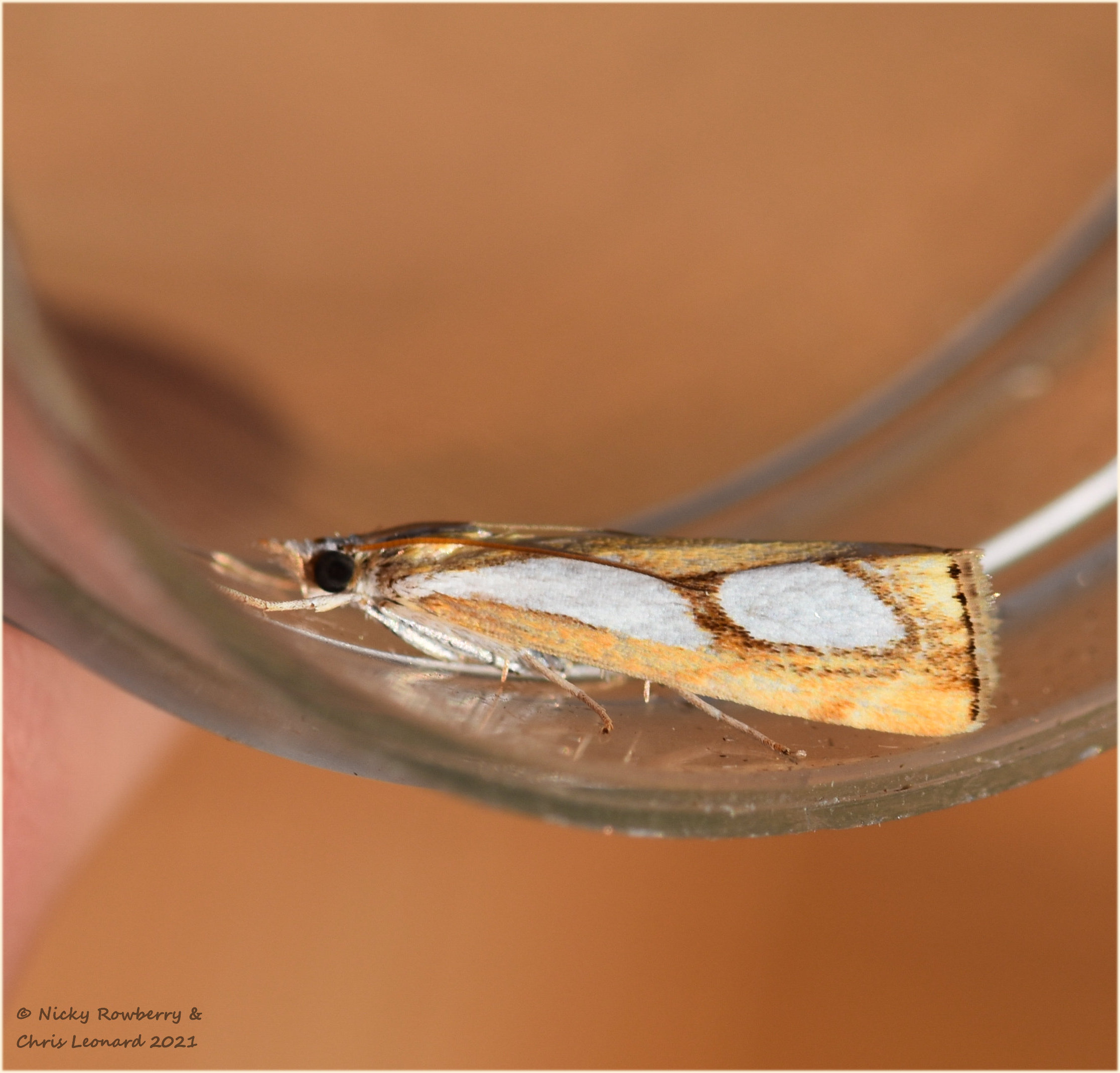
At the other end of the size spectrum, there were some lovely micro moths, including this Pearl Grass-veneer – a species I’d been hoping to see for a while.

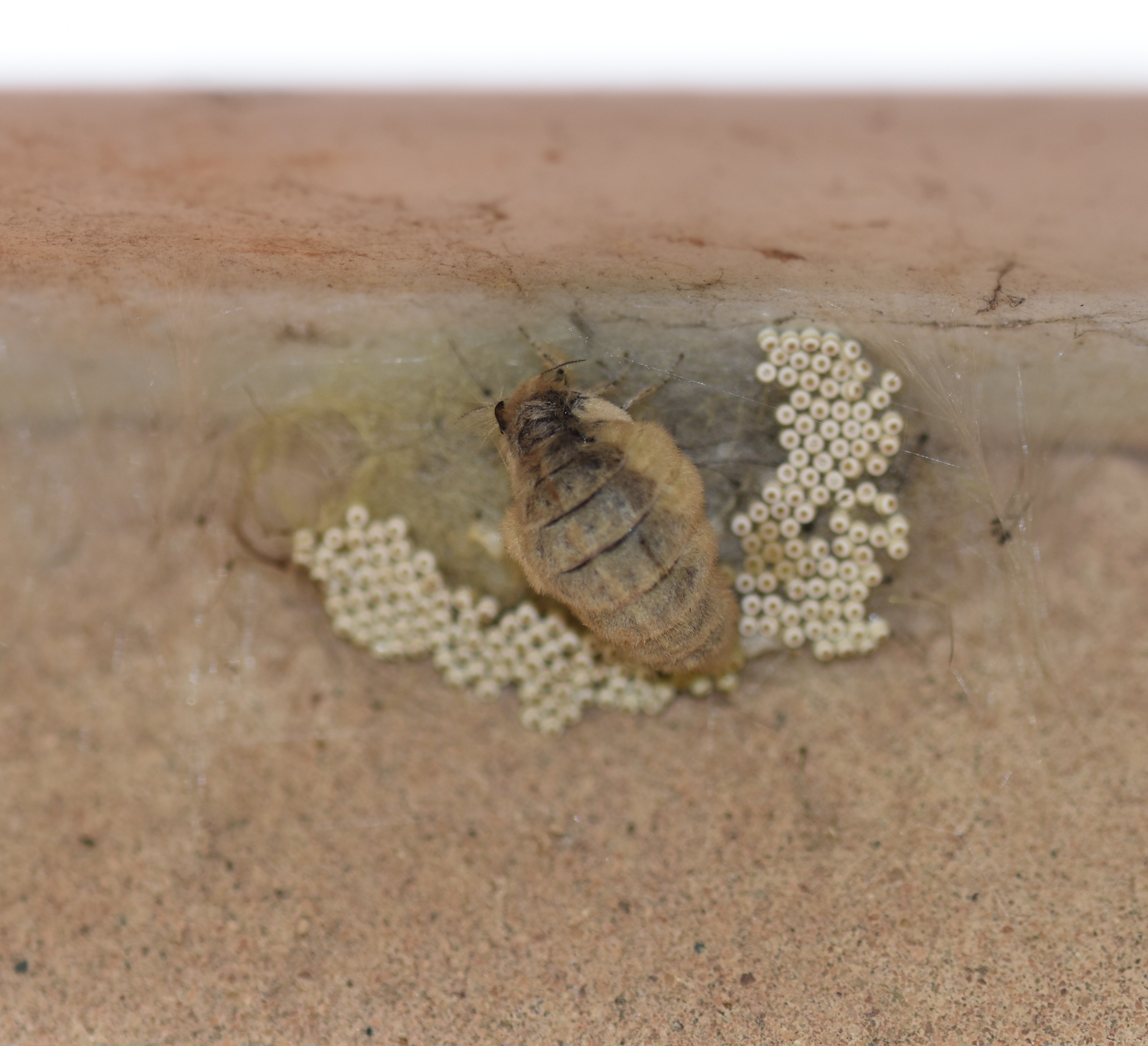
Another mothy highlight was finally getting to see the flightless female vapourer moth and not only that, but getting to watch her laying eggs on our garage wall.

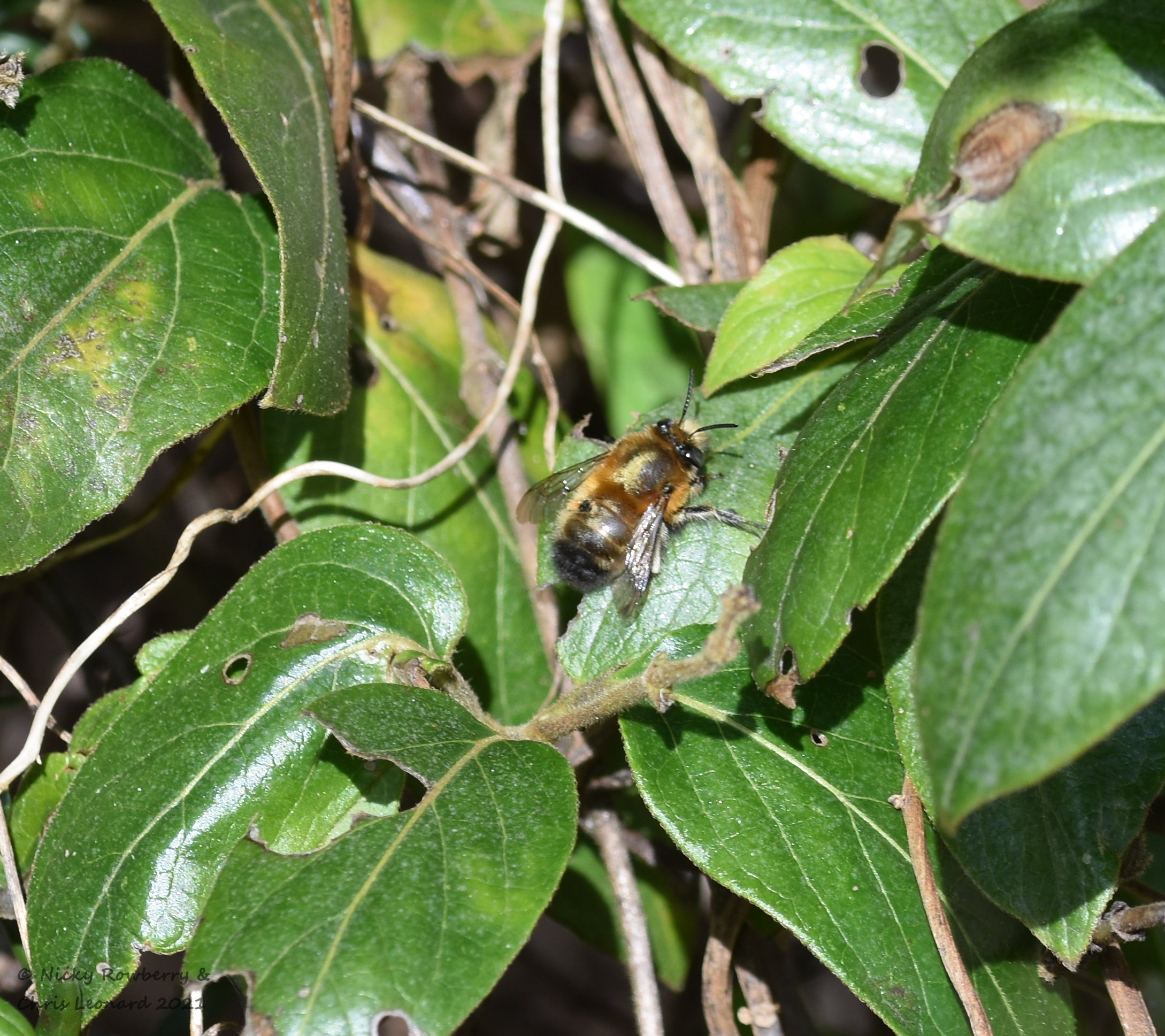
More bee hotels went up last year and were rewarded with plenty of solitary bee activity. No new species recorded in the garden, but thrilled to finally catch a leaf-cutter bee actually cutting leaves.


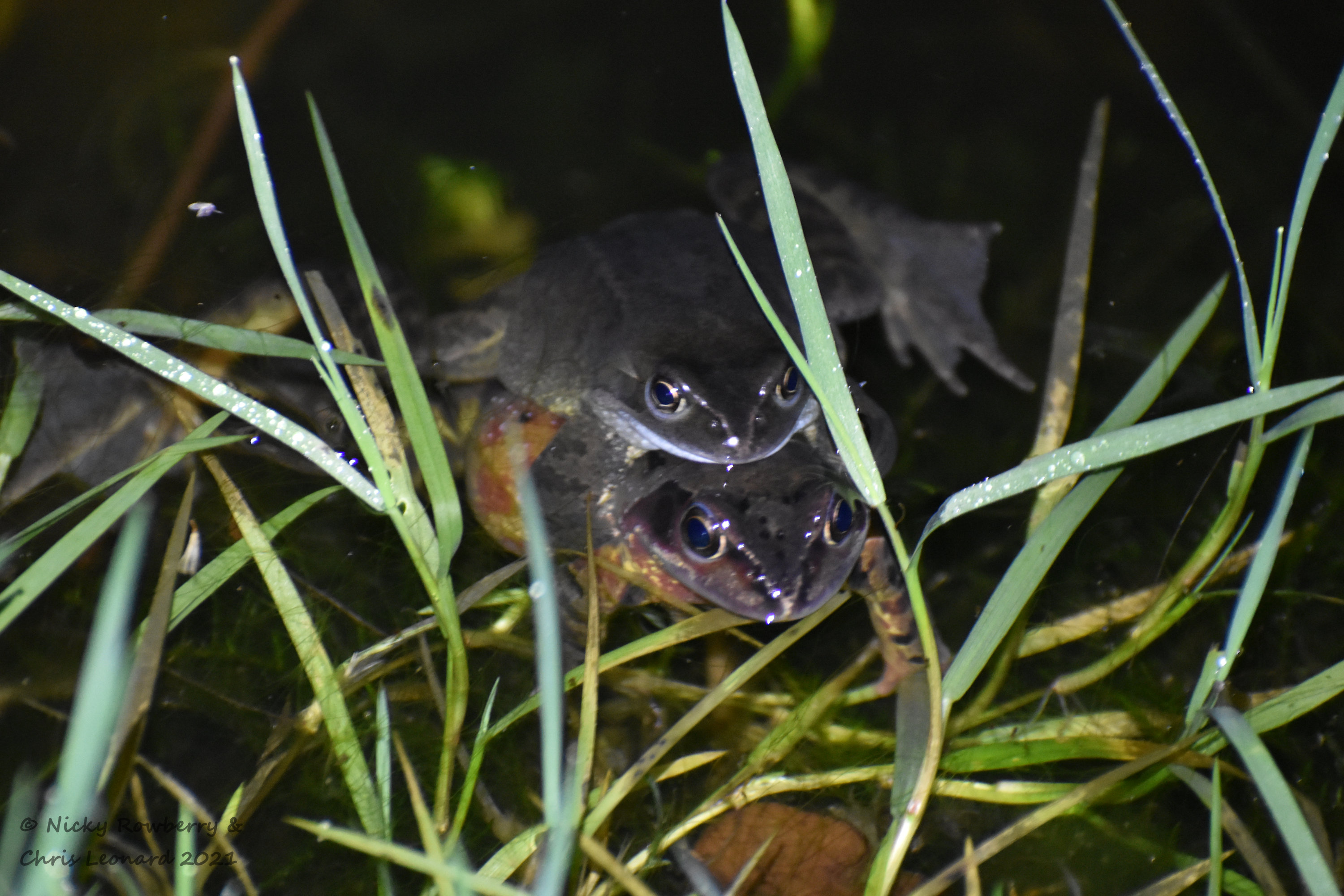
The pond continued to delight and I spent many a happy hour there last year watching the wildlife. We got frog spawn in it for the first time and the newts were busy too. I would love to get toad spawn, but I gather they tend to be faithful to the ponds they were born in, so we will be lucky to get those – but I live in hope. We had plenty of dragonfly and damselfly activity, including home-grown damselflies hatching from the pond. Only one new species was spotted – this Blue-tailed Damselfly, bringing our total Odonata species list for the garden to 10.

We’ve had happy and sad news with our hedgehogs in the garden. The good news is that through the warmer months we were visited nightly by at least one, and sometimes as many as three hedgehogs. Lots of courtship behaviour witnessed on the cameras and a few heated hoggy debates over food or ladies. Some of the courtship was quite late in the year though and the inevitable result was at least one late litter of hoglets. While a second litter may seem like a good idea, the resulting hoglets often don’t have time to fatten up before the winter. The result was that in a 2 week period between the end of October and early November, I had to rescue 6 very underweight hoglets, 2 of whom were out during the day as well. None of these would have survived hibernation without intervention as they just didn’t have the fat reserves. The 6 were all taken to local rescues. Sadly despite the best efforts of the rehabilitators, 3 of them still didn’t make it.

Thankfully the remaining 3 have survived. One has even grown enough that he was released back in our garden during a mild spell. Hopefully the remaining 2 can be released back home in the spring too.

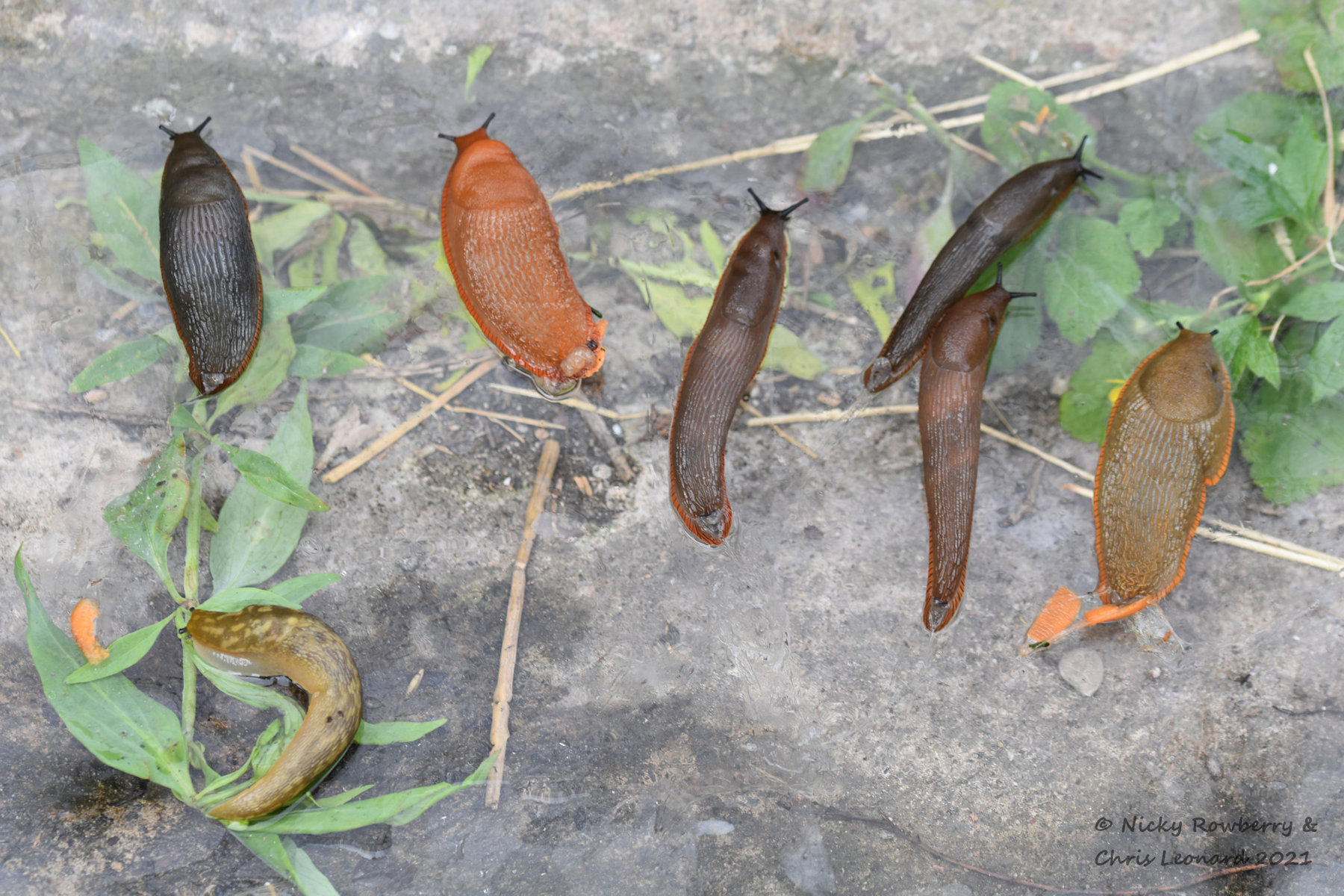
Despite all the enjoyment I’ve had from all of the above, the animals of the year have to be slugs! Not everyone’s favourite I know, but over the last year I’ve grown quite fond of them. For most of this year I participated in a nationwide slug survey and am now a slug fan. Some of the slugs are still being analysed back at slug HQ (a RHS lab), so I’ll have to wait a bit for the final conclusions. But slugs really reached the dizzy heights for me when one of the actual slugs from our garden featured on Gardener’s World – it doesn’t get more exciting than that!

As to last year’s New Year’s Resolutions, I think I’ve failed pretty dismally on most of them (as with most things, I blame this on Covid). Here’s what I set out to do and what I did or did not achieve:

  • Video a dragonfly emerging from our pond. I did see some damselfly larvae and found several exuviae on rocks and plants, but didn’t manage to see them actually emerge in our pond. But I did see some emerging while we were in Norfolk, so can I count that???
  • Expand the moon garden – nope – the moon garden is stuck at the same size it was last year. I still had a good year for moths, but there’s always hope for more.
  • See 2 more species of British Butterfly. Only managed to see 1 more, but it was the fabulous Swallowtail, so more than happy with that.
  • Visit 5 new nature reserves. I think I did do that if I include the ones I went to in Norfolk.
  • Rockpooling. Nope – only managed to see sandy beaches in Norfolk, so no chance for rockpooling.
  • Go and see some wild Ospreys. Nope and again I blame Covid for travel restrictions during Osprey season.
  • The moth tattoo! Maybe I should give up on this!

So what about resolutions for 2022?

  • Continue the quest to see all the British species of butterfly. So far I’ve seen 53 out of the 58. I’m hoping to holiday in the Lake District this year, so with luck might be able to tick 2 more species off the list.
  • I had planned on starting a nature journal, recording the daily goings on in the garden. But as I write this, we are already on the 9th of January and I haven’t made a single journal entry – maybe I can start it in the spring?
  • Rockpooling. I would still really love to be able to film some wildlife in a rockpool with the GoPro. Hopefully there will be some rocky coasts round Cumbria to try this out.
  • Try a night-time safari in the garden. While doing the slug surveys, I was amazed how much invertebrate life was active after dark. So it would be nice to spend a night seeing the other side of our garden life.
  • Do a wildlife audit of the garden – hopefully this will be a lot more fun than that makes it sound. I already know how many moths and bee and dragonfly species we get, but I thought it would be interesting to tally up ALL the species we get. Since we’ve got over 400 moths alone, the total species count should easily make it over 500.
  • The moth tattoo – one of these days.

So despite a pandemic’s efforts to put a dampener on 2021, there was still much to enjoy in terms of wildlife. Being blessed with an interest in wildlife can be a real life-saver when so much of the rest of the world is doom and gloom. There is always something in nature to lift your spirits, whether it’s spotting some exotic bird or getting a slug on Gardener’s World! xx

Flightless but Fabulous

This week I finally got to see a moth I’ve been wanting to see for a very long time – a female Vapourer. We often see Vapourer caterpillars in the garden and sometimes the male adult moths, but the female is something else. The female Vapourer has the, perhaps unenviable, trait of being flightless! Her life as a caterpillar proceeds the same as the male, but when she pupates, instead of emerging with beautiful wings, she appears as short dumpy lump who can hardly move (perhaps this is why I empathise with her!). A female Vapourer’s lot is not a glamorous one.

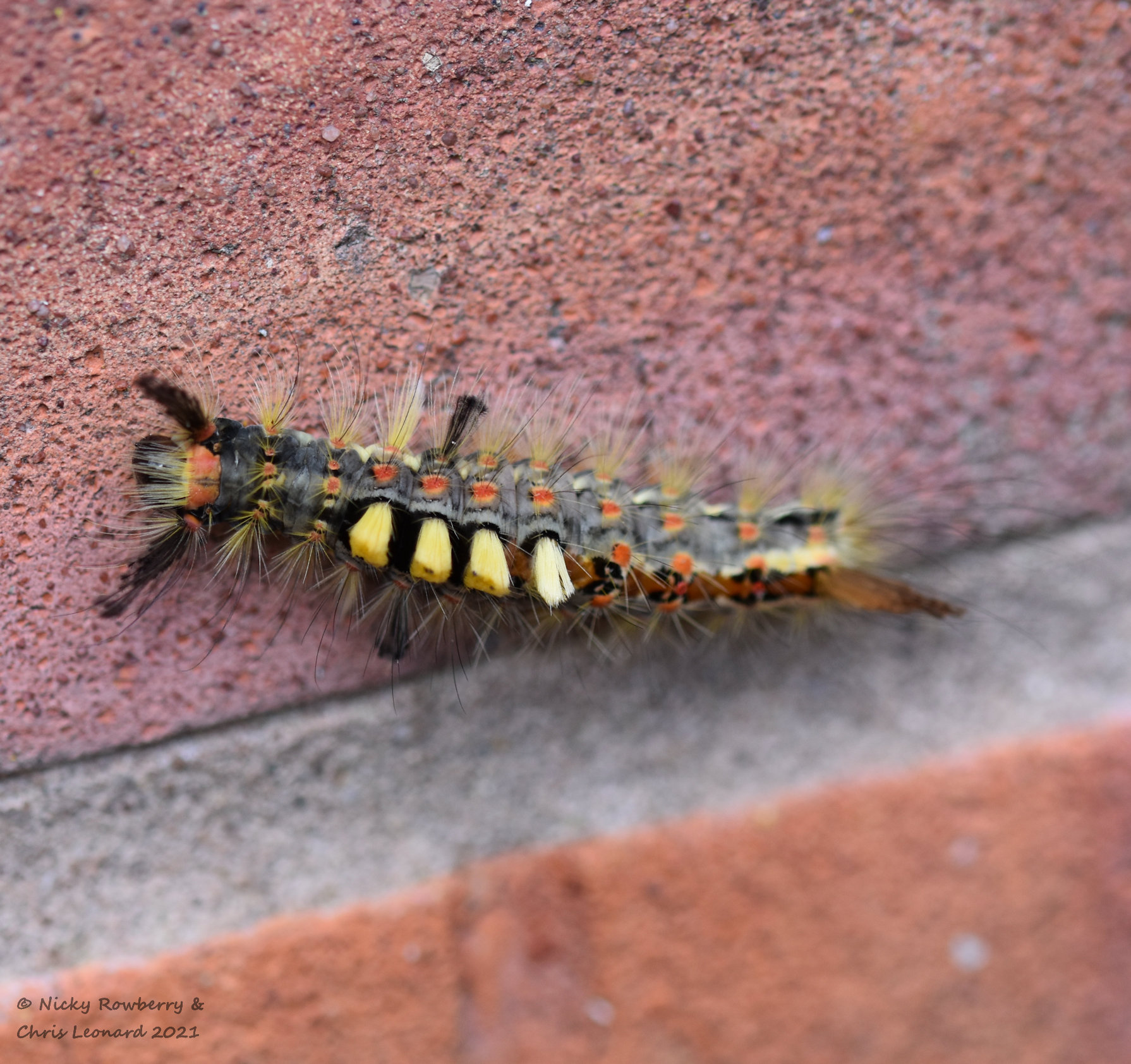
Back at the beginning of July I spotted this large Vapourer caterpillar on the garage wall. They are spectacular looking caterpillars with tufts protruding here, there and everywhere. 

This caterpillar very purposefully headed up the garage wall until it reached the overhang at the top – and there it settled. I saw it there an hour or so later and at first thought it had been snared by a spider’s web, but it was in fact pupating.

The caterpillars spin themselves a fairly thin whispy cocoon and can emerge as an adult within 2 weeks. The good people on a local Facebook group suggested this could be a female, so I checked the cocoon every day for weeks hoping to catch it emerge. Sadly just as the time should have been up, it looked like the garden sparrows or blue tits had pecked her out of her cocoon. We often see them pecking at small spiders and insects on the walls and it seemed this was her fate.

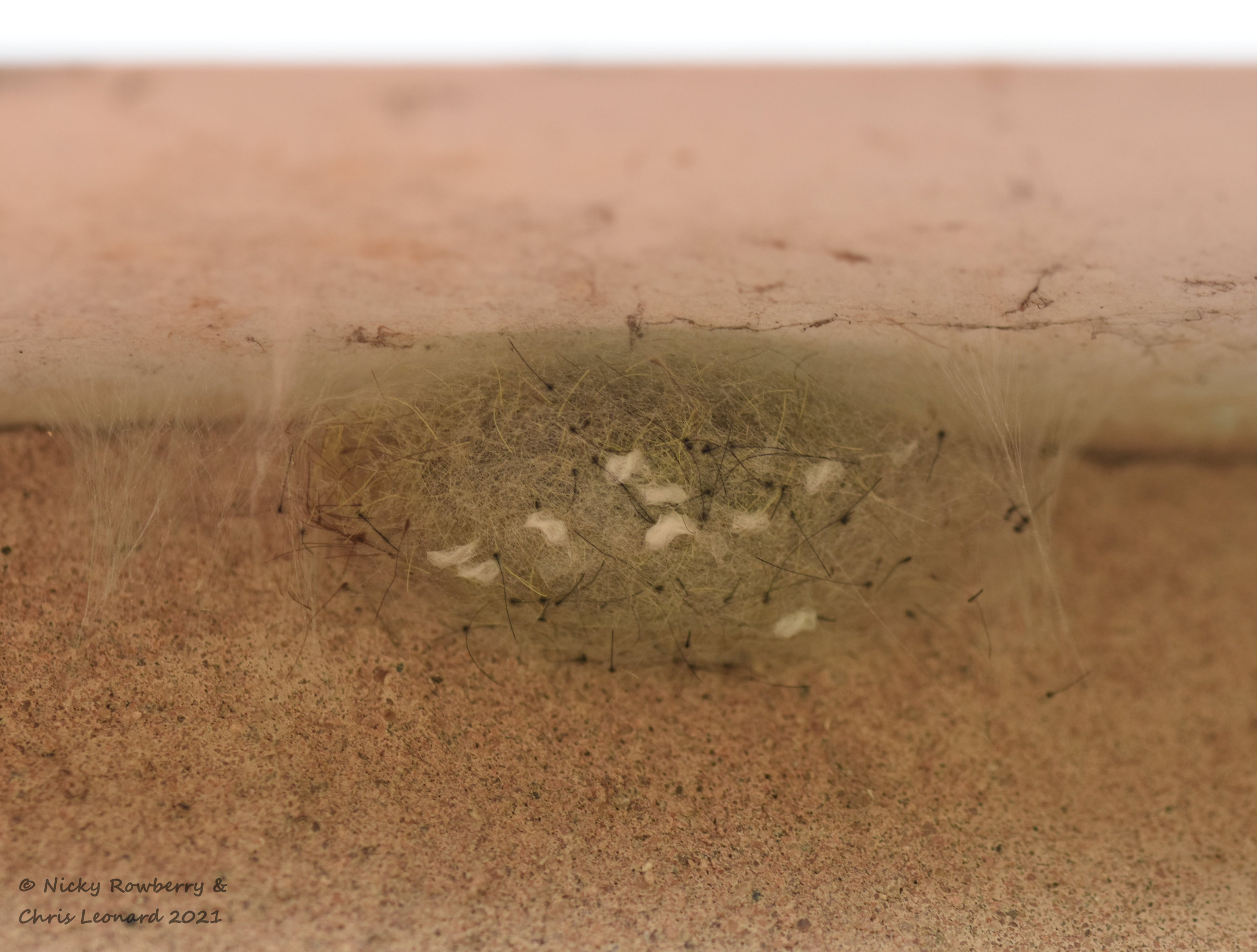
Fortunately that same week, I spotted another 2 caterpillars – also on the garden wall, but this time choosing a slightly safer place to pupate – beneath the garage windowsills. Tucked away there, they were less visible to the birds and perhaps stood a better chance. These ones also had the advantage (for me) of being much lower down the wall, so I could watch them more closely. The caterpillars (at this stage I didn’t know whether I’d got males or females) use some of their hairs and tufts to “decorate”  the cocoon. Since these hairs are irritants, this may serve to provide additional protection to the developing moth inside. You can see various hairs and tufts on the picture below, photographed under the windowsill.

On Sunday, exactly 14 days after I’d seen her crawl under the windowsill, a female Vapourer emerged. When they emerge the females emit pheromones to attract the males. Since the females can’t really move, the males have to come to them and the pheromones draw them in very quickly. So quickly in fact that I missed this stage of the process. I’d checked the cocoons at about 8am – no sign of any activity. I was out for the morning and by the time I checked again at noon, the female was in full egg-laying mode. The males had been and gone. Disappointing as that was, it was still fantastic to see the female laying eggs. Here are a selection of photos taken somewhat awkwardly beneath the windowsill.

Her body is really a furry sac, stuffed full of eggs. She has legs at the front to hold onto the cocoon. On the photo below you can see what I think are the vestigial remains of wings – looking like fluffy ears, either side of her head.

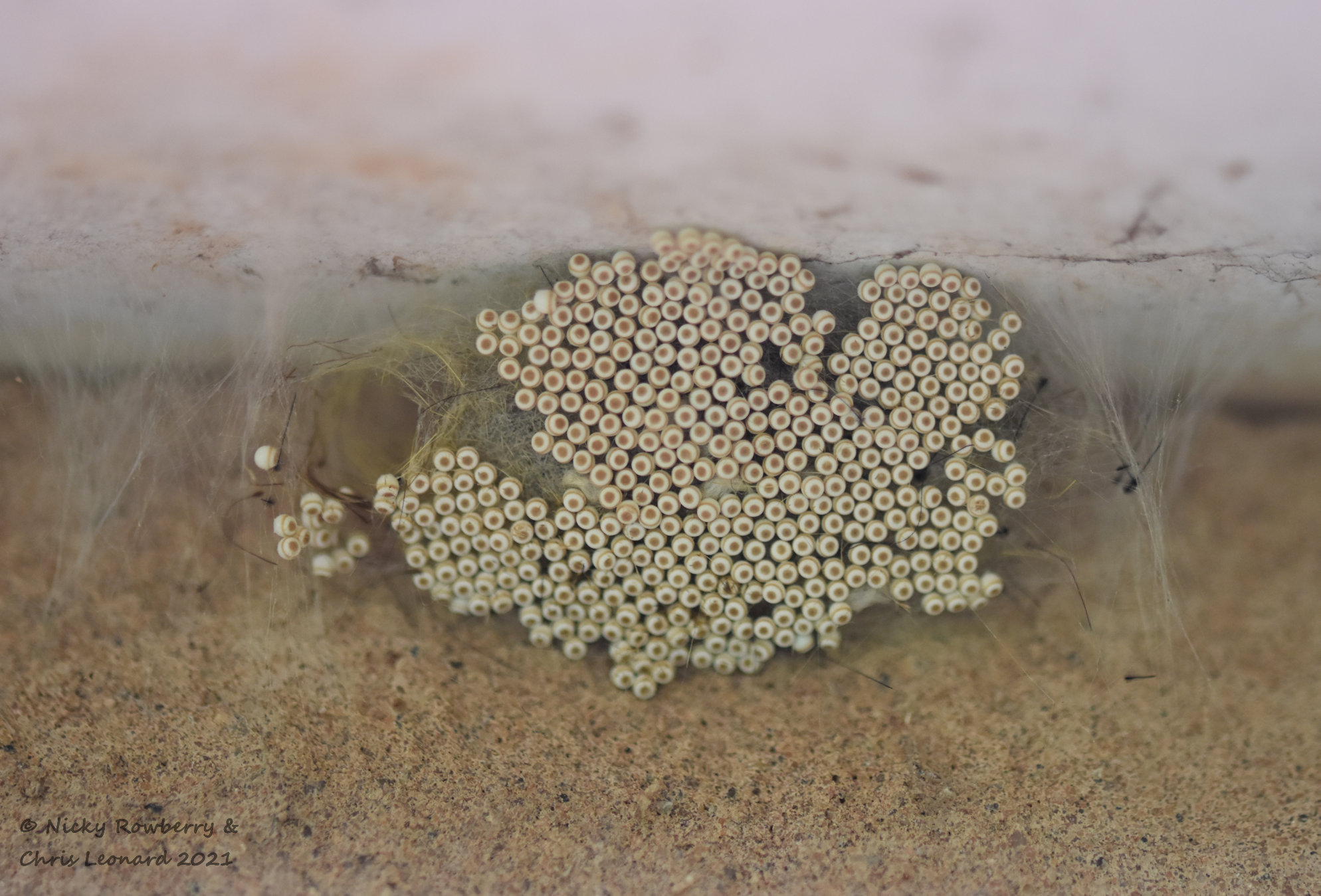
The eggs are laid directly onto the cocoon. They looked wet and a sort of olive colour as they emerged but soon turned white with a darker centre spot.

I did try to video the process, not easy as the light wasn’t great underneath the windowsill. She works determinedly laying egg after egg, all neatly arranged on the remains of the cocoon.

In all she laid 401 eggs – I read online that they can lay between 200 and 400, so she excelled herself!

I suppose I should show a photo of a male Vapourer, although their contribution to the whole process is fleeting to say the least. He is, it has to be said, a very attractive moth, with large feathery antennae for detecting the females’ pheromones.

Sadly once the female finishes laying her eggs, she dies. Her body by then has shrunk and shrivelled once it is empty of eggs. I found this one the next day lying on the ground beneath the windowsill, her eggs still safely sitting on the cocoon. I actually felt quite sad to see her like that, but her work was done and with 401 eggs she had hopefully ensured her genes would live on. Her adult life may have been brief, but she packed a lot into it. Flightless she may have been, but to me a fabulous moth. 

Spring Has Sprung

It was the Spring Equinox at the weekend – 20th March according to Google or 21st March according to my Dad whose birthday it was yesterday and he always said he was born on the first day of spring! Whichever day it was, the garden seems to be responding and there are signs of life everywhere after the long winter (and lockdown). 

Spring was ushered in a bit early back in February with the appearance of a new moth for the garden – the Spring Usher; an attractive moth and one that I’d been hoping to see for some years.

Spring Usher 1

Other insects have started to appear too. The garden has been graced with visits from both a Comma and a Brimstone butterfly – sadly both too fast and fleeting to get a decent photo of, but joys to see nonetheless. Pond skaters have popped up on the pond again. They were the first insects to move into the new pond last year so it’s nice to see them back again.

The first bees have emerged too. My perennial favourites the Hairy Footed Flower Bees are back buzzing round the garden. I’ve only seen males so far, but I think they do tend to appear before the females.

Hairy footed flower bee

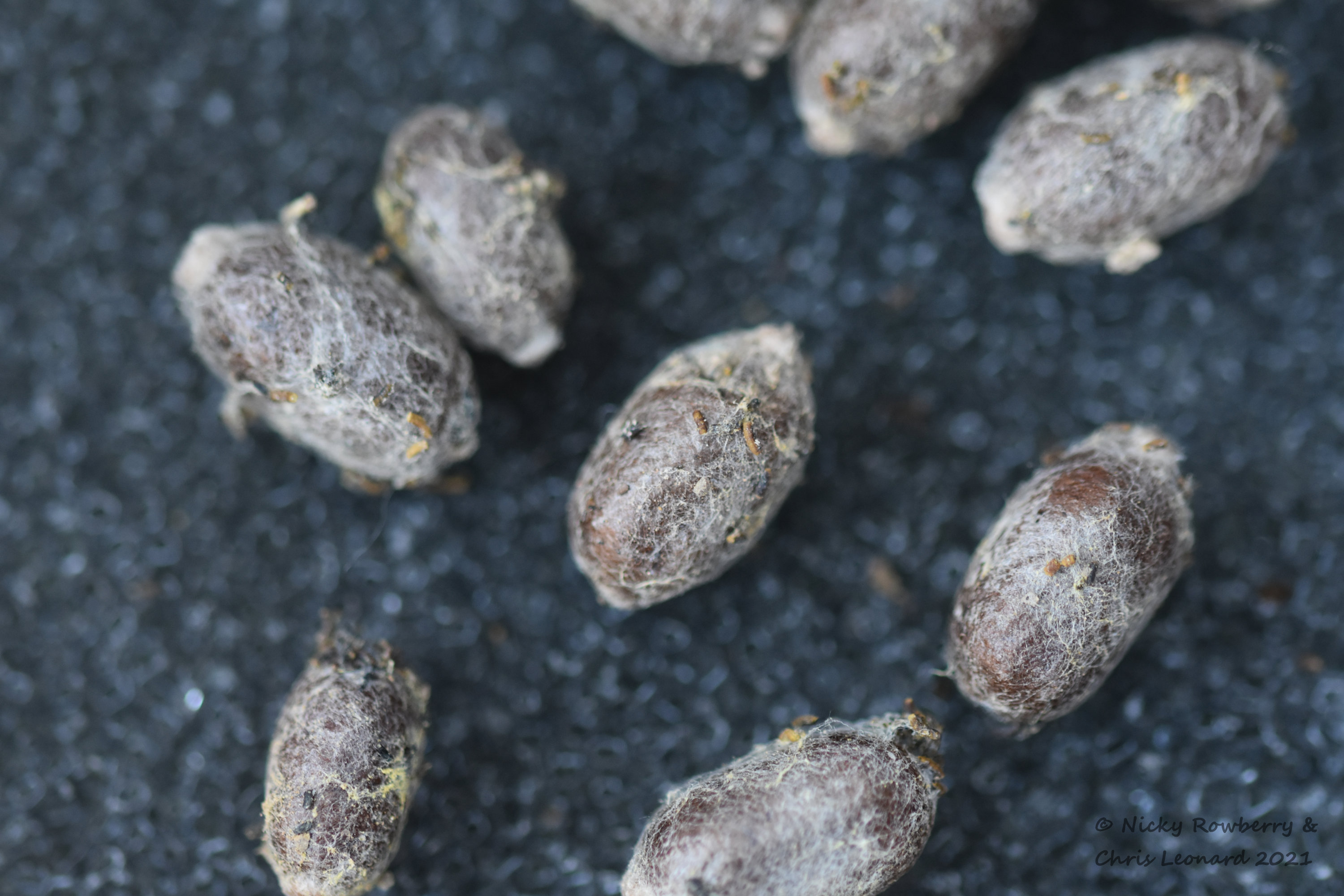
I’ve not seen any active Red Mason Bees yet, but they can’t be far off. I collected the cocoons from some of the tubes in the bee houses last year and they are now safely back out waiting for them to hatch. Again I think the males may hatch first.

red mason cocoons

Another favourite – the Dark-edged Beefly appeared just at the weekend. I don’t know why, but I’ve always found them to be cheery little insects and for me they really signal that spring is on its way.

beefly

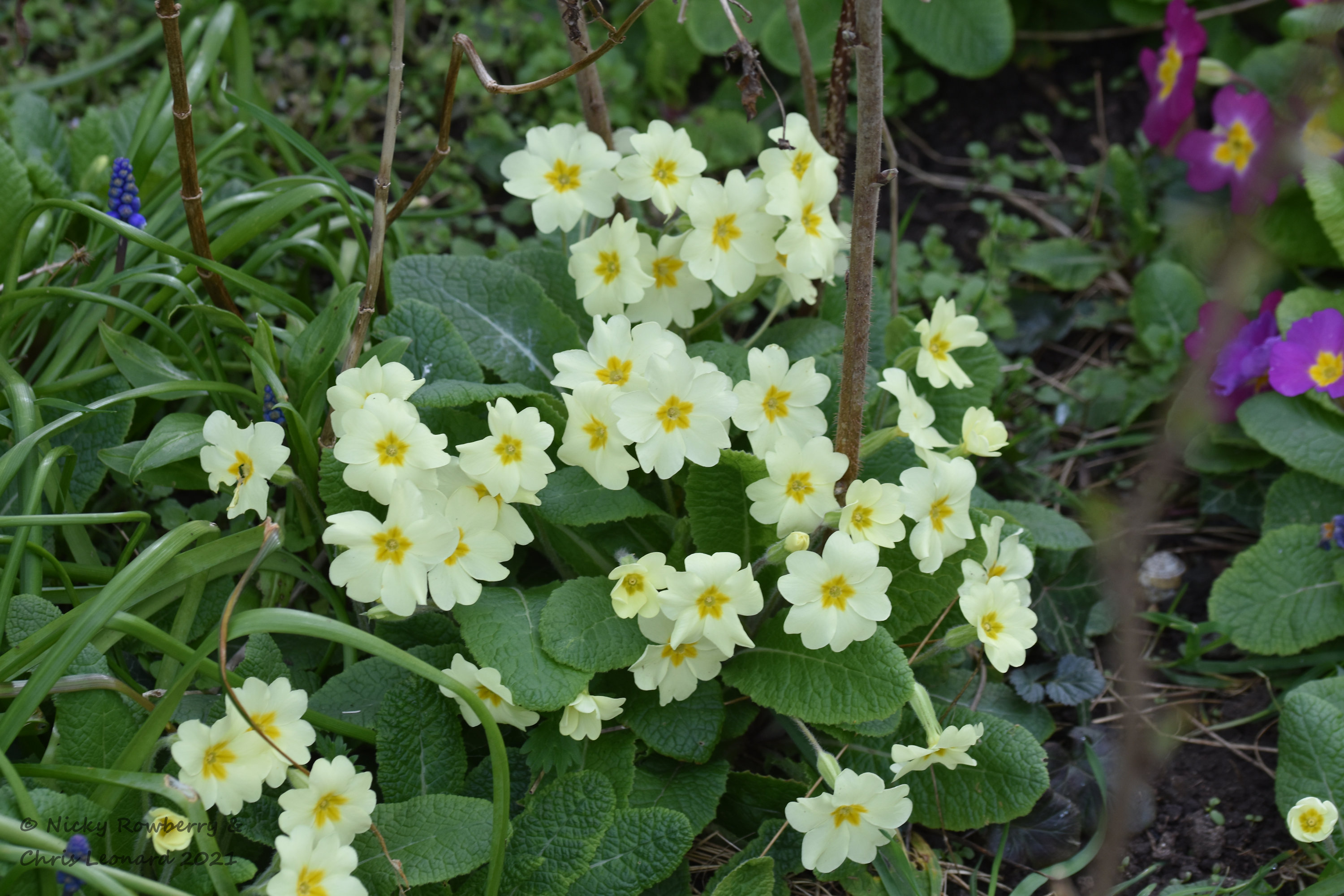
The spring flowers are out in force now – good news for the bees hopefully. We’ve got lots of self-seeded primroses all over the place and the occasion violet too.

primroses

Violet

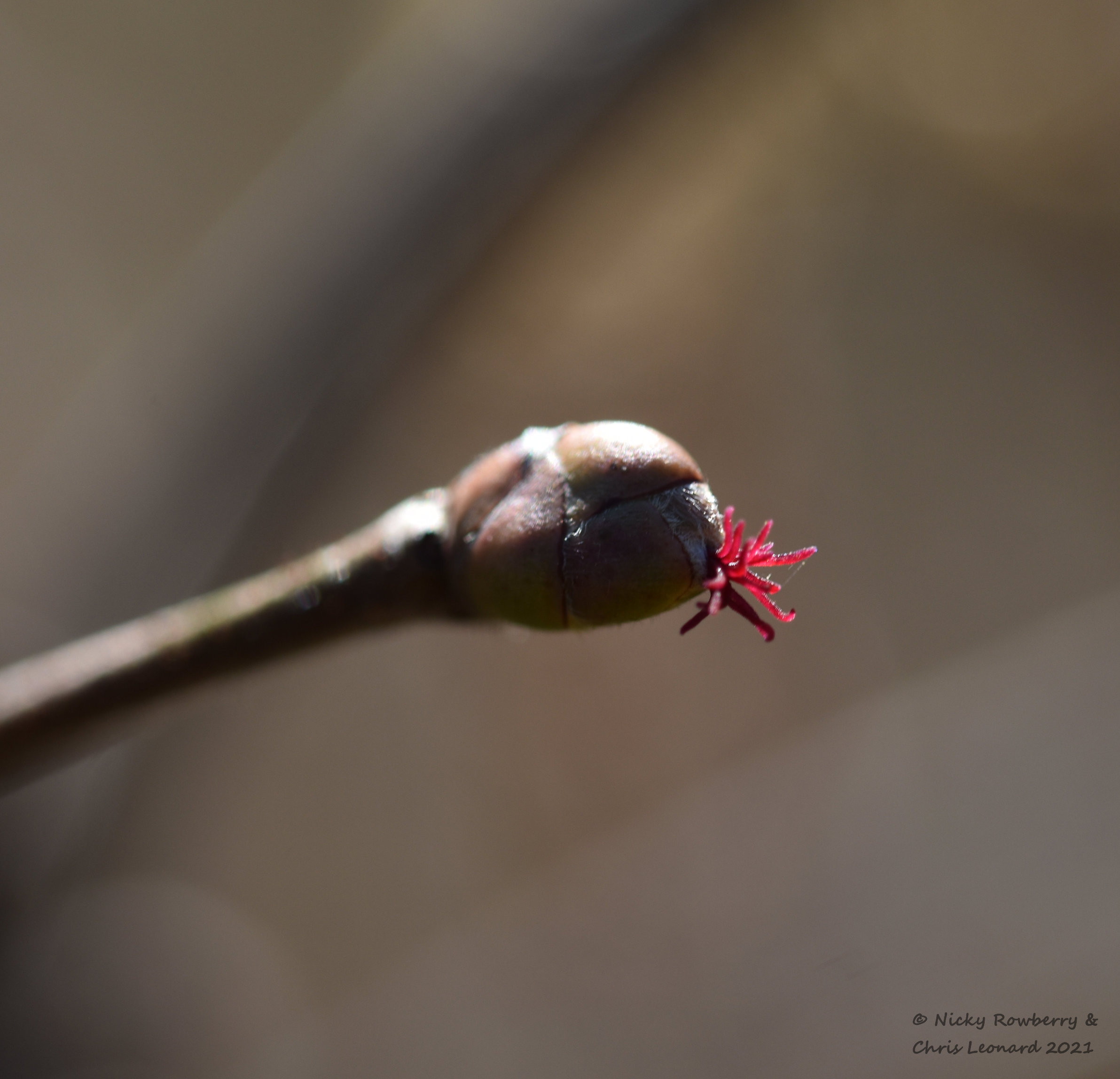
A surprise this year was to find that we have a Hazel tree. The little sapling has just appeared amongst the bushes – we can only guess that perhaps the squirrel buried a nut and then forgot about it. Having never known anything about catkins, I discovered that the trailing flowers I was familiar with were just the males and that there were much smaller red flowers that were the females. I had to go back out and search over our tiny tree, but sure enough there were female flowers too – you learn something new every day! The red female flowers are tiny in comparison and barely noticeable. 

Hazel male catkins (1)


Hazel female flower

The pond has been attracting a fair amount of non-insect life too. The birds as always using it for drinking and bathing – I was particularly pleased that our resident wren got caught on camera even if it was for just a second.

A couple of our hedgehogs have emerged early from hibernation and have been seen drinking from the pond most nights. It’s always a relief to know they have survived the winter.

But the BIG news is that we have frog spawn! The first spawn appeared on 20th February, followed by another clump the next day, then 2 more clumps three weeks later. Here’s the first beautiful batch. Frog spawn day 1

I’ll do a full froggy post soon, as I’ve taken too many photos and videos to include in this one. So despite what Google and my Dad said, for me spring began on 20th February with the glistening sight of our first frog spawn.

2020 – The Year of the Pond

Well there are probably lots of ways to describe 2020, but most of those aren’t repeatable on what tries to be an upbeat blog. So I will gloss over the obvious and instead try and focus on the many good things that happened in the last year.

First and foremost was that we finally managed to put in a new pond. The timing for this couldn’t have been better – the pond went in during February and of course in March we went into lockdown. Having the pond to sit by and watch develop through those long months was a real sanity-saver. It was amazing how quickly the wildlife moved in and as it matures I’m sure it will only get better.

A real highlight and sense of achievement came at the end of May when George, the Eyed Hawkmoth I’d reared from an egg, finally emerged. I’d been nurturing him for 10 months since I’d found the egg in the moth trap and so I felt like a proud mum when he emerged and flew off into the night. Hopefully there will be sons and daughters of George in flight this summer too.

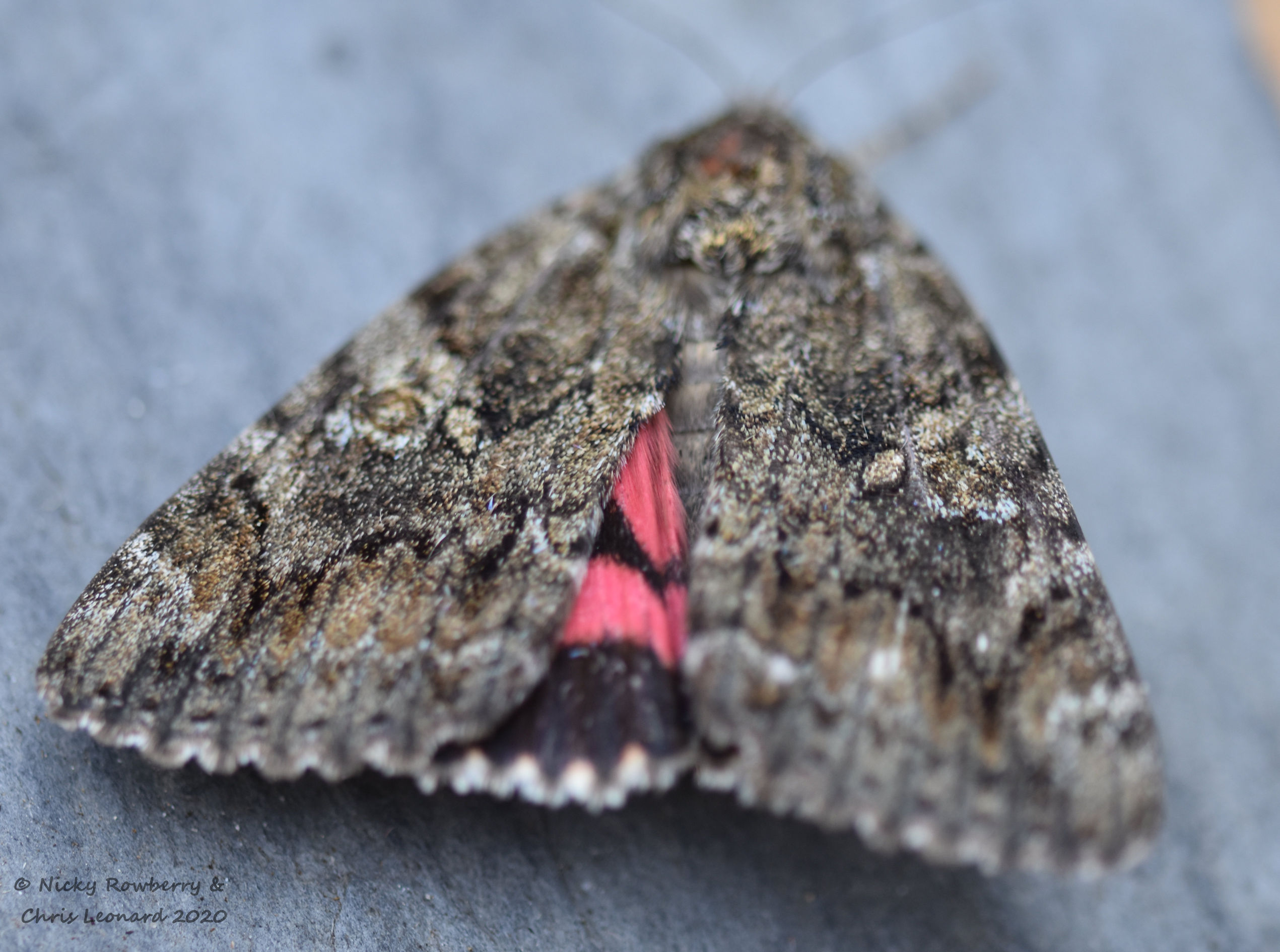
Another moth related achievement was the creation of our Moon Garden – an area planted specifically to attract moths. And it worked. 39 new moth species were recorded, bringing the running total for the garden to 405. Best of all it attracted a Dark Crimson Underwing – believed to be the first record for this species for the whole of the West Midlands.

2020 turned out to be a good year for butterflies too. Between lockdowns, we managed to add 2 more species (Silver-spotted Skipper and Black Hairstreak) in our mission to see all the British butterflies. We also noted 2 new species for the garden (Silver-washed Fritillary & Brown Argus), although this was more by luck than good management.

The new bee hotels provided lots of interest and again we added 2 species to our garden count (Willughby’s Leafcutter and a Sharp-tailed Bee). Being able to watch both Red Mason & Leafcutter bees build their nests in the tubes was really fascinating.

Despite lockdowns, we still managed to take part in various citizen science projects – including Big Butterfly Count & Garden Moth Scheme. A new project this year is the Slugs Count project.  This is a monthly survey of the garden for slugs and it’s been great (trying) to get to grips with a whole new group.

As I do every year, I’d made various wildlife resolutions at the start of 2020. Of course back in January none of us had any idea of how the year was going to turn out! Not surprisingly the Covid imposed restrictions had an impact on some of my resolutions, but at least this year I’ve got a really good excuse for not completing them all! So here were last year’s targets:

  • New pond – well at least we smashed this one. Many thanks to Gwyndaf the Cycling Gardener who was the one who did all the hard work digging, while we sat back and reaped the rewards.
  • Create a Moon Garden. I think we pretty much nailed this one too. The Moon garden was a big success both aesthetically and for the moths.
  • See 2 more species of British Butterfly. For a while it seemed touch and go whether we would achieve this one. Our planned trip to Norfolk to see the Swallowtails was of course cancelled, but in the end we did manage 2 other species (always good to have a plan B). So we’ve now seen 52 of the 58 species.
  • Visit 5 new nature reserves. I think we only managed 2 new ones (Glapthorne Meadows and Aston Rowant NR), but then many of the nature reserves were closed to the public during the lockdowns, so I figure we have an excuse.
  • Go rockpooling. Had hoped to do this one in Norfolk, but of course that went out the window. Not much scope for rockpooling in Worcestershire, so this one will have to get bumped to next year.
  • Go and see some wild Ospreys. Again we were thwarted by Covid. I had hoped to go up to see the Dyfi Ospreys, but for a large part of the year we’ve not been allowed into Wales!
  • The moth tattoo! I genuinely thought this would be the year I’d get a moth tattoo – I’ve even decided it should be of George the Eyed Hawkmoth. But of course tattoo parlours were one of the first things to get closed down – so that’s my excuse at least.

So to New Year’s Resolutions for 2021. Covid may continue to thwart our efforts, but we can at least hope to enjoy as much wildlife as possible.

  • Try and video a dragonfly emerging from the pond. We had lots of dragonfly/damselfly egg laying activity in the new pond last year, so hopefully I can catch some of them emerging in the summer.
  • Expand the moon garden – it’s been great so far, but I’m hoping to double the area.
  • See 2 more species of British Butterfly. We’ve now seen 52 of the 58 species, but we’re having to go further and further afield to see the remaining ones. Fingers crossed we can see the Swallowtail in Norfolk at least this year.
  • Visit 5 new nature reserves.
  • Rockpooling. Again fingers crossed we make it to Norfolk for this.
  • Go and see some wild Ospreys – if we’re allowed back in Wales!
  • The moth tattoo!

If 2020 has taught me anything it is that I am very grateful to have a wildlife filled garden and that I am lucky it brings me so much pleasure. It must be awful for those who didn’t get the chance to enjoy wildlife this year, but then I think it would be awful in any year not find joy in the nature that is all around us if we take the time to look.