Butterfly No. 53!

Thanks to Covid, butterfly no. 53 has been the longest in planning of all the butterflies we’ve seen so far. We had originally planned to go on holiday for a week in Norfolk last June and had booked the accommodation way back in 2019. But of course that all got postponed and then our original booking got cancelled as they sold the property, so we had to find an alternative. Fortunately we managed to book a fantastic house in the middle of the Norfolk Broads and finally got the chance to go in search of the Swallowtail butterflies.

The Swallowtail is the UK’s largest butterfly and an absolute stunner. It looks far too exotic to be found here, so it’s one we’ve wanted to see for a long time. Swallowtails can pretty much only be found in the UK in the Norfolk Broads, where their caterpillars’ food plant – milk parsley grows. We visited Hickling Broad on what turned out to be World Swallowtail Day (purely by chance had we booked our holiday to coincide with this) and went on a short guided boat tour. Our guide very kindly pointed out some of the milk parsley – a fairly non-descript, carrot-top like plant, which we would never have noticed otherwise.

milk parsley

We glimpsed a few swallowtails from the boat, but most of our sightings were on foot – staking out the reed beds and waiting. We were not alone – half a dozen other keen swallowtail watchers were also risking the baking mid-day heat to get a glimpse and hopefully a photo or two.

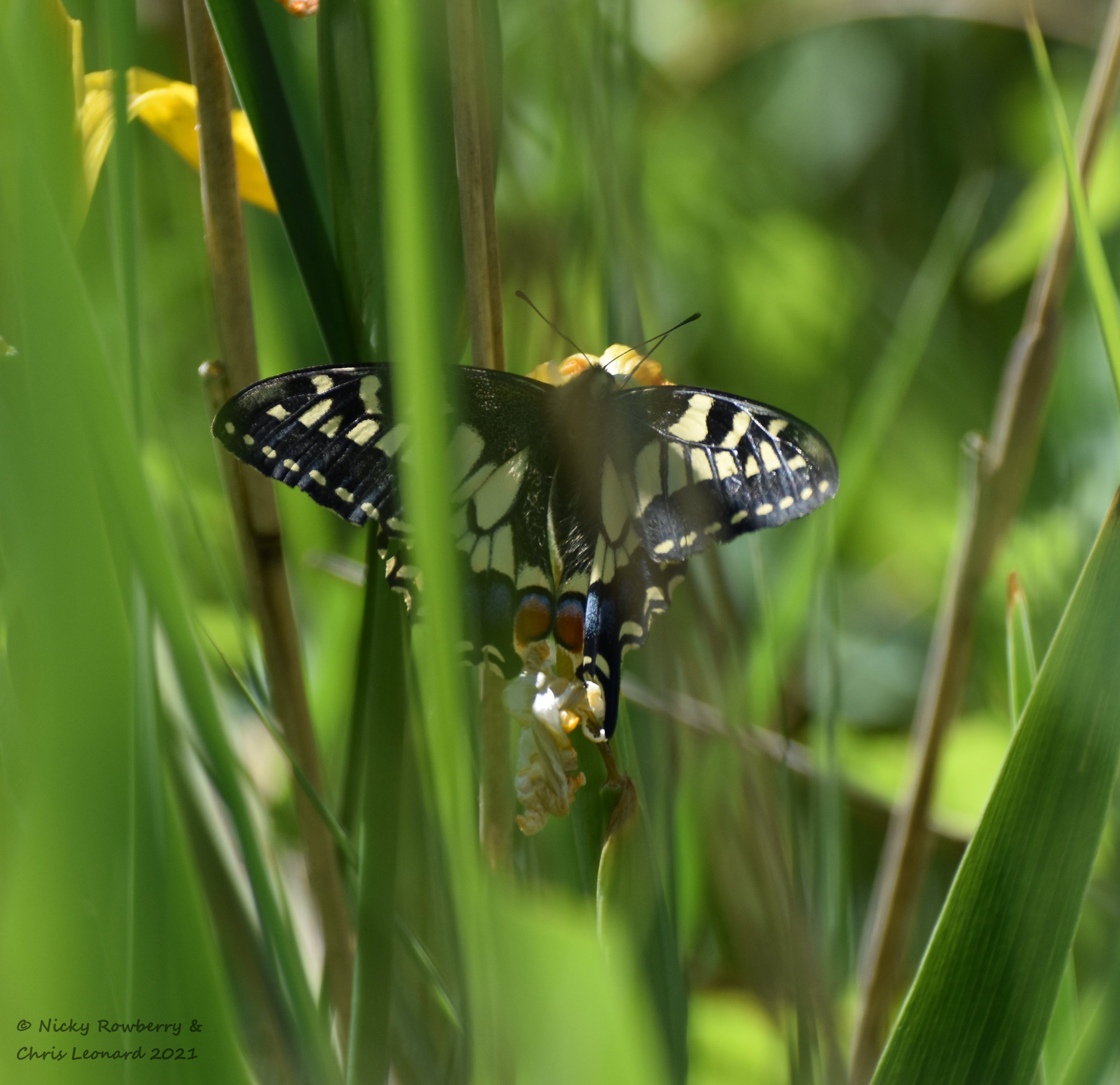
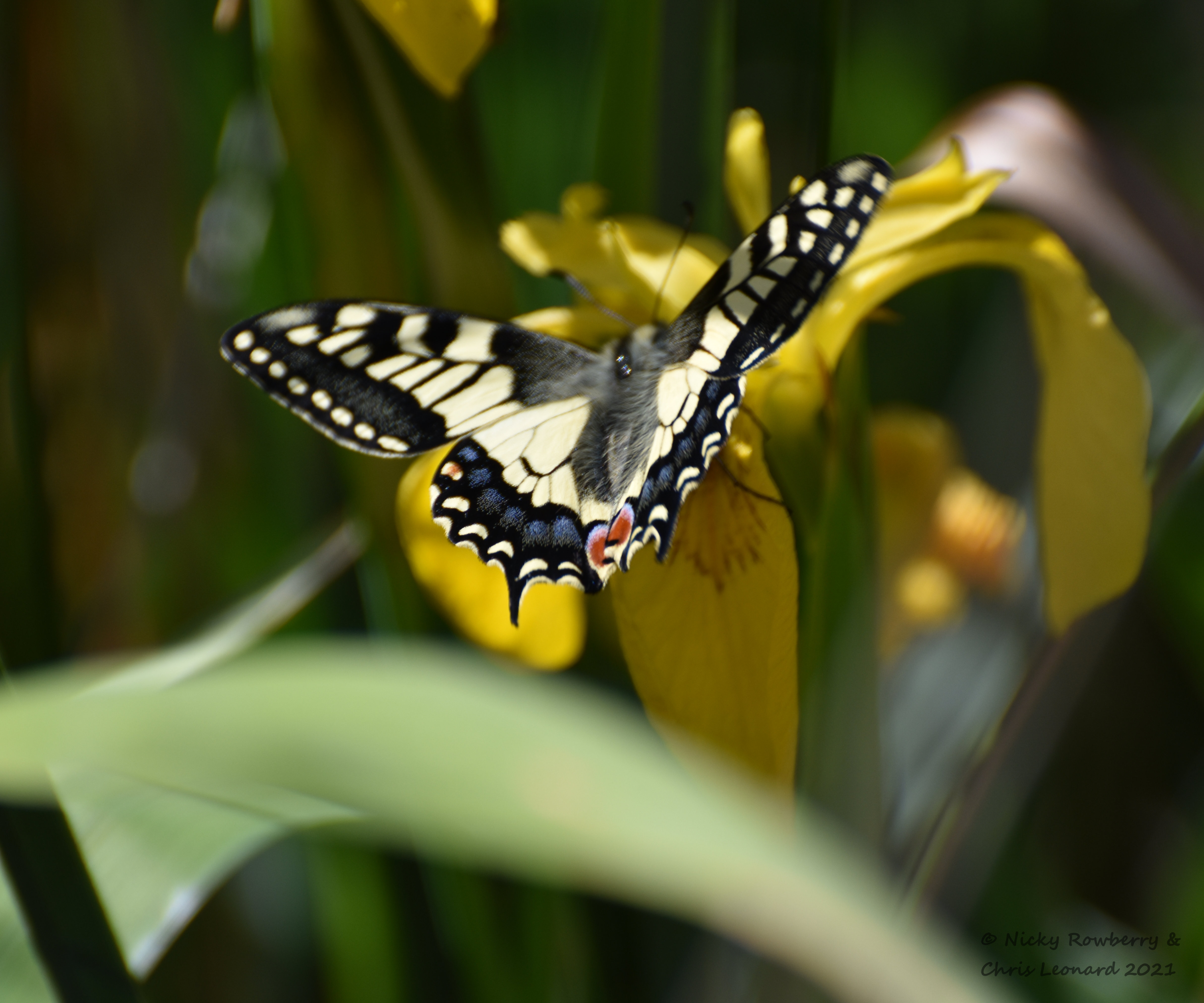
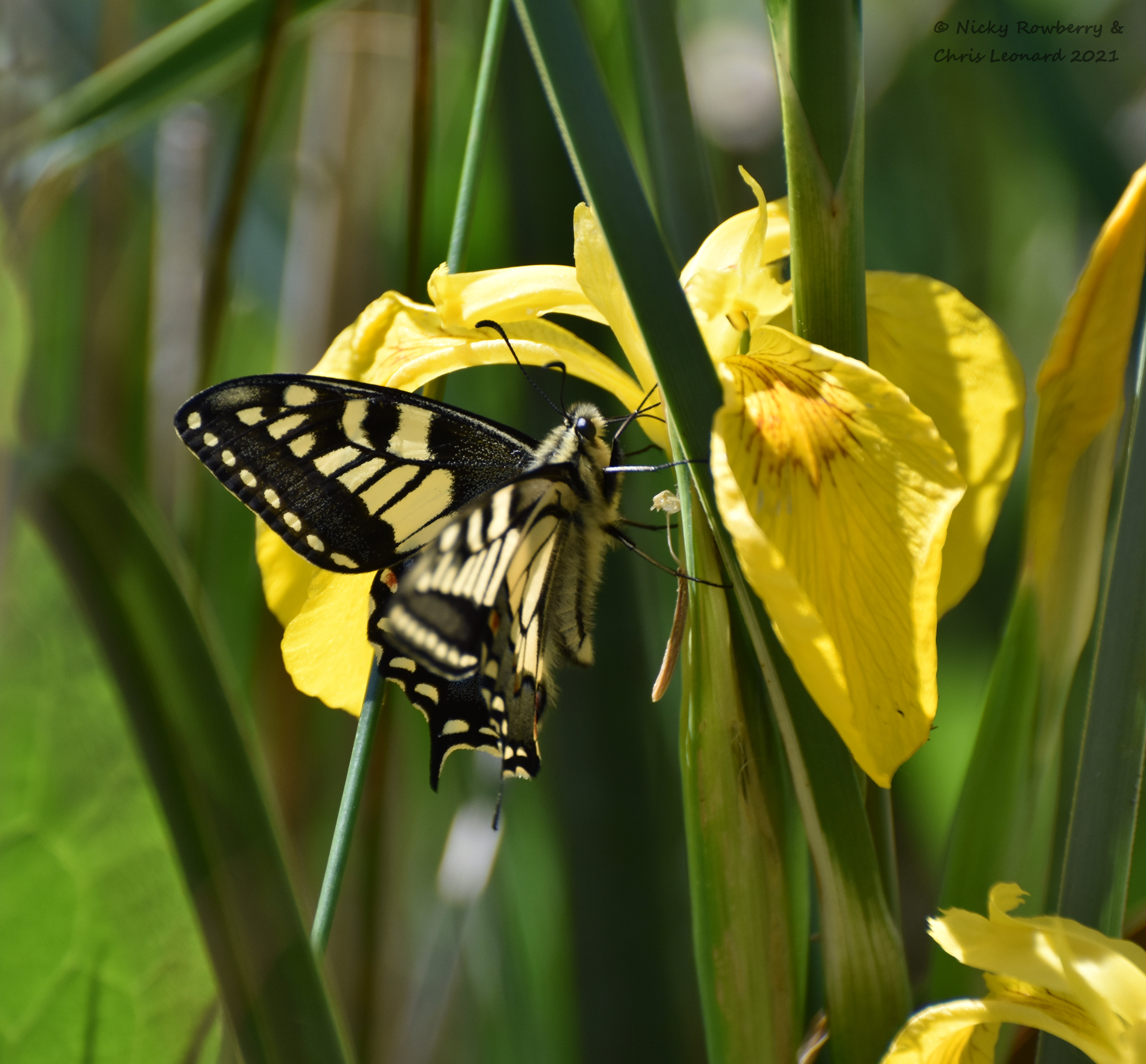
Photographing moving butterflies in reed beds is not an easy task. As with so many other wildlife photos we try to take, there is always a blade of grass or in this case a reed in the way. So we never got what I’d call a perfect shot, but we did at least get some recognisable ones. So amongst the hundreds of reedy photos we took, here are some of the best:
swallowtail

swallowtail (5)


swallowtail (3)

swallowtail (2)

swallowtail (1)

They may not be award-winning snaps, but you can at least see the “tails” which give them their name. As we started to head back around the reserve, a couple of butterflies chose to fly up and perch on tall blades above the general reed bed. Unfortunately we were the wrong side really, but still got stunning views of the underside of the butterfly.

I’d hoped to get a shot of one in flight – if photographing them in the reed beds was difficult, capturing them in flight was impossible, so I had to settle for what I’d got.

Our trip to Hickling Broads was on the first full day of our holiday, so to see the Swallowtails then was great as it meant we could relax for the rest of the week and any further sightings were a bonus. It would have been nice to get some slightly better photos, but just seeing them was a delight. If it hadn’t been for the baking heat, we could happily have just sat for hours watching them glide about. Proof if ever any was needed that you don’t have to go abroad to see stunning wildlife.

Another Bee Blog

I’ve not managed to blog much lately, but rather than it being for lack of things to blog about, there’s almost been too much. There’s a lot going on in the garden at this time of year and I get distracted far too easily! Bees, moths, dragonflies, tadpoles – I spend so much time watching them all, I don’t quite get round to writing about them. But it’s a nice problem to have and much better than having an empty garden devoid of wildlife!

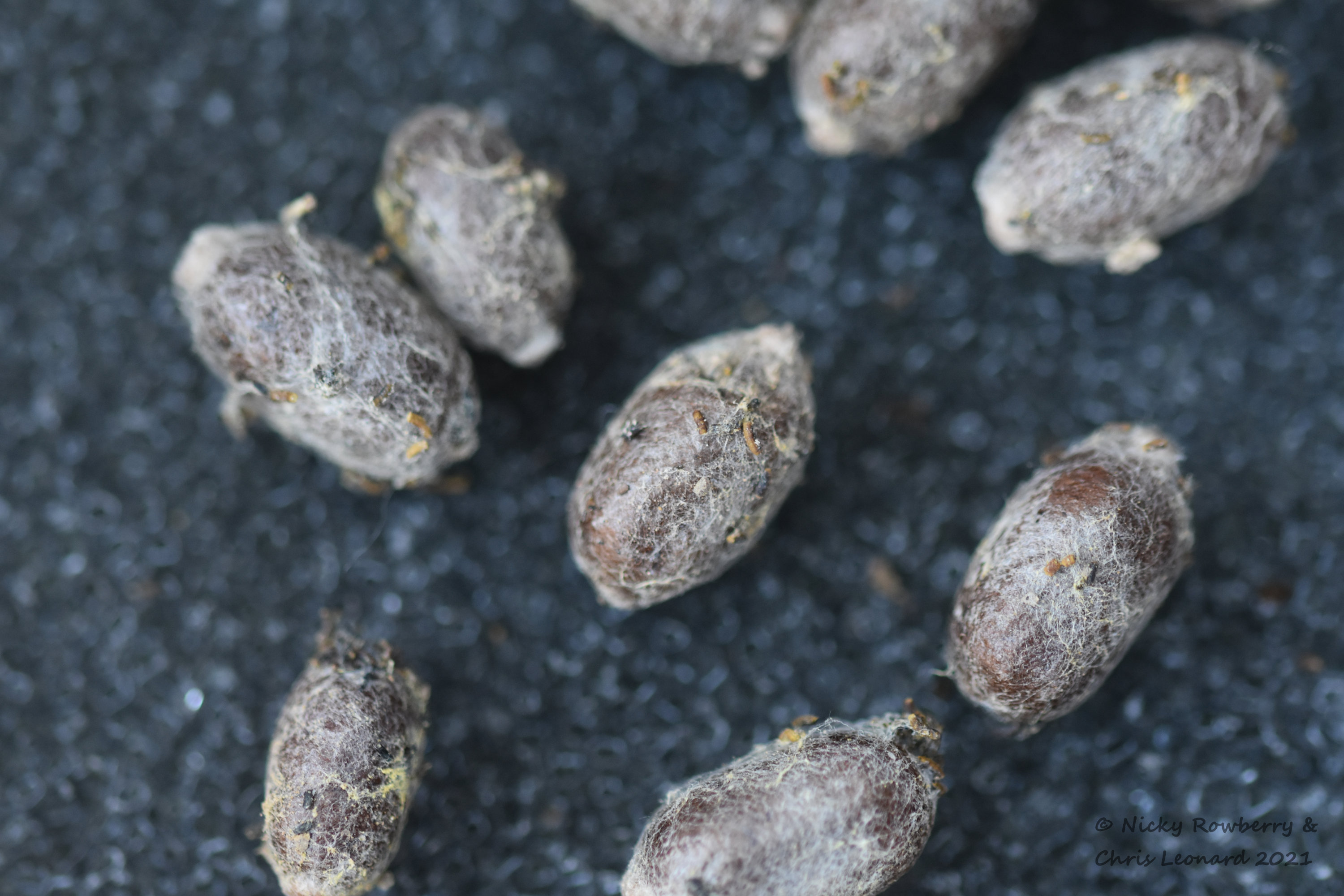
Anyway I’ve finally managed to collate some photos of this year’s red mason bees. I blogged about these bees last year (Bee ‘n’ Bees | Too Lazy To Weed) so this kind of follows on with their story. Last year I’d bought a super-duper new bee hotel with viewing windows. At the end of last summer I was left with a number of the tubes in the hotel filled with red mason bee cocoons, all neatly separated by their little mud walls.

Red mason cocoons in house

In February this year I removed the cocoons to allow me to clean out the chambers for reuse. The cocoons were safely stored in a special storage container, before being put out in the release chamber of the bee hotel, ready for them to emerge when conditions were right for them. It was fascinating to see these perfect little bundles, knowing they contained the next generation of red mason bees.

red mason cocoons

The bees started emerging in April, leaving behind their empty cocoons.

empty cocoons

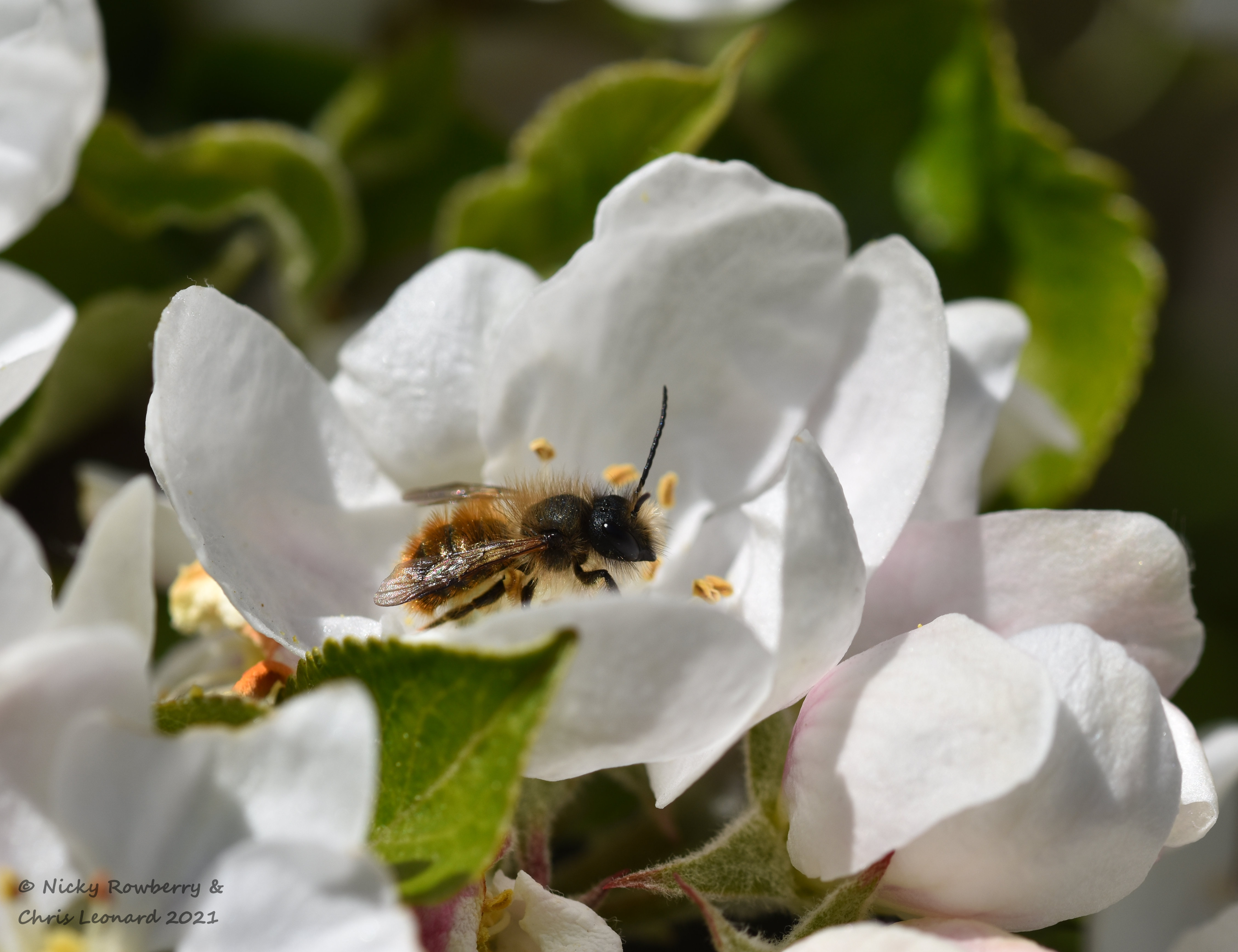
The males tend to emerge first and hang around waiting for the females. Their emergence coincides with the apple blossom, which is always alive with bees of all kinds, including the red masons.

red mason


red mason in blossom

When the females start to appear, the males go crazy buzzing round the hotels trying to be the first to mate. On some sunny days it was a real frenzy around the hotels.

The mating pairs often drop to the ground to “continue their business”, so we have to be very careful where we tread when walking passed the hotels.

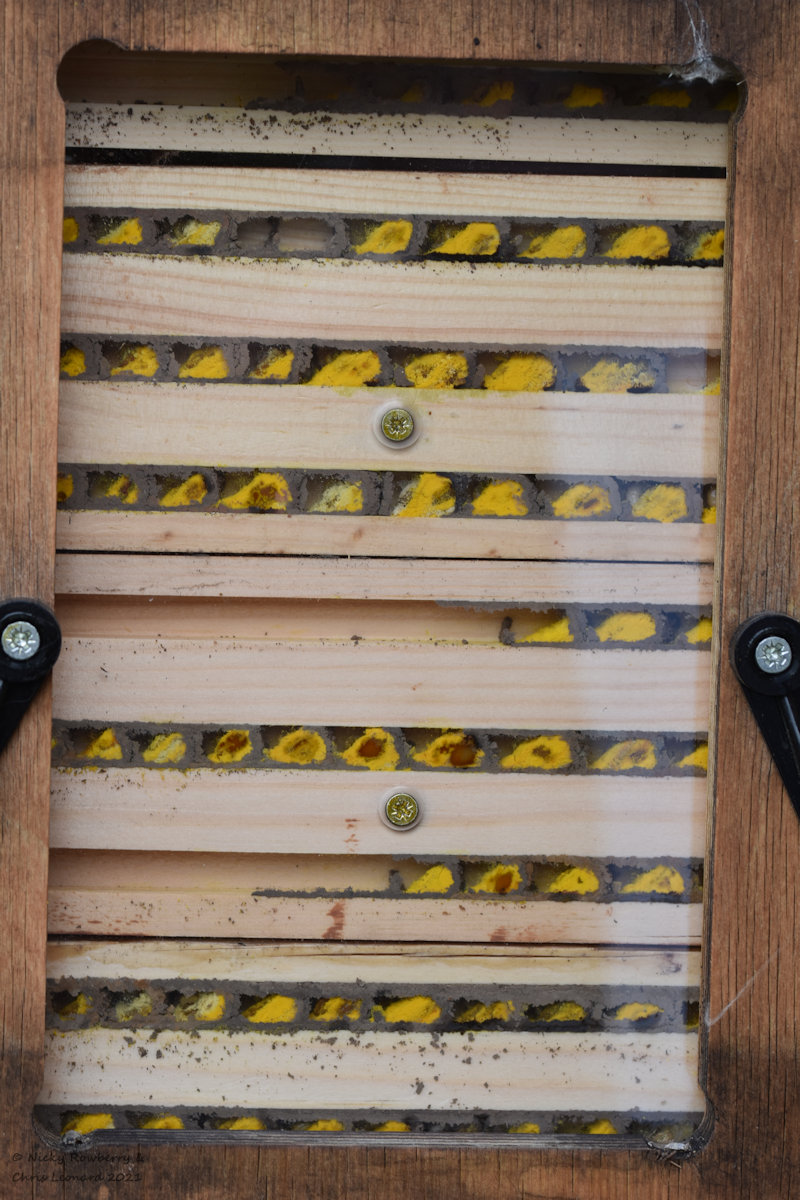
Once mated the females start filling up the bee hotels with the next generation. Each egg is provisioned with fresh, bright yellow pollen and sealed in its little mud chamber.

almost full

full mason bee house

The female carries the pollen in a “pollen brush” consisting of hairs on the underside of her abdomen. She then uses her legs to scrape the pollen off the brush and deposit it in the new cell.

There are still a few females about, but the bee hotels are almost full and it’s coming to the end of their season. At the moment there are plenty of developing bee embryos, so the garden should be buzzing with red mason bees again next spring. One slight cloud (albeit a very pretty cloud) on the bee horizon is the presence of ruby-tailed wasps. These wasps parasitize the bee nests, laying their own eggs in there when they get the chance. There have been quite a few of these gorgeous looking wasps around this year, but hopefully the bees have laid enough eggs to spare a few for the wasps.

ruby tailed wasp

Knapp Time

Lovely weather at the weekend, so we set out with great intentions of visiting a new (to us) nature reserve. Our chosen spot was a small wood not far away – unfortunately this wood only has a tiny car park and others clearly had the same idea. With nowhere to park, we headed back to our perennial favourite – the Knapp and Papermill Nature Reserve. We didn’t manage to get there last year so it was a very welcome “Plan B”.

In the wooded areas we were treated to our first banks of bluebells for the year, looking fabulous in the dappled light.

bluebells

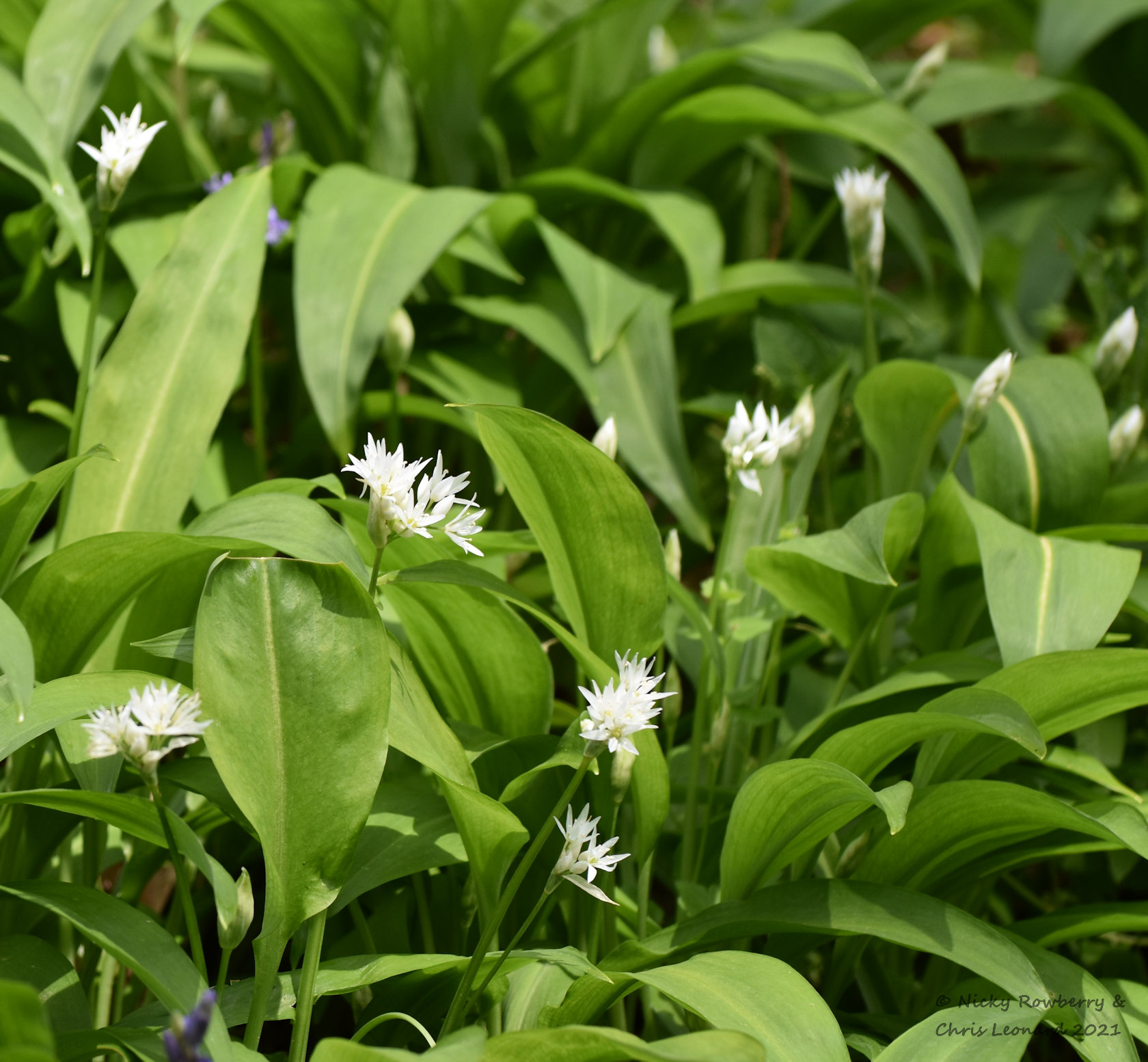
The smell of garlic was heavy in the air in places, with banks of Wild Garlic just coming into flower.

wild garlic 2

Lesser celandines, wood anemones and primroses completed the spring flower array. A plant we don’t see so often was the Butterbur. I always think the Butterbur flowerheads look slightly alien. The leaves in the summer grow huge and were apparently used to wrap butter before the invention of fridges!

butterbur

We’d hoped for some spring butterflies to complement the spring flowers and we weren’t disappointed – 6 species at least – Peacocks, Small Tortoiseshells, Commas, Holly Blues, Brimstones and Orange-Tips. The Orange-Tips really signal spring to me. We only saw males – hard to miss with their bright orange tipped wings. They were particularly prevalent around the cuckooflowers, a favourite food for their caterpillars.

There were buzzards overhead and what I thought was some weird loud bird in the woods, until we decided it was actually a deer calling! Slightly more recognisable were the calls of blue tits and chiffchaffs, although we never actually saw the latter and a pair of blackcaps.

Further upstream a Grey Wagtail was bobbing about around the weir. The weir seems to be a favourite spot for them to catch insects washed down the slope and we see wagtails here on most visits.


Happy Birthday Pond

Our pond is one year old! It’s been quite a year (in more ways than one!) but the pond has been a huge success for the wildlife and for us in terms of a calming presence in an otherwise stressful year. So in a year the pond has gone from this:

to this:

It’s looking pretty well bedded in now, although there are still a few bare spots where the lining is showing that I need to sort.

The wildlife has been abundant. We’ve had frogs and newts – the newts in particular doing really well with possibly hundreds of baby newts hatched.

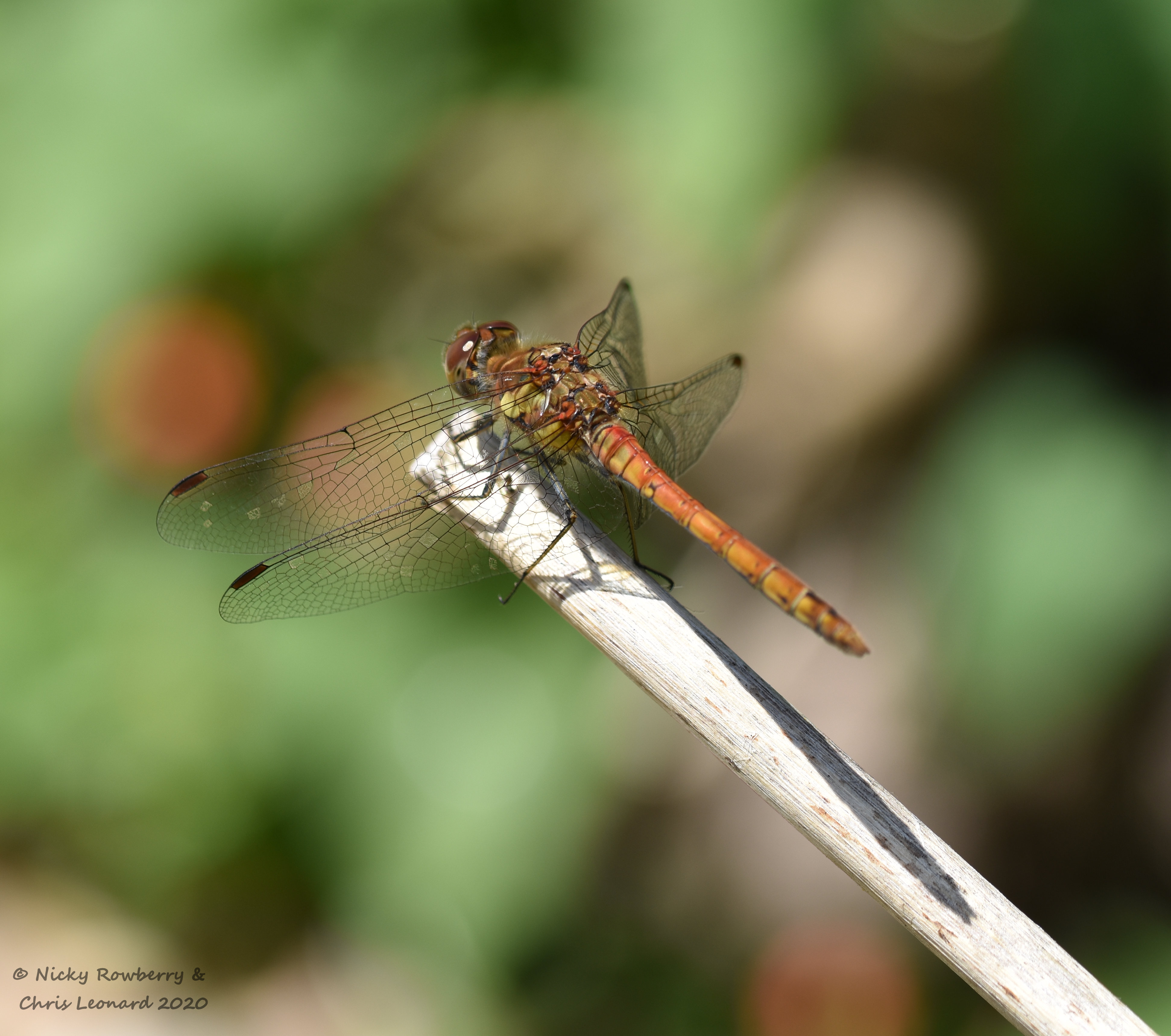
There’s been plenty of insect activity with beetles, pond skaters and dragonflies quickly moving in.  9 species of dragonfly/damselfly have found their way to the pond already, which is amazing.

As well as the insects we had perhaps anticipated or hoped for, there were others more surprising like moths – this Meadow Longhorn spotted on the marginal plants.

The birds have been making good use of the pond for bathing and hedgehogs, squirrels and the neighbours’ cats have all been seen drinking from it.

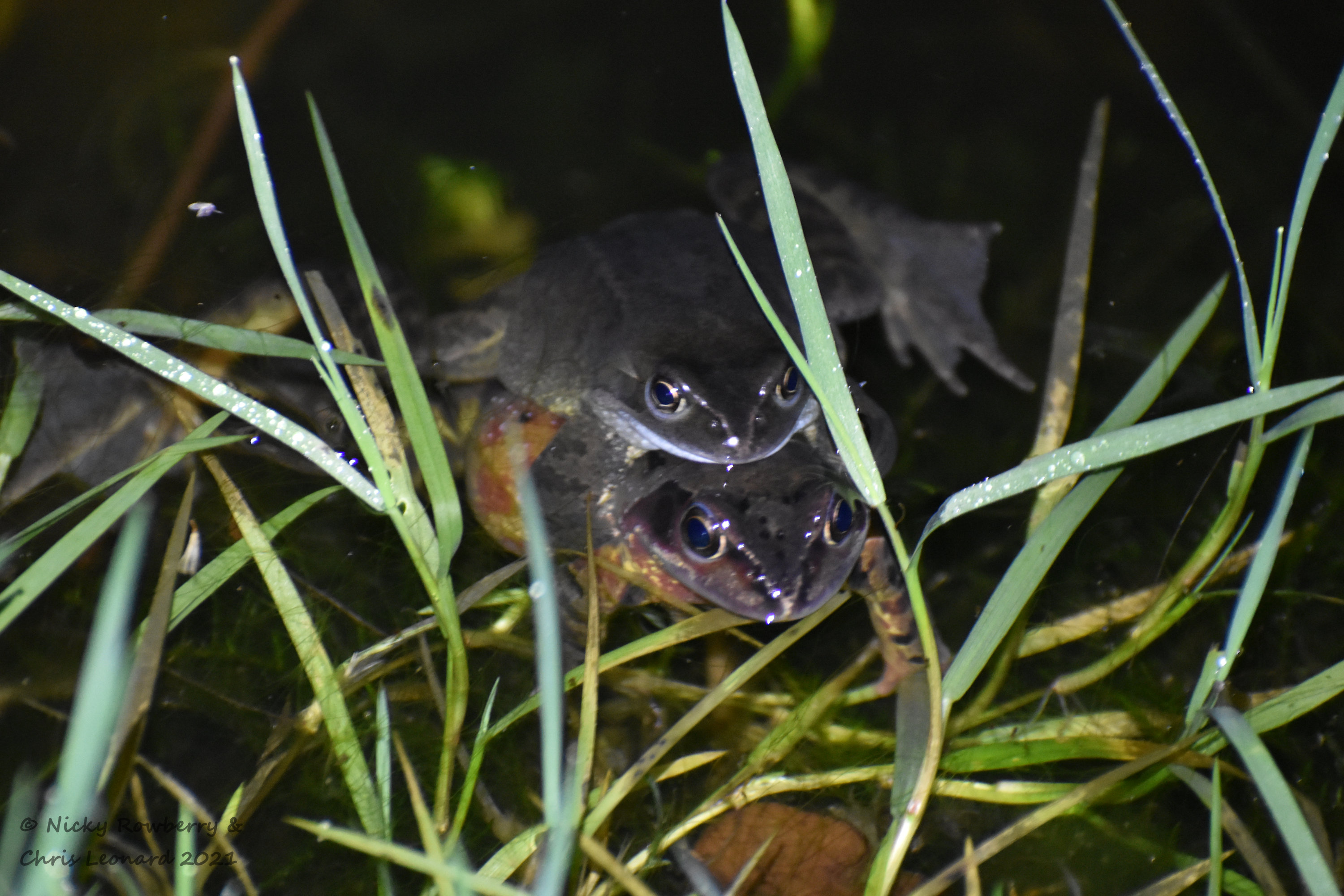
The only slight disappointment with the pond last year was that we didn’t get any frog spawn; but the pond was so new at spawning time it was perhaps not surprising. Will we get any this year? Well nothing yet, but it’s looking promising. This pair of frogs in an amplexus embrace have been seen for several nights – so fingers crossed.

So Happy Birthday to our pond. May the coming year bring you (and us) lots more wildlife encounters.

Big Garden Birdwatch 2021

Another year, another lockdown; or more cheerily – another year, another Big Garden Birdwatch! The perfect thing to do for an hour when you can’t leave home.

Saturday it pretty much poured with rain all day, so today seemed like a better birding day. It was still bloomin’ cold sitting there though for an hour and my derrière was pretty numb by the time I finished.  Still it was worth it to record a very respectable 34 individuals of 12 species.

Top of the abundance was, as usual, the house sparrow. I  counted at least 12 in one go, although I’m sure we actually have more than that. Joint second were the blackbirds and jackdaws – 4 of each. I can’t tell the difference between male and female jackdaws, but for the blackbirds there was one female and at least 3 males.

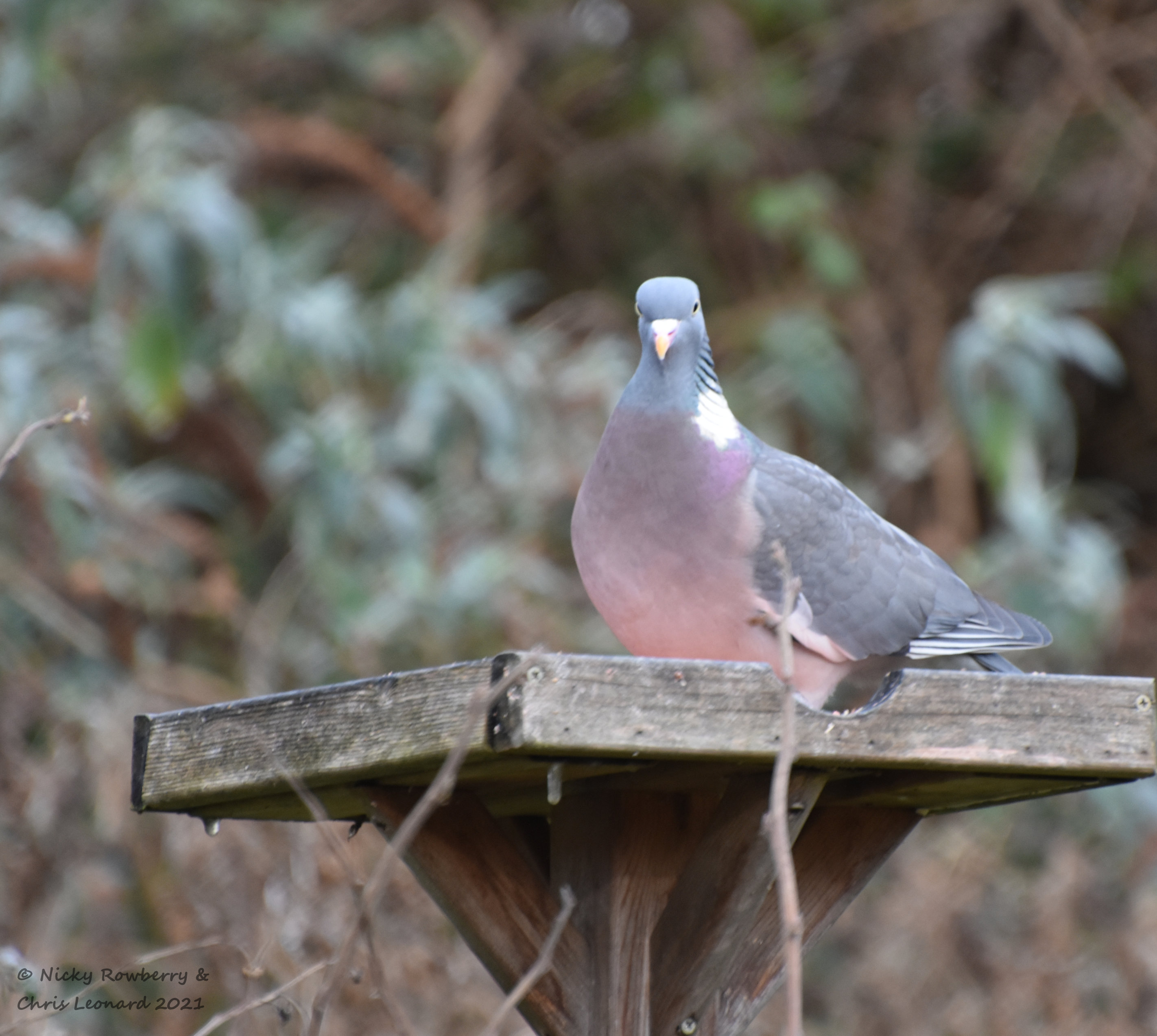
Most of the rest arrived in pairs – goldfinches, great tits, collared doves, wood pigeons, starlings and magpies, although I only seemed to manage to get photos of them one at a time.

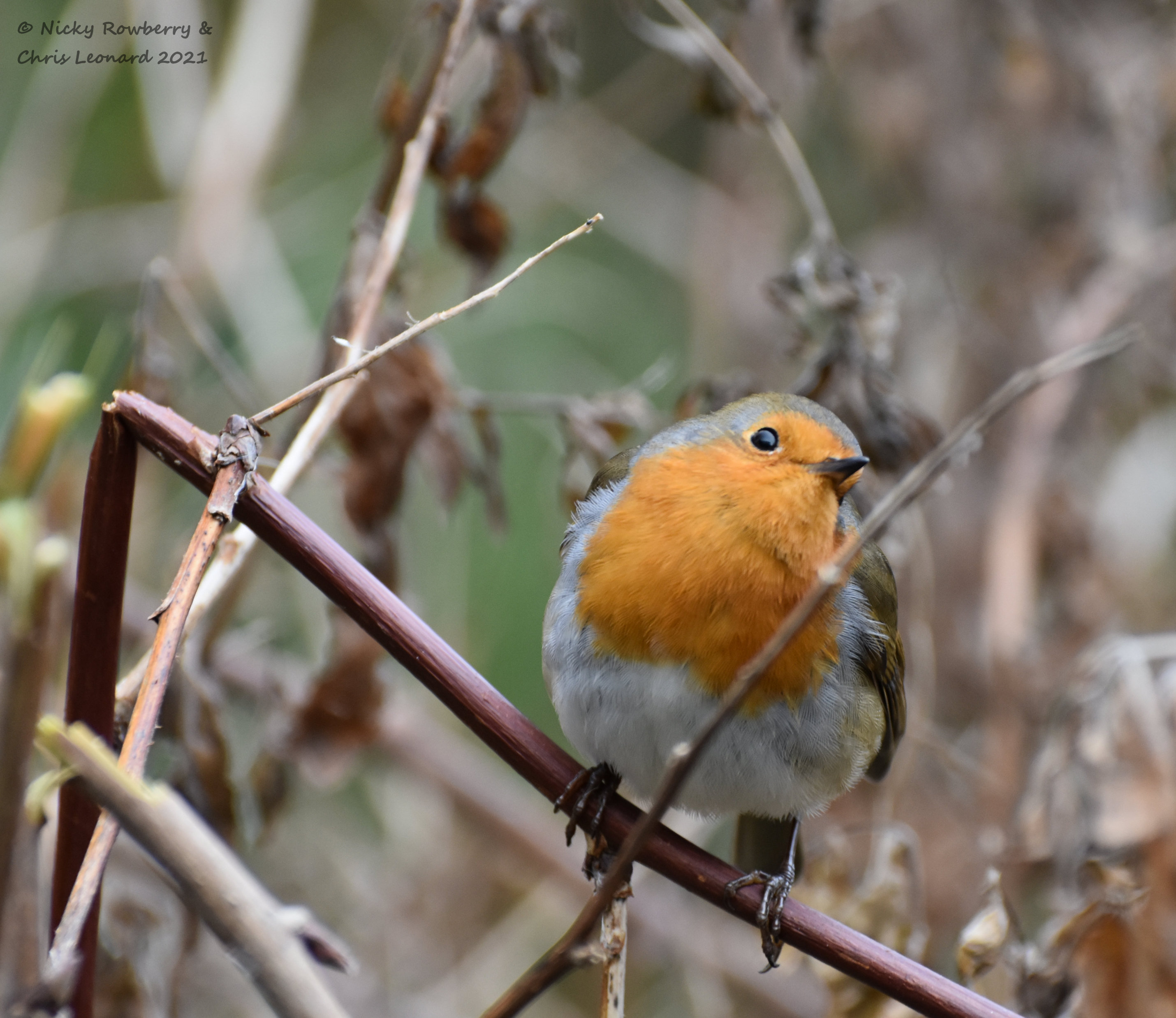
And then there was a singleton blue tit, dunnock and robin. The robin was the most sociable of the whole bunch. He even landed on the camouflage netting right by my head – too close to even get a photo. As if sensing that he might be missing his photo op, he then obligingly hopped down to some stems in front of me and posed so I could get his good side. Of course there was still a twig in the way – isn’t there always?

The (almost) highlight of the whole hour came near the end when I think a sparrowhawk zoomed across the garden after a small bird. Unfortunately it all happened so fast that I couldn’t be sure that’s what I saw and I almost got tangled in the camouflage netting in my haste to stand up and get a better look. So although I’m about 80% certain it was a sparrowhawk, I wasn’t sure enough to include it in my birdwatch results. So close!

A bit disappointed that our wren didn’t put in an appearance, nor the long-tailed tits. And really disappointed that our male blackcap was a no-show too. He’s been pretty much resident outside our patio doors for the last 3 weeks, but today of course he chose to have the morning off. Just to prove it, here he is from a few weeks ago.

Submitting my data took a few goes as the RSPB website seemed to be struggling. Hopefully that’s a good sign and means lots of people have been doing the count.

Success in the end though and nice to know I’d contributed in a small way to another bit of citizen science. Talking of which, tonight happens to be my next slug collection night for the Slug Count project. It’s all go!

2020 – The Year of the Pond

Well there are probably lots of ways to describe 2020, but most of those aren’t repeatable on what tries to be an upbeat blog. So I will gloss over the obvious and instead try and focus on the many good things that happened in the last year.

First and foremost was that we finally managed to put in a new pond. The timing for this couldn’t have been better – the pond went in during February and of course in March we went into lockdown. Having the pond to sit by and watch develop through those long months was a real sanity-saver. It was amazing how quickly the wildlife moved in and as it matures I’m sure it will only get better.

A real highlight and sense of achievement came at the end of May when George, the Eyed Hawkmoth I’d reared from an egg, finally emerged. I’d been nurturing him for 10 months since I’d found the egg in the moth trap and so I felt like a proud mum when he emerged and flew off into the night. Hopefully there will be sons and daughters of George in flight this summer too.

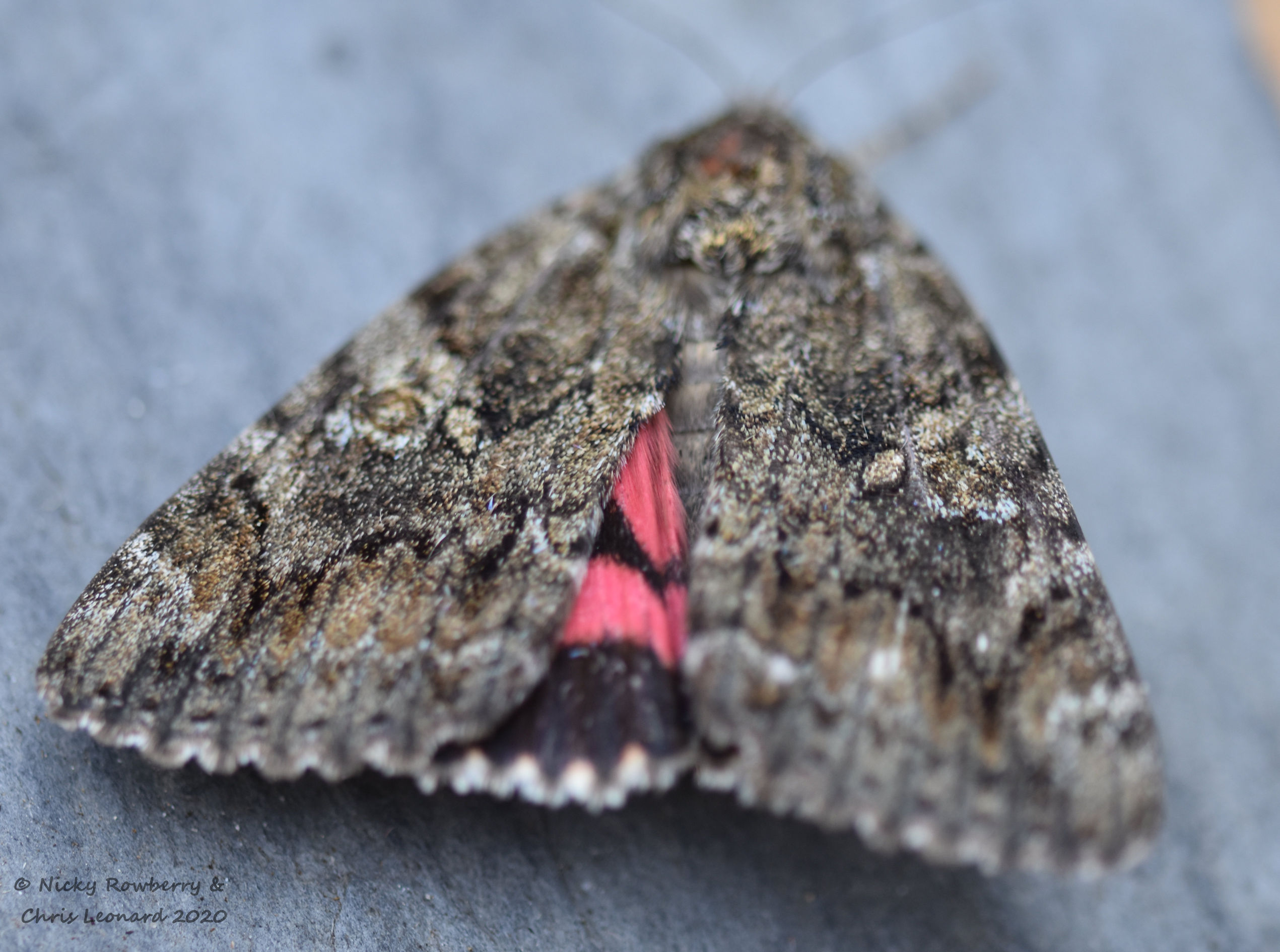
Another moth related achievement was the creation of our Moon Garden – an area planted specifically to attract moths. And it worked. 39 new moth species were recorded, bringing the running total for the garden to 405. Best of all it attracted a Dark Crimson Underwing – believed to be the first record for this species for the whole of the West Midlands.

2020 turned out to be a good year for butterflies too. Between lockdowns, we managed to add 2 more species (Silver-spotted Skipper and Black Hairstreak) in our mission to see all the British butterflies. We also noted 2 new species for the garden (Silver-washed Fritillary & Brown Argus), although this was more by luck than good management.

The new bee hotels provided lots of interest and again we added 2 species to our garden count (Willughby’s Leafcutter and a Sharp-tailed Bee). Being able to watch both Red Mason & Leafcutter bees build their nests in the tubes was really fascinating.

Despite lockdowns, we still managed to take part in various citizen science projects – including Big Butterfly Count & Garden Moth Scheme. A new project this year is the Slugs Count project.  This is a monthly survey of the garden for slugs and it’s been great (trying) to get to grips with a whole new group.

As I do every year, I’d made various wildlife resolutions at the start of 2020. Of course back in January none of us had any idea of how the year was going to turn out! Not surprisingly the Covid imposed restrictions had an impact on some of my resolutions, but at least this year I’ve got a really good excuse for not completing them all! So here were last year’s targets:

  • New pond – well at least we smashed this one. Many thanks to Gwyndaf the Cycling Gardener who was the one who did all the hard work digging, while we sat back and reaped the rewards.
  • Create a Moon Garden. I think we pretty much nailed this one too. The Moon garden was a big success both aesthetically and for the moths.
  • See 2 more species of British Butterfly. For a while it seemed touch and go whether we would achieve this one. Our planned trip to Norfolk to see the Swallowtails was of course cancelled, but in the end we did manage 2 other species (always good to have a plan B). So we’ve now seen 52 of the 58 species.
  • Visit 5 new nature reserves. I think we only managed 2 new ones (Glapthorne Meadows and Aston Rowant NR), but then many of the nature reserves were closed to the public during the lockdowns, so I figure we have an excuse.
  • Go rockpooling. Had hoped to do this one in Norfolk, but of course that went out the window. Not much scope for rockpooling in Worcestershire, so this one will have to get bumped to next year.
  • Go and see some wild Ospreys. Again we were thwarted by Covid. I had hoped to go up to see the Dyfi Ospreys, but for a large part of the year we’ve not been allowed into Wales!
  • The moth tattoo! I genuinely thought this would be the year I’d get a moth tattoo – I’ve even decided it should be of George the Eyed Hawkmoth. But of course tattoo parlours were one of the first things to get closed down – so that’s my excuse at least.

So to New Year’s Resolutions for 2021. Covid may continue to thwart our efforts, but we can at least hope to enjoy as much wildlife as possible.

  • Try and video a dragonfly emerging from the pond. We had lots of dragonfly/damselfly egg laying activity in the new pond last year, so hopefully I can catch some of them emerging in the summer.
  • Expand the moon garden – it’s been great so far, but I’m hoping to double the area.
  • See 2 more species of British Butterfly. We’ve now seen 52 of the 58 species, but we’re having to go further and further afield to see the remaining ones. Fingers crossed we can see the Swallowtail in Norfolk at least this year.
  • Visit 5 new nature reserves.
  • Rockpooling. Again fingers crossed we make it to Norfolk for this.
  • Go and see some wild Ospreys – if we’re allowed back in Wales!
  • The moth tattoo!

If 2020 has taught me anything it is that I am very grateful to have a wildlife filled garden and that I am lucky it brings me so much pleasure. It must be awful for those who didn’t get the chance to enjoy wildlife this year, but then I think it would be awful in any year not find joy in the nature that is all around us if we take the time to look.

Miscellaneous Delights

Despite being stuck at home like many people, for much of this year, I don’t seem to have blogged as much as I would have liked. It certainly wasn’t for lack of interest in the garden – having spent an inordinate amount of time sitting out, there was plenty to see. Perhaps there was too much, or perhaps I just couldn’t face being cooped up inside to write. Whatever the reason, I’ve ended up with a lot of interesting (to me at least) snippets, that never saw the light of day. So here’s a miscellany of wildlife moments from the garden this year – they all cheered me up and they deserve their moment!

Most of this will be insects, but there are a trio of mammals making the cut.  Hedgehogs of course featured regularly in the garden. Freda our 3-legged hedgehog from the previous year not only made it through the winter, but produced at least one hoglet. Here she is looking like many mums – slightly harassed by her offspring.


Bats (most likely Common Pipistrelles) have always used our garden as a hunting ground in the summer months. A weed-filled garden tends also to be an insect-filled garden, so there are plenty of moths and other food for them. It may be wishful thinking on my part, but the bats do seem to be coming more frequently now we have the new pond. The pond is surely generating extra insect activity, which hopefully means more bats. I’ve tried with very limited success to film them – this was the best of a shoddy selection of shaky videos. I reckon there are at least 3 bats visible towards the end of the clip.

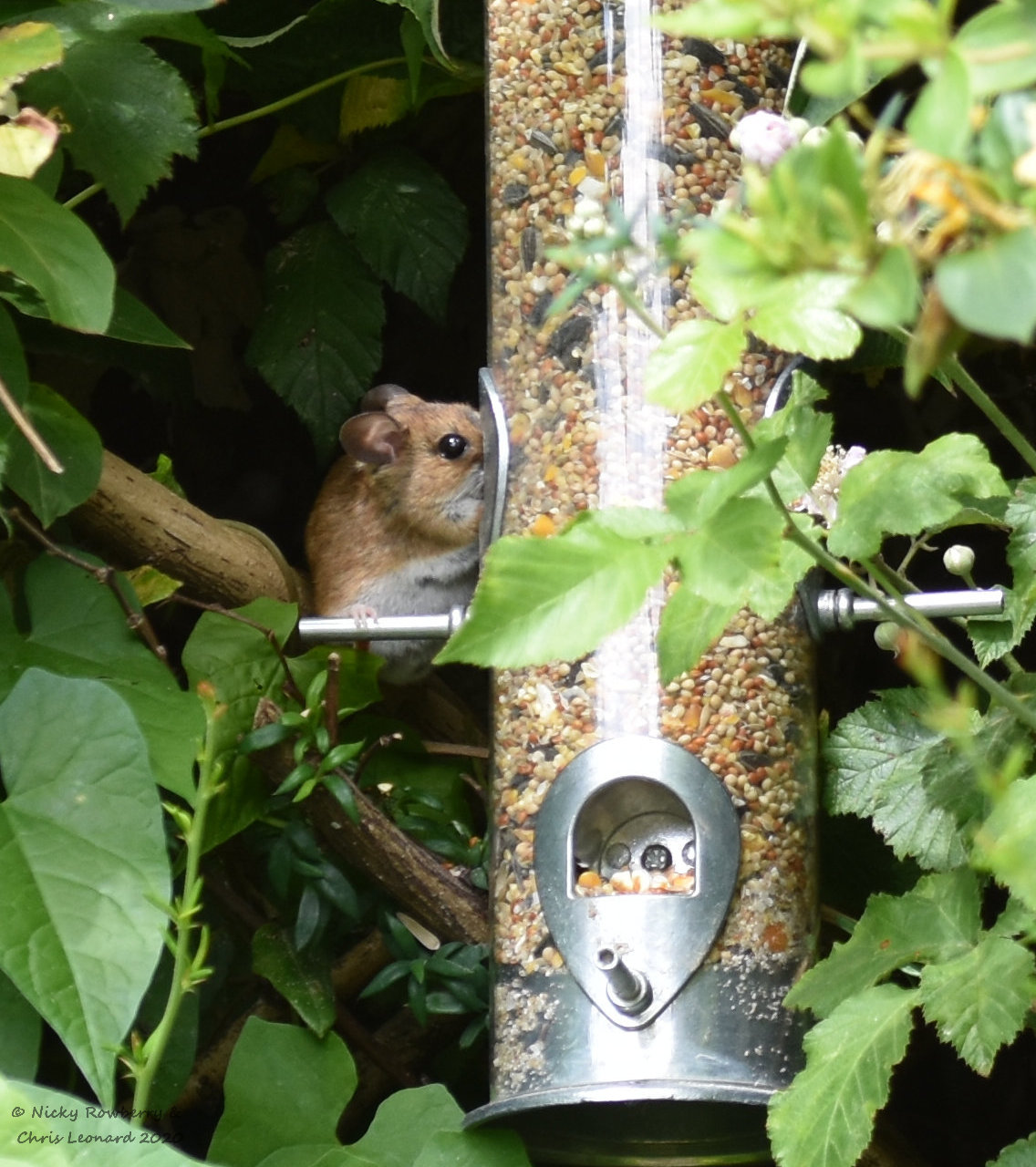
Third mammal is this mouse at the bird feeder, for no other reason than it was so cute.

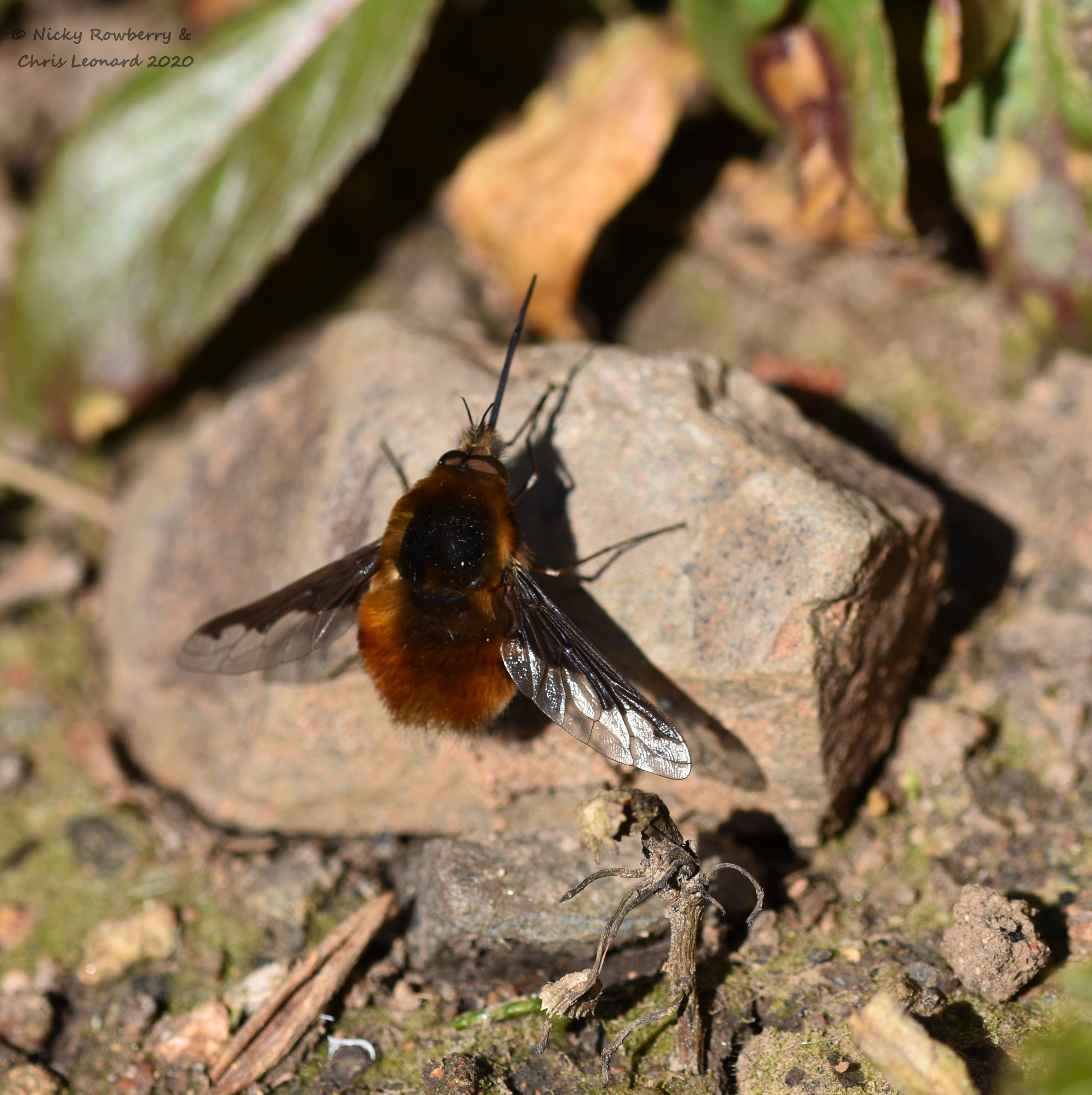
So on to the insects. I was really chuffed to spot a Dotted Bee-fly again this year, amongst all the regular bee-flies. Both species seemed to favour warm stones around the pond.


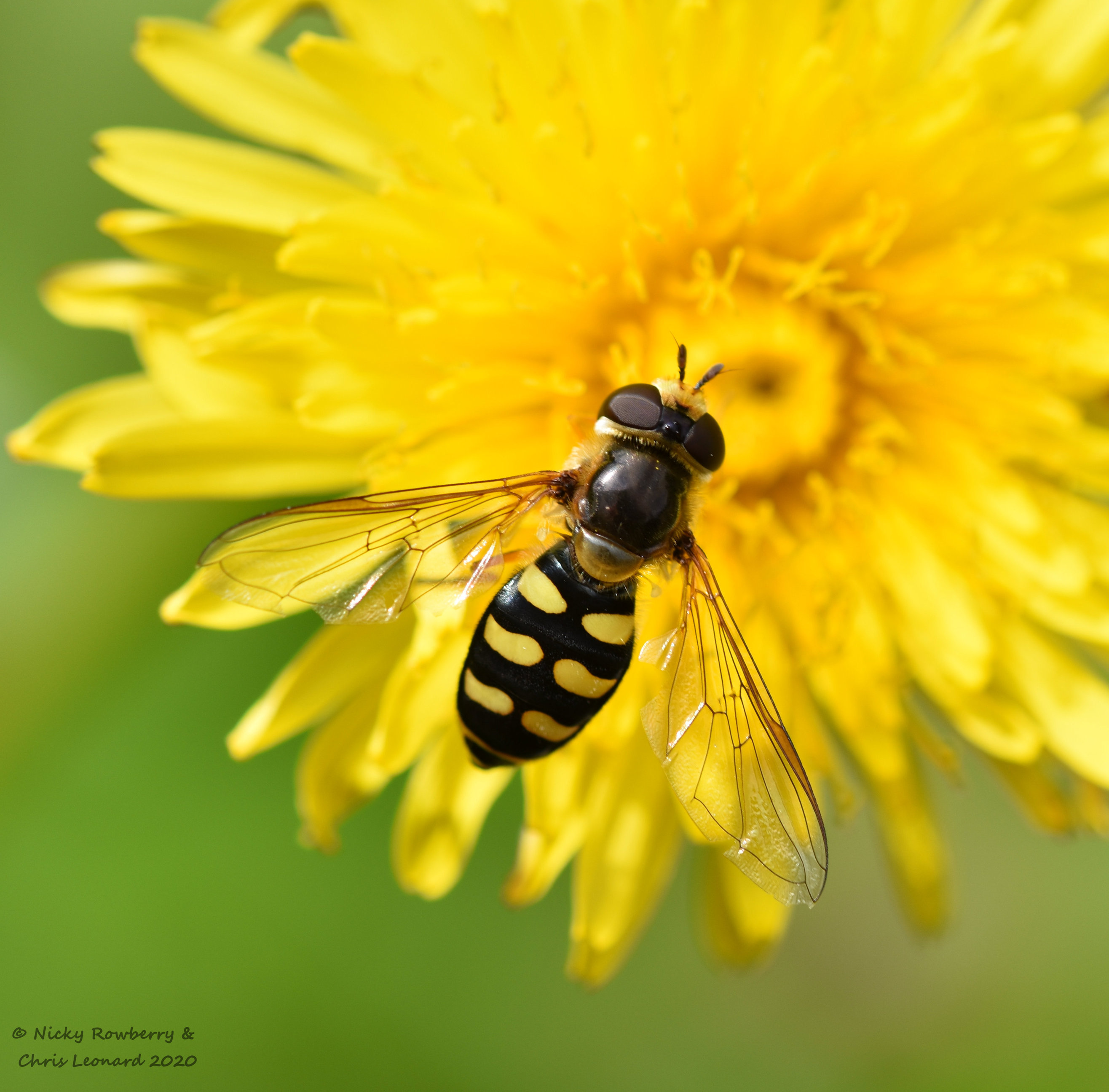
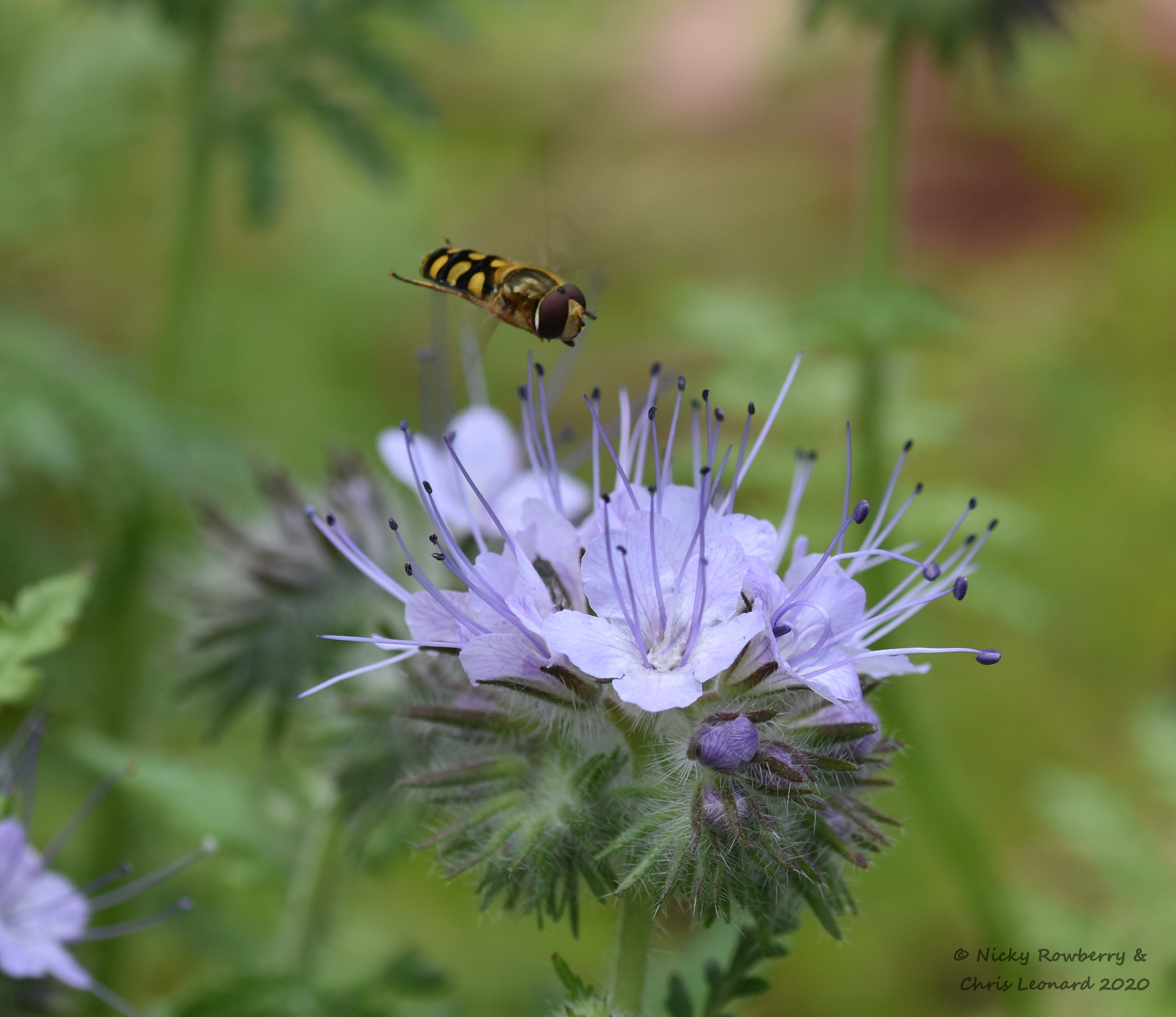
Hoverflies were abundant in the garden and as usual I failed completely to get to grips with identifying them all. There were lots of different shapes and colours though, including some of the delightful bee mimic ones.


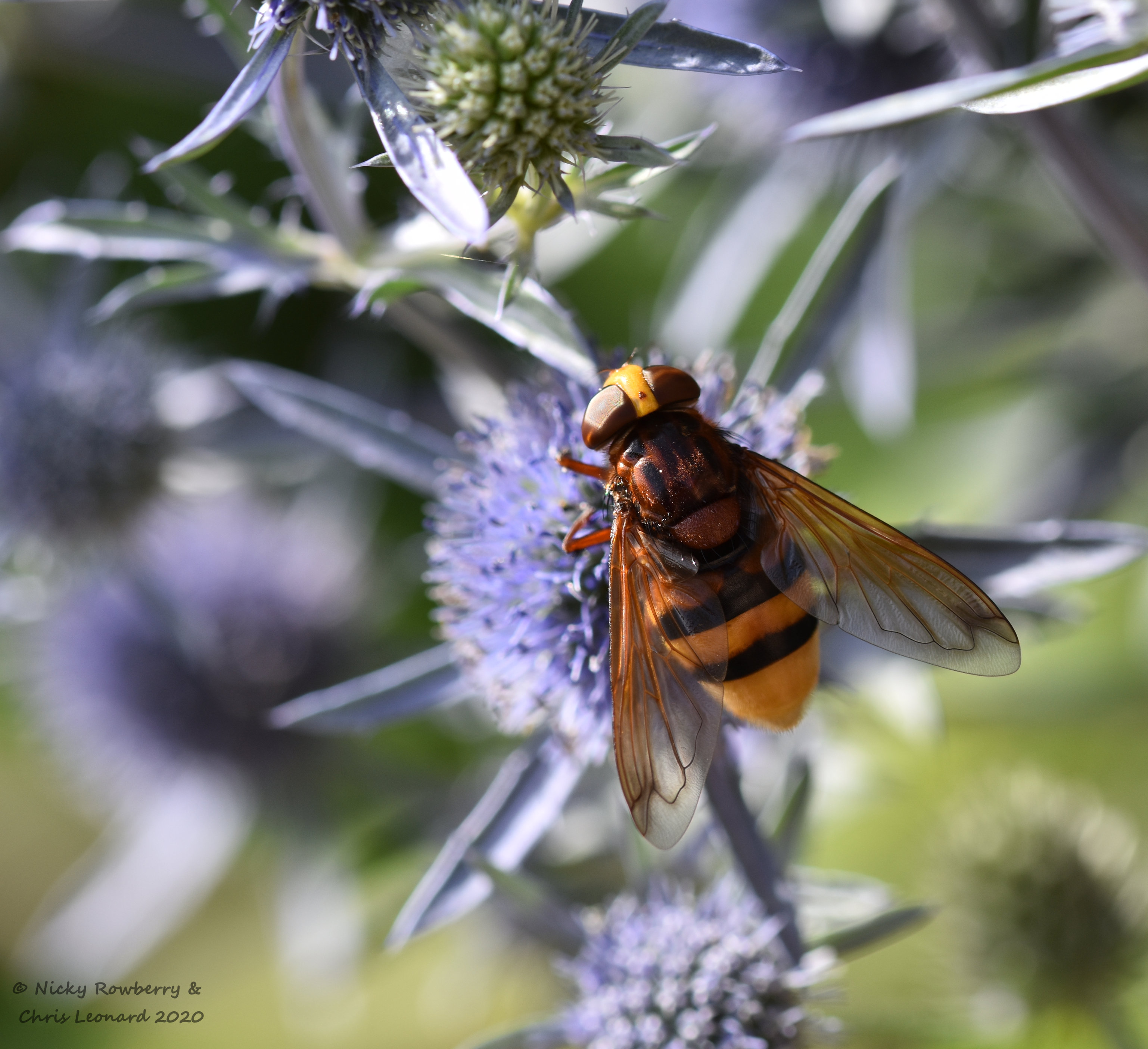
One I did manage to identify though was the Hornet Mimic Hoverfly (Volucella zonaria) – one of the biggest British species. They really were huge compared to the other hoverflies.

A new species to me and in fact a new group was this Potter Wasp – so called because some species construct little mud pots for nests.

Continuing on the waspy theme, here’s one of the gorgeous ruby-tailed wasp species. I tend to have mixed feelings towards these – they are of course stunningly beautiful, but they do parasitize mason bee nests and I feel very protective of my little mason bees. But live and let live and it’s nice to have diversity in the garden.

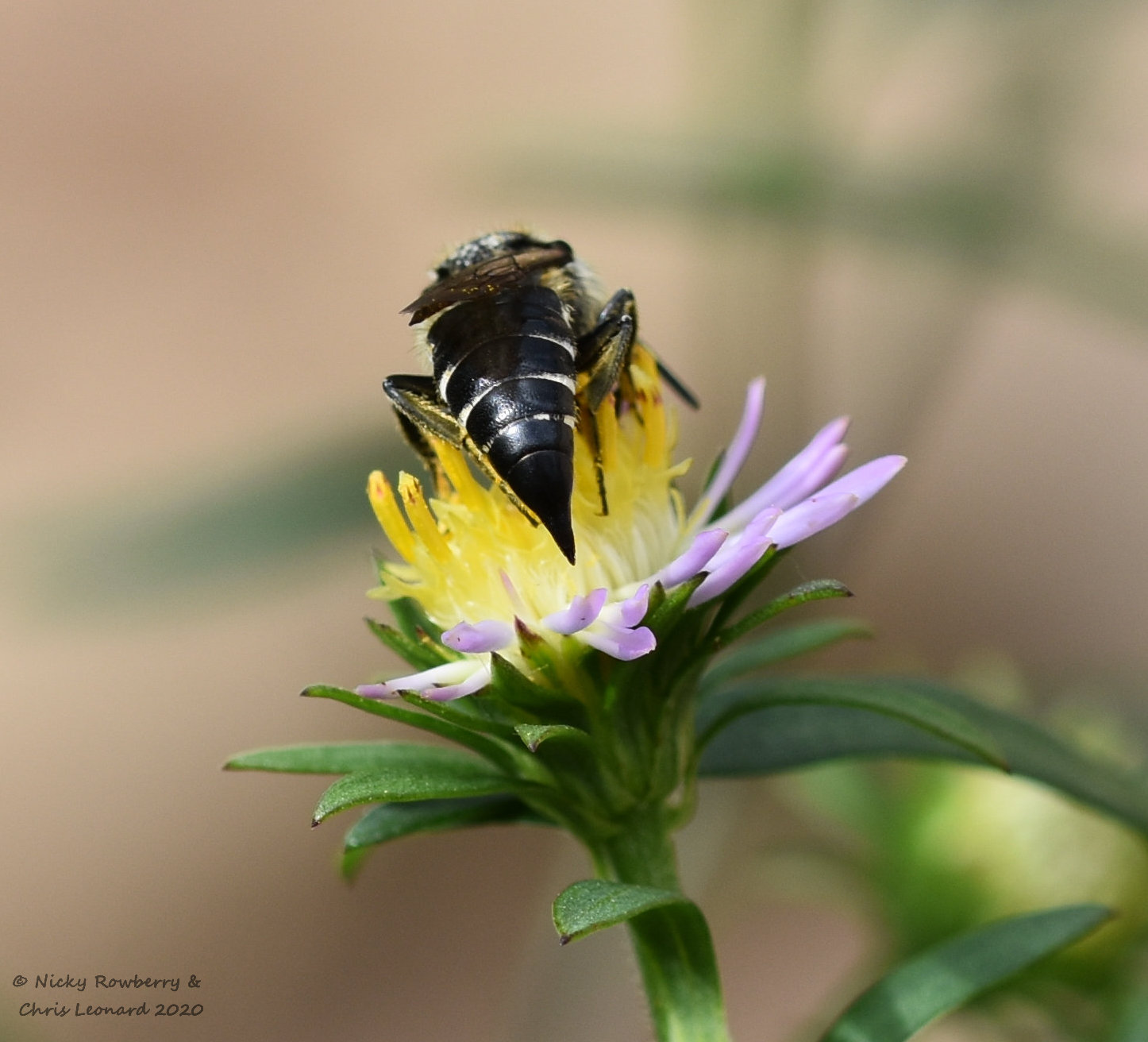
The wasps aren’t the only parasitic insects in the garden. I discovered this new addition to our garden bee fauna this year – a Sharp-tailed bee Coelioxys sp.  These ones make use of leaf-cutter bee nests.

Talking of leafcutter bees, I had meant to do a whole blog post on them. I’ve got a lot of photos and a lot of videos – so many in fact I think it became too daunting to sort through. So a full leafcutter post will have to wait until next year. In the meantime here’s a snippet.


We’ve had a few interesting beetles this year too. This one I spotted on the garage wall, while out checking the moth trap one night. For a split second I thought I’d got a Stag Beetle, then reality set in and I realised it was a Lesser Stag Beetle. Still a first for the garden, so very pleased to add it to our list.

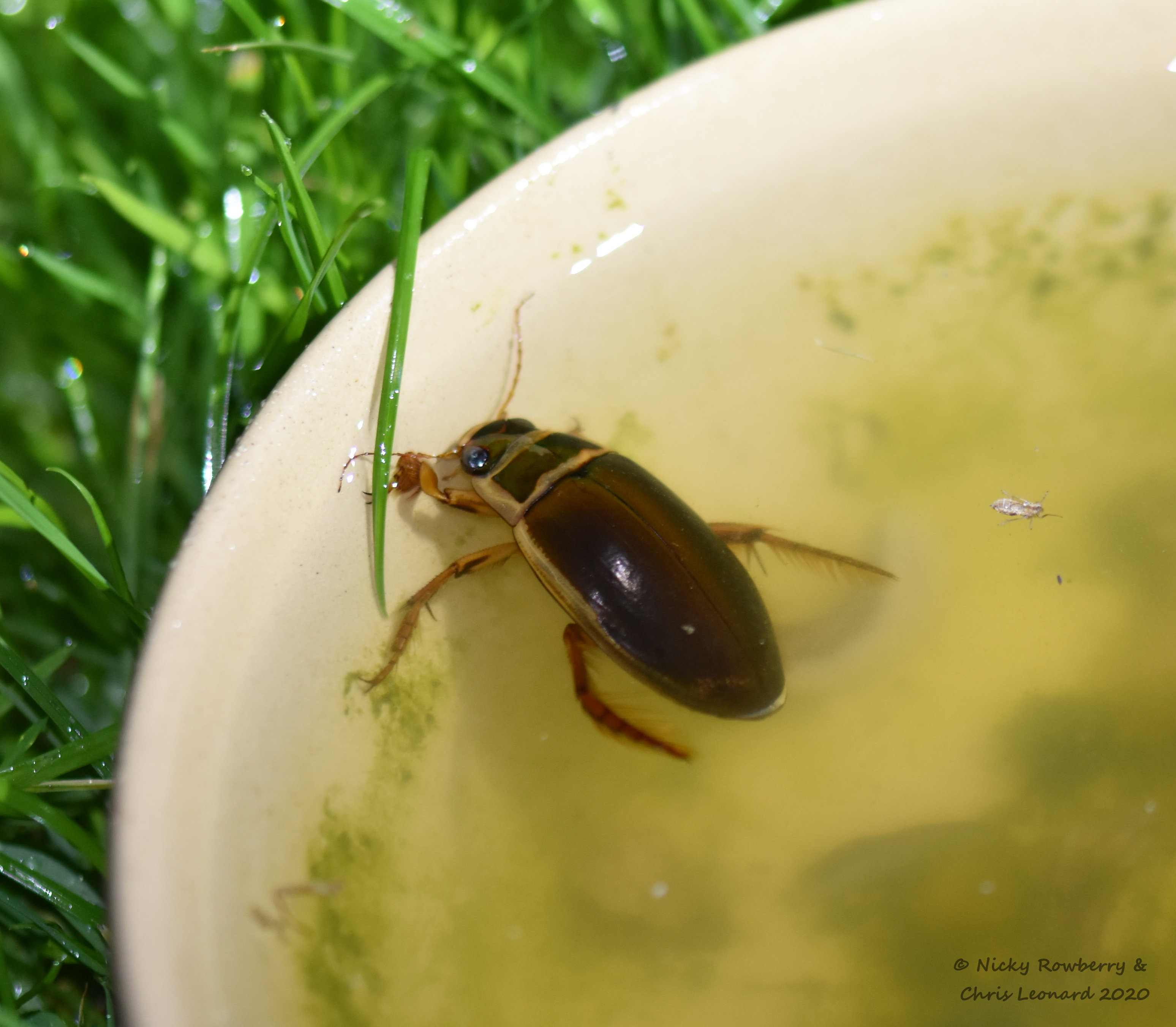
The pond of course attracted lots of water beetles. This huge Great Diving Beetle misjudged his landing though and ended up in the hedgehog’s water bowl.

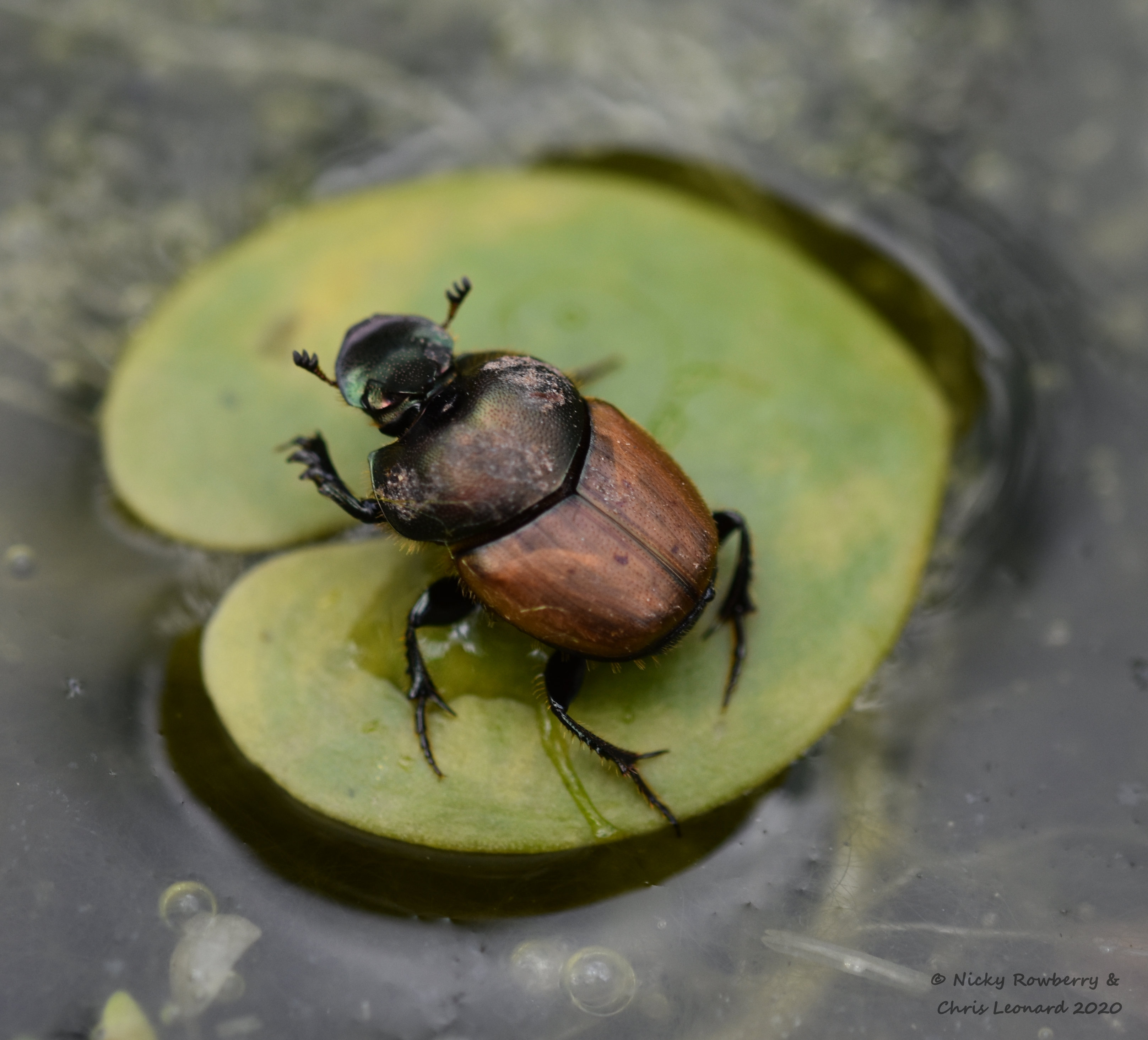
Also misjudging his landing was this Dung Beetle (Onthophagus coenobita) which ended up on a bit of frogbit in the pond.

Moths I’ve covered fairly extensively in other blog posts, but possibly my favourite odd moment this year was watching a male Black Arches moth flare it’s genitalia at me! It was perched on the edge of a pot and while I tried to photograph it, it started this weird behaviour. Don’t know whether it was trying to warn me off, or perhaps entice me (should I be flattered?), but it was certainly very odd. I sent the video clip to some moth experts and they weren’t sure why it was doing it either.

So that’s it really – a quick round-up of some of the wonderful wildlife I was lucky enough to see in our garden, but didn’t manage to blog about before. I feel very lucky to have had a garden to enjoy in 2020; it really has made things a lot easier to deal with when you’re surrounded by so much wildlife.
I’ll do a summary of everything else we’ve seen this year in the next blog post, with hopes and dreams for next year too. Happy New Year everyone. xx


Slugs Count

Way back at the beginning of the year (when the world seemed a very different place) I saw an article asking for volunteers to count slugs. The RHS in conjunction with Newcastle University were looking for 60 people to go out into their gardens once a month and count & identify the slugs in their own gardens. Perhaps I need to get out more, but it sounded great! Since I already spend a lot of time looking at the moths, bees, dragonflies etc. in the garden, it seemed a good opportunity to learn a bit about another group. So I applied and then lockdown happened and everything went on hold.
But eventually I heard back; they’d had nearly 3000 applicants for the 60 volunteers needed, so I feel really lucky to have been chosen. Our survey packs arrived, complete with sampling containers, slug guide and pre-paid postage envelopes (the local post office are going to love me). In an ideal world we would have all met up for hands-on training, but thanks of course to COVID, we had to do all this by Zoom.

First thing I learned about identifying slugs is that it’s really hard! They are extremely variable and they either keep moving or they scrunch themselves up so that you can’t see the bits you need to see. They’re also really hard to take photos of, because again they either keep moving or they’re shiny with slime so that the camera struggles to focus.

Splitting them into the major groups seems relatively straightforward until you get very small ones.  If the breathing pore is in the front half of the mantle (the fleshy sort of saddle on their backs) then it’s one of the Arion types like the one below.

If the breathing pore is in the rear half then it’s one of the keeled slugs like the one below. So far so good.

But separating the keeled slugs is also tricky. There are long keeled slugs and 2 groups of short keeled slugs and the keels really aren’t always that obvious.

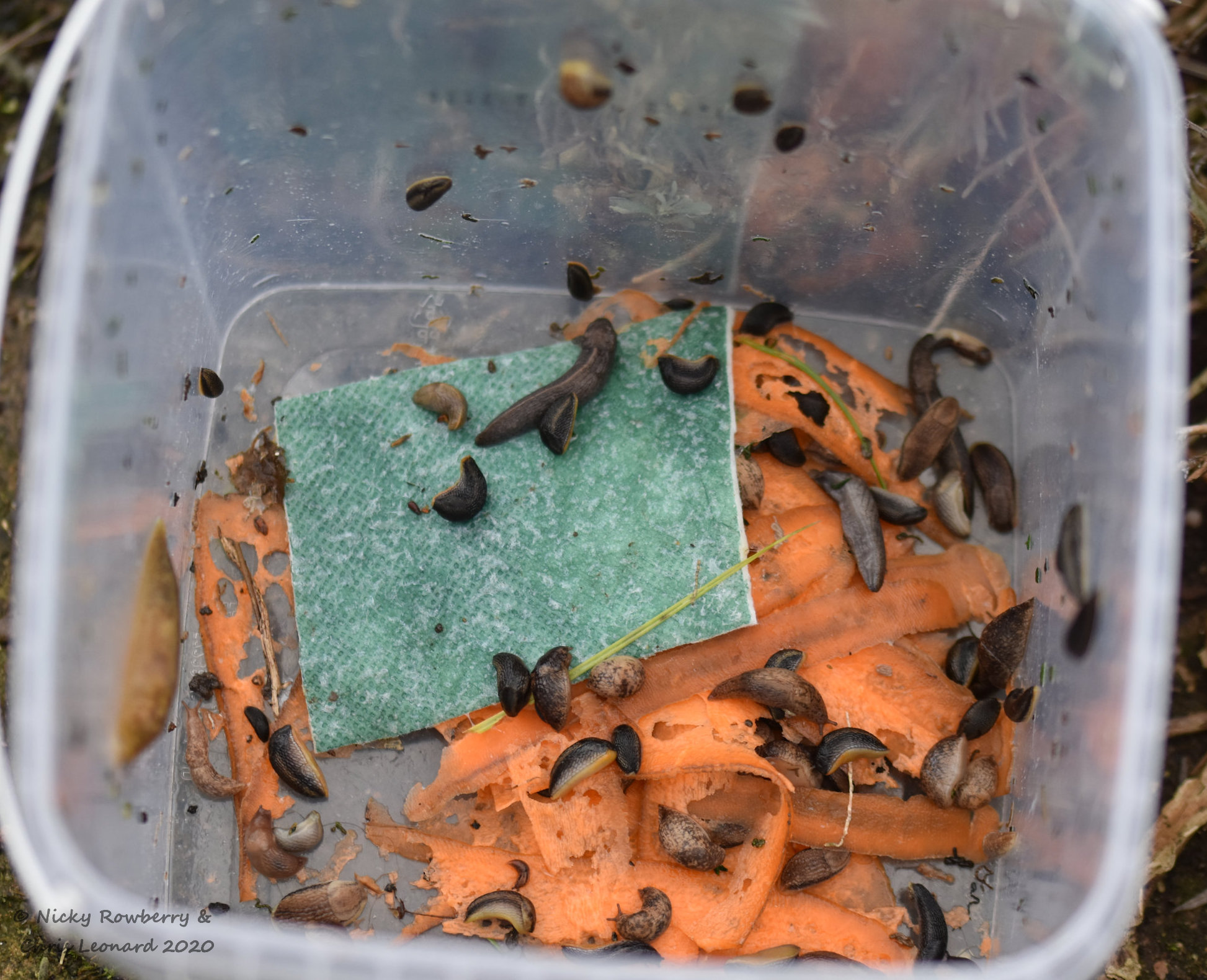
Originally it was all planned to start in June but in the end it was early November before we all did our first slug counts! A half hour search around the garden after dark yielded 116 slugs! And that’s without lifting anything up, or rummaging through leaves or plants – just scanning around with my head torch (neighbours once again convinced I’d lost it). So here they are before I’d sorted them out – a bucket of slugs.

And then all potted up with their moist capillary matting to stop them drying out and shredded carrot for the journey.

The lovely post office lady did indeed thing I was a bit odd to say the least when she asked what was in the parcels. I have since done my second count in early December; a mere 88 slugs this time. Many of the other slug count participants have been reporting only a few or even no slugs at all, but that’s clearly not an issue in our garden. I suspect it may be because our garden is so unkempt with plenty of decaying matter for them to feed on – slug paradise.

By far the commonest species so far has been Arion (Kobeltia) hortensis – the Blue-black soil slug. They’re only 2 -3 cm long, but what they lack in size they make up for in numbers; the garden is full of them.

There were also apparently some other small Kobeltia species in my samples, but I’m waiting confirmation of what those are. A few juvenile Arion subfuscus had also sneaked in undetected (by me). Differentiating between some of these is way beyond my current skills set.

The next most common species was Deroceras reticulatum, the Netted Field Slug. This is one of the slugs with a short keel. I found these short keeled slugs really hard to photograph and show the keel, so you may just have to take my word for it that there is one there.

Apparently in my samples there were also some Ambigolimax sp., but since I failed to spot these as being anything different, I don’t have any photos.

I did better with 2 species of long-keeled slugs – Tandonia budapestensis – the Budapest Keeled Slug and Tandonia cristata  – the Crimean Keeled Slug. I managed some photos of the Budapest ones (below) but seem to have got so excited when I spotted the second species that I forgot to take any photos. The keel on the Budapest ones is really nice and obvious – my kind of slug!

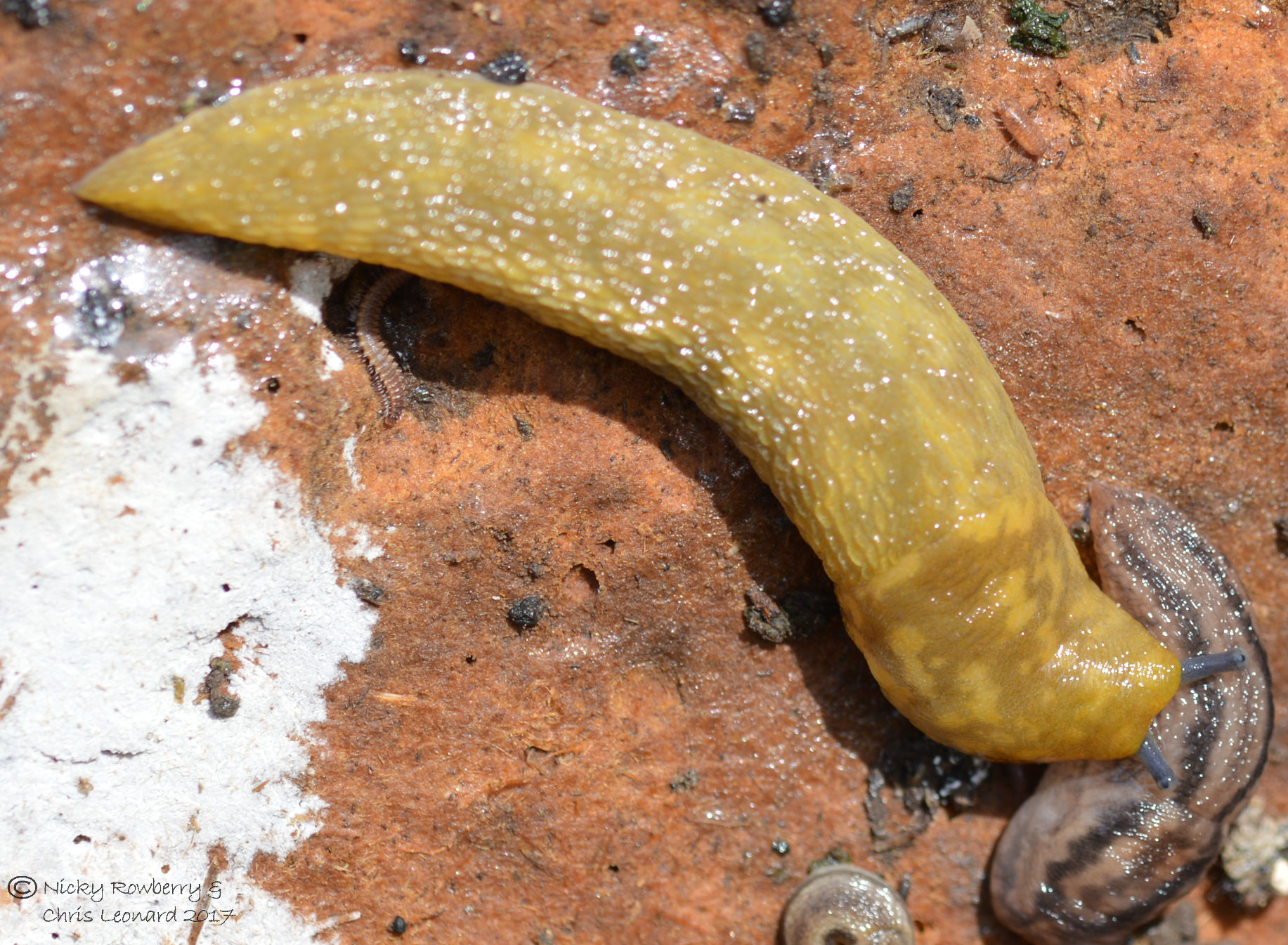
The only other species to get picked up in my half hour searches was a single Limacus maculatus – the Green Cellar Slug, although this specimen doesn’t look especially green.

The cellar slug above was by far the biggest slug I collected during the counts so far, but I know we have much bigger slugs in the garden like this giant Arion seen last summer.

The weather is now significantly colder (first snow today) but there are still a fair few slugs out at night. Hopefully in the coming monthly surveys I will find more species new to the garden. I’m finding the whole process fascinating and it’s opened up a whole new world of wildlife to me. Hopefully the slugs in our garden and in those of the other slug count participants will help the scientists to expand their knowledge of this understudied group.