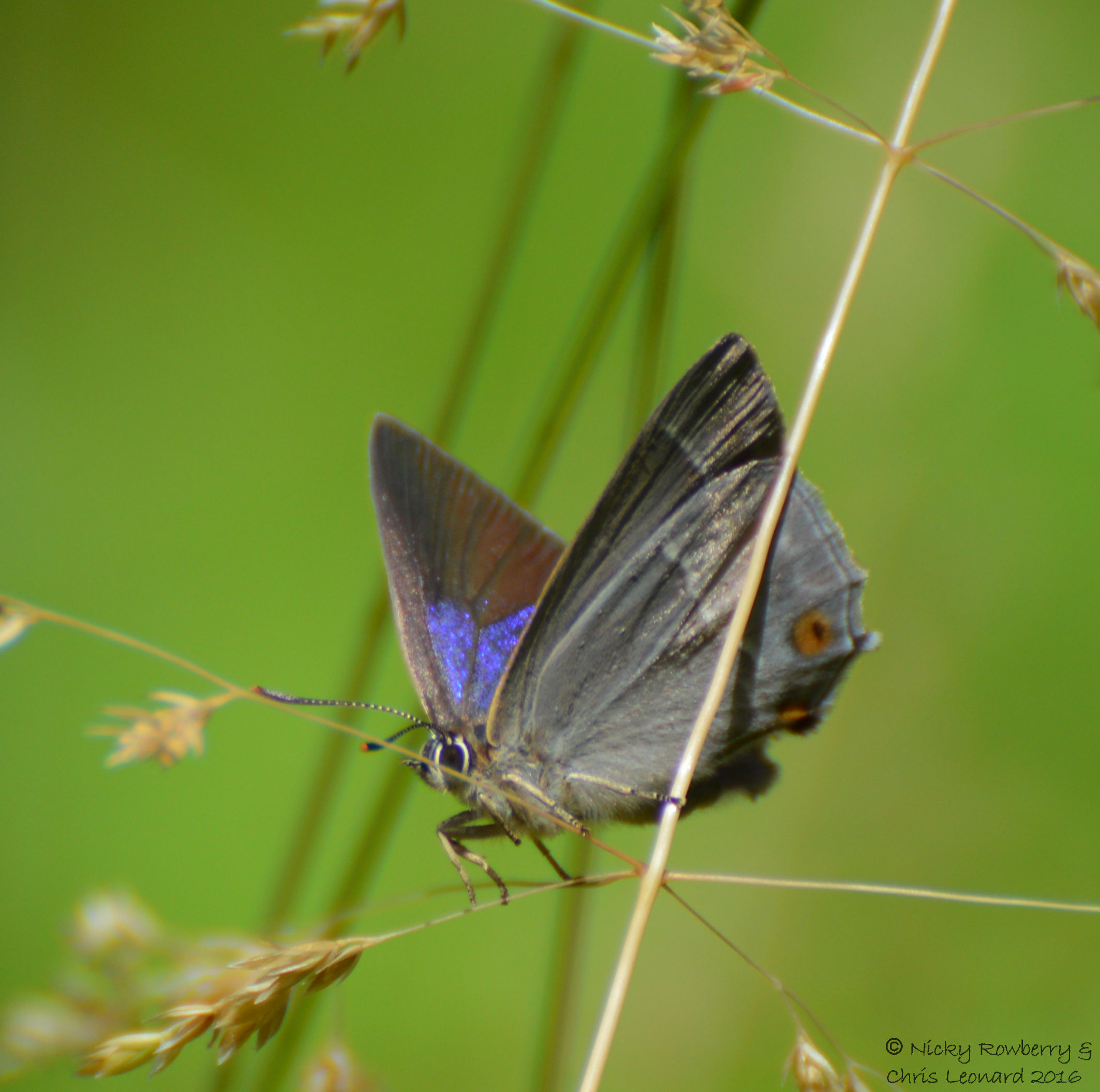
30 Days Wild – Day 27 – Trench Wood

It’s Day 27 of 30 Days Wild and we’re back on the butterfly hunt, this time in beautiful Trench Wood, Worcestershire. Not looking for anything new as such, just hoping for sightings of some old favourites and Trench Wood never disappoints. The place was absolutely heaving with butterflies and insects of all sorts.

Most notable today were the ringlets – they were everywhere, we must have seen hundreds. I don’t think we’ve ever seen so many, every step we took seemed to scatter more off the path. It was lovely to see, as I’d been starting to worry that we’d not seen so many this year. There were mating pairs too (in one case a trio, with an overly enthusiastic extra male!) doing their thing in the sunshine.


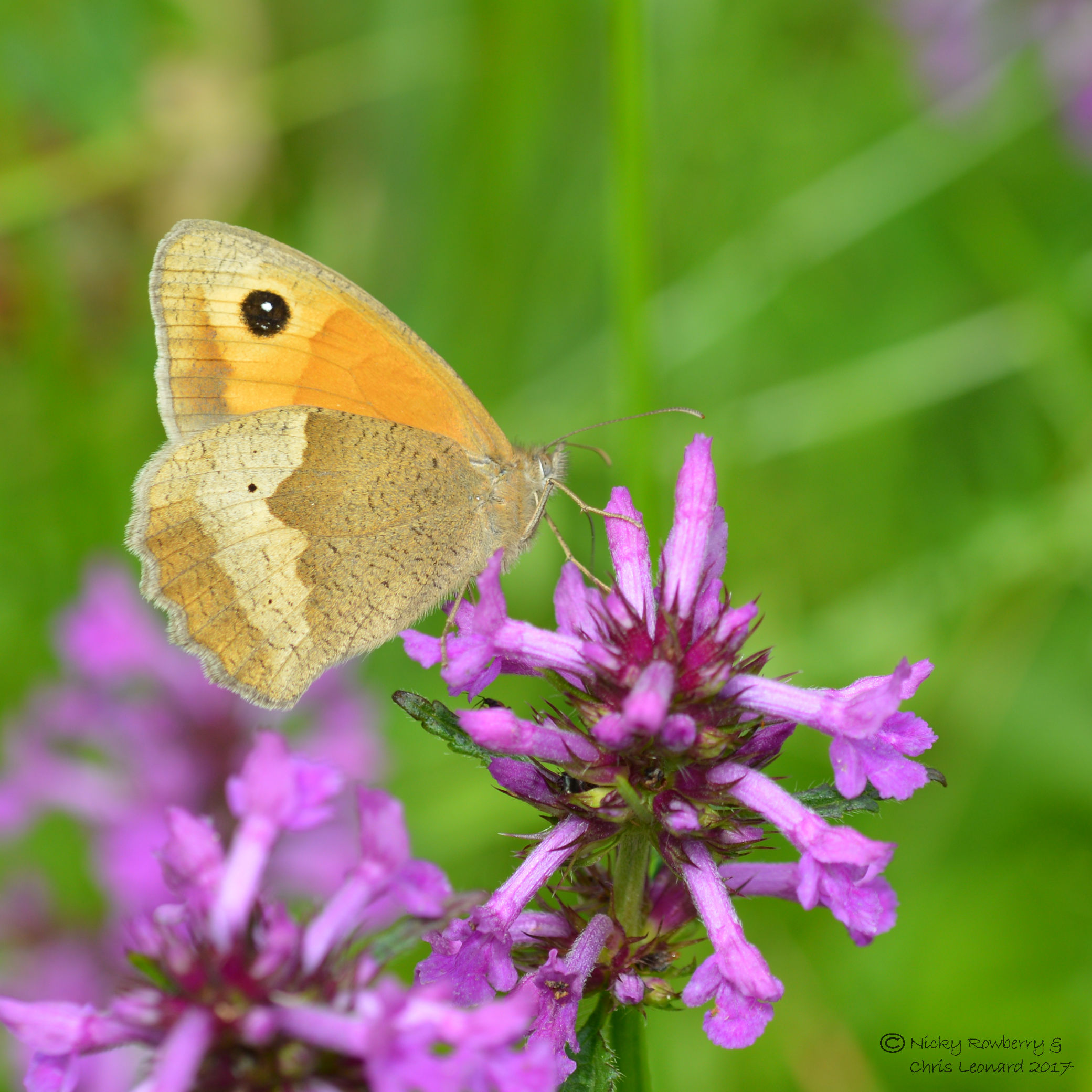
Meadow Browns were also common, although not nearly as abundant as the ringlets.
 

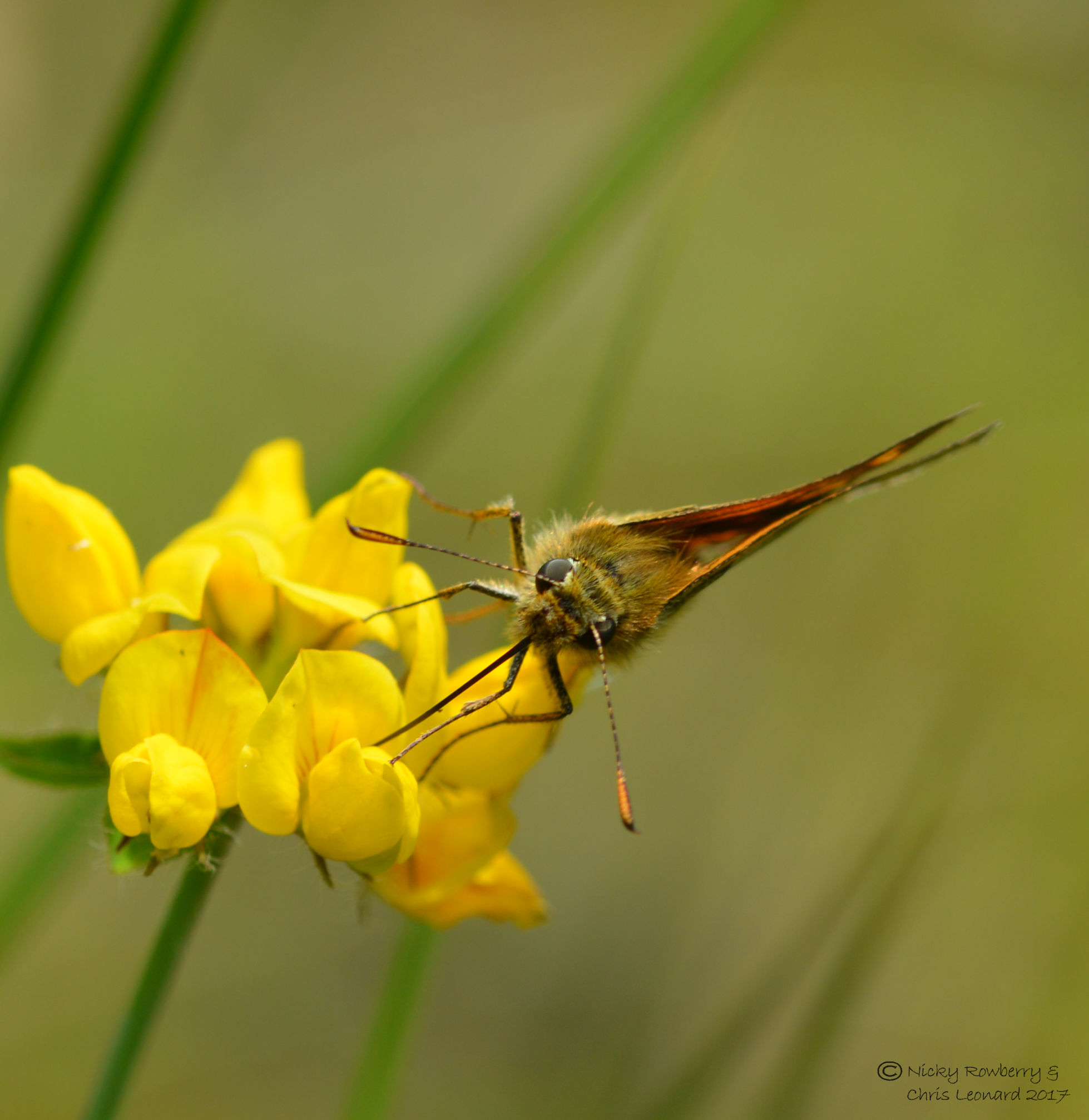
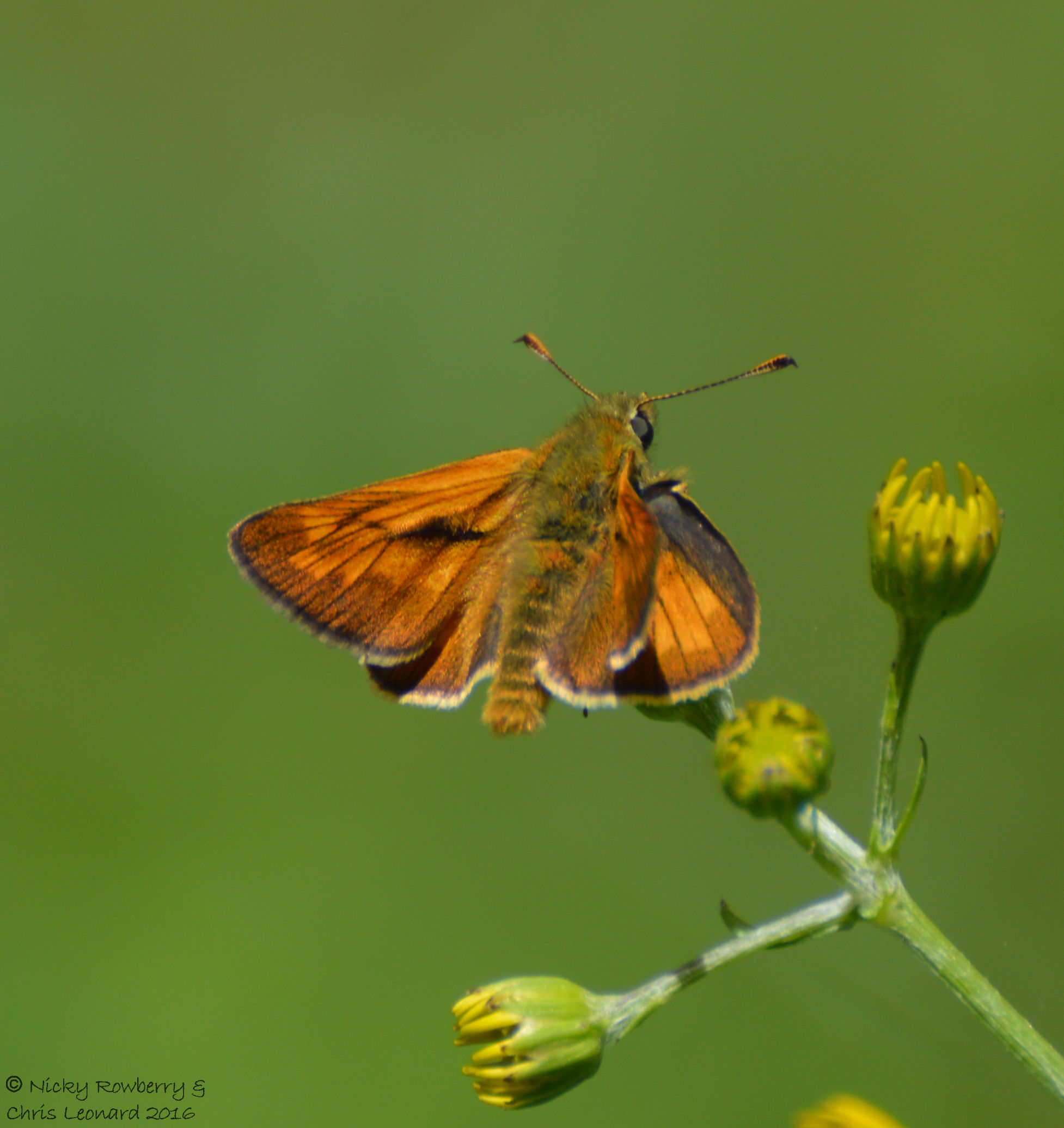
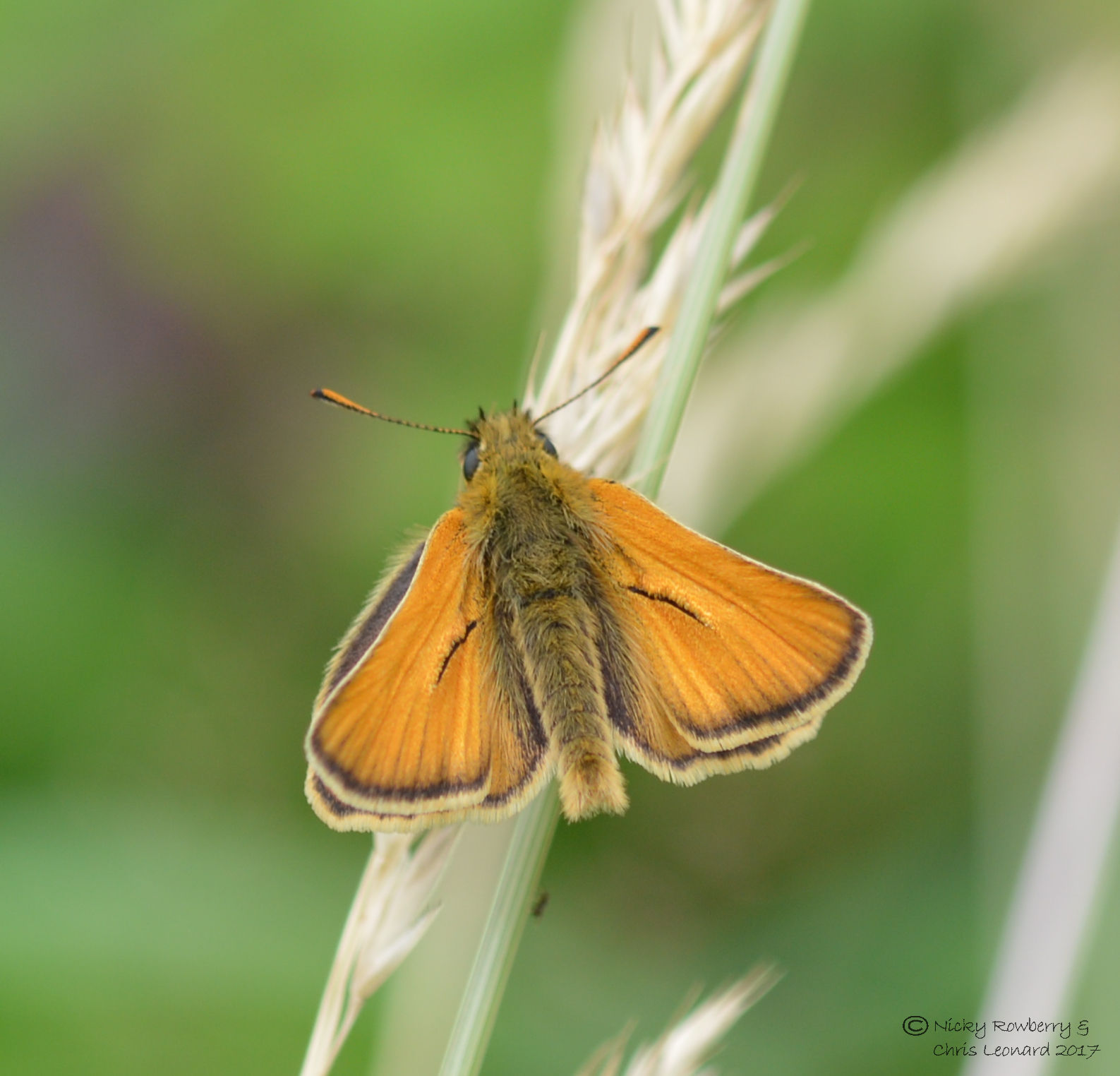
There were plenty of skippers, most being Large like this one with its hooked antennae.

But there were also a few Small Skippers – distinguished by their orange tipped, clubbed antennae. This one is a male with a diagonal scent brand across the wing (thank you to Mike Williams on Facebook for confirming this).
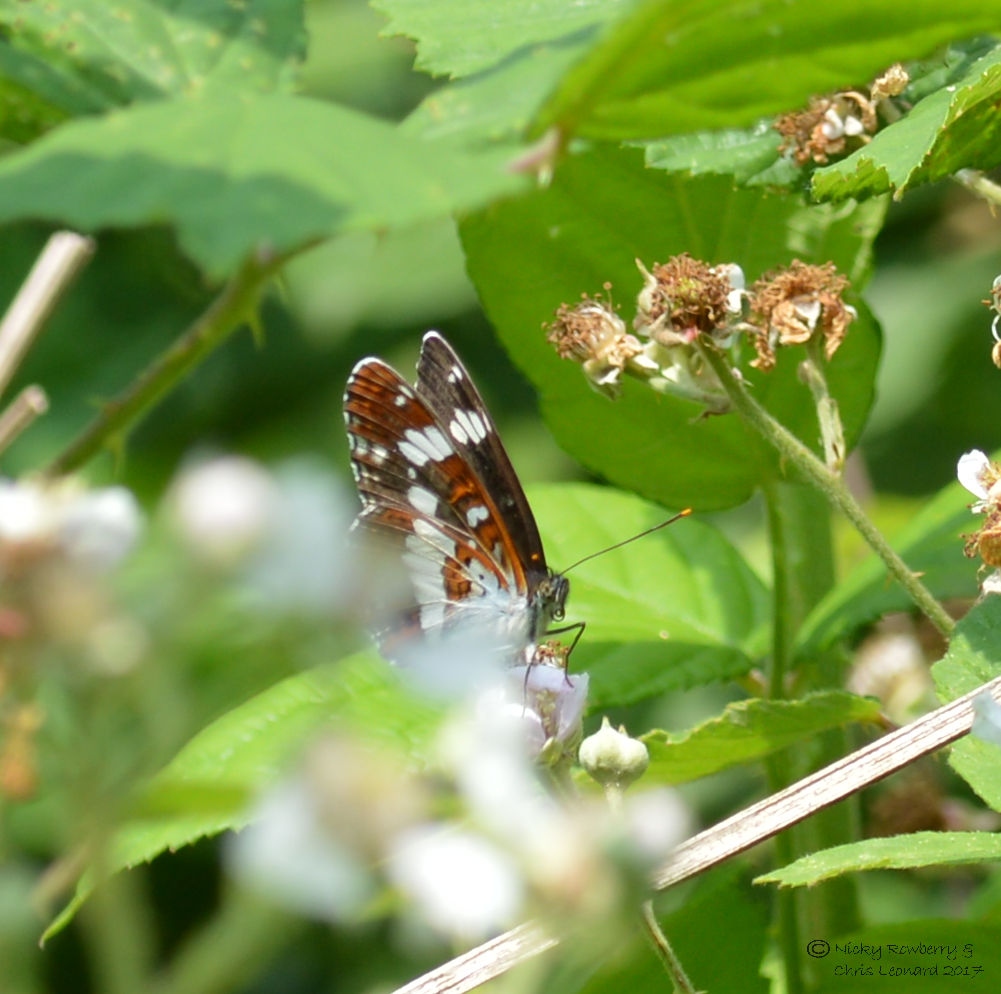
Once again the White Admirals proved elusive. There were quite a few present, but as usual they refused to settle long enough for a decent photo – here’s my best but still poor effort.

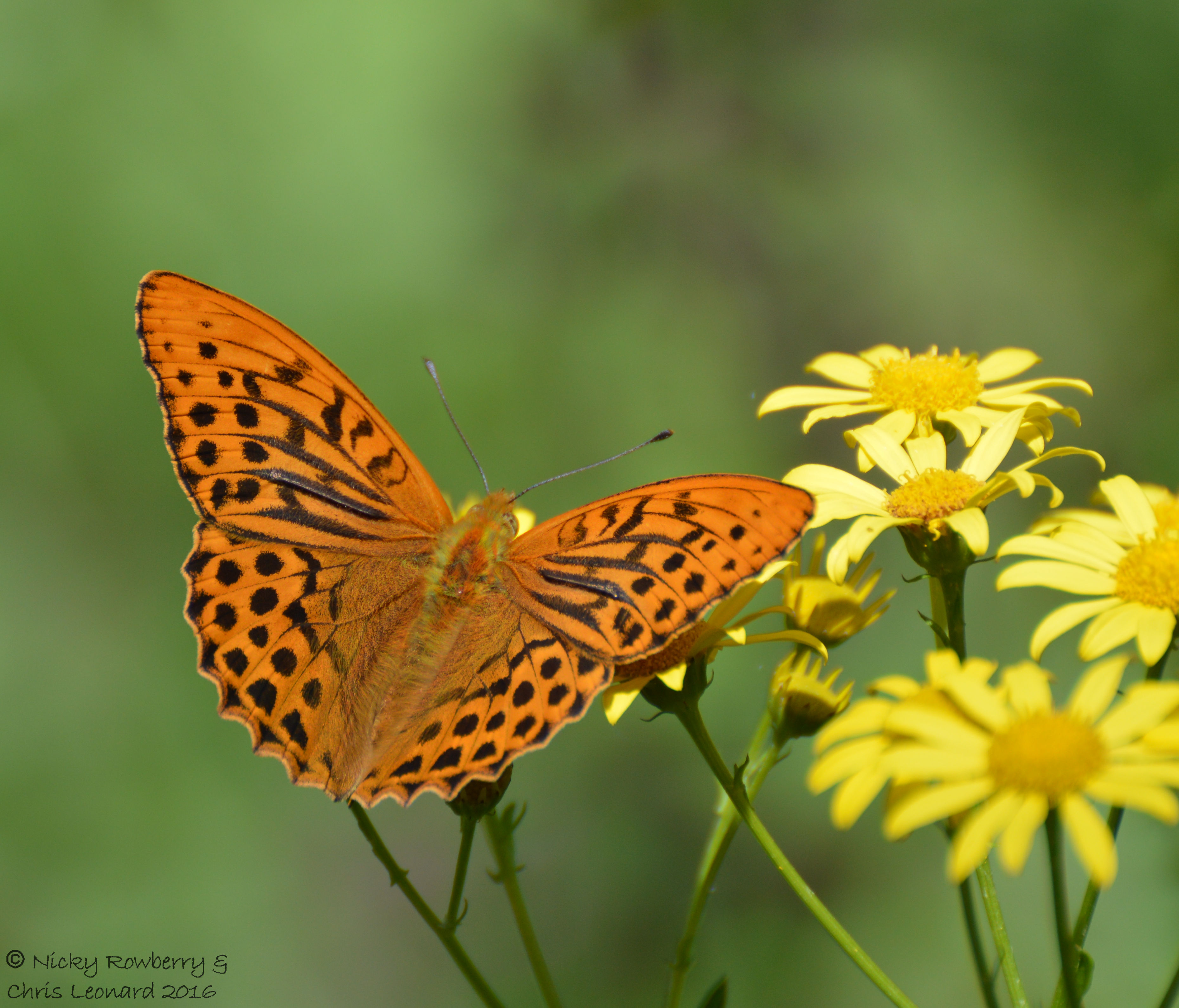
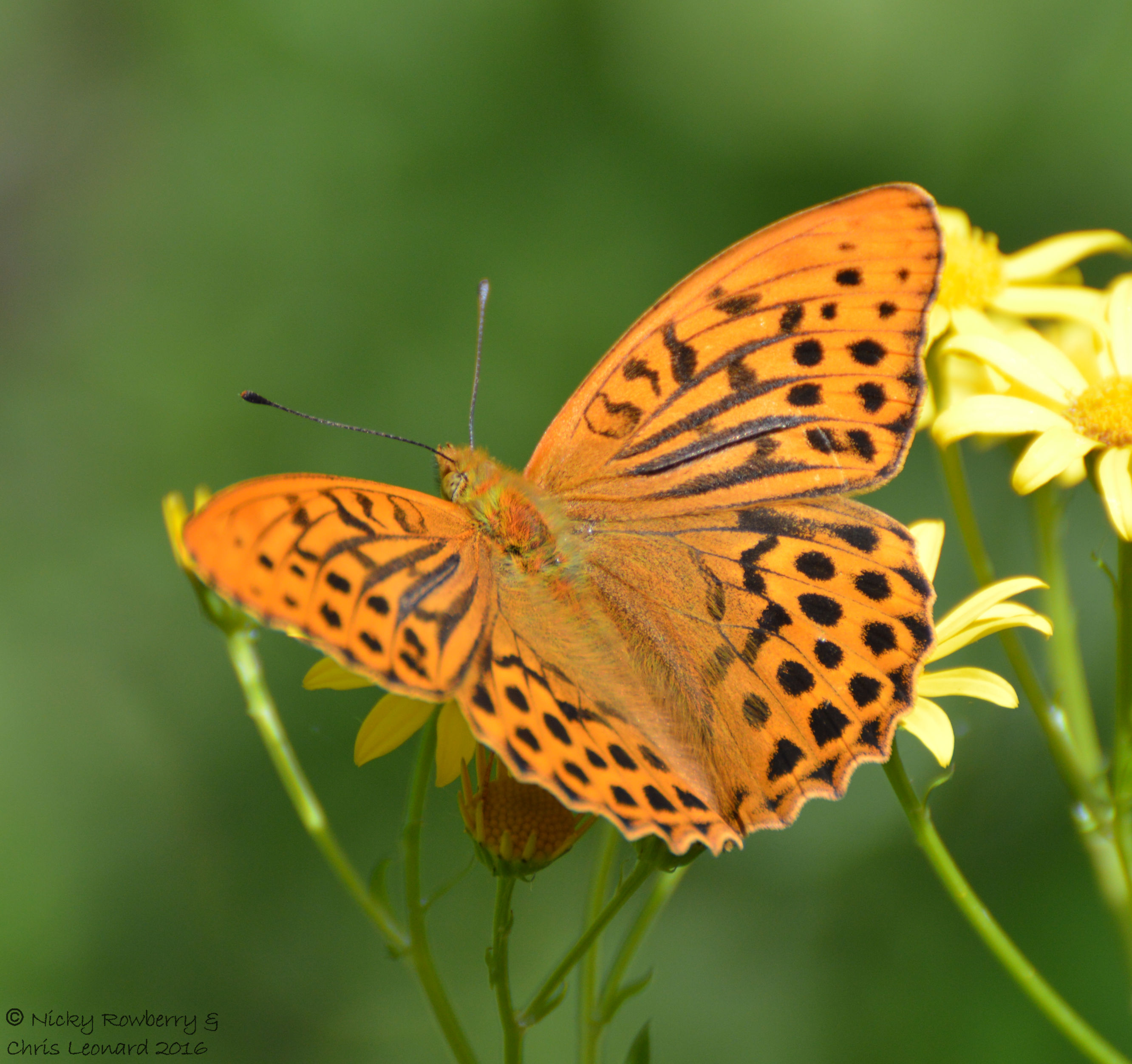
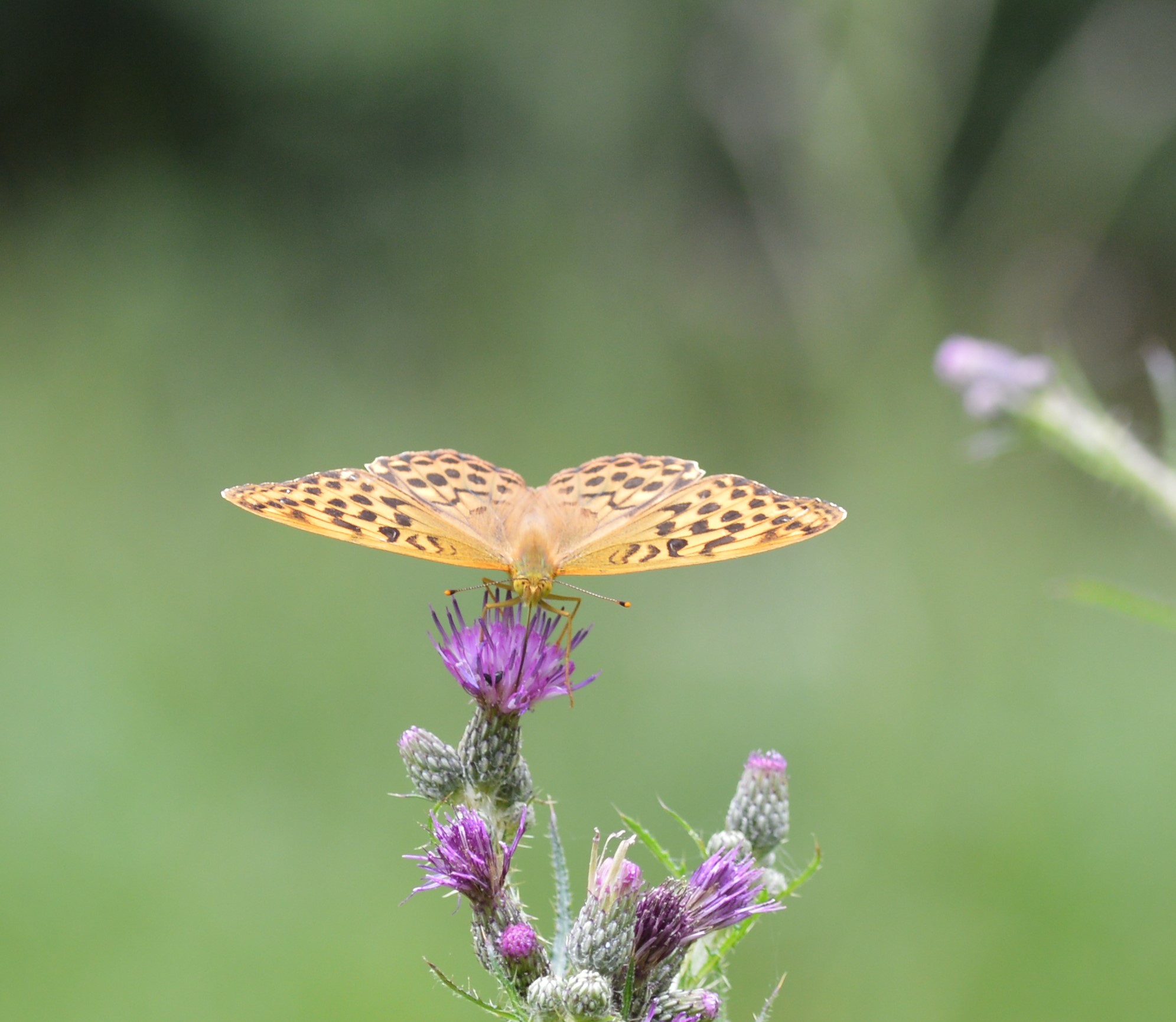
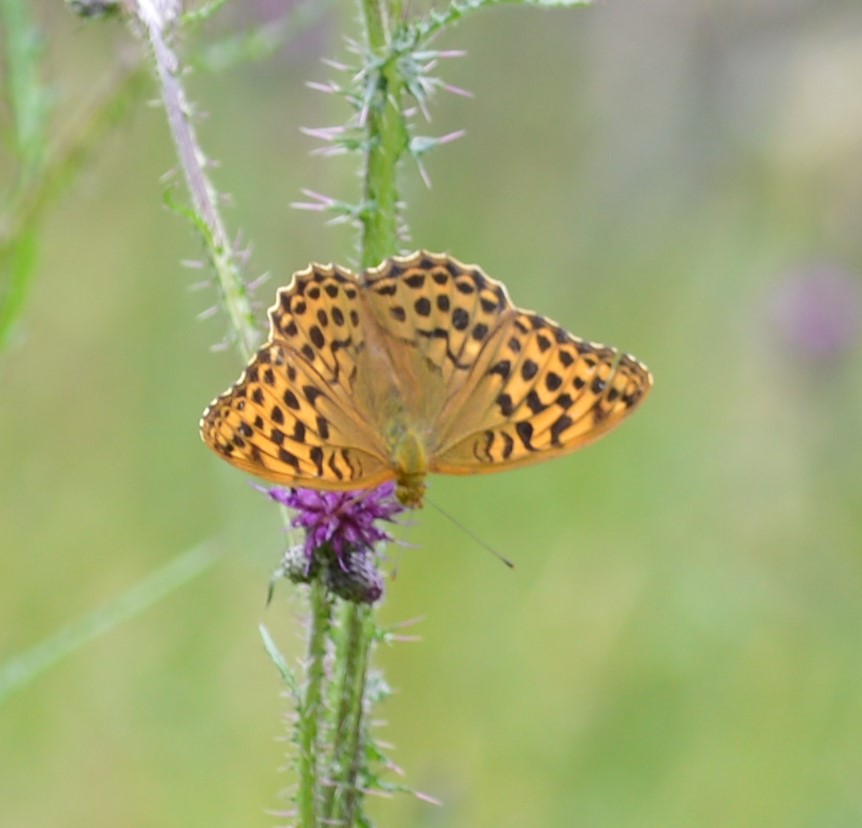
The one I really went looking for today was the Silver-washed Fritillary and in this at least I was fairly successful. Initial sightings were just glimpses as they bombed past me, but eventually I tracked down a few more obliging ones.
A variety of moths were out and about too. Some tiny ones like the Nettle Tap, others slightly larger like this Clouded Border,


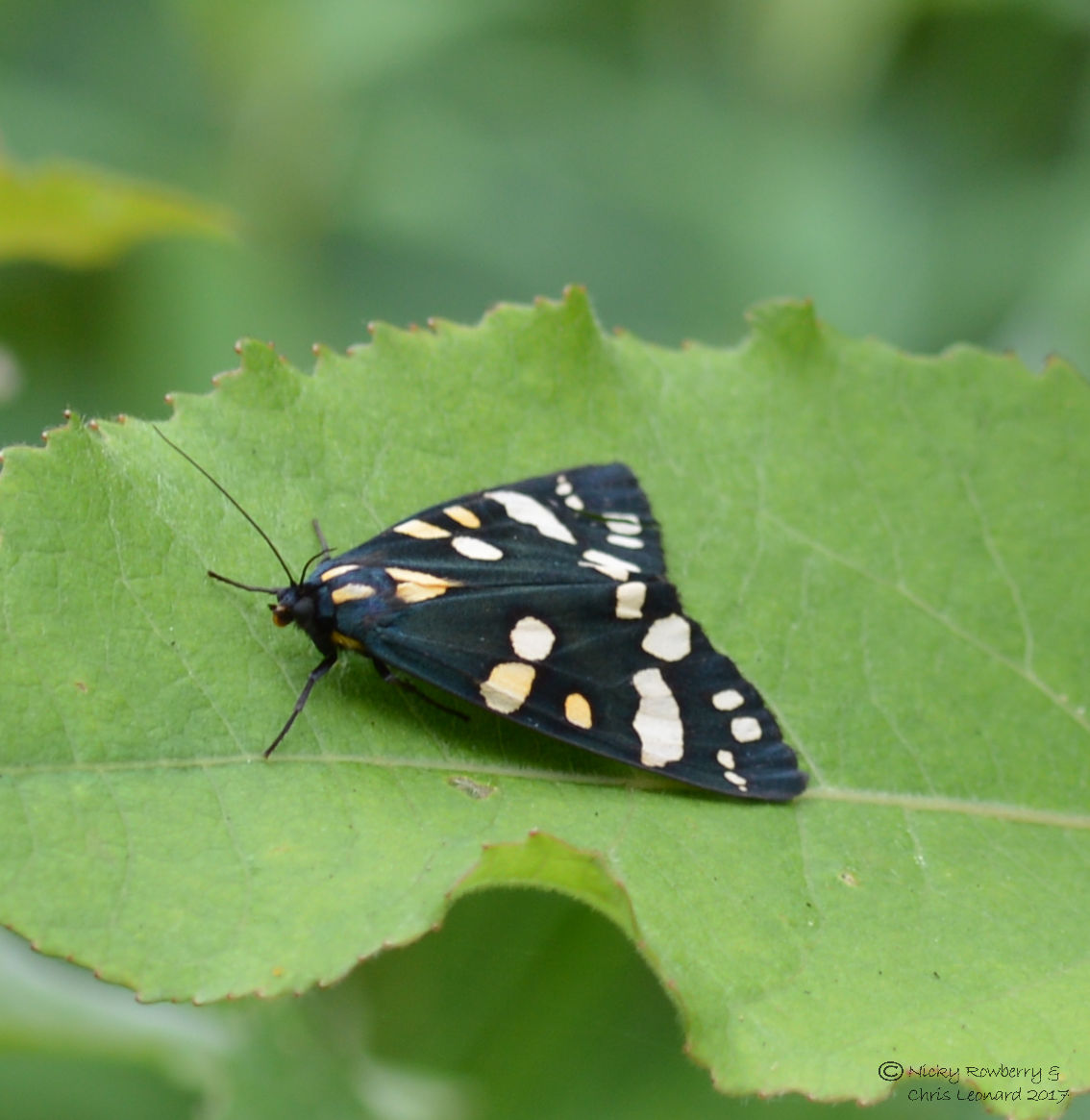
and others simply stunning like a Five Spot Burnet and this Scarlet Tiger.
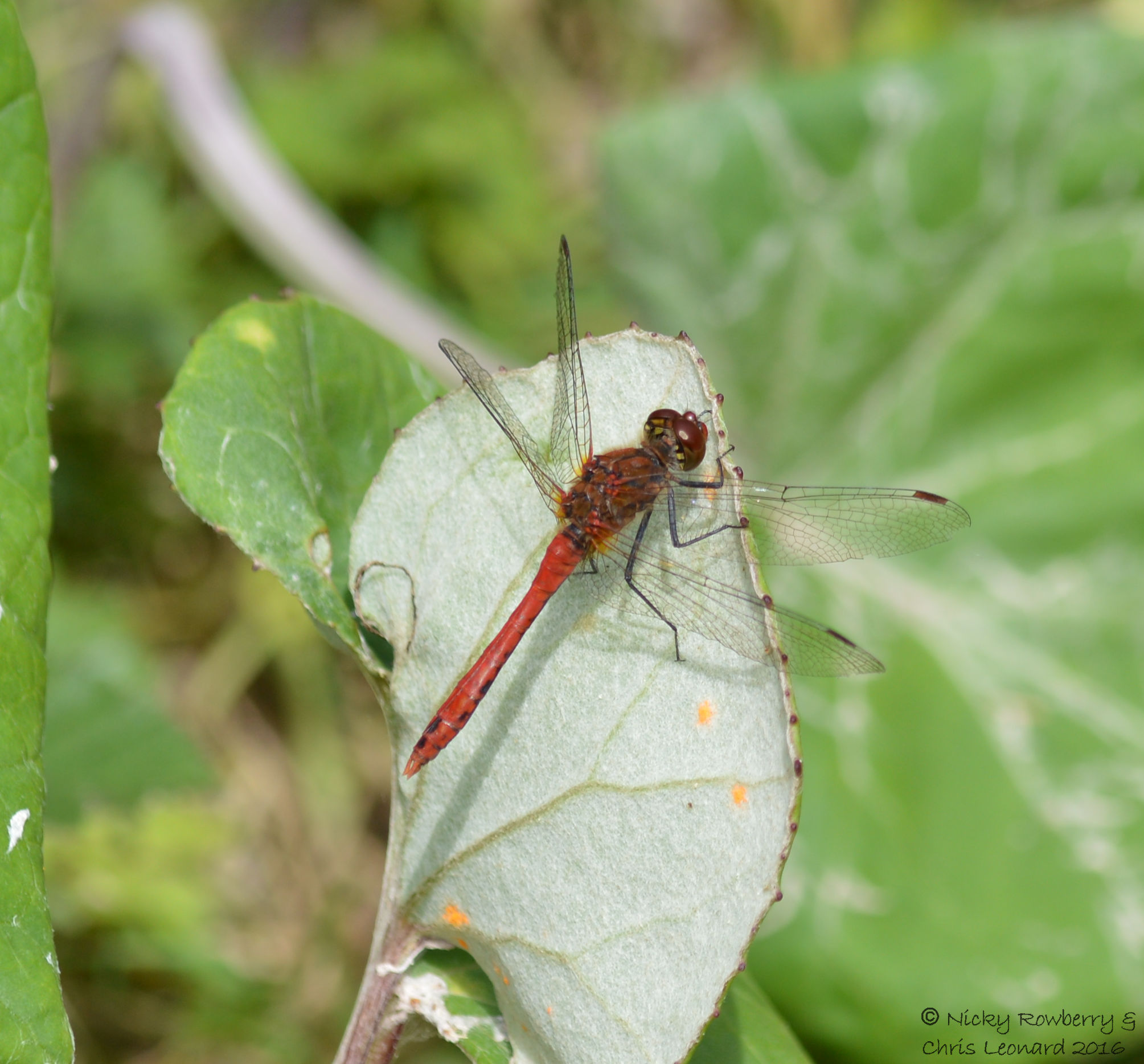
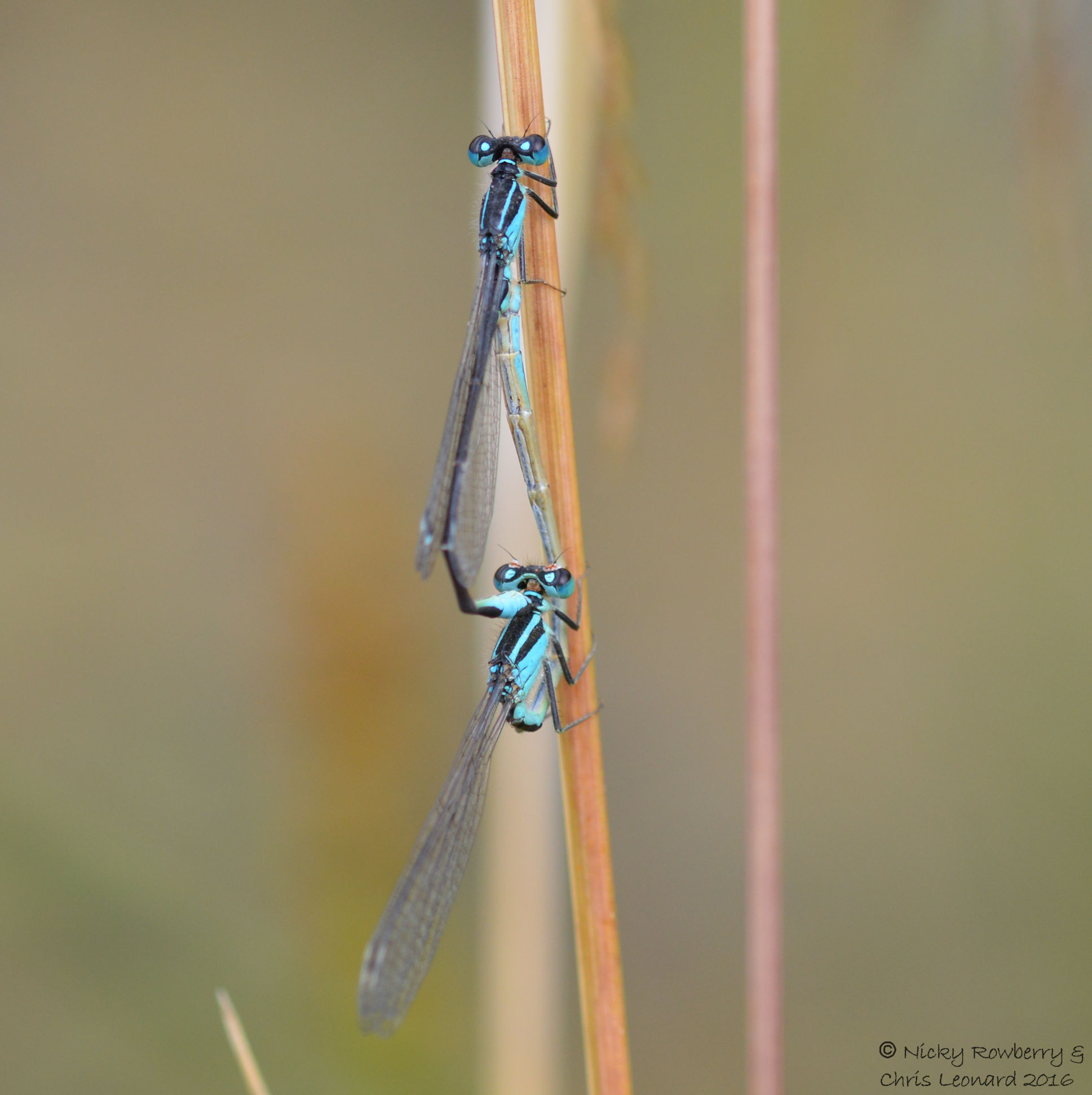
Damselflies, demoiselles and dragonflies were all fairly common around the pond. I think we saw both Beautiful and Banded demoiselles, azure and large red damselflies and these two splendid dragonflies. The top one is a female darter (either common or ruddy) and the blue one at the bottom is a male Emperor dragonfly.

There were of course bees and hoverflies everywhere, but there just wasn’t time to do those as well today – so many insects so little time!

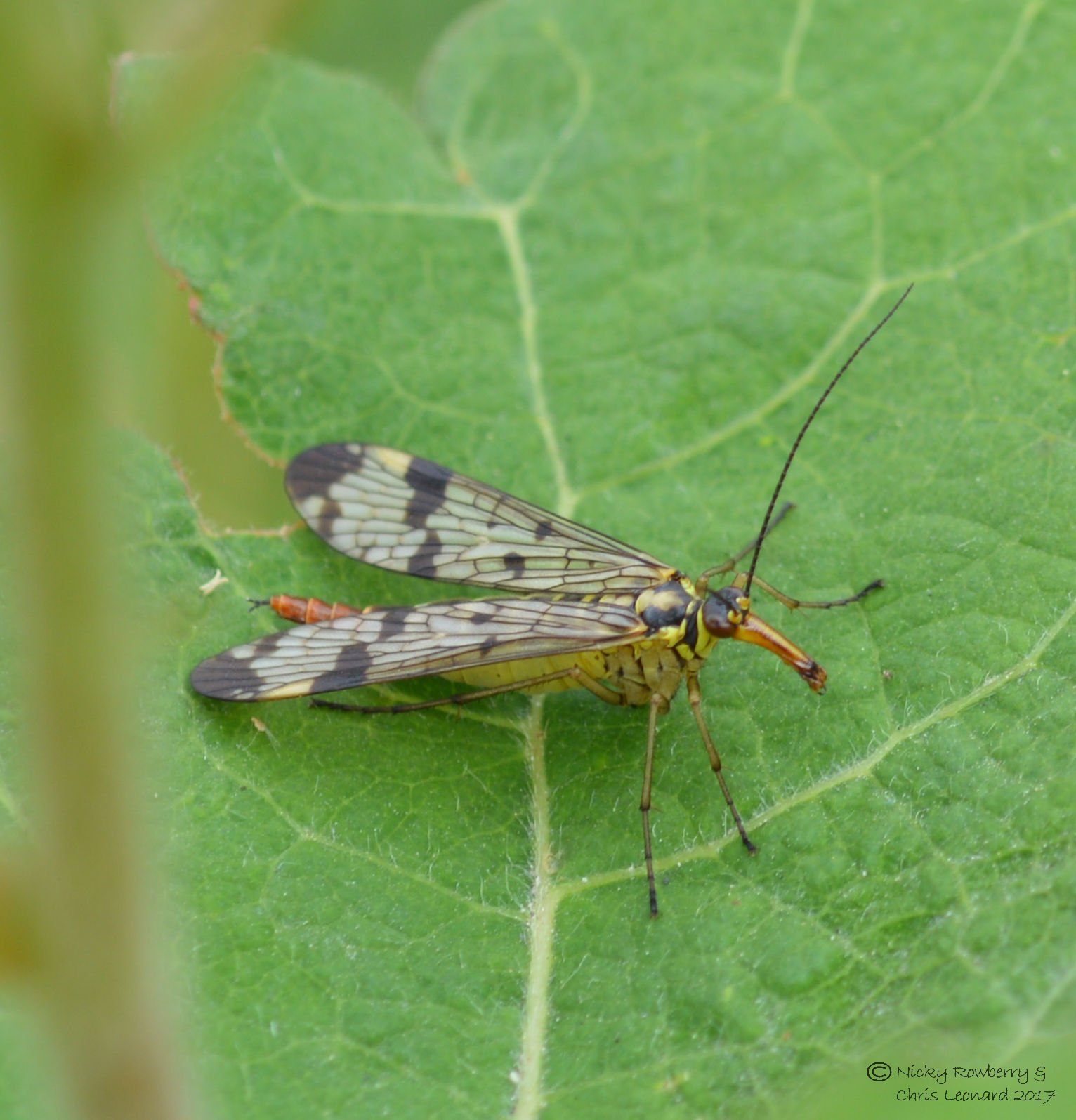
And finally I got a photo of a Scorpion Fly – I’ve been trying to get one of these for weeks now. Only trouble is, every single one I saw was a female, so none had the distinctive scorpion tail which only the males have. So the hunt goes on!
So all in all another fabulous day out and probably one of the most insect laden ones to date. Day 27 of 30 days wild and I’m still finding things that surprise and delight!

 

30 Days Wild – Day 20 – Chasing Admirals

It’s Day 20 of 30 Days Wild and the day started early and hot. I got up at the crack of dawn to empty the moth trap and the temperature had only dropped to 18.3C – at 4 o’clock in the morning! Not surprisingly it had been a great night for moths and the trap was stuffed with them including 7 elephant hawkmoths! Prize for me though were these 3 gorgeous Scarlet Tigers (hawkmoths were so last week!).

Next surprise was a racing or homing pigeon, which turned up outside the patio doors, while I was planning what to do for the day. It had rings on its legs, which I presume would be traceable. It didn’t seem injured or unduly bothered and eventually flew off, although it returned in the afternoon.  If it reappears, I’ll maybe see how you go about reporting a stray homing pigeon.

Anyway, clearly having learnt nothing about how hot it was from yesterday’s trip, I headed out again – this time to Monkwood Nature Reserve near Worcester. I went there a couple of years ago and saw my first ever White Admirals, so I hoped for a repeat performance.

As on the previous trip I was amazed to spot some White Admirals as I got out of the car. There were a couple flying high in the trees around the carpark, too far away to get a photo though – this turned out to be how they behaved all morning. The butterflies of all species were very flighty in the heat (unlike myself!) The only White Admiral I saw land was this one, which flew off before I could get any closer.

So in a kind of “this is what you could have won” way – here’s the photo I’d hoped to take – one from 2 years ago!

I had a bit more luck with a Red Admiral that landed delightfully on  a dog poo.

There were lots of Skippers about, I had thought I’d seen both Large and Small ones, but on examining the photos at home, I decided they were all Large ones.

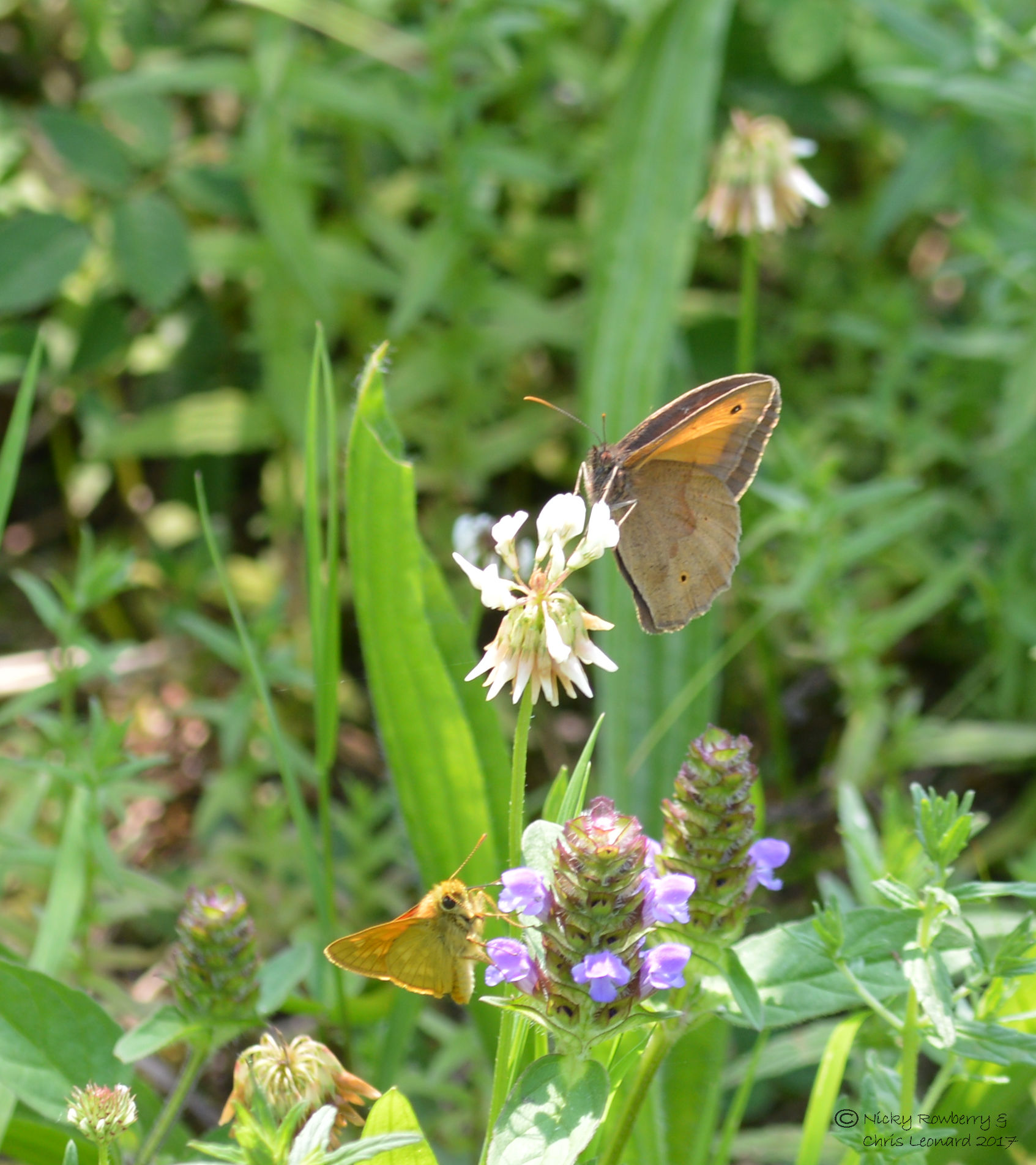
The skippers even photobombed my attempt at a Meadow Brown.

I saw several other species, none of which would stop for photos – Speckled Wood, Ringlet, Silver Washed Fritillary and Commas.

The guide book said to look out for the ponds and seeing as I seem to be getting a bit obsessed with dragonflies lately, I checked them out. They were full of dragonflies, but also lots of these adorable water boatman – flapping through the water with their built in paddles. Best spot of the day though was this Broad Bodied Chaser, which was hunting over a pond, but kept coming back to this twig to rest.

There was another large dragonfly buzzing over the pond. It refused to settle for a photo, but kept dipping its abdomen in the water – I can only assume it was a female laying eggs, but if anyone can correct me, please do. The best I could manage was one of my short shaky videos.

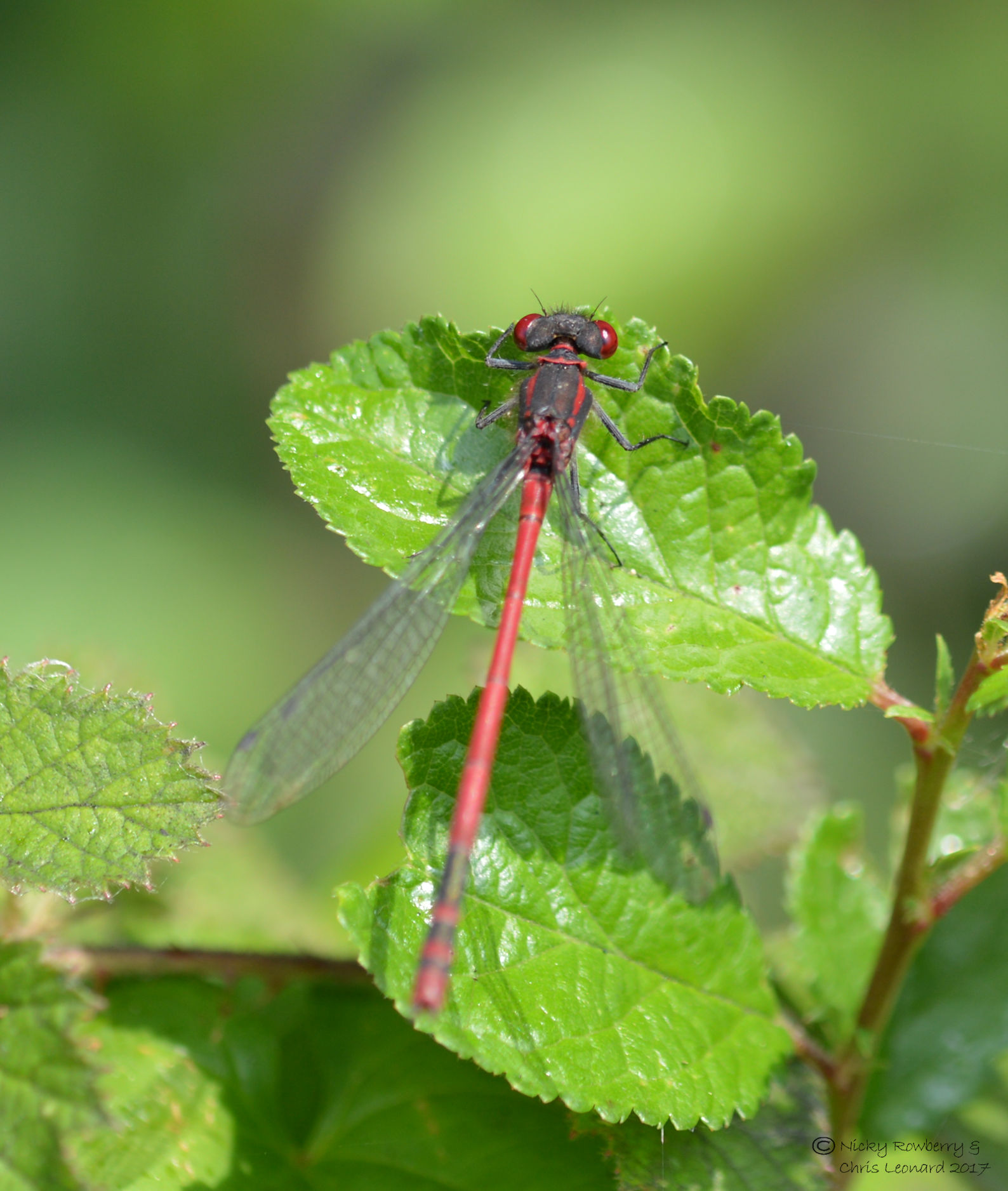
Final photo of the day is this Large Red Damselfly. I’d never realised before just how red their eyes are.

I could have spent longer in Monkwood and on a cooler day, I would have been happy to do so. It is a beautiful wood and full of butterflies; birds too no doubt if butterflies aren’t your bag! We are very lucky living in Malvern to have beautiful woods like this, the Wyre Forest, Grafton and Trench Wood, all within an hour’s drive.

Butterfly No. 41!

May finished in fine style with a trip to the Wyre Forest and the hunt for another new (to me) species of butterfly. I was joined by my friend Anna who was visiting from Scotland and didn’t mind being dragged out into the woods in search of butterflies. Not only did she not mind, but she is a photographer, who is generous enough with her expertise to give lots of tips and hints (not that they all went in!)

I parked in the usual spot at the end of Dry Mill Lane and we headed off down the old railway track. First stop was an ornately carved bench with a lovely gentleman and his robin friend, who he fed with mealworms regularly.

After a brief chat, we headed on down the track towards a long open area with banks either side –  looked like perfect butterfly ground!

Our primary target was the Small Pearl-Bordered Fritillary which should be out at the end of May/early June. We all got very excited by the first fritillary type butterfly we found, but then realised it was a Pearl-Bordered, not a Small Pearl-Bordered. The former are coming to the end of their season, but there were still a few about. It was still a beautiful butterfly all the same.

We saw lots of the Pearl-Bordered Fritillaries last year (more photos of those on a previous blog post https://toolazytoweed.uk/2016/05/18/out-and-about-wyre-forest/), so we continued with our hunt for the small ones.

The sun came out about 3pm and suddenly the Small PBFs all started flying. It was hard to count as they don’t really stay still or all show themselves at the same time, but there were probably at least half a dozen. Eventually a few slowed down enough to get some pics.

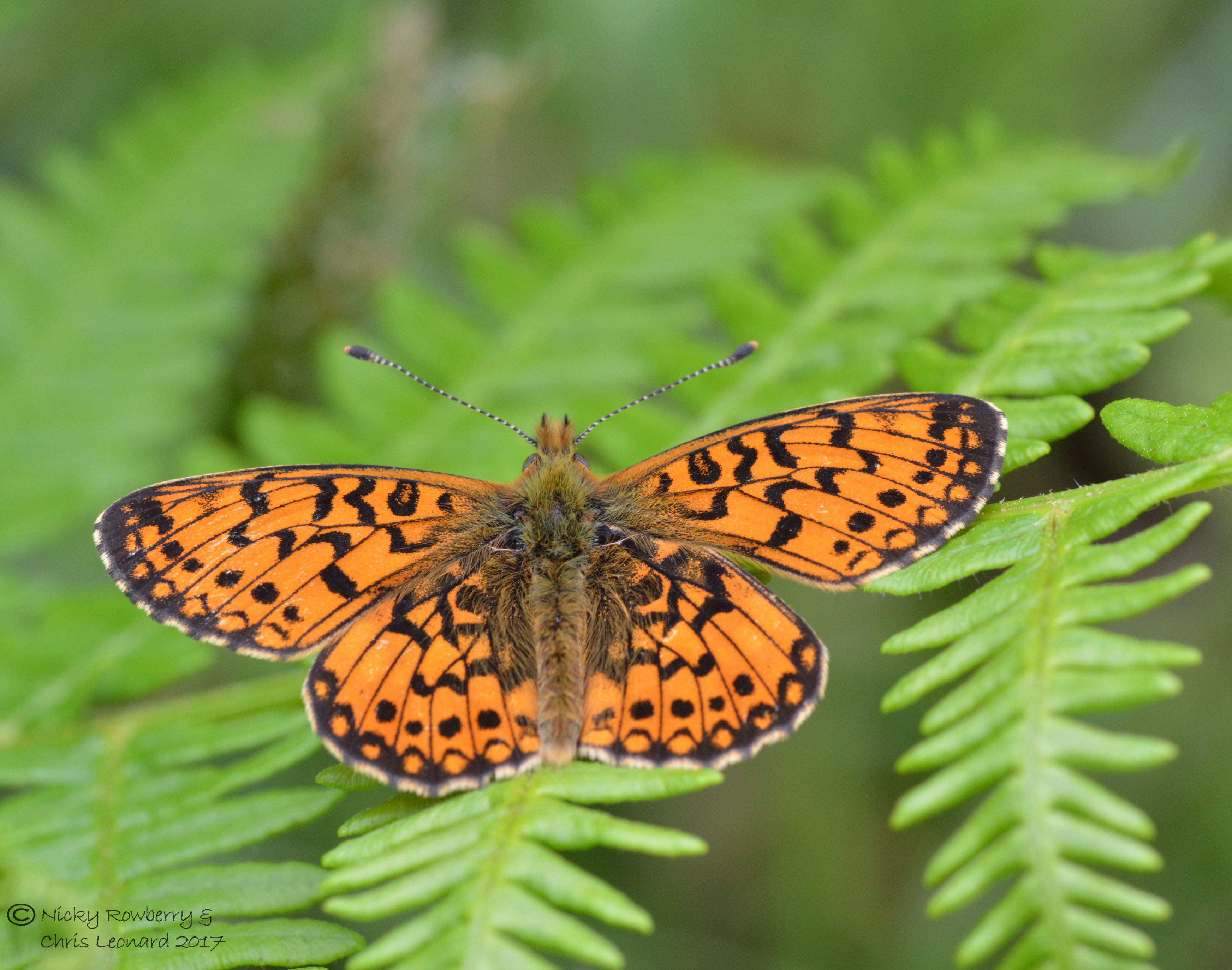
They are beautiful bright orange little butterflies. To be honest we weren’t totally sure we were seeing both species, although the presence of black marks resembling “730” is supposed be diagnostic of the small ones – see close up photo below.

Thankfully the good people on Butterfly Conservation West Midlands Facebook page confirmed we’d got both species.

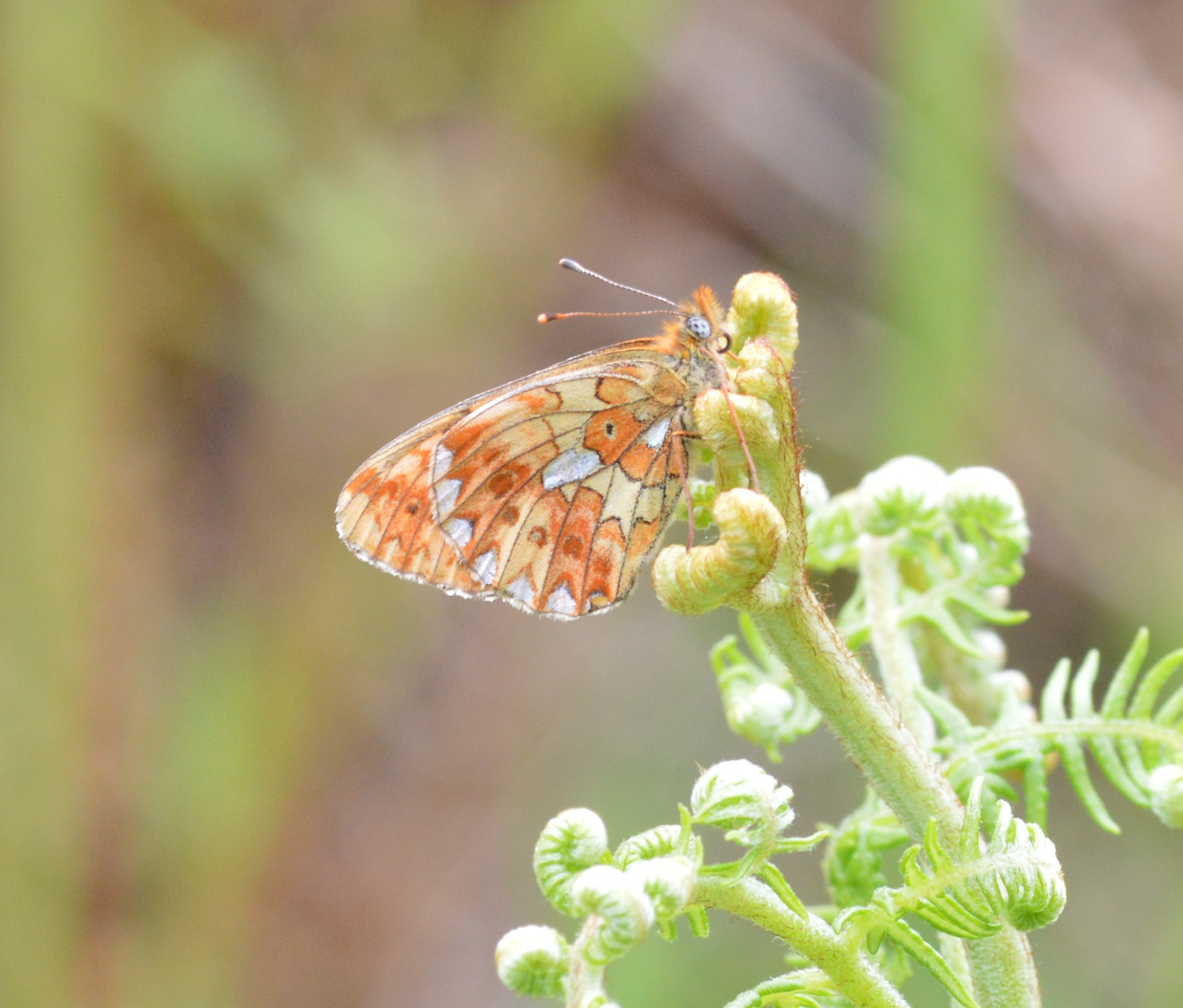
We had hoped to get photos of the underside of the Small PBF wings, which are beautifully marked like stained glass windows, but they wouldn’t oblige and settle with wings  up. The best we managed was this shot taken while crouching down lower than the butterfly – it gives a glimpse of the underside, but is far from ideal.

Heading back to the car, we spotted a couple of Large Skippers (or possibly one that was just following us!) The Large Skippers were a bit more obliging than the fritillaries and posed on some bird’s foot trefoil flowers.

The Small Pearl-Bordered Fritillary is the 41st species of British butterfly we’ve managed to see since we started butterfly spotting. It is the 3rd “new” species that we’ve found in the Wyre Forest, highlighting what a fantastic place the Wyre is for butterflies!

A Grizzly Day Out

Yesterday we went out on our first butterfly bagging expedition of the year – our target the Grizzled Skipper. Using the excellent        Butterflies of the West Midlands book as our guide we headed down to the Doward in South Herefordshire. The woodlands of the Doward are part of an Area of Outstanding Beauty – always a good starting point for any day out!

The butterfly guide book had described the best route to take to see the Grizzled Skippers, start at the main entrance to the White Rocks Nature Reserve. In our usual disorganised way we managed to head off in completely the wrong direction and somehow started at the other entrance. This was no great disaster though as it took us into the woodland which was carpeted with wild garlic (you could smell it in the air) and looked stunning.

Our accidental route also meant that we stumbled across King Arthur’s Cave. The Doward lies on limestone rocks and the cave goes deep inside them (not that we ventured very far ourselves). It has apparently been used by humans since Palaeolithic times, with everything from flint tools to mammoth bones having been found in there.

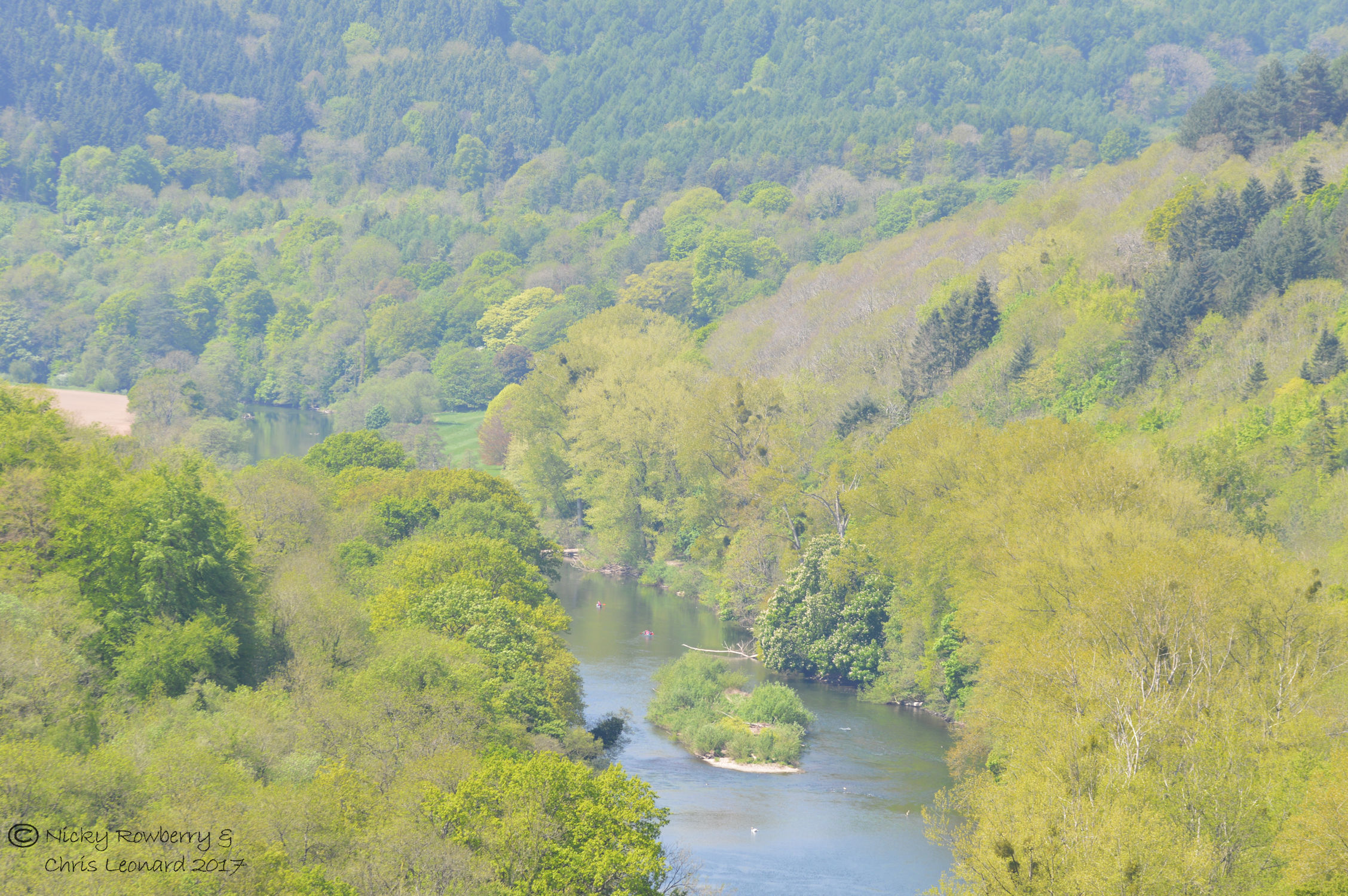
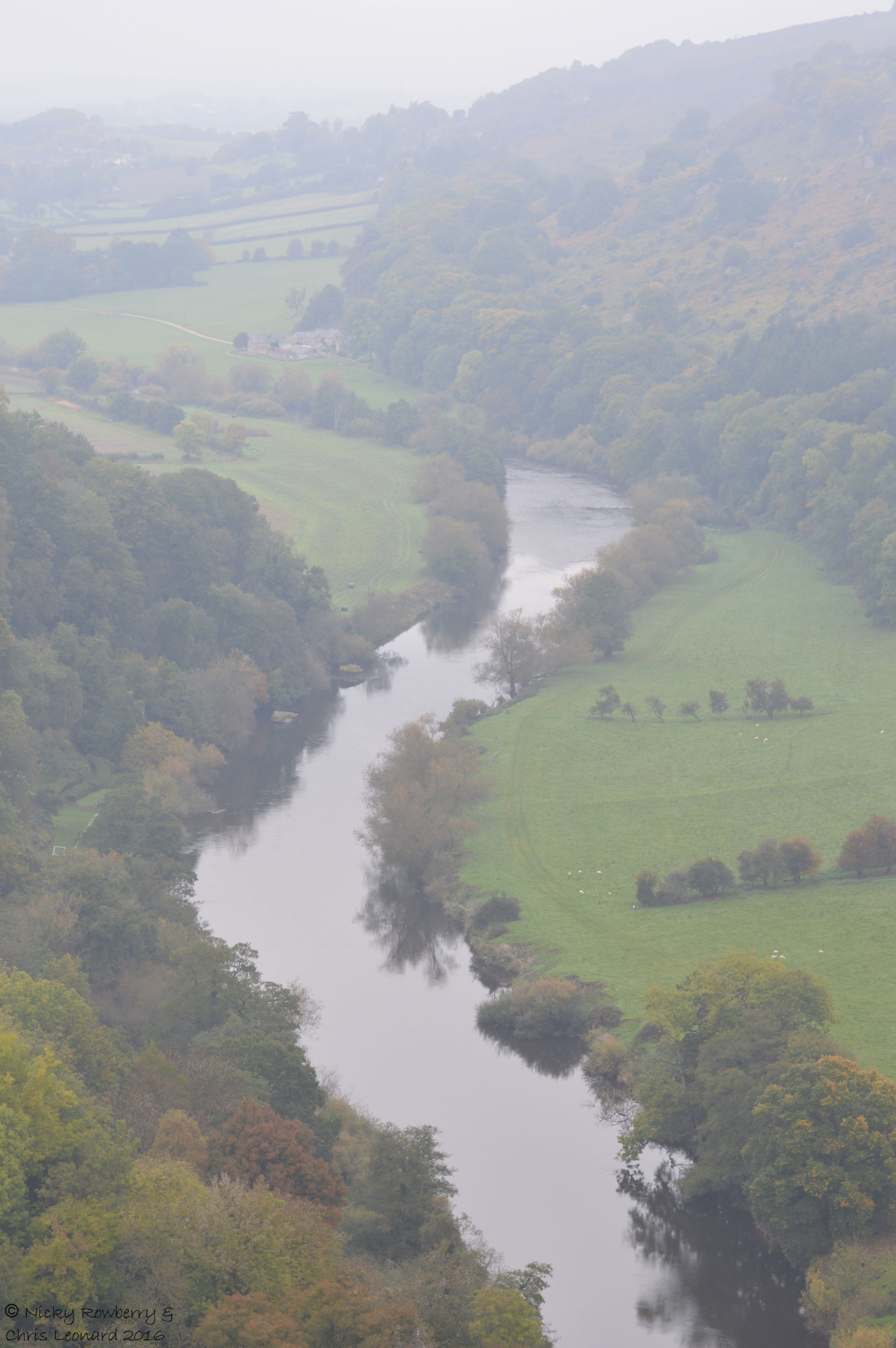
We carried on our erroneous path and came to a stunning view point looking over the River Wye.

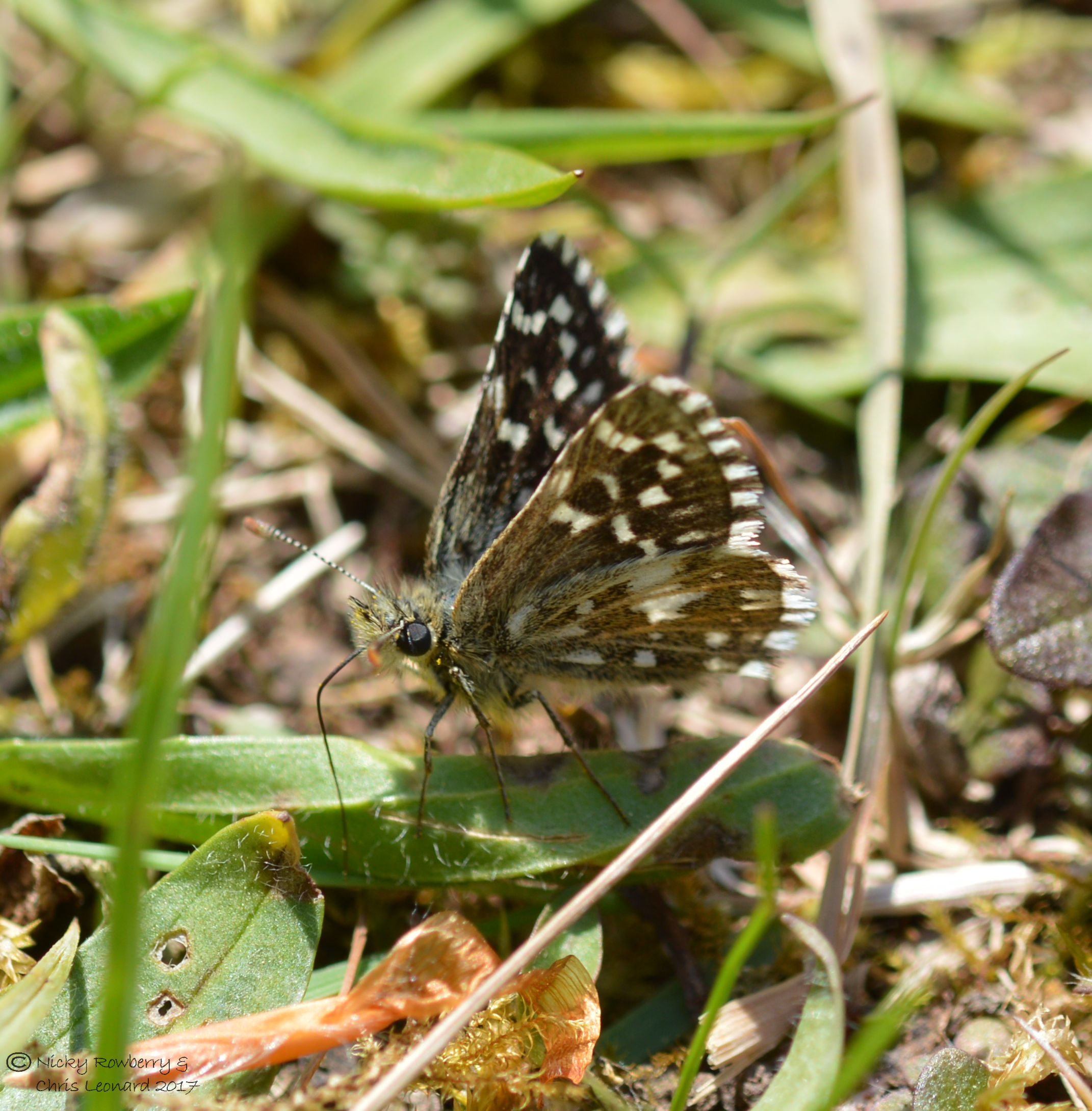
By this time we’d twigged that we were on the wrong path, so tried heading back up hill, stumbling upon a large quarry as we did. It was baking hot in the quarry, so I stayed at the edge. While I loitered by the gate, I spotted what I thought was a small moth darting about.  Closer inspection revealed it was actually a Grizzled Skipper – I’d found one by shear chance after all! I’d never realised that they would be so small, or so fast – it could disappear very quickly.
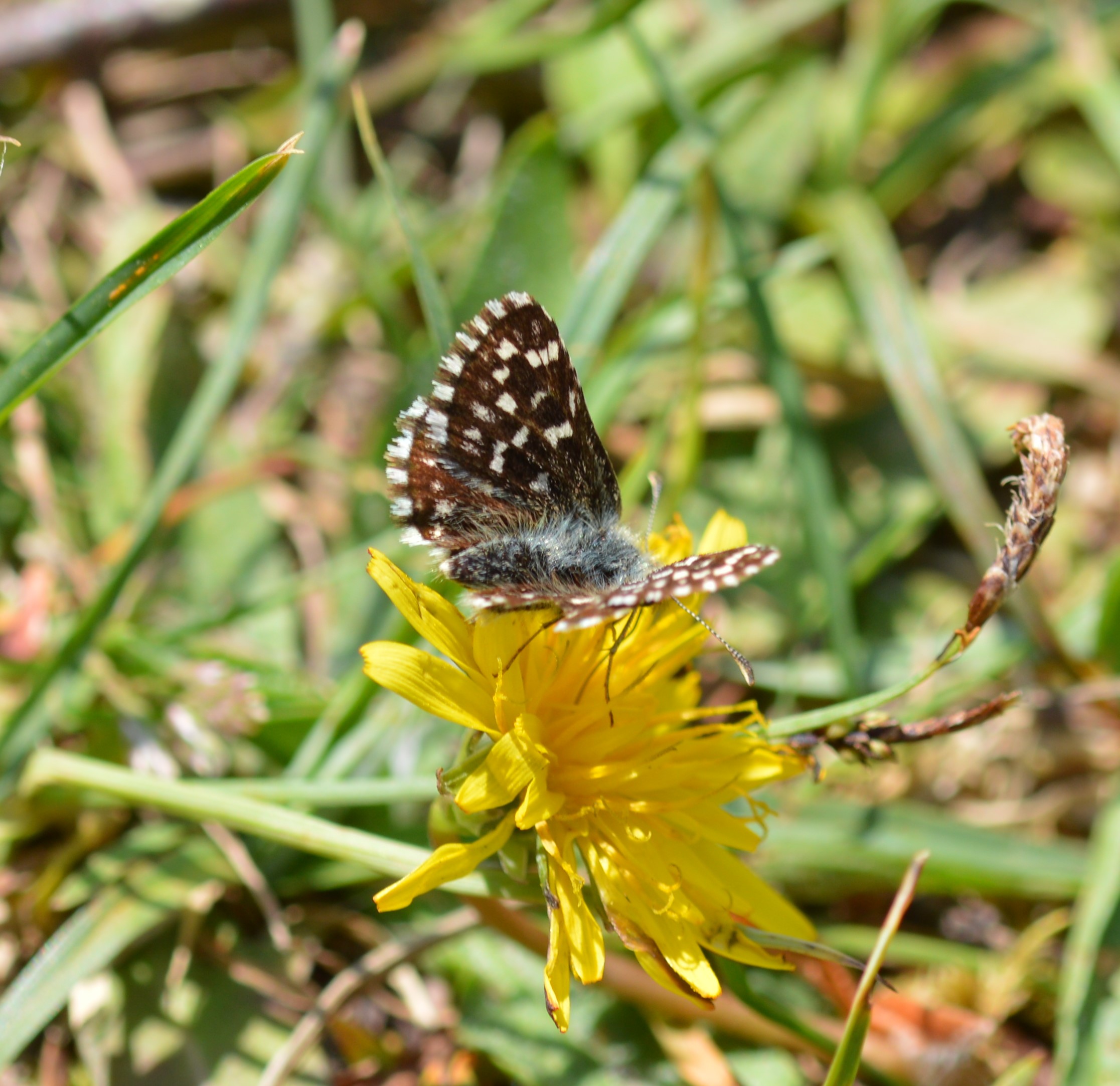
My first ever Grizzled Skipper wasn’t unfortunately a pristine specimen, looking a bit ragged at the edges, but it was what I came looking for, so I took loads of pictures.

He or she looks a bit more respectable from the side as you can’t see the missing bits of wing.

Flushed with success (and the heat of the quarry) I decided to head back to the car and start again on the proper route. Not too surprisingly on the proper route it was a lot easier to spot the skippers. I quickly found about half a dozen flitting around a sparse area of ground. They were so quick though it was difficult to track them – I think these were both of the same slightly slower specimen.

It is still relatively early in the “butterfly season”, but I did spot a few other species around the bluebells – this female orange tip and a large white.

The Grizzled Skipper is a delightful little butterfly, but it unfortunately becoming increasingly rare.  There are not many sites around us where we could have seen them, so we were very lucky to be able to add this species to our butterfly tally. Species number 39, only 20 more to go, but I have the feeling they are going to become increasingly difficult to find!

Out and About – Symonds Yat

We had what seemed like a brilliant idea yesterday to head down to Symonds Yat to see the trees there in all their autumn splendour. As usual of course we didn’t really see what we’d aimed to see, but as is so often the case with our wildlife days out, what we did see more than made up for it. For a start the glorious autumn sunshine we’d hoped for had been replaced with a dull grey mist. Secondly the trees down at Symonds Yat must be a bit behind the ones in Malvern, as they’d not really changed colour yet. So what we could see through the mist wasn’t really the autumn spectacle we’d hoped for. Still we headed to Symonds Yat Rock which sits high up overlooking the horseshoe bend in the River Wye.  The trees below may not all have been golden brown but the view was still stunning.

river

We could see the cliffs where Peregrine Falcons nest and thanks to some very kind people who let us use their telescopic sights, we even saw one of the birds in a hole in the rocks. It was way too far away for us to get a photo – but at least we can say we saw a falcon!

The same helpful couple informed us that the strange noises we could hear were rutting Fallow Deer in the woods below (I’d thought the sound was Wild Boar, so  good job we met people who knew what they were talking about!) We didn’t see the deer but were reliably informed by our new-found friends that they do sometimes appear and go down to the river.

We may not have managed to see the deer or get photos of the falcons, but fortunately there was plenty of smaller animals that were much more obliging. Volunteers (possibly our two helpers from above) regularly put out bird food at the viewing point on the rock. This was attracting plenty of smaller birds who were clearly used to the flocks of visitors clicking away with their cameras (actually mainly phones of course, apart from us old fogies with actual cameras!) The highlight was a gorgeous Nuthatch – the closest either of us had ever been to one.

Various members of the Tit family were also making the most of the bird food. Coal Tits, Blue Tits & Great Tits were all completely unfazed by the visitors. Apparently Marsh Tits frequented the area too, but unfortunately not while we were there. A Chaffinch completed the array of small birds we saw up on the rock.

One final surprise though was a visitor on the ground beneath all the bird seed. The Bank Vole had clearly learnt that there were easy pickings to be had here and was also relatively unbothered by all the people.

We could have spent a lot longer up at the rock, but we’d booked lunch in one of the pubs down by the river in Symonds Yat East, so headed back down. Symonds Yat East is on the Gloucestershire side of the river, while Symonds Yat West is in Herefordshire. You can get a tiny hand-pulled passenger ferry between the two – the lad pulling the ferry across must have biceps of steel, as he never stopped going back and forth all the time we were there!

As we stood watching the river and the canoeists braving the rapids, we spotted the unmistakable flash of a kingfisher. Of course we’d left the camera back in the car while we had lunch,  and by the time the camera was retrieved, the kingfisher was long gone. A lovely flock of Long Tailed Tits flew in though to complete our small bird collection for the day.

So the day may not have provided an autumn spectacle, but we saw a kingfisher, heard some deer, just about saw a falcon, met some nice people and watched a vole – I’d call that a result!

Awesome Autumn

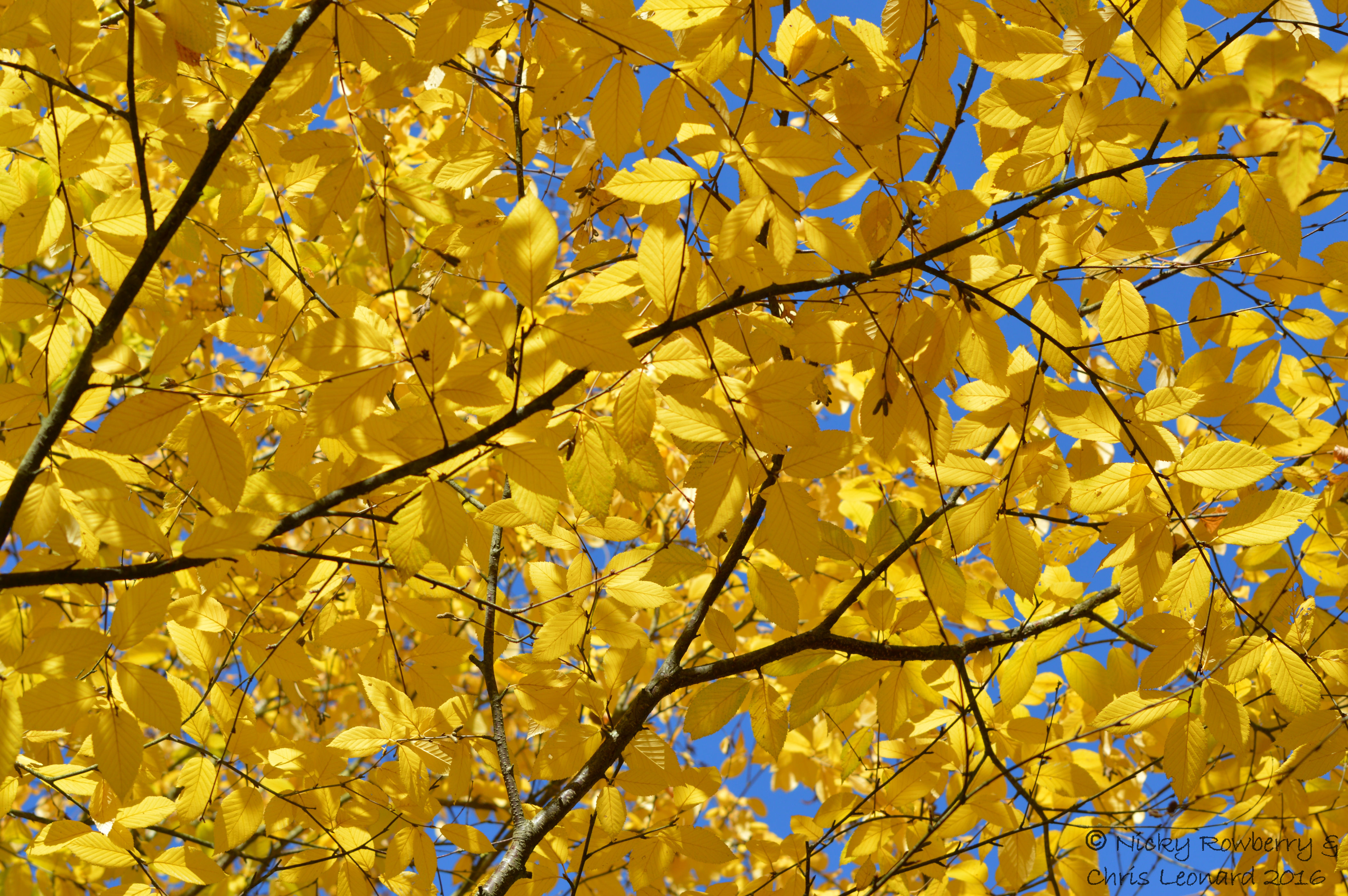
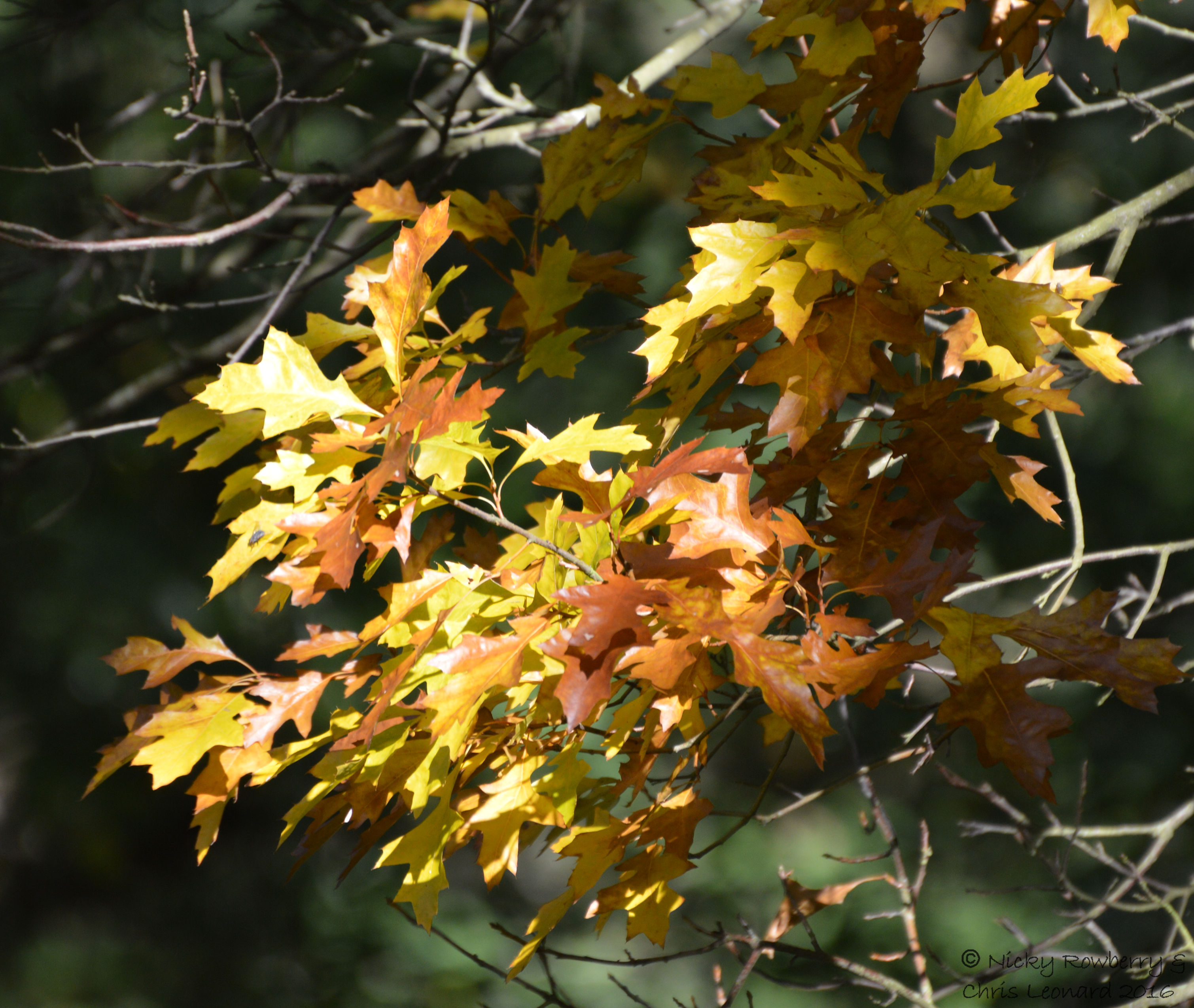
Feeling the need to get out and about at the weekend before the days got too cold, I headed over to Bodenham in Herefordshire. This is the village I grew up in – there’s something very comforting about an autumnal walk around childhood haunts. The area has beautiful woods, lakes, a small river & a pretty village – all the ingredients for the perfect walk. This post is mainly and unashamedly a celebration of autumnal colours.

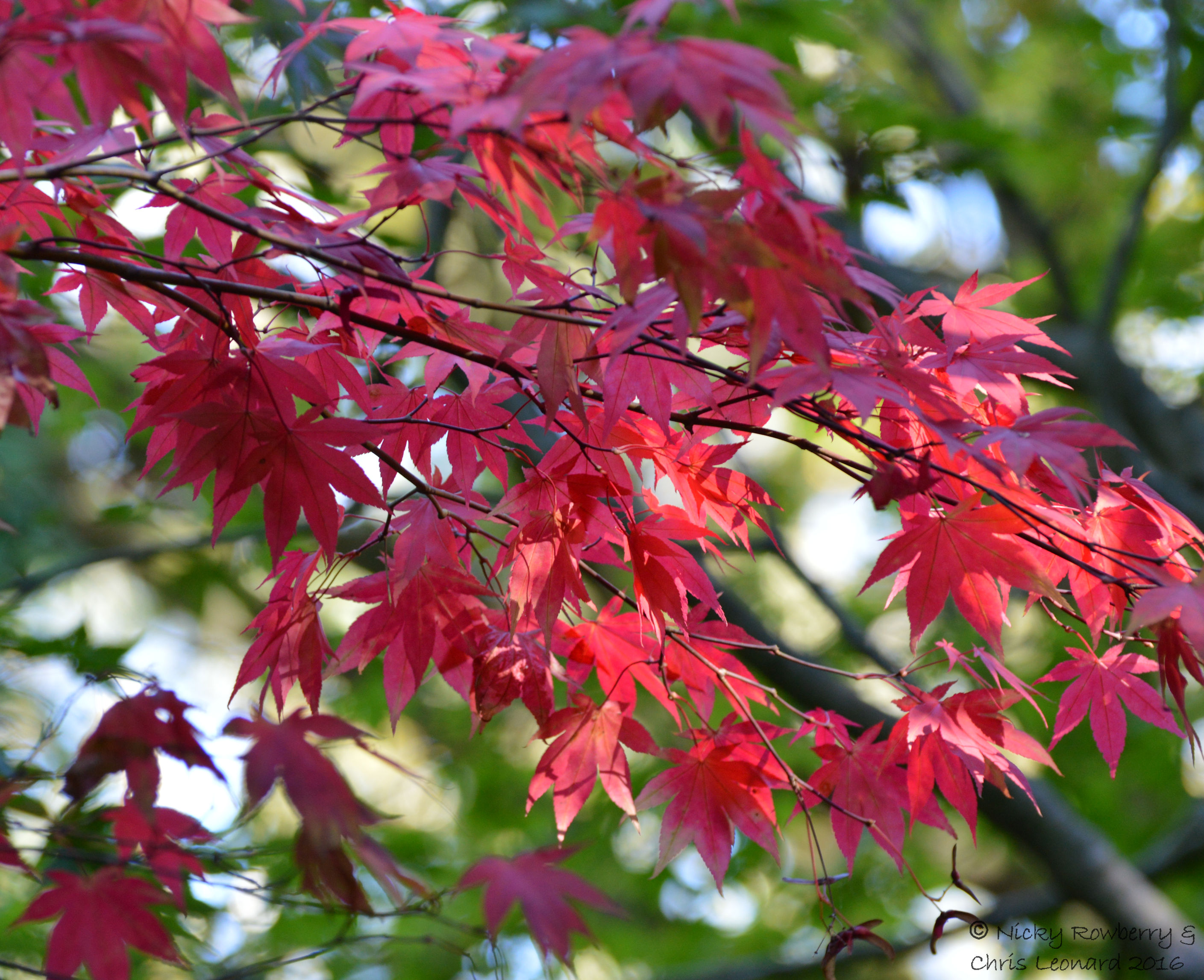
I started off in Queenswood Country Park. The trees were just starting to come into their full autumn glory. I’m not good on tree identification, but I really just loved the colours – it doesn’t really matter what the species are.

leaves-6

leaves-3

leaves-5

leaves-4

The leaves of course look great when you see them on a larger scale still on the trees. But they also look good if you focus in on just a few on the ground.

leaves-7

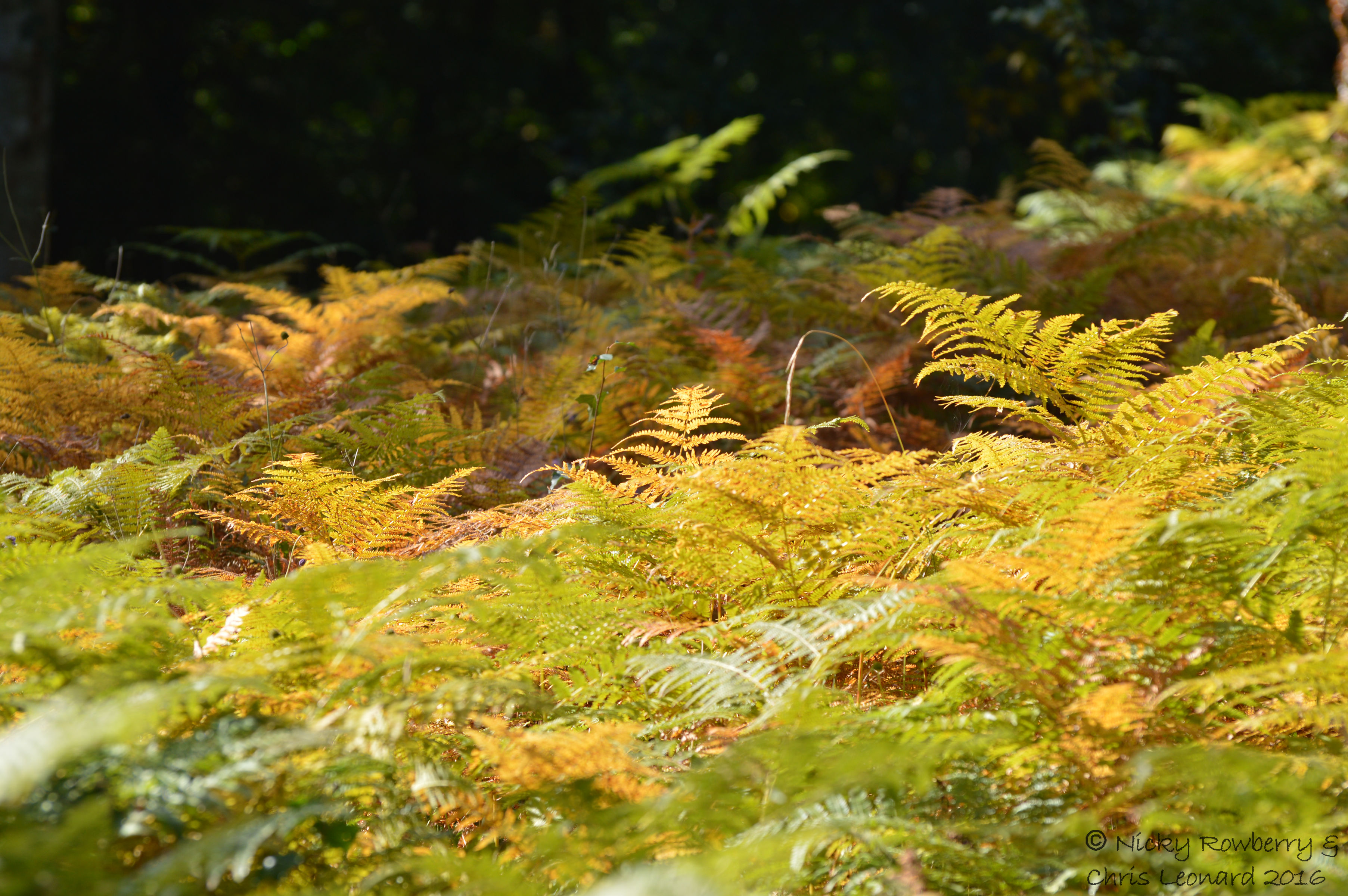
The trees weren’t the only plants turning colour – the ferns were looking splendid too, turning coppery gold in the sunshine.

ferns

ferns-3

The woods and hedgerows were bursting with berries and fruit of all colours, which was great to see, although the holly did make me feel like Christmas was on its way!

berries

red-white-berries

black-rowanberry

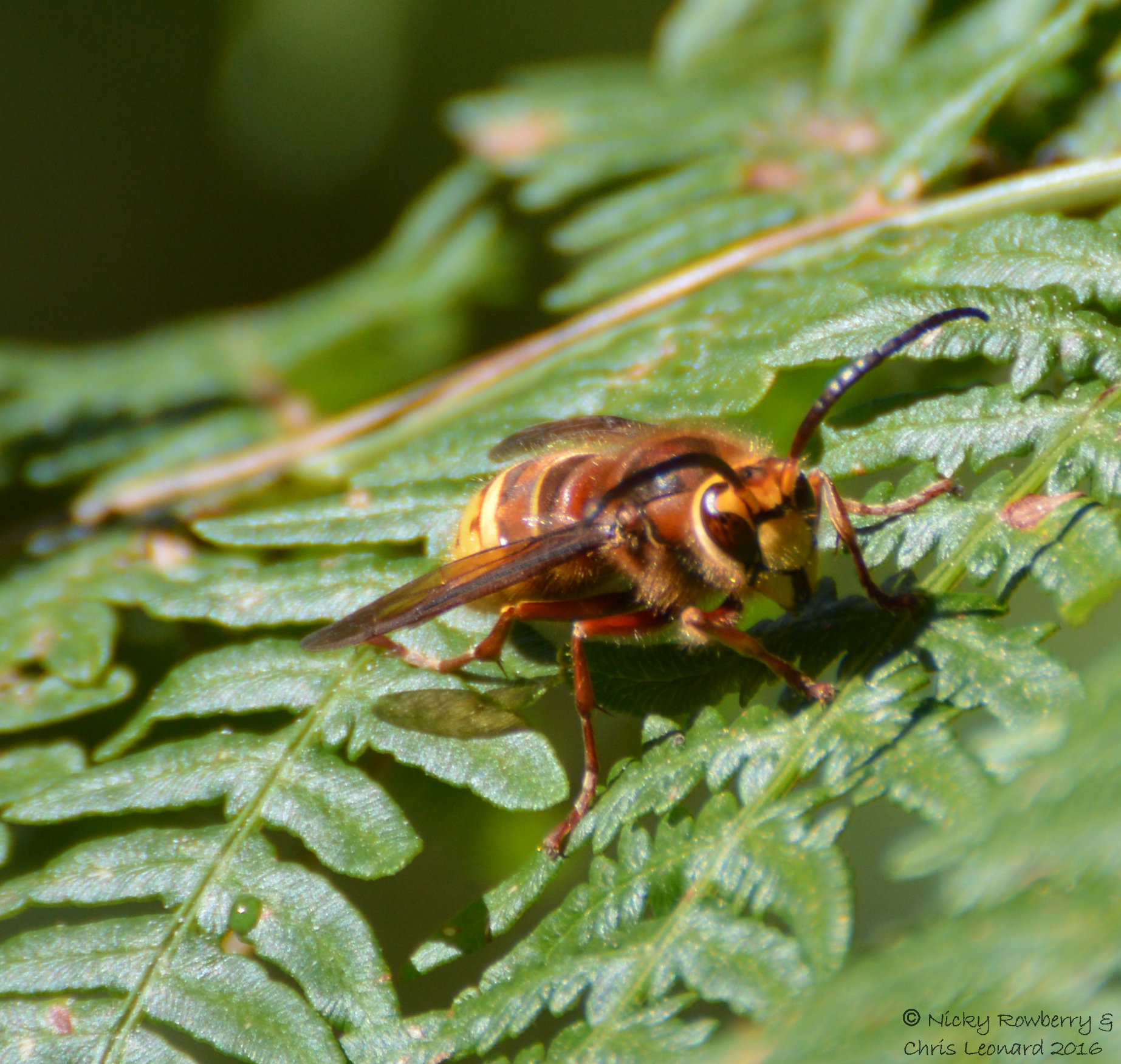
It may be late in the year, but there were still plenty of insects about. The ferns in the wood had several large hornets buzzing around (no need to panic, they were our normal hornets, not the dreaded Asian hornets). I’ve always rather liked hornets and if you don’t bother them, they don’t bother you!

hornet

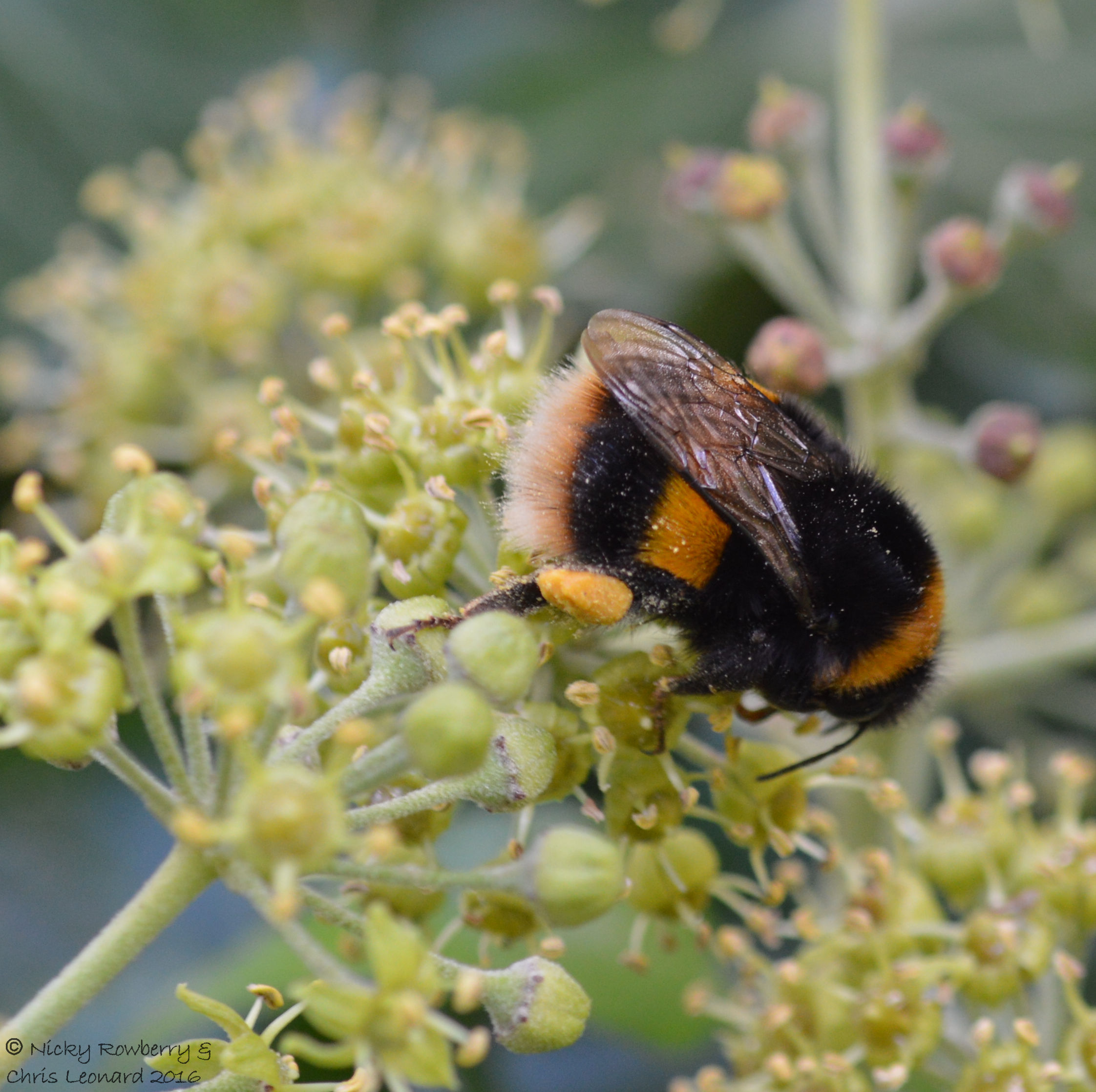
There were also still a few bees around, like this Common Carder and a large Buff-tailed Bumblebee queen gathering pollen from the ivy.

carder-bee

bumblebee

The village has a lot of ivy and of course I couldn’t resist checking it for Ivy Bees. After chasing a lot of Honey Bees, I finally spotted a single Ivy Bee – good to know that this new British species has reached Bodenham (the record has been duly logged on iRecord for the Ivy Bee mapping project).

ivy-bee

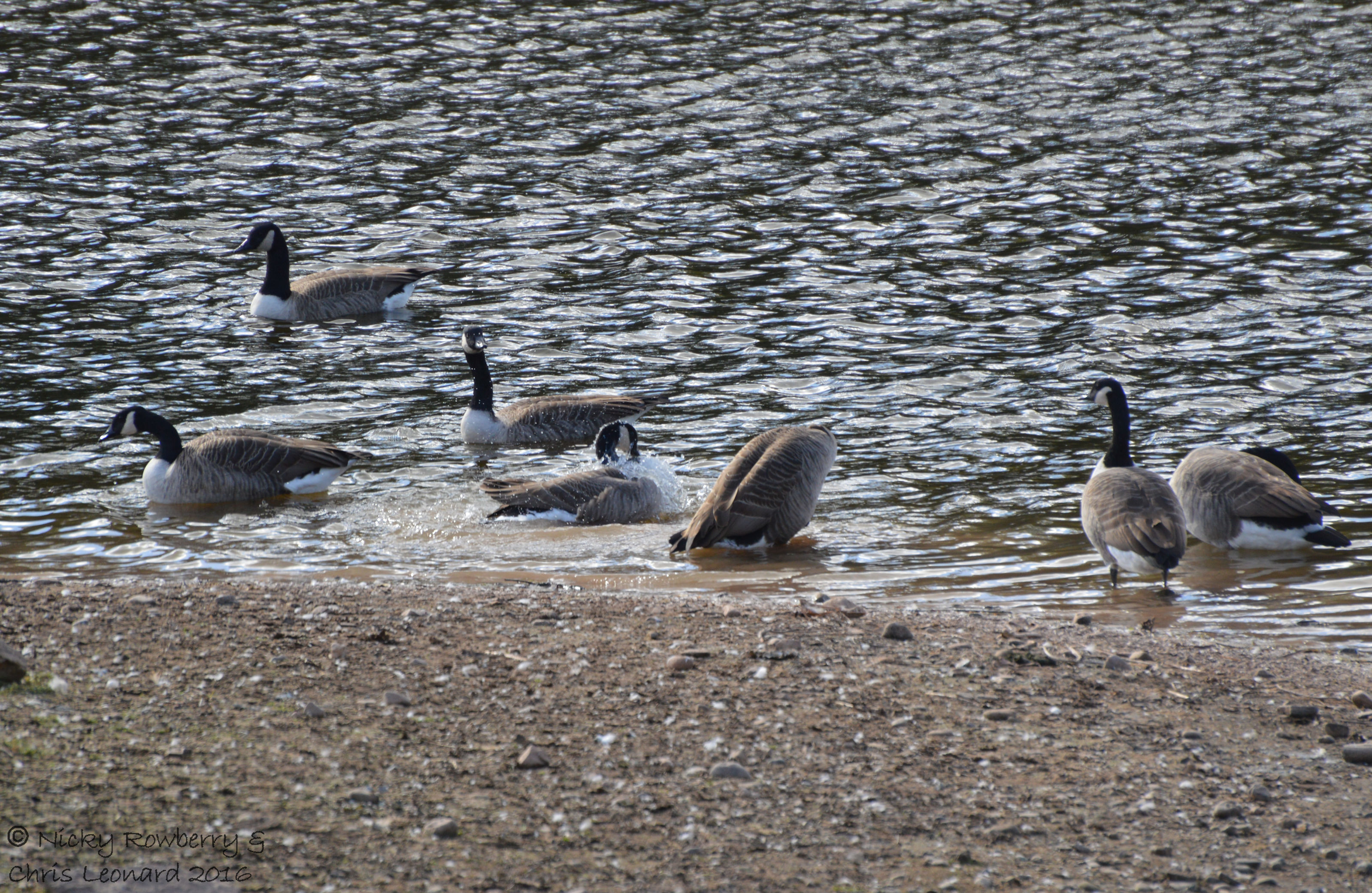
The woods of course had lots of birds and squirrels rustling about in the canopy, all making a point of staying out of clear shot of the camera. Fortunately Bodenham Lakes have a bird hide, so I whiled away some time watching a large flock of Canada Geese, splashing about in the shallows.

canada-geese

Autumn is a photographers dream – I wish my photos did it justice. It also makes me wish that I could paint to capture the subtle ochres and tawny russets that epitomise this time of year for me.


Out and About – Grafton Wood

Grafton Wood in Worcestershire is one of our favourite butterfly spotting locations and at only a half hour drive away provided the perfect day out yesterday. We went seeking the Brown Hairstreak, as we’d seen them there before. This is Worcestershire’s rarest butterfly and Grafton Wood is its stronghold, but unfortunately yesterday the Brown Hairstreak refused to put in an appearance. Hopefully we’ll have chance to go back later in the month, but in the meantime here’s one we photographed last year.

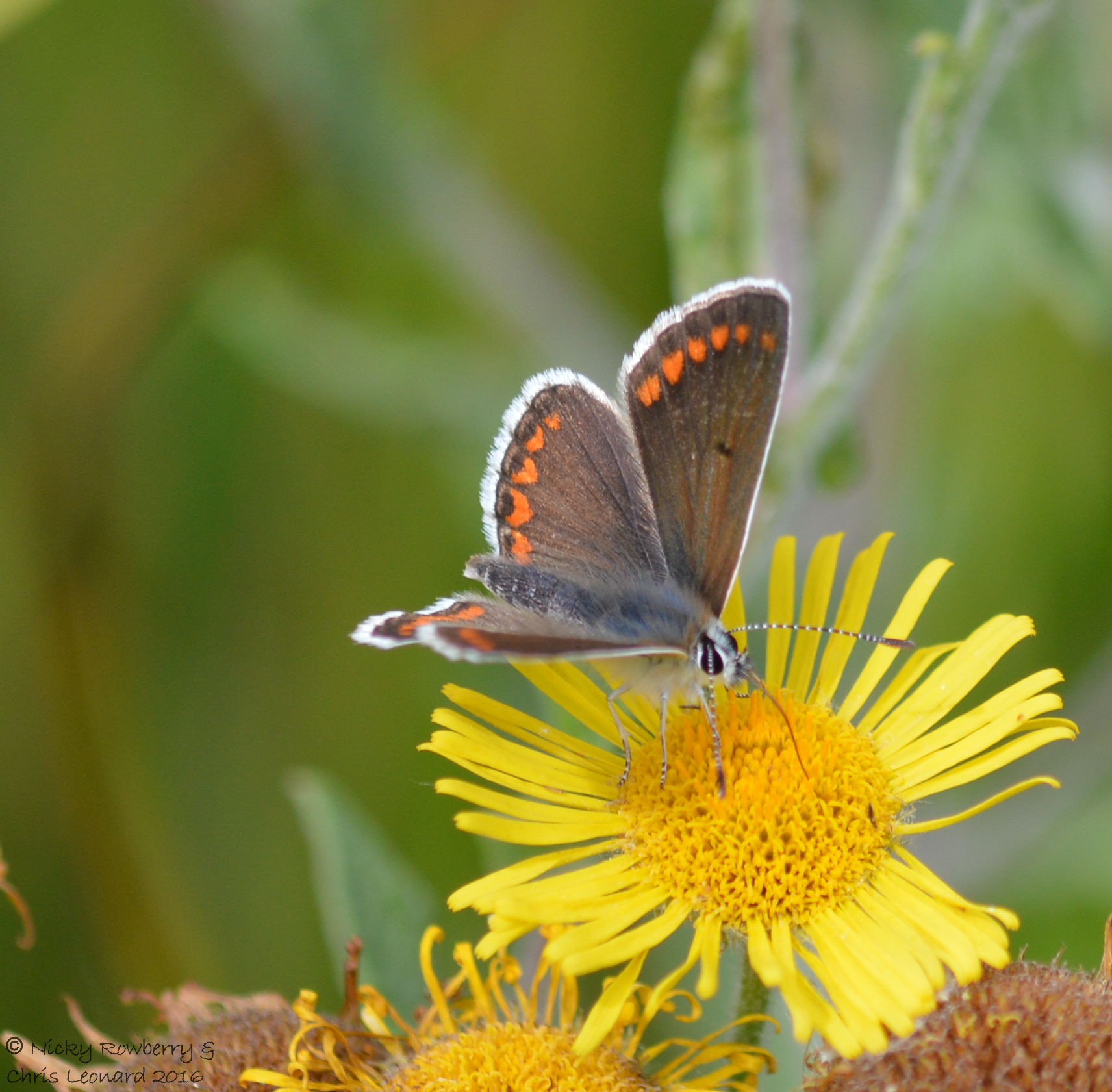
We may not have seen the Brown Hairstreak yesterday, but we did manage 14 other butterfly species, so we’re not complaining. One of the highlights was our second ever Brown Argus, having only seen these for the first time last week at Prestbury Hill.

Brown Argus

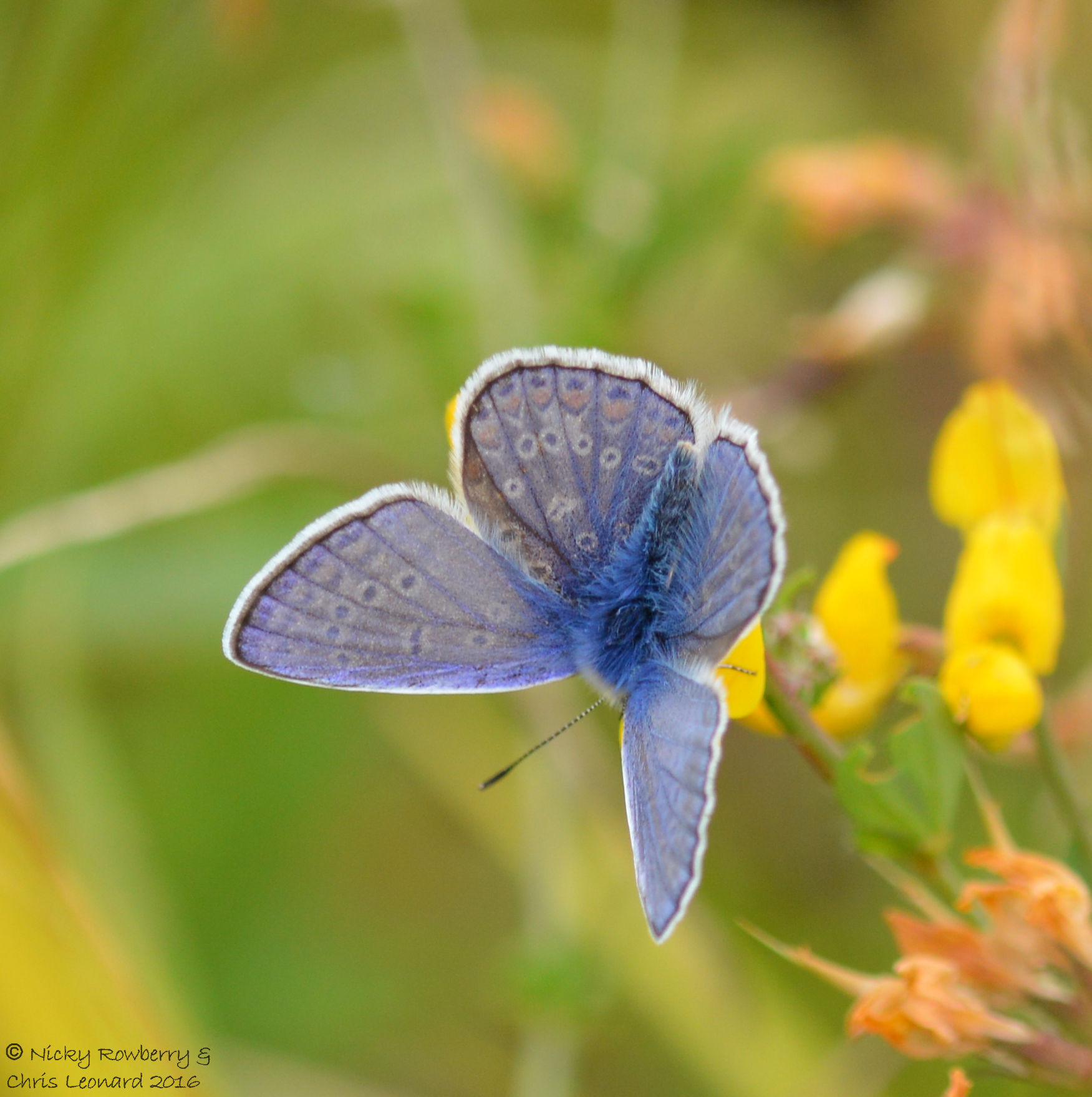
Common Blues were abundant as well. The name implies somehow that by being common they are maybe ordinary, but when the light shines on the males in the right way (like this one below sharing a flower with another favourite of mine, the Swollen Thighed Beetle), they are simply stunning.

Common Blue 3

The colours in the next photo aren’t quite as vibrant, but I love the way you can see the spots from the underside showing through.

Common Blue 4

I think we get a bit hung up sometimes seeking out the new species of butterfly, so it was nice yesterday at Grafton to see some of the old favourite species and have time to appreciate them in their own right. So in no particular order of preference – Red Admiral, Brimstone, Peacock and Small Copper.

Small Copper 2

The Red Admiral and Small Copper can both be seen feeding on Hemp Agrimony. This plant seems to be a butterfly magnet and is the one we saw the Brown Hairstreak on last year.

Butterflies weren’t the only insects of interest yesterday though – the dragonflies and damselflies were abundant too. Highlight was probably an Emperor dragonfly, but the swine thing wouldn’t land, so no photo of that. Next best was a Southern Hawker, which was almost as magnificent, but equally difficult to photograph.

There were lots of Darters about too. At first I thought they were all Common Darters, but closer inspection of the photos back home revealed a Ruddy Darter too. The Ruddy one is a slightly brighter red, but the most diagnostic difference is the colour of the legs – the Ruddy’s legs are all black, whereas the Common has paler segments.

Ruddy Darter

At a small pond we spotted this mating pair of Blue-tailed Damselfies – a new species for us I think. The male is the one at the top and he’s holding onto the back of the neck of the female below, while she curves her body up to his to receive the sperm. They can stay locked like this for quite a while!

Blue Tailed Damselflies 2

Back at the carpark by Grafton church, we rounded off the day by finding our first ever geocache! Not the greatest level of difficulty, but we were pleased with our success on the first attempt. Another thing to get addicted to “bagging”!

His Imperial Majesty – The Purple Emperor

Today was all about the colour purple! We went in search of the Purple Emperor butterfly (affectionately known as His Imperial Majesty by butterfly enthusiasts) and found not only him but Purple Hairstreaks too! Since we first got into butterflies, the Emperor has been one of the species we’ve most wanted to see. It is not only one of our largest British butterflies, but arguably one of the most beautiful. We did go looking for it last year, but sadly saw just one lonely little wing on the ground, so today we set off hoping for better and all our butterfly dreams came true.

We’d seen that Butterfly Conservation Warwickshire had an organised walk at a site with Purple Emperors today, so we went along with fingers crossed. Almost immediately the walk leader announced there were a pair of Emperors up the path. Our group charged into the wood, but as usual we got side-tracked by other species (Purple Hairstreaks and Silver-washed Fritillaries), so missed them. Our expert though soon spotted another one in a tree and we got a few distant grainy photos. Our very nice walk leader then suggested that we could either stay where we were and would likely see some Emperors or we could go with him on the official walk. We decided to take our chances and stay put. (it wasn’t just laziness, honest!) No sooner had the group disappeared over the horizon into the wood, but a Purple Emperor landed right by my feet. Once we got over the shock,  we then took a lot (and I mean a lot) of photos. So here are some of our best, starting with a wobbly video of His Majesty.

The males come down in the mornings to gets salts and minerals from wet mud or in this case dog poo (not sounding so imperial now!) This one was so into his breakfast that he stayed for ages while we snapped away.

Only the males have the purple sheen to the wings and even then it depends on how the light catches them. Sometimes the wings look almost black, other times just one wing glows blue and just occasionally when the angle is right both wings shine gloriously.

Purple Emperor

We’d spotted a Purple Hairstreak as we first entered the wood and got a few typical shots of it with its wings vertical. This is a very small butterfly compared to the Emperor and spends most of its time up in the trees, so is easy to miss.

Purple Hairstreak

On the way back to the car, we spotted another one. We were delighted when it opened its wings and then even better settled on the ground allowing us to snap away. We’ve never seen these with their wings open before, so this was a real treat.

Purple Hairstreak 2

But all these purple beauties weren’t the only butterflies around today. We saw lots of Silver-washed Fritillaries, most of which were bombing about way too fast to get a photo, but one or two did settle long enough.

Silver washed fritillary

Silver washed fritillary 2

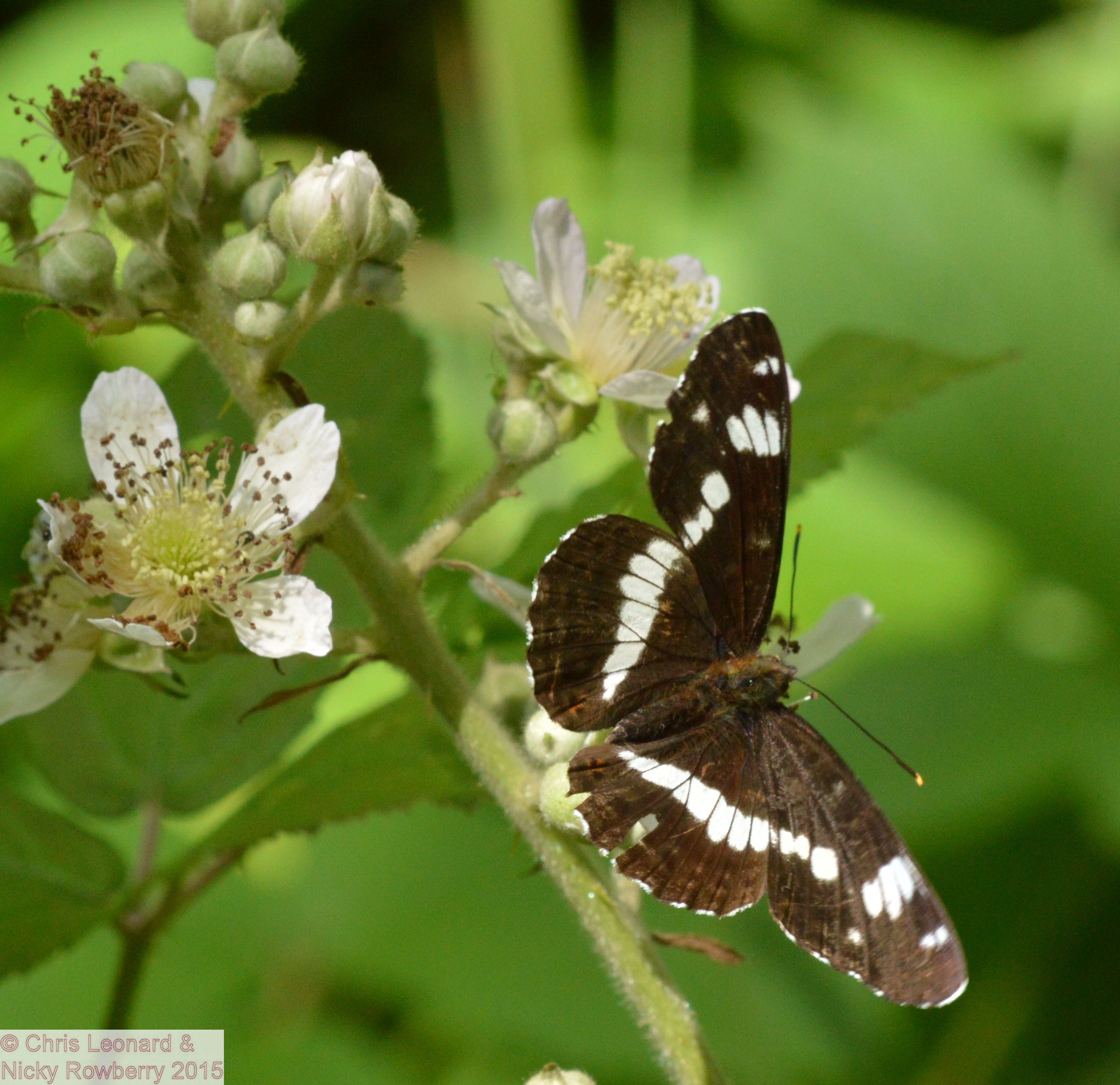
Just before we’d spotted our Purple Emperor we saw some White Admirals. We got all excited thinking it was the Emperor as they are pretty similar, although obviously lacking the purple sheen. Brambles must be the Admiral’s favourite flower, as we often see them on these.

Also spotted today were lots of Ringlets, Speckled Woods, some kind of very fast and consequently unidentified white and last but not least several of these Large Skippers.

Large Skipper 2

I think today will go down as one of our most successful butterfly walks ever! Thank you Butterfly Conservation Warwickshire for organising the walk and making our Imperial dreams come true!