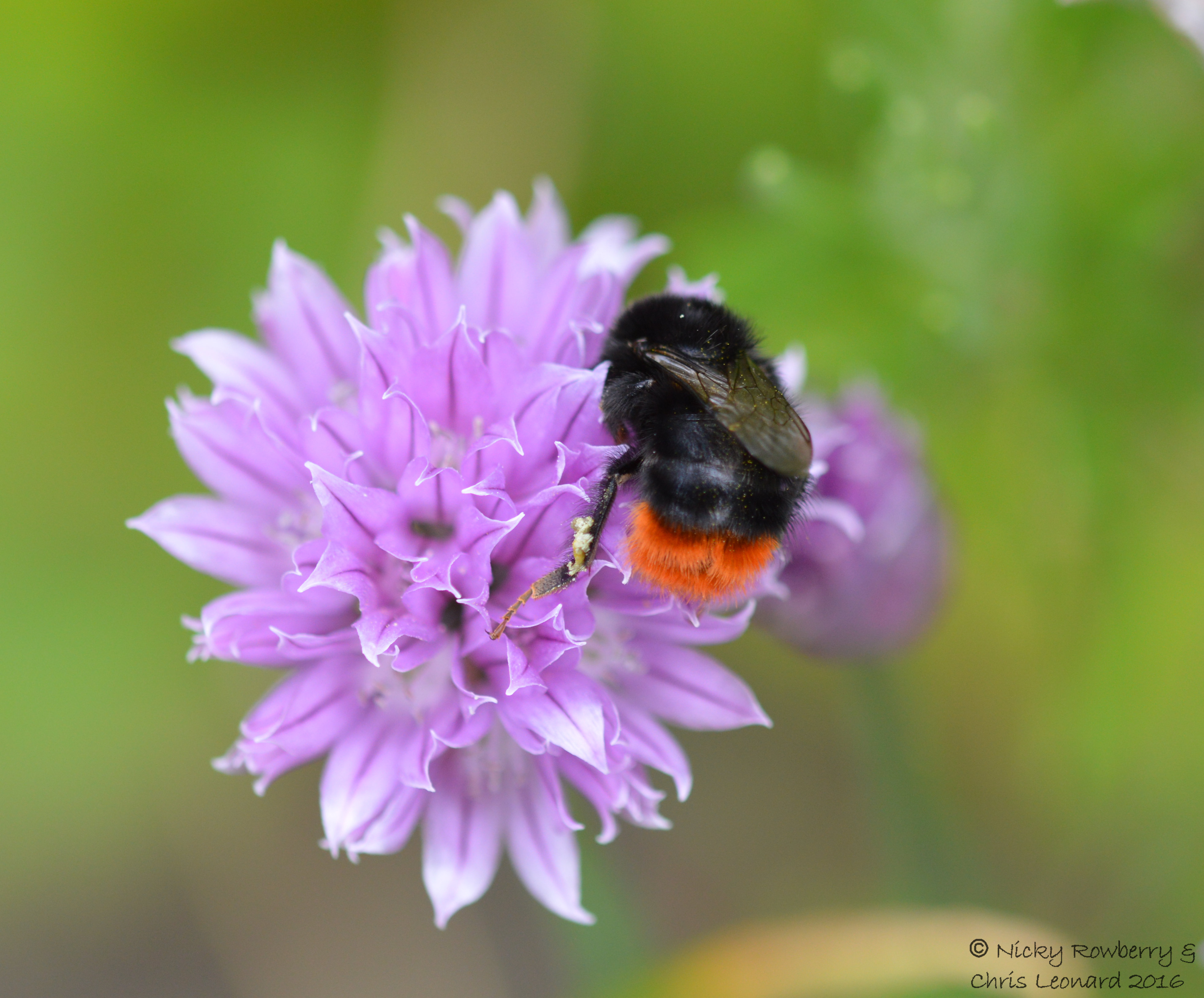
30 Days Wild – Day 16

TWT 30 Days Wild_countdown_16Day 16 of 30 Days Wild and I didn’t really have any idea of what I was going to do today. But as I got home from work a thunder storm started and I thought great, I can do a mean and moody storm post. The thunder was rumbling and the rain was pelting down, as I dashed about the house grabbing camera and sound recorder. Of course being the fickle thing that British weather is, it all stopped pretty much the second I stepped out the back door. The sun even came out, ruining my mean and moody plans!

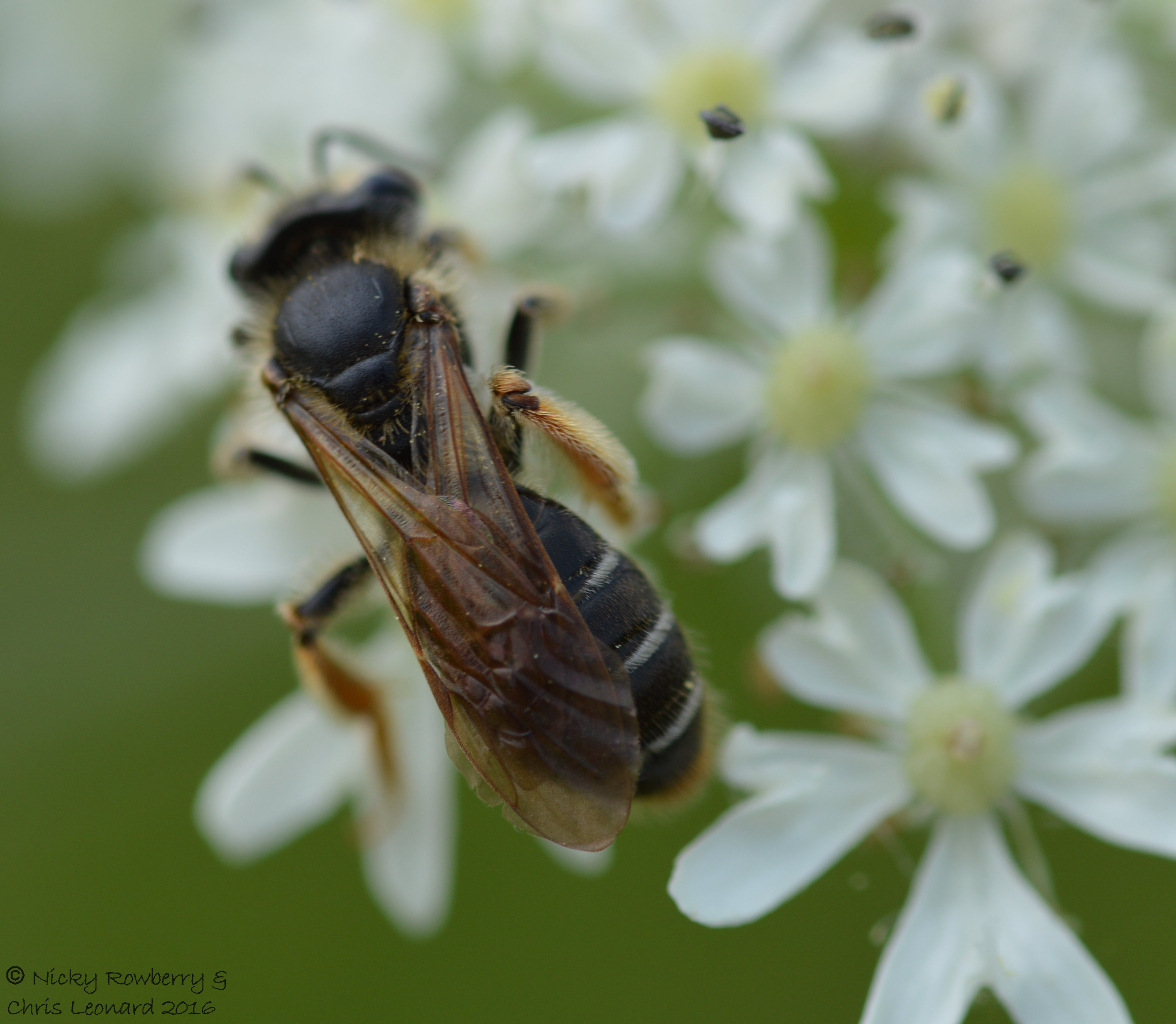
So I decided to switch to Plan B and photograph my little area of “meadow” that I’d planted earlier this year. Although it was now sunny all the plants were of course looking soggy and a bit limp. I was struck though at how quickly the bees reappeared once the rain had stopped. Within minutes the soggy flowers were buzzing again with all manner of bees. Most of the bees looked dry and fluffy, like a bee should. They must have been sheltering somewhere during the downpour. But if there was a wet bee contest, I think this poor mite would win hands down. I couldn’t even tell what species it was, he was so bedraggled. Don’t know why he hadn’t had the sense to find shelter like the rest of them, but his bad hair day didn’t seem to stop him getting the nectar!
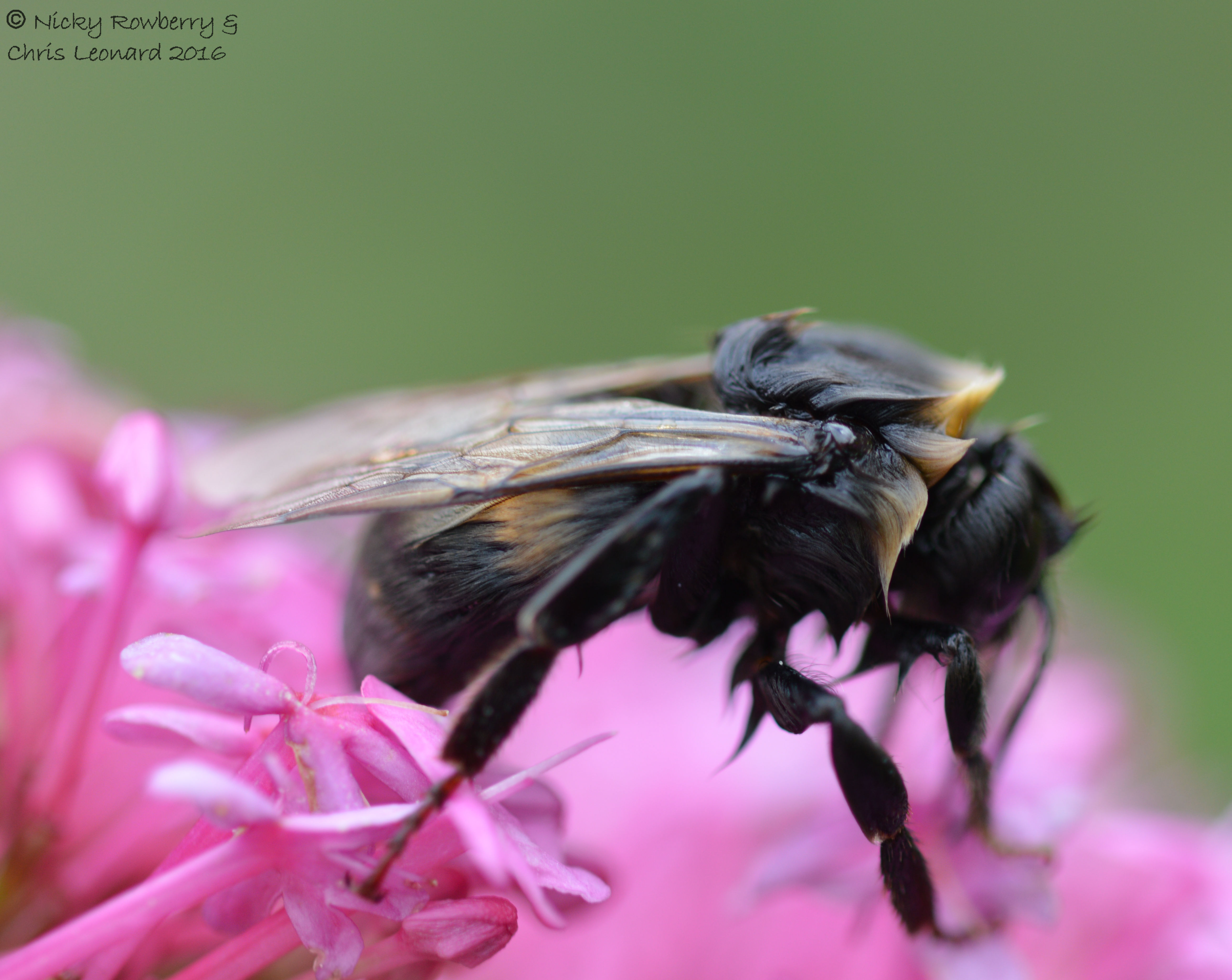
Bedraggled bee

Feeling inspired by the bees (both wet and dry) I thought I’d move on to Plan C – lots of nice bee shots after the rain. Again the weather intervened and it started drizzling – not enough for my moody storm post but enough to spoil any bee photography. Feeling in a bee kind of mind now though, I decided to check on my bee species tally for the year. I realised we’d now recorded 21 species of bee in the garden this year already. I’d blogged about bees previously when we’d reached 12 species, but hadn’t done an update since. So Plan D – today’s post is really an update on the remaining 9 species of bee from our garden to date. Should anyone want to read the original post on bees 1 to 12, you can find it here: https://toolazytoweed.uk/2016/04/13/bumblebee-bonanza/

So bee No. 13 was Gooden’s Nomad Bee (Nomada goodeniana). This striking looking bee actually looks more like a wasp with its black and yellow abdomen. All the Nomada bees are parasitic on other bee species – they lay eggs in the hosts nest and their grubs then destroy the host’s eggs and eat the food. So not quite the adorable image of a classic bee!

Nomada goodeniana

Next up bee No. 14 is the Red Mason Bee (Osmia bicornis). This one nests in pre-existing holes in walls, old wood, stems etc. and is supposedly a common one to make use of “bee hotels” – I’m not aware any having made use of ours though. They use wet mud to create cells for their grubs in these holes, which is presumably why they’re called Mason bees.
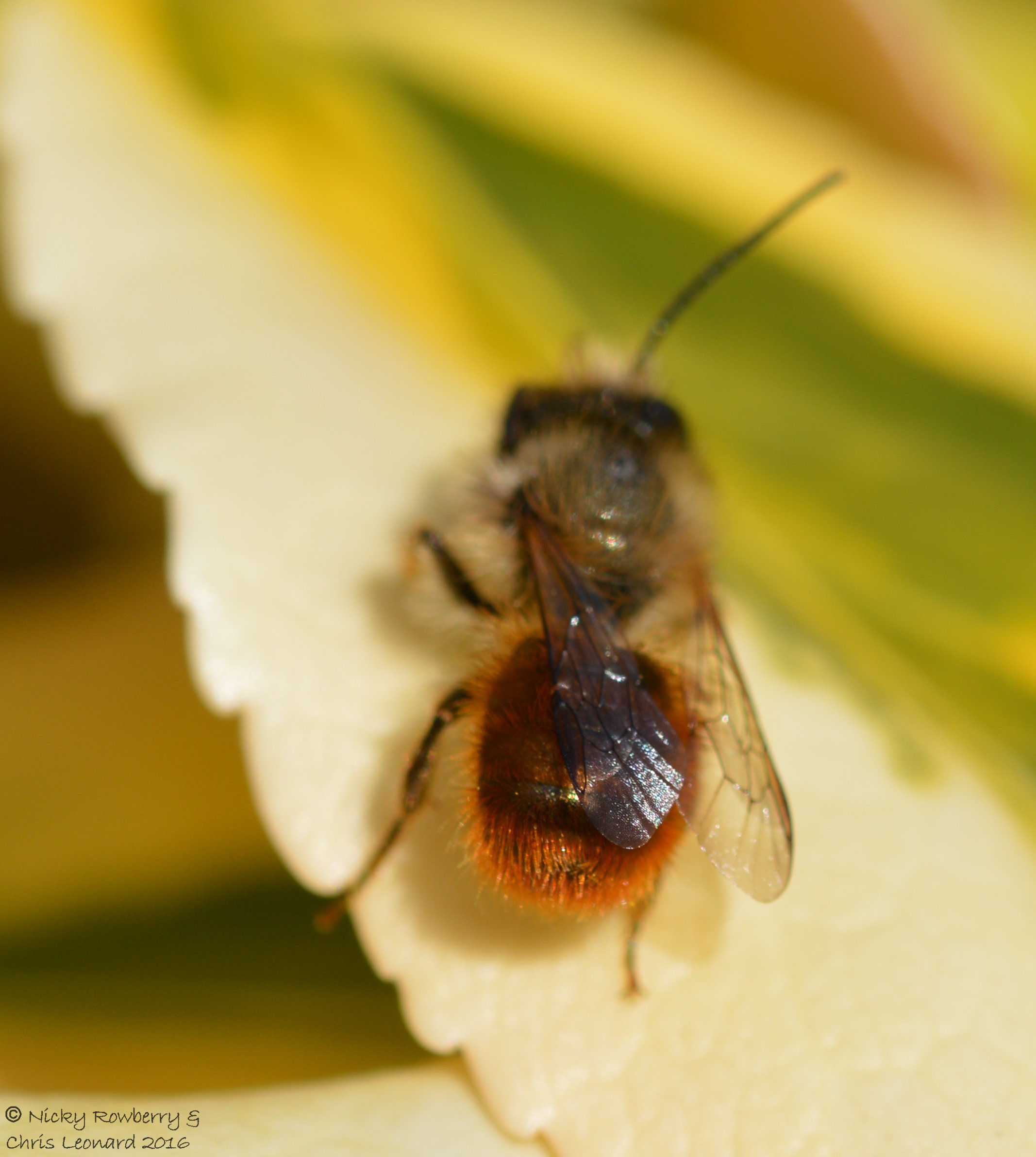
Red Mason Bee

No 15. is a Blood Bee of the genus Sphecodes. I think they are so named because of the blood red abdomen, rather than any gruesome blood sucking habits. Having said that they are also parasitic, but I guess no-one is perfect! There are apparently lots of species of Sphecodes and they are not only very small, but very difficult to identify to species level just from a photo, so I can’t pinpoint the exact one without capturing it,
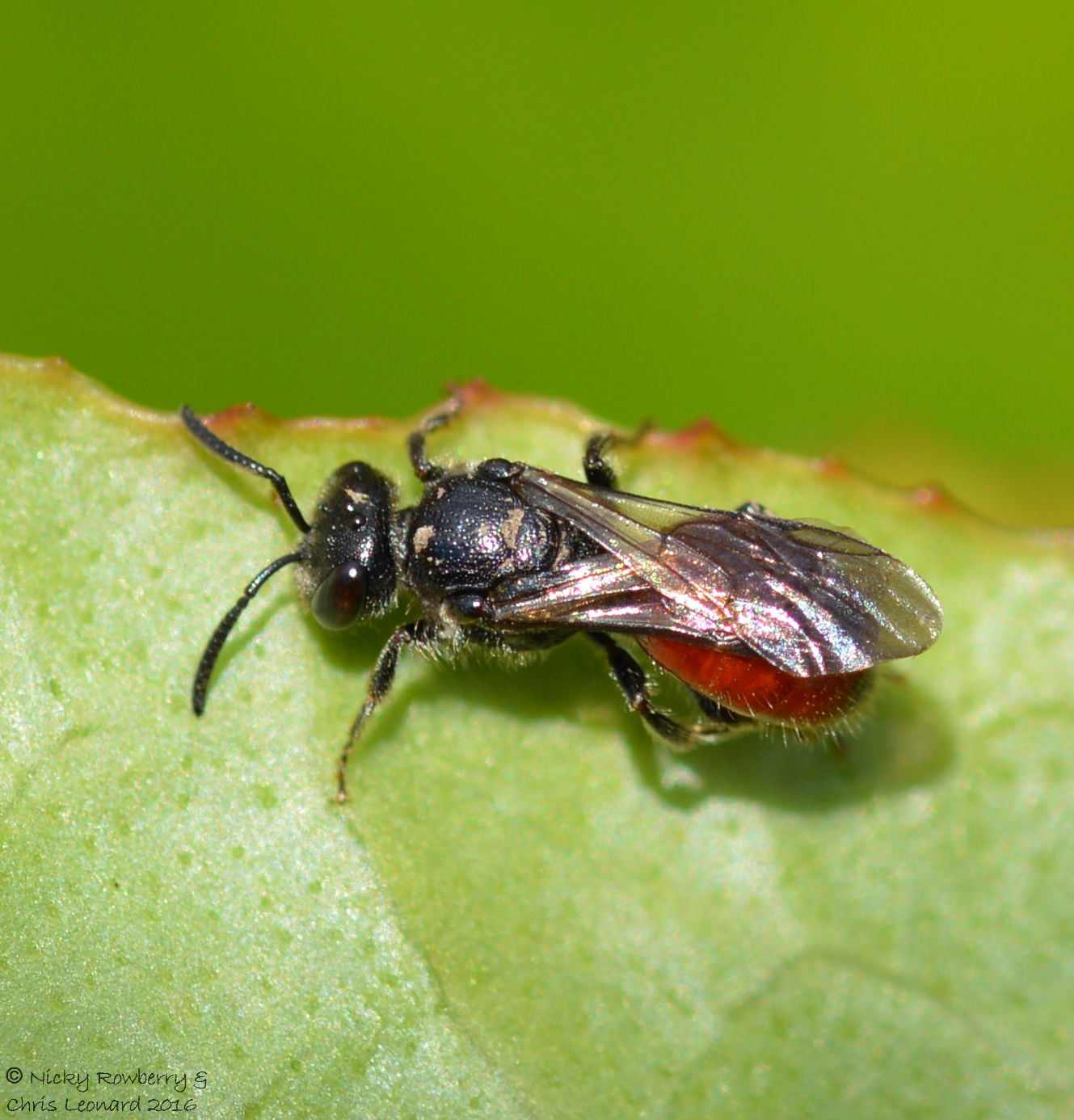
Sphecodes female poss monilicornis

Bee No. 16 is the Orange Tailed Mining Bee (Andrena haemorrhoa). You can just about see the orange hairs at the end of its abdomen in the photo. We had a lot of these in the garden, burrowing into the dry ground around the strawberries.
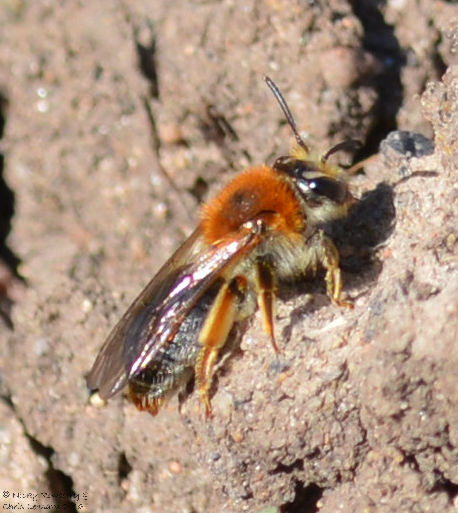
Andrena haemorrhoa female

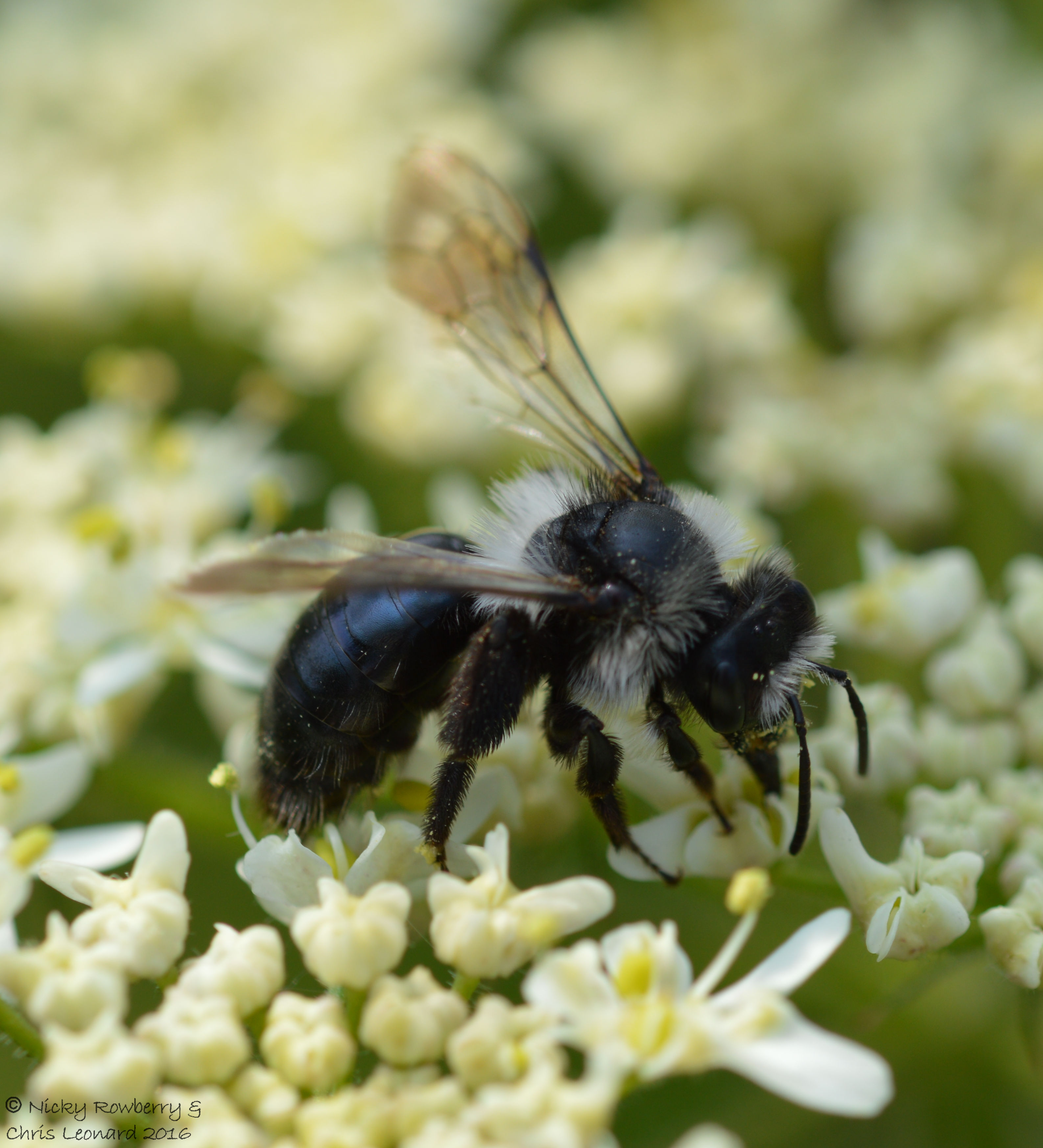
Bee No. 17 is the Common Mourning Bee (Melecta albifrons). This medium sized dark bee (I think they’re called mourning bees because they’re mainly black) is yet another parasitic one. We had quite a few feeding on the rosemary. You can’t really tell from the photo, but one of its identifying features is its white knees!
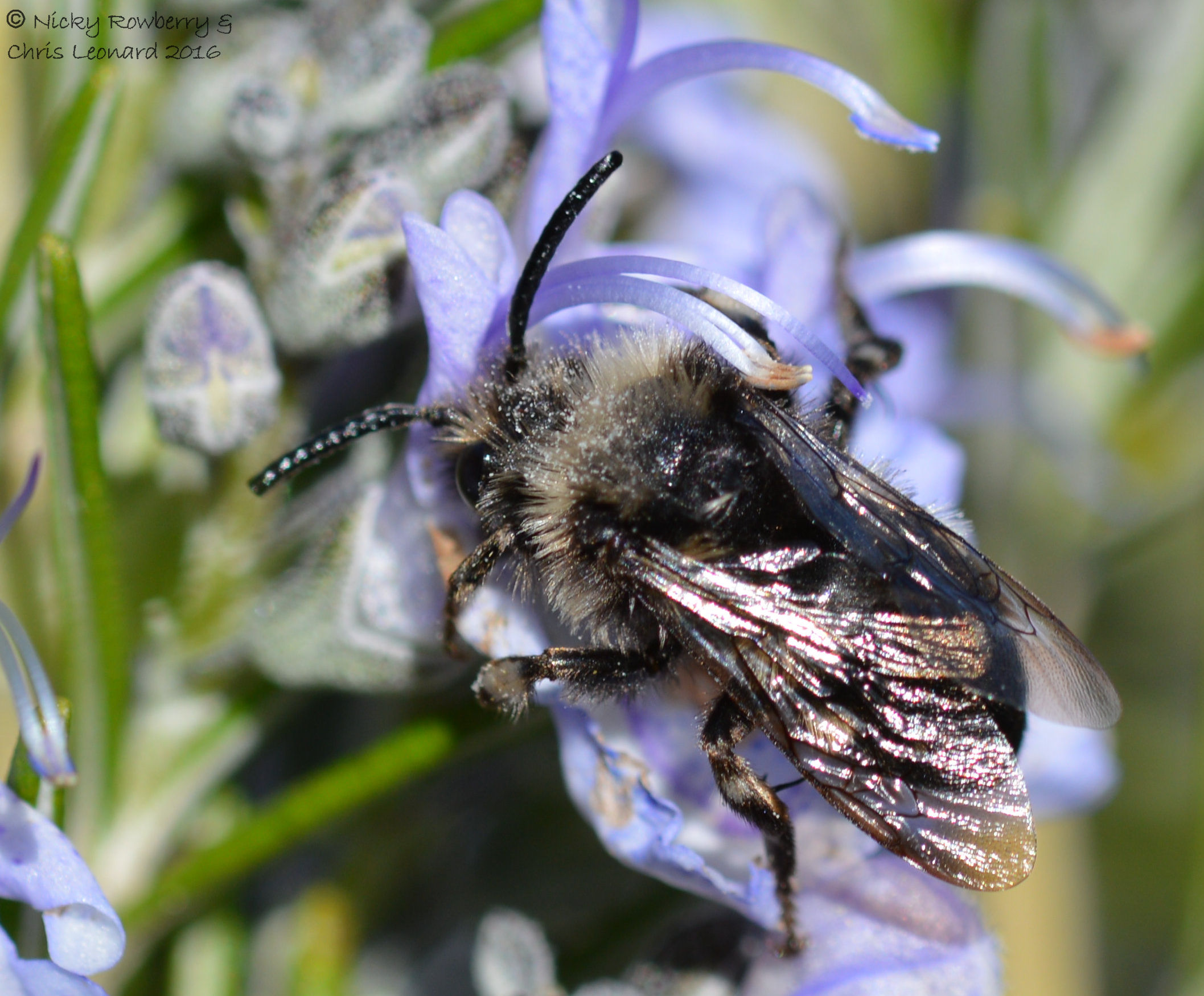
Mourning Bee

Bee No. 18 is the Buffish Mining Bee (Andrena nigroaenea). I love the fact that someone decided to call it Buffish rather than just Buff! I only saw this species once and fortunately happened to have the camera with me at the time. This species mainly nests in bare ground, although it will sometimes nest in soft mortar in walls – I hope this isn’t a sign that our garage wall here is crumbling!
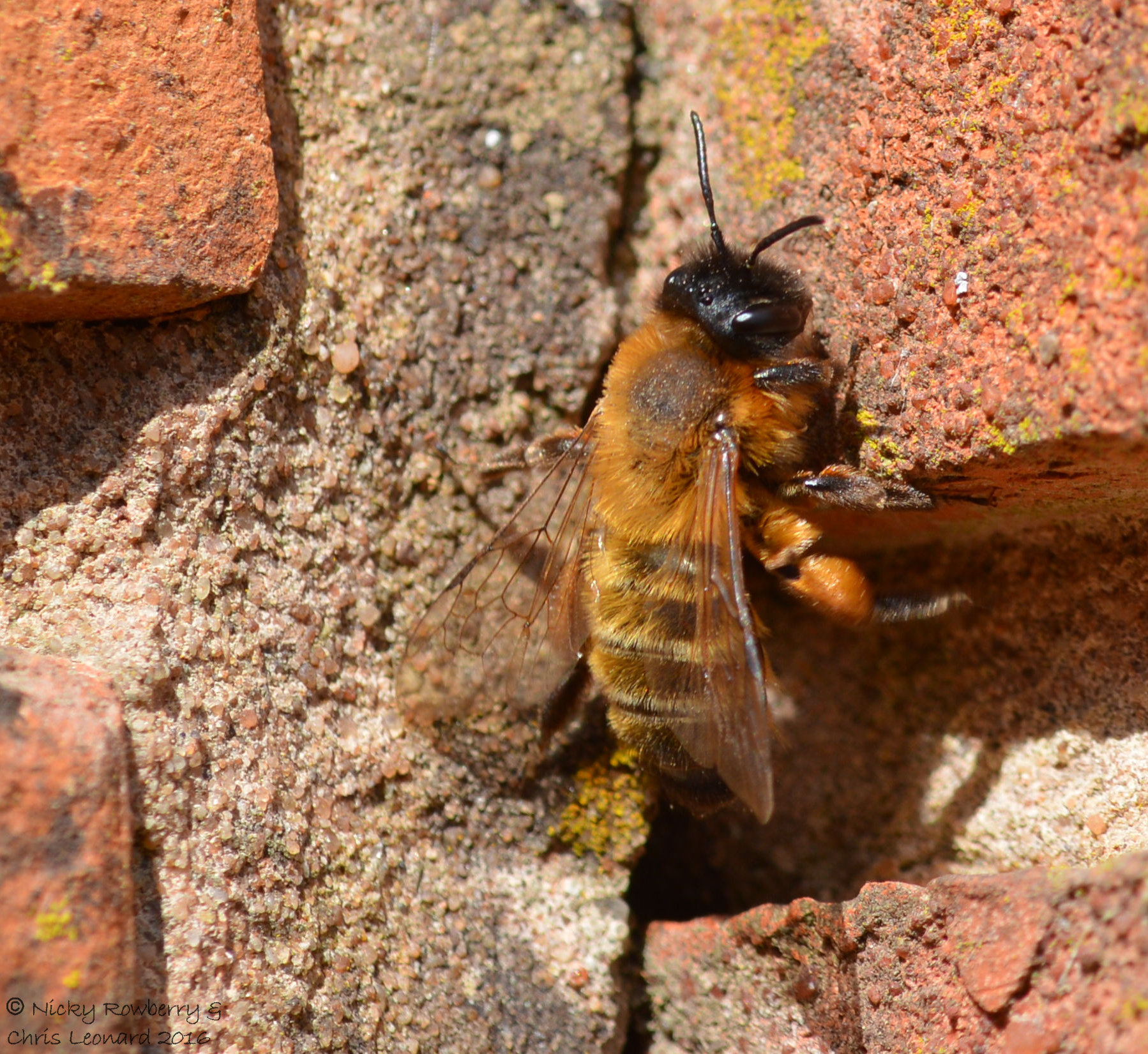
Andrena nigroaenea

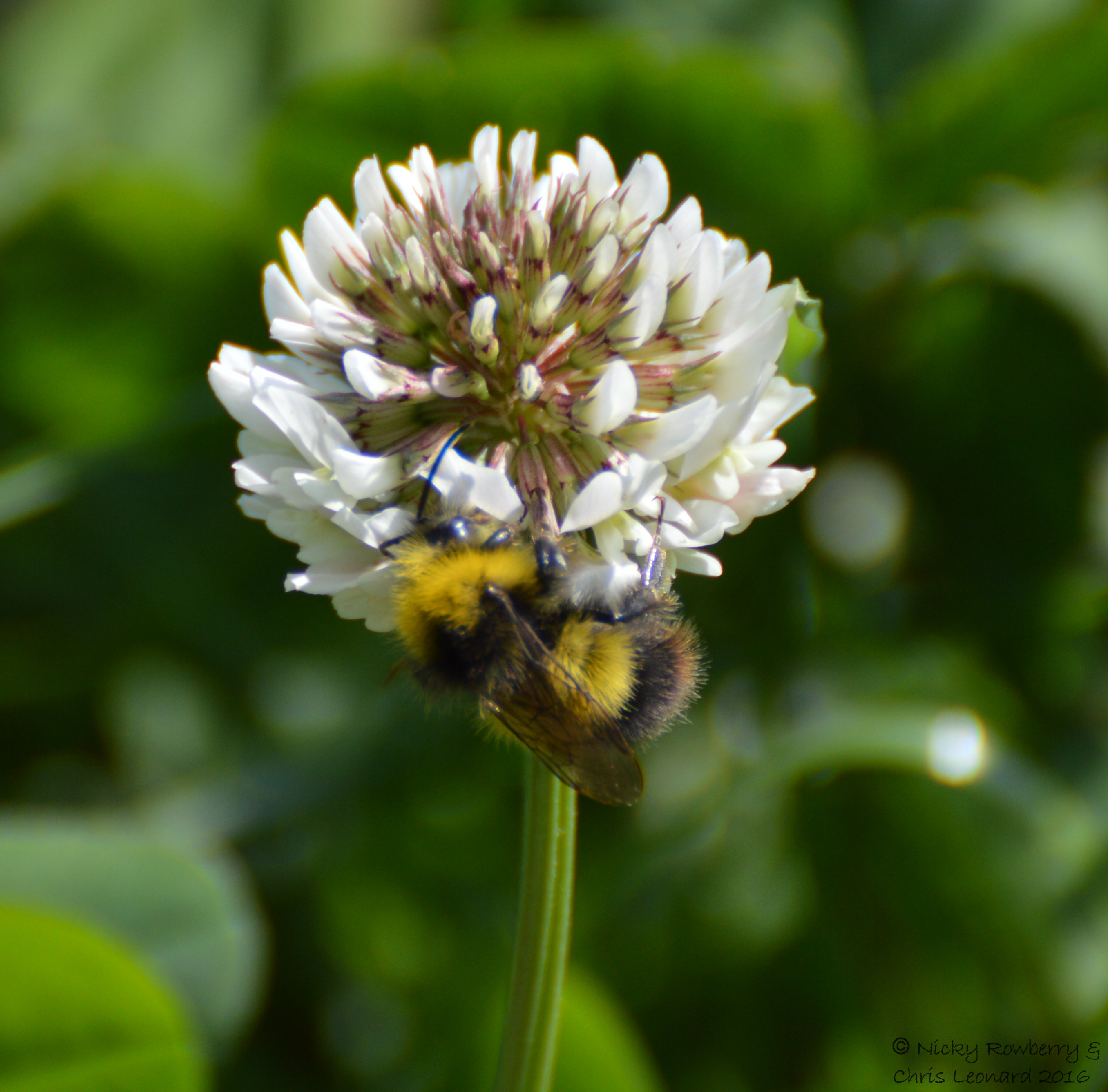
Bee No. 19 is the Garden Bumblebee (Bombus hortorum). This is a social bumblebee nesting in small colonies – at last a bee on this list that fits my “adorable bee” stereotype! These are particularly common in the garden right now.
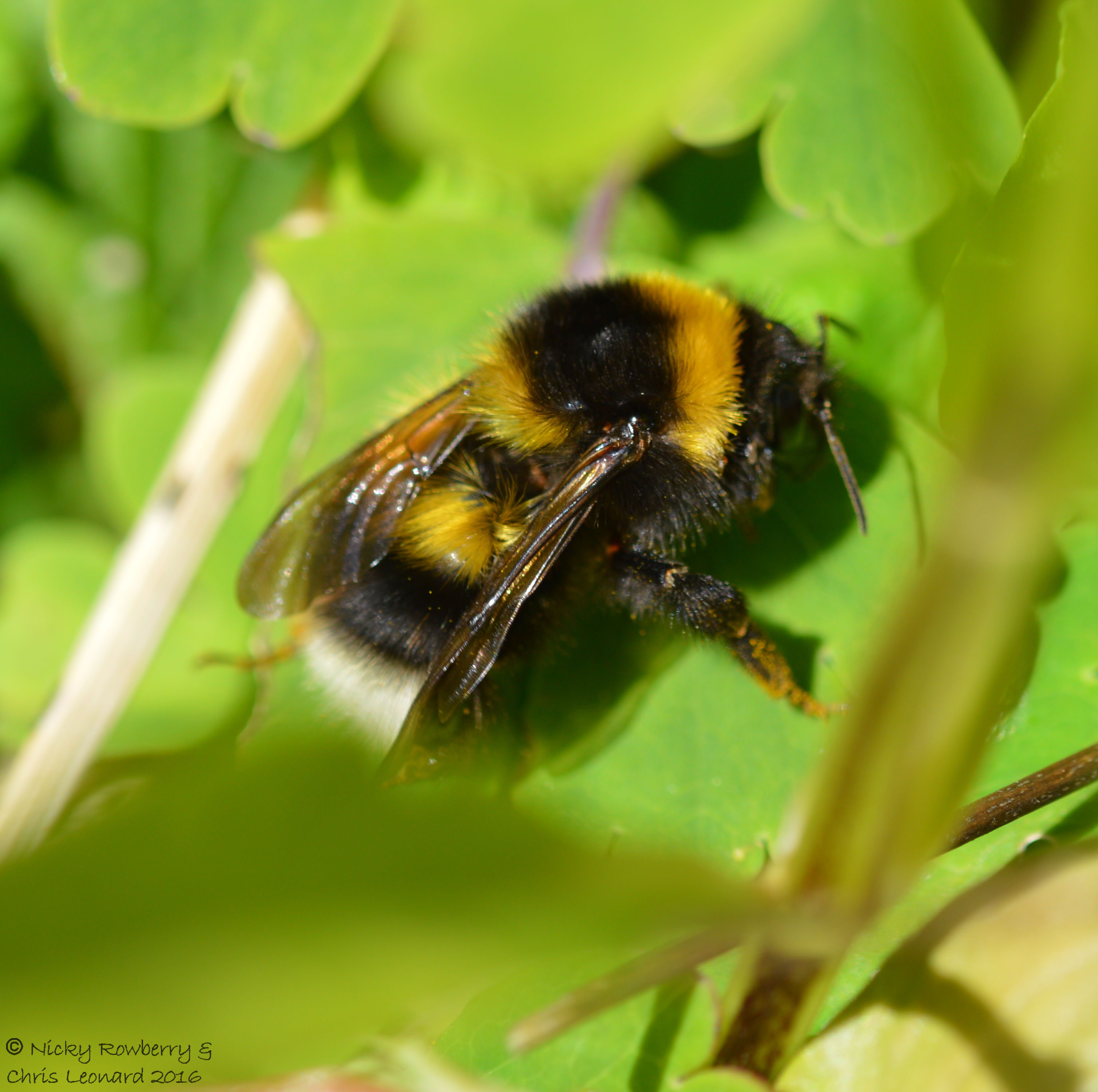
Garden Bumblebee

Bee No. 20 is Barbut’s Cuckoo Bee (Bombus barbutellus). This one looks very much like the Garden Bumblebee above and for a good reason – it is a social parasite of the poor Garden Bumblebee – laying its eggs in the nest and allowing the host to feed and raise its grubs – real cuckoo behaviour!

Barbut's Cuckoo Bee (3)

And finally Bee No. 21 the Patchwork Leafcutter Bee (Megachile centuncularis).  Not easy to get a good photo like that so we caught it (I feel guilty we made him drop his leaf!) to get a better one. Unfortunately as soon as we opened the pot it flew off, so this was the best we could do. You can at least see the thick orange pollen brushes on its abdomen.
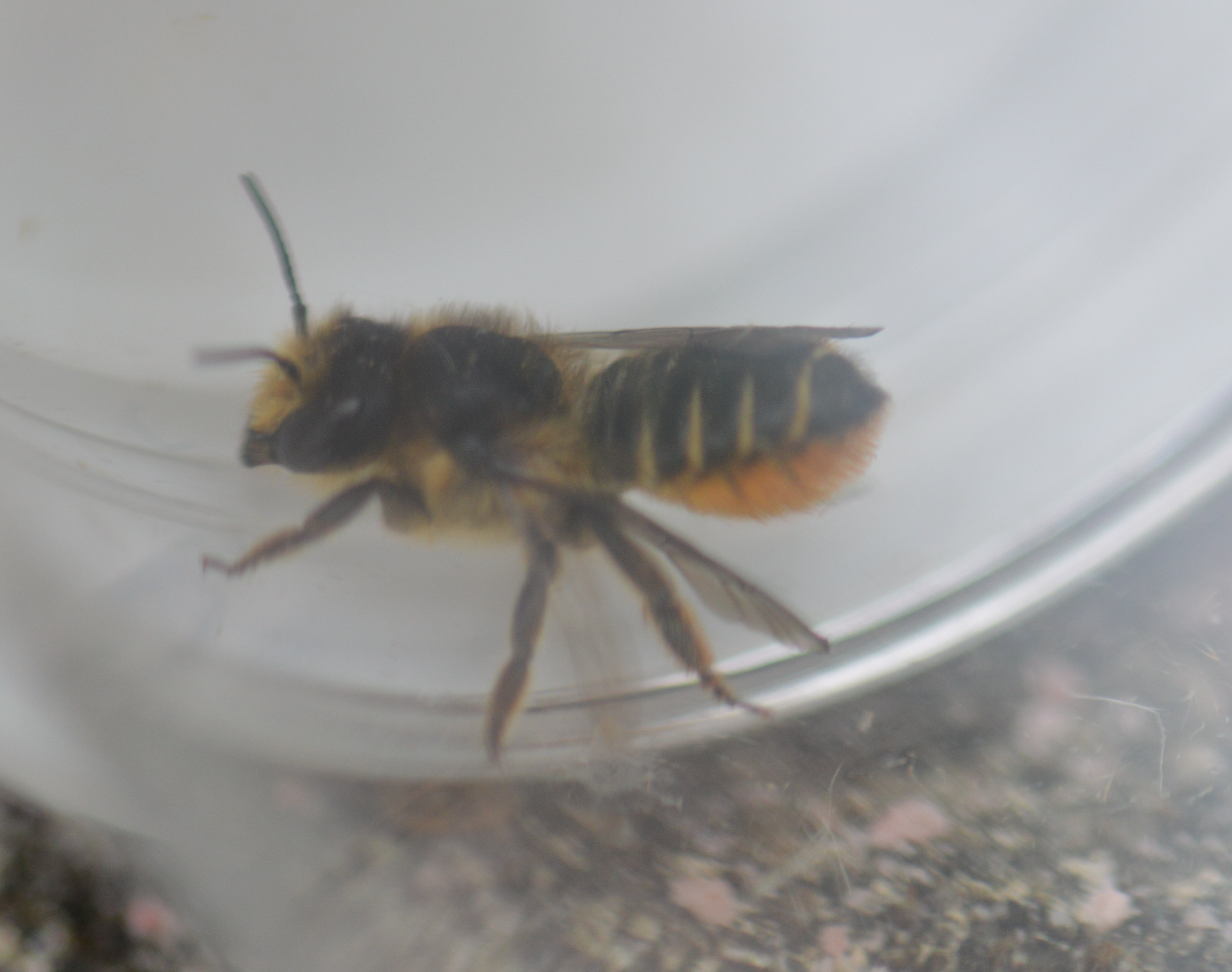
Megachile centuncularis

So those are the nine bees which, with those in the earlier post,  make up the full 21 species from the garden. I must admit I am really pleased that our little garden has attracted so many species. There may well be more – I’m pretty sure I’ve seen a few others, but either not been able to get a photo, or they’ve been too difficult to ID without dissection (which I don’t want to do). Just goes to show what providing a variety of habitats and nectar sources can do for your bee biodiversity!



30 Days Wild – Day 14

TWT 30 Days Wild_countdown_14Embrace the rain! I decided that was my motto for today – Day 14 of 30 Days Wild. I got soaked at work about 3 times and the clouds were looking ominous over the Malvern Hills as I set off for home. So I decided rather than avoid it, I would just go for a walk in the rain. I can’t remember when I last did that (not sure I ever have)? Of course I’ve been for walks and got caught in downpours, but that’s not the same as deliberately setting out to walk in the rain. It was quite liberating in a way, knowing you are going to get wet, so no point trying to avoid it.

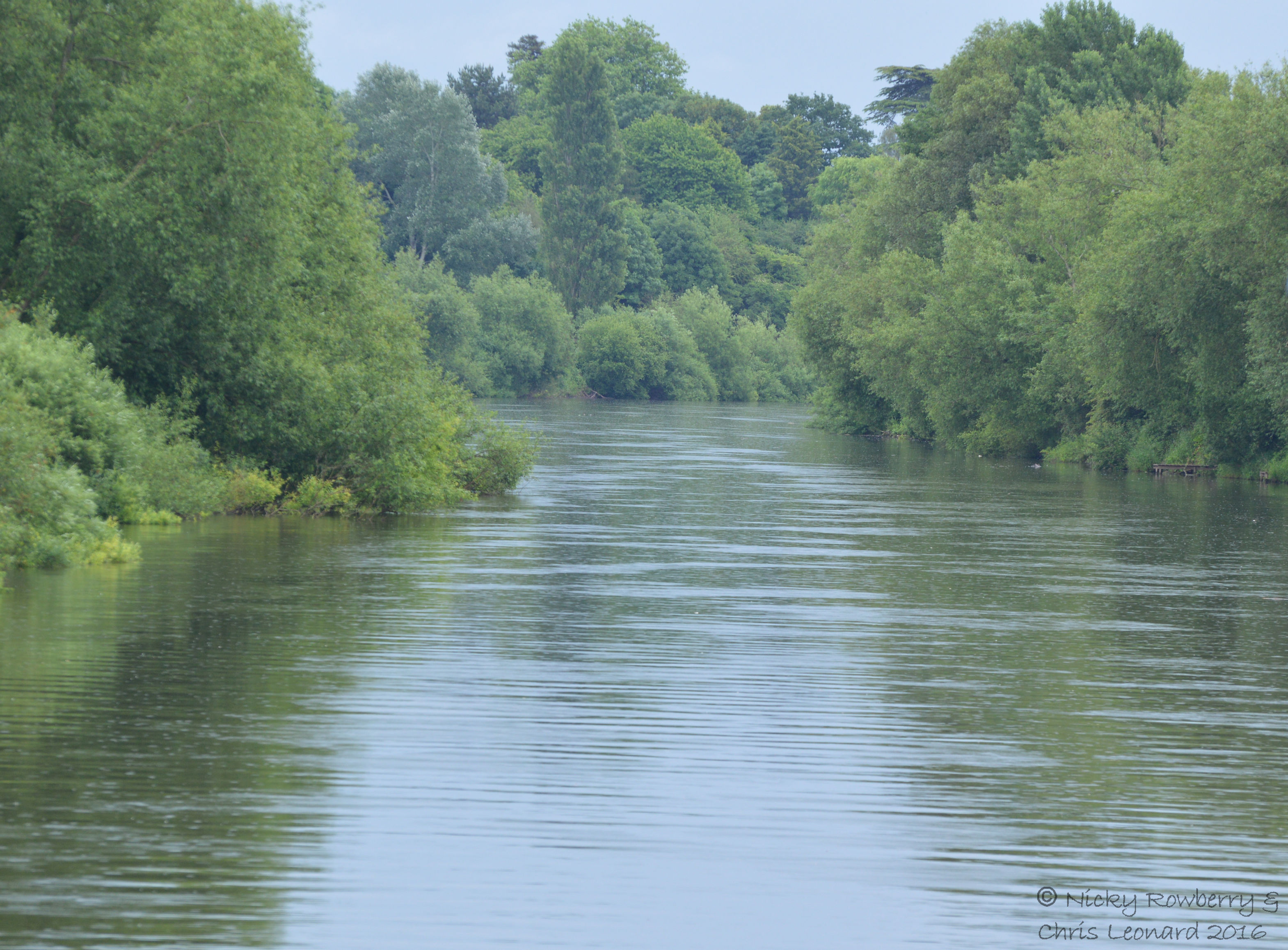
Having decided on a watery walk, I figured I might as well take the wet and wild theme a step further and walk along the river. Since I work on the edge of Upton on Severn this wasn’t a difficult thing to achieve. It wasn’t a long walk, but I really did enjoy it. Even in the rain there was plenty to enjoy and take photographs of – spoiler alert – there is some serious cuteness at the end of this blog!

View downstream

The rain was pretty much non-stop as I walked – not torrential, but definitely constant. I loved watching the rain falling on the river and the tiny concentric circles emanating from each droplet. It was quite hypnotic and had there been somewhere to sit without getting a wet bum, I could have watched for ages.

Rain on the river 2

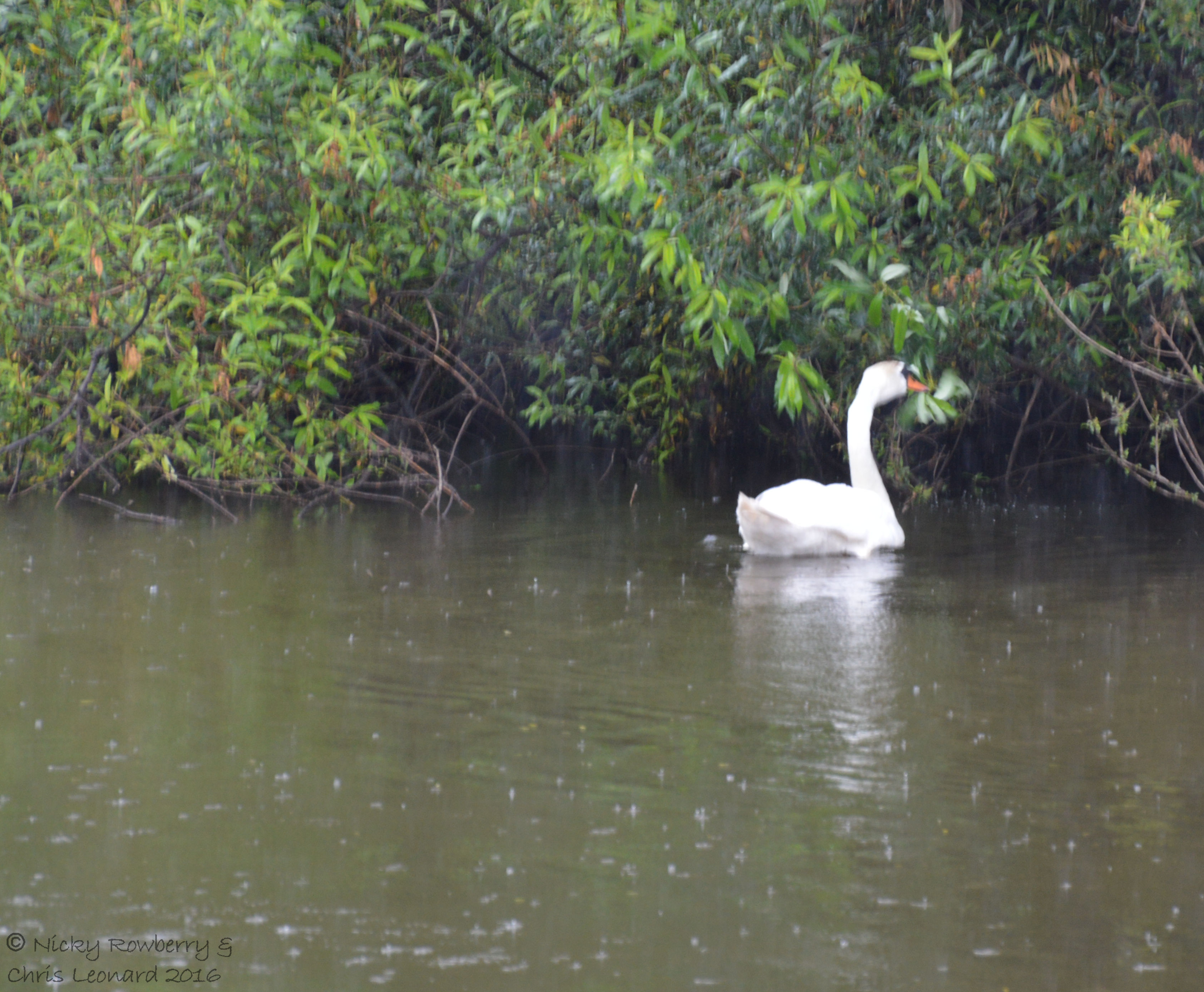
The first wildlife I saw was a swan the other side of the river, pulling leaves off the overhanging bushes. It was a bit far away to get a decent photo, but at least it is recognisable as a swan!

Swan

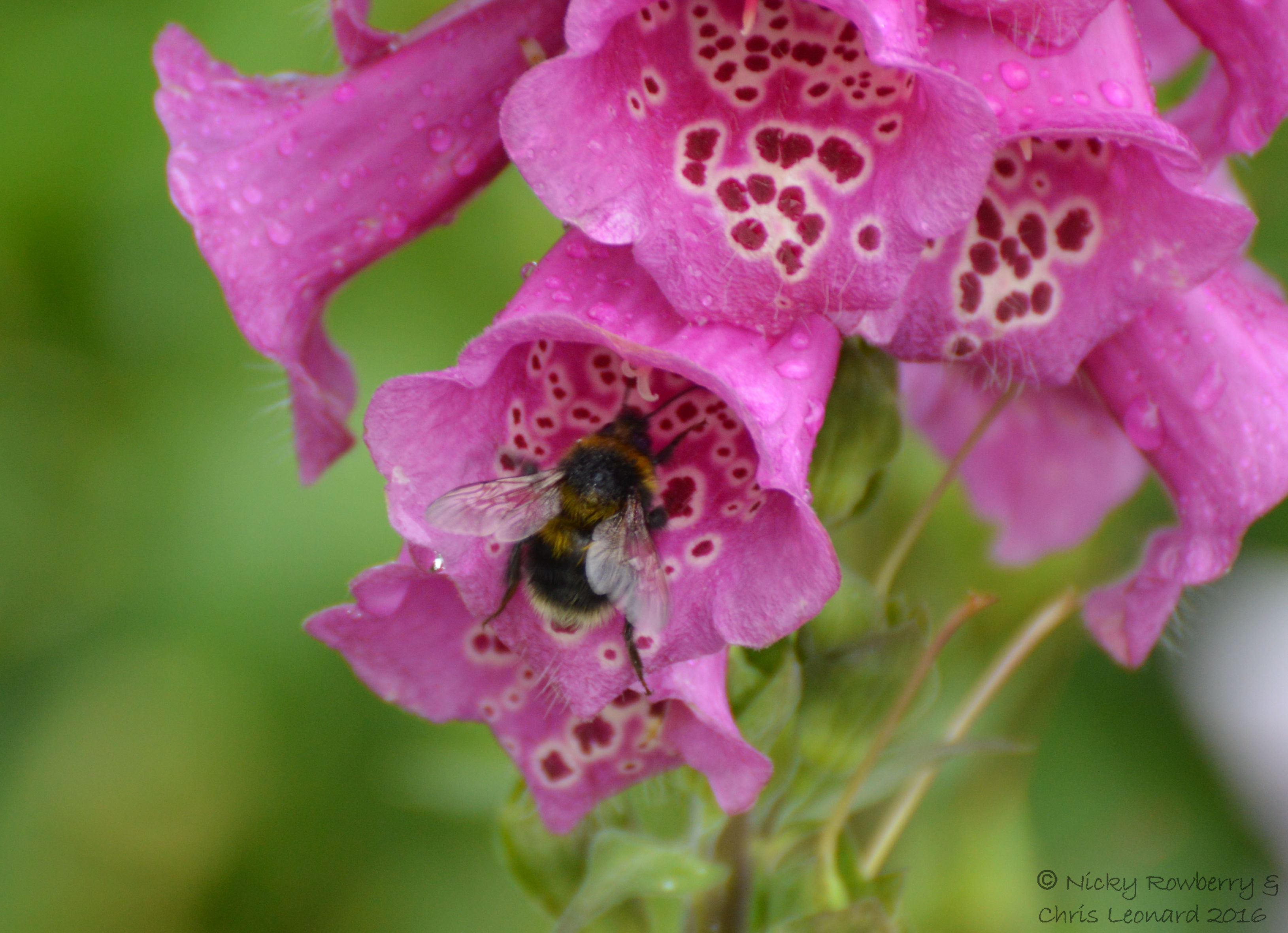
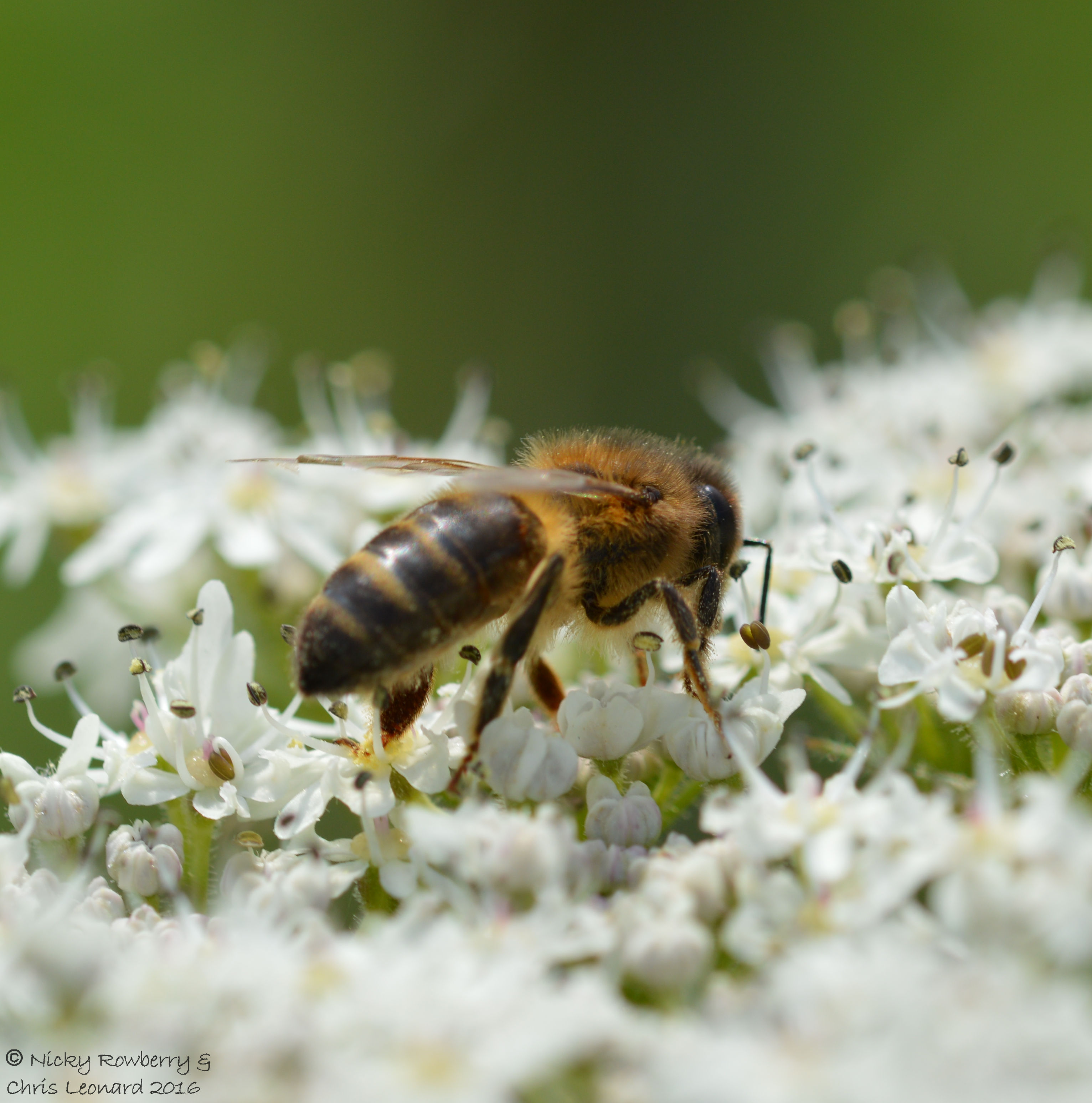
I hadn’t really expected to see much in the way of insect life today, but this bee had found this patch of foxgloves and was as busy as ever. Whether he was really after the nectar or just using the foxgloves as walk in umbrellas though I don’t know.

Bee in foxglove

There were lots of House Martins swooping low over the river, presumably catching insects over the water. They were virtually impossible to photograph as they were just too quick. The best I managed is a (very) brief glimpse of them in this video flying past a duck that was progressing more sedately down the river.


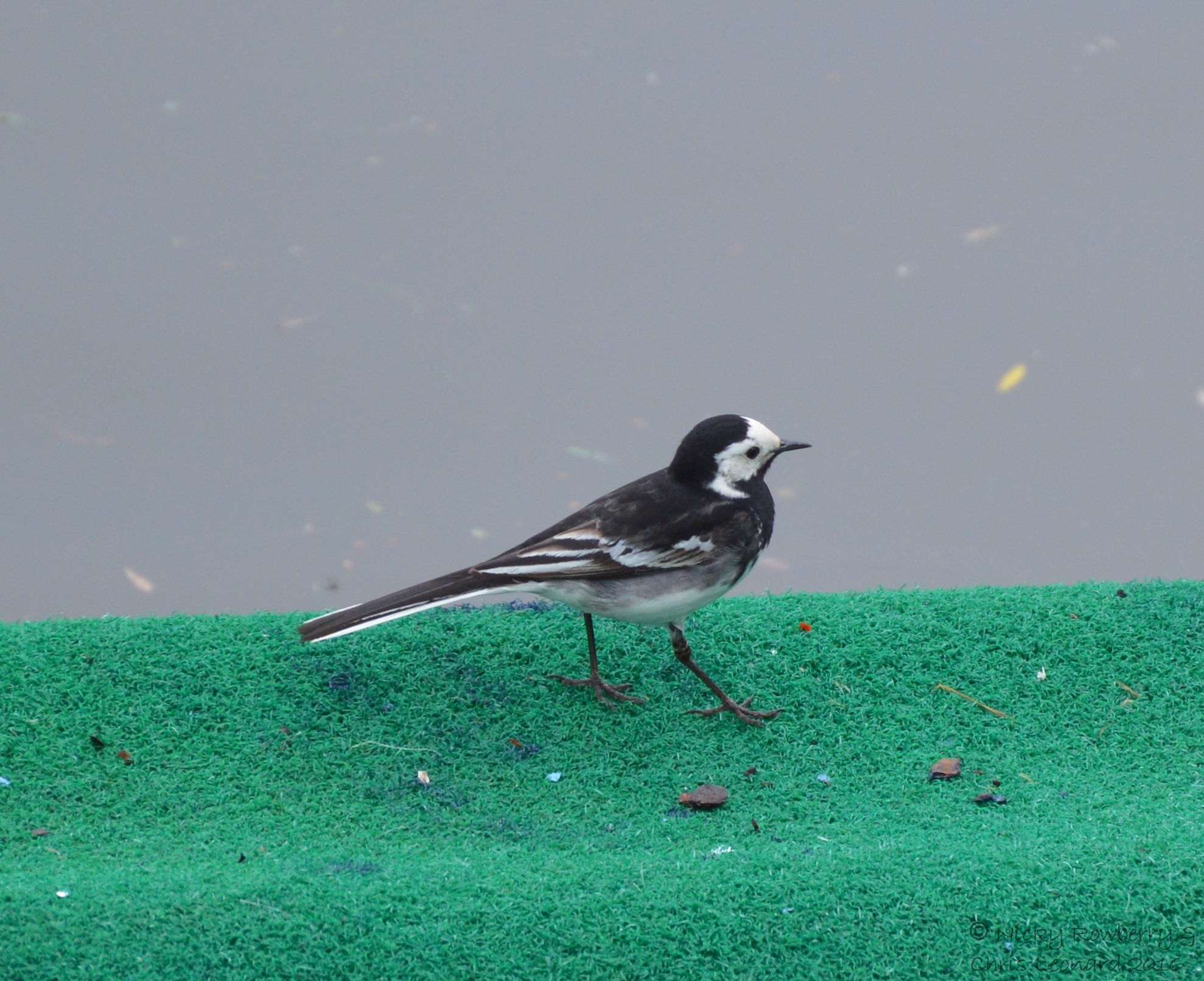
A wagtail kept me company on the walk, tail bobbing up and down as it searched for insects (or possibly for food dropped by the riverside pub customers!) Shame that in the only half decent photo I got of him, he was standing on what looks like astro-turf rather than somewhere more scenic!

Wagtail

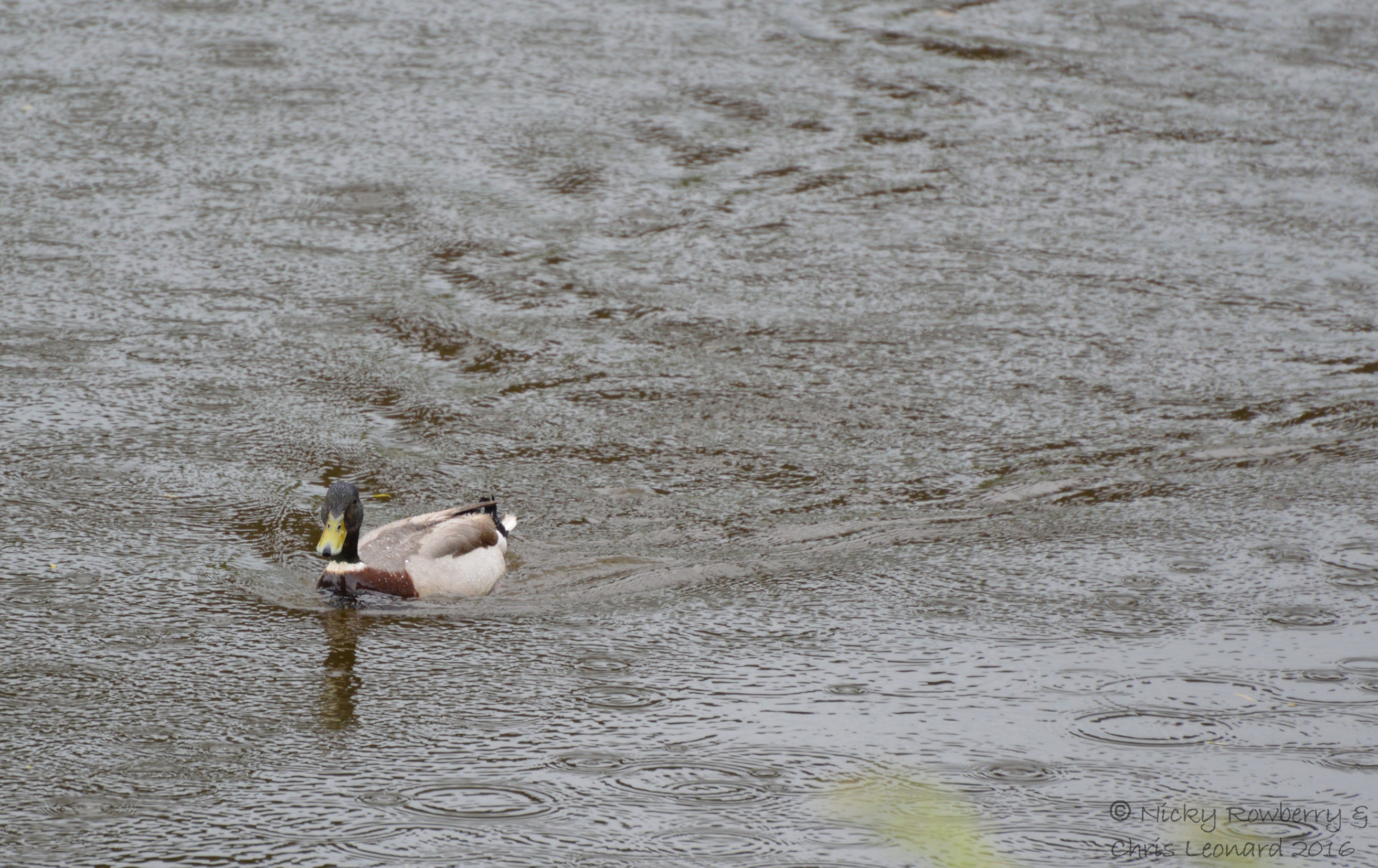
But of course it was the ducks that were really the stars of my watery walk. There were a few cruising up and down the river – I love the bow wave that has formed around this one as he paddles serenely up stream.

Duck & bow wave

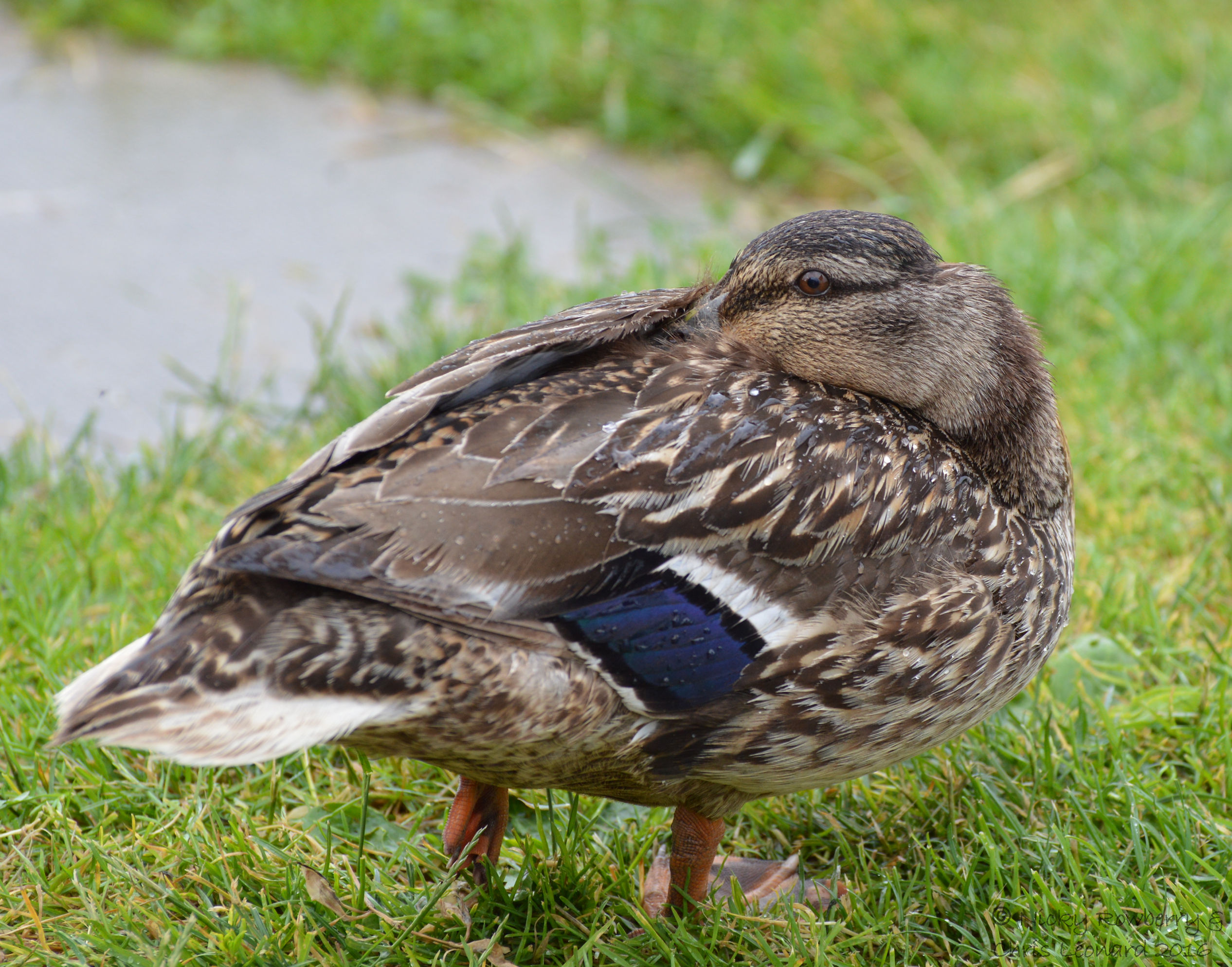
Quite a few though were just sitting on the bank – although it was supposedly “nice weather for ducks” today, they didn’t actually look that happy about it.

DSC_5666

Female duck

I think these were all Mallards – they may be common ducks, but the colours on the males in particular are absolutely stunning.

Male duck close up

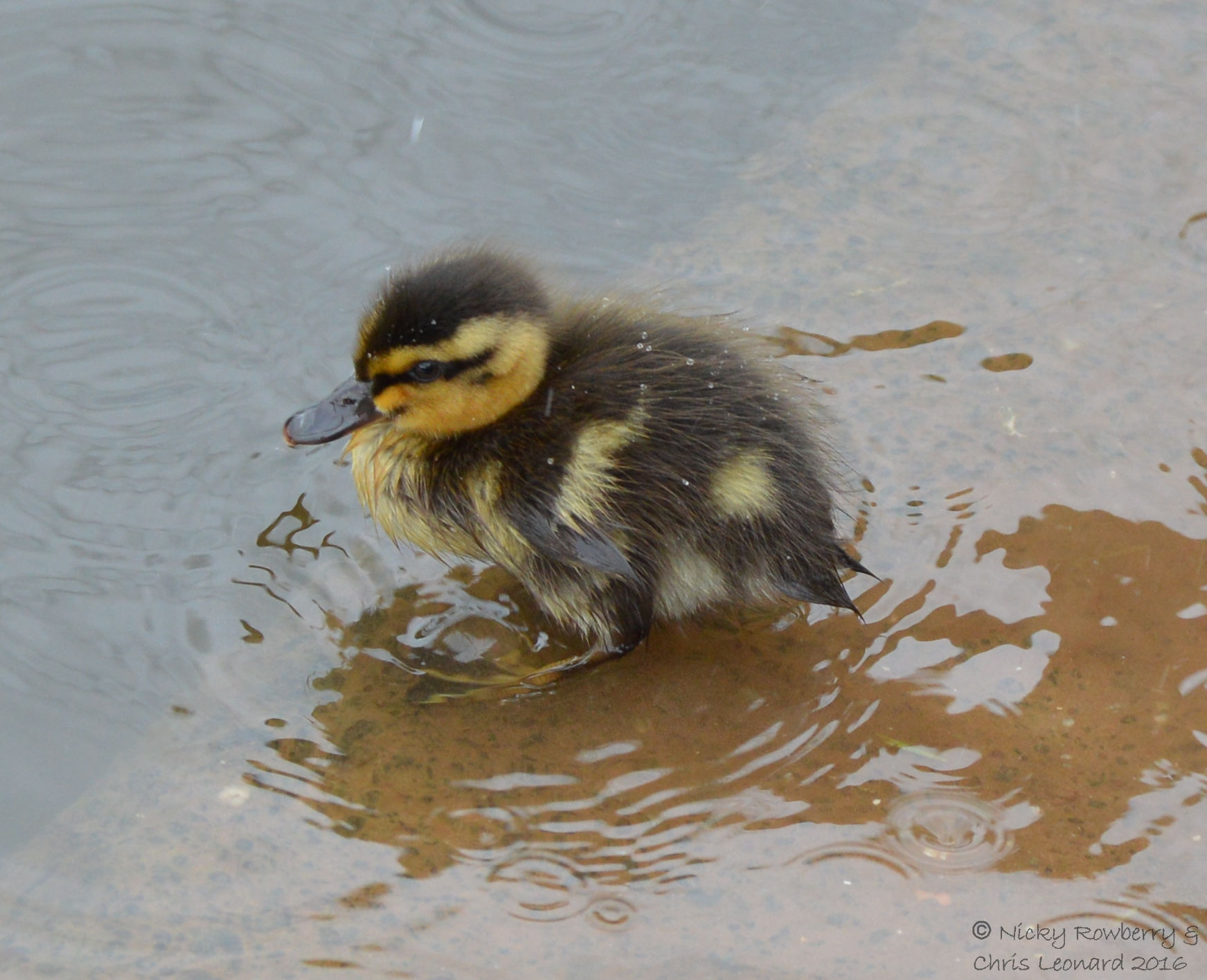
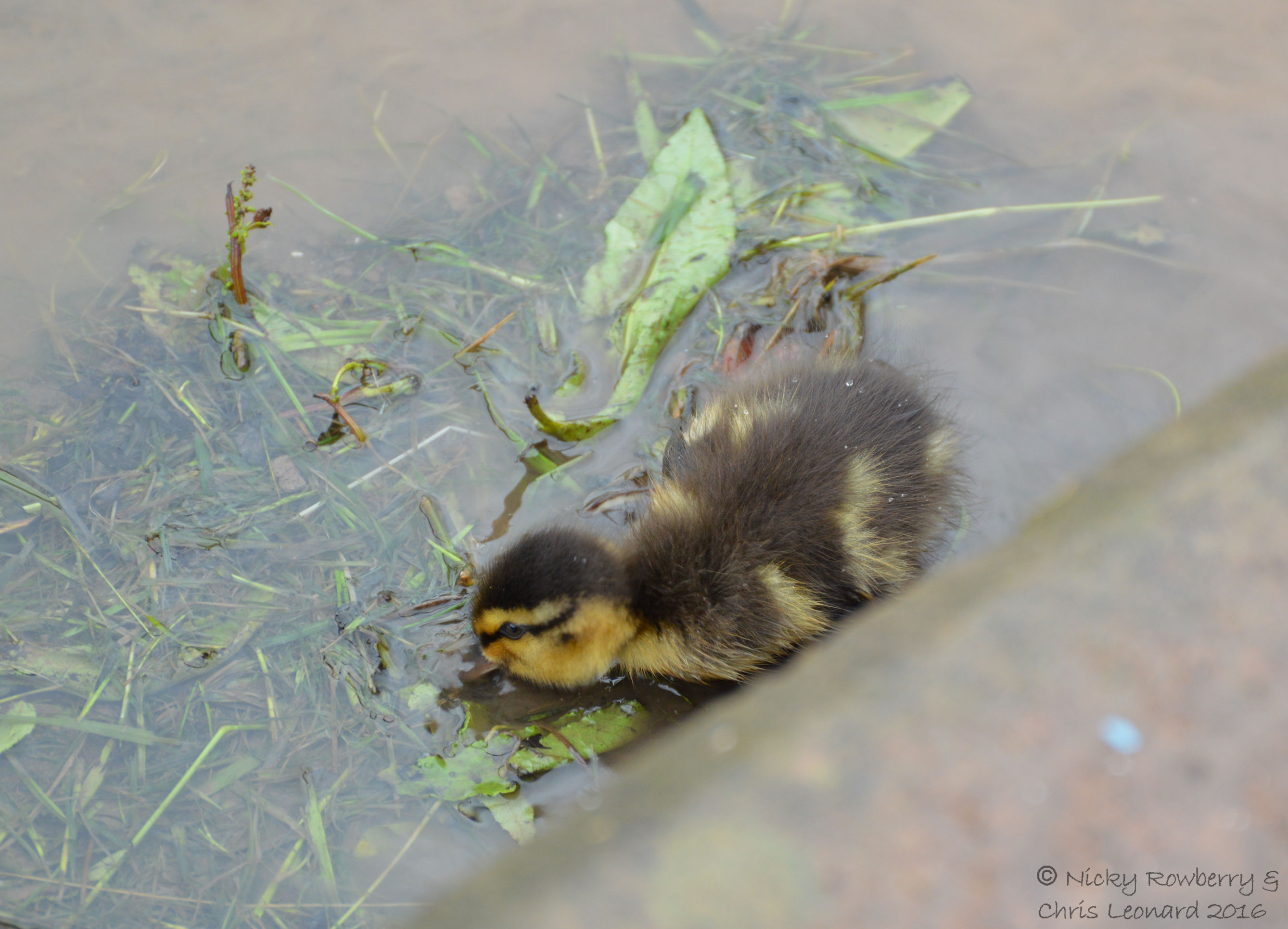
I was just starting to head back to the car, when a group of people peering over the edge of the river wall waved me over. Baby ducklings – what can I say, but serious cuteness overload! There were 5 in total, paddling about with their Mum. I could easily have loaded dozens of photos of them here, but have restricted myself to just the two.

Baby duck

Baby duck 2

I couldn’t resist trying to video them as well. They may only be small, but they’ve clearly got the hang already of rummaging about in the weeds for food.


I’d guessed that I’d probably see ducks today in the rain; but to find ducklings was better than I could have hoped for – the perfect end to my walk.

Ivy 30 weedsAnd finally the latest weed in my 30 Lazy Garden weeds is Ivy. Beautiful glossy leaves, covering up our ugly fence – evergreen, so brightening up the area all year round. Ivy is particularly good for insects, providing not only cover and homes, but the flowers provide much needed nectar when there’s little else around. Moths of course absolutely love Ivy – so for that reason alone it would get my vote!

30 Days Wild – Day 13

TWT 30 Days Wild_countdown_13Day 13 and it’s Monday – never the most inspiring day of the week and today was a wet one to boot. So I was wondering what to do for 30 Days Wild to lift the spirits. On the way home I pass an open area that is basically just a very wide verge along the side of the road. As the sun finally came out at this point, I stopped to take a look. We went butterfly spotting here last year as it attracts a lot of species – Marbled Whites, Small Coppers, Blues, Skippers etc. So I hoped it might have something today too. It may not have been the perfect weather, but the area was buzzing with life.

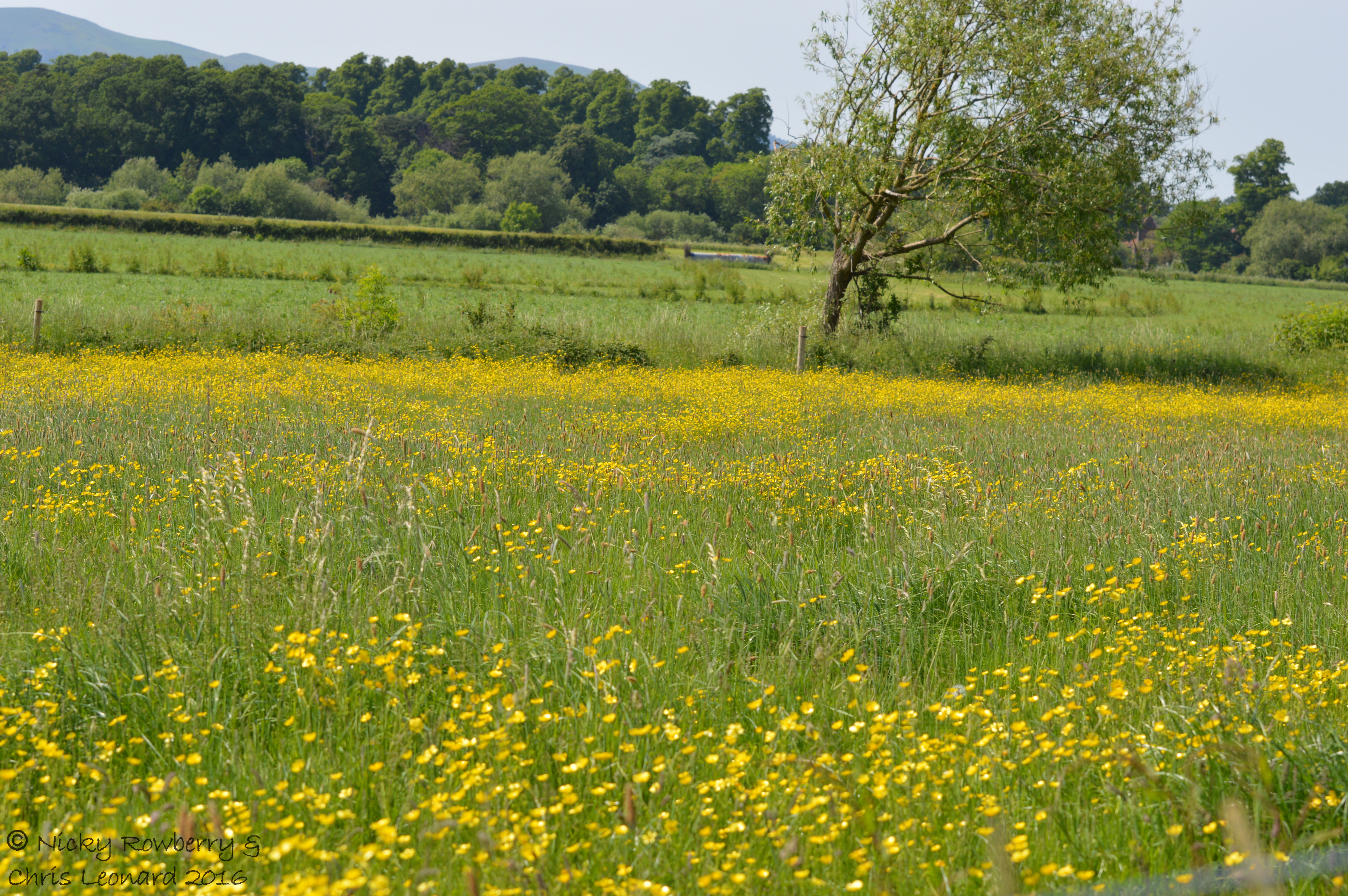
View

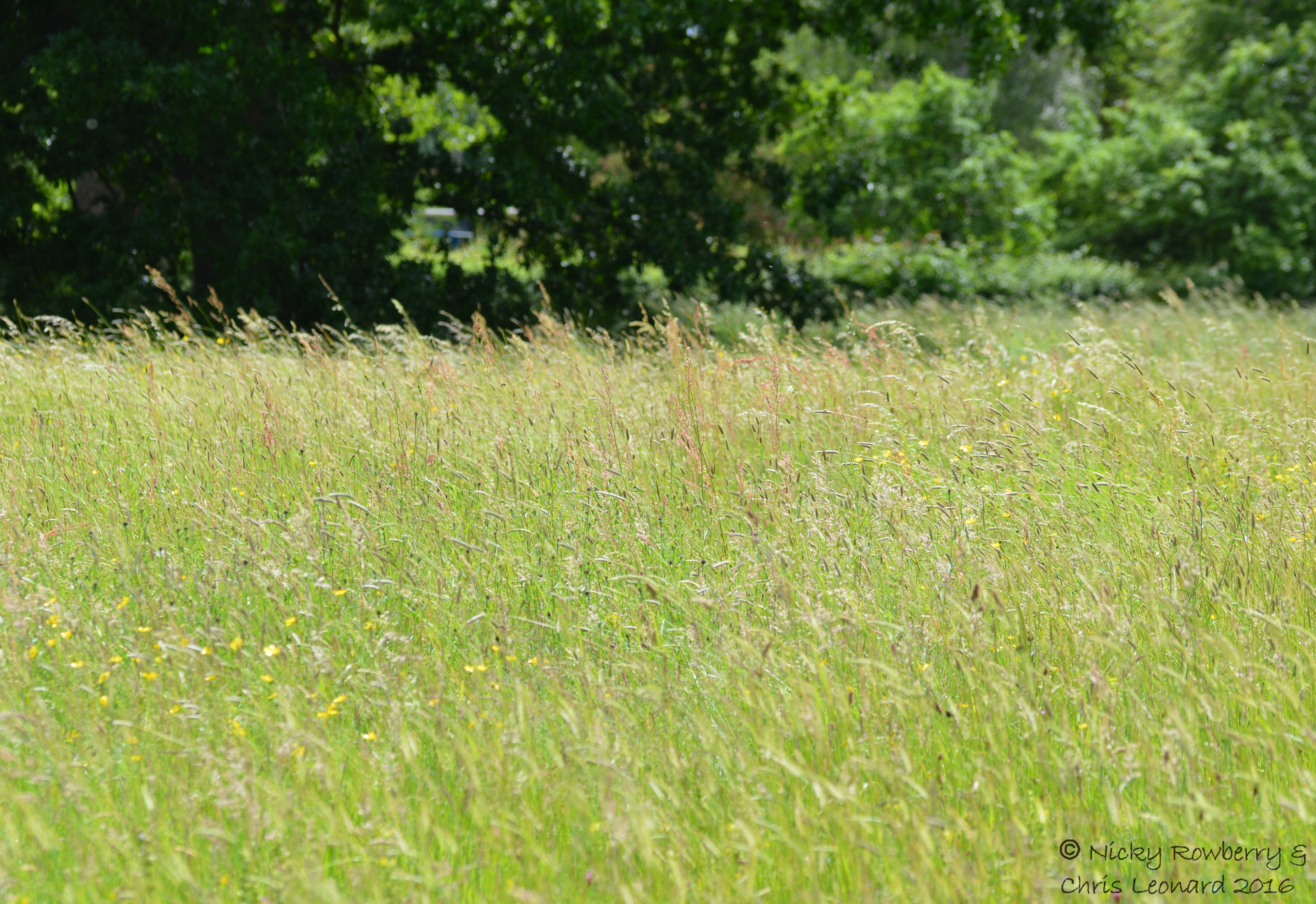
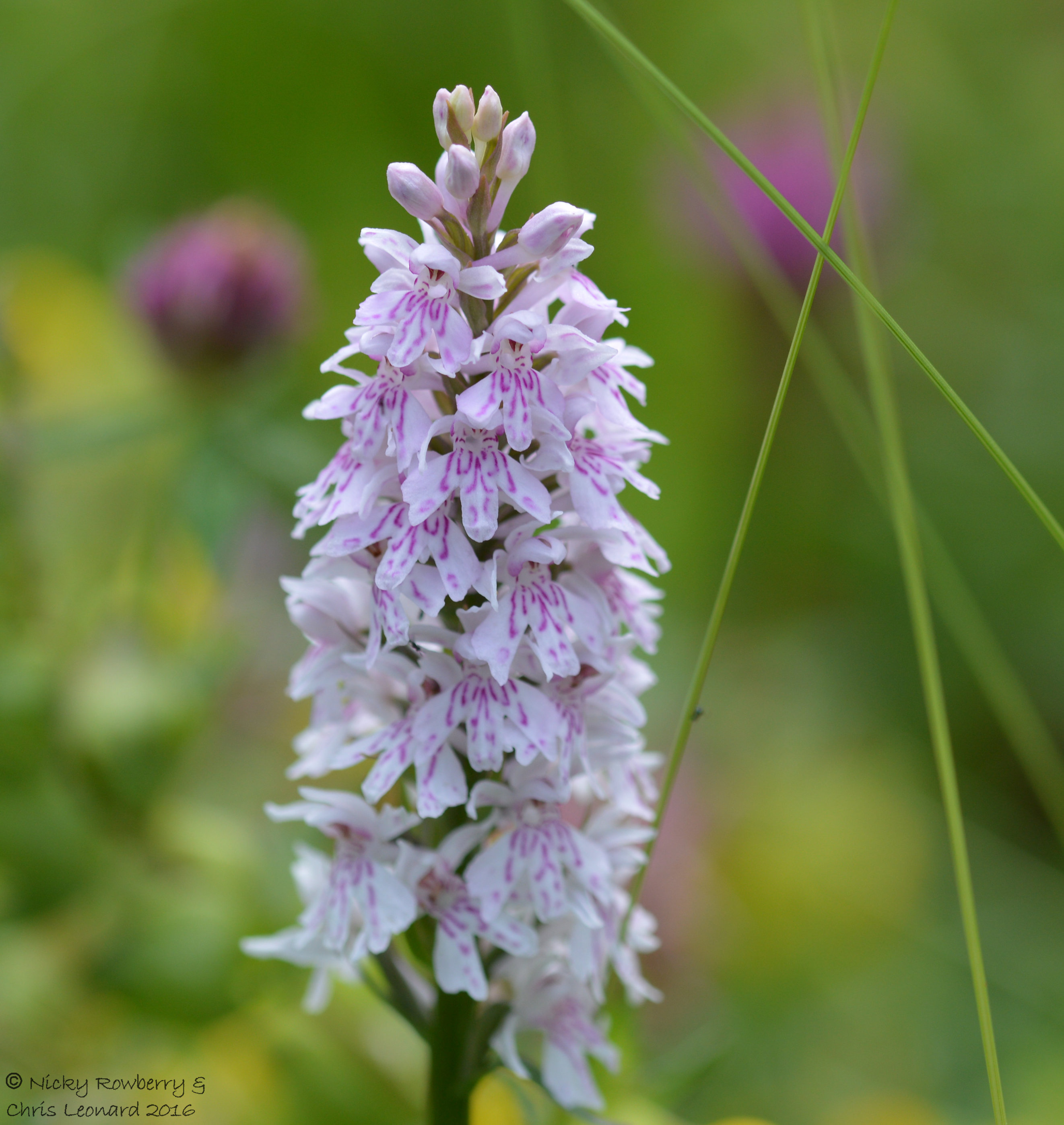
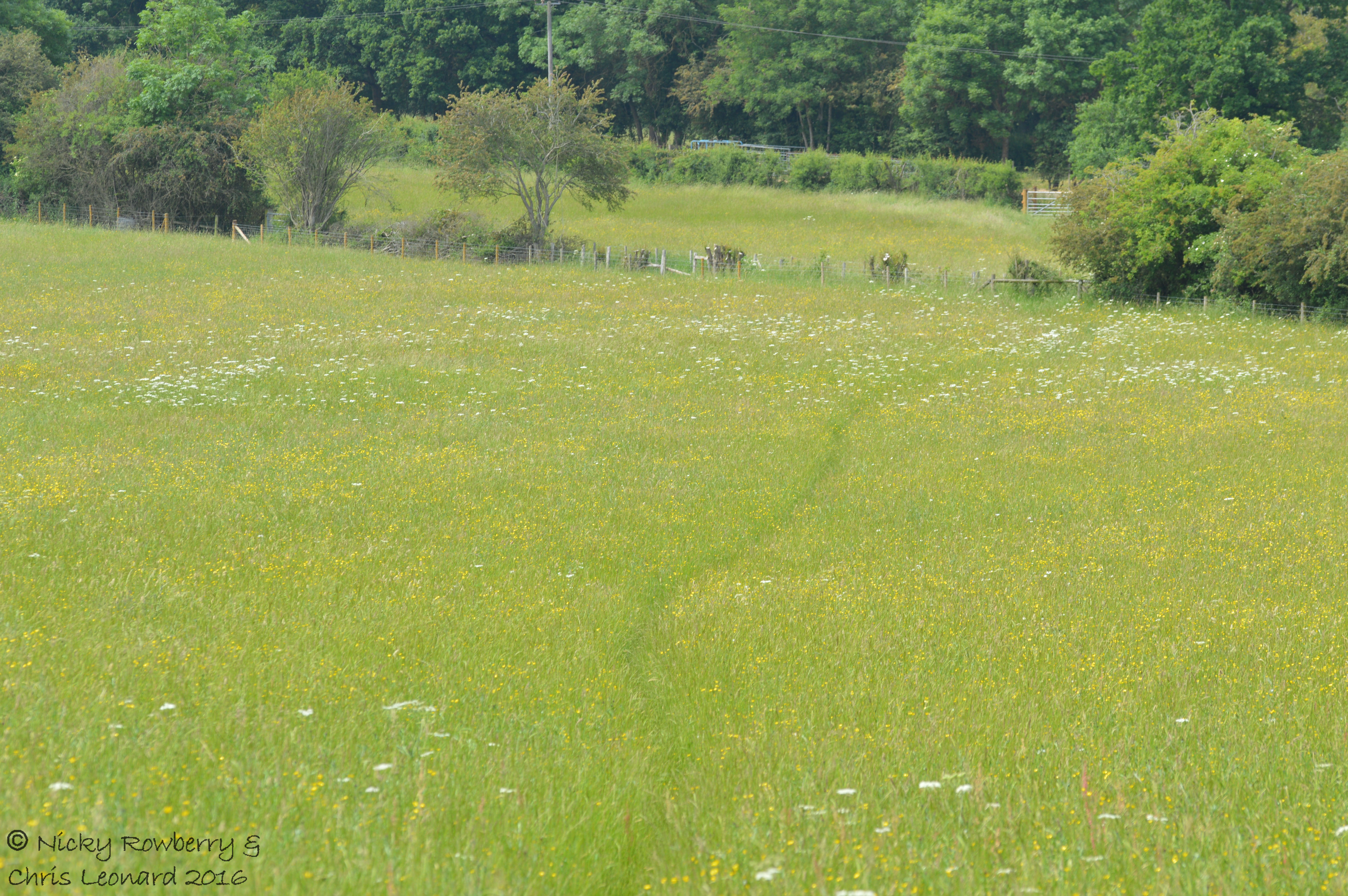
Malvern Council thankfully don’t cut the long grass here (apart from a stretch right next to the road) until after the summer, so there are lots of flowers and insects. Yellow Rattle (below) was a common plant, with lots red and white clover, buttercups and even an orchid.

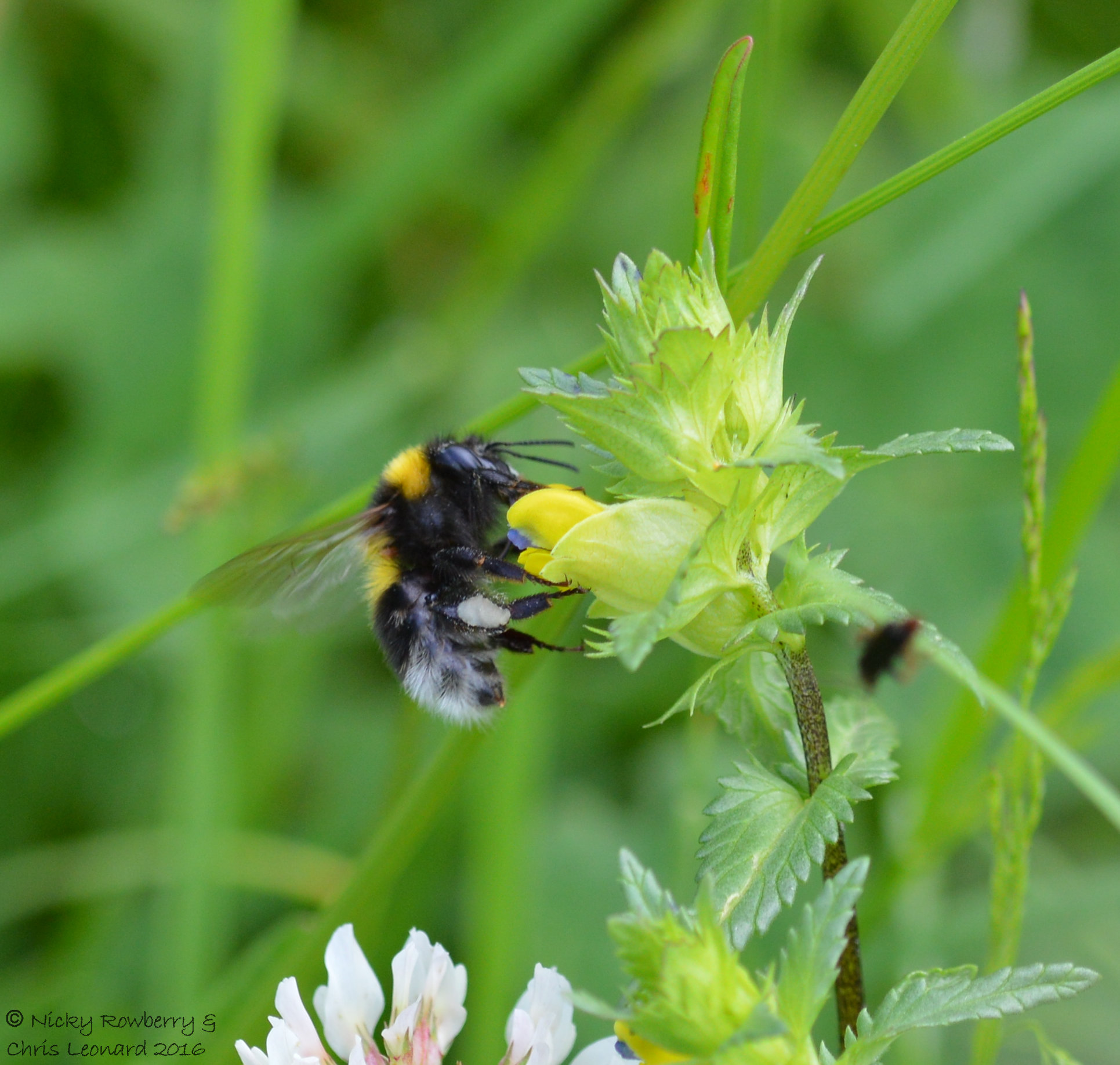
Yellow Rattle

orchid

The first insect I spotted was an old favourite – the Seven Spot Ladybird (although it did seem to have a couple of extra spots down one side strangely).

7 spot ladybird

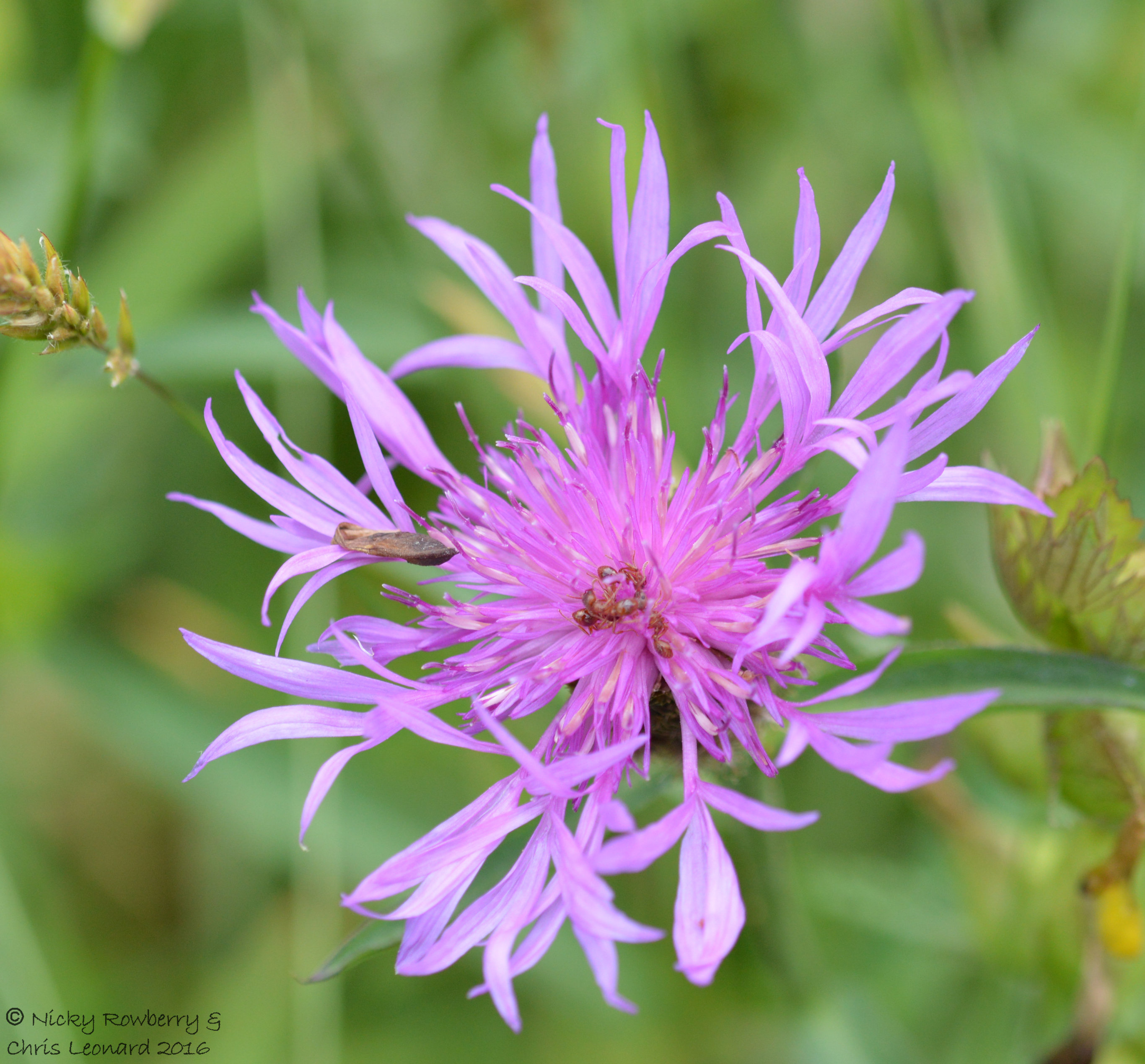
The cornflowers were all full of ants – you can just about make them out in the middle of the photo below.

cornflower

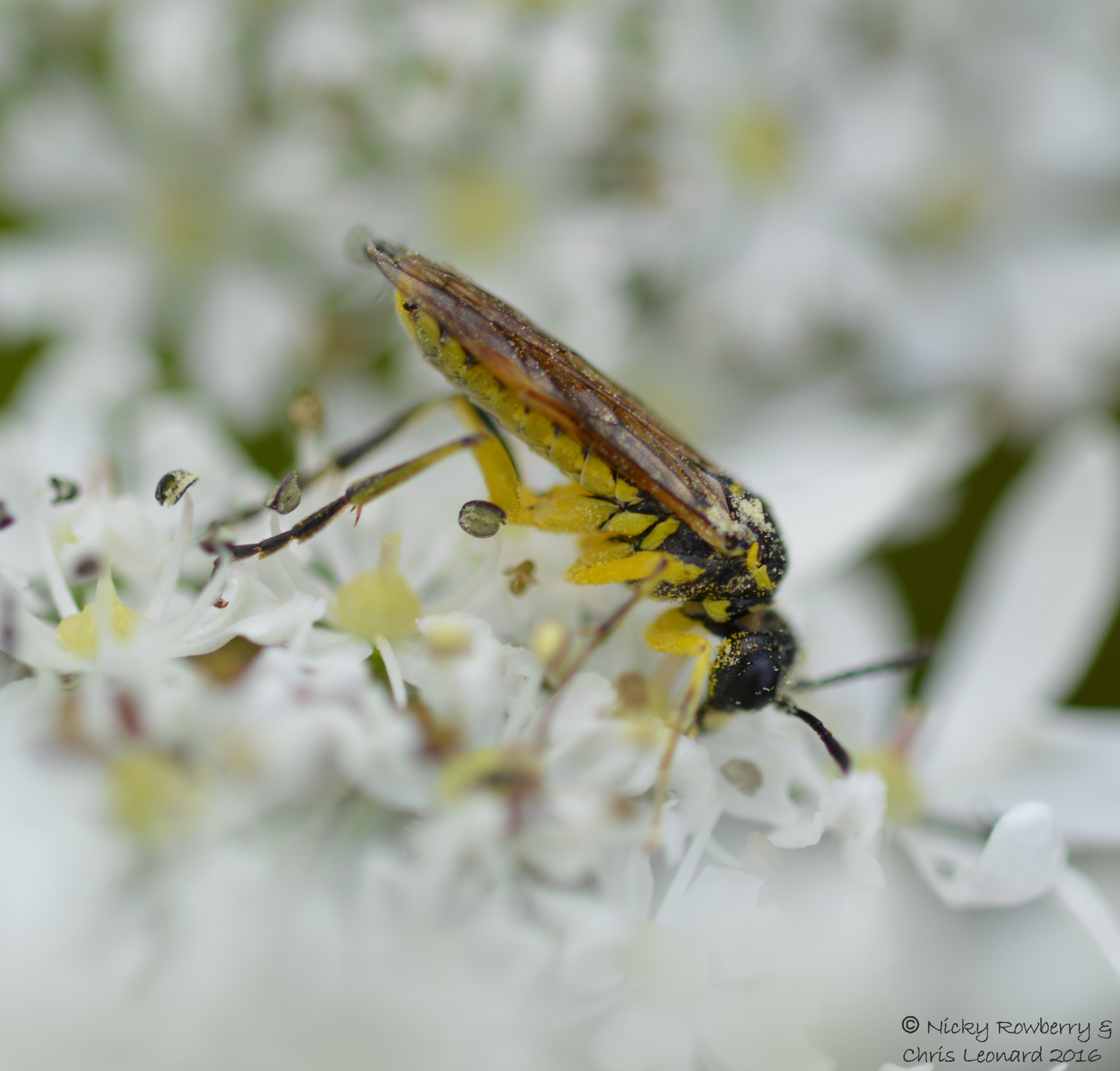
The cow parsley was particularly popular with the insects – like this large yellow sawfly and several day flying moths below.

sawfly

moth 2

The clover and yellow rattle were particularly popular with the bees.

red clover

DSC_5543

This elongated beetle was a new one for me – it is a Click Beetle. Apparently they make a clicking noise when disturbed. It’s probably a good job I didn’t realise this at the time or I might have been tempted to disturb the poor thing to get a click!

Click beetle

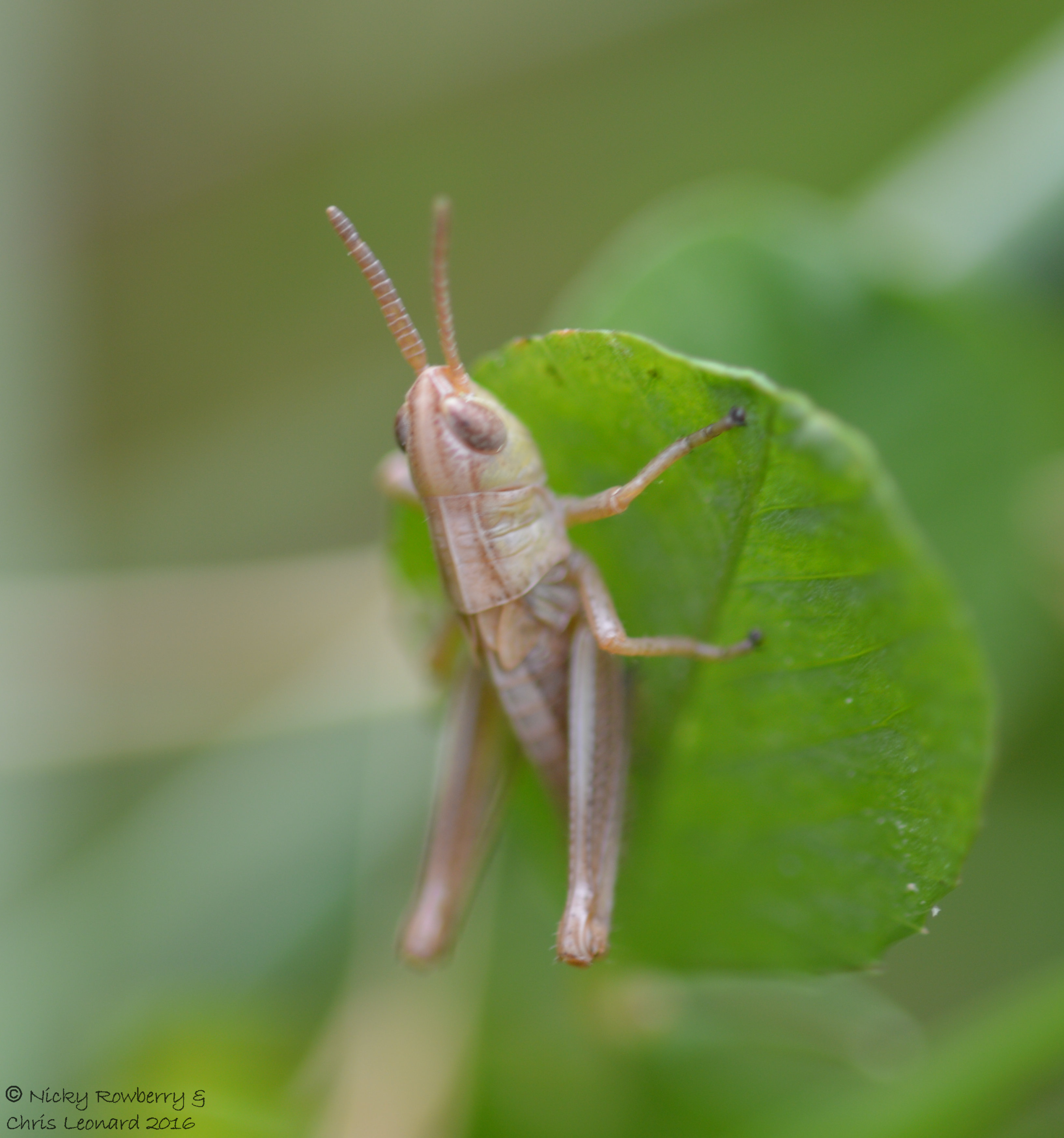
Each step I took through the grass seemed to produce movement as crickets leapt out of the way of my big feet. I find them really hard to take photos of, as they always seem to swivel around bits of grass so they are at the opposite side! But I finally found one whose legs seemed to be almost too long for him – he seemed to be struggling to control his gangly limbs, which made him easier to photograph. I’ve since learnt that he (or she) is probably a Roesel’s Bush Cricket.

cricket

Of all the insects I saw this afternoon, the one group that was a bit under-represented was the butterflies – perhaps the sun just hadn’t warmed things up enough. I only saw one in the time I was there – a Large Skipper. It was of course too fast for my slow Monday legs to catch, so you’ll just have to take my word for it.

So in the half hour I spent wandering around the verge (getting strange looks from the drivers going by no doubt) I saw a huge variety of insects – ladybirds, ants, beetles, crickets, moths, bees, sawflies and one butterfly! That half hour also revived my flagging Monday spirits and all from a roadside verge! It just shows what a benefit letting verges grow can be for wildlife. I know there are campaigns now to encourage councils to do just that and I couldn’t agree more.
Scarlet Pimpernel 30 WEEDSAnd finally as always the latest weed from our garden for my 30 Lazy Garden Weeds – The Scarlet Pimpernel. The flower itself is small, delicate and very pretty, but what I really like is the glorious name. Memories of cheesy movies  – and the rhyme “The seek him here, they seek him there…” I don’t know about being elusive, but the flower is certainly easily overlooked, but well worth looking out for.


30 Days Wild – Day 10

TWT 30 Days Wild_countdown_10Day 10 of 30 Days Wild and it’s our wedding anniversary! Seventeen (in)glorious years! 17 doesn’t seem to be one of those anniversaries where you buy something special – 2 for paper, 25 for silver etc., but my husband has just bought himself (sorry us!) a Pit BBQ, so I guess it’s become the BBQ anniversary.

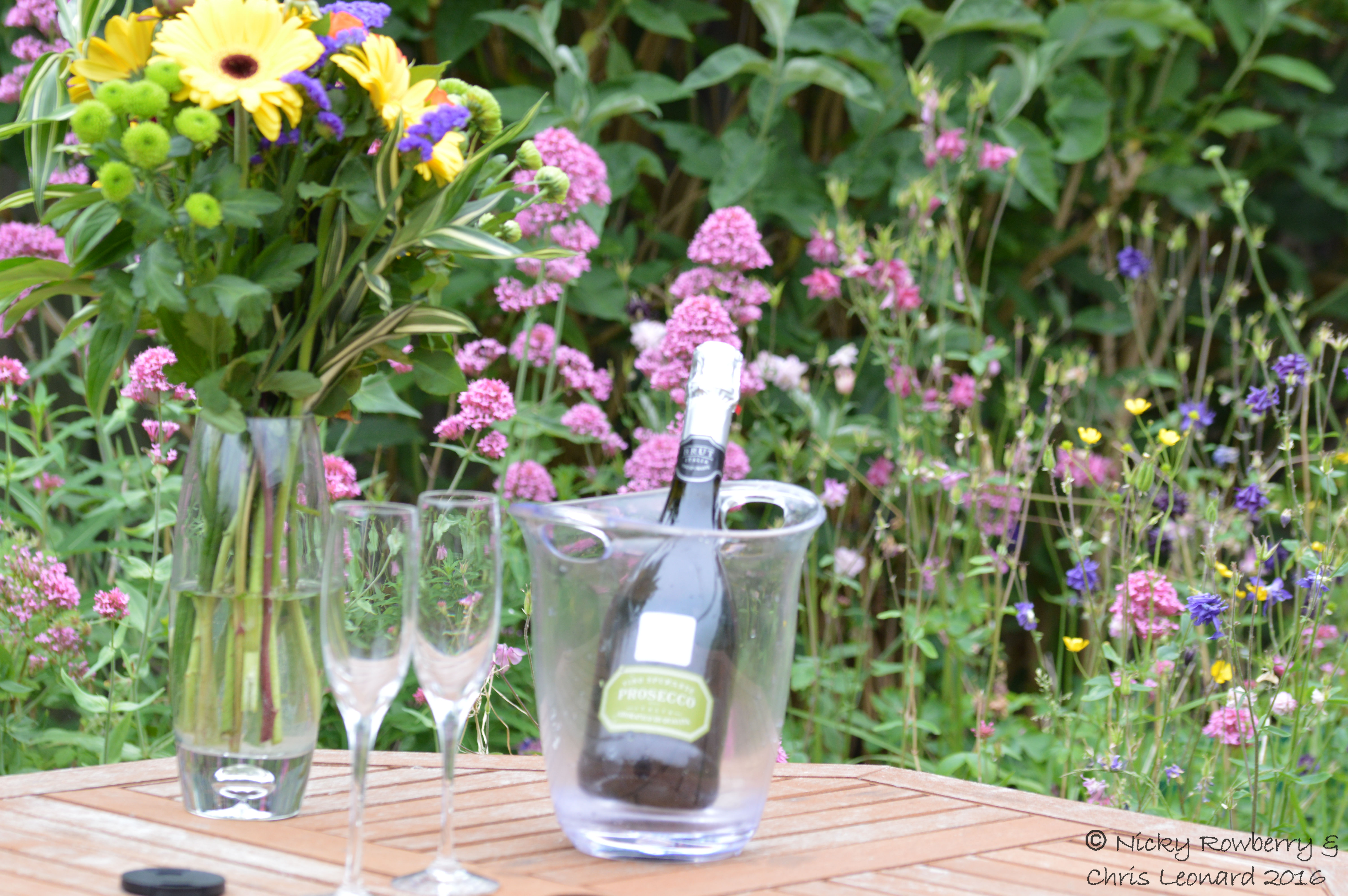
ProseccoI had planned to eat outside this evening anyway – I’d ordered American crayfish (the ones you’re supposed to eat to protect out native ones) from our fish supplier at work, but sod’s law being what it is, they couldn’t get any this week. So it’s a burger instead – not quite got the same cache, but what can you do. I’m sitting typing outside while the coals heat up and it’s starting to drizzle – sometimes life just doesn’t quite live up to expectations. But it is at least warm drizzle and it’s Friday night and I’m outside, so not really complaining.

When we got married in Scotland all those moons ago, the dolphins in Aberdeen harbour appeared and put on a display that felt like it was just for us. 17 years later and we haven’t got anything quite so spectacular to help us celebrate, but I’m honestly just as happy watching the wildlife in our garden. There’s something special about knowing that the bees and the birds are all there in part at least because of our lazy attitude to weeding and organic approach to gardening.

Asparagus beetleWe decided to grill some of the asparagus from the garden, but first we had to remove its residents – the asparagus beetles. They are such striking beetles, it’s just a pity they have quite such a taste for our asparagus. Fortunately for them there was a lot of asparagus left that we’d let grow too big – so it was too tough for us to eat, but the beetles didn’t seem to mind.

Even though it was not exactly a sunny evening, the bees and hoverflies were out in force. I particularly liked this Early Bumblebee, such a brightly coloured  little guy.

Early bumblebee

Managed to get a photo of a small Marmalade Hoverfly.

Marmalade

My husband had bought me a large bunch of flowers, which we took outside to decorate the table for the BBQ. They were big, bold, beautiful flowers, but for all the time they were out in the garden, none of the bees or hoverflies came anywhere near them. They clearly preferred our native weeds, as they flew right past the vase even though it was very close to the natural flowers. Again it sort of justifies our decision to have a “wild” garden, as we’d much rather have the subtler British flowers buzzing with insects, than the showier cultivated varieties.

Corydalis 30 WEEDSAnd finally as always the latest weed in my 30 Lazy Weeds from our garden – Yellow Corydalis. This is apparently a garden escapee that originally grew in the Alps, but has now spread round Britain. I probably shouldn’t like it as it is a non-native plant, but it’s hard not to like. I’ve always been attracted to plants with more unusual shaped flowers or leaves and the little yellow trumpets fit into this category. It grows easily in shade and unloved areas of the garden, so brightens up our driveway no end.


30 Days Wild – Day 9

TWT 30 Days Wild_countdown_09


Day 9 of 30 Days Wild and I managed to finish work early enough to get out and about. I decided to stop at a little nature reserve on the way home, but first I went strawberry picking. The season is just starting and the local fruit farm hadn’t even got their sign out advertising the strawberries. This meant the strawberry field (well poly-tunnel actually) was deserted apart from me.  It was lovely and peaceful and the lack of people meant there were lots of bird and bees about instead.

StrawberriesI took my punnet of strawberries with me to Boynes Coppice and Meadows Nature Reserve which was just round the corner. (No I didn’t scoff all of them, but those I did were very nice eaten in the fresh air!) The reserve consists of a series of meadows managed by Worcester Wildlife Trust. They have a wide variety of flowers and grasses and consequently attract plenty of insect life.

View

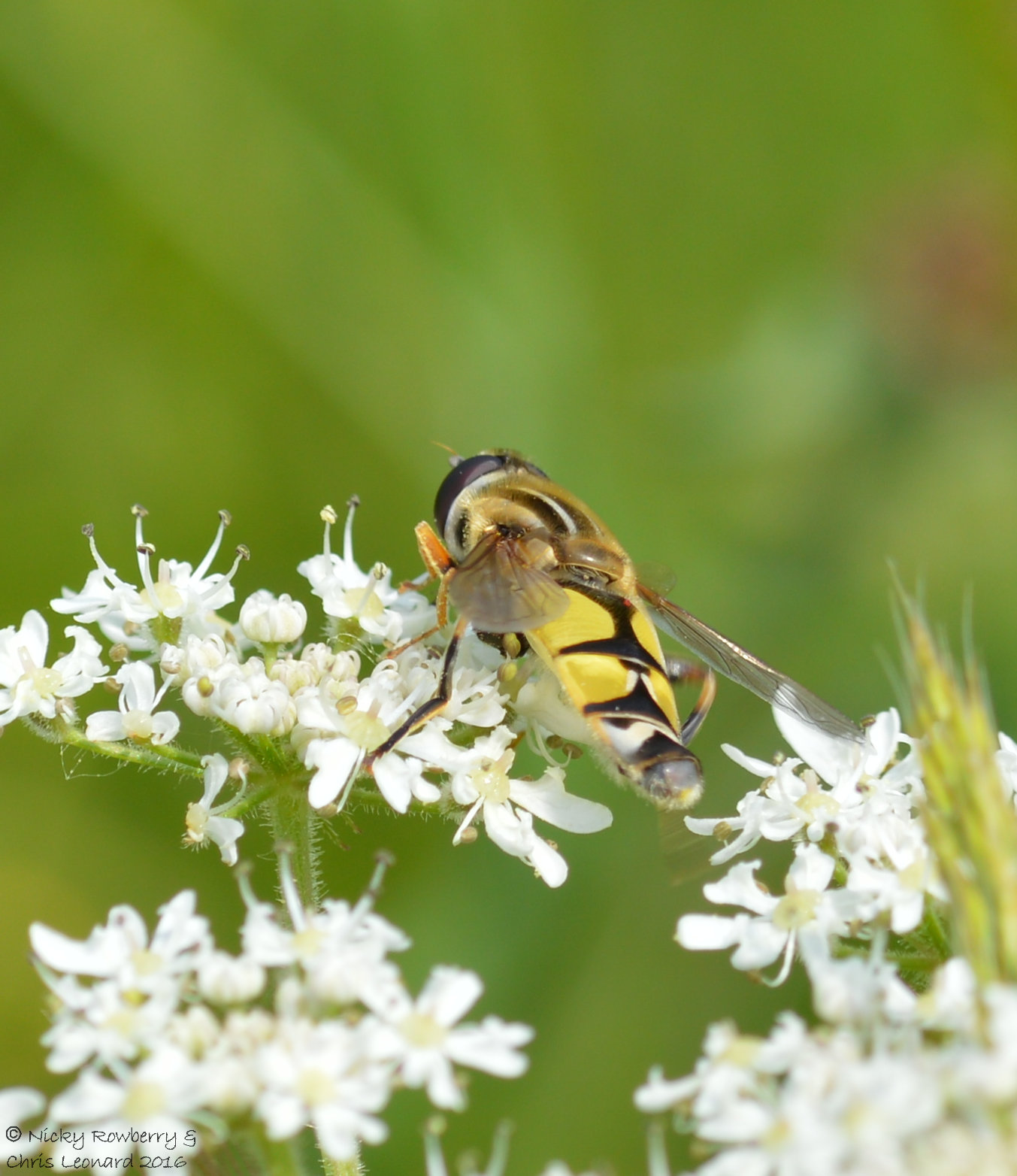
There were lots of hoverflies about – a group of insects I know nothing about, but once again the Facebook community identified a couple for me. The Common and the Large Tiger Hoverfly.

Helophilus pendulusHelophilus trivittatus (2)

Having chased Common Blue Butterflies round the last couple of sites I’ve been to, I was amazed to find a mating pair of them today. They even stayed put to let me take photos (I guess they had other things on their tiny minds!)

Mating common blues

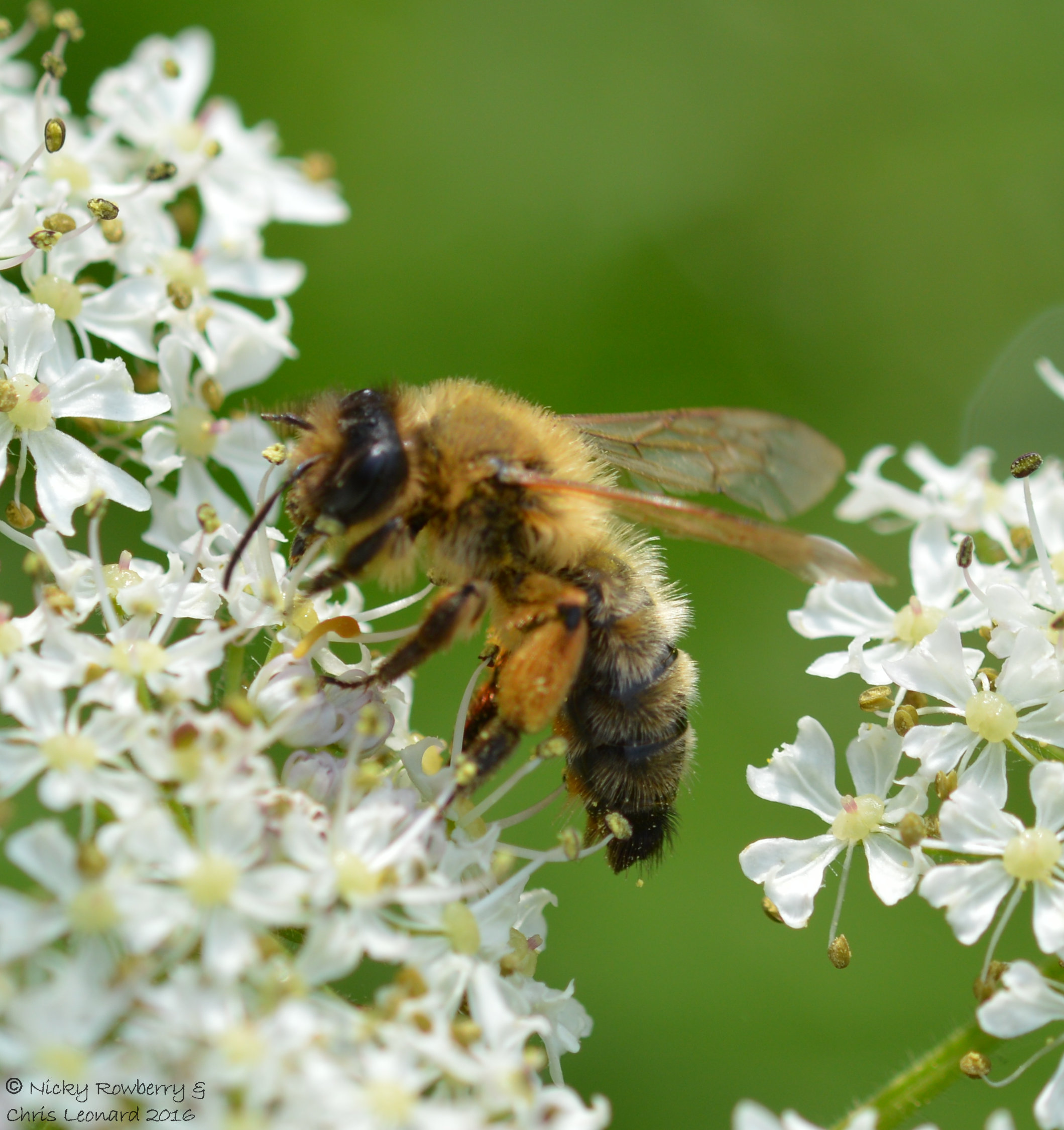
There were bees everywhere and lots of different species – below (I think) are Honey Bee, Buffish Mining Bee, Hawthorn Mining Bee and Ashy Mining Bee. The whole meadow was humming with the sound of bees, although they were drowned out sometimes by the hoverflies!

Honey bee

DSC_4779

Andrena haemorrhoa

Andrena cineraria

There were a few small moths about, a Burnet Companion which I’ve seen before and a Common Yellow Conch which I hadn’t.

Burnet Companion

Common Yellow Conch (2)

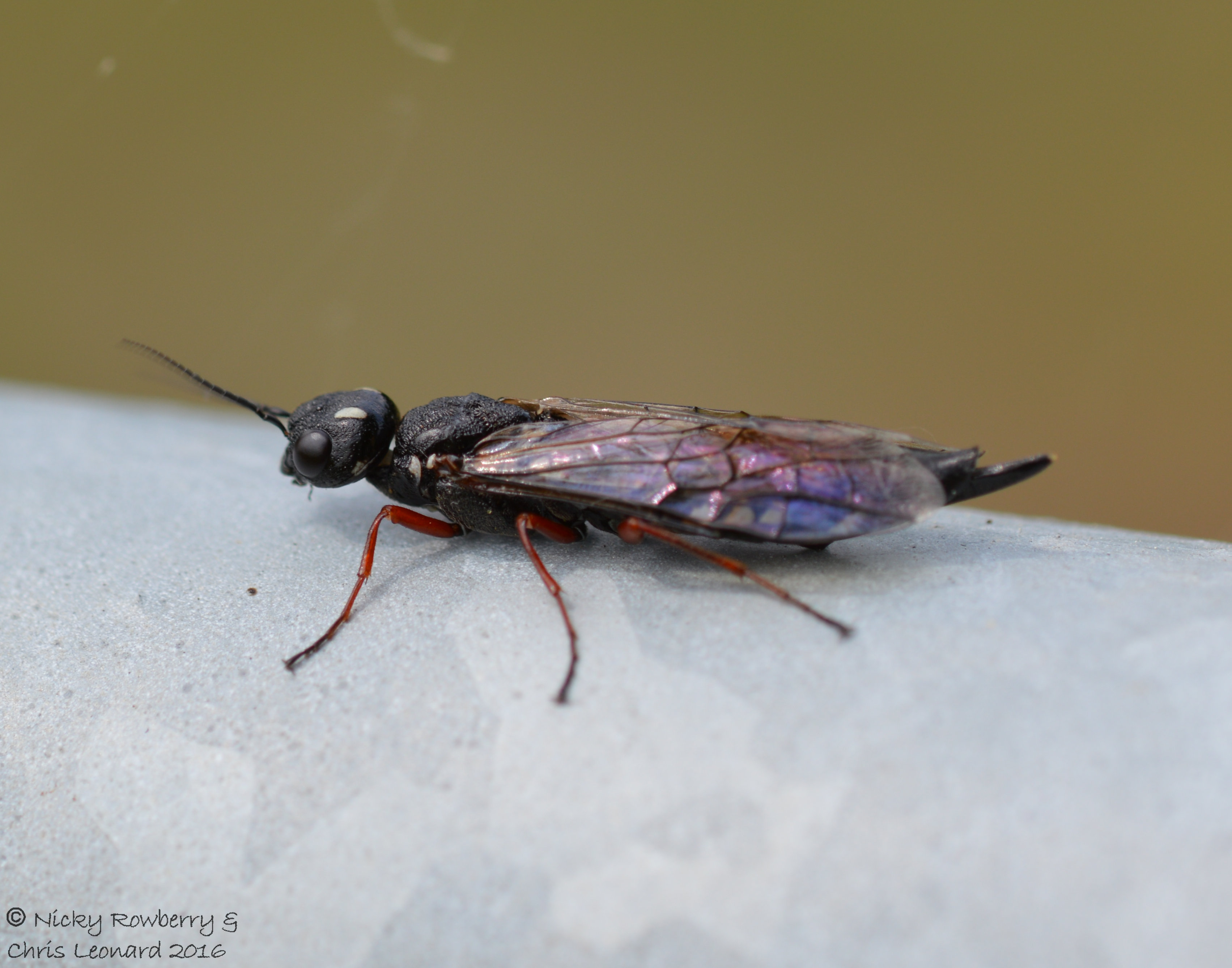
The final two additions to today’s insect selection were a grasshopper (possibly a Meadow one) and some kind of huge sawfly. The sawfly really was a whopper, sitting on the gate, guarding the meadow!

Meadow Grasshopper

Xiphydria sawfly

I find Boynes Coppice an incredibly relaxing place to visit. It’s off the beaten track, away from traffic noise and quite often I’m the only one there (as I was today). You can sit on the path and watch the insects buzzing all around or just watch the clouds drifting by. I love these little nature reserves that feel like your own little secret retreat!

Aquilegia 30 WEEDS

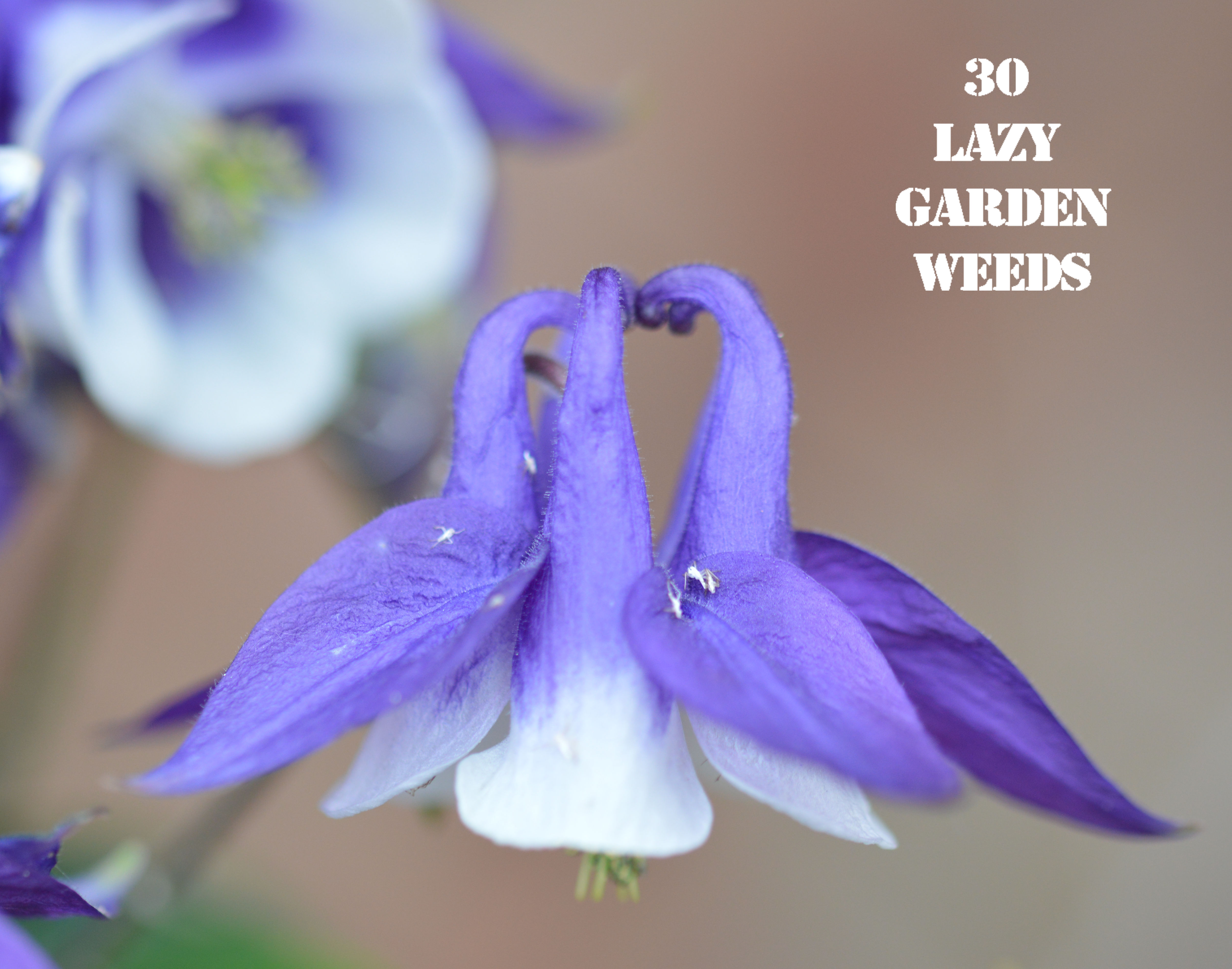
Latest weed for 30 Lazy Garden Weeds is the Columbine or Aquilegia. I love the fact that Columbine comes from the Latin for dove as the flower is supposed to look like 5 doves with their heads together. We have a huge variety of these in the garden – everything from pretty much white, to deep purple. Some are two toned, some all the same colour. Some have additional layers or ruffles, others like this one are slightly more restrained. All of them though have got here under their own steam and generally seeded themselves around the place. They are great for bees, some of whom go in the conventional way, but others cheat and drill a hole in the top to access the nectar directly. Lots of the flowers in our garden have tiny holes where the bees have cheated!

30 Days Wild – Day 8

TWT 30 Days Wild_countdown_08Day 8 and I’m still ploughing my way through the IDs from the weekend’s bioblitz – maybe shouldn’t have taken quite so many photos! But it’s all good and discovering some new species for the garden list. It being Wednesday though, I dragged myself from the computer and headed over to take my Dad out for our weekly pub lunch – no hardship there!

Dad by riverAs it was a lovely hot day we decided to head to one of our favourite pubs The Riverside at Aymestrey in North Herefordshire – the pub is by the river Lugg and you can sit outside right next to it for your lunch. Today they had Herefordshire snails on the menu, so I went for those (with a big pile of chips of course!), while Dad went for some smoked salmon.

It is a fantastic spot and we go there quite often in the summer to watch the dragonflies, butterflies and once a kingfisher that darted down the river under the bridge and away. Sadly today all you get is a photo of the bridge!

River

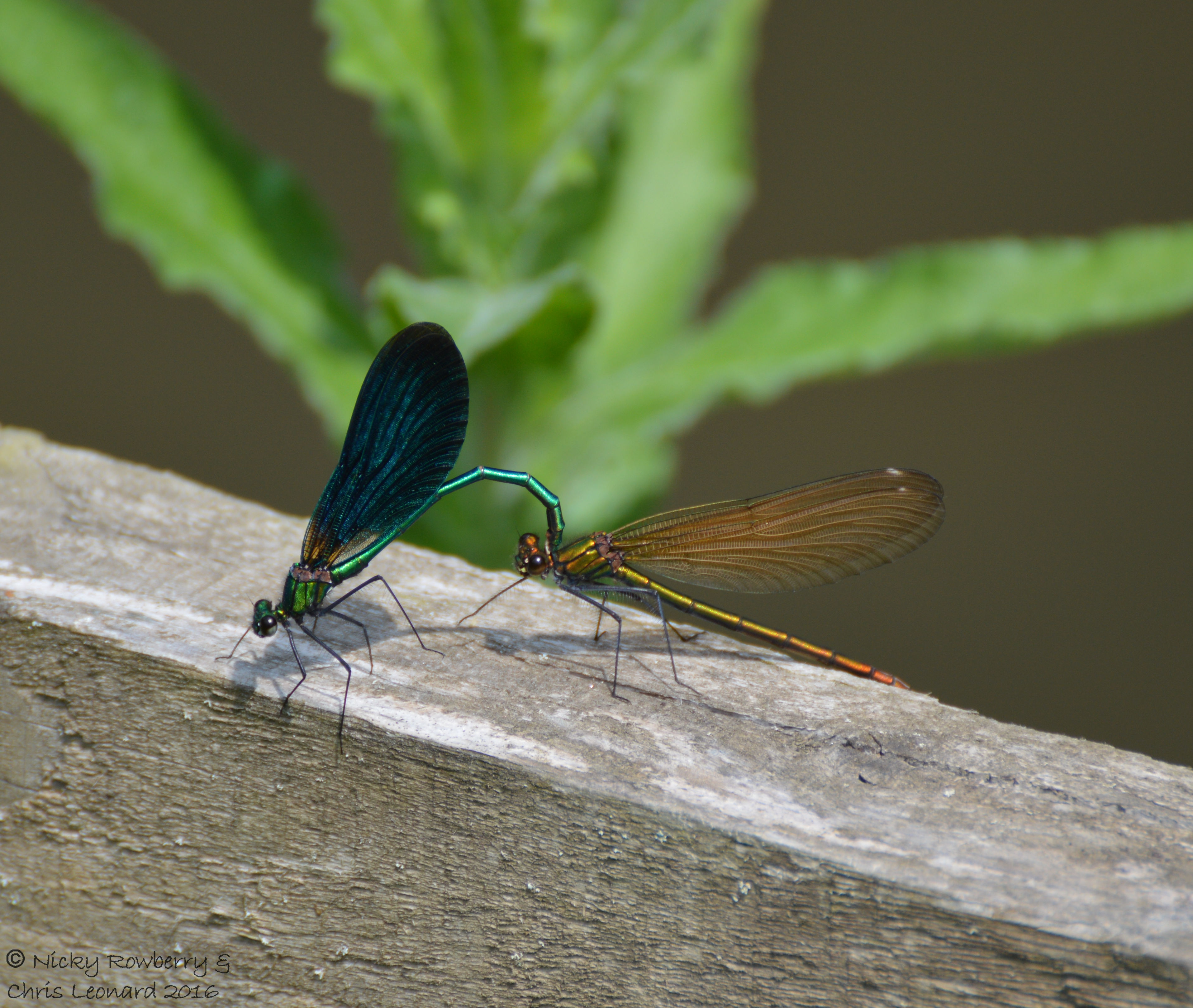
The little river has fish and lots of insects, which in turn attract plenty of birds. Today we saw nuthatches and yellow wagtails, plus lots of sparrows chirping non-stop. Today’s real prize was the Beautiful Demoiselles. Having chased them around for ages on Sunday at Knapp & Papermill reserve, here they were landing within feet of me, while I tucked happily into my snails. Not only that but there were mating pairs (the Demoiselles, not my snails!)

Beautiful Demoiselles Aymestrey

Feeling full and happy after lunch, I took Dad home, then decided to stretch my legs to work off those snails! I headed to Bodenham Lakes, which are about a mile from where I grew up, but once again I’m ashamed to say this is somewhere I’d never visited. Funny how you often don’t visit the things that are on your own doorstep! That’s one of the great things I’m finding about 30 Days Wild, that it’s getting me to do some of these things – finally!

Lake

Bodenham Lakes are actually old gravel pits that have been flooded and are now managed by Herefordshire Wildlife Trust. They are apparently very good for bird spotting and even have otters – not that I saw any of those today. I did though hear my first cuckoo not only of the year, but probably the first one I’d heard for about 30 years! I then managed to find the bird hide which has splendid views, in this case of the Canada Geese.

Geese

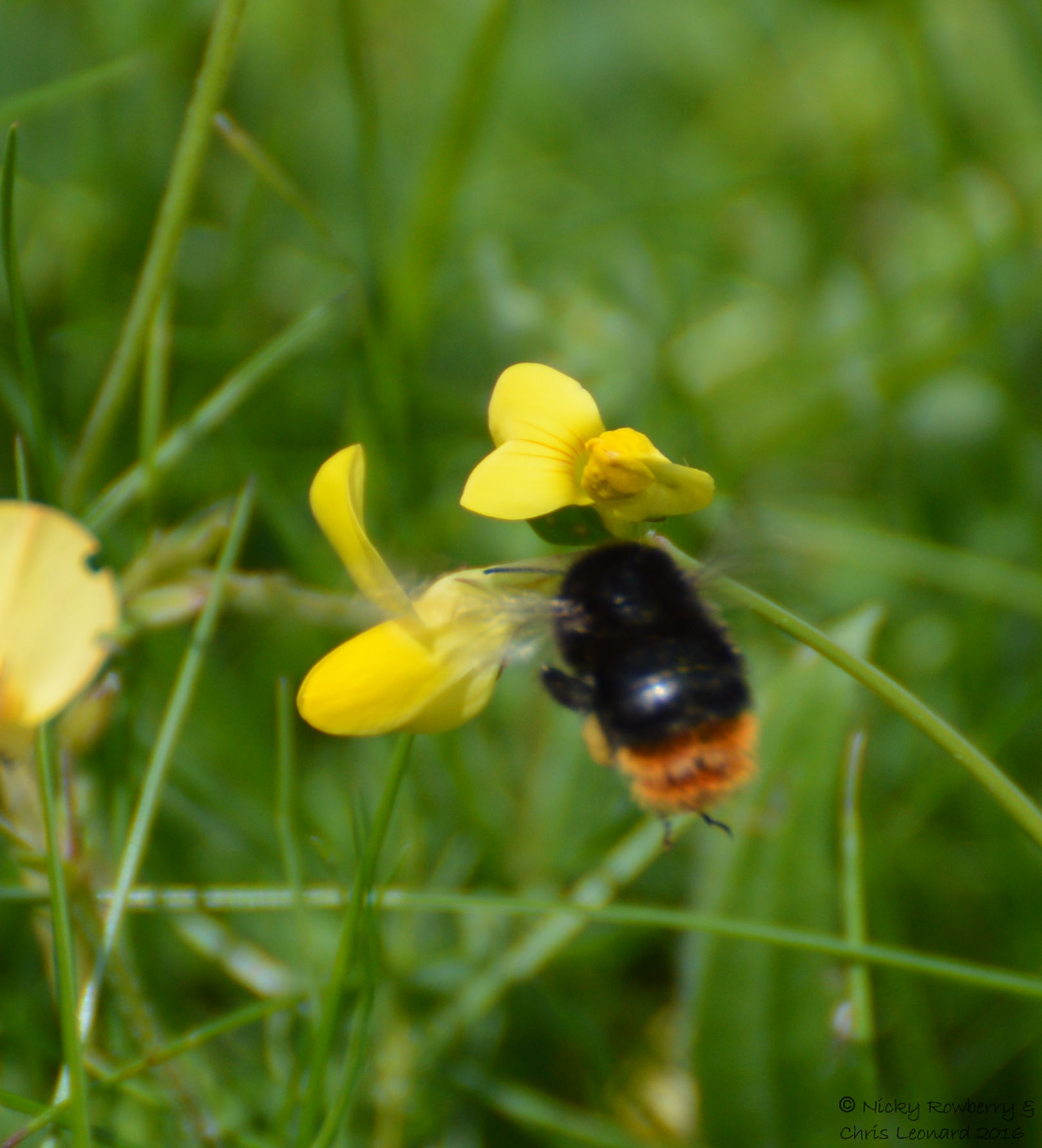
The meadows by the lake were full of flowers including these beautiful Common Spotted Orchids and the whole place was buzzing with bees, most notably these Red Tailed Bumblebees.

Orchid

Red tailed Bumblebee

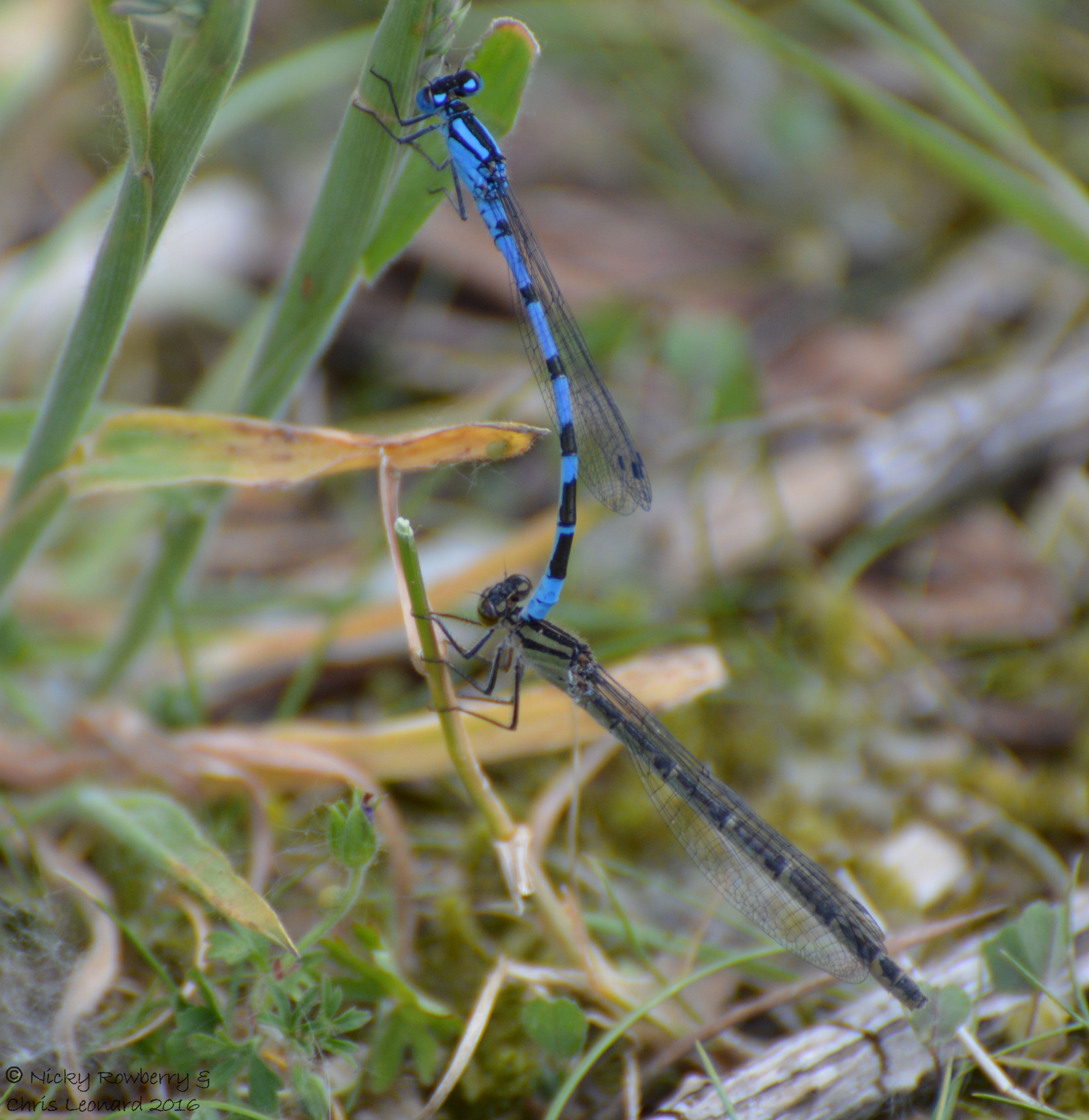
But the stars for me today of Bodenham Lakes were the damselflies and demoiselles. They were everywhere! It felt like I could hardly take a step without disturbing them – I kept seeing flashes of blue all around me. As at Aymestrey there were even mating pairs. I thought all of these below were Common Blue Damselflies, but I’ve already found out from the very helpful people on iSpot that the bottom ones are Blue-tailed Damselflies instead!

Common Blue Damselfly

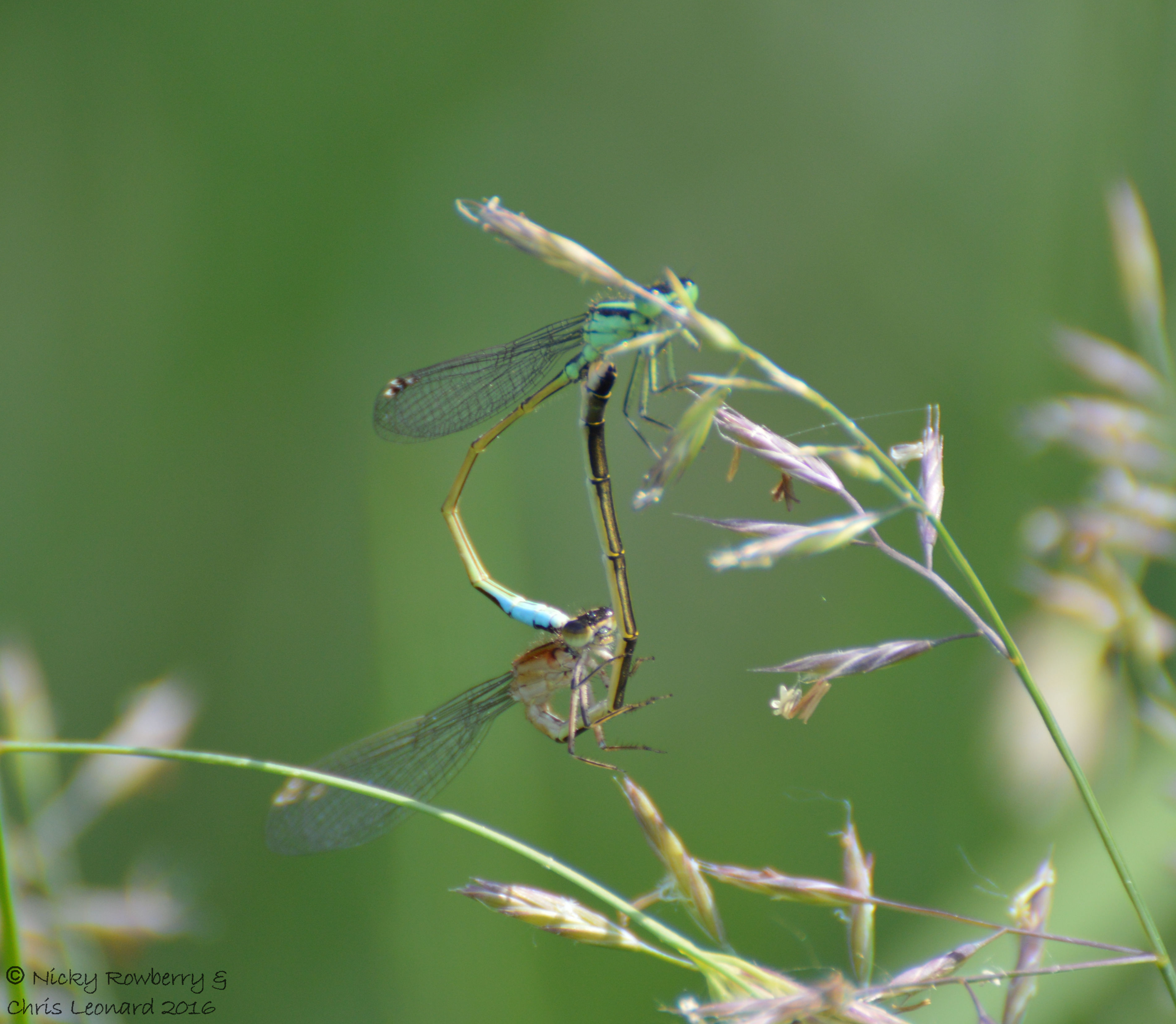
Mating Damselflies 2

Mating Damselflies 1

Not only damselflies, but I also saw Banded Demoiselles (thereby completing the set of Demoiselles in one day – I think there are only 2 species – Beautiful and Banded). Didn’t manage to get a brilliant photo – I need a steadier hand for photography, but hopefully it is at least recognisable.

Banded Demoiselle

There weren’t that many butterflies around today, although I did see another Painted Lady, some speckled woods, what can only be described as a “brown one” and some Common Blues. The Common Blues were flighty as ever, but I did pursue one long enough to get this just about identifiable shot.

Common Blue Butterfly

So all in all a particularly good day today. I shall definitely be heading back to Bodenham Lakes soon and also no doubt back to the pub too!


Ladys MantleAnd finally as always the latest weed in my 30 Lazy Weeds from our garden – Lady’s Mantle. I like the subtlety of this gentle looking plant. I love the soft wavy pleated leaves, especially the way they catch droplets of water like this. They provide lots of ground cover and are quite happy in the shade as well as in sunnier spots, so suit pretty much any garden. Time to give room to less showy plants like Lady’s Mantle!


30 Days Wild – Day 6

TWT 30 Days Wild_countdown_06

I am very lucky in that not only do I work on a farm, but it is an organic farm in an area of beautiful countryside – Upton-on-Severn to be precise. Despite having worked there nearly 5 years now, I’m ashamed to say I’d never actually gone for a walk to explore it. It took Day 6 of 30 Days Wild to get me up from my desk and out with my camera. With hindsight I maybe shouldn’t have picked the hottest day of the year to venture out – I did look a bit like a boiled lobster by the time I got back (much to the amusement of the other staff), but I had a lovely walk. I didn’t get as far as I intended, mainly due to the excessive heat, but I can explore other bits another day – I really should of course get down to the River Severn itself!

We have lovely views at work across the Severn towards the Malvern Hills, which were looking a bit hazy in the heat today.

DSC_4283

As you might expect on an organic farm, the fields and hedgerows are full of wildflowers and insects.

DSC_4298

DSC_4291

A lot of the flowers I was familiar with like the Cow Parsley and this Red Campion.

Red Campion

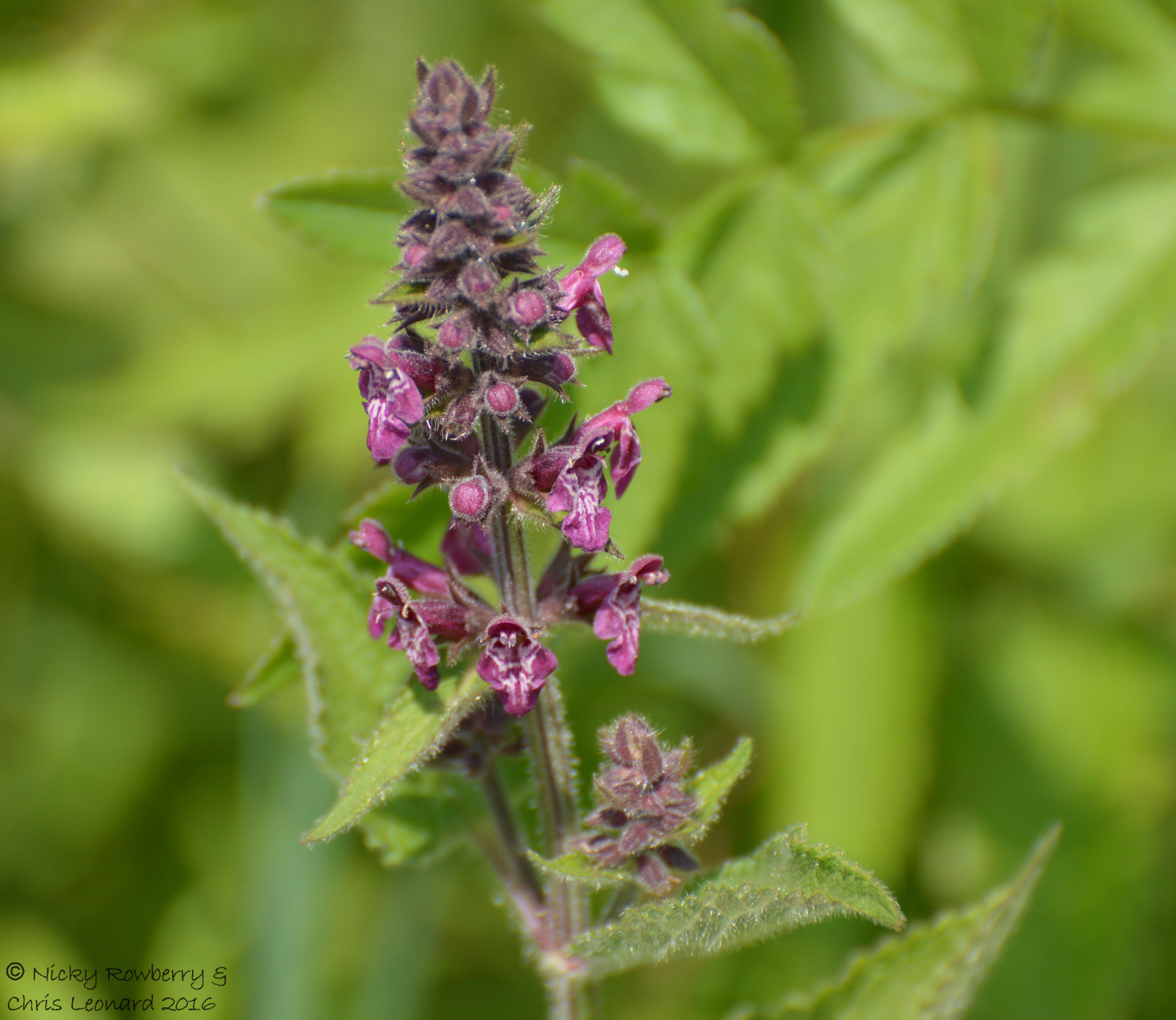
But others were new to me like this Hedge Woundwort and Black Medick – the power of Google and the good people of i-Spot were needed to identify these.

Hedge Woundwort

Black Medick

It was great to see so many bees making the most of the sunshine too. There were lots of different species about, but I only managed to get photos of 3 (what can I say, the bees were very quick and I was very slow in the heat!) The honey bees were fairly easy to identify straight off (famous last words, someone will probably tell me this is something else!)

Honey Bee

The cute little male Early Bumblebee I also managed to ID myself too. I love the second photo of him – I know the bee isn’t in focus, but somehow he’s got attitude as he flies off!

Early Bumblebee male 2

Early Bumblebee male

The final bee is a Grey Patched Mining Bee (Andrena nitida), which I needed the ever helpful Bee and Wasp Facebook group to identify for me.

Andrena nitida Grey patched mining bee

Butterflies were abundant too, although like the bees too fast to get many photos. Pretty sure though I saw Speckled Woods, Brimstones, Painted Lady and some really small Common Blues. I was particularly chuffed with the Common Blues as they’re the first I’ve seen this year. Again apologies for poor photo, I couldn’t get close enough to get a better one.

Common Blue (1)

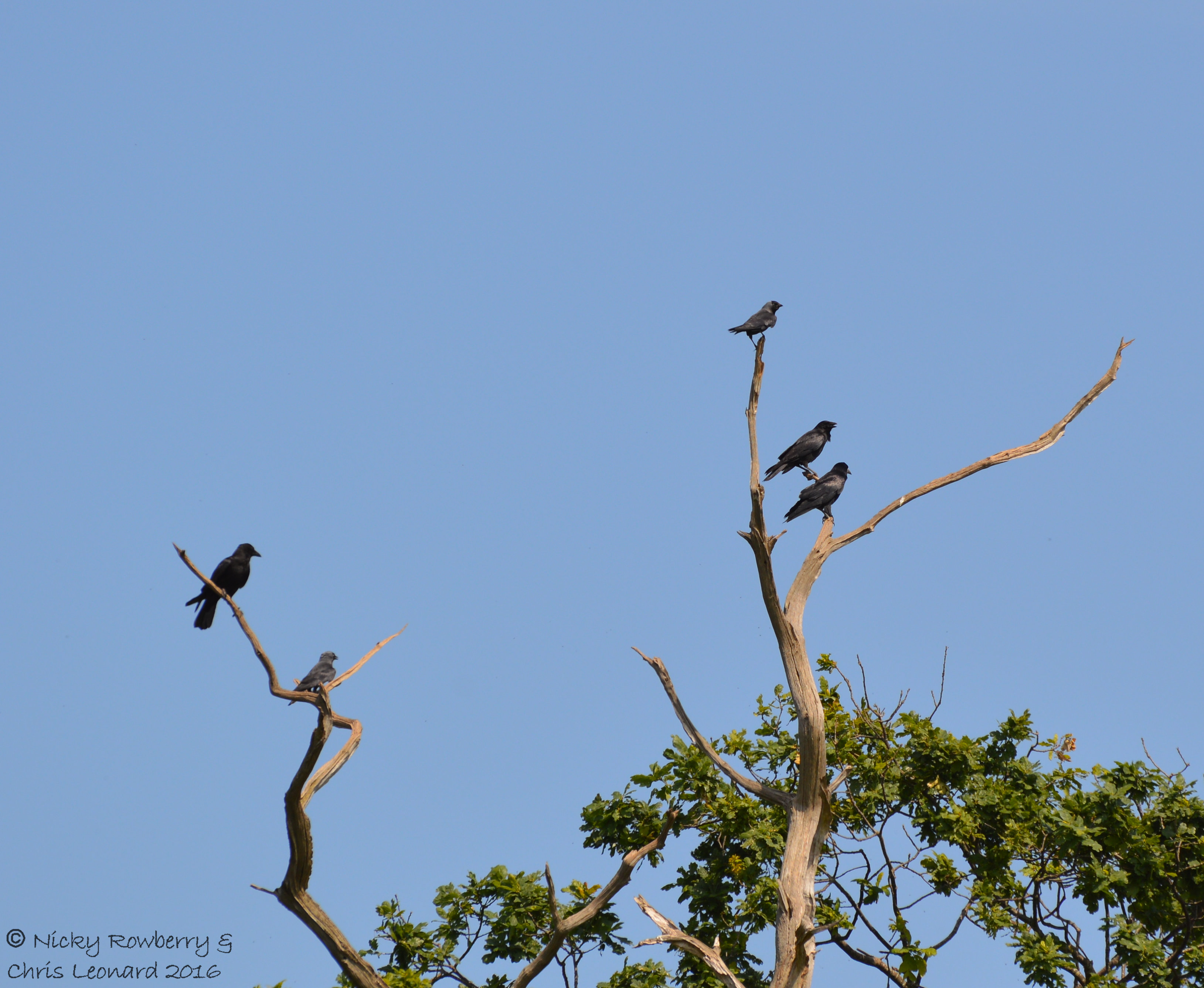
Although birds were abundant everywhere, the most obvious ones were the large members of the Crow family. Not being very good at bird ID, I snapped some photos with the plan of identifying them when I got home. Turns out I got three for the price of one in this photo. On the right hand side, there appears to be from top to bottom, a Jackdaw, a Carrion Crow and a Rook!

DSC_4305

While I was watching the crows/rooks/jackdaws, a Buzzard flew into the field, much to the annoyance of the other birds. I’m not sure which of the 3 species it was, but several of them chased the Buzzard until it flew off. They were really going for it, although they are clearly much smaller than the Buzzard.

DSC_4311

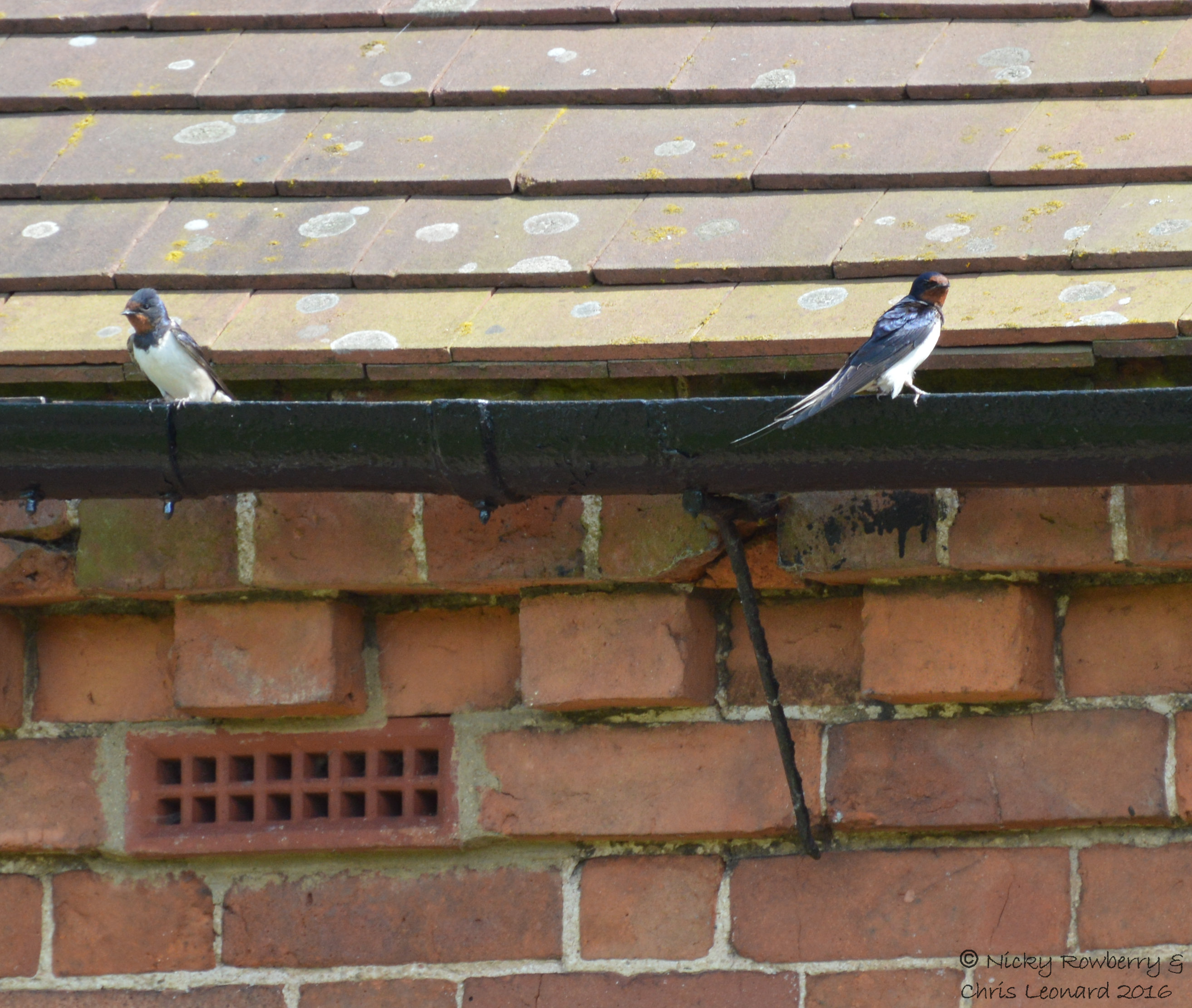
Finally as I headed back to the office, the Swallows were flying round the farm buildings and swooping over the field. Fortunately a couple of them landed on the roof long enough to get a snap.

Swallows

So Swallows in the farmyard and sunburn all over my face – can only mean summer is here! Really enjoyed my walk out and about on the farm and will definitely try and do it again soon. The farm has hares and foxes too, so maybe I’ll get up early and go for a walk before I start work next time, as more chance of seeing them that way – cooler too hopefully!

Teasel 30 WEEDS

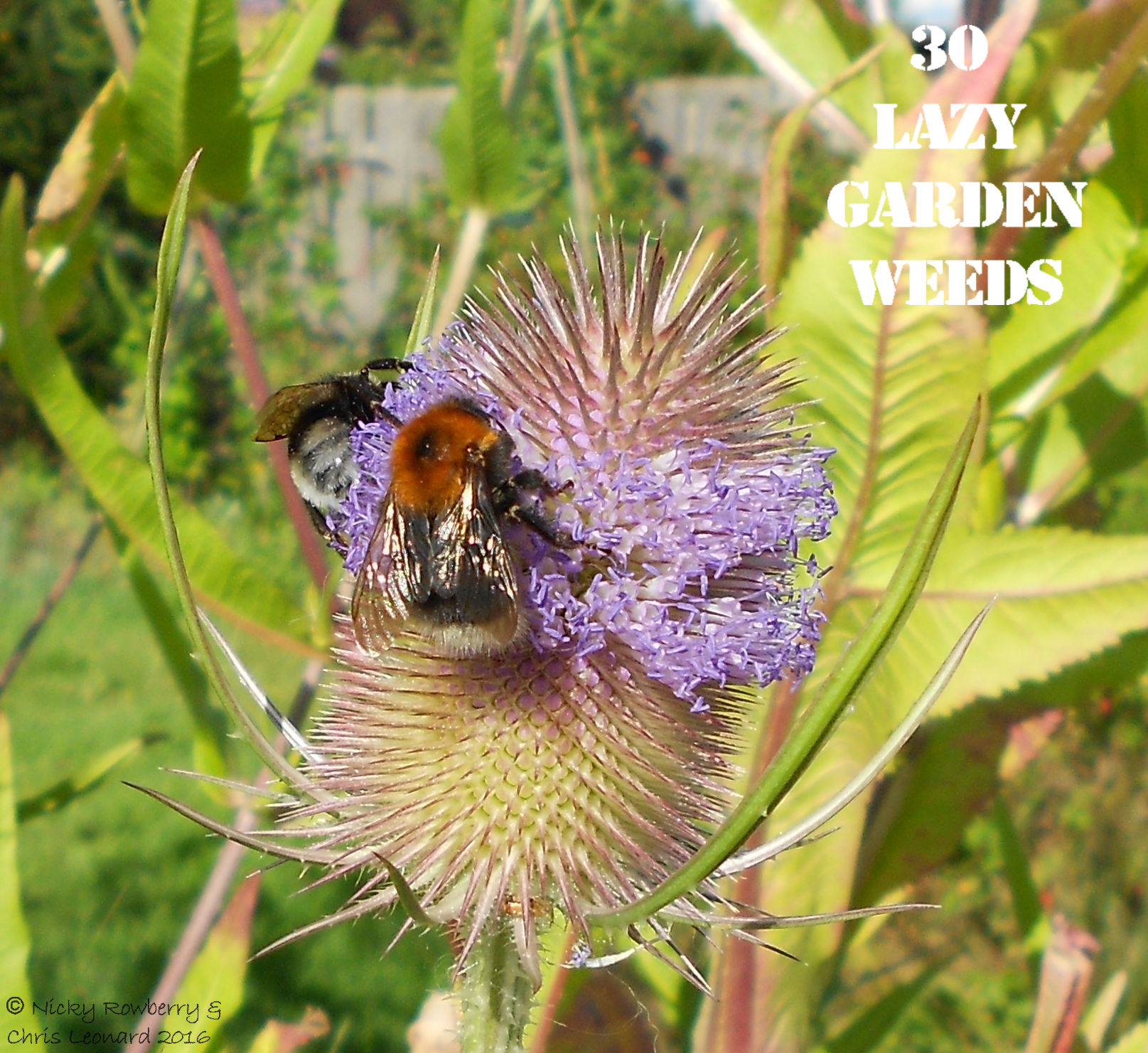
And finally the latest weed in my 30 Lazy Garden Weeds – The Teasel. Undoubtedly the largest weed we get in the garden (easily taller than my paltry 5 foot 1!) The teasel has to be one of the best things in the garden for wildlife – the bees love them in the summer and the birds love the seeds through the winter and I love them all year round. They do take up a lot of room though, so perhaps only for serious weed fiends like us at Too Lazy To Weed!

30 Days Wild – Day 4

TWT 30 Days Wild_countdown_04Day 4 of 30 Days Wild and today we took part in another event – the National Garden Bioblitz, thereby ticking off two targets with one activity (in true Too Lazy fashion). The aim of the Garden Bioblitz is to find and record as many species of plants and animals as possible in the garden in 24 hours.  Since we’re always identifying things we find in the garden anyway, a bioblitz is just a natural extension of that.

Garden BioblitzLast time we did this a few years ago, we recorded about 120 species; but that was before we got into moth trapping and bee identifying, so hopefully we can beat that this time.  I’m writing this late evening – we’ve been busy in the garden all day, photographing and listing everything we could find. I’ve still got loads of things to identify from the photos and then everything has to get logged onto the i-record site.

It has pretty much been the perfect day. It started at about 4:30 am when I got up to empty the moth trap (to beat the cheeky robin to the catch). Then went back to bed for a bit more sleep (always good), before resuming the challenge at a more reasonable hour. For once the sun shone on the righteous (questionable I know) and we had the perfect conditions for trawling the garden for photo ops. Pretty much the whole day was spent crawling about the garden with the cameras. We finished off by cranking up the BBQ and cracking open a bottle of Prosecco – the perfect end to the perfect day.

During the day we tried every trick we could think of. Obviously the moth trap had been out over night and produced at least 20 species of moth – I’m still working through the photos, so this total may rise. Highlight was the always stunning Elephant Hawkmoth.

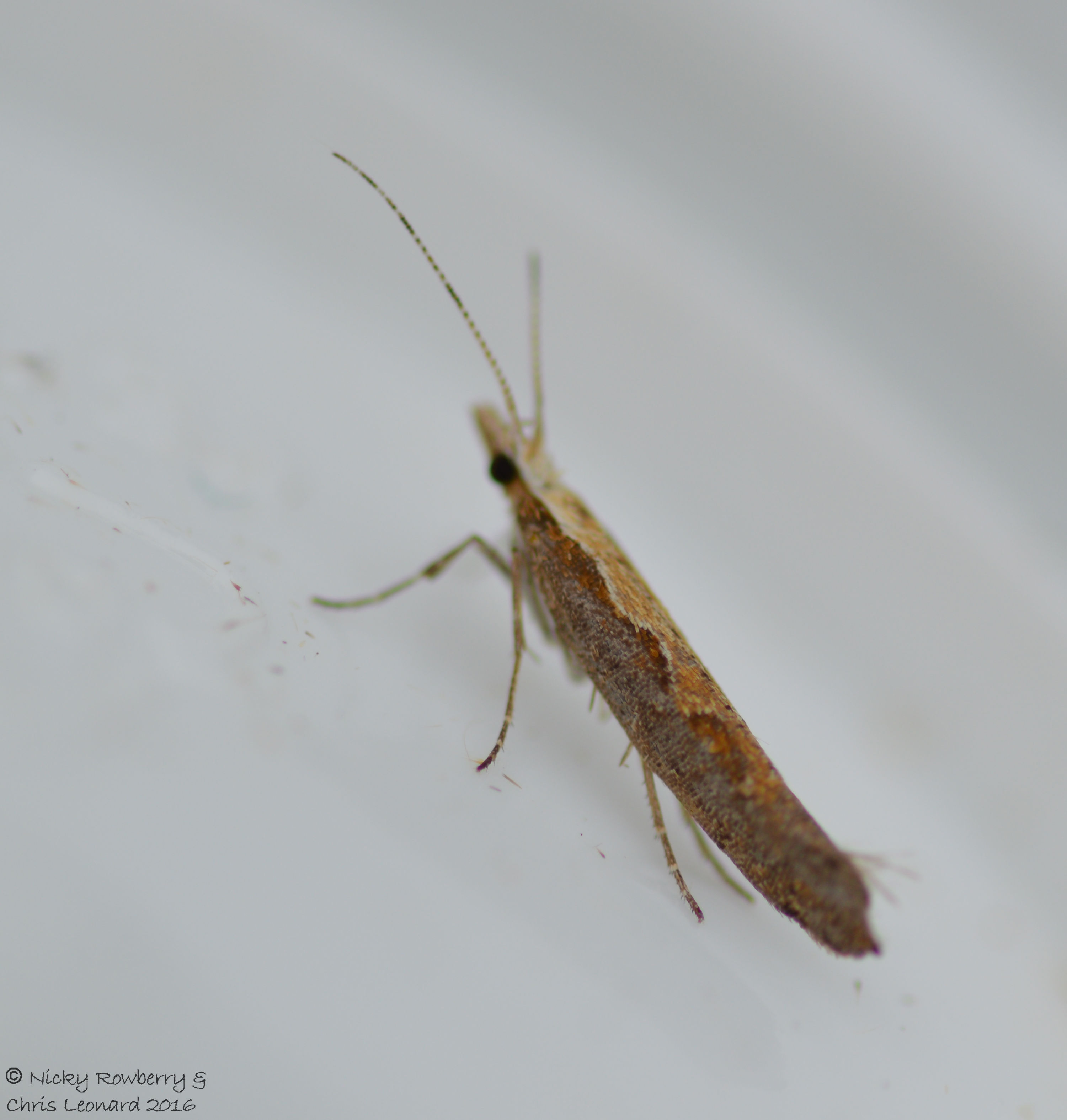
Diamond Back mothI was also really pleased to get several Diamond-back moths – tiny moths that migrate over from the Continent. They’d been mentioned on Springwatch and social media was full of people saying they’d had loads of them this week, so I felt ridiculously glad that Too Lazy’s garden hadn’t missed out. Moth envy is a terrible thing!

We also tried pitfall traps for the first time, using old plastic tubs buried in the ground. This produced this rather splendid (and still to be identified) beetle, plus a couple of woodlice and a spider (also still in need of ID). I suspect pitfall traps take a bit of practice in sussing the right location – we might try them again at other places in the garden.

We tried the “suspend an umbrella under a tree and wack the branches” technique as demonstrated by Chris Packham on Springwatch.  We only have the one mature tree (an apple) so this didn’t produce too much, but was interesting to try.

We dipped in the pond, which produced mainly duckweed, but also some leeches and water louse. It also meant we spotted one of our two amphibian species of the day – a Common Frog, watching us warily from his duckweed blanket.

NewtWe of course turned over stones and pieces of wood, which yielded our second amphibian – the Common Newt. We also found most of our molluscan species this way, both snails and slugs. We achieved a respectable 4 species of snail, but sadly the Girdled Snail, which I know we get in the garden, remained steadfastly hidden today.

The rest of the day was spent generally bird watching and chasing various bees and insects round the garden.  I haven’t tallied up the birds properly yet, but we managed at least 10 species including this Collared Dove. At least 6 bee species put in an appearance, with possibly a new one – we spotted some kind of leafcutter bee carrying (not surprisingly) a piece of leaf – hopefully we can get an ID on it soon, although the photo wasn’t brilliant. Fortunately other bees were more obliging.DSC_3856

Only 2 butterflies showed their faces today – a Small White and a Holly Blue. Assorted insects made up the remainder of the animal count, while the plant count is at least 25 species, with probably a few more to ID.

We’ve spent the whole day in the garden photographing our wildlife and it will probably take several days more to go through all the photos and get them loaded so that they count for the Bioblitz. But it’s been a thoroughly enjoyable experience and has got us rooting about bits of the garden, that we may otherwise ignore. We won’t know the final tally of species for a couple of days, but I’ll post an update when we do. I’d recommend having a go at a Garden Bioblitz for anyone – you don’t need to be especially skilled – just take it to whatever level  you can manage. You’re sure to learn something new and hopefully enjoy your garden all the more for it. There’s still time to do it for this year – http://www.gardenbioblitz.org/ for more information.

Bindweed 30 WEEDSDay 4 of 30 Lazy Weeds and a truly beautiful if sometimes bothersome flower – Bindweed. The bane of many a gardener, but if you take the time to look at the flower itself, it really is stunning. Pure white and beautiful in its simplicity. Gardeners will plant similar looking flowers, but weed out these, which seems a shame. I know their stems do wind themselves round pretty much everything, but for me the flowers more than make up for this.