Malvern Meanderings

Today we decided to explore our local patch – so often it’s your local stuff that you ignore, thinking somehow that the grass is always greener (or the wildlife more exciting) elsewhere. But the Malvern Hills are not only beautiful, but a fantastic location for wildlife. We forget sometimes how lucky we are to live here.

We’ve been concentrating a bit lately on “bagging” some new butterfly species and had so far added 5 this year to our lifetime list. But there is one species we’d never seen that has a colony almost literally on our doorstep – the Grayling butterfly is found on the Malvern Hills, less than a mile from our house. The Grayling is now a priority species for conservation as it is in decline over much of its former range. The Malvern Hills Conservators are making great efforts to protect our local population and improve the habitat. So we set off today in the hope of seeing our local speciality.

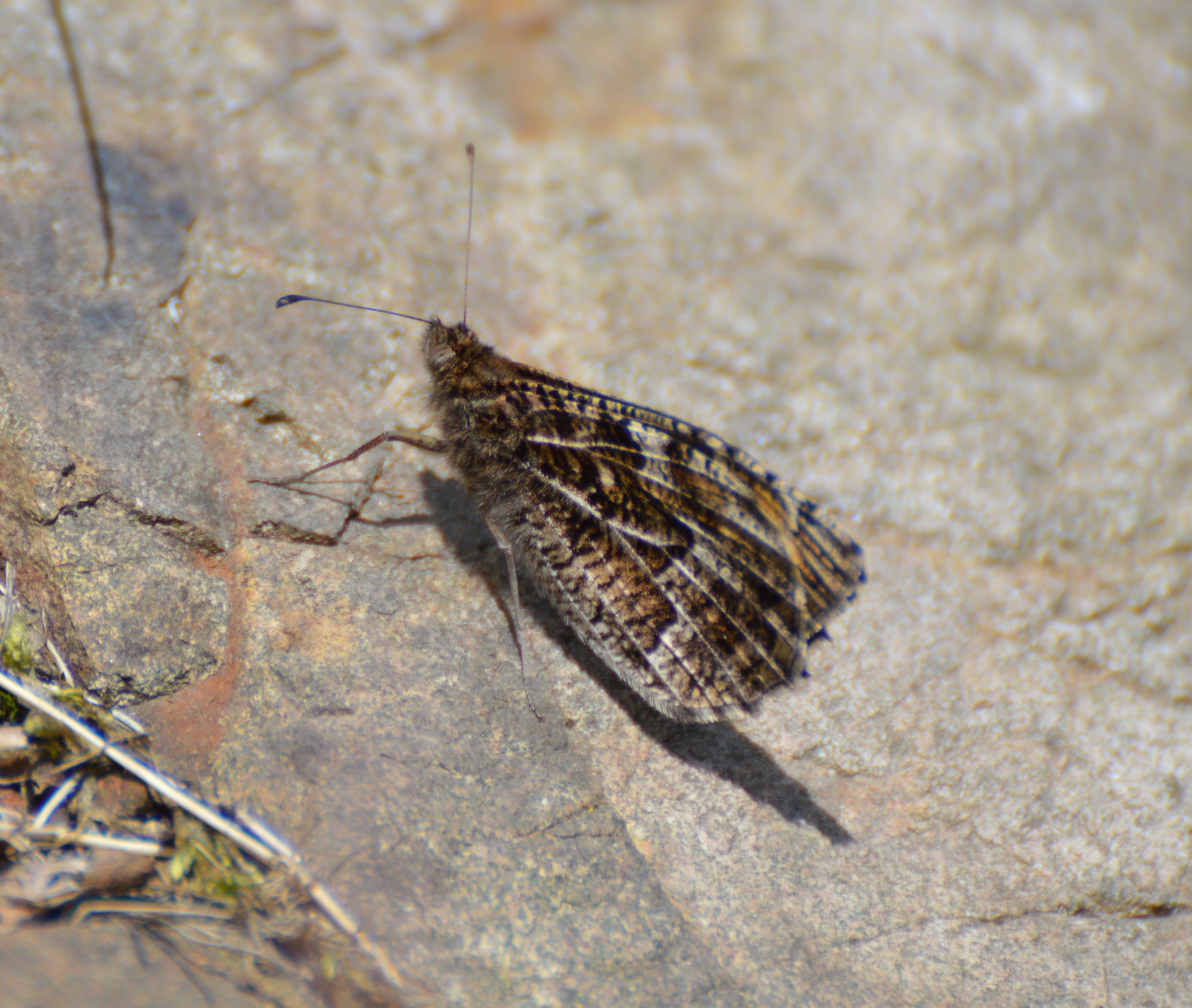
The Grayling likes areas of bare rock and short grass. We headed up the hills following the path recommended by the West Midlands Butterfly Conservation guide and having reached the favoured location, we spotted one almost immediately sunbathing on the rocks.

The Graylings aren’t as flashy as the Purple Emperors we saw earlier in the week, they are more subtly beautiful. They are also masters of disguise and when they keep still they blend into the surroundings extremely well. We were lucky to spot this one. Fortunately it was intent on sunbathing and was also close to the path, so we got our usual bucket-load of photos.

The Graylings almost always sit with their wings upright with the forewing tucked behind the hindwing, which makes them look much smaller than they really are. We watched this one for ages and eventually while it was shifting position, we managed to get a shot with its forewing at least partially showing.

Grayling 2

We saw at least 2 other individuals on our walk, all basking on rocks. Lots of people walked by us and the butterflies while we were there, but I don’t suppose many of them realised what they were missing!

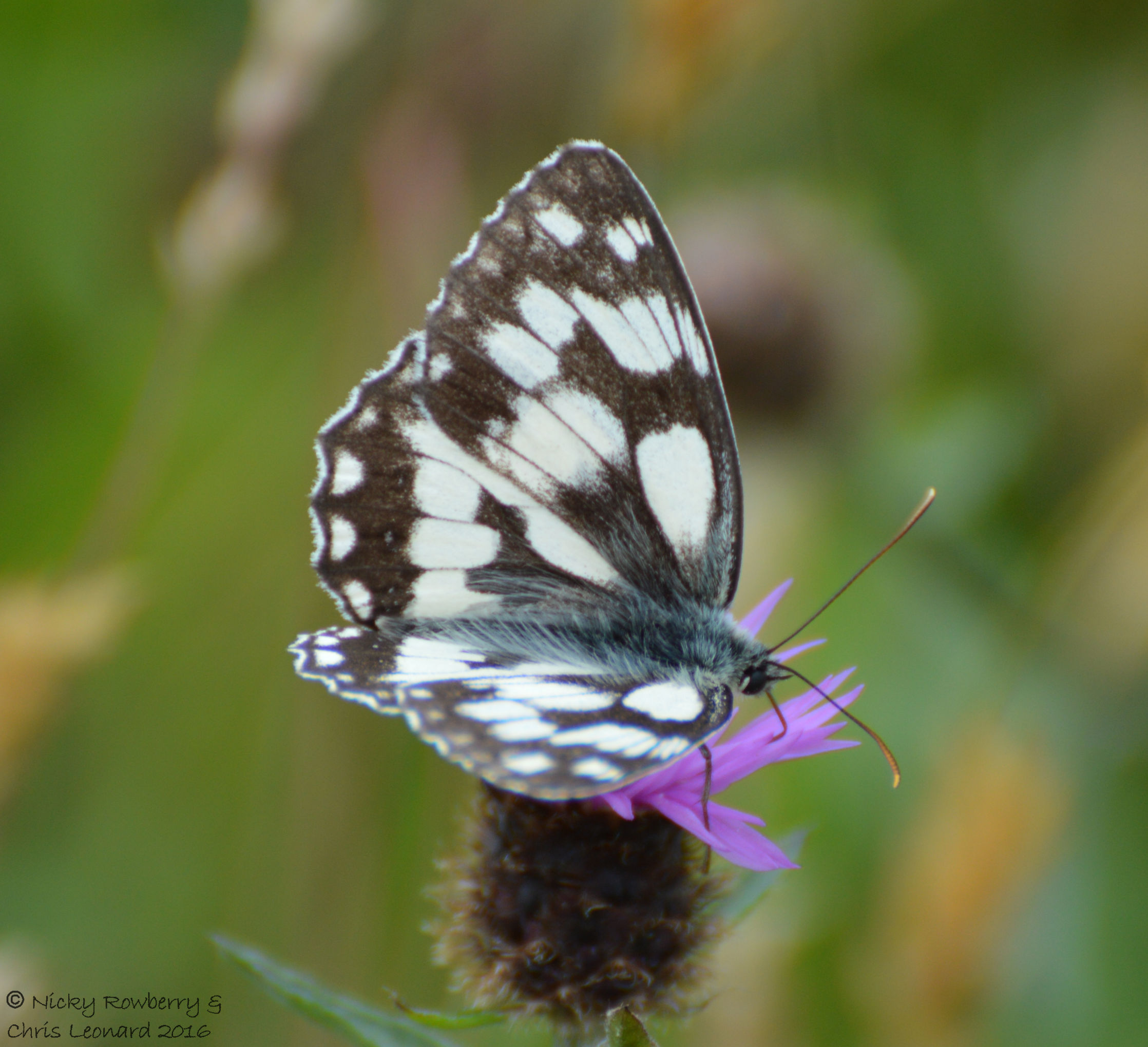
Feeling flushed with success (and also a good lunch at our local), we decided to try our luck back down on the flat ground at the edge of Malvern. There’s an area of rough ground by the road that is always good for butterflies and today was no exception. The Marbled Whites were out in force. Unfortunately it was extremely windy so although they were landing close by, the grass was blowing about so much it was hard to get decent photos. Here are a few of my better efforts.

Marbled White 2

Marbled White 3

There were several pairs dancing about in the wind, so I had hoped to get a mating pair. This was the closest I managed – not ideal, but at least there are two of them in one shot!

Marbled Whites

Marbled Whites weren’t the only butterflies around – Meadow Browns were particularly abundant.

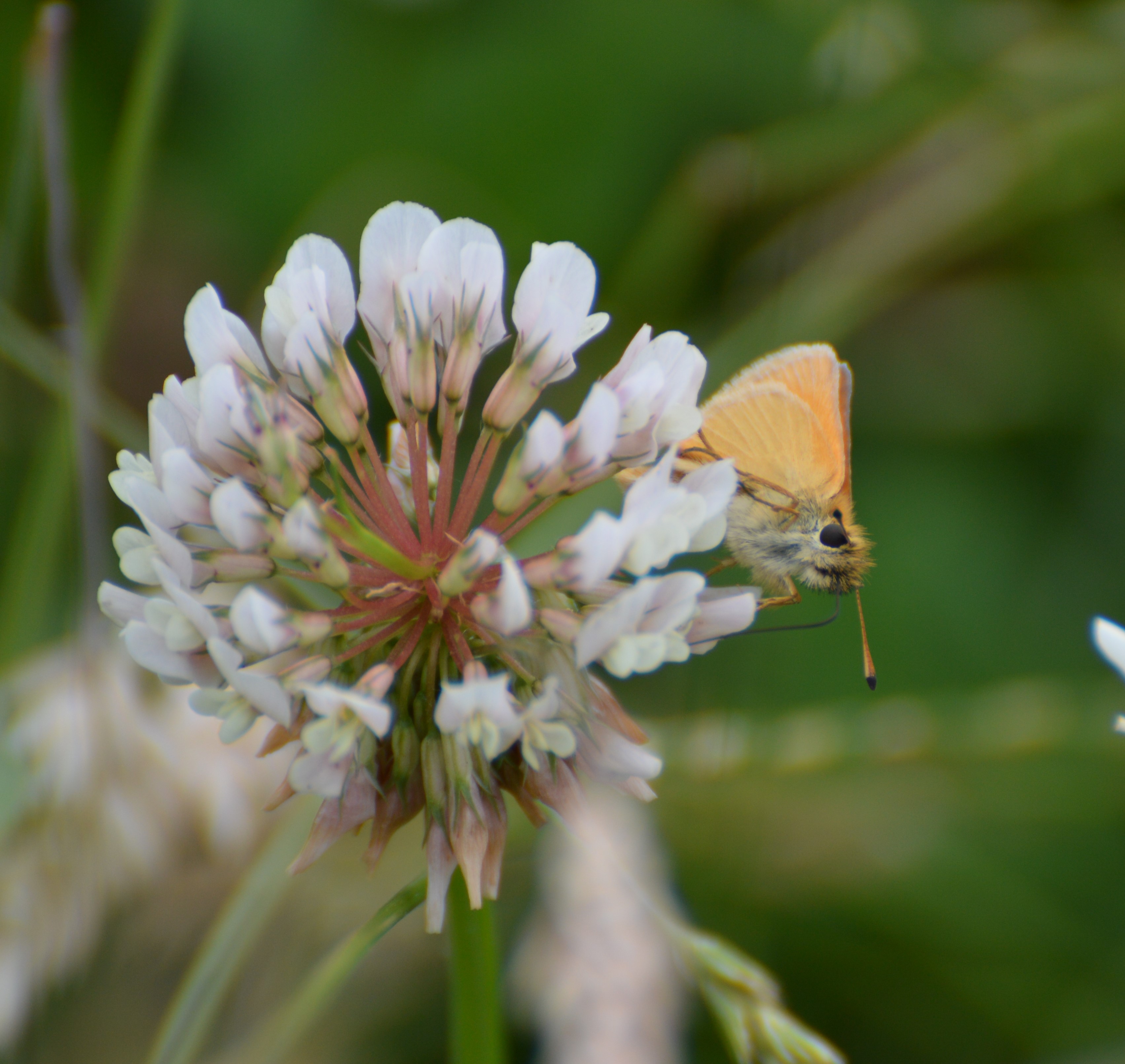
There were also lots of Skippers – I think this is an Essex Skipper. Again the wind was blowing them about an awful lot, making the photography tricky. (excuses, excuses!)

As we headed back to the car, we spotted a day flying moth – a Mother Shipton. Really pleased to see this, as I’m pretty sure I’ve only seen it in books before. It is named after a 16th century witch because its wing markings look like an old crone with hooked nose and chin!


His Imperial Majesty – The Purple Emperor

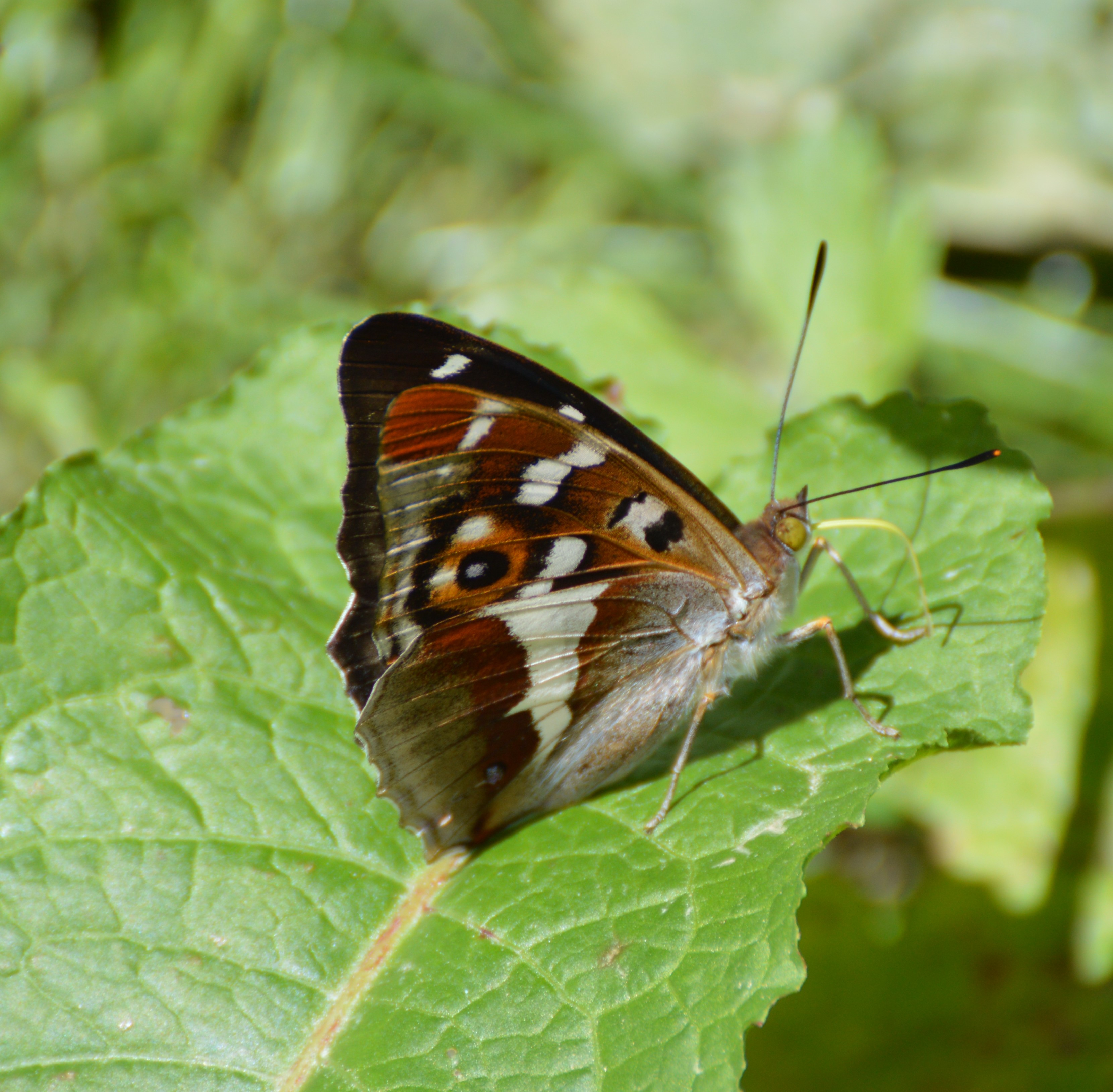
Today was all about the colour purple! We went in search of the Purple Emperor butterfly (affectionately known as His Imperial Majesty by butterfly enthusiasts) and found not only him but Purple Hairstreaks too! Since we first got into butterflies, the Emperor has been one of the species we’ve most wanted to see. It is not only one of our largest British butterflies, but arguably one of the most beautiful. We did go looking for it last year, but sadly saw just one lonely little wing on the ground, so today we set off hoping for better and all our butterfly dreams came true.

We’d seen that Butterfly Conservation Warwickshire had an organised walk at a site with Purple Emperors today, so we went along with fingers crossed. Almost immediately the walk leader announced there were a pair of Emperors up the path. Our group charged into the wood, but as usual we got side-tracked by other species (Purple Hairstreaks and Silver-washed Fritillaries), so missed them. Our expert though soon spotted another one in a tree and we got a few distant grainy photos. Our very nice walk leader then suggested that we could either stay where we were and would likely see some Emperors or we could go with him on the official walk. We decided to take our chances and stay put. (it wasn’t just laziness, honest!) No sooner had the group disappeared over the horizon into the wood, but a Purple Emperor landed right by my feet. Once we got over the shock,  we then took a lot (and I mean a lot) of photos. So here are some of our best, starting with a wobbly video of His Majesty.

The males come down in the mornings to gets salts and minerals from wet mud or in this case dog poo (not sounding so imperial now!) This one was so into his breakfast that he stayed for ages while we snapped away.

Only the males have the purple sheen to the wings and even then it depends on how the light catches them. Sometimes the wings look almost black, other times just one wing glows blue and just occasionally when the angle is right both wings shine gloriously.

Purple Emperor

We’d spotted a Purple Hairstreak as we first entered the wood and got a few typical shots of it with its wings vertical. This is a very small butterfly compared to the Emperor and spends most of its time up in the trees, so is easy to miss.

Purple Hairstreak

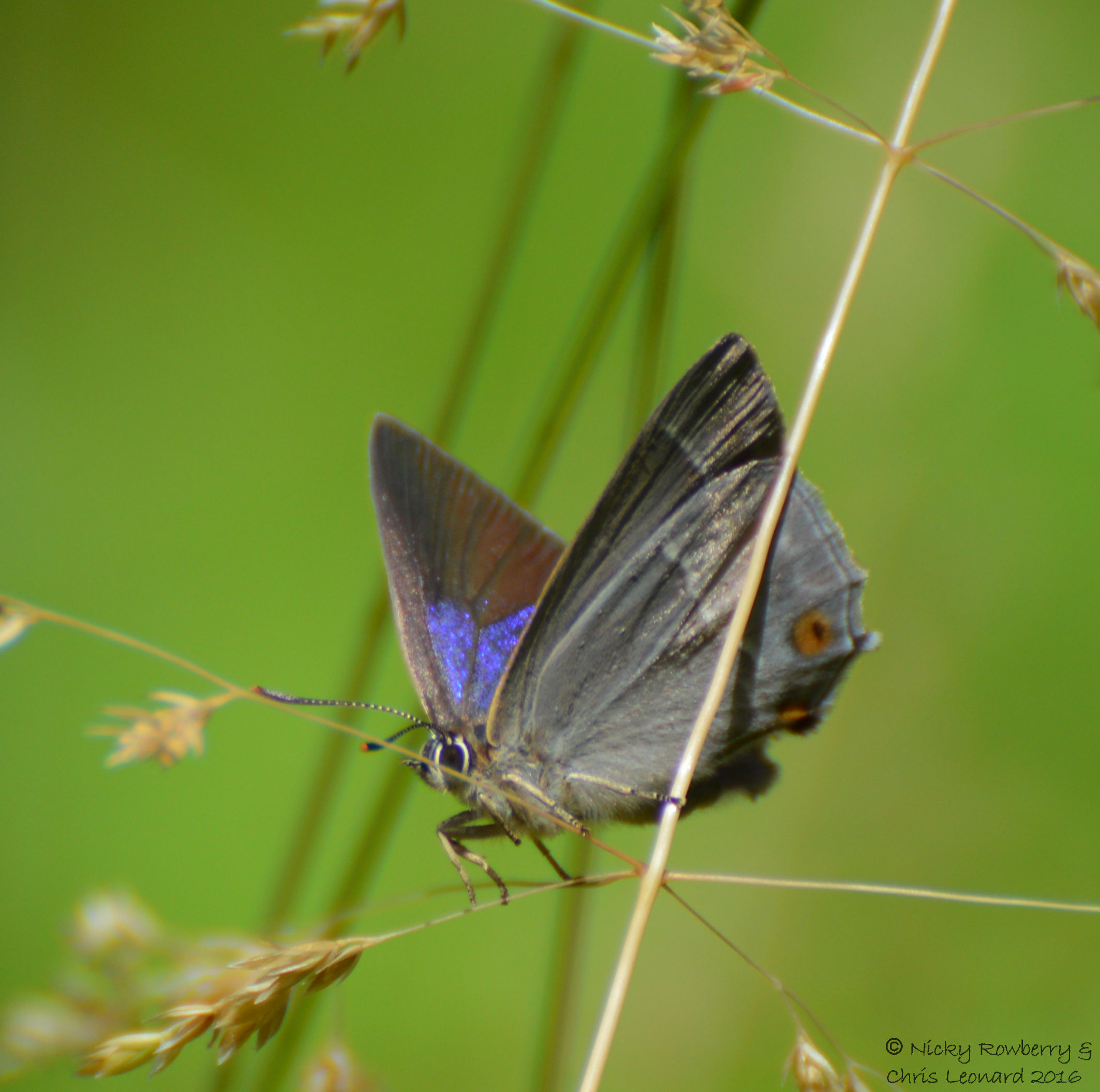
On the way back to the car, we spotted another one. We were delighted when it opened its wings and then even better settled on the ground allowing us to snap away. We’ve never seen these with their wings open before, so this was a real treat.

Purple Hairstreak 2

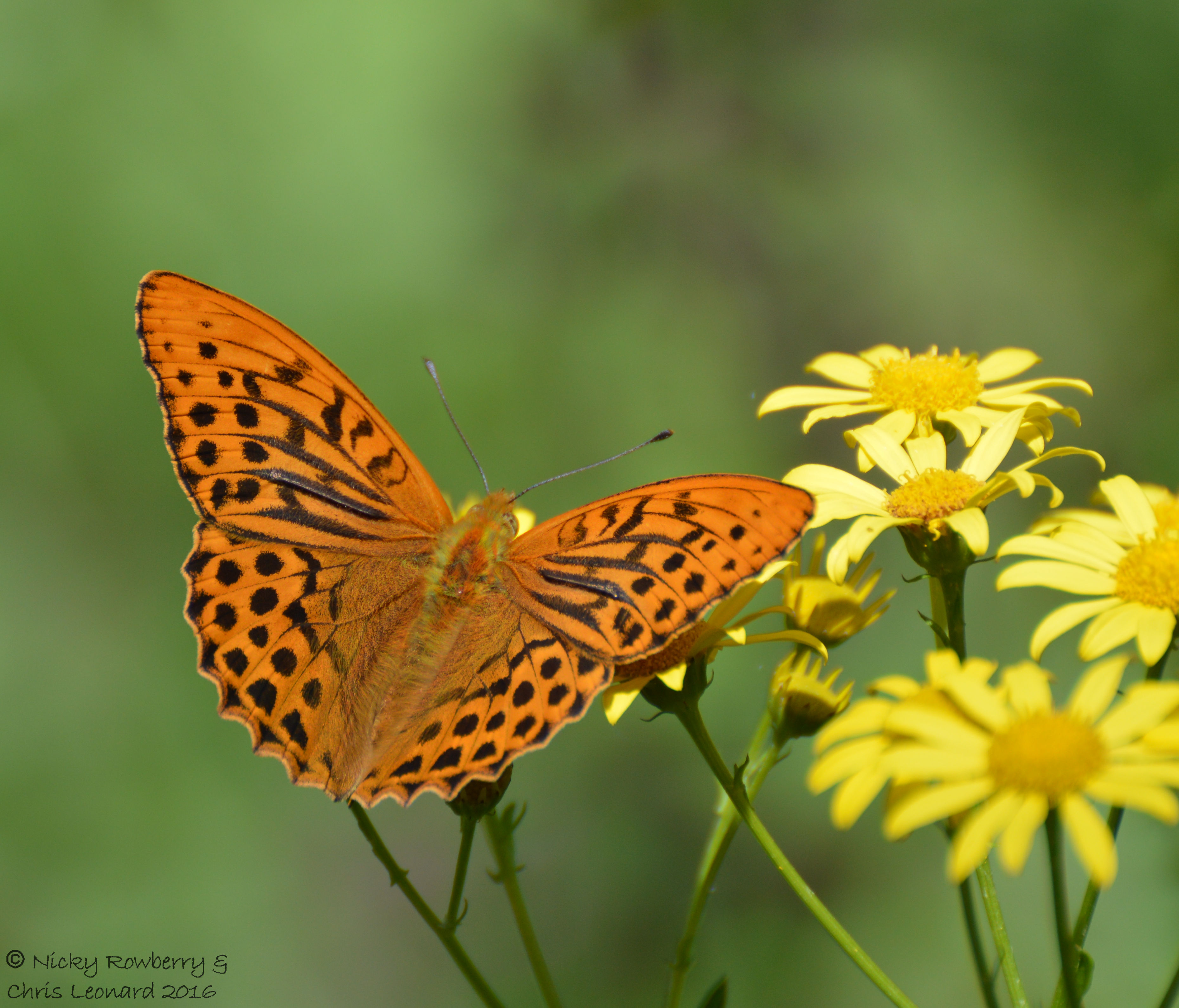
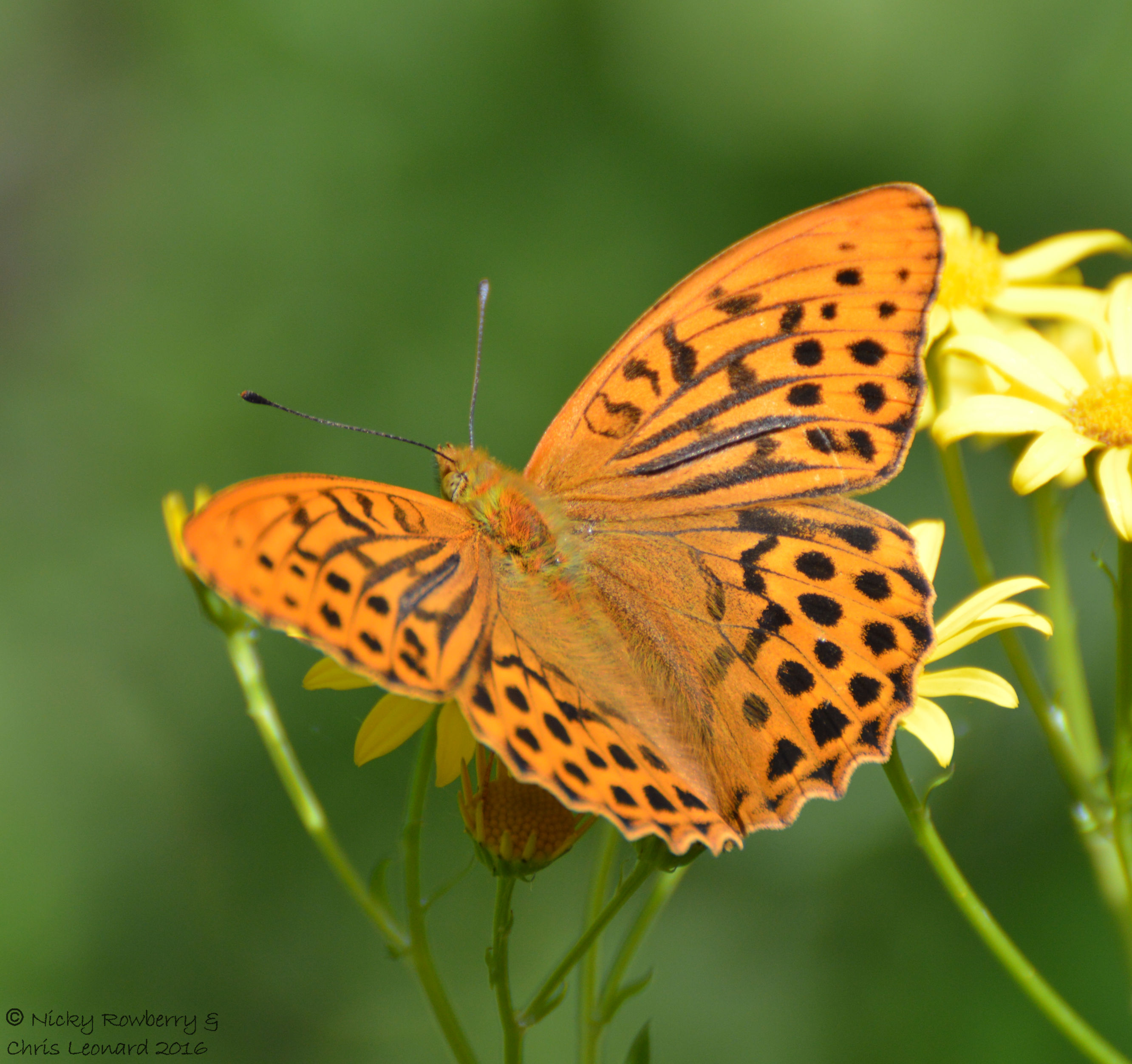
But all these purple beauties weren’t the only butterflies around today. We saw lots of Silver-washed Fritillaries, most of which were bombing about way too fast to get a photo, but one or two did settle long enough.

Silver washed fritillary

Silver washed fritillary 2

Just before we’d spotted our Purple Emperor we saw some White Admirals. We got all excited thinking it was the Emperor as they are pretty similar, although obviously lacking the purple sheen. Brambles must be the Admiral’s favourite flower, as we often see them on these.

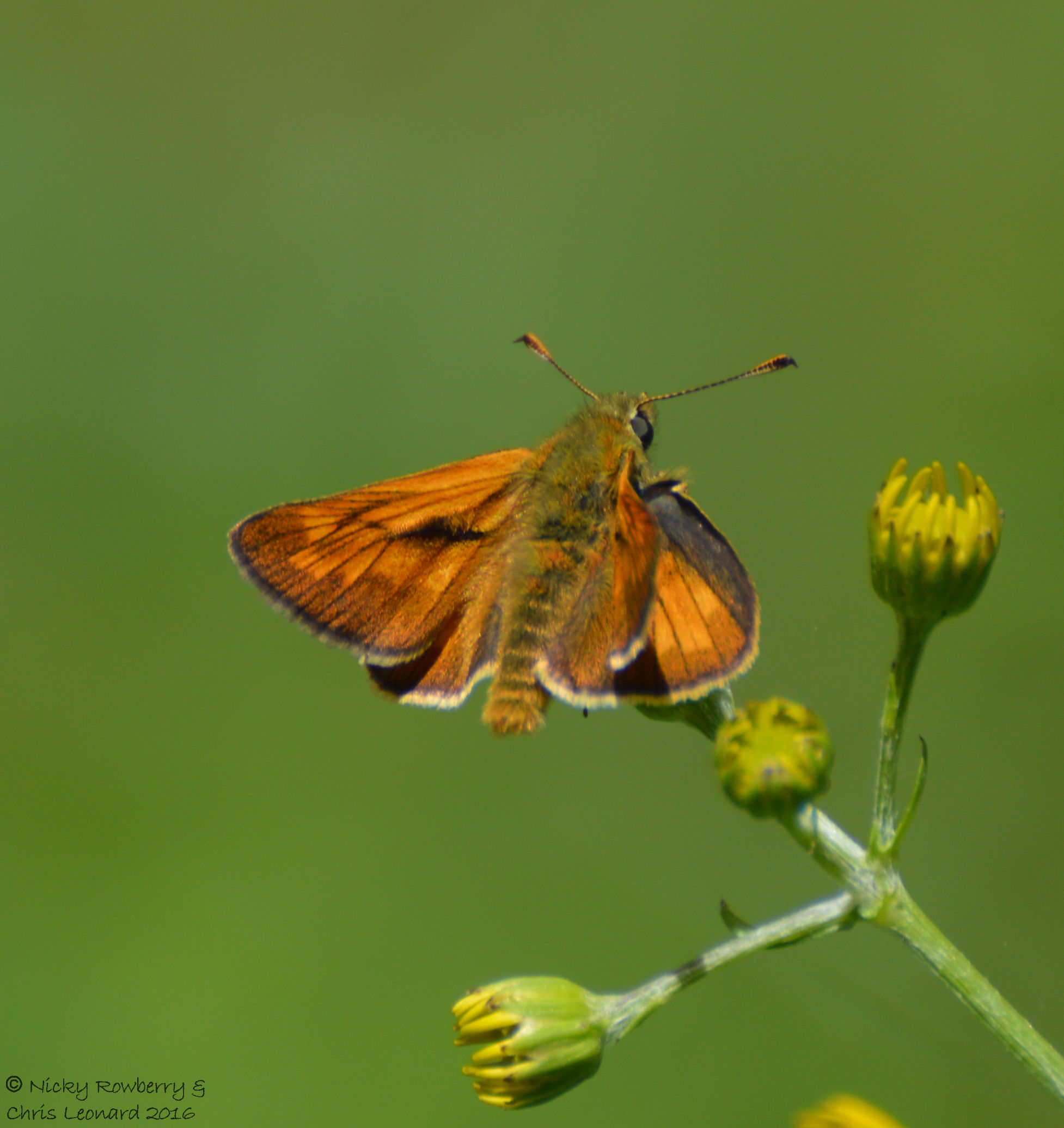
Also spotted today were lots of Ringlets, Speckled Woods, some kind of very fast and consequently unidentified white and last but not least several of these Large Skippers.

Large Skipper 2

I think today will go down as one of our most successful butterfly walks ever! Thank you Butterfly Conservation Warwickshire for organising the walk and making our Imperial dreams come true!

Mid Moth Season Update

It’s the end of the second quarter for the Garden Moth Scheme (GMS), so I thought I’d review some of the mothy highlights from the last couple of months. I trap once a week for the GMS but also occasionally trap on other nights too and last weekend tried trapping at my Dad’s house in Herefordshire for a change – so the photos below are from a mixture of all three. The first quarter of the GMS was dominated by the fairly plain Quaker type moths, so I’ll make no excuse for deliberately picking the more colourful and exciting moths (yes I do find moths exciting!) for this selection! Having said that I’ve just realised I’m starting with a grey one – but it is a particularly cute grey one!

These first three photos are all part of the Ermine group of moths, although the top ones are actually called Muslin Moths. These are grey male Muslins – the females being white. We seem to get a lot more of the males than the females in our garden for some reason.

Muslin Moths

This next one is I think a White Ermine although it could just be a female Muslin moth which are very similar. The White Ermines are so named because they look a bit like the fur that used to be used to trim rich people’s clothes (I’ve got an image now of Henry VIII covered in White Ermine moths!)

White Ermine

The final one of this little trio is a Buff Ermine – making beige look good.

Buff Ermine

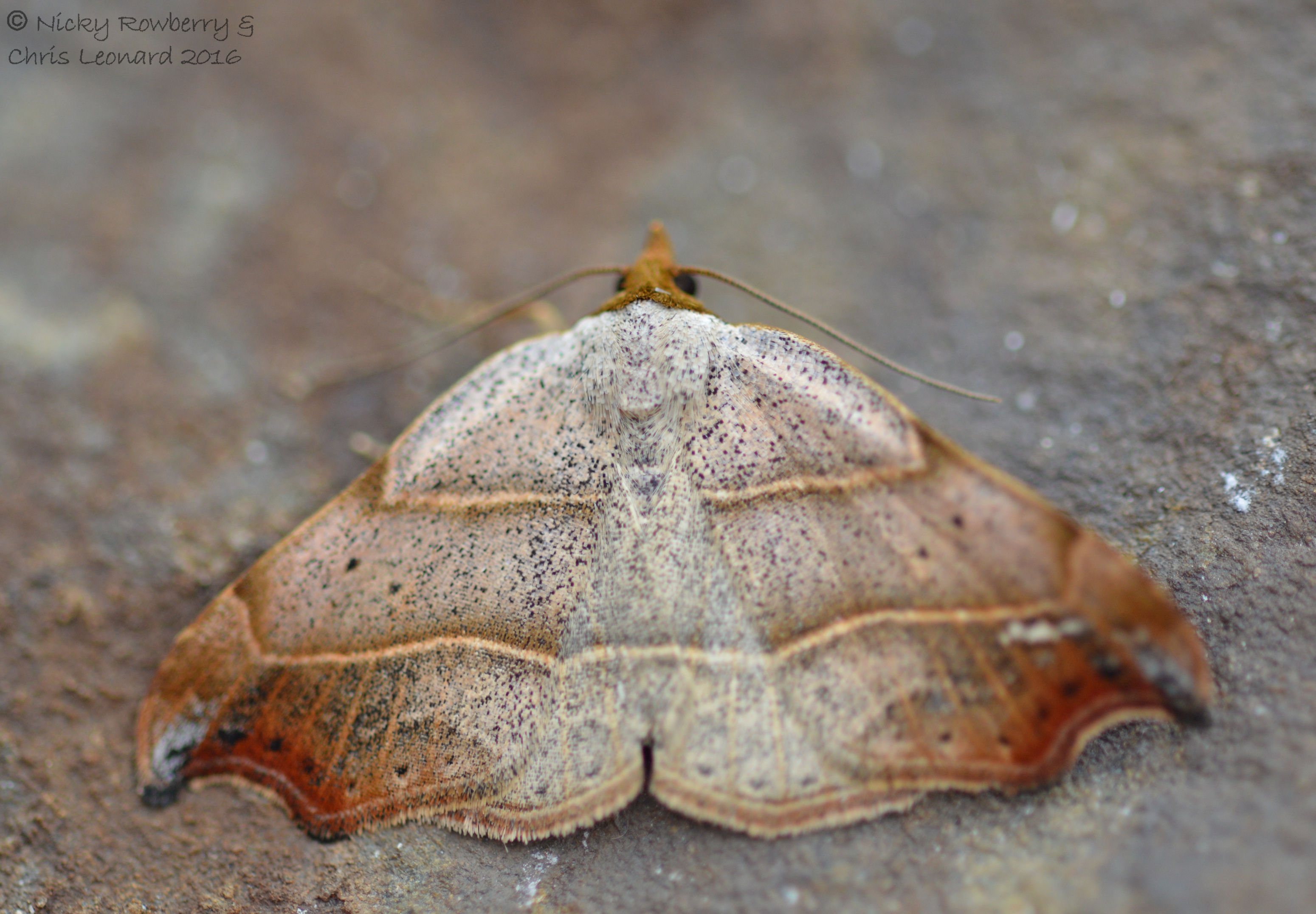
The next four I’ve only grouped together on the basis of how beautiful they are. The first is even called the Beautiful Hook Tip!

Beautiful Hook Tip

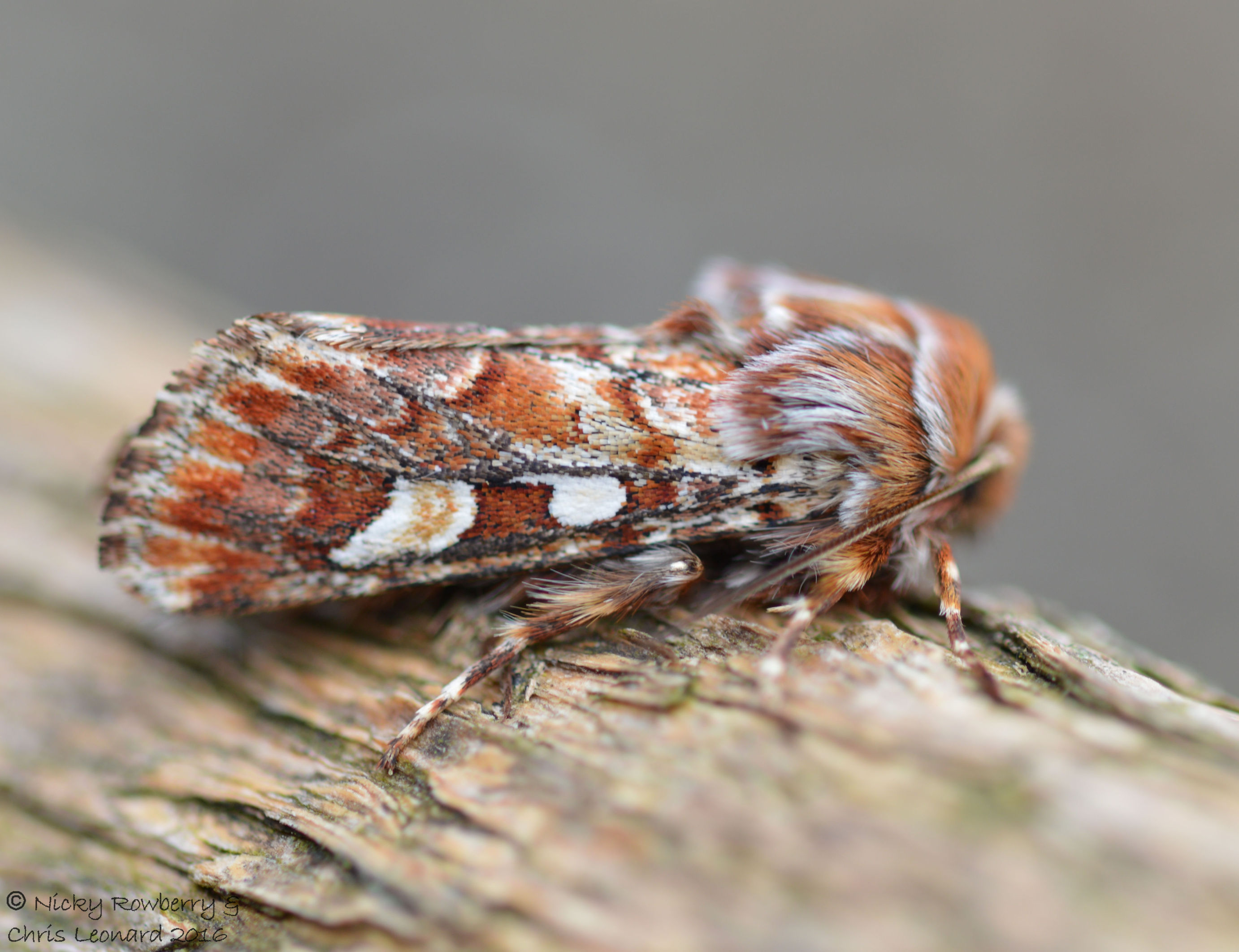
The next is a Pine Beauty – a stunningly patterned small moth.

Pine Beauty

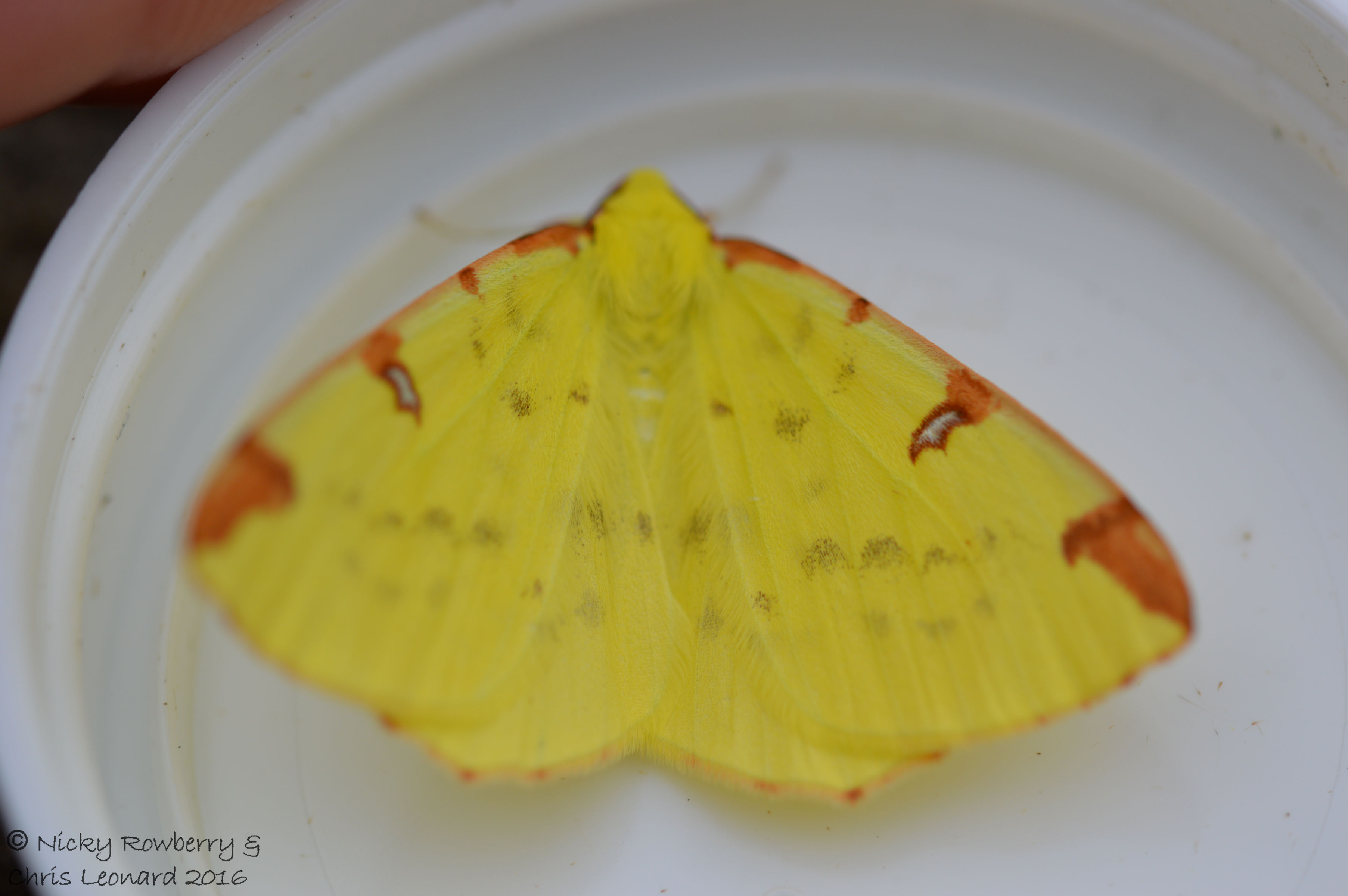
The next two may not have beautiful names, but they could rival any butterfly for its stunning colours. The Brimstone is named because it is yellow like sulphur.

Brimstone

The Scarlet Tiger is simply stunning and flies by day as well as by night – this one we caught in the moth trap, but on occasion we’ve seen a small flock of them flying in the afternoon.

Scarlet Tiger

The next one is a Peppered Moth – I’ve included this as it reminds me of biology lessons at school on the power of natural selection. The Peppered Moths are famous for the swing in the population’s colour during the Industrial Revolution when the whiter forms like this one, stood out against the trees blackened by soot and were therefore easy pickings for birds. The darker forms were better camouflaged at this time and so had higher survival rates and so came to dominate the populations. Since environmental standards have improved, there’s less soot and the white forms are once again the more common. We only ever seem to get the whiter ones in our garden – guess we’re soot-free!

Peppered Moth

The next few, I’ve chosen simply because of their interesting adaptations to avoiding being eaten. This Buff Tip manages to look remarkably like a broken twig. It matches even better on a Silver Birch twig, but this apple stick was the best I could do. If they keep still on the Birch, they must be virtually impossible to detect.

Buff Tip

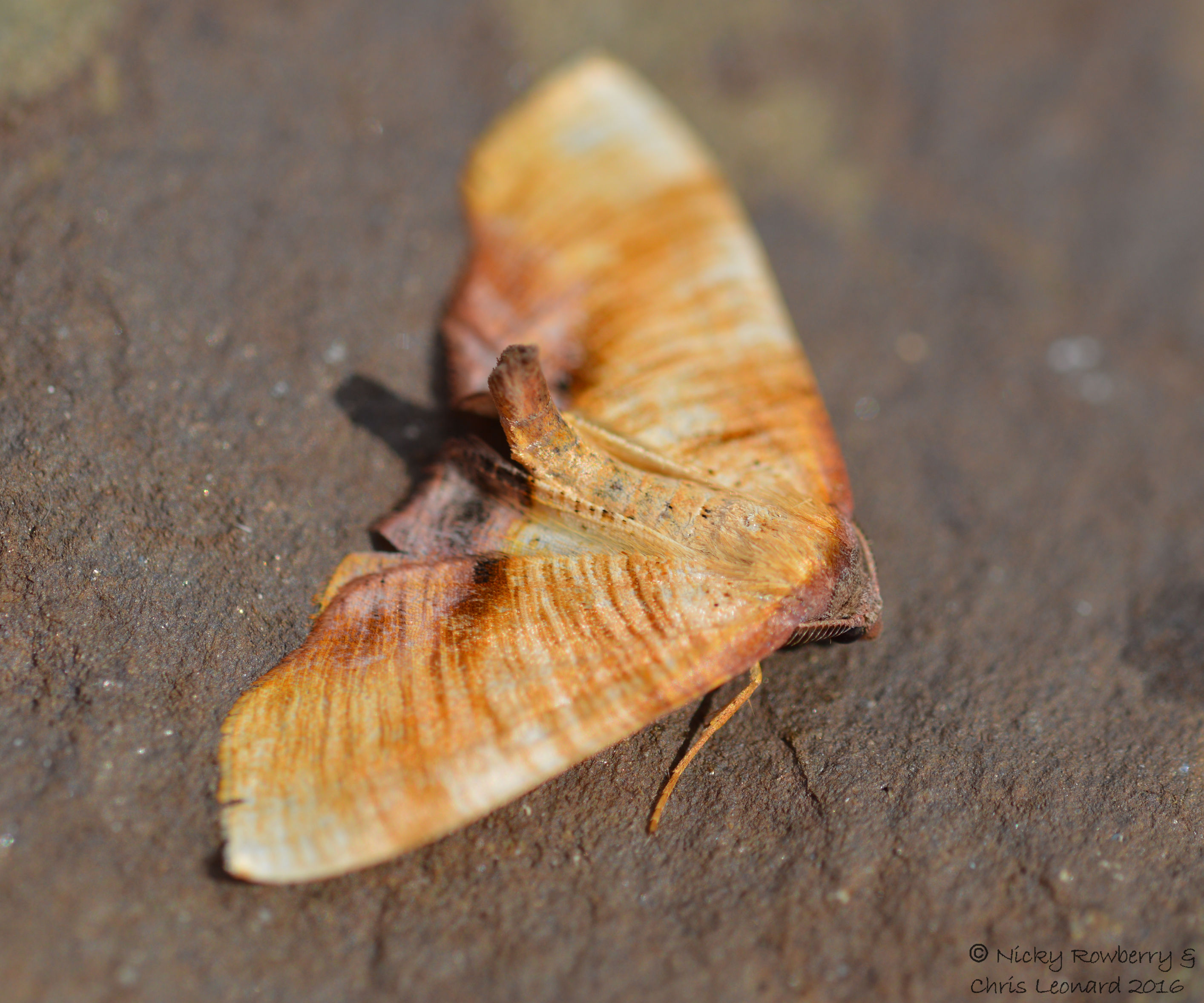
This Scorched Wing uses its colouration to avoid looking like a moth at all. The fading lines are supposed to break up its outline to make it harder to detect. No idea why it sticks its bum in the air though?

Scorched Wing

This Spectacle is one of my favourites. For a start it is very easy to identify – no other moth has a pair of specs on its head like this and secondly I find it adorable. It’s possible these “specs” are used to startle birds by looking like a large pair of eyes – several other moth and butterfly species use eye-like markings to shock birds, but as far as I know none of them look quite like this!

Spectacle

The Shark moth I chose really just so I can claim we have sharks in the garden! I think it’s the triangular pointy head that gives it the name. I’ve been wanting to find one for years, so was really chuffed to spot this in the trap in June.

Shark

The next two I’ve included partly because I like their names – Puss Moth (top) and Sallow Kitten (bottom). I’ve always assumed they were called Puss and Kitten because of their furry legs. I also like the way they have a tendency to sit with their front legs stretched out ahead of them – again a bit like a cat does.

Puss Moth

Sallow Kitten

And finally for this update the Hawk-moths. The biggest most spectacular moths we get in the UK. I’ve seen 4 species over the last couple of months, 3 in our garden and one at my Dad’s place. The first two are the ever-popular Elephant Hawk-moth (left) and Small Elephant Hawk-moth (right). It still amazes me that they are even real – they have bright pink bodies and just seem like a moth a child would draw if left with a load of bright pink crayons!

Pair of elephants

The next one is a Poplar Hawk-moth which is even bigger than the Elephants above. It always holds its wings at this awkward looking angle and flies in quite an ungainly way.

Poplar Hawkmoth

The final one is an Eyed Hawk-moth – we have had them in our own garden, but so far this year we’ve only seen this species at my Dad’s in Herefordshire. They have these bright “eyes” on the hindwings which they flash when disturbed to try and scare off predators.

Eyed Hawkmoth 2

So those are some of my mothy highlights from the last couple of months. Apologies to those species that I’ve not included – it would have been a very long blog post if I’d rambled on about them all – we’re up to 108 species for the garden already this year. But I do love them all – each new species that we find is a treasure and it’s wonderful to know just how diverse the moth fauna is in our garden.

30 Days Wild – The Highs and well actually there were no lows!

It’s been a couple of days now since the 30 Days Wild Challenge finished, so I thought I’d have a bit of a look back at all the mini adventures I’ve had over the month. It really was a very inspiring thing to do. Not only was it great doing all the things myself, but it was so nice to read what all the other bloggers were up to and see so many positive posts on Twitter. With so much negativity in the world (particularly towards the end of June with the sad news re the EU vote) 30 Days Wild provided a much needed lift.

Roe DeerSo the month started with a visit to a 3000 year old Yew tree and finished watching wild Roe deer in Scotland. I may not have seen “attack ships on fire off the shoulder of Orion”, but it feels like I’ve seen pretty much everything else. It’s amazing what you can pack into 30 days and how much there is to see and do around Britain.


The finish lineThese are just a few of the things, I’ve been up to over the month. I’ve got up early to listen to the dawn chorus and stayed up late trying to record bats and watch hedgehogs. I did a Garden Bioblitz and participated in National Insect Week.  I’ve raced snails and fished for sticklebacks – reminiscing over a childhood long gone but bringing back many happy memories.

Pair of elephantsI took part in National Moth night and went on a Moth breakfast, as well of course as the usual weekly Garden Moth Scheme nights. We’ve had both elephants and tigers (of the mothy varieties) in the garden and envied Ghosts and Hawks in other peoples traps.


PuffinsI heard my first cuckoo in 30 years and watched Puffins in Scotland. I’ve seen baby ducklings and razorbills and watched buzzards being mobbed by crows. I’ve sat in meadows and by rivers and lakes and we’ve walked along beaches and cliffs full of the most amazing seabirds.


Signal crayfishWe’ve eaten American crayfish and British strawberries. I’ve dined al fresco in meadows, in pubs and in our garden. We’ve been to official nature reserves and roadside verges, gardens, harbours and beaches. Followed (and got lost on) footpaths and tracks, climbed stiles and fences and hopefully not trespassed anywhere we shouldn’t have.

Silver studded BlueThe month has added 2 species of butterfly to our all time list and 3 species of bee to the garden. The garden bioblitz alone recorded 119 species from our Lazy Garden (which meant we came 13th in terms of numbers of species amongst those taking part) and our moth tally for the year is now well over 100 species.


In short, I’ve photographed, videoed, recorded, listened, watched, touched, sniffed and tasted – 30 Days Wild has been a feast for all the senses and I really can’t recommend it enough. Hopefully we can now keep going and continue to go wild through the rest of 2016 and beyond. Thank you to everyone who has been reading the blog over the last month.

30 Days Wild – Day 29

TWT 30 Days Wild_countdown_29

Day 29 of 30 Days Wild and we were down on the beach enjoying the seaside atmosphere. First up a brunch sitting outside at a café that we’ve been going to for about 30 years – think the menu was pretty much the same as it had been all those years ago too, although there was now a Specials board with exotica like Houmous wraps!

StarlingsWe sat outside and were joined by a greedy flock of starlings, who clearly understood café culture. The adults were initiating the young ones into the delights of eating alfresco and watched us keenly to see if we were going to give them anything. They had competition from a couple of seagulls, but thankfully the gulls didn’t actually join us on the chairs like the starlings did.

The view out to sea was the same as I remembered too. Oil supply vessels sitting out at sea, were lined along the horizon.

View

The North-East of Scotland has miles of sandy beaches stretching past Aberdeen up into the sand dunes further north.  We were lucky in that the sun was shining and we had more or less blue skies, with just a bit of a breeze to liven up the waves.

Today was a much more relaxed, lazy day than some of our previous ones and it was really nice just to chill out down at the beach and recharge out batteries.

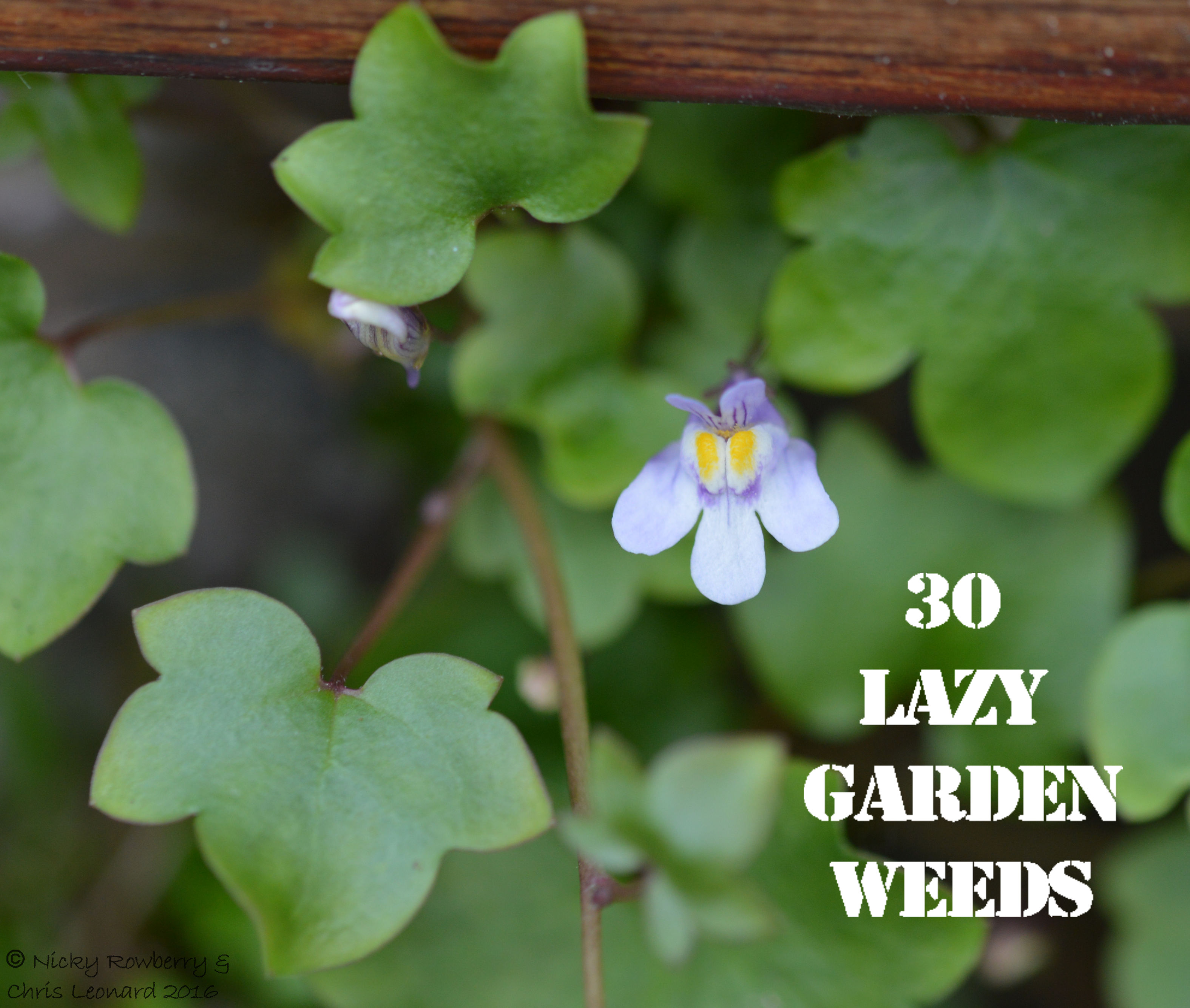
Ivy leaved toadflax 30 WEEDS

And finally the second last weed in 30 Lazy Garden Weeds – the Ivy Leaved Toadflax. This pretty little flower grows out of our walls at home. For some reason the name Toadflax makes me think of the names of Hobbits in Lord of the Rings, or of some of the rabbits in Watership Down (no idea if the name Toadflax was actually used in either of these of course). The flowers are like little purpley blue snap dragons. They have a clever mechanism whereby they face the sun until they have been fertilised and then they face back to the wall, so that the seeds when they form get embedded in cracks more easily. A clever little plant!

30 Days Wild – Day 26

TWT 30 Days Wild_countdown_26Day 26 of 30 Days Wild and we were driving about quite a bit today, which can restrict the opportunities for nature spotting. But, if you choose the right spots, there’s wildlife to be found all over the place. We stopped at two motorway service stations – deliberately picking ones we knew had some kind of water feature and slightly more environmental credentials. The result was a couple of very pleasant interludes to break up the monotony of driving.

First stop just had a small pond, but it still attracted quite a few birds – mainly ducks. There were also a few of these striking Black Headed Gulls. They were clearly totally used to the crowds of humans around them and let us get quite close up.

The second stop had more of a lake and grasslands surrounding it. Full marks to them as they’d left a large area un-mowed and it was full of butterflies. We saw  three species – Ringlet, Meadow Brown and Small Heath, plus lots of damselflies and bees.

Swallows were flying about over the water and we caught this one having a bit of a rest. There was a nest a few yards away with another one sitting in – perhaps incubating eggs?

There was one majestic swan gliding about – he came really close to us, we could have reached out and touched him, although I suspect he would expect food from us if we had taken such a liberty. We saw him again later from a distance, stretching his wings. I’d forgotten what beautiful birds they are.

Our final species was a new one that required a quick google to identify as a Tufted Duck, although with hindsight he was a duck with a tuft, so perhaps we could have worked that out for ourselves!

So not bad at all for wildlife in the short time it took us to stretch our legs. Just shows that with a bit of effort these motorway services don’t have to be sterile environments. Shame more of them don’t make that effort.

Prickly Sow Thistle 30 WEEDS

And finally the latest weed in my 30 Lazy Garden Weeds – the Prickly Sow Thistle. I can see why it’s called Prickly and I can see that it looks like a Thistle, but I’ve no idea where the Sow bit comes in? They can grow really big – we have a massive one under our apple tree that is about as tall as me (admittedly that is only about 5 foot tall). Their prickles may not endear them to some people, but under our apple tree it is not a problem and they brighten up what would otherwise be quite a dull shady spot in the garden. So they’ve redeemed themselves in my book.

30 Days Wild – Day 25

TWT 30 Days Wild_countdown_25


Day 25 of 30 Days Wild and I was up at the crack of dawn to empty the moth trap (thrilled by the way to get my first ever Shark moth, but I’ll do a moth blog another day). Since I was up and about on a Saturday morning long before the other half surfaced, I decided to spend an hour or so watching our wildflower “meadow” to see what if anything was using it. I did blog about our mini meadow a week or so ago, but I focused then mainly on the flowers, so this time I thought I’d look at the insect life. After all the whole point of it was to attract the insects.

So I watched for about an hour until the skies opened and it started chucking it down – I am a fair weather naturalist, so I retreated indoors at that point. I did pop out again later when the sun came out again and snapped a few more just to finish off.

So not too surprisingly the bees were the most abundant visitors and several species as well which was great. The Phacelia flowers were probably doing the most business, including both a Red and a Buff Tailed Bumblebee. I love the way the red one has co-ordinated his pollen sacs with his red bum!

Red tailed bumblebee

Bee on Phacelia

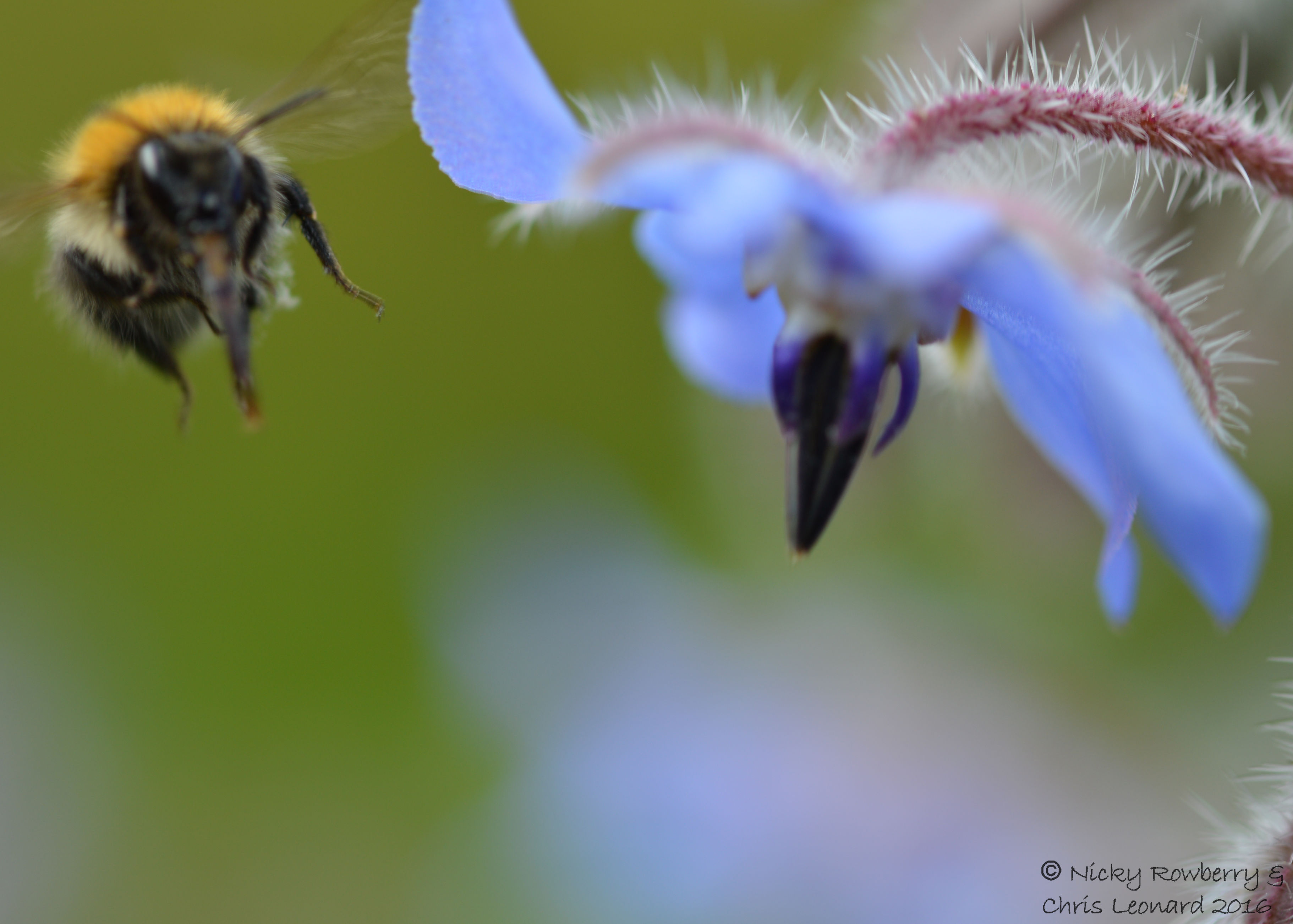
But the borage too was getting a fair few visitors. I think this is probably a Tree Bumblebee coming in to land.

Bee on Borage

I did at one point start to get “bee envy” when I noticed that this plant (no idea what it is?) in the neighbours garden was actually getting more bees than my patch. But then since it overhangs our fence, many of the bees were technically in our garden – so I’m counting them as ours!

Bee next door

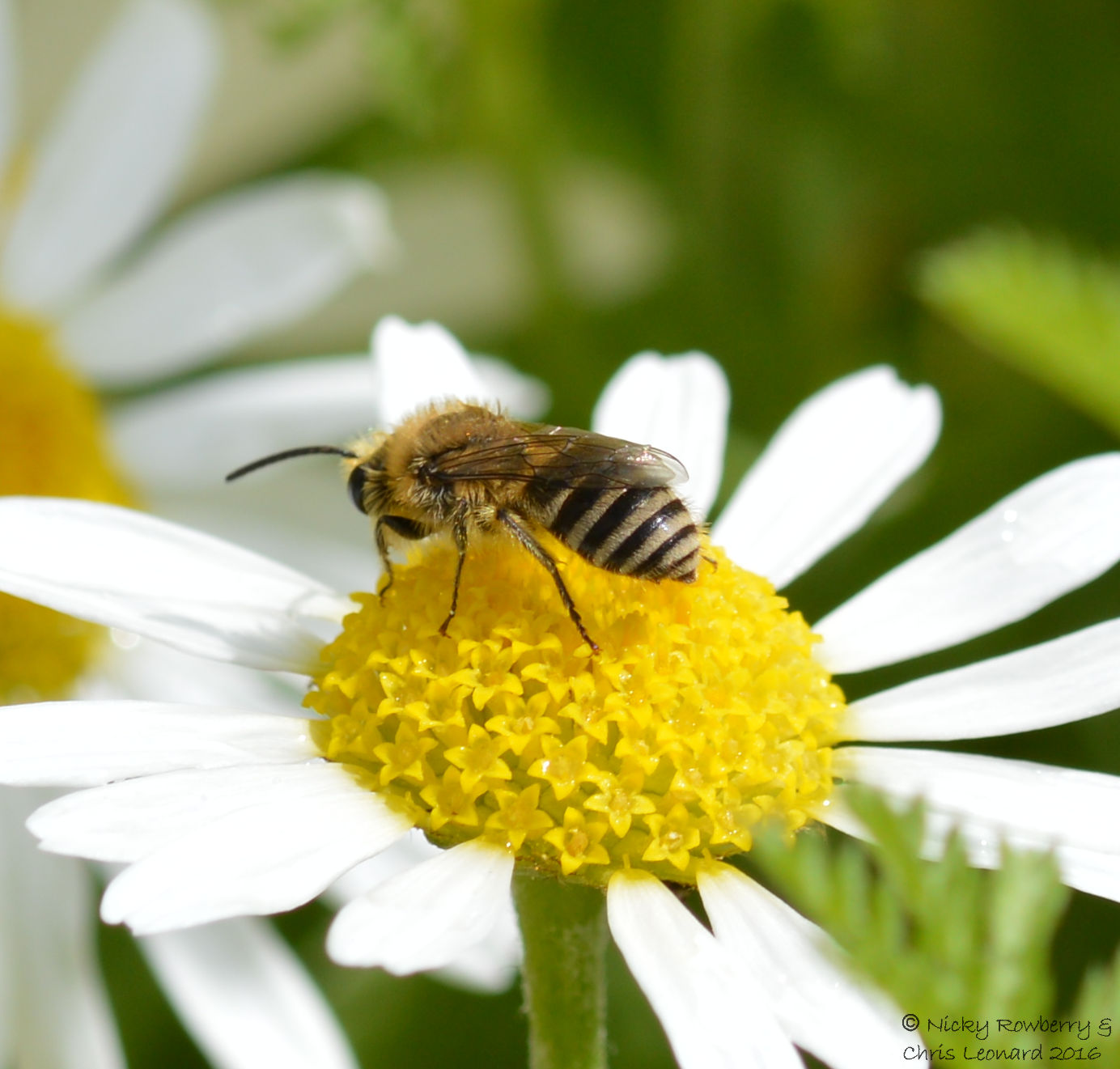
The bee highlight of the day was spotting this one on the chamomile flowers. It looked a bit different to others I’d seen so I stuck the photo on Facebook and someone kindly identified it as Colletes sp. for me – another new genus for the garden, taking our total to 23 this year. Colletes are known as the Plasterer bees, because of the way they line their nests with a secretion a bit like plaster!

Colletes sp.

The next group of visitors was the hoverflies. I saw at least 3 species on the mini meadow (although there were plenty of others around the rest of the garden). Afraid I don’t know the species for these 3 yet, although the bottom one looks like it might be another bumblebee mimic.

Small Hoverfly

Small Hoverfly 2

Large Hoverfly 2

The Swollen-thighed Beetles of course couldn’t miss a photo opportunity and were flaunting their generous curves at every opportunity.

Swollen thighed

There were various other small beetles usually nestled right in the middle of the flowers and impossible to get a decent photo of. But this one decided to land on my arm and after a bit of contorting I managed to get a photo of it. Must have thought my lily-white skin was some kind of giant flower – a disappointment no doubt!

Beetle on arm

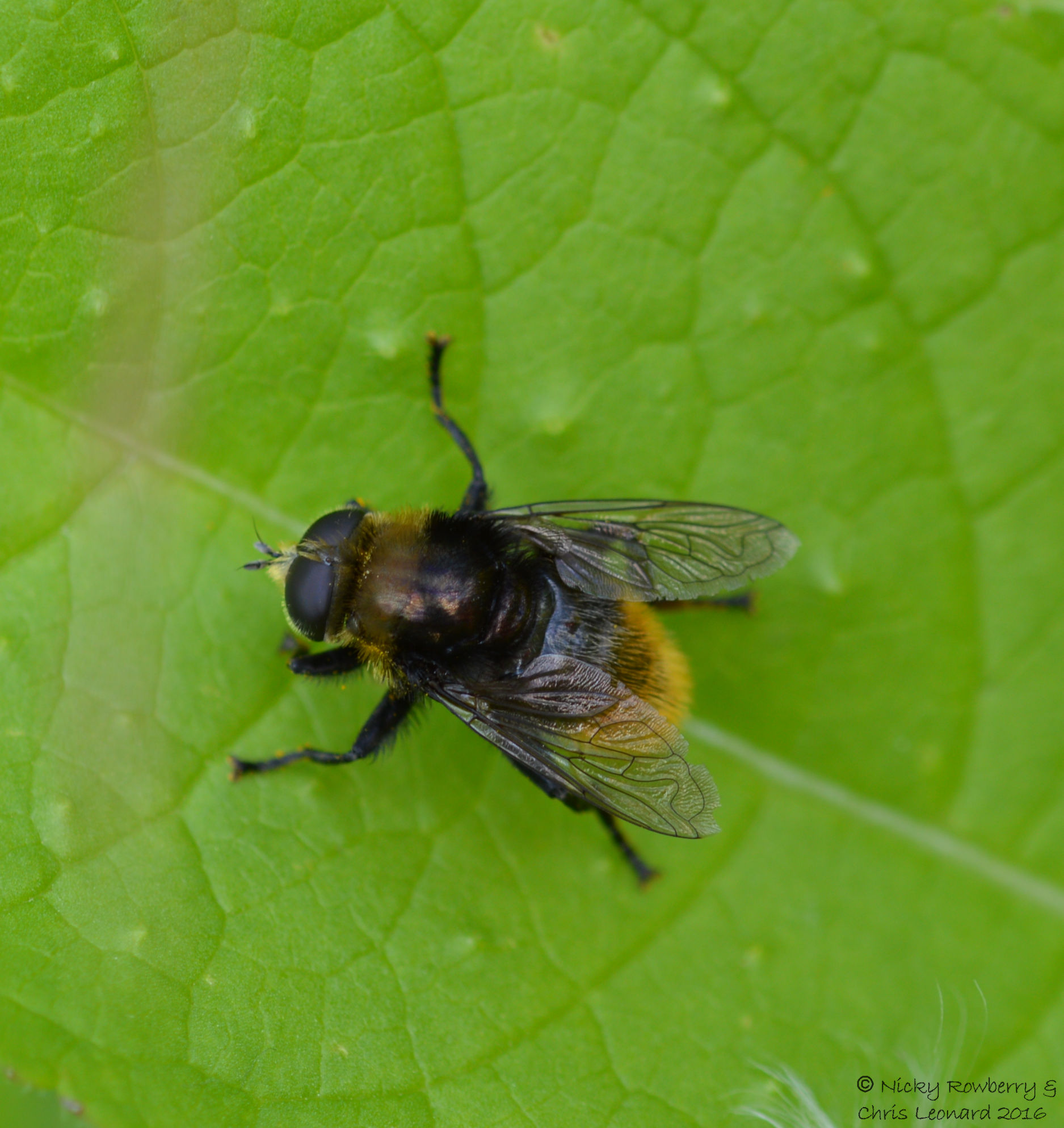
Spotted these interesting flies on one of the thistle leaves. There was a pair of them – possibly a mating pair – and this one kept sort of stepping back then raising and lowering its wings at the other one. Perhaps some kind of mating ritual or signalling. There is a group of flies called Signal Flies, so perhaps that is what these were?

Signal fly

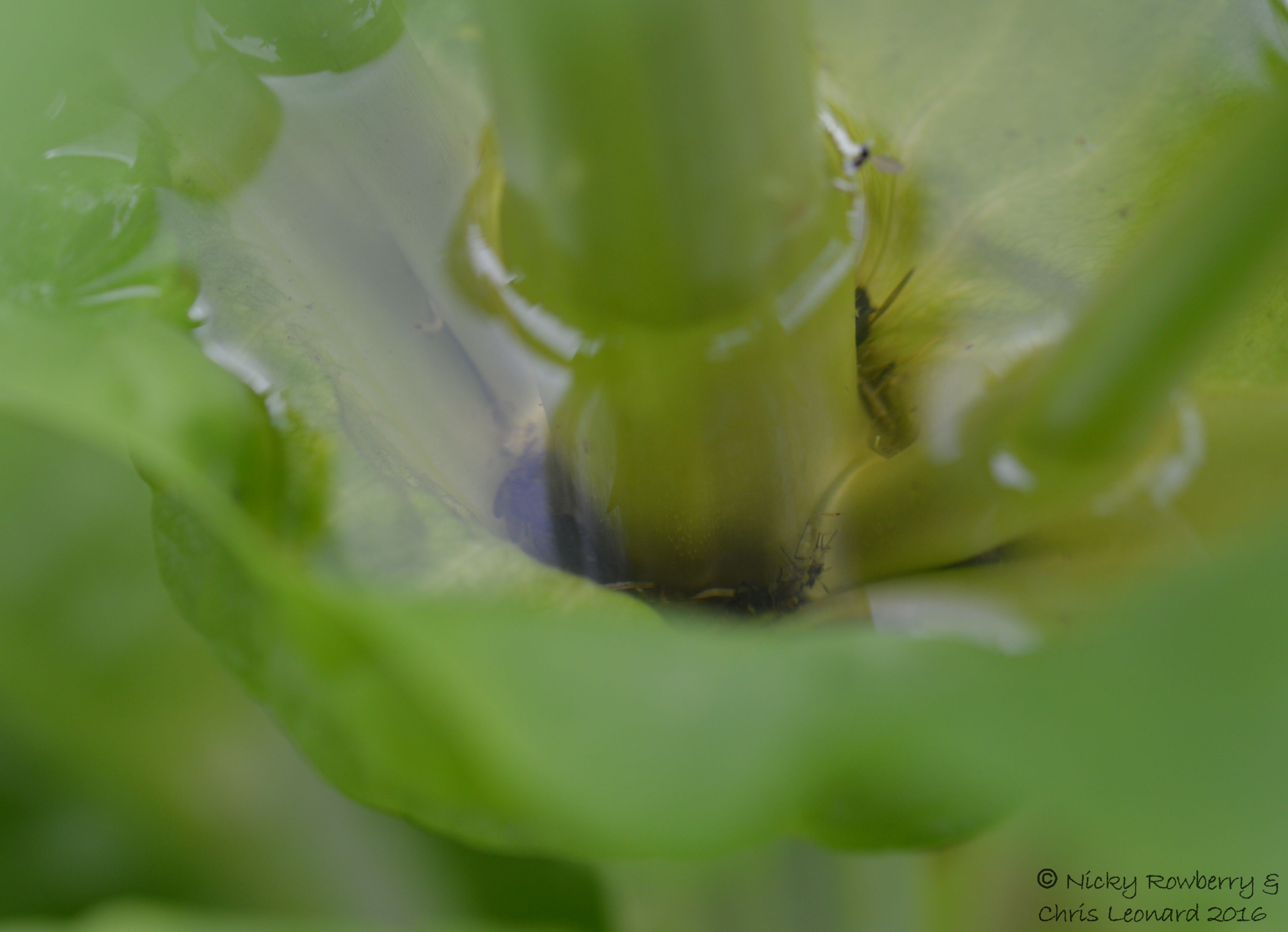
On the more gruesome side of things, the teasel leaves had formed mini pools at the point they joined the stem. These pools were full of dead and decaying insects – a bit like those tropical pitcher plants that drown animals then live off the nutrients! I don’t think the teasels were going that far, but other things were – there were clearly larvae of something (midges perhaps) in the water that were feeding off the dead insects. Sorry the photo doesn’t really capture that, with hindsight maybe I should have used some fancy polarising gizmo on the lens?

Mini pools

The final gruesome twist to my otherwise idyllic hour, was spotting this crab spider with his unfortunate victim – one of my beloved bees! The bee was still alive and I did consider rescuing it, but then I thought “What would Chris Packham do?” – almost certainly not save it! The crab spider has to eat too and it looked like he’d already got his fangs into the bee, so it was probably a goner anyway. Wasn’t expecting to witness “nature raw in tooth and claw” quite so vividly today!

Spider with bee

My hour by the flowers was very relaxing. The birds got accustomed to me sitting there and after a while came back to the bird feeders nearby, unbothered by my presence. A frog even started moving in the undergrowth near my feet. I guess I must be naturally very good at sitting still doing nothing for an hour!


Lavender 30 WEEDS

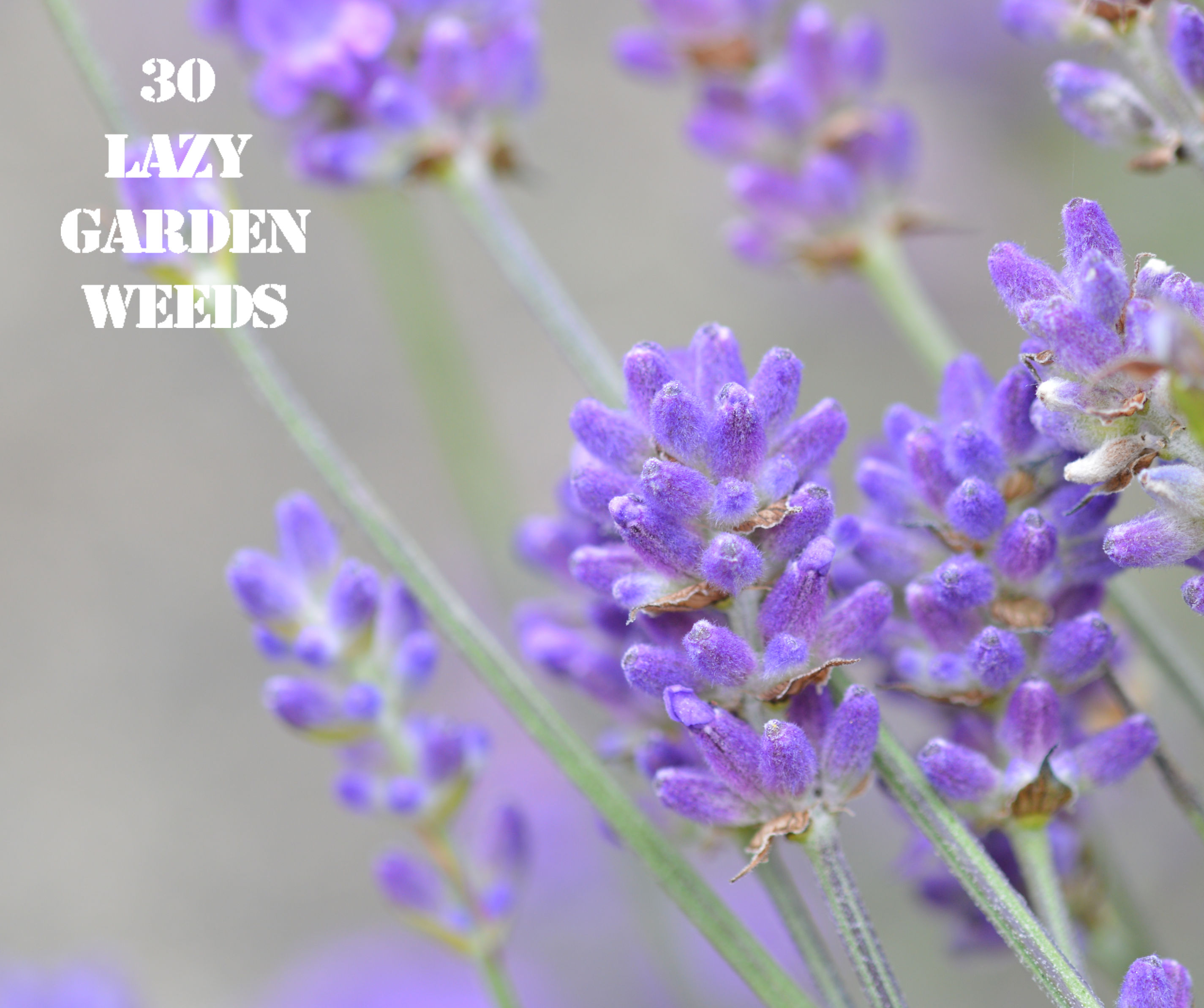
And finally the weed for the day of my 30 Lazy Garden Weeds. Lavender – not a weed in the conventional sense, but it does keep seeding itself all over the garden and I have even been forced on occasion to weed some of it out (shock horror!) The smell and the colour are of course lovely and the bees go nuts for it. It’s just coming into flower about now. I did try a few years ago making Lavender essence – not a great success, I ended up with a jar of dingy looking liquid that somehow smelled of lavender but not in a good way. I tried a few drops in a macaroon mix and they ended up tasting like soap! But apart from my culinary failures, it is a lovely plant that would be welcome in most gardens.

30 Days Wild – Day 24

TWT 30 Days Wild_countdown_24Day 24 of 30 Days Wild and this is the first day I haven’t really had chance to get out and about doing something wild. Instead, having got home from a trying day at work (not to mention the vote!), I thought I’d spend the evening on the sofa (with very large glass of wine) and analyse the results from our Garden Bioblitz of a couple of weeks ago. It took me a couple of weeks to get all the photos identified and logged onto the Bioblitz website and I’ve been so busy since, that I’ve not really had chance to sit back and really see what we found. So tonight’s the night.

All the results had to be logged by last Monday. So I got as many on the database as I could. There were still quite a few things that I’d got photos of but couldn’t identify – either due to my lack of skills in ID or my lack of skills as a photographer! So we potentially had a few more than the final tally shows. But equally I may have got some things wrong, so they won’t be allowed when the experts check everything, so perhaps that balances it out? So our grand total was 119 species and I was thrilled to discover that our little garden is currently 13th in the Recorders League table. I took this screenshot from the Bioblitz website – just in case no-one believed me! I’ve obscured the names of the people ahead of me – not in some jealous pique (although I am jealous), but in case I was breaching anyone’s privacy by leaving in the full names.

Trending

119 species isn’t bad for an ordinary town garden like ours, so I’m really pleased. Of course if we’d had more time, we could have raised this figure, but then that was the whole point of the Bioblitz – it was what you could find in 24 hours.

So our 119 species covered a pretty broad spectrum of flora and fauna. Maybe not surprisingly the moths represented our biggest group – 42 species in total. This probably reflects our experience with moths – we’ve been moth trapping for a few years, so can identify most of the common species. There were probably just as many fly species in the garden that day, but we didn’t have the skills to ID them.
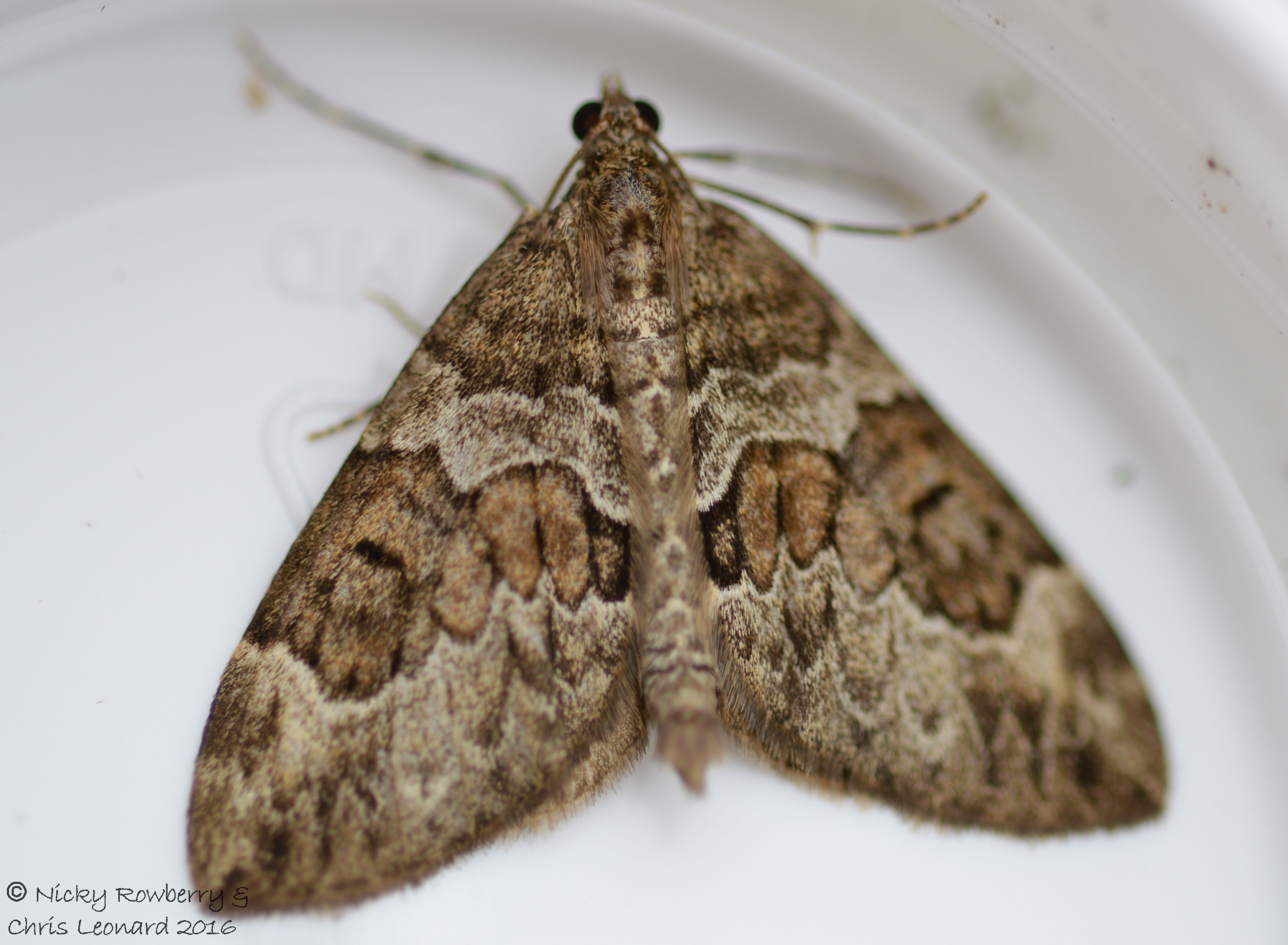
Spruce CarpetOf the 42 species of moth some were perennial favourites and spectacular ones like the Elephant Hawkmoth, but others were just as exciting as they were “firsts” for our garden – like this Spruce Carpet. (Our moth list for 2016 to date is currently 97 species!)

Bees were of course one of our prime targets and I was pleased we spotted 8 species that day. We’ve actually found 22 species this year, but to get 8 in the one day wasn’t bad. But the bee highlight was seeing a little chap flying around carrying his precious leaf – a Leaf Cutter Bee and a first for the garden.

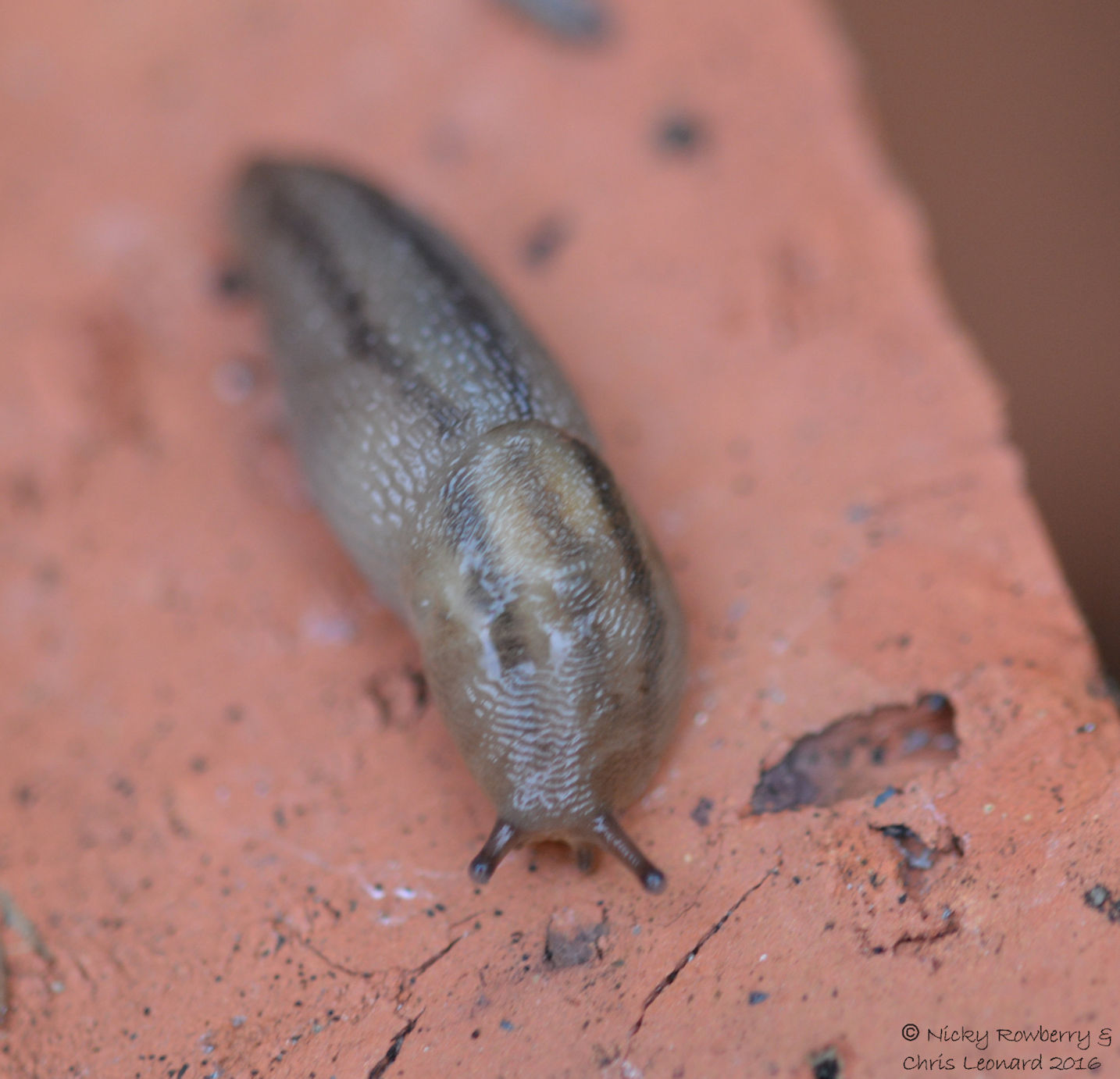
Iberian SlugMolluscs might have done better if it had been a rainier day (if we’d done the bioblitz the following week, we’d have done really well by that reckoning!) But we still managed a respectable 7 species – 4 snails and 3 slugs. One of the slugs was even a new one for the garden, although I suspect they’ve been around for ages and we’ve just not bothered to identify them. It was this Striped Slug – Ambigolimax valentianus no less!
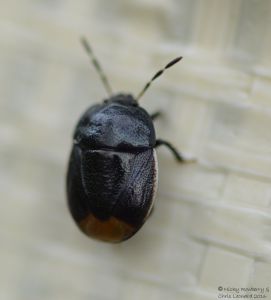
Bordered Shieldbug

We got two species of Shieldbug on the day, but again one of them was new to us – this Bordered Shieldbug, which I initially thought was just a small beetle, until I enlarged the photo. Really chuffed to be able to add this species to our Shieldbug list – currently 8 now I think.
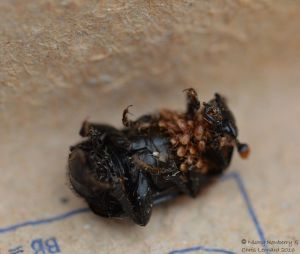
 

Sexton beetleBeetles came in at 8 species (11 species actually if you include the ladybirds which I had counted separately). Beetles are a group that we’re just getting in to, trying out pitfall traps to see what we’ve got. This one however flew into the moth trap. It is a Black Sexton Beetle and was absolutely covered in these mites. It looks lifeless in this photo, but honest it was just playing dead, because as soon as I turned away it was off. The mites are apparently harmless and just hitch a ride to the next dead animal that they and the beetle feed off. Can’t help thinking that so many mites must be really irritating though and affect his flight?
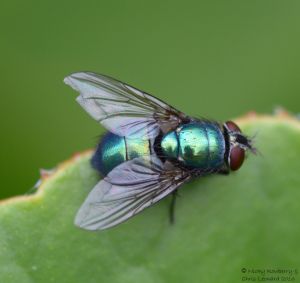
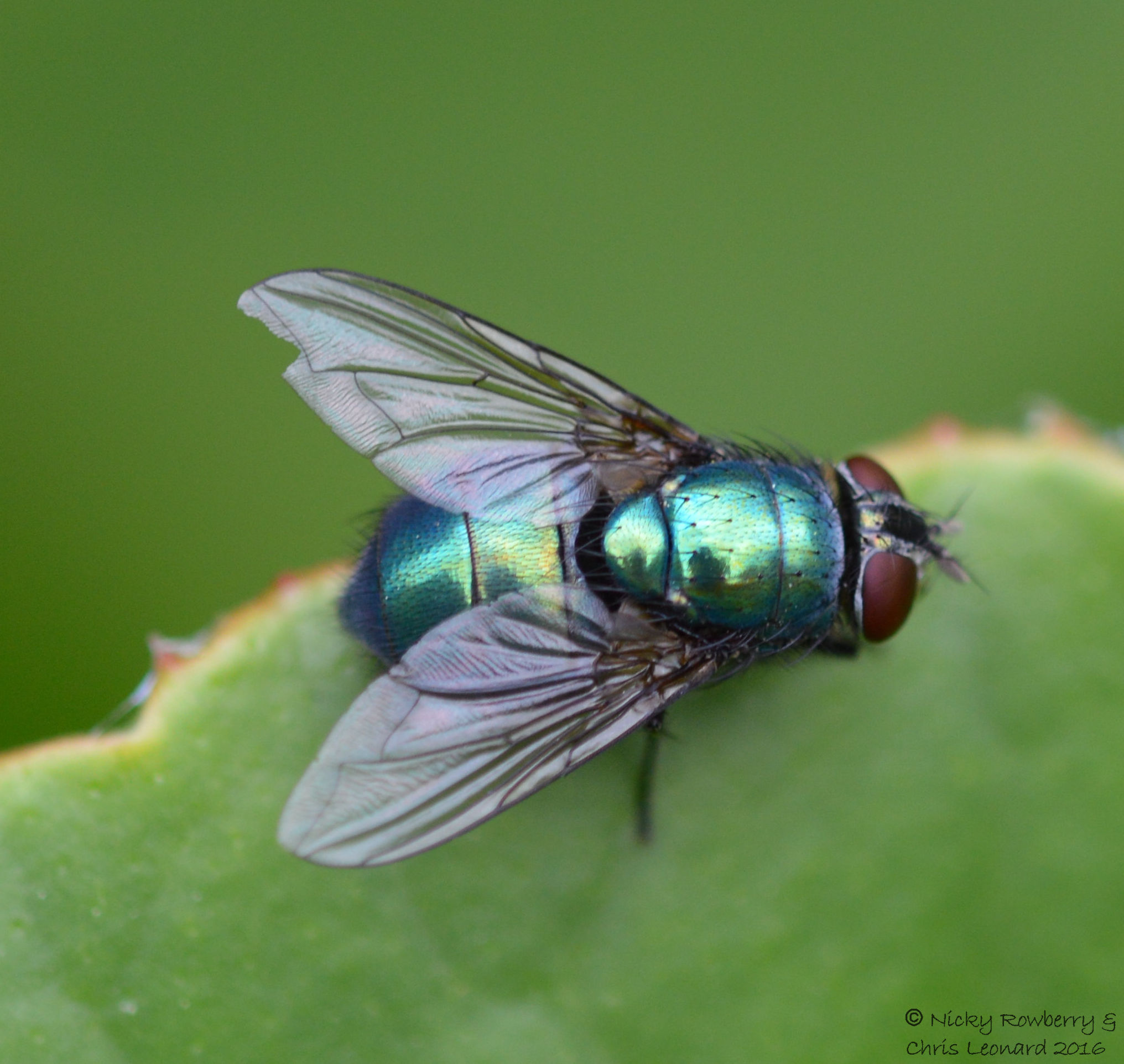
Lucilia green bottleThere were of course flies buzzing about all the time, but with virtually no knowledge of this group we didn’t pay them too much attention. This big Greenbottle though was quite photogenic and the good people of iSpot identified it to genus for us – Lucilia sp. We did manage to get 2 other fly species to genus as well, but they weren’t as “pretty” as this one!

Frog hopperOne of my favourite finds of the day was this Red & Black Leafhopper, which I’d previously only seen in photos. Not seen it in the garden before or since, but I’m glad it chose that day to make an appearance! It was a stunning little insect, so I hope we see more of them.


For the birds we only managed a slightly disappointing 8, all of which were the usual suspects like robins, blue tits and a Jackdaw. We do get quite a few other species, but I suppose it was a bit much to expect the Sparrowhawk to make an appearance within those 24 hours!

And finally for the animals, we managed a grand total of 3 vertebrates – a frog, a newt and the hedgehog.  The bats were around, but we didn’t actually see them in our garden and without photographic evidence (still not worked out how to get a photo of one flying), I’m not sure the Bioblitz database would accept them.

PimpernelOf course the Bioblitz included plants as well as animals. I did originally intend to go around the garden the week before and pre-identify all the plants, then all I’d have to do on the day was take a quick snap of each. But of course that didn’t happen, so instead we zigzagged about the garden photographing everything in sight with no real plan. But we still managed to record 24 species. With hindsight I realised we didn’t make any attempt at the grasses, the mosses, the lichens – oops!

Beside all of the above we also saw 1 butterfly, 2 crustaceans (woodlouse and water louse), 1 hoverfly, 2 spiders, 1 earwig, 1 weevil, 1 cranefly and 1 leech (from the pond), which round off our 119 species.

This is the second time we’ve done the Bioblitz and I find it a really interesting thing to do. I think lots of people would be amazed at how much is going on in their gardens if they just took a day to have a look!

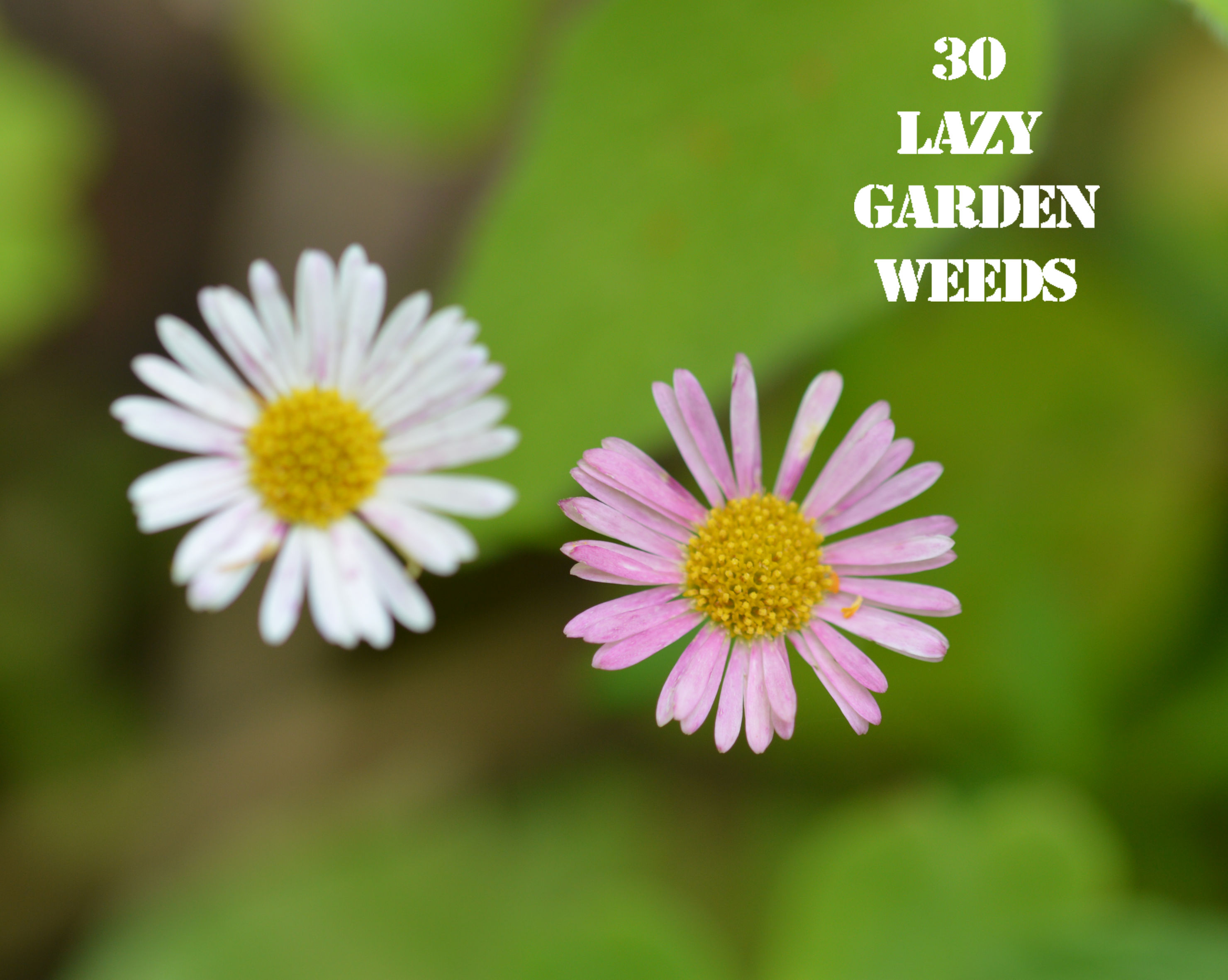
Daisy Fleabane 30 WEEDSAnd finally as always the latest weed in 30 Lazy Garden Weeds – this daisy like flower is, I think, Fleabane. Unfortunately I didn’t manage to spot it during the Bioblitz, although it was almost certainly growing in the garden at the time, so that’s another species missed. These little flowers always remind me of kids’ drawings – what an archetypal flower looks like – petals sticking out all round a central disc. There’s something charming about them, so as always they are welcome in the Too Lazy garden!