Isle of Wight – Part 2 Thwarted By Fog

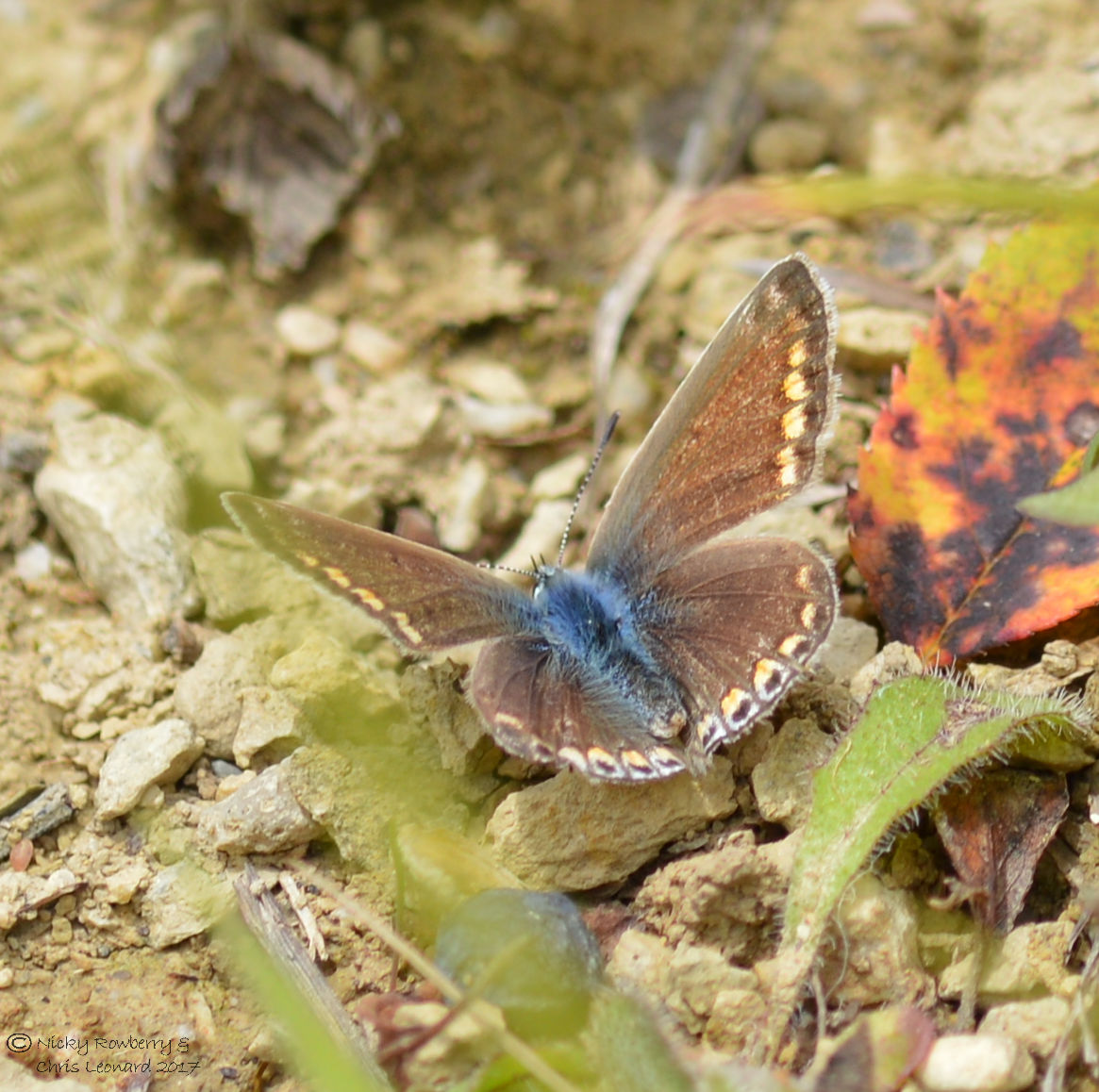
Our first full day on the Isle of Wight coincided with the first day of 30 Days Wild – the Wildlife Trusts’ annual event to get people to engage with nature.  Perfect day then to go looking for our next two species of butterfly – the Glanville Fritillary and the Adonis Blue. Unfortunately the weather had other ideas and a thick blanket of fog seemed to have covered most of the island. No self respecting butterfly was going to fly in that, so our chances of seeing them were virtually nil. We did make a short half-hearted attempt and had a bit of a wander around the chalky slopes on the southern coast. Fortunately we like all sorts of invertebrates besides butterflies and many of these are fog tolerant.

Snails of course don’t mind a bit of damp weather and we found two new (to us) species in the hedgerows. This beautifully coiled one is a Kentish Snail (Monacha cantiana).

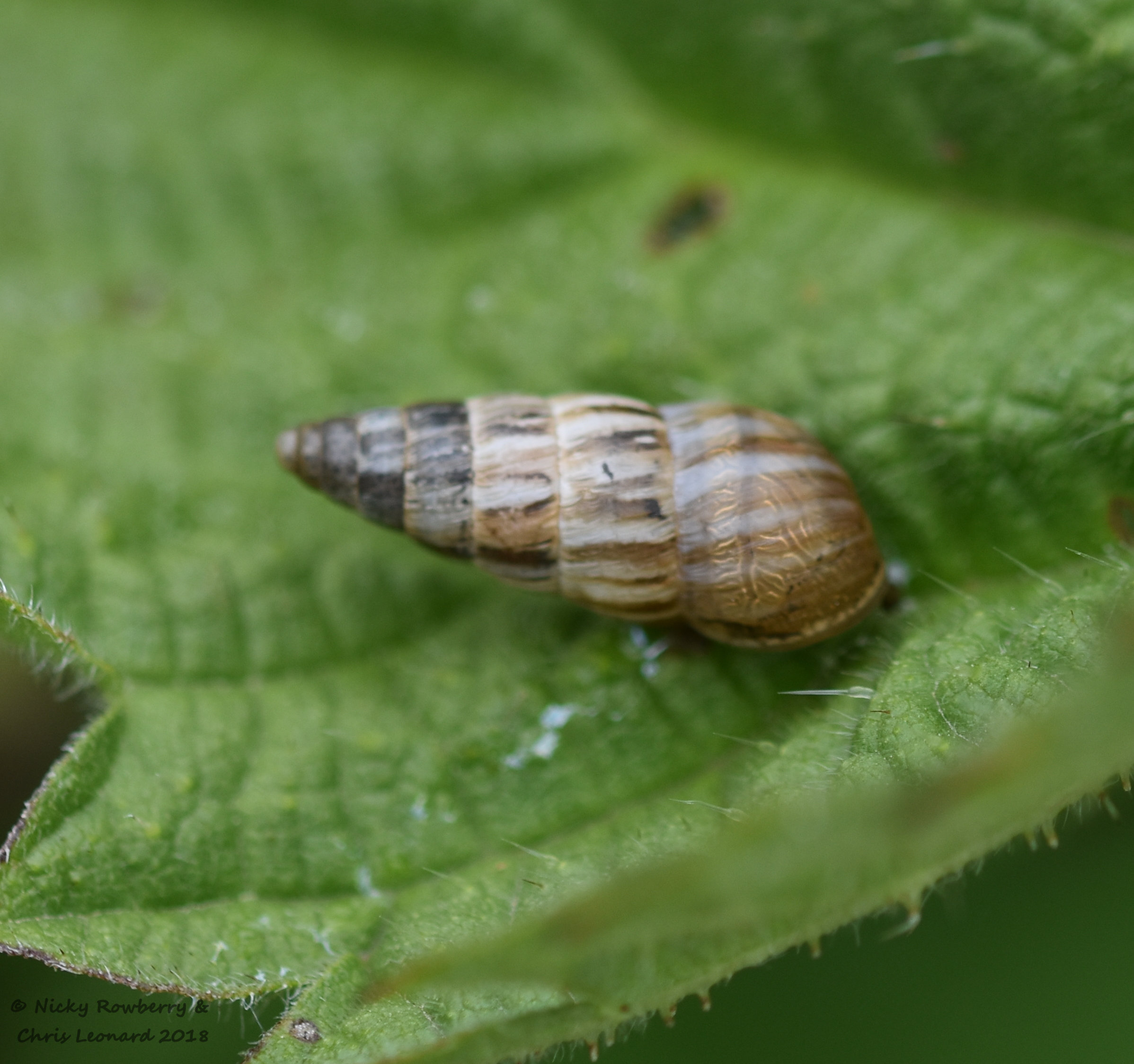
This tiny pointy snail is in fact called a Pointed Snail (Cochlicella sp.). It was only about a centimetre long, but still managed to have at least 8 whorls on its shell.
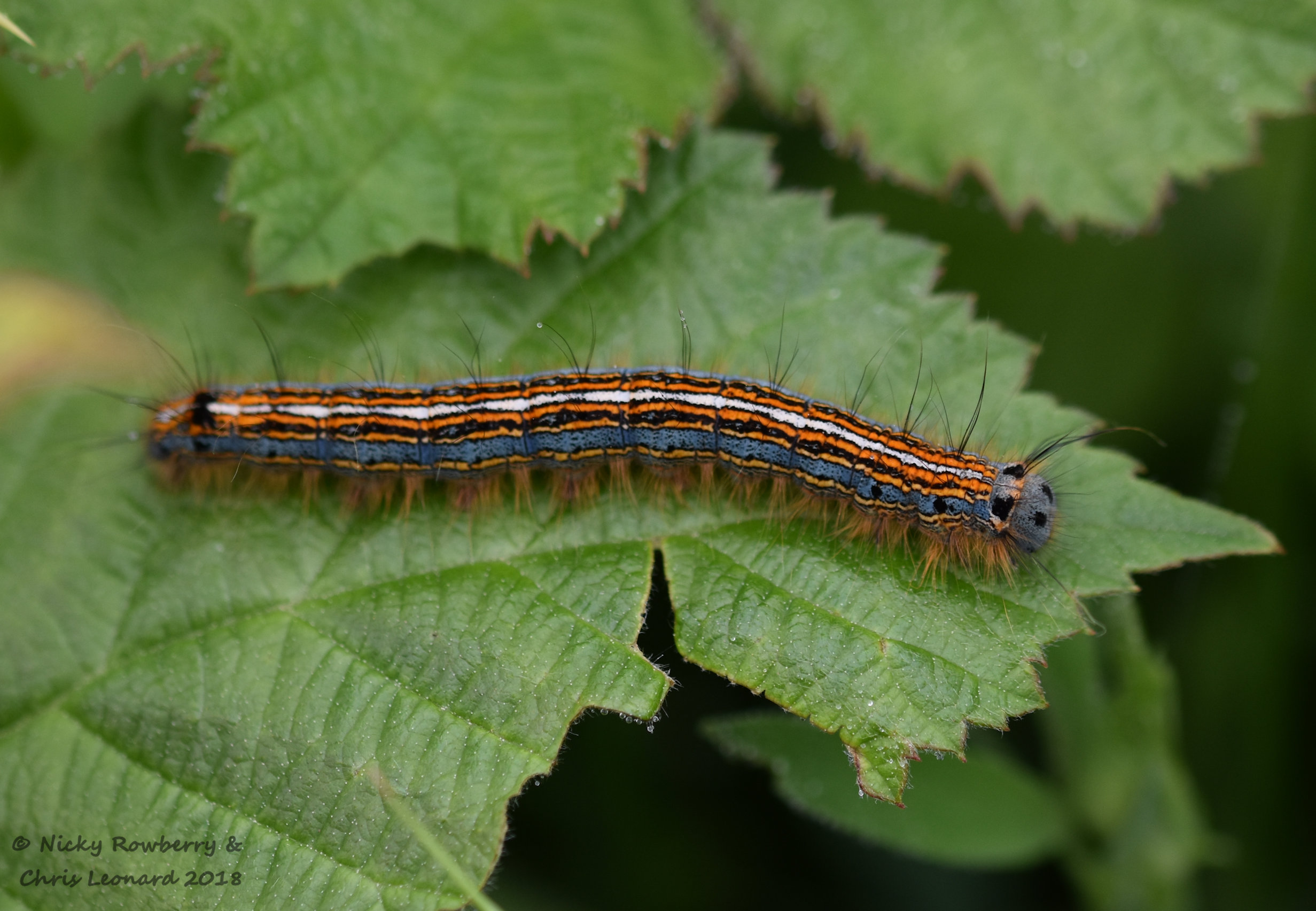
The other group of invertebrates that braved the fog in reasonable numbers were moth caterpillars. We saw several species, but these two were particularly striking. We’ve never seen them before either in caterpillar form, nor as adult moths. The top one is the caterpillar of the Lackey Moth and the bottom one of a Dingy Flat-Body Moth (thank you to the good people of iSpot for identifying the second one for me).
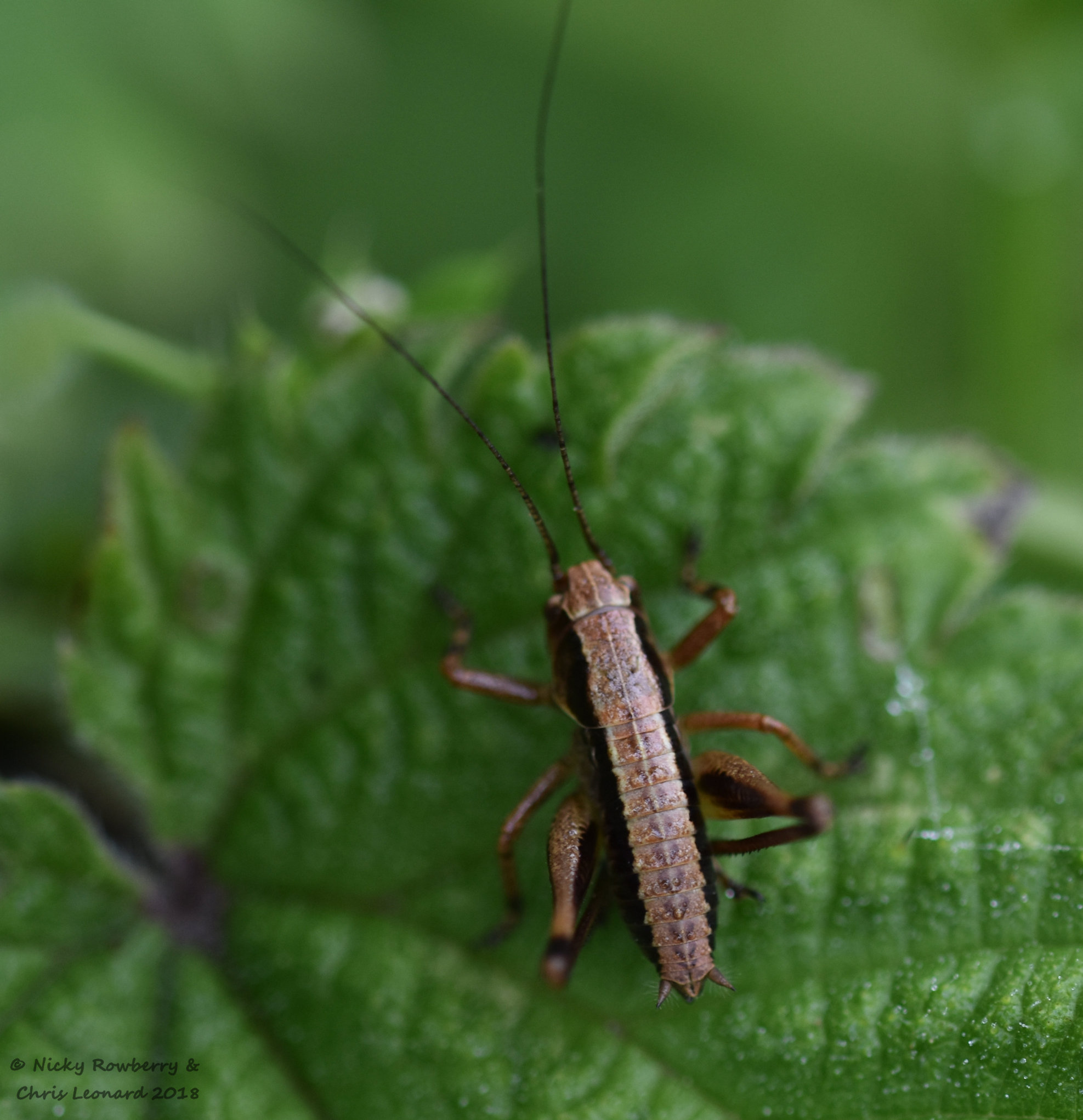
The other notable invertebrate was a cricket – there were large numbers of these Dark Bush Crickets (Pholidoptera griseoaptera) in the undergrowth. We only saw immature stages such as this nymph.
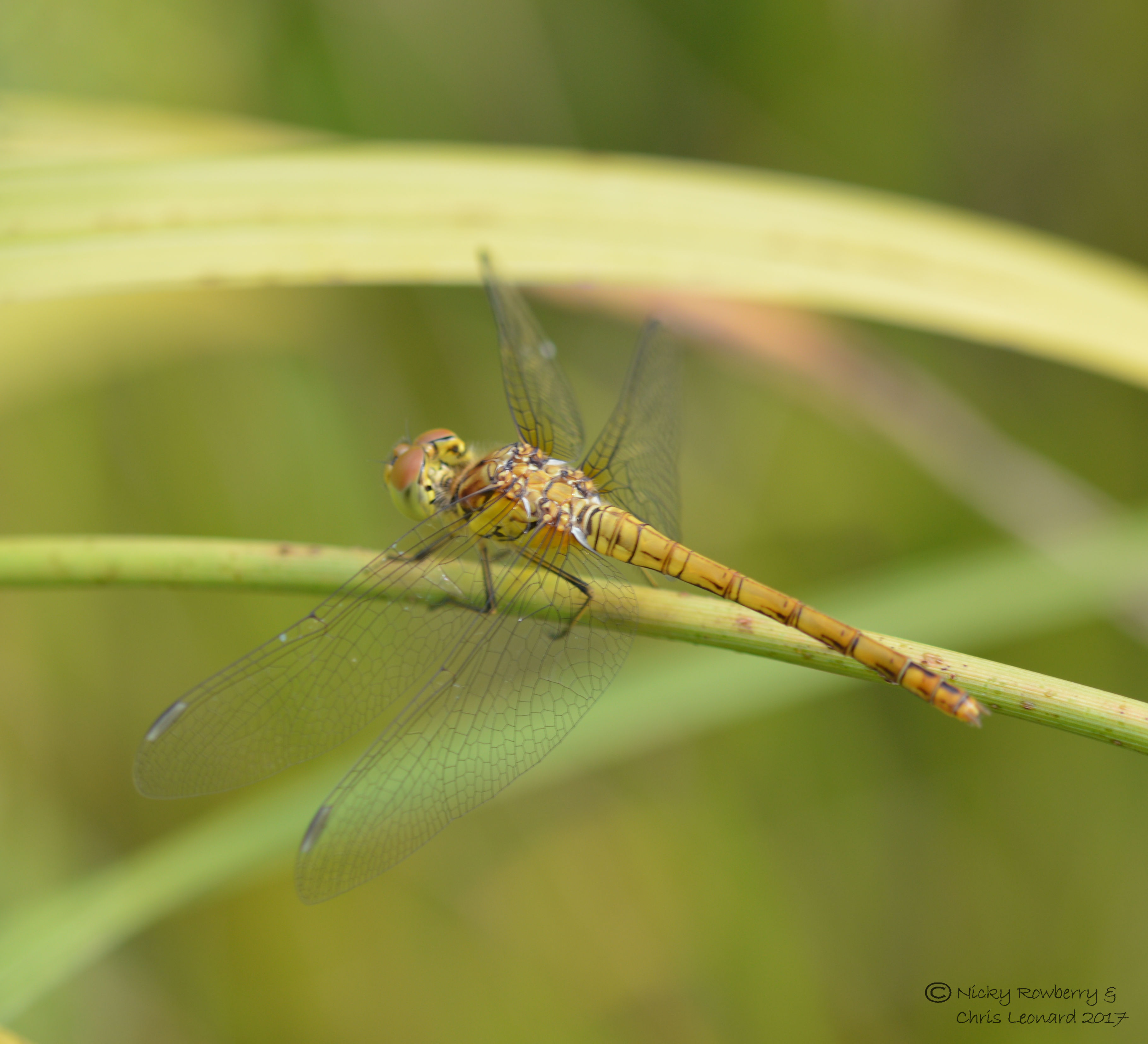
After an hour of enjoyable but butterfly-less searching, we went to Plan B. Isle of Wight is also known for its thriving population of Red Squirrels. Thankfully the grey squirrels haven’t made it across the water yet, so for the time being the reds have free rein over the island. So we headed inland to Borthwood Copse, a small woodland managed to support the red squirrels. The first interesting animal we spotted when we got to the wood, was another insect. This female Scarce Chaser dragonfly (Libellula fulva) is, as its name suggests, fairly scarce, so it was a really nice find. With its yellow veining and dark tips to the wings, it was clearly different to any dragonfly we’d seen before.

The wood was full of birds, all singing their hearts out (or all shouting warnings that we were intruding possibly). We could hear, if not see, lots of species, including a Great Spotted Woodpecker.

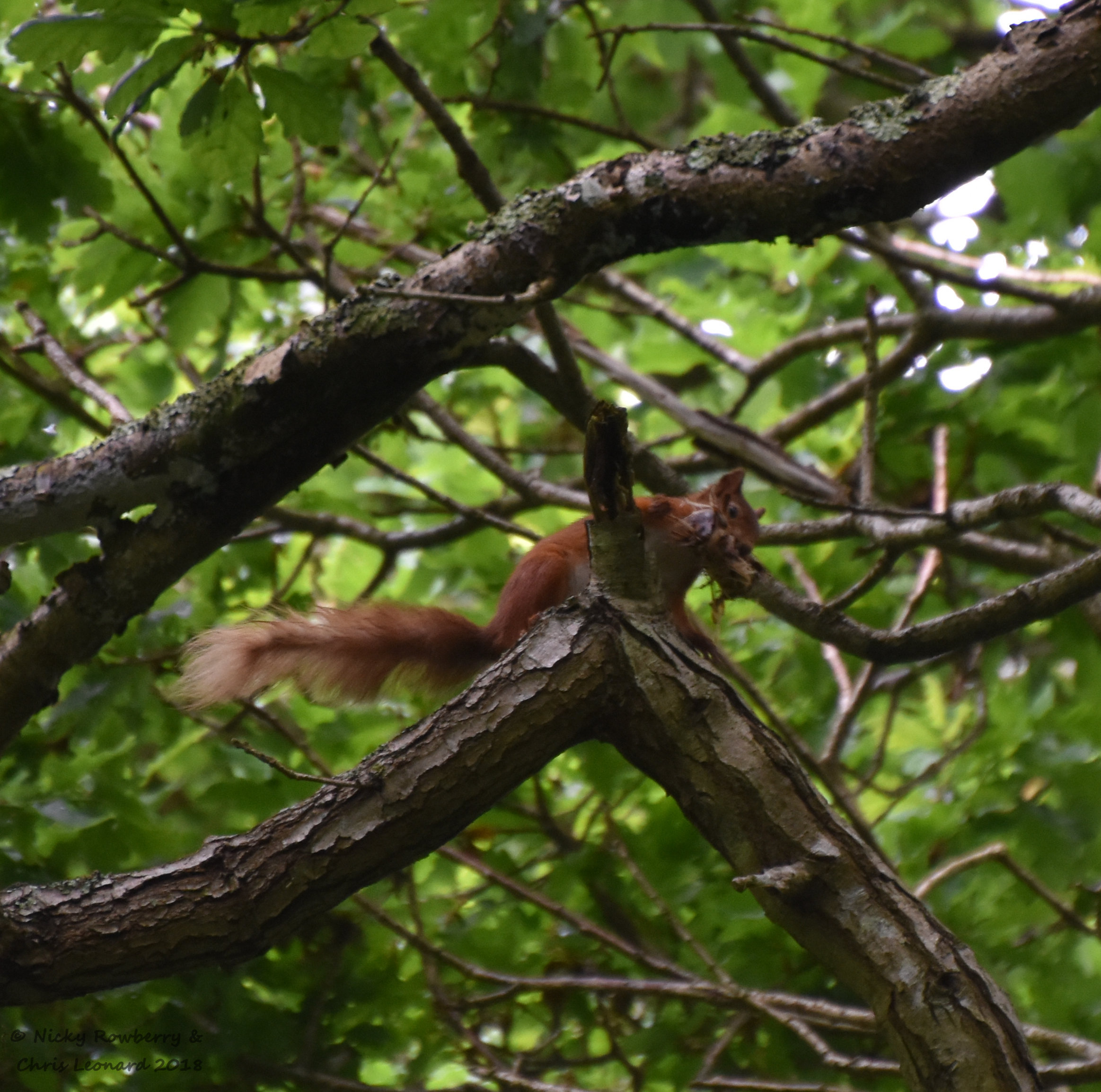
After a lot of dizzying staring up into trees, we eventually spotted our first red squirrel. I think we had both fondly imagined that the squirrels would come down and somehow just sit waiting to be photographed. Needless to say, they did no such thing and remained steadfastly high up in the branches. Over the course of the next hour we spotted a few (or possibly the same one taunting us over and over) and although they were a delight to watch, they never came close enough for any really good photos. But we did eventually get some recognisable red squirrel photos, so here are our best efforts. We watched this one for a while carrying a bundle of nesting material, jumping from branch to branch.

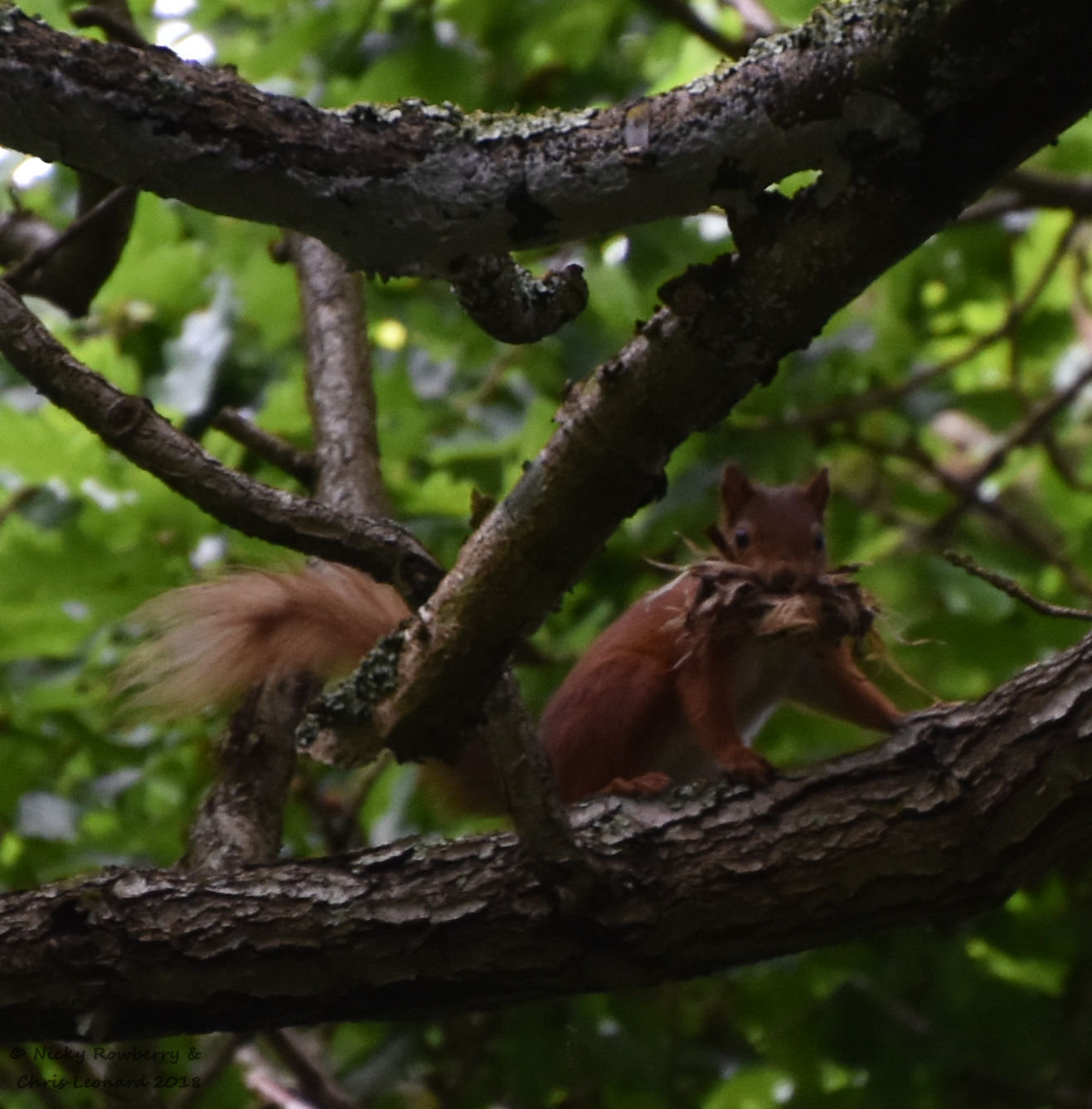
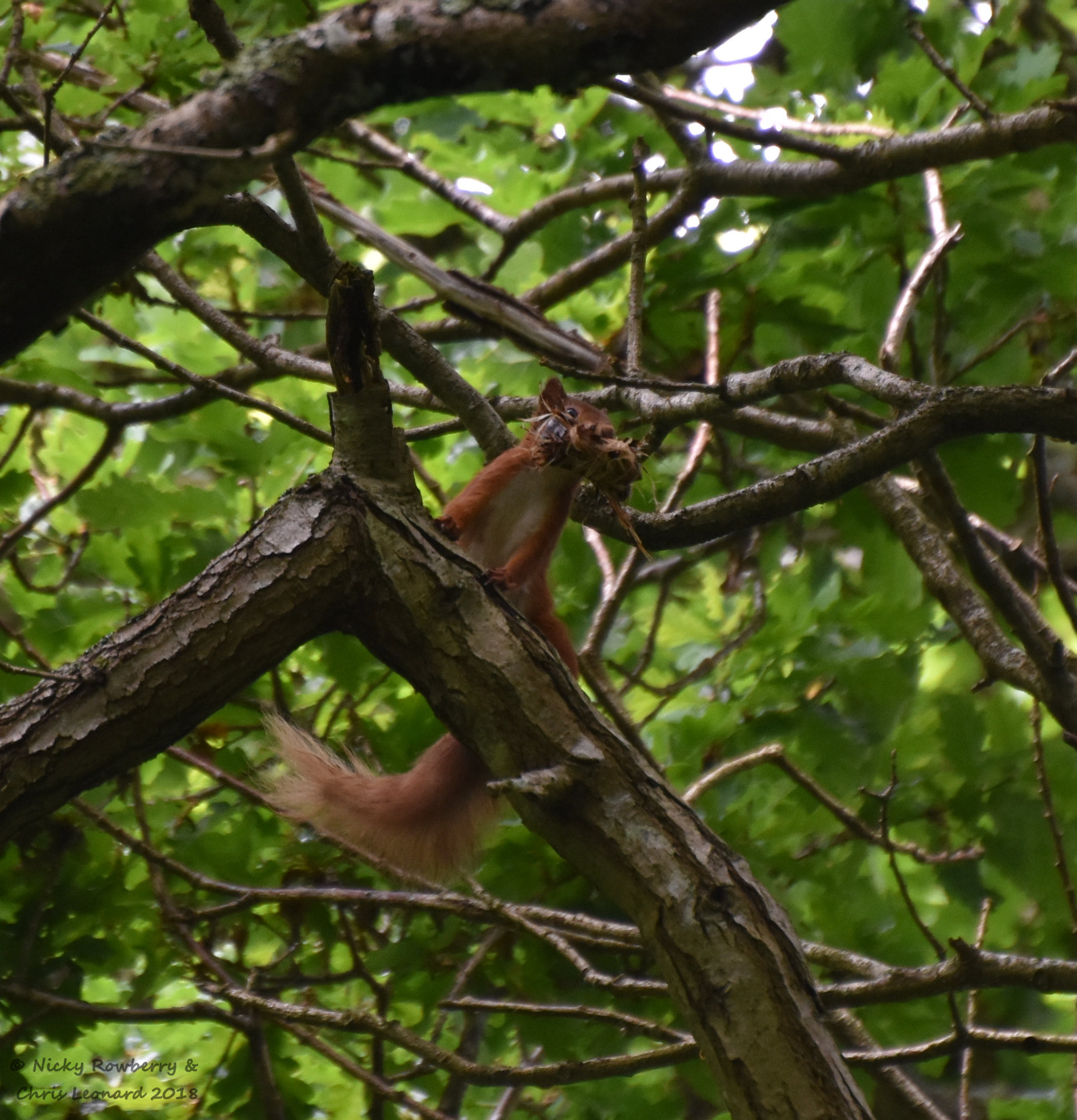
We followed it by eye until it disappeared with its bundle of nesting material into what looked like a denser patch of leaves. It stayed in there for ages, so we wondered whether this might have been a nest or drey? You can just about make out the denser patch in the photo below.

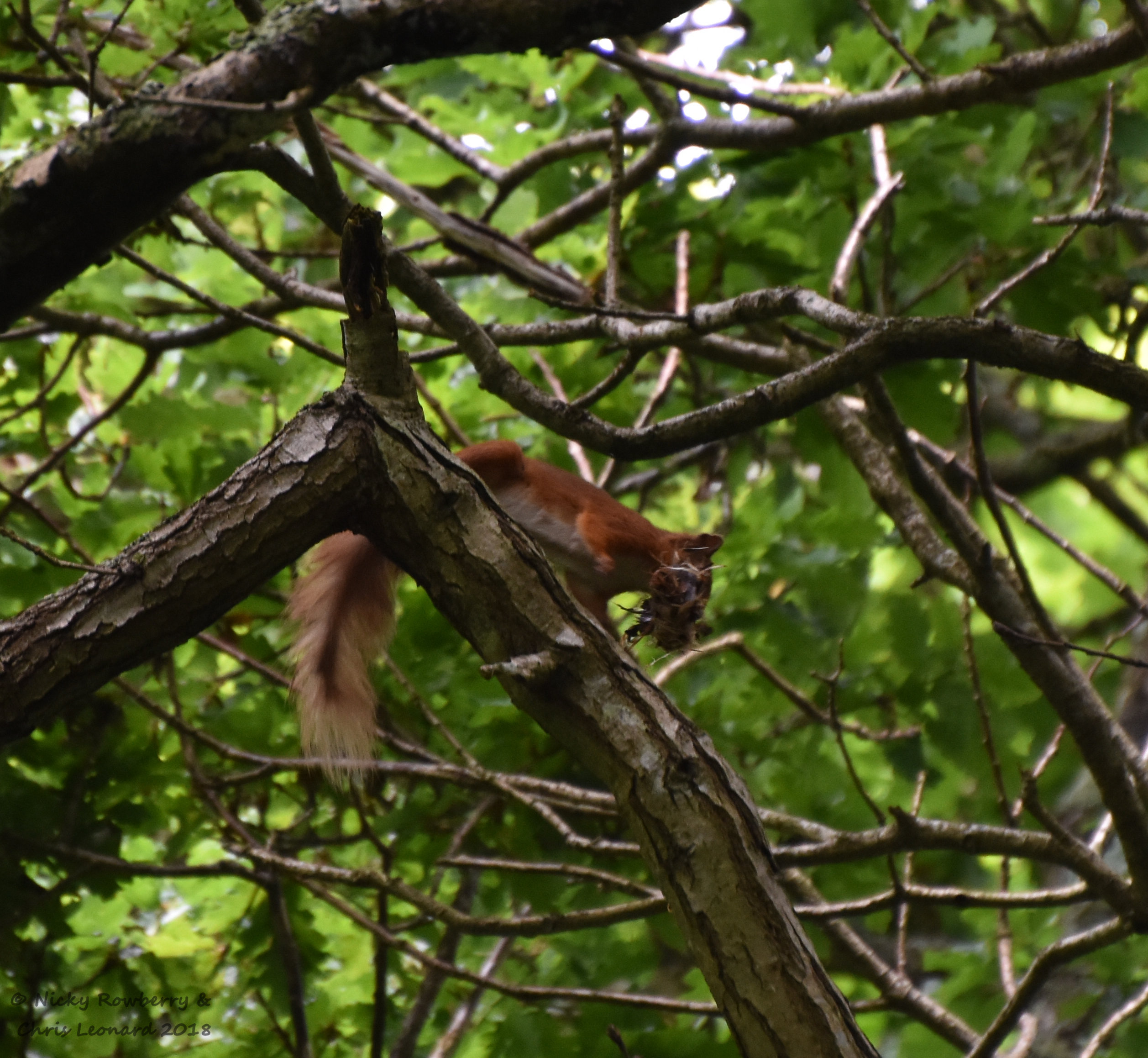
When it eventually emerged it no longer had the nesting material, but decided to sit nearby watching us below. I know the next picture is really dark, but you can see the squirrel staring directly at us.

We had a few more sightings after this. In some they were again carrying nesting material, although we lost track of them in the branches so couldn’t see if they took them back to the same place.

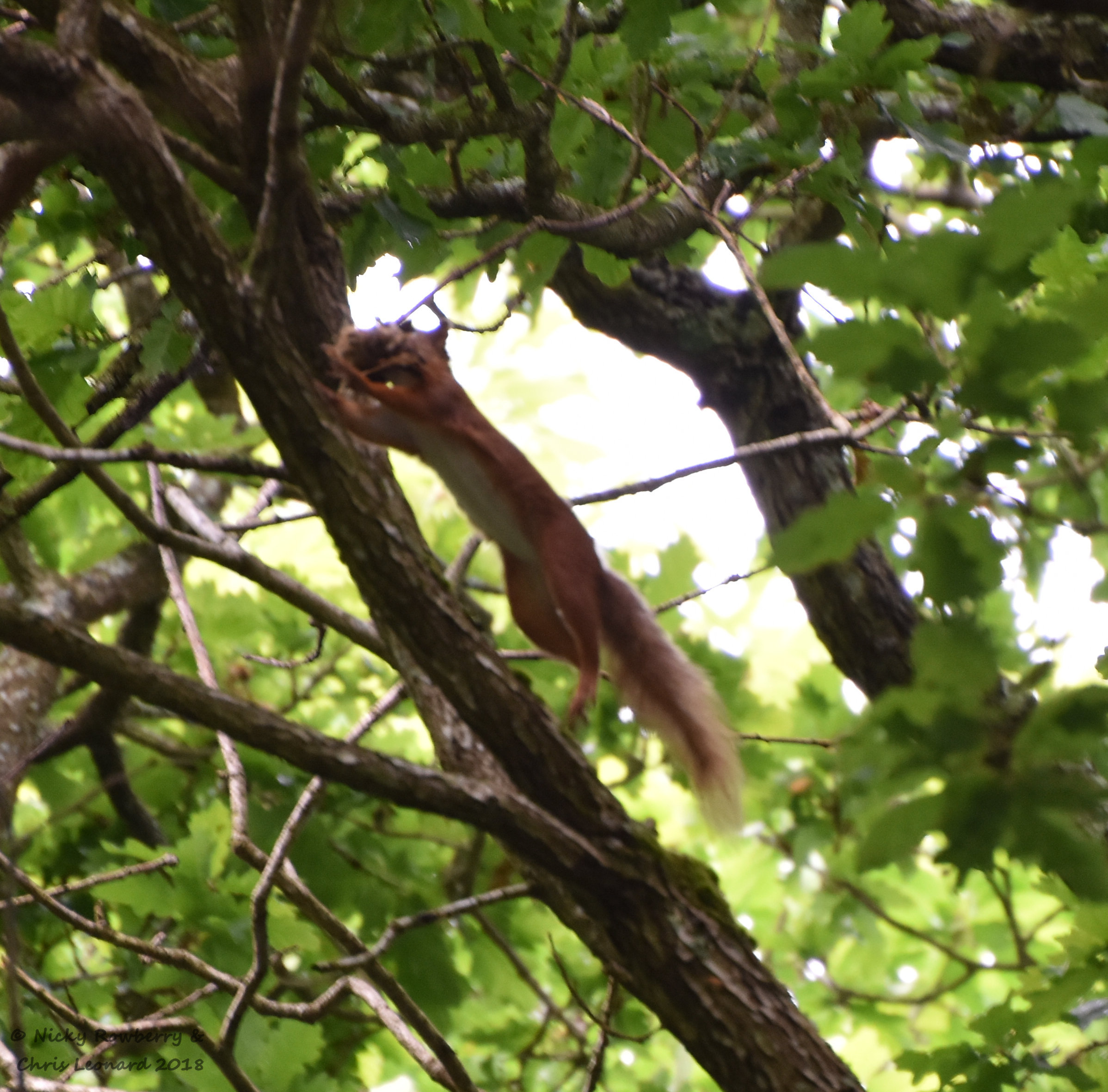
The final photo I know is really rubbish, but I just love the way it looks like he’s just dangling there, when obviously we just caught him mid-jump.

So Plan B worked out pretty well in the end. The fog may have stopped us seeing butterflies that day (don’t worry we got there in the end – see next blog post), but there was plenty of other wildlife to enjoy. That’s one of the things about wildlife watching I love, you are never really disappointed, as there is almost always something amazing to see if you look.
Isle of Wight – Part 1 Chalet Life

We’ve just got back from a fantastic few days in the Isle of Wight. It was our first visit to the island and our first experience of the Airbnb way of holidaying – and we were very happy with both. We’d decided to go to the Isle of Wight to try and tick off a couple more butterflies on our quest to see all the British species. The Glanville Fritillary can pretty much only be seen on the island and we hoped to spot the Adonis Blue too while we were at it. We picked a self contained chalet on the south side of the island. It proved to be the perfect location – remote and peaceful and surrounded by so much wildlife it almost felt like we didn’t need to go anywhere else. The lovely host even had bird feeders and left us food to put out for them – a real home from home for us.

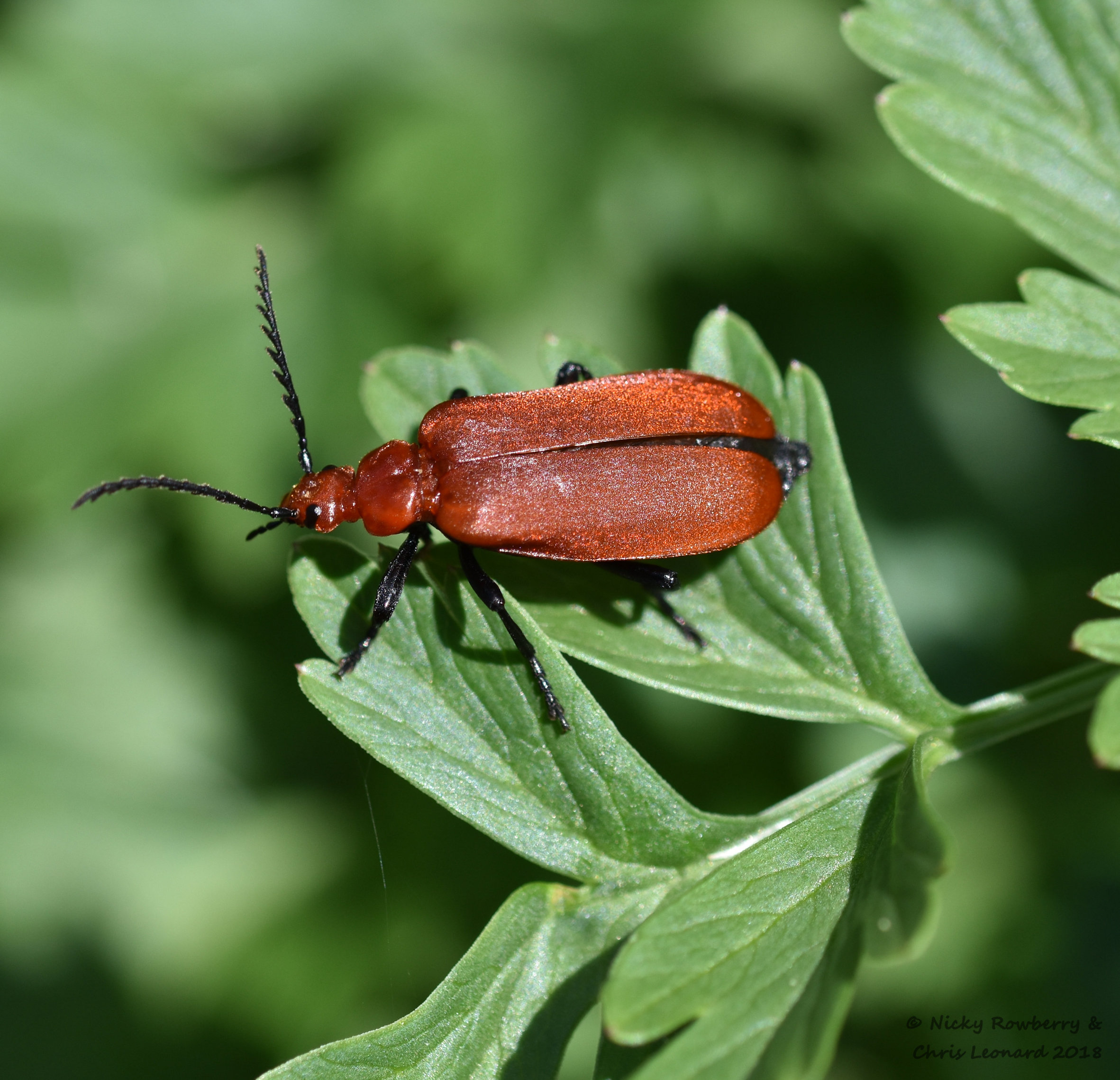
Normal people when they get to a holiday destination probably go about unpacking and then start sight-seeing. We started peering around in the bushes to see what was there. The place was buzzing with bees and lots of butterflies flitted around, but almost immediately this Cardinal Beetle caught my eye. A gorgeous jewel like beetle it spent quite a lot of time around our little terrace and made a great start to our wildlife watching holiday.

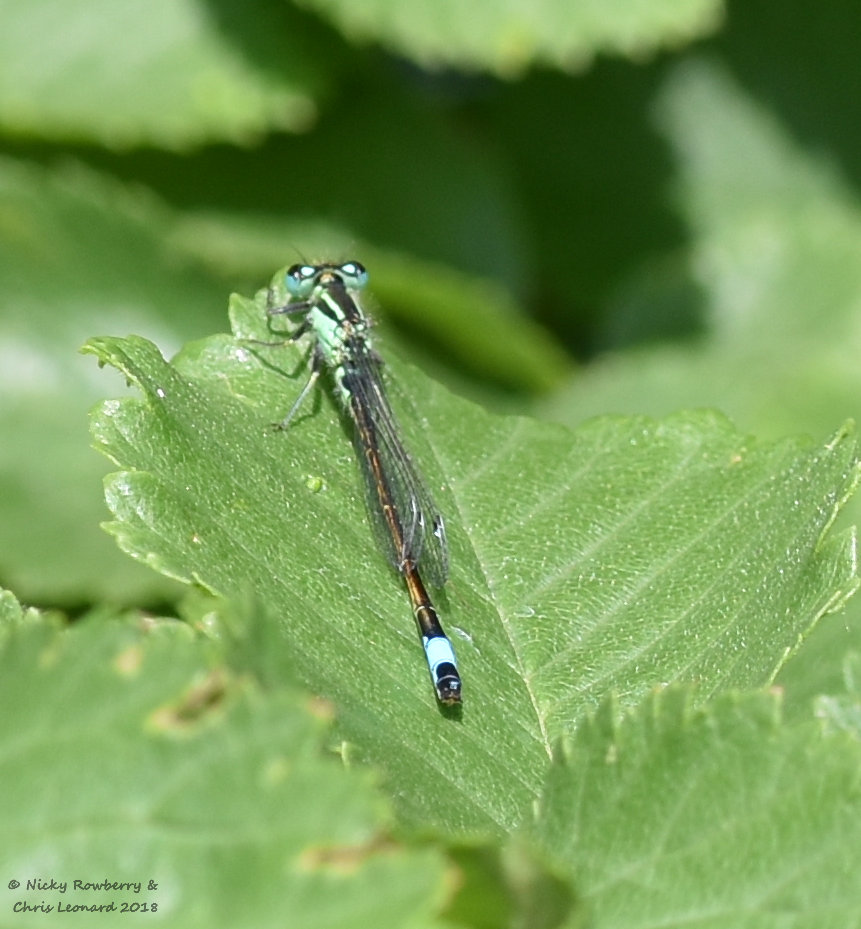
We also kept seeing this nice damselfly, although it tended to land a bit too high up for me to get really good photos.

The bird feeders attracted plenty of birds, including what looked like a rock pipit, although it flew off too quickly for me to get a photo. The surrounding hedgerows were full of bird song, one of which proved to be one of my favourites, the wren.


Normal people  also probably pack sensible things like swimming costumes or holiday guides – I packed my moth trap and moth book! I had hopes of getting something a  bit different to the usual moths in our garden – perhaps some fabulously interesting migrant moth. I may not have got that, but I was amazed by the number of White Ermine moths. I’m usually lucky back in Malvern if I get 1 or 2 of these, but there in the Isle of Wight I got at least a dozen in the trap in one go.

There were also lots of the other usual suspects, but I was most pleased to see my first Elephant Hawkmoth of the year (my top moth if you read my previous blog post).

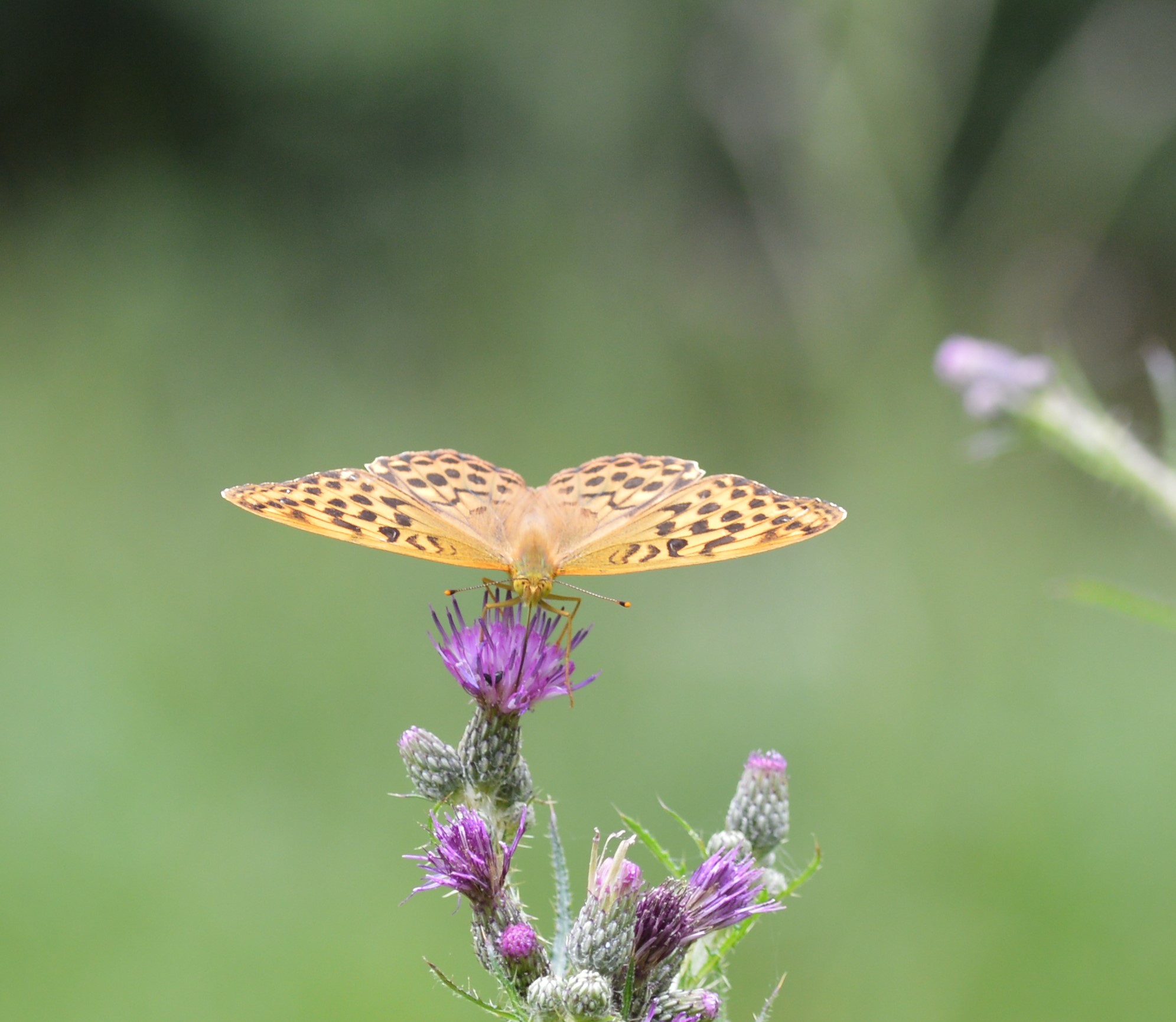
So our little chalet proved the perfect starting point for our short holiday. I’ll blog more about the butterflies and other animals we saw in the next couple of posts, but the chalet had one more final surprise for us. As we drove off to catch the ferry back on the final day, I spotted a butterfly in the field near the entrance to our site. We stopped and looked closer – it was a Glanville Fritillary – the very butterfly we’d come to see! We had already been lucky enough to see them the previous day on a (very) long walk, but it seems we could probably just have sat on our terrace and waited and the Glanville would have come to us!

300 moths and counting

In autumn last year I did a tally up of the number of moth species I’d recorded in the garden since I began looking about 5 years ago. I was amazed to find it was over 290, but then of course I started thinking, wouldn’t it be wonderful to get to 300. I thought I was sure to hit the magic number by the end of the year, but as the months rolled on I got stuck at 297.

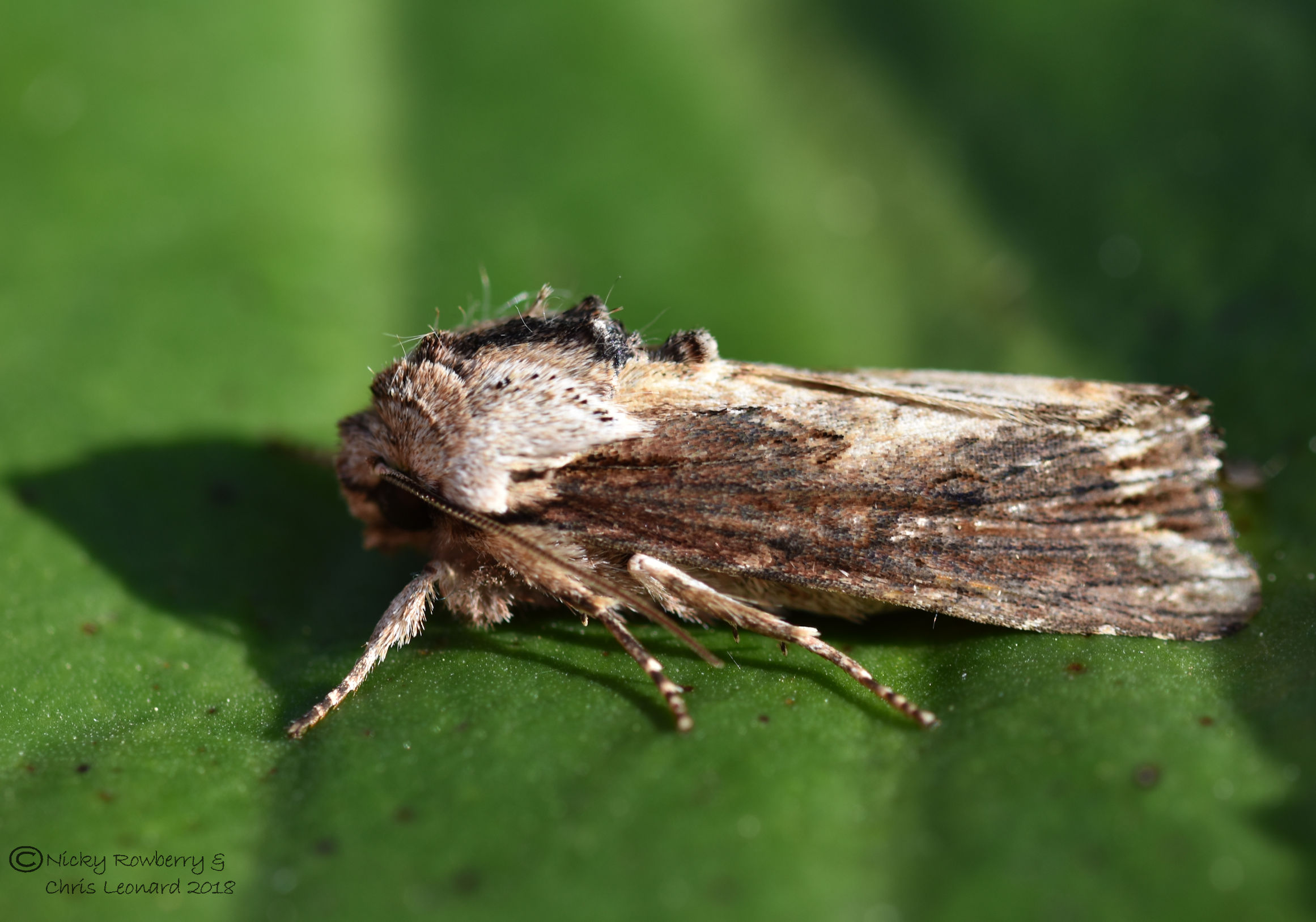
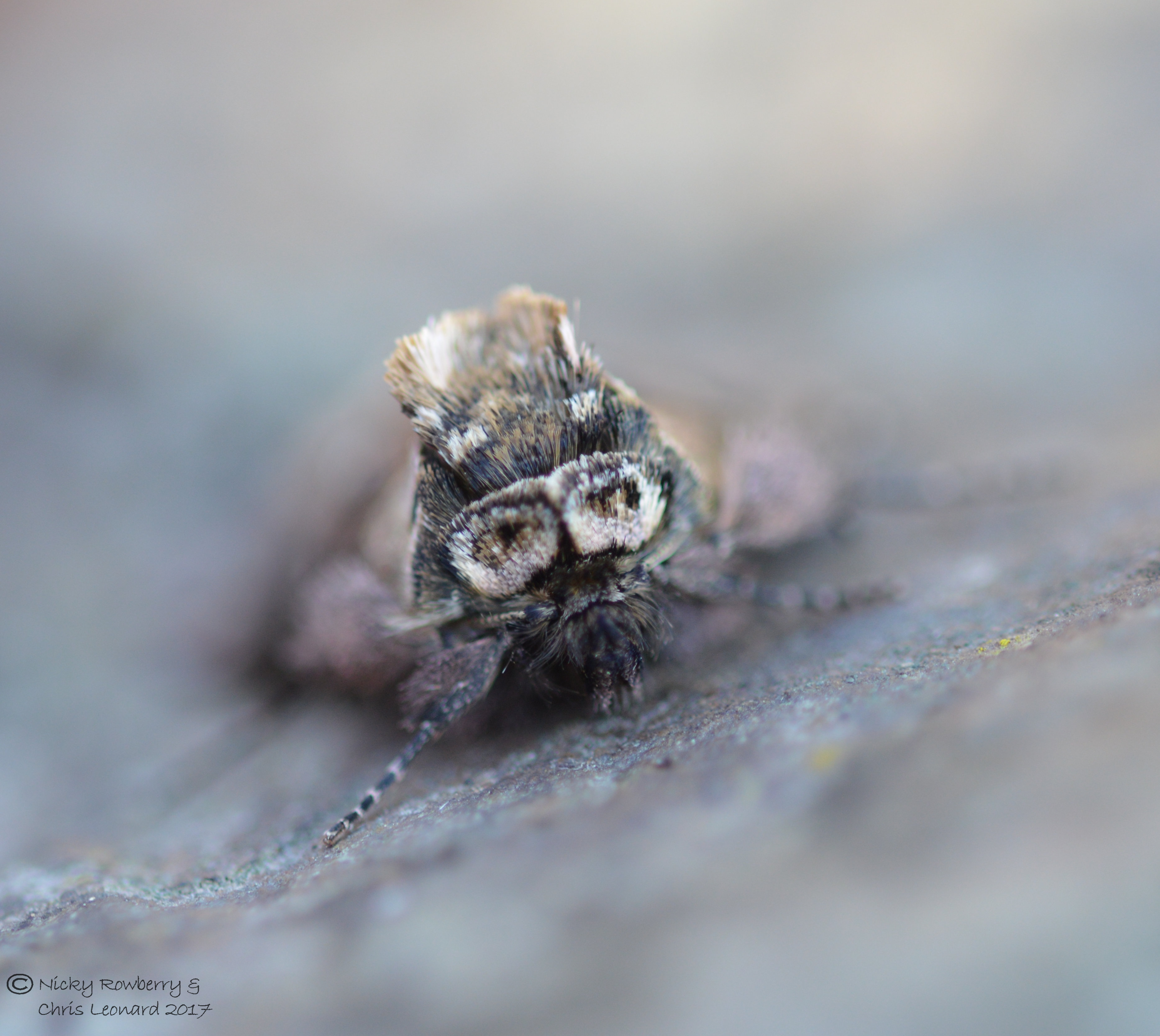
So as the spring moths started appearing this year, I started ticking the new ones off – no. 298 the Satellite, no. 299 the Early Tooth Striped. No. 300 was tantalisingly close, but what was it going to be? Sod’s law being what it is, around this time I got a bit behind identifying some of my moth catch. I’d taken loads of photos, but not gone through them all properly. So the next moth I identified was a little micro moth called the Sulphur Tubic (Esperia sulphurella) – moth no. 300 had arrived. But then this week I went back through some of the photos from earlier in the month and found another new one – the Silver Cloud (Egira conspicillaris). As I’d technically caught the Silver Cloud first, it took the noteworthy no. 300 spot and the poor old Sulphur Tubic got bumped to no. 301. So here it is, proud no. 300 – the Silver Cloud. This moth has quite a restricted distribution in the UK, so I’m lucky to get it here in Malvern.

Having been pipped at the post for the glory of being no. 300, I felt the Sulphur tubic deserved a photo too. So here it is, a pretty little moth only a few millimetres long.

Having hit the magic number 300, I thought I’d have a look through my records and share my top 10 favourite moths. This proved harder than I expected, because I just like all of them! So in the end, here are my top 12, just because I couldn’t whittle it down any further.

So in reverse order  – at No. 12 is the Scarce Silver Lines (Bena bicolorana). I’ve included this one because it is just too beautiful not to.

At No. 11 another moth that is so perfectly marked, it’s hard to believe it’s real – the Black Arches (Lymantria monacha).

At No. 10 the first day flying moth on this list – the Six Spot Burnet (Zygaena filipendulae). It’s a beautiful glossy black moth, with 6 clearly defined red spots – I always like a moth that fits its name.

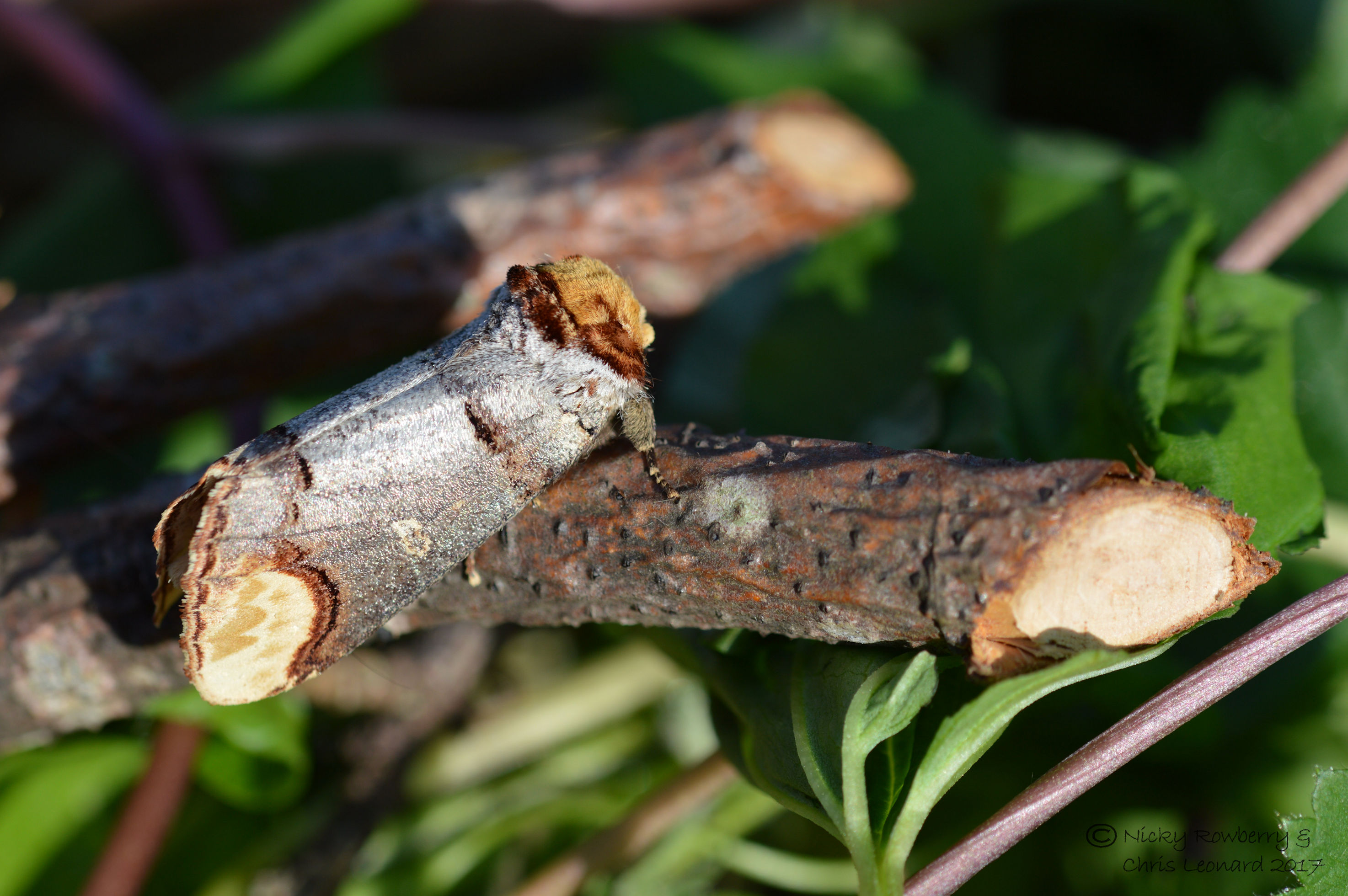
At No. 9, a moth that gets my vote for its mastery of camouflage – the Buff Tip (Phalera bucephala). It looks just like a broken twig, particularly of a silver birch tree, but it even blends in pretty well with this apple tree twig I used for the photo.

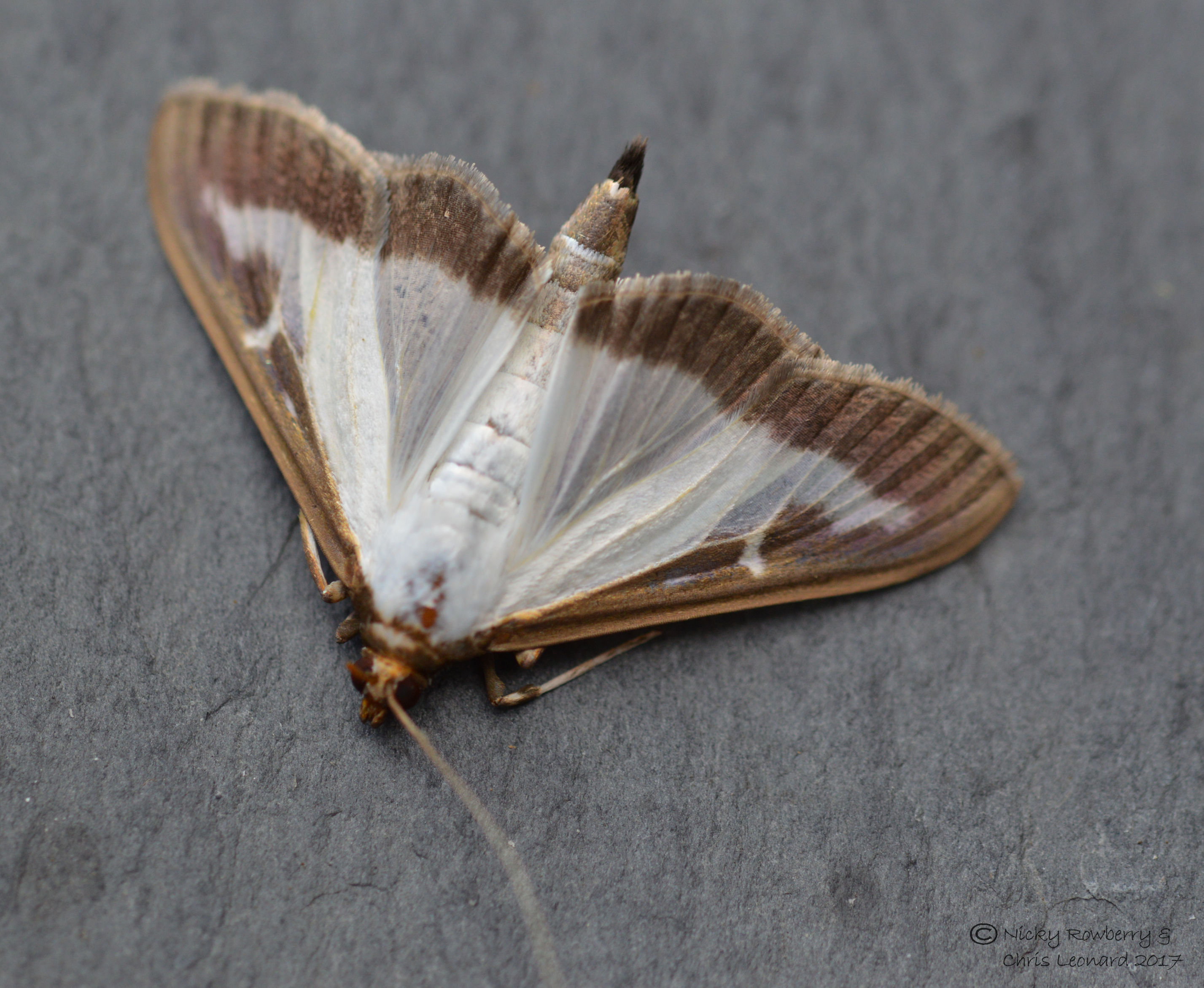
At No. 8, not my favourite looking moth, but it makes the list because the individual I caught was the first record of this species in Worcestershire – the Box Tree Moth (Cydalima perspectalis). I felt quite proud to have caught the first one, although it’s not good news for anyone growing box trees, as it is a pest. It is an introduced species having only been recorded in the UK from 2007.

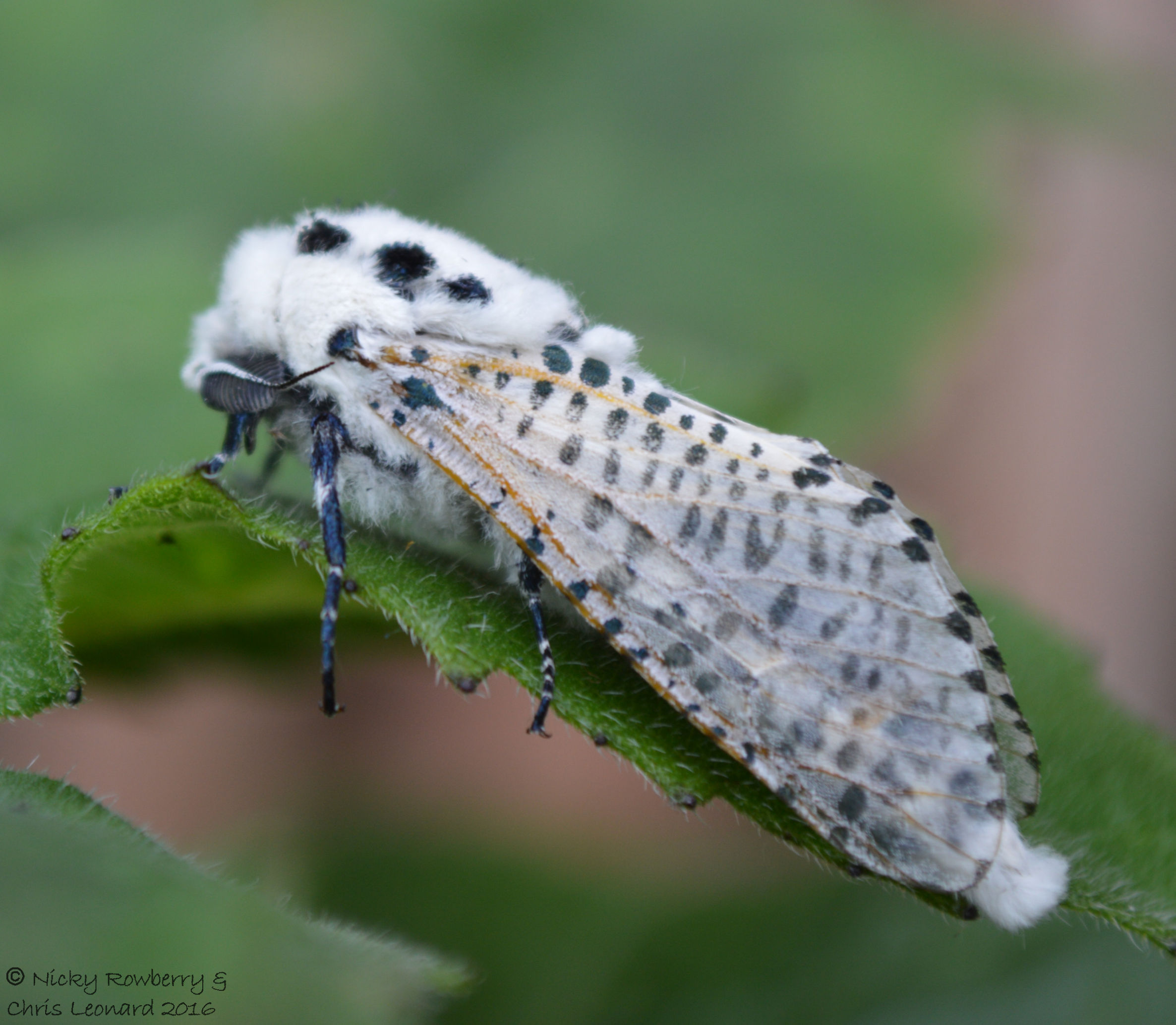
At No. 7, a moth that is not only striking in appearance, but has a great name – the Leopard Moth (Zeuzera pyrina). I like moths and I like cats, so put the two together and it’s bound to be a winner for me (although on that principle I could also have included the Puss Moth or one of the Kitten moths).

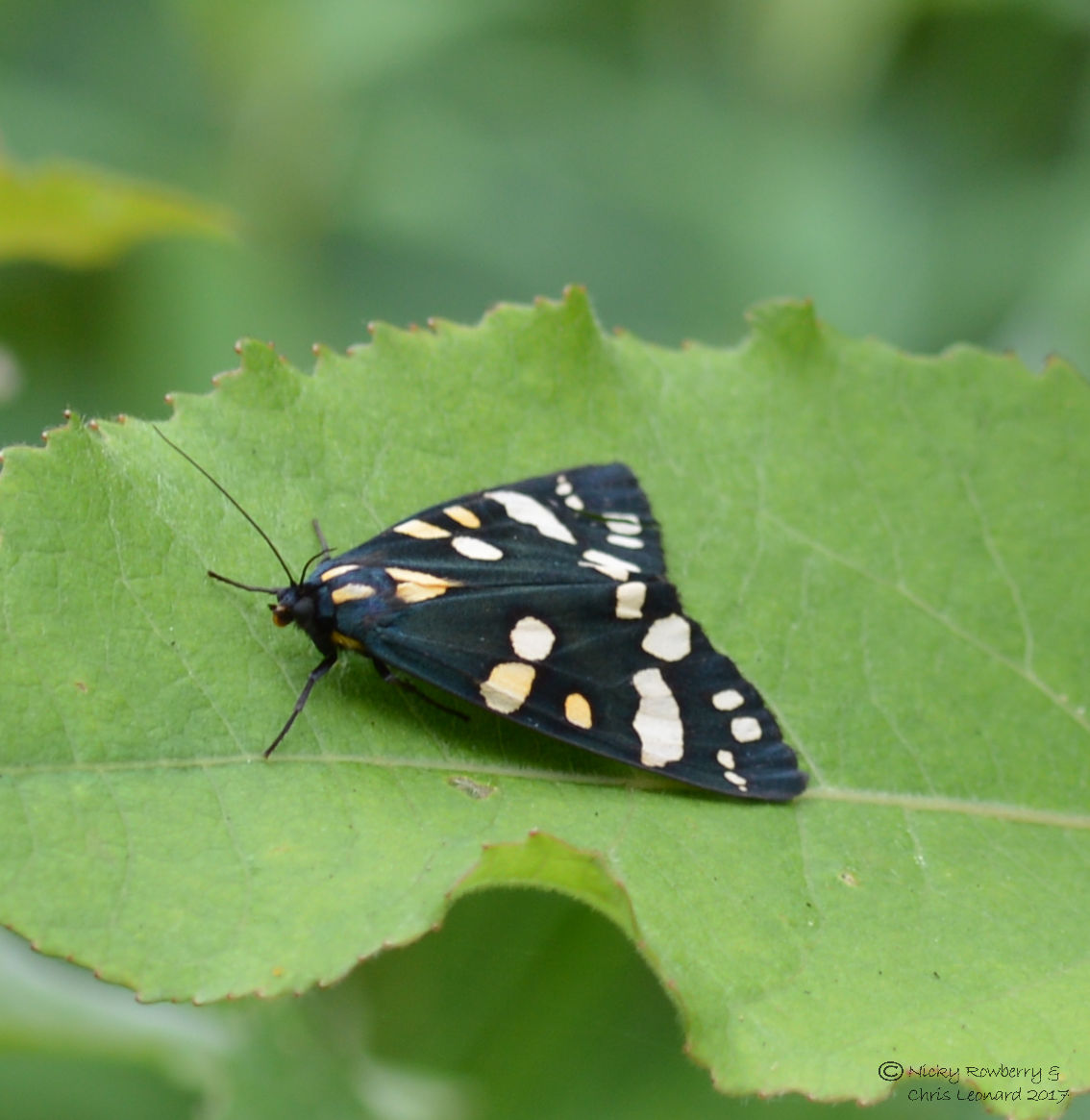
At No. 6, the second day flying moth on this list – the Scarlet Tiger. Stunningly colourful moths that fly on sunny days and are often mistaken for butterflies. We were lucky enough to have a whole flock of them come into the garden one afternoon.

At No. 5, a cute moth that looks like it’s got a pair of glasses on its head – the appropriately named Spectacle (Abrostola tripartita). I’ve spent a lot of time photographing these moths, always focussing on the heads to get their funny specs and tufted topknot in.

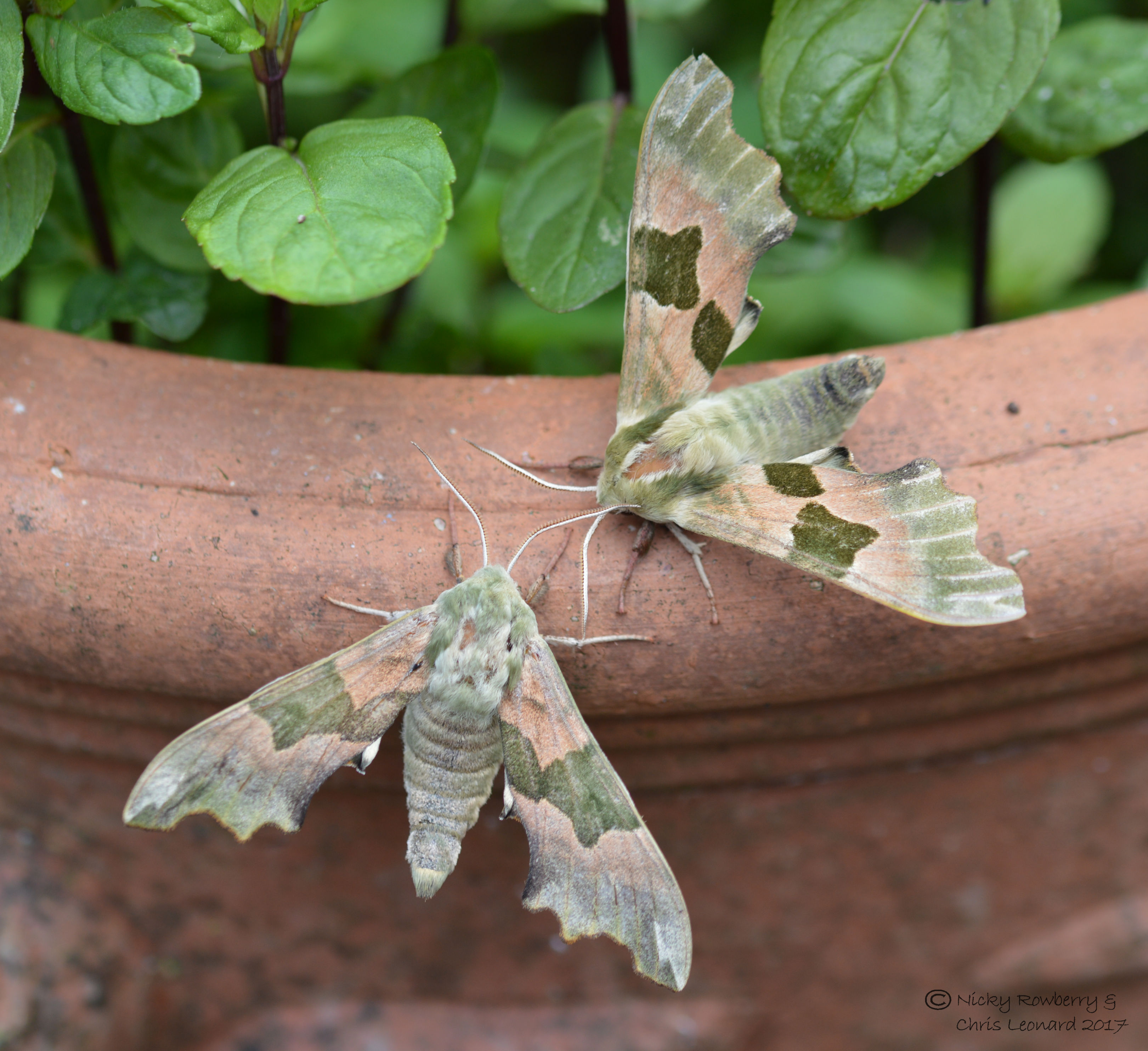
At No. 4, the first of the big guns moths – the Lime Hawk-Moth (Mimas tiliae). These are great big moths (up to 7 or 8 cm across) and seem almost too heavy to fly.

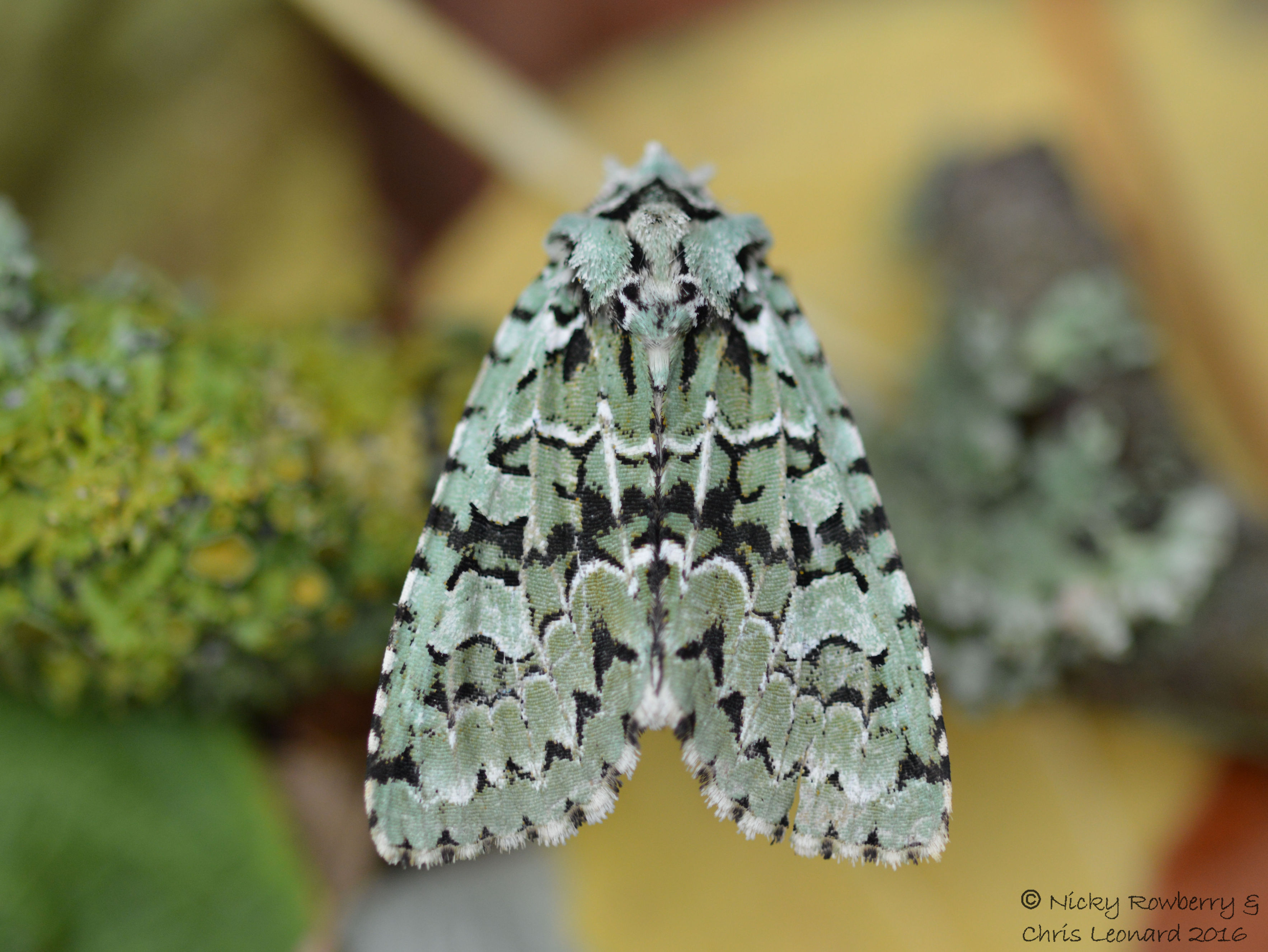
At No 3, probably one of the most beautiful moths of all and with another fantastic name – the Merveille du Jour (Dichonia aprilina). Despite its Latin name it flies in September/October and is always a joy to find in the trap at the end of the summer. The name means Marvel of the Day in French and it certainly is.

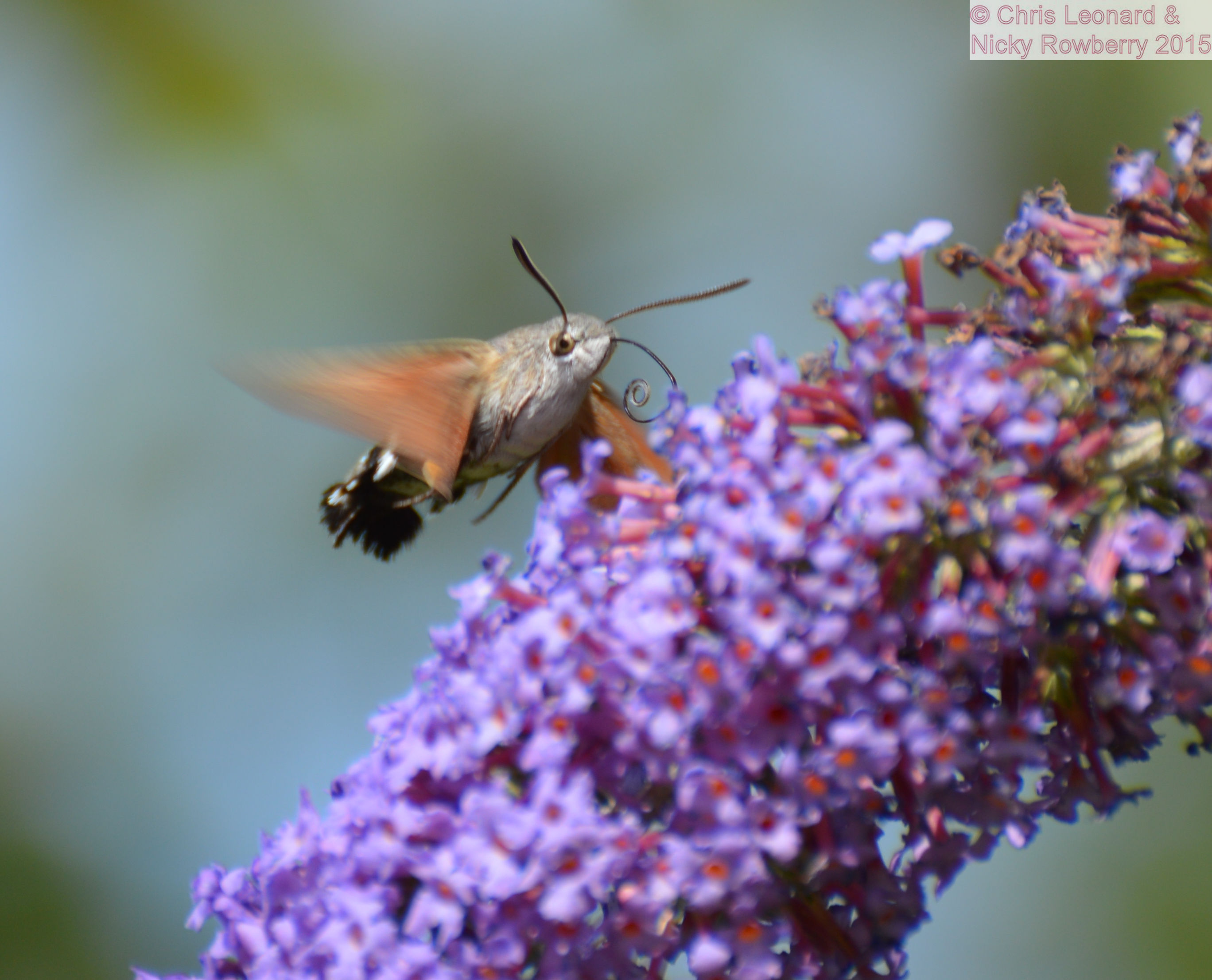
My second all time favourite moth has to be the amazing Hummingbird Hawk-moth (Macroglossum stellatarum). A medium sized moth, it hovers over flowers so well it often gets mistaken for an actual hummingbird. It is actually an immigrant moth from as far away as Africa, but nearly every year we get at least one in our garden. They are so quick, it is virtually impossible to get a sharp photo of them, so I’ve often resorted to videoing them instead.


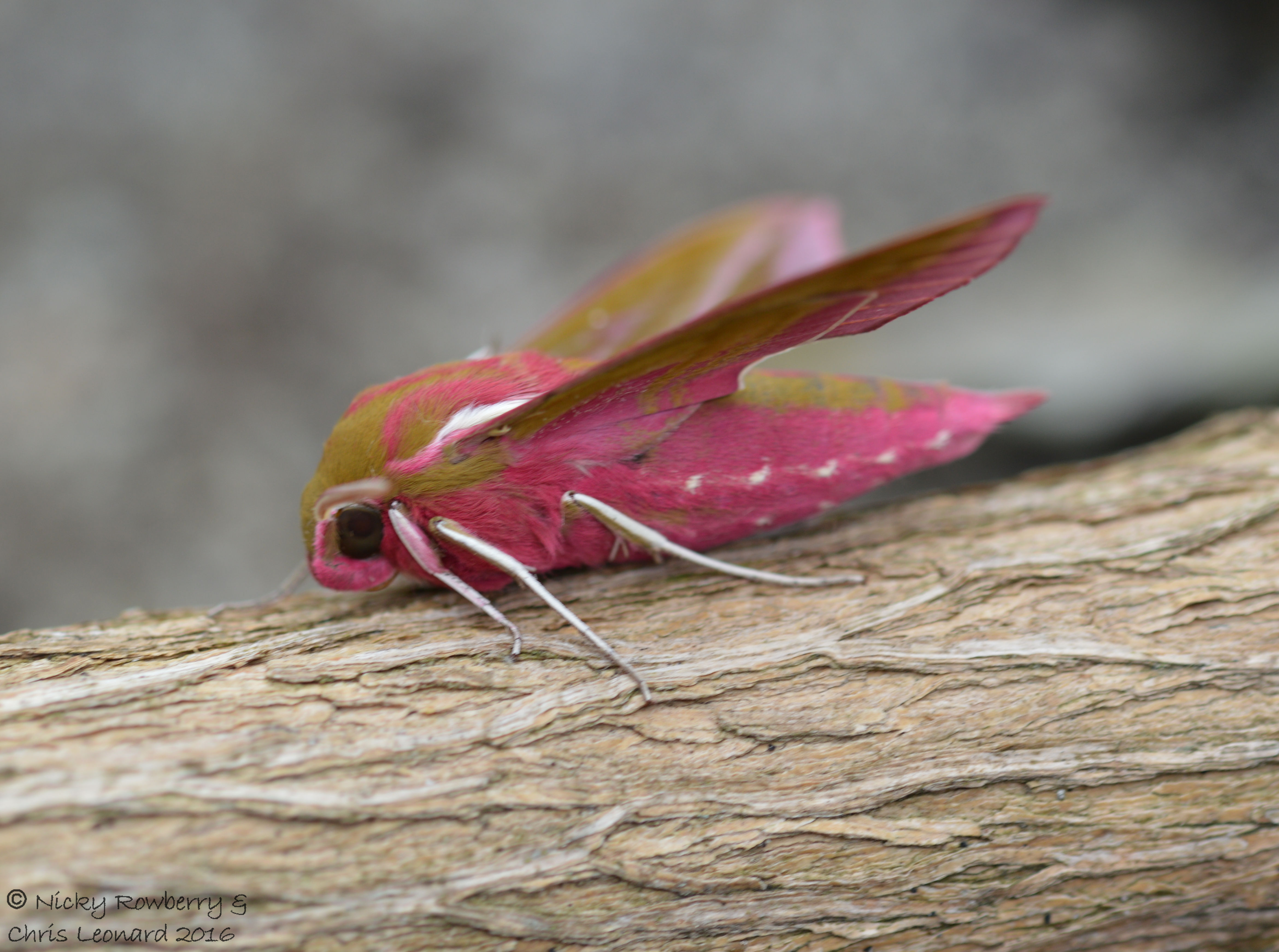
But finally there could only ever have been one moth that was my No. 1 favourite – the biggest, the pinkest and the best – the Elephant Hawk-moth (Deilephila elpenor). I can still remember my utter amazement the first time I caught one of these. And they still thrill me today whenever one appears. They just don’t look real – big fat pink bodies with pink and green wings. If I were to make up a moth this would be it and I will never tire of seeing them.

Elephant Hawk-moth

Grafton Wood

Lovely day yesterday out and about at Grafton Wood, one of my favourite butterfly hunting spots. Forecast was for sunny spells in the morning so I headed over, hopeful of a good day’s butterfly spotting. The sunny spells were slow to materialise and for the first hour there were hardly any butterflies. Nor did we see anyone else, it was as if everyone else knew the butterflies were having a day off! Eventually though the butterflies started to appear – a slightly dopey Common Blue was the first to pose for us.


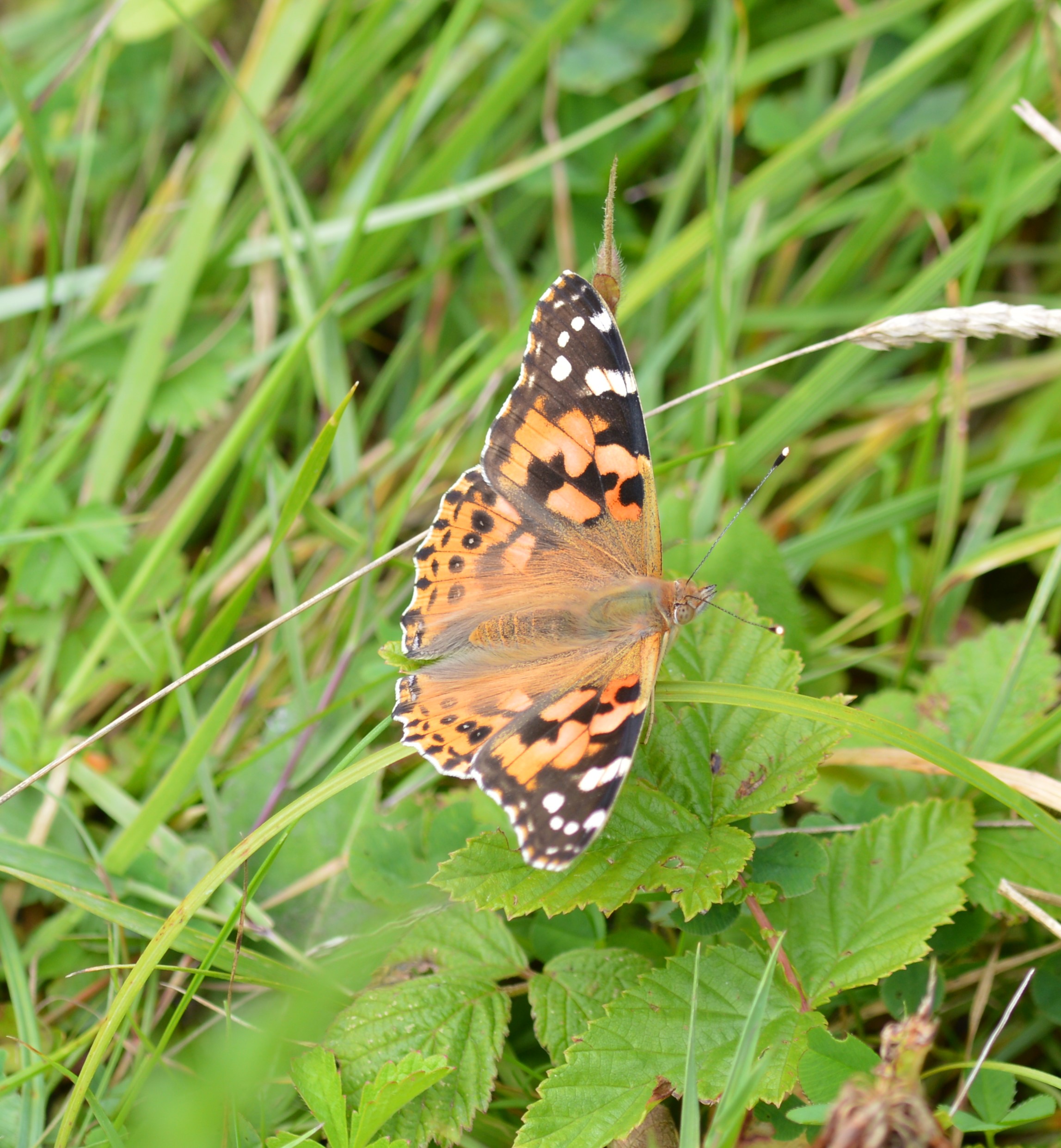
After the initial dozy one, more blues arrived plus Green-Veined Whites and our first Painted Lady of the year.  All in all we tallied up 11 species – not bad after such an unpromising start.

The one butterfly we’d particularly hoped to see though, the Brown Hairstreak, eluded us. They are notoriously tricky to find and I’ve only ever seen one, right here at Grafton Wood in 2015. So it was no great surprise not to find one yesterday. We did however meet  a very helpful gentleman who gave us some top tips for spotting them and showed us some new areas of the wood to look for them in future.  So butterfly-wise we were very happy.

But Grafton Wood is buzzing with more than just butterflies, there are plenty of other insects to enjoy. We kept seeing beautiful big hornets – either Grafton has lots of them or we were being stalked by the same one everywhere we went.

There were lots of small moths flying about in the grass, but the mothy highlight was spotting a group of Buff Tip moth caterpillars that had almost stripped a young tree bare.

We also saw a few shieldbugs, including this nice specimen of a Box Bug.

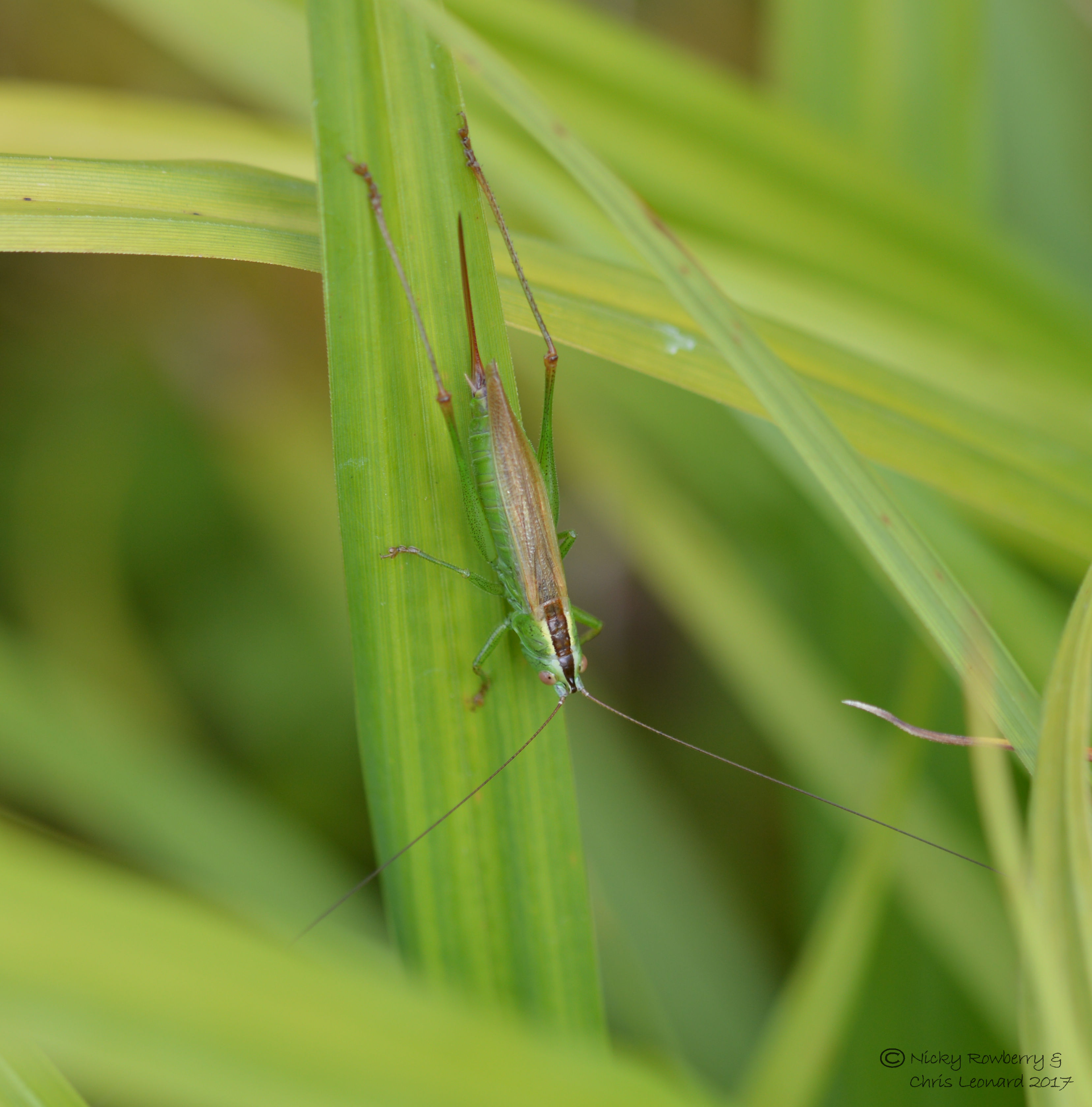
In the sunnier periods we could hear crickets chirruping in the grass. We saw several of these particularly large ones, which turned out to be a new species for us  – the Long-winged Conehead (Conocephalus discolour).

Grafton is also a great place to go for dragonflies and damselflies. Darters (like this female Common Darter (thanks to Neil for ID)) were reasonably common all over the wood.

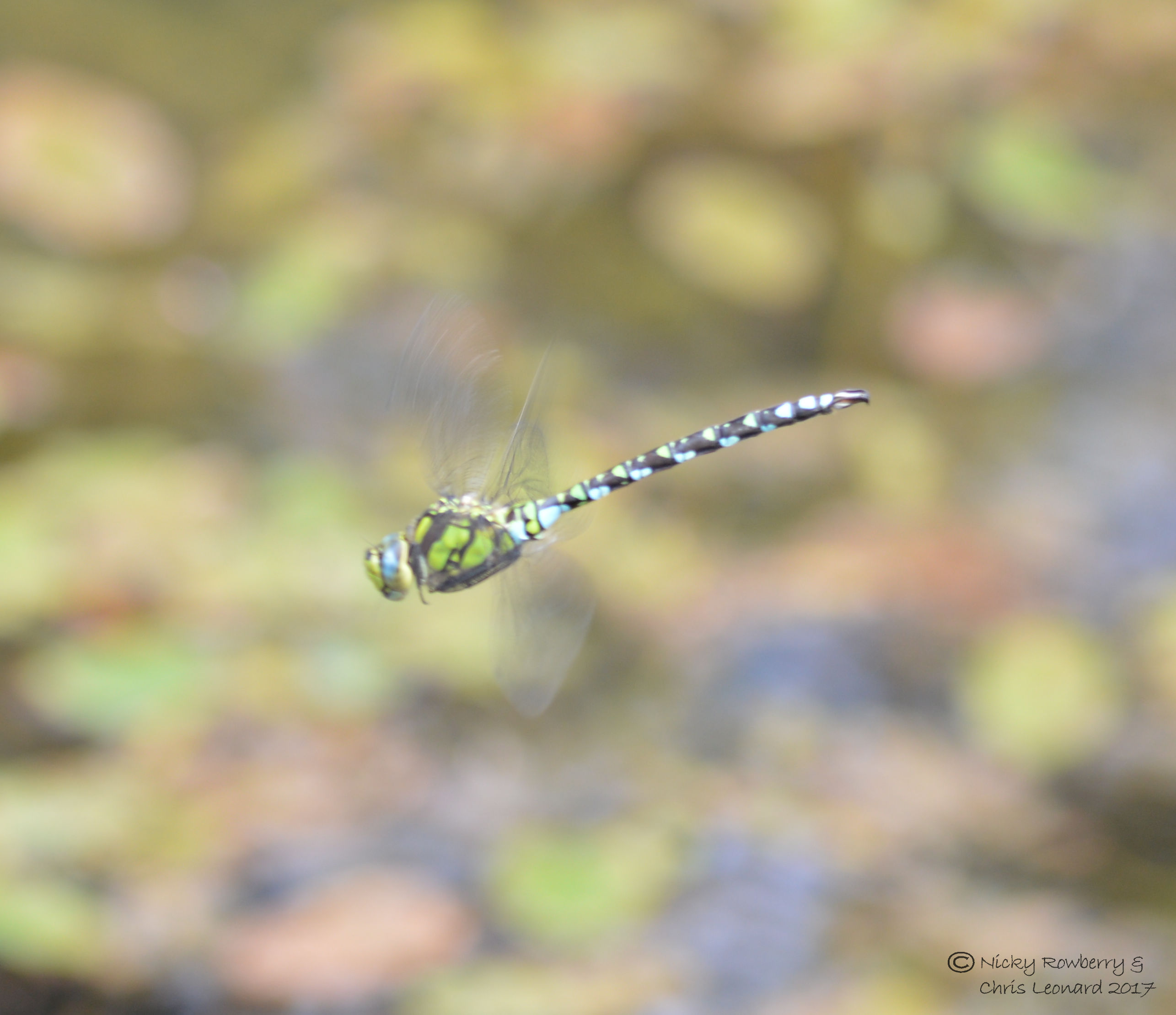
We also saw several of the much larger Southern Hawker dragonflies, particularly around the small pond. They seemed to be inexhaustible though and never once did we see one land. Both of us spent ages trying to get a photo of one in flight over the pond; this blurry shot was the best we managed.

Damselflies were also common around the pond – again another new species for us – the White-legged Damselfly (Platycnemis pennipes), which has, as the name suggests, white legs!

I found one individual sitting on a flower, seemingly staring straight at me. It stayed so long and I spent so long trying to get the perfect photo, it ended up feeling like we were having a bit of a staring contest – if we were then he won!

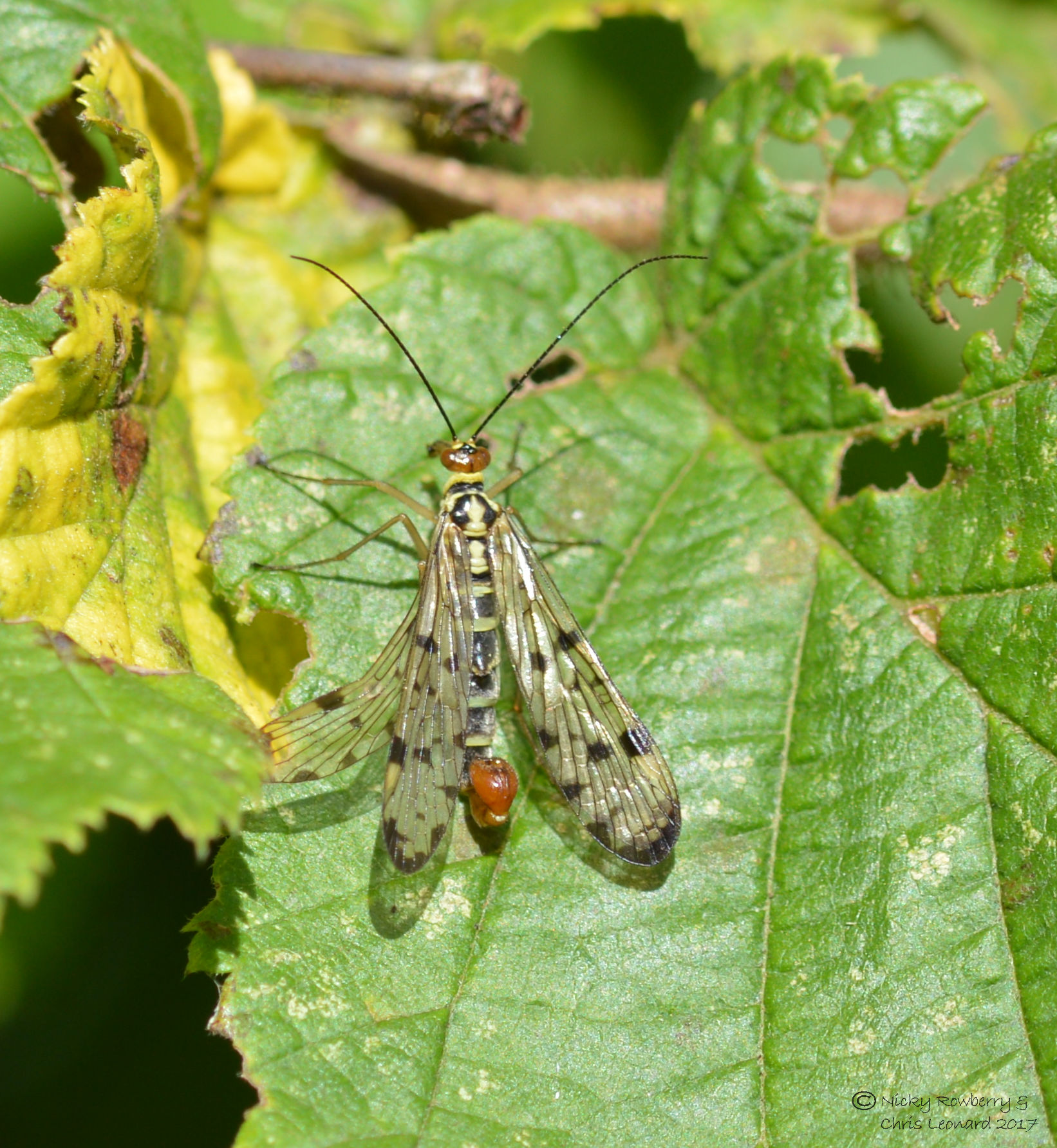
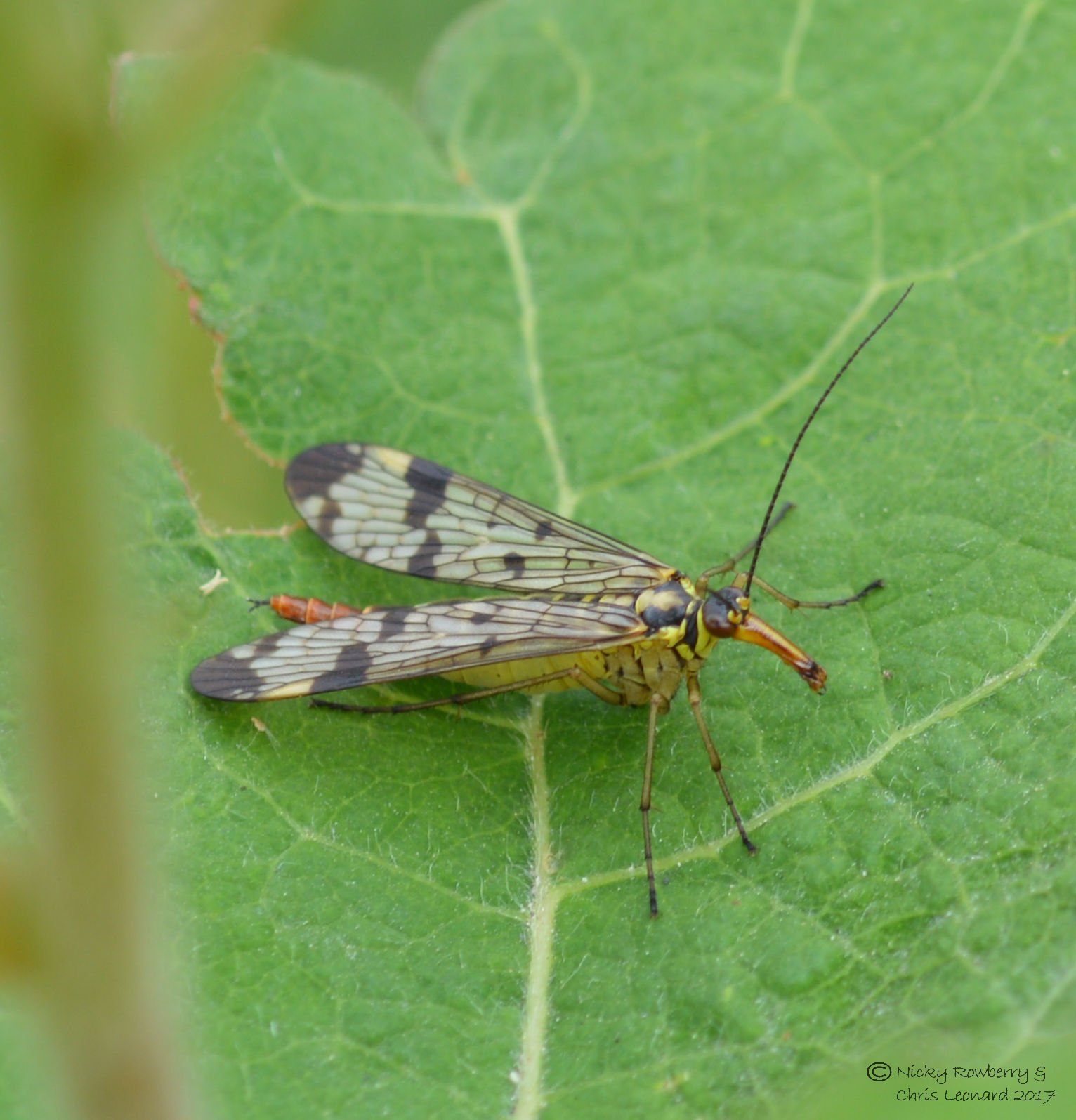
One insect we’d been trying to get a photo of all summer, was a scorpion fly.  These are seriously weird looking insects, with a long beak like structure on the head and a scorpion style tail on the males. We’d seen lots of them at Trench Wood a few months ago, but then only the females which don’t have the scorpion bit. Grafton Wood however was buzzing with males. It still wasn’t easy to get a photo of the tail as the wings kept getting in the way, but here are our best efforts.

Grafton Wood has never disappointed us and this weekend was no exception.

Out and About – Lea Quarry, Wenlock Edge

One of the goals for 2017 was to see some new butterfly species. So yesterday we set out for Lea Quarry at Wenlock Edge, in search of the Wall butterfly. The excellent “Butterflies of the West Midlands” book recommended Lea Quarry as a hotspot for Walls in August, so off we went. As usual we nearly managed to get lost as soon as we left the carpark, thanks to someone removing an arrow sign from the path trail! Fortunately while we puzzled over which way to go, a very helpful butterfly spotter Roger (and his gorgeous Malamut dog), showed us the correct path and in fact led us straight to our targets.

Wenlock Edge is a narrow limestone escarpment and Lea Quarry is just as it sounds – a quarry.  From the path there are lovely views out over the Shropshire countryside.

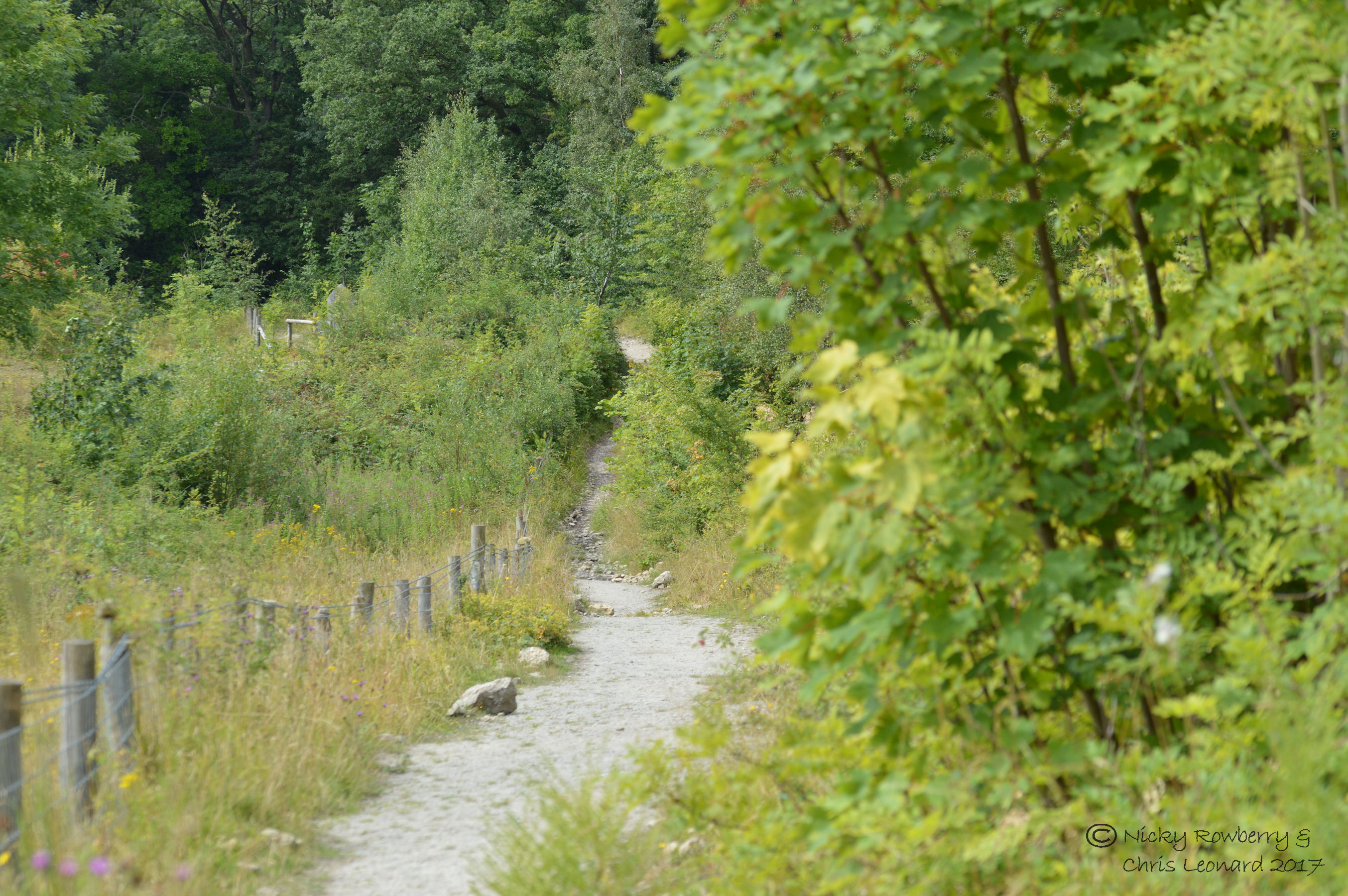
The path runs along the Edge with the quarry to one side.

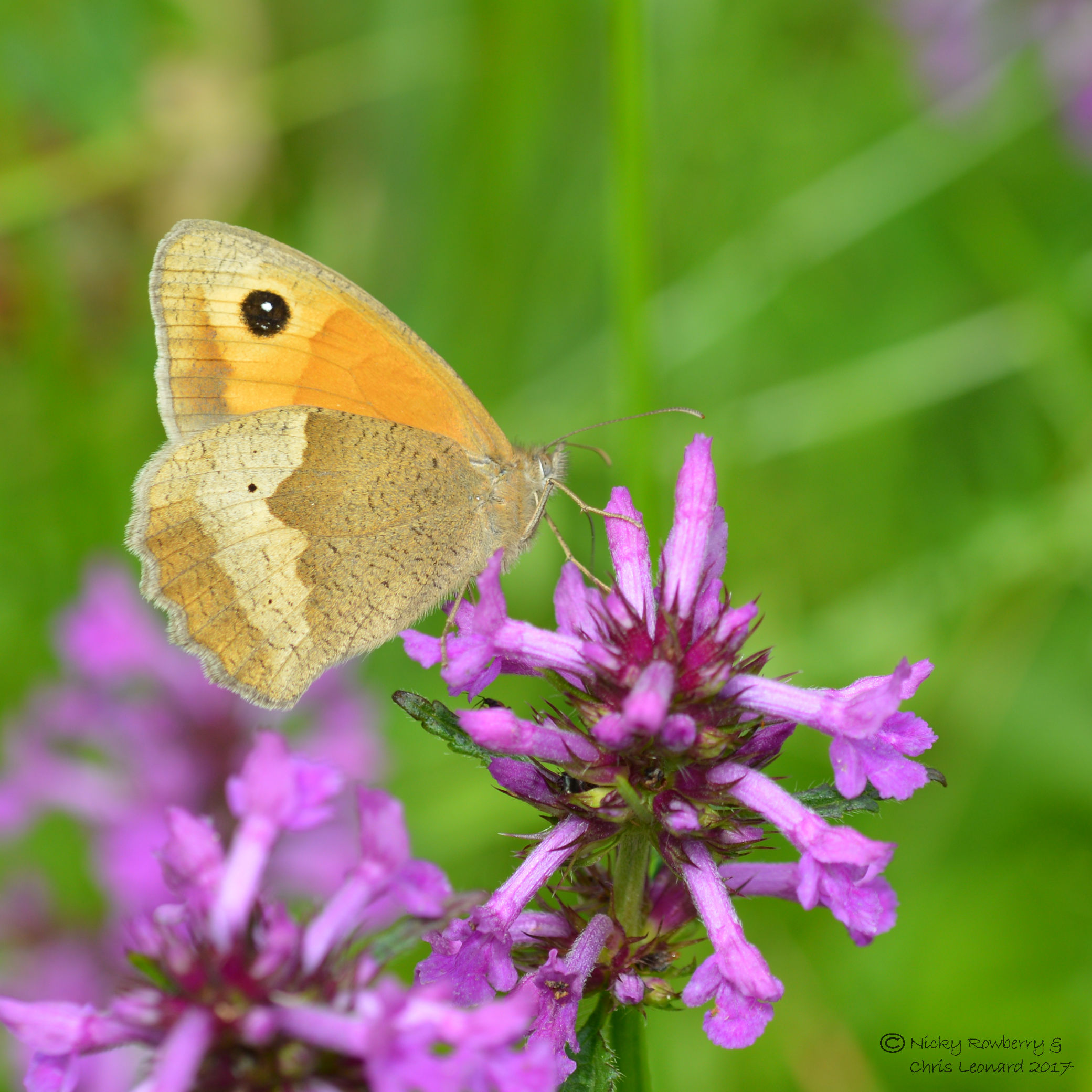
The butterflies congregated on a small rocky slope at the side of the path. The area may not have been very big, but it was full of butterflies – we counted 11 species. Most were common ones like Gatekeepers, Speckled Wood, Comma, Holly Blue, Meadow Browns and Whites.

There were a couple of large and fresh looking Peacocks.

There was also one Small Heath, which was more unusual to us. It skulked about in the undergrowth a bit though and looked generally a bit tired, so we only managed this poor photo.

Common Blues were reasonably common and the males were very blue! The poor female is of course the dowdier of the pair, but still very beautiful.

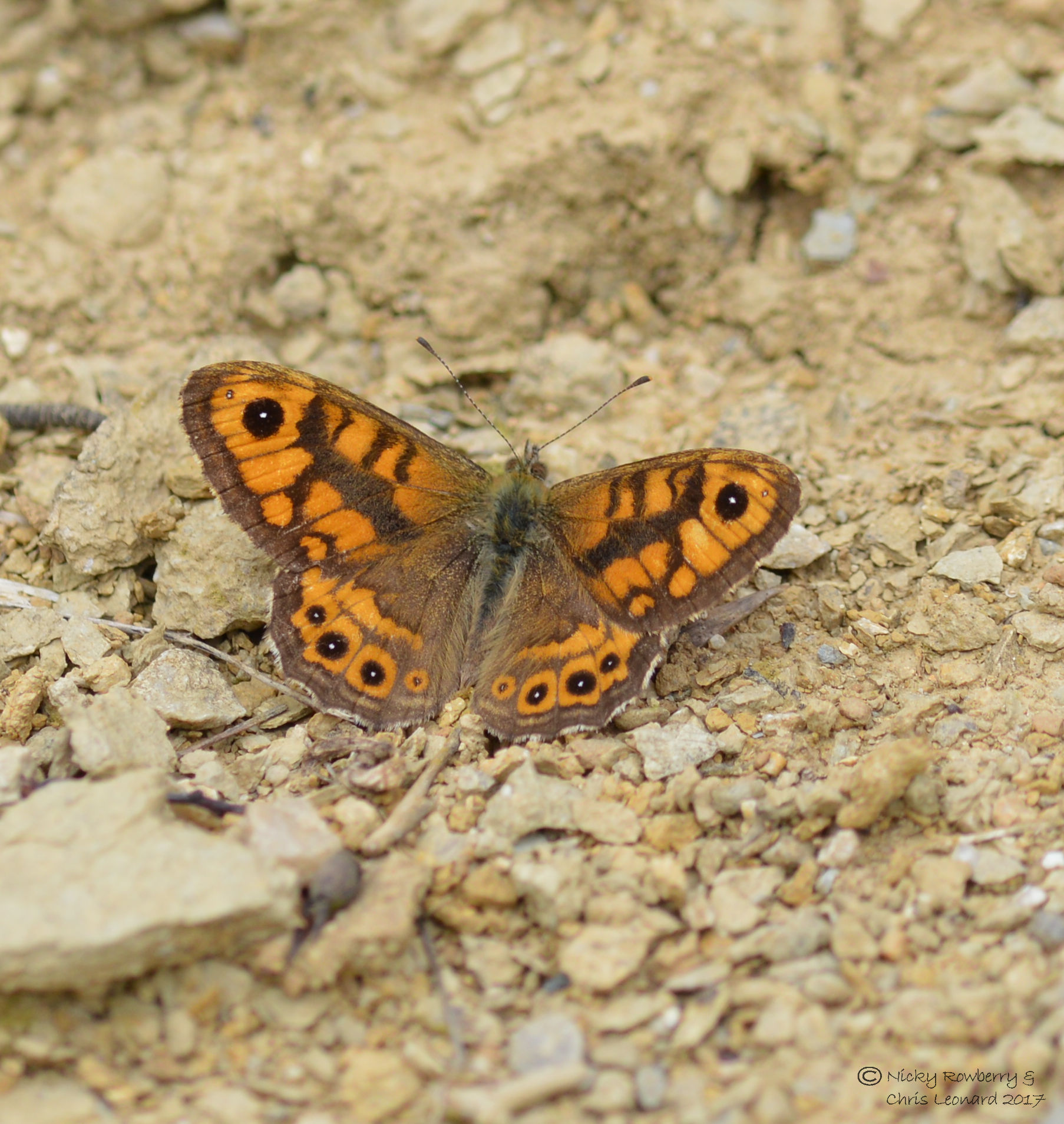
But the main attraction were the Walls. They’re medium sized butterflies and quite strikingly marked, yet were surprisingly difficult to spot unless they took off. They fly most when it’s sunny, so we were lucky the weather was kind to us and the sun shone down on the righteous! Roger pointed out our first ever one, but after that we were up and running.

We saw several basking on the bare rocks. Unfortunately they do have a tendency to take off as soon as you approach with a camera, but we did eventually get a few decent shots of them like this.

I did eventually manage to get a few photos of a Wall on a flower – only because I was trying to photograph something else and the Wall landed on the flower right next to me though – but hey, you take what you can get! I didn’t realise until I looked back at the photos, just how beautiful the undersides of the wings are too.

The stony bank was busy with insects of all kinds besides the butterflies. Common Blue damselflies were drifting about all over the place there were also much larger Darter dragonflies (Common or Ruddy – I can never remember which is which?).

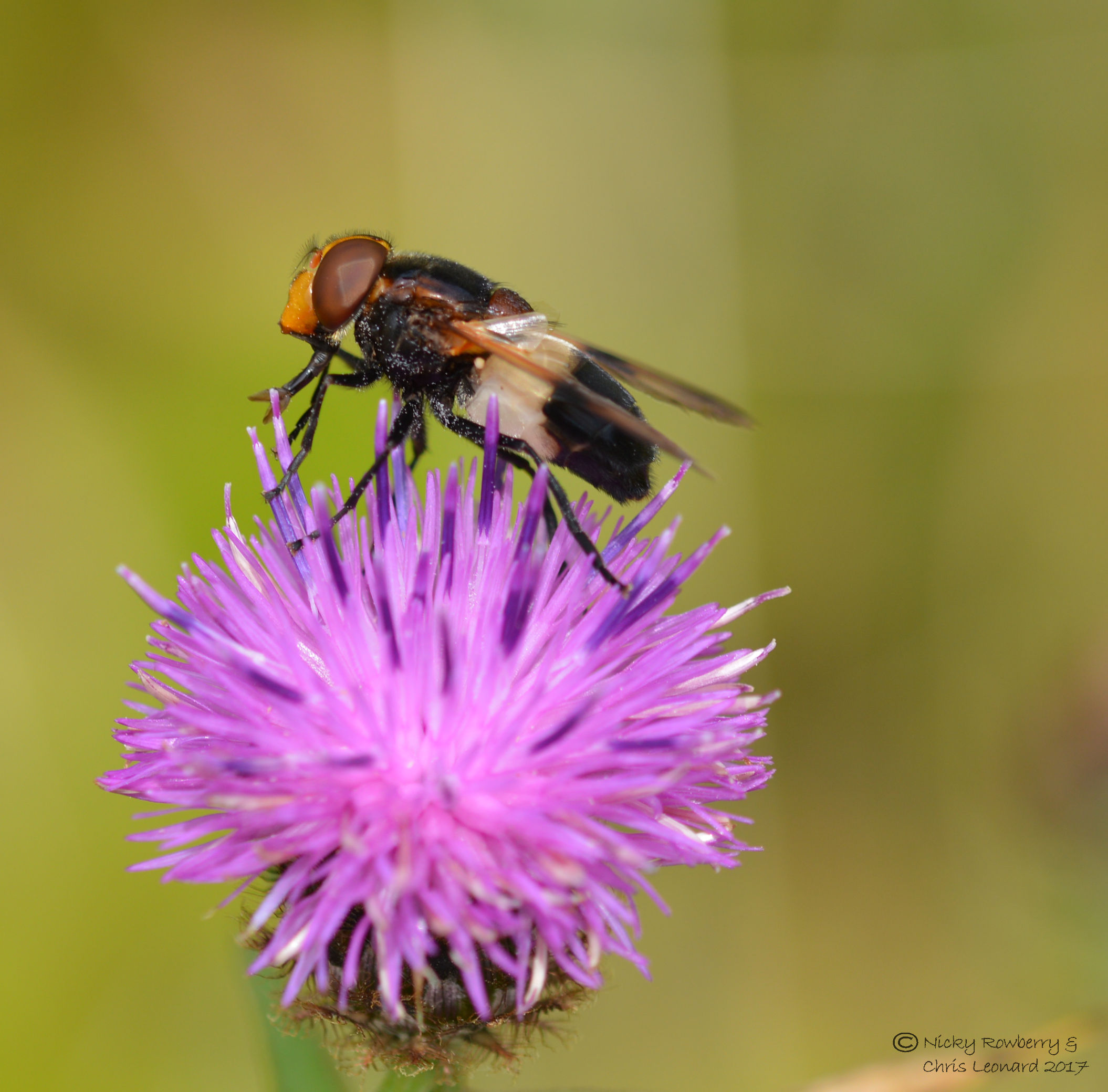
Bees and hoverflies were making the most of the summer flowers. The hoverflies were particularly numerous and included this striking Large Pied Hoverfly (Volucella pellucens).

We could hear grasshoppers/crickets almost constantly – chirruping away enthusiastically in the sunshine. It was towards the end of our visit though before we actually saw one, when it hopped out onto the path. The relatively short and thick antennae indicate it was a grasshopper rather than a cricket, and that’s about as far as my ID got. But thanks to Neil, it has now been identified as a male Meadow Grasshopper.

So the Wall takes my lifetime tally of butterflies to 43! Very happy with that, but already looking forward to adding to this. It’s probably too late to bag any other new ones this year, as I’d need to travel serious distances probably. But with a bit of luck next summer, I might manage to creep a bit closer to the magic total of 59 – the generally recognised number of British species. It’s almost certainly going to get harder and I’ll have to travel further, but it’s nice to have a goal and a great way to get out and about, so I’m not complaining.

30 Days Wild – Day 27 – Trench Wood

It’s Day 27 of 30 Days Wild and we’re back on the butterfly hunt, this time in beautiful Trench Wood, Worcestershire. Not looking for anything new as such, just hoping for sightings of some old favourites and Trench Wood never disappoints. The place was absolutely heaving with butterflies and insects of all sorts.

Most notable today were the ringlets – they were everywhere, we must have seen hundreds. I don’t think we’ve ever seen so many, every step we took seemed to scatter more off the path. It was lovely to see, as I’d been starting to worry that we’d not seen so many this year. There were mating pairs too (in one case a trio, with an overly enthusiastic extra male!) doing their thing in the sunshine.


Meadow Browns were also common, although not nearly as abundant as the ringlets.


There were plenty of skippers, most being Large like this one with its hooked antennae.

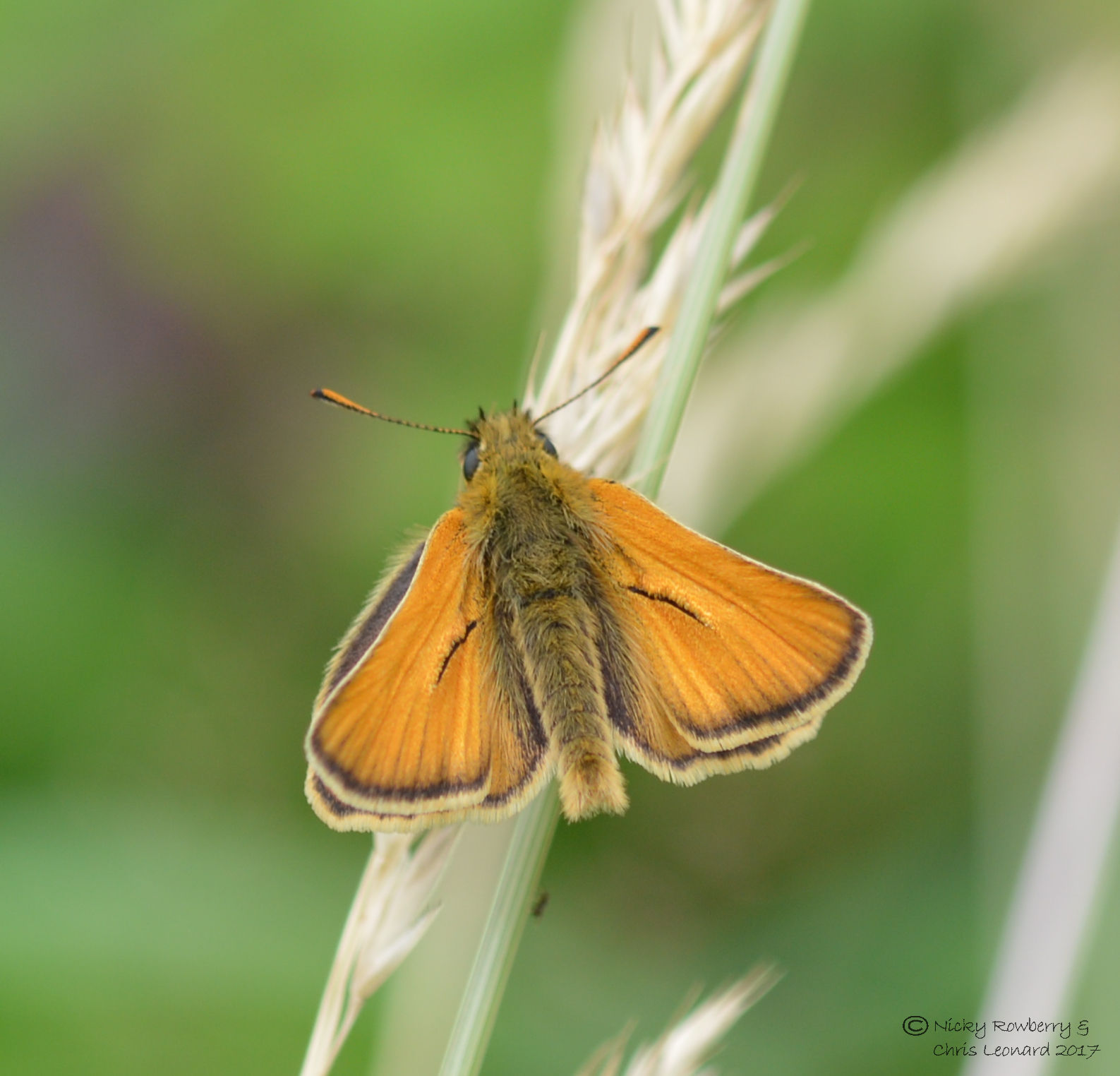
But there were also a few Small Skippers – distinguished by their orange tipped, clubbed antennae. This one is a male with a diagonal scent brand across the wing (thank you to Mike Williams on Facebook for confirming this).

Once again the White Admirals proved elusive. There were quite a few present, but as usual they refused to settle long enough for a decent photo – here’s my best but still poor effort.

The one I really went looking for today was the Silver-washed Fritillary and in this at least I was fairly successful. Initial sightings were just glimpses as they bombed past me, but eventually I tracked down a few more obliging ones.

A variety of moths were out and about too. Some tiny ones like the Nettle Tap, others slightly larger like this Clouded Border,


and others simply stunning like a Five Spot Burnet and this Scarlet Tiger.

Damselflies, demoiselles and dragonflies were all fairly common around the pond. I think we saw both Beautiful and Banded demoiselles, azure and large red damselflies and these two splendid dragonflies. The top one is a female darter (either common or ruddy) and the blue one at the bottom is a male Emperor dragonfly.

There were of course bees and hoverflies everywhere, but there just wasn’t time to do those as well today – so many insects so little time!

And finally I got a photo of a Scorpion Fly – I’ve been trying to get one of these for weeks now. Only trouble is, every single one I saw was a female, so none had the distinctive scorpion tail which only the males have. So the hunt goes on!

So all in all another fabulous day out and probably one of the most insect laden ones to date. Day 27 of 30 days wild and I’m still finding things that surprise and delight!


30 Days Wild – Day 11 – Demoiselles and Damsels

It’s Day 11 of 30 Days Wild and I was out and about in search of some of my favourite insects.  This wild June weather is starting to get a bit annoying though – the wind doesn’t seem to have stopped blowing here for days – not ideal especially when you’re trying to take photos of something as flighty and ephemeral as a dragonfly!

Windy weather aside, it was a lovely day and I headed out to one of my all time favourite places – The Knapp & Papermill Nature Reserve on the other side of the Malvern Hills. I know I visited this reserve last year for 30 Days Wild, but I just couldn’t resist going again.

I hoped to see one of my favourite insects, the Beautiful Demoiselle and also if I was really lucky maybe a kingfisher. Well I got one out of two!

The reserve has a stream (Leigh Brook) running through it and does get kingfishers, just not while I was there today. The wildlife trust has built a screen overlooking a suitable patch of the stream, so that if you’re lucky you can watch the kingfishers unseen.

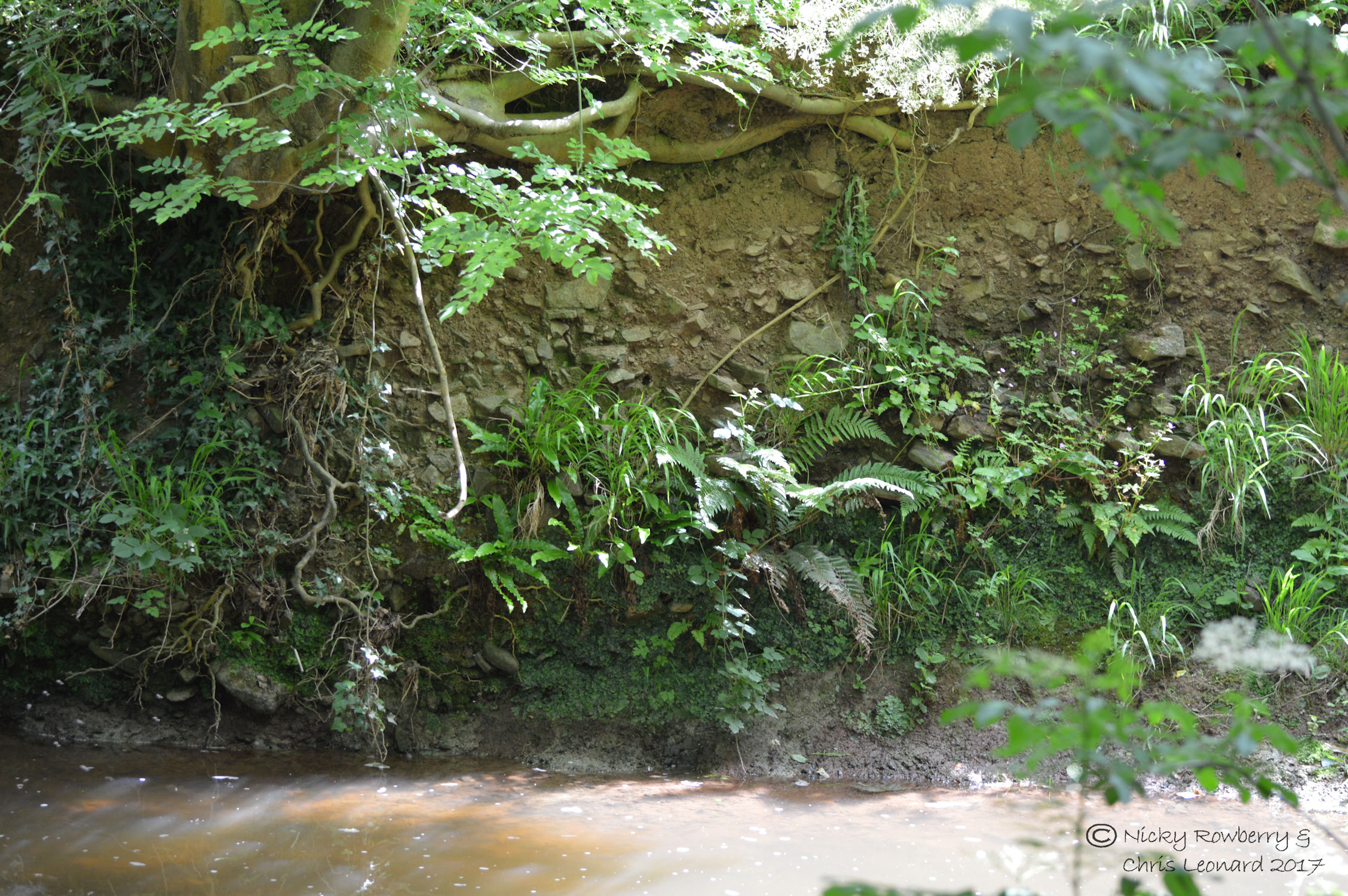
Beyond the screen is the water surrounded by trees and a vertical bank the other side – ideal kingfisher habitat. But just because you’ve got everything a kingfisher might want, doesn’t mean they’re going to turn up on cue. It’s still a really nice spot to wait and relax, watching the brook flow by.

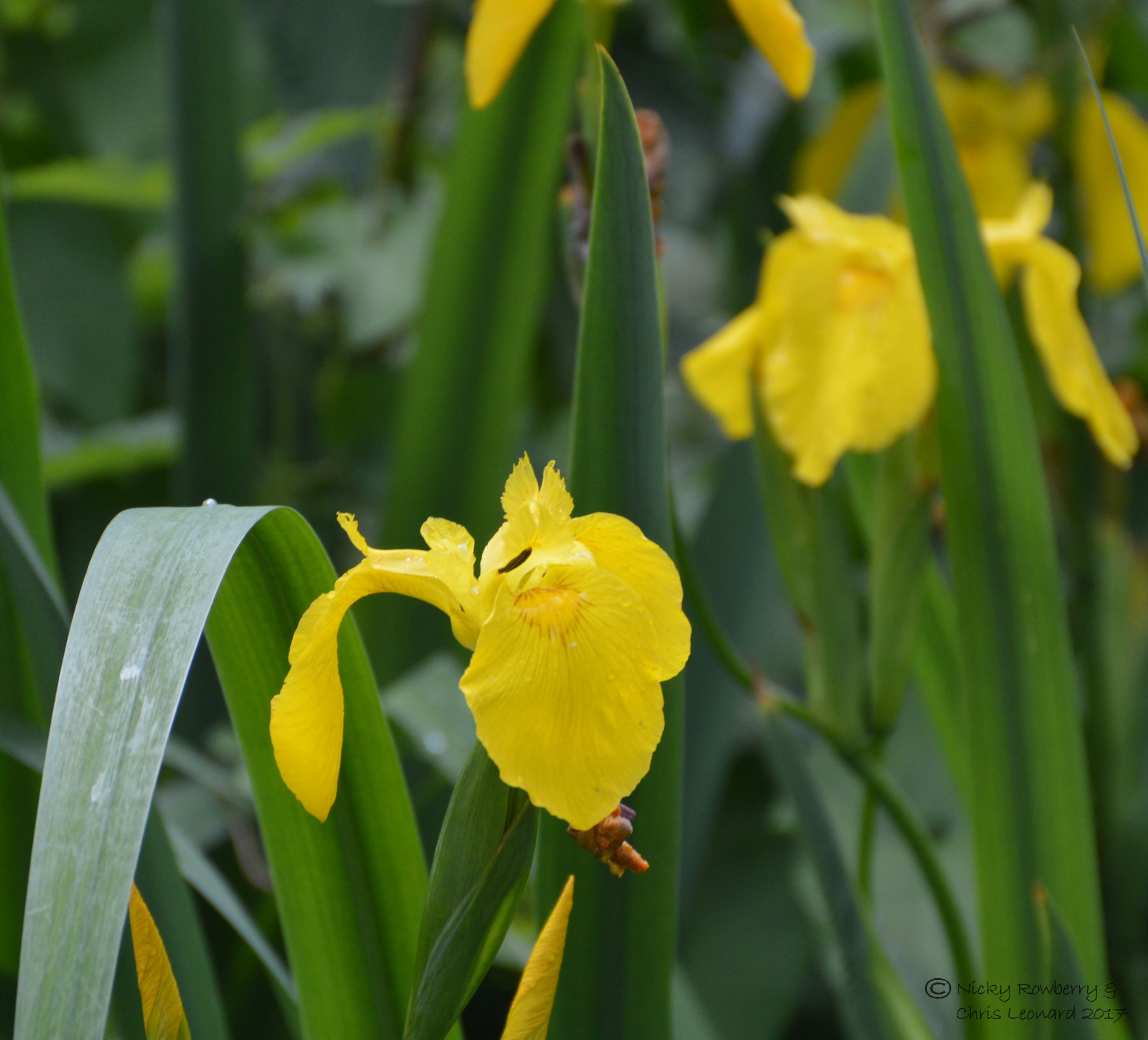
Fortunately I had more luck on the insect front. I spotted demoiselles and damselflies almost as soon as I set foot in the reserve. Even without the insects it would have been lovely though. As you enter there is a pool surrounded by gorgeous flag irises.

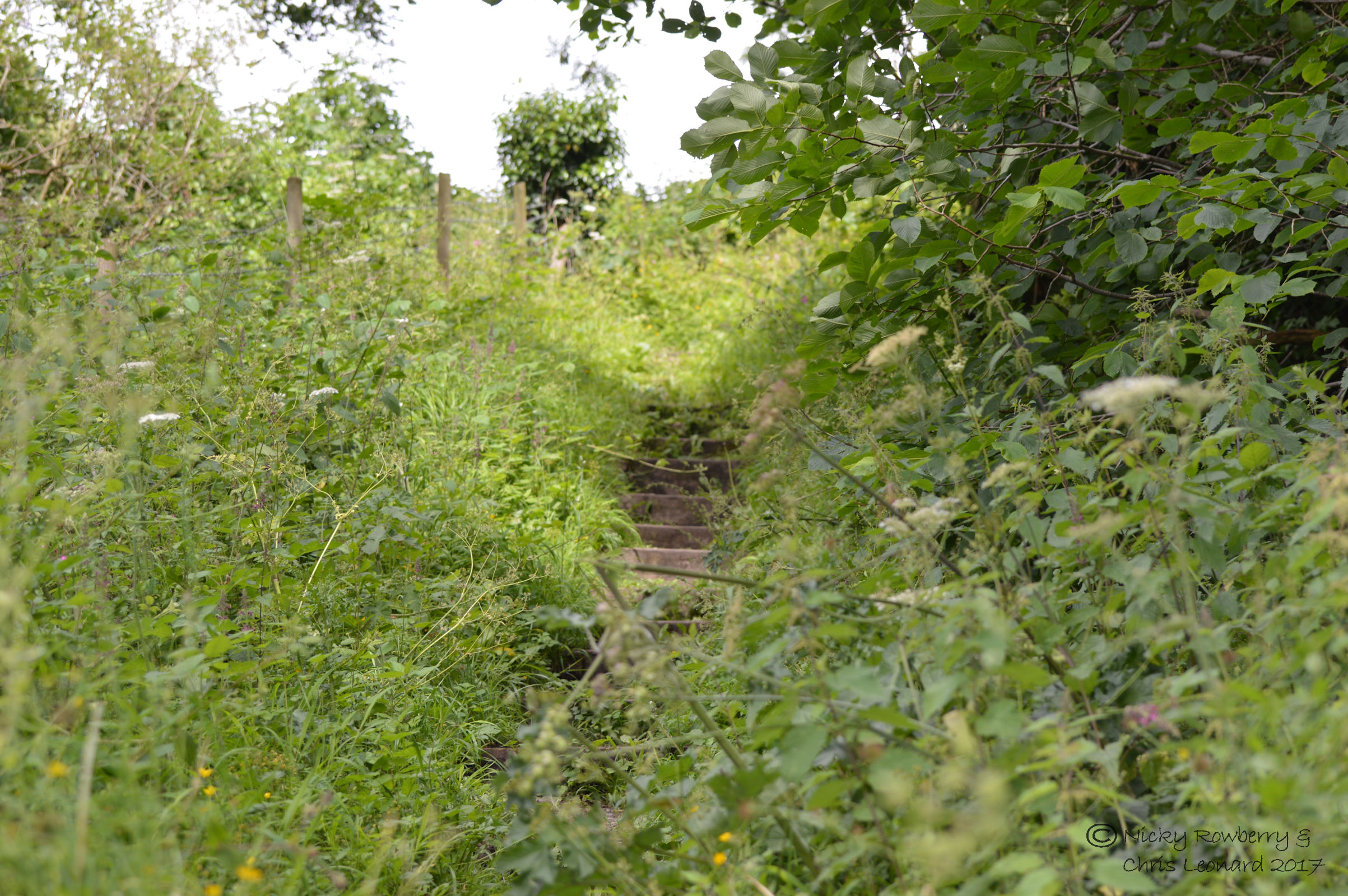
Further into the reserve there are little pathways going off the main track, taking you on your own magical mystery tours.

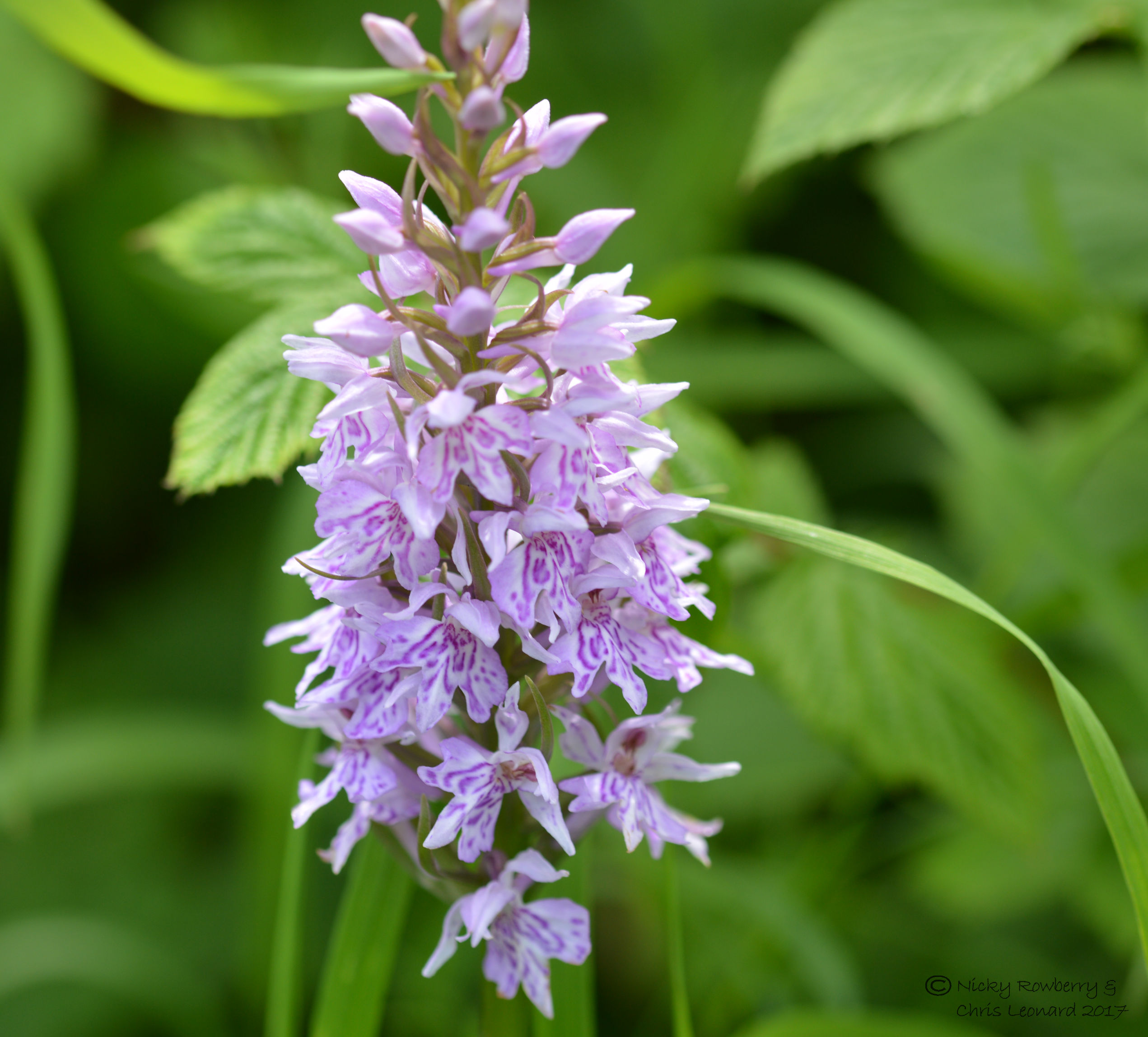
Up the second of these I tried, I found these orchids – they may only be the Common Spotted ones, but they are beautiful nonetheless.  I was happy to have found 2 or 3 orchids, but when I rejoined the main track, I came across a meadow absolutely full of them – even better!

As well as the meadows and the stream, the reserve has large areas of woodland and old orchards – all of which were full of birds – none of which would pose for the camera! A whole flock of long-tailed tits swooped into a tree right in front of me, there must have been at least a dozen and yet I still couldn’t get a better picture than this.

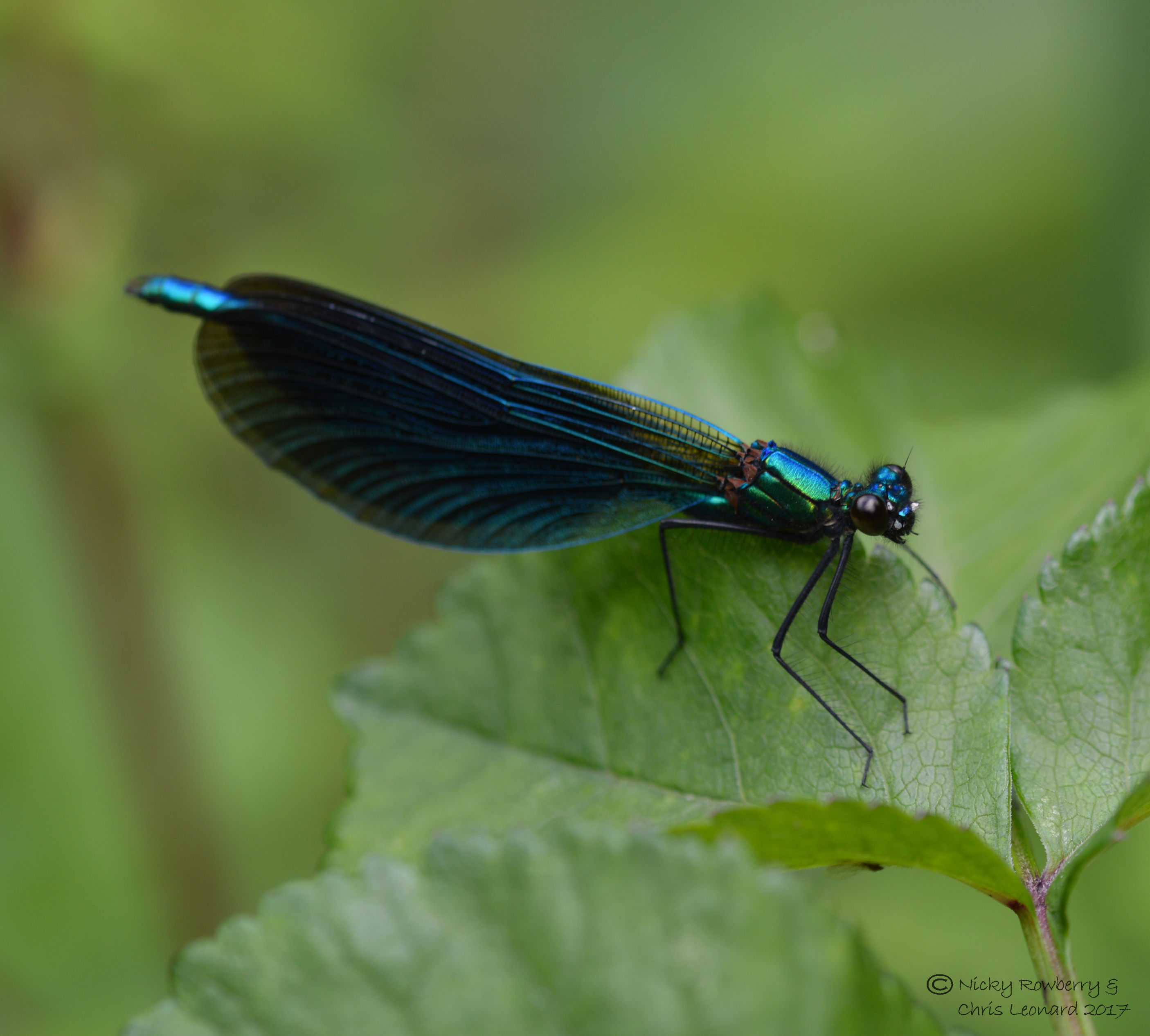
After 20 more minutes of fruitless birdwatching, I swapped back to the macro lens and concentrated on the insects. The Beautiful Demoiselles were flitting around like tropical birds – it still amazes me that you can get such beautiful insects as these in Britain. There seemed to be more males, although that may just be because they are flashier and easier to spot. The males have stunning blue wings with an emerald green body.

The females have more of a bronze colour to the wings, with a white spot near the end. I think last year we got better photos of both, but then it wasn’t so windy!

There were loads of them and I could have watched them all day. I did try and take some short video clips, but I don’t think they really capture them properly. The first clip just shows a male flexing his wings, but then a bright blue damselfly photo bombs in the top left corner!


I’ve tried to be clever with the second clip as I accidentally discovered a slo-mo feature when I was reviewing the clips. So this one shows the same male taking off for a short flight and the flight bit is in theory slowed down so you can see his aerial acrobatics better. Think I may need to practice this technique a bit more though!


Besided the demoiselles, I saw two species of damselfly. The bright blue ones were most numerous and turned out to be Azure Damselflies.

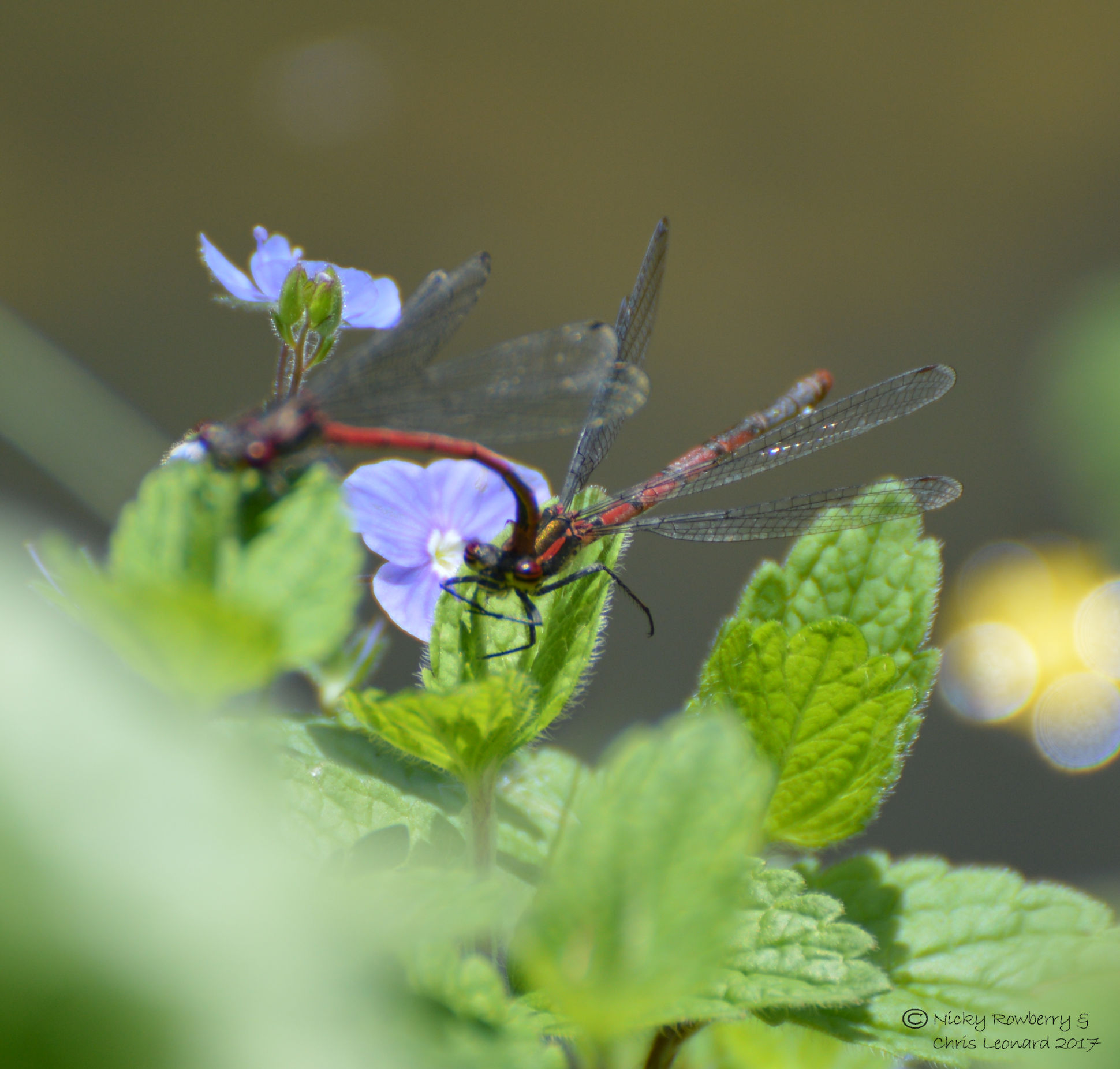
As I was heading back to the car, I spotted some Large Red Damselflies including this mating pair. The male is the one on the left and he has grasped the female on the right by her neck. They flew around the pond attached to each other like this for a few minutes while I watched. At some point the female will curl her body up and round to meet the male’s and then they will mate, but they didn’t get that far while I was spying on them!
I absolutely love this reserve, it is worth going to see the demoiselles alone, but there is so much more besides. It is tucked away in a small valley off an already off the beaten track road and always feels like such an oasis of calm.


30 Days Wild – Day 4 – Garden Bioblitz Part 2

It’s day 4 of 30 Days Wild and I spent the morning taking more photos of the wildlife for our Garden Bioblitz. I’d started the bioblitz at about 09:30 yesterday, so I was trying to cram in as many more species as I could before 09:30 this morning. This wasn’t helped by the fact that my camera has packed in, so apologies for the lack of photos in this post.

The day started at 04:30 to beat the birds to the contents of the moth trap. I had hoped for a good haul to boost my species tally, but the trap was fairly quiet – possibly because it had been quite windy last night. Still there were some nice moths including a few of the beautiful and distinctive Angle Shades – virtually impossible to mistake these for anything else, which I like in a moth!


Star of the moth show was an Elephant Hawkmoth making a timely debut for the year in our garden. I’ll never tire of these stunning moths with their bright pink bodies. If you were to make a toy moth, I reckon this would be it.


I put a specimen of each moth in the fridge (it does no harm but keeps them calm until  you can photograph them) and went back to bed for a couple of hours. 8 o’clock though and I was back up photographing said moths, then scouring the garden for more wildlife. I hadn’t managed to photograph any birds yesterday, so I topped up the feeders and waited expectantly to see what would show up. As usual the sparrows were the first to show, landing on last year’s teasels to check things out before heading to the bird table.


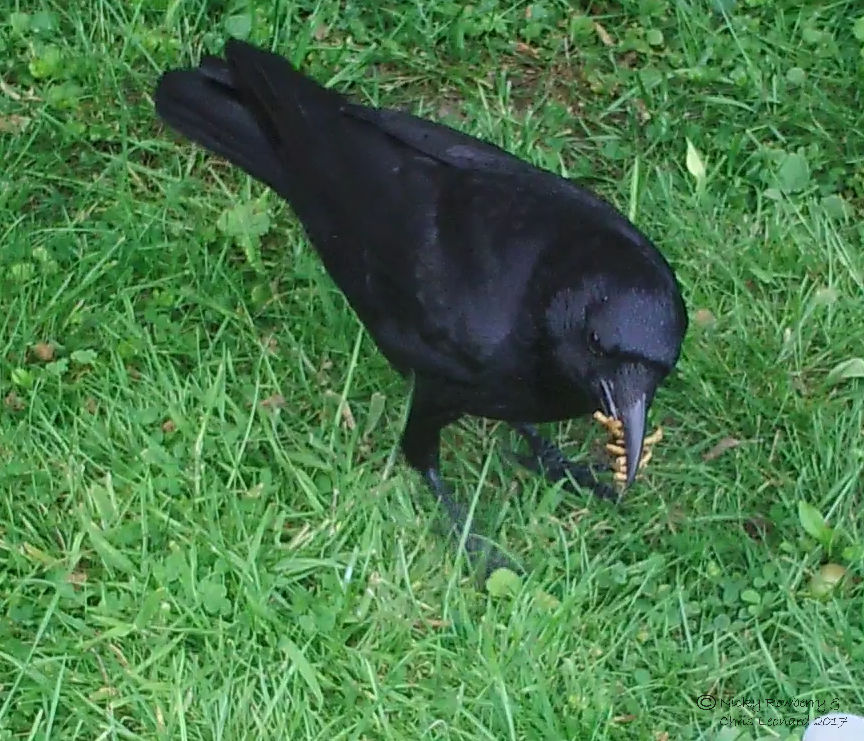
The starlings and jackdaws came next, followed by the blackbirds and pigeons. There were several no shows for birds that normally frequent the garden – no sign of the robin, wren, collared doves, great tits or gold finches. A blue tit just appeared in the last minutes to scrape into the bioblitz total. For the last few days I’d been seeing a big black bird, bigger then the jackdaws, so was disappointed initially when it didn’t show for the camera. But then I downloaded the trail camera which had been running for the last couple of days and there he was – a carrion crow.

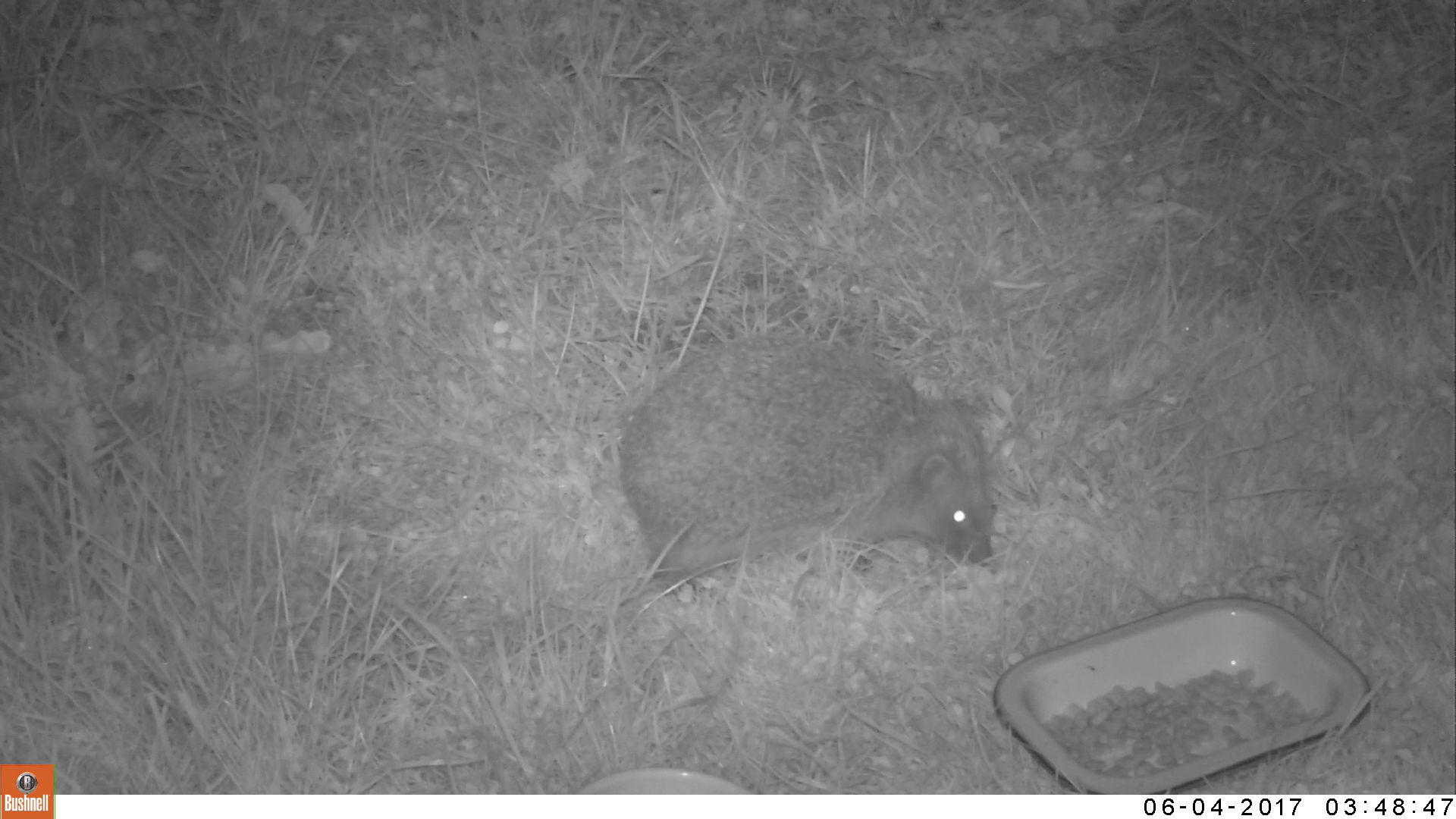
The trail cam also picked up a couple of hedgehogs – one of which looks like our old foster hedgehog Meadow – i.e. it was a big chunky looking hog!

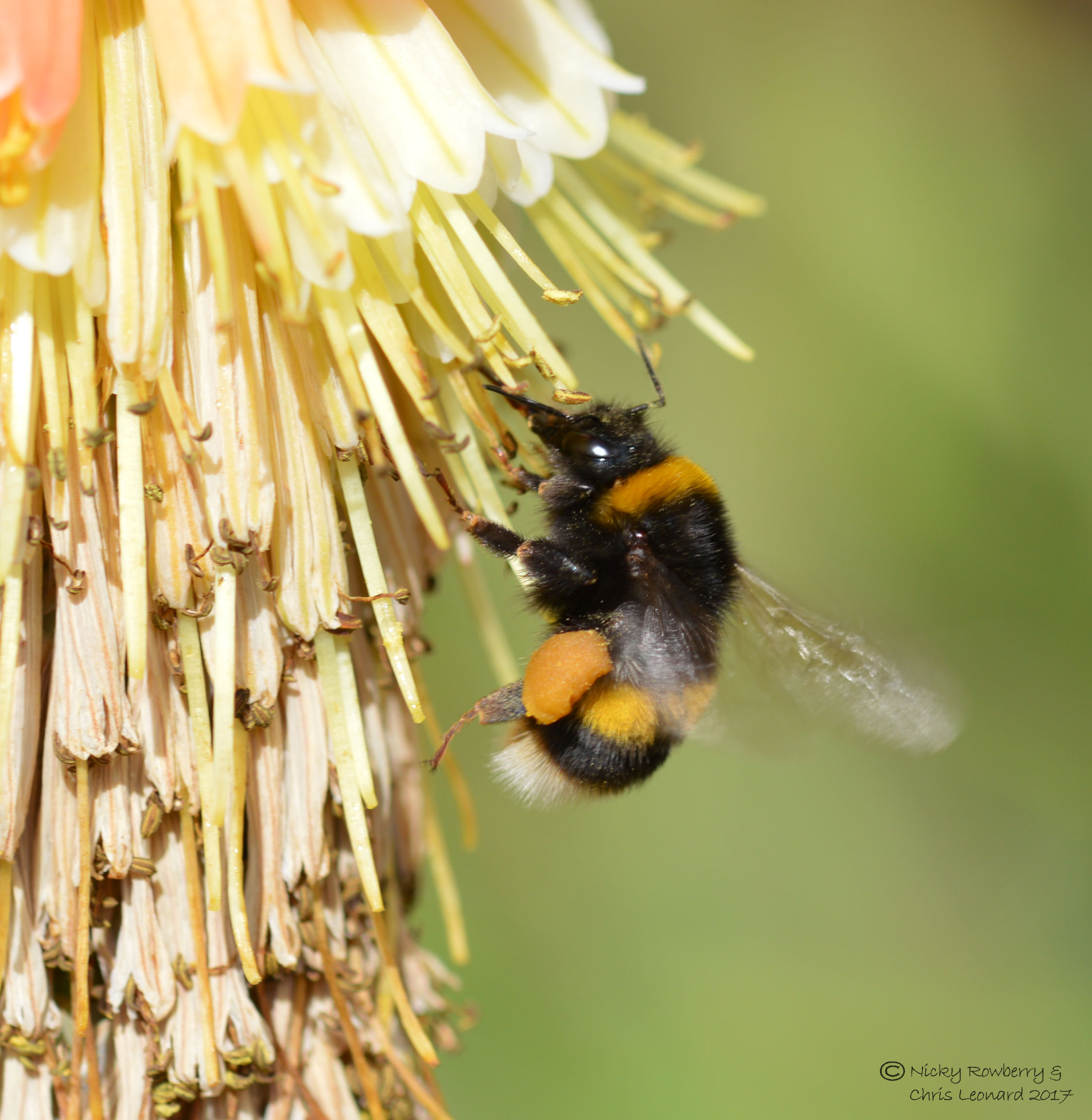
There were of course bees in the garden, although being a busy bee myself chasing everything else around I didn’t actually manage to get that many photos of them. But here’s one of my favourites – a Buff-tailed Bumblebee.


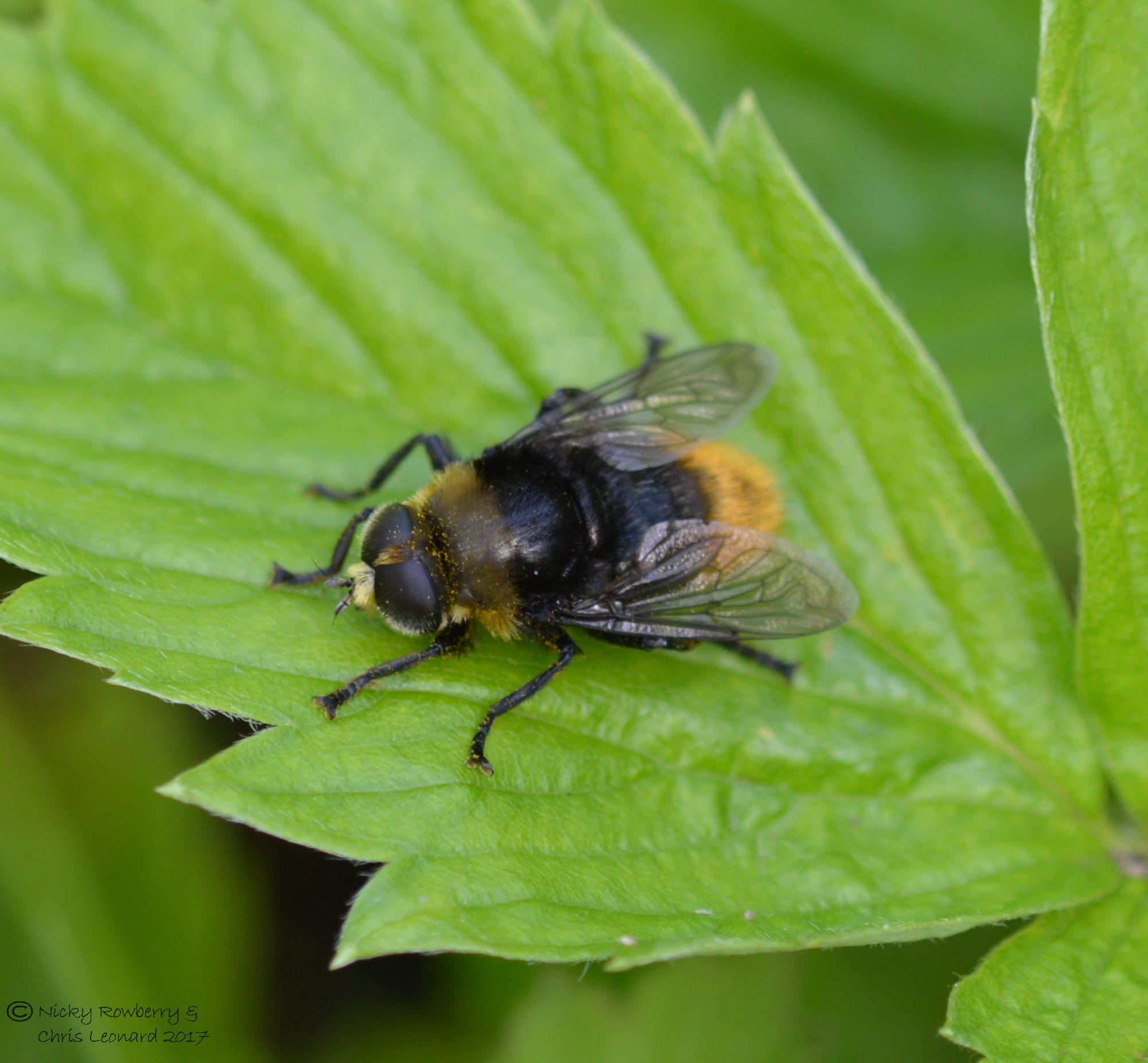
There was also this bumblebee mimicking hoverfly (Merodon equestris).

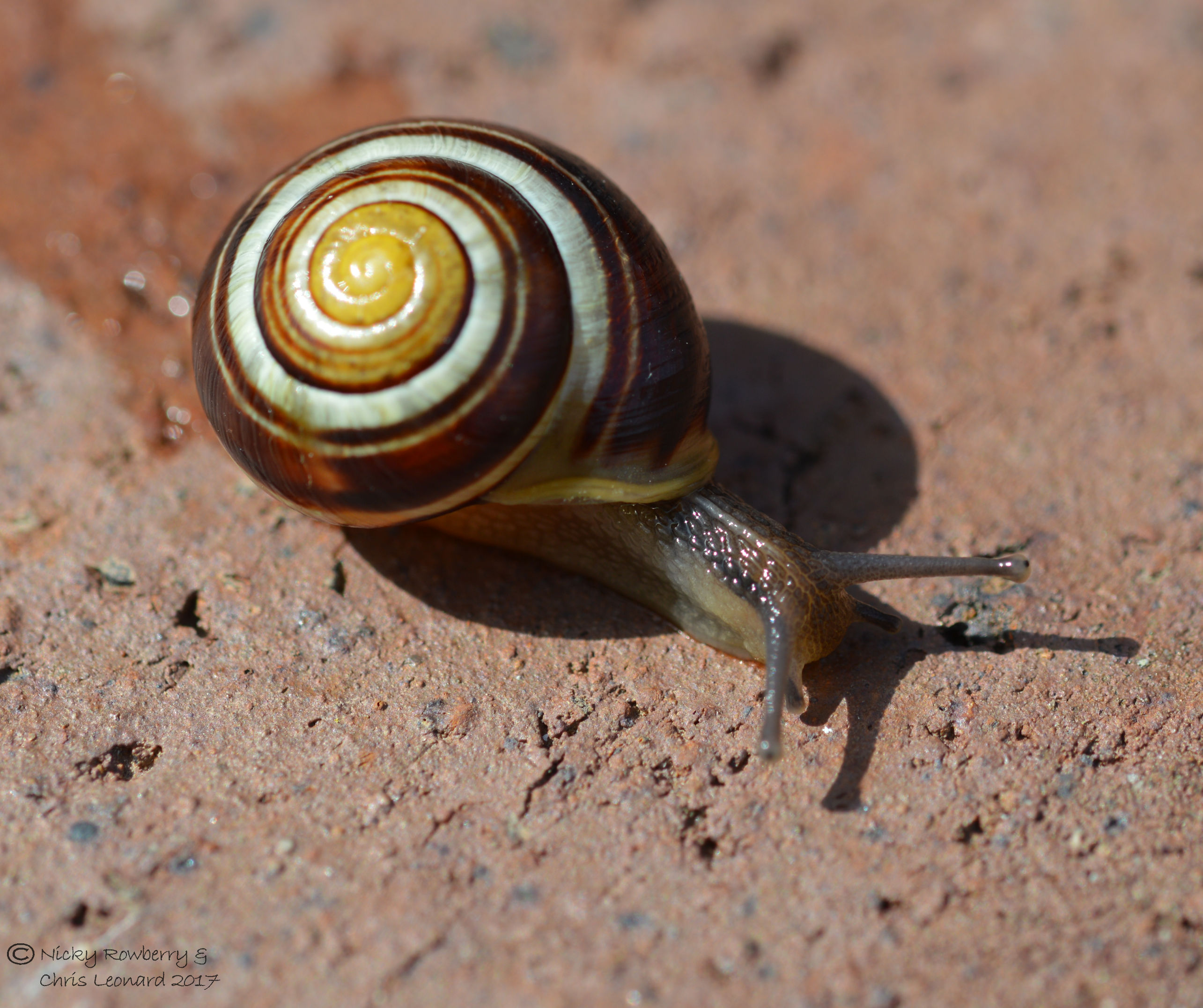
Our snails were also being sneeky and hiding away over the last 24 hours – several species that I know we get refused to show. Fortunately both the White Lipped (photo below) and a Brown Lipped appeared out of the Pendulous Sedge to get their photos taken.


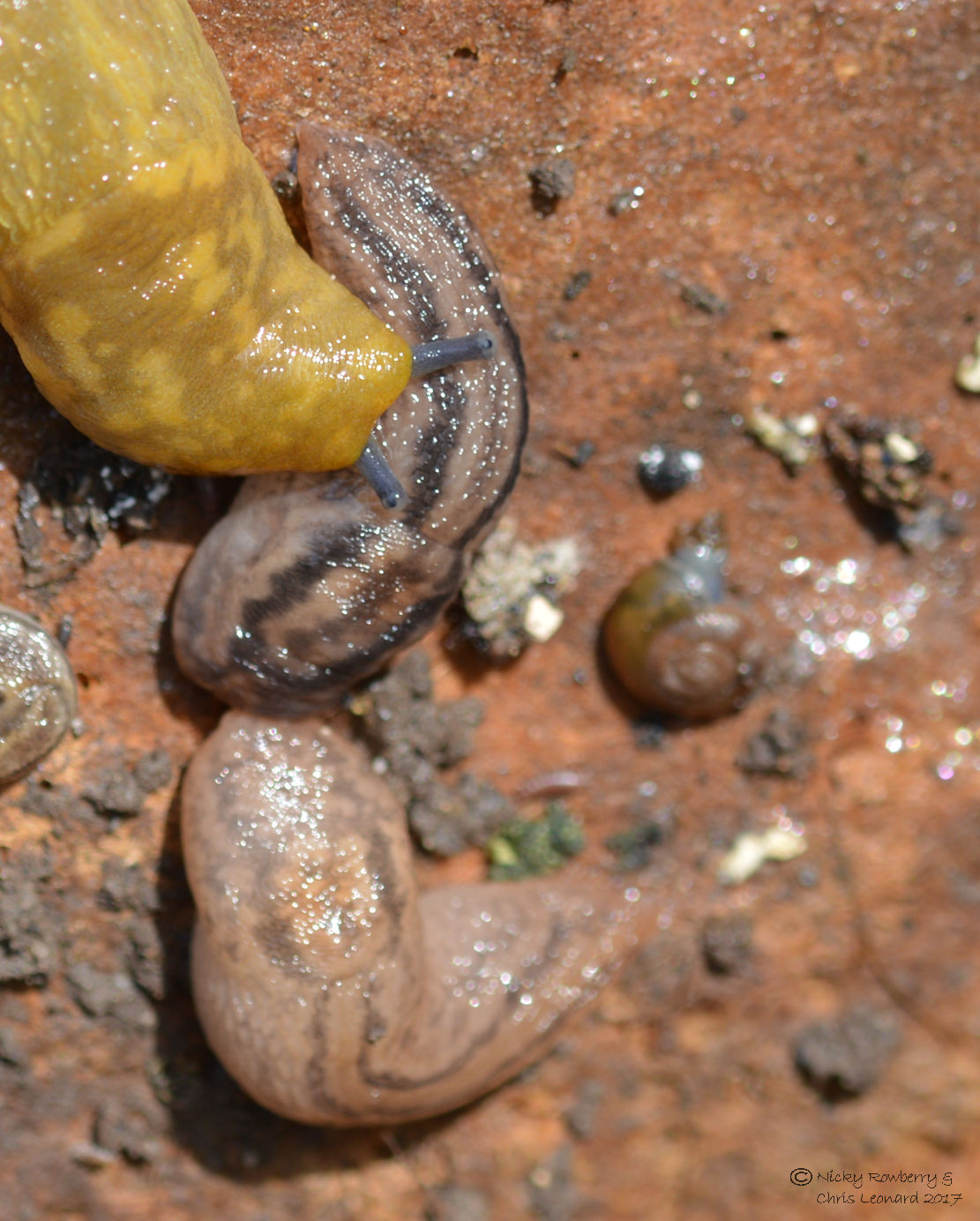
I also found three species of slug including this large yellow one and the stripy ones which I think are Iberian slugs.

I spotted this tiny nymph of the Speckled Bush Cricket, when I saw its antennae poking over the edge of a buttercup. Unfortunately the buttercup was blowing about in the wind a bit – hence the less than perfect focussing!

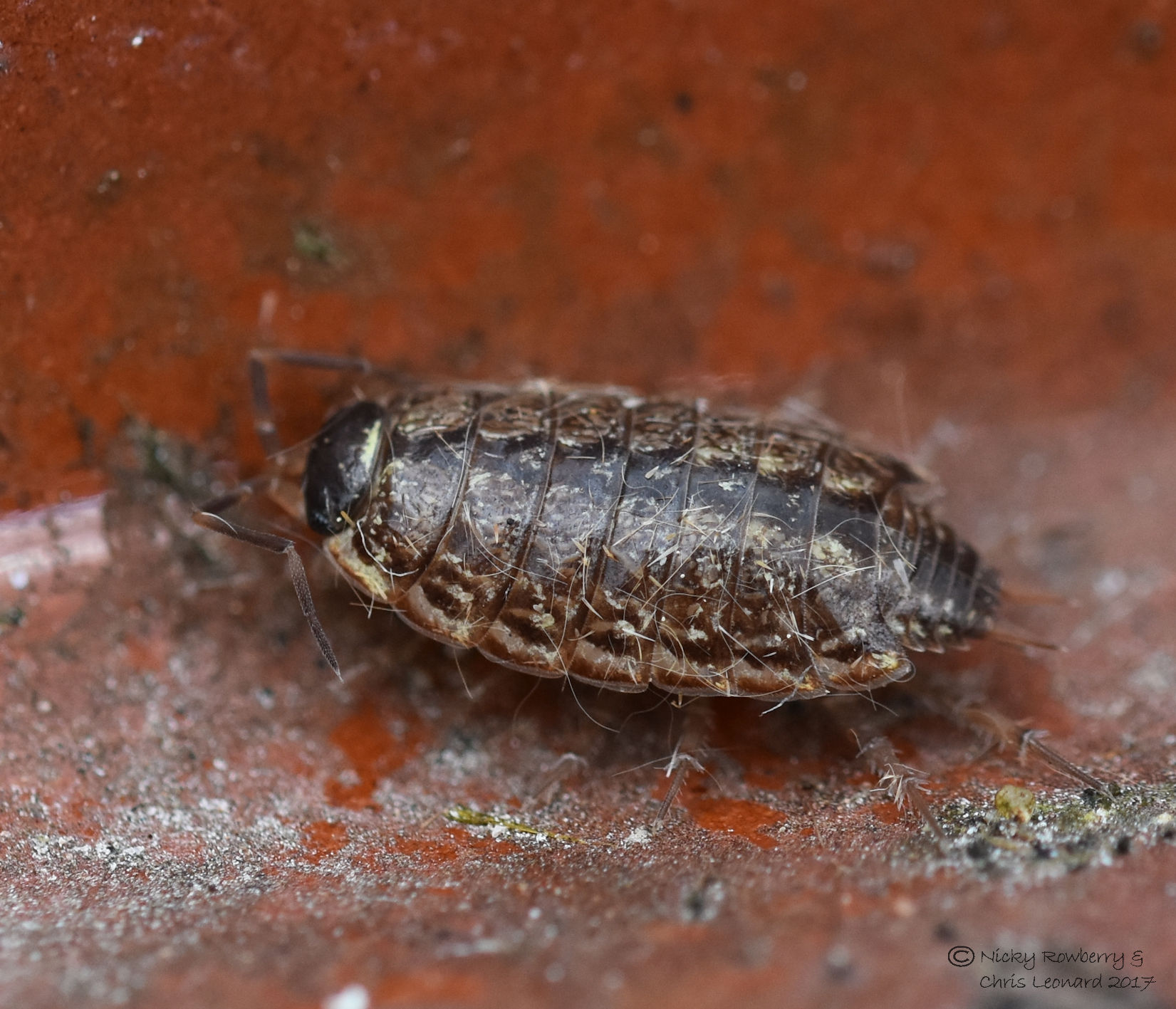
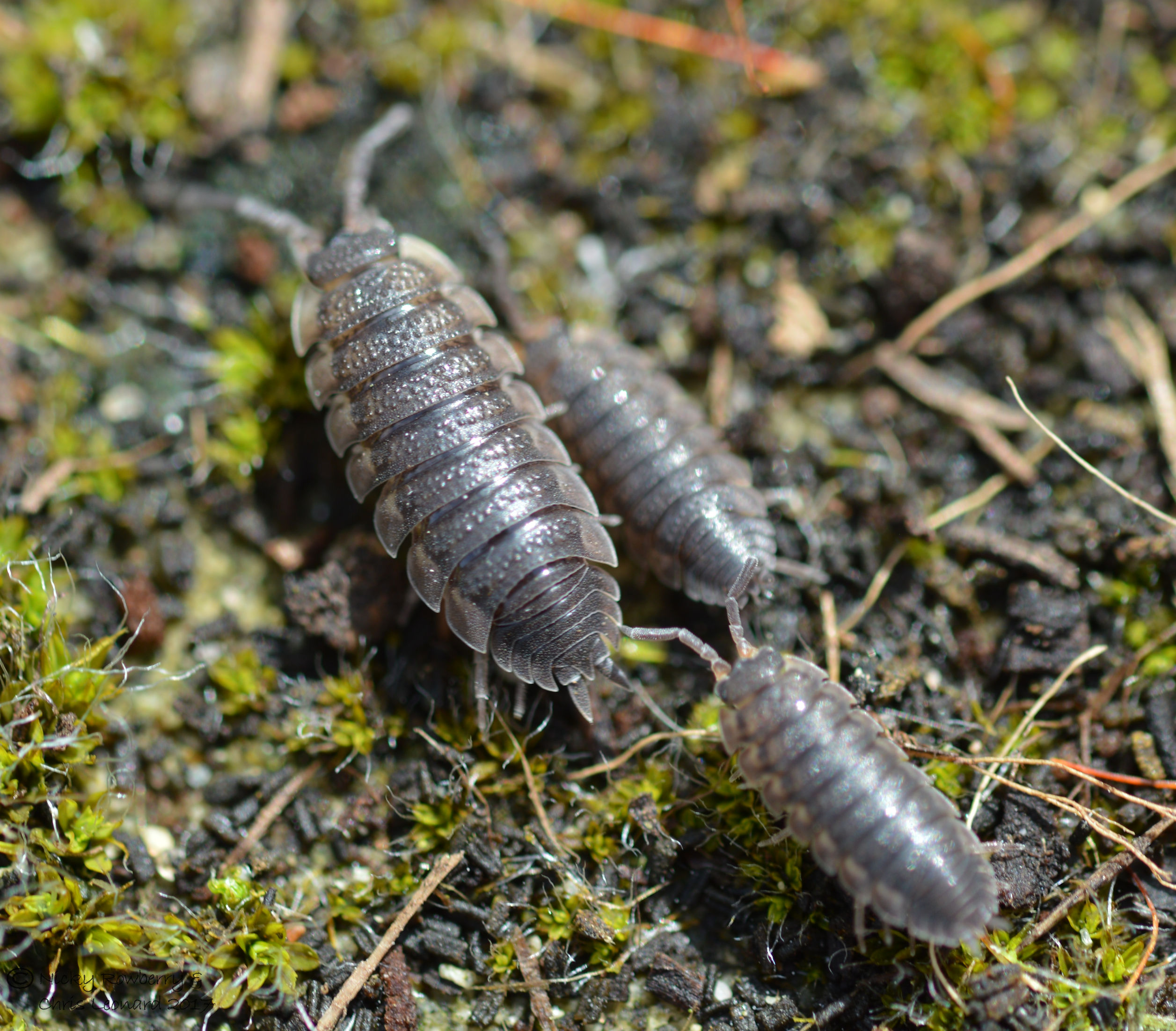
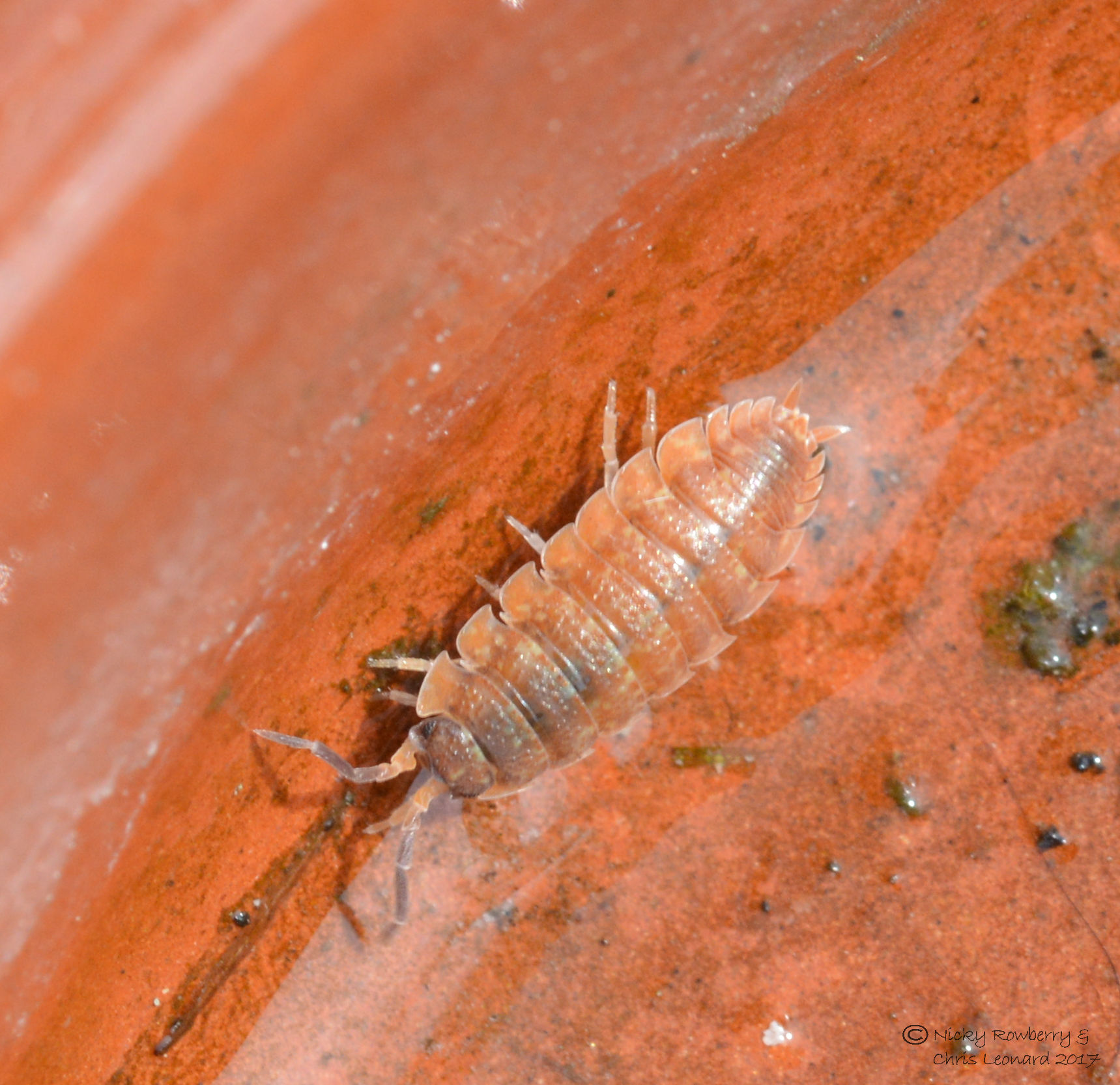
While turning over stones, I disturbed loads of woodlice. There were Common Striped Woodlice and the ones below that are Common Rough Woodlice. The bottom pinky one may just be a variant of the latter, but I hoping it might be a 3rd species – just waiting for someone on i-Spot to confirm one way or another.


Beetles are the largest insect group in the world, so it would have been a bit weird if I hadn’t found any in the garden. My favourite Swollen-thighed beetle of course appeared, as did a lovely shiny Black Clock Beetle.


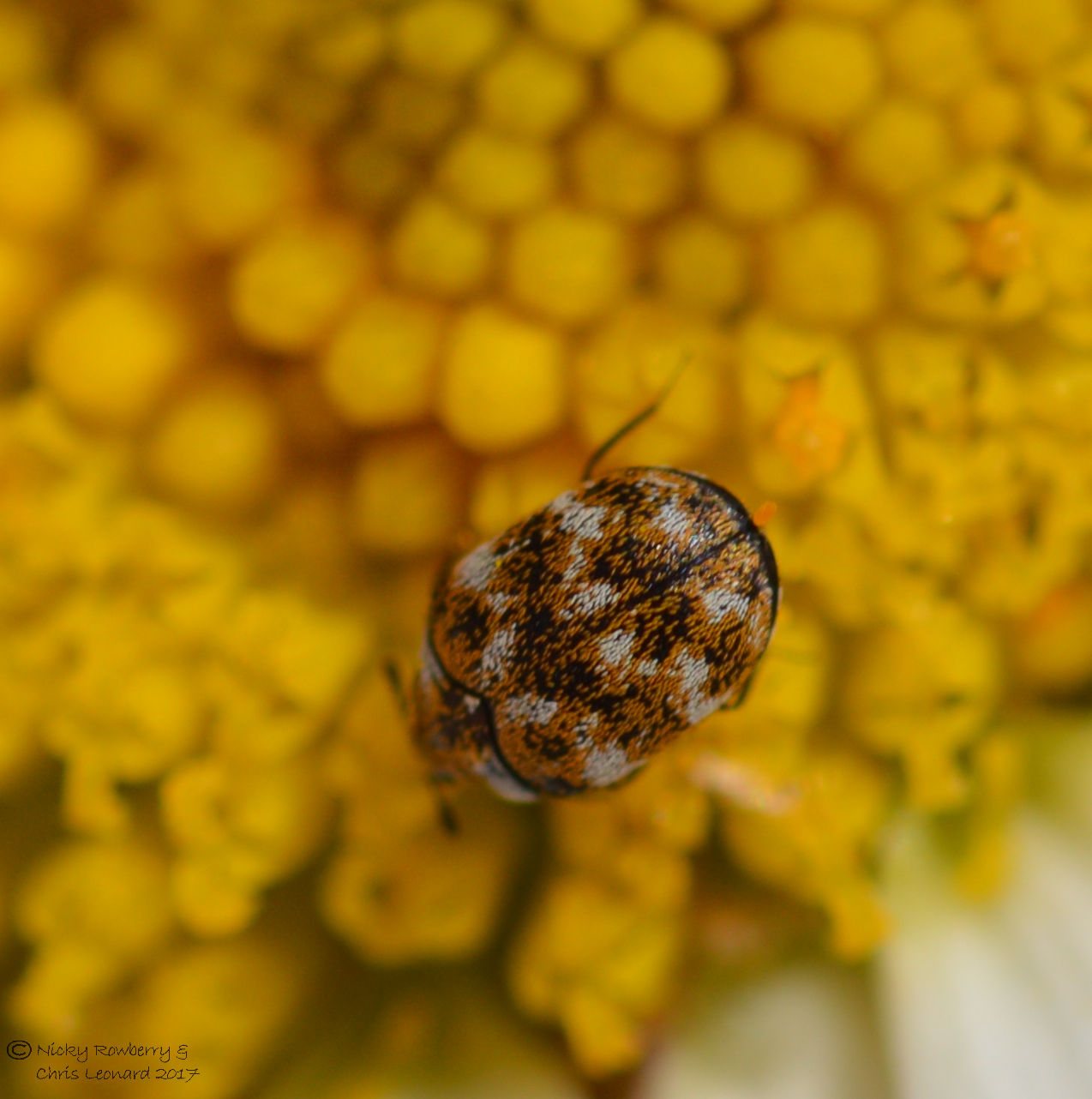
This tiny carpet beetle was making the most of the flowers.

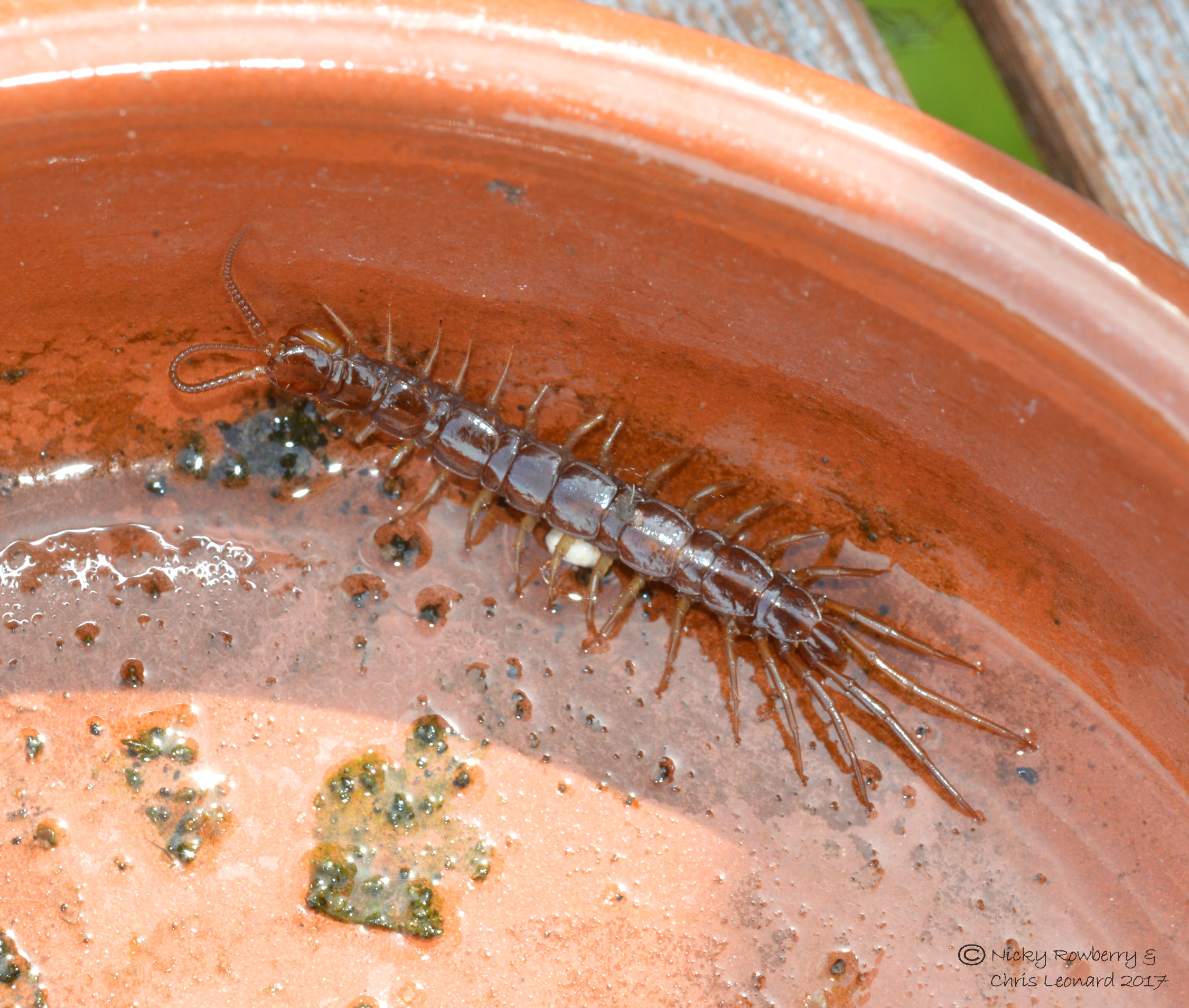
One group I’ve never really studied is the centipedes/millipedes. This beauty turned up under an old piece of wood. I’ve yet to work out the species though (suggestions gratefully received).

So that’s a selection of our bioblitz species for 2017. As always I ran out of time, so didn’t manage to root about in the pond, or look for ants, flies, grass moths and a host of other things. It was also a bit disappointing that no butterflies or shieldbugs or ladybirds appeared in the last 24 hours, but then that’s the way it goes. The bioblitz is just a snapshot of what you can find in the garden over a day. I love that it gets me looking for groups that I don’t normally study (easy to get in a bit of a rut with the bees and moths and butterflies and forget the others sometimes) – always good to broaden my wildlife horizons.

I’m still identifying photos and gradually uploading them to the i-Record website, so I won’t know the final tally for a while yet. So far I’ve only managed to load 32 species, which apparently puts me 10th on the bioblitz league table. Sounds good until I realised the person in the top spot at the moment has 167 species – I’ve got a way to go yet!